Check Out Our Favorite Tattoos Inspired by Books

How much do you love your favorite book? Do you love it enough to get an image or passage from it permanently inked on your skin? Well, judging from the response to our #ElectricLitInk hashtag: yeah, lots of you do. (Including at least three Electric Lit staffers! Maybe more, but they’re not admitting it.) If you don’t yet have a literary-inspired tattoo and you’re looking for inspiration—or if you’re just thinking about what you want next—here are some of the highlights from the hashtag, paired with artist information and a little more explanation from contributors who wanted to share why they got their book-related ink.

“Throughout undergrad, Tom Robbins was a reminder of my love of language and of wordplay in literature, while I was struggling through dry textbooks and assigned reading. This tattoo has sparked a lot of interesting events, like the time I took my pants off in a coffee shop to compare Tom Robbins tattoos with the barista (I asked first).”

Artist: Lauren Toohey at Wyld Chyld Tattoo in Pittsburgh

Artist: Deirdre Doyle at Redemption Tattoo in Cambridge, Massachusetts

“I like carrying some of my favorite works of art with me as we use art as a guide for how to live a more meaningful, rich life. My two tattoos in homage to Tolstoy remind me of two of my favorite passages in literature — the mowing scene in Anna Karenina is one of the greatest moments of mindful presence, and the comet scene in War & Peace reminds me of how divinity and wonder manifest in each of us (entelechy like whoa). My forearm tattoos are a link to both Kundera and my marriage: The olive branches on my left arm link to my name, and the laurel branches on my right are a nod to my husband’s name (Lawson, which means ‘son of the laurel bearer’). I combined this with the original Czech for the first chapter of The Unbearable Lightness of Being. It’s a balance of opposites for me, and I like the idea of combining the knowledge represented by laurels with a sense of lightness and the peace represented by olive branches with the weight of ‘tize.’ That’s pretty much what marriage is all about, right?”

Artists: Minka Sicklinger in Brooklyn (Kundera) and Biel Carpenter in Berlin (Tolstoy)

“I love books and I love tattoos. I’m working on growing a third arm so I can get pictures of the rest of them, but here are my hands and a semi-nsfw Coleridge chest piece to prove that I do, in fact, have literary tattoos. the books on my hands were kind of a no-brainer. the Coleridge quote comes from The Rime of the Ancient Mariner: “O let me be awake, my God! / Or let me sleep alway.” it reminds me to be present for people and for experiences in life since the only real alternative is to sleep the Big Sleep.”

Artists: Jason Ochoa at Greenpoint Tattoo Company and Jim Gentry at Hand of Glory Tattoo, both in New York City

“I grew up on SFF, and the giant, gilt-edged More Than Complete Hitchhiker’s Guide was hugely influential on my sense of humor — and my certainty that the universe has its own sense of humor. Ages ago, I saw a few tattoo versions of the whale/petunias scene, but it wasn’t until I saw Betty Rose’s kinetic kitties that I knew what I wanted it to look like: all one piece, petunias inside the outline of the whale. To me, the image means a lot of things, but I look at it a little like the glass half full/glass half empty question: Would you rather respond to the universe like the whale, or like the petunias?”

Artist: Betty Rose in Austin, Texas

“This is Narsil, Aragorn’s broken blade from The Fellowship of the Ring. It’s a cool-looking sword tattoo, and can be just that, but for me it’s about coming into grace and power. It’s that old, simple metaphor of a thing becoming stronger after it breaks, that Leonard Cohen quote about a crack in everything, that imperfect person rising to the occasion. My tattoos punctuate my life, not like commas or periods, but like question marks: they indicate the points where I felt lost, unsure, ‘broken.’ When some tragedy happens, the tattooing ritual is the first step of putting myself back together. That sword is tattooed along a nerve, and the gnarly, needling pain of the experience woke me up, reminded me not to neglect my calling, my purpose, my life.”

Artist: Billy Bracey at Downtown Tattoos in New Orleans

Artist: Mike Richardson at Electric Dagger Tattoo in Jackson, Mississippi

“I got this tattoo because I love thinking about geology and deep time, and I love narrative nonfiction. (Clearly I’m also a big John McPhee fan.) The slightly hokier reason is that I was feeling stuck in my life and in New York, where I’d been living for several years, and I hoped the design itself would serve as a reminder that I could always change my life. And I guess it worked. It’s funny, too, that it’s from Assembling California, since I live in California now.”

Artist: Joy Rumore in Los Angeles

“While reading about the bugler girl symbol, used in the suffrage movement to advertise suffragette meetings, she immediately struck me as the perfect symbol to go with Atwood’s famous Handmaid’s Tale quote, letting her continue to inspire strength with words.”

The quote that inspired this tattoo: “I saw my life branching out before me like the green fig tree in the story. From the tip of every branch, like a fat purple fig, a wonderful future beckoned and winked. One fig was a husband and a happy home and children, and another fig was a famous poet and another fig was a brilliant professor, and another fig was Ee Gee, the amazing editor, and another fig was Europe and Africa and South America, and another fig was Constantin and Socrates and Attila and a pack of other lovers with queer names and offbeat professions, and another fig was an Olympic lady crew champion, and beyond and above these figs were many more figs I couldn’t quite make out. I saw myself sitting in the crotch of this fig tree, starving to death, just because I couldn’t make up my mind which of the figs I would choose. I wanted each and every one of them, but choosing one meant losing all the rest, and, as I sat there, unable to decide, the figs began to wrinkle and go black, and, one by one, they plopped to the ground at my feet.”

Artist: Lauren Vandevier at Lakewood Electric in Cleveland

“A lot of my tattoos have been based on my love for books, and I wouldn’t have it any other way. My right arm is a collection of paintings from the Abarat series by Clive Barker, I have a Shakespeare-esque skull on a pile of books, I have the (very faded) bird from the cover of Chuck Palahniuk’s Lullaby, Rogue & Wonder Woman to show my love for Marvel and DC comics, and an Alice in Wonderland and Velveteen Rabbit piece as well.”

Artist: Shaun Evans at New Horizon Studio in New York

George Saunders Finds Inspiration at the Mall

Since it was first launched nearly 100 years ago, The New Yorker has published countless wonderful fiction writers, but only a handful of them appeared very early in their careers — before even publishing a book — and went on to have the magazine be the main showcase for their work over the course of several decades. John Cheever, Ann Beattie and Donald Barthelme all come to mind. George Saunders first published a story in the magazine in 1992, when he was 34 years old supporting his family as a tech writer in Rochester, New York, and he has published more than 20 stories in the magazine, as well as several pieces of journalism and satire, since then. Anyone who has read George’s work knows how as a writer he is humane, profound and hilarious — as you’ll see from the interview, he has those same qualities, in equal measure, in person.

What follows are transcripts from a recent special episode of the podcast, Dan & Eric Read the New Yorker So You Don’t Have To, in which co-host and writer Eric Rosenblum interviewed fiction writer, George Saunders, about his history of contributing to the magazine. Dan & Eric, launched earlier this year, is a weekly podcast in which writers Daniel Torday and Eric Rosenblum discuss the contents of the current issue of the New Yorker. The interview with George Saunders is one in an ongoing series of episodes in which Dan and Eric excavate the history of the magazine by speaking with past and present contributors, including editors, writers and illustrators.


Eric Rosenblum: What was it like when you first got into The New Yorker?

George Saunders: It was a huge thing. I had sent them something before I even came to Syracuse as a student, so like ’85, and they sent me a really nice rejection. I was such an idiot that I didn’t know it was kind of an invitation to rewrite the ending of the story, and I was also cocky enough to be like, “Oh, I’m not rewriting anything,” so I just sort of rejected their semi-acceptance and a couple of months later rewrote it for a smaller magazine. So I had that contact and really my whole thing went dark. I lost whatever mojo I had. Really, the whole time I was at Syracuse, I didn’t write anything I liked or that they would respond to. And then, years later, when Paula and I were married and we had the kids and everything, I wrote “The Wavemaker Falters” from the first book, Civilwarland In Bad Decline, and I got a really nice rejection that was overt about saying “send us something else.” And that was really exciting. Finally, maybe within a year, I got that story called “Offloading for Mrs. Schwartz” accepted. That was just a life-changing thing. I remember I was working at this environmental company and we were doing a job up in Watertown, New York. We were doing this groundwater investigation and staying at this Microtel and I got a little note at the front desk, and it was sort of mis-transcribed like, “So-and-so from The New Yorker says ‘Okay, yes, maybe.’” At the time, my agent said it was statistically harder to get a story in The New Yorker than it was to publish a novel. I finished the job up there and then came home and Paula had gone around to all these dentists’ and doctors’ offices and found New Yorker covers and made a kind of a banner and we had a little cake and a little party.

They sent me a really nice rejection. I was such an idiot that I didn’t know it was kind of an invitation to rewrite the ending of the story, so I just sort of rejected their semi-acceptance.

ER: That’s amazing. What was the story that got rejected in 1985?

GS: It was a story that ran in Northwest Review. It was funny because it would have fit right into Civilwarland in Bad Decline years later. It was maybe a three or four page kind of nutty thing and I just could never figure out how to sustain that energy for anything longer. When I got to Syracuse [as an MA student] I kind of dropped that and repented a bit and started trying to do more normal realism. But that story in its tone and in its energy is very much like the first book ended up to be. Wah-wah.

ER: My first introduction to your work was reading “Sea Oak” in 1998, but shortly thereafter I heard you read “Offloading for Mrs. Schwartz” on This American Life.

It’s a story about a guy whose wife has died and he’s taking care of an older woman and he takes her memory to use it as historical educational video. Did that require a lot of editing?

GS: Yes. That story got accepted at a really interesting time. Tina Brown was just coming on as an editor, and it was a fraught moment and there was a lot of worry about what the magazine was going to become. I think her whole thing was that we’re going to be a mix of the new and the old and so the cover had a picture of like a Central Park hansom cab driver, a real old guy in a tuxedo, and then a young kind of punk guy sprawled in the back of the carriage. And then the two stories were mine, which at the time it was sort of unusual to see something so sci-fi in the New Yorker and then a really beautiful story by John Updike called “Playing with Dynamite,” which is a real classic New Yorker story. So that was a set-up. There was a lot of worry about getting that story right. Dan Menaker, who was the fiction editor, and I, and a guy named David McCormick, who’s now a really wonderful agent, and at that time was Dan’s assistant — we just labored over that thing. And there was all kinds of stuff about, believe it or not, at that time — were contractions allowed in a work of fiction? Back and forth. “I cannot, I can’t,” all that kind of stuff. Also I think I had the word “fuck” in there. So there was a lot of back and forth, a lot of actually pretty energetic disagreement. At one point there was somebody at the magazine who’d been there a long time and Dan told me this guy said, “Ah, the barbarians are at the gate.”

George Saunders Likes a Challenge

E: On to “Sea Oak.” It’s funny, you’d given all the drafts of “Sea Oak” to Keith Gessen, who was a year ahead of me at Syracuse, and he gave them to me. I had them in my possession for a year and a half or something and you’d forgotten about it, and then I was like, “I’d better give these back to George,” and I did. Can you talk about writing “Sea Oak”?

GS: That must have been a pretty big pile of papers.

E: It was a big pile of papers. I think the first one was hand-written and it was kind of marked up. And there was a series of typed pages. I was really excited to have it in my possession.

GS: Okay, you know the [Syracuse] Carousel Mall? That story has a debt to that place. If you remember the titular carousel was there. It’s kind of an old-fashioned double-decker merry-go-round sitting right in the food court and then weirdly, at least at that time, right adjacent to it was a Hooters. So, we’d take our little daughters there and we were kind of like, “Why did they put it right by the Hooters?” It started to seem like a part of this weird American tableau. First of all, it’s a fake old carousel, it’s not original, I don’t think, but you you know this kind of nostalgia this kind of Norman Rockwell thing, right next to Hooters, where you can literally on the merry-go-round look into the Hooters. I remember just thinking, “What would it be like, what would the equivalent of Hooters be if the world was run by women instead of men? If it was a matriarchy, would there be a Hooters? The short answer is there probably wouldn’t. But if there was, what would it be like?” And it just popped into my head the name of the place, “Joysticks,” and then I thought what’s that? It’s like an aeronautically themed restaurant where the guys are in ripped pilot suits or something. So that was one element of the story.

I remember just thinking, “What would it be like, what would the equivalent of Hooters be if the world was run by women instead of men? If it was a matriarchy, would there be a Hooters?”

Then at another visit in the mall I was walking along and there were these two kind of Syracuse working class young women walking near me and I could hear them talking to each other in this really interesting argot. It was this beautiful almost Shakespearean kind of a complaint-fest with lots of swearing and anger. So, at one point I went home and I just said I’m going to try to imitate those girls. I typed up a couple of pages of some simulation of how they’d been talking. I don’t remember the exact details but somehow those two wires got crossed. So I had some material about “Joysticks,” what would that be like, and that used to be, in those days anyway, I would just type a series of jokes, well what do the booths look like? What do the people say? What are they wearing? And then on the other thread was just these two girls talking in that mode, and at some point, as I used to do in those days, I was just like, well, these are the two things that are vital to me, I’m going to cross the wires and put them into the same story. And, then it kind of went from there.

ER: How long do you think you were working on it before you sent it to The New Yorker?

GS: Oh my god — that was a change in mode, because all the stories in Civilwarland I kind of just worked on them for maybe four or five months. I was doing it at work. I would just work in a straight line. I would just polish up what was behind me and move a paragraph or two or a page or maybe a page or half a page ahead. Steady forward progress. And partly that’s because all those Civilwarland stories are basically following the same trajectory. A guy has a bad life and it gets worse. I think “Sea Oak” might have been the start of this pattern, I would start writing stories and then get into them with a lot of energy and a lot of fun and a lot of joy and then halfway through they would lock up. I couldn’t figure out how to get it to move forward. I would end up writing a lot of scenes that were just duplicating beats.

That happened with “Sea Oak.” I was writing several stories at once. But I got locked up right after Bernie’s funeral, and I couldn’t figure out what was next. I kind of had the idea that — you know, it was a story about them trying to get out of that housing complex after the death of their aunt. I just wrote every version of that I could think of. They seek and find and kill her. She comes back to them in dreams and tells them who the killer was. Or he plays the lottery. It just wasn’t going anywhere. I literally couldn’t get past that scene. I would write stuff and throw it away, write stuff and throw it away.

So we went on vacation at one point and you know how that kind of clears your mind out. I came back and read the story to that point and I think I was taking a walk or taking a shower and I thought, “Man, you’re such a faker. You teach writing, you can’t even finish a stupid story.” At one point in this little inner berating of myself, I said, “I don’t know why it’s so hard for you, you know she has to come back.” I did know that. She was the most interesting person in the story and I killed her off. And in that moment I said, “You know she hast to come back. “ And my mind completed the sentence, “from the grave.” And it was like a lightbulb went off. Oh my god.

I finished the story in like two weeks after that. It just felt like from all my years of watching the Twilight Zone and Night Gallery, I knew that story, I knew the zombie trope. It was the first time I realized that if you’re writing a good story, it rebels a little bit, and it rebels mostly against your early and too-simplistic version of it. There’s that Einstein thing I always quote, “No worthy problem was ever solved on the plane of its original conception.” The story just locked up until I was willing to stop dictating to it and start listening to it.

It was the first time I realized that if you’re writing a good story, it rebels a little bit, and it rebels mostly against your early and too-simplistic version of it.

ER: A few years later, maybe it was 2001, I had just been accepted into Syracuse. I went to one of those Stories on Stage things in Chicago. Bill Buford talked about that story. He said that you rewrote the ending 20 or 30 times. Do you know what he was referring to?

GS: I think he was talking about the same thing — I got stuck halfway. And wrote the second half 20 or 30 times. Bill was a great guy and a great editor. After this four year trial, I finally had it done and I’m so happy with it and it seemed like something. For me the dream is to have a story that rewards your attention to it by shocking you. Suddenly you’re writing stuff and you don’t even know where it’s coming from or what you mean, and then when you look at it at the end, you go, “yeah, I’ve meant that all my life, I’ve just never been able to say it before.” So it happened with that story. Then you send it to The New Yorker. Another victory, they take it. You’re so happy.

Then, for some reason we get a late start on the edits. I don’t remember what the actual time was but it was about half the time you would usually have to work through the changes. Bill came back with some pretty major things. They were good. In one case I had two scenes that were adjacent that were set in the same place. There was only a time jump. Which I don’t usually do and it was a little evident and awkward and he pointed it out and he suggested that I meld two scenes together. After you have a story accepted there, you’re kind of hesitant to change it, at least your first mind is: “You got in The New Yorker!” Even if The New Yorker is saying you need to cut this, you’re like, “No!” We worked on it really hard and at one point my confidence was a little shaken. I kind of went fishing for a compliment. I said, “Bill, what do you like about the story?” He’s a very quiet kind of guy and very precise in his speech. So there was a long silence. And he goes, “Well, I read a line and I like it….enough to read the next.” And that was it. That was the whole ethos of The New Yorker — which is so deep and so perfect. Fiction is a linear, temporal phenomenon. You go through it a sentence at a time and the moment that you shut the magazine and walk away is when the sentences have ceased to compel you. That was great Zen writing advice. And I’ve always thought that was maybe sort of a perfect condensed version of what I had discovered about writing up to that point.

Fiction is a linear, temporal phenomenon. You go through it a sentence at a time and the moment that you shut the magazine and walk away is when the sentences have ceased to compel you.

ER: Have there been others like that?

GS: “Tenth of December” was just way too long to run, so Deborah [Treisman] and I agreed that we would cut it down below that upper limit. At the time I thought, okay when its ready for the book I’ll put it all back in. We cut out a bunch — at least 500 words — of a story that I thought was drum-tight. We got it cut down and I never put it back in. Most cuts, I think if you make ’em, you never miss ’em. And it just makes a beautiful, dense, but spacious feeling or airy feeling. What you’re doing when you’re cutting, you’re actually saying with every cut, “Dear Reader, I trust you’ll get this without me hitting you over the head.”

ER: Another story in Pastoralia I remember being really excited by before I ever met you was “The Barber’s Unhappiness.”

GS: It was about the same time as writing “Sea Oak.” I have a vivid memory of sitting at our dining room table at Rochester. It was a Monday. The kids were at school, and Paula was out, and I was just sitting there like a real writer. There was a guy in the town where we were living, this barber, and he had this really obnoxious habit of ogling women when they would walk by his shop. I used to wait for the bus across the street and I just noticed him doing this all the time. I just started thinking, “Oh, I’ll crucify him in a story.” And it was fun. Lots of fun misogynist jokes told from inside the mind of a misogynist and mocking him, holding him up for scorn. Then a similar thing happened as with “Sea Oak,” where I got about halfway through it and it just locked up on me. I think it was because I was having so much fun kicking that guy and painting him as a Very Bad Person beyond all hope of decency. The story form is, I think, mostly based on the assumption of the possibility of transformation, and I had painted that guy into a corner, as such a dick that he wasn’t going to be able to get out. So I wrote a bunch of scenes that didn’t end up getting used and I later repurposed some of them. It was just a matter of realizing that I had given the reader so many facts about what a jerk this guy was that no reasonable reader would believe he could be saved. So then it was a matter of backing out of that and trying to remake him in the first half of the story so that there was at least the possibility that he could transform into a different kind of guy.

ER: So you had to go back and make him sympathetic in the first half?

GS: I just introduced the idea that he didn’t have any toes on one of his feet. It totally did the trick. He’s a real judgmental guy. He’s no big winner himself, he’s not great-looking, he’s a little older guy, lives with his mom, but he’s always doing that thing that guys do where he’s always assessing women on how attractive they are, very dismissively. So that made him very unsympathetic. Well then you give him this secret dark thing which is that he’s missing toes on one of his feet and he’s very ashamed of it and suddenly he kind of opens up. He’s still a jerk and he’s still obnoxious and yet you get a chance to go into his head and show him having these very pathos-ridden fears about his toes and it kind of gives you a little hope for him. Yeah, that was a sort of a mechanical fix.

I just introduced the idea that he didn’t have any toes on one of his feet. It totally did the trick.

ER: In “Sea Oak,” Aunt Bernie saying, “Show ’em your cock” — was that controversial?

GS: No. It was one of those things it just seemed exactly right at the time. I think in person, as a person I don’t think I’m a particularly outrageous guy. On the contrary. But when I type something like that in the heat of it and it’s funny or good or necessary, I just can’t worry about it too much. One of the funny things was I wrote that story and I just was inside of it. Especially after going through that long struggle of trying to finish it, it’s like you’re fighting for your life a little bit, and if something works you don’t care and you get so deep inside of it that it starts being very specific about what it needs. And when you get it, you just deliver it. There’s no moral judgment.

ER: In 1999, there’s this great photo of you and all these wonderful writers — David Foster Wallace, Junot Diaz, A.M. Holmes and Edwidge Danticat — you guys were all chosen as 20 under 40. Could you talk about that experience?

GS: I think I was just over the age limit but they grandfathered me in. I got a letter from Megan O’Rourke saying, “Do you have anything that’s like two pages. Or three pages.” And I sent a few things and they were not my best. And I’m like, “Why do you need that?” And she’s like, “Well, we’re doing this under 40 issue and we’d really like to put you in there but we need some new work.” I’m really slow as I’ve been indicating. I kind of freaked out about it. I really wanted in there. I’m a big fan of the subconscious being kind of willing to work with you. So one night I dreamed that this old girlfriend that we had parted and it had been my fault basically and she came to me and said, “I just want you to know, I’m fine.” And I’m like, “Oh, good,” and she goes, “No — I’m fine.” She said, “You don’t talk, you listen. I’m fine. I have a beautiful baby.” I said, “Oh, I’m — “ “No. I have a beautiful baby and he’s so smart. He’s a genius.”

Just then this little baby crawls in and the baby is really smart. He’s talking about Einstein and he’s reciting the periodic table of elements. And I’m like, “Wow, that’s amazing.” And then as he’s talking I notice that there’s a zipper on the back of his head like he’s wearing a mask. And I realize in that dream logic that he’s not that smart but he’s got a computer face mask on that’s causing him to say these smart things. So, anyway, welcome to my dream life. But I get up and I’m like, “Oh, yeah,” and I wrote that up. And that was a really quick story called “I CAN SPEAK!” based on that dream. And that was the story that The New Yorker took.

So we all went to New York. I was there with David and Junot Diaz and Jeff Eugenides and Edwidge Danticat. They had built this kind of weird carousel thing on one of the islands off of Manhattan. They would spin it real slowly and the camera was mounted on the thing so that we would be in focus but the background would be blurred. So we spent this really wonderful day out there talking. I think for most of us it was the first time we ever met. That night I think Bill Buford had a big party in his apartment. I seeing Don DeLillo on the elevator on his way out, and walking in and there’s Steve Martin, Mary Karr, Norman Mailer, and Rushdie all sitting at the same table or something like that.

Our kids were little, I was teaching at Syracuse and we’d never been to any of those kinds of things before. At one point Paula and I went in and it was kind of too much and there’s a little backroom. We thought, “Let’s just sit down away from all the famous people and collect ourselves.” So we sit down and we look up and Salman Rushdie is there with Padma Lakshmi. Right there at the table. This was right after the Fatwa. There was a real long awkward pause. And finally Paula goes, “So where you living now?” A good icebreaker. But those were really sweet days because our lives were still fairly hardscrabble and we didn’t have any money. I had one book out. Paula was working, I was working. It was almost like Cinderella going to the ball a little. I always just remember trying to just listen to them and see what they knew that I didn’t and see what they thought about their work and how they talked about their work and how they related to each other and the world.

ER: Did you connect to any of them that night do you remember?

GS: Jeff Eugenides and I are still friends. And David Foster Wallace and I — we were friends forever after that. It’s a close-knit fraternity in the sense that you may not see somebody for a few years but when you do, there’s a kind of a team feeling or a camaraderie. And likewise with the editors and the people who work at that magazine. It’s really sweet.

ER: Were you pretty close to Dave?

GS: Yeah, I think in that sense that we probably met in person four times or something. One time he came to Syracuse and we went over to a house of a mutual friend and had brunch over there. I visited him in Pomona and read there. I interviewed him on stage at the Public Theater when Oblivion came out. So I think we were friends in the sense that I think we really liked and respected each other and we were pretty frank with each other when we got together. As I remember we didn’t waste a lot of time on small talk; we got around to talking about fiction and talking about what it was supposed to do. And my memory is, and of course I’m probably projecting because this was certainly my interest at the time, but my memory is that we were talking a lot about a mutual restlessness about how ironic fiction was or how kind of hesitant we were to partake of sincerity maybe, something like that. And at least on my part, the feeling was that it was constricting to have to affect a certain world-weary or cynical stance was limiting. And then for me a lot of that is authentic and real and philosophical but there’s also a certain part that is — you know, it’s a phone-in, it’s habitual. So I think we were directly or indirectly talking about that. And you can see that interest — it’s in his essays and also I think in the Pale King you can see him really trying to figure out how to be as masterful and virtuosic and funny as he was and at the same time, the way I would put it is somehow honor the simpler, more virtuous aspirations that people have. And that’s a real high-wire act. And I think he was getting there. He’d have done it with that great mind of his and great heart.

ER: I always remember in grad school the day that “Jon” came out. There was a huge buzz. All the students were so excited. I wonder what that was like for you.

GS: It was great. To have something in the magazine that you’re proud of. This is probably an indictment of my low self-esteem, but it really helps my teaching. Because you feel like, okay, I may not be able to explain it to you, but I think I know how to do this shit. I always felt — I’m kind of an anxious person and as a teacher, I was an anxious teacher. I did a lot of prep and I would really obsess over a class that didn’t go well. With students like you guys you cannot phone it in. You guys are too smart and too talented. A phone-in will not get you what you need. You have to be really prepared and sharp and honest and in the moment when you’re teaching students at that level. So, when you’re me and you’re not that well-educated and you’re kind of working class and you go into a class like that, I always feel like my imitation of an academic person is stupider than I am as a writer. So when you have a piece in The New Yorker it’s nice to just sort of go, look, I’m not smart enough to explain this exactly, but here’s some evidence that I do at a visceral or intuitive lever I kind of know what to do. And when I’m editing your work I kind of say to the class, implicitly, this guy, the one who wrote the story is the one who’s editing your work. It’s not this bumbler in front of you in class, it’s another mind that I can bring. You get a story in The New Yorker and you’ve got sort of continued demonstrated viability.

When you have a piece in The New Yorker it’s nice to just sort of go, look, I’m not smart enough to explain this exactly, but here’s some evidence that I do at a visceral or intuitive lever I kind of know what to do.

ER: I always remember this one moment. We were sitting at the place we used to go for dinners with visiting writers. You and Adam Levin and I were talking, and Levin said something about Philip Roth. For some reason I couldn’t reconcile the idea that you would like Philip Roth. I had this idea that you guys were very opposite aesthetically, and, not morally, but sensibility-wise. And I was like, “George doesn’t like Roth.” And you said, “No, no, no, I do. I love Roth.” But for some reason I couldn’t grasp that.

GS: I think you can have the opposition and still love somebody’s work. Maybe it’s like there’s kind of two reading minds. One is the one that you publicly, in your functional, real human life, you say, “God, who doesn’t admire Roth, it’s just amazing what he’s accomplished.” And then I think there’s a second thing where you have to say of every writer, “Okay, what do I know, or what can I do, or what can I bring to the table, that this person can’t.” It’s not because of any defect in the person it’s just because they’re a particular person who’s trained themselves to accentuate certain things in themselves. So, I will take writers who I just dearly love like Chekhov, even, and Gogol, and I think at some point in a very quiet place in your mind, you have to say, okay, is there any tiny fragment of human life that I might know one percent more about than that person does. And then you try to do that thing.

I think of it as a working class or maybe even a punk sensibility. Which is to say, “When they go high, I go low.” I can’t do Edith Wharton — I love her work, Paula and I are listening to an audiobook of hers, she’s amazing — but I can’t do that. If I did the reader would feel the fakery. So then you think, “Let me look at my life and look at my personality and try to do something that’s true and that’s authentically from where I’m from.” Then that’s why it’s possible to love every writer, every accomplished writer. And at the same time keep yourself a little aloof in a certain way.

I think that was true of Roth, too. It’s not about liking or not liking. It’s about not trying to stand in the same square as that person. In terms of personality, or personhood, nobody stands in the same square as anyone else. So then you can see craft as that which allows us to make and stand in our square, which is hard work. It’s uncomfortable. It sometimes means you have to be a different kind of writer than you set out to be. In my case maybe a lower writer, maybe not as polished or as masterful, but, I hope, vivid and intense and passionate about the small number of things I know.

Philip Roth’s Apartment is on Sale for 3.2 Million Dollars

This week Philip Roth’s apartment on the Upper West Side of Manhattan was put on the market for a casual $3.2 million. Roth bought the apartment in 1989 to use as a writing studio while he lived a few blocks away with his then-wife, the British actress Claire Bloom. In 2004, after his divorce and a personal hiatus in Connecticut, Roth bought a second unit in the building and merged them into one 1,500-square-foot apartment where he lived full-time until his death last year. (Altogether Roth owned four units in the building — one sold to another resident and the last is listed separately for a comparatively cheap $675,000.) The apartment is still covered in small mementos of Roth’s life — there is the stand-up writing desk which he used because of his chronic back pain, the fax machine he stubbornly clung to until he gave into email just before his retirement in 2010, and the 1998 Pulitzer he won for American Pastoral. A map of Newark, New Jersey, where Roth grew up and which inspired books like Goodbye, Columbus, hangs on the wall.

The listing for Roth’s apartment is so full of his personal details that it practically reads like a passage from one of his books. Normally real estate brokers try to make houses seem like blank slates, open to new futures, but in this case someone clearly hopes to make a premium on Roth’s apartment because he wrote Nemesis there, not because it has three balconies in spitting distance of Zabar’s. It’s a good bet — if my friends and family are anything to go by, the public doesn’t know much about the actual process of publishing a book (“What’s an agent?” “Who’s royalty?”) but they are certain there is a special bond between a writer and the place where they work.

Someone clearly hopes to make a premium on Roth’s apartment because he wrote Nemesis there, not because it has three balconies in spitting distance of Zabar’s.

You can visit the homes of many famous writers: Emily Dickinson, Jane Austen, Louisa May Alcott, Victor Hugo, and Robert Frost, to name a few that I’ve been to and recommend. The allure of these museums is generally not the collections, which can be sparse, but to see the place where the magic happened — even if it didn’t, exactly. For example if you make the pilgrimage to Hemingway’s home in Key West hoping to see where he did his great work, you’ll have to ignore that The Sun Also Rises was written in Europe, while A Farewell to Arms was penned at a guest ranch in Wyoming’s Bighorns, his wife’s house in Piggott, Arkansas, and a rental in Mission Hills, Kansas. In a way, the authenticity of the place barely matters. The house in Orlando, Florida, where Jack Kerouac lived for less than a year between 1957 and 1958 now hosts a writer’s residency, and the project freely admits on their website that the house wasn’t exactly seminal in Kerouac’s life: “Few people knew exactly where in College Park he lived, and nobody seemed to be aware of the historical significance of such a place. In fact, none of Kerouac’s biographers had even mentioned the house.” Legions of Harry Potter fans, again myself included, have visited the coffee shop in Edinburgh where J.K. Rowling wrote part of one of her books, even though there’s nothing left of her presence and nothing to do but buy a scone. (At least from a price perspective it’s a steal; she wrote the last Potter book in a suite in a luxury hotel.)

The truth is that writing is a peripatetic job and few writers can afford a grand house or multi-million dollar apartment in which to write all their masterworks. The reality of writing life is cafes and residencies and rentals. Even if a writer did primarily work in one place, how much would that place really matter? Writing isn’t a kind of transcription of your environment. Great writers can conjure the sea from a desert tent. Even when writing in situ, you can’t write with your eyes staring out the window; writing is what happens when you look down.

Even if a writer did primarily work in one place, how much would that place really matter? Writing isn’t a kind of transcription of your environment.

But the appeal of these places is the harmless fiction that a great writer might leave something behind in the atmosphere, like the invisible yeast that hangs in the air and turns out delicious loaves of sourdough bread. For $130 a night you can stay in the house in Montgomery, Alabama where the Fitzgerald’s lived while Scott was working on Tender is the Night, and I would love to go and sip whiskey under the magnolia tree on the front lawn until the world felt suffused with a kind of melancholy romance. If that makes me a sappy fan I don’t really care because his books mean something to me.

That’s also why hyping up Philip Roth’s apartment and trying to sell it as a place where literary genius happened doesn’t bother me at all. It’s rare for the public to focus on the writing process, so an interest in where and how authors work is a step towards legitimizing writing as a career endeavor, and if someone can stand where he stood, under his map, near his fax machine, and feel inspired, then why sneer? Besides, there is something hilariously Roth-ian about someone paying 3.2 million dollars for the space where Roth experienced what he called the “daily frustration, not to mention humiliation” of writing. Books may be dying, but at least they can come back as real estate.

Sam Lipsyte Doesn’t Have the Energy to Be A Guru

The world is embroiled in a devastating war. Income inequality — all inequality, in fact — seems insurmountable. The planet is dying. Tech addiction is making humans frazzled and disconnected. So who can blame us for looking for a savior, someone to believe in, who can make life better, or at least bearable?

That’s the world of Sam Lipsyte’s Hark, a slightly dystopian New York that nearly mirrors our own. In it, a would-be comedian named Hark Morner becomes instead a self-help guru. He preaches “mental archery,” a nonsense combination of yoga, junk history, and motivational speaking that purports to simply help people focus. The book follows his closest disciples, who place their problems on him and pull out answers, whether or not he actually offers them. No one knows exactly what they want, but it’s…something. Something to make living a little easier.

In true Lipsyte fashion, Hark is darkly funny — the characters are clueless and the dialogue is over-the-top. It satirizes wellness culture, the likes of Goop and Oprah-fueled actualization hucksters, all of which is ripe for satire. But there’s a deeper, universal truth here: the desire for guidance and comfort, for someone to say “here’s what to do” and “you’re doing it right.” Hark is about people’s quest for happiness, and that’s something Lipsyte told me he’d never make fun of.

We talked by phone and email about the monetization of enlightenment, the world falling apart, and whether there’s a savior for our era.


KH: As a well-known writer, and particularly as a teacher, you’re sort of a guru for young writers. How does that feel? What kind of guru would you like to be?

SL: I’m no guru. I’m a teacher, a mentor, a coach to my students. And when they begin to make their way into writing, I am thrilled to become a colleague and friend, a supporter, and student of their work. The idea of a guru connotes to me a static dynamic. It’s destructive and boring. Also, I don’t really have the energy. Gurus have to work hard.

The idea of a guru connotes to me a static dynamic. It’s destructive and boring. Also, I don’t really have the energy. Gurus have to work hard.

KH: The question of commerce, of capitalizing on Hark’s message, is a big theme throughout the book. Do you think gurus or spiritual leaders have to be marketers?

SL: That’s definitely a big thread running through the book. I don’t think anybody has to be a marketer, but our system puts enormous pressure on us to sell ourselves, to brand ourselves, whether we are hawking a spiritual system, or a medical technique, or just trying to land a job. It’s just a way for the forces of commerce to turn the idea of the individual against each of us, to put all the stress on us. All of this hustle is ultimately us pitching ourselves as people worth keeping alive. That’s the pitch. Let me live a little while longer, eat decent food, have shelter. In the book there is tension among those trying to monetize mental archery and those who see it as existing in a separate, more sanctified realm, as well as those who view it as a place from which to resist the aforementioned forces.

KH: Particularly at the beginning of the book, Hark is a bit of an enigma, which is fitting for a sort of savior. Even if what he says is nonsense, he seems committed to it. He doesn’t seem exactly like a con artist, even if the product is bullshit. How much do you think Hark knows or believes what he’s doing?

SL: Part of the narrative movement of the book, I think, is Hark coming to terms with what this might all be about, and exactly who he might be. It’s not clear to him at first, but eventually it comes into, well, focus. He is certainly designed as a character we don’t know that much about, and he’s somebody the other characters project their fears and desires onto. He’s not really a con artist because he believes in what he’s saying, especially because at first it’s a simple and fairly innocuous message. Later this changes.

Our system puts enormous pressure on us to sell ourselves, to brand ourselves.

KH: Even though it’s a comedy, all of the events of the book take place against the world falling apart, which is sort of a familiar refrain these days. But you started writing this book in 2012, when the world was a very different place. Do you think there’s always a feeling of being in the worst era yet, no matter what era that is?

SL: I don’t see the comic elements of the book being in conflict with the dire state of the world it depicts. Humans have always used humor as part of their psychological survival kit. The book is definitely tilted to the funny, but I’m also interested in the vulnerability of these characters, and the tragic predicaments they face. It all comes out of the same swirl for me.

In 2012 people were talking about a lot of the problems we talk about now, the ever-rising inequality, the stagnant wages, climate change, the ascendancy of technology as a mode of surveillance and control. Maybe it wasn’t at the same volume, but it was there. We were only four years from the crash. Wars were dragging on. We were lucky to have better leadership than we do now, but the boat had already begun to sail. But you have a point. It’s so hard to know whether you are on the brink or it just feels like it. But in the past maybe people did think: “Well, spring will come, the flowers will bloom,” etc. But I’m sure watching a Roman legion coming over the hill, or seeing your village wiped out by plague, was no picnic. But I’m not a historian. I have a hard enough time imagining myself in my own time.

KH: I waffled between feeling like this book is entirely contemporary, that the world is the same as ours now, and that it’s dystopian, an apocalyptic moment with a new savior. Did you intend it either way?

SL: I’m glad you said “waffled,” as waffles figure somewhat prominently in the book! I did intend that feeling you describe, that “now but not now” sensation. It creates space to invent, but also anchors the story.

All of this hustle is ultimately us pitching ourselves as people worth keeping alive. That’s the pitch.

KH: There’s a line in the book, “Every age gets the savior it deserves.” Do we have one now, and if so, who do you think it is?

SL: I’m still waiting. Any day now.

KH: The response to wellness trends, religion, fad diets, get-happy-quick schemes, etc. seems to be “it’s fine as long as it makes them happy.” Do you think that’s true? Or could there perhaps be something darker at work?

SL: It’s not the darkness so much. I mean, whenever people gather together there is the danger that certain more aggressive personalities will try to exploit the situation to their benefit, rather than work toward some kind of collective well-being. That’s the eternal darkness that comes with our species, I guess. But what I tend to think about is how these practices, whatever they end up being, which are in some sense totally understandable last-ditch efforts to not go completely crazy in a system bent on crushing the many for the luxury of the few, distract us from facing the truth of what we do to ourselves and the planet. And I’m as guilty as anybody in terms of distracting myself. But I guess that’s how I see it. Sort of an opiate of the masses argument. Of course, the deeper spiritual practices can and often are channeled to real change on the ground.

KH: Characters in the book talk about rich people and hot people being better than other normal people, but nothing about mindful or enlightened or focused people being better, even if that’s what everyone is searching for. Why is that?

SL: Mostly I think they’ve internalized some of the shame our society throws up around not achieving material success. I’ve run across a few people who might be a tad smug about their supposed enlightenment, it’s true. But such attitudes have no place in mental archery!

KH: I’d love to talk to you about wellness and gurus. Have you ever had a guru?

SL: I wouldn’t say I’ve had a guru, but I’ve had some wonderful guides over the years. Going back to some very wise summer camp counselors, and including English teachers, college professors and writing instructors. I’ve always looked to absorb as much from them as possible. I studied with Gordon Lish in New York in the mid-’90s. He was generous with his time and knowledge and rigorous with his criticism. It was a great gift and I am indebted to him. He taught me and others how to write, but also how as an artist you have to move on from your teachers. Not past them, just in your own direction.

Liska Jacobs Picks 5 Books by Women to Help You Through Difficult Times

For our latest installment of Read More Women, author Liska Jacobs has put together a list of books by non-men specifically designed to help you process a difficult world—which lord knows we all need right now. Jacobs’s debut novel Catalina was compared to Madame Bovary, Anna Karenina, Charles Bukowski, and Bret Easton Ellis in the same review, in the same sentence. That’s a feat! But also, all of those books are written by men, so read these ones instead.

Read More Women is Electric Literature’s series, presented in collaboration with MCD Books, in which we feature prominent authors, of any gender, recommending their favorite books by women and non-binary writers. Twice a month, you’ll hear about the five non-male authors who most delight, inspire, and influence your favorite writers.


A friend of mine was instructed by her doctor to avoid the news one day a week. He wrote it out on a piece of paper along with a prescription for anti-anxiety and anti-depression medications. I think his point was that the headlines have become a kind of trauma, a relentless anguish. Reading a book can be an act of escape, but it can also help us process the world. The pain and confusion, the glimmers of hope and love too. Many books tackle difficult topics such as racism, motherhood, loneliness, sexual violence — and enrich their art by doing so. That, and my friend’s prescription, was my thinking behind this list, which I call Essential Reading for Right Now, although I think they will remain in rotation after these headlines have faded.

Citizen, Claudia Rankine

This book cuts deeper and deeper each year since publication in 2014. Every time I tune into the news I feel it twist closer to the bone. America is complicated — easy to state, but difficult to understand. Citizen uses a variety of mediums to get at its subject: poetry, artwork, lyric essay, even scripts from films. It is a master work of self-expression on what it means to be Black in America, and a vital exploration of the pervasive racism that has gotten us to where we are now.

The Complete Plays, Sarah Kane

No matter how many times I reread Kane’s work, it always leaves me shattered. She writes about the darkest parts of our humanity with casual yet calculated prose. It slips in easy but is hard to shake. Like a tick. Her depictions of violence, pain, torture, and sexual desire can be shocking, but it makes the moments of redemptive love all the more powerful. Start with her debut play, Blasted, which scandalized London theater goers when first performed in 1995. Or Phaedra’s Love, a provocative reimagining of Euripides’ Hippolytus — or 4.48 Psychosis which Kane wrote in an unflinching exploration of her own severe depression before committing suicide in 1999. Kane lived a short life, but her five plays resonate with new meaning and haunting foresight as our exposure to brutality and unrest increases via the internet and the 24-hour news cycle.

The Days of Abandonment, Elena Ferrante

I don’t care about Ferrante’s identity. And her Neapolitan novels are fine — but this slim novel is a triumph. It’s depiction of motherhood as complexity, as failure, as muted rage is nothing short of radical. I read it straight through in one sitting. The word breathless comes to mind. Madness too. I found myself thinking in her prose style for three whole days. It’s a simple story about a woman named Olga and what happens after her husband unexpectedly leaves her — but Olga’s rage has unforeseen consequences on both her psyche and her children. Essential reading for anyone looking to understand this current wave of revolutionary feminism.

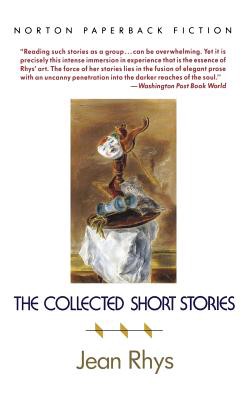
The Collected Short Stories, Jean Rhys

All of Rhys’s short stories in one volume, you lucky little darlings. Thirty-six stories, spanning her lifetime. Read this because her language is the kind of concise minimalism that fills the lungs, gives you room to breathe. Like walking into a museum gallery, the air conditioning on full blast, paintings perfectly, evenly, spaced on the walls. Yes, the world is on fire; yes, we are all going to die alone. But look at that — there it is on the page, loneliness, rage, violence, even political unrest — and these stories were written over the course of the 20th century. Some nearly a hundred years ago. There’s a strange comfort in knowing nothing ever really changes, that we go on and on and on in spite of it all.

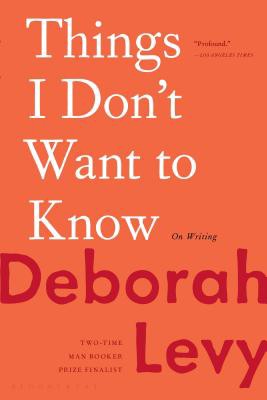
Things I Don’t Want to Know: On Writing, Deborah Levy

Levy’s magnificent novel touts itself as a response to George Orwell’s essay “Why I Write,” but it’s also a vivid mini memoir, a treatise on how writing can be a profound act of transformation. A vessel in which to process life’s traumas, to render beauty from grief, sense from the absurd. Each book I’ve listed here is testament to this. Their authors have translated their anger and confusion about the world through their work. Over the last year I’ve reached for Levy’s book often. How do we survive these perilous times? I search its pages. Pen to paper, Levy replies. Pen to paper.

4 Novel Ways to Find Writing Inspiration

Let’s start with a cliche: the journey of a thousand miles begins with one step. The problem with that sentiment is that your first step could go in any direction — and that can often be paralyzing. Indeed, the question that every writer has faced at least once is what do I write about? But beyond the tried-and-true approaches of writing what you know and using writing prompts to spur your imagination, where else can writers find inspirations for a story?

In this post, we’ll look a few unorthodox approaches to finding inspiration that writers can use to jumpstart their next big project.

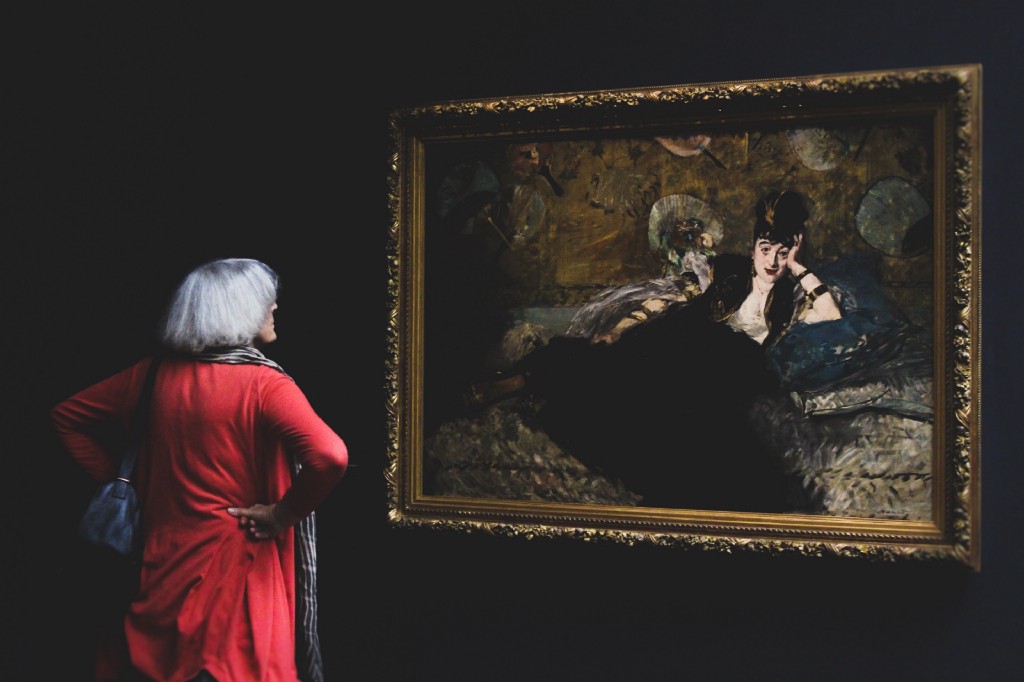
Head to your local art gallery

A number of bestsellers found their inspiration in works of art. Just to rattle off a few, think about Tracy Chevalier’s The Girl with the Pearl Earring, Donna Tartt’s Pulitzer-winning The Goldfinch and, er, The Da Vinci Code. However, a story doesn’t need to directly reference a painting in order to take inspiration from it.

In the film Amélie, the title character’s neighbor is an amateur painter obsessed with recreating Renoir’s Luncheon of the Boating Party. In particular, he struggles to recreate one woman in the crowd, as he’s unable to fathom why she is there and what she is thinking. Perhaps if he were a writer, he’d be better suited to imagining her circumstances and bringing her to life?

As an exercise, take your notepad to an art gallery — ideally, one that exhibits works that feature large crowds. Focus on those elusive characters in the background and ask yourself, “who are they, and why are they there?” The answers you give are likely to be informed by your own experiences than the intentions of the artist — but what a great way to get those mental cogs turning!

Focus on those elusive characters in the background and ask yourself, “who are they, and why are they there?”

Take an Improv Class

In the past decade, improv has evolved beyond a staple of college theatre majors and Drew Carey TV projects. In just about every city in America, you’ll find folks from all walks of life taking improv classes to improve their confidence, have fun, and make friends. But for the writer, the skills inherent to improvised theatre can be easily translated to the written word.

For one, improv teaches you that anything can be the starting point of a story. From a single-word suggestion, next to anybody can develop a scene with a beginning, middle, and end that features some amount of character change.

The core principle of “yes and” is also something that helps any storyteller quickly build upon their ideas. The simplest example would be if one character says, “Isn’t it a lovely day?” then the other character says, “YES it is. AND isn’t it great that we’re having a picnic today.”

It’s a way of logically building up a story that asks if this is true, then what else could be true? Of course, if “yes and” is used recklessly, all of your stories might end up on a moonbase — but with some practice and discipline, it will wire your storytelling brain to remember what’s come before and consider its consequences.

But, if you can only take one thing away from improv, it’s that you should always start your scene with a gun. (Not really.)

Everything I Know About Writing a Novel I Learned from Watching British People Bake

Identify tropes and subvert them

While the other suggestions here are designed to organically generate ideas, some writers might prefer a more cerebral approach to finding inspiration. For example, a common gripe of many book fans is how certain genre tropes seem to appear in every book they read. If this sounds familiar to you, why not dig into these tropes and see what inspiration jumps out at you?

For example, if you’re writing in the realm of fantasy, you might choose to look at some of the most popular books in that genre and keep a running tally of common tropes. You might notice the incredible number of orphan protagonists and think, “what would it be like if an epic fantasy hero had a huge extended family with crazy uncles and forgetful aunts?” How would that story play out?

And while some people may argue that the subversion of too many expectations can undo the things that they enjoy about a certain genre (or stretch the credulity of the plot), a single twist of a trope might be all you need to find a fresh angle on the kind of stories you love to read.

A single twist of a trope might be all you need to find a fresh angle on the kind of stories you love to read.

Browse through Craigslist

When Craig Newmark started his online classifieds site in 1995, he probably didn’t imagine it would become a window into the eccentric lives of everyday people. If you browse through its pages long enough, you’re likely to discover mysteries ranging from people giving away haunted dolls (great fodder for a horror story) to folks looking to sell their entire life (which sounds like the making of John Cheever short).

Of course, the items for sale don’t have to be as outlandish as those examples in order to spark your imagination. Sometimes, simply asking why someone would buy something — or why they want to sell it — is all you need as a starting place for a story. Just remember, one of the most famous examples of super-short fiction takes the form of a classified ad — “For sale: baby shoes, never worn.”

About the Author

Emmanuel Nataf is the CEO of Reedsy, a marketplace that connects authors and publishers with the world’s best editors, designers, and marketers. Over 5,000 books have been produced via Reedsy since 2015.

“It Cannot Be Good, Wanting So Much”

“White Town, Black Town”

By Bindu Bansinath

By 1940, Western railroads snake through all of India. I hum the tune of “Suqun Dil Ko Mayassar” on the train ride back from White Town to Black Town while my husband, Ashok, bustles a cart of steaming tea from one end of the train to the next. The trip home from the Crick estate is a convenient thirty-two kilometers, the last leg of Ashok’s chaiwallah day.

I save a place for him beside me that he is never free to take, and so I sit alone, breathing in the mildew smell of the seats. Opposite me, a middle-aged punkahwallah waves a paper fan, shifting it between his sweaty hands. I avert my gaze when he looks at me. With the hand that’s free of the fan, the punkahwallah pulls the drawstring on his pants. His brown eyes dampen. One hand continues the wave the paper fan, the other twists at the hard thing inside his harem pants. I open my mouth to scream but stop myself — after a long day of work, even the punkahwallah has his needs, and anyway, loud sounds discompose the English passengers.

Once home, I prepare a pot of rice with pickled garlic as Ashok smokes opium in the small metrics of our living room. Our home is no more than a bedroom and a kitchen interconnected: one side is made of pink stucco, the other, blue adobe. Everywhere the air cloys with a camphor smell I cannot wash out. Over the window hangs a bazaar fabric of the Goddess Kali, her tongue lolling, one muscular cobalt leg crushing Shiva beneath her. We leave a shared chamber pot on the outside verandah, where it is cleaned by rainwater.

“Latika! I’ll take dinner here,” Ashok calls to me from our bedroom futon.

He turns on the tube radio, a soft British voice reporting on threats of European war. There is news in our country too, news of Quit India! strikes and civilized mutiny, but we do not listen to local stations. Ashok cocks his head toward the radio as I come to him with a silver tray. I am fourteen and he is eighteen. Both of us are at the age of understanding nothing. Married the week after my first menstrual period, with the expectation of conceiving children of our own, we have been together just shy of ten months, each of us a budding strangeness in the other’s life.

Of all the ways we are strangers, Ashok’s schoolboy optimism is the thing that mystifies me most. The mindless frenetics of railroad travel inspire Ashok, who has never left the South of India. He has dreams of becoming a military engineer, of studying abroad at Oxford or Cambridge, institutions he finds invariably better than anything here. Like foreign men, he has dreams of drawing lines on a map that come destructively to life.

“Mr. Crick and I were talking,” Ashok says. “After two, three years of work, he says he’ll pay my way through University in England.” Ashok lifts his middle finger to his thick bottom lip. He sucks pickle oil out from the crook of an overgrown fingernail.

Mr. Crick is Ashok’s employer, a London-born engineer who oversees the tracks of the city’s White Town. Ashok took up work with him three months into our marriage. Ashok has told me about these talks every night since he was first hired, some nights with more conviction than others.

“And me?” I ask. I make my voice high and small, each time acting like it’s the first time that we’re having this conversation. “What about me? Will there be work for me there, when you’re off in school?”

Ashok dips his hands into his copper glass of water I’ve set beside his tray, rinsing his fingers. Flecks of oil float to the water’s surface.

“I can ask the Cricks,” he says, yawning. Last month, after my second miscarriage, after it became clear I wouldn’t produce a viable child to occupy my time, Ashok offered my services as a maidservant in the Crick household.

“He’s a generous man. Taking us both on,” Ashok says. I nod, clear his tray, pour out his dirty water. After I finish the washing, he makes space for me on the futon. I lie on my stomach, my face pressed into the dairy-milk smell of Ashok’s feet. He prods me on the shoulder, as if to ask me a question, and I turn into him.

I had never seen a naked male body before Ashok’s, a sinewy brown cord knotted tight. When he touches me, it is only ever from the waist-down; before he takes me, he smokes a concentrated poppy so that what my body cannot do, he imagines it does. I always imagine he is touching someone else.

After, we lie naked on the futon, our bodies wet from dissatisfying efforts, my sari a makeshift blanket unraveled around us.

Ashok stares at a spider on the ceiling.

“Mr. Crick says I have potential,” he says.

“Very good,” I say.

“You don’t think so?”

“Sure.”

Ashok picks at a hole in our futon. “What do you know?”

Maybe Ashok is right, and I don’t know anything. He is with me not for what I know, but for what I have been taught: since girlhood, I have been trained to be with him, to raise men by rote and ritual, to fry air into dough for them, to fast for their longevity, to scrub bedpans in times of their illness. This is the extent of me, Ashok thinks, and sometimes I too will tether my body to his belief in my own ignorance, because it exempts me from the burden of my own want.

Mr. Crick’s wife wears her blonde hair in a topknot and bouffant. When taking orders from her, I avoid her eyes, which are the shade of ice-blue that appears gray in Western films. In the few months I’ve worked with the Cricks, I’ve often found her bedridden under a canopy of mosquito nets, weakened by a gentle nervousness.

“Good evening, Latika.” She stretches inside a taupe silk robe, stroking my braid by way of greeting. She wipes the residue of my coconut oil on her bedsheet. “Would you replace these sheets for me? I know it’s time for you to go, but I’m afraid they’re soiled.”

She lifts her legs, and I pull the sheets from under her. “Yes, Tamsin.”

Ashok was pleased with me when he learned Mrs. Crick and I are on a first-name basis. He thinks it means closeness between our two families. I do not tell him that it is an allowance she makes only out of embarrassment over the time I had to teach her to use a squat toilet. She had soiled her cinched-waist dress attempting it alone. I did not tell Ashok how I scrubbed her feces out of the wool with some bleach and a washcloth while she cried on a silver-plated bidet.

“Is your husband well?” she asks.

Tamsin speaks with a schoolteacher’s slowness, affecting her words with a haphazard Indian accent she assumes for my benefit. This is her routine line of questioning as I fix her hair and set down her dinner tray of strip steak and masala potatoes. It is for the Cricks that I have learned to cook red meats, something good Hindus, believing in the life-force of every living creature, do not permit themselves to do.

She presses a fork into one corner of the steak and cuts through, revealing overcooked meat. I bite my lip. I know how to prepare it as she prefers: slightly rare, flushed and running with juices, the liquid evidence of a thing once alive. And yet I have this tendency to keep the iron skillet on the flame longer than I should, until all such evidence is dried up.

“He is well, thank you.” I have learned to answer her as Ashok trained me to do. “Working hard for Oxford.”

“Ah.” She nods. Her eyes pass over my body. I cross and uncross my hands in front of me.

“Sorry,” I add. “About the meat. Next time.”

“Not at all,” she says, her cheeks going momentarily red. I stare at the sliced chunk of steak on Tamsin’s plate, which soaks, now, in its own sorry puddle of juices. I am sorry to be this obsequious; I wonder if Tamsin is sorry to have made me so. Her silverware clinks as she slides her fork down into the uneaten chunk of steak. She lifts the meat to her mouth, smiling at me as she works her jaws in delicate little circles.

“There’s no need to apologize for these little things,” Tamsin says.

Blotches of red make patchwork of Tamsin’s cheeks. Her ruddiness is one of the only reasons I am grateful for the brown of my skin, dark enough to keep my shame and pleasures private.

“Thank you.”

Tamsin smiles at me before gazing down at her plate. I listen to the continued clink of her silverware as she dissects her dinner. I glance at her bookcase, teeming with the disarray of a picky reader. Above the shelf is a framed world map, countries rendered in pastels. I glance at Tamsin too. The yellow curls I pinned up for her this morning have come loose. With food in her cheeks, Tamsin looks like the grown-up version of the beautiful infant in a nursery rhyme my mother used to sing to me: Chubby cheeks, dimple chin. Rosy lips, teeth within. Curly hair, very fair. Eyes are blue, lovely too. Teacher’s pet, is that you?

The child is to finish the rhyme by answering her mother: Yes yes yes!

“Latika?”

“Mhm?”

“I was saying you’re dismissed now. James will have your payment on the way out.”

Tamsin sets the tray with her half-eaten meal on the nightstand. She closes the panels of her nightgown tight around her.

As I make my way to the door, Tamsin clears her throat. “When you daydream like that,” she says, “what is it you dream about?”

“I wasn’t.”

Tamsin nods. “Come now, dear. We all have dreams.” She leans back, picks up the novel that’s splayed on her duvet, and turns to the page she has dog-eared. She has stripped away the cover, but I can still see the title threaded through the shell. Rebecca, reads the embossing.

Tamsin clears her throat again — this time, for me to leave. I shut the door behind me and run down the ivory spiral staircase of the Cricks’ house. Once the home of a wealthy Indian tea grower, the place is thick-bodied with concrete, built to withstand monsoons. An aggregate of glass-encased light bulbs hangs from the ceiling of the foyer, striking a rose-glow on the milky walls. Despite the aggressive absence of blemishes, occasionally a gecko still creeps along the walls, parading its spotted scales. There are three bedrooms with a connecting master-bath for each; a kitchen with a dormant tandoor oven in the centre; an office-study filled with books by Shakespeare and Kipling.

At the entrance to the foyer, I line up behind a row of cooks and maids. In front of the line, handing out envelopes of sixty-five rupees apiece, stands Mr. Crick in trousers and suspenders. Squarish black spectacles enlarge his eyes, which, unlike Tamsin’s, are round and brown like my own. Second to last, I watch him hand an envelope to Priyanka, a Marvadi maid not much older than myself, before I step forward to collect my own payment.

“Latika, yes?”

“Yes.”

“Ashok’s wife?”

“Yes.” I kneel to touch his feet, pressing my hand from his leather-toed shoes to my forehead, smudging the powdered dot of vermillion on my forehead, the mark of my married life.

“My husband says you are doing big things for him.”

Mr. Crick smiles. The first two buttons of his Oxford are open, exposing a thin undershirt. “An ambitious young couple. How is Tamsin?”

“Ashok is the ambitious one, sir. And your wife is well. She has taken all her meals.”

“Excellent. Do check in with me tomorrow.”

He hands me an envelope with a King George VI stamp in the corner, even though it is not to be mailed.

“Yes, sir.”

I feel his eyes on me as I stuff the paper deep in my breast pocket, until its corners camouflage my blouse’s curve.

That night there are technical complications on the railroad, and the ride into Black Town takes an hour more than usual. Men with longer distances to travel become agitated and restless; boys like Ashok, with thin, pockmarked faces, are on the natural receiving end of their anger. Curses punctuate the transit, “hey bastard” in three languages: English, Hindi, Bengali. I shut my car door and hum a tune from Acchut Kanya to myself. The film is my favorite of all Bollywood talkies; I saw it with my mother one month after its release. It was one of our few excursions alone. I remember us eating guava-flavored ice in the stickiness of cinema seats, watching the impossible love story of a Dalit girl and a Brahmin boy. Now that I am married, I see my mother even more infrequently. I write her letters, but Ashok refuses to buy the postage to send them. I have complained until my voice thinned into weightlessness, but still, Ashok thinks he is justified to keep me from her. The scriptures says it is my duty to honor a different home.

Finally back in Black Town, I turn the tube radio to Bollywood hits, then fry mustard seeds and yellow dhaal over a burner. Through the fizzles and music comes the steady current of Ashok urinating into the chamber pot outside.

When he emerges, he avoids me, going straight to the rusting dial of the radio. He turns it, replacing the beat of tamburas with trained operatic vibrato:

Write a merry song to cheer them

Tell them that I long to hear them.

“Noel Gray,” Ashok declares, seeing the blankness in my face. “I was thinking. If Mr. Crick is going to send us to England, shouldn’t we know the music?”

I shrug. “We have our own music.”

Ashok lights a pipe. Because we have no table, I bring his dinner to the futon, squatting beside him and blowing the dish to cool it for him. I can smell the dried sweat of his work shirt. Small burns cover his fingers like ink notes. I know that he has been called bastard today as he is all days, that sometimes he is struck on the face by civil servants who accuse him of watching their wives with eyes that want too much. I know that he will not tell me these things when I ask about his bruises, that instead he will talk of something, anything else — his fledgling ideas about railroad design, the passengers who slept through their stops and ended up in all kinds of elsewhere, the humidity of the weather these days, the slight lack of salt in the dhaal I’ve made. And maybe after all this talk, he will press his body into me as we sleep, not caring if I am awake, only that I am there. I know, and I wonder if he knows, that when people look at him, they do not see the polymath-man he fancies himself to be, but rather something else, something less than a person.

At work I honor Mr. Crick’s orders piously. While the other servants dedicate themselves to the miscellaneous upkeep of the estate, I spend each day at Tamsin’s bedside, a makeshift nurse, pressing cool sponges to her powdered forehead, pouring her brandy when the emotional intensity of her afternoon programs gets to be too much.

“Good morning, Latika,” she always begins, then wraps the end of a cigarette with aquiline lips. “Light this, would you?” Often we end that way too.

“You’re lucky,” Priyanka teases me during the servants’ lunch of plain chapati. Her strange blue-green eyes roll back. “All you have to do is take care of a vegetable.”

There are rumours, Priyanka tells me, of fissures in the Cricks’ marriage. I learn Mr. Crick married Tamsin strictly out of familial pressure. It had been feared by his well-meaning relatives that Mr. Crick, upon immigrating to India, would fall victim to the poor judgments of a tropical climate and take up with prostitutes in our buzzing red-light districts. I understand too that Tamsin does not want to be in India any more than he desires her here, that the two of them live like an arranged couple, leading separate lives inside the same household. It is this, their separation, and not the brothel rumors that astound me. Besides, that a man strays for excitement is inevitable. To find shock in that is to be an ill-prepared woman. This Priyanka has always told me, when we are elbows-deep in the dish suds, when we knead our knuckles into fresh atta.

Each evening before collecting payment, I give Mr. Crick a report on his wife’s health. I never have much of interest to say, and yet I find myself looking forward to these check-ins with him, smoothing down the frizz along my hairline before them. When Mr. Crick comes home from work, I alert him that his wife sleeps heavily, or explain that I have given her a sponge bath to quell her nerves, or a foot massage though she seldom walks.

“Good morning, Latika,” she tells me as I set her hair with an iron, puffing the bouffant with yellow pins. “How is your husband?”

“He is well, thank you. Working hard for Cambridge. And yours?”

“Just fine, thank you.”

Beyond pleasantries about Ashok, she stops asking me questions. Often I sit in the armchair beside her bed as she reads, our mutual silence broken only by the rustling of her sheets as she gets up to go to the bathroom, or by her frequent requests for tea.

Waiting on her is like being the governess for a mercurial child. Sometimes she’ll forget the task she’s sent me out to do. “What’s that?” she’ll ask me, as I push her door open, balancing a saucer and a porcelain cup of tea. She’ll shake her head, tense her eyebrows until a wrinkled cleft appears between them.

“Take that away,” she’ll say, pinching her nose, shooing me away. “It smells too strong, that.”

In time I confide these anecdotes to Mr. Crick, covering my smile in shyness, speaking with an odd, new humor I have never before known myself to possess but that emerges from my mouth with the certainty of something that has been there all along. He laughs with me.

It is during these moments with Mr. Crick that I find myself talking the most. Each day, after the other servants leave, I smooth my hair with the damp sides of my palms and meet him in his office-study. Unlike the white walls of the rest of the house, the walls of Mr. Crick’s study are paneled with deep cherry oak and built-in bookshelves. On the end table in front of Mr. Crick’s work desk, a glass display case holds an open Bible. He keeps my envelope tucked into an antique chocolate box, apart from the rest. I am allowed free access to his library, taking out Robinson Crusoe and Little Women at my leisure.

“Something to entertain you.” Mr. Crick pats my shoulders as I make selections. “When work around the house gets to be too much.”

“I’m not the best reader, sir,” I admitted, the first time he handed me a title he’d chosen himself, Middlemarch, by George Eliot. “Not much schooling.”

It is true. I have finished only my primary education; after my engagement to Ashok, the prospect of moving on to pre-college was nonsensical.

I pushed the book back to Mr. Crick, but he pushed it back by the spine.

“I don’t know anything.”

“Nonsense,” he insisted. “You’re a bright girl. You’ll learn.”

Mr. Crick smiles at me, rolling up the cuffs of his buttoned shirt. Like so many of the Englishmen here, he has a forgettable face, with a thin line of lips, and cheeks gone slightly gaunt with age, offset by a head of thick, boyish brown hair.

Over time, the man Ashok sees in Mr. Crick, I too begin to see. In our daily exchanges, I come to learn that Mr. Crick is a poor cricket player — I’m pathetic with a bat, he swears — that he was an altogether average at Brighton boarding school.

“I had no potential there,” he says, laughing, leaning back in the creaky leather chair of his study. I hover in the frame of the doorway, awaiting my envelope. But outside the rain taps down like impatient fingers on a desk. I can wait a little while longer, or at least, until the water slows.

“It’s better for me here,” Mr. Crick continues. “Easier.”

“My husband is the opposite,” I say. “He thinks all the answers are abroad.”

“And what do you think?” He asks the question with his entire eyes, darker than powdered chicory.

“I think it cannot be good, wanting so much.”

Because railroad travel is heavy on weekends, Ashok works overtime on Sundays, and I am left at the Crick estate long after the other housekeepers leave. On one such evening, after Tamsin dismisses me early, her body drowsy with sleep, I decide I will catch the train into Black Town alone. The rain is clearer now than it has been in months. Perhaps I can use the time before Ashok arrives to relax on the verandah. I walk downstairs and knock on the brass door of Mr. Crick’s office-study to take permissions.

“Sir?”

“Come inside.”

“Sir. Your wife is asleep. My husband is working late. I’m wondering if I may collect my payment? I was hoping to make an earlier train today. Just today.”

He pushes his spectacles further up his nose and sighs. His shirt is stuck to his torso, so dense is the post-monsoon humidity.

“Tell your husband there’s no need. It’s dark outside. A young woman shouldn’t be walking to the train alone.”

For a moment, I am terrified I have upset him. But the look in his eyes as he stands and walks toward me, his body as sleek as a grown cat’s, is something different than upset. Like so many things, I cannot place the impression, and yet it turns my mouth rancid as bad butter. I know that there is a sourness inside the cleft between my legs, which heats, in spite of my unease, to the lilt of his voice.

“Yes, sir. I will tell him. But he is only looking to show you he is a good worker.” Mr. Crick slides a hand under my blouse and presses hard.

“We’re very grateful to you, sir. He has big dreams. Engineer dreams. He tells me you’re going to do big things for us.”

He nods, brown eyes averted, undoing his belt buckle with his free hand. He calls my husband a bright young man and asks me to do with my mouth something I have never done before. As if greeting an elder, I drop to my knees. What we do then is another kind of reverence. His belt buckle is cold in the way of things gone long untouched. Underneath, the tip of the shaft is basted with salt.

That night, I put on a pot of rice for Ashok and listen to him practice English alongside the tube radio. I have a tightness inside that will not let me look at him. He is breaking sentences into monosyllables, sounding out each with accented slowness.

“Latika,” he says, switching the radio off. “The water’s boiling over.”

I turn to the flame: a distended white film leaks over the edge of the pot. “Oh.”

He shrugs and turns the radio back on. I scrape the overdone rice onto a banana leaf beside him. It is the first time I have overcooked anything. Ashok leans into me, hooking one finger in the lining of my blouse. “It’s nothing to worry about.” Like a sheepherder, he turns my body to him, shifting my weight onto his hips, dismantling the tie of my sari that another man has today dismantled, guiding himself inside in one soft gluck. Coral chiffon flutters around us.

For all the roughness of his skin, Ashok’s lovemaking is an unbecoming softness. Mine is the only body he has ever wanted. He is hungry for it because it is consistently his. I slap away the small stings of mosquitoes who take our intimacy as an opening for blood. As Ashok finishes, I close my eyes and hold him still. I pray for desire to shirk into me, but Ashok does not feel like anything, only skin and hardness. He slides me off him and falls asleep. I tell myself that the wetness in my body is not as heavy as the shame that hums between my ears. But then it is likely that I do not know anything, and the things I tell myself are things not worth telling.

Mr. Crick takes my desires and puts himself inside them, the photo inside a locket, then winds the chain back around my neck, my knees, my back. Unlike Ashok, there is no censorship in his aggression, no part of me he is disinclined to touch. The expertise in his hands is so pellucid that it absolves me of my guilt, leaving behind only a prickling after-empty.

“Bright girl.” Mr. Crick kisses the nape of my neck as I arrange the volumes of his bookcase. “You’re glowing.”

We carry on this way every Sunday for two months. I continue to update him about his wife, whose condition remains unchanged.

“She’s been eating Cadburys and mango pickle together,” I tell him, presenting him with the leftovers from Tamsin’s afternoon plate, for evidence.

Mostly Mr. Crick laughs and thanks me for my reports, no matter how inane. But there are times when he’ll listen and readjust his cufflinks, when patches of red overcome his cheeks like turbulent weather. He is thinking — I know this from his own admissions, from the candor that comes easily in our dishonest circumstances — of his wife’s sacrifices, how far Tamsin has traveled to be with him, how she has adapted to the funny taste of jeera powder, how one day she might die in a country on a continent that is worlds removed from the brick street where she grew up, where they could have built another kind of life together. I nod and collect my paycheck off the desk.

One afternoon when Mr. Crick is at the railroads, Tamsin calls for me in the middle of the servants’ lunch. “Latika!”

Her voice is so shrill that even the mosquitos stop midair. I pass my plate to Priyanka, who clucks her tongue.

“You’d better go,” she says. “I can only wonder what that could be about.”

I make my way up the spiral stairs, away from Priyanka’s reprobating eyes, but my feet this past few weeks have grown swollen in flat chappals, and my steps are leaden and slow. A nausea both fresh and familiar roils in the pit of my stomach and rings fetid in my mouth. I know that I have been discovered, if not by Tamsin herself then by the click-clacking of Priyanka’s tongue.

But when I open the door, I do not find Tamsin in hysterics. She sits cross-legged on her pillow, smoking a cigarette, the skin around her eyes tender pink. A film of hard, red gunk dries on her inner thighs. The bedsheet is studded with clots. Though larger and rounder than what came of my own two miscarriages, I recognize them immediately.

“Good afternoon, Latika.” She pats the bed, as if inviting me to sit. “I seem… I seem to have soiled these sheets, haven’t I? Replace them.”

“Yes, Tamsin.”

“Yes, ma’am.”

My fingers shake as I grasp the silk and tug.

“How is my husband?” Tamsin asks, lifting her legs and breaking into cry-laughter. “I mean, how is yours? Working hard for Oxford and Cambridge?”

“Ma’am?”

“Dear,” she slurs, gripping my hair for leverage. “The both of you belong here.”

Tamsin loosens her grip. She looks away, at the burgundy-colored crust drying on her thighs.

“I did it myself,” she says. “The neck of a brandy bottle. Some fresh wire.”

She exhales, her breath a drag of invisible smoke, and leans back into the dent of her pillow. “I forgot who taught me. I just knew, somehow. How to do it.”

She shuts her eyes.

“I didn’t want a child to grow up in a place like this,” she says. “A place like yours.”

My head is weightless. I kneel at the foot of the bed and vomit.

Kutti. Kutiya. Bitch. Tamsin spits the words, disgusted, standing up and tying her robe.“Out.”

Each appellation I deserve. But two of the three languages I never imagined her knowing.

On the train ride back to Black Town, I blink back the wet in my eyes, stare hard out the frosted glass of my car. Ashok’s figure flits back and forth, car to car. I watch him. Memorize his stature as he lifts a colander midair, as he strains pepper and Darjeeling from a pot. He wears a turban to hide perspiration in his hair from the passengers, so many of whom pretend they are quick to sicken.

Later, we lie on the futon.

“How did you get fired, Latika?”

A candle burns in the corner of our home, illuminating the Kali fabric. I bite back a rising bile in my throat.

“I was incompetent.”

The next day, Priyanka, who will become Tamsin’s new caretaker, drops off my final paycheck, balancing a copy of Middlemarch and my envelope in one hand. I present the envelope to Ashok that night. We are undressed for bed but untouching. I press my hands to my breasts, distended and sore.

“It isn’t the money, Latika. What will Mr. Crick think of this?”

Ashok shifts his weight away from me, begging for distance on our one-meter futon. With all the strength in my body, I grip his torso and turn him over, then kiss down to the seam of his pants. “You’re a bright young man,” I say, taking him flaccid between my lips, half to hold back my persisting bile, half in apology.

If Ashok wonders where I have learned to do such an act, he does not ask, only whispers: “Mr. Crick still thinks so, doesn’t he?”

I nod yes, over and over, until my jaw gives out.

With Indian independence from the British Empire in 1947 will come the departure of all military engineers and viceroys, and from home, Ashok and I will witness the dissolution of White Town and Black Town. The people of our city will realize, some of us more reluctantly than others, that all of Calcutta is, in fact, a Black Town. Only the ones who pretend otherwise, the Anglo-wallahs, will continue to live in search of people to owe.

Five years later, in 1952, the Indian government will put cooling fans and seat lights in the train cars of third-class passengers. Such changes are inevitable, even allaying, but in our teens, in 1940, we do not dream them possible.

I avoid White Town and live singularly in service of Ashok, but the nausea of my firing day never leaves me. While Ashok tends to his railroad work, I stay bedridden with hot flashes. On occasion, I write apology letters to Mr. Crick, imploring him for another chance at work, and then to Mrs. Crick. I write to her until I run out of apologies, and then I write to her about anything: a dream I had in which my skin is blue and black, and no matter how many garments I put on to dress myself, the cloth dissolves into this skin, into my nakedness. I hide these letters away in the pages of Middlemarch, a novel that doesn’t interest Ashok. I am not so naive as to send these apologies. In time, I am not so naive as to write them.

For weeks, as my feet and abdomen engorge, I pray it’s not what I know it to be. Then I pray that it will be like the others, self-erasing. But the nausea never leaves me. One night when I cannot swallow back my bile, I think of turning Ashok over in his sleep and laying on him the weight of my disgrace, confessing to him how I have loved in body the same man he adores in heart. But no matter all the things I have done, I cannot bring myself to do this, waking him instead by the sound of my retching outside into the chamber pot.

“Morning sickness?” he mumbles sleepily, holding my braid back in one hand.

A few months’ time proves him right. By some godsend, I grow fat and fertile. The mystery of my nausea, which I had attributed to shame, is instead the twisting force of a living thing. In that interim before I give birth, colored by the relief and jubilation of both Ashok’s family and mine, I watch my husband travel to the train station alone. I prepare vats of rice for his nightly arrival, listening with sadness and then anger over his big engineer dreams.

“Mr. Crick says two more years, Latika. Two more years, and we’ll be off.”

His dreams do not stop until our child is born, a baby boy with skin as white as the Cricks’ milky walls.

“Oh,” Ashok says, hands crumpling into mine on a sweaty hospital cot.

Day after day following the birth, Ashok and I stay at home, myself tending to the baby, Ashok lying soundless on the futon. I never have to explain my infidelity. Words are no more than fruit flies moving slowly through the air. That Ashok will not return to work goes unspoken. I steel myself to be thrown out of this house too, for karma to snake around my body and nip it into place.

But this doesn’t happen. Instead Ashok stands up from the futon one day and walks around the perimeter of our house, as if taking inventory of what is his own. He stops at the tube radio, turning the knob to a local channel that plays a Devika Rani song:

mai ban ki chidiya ban ke ban ban bolu re

mai ban ka panchhi ban ke sang sang dolu re.

Curtained by sound, we cry as much as strangers can in the presence of other strangers. And then, standing beside me, Ashok takes the baby from my arms into his. He stares down into its wide, chicory eyes, at once so like and unlike our own. Though we are at the age of understanding nothing, it is this that I know: Ashok will forgive me. In some ways, ours is the child he has always wanted.

7 Books Set in Mexico City to Read After You’ve Watched “Roma”

Beyond the lush rendition of the lopsided but loving employer-employee relationship, the political turmoil of the 1970s in Mexico, and Yalitza Aparicio’s soulful turn as Cleo, Alfonso Cuarón’s Oscar-winning Roma beguiles in its exacting recreation of its setting, Mexico City’s Colonia Roma. While the film offers the neighborhood as it was in Cuarón’s childhood, details such as the virtually constant soundscape of vendors, buzzy streets, dogs, and dog poop remain recognizable today.

Contemporary Roma comprises of two colonias, the elegant, tree-and fountain-filled, almost Parisian Roma Norte, and Roma Sur, the edgier, art-ier section, where the Roma family’s house is located. With so much — family, politics, race, and what Aparicio’s eyes channel — to absorb in it, Roma invites multiple viewings and when you’re done, these seven books (and a bonus Luis Buñuel black-and-white take) might satiate further. These works wander Roma and the rest of D.F., — short for “Distrito Federal,” the still-used nickname despite its official rebranding as CDMX (Ciudad de México) in 2016, — and through the lives of native Chilangos, who’ll likely charm as much as Cleo and company in Roma.

Battles in the Desert & Other Stories by José Emilio Pacheco

Poet José Emilio Pacheco’s recollections’ of boyish adventures, lust, and tumult, in Roma takes place in 1940s and 1950s, several decades before Alfonso Cuarón’s early 70s Roma. Pacheco’s Roma is just barely bourgeois and reads as a shabbier, grittier place than the area’s current hip incarnation. The “Battles” of the titular story refers to a version of the children’s game “Cowboys and Indians” but instead the gangs in Pacheco’s Mexico City schoolyard are Arabs and Jews. However, more local troubles of sex, class, and an infatuation with his friend’s mother bother the young Carlos. Similar themes obsess “The Pleasure Principle,” in which a young Chilango boy exiled in Veracruz because his father, a military general is transferred there, falls in love with a working-class girl. He confesses to his diary: “It seems like she’s ashamed of her father, who has one of those cars with loudspeakers and drives all over the state selling corn-removal ointment, hair dye, medicine for malaria and worms. There’s nothing wrong with that kind of work. I’m the one who should be ashamed of my father, who has made his living killing people.”

Sea Monsters by Chloe Aridjis

Chloe Aridjis’ dreamy, charming coming-of-age novel roams the streets of Mexico City before heading to the Oaxaca coast. Before the teenaged Luisa goes in pursuit of runaway Ukrainian circus dwarves, she’s searching the streets of Roma for a boy named Tomás Román, who works in a (real) bookstore called “Through the Looking Glass.” Once they find each other, their joint wanderings include a visit to the house where William Burroughs shot his wife, Joan Vollmer, a trip to lucha libre wrestling in Arena México, and a night out at a goth club. The area comes alive in the tamales sellers’ blaring mantras and a scene featuring a homeless woman dancing in one of the neighborhood’s many resplendent classical fountains.

The Savage Detectives by Roberto Bolaño

Before it goes all over the globe and multiple narrators take over, The Savage Detectives begins in Mexico City with the 17-year-old aspiring poet Juan García Madero, one of the two character stand-ins for Bolaño in the book. Madero quits school to pursue his literary ambitions and joins a gang of poets, who called themselves the “visceral realists.” Based on Bolaño’s own time with literary cohorts in the 1970s, the novel gallivants through Mexico City, and its exploits include book liberation (theft), Madero losing his virginity, and a New Year’s Eve standoff with pimps that ends the book’s time in the city.

The Interior Circuit: A Mexico City Chronicle by Francisco Goldman

Grieving his wife Aura Estrada’s tragic death (which he wrote about in the unbearably stunning Say Her Name) five years before, Francisco Goldman decides to learn how to live in the city without her by learning how to drive it in 2012. With the help of iconic Guía Roji street atlas and driving lessons, Goldman explores the streets of Roma and La Condesa and then later the Circuito Interior, the highway loop around the city’s central neighborhoods, to make an exhilarating, breathing prose portrait of the city, its quirks, and history. Inside and later outside DF “bubble,” Goldman deals with the country’s politics and horrifying effects of the drug trade.

I’ll Sell You a Dog by Juan Pablo Villalobos

The protagonist of Juan Pablo Villalobos’ third novel, Teo, a cranky retired taco seller, lives in a roach-infested Mexico City building. He relies on Theodor Adorno’s Aesthetic Theory to argue with everyone, including a Mormon, with whom he has a back-and-forth quote battle, by responding to the missionary’s words of “the Lard” with Adorno’s lines. Teo is also resolute that he’s not writing a novel. Francesca, his neighbor with whom he flirts, leads the building’s literary salon, and she has determined that he is in fact working on a terrific novel. Juliet, a greengrocer who doesn’t sell edible produce but rather is “the official supplier to every riot” is another of Teo’s love interests. Villalobos writes: “Her foul-smelling tomatoes were famous at all the well-known sites of demonstration: on Paseo de la Reforma, down in the Zocalo, on Avenida Bucareli; she even furnished the peasants of San Mateo Atenco with vegetables when they rose up to protest at their land being confiscated to build the airport.” These four are just the beginning of the characterful types that inhabit the bizarre and very witty universe of Villalobos’ Mexico City. Multiple dogs feature — one is named Turnup. In a flashback to Teo’s youth, Diego Rivera makes a brief appearance.

The Story of My Teeth by Valeria Luiselli

I’d put Valeria Luiselli’s terrifically inventive The Story of My Teeth on every list of book recommendations ever but for the purpose of this one, it’s set largely in and around Mexico City. The book’s protagonist, “Highway” starts off working in a juice factory, based on the Mexican brand Jumex, in which Luiselli collected stories in a collaborative effort that became part of this book. He soon becomes an auctioneer of amongst other things, famous people’s teeth. He replaces his own messed-up set with pearlies that apparently once belonged to Marilyn Monroe. Plus, there are excursions around city, including a peek into D.F.’s Korean neighborhood, kaleidoscopic referencing (the teeth belong to Borges, Woolf, and others), photographs, and an intriguing timeline locating Highway in history right up to 2013 (“The Chronologic” by Christina MacSweeney, the book’s translator). A lot goes (and on) in the text(s) that you could read it over and over and still be stunned into laughter by lines like this one: “For the lucky man, even a cock lays an egg, as Napoleón sings.”

Where the Air is Clear by Carlos Fuentes

Published in 1958, this debut novel by Carlos Fuentes, who would go on to be one of Mexico’s literary grandees, takes on the post-Mexican Revolution universe in the capital. At the novel’s center is Federico Robles, a revolutionary-turned-banker but Fuentes narrates the entire city with an ensemble cast which include the city’s upper bourgeoisie, intellectuals, foreigners, workers, and Aztec overseer figures in the characters of Ixca Cienfuegos and Teódola Moctezuma, and excursions backward to the Revolutionary period. The novel’s non-linearity is dazzling, highly entertaining, often overwhelming, and mirrors the city’s chaotic multitudes.

Film: The Young and the Damned directed by Luis Buñuel

At the start of Luis Buñuel’s 1950 film, Los Olvidados, translated for its U.S. release as The Young and the Damned, the narrator warns “this film, based on real life, is not optimistic.” The disclaimer was (perhaps still is) necessary. When it was released in Mexico, the film outraged audiences with its unrelenting depictions of poverty in the nation’s capital. The raw, slightly surreal tale of street kids unnerves totally. El Jaibo leads a gang of street kids involved in petty crime. He’s also out to settle a score with an adversary and enlists the younger Pedro in his plans. Set in Romita, a barrio within Roma, Los Olvidados portrays the brutal realities of the great Mexican metropolis without an easy or settling ending.

Jen Beagin Counters the BS of Who You’re Supposed to Be in Your 20s

When I read Jen Beagin’s first novel, Pretend I’m Dead, I was coming to the realization that my twenties were not shaping up into anything pretty: grad-school dropout turned publishing-hopeful only to skid hard and fast into “freelance writer” which is to say, a part-time babysitter. I was not, I was afraid, very “impressive.” But I enjoyed babysitting. The kids were weird storytellers who liked to read and had strange questions I didn’t know the answers to. I was ashamed of being content with where I was, because it wasn’t where I was supposed to be in my career at 27 years old.

Then, Jen Beagin with her two novels, Pretend I’m Dead, and now Vacuum in the Dark entered my life, one at a time. These are two novels that speak truth to the bullshit about where you’re supposed to be in your twenties, what you’re supposed to be in your twenties, and who you are actually becoming. Becoming a person is a little gross, a little disappointing, mostly weird, and sometimes beautiful. Pay attention to all of it.

Pretend I’m Dead is a novel about a young woman named Mona who is a full-time house cleaner and sometimes volunteer at a needle exchange. Mona meets Mr. Disgusting at the needle exchange and falls in love. When he tells Mona to leave Massachusetts and venture to New Mexico, Mona listens. She remains a cleaning lady who likes to take portraits of herself doing weird things in other people’s houses, and talking to her inner voice, Terry Gross. She collects characters like her neighbors Yoko and Yoko, and her friend named Jesus.

Now, Vacuum in the Dark is the sequel. And thank god we get more time with Mona the Irreverent, my newly canonized patron saint. Mona is still in her twenties, living in New Mexico, acquiring clients like Rose, who is blind and has a vindictive ex-cleaning lady trolling her house, or the Hungarian artists with glass tables filled with gold leaf, and a child named Rain. She gets her heartbroken again, and it’s shitty, but Mona’s used to cleaning shit up.

Jen Beagin and I talked over email about the gross stuff, how to write a novel before the assholes wake up, donkeys, and the difference between art and a job.


Erin Bartnett: Can we start at the very beginning? Vacuum in the Dark opens with the sentence, “It was hard, misshapen, probably handmade.” “It” is a poop. The first section is even titled “Poop.” Maybe I’m saying a little too much about myself here, but I was downright gleeful about it. I think that’s part of what I love about your writing more generally and about Mona more specifically as a character: Mona is a little disgusting, or rather the world is a little disgusting and Mona isn’t afraid to handle the gross stuff. It’s her “job,” even. Can you talk about how the gross stuff functions in your writing?

Jen Beagin: I think it lends authenticity to Mona’s character. You see a lot of gross stuff as a cleaning lady, especially if you clean behind the furniture like I did. I’m talking stains. Poop, blood, come, spaghetti sauce. Upsetting red wine stains on white furniture. But I’ve always had a high tolerance for this sort of thing. I’m only truly grossed out by maggots. Luckily, I only had to deal with maggots once, when I was working for someone else and was sent to clean the house of a hoarder. This was long before hoarders were on TV. It took me something like 21 hours to clean the kitchen, which was teeming with maggots, and I was making nine dollars an hour, maybe less. I’m still upset about it all these years later. But poop? Everyone poops, as a wise person once said, and what better way to draw a reader in. It’s how I’d want a novel about a cleaning lady to start.

Everyone poops, as a wise person once said, and what better way to draw a reader in.

EB: Both Pretend I’m Dead and Vacuum in the Dark are organized into four sections or chapters. Could you talk about why you decided to structure the novel that way? What about it was helpful or productive for you?

JB: Well, no one really teaches you how to write a novel. At least, not in my experience. I’m not sure it can be taught, because there are no hard and fast rules. Also, writing a novel is hellish and takes forever, so it would be like teaching someone how to torture themselves — slowly, over several years. What you’re taught instead is how to write stories. That’s how Pretend I’m Dead started, as four stories that I spent a lot of time lengthening and linking together, and I wrote Vacuum in the Dark in the same fashion, because I wanted the two books to have a similar structure, and, honestly, because it made the process more approachable and slightly less agonizing, and I was just trying to make it out alive.

EB: Mona is a visual artist first, and I know you’ve mentioned that you have to be careful about what you’re reading while you’re writing, but I wondered if the same goes for visual art, music, film. Were there any particular pieces of art that you drew inspiration from while writing Vacuum in the Dark?

JB: Nothing immediately comes to mind, but have you ever heard a donkey chew? There were two miniature donkeys in my backyard during the writing of Vacuum in the Dark. They belonged to the owner of the house I live in, and I spent a lot of time caring for them. They weighted a little over two hundred pounds and came up to my waist. Honestly, I didn’t find them all that compelling initially, but eventually, over the course of several weeks, they seduced me with their chewing. They chew constantly, at least while they’re awake, and it’s calm, slow, and thoughtful. It’s how they process information and emotion. I found it incredibly comforting to listen to, and could often hear it from my bedroom. It was like having a running creek outside my window, or some weird water feature, because if I really tuned into the sound, all my stress melted away. When I stepped outside, they trotted up to me, leaned against my legs, and chewed. If my legs were bare, they’d sniff me with their incredibly soft and sensitive nostrils. It was like they were inhaling me. It was the same way they drank water. It elevated everything. It made me feel beautiful, cherished, and adored, which is exactly how you want to feel when you’re writing a hopefully not-too-lame sequel to your first book.

I write best under high ceilings, as it turns out, and when I go to bed alone, wake up alone, and don’t speak before noon.

EB: What was different about writing the second novel? What did you learn about novel writing in between these two books? Did you learn anything new about Mona in between these two books?

JB: I wouldn’t say I learned anything new about Mona between these two books. I know her pretty well already, or about as well as I know myself, and we don’t keep any secrets. But, whereas Mona has only aged two years between books, I’ve aged an entire decade, and let me tell you, it’s been a long ten years. I still have no idea how to write a novel, but I’ve learned what works for me in terms of a routine, which is early to bed, early to rise, and laying off the booze as much as possible. A little wine is fine. I also write best under high ceilings, as it turns out, and when I go to bed alone, wake up alone, and don’t speak before noon. Part of the reason for this is that I write in bed. A lot of writers with children get their work done while the kids are asleep or out of the house. I don’t have kids, but I do have a couple of inner critics, one of whom is a nun named Sister Marie Paula. My inner critics start bullying me at around 11 a.m. So, I’ve learned to write very early in the mornings, before the little assholes wake up.

EB: Mona cleans other people’s home for a living, which gives her a pretty unique perspective on several iterations of what “home” can look like. Home can be the darkest and dirtiest place. Her neighbors Yoko and Yoko, also keep insisting that The Odyssey is a pretty useful text for helping Mona understand her journey from Taos to L.A. to Bakersfield. And then there’s the fact that she also grew up between her parents’, her grandparents’, and her adopted caretaker Shelia’s homes. So there are a lot of working definitions of “home” in Vacuum in the Dark. Can you talk more about what “home” meant to you while writing this novel?

JB: Home is wherever my bed is. For the past couple of years my bed has been in the very large living room of a 280-year-old Dutch farmhouse in Hudson, NY, which is where I wrote most of Vacuum. Other than my bed, there’s very little furniture in the room, just a chair, a small bookcase and dresser, none of which is mine. I used to think home was about having all my stuff around me. My favorite table and paintings and so on. But my stuff has been in storage for years now and I don’t miss it. Anyway, the house is weird and beautiful, but it’s also completely uninsulated, which is why I’m spending the winter in Mexico. I’m without my bed, so I don’t feel quite at home. I also had to remove the art on the walls of the room I’m writing in, which helped some. I would take the furniture out of here, too, but it’s not my house and I don’t want to seem like a nutbag.

EB: Earlier in the novel, Terry offers this insight on Mona’s photography and life: “As part of your overall thesis, I happen to think you’re saying something interesting about repetition. And monotony. And perhaps loneliness? Not to mention the tension between the working class and the wealthy. What I also find interesting, Mona, is that you keep repeating your pattern of drifting from house to house, forming intimate and sometimes inappropriate relationships with your clients, and I’m beginning to suspect the photographs are linked to this impulse. They’re a bridge, a conduit–”

Mona lives alone, cleans houses alone, identifies as a “lone wolf.” Loneliness induces do a lot of action, some good, some bad. Can you talk about what loneliness means to Mona?

JB: Mona’s lonely, no question, but she’s very comfortable with her loneliness. I would say she’s a little too comfortable with it. Taking pictures of herself dressed as her clients is an oblique way to feel less alone, as is talking to Terry Gross in her head. But it would never occur to Mona to join a book club or a knitting circle or a church. In some ways, that’s what the books are about. Different ways to deal with loneliness.

My books are about different ways to deal with loneliness.

EB: There was a period of time when I was babysitting and reading a lot and paying my bills but failing at doing much of anything else. I dreaded meeting new people who would ask me “what I do.” I remember one woman, after letting me stumble over the question for a couple minutes, patted my hand and said something like, “Ah, you’re living now. That’s okay. You’ll write once you’ve lived some.” I wanted to kiss her hands and call her Nana I was so grateful.

Mona cleans houses for a living, “but also” has ongoing artistic projects. She photographs herself with people’s things in their homes, works on some painting, maybe writing. But it’s not like she’s trying to build some romantic idea of herself as a working artist or anything. She openly admits to having imposter syndrome about being an “artist,” and feeling a great deal of pleasure after cleaning out a microwave with a hot sponge and lemon juice. This is all to say, I really identified with her dread about the question, “what else do you do, besides this?” What are your feelings about the anxiety to make art your JOB, or just the general cultural attitude about what your job “says about you?”

JB: Well, I’ve always identified more with steerage than first class, which is probably why I’ve worked in the service industry for so long. Steerage is where all the interesting shit happens. First class gets boring after five minutes. Mona knows this. So, it’s not that she’s ashamed of being a cleaning lady. What’s embarrassing for her is telling people about her creative pursuits, and I’d say the same is true for me. When I was a waitress and someone asked me what I did for a living, I would never say, “Well, I’m waiting tables, but really I’m an aspiring writer.” No, no. I’m a waitress. I’m a cleaning lady. I’m a data entry clerk. I sling pizzas. I make coffee. I answer phones. Et cetera. Anyway, I don’t feel anxiety about making art my job…yet. For starters, I don’t think of it as art. I treat it like any other job. I show up, put in as many hours as I can, try to keep myself entertained, and if someone asks me what I do, I mumble that I’m a writer and then change the subject as quickly as possible.

EB: In an interview with Chronogram back in 2017, you mentioned that you were working on your second novel (which I’m assuming is this one?), and you said that this novel was darker. “I’m not afraid to be dark now,” you’re quoted as saying in the interview. “It took a long time.” I really identified with the fear of being dark. Can you talk more about the relationship between the dark stuff and writing? How did you tap into it? And what about time helped you get there?

JB: I think what I was referring to was that I’ve released the victimhood thing. That’s what took a lot of time. Now I can write about the dark stuff more directly, because I don’t think of myself as a victim anymore. But I’ve never struggled with tapping into it. I’m 47. The well has been tapped for many years now. I have easy access to these things. It was really more a question of how much darkness I was willing to subject the reader to. The answer is…a lot, apparently. But hopefully there’s enough lightness to keep the reader from drowning, or putting the book down.

EB: Okay this is a three-prong question. First, Terry Gross is more than Mona’s conscience, in that she’s actually nice to Mona, even when Mona is being cruel to herself. I was totally fascinated by Mona’s relationship with Terry. So, Terry Gross part 1: Can you talk more about how Terry Gross came to be in the novel?

JB: She showed up on the first page. It felt like a gift, actually, because it allowed me to write even more dialogue, which is all I really want to do, and it gave Mona someone to talk to, someone who thinks she’s fascinating and who wants nothing from her. I used to listen to Fresh Air when I cleaned houses many years ago, and sometimes Terry would interview me after the show. In my head, I mean. It was usually about something I was angry or felt guilty about. “Why aren’t you cleaning the blinds?” she’d ask innocently. It gave me a platform to vent. “I don’t do blinds, Terry, okay? It’s too time-consuming. These people should buy new blinds! Do they really expect me to clean each slat? What the fuck!” So, when Mona starts talking to Terry on page one, it felt pretty natural and familiar.

EB: Terry Gross, part 2: Does Terry Gross know how prominently she figures in your novels? Was there any weird pushback or did you have to get permission to use her name?

JB: Apparently, you’re allowed to use the names of famous people in fiction, so long as you’re not having them commit murder or something. So, no permission was needed, as far as I know. I’m not sure if Terry is aware of this book or her very important role in it. I imagine my publisher tried to get a copy to her. I only hope she isn’t horrified!

EB: Terry Gross part 3: Do you have a Terry Gross?

JB: Unfortunately, I do not. I could use one.

EB: Worst piece of writing advice you’ve ever received? Best piece of writing advice you’ve ever received?

JB: I withhold judgment on advice.

Walking Into the River

As the caravan of immigrants crossed the Usumacinta river that marks the border between Guatemala and Mexico, a Mexican police helicopter used the downdraft from its rotors to make waves rise on the river, to make the passage harder for the people walking North, away from violence. The Associated Press reported that because of the choppy water a man drowned in the river. From his bird’s eye view, the people on either side of the water must have seemed like ants to the pilot, barely people.

The voices of Virginia Woolf’s novel The Waves ring out from the dark to insist on the humanity of the characters. Readers get no marking beyond the character’s name, so sometimes characters blend and blur together, but then we get markers of individuality: a banker father in Brisbane, a consciousness of beauty, a desire to care for wild things. The way the voices are woven together, even the way the book is laid out, seems to suggest at once six voices and one. Bernard, the writer among the five friends, is often the one to put words to this argument, to the idea that “we [suffer] terribly as we [become] separate bodies.” This argument for a kind of borderless existence that can recognize and envelop all of humanity is not only a political argument, but one that is deeply entrenched in Woolf’s sense of morality and religious self.

In her autobiographical essay, “A Sketch of the Past,” Woolf proclaims that what is real is not Shakespeare, or Beethoven, or even God — or said in another way, what is real is not countries or borders or presidents — and that instead “we are the words, we are the music, we are the thing itself.” Instead of an unreal God, the thing itself, the thing that replaces God in Woolf’s personal pantheon, is made up of individuals, a pattern at the back of life that is, in fact, life itself. What does it mean to revere the human as one might the divine?

The thing that replaces God in Woolf’s personal pantheon is made up of individuals.

What I can tell you about helping people fill out asylum applications will sound a lot like voices from the dark: snippets of story, the 20 worst moments of 20 people’s lives, one after the other and stripped of names and faces, so depersonalized as to seem meaningless. All their stories are shaped by the same forces: colonialism, U.S. imperialism and the “War on Drugs,” racism, violence, deportation, misogyny, poverty. But when I hand someone a tissue or bring them a half-full glass of water so they don’t spill it with shaking hands, I am also attending to an individual, marked and shaped by the limits of their own lives and not at all these big textbook forces.

The experience of actually helping people complete the application, of sitting with them, is one that demands I recognize the humanity of the person I’m talking to. People have shown me their scars, have asked to take a break because their hands were visibly shaking, they’ve shown me news clippings and given me handwritten letters of things they still couldn’t say aloud.

Do you fear harm or mistreatment if you return to your home country?

If “Yes,” explain in detail what harm or mistreatment you fear; who you believe would harm or mistreat you; and why you believe you would or could be harmed or mistreated.

Are you afraid of being subjected to torture in your home country or any other country to which you may be returned?

If “Yes,” explain why you are afraid and describe the nature of torture you fear, by whom, and why it would be inflicted.

Water runs deeply through Virginia Woolf’s life and work. Her earliest childhood memories, in her essay “A Sketch of the Past,” are of lying in bed and listening to waves lap up on the beach outside, and realizing the joy of her existence. In her writing-about-writing, she employs images of water and drought: she dives amid the waves when the writing is easy, and wanders the desert when it is not. In To The Lighthouse, the Ramseys and their guests are more surrounded by water than usual on the Hebrides, the furthest push of Britain into the Atlantic, and still they try to reach beyond it, long for the lighthouse itself just one small island further. In The Waves, interstitial scenes have the sun coming up over the water, waves lapping on the shore, a regular return to a lake or an ocean. Woolf spent much of her married life along the banks of the River Ouse, where she loved to walk in the marshes along the river, gloried in the sight of a flooded river valley.

Rivers, of course, are not only water: they often represent edges, borders, boundaries, thresholds, a space between, or a road, a route, a path to freedom. Gloria Anzaldúa, the writer who grew up and spent her life on the banks of the Rio Grande, famously refers to this border, her border, her river, as “una herida abierta where the Third World grates against the first and bleeds. And before a scab forms it hemorrhages again, the lifeblood of two worlds merging to form a third country — a border culture.” A river of blood, a wound of some kind of injustice. The Nile after the first plague, and the Israelites escaping along its banks. Slaves following the water spilling from the drinking gourd into the Mississippi northwards, the rivers between the land of the living from that of the dead in Woolf’s beloved Greek mythology, as well as in ancient Egyptian cosmology. All that time spent along and in and across the river, splashing in it to throw off the dogs, is time between: a space between states both political and existential, a liminal third country on the edges of all others.

All that time spent along and in and across the river is time between: a space between states both political and existential.

Virginia Woolf, of course, also knew the draw of the river’s threshold. A few days before her death, Leonard, her husband, wrote in his journal that she had come home soaking wet, odd for a Sussex March, and claimed she had fallen into the River Ouse near her house. This only seems portentous because we know that she would walk into that river in little more than a week, stones in her pockets. Her suicide notes, addressed to Leonard and her sister Vanessa allude to fear of future madness, fear of an oncoming war, an inability to write or to read. Walking into a beloved river, a familiar well-loved landscape as a way to slough off the dangers of uncertainty, a way of walking across a doorway.

A lot of our most dramatic stories of immigration and people seeking refuge involve taking to the sea. The Mediterranean is crossed regularly in plastic dinghies by families escaping famine and economic and political hardship in North Africa. For some time, the Cuban immigration policy was known as “wet foot, dry foot,” in deference to that first step onto some South Florida beach after a 90-mile ocean crossing, usually on a raft. Eight hundred thousand refugees worldwide, recently in danger of being deported from the United States, are known as “boat people” due to their rapid, sea-borne egress from American bombs falling on their native Vietnam. The myth of our national founding itself is based on a group of people climbing aboard a boat and crossing waters in search of a better life and religious freedom.

The caravan is different from this, and so has been construed as incomprehensible by some — motives other than longing for a better life pressed onto those walking by those who don’t understand the violence they are escaping. The caravan put one foot in front of the other and in this way crossed a nation, down roads and up mountains and along and across rivers, but also across deserts. If taking to the sea is understandable because it requires just a single decision, a leaping off, then walking across a continent for days, weeks, months, miles at a time, seems incomprehensible because of the sheer repetition, the reiteration of every day, every step, making the decision again. What toll on the body? What aching, what calluses, blisters, skin rubbed raw? What throbbing muscles carrying your child on your back for hundreds of miles?

If taking to the sea is understandable, then walking across a continent seems incomprehensible.

This matters because this is how we encounter each other: in our bodies. Woolf’s novels are full of characters feeling for others and embodying someone else. While her novels play fast and loose with the mental boundaries between one character and another — one moment you are in Mrs. Ramsey’s head and the next in Lily’s, a flash or glance the only thing separating them — the body-to-body boundaries that Woolf dissolves stand out as signifying the deepest kind of connection. An early version of Mrs. Dalloway, standing in a glove shop, imagines that the shopgirl is on her period, and daydreams about sending her to rest at her house in the country. The novel version of Mrs. Dalloway, during her final, dazzling party, feels the death of Septimus Warren Smith in herself: “Up had flashed the ground; through him, blundering, bruising, went the rusty spikes. There he lay with a thud, thud, thud in his brain, and then a suffocation of blackness. So she saw it.” Even Mrs. Dalloway’s parties, with their minute attention to creature comforts, are a reflection on this kind of caretaking of one’s neighbor.

And then, of course, we have Bernard in the final section of The Waves, finishing the work of unifying his friends and himself: “Here on my brow is the blow I got when Percival fell. Here on the nape of my neck is the kiss Jinny gave Louis. My eyes fill with Susan’s tears. I see far away, quivering like a gold thread, the pillar Rhoda saw, and feel the rush of the wind of her flight when she leapt.” From the moment that Mrs. Constable, the nurse, squeezed a sponge full of warm water over his back, “and out shot, right, left, all down the spine, arrows of sensation,” and gave him his body, his sensations for “as long as we draw breath, for the rest of time,” he seeks to undo this work, to dissolve back into sensations at once his own and not. Being in a body, and the feeling that comes with it, is altogether too much for Bernard. But even when he seeks to melt out of himself, the thing that sets off this insubstantiality, this being “edged with mist,” is, of course, words: “when we sit together, close…we melt into each other with phrases.” Through Woolf, Bernard understood that it is phrases, it is words, it is stories that allow our edges to become tenuous, that allow us to be open to others. It is voices from the dark, telling us what they see.

Everything I can imagine about reading asylum applications probably also sounds like voices from the dark. I imagine file cabinets or banker’s boxes, stacked 20 deep, a cavernous warehouse of stories, and a man in a brown uniform shirt pulling a box out, as if from the sea, and bringing it to a fluorescent office, all standard government-issue, where another man in a brown uniform shirt reads them, or a judge in chambers does, one after the other.

In my time helping people fill out applications — less than a year — I probably helped about ten families attach passport-style pictures, sign in triplicate. Every week, 20 or 30 families came to the pro-se clinic. Every week about a third of these families finished their applications, took them to the ICE offices and immigration court at 26 Federal Plaza in New York City. On top of that, every application filled out by someone on their own, every application turned in by an immigration lawyer taking a pro-bono case. Anyone arriving in the country without papers has a year to apply for asylum, to present themselves for a “credible fear interview” so that the federal government can assess how much they are to be believed.

At 26 Federal Plaza, their applications get processed, stacked, numbered, indexed, passport-style photos looking out from a back page. Asylum seekers must present themselves at the ICE offices once a month, where they may get deported, or asked to buy their own plane tickets home, or they might simply be asked to sign a piece of paper and go on their way. Some people get ankle monitors tracking their every movement and an officer assigned to their case who may not know the story, just the whereabouts. It is not until the court date that whoever has read their application, has read these 150-word snippets of their trauma, is presented with the actual human in front of them. Thanks to an abundance of cases and an artificial scarcity of judges, it can often be months, or even years years, between the time an application is submitted and the asylum seeker’s court date. At the clinic, we were told to submit applications even in cases that seemed like a long shot. The longer a case took to work through the system, the longer someone had here, in safety. Still, the distance between their words and the bodies that lived them had time to calcify. It’s not just Bernard’s phrases that soften us, especially not when they’re phrases that have been translated by strangers, hacked up into tiny bits, fundamentally altered and alienated from the person they belong to, stuck into a weapon of the bureaucracy.

The longer a case took to work through the system, the longer someone had here, in safety.

Because that’s what the system has slowly transformed into: bureaucracy as a weapon of the state to increase fear, to make asking for asylum — a right granted by international law — feel like a criminal act. The caravan threw conservative media outlets, and the president, into a frenzy: They worried about ISIS members and gang members and murderers and drug dealers “blending in” with the families in the caravan, they worried about jobs being stolen and public services being taken advantage of. However, the criminalization of seeking asylum has been going on for a long time before this round of highly-publicized measures. Undergirding this last panic, and the Obama-era’s expedited deportations of unaccompanied minors, and the Bush-era’s tacit support of groups of Minutemen vigilantes, and the Clinton-era’s legislation to make more crimes deportable offenses, and all the way back to the earliest laws about citizenship and who belonged — undergirding all of these is the same old worry. The worry that allowing too many brown, Spanish-speaking immigrants north of the border will, in some way, fundamentally shift our national character, would change what an American looks like, sounds like. It’s a reaction at once disproportionate and cruel, appealing to our basest natures.

This kind of fear, although divorced of its American context, runs through Woolf’s work as well. For all the imaginative beauty of her characters’ fluidly bounded bodies, Woolf did not often account for substantial differences between them. The Waves, for example, is fundamentally about a group of six friends who are not so different from each other: all are upper- to middle-class, British, white, all with nannies and servants and boarding schools. What does it mean to elide boundaries between yourself and others when those boundaries are composed of perhaps more superficial stuff, when there are shared experiences undergirding all of you? This inability to reckon with difference also stretched into her personal life. In writing about her husband’s family in her journals and letters, Woolf often refers to them offhandedly and flatly as Jews. She uses the N-word casually in Between the Acts, not in the mouth of any character, but in that of the narrator. Despite her devotion to her “society of outsiders,” in Three Guineas, it seems Woolf sometimes did not know what to do with actual outsiders. In other words: What happens to Bernard’s project when, from the very start, bodies do not have the opportunity to become separate because they’re immediately marked as such by the world?

What does it mean to elide boundaries between yourself and others when there are shared experiences undergirding all of you?

Woolf’s surviving answers to these questions may not be everything we might hope for, but it is possible to take the best of her argument and carry it forward into the future beyond her — a project she likely would have intuitively understood and wanted. The answer lies in Woolf’s favorite image: that of the wave.

After the play in Between the Acts, Mr. Streatfield, the town’s bumbling reverend, gets up to make a speech and a final plea for funds for the church roof. “We are members one of another. Each is part of the whole… We act different parts; but are the same.”

Later, Mrs. Swithin asks Isa if she agrees: “‘Yes,’ Isa answered. ‘No,’ she added. It was Yes, No. Yes, yes, yes, the tide rushed out, embracing. No, no, no, no, it contracted.” It’s equivocation, but it’s also meaning. Just as waves on the surface of the sea are all made up of that sea, they also spray up into the air, each one unique in its moment, in its shape, in its path. It is possible to hold our differences and nevertheless understand that we are bound up in each other, all the same stuff as the sea.