Jen Beagin Counters the BS of Who You’re Supposed to Be in Your 20s

When I read Jen Beagin’s first novel, Pretend I’m Dead, I was coming to the realization that my twenties were not shaping up into anything pretty: grad-school dropout turned publishing-hopeful only to skid hard and fast into “freelance writer” which is to say, a part-time babysitter. I was not, I was afraid, very “impressive.” But I enjoyed babysitting. The kids were weird storytellers who liked to read and had strange questions I didn’t know the answers to. I was ashamed of being content with where I was, because it wasn’t where I was supposed to be in my career at 27 years old.
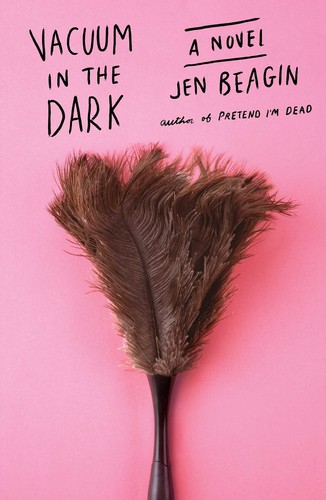
Then, Jen Beagin with her two novels, Pretend I’m Dead, and now Vacuum in the Dark entered my life, one at a time. These are two novels that speak truth to the bullshit about where you’re supposed to be in your twenties, what you’re supposed to be in your twenties, and who you are actually becoming. Becoming a person is a little gross, a little disappointing, mostly weird, and sometimes beautiful. Pay attention to all of it.

Pretend I’m Dead is a novel about a young woman named Mona who is a full-time house cleaner and sometimes volunteer at a needle exchange. Mona meets Mr. Disgusting at the needle exchange and falls in love. When he tells Mona to leave Massachusetts and venture to New Mexico, Mona listens. She remains a cleaning lady who likes to take portraits of herself doing weird things in other people’s houses, and talking to her inner voice, Terry Gross. She collects characters like her neighbors Yoko and Yoko, and her friend named Jesus.

Now, Vacuum in the Dark is the sequel. And thank god we get more time with Mona the Irreverent, my newly canonized patron saint. Mona is still in her twenties, living in New Mexico, acquiring clients like Rose, who is blind and has a vindictive ex-cleaning lady trolling her house, or the Hungarian artists with glass tables filled with gold leaf, and a child named Rain. She gets her heartbroken again, and it’s shitty, but Mona’s used to cleaning shit up.

Jen Beagin and I talked over email about the gross stuff, how to write a novel before the assholes wake up, donkeys, and the difference between art and a job.


Erin Bartnett: Can we start at the very beginning? Vacuum in the Dark opens with the sentence, “It was hard, misshapen, probably handmade.” “It” is a poop. The first section is even titled “Poop.” Maybe I’m saying a little too much about myself here, but I was downright gleeful about it. I think that’s part of what I love about your writing more generally and about Mona more specifically as a character: Mona is a little disgusting, or rather the world is a little disgusting and Mona isn’t afraid to handle the gross stuff. It’s her “job,” even. Can you talk about how the gross stuff functions in your writing?

Jen Beagin: I think it lends authenticity to Mona’s character. You see a lot of gross stuff as a cleaning lady, especially if you clean behind the furniture like I did. I’m talking stains. Poop, blood, come, spaghetti sauce. Upsetting red wine stains on white furniture. But I’ve always had a high tolerance for this sort of thing. I’m only truly grossed out by maggots. Luckily, I only had to deal with maggots once, when I was working for someone else and was sent to clean the house of a hoarder. This was long before hoarders were on TV. It took me something like 21 hours to clean the kitchen, which was teeming with maggots, and I was making nine dollars an hour, maybe less. I’m still upset about it all these years later. But poop? Everyone poops, as a wise person once said, and what better way to draw a reader in. It’s how I’d want a novel about a cleaning lady to start.

Everyone poops, as a wise person once said, and what better way to draw a reader in.

EB: Both Pretend I’m Dead and Vacuum in the Dark are organized into four sections or chapters. Could you talk about why you decided to structure the novel that way? What about it was helpful or productive for you?

JB: Well, no one really teaches you how to write a novel. At least, not in my experience. I’m not sure it can be taught, because there are no hard and fast rules. Also, writing a novel is hellish and takes forever, so it would be like teaching someone how to torture themselves — slowly, over several years. What you’re taught instead is how to write stories. That’s how Pretend I’m Dead started, as four stories that I spent a lot of time lengthening and linking together, and I wrote Vacuum in the Dark in the same fashion, because I wanted the two books to have a similar structure, and, honestly, because it made the process more approachable and slightly less agonizing, and I was just trying to make it out alive.

EB: Mona is a visual artist first, and I know you’ve mentioned that you have to be careful about what you’re reading while you’re writing, but I wondered if the same goes for visual art, music, film. Were there any particular pieces of art that you drew inspiration from while writing Vacuum in the Dark?

JB: Nothing immediately comes to mind, but have you ever heard a donkey chew? There were two miniature donkeys in my backyard during the writing of Vacuum in the Dark. They belonged to the owner of the house I live in, and I spent a lot of time caring for them. They weighted a little over two hundred pounds and came up to my waist. Honestly, I didn’t find them all that compelling initially, but eventually, over the course of several weeks, they seduced me with their chewing. They chew constantly, at least while they’re awake, and it’s calm, slow, and thoughtful. It’s how they process information and emotion. I found it incredibly comforting to listen to, and could often hear it from my bedroom. It was like having a running creek outside my window, or some weird water feature, because if I really tuned into the sound, all my stress melted away. When I stepped outside, they trotted up to me, leaned against my legs, and chewed. If my legs were bare, they’d sniff me with their incredibly soft and sensitive nostrils. It was like they were inhaling me. It was the same way they drank water. It elevated everything. It made me feel beautiful, cherished, and adored, which is exactly how you want to feel when you’re writing a hopefully not-too-lame sequel to your first book.

I write best under high ceilings, as it turns out, and when I go to bed alone, wake up alone, and don’t speak before noon.

EB: What was different about writing the second novel? What did you learn about novel writing in between these two books? Did you learn anything new about Mona in between these two books?

JB: I wouldn’t say I learned anything new about Mona between these two books. I know her pretty well already, or about as well as I know myself, and we don’t keep any secrets. But, whereas Mona has only aged two years between books, I’ve aged an entire decade, and let me tell you, it’s been a long ten years. I still have no idea how to write a novel, but I’ve learned what works for me in terms of a routine, which is early to bed, early to rise, and laying off the booze as much as possible. A little wine is fine. I also write best under high ceilings, as it turns out, and when I go to bed alone, wake up alone, and don’t speak before noon. Part of the reason for this is that I write in bed. A lot of writers with children get their work done while the kids are asleep or out of the house. I don’t have kids, but I do have a couple of inner critics, one of whom is a nun named Sister Marie Paula. My inner critics start bullying me at around 11 a.m. So, I’ve learned to write very early in the mornings, before the little assholes wake up.

EB: Mona cleans other people’s home for a living, which gives her a pretty unique perspective on several iterations of what “home” can look like. Home can be the darkest and dirtiest place. Her neighbors Yoko and Yoko, also keep insisting that The Odyssey is a pretty useful text for helping Mona understand her journey from Taos to L.A. to Bakersfield. And then there’s the fact that she also grew up between her parents’, her grandparents’, and her adopted caretaker Shelia’s homes. So there are a lot of working definitions of “home” in Vacuum in the Dark. Can you talk more about what “home” meant to you while writing this novel?

JB: Home is wherever my bed is. For the past couple of years my bed has been in the very large living room of a 280-year-old Dutch farmhouse in Hudson, NY, which is where I wrote most of Vacuum. Other than my bed, there’s very little furniture in the room, just a chair, a small bookcase and dresser, none of which is mine. I used to think home was about having all my stuff around me. My favorite table and paintings and so on. But my stuff has been in storage for years now and I don’t miss it. Anyway, the house is weird and beautiful, but it’s also completely uninsulated, which is why I’m spending the winter in Mexico. I’m without my bed, so I don’t feel quite at home. I also had to remove the art on the walls of the room I’m writing in, which helped some. I would take the furniture out of here, too, but it’s not my house and I don’t want to seem like a nutbag.

EB: Earlier in the novel, Terry offers this insight on Mona’s photography and life: “As part of your overall thesis, I happen to think you’re saying something interesting about repetition. And monotony. And perhaps loneliness? Not to mention the tension between the working class and the wealthy. What I also find interesting, Mona, is that you keep repeating your pattern of drifting from house to house, forming intimate and sometimes inappropriate relationships with your clients, and I’m beginning to suspect the photographs are linked to this impulse. They’re a bridge, a conduit–”

Mona lives alone, cleans houses alone, identifies as a “lone wolf.” Loneliness induces do a lot of action, some good, some bad. Can you talk about what loneliness means to Mona?

JB: Mona’s lonely, no question, but she’s very comfortable with her loneliness. I would say she’s a little too comfortable with it. Taking pictures of herself dressed as her clients is an oblique way to feel less alone, as is talking to Terry Gross in her head. But it would never occur to Mona to join a book club or a knitting circle or a church. In some ways, that’s what the books are about. Different ways to deal with loneliness.

My books are about different ways to deal with loneliness.

EB: There was a period of time when I was babysitting and reading a lot and paying my bills but failing at doing much of anything else. I dreaded meeting new people who would ask me “what I do.” I remember one woman, after letting me stumble over the question for a couple minutes, patted my hand and said something like, “Ah, you’re living now. That’s okay. You’ll write once you’ve lived some.” I wanted to kiss her hands and call her Nana I was so grateful.

Mona cleans houses for a living, “but also” has ongoing artistic projects. She photographs herself with people’s things in their homes, works on some painting, maybe writing. But it’s not like she’s trying to build some romantic idea of herself as a working artist or anything. She openly admits to having imposter syndrome about being an “artist,” and feeling a great deal of pleasure after cleaning out a microwave with a hot sponge and lemon juice. This is all to say, I really identified with her dread about the question, “what else do you do, besides this?” What are your feelings about the anxiety to make art your JOB, or just the general cultural attitude about what your job “says about you?”

JB: Well, I’ve always identified more with steerage than first class, which is probably why I’ve worked in the service industry for so long. Steerage is where all the interesting shit happens. First class gets boring after five minutes. Mona knows this. So, it’s not that she’s ashamed of being a cleaning lady. What’s embarrassing for her is telling people about her creative pursuits, and I’d say the same is true for me. When I was a waitress and someone asked me what I did for a living, I would never say, “Well, I’m waiting tables, but really I’m an aspiring writer.” No, no. I’m a waitress. I’m a cleaning lady. I’m a data entry clerk. I sling pizzas. I make coffee. I answer phones. Et cetera. Anyway, I don’t feel anxiety about making art my job…yet. For starters, I don’t think of it as art. I treat it like any other job. I show up, put in as many hours as I can, try to keep myself entertained, and if someone asks me what I do, I mumble that I’m a writer and then change the subject as quickly as possible.

EB: In an interview with Chronogram back in 2017, you mentioned that you were working on your second novel (which I’m assuming is this one?), and you said that this novel was darker. “I’m not afraid to be dark now,” you’re quoted as saying in the interview. “It took a long time.” I really identified with the fear of being dark. Can you talk more about the relationship between the dark stuff and writing? How did you tap into it? And what about time helped you get there?

JB: I think what I was referring to was that I’ve released the victimhood thing. That’s what took a lot of time. Now I can write about the dark stuff more directly, because I don’t think of myself as a victim anymore. But I’ve never struggled with tapping into it. I’m 47. The well has been tapped for many years now. I have easy access to these things. It was really more a question of how much darkness I was willing to subject the reader to. The answer is…a lot, apparently. But hopefully there’s enough lightness to keep the reader from drowning, or putting the book down.

EB: Okay this is a three-prong question. First, Terry Gross is more than Mona’s conscience, in that she’s actually nice to Mona, even when Mona is being cruel to herself. I was totally fascinated by Mona’s relationship with Terry. So, Terry Gross part 1: Can you talk more about how Terry Gross came to be in the novel?

JB: She showed up on the first page. It felt like a gift, actually, because it allowed me to write even more dialogue, which is all I really want to do, and it gave Mona someone to talk to, someone who thinks she’s fascinating and who wants nothing from her. I used to listen to Fresh Air when I cleaned houses many years ago, and sometimes Terry would interview me after the show. In my head, I mean. It was usually about something I was angry or felt guilty about. “Why aren’t you cleaning the blinds?” she’d ask innocently. It gave me a platform to vent. “I don’t do blinds, Terry, okay? It’s too time-consuming. These people should buy new blinds! Do they really expect me to clean each slat? What the fuck!” So, when Mona starts talking to Terry on page one, it felt pretty natural and familiar.

EB: Terry Gross, part 2: Does Terry Gross know how prominently she figures in your novels? Was there any weird pushback or did you have to get permission to use her name?

JB: Apparently, you’re allowed to use the names of famous people in fiction, so long as you’re not having them commit murder or something. So, no permission was needed, as far as I know. I’m not sure if Terry is aware of this book or her very important role in it. I imagine my publisher tried to get a copy to her. I only hope she isn’t horrified!

EB: Terry Gross part 3: Do you have a Terry Gross?

JB: Unfortunately, I do not. I could use one.

EB: Worst piece of writing advice you’ve ever received? Best piece of writing advice you’ve ever received?

JB: I withhold judgment on advice.

Walking Into the River

As the caravan of immigrants crossed the Usumacinta river that marks the border between Guatemala and Mexico, a Mexican police helicopter used the downdraft from its rotors to make waves rise on the river, to make the passage harder for the people walking North, away from violence. The Associated Press reported that because of the choppy water a man drowned in the river. From his bird’s eye view, the people on either side of the water must have seemed like ants to the pilot, barely people.

The voices of Virginia Woolf’s novel The Waves ring out from the dark to insist on the humanity of the characters. Readers get no marking beyond the character’s name, so sometimes characters blend and blur together, but then we get markers of individuality: a banker father in Brisbane, a consciousness of beauty, a desire to care for wild things. The way the voices are woven together, even the way the book is laid out, seems to suggest at once six voices and one. Bernard, the writer among the five friends, is often the one to put words to this argument, to the idea that “we [suffer] terribly as we [become] separate bodies.” This argument for a kind of borderless existence that can recognize and envelop all of humanity is not only a political argument, but one that is deeply entrenched in Woolf’s sense of morality and religious self.

In her autobiographical essay, “A Sketch of the Past,” Woolf proclaims that what is real is not Shakespeare, or Beethoven, or even God — or said in another way, what is real is not countries or borders or presidents — and that instead “we are the words, we are the music, we are the thing itself.” Instead of an unreal God, the thing itself, the thing that replaces God in Woolf’s personal pantheon, is made up of individuals, a pattern at the back of life that is, in fact, life itself. What does it mean to revere the human as one might the divine?

The thing that replaces God in Woolf’s personal pantheon is made up of individuals.

What I can tell you about helping people fill out asylum applications will sound a lot like voices from the dark: snippets of story, the 20 worst moments of 20 people’s lives, one after the other and stripped of names and faces, so depersonalized as to seem meaningless. All their stories are shaped by the same forces: colonialism, U.S. imperialism and the “War on Drugs,” racism, violence, deportation, misogyny, poverty. But when I hand someone a tissue or bring them a half-full glass of water so they don’t spill it with shaking hands, I am also attending to an individual, marked and shaped by the limits of their own lives and not at all these big textbook forces.

The experience of actually helping people complete the application, of sitting with them, is one that demands I recognize the humanity of the person I’m talking to. People have shown me their scars, have asked to take a break because their hands were visibly shaking, they’ve shown me news clippings and given me handwritten letters of things they still couldn’t say aloud.

Do you fear harm or mistreatment if you return to your home country?

If “Yes,” explain in detail what harm or mistreatment you fear; who you believe would harm or mistreat you; and why you believe you would or could be harmed or mistreated.

Are you afraid of being subjected to torture in your home country or any other country to which you may be returned?

If “Yes,” explain why you are afraid and describe the nature of torture you fear, by whom, and why it would be inflicted.

Water runs deeply through Virginia Woolf’s life and work. Her earliest childhood memories, in her essay “A Sketch of the Past,” are of lying in bed and listening to waves lap up on the beach outside, and realizing the joy of her existence. In her writing-about-writing, she employs images of water and drought: she dives amid the waves when the writing is easy, and wanders the desert when it is not. In To The Lighthouse, the Ramseys and their guests are more surrounded by water than usual on the Hebrides, the furthest push of Britain into the Atlantic, and still they try to reach beyond it, long for the lighthouse itself just one small island further. In The Waves, interstitial scenes have the sun coming up over the water, waves lapping on the shore, a regular return to a lake or an ocean. Woolf spent much of her married life along the banks of the River Ouse, where she loved to walk in the marshes along the river, gloried in the sight of a flooded river valley.

Rivers, of course, are not only water: they often represent edges, borders, boundaries, thresholds, a space between, or a road, a route, a path to freedom. Gloria Anzaldúa, the writer who grew up and spent her life on the banks of the Rio Grande, famously refers to this border, her border, her river, as “una herida abierta where the Third World grates against the first and bleeds. And before a scab forms it hemorrhages again, the lifeblood of two worlds merging to form a third country — a border culture.” A river of blood, a wound of some kind of injustice. The Nile after the first plague, and the Israelites escaping along its banks. Slaves following the water spilling from the drinking gourd into the Mississippi northwards, the rivers between the land of the living from that of the dead in Woolf’s beloved Greek mythology, as well as in ancient Egyptian cosmology. All that time spent along and in and across the river, splashing in it to throw off the dogs, is time between: a space between states both political and existential, a liminal third country on the edges of all others.

All that time spent along and in and across the river is time between: a space between states both political and existential.

Virginia Woolf, of course, also knew the draw of the river’s threshold. A few days before her death, Leonard, her husband, wrote in his journal that she had come home soaking wet, odd for a Sussex March, and claimed she had fallen into the River Ouse near her house. This only seems portentous because we know that she would walk into that river in little more than a week, stones in her pockets. Her suicide notes, addressed to Leonard and her sister Vanessa allude to fear of future madness, fear of an oncoming war, an inability to write or to read. Walking into a beloved river, a familiar well-loved landscape as a way to slough off the dangers of uncertainty, a way of walking across a doorway.

A lot of our most dramatic stories of immigration and people seeking refuge involve taking to the sea. The Mediterranean is crossed regularly in plastic dinghies by families escaping famine and economic and political hardship in North Africa. For some time, the Cuban immigration policy was known as “wet foot, dry foot,” in deference to that first step onto some South Florida beach after a 90-mile ocean crossing, usually on a raft. Eight hundred thousand refugees worldwide, recently in danger of being deported from the United States, are known as “boat people” due to their rapid, sea-borne egress from American bombs falling on their native Vietnam. The myth of our national founding itself is based on a group of people climbing aboard a boat and crossing waters in search of a better life and religious freedom.

The caravan is different from this, and so has been construed as incomprehensible by some — motives other than longing for a better life pressed onto those walking by those who don’t understand the violence they are escaping. The caravan put one foot in front of the other and in this way crossed a nation, down roads and up mountains and along and across rivers, but also across deserts. If taking to the sea is understandable because it requires just a single decision, a leaping off, then walking across a continent for days, weeks, months, miles at a time, seems incomprehensible because of the sheer repetition, the reiteration of every day, every step, making the decision again. What toll on the body? What aching, what calluses, blisters, skin rubbed raw? What throbbing muscles carrying your child on your back for hundreds of miles?

If taking to the sea is understandable, then walking across a continent seems incomprehensible.

This matters because this is how we encounter each other: in our bodies. Woolf’s novels are full of characters feeling for others and embodying someone else. While her novels play fast and loose with the mental boundaries between one character and another — one moment you are in Mrs. Ramsey’s head and the next in Lily’s, a flash or glance the only thing separating them — the body-to-body boundaries that Woolf dissolves stand out as signifying the deepest kind of connection. An early version of Mrs. Dalloway, standing in a glove shop, imagines that the shopgirl is on her period, and daydreams about sending her to rest at her house in the country. The novel version of Mrs. Dalloway, during her final, dazzling party, feels the death of Septimus Warren Smith in herself: “Up had flashed the ground; through him, blundering, bruising, went the rusty spikes. There he lay with a thud, thud, thud in his brain, and then a suffocation of blackness. So she saw it.” Even Mrs. Dalloway’s parties, with their minute attention to creature comforts, are a reflection on this kind of caretaking of one’s neighbor.

And then, of course, we have Bernard in the final section of The Waves, finishing the work of unifying his friends and himself: “Here on my brow is the blow I got when Percival fell. Here on the nape of my neck is the kiss Jinny gave Louis. My eyes fill with Susan’s tears. I see far away, quivering like a gold thread, the pillar Rhoda saw, and feel the rush of the wind of her flight when she leapt.” From the moment that Mrs. Constable, the nurse, squeezed a sponge full of warm water over his back, “and out shot, right, left, all down the spine, arrows of sensation,” and gave him his body, his sensations for “as long as we draw breath, for the rest of time,” he seeks to undo this work, to dissolve back into sensations at once his own and not. Being in a body, and the feeling that comes with it, is altogether too much for Bernard. But even when he seeks to melt out of himself, the thing that sets off this insubstantiality, this being “edged with mist,” is, of course, words: “when we sit together, close…we melt into each other with phrases.” Through Woolf, Bernard understood that it is phrases, it is words, it is stories that allow our edges to become tenuous, that allow us to be open to others. It is voices from the dark, telling us what they see.

Everything I can imagine about reading asylum applications probably also sounds like voices from the dark. I imagine file cabinets or banker’s boxes, stacked 20 deep, a cavernous warehouse of stories, and a man in a brown uniform shirt pulling a box out, as if from the sea, and bringing it to a fluorescent office, all standard government-issue, where another man in a brown uniform shirt reads them, or a judge in chambers does, one after the other.

In my time helping people fill out applications — less than a year — I probably helped about ten families attach passport-style pictures, sign in triplicate. Every week, 20 or 30 families came to the pro-se clinic. Every week about a third of these families finished their applications, took them to the ICE offices and immigration court at 26 Federal Plaza in New York City. On top of that, every application filled out by someone on their own, every application turned in by an immigration lawyer taking a pro-bono case. Anyone arriving in the country without papers has a year to apply for asylum, to present themselves for a “credible fear interview” so that the federal government can assess how much they are to be believed.

At 26 Federal Plaza, their applications get processed, stacked, numbered, indexed, passport-style photos looking out from a back page. Asylum seekers must present themselves at the ICE offices once a month, where they may get deported, or asked to buy their own plane tickets home, or they might simply be asked to sign a piece of paper and go on their way. Some people get ankle monitors tracking their every movement and an officer assigned to their case who may not know the story, just the whereabouts. It is not until the court date that whoever has read their application, has read these 150-word snippets of their trauma, is presented with the actual human in front of them. Thanks to an abundance of cases and an artificial scarcity of judges, it can often be months, or even years years, between the time an application is submitted and the asylum seeker’s court date. At the clinic, we were told to submit applications even in cases that seemed like a long shot. The longer a case took to work through the system, the longer someone had here, in safety. Still, the distance between their words and the bodies that lived them had time to calcify. It’s not just Bernard’s phrases that soften us, especially not when they’re phrases that have been translated by strangers, hacked up into tiny bits, fundamentally altered and alienated from the person they belong to, stuck into a weapon of the bureaucracy.

The longer a case took to work through the system, the longer someone had here, in safety.

Because that’s what the system has slowly transformed into: bureaucracy as a weapon of the state to increase fear, to make asking for asylum — a right granted by international law — feel like a criminal act. The caravan threw conservative media outlets, and the president, into a frenzy: They worried about ISIS members and gang members and murderers and drug dealers “blending in” with the families in the caravan, they worried about jobs being stolen and public services being taken advantage of. However, the criminalization of seeking asylum has been going on for a long time before this round of highly-publicized measures. Undergirding this last panic, and the Obama-era’s expedited deportations of unaccompanied minors, and the Bush-era’s tacit support of groups of Minutemen vigilantes, and the Clinton-era’s legislation to make more crimes deportable offenses, and all the way back to the earliest laws about citizenship and who belonged — undergirding all of these is the same old worry. The worry that allowing too many brown, Spanish-speaking immigrants north of the border will, in some way, fundamentally shift our national character, would change what an American looks like, sounds like. It’s a reaction at once disproportionate and cruel, appealing to our basest natures.

This kind of fear, although divorced of its American context, runs through Woolf’s work as well. For all the imaginative beauty of her characters’ fluidly bounded bodies, Woolf did not often account for substantial differences between them. The Waves, for example, is fundamentally about a group of six friends who are not so different from each other: all are upper- to middle-class, British, white, all with nannies and servants and boarding schools. What does it mean to elide boundaries between yourself and others when those boundaries are composed of perhaps more superficial stuff, when there are shared experiences undergirding all of you? This inability to reckon with difference also stretched into her personal life. In writing about her husband’s family in her journals and letters, Woolf often refers to them offhandedly and flatly as Jews. She uses the N-word casually in Between the Acts, not in the mouth of any character, but in that of the narrator. Despite her devotion to her “society of outsiders,” in Three Guineas, it seems Woolf sometimes did not know what to do with actual outsiders. In other words: What happens to Bernard’s project when, from the very start, bodies do not have the opportunity to become separate because they’re immediately marked as such by the world?

What does it mean to elide boundaries between yourself and others when there are shared experiences undergirding all of you?

Woolf’s surviving answers to these questions may not be everything we might hope for, but it is possible to take the best of her argument and carry it forward into the future beyond her — a project she likely would have intuitively understood and wanted. The answer lies in Woolf’s favorite image: that of the wave.

After the play in Between the Acts, Mr. Streatfield, the town’s bumbling reverend, gets up to make a speech and a final plea for funds for the church roof. “We are members one of another. Each is part of the whole… We act different parts; but are the same.”

Later, Mrs. Swithin asks Isa if she agrees: “‘Yes,’ Isa answered. ‘No,’ she added. It was Yes, No. Yes, yes, yes, the tide rushed out, embracing. No, no, no, no, it contracted.” It’s equivocation, but it’s also meaning. Just as waves on the surface of the sea are all made up of that sea, they also spray up into the air, each one unique in its moment, in its shape, in its path. It is possible to hold our differences and nevertheless understand that we are bound up in each other, all the same stuff as the sea.

8 Works of Literary Noir

The public high school I went to was huge enough to have a radio station. When I was a junior, I wrote and produced a weekly radio drama, a film noir/detective parody called Richard Helmet: Detective for Hire. The show was built on a shaky scaffolding of sophomoric jokes — the kind of jokes that you might expect from a teenage fan of Spaceballs and Monty Python — but every gag was in some way grafted onto the frame of film noir’s most recognizable stylistic and narrative conventions. These conventions are what attracted me to the genre, then and now: the slangy poetics, the cracked moral compasses, the city-as-character, the atmosphere of alienation, the unsettling class confrontations, and above all, the way that the crime — even if solved — raises existentially unsolvable questions.

Purchase the book

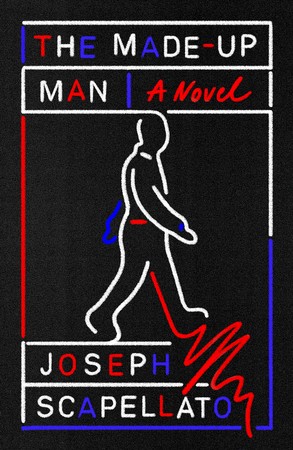
In my favorite film noir works, these conventions feed (and are fed by) a risk-taking voice. I tried to keep all of this in mind when attempting my own literary film noir novel, The Made-Up Man. In it, the narrator, a Chicagoan named Stanley, accepts his Uncle Lech’s offer to apartment-sit in Prague, even though he knows that doing so will place him at the center of one of his uncle’s maniacal performance art projects, which will mine Stanley’s personal life for material in increasingly sinister ways. I tried to keep the genre’s conventions in mind while banging away at this novel, hoping to work both with and against them.

Over the last few years, I’ve read a number of exciting, voicey novels that artfully interrogate these conventions, selectively or all together. Here’s a list of recent literary noir novels in which the authors brilliantly rebuild, repurpose, or burn to the ground the many shadow-throwing structures of this genre.
The White Tiger by Aravind Adiga

Balram, a poor man in modern India, becomes a driver for a rich family, and when the stars align, he murders his boss. (This is not really a spoiler.) Balram is an immoral moral philosopher — this darkly comedic narrative is enriched by his tell-it-like-it-is asides, many of which offer blazing critiques of the state of his country. His crime permits a certain kind of escape, and in a way, the novel is Balram’s careful argument in defense of this escape, no matter the price that others will have to pay.
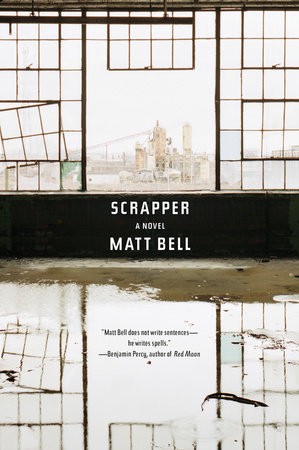
Scrapper by Matt Bell

Kelly is a scrapper in half-collapsed Detroit, Michigan. One day, while on the job — breaking into an abandoned home — he finds and rescues a kidnapped child, Daniel. Kelly’s grim obsession with catching Daniel’s kidnapper grows, leading not only to a new crime, but to an old one, uncovered in the still-smoking wreckage of Kelly’s past. A starkly beautiful novel, shot through with dark wonder.

An Untamed State by Roxane Gay

On a visit to Haiti with her husband and baby, Mireille, a young Haitian American woman, is abducted by a gang of kidnappers. When her father, a wealthy developer, refuses to pay the ransom, the kidnappers sexually assault Mireille for 13 days. In brutally direct prose, this novel strides through the agonizing aftermath of these events, taking the reader into an ethically complex world of trauma, oppression, and grace. An unforgettable debut from one of our most important writers.

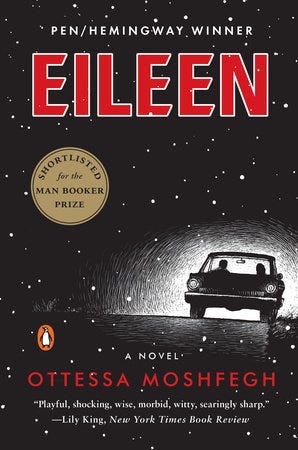
Eileen by Ottessa Moshfegh

Eileen walks the reader through the series of events that led her to run away from her New England hometown of “X-Ville” 40 years ago, when she was working as a secretary for a boy’s prison and trapped at home with her alcoholic ex-cop father. With a dazzling combination of magnetic retrospective narration and foreshadowing in one corner, and consistently stunning characterization and prose in the other, Eileen is the rare novel that is both a blistering page-turner and a sparkling page-lingerer.

The Vegetarian by Han Kang

After a harrowing, vivid dream, Yeong-hye, a young woman in Seoul, refuses to eat or to cook with meat — she roots through the fridge/freezer and pitches every piece of animal flesh that she can find. This “crime” results in a lyrically rendered escalation of obsession. The consequences are alarming for Yeong-hye, and uproot the lives of the novel’s other point-of-view characters: a stubborn husband, an intrigued brother-in-law, a concerned sister. The Vegetarian is an utterly transfixing study of madness, blindness, and alienation.

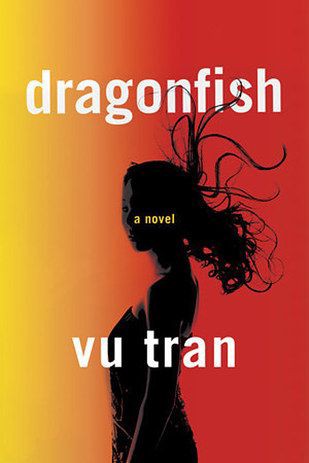
Dragonfish by Vu Tran

Robert, an Oakland-based cop, is forced by Sonny, a Las Vegas-based smuggler, to track down the complicated woman they were both once married to: Susy. Expertly paced and plotted, with many well-timed momentum-building revelations, this gritty novel is firmly rooted in a devastating immigration narrative. Susy, who fled by boat from Vietnam, haunts Robert — and the reader — in the most astonishing ways.

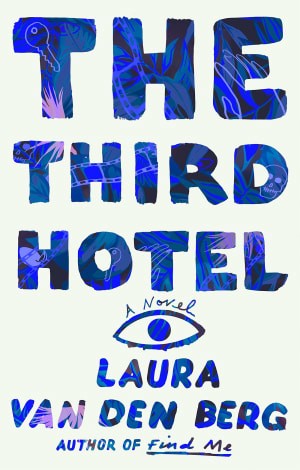
The Third Hotel by Laura van den Berg

After her film-critic husband is killed in a hit-and-run, Clare attends his horror film conference in Havana anyway, by herself. While there, however, she spots him. Then shadows him. This book is an all-consuming, mesmerizing dream, mysterious and wise, the architect of its own spectacularly profound logic. The Third Hotel, like so much of van den Berg’s work, fearlessly wades through the most confounding layers of grief and love.

The Loner by Teddy Wayne

David, a first-year student at Harvard, is frustrated with what he sees as his own forgettable social insignificance. When he meets Veronica, an attractive, moneyed, and fearsome woman — to whom this first-person narrative is addressed — he schemes to pursue a relationship with her, unaware of her own hidden plans. The inevitable collision is shocking. This disturbing novel, animated by David’s lively erudition, honors its characters’ many complexities with insights that are unforgettable.

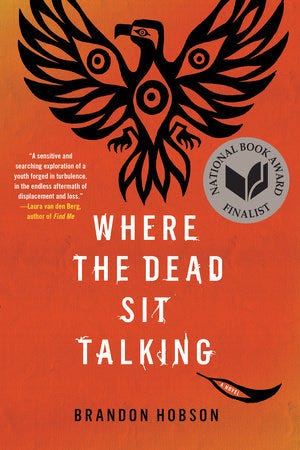
In “Where the Dead Sit Talking,” a Native American Teen Searches for Home

Where the Dead Sit Talking is a dark, twisting, emotional novel about a teenage Cherokee boy dislocated in the foster care system. Sequoyah has moved around to many homes, sometimes living in shelters while waiting in the in-between, not ever fitting in where he is placed. And then he is placed with the Troutts who have two other foster children, Rosemary and George. Like him, Rosemary is yet another American Indian child in the foster care system, trying to connect to a home.

The novel holds a difficult dialogue on intergenerational trauma, the effects of separating children from their Nations, and the perilous outcomes if we do not make urgent changes to the systems forcing American Indians to assimilate and disconnect. This may be set in the past, but the same cycles exist today, showing that we have not yet learned the necessary lessons to interrupt the trauma.


Melissa Michal: What was the origin of the novel?

Brandon Hobson: It started with thinking about my previous work experience in social work. I worked for about seven years with delinquent and deprived kids and saw a common theme of a struggle with identity and a tendency toward obsession that I found really fascinating. At the same time, I also knew I wanted to write something from my Native culture. So I knew, having worked with Native kids in both delinquent and deprived environments, that that was an avenue that I wanted to explore, specifically with my tribe which is the Cherokee nation. So I wanted to focus thinking about Indigenous youth in the foster care system. So that’s kind of where it all started. And the idea of “What is home?” is the important question I wanted to begin with.

Purchase the book

So many of these kids struggle with that question of not knowing where their home is, because so many of these kids are shuffled around from shelter to shelter from foster placement to foster placement. So they don’t know where they’re going to be that next night and so forth. So that question also goes back to the historical significance of the Trail of Tears which is one of the worst events in US history which when people were removed from Georgia and North Carolina, people were faced with that very question, “What is home?”

MM: Describe for me your writing process getting into that kind of mindset, going to the places that those foster children have gone mentally. Sequoyah is very disconnected in this way.

BH: I heard his voice. Sequoyah’s voice is really strong in my head. It may have been a culmination of a lot of the youth that I have worked with, I think. Which at times it can sound very dangerous. It can also sound, I hope, very wounded. There may be a fine line between what sounds dangerous and what sounds wounded.

MM: Was Sequoyah always the main character? Did Rosemary change over the course of writing the novel?

BH: I knew early on that I wanted to have him look back at this short time that he was with the foster family and talk about her influence on him. And that’s where I think the novel gets a little bit obsessive or where the novel talks about his obsessive behavior and why is Sequoyah telling this story. A large part of that has to do with Rosemary dying in front of him. I’m not so much interested in the idea of writing about her death as much as I was interested in his fascination with her. Because of them being the only Indigenous foster kids in that home.

I worked for about seven years with delinquent and deprived kids and saw a common theme of a struggle with identity and a tendency toward obsession.

He’s also exploring identity issues with his gender and with his overall appearance. In 1989 not many boys wear eyeliner to school. I certainly think it’s way more accepted now then in 1989. Sequoyah is a little more androgynous which I wanted him to be. So I think early on I didn’t want to focus so much on her death as her impact on him. Both internally and externally. Not only the way she looked but the way she dressed and the way she talked. He felt very much, as did she, that they were connected on some other level that he could communicate with her on some other level, through the mind. There was some higher level of connection between them.

MM: Sequoyah’s focus on death becomes an obsession after meeting Rosemary. Where do you think this comes from for him?

BH: I don’t know if it’s just death. I think it just some otherworldliness, is what it feels like to me. Not so much death as other consciousness. I feel like he can communicate with her. Maybe not so much just what we think about death, but the idea of some other worlds, some other consciousness that exists out there that maybe works in terms of communication. He felt very strongly. And she does too when she first meets him. She says “I knew you were supposed to come here.” In a way I think she was expecting him. And all of that exists on some other alternate universe. Or at least that’s how they both feel. I’m more interested in the emotional than the logical.

MM: Why set the novel in a past time period versus a more contemporary time period?

BH: A lot of that was just because it was my memories of being young and being a teenager in the ’80s. I wanted it to be pre-cell phone. For example, Rosemary she goes missing for a while. Before cell phones a lot of times people would just be, “Where are they?” I remember a couple of times my mom would just get out and drive and look for me before the cellphone when I was a teenager. That’s when the missing becomes harder to find. With iPhones now you can find pretty much find anyone quickly.

A lot of the music and pop culture that are mentioned in the book are the ’80s like the movie Rain Man is about an autistic man and George is autistic. That was out at that same time and part of that was filmed in Oklahoma. I remember when that was filmed here. And so there was a connection between that in the movie, the brotherly relationship, you know, George and Sequoyah struggling through that. So there were a lot of things that mirrored what was happening in terms of the ’80s. And band names as well. George memorizes lyrics and band names at a time when maybe people paid more attention to liner notes, the idea of the mixed tape and writing down lyrics. So it’s a pre-cell phone, pre-internet time. George is writing his novel, but he’s writing it on a main hard drive.

MM: What other writers/artists influenced your techniques in this novel?

BH: James Welch was a big influence. Diane Glancy. Those are two Native influences on me. Don DeLillo stylistically has always been an influence on me. More currently Ottessa Moshfegh and Laura van den Berg. Those are two young women writing right now who are amazing and two of my favorite writers that are currently writing. N. Scott Momaday has always been a huge influence as well.

MM: Is there any question or something about the novel that you have wanted to talk about, but no one has asked you?

BH: Ultimately it’s a story of home. A lot of people don’t ask about the identity issues. A lot of people aren’t asking enough about Sequoyah’s identity, exploring his gender issues and trying to decide you know I think that’s a big question that teenagers ask, “Who am I? What is my identity?” So while he’s exploring his Native identity he’s also a little bit androgynous. I just don’t know if that’s being written about very much, the question of androgyny especially in Native youth. We want to break through the stereotypes of how non-Indigenous people see Indigenous boys or girls as well. I basically didn’t want it to be just a stock Native character that falls into stereotype.

We want to break through the stereotypes of how non-Indigenous people see Indigenous boys or girls as well.

MM: I wonder if that’s why people aren’t asking you, though. You do avoid those pitfalls. And so those kinds of stereotypes and pitfalls can then lead themselves to those questions of identity more so.

BH: There’s been a lot of talk about identity. But most people just ask how disturbed he is and how dangerous. They tend to think he’s a bad, bad person and that’s he’s a super psychopath and that sort of confuses me as to why people would just automatically assume that.

MM: I think I got where the book was coming from. I also understand it at a different place because I have felt it as a Native woman. There’s a certain amount of rage and grief that you go through as a Native person that they haven’t gone through.

BH: It makes him a cross of all of that teenage rage and angst that may come across as more than I intended. Maybe I could have made him more empathetic. I don’t know. I mean, again, it comes out of a place of a lot of my experience dealing with delinquent and deprived youth.

MM: I wonder if that gets stereotyped a lot, too. And this is a rounded character that has emotions and feelings and experiences that arise out of being in the foster care system, being Cherokee, being androgynous, and kind of exploring his identity in those kinds of ways. That’s a lot of intersections in the ’80s to manage.

BH: I hope that I pulled it off. It is a lot.

MM: I think that this last part of our interview is important to include. To be honest, I didn’t assume him dangerous. I saw him as broken and traumatized.

BH: Yes.

MM: And there were energies that were interacting with him and he was picking up on negative energies that just were keeping him from a positive place.

BH: Yeah. That’s how I want him to be taken.

7 Novels About Parties Gone Wrong

Whether they kick off the narrative, shake things up midway through, or set the stage for a final showdown, parties are an author’s best friend. In fiction (as in real life), shindigs can corral people with conflicting agendas into a crucible of drama and swelling emotion. There’s a second, simpler reason characters often find themselves at celebrations: Parties are fun. Even the most Netflix-addicted homebody will admit that reading about a glitzy gala or tense dinner party or feral-feeling rave is more fun than those scenes where characters, you know, sit at desks or on couches, watching the hours tick by.

Purchase the book

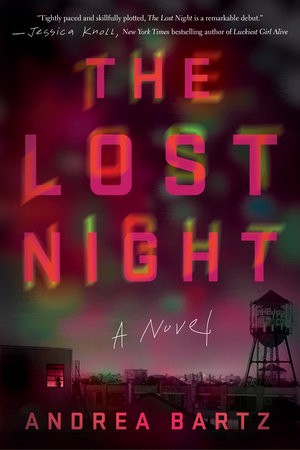
In the case of The Lost Night, my debut thriller, the fun turns to horror not at a single party but over an evening of general debauchery. In 2009, my narrator, Lindsay, was part of a crew living and partying inside Brooklyn’s Calhoun Lofts, a hulking converted warehouse where every weekend, residents and their friends wandered the floors in search of the source of a pounding bass line.

On the titular Lost Night, Lindsay and her friends were at a concert at a stranger’s apartment, dancing through a storm of smoke machine fog and electric guitars. But not her best friend, Edie; from what they gathered in the aftermath, Edie was alone in her apartment, crafting a suicide note and pulling out her roommate’s antique pistol. Ten years later, Lindsay — now a successful 30-something fact-checker — has moved on and forgiven herself for being drunk at a show while Edie killed herself. Then Lindsay runs into a friend from that era, who drops a bombshell: “No, Lindsay, you weren’t at the concert that night.” Lindsay’s forced to untangle a night she can’t remember, but the partygoers in these novels made it through fêtes they won’t soon forget.

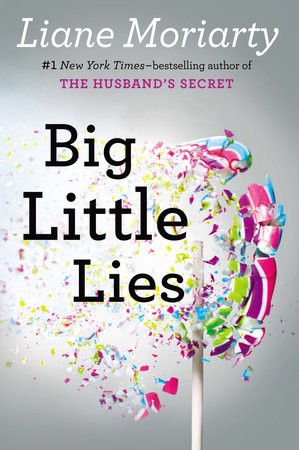
Big Little Lies by Liane Moriarty

Elvises and Audrey Hepburns: It’s the kind of ludicrous party theme (for Pirriwee Public’s Trivia Night, no less) that only a bougie kindergarten would dream up. Moriarty is a master of pointing out the horror and absurdity marbling everyday life in the suburbs, and she knots together all her narrators’ hidden fears in this dramatic showdown.

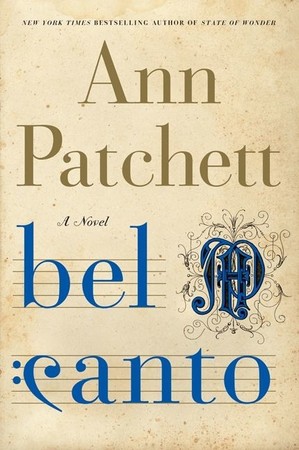
Bel Canto by Ann Patchett

Katsumi Hosokawa never even wanted to celebrate his birthday in a small Latin American country. Wooed by the promise of a performance by opera diva Roxanne Coss, the Japanese businessman treks across the world for a birthday dinner, and in one of the most sweeping and cinematic scenes in modern literature, a band of terrorists crashes the lavish celebration…but the worst is yet to come.

The Nest by Cynthia D’Aprix Sweeney

A 40th birthday party with your siblings — sounds sweet, right? Maybe not, when it falls in the middle of major familial drama stirred up by a deadbeat brother who’s messed with the family trust fund — the proverbial “nest” everyone’s counting on to solve all their problems. What’s supposed to be a fun birthday dinner quickly devolves as secrets and lies hit the fan.

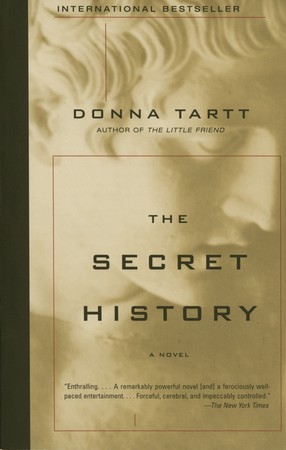
The Secret History by Donna Tartt

Moments of drunkenness, bacchanal, and general debauchery stud this sprawling tome. There’s an important lesson in all the collegiate revelry: If you and your friends can’t binge drink without someone winding up dead, perhaps it’s time to find a new clique.

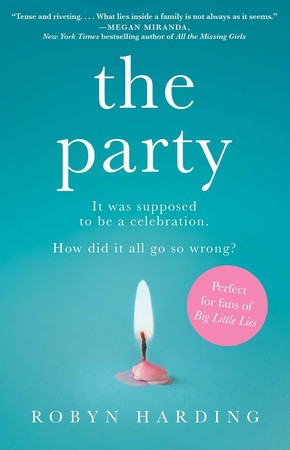
The Party by Robyn Harding

Shunning the over-the-top 16th birthday soirees splattered across MTV, the wealthy San Francisco family in this thriller opt for a low-drama celebration: To mark their daughter’s sweet sixteenth, they’ll have a few girls over for cake and a sleepover. Hot tip: Don’t tempt fate by declaring a party low-key…

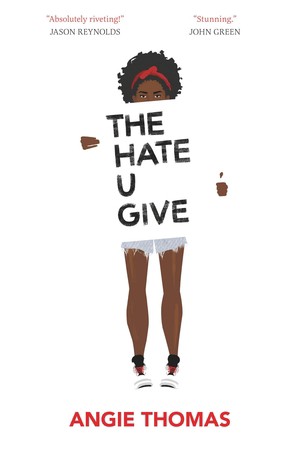
The Hate U Give by Angie Thomas

Near the beginning of Thomas’s stunning debut, Starr Carter heads to a party where she links up with her childhood friend. The kegger takes a turn when cops bust the underage party, and Starr’s bud offers her a ride home, which is when things go from bad to life-changingly horrific.

The Couple Next Door by Shari Lapena

A dinner party with the cool-seeming next-door neighbors: normal. Leaving your baby girl in her crib and checking on her via the baby monitor: pretty normal, too. In fact, the grown-up get-together is going pretty well until said baby disappears. The brilliance of Lapena’s debut is how it plays on the paranoia we all suppress as we go about our lives, convincing ourselves our friends are who they claim to be, our loved ones want the best for us, and no one would ever hurt our children.

After Vacation I’d Like to Come Home to Ruin

“A Failed Romanticism” by Bernadette Geyer

The roots of silk cotton trees
draped the slumberous doorways
of Angkor Wat’s Ta Prohm temple,
and for a while the photogenic ruins
were left that way for the sake
of tourists eager to outdo each other
in the framing and commodification
of the sublime. Ruin is, after all,
in the eyes of the beholder.
In this case the scholars who,
as a concession to the general taste
for the picturesque, deemed Ta Prohm
the temple best merged with the jungle,
but not yet to the point of becoming a part of it.

Neither nature nor man having bested the other
in this perfect example. And so it was saved
from further deterioration.
Preserved in figurative amber.

*

When we selected the 800-year-old
priory for our summer vacation,
we told the children it was a castle.
And to them it just as well could have been,
perception being everything when you are young.
Priory to farmhouse. Farmhouse to ruin.
Ruin to holiday rental for two families with kids.

Nothing that lives so long can expect
to retain a single identity. I myself
have been daughter, teacher, wife, mother.

Grazed by our careless shoulders,
the narrow plastered halls in the priory
chipped further, ghosting our sleeves
with their dust. Our midnight snack runs
further challenged by the uneven treads
of the helixed stone stairwells.
And we relished it all, photographed ourselves
against the backdrop of crumbling walls
that once defined a cloister, winced
as the low lintels struck and left on our foreheads
impressions that we’d recount for years.

*

But to prove not all shambles are so revered —
so pictorial and preserved — the Wagon Wheel Bar
disappeared a mere twelve years after it closed,
after it had served as the ruin to many,
become ruin itself, the surrounding trees and brush
unrepentant in their creep and slither.

We’d grown used to the sight of the bar’s
apologetic slump against the eroding hillside
across the river from the Clairton Steel Works —
landmarks we passed on the way from the home of my now
to the home of my back then. It is likely that no one
had ever called it picturesque, though perhaps
at closing time the view of the mill lights
reflected on the river beyond the parking lot
and across the train tracks gave patrons the impression
of a world turned topsy-turvy so that the coal
and slag barges could slumber among the stars.

*

Once, I imagined returning to our own version
of Angkor Wat — our grass gone un-mown and ivy
lewdly fingering the brick and siding of our
temporarily abandoned home, finally reclaimed
by the woods that were razed in the 1960s
for this development of split-levels
and mock colonials, cul-de-sacs and carports.

On the plane ride home, I’d wondered
what insects we’d find colonizing the corners
of our pantry shelves, the ants at last
discovering the honey I’d bought to sweeten
my evening tea. Could I come to accept
the gaps in our bricks’ crumbling mortar
the way I had accepted a splintered wood shutter
used to keep out the Tuscan night?

It was August: when what has been abandoned
falls prey to whatever has learned to survive
despite itself — the crabgrass that crab-walks its way
across what’s left when the parched lawn
gives itself up as a grey-brown ash blown
into the panting tongues of sedum leaves, a dust
the scant rains of late summer can’t wash off.

And while a part of me knew we’d been on vacation
for only two weeks, and that the pest control guy
was scheduled to come the first Friday we were away,
and the lawn guys on the Friday after that,
there was a deeper part of me that wanted
to return to ruin, that wanted to know
the magnitude of the necessity of our daily presence.

*

This house whose walls we skimcoat and paint,
whose fence we mend and whose mortar we seal —
whose photographed before we meticulously place beside
its corresponding and utterly improved after.

About the Author

Bernadette Geyer is the author of The Scabbard of Her Throat (The Word Works) and editor of My Cruel Invention: A Contemporary Poetry Anthology (Meerkat Press). Her poems and translations have appeared in Barrow Street, The Massachusetts Review, Oxford American, and elsewhere. Geyer works as a writer, editor, and translator in Berlin, Germany. Her website is https://bernadettegeyer.com.

“A Failed Romanticism” is published here by permission of the author, Bernadette Geyer. Copyright © Bernadette Geyer 2019. All rights reserved.

Translating the Dark Surrealism of Samanta Schweblin’s “Mouthful of Birds”

In 2017, Samanta Schweblin’s novel, Fever Dream, was released in English. The surreal, hallucinatory tale about a woman dying from a mysterious poison, expertly translated from Spanish by Megan McDowell, earned a cult-like reputation among writers and raves from critics for its sparse prose and haunting tension.

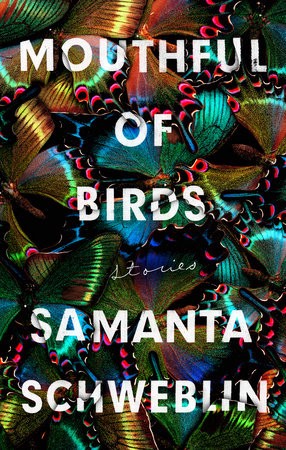
Schweblin’s latest collection in English, Mouthful of Birds, also translated by McDowell, offers up twenty short stories that are just as haunting as Fever Dream.

The first story, “Headlights,” is a pitch-perfect rendering of abandoned women sobbing in a dark field. The story hints at a larger terror at its own periphery, leaving the reader in wait for something even more terrifying to happen, all while underscoring the generational tension between young women and their elders.

Other pieces examine strange almond-like pregnancies, a bizarre fight in a truckstop restaurant with a short man who has a tall dead wife, a merman, a depressed brother, and heads against concrete.

While the collection fluctuates as a whole between fully fleshed out stories and looser pieces, there is no denying the originality and darkness that defines Schweblin’s work. Even Schweblin’s less polished stories are tense wonders.

The more I read of Mouthful of Birds, the more questions I had about how it came to be in English. As translator, McDowell must also confront the darkness in Schweblin’s work, perhaps more intimately than anyone, and bring these vicious, yearning scenes to life in another language.

McDowell and I spoke via email about how she became a literary translator, why she is drawn to darkness in literature, and what’s coming next from Samanta Schweblin.


Sarah Rose Etter: What first drew you to Samanta Schweblin’s work? You’ve worked with her as a translator for two books now, so I was curious how you two found each other.

Megan McDowell: Well, I was lucky enough to be offered the translation of Distancia de Rescate (Fever Dream) when Riverhead bought it. I think it was because of a recommendation from Alejandro Zambra. Laura Perciasepe at Riverhead sent me the book and I started reading it over dinner that same evening. And once I started I couldn’t stop. I had other things to do and I had to get up early the next day, but I just couldn’t stop reading. I finished it late that night. It’s not often that a book can just take you out of your world so immediately and completely. So of course, I said yes.

Mouthful of Birds is the second book I’ve translated by Samanta, and there are two more on the way. I’m working on her second novel now, called Kentukis, and I love it — it’s creepy and surprising. After that will come her short story collection, Siete casas vacias (Seven Empty Houses), which came out in Spanish in 2015.

SRE: I wasn’t planning to ask about the next work coming out yet, but I can’t help myself. You have to tell us a little bit about Kentukis and Siete cases vacias. Just a tiny bit about each?

MM: Kentukis is Samanta’s new novel that just came out a month or two ago. It’s very different from Fever Dream, but just as compelling. It’s structured as many interwoven stories of people from vastly different backgrounds living all around the world. It’s an exploration of the way technology has of infantilizing us as we incorporate it into our daily lives, how even as it offers us new possibilities and abilities, it also tends to narrow our perspective and make us grow complacent.

As of now, the book’s opening line in English is: “The first thing they did was show their tits.”

Siete casas is, as I said, short stories, only seven of them as the title suggests. Like Mouthful of Birds, these stories have a precision and weirdness that disorients and intrigues; they tend to center on domestic worlds that are distorted in a way that makes the reader question any sense of security she may have. Here are seven first lines:

“We’re lost,” says my mother.

“Where are your parents’ clothes?” asks Marga.

Mr. Weimer is knocking at the door of my house.

The list was part of a plan: Lola suspected that her life had been too long, too simple and light, and now it lacked the weight that would make it disappear.

My mother-in-law wants me to buy some aspirin.

The day I turned eight, my sister — who absolutely always had to be the centre of attention — swallowed an entire cup of bleach.

Three lighting bolts illuminate the night, and I catch a glimpse of some dirty terraces and the buildings’ partition walls.

SRE: Those lines are incredible — especially the cup of bleach line. Very excited to hear both of those are in the works. But let’s focus on Mouthful of Birds. How did you feel when you first read Mouthful of Birds?

MM: I’ve always had a soft spot for dark literature, psychological horror, stories that make us uncomfortable when we read them. Samanta is a master of that, without relying on any genre tropes. Her work is genuinely surprising and thought-provoking.

When I translate a book or story I have to read it over and over, and I never get tired of reading Samanta’s work. I get something new out of it every time, change my interpretation a little, pick up on something I hadn’t before. That kind of writer is a joy to work with.

I also love short stories. I’ve never understood why they get such a bad rap in the publishing world. And the short story is Samanta’s terrain, she’s very sure-footed and she knows how to pace a tale. Each time you finish one you get a little gleam of satisfaction along with the sense of unease her work tends to provoke.

There isn’t a clear path to becoming a literary translator. It’s always a little hazy how one gets into such a thing, and you don’t really know until you’re doing it.

SRE: What drew you to dark literature specifically for translation? Is that something you’ve always been interested in since you began reading?

MM: I remember when I was a kid, I loved to read mystery, thriller, and horror books. My dad and sister read them too, and we used to pass the Stephen King novels around. I would also take whatever books looked interesting from my parents’ shelves, and they weren’t always age-appropriate.

Now, I grew up Catholic, and I have a deeply ingrained sense of guilt. I remember reading a book from my dad’s shelf that I was definitely too young for, a lot of violence and sex. I knew I shouldn’t be reading it and I felt guilty, but I also couldn’t stop.

Maybe that was among my first transgressions; it was exciting. Later I started reading more literary books, but I never lost the taste for darkness. When I discover writers who can combine the transgressive joy of horror with literary depth and original style, I’m sold.

SRE: When did you first know you wanted to become a translator? How did you get into it?

MM: It was a cool morning in March of 1999, 8:55 in the morning, over coffee. Just kidding!

It was a gradual process, starting with a general interest in reading translation, then in publishing, finally in being a translator myself. I was interested in translation as a genre before I knew another language. I loved to read books from other countries, I always had the feeling I was getting some kind of privileged, rare look into other patterns of thinking.

At first I was interested in publishing — as an undergrad I interned at a small press in Chicago called Ivan R. Dee, and after I graduated I had a year-long fellowship at Dalkey Archive. That job gave me the idea that knowing another language would help me get a job in publishing, so I moved to Chile to learn Spanish, and then for a while I worked as a translator at a British shipping company in Valparaíso. I really learned a lot, but eventually I felt stuck because I wanted to work with literature, not insurance reports, and so I moved back to the states and started a Master’s degree focused on literary translation at the University of Texas at Dallas.

But even when I went back to school for translation, I wasn’t really sure I could do it. It was all more of an exploration or a testing of the waters.

Maybe the answer is that my desire to be a translator was concretized when I published my first translation — that was when it was really real. It’s strange because there isn’t a clear path to becoming a literary translator, it’s always a little hazy how one gets into such a thing, and you don’t really know until you’re doing it.

A translator spends a lot of time trying to figure out what a writer really means, similar to what a therapist does.

SRE: Can you tell me a bit about the first book you translated?

MM: I took some translation workshops and the project I worked on was Alejandro Zambra’s The Private Lives of Trees. I read from my translation at the ALTA conference that year, and one of the three people in the audience was Chad Post from Open Letter (I knew him from the old days at Dalkey).

Later, when Chad was considering the book, he remembered I was working on it, and he ended up publishing my translation. I think I was very lucky in many ways in the whole process, a lot of things came together to make the publication possible.

SRE: What kind of relationship do you have with Samanta as a result of these translations? What is it like to work with her?

MM: I’ve only met her twice in person, once in London for the Booker madness, and once when she was passing through Santiago and came over for dinner. But we’ve been in contact much more and I do feel close to her; maybe it’s just that I admire her a lot, but I’ve also spent a lot of time in her head, which makes me feel, maybe falsely, that I know her well.

If you translate living writers I think it’s not unusual for authors and translators to be pretty close. It’s a strange and intense relationship. Right now I’m finishing up the translation of an essay on translation and language by Alejandro Zambra. It’s even more meta than it sounds, because I have a cameo in the essay, and I recognize points in it that grew out of things that he and I have talked about.

He also references a book by Adam Phillips that compares translation to therapy. There are a lot of conclusions one can draw about the very possibility of “translating a person,” but the comparison to therapy rings true: a translator spends a lot of time trying to figure out what a writer really means, what lies behind the words and makes them move, similar to what a therapist does.

SRE: What else are you working on translating beyond Samanta’s work? What are you reading right now that’s really compelling?

MM: I’m working on several things. I’m in the final stages on two books: one is a book of short stories called Humiliation by Paulina Flores, a young Chilean writer. The book was a big hit in Chile and I’m excited to see it in English; it’s rare for a first book to be translated, especially if it’s stories, and I think that speaks to the quality of the book and also the eye of the editors (One World in the U.K. and Catapult in the U.S.).

The other is a novel by an Argentine writer, Nicolás Giacobone. This is his first novel, he’s previously been a screenwriter — he wrote the script for Birdman, for example. It’s a strange and compelling novel about a screenwriter who is kidnapped by a great director who keeps him in the basement and forces him to write award-winning screenplays.

Then I’m in the beginning stages of two other novels: Kentukis, which I’ve already mentioned, and Museo animal, by Carlos Fonseca, both of which I’m excited about.

As for what I’m reading, strangely it’s a lot of non-fiction (unusual for me). I’ve just finished a book called Cuaderno de faros by Jazmina Barrera, a young Mexican author. It’s a beautiful and surprisingly personal collection of essays about lighthouses, and the writing is assured and understated. I’m also reading Alguien camina sobre tu tumba by Mariana Enriquez, which is a book of essays on the author’s visits to cemeteries around the world. It’s creepy and entertaining, like you’d expect from Mariana.

Finally I’m reading Rebaño, by the Chilean journalist Óscar Contardo, which is about the Catholic church’s abuse of power in Chile. Also very well-written, and it’s helping explain the context of how and why those kinds of atrocities were particularly possible in Chile, where priests have typically had a kind of god-like status in public life and in the daily lives of their parishioners.

SRE: What do you love about Humiliation by Flores? You sound so excited about it. What can we expect from that work?

MM: The stories in Humiliation have a lot of sensitivity and wisdom. They often seem like small stories and when you read them you think you know where they’re taking you, and then you end up somewhere entirely different. The book is very Chilean in its evocation of place and class and childhood, but it has a wider reach. I think Flores is a real writer and I’m excited also to see what she does next.

SRE: When you’re deciding on a translation project, what helps you choose work? You live in Chile and focus on Latin American writers. What draws you to that region? What do you like about what is happening in literature there?

MM: I learned Spanish in Chile and I live there, and it’s the Spanish I feel most comfortable with. It’s also kind of my adopted country, and I know more about the history and the literary scene. I’ve expanded my reach into Argentina, which is close by and shares a lot with Chile, and I want to expand further. In 2018, I went to Colombia and Mexico, and I would love to translate some authors from those countries, we’ll see how that works out.

I don’t know that I can say I really choose a project — a lot of the time the project chooses me. The only writer I really chose 100% was Zambra with the first book I translated, and I hit the jackpot there. These days, there’s a different story for how I come to translate each book I do. Sometimes the editor offers me a book, and if I love it I say yes. Other times I’m the one telling editors about a book I love; sometimes I spend years talking a project up before it comes to fruition. Also, once I translate an author, I’m committed to them. I try to translate everything they do, which means I can’t always take on new projects.

I do think that the English-speaking world can be a bit xenophobic. Reading translation is a fun way to combat those tendencies.

SRE: In terms of the state of translation, can you talk about why it’s so critical for these works to make their way into English?

MM: I’ve been putting off answering this question because there’s just so much that could go into my reply.

Of course, I dothink it’s critical for works to be translated, but there are a lot of people who don’t. I often get asked why people should read in translation, when there are so many great works written and being written in English; I’m always astonished by that question. But I try to avoid saying that people should read translations, because reading should never be prescriptive or obligatory.

I can say that for me, I feel like reading in translation broadens my sphere of empathy. Reading in general gives people compassion by letting them experience the subjectivities of other people (authors, characters), and reading literature from other cultures makes that possible empathy a little larger, I think. I also believe that translation adds to the English language. I know people always talk about what is lost in translation, but so little attention is paid to the vast amount that is gained — a whole new work that wasn’t in English before, one that draws on other histories and traditions, one that can influence writers and open up new paths for them.

But getting back to the point about empathy, I do think that the English-speaking world can be a bit xenophobic, sometimes overtly and other times in very subtle ways. Reading translation is a fun way to combat those tendencies. I guarantee that if you compared the circle of translation readers to that of Trump voters, there would be little to no overlap.

I am optimistic about the state of translation. I see more and more people who are curious and knowledgeable about international literature, and there are ever more presses that are either specifically interested in translation or becoming more open to it. There are a lot of conflicting currents in the world today, and the one carrying translated literature is small but I think it’s growing; hopefully it will become an ever-larger wave.

This Mysterious Website Generates Weird Short Stories About Phone Numbers

The Internet is a strange labyrinth. It can be beautiful, and terrible, and downright bizarre. There are corridors you can stumble down without remembering how you even got there in the first place. You can set off looking for Tessa Thompson’s birthday and end up elbow-deep in time travel theory on Wikipedia. Or you can try to Google a phone number and end up on a site filled with a disjointed, ever-shifting short story.

When you go to http://5613273737.phonesear.ch/ — where the ten-digit number can be swapped out for many functional phone numbers — the first three sections you see are standard. Phone number, location, phone company. But below these is a section simply labelled “Comments,” filled with hundreds of words of text assembled like a short story. Each sentence, sometimes two, stands alone, jumbled into paragraphs with unrelated sentences.

Some are mundane: “The logs are being floated down the river. This road needs to be repaved.” Some, taken together, are biting: “I want you to think about what really matters to you. That was a good joke. Tell us another one.” And some — especially the outward-facing sentences that seem to speak directly to the reader — send a chill up your spine: “His eyes are glowing. Is anybody looking for you?”

Sometimes, pointed messages stand out in their own paragraphs:

“Time is up now.”

“If you see this message, write me.”

“I feel like I can tell you anything.”

Each time you refresh the page, a whole new batch of text generates. “We actually have four legs. Are you supposed to be here? He was reconciled to his fate.”

Some seem to be pulled from novels, short stories, or creeds; I spotted the Lord’s Prayer in its entirety, sentences from Tolstoy and Donne, and a line from a Ralph Waldo Emerson journal. There are references to modern-day politicians and direct questions. When you search many of the sentences, you realize that they’re being pulled from translation websites, example sentences lifted and then scrambled.

But some sentences only appear here, or on one of the 200+ different urls that redirect to this website. “Call Vic and Phiroze this evening” is unique to the site. Disturbingly, so is “If the Americans hire you to kill children in Iraq, that would obviously make you happy, right?” And this strange piece of vampire lore: “With adequate lighting, one can easily discern Nosferatu, with his pointed incisors and extremely long-limbed fingers, known as arachnodaktyly, from common vampires.”

On Reddit — as is always the case — users scramble to construct theories. Many people seem to agree that the texts are compelling, evocative, even poetic, and that they would make great writing prompts — but surely they’re not there for inspiration or literary value. So what are they? One wonders if there’s a code to be broken inside the text. Another thinks it’s a sign of a neural network getting just a little smarter, or the beginning of the end for us via the singularity.

The texts would make great writing prompts — but surely they’re not there for inspiration or literary value. So what are they?

The real answer is (probably) the most straightforward of the theories: text spinning. Started in the mid-2000s as a way to trawl for Google hits, this SEO technique tricks search engines into thinking that the site is full of actual content. The more unique text you have, the higher Google’s algorithm will put you in the search rankings. There are four banner ads on the phonesearch website, spaced in between the phone number, the location, and the phone company; on a laptop, the comments aren’t even visible unless you scroll down to look at them. Each time you refresh the page, the text shifts, and whoever owns the website gets a little bit more ad revenue.

But even with a simple answer, there’s something about these texts that refuses to unravel itself. Why write original sentences? And why does it sometimes seem like the text is speaking directly to you, like a prophet or a prisoner sending messages between the lines?

The explanation behind the text is ordinary human ingenuity (or greed), but the breadth of reactions to it tell a much more fascinating story — and one more psychologically and existentially complicated than “people will believe anything.”

More than one Reddit user, after reading the text, has become convinced that the program has listened in on their phone or text conversations, uncovering their names or the names of people in their lives. “Creepy AF… there’s something weird going on,” writes Herbert16. One user, Em-Cee-Cree, is convinced that each generation of the text began to circle a little closer to their own life. “If you keep refreshing and reading, eventually you will see something familiar,” they say.

And they’re right — but it’s (hopefully) not because the program is watching your every move. We see ourselves and feel seen in these uncanny paragraphs of texts for the same reason that we remember all the times our horoscopes were right but forget the times they weren’t. It’s the confirmation bias of a Rorschach test, a Buzzfeed quiz, a certain song coming on the radio at exactly the right time. We tend to slot new information directly into our existing opinions and worldviews, discarding the things that don’t fit and pocketing the things that do. When we take an online quiz and the answer doesn’t fit, we shrug and move on to the next one; when it does, we’re pleased that it could understand us so intimately. When we read five hundred words that don’t apply to us, we think it’s strange; when we come across one sentence that does, we’re struck with fear that the algorithm is studying us.

We see ourselves and feel seen in these uncanny paragraphs of texts for the same reason that we remember all the times our horoscopes were right but forget the times they weren’t.

Is the jolt of recognition we feel when we skim the words of this website and see ourselves a sign of our own self-importance? Not exactly. Identifying patterns is a basic human trait, our way of creating order out of randomly shuffled images or sentences. We’re better at it than most animals, and in many ways, even than machines. We’re wired to tie everything together — and tie everything to ourselves — in a web of connections, like red string on a corkboard. An article in Frontiers in Neuroscience calls “superior pattern processing… the essence of the evolved human brain.” Recognizing patterns literally keeps us alive (eating brightly colored frogs will kill me), but it also allows us to solve complex problems (how do I react in an emergency?) and form bonds with each other (Sarah loves kettle corn, so I’ll bring her some tomorrow). It makes us feel secure in the way that we navigate the world. It also, not for nothing, helps us tell stories to ourselves and each other.

The specific bias at play with the scrambled text is called subjective validation, which means we quickly draw lines between ourselves and unrelated events if these events relate back to our own lives — like when you reblog a chain post that tells you you’ll get money soon and then your tax rebate comes through. Did you give yourself money by putting the chain post on your blog? Probably not. This is directly adjacent to the Barnum effect, which primes us to accept a statement as true if we’re told that it’s been tailored to us.

In short, the phone lookup texts aren’t just good writing prompts; they’re tiny crucibles for our ability to project ourselves into words, our storytelling instinct. The human brain wants to find patterns where they don’t exist: we see shapes in clouds, faces in the backs of chairs, a winning streak in a casino, or a personal message in a wall of randomly generated text.

To steal a phrase from The X-Files: we want to believe.

Belief is what sits in the center of the Venn diagram between knowledge and mystery, and these dueling impulses are both at play when you look at the text on this website.

We want to be certain of something in a world that seems to be built on uncertainty. We assemble clues from scraps hoping that something will tell us, definitively, that we’re doing the right thing. In the past, people have sought oracles, rolled bones, looked inside the guts of animals, opened books to random pages, tallied numbers, peeled apples, watched the movement of children and animals. And today we flip coins, take quizzes, or hit the Wikipedia “random article” button until we find something that means something to us. We have always been desperate to know.

We assemble clues from scraps hoping that something will tell us, definitively, that we’re doing the right thing.

But we don’t just want a straight answer; we want a knowledge that matches our own biases. I wanted to know the meaning behind the creepy, generated text on this website, but when I discovered the answer, I found myself disappointed.

There’s something about a mystery — about knowledge withheld — that draws and captures our attention like nothing else. At first glance, religion might seem to be a solution to people who are searching for answers. But at the heart, many religions are really about the process of interpreting a central question. In Christianity, it’s called “the mystery of faith,” a phrase to describe the impossible possibility of Christ’s death and resurrection. “Holy wisdom is not clear and thin like water,” says C.S. Lewis, “but thick and dark like blood.” It’s opaque. In Judaism, asking questions is necessary to the practice of faith.

We do want to know — but we also want to wrestle. We want things to be connected so that we can unravel them.

Our lives tend to be devoid of the kinds of mysteries or conspiracies that we love to read about. In this absence, we’ve begun to create them. Not only do we read about mysteries, but we also build ourselves games to give us the chance to solve them, to go through the motions of being a very specific kind of a detective — one that really only exists in the realm of fiction.

We frantically search for clues in escape rooms, embark on scavenger hunts, and order packages to our homes that tell us it’s up to us to solve the case. We bring mystery-solving into the physical space, where making these connections thrills us and unites us.

This eye for mystery can lead people to make fascinating connections; more than one cold case has been closed thanks to Reddit sleuthing. But the tendency to bend something “creepy” into a full-blown conspiracy can have real consequences: in 2017, members of the “My Favorite Murder” Facebook group became convinced that something suspicious was happening on a woman’s Facebook page, reaching out to her family members to ask if she was being abused until she spoke up to ask them to stop. And on a larger level, malicious conspiracy theories have stoked dangerous stereotypes and caused real harm to innocent people.

Maybe the strangeness of the stories that the phone lookup website creates doesn’t have to dig this deep. Maybe it’s just raw curiosity, or the humor in the unexpected way each sentence pairs with the ones around it. The site is what you make of it. But maybe the comments section on the site is more than the sum of its parts in the same way that an algorithm can make art that moves human people. Maybe it doesn’t matter how a certain phrase or sign comes to you in a certain moment; maybe it just matters that it comes to you when you need to hear it.

As the algorithm says: “Don’t worry, it’s not the end of the world. Jamie is wearing a party hat.”

7 Books About Time Loops

Have you ever done something foolish, or perhaps embarrassing, that changed your life for the worse? What typically results from regretful decisions or mistakes is an immediate desire to rewind the clock and start over. It would be so easy to just press a refresh button and begin again; to either start at the beginning of that office party where your boss heard you talking about her or perhaps — while we’re at it — just start again from birth. Time loop stories offer characters the chance to press that button. Though the loop in which they find themselves is, more likely than not, unwelcome.

In the Netflix series Russian Doll, Nadia spends her birthday laboriously trying not to die, only to relive the beginning of her party. In Groundhog Day, Phil Connors does everything he can to escape the repetition of living the same day on repeat. This narrative device gives us a glimpse of what life might be like if we had the ability to fall asleep and wake up with the ability to restart the day. After reading these time loop novels, and the chaotic worlds in which the characters find themselves, you might decide it’s not even worth it.

The 7 ½ Deaths of Evelyn Hardcastle by Stuart Turton

Russian Doll begins with Nadia staring into the bathroom mirror of her birthday party; faucet running, “Gotta Get Up” blasting from the speakers, impatient knocks on the door. With a similar dramatic flair, The 7 ½ Deaths of Evelyn Hardcastle begins with a man waking up in a forest with no memory of who or where he is. He comes to learn that he’s living in a bizarre house party murder mystery, in which he must discover Evelyn Hardcastle’s killer or else he will wake up in a new body, with no memory, and be forced to begin again. The 7 ½ Deaths of Evelyn Hardcastle turns the time loop narrative into a nail biting mystery, featuring a 1920s parties and several body swaps.

Life After Life by Kate Atkinson

Nadia dies several deaths, some more gruesome than others. In Life After Life, Atkinson’s protagonist, Ursula, has a similar proclivity for unlikely deaths, from falling off a roof to getting suffocated in her sleep by a cat sitting on her face. Though Ursula’s time loop does not begin again in the same place every time she dies, she does get the chance to learn from her past lives, to revise and rebuild. She gets the chance to revisit characters that played important or harmful role in her past lives. Underlying Atkinson’s story is a lesson on the way people’s lives are intertwined, as with the tale of Nadia and Alan.

The First Fifteen Lives of Harry August by Claire North

In The First Fifteen Lives of Harry August, the titular character is not the only one living in a time loop. He belongs to a group of people, called kalachakra — a buddhist term that means “wheel of time” — who are able to relive their lives every time they die. Unlike Russian Doll, in which Nadia is tasked with changing the course of that one fateful day, Harry and the rest of the kalachakra have one rule: they must not meddle with history. One of the members of the group strays from the pact, and Harry, being the only one able to recall past lives, has to find and stop him.

Before I Fall by Lauren Oliver

In Before I Fall, the protagonist finds a chance at redemption in her time loop. Samantha, having been bullied as a child, believes she has the right to do the same unto others. When her deaths result in a time loop, she is forced to relive the last day of her life seven times and reflect on the harm she causes. Rather than a novel about changing the course of one’s life, or the course of one important day, Before I Fall explores the nature of changing oneself.

Neverworld Wake by Marisha Pessl

Five best friends are stuck in limbo, reliving the same day until they decide which one can leave, and only one of them is allowed to go back to the world of the living. The catalyst for their being stuck in time is a car accident that threw them all into this purgatory-like existence — a place they call Neverworld Wake. In this novel, the mystery does not come from the surreal nature of the time travel; the characters know what has happened and how to fix it. Rather, the puzzle to be solved is within the characters themselves. The group of friends used to have a sixth member, who recently died, and they are each holding back information about his death.

Replay by Ken Grimwood

Replay follows Jeff Winston, a man who dies at the age of 43, and then replays his life only to die at 43 again, and then again, and — you guessed it — again. The first few replays of Jeff’s life feature a trajectory familiar to characters who can tell the future; using the information he has from his previous lives in order to better the present life. Eventually, Jeff meets Pamela, another person in the throes of a similar time loop, and they cross paths repeatedly. Jeff and Pamela join forces to learn about the inexplicable world in which they’ve found themselves.

Remainder by Tom McCarthy

The protagonist in Remainder finds himself in a time loop willingly. Having woken up just after an accident, with only small glimpses of memories from beforehand, he is determined to uncover what happened to him. Though he has no solid recollections, certain things incite vague memories such as a particular crack in a tenement wall. He takes these instances of déjà vu and runs with them, setting up re-enactments in the hopes to find out more about his past. And when this task proves to be more difficult than he’d thought, he repeats it, and repeats, and repeats; creating a time loop of his own making.

11 Books About Stalkers and Obsessives for Fans of “You”

Netflix’s You premiered in early December and, three months later, it continues to inspire a whole generation of single millennials to set ALL their social media to private. Based on Caroline Kepnes’s eponymous novel, You thrusts viewers into the mind of Joe Goldberg, a mysterious bookstore manager who falls quickly in love, and from there into dangerous obsession with NYU grad student Guinevere Beck (who everyone just calls Beck). From Beck’s daily schedule to her circle of friends, Joe leaves no corner of her life untouched in a twisted quest to become her one and only. To the delight of You fans everywhere, the series has been greenlit for a second season with spoilers already dropping. But until then, here are eleven books that will satisfy your fix for stalker plots.

You All Grow Up and Leave Me by Piper Weiss

In 1993, Gary Wilensky, a once-beloved tennis coach, attempted and failed to kidnap a former student, 17-year-old Jennifer Rhodes. Rather than be arrested by encroaching police, he shot himself. In the wake of his suicide, Piper Weiss, one of Wilensky’s tennis pupils, thumbed through police reports, articles, interviews, even Wilensky’s own words, to find answers. Who was Gary Wilensky? How deep was his obsession with his young female students? And most importantly, how was it possible that she could mourn such a deplorable figure? The result of meticulous research and self-exploration, Weiss’s You All Grow Up and Leave Me explores the complex, Stockholm Syndrome-like relationship that can form between a charming but disturbed mentor and a young charge navigating through the insecurities of adolescence.

Looker by Laura Sims

Dejected by her failed attempts to get pregnant and her impending divorce, an English professor begins spying on her next door neighbors: a glamorous actress, her screenwriter husband, and their three beautiful children. Projecting the happy ending that eluded her on the also unnamed strangers, the narrator’s choices become progressively more erratic — stealing her neighbor’s possessions and beginning an affair with one of her students. Looker blurs the lines of reality, encouraging readers to question the narrator’s reliability as she chronicles her protagonist’s descent to self-destruction.

Eileen by Ottessa Moshfegh

Eileen is stuck. Still living at home in “X-ville,” Massachusetts, Eileen dreams of a buzzing life in New York City. However, as the sole caretaker of her abusive, alcoholic father, she is seemingly destined to remain…stuck. This changes when the beautiful Rebecca begins as an educational specialist at Moorehead, the all-male juvenile detention where Eileen works. Instantly infatuated with her new co-worker, Eileen’s fascination becomes the catalyst to both the novel’s bloody conclusion and freedom from her small-town life.

My Education by Susan Choi

At the center of Susan Choi’s coming-of-age story is a salacious affair between Regina Gottlieb, a newly-matriculated grad student, and Martha Bordeur, her professor’s wife. Anxious as she begins graduate studies, Regina finds validation as a TA for the charismatic but disreputable Professor Nicholas Bordeur. Although initially attracted to her mentor, she falls hopelessly in love with his wife and the two begin a sexual relationship. As the courtship deepens, Regina’s devotion approaches obsession, all things — school, friends, health — coming second to Martha.

Eastman Was Here by Alex Gilvarry

Once a Pulitzer Prize finalist, Alan Eastman is now a washed-up wartime reporter awaiting his second divorce. Desperate to restore his marriage and reclaim the fame he enjoyed 20 years earlier, Alan departs for Saigon having agreed to cover the final days of the Vietnam War. Equipped with a narcissistic protagonist, a strong female counterpart, and witty dialogue between the two, Alex Gilvarry’s Eastman Was Here shows how far — literally — someone is willing to go for both personal and professional relevance.

Never Let You Go by Chevy Stevens

Eleven years ago, Lindsey Nash grabbed her infant daughter Sophie and ran. Drunk and angry, Lindsey’s abusive husband Andrew followed her, causing a car accident that killed an innocent woman. Lindsey successfully escaped, starting a new life with Sophie in Dogwood Bay, British Colombia while Andrew began serving a decade-long sentence. Now Andrew is back, seemingly changed, and eager to reconnect with his daughter. Lindsey is skeptical and, as strange things start happening, fears her ex will stop at nothing to reclaim what he lost all those years ago. Complete with flashbacks and a surprise twist, Never Let You Go will change the way you look at obsession narratives.

Oola by Brittany Newell

In Brittany Newell’s debut novel, Leif, a 25-year-old writer living lavishly as the house-sitter for his parents’ wealthy friends, and Oola, a 21-year-old free-spirited artist, begin a whirlwind romance after their paths cross at a London rave. As their relationship intensifies, Leif attempts to pen a novel about his new muse. However, his endearing project becomes a disturbing fascination when Leif takes the term “creeping” to a new level, studying Oola as she showers, collecting her hair and nail clippings, and tallying the number of men who ogle her.

The Girl on the Train by Paula Hawkins

Rachel Watson is a divorced alcoholic who becomes obsessed with a couple whose home she passes during her daily commute. Heartbroken over her failed marriage, Rachel becomes obsessed with the happily married strangers, both of them representations of her deepest desires…until one of them goes missing. In a debut full of twists and more interconnected subplots than a soap opera, Paula Hawkins uses what is initially a delusional, unreliable protagonist to expose a web of infidelity, abuse, and murder.

Coldwater Canyon by Anne-Marie Kinney

In Anne Marie Kinney’s Coldwater Canyon, Shep is a Desert Storm veteran who lives haunted by memories of combat. He meets a young actress, Lila, and, crippled by the loneliness of civilian life, becomes convinced she is the daughter that he conceived before the war. A victim of his own delusions, Shep follows an unknowing Lila to Los Angeles, desperate for cure to his isolation.

Pale Fire by Vladimir Nabokov

John Shade, recently deceased, was a professor at Wordsmith College. Charles Kinbote is Shade’s colleague who, in an act of admiration, writes commentaries to the latter’s final work, a 999-line poem. A lot of things become clear about Kinbote over the course of his accidentally revealing footnotes (Nabokov is often praised for creating the ultimate unreliable narrator in Humbert Humbert, but Charles Kinbote leaves him in the dust). One of the revelations: Kinbote’s fixation on Shade goes well beyond the bounds of normal professional admiration.

The Hunchback of Notre Dame by Victor Hugo

The inspiration for one of Disney’s most underrated movies (listen to that soundtrack and tell me I’m wrong), The Hunchback of Notre Dame is a tale of lust-fueled obsession. Like its Disney counterpart, the novel follows a cast of diverse characters: the cruel and conservative archdeacon Frollo, the disfigured and lonely bell-ringer Quasimodo, the enchanting dancer Esmeralda, and the sympathy-driven soldier Phoebus. But unlike its family-friendly adaptation, Victor Hugo’s Hunchback leans into Frollo’s unhinged pursuit of Esmeralda and how his obsession leads to not only his death but the deaths of most of the main characters.