“Scenes of Passion and Despair” by Joyce Carol Oates

“Scenes of Passion and Despair”

by Joyce Carol Oates

1

Walking quickly. The path become mud. She walked in the weeds at the edge of the path — then, her good luck, some planks had been put down in the mud, for cattle to walk on. She walked on the planks.

A hill leading down to the river, bumpy and desolate. Ragged weeds, bushes, piles of debris. No DUMPING ALLOWED. The Hudson River: she stared at the wild gray water and its shapelessness. Familiar sight. She’d been seeing it from this path, hurrying along this path, for weeks. Weeks? It was only the end of June and it seemed to her the summer had lasted years already. How to survive the summer?

The planks wobbled in the mud. Her legs straining to go faster, faster. Down on the river bank were old bedsprings and mattresses, broken chairs, washing machines. . . If one of these planks slipped she might tumble down there herself.

Her hands up to her face, warding off the stinging branches. Almost running. Sometimes she slipped off the cow plank and into the mud, her shoes splattered, damp; she felt with disgust her wet toes inside the gauze of her stockings. Heart thudding impatiently. The eerie light of this June morning, still half an hour before dawn: would it turn into an ordinary day later on? Could this gray still air turn into ordinary air, riddled with sunlight and the songs of June birds? Up at so early an hour, alone on the river bank, alone hurrying along the path, she felt her cunning and yet could not keep down a rising sense of panic — was this visit going to be a mistake? Did he want her? Why this particular June morning, before dawn? Why this particular dress of hers, a blue and white flowered dress, cotton, with a dipping white collar with machine-made lace, why this, why its looseness as if she’d lost weight, why the light splattering of mud and dew across her thighs? And why did she take the cowpath, why not dare the road?

Now she cut up from the path, up through a meager clump of trees. Legs aching from the climb. The house came into view suddenly: an old farmhouse, fixed up a little, the chimney restored. A car in the driveway, mud puddles stretching out long, narrow, glimmering around it, the water crystalline at this hour and at this distance, as if it meant something. Rehearsing her words: I had to come — I had to see you — Panting. Brushing strands of hair out of her face. Tried to imagine the exact appearance of her face — her face was very important — her face — her face and his face, confronting each other again —

She ran to the front door, up on the rickety porch. Uncut grass. A real farmhouse in the country. Near the Hudson. She did not knock, but opened the door, which was unlocked — You don’t even have to lock your doors — went inside. Heart pounding desperately. She called his name, ran to his bedroom at the back of the house — in the air the smell of his tobacco, the smell of food from last night — the slight staleness of a body in these close, cluttered rooms — he was waking up, his hair matted from sleep — staring at her in amazement —

She ran to him. I had to see you — He interrupted her, they embraced, a feverish embrace. The blank startled love in his face: she saw it and could not speak. Had to see you —

Wonder. His voice, his surprise. Hips jammed together, bodies cool and yet slippery as if with the predawn dew, the start of the birds singing outside, ordinary singing for June, the rocky tumult of the run along the path, the planks, the mud puddles, the banks of the river, her mind flitting back to the house she had run from, running out in her blue and white cotton dress, no scarf on her head, shivering, reckless, calculating the amount of time she had before her husband — who had left for the airport at 5:30 — might get to New York, might telephone her to check on her loneliness —

So long, you bastard.

2

Hips jammed together in languid violence. A need. A demand. Do the leaves glisten outside in the lead-gray air? Are they strong enough to last all summer? Only June, the flesh of her face is not firm enough to last. Her lover’s hands, chest, stomach, his face, his soft kindly mouth, sucking at her mouth, the force of him jerking the bed out inches from the wall, the heaving of covers — she sees how grimy the khaki-colored blanket has become — her lover’s parts are firm enough to last all summer, to last forever, even if she wears out.

How many times had they loved like this, exactly?

Lost count.

He is saying something: “. . . is he like now?”

“What is he like? . . .”

“With this, with us . . . doesn’t he know, doesn’t he sense it . . . what is he like now with you? Can’t he guess?”

“I don’t know. I don’t think about it.”

“Does he drink a lot?”

“No more than before.”

“Can he sleep?”

“No more than before. He’s always had insomnia. . . .

“Do you sleep beside him, then, can you fall asleep while he’s awake? .. .”

Wants to know if that other man, my husband, still makes love to me.

“I don’t know. I don’t know him at all.”

3

The cow planks sigh in the oozing mud, she runs holding her side, panting, her bowels feel like rocks this morning, poison, poisoned; she hates the man she is running from — eleven years invested in him — and she hates the man she is running toward, asleep in that room with the bedraggled wallpaper, and no telephone in his authentic rented farmhouse on the Hudson River, so he brags to his friends; she must run to him shivering, her face splotched from the slaps of branches, saliva gathering sourly in her mouth as if forcing her to spit — Can’t stop running. Her heart pounds. Can’t look down at the river because it is so brutal, a mass that would not support her weight if she suddenly slipped down the bank; imagine the shrieking, the lonely complexities of thought, the electric shocks of terror as she drowns, having a lot of time to reconsider her life — And then they would fish her body out of the river a hundred miles downstream. So long, my love.

The cow planks sigh and bounce. She runs up the hill to the farm he has rented, her flesh aches to be embraced, she scrambles up the hill in her muddy ruined shoes, panting, and she dreams suddenly of an ice pick — wide-awake, she dreams of an ice pick — remembers her mother with an ice pick twenty years ago, raising it to jam it down into a piece of ice — dreams of an ice pick raised in her two trembling hands and brought down hard into whose chest? — his chest? — but what about the wispy light-brown hairs of his chest, which she supposedly loves?

4

Hips grinding, jammed together. You might imagine music in the background, the grinding is so fierce. An ancient bed: brass bedstead. It came with the house. A semi-furnished old farmhouse with a restored chimney! The one time her lover ventured into her own home, her husband’s handsome white Cape Cod, he clowned around and peeked into drawers nervously, joking about hidden tape recorders and other ingenious spying devices he’d just read about in a national newsmagazine, and then, serious with a sudden manly frown, he told her he had to leave, he couldn’t make love to her there, in her husband’s bed, that magical marriage bed with the satin bedspread.

Why not?

A manly code, a masculine code she couldn’t appreciate, maybe?

Now she lies with him in his own rented bed, an old farmhouse bed with a brass headboard, and she sees at the back of his skull a shadowy area like a fatal shadow in an x-ray. Secret from her. Their toes tickle one another. Twenty toes together at the foot of the bed, under the khaki cover! Such loving toes! But the shadow inside his head isn’t loving; she fears it growing bigger, darker; she shuts her eyes hard to keep it from oozing into her own skull, because she has always tried to be optimistic about life.

5

Ducks on the river. Mallards. Male and female in pairs and in loose busy groups, Canadian geese bouncing on the waves, going one way in a large confederation of birds, then turning unaccountably and going the other way, back and forth across the choppy waves, back and forth, their calls strident and dismal as she runs, her brow furrowed with some strange stray memory of her mother and an ice pick —

He, the husband, took the Volkswagen to the airport and left her the Buick. I’ll call you from New York, he said. Darkness at the back of his skull. If his drinking got too bad and he really got sick, she would abandon her lover and nurse him. If he killed himself she would abandon her lover and wear black. Years of mourning. Guilt. Sin. If he found out about her lover and ran over and killed him, shot him right in that bed, she would wear black, she would not give evidence against him, she would come haggard to court, a faithful wife once again.

The husband will not get sick, will not kill himself, will not kill the lover or even find out about him; he will only grow old.

She will not need to wear black or to be faithful. She will grow old.

The lover will not even grow old: he will explode into molecules as into a mythology.

6

I don’t know him at all.

A stormy river, small cataclysms. Quakes, spouts, whirlpools a few yards deep. She doesn’t dare to look at the water because her mind might suddenly go into a spin.

You take things too seriously before dawn.

Climbs up the path to his house, up the back way to his meager one-acre farm, Feet already wet from a lifetime of puddles that must be glimpsed far ahead of time in order to be avoided, and suddenly there is a blow against the back of her neck, she pitches forward, a man’s feet stumble with her feet, she cries out at the sight of large muddy boots — The blow is so hard that her teeth seem shaken loose. She is thrown forward and would fall except he has caught hold of her.

Jerks her around to face him.

Small panicked screams. She hears someone screaming feebly — hears the sounds of toil, struggle — the man, whose face she can’t see, trips her neatly with one ankle behind hers, she falls on her right side, on her hip and thigh and shoulder, already she is scrambling to get away — trying to slide sideways, backward in the mud — but the man has gripped her by the shoulders and lifts her and slams her back against the ground again, up, and then down again, as if trying to break her into pieces, and she sees a swirl of eyes, yellow-rimmed, the small hard dots of black at the center of each eye somehow familiar and eternal, even the dried mucus at the inside corner of each eye absolutely familiar, eternal —

A body jammed against hers. A bent knee, the strain of his thigh muscles communicated to her body, his wheezing, panting, his small cries overpowering hers, his grasping, nudging, glowering face, his leathery skin jammed against her skin; I don’t know him at all, the bridge of his nose suddenly very important, lowered to her face again and again. Tufts of pale hair in his ears, swollen veins in his throat, his eager grunts, his groveling above her, the stale fury of his breath, his hands, his straining bent knees, the cold mud, the lead-gray patch of sky overhead; inch by inch she is being driven up the hill by his love for her, his thudding against her in a rapid series of blows that jar her entire body and seem to have loosened the teeth in her head —

7

Once by chance but not really by chance she had met her lover in the general store in town, where he had a post-office box to insure his anonymity (exaggerating the world’s interest in him, he imagined a crowd of curious friends sailing up the Hudson to claim him). That rushed exchange of hellos, that eager snatching of eyes, smiles, The anxiety: Am I still loved? Adultery makes people nervous. She saw that he hadn’t shaved and was disappointed. They whispered between shelves of soup cans and cereal boxes and jars of instant coffee, the brand names and their heraldic colors and designs so familiar that she felt uneasy, as if spied upon by old friends. Her husband was at the lumberyard to buy a few things and would only be a few minutes, she had no time to waste; backing away, she put out her hands prettily as if to ward off her eager lover, and he, unshaven, dressed in a red-and-black checked wool jacket, took a step toward her, grinning, Why are you so skittish? Between the towering shelves of fading, souring food he lunged at her with his face, kissed her lips, more of a joke than a true kiss, and she felt a drop of his saliva on her lips and, involuntarily, she licked it off, and the drop was swept along by the powerful tiny muscles of her tongue, to the back of her throat, and down in a sudden pulsation of secret muscles to her insides, where it entered her bloodstream before she had even laughed nervously and backed away, paid for her jar of Maxwell House instant coffee and a leaky carton of milk, hurried outside without glancing back, walked over to the lumberyard where her husband was standing in a brightly lit little office made of concrete blocks talking with a fat man in a red-and-black checked wool jacket; by now the drop of saliva was soaring along her bloodstream, minute and bright and stable as a tiny balloon, rushing through the veins to the right ventricle — I don’t know you at all — and faster and faster into the pulmonary artery, and into the secret left side of the heart, where it inflated itself suddenly, proudly, and caused her heart to pound —

Did you get the things you wanted? her husband asked.

8

Late winter. Freezing air. A car parked on the river bank, by the edge of the big park — barbecue fireplaces with tiny soiled drifts of snow on their grills, you have to imagine people at the picnic tables, you have to imagine a transistor radio squealing, and the smell of burning charcoal; but you can still see the re- mains of Sunday comics blown into the bushes.

She turns, twists herself eagerly in his arms. His mouth rubs against hers damply, the lips seem soft but they are also hard, or maybe it is the hardness of his youthful teeth behind them. Desperation. Struggle. The toiling of their breaths. On the radio is wxs1’s “Sunday Scene,” a thumping tumult of voices and their echoes, yes, everything is wonderful — everything is desperate — he begins his frantic nudging, they are both eighteen, she discovers herself lying in the same position again, making the same writhing sharp twists with her body, as if fending him off and inviting him closer, she moves in time with the music, and then they are sitting up again and he is smoking a cigarette like someone in a movie. Small fixed uneasy smiles. They will marry, obviously.

9

Early spring. Freezing air. The heater in his car won’t work right. State Police find lovers dead in an embrace. They kiss each other wetly, hotly, eagerly on the lips, they slide their bodies out of their clothes, snakelike, eager and urgent, the man’s breath is like a hiss, the woman’s breath is shallow and seems to go no farther than the back of her throat, he lifts her legs up onto the front seat again, onto the scratchy plastic seat cover; such a difficult trick; after all, they are a lot older than eighteen.

10

A woman in a long blue dress. Her stockings white cotton; her shoes handmade. The man in a waistcoat, holding her hand, slipping down the incline to the river bank, They turn to each other eagerly and embrace. So friendly! So helpful! They kneel in the grass, whispering words that can’t be heard by the children who are hiding in the bushes. The lovers undress each other. The woman is shy and efficient, the man keeps laughing in small nervous embarrassed delighted spurts, and the children in the bushes have to stand up to see more clearly what is happening —

11

In his bed, before dawn, she notices the grimy blanket that she will think about with shame, hours later, and as he kneels above her she senses something fraudulent about him, no, yes, but it is too late; she grips his back and his legs though she is exhausted, and her constricted throat gives out small, gentle, fading, souring sounds of love, but she feels the toughness of his skin, like hide, and the leathery cracks of his skin, and down at his buttocks the cold little grainy pimples, like coarse sandpaper, and one hand darts in terror to his head as if she wanted to grip the hair and pull his head away from hers, and she feels his loosening hair — Ah, clumps of his thick brown hair come away in her hand! I love you, he is muttering, but she seems to recognize the pitch and rhythm of his voice, she has heard this before, in a movie perhaps, and now, as they kiss so urgently, she tries not to notice the way his facial structure sags, dear God, the entire face can be moved from one side to the other, should she mention it? And he didn’t bother shaving again. He could have shaved before going to bed, guessing, hoping she might come this morning, before dawn. . . The eyeballs can be pushed backward . . . and then they move slowly forward again, springing slowly forward, in slow motion, not the way you would expect eyeballs to spring forward. . .

12

God, her body aches. There is an itchiness too, probably an infection. That tiny bubble in the blood, exploding into splashes of excited colorless water, probably infected. His swarming germs, seed. The stain on her clothes.

At home, upstairs in the white Cape Cod, she cleans herself of him outside and inside.

No, she is not cleaning herself of him, but preparing herself for him: a shower the night before, the glimpse of her flushed face in the steamy mirror, the sorrow of those little pinched lines about her breasts, the urgent, slightly protruding bone of her forehead, wanting to push ahead to the next morning and through the impending sleepless night beside her husband. She has caught insomnia from him during the eleven years of their marriage.

No, she is not preparing herself for anyone. She is simply standing in the bathroom staring at herself. The bathtub with the bluebells on the shower curtain. Put the shower curtain on the outside of the tub when you take a bath, on the inside when you take a shower, her mother has explained for the hundredth time. Why are you always in a daze? What are you daydreaming about, may I ask? No, not daydreaming. She is just staring in the mirror at her small hard breasts, at the disappointing pallor of her chest, at her stomach where the faint brown hairs seem to grow in a circle, in a pale circle around her belly button. She is fourteen years old. She is just staring in the mirror, reluctant to leave the bathroom; she is not preparing herself for anyone, she is just standing on the fluffy blue rug from Woolworth’s, she is not thinking about anything at all, she is reluctant to think.

13

Eight years old, the man finds himself again at a kitchen table, he glances up in surprise to see that it is the kitchen of his parents’ house, and he is reduced in size — no more than eight years old! It’s a rainy day and from the sound of the house (his father in the cellar) it must be a Saturday. He’s fooling around with his clay kit. He has made four snakes by rolling clay between his hands; now he twists the snakes into circles, heads mashed against tails, and makes a pot, but it doesn’t look right — too small. The clock is whirring above the stove: a yellow-backed General Electric clock. He is alone in the kitchen. His father is sawing something in the cellar and his mother is probably out shopping. He mashes all the clay together again and makes a column, about six inches high, and he molds the column into a body. With a pencil he pricks holes for the eyes and fashions a smiling mouth, pinches a little nose out, on the chest he pinches out two breasts, makes them very large and pointed, and between the legs he pokes a hole, Sits staring at this for a few minutes, He is aware of his father in the cellar, aware of the clock whirring, the rain outside, and suddenly a raw, sick sensation begins in him, in his bowels, and he is transfixed with dread. . . . He picks up a tiny piece of clay and makes a small wormlike thing and tries to press it against the figure, between her legs. It falls off. Perspiring, he presses it into place again and manages to make it stick. It is a small grub-sized thing but it makes sense. He stares at it and his panic subsides, slowly. He feels slightly sick the rest of the day.

14

He crouches above her, she notices his narrowed, squinting eyes, the hard dark iris, the tension of his mouth, and he buries his face against her shoulder and throat as if to hide himself from her, oh, she loves him, oh, she is dying for him, no one but him. Their stomachs rub and twist hotly together and she feels herself gathered up in his arms, is surprised at how small her body is, how good it is to be small, gathered in a man’s strong arms, and she thinks that the two of them might be lying anywhere, making love anywhere, the walls of this farmhouse might fall away to show them on a river bank, in the sunshine, or in a car, at the edge of a large state park with Dixie cups blowing hollowly about them as they love, and small white plastic spoons in the grass. . . .

Suddenly exhausted, her hands stop their caressing of his back as if a thought had occurred to them, she instructs herself to caress him again but her fingers seem to have lost interest, grown stiff as if with arthritis, what is wrong? At the back of her throat she feels a ticklish sensation as if she is going to cough, but instead of coughing she whispers I love you, involuntarily, and they are toiling upstream on the cold river, ducks and geese around them sadly, morosely; the lead-gray sky and the lead-gray water are enough to convince them that this act is utterly useless, but who can stop? On the grass a few feet away is her wide-brimmed straw hat, a hat for Sunday in the country, and he has not had time to take off his waistcoat, and his whiskers scratch her soft skin; but when he whispers Am I hurting you? she answers at once No, no, you never hurt me. Someone calls out to them, A mocking scream. A shout. They freeze together, wondering if they heard correctly — what was that? Someone is shouting.

It isn’t in their imaginations, it isn’t the cry of geese on the river, no, someone is really shouting at them — has her husband followed her here after all? — but no, it is a stranger who seems to know them. He stomps right over to them and they fall apart, dazed and embarrassed, they are so awkward together, being strangers themselves. The glaring lights make them squint. This stranger eyes them cynically. He squats, a more experienced lover, and arranges and rearranges arms, legs, the proper bending of the knee; with the palm of his practiced hand he urges the man’s head down, down, just a few inches more, yes, hold it like that; he spreads the woman’s hair in a fan around her head, a shimmering chestnut-brown fan, newly washed, and with his thumb he flecks something off her painted forehead — a drop of saliva, or a small leaf, or sweat from her lover’s toiling face — yes, all right, hold this — now he backs away and the glare of the lights surrounds them again. Behind the lights is a crowd, in fact crowds of people, an audience, jostling one another and standing on tiptoe, elbowing one another aside, muttering and impatient. Bring that camera in close! In close! The itching raw reddened flesh between the woman’s thighs, the moisture and the patch of hair, so forlorn with dampness, a monotonous detail; the camera itself slows with exhaustion and lingers too long upon this close-up, lacking the wit to draw back swiftly and dramatically. The woman with the hair fanned out around her head wonders if her make-up is smeared again, or if that slimy sensation is her skin coming loose. Someday, she knows, her skin must come loose and detach itself from her skull. So tired! She must not yawn. Must not. Must not even. swallow her yawn because the tendons of her throat will move and her lover will notice and be hurt. Or angered. His whiskers rub against her face, her mouth and nose. She hates his whiskers. It is sickening how hair grows out of men’s faces, constantly, pushing itself out… . There are tiny bits of hair on her lips. Here is marriage. Permanent marriage, she thinks. And he is whispering to her — Am I hurting you? and her pain fades as she realizes that she does love him and that though he hurts her, constantly and permanently, she must always whisper no, numb and smiling into his face, their bodies now comradely, soldierly in this grappling, their mouths hardened so that they are mainly teeth — the flesh seems to have rotted away — and she whispers no, you’re not hurting me, no, you have never hurt me.

Celebrating Brooklyn’s Queer History

For many years I wrote with a black and white photo taped above my desk. The picture was a photocopy from Lillian Faderman’s Odd Girls and Twilight Lovers, and the caption of which shared that it was a “private lesbian party” somewhere in San Francisco circa 1944. The reason I loved the picture and had it on my wall for so long, was the spark of excitement I felt to see photos of queer people existing, thriving, before I was born. I ached to know more about these queer women, their stories, their heartache, their triumphs. When we talk about queer representation, we often focus on representation in current examples of art & culture. I didn’t know how much I craved to see myself represented in history until I came upon this photo, these women, and the idea that queer lives were lead for decades and centuries before my own.

Hugh Ryan’s carefully researched and beautifully rendered study of Brooklyn’s queer history, When Brooklyn Was Queer, is an absolute gift. For those of us who love Brooklyn, Ryan unveils a cast of unforgettable queer lives from Brooklyn Heights to Coney Island, through the lens of intersectionality and the nuance Brooklyn’s complex story requires. There’s E. Trundell, a transgender man whose arrest in Brooklyn made national headlines. There’s Florence Hines, a successful Black drag king who performed widely. There’s Loop-the-Loop, a young white trans woman who named herself after a roller coaster on Coney Island. And there’s Mabel Hampton, a Black lesbian who worked as a dancer on Coney Island in the 1920s. When Hampton’s photo appears in the pages of Ryan’s book, it’s a breathtaking moment, to see her as she lived, her chin tilted upward, her hat on an angle, an expression of smoldering confidence on her face. Ryan creates a layered story that shows, against a backdrop of rapid change, how queer Brooklyn became a “canary in the coal mine,” as white flight, the loss of the waterfront economy, and other factors would influence these queer enclaves.

Ryan began writing this book as a labor of love, with no training as a historian, and has thus written something that is imbued with heart, curiosity, responsibility and wit. I want to shout from the rooftops about this queer Brooklyn history we are all entitled to love and know. It makes the great and complicated borough all the greater.


Courtney Gillette: When Brooklyn Was Queer is such an incredible book. There was so much in here that I didn’t know. My partner also wants to read it, but was joking that she’s basically read it because I kept being like, “Listen to this!” Can you talk about the moment you knew you wanted to delve into Brooklyn’s queer history?

HR: It’s actually kind of funny. I was living in Brooklyn and I started this organization called the Pop-Up Museum of Queer History. We did these locally sourced, community art exhibitions about queer history in different places. The first one we did was in Brooklyn, in my apartment, actually right over by the Myrtle stop. And it was wonderful and fantastic and 300 people showed up and we got shut down by the cops at midnight.

So all of that happened, and we were doing other ones, and one day I was like, we should do another one in Brooklyn but feature it around Brooklyn. A lot of people don’t know about Brooklyn’s history, so the first thing [we decided] was I’ll go get a book. And there was no book.

It had never occurred to me that there wouldn’t be something [recorded]. I thought there would at least be like one book, an academic book, something Alyson [Books] put out in 1996. I thought it would exist. There was Gay New York, there was The Gay Metropolis — great books. There was Joan Nestle. But none of them were a specific look at Brooklyn and Brooklyn’s queer history. Let me look for websites, let me look for a documentary, and I realized like there was literally nothing.

There was Gay New York, there was The Gay Metropolis — great books. But none of them were a specific look at Brooklyn and Brooklyn’s queer history.

I was like working as a freelance writer, and I was like, well, anytime I interview someone — I was writing a lot of gay shit — I’ll just ask. So I was doing that for a couple years. And somewhere around 2015/2014, I realized there really was quite a bit of information, and there was an arc to it, and it had to do with the waterfront. I got a grant from the New York Public Library, and the first thing they said to me was “When this grant period is over, you should have your book proposal done.” And I was like, “Oh! I am writing a book, then.”

CG: So thinking about structure and going back to this narrative arc. I think a lot of people, when they think of queer history, they think of Stonewall. And what’s beautiful is that this is everything that happened before Stonewall. Can you talk about the choice to end this book before Stonewall even occurred?

HR: It actually wasn’t originally a choice. When I started off, I didn’t know what I was getting into. What I very quickly realized was there’s this moment in the 1950s when everything just sort of truncates. Everything disappears. And by the time you get to Stonewall, what’s left is this scattered remnant of something.

As I figured out that the something was very large and had kind of a cohesive structure — once I could see the arc of it — it started to make sense: Stonewall and everything that happened in the Village is in part happening because all of these other spaces, in Brooklyn where things were more diffuse, had to contract inward.

One of the things I really talk a lot about is the racial dynamics of Brooklyn and the changing history and so the way that it worked out — I was really shocked. I had no idea Brooklyn was so white in its history. When I discovered that, I was just gobsmacked. When I realized that the arc of this story really ends with white flight and the suburbs and the disillusion, it took me a long moment to process that and think: Is this a moment I feel comfortable ending a story?

CG: You can’t really write or talk about Brooklyn without talking about gentrification. So I’m wondering if you can explain how the displacement of communities of color influenced queer history?

HR: It starts as far back as you can go. The first neighborhood of color that I could historically find in Brooklyn was Weeksville. The fact that there is so much that we know that we’ve lost about Weeksville — the newspapers, the history, [some of] the houses were moved. But finding that history, and being able to connect that to Alice Dunbar Nelson, who I knew had a queer history, working in institutions like this, it opened up a lot of space for suggestion.

But then when I found out quickly Weeksville, after the LIRR opened up in the neighborhood — I think within ten years, the neighborhood becomes 50% White, mostly Scandinavian, and it gentrifies. It becomes this suburban neighborhood of Crown Heights and the history is erased. It’s just knocked out. And it’s not until the 1960s that people really rediscovered Weeksville.

I saw that cycle of gentrification over and over again. When I understood that the waterfront was what made queer lives really possible in Brooklyn in a certain way, or at least the growth and explosion of them, then when I started tracking what happened at the waterfront, it became so clear. As soon as the waterfront falls apart, the bottom goes out on everything. Robert Moses rips Brooklyn in two.

CG: That was the most heartbreaking chapter, because I knew about his destruction, but I’d never stopped to think of it and how it would affect queer communities.

HR: It wasn’t until I was doing the end chapters on Coney Island, that I was like, what happened? Coney Island changes so quickly. It was Robert Moses again and again. When I looked at the highways and saw that they cut off the entire coastline in Brooklyn, that’s it. And it was all to gentrify the suburbs.

CG: I think the most delightful and refreshing part of the book was how intersectional it is. There’s been a lot of times when I read something that’s marked as LGBTQ or queer and it focuses on white, gay, cis men. This book has the stories of so many lesbians, trans people, people of color, and bisexuals. Was it harder to find those narratives?

HR: Some of them. Absolutely. I spent a long time looking into the allusion of transmasculine identities and, it wasn’t just that they were hard to find, but the concepts of gender around people who were assigned female at birth — they’re just so radically different over time. Fitting those in a sort of way that showed how people had a very different concept of gender. And people who did have a concept of gender that’s much closer to our current ideas of transmasculine gender identity.

Trundell was a real breakthrough. Finding that story [of Trundell’s arrest], was exactly what I was looking for. It showed me this moment where everything was changing. Often that’s what I spent my time looking for. I wanted to find the examples that sort of showed something in transition.

CG: So what was rewarding in this process?

HR: When I followed the story of Josiah Marvel [co-founder of the Civil Rehabilitation Committee of the Quaker Emergency Service, for servicemen discharged for homosexuality] — I thought, this dude’s gay. I just knew it. Maybe not gay, but he couldn’t have been doing all this work for no reason. And that’s one of thing that drove me crazy, when it’s closeted celebrities who do great things for gay causes, but then never come out?

The concepts of gender around people who were assigned female at birth — they’re just so radically different over time.

CG: Yes!

HR: So this guy, Josiah Marvel, I thought, No, no, he’s gay. He’s not just doing this. But there was nothing I could prove. And then I was in the Library of Congress, looking at Frederick Wortham’s papers. There was a little scrap that was Joe Marvel’s arrest. Frederick getting the phone call and writing down that Joe Marvel was arrested for soliciting in a toilet in Manhattan, and then the letter he wrote to the judge: This is a good man. Everything gets retracted, but within three or four weeks, the whole Quaker Emergency Service closes.

I knew it closed suddenly and I couldn’t figure out why, but finding that tiny scrap of paper… I almost didn’t go to Frederick Wortham’s archives because he’s not gay and not the most important person, but I was going to DC anyway, and then it was like, Yes!

CG: Going back to that one image of Florence Hines,I know some of my queer history has come from Instagram accounts like H_e_r_s_t_o_r_y or LGBT History. Can you talk about how it felt to come across photos in your research? When you actually found images of these stories you were discovering?

HR: That was super exciting. There were a couple moments where that happened really unexpectedly. I was working on the project and I went to have lunch with this older gay man who was very nice, and was very helpful. And he said, have you looked at this book called GI Hustlers of World War II?

It was a small press, not even a small press. It was one of those places where you send a PDF and they print it. And it was this guy in New York. He had images in there that I’ve never seen anywhere else, and they’re a little confusing. And he said, I was just kind of grabbing them off the internet, but one collection is actually a guy I knew. And they’re photos of all these gay men at beaches in New York City in the ’50s, but I don’t know if any of them are at Coney island.

So the Center had them, but they didn’t know who had made them. I was able to tell them, and identify them: “These ones are Coney Island, these are Riis Beach, these are Central Park.” I found photos from one of the gay bath houses, with guys on the roof! It’s in the book. I never thought I’d be able to find photos of those bath houses.

CG: There’s so much affirmation in this book. I’ve heard of things, but sometimes it felt like that’s all I’m entitled to, with queer history? I’ll go on hearsay, I’ll never actually see documentation. So that was really affirming to read that all these people were real.

HR: And particularly for me — I sent a lot of emails that don’t get answered, for years. Before I started researching Florence Hines, I was researching this woman Alberta Williams. And one of the researchers I had contacted reached out to me a year later and sent me this angry email, like, how dare I say these women lead such complicated lives and that I would put my modern categories upon them.

I wrote her back that I was just doing the research to find out. I did not include her in my book, because, as you say, she was not queer in any way that I can find. But then, finding that newspaper article about Florence Hines and Marie Roberts was one of those moments where I was like, yes!

CG: What is your greatest hope for readers of this book?

HR: I tried to make really clear that I started from a place of ignorance and to show as much as my process as I could because I don’t have a history degree. This was a labor of love. But it was also just a matter of asking questions over and over again, sometimes for years on end.

I really want people to look around and say, “Hey, I don’t need to wait for someone else. I can do some of this work on my own.”

I think it’s important because this is this weird moment for queer history where we’re entering the school system, we’re becoming a canon in a way that we haven’t before. So what is available now will determine what becomes this thread to everyone is expected to know.

Entering the national consciousness isn’t necessarily a paring down. I think that is excruciating, especially for those of us who lived through the pre-period, but I at least want the most options. I don’t want a situation where queer history is Walt Whitman, Eleanor Roosevelt, Stonewall, and then…Buffy. That’s problematic within itself but it kind of has to happen.

This was a labor of love. But it was also just a matter of asking questions over and over again, sometimes for years on end.

CG: Another thing I really loved was reading about the accounts of early queer lives where they were living without shame, because straight institutions hadn’t yet discovered or named queerness. What was it like to realize there were queer lives being lived before shame could be introduced?

HR: One of the things I think about all the time is homosociality. It wasn’t until I was writing the book that you can’t understand the emergence of homosexuality without understanding the death of homosociality that existed in the Victorian era.

For a long time it was expected that men spent a lot of time with men and women spent a lot of time with women — maybe they even sleep in the same bed, maybe they spend their whole lives together. And that that is a kind of love and a kind of queerness that we can’t recognize, that we don’t have the lens to view it, or to talk about it, because there is no shame, because we don’t know if they were having sex. It’s like, I don’t care if they were having sex . They lived their entire lives together — it’s pretty queer.

7 Multigenerational Novels that Cross Countries and Span Centuries

Family stories are key ways for communities to stake a claim of their history and culture. In my multigenerational novel, A Woman Is No Man, I am attempting to give voice to an Arab American family, which has been historically underrepresented in literature, and to bring the family to life by making visible their untold stories.

Isra, one of the novel’s main characters, packs only one book with her when she moves from Palestine to the New York: One Thousand and One Nights, which is perhaps the greatest Arabic, Middle Eastern, and Islamic contributions to literature and an unparalleled example of the power of story-telling. In an attempt to delay her ordered beheading, Scheherazade, a well-read young woman, tells stories to the king who has both married and sentenced her. For 1,001 nights Scheherazade tells one tale after another, keeping herself alive by using stories to entertain, intrigue and soften the king’s heart, showing us what we’ve known for centuries since: the power of storytelling to shape and reclaim our own narrative. In some ways, Isra, and then her eldest daughter, Deya, are also using stories to fight for their lives.

Purchase the book

A Woman Is No Man was written to give a voice to the people of my community who are often misunderstood and rarely heard from directly. In doing so, I am attempting to address injustices both within my community and in the way my community is ignored and stereotyped in both the world of literature and the world at large. The primary characters of A Woman Is No Man are women who have been excluded from telling their own stories due to gender roles, their ethnicity, and strict cultural norms; it was crucial to me that these same characters shape the narrative. As Deya, in contemporary Brooklyn, approaches both her high school graduation and an arranged marriage, she struggles to figure out a future for herself worth fighting for. Though well meaning, Deya’s grandmother Fareeda has been shaped by her own traumatic past, and Fareeda tries desperately to conceal family secrets from Deya, both fearing Deya will follow in her mother Isra’s footsteps and fearing that she will not.

Like any writer, I have been inspired by so many books that came before mine, and A Woman Is No Man owes a debt of gratitude to the many other multigenerational sagas that also use storytelling as a way to bring new and diverse voices to the literary world. Here are a few of the ones that have mattered the most to me:

Middlesex by Jeffrey Eugenides

Jeffrey Eugenides’ Middlesex spans three generations of the Greek-American Stephanides family, who travel from a tiny village overlooking Mount Olympus in Asia Minor to Prohibition-era Detroit. The novel is narrated by Calliope Stephanides, an intersex person trying to make sense of gender in the world.

The Namesake by Jhumpa Lahiri

Jhumpa Lahiri’s The Namesake takes the Ganguli family from their tradition-bound life in Calcutta through their fraught transformation into Americans. The novel centers on a Bengali couple, Ashoke and Ashima, who move to the U.S. in the 1960s, and their son, Gogol, who wrestles with his identity as the Indian American bearer of a Russian name and must come to terms with his place in the world.

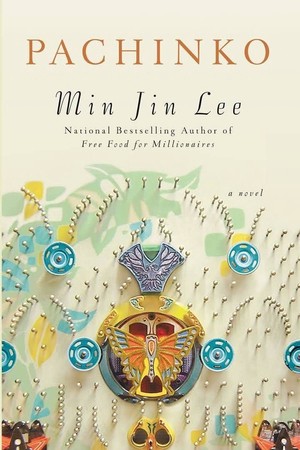
Pachinko by Min Jin Lee

Korean American author Min Jin Lee’s Pachinko begins in 1920s Korea with Sunja who gets pregnant out of wedlock, marries a minister and moves to Japan to save her family honor. Spanning four generations, the novel explores the situation of Koreans living in a hostile Japan.

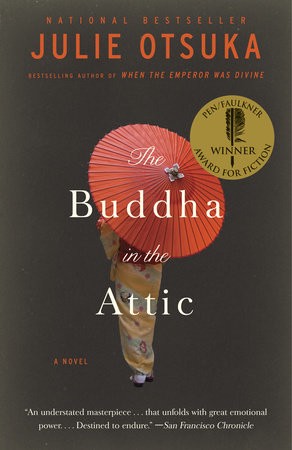
The Buddha in the Attic by Julie Otsuka

Julie Otsuka’s The Buddha in the Attic weaves together a collective story by following a group of Japanese picture brides across the Pacific to California, where they discover that their husbands are not at all what they were told.

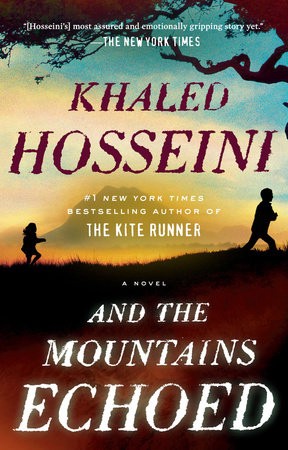
And The Mountains Echoed by Khaled Hosseini

Khaled Hosseini’s third novel, And The Mountains Echoed, spans several generations and alternates between Afghanistan and the West, grappling with many of the same themes of his earlier works: parent-children relationships, the many ways in which the past can come back to haunt us, and Afghanistan’s cycle of trauma and sadness.

Image result for salt houses hala alyan

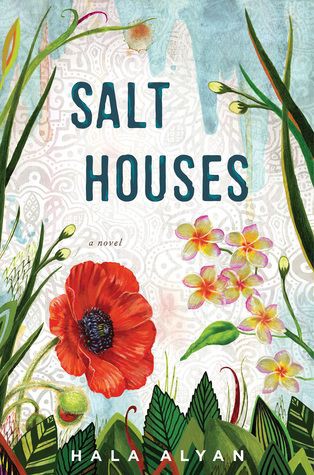
Salt Houses by Hala Alyan

Salt Houses is a powerful and poetic multigenerational story about displacement. The novel starts in Nablus, Palestine in 1963 and branches into Jordan, Kuwait, Beirut, Paris and Boston. A compelling and emotional read that showcases the art of storytelling with precise prose.

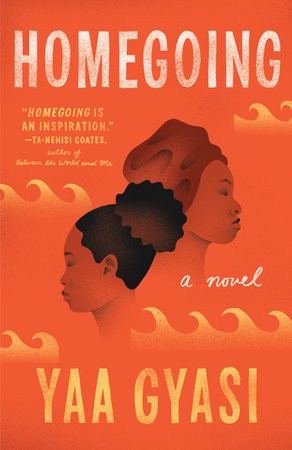
Homegoing by Yaa Gyasi

Homegoing explores the damaging effect of the slave trade on a family split between the U.S. and the Gold Coast of Ghana across 200 years. The novel follows two sisters who grow up in different 17th-century Ghanaian villages, tracing the two women’s families for the next few centuries as they navigate both sides of the Atlantic.

Becoming an Actor Taught Me to Write

When I was a 10 year-old boy soprano, a choirmaster proclaimed, “Music is a picture painted on a background of silence.” It was an abstraction that stuck, as first lessons of craft tend to do. Others I’ve heard:

Show, don’t tell
A cliché is a cliché because it’s true
Always hold something back
Avoid passivity in your attack
The music lies in the second step
Lyrics are the sound of words
Having a good idea isn’t enough, unless you make the most of it.

That these now feel interchangeable reminds of something a writing workshop instructor once said: “What can other crafts teach you about your own?” His was a rallying cry to apply conscious method, to give yourself permission to steal from as many places as imagination allows.

Since the age of eighteen I’d been an actor who believed he’d always be one, convinced I’d breathe my last breath playing someone’s grandpa. It was my calling, or so I believed, from the moment I’d first stepped in front of an audience. What followed were years of training, hours logged in rehearsal halls and audition lines, all for the privilege of playing roles in regional, off and off-off Broadway houses — all subsidized with support jobs to pay the rent.

Something turned once I hit my 40s. Maybe it was a desire to see if there was more to me than this actor-for-life definition I’d hewn to before I’d taken the time to explore. I sensed the guy who processed my exit from Actors’ Equity, the stage actor’s union — younger, bookish — saw my situation as a tragedy. “Nothing is permanent,” he said. You can always come back.” I appreciated his compassion but he didn’t know that I’d already taken steps: by then I’d gone back to school and completed an MFA with the intention of picking up where I’d left off before the acting bug bit. In my return to writing, I’d published an essay and even had a freelance gig as an arts critic for a trade magazine. As I filled out the necessary forms, though, I worried whether it was a mistake to simply stop doing what I’d done my entire adult life. Was it possible to begin again?

I feared I might be starting from scratch, but it was actually the opposite. Writers who have never acted will balk when I say that, while the two are definitely not the same, the lessons learned as a performer resonate often when I write. I doubt that’s a surprise to Tony Bennett, a singer who also paints. In the last ten years, actor John Malkovich has spent more time designing couture men’s clothing than playing roles on the big screen. The “multitudes” are evident in the work of Joni Mitchell, who also paints when she isn’t composing songs that devastate with their emotional honesty. The Sistine Chapel may be a work of art, but so are Michelangelo’s poems and letters. And recently, Daniel Day-Lewis announced his retirement from the screen to pursue dressmaking — to add to his other skills as a cobbler and stonemason. From Victor Hugo to contemporary polymaths like Boots Riley, Solange, Janelle Monae, Phoebe Waller-Bridge, and Lady Gaga, artists have funneled their creative juices through multiple mediums for eons. For them, doing “one thing” has never been enough.

While the two are definitely not the same, the lessons learned as a performer resonate often when I write.

When the acting bug bit I was a funny-looking college freshman with low self-esteem. The craft freed me from the face I saw in the mirror, once I realized how mutable that face was. My skin could be darkened, lightened, or painted to resemble a mask. I could gray my hair, or cover it with a wig. Everything from my walk to my voice could be changed: “I” could disappear. The externals, though, turned out to be beside the point. Acting well requires you to bring all of who you are to the table. You must bring the full complement of personality and life experience to bear on a character. The “truth” of it comes not from what you disguise, but what you reveal. As one of my first teachers repeated over and over, you strive to “do what you would do as the character — no more, no less.” The only difference between that and writing is that the “you” gets explored on the page instead of through makeup and poses.

Whether you write, paint or perform, what’s universal is the practice. For singers, musical scales are woven into your daily routine. Difficult passages need to be attacked over and over; lyrics must be memorized. An actor rehearses — emphasis on the “re.” It’s not just the lines you repeat over again and again. You need to master the physical actions, which, depending on the piece, can mean the way you enter a room; the manner in which you might deliver, or receive, a slap to the face; the timing of tiny movements that can make an audience laugh or move them to tears. Repetition — mastery — enables that spontaneity, allows the performer to be fully in the here and now.

By the time I’m done with the piece you’re reading, it will feel as if I’ve rewritten it a hundred times. It’s what you do to pin down an idea that keeps evolving the more you write. When each turn reveals another country of perspective, it’s often hard to see which piece is useful or what to discard. We’ve all had a momentary spark, what I call those instances where what spills onto the page is exactly the thing you had in your head. But such moments are rare: I find myself revisiting ideas again and again, or what one of my writing teachers called combing it back through your brain. Sometimes it’s a matter of retyping. Words get moved; better ones are found. Paragraphs are rearranged or redrafted sentence by sentence. Sometimes nothing happens at all as you sit in front of an open document; there’s only the valuable repetition of keeping the appointment, of showing up day after day, if only for an afternoon, an hour or even fifteen minutes. The blank page becomes my rehearsal room. Each revision clears away the fog until something true emerges. Just as in the rehearsal hall, I give myself permission to fail; often I chip and chip, but never get to the end, just as in acting I might fail to find the character you’re playing.

Actors revise too, often in collaboration with other actors, and a director whose job it is to keep an eye on the big picture. Maybe it’s a question of tempo; a joke may get a bigger laugh if you speed up the line. If it’s true that 90% of successful casting is visual, then it may be a question of adding a toupee, or changing a wig, a walk or the color of a character’s dress from blue to red. From the day of first rehearsal to the night the show closes, every member of a production will chase perfection; sometimes the result is thrilling, but you resign yourself to those days when the performance is off, and the magic doesn’t happen.

Writing memoir, I’ve had to reckon with the idea of self sans a filter. Oddly, it’s been more painful in terms of what it unearths than any “role” I’d ever played. I remember bursting into tears after recounting an event, or the memory of certain relationships. Trying to get at something true, you often discover how much you’ve actually suppressed, or simply forgotten, until you attempt to recreate it on the page. There, you’re forced to engage a dual perspective: who you were in that past moment vs. yourself in the present — wiser, maybe, or simply more honest as you examine things through the prism of time and experience. Ironically it’s the performative aspect of writing (keeping your “audience” in mind) that I find most inhibiting, a problem I never had as an actor. Maybe that’s because actors are trained to be private in public: we construct, based on the playwright’s world, a world in which we convince ourselves that no one is watching. In a non-musical play especially, everything you do on stage is for the benefit of whoever you’re acting with. A character might actually be addressing the audience, but the audience is “endowed.” That means we imagine them as a sympathetic, or antagonistic, listener; in the doing, the audience becomes as much a character as the people on stage. For me as a writer, it’s best I don’t think about who I’m writing for. I need to focus on what it is I’ve come to the page to say, rather than what a reader may or may not think of it.

Ironically it’s the performative aspect of writing (keeping your ‘audience’ in mind) that I find most inhibiting.

Being a memoirist, I’m still surprised by the role research plays in my writing. It isn’t as simple as what you remember of certain events, or a time that’s no longer the present. The perspective you gain from examining the past can also be a liability; distance makes recollection of details hazy. Excavation sometimes requires research. I’ve had to check my facts with friends who’ve shared my past, only to discover that an event, or something someone said, wasn’t exactly the way I recalled it. A look at an old journal might reveal that instead of winter, it was actually the end of spring. I can think of times when examinations of an old photo or letter will not only correct an errant memory; an image can yield new information. I have a family portrait that hangs in my apartment. Despite the hole in my shirt and my worn cut-off jeans I’m smiling the smile of a kid who won the lollipop lottery. Such obvious delight refutes the present-day notion I have of me as an unhappy, out of place middle child who felt lost in a sea of siblings.

If you’re a modern actor taking on O’Neill’s The Iceman Cometh, knowing the lines won’t help unless you know the culture of saloons in turn-of-the-century New York. The work you do to take apart dramatic text (again, repetition, re-reading) to clarify its themes is the same method you employ to get to the crux of your own writing. Actors examine place, the better to locate the character in time and space. The five senses writing teachers encourage you to bring to life on the page? An actor has to incorporate them into whatever person he inhabits. In Romeo and Juliet, every character must locate the steamy, claustrophobia of Verona where the play is set. That atmosphere is an irritant that fuels the romance at the story’s center, and the series of tragedies surrounding it. If you’re working on Of Mice and Men, a mere glance at a photo by Walker Evans or Dorothea Lange will tell an actor everything they need to inhabit the emotional and physical world of the play; the paintings of Jacob Lawrence are blueprints for the early 20th-century Black lives rendered vividly by August Wilson.

The work you do to take apart dramatic text to clarify its themes is the same method you employ to get to the crux of your own writing.

My evolution from obsessed fan of entertainment to someone determined to live a show business life wasn’t swift. Growing up I was a passive audience with no real awareness that knowledge was imprinting, accumulating. Those early downloads of stuff other performers did were my first lessons in performance possibilities; later, in my teens, came those moments when I’d stand in front of a mirror, mimicking someone I’d seen on TV or in a movie. Theater training taught me how to build characters from scratch, rather than copy someone else. It also taught how to observe intentionally such things as timing, subtlety and honesty. My development as a writer feels parallel: I was an idiot at diagramming sentences but I was a voracious reader who could recognize a misspelled word, an incorrect tense or an off-the-mark subject-verb agreement. Most of us absorb our literary DNA that way; the rigorous examination of what other writers make of such matter happened for me only in graduate school. Learning how much models matter made me realize I’d been imbibing standards and practices for years. I acquired a new vocabulary, and the knowledge that if I was floundering, I could actually go to the masters for guidance. Not to necessarily copy, but to deepen my understanding of what I was attempting by learning how others had wrestled with the same issues. Everything’s been done before; we all yearn to be pioneers of our craft, but that won’t happen until you learn the rules you’ve set out to break.

One of the lessons models teach is the importance of choices. It could be a question of more or less: Why give a character a shopping bag of physical tics when a simple limp will give an audience room to fill in the blanks of that person’s history? A shout may show anger, but a whispered threat radiates power and control. Your job as an actor is to surprise, to bring the unexpected, which is why one actor’s Hamlet will be different from another’s. A writer also struggles with what to leave in or take out. A sex scene can be a challenge — yet some of the most effective scenes of intimacy describe not one sexual act. Maybe it’s the look in a lover’s eyes, or the way they exhale, the texture of someone’s skin or a rustle of clothing. Subtlety, saying more with less, could mean the difference between salaciousness and originality.

“The body is an instrument” is a hoary cliché that’s actually true. As an actor I rarely went out: one, because it was expensive and two, because every stage actor knows they have to take care of themselves to do the job well. You submit to a kind of cloistering. Late nights and negligible sleep wreck the body; loud clubs are good only for losing your voice. Actors need to be in peak condition both physically and mentally. The synapses need to be firing on all cylinders because in performances you must be ready for anything that happens, yet try to persuade an audience that what they’re seeing is unfolding as if for the first time.

So I nodded when, in a graduate writing seminar, I heard the writer/editor Susan Bell utter these words: “You need to be in good shape to write well.” Lightning in a bottle is what every writer strives to capture on the page. The mental energy needed to harness it, or withstand the slog of multiple drafts, may elude someone prone to a few too many the night before, or a bout of insomnia (hopefully about whatever it is you’re working on). It isn’t always practical to be at your best. We get sick, or have an argument on the train. Full-time jobs, relationships, all those things conspire to drain our physical capacities and color the circumstances under which we try to make work. Often the circumstances under which you write are not ideal — a lack of time may find you jotting things down on Post-its, or the back of a newspaper on your commute, all so you don’t lose what may turn out to be something you can use later, when things calm down.

When he launched his clothing line, Malkovich mused that “sometimes when you’re known for one thing, then it’s hard for people to suppose.” It’s true for the artist as well. As someone raised by parents who didn’t have the luxury to imagine, yet alone pursue more than one vocation in their lifetimes, I marvel at my audacity in shifting gears, even as I worry whether my acting knowledge is enough to feed the writer I want to be. And then I remember what Susan Cheever once said in a writing workshop: “We inhabit our words.” The only way for me to do that fully is to acknowledge all the places, and people, I’ve been. More than all the bits of wisdom I’ve been handed over the years, embracing, and believing in, the sum total of my experience may be the most important lesson I’ll learn.

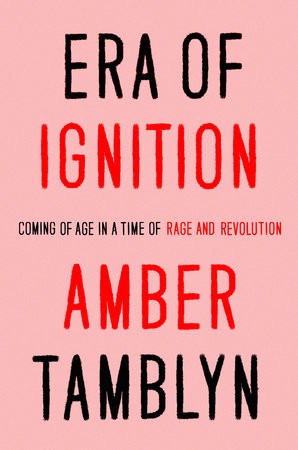
Amber Tamblyn Wants You to Call Her Out

Amber Tamblyn was going through a rough patch. The night before her wedding to comedian David Cross, her agency called and dropped her as a client. She responded by throwing her most expensive shoes into the East River and pissing on a statue in a Brooklyn park. Two months later, sitting next to Cross at a bar, “I gulped down my bourbon and proceeded to tell my husband that I was pregnant but was planning to terminate the pregnancy,” she writes on the first page of her book, Era of Ignition.

The book continues thus: painful, surprising, funny, honest, incendiary. As Tamblyn’s personal life was flatlining, the country, too, was in a time of crisis and rebirth — the 2016 election, the #MeToo movement, and the recognition of centuries of inequality. Era of Ignition: Coming Of Age in a Time of Rage and Revolution is a personal examination of what she considers a fourth wave of feminism in the US. The actress/director/activist explores workplace discrimination, the expectations of motherhood, sexual assault, male allies (and their shortcomings), white feminism (and its shortcomings), and how to show up in solidarity for women of color.

Tamblyn and I talked about reckoning with men in our lives, consuming problematic media, how social media can eliminate essential dialogues, and more.


Katy Hershberger: I so enjoyed the book and once I started I couldn’t stop reading. I loved how, in a lot of ways, it’s so funny and it sort of stands against this idea that feminism is humorless. Do you get that a lot, people being surprised that you’re funny?

Amber Tamblyn: No. I mean, maybe they do to a certain degree, especially because I think I’ve sort of not had such a sense of humor since Trump has been elected. I feel like many people feel that way.

KH: I feel that way.

AT: Yeah, I feel like all of my ability to laugh things off has gone out the window a little bit. But I do sense that that’s returning and I think in the writing process of this book, of returning to some of the old stories, especially pertaining to my experience in the entertainment business, they’re so morbid or dark that you can’t help but laugh at them, so the retelling of the story is framed sometimes in a humorous way.

I don’t think it’s that we should be erasing the art of problematic people but I do think it’s really important to be conscious of what we’re consuming.

KH: As someone in the entertainment industry, how do you think we should look at art that is problematic? I mean, pretty much everything in the last fifty to 100 years is at least a little bit problematic. It’s sort of easy to reject Woody Allen movies but for example, I’ve been re-watching Cheers and the Sam and Diane relationship doesn’t seem quite as sweet now. How do you, as someone within the industry and also a viewer, reconcile some of those things?

AT: For me it’s very complex but I think the power is in the awakening, is in the knowledge of the artist behind the work. And the very fact that you would see that show in a different light suddenly, I think is in and of itself very powerful. I don’t think it’s that we should be erasing the art of problematic people but I do think it’s really important to be conscious of it and be conscious of what we’re consuming, and sometimes consuming to a degree that is taking away from the stories and the narratives of other people who would never get a chance to be seen with a large machine behind them, like someone like a Woody Allen for instance. So again, I think everything is just in the acknowledgement of it and just being aware.

Honestly, I feel this large cultural pivot in a really important way towards not talking so much about problematic work or problematic people. I think we’ve had that for the last two years pretty prominently and to me, when people ask about that, this happened at an Emily’s List panel in Los Angeles that I did recently, a reporter asked that and I just felt like, I don’t want to talk about them or their problematic work. I want to talk about the show Pose or the work that Ava Duvernay is doing. I want to talk about the important artists of our time who are changing and re-sculpting the way stories are told, but also the way stories are valued. To me that is what’s most important. So sure, let the film Manhattan continue to be the classic that it always has been, but I’m not gonna sit around wasting time talking about it or talking about the man behind it. I know how I feel about him, most everyone I know knows how they feel about him, and there’s too many great — powerful and not powerful too — women who are trying to have that power. There are too many amazing artists that are on the rise right now and they deserve all of our attention.

KH: In the book you really thoughtfully discuss having these conversations with your husband directly too. And I think a lot of women now are trying to figure out how to talk about this with the men in our lives, especially if they’re well-meaning but perhaps misguided sometimes. How do you think we do that? How do we reckon with that, how do we teach them and forgive them for these mistakes they might have made?

AT: To me the work is in the conversation. I think that all real systemic change begins with a dialogue, not a monologue on either side, which means it’s not enough to just feel the way that you feel and believe what you believe and then say “why aren’t people just getting it.” And it’s also not enough for men to feel the way they feel and know “this is just what I believe and I don’t need to change.” Women too, it’s not just men that are a part of that larger problem, it’s a problem of power and it’s a problem of the way that power is dispersed. So to me the monologue happens when it’s just me standing over here going, “I’m a smart feminist, why can’t other people just figure it out, why can’t men just be better, why can’t certain women just be better.” Or when a man or somebody else is also doing that on the other side. Saying, “I’m over here and I know what I know and I believe what I believe, this is who I am and why can’t these people just figure it out and meet me halfway.” And instead I think it comes with really complicated, more difficult dialogues that should happen in person.

We’re a culture that fights a lot over the internet and has a lot of point of views on social media, and that’s fair and really valid and has certainly given a lot of people voices that didn’t have it before that deserve to be part of the cultural narrative, but at the same time I think when we’re having personal conversations with people that we love, with partners, with parents, with sometimes our own children, whether we are being taught or whether we’re doing the teaching, that has to happen at a dialogical level. It has to happen as an interaction where two people are being heard and two people’s thoughts and opinions and emotions can be valued at the same level and that’s almost impossible to do on social media, in any other place than in a real dialogue. I wrote those chapters because I’ve spent years now talking with women, especially women who voted for Hillary Clinton and felt like very fierce advocates of hers, who felt like they were not only not being heard about why her physical embodiment was so important, but also just not seen, they just didn’t value their opinions on the matter and so I wanted people to really think about when they get tired, when women get tired of having these conversations you’ve gotta remember that there are also other people who are tired of having those conversation with us as well. And so that means we have to keep having them. We just have to keep doing it. It’s hard, but that’s how change happens.

I get this sense like the greatest fear of white women is to be accused of being racist, or doing a racist thing.

KH: You mention one way in particular that we need to have these conversations, and you write about owning the title of white feminist so that it won’t own you. I was hoping you could talk a little more about what you mean by that.

AT: Yeah, I think this a really tough, again something that’s deserved of a dialogue, people sitting together and having those conversations. But I get this sense like the greatest fear of white women is to be accused of not being feminist, not being allies, being racist, or doing a racist thing. I think the most important thing that any person can do whether you’re white woman or a white man, whatever you are, is to put down the defense before you make a decision. And because your emotions immediately take over and you immediately want to defend yourself, which I understand, that’s a natural human instinct, anybody wants to do that, but the truth is that in the examination is where you will find growth. Personal growth. So pausing before you have that defensiveness and thinking “ok somebody has made this accusation or somebody has told me that I’ve hurt them, it is now my responsibility to take that seriously and to examine it and to think about the way my actions are not defined by my own morals and my own beliefs but defined by the experience of the other people who are not like me.” That is the most important thing that you can do. So by owning that word and talking about it not having an onus back is just by saying “I own the worst parts of me and I’m not afraid to be called out on them and in fact I appreciate being called out on them, I appreciate being told when I’m harming someone.” That is not a joy that anyone likes doing, whether it’s black women, whether it’s us, women as a whole having to constantly talk about things that men are doing wrong. I think the larger culture thinks we find some joy in that, but it’s exhausting. It’s exhausting for anyone. So the important thing to do is start to take some of that responsibility on ourselves, each of us individually, no matter who we are no matter where we come from.

I own the worst parts of me and I’m not afraid to be called out on them and in fact I appreciate being called out on them.

KH: Tell me a little bit about the decision to include an essay from Airea D. Matthews and an interview with Meredith Talusan.

AT: First of all they’re both dear friends of mine and I did feel [that] to write an essay about censoring marginalized voices or non-white voices would be slightly hypocritical unless I actually walked that walk instead of just talked that talk. And so it occurred to me that a large body of my readership is white and feminist and it would be really nice for them to not only hear a piece written by someone whose work I really admire like Airea D. Matthews, but also the experience of somebody like Meredith and to really see how the most important thing, as bell hooks would say, is that feminism should be for everybody. That to me is the ultimate gold standard. If we can say, look, there’s nonbinary people, there’s cis white men, there’s feminists of all kinds, all of these different types of people believe in feminism and call themselves feminists. It’s not enough just for women to do it, it just isn’t. It should truly be for everybody. So for me adding their voices in the body of the work was both making sure that it did feel like a fully rounded-out thought, that essay, it didn’t just feel partially finished. Also I think a really great way, within the body of the book when you’re having such a difficult conversation within an essay which actually isn’t even an essay, it is a monologue, to follow it up with a dialogue between two people like me and Meredith to show a literal dialogue happening about things that are difficult.

KH: It’s so interesting to be able to do that in print.

AT: Yeah, it was fun. We went and had a couple glasses of wine and put a tape recorder out and just talked.

KH: That sounds like the perfect way to do it.

AT: Yeah. Meredith’s perspective… I’ve known her for a while now and I’d never even thought about it that way. The privilege of having both experiences, so you’re really able to say what is and isn’t sexism, what is and isn’t misogyny from a literal perspective. Not just a feeling, but saying “this is the fact because I’ve been on both sides of those genders and I know how that feels.” That blew my mind when she said that.

KH: When Meredith said “I’ve watched this happen presenting as a male and now my voice is so much less heard.”

AT: Yeah exactly. And to also be able to then see the problems within any attempt to lift up voices that are not, again, white and female or white and cis, and you really get a different perspective that way. That’s what it’s all about. What I love, what I love about the world, what I love about this country in particular is that, despite the graveyard this country is built on, we still can rise to the occasion and harness these difficult conversations amongst us and really appreciate and learn to value our differences, the differences that are equal in importance and equal in power.

Despite the graveyard this country is built on, we still can harness these difficult conversations amongst us.

KH: It’s difficult for any survivors to talk about their #MeToo stories, but I’d image that for you as a public figure, knowing that so many people will hear it, both in your op-eds and your talk about James Woods in the past, as well as your stories in the book, what does it feel like to come out with yours knowing that it’s so public?

AT: Sickening. It made me feel sort of sick. Just because it’s difficult subject matter for me and it’s things I’ve never really talked about. But it’s really interesting too, even when I was writing the book, Random House’s legal department had to vet those stories. They had to make sure that they were true, and even in that felt like, you can’t just take me at my word. And you realize that it’s not just about being taken at your word, it’s about protecting all of us because we live in a litigious society where if men get accused of sexual assault or sexual violence, a lot of the time the result is that they sue. There’s intimidation practices, I’ve learned so much through my work with Time’s Up from a legal and legislative policy standpoint, it’s crazy. And so I get it, I at least have a different experience and a different understanding of why those things need to happen. But it was tough. Tough to write about, tough to go back to.

7 Novels About Being Broke

When I was young I used to play the Bank Game. I don’t remember the rules, only that whenever my parents took my sister and me to the house of certain family friends for dinner, us kids would run upstairs and form two competing banks. At some point during the game, the boys’ bank would become indebted to the girls’ bank, or vice versa, and a winner was declared.

Purchase the book

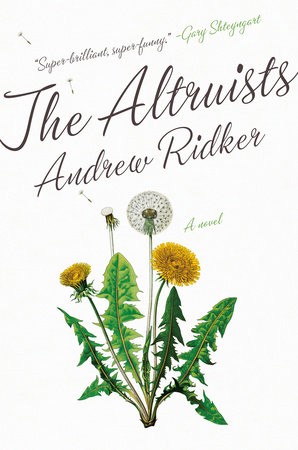
In retrospect, the notion of four suburban Jewish kids play-acting as bankers while their parents eat dessert downstairs strikes me as a little on the nose. Nonetheless, I’ve always been fascinated with money — who has it, who doesn’t, and what people do when they get it. It’s a fascination that animates my novel, The Altruists, in which a father invites his estranged children home in an effort to recapture the inheritance left them by their late mother.

The Altruists belongs to a tradition of novels in which money, or its absence, is not only a plot point but a central theme. In Little Dorrit, Charles Dickens took readers inside Marshalsea, the London debtors’ prison where his own father had done time. Fred Vincy’s debt in Middlemarch threatens his relationship with Mary Garth, while Rosamond Vincy’s spending forces her husband, Dr. Lydgate, to take on debt of his own. But the Victorians don’t have a monopoly on debt. Here, right on time for tax season, are seven works of fiction that all explore what happens when the bill comes due.

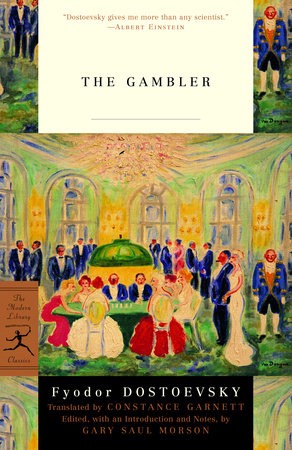
The Gambler by Fyodor Dostoevsky

Gambling debts lie at the center of this slapdash work by the Russian master. But Dostoevsky’s novella is not just about debt; it was written in order to pay one off. In 1865, pursued by creditors, Dostoevsky sold the rights to his collected works to an editor. The contract stipulated that he would produce a new novel for the editor by November 1, 1866, or else the editor would acquire, for nothing, exclusive rights on all future work for the next nine years. Dostoevsky hired a twenty-year-old stenographer, Anna Grigoryevna Snitkina, and dictated The Gambler to her over the course of twenty-six days. (The two were later married.) The resulting work, which engages a subject with which the author was intimately familiar — roulette addiction — is messy, but remains memorable for its depiction of the gambler’s psychology. “At that point I should have walked away,” our narrator explains, “but within me was born a strange sort of sensation, a sort of challenge to fate, a sort of desire to give it a flick, to poke my tongue out at it. I bet the highest stake permitted, four thousand guilders, and lost.”

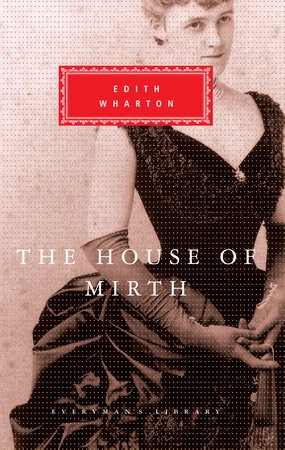
The House of Mirth by Edith Wharton

Lily Bart also has gambling debts — and that’s not counting the money she owes Gus Trenor, the “red and massive” husband of her best friend Judy. For Lily, playing bridge “was one of the taxes she had to pay for [her hostesses’] prolonged hospitality.” She soon finds herself in the unusual position of being a broke socialite, desperate to maintain her lifestyle by marrying rich. Her friend and potential suitor Lawrence Selden sums up the situation: Lily is “so evidently the victim of the civilization which had produced her, that the links of her bracelet seemed like manacles chaining her to her fate.” Wharton’s breakout novel brilliantly, ruthlessly depicts Lily’s attempts not to succumb to that most unspeakably humiliating fate: downward mobility.

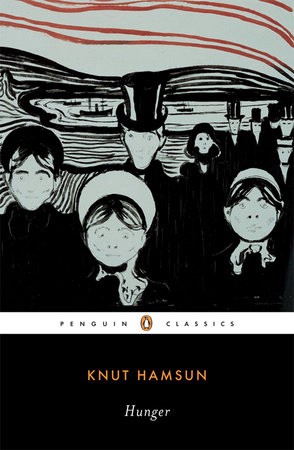
Hunger by Knut Hamsun

After being turned down for a number of jobs, including debt collector, the nameless protagonist of Hunger sets out wandering the streets. His clothes are shabby, he’s pawned his possessions, and he owes the landlady rent. He longs to write an article “about the crimes of the future or the freedom of the will, anything whatever, something worth reading, something I would get at least ten kroner for.” Eventually he sells an article, but the money spends fast, and soon he’s hungry again. Notable for its psychological acuity and its break with social-realist tradition, Hunger remains a compulsively readable novel, by turns humorous and harrowing, about the trials of a starving artist.

Seize the Day by Saul Bellow

Tommy Wilhelm is a failed actor, a failed salesman, a college dropout, and has recently separated from his wife, to whom he owes child support. “In the old days,” Wilhelm thinks, “a man was put in prison for debt, but there were subtler things now. They made it a shame not to have money and set everybody to work.” Wilhelm’s father refuses to support his son financially — “Why didn’t he? What a selfish old man he was! He saw his son’s hardships; he could so easily help him. How little it would mean to him, and how much to Wilhelm! Where was the old man’s heart?” — leading Wilhelm to hand over the last of his savings to Dr. Tamkin, a psychologist who plays the commodities market. But when Wilhelm takes a loss, Tamkin disappears, and Wilhelm finds himself in the midst of a great crowd on Broadway, seeing “in every face the refinement of one particular motive or essence — I labor, I spend, I strive, I design, I love, I cling, I uphold, I give way, I envy, I long, I scorn, I die, I hide, I want.

Twenty Grand by Rebecca Curtis

In a time of runaway inequality, subprime mortgages, and student loan debts so massive they can only be thought of as fictitious, it’s a wonder more contemporary American literature doesn’t engage directly with the question of money. One writer working to correct this oversight is Rebecca Curtis, whose excellent collection Twenty Grand (subtitled And Other Tales of Love and Money) is full of clear-eyed, unsentimental stories of bankrupt theme parks and bad waitressing gigs, told with biting humor and occasional forays into the fantastical. In the title story, the narrator’s mother spends an old Armenian coin, a family heirloom, when she can’t find any other change with which to clear a tollbooth. The coin, it turns out, is worth $20,000. The story’s brilliance lies in its fusion of a 19th century plot — the twist is like something out of Guy de Maupassant — with closely-observed depictions of contemporary middle-class life.

The Turner House by Angela Flournoy

In 2008, as the country undergoes a financial meltdown, Lelah Turner finds herself evicted. Stuffing underwear into trash bags, she takes a quick inventory of her life. “Furniture was too bulky, food from the fridge would expire in her car, and the smaller things — a blender, boxes full of costume jewelry, a toaster — felt ridiculous to take along. . . . Where do the homeless make toast?” She moves into her mother’s empty house, which is worth one tenth of the $40,000 her family owes on the mortgage. Her siblings are torn on what to do with it: hold onto the property in case the market rebounds? Stop making payments and walk away? Flournoy’s National Book Award-nominated novel follows the Turners as they navigate a city in decline, from their house on Yarrow Street to the unemployment department’s “Problem Resolution Office” to a pawn shop called CHAINS-R-US where Lelah sells her childhood flute. The house itself functions as setting, character, and metaphor — for the Turners, Detroit, and the haunted American Dream.

Refund by Karen E. Bender

Bender’s collection, a National Book Awards nominee, tackles financial precarity in all its forms, but debt takes center stage in the standout title story, in which a couple sublets their subsidized Tribeca apartment for far more than it costs them to live there. When the Twin Towers fall, the couple’s traumatized tenant demands a refund. The negotiations soon get out of hand. “I am requesting $3,000 plus $1,000 for every nightmare I have had since the attack,” she writes. “You owe me U.S. $27,000, payable now.” The story’s startling climax ponders the debt of survival. “What did one owe for being alive?”

7 Unstable Narrators in Fiction

When I’m deep inside a writing project I have no time to read for pleasure. All my reading is about shoveling in fuel to power the work in progress. With Insomnia I decided to let my gut lead the way, which is how I came to end up feeding (at first, largely unconsciously) a psychic itch that expressed itself in an attraction to unstable narrators. Time and again, I’d find myself drawn to books where the narrative “I” qualified not so much as unreliable as deformed, handicapped from the start, or squished out of shape at some significant originary moment in the story. I was intrigued by the various ways in which a narrator’s reasoning got derailed or was uncomfortably pinched, or strayed down strange pathways, or was painfully present one moment, before dissolving. In such books, the author’s interest, whether primarily formal or made to subserve some other end, lies in manipulating the reader’s sense of what is real and what hallucinated. Although I’m generally not fond of being manipulated, when the stage-managing is achieved on the quiet and the effect is more like a seduction, I’m game.

Purchase the book

Of the works I read while writing Insomnia, I loved the extreme and increasingly deluded subjectivity that was overlord in Tom McCarthy’s Satin Island, and the commitment to collage-as-method in Charles Simic’s fractured and poetic Dime-Store Alchemist. Mostly, though, I was interested in the perceptual spaces that narrative instability opens up (and plays havoc with), not least because that echoed what was taking place in my insomniac head. Demented with exhaustion at the time, my life had become unwieldy, day and night turned upside down, sense and non-sense intermingling; and there was a fault line of anxiety running through everything. I wanted to write a book that stayed — really stayed — with this unstable state, with difficulty and uncertainty and ambiguity, even if I wasn’t sure I’d last the duration. Plus I didn’t yet know if, whether amid all the instability, it would be possible to remain a trustworthy narrator.

Insomnia eventually emerged as a journey into darkness. It seeks to peer into the abyss — the dark night of the soul, forcing us into a reckoning with our shadow selves, yet it also trips lightly through the lucid experiences of being sleepless, from its edgy, often distorted highs, to the lighting glimpses insomnia gives us into the complexities, and contrariness, of our longings and our urge towards creativity.

Some of the books listed here I read while writing and I think their mark is visible in my book. But I read some of them later, because my head remained in that febrile, slightly fevered mode once I’d finished and I wanted my instability mirrored back at me.

A Box of Matches by Nicholson Baker

Leaving aside the cloying conceit around which the novel is structured (a fire lit every dawn until the last match in the box has been struck), Baker is the laureate of banality. His character’s night-thoughts chunter along like trains (rolling, visceral, mundane: we hear about the Cheerios he eats, the book he’s reading or program that’s on TV), and then they evaporate like steam. Baker evokes the unremitting ordinariness of insomnia through his middle-aged father of two’s pre-dawn mental meanderings. Life, for this character, is small-town good: there is friendship, activity, community. But it’s not good enough. He feels life is passing him by, that all is motion. Baker conjures this mild dissatisfaction very well, but at the same time he seems to be saying that the business of trundling through the everyday, enriching it with hope and memory, is what life is.

My Year of Rest and Relaxation by Ottessa Moshfegh

This intense novel asks what wellness might look like if viewed in a morbidly literal light. Its 20-something narrator, blonde, pretty and bored, ducks out of the world in into herself, aspiring through medication, to achieve round-the-clock sleep. Moshfegh has effectively re-invented neurasthenic confinement for the 21st century, with a narrator who refuses to follow cultural prescription (except when she has blackouts and gets a bikini wax, or goes clubbing), and who is broken by impossible gender expectations, while contemptuous of friends who keep striving to meet them (like Reva, stuck in a joyless affair with a married man, and sucking it up working as an insurance-broker). Yet the best she herself seems able to do is shop online. Because she’s medicated, her grasp of things is often fuzzy. An inner grief is hinted at but never developed, smothered by a talent for acid observation. No one does dark like Moshfegh.

Days of Abandonment by Elena Ferrante

Ferrante is a genius — and in this novel her particular genius is for atmosphere. In charting a wronged woman’s descent into despair and loss of self, she generates so stifling a feeling of urgent, claustrophobic, raging madness that I found myself desperate for her to let me go, even as I was addictively turning pages. The book is darkly comic. In one unforgettable scene, the woman accidentally-deliberately feeds her cheating husband ground glass in his pasta; in another she attempts angry revenge sex with her hapless neighbor, straddling him in his apartment, but then limply wailing about her wretched husband. Ferrante is wonderful at women falling apart, painting the inside of their heads as crazed thoughts whirr, and almost convincing you with their bizarre rationalizations. Taut, tense, and full of very human pathos, Days of Abandonment is a superb study in altered states of being.

Satin Island by Tom McCarthy

McCarthy’s novel follows a corporate anthropologist, known only as U, as he tries to map the way the world is trending for a super-secret mega-project designed to give an anonymous corporation a stranglehold over its competitors. “The Company” pays U handsomely for his consulting work without ever disclosing exactly what his report will be used for; while readers are given no more bearings than U, for whom, without guidelines, anything and everything feels relevant. Cue fascinating digressions on how memes work, on oil spills, parachuting accidents, the pros and cons of remote sex, museology, and much more. There is no plot building here, but McCarthy does build tension and hints vaguely at impending doom – and so while U becomes increasingly convinced he’s close to finding some grand unifying theory of everything, the reader is simultaneously convinced he’s losing his grip. It’s a very smart trick to pull off.

Compass by Mathias Énard

This weighty novel from the internationally-feted author of Zone, is set over the course of a single night, as its sleepless narrator revisits scenes from his academic career while pining for the unrequited love of his life — a protégé who overtook him. The novel consists entirely in reporting past events: their encounters with quirky scholars at European conferences, their late night tête-à-têtes in brasseries, their mutual love for the literature and music of the East, yet at the same time it offers a critique of Orientalism — the collective hallucination of an ‘other’ to set against our understanding of ourselves. Subtextually, Énard intimates, both in language and plot, that insomnia is all about bridge-building: between East and West, day and night, consciousness and the unconscious, and finally, with its persistent regurgitation of painful memories, past and present.

Fight Club by Chuck Palahniuk

Brilliant as it is, the movie (which I came to first) doesn’t dampen the kooky, brazen feel of this book. It still feels fresh to me. Plus the prose drips sleep-deprived mania: “Three weeks without sleep, and everything becomes an out-of-body experience” says the unnamed narrator. In this insomniac phantasmagoria of a book, the reader is kept unsure who is who, and who is real, and whether is happening is or isn’t being dreamed up in the narrator’s hyped-up brain. I prefer Palahniuk’s bleakly comic depictions of support groups for the terminally ill (the narrator, who is not sick, attends them in order to feel something) to the anarchic goings-on around the novel’s eponymous club, where white-collar pen-pushers get beaten to pulp so they don’t walk through life numb, but where the dialogue can lapse into action-movie machismo.

The Tenant by Roland Torpor

A man known only as Trelkovsky rents a top-floor room in a Parisian tenement and is convinced his neighbors — knocking on walls, leaving shit on his doorstep — are out to get him. Waking in torment every night, he wonders at “the fragility of his existence.” Under the covers, he stares wildly at his body, cowering in the gloom, looking massive in its (hypnagogic) proportions. He thinks the room is shrinking: objects move, taps drip, heads thrust themselves through walls and sneer. One morning he wakes up dressed and made up as a woman. A parable of alienation and persecution (as though Torpor were re-working into fiction his real-life experience of Nazi oppression), this chilling tale slips seamlessly beyond the world of nightmare into horrifying supernaturalism.

Illness Is Inseparable from the Self

“Let’s note that I write this while experiencing psychosis,” begins Esmé Weijun Wang’s essay “Perdition Days.” The specific variety of psychosis, she explains, is called Cotard’s Delusion, “in which the patient believes she is dead.” Somewhere in the confusing landscape of psychosis is the writer. This, she says, is the point: cogito ergo sum.

In both her essays and fiction, Wang undoes and re-establishes how mental illness is discussed in contemporary society, revealing the many ways in which it is possible to survive one’s diagnosis (or diagnoses), the ways it’s possible to love and to write, to appreciate life. Her novel, The Border of Paradise, begins with the foretelling of a suicide, one that haunts the characters of the novel for the rest of their lives. The novel, recognized in numerous “Best of 2016” lists, is followed by her much anticipated, and best-selling, collection of essays, The Collected Schizophrenias. Winner of the 2016 Graywolf Nonfiction Prize, these robust essays braid personal experience with the analytical rigor of a scientist. A former lab researcher at Stanford, Wang unravels the diagnosis of schizophrenia and reveals its multiplicity, its altering faces, addressing a broad range of subjects, from the impacts of rare strains of psychosis on everyday life to the question of child-bearing, knowing there’s a good chance they’ll inherit the schizophrenias.

For the first couple of years after college I was a special education teacher, working with students with such diagnoses as complex PTSD (or “emotional disturbance,” according to Special Education law), bipolar disorder, autism and a host of learning and behavioral differences. Wang’s essays are at once piercing and illuminating, and raised so many questions, for me, about the treatment of mental illness in our country, especially its institutions. I was thrilled to talk to the perennially stylish Wang about fashion, fiction, and the responsibility of higher education institutions to their students with mental illness.


Roberto Rodriguez-Estrada: Both The Border of Paradise and The Collected Schizophrenias address the legacy of the schizophrenias. Border is a gothic family drama that follows the lives of David Nowak and his wife Daisy, and their children, and how the legacy of schizophrenia impacts their lives. In one of your essays in the collection, “The Choice of Children,” you discuss the possibility of having a child with your husband, knowing the schizophrenias are likely to be passed on. How did your experiences as a researcher, an essayist, and a survivor of your diagnosis shape the writing of your novel?

Esmé Weijun Wang: One of my biggest hopes in writing Border was that it would be able to portray mental illness in ways that hadn’t been seen in fiction before. You can see that, I hope, in passages such as the ones about David and what he calls vitaphobia, or his experience of hallucinations, or the “Knifeless” chapter, in which his wife lives in fear that he’ll kill himself. I tried to do something similar, in terms of taking the abstract and turning it concrete, in The Collected Schizophrenias. Such passages are only a small part of the book, but they are some of the passages of which I’m most proud.

RRE: How did you write about the experience of psychosis without finding yourself slipping into it? Were you very far in the writing of the book when your wrote these passages?

EEW: Describing psychosis is not one of the triggers for psychosis, for me; stronger triggers include things like convincing descriptions of alternate realities, as described in “Reality, Onscreen.”

RRE: I’m glad you mention “Reality, Onscreen.” You write in that essay about being afraid of watching the Hunger Games movie Catching Fire, worried that you’ll find yourself lost in the film. And yet, you’re a fiction writer: you create characters and worlds, set in different places and time periods. How do you experience fiction writing — or even reading — and how is it different for you from watching a film?

EWW: Fiction is only tricky for me if I’m in a fragile mental state. I don’t lose my sense of reality if I’m not psychotic, or near-psychotic; if I am, my psychiatrist warns me to stay away from reading or audiobooks because I will quite literally begin to believe that I am in that fictional world. It’s very similar to what happens to me when I watch certain kinds of movies. The major difference is that movies can be tricky for me even if I’m not psychotic, depending on the subject matter; movies that present an alternate reality can be hard for me in a stable way of being.

If I am psychotic, my psychiatrist warns me to stay away from reading because I will begin to believe that I am in that fictional world.

RRE: In “Yale Will Not Save You,” you describe your last night at Yale, the ultimatum you’re ultimately given — leave voluntarily, or have an involuntary medical leave blemish your record — and the urgency with which you’re made to leave. I’ve been thinking about the competitiveness of college admissions, and how the number of applicants is ballooning yearly, just as the percentages of admitted students wane into single digits. The pressure on high school students to excel is a phenomenon specific to our times. At the end of the essay you say Yale owed you nothing, and that you owe it nothing in turn. But still — what responsibilities do you think educational institutions owe to the students they admit? Their mental, physical, emotional wellness? Their families?

EWW: I think you’ve pointed to where I may have been lying through my teeth in that essay, or, at least, lying to myself. I say that Yale owed me nothing, but much of what that essay includes is an argument about precisely that: because I had a disability, and because they were in a position to accommodate that disability, one might say that they actually did owe me the opportunity to get back on my feet — to be able to finish my education. (I did finish my BA, though I finished it elsewhere.) I don’t know what that looks like, in actuality. I don’t know what the best practices for educational institutions and their mentally ill students would look like. But we need to keep talking about it. Many of the most severe mental health disorders, such as bipolar disorder and schizophrenia, first appear in the late teens and early twenties — right when students typically begin their college education. This issue is not going away.

RRE: In what ways was your experience different once you transferred? I know it’s around then that you started working at a research lab for mood and anxiety disorders, in addition to a bipolar disorder lab in the psychiatry department at Stanford. Were there any differences in how either school addressed mental illness among their students?

EEW: When I got to Stanford, I was asked right away if I wanted to register as a student with a disability, which was not something that I could remember happening when I was at Yale. I was given accommodations, too. I know many students who had negative experiences with student health at Stanford, but I can’t speak to those, because I was being treated off-campus.

Many of the most severe mental health disorders first appear in the late teens and early twenties — right when students typically begin their college education.

RRE: You return throughout your essays to the idea that dividing illness from self is impossible. “When the self has been swallowed by illness,” you write in “Perdition Days,” “isn’t it cruel to insist on a self that is not illness?” After, you list simple facts about yourself in your journal — your name, occupation, height, family details, your favorite flowers — anchoring yourself into the small but significant details that populate your daily life. Have your thoughts on the division of illness and selfhood changed since writing this book?

EWW: No, not really. I continue to see illness as inseparable from self. It’s a series of complicated relationships, particularly between my physical illnesses and self, but that word, “relationships,” also means that I’m always negotiating the connection between them.

RRE: You also write about fashion as a sort of armature, a way of articulating the part of the self that’s unencumbered by illness; but this “weaponized glamour” — as you coin in your Twitter profile from that time — isn’t always successful. At an Alexander McQueen exhibit, you appreciate the terrifying beauty of his pieces, just as you begin to duck away from “shadowy demons darting [at you] from all angles.” “There are things,” you conclude, “good costuming can’t hide.”

EWW: Just to clarify: I didn’t coin “weaponized glamour.” That’s from the writer Chaédria LaBouvier, who is absolutely brilliant. It’s a phrase that I find useful for myself — I love glamour, and I love the trappings of glamour, which help me to feel protected. I talk a lot in the book about fashion as costuming, or as armor, and that’s very true when it comes to glamour in particular, which is inherently over-the-top.

RRE: Do you think armature is inherently physical or are there other forms of protection you turn to that don’t necessarily have anything to do with style or self-presentation?

EEW: Yes — I speak to a number of them in the book, such as referring to my education, or making sure that I present as intelligent. This kind of defensive behavior isn’t something that I’m proud of, as it relies on privilege and excludes a lot of people who have the same diagnosis as I do, but I wanted to mention it in the book so that the reader could see me grappling with it, and grappling with that inner conflict.

RRE: A few weeks ago, on New Year’s Eve, I was in New Mexico and went to el Sanctuario de Chimayo with two friends. I had not yet finished The Collected Schizophrenias, or else I think my experience there might have been different, colored a bit by your essay “Chimayo.” Nevertheless, I keep coming back to the insistence of faith. We anoint ourselves with the sacred dirt of el posito (the Spanish word for well), repeat our prayers with earnestness, trust that we’ll come away healed in some way. Thousands of people make pilgrimage to Chimayo for Easter every year. “Hope,” you write in a journal entry, “is a curse and a gift.”

EEW: Oh, I love that you went there, too. Yes — faith is such an amazing thing. When I talk about hope in that piece, I’m expressing frustration that hope can lead us along a faulty path. But I’m also so glad that hope allows us the gift of continuing to keep going, to keep trying. I’m known for saying that often: keep going; you’re doing great.

RRE: I noticed that your restorative journaling course, “Rawness of Remembering,” promotes a similar sort of faith, faith in our abilities to use our journals for self-healing. Where did the idea for the course come about and how did you end up designing it?

EEW: Journaling is something that I’ve been doing for decades, and I realized after a while that I was developing specific methods and skills related to journaling that helped me get through difficult times. I put together a curriculum and taught a class over six weeks over the Internet; right now, people can purchase the class online on my website and work through it at their own pace. It’s the signature online course on my website, I really love it, and I know it’s helped hundreds of people over the last few years.

Sitting on Cheese Sandwiches as a Metaphor for the Creative Process

“Someone Who Will Feed Me Cherries” by Emily Brout

I felt the cold of my cherry-flavored seltzer in my palm. Cherries are the fanciest fruit. When I feel really sad, I spend my money on a jar of maraschino cherries. I just pop them into my mouth three at a time in public libraries and on subway platforms, and I know everyone is thinking, This bitch made it. I rest my hand on my floppy overused brown bag. When I walk I always look like I’m scared someone’s going to rob me. Joke’s on them. All I have in there are jars of maraschino cherries and paintbrushes. Debbie and I are in the park. She is questioning me hard because I got laid off, again. The guy whose sandwiches I have been sitting on for money found a new girl, but I can’t tell her that.

“I mean, I just worry because you’re getting old, and it doesn’t seem like you’ve ever committed to a real path. Also, honey, someone has to say it. Your belly pouch is starting to look like a peach fanny pack. You have to stop eating those cherries, it looks ridiculous anyway.”

My other friends tell me I should cut her out because she’s judgmental, but they do not live in the city. They don’t know how hard it is to get someone to show up.

When you sign up to be Debbie’s friend you have to be your best self. Debbie’s the kind of person that worries that one association with the wrong person will strip her of all she’s worth, which isn’t that much because she’s a swim instructor. But still, it’s good to have her around because I know when I get really embarrassing she’ll start to cancel brunch plans, and I’ll know I have gone too far.

Debbie smells like chlorine. She must have taught an early class. I tell her that, and she tells me I smell like burnt dust, and the musky carpet of the back room of her church, but then she takes out her chapstick and makes circles around the rim of her lips counterclockwise. She does this when she knows she has gone a little too far with her criticism. She uses the chapstick to keep herself from saying hurtful things, and she purses her lips to offer me a peck. She knows I am attracted to her.

Once, she got really drunk while we were in a club and she said there was not enough music in the world to drown out my disgusting breath. She could tell she really hurt me. So she tried to make up for it by saying that she wanted “to be stuck in a knot of our naked and dislocated bodies.” I thought it was really sweet.
A crunchy leaf smacks me in the face before I get Debbie’s kiss. She won’t do it now that the leaf’s touched me. She is terrified of “pathogens.” Instead of the kiss, she keeps talking. She asks me if I’ve started my job search. I answer that I have not.

“What kind of work are you even looking for? Whenever I ask you about your work experience you just freeze. I have never met someone that talks so much about wanting to be employed without actually taking some realistic steps to make it so.”

I apologize for being a frustrating person. We stop talking because she stops asking me questions. We sit on a bench and she updates me about her children. I space out and think about my work history. I was working for a dating service, and part of my job was to ask the clients what they were looking for in a partner so my boss could fix them up with a successful on paper person. The service was called Successful on Paper Dating. I was supposed to write down notes of what the clients wanted and give them to my boss. A simple enough task, you would think. It is actually how Debbie met her husband. When I asked her what she wanted she said, “Someone that knows my opinions are always right.”

But not everyone is like Debbie. The thing is, most people don’t know what they want. Every other client would inevitably answer my question with the question, “I don’t know, what do you look for in a partner?” and they would have this look in their eyes that maybe I possessed some grand wisdom, because I worked for one of the most successful on paper dating services. I don’t have wisdom, so I would be honest and say things like, “Someone who will feed me cherries on the subway.”

After my grandma died — she was the only one who ever told me my art was good — I had a little outburst at work, and got fired for telling someone I couldn’t find them a successful on paper date because their personality sucked. I think it was more about Debbie than it was about her. She had flaked on our brunch for the second time.

I got a little desperate for some fast cash, so I answered one of those weird Craigslist ads, and before I could blink I was employed by a porky man to sit naked on his grilled cheese sandwiches and then watch him eat said sandwiches. Why this particular sandwich? I still wonder sometimes.

I know it was sexual for him but for me every time I watched I would have the most interesting thoughts and get inspired to sketch in my journal because when you think about it, a naked person sitting on a grilled cheese sandwich is a great way to think about the creative process. The author is a sensing creature and to sense what he could pull out of his ass he must be vulnerable and take off his pants. When he is vulnerable, he can only speak in his voice. He doesn’t have time to distort it, and yes, the whole process is ridiculous, but that’s what makes it special.

When people asked me what I did for a living, I would just say I ate sandwiches. When word got around, my friends started thinking I was a food critic. My family began to treat me differently because they were proud to have produced loin fruit with a talented tongue. At first this fake job was great. It was so easy to pretend to be a food critic. I was making so much money. I could go to these fancy restaurants and delis, and I would post all these pictures of myself tasting sandwiches with weird statements like “Everyone knows to live in something it must be hollow. Why won’t anyone live inside me?”

My parents would like it on Instagram and I would feel ashamed for neglecting to tell the truth. I never told Debbie what I was up to.

We are still sitting on the bench. I’m feeling pretty hopeless, full of shame for deceiving my parents. I want to know my shame is wrong. I need Debbie to tell me. I put my hand closer to hers, I just want to hold it, and she slaps it like it is a spider. I don’t know if it is because of the slap, or because the peach pouch comment really hurt me, but I blurt out my shame. I tell her all about the porky man, but mostly about the guilt I have about misleading my parents. Her face goes from judgmental to amused. It is not the reaction I expected. She starts to laugh, a laugh that makes me feel like my throat is full of thumbs, and I have swallowed a baby’s hand. Finally, she explains, “I just think it’s funny that your parents can make you feel more shame than a naked man paying you to sit on grilled cheeses.”

I am confused by the comment. How could the porky man make anyone feel shame? Ridiculous people can’t cast shame — the problem is if you look long enough, everyone is ridiculous. I mean look at Debbie. She is a swim instructor for children and she is terrified of germs. The guy passing in front of us is eating a potato out of tinfoil. There is a woman going to the bathroom behind a tree, but people like Debbie don’t consider why. The guy eating a potato is afraid to use anything that is not a microwave because when he was thirteen he almost died in a fire. The woman going to the bathroom behind the tree has an important interview, but she can’t use public restrooms to change because once she starts she can’t stop counting tiles, and Debbie, Debbie might be afraid of germs, but she loves yelling at children.

Debbie sneers at the woman. She says she wants to go over to her to tell her she is disgusting. “I hope her children get mono,” she says.

It doesn’t bother me when she says things like that to me, but to other people? I don’t say anything, because I am not comfortable with expressing my anger or disapproval, because who am I? But I can feel myself wanting to say it. I know it’s going to come out. So I get up off the bench, say nothing, and start running away.

On the street, I run into the porky man. He is eating a grilled cheese sandwich over a trashcan. I can see that he has just met with his new girl. There are pubes on top of the bread that are red and shiny. I guess he could tell I was upset, but I was still surprised when he invited me up to his apartment and made me a cup of coffee.

I tell him what my friend Debbie said — that I should be ashamed of what I did with him. He laughs at this and tells me to just relax and enjoy the beans, they are from Costa Rica. Then he hops into the shower. I watch the steam come out from under the crack of the bathroom door. When he walks out he is already in a suit. He tells me he has to go to work, so I leave, but I end up following him to work. I want to know what he does for money. As I follow him I realize we are near Debbie’s place. Then he walks into her building and reaches behind the lobby’s desk, puts on a cap, and stands by the door. He’s Debbie’s doorman? I watch him as he smiles and greets everyone, even when they ignore him. He lets Debbie’s kids ride the luggage carts when they walk in puffy-eyed because she has yelled at them for tying their shoelaces incorrectly. He makes his body stiff and triangular. He has to pretend to be a traffic cone when the children go too fast.

About the Author

Emily Brout lives and works in New York City like Cyndi Lauper or Giuliani. As a teenager, she was occasionally known as the vocalist in the rock band The Indecent. More recently, she has written many short stories one of which was recommended by Etgar Keret, translated into Hebrew, and published in Maaboret. She thinks this is pretty damn cool and may act as a psychic atonement for never having been Bat Mitzvahed. She has also written for Tom Tom Magazine, Feminine Collective, Flock, Pigeon Pages, and the New York Observer.

“Someone Who Will Feed Me Cherries” is published here by permission of the author, Emily Brout. Copyright © Emily Brout 2019. All rights reserved.

Check Out Our Favorite Tattoos Inspired by Books

How much do you love your favorite book? Do you love it enough to get an image or passage from it permanently inked on your skin? Well, judging from the response to our #ElectricLitInk hashtag: yeah, lots of you do. (Including at least three Electric Lit staffers! Maybe more, but they’re not admitting it.) If you don’t yet have a literary-inspired tattoo and you’re looking for inspiration—or if you’re just thinking about what you want next—here are some of the highlights from the hashtag, paired with artist information and a little more explanation from contributors who wanted to share why they got their book-related ink.

“Throughout undergrad, Tom Robbins was a reminder of my love of language and of wordplay in literature, while I was struggling through dry textbooks and assigned reading. This tattoo has sparked a lot of interesting events, like the time I took my pants off in a coffee shop to compare Tom Robbins tattoos with the barista (I asked first).”

Artist: Lauren Toohey at Wyld Chyld Tattoo in Pittsburgh

Artist: Deirdre Doyle at Redemption Tattoo in Cambridge, Massachusetts

“I like carrying some of my favorite works of art with me as we use art as a guide for how to live a more meaningful, rich life. My two tattoos in homage to Tolstoy remind me of two of my favorite passages in literature — the mowing scene in Anna Karenina is one of the greatest moments of mindful presence, and the comet scene in War & Peace reminds me of how divinity and wonder manifest in each of us (entelechy like whoa). My forearm tattoos are a link to both Kundera and my marriage: The olive branches on my left arm link to my name, and the laurel branches on my right are a nod to my husband’s name (Lawson, which means ‘son of the laurel bearer’). I combined this with the original Czech for the first chapter of The Unbearable Lightness of Being. It’s a balance of opposites for me, and I like the idea of combining the knowledge represented by laurels with a sense of lightness and the peace represented by olive branches with the weight of ‘tize.’ That’s pretty much what marriage is all about, right?”

Artists: Minka Sicklinger in Brooklyn (Kundera) and Biel Carpenter in Berlin (Tolstoy)

“I love books and I love tattoos. I’m working on growing a third arm so I can get pictures of the rest of them, but here are my hands and a semi-nsfw Coleridge chest piece to prove that I do, in fact, have literary tattoos. the books on my hands were kind of a no-brainer. the Coleridge quote comes from The Rime of the Ancient Mariner: “O let me be awake, my God! / Or let me sleep alway.” it reminds me to be present for people and for experiences in life since the only real alternative is to sleep the Big Sleep.”

Artists: Jason Ochoa at Greenpoint Tattoo Company and Jim Gentry at Hand of Glory Tattoo, both in New York City

“I grew up on SFF, and the giant, gilt-edged More Than Complete Hitchhiker’s Guide was hugely influential on my sense of humor — and my certainty that the universe has its own sense of humor. Ages ago, I saw a few tattoo versions of the whale/petunias scene, but it wasn’t until I saw Betty Rose’s kinetic kitties that I knew what I wanted it to look like: all one piece, petunias inside the outline of the whale. To me, the image means a lot of things, but I look at it a little like the glass half full/glass half empty question: Would you rather respond to the universe like the whale, or like the petunias?”

Artist: Betty Rose in Austin, Texas

“This is Narsil, Aragorn’s broken blade from The Fellowship of the Ring. It’s a cool-looking sword tattoo, and can be just that, but for me it’s about coming into grace and power. It’s that old, simple metaphor of a thing becoming stronger after it breaks, that Leonard Cohen quote about a crack in everything, that imperfect person rising to the occasion. My tattoos punctuate my life, not like commas or periods, but like question marks: they indicate the points where I felt lost, unsure, ‘broken.’ When some tragedy happens, the tattooing ritual is the first step of putting myself back together. That sword is tattooed along a nerve, and the gnarly, needling pain of the experience woke me up, reminded me not to neglect my calling, my purpose, my life.”

Artist: Billy Bracey at Downtown Tattoos in New Orleans

Artist: Mike Richardson at Electric Dagger Tattoo in Jackson, Mississippi

“I got this tattoo because I love thinking about geology and deep time, and I love narrative nonfiction. (Clearly I’m also a big John McPhee fan.) The slightly hokier reason is that I was feeling stuck in my life and in New York, where I’d been living for several years, and I hoped the design itself would serve as a reminder that I could always change my life. And I guess it worked. It’s funny, too, that it’s from Assembling California, since I live in California now.”

Artist: Joy Rumore in Los Angeles

“While reading about the bugler girl symbol, used in the suffrage movement to advertise suffragette meetings, she immediately struck me as the perfect symbol to go with Atwood’s famous Handmaid’s Tale quote, letting her continue to inspire strength with words.”

The quote that inspired this tattoo: “I saw my life branching out before me like the green fig tree in the story. From the tip of every branch, like a fat purple fig, a wonderful future beckoned and winked. One fig was a husband and a happy home and children, and another fig was a famous poet and another fig was a brilliant professor, and another fig was Ee Gee, the amazing editor, and another fig was Europe and Africa and South America, and another fig was Constantin and Socrates and Attila and a pack of other lovers with queer names and offbeat professions, and another fig was an Olympic lady crew champion, and beyond and above these figs were many more figs I couldn’t quite make out. I saw myself sitting in the crotch of this fig tree, starving to death, just because I couldn’t make up my mind which of the figs I would choose. I wanted each and every one of them, but choosing one meant losing all the rest, and, as I sat there, unable to decide, the figs began to wrinkle and go black, and, one by one, they plopped to the ground at my feet.”

Artist: Lauren Vandevier at Lakewood Electric in Cleveland

“A lot of my tattoos have been based on my love for books, and I wouldn’t have it any other way. My right arm is a collection of paintings from the Abarat series by Clive Barker, I have a Shakespeare-esque skull on a pile of books, I have the (very faded) bird from the cover of Chuck Palahniuk’s Lullaby, Rogue & Wonder Woman to show my love for Marvel and DC comics, and an Alice in Wonderland and Velveteen Rabbit piece as well.”

Artist: Shaun Evans at New Horizon Studio in New York