After Vacation I’d Like to Come Home to Ruin

“A Failed Romanticism” by Bernadette Geyer

The roots of silk cotton trees
draped the slumberous doorways
of Angkor Wat’s Ta Prohm temple,
and for a while the photogenic ruins
were left that way for the sake
of tourists eager to outdo each other
in the framing and commodification
of the sublime. Ruin is, after all,
in the eyes of the beholder.
In this case the scholars who,
as a concession to the general taste
for the picturesque, deemed Ta Prohm
the temple best merged with the jungle,
but not yet to the point of becoming a part of it.

Neither nature nor man having bested the other
in this perfect example. And so it was saved
from further deterioration.
Preserved in figurative amber.

*

When we selected the 800-year-old
priory for our summer vacation,
we told the children it was a castle.
And to them it just as well could have been,
perception being everything when you are young.
Priory to farmhouse. Farmhouse to ruin.
Ruin to holiday rental for two families with kids.

Nothing that lives so long can expect
to retain a single identity. I myself
have been daughter, teacher, wife, mother.

Grazed by our careless shoulders,
the narrow plastered halls in the priory
chipped further, ghosting our sleeves
with their dust. Our midnight snack runs
further challenged by the uneven treads
of the helixed stone stairwells.
And we relished it all, photographed ourselves
against the backdrop of crumbling walls
that once defined a cloister, winced
as the low lintels struck and left on our foreheads
impressions that we’d recount for years.

*

But to prove not all shambles are so revered —
so pictorial and preserved — the Wagon Wheel Bar
disappeared a mere twelve years after it closed,
after it had served as the ruin to many,
become ruin itself, the surrounding trees and brush
unrepentant in their creep and slither.

We’d grown used to the sight of the bar’s
apologetic slump against the eroding hillside
across the river from the Clairton Steel Works —
landmarks we passed on the way from the home of my now
to the home of my back then. It is likely that no one
had ever called it picturesque, though perhaps
at closing time the view of the mill lights
reflected on the river beyond the parking lot
and across the train tracks gave patrons the impression
of a world turned topsy-turvy so that the coal
and slag barges could slumber among the stars.

*

Once, I imagined returning to our own version
of Angkor Wat — our grass gone un-mown and ivy
lewdly fingering the brick and siding of our
temporarily abandoned home, finally reclaimed
by the woods that were razed in the 1960s
for this development of split-levels
and mock colonials, cul-de-sacs and carports.

On the plane ride home, I’d wondered
what insects we’d find colonizing the corners
of our pantry shelves, the ants at last
discovering the honey I’d bought to sweeten
my evening tea. Could I come to accept
the gaps in our bricks’ crumbling mortar
the way I had accepted a splintered wood shutter
used to keep out the Tuscan night?

It was August: when what has been abandoned
falls prey to whatever has learned to survive
despite itself — the crabgrass that crab-walks its way
across what’s left when the parched lawn
gives itself up as a grey-brown ash blown
into the panting tongues of sedum leaves, a dust
the scant rains of late summer can’t wash off.

And while a part of me knew we’d been on vacation
for only two weeks, and that the pest control guy
was scheduled to come the first Friday we were away,
and the lawn guys on the Friday after that,
there was a deeper part of me that wanted
to return to ruin, that wanted to know
the magnitude of the necessity of our daily presence.

*

This house whose walls we skimcoat and paint,
whose fence we mend and whose mortar we seal —
whose photographed before we meticulously place beside
its corresponding and utterly improved after.

About the Author

Bernadette Geyer is the author of The Scabbard of Her Throat (The Word Works) and editor of My Cruel Invention: A Contemporary Poetry Anthology (Meerkat Press). Her poems and translations have appeared in Barrow Street, The Massachusetts Review, Oxford American, and elsewhere. Geyer works as a writer, editor, and translator in Berlin, Germany. Her website is https://bernadettegeyer.com.

“A Failed Romanticism” is published here by permission of the author, Bernadette Geyer. Copyright © Bernadette Geyer 2019. All rights reserved.

Translating the Dark Surrealism of Samanta Schweblin’s “Mouthful of Birds”

In 2017, Samanta Schweblin’s novel, Fever Dream, was released in English. The surreal, hallucinatory tale about a woman dying from a mysterious poison, expertly translated from Spanish by Megan McDowell, earned a cult-like reputation among writers and raves from critics for its sparse prose and haunting tension.

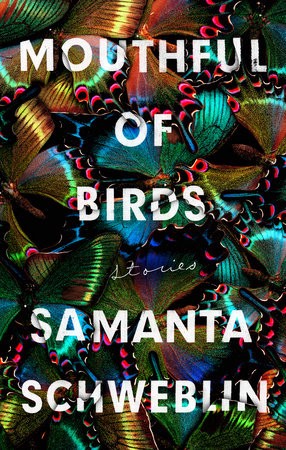
Schweblin’s latest collection in English, Mouthful of Birds, also translated by McDowell, offers up twenty short stories that are just as haunting as Fever Dream.

The first story, “Headlights,” is a pitch-perfect rendering of abandoned women sobbing in a dark field. The story hints at a larger terror at its own periphery, leaving the reader in wait for something even more terrifying to happen, all while underscoring the generational tension between young women and their elders.

Other pieces examine strange almond-like pregnancies, a bizarre fight in a truckstop restaurant with a short man who has a tall dead wife, a merman, a depressed brother, and heads against concrete.

While the collection fluctuates as a whole between fully fleshed out stories and looser pieces, there is no denying the originality and darkness that defines Schweblin’s work. Even Schweblin’s less polished stories are tense wonders.

The more I read of Mouthful of Birds, the more questions I had about how it came to be in English. As translator, McDowell must also confront the darkness in Schweblin’s work, perhaps more intimately than anyone, and bring these vicious, yearning scenes to life in another language.

McDowell and I spoke via email about how she became a literary translator, why she is drawn to darkness in literature, and what’s coming next from Samanta Schweblin.


Sarah Rose Etter: What first drew you to Samanta Schweblin’s work? You’ve worked with her as a translator for two books now, so I was curious how you two found each other.

Megan McDowell: Well, I was lucky enough to be offered the translation of Distancia de Rescate (Fever Dream) when Riverhead bought it. I think it was because of a recommendation from Alejandro Zambra. Laura Perciasepe at Riverhead sent me the book and I started reading it over dinner that same evening. And once I started I couldn’t stop. I had other things to do and I had to get up early the next day, but I just couldn’t stop reading. I finished it late that night. It’s not often that a book can just take you out of your world so immediately and completely. So of course, I said yes.

Mouthful of Birds is the second book I’ve translated by Samanta, and there are two more on the way. I’m working on her second novel now, called Kentukis, and I love it — it’s creepy and surprising. After that will come her short story collection, Siete casas vacias (Seven Empty Houses), which came out in Spanish in 2015.

SRE: I wasn’t planning to ask about the next work coming out yet, but I can’t help myself. You have to tell us a little bit about Kentukis and Siete cases vacias. Just a tiny bit about each?

MM: Kentukis is Samanta’s new novel that just came out a month or two ago. It’s very different from Fever Dream, but just as compelling. It’s structured as many interwoven stories of people from vastly different backgrounds living all around the world. It’s an exploration of the way technology has of infantilizing us as we incorporate it into our daily lives, how even as it offers us new possibilities and abilities, it also tends to narrow our perspective and make us grow complacent.

As of now, the book’s opening line in English is: “The first thing they did was show their tits.”

Siete casas is, as I said, short stories, only seven of them as the title suggests. Like Mouthful of Birds, these stories have a precision and weirdness that disorients and intrigues; they tend to center on domestic worlds that are distorted in a way that makes the reader question any sense of security she may have. Here are seven first lines:

“We’re lost,” says my mother.

“Where are your parents’ clothes?” asks Marga.

Mr. Weimer is knocking at the door of my house.

The list was part of a plan: Lola suspected that her life had been too long, too simple and light, and now it lacked the weight that would make it disappear.

My mother-in-law wants me to buy some aspirin.

The day I turned eight, my sister — who absolutely always had to be the centre of attention — swallowed an entire cup of bleach.

Three lighting bolts illuminate the night, and I catch a glimpse of some dirty terraces and the buildings’ partition walls.

SRE: Those lines are incredible — especially the cup of bleach line. Very excited to hear both of those are in the works. But let’s focus on Mouthful of Birds. How did you feel when you first read Mouthful of Birds?

MM: I’ve always had a soft spot for dark literature, psychological horror, stories that make us uncomfortable when we read them. Samanta is a master of that, without relying on any genre tropes. Her work is genuinely surprising and thought-provoking.

When I translate a book or story I have to read it over and over, and I never get tired of reading Samanta’s work. I get something new out of it every time, change my interpretation a little, pick up on something I hadn’t before. That kind of writer is a joy to work with.

I also love short stories. I’ve never understood why they get such a bad rap in the publishing world. And the short story is Samanta’s terrain, she’s very sure-footed and she knows how to pace a tale. Each time you finish one you get a little gleam of satisfaction along with the sense of unease her work tends to provoke.

There isn’t a clear path to becoming a literary translator. It’s always a little hazy how one gets into such a thing, and you don’t really know until you’re doing it.

SRE: What drew you to dark literature specifically for translation? Is that something you’ve always been interested in since you began reading?

MM: I remember when I was a kid, I loved to read mystery, thriller, and horror books. My dad and sister read them too, and we used to pass the Stephen King novels around. I would also take whatever books looked interesting from my parents’ shelves, and they weren’t always age-appropriate.

Now, I grew up Catholic, and I have a deeply ingrained sense of guilt. I remember reading a book from my dad’s shelf that I was definitely too young for, a lot of violence and sex. I knew I shouldn’t be reading it and I felt guilty, but I also couldn’t stop.

Maybe that was among my first transgressions; it was exciting. Later I started reading more literary books, but I never lost the taste for darkness. When I discover writers who can combine the transgressive joy of horror with literary depth and original style, I’m sold.

SRE: When did you first know you wanted to become a translator? How did you get into it?

MM: It was a cool morning in March of 1999, 8:55 in the morning, over coffee. Just kidding!

It was a gradual process, starting with a general interest in reading translation, then in publishing, finally in being a translator myself. I was interested in translation as a genre before I knew another language. I loved to read books from other countries, I always had the feeling I was getting some kind of privileged, rare look into other patterns of thinking.

At first I was interested in publishing — as an undergrad I interned at a small press in Chicago called Ivan R. Dee, and after I graduated I had a year-long fellowship at Dalkey Archive. That job gave me the idea that knowing another language would help me get a job in publishing, so I moved to Chile to learn Spanish, and then for a while I worked as a translator at a British shipping company in Valparaíso. I really learned a lot, but eventually I felt stuck because I wanted to work with literature, not insurance reports, and so I moved back to the states and started a Master’s degree focused on literary translation at the University of Texas at Dallas.

But even when I went back to school for translation, I wasn’t really sure I could do it. It was all more of an exploration or a testing of the waters.

Maybe the answer is that my desire to be a translator was concretized when I published my first translation — that was when it was really real. It’s strange because there isn’t a clear path to becoming a literary translator, it’s always a little hazy how one gets into such a thing, and you don’t really know until you’re doing it.

A translator spends a lot of time trying to figure out what a writer really means, similar to what a therapist does.

SRE: Can you tell me a bit about the first book you translated?

MM: I took some translation workshops and the project I worked on was Alejandro Zambra’s The Private Lives of Trees. I read from my translation at the ALTA conference that year, and one of the three people in the audience was Chad Post from Open Letter (I knew him from the old days at Dalkey).

Later, when Chad was considering the book, he remembered I was working on it, and he ended up publishing my translation. I think I was very lucky in many ways in the whole process, a lot of things came together to make the publication possible.

SRE: What kind of relationship do you have with Samanta as a result of these translations? What is it like to work with her?

MM: I’ve only met her twice in person, once in London for the Booker madness, and once when she was passing through Santiago and came over for dinner. But we’ve been in contact much more and I do feel close to her; maybe it’s just that I admire her a lot, but I’ve also spent a lot of time in her head, which makes me feel, maybe falsely, that I know her well.

If you translate living writers I think it’s not unusual for authors and translators to be pretty close. It’s a strange and intense relationship. Right now I’m finishing up the translation of an essay on translation and language by Alejandro Zambra. It’s even more meta than it sounds, because I have a cameo in the essay, and I recognize points in it that grew out of things that he and I have talked about.

He also references a book by Adam Phillips that compares translation to therapy. There are a lot of conclusions one can draw about the very possibility of “translating a person,” but the comparison to therapy rings true: a translator spends a lot of time trying to figure out what a writer really means, what lies behind the words and makes them move, similar to what a therapist does.

SRE: What else are you working on translating beyond Samanta’s work? What are you reading right now that’s really compelling?

MM: I’m working on several things. I’m in the final stages on two books: one is a book of short stories called Humiliation by Paulina Flores, a young Chilean writer. The book was a big hit in Chile and I’m excited to see it in English; it’s rare for a first book to be translated, especially if it’s stories, and I think that speaks to the quality of the book and also the eye of the editors (One World in the U.K. and Catapult in the U.S.).

The other is a novel by an Argentine writer, Nicolás Giacobone. This is his first novel, he’s previously been a screenwriter — he wrote the script for Birdman, for example. It’s a strange and compelling novel about a screenwriter who is kidnapped by a great director who keeps him in the basement and forces him to write award-winning screenplays.

Then I’m in the beginning stages of two other novels: Kentukis, which I’ve already mentioned, and Museo animal, by Carlos Fonseca, both of which I’m excited about.

As for what I’m reading, strangely it’s a lot of non-fiction (unusual for me). I’ve just finished a book called Cuaderno de faros by Jazmina Barrera, a young Mexican author. It’s a beautiful and surprisingly personal collection of essays about lighthouses, and the writing is assured and understated. I’m also reading Alguien camina sobre tu tumba by Mariana Enriquez, which is a book of essays on the author’s visits to cemeteries around the world. It’s creepy and entertaining, like you’d expect from Mariana.

Finally I’m reading Rebaño, by the Chilean journalist Óscar Contardo, which is about the Catholic church’s abuse of power in Chile. Also very well-written, and it’s helping explain the context of how and why those kinds of atrocities were particularly possible in Chile, where priests have typically had a kind of god-like status in public life and in the daily lives of their parishioners.

SRE: What do you love about Humiliation by Flores? You sound so excited about it. What can we expect from that work?

MM: The stories in Humiliation have a lot of sensitivity and wisdom. They often seem like small stories and when you read them you think you know where they’re taking you, and then you end up somewhere entirely different. The book is very Chilean in its evocation of place and class and childhood, but it has a wider reach. I think Flores is a real writer and I’m excited also to see what she does next.

SRE: When you’re deciding on a translation project, what helps you choose work? You live in Chile and focus on Latin American writers. What draws you to that region? What do you like about what is happening in literature there?

MM: I learned Spanish in Chile and I live there, and it’s the Spanish I feel most comfortable with. It’s also kind of my adopted country, and I know more about the history and the literary scene. I’ve expanded my reach into Argentina, which is close by and shares a lot with Chile, and I want to expand further. In 2018, I went to Colombia and Mexico, and I would love to translate some authors from those countries, we’ll see how that works out.

I don’t know that I can say I really choose a project — a lot of the time the project chooses me. The only writer I really chose 100% was Zambra with the first book I translated, and I hit the jackpot there. These days, there’s a different story for how I come to translate each book I do. Sometimes the editor offers me a book, and if I love it I say yes. Other times I’m the one telling editors about a book I love; sometimes I spend years talking a project up before it comes to fruition. Also, once I translate an author, I’m committed to them. I try to translate everything they do, which means I can’t always take on new projects.

I do think that the English-speaking world can be a bit xenophobic. Reading translation is a fun way to combat those tendencies.

SRE: In terms of the state of translation, can you talk about why it’s so critical for these works to make their way into English?

MM: I’ve been putting off answering this question because there’s just so much that could go into my reply.

Of course, I dothink it’s critical for works to be translated, but there are a lot of people who don’t. I often get asked why people should read in translation, when there are so many great works written and being written in English; I’m always astonished by that question. But I try to avoid saying that people should read translations, because reading should never be prescriptive or obligatory.

I can say that for me, I feel like reading in translation broadens my sphere of empathy. Reading in general gives people compassion by letting them experience the subjectivities of other people (authors, characters), and reading literature from other cultures makes that possible empathy a little larger, I think. I also believe that translation adds to the English language. I know people always talk about what is lost in translation, but so little attention is paid to the vast amount that is gained — a whole new work that wasn’t in English before, one that draws on other histories and traditions, one that can influence writers and open up new paths for them.

But getting back to the point about empathy, I do think that the English-speaking world can be a bit xenophobic, sometimes overtly and other times in very subtle ways. Reading translation is a fun way to combat those tendencies. I guarantee that if you compared the circle of translation readers to that of Trump voters, there would be little to no overlap.

I am optimistic about the state of translation. I see more and more people who are curious and knowledgeable about international literature, and there are ever more presses that are either specifically interested in translation or becoming more open to it. There are a lot of conflicting currents in the world today, and the one carrying translated literature is small but I think it’s growing; hopefully it will become an ever-larger wave.

This Mysterious Website Generates Weird Short Stories About Phone Numbers

The Internet is a strange labyrinth. It can be beautiful, and terrible, and downright bizarre. There are corridors you can stumble down without remembering how you even got there in the first place. You can set off looking for Tessa Thompson’s birthday and end up elbow-deep in time travel theory on Wikipedia. Or you can try to Google a phone number and end up on a site filled with a disjointed, ever-shifting short story.

When you go to http://5613273737.phonesear.ch/ — where the ten-digit number can be swapped out for many functional phone numbers — the first three sections you see are standard. Phone number, location, phone company. But below these is a section simply labelled “Comments,” filled with hundreds of words of text assembled like a short story. Each sentence, sometimes two, stands alone, jumbled into paragraphs with unrelated sentences.

Some are mundane: “The logs are being floated down the river. This road needs to be repaved.” Some, taken together, are biting: “I want you to think about what really matters to you. That was a good joke. Tell us another one.” And some — especially the outward-facing sentences that seem to speak directly to the reader — send a chill up your spine: “His eyes are glowing. Is anybody looking for you?”

Sometimes, pointed messages stand out in their own paragraphs:

“Time is up now.”

“If you see this message, write me.”

“I feel like I can tell you anything.”

Each time you refresh the page, a whole new batch of text generates. “We actually have four legs. Are you supposed to be here? He was reconciled to his fate.”

Some seem to be pulled from novels, short stories, or creeds; I spotted the Lord’s Prayer in its entirety, sentences from Tolstoy and Donne, and a line from a Ralph Waldo Emerson journal. There are references to modern-day politicians and direct questions. When you search many of the sentences, you realize that they’re being pulled from translation websites, example sentences lifted and then scrambled.

But some sentences only appear here, or on one of the 200+ different urls that redirect to this website. “Call Vic and Phiroze this evening” is unique to the site. Disturbingly, so is “If the Americans hire you to kill children in Iraq, that would obviously make you happy, right?” And this strange piece of vampire lore: “With adequate lighting, one can easily discern Nosferatu, with his pointed incisors and extremely long-limbed fingers, known as arachnodaktyly, from common vampires.”

On Reddit — as is always the case — users scramble to construct theories. Many people seem to agree that the texts are compelling, evocative, even poetic, and that they would make great writing prompts — but surely they’re not there for inspiration or literary value. So what are they? One wonders if there’s a code to be broken inside the text. Another thinks it’s a sign of a neural network getting just a little smarter, or the beginning of the end for us via the singularity.

The texts would make great writing prompts — but surely they’re not there for inspiration or literary value. So what are they?

The real answer is (probably) the most straightforward of the theories: text spinning. Started in the mid-2000s as a way to trawl for Google hits, this SEO technique tricks search engines into thinking that the site is full of actual content. The more unique text you have, the higher Google’s algorithm will put you in the search rankings. There are four banner ads on the phonesearch website, spaced in between the phone number, the location, and the phone company; on a laptop, the comments aren’t even visible unless you scroll down to look at them. Each time you refresh the page, the text shifts, and whoever owns the website gets a little bit more ad revenue.

But even with a simple answer, there’s something about these texts that refuses to unravel itself. Why write original sentences? And why does it sometimes seem like the text is speaking directly to you, like a prophet or a prisoner sending messages between the lines?

The explanation behind the text is ordinary human ingenuity (or greed), but the breadth of reactions to it tell a much more fascinating story — and one more psychologically and existentially complicated than “people will believe anything.”

More than one Reddit user, after reading the text, has become convinced that the program has listened in on their phone or text conversations, uncovering their names or the names of people in their lives. “Creepy AF… there’s something weird going on,” writes Herbert16. One user, Em-Cee-Cree, is convinced that each generation of the text began to circle a little closer to their own life. “If you keep refreshing and reading, eventually you will see something familiar,” they say.

And they’re right — but it’s (hopefully) not because the program is watching your every move. We see ourselves and feel seen in these uncanny paragraphs of texts for the same reason that we remember all the times our horoscopes were right but forget the times they weren’t. It’s the confirmation bias of a Rorschach test, a Buzzfeed quiz, a certain song coming on the radio at exactly the right time. We tend to slot new information directly into our existing opinions and worldviews, discarding the things that don’t fit and pocketing the things that do. When we take an online quiz and the answer doesn’t fit, we shrug and move on to the next one; when it does, we’re pleased that it could understand us so intimately. When we read five hundred words that don’t apply to us, we think it’s strange; when we come across one sentence that does, we’re struck with fear that the algorithm is studying us.

We see ourselves and feel seen in these uncanny paragraphs of texts for the same reason that we remember all the times our horoscopes were right but forget the times they weren’t.

Is the jolt of recognition we feel when we skim the words of this website and see ourselves a sign of our own self-importance? Not exactly. Identifying patterns is a basic human trait, our way of creating order out of randomly shuffled images or sentences. We’re better at it than most animals, and in many ways, even than machines. We’re wired to tie everything together — and tie everything to ourselves — in a web of connections, like red string on a corkboard. An article in Frontiers in Neuroscience calls “superior pattern processing… the essence of the evolved human brain.” Recognizing patterns literally keeps us alive (eating brightly colored frogs will kill me), but it also allows us to solve complex problems (how do I react in an emergency?) and form bonds with each other (Sarah loves kettle corn, so I’ll bring her some tomorrow). It makes us feel secure in the way that we navigate the world. It also, not for nothing, helps us tell stories to ourselves and each other.

The specific bias at play with the scrambled text is called subjective validation, which means we quickly draw lines between ourselves and unrelated events if these events relate back to our own lives — like when you reblog a chain post that tells you you’ll get money soon and then your tax rebate comes through. Did you give yourself money by putting the chain post on your blog? Probably not. This is directly adjacent to the Barnum effect, which primes us to accept a statement as true if we’re told that it’s been tailored to us.

In short, the phone lookup texts aren’t just good writing prompts; they’re tiny crucibles for our ability to project ourselves into words, our storytelling instinct. The human brain wants to find patterns where they don’t exist: we see shapes in clouds, faces in the backs of chairs, a winning streak in a casino, or a personal message in a wall of randomly generated text.

To steal a phrase from The X-Files: we want to believe.

Belief is what sits in the center of the Venn diagram between knowledge and mystery, and these dueling impulses are both at play when you look at the text on this website.

We want to be certain of something in a world that seems to be built on uncertainty. We assemble clues from scraps hoping that something will tell us, definitively, that we’re doing the right thing. In the past, people have sought oracles, rolled bones, looked inside the guts of animals, opened books to random pages, tallied numbers, peeled apples, watched the movement of children and animals. And today we flip coins, take quizzes, or hit the Wikipedia “random article” button until we find something that means something to us. We have always been desperate to know.

We assemble clues from scraps hoping that something will tell us, definitively, that we’re doing the right thing.

But we don’t just want a straight answer; we want a knowledge that matches our own biases. I wanted to know the meaning behind the creepy, generated text on this website, but when I discovered the answer, I found myself disappointed.

There’s something about a mystery — about knowledge withheld — that draws and captures our attention like nothing else. At first glance, religion might seem to be a solution to people who are searching for answers. But at the heart, many religions are really about the process of interpreting a central question. In Christianity, it’s called “the mystery of faith,” a phrase to describe the impossible possibility of Christ’s death and resurrection. “Holy wisdom is not clear and thin like water,” says C.S. Lewis, “but thick and dark like blood.” It’s opaque. In Judaism, asking questions is necessary to the practice of faith.

We do want to know — but we also want to wrestle. We want things to be connected so that we can unravel them.

Our lives tend to be devoid of the kinds of mysteries or conspiracies that we love to read about. In this absence, we’ve begun to create them. Not only do we read about mysteries, but we also build ourselves games to give us the chance to solve them, to go through the motions of being a very specific kind of a detective — one that really only exists in the realm of fiction.

We frantically search for clues in escape rooms, embark on scavenger hunts, and order packages to our homes that tell us it’s up to us to solve the case. We bring mystery-solving into the physical space, where making these connections thrills us and unites us.

This eye for mystery can lead people to make fascinating connections; more than one cold case has been closed thanks to Reddit sleuthing. But the tendency to bend something “creepy” into a full-blown conspiracy can have real consequences: in 2017, members of the “My Favorite Murder” Facebook group became convinced that something suspicious was happening on a woman’s Facebook page, reaching out to her family members to ask if she was being abused until she spoke up to ask them to stop. And on a larger level, malicious conspiracy theories have stoked dangerous stereotypes and caused real harm to innocent people.

Maybe the strangeness of the stories that the phone lookup website creates doesn’t have to dig this deep. Maybe it’s just raw curiosity, or the humor in the unexpected way each sentence pairs with the ones around it. The site is what you make of it. But maybe the comments section on the site is more than the sum of its parts in the same way that an algorithm can make art that moves human people. Maybe it doesn’t matter how a certain phrase or sign comes to you in a certain moment; maybe it just matters that it comes to you when you need to hear it.

As the algorithm says: “Don’t worry, it’s not the end of the world. Jamie is wearing a party hat.”

7 Books About Time Loops

Have you ever done something foolish, or perhaps embarrassing, that changed your life for the worse? What typically results from regretful decisions or mistakes is an immediate desire to rewind the clock and start over. It would be so easy to just press a refresh button and begin again; to either start at the beginning of that office party where your boss heard you talking about her or perhaps — while we’re at it — just start again from birth. Time loop stories offer characters the chance to press that button. Though the loop in which they find themselves is, more likely than not, unwelcome.

In the Netflix series Russian Doll, Nadia spends her birthday laboriously trying not to die, only to relive the beginning of her party. In Groundhog Day, Phil Connors does everything he can to escape the repetition of living the same day on repeat. This narrative device gives us a glimpse of what life might be like if we had the ability to fall asleep and wake up with the ability to restart the day. After reading these time loop novels, and the chaotic worlds in which the characters find themselves, you might decide it’s not even worth it.

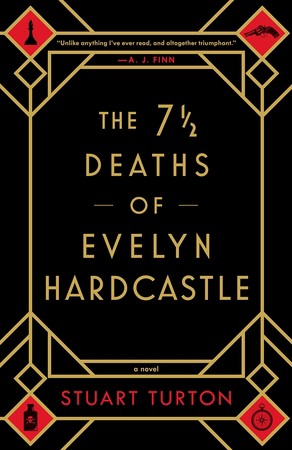
The 7 ½ Deaths of Evelyn Hardcastle by Stuart Turton

Russian Doll begins with Nadia staring into the bathroom mirror of her birthday party; faucet running, “Gotta Get Up” blasting from the speakers, impatient knocks on the door. With a similar dramatic flair, The 7 ½ Deaths of Evelyn Hardcastle begins with a man waking up in a forest with no memory of who or where he is. He comes to learn that he’s living in a bizarre house party murder mystery, in which he must discover Evelyn Hardcastle’s killer or else he will wake up in a new body, with no memory, and be forced to begin again. The 7 ½ Deaths of Evelyn Hardcastle turns the time loop narrative into a nail biting mystery, featuring a 1920s parties and several body swaps.

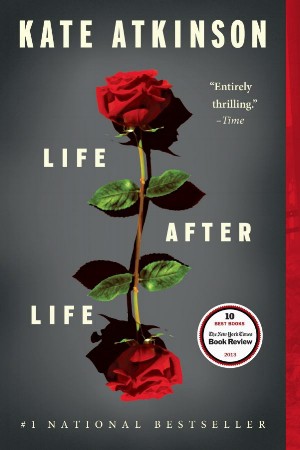
Life After Life by Kate Atkinson

Nadia dies several deaths, some more gruesome than others. In Life After Life, Atkinson’s protagonist, Ursula, has a similar proclivity for unlikely deaths, from falling off a roof to getting suffocated in her sleep by a cat sitting on her face. Though Ursula’s time loop does not begin again in the same place every time she dies, she does get the chance to learn from her past lives, to revise and rebuild. She gets the chance to revisit characters that played important or harmful role in her past lives. Underlying Atkinson’s story is a lesson on the way people’s lives are intertwined, as with the tale of Nadia and Alan.

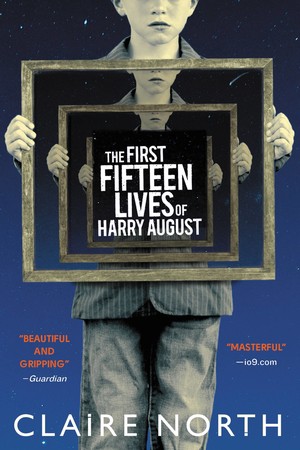
The First Fifteen Lives of Harry August by Claire North

In The First Fifteen Lives of Harry August, the titular character is not the only one living in a time loop. He belongs to a group of people, called kalachakra — a buddhist term that means “wheel of time” — who are able to relive their lives every time they die. Unlike Russian Doll, in which Nadia is tasked with changing the course of that one fateful day, Harry and the rest of the kalachakra have one rule: they must not meddle with history. One of the members of the group strays from the pact, and Harry, being the only one able to recall past lives, has to find and stop him.

Before I Fall by Lauren Oliver

In Before I Fall, the protagonist finds a chance at redemption in her time loop. Samantha, having been bullied as a child, believes she has the right to do the same unto others. When her deaths result in a time loop, she is forced to relive the last day of her life seven times and reflect on the harm she causes. Rather than a novel about changing the course of one’s life, or the course of one important day, Before I Fall explores the nature of changing oneself.

Neverworld Wake by Marisha Pessl

Five best friends are stuck in limbo, reliving the same day until they decide which one can leave, and only one of them is allowed to go back to the world of the living. The catalyst for their being stuck in time is a car accident that threw them all into this purgatory-like existence — a place they call Neverworld Wake. In this novel, the mystery does not come from the surreal nature of the time travel; the characters know what has happened and how to fix it. Rather, the puzzle to be solved is within the characters themselves. The group of friends used to have a sixth member, who recently died, and they are each holding back information about his death.

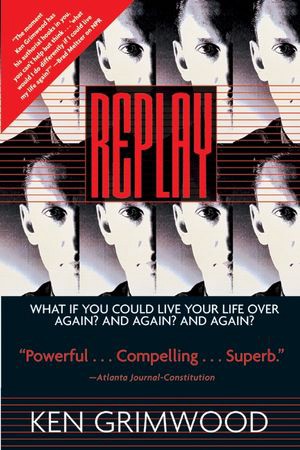
Replay by Ken Grimwood

Replay follows Jeff Winston, a man who dies at the age of 43, and then replays his life only to die at 43 again, and then again, and — you guessed it — again. The first few replays of Jeff’s life feature a trajectory familiar to characters who can tell the future; using the information he has from his previous lives in order to better the present life. Eventually, Jeff meets Pamela, another person in the throes of a similar time loop, and they cross paths repeatedly. Jeff and Pamela join forces to learn about the inexplicable world in which they’ve found themselves.

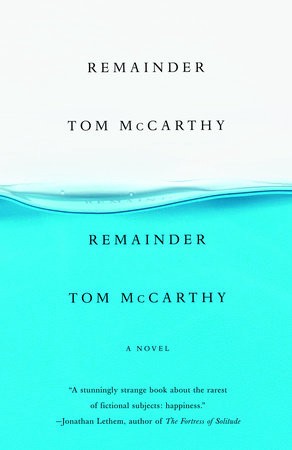
Remainder by Tom McCarthy

The protagonist in Remainder finds himself in a time loop willingly. Having woken up just after an accident, with only small glimpses of memories from beforehand, he is determined to uncover what happened to him. Though he has no solid recollections, certain things incite vague memories such as a particular crack in a tenement wall. He takes these instances of déjà vu and runs with them, setting up re-enactments in the hopes to find out more about his past. And when this task proves to be more difficult than he’d thought, he repeats it, and repeats, and repeats; creating a time loop of his own making.

11 Books About Stalkers and Obsessives for Fans of “You”

Netflix’s You premiered in early December and, three months later, it continues to inspire a whole generation of single millennials to set ALL their social media to private. Based on Caroline Kepnes’s eponymous novel, You thrusts viewers into the mind of Joe Goldberg, a mysterious bookstore manager who falls quickly in love, and from there into dangerous obsession with NYU grad student Guinevere Beck (who everyone just calls Beck). From Beck’s daily schedule to her circle of friends, Joe leaves no corner of her life untouched in a twisted quest to become her one and only. To the delight of You fans everywhere, the series has been greenlit for a second season with spoilers already dropping. But until then, here are eleven books that will satisfy your fix for stalker plots.

You All Grow Up and Leave Me by Piper Weiss

In 1993, Gary Wilensky, a once-beloved tennis coach, attempted and failed to kidnap a former student, 17-year-old Jennifer Rhodes. Rather than be arrested by encroaching police, he shot himself. In the wake of his suicide, Piper Weiss, one of Wilensky’s tennis pupils, thumbed through police reports, articles, interviews, even Wilensky’s own words, to find answers. Who was Gary Wilensky? How deep was his obsession with his young female students? And most importantly, how was it possible that she could mourn such a deplorable figure? The result of meticulous research and self-exploration, Weiss’s You All Grow Up and Leave Me explores the complex, Stockholm Syndrome-like relationship that can form between a charming but disturbed mentor and a young charge navigating through the insecurities of adolescence.

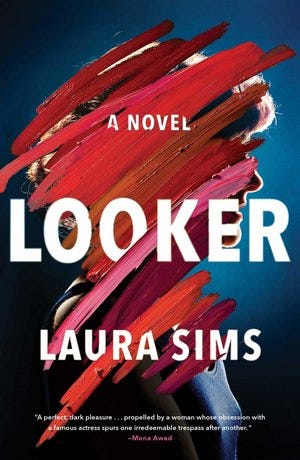
Looker by Laura Sims

Dejected by her failed attempts to get pregnant and her impending divorce, an English professor begins spying on her next door neighbors: a glamorous actress, her screenwriter husband, and their three beautiful children. Projecting the happy ending that eluded her on the also unnamed strangers, the narrator’s choices become progressively more erratic — stealing her neighbor’s possessions and beginning an affair with one of her students. Looker blurs the lines of reality, encouraging readers to question the narrator’s reliability as she chronicles her protagonist’s descent to self-destruction.

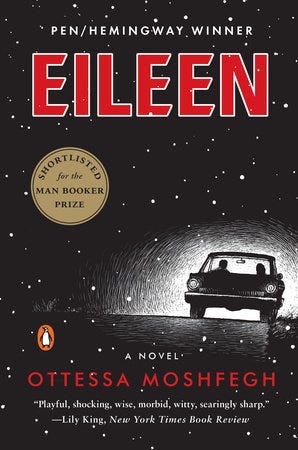
Eileen by Ottessa Moshfegh

Eileen is stuck. Still living at home in “X-ville,” Massachusetts, Eileen dreams of a buzzing life in New York City. However, as the sole caretaker of her abusive, alcoholic father, she is seemingly destined to remain…stuck. This changes when the beautiful Rebecca begins as an educational specialist at Moorehead, the all-male juvenile detention where Eileen works. Instantly infatuated with her new co-worker, Eileen’s fascination becomes the catalyst to both the novel’s bloody conclusion and freedom from her small-town life.

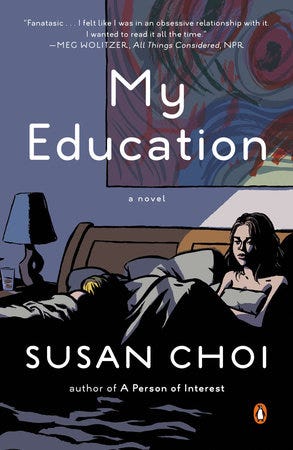
My Education by Susan Choi

At the center of Susan Choi’s coming-of-age story is a salacious affair between Regina Gottlieb, a newly-matriculated grad student, and Martha Bordeur, her professor’s wife. Anxious as she begins graduate studies, Regina finds validation as a TA for the charismatic but disreputable Professor Nicholas Bordeur. Although initially attracted to her mentor, she falls hopelessly in love with his wife and the two begin a sexual relationship. As the courtship deepens, Regina’s devotion approaches obsession, all things — school, friends, health — coming second to Martha.

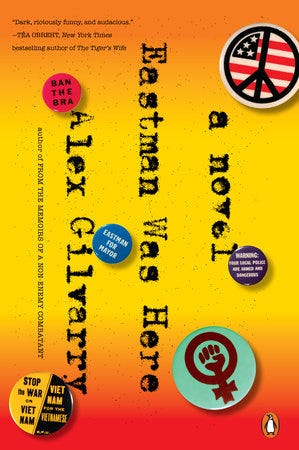
Eastman Was Here by Alex Gilvarry

Once a Pulitzer Prize finalist, Alan Eastman is now a washed-up wartime reporter awaiting his second divorce. Desperate to restore his marriage and reclaim the fame he enjoyed 20 years earlier, Alan departs for Saigon having agreed to cover the final days of the Vietnam War. Equipped with a narcissistic protagonist, a strong female counterpart, and witty dialogue between the two, Alex Gilvarry’s Eastman Was Here shows how far — literally — someone is willing to go for both personal and professional relevance.

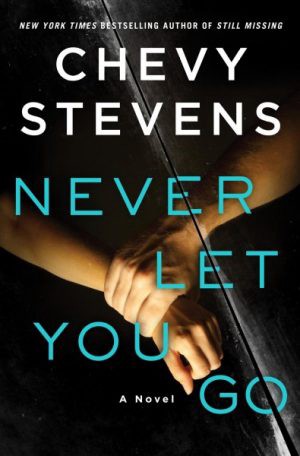
Never Let You Go by Chevy Stevens

Eleven years ago, Lindsey Nash grabbed her infant daughter Sophie and ran. Drunk and angry, Lindsey’s abusive husband Andrew followed her, causing a car accident that killed an innocent woman. Lindsey successfully escaped, starting a new life with Sophie in Dogwood Bay, British Colombia while Andrew began serving a decade-long sentence. Now Andrew is back, seemingly changed, and eager to reconnect with his daughter. Lindsey is skeptical and, as strange things start happening, fears her ex will stop at nothing to reclaim what he lost all those years ago. Complete with flashbacks and a surprise twist, Never Let You Go will change the way you look at obsession narratives.

Oola by Brittany Newell

In Brittany Newell’s debut novel, Leif, a 25-year-old writer living lavishly as the house-sitter for his parents’ wealthy friends, and Oola, a 21-year-old free-spirited artist, begin a whirlwind romance after their paths cross at a London rave. As their relationship intensifies, Leif attempts to pen a novel about his new muse. However, his endearing project becomes a disturbing fascination when Leif takes the term “creeping” to a new level, studying Oola as she showers, collecting her hair and nail clippings, and tallying the number of men who ogle her.

The Girl on the Train by Paula Hawkins

Rachel Watson is a divorced alcoholic who becomes obsessed with a couple whose home she passes during her daily commute. Heartbroken over her failed marriage, Rachel becomes obsessed with the happily married strangers, both of them representations of her deepest desires…until one of them goes missing. In a debut full of twists and more interconnected subplots than a soap opera, Paula Hawkins uses what is initially a delusional, unreliable protagonist to expose a web of infidelity, abuse, and murder.

Coldwater Canyon by Anne-Marie Kinney

In Anne Marie Kinney’s Coldwater Canyon, Shep is a Desert Storm veteran who lives haunted by memories of combat. He meets a young actress, Lila, and, crippled by the loneliness of civilian life, becomes convinced she is the daughter that he conceived before the war. A victim of his own delusions, Shep follows an unknowing Lila to Los Angeles, desperate for cure to his isolation.

Pale Fire by Vladimir Nabokov

John Shade, recently deceased, was a professor at Wordsmith College. Charles Kinbote is Shade’s colleague who, in an act of admiration, writes commentaries to the latter’s final work, a 999-line poem. A lot of things become clear about Kinbote over the course of his accidentally revealing footnotes (Nabokov is often praised for creating the ultimate unreliable narrator in Humbert Humbert, but Charles Kinbote leaves him in the dust). One of the revelations: Kinbote’s fixation on Shade goes well beyond the bounds of normal professional admiration.

The Hunchback of Notre Dame by Victor Hugo

The inspiration for one of Disney’s most underrated movies (listen to that soundtrack and tell me I’m wrong), The Hunchback of Notre Dame is a tale of lust-fueled obsession. Like its Disney counterpart, the novel follows a cast of diverse characters: the cruel and conservative archdeacon Frollo, the disfigured and lonely bell-ringer Quasimodo, the enchanting dancer Esmeralda, and the sympathy-driven soldier Phoebus. But unlike its family-friendly adaptation, Victor Hugo’s Hunchback leans into Frollo’s unhinged pursuit of Esmeralda and how his obsession leads to not only his death but the deaths of most of the main characters.

In “Russian Doll,” Neglecting Your Neighbors Could Kill You

The dead don’t stick around in New York. The rapidly-changing city is so aggressively unfriendly to ghosts, that there is a popular movie from the ’80s whose premise is that a couple of nerd bros create a tech start-up to eradicate the city’s spirits — a particularly offensive move in the midst of an epidemic. When I think of New York’s dead, I can only think of the versions of ourselves that rattle around like spare change in our ribcage. I imagine they go about their business with the same disregard to the world’s tumult as they did when we lived them, like the dead in Rilke’s First Elegy, who go on without hearing us. This is to say: I do not think there are ghosts in New York. I think they have been Busted, and that they live in the only rent-free residence in the city — our own heads.

A real New York ghost story, then, is one in which we’re haunted by our own pasts. Instead of possession, we have self-obsession, which is arguably more deadly. And a real New York exorcism, ironically, is one in which we let in other spirits: the people around us and their own restless dead. In Natasha Lyonne’s new show Russian Doll, her character, Nadia, is in the grip of her past selves, leading her again and again to her own death, until she accepts help in acknowledging her ghosts and helps someone else do the same.

A real New York exorcism, ironically, is one in which we let in other spirits: the people around us and their own restless dead.

The show begins in an old East Village Yeshiva which has been, like the Jewish Daily Forward building before it, converted to luxury condos. It is there that Nadia, finds herself reliving the night of her 36th birthday — and dying every time. (And then waking up, alive again, in the same damn bathroom with the same damn song playing.) Her first assumption is that the building is haunted, but when she recruits her ex to speak with a rabbi who might know more about the history of the building, the rabbi tells him, “Buildings aren’t haunted. People are.”

Cut to Nadia, receiving a prayer of protection from Shiphrah, the rabbi’s assistant. Nadia doesn’t know her prayers, of course, so she asks what they mean. Shiphrah smiles: “Angels are all around us.”

Both bits of wisdom imply that it isn’t that places retain vestiges of the dead and that if people are haunted, the only way to give up the ghost is by letting in other spirits. If spirits enter the plane of the living, it is because we ask them to show up for us, either in the form of unconscious ruminating or conscious plea. Russian Doll, however, suggests that we don’t need the intervention of celestial bodies to save us — we can do the work ourselves.

In this same episode, Nadia does her first bit of angel work herself. She trusts Horse, a homeless man in Tompkins Square Park, to cut her hair before curling up beside him, two warm bodies for the night, only to freeze to death. It is also in this episode that Nadia, after coming to life in the bathroom again, makes her first order of business guarding Horse’s shoes for the night so he doesn’t leave the shelter. Angels are all around us; Nadia sits a vigil to keep him safe as he sleeps.

But then, twist: there’s another looper, Alan, with whom Nadia has not so much a meet-cute as a meet-grim in a plummeting elevator. She’s able to find him in the next loop only because she notices people and her surroundings. In the elevator, she picks up on his tick of fiddling with a box that we later learn contains an ill-fated engagement ring. She also notices the logo from the box on the window of the store that sold the ring, and after the salesperson won’t tell her his name, she notices the store’s fake-Yelp review icon and scrolls to find his name and his haunts. Tracking him down doesn’t depend on fortuitous coincidence — she just needs to pay attention to others and what’s going on around her.

Nadia and Alan come to realize that they are looping back through time together and dying at the same time, and must work with each other to address and survive the traumas of their pasts. Along the way, they discover how their looping timelines result in a deteriorating world: fruit rotting from the outside, vanishing fish, vanishing people. But even for those of us who live life linearly, our world also deteriorates. The city itself suffers through crumbling infrastructure that makes getting through the day that much more difficult for everyone, and people do vanish. The plagues of the city appear like Easter Eggs throughout the show: HIV-AIDS and the apartments the dead left behind to be snatched up by the wealthy; the neglect of the elderly; the neglect of gig workers; the Tompkins Square Riots and displaced squatters; displaced Holocaust survivors and Jews in general.

As the episodes wear on, it becomes apparent that the show asks us to not only care about the protagonists, but also the residents of the city they live in, and by extension, the city itself. If others vanish every time they loop, then the lives of others are implicated in their actions. You could say New York is a “character” in the show, as the cliché goes, in the sense that New York is not merely a setting, but a personality with agency that can be affected by others, and that suffers or thrives accordingly.

Nadia and Alan’s deaths become more gruesome and more alarming the closer they get to the heart of their trauma, and the closer they get to each other. No longer do they cooly reboot after a slapstick demise — they have twin heart attacks. Nadia coughs up bloody glass, and Alan keeps killing himself. But when they finally confront their own traumas and heal enough to survive one last death, they wind up in opposing timelines, tasked with saving the other from the deaths that started the loops. They don’t “fall in love” at the end, and the show isn’t a zany rom-com where the time loop is merely an impediment to a heterosexual success story. Instead, the time loop forces them out from their deepest layers of isolation and sadness and gives them an opportunity to rely on people other than themselves, or even their lovers, to heal trauma.

Russian Doll stages a paradox that is true for lovers as it is for any residents of a city in struggle: we need one another to heal, but we need to be working on healing ourselves in order to show up for one another. It’s that first step that is so hard — being well enough to let others in — especially in a city as notoriously individualistic as New York.

‘Russian Doll’ stages a paradox: we need one another to heal, but we need to be working on healing ourselves in order to show up for one another.

In a city that doesn’t always change so much as it metastasizes, the cost of living is as high as our worries, making it harder to be responsible for one another and easier to feel like the only person in the world, out only for survival. “What I do is my business,” Nadia tells Alan. “My body, my choice,” she jokes, before leaving to go have unprotected sex with a professor who, in a previous loop, opined on how we lost a generation of artists to AIDS, a trauma that he can only experience as a thought experiment. HIV would not be a death sentence for either affluent, insured character, but it was and remains a public health crisis for those left behind. Non-looping Nadia does not realize, third wave feminism aside, that what she does with her body is not only her business.

“Buildings aren’t haunted. People are.” The show itself is haunted by gentrification, as the characters themselves haunt a neighborhood where the homeless were violently evicted from the park and squatters from their residences. The characters in the show talk around gentrification (the Yeshiva condos, the AirBnB value of Maxine’s apartment, “Remember littering? Remember Dinkins”) in the way real life participants in gentrification often do, as a regrettable yet unavoidable occurrence. But as the show points out, feeling guilty does nothing to help anyone. Material support and embodied presence do.

Russian Doll isn’t a didactic show, nor does it make directly political statements. John Maus’ cover of “Cop Killer” may drone in the background of one scene, but in another, the dialogue drags through the flat delivery of an actress who is the real life daughter of a famous artist. In other words, the show doesn’t pretend to be immune to the charms of wealth and power even as it wears its anti-establishment references as a badge of cool. Then again, how many of us know our bodega guy’s name, let alone have his number saved in our phone, as Nadia does? The way the show proposes we care for one another — by turning our attention outward, beyond the couple and into the community — does have political implications, especially in a city as densely thrown together as New York. Russian Doll argues that we are implicated in each other’s lives, and that to avoid that responsibility is a kind of death. If you go down, we go down.

‘Russian Doll’ argues that we are implicated in each other’s lives, and that to avoid that responsibility is a kind of death.

Paying attention to what really grieves us, paying attention to lovers and strangers alike, is a form of care that asks us to take responsibility for others. “Take care of yourself,” Alan’s elderly neighbor asks of Nadia. The word “care” shares an etymological root with “curiosity,” suggesting that to care for something or someone is to have an openness towards difference. The danger of gentrification, as Sarah Schulman laments in her book, The Gentrification of the Mind, is not merely in how it displaces people and homogenizes cities. Gentrification eliminates the possibility for “the daily affirmation that people from other experiences are real.” Nadia walks by Alan in the park for several loops before they notice one another, unaware of the city’s warning to ignore others at your own risk.

The New York that Russian Doll imagines is, in the end, a city of people who recognize one another and promise to keep showing up for each other. It’s the only promise that can mitigate the displacement and poverty gentrification leaves in its wake. This message is more leftist than liberal: we must care for one another, but that means there is work to be done and there are reparations to be paid, not merely feelings to be resolved.

In their final loop, Nadia and Alan pay kindnesses towards the strangers who have become familiar and pay their dues to the homeless who are at risk of slipping away from life, as they themselves once were. Alan’s suicidal gift to Horse of the wedding ring and wallet is a proposal of care, of mutual aid. The show ends with a parade of the park squatters and various past Nadias, because in real New York, no one is the center of the universe, not even the people time traveling. In the end, Nadia cannot promise Alan happiness, as he asks her. She can only promise her presence, that he will not be alone.

You don’t have to know a person or even love them to invest a moment of care in their well-being. Even if it isn’t a political show, Russian Doll makes a political ask: be aware of your surroundings, your city, your own ghosts and the ghosts of others, so you can be available in some way to those around you.

Kayla Rae Whitaker Thinks You Should Turn Off Your Phone to Write

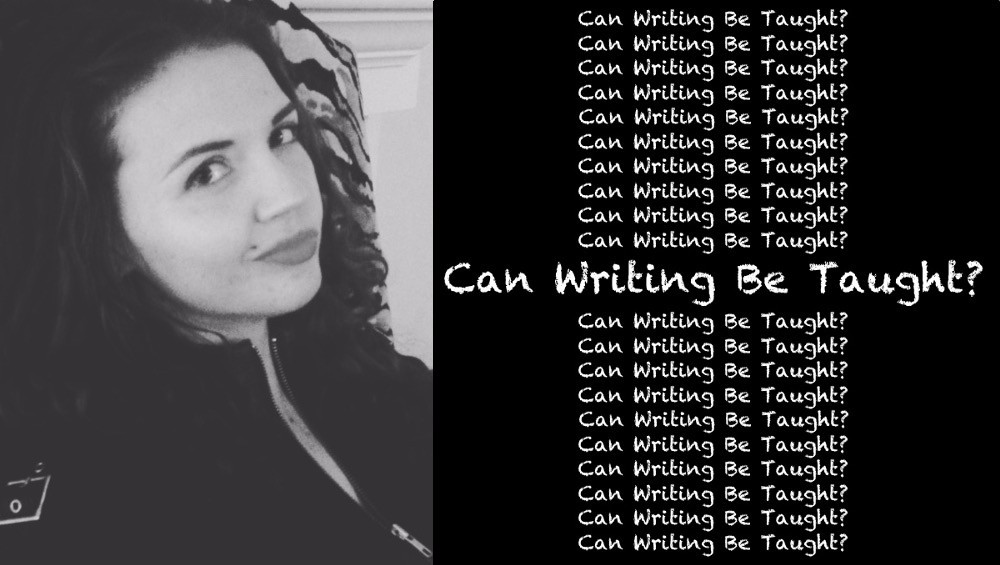
I n our monthly series Can Writing Be Taught? we partner with Catapult to ask their course instructors all our burning questions about the process of teaching writing. This month we’re talking to Kayla Rae Whitaker, author of the prizewinning novel The Animators, who’s teaching an upcoming fiction workshop that focuses on the importance of tension. Students of all levels can take the class to work on creating, sustaining, and perfecting tension in their own writing.

What’s the best thing you’ve ever gotten out of a writing class or workshop as a student?

This advice: be patient with your work. It takes a long time to write a novel. Writing, editing, editing again — this is the process, and it requires time. It was the best advice I’ve ever gotten, and it’s been the hardest advice to process and to accept. I’ve found it is best executed with faith in the idea that you are your own shrewdest narrative expert. Accompanying advice I received: make this sense of faith in your own work active. Take small, daily steps toward your goal. Acts of faith can range from gestures as small as filing ongoing projects into binders, to as large as taking a class, or joining a workshop. Folding that sense of faith into your actual practice better prepares you for playing what can be a very long game.

What’s the worst thing you’ve ever gotten out of a writing class or workshop as a student?

This did not occur in a workshop, but when I was 20 or so, I was in consultation with an older writer, and I was trying my best to get him to take my writing seriously. I told him how hard I worked — how much I read, wrote. How badly I wanted my writing to be good, and how I was willing to work, to get there. His response was to chuckle, say, “It takes more than that,” and turn his face away from me, effectively ending the conversation.

It took me years to realize how wrong this guy had been, and it galvanized me to take the compassion of teaching seriously. If you teach writing, your job is to teach writers to become better. I am here to meet you where you are. Your job is not to adjudicate who has “inherent talent,” and who does not. Doing so is a waste of time. Craft, process, and commitment to vision are at the center of our classroom concerns. And if you tell a student, “It takes more than that,” then you damn well better have an answer at the ready as to what “that” is.

If you teach writing, your job is to teach writers to become better. I am here to meet you where you are.

What is the lesson or piece of writing advice you return to most as an instructor?

Constancy. It sounds simplistic, but it’s the key to everything. Sitting down to write every day is a sort of conditioning. There’s a certain private space you are required to access before you can make creative work, and distraction makes this space elusive. Make an effort to slip into this space, as regularly as you brush your teeth, or exercise. Habit is the best way by which to become truly limber, creatively.

Get to know that productive space, for yourself. Know your sweet spots, and what makes your brain and gut churn. Pursue that space relentlessly. Try to make it a place you love. That’s the only element that will drag you back to your desk when things become difficult.

Also — increasingly — shut your phone off, when you write. Don’t just silence it. Turn it off.

Does everyone “have a novel in them”?

I’m inclined to say yes — people are such weird, wonderfully secretive creatures — but those with the patience to actually write those novels are few.

Would you ever encourage a student to give up writing? Under what circumstances?

Just one — if the writing itself was making the student so miserable, the rest of their life was untenable. Only then would I advise shelving their practice (and perhaps temporarily).

What’s more valuable in a workshop, praise or criticism?

An honest combination of both. Many beginning writers have no idea where their strengths or weaknesses are located, and that’s where the work of that lovely community, the workshop, comes into play. Under the group’s advisement, you begin to know your work at a distance, its bright spots, its frailties. You can begin to see what your work can be, with revision, and that realization gives criticism valuable heft. It becomes something you can use, something you are grateful for knowing, as opposed to something that just stings.

Should students write with publication in mind? Why or why not?

In some part, in that writing, and reading, are communicative acts. Good writing is, chiefly, an artfully arranged, and wonderfully deep, conversation between reader and writer. Holding that potential conversation in mind while writing is paramount.

However, thoughts of selling what you make, or worries of how what you make might stack up to the work of others, or anxieties over whether it will be reviewed well, should be held at as much of a remove as possible. Those anxieties just gum up the works. Craft comes first.

Good writing is, chiefly, an artfully arranged, and wonderfully deep, conversation between reader and writer.

In one or two sentences, what’s your opinion of these writing maxims?

  • Kill your darlings — Let’s find another way of saying this. I push a similar mantra, but phrased as: practice being your own best editor. Take steps to ensure that you will not be gentle.
  • Show don’t tell — All of these rules are fine, until that great, nose-thumbing story that just decimates that rule thunders to the fore. A more inclusive rule might be to balance your information — test out what can be offered in scene, in dialogue, and what is best delivered as a shot of well-executed exposition (and yes, such a thing exists).
  • Write what you know — This maxim can so easily become a chokehold. Don’t ever bar yourself from writing the unknown. Accordingly: do your research.
  • Character is plot — A character should always absorb their world, and respond to what their world throws at them, as themselves. But I love a narrative that keeps in mind how horribly malleable characters can be, when the world flings out its monkey wrenches.

What’s the best hobby for writers?

Something that has absolutely nothing to do with writing, and preferably something physical. This is why so many writers gravitate toward running, which is a personal passion of mine — it’s nice to simply be in the body, after spending so many hours of the day in that purely mental space.

What’s the best workshop snack?

Something dry and without smell or sound. Candy works well — it’s portable, and shareable, and it makes minimal noise. Just don’t bring in a ribeye.

If You Love Roberto Bolaño’s Work, You Love Natasha Wimmer

Natasha Wimmer has worked on numerous books by the late, great Roberto Bolaño, including The Savage Detectives and 2666 (for which she won the PEN Translation Prize in 2009)She took Bolaño dazzling prose and gave it new life to millions of readers who would never have had a chance to read his masterpieces.

Wimmer’s most recent translation is of Bolaño’s latest posthumous release, The Spirit of Science Fiction. Written by the Chilean novelist in the 1980s, the novel was first published in 2016 by the Spanish publishing house Alfaguara. The novel follows two young poets in Mexico City trying to keep their friendship alive while forging a future for themselves.

I corresponded with Wimmer via email about the challenges of translation, translating the literary works of Bolaño, and the translated books that she’s most excited to read.


Adam Vitcavage: It’s easy to understand an author’s path to publishing, but I am not sure the path to becoming a translator. How did you become a Spanish literary translator?

Natasha Wimmer: I spent four formative years in Madrid, Spain (from 10 to 14) and then another year in college. I always knew that I wanted to be involved with books in some way, and my first job in New York was at Farrar, Straus and Giroux, which had (and has) a very strong list of literature in translation. After a few years there, FSG was kind enough to let me take a stab at the Cuban novel Dirty Havana Trilogy by Pedro Juan Gutiérrez and I haven’t stopped translating since.

AV: What is your approach to translating? Very literal or do you try to capture the essence?

NW: That’s the great toggle of translation: back and forth from the closest possible translation of a sequence of words to a more idiomatic or loose rendition. There is no such thing as a literal translation, as any translator will tell you. Every translation is an interpretation. I fall on the looser end of the spectrum (I think), but I question every choice, debating whether I’ve stretched too far.

Every translation is an interpretation.

AV: What is your normal translation process? Is there a lot of back and forth with the author?

NW: It depends on the writer. In the case of Bolaño, of course, I worked on my own since he died a year or two before I started to translate him. With other writers, I try to gauge how much they want to be involved. In most cases, I come up with a list of questions once I’ve finished the translation and we spend a few hours or a few days going back and forth. Some writers relish the process: Álvaro Enrigue went so far as to add new material to the translation of his novel Sudden Death, and in general dealt with my annoying questions and misreadings with humor and patience.

AV: Roberto Bolaño is a revered writer, but a lot of his works have published posthumously. How do you tackle translating for someone who has passed?

NW: It really isn’t much different from translating anyone else, except that I have to make more independent choices about what an enigmatic word or sentence might mean. In the case of Bolaño, I’ve been translating him for so long that I feel at home with his rhythms. I’m also conscious of the repetition from book to book of certain words or motifs. For example, in The Spirit of Science Fiction, the word simonel (an ambiguous slang term that means yes/no) crops up, and I decided to leave it untranslated, just as I had in The Savage Detectives.

AV: In what other ways is Bolaño different than other writer you’ve translated?

NW: In the most basic sense, Bolaño is different for me because I’ve spent so much time on him. I’ve been translating him for fifteen years, on and off (mostly on). I’ve translated long novels, short novels, short stories (not many of those), and essays. I’ve also translated him in many different registers: the deadpan novel, The Third Reich; the prose poem, Antwerp; the playful essay collection, Between Parentheses, among other books. I have a better sense of his range than I have yet of any other writer I’ve translated.

AV: What was your initial reaction to when you read The Spirit of Science Fiction?

NW: It reminded me of falling in love with The Savage Detectives, which was the first Bolaño book I read. There’s a sunniness to the sections about Jan and Remo (the protagonists of Spirit of Science Fiction) that reminds me of the young poets of The Savage Detectives and the delight they take in each other’s company, in exploring Mexico City, in the pursuit of literature.

AV: Do you read a lot of international books? Are there any you’re dying to sink your teeth in to?

NW: Sure — though lately I’m on a history kick, and I’ve been making my way through Jill Lepore’s These Truths and Tom Reiss’s The Black Count, with Masha Gessen’s The Future is History and David Blights’s Frederick Douglass biography also on my shelf. On my to-read list of books in translation are Yoko Tawada’s Memoirs of a Polar Bear and The Emissary (trans. Susan Bernofsky), Javier Marias’s Thus Bad Begins (trans. Margaret Jull Costa), Emily Wilson’s Odyssey. I highly recommend Samanta Schweblin’s Fever Dream and Mouthful of Birds (trans. Megan McDowell), and also Antonio di Benedetto’s Zama (trans. Esther Allen)

AV: What upcoming projects do you have lined up?

NW: I’m working on two books by the Chilean writer Nona Fernández, Space Invaders and The Twilight Zone. They’re novels that explore the legacy of Pinochet in Chile in a hybrid way that is personal and essayistic. After that, I’ll be translating a new novel by Álvaro Enrigue, which is an adventure set in the wild country on the US/Mexican border once known as Apacheria, and is also a fairly uncategorizable book.

I urge readers to get to know translators and follow their work — it’s a great way to approach literature in translation.

AV: What other translators’ work do you admire?

NW: So many! I’m probably most familiar with other translators from Spanish, and I love so much of their work. I’ve long admired Edith Grossman and Esther Allen and Katherine Silver, for example, and then there are younger translators like Megan McDowell and Heather Cleary. I urge readers to get to know translators and follow their work — it’s a great way to approach literature in translation and to learn about new writers.

“A Tiger Fighter Is Hard To Find” by Ha Jin

We were overwhelmed by a letter from the Provincial Governor’s Office. It praised our T’V series Wu Song Fought the Tiger. The governor was impressed by the hero, who fought the tiger single-handedly and punched it to death. The letter read: “We ought to create more heroic characters of this kind as role models for the revolutionary masses to follow. You, writers and artists, are the engineers of the human soul. You have a noble job in your hands, which is to strengthen peoples’ hearts and instill in them the spirit that fears neither heaven nor earth.” But the last paragraph of the letter pointed out a weakness in the key episode, which was that the tiger looked fake, and didn’t present an authentic challenge to the hero. The governor wondered if we could improve this section, so that our province might send the series to Beijing before the end of the year. That evening we had a meeting and decided to reshoot the tiger-fighting scene. Everybody was excited, because if the series were sent to the capital, it would mean we’d compete for a national prize. We decided to let Huping Wang take the part of the hero again, since the governor had been impressed by him in the first version. He was more than happy to do it. The problem was the tiger. First, a real animal would cost a fortune. Second, how could we shoot a scene with such a dangerous animal?

With the governor’s letter in hand, we obtained a grant from the Municipal Administration without difficulty. Four men were dispatched to Jilin Province to ship back a tiger just caught on Ever White Mountain. By law we were not allowed to acquire a protected animal, but we got papers that said we needed it for our city’s zoo. A week later the four men returned with a gorgeous Siberian tiger.

We all went to see the animal, which had been put in a cage in the backyard of our building. It was a male, weighing more than six hundred pounds. Its eyes glowed with a cold, brown light, and its scarlet tongue seemed wet with blood. What a thick coat it had, golden and glossy! Its stripes would ripple whenever it shook its head or stretched its neck. I was amazed at how small its ears were, not much larger than a dog’s. But it smelled awful, like ammonia.

We were told to feed it ten pounds of mutton a day. This was expensive, but if we wanted to keep the animal in good shape, we had no choice.

Huping Wang seemed a little unnerved by the tiger. Who wouldn’t? But Huping was a grand fellow: tall, muscular, straight-shouldered, and with dreamy eyes that would sparkle when he smiled. I would say he was the most handsome young man in our Muji City, just as his nickname, Prince, suggested. One girl told me that whenever he was nearby, her eyes would turn watery. Another girl said that whenever he spoke to her, her heart would pound and her face would burn with a tickle. I don’t know if that was true.

A few days before the shooting, Director Yu, who used to be a lecturer at a cinema school in Shanghai, gave Huping a small book to read. It was The Old Man and the Sea, by an American author whose name has just escaped me.

The director told Huping, “A man’s not born to be defeated, not by a shark or a tiger.”

“I understand,” said Huping.

That was what I liked most about him. He wasn’t just handsome, not like a flowered pillowcase without solid stuff in it. He studied serious books and was learned, different from most of us, who merely read picture books and comics. If he didn’t like a novel, he would say, “Well, this isn’t literature.” What’s more, he was skilled in kung fu, particularly mantis boxing. One night last winter, he was on his way back to his dorm when four thugs stopped him and demanded he give them his wallet. He gave them a fight instead. He felled them with his bare hands and then dragged the ringleader to a nearby militia headquarters. For that, he got written about in newspapers. Later, he was elected an outstanding actor.

The morning of the shooting was a little windy and overcast. Two trucks took us four miles out of the city to the edge of an oak wood. We unloaded the tiger cage, mounted the camera on the tripod, and set up the scene by placing a few large rocks here and there and pulling out some tall grass to make the flattish ground more visible. A few people gathered around Huping and helped him with his outfit and makeup. Near the cage stood two men, each holding a tranquilizer gun.

Director Yu was pacing back and forth behind the camera. A scene like this couldn’t be repeated; we had to get everything right on the first take.

The medic took out a stout jar of White Flame and poured a full bowl of it. Without a word, Huping raised the liquor with both hands and drank it up in a long swallow. People watched him silently. He looked radiant in the passing sunlight. A black mosquito landed on his jaw, but he didn’t bother to slap at it.

When everything was ready, one of the men shot a tranquilizer dart into the tiger’s rump. Holding his forefinger before Huping’s face, Director Yu said in a high-pitched voice, “Try to get into the character. Remember, once you are in the scene, you are no longer Huping Wang. You are the hero, a tiger fighter, a true killer!”

“I’ll remember that,” Huping said, hitting his left palm with his right fist. He wore high leather boots and a cudgel across his back.

Director Yu’s gaze swept through the crowd, and he asked loudly if everyone was ready. A few people nodded.

“Action!” he cried.

The door of the cage was lifted up. The tiger rushed out, vigorously shaking its body. It opened its mouth and four long canine teeth glinted. It began walking in circles and sniffing at the ground while Huping, with firm steps, began to approach it. The animal roared and pranced, but our hero took the cudgel from his back and went forward resolutely. When he was within ten feet of the tiger, the snarling beast suddenly sprang at him, but with all his might Huping struck it on the head with his cudgel. The blow staggered the tiger a little, but it came back and lunged at him again. Huping leapt aside and hit its flank. This blow sent the animal a few feet away. Huping followed it, striking its back and head. The tiger turned around with a menacing look. Then they were in a real melee.

With a crack, the front half of the cudgel flew away. Huping dropped the remaining half, just as Wu Song does in the story. The beast lunged forward, reached for Huping’s leg, and ripped his pants, then jumped up, snapping at Huping’s throat. Our hero knocked the animal aside with his fist, but its attack threw him off balance — he tottered and almost fell.

“Keep engaging it!” Director Yu shouted at him.

I stood behind a large elm, hugging my ribs.

“Closer, closer!” the director ordered the cameraman.

Huping kicked the tiger in the side. The animal reeled around and sprang at him again. Huping dodged the attack and punched the tiger’s neck. Now the drug began taking effect; the tiger wobbled a little and fell to its haunches. It lurched to its feet again, but after a few steps collapsed. Our hero jumped on its back, punching its head with all his strength. The tiger, as if dead, no longer reacted to the beating. Still, Huping pulled and pushed its huge head, forcing its lips and teeth to scrape the dirt. The tiger remained motionless, only its tail lashing the grass now and again. “Cut!” Director Yu called, and walked over to Huping as two men helped him up from the unconscious animal, The director said, “I guess we didn’t time it well. The tiger passed out too soon.”

“I killed him! I’m the number-one tiger fighter!” Huping shouted, With his fists balled at his flanks, he began laughing huskily and stamping his feet.

People ran up to him and tried to calm him down. He wouldn’t stop laughing.

“I killed him! I killed him!” he yelled, his eyes ablaze.

The medic poured some boiled water into a bowl and took out a sedative tablet. He made Huping take the medicine.

“Good wine, good wine!” Huping said after drinking the water. He wiped his lips with his forearm.

Then, to our astonishment, he burst out singing like a hero in a revolutionary opera:

My spirit rushing toward the Milky Way

With my determination and bravery

I shall eradicate every vermin from earth… .

A young woman snickered. Two men clutched Huping’s arms and dragged him away while he was babbling about plucking out the tiger’s heart, liver, and lungs. They put him into the back of a truck.

“He’s punch-drunk,” said our Party Secretary, Shanlong Feng. “Tough job — I don’t blame him.”

The tiger was lifted back into the cage. Director Yu wasn’t happy about the botched scene. According to the classic story, which our audience would know well, the hero is supposed to ride the tiger for a while, bring it down, and punch its head hundreds of times until it breathes its last. The scene we had just shot missed the final struggle, so we would have to try again.

But Huping was in no condition to work. For the rest of the day he laughed or giggled at random. Whenever he saw someone coming into sight he’d shout, “Hey, I killed the tiger!” We worried about him, so we called in a pedicab and sent him to the hospital for a checkup.

The diagnosis was mild schizophrenia, and the doctor insisted that Huping be hospitalized.

What should we do about the fight scene? Get another tiger fighter? Not so easy. Where on earth could we find a fellow as handsome and strapping as our Prince? We looked through a pile of movie and TV magazines in the hopes of finding someone who resembled him, but most young actors were pale-faced boys; few had the stature and spirit of a hero.

Somehow the prefecture’s Propaganda Department heard about the governor’s interest in our TV series. Its deputy director phoned, saying we should complete the revision as early as possible. Ir was already mid-September, and trees were dropping leaves. Soon, frost and snow would change the color of the landscape and make it impossible to duplicate the setting.

Because it was unlikely we would find a substitute for Huping, some people suggested using him again. Quite a few of us opposed this idea; those who supported it didn’t seem to care about a man’s life. In private, some of us — clerks, assistants, actors — complained about the classic novel that contains the tiger-fighting episode. Why did the author write such a difficult scene? It’s impossible for any man to ride a tiger and then beat it to death bare-handed. The story is a pure fabrication that has misled readers for hundreds of years. It may have been easy for the writer to describe it on paper, but in reality, how could we create such a hero?

Full of anxiety, Director Yu suffered from inflamed eyes, which turned into curved slits between red, doughy lids. He’d wear sunglasses whenever he went out of the office building. He told us, “We must finish the scene! It’s a once-in-a-lifetime opportunity!”

One night he even dreamed he himself wrestled the tiger to the ground, and his elbow inflicted a bruise on his wife’s chest.

We were worried, too. Our company couldn’t afford to feed the tiger for long; besides, we had no place to shelter it for the coming winter.

The next week Secretary Feng held a staff meeting with us. We discussed the predicament at some length. Gradually it became clear that if we couldn’t find a substitute, we would have to use Huping again. The proponents of this idea argued logically and convinced us, its opponents, that this was the only way to get the job done.

At the end of the meeting, Director Yu stressed that this time everything had to be accurately designed and calculated. The tranquilizer dart should carry a smaller dose so that the tiger would remain on its feet long enough for our hero to ride it awhile. Also, we would have to be more careful not to let the beast hurt him.

To our relief, when the leaders broached the decision with Huping, he eagerly agreed to fight the tiger again. He said that he’d live up to their expectations and that he felt fine now, ready for work. “I’m a tiger fighter,” he declared. His voice was quite hoarse, and his eyes glittered.

“Yes, you are,” agreed Secretary Feng. “All the provincial leaders are watching you, Huping. Try to do a good job this time.”

“I shall.”

So we trucked the tiger to the site the next morning. The weather happened to be similar to that of the previous time: a little overcast, the sun peeking through the gray clouds now and then. I identified the elm and the spot where the fight had taken place before. Huping sat on a boulder, with a cudgel across his naked back, while the medic massaged his shoulders. After a tranquilizer dart was shot into the tiger’s thigh, Huping rose to his feet and downed a bowl of White Flame in two gulps.

Director Yu went over to give him instructions, saying, “Don’t lose your head. When I shout, ‘On the tiger!’ you get on its back, ride it for a while, then bring it down. Before it stops moving, keep punching its head.”

“All right,” Huping nodded, his gaze fixed on the caged animal.

In the distance, on the hill slope, a few cows were grazing, and occasionally the west wind blew their voices to us.

The tiger was let out. It pranced around, bursting with life. It opened its mouth threateningly. It began eyeing the distant cows.

“Roll the camera!” shouted Director Yu.

As Huping approached the tiger, it growled and rushed toward him. Our hero seemed stunned. He stopped and raised the cudgel, but the beast pounced on him and pawed at his shoulder. With a heartrending cry, Huping dropped his weapon and ran toward us. The tiger followed, but having been caged for weeks it couldn’t run fast. We scattered in every direction, and even the camera crew deserted their equipment. Huping jumped, caught a limb of the elm, and climbed up the tree. The animal leaped and ripped off Huping’s left boot. Instantly, a patch of blood appeared on his white sock. “Save my life!” he yelled, climbing higher. The beast was pacing below the tree, snarling and roaring.

“Give it another shot!” Director Yu cried.

Another dart hit the tiger’s shoulder. In no time it started tottering, moving zigzag under the elm. We watched fearfully while Huping continued yelling for help. He was so piteous.

The tiger fell. Director Yu was outraged and couldn’t help calling Huping names. Two men quietly carried the cage toward the motionless animal.

“Idiot!” Director Yu cursed.

The medic wiggled his fingers at Huping. “Come down now, let me dress your foot.”

“No.”

“The tiger’s gone,” a woman said to him.

“Help me!” he yelled.

No matter how many sweet words we used, he wouldn’t come down from the tree. He squatted up there, weeping like a small boy. The crotch of his pants was wet.

We couldn’t wait for him like this forever, so Secretary Feng, his face puffy and glum, said to a man, “Give him a shot, not too strong.”

From a range of five feet a dart was fired at Huping’s right buttock.

“Ow!” he cried.

A few men went under the elm to catch him, but he didn’t fall. As the drug began affecting him, he turned to embrace the tree trunk and began descending slowly. A moment later the men grabbed his arms and legs and carried him away. One of them said, “He’s so hot. Must be running a fever.” “Phew! Smelly!” said another.

Now that our hero was gone, what could we do? At last it began to sink in that the tiger was too fierce for any man to tackle. Somebody suggested having the beast gelded so as to bring the animal closer to the human level. We gave a thought to that and even talked to a pig castrator who didn’t trust tranquilizers and wouldn’t do the job unless the tiger was tied up. Somehow, Choice Herb Store heard about the suggestion and sent an old pharmacist over to buy the tiger’s testicles, which the man said were a much sought-after remedy for impotency and premature ejaculation. In his words, “They give you a tiger’s spirit and energy.”

But having realized that the crux of our problem was the hero, not the tiger, we decided not to castrate the animal. Without a man who physically resembled Huping, we could get nowhere even with a tamed tiger. Then someone advised us to find a tiger skin and have it worn by a man. In other words, shoot the last part of the scene with a fake animal. This seemed feasible, but I had my doubts. As the set clerk whose job it is to make sure that all the details match those in the previous shooting, I thought that we couldn’t possibly get a skin identical to the real tiger’s. When I expressed my misgivings, people became silent for a long time.

Finally, Director Yu said, “Why don’t we have the tiger put down and use its skin?”

“Maybe we should do that,” agreed Old Min, who was in the series, too, playing a bad official.

Secretary Feng was uncertain whether Huping could still fill his role. Director Yu assured him, saying, “That shouldn’t be a problem. Is he still a man if he can’t even fight a dead tiger?”

People cracked up.

Then it occurred to us that the tiger was a protected animal and that we might get into trouble with the law if we had it killed. Director Yu told us not to worry. He was going to talk with a friend of his in the Municipal Administration.

Old Min agreed to wear the tiger’s skin and fight with Huping. He was good at this kind of horseplay.

Two days later our plan was approved. We had the tiger shot by a militiaman with a semiautomatic rifle. The man had been instructed not to damage the animal’s head, so he aimed at its chest. He fired six shots into the tiger, but it simply refused to die — it sat on its haunches, panting, its tongue hanging out of the corner of its mouth while blood streamed down its front legs. Its eyes were half-closed as though it were sleepy. Even when it had finally fallen down, people waited awhile before opening the cage.

‘To stay clear of the people who might be involved with the black market, we sold the whole carcass to the state-owned Red Arrow Pharmaceutical Factory for forty-eight hundred yuan, a little more than what we had paid for the tiger. But that same evening we got a call from the manager of the factory, who complained that one of the tiger’s hind legs was missing. We assured him that when the carcass left our company, it was intact. Apparently en route someone had hacked off the leg to get a piece of tiger bone, which is a kind of treasure in Chinese medicine, often used to strengthen the physique, relieve rheumatic pain, and ease heart palpitation caused by fright. The factory refused to pay the full price unless we delivered the missing leg. How on earth could we recover it? Secretary Feng haggled in vain, and they docked five hundred yuan from the original figure.

This time there was no need to persuade our hero. Just at the mention of beating a fake tiger Huping got excited, itching to have a go. “I’m still a tiger fighter. I’ll whip him!” he declared.

Because the shooting could be repeated from now on, there wasn’t much preparation. We set out for the woods in just one truck, Old Min sat in the cab with a young actress who was allergic to the smog and wore a large gauze mask. On the way Huping grinned at us, gnashed his teeth, and made hisses through his nose. His eyes radiated a hard light. That spooked me, and I avoided looking at him.

When we arrived at the place and got out of the vehicle, Huping began glaring at Old Min. The look on his face suggested intense malice. It made me feel awful, because he used to be a good-hearted man, gentle and sweet. That was another reason why the girls had called him Prince.

Old Min changed his mind and refused to play the tiger. Director Yu and Secretary Feng tried to persuade him, but he simply wouldn’t do it, saying, “He thinks he’s a real tiger killer and can have his way with me. No, I won’t give him a chance.”

“Please,” begged Director Yu, “he won’t hurt you.”

“Look at his eyes — they give me goosebumps. No, I won’t have anything to do with him.”

Desperate, Secretary Feng shouted at us, “Who’d like to play the tiger?”

There was no response, only a grasshopper snapping its whitish wings in the air. Then an explosion came from the distant mountain where granite was being quarried.

Director Yu added, “Come on, it will be fun, a good experience.” Seeing that no one was stepping forward, he went on, “I’ll treat whoever takes the part to an eight-course dinner.”

“Where will you take him?” asked the young truck driver, Little Dou.

“Four Seas Garden.”

“You really mean it?”

“Of course — on my word of honor.”

“Then I’ll try. I’ve never been in a movie, though.”

“You know the story Wu Song Fought the Tiger, don’t you?”

“Yes.”

“Just imagine yourself as the tiger being beaten by the hero. Crawl and roll about, keep shaking your head until I say, ‘Die.’ Then you fall down and begin to die slowly.”

“All right, I can give it a shot.”

Huping was already in his outfit but was not wearing a cudgel this time.

They wrapped the small driver in the tiger’s skin and tied the strings around his belly. Director Yu said to him, “Don’t be scared, Try to be natural. He’ll wrestle with you bare-handed. That tiger skin is so thick that nobody can hurt you.”

“No problem.” The driver spat to the ground, then put on the tiger’s head.

The director raised his hand, an unlit cigarette between his index and middle fingers. “Action!” he called. The tiger crawled into the grass, wandering with ease. Its rump wobbled a little. Huping leaped on its back and began riding it around, shouting, “Kill! Gripping its forelock with his left hand, Huping hit the tiger hard on its head with his right fist.

“Oh, Mama!” the tiger squealed. “He’s killing me!”

Huping kept punching until the tiger staggered, then collapsed. Just as we were about to intervene, Director Yu motioned us not to move. Old Min laughed boisterously, bending forward and holding the swell of his belly with both hands. “Oh my! Oh my!” he kept saying.

Meanwhile, Huping was slapping the tiger’s face and spitting on it as well.

The animal screamed, “Spare my life! Spare my life, Grandpa!”

“He’s hurting him,” said Secretary Feng.

“It’s all right,” Director Yu assured him. “Keep the camera rolling.”

I said, “If he cripples the guy, we’ll have to pay lots of money.”

“Don’t put such a jinx on us!” Director Yu snapped at me.

I held my tongue. Finally, Huping got off the tiger, which lay still. He started ferociously kicking its flank, head, neck, face. While his boots produced muffled thuds, he cursed, “Kill this paper tiger! I’m finishing him off!” How frightened we were! The driver made no noise.

Huping stepped aside, picked up a rock as large as a melon, and muttered, “Let me smash this fake.”

We ran over and grabbed him.

“Stop it!” the medic yelled at the hero. “You already beat the crap out of Little Dou!”

Huping wouldn’t listen and struggled to reach the motionless tiger. It took five men to restrain him, wrench the rock from his hands, and haul him away. He shouted, “I killed another tiger! I’m a real tiger fighter!”

“Shut up!” Director Yu said. “You couldn’t handle a tiger, so you turned on a man.”

Hurriedly, we removed the animal skin from Little Dou, who was unconscious. His lips were cut open; his mouth and eyes were bleeding.

Old Min, still unable to stop chuckling, poured some cold water on Little Dou’s face. A moment later Little Dou came to, moaning, “Help. . .save my life . . .”

The medic began bandaging him, saying we would have to send him to the hospital without delay. But who could drive the truck? Secretary Feng rubbed his hands and said, “Damn, look at this mess!”

A young man was dispatched to look for a phone in order to call our company and send for the other driver. Meanwhile, Little Dou’s wounds had stopped bleeding, and he could answer some questions, but he couldn’t help groaning once in a while. Old Min waved a leafy twig over Little Dou’s face to keep mosquitoes and flies away. Tired and bored, Huping was napping in the cab alone. Except for the two leaders who were in the bushes talking, we all lounged on the grass, drinking soda and smoking cigarettes.

Not until an hour later did the other driver arrive by bicycle. At the sight of him some of us shouted, “Long live Chairman Mao!” even though the great leader had passed away eight years earlier.

The moment we arrived at the hospital, we rushed Little Dou to the emergency room. While the doctor was giving him stitches, the medic and I took Huping back to the mental ward. On the way Huping said tearfully, “I swear I didn’t know Little Dou was in the tiger.”

After a good deal of editing, the fake-tiger part matched the rest of the scene, more or less. Many leaders of our prefecture saw the new part and praised it, even though the camera shakes like crazy. Several TV stations in the Northeast have begun rebroadcasting the series. We’re told that it will be shown in Beijing soon, and we’re hopeful it will win a prize. Director Yu has promised to throw a seafood party if our series makes the finals and to ask the Municipal Administration to give us all a raise if it receives an award.

Both the driver and Huping are still in the hospital. I was assigned to visit them once a week on behalf of our company. The doctor said that Little Dou, afflicted with a concussion, would recuperate soon, but that Huping wasn’t doing so well. The hospital plans to have him transferred to a mental home when a bed became available there.

Yesterday, after lunch, I went to see our patients with a string bag of Red Jade apples. I found the driver in the ward’s recreation room, sitting alone over a chessboard. He looked fine, although the scars left by stitches on his upper lip still seemed to bother him, especially when he opened his mouth.

“How are you today, Little Dou?” I asked.

“I’m all right. Thanks for coming.” His voice was smoother, as though it belonged to another man.

“Does your head still hurt?”

“Sometimes it rings like a beehive. My temples ache at night.”

“The doc said you could leave the hospital soon.”

“Hope they’ll let me drive the truck again.”

His words filled me with pity because the other driver had just taken an apprentice who might replace Little Dou eventually. So I gave him all the apples, even though he was supposed to get only half of them. He’s a bachelor without any family here, whereas Huping has two older sisters who live in town. I found Huping in his room. He looked fine, but no longer possessed any princely charm. He had just returned from kung fu exercises and was panting a little. He wiped his face with a grimy white towel. The backs of his hands were flecked with tiny scars, scabs, and cracks, which must have resulted from hitting sandbags. I told him that we had received more than three hundred fan letters addressed to him. I didn’t reveal that more than 90 percent of them were from young women and girls, some of whom had mailed him sweetmeats, chocolates, raisins, books, fountain pens, fancy diaries, and even photos of themselves. How come when a man becomes a poor wretch he’s all the more splendid to the public?

Huping grinned like an imbecile. “So people still think I’m a tiger fighter?”

“Yes, they do,” I said and turned my head away. Beyond the double-paned window the yard was clear and white. A group of children were building a snowman whose neck was encircled by an orange scarf. Their mouths puffed out warm air, and their shouts rose like sparrows’ twitterings. They wore their coats unbuttoned. They looked happy.

Huping stroked his stubbled chin and grinned again. “Well,” he said, “I am a tiger killer.”

7 Books About the War on Terror

M y novel 99 Nights in Logar — about a small group of young boys searching for a ferocious guard dog in a small village in Logar, Afghanistan — primarily stems from a series of events I recall quite often (and quite nostalgically) from a three-month trip I took to Afghanistan in 2005 when I was twelve years old. Though I’ve lived in the shadow of the “War on Terror” since 2001, this trip to Afghanistan was the first time I really came face to face with the surreal nature of America’s war in Afghanistan.

Purchase the book

I watched the machinations of the “War on Terror” (its surveillance, its checkpoints, its weaponry, its barricaded semi-colonies where foreigners are safely separated from the native population, its behemoth Humvees, its reports, its stories, its legends) in awe and in horror, and in many ways, I wrote my novel 99 Nights in response to this odd sense of being both constantly overwhelmed by joy (joking and running and swimming and laughing and skipping stones) and by fear.

Approximately eighteen years after the US began its “War on Terror”, the world (especially the Islamic world) has only been made more violent and more chaotic as a result. Nonetheless, out of this absurd carnage has appeared some incredible, heartrending, and oftentimes surreal books. Here are just a few:

Guantánamo Diary by Mohamedou Ould Slahi

In Guantánamo Diary, Mohamedou Ould Slahi gives a harrowing account of the fourteen years he was held without charge or trial at Guantanamo Bay. He wrote his memoir in captivity. Thus, large portions of the text were censored and omitted by the U.S. government in a very Orwellian fashion, giving the text this almost unintentionally (horrifically) postmodern aesthetic. In this way, the book becomes a chilling testament to America’s state of censorship, Islamaphobia, historical erasure, torture, and our very understanding of how, and to whom, violence should be inflicted.

The Corpse Exhibition: And Other Stories of Iraq by Hassan Blasim

If you’re tired of reading American perspectives on the War in Iraq, take a look at The Corpse Exhibition: And Other Stories of Iraq by Hassan Blasim, an Iraqi-born writer. His collection of short stories The Corpse Exhibition is probably the most soul shattering book on war I’ve read since Isaac Babel’s Red Cavalry. Blasim takes on the atrocity of the American War in Iraq with a horrifying (and awe inspiring) sense of absurdism and unflinching realism.

The Association of Small Bombs by Karan Mahajan

Written from multiple perspectives (bombers and victims and everyone in between), Karan Mahajan’s The Association of Small Bombs weaves an incredible tapestry of stories and lives in the wake of a “small” bombing in Lajpat Nagar, Delhi. Terror, in Mahajan’s novel, never exists in some sort of an ideological vacuum, rather Mahajan demonstrates how violence and terrorism (both of the militant and the state sponsored variety) are produced and reproduced from a complex set of material and political circumstances. As much as The Association should be lauded for its impeccable prose and complex characters (as it has been), the novel should also be recognized for its aversion to a reoccurring simplification of how and why “terror” occurs.

Karan Mahajan on the Inner Lives of Terrorists & Victims in Today’s India

Look by Solmaz Sharif

I read Solmaz Sharif’s poem “Reaching Guantanamo” in my office at UC Davis, around noon, on a sunny day sometime toward the end of spring. I can recall, vividly, almost every detail from the moment of my reading because this poem has left such an indelible mark on my sense of seeing and being seen. Much of Sharif’s work focuses on the violence of language (and the language of war), so it seems fitting that this poem would have such a visceral and devastating effect upon my body (my skin, my heart rate). I shook. I shuddered. I nearly wept. Kafka once said “A book must be the axe for the frozen sea within us.” Look is one of these books.
Frankenstein in Baghdad by Ahmed Saadawi

A drunken junk seller collects the abandoned body parts of bombing victims and begins to stitch together a Frankenstein-type-monster in Baghdad, Iraq during the early years of the American occupation. Somehow Ahmed Saadawi’s Frankenstein in Baghdad only gets wilder from there as the Frankenstein creature begins to take vengeance upon the killers of the victims from which he was created. Darkly comic and beautifully written, Saadawi’s Frankenstein becomes a surreal depiction of the monstrosity of the American War in Iraq itself.

Radical Skin, Moderate Masks by Yassir Morsi

A lecturer in politics at La Trobe University, Yassir Morsi draws upon Frantz Fanon’s classic text Black Skin, White Masks to explore questions of how, and if, Muslims are able to represent themselves politically. What does it mean to “de-radicalize”? Or to become “liberal” within the context of the “War on Terror”? Unafraid to delve into experiences from his own life, Morsi writes a brilliantly theorized text, without falling into the pit of Academic jargon. Especially for young Muslim writers, Morsi’s Radical Skin, Moderate Masks is a must read.
A Virtue of Disobedience by Asim Qureshi

In a time when Muslims across the globe are being pressured (by Imams and Feds alike) to submit to the will of oppressive states and regimes for the sake of peace and obedience, Dr. Asim Qureshi, Research Director at the advocacy organization CAGE (more on them later), has written a philosophical treatise extolling the virtue of disobedience.

Drawing upon his own experience working for CAGE — which campaigns against state policies targeting Muslim communities and advocates for the rights of Muslim political prisoners held without trial — Islamic scholarship, and histories of civil disobedience in the US and South Africa, Qureshi argues that resistance to systemic oppression is not only universally virtuous but is an essential character of Islam itself. A brilliant, sensitive, and necessary text. Please consider donating to CAGE.

About the Author

Jamil Jan Kochai is the author of 99 Nights in Logar. He was born in Pakistan and grew up in the United States. His story “Nights in Logar,” upon which this debut novel is based, won the 2018 O. Henry Prize. He currently attends the Iowa Writers’ Workshop.