Wandering into a used bookstore with no particular agenda, just to browse the shelves and piles, is one of the most romantic pastimes in existence. But you know what’s more satisfying? Wandering into a used bookstore with an agenda, and succeeding: laying your hands on a copy of the long-out-of-print book you’ve been trying to track down.
For this edition of Read More Women, Maryse Meijer—author of Rag, a short story collection that Kirkus called “rich, beautiful, and utterly terrifying” and compared to Carmen Maria Machado—digs up five books by women that have faded into obscurity, or at least from publication. Your mission, should you choose to accept it: find and read.
Read More Women is Electric Literature’s series, presented in collaboration with MCD Books, in which we feature prominent authors, of any gender, recommending their favorite books by women and non-binary writers. Twice a month, you’ll hear about the five non-male authors who most delight, inspire, and influence your favorite writers.
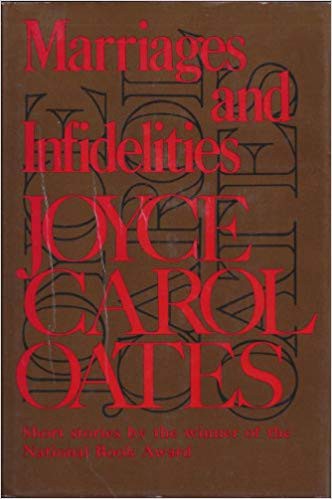
I know you don’t think Oates is “cool.” You think she writes too many books and she’s old and wears truly enormous glasses. You think someone who publishes 2–3 books per year couldn’t possibly be writing good books, because you’re supposed to spend 10 years wringing your life’s blood into a 10,000-word speculative fiction novella that you publish on handmade paper bound with dried sinew ripped from your own forearm. But guess what, book snob? You’re wrong. Yes, Oates has produced, in her haste to write all of us to death, a few mediocre novels and collections, and the occasional truly execrable poem. But even if only 20% of her oeuvre is outstanding, she’s still managed to write 20+ absolutely brilliant books…much more than anyone has any right to produce. And Marriages and Other Infidelities is just one of a series of spectacular collections she produced, back to back, in the ’60s and ’70s, stories as edgy, experimental, strange, and beautiful as anything the cool kids are writing now. Honestly, it’s bizarre that I never hear writers of my generation cite Oates as an influence; and yet, if you look at this early work, written before many of us was even born, you’ll see that she kind of already did everything we’re trying to do. Her obsession with the intersections of sex and violence and desire is the grandmother of our obsessions; her excavations of the creepy-crawlies swarming beneath the rocks of American culture is as fresh and incisive and brutal as anything you’ll read now. Respect your elders: read some Oates.
This German gem from the ’80s is a bit like Didion’s Play It as it Lays; a surgical, tragi-comic examination of a woman’s despair. Marriage, motherhood, and work prove to be unfulfilling for Lilo Besslein; she takes refuge in an affair, shopping sprees, and a decidedly unhealthy relationship to tranquilizers, but nothing can dispel her unhappiness. To me, it’s a book about the shame of not knowing how to feel better; Lilo should be able to make her life work, but she can’t, and her humiliation is buried beneath an increasingly insatiable appetite for self-destruction. If, like me, you have a soft spot for books about society’s “losers,” this won’t disappoint.
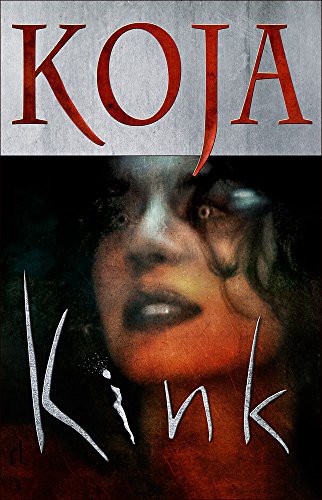
Jess loves Sophie. Sophie loves Jess. Then they meet Lena. While it’s not surprising that this threesome, like most in literature, eventually unravels, what is surprising is that the unraveling isn’t blamed on the usual suspects: i.e., a selfish jerk’s desire to have two women, or the illusions of a messed-up couple mistakenly seeking to fix their relationship problems by inviting a third into their bed, or a the stupidity of two people who dare to believe that happiness could be found outside of monogamy, etc. Rather, the book presents the threesome as a potentially viable, satisfying, rather beautiful (and, frankly, extremely desirable) way to construct a romance, if the people involved aren’t, you know, sociopaths. It’s a story that delights in shredding you emotionally, as you root for Jess and Sophie to figure their shit out, groaning as they fall for all Lena’s cold-hearted manipulations, but at the same time it denies the cynicism of it’s third character, ending — uncharacteristically for Koja — on an almost happy note. An erotic, engrossing, fast-paced, and perceptive novel about the courage required to survive the dissolution of a romantic ideal.
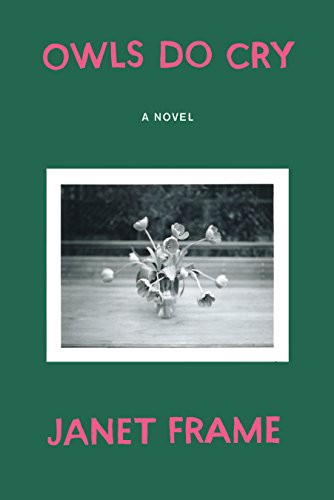
This is one of my all time favorite novels by one of my all-time favorite writers. An excruciatingly accurate story of an impoverished childhood, told from the perspective of pre-pubescent siblings in a small New Zealand town, Owls Do Cry is a book that speaks so richly and completely to the reader that it feels more like an iteration of one’s own memory than a work of fiction. Much has been made of Frame’s struggles with schizophrenia, and the influence of her mental illness on her writing style, but I think that her dreamy, startlingly inventive modernist prose is perfect for capturing what it really feels like to be and think and feel as a child. It’s telling that our conception of young minds — as always inferior to the adult brain, stuck in various stages of developmental insanity — that Frame’s depiction of childhood is so often likened to depictions of madness. In any case, the result is a wholly original and authentic evocation of life for two young people struggling to make sense of a difficult, beautiful, cruel world.
I came across this pair of novellas at Shakespeare & Co. in Paris, crammed shoulder-to-shoulder with my fellow tourists, desperate to find something special to take home as a souvenir of the city. Lo and behold, there was this unassuming lady spine-out on the shelf, so faded that her title was illegible; an obscure, slim hardcover adrift in a sea of glossy paperbacks. Both of the novellas in this collection are exquisite, but A Night of Levitation demands special recommendation. A 16-year-old girl, sent off to stay with family on an island on the East Coast in order to forget her obsession with a married astronomy professor, finds more trouble in the form of another older man. What strikes me most about the story is how seriously VanOrden takes her protagonist’s desire; there is no cynical winking at an older and wiser audience as the author exposes Allegra’s affections as child’s play, immature and misguided — instead, the story is given the most profoundly respectful attention, an insight and intensity of feeling I found almost unbearable as I read. It’s a very beautiful, very sad story, maybe even a perfect one, and it resonates as deeply with me now in 2019 as I hope it did with readers in 1957.
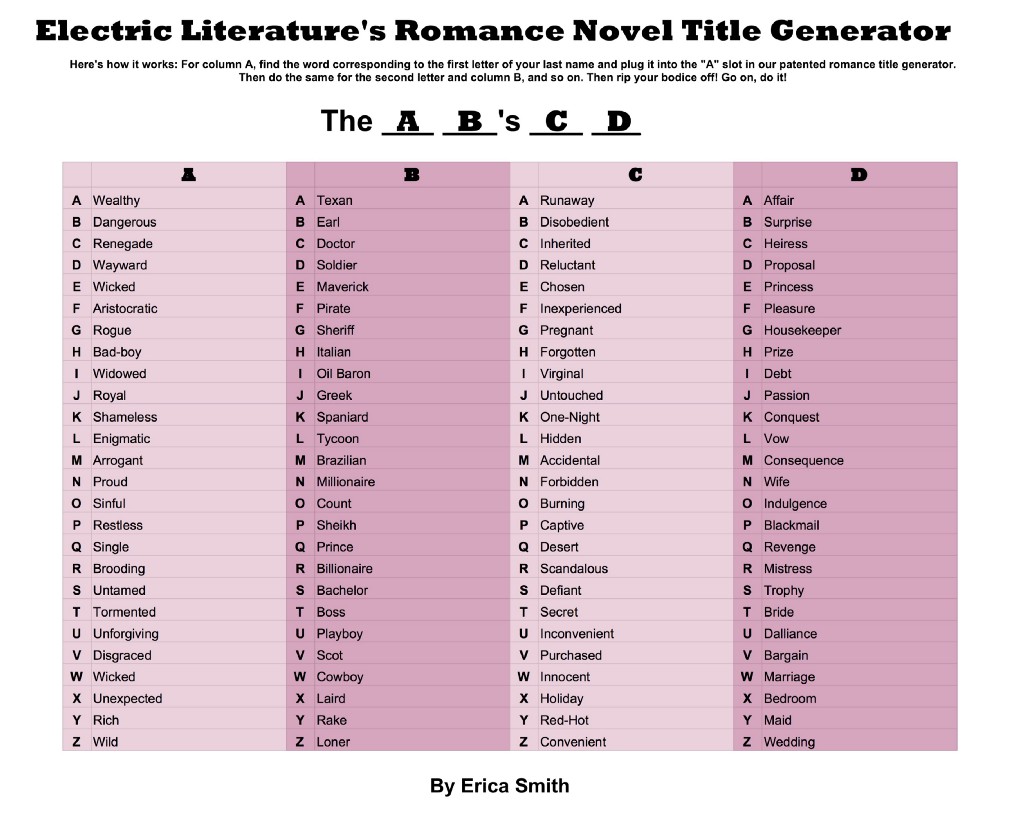
Unlucky in extremely straight love? Looking for a little nudge to guide you towards the most heteronormative relationship possible, probably with someone who’s either royalty, a billionaire, or perhaps some manner of ranch hand? Hoping to give up all possible agency in the name of escapist fantasy? Look no further than the Romance Novel Title Generator!
Get ready to become pregnant/property/a domestic servant as you get fall into a relationship with someone who treats you like a child/calls you an Italian nickname/kidnaps you! To figure out just who you belong to and what circumstances will force you to marry him, use this handy chart and the first four letters of your last name — which you will, of course, be changing. Think of this as a last hurrah. (If your last name has fewer than four letters, use as many letters of your first name as you need.) For example, if your last name is (was!) Bennett, choose “B” from the first column, “E” from the second, “N” for the third, and “N” for the fourth, so you end up with The Dangerous Maverick’s Forbidden Wife. Congratulations, and be careful; he sounds like quite the rake!
Imprisoned on this island, I would say, imprisoned on this island. And yet I was no prisoner and this was no island.
During the day I’d roam the shore, aimlessly, purposefully, and in search of digressions. The dogs. A hut. Boulders. Nude tourists. Scantily clad ones. Palm trees. Palapas. Sand sifting umber and adrenaline. The waves’ upward grasp. A boat in the distance, its throat flashing in the sun. The ancient Greeks created stories out of a simple juxtaposition of natural features, my father once told me, investing rocks and caves with meaning, but there in Zipolite I did not expect any myths to be born.
Zipolite. People said the name meant “Beach of the Dead,” though the reason for this was debated — was it because of the number of visitors who met their end in the treacherous currents, or because the native Zapotecs would bring their dead from afar to bury in its sands? Beach of the Dead: it had an ancient ring, ancestral, commanding both dread and respect, and after hearing about the unfortunate souls who each year got caught in the riptide I decided I would never go in beyond where I could stand. Others said Zipolite meant “Lugar de Caracoles,” place of seashells, an attractive thought since spirals are such neat arrangements of space and time, and what are beaches if not a conversation between the elements, a constant movement inward and outward. My favorite explanation, which only one person put forward, was that Zipolite was a corruption of the word zopilote, and that every night a black vulture would envelop the beach in its dark wings and feed on whatever the waves tossed up. It’s easier to reconcile yourself with sunny places if you can imagine their nocturnal counterpart.
Once dusk had fallen I would head to the bar and spend hours under its thatched universe, a large palapa on the shores of the Pacific decked with stools, tables, and miniature palm trees. It was where all boats came to dock and refuel, syrup added to cocktails for maximum effect, and I’d imagine that everything was as artificial as the electric-blue drink; that the miniature palm trees grew fake after dusk, the chlorophyll struggling and the life force gone from the green, that the wooden stools had turned to laminate. Sometimes the hanging lamps would be dimmed and the music amplified, a cue for the drunks and half-drunks to clamber onto the tables and start dancing. The shore-line ran through every face, destroying some, enhancing others, and at moments when I’d had enough reminders of humanity I would look around for the dogs, who like everyone else at the beach came and went according to mood. A curious snout or a pair of gleaming eyes would appear on the fringes of the palapa, take in the scene, and then, most often, finding nothing of interest, retire once more into darkness.
Before long, it became apparent that the bar in Zipolite was a meeting place for fabulists, and everyone seemed to concoct a tale as the night wore on. One girl, a painter with cartoon lips and squinty eyes, said her boyfriend had suffered a heart attack on his yacht and been forced to drop her off at the nearest port since his wife was about to be helicoptered in with a doctor. In more collected tones, a tall German explained to everyone that he was a representative of the German Society for Protection Against Superstition, or Deutsche Gesellschaft Schutz vor Aberglauben — he wrote the name in tiny German script on a sheet of rolling paper for us to read — and had been sent to Mexico after a stint in Italy. An actress from Zacatecas no one had heard of insisted she was so famous that a theater, a planet, and a crater on Venus had been named after her.
And you, one of them would ask, noticing how intently I listened, what brought you here?
I had run away, I told them, I’d run away from home. Are your parents evil?
No, not at all . . .
. . . I had run away with someone. And where was this someone?
Good question.
And who was this someone? An even better question.
But that was only half the story. I had also come because of the dwarfs. However fantastical it now seemed, I was here with Tomás, a boy I hardly knew, in search of a troupe of Ukrainian dwarfs. I say boy, though he was nineteen to my seventeen, and I say dwarfs, though I had yet to see them with my own eyes. In any case, if I stopped to think about it for more than a few seconds, the situation was almost entirely my fault. Calming thoughts were hard to come by, no calm, only numbness, as if stuck halfway through a dream, yet the realization didn’t trouble me.
The palapa held out the promise of one thing while the animated conversation and gaudy cocktails delivered another, and once I’d had enough I would return to my hammock through the sifting black of the beach and watch shadows advance and recede, never certain as to who or what they were. Sometimes I would see Tomás walk past, his shadow easy to pluck out from the rest, and although he kept a certain distance I recognized him instantly, tall and slender with a jaunty gait, like a puppet of wood and cloth slipped over a giant hand.
At some point I would have to explain to myself and to any witnesses how it was that I had ended up in Zipolite with him.
He had started out as a snag, a snag in the composition; from one moment to the next, there was no other way of putting it, he had begun to appear in my life back in the city. And since all appearances are ultimately disturbances, this disturbance needed investigating.
I didn’t even particularly like him at first; intrigued would be a better word. He was a sliver of black slicing through the so-called calm of the morning. I still remember most details, the pinkish light that spread over the street, painting the tips of trees and the uppermost windows, the shops closed, as well as the curtains on houses, and the only person I’d encountered within this stillness was the elderly organ grinder in his khaki uniform, seated on the edge of the fountain below the looming statue of David, polishing his barrel organ with a red rag before heading to the Centro. harmonipan frati & co. schönhauser allee 73 berlin, read the gold letters down the side, but the organ grinder himself lived in La Romita, the poorer section of La Roma, though he always came to the plaza near my house to polish his instrument, preparing it for a social day outside the cathedral. None of his kind had ever been to Europe but they carried Europe in their instrument, their uniform, and their nostalgic, old-fashioned manner.
And it was as he sat there on the bench beginning his day that I saw another figure appear: a young man in black, tall and slender with a pale face and hair shooting out in twenty directions, who walked up to the organillero and held out a coin — I assumed it was a coin, all I saw was the glint of a small object transferred between hands — and continued on his way. The elderly man nodded in surprised gratitude; he was probably used to receiving alms when music was produced, not silence, and here, out of nowhere, first thing in the morning, had come this offering.
Despite having to catch the school bus at 7:24 I followed the new person as he hurried down streets parallel to the ones I normally took, past mozos sweeping the streets before their employers awoke and tramps curled up in the porticos of grand houses beginning to uncurl. But once he turned off into Puebla my inner map cried out and I swerved around and retraced my steps in a hurry, arriving just in time to board my bus at the junction where Monterrey meets Álvaro Obregón. The quiet of the streets vanished the moment I stepped onto this traveling ship of the wide awake, wide awake thanks to the gang of new wave Swedes at the back. There were four of them, three boys and a girl — sister to one — and they colonized the last row with their blondness and asymmetrical haircuts, always one tuft eclipsing an eye, and trousers rolled up just enough to reveal their pointy lace-up shoes, but above all they colonized the bus with their portable stereo, for they asserted themselves, communicated almost entirely, through their music — Yazoo, Depeche Mode, the Human League, Soft Cell, and Blancmange — and it was in this way, after the first glimpse of Tomás, that I was launched into the day.
In Zipolite the sun seared the sand, and the heat particles, free to roam where they pleased, dissipated in the air. Yet our Mexico City was situated in a valley circled by mountains. High-pressure weather systems, weakened air flows, rampaging ozone and sulfur dioxide levels, basin geography: a perfect convergence of factors, said the experts, for thermal inversion. Ours was a world of refraction, where light curved, producing mirages, and sound curved too, amplifying the roar of airplanes near the ground. And each time an event in Mexico challenged the natural order of things, often enough for it to become part of the natural order, my parents and I called it thermal inversion.
Thermal inversion whenever a politician stole millions and the government covered it up, thermal inversion when an infamous drug trafficker escaped from a high-security prison, thermal inversion when the director of a zoo turned out to be a dealer in wild animal skins and two lion cubs went missing. But the real thing existed too, and on some days the air pollution was so fierce I’d return from school with burning eyes, and everyone from taxi drivers to news presenters complained about the esmog but the government did nothing. The clouds over our city were of an immovable slate, granite, and lead, and only the year before, migratory birds had dropped dead from the sky — exhaustion, the officials had said, they died of exhaustion, but everyone knew the poisoned air had cut their journeys short, lead in the form of dispersed molecules rather than compacted into a bullet.
At first I thought thermal inversion was only possible in the city, and then I thought it possible in Zipolite only in the form of the Swiss biker in black leather — his movements constricted by his tight leather shorts and leather vest, he spent all day drinking beer on the sand, his black leather cap surely a magnet for heat, and never entered the water. Yet I soon began dreaming of other forms of inversion, for instance if I could replace Tomás with Julián, my current best friend. Yes, if Julián were there instead, I might have more perspective, somehow, on the given situation, or at the very least a proper interlocutor, be it in silence or conversation.
But Julián was back in the city. He was back in the city, on the top floor of the Covadonga, that was his address, the old Spanish restaurant near the corner of Puebla and Orizaba. The waiters at Covadonga would have cut funny figures in Zipolite, like penguins at the beach in their black waistcoats and bow ties, and the imperturbable expression of those who’d seen a great deal over the decades; the place had been around since the 1940s and some of them, according to my father, had worked there since their youth. On the ground floor was a large spread of tables where old men played dominoes, on the first floor a restaurant, on the second floor a dance salon. Julián lived on the third, used for storage and visiting musicians. He’d become friends with Eduardo, one of the waiters, and, having nowhere to go after deferring university and falling out with his boyfriend, brother, and father, was offered the space on the condition that he vacate whenever the owner, who lived in Spain, came to Mexico, and for any trios or duos or solo musicians who happened to pass through.
The top rooms contained an assembly of half-living objects: fold-out chairs and tables, some in stacks against the wall, a gas canister hooked up to a four-burner stove, its stark metal frame like a vertebra, and a red cooler with the letters cerveza corona in blue. The back room had a cot, where Julián slept under a pile of tablecloths, surrounded by boxes of folded linen and fluorescent tubes. A defunct disco ball, missing most of its square mirrors, hung from the ceiling; the only light was the one that glowed through the windows shaped like portholes. In these rooms I’d spend many an hour with Julián and his stereo, a General Electric that guzzled size D batteries. In one corner was parked a guitar with Camel insignia, for which his mother had smoked her way through two hundred cartons of cigarettes; with the coupons and a bit of cash she had bought it for her son one Christmas. He seldom played it, however, since he felt she had died for that guitar.
The Corona cooler was kept well stocked, usually with Sol or Negra Modelo, and we’d sit back in the fold-out chairs and paint the future, the details changing each time, as we wandered side by side through a landscape of perhapses. Perhaps he would become a sculptor or a rock musician. Perhaps I would become an astronomer or an archaeologist. Perhaps he would partner up with the owner of the Covadonga and one day inherit the place and its four floors. Several days a week I would walk over after school, especially when my parents weren’t home, and sensed at moments that this was the closest I would ever come to having a sibling. Sometimes we’d carry two chairs out to the narrow balcony, from which there was a view of the spire and rose window of the Sagrada Familia, our neighborhood church, though like many city views ours was bisected at different heights by a tangle of telephone and electricity lines. If the day was rainy or overly polluted we’d bring the chairs back inside and listen to the radio. One station played songs from England and Julián kept the dial there, though every now and then he’d swivel it over to a pirate station that offered unofficial news, a quick reality check before we returned to our fantasies, and other times he’d slip in a cassette and we’d listen to the same track over and over, usually Visage’s “Fade to Grey” or the Cure’s “Charlotte Sometimes,” and we’d stop talking and just listen, letting all that had sunken well up inside.
I’ve spent most of my days lately oscillating between rage and abject terror. So when midnight turned one year to the next last month, I couldn’t help but feel grateful that we’d finally made it. Where exactly, I wasn’t sure. But I had been sure that there was a finish line that if only we could cross we’d reach the year we could breathe again. I was wrong (like very, very wrong), but I’m holding out for March being the month it all turns around. Because in spite of my wiser self, there’s hope in me yet.
I’ve said all of that to say this: When I first read Hanif Abdurraqib’s essay collection, They Can’t Kill Us Until They Kill Us, last year, I felt like I was watching someone who had overheard me and my best friends over the past decade in the moments we’d wept and celebrated and raged to the soundtrack of our favorite bands turn those moments into (beautiful and heartbreaking and celebratory) prose. I saw an urgency, a love—and perhaps most importantly—a quiet sense of hopefulness on the page that made me think, maybe, Abdurraqib might just be seeing me right back.
So if Go Ahead In the Rain is the book about the Midwest, hip-hop and what can be made possible if only we find our people and hold tight to them that I never knew I was missing but I always needed, then Hanif Abdurraqib is the writer every one of us could probably use right now.
Leah Johnson: This book has been described as a “love letter” and a “fan’s narrative” but much less frequently as a biography, though that is, in large part, what is happening throughout. How did you approach the writing in a way that you believe made it diverge from the traditional biography style?
Hanif Abdurraqib: I think a traditional biography requires a lot of access — to people, to history, to archives. But beyond that, it also requires a type of confidence that comes with expertise, or a desire to consider oneself an expert. I could have gotten the former, but felt pretty far away from the latter, fairly early on in the process. I realized that what I was searching for wasn’t exactly the ability to call myself an expert on this group, or this music, or this sound. I was searching, instead, for meaning — or an unpacking of what it is to have this love for people you will never meet.
I was searching for meaning — or an unpacking of what it is to have this love for people you will never meet.
Tribe were very much big homies for me when I was young. The way I listened to them and the way that listening afforded me to see the world was singular. It was like someone older throwing an arm around my shoulders and leading me through the treachery of youth. How can I have this impossible connection to these people and live a whole life where we’ve never met? I’ve got nothing but their sound and the paths that sound opened up. I wanted to allow myself some room to be wrong. I wanted to say sure, I am perhaps clouded by my love, and so I don’t want to talk to this group and have them tell me it wasn’t all as special as I imagined it. Give me my memories and nothing else.
LJ: During so much of They Can’t Kill Us, I read along like, “No one else would think to put Johnny Cash in conversation with The Migos like this!” Since this book was your direct follow up, did it feel like a radical gear shift, craft-wise, to narrow in on one genre and one artist like this?
HA: A bit, or at least it was difficult at first. The thing about They Can’t Kill Us is I could depart from an idea, and not feel obligated to return to it. Here, as far as I wanted to steer away from the central star guiding the book, I always had to return. There were some parts cut because I went too far away from it all. I had to be really honest with myself, on some shit like “does anyone really care how I can make a thread from Natalie Maines to Q-Tip?” and in the empty living room of my own apartment, I could say “hell yeah people need to read this,” but things like that pulled so far out of the book’s context. And this is a book that is already demanding a lot out of a reader. I’m asking readers to trust me, no matter how far it seems like I’m pulling them away from the road, I’m promising them that I’m always going to come back. I’m promising that we won’t always end up in the same spot on the road, but that the road will at least keep leading us to the same place. I take that trust seriously, and so writing this book was working through some very honest things with myself.
LJ: With both Go Ahead in the Rain and They Can’t Kill Us, music and memory are inextricably linked. What does your research look like when the history of an artist is so closely tied to your own personal history?
HA: In the most unspectacular of ways, my research is mostly watching or listening to things that trigger memory. I have so many times where I find myself wondering if I actually experienced something, or if it was all a dream. Particularly moments from my childhood that revolve around music. Did I actually stay up all night watching tapes of Yo! MTV Raps on the nights my parents weren’t home, or am I remembering several nights and just forcing them together for the sake of my own romantics? There was that thing in the book about Chi-Ali, and his freestyle on Yo! MTV Raps, and I knew I remembered it. I knew I had watched it with my older brother and I knew I had listened to the tape of his debut album after it. I could close my eyes and remember the floor I was sitting on when I watched it, and I could remember exactly what Chi-Ali was wearing. But I needed to see it again, nonetheless. I had to look it up on YouTube to confirm what my memory was trying to tell me. I think so much of my research is convincing myself that I’ve actually lived the things I’m trying to recall. And a lot of it is the frivolous watching of videos or spinning of samples or whatever. But that isn’t the answer anyone came here for.
LJ: The fact that the book is called “notes to” instead of “notes on” struck me when I realized you spent the book switching back and forth between speaking to us as readers and then directly to the group. How did you think about the mode of address when you set out to write this book?
Music is at our fingertips now, it’s so easy to listen to songs, but it has gotten harder to track down stories that make the songs special.
HA: Well, I wanted it to be a conversation with both the readers and the entire legacy of this group. And I wanted it to feel like we were all in a room or around a table. The direct address to the group members and then the direct address to you, reader, populates the space a bit differently. I am so opposed to creating more distance with my work. There is already a built-in distance that comes with the reading of a book by a person you don’t know or see or talk to, and I’m comfortable with that. But in terms of how a book is addressed, or what the speaker is asking, I’m trying to build the room that our real lives might never afford us: a room where, over our shared loves or passions or curiosities, we can kick some questions around.
LJ: I’ve been reading the book on the train for the past few days, and every time I pull it out someone stops me to talk about it. New Yorkers aren’t stereotypically affable people, but something about A Tribe Called Quest has brought out some of the best conversations with strangers I’ve had in my time living here. Thinking about this in terms of community, but also coastal beef, what do you think it is about our regional relationship to these artists that manages to produce such instant, visceral connections for us?
HA: I can’t speak for New York, and even if I could, I’m sure no one would hear me over the shockingly consistent hum of sirens and horns the city produces. But, I also think all of the time about what it is to be from a place, and how much shame and pride that can offer to someone, sometimes in equal measure. And to have a group that came out of Queens and is not only beloved, but vital to the architecture of American music feels like a burst of pride that can cut through whatever regional shame might exist. So much of my writing of this book was also writing about how I grew up in the Midwest, longing to touch the cities being rapped about in the songs I most listened to. And so I hope there are people from New York who look at the book and simply want to point at it and say they lived some small part of what made Tribe special. Also, sorry for the bad joke about horns and sirens.
I think, ultimately, it means that there are some revolving universal markers in the music many of us love that begin geographical, but then branch out.
LJ: I feel like there are so many artists that you have a wealth of knowledge on and could have crafted a book around. Why did you choose to chronicle A Tribe Called Quest?
The work of my music writing is to shape a world outside the current one, and I’m trying to make it slightly better.
HA: I have been especially worried about legacy, and the transfer of information from one generation to the next. Generations younger than ours know A Tribe Called Quest, surely. But I realized that there were many people who, in 2016, didn’t have a grasp on their impact and how that impact had echoed throughout decades, in rap music and beyond. People who didn’t understand how the production ambitions of Q-Tip fueled an entire sound and scope of ideas. And so I didn’t want that to get lost in translation of whatever gets passed down and down and down. Music is at our fingertips now, it’s so easy to listen to songs, but it has gotten harder to track down stories that make the songs special. I wanted to offer the best I could.
LJ: You wrote about the group’s SNL performance and final album in 2016 shortly after both the election and Phife’s death where you said: “Writing about music today feels even more small and trivial than it usually does. The times are urgent, and I know nothing but going back to what I love, but music still feels tiny and disposable.” Now, years away from that release and from the election that continues to do what we feared it would, what (if anything) has changed for you in terms of approaching music writing and/or listening?
HA: I think it still feels small and trivial — at least the act of it. But not the way it sits in the world, and what it is capable of articulating as far as unraveling the violence, or rage, or anxiety of not only this moment, but of so many of our living moments. I turn to songs not for healing or not even to make sense of the world. I turn to songs as a window into a different world entirely. And so the work of my writing is to try and give language to the world I see through the lens of a song I dig or an artist or album. What I’m trying to do is shape a world outside the current one, and I’m trying to make it slightly better. But, it’s hard to do that while also reminding people of how many fires there are everywhere.
LJ: When it’s time for someone to write a fan’s narrative of Future (I’m feeling like it could be called Turn On The Lights or Blood On The Money maybe?), what do you think has to be at the heart of that story?
HA: I think any narrative on Future has to include something at the heart of it on masculinity and self-destruction. The band Stars has this album called Your Ex-Lover Is Dead and it starts out with a recording of the lead singer’s father saying “when there is nothing left to burn, you have to set yourself on fire.” And ain’t that the whole thing.
It’s ubiquitous, this love thing. It’s the fundamental emotion writers employ to illuminate our human condition. But here’s the deal: love is otiose without conflict. In fact, love can only be defined by it. Without conflict, love is reduced to a passive state of being.
“So Bob met Sonia in 2005, they fell right in love, boy did they. Then they got married, had a kid. Now they throw dinner parties every second Saturday of the month.”
Yeah, scintillating, eh?
Love is a power tool for us writers. It layers plot, demands emotional investment, and allows readers to be triggered by their own memories. Love is always defined by the drama. The loss. The risk. The impossibility and even the inevitability.
Buy the book
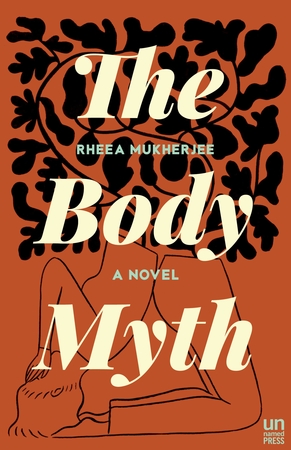
I had only one prayer in my writerly soul when I started writing The Body Myth. I wanted to attempt to give my readers that inexplicable experience I had when I’d read books and watched movies that held me captive to love. All kinds of love: Fluid love. Stupid love. Hopeful love. Unsanctioned love. Unholy love. Love-for-the-sake-of-suffering love. Psycho love.
I also wanted to embrace a new kind of Indian story. One that was relevant to the life I lived. I wanted to keep the buzz of modern urban India alive, acknowledge it unabashedly, but bring an insularity that could potentially make the setting irrelevant. This aim was established only because I had felt great joy in reading books that could have me invested in every moment of the plot while also allowing me to imagine and learn about places far away from my lived experiences. In my novel, Mira, a young widow and teacher in urban India, falls in love with a chronically ill woman, and her husband simultaneously in very different ways. It’s a very modern iteration of the love triangle, one defined through multiple conflicts: from pushing social boundaries to questioning psychological wellness. Mira facilitates conflict in new ways as she gets closer to the root of her obsession with them, to understand what love means to her.
And that’s the beauty of this theme, the love triangle, or rather the conflict that defines love. It’s a melody that you can find in a million tunes and that can be produced in as many unexpected ways. I bring you seven books that offer up the classic “love triangle” in some of those lesser expected ways.
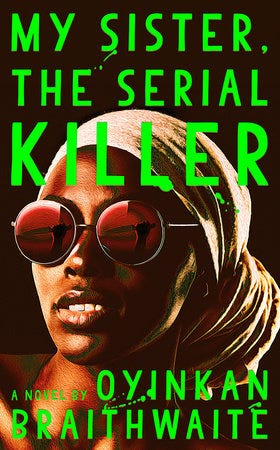
This slim novel will kidnap you for the better part of a weekend. Set in current day urban Nigeria, the book introduces Korede, a young nurse who “should have” been married and “settled” by now. But then there’s Korade’s younger sister Ayoola who is mythically beautiful, irresponsible, self-indulgent, and possibly a boyfriend killer on the regular. Korade is guilty of being an enabler. She cleans up her sister’s messes which are literally bloody and battles her own sense of inadequacy, often repressing her own needs so that Ayoola can be Ayoola. The love triangle here? There is a doctor who Korade works with everyday, Korade secretly fantasizing about a happily-ever-after with him. But the doctor soon falls for Ayoola. Does Korade love him enough to keep him alive? And what about the bond of blood? This book is semi-satire, semi-thriller, and altogether genre-bending.
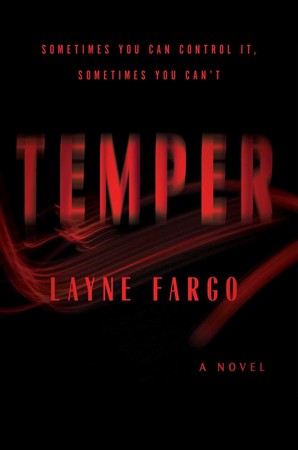
Temper is set in Chicago where we get a peek into the city’s theatre scene. Kira has just been offered the role of a lifetime. The bad news is that it means working with the intense and mercurial director Malcolm. There is an added complication for Kira. She has to work with Joanna, the co-founder of the theatre company, who has a bruised ego and a possessive streak when it comes to Malcolm. Joanna has been in unrequited love with Mal for years, and he’s taken advantage of it by manipulating her into doing all the work at their theater company. As rehearsals progress, Kira and Mal develop a thick sexual tension, but Kira hates herself for it. Mal essentially “triangulates” Kira and Joanna against each other, keeping them at odds so they don’t catch on to all the awful things he’s doing. This book keeps feminism central to the plot and promises evil twists as both these women embrace their ambition and individual path.
This one was was quite the rage when it was first published a few years ago. I only read it in late 2018 and was compelled by its narrative play: a literal documentation of a long-term marriage via letters between the wife and husband. The author seamlessly brought in historical and literary references that dovetailed beautifully with the static domesticity and loneliness that only a long-term relationship can birth. From the first rush of love to motherhood and trying to find firm identity, this novel’s triangle is offered as the inevitability of life. The loss we gain from time.
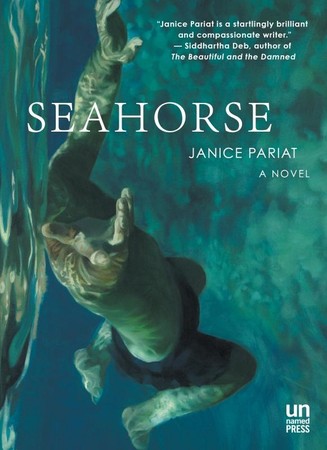
Seahorse was spectacular for me because it managed to create a mythical aura around a very urban context. The book features New Delhi where Nem, a student, falls in love with his professor from London, Nicholas. The professor abruptly leaves back to London leaving Nem crushed and confused. Years later, Nem is an art critic in New Delhi and finds a work opportunity to get himself to London. That’s when he starts to trace his first love Nicholas, who does a good job avoiding him. The narrative then steers us to Myra, Nicholas’s former lover who seems to have mysterious answers that can possibly give closure to Nem. The odd friendship struck between Nem and Myra eventually sparks a flame, despite (or perhaps because of) the specter of Nicholas in both their lives. This layered book has a dreamy quality, one that will make you question the authenticity of your own memory and what it has to do with reality.
Neon Noon won’t have been heard of in the West, but Solanki has been doing some incredible work in English fiction in India. His first novel is inventive, sharp, and allows you empathize with the giant amounts of self-loathing the main character of this book exhibits. Ann Marie is the French ex-girlfriend who has left the protagonist in shambles, alone in his Mumbai flat. In an attempt to rid himself of the painful memories, he goes to Pattaya, Thailand, and in this tourist hotspot, he finds Noon, a sex worker who befriends him. While the indulgences of a broken-hearted man might seem like a trope, this book is raw and unabashed in its telling. A reminder of the stark emptiness that resides in the pockets of overcrowded cities.
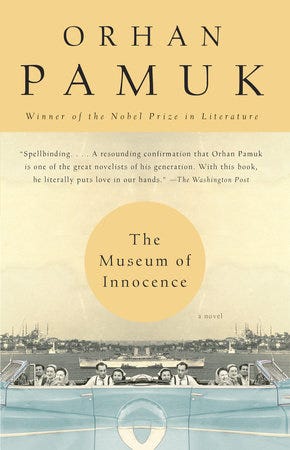
This is my favorite of the novels by Pamuk. A novel that reminds me I was once a more patient reader, one who was able to read longer books and enjoy powerful but at times meandering prose. The Museum of Innocence follows Kemel in Istanbul in the 70s. He’s engaged to be married but has recently met Fusun, who happens to be a distant relative of his. They both fall in love in only that melancholic, beautiful way you do when you know you can’t really have it. It’s the secrecy that fuels this love and although Kemal marries his fiancée, he and Fusun continue to be in contact. Separations come, but Kemal is reunited a year later with a now married Fusun. Kemal looks back on the decade of their relationship, as the happiest time of his life, one that he could not fully appreciate at the time. His love is reborn in the form of an obsessive behavior: collecting and documenting places and things that held memory to their love.
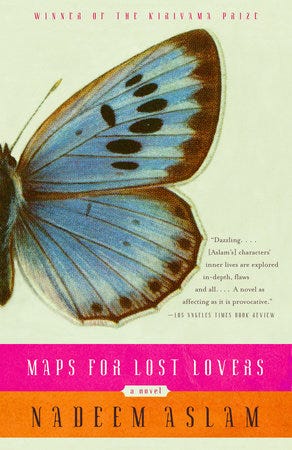
I was asking a couple friends for their recommendations on love and conflict, when one of my most reliable bookworms told me about Maps for Lost Lovers. When I looked it up, it got me thinking about race and culture playing the role of conflict in love. The novel focuses on Pakistani immigrants in a lonely English town. Two lovers (Jugnu and Chanda) have been killed by Jugnu’s brothers for the sin of living together. The third corner of this triangle is especially sharp: it defines the cultural boundaries of love in a country that stays cold and foreign to its characters, despite the passage of time. The Guardian described it as being “filled with stories of cruelty, injustice, bigotry and ignorance, love never steps out of the picture — it gleams at the edges of even the deepest wounds. Perhaps this is why the novel never gets weighed down by all the sorrows it carries: there is such shimmering joy within it, too. Here are characters hemmed in on one side by racism and on the other side by religious obscurantism, and yet they each carry remarkable possibilities within them.”
This past week has felt like a rough century in book publishing, especially if you’re a woman of color in this traditionally white and monied industry. In many ways, it’s still a 19th-century business, with an overall culture and compensation structure that reflect another era. In the United States, what “19th century” evokes for many white men is a time of even greater freedom, power, and absolute control. For everyone else, it’s a complicated spectrum of misery and struggle. Their nostalgia is for a time when we weren’t considered people.
When people romanticize the Golden Age Of Publishing they are often imagining iconoclastic (difficult) male authors creating art alongside dashing male editors with generous expense accounts and a certain panache. There are a few familiar names that resurface in these conversations — Maxwell Perkins, Gordon Lish, Robert Loomis — always couched as gentlemanly gatekeepers who understood how things were to be done. A 2011 Atlantic profile of Loomis lamented that, on the eve of his retirement, “publishing is not as genteel as it once was.”
When people romanticize the Golden Age Of Publishing they are often imagining iconoclastic male authors creating art alongside dashing male editors.
Genteel — that amorphous, loaded phrase — has often been weaponized as class, race, and gender warfare. And however well-intentioned, “genteel” is doing the work of a cudgel here. To someone in power, it might seem innocuous, a call for “civility” (sound familiar?). To someone trying to break into a power structure it means “you are not good enough, you will never be good enough, and we will never teach you the rules.” It’s not genteel to discuss your salary. It’s not genteel to push back in a meeting on racist or sexist language. It’s not genteel to question the “gaslighting, lying, and manipulation” of your white, male coworker because he fits a received idea of how a superstar book editor ought to look and act.
Readers of Ian Parker’s now-infamous New Yorker profile on liar, con artist, and erstwhile editor and novelist Dan Mallory noted that his coworkers and peers thought of his rise to power as the plot of The Faculty — a film in which an alien parasite infects all the teachers at a school, and no one believes the increasingly terrified, endangered students. His bosses, mentors, and decision-makers all profess, well, genteel shock and “astonishment” when confronted with his embarrassingly inept lies. “How could we have known this man, who told us he wrote a thesis on Patricia Highsmith, carries on about The Talented Mr. Ripley endlessly, and who has been filmed lovingly holding the book up to his chest while talking about his own novel was, in fact, Ripley?”
The lack of scrutiny is even more jarring when you think about Toni Morrison’s decorated career as an editor, how her publisher wanted to send cops along with the publicist to a Harlem launch party she organized, how hard she fought to acquire the books she championed, how even when she’d written and published The Bluest Eye, she at first didn’t tell anyone at her job she wrote at all. (Toni Morrison!) Meanwhile, the publishing world’s Dan Mallorys blithely accept multi-million-dollar deals as their due.
You can look at the damning stats and the story becomes clear in this overwhelmingly white and middle-to-upper-class industry. The kids who spot the alien parasite, who see through the story, are probably overworked and underpaid and far more likely to be from marginalized backgrounds, and the hoodwinked or willfully apathetic people in charge are likely to be white with real estate in multiple states. In 2017, when the Weinstein allegations broke, Lindy West wrote in the New York Times that “to some men — and you can call me a hysteric but I am done mincing words on this — there is no injustice quite so unnaturally, viscerally grotesque as a white man being fired.”
Far from being fired, this white man, with his fake brotherly “e.mails” and fake cancer and fake family deaths, seems like he’ll be fine. He’s already made millions with his book deal and film options, a book that openly, vampirically depends on the work of the female authors who preceded him. The movie adaptation has A-list stars. He’s thinking about a TV show. He has a half million dollar apartment in Chelsea and a cute dog.
Both the Mallory New Yorker profile and the recent documentaries about the Fyre Festival, a widely covered social-media-driven grift perpetrated by Billy McFarland, have this double vision. We see white man after white man extolling how “charismatic” and “magnetic” McFarland is — and then we’re treated to a perfectly average guy parading across the screen, while one of his former employees, a woman of color, drips disdain and recounts with clenched teeth how the writing had been on the wall for months before everything came crashing down. At Mallory’s very first editorial assistant job, where he thought the fiction was too downmarket and the job too administrative, a male coworker recalls him as “a good guy, lovely to talk to, very informed.” Mallory allegedly spent his evenings at this job urinating in cups at his female boss’s desk.
It’s the romance of playing a game that you will always win.
An industry professional in the New Yorker profile calls publishing “a business based on hope.” It’s performative by nature. A friend in the industry has deadpanned that “we’re all just LARP-ing,” roleplaying as publishing professionals based on some (nineteenth-century!) idea of what that should be. Very few people have chosen this path because of the money. The romance is the occasional genuine feeling of “they pay me to do this?” and the potential that you might be shaping a public conversation. That magical thinking also opens up ways for vulnerable people to be crushed by failing to perform the correct role. In 2016, one of the industry’s few senior-level black editors, Chris Jackson, asked why he’d gone into publishing, told Publishers Weekly, “I believed in the power of books to shape the culture.” In that same article, a Big Five HR executive, when faced with the notion that race or class might affect hiring, complained, “It’s not about socioeconomics. It’s as if it doesn’t count if we hire someone black who went to Skidmore.”
For a woman of color, the hope that keeps you going is the hope that you’re helping create a book for a younger version of yourself, one who contented herself with work in which it never occurred to the authors that someone like her might have interiority or agency. For a man like Mallory, the romance is this fantasy of a bygone era, when gentlemen were gentlemen, and the idea of talking about inclusivity in literature was absurd. It’s not the romance of having the power to redress deep wounds that have made who you are who are as a reader and editor. It’s the romance of playing a game that you will always win.
We work in a system always aware of the next door that might close in our faces. Men like Mallory work in a world where the shallow, regressive role-playing he engaged in was the strategic move. There is something especially insidious about the way that he needed to be both the golden boy and the tragic hero, beset by unlikely gothic calamity. He wanted to be the abused underdog as much as the prince in waiting, and the system — built from centuries of received notions and power structures — tripped over itself in its haste to reward him.
It always gave him the benefit of the doubt, no matter how comically outlandish and incompetent his lies became. For the company that gave him ten times the salary of the assistants who were probably doing his work while he disappeared from the office for months at a time, all he needed was his readymade narrative and identity. For that genteelly “astonished” former professor, he represents a future and a legacy in a way a woman of color would not. To those in power, he’s a plausible mirror and heir who reifies their position and continued relevance. It is impossible to shatter this kind of entrenched privilege with objective truth. Mallory’s transparent humble bragging was “modesty.” His evasiveness about the truth was just his sense of forbearance. His inability to do the work was just proof that he had managed to claw his way to the top despite difficult circumstances. People ask: how did he get away with it? In this deliberately closed world full of smart people who know how to do research? It’s a simple answer. He fit the part.
People ask: how did he get away with it? It’s a simple answer. He fit the part.
If the industry seems shaken, it’s because we understand that this story was not a one off or even a true surprise when you drill down. Many of us have worked with a Dan Mallory type, have watched someone rocket up the hierarchy without doing the work. It’s because there are many, many women, especially women of color, sitting in their cubicles (there are far more men with doors that close) reading about how this man lied his way from assistant to executive editor in a few short years while no one even questioned him. The industry culture is designed to buy into that con, that destructive, specious fantasy of elegant men from a more “civilized” age. It’s embedded deeply, a cancer more real than anything Dan Mallory had.
Many people of color in this industry make gallows jokes that it can sometimes feel like we’re all in Jordan Peele’s Sunken Place. Dan Mallory might be a thriller novelist, but his own narrative is a slow-brewing horror movie. Like the profile says, “the call was coming from inside the house.” At an event earlier this month for The People’s Future of the United States, author Alice Sola Kim described the experience of reading horror as a woman of color as “there’d be this thing that was after you, made for you somehow; it wants you, specifically, which is part of the awfulness of it — like a lock and key. And I feel like that’s applicable to life in the sense that there are all these horrors that depending on who you are, or what group you belong to, there are people, institutions, ideas, that are after you…. And you don’t always survive — you often don’t — but sometimes you do.”
For marginalized people trying to shift the industry, the Dan Mallorys are a lock and key made for us, to horrify and to mock, to tell us what we already suspect in low moments — we are not genteel or white or good enough. The details read like a bad parody of what we always knew, that someone like him could cheat and lie — badly even — and still have a shot to rise to the top at astronomical speed. Your victory of an inch feels meaningless in the face of this operatic marathon of a career con.
I’m lucky to be in a place right now where I’m valued and supported, empowered to amplify creators of color and to remove barriers where I’m able, but I exist within a larger industry with this checkered history. It is difficult to explain to someone who has never experienced it the specific anxiety of walking into a meeting and being the only one, and equally difficult to explain the sheer power of just seeing a marginalized face in a senior role, to see the hint of a track. I owe a deep debt to the editors of color who came before me, who endured and broke new paths for people to follow.
In a 2018 Publishers Weekly feature on black publishing professionals, Nicole Counts at One World (headed up by Chris Jackson) says that as a fellow person of color, her boss “intuitively understands — or, in cases where he doesn’t, does the work to learn — constantly reminds you that you are allowed to take up space, you are allowed to feel these heavy feelings, you are allowed to need a break.” This trust, this ability to imagine a future with yourself in it, is powerful and fundamental to what this industry will look like for the next generation.
Being a person of color or an ally in book publishing means fighting a battle against the past.
Being a person of color or an ally in book publishing means fighting a battle against the past. Mallory is a reminder that the past isn’t even the past. It’s a living ghost that will throw everything you’ve fought for in your face. The story, as absurd and entertaining as it was, was also sobering, because it felt like an embodiment of everything we hoped our industry has moved beyond. Mallory didn’t just perpetrate a con on publishing — he proved that the prevailing culture of publishing is the con. That the work that’s been done and that we still have to do is backbreaking and tremendous.
There’s no closure, because we know he’ll be fine, the monster that’ll get away. Some of us — exhausted by the constant emotional labor, the draining experience of being the only person who looks like you in room after room, the financial strain — get out and are better for it. And our only other option? Create our own networks. Identify the monsters. Survive. Use what power you have to lift up marginalized voices and change the landscape, inch by inch. That’s why we’re here.
The spy fiction canon has long been dominated by the same types of agents: suave and debonair with perfect aim. Oh, and they were nearly always straight white men. From James Bond to John le Carré’s characters, time and time again readers have read similar stories. Sure, they are sometimes stellar, but they feel the same. It’s 2019 and it’s time for our literature to represent our reality. That’s exactly what Lauren Wilkinson has done in her debut novel aptly titled American Spy.
Set during the Cold War, Wilkinson offers something different than our good old democratic boys fighting Soviet comrades. In the novel, Marie Mitchell, a young, black woman and FBI intelligence officer is sent to Burkina Faso, where a different part of the war rages. There, Marie meets Thomas Sankara, the revolutionary president of Burkina Faso. Sankara was known as “Africa’s Che Guevara,” his charisma gained him wide-spread admiration but his Communist ideals made him a target of the American government.
Using historical characters and multiples timelines, Wilkinson navigates what it meant to be a black woman in the intelligence community during an era dominated by toxic white men.
I spoke with Wilkinson about crafting a different kind of spy novel and why diversity matters in genre canon.
Adam Vitcavage: Your novel caught my attention, admittedly, because of the cover. A bold title of American Spy, but with the yellow background and the figure on it, I knew it wouldn’t be a traditional spy novel. Where did your idea for such a fresh take on the spy novel start?
Lauren Wilkinson: I always start with conflict and character. I started with [Thomas] Sankara, then I had to build the world around him. I had to learn everything else after that. I found him to be this person who is so interesting and charismatic, but I didn’t know much about his world. As I found out more about him, I realized how interesting that world could be.
AV: So it started with Thomas Sankara and not Marie Mitchell?
LW: Well, no. I had known about him for a while and he was always in the background of my mind. The start was in a class where we were assigned a story set in suburbia. We were told to avoid classic and cliched versions of that story. I had this image of a woman who appeared to be a traditional suburban mom, then put her into the craziest situation I could imagine, which was some men coming to kill her.
It was very hard to write this story. I wrote a lot that didn’t end up being in the novel because it took me a long time to try to figure out what exactly the story was that I needed to tell.
There was a draft where [I] almost forgot she was going to be a spy. I needed to figure out exactly what I needed to say.
I had this image of a woman who appeared to be a traditional suburban mom, then put her into the craziest situation I could imagine.
AV: You forgot she was supposed to be a spy. Was this always meant to be a spy novel then? Is that what that story led to?
LW: I was more interested in spies as a metaphor as opposed to a straight spy novel. I had to play a lot of catch up and read spy novels just to understand the genre.
I ended up publishing that suburban housewife story in Granta and it follows the same period of time but is linear. It was also in third person. I switched it in the novel form to be told to her sons because I kept getting feedback that I wasn’t writing close enough.
AV: Going back to spying as a metaphor. Do you mean double consciousness?
LW: Yeah. I feel like whatever Ralph Ellison was saying in the quote I use as the epigraph in my book about him being a spy in the enemy country was fascinating to me. Whatever he meant, and he spent hundreds of pages on it and maybe his character never really comes to a conclusion. But whatever he meant by that quote was a driving question in my own book.
The question of her identity as an American drives me. How she is perceived versus how she sees herself.
The question of her identity as an American drives me. How she is perceived versus how she sees herself.
AV: Normally with spy novels, there isn’t that layer because they are white males presenting as exactly what they are. They’re just there to solve mysteries and blow buildings up. For Marie, she has to deal with the white patriarchy boys’ club of the spy world.
LW: For a long time, and even now, our most famous spies are these charismatic people that would probably be horrible spies. The point of spies isn’t blowing up buildings. You need to be a little more discreet.
Spies are extracting information. They’re spending a lot of time portraying a version of themselves for different types of people.
That metaphor made a lot of sense for my understanding of a spy. My experience as a black American was in line with that, where you spend a lot of time thinking about how you portray yourself.
AV: That’s one thing I think a lot of people forget. White Americans would never say they are a white American. It’s American. But then there’s African American, Asian American, Latin American.
LW: I always think of myself as black first and American second. When I went to West Africa for research, they saw me as American first and black second. They would call me “American” and it was interesting to be taken out of my normal context. Having my citizenship be primary and my identity secondary changed my perspective on it.
I always think of myself as black first and American second.
AV: You spent time in Africa for this book then?
LW: I did. At the time I wrote that story in 2012, I had been to Ghana and north of Ghana. It was very beautiful. Something that was compelling to me as a writer is to write about beautiful settings. As I started writing though, it because to feel morally questionable to write about a place I had never been to. I went to Gaoua [in Burkina Faso] in 2016. I stayed for around the amount of time that I envisioned Marie staying.
AV: Other than setting, how did you research the historical aspects of the novel?
LW: I was born in New York and a lot of research was discussing topics with my mom and my grandfather. They both are lifelong New Yorkers. My grandfather was a deputy police commissioner of New York. I leaned on them for the reality. A lot of places in Harlem that she goes, I had been to as a teenager.
In terms of Thomas, there is an archive of his speeches, articles, and interviews he had given. I tried to stay as close to them as possible. Even though my interpretation of him is fiction, I didn’t want to stray too far away from that. I took things he said to create a context for him in my book.
AV: One thing I wanted to talk about was balancing a historical figure with their truth and your fiction.
LW: I tried to be as truthful as possible. Some of my early feedback was from a writer who wrote a biography of Sankara in French. He read my original story and I found out he didn’t care for it. Which makes sense. He’s a historian who felt Sankara wouldn’t have done things [I had him do]. I felt, yeah, I know. He wouldn’t have but you can’t make a character perfect and there needs to be conflict.
I felt like I couldn’t worry about my interpretation of someone who people think so highly of. I felt it was important to bring this story to America. A lot of people haven’t heard of him, and I felt they should.
AV: I will admit I did not know anything about this part of history and went down the Wikipedia rabbit hole reading about him. This part of our history just seems to be left out of general curriculum in public schools.
LW: I wanted there to be a global perspective. There are a lot of upsetting political things happening in this country right now and we are really good at decontextualizing what happens here and what is happening in the rest of the world. There is definitely a larger system of oppression than we understand that is just in our own country.
We really can’t understand something unless we look at the whole thing. I tried to draw on those connections as much as I could.
Our connection with policing and how black people deal with policing is part of a larger global system of economic, political, and social oppression. There are connections between us and the rest of the globe.
There are a lot of upsetting political things happening in this country right now and we are really good at decontextualizing what happens here.
AV: All of these themes and topics are wrapped up into a spy novel. It reminds me of a book published last year called Who is Vera Kelly by Rosalie Knetch.
LW: In Argentina, right?
AV: Exactly. It’s about a queer woman coming of age in a spy novel. I love that there are now books like hers and yours that are deconstructing the spy novel. Earlier you said you did some research and read spy novels. What did you dive into?
LW: I read that one. I really enjoyed it. I read The Quiet American [by Graham Greene]. I didn’t realize the title was a British burn on America that the only quiet American is a dead American. Definitely read le Carre. The Spy Who Came in from the Cold was terrific. I tried to read Tinker, Tailor, Soldier, Spy but just couldn’t get into it.
I read [Ian Fleming’s] Casino Royale and, wow, was it sexist. I tried to make Marie the opposite of him. Bond in that the entire time is so upset he has to work with a woman.
Then I also read Len Deighton’s Game, Set Match trilogy.
Our connection with how black people deal with policing is part of a larger global system of economic, political, and social oppression.
AV: We talk about how spies are usually men but we always forget the writers of spies are usually men.
LW: I went out of my way to read women. Other than Rosalie Knetch’s Who Is Vera Kelly, all of the novels recommended to me were written by men. Restless by William Boyd is about a female spy, but he’s still a male writer.
AV: With your book, it breaks the mold because you wrote what is true to you. I feel the more diverse writers get in genres like spy novels, the more widespread they will become and readers will enjoy different genres.
LW: That’s why I write. I want people to enjoy it.
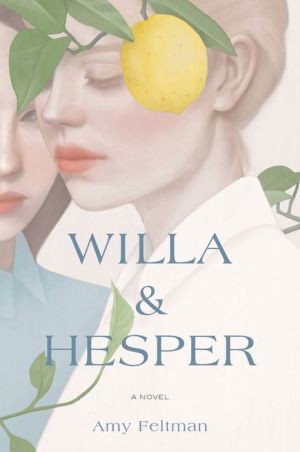
M y debut novel, Willa & Hesper, focuses on the two titular characters as they fall in love, break up, and find themselves on parallel journeys of self-discovery. It is about a lot of things — trauma, heartbreak, traveling the world only to discover you can’t get rid of your own consciousness in a new time zone, etc. — but one thing it’s also about is a love of cake.
Although I didn’t realize it while writing initially, this book is chock full of dessert references. More than thirty references to cake flutter in these pages (a special shout out to Clementine Bakery in Clinton Hill, which sustained me for two years as I pummeled through drafts of this book).
There are reading lists all across the Internet — about serious matters, about faraway destinations to help curb your cabin fever, about female murderers and everything in between. But for those of us who love reading about dessert when we’re not actively eating dessert, where’s the inspiration? I present to you, as a glutton and literary fiction aficionado, a reading list to make you crave pastries, cakes, and cookies that may or may not symbolize your relationship’s demise.
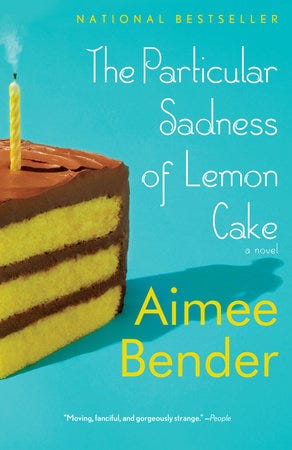
Rose Edelstein, just about to turn nine, takes a bite of her mother’s lemon chocolate cake and discovers she can taste her mother’s emotions. Bender has an uncanny ability to deliver on surreal conceits, and as Rose’s special talent leads to difficult emotional truths, the story becomes less about magic and more about a turbulent family and Rose’s burgeoning maturity. That aside, the description of the cake is dynamite: “[I] pulled off a small warm spongy chunk of deep gold.”
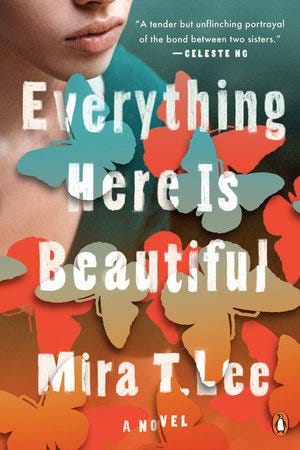
In Everything Here is Beautiful, Mira T. Lee will throw in a small detail — about a recipe for chicken, for instance — and that detail will pop up, evolving in meaning and symbolism with each reference. Early on, Lucia marries the charismatic, older entrepreneur Yonah. One example of Yonah’s tenderness towards Lucia is by bringing her the vegan pound cake of her dreams, her favorite item at Yonah’s convenience store, which happens repeatedly over several decades. This is the last couple I expected to be rooting for, but by halfway through the book, I was totally sold.
I wouldn’t say this book had me craving dessert so much as it made an indelible impression of what excellent descriptions of food can do in literature. Unnamed narrator, A., is a part-time proofreader and full-time consumer. To even get into the plot — which includes a sinister supermarket chain full of veal, a reality show called That’s My Partner!, and a cult surrounding the rituals of eating — would be a challenge here. Instead, consider the entirely chemical treat Kandy Kakes, something like a twinkie if a twinkie could represent Big Brother. “Kandy Kakes: We Know Who You Really Are.”
This classic 1983 short story begins with a mother picking out her son’s birthday cake. Something feels off-kilter right off the bat, when the narration clinically (frostily?) refers to the birthday boy as “the child.” It’s a chocolate cake, with a spaceship and a planet made of red frosting. Without giving anything else away, this story brings the cake back in a surprising turn, and ends on a very different note than you might expect from the premise.
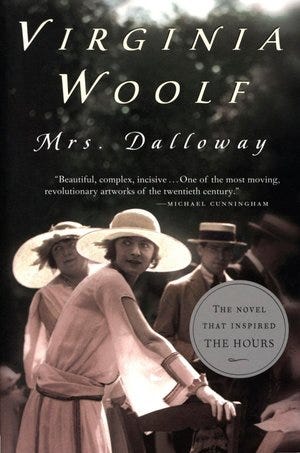
Speaking of classics — I can’t resist through one of my all-time favorites, Mrs. Dalloway. In one tension filled scene, secondary characters Elizabeth and Miss Kilman debate going to Clarissa’s party, over tea and eclairs. The tiny actions here are super sexually charged: Miss Kilman fingering the eclairs, swallowing the last two inches of the eclair after defiantly jutting out her chin. Miss Kilman is filled with longing: “If she could grasp her, if she could clasp her, if she could make her hers absolutely and for ever and then die, that was all she wanted.” Who among us hasn’t had an unrequited love and made a bee line for a dessert plate?
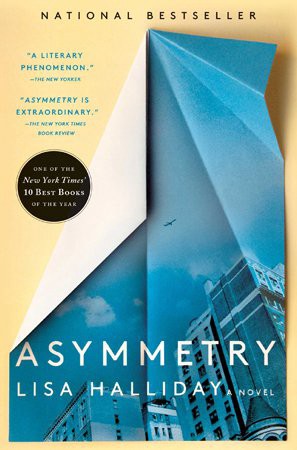
This novel is divided into two distinct parts. The beginning focuses on Alice, a twenty-something editorial assistant, and the development of her relationship with a significantly older literary titan. From the very beginning, this guy is wooing Alice with sweets: Mister Softee, squares of chocolate, and eventually, the delectable Blackout Cookie from Columbus Bakery. He doesn’t eat them, but delights in providing Alice with these treats and watching her eat them. (In silence. Normal.) The creep factor on their interactions is high — he compliments her by saying she “really does look sixteen,” affirms her compliance with the phrase good girl — and, as things continue to sour, Alice throws up one of these precious, forbidden cookies.
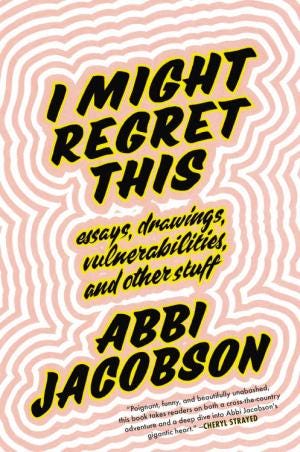
Abbi Jacobson of Broad City chronicled her post-breakup, cross-country journey in I Might Regret This late in 2018. In one memorable scene, Abbi checks into a bed and breakfast, thinking it will be invigorating and refreshing to be there alone. It’s a perfect example of the difference between your imagination and reality can be vast. Surrounded by couples, Abbi desperately wants to hide in her room and disappear — but the homemade blackberry scones (“impeccably stacked,” she imagines) are even more enticing than her desire for solitude among the boisterously in-love. (This might beg the question: do scones count as dessert? Reader, I’ve decided: they certainly do.)
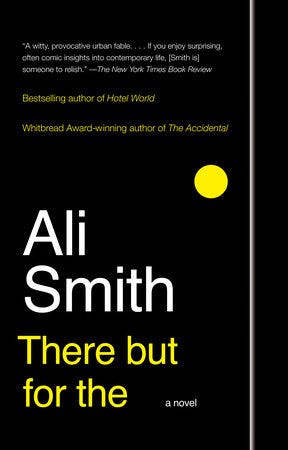
What if, instead of having dessert at a dinner party, you locked yourself in a bedroom and waited to see what would happen if you never came out? That’s the premise for this gem by Ali Smith, who takes uncomfortable group meals to an entirely new level. I hope for Miles’s sake that he had some chocolates squirreled away in a jacket pocket.
About the Author
Amy Feltman is the author of Willa & Hesper. She graduated from Vassar College in 2010 and earned her M.F.A. in Fiction at Columbia University in 2016, where she was also a Creative Writing Graduate Teaching Fellow. She has worked at Poets & Writers Magazine since 2014. She received a fellowship to attend the Disquiet Literary Conference in 2015 in Lisbon, Portugal. Her short story, “Speculoos,” was nominated for a Pushcart Prize in 2016.
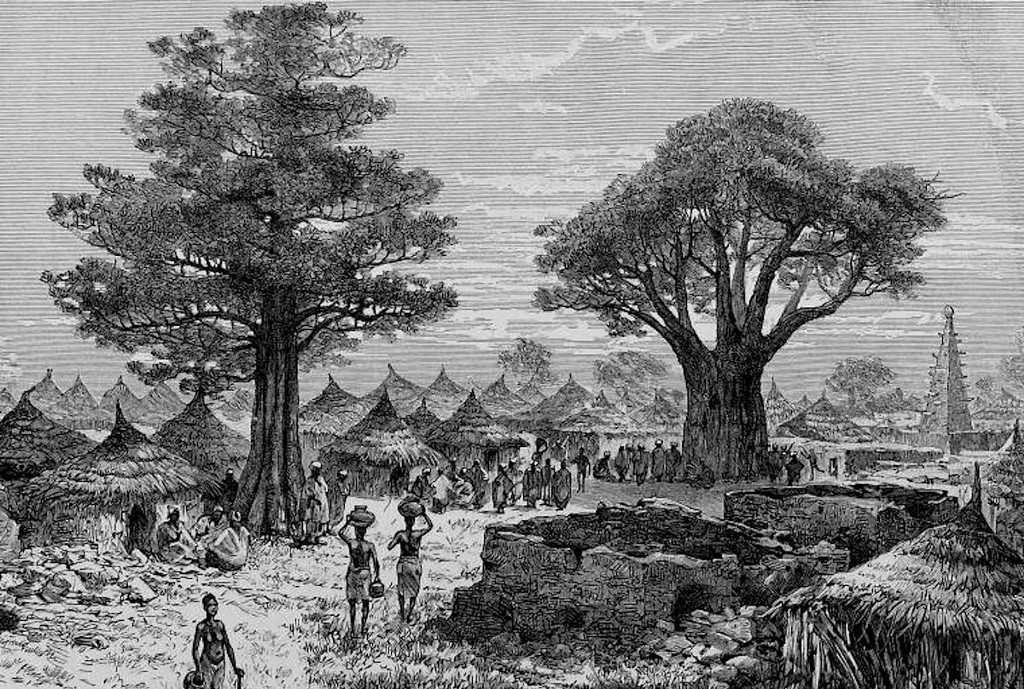
Ayesha Harruna Attah’s great-great grandmother is the force behind The Hundred Wells of Salaga, her third novel published by The Other Press. Her enslaved ancestor ended up in Salaga, a town on the southern edge of the Sahel in what is now northern Ghana. From Salaga’s market, enslaved people would be trafficked domestically or moved on to the Gold Coast and onwards across the Atlantic.
By the time of her ancestor’s enslavement and the timeframe of The Hundred Wells in the late 1900s, the slave trade had been outlawed. But in Salaga, business carried on. The Accra-born Attah reimagines the journey and fate of her grandmother in the character of Aminah, a young woman who is snatched from her village by slave raiders. On the other end of the feudal hierarchy is Wurche, a chief’s daughter, whose desire to lead is frustrated by gender expectations of her family. Through a series of tragedies, the two women are drawn together.
I spoke to Ayesha, whom I met at grad school in New York City, about retracing her ancestor’s treks, reconciling fractured histories, and living the writing life in Senegal.
J.R. Ramakrishnan: When did you first learn about your great-great grandmother’s story? How did you react when you first learnt about her?
Ayesha Harruna Attah: My father first told me about this ancestor. She was his great-grandmother. When I learned that she’d been enslaved, my initial reaction was a combination of shame and shock. It was far from the feelings of pride I’d had when I learned that we had relations to royalty. I had to unpack my emotions, why was I ashamed when this woman had done nothing wrong — if anyone had to be ashamed it was her captors (most of them royal), and people who benefited from the trade in humans. Writing this book was a look at why I felt the way I did, a chance to purge myself of the fascination with royalty, and an exploration of the texture of slavery on the African continent.
Writing this book was a look at why I felt ashamed when this woman had done nothing wrong.
JRR: Would you talk about the research that went into this novel? During this process, was there a piece of information or moment that really solidified for you that you had to write this narrative?
AHA: I wanted the family story, so I asked anyone who would indulge me for information on my ancestor. All that they knew was that she could have been Fulani, a people spread all over northern West and Central Africa; that her home could have been in Mali, Burkina Faso, or Niger; and that she was beautiful. The second part of research was going up to Salaga, to get a sense of the infamous slave market where my great-great grandmother ended up. And the third was scouring primary and secondary sources. I read through travelers’ accounts of Salaga in the 19th century, and gems such as J. A. Braimah’s Salaga: The Struggle For Power, which outlined the political activity taking shape within and outside of Salaga. There was one line in this book that cemented my resolve to write this novel. It said that princesses in Salaga could choose their lovers, even if they were already betrothed to another. It was perfect dramatic material for a novel.
JRR: The trans-Atlantic slave trade haunts the book. Aminah fears the “big water” that “had no beginning or end.” But in the novel, you focus on the complicity of Africans, royal and otherwise, in the trade via Wurche, Wofa Sarpong, and Moro. This aspect seems to have been less considered in literature than the degradations committed by white slavers. Could you speak to this perspective and how you decided to handle the writing of it?
AHA: I mentioned being shocked when my father told me about our ancestor, and I think that came from learning that her enslaver was African. I knew about indigenous slavery, but it was a fuzzy shapeless piece of information lodged somewhere in my brain. And I think that’s what indigenous slavery is to most West Africans. We know of its existence, but we push it so far back into the reaches of our minds and don’t acknowledge it. For me, realizing how close it was to home was the point I woke up. I took that amorphous piece of knowledge and took it apart and began to digest what it meant.
As I started doing my research a word kept being bandied about — “benign.” Internal slavery was supposedly not as dehumanizing as the trans-Atlantic slave trade had been, but this reasoning didn’t sit well with me. Slave raids were violent affairs where the very young and old had no chance at surviving. Enslaved people were allowed to marry into the families that had bought them, which was said to give it a different flavor from slavery across the Atlantic. To me, this still seemed like coercion and I wanted to explore what that could have looked like.
JRR: Interesting that you mention “benign.” It seems that this sentiment is often behind of some of the justification of the treatment of domestic employees, who are not enslaved but to varying degrees indentured to contracts and employers whims all over the world. What did you learn about human nature (and apparent need to organize into hierarchy) in the researching and writing this book? Anything remotely redemptive at all?
AHA: Yes, the situation of some domestic employees in parts of West Africa is no different from what Aminah would have gone through, maybe even worse. I don’t know if it’s a human need, but it has existed for thousands of years and is such a powerful system that goes hand in hand with patriarchy. What I found redemptive was the role women have always played in keeping the peace or picking up the pieces and ensuring life goes on.
JRR: Was it an early decision to have the dual POVs? Or did you come to it later on? Your grandmother inspired Aminah. How did you create Wurche?
AHA: I decided on the two points of view about three years after I started writing (it took about six years from putting down the first words till publication). At first, I focused mainly on Aminah’s story, but after I read about Gonja princesses being free to choose their lovers, I thought a woman like that would be an interesting foil to Aminah’s character who is enslaved. I did flirt with multiple viewpoints at some point, but the story needed to be told by these two women. On a craft level, Wurche was the right person to also explain the geopolitics of the region, which Aminah would have had a hard time understanding, simply because she spoke a different language, and because of her position in that very hierarchical society.
JRR: How did you personally handle the intensity of the research and its transformation to fiction? The novel doesn’t really let up with the violence. Even Wurche, who is protected by her royal class, is subject to it.
AHA: Writing Wurche’s character was one way to tone down the intensity of the violence and the feeling of suffocation I felt, even though, as you rightly point out, she is not exempt from it. I took certain liberties with her character that I couldn’t take with Aminah because I felt I had to do right by my ancestor. I was lucky to have written part of the book in beautiful places near beaches, so I would take long walks after each writing day to clear my head.
JRR: How do you expect Ghanaian readers will respond to the book? Are there people in Ghana right now who have lineages similar to Wurche’s and Aminah’s?
AHA: I have already received some reactions. I expected to hear that people weren’t ready to read a book of this sort because I sensed an unwillingness to examine our role in the slave trade. But so far, the response has been wonderful. Most people — mostly of a younger generation — have said, “I had no idea!” Others have started having conversations with their families. And one surprising detail I heard is that in almost every family, there are people who had slaves and then there were people who were enslaved.
JRR: And how do you expect the novel to be greeted in the U.S., especially by African American readers? What conversations have you had or which ones do you anticipate?
AHA: This is one African girl’s way of saying, “Sisters and brothers, I’m sorry we did this to you, I’m sorry we did this to ourselves. Can we talk? Can we build bridges?” I’m leaving myself open to discussion. I know some of it is going to be difficult, painful, even, but I hope it can be cathartic.
This novel is one African girl’s way of saying, ‘Sisters and brothers, I’m sorry we did this to you, I’m sorry we did this to ourselves.’
JRR: The other recent novel that touches upon the internal complexities of enslavement has also come from a Ghana-born writer, Yaa Gyasi, who examines the before story of slavery in Ghana in Homegoing. How is slavery taught in Ghana? How does it feature in national consciousness?
AHA: I really enjoyed reading Homegoing, which starts off in the 18th century and fans out into the diaspora, dexterously showing how the trauma of slavery is passed down from generation to generation. In my book, I stay on the home front, because that is a story that I haven’t read much of, at least in Ghana. Ayi Kwei Armah’s The Healers, also talks about the internal slave trade, in the southern part of the country. Most of the people who were enslaved were kidnapped from the north, and that’s where I set my novel.
For a long time, slavery in schools has focused on the trans-Atlantic slave trade. There are tourist sites that are directly linked to the slave trade such as the Salaga Slave Market and the Elmina Castle, where people were held in shoeboxes of spaces before being packed into boats, and the rhetoric given by the tour guides is often, “Never again.” The President of Ghana has declared 2019, the year of return for the African Diaspora, and his message has generally been the conversation at the national level, one in which Africa’s children are welcome to come home. What I’ve heard less of is: we were part of this horrible system and we are sorry, let’s get to the root of this.
JRR: What happened to the grandmother who inspired Aminah’s story?
AHA: We have no idea. Given that she was simply called the slave and no one remembers her name, I imagine she died young.
JRR: While you’ve lived and worked in New York, you chose to leave to return home and now live in Senegal. How do you feel place affects your work?
AHA: The continent of Africa is my muse so it’s important that I mostly write out of this space. From time to time, I get the chance to leave it and that remove allows me to see things clearly and not to be too precious with my stories and characters. I loved living in New York City in my 20s but it was very removed from the realities of life on the continent, so I had to get back.
“The Power Couple,” “Jigsaw,” “City of Exes,” “Foiled by Language,” and “A Falling Out” by Matt Leibel
“The Power Couple”
When the power couple broke up, they squabbled over who would get to keep which powers. He wanted invisibility; his lawyer made a good case that he’d been invisible for much of the marriage. She wanted superhuman strength, since it’s what she’d been using to endure the last 5 years. They negotiated a split of time travel: he got the past, and she got the future. They’d never have to be present for each other again.
“Jigsaw”
A man went through a terrible relationship. It broke him down into pieces — 500 to be exact. Now, he’s been repackaged as a jigsaw puzzle, for advanced solvers ages 8 and up. When you put him back together, you’re rewarded with the image of a man with all his cracks and seams plainly visible. In some versions of the puzzle, when you fit the final piece in place, the man begins to cry a single, puzzle piece-shaped tear.
“City of Exes”
She downloaded the breakup app on her phone. It was designed for busy single professionals who don’t have time for relationships, who’d prefer to skip to the bitter end. Within a month, she’d broken up with 400 partners. She didn’t know their names or what they looked like. But how much less lonely to move through a city of exes — of would-be strangers with whom she’d briefly shared, if nothing else, a moment of code.
“Foiled by Language”
“You’re amazing,” he told her.
“What’s so amazing about me?” she asked.
“Just…everything,” he said, stumbling.
“That’s not very specific,” she said, “and anyway the word ‘amazing’ is almost criminally overused.”
“I’m not good at elaborating,” he confessed.
“Well, that could be a problem,” she replied.
“You’re unbelievable,” he added.
She let that word hang in the air for a bit, until, amazingly, it floated away.
“A Falling Out”
In the city, there are a million windows. Inside each one is a story. The stories can be anything, even stories where the window is the hero. Or, where a man falls in love with a window, then falls out, after he and the window have a falling out, and the window becomes a widow. Or maybe there’s just one story: each of us staring out our windows with busted hearts, consoled by dreams of lives more broken than our own.
About the Author
Matt Leibel lives in San Francisco and works as a copywriter. His short fiction has appeared or is forthcoming in Portland Review, Quarterly West, Redivider, DIAGRAM, and Wigleaf.
About the Illustrator
Sara Lautman is an illustrator in Baltimore. Her most recent book, I Love You, was published by Retrofit in 2018. She contributes regularly to The New Yorker as a cartoonist and teaches comics at The Maryland Institute College of Art.
Sign up for our newsletter to get submission announcements and stay on top of our best work.
YOUR INBOX IS LIT
Enjoy strange, diverting work from The Commuter on Mondays, absorbing fiction from Recommended Reading on Wednesdays, and a roundup of our best work of the week on Fridays. Personalize your subscription preferences here.