14 Books to Help You Deal with Millennial Burnout

In her popular BuzzFeed essay “How Millennials Became the Burnout Generation,” Anne Helen Petersen tries to understand the strange exhaustion that attacks those of us who don’t bat an eye at 60-hour work weeks but become quivering piles when asked to buy stamps or pick up the laundry or renew our registration. Rather than under-attentive, we’re over-focused and it’s making the world warp. “We didn’t try to break the system, since that’s not how we’d been raised,” Petersen writes, “We tried to win it.” For some, even while winning, it feels like losing. That’s where burnout creeps in. She cites Josh Cohen, an expert in burnout, who writes: “You feel burnout when you’ve exhausted all your internal resources, yet cannot free yourself of the nervous compulsion to go on regardless.”

For those of you nodding, laughing, crying, or a little bit of all three, here are some books to read when you feel like everyone else but you can survive without sleep, without love, without a break, and keep going anyway. (For those of you currently preparing to turn this list into a to-do list, I see you.)

Chemistry by Weike Wang

In Petersen’s article on millennial burnout, she describes “the psychological toll of realizing that something you’d been told, and came to believe yourself, would be ‘worth it’— worth the loans, worth the labor, worth all that self-optimization — isn’t.” In Chemistry, the narrator has a prestigious Ph.D. program to finish to make the parents proud, a boyfriend who needs to be turned into a fiancé, and then there’s the question she doesn’t have time for: what does she want to do, to make it all worth it ? The hours at the lab, the unanswered research questions and love questions, the palpable pressure from her Chinese parents, her cohort, and her all-too-supportive boyfriend lend themselves nicely to burnout. Indecision, self-doubt, general anxiety, and self-discovery ensue.

Jillian by Halle Butler

Rather than focus on the structural inequalities and absurd economic realities we are forced to live through, sometimes it feels better to turn to blaming one another. Twenty-four-year-old Megan is an admin assistant in a doctor’s office. Jillian is her 35-year-old coworker. Megan is obsessed with despising Jillian. They have nothing in common except their belief that the life they want is not the same as the life they are living. They characterize two ends of the millennial critique spectrum — Megan, inert and indecisive (“Should I get myself some abstract ambitions and start designing events calendars?”) and Jillian, overactive and indecisive (single, working mom who adopts special needs dog, riddled with shame for needing help). A perfect book for those of us just looking for a break from the self-care regimen, Kathleen Rooney of the Chicago Tribune called Jillianthe feel bad book of the year.”

Pretend I’m Dead by Jen Beagin

Mona is a 24-year-old housecleaner/sometimes artist with a passion for vintage vacuum cleaners. She’s tired of being asked “what else” she does “besides cleaning houses.” When she falls in love with a recovering heroin addict at the needle exchange where she volunteers, things get messy. The man,“Mr. Disgusting,” disappears and breaks her heart, but recommends she move to Taos, New Mexico for a clean start. She follows his advice. In Taos, Mona meets a whole host of bizarre characters who are also looking for spiritual healing, new beginnings, and closure. Read this one to remember why living like a millennial invites really great storytelling. The adventures continue in Vacuum in the Dark, Beagin’s second novel about Mona, out later this year.

Hole

Friday Black by Nana Kwame Adjei-Brenyah

The concept of the “millennial experience” tends to overemphasize the experience of white millennials while ignoring or doing little to acknowledge the different experiences black men and women struggle with in the same generation. In this searing (and darkly funny) short story collection, Adjei-Brenyah challenges that white-washed understanding of our generation and offers more variations on millennial burnout with stories that highlight the absurdity, violence, and racism alive and well in the tradition of American consumerism.

‘Friday Black’ Is a Brutal, Brilliant Satire of American Racism and Capitalism

Conversations With Friends by Sally Rooney

Read to discover that no one knows what the hell they are doing and the best thing to do about that is write about it. Rooney, who is rightfully touted as the voice of the millennial generation, writes about two young women at Trinity on the precipice of living some kind of life while in the middle of living several others. Frances and Bobbi are brilliant and witty ex-lovers who refuse to title their relationship, so other kinds of relationships weasel their way in between the two. There’s ambiguity, there’s inertia, there’s wit, there’s a reason to spend your day alone in bed with this book.

We Are Never Meeting in Real Life by Samantha Irby

If you aren’t following Samantha Irby on Instagram or Twitter, then add it to your to-do list and then go do it and cross it off so you can justifiably feel good about doing some self-care work for the day. In her essay collection, Irby translates the trials of adulting — budgets, The Bachelorette, Costco, mom-friends, etc.—into hilarious insights on how to survive the dumpster fire that is this thing we call life.

My Year of Rest and Relaxation by Ottessa Moshfegh

The year is 2000. The narrator is skinny and beautiful. She has lots of money, inherited from her recently deceased parents, and lives in a beautiful apartment all by herself on the Upper West Side. She’s graduated from Columbia, competed for and landed internships, maintained a low-paying job in the industry she is “passionate” about, and promoted a high-status social life. Until, one day, she stops. She makes sleep (through a prescription-drug-induced hibernation) her new side hustle, and then takes that passion on as a full-time job. While the main character isn’t really a millennial (to be in her early twenties in 2000, she would have been born before 1981), there’s a reason it resonated with people who were around her age in 2018.

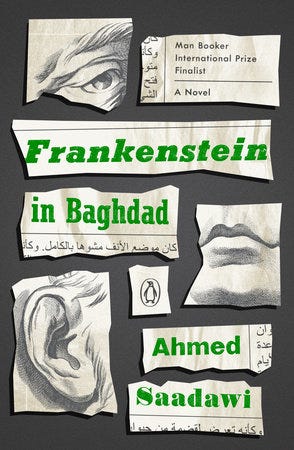
Severance by Ling Ma

Candace is in her twenties and feeling pretty okay about leaving photography behind for a stable career managing the logistics of Chinese production for Bible sales in the U.S. Then, Shen Fever, a virus that’s basically burnout (it turns people into brainless zombies who continue doing rote activities until they die) strikes Candace’s office. In a matter of weeks, all of New York City is ravaged by the disease. Candace remains, trying to use the routine of her work to ward off questions about what to do next, until she appears to be the only uninfected person left in New York City. Severance critiques the behavior that leads to burnout: the motions we use to create pseudo-stability in the city are the same ones that point the fevered out as dead on their feet.

‘Severance’ Is the Apocalyptic Millennial New York Immigrant Story You Didn’t Know You Needed

Neon in Daylight by Hermione Hoby

Kate has just arrived in New York City in the summer of 2012. An unfinished Ph.D. and complicated relationship with an ex-boyfriend at her back, Kate settles into a borrowed apartment with a cat named Joni Mitchell. She wanders. She thinks a lot. She meets two people: Bill, a novelist with more accolades for the movie based on his book than anything else, and Kate, a recent high school graduate who prefers Bushwick and Craigslist to the college syllabus. Read to remember why wandering is good for the soul, and why no summer will ever live up to the first summer you spent on the other side of “throwing it all away.”

The Mental Load: A Feminist Comic by Emma

The Mental Load was originally an online comic in French about all the invisible labor we spin into “multi-tasking” aka the stuff of burnout. The address change we need to finish. The voicemail from Great Aunt Sue we haven’t listened to. The to-do list we lost and the laundry we forgot to fold and the iron we now have to buy for said-crumpled-laundry. It’s all there. Reading The Mental Load might not lighten the burden, but makes me feel like I have friends who really get it. Am I laughing or am I crying?

Goodbye, Vitamin by Rachel Khong

For when you are shocked to realize your life is not what you expected it to be, and shit keeps getting worse, anyway. Ruth has broken up with her fiancé, quit her job, and returned home to find her father, the brilliant history professor, now only occasionally lucid as he enters the late stages of Alzheimers. The novel jumps back and forth from Ruth’s comic assessment of the present moment to her father’s journal from the past. It moves quickly, so try not to be shocked if you suddenly jerk from laughing to crying. An efficient catalogue of emotions for all millennial compatriots, and a look at an under-considered component of millennial burnout: Baby Boomers.

Behold the Dreamers by Imbolo Mbue

In her essay on millennial burnout, Petersen points out the paradoxical skill set for millennials: “Our capacity to burn out and keep working is our greatest value.” If you do the right thing, it’s promised, and work hard for the right people, everything will work out. Unless there’s a Great Recession, and you’re not white. Jende Jonga and Neni, two young Cameroonian immigrants living with their six-year-old son in Harlem meet Clark Edwards, an executive at Lehman Brothers. Jende becomes his chauffeur, both Jende and Neni and bend over backwards to find opportunities to continue working for him. But when the Great Recession hits, they are forced to encounter the crumbling facade of their employer’s morality, to so-called American dream, their struggling marriage, and what comes next.

Pond by Clare-Louise Bennett

Jia Tolentino’s review of Pond is perfectly titled: “A Work of Fiction that Will Make You Feel Pleasantly Insane.” While that’s not wrong, it also might be said that this is a book to read when you’ve tried to read the sanctimonious Walden and can’t stop thinking about the time you heard Thoreau’s mom did his laundry for him. In the series of interconnected stories that make up Pond, the narrator is trying to meet the world in an unmediated way, to strip back all the layers of adulthood that obstruct her access to the world. She’s an unapologetic misanthrope and somehow that’s comforting. Maybe that’s the insane part?

Made for Love by Alissa Nutting

Another story about failed love and dealing with what to do with your life afterwards. Except Hazel’s ex is a sociopathic Silicon Valley dude who wants to plant a chip in her head, and her father has gone all-out on a sex doll as an act of selflessness (because death is nigh, he explains, and sex dolls don’t mind if you die on top of them). Just when you think you’re the only one who is a mess, remember where you come from.

Humans Made of Memories

Dementia impairs not only memory but the personality and ability to reason. A once sensible person appears illogical. Someone with a mind that rarely forgot details has them go fuzzy — blurring the whole picture not only the edges. The loss of memory, as I’ve witnessed, rewrites everything about a person. When it started happening to my grandmother, I readily found explanations for her haze: too much medication, malnutrition, dehydration, water retention, insomnia. The birthday cards and holiday tins she sent, ones that used to arrive like clockwork, had all but stopped two years earlier. The money sent to her? “Who the hell knows,” my mother, her de facto caretaker, answered when asked. Everyone in my family found an excuse for why my grandmother had suddenly become impaired, why the woman we knew didn’t match the one we witnessed and heard about.

Dementia, Alzheimer’s, a gradual loss of self has been written about in our reality, but in Bethany Morrow’s debut novel MEM, memory loss and removal serves as the impetus for a fight for freedom. The primary character, Dolores Extract №1 (aka Elsie) made similar excuses as I would for my grandmother’s memory loss. Elsie observes her friends “…. losing track of time; … misplacing a teaspoon though she held it in her hand; … missing the trolley stop she used for ages. It turned out these were a very small price for her to pay…” The price to pay for losing memory or, in the case of MEM extracting it, made Elsie a guide for me to consider how instrumental memory is to our personality. Within Elsie’s friend something appears to be missing that she cannot latch onto. For Elsie, once the truth is revealed to her, once she cannot ignore those “quirks,” her friend’s distance is clearly a loss she could not help. It was also one she did not choose. Those parallels struck me hard, because being “in” on the reasoning doesn’t make it any easier; it can, in some ways make the reality scarier.

In Bethany Morrow’s debut novel MEM, memory loss and removal serves as the impetus for a fight for freedom.

When my grandmother’s mind began to fade, it was the little things that got my mother’s attention. The newly purchased box of Ritz now depleted; my grandmother claimed a visitor had eaten all of it. My grandmother insisted she’d talked to people just that day whom she hadn’t corresponded with in weeks. Missing checks, no deposits, depleting bank accounts. She insisted she took pills that upon recount she couldn’t have. These bits added up to bigger holes. My mother called me while I was walking up Queens Blvd, “I think your grandmother has dementia, like her mother.”

These bits of the everyday — something many of us take advantage of in abled bodies and neurotypical minds that recollect process — are lost due to the larger parts of self that have been removed and faded. There is no healing from memory loss. It’s not the same as those “brain fart” moments folks snap their fingers to in an attempt to recollect a name, a destination, a moment. This is far more permanent, the reality blurring, the insistence on why unclear as well. And the frustration, as my grandmother showed, was one of the biggest parts. Having someone witness your decline in real time can’t easily be overcome, no matter how much people like me and Elsie tried to explain it away.

In the world of MEM, Elsie is the titular Mem: a clone of a person (a Source) imbued with certain of the Source’s memories, which they live over and over. But Elsie is not simply a Mem; she is also an anomaly, the longest surviving extraction from another person. As a Mem, as a woman even, Elsie is property, yet she has the opportunity to live as any individual would. Inexplicably to those who came before and after her, Elsie exists as more than Mem, though not quite human to the larger population — it’s an odd and fraught dichotomy. The book begins with Elsie’s return to the Vault, the place of her “birth.” She’s been summoned back as the property she’s deemed to be by those who want her to exist within the confines of her origination, no longer able to live a life of her own making.

As Elsie explains, when Mems look at you they do not see you. “She was trapped in a single moment. She and every other memory were, quite literally, single-minded, replaying themselves every minute of every hour of the day and then watching their origins at night.” They see someone else, are in a different moment altogether. Elsie, as an extract, experiences memories, but she does so as a clone of Dolores, a replication of who Dolores could have been sans extractions. At one point my grandmother did not see my mother, her eldest child. As her dementia crept up and bloomed out, she yelled at my mother, saying she should be ashamed of herself. In that moment my mother realized that her mother was seeing not her, but a woman who had been a part of the dissolution of her 40-year marriage. It was one of the few times my mother yelled back, which turned out to be what it took to snap my grandmother out of this moment. When they talked later my grandmother admitted she hated this, all of it. “I know,” my mother said in an attempt to soothe though this moment in itself would also be lost among many recent memories. My grandmother would mourn many things in her life, but in her last year her inability to retain a sense of self unraveled her as much as it did those of us watching over her.

Much of MEM interprets the reality of recollection; memory itself is a strong indicator of who people are and what makes people whole. As I read it, the book emphasizes how much the essence of an individual depends on memory along with the turmoil and beauty within those retrospections. In MEM, the extraction process creates carbon copies of the Source housing a memory of the Source’s choosing. Aside from Elsie there are shells left behind as Mems expire or become worse off. It’s not only the Mems, but the Sources who may be husks of who they were or could have been. Chapters, passages, moments, brought me back to the loss of memory and its importance, especially within families, in attempting to carry legacy from one generation to another. The memory of an impermeable Black woman was altered when witnessing my grandmother’s mood shifts and her suspicion for everyone around her. This is a memory I know I won’t forget.

No, I Can’t Picture That: Living Without a Mind’s Eye

Does memory make us more or less cautious, more or less mindful, more or less guided in how we pursue our lives? Would my grandmother’s life be different if she didn’t remember the tragedies of losing a child months after birth or another one killed due to an inside job at a bank, his name never once mentioned in the local papers of the time? My grandmother didn’t get to handpick the memories she lost, as wealthy Sources do in MEM, ones that were intended to help them “heal from painful memories” though “the poor had as many as the wealthy.” In fact, the ones she still held on to didn’t seem to cater to what she’d prefer to recollect at will. The painful ones surfaced most often, and perhaps in lieu of that the good ones tended to recede into the background. A certain amount of willfulness was shed as well, an understanding as to what was happening in moments and how depleting it was to know none of this was under her control. In MEM not everyone is in the driver’s seat as to the results of extraction. As Elsie states, “The overwhelming majority of extractions continued to be exercises in purging.” And this “purging” doesn’t come with guaranteed results—it actually creates a big question mark, much like dementia. With dementia there’s no guarantee of anything except this will not stop. It won’t necessarily get better, as I had hoped time and time again as months extended to a year to a couple years. Like dementia for the one dealing with it firsthand and those seeking to provide relief, in MEM and in life, memory loss is not without consequence for all parties involved. But for the wealthy it’s an attempt to protect. The hurtful moments gone or the good ones meant to live on beyond the body of the inhabitant of said memories. This was not so much about retaining culture as it was about retaining power and blissful ignorance. But, for my family, for me, the loss of these memories meant a burden on family to protect what’s been passed down, to try and extract what hadn’t yet been said. To be able to take the good or bad would allow us to understand the person we were speaking to, but the reliving of these moments and the attempt to understand where they came from became difficult as it does for Elsie, as it does for Dolores, as it does for those who care for them both.

In “MEM” and in life, memory loss is not without consequence for all parties involved.

There seems to be a scary legacy in my family that those who are the most verbose, the most ardent and active in preserving the family, end up losing their memories in old age, particularly the matriarchs. I wonder how memory is so unique to each of us but also incredibly necessary as well. The storage of these moments over time, layers upon layers of accumulated knowledge and experiences that allow us to become who we are and to lose those stories, those people, those recollections ultimately casts a fade on our family, our history, our culture. For Dolores, the real Dolores this became evident physically as well as emotionally.

The consequences blend into an erasure of self. Who are you without those inherent memories that lead you to make decisions based on experience? Who was my grandmother without the knowledge of what the South was as a child, as a visitor when she cared for her grandparents in old age, and as a returning inhabitant in old age. The woman she was who was active, who was persistent, who cared for those in the generations that preceded her and came after her would now need a caretaker, was now suffering the same fate she’d seen her mother face as not being able to pinpoint even when this happened but knowing, simply, it was in the past. This will that drove her to get up everyday was sapped and I think with the lack of those memories that struck her as to who she was a clear identity she became, and she admitted this as she had seen it up close in those spurts of recollections that came back to her “a problem.” Where we didn’t see her that way, we couldn’t ignore that she wasn’t who she used to be because of this loss, not due to extraction but without any willful justice that we could perceive. In MEM the extraction process is a luxury; even the creator of the procedure notes it as such, recognizing that even those in a lower socioeconomic class could use the option, but even if they could afford it would they use it and would they do so as frequently as the upper class does to “protect” themselves from harm and hurt? Would that translate across class or mainly be seen as optional?

Who are you without those inherent memories that lead you to make decisions based on experience?

One of the last moments I got to sit with my grandmother in her bedroom to ask a little about her migration from South Carolina to Nassau County. The smoke from a cigarette held between her fingers spiraled upward. The smell of it filled her home and clung to my clothes like a second skin. In her nightgown she sat slightly slumped in bed, speaking in her Southern smoker’s drawl, slower than usual. She sounded like herself, chuckled at a flicker of a memory only she knew, and tried to relay to me to type. It was one of those moments when I attempted to fool myself into thinking, “Perhaps this dementia is not as bad as we all think it is.” My grandmother was telling me that my grandfather failed to inform her of the right station (bus or train) to meet him at when she got to Hempstead. It was 1950, there were no cell phones, and as fate would have it they’d link up. “How’d you find each other?” I asked. She scoffed, “Kindred spirits, I guess.” After a few minutes — these conversations didn’t take place more than ten or so minutes at a time — she expressed her exhaustion and I helped her back into bed. Whether that moment was solely happy or tinged with regret, I couldn’t say. But in the memory I have a strong sense my grandmother wanted to hold onto as long as she could.

Chigozie Obioma Wants to Write a “Paradise Lost” for the Igbo People

Chigozie Obioma’s latest novel draws from his own experiences of growing up in Nigeria and immigrating to Turkish Republic of Northern Cyprus as a university student. At once following the arc of Greek tragedy and drawing on Igbo cosmology, the story breaks away from any traditional Western narrative structure.

An Orchestra of Minorities
Buy the book

The title of the book, An Orchestra of Minorities, suggests a story of power, loss and justice. It is indeed about those things but mainly centers on the relationship between Chinonso, a poultry keeper, and Ndali, a woman from Nigeria’s elite class. The two fall in love after Chinonso sees Ndali about to jump off a bridge and flings down two of his beloved poultry, killing them, showing the unbearable magnitude of the act. It works and as things grow serious between them, Chinonso realizes he needs a college degree for Ndali’s family to ever accept him. He sells his poultry farm to attend college in Northern Cyprus, only to realize the friend from childhood who’d arranged for him to go there has deceived him and stolen his money. Stranded, Chinonso must find a way back to the country, birds and woman he loves.

With Chinonso’s “chi” or guardian spirit — who’s been around since the beginning of time itself — narrating, recounting the lives of his past hosts and the events they witnessed, Obioma ambitiously maps eras in Igbo history in his novel.

I talked to Obioma over the phone about fate, agency, the choice of language and the impacts of modernization, both within the story and in Nigeria.


Raksha Vasudevan: What was the genesis of the book?

Chigozie Obioma: The idea came when I was studying in Northern Cyprus and met another Nigerian named Jay. Like the main character in this book, Jay was cheated of his money by ‘agents’ who arranged for him to come there. Shortly after we met, Jay died. I wrote about all of this for The Guardian. It was a very brief encounter — I think we spent about six days together before we learned that he had died — but his situation never left me. I spoke with him a few times alone during that period. I remember — although it sometimes comes in flashes — I remember he’d just become engaged to a lady. And that’s one of the reasons he wanted to get back onto his feet as soon as possible. And in the aftermath of his death, I kept thinking what happened to that lady? What was it like to learn that this guy had basically given his life for her hand? We never, of course, had any way of knowing what became of her, how she processed this grief. But that idea of sacrificial love, I wanted to write about that.

RV: Your novel is grounded in Igbo ontology and incorporates sayings and stories from Igbo folklore. Why was it important for you to include those in the narrative?

CO: I see myself as an ontologist — someone who’s very concerned about the metaphysics of existence and being. So, I find themes like fate and destiny very compelling. I think they’re also at the core of the most primal questions we ask ourselves as human beings. I wanted to probe into the Igbo idea of life and how we negotiate the idea of fate and destiny.

Themes like fate and destiny are at the core of the most primal questions we ask ourselves as human beings.

And those questions are deeply connected to the idea of the “chi,” which stands at the very center of Igbo cosmological belief. And I’ve always been fascinated with John Milton’s Paradise Lost. I think he did a great job of probing those questions that form the bedrock of Western civilization: those of free will, pre-ordination and pre-knowledge — like, if God knew that there was sin in the world, why did he allow man to actually commit it? — so I wanted to write something like that for the Igbo people. You know, this civilization we once had and its knowledge has been almost destroyed by the encroachment of Western ways of living and culture. I wanted to have some kind of monument in fiction for that.

RV: Did you have to do some research on those ontological systems or did you know much of it already from growing up in Nigeria?

CO: While growing up, my mother’s father and even my mother and the adults around me would always say “this event was the result of this person’s chi’s transaction with say, death or sickness or whatever ill fortune has befallen this person.” So, there was always a recourse to the chi — I was always conscious of that, even when I said my name. Chigozie is a kind of prayer that my chi will bless me. Many Igbo names have an allusion to the chi like Chinua.

RV: Ah, interesting. I never thought about that.

CO: Yeah, so I would always ask questions like: what is the meaning of the chi? Why are you saying that my chi is responsible for that event? And I also wanted to use the novel to map the history of the Igbo people by having the chi as a reincarnating spirit who has seen different eras. So, yes, I had to do some research in that regard. I read a lot of books and in the acknowledgements section, I list some of these books. But I also did field research with my dad in Nigeria. I went with him to a shrine and we spoke with a priest (one of his quotes actually appears as an epigraph at the beginning of this book).

RV: On the subject of the chi, I wanted to ask how you see the chi as different from a person’s conscience?

CO: From all the research I did, I concluded that there is a tripartite idea within Igbo beliefs on the composition of man — almost like the Judeo-Christian idea of the Holy Trinity. You have the physical being, the chi and the reincarnating spirit. The Igbos believe that a couple can copulate but unless there’s an ancestor who decides that it’s time to re-enter the world, it’s impossible for conception to happen. The reincarnating elder embodies the conscience and is relatively unique to each individual whereas the chi does not die — it’s recycled again and again.

RV: So that explains why Chinonso’s chi often refers to his former “hosts” — other people he’s spiritually accompanied before Chinonso — who range dramatically in their circumstances (for example, a slave, a fighter in the Biafran civil war). How did you choose the other hosts that Chinonso’s chi had inhabited? And why was it important for the chi to narrate their stories as well?

CO: Well, I wanted to chart the evolution of the Igbo nation up until the present time. So, of course, one would look for landmark events such as the first time the Igbos encountered the Europeans, the time of slavery and the Biafran war. But also, there was a host who was Westernized and the chi, through inhabiting him, reflects on how Igbos have become African Westerners. So it was also a way to illustrate certain points.

RV: On the point of Westernization, the chi and other spiritual beings often lament the loss of certain Igbo traditions — e.g. women no longer wearing uli (body drawings), men no longer keeping their ikengas (statues of horned deities) — and they attribute these losses to “the White man [who] charmed their children with the products of his wizardry” like mirrors, guns, tobacco and eventually planes. Can the challenges that Chinonso faces in the story be attributed to this loss of tradition?

CO: You know, Achebe once said that Africans are at the crossroad of cultures. And I think it’s an unfortunate state that I don’t know we’ll ever escape. My idea of colonization is that there are grades of it. In India, for instance, I always wonder why they didn’t become majority Christian?

RV: Yeah, I’ve wondered about that myself.

The primary foundational ethic in the Igbo belief system is that someone who holds a person down also has to be on the ground.

CO: I think the English were a bit more respectful of some cultures than of the Africans. In Africa, it was really vicious — it was really a ‘civilizing’ project. They thought, “okay, these guys are brutes without any kind of religion or belief system.” But in India, they at least saw how complex the Hindu belief system was. If you look across Africa, almost none of the countries retained their religion, their language, none of it. Things were swept completely away. That uprooted the foundation of people and that makes it very hard to make the case that we should keep embracing everything that comes. I think that development should be organic, should come from the soil of that place. Even if it’s coming from the outside, it must come in slowly to give people time to embrace it and make it theirs. You know, just last week in Nigeria, Boko Haram attacked a military barrack and killed over 100 soldiers. And this is a ragtag army that’s not trained in any way.

RV: Wow.

CO: So why was it? Some of the military soldiers said that their equipment was ill-suited to fight even though the government keeps giving money but there are some people high-up who are so wicked that they’ll take like ninety percent of the money and give only ten percent to equip these soldiers who are risking their lives. So why are people like that? If you go back to precolonial times — my dad talks about this all the time — it was impossible to think you could do something like that. In the chaos of trying to merge all these tribes together, something was lost. Now, we don’t even have a central moral culture in Nigeria. But in the separate nations you had before colonization, the primary foundational ethic in the Igbo belief system is that someone who holds a person down also has to be on the ground. Achebe was always saying this. That’s a very radical statement against any kind of marginalization, against any belittling of another person or selfishness but that was lost and nothing came up to replace it. So, the book examines in part how the chi be reacting to these things.

RV: And even Chinonso, the main character, has some of the reactions. For example, when he returns to the ‘new’ Nigeria after several years in Cyprus, he notes “a new bleak humor that trivialized the horrifying” that accompanies rapid urban growth and advances in technology like mobile phones and solar panels. Do you think modernization allows us to ignore dark realities like poverty, climate change, etc.?

CO: Well, I do not hope to idealize anything. But in precolonial times, it was impossible in Igboland that someone wouldn’t have shelter or food to eat. But now, we all have these advancements but if you go to Nigeria, you go to Lagos, you see people sleeping under the bridge or on the side of a street. Modernization has brought good things to us but it also brought its ills. I just wanted the chi to comment on all these changes, whether good or bad. There are some of them that the chi acknowledges are good — for instance, planes and banking. When the Europeans first tried to sell this idea to Africans, people were laughing, saying “how stupid can these people be? How can you expect me to take my hard-earned money and hand it to another people to keep for me?” My people tell stories about this all the time. And they were shocked to discover that you can keep your money with someone else and you even get more interest for it. So, I wanted to show the clash of civilizations and how it manifested in every phase of history of my people — how it still manifests itself today.

RV: I felt like even when Chinonso is in Cyprus, we see that clash in other ways as he encounters the Cypriot culture.

CO: Yes, indeed.

RV: The characters often switch between the White Man’s language (English), Igbo and pidgin, which at times creates some tension: for example, Chinonso struggles to express himself in English yet that’s the language his lover, Ndali, prefers. The reader also has to do some work to decipher conversations in pidgin and sayings in Igbo. Why did you build these tensions into the story?

CO: There’s a dilemma in that I’m writing in the English language, which is the language of education in Nigeria, it is a formal language. But there’s a dilemma in that the chi itself is imbued with a kind of prelapsarian eloquence. If you look at the discourse between Chinonso’s chi and the guardian spirit of Ndali, the register is different than how a Nigerian person might speak. The chi’s register corresponds more to ancient Igbo. But all of these things are being translated to English, which has, in many ways, a flattening effect in that context. But on the other hand, in the human characters, you’re right in saying that Chinonso prefers Igbo. For Nigerians who aren’t very literate or haven’t had much formal school, they resort to Igbo or pidgin. And there’s also a class division that influences all of that: the bourgeois class, or the elite class, that Ndali belongs to, seriously privileges the English language because that makes them feel ‘higher’ than lower-class people. I think the disparity also gives authenticity to the characters.

RV: Do you feel the presence of a chi in your own life?

CO: You know, I still see myself as a Christian but with my inquiry into the ways of the Igbo people, I began to be more curious about religion and faith. There are still many people who never converted to Christianity, my grandfather, for example. So, yes, these days, I find myself looking at life from the lens of Igbo cosmological beliefs. And I do think of the chi sometimes.

RV: The title of the book refers to all the minorities or marginalized of the world who are powerless to control the events of their lives — all they can do is wail or ‘sing’ their complaints. All the characters at various points seem to be part of this orchestra, tossed about by the fates. Does this counter Western storytelling traditions where most characters, especially the protagonist or “hero,” have a relatively large amount of agency in their lives?

In my novel, I wanted to record some of the ways in which immigration can be dehumanizing.

CO: The choice of title was informed by the phenomenon of the hawk attacking the poultry. It happens all the time, I saw it a number of times growing up. Once that happens, people would say “listen to how the hen and other chicks sound now in the aftermath of the chick having been stolen.” And it’s an orchestra of small things. So, the phenomenon is about fate. So, we could just be doing our own thing, and we may not aware of what society, other people, other nations are doing. My grandfather for example did not know he was Nigerian. Nigeria was created in 1914, a few years after the Berlin Conference after the Europeans divided Africa and declared Nigeria to be a British territory. My grandfather died not knowing about this, living in Nigeria. Nobody consulted the Nigerians. So, the hen is there and suddenly, something precious to it is gone. You can apply it to anything. Again, it goes back to the story of Jay. Why him? Why was he chosen to be the victim of this vicious ring of organized crime when the rest of us made it through? Who orchestrates what happens?

RV: There’s one scene after Chinonso arrives in northern Cyprus and we learn that he’s been cheated of his money where he and another Nigerian friend are on a bus and two Cypriot women want to feel their hair. I found that scene quite disturbing even though it was a minor one. Why was it important for you to include this scene?

CO: I wanted to record some of the ways in which immigration can be dehumanizing. And that incident actually happened to me. It was not only to reflect how Africans are treated, like exotic objects or something, but also to heighten the effect of what’s befallen Chinonso. His life has been basically destroyed by this guy who cheats him, yet everyday life, including everyday racism, continues.

RV: When did you decide that Chinonso would be a poultry keeper?

CO: I have always been fascinated with birds. I don’t know why but it was an object of fascination of child. I wanted to imbue Chinonso with this almost radical innocence to contrast the privileged background that Ndali comes from.

RV: That makes sense.

CO: And the Igbos believe in different kinds of reincarnation: there’s not just the reincarnation of the chi or the human being, but also reincarnation of events. So, something can happen now and echo again in the future. You lose something once, have it come back to you in a different form, and lose it again. I’ve always thought about radical narrative structure — of creating a kind of doppelgänger of events. So, I wanted to replicate Chinonso’s love for the gosling — something he loved as a child — and the loss he feels when it’s stolen from him and in trying to get it back, he ends up destroying it himself. There’s a parallel between that and the way Ndali comes into his life and what unfolds between them.

RV: What other books based on Igbo ontology / cosmology do you recommend? And what other books are you reading right now that you would recommend?

CO: I’m very grateful to Achebe. His trilogy — Arrow of God especially — has a lot of Igbo philosophical beliefs. The most interesting book I’ve read on Igbo ontology is After God is Dibia. That book was very helpful. And another called Odinani that’s downloadable on the internet. I’m good friends with Jennifer Clement, the President of PEN International, and I’m re-reading her books Gun Love and Prayers for the Stolen because I want to ask her some questions and publish an interview with her. I’m also about to start reading The Myth of Sisyphus by Albert Camus because I’m working on an essay about differentiating between revenge and justice from both Igbo and Western philosophical perspectives.

RV: That’s interesting because Chinonso struggles with this differentiation when he returns to Nigeria after Cyprus. It’s difficult for the reader, as well, to see what actions would fall into which category.

CO: Yes, there is some overlap sometimes, I must confess, but most of the time, justice can be unfair to the oppressed. And that is very hard for people to swallow. In Nigeria, across Africa, even here, people conflate the two. For example, everybody in South Africa is embracing this guy named Julius Malema who speaks about how black South Africans must treat whites the way they themselves were once treated during apartheid. At the end of the day, what this guy is doing is completely against what Mandela was trying to do, to the extent that Mandela made the guy who jailed him his Vice President just to show how important it is to let go of resentments, of all aspects of revenge. And if white people are now oppressed, people will forget that they were once the oppressor. Sometimes, just letting go is how you get justice.

Could a Daily Poetry Podcast Save Your Mental Health?

Why produce a daily podcast? If your subject matter is the news, it’s the only time frame that can keep up with the snowball-rolling-down-Mt.-Everest pace of what’s going on. If your subject matter is poetry, the point is to slow everything down and keep slowing everything down.

That’s the goal of The Slowdown, from U.S. poet laureate Tracy K. Smith, the Poetry Foundation, and American Public Media. For five minutes every weekday, Smith introduces a new poem, explains why she selected that poem, and reads it. That’s the whole podcast. It’s a REAL THING. You can actually subscribe to a show that gives you permission to listen to a poem for five minutes read by the woman who was nominated twice to spread poetry all over the country. This is a literary once-a-day multivitamin to keep your body going a little bit longer.

Even if you don’t think you’re interested in poetry, a podcast that asks you to spend a few minutes sitting in thought is good for the mind and the body. At the crest of 2019, it can be hard to find the opportunity (or even the willingness) to slow down. We spend so much time multitasking, flipping from task to task to get everything done — not to mention fretting over it all. But the science says that multitasking drains our brain and is destructive in the long run. According to the American Psychology Association, we expend all our energy on “goal shifting” (“I want to do this now instead of that”) and “rule activation” (“I’m turning off the rules for that and turning on the rules for this”) that we never get anything done. By taking time to do one thing for five minutes, we can reorient our brains to focus on one thing for a little while. There is mounting evidence that mindfulness and meditative thinking — let’s say, about one topic or feeling, like in a short poem — can contribute to future health and mental state. And a few minutes is all you need.

There is mounting evidence that mindfulness and meditative thinking  can contribute to future health and mental state.

“One thing about five minutes is that it makes it really accessible and really approachable. There’s no excuse for saying you don’t have time to listen to it,” said Tracy Mumford, the show’s producer. “I don’t think of five minutes as a constraint, I think of it as the perfect package.”

The simplicity of the show — theme song, introduction, poem, credits — is one of its greatest strengths. You can tell how intentional every choice is on the show, like making every single episode exactly five minutes long. As a podcast listener and a poetry reader, there is nothing more comforting than seeing the same episode length over and over again. Like any daily podcast, I can start to build trust with the show because I know it won’t drop an epic into my ears.

The show’s production stays consistent, while Smith’s expertise leads us forward. And there’s no one more suited to lead than her. Smith addresses each piece of work with care and an uncanny ability to see our emotional futures, as if she knew what you wanted to hear even before you did.

Smith addresses each piece of work with care and an uncanny ability to see our emotional futures, as if she knew what you wanted to hear even before you did.

“I draw both from poems I’ve loved a long time, and poems that are the result of careful sleuthing,” said Smith. “I seek poems that will fit in 1 or 2 or 3 minutes, and that use vivid, evocative language to examine familiar aspects of life. Some poems are topical, like Franny Choi’s Gentrifier, while others shed new light on ordinary feelings, like gratitude, or experiences, like coming-of-age.”

While The Slowdown asks for a moment of your time, it isn’t fluffy escapism. The poetry doesn’t shy away from the emotional, the heavy, and the real. In the first few weeks of episodes, we’ve heard poems about alcoholism, Portrait of the Alcoholic in Withdrawal by Kaveh Akbar; the torrid history of blues singers, True Stories about Koko Taylor by Eve Ewing; the contradictions of living, Spring by Adra Collins; and the happiness of owning and living in a body, Hip-Hop Ghazal by Patricia Smith. There’s no theme that unifies the works, and they’re not specifically topical, since Smith and Mumford record in batches weeks before each episode airs. But, Smith continues, “The only thing every poem has in common is that it speaks to me personally while also holding up as a solidly-crafted piece of writing. And that leaves open space for a great deal of range and variety.“

The show’s intention also springs from how Smith introduces each poem. It’s not an academic primer, nor an urge to get you to listen in the first place. Before each poem, Smith relates a memory, a feeling, or idea that she feels is related to the work coming up.

In one episode, as she introduces the poem Spring by Arda Collins, Smith remembers a fight she thought she had with her cousin when she was a kid. One night, she sat up in bed and realized it was about her childhood friend and felt awful. “How reliable is anyone’s memory, and not just things that happened years ago,” she says, “but anything, everything that happens. how clearly can we see ourselves?”

As she introduces Spring, she explains the poem is “about memory, how far we sometimes feel from the things that we’ve done, but we’ve done them. And in a way, even when we don’t remember them or can’t seem to properly acknowledge them, we’re still living with them. I think this means that our lives are full of unacknowledged contradictions, we are full of unacknowledged contradictions.”

“[My] preface is an attempt to open up the thought space, or the emotional space, where the poem might productively land,” Smith wrote to me via e-mail. “I’m getting the reader — who is likely in the middle of doing something else — ready to listen deeply to the poem as it does its own particular work.”

The narration isn’t necessary — as Smith notes, each of the poems she selects could stand on its own — and yet, as a listener, you appreciate that she points you in the right direction every time. It is an honest orientation, like a hiker who has walked this path many times before and knows what mood you should be in to wander amongst these trees.

In 2019, I bet another outlet will declare poetry to be dead yet again. But we’ll know it’s alive and kicking, sending us five-minute missives every Monday through Friday.

Alice Stephens Is Blowing Up the Traditional Adoption Story

There are not enough novels by adoptees about adoptees. When I saw the title of Alice Stephens’ debut thriller novel, Famous Adopted People, and found out she was a Korean adoptee like myself, I couldn’t wait to read it. I wondered how, among other things, she would tackle questions of agency for an adoptee protagonist.

In Famous Adopted People, two adoptees visit Korea: Mindy to find her birth mother, and Lisa just to have a good time. When a birth search and a romantic date go horribly wrong, Lisa Pearl finds herself in a secret compound in North Korea. Uncertain whether she is captive or guest, Lisa must keep her wits about her in order to survive — even thrive — in such a glamorous and terrifying dystopia.

I spoke with Alice Stephens about how her novel resists stereotypes of the “good adoptee” narrative and reorganizes questions of identity, loss, and empowerment surrounding adoption, how global politics influenced both her plot and characters, and what it was like to bring Kim Jong Un to life.


Marci Cancio-Bello: You not only destroy the tropes about adoption — which always centers around the triad: adoptee, birth mother, adoptive family — but also the whole lens through which adoption is comfortably viewed. We need stories about adoptees who are not interested in searching for their birth parents alongside stories about adoptees who are. I loved that while Mindy’s entire story is about finding her birth mother, Lisa doesn’t care.

People don’t want to part with the traditional feel-good narrative of adoption about the infinite capacity of the human heart to love someone who’s not of your family or even of your own race.

Alice Stephens: Thank you so much for saying that. I’ve encountered a lot of resistance. I think people do not want to consider this alternate adoption story. They find it disturbing, and don’t want to part with the traditional narrative of adoption, which is a feel-good story about love and the infinite capacity of the human heart to love someone who’s not of your family or even of your own race. They don’t want to think that adoptees have problems, and I think we all do. We all have identity issues and some sort of feeling about our adoption that isn’t 100% positive. I have a great adoption story, I love my family, they’re great, but I had this problem within myself because I was different from them. I have three siblings who are the biological children of my parents, and I needed to see myself in a story. I hadn’t seen myself in any story, so I decided to write it.

MCB: There are many references to plastic surgery and re-forming one’s identity for both Asian and non-Asian characters. One character even explores how to make a Western eye look more Asian. That moment struck me as a reversal of the constant whitewashing adoptees often feel.

AS: As I sat down, I knew that there were all these themes I wanted to include. I had been reading a lot about North Korea and really interested in that, and a lot of the identity themes transcend even adoption — how people allow themselves to be identified, how easily they can change their identity, how much they want to conform — so I had themes of consumerism and plastic surgery and that sort of thing in there, to hopefully make people think more deeply about identity.

MCB: Whenever I talk to people about North Korea, there is often a veil of disbelief that places like that can exist, that such stories feel too dystopian and bizarre to actually be real.

AS: It’s stranger than fiction.

MCB: Two-thirds of your novel is set in North Korea, and those were the parts I was most interested in. I followed her journey through South Korea, but once Lisa crosses into North Korea, I was hooked.

AS: Oh my gosh. That’s great, because I get a lot of reactions that are the exact opposite. Readers tell me they often start out thinking it’s going to be a light, fluffy jaunt in South Korea and a fun and funny story, and then it takes a sinister turn to North Korea and for some people, that shift turns them off. I’m so glad to hear that that hooked you. That’s really the heart of the story.

MCB: You do a wonderful job of blowing up the assumption that North Korea is isolated, because Kim Jong Un’s character moves about so freely, and we follow so many dark, underground threads from South to North Korea. You also build this terrifying cast of characters, the Gang.

AS: I very loosely based the two Americans on people who actually did defect to North Korea. One of them was Charles Jenkins, who eventually married a kidnapped Japanese woman — because North Korea really does kidnap people. Charles Jenkins was in a little bit of trouble in his home base of South Korea, and walked over the DMZ line to escape his problems, and seemed to survive, even thrive in a way.

Both Americans had a different experience than North Koreans because they were perceived as special. They starred in Kim Jong Il’s movies. Oh, that was another book I read, about Kim Jong Il kidnapping the most famous South Korean movie director and the most famous screen actress and taking them into North Korea and eventually having them make movies because he loved movies and wanted to make prestigious movies that would bring him awards and make North Korea into a place that people saw as a cultural center, and not just as some unpredictable dictatorship.

So all those stories mingled together. I made up the two wives. What I wanted to do was show that North Korea cannot exist without America. America is part of North Korea. The American political system, that Cold War and rivalry, were all complicit. The whole world has made this country. And so that was something that I wanted to make clear.

I also wanted to acknowledge with the two wives that North Korea is not the only place affected by these antiquated notions of right and wrong and the strange sorts of alliances that people build against their enemies. So I took two countries that were very badly managed — Zimbabwe was colonized, and that ruined the whole country, and after they became independent, Mugabe came in and was a terrible dictator, and his story is parallel to the North Korean story. So that’s why I included them. But I did want it to be international, to show that it’s not just North Korea, but the whole world can be encapsulated within the North Korean story.

MCB: I do have to ask how you tackled writing Kim Jong Un as a real, lively character.

AS: It was fun. It was probably the most fun part of the whole thing, just because he can be such a buffoonish character. I made him into a wannabe thug who enjoys looking and acting like somebody dangerous, which he really is, but in an American way. By having him be a large part of the story, I could also introduce readers to North Korea itself and the things that happened there. Also, going back to that theme of how North Korea does not stand by itself but is created by the political situations, to have him be really Americanized seemed really important in the way he acts and the things he likes to do. There are Americans like that. One of them is our president. Yes, he is a cartoonish character, he’s evil, he’s all these terrible things, but people are making him the apotheosis of evil, whereas our allies are just as evil. We have bad things that happen in our own country, and we support people who torture and execute their own people, so his character is just mixing up the morality in the book.

MCB: His relationship to Honey is such a perfect metaphor for two people playing each other, thinking they’re the one in control. I’m not sure who is more dangerous and devious in this story.

AS: Honey made Kim Jong Un and enabled him, giving him his sense of being invincible and special and great, but he has no more affiliation and loyalty to her than anybody else, and it’s all about him and his survival. I think she would do the same if she had to.

MCB: Honey is such an American “ideal” figure — blond, blue-eyed, beautiful, and pulling political strings behind the scenes. We keep coming back to the belief that you can form, re-form, or conform your own identity, and I find that epitomized in Honey.

AS: As I said before, I wanted to blow up the traditional narrative of an adoption story. Instead of some pure source of maternal love that’s going to save the adoptee, I wanted to make her the anti-birth mother who did not conform to that trope. I’m mixed race: my birth mother was Korean, and my birth father was Caucasian American, so I just reversed that. What if my birth mother was actually Caucasian? I based her on a lot of people and attitudes that I experienced growing up, of white privilege — people thinking that because they were wealthy or beautiful or have good taste, they’re more important to the world than anybody else.

MCB: One character I really loved is Ting. She’s so quiet, and yet so tough, even in the smallest moments. Something about her reminds me of the actress Bae Doona.

AS: I wanted to give Lisa an ally. You always need someone to help you, no matter what situation you’re in. It’s a rare person who can do something by herself. The person who you least expect, the person who is the least powerful, is the person who ends up taking that extra step. I wanted to make her female, I wanted to make her Asian, and I wanted to make her feel at first like a child or a minion to the others, but the whole time, she’s thinking to herself, she’s observing, she’s smart, and she wants to escape from her hellish life. She chooses the one person she sees as her best chance, but also as somebody that she can actually morally like.

MCB: I think the moment when Ting’s backstory is revealed, Lisa realizes that other people have suffered for a long time also. She’s also a foil for Mindy’s character.

AS: Yes. Ting is the anti-Mindy, and she’s very strong. She hasn’t had all the advantages that Mindy has. She knows what to do, she’s going to get it done, and she knows who to help. She’s a by-the-bootstraps strong female character. There are a lot of bad characters in the novel, and Mindy is a good character, but I wanted somebody who would actually be a good character and not the expected good character. I wanted somebody who would be a good contrast to Mindy and Lisa, and a good role model for both of them.

MCB: Speaking of role models, I’m really curious about Lisa’s “Famous Adopted People” list that she and Mindy compiled when they were young, and which she references throughout the book. Was that something that you researched specifically for this book?

AS: It was always part of the structure of the novel to have quotes of famous adopted people. Actually, in the first iterations of the novel, each chapter was named for an adopted person, and I connected them a lot more obviously to the story, but my very wise editor, Chris, said that’s too much, just dial it back.

What I wanted to do was show that North Korea cannot exist without America. America is part of North Korea.

I was adopted in 1968, so I was one of the first (what I thought was the first) transracial adoptees. There were people who came before me, but it was very, very uncommon when I was young. Adoption was still considered kind of a shameful thing, and people didn’t admit to being adopted. Some people didn’t know that they were adopted, so when I was growing up, I would always make note if I found out that somebody was adopted. Michael Reagan is Ronald Reagan’s son, a pretty obscure figure, but I remember when Reagan was president, I made a mental note when hearing that his son was adopted.

I would say about three-fourths of the list was made of people I knew about growing up. I wanted to include them and their words, and — in the earlier iterations — a bit more about their stories, just to show that adoptees are such a huge population with a wide variety of their experiences. Some people didn’t care about their birth parents, some people really did, and all had different ways that they dealt with being adopted. I wanted that as a counterpoint for something to show readers, again, that yes, this is one story, but there are all these other stories out there. I’d always been Googling famous adopted people, so when I was writing this book, I did use Google for some of the adoptees that I didn’t know were adopted, like Greg Louganis, Faith Hill, and people like that. I used the internet for that, but mostly the list was made of people I had heard about my whole life, to make their voices heard too, so that the reader would know that all adoptees cannot be put in one bucket. We are all individuals with our own stories.

MCB: The epilogue especially feels like a love letter to all adoptees. I appreciated that it addressed all these stereotypes, acknowledging that everyone is telling stories except for the actual adoptees, which I think is still mostly true in 2018.

AS: I do too. But I do see, nowadays, that there are more and more adoptees speaking out. I think it has a lot to do with that big wave of adoptees, of which perhaps you are one, that started in the 1980s and 1990s but really crescendoed in the 2000s. I didn’t meet my first Korean adoptee until I was in my late 20s, but now I meet them everywhere. When you’re more visible, you feel like you can speak out more. And I think adoptees aren’t taking it anymore. They’re saying, “Come on, we’ve got our own voices, and we’ve got our own stories, and we don’t want other people to control that.”

MCB: I do have to say that this book had a truly satisfying ending, at least for me.

AS: Oh, I’m so pleased. Actually, I have to confess I wanted to just end the book without the epilogue, but my editor said, “No, you’ve got to give readers something to make sense of it.” As usual, he was right.

I think that a lot of non-adoptees read this as a mad caper where the protagonist just happens to be adopted, but it’s really a thriller and I really did want to make it clear that this was a story about identity and adoptees, and how we make sense of the world.

How Romance Novels Could Save Straight Sex

I hid my romance novels from my sophomore year college roommate. At least, I tried to. We were living in a narrow dorm room, in such close quarters that she couldn’t do Pilates in between our twin beds without almost brushing my face with her rubber resistance band. I was trying to figure out if heterosexual sex could possibly be worth it, and I didn’t want her to know.

These days, I’m regularly hearing that no, heterosexual sex is not worth it. Last December, writer Roxane Gay tweeted that “Cat Person,” the New Yorker story that went viral for its depiction of unpleasant sex between a college student and a thirty-something man, was “a great way to help women get over any lingering interest in straight sex.” Back in 2015, Rebecca Traister sounded the alarm in a piece for New York magazine that declared the whole heterosexual sex thing “to be rigged in ways that go well beyond consent.” I’ve heard the same from friends: sex is great, but maybe not if you have to do it with a man.

I did not have sex until my late twenties — not especially by choice. For most of my life, I considered myself some sort of freakish outlier. I’m kinder to myself now, but deep down, a part of me still thinks something was very wrong with me (and perhaps still is). Conversations like these make me see my late entry into sex in a new light. To hear other women openly declare that straight sex is not a great deal for us makes me feel a little better in one shallow sense, because maybe I really wasn’t missing out on a lot of spectacular sex in my teens and early twenties. But there’s a deeper sadness here too, because if I’m not the problem, or at least not the entire problem, then the whole damn system is broken. We need to tear it down and start over, but we’re too busy arguing over whether that woman who went home with Aziz Ansari said no in the correct tone of voice. Romance novels might offer a partial route out of this cultural narrative.

The real issue Society in General has with romance novels is that they’re books centered on a woman’s desires.

Especially in the literary world, suggesting people read romance novels can come across like suggesting they go read a book by Ted Nugent. But where does this scorn for the romance novel come from? There are legitimate problems with the genre, some of which you don’t even need a working familiarity with the books to perceive: cheesy covers, sometimes purple prose. But I think the real issue Society in General has with romance novels is that they’re books centered on a woman’s desires, including her sexual ones, and they’re usually written by women. When done right, that sort of thing can feel revolutionary.

It sure as hell felt revolutionary to me when I was nineteen and the accessible narratives around sex and relationships were pretty much all bad.

The most vivid part of my Texas public school sex education was an anti-abortion video I saw at age fourteen. When the video was over and the health teacher/volleyball coach removed the VHS tape from the VCR, I had this heavy, sad feeling. I had never had an abortion. I had never so much as kissed a boy (that wouldn’t happen until I was sixteen). But I still felt weighted down, like something was my fault. I had to have done something wrong. If I didn’t do anything wrong, why did I feel so guilty?

Sex ed in general was lacking in that part of Texas. When we weren’t getting anti-abortion videos, we got slideshows full of graphic STD images. The idea that people had sex for fun was never really brought up, as if we couldn’t be trusted with that information. Condoms were not discussed. Church was also unhelpful. Our clearly embarrassed youth pastor tried to assure the teenagers that if a married couple loved each other, everything would be fine. How or why it would be fine wasn’t mentioned. I didn’t need a lot details, but I needed more than vague assertions. I took the vagueness and warped it into a specific idea that sex was like a lot of things in my church: something you did because a man said it should happen. The woman’s desires were secondary, if they factored in at all. My anxiety convinced me that men want sex all of the time, and women must rein in those base impulses, at least until he puts a ring on it and everything that was once dirty and impure is now mandatory.

My anxiety convinced me that men want sex all of the time, and women must rein in those base impulses.

It all seemed like a bullseye that was impossible to hit, partly because I wasn’t sure where exactly I was supposed to be aiming. I regarded my high school boyfriend suspiciously, like he some sort of rape or pregnancy bomb that was going to go off if I made any sudden moves. He was not sexually aggressive, but I still felt like I was in danger. I didn’t trust myself. I’ve always been an anxious person, and growing up in a religion that viewed women as weak and unreliable only intensified that anxiety. If I couldn’t trust myself, then why would I trust a guy? Guys could get me pregnant, and I had been terrified of pregnancy since before I knew how sex worked. In my mind, pregnancy was an inevitable result of sex. Both sex and pregnancy were things that would happen to me rather than choices I would have any kind of ownership over.

As I graduated high school and left for college, other people in my social circle started having sex, and many of those experiences were not reassuring. My first college roommate said she cried throughout the experience. A friend from out-of-state had sex with a fellow virgin who told her, “Well, it has to go in sometime.” I just assumed that was the price of admission into womanhood, and I judged people who went ahead and did the thing anyway. I was sheltered and scared and secretly wondered if sexual enjoyment were even possible for women as anxious and broken as me, and I tried to cover that up via a sense of superiority. I told myself I didn’t want it so I wouldn’t have to deal with the possibility that I would never have it.

But I must have wanted it, at least a little, because one day I bought a romance novel. Probably a cheap Harlequin one at Walmart. I was to a point where I realized the stories I had been given weren’t going to work for me. The view of sex I’d grown up with seemed both exhausting and unsatisfying. I didn’t want to believe anymore in the narrative I’d been given. At the same time, I had very little confidence that I deserved a better relationship narrative, or that I would be granted one even if I did. At that point, I’m not even sure if I wanted to have sex or just wanted to not hate the idea of having it. I wanted desperately to find some middle ground. I wanted some reassurance that I could have intense sexual feelings and intense sexual experiences without losing myself or becoming tainted.

I wanted some reassurance that I could have intense sexual feelings and intense sexual experiences without losing myself or becoming tainted.

I was also horny, and I was tired of denying that. Expressing these feelings with other people was too dangerous, but suppressing them entirely was no longer tenable.

Romance novels assured me I did deserve good sexual experiences. I deserved to take an active role in sex rather than it have be just an unpleasant or at best neutral thing that happened to me, and I didn’t have to feel guilty about any of it. In good love scenes, the sex is enjoyable rather than transactional. The women are there because they want to be. No one is coercing or manipulating them. If something isn’t right, they talk about it. They find a way to ask for what they want rather rather than just hoping the man will read their mind, because a slightly awkward conversation is always better than bad sex.

In some ways, of course, I was trading one set of issues for another. If you check out the history of romance novels, it’s checkered with books where women get raped by the “hero” and then fall in love with him anyway. At their best, these books are well-written stories that imagine a better, more egalitarian model for intimate relationships — but at their worst, they’re populated entirely by milky white people and their attendant breasts, use way too many euphemisms for genitalia, and suggest a woman isn’t really a full person unless she’s got a strong alpha male willing to wife her up. Just look at the 50 Shades of Grey books. Or don’t, for your own sake. Their popularity (more than 125 million copies sold worldwide as of June 2015) shows how far we have to go when it comes to the plot lines that dominate the conversation (no pun intended). Christian Grey is an abusive dick who gets away with it because he’s rich and allegedly good at boning. Female virginity is also overvalued in romance novels (including Fifty Shades) — though, in recent years, there seems to be more room for women of all experience levels. The Most Sacred Hymen is a bigger deal in the historical romances. I used to read a lot of books about virgins who somehow had vaginal orgasms their very first time out, because the Duke of Girth or whatever was just that good. That seemed unrealistic even before I was sexually active.

Romance novels have issues, but so do all the other cultural narratives about sex. Unlike much of Big Important Fiction, romance novels taught me that good sex doesn’t have to be followed immediately by tragedy or betrayal (looking at you, Atonement). A woman’s sexual development doesn’t have to ruin her. These books helped me realize healthy sex is is a mutual encounter rather than a thing to endure passively. I’ve often heard sex compared to dancing, but it took romance novels to help me realize male-female relations should resemble a Ginger Rogers and Fred Astaire number, not one of those high school dances where you awkwardly latched onto your date and prayed for the song to be over before you were forced to make sustained eye contact. That doesn’t mean I expect sex to be free of awkward or stressful moments, only that I know it’s not supposed to be one continuously mortifying moment. Books can give straight women unrealistic expectations the same way porn can give straight men unrealistic expectations, but at least in romance novels, the women aren’t faking it and the men ask before they finish on someone’s face.

Unlike much of Big Important Fiction, romance novels taught me that good sex doesn’t have to be followed immediately by tragedy or betrayal.

I don’t read romance novels nearly as much as I used to, but I still have a few on my bookshelf. I just started The Wedding Date by Jasmine Guillory. It opens with a man and a woman getting stranded together in an elevator. In most other genres, a woman getting stuck in an elevator with a strange man would feel like the beginning of a horror story. But here, the man and woman chat, flirt, and share some cheese and crackers. The man does not get stuck in a small, confined space with a woman and think “You know what would improve this situation? Me taking out my dick!” The only things more defined than his sense of boundaries are his abs. The sexy stuff will come later, but right now, I’m reading with a distinct sense of relief.

Can You Get Away With Murdering Men If You’re Beautiful?

Does anyone have a “normal” relationship with their sister? Once you get someone talking about siblinghood, the crazy stories begin to pour out: resentment, betrayal, zaniness, competition, loyalty. Oyinkan Braithwaite has created a manic cocktail of sisterhood into her novel including all of the above. My Sister, The Serial Killerdoesn’t make a decision about whether to be disturbing, insightful, hilarious, or melancholy: it revels in all of those and more.

The book begins with Korede methodically helping her beautiful sister, Ayoola, dispose of the body of a man she’s killed. But he’s not the first, or the second. He’s the third, and Ayoola shows no signs of remorse, and it’s immediately clear that she will have no problem killing again. Ayoola claims all the men have tried to hurt her, but Korede, who’s spent her life cleaning up her sister’s messes, both metaphorical and actual, knows that Ayoola’s role as a victim is at best a passive act, and at worst a willful manipulation.

Despite her sister’s disturbing extracurricular habit, Korede manages to compartmentalize her brain and retain focus on the rest of her life, most importantly, her recent promotion to head nurse at a hospital. But her duties at her job aren’t quite her main priority at the hospital, either: she’s fallen in love with a surgeon, Tade, who values her professionally but may or may not see her in a romantic light. As the novel progresses, the inevitable occurs: Tade and Ayoola meet, and Korede desperately tries to avert what she naturally assumes will be their fate.

The macabre plot of My Sister, The Serial Killer would be enough to keep you propelled through the novel, but there’s much more buried within the pages: Braithwaite has a razor sharp commentary on power relations, the role of beauty in society, and the way young people operate on social media. We spoke on Skype about the misrepresentation of beauty as a personality trait, the mistakes people make in selecting partners, and, of course, our own experiences with sisterhood.


Rebecca Schuh: What was your initial inspiration for the novel?

Oyinkan Braithwaite: The initial inspiration would have been the black widow spider. The first time I came across the black widow spider, [I learnt] how when the female and the male mate, if the female happens to be hungry afterwards and the male is still around, she’ll eat him. I thought that was hilarious. I wrote a poem the black widow spider and from then I kept playing with the idea, it kept showing itself up again in a poem or a short story or whatever, until I finally sort of got here. Ayoola is obviously the black widow.

I thought it was hilarious how when black widow spiders mate, if the female happens to be hungry afterwards and the male is still around, she’ll eat him.

RS: That’s really interesting! I was going to ask, do you have a sister that you have a very dramatic relationship with — but this makes more sense.

OB: I have two sisters and a brother, and I think that my relationships with all three of them are interesting in one way shape or form. I’m the eldest of all of us and some of what Korede went through, that sense of responsibility and wanting to care for and be there for your siblings and protect them, I can understand.

RS: Early in the book, after one of the initial murders, Ayoola accuses Korede of victim shaming her. Korede finds this ridiculous, but you can see that Ayoola believes the narrative of her as a victim. How did you navigate the relationship of Ayoola as a victim versus Ayoola as a perpetrator?

OB: I do think that she claims to think she’s a victim, but I’m not sure she actually considered herself to be a victim. It’s convenient for her to say “woe is me,” but out of all the characters in the novel, she’s really the one who’s having the time of her life.

She understands the way it works, she’s been through certain experiences through which other people would consider her to be a victim, but whether she herself actually considers herself to be one, I think is open to debate.

That’s what allows the novel to be light in tone, because she’s not doing it necessarily out of a place of pain, she’s doing these things because she can get away with doing them. Ayoola’s not somebody who spends a lot of time reflecting on herself and her behavior and on the things that she’s done. She does things out of impulse as opposed to really thinking, why am I doing the things that I’m doing.

RS: And then she uses the victim narrative later because it’s convenient.

OB: And it’s what’s expected, and she knows how to work what she’s been given.

RS: Something I thought was really fascinating about the book as a whole was how it integrated so much social media, instagram, hashtags, Snapchat. We’re at an interesting point with books because in our lives, we know that social media is fully integrated, but books have not fully made the leap yet.

OB: This book was my first time doing it, and when I was writing the book, at some point, I thought oh, it doesn’t make any sense that social media isn’t here. They’re both females in their twenties, and it’s supposed to be a contemporary novel, and it wouldn’t make sense — you’re on instagram half the day.

Everybody sort of knows this now but we are all a victim of social media in a sense. You know that what you see on Instagram isn’t real. You know that what you see isn’t necessarily people’s true lives. It’s in our nature to represent the best of ourselves. On Twitter, a lot of people sound intelligent, but that’s not how they talk all the time. And yet we still are intimidated by it. Some people have been caught in lies, representing things that just aren’t true. I think that’s really interesting that we go so far to deceive people that we don’t even know. That was definitely something that fascinated me when I was writing it.

You know that what you see on Instagram isn’t real. It’s in our nature to represent the best of ourselves.

RS: I was really fascinated throughout the novel by the descriptions of the power relations between men and women. There was a line that really stuck out to me, when they were at the father’s funeral and the young woman came up to Korede and said oh you know your father paid for my whole university and she says he did it for a lot of women, and then says “When you have money, university girls are to men what plankton are to a whale.” I just thought what a knife of a line. What I thought was so interesting about her attitude was that she was so disdainful but so resigned to this idea of how powerful men interacted with women.

OB: I was having an interesting conversation today with my sister, we were talking about the book and she was mentioning how she had been surprised at some people’s response to the novel. She was like aren’t these things normal? Why are people highlighting them?

I think you become desensitized after a certain while, you just kind of have to. When I first moved back to Nigeria permanently, there were things that bothered me. They used to really get on my nerves. I would be all self righteous. Now I don’t have that same reaction to it.

After a while when you’ve seen things over and over and over again, you kind of have to work very hard to stay sensitive to it. And to stay shocked by it. And to want to even do something about it, to have the energy to want to do something about it.

That’s one of several things in the novel that people seemed shocked by but, what Korede said about the university girls, that’s a very common thing here.

RS: I thought that the pairing of Tade, whose attention is so intoxicating, with Ayoola, who’s a charmer herself, but more impervious to his attention, was, no pun intended, a deadly combination.

OB: There was one thing that I knew at the start of writing this novel, and that was that there was going to be a Korede, an Ayoola, and a Tade. I didn’t have his character lined up but I knew there was going to be a guy who was going to be the middle of the two of them.

Tade is central to the story, and he’s what tests Korede’s loyalty and devotion to Ayoola. Without him, there would be no real conflict — she’s been dealing with this, maybe she just would have continued to deal with it, had someone who she cared deeply about not been at stake.

RS: He created the biggest tension in their relationship thus far. It was so well illustrated in the first few chapters, the methodical nature of just wrapping up the bodies and putting them outside. She’s treating it like it’s her job.

OB: I think it’s the same thing, you know, you become desensitized to it and at first you might think oh my gosh this is so horrible, but once you’ve done it once, I’m pretty sure doing it again isn’t so bad.

It was tough on her, but without Tade being at stake maybe she would have just have kept on getting irritated but getting the work done.

RS: Tade was interesting because she saw him as so charming and perfect but even from the beginning I was like hmm….is this guy….is he really all that?

OB: Tade’s not one of my favorite characters. I think it was very much just how she saw him. I’m not even entirely sure who he necessarily was because at the end of the day we’re seeing the entire story from Korede’s point of view, so I think she put him on this pedestal that he maybe didn’t deserve.

That’s also what the book is about, to not make snap judgments about people. Because again, it’s this whole thing about social media and the time we’re in, people are working so hard to give this impression of perfection. Whether it’s physically they want to be perfect but maybe they also want to come across as good and charitable and kind. And we work very hard to convince other people that this is the way we are, when in fact, most of us aren’t great people.

Let’s be honest. We prioritize ourselves, we prioritize our well being we prioritize the well being of our friends and our family. We claim to care about the world at large but you have to choose. At the end of the day. It takes a lot to be able to put someone else’s well being ahead of yours or ahead of the person that you love. I think it’s good to give people time to reveal themselves, not just to assume that what you see or present is real.

RS: It’s almost like that’s the process that Tade went through with Ayoola where he was so easily like oh my god, she’s perfect. And didn’t believe it even when he was getting warnings about her being a killer.

OB: To be fair to him it’s not easy when someone comes up to you and says oh this girl, she kills people.

RS: Hah yeah, why would you believe it? It doesn’t sound real. There’s a line about how beautiful people get a pass at life, and I was like oh, yeah, again, accurate. That’s a zinger. There was kind of a lot of strains in the book about how beauty is it’s own form of privilege. Did you have any thoughts on that?

OB: It’s something that I’ve always been interested in, beauty being treated as though it were a virtue or a quality that one should emulate. Beauty is attractive, there’s nothing wrong with that. But beauty isn’t a characteristic. It’s not the same as being kind or being patient or being loving. But it’s often treated as though it is one of those things, which is what I was trying to explore with the novel.

When you see someone beautiful, you want to think they’re good. It’s part of the package. One is supposed to go with the other. So then when they do do something that’s not great, you’re more likely to forgive them.

I’ve heard it happen where somebody passes and the person was attractive, people say “oh they were so beautiful.” As if that made it more tragic than if they had not been so beautiful. You can definitely see how people work so hard today to fix their bodies. We’re trying to stay young and beautiful, as thought it would fill some kind of void and satisfy something on the inside. It’s always been something I’ve been interested in, as well as how being treated according to how you look can affect your mindset. Whether it’s that you’re really attractive, or that you’re unattractive, how it can form your character and who you are. Going into the novel again, that’s something I knew, which is how Korede and Ayoola look so different.

When I was younger, I got a lot of attention, and I got older and fatter and the attention changed. It was weird because I was like I’m the same person, I’m not different. I have the same values. I like the same things. But people treat you differently.

I lost a bit of weight this year, and I found myself resenting whoever my future boyfriend would be because I was like “he didn’t love me when I was fatter!”

But I hadn’t met the guy! If he comes up to me now that’s because I’m more appealing to him now. I resented someone I hadn’t met yet. I had it in my mind that I was getting less attention because I was bigger and when I’m smaller I’ll get more attention, so therefore whoever I’m going to date will be shallow.
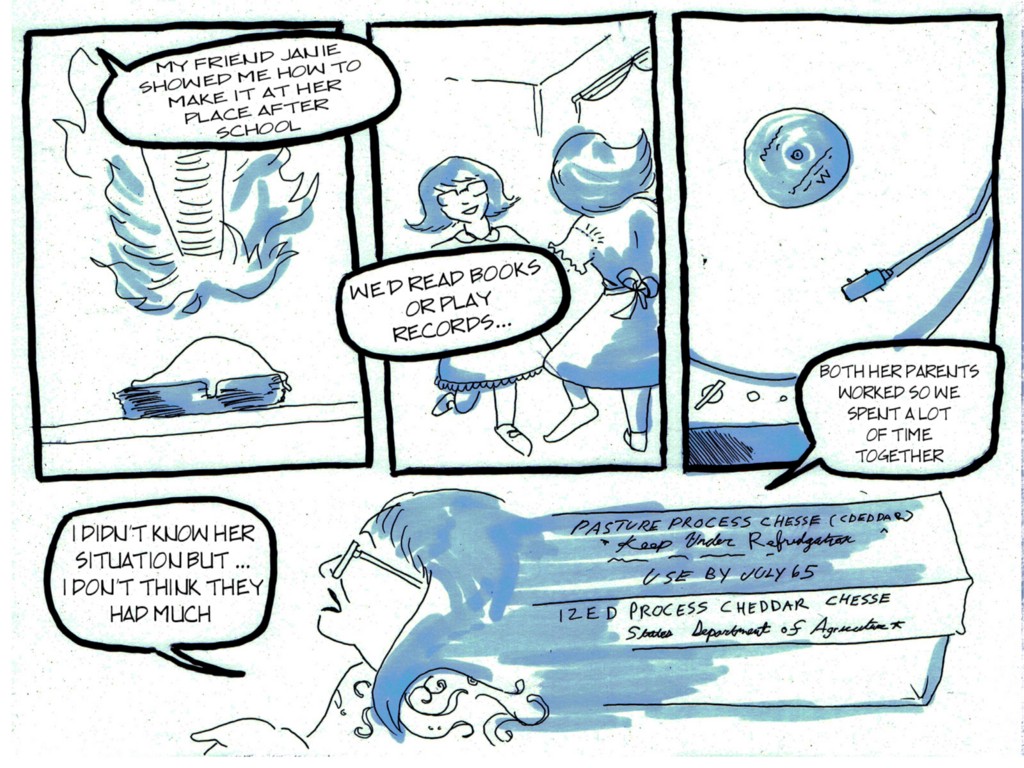
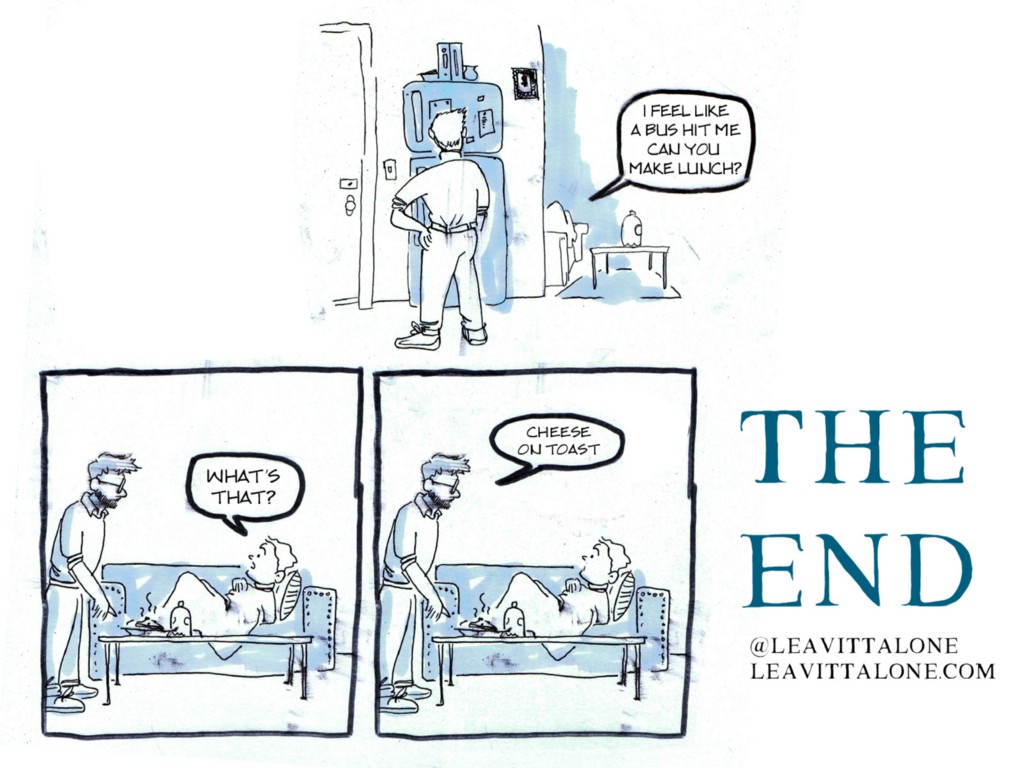
Luckily I ended up with someone who is pro plus size, so that works, he would have liked me before and he likes me now, I’m at peace with it. But it’s definitely something that has weathered me in my own safe space.
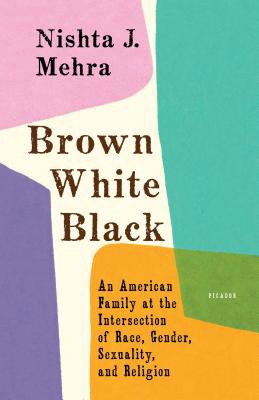
I want to look good, but that’s not essential to who I am as a person. I believe that a lot of women probably have that issue as well where it’s like, I’m a good person, I’m a nice person, why does it have to do with how I present myself all the time?

It’s almost the same thing as when you’re very unattractive, because they’ve summed you up and you aren’t sure how much of it is based on how you look and how much of it is based on your personality. Ayoola is not given a chance to grow because she doesn’t need to grow because she already gets what she wants because of how she looks. She’s boxed in and decides to use it to her advantage. I think that in and of itself can also be quite limiting.

When you see someone beautiful, you want to think they’re good. So when they do do something that’s not great, you’re more likely to forgive them.

RS: When Tade meets her, and Korede asks him, “What do you actually like about Ayoola?” and he says “Everything! She’s special.” And it’s like, you’re not saying any words. Those aren’t things.

OB: Use your words Tade! Yeah, exactly.

RS: I loved that exchange because I feel like I’ve seen it with so many friends where like, “I’m so obsessed with my new girlfriend/boyfriend” and you’re like “Tell me about them,” and they’re like, “she’s just lovely.” And you’re like, sure.

OB: (laughs) And it might be why, I don’t know how it is in the States, I don’t know if this in insane but here it’s kind of started to feel like people aren’t having the right conversations before they decide to get married.

We’re all kind of more shallow than we used to be. You need to say, who are you dating? What are their values? What are their principles? What do they believe in? Are you guys going in the same direction, as opposed to how the two of you look next to each other on Instagram?

RS: It really goes back to the social media question. You can even fall for someone on social media, based on the way they present themselves. When that’s really just a manufactured image. It’s self-manufactured, but still. It’d be interesting to see a relationship that started on social media, how that would play out.

OB: I know people do do it, I’ve heard people do it.

RS: I don’t think it’s all bad. I spend a lot of time on the internet, and we’ve had to accept that it’s the way things are. It’s a fascinating concept.

OB: It’s not bad, but it’s risky. Taking a massive risk. If you start off on social media and then decide you’re madly in love and then take it from there, then it’s a little bit dangerous I think.

I’ve been surprised at how people received the novel. I wasn’t expecting it to receive so much love, and a lot of people have said they have a sister or they have a sibling, and it’s funny how much they empathize with Korede. I thought some things were unique to the culture here, and it’s really nice to see that this is very universal and all over the world where we have these interesting relationships with our siblings.

RS: With my sister and I, I’m older but I’m less responsible and obviously I don’t kill men I date, but I can always tell she gets so frustrated when I make another mistake and she’s like “you get away with so much!” It’s not that she doesn’t get away with anything but you know, straight A’s, she’s now getting her PHD in Economics, and I’m working at a bar in New York, and I can tell every time I mess up again she’s like, “Really? Really?”

OB: My sister, the one who’s right after me, there’s two years between us, she’s the more meticulous one and the more responsible one and I’m more chill. She gets annoyed at how my attitude is like, everything will work out at the end. It drives her crazy, she’s like why can’t you do things properly. We barely get each other, and we’ve been around each other for forever.

RS: My sister and I didn’t get along for our entire lives until we lived in New York at the same time. And then it was like oh we have a common enemy, it’s New York, and we could fight it together, and since then we’ve been fine.

OB: My sister and I we went through a period where we were not friends, we didn’t really like each other very much and now we’re much much closer, and I think with age you become more understanding. She’s actually here. She just said she wishes she could add something here.

RS: I think I’m going to give my sister your book. She’ll probably like oh my god, you’re insane. But I think she’ll like it.

OB: And write a really quirky note so she’s confused. Something like, I hope you have my back if necessary.

RS: Rip this page out if anything happens.

OB: Exactly, it’ll drive her up the wall, like what have you done.

Prepare Your Hot Takes for 2019 with this Handy Chart

We all know January is the time to make resolutions you probably won’t stick to. But if your resolution is to write more cultural criticism, we have a solution for you: The 2019 Hot Take Generator.

Consider yourself a #woke thought leader, but don’t have the time to keep up on gossip or develop literary and historical nuance? (I mean, who does really?)

Get your pitches ready with the Hot Take Generator.

Simply use the first letter of your name, the month you were born, and your astrological sign and BAM! You’ve got the perfect combo to fill in your clickbaity headline. (Birth months and signs are correlated, so if you know your rising sign, try using that to make it more interesting.)

Click to expand

How Diverse Writers Are Redefining the Berlin Novel

Christopher Isherwood created the Berlin myth. From his apartment in Nollendorfstraße 17, where he lived from March 1929 to February 1933, Isherwood wrote about entrepreneurial astrologers, aging prostitutes, teenage communists, rich businessmen who bought gifts not just for their lovers but for their lovers’ friends. Isherwood depicted a city where sex — gay, straight, anything in between — was given cheaply and enthusiastically. A popular gay bar of the time was called the Eldorado. In the Anglophone imagination, that’s largely what Berlin still is: a kind of El Dorado, a wondrous place, free of consequences and the banal rigors of daily life.

Purchase the book

In one sense Isherwood’s vision was prophetic. In Schöneberg, his old neighborhood, the gay excess of his time has reemerged as a way of life. A man cries across a rainy square up to another man on a balcony: Willst du ficken, Schatz? An underemployed gay porn actor looks out from his heated shop at the cold street. Beautiful, surly baristas in Adidas sportswear — Isherwood’s type — serve coffee with a frown. The stuffed-up buy cold medicine at a pharmacy named after the sexuality researcher Magnus Hirschfeld. A cobbler promises to fix heels on the spot. Klaus Wowereit, the first gay mayor of Berlin, called Berlin “poor, but sexy anyway” in 2003. That was Isherwood-style branding.

But Isherwood’s books represent only one side of the Berlin story. He came to Berlin at the height of inflation, a white man with a posh accent and pounds in his pocket, and Berliners was more than willing to satisfy his desires. Recent English-language novels by people of color and women complicate that narrative by showing a city whose generosity was always dependent on who you were and what you had to spend. They illustrate the modern Berlin: richer, resurgent, the free-for-all nearly gone, replaced by new traumas and joys. Without the insulation of whiteness, maleness and money, the place, like so many Western cities, is harsher and more calculating. A city is always many things, which is why its story must be told by many voices. That’s how myth gains depth.

A city is always many things, which is why its story must be told by many voices. That’s how myth gains depth.

In Isherwood’s Goodbye to Berlin (1939), the narrator quickly meets a cast of fascinating characters. He falls in with — doesn’t that cliché elide maddeningly the complicated dynamics of acceptance? — an eccentric cabaret diva, a masochistic middle-aged Englishman, a Jewish heiress, a gorgeous working-class gay man and his brownshirt-sympathizing brother. Not everyone who moves to Berlin is welcomed with such abandon. In Chloe Aridjis’ spare, affecting novel Book of Clouds (2009), loneliness is the narrator’s only constant. Her solitude is “stagnant, infertile.” She tries to befriend her neighbor, a gym trainer who dumps the narrator when it becomes clear that she’s out of shape. The lonelier she gets, the more oppressive Berlin becomes. Out dancing one night, the narrator receives an invitation to join some tourists on a tour of an underground “Gestapo bowling alley.” The Nazi officers’ scores are still legible on a chalkboard. “I had the uncomfortable sensation that we delegates of the present were intruding on the past, every step of ours widening the incision,” Aridjis writes. The other members of the group seem able to take the grotesque scene in stride and leave, but the narrator, haunted, decides to go back and wipe the bowling scores away. She gets stuck underground, alone in the pitch-black depths of history.

The protagonist of Book of Clouds is from Mexico City, and often wonders about the somber sterility of Berlin’s architecture. She visits Marzahn, in the East, which Aridjis describes as “a place with little or no birdsong, as if even the trees were made of concrete.” Berlin is a study in grays. This truth is also essential to Sharon Dodua Otoo’s novella Synchronicity: The Original Story (2015). In the magical realism-inflected work, the protagonist is a graphic designer, a black British woman of African heritage, who has inherited an illness that gradually robs her of her ability to see color. “My days were merging into a kaleidoscope of nondescript grays,” Otoo writes. This inventive conceit allows Otoo to reflect on the construction of her identity in Berlin. Before the illness hits, she points out every time she interacts with a white character, flipping the ludicrous but prevalent idea of a “default” skin color (an idea Isherwood’s Berlin novels leave unexamined) in its head. Once Otoo’s narrator loses brown, though, she is unable to look at herself at the mirror, knowing she’ll see herself in the grim grayscale of her chosen home. Without color, how will she feel that she’s different from the Germans who “authoritatively” say things like “Africans need to dress [warmly] in Europe because they miss the desert heat of their homeland”? How can she retain her identity in a place that is unprepared for her existence?

How Reading About London Helped Me Overcome Agoraphobia

Otoo’s main preoccupation is color, of objects and skin, but she also describes Berlin’s impatient reinvention. “The thought of skidding down the main and looking at things I could no longer afford, in shops I no longer frequented, run by people I no longer respected, didn’t appeal to me at all,” she writes. Gentrification feels like a personal betrayal. In Kate McNaughton’s novel How I Lose You (2018), a Berliner says, “I miss the ruins. They made you feel more free than all this money.” Each of the main characters in McNaughton’s novel knows a different Berlin, and it’s these varying cities which define them and their relationships to one another. Isherwood’s Berlin stories often feature adrift young people, but McNaughton gives her characters backstories which tie them to the place: The narrator, Eva, who was raised in England by a British father and a German mother, has an unexamined reluctance to visit. Her mother grew up in East Berlin under Communism, fleeing by boat and promising never to go back. Eva’s husband Adam, who dies at the beginning of the novel, lived and worked there in his youth. An unencumbered young British man like Isherwood, Adam is the only character able to see the city with a certain lightness, because he doesn’t have a personal stake in its history. This puts Eva’s relationship to the “dark, shadowy, hard to decipher” Berlin in starker relief. Mother and child, even husband and wife can talk about it and not realize they are discussing completely different places. “Berlin was changing too fast, with its building sites on every street corner, its general air of upheaval,” McNaughton writes. “What could be left of the city Adam discovered twenty years ago? What could be left of the city her mother had been exiled from thirty years ago?” How I Lose You is a book about grief that derives a thriller’s momentum from its characters’ competing experiences of Berlin. All these Berlins are real, and yet they seem mutually exclusive.

All these Berlins are real, and yet they seem mutually exclusive.

“That was the year to come to Berlin, 1977,” says Jed, the narrator of Darryl Pinckney’s Black Deutschland (2016). That’s a good joke — back when I moved here is the Berlin expat’s favorite conversation starter. Pinckney’s novel, about a recently sober black gay man who is explicitly following in Isherwood’s footsteps by moving from Chicago to Berlin in the late ’80s, is touching, dexterous, and deeply knowledgeable about the city, including its least sexy corners, like Siemensstadt and Dahlem. Jed comes to Berlin dreaming of a decadent expat life, but gets repeatedly cockblocked by his shyness and fragile sobriety. He falls for a hunky straight white engineer and then, finally, has an ecstatic affair with a black Frenchmen: “In the terrifying beginnings of the worldwide AIDS epidemic, Berlin had kept its Isherwood promises to me.” Like Otoo’s narrator, however, Jed finds that the racism he tried to flee has followed him. In 1962, James Baldwin wrote that “Negroes do not, strictly speaking, exist in any other” country besides America, but Pinckney’s narrator knows better. Clerks still keep an eye on him whenever he enters a store in Berlin: “If I wasn’t thinking I was special, then maybe I made the mistake of thinking Berlin was.” Still, the Wall comes down and Jed stays in the city, observing, “You could crawl into the disfigured city as into a shell. You could treat it either as an inhabited ruin or a blank space.” Jed is able to do what Isherwood couldn’t: he remains.

People keep moving to the city from everywhere, the kind of people with the insight to see the place as it really is.

Usually, the expat novel ends when its protagonist leaves, having learned something about himself while abroad. Isherwood went back to England and eventually emigrated to the United States. In Synchronicity, How I Lose You, and Black Deutschland, however, the main characters all decide to take Berlin as an adopted home. “There was no there where I came from anymore,” Pinckney writes, and the other protagonists seem to agree. Even if the city stopped being cool in ’77, it continues changing rapidly, which is a comfort to the rootless exile. Today, Berlin’s ruins are almost all gone. Six days a week, bulldozers tear down the Soviet barracks, basketball court, and theater at Vogelsang; across from the Berlin Wall, Mercedes-Benz builds a brand-new square and names it after itself. Meanwhile, Syrians turn Sonnenallee into the new vibrant heart of Arab life in Europe. Clubs successfully fend off attempted takeovers by real estate speculators. People keep moving to the city from everywhere, the kind of people with the insight to see the place as it really is. Infinite Berlin tales are still waiting to be told.