The Girl is Always Eaten At the End

Daddy Thing

by K. C. Mead-Brewer

Juana woke up to find her hair had come alive on her pillow. It might’ve startled her if not for the elderly voice, so small and papery, “Don’t scream, girl, whatever you do. My ears can’t take it.” It almost sounded like her abuelita’s voice. Except, of course, not dead.

Lying on her side staring at her bedroom door, Juana felt the open window breathing against her back. Had her mother left it open? She supposed she ought to be afraid, but she wasn’t. Even as young as she was, she was already a connoisseur of frights, and very little was left to scare her. Reminding herself of just this fact, she whispered, “Who are you?”

“I’m a vampire bat,” the bat said. “If you’d bother to look, you’d know.”

Though bats were one of the ‘very little’ things left that actually did make her nervous, the girl took a deep breath and sat up in bed. There, on her pillow, tittered the bat. Its tiny bat fingers, like needles, a pair of living fine-tooth combs. Its upturned nose, the shape of a rose petal. Its pointed ears, an elf’s ears.

“I was so tired,” the bat said, perhaps by way of apology, “I had to stop for a rest. Did you know that we vampire bats lose our ability to fly if we go more than a couple days without blood?”

Though the idea of it made her squeamish, the girl said, “That’s terrible,” and she meant it. After all, she could go two days without food and still walk. In fact, she knew from experience that she could go a full four days before anything really bad started happening.

The bat nodded like it’d known all along that Juana would understand. “We’ve been long without a good cave to live in, my colony and me, and all this moving around looking for one gets taxing.”

“Your cave?” The girl looked around her room. She’d never thought of it as a cave before. “What happened to your old one?”

The bat settled into the pillow as if at home, as if it’d been born right there on the moon-and-star print sheets. “It’s far behind us now, back in Mexico.”

Juana gasped her smile, whispering, “I’m from Mexico, too. Or, my abuelos are. Or, I mean, my bisabuelos are. I’ve never seen it.” She almost said, “My sister’s been there before,” but stopped herself. Her sister took so much explaining. The bat might not understand.

“It’s beautiful there,” the bat murmured. “Our cavern was beautiful. Then men came and burned us out of it. When I first opened my eyes, I thought it was the sun itself reaching in to take us. Its endless white hands grabbing us — you’ve seen it; you know. The noise of your city is nothing compared to the screams bottled down in that rock.”

Juana hugged herself. “I’m so sorry,” she said. And then, softly, “Lo siento, vampirita.” She wasn’t supposed to speak Spanish, not where Daddy might hear.

“The noise in your city, did you know it’s called white noise?” The bat shook its head as if to say, How did I never think of that? “Like they stuffed the air with cotton, and who can fly in that? So then I thought, There’s a nice girl in that room. I’ll go take a rest and comb out her hair for her and she’ll share a bit of blood with me.”

“Share my blood?” The idea made Juana think of doctors and syringes and tubes and, if she was being honest, those were all also part of the very little that still scared her.

“Don’t be nervous,” the bat said, attending to an itch beneath its left wing. “This is something all lady vampire bats do for each other. If ever one of us goes too long without blood, we just find a sister, and she coughs up a portion to share.”

“I’m not a bat though,” the girl said, sadly now. She liked the bat’s crinkly voice, and she especially liked the idea of having a sister to share things with. She’d almost had one once, the kind of sister other kids have, the kind of sister other people can see and understand, but then Daddy had thrown Mamá down the stairs.

“That’s all right, I could just bite you. What would you think of that?”

“I wouldn’t like it!” Juana scooted away on reflex. She’d been bitten by cats and bugs before, and even once by a boy named Samuel at school. Being bitten was definitely on the list of the very little that scared her.

“Come on,” said the bat. “It won’t hurt, and I’ll even owe you a bit more in addition to combing your hair. What do you say to that?”

“You’ll owe me?” No one had ever admitted to being in Juana’s debt before. She was so young, her feet dangled just above the floor when she sat at the table.

No one ever thinks they owe anything to people that young. Still, dubiously, “And it really won’t hurt?”

Strange images whorled around the girl’s brain: her little body drained dry right there under the blanket, her girlish blood later coughed by bats into rodent-sized goblets deep in the green-dark woods. There, owls and coyotes sit in solemn attendance, possums hang from branches like fat teardrops, all watching as she, stark and blood-empty, steps out in a dress made of struggling moths, the lunar ones glowing in all the most scandalous places.

“I promise,” said the bat, her beady eyes tired but sincere. “You won’t even feel a pinch.”

Juana squeezed her eyes shut and gave a small, brave nod. If she could’ve kept her eyes open, she might’ve laughed at how the little bat waddled up, clawing its way around as if her nightgown were made of ladders. She held out her arm, but the bat whispered, “No, no, this will be better. Trust me, this will be better,” and before Juana could ask what this was, there were tiny fangs stuck down in that tender spot where her left arm and her ribs and her not-yet-breast converged, the threshold to her armpit.

Normally she was so ticklish she couldn’t stand even the idea of being touched there. But as the peculiar heat of the bite settled in, like a friend scratching something for you, scratching a touch too hard, Juana was sure she’d never be ticklish again.


“Oh, my!” the bat said, smiling and patting its belly. “What a gift!” A little burp, the bat snuggled into Juana’s elbow.

The girl stiffened, trying not to cry out as she looked down at herself. “There’s blood — ” It rolled out of her arm and down her lavender nightgown in a long, bright ribbon.

“Wipe it, wipe it,” the bat said, handing Juana a corner of blanket. “My kiss keeps the blood from clotting. Don’t worry. It won’t go on for long.”

Juana dabbed her armpit. It really wasn’t as scary as all that, she decided. It didn’t hurt; the bat hadn’t lied.

Outside her window, emergency sirens ran weeping, racing from one corner of the city to another. Because somewhere someone was in trouble, dying in a fire or getting shot or feeling half of their face rapidly lose its faceliness, the same way her abuelita’s had done last year. The sirens came every night, all day, wailing for whomever they were rushing to save. But they never cried for her. No matter what happened, they never came crying for her.

Sometimes Juana pictured her little sister as a driver for one of them, an ambulance or a firetruck. (Never a police car, though. Juana hated guns, the angry way they sat curled in Daddy’s safe.) Sometimes she imagined her sister pulling up in front of their rowhome, sirens whooping. She’d stick her firefighter’s ladder right up to Juana’s window and smile as she carried her down, a kitten from a tree. Then they’d pack inside that hollering truck together and off they’d go, away, away.

Juana once told her teacher Miss Sexton about her sister’s driving career, how she saved people. She’d even saved the mayor once.

“Ursie?” Miss Sexton had said, smiling whitely, her trendy ballet-style sandals squeaking on the tile, mua-mua-mua. “I thought you said your sister’s name was Jasmine.”

The bat snuggled closer and Juana giggled. She’d never thought about cuddling a sister before or how nice that might be.

“Now, down to business,” the bat said, yawning up at the faux-copper tiled ceiling. A bunch of rooms in their old house had come with such fancily tiled ceilings, tin squares imprinted with winding vines or paisleys or fleur-di-lis. It was Juana’s favorite part of her room; what kept her company at night as she lay awake, listening. The sirens, the raised voices, the ghost that haunted her mother’s bedroom vanity, crying all the time. What did the bat think of her ceiling, she wondered. Could the tiles ever look a little like the rumpled stone walls of a cave? “Now, now, what can I do to repay you, pretty girl?”

It still dazzled Juana to think that someone owed her something. That someone owed her something and fully intended to make good on it.

They reclined together awhile in silence, thinking on this happy puzzle, letting their gazes blur on the tiles, bringing the patterns to life. Breezes and black starlight fell through the window. Juana wished quietly that Peter Pan or a non-crying ghost boy might fly in to spirit her away.

“I know!” said the bat. “Someone you don’t like — name them, and my colony and I will exsanguinate them for you.”

“You’ll do what?”

“We’ll suck out all the blood from their body. Every drop. You just say the name, and it’s done.”

Daddy was her first thought, and it startled her. Such an upsettingly easy thought, like it’d been sitting right there waiting at the very front of her brain. Juana couldn’t really want such a thing. She didn’t. No, no. She —

She’d never killed anyone before. Of course not. But she knew what death looked like, and she’d given it a good deal of consideration. The way her abuelita had looked, sleeping like an old, old princess in her coffin. (Why hadn’t Abuelito just kissed her awake?) The way her mother had looked on the floor, clutching her swollen middle, moaning, “What have you done? What have you done?”

Feeling panicked, she said, “You don’t have to give me anything. It’s all right.”

Her doorknob rattled, the door in its frame, big angry knocks. BANG BANG BANG. It made Juana jolt and draw her covers up tight. Because there it was, the thing at the top of her very little list: a banging at the door. The loud, violent sound of the uninvited. The sound that hits you, as if you yourself were the door.

“Who the hell are you talking to?” her father demanded from the other side. His name was Paul. He was white and tall and had long, tough arms like rope. Juana sometimes imagined him trapping her mother inside those arms, tying her down to train tracks. “Why the hell is this door locked?”

Hide, Juana mouthed to the bat.

The creature climbed up her shoulder, whispering, “I’ll tuck myself into your hair. I’ll give you advice. This is how I’ll repay you.”

The knob twisted like Paul was trying to wring its neck. “Juana Maria! Why is this goddamn door locked!”

“I didn’t lock it, Daddy,” she said, forcing herself to get out of bed, go to the door, reach for the lock. Her heart, her heart, her heart, her heart; she could feel it in her hands, behind her face.

“You’re going to let him in?” The bat jittered around the back of her neck.

“I have to,” Juana said. We’ll never be rid of him. That’s what the vanity ghost whispered as it cried in her mother’s room, back in the red darkness where it didn’t think Juana or anyone else could hear. We’ll never be rid of him. And he’d only get angrier the longer she made him wait.

The bat burrowed deeper under her hair, hugging the bottom curve of her skull. Juana felt the bat’s comb-fine fingers against her neck, down in the same spot where her mother had a tattoo of an elaborate black flower. A tattoo Juana often stroked with her own fine fingers. A Mexican dahlia, her mother had explained, but that was all she’d say. Her mother, Anna; Anna Full of Secrets.

“Just do as I tell you and you’ll be safe,” the bat promised her. “Just do as I tell you, hermanita.”

The door quaked in front of her and Juana could almost see her father standing behind it, quaking just as hard, fists down at his sides like the big weights inside their grandfather clock. Distantly, Juana heard the vanity ghost crying like it still couldn’t believe it was only a lonely ghost.

Watching the door shiver, Juana had the sudden uncanny sense that she was still lying down looking up, that it was her pounding on the door, her coffin lid. She’d felt her sister do the same thing, pounding against the inside of their mother’s body. Anna had smiled as she’d led Juana’s hand over her middle to feel the knocking. Let me out! Let me out! her sister had cried, banging and kicking, and all while Anna coo-cooed, “There, honey, can you feel it? She’s right there, can you feel it?”

Juana!” her father yelled. BANG BANG BANG.

“I didn’t lock it, Daddy,” she said again. Her hand trembled up like smoke to turn the lock. BANG BANG — A delicate click.

She’d imagined the door springing open under her touch, one giant jack-in-the-box. But instead her father waited. All was silent outside the door, outside the window, inside her chest, and for a moment, Juana wondered if she’d dreamed the entire thing, bat and all. But no, there were her bare feet cold on the floor. There was the bat tucked beneath her hair, its tiny hands on her neck. Finally, she reached up to touch the knob again. She didn’t think she could actually open it, but she could touch it. Just touch it, and maybe then she’d be brave enough to do more.

“Daddy?” she whispered. There was a heavy thud, a thump, like when her mother flopped a bag of fresh apples onto the kitchen table. Except, bigger. Louder.

“Stay in your room, Juana.” The last voice she’d expected to hear.

“¿Mamá?”

“Stay in your room, baby. Stay in your room and don’t open the door, you understand me? Get back in bed.”

Juana stepped away, nearly screaming when her bare heel landed in something wet. She looked down; blood from her armpit had dripped all over the floor, looking so much like her mother’s blood that day at the base of the stairs, in the car after Daddy had driven Mamá to the hospital. A skinny trail, something a huntsman might follow through the woods to find her. We’ll never be rid of him. He’ll always find us in the end.

The bat gripped her tighter. “Looks like you won’t need my advice tonight, after all.”


The bat napped with her awhile, perhaps hoping she’d fall asleep first, but Juana didn’t sleep at all that night. Staring up at the ceiling, she counted the tiles and then their different embellishments. She tried not to think about the dragging sound outside her door or the way her mother grunted, the same noise she made hefting big bags of mulch and fertilizer for the garden. She tried not to think of the original builder of the house and how they must’ve gone about putting up all the tiles, crawling across the ceiling like a spider, lining each new square with webbing instead of glue, the entire house, one big web.

Juana blinked rapidly as the tiles began to quiver and peel under her unfocused gaze, so many dormant baby spiders, freshly hatched, finally skittering out to feed.


Juana sat with her parents over a breakfast of cornflakes, chocolate milk, and mango slices. Anna even let her drizzle honey on the cornflakes. Juana stirred them in her bowl; she liked how they crackled, reminding her of the little bat’s voice.

“You aren’t eating, gordita,” her mother said.

Juana looked to her father sitting across from her at the table. How could she eat with him looming there like that? Not dead, but not himself either. That big dent in the side of his head.

Anna had first tried hiding the dent under a hat, but it was no good. Paul never wore hats, so the dent only seemed highlighted by the addition. After the hat, she’d tried packing the gap full of play-doh, but the play-doh kept falling back out in a big lump onto the table. And anyway, they only had green play-doh, which didn’t look at all natural with Paul’s blond hair.

The dent was large as a jumbo avocado, right there above the left ear. It was close enough to his temple that it stretched the skin around his left eye, pulling it tight. Juana wondered if eventually that skin would droop and slacken, letting his eyeball go rolling out onto the floor. Tears kept forming there in the corner of that stretched eye, and so Anna was continuously dabbing it with napkins. A crumpled pile of them sat beside Paul’s hands on the table, as if he couldn’t stop thinking of the saddest thing in the world.

“Maybe if you hold his nose and make him blow?” Juana suggested. “Like the way you showed me to pop my ears. Maybe that would fix him.”

“Daddy’s fine,” her mother insisted for the eighteenth time. “Daddy doesn’t need fixing now.”

But Juana could tell her mother was just as bothered by this version of Daddy as she was. This Daddy who slouched. This Daddy who sat perfectly still and said nothing, his endless-large hands unmoving on the tabletop. This Daddy who Mamá had to arrange like furniture, his blue eyes staring off vacantly, forever unfocused. It made Juana shiver to think that he might be seeing the spiders now too, the ones crawling out from between the old sheets of wallpaper. It made her shiver to think he might never stop seeing them.

Her mother stood from the table, exasperated as Juana only continued stirring her cereal instead of eating it. She grabbed a mop bucket out from under the sink and, perhaps with more force than necessary, plunked it down on top of Paul’s head. “There!” she said. “Is that better?”

It made Juana’s stomach ache, seeing her powerful father that way, a fool, an idiot, a man with a bucket on his head, so it surprised her when she started laughing and couldn’t stop. Couldn’t stop, couldn’t stop, until she had to put down her spoon and her eyes watered and her legs kicked and her chair scraped back from the table with the force of it all.

“Stop that now and eat your breakfast,” her mother said, but she’d already begun laughing herself.

They were both still laughing when Juana ran out to catch the school bus, laughing so hard it sounded like they were screaming. Two women screaming and screaming in a tall empty house haunted by a tall, empty man.


All day at school Juana thought of her father with the dent in his head and the old bat tangled in her hair, its tiny hands brushing the back of her neck. Did she have a tattoo back there, too? One she didn’t know about? Did all girls have a tattoo somewhere, marking them for something?

She didn’t get why her mother would’ve chosen a dahlia. It wasn’t like she had any growing in her garden. And what was that down in the center of her flower? — a skull? A tiny baby’s face, grinning? (Did Anna even know this hidden center existed?) Why have it drawn where she couldn’t see it for herself? And why ever show Daddy, knowing how angry he’d be? The night he’d thrown the lamp across the room, the way she’d leaned an arm against the microwave to balance herself, her face so red, scalded by her own tears.

For the longest time, these questions hadn’t existed for Juana. Her parents were, are, always. The streetlights come on at night and the sirens weep and the sky is a hard heavy gray; this is the way things are. But Juana knew mothers and fathers weren’t that way anymore. They weren’t any kind of predictable way. She’d learned as much from school and TV. (Juana watched lots and lots of TV.) Divorces and deaths and “separations.” That boy Samuel had never even met his father. His mother had broken up with him. That’s how Samuel explained it. Broken up with. Though sometimes Juana wasn’t sure if by him Samuel meant his father or himself. His mother was her own woman. Samuel carried this fact around like a badge worn upside-down. His mother was her own woman, something Samuel constantly reminded everyone of, kicking the kid in front of him or dumping someone’s lunch or snapping all the pencils in his case. His mother was her own woman and it was important for boys to grow up knowing that women were their own and no one else’s. Something had changed for Samuel’s mother. So why couldn’t it for her? For Mamá?

Juana touched her armpit, the little pink bite-mark that she’d been able to make out in the bathroom that morning, twisting in front of the mirror. It was the most private place she’d ever been touched.

While Miss Sexton went on about stupid things, Juana filled all available pieces of paper with drawings of bats. She needed to draw hundreds of them if she was going to create a full colony. She’d looked it up online at home: A family of bats is called a colony; hundreds of bats, a thousand! They talked through echolocation and slept dangling by their feet like Christmas ornaments. They could run and jump and fly and flip around at all angles. She drew them soaring and landing and hanging and perching and sharing blood with each other (it looked like they were kissing!). She drew them happy in their cave-palace. A palace full of rocks that forked up and down like teeth, ready to chew up anything that came knocking uninvited.


For three days it went on like this: The vanity ghost crying softly or loudly or grimly (was it moving around the house? — slipping through the walls, riding a herd of spiders?), Anna propping up Paul in various rooms and positions, pouring liquids down his throat like she was watering a particularly troublesome plant, and Juana going to bed early after school, waiting for a weary bat to come and feed at her armpit, a creature she’d taken to cradling as if it was her own little baby fluttered in through the window.

This day would be no different, surely. Except, no, it already was. It was its own day.

Juana wanted to wait in her room for the bat to return just as she had before. She planned to offer it more blood, and she wouldn’t even mind if the bat didn’t want to pay her back anymore. So long as it came at all. Though, of course, she finally knew what she’d ask for if the bat was still interested in giving her something. She’d ask to be somewhere else. She’d ask to go live with them and become part of the colony. She wanted to break up with her parents like Samuel’s mother had broken up with his father. She would try explaining to the bat, I think my mamá hurt my daddy. I think she lost her temper at him — really, really lost it. You can’t lose things more than my mamá. Losing is what she does.

But her mother didn’t want to do that. Her mother wanted to stay up late. “Like a slumber party,” she said. “It’ll be just us girls. Won’t that be fun?”

All through the house Juana felt the heavy presence of her father, though she didn’t see him anywhere downstairs, not stuffed on the sofa or folded up at a kitchen chair to look like he was sitting. Getting home from school, she’d half-wondered if maybe he hadn’t gotten better during the day, his dent popping out like a plastic soda bottle, and gone to work as usual.

But there was his car on the street. There was his manly Daddy-smell, thickening the air.

“He’s upstairs sleeping,” her mother told her, kept telling her. “Daddy’s fine. He’s just upstairs sleeping.”

Juana did and didn’t want to know. She didn’t want to picture him there, lying in bed, his dented head leaving a funny impression on the pillow. But she also didn’t want to turn a corner and suddenly find him tilted back against the grandfather clock, an old lampshade on his head like he was some cartoon character drunk at a party. Or, worse yet, when her mother had put him in “time-out,” turning his chair so that it faced away into a corner. The way he’d stared and stared into the wall, such a bad, bad boy, his hands limp in his lap, his feet on the floor, a silent line of tears leaking from his stretched left eye.

Knowing or not knowing, Juana couldn’t tell which was worse. Though none of it changed the fact: No matter where he was, he was everywhere.

“Come on,” her mother said, using old bedsheets and couch cushions to make up a fort in the living room. “Let’s eat popcorn and tell shiver stories!”

There was an odd edge to her mother’s voice, but Juana didn’t know the name of it. Not that she could blame her. She wouldn’t want to sleep in the same room as that Daddy-thing either.

Her mother hunkered down under the tented sheets with a flashlight and a bowl of kettle corn, a whole twelve-pack of root beers. The way she sat, her pink nightgown rode halfway up her brown legs. Juana hadn’t seen so much of her mother’s skin since she didn’t know when. Even in the summertime, Anna had always kept herself covered. Still, all Juana could think about was her room upstairs, her open window, and what if the bat saw her empty bed and decided to never come back again? What if she was stuck forever in this house with her sad mother and the crying ghost and a hundred unexplainable sisters and that towering zombie of a Daddy-thing?

“I think I’d rather go to bed,” she said, “I don’t feel good.” This was almost never a lie. Stomach-aches plagued Juana constantly. She was well used to the feel of her own arms squeezed about herself, the sharp smell of the nurse’s office at school.

But her mother said, “Oh, you don’t mean it,” and Juana truly didn’t know how to argue with that. “Come on, come on. What story would you like to hear? — the one about the mummy? La Loba? Or the little orphan ghosts?”

“Bats,” Juana said, louder than was necessary. Maybe if she spoke loudly enough, the bat would hear her from upstairs and know not to leave. She drank her soda standing, hoping at any moment she might find some opportunity to bolt. All but shouting, “Tell me a story about vampire bats.”

Anna flinched, rubbing her forehead. “Inside voices, Juana. What’s the matter with you?” Anna scratched her neck; or was she scratching her tattoo? “Vampire bats?”

Maybe a little quieter, “The kind that drink blood.”

“I don’t know any good vampire stories, gordita. Pick something else. And sit down already — come here, come here, cuddle up with your mamá.”

Juana huffed and swallowed her root beer in obnoxious gulps. She couldn’t keep her eyes from straying back to the stairs. “Tell me a true story, then,” she said. “A story about Daddy.”

She was sure her mother wouldn’t do it. She was sure her mother would give up this fantasy and let her go back upstairs. It didn’t usually take much for her mother to give up.

Anna sat back, drawing the sodas and popcorn closer, as if they might protect her. “A story about Daddy?”

The house creaked. The wind was a fist, squeezing and squeezing it. The wind, or maybe her sister. Kaylie, larger than any gripping storm. “Just an old broad’s bitching and moaning,” her father had liked to say of such noises. Would he still like saying that? Did he still like things at all, this new Daddy? Or did he exist only because he had to, because the world knew as well as she did: We’ll never be rid of him.

“Okay,” her mother said, and it surprised Juana so much that she finally did sit down. “Okay, I’ll tell you a story about vampires.”

“And then I can go to bed?”

Anna’s face scrunched and folded, and Juana knew she shouldn’t have said it. She’d hurt her mother’s feelings, but there wasn’t time to feel bad about it. There wasn’t time. Why couldn’t Mamá understand that?

“The vampire was a tall, handsome man,” Anna said, moving her hands through the air as if to give him shape. “He was so handsome, in fact, that he couldn’t wear silk or velvet or tuxedoes because the material was always so jealous of him that it rotted right off his body, out of spite.”

Juana couldn’t help but lean in, scoot closer.

“But the vampire had a problem: No one would invite him anywhere because they’d all learned that he drank blood. So gauche, the ladies said,” and the face Anna made had Juana giggling even despite the Daddy-thing upstairs. “Puts a fellow off his cigar, the men said. And so the vampire had to go looking for people to entertain him — and, of course, for people to drink. He used to be a friendly vampire, never killing anyone and only taking the politest of sips when he had permission, but being lonely is hard. It rubs all kinds of rough edges into a person. It made him angry, it made him look all the more romantic, and it made him so angry. All the young girls thought he was like a steep ocean cliff, stormy and dangerous and compelling.”

Juana shivered; the wind, her sister, was pushing in through her bedroom window upstairs. Could the breeze really find her all the way in the living room? She thought she heard a rustling, a small sound, like a parade of sewing needles down the bannister. The house groaned again and Juana’s skin tried to shrink away from her. It wasn’t him, she reminded herself. He was asleep upstairs.

“And soon there was one young girl — and she was just the right kind of girl; dreamy and hungry to fall in love; she’d never once been hurt, not even splinters could bear the thought — who was convinced by this vampire to go out dancing one night. Just dancing, he told her. Not dinner.”

Her mother grinned like this was a divine joke, a joke that might save them. She grinned, but couldn’t keep her lips from quivering.

Juana shivered again and again. That skittering-rustling sound, as though an entire tree’s worth of dead leaves had fallen down right there in the den, the black night breeze stirring them over the wooden floor. She turned to look, but nothing was there. Of course nothing was there. The Daddy-thing upstairs didn’t move on its own. Hadn’t moved from the bedroom all evening.

But what did it matter if the Daddy-thing hadn’t moved so far? This quiet wasn’t so different from all the other quiet times before. The times when Juana had almost convinced herself that things were better, that things would always be better and maybe they’d never been that bad to begin with. The quiet times when Daddy had smiled a lot and told his own stories and cooked pancakes — he called them griddle cakes — and tried teaching Juana things, like how to make spätzle and to use a computer like a proper young lady. He’d taken her to the aquarium, too. He knew everything there was to know about dolphins and octopuses. He knew why the aquarium’s giant sea turtle had only three fins.

Even Miss Sexton — the boys in class called her Miss Sexy; her blond hair braided up with pink and purple pencils — had hung on Daddy’s every word about all the different underwater creatures, what would bite and what would sting, what would poison and what would lure. Daddy’s stories about hammerhead sharks had spooked Miss Sexton so badly she’d grabbed hold of his hand. The three of them holding hands under all that heavy, pressing blue. And if something had felt wrong about it, Juana was too nervous to say anything, to risk shortening Daddy’s quiet time. Because all quiet times end the same way.

“So the girl went with the handsome vampire for a dance,” her mother said. “It was at a special location, the vampire told her. A special ballroom out in the middle of nowhere, a place so dark and deep that it was said the stars floated out like candles on water, all around. So they travelled through the city and down into the doggy suburbs and out past all the houses and electric streetlights to a place where they had to get out of their car and take a horse and carriage. And all the while the girl thought she’d never met anyone who’d made her feel as wonderful as he did. And all the while the vampire wondered if maybe this girl might really be the one for him, the one who could finally make his angry heart feel full.”

A crinkling, as if a foot had stepped down into those living room leaves, crushing them. Juana startled, looked around. Sometimes her sister liked to make herself invisible and sneak up to run icy hands down her back. A regular trickster, that Roxane. But then Juana spotted it, there on the bookshelf — the bat. The animal waved a tiny claw at her and the girl whirled back around to her mother. If Anna saw the bat, she would shriek. She would hurt the bat’s old ears. She would try chasing it back out of the house.

“Juana? What’s — ”

“What happens next?” Juana asked, scooching closer. “In the story. At the dance.”

Anna’s eyes narrowed on her suspiciously, as if Juana was transforming into someone else right in front of her, into her secret self, her features rearranging. Who did her mother see? Juana gripped her own hands tight to keep from touching her face, to keep from inspecting the change. Was she becoming a vampire bat? Did their bites work the same as a werewolf’s? Who did her mother see? She had her father’s nose, she knew. (Everyone said so.) And sometimes they said she had her father’s mouth or smile. One woman even said she had her father’s forehead. But she couldn’t be turning into him. Not the Daddy-thing lying upstairs. That wasn’t how it worked. Being your father’s daughter, that wasn’t the same as being his were-child. Right? (Right?)

We’ll never be rid of him. Juana almost started crying, the thought pinched her so hard. We’ll never be rid of him.

“What happens next?” Anna repeated, a cold echo, and then her eyes filled with tears as well, as if in answer to her daughter’s. She smiled a mean, trembling smile. “Well, the vampire eats her up right there in the carriage and has the horse for dessert.”

Juana tensed to run, to go anywhere but where she was, but her mother grabbed her wrists and held her in place.

“You must listen to me, Juana. This is the way the story ends, you understand? This is the way it always ends. No matter where the girls go for help, no matter what they look like or what they want, if they’re eaten in one swallow or bite-by-bite for years, no matter — this is the way the story ends.”

“Vampire bats aren’t like that!” Juana yanked at her arms and finally her mother let go. She stumbled to her feet. “Vampire bats share with each other. They take care of each other.”

Her mother shook her head. “Vampires are parasites and they’ll take every drop you give them.”

Daddy. For some reason, it was all she could think. Daddy. Daddy — “Is Daddy really upstairs?” She sucked up tears through her nose. “Will he stay there forever?”

Anna finished her root beer, crumpling the aluminum. “Not forever. I’ll have to take him out to clean and change him. I’ll have to find a different job now that he’ll be leaving his.”

“I don’t feel good, Mamá,” and this time it was true. She eyed the bat, and the creature understood. It scurried from shadow to shadow, making its way back upstairs. “I’m gonna go to bed.”

Her mother flexed the can in her grip, the bones in her hand stark as a bird’s, featherless, flightless. “Dream of somewhere faraway,” she said. She held herself. “Somewhere beautiful.”


Juana rushed up the stairs, but then slowed, almost stopped — what if the Daddy-thing had gotten out of bed? Juana, what have I told you about running in the house? She always forgot. How did she always forget?

Inching down the long, narrow hall toward her bedroom, she looked for the bat but couldn’t find it. She listened for her sister, the wind, but couldn’t hear her. The vanity ghost had gotten into the walls again, dragging its sad sounds around, and the sirens wept a chorus outside. Juana could hear them wandering up and down the streets like La Llorona, another of Anna’s shiver stories. The ghost-mother doomed to roam the world in search of the children she’d drowned before she’d gone and drowned herself. All to please her own handsome vampire. Juana wondered if it wasn’t just another kind of echolocation, those sirens. The heartbroken kind. Did prayer work the same way? Bouncing sound off of God? Perhaps that was the problem; she simply hadn’t been praying loud enough.

Her parents’ door sat endless still in its frame, a dead heart. One that might start beating again at any moment, pounding. Her father had that power, to make hearts pound.

If she crept softly enough, perhaps she wouldn’t wake anything up, the dead heart, the sleeping Daddy-thing. Perhaps if she tiptoed through the entire rest of her life, all the monsters would stay asleep and no one would ever notice her again.

Little sister!” The noise was small but still made her jump. “Little sister!” the bat said, whispering from her open doorway a little farther down the hall. The creature waved for her to hurry and Juana did, holding her breath as her abuelita had taught her to do. Whenever you pass a grave, always hold your breath. That way the ghosts won’t be jealous of your breathing and try to steal down inside of you.

Daddy might not have been dead, but Juana knew a grave when she saw one.

As far as she knew, the vanity ghost had never been interested in her or her breath. It preferred her mother’s things. Her mother was thin like a ghost and took to wafting around instead of actually stepping anywhere; so maybe that was it, maybe the ghost recognized her as one of its own, a pre-ghost. But then sometimes Juana thought about her mother lying there at the bottom of the stairs. Sometimes Juana thought about her lying there holding her baby-filled middle instead of holding her breath. How she’d been gasping, panting. And sometimes Juana wondered how jealous her sister must’ve been, to feel her own grave breathing when she never would.

She closed the bedroom door behind her, clak clak clak clak, gently as possible. But the careful quiet was nearly ruined when she turned and only just stopped herself from screaming.

The entire room was a-glitter with bats. They crawled over everything, down the walls, under the bed, pointy ears sticking up from within dresser drawers, white fangs testing out the glass bowl of a lampshade, the plastic roof of her dollhouse.

“I brought the entire colony!” the little bat said. And then, her voice falling, “What’s left of us.”

Their presence pushed Juana back against the door and she put a hand to her chest, just like frightened women did on TV. One bat had been fine, fine, plenty fine, but this many — so many of them! — she couldn’t breathe. As if they’d roosted down inside her lungs.

“Why?” she managed, trying to remember to be quiet, her mother in the living room, the Daddy-thing down the hall. “Why did you bring them here?”

“I had to show you to them,” the bat said. “The girl who shared her blood with me.”

“I don’t have enough blood for everyone,” she whispered, tears panicking out of her.

“Baby, baby,” the bat said. “We didn’t come for that. I just wanted them to meet you.”

Juana’s heart sank back down from the top of her head. “Just to meet me?”

All at once her tears changed from dread to wonderment. Because it was coming true. Her dream. They would fly her away just as she’d hoped. They would fly her away to their new home and she would live with them in the woods, in caves, building campfires every night. She would teach them that not all fire was bad. She would traipse and clomp and dance in the mud, and the only time she’d ever have to tiptoe again was when she was hunting her own food, stalking deer through the trees, hopscotching wet stones to fish with a spear she’d made herself. She would be her own woman. She would surround herself with a thousand wild sisters.

“Señora,” she said, suddenly calm, an adult calm, sniffling only a little, “do you still owe me for the blood I gave you?”

The bat blinked, surprised, crawling up the left leg of Juana’s pajama bottoms. “Yes, of course, I do, of course.”

“Then I know what I want. I want to go with you. I want to be part of the colony. I’ll share my blood whenever I can if only you’ll let me come with you.”

The bat settled in on her shoulder, sighing as she braided a column of Juana’s dark hair. “I’m sorry, sweet girl. That’s something I can’t do.”

Juana wanted to scream and fling the bat across the room. She wanted to stomp on one and then all of their tiny winged bodies until they popped. She wanted her walls coated in the shiny blood they’d drunk. Instead, she slid down the door and sat there, her limbs sprawled around her as if deflated.

“You aren’t a bat,” the bat said, trying to explain. “You can’t fly. You can’t make other bats. You can’t do what a bat needs to do.”

“And girls? What do girls need to do?” The words sloshed out of her, a bucket of tears. “Because I don’t know,” she said. “I don’t know. I don’t know. I can’t tiptoe everywhere forever. I can’t. I won’t remember. I always forget. I’ll die. I’ll die. I’ll die.”

“What are you saying?” The bat sounded put out, as if Juana were embarrassing her in front of the other bats. “What is all this, Juana?”

The girl shook her head, all the bat’s good work undone as her braided hair fell loose. She would never be like Miss Sexy, all those pretty pencils in her pretty blond hair and the ballet slippers going mua-mua-mua as she passed by. Like the floor itself couldn’t help but kiss her.

“I can’t stay here,” she whispered. “I have to run away before the Daddy-thing wakes up. Before the dent in his head pops back out again.”

“The Daddy-thing?” The bat waved for all the other bats to gather round, as if for a story of their own.

“It’s in bed right now.” But Juana looked behind her as if it might not be anymore, as if the hulking Daddy-thing might actually have its ear pressed tight to the door. “Mamá says it’s asleep.”

“Show us,” the bat whispered back. “Show us and maybe we can take care of it. Maybe this is what we can do for you.”

Again Juana imagined her father drained of blood, his body like a pressed flower between the sheets. She wondered how different that would be from what Mamá had done. But, no. Unmoving wasn’t the same as dead. People didn’t take care of dead things — clean and change him, Mamá had said, tending him like one of her tomato plants. People didn’t do that for dead things. People buried them. Juana had seen them do it with Abuelita.

And maybe her mother would be glad if he was dead, but Juana thought it just as likely that she wouldn’t be. Mamá’s feelings were a mystery to her, changing constantly like the colors on her face.

Besides, people who killed people went to jail. If Daddy died, then the sirens would come for her at last. They’d come screaming to her door and carry her screaming away. No, no, no. We’ll never be rid of him.

“You can’t,” she whispered to the bats, the sound so soft and wet she could hardly even hear it herself. “You can’t take all of his blood out and kill him. I’d get in trouble.”

The bats exchanged various looks, their dozens of dark heads turning this way and that; it reminded Juana of New Year’s Eve, how the lights had glimmered on her mother’s black sequined dress. They chirped at each other, speaking too quickly and too high-pitched for the girl to catch even a syllable.

The little bat was right. She’d never fit in with the colony, a family with its own beliefs and history, its own secret language full of codes and nicknames and jokes. Her insides went to sludge and all at once her arms felt painfully heavy, as if, in the face of it all, they’d given up the fight of being arms. Why bother. Why try. Why tiptoe when you can simply lie down and die.

“Show us,” the bat said again once all the others had quieted. “Show us the Daddy-thing.”


Before she left for school, Juana caught her mother on her cellphone, cupping the device to her ear and keeping her voice low.

“He left,” Anna said, probably to Miss Chloe, another mom from school. Mamá said they were best friends, but Miss Chloe had never been invited over for dinner or anything like that. (No one was.) Juana liked her all right. Miss Chloe was white and a little older than her mother and had tattoos all over — maybe so no one would notice that first tattoo; the one all girls come stamped with. The one that marks them.

Juana had started searching for her own tattoo each morning in the bathroom mirror. Still nothing. For all she knew, her entire body was one big tattoo, one big ceiling that’d been tiled over at birth. Who knew what might be underneath something like that? Maybe the bat could be wrong, after all. Maybe all it’d take was cracking off a few of those tiles for a pair of dark wings to come poking out.

“He just…left,” Anna said again, and though her voice cracked a little, she was smiling. Then she wasn’t smiling; she was crying. But then she was sort of almost smiling as she cried. “I still can’t believe it. No note or anything. Didn’t even take the car. Am I supposed to file a missing person’s report?”

Juana still couldn’t tell if her mother was more upset or glad that the Daddy-thing was out of the house. Two days it’d been gone already. Two days of no tiptoeing or whispering or taking corners real, real slow. And yet, maybe some part of Juana didn’t miss him a tiny bit, too. The way he’d smile sometimes, or the woodsy look of him in greens and browns. The way he absolutely never slouched, always wide and tall as a knight. If you ever ran into one of his shoulders, it’d be you that was left with a dent.

Even Miss Sexton came up and asked about him. She’d put one of her slim white hands on Juana’s shoulder — they didn’t hold hands in school, Miss Sexton had explained, never in school — and smiled a funny smile, worrying one of its corners with her straight white teeth, asking first, “How’s everything at home, Juana?” and then, “Has your daddy been helping you with your homework?” and then, “I heard there’s a bit of a cold going around. Have your parents been feeling all right? Your daddy?”

Everything’s fine, Miss Sexton. No, I’ve been doing my homework all on my own. And no, I don’t think they’ve got colds. We all got our flu shots together at the grocery store.

Miss Sexton had squeezed Juana’s shoulder before walking away, mua-mua-mua, but tighter than usual. Almost a pinch.

The truth was, Juana didn’t know where the Daddy-thing was anymore. Not during the day, at least.

The excited way the bats had reviewed his empty condition — “Empty as a cave,” they’d said. “Not a person at all!” — they hadn’t spared a thought to telling her where they might head next. Not that they owed her any such information. Not now that they were spiriting away this Daddy-thing for her. How large his body was — “Plenty of room for all of us!” they’d twittered. And then, one after another, they’d plopped inside of him, sliding over his limp tongue and crawling down his throat, so many little hands pushing up against his insides — like her sister’s hands, Juana had realized, stunned, exactly like her sister’s hands had pushed out from deep inside her mamá. The Daddy-thing, their very own portable blood-cave, something that no one would ever burn them out of, their white-man suit. So long as they could keep his heart beating, they could have it all, they could have it all.

“Abuelita was wrong,” Juana had whispered, watching them. “Abuelita was all wrong.”

Manipulating their new body-cave, an army of tiny puppeteers, the bats had a hard few minutes getting the Daddy-thing up out of bed and walking around. But once they had it, they had it. The body a bubbling, shambling mass. Its wet mouth shining in the dark.

“Look at us, Juana! We’re Daddy Dracula,” the bats had all laughed inside of him, their new joke. “Just call us Daddy Dracula!”

Juana put her head down on her desk, looking off at Samuel as he snapped one pencil after another from the latest box his mother had given him. Her eyes felt woolen. She wasn’t sure how much more she could cry. She wasn’t sure how much longer she could keep ignoring the Daddy Dracula outside her window each night, the hobbling man with the undulating face. The one she would never be rid of. The one who made beautiful bats hideous. The one who stood out on the sidewalk, staring up and up at her moonlit window as if it were just another ceiling tile. Perhaps waiting for the night when she’d finally crawl out from under it and join him.
A New Art Festival Aims to Change the Way We Tell Stories About Grief

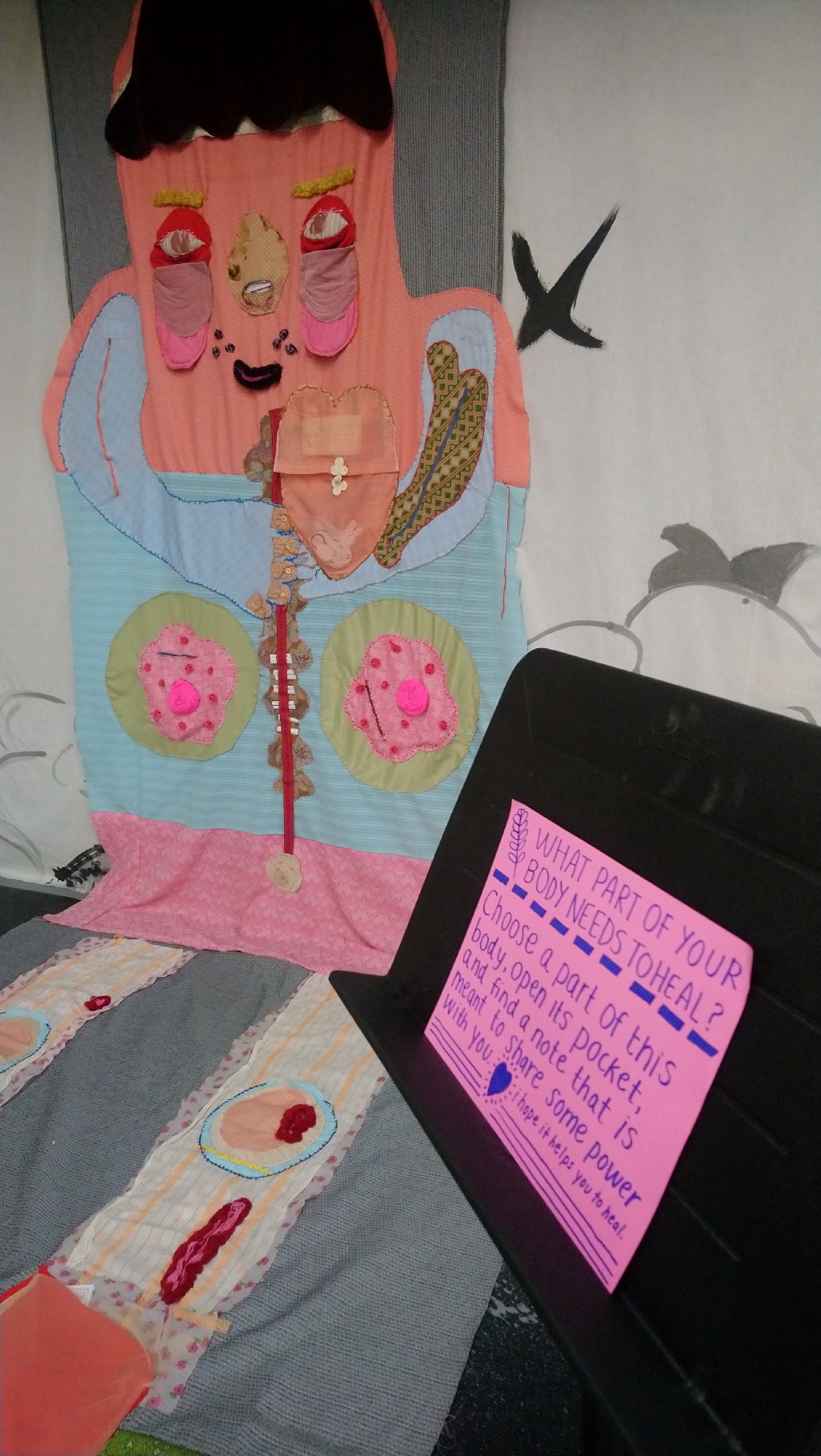
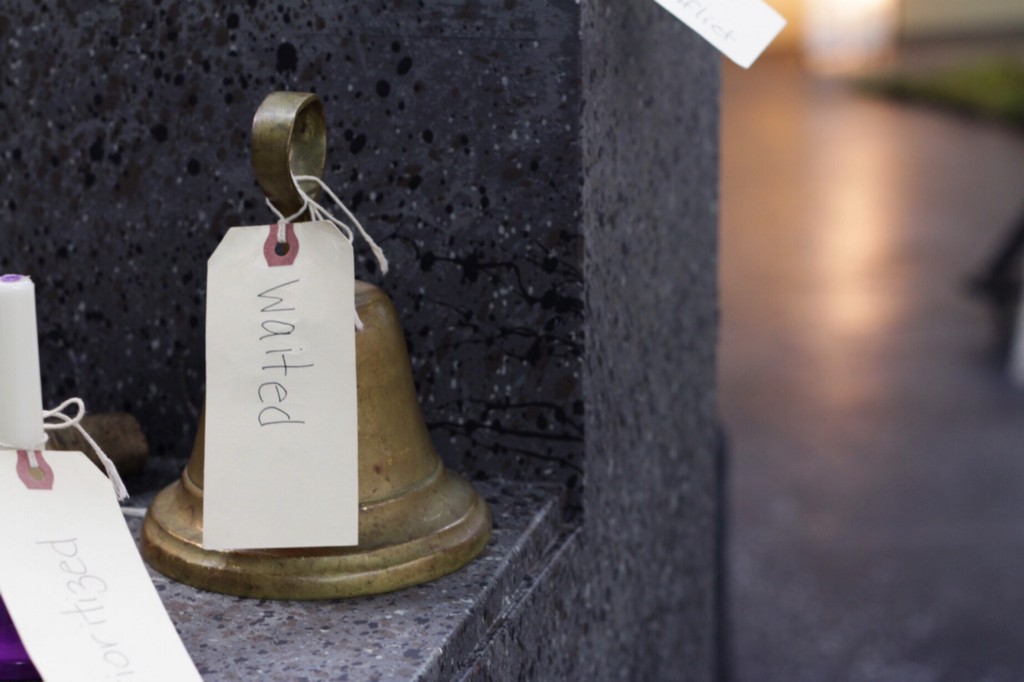
“Everything is sad here. I am excited, but I am weird,” says Casey Middaugh, the artist and founder of Good Mourning, an interactive arts festival about grief and loss. As newly-arrived festival-goers trickle in on opening night she walks with them past an installation of bells, along panels from the NAMES Project’s AIDS memorial, past a floor-to-ceiling-length Human Body Quilt, and towards a cardboard coffin, the kind used in cremation ceremonies, part of the “Arts & Casket” installation.

Scrawled in magic marker ink along the side of the cardboard coffin are the statements like “I am still processing how to be alive every day” and “Why does everything I love leave me?” These are heavy sentiments to ponder for a leisurely weeknight outing. But the overall vibe, banter, and sense of community in the air is decidedly light and festive, yet never shallow or disrespectful. Something else: inviting and liberating.

These are heavy sentiments to ponder for a leisurely weeknight outing. But the overall vibe, banter, and sense of community in the air is decidedly light and festive.

And, yes, a little weird. Death is still a cultural taboo, pathologized perhaps even more so than sex. Stories of death — from the recent Camp Fire in California to the shootings of unarmed black people — are all around us. Yet, death’s aftermath and the grief journey which follows is hidden from plain sight. Grief itself is presented as a neatly packaged story with five easy-to-progress-through stages and primarily experienced for a few weeks following a funeral.

It isn’t surprising, then, that most of us don’t know where or how to start telling the story of our grief, or know the best ways to support our friends and family who are experiencing loss themselves. That’s the idea behind Good Mourning. The festival highlights projects across a spectrum of storytelling options — music, visual arts, performance, games — to offer different ways to contextualize and navigate loss.

Storytelling plays a key role in making grief more manageable. “You must get it out,” author Elizabeth Kubler-Ross writes in On Grief and Grieving, continuing, “Tell your tale, because it reinforces the loss mattered.” No story is too unorthodox or off limits. Good Mourning’s programming reflects this. From the Advance Directive Disco to the “Losing It” comedy show to the “How to Be a Good Grief Ally” workshop, the breadth and depth of artistic mediums employed speak to people all along the grief spectrum. Three exhibits in the gallery serve as a sampling for how the artists involved tell the story of their own journey with grief, exploring both personal and cultural losses, while giving others the tools and words to help them do the same.
It isn’t surprising that most of us don’t know where or how to start telling the story of our grief.

A common thread in many grief stories — particularly in the early days following a loss — center on the daily reminders and small indignities suffered closing out someone’s life, like wrangling with customer service reps shutting off a deceased friend’s electricity. Good Mourning organically grew out of Middaugh’s foundational exhibit, For Whom the Bell Toils, and gives people an unusual way to sound off about these moments.

Following the loss of her grandfather, she realized how overwhelmed she was with the mental and emotional labor that goes into closing out the practical affairs of a person’s life. Yet, no matter how many items she crossed off this un-enviable to-do list, she says, “I couldn’t make things right” — bring back her grandfather, or ultimately heal her grandmother’s heartbreak.

Still, she wanted to make manifest her grieving process. Thinking through what physical mediums would make death work feel seen and heard led her to bells. She explains, “Most people are familiar with bells, they are remarkably easy to find at thrift stores, and the idea that you can ring the melody of your grief appealed to me.”

Bell labels from “For Whom the Bell Toils” include “washed the grave,” “sang,” and “cooked their last meal.” (Photo by Leigh Ann Carey)

For the exhibit, more than 130 bells of all shapes and sizes are set up along a table and multi-tiered shelf. Each bell is assigned a label indicative of death and grief’s emotional labor. Things like “clipped toenails,” “wiped the blood off my spouse’s shoes, “cared for grieving children,” “filed taxes for the deceased,” “write the obituary,” and “mediated family conflict.” For the last one, sleigh bell door hangers are the bells of choice as they contain numerous bells attached to a leather strip; no matter how you pick them up, more than one bell rings at once. The bells allow people to express their grief individually but do so communally.

As people move through the gallery, they choose the bell with the experience they find most resonant, pick it up and let it ring. This isn’t a chorus of bells playing in unison. In this way, the bells are representative of the unpredictability of grief itself, which is rarely, if ever in sync with the rest of our lives.

Elise Bernal’s Human Body Quilt tells the story of how grief, loss, and heartbreak live in our bodies. Unprocessed grief can wreak havoc on our mental and physical health. Stress cardiomyopathy, known as “broken heart syndrome” is a medical condition in which grief mimics the symptoms of a heart attack.

The Human Body Quilt. (Photo by Leigh Ann Carey)

“What part of your body needs to heal?” is the prompt leading up to the quilt. Each body part in Bernal’s quilt contains an item relating that part of the body to a resource or inspiring note. A zine called Cancer Care lives in the breast pockets. It shares resources and support for those experiencing cancer in their family. This related to her mom’s breast cancer and the difficulty of finding resources, eating better, and dealing with mental health challenges.

“I lost my Mom in February of this year, and the days and months after have been eye-opening,” she told me. “I learned so much about patience, acceptance, love, and so much about her strength and my strength. The piece became a way to showcase those learning experiences.”

Bernal’s zine is a beautiful art form unto itself, both the language and original drawings. She depicts a scene from the first time she visited her mother’s grave laying down on top of it. What do love and connection mean beyond death? Bernal writes, “I felt her presence free from everything except the earth. In a sense, there is new life in all the feelings and processes, though heavy, scary, and sad, in this process of loss.”

There is no one right way to grieve, nor is mourning limited to only loss of life scenarios. Good Mourning’s Living Room Exhibit designed by Michael B. Maine tells the story of mourning born of cultural and systemic struggle.

Maine replicates the living room of a typical black family in America. It includes the usuals: couch, coffee table, bookshelves, and record player, but with an impossible to miss caveat. A new burial plot replete with a mound of fresh dirt present where you might expect a rug or loveseat to go.

“Throughout the years, it’s been difficult for me to feel like I belong in this world when it seems as though most of the messages I receive suggest that perhaps I don’t,” Maine told me. “In thinking about this seemingly systematic and intentional erasure of blackness, I began to mourn the things that wouldn’t exist without black people.”

The Living Room serves as physical space for participants to hang out in, but also to connect more deeply with contributions from black artists. Vinyl records — everything from classics like Lena Horne to modern day Kendrick Lamar — are on the window sill ready for a listen. Books by the likes of Octavia Butler and James Baldwin line the bookshelves.

The Living Room features a mound of dirt for burying works of art. (Photo by Leigh Ann Carey)

Every hour during regular gallery hours, a work of art from a black luminary is buried. When I asked about his motivation for this piece, Maine said, “This project is about the celebration of the fact that we exist. Through all the trauma, successes, failures, experiments, and what often feels like insurmountable odds, we are still here. I think about the huge cultural, technological, and economic impacts that black people have made throughout history. What if none of those people existed and none of those impacts were realized?”

Admittedly, sitting in a living room with a burial plot, at least initially, evokes unsettling feelings. Over the course of an evening, however, while you read Butler, Bee’s zines on hand, or chat with other festival-goers, the plot fades (sort of) into the background. It drives home a central point most of us spend considerable effort avoiding: death is a normal part of everyday life. Telling our individual and collective stories of grief and loss doesn’t have to be so weird.

Where Are All the Memoirs About Women and Work?

It’s not as if women don’t have important things to say about work. Behind the scenes, we often trade knowledge and experiences, background about how things are run and what can be expected of a job. We dole out advice; we support one another and reinforce the fact that no matter how dead-end a job or condescending a boss, there is a way to deal. We do this for one another, and ask for this help from others, because there are silent but pressing hazards to being a woman and having a job, pursuing an education, entering a field of study. And not just the hazards of being underrepresented or not taken seriously — although those too. Many of the experiences brought to light via #metoo focused on the workplace — Matt Lauer’s creepy under-desk office door lock button, and horrifying accounts of sexual harassment at Ford’s Chicago Assembly Plant, for example. Women share information about work as a survival mechanism.

And yet, very few of the work memoirs published each year are written by women. This wealth of information that we share with each other isn’t making it into printed form. Presumably, either the potential publishers or the potential writers don’t think there’s a market.

Women share information about work as a survival mechanism. And yet, very few of the work memoirs published each year are written by women.

We need more of these books. I didn’t know just how badly until I published my own, and started looking at the field more closely.

Earlier this year, upon the publication of my debut memoir, Electric Literature asked me to put together a list of memoirs by women with unconventional jobs. Seeking to describe a well-rounded picture of the variety of women’s experiences with paid work, I looked to add to a short list of titles I’d assembled from memory. But when I searched online, I found few new options. There was an astonishing lack of published memoirs by women, either cis or trans, about work, career, and education. A large majority of published memoirs by women fit into two topic areas: marriage and divorce, family, fertility and mothering; and physical or mental illness and substance abuse. When I narrowed my search to memoirs about work by women of color, the results were almost nil. Of the few exceptions, most featured celebrity authors.

Digging deeper, I assembled a snapshot of the current state of this corner of publishing, and found that among the 58 memoirs by women published from April to October 2018, significantly less than a quarter focused on work and career, and of those, only three were by women of color. (For the sake of clarity, I restricted the search to books published for the first time, in hardcover. I excluded self-published books, because I wanted to study what’s being published by traditional houses — i.e., the gatekeepers of the industry.)

8 Memoirs By Women With Unconventional Jobs

Why does the publishing industry restrict women’s memoir mostly to matters of our bodies and family relationships? Perhaps editors are still inadvertently assuming that Americans are more likely to accept stories of women’s life experiences that directly or indirectly confirm traditional beliefs: that readers primarily want stories of women as mothers, wives, and caretakers; and also that our tricky lady constitutions make us susceptible to physical and mental illness. Also, we’re in a period of time in which financial pressures are causing large publishers to play it safe, and that usually means middle-of-the-road publishing decisions. They’re cleaning their lists of “underperforming” authors. The midlist is being whittled down. Celebrity memoirs and advice — as safe as it gets in publishing — end up in the lead title slots season after season.

So what does our culture miss out on when women’s work memoirs are underrepresented?

We forgo freeform, spacious explorations of what it looks like for women to face the external gender-based challenges of work — unequal pay and recognition; work/life balance; frequent references to our appearance or sexuality in the workplace; the persistent view (in some circles) that women should primarily serve as mothers, wives, and caretakers, and only secondarily in paid work roles. We miss out on the chance to see women making good, falling short, and finding paths toward fulfillment that do not center solely on marriage and motherhood. We also fail to benefit from reading about the inner lives of women who work: fear of failure (and of success); self-sabotage; and the careerwoman’s most dogged pursuer, imposter syndrome. Just as importantly, we miss out on witnessing and having models for the positive aspects of work:the joy of finding a calling and of learning about a new field, and then resoundingly kicking ass at it. Of boldly speaking up about better ways to work, and seeing those improvements put into practice. We miss out on seeing other women have the thrill of surprising themselves at how much they are able to accomplish, learn, make real, despite what they may have been told about their capabilities.

We miss out on the chance to see women making good, falling short, and finding paths toward fulfillment that do not center solely on marriage and motherhood.

Most crucially, we miss out on the opportunity to show the world that a successful woman is not an aberration. Determination and hustle is not limited to a few of us, but it does come in many styles, all of which should be given space.

I want to see, for instance, a trans woman’s memoir of navigating career advancement and transition at the same time. I want to read about a black woman running for political office, and a young Latina seeking a foothold in a STEM field. What does it take for a woman in a male-dominated field to operate within a system that wasn’t set up for her? For a woman to get out of bed every day, navigate a provocative world, and do something that might get her slightly closer to living the dream, or just paying the rent? These are narratives as dramatic and valuable as any being published today.

It may be a tough time to take chances, but when a woman’s memoir does well, it can easily blow up. Memoirs by women are surfing a wave of popularity; just within the timeframe I looked at above, we saw the publication of Educated by Tara Westover, a #1 New York Times bestseller and a frequent “Best of 2018” pick; Small Fry by Lisa Brennan-Jobs; Old in Art School by the luminous Nell Irvin Painter; Leslie Jamison’s powerful The Recovering; and Well, That Escalated Quickly by the brilliant cultural critic Franchesca Ramsey. Readers love these books and have bought them in large numbers. Critics and reviewers adored each one. They’ve kicked off countless debates. They’ve influenced the discourse in small and large ways.

Within our culture’s reignited interest in the form, I believe we should be coaxing out more publishing opportunities for women to write about the full expanse of life: the private struggles and joys in family and love and health, but also more public aspects like work, activism, and scholarship. Let’s do both. Let’s do all. It’s a subtle yet intentional change, a slight tilt of the field toward incorporating women’s memoirs that focus on all sorts of work, and all of the hats (and masks) we wear as part of our work lives. The titles I mentioned just above are a wonderfully varied list; wouldn’t it be lovely to see that ratio of work + activism + family + education + personal health become the norm, instead of weighting it so profoundly toward stories of our physical bodies or family lives?

We should be coaxing out more opportunities for women to write about the full expanse of life: the private struggles and joys in family and love and health, but also more public aspects like work, activism, and scholarship.

Classic literary tropes surrounding women’s lives continue to circulate, and since the U.S. publishing industry is (per The Guardian) “blindingly white and female, with 79% of staff white and 78% women,” we can’t blame the patriarchy for that fact. But this is an opportunity: in a majority-woman industry, women can affect change. We can counteract this subtle cultural inertia around the roles we expect women to inhabit.

Women writers, especially women of color and trans women: if you have had an awful, wonderful or unexpected work life, if you work for social justice, if opportunities have been plentiful, sketchy or entirely absent for you: write it! There’s a big open space that you can aim to fill. Write it for other women: write to inspire, to commiserate, to make women laugh and yelp with recognition. Consider this your invitation.

And publishers (full disclosure: I work for one!): let’s ease the limitations we’ve placed on women memoirists. Let’s stretch to cover new thematic possibilities, and to consider women’s examinations of their work and public lives as a vast, unexplored opportunity. Let’s seek this work, in particular, from trans women and women of color. In this age of new attempts at repression, when it feels like the very largest powers are conspiring to invalidate women’s depictions of our own life experiences, let’s move to shout them out ever more loudly.

48 Books By Women and Nonbinary Authors of Color to Read in 2019

I started compiling this list of anticipated books a couple of years ago, when I was having trouble finding forthcoming books by women of color that I could read and review. It occurred to me that if I was having trouble, others almost certainly were, too.

Here, again, are 2019 books by women of color, as well as by nonbinary people of color: novels, collections, memoirs, and anthologies. This is the third year I’ve assembled such a list for Electric Literature. I’m delighted to learn that the previous two years’ lists have been among the publication’s most shared pieces of 2018 and 2017; I’m dismayed by how necessary the list still seems to be. May this list become less useful, and may we all read more broadly.

(A word on methodology: this is a round-up of books of prose that I, personally, am anticipating. I know I’ve missed wonderful books — if you see something missing, please feel free to mention it in the comments. And though I love and need poetry, I have less of a sense of what’s forthcoming from poets, so, as in past years, I limited the list to prose. Finally, I used an expansive definition of “writers of color,” a necessarily complex and imperfect category that may have different valences outside the United States or even, sometimes, within it.)

January

Adèle by Leila Slimani

Leila Slimani, Adèle

Adèle is the first novel by Leila Slimani, the heralded Franco Moroccan author of The Perfect Nanny. The winner of the La Mamounia literary prize, and now translated into English, Adèle is about a sex-addicted journalist who organizes her life around her extramarital affairs.

February

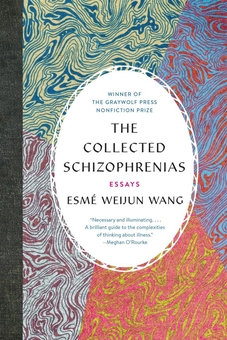
Esmé Weijun Wang, The Collected Schizophrenias

The Collected Schizophrenias is one of the most powerful, affecting, rigorous books of essays I’ve read in recent memory. This exploration of illness is splendid; the book is a gift.

Lost Children Archive by Valeria Luiselli

Valeria Luiselli, Lost Children Archive

I buy five copies at a time of Valeria Luiselli’s 2016 book, the extraordinary Tell Me How It Ends, because of how often I feel moved to give it to others. Lost Children Archive is her fifth book and third novel, and it follows a family driving from New York to the United States–Mexico borderline.

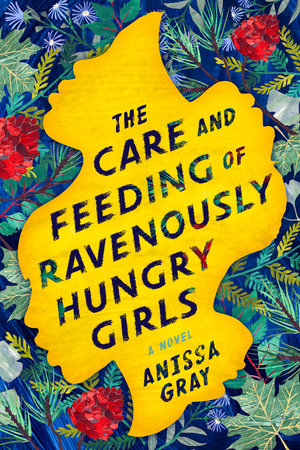
The Care and Feeding of Ravenously Hungry Girls by Anissa Gray

Anissa Gray, The Care and Feeding of Ravenously Hungry Girls

Terry McMillan says she was “immediately taken by the power and honesty of Anissa Gray’s voice” in this debut novel about a mother and father who are arrested, and about the family members who come together to try to raise the couple’s teenage daughters.

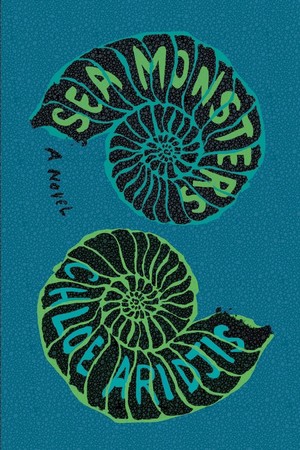
Image result for sea monsters chloe aridjis

Chloe Aridjis, Sea Monsters

The recipient of the Prix du Premier Roman Étranger for her first novel, Book of Clouds, Chloe Aridjis has written a new book about a girl hoping to find a troupe of Ukrainian performers. Garth Greenwell calls Aridjis “one of the most brilliant novelists working in English today.”

Image result for atlas of reds and blues

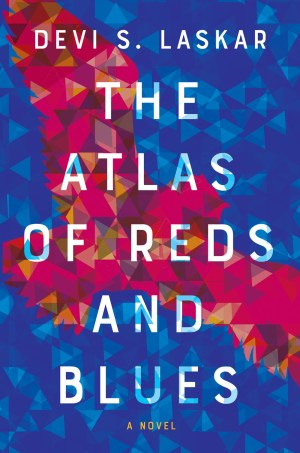
Devi Laskar, The Atlas of Reds and Blues

Kiese Laymon says about The Atlas of Reds and Blues that he’s “never read a novel that does nearly as much in so few pages,” and that the book is “as narratively beautiful as it is brutal.” This debut is about a woman, the American-born daughter of Bengali immigrants, who has been shot by the police and lies bleeding in her driveway.

Image result for am yours reema zaman

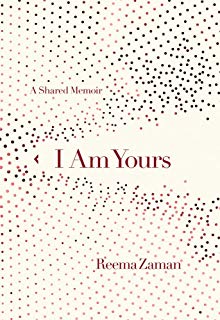
Reema Zaman, I Am Yours

I Am Yours is billed as a “shared memoir,” and it’s about Reema Zaman’s experiences as a writer, actor, and speaker in Bangladesh, Thailand, New York, and Oregon.

The Source of Self-Regard by Toni Morrison

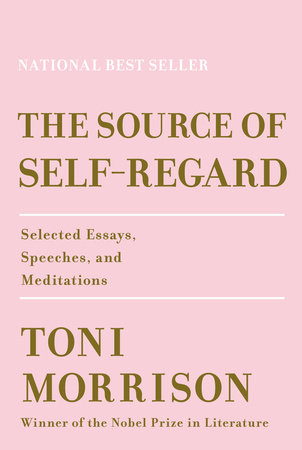
Toni Morrison, The Source of Self-Regard

A new collection of nonfiction from Toni Morrison! The book includes essays, speeches, and meditations.

Where Reasons End by Yiyun Li

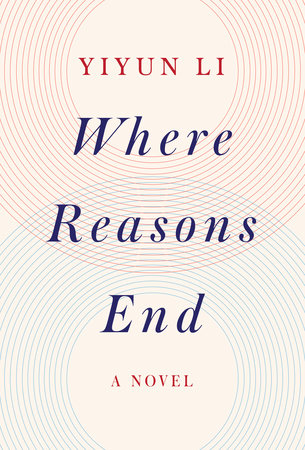
Yiyun Li, Where Reasons End

Written after Yiyun Li lost a child to suicide, Where Reasons End imagines conversations between a mother and a child. Andrew Sean Greer says it’s “the most intelligent, insightful, heart-wrenching book of our time,” and Elizabeth McCracken calls it “an extraordinary book by one of our most extraordinary writers.”

Image result for hate u give pdf

Angie Thomas, On the Come Up

The writer of the beloved The Hate U Give returns with a second novel, this time about a sixteen-year-old girl who wants to be the greatest rapper of all time.

March

Good Talk by Mira Jacob

Mira Jacob, Good Talk

I’ll leap to read anything Mira Jacob writes and draws, and I’ve been impatiently awaiting this graphic memoir about a woman trying to answer her six-year-old son’s questions about race, family, and belonging. According to Jacqueline Woodson, Good Talk is “a beautiful and eye-opening account of what it means to mother a brown boy and what it means to live in this country post-9/11, as a person of color, as a woman, as an artist.”

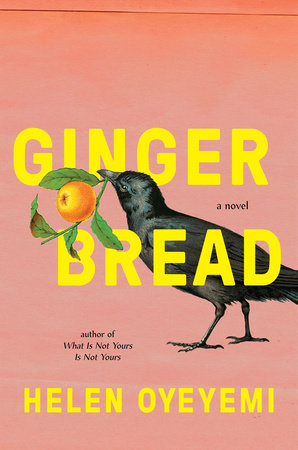
Gingerbread by Helen Oyeyemi

Helen Oyeyemi, Gingerbread

Helen Oyeyemi’s seventh book has to do with gingerbread, London, “verbal vegetation,” more gingerbread, and a faraway land called Druhástrana. As Michael Schaub says, “Oyeyemi seems to be incapable of writing anything that’s not wholly original.”

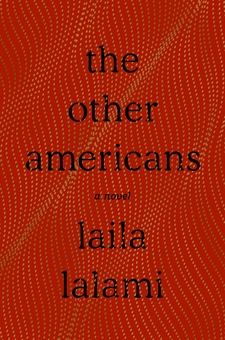
Laila Lalami, The Other Americans

Laila Lalami’s previous novel, the incandescent The Moor’s Account, was longlisted for the Man Booker Prize and was a finalist for the Pulitzer Prize. In her new novel, The Other Americans, a Moroccan immigrant in California is murdered, and a town’s and family’s secrets are gradually revealed.

The Old Drift by Namwali Serpell

Namwali Serpell, The Old Drift

The Old Drift is the first book from the Caine Prize-winning Namwali Serpell. Taking place in Zambia, this multigenerational novel is drawing laudatory comparisons to Gabriel García Márquez’s One Hundred Years of Solitude.

Image result for long live the tribe of fatherless girls

T. Kira Madden, Long Live the Tribe of Fatherless Girls

I’ve been excited to read T. Kira Madden’s Long Live the Tribe of Fatherless Girls ever since I first heard her read last spring. Madden’s debut memoir recounts her coming of age as a queer, biracial teenager in Boca Raton, Florida.

Image result for dealing in dreams by lilliam rivera

Lilliam Rivera, Dealing in Dreams

Dealing in Dreams is a fast-paced novel that follows on an all-girl group called Las Mal Criadas, and Daniel José Older says it “pulls no punches, launching us on a wild, relentless ride through the cutthroat streets of this brilliantly realized dystopian world, where hard choices can tear even the closest allies apart.”

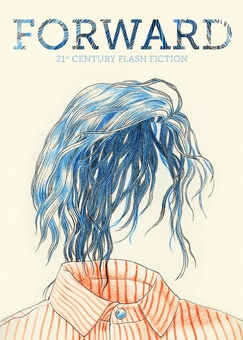
Megan Giddings, Forward

Forward is an anthology of flash fiction and craft essays by writers of color, edited by The Offing’s fiction co-editor Megan Giddings. With contributions from writers including Pam Zhang, Ursula Villarreal-Moura, and Bix Gabriel, Forward looks to be a valuable addition to both personal and classroom bookshelves.

April

Image result for trust exercise susan choi

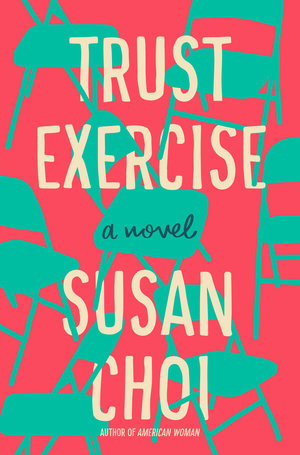
Susan Choi, Trust Exercise

As soon as I finished reading an early copy of Trust Exercise, I hurried online, desperate to talk about the novel with anyone else who’d also read it. It’s a startling, perplexing, fascinating book by a writer I’ve long been—and will always be—eager to read.

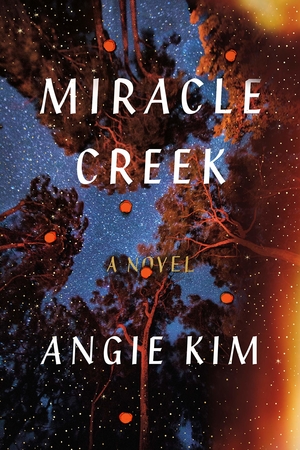
Image result for miracle creek angie kim

Angie Kim, Miracle Creek

Miracle Creek is a courtroom thriller about a Korean immigrant entrepreneur and a murder trial. According to Alexander Chee, this is “a bold debut novel about science and immigration and the hopes and fears each engenders―unforgettable and true.”

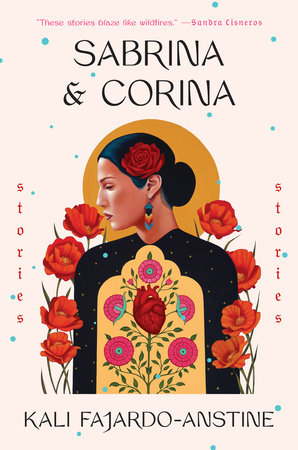
Image result for sabrina and corina

Kali Fajardo-Anstine, Sabrina & Corina

Kali Fajardo-Anstine’s debut story collection focuses on Indigenous Latinx characters living in Denver, Colorado. “Comparisons came to mind: the Alice Munro of the high plains, the Toni Morrison of indigenous Latinas — but why compare her to anybody?” says Julia Alvarez. “She is her own unique voice, and her work will easily find a place, not just in Latinx literature but in American literature and beyond.”

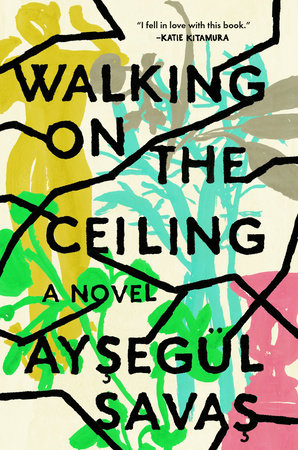
Walking on the Ceiling by Aysegül Savas

Ayşegül Savaş, Walking on the Ceiling

In this novel set in Paris, a Turkish woman starts taking long walks with a British man she meets outside of a bookstore. Katie Kitamura calls it “an elegant meditation on grief, identity, memory and homecoming.”

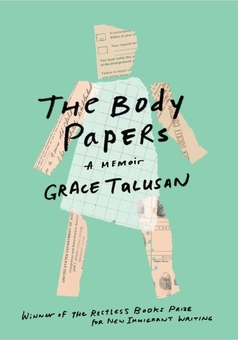
Grace Talusan, The Body Papers

The Body Papers is a memoir about abuse, immigration, cancer, and mental health. Celeste Ng says that “Grace Talusan writes eloquently about the most unsayable things: the deep gravitational pull of family, the complexity of navigating identity as an immigrant, and the ways we move forward even as we carry our traumas with us.”

May

Image result for queer heroes

Arabelle Sicardi, Queer Heroes (illustrated by Sarah Tanat-Jones)

A few months ago, as soon as my brother and sister-in-law had their first child, I panicked, went to the internet, and asked it “how to be a feminist aunt.” So far, my answer has been to buy the child a lot of feminist books. I’ll read anything Arabelle Sicardi writes, and I’ll surely pick up their Queer Heroes, which is a series of portraits of writers, artists, activists, and innovators.

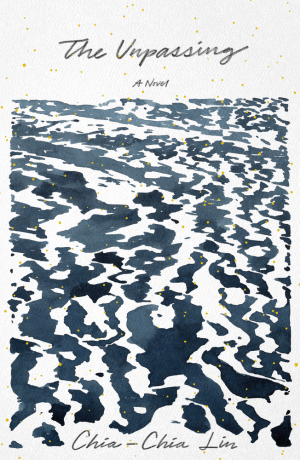
Image result for unpassing chia chia lin

Chia-Chia Lin, The Unpassing

The Unpassing is a novel about a Taiwanese immigrant family trying to survive outside of Anchorage, Alaska. In Esquire, Adrienne Westenfeld says that Chia-Chia Lin “resists received wisdom about the American dream to craft a family saga about the difficulty of grieving far from home.”

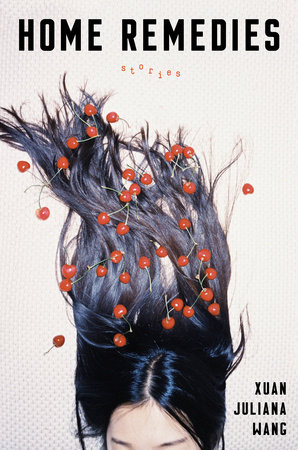
Image result for xuan juliana wang

Xuan Juliana Wang, Home Remedies

Called a “radiant new talent” by Lauren Groff, Xuan Juliana Wang has written a debut collection about Chinese millennials. Weike Wang says these stories “surprise and challenge in wonderful, wonderful ways.”

The Memory Police by Yoko Ogawa

Yoko Ogawa, The Memory Police

Plants, animals, objects, and body parts are disappearing, and almost no one notices. The few who do fear the memory police, who want the lost objects to stay forgotten. Yoko Ogawa is a versatile magician, and The Memory Police is sure to dazzle.

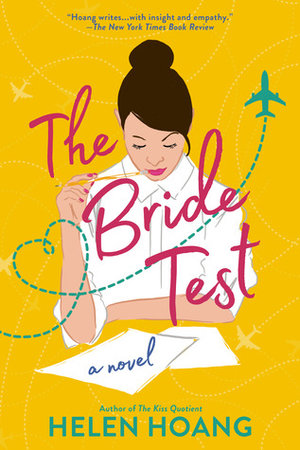
Image result for bride test helen hoang

Helen Hoang, The Bride Test

Helen Hoang’s The Bride Test is about a Vietnamese American man whose family returns to Vietnam to find him a bride. Hoang’s first novel, The Kiss Quotient, was a hit that Roxane Gay called “original and sexy and sensitive.”

June

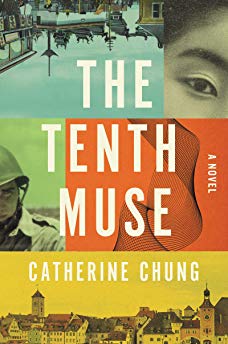
Image result for The Tenth Muse

Catherine Chung, The Tenth Muse

The Tenth Muse is about a mathematician named Katherine who’s trying to figure out the Riemann Hypothesis, the greatest unsolved mathematical problem of her time. There’s never enough fiction about mathematicians; Catherine Chung’s first book, Forgotten Country, cut my heart open; I want to read The Tenth Muse right now.

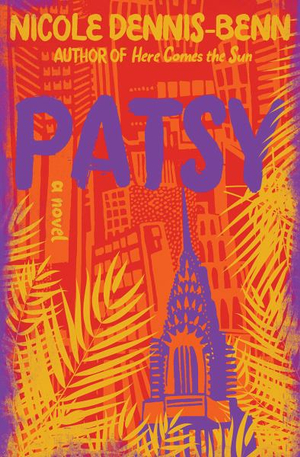
Image result for patsy nicole dennis benn

Nicole Dennis-Benn, Patsy

Patsy is centered on a woman who leaves Jamaica and her mother and daughter to live in America, and who, as an undocumented immigrant, works as a bathroom attendant and nanny. “A novel that splits at the seams with yearning, elegantly written and deeply felt,” says Esmé Weijun Wang.

July

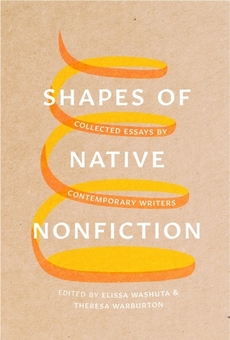
Elissa Washuta and Theresa Warburton, ed., Shapes of Native Nonfiction

This anthology of essays by Native writers uses “weaving techniques such as coiling and plaiting as organizing themes,” and it includes work from writers such as Terese Marie Mailhot and Deborah Miranda.

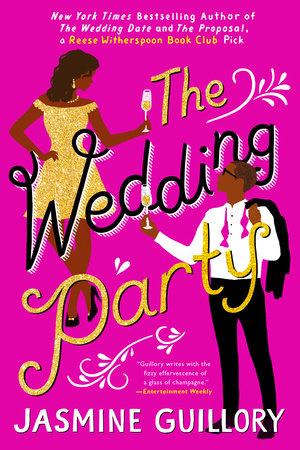
The Wedding Party by Jasmine Guillory

Jasmine Guillory, The Wedding Party

The bestselling Jasmine Guillory returns with her third novel, The Wedding Party, a romance about two nemeses whose physical attraction to each other seems to keep growing.

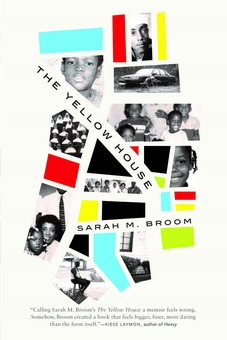
Sarah M. Broom, The Yellow House

Sarah M. Broom received a Whiting Foundation Creative Nonfiction Grant for The Yellow House, a book spanning 100 years of her family’s history. The Whiting jury praised it for being “a crucial memoir of life on the margins.”

August

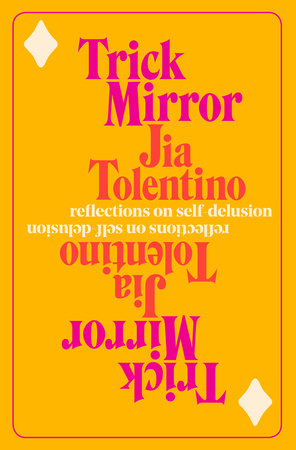
Trick Mirror by Jia Tolentino

Jia Tolentino, Trick Mirror

Most readers I know will rush to read any new essay by the incisive, profound New Yorker staff writer Jia Tolentino. Trick Mirror is her first book, and it’s going to be so good.

Image result for The Pretty One: On Life, Pop Culture, Disability, and Other Reasons to Fall in Love with Me

Keah Brown, The Pretty One

This debut essay collection comes from disability-rights advocate Keah Brown, creator of the #DisabledandCute viral campaign. The essays are about romance, pop culture, cerebral palsy, race, and media.

Image result for they could have named her anything

Stephanie Jimenez, They Could Have Named Her Anything

In Stephanie Jimenez’s intriguingly titled debut novel, a Latinx teenager from Queens attends an Upper East Side private school and becomes friends with a rich, rebellious white girl. The book alternates between the perspectives of the two girls and their fathers.

Image result for im telling the truth

Bassey Ikpi, I’m Telling the Truth, But I’m Lying

I’m Telling the Truth, But I’m Lying is an essay collection examining Bassey Ikpi’s experiences of bipolar disorder and anxiety. Ikpi’s collection was a Publishers Weekly preview selection.

Fall onwards

Image result for poster

Carolina de Robertis, Cantoras

Carolina de Robertis has long and reliably been a wise, big-hearted writer and translator, one whose work I seek out. Cantoras tracks five fictional women in Uruguay fighting to live and love despite the restrictions imposed by a ruthless military government.

Image result for dream house carmen maria machado

Carmen Maria Machado, In the Dream House

The fantastically inventive writer of the widely-admired Her Body and Other Parties turns from fiction to nonfiction with In the Dream House, a memoir about her experience in an abusive same-sex relationship.

Image result for poster

Margaret Wilkerson Sexton, The Revisioners

I loved Margaret Wilkerson Sexton’s first novel, A Kind of Freedom, and her second novel tells two parallel stories, that of an escaped slave who forms a friendship with a white next-door neighbor and of a present-day woman who works as a caretaker for an older white woman.

Maaza Mengiste, The Shadow King

Beneath the Lion’s Gaze, Maaza Mengiste’s 2010 debut novel, was deeply moving and hard to forget; now, her next book, The Shadow King, is coming our way. Set during Mussolini’s 1935 invasion of Ethiopia, Mengiste’s new novel recounts the story of an army of Ethiopian women who fight the Italian fascists.

Fairest by Meredith Talusan

Meredith Talusan, Fairest

Meredith Talusan is another writer whose work I always want to read. She’s a writer and journalist, and an editor at Them, and her memoir, Fairest, will be wonderful.

Image result for poster

Jaquira Díaz, Ordinary Girls

Ordinary Girls is a memoir about growing up queer in Puerto Rico and Miami Beach as her family splits and her mother struggles with addiction and mental illness.

Pet by Akwaeke Emezi

Akwaeke Emezi, Pet

Akwaeke Emezi’s first novel, Freshwater, is the compelling story of a Nigerian woman who develops separate selves. This fall, the National Book Award “5 Under 35” writer will publish their first young-adult novel, Pet, about a teen who frees a monster from a painting.

Image result for flyer

Mimi Lok, Last of Her Name

This story collection depicts Asian outsiders in Hong Kong, British suburbs, California, and Japanese homeless encampments, and it will be part of Kaya Press’s 25th-anniversary list.

Porochista Khakpour, Brown Album

In Brown Album, Porochista Khakpour brings together essays and reviews about Iranian American life and literature, some of which have previously been published in venues including The New York Times, Los Angeles Times, and The Wall Street Journal.

Meng Jin, Little Gods

Steinbeck Fellow Meng Jin’s first book, Little Gods, is a portrait of a Chinese woman’s migrations. The novel is narrated by the woman’s daughter, the husband she left behind, and a friend.

Dina Nayeri, The Ungrateful Refugee

The Ungrateful Refugee is Dina Nayeri’s first nonfiction book, an account of her journey from Iran to an Italian refugee camp, to Oklahoma, to Princeton. In addition, the book reports on the stories of other refugees and asylum seekers. I love this book’s title, and can’t wait to read the rest of it.

Make Me Something That Looks the Way I Feel

“The Invention of Clouds” by Becky Mandelbaum

I was ten years old when I invented clouds. I did it for my little brother, who was sick at the time and had nothing better to do than study how the light lived and died outside his bedroom window. I had invented a spider for his windowsill when he first became ill, but our mother destroyed it as soon as she discovered it there. “What on earth is that?” she said, painted fingers trembling as she approached the spider with a tissue. My brother loved watching the spider spin its web and suck the guts from its prey. (I thought that was a good trick, the web and the gut-sucking — there was nothing quite like it at the time.) Sometimes I’d toss a fly into the web, so my brother could watch the spider spring into action, wrapping the poor critter into a perfect mummy burrito. It reminded us both that life and death — however ridiculous and unfathomable — were happening all around us. No matter how important we seemed, we were exactly as common and fantastic as anything else: the pill bugs in our mother’s garden, the one-eyed jester in the bathroom woodgrain, the great red storm in Jupiter’s eye.

After the spider, I tried to invent a kind of winged kitten the size of a nickel, but I did a poor job and the result was a lifeless puck of fur, eyes backwards, wings where its throat should have been. Luckily our mother never found it — I flushed it as soon as I saw what had happened. She would have thrown a fit, told me to knock off my shenanigans before anything else got hurt. (What she didn’t know, and never would, was that I would one day invent her second husband, a man who would love her far better than my real father ever had.)

But back to the room where my brother lay coughing. It was always cheerful outside then, before clouds, the sky an endless page of cartoon blue. We were in the very peach-pit of summer, a terrible time for a little boy to be ill, and the sun was as constant as my brother’s fever.

One day we were sitting together on his bed, watching alphabet noodles drift across his soup (this was the sort of neutered activity available to him), when the idea for the clouds occurred to me.

I can tell you that the idea is never the hardest part. The hardest part, I have learned, is relinquishing your personal life until the project is finished. I knew this particular venture would mean less time reading books or playing cards with my brother, but I also knew it would all be worth it to see him smile.

In the end, it took me four months. By then my brother had become only a shadow of himself, his frame so small and withered it was like seeing our beloved cat, Grape Jelly, wet for the first time. As it turned out, they were both very small underneath themselves. Each morning, my mother would pull a shirt over my brother’s body as he sat in bed, skinny arms raised in surrender. He never complained. Even when my mother gave him his cherry-flavored syrup in the awful plastic medicine spoon, he would swallow the liquid without even wincing. Perhaps he thought the medicine would save him — I guess, looking back, I believed it might save him, too. We were hungry to believe.

On the day of the big reveal, we were sitting in his bed, looking through a photo album. We had paused on a photo of our old dog, Toast, and I asked if we should pull back the blinds. By now it was late autumn. As a consolation for all the new darkness, the trees wore magnificent outfits. But Benjamin couldn’t get out of bed, so sometimes it bothered him to look out on all the beauty he may never again be able to touch. This time, however, I insisted. When I opened the blinds, he sat up straighter than I’d seen him sit in weeks.

“Do you like it?” I asked. I remember his lips were very pale. He said, quite matter-of-factly, “It looks the way I feel.” And then: “They’re wonderful.”

They really were spectacular, drifting up there like so many great white ships — dangerous, temporary, melancholic. As a collection, they spoke of everything the bright sunny sky could not. One of the lower-hanging pieces looked for all the world like mercury, and I recalled the days when Benny and I had broken open our mother’s thermometer and rolled the silver magic between our thumbs.

How many times, playing together, had we discovered entirely new corridors of magic? There was the time we made a rainbow by running a magnet over the television. The time we opened a dead sparrow to discover the speckled egg she’d never laid. Even then, on the first night with clouds, we understood that soon there would be no more magic between us. For one of us, the world would close its blinds. The carousel we’d come to love and rely on would cease to spin. For the other, somehow, it would continue on as ever — tinny music playing long after the unicorns and tigers had bowed their painted heads. Our mother would take to lying down for days at a time. Our father would become a refrigerator, shelves laden with expired milk and meat. But for now there was only the brand new sky, my gift to Benny. For days it felt like we sat there watching, until suddenly it was raining and there was only one of us.

About the Author

Becky Mandelbaum is the author of Bad Kansas, which received the 2016 Flannery O’Connor Award for Short Fiction and the 2018 High Plains Book Award for First Book. Her work has appeared in The Missouri Review, The Georgia Review, The Rumpus, Necessary Fiction, McSweeney’s Internet Tendency, and elsewhere. Originally from Kansas, she currently lives in Washington and teaches at Hugo House in Seattle. Her first novel is forthcoming from Simon & Schuster.

“The Invention of Clouds” is published here by permission of the author, Becky Mandelbaum. Copyright © Becky Mandelbaum 2018. All rights reserved.

8 Books to Help You Understand WTF Just Happened in 2018

Sometime in the future, I imagine our descendants might gather on their charging pods on a balmy New Year’s Eve to play a party game in which they put real headlines from 2018 into a bowl alongside one line synopses of novels. As they pull out the phrases — children gassed at border, American president investigated for collusion with Russia, AI robot beats human in live debate —it will be difficult to separate fact from fiction.

So much of what’s happened this year has been unbelievable, and yet there’s also been an eerie sense of familiarity as if, despite the lack of precedent, I’ve encountered these scenarios before. It turns out I have: in books. Prescient writers have identified the very issues we’re living through, some in hyper-realist fiction, some in dystopias (whose gap with reality is closing), and some in memoirs which contain the seeds of our present problems. I know that reading a book about the loss of women’s reproductive rights, for example, or a world without private data, might seem less than enticing after a year of depressing headlines, but think of it as a positive alternative to the mind crush of endless sound bites, an opportunity to contemplate what’s happened and what might follow in 2019, if we don’t speak up.

Family Separation: The Leavers by Lisa Ko

Winner of the 2016 PEN/Bellwether Prize for fiction, The Leavers explores the devastating reality around undocumented immigration and the trauma of separating families — a horribly topical theme given children are still being separated from their migrant parents at the border and during detention/deportation. In Polly, a young Chinese woman who moves to the United States and is forced to give her son up for adoption, Ko shows how the people who risk everything to come to the United States have no money, resources, or future at home — in short what looks like making a choice is actually the result of having no choices at all.

Brett Kavanaugh’s Hearings and Confirmation: Those Who Knew by Idra Novey

What happens when a woman suspects that the powerful senator with whom she had an affair as a student is taking advantage of another young woman? Will anyone believe her, and does she have an obligation to speak up about his past behavior? These questions drive Idra Novey’s second novel, and echo those asked at the Supreme Court confirmation hearing that gripped the nation earlier this year when Dr. Christine Ford came forward with an allegation that the then-nominee, Brett Kavanaugh, sexually assaulted her as a teenager. Ford’s testimony wasn’t enough to keep Kavanaugh from holding one of the highest seats in our judicial system, and we were left with no doubt about how much our nation idolizes men of power, or how reluctant we are to hold them accountable for their past misdeeds.

‘Those Who Knew’ Explores How Silence Helps Powerful Men Get Away with Abuse

The #MeToo Movement: The Witch Elm by Tana French

The #MeToo Movement has forced us to acknowledge that men, especially powerful white men, are privileged, and part of that privilege has been the ability to treat women’s bodies as objects available for their pleasure. The dovetail to this privilege is a dangerous sense of entitlement, one that’s so engrained that some men didn’t even realize they felt it until now that it’s being challenged and taken away. This cultural awakening is at the center of Tana French’s mystery The Witch Elm, embodied by a man named Toby who has “always considered [him]self to be, basically, a lucky person.” Is he lucky? Or has he always been advantaged because he’s a well-off white male? Did he behave well towards others or was he simply acting as he pleased and no one told him to stop? French is a master at devising murder mysteries that execute exciting plots while grappling with greater societal issues, and The Witch Elm is both a thriller with thugs and buried skulls and the story of one man’s reckoning with his own privilege.

Tana French’s ‘The Witch Elm’ Is an Exploration of White Male Privilege

Attacks on Abortion Rights: Red Clocks by Leni Zumas

In Kentucky, a requirement that ultrasounds be displayed and described. In Arkansas, a ban on abortions via medication. In Alabama, a ban on a common second-trimester abortion, and in Indiana, new requirements for parental consent before an abortive procedure. The Personhood Amendment, which gives the right of life, liberty, and property to unborn embryos. These are all actual laws passed against women’s reproductive rights in the United States in 2018 — with the exception of the Personhood Amendment, which is the fictional basis for Leni Zumas’ novel Red Clocks. The book follows five women in a small Oregon fishing town and examines the myriad ways that such repressive laws affect women, from the more commonly considered case of the accidentally pregnant teen to an older single woman who is trying to conceive but is barred from using IVF because the embryos can’t give their consent. Such a range of implications is important to consider as states make progress on limiting access to abortion and reproductive health care, and the newly conservative-leaning Supreme Court threatens to overturn Roe V. Wade.

Forget ‘Handmaid’s Tale’ — ‘Red Clocks’ is the Reproductive Dystopia We Need to Read Right Now

Facebook Privacy Scandal: The Circle by Dave Eggers

In March, the New York Times revealed that a firm called Cambridge Analytica accessed the private personal data of millions of Facebook users and used it to influence political events from Brexit to the election of Donald Trump. It all sounded like a chapter from Dave Eggers’ 2013 novel, The Circle, in which a Silicon Valley tech giant has created a super platform that collects all your information under the auspices of bettering your life through ease and transparency. The increasingly invasive technology, including a camera which transmits your life as you live it, becomes a warning to the reader about the danger of giving up your privacy, a message that resonates in a year when we’ve heard almost monthly admissions that major companies have lost our private data to hackers. The Circle also asks us to consider the perils of voluntarily uploading our private lives, and a scenario, like that with Facebook and Cambridge Analytica, where we have lost the ability to take our privacy back.

The Demonization of Immigrants: The River Become A Line by Francisco Cantú

In this searing memoir, Francisco Cantú, who grew up in the Southwest with a park ranger mother, herself the daughter of a Mexican immigrant, recounts his years working as a border patrol agent. The job is physically demanding and emotionally disturbing — he must track humans like animals, dispose of bodies he finds in the desert, and send people, most who are fleeing violence in their home countries, into detention centers to be deported. Eventually Cantú leaves the job to protect his sanity, but he becomes involved again when a friend goes to Mexico to visit his dying mother and is unable to get back into the U.S. and reunite with his family. This is the book to read if you want to better understand the dehumanization of immigrants of color and how negligently simplistic it is to say we should just “build a wall.”

Pulitzer Winner Jose Antonio Vargas Reminds Us that No Human Being is Illegal

Climate Change: The Bone Clocks by David Mitchell

A recent series of warnings from the scientific community have made it clear that the horrifying repercussions of climate change are coming sooner than we think. This makes reading The Bone Clocks a kind of stomach-sinking experience, but perhaps a useful one for anyone who doubts what the warming of the planet will do to humanity. Moving throughout place and time in the 21st Century, the final section of Mitchell’s novel brings us into a world devastated by climate change. Countries have devolved into a kind of government-controlled feudalism, and the scarcity of resources is a tinder box that the heat of the planet is about to light into anarchy.

Gun Violence: If We Had Known by Elise Juska

If We Had Known starts with a shooting in rural Maine similar to one of the 300 mass shootings that have happened in the US this year. In the aftermath of the carnage, a violent essay penned by the shooter surfaces and the shooter’s English teacher finds herself at the center of a growing controversy centered around the issue of guilt. The novel pushes the reader to ask questions about why this domestic terrorism exists and how we, as society, might accept responsibility.

7 Books that Illuminate the People and Places on the U.S.-Mexico Border

The U.S.-Mexico border stretches from where the waves of the Gulf of Mexico lap Brownsville, Texas through the meanders of the Rio Grande to El Paso. There it straightens out overland to where San Diego and Tijuana meet and on to the end of an electric fence that juts into the Pacific’s surf. Close to 2,000 miles long, it is the world’s most-crossed border.

On one side is the richest country in the world. On the other, Mexico and beyond it the countries of Central America. The internal political, social, and economic turmoil in these places have long prompted the upward flow across the border. Immigrants and asylum seekers face multiple hurdles in this journey — unscrupulous smuggler rings, drug cartels, intense wilderness and hellish heat, vigilantes, law enforcement, and subsequently, possible incarceration and family separation — in their journeying for safety and/or economic prospects. While some make it over, for others, the journey ends in the desert when they are apprehended and deported. For others, the desert becomes the grave.

North of the Rio Grande, growing nativism and anti-immigration sentiments have lead to the idea of a border wall — at present, there is some fencing, for example in San Diego-Tijuana area — to keep these seekers out. But in late 2018, the plan to wall the entire international boundary has stumbled in Congress and resulted in a partial government shutdown. At the time of writing, the U.S. President is reportedly determined to continue with the shutdown, which has affected the salaries of government employees, until a deal is made to fund the wall. Even if they are geographically distant from it or politically indifferent to it, the border has crossed well into the lives of many Americans.

Here is a reading list of novels, non-fiction, and an especially powerful collection of border verse to understand the thorny complexities of this demarcation. Each will leave you unsettled in their narratives and prose, and perhaps deepen empathy for those that inhabit these spaces — on all sides.

The Devil’s Highway: A True Story by Luis Alberto Urrea

In 2001, twenty-six men crossed the Sonoran Desert through the Devil’s Highway to get to Arizona. Only twelve survived. Urrea begins his superbly-reported reconstruction of this story with their hellish trip and then tracks back to the past — back to their homes, trail’s own notorious, otherworldly history, and the origins of northwards immigration. During the colonial period, Urrea writes, “Europeans settling Mexico hustled north. Where the open land was. Immigration, the drive northward, is a white phenomenon. White Europeans conceived of and launched El Norte mania, just as white Europeans inhabiting the United States today bemoan it.” He also delves into the ruthless coyote system that enables these dangerous expeditions, the work of the Border Patrol, and other assorted characters who inhabit the border universe. The exacting poetry of Urrea’s descriptions makes for hypnotic old-school storytelling. He compares the border of the past, where the first immigrants to be “hunted down in Desolation by the earliest form of the Border Patrol were Chinese” to the present. He notes: “And today? Sinful frontier towns with bad reputations. Untamed mountain ranges, bears, lions, and wolves. Indians. A dangerous border. Inhabitants speak with a cowpoke twang, listen to country music, dance the two-step, favor cowboy hats, big belt buckles, and pickup trucks. That ain’t Texas, it’s Sonora.” Terrific, saddening, but humane and extremely essential even close to two decades after the book’s inciting incident.

Lucky Boy by Shanthi Sekaran

The lead characters of Lucky Boy, the 18-year-old Soli endures a traumatic trip norte, and Kavya, who desperately wants to be a mother, don’t intersect until midway through the novel. Sekaran draws the two women together through Soli’s baby and with nerve-shredding pace. Inspired by a true story of an undocumented mother who lost her custody of her son, Sekaran complicates her narrative by making the adopting couple Indian-American and thus interrogating privilege of different immigrant trajectories. Soli’s observations provide levity to a heart-crushing story: “These people probably believed that in Popocalco they had one Barbie doll, Soli thought, and that they all shared it, and that one summer when the corn wasn’t growing they fried the one Barbie and shared it among the hungry village.” Her hometown, Soli says, was rich in Barbies, thanks to a visiting missionary.

Retablos Stories from a Life Lived Along the Border by Octavio Solis

Playwright Octavio Solis lays out his memoir in retablos, folk paintings made on repurposed metal in gratitude for the divine resolution of life’s crises. Each of the retablos present a vignette from his life growing up in the border town of El Paso, Texas, as an “anchor baby” in the 60s and 70s. The taut, charm-filled stories depict episodes such as encountering a young immigrant while playing hide-and-seek in a cotton field, a tow truck tug-of-war over an abandoned marijuana-packed Jeep stuck in the middle of the Rio Grande, and a young Solis practicing his English pronunciation by reciting names off globe and adorably mispronouncing the Pacific “Ohkeean” to his class.

The Gringo Champion by Aura Xilonen

Aura Xilonen published The Gringo Champion — which is based on her grandfather’s dash across the Rio Grande in pursuit of the American Dream and her own stint of being undocumented in Germany — when she was only 19. If her publishing debut age is impressive, then the unflinching prose and electric language-melding prose (“Jefe shriggles his eyebrows and rollicks his eyes”) will stun further. We meet the protagonist Liborio in a border town where he works in a bookstore with a fucking crude owner. From its first pages, the book shatters with its visceral depiction of the violence of Liborio’s life, which will include boxing fame. A more PG example of which is when the bookstore is ransacked: “A few books even seem to have been stabbed to death, or beaten, or ripped up with angry teeth. They lie amputated around us, as if they had a rocket shoved up their ass that blew out their guts.”

Image result for yuri herrera signs preceding the end

Signs Preceding the End of the World by Yuri Herrera

Makina, a switchboard operator in a Mexican silver mining village, speaks three languages to convey messages between the villagers and those who crossed over to the other side, the never-named United States. She is, Herrera writes, “the door, not the one who walks through it.” A border of sorts herself, Makina is tasked by her mother to head north to deliver a message to her brother, who went in search of an inheritance. The first line of the novel, “I’m dead” uttered by Makina as an earthquake hits and life around her is swallowed up, begins the novel’s journey to and beyond the US-Mexico border — and all its psychic dimensions. Herrera renders her migration with a reconstruction of the layers of the Aztec underworld. Don’t worry though about getting the multiple, Mexican or otherwise, references — My fav was “Pulqueria Raskolnikova” where Makina meets one of her shady fixers. The hallucinatory trip, which Herrera takes to a twisty end, will have you thinking about Makina’s trajectory and those who walk in her steps, well after you’ve turned this crisp novel’s last page.

The Line Becomes a River: Dispatches from the Border by Francisco Cantú

Francisco Cantú offers the perspective of the border’s enforcers in his memoir of his time as a Border Patrol officer. From the beginning, it’s a brutal look. An agent jokes about running over an Indian in the desert. A Mexican man offers to do work around office while he’s waiting to be deported. The man tells Cantú: “I want to show you that I’m here to work, that I am not a bad person.” Cantú takes us out into the desert on his night surveillance trips, and to encounters with immigrants and dead bodies. For the latter, his colleagues advise him to rub VapoRub under his nose “or else the smell will stay with you for days.” And then there are surreal (relatively) lighter moments: Cantú guiding a Sonoran coachwhip snake to trying “to find its way into Mexico through the pedestrian fence” and trying chapulines, the Oaxacan grasshopper delicacy from the food stash of the men he’s booking for illegal entry. “For a short time, we stood together with the men, laughing and eating, listening to their stories of home.” But the job’s stress grinds down on Cantú and his teeth, and infects his dreams. He soon leaves the Patrol and works in a coffee shop, where he encounters Jose, an immigrant who leaves the U.S. and is detained by Border Patrol upon his return. Cantú finds himself on the other side, working to help Jose stay in the country. Cantú has been criticized by undocumented activists and writers for amongst other things joining the Border Patrol in the first place and enjoying the privileges of citizenship and white-passing. His response to the NYT is that he wanted to “describe the Border Patrol from within, not justify it somehow.”

Unaccompanied by Javier Zamora

Javier Zamora fled his war-torn homeland of El Salvador and crossed the U.S.-Mexico border on his own — at age nine. The intense, elegant poems of Unaccompanied are Zamora’s excavation of his memories of this long and unfathomable, unless you’ve done it, trek. In “Sonoran Song,” he writes: “She didn’t know 110 degrees,/saguaros, no compass to run/north when like Colorado River toads/ we slid under bushes — officers yelled ¡On your fucking knees! You couldn’t have/ known this could happen, Mom.” His path to the U.S. is tough but Zamora’s arrival and life thereafter is also fraught. In “Second Attempt Crossing,” he offers the story of Chino, a man who protected him in the desert, and how he fared after the crossing: “You called twice a month,/ then your cousin said the gang you ran from/ in San Salvador/ found you in Alexandria.” Zamora’s stories offer the human hearts, hopeful, broken, and yet still with faith, behind the headlines.

How to Write Your Debut Book’s Acknowledgments Section

“It was traumatic.” “I had nightmares.” “It set me back six months in therapy.” Debut authors report struggling to compose acknowledgments, those seemingly endless strings of grateful-fors and without-whoms. While writing acknowledgments for We Love Anderson Cooper, my debut short story collection, I, too, wrestled with questions. Thanks to this no-nonsense guide, you won’t have to.

The number one problem you’ll encounter writing acknowledgments is running out of ways to say “thank you.” Might I suggest any or all of the following alternatives: I’m much obliged to A; shoutout to B; I’ve added C to my will; I’ve promised my first born to X; I’m planning to tongue kiss Y, and might already have.

The next obstacle you’ll face is deciding who to include. For example, do you mention your fourth-grade teacher who hung up your poem rather than Stacy Goodman’s? (Yes.) What about the lactation nurse who fact-checked a detail in chapter three of your novel? (Definitely.) Arianna, the member of your writing group who never returned comments because her computer was always “broken”? This is a tricky one. You’ll be tempted to leave Arianna out. But the answer, again, is definitely yes. There is frankly no one you shouldn’t list in the acknowledgments. Make sure to mention it casually to them all, and they’re sure to buy copies of your book.

Do you mention your fourth-grade teacher who hung up your poem rather than Stacy Goodman’s? (Yes.) What about the lactation nurse who fact-checked a detail in chapter three of your novel? (Definitely.)

But what about Famous Author who blurbed the book? Should she be included, too? Won’t people realize she said those nice things only because she’s your sister-in-law? They will realize that, but too late! By the time they read the acknowledgments, they’ll already have purchased a copy.

Another dilemma is in what order to list people. Is naming someone early in the acknowledgments a greater honor that naming someone later? No doubt that’s true, but my God, what do people want from you? Isn’t it enough they’re listed at all when all they did was hang your stupid poem? At this point in writing your acknowledgments, you should see what mood stabilizers you have in your medicine cabinet. Fix a nonlethal combination and chase it with Glenlivet. Work on your next book for a day or two before returning to the acknowledgments.

“What if I dedicate the book to my partner?” you might ask. “Should I include them in the acknowledgments, too?” I guess you weren’t listening when I just said no one should be left out. Or maybe you don’t love your partner enough to list them in both sections.

Is naming someone early in the acknowledgments a greater honor that naming someone later? No doubt that’s true, but my God, what do people want from you?

Finally, the tone of your acknowledgments should match the tone of your book. If the book is light, you might begin, “It’s a glorious day as I sit down to pen these thanks, the dog napping on my shoe, the cat smiling at me from the top of the Hanukkah bush.” For a heartfelt work, “I’m positively overwhelmed with gratitude. I’ll need a minute.” If the book is dark, a different approach is warranted. Try, “It will be a miracle if I live to see this thing in print,” or, “Aren’t we all essentially alone?”

I hope this guide to writing acknowledgments has been helpful. If it has, maybe you’ll include me in the acknowledgments of your next book. I hardly think that’s too much to ask.

A Changeling in My Own Skin

As a kid I imagined my real home was some magic place — that maybe I wasn’t even human. When I found old piles of stones, they seemed not just mysterious but meaningful. Climbing through snarling blackberry brambles into the woods, I was paying attention. (Remarkable for me then.) I was looking for echoes of stories: places where selkies were trapped but might find their ways home. Where weird girls and women — as I was told I must be — could be witches instead of just crazy. Where an owl might give me a life-changing letter, where anything could be a doorway to a different fate. Where if you joined the dead’s dance you might never leave. Would I want to? I wasn’t sure.

I had plenty of models for my half-serious conviction that I belonged to some other realm. Folklore and fantasy are full of characters claiming their identity and becoming other than what they seemed. From changelings to selkies to The Little Mermaid, they persist. Some recent urban fantasy is both extending and transforming that tradition with an inclusivity that is deeply true to it in some ways. Folklore — which includes fact and fiction — is not decided by cultural authorities. The stories most fantasy draws on have been passed along by everyday people. Gatekeeping breaks the spirit of that tradition.

The traditional idea of a changeling is not literally about a transformation. It’s about replacement and loss: a human child is replaced with something else that’s unwanted. A changeling could be an ugly, distorted one of the good folk themselves, or something that was never alive at all — just a wooden doll.

The traditional idea of a changeling is not literally about a transformation. It’s about replacement and loss: a human child is replaced with something else that’s unwanted.

Historically, someone might be accused of being a changeling if their family considered them shameful, deformed, or unwanted. Sometimes, it was an excuse for abandonment or violence against a family member. The case of Bridget Cleary is one horrific example — she was murdered by her husband and he got away with it because he seemed to really believe she’d been replaced.

These stories resonated with me, because I knew I was weird, and I didn’t really know why. I knew I was bi, but that didn’t explain enough. I didn’t know why I felt lost when at school we were split into gendered groups, or why the body language and outfits that seemed natural for others felt like acting in costume. I was happiest drawing or reading alone, or exploring the woods by my house where no one could see or categorize me. No one fits gender stereotypes fully, but even when I knew I could be a bi gender-nonconforming girl my shape and identity didn’t feel like my own.

I was about fourteen before I met other trans people at summer camp and realized that maybe this was the mythical “other world” where I might fit. I remember sitting on the floor of a crowded LGBTQIA+ group my first year at camp, too nervous to speak. Introducing oneself was optional, andI was afraid of being seen as an impostor. What if I didn’t belong here, either? But I started to suspect I might. And eventually I found names for what I was. I still daydreamed for years about finding my way back to somewhere else — but then it was sometimes summer camp that I pictured, not just fantasy.

Discovering why I felt like a changeling didn’t end my social isolation. I had a few amazing friends, but that didn’t take the sting away from being called “it” by classmates, or having my notebooks stolen, or having people pretend not to hear me speak (especially if I’d corrected their use of pronouns). I remember barely sleeping in my efforts to be good enough at school and art and everything else to make up for who I actually was. But I had some hope of my life improving again, and knew that even if I was somehow not made for the world I found myself in, it didn’t definitively make me a monster. So I would live differently; at least it was something.

Seeing other people like me who could survive, and even be happy, in this world helped me think I could exist fully here. But I still was sure I had something to prove, and I still couldn’t explain all of the wrongness I sometimes felt, especially my desperation to be anywhere but where I was. I still sometimes wished I was actually from somewhere else where I fit, even if I could never go back there.

I spent more time in the woods, and read the ghost stories I remembered from when I was younger. I especially sought out stories about selkies, seal-women who were sometimes trapped on land, because they weren’t evil and often they returned to the sea someday. There were no happy endings, but at least if I was like the selkies, then being other wouldn’t mean being horrifying. It hurt to feel inhuman, unwelcome by humanity, because I didn’t meet other people’s expectations. Changeling stories made it less painful. There wasn’t a place in this world for me, but maybe in another world there could be.

There wasn’t a place in this world for me, but maybe in another world there could be.

When I got to college, I found both community with other trans people, and a new kind of changeling story: stories written by the changeling herself.

At college I was consistently among trans people, and it was like the world shifted under my feet. For the first time I got used to not being out of place because of my gender. I slowly, awkwardly learned how to let myself be a distinct person for who I was beyond that. Changelings in stories are faced with tests of humanity, and I had felt like every interaction was a test of my own. Finally, though, I knew there was no actual failing answer.

Sometimes I still felt like I was being tested, but I had new narratives to back up my own confidence. One of them was a new variation on the changeling story. The October Daye series wasn’t about a human family dealing with a changeling, but was written from the changeling’s own perspective. I remembered the first book, and started the rest, right as I began a semester in a new country with completely new people. Living in Dublin, Ireland was the safest I had ever felt, but it was also extremely lonely at first. It had been three years since I was the only trans person I knew at school. Old fears of wrongness tried to come back with the isolation.

When I couldn’t sleep from anxiety, I would instead listen to audiobooks of October Daye’s adventures clumsily navigating both the human world and Faerie, and feel more comfortable with my own uncertainty. I was struggling all over again with how much to try and blend in. Who to tell my actual identity to, who I could try and be friends with, when it was safe not to pass (more often than it had been, which was in its own way hard to get used to). Those were all problems October (also called Toby) had, but in different enough ways that it was still escapist for me as well.

The changeling protagonist October is constantly pulled between two worlds. Born to a fae mother and a human father, she’s not entirely accepted as either. That echoed how I felt being non-binary. At the time even in online trans communities there was pressure to say one was masc or femme, or even “female-aligned” or “male-aligned.” For me, though, only the ambiguity of words like non-binary fit; I was just me, and I still am. And for Toby and for a lot of trans people, neither world is run with people like her in mind, let alone in power. Nearly every time I have to fill out a form or talk to a stranger, I have to pretend alongside everyone else that people like me don’t exist. It’s rare that we get the chance to change that system a bit. That parallels a lot of queer and other marginalized experiences. What stands out though is how Toby stays in between. She has to make choices, and she does, but she doesn’t become what’s expected of her. She finds her own answers.

Like changelings in folklore, Toby is used as a replacement. Not considered good enough — fae enough — to be more than temporary, Toby is pushed to choose mortality. It’s Toby’s own fae mother though, not a human one, who no longer wants her when she resists. It’s a twist on the tale, but as in the older changeling stories of folklore, Toby is still blamed for not meeting the expectations of her family.

Toby is pulled back and forth from humanity to Faerie against her will, multiple times. She keeps trying to find her balance anyway, often in the mundane ways many of us do. When she’s less able to use magic than most fae, she relies on marsh-water charms and sheer stubbornness instead. She could live in Faerie and not have to wear a disguise, but it wouldn’t be on her own terms. Reading as a non-binary person, I felt for Toby every time someone tells her she should have been more of one thing or of the other. There is no right answer for the rest of the world.

The changeling protagonist is constantly pulled between two worlds. That echoed how I felt being non-binary.

Part of Toby’s choice is a choice between parents and homes. When she chooses fae, her human father thinks she’s died. In folklore being taken by the fair folk is often essentially a death. But Toby isn’t dead — just different than she seemed. Parents of trans kids sometimes lament that it feels like a son or daughter has died, or insist with more kind-sounding rejection that their child will always be their son or their daughter, instead of what they actually are. The problem for so many of us, and for Toby, is not who we are. It’s what other people can see us as.

The October Daye series takes the theme of not belonging and switches the perspective, makes it into something deeply empathetic. There are things Toby can’t do that other fae can. She has to find who she is and how she works on her own terms. But her perspective as a changeling leads her to answers someone else wouldn’t. She’s not a particularly talented detective, but she’s willing to question assumptions.

Her story doesn’t end with rejection. It starts with rejection, and then she makes hers a different story. She’s not on her own; she also finds her own sort of family, a bit at a time.

In real life rejection is commonplace for trans people. But for me it was less painful to see that in Toby. If it happened to the trans character that collective trauma would be thrown back in our faces for what feels like the millionth time. When McGuire writes it happening for different reasons than usual, it’s easier to look closely at. It’s like seeing deeper into calm waters then you could in a churning storm.

There are other new stories being told that draw on the same kind of folklore. My focus is on this series largely because it’s what I’ve read the most of so far, but also because it also has more to say than I could skim the surface of here. McGuire’s extensive knowledge of Irish and Scottish folklore is apparent, and she uses it brilliantly. She doesn’t leave old stories in their past forms only. Instead she grows vital new worlds from them. From stories that mostly had pain for some of us, new stories can include possibility.

Being something unexpected isn’t a weakness, even when it’s stressful. Sometimes — and this is how I usually feel about being trans and non-binary now — it’s pretty special. The oft-made point that we’re normal people is vital and true. I’ve found too though, since starting to discover my trans identity from the strangeness that first made me feel like a changeling, that it’s not the whole story. Finding our own identity, new perspectives, and new community can be magical.

Adapting folklore and creating new stories, as McGuire has, helps with that discovery. I only hope that more of us create worlds so welcoming — in the stories we tell and in real life.

8 Books About Women and Addiction That Are at Least as Good as Bukowski

In literature, the addiction narrative has become a genre unto itself. Populated by a variety of counterculture antiheroes, the addict narrative has given birth to a range of admired weirdos, spastic “cools” and philosophical lone wolves. The stories range from the absurdly surreal (Hunter S. Thompson’s Fear and Loathing in Las Vegas), to the beautifully haunting (Denis Johnson’s Jesus’ Son) to the comically tragic (Jay McInerney’s Bright Lights Big City) to the sentimental and overwrought (James Frey’s A Million Little Pieces)But what they all have in common is that their protagonists are men.

Purchase the book

Female-driven addiction narratives are much rarer, and different in tone; they eschew the lone wolf, the zany ’60s acid-test journey, the psyche’s abyss into self discovery and heroic downfall. Instead they prey on our deepest fears, our collective Mother Hunger, as it’s known in psychiatric circles. Mother Hunger is a deep maternal wound caused by a mother who emotionally or physically abandons her daughter, and it’s been credited with producing a legion of wounded women. These undervalued and improperly-loved women in turn become monstrous. They awaken our anxieties both about our own pasts and about the future; we fear that they too will be bad mothers, stewards of a motherless earth strangling to death on its patriarchal noose. We are both pulled and repulsed by the female addict.

The Space Between Addiction and Recovery

Becoming an addict means deciding, consciously or otherwise, to let slide the obligations of life. But when women commit to addiction they do one better: they drop out. This doesn’t always mean that they quit their jobs or check out of society; rather, they drop out of a patriarchal hierarchy, the agreement made upon entering adolescence that they will be virtuous and maternal, self-sacrificing and tender. The female addict takes her body back from patriarchal demands and feeds it to destruction. To devote one’s life to substances is to trash it all. It is to say, “I don’t care,” and no one is supposed to care more than mom. That’s why Earth got sucker punched into being a mother, and we feel so comfortable trashing her. The female addict often reeks of petulance and narcissism in a culture selling puritanical female piety. She flies the plane of her body, her female currency, into the ground. For this reason the female addiction narrative should be celebrated.

None of these observations argue for an increase in female addicts, only that we allow the female drug narrative out of the closet and offer them a spot next to the Thompsons and Bukowskis. Addicts are selfish and self centered, brutal to those around them and most of all themselves. In this way the female driven addiction narrative is often told from the perspective of highly intelligent, exhausted women, tired of trying, burdened by knowing, seeing and living. Let us celebrate the diversity of their voices.

Here is a list of some sloppy broads.

Zippermouth by Laurie Weeks

Laurie Weeks has one novel, one short story in the iconic Semiotext(e) compendium The New Fuck You: Adventures in Lesbian Reading, Debbie’s Barium Swallow, and one screenplay, Boys Don’t Cry — and yet this is enough to place her in the category of greatest living writers. She’s that good. Laurie Weeks is a sentence tornado, taking you out before you’ve had time to grab your things. You thought you were running for the basement but actually you were swirling through mid-air staring into the petrified eyes of a family cow which has taken flight. Zippermouth introduces us to its nameless heroine, a copy editor junkie employed at a big New York publishing house whose ludicrous insights on how to get through life are a funhouse of tight, expertly written sentences. Weeks’ novel is driven by voice, seeped in weird and flourishing with absurdity.

A Piece of Cake by Cupcake Brown

It’s difficult to define Cupcake Brown’s memoir as devastating, although certainly it is, but it is also so much more. Scarred as a girl by finding her mother’s dead body in bed, Brown moves to South Central to live with family, joins the Crips, follows her addictions into prostitution and hitchhikes up the coast on LSD following rock bands with a myriad of other squalors. Along the way she weaves her strange tale with vivid imagery. Brown’s voice crackles with humor, superb original observations about life at the margins, and the ability to build a scene with such deft skill you can see each character, hear the timbre of their voices and smell the Jean Nate on the wrists of the teenage prostitute junkies who pepper the book. Take for instance the opening chapter in which an eleven year old Cupcake discovers her mother’s lifeless body:

I began to cry again and Daddy reached over and turned the radio off. But it was too late. That was now our song; Mamma’s and my song. “Chain of Fools” would be our live song and “Breaking Up Is Hard To Do” our death song.

Shit, I thought. Life sucks.

Drenched in 1970s and ’80s slang and cultural references, the book bounces with life. Brown paints a picture of a dour girlhood caught in limbo and nearing the tipping point.

Go Ask Alice by Anonymous

Go Ask Alice gets shit on a lot and I have no idea why. This book is excellent, a mood and vernacular masterpiece. Originally marketed as the “found” journal of a teenage junkie and her slow descent into the abyss, it was later discovered to have been written by a social worker in her 30s named Beatrice Sparks. I mean, are you kidding me? This thing was bound for infamy the moment it was birthed from the ethereal into our dimension. To start with, it is utterly ridiculous. Nothing in this book is moving or poignant in the traditional sense; what it is is a blueprint for snotty petulant teen speak that later took over the world and came to be known as Valley talk. This thing might be the birthplace of like. Ya know what I mean? Our narrator is such a complainer, such a brat, such a teenager I was truly surprised upon learning in high school that the author was actually an adult. It’s virtually impossible to have empathy for our protagonist — she’s wretched and annoying — but she’s also a master of rhythm and a terrific wordsmith. Each sentence of nonsense folds into the next with an urgency only a teenager could muster. It’s all so frightfully important! From the opening chapter:

Yesterday I remember thinking I was the happiest person in the whole earth, in the galaxy, in all God’s creation. Could that only have been yesterday or was it endless light-years ago? I was thinking that that the grass had never smelled grassier, the sky had never seemed so high. Now it’s all smashed down upon my head and I wish I could just melt into the blaaaa-ness of the universe and cease to exist.

This is how we meet our protagonist, who is reacting to someone named Roger not looking at her in the hallway. Who’s Roger? Absolutely no one. Are any of us really anybody? I mean, are we even really here? Named for a lyric from the Jefferson Airplane song White Rabbit, Go Ask Alice is a revelation and the first of its kind, an obvious predecessor to Less Than Zero and other lost youth novels that followed. Get totally lost in it.

Cha-Ching! by Ali Liebegott

Ali Liebegott is a heartbreaker. Her novels and poetry collections are sure to leave you gutted. Be careful not to read them when feeling on top of the world. Going through a difficult time and want literary company? Pick up Cha-Ching! Theo, Cha-Ching!’s narrator is young, queer, new to New York and formerly deeply alcoholic in the way that the word “functioning” means getting out of bed in the morning or maybe afternoon. Now a gambling addict, Theo maneuvers the city looking for work and searching for community while forever pressing her nose up against the glass window of Love. Liebegott understands what it is to be lonely, worn out, and still digging from the dry well of hope. This novel will give you the feels. Luckily it’s also funny and packed with rich scenes sure to make your read worth the journey.

Candy by Mian Mian

Mian Mian is so rad. Banned in China, Candy is a fruit loop of rave bracelets, puke, and insanity. Part of the Chinese post-’70s generation literary movement, Mian Mian is a bona-fide rock star, a true literary wunderkind, and with good reason. Translated by Andrea Lingenfelter, Candy is a tale of a post Mao 1980’s teenager named Hong who succumbs to an increasingly rampant underbelly of Chinese westernized subculture. Based in Shanghai and later Shenzhen the novel explores sex, drugs and rock and roll, told in Mian Mian’s incredibly strange, beautiful and uniquely lyrical sentences:

Strange days overtook me, and I grew idle. I let myself go, feeling that I had more time on my hands than I knew what to do with. Indolence made my voice gravelly. I started to explore my body, either in front of the mirror or at my desk. I had no desire to understand it—I only wanted to experience it.

It has been said by some critics that the novel has an apolitical call to action. A loss of hope for reform and China’s 1980s politics. In this miasma of alleys and sketchy nightclubs our teenage and later twenties protagonist, Hong, falls deeper into the rabbit hole of addiction and psychedelic experiences, one rolling into the next. It’s unclear what she is escaping but whatever it is it’s an anxiety forever pulsating and breathing. Eventually Hong struggles to get sober and becomes a writer. Is this her story we’re reading? That’s for us to decide. A true masterwork of the ick, Candy is a page turner.

Black Wave by Michelle Tea

Michelle Tea is no stranger to the addiction narrative, Valencia and Rent Girl being two of her best. In fact she is in many ways the foremother of the female addiction narrative and responsible for any burgeoning popularity or appeal it might have amongst millennials currently. So it would make sense that Tea’s latest novel Black Wave does more than simply tell a tale of addiction. Rather, it slowly submerges you into a surrealist New Narrative world of the magically real. As our narrator, also Michelle, slips deeper into psychosis, so too does the text until everything crescendos into a wail of tectonic proportions. Los Angeles comes alive in filthy strokes of absurd genius. Agents, writers, Pink Dot delivery men, siblings even the sun plays a role in the end. There is no real way to prepare the reader for what to expect. The expression “it’s a trip” was truly created to describe Black Wave, and Tea buckles us in on the very first sentence.

Lady Sings the Blues by Billie Holiday with William Duffy

Holiday’s 1956 memoir—later adapted into the equally arresting and wonderful film of the same name, starring the one and only Diana Ross as Holiday—was one of the first publicly acknowledged books about female addiction. Billie Holiday was such a monumental and important figure in United States history that it’s terrible to remember that she spent the better half of her life struggling with heroin addiction. Holiday’s memoir chronicles a life of adversity, triumphing over racism and poverty to reach the dazzling creative and groundbreaking heights her genre-defining career achieved. A quick glance at this list will also show there are only two other books by women of color, and just as I’m calling for a wider berth of female-driven addiction narratives that move beyond the trope of mother hunger, we also need a tradition of addiction narratives that include more female voices of color. Middle class, poor, tricking or sleeping in alleys, the white female drug addict seems to fill the small bit of shelf space the female addiction narrative has been given to begin with. It’s important to know that addiction happens in all communities across race and class. May this selection also be a call for a wider array of truly diverse female voices.

Valley of the Dolls by Jaqueline Susann

And so we end at the beginning. The first novel to unintentionally toy with addiction camp and Go Ask Alice’s very serious predecessor. Jacqueline Susann’s epic soap opera about New York socialites, a secretary-turned-perfume-model-turned supermodel-turned-star, and a struggling actress trying to break it big was the hit of the late 1960s. Dressed as The Bell Jar, a true tour de force, but reading like a cheap script Neely might be handed at an audition, Valley of the Dolls reeks of romance novel hooey disguised as second-wave Helen Gurley Brown glass ceiling protofeminism. As our protagonists fall deeper into the grip of their dolls the reader is treated to lush sentimental scenery, heavy-handed and clunky dialogue, and poorly-written sex scenes and tantrums. If you ever plan to go on a female addiction narrative binge, be sure to start here.