“Some sex expresses love, / Some expresses hurt. / Sometimes, hate. / Sex can bring sparkling lightness, / Or incredible darkness. / Sometimes, both…”
These are lines transcribed from the “superdoom supermoon” at the beginning of my new novel Venice Peach. The spectrum of sexuality has always been vast; the fact that all means and ends can lie within human sex acts, eternally confusing. Humanity as a whole has clearly never been able to fully wrap our heads around the myriad different directions in which our sexuality can drive us. In truth, we have seen more hate spawn from lack of understanding than education and evolution. This could certainly be considered yet another way in which we appear to be “superdoomed” as a species. However, we must never lose hope—and sexy books featuring queer sex scenes can help us keep our mojo and spirit alive and thriving. As with all subjects, the keys to empathy and better understanding can always be found in books—but there is more to these steamy sex scenes than initially meets the eye.
Over the last few decades, we’ve undoubtedly been able to make some progress towards reducing sexual stigmas, but now we’re entering a stage of vicious backlash and reverse movement. It feels like the dawn of one of the unsexiest times in human history, but it’s imperative to remember it won’t always be like this. That theme is at the “dark heart” of Venice Peach. Set in Venice Beach in the not-too-distant future, it’s a savagely playful celebration of the carnival of sexuality; an optimistic-yet-fatalistic vision/version of things coming back around from the oppressive and destructive rule of a reality TV star president. The book depicts a sexual renaissance of sorts. Everyone is getting it on—or at least trying. There are elements of horror, sci-fi, satire and magical realism. Towards the end, there’s a particularly graphic threesome between a virgin, an un-dead woman, and a shape-shifting canal creature named Bobobo. It is a giant melting pot of madness to match the times.
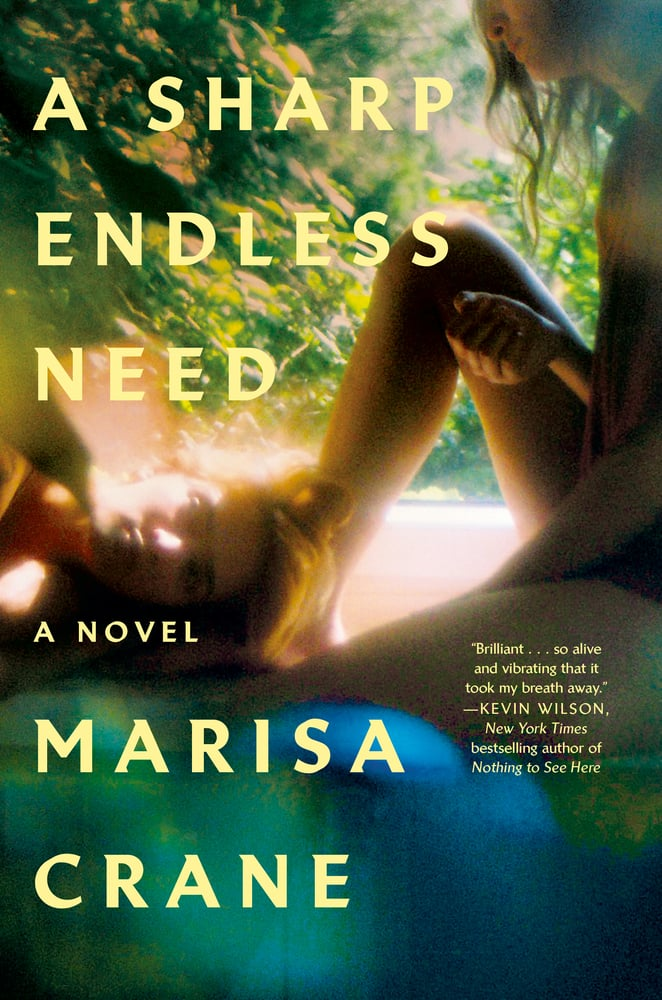
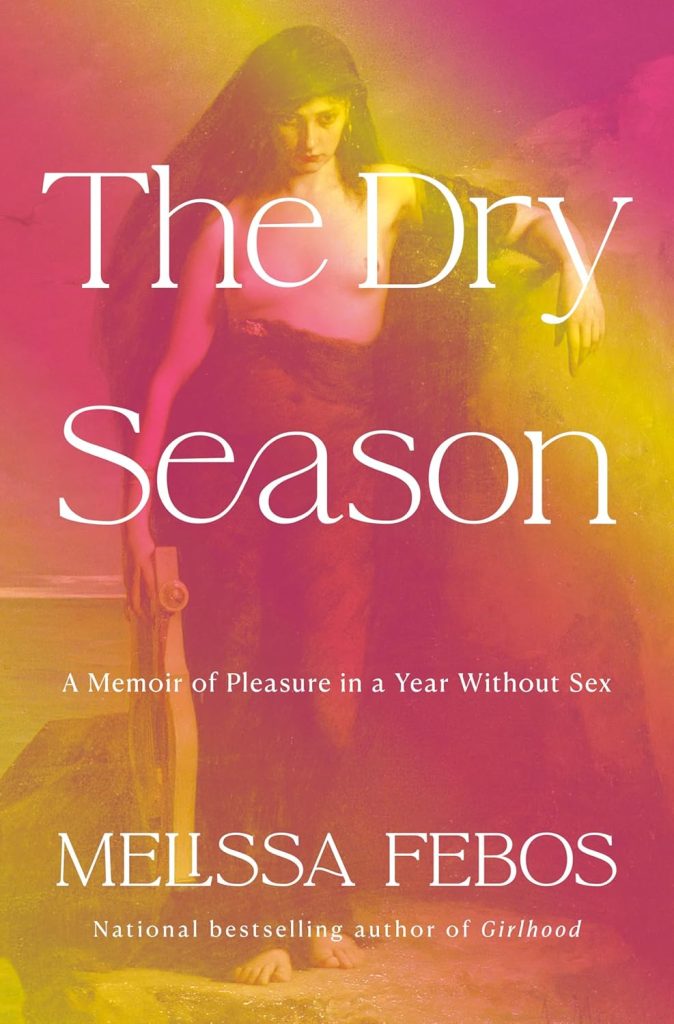
This is a list of seven other reads that wave their freak flags unabashedly and indulge far past the usual cutoff point in literary sex scenes. But that doesn’t mean these books are all pleasure. As the world we live in wobbles around on weary legs, some of the most searing queer sex scenes written of the recent past come coupled with dark and ominous undertones. The “freak” treatment of “deviant” sex in both real life and literature is closely intertwined with the demons and dysfunction that haunt the misunderstood and marginalized. There’s a lot of pain in this list, some blood and death, as well as undercurrents of grim warnings that may or may not be received. Still, it feels important to present a collection of books who are as bold in their “undress” as they are in their portrayals of the past, present and future of alternative sex and love.
One part psychedelic masterpiece, two parts revenge horror, this 120-page novella sizzles so hot you can read it in a late night’s sitting. Beginning with the classic scene in which our lead sees their ex with someone else, the book builds on the theme of trying to make an unhealthy, unsustainable relationship work in ways that I’ve never seen done before. With crescendos that include a dog morphing into a demon and sweeping tsunamis through the streets of New York, the blood and guts bits are done just as masterfully as the surreal. The freakiest part is at the end, in a standalone short piece entitled “Write My Eulogy on The Gloryhole Bathroom Stall,” in which a character gets hooked on a very horny and sadistic god who lives in a glory hole on 4th and Broadway. You may never look at glory holes in the same way again, and it somehow feels strangely cathartic.
The New Lesbian Pulpedited by Sarah Fonseca and Octavia Saenz (August 2025, Feminist Press)
This entire volume of multi-faceted erotic pulp fiction sizzles hotter than this summer’s climate-change sun. This collection will make your brain break in a good way, and many of these short stories are so vivid and engaging that you’ll be angry they aren’t longer. The one that will really knock your undergarments off is “Cottonmouth”by Ella Boureau, a tale of kissing cousins that turns into an unexpected threesome… I won’t spoil the surprise third, but this is by far the closest scene I’ve found to the one in my own Venice Peach that inspired this list and is reason alone to purchase this buffet of gritty, gutsy, bloody, and lusty sapphic short stories.
Silicone God is a hot and heavy broken love letter to a past that may never be reckoned with; a feverish, frenzied, fragmented fun house of the highlights and horrors of the sex-obsessed. We are thrown into the dark and twisted world of simultaneously being both a mistress and a queer trying to come out. The mood sticks to you, as things with tentacles tend to do, wrapping around your insides and squeezing tight. If you’re into sea creatures—specifically tentacle-infused sex scenes—and phallic mushrooms, and silicone strap-ons that take on their own life, this book is absolutely for you. The main character, Shea, is a serial mistress from the future, a world in which there are many mistresses and their mission is considered sacred. Full of mystery and sexual prowess, Shea is a character we never fully get a grip on—and that’s exactly the point. Too slippery for any one genre, this is a vivid portrait of a seductive, silicone-based future.
This book reads along the lines of a queer literary version of Bojack Horseman, and as someone who can claim that show as a reference for my own work, this book was at once beloved to me. A modern tale of an awkward and famous “femme fatale type” Eagle Rock-based lesbian novelist named Astrid Dahl—not related to Roald—this scent-drenched novel’s top notes are satire, edge, and darkness. Astrid was both writing and partying on her own trademark drug cocktail she coyly calls the “Patricia Highsmith,” but now she is trying (and failing) to cut back after being “cancelled” due to a misunderstood interview in which she claimed she doesn’t “vibe with dykes.” Astrid is a singularly original yet utterly relatable LA character: self-deprecating, self-obsessed, and witty as hell. She falls into a tumultuous toxic relationship with a red flag “metallic orchid-smelling” woman named Ivy from her Zoom writing group while simultaneously denying falling in love with her older, foxy artist neighbor who has an unfortunate proclivity for patchouli. Many sizzling sex scenes to be found here, but the hottest is one in which—are we surprised?—perfume makes it into the bed.
Sayaka Murata’s work has been making a lot of lists lately, and it is absolutely well deserved. Vanishing World will haunt you as much as it will make you laugh. A clever and prophetic combination of Handmaid’s Talemeets Twilight Zone, Murata paints a future centered around the disintegration of family as a societal concept. Nearly all pregnancies are by artificial insemination, society calls sex between married partners “incest,” and people who are not asexual primarily fall in love with fictional/manga characters. The sex scenes in this book are bizarre, unique, and seem to spell superdoom in their own queer ways: The main character Amane has sex with herself while imagining it to be actual sex with the anime characters she’s obsessed with. She also initiates strange and clumsy sex with multiple virgin men because “actual sex” is a “relic.” As the world she lives in becomes more insistent on doing away with all sexual urges, Amane increasingly loses sight of her own desires, culminating in her having the most dark and socially deviant form of sex at the end of the book, in a climactic tone much darker than that which the book began. Peppered with incredible one-liners such as, “Normality is the creepiest madness there is…” and, “Is there any such thing as a brain that hasn’t been brainwashed?” I will definitely be reading everything else available from Murata.
This is one of the most truly kaleidoscopic sex-fueled books out there. Featuring a fantastic-yet-realistic human protagonist who can morph genders including sex organs upon command, we follow Paul all over the country, propelled by his seemingly-unquenchable lust for nearly everyone. Paul’s a true player whose sexual preferences stretch across every color of the proverbial rainbow, even bragging at one point about possessing the skill of being able to find anyone attractive. “I’m not a man,” Paul says when in discussion with a gay roommate in San Francisco, heartbroken from the throws of an intense lesbian relationship in which he changed into female form for almost a year in efforts to make it work. And it’s true that Paul does not know how to identify. We feel for Paul, unable to locate himself without better vocabulary, as it was in the nineties. There are plenty of wild sex scenes in here, but the most standout is when Paul is in his female form and uses a strap-on as a top for the first time, a true gender-bender moment.
Ending this list with a big ol’ bang, we have The Sluts—a book not for the delicate—but then, none of Dennis Cooper’s work is. Labeled “the last literary outlaw in mainstream American fiction” by Bret Easton Ellis, Cooper’s ability to shock and compel you with a window into the savage hearts of horny, dysfunctional, and deranged men is at large here. Plunging immediately into the storyline with an online review of a potentially underage twink escort known only as “Brad,” we fear for Brad but never expect just how insane it will get for him. The novel is composed entirely of web-based reviews, discussion groups, phone call transcripts, and emails centering around this deep, dark plotline set in the early days of the internet. The Sluts is a tale of one escort becoming the center of vicious fantasies, lies, projections, and exploitation. The freakiest sex scenes are the ones for snuff films—and may cause more repulsion than appeal.
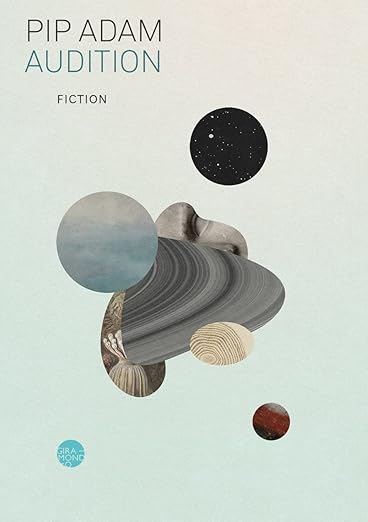
In Audition, the fourth novel by Pip Adam, three giants find themselves in a spaceship, headed to a mysterious location. They’ve been growing steadily, and are now so large that they barely fit in the ship, but their memories of what happened before they went to space are fuzzy. They can’t remember their families—only a strange place called “the classroom”—and share stories with each other that sound suspiciously like episodes from popular romantic comedy films. As the giants make their way further into space, Adam skips back and forth between a past in which some of the characters were in prison and the present where the restrictive systems that dictated their time on Earth are ever more distant.
Adam’s novels are hard to summarize but electrifying to read: fusing speculative elements and social commentary, they rely less on plot than on structural experiments. “I’m constantly trying to break my writing,” she told me during our Zoom conversation. “I’m trying to find ways to approach it as if I know nothing. That’s the great thing about writing: the problems that solve the last novel will not help this novel in the slightest.”
Though Adam is not well-known in America, her work has been widely praised and has won awards in her native New Zealand. Audition is her second book to be published in America, after The New Animals (Dorothy, 2023). Her writing is deeply engaged with social issues arising in her home country, and those issues—mass incarceration and transphobia in Audition, and the climate crisis in The New Animals—are just as urgent for American readers.
Though her work is experimental, Adam also reminds me that her books are deeply emotional. “I know this word isn’t popular,” she says, “but I feel [the books] are quite sentimental. They’re really interested in emotion and in loss. What I really appreciate about people is that they will say, I’ve never been in prison, but they’re able to extend themselves emotionally to meet that work. I just feel so incredibly grateful.”
Adam and I discussed fusing speculative fiction with realism, writing about prison, romantic comedies, and more.
Morgan Leigh Davies: You use speculative elements in all of your novels. What do you think that gives you as a storyteller?
Pip Adam: When I first started writing, I worshiped reality, but I quickly realized the way I write realism is not realism. People really pushed against it. People said no one had any feelings. I suddenly realized that what I was writing wasn’t realism and I started to push it further to see what it could do.
MLD: You’re writing about prison in the broad sense, but you also have a section that is set in a prison. It does feel very realistic. There are parts of this book that feel grounded in reality, while you’re also doing these bigger allegorical things.
PA: There’s a New Zealand writer named Carl Shuker who wrote a book called Anti Lebanon, which is about Beirut and Lebanon, and there are vampires in it. There’s this great thing where the horror of the vampire somehow magnifies the horror of the war. At the same time, the horror of the war amplifies the horror of the vampire. I was thinking a little bit about that book. I have written about prison before and it’s very hard not to fetishize it. It’s very hard not to do a white savior thing, you know, Oh, isn’t this terrible? I wanted to honor the experience of living in a prison and to talk about some things that are happening in this reality. I feel the two things together did something odd to each other.
This might not be true to the reading experience, but I really feel like, because of the oddness of the spacecraft and all that speculative stuff, the prison seems odd. All of a sudden, we’re questioning prisons. That’s what I always try to do with my writing. I want us to question the places I see injustice. We’ve got this idea of bigger and bigger prisons at the moment, harder and harder sentences, targeting minority groups. We’ve got a problem with unhoused people in New Zealand, and the idea is just to put more of them in prison. We get to the stage where it’s the normal rhetoric that we hear every day. But by putting speculative fiction next to it, the prison is odd as well.
MLD: Were there any specific ways that you wrote to make it feel a little bit alienating, on the level of language?
The novel is my favorite form because I feel like it has to reinvent itself every time. It’s in the name, it’s called the ‘novel.’
PA: That is the sort of stuff I was talking about when I was trying to write realism. I think because of the way my brain works, I have quite a flat emotional response to a lot of things. I have this desire to present things without an authorial agenda, which is impossible. But I have this idea that there’s a way of getting to it if the language can be plain enough and devoid of emotion. It’s about trying to get away from the stories we tell about prison. There’s a big thing [in New Zealand] at the moment where people who have formerly lived in prison, [are almost treated] like saints. We start bad, we go to prison, we come out and we’re amazing. Anytime I write about a real thing, I’m fighting against hundreds of years of stories about what crime is, what punishment is, what prison is. So I think that’s why I chose a more documentary style.
MLD: Reading your book, I was thinking about the narrative expectations we have about what a book should be. This is also connected to these bigger societal questions. You wrote a book that is challenging status quo ideas by challenging the form of the novel.
PA: The novel is my favorite form because I feel like it’s one of those machines that has to reinvent itself every time. It’s in the name, it’s called the “novel.” I just feel like it’s such a beautiful form to be working in. There is something beautiful about the book-length piece of fiction, because it’s constantly stretching and changing its shape to make what you want to say work.
I never want anyone to forget that they’re reading a book. I’m very into the materiality of the book and the reflection that happens when a sentence doesn’t quite work or sound right, or there’s confusion. My favorite kind of book is where I’m in the middle and I’m kind of digging myself out to try and work out what’s going on. That’s what interests me. I’m extremely lucky because there’s not a lot of expectation around my novels. People aren’t waiting for my next novel here. I very much wrote Audition not thinking it would be published, and every time I came to a decision where I found myself with a comfortable route, I’d take the uncomfortable route. I tried to go the other way, and just constantly keep myself uncomfortable in the narrative.
I’m always pushing: how far can we take this? Yet it’s still a novel and it’s still narrative? How far can we take this and it’s still plot? Oh, I sound like an edgelord.
MLD: But I could also really understand the characters in this book. Alba in particular felt so legible to me. If you are willing to commit to the book, then you do get that reward, even though the book is structured in an unusual way.
PA: I’m here with my friend Laurence Fearnley, who’s an incredible novelist, and we were just talking last night about emotion, what you leave on the page and what you give to a book. So much of the book is me working out what I do when I’ve done something wrong. What do I do when I’ve hurt someone. I have times where I just think, Why? Why and how do I make amends? I need to come to a space where this may never be right. That is kind of the quicksand that I like playing in.
MLD: In terms of structure, I wanted to go back to the first section of the novel and ask about how you use romantic comedies. The characters are trapped in this spaceship, and they’re telling each other stories that readers will probably recognize as being from nineties rom-coms, which you list at the back of the book. That struck me as the perfect form of a constructed narrative that has nothing to do with reality, but that we are inundated with all the time. Why did you choose those and use them the way you did in the novel?
PA: So full disclosure, the structure of Audition is actually a romantic comedy. I’ve got a meet-cute in there, I’ve got a problem in there…I got to the stage where it was hilarious that [the novel] had no form, but you’ve got to come part way to the reader.
I really like romantic comedies, but I find them extremely dark as well. If you think about While You Were Sleeping, it’s about a woman that makes up this idea while a guy’s in a coma. Pretty Woman especially—I watched that probably eight or nine times, for people my age it was probably the first sex worker you saw in your life apart from on Charlie’s Angels.
I was also thinking about what the religious texts of our time are. What are the texts of our time that we all know the way that maybe in the 1920s everyone knew the Bible, and it is romantic comedies. I went in thinking, Oh yeah, romantic comedies. And I left thinking, holy shit, we have been brainwashed. I’m of the age that I was brought up on Weinstein movies. My sexuality was formed watching movies that were produced by Harvey Weinstein. With these romantic comedies, I’m just like, Wow, some of these messages are not great.
Language felt like this very exclusionary thing for a long time. Instead of that turning me off language, it interested me.
MLD: One of the other things I found so interesting in the first section is the repetitive dialogue. It feels like the prison has been transported into their heads, and like language is being used as this tool of oppression.
PA: This largely comes from my background as well. I left school early. We made a mutual agreement that school was not for me. I felt alienated from language for a long time. I went back to university when I was in my twenties, and I remember one of the most harrowing moments for me was when people were talking about Nietzsche. I was like, I haven’t been reading about this guy. I must have been reading the wrong book, because that’s not how I thought that word was pronounced. I would make mistakes with pronunciation. Language felt like this very exclusionary thing for a long time. Instead of that turning me off language, it interested me.
I started life as a poet. I still write poetry, but it’s not very good. But I’m very interested in sound. I had this job where I was transcribing television interviews. I remember listening to a politician. You’d think, Oh, he said this, and then you’d listen through and that wasn’t what he said at all. He’d made the noise of agreement, but what he’d said was actually innocent. I got really interested in that. I’m also obsessed with small talk. I don’t do it, I’m not very good at it. I love watching other people involved in it. I love these noises that we make. They’re almost like noises that animals make to each other to say, I’m okay, you can trust me. So much of it is on that noise level. The repetitive nature of it is just so that noise becomes unusual again. You know that thing where you repeat the word “cat” over and over again, and then you’re like, What is a cat?
Also, one of the hugest influences on the book is, just as I was finishing it, the book Cultish came out. It breaks down the linguistics of cult language. This book is about the 1% versus the 99%. Why do we, if there are so many of us, keep behaving the way that the powerful want us to behave? Obviously, a lot of us are kept in poverty or imprisoned, but a lot of it is around the stories we get told about ourselves. We had a prime minister here who used to say, Any reasonable person would see… So the minute that you disagree, you’re not a reasonable person anymore. We’ve got a prime minister at the moment who will say things like, What New Zealanders want… You think, Oh, that’s not what I want, I mustn’t be a New Zealander. He says it with repetition, it’s become a bit of a joke here. I got really interested in how we can make the sound of something while actually doing the opposite.
Plus just the musicality. I read everything out loud and sometimes I just do things because they sound nice. One of my other favorite things is the conversations you have as the two of you are going to sleep. What I quite liked about this is that there’s that fine line between the conscious and unconscious where some conversations can be really interesting. As these giants are kind of dying, I loved the idea that where they would return to was trying to make some kind of music between the conversations. That was just the romantic in me.
MLD: We haven’t really talked about the fact that they are giants. In all of your books that I’ve read, something radical happens to the body as a reaction to a traumatic event. I’m curious about why writing about the body in these unusual ways appeals to you.
PA: I have a really problematic relationship with my body. I have a lot of trouble working out where it ends. I bump into things a lot. I really don’t understand where it is in space and time. I have a lot of trouble shopping for clothes because I don’t understand what size I am. I have a lot of trouble with my body and knowing what to do with it. It just feels like this vessel. I would be very happy if I could be a brain in a bottle.
It’s not like I feel my body any less. I feel every problematic inch of it. I’m obsessed because of all the thinking I need to do about where I’m going to place my body. I feel like the human experience sits in the body rather than the mind, especially this idea of being bigger. I think that there is a real idea about how much space we’re allowed to take up.
What I’m always trying to do in a book is work out things that confuse me. Why do those people have power, why do those people have no money, these sorts of things. Writing the weird monstrous body is realism to me. It just maps the way that I feel. It feels very natural that in moments of crisis or moments of trauma, maybe the body would rebel, the body would do something weird. And bodies are also these places of immense pleasure. They’re this really strange vehicle that we move around in.
MLD: So much of the book, as we’ve been saying, is about breaking down these narratives of oppression, and then you put us into this utopian world at the end. How do you like writing against so much of what we expect of in terms of conflicts and narrative with that utopian space?
I’d always thought that writing utopias was a soft thing to do, but in writing it, I realized it’s quite an activist thing to do.
PA: Neal Stevenson was here for an event, and he talked about how dystopia is really easy to write because you just take everything away. You just go, Right, those buildings are gone, the water coming out of the tap’s gone. Whereas utopia, you have to create. I must admit, the thing that really appealed to me about that was the clunkiness of it. It’s never gonna be right, it’s always gonna feel a bit naff. I was quite excited by that. It was a really hard section to write because I’m a natural pessimist and to try and make something generative and productive and safe and comfortable—it comes back to exactly what you’re saying about those narrative structures. It was extremely hard to write. We suddenly have to imagine comfort and imagine safety and imagine ease and imagine beauty. So much of our lives are not that, which is just really sad.
I’d always thought that writing utopias was a soft thing to do, but in writing it, I realized it’s actually quite an activist thing to do. There’s an amazing book that came out here last year by Olive Nuttall, which is called Kitten. It is just the most amazing book. It has a very utopian view, but it’s a realist novel. I’ve read quite a few younger writers recently, who are reimagining what pleasure is and reimagining what happiness is. I feel quite excited about that. All writers should write what they feel compelled to write, but it does feel like there is a political imperative to address these things in some way.
Writers like Andrea Lawlor, Jordi Rosenberg, Mattilda Bernstein Sycamore—these are writers that I read and took massive inspiration from. I love the way that, at the moment, there seems to be this way of holding joy and sorrow at the same time. Not forgetting the sad things, but also making room for joy. It’s an exciting time for books.
An excerpt from The Summer House by Masashi Matsuie
Sensei was always the first one up at the Summer House.
Just after dawn I was lying in bed, listening to him move around downstairs. I picked up my wristwatch from the bedside table. In the dim light, I saw that it was 5:05.
The library, just above the front entrance, had a small bed, where I slept. As day was breaking, muffled sounds would rise through the old wooden posts and walls.
I’d hear Sensei remove the bar and stand it against the wall. Then he’d slide the heavy inner door into its casing on the left, and open the outer one all the way until it reached the wall outside, where he’d fasten the brass doorknob with a loop of rope. That kept the wind from blowing it shut. Finally, closing the screen door behind him, he set out on his morning walk. Cold forest air blew softly through the screen door. Soon the Summer House was quiet again.
Here in the forest, over a thousand meters above sea level, the first to break the silence were the birds, starting before Sensei stirred. Woodpeckers, grosbeaks, thrushes, flycatchers . . . the names come quickly to mind. Some I can only remember by their song.
That morning, even before sunrise, the sky was an odd shade of blue, showing the silhouettes of trees that moments before had been sunk in darkness. All too soon, without waiting for the sun, morning broke.
I got out of bed and raised the blind on the small window that looked out onto the garden. Mist, thick clouds of it, veiled the leaves and branches of the katsura tree. The birds were quiet. I stuck my head out of the window to breathe in the mist. If that smell had a color, it wouldn’t be white, but green. Careful not to make a sound, I raised the blind in the workshop next door. All I could see out of this much-wider window, facing south, was a stretch of white. The huge katsura in the garden floated in the mist. I wondered whether Sensei might get lost in the hazy woods.
But no matter how deep it seemed, the mist disappeared as soon as the sun rose. As though nothing had happened, the birds started singing again. He would soon be back. In an hour or so, everyone would be up.
The Murai Office of Architectural Design was in a quiet corner of a residential area in Tokyo called Kita-Aoyama, down an alley you’d miss if you weren’t looking for it. It was a small concrete building with parking space under the eaves, just big enough for three cars. Every year, from late July to mid-September, it basically closed down and relocated to what everyone called the Summer House, in the mountain village of Aoguri in Kita-Asama, where there was an old colony of vacation homes owned by people who came to escape the city heat.
Once preparations for the move to the mountains started, the office suddenly got busier than usual. Meetings with clients were held almost daily to take care of any outstanding problems before we left. We also had to stock up on supplies to take with us. Styrene boards for study models. Staedtler Lumograph drafting pencils. Uni erasers. Tracing paper. Stationery. Some staff members got crew cuts so they wouldn’t need the village barber, others went to the dentist to have their teeth checked. Having worked there for only four months, I couldn’t think of anything special I’d need for this first summer in the mountains, beyond a cookbook for beginners I bought, knowing I’d have to take my turn at kitchen duty.
Ms. Yoshinaga, our accountant, stayed at the office in Kita-Aoyama, along with two other women who had families, and two men who had to oversee the construction of a building that had just begun. Sensei’s wife, whose pediatrics clinic was at their home in Yoyogi-Uehara, never left Tokyo.
The company had a staff of thirteen, including Murai Sensei. While that was about average for a business headed by one individual architect, it was pretty small considering the mark he’d left on postwar Japanese architecture. He could have hired more people whenever he wanted to. Instead, he chose to tailor the projects he took on to the size of his staff, politely refusing work that didn’t interest him, calmly letting chances for expansion pass him by.
During the 1960s the Murai Office had picked up quite a few commissions for public projects and large buildings in business districts, but by the 1970s its main focus was on private homes. An introduction was almost essential for a new client, but even then, Iguchi, the manager, would tell them, “It’ll take at least two years, maybe even longer, to build your house,” and then ask them frankly, “Are you willing to wait that long?” Few were discouraged. People who wanted to live in a house designed by Shunsuke Murai already knew it would take time. But there was another type of prospective client, with enough money to hire a famous architect but not very particular about which one. For them, Iguchi would raise the bar from “at least two” to “at least three” years. They were never that patient. Having decided to build a house, they wanted to see it completed as soon as possible, and unless it was some sort of vanity project, they weren’t prepared to wait.
When I joined the office in 1982, Sensei was in his mid-seventies. While this is well beyond the normal retirement age, in the world of architecture, where people start out in their thirties and are still considered young in their forties, it’s not unusual to stay active past seventy. Sensei not only designed the houses, but also would often go to the construction site to iron out details with his clients. There didn’t seem to be any major problems either with his health or the company’s finances. Nevertheless, although no one talked about it openly, everyone was wondering about the future, five or ten years down the road.
By the 1980s the Murai Office could already be said to be putting the brakes on, gradually slowing down in preparation for a final, quiet stop. The last staff member fresh out of university had been hired in 1979, and rumor had it that he would be the last. There were still students about to graduate who didn’t let the rumors discourage them; one or two came hoping for a job interview the following year and the year after that, yet without success.
When I was in my last year at university, I knew I didn’t want to go on to graduate school to study architecture, but doubted I’d fit into the tightly organized design department of a major construction company. In fact, I couldn’t really see myself working anywhere. Postmodern design studios were popular, but I had no interest whatsoever in doing that sort of work.
I thought of apprenticing myself to a master carpenter and working my way up. In the summer vacation of my third year, I persuaded a small building contractor to let me help on two construction sites. But by that time contractors were simply a system for commissioning and supervising workers, while the best carpenters were lone wolves, in business for themselves, accepting work from any contractor who would hire them, with no time to take on trainees. In this new era, when houses could be quickly assembled from prefabricated materials without using planes, saws, or chisels, the building trade was becoming much less dependent on skilled craftsmen.
What I really wanted to do was to work independently from the start, without being attached to any company or design office. Unfortunately, that was virtually impossible. I wasn’t a registered architect with a first-class license, and if I didn’t go on to graduate school, I couldn’t become one without at least two years of practical experience. I’d have to follow the normal route, joining some office of architectural design to get the practical training I needed, making do on a low salary for several years until I got my license.
There was only one architect I really respected, and that was Shunsuke Murai. He didn’t design any of those strikingly modern buildings that sprang up between the 1964 Tokyo Olympics and the 1970 Osaka Expo. He didn’t talk much either, and since he rarely strayed into areas outside his profession, only people especially interested in architecture were likely to know his name.
From the late 1960s to the early 1970s, Murai was probably better known in America than in Japan. When an exhibition on twentieth-century architecture was held at the Museum of Modern Art in New York in 1967, he was the only Japanese architect included. The catalogue credited him with grounding his work in traditional Asian forms while incorporating elements of modernism in innovative ways. As an example of “Japanese-style modernism,” part of a major work of his from the 1960s, designed for the Komoriya, a Kyoto inn with a long history, was reconstructed in the museum courtyard, where it attracted a good deal of attention.
Visitors to the New York exhibition probably remembered having to take their shoes off at the entrance, and the smell of new tatami, rather than the name Shunsuke Murai. But he was not merely well-versed in the traditional architecture of his own country. As a young man he had made a firsthand study of older buildings in China, Korea, and Europe, becoming at the same time one of the first to grasp the simplicity and rationality of modernism, made possible by materials such as steel, glass, and concrete. From this he had developed a truly original style, of which certain connoisseurs soon took note.
From this he had developed a truly original style, of which certain connoisseurs soon took note.
At the opening party for the exhibition, one of the wealthiest men in the eastern United States asked him, without notice, to design a house for him. Jeffrey Hubert Thompson, whose grandfather had made a fortune from an East Coast railroad, taught anthropology at Harvard, his alma mater, but was better known as an art collector. He was also associated with an incident that occurred in his student days. Three months after disappearing while doing fieldwork along the White Nile in East Africa, he was found in a village several hundred kilometers away from the spot where he had last been seen. There was talk in the tabloids of a love affair with a local woman. Thompson himself never denied or confirmed it.
Twenty years later, still a bachelor, Thompson was among the guests at the private viewing. He read the article on the Komoriya in the catalogue while other guests chatted, and carefully examined the alcove, the decorative wooden panels above the sliding doors, the veranda, the doors and fusuma, made of wood and paper. He then approached Murai and asked him about the merits and drawbacks of using wood and concrete in the same structure, and how building on pliant, marshy land such as you’d find in Japan was different from working on hard, dry terrain.
Their conversation persuaded Murai to accept his proposal, and he spent several months supervising the construction of the Thompson House. It was his first long stay in America since before the war, when he had been apprenticed to Frank Lloyd Wright for two years. A sprawling project on land with a river flowing through it where deer came to drink, the result was widely featured in American architectural magazines. Though he was asked to design other houses on a similar scale, he refused on the grounds that he had too much work waiting back in Japan. “If I’d kept on building houses that big,” he later told Iguchi quietly, “I’d have lost all sense of proportion.”
Earlier in the 1960s, he had worked himself to exhaustion on a large-scale project commissioned by the government, only to end up clashing over his basic plan with the officials in charge. This experience must have made the recognition he later received in America all the more welcome, a hidden reserve of support. Many of his contemporaries who spoke eloquently on the future of urban planning were awarded contract after contract for major public projects. Sensei, on the other hand, stopped entering design competitions for public buildings; and since he’d never been one to hold forth on architectural theory, he didn’t appear much in the media either.
But as I went around examining buildings he had designed ten or twenty years earlier, I realized how remarkable his work had been during those years of silence. Without getting caught up in the excesses of Japan’s post-war economic boom, or indulging in any sort of flashy display, he had designed buildings that were simple and easy to use, yet with a beauty that didn’t fade.
In the fall of my last year at university, as I became more and more anxious about my future, I decided to take a step toward something that had almost no chance of coming true.
It was late September. An unusually large number of red dragonflies, rarely seen in Tokyo, had flown in from the northwest, stopping on telephone wires or low concrete walls to rest their wings. I went out onto the upstairs veranda, where I saw several up close, on the pole I hung the washing from, and on the railing. Wings like paper-thin metal; deep-red bodies; the blurry brightness of their compound eyes. No human hand could create anything like this. In less than thirty minutes, they were gone. It was a dry, windless day.
After seeing the dragonflies off, I went back to my desk and wrote a letter to the Murai Office, asking politely but as briefly as possible if there was any chance of my working there. I enclosed a copy of my graduation project, a plan for a small house designed for a family with one member in a wheelchair. Days afterward I could still hear the sound of the envelope dropping down into the mailbox.
About a week later, I got a phone call from Hiroshi Iguchi, who told me he was the office manager. Although they had no plans to hire me, Murai Sensei was willing to give me a short interview.
On the appointed day, I headed for the office in Kita-Aoyama, having checked the location on a map. I met Sensei in his dimly lit office, facing north, on the second floor of a three-story building covered with green ivy.
“So you’re Tōru Sakanishi.” His voice was deeper than I expected. There was a lattice window to his left, casting a faint light on his cheek. Sturdily built, he looked serious—grim, even, though not in a nervous, high-strung way. He had the firm jaw one often sees on men who work with their hands. His tone was gentle, his face surprisingly expressive; as he listened to me, he would chuckle occasionally, or seem to be thinking about something I’d said. No one had ever listened to me more carefully.
“Does someone in your family use a wheelchair?” he asked.
“No.”
“Then why design a house for one?”
“I wanted to see how a wheelchair would affect the proportions of an entire house.”
Nodding slightly, he looked down at my plan, his hand resting on it as he asked more questions.
“What do you think is hardest about making the blueprint for a house?”
I thought for a while before answering.
“Maybe it’s that you have to create a new space within limited boundaries, without adding or multiplying anything. It involves a lot of dividing and subtracting.”
He nodded again, then looking straight at me asked, “Is that what you’re best at?”
“I’m not sure, but I do think I’m good at that sort of thing.”
“And what kind of architecture do you think is made by adding and multiplying?”
“I’m sure there’s something of that in multistory apartments.”
My meeting with Sensei over, still keyed up with excitement, I walked past the workshop on the same floor. No one spoke or even looked up from their work. Something about the old wooden desks, white walls, and wooden floor reminded me of Sensei’s face, and his voice.
Shortly after that I got a call from Iguchi, telling me I had been accepted as a provisional employee. It sounded to me as if he couldn’t quite believe it himself, though I may have been imagining this. Considering that there was a list of applicants on file in the office, many of them licensed architects with five to ten years of experience, it would have been natural for him to be surprised. I myself was amazed to hear I’d been hired, even provisionally. When I turned up the next day, Sensei looked straight at me, just as he had before, and said, “While you’re here, make sure you learn a lot and do good work.”
I myself was amazed to hear I’d been hired, even provisionally.
After the New Year, I started going there in the early morning on Mondays, Wednesdays, and Saturdays, when I didn’t have classes. I was assigned a desk in the farthest corner of the workshop. A guy named Uchida, who was about a decade older than me and had the desk next to mine, acted as my instructor. I spent my first days at the office doing the miscellaneous tasks he gave me, figuring out how things were done. Yet even with these small jobs, there seemed to be a reason for everything, down to minor details. After two or three weeks, I could see that the workings of the Murai Office were as clear as the cutaway drawing of a building. There were no unreasonable orders or wasted effort, which meant I had to stay alert.
During the early 1980s, in contrast to the hectic pace of architectural developments generally, the buildings Sensei designed tended to be seen almost as nostalgic, in the mode of Japanese tradition, but that’s not how they seemed to me. There was nothing homespun about the logical framework I saw behind either his designs or the way things were done at the office.
There was a rational explanation for that old-fashioned, comforting feeling people got from Sensei’s houses. It came from visual effects created by things like the height of a ceiling, or a light source in the floor, or a shoji lattice fitted into a window that faced south. There was nothing mysterious about it. Though he rarely tried to explain in public how he achieved these effects, he would show us in practice, not only on blueprints, by moving a ruler about on the workshop wall in relation to the ceiling, or sometimes by opening and shutting doors or windows. He was always logical, never emotional.
“You can sleep better in a small bedroom,” he’d say, “because it’s more relaxing. The ceiling shouldn’t be too high. Too much space above the bed leaves room for ghosts to float around in.” Here he would smile slightly. “The bed should be just close enough to the wall for you to be able to touch it when you have to go to the bathroom in the middle of the night.” On kitchens he had this to say: “You only want to smell food before a meal—there’s no point in it afterward. The height of the ceiling, and the position of the cooker and ventilator are the keys to controlling it.” The way he sounded was like a craftsman simply explaining his techniques.
Spring came.
On the evening of April 1, when overcoats were no longer needed, a welcome party for me was held at an Italian restaurant near the office.
As we walked down the dark street, talking quietly, I smelled something sweet (Carolina jasmine, I was told by Yukiko Nakao, a staff member slightly older than me). I can remember that evening even now. I’d never eaten in a restaurant with Italian waiters and chefs before.
After the main course, a white, U-shaped cake with a square red candle in the middle was served. Uchida, my instructor, had asked the chef to make it from a drawing he’d done of the Summer House in Kita-Asama; the squat red candle was supposed to be the chimney. It was exactly one-fiftieth the size of the original, Uchida explained. “Couldn’t calculate the next one, so I don’t know how it’ll compare with the original,” he added. Just then, as if on a signal to the kitchen, another dessert was brought out. This one was a Mont Blanc, so big it had to be carried in both hands. The sides had been sculpted with a palette knife to make it look like Mt. Asama, and powdered sugar gave it a snowy summit. There were sighs of admiration from our group. Uchida frowned, looking embarrassed.
“Mountains don’t have blueprints, so getting the shape right was harder than I thought it would be. I had to dig up some old snapshots, and maps with contour lines.”
“It’s good to have old pictures,” Iguchi said cheerfully, “glad you found them.” He was a little drunk.
“I asked the chef to let me help him. I’ve been looking at Mt. Asama from the Summer House for over ten years now, so I think we got it just about right.”
“The back of the mountain, the Karuizawa side,” Sensei said from where he was sitting. “This is how it looks from Oiwake or Komuro. Very impressive. Well done.”
The cake was placed at the foot of the mountain. Uchida adjusted their positions. A flame rose from the chimney, along with a wisp of smoke. I’d already seen blueprints of the Summer House; now, I could imagine myself inside it.
Before the cakes were cut up, we had our picture taken, standing around them. Uchida peered through the lens of the Leica he always carried with him, then asked one of the waiters to press the button. “Ready? Everybody, smile!”
The office staff stood shoulder to shoulder against the wall, leaning over slightly. Sensei and I sat in the middle, the candle flame reflected in our glasses. Looking back, I realize that this is the only picture I have of myself with him. This grainy photograph, taken with a flash, would later bring back memories that meant more to all of us than we could say.
A month later, we heard on the office radio that Mt. Asama had erupted. This hadn’t happened since 1973, nearly a decade earlier. Crops were covered in volcanic ash on the Gunma Prefecture side, and the west wind blew smoke as far away as the Bōsō Peninsula. Cinders, some small as grains of rice, others the size of peas, pelted the area around the Summer House. We heard from the caretakers’ agency in Aoguri that although ash had fallen on the roof and clouded the windows, the glass wasn’t broken, and the building itself was undamaged. Although immediately after the eruption some of us wondered if we’d be able to go to the Summer House that year, from May into June volcanic activity seemed to have stopped altogether.
Then came the last Thursday in July. After lunch, every one at the office was busy packing blueprints, models, files full of materials and documents, including estimates and even records of conversations we’d had with clients, into cardboard boxes, which were then loaded into three station wagons. The boxes had obviously been used before, as some were reinforced with packing tape, and all had numbers on them, indicating the order in which they should be loaded. Tightly lined up in rows from the right, they fitted neatly into the luggage space.
The radio news now said that Typhoon 10 was on its way. The Kanto-Koshinetsu area was right in the path of the storm, at present a huge spiral over the Pacific. We set off from Kita-Aoyama, the three vehicles in single file, feeling the typhoon at our back as we headed for the northwest side of the Kanto Plain like stragglers lagging behind a flock of migrating birds.
After going over Usui Pass, we headed west on Route 18, then at Naka-Karuizawa made a right turn toward the north. When Mt. Asama appeared through gaps in the trees, I peered up at it as we climbed higher, navigating a series of hairpin turns. Then the whole scene opened up, and I saw the mountain looming over us, bathed in evening light, so huge it was startling. This was a live volcano that just three months earlier had been spewing cinders and ash. Had I watched the eruption from this spot, I would have felt a raw sense of danger, but now there were only wisps of steam rising from the crater, and they could have been mistaken for clouds.
Beyond the pass was the Asama Plain. From here the road to the north was perfectly straight. When we reached the heavily wooded area around the village of Aoguri, night was falling. At the intersection on the main road we turned east, and with the old Kita-Asama Station on our right, drove for several more minutes until we reached the main street through the oldest part of the village. The Summer House was just north of here.
With its two wings enclosing a large katsura tree, the house had a concrete base with two wooden floors above it. Hidden by deep-reddish-brown cedar siding, the concrete was a half-story high, lifting the lower level off the ground to protect the wood from the moisture that rose from the forest floor.
The three cars entered the yard from the left, then swung clockwise around the katsura tree for a half circle to the parking lot. Engines were switched off. As soon as the car door opened, I could sense that the air here was completely different. The sound of branches stirring along with birdsong and the chirring of cicadas drifted down from overhead. The breeze carried a faint odor of earth and leaves. I looked up to see patches of blue sky through the trees. It was nearly ten degrees colder than in Tokyo.
The village of Aoguri was high enough above sea level for the change in air pressure to affect your ears. Water boiled at a lower temperature than down below. There weren’t many people in the vicinity, and the night sky was full of stars, the forest home to nearly eighty types of birds, plus kamoshika (goat-antelopes), monkeys, flying squirrels, rabbits, foxes, and bears.
The Summer House was smaller than I’d imagined from that white cake. The cedarwood siding was probably just as it had been when the original house was built in 1956. With a round clock on the front, it might have been mistaken for a little country schoolhouse. The yard with the katsura tree in the center faced south; a short distance away from the main building, a Himalayan cedar, the tallest tree in the area, loomed over the garage.
The entrance was slightly off-center, and to the west. When Iguchi opened the door, the air inside was heavy and damp. We all started hauling boxes from the station wagons into the house. Several steps up from the entranceway, off to the right, was a spacious dining room. The workshop was on the second floor, at the top of the stairs. It was dark inside, and smelled of wood. The heavy wooden rain shutters were pulled back one after another to let in the last rays of sunlight, which reflected dully on the polished oak floor. As if she’d done this many times, Yukiko whisked the white cloth off the big oblong dining table and folded it up. Red-tinged light lay over the fine-grained maple tabletop.
Next to the dining room, on the eastern side, were the kitchen and a room for ironing and other household tasks. A right turn from there took you into a sort of service area, along one side of the U-shape, with the women’s laundry room, a pantry, and a storehouse for gardening tools, from which you could go directly outside. To the west of the dining room was a place to keep blueprints in, and next to it, linen. From there you turned a corner into the opposite side of the U, where you found the men’s laundry room, the boiler room, and more storage space, with a ping-pong table, a tall stack of garden chairs, two bicycles, and a motorcycle that belonged to Uchida, who had arrived ahead of the rest of us.
The women’s bath was on the second floor, east of the workshop, and on the western side were the director’s office, the library (where I slept), and the men’s bath. In both wings, the second floor was lined with single rooms for staff members. The five rooms for women in the east wing faced the five for men in the west one, with a wide corridor and the yard with the katsura tree in between. Tables, chairs, sofas, and cabinets—all trial items made at the Tokyo office—were placed here and there in the corridor. We sat in the chairs and sofas to read, talk, or take afternoon naps. For Uchida, who was in charge of furniture, this was also storage space for samples, so that he could check on their size or other details. He repaired this furniture when needed, and kept it waxed, so all the pieces were in excellent condition.
After putting away my things in the library, I took off my socks. The cool wooden floor felt good under my bare feet. I remembered my childhood, when I used to go barefoot all summer. I pushed open the window looking out on the yard, to see the katsura tree right in front of me. Kawarazaki, one of the most important members of the team, was just driving past it into the parking lot.
All the windows were open. Slowly, the Summer House was beginning to breathe again.
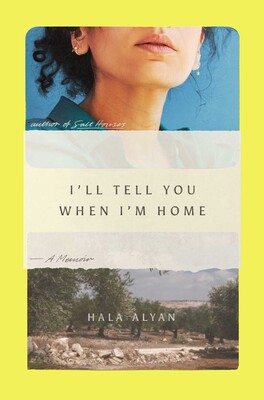
Hala Alyan’s debut memoir, I’ll Tell You When I’m Home, is a powerful story of survival, addiction, longing, and resistance. After years of trying to have a child, facing miscarriage after miscarriage, Alyan decides to use a surrogate. She frames the story of the pregnancy around the story of her life, as she looks to the past—at her family’s exile and displacement, at her childhood and adolescence, at her addiction and her marriage. As the baby grows inside another woman’s body, the chaos of Alyan’s own life grows as well.
I’ll Tell You When I’m Home spans generations, and in telling her story, Alyan embarks on an act of resistance in a time when Palestinian voices like hers are being suppressed and histories erased. This book therefore serves as more than just a memoir of Alyan’s life. It becomes a part of the larger narrative of Palestinian displacement and occupation, of home and belonging, and of the overarching struggle to survive.
We spoke over Zoom about what it means to be writing a story of survival framed around a new life coming into this world, the experience of having a book like this come out during an active genocide, and how this work, in Alyan’s words, is “adding to the archive.”
Deena ElGenaidi:At the beginning of the book, you talk about the story of Scheherazade and 1001 Nights and how she tells these stories to survive. There’s a line in your book where you say, “What stories would she have told if she wasn’t trying to survive, but live?” Would you say that your book is a story of survival or living?
Hala Alyan: I think, if I’m honest, this is one of survival. This story wasn’t even what I set out to write. I had sold a proposal for a collection of essays, and then life happened. The essays came, but they didn’t quite come as swiftly or as well-formed as I had hoped. There was a connective tissue missing, and then my editor suggested, “What would happen if you just started trying to tell the story of your life more straightforwardly?”
I’ve always been so afraid of the concept of memoir, and internally, there had been a lot of emotional gatekeeping around who has the right to tell a story. I’ve written fiction, I’ve written poetry, and I felt really comfortable with the fact that they have a cloak, and there’s a way to hide in them. There’s a way to structure things in [fiction and poetry] that I’ve always felt more comfortable with.
So then I was left in this really interesting position that writers rarely find themselves in: I was connected to a press, I was under contract, and in some ways had no idea what I was going to write. But in this case, it ended up being one of the most profound experiences I’ve ever had because it was like, okay, you can’t do any fancy narrative magic tricks here. You have to tell the story straightforwardly; you can’t hide behind a poetic eye. I just started to write the story of what had happened, at the time, in the last year of my life.
That’s the other thing—if you do the math, my daughter just turned three, so this was not a long time ago. I really was starting to write about her arrival very soon after she arrived. I was not even out of the year that I was describing when I was putting pen to paper with it, which was again a relief. Not necessarily a writing experience I recommend on an ongoing basis, but it was a very profound one.
DE: It sounds like it. Towards the end, you write that there is “no resolution,” which is not unlike Scheherazade’s stories and how they never end with a resolution. Could you talk about what it means for you and your story not to have a resolution?
HA: I think that’s one of the things that made me most resistant to trying to write this story. I would say to the editor—and to myself— that I don’t even know what happens yet. How am I going to write about this when I quite literally don’t even know how this plays out? The reason that the book ends at the postpartum is because it was really all I knew when I started writing that section. I didn’t know what it was going to be like to raise this new being in the first year of her life. I don’t know what’s going to happen to this marriage. I don’t know what’s going to happen to Palestine, to Lebanon. I have to end it on a cliffhanger for myself.
I’m somebody that loves endings. I mean, I don’t love them in real life, but I love them in a narrative. Many times I’ve written poems, or even a novel, where I knew the last scene before I even began. So to really be writing through the dark was unlike anything I’ve done before.
DE: Yeah, it sounds like a very different experience. Why did you choose to tell your life story using the pregnancy as the framing device?
HA: There’s two answers: there’s the honest, unglamorous answer, and then there’s a little bit more of a poetic one. The unglamorous answer is because everything else was failing. Everything else I was trying just wasn’t working. I was like, What about this? What about this? What about this? When I finally started to write this version, I was like, Oh, this is interesting. This seems to be landing in a way that I hadn’t quite expected.
Preparing for a life to be brought into the world is not dissimilar to knowing life is leaving the world.
The other part of it is, the reason it worked is because there was some truth to the fact that preparing for a life to be brought into the world is not dissimilar to knowing life is leaving the world. It’s a period of time where you take stock of your own mortality. Your history is spotlighted. You think, what kind of parent am I going to be? How am I going to care for them in literal ways but also, how am I going to show up for this task? What am I going to offer? What am I going to be able to leave a kid with? All these questions were so salient. In terms of the narrative, [the pregnancy framing] was the device that worked the best.
DE:There are a few moments in the book where your mother tells you not to tell certain stories, and she says she doesn’t want to be in the book. But you do tell those stories, and she is in your book. I know that’s something that a lot of memoirists struggle with, and I’m also Arab and Muslim, so I know what that culture is like when it comes to keeping things secret and keeping things in the family. How did you decide what stories were worth telling despite what your mom said? And were there things you left out because of your family’s wishes?
HA: Yeah, I mean, circle back in a couple months and I’ll tell you how it goes when my mom reads it. She’s still been like, “You better not have written about me,” and I’m like, “Listen, it’s going to be fine.”
At some point I was kind of put on a stories embargo by my mom because she started to directly assess that the reason I was asking for details about people in our family was because I wanted to get things narratively correct. And then she was just like, no more, I don’t get any more stories, which I think is such a funny withholding. In some ways it was an incredibly effective thing to withhold because I was like, What do I do now? I think there would have probably been more about some of these family histories in there, but some of it I just didn’t have access to.
But I do think that intuitively, I knew what I would not write about. It wasn’t just a matter of what I had access to and what I didn’t have access to. There are many stories that I could recite to you in my sleep that I just would not write. I wouldn’t do it because they’re not mine to tell. I’m being really careful not to write about things that, for the most part, didn’t happen to me. I had to have been somehow directly linked to it for it to feel like I had my own authorship or ownership over it.
DE:That makes sense. There’s also a lot of women in the story: mothers, grandmothers, aunts, and then eventually your daughter. Why the focus on these women, and can you talk about the significance of this lineage of women for the story?
HA: Yeah, that’s another thing that sort of emerged. The women are present in the book because they’re present in life. They take up just as much space in the story as they did in raising me, as they did in forming me, as they did in shaping the ways that I see things, in shaping what I fear, what I want, what I’ve longed for, what I’ve learned to desire, etc. They were incredibly salient forces for me.
The men were different. Even the absence of something can profoundly impact you. The men were there but in different ways. They impacted me in different ways, but the women—their influence—you could point to it so easily. You could feel it, you could breathe it, you could smell it, you could touch it. They were there the whole time.
We have different parts of ourselves, and oftentimes there’s a part that’s been exiled.
DE:You quote Joan Didion at one point, who said, “I think we are well advised to keep on nodding terms with the people we used to be,” and then you add, “I thought the future self was the powerful one, the one who had more control. It would take years to understand the past self could hijack the future more than the reverse.” What was the experience of going back and writing your past self like?
HA: It was really disorienting, actually. The implication of the Joan Didion quote is that we need to be on nodding terms with all of our past selves, in particular the ones we have exiled. We have different parts of ourselves, and oftentimes there’s a part that’s been exiled. There’s a part that we feel the least able to be in presence with—the one we’re the most afraid of calling into the room.
For me, that has a lot to do with the self that I held most viscerally when I was drinking. And for all the things that were hard to call upon, the idea of having to sort of time travel back to those years in Beirut and back to the self that was just so uncontained in her addiction, uncontained in her desire and her grief and her wanting and her inability to stop, was such a painful part of my history. It’s a self that I have a really, really hard time inviting to sit at the table.
You know, going back to childhood is painful for different reasons, or fleeing the invasion, or thinking of myself as a kid getting used to this country, etc. But there’s something about that self in particular that I was afraid of invoking because I was afraid she’d show up and make a mess. I had to sit with that: What exactly is the fear here, and what do you think of this part of yourself? And if she made an appearance, then what happens? This is a story of addiction and sobriety, but it is also a story of relapse, which is something that happens a few months before my daughter is born. It’s something that hadn’t happened in the previous almost decade.
In some ways, funny enough, the thing I had been afraid of did sort of happen. I had been thinking about, in that era, who I’d been and who I was going to be for my daughter. I was like, it’s important to go back and look at the archive and read the things you’ve written for yourself— letters and poems and things that happened during young adulthood. And in that time I relapsed. I was afraid if I called this thing into the room, it was going to cause havoc, and havoc was caused. There’s a lot of things that aren’t great about a relapse, but I think one of the beautiful things about a relapse in general is that you get to spend time briefly with a self that you have banished.
DE: The book also talks a lot about Palestine and about your family’s lineage and displacement. When you talk about being a Palestinian child nowhere near Palestine, one thing you write is, “You are trained from childhood on nostalgia.” What does it mean to be trained on nostalgia, and how does that affect you into adulthood?
HA: I mean, I think it fucks you up. I was trained to long for things that I had not touched and may never touch—and for things that may not be able to receive me, things that I may not be able to have access to. For me, it’s led to a lot of destructive stuff. If you belong to an identity that is continuously under threat of being destroyed, you learn how to destroy yourself in different ways. For me it manifested in drinking, it manifested in eating disorders, it manifested in codependency.
I struggle a lot with this idea of access and relational border crossing and border making, and what it means to lean in when you should be protecting yourself and walking away, and what it means when you’re not able to receive other people. I think I really struggle with the idea of receivability and what it is to cross thresholds emotionally.
DE: Could you talk about the experience of having this book come out while there’s an ongoing genocide in Palestine? Did it affect your relationship to the story at all?
HA: Yeah, I remember fall of 2023, I was still editing, and I was editing into 2024. I just remember being like, What am I even telling here? Does this even matter? Do I just scrap this, or write towards this particular moment? But then I was also finding it extremely difficult to write about what was happening as well. It was very disorienting. There’s something so urgent and so unbearable about the moment that to be telling any story that isn’t that one and spotlighting anything else feels really cognitively dissonant. It feels really unnerving, actually, so I do think there’s a fair amount of dissociation for anybody within this community, or even allies, releasing any work into the world right now that isn’t just about this. I think we’re all experiencing a sense of not knowing if anything matters.
As long as Palestinians continue to exist, they are a threat to a prevailing narrative.
Then, there are certain moments at two in the morning where I feel like I can catch my breath for the first time all day, where I will be like, no, but these stories are a part of it. They are part of the devastation and destruction that is incredibly premeditated and meticulously planned out. It is not systems gone awry. It’s systems functioning exactly as they are intended to. Part of the target is to wipe out the archive and to wipe out stories—to wipe out literally any body or mouth that can take a breath and tell a part of what’s happening. In many ways that is the existential threat of Palestinians. As long as Palestinians continue to exist,and as long as any single Palestinian on this planet exists and takes a breath,they are a threat to a prevailing narrative.So what I’ll say to myself in those moments where I can catch my breath is, you’re adding to the archive.
I can’t recall the first episode of ER I watched. It might have been “The Long Way Around”, a bottle episode where Carol Hathaway, a nurse played by Julianna Margulies, is trapped in a corner store with a gun-wielding thief played by guest star Ewan McGregor. I loved that episode when I was younger. It showed the complexity of Carol, who was tough and sensitive and, above all, a good nurse. Or maybe it was the episode where Dr. Mark Greene battles to deliver a baby. He makes a mistake at the beginning of the delivery, which unravels into a series of catastrophes. That episode makes my heart pound, still, when I watch it.
ER was my mother’s favorite television show. We watched reruns together if I was home sick with a stomach ache. I often had stomach aches. I remember lying on the couch with a quilt pulled to my chin, listening to ER’s opening credits. The theme sounded like an ambulance siren. It was comforting, as the sound of an ambulance can be. It means, whatever else, that someone is coming for you. My stomach aches grew worse. A doctor told me I had anxiety and handed me antacids. I became sick enough to go to the hospital. I was diagnosed, eventually, with a rare disease no one had heard of and fewer could spell. I needed surgery. I was eleven. A year later, I needed another surgery. During one of these many hospital stays I remember lying in a bed and watching ER on a television mounted to the ceiling. The nurse who was checking my temperature laughed. She asked me why I would want to watch a show about sick people when I was already sick. I don’t think I answered her. But it made perfect sense to me.
ER has been on my mind lately because of a new medical drama called The Pitt.Maybe you’ve heard of it. The show has averaged a staggering 10 million viewers per episode. It’s felt impossible to avoid headlines and tweets praising the show, and, for better or worse, comparing it to ER. An article in The New Republic declared: “…ER is back. Its name is The Pitt.” It’s true the shows share a producer in John Wells, and a lead actor in Noah Wyle. I skimmed these reviews, hoping to find a reason to not watch. I felt protective of ER. Would people say The Pitt was better? Would it replace ER in the canon of great medical shows? My friends told me how fantastic it was. That both shows could exist, separate but equal. I knew that was true. I still made excuses not to watch.
I thought about it, though, more than is normal for a show I wasn’t watching. I was stuck on a certain endorsement I had noticed while reading those reviews: The Pitt, they said, was the return of a medical show dedicated to “realism.” In an article that explores how real doctors are responding to the show, The New York Times labeled The Pitt “unusually accurate.” Doctors almost universally seem to love it. ER, in its heyday, was praised just as thoroughly for being true to life. In a gushing review of the pilot episode, Time called ER “…probably the most realistic fictional treatment of the medical profession TV has ever presented.”
These compliments serve in contrast to how we speak about “unrealistic” medical shows, such as House or Grey’s Anatomy. Bowen Yang was recently asked to sum up his feelings about Grey’s Anatomy between rounds of chicken wings on Hot Ones. “Imagine the unluckiest people in the world, all in one place,” he said. I’ve never watched more than a handful of episodes, but I laughed at this, and I understood. Grey’s is shorthand for the sort of medical show that is more soap opera than docudrama. Patients die of rare and absurd ailments, or, just as unbelievably, are saved. They reach emotional catharsis during a montage set to Coldplay. The doctors cross boundaries. Their lives are threatened by sinkholes and hospital fires and bombs, the most extreme tragedies we can dream up and solve in an hour, with a few deaths sprinkled in for shock value. There is a voyeuristic appeal in the show’s formula. While reviewing Grey’s most memorable disasters, I stumbled across a Reddit thread where users compared their favorite episodes. BasicAsparagus0 said, bluntly enough, “The shooting episodes”. No-Shoe-1528 agreed. “exactly my opinion. idk why i like the tragic ones the most lol.”
Some people want to see a version of medical trauma on steroids. I don’t blame them; we’ve been fetishizing the concept since General Hospital first aired in 1963. Perhaps, if people are lucky, they don’t know how the real thing looks and sounds. I do, and I still fell victim to House when I was fifteen. I have no excuse except that Hugh Laurie made me laugh, and I thought the blonde doctor was handsome. I kept watching after a brief return to the hospital. There was so much scar tissue in my stomach it twisted through my bowels and caused an obstruction. I left the hospital and my brain seemed filmed over. I thought I would stop watching House, and television in general, and I thought I would stop writing. It had happened before, after one of my surgeries. I hadn’t known, until I knew, that trauma could suck the color out of the sky. None of that happened this time. I went back to school, and I watched House until the final, outrageous episode.
The Pitt reflects the reality of our best doctors. It also tends to pass over patients like slabs of meat on the table.
I relented and started The Pitt after the finale aired and the fervor of the discourse had slowed. I noticed, right away, that The Pitt’s aesthetic style differs greatly from ER. ER was famous for shooting trauma scenes with a whirling Steadicam and pulsating score. The Pitt, on the other hand, uses cinematic techniques I recognized as a modern shorthand for a show trying to achieve a lived-in grittiness. There are no opening credits. A handheld camera jerks around the actors as they deliver dialogue full of medical jargon. The emergency room is white and bleach-bright. And there is no score at all, only the cacophony of background chatter.
I finished the first episode. Then I watched fourteen more. I felt a certain relief as I realized the show was objectively good. I began the series on a Thursday and finished on Friday morning. I thought first about all the ways this show was, as promised, real. It features some of the more advanced medical techniques employed in real ERs, including a scene of a patient arriving on a gurney, an automated chest compression device effortlessly pumping away at his body. And just like ER, The Pitt is willing to confront contemporary issues as honestly as possible. ER tackled HIV, gang violence, racial bias in medicine, and homophobia in the workplace; The Pitt takes on hot-button topics like fentanyl-laced party drugs, human trafficking, grooming of minors, and incels. It handles these issues with a sensible lack of hysteria or judgment. It is also primarily from the perspective of the doctors, which is where The Pitt faltered for me, not because of a fault in the show, but a divergence between the realistic perspective it’s courting and the one I’m most eager to see.
Their work demands they view us as bodies, first and foremost, with parts they understand and can reassemble.
The doctors of The Pitt are kind. Their burnout manifests as a bone-deep tiredness they ignore. They tend to bereaved parents. They have flashbacks to the trauma of Covid. They take a moment of silence when somebody dies. I don’t know if real doctors do this. I know I had a surgeon who once paced the room when he thought I was about to die, clenching his fists in worry. The Pitt reflects the reality of our best doctors and the collective effort it takes to save even a fraction of the patients they encounter. It also tends to pass over these patients like slabs of meat on the table. Perhaps this is real for ER physicians. Not because they don’t care, but because their work demands they view us as bodies, first and foremost, with parts they understand and can reassemble.
Anyone who has experienced medical trauma looks to see their reality reflected and understood. I found that in ER. I can’t imagine how isolated doctors felt during Covid, but I know I felt alone at night in the ICU, my skin itching under dried blood and surgical tape. Who else felt like this? What other kids were willing themselves to live each minute, each day? I know I felt less alone, later, when I re-watched ER after college. In Season 4, PA Jeanie Boulet forms a bond with a young cancer patient, Scott. Scott is sick, then healthy, then sicker. Jeanie asks if he wants his school friends to visit. No, he tells her. “They’re, I don’t know, just kids,” he says. I burst into tears then, mainly from shock. How could some writer know how it felt to be a kid and yet not a kid?
ER showed the lull between crises and the games shoved in front of our faces. They showed Scott watching a daytime soap with Jeanie, sucked into the habits of adults due to his circumstance. They showed how these adults will bribe us, beyond sense, like when my mother offered me an iPod in exchange for my continued survival. Scott is angry, obstinate, refusing tests and medicine, and ready to die. I was all of those things. I cursed my parents and every nurse in the hospital. I did want to die, from the pain, and what came after.
Our emotional truths are sometimes at odds with each other.
That was my reality. You have a different one, I’m sure, as do doctors, and nurses, and parents who watch their children suffer. It’s not always possible to gather these realities into one coherent vision. Real doctors may wince at the languid pace of ER, but feel seen by The Pitt’s Dr. Robbie, played by Noah Wyle, who is too frantic to even take a bathroom break.In Episode 15, Dr. Robbie, broken by the effort of treating mass shooting survivors, gives a speech to his colleagues. He tells them that the worst in humanity has brought out the best in them. I’m sure my worst day was some doctor’s finest hour. I don’t say this to belittle doctors, who are the only reason I am alive. I say it because this scene makes clear that our emotional truths are sometimes at odds with each other. My mother tells stories from my time in the hospital that sound like fiction to me. But she might see herself in the wailing parents of Episode 2 on The Pitt, or in the adult children who must allow their terminal father to die. She did that recently, with her sister, for their mother. The Pitt has likely helped people looking for reassurance that the hardest decision they ever made was the right one. We all want to be known, but it is often difficult to take up the burden of articulating the story. I’ve let ER speak for me when I could not, even as a writer, explain my history, even to myself.
While the idea of a universally “real” medical show may be a pipe dream, it’s still fascinating to see how the shared creatives of ER and The Pitt have refracted hospital life through two unique lenses. And on rare occasions, the writing can transcend those fractured realities with something so essentially true it touches everyone. I’m thinking not of the first ER episode I saw, nor the one I watched in the hospital, but my favorite: Season 2, Episode 10, “A Miracle Happens Here.” Dr. Greene treats an elderly carjacking victim, a woman who is also a holocaust survivor. Her granddaughter is taken in the carjacking. Dr. Greene assures her everything will be alright. These people who took her car wouldn’t hurt a baby. “But they would,” she says. I’ve never made it through this scene without weeping. I’m not a holocaust survivor, nor do I have a grandchild, but I know what it’s like to see a perceived safety in the world vanish, and never return. So do doctors. Later, the woman and Dr. Greene pray, and she says the real miracle is that they could pray. Faith, of any kind, is hard to sustain after loss.
ER is a miracle of a show, and so is The Pitt. Neither can be everything to everyone, but they keep our faith that we can interpret life’s unfathomable moments through art. At least, they show us that we still have enough faith to try.
Queer yearning for me, as with countless others, is a part of my DNA. It is indistinguishable from me, my coming of age, my coming of gender, my coming of desire. It feels, in some ways, that I have never known anything but yearning.
And it would be a disservice to queerness and our history to reduce it to something as simple as pining for another person. Of course, that is part of it, but queer yearning embodies so much more: a longing for connection, community, freedom, evidence of our history, safety, and a different, better way of living, one that rejects categories, binaries, and the status quo.
It feels appropriate to quote bell hooks here: “‘Queer’ not as being about who you’re having sex with (that can be a dimension of it); but ‘queer’ as being about the self that is at odds with everything around it and that has to invent and create and find a way to speak and to thrive and to live.”
When I wrote my sophomore novel, A Sharp Endless Need, I considered the various ways in which my teen narrator, Mack, yearns, the many desires that trouble and ignite them. They long for their teammate, an impossible love, but they also yearn to escape their small town, a queer tale as old as time. They want to be the best basketball player the world has ever seen; they want to live forever in the minds of fans. They want an identity they understand, a gender that feels less confusing, or perhaps, the space to lean into that confusion.
And it thrills me to know and recommend so many beautiful, tender, smart novels that embody queer yearning. Here they are.
My life has been forever changed by Cantoras. Five queer women in 1970s Uruguay, living under dictatorship, carve a space for their love on the fringes of a brutal state. In it, yearning isn’t just romantic—it’s much more than that. It’s an achy longing for resistance, freedom, community, and connection. I love these women like they are my closest friends, my family.
The queer yearning in Rainbow Milk is intertwined with race, religion, trauma, and the desire for freedom, the desire to carve out a space for oneself to be held and known, truly known. This book covers many years, from the visceral hunger of a shared spliff with a teen boy to yearning for connection and care in fraught places to finding someone to build a life with. This one is for ex religious queers and/or those with mommy or daddy issues, for those who want nothing more than to be taken care of.
I teach a masturbation scene from this novel for a reason. As absurd and delusional as the narrator Cheryl is, there is, underneath her wild fantasies and strange desires, a desperate longing for connection that breaks my heart even as it makes me want to throw up a little. Here is a woman enveloped by queer yearning without any conventional language for it. She literally has to fantasize that she’s occupying a man’s body in order to access it, which is both tragic and honest.
Pizza Girl is a coming-of-age story about an 18-year-old pregnant pizza delivery girl who becomes obsessed with one of her customers, a married-to-a-man mother of a kid who likes pickles on his pizza. Come for the age-gap yearning, stay for the grief, dark humor, messiness, and disorientation of figuring out who you are and what you want out of life.
Mrs. S is a boarding school fever dream: stoic, claustrophobic, and erotic. A young butch matron at an English boarding school falls in love with the headmaster’s wife, Mrs. S. What could go wrong? This book is dripping with queer yearning, and Patrick writes desire with a restrained elegance that makes every moment feel loaded. It’s not just about erotic desire—it’s also about a longing to be seen.
How to Fall in Love in a Time of Unnameable Disaster follows Mira, a young Chinese American woman, who has moved back in with her mom after a devastating breakup with her ex, Mal. This speculative novel takes place in a NYC where acid rain falls every Tuesday. Mira and her mom share an apartment with two ghosts—her Grandpa Why and a gay cockroach named Shin. The yearning is ever-present—Mira for Mal, Shin for his lost cockroach lover, Mira for acceptance from her mother, and everyone for connection, for survival in a world that is collapsing all around them. It’s tender, achy, surreal, and incredibly moving.
I haven’t been able to stop talking about this book since I read it a few months ago. If it wasn’t a library book, I would have underlined basically every passage. To call Margery Kempe a queer yearning masterclass is an understatement—it’s unhinged, beautiful, obsessive, and devotional in a way that changes you forever. Glück takes a medieval mystic and folds her into a modern gay love story, where the narrator’s desire for L. is all-consuming, poetic, and holy.
Lie With Me by Philippe Besson is tender, aching, and absolutely devastating. It is, unfortunately, extremely relatable in its specific flavor of pining: a man looks back on an intense and secret affair he had with a boy as a teen in 1980s France. It embodies the tunnel vision of first love, especially for queer adolescents who had to love behind closed doors.
No queer yearning list would be complete without this book. It’s like the TV show Killing Eve meets Virginia and Vita’s love letters, with a speculative twist. Red and Blue are two agents on opposite sides of a war who begin as enemies but soon fall in love through poetic, yearning, and romantic-as-all-hell letters left across time. It is, in some ways, one of the most painful forms of longing; they can’t be seen together, let alone touch each other. All they have is their words, their secret love.
I haven’t been able to stop recommending this since it came out three years ago. It follows Owen, a boy who literally has a bird named Gail living in his chest. He is othered and isolated from the very beginning, but he yearns for connection, community, freedom, and to be loved unequivocally. It’s an incredibly tender and wholly original queer coming-of-age story that will both hurt and mend you.
My first orgasm was to the movie Valley Girl, starring Nicolas Cage, during which my grandmother lay asleep behind me on the sofa, but my first lover was the bathtub faucet.How did I even think to position myself under it, feet flat against the wall on either side of the hot and cold knobs? It wasn’t a natural position; it was a natural inclination. After that, I experimented with all sorts of household objects and reading materials from Valley of the Dolls to Rubyfruit Jungle.
How comforting it was to learn, years later, of the “hydrotherapy” craze that took hold of European and North American bathhouses, beginning in the late eighteenth century. From Bath, England, to Saratoga Springs, doctors touted the water cure for the disease of hysteria, which had been literally plaguing women for centuries.
The word hysteria is derived from the Greek word for uterus, which Plato famously described as “the animal within the animal” and was believed to set out wandering around the body if it was deprived of a baby, drawn by powerful smells like a raccoon to garbage cans. Many men, from ancient Greeks to doctors who specialized in gynecology hundreds of years later, postulated that a bad case of Wandering Womb led to hysteria, that better-known affliction about which much has been written as far back as the fifth century BC.
Symptoms might include headaches, fatigue; any sort of melancholy, frustration, or anxiety; an excess or deficit of sexual interest with “an approved male partner”—basically, the expression of any response other than total contentment to the patriarchal structures that governed their lives or a failure to reinforce the androcentric model of sex that reigned (and still does).
Hydrotherapy most popularly featured a high-pressure shower or “douche” that massaged the pelvic region—sometimes in the exact configuration I discovered at eleven. According to an 1851 essay about an English spa by R. J. Lane, after treatment the patients often claimed to feel “as much elation and buoyancy of spirits, as if they had been drinking champagne.” Common prescriptions suggested application of the water douche for four to five minutes, the same length of time in which researchers like Alfred Kinsey and Shere Hite later found most people able to achieve orgasm via manual masturbation.
Doctors of the nineteenth century claimed that more than 70 percent of women suffered from hysteria, thereby making it the pandemic of their time.
Despite my lack of neurosis around masturbation, I didn’t get my first vibrator until my junior year of college, when a friend gifted me a pink Pocket Rocket. A bestseller for some forty years, it’s the Toyota of vibrators: unglamorous, reliable, longitudinal. I used it for a decade, until its buzz grew so loud that it sounded like an actual Toyota in need of a new muffler, before sputtering out forever.
In my early twenties, my best friend and I lived in a series of Brooklyn apartments and shared a gargantuan vibrator that we christened “the Hammer of the Gods.” It was roughly the size and shape of a human arm, hinged at the “elbow,” with a blunt end where its hand would be. Whenever we felt moved, we shuffled into the other’s room, unplugged it, and carried it to our own bedroom. We practically had to wear jeans when using it because the force of its vibration even on the lowest setting would otherwise render our genitals insensate.
When desire becomes a perfunctory part of one’s job, it’s quickly shorn of whatever previous aura it carried.
The Hammer wasn’t what either of us would’ve chosen (most likely a Hitachi Magic Wand, that more elegant powerhouse vibrator) but it had been a gift from a client at the dungeon where we both worked as professional dominatrices. That’s where we met and where I learned how to talk freely about my own pleasure. When desire (or anything, really) becomes a perfunctory part of one’s job, it’s quickly shorn of whatever previous aura it carried. There’s no room for the sacred or profane in shoptalk.
The gifting client would come in weekly for a session with his current favorite, moving on every month or so to a newer hire. His requests were predictable: he basically just wanted to get you off with a giant vibrator or to watch you do it yourself. It seemed like a good deal, getting paid seventy-five dollars an hour to be brought to orgasm, or to masturbate for a one-man audience whose opinion meant next to nothing.
Nonetheless, I only saw him once. I found it unbearable to be watched.
It makes sense that nineteenth-century men wanted the hysteria “solution” to be applicable only by them. They got to have it all: a model of ideal sex that served them alone in terms of pleasure and procreation, to medicalize women’s pleasure, and to encourage women’s dependence on them. This way, they could deprive women of the legitimate satisfactions of both social freedom and sexual pleasure, pathologize their reasonable response, and then charge them money for a modicum of temporary relief. What a coup, for men to convince us that being masturbated to orgasm in a clinical setting by them was a “cure” for the imaginary illness whose symptoms were our humanity, and that to masturbate ourselves (along with drinking coffee or alcohol, and a slew of other ordinary behaviors) was yet another cause of the illness.
How appropriate that George Taylor, who patented his steampowered table vibrator in the late nineteenth century, called the cumbersome and expensive apparatus the “Manipulator.”
Locked inside the bathroom as a teenager, hazy with steam and the sough of rushing water, I felt most alone. In the trance of orgasm, I forgot myself completely. I forgot the bath, the room, the house, the town—every context in which I understood myself. Without a self, a body is everywhere and nowhere at once. Pleasure becomes synesthetic, exploding like splattered paint across the sky of consciousness. It’s a big bang of deafening thunder, the smell of lavender and salt.
“In this vision my soul, as God would have it, rises up high into the vault of heaven and into the changing sky and spreads itself out,” wrote Hildegard von Bingen, the Benedictine abbess and mystic saint who had held my interest since those years when I first discovered erotic pleasure. All these years later, my decision to spend three months celibate led me back to her, and I remembered what had so enraptured me back then. I had no idea yet how important she would become to me.
Before Hildegard, my only impressions of nuns were gleaned from The Sound of Music and my father’s frightening tales of Catholic school. While Hildegard may have embodied elements of both of these—her musical genius is still widely appreciated today and a cruel streak would have served her well—nowhere had I encountered an image of a nun so powerful as she. Hildegard was empowered in ways people recognized as masculine: politically, intellectually, scientifically, linguistically, and artistically, but she embodied these in a wholly feminine way. That is, her powers served only God, nature, and her community. She seemed to lack the colonizing impulse that accompanied such power in men. Above all, she was a visionary.
In her seventies, Hildegard described her lifelong visions in a letter: “The light which I see . . . is far, far brighter than a cloud which carries the sun. I can measure neither height, nor length, nor breadth in it; and I call it ‘the reflection of the living Light.’ And as the sun, the moon, and the stars appear in water, so writings, sermons, virtues, and certain human actions take form for me and gleam.”
The aloneness of orgasm, the unbeingness of it, is similar in many ways to that of creation.When I am in the trance of creation, my self and its external contexts disappear, though sensation persists. The work becomes a mirror that reflects something other than the story of the self, something that disperses it to make room for a different kind of story.
Like that of most nuns, the goal of Hildegard von Bingen’s celibacy was to relate to God. But God didn’t assume human form. The only human forms in her abbey were other women, and she worked her whole life to make it so. At their inductions, she dressed them as brides in extravagant white silk, their hair flowing long and wild. She had passionate relationships with some, though allegedly she never had sex with anyone.
How then, did she write the first description of a female orgasm? How did she know the “sense of heat in her brain,” or how “the woman’s sexual organs contract, and all the parts that are ready to open up during the time of menstruation now close, in the same way as a strong man can hold something enclosed in his fist”?
Yielding to the divine was the only way to avoid yielding to men.
It was hard for me to imagine that nuns like her did not give themselves pleasure. I had given myself orgasms without even touching myself, aided by only a pillow, or the force of my own mind. Perhaps they did not connect that phenomena with the misogynistic rhetoric of the church around women’s sexuality that called it tantamount to evil. I liked to imagine they interpreted it as a holy gift, a vision, a fruit of devotion, the hand of God himself.
At the summer camp I attended as an adolescent, we played a game called Fishbowl, during which all of the girls would sit in a circle while the boys sat silently outside of it (in a following round, we would reverse positions). A female counselor would ask questions that the boys had submitted anonymously ahead of time. One of the questions the boys always asked was What does a female orgasm feel like?
Convulsion, we said.
A bright light flashing. A ripe persimmon, squeezed in a fist.
The mystics’ writings supported my hope. Beguine Mechthild of Magdeburg writes of eating and drinking Christ in sensuous rapture, while beguine Agnes Blannbekin tells a bizarre story of conjuring the foreskin of Christ on her tongue and swallowing it, an act which wracks her whole body with orgasmic pleasure. She repeats it one hundred times. Catherine of Siena used Christ’s foreskin as a ring when she wed him. Teresa of Ávila writes of an angel who “plunged [his] dart several times into my heart and that it reached deep within me. When he drew it out, I thought he was carrying off with him the deepest part of me; and he left me all on fire with great love of God. The pain was so great that it made me moan, and the sweetness this greatest pain caused me was so superabundant that there is no desire capable of taking it away.”
Some of these descriptions read like straightforward erotica, Jesus fanfiction that is sometimes quite kinky and seemingly stripped of coy metaphors. Others, like those of von Bingen, seemed more like oneness with the world, a spiritual experience achieved through the body (as so many are).
The female mystics claimed a desire to yield to the divine, to disperse their selfhood into the universe. Superficially, these expressions appeared to reinforce a familiar edict for the feminine: to submit. But the mystic saints’ descriptions of yielding often sounded nothing like submission. When the divine wrote through a person, her voice might more resemble that of a god than a supplicant. Artists find imaginative means of articulating our most stigmatized desires. “I am the flame above the beauty in the fields,” wrote von Bingen. “I shine in the waters; I burn in the sun, the moon, and the stars. And with the airy wind, I quicken all things vitally by an unseen, all-sustaining life.”
The more I read about Hildegard and other women who lived in devotion to God and seclusion from men, the more I saw it as a harbor for ambition. Imagine a woman rich in talent, in possession of an exceptional mind, a woman who hungers for power and craves challenge. What hell for her to live in a society where nothing is expected of her, nor indeed allowed, but to breed and cook and clean and otherwise care for men who are her inferiors.
Hildegard claimed visions from early childhood, but no one particularly cared until she was forty. As soon as her direct line to God was recognized by men, she claimed that God had commanded her: “Make known the wonders you live, put them in writing, and speak.”
In the High Middle Ages, women weren’t allowed to write music in the church and certainly no one was interested in their ideas or stories, but Hildegard became one of the most powerful and prolific thinkers in history. She wrote copious religious and scientific texts, was an unparalleled composer and lyricist, and invented a secret language for her nuns to speak to one another. Her understanding of physical pleasure seems not to have hindered this, though entanglement with another person might have.
Perhaps the mystic nuns simply wanted to live freely among other women, to compose music and write and wear luxurious silks and let their hair flow freely. Proving an exceptional relationship to God was the single route to such freedoms. Yielding to the divine was the only way to avoid yielding to men.
I did not think a desire to be free precluded a relationship to the divine, or that either precluded erotic pleasure. The body was an instrument for all of these, but in every case, its retrieval from the possession of others seemed a first step.
As an adult, I had never been a light-candles-around-the-bathtub type of masturbator. I was more of an eat-a-bag-of-chips kind of masturbator. A procrasturbator. The most reliable time that I masturbated was in the early stages of writing something. It was a useful way to burn off the nervous energy of breaking ground on a new project, so that I could focus when I approached the page.
One definition of compulsion is an act meant to relieve a mentalobsession, or some kind of distress. In that sense, my masturbatory practices qualified as compulsive. I was compelled by the anxiety of writing to watch a round of porn and have a handful of orgasms.
Unlike most other sex acts, I had never masturbated when I didn’t want to.
Despite my inclination to please, when lovers asked me to touch myself so they could watch, I always refused. I was shy, but that wasn’t it. The prospect repelled me the way that client with the vibrator had. There was no performance to my self-pleasure and there was so much performance with lovers. Self-pleasure was the sole realm of true pleasure, unmediated or degraded by performance. To allow the gaze of a spectator to intrude upon that realm would have polluted it. It would have activated my internal spectator. Masturbating for a lover had more in common with sex work than with my private pleasure.
Unlike most other sex acts, I had never masturbated when I didn’t want to. I had never followed a vibrator into a hotel room I did not want to visit. As a young person, self-pleasure seemed in direct opposition to my partnered experiences. Though I’d had plenty of orgasms with other people in my twenties and thirties, there was always an element of performance, of body consciousness, of other-orientation. The pleasure of a solitary orgasm did often feel like sunlight or thunder—elemental.
I’d had no internalized male gaze that directed my masturbation, and not because the activity was exempt from it; self-pleasure is a whole genre of porn, with copious subgenres. My masturbatory fantasies abounded with all sorts of hyper-patriarchal shit, but those images didn’t dominate my consciousness or govern what I did with my body. This exemption was likely due to the fact that my practice of self-pleasure predated that of performance. It was a relationship I formed with myself before I ever formed a sexual relationship with another person. While I had built an image of myself out of others’ esteem and others’ desires, one that I monitored during sex with partners, I had another, truer self, that I could sense but not see, because I had not objectified her. I felt her in that private space, where there was no distance between the act and the self, the self and its image.
My need for celibacy had more to do with performance than it did with pleasure, I realized. I wanted to close the distance between that private self and the self I created in relationships, who was created by them. It was not physical lust that had compelled me from monogamous relationship to monogamous relationship. If my ceaseless entanglements were a result of the ways that I related to other people, then the goal of my celibacy was to relate to myself. The masturbatory me might serve as a kind of teacher, then. A reference point for pleasure without performance, for a self without a story.
I decided that my celibacy would allow masturbation. My abstinence was about my relations with other people, not the expulsion or containment of desire. It was a space in which to tease apart the compulsive pursuit of “love” from real, sustaining forms of love. Sex with other people complicated that task. Sex with myself did not. Solitude could be sexy. In solitude, as in self-pleasure, the body opened. But if not to another, then to what? That night I ran a bath. I dipped my body in the steaming water.
As I lay submerged, the grit of salt beneath my thighs, breasts bobbing toward the surface, I listened to the hum of the refrigerator and the hiss of traffic in the distance. I watched my chest rise and fall with breath. I saw that most familiar hand, calling me home.
An earlier version of these pages was first published in Sex and the Single Woman: 25 Writers Reimagine Helen Gurley Brown’s Cult Classic, eds. Eliza Smith and Haley Swanson.
Anelise Chen’s hybrid memoir starts with an ingenious typo: Clam down, Chen’s mother texts her as she copes with her divorce, and poof!, the protagonist becomes a clam, determined to learn everything about her species and kin.
Though its namesake is a sedentary bottom feeder, Clam Downtransports us from a heartsick Friendsgiving in Paris to an ambivalent research trip along the Camino del Santiago to a hopeful artist’s residency in Arizona; across every stage of infatuation, heartbreak, and bittersweet contemplation; and, finally, through a process of mutual understanding with the protagonist’s father, who spent years away from his family to develop a program called Shell Computing. Along the way, the clam contemplates her own adaptive behaviors in love and family life, the significance of shells to artists and cultures across the world, and the long lineage of immigrant resilience and invention.
With meticulous research and generous self-insight, Anelise Chen creates gorgeous pearls of wisdom about history, family, love, and the beauty and terror of opening up to other people. I had the immense pleasure of speaking with her over the phone, safely on dry land.
E.Y. Zhao:I loved how Clam Down explores scientific theory as a form of storytelling, and how, conversely, storytelling is a kind of archeological science and biological process. How did your relationship to research and science evolve over the process of writing the book?
Anelise Chen: It changed me completely. I grew up in the suburbs and then lived in cities my whole life. And I barely took any science classes when I was in school. I Asian-failed chemistry, got a C or a C-plus or something. I didn’t know anything about nature. I had total plant blindness. I didn’t know the difference between a species and a family and a genus. I couldn’t tell you the difference between a pine tree and a maple tree. Through the process of writing this, I became so much more interested in the natural world and am so much more literate than I was before. And I just love it. I feel like I missed out on this education, like going to the Natural History Museum and being a kid again. That kind of wonder, my whole life is oriented around that now. How to captivate that wonder, how to share it, how to harness it in writing and spread it around. And it all happened because of this weird typo. Just thinking about clams. When I started writing this, I didn’t know what a clam was. I was like, it’s a kind of food, but what is it, actually? Is it alive? I didn’t know. So it really has opened up a whole new way of being in the world.
EYZ: You’ve been working on Clam Down for eight years. How do you feel sending it into the world?
AC: I’m always telling my students, if I just write about what’s personal to me, will it be relevant to anyone else? If I just write about my family, how is this going to affect or move anyone? But the more specific you are, the more relatable it is, in a way. So I’m trying to fall back on that.
EYZ: It’s so funny to hear you say that, because I feel like this is the most personal book to me I’ve ever read. To use a shell metaphor: what’s so beautiful about stories is that they have infinite variation, and in that variation, you find something resonant with the entire earth.
AC: The other shell metaphor I latched onto is by the poet Francis Ponge. He has a poem called “The Mollusc.” At the very end, there’s a line about how the mollusk secretes its shell, and after it dies, there’s this empty vessel, and the vessel is there for others to inhabit. That’s such a cool thing that books do: you secrete it, you write it, and then you leave and other people can go inside and use it. So it’s almost like my job is done. I can leave now and have others enter it and make use of it however they see fit.
EYZ: That’s such an apt metaphor. And it connects to a quote I noted: “All stories have one simple goal to mark out zones of possibility and impossibility.” What zones did this book help mark out for you?
AC: It made me aware of the zones that had been marked out for me, what seems possible and impossible. It’s not the case anymore, but when I was in my twenties and trying to become something, like, Who am I, what am I going to be, and what are my goals?, it could be at odds with what my family thought was appropriate. I wanted to be a writer, and I wanted to have this kind of life as an artist and without family. I wanted to break the mold, but the mold had been made for me. There’s that whole therapy movement where you have to tell a new story about yourself to change because stories are what constrain you, but the story you tell yourself is always influenced by the stories you’ve been told. How can you begin to tell a different story?
It is sobering because I just finished reading my audiobook, and it’s such a weird experience to go so slowly through your own work and reinhabit it. I came home from the first day of reading like, Oh my God, I haven’t changed at all. Everything that I wrote, I’m still the same. What does that say about me? And then my husband said, “Well, your book is about self-recognition and acceptance, not about transformation.” And I was like, yes, thank you.
EYZ: What you said about the therapy movement—there’s some Lacan concept where he says you can’t change the narrative per se, but through psychotherapy you can change which person you are in that story, reposition yourself and see it from a new angle. Which you literally do by writing about yourself from the third person. What was it like to narrate yourself in third?
I wanted to break the mold, but the mold had been made for me.
AC: It was fun and liberating, and that’s why I ran with it. When I first started writing, everything was so fresh. It was happening in real time. Writing it in first person felt too close and writing it in third person felt somehow still too close. But writing from third person clam was just the right amount of distance and humor and irony that I could finally enter the story. But then I had to turn it into a book. It became really constraining and stifling and I thought, how am I going to keep this going for 300 pages? Which is why the book became so polyphonic. But it was useful to have that top-down, detached POV.
EYZ: Can you walk me through that writing process? Secreting the shell that is Clam Down?
AC: Oh. Just, you know, a lot of head bashing and misery and complaining. The primary ingredient is confusion and a dogged determination to answer the question, whatever that is. I’m just always confused. There’s always questions floating on my mind. Like what am I trying to figure out and why am I so compelled by this? Where’s the energy here? Why this image? Why is the clam so funny to me? That generates a lot of notes and propels me to read, and that leads to more notes. So the reading, questioning, and notetaking start to cohere, and then you read it over and you’re like, Oh, there’s a thread here. There’s patterns emerging. Then you have to narrativize it. And you think, How do I plug it in to the larger story? But what is the larger story? I have magnet boards in my office where I plot out the story, then replot. And once you replot, information gets slotted in different places. Just an example: there was this section about animal communication versus human communication, how animal communication is so much more straightforward because it’s nonverbal, and words are so deceptive and don’t actually represent what you’re thinking. So where do I put that in the narrative? Where does it make sense for that to come up? That note card kept moving around. Should it come in the beginning? Should it come at the end? Is it going to come with a dad interview? So it really takes a long time. That’s a little bit in the weeds.
EYZ: I wanted to get in the weeds! There’s a moment where your dad thinks, “It’s been so many years. I can’t remember how to use my own program. The creator can’t enter his creation. I have to force quit the whole thing and start over.” When you felt that way about this book, what kept you going?
AC: Just stubbornness. That is one thing that I share with my dad. He had to see his program as far as he could take it. Writing is so lonely and so hard. Nobody can help you.You can get feedback, but you still have to be the one to solve your own problems, because you’re the only one holding all the details in your head. How do you describe how painful that is? The best you can do is have a cheerleading squad. I have a group chat with my friends, Lisa and Eugene, and we use it to commiserate. Like, I can’t solve your problems for you, but I know how hard it is. And that’s basically it. You just have to keep going. I mean, I could’ve stopped, right? You can always just stop. That’s another answer. Like maybe it’s just not meant [to] be right now. I’ve quit several projects. Sometimes you have to put it aside.
Writing is so lonely and so hard. Nobody can help you.
EYZ: Any wellsprings of inspiration that saw you through?
AC: I always read Sigrid Nunez when I’m stuck. I can never really figure out how she structures her books, so it lets me be a little looser because I’m so obsessed with structure. Calvino. I read “The Spiral” many, many times. The voice is so light.
EYZ: I’m curious about the structure Clam Down ended up taking. There’s third-person clam throughout, but also, in the later parts, sections written from your dad’s point of view and historical documents from Asian clams’ points of view. How did those come in?
AC: I hadn’t planned to write in my dad’s voice, but once I started interviewing him, I was like, Oh, there’s no way to capture him, because it’s so funny and some of the things he says are inadvertently very poetic. And I didn’t want the perspective to be the judging daughter. So his voice just took over. That was really fun to write because I had so many text messages and emails I could study. And the Asian clam stuff—that happened early on. I struggled with the form, initially. Should I write it? How should I write it? Every way I wrote, it kept sounding like an Asian American history book. I knew I had to do something more. The whole book is what clams can teach us; it seemed logical to extend that to interviewing actual clams. And I loved oral history: I read a lot of oral history compilations, I love the voice in them. You can really sense the person behind the interview. So I experimented with that and it felt right.
EYZ: Were there other ways you tried to access your dad’s voice? There are moments of interiority, like when he says “this project has gotten away from me,” or when he’s thinking about you: “Oh, she’s always here to ask for something and it’s really painful.” How did you tap into that?
AC: Well, a lot of that he just tells me. He talks a lot about his anxieties and what he dreamt about. It’s my thinking pattern too. I got it from him, the way he thinks through to the end of every terrible scenario. And his very uncharitable assessments of people, he just says that out loud, but later will take it back. I feel like pretty much everything I wrote he told me directly. Also, when he was taking me through the photographs and decided [I could] use this material, he was really good about narrating his internal thoughts.
EYZ: That embodies one of the book’s core themes, which is the surprise people contain. In some ways your dad is protecting himself and closed off to the world. But then there are these moments of poignancy and vulnerability.
AC: I think this happens a lot with our immigrant parents. It’s like the portal will open and then it will close. And that’s it.
EYZ: Does your dad feel like it’s going to be strange to see himself in fictional form?
AC: He always says, “I try very hard not to have any kind of emotional response.” So he’s good. He built his shell and it’s airtight and he doesn’t want to do anything to puncture his equilibrium. He hasn’t read anything of mine and he doesn’t plan to read it. I don’t even think he’s curious. I think he’s just like, okay, it’s yours now.
The whole book is what clams can teach us.
EYZ: Did you find that liberating while you were writing?
AC: It was. But I was also so anxious, because if someone’s going to read it, you want to feel you have permission. My mom read it. Then I feel, Well, you gave me permission. There’s this section in the book where I’m like, Wait, what did [my dad] mean when [he] said don’t betray [him]? For two or three years, I was just writing and I was like, I have no idea what [my dad] means by that, but I’ll just keep going. And then I finished. And even now, sometimes I’ll wake up and I’m like, Oh my gosh, what if my dad’s not okay with any of this?
EYZ: It does seem like, based on the exchange in the book, it was a kind of permission to write the version that feels true.
I have a semi-related question that’s just: What is freedom…? I don’t know if you want to take a stab at that?
AC: That is the question!
EYZ: Is there anything else on your mind as Clam Down makes its way into the world?
AC: I guess it is still just the question: should we clam or not clam? Especially right now, the sense of overwhelm and crisis is acute. What should our response be? But I do think, in the end, maybe we should try to open up. We should try.
It’s the night of the supermoon, something no one really knows the meaning of but that excites us all the same. We think it’s special, that it will appear larger than any moon we’ve ever seen before, though none of us really have a good memory of the moon. We so rarely look at it. We take the moon for granted.
Even if I talk about the supermoon in advance to my friends—and by talk I mean text on my hand computer I only occasionally use as a phone—half the time, I forget to look at it myself. But the next day, I talk about how I missed it, as full of energy as when I anticipated it. In this way, the idea of the supermoon supersedes the moon itself.
But now I’m actually looking at the moon, the last supermoon of the year. I stare at its surface, half dark patches, half luminous ones, swirled together like some messy yin-yang. I stare more intently, thinking I’ll see the sea of tranquility, or perhaps even an abandoned space rover or pole and a wavering flag.
But really, I see nothing. I know nothing about the moon. Still, I take a picture of it, only to discover my phone sees even less of it than I do. In the photo, there are no dark spots. It appears only as a shining white glob of light in the night, a couple rays shooting out to the sides, which I suppose are due to a smear on the lens.
Regardless, I send the picture to my friends, as if to say, Look what I didn’t forget, look how connected to nature I am. But really, the photo is only proof that I was staring at my phone instead of staring at the moon.
I’m in my fifties and my friends are scattered across the country. This is because I uprooted myself frequently in my 20s and 30s, and they uprooted themselves, and when we finally settled down somewhere, even the new people we befriended uprooted themselves and left the community we thought we were finally building. We call each other now and then, to catch up. We often talk of buying land together one day, finding a place where we can care for each other and grow old together. We have talked about this for years.
Over time, where that place is changes, based on which friends I’m talking to. At times when I visit, I feel like I’m being recruited. You can get still land cheap here. There’s great roads to bike on. The restaurants and bakeries are excellent here. You can’t beat a blue state with good hospitals.
It’s taken several years since the pandemic to discover that, like me, all my friends play daily games on their phones—Wordle, Spelling Bee, Crossword, Connections. We are educated nerds of a certain generation, too old to have gotten into serious video games. So instead, we play word games to make us feel smart, to momentarily forget about the state of the world, to feel we have accomplished something with our day. It’s as though we are preparing for the ultimate game show when these skills will determine who is saved, who will go to heaven, who will find that perfect plot of land near a progressive city that’s warm enough to grow vegetables, but protected from future global heat waves, flooding, hurricanes, and fires.
The other day, a queer friend said to me, I think the Wordle bot is gay.
How do you know? I asked.
If you look at the bot for a while, you’ll see it taps its foot.
So?
That’s a gay signal, he said.In public bathrooms, you tap your foot by the stall next to you, if you want to have sex.
So, the Wordle bot doesn’t just want to just share its analysis of my word guessing prowess, it wants to have sex with me?
Yes.
Are its guesses a form of flirting? When it saysYou beat the bot, is it being suggestive? Demanding?
Yes, yes, yes, said my friend. Think about it: every day the app asks you, What would you like to do? It wants to please you.It’s definitely a bottom.
After five minutes of staring at the moon, I’m tired. Or perhaps bored. We grow weary of what is always in front of us. The surface of the moon, the face of our partner.
Tonight when I go to bed, I am alone. It’s only ten o’clock and I’m sleepy, but I can’t sleep. Perhaps it’s the light from the supermoon shining through the window. It’s hard to believe that that light is from the sun, that it traveled 93 million miles, turning a soft white as it bounced off the surface of the moon, then traveled another 240,000 miles to Earth. It’s hard to believe it’s still so bright, especially when, at the last moment, it had to slip between the two sheets of glass in my bedroom window to reach me.
I sit in bed and set the time zone on my phone to Paris(though I’m in Philadelphia), so that the phone thinks it’s already past midnight. This way, I can play all of tomorrow’s daily online games tonight. I feel a great sense of power when I do this, having out-tricked a billion-dollar technology company and a major media source with a firewall.
If I’m kind to myself, I leave Wordle for tomorrow’s me. Sometimes I can’t resist, but tonight, I do and finally slip into sleep.
When I wake in the middle of the night, my first instinct is to reach for my phone to check the time. The room is dark until I press the small rubber button. Then the phone screen becomes a supermoon. The artificial light burns into my eyes. It illuminates my face and the sheets and practically the whole room.
But rather turn the phone off, I simply turn down the light. I’m now alone in the dark, a little island of light around my head, like a boat on the ocean at night.
My phone says it’s nearly 11 am, which doesn’t make sense. There is a dim light outside the window, but it’s not the sun—or the moon. It is a streetlight, one of the tiny moons of our city, that create what I like to call “a constellation prize” for having blotted out the night sky.
I stare at the time, confused, until I remember the phone is still in Paris. I tap in my password and reset the location back to where I am. But now I can’t fall back to sleep. I check my email and read texts from California friends who responded to my picture of the moon after I went to bed. Then I scroll through the news, which I’ve learned is updated throughout the night, but there is nothing of note. So, I try to guess the five-letter word of the day.
With my eyes on the screen, I don’t think so much of my body or my life, how I am lying in my bed, alone in this house, my friends scattered far across this country. I am like the solitary moon, resting in the void of the sky.
If I should get distracted from my screen long enough to think about that, about how far I am from everyone I know, there is one small comfort: when I’m done playing, when I have figured out the exact five-letter word that a computer somewhere on the planet has generated for the day, I know the bot will be there for me, tapping its foot expectantly, desirously, waiting to let me know how I’ve done today compared to everyone else who has played the game, and how I measure up to his own efforts. He will be there, as always, with his open invitation, asking me, as if it is something to seriously consider, What would you like to do?
I love to travel, but let’s get real: have you seen the price of plane tickets these days? Much cheaper, in my opinion, to spend a week on the Nile for thirty bucks or make the trip free by visiting your local library. For years, I have used books to travel. I was maybe ten when I realized, through reading, I could trade my dull, suburban, happy childhood for the exciting world of spy craft in Malaga or carnivals in Rio. I still use books—all of them: fiction, non-fiction, memoir, academic—to vacation. I love the giddy feeling of exploring parts unknown on the page, of trekking across an unfamiliar narrative and landscape. If some readers choose books based on their covers, I choose them (almost exclusively) based on their settings. I’m also a slow reader, so if I’m going to spend hours in a book, I want to spend those hours somewhere fun (or interesting/terrifying, but we’ll get to that).
As a writer, I am equally drawn to the way a setting can shape a story. Moreover, I know that when I commit to a novel, I will spend months (often years) in my chosen locale. It is for these reasons that I decided to set my sophomore novel, Saltwater, on the island of Capri. A place where performances (of wealth, of celebrity, of excess) are common, Capri was the perfect backdrop for a story about a family obsessed with managing its public persona, even as cracks in its façade began to surface. Without the island—sultry, luxurious, claustrophobic—the family drama in the novel wouldn’t have been as vicious nor the results as killer. Which is why I’ve rounded up seven cheap vacations here, all of which have fatal consequences.
My favorite book in Rachel Hawkin’s enviable oeuvre of perfectly paced thrillers, Reckless Girls unfurls on the fictional South Pacific Island of Meroe where a young woman and her boyfriend have sailed their sailboat, The Susannah, for some much-needed rest and relaxation. It’s all aboard suntans and light beers until another vessel shows up one morning, anchored in their private cove. The ensuing resentments (and murder, naturally) fracture the serene atmosphere and transform the dreamy tropical island into a nightmare.
If you haven’t read Who is Maud Dixon stop everything, grab a copy, and thank me later. The story of a young woman who takes a job as an assistant to a critically acclaimed and commercially successful writer—Maud Dixon—and discovers the pseudonymous author is not who she seems, Who is Maud Dixon takes a dark turn when the two women travel to a Moroccan riad so that Maud can finish her next (overdue) novel. But Maud has bigger plans than writing and research. Luckily, so, too, does her assistant. Come for the publishing inside baseball, stay for the coasts of Morocco.
Everyone knows Silvia Moreno-Garcia is the queen of atmosphere, and while both Mexican Gothic and the Seventh Veil of Salome get a lot of (well earned!) attention it’s Untamed Shore that has long had my heart. A dreamy, sun-drenched noir set in Baja, Untamed Shore is the story of a local girl, Viridiana, who finds herself entangled in the lives of a wealthy couple vacationing on the coast. When one of the vacationers is found murdered, it quickly becomes clear that the hard glitter of the Pacific isn’t the only thing creating mirages on the beach!
Talk to me for five minutes about suspense fiction and I’ll try to get you to read Christopher Bollen. The Destroyers (my favorite of Bollen’s oeuvre) is set on the Greek island of Patmos where, legend has it, the Book of Revelation was written. Broke and desperate, Ian Bledsoe arrives on Patmos hoping to talk his childhood friend, Charlie, into offering him a financial lifeline. But when Charlie disappears, everyone on the island is a suspect. And I mean everyone. The Book of Revelation may have predicted the end times, but I guarantee this will be the beginning of your love affair with Bollen’s writing. (Bonus picks from Bollen include: A Beautiful Crime, set in Venice and Havoc, set along the Nile).
I am obsessed with Calla Henkel. So obsessed I don’t even care if she learns about it by reading this listicle. In her stunning, intricately plotted debut, Henkel takes us to early 2000s Berlin where art student, Zoe, finds herself partnered up with a pop culture and fame obsessed roommate. Together, they rent an impossibly chic apartment from a secretive thriller writer for their year abroad in Berlin, only to discover the city, its nightlife, and residents, have darker plans. Heady and intoxicating (with some great Amanda Knox salvos), not everyone in this apartment will survive their year in the Grey City.
Christine Mangan has made a career out of crafting perfect historical noirs and her latest, The Continental Affair, is no exception. In the gardens of the Alhambra, Henri, a desultory gopher for a criminal organization, watches Louise, the beneficiary of a modest inheritance, “accidentally” pick up the bag of money Henri was sent to collect. What follows is a game of cat and mouse across Europe as Louise searches for excitement and Henri searches for her. Glamorous, claustrophobic, and haunting, The Continental Affair updates Agatha Christie’s locked room mysteries with dramatic results.
What kind of list would this be without Patricia Highsmith? The truth is, very little happens in this novel. The set up is: a young woman commits suicide and her father arrives in Venice to exact his revenge on his daughter’s husband who he blames for her death. The father proceeds to stalk the widower, Ray, through the narrow alleys of Venice, down the canals, and across the Lagoon. A master class in atmosphere, tension, and letting the setting do the work for you, Those Who Walk Away is a slow but stunning work of fiction by one of the best suspense novelists to ever ply the trade.
DON’T MISS OUT
Sign up for our newsletter to get submission announcements and stay on top of our best work.
YOUR INBOX IS LIT
Enjoy strange, diverting work from The Commuter on Mondays, absorbing fiction from Recommended Reading on Wednesdays, and a roundup of our best work of the week on Fridays. Personalize your subscription preferences here.