Melissa Febos on Stepping Outside the Sexual Economy

In “The Uses of the Erotic,” Audre Lorde writes “Our erotic knowledge empowers us, becomes a lens through which we scrutinize all aspects of our existence, forcing us to evaluate those aspects honestly in terms of their relative meaning within our lives.” The Dry Season is born of this scrutiny, a project empowered by the erotic and all its infinite wisdom.

Picking up chronologically in time after her first two books, the memoir Whip Smart and memoir-essay collection Abandon Me, The Dry Season charts Febos’ year of celibacy as she takes stock of her past. Celibacy is not an act of deprivation but a beginning, an opportunity to experience the body and its knowing in a new way. Febos contemplates past relationships, celebrates enduring friendships, and finds joy in things as massive as the Sappho painting on the cover and as modest as a cold pickle. 

Bringing us into what she calls a “course of study,” Febos weaves a rich body of research into her personal narrative. But the research breathes with the intimate story. It feels false to separate the two. As Febos puts it, she was studying “[t]o build a lineage beyond those who shared my weaknesses.” Febos transcends time and space pulling twelfth-century mystic Hildegard von Bingen, the medieval beguines, Virginia Woolf, and Octavia Butler (to name a few) into a feminism defined by “a prioritization of justice, the wisdom of lived experience, and a critical examination of social roles that deems any life practice ‘feminist.’” The fifth book in Febos’ utterly transcendental body of work, The Dry Season shows us we are always arriving at a new beginning.  

As Febos so fully immerses the reader in a world, it felt surreal to finally hear the voice that had been in my head. We chatted about what celibacy can teach us about divesting from patriarchy, creating personal and social change, and the pleasure of this work. We also chatted about this SNL sketch but, in SNL tradition, it had to be cut for time. 

Nina Sharma: When I began reading your book, Quincy [my husband], would ask, “How’s The Dry Season going?” And I’d say, “it’s actually kind of wet.” Then he’d keep asking me and I’d say “still wet,” and then I started calling it “The Wet Book.” I was joking at first but I realized it’s not a joke. You write about the quality of the air and it has a sensuality to it. At one point you say, a celibate life is a “renouncement of sexuality not sensuality.” I was wondering if you could talk about that more.

Melissa Febos: I got to a real bottom in my love and sex life and it seemed like sex was the thing on the timeline that was connecting everything. Very quickly, I realized sex wasn’t the problem. The problem was that I had located so much sensuality and eroticism and just so much of my energy in the practices that surround sex and seduction and attachment. It was yet another way of putting myself in a box. Instead of thinking: What is sensuality? How do I experience it? I had sort of located it in individual people, which is so much smaller than the sensual world. By hyper focusing on individual people, I was actually imposing a tragic limitation on my experience of the sensual world. It is the great lie of dependency and of all compulsion and addiction. The lie being that we need one particular finite source of something that is actually much more spiritual and universal and inherent to all life. 

NS: It’s so interesting because getting to that infinite space seemed like a game of inches. There is that pivotal scene where you describe this budding new way of being as having the “thinnest advantage” over the old way. The whole book seems to cherish that. What was it like to write from there?

MF: It seems so much easier and sexier to have a big revelation but a big revelation contains no instructions for actual change. Writing a manifesto does not a society change, right? It’s what you do with a revelation or clarity or an ideology or your will—the very small, humble ways you apply it. A lot of my work is about raising my own consciousness. This book, in some ways, is about raising my consciousness, but it’s also about the work that follows that, which is how to make those micro behavioral changes that accumulate into habits that change who you are in the world and what your impact is in the world. It’s not a grand statement or a resolution. It’s just trying to do one small thing differently. 

In my experience, I only ever have a very thin advantage over the old way of doing things. Especially because I’m a person of such strong instincts and habits and compulsions. The momentum, the inertia of what I have done in the past is so powerful. I can only ever sort of edge over it, and that has to be the big win because I’m just not capable of anything else. It takes reading a lot of feminist thought, having a community, having a fucking fleet of therapists, sponsors, and like a baker’s dozen of 12-step program memberships. And with all of that, I can just edge out the old behavior to try to get a foothold and purchase on a new way of being. 

It’s a very sort of humble, rigorous, relentless practice, but it is miraculous in the way that longitudinally over time it works.

NS: That reminds me of the scene where you pick out a pickle from a fridge, you are talking about your change in eating habits in celibacy and relishing eating this pickle, which may seem small but is a choice that broke from other habits.

By hyper focusing on individual people, I was actually imposing a tragic limitation on my experience of the sensual world.

MF: I think when you stop the work of differentiating between your own tastes and desires and wishes and hates and the ones that you’ve internalized—it’s really hard work—it makes the possibilities for that kind of sublime experience, for that sensual experience of, oh my God, cold, crispy pickle in the middle of the night, exactly when I want it. It’s like ecstasy, you know? Like having your first orgasm. 

NS: That’s how I read it. That’s why I was like, this book’s still wet. It really felt like, has she gone feral? What was amazing to me is that celibacy became an act of heightened senses. And you could feel that insistence on the senses early on. I’m thinking of the women’s love and sex addict recovery meeting. You watched woman after woman pledge to abstain from masturbation in their celibacy. You did not. Can you talk about that choice? 

MF: For a lot of people in that kind of recovery, masturbation is part of it, at least in their early period. It’s like a detox period. And for me, I had an initial sort of revulsion to that idea. It didn’t feel like the protectiveness with which I resist letting go of something I’m addicted to. It felt like self-protection. And so, it sent me down this path of really thinking what is this about? I thought: what’s the difference between how I act in an auto-erotic relationship or in an erotic relationship with another person? And it was really obvious to me that the answer was performance. 

I felt that there was a role I had to fill with other people that I didn’t with myself. I could enter into my auto-erotic relationship with curiosity or whatever mood I was in. I didn’t have to minimize or contort myself. But I have felt very constrained by meeting the needs or desires of another. That was an incredibly clarifying moment. Like, okay, this isn’t really about sex at all. 

Sex is a stage for this other more problematic dynamic, which is also how I think of sex in a more positive light too—that sex is a stage for different kinds of intimacy. It’s a place where we connect and enact all sorts of things, right? I don’t think it has an inherent value or purpose necessarily. I think we use it for all manner of things. 

NS: I love this idea of not assigning value to sex in either way. It makes me think of the research that helped you name “this other problematic dynamic.” You brought in the voices of celibate religious women, mystics, and saints, alongside radical queer feminists. What was it like to pull all of these varied people into a shared liberatory space? 

MF: It wasn’t a strategy. I was like, I don’t really know what’s happened in my life. I don’t really know what this project is. I just know that I need to stop what I’m doing so I can try to figure it out. For me, that often means starting with feminist thinkers, particularly women and queer, or genderqueer people throughout history, who voluntarily chose celibacy or divestment, not just from sex but from sexual economies. Maybe saying it’s a feminist choice is an overstatement, because they definitely make it for a lot of different reasons, but in a practical way, it is a kind of feminist choice. It is to step outside of the power structures that subjugate women, primarily. And it makes other things possible, because you’re not producing in that economy.

What broadened my thinking was reading about feminist separatists. They are deeply problematic in their ideology and in their practices, and that’s why they failed. They particularly fail women of color, trans women, and anyone who’s not like a cis white woman. But I do think there is a wisdom in that misguided practice, which is that you have to step outside of a system in order to see it, in order divest inside yourself.

So I thought, what other women were doing that? And what were they doing with the space it created where they weren’t tending to men or jockeying with them in whatever way we have to when we’re participating in sexual economies. That brought me to the nuns, obviously, and to some semi-cult, spiritual leaders. And all of these women over the course of centuries who were doing all of the things that they were prevented from doing when participating in sexual economies. They were making art, they were doing science, they were politicians, they were activists, they were preaching, they were doing stuff that was literally illegal for women to be doing and certainly that they wouldn’t have time to be doing if they were reproducing incessantly, you know? And I thought, oh, this is really interesting. 

I had another sort of light bulb moment when I was reading about young medieval girls of a certain class, who were looking at sainted women, who were the only women with any kind of power that they could possibly see. These young girls began to exhibit behavior that would hopefully be seen as a kind of training, as if they would be called to be saints. They would be going on hunger fasts, whipping themselves with nettles and just doing insane things. There is this great book, A History of Celibacy by Elizabeth Abbott, and she compared them to competitive child athletes who are working with the rigor that few adults can bring to any activity…in order to try to become saints?! It was more likely than being in the Olympics. 

NS: Wow, that’s where my mind went! 

MF: It was so obvious that there were no routes for women to be self-actualized in any capacity. They were like, “My one route is to become a saint.” There’s something tragic about that. And there’s also something really comforting. Like me, my friends, my mom—I could total all the women who have powerful intellects, big ideas, creative impulses. Where would we go? What would we do with it? If there was a one-in-a-million shot, I would try. I would be whipping out the nettle and drinking the pus of the cancerous. I too would have done it. 

NS: This sounds like a comedy sketch but it wouldn’t make it on SNL. Too real. 

MF: Totally. Like “girls’ competitive nettling.” 

NS: Lineage is kind of like a listing practice—a list is important here, a list of past lovers. Why was it important to you to make that list and what was it like to return to characters and themes from previous work?  

MF: It was very clear to me at the outset of this process that I needed to do something different and I also knew that the experiences I described in Abandon Me had dramatically undermined my own trust in my perspective of my behavior and patterns in romantic relationships. So this list was really a way for me to take stock and rewrite and find a truer narrative of my history of love. Like, what actually has been going on here? What actually happened? I wasn’t the hero that I thought I was. 

NS: Did you feel that it would contradict previous writing or did you feel like what you wrote was coming at it from a different angle? 

MF: A little bit of both. That’s always how progressive thinking moves in my experience. It changes. And I think that doesn’t necessarily contradict. 

I really tried to write this book without revisiting the relationship I describe in Abandon Me because I don’t want to go there again. It was hard enough the first time. Unfortunately, my early readers were like, “sorry bro.” This, to some extent, happens with everything I’ve written. There’s always something I want to skip over. It was interesting because I didn’t include a lot about it, but I had to include some. When I did revisit parts of that relationship, I could just feel the contours of how I had changed in relating to it. When I wrote Abandon Me, it was still so hot, like I was writing that book while I was still in the relationship. And I finished it right after it ended. It was very fresh. That’s almost 10 years ago now.

NS: I feel like that’s a good way of describing it. I don’t see the stories contradicting, but I see the heat signature being different.

MF: Yeah, it’s very different. There’s an urgency when it’s hot. The stakes feel high. That encouraged me to look at certain parts of it—the parts that I had been reluctant to name and I needed to name which included the harm that happened in that relationship. 

Now I feel healed from it and pretty distant from it, and I feel safe, you know. I’m not worried about reenacting that kind of experience again. So I can look at parts of it that might have felt threatening or lower priority at the time. I can really step back. In this book, I was able to look at it more systemically. I liken it to an actual maelstrom, there’s a confluence of factors. It was easier for me to look at that larger systemic truth when I didn’t still feel like I was a character in the drama.

NS: And I think in turn those people on the list weren’t characters either. It was more like research.

MF: Yeah, that’s right. I think in some ways I was functioning as a kind of detective, trying to figure out a truer image of who I had been and how I got here. I wasn’t reliving the dramas of those relationships. I was looking at them in a kind of diagnostic way. Like, what happened here? Trying to divest from my own ego’s stake in whatever form of story I had about what had happened and who I had been. The nuns and the other research subjects are actually the other characters in this book, along with the friends in the present timeline, Ray, Nora, and Caitlin. Those felt like the characters. Those were my companions. If this book is a kind of love story, those were the beloveds—my friends, my community, and the women who made up the lineage that I was belonging to.

NS: It’s so powerful to insist on that lineage as being an animated part of our life. Thinking about a lineage across your books, you’ve always had powerful things to say about bodily autonomy, but I was wondering if this experience brings other things to mind. 

MF: There were so many little micro ways that I realized I had been cowing to what other people wanted and had missed out on knowing myself and knowing my own body. Of course, that’s in some ways the whole project of patriarchy, right? It keeps us very busy looking at and tending to and trying to mind read, being inside of the consciousness of men for our own safety or goodness or whatever so that we miss out on the whole experience of being. 

If this book is a kind of love story, those were the beloveds—my friends, my community, and the women who made up the lineage that I was belonging to.

My experience of bodily autonomy and raising consciousness and liberation of the mind is that it never ends. Even in the year or two since I finished writing the book, I was like, Oh! And once again, the great revelation becomes a preface to the further work…

NS: I had that kind of feeling when I worked on my book. I actually picked up Abandon Me, I had already read Girlhood, and I realized there’s always a space for us to keep doing this rigorous, thoughtful work. 

MF: Yeah. One of my favorite things about this book—that I think is more true than anything I’ve ever written—is that it really demonstrates how the work is a pathway and not discreet from joy. Like, I don’t do the work because I believe in the work. Eww. I don’t care about that. I do the work because I want to experience joy and intimacy and pleasure and freedom, you know? I want it all, and if you want it all you have to do the incremental work to get there. 

The Most Anticipated Queer Books for Summer 2025

The day after the election, November 6, having spent the previous evening cooking and consuming a healthy meal of grass-fed beef and roasted green beans and quinoa as a form of self-care, I sat at the kitchen table eating every single piece of our leftover Halloween treats. KitKats whose wrappers were red as the electoral map. Bags of popcorn labeled, preposterously, Lesser Evil. Coconut-chocolate bars called Unreal.

Around lunchtime, deep into this apathetic-apocalyptic sugar binge, I opened my email and saw a new Substack post from Patrick Nathan, an excellent writer and an especially astute critic of all the ways—both explicitly and implicitly—our country has embraced authoritarianism. America, he writes in his newsletter, not as a country but as a mythology and set of unifying ideals, is dead. It’s clearer than ever, he says, that “there is no ‘we’ on a national level, and there won’t be anytime soon.”

And yet, writes Nathan, “if America is dead, our communities survive.” If our national politics has become little more than farcical theater, our towns and city councils and neighborhoods are where real change can be enacted. There, he says, we have a voice. And while Nathan’s talking mostly about local politics, I’d like to include you all, the readers of Electric Literature, as a community that can and must survive. Our books and our bookstores, our libraries, our writing groups, our literary magazines, our review columns, our interviews. Our stories.

“Part of what’s intrigued me, over the years,” Nathan writes, “in thinking about social media, entertainment, and corporate influence, is how agency sits at the heart of it all.” There are so many forces working to pacify us, including the entertainment we often turn to; call me romantic (or delusional), but I refuse to believe that reading literature is one such force. I’m not so naive as to think that books are the way out of this or even through it, but I do think there is true power in sharing stories—not just those we’ve written but those bravely put to paper by others.

So let these new books be a reminder: even in the face of despair and erasure, we’re still here—reading, writing, and refusing to disappear.

Motherlover by Lindsay Ishihiro (May 6)

Maybe it’s because I’m getting older, but I’ve been growing just a bit weary with the degree to which stories about queer women are centered on youth and coming of age, as if desire simply dies with time, as if we are most alive before our lives truly take shape. The cheekily titled Motherlover, from an award-winning webcomics and video game artist, is here to remedy that, placing at its center the romantic entanglement of two middle-aged women navigating motherhood and new love.

The Dad Rock That Made Me a Woman by Niko Stratis (May 6)

No joke: Wilco’s Sky Blue Sky, often cited as the quintessential “dad rock” record, is one of my desert island albums, a pleasurably frictionless blend of blues and alt-country centered on the difficulties of contentment (how queer!). So I was thrilled upon learning that one of the internet’s foremost commentators on the relationship between gender and music uses this much-maligned music label to explore questions of desire and transition. 

Are You Happy? by Lori Ostlund (May 6)

Ostlund rightfully garnered a lot of acclaim for her 2015 novel After the Parade but I first fell in love with her fiction with her 2009 collection The Bigness of the World. Happily, Ostlund, an astute chronicler of the queerness of mundanity and the mundanity of queerness, returns for her first book in ten years with a book of short stories full of “guns, god, and gays.”

The Emperor of Gladness by Ocean Vuong (May 13)

I remember cracking open Night Sky with Exit Wounds and secretly hoping Ocean Vuong would write a novel—not that every poet must turn to prose at some point!—and I remember getting to the end of On Earth We’re Briefly Gorgeous and hoping he’d write another. So I, for one, am glad for the existence of this follow-up, a heartwarming tale of friendship between a teen boy and the older woman who intervenes during his suicide attempt. 

Love in Exile by Shon Faye (May 13)

Believe me when I tell you I was wrecked before the end of this book’s prologue. Queer and trans people are taught that our desires are private, and if that’s true, Faye laments, then “we are culpable for our own feelings of lovelessness.” We are locked out of—exiled from—the traditional realms of happiness and comfort, left alone with our unworthiness. But of course this memoir-in-essays, from the author of The Trans Issue, argues the fairly obvious but no less revelatory point that we are indeed worthy of loving and being loved. 

A Sharp Endless Need by Marisa Crane (May 13)

Sometimes the universe sends you a book written by someone else that feels like it’s been written just for you. As a former basketball player myself, Crane’s follow-up to I Keep My Exoskeletons to Myself is an alley-oop from the literary gods: perfectly pitched and right when it’s needed most—at a time when the profile of women’s basketball is higher than ever. Full of beauty and brawn, the book centers on Mac, a straight-shooting, Iverson-worshipping basketball star going into her senior season of high school—a year that begins with the death of her father and the arrival of an alluring and talented new teammate. Fans of films like Personal Best and The Novice shouldn’t hesitate to jump into this story about the complicated give-and-take between queerness and ambition and how, for better or worse, the body always seems to keep the score. 

Checked Out by Katie Fricas (May 20)

Drawn in a style that so perfectly captures the kind of angular awe of being young in New York, indie cartoonist Katie Fricas’s debut graphic novel centers on Lou, an aspiring comics artist—her work in progress portrays a battalion of carrier pigeons that help turn the tide of World War I—whose fortunes change when she lands a dream gig at the Society Library. It’s a love letter not just to the city but to the institutions and people committed to the preservation of stories, and a deeply personal portrait of the ways in which stories can both drive us insane and save our sanity.

Disappoint Me by Nicola Dinan (May 27)

After falling down the stairs during a night out, poet/lawyer Max, having just turned thirty, wakes from her hospital bed with a desire to become, for all intents and purposes, a trad wife. With her debut novel Bellies, Dinan emerged as a fresh voice on contemporary queer intimacy, the ways in which wants and needs shift, how histories can so often interfere with futures. Disappoint Me, following Max as she navigates the comforts and complications of dating a cis man with his own bumpy past, does not at all disappoint. 

Thank You for Calling the Lesbian Line by Elizabeth Lovatt (May 27)

I just want to take a second to shout out Autostraddle, the publication I first heard about this book from, firstly because they’ve done the (gay) Lord’s work for decades and also because it’s important to support independent media. British author Elizabeth Lovatt unearths the hidden yet undeniably significant history of the Lesbian Line, a UK-based phone line in the mid-90s that connected queer women looking for advice and kinship to one another. As Lovatt herself writes in the book: “What I am interested in is lesbians. There’s no need to play it cool. I think lesbians are worthy of our attention. I want to tell their stories, and I think they need to be heard, not just for me but for others, too. And to do that I need to share their stories, to lift them up above the noise of the world, at least for a moment.” Indeed.

The Dry Season by Melissa Febos (June 3)

Melissa Febos is straight-up one of the most essential memoirists today, each of her books a deeply profound exploration of the mind and the body and the complex relationship between them. Whip Smart, her first, more than lived up to its title and delivered a dexterous, piercing meditation on addiction and the things we sometimes do to and with our bodies, while Girlhood—genuinely one of those books that would vastly improve the world if everyone were to read it—chronicles the physical and psychological harm done to our bodies from youth to adulthood. It’s a testament to Febos’s incredible skill that a book centered on celibacy features some of the most erotic writing she’s ever put to paper—and if you’ve read any of her work you know that’s saying a lot. Of course, Dry Season is not just about celibacy; it’s a treatise on listening to and trusting our corporeal instincts, on finding authentic forms of pleasure independent from hegemonic scripts. It’s a book that is itself a pleasure.

Dining Out by Erik Piepenburg (June 3)

I’ve long followed Piepenburg’s writing for the New York Times—especially his column highlighting new-release horror movies worth streaming—and so was thrilled when I saw he had a book-length work of reportage forthcoming. Here, he dishes on the diners and dives that have kept the queer community nourished for decades, serving readers an entertaining and enlightening smorgasbord of personal and cultural history alongside the drag brunches and disco fries.

It’s Not the End of the World by Jonathan Parks-Ramage (June 3)

In an unfortunately not-at-all-distant 2044, Mason Daunt is rich enough to ignore the crumbling world outside—until an apocalyptic event threatens to crash the over-the-top baby shower he’s throwing with his partner in their LA mansion. A gore- and sex-fueled satire from the author of Yes, Daddy, this novel skewers privilege and denial with bleakness and hilarity.

A Language of Limbs by Dylin Hardcastle (June 3)

Set in 1970s Australia, this genre-defying debut asks: what happens when you choose queer desire—and what happens when you don’t? In parallel timelines, we follow two versions of the same young woman: one who’s cast out and finds chosen family in a radical queer commune, and another who buries her feelings and walks a more conventional path. Sweeping across decades and tracing love, loss, protest, and survival, A Language of Limbs is an achingly beautiful meditation on identity, fate, and the countless lives we carry within us.

Songs of No Provenance by Lydi Conklin (June 3)

After a boundary-shattering performance tanks her music career, indie folk singer Joan Vole retreats to a teen writing camp in rural Virginia, hoping to escape scandal—and herself. I adored Conklin’s short story collection, Rainbow Rainbow, which won acclaim for its emotionally honest and idiosyncratic tales of queer people just trying to make it through the day; they’re so good at laying bare the everyday chaos of queer life.

Palm Meridian by Grace Flahive (June 10)

Set against the sun- and ocean-soaked backdrop of a not-so-distant future version of Florida that’s partially underwater, Flahive’s delightfully chaotic debut novel follows a seventy-something woman over the course of her last day on Earth. She’s decided to host one final party, an occasion to revisit the highs and heartbreaks of her life, holding out hope for one last reunion with the woman whose love she lost decades ago. Steven Rowley, author of The Celebrants, calls it “A riotous novel about a farewell party that celebrates all of life’s emotions—big and small—while marking the arrival of an exciting new voice in fiction.”

Bury Our Bones in the Midnight Soil by V.E. Schwab (June 10)

No bones about it: Schwab’s 2020 novel The Invisible Life of Addie LaRue is one of the best books I’ve read in the past 5 years, a fantastical and heartrendingly rich tour de force about a woman “blessed” with eternal life and cursed to be forgotten by everyone she comes into contact with. The author’s latest is just as capacious in both scope and emotionality, following three generations of women—all of whom are lady-loving vampires. Don’t wait to sink your teeth into this one.

Florenzer by Phil Melanson (June 10)

Set amidst the squalor and splendor of 15th-century Florence, Melanson’s first novel weaves the stories of young gay painter Leonardo da Vinci, a priest whose skin is deemed too dark, and a rising Medici banker into a tale brimming with art, danger, and ambition. It’s got all the gorgeous detail of a meticulously researched historical novel, but with a very contemporary pulse. In their review for the book, Kirkus called it “proudly lusty,” and honestly, sold.

Midnight at the Cinema Palace by Christopher Tradowsky (June 10)

It’s 1993, and film geek Walter has kinda-sorta followed his kinda-sorta lover from Ohio to the gay Mecca of San Francisco. The undefined “friendship with benefits” leads to him feeling adrift—that is, until he meets a gender-bending couple with whom he forms a kinda-sorta throuple. Winner of the 2023 J. Michael Samuel Prize from the Lambda Literary Foundation, Tradowsky makes an auspicious debut with this tenderhearted coming-of-age story that is both a love letter to the pre-internet Bay Area and to the personal and communal power of movies.

Ordinary Love by Marie Rutkoski (June 10)

Personal note: I’m a sucker for a second-chance romance. It’s my narrative weakness, especially when it’s done with the kind of lucid dreaminess Rutkowski taps into here. Emily has the perfect Upper East Side life, at least on paper, but when her high school girlfriend—now a world-famous Olympian—reappears, old wounds and long-buried feelings come rushing back. What follows is an emotionally rich story of rekindled first love, personal risk, and the fragile line between who we were and who we’re allowed to become.

Girls Girls Girls by Shoshana von Blanckensee (June 17)

In the summer of 1996, best friends—and secret lovers—Hannah and Sam hit the road, leaving behind Long Beach, New York, and the heavy grip of Hannah’s devout Orthodox Jewish mother for the queer promise of San Francisco. But freedom, of course, isn’t so simple. To pay their way, they start stripping, a job Hannah comes to hate until she meets an older butch who might whisk her away from it all—including Sam—and both girls are forced to reckon with their own desires and identities.

These Heathens by Mia McKenzie (June 17)

From the two-time Lambda Award-winning author of the charmingly fun Skye Falling comes another heartfelt romp, this one about a religious seventeen-year-old in 1960s Georgia, Doris Steele, who flees to Atlanta, at the suggestion of her favorite teacher, in order to get an abortion. She gets swept up in a whirlwind weekend full of queer joy and civil rights icons who’ve become celebrities, people unapologetically living their truth. And now Doris needs to learn what hers is.

I’ll Be Right Here by Amy Bloom (June 24)

Amy Bloom has practically patented this kind of grand dreaminess, her stories—including White Houses, which fictionalized and brought to vivid life the love between Eleanor Roosevelt and Lorena Hickok—epics spun out of intimate memories. Her latest is a sweeping, decades-spanning novel about love in all its unruly forms and the ways in which families are made and remade.

The Original by Nell Stevens (July 1)

Grace has always been an outsider in her crumbling Oxfordshire estate, but she’s quietly mastered the art of painting—and forgery—while dreaming of a life far from her chilly family and their secrets. When a long-lost cousin resurfaces and claims a stake in the family fortune, Grace is pulled into a gothic swirl of deception and inheritance. Stevens’s first novel, Briefly, a Delicious Life, was a haunting yet lovely novel about a teenage ghost who watches over and falls for the writer George Sand, known also as the partner of Chopin. It’s a fun and exquisite novel, quite…um, well, original. The author’s followup promises even more candlelit suspense.

Get It Out: On the Politics of Hysterectomy by Andréa Becker (July 15)

“This book is dedicated to the uterus,” writes Becker, a medical sociologist, in the author’s note to this incisive exploration of bodily autonomy. “Though only the size of a fist, it’s been turned into a capacious receptacle, forced to hold impossibly large societal questions and controversies.” Get It Out is appropriately capacious, an excoriation of the ways in which America’s healthcare system—not to mention the culture’s preoccupation with policing “right” and “wrong” expressions of gender—deprives both cis and trans people of the fundamental right to control their own bodies.

Trying by Chloe Caldwell (August 5)

In this sharply honest memoir, Women author Chloe Caldwell sets out to write about infertility—but ends up charting a far messier, more unexpected transformation. What begins as a chronicle of trying to conceive becomes a reckoning with betrayal, queer desire, and the question of what it actually means to build a life.

Both/And: Essays by Trans and Gender-Nonconforming Writers of Color by Denne Michele Norris, Electric Literature (August 12)

Electric Literature’s first book is a must-read. Edited by Editor-in-Chief Denne Michele Norris, the first Black, openly trans woman to helm a major literary publication, the anthology features unforgettable essays from seventeen trans and gender nonconforming people of color, from major voices in literature like Akwaeke Emezi and Meredith Talusan to activists and celebrities such as RuPaul’s Drag Race star Peppermint to up-and-coming literary talent. Inspired by EL’s groundbreaking essay series, Both/And is full of essential and transformative trans stories that we need now more than ever.

Baldwin: A Love Story by Nicholas Boggs (August 19)

James Baldwin wasn’t just one of the greatest American writers of the 20th century—he was a moral force, a cultural critic, and a voice of searing clarity on race, sexuality, and power. In this richly intimate biography, Nicholas Boggs brings Baldwin’s private world into sharper focus, tracing the relationships that helped shape his singular voice—from lovers and muses to artistic collaborators. Drawing on new archival material, Baldwin: A Love Story deepens our understanding of a towering figure whose work remains urgent and relevant.

Don’t forget to check out the Most Anticipated Queer Books for Spring 2025 for books published January through April!

10 Novels Agents Have Seen a Billion Times, and How to Make Yours Stand Out

It is not easy to write a book or get published. I’ve been a literary agent for almost 20 years, and I’ve written six books myself, most of which are tucked away in a drawer. As an agent, I receive hundreds of query letters every month, all vying for a spot on my list and a chance to go out to editors to see if they’ll get published, too. It’s daunting to say the least.

The first battle is figuring out what to write. Clearly everything has been done before, no? I see familiar concepts and tired storylines every day. But if there’s nothing new under the sun, how can writers stand out to agents and editors while also giving readers what they want and maybe taking advantage of trends?

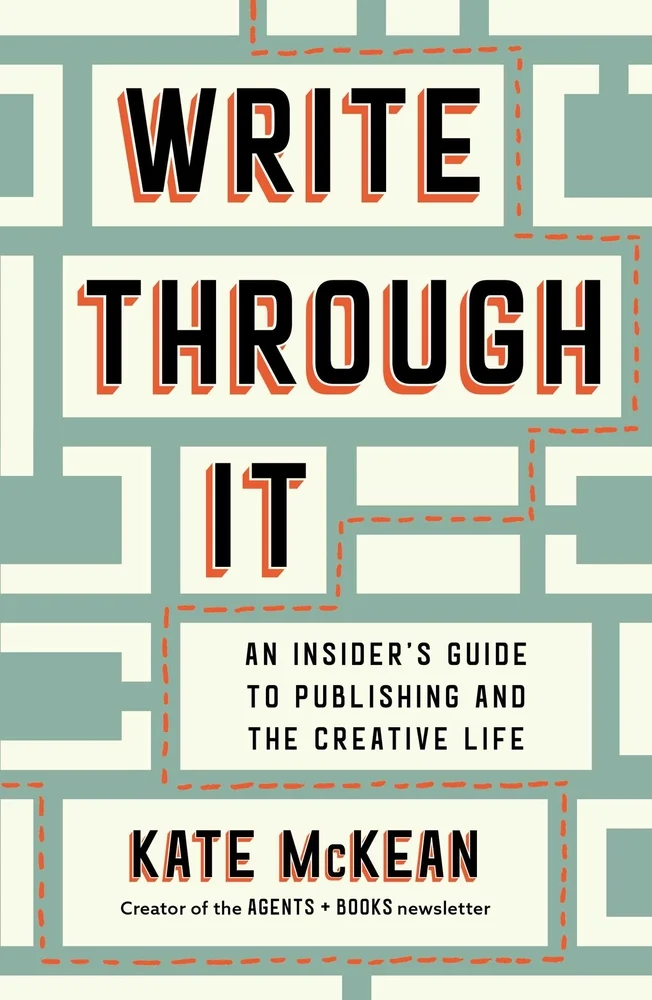
There’s so much to say on this topic that I basically wrote a whole book about it. Writing Write Through It: An Insider’s Guide to Publishing and the Creative Life helped me better understand how writers can navigate the weird, opaque, and confusing publishing landscape. There are no shortcuts or sure things, but my bird’s eye view of the industry has given me some insight, starting with what to write. 

Way back in 2017, I wrote about the novels literary agents see all the time. No more zombies, I said back then. Now, times have changed! You can write a zombie novel if you want! It’s time for an update. I’m back to tell you about 10 novels that fill agent’s inboxes these days, but also how you can make yours stand out from the crowd. You can write anything you want. The key is to think about the reader, too.

  1. Thinly Veiled Political Satire
    Listen, I can’t believe what is going on in the world either. Writing fiction about it might make you feel better and that’s great. Publishing it probably won’t change the world the way you hope, unfortunately, and everyone recognizes that character named Pylon Dusk. If you want to change the world, you can fundraise for mutual aid or canvas for candidates, and then write something else. Readers are not flocking to books that recreate our news feeds, just with funny names. 
  2. Sigh Cli-fi
    This science fiction subgenre focuses on climate change in a noble attempt to sound the alarm. But often they’re preaching to the choir. Most readers who like these books already know we have to act yesterday. If you want your cli-fi to reach the unconverted, what can you bring to your story that is not just HURRY UP THE PLANET IS DYING? The reader that should read your book will be the very last to do so, because then it would feel like homework.
  3. The Witches of Everywhere
    We’ve seen so many different witches in books: historical, contemporary, good, evil, goofy, scary, teen, crone, highbrow, lowbrow. It feels like the post Twilight days when vampires flooded the market. If you’re plotting a witch book right now, you can put it on the backburner until it comes back around again (which it will) or make sure your witches offer something new. You have to go deeper than my witches have white cats or other surface-level attributes. It will take some serious inventiveness and character development to turn a reader’s head with a witch book these days.
  4. Hello Fellow Cool Kids
    I often see YA novels where the main character’s primary motivation is to be popular. And honestly, (and thankfully) I don’t think kids today feel this as strongly as the adults writing those YA novels did back then. Plus, it makes me ask why those characters want to be popular. What will it get them? What will it protect them from? I think kids these days want to be safe and seen, not crowned prom queen, and a book about wanting to be popular needs to explore that desire more deeply in order for readers to connect with it. 
  5. AI Run Amok
    I see science fiction about AI more than any other trope, and like with cli-fi, the authors are preaching to the choir. The robot overlords have been a bad idea since Hal closed the pod bay doors. If you’re writing about AI, ask yourself what you want the reader to come away with, and then ask yourself if you think they already feel that way. How can you make the reader question their own beliefs? How can you surprise them?
  6. I’m Coming Out
    We need more queer and trans stories in the world, not fewer, especially now. And while coming out is a formative, important, sometimes traumatic, sometimes joyous moment, it’s only one aspect of a queer person’s life. Queer stories are so much more. What else can you share? What about joy? What about love? What about everything else?
  7. Picture Books with a Lesson
    My advice to all picture book writers is to read 100 of them published in the last five years and then start writing. You’ll find the ones that attempt to teach kids a lesson, whether it’s don’t pull the cat’s tail or share blocks at school have been done a thousand times or are not that enjoyable to read. Kids know when they’re being talked down to or lightly scolded. Instead of a lesson, can you tell a story, with a beginning, middle, and end? Can you show a character that learns, grows, and changes? It’s tough to do in so few words. This is one of the hardest genres to be published in for good reason. 
  8. A 12 Book Series
    The New York Times bestsellers list is full of novels that are part of a series. As a writer, I too would like to park myself in a world and write about it for years. But not all successful series were planned that way (as you can often tell by book four or five). If your new project is something that will only make sense to the reader after the third or fourth book, you aren’t going to get very far in today’s publishing climate. I mean, how many second TV episodes have you failed to watch, no less second books? Focus on making that first book a uniquely satisfying read, and with some success, you might find yourself in a series down the line.
  9. It Happened One Night
    Many main characters suddenly find themselves in the middle of things—a mystery, a romance, an intergalactic war—and it makes me ask, does this character do anything, or do things just happen to them? If your main character is the recipient of the plot instead of actively engaged in it, the reader will start asking their own questions. Why don’t they just leave? Why do they have to solve this mystery now? Why is this battle theirs to fight? Make sure your main character wants something and goes out to get it. If it’s compelling enough, the reader will want to see what happens next. 
  10. It Happened to Me
    Writing is hugely therapeutic. That writing, though, doesn’t always fit in the publishing world. While you’re not trying to publish your diaries, sometimes when we’re too close to our subject matter—in both fiction and non-fiction—we can’t see how the reader will interpret things. Just because it happened doesn’t mean there needs to be a book about it. Just because you wrote about it doesn’t mean it needs to be published. It has value whether someone else can buy it in a store or not. 

It took me years to get my first book deal as a writer. I wrote picture books and a middle grade novel and an adult novel with no luck. It wasn’t until I wrote a non-fiction book based on my newsletter that I found success. What made the difference for me? I thought about what the reader would want, not just what I wanted to say. This alone can help troubleshoot your ideas. Assume your reader is smart and has little time and money to spend on books—because it’s true. You want the reader to say ohhh, I’ve never seen that before. Because at the end of the day, the reader is always going to ask, what’s in it for me?

Documenting My Life So I Don’t Forget

In the Spirit of Moving On by Saachi Gupta

Author’s Note: Some names in this essay have been changed to maintain privacy.

On my phone’s notes app, I keep a list of all the people I’ve ever kissed. It started in March, 2022, when I made out with my friend Neeharika in her bedroom, and Shivani hesitantly snapped a photo. It was my first kiss; it needed to be remembered. Since then, The List has grown to include thirty people. There’s Isa, the hook-up I lost my virginity to while insisting that virginity was a social construct. There’s Sharan, the boy I made out with for all of two seconds at a club, and Raj, who I kissed right after. There’s Martin, the white man from Mexico who could tell I was on antidepressants because my eyes were out of focus, and who never texted me back because I didn’t have sex with him.

Asfiyah constantly pokes fun at me for The List, insisting it’s a fuckboy thing to do, but I swear to her it’s not a hall of fame. Its purpose is not to brag about my sexual exploits or stroke my own ego. “I have this obsession with not forgetting things,” I explain, as we walk through the glistening lanes of Bandra. In the rain, my white ballet flats turn murky brown. We stop to take solo pictures of each other on an old digital camera I found in the drawer of my television unit a few days ago, a Nikon Coolpix from when I was thirteen, which I’ve been taking everywhere since. We pose together for a few, squealing when a rat races past us into a gutter. Then we snap a photo of our shoes in one frame, the toes of my white ballet flats pointing towards her grey Converse. Looking through the photos when I return home, I realize something: It’s not that I’m obsessed with remembering things. It’s that I have a fear of forgetting.

I must have been nineteen when I learned that memories warp a little each time we recall them. The notion terrified me. When I’m present in a moment, everything seems so clear, so easy to return to whenever I feel like it. The gentle drizzle of rain as Asfiyah and I pose for photos. The droplets on my eyelashes. The pavement, darkened by rainwater. Yet, when I look through the photos from that evening, the pavement is completely dry, as are our shoes. My ballet flats are pristine, shining white, unchanged by the puddles I remember having splashed through. Was it not raining, then? Is nothing I remember accurate? Will I never be able to recall this present moment, exactly as it is?

Will I never be able to recall this present moment, exactly as it is?

Invariably, every time I think about the fallibility of memory and how untrustworthy our brains are, I realize, in a rush, the little details around me that I’ve taken for granted all my life: the exact green of the couch we’ve had since I was a child, the floral patterns on my grandmother’s curtains. The smell of my mother’s rotis in the kitchen, the smooth texture of the bedroom tiles. I never bothered to memorize these details because I’ve always had access to them, because I’ve presumed I always will have access to them. But tomorrow, we could throw away the couch and curtains, change the tiles, move out of our flat. Tomorrow, my mother could decide she never wants to make rotis again. With the object gone, my memory of it undependable, will I be left with no way to preserve that piece of my childhood exactly as it was?

In Siân Hughes’ Pearl, the protagonist deals with a similar distortion of memory as she grapples with her mother’s disappearance years ago. She recalls her mother reading Charlotte’s Web to her when she caught chickenpox as a child, keeping her “scabby hands” away from her face—until she finds out that she only caught chickenpox after her mother’s disappearance. She remembers throwing her mother’s high-heeled shoes into the garden, then searching for them in the torchlight—but her father says her mother never owned any high-heeled shoes. 

I wonder how many such things I’ve forgotten, mixed up. How much will I never remember again? At a friend’s house recently, her grandfather fondly referred to me as bete, child. The word made me straighten up; a sharp jolt in my chest. Since my Nanu had passed away, no one had called me bete. For twenty-two years, almost every day, he had called me bete gently, softly, in his velvet voice. In just one year without him, I had forgotten the word. What other things about him had I forgotten? What other details did I take for granted, presuming I would always have access to them, presuming he would always be around?


I’ve always been afraid of things slipping away. Since I was a child, the fear of my loved ones dying would keep me up at night. Before sleeping, I would ask god to protect every person I knew, then list each name, fearing that if I forgot someone, they would perish the next morning. One night, seeing my younger sister asleep, covered head to toe in a white sheet, I raced to my parents’ room, unable to breathe, convinced the sheet was a shroud. When I got my first phone at 12, I began to record family members: stories, phone calls, videos of them cutting their birthday cakes. Nothing could disappear. Upon my own death, I couldn’t disappear—so I started to write. It was the only way I knew to capture a moment in time and share it with the world. If cameras were cheaper, maybe I would’ve been a photographer for the same reason.


Samar is second on The List. By the time we met, I had already become frantic about documentation: Instagram stories, diary entries, photographs on Parnika’s digital camera, videos on my phone. For years, I had been secretly audio recording my grandparents every time they told a story. I liked remembering significant dates: last year this time Dadu was hospitalised, last year this time Amatulla told me she had feelings for me, last year this time I bought my first drink.

When we were first getting to know each other, Samar and I were both struggling with alcoholism. I was also on medication for depression and anxiety, and had to strain my brain to remember details from hours ago. If a classmate asked me if I’d had breakfast that morning, I wouldn’t have an answer. I’d forget details from an anecdote as I was narrating it. On mornings after drinking, I would listen in amusement as my friends told stories that seemed to be about someone who vaguely resembled me, someone who said and did things I never remembered saying or doing. I trusted my memory less and less. 

When I was drunk, details, conversations, feelings escaped me far too quickly. The past fell away. Every moment felt like a reset, like I was being reborn again and again throughout the night. When I was drunk I was okay, for once, with forgetting; in fact, there was nothing I wanted more than to be a new person. The morning after, I fretted over everything that had slipped away. Hours of my life gone somewhere, never to be found again except in the details from my friends. After every party, I would text Parnika, demanding photographs, then dump them all on my Instagram: proof that it had happened, ticked off a checklist. 

Despite all of this, I rarely took any photos of or with Samar—I felt embarrassed to ask. In romantic entanglements—especially an undefined one like ours—wanting to document our time together felt like an admission of being more interested in the other person than they were in me. Why else would I want to remember something? The explanation about my compulsive documentation felt like a silly excuse.

Once, driving around the city, Samar and I stopped the car in a dark alley to make out. We were near my grandparents’ house, something he made a joke about, before we kissed. In just a few seconds, we realized the alley wasn’t quite as dark as it had looked—we could feel eyes on us as people walked past. I suggested we look for another lane, and he nodded, before squeezing the car out of the parking spot. Years later, when Asfiyah and I went for a walk through the same lane, I pointed the spot out to her: “That was where we made out for a bit.” Then, a few seconds later: “Actually, I’m not sure if that was it. Maybe it was up ahead.” Then, a few minutes later: “Maybe it was the next lane, actually.” When we walked past the next lane, I sighed, “No, it was definitely that last lane.”


Recently, I’ve found that the more I focus on a memory, the blurrier it becomes. It’s like reaching for something and finding it scatter, disperse, spread everywhere until it’s so thin it barely exists. When I lose a silver bracelet, I know I have no hope of finding it because I remember wearing it last to a party but was I even wearing it at the party or did I decide my outfit looked better without a bracelet? If, say, I did wear it to the party, did I remember putting it in my bag after I took it off? Maybe I did take it off and put it in my bag but actually didn’t wear it to the party, and the last time I wore it was three months ago. And so it goes. The capricious memory sprints further and further away, jumping over obstacles, ducking into narrower, unknown lanes, until it’s slipped away. My silver bracelet, gone. An entire conversation, vanished. It’s why there is one man on The List whose name I do not remember. I have put him down as Twin Guy.

The more I focus on a memory, the blurrier it becomes.

What I do remember about Twin Guy:

  1. I met him at Bonobo. It was the 4th of August.
  2. He was studying in the UK.
  3. Neeharika’s schoolmate Sahiba was with him.
  4. He had a twin brother.

I remember the exact moment when, standing by the bar, I asked him his name. I’d already had six drinks by then and the moment he said it, the name slipped away, lost in the chaos of the night. I woke up the next day with blue lips and alcohol poisoning.

It has always bothered me that I don’t remember Twin Guy’s name. I’ve begged my friends to help me look for it, checked Bonobo’s Instagram stories, even googled the words “Indian twins in the UK.” His name feels like a missing puzzle piece, a Cinderella story; once I know it, that last night of revelry before I decided to be sober will appear before my eyes, complete again. 

Some months later, I saw Sahiba at a cafe in Bandra. She was with her mother and had no reaction to seeing me. Awkwardly, right as she left, I called out her name. She turned around, confused. She did not remember me. “This will sound really weird,” I said, pulling her aside, “But last year at Bonobo, I hooked up with a friend of yours. And I just can’t remember his name.”

Together, we bent over her phone and scoured her photographs. I gave her all the information I had: the date, the UK, twin brother. 

“I don’t know any twins.” She frowned. “Maybe he lied to you about having a twin brother?” 

“No,” I insisted. “I met his twin, too.” 

We reached August 4th, 2023 in her camera roll. She showed me all the photos and videos from the night, watching my face earnestly. Finally, in a video of a dancing crowd, I saw him, right in the front, pumping his fist. 

“That’s him!” I said, relieved he wasn’t a figment of my imagination. 

Sahiba’s face fell. “But I don’t know him.” 

“But he was with you, I remember,” I said, beginning to doubt my words even as they came out of my mouth. “You introduced me to him.” 

“Maybe he’s my boyfriend’s friend,” she said, after a few seconds. “I’ll check with him.” 

I knew, in that moment, that I’d never find out who he was.


My issue with remembering is really a philosophical one. If a tree falls in a forest and no one is around to hear it, does it make a sound? If something happened but no one remembers it happening, did it really happen? Do moments also die when the last person who remembers them forgets? Do things even happen if you don’t remember them?


What I don’t remember (what I never remember):

  1. What did she say when she touched me?
  2. Where did her hands go?
  3. How long did I freeze for?

In July 2021, Amatulla told me she had feelings for me. I felt like I was letting her down when I told her I didn’t feel the same. A month later,  she touched me when I didn’t want her to. We were at a friend’s birthday party,  surrounded by people playing a drinking game around the table, but no one saw her hand creep up my waist. I forget now if I had a drink in my hand. I forget where exactly she touched me, what she said as she did it. I didn’t know how to ask her to stop, so I pretended someone was calling my name. I stood up and left her sitting alone on the floor, presumably drunk and tearful. I didn’t look back.

In my bed that night, I resolved to forget it had happened at all. Forgetting meant I could remain friends with someone who was important to me. Yet even as I decided this, I dreaded waking up the next morning, doubting my memory. There was no evidence it had happened: no Instagram stories, no diary entries, no photographs on Parnika’s digital camera, no videos on my phone. No one had seen. Amatulla, hungover, didn’t remember anything the next morning.

Over the next few months, when the people around me questioned if I was telling the truth, I questioned it too. But even when I forgot the little details, I remembered the way my stomach hurt for days after. I remembered the fear of forgetting that pain.

Documentation was how I made sure no one ever had to fill in those gaps again. That everyone knew what really happened, that I didn’t make it up, that I’m not going crazy. Maybe I am obsessed with documentation because it’s the only way to make sure I am believed. It’s the only way I believe myself.


Maybe I am obsessed with documentation because it’s the only way to make sure I am believed.

When I was a child, my fear of death made me an expert at memorizing physical touch. Even four years after my Dadi and Dadu’s deaths, I can remember exactly how their hugs felt. I remember how Nanu’s hand felt in mine, so clearly that I don’t even have to close my eyes to return to another time in my life. The memory of touch is called a haptic memory; it falls under sensory memories. I do not remember what Amatulla’s hands on my body felt like.


In May 2024, I visited Samar in the mountains, where he had moved for a music course. In the week we spent together, I discovered he had forgotten—or mixed up—many significant moments of our relationship. He thought it had been five years since we met, not two. He remembered me meeting his family, but I never had. He had no memory of when, irritated by my brashness when I was drunk, he stopped speaking to me for seven months. 

For the first time in my life, I felt envious of someone’s weak memory.  Over years of deciding to not let anything disappear, so many difficult moments and residual feelings have not only stayed with me but are practically stuck to my skin, impossible to get rid of. I remember obscure, upsetting details from years-old interactions: the exact last words of a lengthy apology text from Amatulla (“in the spirit of moving on, i would really appreciate if this is the last interaction between us”), the time Samar stood me up after I’d spent an hour waiting for him at Prithvi Theatre, the time he forgot I’m a vegetarian, the screeching voice of my eighth grade Math teacher stopping me in the school corridors for wearing a cropped top.

I began to question what these memories were even adding to my life. Was it good to remember things, if those things ultimately held me back? Did I really need precise memories, or did I need to stop living in the past? After all, Samar was living in the present, and he seemed to be happier than I was.


Despite my fear of death, there is one thing about it that has always comforted me: scientists state that the brain is active for approximately seven minutes after a person dies. In this time, the “brain wave patterns… are similar to those occurring during dreaming, memory recall, and meditation.” Scientists theorize that these seven minutes may be a replay of one’s life. The thought fills me with relief. At the end of my life, will I finally remember everything? 

“Do you think the memories we see in the replay are objectively accurate?” I ask Asfiyah. “Or do you think they’re the same warped versions we carry with us throughout our lives?” 

Our guesses do not matter. There’s only one way to find out.


If I know I cannot retain everything I want to, that my memories will fade despite my meticulous documentation, maybe the only thing to do is live in the present. Already, some of the names on The List evoke no memory; I cannot even put a face to them. Why waste time and energy preserving something that I know will eventually disappear anyway? Shouldn’t I be focusing, instead, on simply living in the moment, free of worries about taking photographs, recording audios, or trying to memorize the color of a couch?

Recently, as I read Anita Desai’s Rosarita, something remarkable happened. The story revolves around a young woman from India, studying in San Miguel, Mexico. I too had spent eleven months in Mexico as a student. When I left, I promised myself I wouldn’t forget my Spanish; I would practice, continue to listen to Latin music and watch Mexican shows on Netflix. For a while, I remained fluent in the language, nursing hopes of returning to Latin America in the near future, but six years on, I was slightly less hopeful and significantly less fluent. I struggled to string together a sentence and had to google translations for words like banana, left, and forgot. And then came Rosarita. The novella only had a few Spanish words, sparingly sprinkled across 94 pages. Chiclet, iglesias, ahora, mercado, tienda. Words that I had once used almost daily, and now that they were no longer crucial to my survival, forgotten. As these words appeared on the pages, though, their meanings came back to me instantly, naturally, as if they had never stopped being a part of my vocabulary. 

The other day, as my friend and I sat on the floor of her house, looking through old photographs from school, the same thing happened. The names of my classmates—names that I once said or thought about nearly every day, names that had faded away since I left school—came back to me with no effort. “Lavesh Chib, Drishti Ahuja, Prerana Shetty,” I spouted automatically, sliding my finger across the class photograph.

Maybe we never completely forget anything. The things that have to come back to me, the things that are important, will return at the right time. It’s like swimming or riding a bike. Maybe the memories that return will be accurate; maybe they won’t. But is accuracy the point of a memory? Isn’t it enough to remember exactly how it felt? To have lived through something that deserves to be remembered? The protagonist in Siân Hughes’ Pearl agrees. “I claim all that I can rescue of the time before,” she declares, “Even if someone tells me the details are wrong, or in the wrong order. Because it is mine.”

Exclusive Cover Reveal of “The Seven Daughters of Dupree” by Nikesha Elise Williams

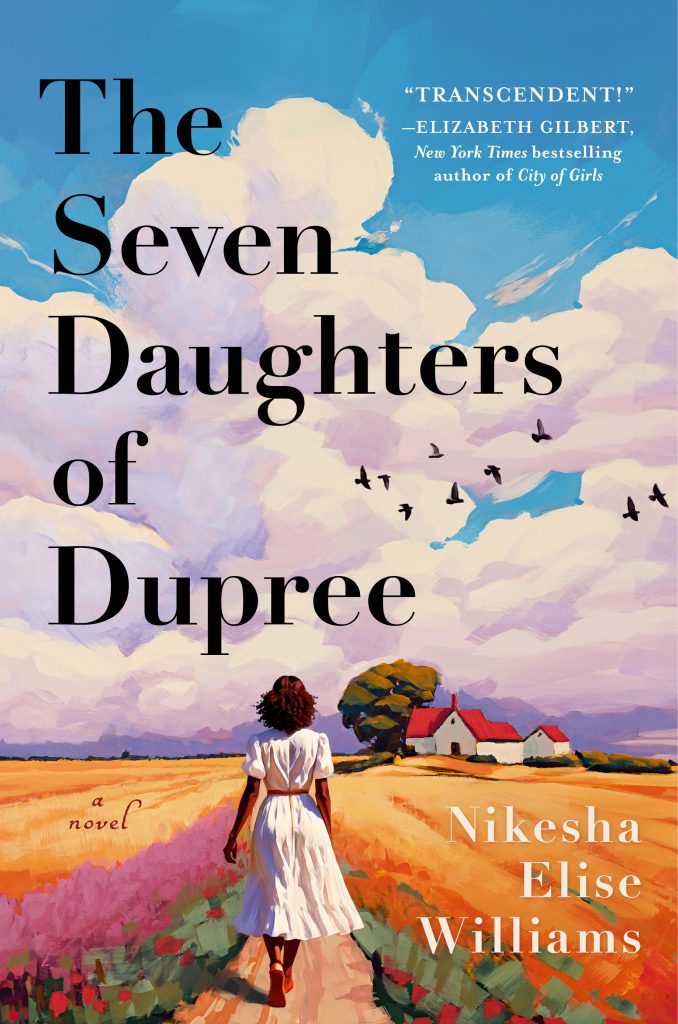
Electric Literature is pleased to reveal the cover of The Seven Daughters of Dupree by Nikesha Elise Williams, which will be published by Scout Press on January 27, 2026. You can pre-order your copy here.

It’s 1995, and fourteen-year-old Tati desperately wants to know the identity of her father. Gossip flies fast and loose in her mother Nadia’s basement salon, but when it comes to family, she’s tight-lipped. Tati’s grandmother, Gladys, won’t tell her either; nor will Gladys tell Nadia the real reason she fled Land’s End, Alabama, in 1953. These are the first of many secrets in the matrilineal line of Dupree women. There’s Jubie in 1917 who failed to pass for white when she had a dark baby, Ruby. Ruby’s insatiable lust for Sampson in 1934 that leads to a baby of her own out of wedlock. And that night in 1980 that Nadia so desperately doesn’t want to talk about. Dupree women can only have daughters, a malediction passed down because of the suffering by the first of their line. None of the women know their ancestor’s enslaved or given name, only the legend of how she died: They cut off her head because she ran. THE SEVEN DAUGHTERS OF DUPREE is a novel about the secrets kept between mothers and daughters, and how the actions of one generation ripple through the next. This sweeping epic about seven generations of Black women echoes Yaa Gyasi’s Homegoing or Honorée Fanonne Jeffers’s The Love Songs of W.E.B. Du Bois. Readers will journey with Tati to uncover the identity of her father, while learning the truth of her lineage, still whispered at kitchen tables and murmured in basements, where the ritual of pressing hair happens every Saturday night. 


Here is the cover, designed by Danielle Mazzella di Bosco, with artwork by Jim Musil:

Nikesha Elise Williams: I didn’t really have a concrete idea for the cover of The Seven Daughters of Dupree. I created a mood board last summer, and looking back on it now, I’m sure the designers were thinking, “She’s a mess.” However, two things on that board that do come through in this final design are the use of color with emphasis on the color white. 

I really love bright colors, and when I first saw this Jim Musil painting used for the cover, I was immediately attracted to the vibrant use of color even though the scene is soft and idyllic. However, the painting alone wasn’t enough. I’m so grateful to my editor, Alison Callahan, for encouraging my honest feedback and advocating for the cover we have today, which includes a young woman walking down this dirt road in a white dress while birds fly above her. 

Those additions were everything because in my mind it’s a pivotal scene pulled straight from the novel and come to life. However, I also think it’s a point of intrigue or mystery because you don’t see the woman’s face. You don’t know which daughter it is, where they’re going, or what they’re going to do, just that they’re walking down this road with intention and purpose. While I’m of the belief it’s one specific character, it could be any of them and I think, I hope, that’s enticing to a future reader. My hope is that when readers see the cover and read the title they wonder, “Who is that?” And, then, say to themselves, “Let me get this book and find out.” 

As for the color white, it is a color of healing as well as of angels and ancestors. In my family, when someone passes we wear white. I have friends who have been initiated into Ifá, who for spiritual reasons go through rituals of wearing white. In the novel, some of the women practice hoodoo, some of the women are midwives, and so when they wear white they’re working and communicating with both this plane and that of the other side. 

The birds flying off in the distance was a suggestion by my editor and she pointed out to me that in the flock there are seven together and then two more a little further from the group. In a novel entitled The Seven Daughters of Dupree, the significance of the seven birds in the flock is obvious. The themes of generational heritage, history, lineage and legacy are all bound up in the title and those birds. I believe the two on the side represent the possibilities for this line of women as loosely evidenced by this line from the novel, “…if burdens could be passed down, surely blessings could move up.”  

Danielle Mazzella di Bosco: From the beginning, we knew we wanted the cover to reflect the heart of the book—something that spoke to seven generations of Dupree women, legacy, and quiet strength. An epic novel about the secrets kept between mothers and daughters, and how the actions of one generation ripple through the next, we focused on a visual that was more uplifting, brighter, and expansive to convey hope. The artwork is a landscape painting by Jim Musil, chosen for its warm, timeless feel. Musil’s painting, with its bold brushstrokes, vibrant colors, and open sky, captures a sense of memory and place that pairs beautifully with the novel’s tone. The lone figure in a white dress represents strength and reflection—she could be any one of the Dupree daughters, carrying the weight and wisdom of those before her. The final design brings together story and setting in a way that feels both classic and emotionally rich—drawing readers into a world shaped by generations of women.

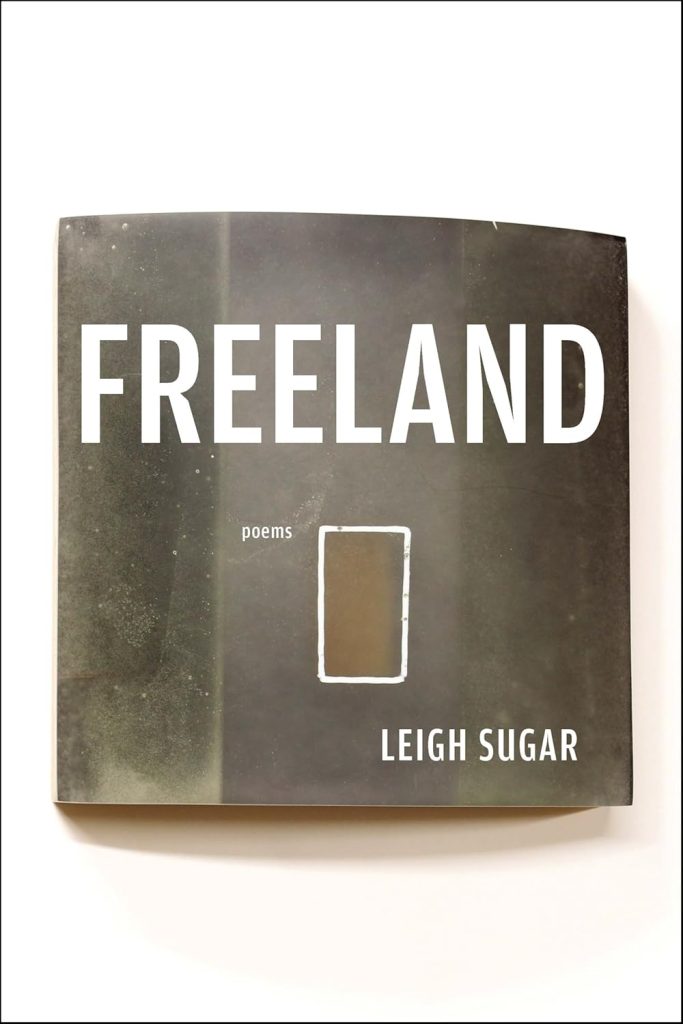
“FREELAND” Is About Loving Someone Behind Bars

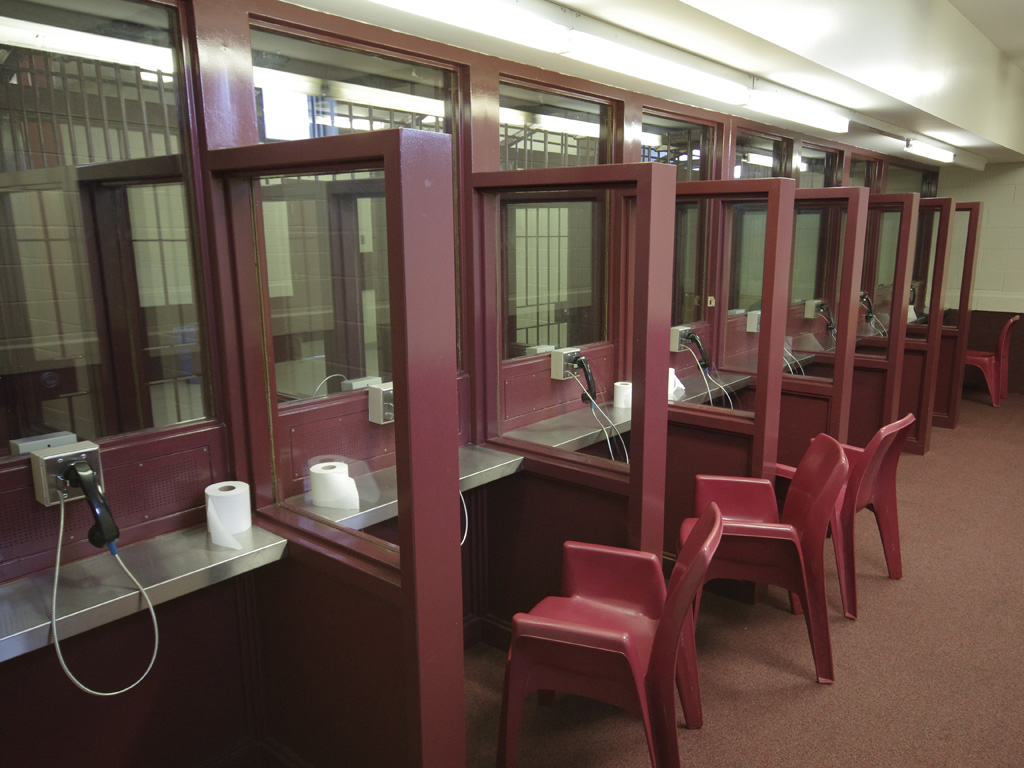
Leigh Sugar’s debut poetry collection, FREELAND, is equal parts gripping love story and confessional. With narrative, lyrical, and structurally experimental poems, Sugar offers a rare, nuanced take on the prison landscape as only one intimately acquainted with it can. Throughout the three formal sections of FREELAND, which are further split into their own micro sections, she shows us the claustrophobic, charged interior of a Michigan state prison visiting room with her incarcerated beloved and the overwhelming unknowns and possible futures for her life on the outside.

Posing and grappling with questions of identity, connection, timing, and time itself, FREELAND offers insight into the political, social, and physical divides distinctive to the U.S. mass incarceration machine. Sugar’s account is generous and refreshing in its honesty and straightforward advocacy, and invites us to reconsider all we’ve been taught about crime, punishment, and justice. By sharing her personal relationship to the merciless carceral system, she also reveals important truths about love realized, deferred, and transformed by circumstance and choice.

Sugar previously interviewed me for Electric Literature about my debut memoir in verse, Disappearing Act, which detailed my own experience navigating a loved one’s incarceration. It was a privilege to continue the conversation and shine a light on the captivating story behind FREELAND.


Jiordan Castle: I was moved by many of our shared experiences: the microwaveable cheeseburgers in the visiting room, how funds and wages work for (and against) incarcerated people, and the automated warning before a time-constrained phone call ends. How did you decide what snapshots of the prison landscape to share and what to leave out, or save, for yourself?

Leigh Sugar: I think a lot of FREELAND is the result less of decision than of urgency and intuition. There are so many recurring memories, so much recurring scenery in the experiential dirge of prison; the violence of unending repetition, and the confusing comfort of it. So many aspects of the visiting process are predictable—not just the security process, but also the sounds, visuals, and even feelings. The specific imagery is what comes to mind—and into my imagination—first and most readily when I think of going to the prison. The snacks in the vending machine were generally always the same, and certain foods are more popular than others. I very explicitly remember Gold Peak brand iced tea, and still can’t buy a bottle. More general items like tables and chairs—though clearly “institutional” in the prison setting—are less vivid in my memory, as they are more ubiquitous in my life beyond prison.

I also tried, as much as possible, to maintain the perspective of FREELAND as my own; to not attempt to adopt the experience of someone actually incarcerated—which I’m not, and never have been. This feels important given the power differential between myself and those who are incarcerated. More specifically, I know many incarcerated folks who are writers and artists themselves, and they are the ones who should write and share their experiences (if they want to). FREELAND can only account for my experience, one as a “free” person who has statistically-unusual access to some of the goings-on in prison. The images and moments I chose to include, like the phone call, are the ones that felt most oppressive to me in their persistence and predictability. They also felt most provocative and ripe for probing.

During the initial drafting of many of these poems, “craft” wasn’t necessarily a determining factor in “choosing” imagery. More so, I followed my gut, my memory, my recurring dreams. Architect Mies Van Der Rohe is often attributed with the term “God is in the details,” and often us writers are encouraged to focus on detail, rather than general references, in order to get at what may in fact be more universal. Perhaps in this case, the inversion of Van Der Rohe’s epithet is more fitting: “The devil is in the details.” At any rate, these “details” were a matter of instinct, and then when it came to assembling the manuscript, observing recurring moments and figuring out how to piece them together into reappearing images and themes became more clear.

JC: I love the work different fantasies are doing in this collection. The speaker’s, that of the speaker’s beloved, and all those fantasies that stem from the physical and psychological fact of incarceration. Why is fantasy essential (and sometimes painful) in prison life and for those who are prison-adjacent?

LS: I have a very active “what if” life in my mind. I am often ashamed of this (cue all suggestions to “live in the moment”) but the process of writing FREELAND, and subsequently reflecting on it, has revealed the self-preservation instinct behind many fantasies. Without imagination, how can we achieve change? Imagination allows us to picture a reality different from the one we experience, and I find it to be a critical skill in service of reaching toward a more just world.

Without imagination, how can we achieve change?

I don’t think I realized at the time how heavily I was relying on fantasy to propel not only the romantic relationship, but also my engagement with the legal system as a whole. At the risk of seeming naive, the legal system is vast and inextricably connected to myriad other oppressive systems, but if I focus too much on the largeness of the system and my own smallness, any effort feels futile. What else can I do but believe that what I, we, say matters? The stories we tell. The futures we imagine, even when imagination reveals the painful distance between current reality and a more humane possibility.

JC: In FREELAND, you don’t shy away from sensuality, sex, and romance as confined to the visiting room and phone calls. Historically, I think it’s been a bit taboo to write about sexuality as it relates to incarcerated people. In large part, I believe, because of the sexual violence associated with prison. Why was it important to share that part of your experience?

LS: Honestly, when writing the individual poems, this didn’t even occur to me. I felt I was documenting our experience, which had an inherent sexually charged tension. An instructor actually, in the early stages of this manuscript, suggested I hold back on some of the sex, saying it was getting to be a little “too much.” It made me quite self-conscious at the time. Now, years later, I’m curious about this feedback. What was “too much”? There is sex, sexuality, intimacy, graphic descriptions of sex—and all the feelings and situations surrounding it—in so many poems and collections. Why was the sex in mine striking this instructor as “too much”?

Was it boring? Did the tension become stale when the sex could never be fully realized in a normative sense? Was it uncomfortable to think about an incarcerated person expressing their sexuality and sensuality (to the extent that they are “allowed” and able)? Or to be confronted with the realities of what an intimate relationship between an incarcerated person and a non-incarcerated person might entail? Why?

JC: It felt to me like a kind of reclamation. I appreciated the truth of being a body in the world, especially when someone’s physical world may be confined within a prison.

LS: Though the topic is still taboo, it is much less taboo for me—a white, petite, non-incarcerated person—to write about my sexuality than it is for an incarcerated person, particularly an incarcerated person of color. Especially given the social correlations between incarceration, white supremacy, and the associated bigotry of Black male sexuality.

JC: We mentioned the phone call between the speaker and the former beloved, but what’s perhaps most telling is that it takes place right after the 2016 election. You deftly showcase the privilege of having access to varied news sources while trying to sympathize and advocate for someone who doesn’t even retain the right to vote. With FREELAND taking place largely in the past but being published early on in a second Trump term, how do you contextualize that phone call now?

LS: The phone call was a pretty straight transcription from our actual conversation, with some stylistic shaping. I think I knew instinctively that something interesting was happening in our dynamic, but at the time couldn’t quite identify what that was. When I look at it now, I sense a lot of tension in the speaker’s desire to connect with the beloved about the fear and desperation she, I, was feeling, while simultaneously realizing that, first, he didn’t have access to any news sources beyond select TV news channels, and thus was not privy to experiential “feel” of the city, nor direct stories from friends and acquaintances. And second, that this lack of access was upsetting to me, not because it was his fault but rather another consequence of the state’s system.

JC: In both of our books, you and I give select insight into the crimes our loved ones were charged with. It’s a difficult move, but an important one, I think, if only to show that there are no “perfect” crimes or prisoners, only an imperfect system. How did you determine what you were allowed (or allowed yourself) to disclose?

LS: I started writing the poems that would become FREELAND over ten years ago, so my relationship to the work now is very different from when I began. In recent months and years, I started to notice an unsettled worry—that I did not consider the feelings of the family, friends, and the beloved that appear in the collection.

However, when I recall the writing process, I remember how careful I felt in navigating this space; how worried I was about portraying someone in an unsavory light. I tried, as much as possible, to make the book about me: my relationship to prison—as well as a bit of the history and context that created the environment for me to be involved in prison work—rather than about anyone else, particularly the beloved. He and I had many conversations throughout FREELAND’s evolution and editing. He’s read all the poems and granted permission to publish, which felt like the most important permission to request.

In general, I found it important to self-implicate; not represent myself as “bad,” but show my very honest belief that we are all capable of doing—and receiving—great harm (to paraphrase adrienne maree browne). One of the most important tenets I’ve come to believe is that I am not different, fundamentally, from a person who has become incarcerated.

JC: You also edited the 2023 anthology, That’s a Pretty Thing to Call It, which contains poetry and prose from writers who’ve taught workshops in U.S. carceral institutions. There’s a lot to consider in both collections about resisting the “savior” trope. Did you take anything away from editing that anthology that helped shape the final version of FREELAND?

LS: It’s much easier to gawk at horror stories than to confront the possibility that we are, or that I am, capable of some of the same behaviors. We are all people. I’ve caused harm. I’ve been harmed. One of the projects of incarceration is to separate and invisibilize large swathes of the population. In order to do so, the incarcerated must be “othered.”

JC: Your book reminded me how acutely the future can become something to fear or even deny in order to survive the present when someone you love is in a place where time stands still. Did the relationship with your former beloved, incarcerated throughout the course of your romance—and after the fact—inform how you think about or experience time?

LS: Woof, this is such a big and observant question, because my experience of time is very impacted by this experience and by my work in prisons. I’ve worked with people who were released from prison at 36, already having served 20 years. I’m 35 as of July; this is young. My sense of “expected” timelines and milestones has been completely subverted. I’ve witnessed the way a person can step out of prison after decades, never having seen a smartphone, and within 5 years be married with a college degree and a mortgage.

So much fear of the future is fear of the unknown; what the future will be, or what it won’t be (i.e., a future in which dreams aren’t realized).

JC: We’re both white women of Jewish heritage, and as such, not one of the demographics most commonly and consistently affected by incarceration. Who, what, are we serving by sharing our stories?

LS: Like Solmaz Sharif’s quote, “There is nothing / that has nothing to do with this,” I really do believe that we are all connected, and that whether or not I hold a certain historically oppressed identity, I am never a “witness.” Witness suggests a continuation of the “other,” that there is a person or group that is enduring a given situation (in this case, incarcerated folks), and that the rest of us who are not incarcerated are just outside of the issue. This is not true.

Witness suggests that the rest of us who are not incarcerated are just outside of the issue. This is not true.

The United States’ mass incarceration system—any carceral system, really—only benefits from this false sense of division. It is easier to stomach, or perhaps forget entirely, the knowledge that tens of thousands of people exist in our very human, very fallible, very racist-classist-ableist-heteronormative-patriarchal-capitalist – communities—when they are simply locked away and invisibilized. Especially when we feel there is some grand difference between people who are incarcerated and people who are not. Division and separation are carcerality’s tools and props.

Understanding—and accepting—that is critical to my understanding of hegemonic structure in general, and the once quieter (and now not at all quiet) fascism that has always run this country. There are reasons why, say, my former beloved, or others I’ve met in prison, are incarcerated and I am not. But these reasons are based on systemic and institutional racism, classism, and other oppressive systems. It would be far more uncommon for me—a white, educated, non-immigrant, cis-gendered woman, who for all intents and purposes satisfies “normative” expectations of citizenship—to be incarcerated. The facts of my access to financial and legal resources (combined with my race, appearance, family history, and other factors) would render a serious case with the justice system very unlikely, even though I am disabled, neurodivergent, and experience mental illness.

JC: The collection ends with a final reflection in the form of the poem, “Revision.” You write: “I thought abandoning the reach / meant longing won…” Did writing and publishing FREELAND change how you see the version or versions of yourself that lived these poems?

LS: “Revision” is actually the last poem I wrote (in a workshop with Leila Chatti!). It, like several other poems in the collection, radically changed my understanding of myself, the relationship, and my writing. I did not know what was going to happen as I wrote the poem, and when the end revealed itself, I knew immediately this was the end of the book.

I am a very obsessive person; this relationship was a perfect receptacle for obsessive thought and action, as the possibility for fantasy, imagination, and future-tripping was endless. I never ran out of possibilities or scenarios to consider. However, by the time I wrote “Revision,” two years had passed from the end of the romantic part of our relationship, and about the same amount of time since I’d even looked at the manuscript. It felt fitting that the final poem turns back inward—to serve as a reminder that many of the extremely intense feelings I experienced in the relationship weren’t entirely due to the prison’s separating force; that feelings of longing, loneliness, and sadness may be universal, and wouldn’t be “resolved” by a climactic release from prison and the ability to “start our lives for real.” This is our life. This is not to downplay the role of prison, but more to acknowledge the parts of me that have always been present. Simultaneously critical and exacting, while also deeply empathetic and concerned about the world and my place in it. Furthermore, the poem seemed to tug at threads that other poems in the book certainly touched on, but perhaps didn’t fully explore. My experiences of loneliness and feeling misunderstood—these are my experiences, with or without the prison. The prison had become a great and obvious object on which to project these feelings, but they still remained once I was in a different situation.

Now, this does not negate the reality that I “got” to leave, or could choose to go, while the former beloved—and everyone else incarcerated—cannot. This is, again, where I return to my intention with the book: to remain, as much as possible, in my own vantage, my own life. This was my experience. This is not the experience, necessarily, of someone getting out of prison. This is not the experience of the former beloved. It was my own journey in understanding some core aspects of myself that I had previously been able to attribute to the forces of prison but ultimately couldn’t deny that these were lifelong obsessions of mine that would persist regardless of my life’s specifics. This, too, helps me conceptualize and believe in the connectedness between those of us in prison and those of us outside of prison. The experiences and feelings from the relationship were real, and I would’ve struggled with feelings of loneliness regardless of the circumstances. This is not to take power away from the oppressive force of the prison, but more to acknowledge the universality of experience.

JC: Prison takes. Does it give anything back?

LS: Oof. This feels a bit like a trick question. If I say “yes,” am I endorsing something about prison? Am I suggesting that what it may “give” makes it “worth it”? No. Nothing is worth the carceral system.

And, given that our current world does operate a carceral system (many carceral systems, but the scope of FREELAND is limited to the state prison), I’ll answer in the context of this reality. Prison, if understood through a lens of social control, can remind us that the lines between good and bad, right and wrong, are far more blurry than many of us care to admit. To fully realize this blur forces us to account for the harm we ourselves have caused, and consider what is the difference between that and harm (and punishment) that has been legislated by the state?

Are there possibilities for allowing each other, and ourselves, to live freely that we haven’t yet explored? Or that are masked by the seeming inevitability of prison. Once we start asking these questions, a whole world of possibility opens. Perhaps I’ll leave it there: the existence of prison can serve as a stark object against which we—as a national community all the way down to our relationships with ourselves—can measure our own capacity for acknowledging harm and devise ways to address it that both honor the survivor (or a victim’s family) as well as continue to recognize the humanity of all involved. A terrible reminder of how far from the prison system we hope to—and can, I believe—move.

7 Books Featuring Freaky Queer Sex Scenes

“Some sex expresses love, / Some expresses hurt. / Sometimes, hate. / Sex can bring sparkling lightness, /  Or incredible darkness. /  Sometimes, both…”

These are lines transcribed from the “superdoom supermoon” at the beginning of my new novel Venice Peach. The spectrum of sexuality has always been vast; the fact that all means and ends can lie within human sex acts, eternally confusing. Humanity as a whole has clearly never been able to fully wrap our heads around the myriad different directions in which our sexuality can drive us. In truth, we have seen more hate spawn from lack of understanding than education and evolution. This could certainly be considered yet another way in which we appear to be “superdoomed” as a species. However, we must never lose hope—and sexy books featuring queer sex scenes can help us keep our mojo and spirit alive and thriving. As with all subjects, the keys to empathy and better understanding can always be found in books—but there is more to these steamy sex scenes than initially meets the eye.

Over the last few decades, we’ve undoubtedly been able to make some progress towards reducing sexual stigmas, but now we’re entering a stage of vicious backlash and reverse movement. It feels like the dawn of one of the unsexiest times in human history, but it’s imperative to remember it won’t always be like this. That theme is at the “dark heart” of Venice Peach. Set in Venice Beach in the not-too-distant future, it’s a savagely playful celebration of the carnival of sexuality; an optimistic-yet-fatalistic vision/version of things coming back around from the oppressive and destructive rule of a reality TV star president. The book depicts a sexual renaissance of sorts. Everyone is getting it on—or at least trying. There are elements of horror, sci-fi, satire and magical realism. Towards the end, there’s a particularly graphic threesome between a virgin, an un-dead woman, and a shape-shifting canal creature named Bobobo. It is a giant melting pot of madness to match the times. 

This is a list of seven other reads that wave their freak flags unabashedly and indulge far past the usual cutoff point in literary sex scenes. But that doesn’t mean these books are all pleasure. As the world we live in wobbles around on weary legs, some of the most searing queer sex scenes written of the recent past come coupled with dark and ominous undertones. The “freak” treatment of “deviant” sex in both real life and literature is closely intertwined with the demons and dysfunction that haunt the misunderstood and marginalized. There’s a lot of pain in this list, some blood and death, as well as undercurrents of grim warnings that may or may not be received. Still, it feels important to present a collection of books who are as bold in their “undress” as they are in their portrayals of the past, present and future of alternative sex and love.

I Can Fix Her by Rae Wilde (June 2025, CLASH)

One part psychedelic masterpiece, two parts revenge horror, this 120-page novella sizzles so hot you can read it in a late night’s sitting. Beginning with the classic scene in which our lead sees their ex with someone else, the book builds on the theme of trying to make an unhealthy, unsustainable relationship work in ways that I’ve never seen done before. With crescendos that include a dog morphing into a demon and sweeping tsunamis through the streets of New York, the blood and guts bits are done just as masterfully as the surreal. The freakiest part is at the end, in a standalone short piece entitled “Write My Eulogy on The Gloryhole Bathroom Stall,” in which a character gets hooked on a very horny and sadistic god who lives in a glory hole on 4th and Broadway. You may never look at glory holes in the same way again, and it somehow feels strangely cathartic. 

The New Lesbian Pulp edited by Sarah Fonseca and Octavia Saenz (August 2025, Feminist Press)

This entire volume of multi-faceted erotic pulp fiction sizzles hotter than this summer’s climate-change sun. This collection will make your brain break in a good way, and many of these short stories are so vivid and engaging that you’ll be angry they aren’t longer. The one that will really knock your undergarments off is “Cottonmouth” by Ella Boureau, a tale of kissing cousins that turns into an unexpected threesome… I won’t spoil the surprise third, but this is by far the closest scene I’ve found to the one in my own Venice Peach that inspired this list and is reason alone to purchase this buffet of gritty, gutsy, bloody, and lusty sapphic short stories. 

Silicone God by Victoria Brooks 

Silicone God is a hot and heavy broken love letter to a past that may never be reckoned with; a feverish, frenzied, fragmented fun house of the highlights and horrors of the sex-obsessed. We are thrown into the dark and twisted world of simultaneously being both a mistress and a queer trying to come out. The mood sticks to you, as things with tentacles tend to do, wrapping around your insides and squeezing tight. If you’re into sea creatures—specifically tentacle-infused sex scenes—and phallic mushrooms, and silicone strap-ons that take on their own life, this book is absolutely for you. The main character, Shea, is a serial mistress from the future, a world in which there are many mistresses and their mission is considered sacred. Full of mystery and sexual prowess, Shea is a character we never fully get a grip on—and that’s exactly the point. Too slippery for any one genre, this is a vivid portrait of a seductive, silicone-based future.  

Perfume & Pain by Anna Dorn  

This book reads along the lines of a queer literary version of Bojack Horseman, and as someone who can claim that show as a reference for my own work, this book was at once beloved to me. A modern tale of an awkward and famous “femme fatale type” Eagle Rock-based lesbian novelist named Astrid Dahl—not related to Roald—this scent-drenched novel’s top notes are satire, edge, and darkness. Astrid was both writing and partying on her own trademark drug cocktail she coyly calls the “Patricia Highsmith,” but now she is trying (and failing) to cut back after being “cancelled” due to a misunderstood interview in which she claimed she doesn’t “vibe with dykes.” Astrid is a singularly original yet utterly relatable LA character: self-deprecating, self-obsessed, and witty as hell. She falls into a tumultuous toxic relationship with a red flag “metallic orchid-smelling” woman named Ivy from her Zoom writing group while simultaneously denying falling in love with her older, foxy artist neighbor who has an unfortunate proclivity for patchouli. Many sizzling sex scenes to be found here, but the hottest is one in which—are we surprised?—perfume makes it into the bed. 

Vanishing World by Sayaka Murata 

Sayaka Murata’s work has been making a lot of lists lately, and it is absolutely well deserved. Vanishing World will haunt you as much as it will make you laugh. A clever and prophetic combination of Handmaid’s Tale meets Twilight Zone, Murata paints a future centered around the disintegration of family as a societal concept. Nearly all pregnancies are by artificial insemination, society calls sex between married partners “incest,” and people who are not asexual primarily fall in love with fictional/manga characters. The sex scenes in this book are bizarre, unique, and seem to spell superdoom in their own queer ways: The main character Amane has sex with herself while imagining it to be actual sex with the anime characters she’s obsessed with. She also initiates strange and clumsy sex with multiple virgin men because “actual sex” is a “relic.” As the world she lives in becomes more insistent on doing away with all sexual urges, Amane increasingly loses sight of her own desires, culminating in her having the most dark and socially deviant form of sex at the end of the book, in a climactic tone much darker than that which the book began. Peppered with incredible one-liners such as, “Normality is the creepiest madness there is…” and, “Is there any such thing as a brain that hasn’t been brainwashed?” I will definitely be reading everything else available from Murata.

Paul Takes the Form of a Mortal Girl by Andrea Lawlor 

This is one of the most truly kaleidoscopic sex-fueled books out there. Featuring a fantastic-yet-realistic human protagonist who can morph genders including sex organs upon command, we follow Paul all over the country, propelled by his seemingly-unquenchable lust for nearly everyone. Paul’s a true player whose sexual preferences stretch across every color of the proverbial rainbow, even bragging at one point about possessing the skill of being able to find anyone attractive. “I’m not a man,” Paul says when in discussion with a gay roommate in San Francisco, heartbroken from the throws of an intense lesbian relationship in which he changed into female form for almost a year in efforts to make it work. And it’s true that Paul does not know how to identify. We feel for Paul, unable to locate himself without better vocabulary, as it was in the nineties. There are plenty of wild sex scenes in here, but the most standout is when Paul is in his female form and uses a strap-on as a top for the first time, a true gender-bender moment. 

The Sluts by Dennis Cooper 

Ending this list with a big ol’ bang, we have The Sluts—a book not for the delicate—but then, none of Dennis Cooper’s work is. Labeled “the last literary outlaw in mainstream American fiction” by Bret Easton Ellis, Cooper’s ability to shock and compel you with a window into the savage hearts of horny, dysfunctional, and deranged men is at large here. Plunging immediately into the storyline with an online review of a potentially underage twink escort known only as “Brad,” we fear for Brad but never expect just how insane it will get for him. The novel is composed entirely of web-based reviews, discussion groups, phone call transcripts, and emails centering around this deep, dark plotline set in the early days of the internet. The Sluts is a tale of one escort becoming the center of vicious fantasies, lies, projections, and exploitation. The freakiest sex scenes are the ones for snuff films—and may cause more repulsion than appeal.

Pip Adam Locks Giants in a Spaceship to Talk About Incarceration

In Audition, the fourth novel by Pip Adam, three giants find themselves in a spaceship, headed to a mysterious location. They’ve been growing steadily, and are now so large that they barely fit in the ship, but their memories of what happened before they went to space are fuzzy. They can’t remember their families—only a strange place called “the classroom”—and share stories with each other that sound suspiciously like episodes from popular romantic comedy films. As the giants make their way further into space, Adam skips back and forth between a past in which some of the characters were in prison and the present where the restrictive systems that dictated their time on Earth are ever more distant.

Adam’s novels are hard to summarize but electrifying to read: fusing speculative elements and social commentary, they rely less on plot than on structural experiments. “I’m constantly trying to break my writing,” she told me during our Zoom conversation. “I’m trying to find ways to approach it as if I know nothing. That’s the great thing about writing: the problems that solve the last novel will not help this novel in the slightest.”

Though Adam is not well-known in America, her work has been widely praised and has won awards in her native New Zealand. Audition is her second book to be published in America, after The New Animals (Dorothy, 2023). Her writing is deeply engaged with social issues arising in her home country, and those issues—mass incarceration and transphobia in Audition, and the climate crisis in The New Animals—are just as urgent for American readers.

Though her work is experimental, Adam also reminds me that her books are deeply emotional. “I know this word isn’t popular,” she says, “but I feel [the books] are quite sentimental. They’re really interested in emotion and in loss. What I really appreciate about people is that they will say, I’ve never been in prison, but they’re able to extend themselves emotionally to meet that work. I just feel so incredibly grateful.”

Adam and I discussed fusing speculative fiction with realism, writing about prison, romantic comedies, and more.


Morgan Leigh Davies: You use speculative elements in all of your novels. What do you think that gives you as a storyteller?

Pip Adam: When I first started writing, I worshiped reality, but I quickly realized the way I write realism is not realism. People really pushed against it. People said no one had any feelings. I suddenly realized that what I was writing wasn’t realism and I started to push it further to see what it could do.

MLD: You’re writing about prison in the broad sense, but you also have a section that is set in a prison. It does feel very realistic. There are parts of this book that feel grounded in reality, while you’re also doing these bigger allegorical things.

PA: There’s a New Zealand writer named Carl Shuker who wrote a book called Anti Lebanon, which is about Beirut and Lebanon, and there are vampires in it. There’s this great thing where the horror of the vampire somehow magnifies the horror of the war. At the same time, the horror of the war amplifies the horror of the vampire. I was thinking a little bit about that book. I have written about prison before and it’s very hard not to fetishize it. It’s very hard not to do a white savior thing, you know, Oh, isn’t this terrible? I wanted to honor the experience of living in a prison and to talk about some things that are happening in this reality. I feel the two things together did something odd to each other.

This might not be true to the reading experience, but I really feel like, because of the oddness of the spacecraft and all that speculative stuff, the prison seems odd. All of a sudden, we’re questioning prisons. That’s what I always try to do with my writing. I want us to question the places I see injustice. We’ve got this idea of bigger and bigger prisons at the moment, harder and harder sentences, targeting minority groups. We’ve got a problem with unhoused people in New Zealand, and the idea is just to put more of them in prison. We get to the stage where it’s the normal rhetoric that we hear every day. But by putting speculative fiction next to it, the prison is odd as well.

MLD: Were there any specific ways that you wrote to make it feel a little bit alienating, on the level of language?

The novel is my favorite form because I feel like it has to reinvent itself every time. It’s in the name, it’s called the ‘novel.’

PA: That is the sort of stuff I was talking about when I was trying to write realism. I think because of the way my brain works, I have quite a flat emotional response to a lot of things. I have this desire to present things without an authorial agenda, which is impossible. But I have this idea that there’s a way of getting to it if the language can be plain enough and devoid of emotion. It’s about trying to get away from the stories we tell about prison. There’s a big thing [in New Zealand] at the moment where people who have formerly lived in prison, [are almost treated] like saints. We start bad, we go to prison, we come out and we’re amazing. Anytime I write about a real thing, I’m fighting against hundreds of years of stories about what crime is, what punishment is, what prison is. So I think that’s why I chose a more documentary style.

MLD: Reading your book, I was thinking about the narrative expectations we have about what a book should be. This is also connected to these bigger societal questions. You wrote a book that is challenging status quo ideas by challenging the form of the novel.

PA: The novel is my favorite form because I feel like it’s one of those machines that has to reinvent itself every time. It’s in the name, it’s called the “novel.” I just feel like it’s such a beautiful form to be working in. There is something beautiful about the book-length piece of fiction, because it’s constantly stretching and changing its shape to make what you want to say work.

I never want anyone to forget that they’re reading a book. I’m very into the materiality of the book and the reflection that happens when a sentence doesn’t quite work or sound right, or there’s confusion. My favorite kind of book is where I’m in the middle and I’m kind of digging myself out to try and work out what’s going on. That’s what interests me. I’m extremely lucky because there’s not a lot of expectation around my novels. People aren’t waiting for my next novel here. I very much wrote Audition not thinking it would be published, and every time I came to a decision where I found myself with a comfortable route, I’d take the uncomfortable route. I tried to go the other way, and just constantly keep myself uncomfortable in the narrative.

I’m always pushing: how far can we take this? Yet it’s still a novel and it’s still narrative? How far can we take this and it’s still plot? Oh, I sound like an edgelord.

MLD: But I could also really understand the characters in this book. Alba in particular felt so legible to me. If you are willing to commit to the book, then you do get that reward, even though the book is structured in an unusual way.

PA: I’m here with my friend Laurence Fearnley, who’s an incredible novelist, and we were just talking last night about emotion, what you leave on the page and what you give to a book. So much of the book is me working out what I do when I’ve done something wrong. What do I do when I’ve hurt someone. I have times where I just think, Why? Why and how do I make amends? I need to come to a space where this may never be right. That is kind of the quicksand that I like playing in.

MLD: In terms of structure, I wanted to go back to the first section of the novel and ask about how you use romantic comedies. The characters are trapped in this spaceship, and they’re telling each other stories that readers will probably recognize as being from nineties rom-coms, which you list at the back of the book. That struck me as the perfect form of a constructed narrative that has nothing to do with reality, but that we are inundated with all the time. Why did you choose those and use them the way you did in the novel?

PA: So full disclosure, the structure of Audition is actually a romantic comedy. I’ve got a meet-cute in there, I’ve got a problem in there…I got to the stage where it was hilarious that [the novel] had no form, but you’ve got to come part way to the reader.

I really like romantic comedies, but I find them extremely dark as well. If you think about While You Were Sleeping, it’s about a woman that makes up this idea while a guy’s in a coma. Pretty Woman especially—I watched that probably eight or nine times, for people my age it was probably the first sex worker you saw in your life apart from on Charlie’s Angels.

I was also thinking about what the religious texts of our time are. What are the texts of our time that we all know the way that maybe in the 1920s everyone knew the Bible, and it is romantic comedies. I went in thinking, Oh yeah, romantic comedies. And I left thinking, holy shit, we have been brainwashed. I’m of the age that I was brought up on Weinstein movies. My sexuality was formed watching movies that were produced by Harvey Weinstein. With these romantic comedies, I’m just like, Wow, some of these messages are not great.

Language felt like this very exclusionary thing for a long time. Instead of that turning me off language, it interested me.

MLD: One of the other things I found so interesting in the first section is the repetitive dialogue. It feels like the prison has been transported into their heads, and like language is being used as this tool of oppression.

PA: This largely comes from my background as well. I left school early. We made a mutual agreement that school was not for me. I felt alienated from language for a long time. I went back to university when I was in my twenties, and I remember one of the most harrowing moments for me was when people were talking about Nietzsche. I was like, I haven’t been reading about this guy. I must have been reading the wrong book, because that’s not how I thought that word was pronounced. I would make mistakes with pronunciation. Language felt like this very exclusionary thing for a long time. Instead of that turning me off language, it interested me.

I started life as a poet. I still write poetry, but it’s not very good. But I’m very interested in sound. I had this job where I was transcribing television interviews. I remember listening to a politician. You’d think, Oh, he said this, and then you’d listen through and that wasn’t what he said at all. He’d made the noise of agreement, but what he’d said was actually innocent. I got really interested in that. I’m also obsessed with small talk. I don’t do it, I’m not very good at it. I love watching other people involved in it. I love these noises that we make. They’re almost like noises that animals make to each other to say, I’m okay, you can trust me. So much of it is on that noise level. The repetitive nature of it is just so that noise becomes unusual again. You know that thing where you repeat the word “cat” over and over again, and then you’re like, What is a cat?

Also, one of the hugest influences on the book is, just as I was finishing it, the book Cultish came out. It breaks down the linguistics of cult language. This book is about the 1% versus the 99%. Why do we, if there are so many of us, keep behaving the way that the powerful want us to behave? Obviously, a lot of us are kept in poverty or imprisoned, but a lot of it is around the stories we get told about ourselves. We had a prime minister here who used to say, Any reasonable person would see… So the minute that you disagree, you’re not a reasonable person anymore. We’ve got a prime minister at the moment who will say things like, What New Zealanders want… You think, Oh, that’s not what I want, I mustn’t be a New Zealander. He says it with repetition, it’s become a bit of a joke here. I got really interested in how we can make the sound of something while actually doing the opposite.

Plus just the musicality. I read everything out loud and sometimes I just do things because they sound nice. One of my other favorite things is the conversations you have as the two of you are going to sleep. What I quite liked about this is that there’s that fine line between the conscious and unconscious where some conversations can be really interesting. As these giants are kind of dying, I loved the idea that where they would return to was trying to make some kind of music between the conversations. That was just the romantic in me.

MLD: We haven’t really talked about the fact that they are giants. In all of your books that I’ve read, something radical happens to the body as a reaction to a traumatic event. I’m curious about why writing about the body in these unusual ways appeals to you.

PA: I have a really problematic relationship with my body. I have a lot of trouble working out where it ends. I bump into things a lot. I really don’t understand where it is in space and time. I have a lot of trouble shopping for clothes because I don’t understand what size I am. I have a lot of trouble with my body and knowing what to do with it. It just feels like this vessel. I would be very happy if I could be a brain in a bottle.

It’s not like I feel my body any less. I feel every problematic inch of it. I’m obsessed because of all the thinking I need to do about where I’m going to place my body. I feel like the human experience sits in the body rather than the mind, especially this idea of being bigger. I think that there is a real idea about how much space we’re allowed to take up.

What I’m always trying to do in a book is work out things that confuse me. Why do those people have power, why do those people have no money, these sorts of things. Writing the weird monstrous body is realism to me. It just maps the way that I feel. It feels very natural that in moments of crisis or moments of trauma, maybe the body would rebel, the body would do something weird. And bodies are also these places of immense pleasure. They’re this really strange vehicle that we move around in.

MLD: So much of the book, as we’ve been saying, is about breaking down these narratives of oppression, and then you put us into this utopian world at the end. How do you like writing against so much of what we expect of in terms of conflicts and narrative with that utopian space?

I’d always thought that writing utopias was a soft thing to do, but in writing it, I realized it’s quite an activist thing to do.

PA: Neal Stevenson was here for an event, and he talked about how dystopia is really easy to write because you just take everything away. You just go, Right, those buildings are gone, the water coming out of the tap’s gone. Whereas utopia, you have to create. I must admit, the thing that really appealed to me about that was the clunkiness of it. It’s never gonna be right, it’s always gonna feel a bit naff. I was quite excited by that. It was a really hard section to write because I’m a natural pessimist and to try and make something generative and productive and safe and comfortable—it comes back to exactly what you’re saying about those narrative structures. It was extremely hard to write. We suddenly have to imagine comfort and imagine safety and imagine ease and imagine beauty. So much of our lives are not that, which is just really sad.

I’d always thought that writing utopias was a soft thing to do, but in writing it, I realized it’s actually quite an activist thing to do. There’s an amazing book that came out here last year by Olive Nuttall, which is called Kitten. It is just the most amazing book. It has a very utopian view, but it’s a realist novel. I’ve read quite a few younger writers recently, who are reimagining what pleasure is and reimagining what happiness is. I feel quite excited about that. All writers should write what they feel compelled to write, but it does feel like there is a political imperative to address these things in some way.

Writers like Andrea Lawlor, Jordi Rosenberg, Mattilda Bernstein Sycamore—these are writers that I read and took massive inspiration from. I love the way that, at the moment, there seems to be this way of holding joy and sorrow at the same time. Not forgetting the sad things, but also making room for joy. It’s an exciting time for books.

An Architect Draws the Boundaries of His Own Life

An excerpt from The Summer House by Masashi Matsuie

Sensei was always the first one up at the Summer House.

Just after dawn I was lying in bed, listening to him move around downstairs. I picked up my wristwatch from the bedside table. In the dim light, I saw that it was 5:05.

The library, just above the front entrance, had a small bed, where I slept. As day was breaking, muffled sounds would rise through the old wooden posts and walls.

I’d hear Sensei remove the bar and stand it against the wall. Then he’d slide the heavy inner door into its casing on the left, and open the outer one all the way until it reached the wall outside, where he’d fasten the brass doorknob with a loop of rope. That kept the wind from blowing it shut. Finally, closing the screen door behind him, he set out on his morning walk. Cold forest air blew softly through the screen door. Soon the Summer House was quiet again.

Here in the forest, over a thousand meters above sea level, the first to break the silence were the birds, starting before Sensei stirred. Woodpeckers, grosbeaks, thrushes, flycatchers . . . the names come quickly to mind. Some I can only remember by their song.

That morning, even before sunrise, the sky was an odd shade of blue, showing the silhouettes of trees that moments before had been sunk in darkness. All too soon, without waiting for the sun, morning broke.

I got out of bed and raised the blind on the small window that looked out onto the garden. Mist, thick clouds of it, veiled the leaves and branches of the katsura tree. The birds were quiet. I stuck my head out of the window to breathe in the mist. If that smell had a color, it wouldn’t be white, but green. Careful not to make a sound, I raised the blind in the workshop next door. All I could see out of this much-wider window, facing south, was a stretch of white. The huge katsura in the garden floated in the mist. I wondered whether Sensei might get lost in the hazy woods.

But no matter how deep it seemed, the mist disappeared as soon as the sun rose. As though nothing had happened, the birds started singing again. He would soon be back. In an hour or so, everyone would be up.


The Murai Office of Architectural Design was in a quiet corner of a residential area in Tokyo called Kita-Aoyama, down an alley you’d miss if you weren’t looking for it. It was a small concrete building with parking space under the eaves, just big enough for three cars. Every year, from late July to mid-September, it basically closed down and relocated to what everyone called the Summer House, in the mountain village of Aoguri in Kita-Asama, where there was an old colony of vacation homes owned by people who came to escape the city heat.

Once preparations for the move to the mountains started, the office suddenly got busier than usual. Meetings with clients were held almost daily to take care of any outstanding problems before we left. We also had to stock up on supplies to take with us. Styrene boards for study models. Staedtler Lumograph drafting pencils. Uni erasers. Tracing paper. Stationery. Some staff members got crew cuts so they wouldn’t need the village barber, others went to the dentist to have their teeth checked. Having worked there for only four months, I couldn’t think of anything special I’d need for this first summer in the mountains, beyond a cookbook for beginners I bought, knowing I’d have to take my turn at kitchen duty.

Ms. Yoshinaga, our accountant, stayed at the office in Kita-Aoyama, along with two other women who had families, and two men who had to oversee the construction of a building that had just begun. Sensei’s wife, whose pediatrics clinic was at their home in Yoyogi-Uehara, never left Tokyo.

The company had a staff of thirteen, including Murai Sensei. While that was about average for a business headed by one individual architect, it was pretty small considering the mark he’d left on postwar Japanese architecture. He could have hired more people whenever he wanted to. Instead, he chose to tailor the projects he took on to the size of his staff, politely refusing work that didn’t interest him, calmly letting chances for expansion pass him by.

During the 1960s the Murai Office had picked up quite a few commissions for public projects and large buildings in business districts, but by the 1970s its main focus was on private homes. An introduction was almost essential for a new client, but even then, Iguchi, the manager, would tell them, “It’ll take at least two years, maybe even longer, to build your house,” and then ask them frankly, “Are you willing to wait that long?” Few were discouraged. People who wanted to live in a house designed by Shunsuke Murai already knew it would take time. But there was another type of prospective client, with enough money to hire a famous architect but not very particular about which one. For them, Iguchi would raise the bar from “at least two” to “at least three” years. They were never that patient. Having decided to build a house, they wanted to see it completed as soon as possible, and unless it was some sort of vanity project, they weren’t prepared to wait.

When I joined the office in 1982, Sensei was in his mid-seventies. While this is well beyond the normal retirement age, in the world of architecture, where people start out in their thirties and are still considered young in their forties, it’s not unusual to stay active past seventy. Sensei not only designed the houses, but also would often go to the construction site to iron out details with his clients. There didn’t seem to be any major problems either with his health or the company’s finances. Nevertheless, although no one talked about it openly, everyone was wondering about the future, five or ten years down the road.

By the 1980s the Murai Office could already be said to be putting the brakes on, gradually slowing down in preparation for a final, quiet stop. The last staff member fresh out of university had been hired in 1979, and rumor had it that he would be the last. There were still students about to graduate who didn’t let the rumors discourage them; one or two came hoping for a job interview the following year and the year after that, yet without success.

When I was in my last year at university, I knew I didn’t want to go on to graduate school to study architecture, but doubted I’d fit into the tightly organized design department of a major construction company. In fact, I couldn’t really see myself working anywhere. Postmodern design studios were popular, but I had no interest whatsoever in doing that sort of work.

I thought of apprenticing myself to a master carpenter and working my way up. In the summer vacation of my third year, I persuaded a small building contractor to let me help on two construction sites. But by that time contractors were simply a system for commissioning and supervising workers, while the best carpenters were lone wolves, in business for themselves, accepting work from any contractor who would hire them, with no time to take on trainees. In this new era, when houses could be quickly assembled from prefabricated materials without using planes, saws, or chisels, the building trade was becoming much less dependent on skilled craftsmen.

What I really wanted to do was to work independently from the start, without being attached to any company or design office. Unfortunately, that was virtually impossible. I wasn’t a registered architect with a first-class license, and if I didn’t go on to graduate school, I couldn’t become one without at least two years of practical experience. I’d have to follow the normal route, joining some office of architectural design to get the practical training I needed, making do on a low salary for several years until I got my license.

There was only one architect I really respected, and that was Shunsuke Murai. He didn’t design any of those strikingly modern buildings that sprang up between the 1964 Tokyo Olympics and the 1970 Osaka Expo. He didn’t talk much either, and since he rarely strayed into areas outside his profession, only people especially interested in architecture were likely to know his name.

From the late 1960s to the early 1970s, Murai was probably better known in America than in Japan. When an exhibition on twentieth-century architecture was held at the Museum of Modern Art in New York in 1967, he was the only Japanese architect included. The catalogue credited him with grounding his work in traditional Asian forms while incorporating elements of modernism in innovative ways. As an example of “Japanese-style modernism,” part of a major work of his from the 1960s, designed for the Komoriya, a Kyoto inn with a long history, was reconstructed in the museum courtyard, where it attracted a good deal of attention.

Visitors to the New York exhibition probably remembered having to take their shoes off at the entrance, and the smell of new tatami, rather than the name Shunsuke Murai. But he was not merely well-versed in the traditional architecture of his own country. As a young man he had made a firsthand study of older buildings in China, Korea, and Europe, becoming at the same time one of the first to grasp the simplicity and rationality of modernism, made possible by materials such as steel, glass, and concrete. From this he had developed a truly original style, of which certain connoisseurs soon took note.

From this he had developed a truly original style, of which certain connoisseurs soon took note.

At the opening party for the exhibition, one of the wealthiest men in the eastern United States asked him, without notice, to design a house for him. Jeffrey Hubert Thompson, whose grandfather had made a fortune from an East Coast railroad, taught anthropology at Harvard, his alma mater, but was better known as an art collector. He was also associated with an incident that occurred in his student days. Three months after disappearing while doing fieldwork along the White Nile in East Africa, he was found in a village several hundred kilometers away from the spot where he had last been seen. There was talk in the tabloids of a love affair with a local woman. Thompson himself never denied or confirmed it.

Twenty years later, still a bachelor, Thompson was among the guests at the private viewing. He read the article on the Komoriya in the catalogue while other guests chatted, and carefully examined the alcove, the decorative wooden panels above the sliding doors, the veranda, the doors and fusuma, made of wood and paper. He then approached Murai and asked him about the merits and drawbacks of using wood and concrete in the same structure, and how building on pliant, marshy land such as you’d find in Japan was different from working on hard, dry terrain.

Their conversation persuaded Murai to accept his proposal, and he spent several months supervising the construction of the Thompson House. It was his first long stay in America since before the war, when he had been apprenticed to Frank Lloyd Wright for two years. A sprawling project on land with a river flowing through it where deer came to drink, the result was widely featured in American architectural magazines. Though he was asked to design other houses on a similar scale, he refused on the grounds that he had too much work waiting back in Japan. “If I’d kept on building houses that big,” he later told Iguchi quietly, “I’d have lost all sense of proportion.”

Earlier in the 1960s, he had worked himself to exhaustion on a large-scale project commissioned by the government, only to end up clashing over his basic plan with the officials in charge. This experience must have made the recognition he later received in America all the more welcome, a hidden reserve of support. Many of his contemporaries who spoke eloquently on the future of urban planning were awarded contract after contract for major public projects. Sensei, on the other hand, stopped entering design competitions for public buildings; and since he’d never been one to hold forth on architectural theory, he didn’t appear much in the media either.

But as I went around examining buildings he had designed ten or twenty years earlier, I realized how remarkable his work had been during those years of silence. Without getting caught up in the excesses of Japan’s post-war economic boom, or indulging in any sort of flashy display, he had designed buildings that were simple and easy to use, yet with a beauty that didn’t fade.


In the fall of my last year at university, as I became more and more anxious about my future, I decided to take a step toward something that had almost no chance of coming true.

It was late September. An unusually large number of red dragonflies, rarely seen in Tokyo, had flown in from the northwest, stopping on telephone wires or low concrete walls to rest their wings. I went out onto the upstairs veranda, where I saw several up close, on the pole I hung the washing from, and on the railing. Wings like paper-thin metal; deep-red bodies; the blurry brightness of their compound eyes. No human hand could create anything like this. In less than thirty minutes, they were gone. It was a dry, windless day.

After seeing the dragonflies off, I went back to my desk and wrote a letter to the Murai Office, asking politely but as briefly as possible if there was any chance of my working there. I enclosed a copy of my graduation project, a plan for a small house designed for a family with one member in a wheelchair. Days afterward I could still hear the sound of the envelope dropping down into the mailbox.

About a week later, I got a phone call from Hiroshi Iguchi, who told me he was the office manager. Although they had no plans to hire me, Murai Sensei was willing to give me a short interview.

On the appointed day, I headed for the office in Kita-Aoyama, having checked the location on a map. I met Sensei in his dimly lit office, facing north, on the second floor of a three-story building covered with green ivy.

“So you’re Tōru Sakanishi.” His voice was deeper than I expected. There was a lattice window to his left, casting a faint light on his cheek. Sturdily built, he looked serious—grim, even, though not in a nervous, high-strung way. He had the firm jaw one often sees on men who work with their hands. His tone was gentle, his face surprisingly expressive; as he listened to me, he would chuckle occasionally, or seem to be thinking about something I’d said. No one had ever listened to me more carefully.

“Does someone in your family use a wheelchair?” he asked.

“No.”

“Then why design a house for one?”

“I wanted to see how a wheelchair would affect the proportions of an entire house.”

Nodding slightly, he looked down at my plan, his hand resting on it as he asked more questions.

“What do you think is hardest about making the blueprint for a house?”

I thought for a while before answering.

“Maybe it’s that you have to create a new space within limited boundaries, without adding or multiplying anything. It involves a lot of dividing and subtracting.”

He nodded again, then looking straight at me asked, “Is that what you’re best at?”

“I’m not sure, but I do think I’m good at that sort of thing.”

“And what kind of architecture do you think is made by adding and multiplying?”

“I’m sure there’s something of that in multistory apartments.”

My meeting with Sensei over, still keyed up with excitement, I walked past the workshop on the same floor. No one spoke or even looked up from their work. Something about the old wooden desks, white walls, and wooden floor reminded me of Sensei’s face, and his voice.

Shortly after that I got a call from Iguchi, telling me I had been accepted as a provisional employee. It sounded to me as if he couldn’t quite believe it himself, though I may have been imagining this. Considering that there was a list of applicants on file in the office, many of them licensed architects with five to ten years of experience, it would have been natural for him to be surprised. I myself was amazed to hear I’d been hired, even provisionally. When I turned up the next day, Sensei looked straight at me, just as he had before, and said, “While you’re here, make sure you learn a lot and do good work.”

I myself was amazed to hear I’d been hired, even provisionally.

After the New Year, I started going there in the early morning on Mondays, Wednesdays, and Saturdays, when I didn’t have classes. I was assigned a desk in the farthest corner of the workshop. A guy named Uchida, who was about a decade older than me and had the desk next to mine, acted as my instructor. I spent my first days at the office doing the miscellaneous tasks he gave me, figuring out how things were done. Yet even with these small jobs, there seemed to be a reason for everything, down to minor details. After two or three weeks, I could see that the workings of the Murai Office were as clear as the cutaway drawing of a building. There were no unreasonable orders or wasted effort, which meant I had to stay alert.

During the early 1980s, in contrast to the hectic pace of architectural developments generally, the buildings Sensei designed tended to be seen almost as nostalgic, in the mode of Japanese tradition, but that’s not how they seemed to me. There was nothing homespun about the logical framework I saw behind either his designs or the way things were done at the office.

There was a rational explanation for that old-fashioned, comforting feeling people got from Sensei’s houses. It came from visual effects created by things like the height of a ceiling, or a light source in the floor, or a shoji lattice fitted into a window that faced south. There was nothing mysterious about it. Though he rarely tried to explain in public how he achieved these effects, he would show us in practice, not only on blueprints, by moving a ruler about on the workshop wall in relation to the ceiling, or sometimes by opening and shutting doors or windows. He was always logical, never emotional.

“You can sleep better in a small bedroom,” he’d say, “because it’s more relaxing. The ceiling shouldn’t be too high. Too much space above the bed leaves room for ghosts to float around in.” Here he would smile slightly. “The bed should be just close enough to the wall for you to be able to touch it when you have to go to the bathroom in the middle of the night.” On kitchens he had this to say: “You only want to smell food before a meal—there’s no point in it afterward. The height of the ceiling, and the position of the cooker and ventilator are the keys to controlling it.” The way he sounded was like a craftsman simply explaining his techniques.


Spring came.

On the evening of April 1, when overcoats were no longer needed, a welcome party for me was held at an Italian restaurant near the office.

As we walked down the dark street, talking quietly, I smelled something sweet (Carolina jasmine, I was told by Yukiko Nakao, a staff member slightly older than me). I can remember that evening even now. I’d never eaten in a restaurant with Italian waiters and chefs before.

After the main course, a white, U-shaped cake with a square red candle in the middle was served. Uchida, my instructor, had asked the chef to make it from a drawing he’d done of the Summer House in Kita-Asama; the squat red candle was supposed to be the chimney. It was exactly one-fiftieth the size of the original, Uchida explained. “Couldn’t calculate the next one, so I don’t know how it’ll compare with the original,” he added. Just then, as if on a signal to the kitchen, another dessert was brought out. This one was a Mont Blanc, so big it had to be carried in both hands. The sides had been sculpted with a palette knife to make it look like Mt. Asama, and powdered sugar gave it a snowy summit. There were sighs of admiration from our group. Uchida frowned, looking embarrassed.

“Mountains don’t have blueprints, so getting the shape right was harder than I thought it would be. I had to dig up some old snapshots, and maps with contour lines.”

“It’s good to have old pictures,” Iguchi said cheerfully, “glad you found them.” He was a little drunk.

“I asked the chef to let me help him. I’ve been looking at Mt. Asama from the Summer House for over ten years now, so I think we got it just about right.”

“The back of the mountain, the Karuizawa side,” Sensei said from where he was sitting. “This is how it looks from Oiwake or Komuro. Very impressive. Well done.”

The cake was placed at the foot of the mountain. Uchida adjusted their positions. A flame rose from the chimney, along with a wisp of smoke. I’d already seen blueprints of the Summer House; now, I could imagine myself inside it.

Before the cakes were cut up, we had our picture taken, standing around them. Uchida peered through the lens of the Leica he always carried with him, then asked one of the waiters to press the button. “Ready? Everybody, smile!”

The office staff stood shoulder to shoulder against the wall, leaning over slightly. Sensei and I sat in the middle, the candle flame reflected in our glasses. Looking back, I realize that this is the only picture I have of myself with him. This grainy photograph, taken with a flash, would later bring back memories that meant more to all of us than we could say.


A month later, we heard on the office radio that Mt. Asama had erupted. This hadn’t happened since 1973, nearly a decade earlier. Crops were covered in volcanic ash on the Gunma Prefecture side, and the west wind blew smoke as far away as the Bōsō Peninsula. Cinders, some small as grains of rice, others the size of peas, pelted the area around the Summer House. We heard from the caretakers’ agency in Aoguri that although ash had fallen on the roof and clouded the windows, the glass wasn’t broken, and the building itself was undamaged. Although immediately after the eruption some of us wondered if we’d be able to go to the Summer House that year, from May into June volcanic activity seemed to have stopped altogether.

Then came the last Thursday in July. After lunch, every­ one at the office was busy packing blueprints, models, files full of materials and documents, including estimates and even records of conversations we’d had with clients, into cardboard boxes, which were then loaded into three station wagons. The boxes had obviously been used before, as some were reinforced with packing tape, and all had numbers on them, indicating the order in which they should be loaded. Tightly lined up in rows from the right, they fitted neatly into the luggage space.

The radio news now said that Typhoon 10 was on its way. The Kanto-Koshinetsu area was right in the path of the storm, at present a huge spiral over the Pacific. We set off from Kita-Aoyama, the three vehicles in single file, feeling the typhoon at our back as we headed for the northwest side of the Kanto Plain like stragglers lagging behind a flock of migrating birds.

After going over Usui Pass, we headed west on Route 18, then at Naka-Karuizawa made a right turn toward the north. When Mt. Asama appeared through gaps in the trees, I peered up at it as we climbed higher, navigating a series of hairpin turns. Then the whole scene opened up, and I saw the mountain looming over us, bathed in evening light, so huge it was startling. This was a live volcano that just three months earlier had been spewing cinders and ash. Had I watched the eruption from this spot, I would have felt a raw sense of danger, but now there were only wisps of steam rising from the crater, and they could have been mistaken for clouds.

Beyond the pass was the Asama Plain. From here the road to the north was perfectly straight. When we reached the heavily wooded area around the village of Aoguri, night was falling. At the intersection on the main road we turned east, and with the old Kita-Asama Station on our right, drove for several more minutes until we reached the main street through the oldest part of the village. The Summer House was just north of here.

With its two wings enclosing a large katsura tree, the house had a concrete base with two wooden floors above it. Hidden by deep-reddish-brown cedar siding, the concrete was a half-story high, lifting the lower level off the ground to protect the wood from the moisture that rose from the forest floor.

The three cars entered the yard from the left, then swung clockwise around the katsura tree for a half circle to the parking lot. Engines were switched off. As soon as the car door opened, I could sense that the air here was completely different. The sound of branches stirring along with birdsong and the chirring of cicadas drifted down from overhead. The breeze carried a faint odor of earth and leaves. I looked up to see patches of blue sky through the trees. It was nearly ten degrees colder than in Tokyo.

The village of Aoguri was high enough above sea level for the change in air pressure to affect your ears. Water boiled at a lower temperature than down below. There weren’t many people in the vicinity, and the night sky was full of stars, the forest home to nearly eighty types of birds, plus kamoshika (goat-antelopes), monkeys, flying squirrels, rabbits, foxes, and bears.

The Summer House was smaller than I’d imagined from that white cake. The cedarwood siding was probably just as it had been when the original house was built in 1956. With a round clock on the front, it might have been mistaken for a little country schoolhouse. The yard with the katsura tree in the center faced south; a short distance away from the main building, a Himalayan cedar, the tallest tree in the area, loomed over the garage.

The entrance was slightly off-center, and to the west. When Iguchi opened the door, the air inside was heavy and damp. We all started hauling boxes from the station wagons into the house. Several steps up from the entranceway, off to the right, was a spacious dining room. The workshop was on the second floor, at the top of the stairs. It was dark inside, and smelled of wood. The heavy wooden rain shutters were pulled back one after another to let in the last rays of sunlight, which reflected dully on the polished oak floor. As if she’d done this many times, Yukiko whisked the white cloth off the big oblong dining table and folded it up. Red-tinged light lay over the fine-grained maple tabletop.

Next to the dining room, on the eastern side, were the kitchen and a room for ironing and other household tasks. A right turn from there took you into a sort of service area, along one side of the U-shape, with the women’s laundry room, a pantry, and a storehouse for gardening tools, from which you could go directly outside. To the west of the dining room was a place to keep blueprints in, and next to it, linen. From there you turned a corner into the opposite side of the U, where you found the men’s laundry room, the boiler room, and more storage space, with a ping-pong table, a tall stack of garden chairs, two bicycles, and a motorcycle that belonged to Uchida, who had arrived ahead of the rest of us.

The women’s bath was on the second floor, east of the workshop, and on the western side were the director’s office, the library (where I slept), and the men’s bath. In both wings, the second floor was lined with single rooms for staff members. The five rooms for women in the east wing faced the five for men in the west one, with a wide corridor and the yard with the katsura tree in between. Tables, chairs, sofas, and cabinets—all trial items made at the Tokyo office—were placed here and there in the corridor. We sat in the chairs and sofas to read, talk, or take afternoon naps. For Uchida, who was in charge of furniture, this was also storage space for samples, so that he could check on their size or other details. He repaired this furniture when needed, and kept it waxed, so all the pieces were in excellent condition.

After putting away my things in the library, I took off my socks. The cool wooden floor felt good under my bare feet. I remembered my childhood, when I used to go barefoot all summer. I pushed open the window looking out on the yard, to see the katsura tree right in front of me. Kawarazaki, one of the most important members of the team, was just driving past it into the parking lot.

All the windows were open. Slowly, the Summer House was beginning to breathe again.