Drone Metal


Click to enlarge and scroll



Click to enlarge and scroll
Maybe it’s the success of HBO’s emergency room series, “The Pitt,” but Pittsburgh feels like it’s having a moment right now. Suddenly, everyone is grabbing Primanti’s sandwiches and wearing Steelers jackets. But the city has always provided the backdrop for books and tv and film. It’s not just the gritty atmosphere born out of a complicated industrial past, or the three rivers and 446 bridges that define the landscape; it’s not the aesthetic pleasure of the two “inclines,” cable cars that crawl up and down Mt. Washington, or the cinematic intrigue of the Fort Pitt tunnel, featured in the iconic scene at the end of “The Perks of Being a Wallflower,” to the tune of David Bowie’s “Heroes.”

The reason Pittsburgh is the perfect backdrop for drama is its relative modesty. It is modestly sized, and modestly priced, and modestly aspirational. Nobody arrives in hot pursuit of fame or fortune. It is neither East nor West. Also, not the Midwest. It doesn’t share the fraught obsessions or weirdness of the South. It’s not cold and desolate like the North. As Joseph O’Neill said in an interview about why he chose Pittsburgh as a setting for his most recent novel, Godwin, it’s “not on the way to anywhere.”
Pittsburgh is no tabula rasa—there’s too much history to argue it doesn’t have a culture all its own—but it does feel like a city that could be anything for any person, rich or poor, a place that is both always changing and hasn’t changed a lick in fifty years. It is an every-town that is the perfect place to come of age.
I set my sophomore novel, Fine Young People—about the mysterious death of a hockey player at a Catholic prep school—in Pittsburgh, because I couldn’t imagine high school anywhere else. While most of the action takes place on campus, the kids find their way to the Strip District, take a ride on the incline, and dance on the river-cruising Clipper Ship. They fall in love, and out of love, and eventually, they leave. Though some of them will come back. That’s the thing about Pittsburgh: I can always return to find that it’s still the place of my youth.
Here are seven books that show Pittsburgh is the best place to come of age—at any age.
Chabon’s debut is the tragicomic coming-of-age of Art Bechstein, during the summer after he graduates from college. Art makes friends and lovers, exploring his sexual identity as he reckons with his mobster father’s sins. After meeting his buddy, Cleveland, at the boiler plant, which Art affectionately calls the Cloud Factory, they head out to collect illegal interest for Uncle Lenny, a local loan shark. It is on this journey that Art gets his first street lesson in economics, “the precise measurement of shit eating, it’s the science of misery.” Nothing captures the feeling of growing up quite like Art’s Museum of Real Life. He is a tourist in his own city, a spectator amused by the wretched circumstances of other people’s lives, until finally, he sees the world for what it is.
Somehow Stewart O’Nan managed to burrow deeply into the psyche of an old lady for Emily, Alone. There is no character in fiction who feels more real than Emily Maxwell. She reads the newspaper, cleans before the housekeeper arrives, and waits impatiently for thank you notes from her grandchildren.
As Emily traverses Pittsburgh in her cobalt-blue Subaru Outback, I found myself on Google maps, tracing her routes around my hometown. Her journey ends when she leaves the city to visit the rural Pennsylvania outpost where she grew up. There, she finds the house of her childhood, restored to its original white with forest-green shutters, and her mother’s hydrangeas in full bloom. For the first time, she doesn’t wish to distance herself from the child she once was, proving that nobody is ever too old to come of age. Fortunately, Emily will be back this fall in O’Nan’s newest book, Evensong.
The Perks of Being a Wallflower is not the only YA novel set it Pittsburgh that was made into a big Hollywood movie, but it is the one most people think about. Through a series of letters, Charlie tells the story of his freshman year at a suburban Pittsburgh high school, culminating in a mental health crisis that stems from past trauma. The heaviest of topics, including violence and child abuse, are balanced with the hopeful sense that friendship can carry a young person through. Chbosky reminds us that only in youth can we feel “infinite,” and such intensity has the power to both save and destroy a teenager, maybe at the same time.
Chbosky and I grew up in the same suburb. Scenes from the film were shot in my neighborhood. Stewart O’Nan may be the bard of the city proper, but Chbosky understands growing up in the suburbs like no one else: the longing, the alienation, and the repose.
In her most famous work, Dillard offers vignettes about growing up in Pittsburgh in the 1950s. The memoir is a celebration of books, curiosity, and pursuing one’s passion, and a reminder of the possibilities of childhood before helicopter parenting became a thing. Growing up, Dillard felt like she could fly. If the world were a kinder place, all children would feel that way. An American Childhood opens with an observation about memory. When everything else is gone, all the names and faces, what will be left is topology. This idea—that memory is continuously deformed by stretching, twisting and bending—is central to the coming-of-age narrative.
John Edgar Wideman’s memoir is so different from Annie Dillard’s, it might be surprising that they were written about the same city by two writers who were of the same generation, except for the fact that it’s not surprising at all. While Dillard explores the intellectual curiosities that her privilege affords, Wideman is forced to return to the reality that he was never able to escape, try as he might, when his brother shows up on his doorstep—literally and figuratively—on the run from the law. Brothers and Keepers interrogates punishment, not justice, because justice implies a balancing of the scales that is not America’s reality. And it is about the unbreakable bond of two brothers, despite being pulled in opposing directions by devasting individual choices and inescapable institutional forces.
If Donna Tartt had set The Secret History in Pittsburgh and made it darker, it would be These Violent Delights. The central characters, Paul and Julian, are, in a word, terrible. They are terribly bright and terribly troubled and terribly in love, and they do terrible things to each other and the people around them. These Violent Delights is psychological suspense at its best. As the characters self-destruct, the reader can’t help but care for them because their motivations are rendered with such finesse.
In his Author’s Note, Nemerever cites Leopold and Loeb—the infamous University of Chicago duo that committed a thrill killing—as inspiration. His decision to move the terror to Pittsburgh takes advantage of the every-town vibe, and multiple references to the city’s early-70s pollution really set the mood.
Pittsburgh isn’t the first setting that comes to mind for a workplace satire, but in O’Neill’s Godwin, it is Baby Bear’s bed for the technical writing co-op, The Group. The Group’s first clients are the city’s “countless medical-scientific entities,” which explains all the reader needs to know about post-industrial Pittsburgh. Told through an unlikely pair of narrators—Mark Wolfe and his boss, Lakesha Williams—the novel takes readers on Mark’s international journey to find the African soccer prodigy, Godwin. With humor and heart, Godwin manages to interrogate the dark side of international moneymaking. For Mark, it is a midlife coming-of-age, a reprieve from thwarted ambition and stagnation. As he says at the beginning of the novel, “Once in a million years, you push back. This was the day I pushed back.”
I am always suspicious when novels are described as “plotless.” I am not suspicious of the novels themselves, but rather the people who use the word. My suspicion, I suppose, stems from the novels in question being described apophatically—in terms of what they aren’t. It always seems to be a negatory framing of a novel to say it “has no plot.” What does it have? On more than one occasion I have seen the word used derisively, as though “plotlessness” is somehow a failing.

I didn’t consider plot when writing my own novel, Absence. I couldn’t. I knew nothing of the book until it was done. Plotting, for me, is a retroactive action—only once the thing is formed can I think about the shape of the work, cast the throughline of it. I did do this, eventually; eventually, I plotted out the novel.
My qualm with this whole plotting business comes from the fact that I often feel the label to be pejorative; to focus on plot, or its “absence” is often to lazily discount, or ignore all the other choices, explorations and observations made within the text. Whether it is the ambient trappings of the everyday; the lengthy, essayistic digressions of the narrator; the associative logic of observation and thought; the tracing of one’s own journey through the world; or simply (usually complexly) one’s interior monologue, one’s stream of language that silently sounds in the mind. These are all important aspects of a novel, and of course, of life too. And yet, at times, the term “plotless” is slung around the neck of a novel like a millstone and all those other things seem to vanish with it.
If plot is simply the sequence of events, then I would argue that all of the following books—although described at times as “plotless,” a term I am ironically employing here—are rigorously plotted. Perhaps not in a conventional manner, but, instead, in circuitous, faltering, wondrous, rambling, lapsing and stuttering ways. Every good book creates a new way for us to see, and sometimes that has nothing to do with plot. In fact, it rarely does. In an attempt to reclaim the term “plotless,” I’ve gathered seven books that epitomize what books that are not focused on delivering the reader from A to B, but rather from D to Z to C to M to D again, can achieve.

This hybrid novel by British writer Xandra Bingley is a beautiful meditation on witnessing and listening. It is a novel about words, about language, about stories; it is the ultimate flâneuse novel, but it is also a series of monologues, of fragmented conversations, of the overheard things otherwise forgotten. As Margaret Atwood (who writes the introduction) says: “It is social reportage, the eye at the keyhole, the ear at the door?” Whether we are overhearing the crowds the night before Princess Diana’s funeral, or following the story of an aging jockey racing in the dusty heat of Miami, Bingley’s inventive prose surges like a stream—in torrents in parts and trickles in others. In Strangers Who Talk, Bingley presents us with voices she has rescued from the edge of oblivion.

Where is memory located? Where is history located? Are they in a toaster? Or a dead squirrel? In looking at both the domestic and natural world, the narrator of this brief and poignant novel slips in and out of digressions, recollections, and reflections on the histories of political violence, her own personal life and also the lives (and deaths) of her neighbours. A former foreign correspondent, Lara Pawson brings lightness, knowledge and sensitivity to her subject matter, reminding us that although it is within us, remembrance is possible in all that surrounds us too.
In this dreamlike novel by the Trinidadian Nobel laureate, our narrator (who somewhat resembles the author) traces his own life’s journey from Port of Spain to Oxford, and finally to the Wiltshire countryside. Without revealing much about himself, he hypnotically observes the patterns of life and death in both the land and people around him. It is the story of the making of a great writer, a deeply pastoral novel with extraordinarily beautiful passages on the British countryside, and a psychological novel about the inhabitants of the land and the endless cycle of change, growth, and decay they are all trapped within.
“The fact that…” is the quasi-Beckettian refrain of this epic yet hermetic novel. It is the anchor point, the metronomic beat to the associative drift of this Ohio housewife’s inner-most musings as she goes about her daily life. There is a telescopic-microscopic aspect to this novel’s focus—our narrator might zoom in on someone not having done laundry only to begin reflecting on the dire state of politics in the United States, then bake apple turnovers. Taking from the endless tangle of information we are laden with daily, Ellman has formed a transcendent, universal, and devastatingly human novel.
In this interwar novel from 1939, we follow Sasha, a wounded, middle-aged woman fleeing London for Paris in the hopes of leaving behind the pain of her husband abandoning her. But nightly, as she wanders through the darkling, winding streets of Paris, in and out of bars, restaurants and bordellos, she sinks deeper into abject desperation and depression. From the dim shards of this subtle and piercing novel, we learn no matter how we try, how far we go, or what we do, escape is not always possible.
This is a novel which seems to follow two narrators, although it is not entirely clear if they are distinct from each other. The first is situated in a nameless village near the Great Hungarian Plains writing something for an editor who lives on a prairie in South Dakota. Most of this section follows the thoughts, fantasies, and reflections the narrator has about his editor and her husband. The second narrator (if they are indeed distinct) seems to be in Australia (and very much resembles Murnane) as he recounts his childhood with a particular focus on the story of “the girl from Bendigo street.” Much of this novel’s narrative drive comes from the complex repetition of certain images and leitmotifs—ponds, landscapes, windows—which stack upon each other slowly, dreamily, to establish a gossamer logic that is as moving and evocative as it is vanishing and lucent.
This novel-in-parts is comprised of twenty stories told to us by the same woman living on the peripheries of a rural village. The opening story begins with the narrator recounting a time when she was a little girl and clambered into a garden to fall asleep. The rest of the book, however, largely revolves around the day-to-day life of our narrator: whether she is taking a walk through a field, reflecting on a character in a novel she is reading, or sleeping beside one of her partners. There is a diaristic quality to some of the writing, which is set off by other stories that are deeply novelistic. It is an enchanting novel about the natural world and our place, or lack thereof, within it.
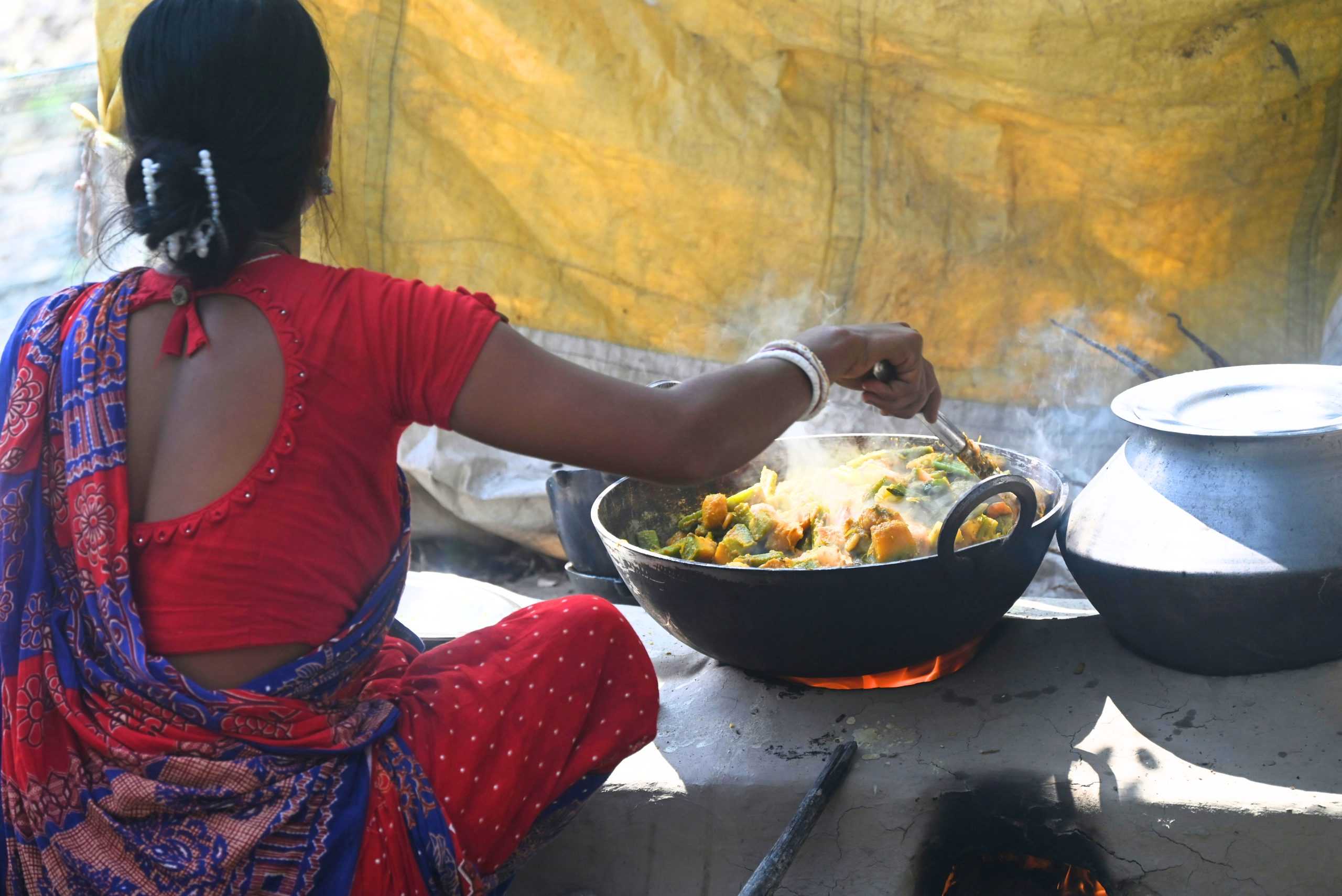
Kethel Sahib is not a name you would have heard of. Back in the day, he ran an eatery at Thiruvananthapuram’s Chalai Bazaar, near the place where Sree Padmanabha Theatre is located today. During the sixties and seventies, if there was anyone in Thiruvananthapuram who had not eaten there, they must have been vegetarians.
The eatery ran until Kethel Sahib’s passing in 1978. At present, his son operates several restaurants across the city, and his relatives run another shop at the very same place. Even today, the eatery’s fish curry and kozhi kuzhambu taste just the same. Hotel Mubarak is what the restaurant’s called now. People still throng the place and brave long waits to eat there. Kerala teems with meat lovers who believe that a trip to Thiruvananthapuram counts only if they’ve dined at Hotel Mubarak. Even so, Kethel Sahib’s eatery was something else. You’ll understand only if I tell you about it.
Located in a narrow alley, Hotel Mubarak is a mere tin-roofed shed even now. Back in the day, it was just a stall with a thatched roof and measured no more than fifteen feet by eight feet. Open on all sides, the stall had a bench and table made by securing bamboo poles together. While it was pleasant and breezy during the summer months, when it rained the wind would drive in a generous drizzle. Doesn’t it rain most of the time in Kerala? Nevertheless, Kethel Sahib’s eatery was crowded all the time.
Did I say all the time? When did Kethel Sahib ever keep the shop open all the time? He would open at noon and close at three in the afternoon. Then he would reopen at seven in the evening and close by ten at night. Right from eleven in the morning, in the narrow veranda in front of the eatery, at Rahmat Vilas—the tailoring shop on the opposite side—and in the yard in front of the godown of K. P. Arunachalam Chettiar & Sons Wholesale Departmental Store, a crowd would queue up in wait. Half of them would buy a newspaper, either the Mathrubhumi or the Kerala Kaumudi, and read while they waited. Debates would follow about Kaumudi’s editor K. Balakrishnan’s fiery political columns. At times, they would turn into heated arguments too.
All that lasted only until the gunny purdah that hung at the entrance was rolled up as a sign that Sahib was about to open the eatery. At once, the crowd would squeeze in and seat themselves. Kethel Sahib looked like a demon. Towering over seven feet, he had pillar-like arms and legs, and a face ridden with pockmarks. One eye, rendered cloudy by the pox, resembled a cowrie shell. The other eye was small and red, like a burning cinder. He wore a white knitted cap, and his mustache-less curved beard was dyed red with henna. Held in place by a broad green belt, a checkered lungi hung from his waist. Though he was a Malayali, Kethel Sahib could barely speak the language. Arabi-Malayalam was what he spoke. However, to hear his voice was a rare event in itself. If you did happen to hear it, it would be no more than a couple of sentences. The moment he uttered “Fareen”—that lone word of welcome—in his deep voice and turned into the shop, the crowd would line the benches.
But there really was no need for a welcome. The aromas of chicken fry, kozhi kuzhambu, roasted prawns, charred karimeen, and mathi-fish stew would have coalesced into an invitation already. I swear I’ve tried every restaurant there is in the city, but the aroma of Kethel Sahib’s food is not to be found anywhere else. “There’s an arithmetic to it, boy,” Vasudevan Nair would say. “If one man buys the produce, another delivers it, and so on, the food will have neither flavor nor fragrance. Kethel Sahib would handpick not just the fish and chicken, but the rice and other ingredients too. If there was even a grain of deficiency in their quality, he would reject them. The prawns were delivered all the way from the backwaters of Chirayinkeezh, just for him. A Mappila named Paapi would arrive in his boat, dragging the net of fresh catch along, making sure to keep it in the water. Sahib would haul the entire catch straight to the kitchen . . . Son, honesty adds its own flavor to the food, all right?”
Whatever Sahib’s methods were, in the fifteen years that I ate at his joint, not once did a dish fall short of the benchmark of “outstanding taste.” How do I make you see what I mean? It wasn’t just honesty that imparted this quality to the food. There was certainly some arithmetic to it. At Sahib’s eatery, the kuzhambu and fry were served piping hot, straight off the stove. Sahib would estimate beforehand the crowd that was to arrive, and accordingly mount the ingredients. Apart from Sahib, his bibi, their two sons, and a couple of helpers were the ones who cooked, all of whom accepted his authority implicitly. Sahib, on his part, could judge the taste of the food with just the smell. Anyway, this is all mere talk. What I should say is, there was a fairy inhabiting the place. All right, not a fairy, a djinn. Not a djinn from Arabia, but from a Malabar village. A djinn that had drunk from the waters of the Kallayi.
Kethel Sahib’s forefathers were from Malabar. Once, when the song “Kallayi puzha oru manavaati,” penned by Yusufali Kechery, eulogizing the bride-like beauty of the Kallayi, was playing on the radio, his son remarked, “Isn’t that Father’s river?” But for that, I know nothing about him. He never did talk. Someone would’ve had to hypnotize him to make him talk. His family had migrated to escape the clutches of poverty, and Sahib was rendered homeless at a very early age. Till he turned twenty, he sold tea from a big kettle that he carried by hand. And that is how he got his name. Before long, he started selling fried fish at a street corner and set up the food stall in due course. “I haven’t had a good cup of chaya ever since the man stopped selling tea,” Nair once remarked. Kaumudi Balakrishnan—the man himself—would come all the way to Chalai Bazaar from Kazhakkuttam to drink Kethel Sahib’s tea, they said.
Sahib did not lack for anything. He had a big house in Ambalamukku. A joint family. Seven or eight shops in the city. He had married away three of his daughters. He had set up shop for his three new sons-in-law, too. You won’t be surprised if I tell you that he had earned it all from his eatery. But if I tell you about his business model, you’re sure to be wonderstruck. Sahib did not charge for the food—a practice he’d held to right from the days when he sold tea. There was a tin donation box in a corner at the front of the shop concealed by a small reed screen. Once you had finished your meal, you could deposit whatever amount you wished to in the box. Or not. No one would keep an eye on you. No matter how many days you skipped paying, no matter how much you ate, Kethel Sahib never paid any attention to it.
That’s how he had been, even when he had roamed the streets as a shirtless tea boy, clad in khaki shorts and a round cap. He kept a small box next to himself, where you could drop in some change, if you so wished. You couldn’t ask for the price, nor would he tell. Some rogues and ruffians did make mischief with him, at first. They deposited folded paper in the box. They took away the box itself. They drank tea for months together, for years together, without ever paying up. It didn’t seem like Kethel Sahib so much as even remembered their faces.
Though, there was this one time when Kethel Sahib did slap a man. A poor woman, who looked like she had migrated from some village in Tamil Nadu, was eking out a living by winnowing spices on the streets. She had stopped to drink tea that day. At the same time, the notorious ruffian Karamana Kochu Kuttanpillai, an upper-caste Nair, had also ordered a glass of tea, and his gaze fell upon the woman. Goodness knows what went through his mind, but he grabbed the woman’s breast and started squeezing it. Incited by her screams, he tried to carry her away into a side street. Kethel Sahib got to his feet and, without saying a word, slapped Kochu Kuttanpillai right across his face. The whole street would have heard that sound. As blood oozed from his ears, nose, and mouth, Kuttanpillai collapsed to the ground and lay there like a corpse. Kethel Sahib went back to selling tea, as though nothing had happened.
Kuttanpillai’s men carried him away. He spent eighteen days in the hospital but never walked again. He went deaf and his head trembled all the time. He had frequent bouts of the fits too. Seven months later, while he was bathing in the river Karamana, he succumbed to one such attack and disappeared into the waters. They could retrieve only his bloated corpse. A faction emerged, questioning how a lowly Mappila could strike a pristine Nair. The Chalai Mahadevar Temple trustee Ananthan Nair let them have it: “Piss off and mind your own rotten business. If you forsake what’s just, you could well be fated to die by the hands of a Muslim, or from the bite of an ant too . . .” No one in Chalai Bazaar dared speak to the contrary once Ananthan Nair had declared his view.
The first time I ate at Kethel Sahib’s eatery was in 1968. I am from Osaravilai, near Kanyakumari. My father was an accountant at a rice mill in Kottaram. I was a good student. After I passed my eleventh grade, I was advised to enroll in college. With Appa’s income being what it was, I shouldn’t have even dreamt of it. But a maternal uncle of mine lived in Pettah, in Thiruvananthapuram. He ran a mediocre printing press. His wife was from Thazhakudy. Needless to say, they were related to each other even before they were married. Appa held my hand all the way as we boarded a bus, alighted at Thampanoor, and walked to Pettah. It was the first city that I laid eyes on. With coconut oil oozing from my hair and mingling with the sweat on my face, clad in a half-length vaetti that stopped short of my shin, a shirt crumpled from having been stored in a pot, and with feet unshod, I walked in a trance.
Mama had no choice, for Appa had looked after him when he was a child. I enrolled for English literature at University College, and Appa left with a full heart. Before leaving, he pressed one rupee into my hand and said, “Hold on to it, don’t spend it. Mama will take care of everything.” Turning to my mami, he said, “Subbamma, from now on, he’s not just a nephew to you, but a son too.” To this day I wonder if Mama’s heart was ever in it. That my mami wanted none of it became evident that very evening, at dinner. When all of them sat down to have a meal of appalam, poriyal, and sambhar, they did not invite me. After they were done, they left some food for me in the kitchen, in an aluminum vessel. It was rice doused with water and sambhar.
I was only too familiar with shame and starvation, so I put up with it all. The more I bore Mama and Mami without complaint, the worse they became. All the chores around the house fell on my shoulders. I had to draw pot after pot of water from the well and carry it to the house, sweep and mop the house every day, and escort the two daughters to school. The elder one, Ramalakshmi, was in the eighth grade. I had to teach her mathematics and complete her homework too. After all that, I had to wash the kitchen before I could turn in. In return, they accorded me some space in their veranda and provided me soaked rice and pickle, twice a day. Mami was a perennially disgruntled woman. She grumbled about me to anyone who paid a visit to their house. They were being reduced to debtors thanks to the food I was eating, she would complain. Whenever she saw me open a book, she would fly into a rage and scream her head off.
The whole day the thought of the mathi kuzhambu would possess us, as though it were a meditation of sorts.
I did not write about any of this to Appa. My two younger brothers and a younger sister were still at home. On most days, a kanji brewed with the broken black rice separated out by the winnowers at the rice mill had formed our meal. As far as I can remember, the daily kuzhambu was but a broth made from koduppaikeerai, a variety of spinach that grew by the stream. With not even a whiff of coconut it was a plain broth made by blanching spinach and churning it well in tamarind-soaked water along with some green chilis. But in the throes of hunger, that aroma was enough to make me salivate. If, some day, Amma drummed up enough courage to buy twenty-five paise worth of mathi-fish, every corner of the house would be filled with its fragrance. She would make an exception that day and cook good-quality rice too. The whole day the thought of the mathi-kuzhambu would possess us, as though it were a meditation of sorts. No matter how hard we tried, we could not divert our minds from it. At the end of the meal, Amma would soak up the kuzhambu that remained at the bottom of the vessel with some rice, clean it out, and roll it into a ball. Just as she’d be about to drop it into her mouth, my little brother would stretch his hand, asking for a share of that too.
The college fee was overdue. I tried telling Mama about it discreetly at first, but after many failed attempts, I had to ask him straight up. “Write to your father . . . I’ve only promised food and lodging,” he said. I knew it was useless to write to Appa. After a week had passed, the college administration demanded that I drop out. I could attend classes after paying the fee, they said. I roamed around like a madman. I went to the Thampanoor railway station and sat there all day, listening to the rattle of iron. I died many deaths on that railway track. That is when Kumara Pillai, a fellow student, showed me a way out. He took me along to the K. Nagaraja Panickar Rice Mandi in Chalai and signed me up for the job of accounting for rice bags. I had to report there only by five in the evening, but I was to keep tally until midnight. One rupee a day was the salary. I obtained an advance of forty rupees and used that to pay the fee.
It would be one, or maybe two past midnight by the time I reached home. I couldn’t wake up before seven in the morning. The recess during college hours was the only time I had to study. Even so, I did well. I had developed the practice of paying keen attention in class. All the same, there was never enough time. It would take me forty-five minutes to get from University College to Chalai Bazaar, even if I cut across the secretariat and hastened through Karamana. If the last class of the day happened to be Shanmugam Pillai’s, it would go on until four thirty. And then, if I reached the godown late, Paramasivam would’ve already arrived to keep tab, defeating the very purpose of my getting there. Goods arrived at the shop four days a week. Dropping a day meant losing a fourth of the week’s wages.
They did not pay me at the end of the first month. Panickar credited the entire fifteen rupees that was due to me against my advance. When I woke up in the morning the following day, Mami placed a notebook in front of me and disappeared inside. It was an old notebook. I turned the pages over. It contained a running tally of every meal I had had there, since the day I arrived. At the rate of two annas a meal, a sum of forty-eight rupees was debited against my name. My head spun. I willed myself to go up to the kitchen. “Mami, what’s this?” I asked.
“As though we can feed you for free . . . you’re earning now, aren’t you? It’ll be honorable if you pay. For you and for me,” she said. “If there’s something wrong with the accounts, let me know. I’ve kept a meticulous tally from the very first day.”
Tears welled up in my eyes and a lump formed in my throat as I stood there wordlessly. After some seconds had passed, “I didn’t know of this, Mami . . .” I ventured. “I don’t make all that much. I have fees to pay. Books to buy . . .”
“Look here, why should I feed you for free? I have two daughters. If I’ve to get them married off tomorrow, I’ll have to cough up enough cash and gold, don’t you know? A tally is a tally. Only then will it protect your dignity. And mine.”
“I don’t have the money now, Mami. I’ll pay you back, little by little,” I said in a feeble voice.
“How do I trust that you’ll pay?” she questioned.
I said nothing. That very evening I left their house. I went straight to Panickar’s godown and stayed there. Panickar, too, was happy that he had found an unpaid watchman. Mami held back some important books of mine as collateral for the dues.
I was happy enough at Chalai. I would take a dip in the river Karamana and follow it up with four idlis at Elisaamma’s idli shop. Then straight to college. I would skip lunch. In the evening, after I was done with work, I would have a toast biscuit or tea and then lie down for a while. My calculations allowed for only one meal a day. Hunger was a constant. Whenever I pondered over something, it would eventually end with the thought of food. I could never take my eyes off a fat person. How much they must be eating, I’d wonder. A whiff of sweet payasam was enough to make me enter the Chalai Mahadevar temple. The fruit and the payasam they’d offer to devotees on a strip of leaf would save me the day’s spend on idlis. More often than not, I’d find something to feed myself—like sundal from the Sastha temple or turmeric rice from Goddess Isakkiammai’s. And yet the money I made was not enough for me. Before I could return the advance, the next term’s fee fell due. Then again, I had to save five rupees a month to give to Mami. I needed to retrieve my books from her before the exams.
My eyes began to look sunken. I became frail and turned into this person who could barely walk. My head would swim while drawing up the accounts, and I’d plummet to unknown depths before surfacing again. There was always a bitter taste in my mouth and a shivering in my limbs. To walk up to Pettah in order to attend college would take me around an hour. My dreams were filled with food. A wounded dog lay dead on the road one day. My plight was such, you see, that I imagined lighting up a stone fire behind the godown, cooking the dog meat, and eating it. My mouth watered and I drooled all over my shirt.
That was when Coolie Narayanan told me about Kethel Sahib’s eatery. That one did not have to pay sounded incredible to me. I asked around, and everyone said it was true. Don’t worry about paying, they said. I was unable to summon the courage to go there, but the thought of Kethel Sahib’s shop was ever present in my head. Four or five times I had gone and stood outside, simply stared at it, and headed back quietly. The aromas that wafted from the shop drove me crazy. I had had fried fish only twice until then, on both occasions at the house of a well-off relative. A week later, when I had scraped together three rupees, I went to Kethel Sahib’s eatery with the money in hand.
My body was all aflutter until Sahib opened the shop, as though I were up to some mischief. I went in with the crowd and sat in a corner where no one would catch sight of me. There was such a din. Sahib was serving rice at gale force on overturned lotus leaves that served as plates. He ladled out steaming red samba rice with a big colander and poured rich-red fish curry over it. Some of us got kozhi kuzhambu, and others fried kozhi kuzhambu. It did seem as though he took no note of anyone. But on a closer look, it became obvious that he knew everyone. He didn’t stop to ask anybody for their preferences. He himself decided how much fish and meat to serve, and went about it without uttering a word of hospitality. He served all the food himself. It was only for the second helpings of kuzhambu that a boy assisted him.
When he reached where I was sitting, he looked up. “Here for the first time, Pillecha?” he asked. I was tongue-tied, in awe of how he’d guessed that I belonged to the Vellalar caste. He pushed a mound of rice onto my leaf and poured the kuzhambu over it. A big leg of fried chicken. Two pieces of fried fish. “Eat,” he roared, and turned away. I had no doubt that it would cost me more than three rupees. My limbs began to shudder. The rice choked in my throat. All of a sudden, Sahib turned around. ‘What’re you doing there?! Eat, Pillecha!’ he thundered, admonishing me. I gulped down many fistfuls. The flavor seeped into every pore of my body. Flavor! God, I had forgotten that such a thing existed in this world. Tears fell from my eyes and streamed into my mouth.
Kethel Sahib approached me with a melted ghee–like substance in a small cup. He poured it over my rice and served me some more kuzhambu. “Mix it up and eat, stupid . . . it’s fish fat,” he said. It was the fat extracted from a river fish. A yellow liquid rendered by making a cut in its gill. It lent a unique flavor to the curry. Soon enough, unaccustomed to such quantities of food, my stomach felt clogged. But before I could think, Sahib had served another colander of rice on my leaf. “Aiyo, no!” I exclaimed. His colander came down hard on the hand I had stretched out to stop him. “Saying no to food, you cadaver! Eat, bloody Iblees,” he scolded. My hand radiated with genuine pain. When I looked into his bloodshot eyes, I thought Sahib might beat me if I were to get up. I knew he wouldn’t like it if food went to waste. When I finished eating, I was unable to rise. Holding on to the table for support, I walked out, threw the leaf away, and washed my hands.
As I neared the box, I went weak in the knees. I felt that Kethel Sahib was keeping an eye on it from somewhere, from some unknown angle. In reality, he was attending to others in the crowd. I noticed that many of them left without depositing any cash while others who did looked unperturbed as they dropped in the money. With trembling hands, I took out the three rupees I had and dropped it inside. Eyes and ears sprouted on my back, expecting to hear a voice. As I made my way out quietly, my body began to shed its heaviness. It felt as though a cool breeze was sweeping through the street. Covered in gooseflesh, I walked in a daze, oblivious to everyone and everything around me.
I did not dare to venture near the area for the next four or five days. When I managed to rustle up two more rupees, emboldened, I went to Kethel Sahib’s eatery. It was only when he brought the fat and poured it on my food, just like the previous time, that I knew he had recognized me. The same stern voice, the same curses, the same body-bursting amount of food. This time around, I was quite calm when I deposited the money. When I went again three days later, I had seven rupees on me. I was due to hand it over to Mami that evening. My plan was to eat two rupees’ worth of food. To eat more than that was, according to me, the height of wantonness. But the flavor did not allow me to stop. Kethel Sahib’s fish curry and chicken fry had invaded even my dreams in those days. Why, I’d even penned a poem on them on the back of my notebook. When I finished my meal, the question of leaving without paying reared its head.
However, the very thought of not paying turned my stomach, and I could not eat any further. As though I were submerging a ball in water, I had to push the food down my throat. I began to feel faint. I got to my feet, washed my hands, and walked away, lifting my cold, heavy legs with effort. Was my head spinning or my bladder full or my chest seizing? I couldn’t tell. Better pay up, said my mind’s voice. I neared the box. I could not walk past it. There was a ringing in my ears. When I reached the box, I dropped all seven rupees inside and walked out. It was only when a draft of air hit me as I stepped outside the shop that I realized what I had done. Half of a month’s earnings had evaporated in a flash. How many debts I owed! There were only eight days to go, to pay the college fee. What had I done? It was the height of stupidity.
My heart sank and relentless tears rolled down my face. It felt like a terrible disillusionment, or a death too near. I went to the godown and sat down. As there was enough work to take hold of my mind and body until midnight, I survived. Otherwise, in the delirium of the moment, I might well have thrown myself on some railway track. It occurred to me later that night—why should I cry? I can keep eating at Kethel Sahib’s till I exhaust my money’s worth. Comforted by that thought, I fell asleep.
The following day my classes finished by noon. I went straight to Kethel Sahib’s eatery, sat down, and ate, savoring the food as though I had all the time in the world. The man kept serving more and more food on my plate. “Dei, eat up, you donkey!” he’d shout if I paused even a little, assuming that I was about to get up. As I washed my hands and walked out, I found myself converting plausible excuses into words, should Kethel Sahib question me. But he paid no attention to me. I felt cheated when I stepped out of the place. All of a sudden, I felt annoyed with him. The man thinks no end of himself, I thought. That everyone pays out of their own sense of morality makes him appear like a large-hearted person. After all, he survives only because of those who deposit zakat in the box, for Ramzan. His generosity is not selfless, is it? Surely, it’s the money begotten in this manner that’s become his house and his wealth, is it not? How long will he put up with not being paid? Let’s see. I didn’t know why I was vexed, but the annoyance had permeated my body like an itch.
I was still annoyed when I went there the next day. By then, I knew that Kethel Sahib would not question me. But if I were to notice even an iota of difference in his gaze or demeanor, I resolved that that would be the last time I visited the place. If he entreated me a little more than usual, that too was a sign that he did notice, that he did keep tally. But Kethel Sahib went on serving me food at his usual pace. He poured me my usual share of fat. “Eat the chicken, Pillecha,” he said, placing a half-chicken on my leaf. He followed it up with some fish. Was he really a part of this world? Was this a Mappila or a djinn? It was a bit frightening too. When I was about to have my last course of rice, he served the blackened dredges of chili powder that remained in the wok after frying, along with a charred chicken leg. I had always tried not to let on how much I enjoyed this dish. It didn’t surprise me, though, that he knew it nevertheless.
No one had served me food with such affection until then.
As I mixed the powder into the rice, my heart caved in. I could not hold back my tears. No one had served me food with such affection until then. Amma found it impossible to ration among all of us the kanji she made from a single cup of rice without swearing, cursing, and bristling with irritation. Here was the first human who cared if I ate to a full stomach. The first hand that served me without keeping tabs. They talk about the hand that feeds you; they talk about carrying to the grave the memory of the maternal hand. With a wrist adorned by an amulet, stubby, parched fingers, and a hairy forearm—wasn’t this bear-hand the true hand of a mother? From that day on, I did not pay Kethel Sahib. I swear it wasn’t because I thought of it as an expense. It was because I thought of it as my mother’s food. Not just for a day or two, but for five whole years I did not pay Kethel Sahib a single paisa.
I would have one meal at the shop every day, either lunch or dinner. That by itself was sufficient for me. Four idlis to top it, and I’d be done for the day. My limbs gained strength. My cheeks glistened. My mustache thickened. My voice deepened. My gait acquired a hint of swagger, my speech became assertive and my laughter confident. I grew into something like a manager at the shop. It became my responsibility to procure supplies and distribute them as needed. I was even able to save up and send some money home every month. Not only did I clear my BA with a first class, but I finished at the top of my class too. I enrolled in the MA program at the same college, took a room on rent at Chalai, above Arunachalam Nadar’s store, and got myself a good bicycle.
I ate at Kethel Sahib’s, every day. With every passing day, the conversation dwindled, so much so that I began to doubt if he even noticed me. But when his hefty hand stretched over my leaf to serve the food, I knew that it was a mother’s loving hand. That I was born in his lap and had suckled at his breast. The hardship at home abated when my younger brother, Chandran, finished school, got his driving license, and joined the Government Transport Corporation. I visited home once in a while. Amma would buy good-quality rice, make some fish kuzhambu, and serve it with her own hands. But, conditioned by countless years of poverty, she didn’t really know how to serve. Her eye couldn’t help measuring the rice that was left in the pot or the kuzhambu left in the pan. While serving the rice or kuzhambu, she would always tilt back half of the contents of the ladle into the vessel. If one asked for more kuzhambu, her ladle would draw only a few drops. Either her hand or her heart had shrunk. As she heaped the salai pulimulam and samba rice on my plate, I would feel sated by the fourth mouthful. After that the very act of bringing the food to my mouth would be such an effort. “Eat, son,” Amma would offer a weak word of encouragement. With a shake of my head, I would rinse my hands over the plate.
I came second in the university when I finished my MA. Soon enough, I got a job as a lecturer in my college. When I got the order in hand, the same afternoon, I strode to Kethel Sahib’s eatery. It wasn’t open. I went to the back, drew aside the gunny purdah, and peeped in. In a large bronze wok, Kethel Sahib was stirring some fish kuzhambu. His face, his hands, his thoughts were all centered on the kuzhambu, as though it were a kind of namaz. It did not feel right to interrupt him, so I left. Later that afternoon, as he served food on my leaf, I looked up at his face. Nothing in it said I was special. I needn’t tell him the news, I thought to myself. It held no meaning for him.
I left for my hometown that evening. I couldn’t tell if the news made Amma happy. Her face was set in such a way that everything found expression on it as worry. Appa alone asked. “How much will you get?”
“I’ll get something . . .” I replied, trying to brush off the question.
“Two hundred at most?”
Needled by the petty-minded clerk I saw behind that question, I said, “Seven hundred rupees, including the allowance.” Until my last breath, I will not forget the malice that flickered for an instant in Appa’s eyes. He had retired without ever making more than twenty rupees a month. Only my brother pranced about with real enthusiasm. “You’ll have to teach in English, right? That means you can speak well . . . will you speak like an English dorai?” he said with effervescence. Incensed, Amma retorted, “Let the celebrations be. Better save up and find a way to marry off your sisters.”
Once she had latched on to a virtuous cause, an intense bitterness found direction through it. “Did you not see what’s become of those women who cavorted about? I saw that Thazhakudy woman at Shanmugam’s wedding. Looks like a mold-ridden dried fish now . . . what a dance she danced, the wretch . . . God wreaks vengeance in his own time, doesn’t he?” she said.
“Woman, do you even hear yourself? That fellow over there—your son—he’s grown into a man on the food she parted with. You should have some gratitude, you know . . . some gratitude,” said Appa.
“Gratitude? For what? A measly bit of rice and kuzhambu? Add up the cost and throw it in her face, that’ll take care of it . . . or else she may well arrive here claiming some other kind of tally . . . the wretched wench,” said Amma.
“Shut your stinking mouth,” yelled Appa, seething with anger, and a fight ensued.
I went to Thazhakudy the following day. Two years had passed since Mama had died. He had developed a fever, all of a sudden. I had stayed with him at the hospital all through. Bacteria had seeped in from a wound in his gums and made its way to his heart. He passed away on the third night. Once the final rites were completed, we went through the press’s accounts. There were loans of close to two thousand rupees. The landlord demanded that the press be wound up. With the three thousand rupees that remained after selling all the machines, Mami returned to Thazhakudy, where she had some share in her family’s land. She rented a house against a one-time payment. Ramalakshmi had not studied beyond the eleventh grade, and the younger one was in her eighth grade. Mami was shaken. As the days went by, the panic caused by dwindling money settled on her face, and I watched her become frail, parched, and shadow-like. Whenever I came home, I would visit them for the sake of civility, say a few words, and leave after placing a ten-rupee note on the table.
Mami wasn’t home when I paid a visit that day, only Ramalakshmi was there. She looked rather washed out herself. A veranda, a hall, a makeshift kitchen—that was all there was to the house. A rolled-up straw mat hung on the clothesline. The floor had been swabbed with cow dung. A Ranimuthu novel lay on a small table. Ramalakshmi went out through the back, borrowed either tea or sugar from the neighboring house, and made me some black tea. She placed the tumbler on the table and went and stood near the door, concealing half of herself. I gazed at the parting of her hair. She was a smart girl, but mathematics had eluded her. It had taken me more than twenty days to teach her compound interest back when we were in Thiruvananthapuram. I didn’t know what to talk to her about. She was a different person now.
Ten minutes passed. I got up, “I’ll take my leave,” I said.
“Amma will be here soon,” said a soft voice.
“It’s okay, I have to leave,” I repeated.
Placing a fifty-rupee note on the table, I stepped out. While making my way out through one of the side streets, I spotted Mami coming from the opposite direction. She had rolled up an old saree, placed it on her head to form a base, and stacked a palmyra basket on top of it. She looked at me blankly at first. It took her half a second more to recognize me. “My son!” she cried. I helped her set the basket down. It contained bran. Evidently, she was pounding paddy for wages, and bran was the daily wage. She must have been on her way to sell it.
“Come home, son,” she said, grabbing hold of my hand.
“No . . . I’m running late, I need to get back to Thiruvananthapuram today,” I said. “I’ve got a job . . . at the college.” She didn’t quite understand. The incessant grind of poverty does blunt one’s mind.
Then, suddenly, she grasped what I had said. “My word! Stay blessed, my son, stay blessed,” she said, grabbing hold of my hands once again. “I thought I must wait until you get a job. I don’t have anyone to go to, son. I don’t have even a few paise to give to anybody. See, we’re feeding ourselves by pounding paddy for utter strangers . . . If the bran doesn’t sell, we douse our evening hunger with the raw bran, son . . . But I did feed you during the good days. You became a man on my rice and kanji, didn’t you? For eight months, even if you say two meals a day, I’ve served you rice and curry nearly five hundred times, yes? Your mother won’t see that now. Even if she does not feel gratitude, I’m sure you do . . . Son, Ramalakshmi has no one but you. The poor thing thinks of you night and day . . . Please give her a life, my darling . . . If you don’t feel gratitude for the food you ate, know that you’ll pay for it in many, many lives to come.”
When I took leave of her and boarded the bus, my lips felt bitter, as though they had tasted neem fruit. Throughout the ride back, I kept spitting out the window, desperately trying to rid my mouth of the taste. I returned straight to Thiruvananthapuram. I’m certain the bitterness would have pervaded my body had I not let myself drown in the bustle and euphoria of a new job. When I received my first paycheck, I sent it to Amma. In response, she wrote a letter. “Subbamma was here. She spoke to your appa. Your appa’s heart is not in it either. Listen, we don’t need that. Let’s gift a hundred or a thousand for the girl’s wedding in return for whatever they’ve done for us. We need not owe anyone a debt for food. Inquiries from good families are pouring in these days. They will provide enough and more. In fact, one such alliance has come from Boothapandi. Shall I proceed?” she asked. I lay thinking all night. Fed up, I fell asleep. When I awoke, I had my decision. I wrote back to Amma saying, “Proceed. The girl should be a little educated.”
I had already registered myself in a twenty-thousand-rupee chit fund run by Canteen Saminatha Iyer in my first month in the job. The installment was five hundred rupees a month. I bid for the pot, at a deduction of four thousand. Iyer handed me sixteen thousand rupees, rolled up in a sheet of the Mathrubhumi. Hundred-rupee notes, all of them. Never before had I touched that much cash. A strange terror gripped me and my hands prickled. I brought the cash to my room and sat staring at it. Not even in my wildest dreams had I thought I’d make so much money. This was enough to buy a small house in the suburbs of Thiruvananthapuram. I smiled to myself, observing the wondrous ease with which my mind and my hands became accustomed to the presence of that cash.
In the afternoon, I went to Kethel Sahib’s eatery. As soon as it opened, I walked in and began depositing the cash in the donation box. When the box filled up, I asked Kethel Sahib for another one. “Dei, Hameed, change the box,” he ordered. Once his son replaced it, I started depositing the cash again. After I had finished depositing all the cash, I washed my hands and sat down to eat. Kethel Sahib spread a leaf and placed my favorite prawn fry on it. He then served the rice and poured the kuzhambu. I was certain that there’d be no change in him. He didn’t say a word. Farther away, two boys sat almost glued to each other. They were pale Nair boys, with lifeless, moldy skin and washed-out eyes. They were gulping the meat that Kethel Sahib had served for them in vigorous mouthfuls. As Kethel Sahib served another piece of meat, one of the boys leapt up shouting, “Aiyo! Don’t!” Kethel Sahib thumped him on his head, “Eat, you son of a cadaver.” It was a lusty blow. Frightened, the boy sat down without demur. Perhaps chili powder had gotten into his eyes, for they were watering while he ate.
Kethel Sahib served the chicken, the kuzhambu, the fish, and the prawns, one after the other. I waited, expecting to catch his eye if only for a fleeting moment. Shouldn’t my mother know that I had made it? But, as was usual, his eyes did not meet mine. When he came around to serve the fish, I stared at his hefty, bear-like hands. As though it were only his hands that belonged to me. As though they existed only to fill my stomach.
I left for my hometown that day. In the succeeding month of Aavani, I married Ramalakshmi and brought her home.
The imperative to “BE TUNNEL” stays with me, long after putting down Fargo Nissim Tbakhi’s debut collection of poems, TERROR COUNTER. I re-read the book again and again. I start to carry it around. The poem, Fargo writes, “is a space to rehearse for the future.” Within these poems are a set of instructions for being human as praxis and for the futures that are made possible by living outside colonial imaginaries. In the unnaming. In the unknowningness. Within these poems is a promise and so, I hold them close.

“I believe in tunneling / underneath words” Tbakhi writes in the poem “Incantation,” and that’s precisely what TERROR COUNTER does: tunnels through language. Throughout the book, Tbakhi engages with imperialist texts—namely laws—not to expose the genocidal logics therein but to forge a pathway in the decomposition of their words. Each of the four sections—IMPERIAL POETICS LTD, GAZAN TUNNELS, PALESTINE IS A FUTURISM, and RITHA’ AL NAFS (all bracketed by poems entitled “Terror Counter”)—decompose settler narratives such that new meaning bursts forth.
I say “decompose” because soil is ever-present, activating these poems much like the dirt and dust which play a central role in Tbakhi’s performances. The Gazan Tunnels, his original visual form, even looks like earth. Soil horizons that remind me of a friend’s Palestinian seed-saving project. Tbakhi’s decolonial poesis shows us that the liberation of Palestine, indeed our collective liberation, necessitates both the end of the world and an after, realized here through tunneling—like seeds, like political prisoners—beyond the wreckage of coloniality. If there’s one thing I want you to take-away from my conversation with Tbakhi about his forthcoming book, it’s this: “BE TUNNEL”. Be tunnel against the world. “Fugitives against the text.”
TK: As I was thinking about what I would want readers to take-away from this interview, “tunneling” kept coming to mind. I feel like you wrote the essay, “Notes on Craft,” and then showed us how to betray craft in TERROR COUNTER and in particular, through what you call “the language of tunnels.” How does the language of tunnels engage with the language of imperial settler states and also with other forms?
FNT: It’s interesting that you situate the book in relation to my essay “Notes on Craft” because all of the poems in this book were written long before I arrived at the language in that essay.
There’s one very specific answer to the first part of your question, which is the visual form in the book: the Gazan Tunnel. I was thinking about inventing a poetic form, which I think for a lot of people is a little more exciting than it generally is for me. I dislike form in the poetic sense. It has never felt like it really gave me much except that sometimes it’s nice to have rules so that you can break them.
I was thinking about some of the ways that form dictates an approach to writing, an approach to text, and I was wondering if that could be a space for creating political commitment in the act of writing. If a form was focused not on things like meter or rhyme or prosody, but on political commitment. There’s something about the dictatorial nature of form that felt exciting to me.
As I made these poems, I created parameters—I would find an imperialist text and create an image of it or a set of shapes with it, and treat it as a material to be tunneled through, a material to be carved through. The idea I wanted to bring was that the Gazan Tunnel, as a form, is an excavation through an imperialist settler text that is structuring our lives. It’s an act of working through that text and creating something else.
The second part of your question touches on the other parameter of the form—the imperialist text offers a background, or material, or obstacle through which modes of relation, modes of indigenous resistance, modes of collective struggle, break through or navigate.. The tension between those two things creates the form. There’s no Gazan Tunnel without the tunnel and without the soil.
My relationship to the literary ecosystem in the United States, and in the Western world at large, is as a space of hostility, brutality, and hierarchy. It’s a space of money. The totality of language—the structures and relationships that create language and are created by language—exists as this wide network in which Palestinian writing, Palestinian interiority, Palestinian thought and expression and struggle are targeted and suppressed.
The tunnel to me is a form of both writing poetry and existing as a poet. I would like to be under the surface, to pop up in unexpected places, to get my hands dirty.
For me, approaching the text and language that exists as a kind of structuring condition in English is about how I can cut through it, how I sneak through it. Tunnels entail a kind of fugitive relationship. They’re seen and not seen. The tunnel to me is a form of both writing poetry and existing as a poet in a way that feels useful. I would like to be under the surface, to pop up in unexpected places, to get my hands dirty.
TK: I got excited when you said “soil,” because I’ve been thinking about organic forms like dirt, dust, and soil in relation to the Gazan Tunnels—and the Freedom Tunnel. Can you elaborate on these other ecologies vis-a-vis tunneling?
FNT: I really love dirt. Actually, dirt is something I work with a lot in my performance and installation work. There is a kind of collectivity to it.
There’s a performance piece that I made years ago that I’ve performed occasionally since then, which is staged around one ton of dirt. I start that performance buried underneath the dirt and I’m there usually for like half an hour as people trickle in. The experience and physicality of being buried inside of dirt is also a kind of tunneling, a kind of static tunneling.
Dirt compacts when it is close to itself. It’s made ultimately of these tiny, tiny, tiny pieces that cling to one another, that can get compressed, that can get packed and tamped down. In this more metaphorical sense, perhaps I learned the strength of a collective from dirt. Individually, we blow away in the wind. Individually we get wiped off of a nice clean piece of cloth. But when there are larger formations of us, then dirt can suffocate somebody. Dirt can be a dam, can be an embankment. I’m thinking a little bit about—
TK: Dust?
FNT: Dust, yes. Dust and dirt are looked down upon. They’re not clean. I like that about them. I like the way that they spread and can take up space and stick around even when you think that you’ve gotten rid of them. There are lessons in that.
Palestinian resistance fighters and communities have literally made a way out of no way in order to get food, in order to have some semblance of freedom of movement. To do that, to return to the dirt as a place to move, as a place through which to resist, a site of constructing architecturally what resistance can look like, is to me, astonishingly beautiful. It’s the greatest sense of possibility. I think about the prisoners who escaped from Gilboa Prison by tunneling out with a spoon. One of them said, we did this to demonstrate that the occupation is an illusion of dust.
TK: Yaqoub Mahmoud Qadri, one of the escaped prisoners, said, “We do not care what the sentence is. The important thing is that we made the impossible possible…”.
I don’t want to explain anything to someone who doesn’t already know. That gives me permission to not have to demonstrate humanity.
FNT: Yes, to make a way out of no way. This is an infrastructure of how to move, how to survive—an example of what freedom might look like that is intimately connected to spiritual, communal, and ancestral relationships with land. It is also the literal act of getting through the dirt from one place to somewhere else.
I wanted to honor the Gazan Tunnels on the page—to not hedge my bets or say some bullshit about resistance, but to say this is a beautiful and life-affirming act of survival. That is the thing that all of my poems aspire to touch a piece of.
TK: In Treatise on the Whole-World, Édouard Glissant writes: “I reclaim for all the right to opacity, which is not confinement.” Opacity isn’t defined by an effort to prove one’s humanity to the colonizer; it ditches the state as a paradigm for liberation, redress, rights…I hear you in conversation with Glissant when you write about illegibility. Can we escape closure—on multiple scales, like the sentence, the law—by remaining illegible?
FNT: I wonder if it’s worth beginning with poetry as a space to think about this question. I think a lot about the work that a poetic economy does to enact the kind of closure you’re talking about. The kinds of things that the literary market wants us to be are discrete. They’re bounded. They’re positions which we are meant to stay inside of. We’re meant to be good literary citizens.
Within that structure, there is a way that the “right to opacity” gets complicated. It becomes blurry in that there is a kind of opacity that is demanded by the market. There are things you shouldn’t say in a poem. This kind of opacity or ambiguity, which is specifically nonpolitical or apolitical ambiguity, is rewarded by the market.
Some of what I’m doing in the book is acting against that opacity and asking, “What can I include as a direct statement within the form of a poem that stakes political and ideological claims and is indigestible for the market?” There are things we can talk about because this is a book that is being published, but if I were truly committed to the project of writing things that cannot exist within the literary ecosystem, we wouldn’t be having this conversation right now.
What’s great about the idea of a right to opacity is that it is not a right you have to exercise all the time. The rest of the equation is: unintelligible, opaque, illegible to whom? In terms of writing and expression, I don’t want to explain anything to someone who doesn’t already know. That gives me permission to not have to demonstrate humanity, make claims to humanity, add context, add history.
That feels a little like a tunnel and it makes me think about Palestinian women utilizing tatreez as a way of sending messages during the Intifadas when communication was curtailed or using traditional songs as a way of literally giving coded messages to resistance fighters hiding in the mountains. There’s this legacy of hiding what we really want to say inside of a more conventional form, inside of a nice poem that’s included in a book that’s for sale…I have said before that the nice thing about poetry is that people don’t really take it seriously. And so, it can be a good place to smuggle things inside of.
TK: What are some things that you’re smuggling through this collection?
FNT: Well, I don’t know if speaking them aloud would destroy the containers. I don’t know if it would disrupt the supply chain of my smuggling.
TK: I re-read Zong! by M. NourbeSe Philip while reading TERROR COUNTER. Both you and Philip engage with legal text and break its language apart in a way that makes the “rational” discourse of law totally incomprehensible. I’m curious about how the radical fragmentation of language gives rise to an altered space, like a tunnel, in which something else can happen.
The levels of care, stubbornness, resilience, and resourcefulness that Palestinians have eked out is a model for the end of the world.
FNT: The answer to this question changes depending on the section of the book, each has a different relationship to fragmentation.
The first section, which is called “IMPERIAL POETICS LTD,” feels very, very constrained. If fragmentation occurs, it’s because the space through which to move is really, really tight. That section is about the imperial economics of the literary ecosystem and what it does to our writing and our ability to think and move. The rest of the book is trying to get out of that space.
I didn’t realize this until you brought me here with this question, but part of the rest of the book’s movement is about taking up space, moving across and through the page in wildly different ways. The work of the tunnel poems is to create extremely different relationships between text, image, and page. This model of tunneling becomes a way of understanding how to write and not be crushed. To go through the tunnels is a way of getting to the openness and the insistence of the futurism section, which is all caps. That section moves wildly. It feels like freedom on the page. In working with a legal text, I cannot wield mechanisms of power in the same way that a court can. What I can do is reintroduce the things that are flattened, erased, or obscured.
TK: What, then, is the role of futurism?
FNT: Sometimes it’s nice to know what’s on the other side of the tunnel. That’s the work the “PALESTINE IS A FUTURISM!” section is trying to do. It’s asking, can we have a place towards which we’re moving?
TK: I’m reminded of the introduction to the anthology Heaven Looks Like Us: Palestinian Poetry, in which the co-editors state: “we are writing from the event horizon of another world.”
FNT: George Abraham and Noor Hindi’s phrase encapsulates why I was drawn to writing in this form. If we are to imagine a truly liberated Palestine, then it necessitates the destruction of the world. The world as we know it—which to me is this set of structures, of nation states, economic circulation, military jets—has been dismantled. Because until that moment, none of us are free. And so, if there’s a world where Palestine has a state with an army and a government, that will not, to me, be a liberated Palestine.
The models of how Palestinians survive under the most brutal conditions imaginable also models what it will look like when we live in a world that is not this world. The levels of care, stubbornness, resilience, and resourcefulness that Palestinians have managed to eke out is a model for the end of the world. Our future imaginings have to be powerful enough to reveal how deeply embedded we all are in this trajectory.
We can’t see what’s on the horizon right now, in this moment, because of the way we’re moving through the dailiness of oppression. We have this vague sense of what we want…but I just have to pay rent this month. I just have to keep someone I love from being targeted by the state. We’re tunneling through this dailiness, and we need to take a moment and imagine collectively: This is why we’re doing that. This is what we’re trying to get to by clawing our way through the shit that we live in each day.
If poetry is anything, it might be a way of acting like a termite and moving through the foundations of this colonial language we live inside of.
Sometimes I think that this act of imagining a kind of utopian future is just bullshit. But that forces me to ask: How do I get this feeling to pull me into the future? As we’re thinking about imagining a future as a way of bringing us together, we have to also make the thing we’re moving towards worth it. This forces me back into understanding what it actually means when we gather in the street and say “Free Palestine.”
TK: Part of what I’m hearing you say is that world-building necessitates world-upending, which brings me back to the (im)possibilities of language. To tunnel towards an exit from empire—through language, through dirt—requires that we understand how the coloniality of form, craft, grammar, is tied to colonial rule.
FNT: When we think about the ways that language is structured by the colonial world, then our working with language can only do so much to combat the essential nature that is layered onto language. The word “emergency” cannot mean anything else except the ways it has been utilized to institute military rule against marginalized and colonized populations. I cannot recuperate these words until the things that make them what they are, are gone.
The last thing that I want to say is about what we can learn from tunnels: they weaken the foundations of things. Digging through something is to make it shakier. We might do that with language, or through language toward something else. If poetry is anything, it might be a way of acting like a termite and moving through the foundations of this colonial language we live inside of.
Think of “the suburbs” and multiple images come to mind. Victorian homes on tree-lined streets. Postwar tract housing for what was once the growing middle class. There are the suburbs of strivers, who dream of a white picket fence and a yard of one’s own. And the suburbs of the super rich, who dream of luxury within commuting distance to high-powered jobs. For many people, the suburbs represent safety, security, and square footage. But any enclave inevitably brings ideas about who’s welcome in a neighborhood, and who’s not.

An hour from Manhattan by train, Greenwich, Connecticut is one of the most well-known and exclusive suburbs in America, with resident-only beaches, gated mansions, and private country clubs. The town is instantly recognizable as a bastion of wealth and privilege. In my novel, Greenwich, the name evokes not just a physical place but an ideal: a symbol of the American dream that’s less about keeping up with the Joneses than eclipsing them.
Here is a reading list of novels about class and racial tensions in the American suburbs, each of them engrossing and unsettling, concerned with the powerful forces that shape a community. These are books about belonging, about insiders and outsiders, that ask how far we’ll go and how much we’ll risk in pursuit of the good life.
High school sophomore Angela Singh is just trying to fit in with her Westchester classmates when she stumbles across a popular white boy bleeding on the football field with a knife in his abdomen. He accuses a Black girl, Chiara Thompson, of stabbing him, and while Angela isn’t sure that she believes him, she did see Chiara nearby. Chiara and Angela, who is Indian, are among the few students of color at the school, and Angela is caught between the mounting outrage of the powerful white community and her sense that something about the stabbing doesn’t line up. This portrayal of class, race, and belonging in Kitchawan, New York is heartbreaking and insightful, and a scene in which Angela tries to apologize to Chiara’s cousin has lingered with me years after reading.
Elena Richardson’s life is as perfectly planned as her hometown of Shaker Heights, an affluent, majority-white suburb of Cleveland where everything is in order—until Mia Warren and her teenage daughter move to town. Mrs. Richardson likes to see herself as helping those in need. But Mia is a free spirit with a mysterious past, and she doesn’t play the part of the grateful single mother the way Mrs. Richardson demands. When a white family in Shaker Heights tries to adopt a Chinese American baby whose birth mother is working to get her daughter back, Mia and Mrs. Richardson wind up on opposite sides of a divided town. There are other driving questions—like who set little fires in all the Richardsons’s bedrooms—but what makes this novel so compulsively readable is how deftly Ng interrogates privileged white motherhood and its cookie-cutter ideals.
Whitney Loverly is the Queen Bee of Harlow Street, with the largest house and an enviable, high-powered job. But she has a secret: she kind of hates motherhood. At a backyard barbecue, everyone hears her berating and screaming at her ten-year-old son. A few months later, he’s in a coma after falling from his bedroom window. Was it an accident? Did he jump? Did his mother push him? Harlow Street is in an affluent section of an unnamed city, but the suburbs are a lifestyle even more than a specific location. As Audrain explores the secrets and lies among these close-knit (and backstabbing) neighbors, she calls attention to the ways that gentrification pushed out other residents to create such a wealthy, white, homogenous enclave. It’s supposed to be an ideal place to raise a family, but these neighbors certainly suggest otherwise.
Jasmyn Williams is pregnant with her second child when she moves with her husband and son from Los Angeles to the nearby town of Liberty, where everyone from teachers and cops to the wealthy residents are all “like minded, thriving Black people.” She’s reluctant to leave her old life behind, but the massive, picturesque houses and the prospect of a safe and carefree childhood for her boys make her think that maybe this oasis is what her family needs. There’s something odd about Liberty, though, and the more Jasmyn discovers, the more she realizes her husband is changing in profound and frightening ways—and she’s about to be next. Building on the history of all-Black towns that emerged in the 19th and 20th centuries, Yoon challenges prevailing views of wealthy suburbs as majority-white spaces, while considering the competing ideals of assimilation, revolution, and respectability politics. The result is a horror novel that builds to a chilling and controversial conclusion.
New to suburban Long Island, Brooklyn transplant Gertie Wilde thinks she’s finally found an idyllic home for her family on Maple Street, especially thanks to her new friend and neighbor Rhea Schroeder. But when a sinkhole opens in the neighborhood and Rhea’s daughter falls in, Rhea turns against the Wildes in a frantic effort to protect her own reputation and find an easy target to blame. She hurls vicious accusations against Gertie’s husband, and things quickly escalate into a frenzied neighborhood witch hunt. Maple Street is majority white, and it’s clear the one Indian American family on the block had better get in line. But class in this novel is as much of a marker of outsider status as race, and the consequences for anyone who doesn’t fit in and follow the rules can be deadly.
Of course I have to include a novel set in Greenwich, and Baker’s had me riveted. Set during the 2008 banking collapse, the book traces the fall of disgraced CEO Bob D’Amico, whose possible malfeasance has ramifications for his family as well as the country at large. Baker is focused on the perspectives of the women around him: his wife and daughter, their nanny, and family friends both anxious and gleeful about this family’s downfall. The privileged white women of Greenwich wield tremendous power, yet they have little control over their own futures. Bob’s teenage daughter Madison at times tries to push against the constraints of her upbringing, calling out her mother and grandmother on their casual racism and trying to find another way to live. But family is a powerful force, just like the Gold Coast itself, and difficult to fully escape.
A white family drives from Brooklyn to an expensive Airbnb in the Hamptons for what’s supposed to be an idyllic summer vacation. Then the phones go down. The internet. TV. An elderly Black couple knocks on the door in the middle of the night, claiming to be the home’s owners. They drove from New York City to escape a mysterious power outage ravaging the East Coast, and although the white couple has their doubts, their fear of being found out as racists is even greater than their fear of letting in these strangers. What follows is a rich, psychological exploration of the terrors of not-knowing, and a reminder that even when faced with the possible end of the world, people will always be people, playing the roles they know best.
Edie is a young Black woman in New York City with a dead-end job in publishing. She’s sleeping with all the wrong men and has no idea what she wants from her life. Then she begins a relationship with Eric, an older white man in an open marriage. Eric lives in New Jersey, and it’s his wife, Rebecca who—surprisingly—invites Edie to move in with them. The couple’s adopted daughter is isolated and struggling, one of only a few Black girls in their majority-white suburb, and Rebecca hopes Edie might be able to help. Edie is self-destructive, horny, sharp, lonely, and insightful, and the chasms between her and Eric make for trenchant commentary around class, race, misogyny, and power. She slips back and forth between New Jersey and Bushwick, but the two places, and her lives in each, couldn’t be more different.
J. B. Hwang’s debut novel, Mendell Station, is a gorgeous book about grieving one step at a time. Like many of my favorite works, it invites an intimate conversation between writer and reader. Miriam has recently lost her best friend, Esther, in a tragic accident and consequently lost her faith in God; years ago, she lost her father. She tells her story, we sense, not to preserve these deep connections, but as a way to seek them.

Her crisis of faith leads Miriam to get a job with the US Postal Service, quickly becoming an essential worker when the nation is thrown into quarantine during the pandemic. She wants a job that is physical, and where she can be alone. Miriam becomes our guide to the invisible ecosphere that is the USPS, taking us on her routes through San Francisco. Her wandering starts to feel like a pilgrimage, the recursive argument she has with herself a meditation for God. She writes letters to Esther that she carries in her satchel, crossing out the address on the envelope and writing in “DEC,” the USPS abbreviation for deceased.
With grace and humor, Hwang gives us a dignified portrait of the job of a mailperson, showing us how these essential workers are so often compassionate towards each other, working overtime to help meet demands. She describes in deft detail the daily labors of postal workers who receive no hazard pay and are often invisible to those of us at home unless we have a complaint. Hwang also calls out America on its conspicuous consumption during COVID, where we stocked up on supplies and hoarded luxuries, rarely thinking about the people who have to lug each of those packages to our doors—and how little has changed since.
Inside the mailer that should have had Janice’s book, USPS dropped an empty envelope at my door with an apology that the mail inside had been too damaged to deliver. It felt right, somehow.’
Annie Liontas: Like Miriam, you lost your best friend. Was writing this book a way to move through grief and a way to remember her?
J.B. Hwang: I wanted to write fiction because I didn’t feel like I could ever fully capture my friend who died, and I didn’t want that pressure. I also didn’t want to talk about our families; I wanted to invent new ones. Fiction gave me more freedom to explore questions of grief and their friendship. One of the conversations between Miriam and Esther is that family is not voluntary—you’re born into it, you don’t have a choice—whereas friendship, you do choose each other. They learned their first lessons of love from their families—in the midst of and through ugliness—but as friends, they can also do things differently.
I don’t think that just because someone is your best friend, they can be with you in every single moment. It was important for me to show that when Miriam has her spiritual crisis after her dad dies, she feels this distance from Esther. And Esther too—when she’s going through her searching period, there’s this gap between them. I think the beautiful thing about friendship is that it can persist despite the gaps between two people. Even death is a gap, some could argue the most unbreachable gap. But Miriam’s love for Esther continues and they’re still friends through these letters, through these conversations in her head.
AL: Miriam and Esther are, at least on the surface level, complete opposites. As someone who has a best friend very different from me, I appreciate the truth in this. We as readers are drawn to these characters in part because they are so drawn to each other.
JBH: I think Esther is such a vibrant, full-of-life character. Her volume is louder than Miriam, who is a quieter person, and she engages with the world in such an intimate way. She is vulnerable and open to it, thoughtful, generous, kind, loyal. She lets everything in—and she also lets everything out. Also, she’s no bullshit. Miriam is spiritual and quiet and contained, more guarded. When they meet each other, they have to meet a little outside themselves. They’re two opposite personalities with the same desire to love. They both need this friendship, they’re both hungry for a deep and genuine connection, and they don’t want to waste time doing things that they think don’t matter. They find weight in each other—the significance and weight of the other that helps them feel fully accepted and free. Rather than being threatening, these differences become a way to grow and be challenged. I think they appreciate the discomfort and the stretching that the other forces them to do, which is not at all like the discomfort and stretching that their families make them do. I think for both of them, it’s spiritual.
AL: Miriam is going through a crisis of faith as a result of her tremendous grief. How do you understand faith? What does it require of us and why has that become so impossible for Miriam?
JBH: What’s interesting about faith is that people think it’s about giving over to something, a blind trust, and that there’s this aspect of “just believing.” But whether or not you’re religious, everyone has faith in something—any framework about what the universe is, what your life is, who you are. Like you could believe in democracy or humanity, the scientific process. Someone could ask, Why do you have faith in yourself? What proof do you have that you should have faith in yourself? And for Miriam, that happens to be God. And I’m a big fan of rationality, but I don’t think it’s everything. After she loses that faith, what Miriam is learning to do is to be in a state of not fully believing in anything, but kind of be in this state of questioning, being unsettled, living through that. And how crazy it is to be alive with all of the dark shit, the things that don’t make sense, the beautiful things that knock you off your feet. She was used to having a much more solid foundation of God and religion, and when that was gone, her physical sensations become really important to her. Embodiedness becomes really important to her.
AL: We really see this after her father dies. Miriam goes from someone who might identify as asexual to a person who seeks out sex with strangers and the “immanence” of “real men.” Her lack of sexual experience is one of the big differences between Miriam and Esther. What does sex offer Miriam in her time of grief, and how does it fail her?
Whether or not you’re religious, everyone has faith in something
JBH: When Miriam’s spirituality—the frameworks underlying it—are shattered, she wants to be flooded with physical sensation. That’s what sex offers her after her dad dies. At that point, she doesn’t have a spiritual crisis in the sense of, like, God doesn’t exist, but she sees her life ahead as so bleak and doesn’t know what to do with it or whether God is good. And one thing that will shut off those questions is the physical sensation, the weight, the heat, of sex. What I find interesting about that episode is that it ends. She doesn’t then go on to engage in romantic relationships or continue to hook up with people.
AL: You were a postal worker in San Francisco at Mendell Station. Can you tell us what that was like?
JBH: In the beginning, before everything becomes automatic muscle memory, it’s actually very hard because you have so many things you need to concentrate on at the same time. You need to walk without falling while your eyes are on your mail. You need to remember where each house’s mailbox is. And then there’s small packages versus big packages. Not only is there the mail in your arms, but you have small packages in your satchel. And you have to remember which addresses had a small package. Big packages are delivered separately straight from the truck. It’s a lot to keep track of. For Miriam, part of what’s so helpful about the job is that she is mentally fully engaged—it keeps her mind on a leash. But also repetitive motions put a wear on the body. There are obvious things, legs and feet; shoulders, especially if you’re carrying weight on heavy days; the sun. It’s a very physical job. And if you’re constantly doing overtime too, it adds up. Even your fingers can get sore. Until then, I’d never had the entire lengths of each finger be sore before.
AL: What was it like to be working for the USPS during the pandemic? What were you and your co-workers facing in that time of uncertainty?
JBH: There is a rhythm to the year—usually Christmas is slammed—so high volumes for extended periods of time was not a new thing for mail carriers. But Christmas lasts a month, and the lockdown wasn’t ending, and it was during a period when your body is supposed to be resting, in the spring. People were ordering so many packages. That change was hard, not knowing if and when it was ever going to end, when your body needs that break. And on top of that, there were staffing issues because people would get COVID. They tried to stagger start times to reduce infection rates, but that was a bummer too, because you normally have camaraderie in the morning, everyone chatting and cracking jokes. So morale was down. But actually, even with the staggered work times, the package volume was so high, everyone was stuck in the station for extended periods of time loading their trucks that you ended up overlapping with your coworkers anyway. It was constant change, new policies, and uncertainty. I was lucky to live alone, but other people who were living with those who are immunocompromised had to be quarantined from their family members.
Doctors and nurses, even outside of [the] pandemic setting, their jobs command a certain degree of respect. But not as much grocery store workers, not mail carriers, not sanitation workers. But that’s wrong. Without them, we’re screwed. We all need each other.
AL: One of the things I most appreciate about your work is that you have this crisp, unadorned style, even as you’re grappling with suffering, whether we’re talking about grief, or the exploitation of workers, or physical abuse between Miriam’s parents, one of whom has muscular dystrophy. Why is it important for the book to look at these moments head on?
JBH: It’s hard to ignore when it’s in your immediate family and surroundings—the scale at which suffering came to our consciousness during the pandemic, especially with the racial injustice that had long been present. When something is so complicated, difficult to describe, and all knotted up—my impulse is to untangle. To try to see what’s there, at the heart of it, the kernel. To clarify what seems unnavigable while maintaining that sense of confusion, grasping.
AL: You write that the USPS is “a service asked to stand on its own while being accessible to all. This was part of its charm and sadness – a service not driven by profits or recognition… the only witness to the Postal Service was itself.” If we lose the USPS under the Republican administration, what do we lose?
JBH: It’s funny, one thing I can agree with is there are inefficiencies in the post office. It’s often the source of humor and absurdity in the story, and there are real things that can be improved and changed. But I think in this age of maximum profits and maximum efficiency, we have to ask who gets left on the wayside. Like our libraries, the post office is such a noble institution that serves literally every person in this country. No matter where you live, no matter how far away or remote you are, you have this lifeline, this connection to community. It’s such a beautiful thing with no glamor and recognition in it. Most people don’t know that the postal service doesn’t take a single tax dollar—it’s fully self-sustaining, and it serves everyone. It gives to all—at cost. Don’t the Christian nationalists see how Christ-like that is, and that it’s worth saving? We as a people need to do everything we can to protect it, to continue being accessible to everyone in this country.
AL: Can you tell us about the dead letter office in Atlanta?
When something is so complicated, difficult to describe, and all knotted up—my impulse is to untangle.
JBH: I love the idea of a place where undeliverable, unreturnable mail gathers as proof of all these thwarted attempts at communication. You would think at some point, [the USPS] would just throw it away. Like, “We tried our best, too bad,” which we do with business mail, ads. It shows the amount of respect and reverence that post office has for first-class mail. We never throw away first class mail—we know it’s precious to someone even if it can’t get to its destination or returned to sender. I think the post office is so charming because of the things that it reveres.
AL: What was the most memorable package you delivered?
JBH: I was always surprised when I delivered liquids—really large quantities of water or juice—because of the way it sloshes, and it’s way heavier than non-liquid packages. I’ve delivered mealworms, probably as food for another pet. I remember the box had air holes. You can also deliver a potato. You can just put an address and postage on the potato, and the postal service will deliver it for you.
AL: I’m definitely sending my best friend a potato!
JBH: [laughs]. I would much rather deliver a potato than gallons of water.
Tuesdays were drag nights at Chasers: “Where the happy people party!” And by the fall of 2018, we were all piling into this gay club behind the Dominos’ dumpster at least twice a week with a pound of makeup on our faces. The stage was sticky, the floors stickier. The scent of cheap fruity vodka hung in the air. The owner kept promising she would stop keeping all the cash in the ceiling tiles and fix the place up, but the sign out front was still flickering and the linoleum tiles on the stage were still loose. A few wilted birthday decorations clung to the walls months after whoever’s party had ended. Chasers wasn’t the swankiest gay bar in Charlotte, but it was ours.
That night, a queen in a floral housedress worked the door, calling everyone “honey” and “bitch” and “Miss Thing,” and the leather-clad femme behind the bar poured the strongest drinks in town—plastic cups brimming with vodka, just a hint of Red Bull. It was HoT (Haus of Terror) Tuesday, my drag family’s signature show. Vegas and Vanity arrived first. The dream couple: Vegas playing horror monster with thick eyebrows and fangs carved out of wax, Vanity playing soft ingénue dusted with glitter in pink faux fur. Vegas hosted the show every other Tuesday, starting at midnight if we were lucky. She was our mother, the center of our drag family, of our little world.
I drove forty-five minutes into Charlotte from my apartment up north after I got into makeup and costume, transfiguring into someone opaque and glamorous, without a past or a future. Into someone who smoked Marlboro Reds out of a costume-store cigarette holder and pretended her diamonds were real. Into Tallulah.
My sisters began materializing, fashionably late as usual. Lychee, bright yellow wig glowing around her face, stumbled in from the gravel parking lot showing off her new holographic pink platform boots, already bickering with Vegas who insisted that she was borrowing those shoes next week and Lychee could shut up about it because she was her mother and what was ours was hers already anyway. Lychee was still rolling her eyes when she pressed a little kiss to my cheek; she almost reached my height in those towering shoes. Another sister walked through the door tossing back her new blue wig and belting something from Phantom of the Opera. Then another toting her giant dollhouse prop, another out of drag in yellow beanie, and the last with her ass out and a blunt in her purse hurried into the club. There still weren’t stall doors in the bathroom, but at least the owner propped up a curtain rod so we could pee half-shielded from the eyes of strangers.
Vanity and I were on the back patio chain-smoking and drinking warm whiskey from our hot pink flask inscribed with “Male Tears” just out of view of the only functional security camera when we heard Vegas muffled on the mic inside:
“How are we doing tonight, Chasers?”
A pause for effect. No response.
“Okay, fuck y’all, you can do better than that! I said, how the fuck are we doing tonight, Chasers??” Her gravelly southern drawl amplified.
Dim shouts and applause vibrated behind the door.
“Much better! Showtime is in five minutes, so get your dollars out! It costs a lot of money to look this cheap!” She cackled.
“Fuck, Van! We gotta get inside, Vegas is going to kill us.”
We stomped out our cigarettes on the cement under our stilettos and stashed the flask back in Van’s purse. There was no need to push our way across the floor; there were only about fifteen people in the bar if we counted the house drug dealer brooding in the corner behind the pool table, and we always counted him. It wasn’t horrible for a Tuesday. With the two of us rushing in, we all barely fit in the small dressing room. Someone needed to borrow lash glue; a queen in day-glow green was humming the song she was about to perform under her breath. Lychee was trying to re-hook a safety pin to her tattered t-shirt dress. Wigs and fabric and limbs, everywhere.
Lychee was still rolling her eyes when she pressed a little kiss to my cheek; she almost reached my height in those towering shoes.
Vegas, covering the mic, hissed: “Tallulah, are you ready? I have you first on the lineup, and we need to start, like, half an hour ago.”
“We’re running on drag time, baby!” Lychee cackled from her cramped corner, her reflection flashing conspiratorially in the streaked mirror.
I nodded, adjusted my bustier, and stuck another few bobby pins in my huge blonde wig, just for good measure. Losing a wig was a crime against humanity in our world.
Vegas stuck her head out of the dressing room curtains and nodded to the DJ in his adjacent booth.
Cue the intro music.
She parted the curtains and strode out into the crowd, her tulle cover-up billowing out behind her, turning her regal.
Uncovering the mic, she laughed, then said, “Okay, Chasers! It’s time for our first entertainer of the evening. Everyone give it up for your favorite slutty Hollywood starlet: Tallulah Van Dank!”
I’d been going out to the bars and watching shows for a few months before I performed in my first drag talent show at Chasers. I had never spoken to any of the performers because I didn’t feel like I could mingle with these sparkling powerhouse personalities. I was just a local college student who spent too much of my time alone in a barren apartment. I watched as these gorgeous creatures glimmered in the spotlight. I loved them from afar. I was stagnant, searching, finally coming more fully into my own queerness.
I started to research drag and its history on my shitty laptop night after night, cigarette ash collecting on my blanket. I eventually came upon the celebratory balls of queer Black folks in the late 19th century that evolved into a vibrant queer and primarily Black and Latinx ballroom scene in the early 20th century and beyond, documented in Paris is Burning, How Do I Look?, and elsewhere. Balls offered spaces where trans and queer folks of all varieties could embody identities, personas, and presentations that were often inaccessible to them in the violence of the external world, where they could live out their dreams in front of an audience, where they could become themselves more completely and maybe even take home a trophy for it. Ballroom culture, despite not always explicitly involving performing in drag, informs so much of current mainstream drag performance, culture, and vocabulary—from “hauses” of queer chosen family to dips and spins and voguing to saying “Category is..” and “Why you all gagging so?” and “Reading is fundamental!”—that trying to imagine a history of modern drag without ballroom at the center feels false and disrespectful to these innumerable queer and trans elders.
As with much of queer history, there are relatively few concrete records of the lives and experiences of drag performers, so we, as a community, have had to make do with those that we do have access to and often operate on stories passed down from older generations. Of course, the U.S. context does not define drag globally, and there are many other rich histories and traditions of drag and similar queer performance art forms across the world, but I was particularly ravenous for the history of the community that I was getting to know.
Drag came to feel like a natural extension of myself. I was raised as a girl, yes, but my exuberant, camp, queer, and sometimes vulgar femininity and sensibilities—my personal brand of femme lesbianism—were certainly not in line with heterosexual societal norms for young Southern ladies. Yet drag embraced them. And drag in the Bible Belt felt like a huge fuck you to the zealots and fascists and “respectable” folks who wanted us all to die or disappear, who decreed that queer and trans people were sinners and perverts, out to corrupt the children and destroy traditional family values. They didn’t want the freaks out in public. It wasn’t good for their image or their immortal souls. But if they were going to call me a freak, I wanted to surround myself with as many other freaks as possible.
I had to try it, just once. To know how it felt to be fully disembodied and then re-embodied into something entirely apart. To become something beautiful and mangled and new.
I pictured myself in a cheap nightclub boudoir, surrounded by feather boas and beaded costumes, dripping in pearls. My mirror was smudged with lipstick, gin and tonic sweating on the wooden vanity. I was Sally Bowles or Velma Kelly or Roxie Hart. I had a string of lovers, a tragic backstory, a drinking problem, a murderous streak.
A name emerged from the imagined cigarette smoke, charged: Tallulah. Tallulah Bankhead had always been my idol—my father always warned me about men and booze, but he never mentioned a word about women and cocaine—taking her name was like slipping on a fresh, custom-fitted skin.
I was browsing the Chasers website again one night and saw a flyer for a drag talent show the last Wednesday of July, so I figured I would just show up and see what happened.
The night of the talent show, pressed into my cramped bathroom after the sunset, I glued down my eyebrows with alternating layers of purple glue stick and loose setting powder and shaped my face with grease-paint contour, like the queens did in their online tutorials. White on the tops of my cheek and brow bones, deeper brown carving shadows into my forehead, jaw, and nose. I drew on pencil thin eyebrows that arched in slight surprise. Trying to blend eyeshadow over the eyebrow glue felt like a losing battle, so I just did a little smoky eye and hoped no one would notice the hairs starting to peel up underneath. I glued a single 301 strip lash to each eyelid. Every eyeshadow palette, contour stick, brush, sponge, facial mist, tube of lipstick, and highlighter I owned was scattered across the counter and in the sink. I only half-knew what I was doing. When I applied the last smear of lipstick, I examined myself in the mirror. I definitely looked different, but “good” would have been a bit of a stretch.
If they were going to call me a freak, I wanted to surround myself with as many other freaks as possible.
I shimmied into one pair of shiny drugstore pantyhose, some fishnets, a black tuxedo vest that I had lifted from my college theatre department for this occasion, tight leather shorts, and a red blazer. I didn’t even put on a wig—I was already running late. I just tied up and pinned a thin black silk scarf around my head, hoped it looked vaguely 1940s Rosie-the-Riveter chic, and was on my way.
It was a Wednesday night, but the gravel lot was almost full when I arrived at Chasers. I had to park in the grass. It was never this busy on a weeknight, and the Carolina July heat was not particularly conducive to layers of thick cosmetics. I could already feel my face melting; I did not have a strong enough setting spray for this.
I pulled open the heavy door for the first time as this fledgling persona, and my red heels clicked against the chipped tile. It felt like power. I slipped the queen working the front my driver’s license while I wrote my new name on the posted sign-up sheet in sparkly purple pen: Tallulah. I drew a little heart next to it for good measure. No cover tonight. She handed me back the license and buzzed me in.
When Vegas called my name into the mic, I carefully climbed the rickety stage and walked into my light, center-stage, trying to remember the simple choreography I had practiced in my small bedroom earlier that day. I did my best not to look scared shitless. My music started. As the intro played, I pressed back onto my heels and bent my knees slowly, sinking closer to the ground.
You have to understand the way I am, mein herr.
I peered through the bright spotlight and into the mass of bodies, eyeing the judges table.
A tiger is a tiger, not a lamb, mein herr.
I ringed my overpainted, red lips around each syllable.
You’ll never turn the vinegar to jam, mein herr.
I winked at Vegas, my giant eyelash heavy on my lid.
So I do, what I do. When I’m through, then I’m through. And I’m through…toodle-oo!
I slipped out of my blazer, let it fall to the floor with my back to the audience. And, for the first time, I transcended. I became Tallulah.
I performed the rest of “Mein Herr” from Cabaret in a blur, this packed crowd of other queers screaming along. I even managed to fake the whole verse in German. And when I dropped into my final split with dollar bills suspended around me like confetti, I was born again. Baptism by cash and glitter.
Everyone in the bar, all strangers, congratulated me on my finish as runner-up, wanted to know when I would be back, celebrated my fledgling lesbian drag queen persona. They wanted me here. And I was so hungry to be wanted.
Vegas pulled me aside, wanted to know if I would come back and compete next month. Eventually, she invited me into her family, the Haus of Terror, as one of her daughters. I cried, thick mascara streaking my blushed cheeks.
“Yes. Absolutely, a thousand times, yes.”
My journey into this prismatic queer underworld had begun.
The Haus began with Vegas and her friend Jinx Matthews in 2014. Vegas had been performing in drag in Charlotte and elsewhere in the Carolinas since 2011 and as a club kid go-go dancer before that, but the scene had rejected her initially because she was too “out there,” performing punk rock and metal, wearing giant scene-hair wigs and costumes covered in safety pins. Vegas wanted to embrace a femininity that didn’t hinge on classic beauty or perfect silhouettes. She wanted to be too much and dirty and bloody and loud. She wanted her eyeliner to take up half of her face. She wanted to stomp the stage in her towering platform shoes. She wanted to fuck shit up. And she definitely didn’t fit neatly into the dominant Southern drag pageant systems or their expectations of queens wearing perfectly coiffed hair, stoned costumes, glittering nails, reasonably sized hip pads, and boobs at every event. But when she met Jinx, another outcast of the drag scene at that time, something sparked.
When I dropped into my final split with dollar bills suspended around me like confetti, I was born again.
They were called the “Twin Terrors.” They got into fights, and threw drinks at people Bad Girls’ Club style. But they also dominated newcomer talent shows, brought groundbreaking club kid fashion into Carolina clubs, and changed what drag could look like in Charlotte. They refused to be quiet or invisible.
A few months after the two of them met, Time Out Youth, a local LGBTQ+ nonprofit was staging a protest because a trans woman was harassed and detained for using the women’s restroom at the local community college in the lead up to North Carolina’s infamous “Bathroom Bill,” the first of its kind in the country. Vegas and Jinx went to the protest and met an eighteen-year-old, recently out of the closet and starting to flirt with the idea of drag. Vegas wanted to take them in, guide them, but couldn’t do that if she was lashing out at the bar every week, blurring her pain in the bottom of another whiskey Coke. She and Jinx decided to come together and officially establish their own family that would foster art that deviated from the regional expectations of idealized female impersonation and would allow them the space to heal from their own wounds, to help others heal.
The thing that bound the family together wasn’t a particular uniform aesthetic, though many members tended toward horror and avant-garde influences, but a punk spirit, a “fuck everything” energy, a fierce love for the art of drag and for one another.
It was just a small group for a few years, then they started bringing in more family members. These communities and families are not always stable for many reasons—everyone is navigating their own traumas and identities and sometimes those things are not compatible long term. But even when people walked away from the family or from drag altogether, Vegas stayed: the mother at the center of our family’s orbit.
Lychee’s snoring woke me up at nine AM on Vegas and Van’s bedroom floor the morning after a show. She was passed out in a pile of blankets next to the bed, cuddling a greasy brown paper McDonald’s bag. Babs, my sister who prided herself on being a glamorous alien business woman, was curled next to me at the foot of the bed, stray flecks of glitter stuck to her cheek. Warmth radiated from her in waves, and sweat gathered sticky at my hairline. My back was pressed firmly into a wooden dresser, and my hip ached from lying on the thin makeup-stained carpet all night. Vanity was getting ready to go to work at the salon, smoking a cigarette in the ensuite bathroom. Vegas was also awake, not amused by the freight-train snoring.
“Get the fuck up, bitch!” She yelled, throwing a dirty plastic knife from her nightstand at Lychee’s head.
Lychee shot awake, one of her eyes still half closed, and spotted the cutlery on the ground.
Even when people walked away from the family or from drag altogether, Vegas stayed: the mother at the center of our family’s orbit.
“Oh my god, this slut is trying to kill me!” She whirled around, searching for a corroborating witness. “Did you see that, Tallulah? She tried to stab me in my sleep!”
Even Babs was half-awake now, clawing at the carpet for her glasses. Our dramatics didn’t stop off-stage.
“Vegas!” I gasped. “How could you attempt to murder my sister like that? I’m calling CPS.”
“Can you guys please just calm down? I’m trying to wing my eyeliner in here,” Van called from bathroom.
Suddenly, we could not stop laughing.
We slipped immediately into an easy intimacy. I never doubted if these radiant people were my family; it was as obvious to me as breathing. It made perfect sense to be waking up on a floor in a townhouse I had never been inside before if I woke up to their laughter.
Our Haus was a family. We were more together than we were apart. We had family meals every week. We shared makeup. We shared whispered dreams. We pooled resources when one of us was too broke to buy groceries. We held one another when we cried. We were each other’s worlds. We saw one another for exactly who we were. As queers, even if we weren’t fully disowned by our biological families, many of them would never fully see us, fully understand us. The gay thing was okay, but the drag thing was too much. The drag thing was okay, but the trans thing was too much. Just don’t talk about that here. Don’t cause a scene. Don’t make anybody uncomfortable. Why does this need to be in everyone’s face? Why are you so visible?
If we were lucky, they could love us, but usually not all of us. Just the parts that fit into their imaginings.
Vegas, Vanity, Babs, and I all moved into the same apartment complex next to an outlet mall a few months later. We threw a party at Vegas and Van’s place under the Balsamic Moon. Everyone was there—an official family gathering—screaming along to Slayyyter’s new song, taking shots of Aristocrat whiskey out of measuring cups in the kitchen. Wigs and costumes were scattered throughout the apartment; it was hard to walk without stepping on something drag-related.
The edges of the night started to blur. I was in Vegas and Van’s empty bedroom dancing with Lychee. I was singing show tunes with Babs. I was listening to Vegas tell stories about her brief bout in the local pageant scene. The kitchen was a problem we would deal with in the morning after we had all stumbled to the gas station for Gatorade and new packs of cigarettes.
I stumbled out onto the tiny front balcony with Vanity, lighting the last Marlboro in my pack. I blew smoke into the icy parking lot air and tugged a throw blanket tight around my shoulders.
I turned to look at Van, her soft features wavering in the low light.
“I can’t imagine my life without y’all. Seriously, it feels like y’all are attached to my organs, like I would die if we were separated,” I said, my breaths appearing in little puffs of vapor.
I stared into the dark trees beyond the apartment complex fence and took another drag.
“I never thought people like this, a life like this could happen to me,” I confessed.
“Honestly? Me either,” Van whispered. She wrapped my hand in hers.
Naming our legends and elders is critical in our world. Remembering those who came before us, in whose stilettos and combat boots we stand. Because no one else will do it for us, because these folks are the reason we can exist. I want to name some of these many legends here as a type of imperfect record: Boom Boom LaTour, Toni Lenoir, Kasey King, Jamie Monroe, Tia Douglas, Tiffany Storm, Amber Rochelle, Brandy Alexander, Teri Lovo, Brooklyn Dior, Tracy Morgan.
Showtime at Chasers again. That night, I was missing hairspray or bobby pins, I don’t remember, and dragged Lychee by the hand out to the parking lot to help me find it in the car. We either found the missing item or we didn’t, but we figured we had time for a quick smoke before the show started. The car was parked on the edge of the lot by the street, and we lit our cigarettes leaned against the door, backs to the wind. I was focused intently on not lighting my synthetic candy-floss hair on fire. I had done it once before, and I was not trying to have to stomp my wig out again. The shit was super flammable.
I was in Vegas and Van’s empty bedroom dancing with Lychee. I was singing show tunes with Babs.
Someone in a blue Dominos uniform tossed a trash bag into the dumpster, the stoplight flashed yellow, then red. Chasers was its own island, tucked away discreetly in a plain brick building, no rainbow flags flapping out front. I scoffed at something Lychee said, and her eyes glinted under the streetlight. An old beater rolled up the road, slowing near the parking lot.
A man leaned out of the passenger window and screamed, “God hates fags!”
He hocked a loogie and launched a large water bottle toward us. Thankfully, he had shitty aim. The bottle exploded in a fountain when it hit the gravel.
Our reflexive chorus of “Hail Satan!” rang out as the car peeled around the corner, engine whining.
“I’m a dyke, asshole! At least get the slurs right!” I shouted, as the squealing of tires was swallowed by the night.
I hoped he wouldn’t turn around. We were not in any state to win a fight, and no one could hear us from inside.
Even living in the city, scenes like this were not uncommon. Getting drive-by-faggotted was practically a rite of passage—that, and getting called an abomination in Walmart. Us queers could do whatever we needed to do behind closed doors, but folks didn’t take kindly to us being flamboyant in the streets. What if the children saw? What if the gay was contagious, catching? What if we enacted mass mind control and hysteria by breathing their air?
Lychee and I locked eyes and dropped our cigarettes, each of us trembling almost imperceptibly to the untrained eye. I kicked the water bottle back into the street with a momentary violence. We blotted the liquid off our tights with napkins strewn across the back seat and hurried back into the bar. Waves of heat from the crowd rolled over us as we folded back into the cocoon of Chaser’s dark walls. The show had just started. I squeezed Lychee’s hand, and she pushed through the tightly packed bodies to the lower dressing room. Those fuckers weren’t going to ruin our night.
After the show, we took off our costumes and extensive underpinnings and crowded into Vegas and Van’s bedroom. We stayed in makeup, looking absurd in our sweats, faces still contorted in high-whore drag, but we didn’t have the energy to crowd into the tiny bathroom and scrub off a layer of skin. Bundled up on her bed with Van, Lychee, and I and a bottle of whiskey to pass around, Vegas sank into reverie, monologuing:
“I’m just, like, trying to understand how I got here, how we all got here. I was in high school during peak Myspace era, when skinny jeans and hair extensions and long square nails were in. The rednecks and jocks and whatever at school didn’t get it, but I had the girls gagged online. Being more feminine was kind of accepted, even in my bullshit hometown.”
We blotted the liquid off our tights with napkins strewn across the back seat and hurried back into the bar.
She grew up in rural Shelby, North Carolina, where the center of the town’s activity was a Walmart and a mostly vacant mall.
“I really thought I was thriving. Like, I wasn’t broken. I wasn’t going through the gay thing like the movies where you suck and you hate your life. Bitch, I was eating people up! Girls were quitting school because of me!”
She laughed and tossed her nonexistent hair over her shoulder.
“I was a mean girl. I was a cheerleader and no one could tell me shit. I couldn’t exist anywhere in that town without people knowing who I was. I was always the faggot, the queer, the cheerleader, the this, the that. And, I had to protect myself from the boys, so I was mean to every girl at school that dated a boy and made them feel less than so that they would be scared of me and make their boyfriends not beat me up.”
She paused to hit the blunt that Lychee passed, and her face briefly disappeared into the smoke, shimmering under her twinkling colored lights. To me, perched on the edge of her pink bedspread, she looked like some kind of postmodern angel.
“But, within my family, I learned I was wrong really early, when I was, like, four. I cried because I wanted a pink Power Ranger costume. And, I argued, and I tried to plead my case, but I had to accept the white Power Ranger costume, right? Cause I was a ‘boy,’ and I was being forced to be that. But, I wasn’t a boy. I have never been a boy.”
Her raspy voice shook, her eyes turned liquid. She took a swig from the bottle.
“Nothing about me was ever okay.”
Lychee wrapped her in a hug. We all leaned in. She was trembling, her eye makeup melting into salt tears.
“I love you, Mom,” Lychee whispered. “It’s okay.”
Her eyes turned toward the ceiling, Vegas continued, “I made a space for myself. I lived. And, I’m very powerful. Even when I don’t feel it, I have to tell myself that I am because of what I’ve done. When I started drag, I knew I would be something special. I knew I was gonna change the trajectory of what North Carolina drag looked like. And I have. I have done that.”
She passed the bottle to me, and her fingers wrapped into fists.
“And, by making a space for myself, I made a space for a lot of people.”
She wiped at her eyes aggressively, streaking black across her cheeks.
“Our family is closer than any queer family I’ve met in my whole life. People don’t get that, they think we all just wear a lot of eyeliner and do this weird thing. But, I don’t need any of that. Haus of Terror is built by the amount of love we have for each other, and I’m proud of that shit.”
We touched any part of her that we could reach, grasping at her shoulders, her legs, her back. She had always been our center.
“Thank you, Mom,” I said quietly.
“Oh god, sad Vegas is out tonight. Fuck this whiskey! Let me get it together.”
She hid her face behind her hands, rocked gently back and forth for a moment. When she looked back up, she smiled.
People—both queer and straight, trans and cis—who aren’t from the South or haven’t spent time in community here often look from the outside and see only the tragedy and rejection and persecution of queer and trans people in this region. They imagine that our experiences are made up exclusively of hate crimes and repressive laws and violence. They see us as backwards, as sob stories. They tell us to leave, to “make it out,” that our only option for happiness and fulfillment is to move elsewhere, somewhere they see as more enlightened or progressive, somewhere like where they live. And, these people are usually well intentioned, but they are also usually wrong.
Most queer and trans people here do not have the money to move across the country. Poverty and lack of resources are very real and permeating parts of Southern queer experience, especially for people who are visibly queer and trans and have other marginalized identities. While homophobia and transphobia are absolutely a significant part of life here, so is racism, and when someone is visibly queer or trans and is also Black, Indigenous, or otherwise a person of color, their ability to be stable financially is even more challenging. And, these issues do not magically disappear in a more “progressive” city. New York and Los Angeles and San Francisco and Chicago and Boston and Portland are not utopias.
We touched any part of her that we could reach, grasping at her shoulders, her legs, her back. She had always been our center.
Relocation is also not desirable for some, or even most, of the community. Leaving a place that we call home for somewhere where we do not have community or family is not a simple choice. The circumstances in the South do not define us. There is so much life and beauty and joy in our communities here, and we are uniquely close and supportive precisely because of where we live. And, queer spaces in the South, at least the ones I have been a part of, are predominantly working-class and made up of people who were born and raised here, people who understand and appreciate our backgrounds without explanation.
I eventually left North Carolina after almost three decades there to enroll in graduate school in Las Vegas, with the financial support of a scholarship and stipend that covered my moving and living expenses. I could not have made that move on my own. But, I do not feel like I miraculously “made it out” or escaped or that my life is immeasurably better now. I would not even say that I am somehow “fortunate” to have left. I miss those spaces and communities every day. I miss my drag family every day. I am still a part of the family, but being away from them is a deeply fraught experience for me. I often wonder if I made the right choice or if I would have been better off having stayed close to them, if leaving is somehow a betrayal. I still don’t know.
There are many reasons that someone may want to leave the South, and those are legitimate, but there are often equally as many reasons to stay. Queer folks exist everywhere. We are loving and fighting and fucking and dancing and building our own worlds and our own families everywhere, especially in the South. And, that is meaningful. That can be worth staying for.
Drag show after-party, but make it sleepy. Vegas, Vanity, Lychee, and me in our pajamas. Our bodies were starting to suffer from being in drag so often. My knees were retaining fluid, and I had permanent blisters along my ribs from tight-laced corsets. Vegas kept pulling muscles in her hips. We definitely did not get paid enough for this, but we didn’t know how to do anything else. The Real Housewives of Beverly Hills played on the TV. Van was scrolling Facebook in the loveseat, a wig precariously perched on a Styrofoam head behind her.
As Vegas took a makeup wipe to her face like a power tool, she said, “Lychee, remember when you were still Lilianna and you tried to tell us that you smoked ten blunts by yourself and were totally fine and drove yourself to Waffle House for an All-Star Special? I don’t think Tallulah is fam—”
“Oh, don’t even bring up Lilianna, you whore,” she shot back.
Lilianna was her first drag name. She had changed to Lychee just before I met her.
“I am not, in fact, a whore, I am your mother. Try again,” Vegas said, her eyebrows raised in a mock dignified expression.
“Oh, don’t even bring up Lilianna, my darling mother.” She rolled her eyes petulantly. “Is that good enough for you?”
“Much better. But, it doesn’t change the fact that you just love to lie, girl.” Vegas cackled. “We all know you did not smoke ten blunts in a row. You would have passed out after three.”
“Listen, you know I’m not good with details, diva. It felt like ten.”
“Oh, I’m sure,” I chimed in with a wicked grin.
“Fuck, Tallulah, not you, too,” she groaned, covering her face with her hands.
I kissed her on the top of the head with a drawn out, “Love youuu.”
“Love you, too, bitch,” she said, finally giving in to laughter.
Lisa Rinna and Lisa Vanderpump were getting into it over some fancy dinner again onscreen. Even though I lived in the next building over, Lychee and I fell asleep on the couch in each other’s arms.
One of the stories I was raised on in the Charlotte drag community was about how the Legendary North Carolina queen Tracy Morgan died at The Scorpio in 2007. She was on AZT, which was then the primary treatment option for HIV positive people at the time, but the drug frequently caused thinning of the arterial walls and vascular dilation. Her heart gave out onstage right at the end of her performance. She had just finished collecting tips in her glimmering silver gown, and the crowd was roaring. She stumbled at the top of the stage, hunched over, something clearly wrong. A few people from the club rushed to help her backstage to the cramped dressing room. The crowd went silent. The EMTs arrived and pronounced her dead on the scene. They carried her body out on a stretcher. The next week, the community held a benefit show to raise money for her funeral expenses.
On October 6, 2020, Lychee’s heart also stopped unexpectedly, but in her sleep. Natural causes: preexisting heart abnormality. My body went numb when I got the message, my vision speckled with black. I was gasping for air. Eventually, I screamed and screamed and screamed. I threw my phone across the room, screen splintering when it hit the wall. I pounded my fists into the mattress. I tore a chunk of hair out of my scalp. She had just texted me for boy advice. Her warm hand had just picked up the phone and dialed my number in the middle of the night. I was supposed to see her on Saturday.
The whole family went to Vegas’s apartment immediately without coordinating. We couldn’t exist anywhere else. We sat in a circle on the carpet, our tears hot and coursing. Our ragged breathing was the only sound.
“I don’t want to forget her,” I said into the quiet. My voice was raw.
“You won’t. We won’t. She is so important to us and everything that we are,” Vegas replied.
“I know that, but we can’t help it. We will forget the small things. She’ll start to warp and fade, and little pieces will break off until she is something else, someone else. She is just some electricity in our brains now. We can’t keep her the same way forever,” I whispered, my lips shaking.
I had already forgotten the details of our last conversation. We had talked about drag and this boy and her boss, but it was fuzzy. Now, I can’t even remember what cigarettes she smoked. I bought them at the gas station for her so many times when she looked too horrifying in drag to go in for herself, but the information has disappeared.
I threw my phone across the room, screen splintering when it hit the wall.
We tried to direct our energy, to mobilize. In the days before the funeral, everyone in the family drove down to Rock Hill in shifts and helped Lychee’s mother, Danielle, make memorial photo boards to display at the service, covered in pink glitter and rhinestones. We helped prepare meals. We listened to Danielle tell childhood stories about Lychee, how exuberant and brilliant and ridiculous she had been, even as a child. Danielle saw Vegas as one of Lychee’s mothers, too, recognized how singular their relationship was, that it extended beyond friendship or mentorship and into her soul.
Danielle celebrated every facet of her child: the queer, the tender, the unusual, the exquisite. She made sure that, even in death, Lychee’s entire self was acknowledged and beloved. If any biological family members had a problem with her drag or her queerness or her femininity, she wanted them to know that they could fuck right off.
The Haus dressed as an opulent coven for the funeral, all in black with dark wide-brimmed hats. We could not disappoint. The service was held at a small brick funeral home in Rock Hill. We, and other members of the Carolina drag community, filled an entire section of blue padded pews. The chapel was so full that some people had to stand in the back. As the crowd filed forward to say our goodbyes, to see her for the last time, the song “This Is Me” rang through the speakers.
When I made it to the casket, I saw that Danielle had dressed her in black jeans, a black sweatshirt, a black baseball cap, and her favorite holographic pink platform boots. A classic Lychee look. I remembered her walking into Chasers on a Tuesday night right after she bought those boots, Vegas insisting that she borrow them. I remembered her little body curling against mine on our blanket palette in the drag room at Vegas and Van’s old place, rhinestone stuck to her cheek. I remembered her practicing liquid latex prosthetics in front of the mirror. I remembered her demon crawling across the Chasers stage. I remembered her scaring away the normie patrons. I remembered her yelling Miley Cyrus songs out of a moving car window. I remembered the warmth of her lips on my cheek. Her face was frozen and stiff now, but she still looked like my sister, like my best friend. I smiled as a sob wrenched from my chest.
She wanted people to recognize something bright in her.
While we gathered in the parking lot after the service and stared across the street at the old cemetery, the sky splintered open and rain drenched us to the skin. The bitch had obviously not lost her flair for the dramatic.
In the weeks that followed her death, the family cycled through one another’s apartments and retold stories and held one another as the sun rose behind crooked window shades. Wash, rinse, repeat. She had been so vibrant and alive—our little monster—making extravagant plans for her comeback. She wanted to be loved. She wanted to be somebody. She wanted people to recognize something bright in her. I did. We all did. I just hoped that somewhere, by some miracle, she could know that.
An innate part of queer life, queer family, is loss. A kind of organ-twisting loss that seeps out of our skin—awake, asleep, it doesn’t matter. In some ways, it’s part of our lineage, or if it isn’t, that history is long gone or erased. Our story is woven from absence, from missing pieces and gaping wounds. We have lost entire generations. We have lost friends. We have lost family. To hate and disease and suicide and tragic accidents and natural causes. It doesn’t stop. But this is what we have. We remember. We keep loving anyway.
I say, Maybe next time. Or I love you. Or Goodbye.
Over the past couple of years, there’s been an inordinate amount of controversy about books. Coordinated and effective efforts have removed books about minorities and minority histories from school and public library shelves across the country. The numbers are scary: 9,012 books were challenged in 2023 alone, according to the American Library Association. In response to this rise in censorship and outright bans, Brooklyn Public Library launched Books Unbanned, an initiative that supports the rights of young people to read what they want, and expands and defends access to books by offering free library cards.
From this work, we know that the most commonly censored books are ones that deal with race, sexuality, gender, LGBTQ+ content, and violence. Last year, in order to help readers understand how and why these bans are happening, we created Borrowed and Banned, an award-winning podcast series about book bans that gets at the heart of this historic rise in censorship. We came away from that series with one main takeaway: books have always had incredible power. Why else would anyone go to such lengths to take them away?
Our newest podcast, Borrowed and Returned, addresses new questions: Which books have had the profoundest impacts on our political history? Which books changed the national conversation on things like incarceration, representation, and the environment? And which books are readers turning to now, in order to navigate yet another uncertain moment in our nation’s history? To help us answer that question, we sent out a survey to library workers, readers and writers. We asked them: which books changed you?
This list gathers eight of the books that readers are turning to in order to understand our present moment. They are from all different genres–memoir, speculative fiction, history, children’s books, and graphic novels. We asked librarians and staff at Brooklyn Public Library to write stories about their connections to these books, and describe why they think we should all be reading them now.
In Parable of the Sower, Octavia Butler’s seminal work of Afrofuturism, a young Black girl named Lauren Olamina lives in a dystopian 2020s California. Olamina’s America is a broken nation ravaged by climate change, poverty, and violence. She was born with hyper-empathy—the ability to feel the pain of others as if it were her own. When Olamina’s walled-in community is destroyed, she is forced to flee into an increasingly dangerous world. As she travels north, she gathers others—those looking for a brighter future. Together with these survivors, she creates a new religion called Earthseed, guided by the belief that change is the only constant, and that their destiny lies beyond the stars. Through loss, danger, and transformation, she fights to build something new—a future shaped not by fear, but by purpose and faith.
—Adwoa Adusei, managing librarian at BPL’s Library for Arts and Culture
The Autobiography of Malcolm X shows up consistently on lists of both classics of American literature, and books banned for being dangerous; it’s proof positive that an enlightened life is an empowered life, but your empowerment can make you an icon, or a target. The biography, as told by Malcolm to writer Alex Haley, details Malcolm’s tragic Jim Crow childhood, his wayward adolescence of criminality, his prison sentence, the spiritual and intellectual awakening he experienced there while reading the Koran, and his ascent into national and international civil rights leadership. This book was first published in 1965, shortly before Malcolm’s assassination, and has been beloved over the generations for its message that leaders can emerge from anywhere, a person can reinvent themself, over and over again, and that sometimes, all it takes is a book to change your life.
—Dominique Jean-Louis, chief historian at BPL’s Center for Brooklyn History
Howard Zinn’s A People’s History of the United States challenges readers to confront American history in ways they are rarely asked to do—through a broader and more inclusive lens. Zinn presents the nation’s past from the perspective of groups often underrepresented in traditional narratives: workers, Indigenous peoples, women, and people of color. By foregrounding their experiences and voices, he challenges readers to think critically about whose stories are traditionally allowed to be told, by whom, and why. This book is a foundational read for anyone seeking to better understand the roots of social justice movements and the continuing hard work and struggle toward equity in American society.
—Nick Higgins, BPL’s chief librarian
When I first opened An Indigenous Peoples’ History of the United States, I wasn’t sure what I’d find. The praise was loud but mostly came from outside the Indigenous community. I’d heard of the author’s once-claimed ancestry, later withdrawn. I entered with questions. What I found was a text that doesn’t just retell history—it disrupts it. It strips away the romance of liberty and progress, revealing a nation built not by chance, but by land theft, genocide, and erasure. Dunbar-Ortiz writes with the weight of fact, but what lingers is feeling: grief, clarity, responsibility. This book is a rupture, a sharp break from the sanitized versions of history we’ve been handed and an invitation to see differently. To see the land we inhabit with new eyes. To confront the stories we were taught to revere. The lies we’ve inherited run deep. This book doesn’t just shift the conversation, it invites us to sit with the truth, rethink, and reimagine what comes next.
—Heyrling Oropeza, librarian at BPL’s Library for Arts and Culture
A young boy named Peter wakes up to a snow-covered neighborhood. Donning a bright red snowsuit, he goes outside, makes snow angels and snowmen, slides down a hill, marvels at the different tracks he can make in the snow, and in a moment of self-awareness, decides he is too little to join in a snowball fight with some older boys. Ezra Jack Keats’ 1962 book The Snowy Day is hailed not only for a simple, relatable story and its collage illustrations, but also for its protagonist. Peter is a little Black boy—one of the first little Black boys in children’s literature to be portrayed positively and without stereotype. The Snowy Day maintains a constant presence on childhood bookshelves, in classrooms, and in libraries to this day.
—Nia Pierre, children’s librarian at BPL’s Crown Heights branch
When Silent Spring was released, it kicked off what we know now as the environmental movement. It moved people to start questioning how they felt about the drastic changes in the environment and man’s attempt to try and mold their world into a picture-perfect place while destroying the landscape. As a Floridian, I felt deeply moved by her love and respect for our birds, our swamps, and the destruction taking place in the Everglades. While her life was tragically short, she emphasized the interconnected systems between the earth, the animals, the people that came before European colonization, and how we need to work with each other to thrive. I carry her words with me, and I hear them in the cry of the heron, the beauty of the mangroves, and the sounds of the springs.
—Assh Albinson, librarian at BPL’s Mill Basin branch
In Art Spiegelman’s groundbreaking graphic novel Maus, the author tells the story of his own father, Vladek, a Holocaust survivor. Spiegelman recounts Vladek’s life in Nazi-occupied Poland, and how Vladek survives in ghettos, hiding places, and Auschwitz. Through the medium of comics, Spiegelman casts Jews as mice and Nazis as cats in order to capture the horror and absurdity of this moment in history. Spiegelman tries to make sense of the trauma that his father carries, as well as how it has shaped their relationship. In hearing his father’s life story, Spiegelman confronts inherited pain, survivor’s guilt, and the weight of history passed from father to son.
—Adwoa Adusei, managing librarian at BPL’s Library for Arts and Culture
The Maltese-American cartoonist and journalist Joe Sacco follows in the footsteps of Art Spiegelman; both have made careers from drawing comics about people living through times of conflict and war. In the winter of 1991-1992, Sacco spent two months in Palestine, documenting in words and pictures the first intifada against Israeli occupation. In the resulting book, Sacco draws himself as the bespectacled, dark-haired interviewer gathering personal histories and tragedies from the people he meets. Because the story is told in graphic novel form, Sacco has the ability to zoom backward and forward in time, layering the story in a way that feels true to the complex history of Israel and Palestine. When the war in Gaza erupted in 2023, there was renewed interest in the book, creating long queues for the title at public libraries and prompting the publisher to order a reprint.
—Virginia Marshall, BPL’s audio producer
I wake up green,
love that we can do that now, change colors,
red for grief, orange for shame,
new trends, new lies.
I ask mother how come purple rice
is now both a funeral and a birthday staple?

I wear my sun bubble, a staple
to greet the sun and still remain green
and inhale my birthdayfuneral purple rice.
Every day, everyone changes colors,
and the currency relies on lies,
but it’s not new that people forget shame.

Paintings have been replaced by rAIsin—a shame,
showing off fake art history knowledge is still a staple
and that’s one thing the algorithm can’t figure out: useful lies,
it doesn’t know of the slyness green,
it tries to replicate but can’t change colors
fast enough or enjoy birthdayfuneral rice.

The algorithm does help some to hoard rice
but that’s not new so there’s no need for shame.
And they’ve discovered many more colors
for skin inflicted by sun scorching—a natural staple
today, and more tomorrow, so more green tomorrow?
Yes, you’ll look great in more! A friend lies,

she says the best cash is earned from friendly lies,
and what’s better than that over birthdayfuneral rice?
Anyways, I put on more green,
a brand new wash of shame.
Shame has always been my household’s staple,
and my mother prefers the old colors over the new colors.

She has never understood the need people felt to change the colors,
Grandmother keeps whispering it’s to aid the history book lies,
the oppressor writes the history, it’s a staple, it’s a staple, it’s a staple
and she asks for plain rice.
She sleeps open-mouthed without shame.
The next day she wakes up green.

I change colors and turn my grief green,
and I sit at the corner of the room with lies and shame,
as the algorithm serves me the staple funeral rice.
This poem is a funeral I’m not going to attend / There is a funeral in this poem I’m not going to attend / I’m not going to attend this funeral poem / a funeral is not a poem.

A new bride writes a funeral of her language:
Balochi, o rashk-e-qamar, you’re dying
on my tongue. A new language blossoms
now when I speak of the world, the dead
child, the murdered sister, the beloved’s
eyes. I keep trying to feed you
to my children but they spit you out
like a bitter gourd. Sweetest,
if I was allowed, I would put you
alongside the jaggery jars in the store.
But you don’t sell here. You have no capital.
So I’m forced to bury you beside my still-born.
Give him company. I promise when they unearth
the ground, I’ll lay claim to the both of you.
Yes, yes, I’m a coward:
I say the funeral prayer for something that isn’t dead.

I feel a rupture in the real when I speak
your words, a somber preoccupation with final things,
empty rinds. They keep asking me
to chew you back, remove your fibers from my teeth,
mark a final death date in my mouth.
In a dream you sleep in my lap,
and I sing you a lullaby my root,
my root, my root—
 Thank You!