Rebecca Makkai Recommends a New Story by JM Holmes

“Toll for the Passengers”

by JM Holmes

. . . hereditary

All of my cousins

Dying of thirst

— Kendrick Lamar

On the stretch of pavement in front of my boy Dub’s house, the RV hit a car and stuck like a beached whale. With cars parked on both sides, the road was too narrow for it to back out or continue moving forward. My cousins Isaac and Z looked into the spring dusk that stretched fingers of light onto the porch, bearing witness to the failed escape. Maybe that’s what vexed Isaac. Maybe he wouldn’t have pressed the issue if the boys inside had just acted like men and approached us about it, anyone about it. Isaac was only twenty-six, but he’d been a man almost as far back as I could remember. His face turned to stone as the RV tried to flee the block and drive off into the sunset.

Dub stayed put in the faded green plastic chair. We were all on his downstairs neighbor’s porch, where we burned Blacks and drank during the day. In return, Dub let his neighbor crash the house parties we threw even though the dude was in his forties.

A few neighborhoods over, on my street, someone would have come out, exchanged insurance info, and sent them on their way. Here, they were too far north off Main. We sat around, talked shit, and drank cheap whiskey with ice, just waiting for some drama like this.

Isaac had turned in the years since I’d last kicked it with him. He leaned over the railing chewing ice. I watched him boil, same way our uncle Paul used to before my pops would calm his brother down with that fathead smile and Paul would cool out. I knew better than to try to calm Isaac down. He’s the biggest-man-in-the-room type character. I waited to see if my pops’ blood would come out of Z. But Z drained his drink and watched Isaac, who swirled the ice in his cup and pressed his stomach over the edge of the railing. Isaac put his cup down slow, pulled his pants to his hips, and bounced into the road. Dub and I didn’t really know what was going down, but he followed quick off the porch into the soft, sunlit street. Dub was a world-class instigator, could turn peanut butter against jelly. Z followed them out and stopped in front of the RV. The kin on my pops’ side were all giants, and Z was one of the biggest. He waved his baseball-mitt hands and stood like a roadblock, big as a house. My steps were slower. Isaac knocked on the side door and the driver finally put the RV in park and got out. One after the other, six boys emptied out. Girls’ voices came from the open windows. The boys wore green pinnies. Some had shamrock glasses on. They looked around at the neighborhood, their necks twisting again and again to take it all in. The sun was beautiful at that hour, but it was falling.

At some point, the church and the bars must have gotten all mixed up. Saint Patrick probably never brewed green beer, and Christians most likely shouldn’t get smashed during Lent. My cousins didn’t keep Lent ’cause they kept only Christ, and I didn’t keep Lent ’cause I had lost Him. Since I’d moved out east with my mom after the split, little by little we let the church go. We were a long way from space and mountains, where I was born, where our family had been whole. We were even further from the house of God.

When my cousins had first turned up on my mom’s doorstep, a week before, it felt like they’d brought the church with them. They reminded me of when my mom used to make Bisquick pancakes in the shape of Mickey Mouse, with the butter, syrup, and all. Even back then, when we were little, they still ate her out of house and home.

In the time since, we’d all grown the same, so they were monsters too. Z bear-hugged me like he used to and I felt my feet leave the ground, which I’d thought was impossible. When he set me down, Isaac looked at me with his hat broke off, his lips grinning at the corners. Isaac had more tattoos than me, and right before he wrapped me up, all the initials and dates stretched along his forearms. My mom and auntie Gina, their mom, went way back. Gina was the only one of my aunts who kept in touch, the only one of my pops’ sisters who liked my mom. Gina had left the hate somewhere back in Georgia, when her and Pops were coming up, and filled the cavern with breath. She stood big as all of us, but filled with air. When she sang, she emptied it all into her voice and loosed it on the church. I’d go back to sermon just to hear her sing.

The last time I heard her voice, at my pops’ funeral, she pulled notes from a room of tears. Her boys picked up and sang on too. I sat and cried like a child listening to them belt out “Amazing Grace.” They had fixed my pops’ dead face into a smile — just at the corners, like he kept a secret. That was the end of the Campbell men, the men who sat my ass in church and laughed when I called it Mass.

After my pops’ funeral, Gina couldn’t fill herself up anymore. Both her brothers had been taken by her God inside of two years, and still, she didn’t pick the hate back up. She took the reins. Big Momma laid the weight of the family on Gina’s head the same way she’d laid it on her boys and it was too late for her to change and stop laying it. Last time I heard, Gina was fresh off heart surgery, but her voice still sounded strong.

Isaac was wild even before Paul and Pops died, but afterward I think he felt the pressure. He fucked around at a juco, down in the California desert, had to repeat a few semesters of school, and ended up graduating the same year as young Z. Together they booked it out of that San Bernardino heat with thirty Mexican girls’ numbers, two diplomas, a proud mother, and lives half in motion.

When they came to see me, it was near the end of a long year and I was visiting with my mom before Easter. They were in exodus. They weren’t getting good work back west, felt stuck, so they’d packed up to give themselves a shot out east. Gina was splintering under the weight of Big Momma, and Big Daddy had been funeral-quiet for fifty years. Without Paul and Pop’s money, my cousins had to make it happen out here before Gina’s load got too heavy and she went the way of her brothers.

Their eyes were fixed on the RV. When I was little, Isaac told me everyone either builds or destroys. When you get your fingers on something good, you hold on tight. He wasn’t in the business of taking things apart. I still remembered him, the night before my pops’ service, wide-eyed at 2:00 a.m., scrubbing the church sinks with me because Gina said they weren’t fit for a memorial. The RV was sleek beige-brown — my color. It shined like it had just come off the lot.

In the warm weather, things began to melt and unravel. Images trapped in blocks, dragged through from my childhood, came apart in the thaw. I wished that RV had wings. I wanted those frozen memories of my cousins to wait there as they were — Z sitting on Isaac when they wrestled, ants all over our feet in the kitchen ’cause we dropped beans and cold cuts and spilled too-sweet tea and never cleaned up, northwestern summer hail stinging our backs as we booked it out of the park after playing ball. No lost boys. But there was just the beached RV, the narrow street, and dirty water from the spring thaw running into drains.

We stood, the three of us, facing the six. Dub stepped up next to us.

“You hit my car,” Isaac said.

“It was an accident,” the driver started.

“No shit,” Isaac said.

The driver paused. “We’re headed to Boston for the parade tomorrow, just looking for a gas station.”

Isaac remained silent and sized the kid up.

In the warm spring air, I looked down the length of West Ave., watching time sit on the porches with heavy bodies, pushing them into the small yards that swallowed the refuse of our lives.

“The RV is rented,” the driver said.

Z and Isaac turned to each other without words.

“I don’t give a shit. Look at my fucking car!” Isaac said.

A stranger’s black Camry stood on the street, barely nicked. “C’mon, Isaac,” I said. He shot me a look like when we were young.

“It honestly doesn’t seem that bad,” the driver said.

“You believe this shit?” Isaac asked Z.

Z shook his head all mournful-like. I clocked the strangers’ faces. They started to bunch together. One light-skinned with dreads came to stand next to the driver. A group of kids Dub and I recognized from the Manor started walking down the street — Dub nodded to a few and they broke out in grins. The RV boys watched the crowd forming. The block was swelling.

My cousins had been staying with my mom for about a week before the accident. We’d wandered Division in sweats and hoods and white Nikes — camouflaged with the bricks and parks. Since I’d landed a solid job bartending back in Ithaca, I hadn’t been coming around much. I missed the way the spring wind teased the laundry swinging from tired ropes below Dominican banners that caught the breeze and slowly pulled apart like Tibetan prayer flags.

Since my cousins had arrived, Dub had bounced around introducing them to folks like he was the mayor. He had us kicking it with all his boys, some who weren’t welcome in my mom’s house. Each night, after we danced on walls outside the Manor with white girls who didn’t know they were white, my cousins and I would come home and they would heat up my mom’s cooking — pasta with meat gravy, hamburgers, pork chops. They didn’t touch the salad. Unlike my boys, they cleaned up after themselves. Isaac even tried to take the trash out one night but got shook when he saw a raccoon, and yelled, “Oh, shit,” so loud that my mom crept down the stairs, creaky as a motherfucker, to look in our eyes and see if we were high. Isaac ushered her back to bed, Mom’s spine bent more than I wanted, telling jokes because I think he wanted to protect us all. Back downstairs, he called me a suburb baby ’cause Mom had moved to Rumford, but I called him a punk for being scared of a damn raccoon.

I didn’t know what my cousins had done in those lost years, but as the block filled, the mass of faces rose out to claim them.

The frat boys formed an island in the sea — sleeveless jerseys and green sunglasses. They were already wasted but sobering quick.

“You want our insurance, then?” the driver said.

“I don’t trust your insurance,” Isaac said.

He took a step toward the kid. At the end of the street, the last rays of sun caught pieces of tombstones in Mineral Spring Cemetery, sparkling off the granite. The kid didn’t back up. Isaac’s face was reflected in his sunglasses. I inched closer to my cousin.

“How bad you think the damage is?” Isaac asked.

The driver turned his head toward the car. “I don’t see any damage,” he said.

Isaac walked to the car and squatted down to run his hand over a small dent. He paused. “It’s bad,” he said.

Before anyone could speak, he stood up and turned fast for the RV. Z pushed aside the driver and was through the group to the door, just behind Isaac. They boarded the RV one after the other. The girls remained fixed in the back. Z filled up the entire walkway.

The frat boys, in their shades and jerseys, piled in behind Gina’s boys. “What the fuck!” one of them said. “This is trespassing,” another kid said.

Z spun around fast and I thought he was going to swing, but he just stared the kid down until he dropped his eyes.

The dudes from the Manor gathered around the door and in front, blocking them in.

“Relax!” Isaac said to them.

They all started to panic. Isaac stood closest to the girls in back. They looked my cousins over, then locked their eyes on the boys behind, and we all froze a bit, the nine of us packed in with me all the way in the front.

The driver squeezed around Z to reach Isaac. “Can we please go outside?” he said. “Let’s talk outside.” He was trying to be calm. His voice was low and I could hardly hear him.

“Listen to him, Isaac,” I said from behind the group.

“I’m just saying hi,” Isaac said, and sat down next to the girls. There were four of them, all wearing lacrosse jerseys and leggings. They were pretty, or at least three were. The fourth one could’ve used some sunglasses. Her face was cramped like God had pinched the dough too tight.

Isaac turned to the girls and smiled. “Where y’all headed?” “I told you — ” the driver started.

Isaac paused and pulled that Try me look, the one where he clenched his jaw, and his face became lean; then leaned back toward the girls. “Where you coming from?”

Z clocked the small crowd behind him in the RV, arms loose at his sides. They stared past him to the girls.

“What’s going on?” one of the girls said.

“You remind me of Jersey girls,” Isaac said.

One scoffed.

“You mean trashy?” another said.

“I like Jersey girls,” Isaac said. “They don’t take any shit.” The scoff girl even smiled a bit. Z still stood facing the crowd and no one else tried squeezing through. My cousin was built like two bouncers.

“You guys don’t have enough makeup on to be from Jersey, though,” Isaac said.

“All right, what do you want?” the driver asked. He edged closer to Z, trying to get to the girls.

“Calm down, Kevin,” Scoff Girl said.

Isaac looked her over and I prayed he’d abandon it all. He smiled. I waited for him to ask her name. I pressed into the frat boys until I was next to Z. Then Isaac slapped his hands on his thighs and stood up, surveying the RV, all the alcohol-red faces and dark shades. He sighed and tilted his head toward the ceiling. He pulled his hat off for a minute and massaged his forehead, then pulled his cap down low across his brow and broke it off to the side again like he was deep in thought.

“Body work is expensive,” he said.

“What?” the driver said.

“Compensation,” he said. “Two stacks.” He looked over the driver at me. “G, tell — ”

“They know what it means,” I cut him off, then tried to make a joke. “These damn kids and their internet,” I said and shook my head like Cosby would’ve.

Isaac stared at me for a while like he wanted to laugh at my corniness. I wished he would have, wished I were funnier. His real smile was beautiful and soft and would’ve broke the moment into a thousand pieces.

The driver glanced at his friends.

Isaac finally turned back to the boys and said — “My car’s gotta get fixed.”

Dub pushed through the whispering boys to stand next to Z and me. With so many people in the RV, nobody could move without hitting somebody else. One of the frat boys turned a light on inside. Night had fallen — the RV still surrounded.

When we were teenagers, I felt like Z would’ve stopped him. He would have balanced Isaac out before he laid into those boys. Isaac didn’t have more spirit than Z, but Isaac had always been volatile. Still, when we were young, Z would challenge Isaac because they were brothers and because Isaac needed it when he got all worked up inside.

A day before my pops’ funeral, Isaac was cussing out the owner of the megachurch for leaving the place trashed, but really because his momma was sad her brother would be eulogized in a place so dirty, or maybe just because my pops was gone and they were close. At some point during the yelling, Z wrapped his brother up before the cussing could turn to swinging, and the rawness inside of Isaac melted away.

Z was more like me. He cooked and sang a lot. He and Gina would be two mountains in the kitchen by the stove, pouring the molasses and cutting the ham hocks into the pan of beans, humming hymns together with gentle voices.

Isaac would sit at the table behind a bowl of some sweet cereal and watch. That was years before he began to mark memories on his neck and forearms alongside Bible verses he had known since birth and before. I’d always thought he was made in the image of his namesake — “laugh” in Hebrew, the one waited for, the official son. But a lot had changed since we were kids. Now, that rented laughter had expired and the energy inside him had changed. It had even changed since the funeral. Or maybe it had been changing always and I never noticed.

Back on that cool northwest night when I must’ve been about eleven, under the stars and sirens, with Isaac’s face knotted from his father’s blows, he rested in Gina’s soft arms while she hummed something so sad that I wondered if we’d feel it forever. That’s my memory, his body slung against the rotten wood stairs, draped in his mother’s arms, clear-eyed and harmonizing with her voice. I wondered then if whatever had happened to Uncle Bull that made him try and beat the life out of Isaac would happen to us. I wondered if the water that strengthened our roots would dry up, and we’d be like Big Daddy, crossing the country searching for whatever work, only to find that we’d lost Sundays and home. I wanted to remember my cousins as they were before, when they were smaller and the world was smaller and hadn’t yet reached through to crack their armor.

Dreads came forward next, took off his sunglasses to show sunken, red-rimmed eyes. His blond-brown dreads looked well kept. Even in the dim yellow glow of the RV, I could tell his eyes were light enough to change in the sun. Our complexion always needs the sun — it eliminates questions. My stomach sank.

“Two thousand is a lot,” he said. He stressed the words like he had come to terms with the King’s English.

Isaac grinned and Dub smirked, getting excited. “Not for you,” Isaac said.

The kid clenched his fists, flexing his long arms all the way up to his shoulders. He was younger than Isaac — forty pounds lighter too.

“We don’t have it,” Dreads said.

“You got it.” Isaac paused. “Show me your wallet.” Dreads froze. “That’s what I thought,” Isaac said.

“Somebody call the cops,” the driver said.

Dreads looked at the driver like he’d just yelled “Bomb!” on an airplane.

“Where they at?” Isaac asked.

Dub laughed and the kids from the Manor who’d crept to the door of the RV laughed too.

“Look around you, son,” one said. They laughed more.

To his credit, the driver did look around. He shifted his weight a few times, feeling how many layers of people stood trapped behind him.

The RV grew silent and the sound of more voices from the street rose. Cars honked and people yelled and laughed.

“We might have a couple hundred,” Dreads said.

Isaac was silent for a while. I got nervous staring at him. He widened his stance. Dreads glanced at me, but I looked away. I knew he’d appeal to me. I got closer to my cousins to avoid it. People shouted from outside, asking what was happening, trying to get in.

Dub yelled — “This is pay-per-view, nigga.”

Dreads stared Isaac down and tilted his chin up. With no words he crossed the space to swing, but Isaac had quicker hands. The contact happened in an instant. Dreads stumbled back into his friends. They held him up. The driver reached for Isaac, who leaned away. Before the driver could swing too, Z had put him in a body lock. “Bad move,” he said.

Dreads got to his feet to square up again but faltered and almost fell down. He had heart, but he was giving up near fifty pounds to Isaac. People pushed and shoved. I grabbed Dub ’cause I saw him cock his fist back. Dreads’ friends held him under his arms to keep him from slumping.

Isaac stood with one fist clenched and drew one hand behind his back. “You ain’t want it,” he said, lifting his shirt slow. “Don’t be dumb.”

The people from outside were now trying to force their way onto the RV. “He hit him with the one shot,” someone said.

The girls reached for their phones and Isaac turned to them. “Don’t,” he threatened. “You’re cute, not stupid. Don’t be stupid.” His voice had no shake in it.

I let Dub go and we looked around waiting for someone to leap. The air inside the RV was wet with beer and sweat, and the spring night couldn’t press its way to us. We were caged in.

In the bed of Uncle Bull’s pickup, heading back from cleaning office buildings on a cold night, I sat under the tarp next to Z, where the heat came from. Pops was alive and fat in the front and Bull was okay. In those moments, I was black, or maybe it didn’t matter because we were all black and I was my pops’ son. Or maybe it didn’t matter because we were together and headed to Crack in the Box, all hungry. Or maybe we had just gone and were all full. It didn’t matter ’cause Isaac was cracking jokes while our laughter drowned in the jackhammer rumble of the wind against the tarp and our closeness kept us warm.

Now my cousins were scrambling for scraps. Maybe they just didn’t know how to ease themselves into a world that kept denting their pride. Dreads and I might’ve shared some shallow college stories about waking up one morning dehydrated with some dumb shit drawn on our faces, when we stole our friends’ Pedialyte and knocked back out, but I didn’t know what stories my cousins had. Too much had passed. We couldn’t pick up where we’d left things.

“How much do you have?” I asked Dreads.

Isaac was startled out of his focus. The RV stared at me. The frat boys talked. I avoided looking at my cousins.

“We have to count,” the driver said.

“I know you got two,” Dub said.

“Two.” Isaac nodded and stared at me for a minute, daring me to interrupt again. I wanted the block to push off my family, and these boys to leave my city, and my cousins to find space somewhere and something cool and sweet to drink.

The RV boys turned in toward one another and took out their wallets slow. I saw some kids try to leave money in there. I checked Isaac to see if he noticed. Some kids pulled it all out, even the crumpled singles. Isaac and Z were talking low and I couldn’t make out what they were saying. I snatched the stack from the driver. Isaac reached to grab it from me, but I turned my back to him and counted it out. The scent of money pulled Dub up close to me. I could smell his hair grease as I straightened the bills. My fingers were cold.

“A little over nine hundred,” I said.

“Not good enough,” Isaac said.

He reached for his belt again and the driver broke out to hit him. This time Z grabbed him in a choke hold. Everyone watched as he squeezed. The kids tried to pry him off and he started swinging his elbows. I caught the glow from the porch lights along the street outside the RV. I had my phone in my hands. I pressed nine, then one. I looked at my cousins — Isaac ready to swing if anyone touched his brother — then put my phone away. Dub stared me down like he’d seen. It was my mom in me that pressed the numbers to begin with, that’s what I told myself. I wanted to stand next to my cousins.

I threw my arms around Z’s neck. “Z, stop!” I said.

He let go and the driver fell into his friends, who sat him in a seat next to the kitchenette table. For a moment the group pushed and shoved some more, dangerous close to a brawl. But the next moment they realized, again, what that’d mean. One of the kids shook the driver’s arms to help the blood flow back to his head. He must’ve been a wrestler.

“We don’t have any more,” the driver said real weak. I knew they did but said nothing.

Isaac turned to the girls. “You too,” he said.

“What?” Scoff Girl said.

“Take out your money,” Isaac said.

They weren’t shocked and reached for their purses and wallets. One mumbled under her breath and the others were too shook to speak. I came up next to Isaac and held the money out. He watched the four girls fidget for a long time. As Scoff Girl handed him the money, she stared him straight in the eye like he was clear glass.

Z watched Dreads’ blood drip onto his shirt from his busted lip. In the dim light of the RV, I could see the gash in Isaac’s knuckle pool red and snake down his fingers. Dreads said something through his swelling mouth. I heard only gentle waves, or water, or maybe it was just the hum of the city turning on lights in the night — currents of electricity burning to get away. The narrow street glowed orange. I held the money out to Isaac once more, but he acted like he didn’t see, stayed still. Scoff Girl pulled out her phone on the sly and he slapped it out of her hand. She stopped talking. The frat boys slunk into themselves. Z’s stone face had broken at last. He looked tired and sad. The money clammed a little in my hands.

Finally I stepped toward Isaac. “Cuz, you took this shit far enough,” I whispered.

Our eyes locked for a minute. He smiled, but with something sinister to it. Not the way he smiled when we used to sneak into the fridge and eat pinches of coleslaw on Saturday nights before the church cookout.

“Money’s money” was all he offered.

I wanted to rip the bills and scatter them around the RV. Instead, I held the wad at shoulder height and dropped it. The bills started to fall to the ground. Some caught the air and wobbled.

“You crazy?” Dub said like the money was his.

When they reached the floor, Isaac stooped suddenly, began scooping up the bills in a frenzy, making sure none got lost behind feet or in the dimness. Just as quick, he stood up, straightening himself again. He patted his hand on my face. “You’re lucky you family,” he said.

I stood between the kids and my cousins. Dreads’ mouth was swelling awful. His eyes averted. I went to speak but froze. The drama washed over. I started pushing my way through the RV. Z reached out to grab me, but I was gone. Outside, I made my way through the Manor crowd. More people had gathered. They asked me questions, but I ignored them.

The night was gentle. I walked Lorraine until it met Mineral Spring and kept walking. Under the streetlights, a boy with soft hair and brown skin pushed a plastic car down one of the cracked driveways. I wondered who his parents were. What world of stories they spun around him. Maybe his aunt told him, like mine told me, One drop makes you colored, child, and don’t forget it. He wasn’t old enough to disbelieve it. He wasn’t old enough to believe it wasn’t about that or be convinced that it was. He probably just laughed and smiled while his aunt dragged her long red nails through his mane, turning his hair into braids. But that was my aunt, and my hair was too fine to hold the braid for long. Maybe he had never heard those words. Maybe he wouldn’t need them. The breeze blew and I felt the cool air coming with stories mixed up in it. It was earlier back west and I hoped that Gina was singing —

Hop in that water

and pray that it works.

Alissa Nutting on on the Horrors of Being a Woman on the Internet

Alissa Nutting spent the last couple years crushing the literary landscape with her critically acclaimed, sometimes controversial novels Tampa and Made for Love. Banned in many bookstores, Tampa tells the story of an attractive, hebephiliac female teacher sleeping with her students, satirizing double standards for male and female sex offenders — and the role attractiveness plays in public perception. Made for Love covers slightly less controversial territory like technophobia and sexual attraction to dolphins. It made me laugh out loud often and inappropriately.

Purchase the book

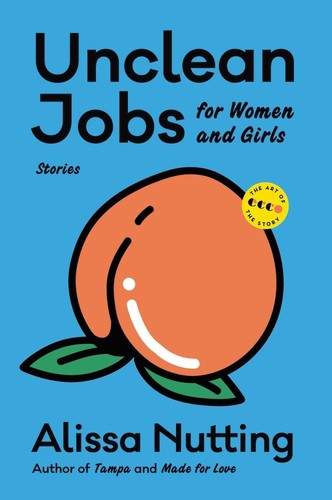
Alissa Nutting’s fiction debut, Unclean Jobs for Women and Girls, was published in 2010 by the now-defunct Starcherone Books; the original edition currently sells for over two hundred dollars on Amazon. This summer, Ecco reissued Unclean Jobs as part of their Art of the Story series.

Each story focuses on a woman with an “unclean job,” from familiar positions like “Zookeeper” and “Deliverywoman” to more disconcerting titles like “Hellion” or “Dancing Rat.” These jobs contaminate their heroines both physically (“Corpse Smoker,” “Gardener”) and emotionally (“Bandleader’s Girlfriend,” “Trainwreck”), lines often blurring between the two (“Cannibal Lover”). With varying degrees of realism, these stories pivot around women’s experiences of desire, autonomy, and authority.

Over the phone, Alissa Nutting and I discussed the reissue of Unclean Jobs, the horrors of being a woman on the internet, and our Domino’s Pizza Profiles.

Deirdre Coyle: In your new introduction to this collection, you say that “stories with fabulist, surreal, or strange premises that escape realism lift the veil of everyday order to gaze at everyday terror. What’s revealed to be most surreal aren’t the things that differ from reality — the odd settings or mythical beings — but the things that do not change no matter how bizarre the story’s world. Such as loneliness.”

This seems very applicable to your novels, Tampa and Made for Love — both have very surreal elements, although they aren’t works of fabulism. What do you think caused you to lean away from explicitly fabulist fiction?

Alissa Nutting: I think it was actually the novel form that caused that. What I love so much about fabulism is getting to exercise this premise. And I feel like they have various half-lives, but that normally the half-life is pretty short. It’s something that I still tinker with; I love the surreal so much that I’m not really able to write anything sustained without going back to it. In novels, the technique I’ve most often employed is digression — to find a space where, either by fantasy or desire or hypothetical what-if or anxiety, the character can think, ‘What if this surreal thing were to happen, or to come true?’ But I feel like that’s sort of the trade-off. What I love about fabulism and fabulist short stories is that leap into a premise that is already so set aflame, that it’s just gonna burn out after a few pages. And that’s glorious, but I just haven’t been able to sustain it outside of the short story without modifying it.

DC: In Unclean Jobs for Women and Girls, every story is given the title of an “unclean job.” So I wondered, where in the process of working on these stories did you come up with the concept of “unclean jobs”?

AN: This is clarity of hindsight, it definitely took me a long time to understand this, or begin to feel this. My most recent novel, Made for Love, was when I realized how much I write about performance, particularly being something for someone, or being a role in someone’s life or in society. That comes from my own real, flawed psychology. Growing up in a really religious household, I learned really fast how to pretend. And then that coping mechanism, I immediately began to deploy in other ways, in other really destructive ways in my life.

[Unclean Jobs] was my MFA thesis, when I was sort of conceptualizing — at the time, work was the first thing that came to my mind, like a job. In hindsight, maybe “the labor of performance” is a little more accurate for the things I was thinking about at the time.

Unclean Jobs is about the labor of performance, being something for someone, or being a role in someone’s life or in society.

DC: So it kind of happened naturally as you were working on these pieces?

AN: I think so. In some ways they’re all the same story, you know? In trying to find an agent, et cetera, there was this push to have it be a novel. And that didn’t work. But at the time, I was desperately thinking about ways that maybe it could. At one point it was titled ‘My Avatar.’ It was this implication that this was just me thinking myself into all of these various roles and places. And it has that immediacy of first-person-to-author that I think a lot of early writing does. But I was kind of limited by what I could do at the time. In some ways, my writing has gotten less overtly personal, but more implicitly super personal. Made for Love is probably the most personal thing I’ve ever written, and I could never do that at the time that I wrote the collection.

DC: How do you feel having this collection re-released into the wild in 2018, when your career is in such a different place?

AN: It’s a thing, you know? There is that sense of when you bring home a new significant other, and they find your family photos, and you’re seeing yourself before. You see all of the things that you didn’t know, or all the things you thought you knew. That’s definitely there. But I’m also incredibly grateful. The press that it was on [Starcherone Books] went under, and I’m really grateful that it’s there in the world.

In my own life and reading experiences, as a human and as an artist, many of the things I love most dearly are not the most perfect things, or that artist’s “best work,” or most masterful or most accomplished work. It’s easier for me to celebrate this vulnerability that I do see and still appreciate, and I think that has evolved in my work. From that point of view, I feel incredibly lucky.

DC: Did the collection change at all for the reissue?

AN: Yeah. I did some heavy editing. In its first publication, there was a transmisogynistic story that was horrific, every terrible misstep you can possibly do, taking on a point of view that I had no business taking on, with a lot of arrogance and non-research. Just so much ignorance at the time. I donated the advance for the reissue. It’s something I still rightfully think about every day, and really have informed my point of view in really good ways, both in my writing and outside my writing. That’s the biggest change that was needed when I realized the horrible thing I’d done. I stopped that printing with the small press. It really wasn’t anything that I was okay with being out in the world. So it’s nice to be able to have a copy of it that I feel good about giving to people, recommending people read.

Surveillance, Satire and the Female Body

DC: There’s this one section in the story “Cannibal Lover” that I can’t stop thinking about. The narrator says, “A lot of people use admiration to cope with mortality. Their thought process is that if they work hard and become good at something, or famous, or even if they just live a respectable life, that they’ll receive admiration from others and this will soften the ultimate blow.” I realize it’s beside the point, but I really wanted to be admired after reading that passage. Do you think admiration softens death’s ultimate blow? How do you feel about this now?

AN: I would be lying if I said that I wasn’t still desperately searching for what can soften it. And I do still definitely believe that admiration can soften it. But aging and getting older, I’m having to come to terms with the fact that I’m probably not going to be admired, so I’ve gotta start brainstorming other ways.

I’m super fortunate to have a daughter, and to have two step-kids. If I’m honest about why I came to parenting, you know, it was all the wrong reasons, and I think that it’d be dishonest for me not to acknowledge that a possible softening was really there. That having this part of you, these younger people that you devote yourself to and give yourself to in a very unique way — who go on, who exist after you — might be a solace.

But I feel like every softening thing I’m drawn to does the opposite. As a parent, you open yourself to lose everything. And for me, just that thought has made it harder. You know, I can’t even talk, I can’t even vocalize how difficult it would be to miss out. In summary, I think I’m really bad at finding this softening. Maybe that’s where the thinking and the reframing has to come — that it’s not softened. That’s more the space of acceptance.

Alissa Nutting Recommends a Story About the Aftermath of Abuse

DC: Last spring, you did this very funny tweet about taking your daughter to the dentist, which went viral [“My daughter started crying at the dentist office bc the dentist ‘is a boy’ and the dentist said ‘sorry, there are no girl dentists at this office’ & my daughter looked at me & said ‘why did we come here.’”]. And, of course, once it went viral, it was picked up on by assholes. I remember reading some of the backlash, mostly anti-feminist stuff. What was that like, and how long did it take your mentions to clear out?

AN: It’s funny because having been a woman on the internet for over a decade, I was really like — the frightening part, was, of course I’m also bad at a lot of parts of technology, like I had location whatever thing on, you know. The safety thing, obviously, that was the distressing component. But I immediately just muted it. And it was like, not even a thing. But my husband did not have the same strategy, and it was this kind of like complete, anxious, high-alert on his behalf, for a long time. And he was sort of doing these replies, and I was like, “Don’t engage, don’t engage!”

DC: Did your daughter know that her words had inspired a controversy?

AN: No, she doesn’t know what Twitter is. That’s a special time in one’s life.

DC: That’s a beautiful time.

AN: It’ll be a funny story for her. I think she will really appreciate it. She thinks that almost everything is hilarious. I love humor and comedy, but she takes it to the extreme. She’ll definitely think it’s funny later.

In novels, the technique I’ve most often employed is digression — to find a space where, either by fantasy or desire or hypothetical what-if or anxiety, the character can think, “What if this surreal thing were to happen, or to come true?”

DC: You’re a professor at Grinnell College now. Has your teaching life affected your writing life or writing process?

AN: Definitely. It’s a unique mode. There’s a mode of writing that I have in summers, in times when I’m not teaching in conjunction with writing, and then there’s the mode of writing that I have while teaching. It’s different but it’s also great. It’s definitely a wonderful and privileged opportunity to get to talk about fiction all day.

I mean, I have a lot of thoughts and feelings about the workshop model, and those are constantly evolving, in terms of thinking about class structure and best practices. But I will definitely say, and I tell this to my students all the time, that having to clearly enunciate what aspects of a story can be improved, and why, and how — I’m just constantly grateful for the epiphanic role that’s able to play in my own writing. Sometimes during class, I’ll finally get the clarity to say something that’s taken me ten years of thought. And the second class is over, I’m running to my office and writing it down and thinking about this great, brand new application that clarity’s given me in what I’m working on.

I have ADD, so hyperfocus is kind of the way and the space that I’m able to work. I’m really good in chunks. It’s hard for me to work for, like, an hour at a time over the course of the day. I need more of a submarine style of working, where I go under for a while and then resurface. Craft and teaching can be such a nice invocation to that spell of concentration, and going off to work. I feel really lucky. Speaking of jobs, I don’t think there are a huge number of jobs that I would be truly excellent at. But I do feel like I’m good at teaching.

DC: Do you think teaching is an unclean job?

AN: [Laughs.] I think if you do it right, it is. If you’re not being honest, if it’s too clean, you’re not opening yourself to the process and admitting how baffled you are as well. And you’re learning, too. The thing that’s been emerging for me for the past few years is that I’m teaching a model of learning. That’s something that I totally benefit from.

DC: I wanted to close with the most important question. I recently read a piece you wrote for Grub Street Diet, where you cataloged your food intake for a few days. You mentioned your Domino’s Pizza Profile, and I am totally obsessed with my Pizza Profile.

AN: Same.

DC: What’s your favorite order currently saved in your Pizza Profile? Mine’s feta, spinach, and sausage.

AN: Okay, so it’s a little gross. I love toppings — I love them. So I get the thin crust and then I get pepperoni, ham, black olives, green olives, green peppers, banana peppers. Sometimes I do pineapple too! [Laughs.] And onions. And then sometimes jalapenos. But I have all of them [saved]. So I have one that doesn’t have pineapple, but does have jalapenos. I have one that has both. I have one that has pineapple but not jalapenos. It’s a lot of toppings. You can see how it is such a time saver to have the Pizza Profile.

DC: That’s so many more vegetables than I put on my pizza. I’m very impressed. That’s really healthy.

AN: It’s the only way I eat vegetables, though, you know? Outside of pizza, it doesn’t really happen. Tacos, occasionally. It’s a surface area issue.

If You Know How to Date, You Know How to Find a Literary Agent

I was relieved after I got married—relieved, and naive, in my assumption that I’d never have to date again. I had found my partner for life. As it turned out, I’d file for divorce seven years later. A lot of second-guessing and hesitation kept me from pursuing divorce. I kept psyching myself out at the mere thought of diving back into “the dating scene.” I mean, were things really that bad? Maybe I should give it another year and another, and another. Perhaps these signs were flukes. As I prepared to finalize the end of a union I thought would be a long-term thing, a forever thing, I realized it was better to be single than to be coupled and deeply unhappy. When the judge’s decree arrived I was relieved to be out of a binding relationship that did not produce joy or growth. I resolved to cast a net out again, when ready, in the hopes of finding a better match.

A similar experience occurred years after my divorce when I thought I’d found my mate in a literary agent. The search for an agent is a lot like the search for a romantic partner: it’s intimidating, it may require a lot of false starts, and it’s ultimately about finding not the best person but the best fit. Some of us may find “the one” fairly quickly, for others it may take a lot of patience, and a good amount of reassurance that it’s not necessarily us who is a problem, this is simply not a good pairing or time.

The search for an agent is a lot like the search for a romantic partner: it’s intimidating, it may require a lot of false starts, and it’s ultimately about finding not the best person but the best fit.

Time is often an incredibly frustrating and necessary factor of putting yourself out there and getting back out there. Depending on the person and the situation, as well as the break itself, it can be, well, nerve wracking. Just like I spoke to my friends about the dating “game,” I asked others about their experiences renewing their search for an agent. It helped to know, as it always does, that we’re not alone in this pursuit, in the struggles and the successes, and the moments when we find some solace. I also spoke with three agents to get their insight because relationships are not one-sided, nor are the perspectives.

The Search

How do we meet people? How do we find an agent? Is the internet the best place (or the most suspicious) to meet anyone nowadays? When it comes to representation it can be as varied as finding a partner. Sometimes the agent finds you thanks to one or many publications. Maybe this connection occurs at a conference or through a chance meeting or a connection with a friend or even through a Twitter pitch party. It can occur via the slushpile route which means you’re doing the asking. The opportunities to meet someone — in dating and in the literary life — are endless. The pursuit can feel fruitless. There’s radio silence in the query stage. Sending that first message into the void, be it an email submission or a direct message to an individual you’d like to get to know, means patience. It means potentially not hearing back and possibly feeling bad about why. The belief, or the reality posted on the agency website, is this preliminary silence equates to rejection. Despite being declined in one way or another we have to keep trying. That’s why we put ourselves and our work out there. To be seen as a person, to have your work be of value to someone besides yourself is one of the most uplifting experiences. And it happens because we never stopped believing in what we had to say.

Communication

According to the writers I spoke to, the thing that’s most likely to torpedo a budding agent relationship is radio silence. As in a marriage or partnership, communication — or more so the lack thereof — is a big issue in any relationship. The absence of communication can become deafening, often sounding sounds its own alarm.

“A warning sign that you need to end a relationship with an agent is non-response. If somebody doesn’t reply to an email within two weeks, that means something,” Alison Kinney told me.

One writer who asked to remain anonymous said her second agent relationship was a “disappointing experience.” “I signed with my second agent, we were in contact for the first two or three months after I signed with him, and then he dropped off the face of the earth. I called. I emailed. I left several voicemails and messages with his assistant. Finally, two years after signing with him, I told him it was time we go our separate ways. I begged him for a list of the editors he submitted to. He never gave me the list.”

Literary agent Jennifer Chen Tran (Bradford Literary) agrees. “In my book, if your agent doesn’t speak to you on a regular basis — whether through phone or email — they’ve probably lost interest. Communication is the hallmark of healthy relationships and if you feel that communication is waning, or not where it used to be, I recommend you clear the air and get in touch with your agent to have a conversation.”

Compatibility

The other most prevalent issue? Being on the same wavelength. What I learned in couples’ therapy with my husband was that you could literally say the same thing to one another yet neither of you hear it the same way. The reasons people don’t connect are usually subjective: They are not attractive to you, this is not a good story to them. So it makes sense that finding and needing that symbiotic relationship where everyone is on the same page, literally and metaphorically, will make or break an agent-client relationship.

“I think finding the right agent is like finding the right college, or even more like dating — it’s chemistry,” Melissa Holbrok Pierson told me. “I was lucky, I thought, in finding my second agent: high-powered, great reputation. I felt proud. Only . . . I think now she really didn’t get my work. She has a few a big money-maker clients, and I’m not likely to produce that kind of book for her.”

Finding and needing that symbiotic relationship where everyone is on the same page, literally and metaphorically, will make or break an agent-client relationship.

“One main thing to note about an agent before signing is creative alignment,” literary agent Linda Camacho (Gallt & Zacker) mentions. “In the beginning, the former comes up when editorial notes are discussed. If the writer/illustrator is generally on the same page as the agent and it seems that the agent ‘gets’ what they’re trying to do, that bodes well. If the agent and writer/illustrator differ widely in the vision for the work, that’s a red flag that it’s not a good fit.”

A friend who is an award-winning author told me she’s on her third agent and very happy with them, though the way to this agent wasn’t exactly smooth. Her first agent signed her as an excited novice when she had gained the publishing deal and merely needed the agent to protect her interests. His clients weren’t in line with what she wrote genre-wise, so he didn’t do more than glance at a contract and take a payday. He failed to negotiate her upcoming deals well and was not as invested in her work due to being unfamiliar with this category of literature. Ultimately things worked out for my friend, but from the start of her career this lack of symmetry between her and her agent added a lot more work to her plate.

Timing

Like anything in life, anxiousness or plain worry rears its head. Perhaps this is all too good, too soon. Maybe someone jumped on the first train not knowing where it was going. Is the first offer, be it a hand in marriage or a contract for representation, the right offer? Should we bail at the earliest sign of a disturbance in the water? Does not selling the first project you submitted mean that you, as writer, are a failure, or that the agent failed, or none of the above?

Agents I spoke to told me low sales aren’t necessarily a sign of a subpar agent-client pairing. “Not selling a client’s manuscript is quite normal, sadly, so that’s not the marker of a bad relationship,” says Camacho. “Not selling a few manuscripts can even occur. I become alarmed when I hear of writers wanting to drop their agent when the manuscript the agent took them on for doesn’t sell. That’s way too soon!” Marietta Zacker (Gallt & Zacker) reiterated the need to have two-way communication and “heart-to-heart conversations that get to the real root of the issue” before jumping ship. “Ultimately, though, our job is to find that perfect match between a creative’s work and the ideal editor.”

The reality of a volatile market, subjectivity within all areas of the industry, and simply timing play a factor. “I was once unable to sell a client’s next book, despite her previous Big Five deal, and despite having sent it to 30+ editors. Don’t take it personally, learn from the feedback,” Chen Tran says. “Sometimes all it takes for a work to sell is to fine-tune the sales proposal, for instance.”

When Marissa Landrigan split (amicably) with her agent, it was because her manuscript hadn’t sold, but more so because of her agent’s waning interest in actively pursuing a home for it. “I asked [my agent] what she thought about moving on from bigger houses to submit to university and indie presses, and she was really honest and said she didn’t really have the contacts at those places, but that I should definitely send it to those places on my own,” Landrigan told me. “I did that once or twice and then realized I could really do this phase without an agent.”

In the end we have to be more realistic with where we are and what we need to get where we want to be.

In my case, I’m glad I saw the warning signs early and that my agent-client split didn’t come from frustration or any bad will. Had I been less aware of what it meant to get my work viewed when it wasn’t quite ready, or less attuned to the fact that everyone needs edits, I might have stayed in a pairing that wasn’t suited for my goals simply because someone believed in me. Looking back, this was why I remained in my marriage long past the expiration date: fear that someone else wouldn’t want me for who I was and awareness that this relationship, while not good, wasn’t totally awful. In the end we have to be more realistic with where we are and what we need to get where we want to be.

For those of us conducting a new search after we thought we were done with that first hurdle, it’s important to recognize not having an agent doesn’t make anyone a failure and having one agent doesn’t automatically mean a book deal. (In addition to the fact that an agent and a book deal doesn’t equate to a bestseller.) Our respective levels of success and how we get there are as subjective as the viewpoints of those reading our manuscripts. These are all steps in the publication process and finding an agent, be it the first, second, third, or tenth time is one of those steps. The parallels between dating and representation remind me to pursue what I want means knowing what I want, and, more importantly who I am. Kinney shared a similar mindset. “When something didn’t work out, it was never the end of the world,” she said. “I mean, I felt like hell, but nothing was ever final: it was just another step in this gradual, non-linear process that was having a writing life. Having good things wasn’t a guarantee of success — but that also meant that having bad things happen wasn’t a guarantee of failure, either.” Like my marriage, my first agent relationship didn’t “fail,” it simply didn’t work out. So now I’m at the step where we try and try again.

Join us for the second annual Masquerade of the Red Death… if you dare

Early bird tickets to the Masquerade of the Red Death: Redder and Deader are now on sale for just $35! Tickets include a mask, unlimited beer and wine, and a specialty cocktail for the first hour. The price increases to $50 on October 1, so get your tickets today!

Thursday, October 25, 2018
8–11PM
Littlefield, Brooklyn

Last year, we packed the house at Littlefield with hundreds of revelers who sipped “Red Death” cocktails and danced the night away. This year, Electric Literature’s fundraiser will take the Edgar Allan Poe theme to the next level, with “Masquerade of the Red Death: Redder and Deader.” Guests are again encouraged to wear red or black, and masks will be provided. But unlike last year, not everyone may survive the night…

More information at bit.ly/red_death

“And now was acknowledged the presence of the Red Death. He had come like a thief in the night. And one by one dropped the revelers in the blood-bedewed halls of their revel, and died each in the despairing posture of his fall.”

– Edgar Allan Poe, “The Masque of the Red Death”

Electric Lit, Inc. is 501(c)3 non-profit, and your ticket purchase is tax-deductible minus the cost of goods and services.

A Reading List on New York’s Gritty Past

My debut novel Knucklehead is about a black law student who struggles, sometimes unsuccessfully, with the impulse to confront everyday bad behavior with swift and antisocial action. Knucklehead ends in San Francisco but, like me, it starts in New York. I was born in the South Bronx and grew up in midtown Manhattan before going to California in the ’90s. I spent the ’70s and ’80s moving through many of the realms that made up New York. Daring each other into burned-out tenements uptown. Drinking 40s with homeless punks in Alphabet City squats. A prom at the Playboy Club, followed by dancing at Xenon. Getting shaken down in Times Square. A toga party at the Waldorf.

Purchase the book

That’s all gone now, in spirit if not in fact. The wilds in which we had our adventures have been paved over and sterilized and repopulated with clean-cut young people staring at phones. My generation bemoaning this as “New York sucking now” is unfortunate, as well as false. Doubtless, people said that about us too.

For my own peace of mind, I have decided that New York is not only countless social strata superimposed on one another, it is also countless eras. My era is still here. New York is still here. These eight books, about as varied as they can be, all share the timeless essence of the city.

The Fuck-Up by Arthur Nersesian

A love letter to the Lower East Side, The Fuck-Up chronicles the semi-adventures of a proto-slacker in 1982. There were an unlimited number of ways to get into trouble back then, and this novel covers a lot of them.

Hunting in Harlem by Mat Johnson

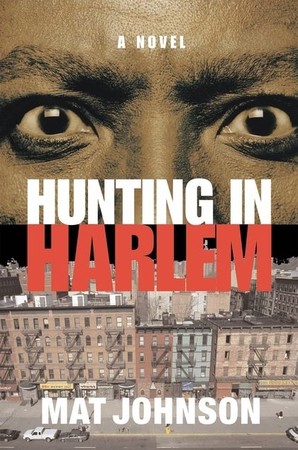
“Three ex-cons came to Harlem looking to become something more.” Thus begins Mat Johnson’s clever, funny, and eminently readable story of one approach to urban blight and gentrification in upper Manhattan. If Dickens were a nerdy brother from Philly, he might have written this.

The Coldest Winter Ever by Sister Souljah

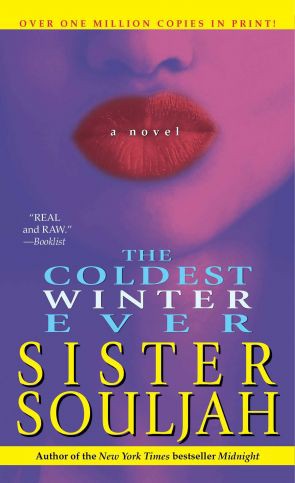
An escapist read in more ways than one, Sister Souljah’s classic street saga takes us from Brooklyn to Long Island and beyond with the straight-shooting credibility the author is known for.

New York City, Seen Through Its Bodegas

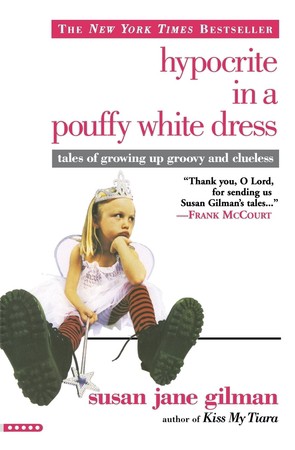
Hypocrite in a Pouffy White Dress by Susan Jane Gilman

This fantastic memoir of the ’70s and ’80s in Manhattan is spot on. If you were there, you remember the small town that existed amid world-class glamour. When genuine (if often tense) diversity prepared us for life on Earth. When everything was dangerous but almost no one died. It was awful and magic and it is all in this book.

American Psycho by Bret Easton Ellis

A brutally accurate account of Manhattan in the late ’80s. Skip the over-the-top violence, if you like. What’s left is even more disturbing: an overclass of identical white boys fueled by nothing but coke, greed, ego, and, to varying degrees, an unquenchable thirst for blood.

Live Nude Elf by Jen Miller

“The Lower East Side is a small town, one that’s full of slutty bisexual people who’ve all slept with each other.” This memoir, which covers the sexperiments Revered Jen conducted for Nerve.com’s column “I Did It for Science”, is full of insights such as this one, as well as a lot of honesty and fun.

8 of the Best New York City Meet-Cutes in Literature

Serpico by Peter Maas

The New York of the ’70s is almost completely built over over now, but nothing is more New York than the story of Frank Serpico, an NYPD officer who, despite having no high-ranked “rabbis” in the department to protect him, resisted and ultimately opposed the corruption that ran the city.

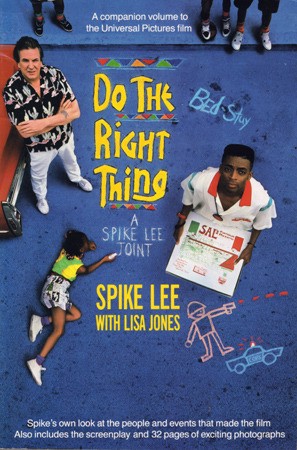
Do the Right Thing by Spike Lee and Lisa Jones

No film captured ’80s New York life like Do The Right Thing. This companion book to the film provides a rare and thorough look behind the scenes — most interestingly, almost a year’s worth of journal entries by Spike Lee. A must for those who felt, and feel, the authenticity and truth of Spike’s masterpiece.

John Larison Fights the Toxic Cowboy Myth By Giving His Western a Female Hero

John Larison was a teacher when a student who had been expelled came onto his high school campus and murdered two students and injured 25 others. In the two decades since, the writer has meditated on violence in America. He spent those years doing many things from being fly-fishing guide to writing for outdoors magazines, but he knew he needed to write a novel that explored what made America so violent. For years, he thought it would be about survivors of a school shooting. Then a voice came to him one day while he was walking deep in the Oregon wilderness.

Purchase the book

That voice was Jessilyn Harney, the main character of Whiskey When We’re Dry. She is a strong young woman who poses as a boy in search of her infamous outlaw brother. The result is a fresh take on the Western novel, which has been steeped in stereotypical archetypes that Larison sought to redefine.

I spoke with the author about his desire to understand violence, the allure of the American West, and why redefining a genre will help cure political turmoil.


Adam Vitcavage: What drew you to writing a Western?

John Larison: Most of my life was spent in the American West. I met so many people who didn’t fit the character types that were in Western literature. Especially cowboy literature. I never met anyone who fits that stereotype; except newcomers who dressed like a cowboy hero. Those character types just don’t really exist. I always took issue with that.

I also found the true history of the West to be interesting. Some of the earliest exploring in Oregon was done by Hawaiians. Some of the latest settlements were founded by Orthodox Jews who came to the West to escape oppression.

In Western tradition, victims are normally white women and it is white men’s jobs to protect these bodies.

The true history was always more interesting than what I saw in the literature of the West.

That was one element, but another element was anger. All of my writing stems from a sense of activism. A few years before starting this book, I was teaching at a high school that had a shooting. It was before Columbine. Twenty-five students were injured and two died. At the same time, we were marching into war with Iraq and I saw George Bush put on his cowboy hat and a belt with a big buckle. He was talking about a border wall between the United States and Mexico while wearing the appropriated style of a Mexican laborer. The cowboy tradition is a Mexican tradition. He didn’t even know and I found it offensive.

It felt like what he was really saying was by wearing this cowboy garb was close to white power. It comes from this cowboy mythology that grows from the Western films from the 1940s, ’50s, and ’60s that show a whitewashed America.

I wanted to write a book that took on these ideas and fracture the longstanding mythology of the West. I really wanted to get into the heart of American violence.

AV: Westerns are always about strong, established, White men. Whites are passive innocents and it’s the Native tribes or Mexicans who are the violent ones, when in reality it was the opposite.

JL: Yes, that’s true. This notion of victimization is at the heart of Western tradition. We see that narrative of victimization resonating currently in our politics. The current presidency is all about this figure who casts himself as a victim, that he is standing up to the victimizers.

That is a direct descendent from the Western novel where we see people who have brought genocide to the Native Americans or people who have argued to their senators to bring forward the Chinese Exclusion Act of 1882. In the Western novel, these people are recast in a tradition of standing up for victims. The victims are normally white women. There is a lot of focus on women’s body and it is white men’s jobs to protect these bodies.

The Western is the right kind of book to speak to the nerve center of American identity. Also to target these myths that have led to the cultural trouble we are in now.

AV: Stereotypes in Western books and films with characters like Lone Ranger and Tonto have been subtle forms and overt forms of oppression that White men have pushed for a century. Your book fights these stereotypes by the point of view the story is told through. When did Jess come into your mind?

JL: Jess’s voice was the origin of the book. I had been working on a novel about American violence that was about the survivors of a school shooting. It wasn’t going well. I needed a new approach and knew a Western might work.

The American West in the 19th century, and today, is a place to come to reinvent yourselves.

I was walking and listening to Gillian Welch and I heard this voice. I assumed it was a salty, traditional cowboy hero looking back on his exploits and was less confident in them in his old age. After a couple of weeks, I realized this was the voice of someone who is blurring gender in a time before we had words to describe that.

The Western itself is built on these simple dichotomies of men and female; good and evil; white and non-white. I realized my character didn’t fit into these categories, just like none of us do. Politicians use these dichotomies to keep us divided.

My goal was to remain as honest as I could to that voice. I wrote every line out loud first so I can make sure it was true to Jess and not me, the author, trying to put words in her mouth. By staying true to that voice, the dichotomies of the Western novel started to crumble.

AV: How did writing Jess affect you as a writer?

JL: One thing that Whiskey has taught me is that the novelist’s job is like that of a good friend. It’s to see the essential self of the character. Don’t think of the character as a character and don’t think of the people in our lives as the sum of their identities. It’s to see the sum underneath those identities. Inside all of us is an essential story we are telling ourselves as it relates to the outer world.

AV: Jess was exciting to me for how she is a strong young woman who has to pass as a man. Is there a tradition of this?

JL: Yes, absolutely. I believe there were many who were trans who weren’t passing as men to survive, but they were living their true selves as men. The American West in the 19th Century, and it remains today, as a place to come to reinvent yourselves. All of us know people who have moved to Oregon or Washington to start a new life in the past few years and that’s nothing new. It has been going on for a century. People came here to escape oppression.

AV: What is so alluring about the West?

JL: I feel that answer is different for everyone. The West has been a place where the story is just beginning. That’s how it feels for Americans. The country’s story starts on the East Coast and it is pretty established. After the Civil War, the West was an unwritten land. Anyone who felt hamstrung by their place in society back East could come to the West and write their own story. For me, it’s the landscape. The population density is so low that a writer can go through and contemplate story.

AV: Your novel has these passages that wax poetic about nature and the landscape, but they never feel like a lull to read. How did you approach these parts of the story?

JL: My favorite parts of researching this book. I spent time in places that Jess would have been in. When I was in those places, I was there not as myself. I tried to transcend myself to what Jess would think about. Where I would think about climbing a mountain, she would think that was a waste of time.

The Western itself is built on these simple dichotomies of men and female; good and evil; white and non-white.

I tried to see the West through her eyes and how it would feel to a young person who was unsure about identity and the future. All she knew was the rhythms of where she was raised. I wanted to think about what landscapes would feel like to her to experience for the first time. It was almost like I was a method actor tapping into her which is what unlocked the emotion of the book for me.

It seems strange the emotion would come from the landscape, but I think that is a fundamental part of being human. Our setting is apart of our emotions. That’s something this novel taught me about writing characters.

AV: It’s hard to fight the urge to compare this to a canon Western like True Grit because it’s not from the point of view of a White man. Was that story in your mind while writing Whiskey?

JL: I read really widely in the Western novel tradition; both the early novels and then the action to those novels. I mark True Grit as the beginning of the reaction to the traditional Western. Up until that book, we have these archetypal characters dominating the genre. It was a genre that was dying out and then Charles Portis offered readers a new take on it.

The internal violence within America is a result from marrying the gun obsession of Western novels with big corporate influence.

That book ultimately has different aims than my book. Whiskey is seeking some cultural reckoning that True Grit is not. For that element, I looked to Cormac McCarthy and Annie Proulx. More recently, I have been inspired by people like Claire Vaye Watkins.

There has been this tradition dating back to True Grit of people critiquing the Western mythology. There are writers bringing literary ambition to the genre.

Outside of the genre, something that was really an inspiration to me was reading letters from the early settlers. A lot of the assumptions we have regarding them are wrong. They are different people than you might imagine. That element comes through in their language and it doesn’t come through in academic histories of the West. Reading those pioneer accounts was huge for me.

AV: Since Whiskey stemmed from your desire to talk about violence, do you think about violence in America differently now?

JL: I think about it differently after writing this book. Novels for me are to explore problems. Violence in America is one of those problems that needs fiction to get at the capital-T Truth. That was one of my ambitions for Whiskey.

I don’t have any answers for this, but I do think America’s gun obsession is one of the legacies of the Western novel. I would like to believe fiction will be one of the things that will help change and understand America’s relationship with guns. I’m not sure if that is a good answer.

AV: That’s one of the reasons the topic of guns in America is so hard to tackle. There are no good answers. There are ideal answers that half the country love and half the country hates.

JL: I think we all have the same goals. We all want to live in safe places and feel protected. I believe groups like the NRA have taken these myths of the American West that are born out of the Western novel and harnessed them for capitalism for the benefit of big industry. Guns in the United States are a big industry and they benefit politicians.

The internal violence within America is a result from marrying the gun obsession of Western novels with big corporate influence.

It’s Always Too Late to Save Him

Drowning Boy

This year we’ll save that drowning boy in the backyard pool. His arms are growing tired and his voice is hoarse from crying and chlorine. We’ve always meant to do it, but it’s easier to ignore him and forget that we once loved swimming. But this year we’ll save the drowning boy even if he’s not much of a boy anymore. We’ll do it despite believing a man should be able to save himself.

Together, the boys hopped the night fence. They dove through the pool’s shimmer headfirst, but by morning an even brighter sky dulled the water. Eyes might have shamed their shrunken chests and freckled arms so they ran dripping back over the fence. All but one. We woke to the same blue sky and the song of sparrows and the screams of a drowning boy in our backyard pool. Through the curtains we saw him beating his arms to keep his head above water, but we had to get Rachel ready for school. Next year, we said. Next year we’ll save that drowning boy. At night, we pretended the splashes were fun splashes not drowning splashes. For years we heard them and said, Maybe it’s teenagers in love.

Maybe it’s the sparrows playing.

Maybe it’s something slightly less terrible than a drowning boy.

In the summer, we barbecued while the drowning boy sputtered and blew desperate fountains with his lips. Neighbors would come and compliment our blooming azaleas and the white noise machine filling the yard with the sound of a boy whispering Mother. When their children would ask if they could swim, we would tell them we’d already winterized the pool. But that drowning boy is using it, they’d say before their parents could shush them.

When Rachel graduated from high school, we threw her a party in the backyard. The drowning boy’s friends came back. They hid their eyes from his waving arms and made sure their mouths were full of cake so they didn’t have to answer when they heard their names. They’d just graduated from high school, too. So had the drowning boy. When we weren’t looking one of them threw the drowning boy’s diploma and mortarboard into the pool. In the yearbook, he was voted ‘Most Likely to Never Leave Town.’

After Rachel’s wedding and the grandchildren and the divorce, there was really no reason not to help that drowning boy. But we’d gotten so used to blaming every noise, every terrible thing, on something unreachable that it became impossible to believe we could save even ourselves.

Then one night we hear him and come running. I dive into the pool while you call his parents. His parents died so you call Rachel and tell her you met a single man her age. I pull the drowning boy from the pool while my pocket change sinks to the bottom. I say, Oh god, Oh god, are you okay?

About the Author

Adam Peterson’s fiction can be found in The Kenyon Review, Epoch, and elsewhere.

“Drowning Boy” is published here by permission of the author, Adam Peterson. Copyright © Adam Peterson 2018. All rights reserved.

Victoria Patterson Will Not be Silent and Compliant

I first met Victoria Patterson a decade ago. She was my teacher when I was an undergraduate at UC Riverside, while she was finishing up her MFA. I don’t remember the exact course, but it was one of those classes that you fantasize about taking while you’re in high school (well, at least you do if you’re obsessed with reading): she had us read great books and then we sat around and talk about them. She was one of those professors you fantasize about as a high schooler, too — endlessly supportive, treating us as more like peers than lowly undergrads.

The very next year, Patterson’s debut collection Drift was published to much acclaim, and was nominated for numerous awards, including the Story Prize. In the years since, she’s published three novels: This Vacant Paradise, an exploration of class and gender, set in Newport Beach; The Peerless Four, about the first women’s Olympic track and field team; and The Little Brother, based on the real-life case of a teen girl’s rape at the hands of her classmates, and its social and emotional aftermath.

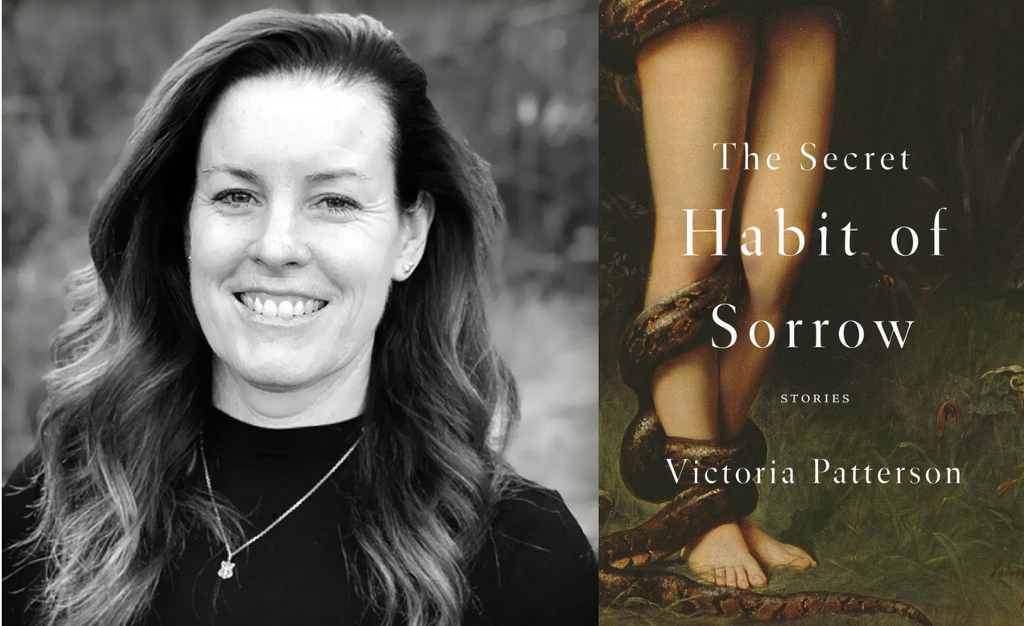
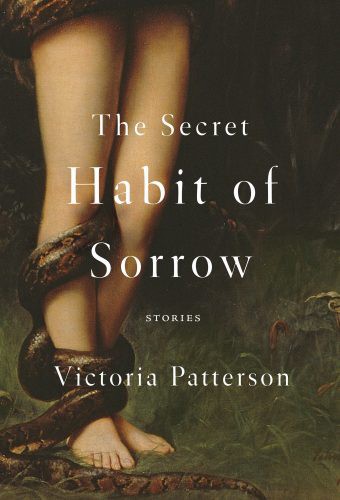
The Secret Habit of Sorrow, published last month by Counterpoint, marks Patterson’s return to the short story. The subjects and scenarios of each story vary widely, but there’s a connective tissue running throughout — each character suffers from a type of loneliness, a type of loss. Like any story collection worth its salt, most of them are deeply flawed, but in Patterson’s writing there is an underlying bigheartedness and compassion, which feels somewhat revolutionary in today’s polarized world. The result is a collection that takes the reader to unexpected places, in language that is both precise and lyrical.

Patterson and I discussed addiction, process, and the benefits of having a writer’s group over a Google doc.


Juliet Escoria: One thing that really impressed me about this book is how it is told from the viewpoint of people in all walks of life — divorced dads, young pregnant women, people in recovery, people in active addiction, busboys, grad students — in a way that is always compassionate and nuanced. Was this something you were conscious of as you were writing the book? How did you get into the mindset of so many different types of people?

Victoria Patterson: These stories range from ten to fifteen years ago (“Johnny Hitman,” “Half-Truth) to the very recent (“Visitations,” “How to Lose”), though the older stories have been rewritten over the years and on in to the last few years, because I can’t seem to leave them alone. So I didn’t consciously try to have a wide range of viewpoints — it’s just how the stories happened. Each time I write a story, it’s like diving into the ocean. I get to enter an alternate world and become other people. It’s daunting and exciting.

JE: I thought it was refreshing and interesting that you showed so many sides to addiction; I feel like it’s so easy and much more common to look exclusively at active addiction. It was making me think about how the set of personality traits that often come with being an addict also often overlap with being an effective writer. Do your own addictive traits feed into your writing?

VP: Yes. Probably.

I got sober four months before my twenty-first birthday. Twenty-nine years of sobriety later, I’m aware of all that space around addiction that’s ripe for material, along with all the ways I can hurt myself without taking a drink or a drug. These traits are deeply ingrained. I can’t seem to rid myself of them completely. I get one tapped down, only for it to pop back up in another form, like a vicious game of whack a mole. In my writing, I’m grappling with these everlasting demons, along with knowing what it’s like to love someone who is actively destroying himself/herself, which, I believe, is one of the most painful things to witness. I have compassion for those who suffer, knowing directly what I go through/have gone through myself. I feel like I’m often writing about secrets, shame, and the struggle for relief.

My starting point often comes from defiance and an urgency to document and disrupt, because I’m supposed to be compliant and silent.

I suppose one could equate writing to an addiction, like that thing Joyce Carol Oates has, where she can’t stop writing, what’s it called? I’ve got that to some degree. I’m always writing or needing to write. But for me, it has more to do with life and survival than death, whereas my alcoholism veers toward death.

At one point I did go to a priest and ask him about my writing — this was a few years before I’d published Drift — because I was concerned by my absolute drive to write. I was sneaking off to write, very much like an addiction, when my kids were young. The priest tried to understand what I was saying, and then he told me about how he’d been really into jogging, and then he’d had to stop when his knees went out, suggesting that what I was describing might be similar. It made me feel strangely better, knowing that this writing thing wasn’t quite like his jogging thing. It’s bigger than an addiction.

JE: I’m always interested in a writer’s process, just because they can vary so much, and often seem to reflect qualities about the writer’s writing in general. What are some things you do with every story? Can you take us through a particular story, from initial idea to final draft?

VP: Each story has to percolate, sometimes for years and years, before it’s ready. Each story usually has my writer group’s influential thumbprint, since I trust them. They spot things I cannot, question me, push me to go deeper when I don’t want to. It’s like when you’ve lived with some flaw for so long, you no longer see it. You’re just used to it. But then someone else comes in and points it out, and it was right there all along. So while I’d like to not need help, by now I know that I do. I want my work to be as good as I can make it, so I submit it to this evaluation process.

Otherwise, each story’s development is distinct. Some begin with an image, others with an idea, others with a character. For instance, my story “DC” began when a friend invited me to go swimming at her apartment complex, and she left a brick to keep the gate parted, so she wouldn’t have to buzz me inside. The entire story started from that brick. Whereas a story like “Johnny Hitman” came from my character Linda, who I knew so well. “Visitations,” on the other hand, was my exploration of family secrets, what we tell and don’t tell, and how these secrets bloom no matter what.

JE: How did your writer’s group form? I want a writer’s group! The description of yours sounds amazing.

VP: I’m so fortunate. It’s helpful in so many ways. I met Dana Johnson when she was my professor at UC Riverside. After I graduated, she asked if I’d be interested in a writers group that was just forming. This was in 2007. We’ve had the group since — there are four of us. One member, Veronica Gonzalez Pena, moved to New York. Now there are four again: me, Dana, Danzy Senna, and Sarah Shun-lien Bynum. Michelle Huneven is also a valued reader for me.

JE: I’ve been thinking a lot about different writer’s motivations and obligations: how a poet’s is different than a novelist, and somebody who writes about their own life is different than someone who completely invents new worlds, etc. What makes you feel the need to write? What is something you feel like your writing has to do?

VP: These questions are difficult to answer! As far as one thing I hope my writing does: make a reader feel less alone. I’m working on this essay right now, and it’s about a lot of things, but it’s also about my need to write, how it’s connected to my survival. I talk about how I filled out my own baby book when I was seven, since I’d found it empty! How it began as a survival mechanism, for self-representation, and to excavate my own birth family’s prodigious amount of secrets. Here’s a passage:

I’ll write what I’m not supposed to write, I decided. I’ll tell what I’ve been told doesn’t exist, because it does. I’ll show proof. To this day, my starting point often comes from defiance and an urgency to document and disrupt, because I’m supposed to be compliant and silent.

Yet in daily life, I’d rather go unnoticed. What I project is not who I am, or how I feel myself to be. I was trained in girlhood to be quiet, pretty, accommodating, and this was how I received attention. My pen name’s different than what people know and call me, Tory (what I go by) a nickname for Victoria. On the page, Victoria is braver, smarter, and more openly defiant than I am.

JE: That makes a lot of sense to me. Your writing seems very much like the work of a person who prefers to be unnoticed in daily life — a quiet observer — who also has a sense of defiance in their interior life. A lot of your work is about more underexplored elements of Southern California. I wouldn’t call it “the underbelly” (although that label occasionally fits), so much as the less examined. One thing I was happy to read about is that very specific type of Southern Californian Christianity — I feel like a lot of people imagine California as a hotbed of liberal values, when in reality, it can be quite conservative. What are some things you feel like most people get wrong about Southern California?

VP: The whole notion that everybody’s laid back! People are just as insecure and uptight here as anywhere else. It’s just sunnier!

JE: You (somewhat) recently got a Twitter account, after having no social media presence for a long time. What caused you to get one?

Each time I write a story, it’s like diving into the ocean. I get to enter an alternate world and become other people. It’s daunting and exciting.

VP: I joined under an alias initially — to poke around, get my feet wet. When Trump was elected, I decided to stop hiding behind my alias. It was one of my venting sources. I find it helpful to get news/information. I’m inept at social media and that’s ok, since that way I don’t get caught up in it. I joined Instagram as well. Initially my sons had to show me how to post. I’m really bad at it. With anything that requires more than rudimentary basic knowledge, they post for me.

JE: Sometimes I look at books I’ve read and loved, and wish I hadn’t yet read them, simply so I could once again have the pleasure of reading them for the first time. What are some books you wish you could relive reading?

VP: Like wanting to be a virgin again! I’m not sure. But I loved reading The Collected Stories of William Trevor. I carted that huge book around with me everywhere when my kids were young — to swim lessons, doctor appointments. I felt like it was my secret friend. There it was in the open with me, but no one could comprehend the intense, intimate relationship I was having with it.

Messed-Up Things You Missed About Your Favorite Children’s Books

I ’ve never been much of a re-reader. There are a few favorites that I’ve come back to here and there over the years, but it’s a rarity. When I got my first job out of college working for a major children’s book publisher in New York City, I found myself surrounded by familiar covers that jogged memories of long afternoons spent reading as a kid, but even then, there were few that I revisited. With a constantly growing TBR pile and limited hours and energy in the day, coming back to reads for a second time just never felt like a priority. Still, I reserved a special place in my heart for my old favorites, and I often found myself wishing for a reason to pick them up again.

When I came up with the concept for my podcast, I thought it would be a fun excuse to fall down the kid lit rabbit hole — not to mention an even better excuse to turn the acronym for a favorite elementary school pastime (SSR, also known as Silent Sustained Reading) into something racier (Sh*t She Read). Every week on The SSR Podcast, I chat with a guest about a throwback read from our middle or high school days.

I had no idea when I committed to revisiting all of these classics that my experiences with them today would be so different than the ones I had a decade or two ago. Here are seven messed-up things you probably missed about your favorite childhood reads.

1. Adults perpetually question the credibility of kid protagonists — especially little girls.

For middle grade readers, in particular, plots often hinge on an enduring tension between kid and adult characters over whether or not the former is telling the truth. Often, being a kid feels like a constant battle to win the trust and respect of parents and other key grown-ups, so tension like this is no doubt relatable for young readers. It’s also a great way for authors to raise the stakes in situations where child protagonists must make the challenging decision to circumvent the adults who doubt them. so they can right the wrongs and vanquish the evils that only they know about.

Maybe it’s the grown-up feminist in me talking, but as I’ve picked up on these patterns in so many of the middle grade books I’ve revisited lately — particularly with respect to young female protagonists — I can’t help but feel infuriated about the extent to which this lack of credibility has been made the status quo by classic titles. In Roald Dahl’s Matilda, the title character is told on multiple occasions that no one will believe her stories of abuse at home or at school. In The Lion, The Witch, and The Wardrobe, Lucy accepts the fact that no one will believe that she’s journeyed through an old armoire into a snowy wonderland. In Welcome to Dead House, the first book in R.L. Stine’s believed Goosebumps series, protagonist Amanda stops trying to warn her parents that there are ghosts haunting their new home (even as she collects additional proof!) because it’s just normal for them not to take her at her word.

In light of recent meta conversations about the importance of empowering young women to speak up in the face of abuse, it’s critical that future children’s books demonstrate examples of little girls who bravely share their stories (no matter how apparently unbelievable they might be) and are granted respect for doing so.

2. Many literary parents are shockingly irresponsible.

Often, it’s the sheer cluelessness of the adult figures in kid lit that allows the young narrators to step in, take matters into their own hands, and — in many cases — saves lives or the world. If literary moms and dads in books were as reliable as they’re expected to be in real life, reading-obsessed kiddos like me would have missed out on a lot of adult-free adventures and triumphs. It’s only when Mom and Dad are out of the way, for example, that Ella Enchanted’s Ella could go in search of the fairy that cursed her with unconditional obedience. Having been sent to boarding school so that her father can continue to ignore her after her mother’s death, our heroine sees the opportunity to make a break for it and go on her quest. Her father isn’t checking in on her, and she is accountable to no one. This seems pretty romantic when you’re a kid.

Now that I’m expected to behave like a responsible adult myself, though, it’s pretty stunning to consider just how irresponsible literary parents can be. Take Claudia and Jamie, for example, who disappear for days into big, bad New York City in From the Mixed-Up Files of Mrs. Basil E. Frankweiler. There is no subplot of their parents searching desperately for them or of a big rescue campaign. Instead, we’re left to assume that Mom and Dad are content to simply wait for their return… and that seems like a really bad idea.

Now that I’m expected to behave like a responsible adult myself, it’s pretty stunning to consider just how irresponsible literary parents can be.

3. There are a lot of double standards around meanness.

Children’s books are rife with schoolyard bullies and mean girls, most of which are obviously positioned as the villains that readers are intended to despise. We’re meant to cheer on the victims, to root for the underdogs, to hope that the characters who are so often on the receiving end of bullying might turn the tables and vanquish the mean kids.

But what happens when the bullied becomes the bully? In many of the middle grade titles that I’ve come back to recently, it seems that we are meant to endorse meanness on the part of protagonists, even when it seems senseless or is just as cruel as what’s coming from the antagonists. Why, for example, is it okay for Mia Thermopolis to spew judgmental mean girl rhetoric at the popular kids — or even at her best friend Lily, who she describes unflatteringly as looking “like a pug” — in The Princess Diaries? Why are we supposed to accept Harriet the Spys heinous writings — she notes certain characters she’d like to get hit by a car and taunts a classmate for her absent father — as her totally reasonable feelings? Just because a character has been positioned as “nice” shouldn’t give them permission to turn nasty. There has to be a better way!

4. Kid characters seem to know a lot about wills and estates.

This isn’t exactly messed up, but it’s ridiculous! I’ve never met a kid who was actively concerned with the post-mortem distribution of someone’s assets, but the world of kid lit might convince you that it’s a common stressor among youngsters. The plot of the first book in the Nancy Drew series, The Secret of the Old Clock, rests entirely on the premise that local eccentric Josiah Crowley’s assets have been divided improperly after his demise. Nancy spends the rest of the book fighting with the Topham family — who seem to have arbitrarily been made the villains — so they will give up the assets they’ve inherited from Crowley and give them to family members who Nancy deems more deserving. In hindsight, how bizarre is it that the intersection of death and money is at the heart of so many of these stories?

‘The Little Prince’ Helped Me Let My Childhood Die

5. They feature language you’d probably prefer not to read out loud to your kid.

You need look no further than Little House on the Prairie for an example of a children’s book that’s full of language that’s potentially damaging or offensive to young readers. Laura’s observations about the Native tribes living on the land where she and her family have settled — shared with such novelty and fascination that you might think she was visiting a zoo — and her neighbor’s comment that “the only good Indian is a dead Indian” are extremely upsetting to 21st century readers brought up to value diversity, inclusion, and just generally not saying that whole populations of people would be better off dead.

Language like this is a product of the time in which books like Little House were written (1935, to be exact) — but how do we deal with language like this when making them available for kids to read today? As a big fan of the Little House series myself, I would never assert that we ban books like this because of these references, but I do think that parents and teachers must address them directly so they don’t seem acceptable to young readers who still have so much to learn about the world around them.

6. Girls have it way worse.

In Matilda, Matilda’s mother tells teacher Miss Honey that she best find herself a rich man who can take care of her. Matilda’s brother Michael is praised at every turn, while Matilda is constantly put down because of her interest in books and learning. Nancy Drew defers to her father at every turn and asks him to take the lead on big conversations related to her investigation, despite the fact that she’s supposed to be the detective. In Megan McCafferty’s 2001 YA novel Sloppy Firsts, narrator Jessica Darling gives the boys at school a free pass for sexual promiscuity while judging her female friends for doing the same.

The more books I revisit for the podcast, the more amazed I am by the extent to which double standards and power imbalances between men and women exist in so many of my childhood favorites. Am I looking for it? At this point, the answer is probably yes. But do I always find it? The answer is definitely yes — and without a lot of effort.

Am I looking for power imbalances between men and women in my childhood favorites? At this point, the answer is probably yes. But do I always find it? The answer is definitely yes — and without a lot of effort.

7. Looks are really important.

In the first sentence of The Secret of the Old Clock, we learn that Nancy Drew is “attractive.” Mia’s awkwardness and frizzy hair are much-discussed throughout The Princess Diaries. The four protagonists of The Sisterhood of the Traveling Pants are pretty in different ways, but none of them are described as unattractive. In so many of my favorite children’s books, I see now that my ability to relate to characters or see them as “good” was often dependent on how pretty they were.

Yes, many adult books rely on physical description to an extent — but it tends to involve more detail and nuance, making it feel less like a straightforward commentary on what kind of person the character in question really is. Since a character’s personality traits tend to be developed and explored to a deeper level in books written for adults, appearance becomes just one more element of who they are. Titles written for kids are less likely to delve into complicated backstories and complex emotional examination, totally tipping the balance and putting a higher premium on the easier to handle superficial descriptors.

Even with all of these issues at play, I’ve been reminded over the last few months of just how magical some of the books from my childhood really are. As a 27-year-old, I’ve loved the experience of watching Kristy and her friends build a business in the first book of the Babysitters Club series, and of discovering the power of choice and agency alongside Ella Enchanted as she title character breaks the lifelong curse that forced her into unconditional obedience. While two additional decades of life lessons have made me much more painfully aware of the problems that are present in kid lit, they’ve also made me more appreciative of all that the category has to teach. Sharing these books with the next generation of readers, I think, is all about transparency and communication — being ready to explain the bad with the good, and explaining in no uncertain terms that adults do believe kids, for example, or that it’s never acceptable to make sweeping, dangerous judgments about groups of people. Nostalgia shouldn’t be a reason for us to ignore these problems… but it can definitely make it easier to forgive and move on as more discerning readers.

Patrick deWitt Wants to Write Books for People Who Don’t Read Books

Patrick deWitt’s novels all seem different on the surface, but deep down they always feature complex characters with a unique perspective on the world. French Exit is no different.

Purchase the novel

In his latest novel, the author created two undeniably original characters with strong points of view. Frances Price is a snobbish, wealthy widow who has kept her adult son under her thumb throughout his life. Malcolm lives in a state of perpetual arrested development. They live in the lap of luxury in the Upper East Side; going to parties only to talk poorly of their hosts, dining in only the best of restaurants, and wrapping themselves in the finest clothes.

All of this comes crashing down after a tabloid scandal threatens them with bankruptcy. Through a series of comic moments, coupled with dark, twisted ones, the mother-son duo make their way to Paris to escape all of their troubles, but their troubles are nipping on their heels page in and page out of this hilarious and tragic novel.

I spoke with deWitt prior to his fourth novel’s release about balancing humor and tragedy.

Adam Vitcavage: Something I love about your writing is that you write these very serious dramatic works with such humor and wit. What’s harder for you: writing a tragic scene or trying to make a reader laugh?

Patrick deWitt: Writing a straight dramatic scene. If the purpose of the scene is to evoke a sense of sadness in a writer, I feel that is more challenging than making them laugh or smile. I don’t think that is a universally held truth. It’s a personal thing for me since humor has come naturally for me. I used to try to suppress it in my writing. I have a natural inclination to write humor.

I would say I have a mishmash of the two in my writing. I have things to say and scenes I want to write that are morose, but I always have some gag of levity.

AV: How did you arrive at that realization that you can do both in your writing?

PW: Through reading people like Charles Portis. I remember specifically reading him and realizing humor can be high art. Now there are examples of it everywhere. In high school, I remember reading Portis and his intelligence is on every line, but his humor is also evident. He was one of those people that made aware that there are different personalities in writing. My interest has room for all of those emotions in any given work.

The Bastard

AV: How conscious are you on balancing the light and the dark from page to page?

PW: Maybe not on a page to page level, but more in terms of scenes. Really in terms of the entire project. All of my books are measured out in the same way. Maybe 60% humor and 40% tragedy. It’s not something I think about on a sentence or page level. Just the general taste.

With my new book, I was surprised by the feeling of it being somewhat lighter than I intended. It’s pretty breezy. I didn’t intend to do that, but these things tend to move around on their own.

AV: On the title page once you open this book it says, French Exit: A Tragedy of Manners. What’s that mean?

PW: I was describing the book to myself as a Comedy of Manners, which is my current favorite style of writing. It’s something I steep myself in as a reader over the last couple of years. I love ridiculous conversation in real life and my fiction. My book follows that, but then takes a turn. There’s a tragic event near the end of the book that I didn’t necessarily see coming and it altered my perception of what the book was and what it was for.

The Comedy of Manners didn’t make sense. So I came up with a Tragedy of Manners. I thought I made it up and I thought it was so clever. Then I was reading A Legacy by Sybille Bedford and in the introductions I saw the phrase. I was beat by a couple of years to think I came up with the phrase, but I still think it fits the book.

REVIEW: The Sisters Brothers by Patrick DeWitt

AV: The book opens with a very distinct scene with our two main characters and a homeless man. Then right before the coda, we end with a very dark scene. Were either of these scenes in your mind from the very beginning?

PW: The way I tend to work is that I usually have a s scene in mind. Ideally, this would be the beginning of the book, but it doesn’t necessarily have to be. I’m not one for plotting or planning things out. Whenever I do it seems to be a waste of time because I change my mind. In terms of time management, I don’t do it. I also like to not know what’s next and where I am going. It’s a big plus of the job for me to have a mystery of what comes next.

I did have that opening scene in mind. I imagined these characters leaving a party proclaiming they have some pressing engagement to attend to, but then they just end up sitting on a bench where they just rip everyone they’ve been socializing with apart. I wanted to explain their complex personalities in the shortest amount of space possible.

I had that idea and it came out how I hoped. That doesn’t happen every time, but it gave me hope this idea could go the distance and become a book.

As for the ending, I didn’t intend it to be that dark, but I knew I didn’t want it to be bubbly. I wanted some ugliness or darkness in there to level things out and make it. I didn’t come to that decision lightly and I have complicated feelings for doing what I did. I feel my motivation is sound and it served the story.

I want to write books for people who don’t read books.

AV: What do you think about on a day to day basis?

PW: I tend to go by scenes. Because it’s such a dialogue heavy book, I think about conversations. The plot is pushed through via these conversations. I just get characters going. I need characters who have something to say. The mother and son have spent their entire lives together and they are complex and curious. They have a lot to say.

Once I get characters gabbing, I need to figure out how to get the story across. I don’t want every line to feel like the reader is being fed biographical background because then the reader will figure out what the author is doing. I start with a lot and then cut away, cut away, and cut away until there is the bare minimum of information that is still effective.

There’s a note of ridiculous, black humor in all four of my novels.

AV: Your other novels have been vastly different on the surface. What do you feel ties your work together? What’s a Patrick deWitt novel?

PW: In thinking about all of my books, it is clear to me that they all come from the same place. The characters and settings are different, but that’s just dressing. The tone to me are all the same. There’s a ridiculous, black humor tone. That’s really the through line to me. That note is hit in all four of my novels.

AV: One phrase that has popped up in reviews of all your works and even in some of the pre-release talks regarding French Exit is “off-beat.” Are you off-beat?”

PW: No, I think I’m a pretty Regular Joe. I like the idea of subversion, but I am not a naturally subversive person. I am not interested in upsetting anything or causing offense. If it happens, than I accept it. I feel my goals are pretty wholesome though. I want to entertain. I want to write for everyone. I want to write books for people who don’t read books.