The monstrous, the grotesque, the uncanny—horror’s tropes have long provided figures through which queerness finds articulation, with both liberatory and suppressive consequences. Here, bodies defy definition and desire warps. But the horror landscape is also shifting. No longer confined to the subtextual periphery, contemporary queer horror is carving out its own terrain, reveling in its excesses and capacity to transform traditional genres.
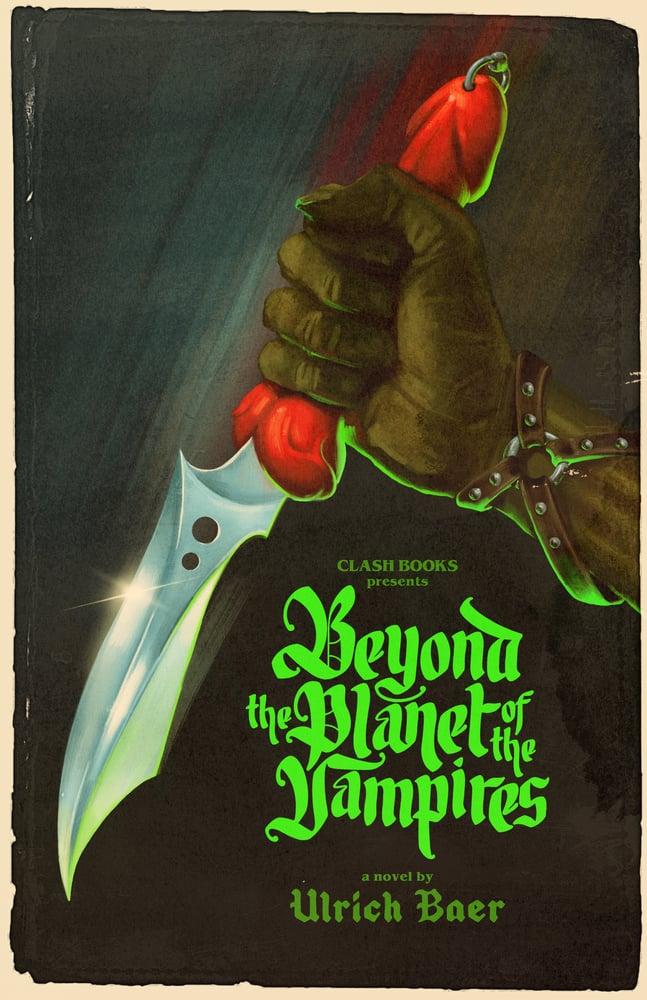
My own work as an author of queer horror texts, such as my forthcoming books Return to the Planet of the Vampires and Beyond the Planet of the Vampires, draws from the generosity of this proliferant, experimental landscape. Queer texts search out the raw nerve of horror: a fuzzy limit where the body and the unknown meet, where terror and desire collapse inside abjection and ecstasy. If you’re looking for horror that refuses convention and speaks polyphonically from the fringes of identity and accepted reality, these seven books will sear themselves into your thoughts. These books dismantle form and consume language, reassembling what remains into new possibilities that transgress the binary of the living and the dead. Long live the new flesh!
Rivers Solomon’s fiction thrives in the liminal, suturing emotional and political urgency together with speculative terror. Model Home employs familiar conventions of the haunted house narrative only to raze them. This novel outlines the architecture of trauma, exploring the ways history lingers spectrally alongside the impossibility of finding sanctuary in a world that nominates you as monstrous. Centered on a nonbinary Black protagonist who returns with their siblings to the gated Texas community where they were raised, the story navigates both personal and ancestral hauntings. Solomon’s work often tackles issues of survival and in their latest novel, where the protagonist’s dreams of home are foreclosed on in every sense, survival reveals itself to be a continuous haunting.
Few writers capture the ominous and uncanny ambience of horror fiction like Mariana Enríquez. In Our Share of Night, a father and son traverse Argentina, pursued by an occult order that seeks to possess them. Enríquez uses horror as atmosphere and allegory for dictatorship, grief, and the brutally intimate failures of the notion of family. She crafts a novel where terror is both supernatural and socio-historical. The novel seethes with menace, but at its core, it is a story of inheritance, documenting what we acquire from our predecessors—as well as what is violently taken from us in the exchange.
Mónica Ojeda’s Nefando is a work of conceptual horror fiction. This book operates like a glitching, hypervirulent internet conspiracy theory: something only half-perceived but totally disturbing. The novel follows six young people living in a Barcelona apartment, linked by a mysterious video game—one that dredges up trauma, violence, and a language beyond language. The horror of the text exceeds the material realm, festering in the structure of communication itself. The novel’s fractured, nonlinear storytelling mirrors the contagious, addictive quality of the digital space, itself impossible to unsee.
Sinaki’s Medusa of the Roses is a hypnotic fever dream of a novel that stokes the horrors of longing, loss, and aesthetic decay. Sinaki’s prose, charting an affair between two men in Tehran, unfolds like a fractured tableaux steeped in obsession. Beauty is transmuted, revealing its spectral and menacing foundations. This book queers mythology and the aesthetic atmospherics of horror into relentless existential dread. Sinaki’s prose is lush, drawing the reader in with quiet, inescapable persistence. This decadent horror novel examines the terror of being seen, desired, and ultimately undone.
Reed’s collection of nonfiction and poetry, With Bloom Upon Them and Also with Blood, idiosyncratically combines horror criticism, camp, poetry, and theory. In his essays, Reed deploys horror cinema as a lens for various alienations under an exploitative and racialized capitalism. This book doesn’t simply watch and critique horror—it burrows inside it, breaks it open, and revels grotesquely in the viscera.
Set in a gothic, post-apocalyptic New Hampshire, The Psychic Surgeon Assists opens upon a scene of pornographic surgical intervention. This unclassifiable work of experimental fiction is a hypnagogic descent into body horror, trans erotics, and medical spectacle. House transposes the voyeuristic sensuality of the medical theater into the work by operating on the medium of language via ablated, agrammatical prose. It’s a book where flesh and text become a continuous surface, and the reader becomes something akin to its nurse, always almost assembling a narrative from the text’s disjecta membra. The language itself mutates as a multiform body in transition: an experience that is simultaneously grotesque and ecstatic.
Described on the author’s website as “a queer assemblage diary,” McCartha’s The Cryptodrone Sequence promises to be a glitching cybernetic séance that drives genre boundaries into obsolescence. Drawing from computer security handbooks, radical Black poetics, and a constellation of queer and postcolonial thinkers, McCartha’s work pulses with generative queer polyvalence. The text continually performs cuts and stitches, reassembling its dizzying array of citations into visceral experimental poetry. The Cryptodrone Sequence is anticipated to be an experiment in linguistic disruption, weaving together horror, theory, and speculative digital poetics.
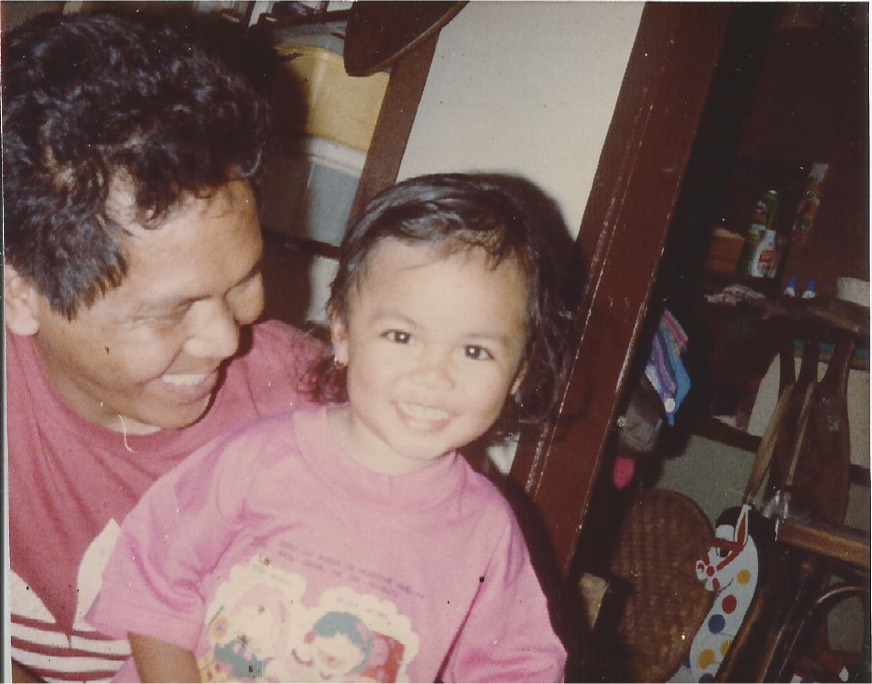
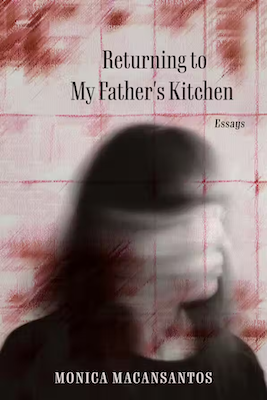
While writing my memoir-in-essays, Returning to My Father’s Kitchen, I sometimes found myself pondering over how fathers are depicted in Filipino books and movies. A harsh, distant, unforgiving father came to mind when I thought of the archetypal Filipino padre de pamilya. This didn’t quite align with my own father’s approach to fatherhood: my father was warm, nurturing, and unguarded, a far cry from the authoritarian figures I’d come to know from Filipino movies and TV shows.
When writing the essays that are now part of Returning to My Father’s Kitchen, I sought to challenge the stereotypes of Filipino fatherhood and manhood reinforced by the media and popularized in public discourse. Not only did my father challenge stereotypes with his style of fatherhood, but he also set an example for me as I pursued the life of an artist. He was a poet who nurtured my literary gifts, and his faith in the life path I chose enabled me to withstand the various challenges that writers face in a society that places little value in the arts. Literary fiction and nonfiction enabled me to explore the complexities and contradictions of the Filipino fathers I knew, which is why I gravitated towards the written word when seeking examples of Filipino fathers that my own work could respond to and be in conversation with.
It was when I began to think back on the books I had read featuring Filipino fathers that I saw how varied and complex their depictions are in literature. While conforming to Philippine society’s expectations of manhood and fatherhood, they also question and even subvert these expectations with their individual actions. Below are nine books that shed light on Filipino fatherhood, presenting us with complex and layered characters whose struggles invite us to perform a closer examination of Filipino masculinity.
There are two fathers in Miguel Syjuco’s sweeping 2010 novel Ilustrado: the protagonist’s biological father, a corrupt career politician who expects his son to follow in his footsteps, and Crispin Salvador, a Filipino novelist based in New York who serves as the protagonist’s second father, setting a more positive example for the protagonist as he strives to extricate himself from his powerful family’s tainted history. These two father figures serve as models for what the country’s leaders could be: men who look to the past as they reinforce the ingrained corruption of Philippine politics, and men who hope to break this cycle by exposing the sins of the past.
In his National Book Award-longlisted collection, The Diaspora Sonnets, de la Paz turns a sympathetic eye on his immigrant father, who attempts to make a clean break with his past while navigating a strange new land with his family. The silence with which his father chooses to enshroud his past becomes a burden in itself, weighing down on his family as they follow his lead into an unchartered future: “Where/there are memories, he lets the splinters/of those shards bury themselves deep into//skin. Where there’s a past, he lets it drive nails/into a tongue he holds back. Father, speak.” Despite these silences, de la Paz refuses to underestimate his father’s inner life, pondering over his father’s reasons for holding back as they provide possibilities for reconnection.
In Cherry Lou Sy’s coming-of-age novel, Love Can’t Feed You, the protagonist’s father, an elderly Chinese-Filipino man, finds himself adrift when the family lands in Queens and his much younger wife, who immigrated a few years before, immediately puts him to work as a janitor to pay off their debts. Papa reacts violently to his wife’s newfound power and to his diminished role as a new immigrant. His behavior toward his children is oftentimes immature and cruel: in one chapter, he steals money from his own daughter to buy a gift for his wife. His character is an interesting study of fragile masculinity, and the struggles Filipino men face when adjusting to immigrant life.
In her memoir The Body Papers, Grace Talusan reflects on the difficult decisions her father faced to give his family a better life. From choosing to remain in the United States after his medical residency ends, to making the heartbreaking decision to cut off his own father to protect his children, Talusan’s father is complicated but resolute, firm in his attachments to an old way of life, but also brave in defying his culture’s expectations when the occasion warrants it.
Jakob Guanzon’s novel Abundance is a tale of two fathers: the protagonist’s father, a Filipino academic who comes to America for graduate school, only to drop out of his doctoral program and slide into blue collar work to support his family, and Henry, his son, whose feelings of alienation gradually lead him down a life of crime, and who only begins to understand his father’s struggles when he becomes a father himself. Both Henry and his father struggle with fatherhood: Henry’s father responds with violence to his son’s failings in school and in life, while Henry finds himself raising a hand with his child during a particularly low point in his life. Their stories run parallel to each other as they grapple with a sense of inadequacy, borne out of their struggles as immigrants, that taints their relationships with their children.
The fathers in Mia Alvar’s story collection, In the Country, run the gamut of character types, from being distant and abusive, to having a little selfishness mixed in with their selflessness. My favorite fathers in the collection are Andoy in “A Contract Overseas” and Jim in the titular story, “In the Country.” Working-class Andoy gets his girlfriend pregnant by accident before deciding to find work in Saudi Arabia, joining an exodus of Filipino men who eagerly take on blue collar jobs in the Middle East to support their families back home. Young and naïve, he continues to pine for romance and adventure amidst the drudgery of his work, even when his pursuit of romance turns dangerous. Jim, like Andoy, is an idealist, criticizing the Marcos dictatorship in articles that land him in prison and force him to spend years away from his growing son. Believing that his activism can pave the way for a democratic revolution in his country, and a better future for his children, he ignores the practicalities of raising a family in an authoritarian society, and brushes aside warnings that his writing can put his family in danger.
Nathan Go’s debut novel, Forgiving Imelda Marcos, opens with Corazon Aquino’s chauffeur, Lito, as he drives her from Manila to the mountain city of Baguio to secretly meet Imelda Marcos. At the heart of this novel, however, is Lito’s difficult relationship with his son, who grew up without a father while Lito worked overseas to support his family. Mostly told from the point of view of Lito’s son, Forgiving Imelda Marcos sheds light on the difficult choices that working-class Filipino fathers face: either stick with a low-paying job that does not pay enough to feed, clothe, and educate one’s children, or go overseas for better-paying work, sending money back home while parenting one’s children from afar.
Castillo begins her essay collection How to Read Now with a tribute to her father, a security guard who maintains a lifelong love for the classics of European and British Literature and passes this on to his daughter. While reading the introductory essay to the book, I was reminded of my own father who also had to take on blue-collar work when we spent time in the United States, while actively maintaining his love for literature and art to preserve his dignity and self-worth. Castillo’s father is a warm and nurturing presence in her life, proving that a life of the mind gives us the strength and vulnerability to be fully present for our children.
Snail Fever: Poems of Two Decades by Francis C. Macansantos
In my father’s fourth and final collection of poetry, he contemplates his complicated relationship with his father, a task that becomes less difficult for him after he himself becomes a father. In “Fisherman’s Sonnet,” he looks back on his father’s attempts to connect with him that he refused to reciprocate because of his father’s physical and verbal abuse, while in “Via Air,” he meditates on the wordless love they shared that finds articulation after his father’s death. In “For My Daughter’s Birthday,” he asks his young daughter to guide him down the mysterious and mystical path of fatherhood. There’s a sense of wonder in my father’s poems about fatherhood as he reckons with his own limitations while extending grace to his father, and to himself.
Though it may seem counterintuitive, one of the most effective tools for generating new work or pushing stories to the next level is to impose creative constraints on them. Poetry is often taught by introducing students to rigidly structured forms like sonnets, villanelles, and haiku. Prose writers would be well-served by learning from this approach. What may begin as an arbitrary rule can redefine the work and push the author into making difficult artistic choices. The best known examples of these kinds of constraints come from the Oulipo movement; Georges Perec’s novel A Voidfamously does not use the letter ‘e’ (nor does the English translation of it) and Raymond Queneau’s Exercises in Stylecollects 99 retellings of the same story, each in a different style. One can imagine infinite variations on formal restrictions: every sentence must be a question mark, every chapter must hit an exact word or syllable count, the story must be told in the form of footnotes to an unseen text, and so on. The point is that the author has the opportunity at the start to define their project; the rules create boundaries, a container for the author to fill, eliminating at least one (if not several) confounding variables in the drafting process.
Not every constraint has to be wildly experimental. Most prose writers intuitively understand how point-of-view fundamentally alters any story. In the simplest terms, a 1st person POV is bound by the narrator’s intelligence, temperament, material conditions, and access to information in a way that a 3rd person POV is not. For the writer who is stuck—either at the start of a project or in the frustrating middle—the way to generate momentum may be to think about other restrictions they can apply to the text.
At the recent AWP Conference in Los Angeles, authors Darien Gee, Naomi Cohn, Sharon de la Cruz, and Tom McAllister ran a panel on this topic (moderated by Kathleen Rooney), focused on their own writing practices, offering practical advice for implementing constraints into your work. They also discussed how imposing constraints on students can help them to generate new pieces and add life to their pieces in revision. The following is a roundtable discussion between three of the authors conducted shortly after the conference.
Tom McAllister: First question, let’s start with the obvious. How have you all implemented constraints in your own work? I’ve done so most recently in my bookIt All Felt Impossible, in which I wrote a short essay for every year of my life, imposing a maximum word count of 1500 per piece. I started this project because I was in the middle of a long dry spell and beginning to panic that I had simply run out of words to write; I needed some specific set of rules to guide me so that I could stop staring at a blank page and feel like I had some momentum again. Have you always practiced writing with constraints, or was it something you did out of necessity or (as in my case) out of desperation?
Darien Hsu Gee: Oh, like Tom, panic and desperation 100%!
I began my writing career as a novelist, so my experience was with 85,000-125,000 word novels. In 2017, I was struggling with a manuscript inspired by true events affecting three generations of women in my matrilineal line. I wrote several drafts but the novel wasn’t coming together. I started telling the story in short bursts and, long story short, ended up with 36 prose poems/micro narratives/short pieces of 250 words or less about five generations of women in my matrilineal line. It wasn’t what I had intended, but constraints led to the form which resulted in an unexpected discovery and gift. These extremely distilled stories became Other Small Histories: Poems, winner of the 2019 Poetry Society of America Chapbook Fellowship award.
Naomi Cohn: My use of constraints grows out of my lived experience with disability and my professional experience providing therapy and other emotional wellness programming. As far as disability—I’m legally blind, due to midlife vision loss. Living with disability means applying loads of ingenuity just to get through the day. Whether you view the constraints as stemming from a body’s limitations (mine can take a max of 2-3 hours of screen time—total—in a day) or from how our society doesn’t always make space for different sorts of bodies, survival means creative responses to constraints. As to therapy—a lot of my work in community settings uses writing and creative play for healing. I started to notice the “constraints” of working in a therapeutic space opened up some amazing writing and creativity in participants. As Darien says, long story short, I started using these tools in my own work—the most recent example being The Braille Encyclopedia, a memoir in brief alphabetical essays and prose poems, about vision loss and re-learning, as an adult, how to read and write. The formal limitation was a way to work in bite-sized chunks my body could tolerate, but also—in the end—aligned nicely with the weirdness of learning my ABCs (this time in braille) in my forties.
TM: The variety of constraints here is really interesting, and I especially like what you’re saying, Naomi, about the physical constraints on an author. Obviously, there’s a wide range of physical conditions that can alter an author’s relationship to their work. I’m thinking too of writers who are parents of young children—not the same as an illness, I know—who by necessity have to write at different times and in different ways because the days of sitting at a computer for 4-5 hours are long, long gone. Maybe people don’t think of that as a constraint in the same way as a word limit or formal choice, but what greater constraint is there on our work than physical reality?
NC: Absolutely, parenting, caregiving, economic necessities—multiple jobs or shift work—what particularly interests me is how writers contending with those constraints find ways to do their work unfettered by the constraints of norms, of there being one correct way to write, and expectations of productivity.
What greater constraint is there on our work than physical reality?
TM: Following up on the previous question, how do you all think about constraints in revision? When I was working on my book, I had friends telling me to just drop the 1500 word limit; they (correctly) argued that it was an arbitrary choice at the start, and now that I had the material on the page, I should free myself and write whatever I wanted. But to me, the concept of 1500 had become central to the project; it was what guided the structure of each piece, in addition to driving what specific details I’d included in the first place. To me, the only way to effectively revise was to treat this once arbitrary rule as if it was a natural law that couldn’t possibly be violated. You can’t just turn off gravity when it’s convenient, you know? What do you all think about removing constraints mid-process and/or using them as tools to help in revising or reimagining your work?
DHG: Every writer is different, and every writing project is different. If you’re in revisions and on a roll, then you do you. But if you’re struggling, consider adding some constraints to help you get out of your own way. For me, two constraints come to mind that can help with revision: 1) a timed revision for a specific word count (i.e. a 300-word piece allows only 10 minutes for the first pass revision) and/or 2) applying a form change (i.e. prose to poetry then back again, a hack inspired by Judith Cofer), also with a timed constraint. The idea here is to get unstuck if you are stuck, and to continue to see what might be possible with the work. The truth is: you can do whatever you want. If sticking with a 250-word constraint helps you reach the finish line, great. If doing so hinders you from moving forward, not great. At this point, after you’ve allowed yourself a chance to see where the work is going and you have a handle on it, I say to trust your writerly instincts and either let the form collapse into something new or stick with it if you know you’re on to something true.
TM: Totally agree, Darien. If you’re the one making up the rules, that means you also get to break them whenever you want, for any reason. Maybe they’re just the tool you need to discover the work you really want to do, and then they outlive their usefulness in the final draft. That said, when I was doing final edits on my book, I was complaining to friends that addressing all the editorial notes was pushing pieces over 1500 words. They all said, “Who cares? The rule was what you needed to get the draft done, just go over.” But I couldn’t bring myself to do it. I felt like I’d come so far with it, why not just figure out how to make the cuts I need to in order to stay true to the original project? I’m stubborn, is my point.
I say to trust your writerly instincts and either let the form collapse into something new or stick with it if you know you’re on to something true.
NC: Tom—I honor your stubbornness in not busting the constraint in revision! That said, I definitely lean more toward tossing generative rules or adding a new constraint in revision. It’s a way of helping gain perspective. I say echo echo to you both on trusting your writerly instincts. For me the generative constraint is all about giving my puzzle/logic brain something to do so something weirder or more emotionally honest is allowed to come forward. If that initial constraint doesn’t end up having some deeper link to the material or project, then out it goes. Or, more often, it remains in a project’s DNA.
A general constraint or filter I love in revision is reading work aloud. It’s a way of being true to my poetic roots—paying attention to how words feel in the mouth and body, and to how words sound as well as mean. It also helps me hear whether a piece “sounds like me.”
TM: Yes to reading aloud! It is probably the revision tip I most often repeat to my students, regardless of course or skill level. Even my freshman comp students are sick of hearing me say it.
TM: Another question about generating material. How do you think about various formal constraints and their relation to content? Naomi already touched on this in her first answer, the way The Braille Encyclopedia is structured in part by the content being discussed. I’m thinking too about a piece like Jennifer Lunden’s “Evidence, in Track Changes,” in which she writes an essay about a particularly strange episode of her childhood, but then shares it with her mother, and they have a dialogue in the margins, using Word’s Track Changes tool, about the story she’s telling. The form there is not arbitrary; it’s a way into the material, and it also strangely reproduces the dynamic of a loved one who wants to sit on the sidelines of your story and nitpick and correct and argue. Do you all do any work where form has been driven by content, or vice versa?
NC: I hadn’t seen that piece of Lunden’s, I love it. I also love it when form and content align, but the truth is I usually bumble around through many revisions before I know what I’m writing about and whether there will be a correspondence between form and content. Maybe this is the place to admit I hate the word “constraint.” I prefer “invitation” or “experiment.” Maybe this comes from working in community settings, where participants with trauma backgrounds are common. It’s important to me to create a sense of safety, which includes not creating a sense of being trapped—even by a word count or a time limit. But to circle back to your question, I love it when the initial generative experiment, the final visible form or structure, and the content all play together; when the constraint or container that perhaps began as an intellectual experiment or puzzle also has a heart or emotional resonance. That said, right now, I’m struggling with the final form of my current project about birds. My initial draft was in the form of a birder’s “life list,” where I wrote about every bird I’ve encountered in my six decades. It was a productive generative conceit, but it’s clearly not working as a revision organizing principle, and I’m still noodling on what that might be.
TM: I like that reframing of invitation/experiment vs. constraint, Naomi—that may be the main takeaway from this whole conversation. What opportunities can you create for yourself as a writer by thinking differently about the drafting process?
DHG: Sometimes form informs content, sometimes it’s the other way around. Sometimes what you’re working on doesn’t come together until you completely dismantle and reassemble it. Joan Wickersham’s The Suicide Index is a great example of this. In an interview with Solstice: A Magazine of Diverse Voices, she describes struggling with the memoir’s structure for years before discovering the index form. She didn’t start writing with this constraint, but arrived at it after years of grappling with the material.
For me, choosing a form before I begin helps launch my writing—the constraints (I call them “containers”) provide a framework. The form guides me as I work and helps me make decisions. Once I’m done with a draft that’s gone through a few revision passes, I’ll revisit my original intention. Does the form still serve what I’ve written?
Currently, I’m working on a memoir in micro essays about my mother becoming a full-time practicing Buddhist in her 50’s and severing her connection to us. My chosen constraint is 49 essays total, echoing the Buddhist belief that the soul spends 49 days in the bardo after death. This time frame is divided into 7 days, so I’m echoing that form in the early draft with 7 sections of 7 essays each. Another constraint is to create the work as micro prose (300 words or less), but I may loosen this in revision. Constraints/containers help organize my thoughts and writing, and then I stay open to seeing if it still works once the draft is complete.
TM: Containers! Another good way to think about it. Your answer (because it mentions Buddhism, parents, and death) reminded me of a very short and very good book that was driven by a very specific set of rules. In Ruth Ozeki’s The Face: A Time Code the author gives herself the task of staring at her own face in the mirror for three hours, and recording her meditations on what she sees. It’s a simple (and, to me, daunting) idea that leads to incredibly rich reflections on aging, death, family history, race, and more.
TM: Do you all have any favorite constraint-generated books or projects by other authors? Another favorite of mine is Matthew Vollmer’s essay collection inscriptions for headstones, in which Vollmer gives himself a double-constraint: each piece is written as if it’s an epitaph for himself (“Here lies a man who…”) but also the essays are all written as a single, extremely long, discursive sentence, some as long as 3 pages. That book was revelatory for me when I encountered it, just seeing how much fun he was clearly having working with these constraints.
NC: I’ll mention Aaron Angelo’s The Fact of Memory: 114 Ruminations and Fabrications. Angelo gave himself the assignment of writing one piece on each of the words in one of Shakespeare’s sonnets “When in disgrace with fortune and men’s eyes….”. Angelo explains in his author’s note that he rose early and meditated each day before writing. I loved the result, lyrical, inventive, and, somewhat to my surprise, it felt like a well-rounded exploration of a mind and a life.
There’s a huge power sometimes to intentionally NOT writing.
I also borrowed the procedure for my bird project—instead of meditating on a word, I meditated on a specific bird. Even though my current project feels like a disaster at the moment, following Angelo’s cue has made me a huge fan of meditating or intention setting before writing. There’s a huge power sometimes to intentionally NOT writing.
DHG: Victoria Chang’s Obit, a collection of prose poems that read like newspaper obituaries. Chang uses the obituary form—narrow, justified columns of text—to write not just about people (including herself) who died (literally and metaphorically), but also concepts, objects, and emotions. Also Emily Jungmin Yoon’s chapbook, Ordinary Misfortunes, where several of her prose poems about Korean comfort women during WWII all have the same title, “An Ordinary Misfortune.” It’s a simple constraint—the use of the same title, over and over—to generate multiple stories.
TM: Epitaphs, obituaries—rich texts, it turns out! (sorry for interrupting)
DHG: Joy Williams’ short short story collection, Ninety-Nine Stories of God, also comes to mind. In this case it’s not just numbered stories, but the “title” appears at the bottom of each piece rather than the top—a subtle inversion that changes how readers encounter each piece, making us reconsider the story through the lens of its title only after we’ve experienced it. These small decisions impact how a reader enters into the work, and what they take away from it.
TM:Can you talk about how you’ve used constraints in the classroom? I know Darien has mentioned this a bit above already. What kinds of assignments are you giving? Do you have a favorite that always seems to work? How have students reacted to constraint-based teaching generally?
NC: One I use again and again is an empty frame. I give a time limit: 5-10 minutes. The writers choose what slice of the environment they want to focus on through their frame. I ask them to include something they’ve “caught” in their frame in their piece of writing. One of my favorites was a workshop in which one writer chose to write about their friend’s hand (holding a pen, writing…) Again as mentioned above, I’m often working in contexts that combine creative and therapeutic or healing aims, so the activities aren’t always geared toward generating a “usable” creative product. But you can of course layer in additional directions or invitations to address that.
DHG: Like Naomi, I use the constraint of time—10 minutes for a first draft and 10 minutes for a first revision and another 10 for the second. After that, you can decide what to do next (more time, less time, let go of the constant) but the early generation process constraints are designed to help you get out of your own way and tap into what might want to make itself known in the page sooner rather than later (it’s also a kind of brain training). The prompt is always the way in so it almost doesn’t matter what the prompt is—it’s the key, not the room, so to speak. Students love constraints because it gives them a very clear and specific task versus “anything goes.” Hermit crab hybrid forms are a great way to show students what’s possible by following a specific form or constraint.
TM: Love these, and I’m going to steal everything for my own classes. My favorite exercise in both fiction and nonfiction is to have students write an instruction manual or how-to guide. You can encourage the students to lean in to their expertise, whether it’s in a specific skill, or just a life experience they know all too well. It’s such a malleable form. You can be silly with it (I’m thinking of a student who wrote a really funny guide on how to get fired from your job as a waiter on day 1) or you can use it as an indirect way to approach difficult subject matter (Jennifer Murvin’s “How to Put Your Child to Bed” uses the procedural details as a way of getting into all the big fears about parenting; Jerald Walker’s How to Make a Slave uses the guide as a frame for discussing complex racial issues). The possibilities are limitless.
Author’s Note: Some names in this essay have been changed to maintain privacy.
In 1973, when my Uncle Ricky was nineteen, he robbed an ice cream shop in Tennessee. Too much Butch Cassidy and Bonnie and Clyde rags-to-riches stories. The silver screen had promised a kind of outlaw glamour, false hope for something better. But real life wasn’t like that at all. Broke as shit, and feeling as though he had nothing worth losing, Ricky waved his gun at two girls behind the counter, demanding they empty the cash register into his bag. He left without firing the gun and the money he walked away with was declared petty, but still, it was armed robbery. Ricky was sentenced to 52 years in prison.
Sometimes, when I can stomach it, I try to imagine what it must have felt like for him to receive news that in one fell swoop, his free life was already over. Without a fully developed frontal lobe, he was told he wouldn’t step foot in another arcade, or even a grocery store until he was 71 years old unless he was granted parole. Still, when I envision that moment, it makes perfect sense to me that Ricky made his first escape two years into that original sentence.
I first got involved advocating for my Uncle Ricky’s case in January 2023, fifty years later but nowhere near his release. It was an untethered winter for me. I was headed to New Haven, Connecticut for the spring semester where my girlfriend, Daisy, was set to complete a three-month research fellowship at Yale.
I was spending the week before our departure with my family in Colorado. Sleeping beside my mom in her bed and doing facial peels with my fourteen-year-old nephew. I spoke to my Uncle Ricky on the phone when he called my mom during their weekly Wednesday time slot.
My mom and Uncle Ricky are two of seven siblings—each with their own call day. Their white Southern family grew up exceptionally poor in Knoxville, Tennessee, where Ricky had told me stories about collecting pieces of coal by the train tracks to warm their house. Other times, all seven kids would crawl into their mom’s bed and pull the covers over their heads to share their body heat. While my granny always worked—at a grocery store or local shops—it was hard being the primary caregiver. My grandfather had done a stint in jail, and not long after his release, he stood up from the dining room table, declared he was sick of starving, and left the family. Seven kids being supported by one measly income had left the family in a kind of poverty that made you feel like you were born into a dead end, where the only options out looked like joining the military or trying to get rich with guns or drugs. All the sisters accepted their fate, worked low-paying jobs, had children, kept the cycle going, but Ricky went down the bandit route. Sure, he knew it could get him into a lot of trouble, but life was tough enough just getting by that it was hard to care about the risks.
An inmate from a Tennessee penitentiary is calling, an operator said. Then I heard my uncle’s pre-recorded, deeply Southern, “This is Rick.” I hit accept and the operator warned that the collect call was ten minutes long. It would be recorded and then terminated automatically.
“Well, hey there Shellers,” he said.
I asked him for any updates. There was no time to waste.
“Still haven’t heard nothing back from the parole board,” Ricky said. “But I’m hopeful. I’ve heard about some guys getting out because the prison needs more beds for incoming men.”
Ricky’s first escape from Tennessee sounds just as surreal as his robbery: he caused a distraction during an inmate softball game, throwing his bat in the air and running like hell to Alabama in 1975. By then he was 21. In the following 30 days, he robbed three convenience stores trying to survive life on the run, then was arrested again. Ricky spent four-and-a-half years in an Alabama prison before he escaped during a 1980 farm detail—sneaking off and fleeing to Virginia, where my grandmother and five of his siblings had relocated.
It’s been said that my grandma always left the back door unlocked for Ricky, just in case her baby boy came home. Unbelievable almost, that one day he actually did. It still moves me to picture my grandma getting her wish. I don’t know all the details, but as a kid, I liked to picture her waking up to find Ricky, standing in the kitchen, flipping pancakes, free as a bird.
In those years he was out, Ricky was determined to stay straight and get his life together. He worked under a fake name at Norfolk shipyards for two years, fell in love, and had my cousin in 1981. Then the shipyards started fingerprinting and Ricky had to quit. With a family to feed, and a fear that he couldn’t hide for long, my uncle did what a lot of us would have done—he went back to his old survival tricks. He’d been caught and arrested every time in the past, so what else, other than desperation, could have motivated him? Ricky completed a string of robberies and was arrested for good in 1982.
When I was a little girl, my mother explained that my Uncle Ricky was in prison for the rest of his life because of a “three-strike-law,” which was not the same as receiving a life-sentence. As a child, I understood this as a warning not to get into any trouble, especially not more than once, because the consequences would be severe. I didn’t think much of it beyond law-being-law, until I was an adult and started to learn about the prison industrial complex and how punitive our country is towards disenfranchised people.
This law stated that “any person convicted of three separate felony offenses of murder, rape, or armed robbery…shall not be eligible for parole.” Many prisoners, just like my uncle, were given parole dates during their official convictions—Ricky’s had been set for 1994, twelve years into his sentence—only to eventually be notified that this newly instituted law had been retroactively applied to their cases by the Department of Corrections, not the court or judge. These men were now going to spend the rest of their lives in prison.
Then, in 2018, something unexpected happened.
After serving 38 years, Ricky received notice that he had been illegally denied parole for the last 26 of them. The “three-strikes-law” was found to be defunct and unconstitutional, a gross overstep of the Department of Corrections. My Uncle Ricky was one of 260 men who would be freed in Virginia at its overruling.
A blessing, as my uncle, who was then 68, had undergone two heart bypass surgeries and survived colon cancer, had been given only a few years left to live by an oncologist.
Ricky completed all the necessary steps to reenter society. Fulfilled rehabilitation classes, filed paperwork to approve of his future residency, and applied for parole in Tennessee, where that original ice cream shop sentence still awaited him. It seemed reasonable enough that the state might consider his time in Virginia a concurrent sentence, especially considering that 26 of those years had been illegally overserved, an injustice that had also prevented his being extradited to Tennessee way back in 1994 to finish out his sentence.
Our family hoped that Ricky would live out his final years in my aunt’s spare bedroom in Heathsville, Virginia—helping her with chores, repairs around the house, gardening, eating home-cooked chicken and dumplings (my grandma’s recipe) and learning the ways technology has changed since 1982. Instead, he was extradited to a special-needs facility in Nashville, to serve a sentence he cannot outlive.
On the phone, Ricky told me it had been three years and he was still waiting to hear back from the Tennessee parole board. I pictured my uncle in his baby blue prison uniform, the surgery scars from two heart bypass surgeries under his T-shirt, and the after-effects of colon cancer leaving him unable to live in a standard federal prison. Easy to imagine the hope he’d felt given his freedom in Virginia, and just as easy to imagine the anxiety of being denied parole, or dying before his paperwork was ever looked at.
You have one-minute remaining on the call, the operator said.
“I have a lawyer friend,” I told him. I rushed it all out: A girl named Lily. She practiced law in New York, but I could still contact her. I’d tell her the situation. She might be able to help. Give some advice.
“Oh, Michelle,” he said. His voice was like a prayer. “I would be so grateful to you. Just for anything. Even just to know what she thinks.”
I didn’t understand yet how much faith this small gesture of getting in touch with Lily would restore. It’s nearly impossible to get legal guidance or support when you’re a flat broke, regular joe, when your whole extended family lives paycheck to paycheck. It had just been my Uncle Ricky and some of his prison pals writing letters and filling out the applications and his limited research ever since this Virginia misstep was brought to light.
We needed help.
“I’ll write and tell you what she says,” I told him, then we were disconnected.
This was his life now. He would be in prison until the day he died.
We visited Uncle Ricky in prison often when I was a kid, and, after my family left Virginia in 2001, we saw him every summer. These visits were best back in the 90s when the rules were looser. We played Snakes and Ladders and Candy Land. I could sit on my uncle’s lap and hug him freely. My grandma was often with us, or an aunt and cousin. I didn’t mind the experience of being patted down, going into a private lady’s room with a guard and flashing my belly. Or walking from barbed wire building to barbed wire building while stifling my desire to wave to the men holding rifles on the roof tops. I loved sitting at the small plastic tables with my uncle and gorging ourselves on vending machine food. We always had a Ziploc bag filled with quarters so Ricky could have anything he wanted. He always wanted a cheeseburger. My sister and I would fight over who got to microwave it for him.
We also talked about my cousins who found themselves in trouble with gangs and drugs. Uncle Ricky often voiced his regrets about his past, and wished the next generation in our family would see how his life had been wasted in prison and choose differently. Ricky said if he could, he’d go back and do it all over, but that was nonsense. This was his life now. He would be in prison until the day he died.It wasn’t all bad though. He had people inside that were his family now, too. He’d found God and had become a Christian. It gave him a feeling of a spiritual existence beyond the prison. It made his struggles have purpose. It wasn’t a particularly happy life, but he’d made his peace.
Daisy and I arrived in New Haven in February 2023. We met Daisy’s mom for lunch at a Thai restaurant in town. She’d been diagnosed with a rare form of uterine cancer and was set to start chemo the following week. I thought of my uncle having been sick inside a prison. Who took care of him? I wondered. Were people kind?
Lily had been receptive to me reaching out. “Somebody has the power to let your uncle out of prison,” she told me over the phone. “We just need to figure out who that is.” I’d called her as soon as my uncle and I were disconnected. She asked me to collect every lick of information on Ricky I could find: his charges, his medical records, any reports of the three-strikes mess. My aunt sent me his entire digitized file, which I combed through obsessively.
I had just received an email update from Lily before we met Daisy’s mom. She had reached out to a few organizations and spoke with an attorney from one called Families Against Mandatory Minimums, who outlined the different types of parole and clemency options available in Tennessee.
Lily learned that medical furlough was only granted to individuals diagnosed with a terminal illness and less than a year to live. The more realistic options for my uncle would be executive clemency based on illness or geriatric parole. For clemency, the state wanted evidence that the applicant not only had a serious, life-threatening condition but has also made significant progress in self-improvement and could be trusted to live lawfully after release.
Geriatric parole was another route available to people over 70 who have chronic, incurable conditions that suggested they were unlikely to live much longer. However, individuals convicted of murder or violent sexual offenses were ineligible.
Lily told me there was a complication: my uncle was serving time for a charge labeled a “Crime Against Nature,” which historically has referred to some type of sexual offense. “It’s unclear whether this would fall under the category of a violent sexual offense since the statute may be outdated or no longer exist,” she wrote. At the end of her email she asked me to find out more.
Over spring rolls, I told Daisy’s mom that I was trying to help my uncle get out of prison. I said he was sick and that he’d only been given only a few years left to live. “He had cancer,” I said. Looking for a way to connect. To stir up empathy for this convict and his crimes. I wanted to humanize him. He’s like you.
“Well,” she said, grimacing and putting her hands up. “He did the crime.” It was not cruel. There was a tone of regret, and the question, what can you do? I thought of phrases she didn’t say but didn’t need to, like, suffering the consequences of one’s own actions. I knew that focusing on the decisions my uncle made as a stupid kid allowed for a feeling of justification. Plus, we can’t be sorry for everyone. We can’t let in all that grief. We can’t! Or we might have to look at the whole and ask why these systems of punishment make no effort of rehabilitation. Why our government would rather spend $44,000 annually to house an inmate when allowing them to live in halfway houses or simply supporting them as they get back on their feet freely are both cheaper options than prison. Why there is no culture of forgiveness for our former or current inmates.Why even the word “inmate” strips away any feeling of sympathy.
When I first went through my uncle’s file, I found his commutation letter, a personal reflection required for resentencing requests. It was from 2020, handwritten and scanned. “Now at the age of 67, and having lost 44 years of my life to incarceration, it is extremely easy to recognize what a wasted life I’ve lived,” he wrote. “The maturity which has emerged during my life has brought the realization of my failing to live up to who I could have been as a productive citizen and human being.” I couldn’t stop crying all afternoon.
I won’t romanticize the idea of who my uncle could have been or what his life would have amounted to had he not spent the last four decades in prison. It would have been humble. It would have been raising his son with his partner, whom he loved. Who he still calls and speaks to. His life would have been working the shipyards and manual labor. Paycheck to paycheck. He would not have been college-educated or the CEO of some company. But had my uncle been given a shorter sentence from the get-go, rehabilitated, and then released, he would have been kind. I believe that. He would have stayed close to my family. He would have had a good, happy, vibrant life.
And, despite his crimes, every last one of them, I still believe he deserves that.
There is no culture of forgiveness for our former or current inmates.
That week, I couldn’t stop thinking about a memory from when I was nine years old. My family had recently moved to Colorado. My Uncle Ricky, in place of seeing us regularly during visiting hours, started writing us all letters. He always sent us birthday cards, and once over the stretch of a year, he sent me and my sister dozens of Whoppers candy wrappers, flattened and empty, each with a promo running on the back—250 points could buy one movie ticket. 500 could buy two.
“I’ll never eat another chocolate malt ball again,” he told my mom over the phone when he’d successfully sent us enough for two tickets. Do you know how many bags of candy he’d had to buy from the commissary to send us to see Shrek? How much of his own money he’d had to spend while making pennies at his prison job? Or spending the small amount of money my aunts rallied to send him each month? How precious and generous that was?
I should tell you one more thing about my uncle’s first robbery. I’m sorry it’s late. I was scared to tell you before, worried he’d lose your empathy. When my uncle robbed that ice cream shop in 1973, he made the cashier perform oral sex on him. That’s what Lily was referring to on his record as a “Crime Against Nature.” I’d never heard this until I’d had to ask him what it meant.
What do we do when our loved ones fuck up? When they fuck up in ways that don’t align with our morals? I believe that those who commit sexual assaults should be held accountable. I believe in the trauma that survivors experience long into the future. I think of this woman and I wonder how this changed her. What is her name? What is she doing right now? Of all the things my uncle has done, this one challenges me the most. Of all the things my uncle did I know that this one challenges him the most too.
“There is no excuse,” he told me over the phone. His voice was sorrowful. “I feel ashamed. I regret it deeply. I was so young and stupid. At that moment, my adrenaline was so high.” I imagined my old uncle furrowing his brow, shaking his head. Leaning up against the wall, as he used the telephone in the common area, thinking of a mistake he made 53 years prior. “It’s a stain upon my life.”
I tried to have empathy. Couldn’t I remember being young and reckless? Feeling hopeless? I thought of that precise moment in my uncle’s life as an example of what humans will do for a false sense of power when they’ve lived their lives without it. I agreed with my uncle when he said there was no excuse for his behavior. And still I believe he has paid for his mistakes with the last four decades of his life. How do we talk about rehabilitation in this world? How do we say it was a mistake never made again?The robberies, yes, those went on. But he never committed any other sexual assault. Nor battery or murder. Never another person physically hurt. Nobody touched.
Lily continued to be helpful. She didn’t think any of the new details meant that my uncle didn’t deserve to be released. “This is now a 70-year-old sick man,” she told me. “He’s already spent 44 years of his life in prison. He doesn’t need to die in there to learn his lesson.”
We carried on, emailing organizations in Tennessee that might be able to help. There were many dead ends. Many more ghosted Lily, even though she was writing as a lawyer and not my Uncle Ricky reaching out as an “offender.” She told me she was getting frustrated by the discourteousness. That it took no time at all to respond and say, “Sorry, I can’t take on the case.”
Uncle Ricky told Lily that he prayed for her every day. He was extremely grateful for her hard work despite our no luck. To help, Ricky had friends looking into other law schools. It was a whole machine, trying to do research from within the prison, and keeping us all in touch. “I trust God’s plan,” he told me every time I spoke to him on the phone. But I could hear the restlessness in his voice. “Whether that’s my dying here in prison or being a free man.”
Then there was a small hope. In early 2024, Lily emailed me and said that Choosing Justice Initiative seemed interested in my uncle’s case. They had emailed her back and asked follow-up questions. It was an organization Uncle Ricky had asked her to reach out to. I read through their website: A Nashville non-profit law firm working to end wealth-based disparities in the criminal legal system. It was the most hopeful Lily had been all year. I felt hopeful too. I gave her all the information I had to help fill in any gaps. I called my aunt in Virginia to fact check. Lily sent it all over to the org. Fingers crossed, she wrote.
Once the three-strike rule was applied to his case, my uncle lived under the impression that he would die behind bars. It took hard work and a lot of time to accept that fate. For a majority of those years, he lived in a prison close to most of our relatives. He had regular visitors. He was never out of our family’s reach. When my grandmother passed away in 2010, three of my aunts sat at a table across from him and broke the news in person. They shared their grief for two hours. But when Ricky’s brother died in January of 2024, he received the news via phone call, all alone. I pictured him in his cell, his grief as big as a house. It was my uncle’s dying wish to visit Ricky one last time, but Tennessee was too far, too hard to get to.
Aside from that, Ricky knew the Virginia prison he was in for decades. He’d learned the ropes and had friends. He’d gotten diagnosed with cancer there, received treatment, survived, had open heart surgery and recovered in those walls. It was a place he knew as home. My uncle’s parole from Virginia may have given him hope he might live as a free man again, but it also isolated him from our family and completely uprooted his life.
Sick, he was placed in a special needs facility with men he had no history with. He received almost no visitors. He remained hopeful, wishing, yearning that the courts of Tennessee will have it in their heart—in their humanity—to let him live out his last few years a free man. I wondered if the hope of freedom had destroyed his peace. I wondered if it was worth it to be paroled at all if my uncle dies in Tennessee. You win, I wanted to tell the state governor, the district attorney general, the courts. He gave you his life. Give this man a free death.
“God’s plan” my Uncle Ricky said. Every time we spoke. “It will be up to God whether or not I walk out of here.”
Daisy’s parents are both doctors. They told me that after med school, when they started working in hospitals and losing some of their patients, they had to find a higher power and give up the arrogance that they could save everyone. God’s plan, God’s will, whatever you want to call it. You have to put it in someone or something else’s hands, or you’ll drive yourself mad. I thought of this every time my Uncle Ricky hung up the phone or signed off on his letters. I wondered if him keeping his faith is equivalent to keeping his sanity.
So, I started praying with each email sent out, each letter written. I lit a candle in my apartment. I bowed my head. I gave it to something bigger than myself.
Choosing Justice Initiative eventually emailed back in April, 2024. The email was four paragraphs long. Robust. But it was bad news.
How do we talk about rehabilitation in this world? How do we say it was a mistake never made again?
“IMO, it will be hard to convince prosecutors in East Tennessee to have any sympathy or mercy for him,” the lawyer wrote in her email. “I expect they’ll look at his story and see a man who escaped from prison and went on to commit a string of violent crimes in other states. They will not view the amount of time he spent in prison in VA without parole eligibility as any kind of injustice.”
I was bruised by the response. Lily didn’t forward me the email for two days, because she said it had felt hurtful to her too. She asked me to tell my uncle the news, so I wrote him a letter explaining the situation. I was not as harsh in my language. I didn’t say that Choosing Justice thought prosecutors wouldn’t have any “sympathy or mercy” for him. That in this woman’s honest opinion, the courts will not see a man who escaped and was done wrong by the Virginia courts, but rather a man that escaped and then went on to commit a “string of violent crimes.”
I tried to calm myself down by considering the number of cases that showed up on Choosing Justice’s desk. The amount of people, just like my uncle, asking for help. “In a world of endless resources, I’d be happy to take on his case,” the lawyer wrote at the end of her email. But in this world—where money was tight and they must make decisions based on lack—they could only take on cases with the highest likelihood of success. I thought of my uncle’s robberies—crimes that also took place in a world where money was tight and decisions were based on lack. I wanted her to see the irony of that.
At the end of my letter, I told my uncle I was still holding out hope. However small. Regardless of how long it took. There was nothing left to lose in knocking on doors, sending the letters, even if we had to put together the clemency application on our own. I signed off to my uncle with the phrase, “I put my faith in God’s plan.”
It took another six months before we heard a “yes.” It came from a professor at the University of Tennessee, who agreed to assign law students to Uncle Ricky’s case. “How could we not jump in?” she wrote in her email. “It is a heartbreaking situation and, while I’m not sure we have the answers, we can certainly look.”
I cried with relief at these words, and anxiously waited four long days until my uncle called and I told him the news. “I can’t believe it! I just cannot believe it, Michelle!”
Before we hung up he asked, “Will they visit me?” And I felt his loneliness reverberating through the phone lines.
Ricky’s still in there. Waiting for the law students to collect all the data, to make their case, but it’s coming. For now, we do our best to get by, and hold on to the possibility of something good. Freedom. A bedroom in his sister’s house. Driving a car. Grocery shopping. Cooking his own meals. Going to a movie theatre. Walking for as long as he wants in nature. Seeing a body of water. Swimming in it. I picture this. My uncle sun-kissed and wrinkled, standing in the sea. And I hold the belief in my heart that it will be true.
At the opening of Rob Macaisa Colgate’s debut poetry collection, Hardly Creatures, readers are presented with an Access Legend featuring fifteen Universal Access Symbols—symbols used in visual art exhibits and museums around the world to help potential audiences identify what events may be accessible to them. These Universal Access Symbols are found, in various combinations and reimaginings, throughout the
collection, cluing in readers on what type of reading experience they’d like to curate for themselves. Emulating the structure of an accessible art museum sectioned off into nine wings, Hardly Creatures reorders abecedarians, re-sequences sestinas, and guides readers’ physical hands toward tracing the words on the page, all in its interrogation of social media, the disability community, and what forms of intimacy are accessible, and in what spaces.
Rob and I met last year in a Zoom breakout room, during Lambda Literary’s annual Writers’ Retreat. Possibly despite, possibly because of, the virtual environment we were afforded, we immediately became fast friends—adding each other on social media, supporting each other’s work in the literary world, and occasionally messaging. By the time we met in person at a reading in Los Angeles, I felt I knew him so well already; we picked up right where we left off from our Instagram chats, like we’d been talking in person the whole time.
Hardly Creatures is one of the rare collections that so accurately captures the permanent multimedia-hood of modern life. One is not just a physical body; they’re also an Instagram user, a Tiktok scroller, a Tweeter. One is not just a museum goer; they’re also schizophrenic, Filipino, and bakla. Reading through Rob’s debut collection, there’s this perpetual feeling that all is accounted and cared for. Over Zoom once again, Rob and I discussed meeting the needs of your readers, the accessibility afforded from digital forms of connection, and why he’s bored of the current state of disability poetics.
Jalen Giovanni Jones: I basically doubled the width of this book because I folded so many pages of it. I constantly was like, “I need to come back to this. I need to come back to this.” Let’s begin by talking about the access legend that we’re presented with at the beginning. It presents us with these symbols that we’re meant to refer to throughout the rest of the book. I’ve never seen that in a book before.
Rob Macaisa Colgate: The access legend really just had to be there, because going into the project I knew I would be modeling the book’s accessibility after visual art’s accessibility, and a big part of that is the access symbols. I spent two years living in Toronto, working at a disability arts gallery called Tangled Art + Disability. It’s all disabled run, and puts on art shows all by disabled artists. That’s when I started encountering some of the access symbols that maybe aren’t universally familiar.
A big one for me when I got there was the “please touch” symbols, which were in a lot of spaces. Not all the art for every exhibit was tactile friendly, but every exhibit had some portion that was touchable. I was really struck by the contrast of how pretty much every museum you go to is covered in “DO NOT TOUCH” symbols, which you learn young and just accept that you’re not supposed to be touching things in museums. When I was at Tangled, it was the first time I was invited to touch what was in an art gallery, and that was the first time I actually thought about how “DO NOT TOUCH” symbols, while maybe protecting the art on some level (which is very important), [are] also quite restrictive to people whose most valuable sense is touch. From there, I wrote all the poems and then figured out what access symbols they were going to need.
JGJ: What led you to creating new access symbols for this collection? There were many I saw that I didn’t know, and it was immediately recognizable as something of the author’s intentional creation.
How could a poem do everything a poem wants to do, while also meeting the needs of the reader?
RMC: The “please touch,” “sensory sensitivity,” [and] “assistive tablet available” are all things I had seen at Tangled and other art museums that are starting to make bigger moves towards accessibility. But my main thing [with creating new symbols] was that I was sort of bored of disability poetics—really just meaning poems about disability—and became fascinated [by] how visual art could both be about disability, yes, but could also be made accessible in experience. I felt like I needed something like that for disability poetics, that I hadn’t seen or hadn’t encountered yet. The question I asked at the very beginning, before writing many poems from this, was: what would accessible poetry mean, maybe not in the ways that mean “easy to read” or “intelligible,” but as in “meeting the needs of the reader”? How could a poem do everything a poem wants to do, while also meeting the needs of the reader? That questioning drove the whole book, the individual poems themselves, and especially the access symbols.
JGJ: “Meeting the needs of the reader” is exactly it. I felt like needs I didn’t even know I had were accounted for while reading this collection. Sometimes there’d be a poem that was just the title, and the rest of the page would be blank. Those moments helped me realize that I actually needed to just sit and take the previous poem in, because maybe it had a lot of heavy material, or had a lot happening in it. Those moments give the reader their own authority over the reading experience. One could choose to just sit there in the blank space, or choose to reread the poem, or move on.
There’s one poem, “History of Display,” that really stuck out to me. While reading, the poem was at once being really guiding and gentle, but didn’t let that tenderness stop it from criticizing the absurdity of our ableist world. How did you learn to strike such a balance in your writing, of making sure to meet the needs of your reader, while also remaining critical?
RMC: I paid a lot of attention to my own experiences reading. I’m not always the best reader… I’m a very tired and sleepy person, and I would sort of pay attention to things like, Okay, how many poems can I get through before I feel like I need to stop? Or, What order of poems is helpful to keep me reading? If while reading I encounter a super dense, lyrical poem on one page, enough to make me think, I hope the next one’s shorter, and then the next one would be just as dense, it would pull me out of the work. I would feel bad about that because it’d be wonderful work, but because my needs weren’t being met, I wasn’t able to give my fullest attention to the work.
My inclination towards form was very helpful, because it helped to break apart the book into smaller units, poem by poem, and then wing by wing. It was a lot of reading, paying attention to how reading felt, and thinking about what made me feel better when I was reading.
JGJ: Along with the play with form, the structure of this collection was really unique—how it’s set up like we’re walking through an accessible museum. Did you have a system for deciding which poems were going to go in each wing of the museum?
RMC: I’ve spent a lot of time ordering poems in manuscripts I wrote during graduate school. The scenes in my play, for example, I wrote totally out of order. Selecting the order of your work is just as much of a practice as drafting and revising is.
I was being taught how my poems talk to each other.
I honestly felt like having the wings was sort of a hack to ordering the collection. I almost felt bad, because the wings made a lot of the ordering decisions for me. I grouped all the poems into wings, and then I ordered those wings based on where I knew certain poems had to be. There were certain poems, like “Abecedarian for the Care Shifts I Failed to Show Up for,” that I knew had to be toward the beginning. And I knew that “Bench: Eli Tidies Up” was going to be the last poem in the book as soon as I wrote it. Those markers helped me know where to put the wings. In general, ordering is a process that can deliver as much revelation as the act of writing poetry, in the same way that I think it’s a craft. You know when you’re writing a poem and it surprises you, and you know you’re on the right track because it’s taken on its own life? A lot of that happened in the ordering too. When I started putting different poems next to each other, there was a lot of surprise. There was lots of excitement. I was being taught how my poems talk to each other.
JGJ: Can we talk about “Hopescrolling?” The poem felt very modern, how it referenced so many different virtual spaces, all these posts on social media, and captured tens of disparate experiences all at once. What inspired you to capture that?
RMC: I love to scroll, and I don’t really feel bad about it either. Like, I’m really on that phone!
As we entered the later stages of the pandemic, and because of the challenge of the earlier stages, a lot of the reciprocal energy was clapping back at things like Zoom, virtual events, and people started talking about how much they loathed them. I don’t think it was totally because they loathed them. I think a lot of it was because it reminded them of a challenging time. Of course, the interpersonal connection is different digitally—I’m not necessarily going to say worse or better—but I also spent a lot of time thinking about how essential digital community is for so many disabled people.
Like I said earlier, I’m a really sleepy person. I take these anti-psychotics, and they have a huge sedative effect. I have trouble getting out of bed a lot of the time. I rarely work at my desk more than I’m working on the couch, like I am right now. And sometimes I still want to be at my friend’s event, but I’m about to pass out, and so I want to do it from bed. With “Hopescrolling,” I was trying to have a poem that was like, “You know what, the internet is good and digital connection is actually meaningful. And I know we don’t want to say that because we love being together in person, but let me just make a case for it.” And so I just started literally bookmarking tweets, Tiktoks, and Instagram posts that had takes on disability. You could see people in the comments, expressing their authentic feelings on disability without feeling like they were in a conversation about ableism or something.
JGJ: Something that I’m really curious about is how you sprinkled in references to Filipino culture throughout, but they never seemed to entirely take over any poem or section of the collection. What made you want to weave these cultural signals in, without having them take center stage?
RMC: I have a couple answers. One is that my verse play is very Filipino, and the verse novel I’m working on now is as well, so I have another outlet for that. Another answer is that writing about being Filipino is something that has been hard for me, and something that I wanted to do but knew I couldn’t force. I’m half white, I grew up going to Catholic school, and lived a pretty white life. I didn’t totally understand “being Filipino,” really, until I got to college and started dating—I’ve been out since I was 11—and found I was having a very different experience from white people. I’ve had a lot less time in my life to think about being Filipino, and I’m finally finding ways to write about it now, which is really exciting for me.
I’m hoping that this [collection] helps open more doors toward poems that are truly disabled in form.
In Hardly Creatures, I was so locked into my disability studies, and I think I really knew I wanted that to be the central to the book. That’s what I was spending most of my time thinking about. In the same way, there’s some Filipino details, but it’s never like “the Filipino poem.” It’s also a very queer book, but there’s never a poem that’s going “gay rights!” I think those aspects of identity show up because those two things—being queer and Filipino—are both ingrained in me. Whenever I’m settling down to write a book, I always have a larger project in mind. I knew the register I developed here, I wanted there to be utter, lyrical clarity. There were so many things I wanted to talk about, but trying to make all of them the main course wasn’t going to be in service of clarity. I let things come up, but made sure to keep my through line intact. It helped to remind myself, This is never going to be the last book, right?
JGJ: I totally respect a very clear artistic vision.
Earlier you mentioned that you were a little bit bored of disability poetics, and the conversations going on within and around it. What are you hoping to add to those conversations, through the writing of this book?
RMC: I’m really just hoping that when we talk about any subfield of poetry, that it’s not just a conversation on content. I think something that’s so important about poetry is form. It’s one of the most important things that separates it from prose. Prose, formally, is a lot more limited, with its need for sentences and paragraphs. I think we similarly limit ourselves when we talk about disability poetics, when we talk about queer poetics, or Filipino poetics. What we really mean is disability poems—poems about disability. Not all poems have to be about something, but I knew for this book, I wanted a lot of poems about disability, but it’s poems, and so it doesn’t just have to be about something. There are all these other layers that they can evoke, that can direct the reader, and that can cause thinking that isn’t just about the semantics of the grammatical sentence on the page.
I felt like I was only seeing “poems about disability” when we were saying “disability poetics.”I’m hoping that this [collection] helps open more doors toward poems that are truly disabled in form, and unpacking what that can mean. Poems have this incredible possibility to them that I really believe in, and that pulls me to poetry over other genres. We can do so much more than content. My hope is that all people—for whatever topic they’re writing about—don’t just think about the content of their poetry, but also about the form, the experience, the movements, the music—all of that.
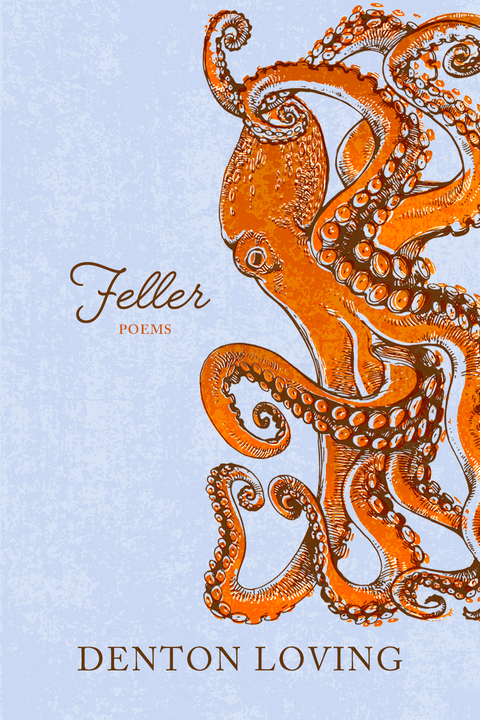
Electric Literature is pleased to reveal the cover of Fellerby Denton Loving, which will be published by Mercer University Press on August 5, 2025. You can pre-order your copy here.
Using the natural world as both mirror and lens, the poems in Denton Loving’s third full-length collection of poetry explore themes of connection, longing, and the pursuit of a fully-lived life. They celebrate “the light that enters the woods and cleanses the wound.” They seek the sacred order in everything—from the phases of the moon down to the delicate colors of a moth’s wings. And yet, they are not cloistered away from the human struggle—whether with nature, with each other, or with the self. Feller envisions our environment and landscape, not as mere backdrop or ornament, but as revelatory forces illuminating the hidden chambers of the self. At once deeply rooted in his Appalachian soil and universally resonant, Feller confirms Loving’s position among poets who can transmute a sense of place into profound human truth.
Here is the cover, designed by Burt&Burt.
Denton Loving: “When I was pulling this collection together, there were two poems that stood out to me as contenders for the book’s title. ‘Feller’ won out because I was playing with the word’s multiple meanings, and I loved that the word is so colloquial and brings with it a feeling of intimacy. It was through that framework that I could most imagine a reader diving into these poems, hopefully finding and applying layers of meaning as they read.
Most of my ideas for cover designs centered around the title poem which examines the act of felling trees, both creating a wound but also allowing light to enter. Trees and woodland ecology are firmly in my wheelhouse, and there are many trees populating the poems within this collection. Somehow, I was sure trees would be represented on the cover in some way.
When I finally saw Mary-Frances and Jim Burt’s design, it was a huge surprise that they had chosen an image not from the title poem but from that other poem I had considered for the book title, ‘The Octopus School of Poetry,’ a poem that serves as a sort of capstone to the collection, and one that I wrote to speak to the infinite capacity we humans have for love, no matter how many times our hearts are broken.
The image of the octopus next to the title, Feller, is an unexpected pairing. It’s a lot of fun, as someone who is primarily inspired by the Appalachian landscape, to be accompanied on the journey of this book by the multi-faceted octopus. The fact that it occupies only half of the cover creates a sense of emotional imbalance or even absence. All of this tension mirrors the same tensions I was exploring as I was writing these poems.”
Burt&Burt: “I love designing for poetry rich with visual cues. For a designer, it’s a buffet on a platter with so much to choose from. When reading through a poetry collection, I look for a singular idea that may surprise and delight a reader. The hope is for that electric jolt felt when finding the idea patiently waiting for you on the page, and this happened when I read Lovings’ ‘The Octopus School of Poetry.’ Denton Loving’s words inspired this cover. Who can resist a multitasking, problem-solving creature with three beating hearts? ‘Such a nifty trick.'”
I feel tricked. I feel like the 21st century pulled a fast one. Growing up, I was raised on a pre-millennium realist fiction that focused hard on real people, their real problems, the real gripes and desires of a real modern society. I fell in love with a complex but containable realism—you could see its four walls.
But now that I try to write my own realist fiction, I have to contend with all that the 21st century is throwing at us: AI, social media, pandemics, cartoon leaders, climate disaster, drone warfare, space…great topics, just not ones that feel real. There is too much future, today.
The science fiction writer William Gibson called this “the alien present.” To deal with it, Kazuo Ishiguro gave himself permission “to use what traditionally might have been called genre tropes.” Meanwhile, Geoff Ryman pioneered “Mundane Science Fiction,” using mundanity to ground the complex topic of the future in the same way ‘80s pop used it to ground the complex topic of love (see ABBA, “The Day Before You Came”).
With my debut novel, Sike— about a young man using an AI psychotherapist to navigate his relationships—I tried to deliver a doorstep technology in a realist way. I wanted to be indifferent to the tech, non-polarized and gently mocking, integrating the future into the story alongside other indefinite topics (like modern psychology, rap, love).
Here are some books that do similar: four about technology; one each about medicine, synthetic love, the internet, mathematics; and two set in space.
A time traveller recounts his exploits to a room full of cynics. He has been to the future, past civilization’s demise to the end of the world, and back again. The Time Machine is serious about time travel, and serious about the discovery that, 800,000 years from now, society has divided into a literal under- and over-class, with the underclass living underground and harvesting the child-like overclass for meat.
But while the subject matter is extreme, everything is couched in the contemporary. The novel starts in present day, and Wells places his fictional science next to actual contemporary science, and the fictional thinkers of the novel praise and dismiss the real-world thinkers of the time. Meanwhile, the detail given about the future is deliberately vague, the level of detail in other fictional utopias being declared as “altogether inaccessible to a real traveller.”
Wells is at pains to make it all real. Even on a sentence level, he delivers extreme imagery on the back of realist, even dry observation: “The place, by the bye, was very stuffy and oppressive, and the faint halitus of freshly-shed blood was in the air.”
“O MIGHTY CALIPH AND COMMANDER OF THE FAITHFUL, I am humbled to be in the splendor of your presence…” This isn’t a typically realist start for Ted Chiang’s book of science fiction short stories. But part of Chiang’s genius is in taking you to realism in roundabout ways. In this first story, a character listens to fable-like tales of time travel, and then time-travels himself and spots characters from the tales. When an inventor succeeds at alchemy, he quickly dismisses it as economically unviable. The fable is made true, and the magic is made rational and redundant.
Subtle spins like this plunge you into a strange type of realism. The stories start and you think, huh, ridiculous. But Chiang ploughs on, doubling down on the tech and using it to focus elsewhere, until you think, huh, feasible. You don’t think the story is true, but you can’t help believing that it could be, or should be.
What feels most realistic is that, except in a few stories, Chiang’s technology doesn’t lead to doom. When it does, the story feels less like a dystopian take on technology, and more like a parable for a pressing modern concern.
Laila Lalami’s latest novel is a surveillance dystopia. The protagonist Sara is detained for a crime she is predicted to commit. Data has been mined from her dreams, and the “Risk Assessment Administration” has determined she might kill her husband. She is put into a retention centre away from her children, and her every move is tracked, the data fed into her risk score. She is meant to stay there twenty-one days, but months later there is no hint of release.
The taste of dystopia could overpower any flavor of realism, but Lalami’s villains use technology that would look normal, even old hat, in the latest Apple product launch. Everything feels plausible, even the dream readers, even the interpretation of all the tracking, done by “agents who cared only about the data, not about the truth.”
The uncanniness goes deeper. The legitimate fears of inmates echo the day-to-day paranoia of real life. Have you ever acted differently upon seeing a CCTV camera? Even when doing nothing wrong, Sara fabricates movements for the Guardian cameras that monitor the centre, lest she “convey unintended meaning.” Dissociation through video happens again—more perniciously, more recognizably—during a call between Sara and her husband. The mundane tension of it is chilling. He is moving around his office, she is at her lowest ebb. “Now isn’t a good time for me to chat,” he says. “I’m really busy…”
We’re in the mind of a robot, called Klara. She’s an “Artificial Friend,” who is in a store and waiting to be bought by a family. Eventually a young girl called Josie chooses her, and Klara’s job will be to give Josie companionship. Klara gains energy from the sun. Josie suffers from a mysterious illness, possibly a result of a genetic enhancement surgery she underwent, and Klara thinks the sun might be able to help her too.
Ishiguro is a master of matter-of-factness: Klara and the Sun delivers its extreme subject matter through Klara’s naïve eyes. So we come to recognize the loneliness of technology, the horror of sequestering a child’s future, gradually, bit by bit, as though the future is creeping on us.
And as we stand in the wings with Klara, watching the human theatre and only ever half understanding it, the sense of technology as humanity’s tool develops. Ishiguro doesn’t condemn the future, even when he condemns the humans living it.
A paranoid professor of Hitler Studies navigates his family through a toxic spill and goes on the hunt for a pill that cures the fear of death. The toxic spill is massive, uncertain, and escalating; the pill is unverifiable and addictive. The characters are up in arms, and DeLillo laughs at everyone and everything, guiding the reader to do the same.
White Noise is far from farce though, and it’s not fable either. Perhaps it’s the oblique angle of the humour, or the depth of interaction with a modern American commercialism, that lets us see the spill and the pill as realistic tokens from the world around us.
There is something also in DeLillo’s attention to character. The spill and the pill, and ultimately death, are less relevant in the physical than they are as conversation choices between deeply human protagonists.
Lacey’s book could be a blueprint for a realist future fiction. In the very first paragraph, she lands a heavy insight about desperation: The protagonist, Mary, has placed her last hopes on a stranger, and is hoping that “whatever that stranger might do to her would be the thing she needed done to her.” This is followed swiftly by the introduction of a mysterious health treatment, PAK. But straightaway we learn that, in an aloof way, Mary still doesn’t know what this is. The effect for the reader is instant: this can’t be science fiction if we don’t know, or care about, the science.
As Mary earns money to pay for PAK, by engaging in a new social experiment that aims to distribute the sating of a celebrity actor’s romantic needs across a series of girlfriends (the “Maternal Girlfriend,” the “Intellectual Girlfriend,” the “Emotional Girlfriend”), she never really knows what’s going on. Mary is chosen as the “Emotional Girlfriend,” and becomes part of the various technology-laden experiments that are perilously forced upon the girlfriends by the actor’s flippant research team. We watch as she tries to understand love. She thinks of “all those billions of hearts beating out there, trying to find love or keep love going.” Love is another strange concept, almost futuristic for Mary. The miracle treatments and synthetic emotion manipulation blend in behind it.
The protagonist is an authority on internet culture, who spends all her time online, even as she travels to deliver talks about the internet. She can tease out the subtlest nuance of a meme, dissect a joke for its essential function. She is an expert on the modern virtual world and its reflection and redistribution of the real world. Sitting on stage at her talks, she thinks, “This did not feel like real life, exactly, but nowadays what did?”
Disaster hits her family, and perhaps there is her answer. Her sister’s unborn baby is diagnosed with a rare disease, and suddenly reality pokes in. She instantly asks, “…oh, have I been wasting my time?” She becomes estranged from the internet. She types words, but “All at once they were not true, not as true as she could have made them.”
No One Is Talking About This pins down the aggregated fakeness of the very real internet, and somehow translates social media into prose. There is an uncanniness. You come away from the book as if you’ve been trawling an app yourself—the imagery falls so thick it feels algorithm generated.
A mother takes a housekeeping job with a maths professor, with the catch that the professor has amnesia and can only remember new things for 80 minutes. He is genial and eccentric, and when he hears that the housekeeper’s son is home alone, he insists on her bringing him along each day. The professor teaches them all kinds of mathematical things, revealing the beauty of numbers, kindness, memory, and family.
AI, space travel, biomedical breakthroughs—in some ways, the future is pure mathematics, and Ogawa shows you the numerical beauty motivating today’s tech mavens. But you wouldn’t necessarily call Ogawa’s subject matter futuristic. Rather, the book is a lesson in how to deliver a complex topic seamlessly, and how to use it to step around and gaze in on more human topics like family. You aren’t required to care about math or science, technology or the future, to see the beauty.
Martin MacInnes cares about science, and so does his protagonist, Leigh. She is a marine biologist who becomes an astronaut, and her journey to chase down a mysterious ovoid meteor takes her through sea and space to the origin of the earth…perhaps. You’re never absolutely clear what has happened, and the ambiguity of time, and the confusion of stars, rocketships, waves, and algae, deliver the sense of a wild and unknowable universe.
If this is science fiction, the science runs out. We track it for a bit, but it trails away as Leigh travels beyond contemporary human knowledge. Similarly, the story lets go of the mission narrative and stops paying attention to the meteor, which disappears with no explanation. MacInnes lets it all go. He cares about science, but he cares more about questions of human nature, and the futility of that questioning.
There is nothing made up or fanciful in Orbital, which details a day in the life of six astronauts on the International Space Station. “They are the latest six of many,” Harvey tells us, “nothing unusual about this anymore…” Rather, they are all aware of “what has suddenly become their own mundaneness.”
Like Harvey, the characters are slightly less enamored by the space travel—which is shown to be problematic for its by-any-means-necessary pursuit of progress—than by what’s back on earth. They stare out of the windows watching day and night flit by, and run experiments that will benefit humans back home. It’s as if Harvey wanted to write about earth, about everywhere on it, mountain and lake, Pretoria and Patagonia, so she sent her characters up into orbit to look down at it all. This is almost the basis upon which the book was marketed: Don’t worry, everyone said, it’s not really about space. It’s just set there.
The effect is powerful and, counterintuitively, Orbital’s approach refreshes the excitement of space rather than relinquishes it. The new realness brings new magic. We learn that the floating, puffing astronauts are not in zero gravity, they’re in free fall. They’re only weightless in “the sense that you’re weightless for a moment on a plunging roller coaster.”
The book is short, but you spend all of it with these falling astronauts in their small shell of a space station. By the end, you feel like you’ve been there. The book lands the future so neatly in this way. You realize this is real, this is us. I’m up there.
My two sisters and I squirmed on the living room couch in anticipation of hours of performances vying for the title of Europe’s best song. The Eurovision Song Contest was the only night besides New Year’s Eve that our parents let us stay up late. Mom regularly sent us to bed after the 7:15 p.m. Tom & Jerry cartoon, and we grumbled as we climbed the wooden stairs to our room, still aglow from the Mediterranean sun.
But tonight was a rare chance to extend our bedtime into darkness. We wore high-rise jeans, bottoms rolled up around ankles. On my T-shirt, a giant imprint of a red lipstick mark took up most of the white space. My twin sported a Big Bird T-shirt. It would be years before I’d learn the feathery yellow character was part of a popular TV show—we did not have Sesame Street on our three channels.
It was 1989, and a band called Riva represented our country, Yugoslavia. Riva hailed from a small coastal city a few hours north of Dubrovnik, our city. Located in Yugoslavia’s Croatia republic, Dubrovnik has become known to Americans as the setting of King’s Landing in Game of Thrones. For me, it was home—I grew up racing down stone steps to the Adriatic Sea, picking ripe pomegranates from Mom’s garden, and watching Dad transform his fish catch into dinner on his homemade grill.
Participating countries choose their Eurovision contestants, who then enter the annual international song competition, typically held in May. The rules have changed over the years, but the organizer, the European Broadcasting Union, emphasizes the event is strictly cultural and must not involve political statements. Still, nations have withdrawn or been banned for everything ranging from controversial lyrics and financial difficulties to armed conflict. The last two years have seen calls to ban Israel for its destruction in Gaza—I was glad to see that more than 70 former contestants recently signed a letter to this effect. Meanwhile, Russia has been banned from participating for invading Ukraine.
As a kid, I did not think about any of this. For weeks leading up to Eurovision, my sisters and I imitated lead singer Emilija’s dance moves, shaking our hips to “Rock Me,” hands fisted into microphones, scrunchy-clad ponytails bobbing sideways. The tune endlessly rotated on the radio as all of Yugoslavia got behind our chosen performer. We recorded it by sliding a cassette tape in our JVC player, then pressing the red “Record” button at just the right time.
Yugoslavia would cease to exist altogether, perishing from maps, passports, and Eurovision.
Switzerland was hosting the contest because it had won the previous one, thanks to a 20-year-old singer in a white tutu named Céline Dion, whose performance in French catapulted her career. She was Canadian, but even as some of today’s contenders embrace nationalism, Eurovision has never imposed citizenship requirements on its contestants. Now, Dion opened the evening—a Eurovision tradition. Sporting a blue leather jacket and pants, a sparkling corset, and gold hoop earrings that nearly touched her shoulder pads, she belted out “Where Does My Heart Beat Now.”
“I love her glittery top,” my twin said.
“And the blue outfit,” I added.
“Cool lipstick,” our older sister chimed in, noticing how the orangish-reddish shade matched her wavy bangs.
I held my breath as Riva stepped on the stage lit by fluorescent lights alternating between pinks, purples, and greens. Emilija, a few days shy of 21, wore red gloves, red lipstick, and a red top propped by shoulder pads, stretching her thin frame. Her short brown hair formed a surfer’s wave that cascaded onto her forehead. Big triangles hung off her ears, and a shiny bow of a necklace decorated her neck. Men in white blazers—of course, more shoulder pads—pranced around her while pecking portable keyboards and electric guitars. “Rock me, baby!” my sisters and I screeched along, hips cocked, three sets of skinny legs zigzagging in every direction.
When the twenty-two participating countries started calling in to report their scores—a nail-biting experience accompanied by Eurovision’s trademark awkwardness, thanks to time delays and accents as thick as the shoulder pads on stage—we plopped back on the couch. I adored Eurovision—staying up late, knowing all my friends were watching the same show and cheering for Yugoslavia, the thrill of a live contest being broadcast right from our living room TV. Over-the-top outfits, multilingual hosts transformed by multiple gown changes, anxious audience members waving tiny flags—I cherished the whole sequin-heavy, three-hour, glittery, multicultural spectacle that was our continent’s pop music Olympics.
When Riva took the lead, we catapulted from the couch.
“Idemo, Rivaaaaaaaa! we cheered, hands cupped over mouths in disbelief. “Idemo, Jugoslavija!”
My Mom is Serbian, Dad is Croatian, my sisters and I were born in Serbia, and my family lived in Croatia. The two republics were among six that made up Yugoslavia. Whether it was tennis’s Davis Cup, basketball’s European championships, or Eurovision, we cheered for Yugoslavia. We had Yugoslav passports and considered ourselves Yugoslavs above all.
It was hours past our usual bedtime when we won, scoring 137 points, 7 ahead of Great Britain. Riva’s members leapt from their seats and hugged, a coffee table littered with Marlboro packs, porcelain espresso saucers, and glass Coca Cola bottles between them. I crisscrossed the living room in sprints, all shrieks and high-fives. For the first time since it joined Eurovision nearly 25 years earlier, Yugoslavia finished first. Pride oozed out of me, my tween body swelling with giddiness at the thought that we’d host next year’s contest.
I didn’t know that after that night, Yugoslavia would only participate in Eurovision three more times—and by the third time, it would be a skeleton, consisting of only Serbia and Montenegro. Soon after, Yugoslavia would cease to exist altogether, perishing from maps, passports, and Eurovision. Croatia and Serbia would become separate countries, like the other former republics.
By then, my family would no longer be living in Croatia or Yugoslavia or Europe. We would leave on the verge of war and immigrate to Canada, where I would hear a lot more Céline Dion. In the decades to come, my family would keep scattering, adding more borders and distance between us. Our parents will stay in Canada and travel back to Croatia yearly. My sisters and I will divide between Canada and the United States. Family reunions will involve flights, immigration lines, international borders.
Yugoslavia’s demise is a subject for historians, but I often think about its failed national premise of unity—something Eurovision strives for.
But with or without Yugoslavia, the show must go on. This year’s Eurovision just finished, and just like the year when Yugoslavia won, it was in Switzerland.Since its start in 1956 with only seven competitors, nations as far flung as Australia have competed because they are members of the European Broadcasting Union. Austria won this year’s grand final, which was mired in controversy again as Pro-Palestinian protestors interrupted Israel’s performance.
It’s been more than three decades since Yugoslavia perished—it now appears in the pieces that used to comprise it as Croatia, Serbia, and the other former republics compete against each other. I cheer for Croatia, but Yugoslavia lives in my parents’ 50-year marriage, in my mixed roots, in my immigrant identity. It hides between the lines of my passport pages, where Serbia is listed for my birth country, Croatia for citizenship. It emerges from my throat during Eurovision, the Olympics, and the World Cup, when I root for Croatia, and if that’s not an option, other former Yugoslav republics.
Yugoslavia’s demise is a subject for historians, but I often think about its failed national premise of unity—something a show called Eurovision strives for. Now that I live in a United States that is jailing people based on political views, trampling over fundamental human rights, and espousing authoritarianism, I cannot help but be reminded of Yugoslavia. My family left because of steeping ethno-nationalism and growing political tensions between the two groups that made up our background. Now, I watch those same conflicts overtake my adopted home country.
My American friends used to stare with bewilderment when I squealed wide-eyed about all-things-Eurovision, but most are aware of it now. The pyrotechnic-loving show has grown into a global phenomenon and is the world’s most watched non-sports event, behind only the Olympics and the World Cup.Each spring, as nations announce their Eurovision representatives, I browse YouTube clips from my desk, six hours behind and an ocean away from where I grew up. Last year, Croatia’s Baby Lasagna came in second with “Rim Tim Tagi Dim,” whipping our little nation into a frenzy with the highest standing since it became independent in 1991 and joined Eurovision two years later. The year before, our band trotted out rockets and underwear-clad men who crooned about a mom buying a tractor. The New York Times called it an “insane, highly theatrical antiwar track,” and HuffPost described it as “Monty Python meets ‘Dr. Strangelove.’”
It was weird, it was ridiculous, it was so Eurovision. Contestants have stood on stilts, danced on poles and discs, and hatched from a giant denim egg. They have donned feathers and mesh and boas and leather and spandex and masks and heels and boots for kilometers. They have morphed into astronauts, puppets, pirates, sexy Roman soldiers, flight attendants, and vampires.
This year, Croatia’s Marko Bošnjak encouraged the audience to have a bite of “Poison Cake” as he performed his revenge tune in a fluffy black cape. There was smoke and fire, green and purple strobe lights, and back-up dancers flipping their waist-length hair because Eurovision will be Eurovision. Marko did not make it past the semi-final, but he was Croatia’s first openly gay Eurovision performer. I consider this a feat for a country where Freedom House found “societal discrimination discourages LGBT+ people from participating in politics.” I’m glad things are at least changing on the stage. It’s one of the things I love about Eurovision—it is more queer, more joyous, and more open than the sum of its parts. Last year’s winner, Nemo, was the first openly non-binary person to claim Eurovision’s title.
Eurovision is hardly some perfect utopia, but it embodies ideals that our individual countries may not. Behind those boundary-pushing acts and the crystal-encrusted microphone trophy, I want to believe it can be a force for good, a shred of humanity in an increasingly inhumane world. I hope it can be a platform for a future that respects all people, because I know people, borders, and countries can disappear. Switzerland—this year’s host and Eurovision’s birthplace 69 years ago—leaned into themes of diversity and unity; it announced that its three hosts were bringing together the country’s values of openness, integration, and community. The slogan “United by Music” was splattered across ads, along with calls for a “home where love and music unite us all.”
As a kid, Eurovision was a fun family night, a rare chance to stay up late. Today, it’s nostalgia, a longing for my motherland before war splintered it. I now have a daughter a year younger than that kid in Yugoslavia celebrating our first and last Eurovision title. I have a graduate degree in International Affairs, so I know better than to think anything—much less an event involving 37 countries—is politics-free. I know better than to believe that countries can’t be erased, or that a song contest can save a place like Gaza from daily destruction. When I streamed Eurovision, I knew I still lived in a world where fascism thrives, where we tear families and countries apart, where governments are hell bent on ruining lives while erecting new borders. But for a few hours, I relished the over-the-top costumes and the cultural quirks, the bizarre beauty of a cross-continental pop contest in a world ablaze. One minute, I was cursing at the screen about leaders who have learned nothing from the past, including my broken country. The next, I was lip synching to “Poison Cake” and cheering for Marko, my tongue rolling the hard R in his name, giving away my home even as I reside 4,000 miles away from it.
Eurovision is a snapshot of my childhood before my life became diasporic, before my motherland evaporated.
Deep down the Eurovision rabbit hole, I looked up Riva the other day, curious about where the band that brought us Eurovision glory ended up. Emilija, now in her mid-50s, has long brown hair, works as a solo artist, and runs a music school in Croatia. Instead of red gloves, she showed off red cat-eye glasses. I found out that around the same time Yugoslavia split, Riva broke up, each individual member pursuing their own path. This saddened me, as if learning it was reliving another ending. As if one band’s survival could have changed anything, rendered my country alive again.
I scrolled down her Instagram feed, not sure what I was searching for. She has about 1,000 followers, occasionally posts a selfie. Half a dozen posts later, I paused at the first one to garner over 100 likes and any comments. Above a sea of hashtags that included “#eurosong,” young Emilija looked through the screen, head-tilted, short brown hair and red lips, their darkened outline giving away a bygone decade. The caption underneath, “Neka dobra vremena…”—the good old days.
I paused and felt a shared longing—for her, a career highlight; for me, a yearning for a country still intact. Eurovision is a snapshot of my childhood before my family’s cross-Atlantic move, before my life became diasporic, before my motherland evaporated. As I watch the show each spring, I cling on to these befores, and the naivety of an 11-year-old girl who only saw countries coming together on a stage aglow with glitter and hope.
Four in ten U.S. adults believe humanity is “living in the end times.” We see existential threats in the form of climate change, our political campaigns, war, and AI. Correspondingly, the apocalypse is an obsession in our literature. Common are post-apocalyptic books, which take for granted the end of the world as we know it and explore how we’ll fare in the aftermath. Somewhat less explored is the pre-apocalyptic moment—the moment we see ourselves in now. What do we make of the dread, doom, and occasional excitement of living in anticipation of catastrophe?
In my novel, Circular Motion, the Earth starts spinning faster and faster. As days on Earth quicken from twenty-four hours to twenty-three, then twenty and below—the sun rising and setting ever more frequently—violent storms and economic meltdowns portend a civilizational collapse. Maybe the world will end… or maybe humanity will adapt. The characters must learn to live in this uncertain time of looming threat.
The crises of today may or may not lead to annihilation. What’s certain is that our lives will continue to be shaped by annihilation’s possibility. Each of these eight pre-apocalyptic books is set in the run-up to a particular apocalypse that only arrives near the end of the book, if ever. Most are not stories of mass destruction; rather, they are stories of life set to the soundtrack of alarm bells.
In six months, an asteroid will wipe out most life on Earth. People are abandoning their jobs, turning religious, experimenting with drugs, hanging themselves. Trying to keep his head amidst economic and spiritual mayhem, a young detective commits himself to solving a local murder case before the world ends. A more mature author might have smoothed down The Last Policeman into a pat meditation on the value of life, a reconciliation between the tragedy of a single death and the statistics of mass extinction. Winters, however, plays to baser tastes, thank god. Against his existential backdrop, he gives us a bloody (arguably, even, fascistic) cop novel, which doesn’t pretend that life is better understood when backlit by death, but perhaps that mortality intensifies our perspectives on life, misguided as they may be.
The Trisolarians are coming! As news spreads about the approach of an alien fleet, political factions debate whether to cooperate or prepare for war. The Three-Body Problem captures humanity’s ambivalence toward being supplanted. Annihilation is a fearsome prospect, but it throws into relief the inadequacies of the civilization that we have. We’re first introduced to the working of human politics through a brutal struggle session during the Chinese Cultural Revolution, and as the novel proceeds, terrestrial society gets arguably more dysfunctional. All clocks are counting down to our deliverance/destruction.
Some earlier works of climate fiction by Kim Stanley Robinson depicted Earth in the post-apocalyptic distant future, flooded out or ravaged by mass extinction. The Ministry for the Future, in contrast, shows Earth as it is—or at least could be—today: imperiled by climate change and responding to that threat. Through bureaucracy, diplomacy, and direct action campaigns, Robinson’s characters address the looming prospect of climate apocalypse. Here is the most dismally realistic book on this list, and also the most hopeful.
Five generations in Zambia, from the turn of the twentieth century to the near future: The course of history in this novel zigs and zags, but an ever-present dread makes it clear that whatever direction we’re heading, it’s not good. As colonialism gives way to globalization, then consumerism and techno-autocracy, politically engaged characters come to see polycrises mounting everywhere they look. Will their way of life be undone by surveillance devices implanted in their hands? By swarms of tiny drones? By predatory foreign lending or climate change? In rallies, they read from the Book of Revelation. They cry that the “end of days is here!” Ultimately, it’s their very fear of annihilation that causes the flood.
Ostensibly fiction, most of this novel about Erwin Schrödinger, Werner Heisenberg, and others is true. That’s to say, it is a record of these men going about the business of developing the instruments of apocalypse: poisonous chemicals and nuclear bombs. What’s fabricated is the men’s dreams, their longings and their madness. In one of Heisenberg’s prescient nightmares, he imagines the future victims of the atom bomb; yet he continues to expand the possibilities for humanity’s annihilation. Apocalypse, here, is a temptation: it is the desire to finally grasp the world, if only by obliterating it.
Here’s a weird one. Ostensibly nonfiction, there are no dreams, just actions and reactions. Beginning with a hypothetical nuclear strike on the Pentagon, Jacobsen imagines the ramp-up of an all-out nuclear war, providing estimates of the death toll as it rises with each passing minute. The lead-up to this apocalypse is short. As a former commander of the US Strategic Command is quoted as saying, “The world could end in the next couple of hours.”
This is, to my mind, the canonical pre-apocalyptic novel. Achebe brings to life a civilization in all its grandeur and complexity, only for it to be destroyed by the arrival of white colonizers. Things Fall Apart introduces the questions that will later be asked by alien apocalypse novels (Should we collude with the aliens or resist?), nuclear apocalypse novels (What constitutes technology progress?), and climate apocalypse novels (Who’s in charge here?). Even asteroid novels: As if the white missionaries are stony, incomprehensible projectiles of impending death, Achebe searches for the meaning of life in a world that is doomed. The doom, in this historical case, is all too real.
Apocalypse: 9/11
“The Suffering Channel” from Oblivion by David Foster Wallace
A bonus entry. Something smaller than an apocalypse novel—really it’s a disaster novella—”The Suffering Channel” follows the employees of a fictional lifestyle magazine, whose office is on the sixteenth floor of 1 World Trade Center, as they compose the magazine’s forthcoming issue, set to publish on September 10, 2001. The storylines, like many of Wallace’s best, get tangled in the weeds of the characters’ quotidian concerns—their workplace politics, their sartorial insecurities—and the result is something transcendent. Here, the impending doom of 9/11 freights every gesture, every gaze met and missed. Mundanity becomes profound, even beautiful, but painful too. This is not a simple story about appreciating life while you have it. The tragedy of destruction doesn’t negate the sorrow of existence; the sorrow of existence doesn’t lessen the tragedy of destruction.
DON’T MISS OUT
Sign up for our newsletter to get submission announcements and stay on top of our best work.
YOUR INBOX IS LIT
Enjoy strange, diverting work from The Commuter on Mondays, absorbing fiction from Recommended Reading on Wednesdays, and a roundup of our best work of the week on Fridays. Personalize your subscription preferences here.