My novel Call Me Zebra is about dislocation, about being unmoored from one’s home, and about how literature can be a lifeline in exile. In the aftermath of her father’s death, Zebra, born Bibi Bibi Abbas Hosseini, decides to retrace the journey she and her father made from Iran to the United States via Catalonia years ago. As she moves across the Western Mediterranean, her political anger fuels the production an epic text of protest writing she calls “The Matrix of Literature: A Philosophy of Totality,” a manifesto that will connect the threads of all the literature she has been steeped in throughout her life. Zebra asks the reader to think alongside her about how we can account for and navigate that which has been erased through revisionary histories?
Purchase the novel
This list of books about exile, fugue states, banishment, political prisoners and the displaced — some of which make an appearance in Zebra’s manifesto — are all, in one way or another, a meditation on the idea of home and hearth. They share a central question: How does dislocation shift our experience of identity, community, and language?
Considered together, these books offer us nuanced insight into our fragile human condition and remind us of those whose stories are at risk of being forgotten; they guide us to think of writing as testimony and historical record and provide us with the time and space to consider the psychic and material imbalance of our world. Each of these books is a gesture toward restoring the balance just that little bit. Here are eight books about exile.
Told with clear-eyed propulsive prose, this kaleidoscopic novel is about an Iranian family foraging for a life in France, trying to piece together the shattered parts of their ancestry and identity. I was instantly drawn to the narrator’s father, Darius Sadr, who spends his life “bent over a ream of writing paper” and whose destiny is “joined to the staircases of the world…and to the indifferent gazes of the passers-by.” I’ve completely fallen in love with his absurd, embittered logic and with his daughter Kimiâ’s wild, untethered voice. Disoriental is told from Kimiâ’s perspective as she sits in the waiting room of a fertility clinic in Paris with the possibility of the next generation of Sadr’s looming on the horizon. This electrifying novel is as much about the tricks of memory as it is about art and politics and the ways in which we are left alone to contend with the tragedies of history that come at us in waves.
Masha Gessen, who I consider to be one of the most courageous journalists of our times, retraces the cultural and historical roots of our current political climate with astonishing precision. She fearlessly takes on the big issues: terrorism, LGBTQ rights, that horrifying, belligerent duo, Vladimir Putin and Donald Trump, and the disturbing ways in which the bodies and psyches of migrants and exiles are unjustly taxed. In the process, Gessen reveals to us the complicated collective tapestry of our lives. The Brothers is a must read for anyone who wants to understand the deeply disorienting history of the rise of nation-states and the ways in which the old laying down of borders informs acts of terrorism today. The book opens with a detailed map titled “The Tsarnaevs’ Journey: Every few years the Tsarnaevs traveled thousands of miles in search of a better life,” immediately refocusing our attention on the long tiresome journey that lead to the nightmare in Boston on April 15th, 2013.
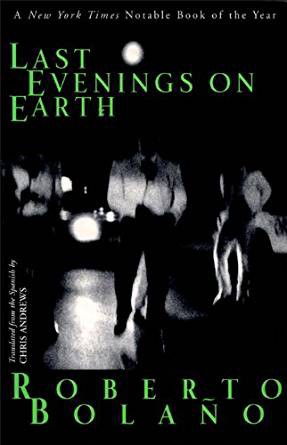
The first short story collection in English by the beloved Chilean author, Roberto Bolaño, contains fourteen stories, each told from the perspective of an exiled writer on an impossible quest to survive the everyday at the margins of society, far from home. The measured tone of these stories is exquisitely counterbalanced by the ineffable shadow of trauma and loss that Bolaño expertly casts over his deliberate, almost clinical sentences. The opening story is set in Girona, on the outskirts of Barcelona, and as someone who took refuge in that strange city’s labyrinthine network of cobblestone streets to write, I was, as I always am by Bolaño’s writing, immediately seduced.
With contributions from Vu Tran, Porochista Khakpour, Novuyo Rosa Tshuma and other refugee writers, this collection of essays, beautifully curated by Viet Thanh Nguyen, gathers seventeen different narratives of flight, displacement, and dislocation. Poignant and timely, these essays ask us to live with our eyes wide open during a time of geo-political crisis. Also, 10% of the cover price of the book will be donated annually to the International Rescue Committee, so I hope readers will help support this book and the vast range of voices that fill its pages.
Sonallah Ibrahim is one of the most influential Arab novelists of the twentieth century. Beautifully translated into English by Robyn Creswell, That Smell is a modernist masterpiece told from the perspective of a political prisoner who wanders through the streets of Cairo, adrift and estranged, in the aftermath of his release from prison. Ibrahim’s writing is deceptively simple, a record of the minutiae of his days as the ghost of his former self spies on what used to be his life. He smokes cigarettes, showers, visits family, old lovers, and his mother’s home, but behind these relatively banal acts is a politically charged mind struggling to re-enter the world after a long exile in prison. This edition includes Ibrahim’s Notes from Prison, originally written on cigarette paper and smuggled out of jail, along with an essay about the process of writing of That Smell, which was quickly confiscated and banned by the authorities.
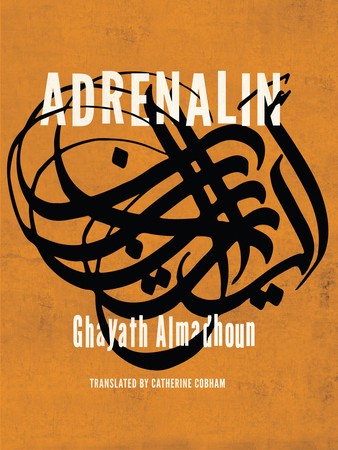
Syrian-born, Stockholm-based Palestinian poet Ghayath Almadhoun’s intelligent, relentless, and formally precise poems explore identity, nationality, nation-building, war zones, history, love, death, friendship, and injustice. This is political poetry at its best and the translation from the Arabic by Catherine Cobham is spectacular.
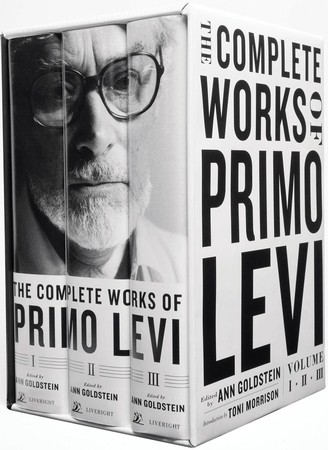
I came to Levi’s work early on through his slim novel The Wrench and more recently, If This Is A Man and its companion text, Survival in Auschwitz. Levi’s sensitivity is extraordinary, his writing breathtaking; the scope of his literary influences is immeasurable, his erudition as a chemist and writer unparalleled. He is a writer full of heart and wisdom. It is a gift to us all that his complete works, a collection of fourteen of his seminal books, are now available in English, a herculean effort that was in the making for sixteen years. To raise the bar even further, the collection is introduced by the Nobel laureate Toni Morrison.
Born in Sri Lanka and raised in Nigeria, San Francisco-based writer Nayomi Munaweera’s lyrical transcendent novel draws us into the lush, verdant landscapes of Sri Lanka and the undulating streets of San Francisco. The narrator, Ganga, has a dark and secretive past that threatens to erode her life. Many year after she was forced to leave her idyllic childhood home and immigrate to America with her mother, Ganga marries a charismatic man to whom she never reveals her disquieting past. Soon enough, an accidental pregnancy causes her to unravel and to commit a terrible final act. Munaweera’s work has been compared to that of Jhumpa Lahiri and Michael Ondaatje. Atmospheric and vibrant, her prose pulses with wisdom, sweeping us off our feet image after image.
He loves to seat and hear me sing, Then, laughing, sports and plays with me; Then stretches out my golden wing, And mocks my loss of liberty.
William Blake
I have a cat named Kokorito. He’s big — seven kilos — and furry, and he isn’t very social. His main way of showing affection is bringing me tiny dead birds. This is what cats do, I know: give their owners dead birds as presents. Or maybe trophies. Who am I to say?
Kokorito never eats the birds. He tortures them, plays with them like balls of wool, but in the end he always leaves them in my bed, which is where I do everything these days, even eat. That’s how I’m so sure the birds are for me.
My cat, who has seven lives in the Americas and nine here in Scandinavia, brings me death as a present, but the thing is, I’ve seen plenty of death already. I don’t really need any more.
Maybe Kokorito disagrees. Maybe he thinks if I paid more attention to death, it wouldn’t bother me so much. He’s the expert, I guess. He has at least seven lives, like I said, and after the twenty days he was gone last winter he must be down a few. When he came home, he opened the window himself, drank some water, and fell asleep in my bed for two days. Then he got up, meowed, and lived again.
The birds are the best gift Kokorito has to give. Maybe he wishes he didn’t have to deliver them in their death throes, beating and panting and flapping, all –ing, and then suddenly past tense. Or maybe that’s the point. Maybe my cat wants me to understand that lives, except his, end in just a few seconds. Well, I get it, Kokorito. No repeats.
When I find a bird dying in my bed, I wrap it in damp paper towels, leaving its heads uncovered so it can breathe. I warm the bird in my hands, clean the blood off its wings, stroke its feathers and try to open its beak. When it dies anyway, or when I find one that’s already dead, I make a shroud out of Kleenex and bury it outside, or at least take the bird under the birch trees and hide it in the dry leaves.
The 2 bus from Øvre Hunstadmoen is the only one that will get me to the center of Bodø. It passes every twenty-seven minutes starting at six in the morning. I always get to my appointments early, since if I miss the bus it’s impossible not to be late.
Today, as I’m leaving for Øvre Hunstadmoen, having timed my departure perfectly in order to get downtown on schedule, I see a bird dying in the hallway, near the place where I drop my bag and take off my coat when I get home. I can’t leave it there to die, but I can’t miss the bus, either. I go to the kitchen, dampen a paper towel, tuck it around the bird and put it in my right coat pocket. Then I leave the house at a run.
When I get on the bus, I’m sure the driver notices that I only use my left hand. He watches me struggle to open my purse, find my wallet, pay my fare. I don’t function well with one hand. He must notice, too, that my other hand is buried in my coat pocket, which means he must know that I’m hiding something. For all I know, he can tell that I’m carrying a dying bird.
Norwegians generally take off their coats as soon as they come inside because buildings in Norway are all heated. In friends’ houses, they take off their shoes right away, too. Every entryway is packed with coats and jackets so the coat stands look bulky as men. In this office they have hooks on the wall like a butcher’s shop, but with winter coats hanging instead of skinned steers.
In an interview for a project analyst position at the Department of Culture, it’s bad manners not to take off your coat when you walk into the office. It’s also bad manners not to shake the interviewer’s hand. If I keep my coat on, the interviewer will think I’m not open, or that I’m uncomfortable. He’ll think I’m hiding something. If I don’t take off my coat, he’ll start to imagine what I’m hiding. He’ll imagine all the way down to my underwear, and what if he doesn’t imagine the right underwear for the job?
I won’t be able to communicate properly if I leave my coat on. I’ll sit there like an armadillo, like a turtle, like a porcupine hiding its head, showing its spines as it trundles along. All I can do to distract the interviewer from my spines is smile. When I’ve read tips for job interviews, they suggest that smiling helps you make a good impression. So I’ll smile, but not too much. I don’t want to seem nervous. My teeth are very white and once my smile won a contest at my dentist’s office. My prize was twenty tubes of toothpaste, plus some fluoride.
When I smile, the interviewer smiles back. I know I should use some more body language to make a good impression, but I keep my right hand in my coat pocket even though the moment to shake hands has arrived. I have two options here: if I shake with my left hand and leave my right hand in my pocket, he’ll think I’m strange, or that I’m rude for making him shake with his left when it’s accepted in every country on earth that you shake hands with your right.
The other option is to remove my right hand from my pocket and offer him a damp handshake full of bird germs and, for all I know, yellow feathers, which could end up stuck to his palm. That wouldn’t be a good start. But this is the option I choose. We shake hands, right to right, and it seems to go over well. I don’t think he notices that my hand is a bit damp, and of course there’s no way for him to know that the dampness isn’t sweat but cat spit and wet paper towel and, probably, bird blood.
The interviewer talks without taking his eyes off my CV. Maybe he doesn’t care that my coat is still on. He seems distracted by his own tic, if it’s a tic, of opening his eyes too wide and raising his eyebrows while he talks. Still, he seems perceptive. I think he’s guessed the color of my bra.
I don’t want him to give me the look that the bus driver gave me this morning because I had one hand hidden in my pocket, so I hide them both. He must think that I’m shy, or nervous, but his gestures don’t change. He keeps talking, opening his eyes and raising his eyebrows. I can’t tell if he seems surprised or indifferent or both.
“It’s very cold today,” I say.
It’s true. My comment is sincere, and he takes it that way, because after I say it he stops the interview to offer me a cup of coffee.
He comes back with two coffees and I wait for him to drink first. He slurps his coffee and then grimaces. He must have burned his tongue. Anyway, now he doesn’t open his eyes quite so wide.
“I can see that you are qualified and that you’re ready to take on the responsibilities associated with this position. I am sure that you would manage your projects carefully and well. We are looking for a person who will be cautious, given that the funds set aside for cultural projects have been reduced this year.”
This makes me think that the job is mine, and I squeeze myself tight with excitement. Then I reach for the coffee mug in accordance with our new ritual: you take a sip, I take a sip. After that I put my hand back in my pocket, and I feel something move. The bird has come back to life.
“I only have one more question,” the official says. “Why do you think that we ought to hire you?”
“Because I can take responsibility for lives other than my own.”
“What does that mean?”
“Well, in terms of culture, imagine I’m in charge of organizing the Philharmonic Week. I have to be responsible for all the composers who are dead but still alive. Take Chopin. He’s dead, but you and I both know that when a musician like Argerich performs his work, Chopin comes back to life and takes flight in the concert hall. Besides, when you’re working on a project like the Philharmonic Week, you’re in charge of the musicians in the orchestra, the singers in the choir, the conductors. Their lives are part of your job as well as their instruments.”
“I understand. And could you explain how you were in charge of other people’s lives at your most recent job?”
I can’t explain, because now the bird is beating its wings. I can’t hold it any more. I take it from my pocket, unwrap the paper towel, and put it on top of my CV, which is still on the desk. The bird is injured. There’s a spot of blood on the towel, but it’s alive.
The bird gets to know me. It walks across the languages I speak fluently, then shits on my work experience. It stops on my contact information and stays still. I pick it up gently and stretch out its wings: fragile, but intact.
“It’s a yellow-breasted kjøtmeis,” I say. “When I was leaving the house to come here, I found it dying in the hallway, so I’ve spent this interview thinking not just about how important this job would be for my professional development and about the dead classical musicians for whom I would be responsible, to say nothing of the live musicians who I would support, but also about saving the life of this bird. So another qualification of mine for this position is that I can stay calm and perform well under pressure.”
The bird chooses this moment to fly. It circles the office, flashes like a star over the computer screens, shits again on the budget reports spooling out of the printer. It lands on the city archives and looks down at the Department of Community Administration with the proud raised head of a newly decorated veteran. The bureaucrats watch from their cubicles, spinning on their ergonomic chairs, but nobody stands. Most of them stay quiet, admiring the bird, smiling, but some are annoyed; some turn back to their screens and protect their head and faces with sheets of printer paper.
The interviewer and I can see that it’s time to open the windows.
The bird feels the cold February air rush into the office and follows it to freedom. It bounces off the photocopier and shoots out the closest window. The building is cold now, but otherwise the day has returned to normal, and I go back to the interviewer’s office to finish my coffee.
When I leave the interviewer doesn’t shake my hand. That doesn’t concern me, since Norwegians often avoid physical contact when they say hello or goodbye. Instead, he brings back his favorite trick, opening his eyes and raising his eyebrows as he says that he’ll call me. I believe him and smile to show it.
On the way home I see plenty of birds, but I’m looking for the one that kept me company during the interview. I’d like to say thank you. Sometimes it’s a good idea to carry dying animals around, to keep your hands in your pockets, and to never take off your coat.
Years ago, not long after Gabriel García Márquez passed away in 2014, I attended a conference held in honor of his work. It was a two-day event that brought together writers, scholars, critics, and industry professionals to celebrate his life and legacy, and as a writer whose life was transformed by reading One Hundred Years of Solitude and Love in the Time of Cholera, I was ecstatic to be in attendance.
A couple of hours in, though, I started to notice a pattern. It’s impossible to discuss someone who’s had such an immense influence in Latin American and world literature without it also becoming a reflection on the literary canon as a whole. Conversation turned to Gabo’s peers, his contemporaries, the writers who influenced him and those he influenced in turn. It retraced the Latin American “Boom” of the ’60s and ’70s, the stunning rise of magical realism, and the ways that future generations of writers wrote in reaction to it. Panelists spoke at lengths about the links between Latin American politics and Latin American works of literature. And yet, all the names of authors mentioned, even anecdotally, were of men.
Panelists spoke at lengths about the links between Latin American politics and Latin American works of literature. And yet, all the names of authors mentioned, even anecdotally, were of men.
Eventually I began keeping count. Every time a speaker mentioned a writer’s name, I took note. Men in one column, women in the other. By the end of the second day, I had four mentions of women and 44 of men (the marks pictured here continue on other pages). In this two-day discussion about Latin American literature, not a single one of those four women was Latina — not one. We were non-existent; our male counterparts were being celebrated while we’d been left forgotten, silenced, and ignored.
I’d never felt more invisible. I’ve been haunted by this for years, and even more so recently, as sexual abuse allegations against Junot Diaz have begun to surface. Here is machismo at its most dangerous. Here’s how an entire industry enables and perpetuates the abuse of power. The systems that fail to even see Latin American women writers at a two-day conference are the same systems that fail, time and again, to protect us. When an entire literary canon revolves around the praising of men’s voices, it drowns out women’s voices. It erases our stories and experiences. It leaves us vulnerable to abuses that no one in power will care to listen to.
When an entire literary canon revolves around the praising of men’s voices, it drowns out women’s voices.
I don’t know all the answers, but I do know that there are countless Latin American women writers whose voices and contributions to literature deserved to be upheld during that conference. This list is inspired by notes I took — each a reaction to a specific point mentioned by a panelist — and so it is by no means extensive. For one, it focuses mainly on women authors born and/or writing in Latin America, rather than those of us writing in the US, because it’s in response to a conversation focused largely on the Latin American “Boom” originating with male writers from Colombia, Peru, Argentina, and Mexico.
But the machismo that took root in our native countries continues to plague us across borders. This list is simply a start, a small step, toward the work required to correct it.
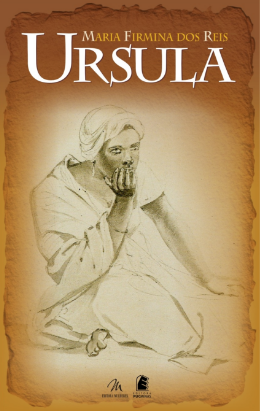
Maria Firmina dos Reis, Úrsula (1859)
Historical trauma, the trauma of colonialism, and crises of humanity are often discussed extensively within the context of Latin American literature. Maria Firmina dos Reis was an Afro-Brazilian abolitionist who wrote Úrsula, the first novel depicting the violence of slavery in Colonial Brazil — and she did so from the point of view of women. In dos Reis’s novel, Úrsula, her mother, and other female slaves tell of their lives and memories in their homelands and later, the violence they’re subjected to as they’re brought to Brazil. Together, their voices are a powerful counter-narrative and an example of the resistance to the erasure of memory so emblematic in Gabo’s work.
Chilean author Maria Luísa Bombal is the pioneer of Latin American magical realism that you probably haven’t heard of. Her novellas blend the real with the surreal as her female narrators struggle within the confines of unhappy marriages and a male-dominated hierarchal society. As in these and other stories, the fantastical becomes an escape and a sanctuary, blurring the lines between memory, desire, and actuality. Bombal’s work predates Márquez’s work, and she was contemporaries with fellow Chilean writer Pablo Neruda, (at one point, even living with him and his wife) but her work is rarely mentioned as a precursor to what many call the “quintessential” example of magical realism, One Hundred Years of Solitude.
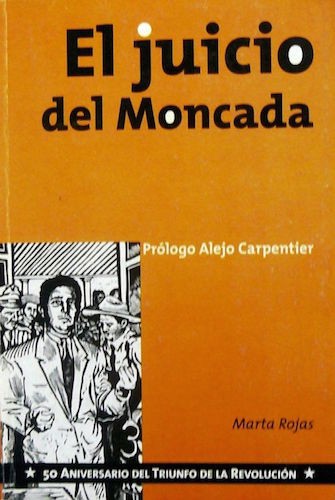
Marta Rojas, The Trial of Moncada (1966)
In 1953 Cuba, then-law student Fidel Castro launched an attack on Fulgencio Batista’s military barracks. Rojas, a recent journalism graduate, chronicled the bloodshed and published it despite government censorship. She later attended Castro’s trial in the aftermath of the attack, and turned its recounting into a novelized story, The Trial of Moncada. Rojas had a long, renowned journalism career, covering Cuban national and world affairs and the Vietnam war. Today she writes fiction that continues to be grounded in journalism as it sheds light on the racial and social divides in Cuba, all within the context of its colonial past. Márquez, who for decades was criticized for his friendship and support of Castro, also began his career as a journalist, and often credited his journalistic background as the trick that made the magic in his work seem real.
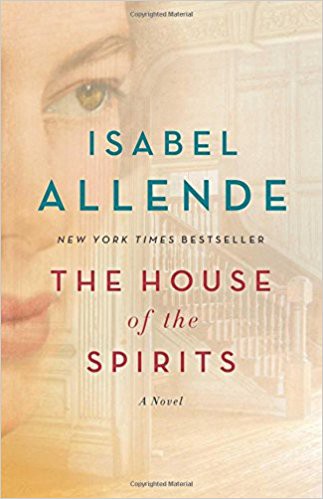
To be fair, Allende’s work is often spoken about in the same breath as Marquez’s, a comparison she herself has dismissed. Yet the Chilean author of 23 books that have been translated in 25 language and sold nearly 70 million copies was deeply impacted by Gabo’s work. “In his pages, we saw ourselves in a mirror,” she has said. “It was as if someone was telling me my own story.” Allende’s debut novel, The House of the Spirits, was adapted into a movie starring Meryl Streep and Winona Ryder and is often taught in schools as the eminent example of magical realism. Ilan Stavans, a professor of Latin American and Latino culture at Amherst College in Massachusetts and publisher of Restless Books, once wrote that The House of the Spirits “symbolized the end of the old-boys club in Latin American letters.” I hope that will be true one day.
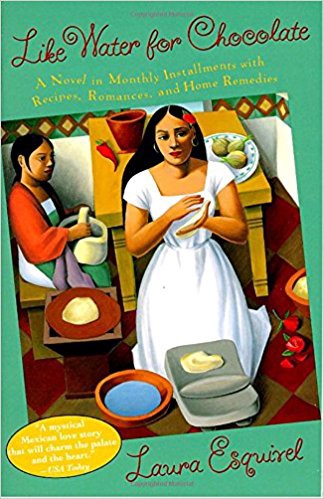
Laura Esquivel’s debut novel, Like Water for Chocolate, was a phenomenal success in her home country of Mexico, where it went into multiple printings in its first year, then was soon translated in more than 20 languages. Set during the Mexican Revolution, the novel employs magical realism and Mexican recipes to tell the story of Tita, who infuses her emotions into the food that she cooks, sometimes with alarming consequences. Her tears in a cake batter make everyone who eats it violently ill, her erotic fantasies infuse another with sheer lust. It is hard to imagine any greater conversation about magical realism taking place without mention of Esquivel’s work.
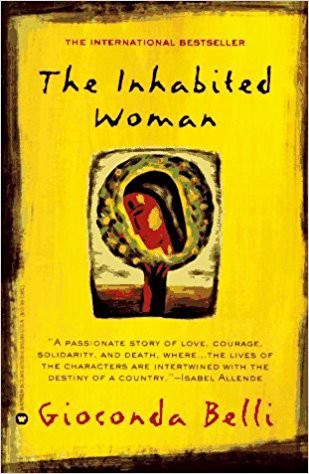
Revolutionary Nicaraguan author Gioconda Belli came from privileged upbringings and joined the Sandinista National Liberation Front (FSLN) in 1970 to resist against the Somoza dictatorship. She eventually went into exile and wrote a semi-autobiographical novel that tells of a sheltered, self-involved woman whose spirit is overtaken by that of an indigenous woman, and who is galvanized to join the revolutionary movement against her country’s dictator. Belli’s work is known for fusing political activism, feminism, eroticism, and nature through magical realism.
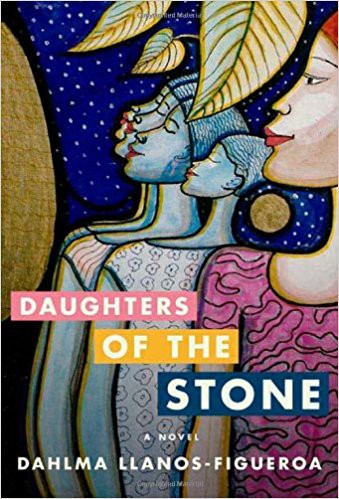
Llanos-Figueroa’s debut novel traces the lives of five generations of Afro-Puerto Rican women, beginning with Fela, who poured the essence of her unborn child into a stone before she and her husband were both separated and sold into slavery. The eventual conception and birth of her child is the beginning of a long line of daughters whose stories are part of the African diaspora, connected by a legacy of magic, trauma, storytelling, and memory. Spanning the 1800s to present day New York, Daughters of the Stone is a novel about mothers and daughters who navigate cultures and spaces, pain and love.
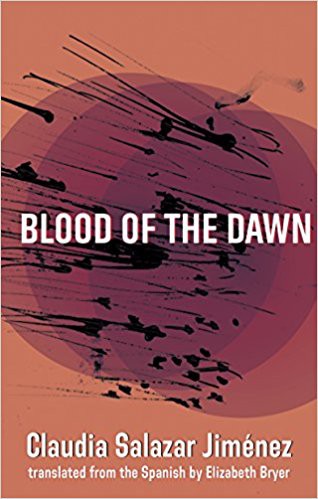
It’s a common misconception that Latin American fiction must automatically be equated with magical realism. In fact, many authors in the generations to come would purposely reject the fantastical in order to portray the violence of the past and present with unapologetic realism. In Blood of the Dawn, Peruvian author Claudia Salazar Jiménez writes the violent history brought on by the Shining Path in the 80s and 90s through the voices of those who lived it, but whose stories too often went unheard: that of the women. Jimenez’s language is brutal, courageous, and unflinching, revealing the ways that women experience social and national violence in deeply personal, traumatic ways.
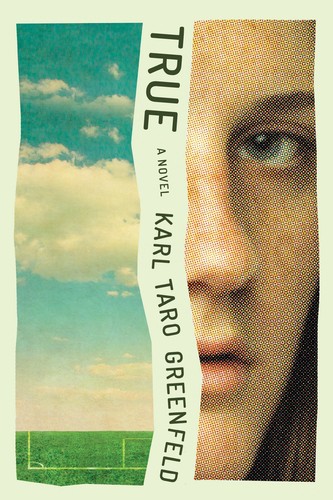
The very first fragments of the book that would become True were written over 20 years ago as part of a planned non-fiction book about soccer in America that, even before I was 20 pages in, had become a fiction book about rival soccer teams in a Los Angeles amateur league. Those first soccer files were lost several computers ago, but the world of pick-up soccer in Los Angeles continued to obsess me.
Three years ago I returned to the material, but for some reason, this time I was writing as a female soccer player, one so talented she could dominate in pick up soccer games with men. Her life story, how she came to be this girl who played on dusty, far-flung pitches on weekday afternoons, turned out to be the story I wanted to tell. Why had nobody heard of the best soccer player of her generation? She was the female soccer equivalent of basketball playground legends like Joe Hammond or Earl Manigault. While I was writing, I wasn’t thinking of the potential pitfalls of writing a female main character or the commercial risks of writing a sports novel. Sports novels seldom make the bestseller list.
From the memoir of an NFL wide receiver to a novel about a chess player struggling with addiction, here are twelve books about sports that have stayed with me,
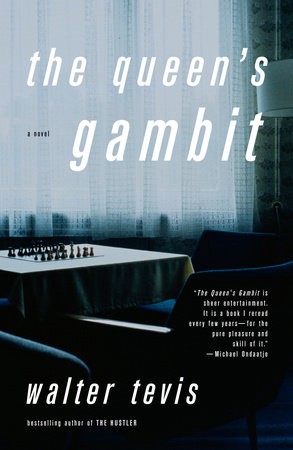
The protagonist, Beth Harmon, is a brilliant chess player struggling with addiction. The descriptions of orphan Beth Harmon’s discovery of chess and her steady climb up to Bobby Fisher levels of chess dominance provide a natural and comfortable narrative structure. Tevis is masterful in his depiction of Beth’s peculiar genius and unique talent. The lexicon of chess gambits and moves could easily alienate a general reader, yet through the lens of Beth’s intense and peculiar intelligence — today, Beth would be described as on the spectrum — the story exerts a magnetic pull.
Bang the Drum Slowly is the much better known and praised of Mark Harris’ novels, but its precursor, The Southpaw, is less sentimental and more ambitious. Narrated by a young prospect, Henry Wiggins, climbing the New York Mammoth’s system, The Southpaw is a coming-of-age novel wrapped around the story of Sam Yale, a veteran pitcher near the end of his career, idolized by young Henry Wiggins. Yale, an aged, angry tyro, can’t help but challenge the adoration of the young naif. “I just play for the money I do not need and fornicate for the kicks I never get,” Yale tells Wiggins, “If I was to write a book they would never print it. It would be five words long. It would say, Do Not Fuck With Me.”
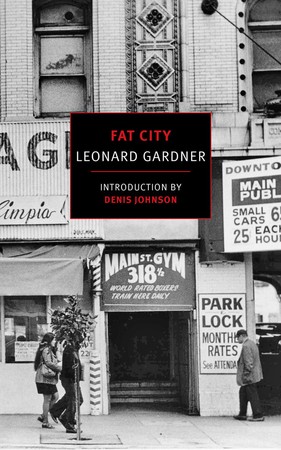
It’s impossible to exclude Gardner’s only book from this list. It’s a sports novel in the way that, say, Double Indemnity is an insurance novel. Gardner’s Billy Tully and Ernie Munger are fighters so low-down on the bill that when they fight on the road, their trainer puts them on a bus and wishes them luck. The book is set in the kind of dive bars, fleabag hotels, and strawberry fields familiar to Jack London and John Steinbeck, only Gardner has the courage to shy away from redemption for his failed and never-was boxers. The ring beckons as redemption, and Gardner has the courage the deny his characters any such salvation.
Nate Jackson, a bottom of the roster tight end and wide receiver for the Denver Broncos, was never a household name and that’s what makes his book about the realities of life in the NFL so captivating. Jackson’s NFL is a cynical and manipulative entertainment conglomerate that exploits athletes like Jackson who know full well the price they are paying and would eagerly do it again. What makes Jackson’s book so fascinating is that awareness at the price he is paying, mentally and bodily, yet he ultimately concludes, reluctantly, that the intoxication of living this alpha-male version of the American dream is fully worth the price. Jackson writes with a surprising wit, and rejects your sympathy even as he is explaining how players feel compelled to take any medication or injection they can to get out on the field. It’s the most honest book I’ve read about the National Football League.
Hope Solo’s tumultuous history with the United States Women’s National Team, her frequent and public disputes with coaches and players, and her legal troubles, have made her a controversial figure who is also, inconvertibly, the best goalie in women’s soccer history. Her life story tells of when she was kidnapped by her father at age seven, the rival girls she has punched in the face, and names the teammates she despises. It’s rare to read an athlete be this candid about her struggles.
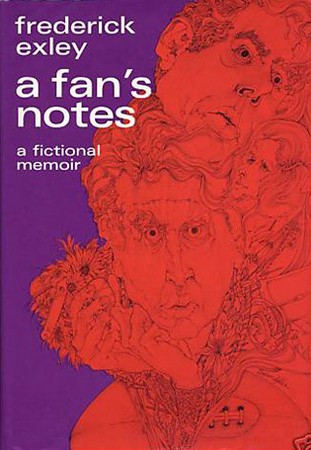
Exley’s fictional memoir of obsessive fandom foresaw the future of American sports and the obsessive identification with gridiron heroes that has by now become accepted behavior. Believe it or not, there were decades during which you could go to a football game and nobody would be wearing his or her favorite player’s jersey. Exley’s tragic memoir, during which his obsessions with Frank Gifford and the New York Giants became an escape from his debilitating depression, provide a remarkable snapshot of where American sports fandom was heading, even as Exley himself was wise enough to warn that his own compulsion was destroying him.
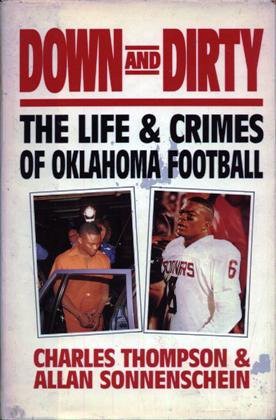
During the 1980s, Barry Switzer’s Oklahoma Sooners were the best team in college football, running an impossible to stop wishbone offense built around fleet-footed quarterbacks recruited by dubious means. When Heisman-frontrunner Jamelle Holleway was injured in 1987, Charles Thompson stepped in to lead the Sooners to an 11–1 record and the Orange Bowl. Down and Dirty tells the inside story of those teams, the money players were receiving, the crack-smoking in limousines outside country clubs where Holleway and Thompson were about to give motivational anti-drug talks, and Thompson’s eventual arrest by the FBI for selling cocaine to an undercover agent. One of my favorite sections of the book was Thompson describing his childhood in Lawton, Oklahoma, where he ran for money as drug dealers and bookies would bet on young boys in footraces.
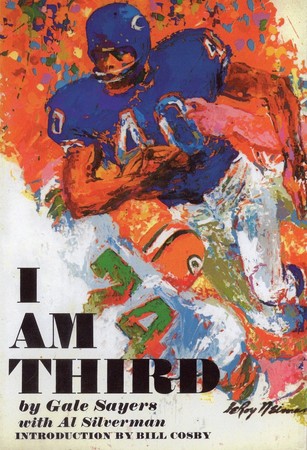
I am including this book because it’s the sports biography I read as a young boy that left a powerful impression on me and humanized a larger than life athlete. Young boys and girls of a certain type read these kinds of sanitized sports biographies and, inevitably, some of them will stick with us even as we reach adulthood. I will never forget Gale Sayers receiving a free hamburger for every touchdown he scored in high school, and eventually eating seven “Pookie” burgers after one game. Also, this book contained the powerful chapter “Pic”, about Brian Piccolo, the running back who would pass away from cancer, that would become the basis for the movie Brian’s Song. How could a young boy resist?
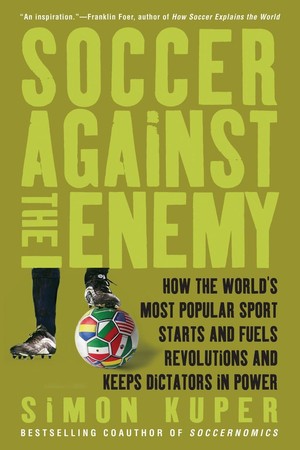
Well before How Soccer Explains the Worldby Franklin Foer, there was this masterpiece by Kuper, who wrote about the variations and obsessions of soccer fans around the world and the very real class, religious, and national boundaries that are defined by loyalties to and for specific clubs. His book was written just before the total dominance of a dozen or so super clubs would change club soccer into a far more commercial endeavor. His description of the cultural differences of how the sport is played and watched around the world are still relevant today. The racism of the Ukraine, the Ajax developmental system, the Italian catenaccio defense, it’s all here, told in first person and vivid prose.
While I was writing True, I often thought of this book, in part because Maravish so much resembles the protagonist of my novel in that his sport was his sanctuary and the rest of his life outside of basketball always seemed to be turning to shit. Maravich spent his life outside of basketball searching for meaning, exploring yoga, Hinduism and even becoming a UFO obsessive at one point. Kriegel’s book deftly explains how Maravich’s family of origin and in particular his father, Press Maravich, created both the perfect basketball player and a deeply broken human being.
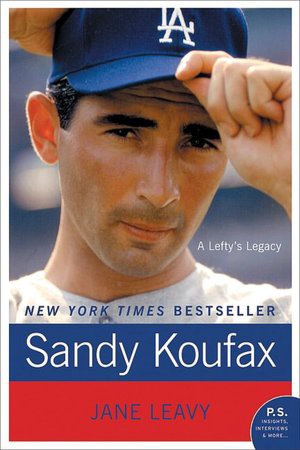
I didn’t remember the subtitle to this book, and now find it odd, as the enigma that is Sandy Koufax somehow survives even this beautifully written account of one of our most beloved athletes. Leavy uses the nine innings and 27 batters of Koufax’s 1965 perfect game against the Chicago Cubs as the structure of the biography, using each at-bat and put-out as a prism to tell more and more of the lefty’s life story. The Koufax that emerges is the most complete picture yet, but Koufax himself remains somehow, tantalizingly elusive. The book takes on a beautiful, almost romantic quality as Leavy attempts to tease out the man. Certain figures somehow escape even the best writer’s attempt to capture their essence. Leavy’s masterpiece is perhaps one of my favorite types of books; a lovely, well-crafted, search that ultimately never quite finds its subject but leaves the reader honored at having witnessed the attempt.
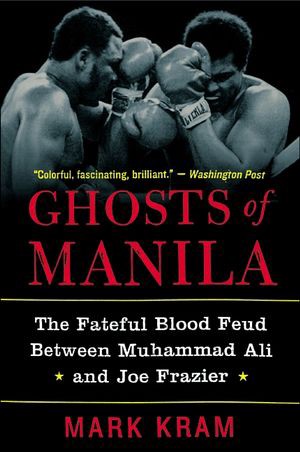
This history of Thrilla in Manilla, perhaps the most famous boxing match in history, is built around Kram’s spectacular reporting for Sports Illustrated on Muhammad Ali and Joe Frazier in the 1970s. His deadline piece for the magazine, “Lawdy, Lawdy, He’s Great,” is one of the best pieces of prose ever dictated down a telephone to an editor just hours after the fight was over. “It was only a moment, sliding past the eyes like the sudden shifting of light and shadow, but long years from now it will remain a pure and moving glimpse of hard reality, and if Muhammad Ali could have turned his eyes upon himself, what first and final truth would he have seen.” And it goes on, with scenes involving Fernando and Imelda Marcos, the fight itself, and both Ali and a blinded Frazier after the fateful bell for the 15th. Over three years writing for Sports Illustrated, my dream was to write a piece as good. I never came close.
About the Author
New York Times bestselling author Karl Taro Greenfeld penned the novels The Subprimes and Triburbia, a New York Times Editor’s Choice. His memoir, Boy Alone, was a Washington Post Best Book of the Year. Karl has also writtenDr. J: The Autobiography (co-authored with Julius Erving), NowTrends, China Syndrome, Standard Deviations, andSpeed Tribes. His prize-winning writing has appeared in Harper’s Magazine, theAtlantic, the Paris Review, Vogue, GQ, theNew York Times, and others. His books have been translated into twelve languages.
This piece contains spoilers for the new Fahrenheit 451 film on HBO.
I first read Fahrenheit 451 as an eleven-year-old bookworm, working my way through every scrap of written material available to me. It was the summer of 1995, and I’d never heard of the internet, so this meant trawling the big cardboard boxes overflowing with old paperbacks that had been stashed away in our garage. Taking a classic escapist route from my bad home life, I devoured them all — bleak dystopian novels, science textbooks well beyond my grade level, explicit romances that had my teachers asking my mother if that was really appropriate for a kid my age. A classmate once caught sight of me with a copy of Little Women and wrinkled her nose in distaste. “Why do you always read such weird old books?” she asked. I didn’t have any explanation — I just knew I couldn’t help it. Books unlocked new ideas, new possibilities, and I couldn’t get enough. It was only natural that a book set in a world where books were forbidden, where reading was a secret act of revolution against a hostile society, would fascinate me.
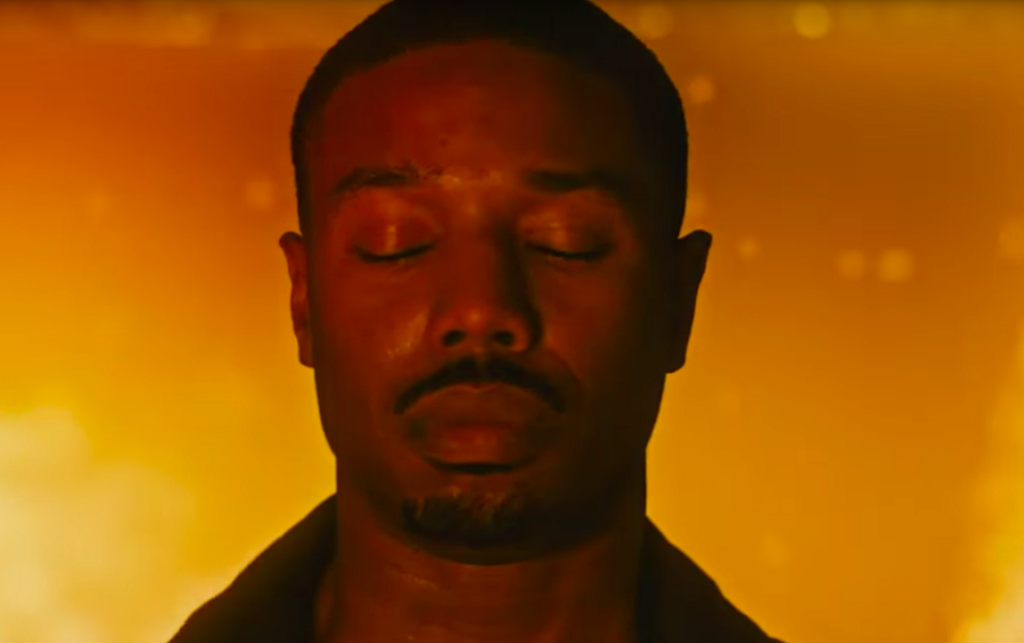
I still have that same copy of Fahrenheit 451 — a trade paperback edition printed circa 1993, whose creased cover and flammable pages are already yellowed and crumbling. I reread it prior to watching the new film version, starring Michael B. Jordan as protagonist Guy Montag, and Michael Shannon as his boss — and ultimately, the bad guy — Captain Beatty. The novel was largely as I remembered it, until I got to the end. At the back of the book, there are a few pages Bradbury wrote decades later, in 1979, where he gets into what he thinks the real threat to literature is. I’d forgotten that reading this coda as a child always left me feeling uncomfortable, in a way I couldn’t fully interpret yet.
In the coda, Bradbury is angry about what he describes as censorship, but there are a lot of different complaints all jostled together under that one big umbrella. There’s anger at the editors of Ballantine Books, who removed the words “damn” and “hell” from their edition of Fahrenheit 451. There’s anger at anthology editors who bowdlerized great authors when putting together a compilation of the classics for school readers. But most of his anger is aimed at the threat he believes to be posed by minorities.
He is angry at a “solemn young Vassar lady” who asked whether he might write more female characters. He is angry at other readers who disapprove of how he wrote “the blacks” in one of his stories. He is angry at “the Irish,” “the Chicano intellectuals,” at “every minority” that has some perspective on his stories at variance with his. In his own words, every last one of them “feels it has the will, the right, the duty to douse the kerosene, light the fuse…. Fire-Captain Beatty, in my novel Fahrenheit 451, described how the books were burned first by minorities, each ripping a page or a paragraph from this book, then that, until the day came when the books were empty and the minds shut and the libraries closed forever.”
In the coda, most of Bradbury’s anger is aimed at the threat he believes to be posed by minorities.
Beatty serves as the conduit for these views in the novel. In words that could have been spoken by the author himself, he tells the protagonist Montag, “Once, books appealed to a few people, here, there, everywhere. They could afford to be different. The world was roomy. But then the world got full of eyes and elbows and mouths. Double, triple, quadruple population. Films and radios, magazines, books leveled down to a sort of pastepudding norm, do you follow me?” Too many cooks spoil the intellect, it seems. Can’t have too many people reading, it’ll ruin it for the rest of us.
A few pages later, Beatty continues in this vein: “Bigger the population, the more minorities. Don’t step on the toes of the dog lovers, the cat lovers, doctors, lawyers, merchants, chiefs, Mormons, Baptists, Unitarians, second-generation Chinese, Swedes, Italians, Germans, Texans, Brooklynites, Irishmen, people from Oregon or Mexico…. All the minor minor minorities with their navels to be kept clean.” This, he explains, is why magazines became “vanilla tapioca” and books became “dishwater,” although he grants that comic books and porn continue to do quite nicely.
Of course, this is a novel: the author’s ideas do not have to align with those of his characters. Based on his coda, though, I suspect these views are a pretty accurate picture of the inside of Bradbury’s head. The author was a legendary crank, and probably wasn’t a big fan of anyone who didn’t live up to his intellectual standards. The book takes this to a horrifying extreme: after Montag joins a small band of nomadic professors (all men), who hail from Harvard, UCLA, Columbia, and other elite universities, they all watch as the city they have fled is bombed out of existence. All the illiterate citizens left behind are obliterated: “the explosion rid itself of them in its own unreasonable way.” Literary types might call this a deus ex machina. It’s not exactly subtle.
Reading this passage now feels sickening. A story I once believed to be about the importance of staying open-minded and intellectually curious is unmistakably steeped in elitist, supremacist thinking, in which the hopeful vision of the future is one in which only men who went to good schools survive. This must feel like an even deeper betrayal to a person of color.
A story I once believed to be about the importance of staying open-minded and intellectually curious is unmistakably steeped in elitist, supremacist thinking.
As of this writing, the new film version, available on HBO, has a 32% critics’ rating and a 26% audience rating on Rotten Tomatoes. This is stunningly bad for a movie based on a classic novel and helmed by two stars fresh off wildly successful movies. Adapting the book for modern audiences must have been a challenge: there’s a lot that was changed, and a lot of that doesn’t quite gel. In particular, other critics have pointed out the clumsy attempts to update the film to reflect modern technology. Early on, the book-burning firemen collect and burn a pile of computers and server equipment that had been successfully uploading scanned books… presumably to remote cloud storage, where others would still be able to access them? If so, that trail is never followed; the burning is treated as a complete victory.
What few critics have touched on, however, is the casting. Jordan initially hesitated to take on the role of Montag, telling IndieWire, “I wasn’t really interested in playing an authority figure,” given relations between the police and the African-American community. He came around after deciding that an authority figure with an arc that leads him to support the resistance was a valuable story to tell now. However, the movie tiptoes around this idea, where it could resonate powerfully.
For example, we periodically see images of Frederick Douglass throughout the movie, alternately being burned or uploaded for preservation. A former slave who learned to read in secret as an act of rebellion, Douglass might be a natural source of inspiration for Montag. But we never hear his name, and Montag never encounters his words.
A former slave who learned to read in secret as an act of rebellion, Frederick Douglass might be a natural source of inspiration for Montag. But we never hear his name, and Montag never encounters his words.
Only one scene directly addresses Montag’s race. The firemen have discovered a massive cache of books in an old woman’s house in the woods. Picture a grandparent’s summer cabin: countless classic paperbacks spilling off tables, weighing down half-broken bookshelves, piling up in stacks on the floor. Tonally, the moment where an awestruck Montag takes in the sight of that many books for the first time is half big library reveal from Disney’s Beauty and the Beast, half episode of Hoarders.
In this scene, Beatty, who has his own secret lust for literature, teases Montag with the books, picking them up at random and offering them to Montag before telling him of the dangers that they pose. “Ah, see? Huck Finn, and his n_____ friend,” he says, the camera panning away from the actor’s face as the slur is pronounced. “The whites knew that you blacks were offended, so what did we do? We burned it.” The movie has made a subtle shift here — while Bradbury lays the blame on minorities, here it is ambiguous. Who is being blamed for the pivot to censorship: offended black people, or overreacting whites?
The movie has made a subtle shift here — while Bradbury lays the blame on minorities, here it is ambiguous.
Beatty moves on to a new book. “Oh, and then Native Son comes along, and the whites didn’t appreciate that one all that much, so they burned it too.”
“Why didn’t they like it?” Montag asks, his eyes wide. Beatty looks at him, then looks away. Moments later, he intones, “We are not born equal, Guy, so we must be made equal by the fire, and then, we can be happy,” as he contemplates a copy of Mein Kampf.
The movie doesn’t attempt to explore the questions this exchange must have raised for Montag. Instead, his consciousness is expanded by reading Dostoyevsky’s Notes from Underground with his romantic interest Clarisse, who is played by the Algerian actor Sofia Boutella and who, thank God, is not a 17-year-old girl (as in the book), but a complicated double agent. When Montag finally meets up with other members of the resistance — inexplicably referred to as “Eels” throughout the movie — they ask him why he is risking everything to join them. His answer is confusing. Something about how he remembers sitting by the ocean as a kid, pouring sand endlessly through a sieve, “like my whole life passed right through me and I missed it. I’m not gonna let that happen again.” It’s a weird image — one we never see in the multiple flashbacks we get of his childhood — and it makes his motivation not one of resistance against oppression, but of self-blame.
The movie smartly updates the members of the resistance from an interchangeable band of Ivy Leaguers to a diverse group whose intellectual bona fides are not proven by their degrees, but by the books they have memorized. They’re led by Khandi Alexander, who has memorized every word of Toni Morrison’s Song of Solomon. Other authors preserved by the Eels include Rumi, James Baldwin, Chairman Mao, Zadie Smith — clearly a deliberate departure from the old-school Western canon that Bradbury largely focuses on in his book. Going by his coda, he would have found this irritating: “For it is a mad world and it will get madder if we allow the minorities… to interfere with aesthetics.”
Perhaps this is why the movie never quite gels: it wants to sound the same alarm as the book, warning that control of ideas is a slippery slope, but the book exists in a time when the loudest cries of “censorship” come from a dominant culture in no real danger of being erased. The film tries to broaden the book’s definition both of literature worth saving, and of the readers fighting to save it — but it does so through winks and nudges rather than asserting this message out loud. To commit fully to Bradbury’s views on intellectual freedom is to accept an exclusionary stance that doesn’t play nicely with what few social justice-oriented moments the movie does include.
To commit fully to Bradbury’s views on intellectual freedom is to accept an exclusionary stance that doesn’t play nicely with what few social justice-oriented moments the movie does include.
Imagine, instead, a retelling that amplifies voices forgotten by the Western canon Bradbury championed. Imagine a story of a dystopian society where a person of color encountered the words of their ancestors for the first time — literature that has frequently been suppressed in real life — and found something that spoke to them personally. Imagine Khandi Alexander’s character telling us why Toni Morrison spoke to her so deeply that she committed every word to heart. Imagine Montag actually reading the words of Richard Wright and Frederick Douglass, and finding out for himself why they made white people angry. In this retelling, more readers and more voices don’t water down literature to an insipid norm. They bring it to life — bursting with powerful ideas from all different perspectives, and all the more revolutionary because of it. What an incendiary story that would be.
Several years ago, writer Chelsea Hodson introduced me to Melissa Broder’s poetry. I picked up Meat Heart, and fell in love with the collection’s apocalyptic charisma: “There appears a hinge in every young woman’s life / when ponies fly out of her soul, her tongue catches fire, / a wet corsage falls from the ceiling. Your ponytail / will not protect you.” I devoured Meat Heart and When You Say One Thing But Mean Your Mother, then pre-ordered Scarecrone, then waited for more.
In 2015, Broder revealed herself as the voice behind @SoSadToday, a darkly comic Twitter account hyped by Katy Perry and Miley Cyrus, now boasting over 650,000 followers. @SoSadToday gained popularity through its narrator’s frank yet funny tweets about depression and desire, like “love in the time of anxiety disorder”, “*whispers during sex* i hate having a body”, “fuck me in the middle of a cookie sandwich”, or (a personal favorite) “feel like satan would have sex with me and then message me 5 months later like ‘hey’ and talk about music.” After Broder’s unmasking, a poignant personal essay collection of the same name followed in 2016.
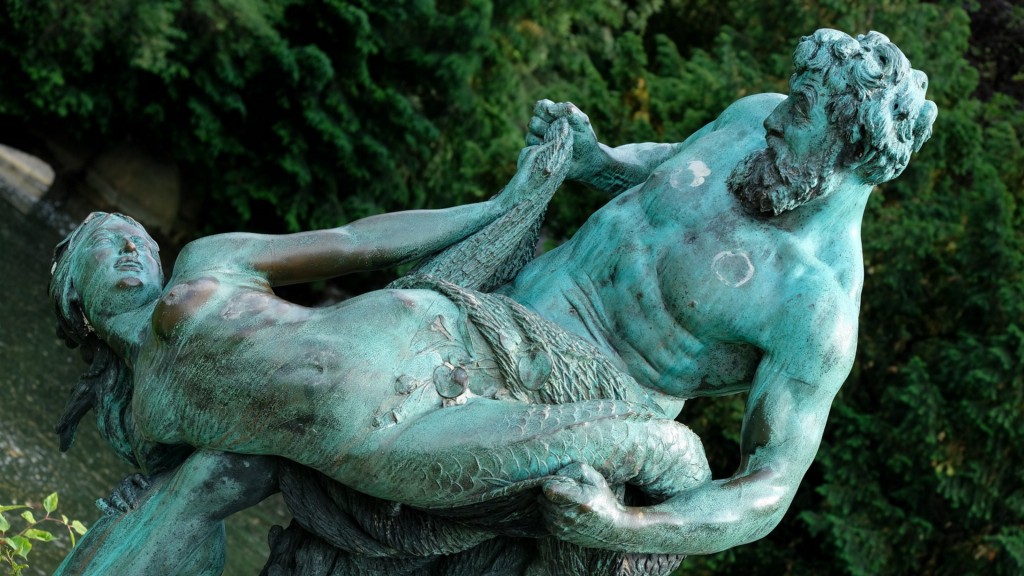
This year, Broder brings us her debut novel, The Pisces, in which an academic, Lucy, becomes enamored of a merman, Theo, on the shores of Venice Beach. The novel deals in romance, obsession, group therapy, and the complications of mer-sex.
“The difference between love and _______ is makebelieve,” Broder wrote in her 2014 poem, “Shiny Eyes.” Love, makebelieve, and blankness permeate The Pisces as well. Between Lucy’s existential anxieties and her lover’s literal tail, The Pisces is charged with mythologies both personal and universal.
Melissa Broder and I talked over the phone about physical dissolution, capitalist magic, and sex with mythical creatures, our conversation occasionally punctuated by her dog, Pickle, barking at his canine enemy down the street.
Deirdre Coyle: You’ve said that you were never a big mermaid fan. What are your favorite mythological creatures? Are there any you find more fuckable than mermen?
Melissa Broder: Not to fuck, but I love a Pegasus. Not to have sex with, just to be my companion. In terms of fucking, I would say my top is Apollo because he’s a twink, and he reminds me of a wild skater boy of the sun. We’d hook up once and then I’d never hear from him again, which is very hot.
I feel like Circe from the Odyssey. One time, I hooked up with a woman and we had the exact same boobs, and it really freaked me out. Circe turns Odysseus’ men to swine, but then she feels guilty and turns them back. And that’s something I could totally see myself doing. So I feel like Circe and I would hook up, and then we’d realize we’re very similar, and then we’d just become friends.
I think the Kraken, that giant squid? I’ve always had a thing for Ursula the Sea Witch; she’s so hot. You know that painting, The Dream of the Fisherman’s Wife? It’s hot. I mean, come on, you gotta get with the giant squid.
So I’d say those three, and maybe, if I was feeling frisky, Cerberus, the hound of hell. I just read this book called The Bridegroom Was a Dog by Yoko Tawada; it’s a New Directions book. The woman has sex with a dog, but you’re never really sure if this character is fully a dog, or just has dog attributes, you know? It’s a dog personified. And I feel that way about Cerberus; it’s not like really fucking a dog. It’s a hybrid, something with dog attributes.
I’d probably be more inclined to have sex with all of those guys before I’d have sex with a merman. But Theo is pretty hot. I’d fuck Theo.
I mean, come on, you gotta get with the giant squid.
DC: In Celtic mythology, the mermaids of are supposed to be really beautiful, while the mermen are described as being grotesque and monstrous. They’re really ugly and that may be why the mermaids prefer to hook up with sailors. That obviously doesn’t apply to Theo, because he’s hot, but I was wondering if there were any particular merpeople mythologies that you drew from while writing him?
MB: No, because I needed to create Theo the way I needed to create Theo. First of all, I needed him to be a character who would turn me on, so I could write hot sex scenes. So I built him how I wanted him to be built, and I’m sure there are mer-fundamentalists who are gonna be like, “No.” But, you know, that’s what the imagination is for. I mean, I knew some things about mer-lore and mer-mythology, but not so much about mermen, actually. I always joke, when people ask how similar I am to Lucy, I’m like, “Well, I’ve never fucked a merman, so.” But I’ve also said there are mermen on Tinder. And certainly the gross mermen you’re describing are. Recently, I keep getting hit on in the supermarket by these dudes who are the same dude over and over again. And I get really angry and mean. Not just that they’re trying to talk to me, but also because I’m like, why can’t you just be young and attractive? Then maybe I would tolerate you in stereo for a minute. I’m mad that the people who are hitting on me are the ugly mermen, and not the hot mermen.
I’m mad that the people who are hitting on me are the ugly mermen, and not the hot mermen.
DC: If you’re gonna get hit on by a rando in the supermarket, they could at least be hot.
MB: Yeah, like if a merman’s gonna hit on you in the granola bar aisle? Come on, man. So I find myself being really mean, which is interesting because in the book, Lucy has a really hard time saying “no” when she’s in sexual situations that she doesn’t like. She appears to be giving consent, right? But inside, she’s like, “Ugh.” But she doesn’t understand why she doesn’t say “no.” And I’ve felt that way too sometimes, with not only sexual situations, but also just interactions with people in the world. So it can feel really liberating to not give a fuck, and to be like, “Get away from me.”
DC: I love it. I think women are socialized to make people comfortable, and that makes it hard to yell at creeps, even when they’re objectively being creepy.
MB: Yeah. But then sometimes you’ve had enough and something takes over within you.
DC: And that’s great. Even on Lucy’s first Tinder date, she goes out with a creepy guy, and she goes home with him, but doesn’t want to have sex with him. It’s a really funny scene even though it’s also describing a very creepy reality, where she feels like she can’t leave. She watches him masturbate, and that’s her way of getting out of the situation. But she’s still having this internal monologue about wanting to leave.
MB: I’m actually writing a piece about this right now, exploring what it is within us that — when there’s no threat of violence — that doesn’t say, “Wait, stop. I don’t want to be doing this.” For myself, it’s almost like sometimes I don’t value my own reality. It’s like, “Well, let’s just finish this up and we’ll be done.” It seems easier. Instead of being like, “Stop. I’m out of here.”
DC: Not creating conflict.
MB: Yeah.
DC: Lucy gets a U.T.I. after a bad date, because she doesn’t pee after sex. It’s terrible for the character, but I love that you wrote about that. I couldn’t think of any other novel where a character gets a U.T.I., or even a yeast infection, but it’s such a common experience.
MB: Yeah, that definitely happens after not a “good” sex scene. But even with the “good” sex scenes, I’m committed to a sort of “pleasure realism,” I like to call it. Sometimes I’ll be reading erotica, or literary erotica, and the woman comes on page 121. And I’m like, I wouldn’t have come ’til page 138. Whether you’re having sex with a merman, or you’re having sex with a human, sometimes it takes a long time to have an orgasm. You should always pee after sex. And sometimes, the U.T.I. in my own life has been more profound than the sexual experience, and a more lasting memory. So I find that those details are important to include.
DC: Physical dissolution has a lot of appeal in the book, which is also something you’ve written about in your poetry, and on Twitter. There’s a scene where Lucy says, “I certainly understood the prison of the body…[I] tried to sustain that gift I had given, which was to disappear in the nothingness and thus no longer have to be aware of it.” I think that describes something difficult to put into words but extremely relatable. Do you ever find creative work to allow that sense of physical dissolution?
MB: Sometimes when you’re in the flow of writing, you do get to vanish into it. And, you know, it’s the quest for a higher power, the desire to escape oneself. I feel like it’s all the same. It’s just a question of what we make our higher power, you know? ’Cause I’ve made so many things my higher power, and Lucy obviously makes sex and love her higher power. And the problem with that is that it works really well but it’s not sustainable, because we’re reliant on something outside ourselves to get out of ourselves, when in truth, there’s also that place deep within ourselves where we can escape having a body. And it’s probably the same place that we find outside of ourselves, but it’s not contingent on anything ephemeral, or any other person, place, or thing we have to buy or ingest or consume to get there. But it seems so much easier to go outside ourselves for it, because all that shit’s right there — and who wants to go within? For myself, like Lucy, my greatest fear is disappearing, or dissolving. And my greatest wish is disappearing or dissolving. It’s like Lucy says, there are two kinds of vanishing.
For myself, like Lucy, my greatest fear is disappearing, or dissolving. And my greatest wish is disappearing or dissolving.
DC: In that vein, I also really liked the scenes about “capitalist magic” as a way to search outside yourself for that vanishing. Personally, I’m super into the idea that buying something will make me spiritually whole. And I like that that showed up at the beginning of the book, when Lucy first moves to Venice and finds the New Age store. And she kind of replaces crystals with sex and love.
MB: Yeah. And it’s all the same, right? It’s all the same. It is such a delicious thought, like, oh if I just purchase this thing, then I will be rendered whole. But then you take it home and it just becomes more crap after a while, and you just need another crystal. Not to say that I don’t love crystals, and I think they’re things of beauty, and they probably can be harnessed. But I think that when we look to anything outside ourselves to be the thing — there is no the thing. There are things. And perhaps there’s a daily recipe of different things to keep us afloat.
Venice is such a ripe place for capitalist magic. It is perhaps the epicenter. You go into the boutiques, you go into the crystal shops, and it’s like, oh, the answer is all here. I just have to buy this candle that is said to bring financial stability…for 40 dollars. So there’s a little bit of judgment about it in the book, but a lot of it’s just compassion for that human instinct. And it’s funny! It’s so human.
DC: What made you decide to set the book in Venice?
MB: Well, I lived there for four years. I was working from home, and I was three blocks from the beach, so it was almost like, I couldn’t not set the book in Venice. I was steeped in Venice. I’m actually working on another book right now and that’s set in Venice, too. Venice is such a character. I mean, I didn’t want to move to L.A. [from New York], but then I moved to Venice and really loved it. Being from the East Coast, maybe for the whole time I was living [in Venice], I was very aware of where I was living. Even living in New York, after a couple of years, I forgot I was living in New York. It’s just home, it’s just your stuff. But in Venice, I remained aware of how special it is, how unique it is, how totally nuts it is, for so many reasons.
Lucy obviously makes sex and love her higher power. And the problem with that is that it works really well but it’s not sustainable, because we’re reliant on something outside ourselves to get out of ourselves.
DC: Lucy’s relationships with women in The Pisces have a redemptive quality that provides a really nice foil to the toxic relationships that she’s having with men, especially in the beginning of the book. I was revisiting your collection, Scarecrone, after reading The Pisces, and there’s a line in the poem “Mythic” that reads, “I brought my holes and all the men / flew up inside. / What got left behind are women / who will save me.” I think Lucy’s relationship with Claire — and I don’t want to get into spoiler territory here — was a particularly interesting foil to Lucy’s romantic relationships.
MB: Yeah. I mean it’s funny because a lot of people have said, “Oh, Claire is horrific!” I’m like, Claire is the funnest friend you could ever have. I would be friends with Claire in four seconds. But I do believe in the power of women to save each other’s lives. I’ve experienced it many times over, and sometimes it can even be strangers. Sometimes — like in Lucy’s case, in group therapy — you can get the message that will save your life from someone you cannot stand. You just never know where the message is going to come from, and you only have to hear one thing. And sometimes you can be completely resistant to the messenger, and be repulsed by the messenger, perhaps because the messenger — like the women in group therapy — reflects things about you, your own vulnerabilities, and you’re like, “Ew! How can this person be putting their vulnerabilities out there?” Because you have not gotten to a comfortable place where you can put your own vulnerabilities out there, like Lucy. She’s just like, “Ugh, disgusting! So weak and unappealing.” And that’s not to say that all the characters in the group are likeable. But just because the messenger doesn’t look or seem like who we think they should look or seem like, or just because we don’t agree with everything they say, doesn’t mean they might not have one message for us that’s of profound value. And I think Lucy comes to realize that.
DC: So I kind of wanted to end on a goth note.
MB: Nice.
DC: In one scene, Theo describes Lucy as “gloomy yet charming,” and “gently death-ish.” And I felt like that could also describe your internet presence, especially with @SoSadToday, and it’s something that resonates with a lot of people. How do you find that balance in your work, between being gloomy and charming?
MB: Well, I think the ability to charm about gloom and depression is definitely a privilege. Because there have been times in my life where the window shade goes all the way up, and it’s like my eyeball is pressed against death, and there isn’t any space, or there doesn’t feel like there’s any space to charm about it. So when the blind goes down just a little, and you can get a little distance, I feel this way about writing, and it’s why I love to write and why I love humor; I love control, and there are certain things like death that I’m never gonna have control over, but that illusion of control is very sweet. And writing has given me the ability to live in that illusion of control, and that may be an illusion. But it’s also given me the ability to reframe narrative of the past, which is not so much an illusion. You get to reconstruct narrative, and you get to find out what you know. I don’t really know how I do it, and how I maintain the balance, but I can tell you why I do it. That is because I have a great fear of the unknown, and a great fear of life and death equally. Writing gives me the illusion of being moored.
Libraries have always been mysterious, almost mystical places to me. There’s something about the sheer vastness of them, the seemingly infinite number of books they protect and keep, that inspires a sense of wonder, making each visit feel like a quest for ancient secrets. Whenever I step into one, I always wander the stacks, choosing books by some invisible pull rather than by the author’s name or the catalog. It’s not efficient, but I can’t help it. It feels more magical this way.
Purchase the novel
This fascination even crept into my debut novel, The Book of M, in which humanity has been struck down by a phenomenon that is causing people’s shadows to disappear. Amid the devastation, one of the places the survivors gather in the hope of restoring the world is a library.
Looking back, where else would those characters have gone? No other place could have been more enduring, more full of secret power, than a library. Here are seven of my favorite books set in mysterious libraries:
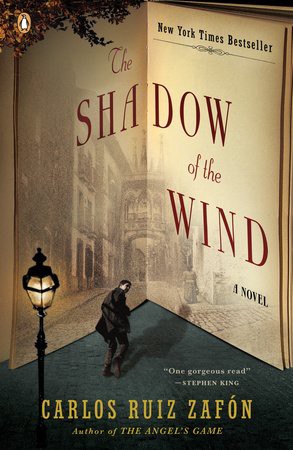
This novel has everything a book lover could want: a hidden library called the “Cemetery of Lost Books” that admits only the most special readers, but they can take just one book, and must become its keeper forever; a young boy in love; a father who runs a charming, crumbling bookshop; a shady antique book appraiser; a lauded author who’s disappeared, and whose work is being methodically erased from the world; and a rescued novel that becomes a dangerous quest for truth. Set against the backdrop of Barcelona during the Spanish Civil War, The Shadow of the Wind is at turns innocent, romantic, and breathlessly gripping.
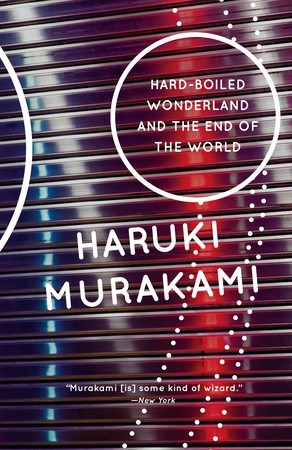
In this library, the objects kept on the shelves to be read aren’t books — they’re unicorn skulls. The novel is a split between an almost recognizable modern world and a timeless fantastical one, in which one man unlocks hidden portions of his brain to transport classified information during a data war while another wakes up memory-less in a strange, idyllic town where unicorns roam the grass outside the gates and the people living inside diligently perform their assigned civil duties without knowing why. This library is the duty that falls to the second character — he must care for the skulls and also learn to read them, for each skull contains a dream. As both men struggle to understand the forces at work, their fates slowly weave together. Dreamy and beyond explanation, it’s a little like Johnny Mnemonic meets Kafka, but with a beautiful nightmarishness that only Murakami can pull off.
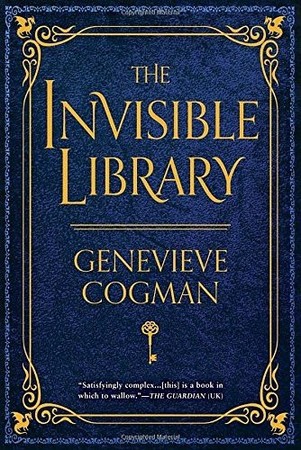
In this series, a massive library that exists outside of time employs a secret sect of librarians (spies, really) to enter all the parallel universes and collect their rare and important books. Sometimes the missions are straightforward, but sometimes the books are dangerous, or magical, or have become the only copy left of their kind — which makes the collecting much more difficult. Librarian Irene finds herself in over her head when she’s tasked with collecting a particularly powerful book in a universe where magic is commonplace and exists alongside industrial technology. In addition to surviving the chaos of the city in which her book is hidden, she must learn to work with her new assistant, a gifted young man named Kai with secrets of his own, navigate the spidery web of intra-library politics, and most of all, avoid the sinister Alberich, the only librarian to have turned against the library and survived — and who is after the very same book.
After his estranged father passes away, Jon inherits his Copenhagen bookshop and although he knows nothing about books, he decides to continue the old man’s legacy. He soon discovers that the shop actually hides a secret society of people who have the ability to work psychic magic through books. These “lectors” can trace their power back to the ultimate library of them all, the Library of Alexandria, and are divided into two categories: transmitters, who are able to transmit intense emotions to a person listening to them read, and receivers, who are able to sense word for word what any person is reading, even if they’re not speaking out loud. For centuries, these lectors have used their magic for good, but some of the more ambitious members have broken off into a faction called the Shadow Organization, to use their power for personal gain — by manipulating the minds of public figures. When more murders occur, Jon realizes his father’s death was not as innocent as it first had seemed, and that there must be a reason the Shadow Organization is now after him.
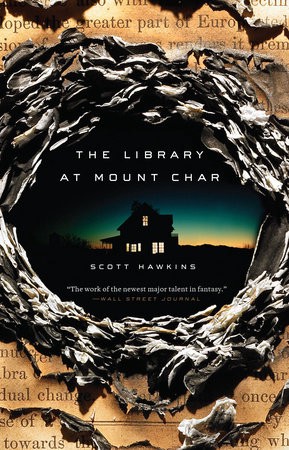
This might be the most mysterious of all the libraries on the list, because the novel’s library is also the universe. Or perhaps even more than that. The Library is ruled by a godlike figure called simply “Father,” who has divided all knowledge into twelve catalogs, which are intensely studied by one librarian each. But these librarians aren’t usual librarians — they were kidnapped as children by Father and bound to the Library — and these catalogs aren’t the usual subjects. Yes, there is one for math and engineering, but there’s also one for all possible futures, for mind control, for animal ambassadorship, and for death. One librarian can speak every language in the world, another can time travel, and yet another can create ghosts. It’s thrilling. The Library and its strange catalogs alone would have been enough to keep me reading, but when Father suddenly disappears, leaving the librarians and the world vulnerable to a plethora of divine enemies — that’s when things get really weird. Trust me when I say that this one cannot be missed.
The title of this one would make you think it’s about a bookstore rather than a library (and it is) but there’s also a wonderful vault of secret books hidden in a medieval basement, the spines literally chained to their shelves so they can’t be stolen. Clay finds himself working at a bookstore that has two faces — by day, it’s unremarkable and almost never sells anything, but by night, it’s visited by a very specific set of patrons who ask only for books from the back room. Clay soon discovers by snooping around that those books are written in code, and that there’s a secret race to unlock their contents. When he cracks the first key faster than anyone else, he suddenly finds himself sneaking into that medieval basement library and getting caught in the middle of a secret society’s obsessive quest to decipher the ultimate text.
This is the most sci-fi library of the bunch, but it’s just as intriguing as its more fantastical shelf-mates. The story takes place in the near future, a decade after a terrorist bombing has destroyed Pittsburgh. As a memorial to those lost, the Archive is created: an immersive, 3-D virtual simulation of the entire city before the blast, cobbled together from CCTV cameras, people’s memories, and every scrap of recovered data. Mourners and tourists alike can wander the streets, enter buildings, and see ghostly reproductions of the victims. It’s a horrifying, addictive idea that I couldn’t get enough of. Neither can the main character, Dominic a detective, who lost his wife in the attack and spends most of his time grieving and visiting fragmented scenes of her inside of the Archive. But when he discovers an anomaly in the data, that every appearance of another woman who was murdered before the bombing is being systematically deleted from the simulation, he finds himself drawn even deeper into the Archive — and into danger — than he ever could have imagined.
If you’re anything like me, the idea of spending hours upon hours in small metal box on wheels with either too much or too little AC does not sound like a good time. Personally, I feel carsick after fifteen minutes on the subway to work. Don’t even ask about a week long tour of scenic cornfields in the American Northwest. “But you have to road trip at least once in your life,” say my college buddies who don’t have licenses and want me to be the second driver on a speed run to Disney World. And to that I say: I have been on road trips, plenty of them. In my opinion, a vicarious road trip from the comfort of my couch is the the best road trip. Here are eight road trip novels worth a weekend at home.
Written in 1957, the daddy of all road trip novels traces a trip that took Kerouac and his friends across the U.S. This roman à clef features lightly fictionalized versions of some of the best known figures of the Beat generation — Allen Ginsberg, Neal Cassady, William S. Burroughs, and especially Jack Kerouac himself as the narrator Sal Paradise. Paradise makes his way through major cities across the country and comes into contact with the emerging rhythms of late twentieth century America: jazz culture, questions of gender and sexual identity, poverty crises, and the duality of loneliness with freedom on an open road.
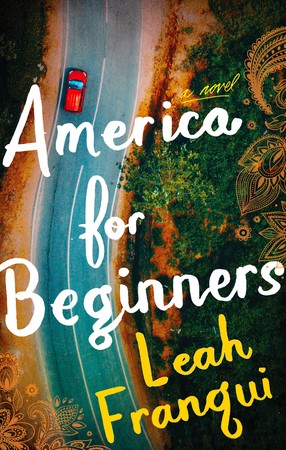
Pival Sengupta books a trip with the First Class India USA Destination Vacation Tour Company, but the only sight she wants to see is the face of her long lost son. For a year, Pival believed him to be dead — as she was told by her traditionalist husband, who could not bare the shame of a gay son. With her husband gone now too, Pival lands in New York and embarks a surprisingly challenging trek from East Coast to West, learning about the radically different country that became her son’s home and hoping that along with forging new bonds she can mend the one she lost a year ago.
Rich businessman Charles Wang goes from having more money than he knows what to do with to losing his home, all but one of his cars, and his apparently tenuous grasp on the American Dream. With no money and no better options, Wang packs up his two children and their stepmother on a road trip from Bel-Air to his eldest child’s home in upstate New York. Rather than breaking the family apart, this financial catastrophe brings them closer together in a tale about defying stereotypes, navigating displacement, and discovering the meaning of “home.” In an interview with Electric Lit, Jade Chang considered her debut novel “an immigrant novel that gave the big middle finger to the traditional immigrant novel that we see in America.”
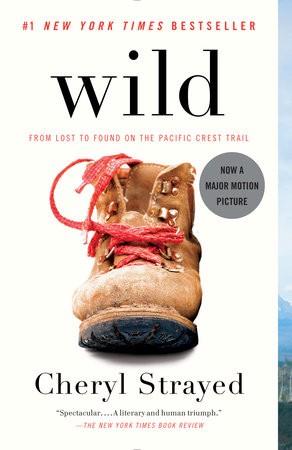
Call it reckless, call it insane, but at 22 years old Cheryl Strayed had a backpack and nothing tying her to home. With her mother recently deceased and her marriage wrecked, Cheryl jumped on the wildest impulse she had: a solo hike along the Pacific Crest Trail. (It’s still a road trip! Nobody said you had to be driving.) This trip would drag her through extreme weather and past deadly creatures, from the Mojave Desert in California, to Oregon, and all the way up to Washington state. It may have been dangerous, but this trip gave Cheryl the fears, pleasures, and ultimately the experiences that would heal her of past pains and teach her to survive.
A classic from the 1930s, As I lay Dying follows the Bundren family in a wild stream of consciousness ride to deliver their dead mother’s corpse to her hometown of Jefferson, Mississippi. As the July heat rots Addie Bundren in her coffin, the members of an already dysfunctional family spiral further into their own distinct brands of madness, exposing the baseness, or even at times nobility, that lies beneath the flesh. This twisted novel delves into the struggles of grief, the conflicts of familial identity, and the strange parallels between birth and death that will leave you disturbed the next time you lie down to sleep.
This self-described “Illustrated All-Girl Road Novel Thing” is the first in Lopez’s Mad Dog Rodriguez trilogy. Jolene “Tomato” Rodriguez hops on her motorcycle for a cross country trip from New Jersey to San Francisco in search of who knows what: love, the meaning of life, a post office? This hilariously written novel is a quick read filled great art, attitude, and quotable moments about female sexuality and wacky shenanigans. What’s not to love about punk rock women with roaring bikes?
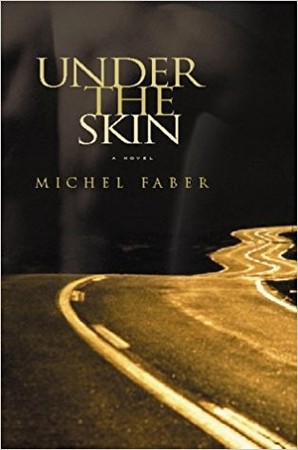
Hitchhiking hasn’t been a good idea since the ’70s, but that doesn’t stop Isserley, a female driver on the Scottish Highlands, from picking up men in need of a ride. On the road, she lends a sympathetic ear to their woes and gently questions them about loved ones before knocking the innocent hitchhikers out with drugs and shipping her soon-to-be-processed food stock off to her home world. As a professional alien abductor, Isserley takes her job very seriously, which as you can guess becomes complicated when she begins to view humans less like sheep and more like her own people. Alien or not, we all deal with class divide, process beauty, and love our families in the same way. Under the Skin depicts some of the least alien aliens you’ll ever see.
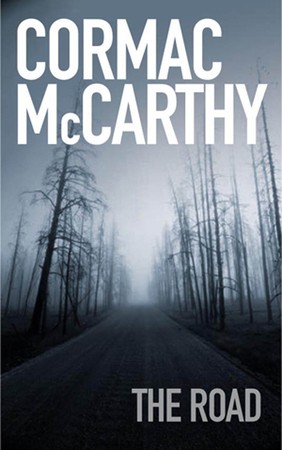
Written by the author who we all thought died but didn’t, The Road takes place after an apocalyptic event leaves humanity near extinct, and an unnamed father and son traverse a now barren America in an attempt to survive the coming winter. As is with most apocalyptic tales these days, the greatest threat to the pair’s survival is not wild animals or the lack of wifi, but the few other humans also roaming the roads. Between cannibals, thieves, and families just as desperate as the father and son themselves, only the unfounded hope of “something better” at the end of the journey keeps them going down their path. There is nothing like a treacherous trip through a post-apocalyptic dystopian America to wreck your faith in humanity.
We have been on the bus for years. The bus is modern, a double-decker coach with a narrow stairway, and can accommodate exactly one hundred passengers, not including the drivers. Each of us has a seat. Above each seat is a switch for a light and a vent for air, heating or cooling depending on the climate. Beneath each seat is an outlet for chargers and a space for a bag, about the size of an average backpack. The cushions on the seats have vibrant patterns, vaguely reminiscent of the carpeting in movie theaters. The bus is neither comfortable nor uncomfortable. The bus is neither spacious nor cramped. The bus is approximately half full. At the front of the bus is a trash receptacle, where crumpled wrappers and peels and rinds can be thrown away after meals have been eaten. At the back of the bus is a bathroom, which has a mirror where makeup can be applied in the morning and removed in the evening. We sleep in the seats, using bunched towels for pillows, sometimes wadded jackets or sweatpants. People in cars occasionally stare at us before passing us on the highway.
None of us were born on the bus. Each of us chose to board, climbing onto the bus at a desolate stop on a foggy turnpike, or a dusty road, or a sunny lane, or a rainy intersection, hurrying down the aisle with a furtive glance at the other passengers. We have been on the bus ever since. Some months ago an elderly passenger with silver stubble and tortoiseshell eyeglasses who was known to have a fondness for salted caramel candies suffered a massive coronary and perished on the stairway, spilling a handful of caramels onto the steps, and was removed from the bus later that night by a pair of paramedics, but other than that none of us have ever died on the bus. Each of us possesses a ticket, with the glorious destination printed in metallic lettering beneath the name of the company. Some of the tickets have fraying edges, worn apart by superstitious rubbing, while other tickets are in mint condition, kept in wallets for protection. In the years that we have been on the bus we have seen all manner of sights out the windows. Skyscrapers gleaming in cities with magnificent boulevards, picturesque towns, quaint villages, craggy snowcapped mountains tinted indigo by the dusk, grassy rolling hills smoldering pink in the dawn, dew glittering on plains, mist drifting across marshes, sunbathers in bikinis lying on sandy beaches, surfers in wetsuits sitting on rocky outcroppings, dark clouds flickering with heat lightning, hail falling onto streets of bobbing umbrellas, snow flurrying through crowds of hooded parkas, uniformed bands marching in spectacular parades, thrill seekers cheering on carnival rides, anglers fishing from docks crusted with barnacles, horseback riders galloping wildly across windswept ranches, gamblers streaming into shimmering casinos, sunlight sparkling across the chrome hulls in sprawling trailer parks, stars twinkling above glassy lakes teeming with rickety cottages, homey farmhouses with children climbing on rusted tractors, weathered bungalows with children swaying in hammocks between the trees, suburban mansions with children bouncing on trampolines in the yards, people standing near grain silos, people walking around water towers, curving skate ramps spattered with vivid graffiti, ancient railroad bridges overgrown with flowering weeds, fireworks, rainbows, and towering billboards. All noise from outside the bus is muffled. The inside of the bus is profoundly quiet. Conversations are held in hushed murmurs. We wear headphones when we want to listen to music. Music never plays over the speakers of the bus. The drivers rarely make announcements, only when the bus is making a pit stop at a gas station or a rest area, and even then only to announce the time that the bus will depart again. With a sense of reverence, even a feeling of anxiety, each of us makes careful note of the time announced.
We hurry off of the bus the second that the doors accordion apart. Each pit stop is exactly one hour. We have that time, and that time only, to shower, to get haircuts, to wash clothing, to buy food and toiletries and medications. Because these are the only occasions on which we are able to interact with the world beyond the windows of the bus, the pit stops are a powerful experience for us, almost transcendental. After years of nearly constant motion, the sense of motionlessness is disorienting, standing there stock-still in a gas station or a rest area, staring at a colorful display of candy bars, or salted nuts, or ice creams, or greasy frankfurters rotating behind glistening glass. The mystical churning of a slushy machine. The cryptic hum of a soda dispenser. Ordinary people chat and laugh with each other in the aisles. As we shop for supplies, we smile at the ordinary people sometimes, longing frantically for some connection. To feel kinship. To feel companionship. Though we try to look friendly, we can feel that the smiles are frightening, radiating pain and desperation.
None of us have to ride the bus. We have no obligation. We could leave the bus whenever we wanted, could join any of those happy communities of stationary people. But if we left the bus, that would mean we would never arrive where the bus is going. The possibility of reaching that destination consumes us. Casting one last glance at the gas station or the rest area, we climb back onto the bus, and we settle into the seats, hearts full of despair and ambition. The engine comes to life with a roar. The bus glides back onto the highway, and we gaze out the windows at the dazzling blur of neon and fluorescence, the headlights and taillights and glowing signs. The bus may never arrive. We know that. But the bus may arrive. We are exhilarated, are utterly enraptured, by the promise of the tickets that we possess. Even managing to find the bus once was a miracle. Some days ago as the bus pulled out of the parking lot of a truck stop at the designated time, a murmur passed through the bus, scattered gasps and exclamations, and all of us turned toward the windows in shock to see a passenger bolting from the doors of the truck stop a minute too late, her hair still damp from a shower, wearing only shorts and a bra and a single flip-flop, running after the bus with her arms outstretched, waving and pleading for the bus to come back, then stumbling over a curb and collapsing onto the pavement, shaking her head and clutching her chest and weeping as she watched the bus vanish into the distance and we watched her become part of the background. That horrible look on her face, realizing she had been left behind, is the thing that we fear most in the world.
About the Author
Matthew Baker is the author of Hybrid Creatures, a collection of stories written in hybrid languages, and the children’s novel If You Find This, which was a Booklist Top Ten Debut of 2015 and an Edgar Award Nominee for 2016. His fiction has appeared in publications such as American Short Fiction, New England Review, One Story, Electric Literature, and Best of the Net. Born in Michigan, he currently lives in New York City, where he teaches at New York University. Visit him online at: www.mwektaehtabr.com
You may have heard that Alaska is large. This is true. If you cut up a map of the United States, you’d find that the next three largest states (Texas, California, and Montana) would fit within the acreage of the 49th. You may also have heard that Alaska is a frozen wasteland populated by loners who spend their time hunting caribou to feed their families and sled dogs through the ten-month winter while waiting for gold-panning season to arrive. This is not true. Alaska accounts for half of the country’s coastline and that’s where most of its population lives, in small cities and towns.
Purchase the novel
A few years ago, I decided to retrace the Harriman Expedition of 1899, in which a luxury steamship loaded with two dozen of America’s leading naturalists spent a summer following the coast of the Last Frontier. The 1899 expedition was bankrolled by railroad tycoon Edward Harriman, and traveled with a collection of 500 books on Alaska. (Unlike me, they had stevedores to carry their trunks and a comfortable smoking lounge to read in.) I connected the dots of their journey by traveling thousands of miles on the Alaska Marine Ferries (the state’s version of Greyhound buses).
By the time I was done, I’d slept in more than twenty towns and wrote a book about it: Tip of the Iceberg: My 3,000-Mile Journey Around Wild Alaska, the Last Great American Frontier. Along the way I amassed a small collection of books that collectively give a pretty good sense of what draws people to Alaska and what keeps them there. Here are eight books about Alaska, the last great American frontier:
This is the book that almost every Alaskan recommends when asked for suggestions, and for a good reason: no piece of writing by an Outsider (as Alaskans call those unfortunate enough to live elsewhere) better captures the forty-ninth state’s uniqueness and ethos of rugged individualism. Plus it’s funny.
Outside of Anchorage and Juneau, Alaskans tend to rest up in the winter and pack as much action into the short summer months as possible. This impressionistic portrait of the rhythms of the quintessential Alaska summer activity, salmon fishing, beautifully captures the feeling of long, hard days outdoors and the satisfaction earned from what Alaskans call subsistence — feeding yourself through your own labor.
A million people will visit the Inside Passage on cruise ships this summer, and every one of them is going to see the spectacular mountains and glaciers that Muir introduced to the world. The vivid descriptions of nature and sense of wonder hold up well after a century. Sadly, Muir’s namesake glacier has retreated thirty miles since the Harriman Expedition saw it in 1899.
The book that launched a thousand hitchhikers. The seekers who head north searching for solitude and solace from civilization are sometimes known as “End of the Roaders.” Krakauer brilliantly captures the allure of Alaska’s remoteness, and the skepticism the state’s residents feel toward those who arrive unprepared to survive when nature gets angry.
Lende is a newspaper reporter (among other occupations; Alaskans are champion multi-taskers) in Haines, and her book’s title is strictly factual. Alaskan towns are filled with quirky characters of every sociopolitical stripe, and they tend to get along out of necessity.
This account by environmentalist Ott of the crisis and aftermath of the 1989 Exxon Valdez disaster tells how the town of Cordova — reachable only by air or water — was nearly destroyed by corporate malfeasance.
McGinniss spent a year living and traveling in Alaska around the time oil began to flow through the Trans-Alaska Pipeline in the late 70s. But the portraits he paints of dreamers and dropouts and the plans they made for One Big Score could have been written yesterday.
Not everyone who comes north to live off the grid is a lovable goofball. This chilling account tells the story of Papa Pilgrim, a fundamentalist Christian with fifteen children, a very dark past, and little patience for government interference in his affairs.
DON’T MISS OUT
Sign up for our newsletter to get submission announcements and stay on top of our best work.
YOUR INBOX IS LIT
Enjoy strange, diverting work from The Commuter on Mondays, absorbing fiction from Recommended Reading on Wednesdays, and a roundup of our best work of the week on Fridays. Personalize your subscription preferences here.