8 Novels That Chronicle National Traumas

The trauma of nations is often best understood through fiction, which, unlike history, rarely focuses on victors. My novel The Storm explores characters across both time and space, decades and continents, discovering the surprising and profound ways that they are connected, centering on a devastating real life event: The 1970 Bhola Cyclone. With a death toll in the hundreds of thousands, the 1970 cyclone precipitated the 1971 War of Liberation for Bangladesh, and forever altered the history of the country and South Asia as a whole.

From the Sri Lankan civil war to the Tiananmen Square massacre, these eight books (some of my favorites) explore time periods and places, each troubled and turbulent in its own way.

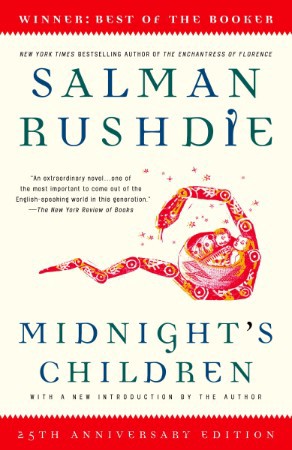
Indian Independence and The Partition: Midnight’s Children by Salman Rushdie

Through manic virtuosic prose, we follow Saleem Sinai, who is born at midnight on the exact hour of India’s independence, an auspicious time that bestows on him mysterious and supernatural powers. Saleem’s childhood and youth will mirror his young’s nation’s own charter of joy and sorrow, triumph and loss, as he comes to discover that there are many, many other “Midnight’s Children” such as him including some who are far from friendly. To read Midnight’s Children is to jump off a cliff, a headlong plunge into the kaleidoscopic social, political, and cultural canyon that was the first three decades of India’s existence as an independent state.

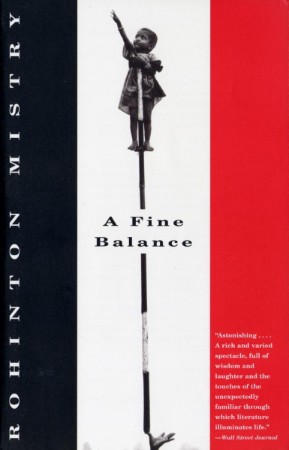
State of Emergency in India: A Fine Balance by Rohinton Mistry

Both Midnight’s Children and A Fine Balance take dim views of Indira Gandhi, the country’s only female prime minister and the daughter of India’s first prime minister Jawaharlal Nehru. Gandhi (no relation to Mahatma Gandhi) presided over The Emergency, a 21 month period in which she accelerated her autocratic tendencies to new levels by concentrating state power within the prime minister’s office and jailing members of the press and dissidents. Set during The Emergency, A Fine Balance traces the lives of three men and a woman as their paths converge in an unnamed Indian city. Marked by devastating sorrow and told in prose exhilarating in its beauty, the novel hovers delicately over this group of souls as they seek shelter in each other from tragedies both personal and historical in scope.

Tiananmen Square Massacre: Do Not Say We Have Nothing by Madeleine Thien

At the heart of this story is the relationship between Marie (Li-Ling) and Ai Ming, who arrives at the former’s door after escaping the 1989 Tiananmen Square massacre. Buried within the notebooks that Ai Ming carries, Marie discovers her own secret history, through a story handwritten by her own father many years before after his mysterious disappearance. Do Not Say We Have Nothing flits from China during the Cultural Revolution to the Tiananmen Square protests to Western Canada like a restless bird, swaying to its own mysterious music.

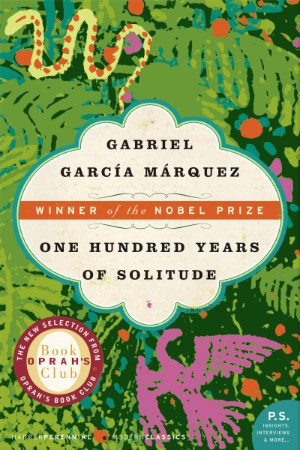
Banana Massacre: A Hundred Years Of Solitude by Gabriel Garcia Marquez

Set in the town of Macondo, Columbia, this timeless work by Marquez traces generations of the Buendía family as they traverse hurdles set upon their paths by a combination of fate, history, and each other. Suffused with a dreamy otherworldliness where anything is possible, and the most magical occurrence are celebrated as everyday (but not mundane) events, this novel casts a spell on the reader from its very first sentence.

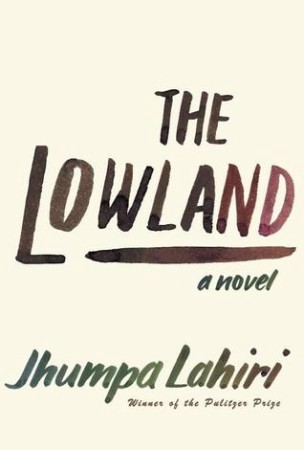
Naxalite–Maoist Insurgency: The Lowland by Jhumpa Lahiri

Subhash and Udayan are brothers growing up in Tollygunge, Kolkata in the 60’s and 70’s. Studious and serious, Subhash sets his sights on a doctoral program at the University of Rhode Island, while his idealistic brother enlists with the Naxalites, a Maoist group seeking to overturn what they perceive as India’s corrupt social order by whatever means necessary. The paths of the brothers will diverge, only to converge following a tragic event which will bring Subhash to the precipice of a momentous decision, one that will transform the fates of him and his family forever. Written in her typically understated but luminous prose and imbued with stunning insight, Lahiri traces the arcs of sorrow that reverberate across generations.

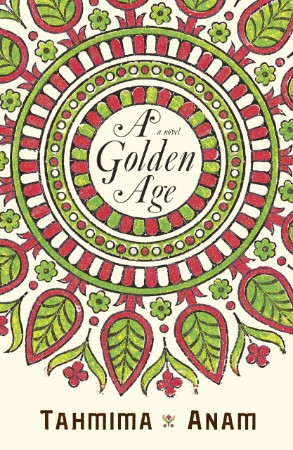
Bangladesh Liberation War: A Golden Age by Tahmima Anam

A Golden Age picks up where my book ends. In 1971, Rehana Haque is living in East Pakistan, a country that would shortly become Bangladesh after a bloody war of independence. A woman of two cultures and two worlds, the love of her children will force her to choose a side on the eve of war between East and West. Tahmima Anam’s debut novel is the first of a trilogy that amply demonstrates the author’s considerable storytelling prowess and expansive imagination.

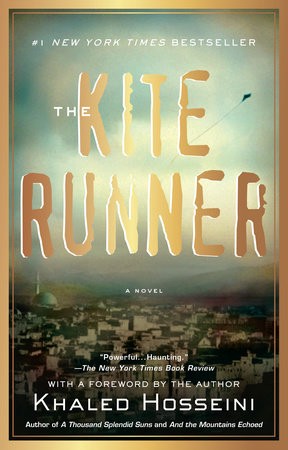
Soviet-Afghan War: The Kite Runner by Khaled Hosseini

Amir, a Pashtun boy, is the son of a wealthy merchant living in Kabul, Afghanistan in 1974. He has a warm but condescending friendship with Hassan, an ethnic Hazara and the son of his father’s servant. The gulf between the two boys widens to an uncrossable chasm after an immensely selfish act of betrayal on the part of Amir, a sin that he will have to confront and atone for many years later. The Kite Runner is the beloved debut novel of a master storyteller, an essential read for anyone wishing to better understand the many cleavages that define Afghanistan today.

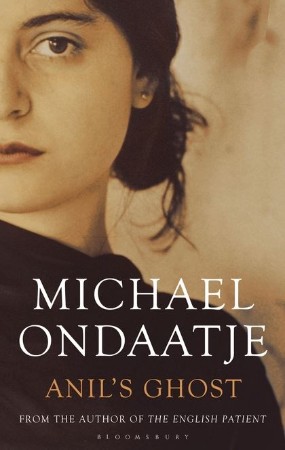
Sri Lankan Civil War: Anil’s Ghost by Michael Ondaatje

Anil Tissera has led a nomadic life since her birth in Sri Lanka and finally returns to her homeland after years in England and America. Trained as a forensic anthropologist, she partners with archeologist Sarath to investigate the murder of an unknown man whose skeleton they find in a protected archeological dig site. Intrigue and danger follow them as the two delve deeper into the mystery, bringing them to a reckoning where Anil must confront her own past. Set against the backdrop of Sri Lanka’s civil war, Anil’s Ghost is a showcase for the astonishing range and insight possessed by this modern master.

‘Dirty Computer’ is Not a Coming Out Album-Because Janelle Monáe’s Music Has Been Queer All Along

I n the sci-fi “emotion picture” released alongside Janelle Monáe’s new album, Dirty Computer, two white men serve as technicians who “clean” (that is, delete) the memories of so-called dirty computers — androids who rebelled against the social order in some way, by appearance, actions, or anything that seemed remotely defiant of norms. These men are clearly low-ranking employees — not the decision makers, but the cogs in the wheel of the institution that erases the individuality from the dirty computers. Before erasing a given memory, they play it back, either as part of the job or for their own amusement, it’s hard to tell. What they see in the scenes from Jane 57821 — the android played by Janelle Monáe — seems to confuse them. These scenes are not simple episodic memories. Instead, they’re music videos — in fact, they are the same music videos Monáe dropped as standalone pieces in the weeks leading up to the album release. In this way, the videos live in both the fictional world of Dirty Computer, the film, and the real world of Dirty Computer, the album. This ambiguous state, halfway between reality and science fiction, seems to leak into the film itself: after the memory/video for “Django Jane,” one of the technicians expresses doubt: “I don’t know what this is. Doesn’t even look like a memory. What is that, is that a dream?” The other man cannot give him a direct answer; when the technician repeats the question, he simply responds, “Delete it and move on.”

That unanswered question also pervades the reception of the album itself. Is Dirty Computer a memory or a dream — a candid autobiography of the singer, or a fantasia on the android-centric world carefully built by Monáe’s previous albums? By posing this question inside the film, Monáe draws attention to one of the key effects of confessional art: it simultaneously invites you to understand it as reflecting the “real life” of the artists, while it reminds you that art is by definition crafted and thus a performance rather than unfiltered, unmediated access to the artist.

Monáe draws attention to one of the key effects of confessional art: it simultaneously invites you to understand it as reflecting the “real life” of the artists, while it reminds you that art is by definition crafted.

The Prince-inflected, outrageously catchy “Make Me Feel,” which was the first single released from Dirty Computer, begins with a coy verse.

Baby, don’t make me spell it out for you
All of the feelings that I’ve got for you
Can’t be explained, but I can try for you
Yeah, baby, don’t make me spell it out for you
You keep on asking me the same questions
And second-guessing all my intentions
Should know by the way I use my compression
That you’ve got the answers to my confessions

If you listen to this song without watching its deliciously bisexual music video, you’d never guess that much of the media coverage of Monáe’s new album Dirty Computer describes it as a coming-out narrative. It reads, in fact, as a plea against coming out, with one’s sexual intentions if not one’s sexuality.

Monáe’s sexuality, however, has been one of the most-discussed aspects of Dirty Computer. In a Rolling Stone cover story just before the album was released, Monáe said she had been in relationships with both men and women and identified sexually as a “free-ass motherfucker.” This steered the media narrative around Dirty Computer as a coming-out album, as “finally revealing the real person” behind Cindi Mayweather, the android persona she adopted for previous albums.

While it’s true that Janelle Monáe, the human being who writes and sings and dances like the reincarnation of James Brown, has started speaking more openly about her personal life and her sexual identity, these interpretations assume that her alter ego is a protective disguise, a straight mask that Monáe wears to hide her true self. But who says Cindi Mayweather isn’t queer?

In the universe of Monáe’s music, Cindi is an outcast, a fugitive on the run from bounty hunters. Cindi’s crime is one of sexual identity: she fell in love with a human. From the start of Monáe’s career, the EP Metropolis: Suite I (The Chase), Cindi has been exiled for loving the wrong kind of creature. This is just one of the reasons that her fans (myself included) have long understood Janelle Monáe to be making queer art, whether or not she identified as queer herself. In fact, in one of the skits on the album The Electric Lady, a caller to a radio DJ (again, inside the world of Cindi Mayweather) shouts “ROBOT LOVE IS QUEER,” offering no further explanation. It makes sense — both the idea that androids can feel love in the first place, and that this love can target the “wrong” object, clearly threaten the social order in ways that mirror the way queerness threatens heteronormativity and patriarchy. At least within the world of Cindi Mayweather, robot love is manifestly queer: what other kind of love engenders that much anger?

Her fans have long understood Janelle Monáe to be making queer art, whether or not she identified as queer herself.

Which means that Monae is not exactly casting off a straight mask to reveal a queer reality. But is she casting off a mask at all? Is Janelle Monae’s new persona really closer to “herself”?

Critics define confessional poetry in different ways, but here’s a loose description: confessional poetry is an influential set of literary practices that arose in the United States in the late 1950s, characterized by a sense of intimacy with the reader and a tendency toward self-mythologizing and an almost obsessive interrogation of the reliability of the poem’s speaker (that is, the “I” of the poem). Confessional poetry is written in a style that reassures the reader that they are reading something that is private, secret, perhaps shameful — that there is a real person behind even the most spectacularly crafted poem, a person that the reader learns about by interacting with the poem.

One of the great tricks of the confessional mode, though, is to seem private, while being public. You may feel like you’re reading, say, Sylvia Plath’s raw diary when you read “Daddy,” but you’re not — you’re encountering “Sylvia Plath,” as written in a finely tuned artwork. (If you want to read Plath’s actual diary, you can! And then you can make your own comparison of Sylvia Plath and “Sylvia Plath.”) Even “Lady Lazarus,” which is often read as directly speaking of Plath’s repeated suicide attempts, highlights its own artifice:

Dying
Is an art, like everything else.
I do it exceptionally well.

Many people read these lines as a glorification of death, a kind of personal pride in gaining mastery over mortality. But what I always come back to is the quietest phrase, the one that almost seems like it could be a throwaway line: “like everything else.” It’s not just that dying is an art — it’s that everything is, including this seemingly raw glimpse into the mind of the self-destructive poet. The confessional mode, in Plath’s words, is a “big strip tease”: a performance of exposing oneself, an art of appearing artless.

The confessional mode, in Plath’s words, is a “big strip tease”: a performance of exposing oneself, an art of appearing artless.

The sense of unfettered access to Plath, the woman, through her art has had a significant impact on the critical reception of her work and her status in American culture. This conflation of art and artist was perpetuated by Plath’s husband Ted Hughes, who frequently insisted that scholars and fans of Plath’s work could never understand it like he did, because he was married to Plath. In other words, Hughes seemed to claim that because he had the most access to the “real” person, he was the one true reader of her art. To maintain this claim, however, Hughes had to ignore much of what makes Plath’s poetry so innovative: its ability to tempt you into reading it as autobiographical, while simultaneously calling attention to its artifice.

Carly Rae Jepsen’s Queer Renaissance

In a piece called “The Poem as Mask,” the feminist writer Muriel Rukeyser, who was troubled by the way Plath’s suicide affected her literary reputation, wrote what might considered a confessional manifesto. In this poem, she declares freedom from the artistic personae she had previously created for herself, including that of Orpheus, the mythological singer who founded lyric poetry:

when I wrote of the god,
fragmented, exiled from himself, his life, the love gone down with song
it was myself, split open, unable to speak, in exile from myself.

After exposing the poetic persona as a “mask,” Rukeyser rejects her former poetic method, exclaiming “No more masks! No more mythologies!” Yet the title of the poem suggests that the rejection of masks cannot ever be fully complete: if a poem functions as a mask, then doesn’t this very poem also function as a mask? The newly reconciled persona, no longer “in exile” from itself, still reveals itself through poetry. There is no authentic, unmasked singer: the very act of singing creates another mask. Self-revelation is an art, like everything else.

There’s no doubt that many of the songs on Dirty Computer allude to the life of Janelle Monáe, the artist — particularly the incisive “Django Jane,” which drops references to Monáe’s acting career and public image. (The line “Remember when they used to say I look too mannish” — which still makes me shout with queer-girl happiness when I hear it — clearly alludes to Monáe’s frequently androgynous fashion, for example.) It’s tempting to read Dirty Computer as an obliteration of Monáe’s fictions — but that only works if you interpret the album without its accompanying film. Dirty Computer, the film, is clearly intertextual, an Afrofuturist fantasia that melds Blade Runner, Metropolis, Westworld, and Monáe’s previous music videos. Even Monáe’s character name, Jane 57821, alludes to her earliest work, incorporating both Cindi Mayweather’s registration number and the song “Sincerely, Jane” from the Metropolis EP. In other words, as a film, Dirty Computer is still building the sprawling, cross-genre, fantastic world that Monáe’s has been creating for the last decade. Given that Monáe released both works simultaneously, using the “memories” from the film as music videos for the songs, approaching the album as completely separate seems too simple.

If we interpret Dirty Computer as an album about the “real person” behind the android persona, then we miss one of the key messages of the Cindi Mayweather saga: deciding who counts as “real” is an exercise of power. Cindi Mayweather’s rebellion against her oppressors — who can’t stand the possibility of humans and androids mixing — suggests that favoring the real over the created is itself a form of bigotry.

I don’t want to discount the importance of Janelle Monáe — the real-life, brilliant, successful woman of color — officially coming out. It’s glorious — I know I’m not the only one who texted all her queer friends to celebrate. But I also think that, as in Rukeyser’s poem, the artistic mask plays two roles: it obscures, but it also represents. In other words, the disguises we wear always reveal something about who can be found underneath, by virtue of the fact that they are chosen. Monáe may wear vagina pants in the video for “Pynk,” and Tessa Thompson’s head may literally appear between her legs — but the only place they have a “confirmed” relationship is inside the film Dirty Computer.

We can still look for codes, try to figure out what’s real. But the line between Monáe and her characters has always been blurry. In “Q.U.E.E.N.” (which we now know was originally titled “Q.U.E.E.R.”), she both demands that “electric ladies” wake up and follow Cindi’s lead, and she declares “Gimme back my pyramid, I’m trying to free Kansas City,” the real-life hometown of Janelle Monáe. Who counts as the “real person” here: Cindi or Monáe? Who speaks when Janelle Monáe sings?

Who counts as the “real person” here: Cindi or Monáe? Who speaks when Janelle Monáe sings?

Before she came out in Rolling Stone, Monáe would answer questions about her sexuality by saying, “I only date androids.” There are two ways to interpret that answer: that Monáe was dodging the question, hiding behind an android mask — or that she was always telling us a truth, choosing a mask that was an exact replica of the person wearing it. Robot love is queer, and Monáe has always been out and proud as a robot.

William Trevor’s Son Recommends a Previously Uncollected Story by His Father

“Making Conversation”

by William Trevor

‘Yes?’ Olivia says on the answering system when the doorbell rings in the middle of The Return of the Thin Man. The summons is an irritation on a Sunday afternoon, when it couldn’t possibly be the meter-man or the postman, and it’s most unlikely to be Courtney Haynes, the porter.

A woman’s voice crackles back at her but Olivia can’t hear what she says. More distinctly, the dialogue of the film reaches her from the sitting room. ‘Cocktail time,’ William Powell is saying, and there’s the barking of a dog. The man Olivia lives with laughs.

‘I’m sorry,’ Olivia says in the hall. ‘I can’t quite hear you.’

‘I’m not used to these answering gadgets.’ The woman’s voice is clearer now. There is a pause, and then: ‘Is my husband there?’

‘Your husband ?’ Frowning, more irritated than she has been, Olivia suggests the wrong bell has been rung.

‘Oh, no,’ the voice insists. ‘Oh, no.’

‘I really do think so. This is number 19.’ Dark-haired, dark-eyed, with a crushed quality about her features that doesn’t detract from their beauty, Olivia at thirty-seven has been separated from her husband for years and feels the better for it. She has chosen not to marry the man she lives with; there is a feeling of independence about her life now, which she likes.

‘I’ve come up from Brighton,’ the woman two flights below states. ‘I’m Mrs. Vinnicombe.’

Olivia met Vinnicombe on the street. She tripped as she was leaving a house in Hill Street — number​ 17 — ​where she had just been interviewed for a job she particularly wanted. She lost her balance, stumbled down two steps and fell on to the pavement, her handbag scattering its contents, her left knee grazed, tights badly torn. Vinnicombe was passing.

He helped her to her feet, collected her belongings together, noticed her grimace of pain when she began to hobble off after she’d thanked him. ‘No, no, you’re shaken,’ he said, and insisted that she sat for a while in the saloon bar at the end of the street. He bought her brandy, although she didn’t ask for it.

He was an overweight man in a dark suit that needed pressing, Olivia noticed when she had pulled herself together. He was probably forty-two or -three, his pigeon-colored hair thinning at the temples, a tendency to pastiness in his complexion. Feeling foolish and embarrassed, hoping that the incident hadn’t been observed from the house where she’d been interviewed, Olivia insisted that she was perfectly all right now. ‘You’ll get the job,’ the man assured her when she told him why she was in Hill Street. He spoke with such certainty that she thought for a moment he was himself connected with the offices she had visited and had some influence there. But this turned out not to be so. The color had come back into her cheeks, he said. No one would not give her a job, he said.

This confidence was well placed. A month later Olivia began work at number 17, and in time even told the people who had interviewed her how nervous she had been in case, glancing from a window, one of them had seen her sprawled all over the pavement. She laughed about it, and so did they. ‘I was rescued,’ she explained in the same light-hearted way, ‘by a gallant passer‑by.’ Sometimes, when telling other people in the office about the incident, she jestingly called her rescuer a guardian angel. She remembered only that the man had been of unprepossessing appearance, that he had lightly held her elbow when she was on her feet again, and that his voice had warned her she’d been shaken. It was winter then, a January day when she stumbled down the steps, 14 February when she began to work for her new employers. In April, when the window-box daffodils were in bloom, a man smiled shyly at her in Hill Street, and for a moment, as she walked past, Olivia couldn’t remember where she had seen that podgey face before. ‘You got the job,’ a​ voice — hardly raised — called after her.

‘Oh, goodness, I’m sorry!’ Olivia cried, ashamed and turning round. She almost exclaimed, ‘My guardian angel!’ It would have pleased him, she knew. You could guess it would, even on so slight an acquaintance.

‘You’re well?’ he asked. ‘You like it in there?’ He gestured at the offices she had just left, and Olivia said, yes, she did. He walked with her to the corner and they parted there.

Then, one lunchtime, less than a week later, he was in Zampoli’s in Shepherd Market and asked if he might share her table. He asked her name when he had ordered steak-and-kidney and she a chicken salad. His was Vinnicombe, he said. ‘Oh, I invent things,’ he answered when, making conversation, she enquired; and Olivia thought of Edison and Stephenson and Leonardo da Vinci, of the motor-car and the airplane and space travel.

But Vinnicombe’s inventions were not like that. His were domestic gadgets and accessories: fasteners for electric and gas ovens, for microwave ovens, for refrigerators and deep-freezes. He had invented a twin eggcup, a different kind of potato peeler, a carou­sel for drip-drying purposes, an electronic spike for opening and closing windows, a folding coat-hanger, a TV‑dinner aid. Olivia tried to be interested.

‘He isn’t here,’ his wife says, agitated. In Olivia’s sitting room the television screen is blank and soundless now. The man she lives with, annoyed that it has to be so because of a visitor, is having a bath. A Sunday newspaper has been tidied up a bit, a chair pushed back.

‘Of course your husband isn’t here, Mrs. Vinnicombe.’

She shouldn’t have let her in, Olivia is thinking. This woman has no possible right in the flat, no right to disturb their weekend peace. And yet when Mrs. Vinnicombe said who she was, Olivia had found it hard to shout into the house telephone that she did not intend to allow her admittance.

‘I thought he might be here.’ Olivia’s visitor eyes the scarlet blooms of an amaryllis in a plain white container. She is a tall woman, big-boned, with henna-​dyed­ hair, her bright fingernails the same shade as the lipstick that increases by a millimeter or so the natural outline of her lips.

‘I thought I’d better come.’ Specks of pink have appeared in Mrs. Vinnicombe’s gaunt cheeks, confirming her agitation. It’s difficult for her, Olivia tells herself, and does not attempt to make it easier. She sits down also, and is silent.

A week after their second encounter Vinnicombe tele­ phoned Olivia, knowing now where she worked. He invited her to have a drink one evening, a proposition that caused her some embarrassment. This man had been kind to her on the street; it had seemed natural that he should ask to share her table in a crowded lunchtime restaurant; but telephoning the office, issuing a specific invitation, was different. ‘Oh, really, it’s very kind,’ she said, trying to leave it at that.

‘You asked me about kitchen extractors,’ he reminded her on the telephone and she remembered that, again making conversation, she had. ‘I’ve got a couple of brochures for you. I’d just like to pass them over.’

And so they met again, not in the saloon bar where he had taken her after the incident on the street but in one that was further away. It was he who suggested that, and afterwards Olivia wondered if he’d made the choice because people from her office didn’t frequent this bar, if he guessed that their tête‑à‑tête might possibly be a source of awkwardness for her. He had acquired three brochures for kitchen extractors. One of them he particularly recommended. Olivia was between love affairs then, temporarily on her own, which she believed this man had somehow sensed; she had certainly never said so.

‘I’d put it in for you,’ he offered. ‘No problem, that.’

‘Oh, heavens, no.’

‘You’d save a tidy bit.’

‘I couldn’t possibly let you.’

It wouldn’t take more than an hour or two, he said, one Saturday morning. He laughed, displaying small, evenly arranged teeth. ‘My stock in trade.’

‘Oh, no, no. Thanks all the same.’

His eyes were the feature you noticed: softly brown, they had a moist look, suggesting a residue of tears, and yet were not quite sad. It was more sentiment than sorrow that distinguished them, and what seemed like vulnerability. He could acquire any of the three extractors at trade terms, but the reduction for the recommended one was greater. Some cowboy could easily make a botched job of the installation, dozens of times he’d known it to happen.

‘I’ll think about it all,’ Olivia promised, and afterwards on the Underground she found herself wondering if he was lonely. He hadn’t mentioned anything about his private life except that he lived in Brighton and always had.

‘If you’re interested in that particular model,’ he said on the phone two days later, ‘there’s one that’s ordered and the lady’s seemingly changed her mind. In black, as you said you wanted. So there’d be a reduction on the price I gave you, not that there’s anything wrong with it, not even shop​-soiled.’

Since Olivia did need an extractor in her small kitchen, it seemed silly to reject this bargain offer. She began to say again that she couldn’t possibly allow Vinnicombe to install it for her, but already he was insisting, reminding her of this further saving if he did. It seemed rude to go on refusing what he offered, especially as he had already gone to the trouble of finding out so much.

‘I’d really rather . . .’ she began, making one last effort, then giving in.

At Olivia’s invitation Mrs. Vinnicombe has settled herself uneasily on the pale cushions of the sofa but, as if she fears to do so, she does not come to the point. She mentions Brighton again, as conversationally as her husband did when he said he had always lived there. She describes the waves splashing against the pier and the concrete walls of the promenade. She was married in Brighton, she says; a mortgage was taken out locally on the house she has lived in since that time. Her two boys were born not five hundred yards from that house, the younger one — Kevin — ​the last infant to be delivered in the old maternity home, now the site of a petrol station. As a child herself, she built sandcastles when the sea was far enough out; her back and arms peeled one summer, not covered in time.

‘Of course, he told me about you,’ she eventually brings herself to say. ‘Well, naturally, you know that.’

‘Told you what, Mrs Vinnicombe?’

Mrs. Vinnicombe slightly shakes her head, as if an exactitude here is not important, as if what she has said is enough.

‘Sixteen Kevin is now, Josh two years older. Well, of course, you know that too. I’m sorry.’

‘Why have you come here, Mrs. Vinnicombe?’ The specks of pink have spread in the gaunt cheeks and are blotches now. A trace of lipstick has found its way on to one of Mrs. Vinnicombe’s front teeth. She looks away, her gaze again settling on the exotic amaryllis.

‘You took my husband from me. I came to get him back.’

The installing of the extractor lasted longer than a couple of hours. They had lunch together at the kitchen table, soup and salad and the Milleens cheese Olivia had bought the day before. ‘Just a minute,’ Vinnicombe said at one point and went out, returning with Danish pastries. Later, when he finished just before six, Olivia offered him a drink. She opened a bottle of Beaune and they sat in the sitting room.

‘Thank you,’ he said when they had finished the wine, when eventually he stood up to go.

‘I’m awfully grateful,’ she said, realizing as she spoke that he had been going to say something else, that unintentionally she had interrupted him.

‘It’s been so nice,’ he said. ‘Today has been so nice.’ She smiled, not knowing how to respond. She felt nervous again, as she had the first time he telephoned the office. She wrote a cheque. He folded it into his wallet. He had been adamant about not charging for his labour.

‘What’ll you do, Olivia?’ he asked, for the first time using her Christian name. ‘How’ll you spend what’s left of today?’

And she said, wash her hair, because that was true, and watch something on television, and read in bed. She hardly ever went out on Saturday nights, she said.

‘I have to tell you something,’ he said. ‘That first day when we met: remember that day, Olivia?’

‘Yes, of course.’

‘I fell in love with you that day, Olivia.’

He was looking straight at her when he said that, his moist brown eyes steadily fixed on hers. Once or twice before, Olivia had met their stare and had been aware of something that reminded her of pleading, as from a child.

‘I had to tell you,’ he said.

She shook her head, smiling, endeavouring to register that she was flattered yet also that what was said must surely be an exaggeration. Olivia had quite often been told before that she was loved and had felt flattered on each occasion; but this was different because, somehow, it was all absurd.

‘I don’t suppose,’ he said, ‘we could meet again?’

‘No, I don’t think that’s a good idea.’

‘I had to tell you.’

He had brought a metal tool-container with him and he picked this up from beside the kitchen door. He offered to take away the carton and the packing the extractor had come in, but she said that wasn’t necessary, that she could easily dispose of them. He took them all the same, for the third time saying that he had had to tell her.

‘I was twenty when we married,’ Mrs. Vinnicombe says. ‘I’m forty-one now. It’s quite a time, you know. The boys growing up; months there were with not a penny coming into the house. Oh, it’s better now. I’m not saying for an instant it isn’t better in that respect. Not well off, not even comfortable sometimes, but near enough to not having to worry. It’s been a partnership, you know: I’ve always done the invoicing and accounts, the tax returns, the VAT. Not that I’m trained: I worked in Hazlitt’s, the jeweler’s. That’s where he found me.’

‘Mrs. Vinnicombe, you’ve got the wrong end of the stick. By the sound of what you’re saying, you’re under a very considerable misapprehension.’

Mrs. Vinnicombe shakes her head in her dismissive manner, a tiny movement, not one of impatience. Then, as if she has in some way been unfair or discourteous, she says that when her husband told her he held nothing back. Long before that, though, she knew that something was wrong.

‘Well, any woman would. And the boys — ​well, I’ve watched the boys becoming frightened. There’s no other word for it. I’ve watched him ceasing to be bothered with them.’

‘I didn’t take your husband from you, Mrs. Vinnicombe. That is totally untrue. As you can see, I’m perfectly happily–’

‘He gave me the address, no argument at all when I asked him where you lived. Oh, ages ago that was. I don’t know why I asked him. I never thought I’d come here.’

‘Please listen to me, Mrs. Vinnicombe.’

After the Saturday of the extractor installation, Vinnicombe became a nuisance. When he’d said he had to tell her, when he’d asked if they might meet again and she’d said no, he hadn’t passed out of her life, as she imagined he would. He telephoned on the Monday and before he could say anything she thanked him for his work in her kitchen. ‘Just one quick drink,’ he pleaded, and she repeated, even more firmly than she already had, that what he was suggesting was not a good idea. When he pressed her, she said she was sorry if she had ever given him reason to suppose that a relationship such as he was proposing was possible. He took no notice, he didn’t appear to hear. ‘No more than ten minutes,’ he said. ‘Ten minutes.’

Olivia places these facts before Mrs. Vinnicombe, speaking slowly and carefully. She is anxious to arrange every detail exactly where it belongs, to ensure that Mrs. Vinnicombe perfectly understands.

‘Look, it’s an intrusion,’ Olivia said when he was there on the street again, less than a week after his Monday telephone call. He only wanted to explain, he said. ‘That’s all, and then it’s over.’

So reluctantly, and saying she was reluctant, she met him again, in the bar that was not frequented by her office colleagues. ‘I can’t help loving you,’ he said even before their drinks were ordered. ‘From the very first moment I haven’t been able to help it.’

He told her then all that Mrs. Vinnicombe has repeated: about their house and their children. He had no affection for his wife. Once he had, there was none left now: for fourteen years he had been indifferent to her. Quite out of the blue, astonishing Olivia, he mentioned New Zealand, promising she would be happy with him there. He said he had connections in New Zealand.

‘All this is silly. I’m practically a stranger to you.’ He shook his head and smiled. ‘I lie awake at night and every word you’ve spoken to me returns. In passing once, our fingers touched. When you fell down I could have taken you in my arms. Even then I wanted to. I can still feel your elbow in the palm of my left hand. I never loved anyone before. Never.’

His eyes were luminous in his pasty face, a tug that might have been a threat of tears worked at the corners of his mouth. He would do anything, he said, he would take on any work to buy her things she wanted. In New Zealand, he said, they would build a life together.

‘I must go now,’ Olivia said, and walked away from him.

Again, one lunchtime, he was in Zampoli’s; she didn’t go there after that. He wrote long letters that were incoherent in places. They described Olivia’s beauty, the way she smiled, the way she stood, the way she spoke. He would know everything one day, they said: as much as she could remember herself about her childhood and her dreams. She would tell him her dreams at breakfast-time; they would sit in the sun when they were old. She tore the letters up, but sometimes he was there on the street when she looked from the windows of her flat or from the window of her office. She took to leaving the office by going through the garages at the back, into the mews. On the telephone she didn’t speak when she heard his voice.

Once, at the cinema on her own, he arrived in the seat next to hers, and when she moved away he followed her. ‘I’m sorry,’ he said on the street when she had to leave. Furious, Olivia threatened to make a complaint if that ever occurred again. Unless he left her in peace she would consider asking the police for advice.

‘I love you, Olivia.’

‘What you’re doing amounts to harassment. You have no right — ’

‘No, I have no right.’

But Olivia knew she could not bring herself to go to the police, nor even to complain to a cinema manager. One evening he was on the Tube with her and spoke to her as if they’d met by chance. He was there again, behind her on the moving staircase, and at the ticket barrier. ‘Oh, all right,’ she wearily agreed when he invited her to have a drink, hoping in her frustration that if she went through everything she had already said he would at last be affected, would at last see the absurdity of the situation he had created.

They sat beside one another on a red-upholstered banquette and again there was the pleading in his eyes, and suddenly Olivia felt sorry for him. Seven months had passed since he had looked after her on the street. He was a man in torment was what she thought, a man doing his best to talk about other matters, to tell her about an apple-corer he had just interested a manufacturer in. As she had not before, she wondered about his wife, about the house in Brighton he returned to, about his boys. ‘Did you always invent things?’ she heard herself asking, and for the first time a connection was made with a period of her life that still inspired resentment if she brooded on it. When she was fifteen, when she was lumbering through that gawky time, there was her sister’s friend, fiancé as he became, husband in the end. In the hall she had reached up to feel the peak of his military cap, to run a finger round the leather band that touched his hair. And for a passing moment, as she sat on that red banquette with a man who was a nuisance, Olivia felt again the pain there’d been.

Music comes faintly from the bathroom: the end of the first movement of Mahler’s First Symphony. Then a tap is turned on and the music is drowned.

‘Your husband’s only been here once, Mrs. Vinnicombe. To fit an extractor over my electric hob.’

Olivia doesn’t reveal to Mrs. Vinnicombe that her husband said he was indifferent to her, or proposed a new life in New Zealand with a stranger. Instead she asks if what Mrs. Vinnicombe is saying is that she doesn’t know where her husband is.

‘My hope was he’d be here.’

‘Your hope?’

‘He only wanted to be with you. No bones about it: he said he couldn’t lie. A meaning in his life. He used those words.’

Mrs. Vinnicombe is talkative now. Her unease has dissipated; fingers twisting into one another a moment ago are still.

‘He never made me think you were a ​go‑getting woman. I never thought of you as that. “Don’t blame her,” he said, no more than two days ago, but then he’d said it already. When he told me was the time he said it first, and often after that.’ Her voice is flat, empty of emotion. She says she’s frightened. She says again her hope had been to find her husband here.

‘I don’t think I understand that, Mrs. Vinnicombe.’

‘He took nothing with him. No shaving things, pajamas. He didn’t say goodbye.’

How long, Olivia begins to ask, and is immediately interrupted.

‘Oh, just since yesterday.’

‘Your husband and I were not having any kind of love affair.’ She gave him no encouragement, Olivia says: not once has she done that. She doesn’t say she pitied him after he followed her from the Tube station, the night they sat together on the red-​upholstered banquette, the night she asked him if he had always invented things. These details, now, seem neither here nor there: omitting to relate them is not intended to mislead. ‘Why don’t we have a bite to eat?’ he said and, still pitying, she allowed him to take her to a place he knew nearby, called the Chunky Chicken Platter. ‘All right for you?’ he solicitously enquired when they were given a table there, and it was then that she knew she was pitying herself as well. A Good Friday it had been when she reached up in the hall to touch the cap of the man her sister was to marry. A Sunday, weeks later, when she lifted it down and pressed it to her face.

‘Your husband wasn’t even a friend, Mrs. Vinnicombe.’ Hearing that, Olivia’s visitor looks away, her head a little bent. How can that be, she softly asks, since he has done odd jobs about the place? How can it be, since he has described a woman’s hair and her eyes, the way she stands, her voice, her slender legs, her neck, her hands?

‘I was sick,’ Mrs. Vinnicombe adds to all this. ‘I got up one night, three o’clock in the morning. I couldn’t sleep, I vomited in the bathroom. Your stomach turns over with jealousy, hour after hour, and then you’re sick. I didn’t tell him. Well, naturally.’

‘You have no cause for jealousy, Mrs. Vinnicombe.’ Olivia begins at the beginning, from the moment on the street to meeting Vinnicombe again, by chance, she thought; and his being, by chance also it seemed, in Zampoli’s that day; how after that he bothered her. She can think of no other way to put it, even though it sounds a harsh way of describing the attentions of a man whose wife is in distress. The chicken place he took her to was horrible.

‘Oh, jealousy is vile, I grant you that.’ And as if Olivia hasn’t offered a single word of explanation, Mrs. Vinnicombe pursues the thread of her conviction. ‘Yet there it is, and nothing you can do. I always knew when he’d been with you. Oh, not smears of lipstick,​ telltale perfume — nothing like that. It was worse because he wasn’t the kind of man to have a woman, not the kind you read about in the papers. He wouldn’t have made the papers in a million years. He took the boys out with their kites when they were little. He brought cakes back, treats for tea, always something when he had a bit to spare. They’ll miss that now. They’ll think of it when they think of him.’

‘Mrs. Vinnicombe, you can see your husband isn’t here. I’ve been living here with someone else for months. I’ve no idea where your husband is.’

‘I came to plead with you and with him too, to talk about the boys. I came to say to him we were a family.’

Mrs. Vinnicombe’s tears, so long held back, come now. She weeps on Olivia’s sofa and her tears run through her make‑up, smearing it. Her weeping drags at the contours of her face, bunching the flesh into ugly grimaces. She tries to speak and cannot. She doesn’t search in her handbag for a tissue or a handkerchief but sits there, stark and upright on the pale cushions, noisily sobbing as she might in private.

‘“Oh, God, let him be there” was what I asked when I rang your bell.’

‘I don’t understand what you’re saying, Mrs. Vinnicombe.’

But Olivia does. Her protest is conventional, all she can think of to say. She doesn’t want to share her vis­ itor’s thoughts. None of it concerns her.

‘You took my husband.’

Abruptly, Mrs. Vinnicombe rises.

‘You took my husband and now you can’t give him back to me.’ She crosses the room to the hall, not answering questions that are put to her. ‘I keep on seeing him,’ she says, ‘and his footsteps on the sand. On soft, wet sand and then they ooze away to nothing.’

She does not speak again. Some minutes later Olivia sees her from a window, crossing the empty Sunday street, walking slowly, as if the encounter has drained her energy. She passes from view, slipping round the corner.

‘I hear you’re learning German.’ Her sister’s friend smiled. ‘I like your dress,’ he said, and her sister said that dress had been one of hers. He went on talking when her sister wasn’t there. He knew of course: making conversation was a kindness offered.

Mahler is still playing in the bathroom, just audible above the sound of water running out. The day her sister married, Olivia looked down at her bedside lamp and whispered to herself that all she had to do was to press the bulb out and place her thumb, dampened with spit, in the socket. That day she saw her coffin carried, lowered while he stood at the grave-side, the collar of his overcoat turned up. She heard her own voice murmuring from a romantic shroud, ‘My darling, I have loved you so.’

Olivia gazes from the window at pigeons waddling beneath a tree. Raindrops spatter the pavement, then rain falls heavily and the pigeons crossly flutter off, in search of shelter. His wife is on the train by now, huddled in her corner, pretending to watch the houses going by, the same rain falling. Somewhere else, maybe, it falls for him. The balance of the mind disturbed: the woman on her train wonders if that worn expression will soon be used. He, wherever he is, already knows better.

He’ll be there when she returns — ​or tomorrow or the next day — ​and in their house in Brighton they’ll tack together a marriage and the family life his foolishness spoiled. He’ll hear her repeating many times that she saw his footsteps disappearing on soft, wet sand. He’ll not confess that he, too, imagined his last thoughts reaching out towards his hopeless love, that he imagined the seaweed in his clothes, and sand beneath his eyelids and in his mouth. He’ll not confess he knew, in the end, that the drama of death does not come into it — that​ some pain’s too dull to be worthy of a romantic shroud. Courage could have brushed glamour over what little there was, but courage is ridiculous when the other person doesn’t want to know.

Is Love Enough When It Comes to Interracial Adoption?

Adoption on its own is fraught. Interracial adoption is fraught-adjacent, but really exists in its own alternate universe of problematic power dynamics and mainlined moral decisions. The whole process and ideology of it strikes an eerie chord in a country historically rooted in a system driven by the continuous act of white people tearing black families apart.

Full disclosure: As a black adoptee raised by white parents, my criticism of interracial adoption is largely informed by my own experience, and the first-person testimony I’ve heard from other adoptees, adoptive parents and birth parents in the larger adoption community, of which I am a reluctant member. So interviewing Rumaan Alam about his new book, That Kind of Mother, is not without its cognitive dissonance.

Purchase the novel

The novel centers the experience of a privileged white woman named Rebecca, who forms not so much a bond, but a dependency on her nanny, Priscilla, who is black, after Rebecca gives birth to her first child. When Priscilla dies inexplicably in childbirth, Rebecca makes the unilateral decision to adopt Priscilla’s baby. Rebecca and her husband, a British diplomat, live in a big house in Washington, DC, and up until Priscilla’s death, had thought about race peripherally, at best; as perhaps unwitting casual racists at worst. Nonetheless, Rebecca felt confident (because of course she did) that she could raise a black child in the late 1980s when Cosby was still an iconic figure in the minds of white people.

I met with Rumaan Alam at a restaurant in Brooklyn and talked to him about raising two adopted sons, writing about the complexities of interracial adoption, and dissecting privilege.


Rebecca Carroll: So for me, the most pressing question is, how did you come to decide that this book would center the experience of a white woman in a story about interracial adoption?

Rumaan Alam: I think I wanted to tell the experience that felt like you could crack it open the most easily, as the reader. Because it seems like [Rebecca, the main character] is doing this heroic act, and then you realize over time that that’s not what’s happening. The book lulls you into a sense that you understand what’s happening, and then hopefully shifts, and you realize that you maybe didn’t understand what happened.

RC: When you say that she was the easiest character to crack open, which I think is insightful, and makes sense to me, don’t you also think that there are actually white women like Rebecca out there who will read this and feel seen?

In order to enact the plot, I had to kill the first black woman.

RA: That’s an interesting question. How [readers] take it is something I can’t totally control. There’s probably going to be a reader who valorizes [Rebecca’s] choice. But I think the text really leads you to a more complicated understanding of what actually happens. The book is so rigorously focused on Rebecca, almost sort of absurdly. I think you begin to feel the claustrophobia at a certain point. I know I did when I was writing it. In order to enact the plot, I had to kill the first black woman. That’s the reason that Cheryl is there — to still be present in her life, but Rebecca doesn’t see it that way.

RC: Because Rebecca doesn’t see Cheryl.

RA: Right. Which Cheryl says in the book. That moment to me is when the power dynamic finally corrects, and Cheryl kind of articulates what you’re talking about, which is like, you have not understood what you’ve done, or who I am, or what’s happening. And [Rebecca] hasn’t. I’m not sure that she does at the end of the book.

RC: What did it feel like to live inside the head of a privileged white woman?

RA: In many ways, it felt not that challenging, because so much of the literature, the body of literature, is that.

RC: This goes back to my first question, which is that you had the opportunity to write about something as complex as interracial adoption, and you chose to have it centered around a white woman’s experience.

It also tells a story about race, about power, about class, about adoption, and about ambition.

RA: It’s a little, to me, like working within the confines of a convention. There are two answers. One is that the conventions of literary fiction are the conventions, and so we think of like, a white lady’s marriage falling apart. Essentially, that is what I’m doing. The book delivers in summary what I think we expect from literary fiction. But I think the politics are really in there. Remember when Jessica Seinfeld wrote that book about putting spinach into brownies? To me, that’s how the book functions. That it takes a narrative that we understand really well, about a certain kind of upper middle class person navigating marriage and motherhood and work, and all that stuff. But it also tells a story, that I hope, is deeper and more important. About race, about power, about class, about adoption, and about ambition. It’s buried in there.

RC: As a grown black adoptee, I guess I find it frustrating that it has to be buried, or hidden like a vegetable kids don’t want to eat. I shared my own review of your book that I wrote for The LA Times with my mom, my adoptive mom, and she said, “You have to understand that we loved you. How do you know what’s in somebody’s heart?” And I said, “That’s not really the point though.” Which then brings up this idea of, is love enough when it comes to interracial adoption?

RA: Which is a huge question. I think the book gives one answer, which is, not really. In the discourse of adoption, you have three perspectives. You have the adoptive parent, which is mostly what we hear. You have the birth parent, which is very rarely what we hear. And then you have the child. This book is not concerned with the child at all, right? He is barely there by design because he exists sort of in that, what is going to happen between these two women? Priscilla, too. At one point, the title of the book was Hidden Mother. That is a very rich metaphor for what adoptees experience, I think. Which is the notion of this elusive maternal figure … the first maternal figure. Adoptees, hopefully, have happy maternal figures and parental figures in their lives, but there is this other person who is always just a little out of reach. Even, I think, amongst adoptees who know and forge relationships with their birth families. There’s just a distance that cannot be bridged.

RC: The severance of it … it’s too primal.

RA: It just is. There’s no sort of happily bridging it. It’s more about reckoning with it. Acknowledging that it exists on the part of the adoptee, but also on the part of the adoptive parent. There’s also the moral question of what I’m entitled to tell as an adoptive parent. Inhabiting this sort of, maybe, most limited point of view of the most limited kind of adoptive parent. Although Rebecca, I think she means well. But inhabiting that point of view lets me get to those other things, I think, more easily than I could have. I can imagine the inverse of this book.

RC: What’s the inverse?

RA: The inverse is, what is Priscilla’s story and what is Cheryl’s story? We do not know the answer to that question, and to me, that is how so many adoptees feel about their own story. There are so many, many cases in which people just don’t know.

RC: The other thing that kept nagging at me is, I’m sure that Rebecca would not consider herself as such, but I feel like she farmed out her own internalized racism to her mother-in-law, her husband, to her other family members. Would you consider Rebecca racist?

RA: I think that that is one of the particular ironies of the book. She has this exchange with her mother-in-law — she sees that her mother-in-law is trying not to touch this black woman’s hand, or somehow sort of treating her like a servant, and she catches that moment. So in her defense, she is able to identify that moment as it’s happening, which to me is the beginning of a sense of progress. Of some kind of personal awakening. You hear her talk later about wanting to defend Andrew, her black son, in school. To me, that is further evidence of her thinking a little more about the kind of life he’ll have and the society in which he’ll be raised. But to be sure, to be sure, when Cheryl, who is her son’s sister, and her husband, confront her very directly with a very clear ask of, we need to have this conversation. That is a big moment in the book. That is pressing on buttons that the contemporary reader will understand. You are black, but you were raised in a white family, but black families have had this conversation for decades. It is really only now in the larger culture that we talk about the ways in which black mothers have prepared black sons.

RC: I have a son. I have a black son.

RA: Wait, so you know this? You know this?

RC: Yeah. I’d also love to hear your thoughts on how you anticipated adoptees would respond to the book. I kept sort of engaging with the story as non-fiction, because so much of it hit home.

The kind of adoption that takes place in this book, it’s in the realm of possibility, you can imagine it happening. But really, this is not how it works.

RA: Everything fiction ends up being facts to a certain degree. The fact in here is just the texture of parental love, or specifics about — I make spaghetti like that; I make banana bread like that. The adoption, again, it’s such a hard thing to talk about in the culture, because there’s no monolithic experience in adoption. So there’s no one way that [the book] functions, and in many ways, I’m doing a disservice by publishing a book about adoption that is so far-fetched. The kind of adoption that takes place in this book, it’s in the realm of possibility, you can imagine it happening, especially if you were imagining someone with a lot of wealth, saying, “I will do this and this is how it will function.” But really, this is not how it works.

RC: Well, not now. My own adoption was actually very similar to this one in the book. In that it was completely informal at the start.

RA: It’s just like a handshake.

RC: At best. But also, Priscilla gave no indication whatsoever that she would have wanted Rebecca to raise her child.

RA: This is why she dies, because I had to answer the question of her own volition. Birth parents’ volition in adoption is something that is very rarely discussed, because it often comes to this kind of moral dimension. Because if you are a birth mother and you are choosing adoption … there is a way of judging that as a moral failure and not an internal choice. I had to establish inevitability in that, so she had to just vanish. She dies. There’s almost no explanation of how she died. She is just gone.

RC: And so she’s a plot device?

RA: Purely a plot device. I’m extrapolating how an adoptee must feel about this elusive person. That they are just gone and that there is no answer. You only really know her through Rebecca’s recollections, which are inherently suspect because there are two sides to every story.

RC: Why didn’t Cheryl want to raise her brother?

Black people in books and films… they exist as these sort of magic plot devices. So, they’re saints or they’re sinners. They’re not allowed to be complicated.

RA: I think it was also important to establish that the black woman who remains in the book is a morally complex person. Black people in books and films, and you know this as well as anyone, they exist as these sort of magic plot devices. So, they’re saints or they’re sinners. They’re not allowed to be complicated. I think, in my imagining, Cheryl is at this incredibly vulnerable place where her mother has just died and she is about to give birth. She just has no particular answer and then this woman, who has all the answers, says, “I have the answer. I will take this baby.”

RC: In literally, a white savior capacity.

RA: Absolutely. There’s a lot of trope in this book and you will either be made uncomfortable by those tropes, or you won’t even realize them, or you will resist them. Priscilla is a nanny, that is a trope. Cheryl is a nurse, that is another trope.

RC: I never felt like Rebecca loved Andrew, but I also didn’t feel like she loved Jacob, either. She’s sort of a roundabout mother, which made it weirder, the way that she was so determined to have this child.

RA: There’s not a lot of emotional language in the book. She’s a very cerebral person and everything feels kind of distanced from her. I guess that’s just how she wanted to be. That’s just how she turned out to be.

RC: Again, as an adoptee, something that I found frustrating and that I took surprisingly personal, was that she paid such little attention to the needs of this black infant child.

RA: First of all, we have two black [adopted] kids. We exist in a cultural moment where it’s okay to say that things are different and we own our difference. I think Rebecca is coming from a cultural moment in which liberalism kind of insisted on saying this. That was seen as respectful. The example I keep using is that when I was a kid, if you wanted to talk about the woman over there, you would say, “The woman in the yellow sweater.” Not the black woman. I think now, we understand that you can say the black woman. In fact, it’s an act of acknowledgement as opposed to an act of reduction. That is a really different cultural contract.

RC: I kind of resist this whole notion of, that was then, this is now, times have changed — you know, back then we didn’t say this or know that, because I do think that on some very fundamental level, if you are a white person of means, or not means, or whatever intellectual means, which was my parents’ case, and you are taking in a child of a different culture and race, that it is your responsibility to understand what that means. I don’t care if it’s 1969 or if it’s 1997 — it is the parents’ responsibility to have some sense of the weight of that.

RA: I don’t disagree, I just don’t know if … Rebecca had access to that intelligence.

RC: But isn’t it a moral issue?

She literally says, ‘Things are getting better.’ But we know from 2018 that things did not get better.

RA: It is a moral issue and I think the book kind of animates the moral dimension of that. It’s pretty clear, especially in the book’s conclusion, the ways in which she’s kind of setting herself up for failure. A lot of this failure, which we’re reckoning with now culturally, is born of a resistance to actually looking at reality. She is just sort of glibly spouting these liberal fantasies of skin is skin, and we’re all the same, and things are getting better. She literally says, “Things are getting better.” But we know from 2018 that things did not get better.

RC: I highlighted that passage in particular because that’s when I was 11, 12, 13, 14, 15, whatever, saying to my mom, “What were you thinking?” She said, “Things were changing.” I just feel kind of blown away, actually, that you can reach a certain level of adulthood, maturity, intelligence, and not have that moral compass of …

RA: Isn’t that sort of the very definition of privilege? That is why Rebecca is so maddening, because that’s what she exists to animate, is the weird insularity of privilege. Her life is not really affected by what happens. She actually goes on to great success. That is also a very particular choice in the book. In fact, she makes this sort of impulsive choice and is valorized for it. When she talks about going to pick up her kid at school and being treated like a hero — that’s kind of how whiteness works, I think. It’s frustrating to inhabit that on the page, and as I said before, it is frustrating to imagine a reader who doesn’t understand how barbed that is, and what the book is working towards.

RC: You have two adopted black sons — at any point during the writing of this book, did you imagine their response to reading this book?

RA: Yes and no. To be clear, what is depicted in this book has nothing to do with my children’s own adoption stories. This book is so distant from who they are. I couldn’t have understood privilege to whatever extent I do, if the only people I loved on the planet weren’t going to be black men someday. That is the education that underrides the motivation to write this book. But, I don’t imagine them ever reading it or reckoning with it. It just seems very tangential to their lives. Their lives are their lives.

RC: Talk about that a little bit more though, that idea of understanding privilege through understanding that your black son will grow up to be black men.

I was as racist as anybody is racist, before I had my children.

RA: Yeah. It’s an education. This is one of the frustrating things, is that to really transcend or change your mind — like, you say it’s a moral failure and you’re not wrong. Like what’s the motivation? It’s sort of like when you imagine racist grandparents suddenly having a mixed-race grandchild, and how that works on your heart. I was as racist as anybody is racist, before I had my children.

RC: You just said you were as racist as anybody is racist?

RA: Right. Because this is the institution we live in. You are always inside of a society. I’m a person of color, but I’m not black.

RC: Black is a different …

RA: It’s a different matter. When I say that, what I mean is that I was able to be blind to this issue, because people who are not black are able to be blind to it. That’s how society functions. Less and less so, and I have hope for when your son and my sons are in charge of the planet, but at the moment, that is how society functions. Having black sons has been such a great education for my own interrogation of my own blindness to these issues.

RC: I think that that is the best case scenario. One of the things that I really mourn about my own experience is that my parents had two biological kids before they adopted me, who have never expressed any real interest in my experience as a black person. As a black woman. I feel like, what a gift that would have been for them, and of course, a support for me.

You shouldn’t have to love a black person in order to care about blackness, but you have to take whatever gets you there.

RA: Again, I think you’re not wrong to not overemphasize the timeline and progress, but I do think some of it is generational. I really do. We just live in a very different cultural moment and my children. Until recently, the only president they knew was a man who looked like them. You can’t underestimate that. I’d be lying if I said having black children awakened me. It’s not their responsibility to awaken me. It is something I came to on my own. I’m grateful for that awakening. You shouldn’t have to love a black person in order to care about blackness, but you have to take whatever gets you there.

RC: Is it complicated for you because your husband is white?

RA: Yeah, although I will say that my husband is probably — I think because he is not a person of color, as I am — all the more rigorously invested in ensuring that he is constantly interrogating. He has clearly taken it to a very granular level, and it’s very much a part of the way he thinks about almost everything. What kind of art do we collect? What kind of books do we have lying around the house? You have a child of color, or even if you don’t have a child of color, you think carefully about the books you’re buying. What are the museums that we’re taking our children to? He is extraordinarily thoughtful about that stuff, and so am I, more so. It’s complicated though because your children are not a teaching moment.

RC: And also, if you were to say that to your children, they would be like, “Yeah, fuck you!”

RA: That’s not how we think. It is an aspect of preparing them. It’s an aspect of doing our work. It’s important work for us to do because it’s part of being a thoughtful parent. We know enough to know that that’s part of our parental responsibility. To say like, yes, we listen to Rachmaninoff, but we listen to Nina Simone. Small things, big things. It’s all of a piece. Also, a big part of this is acknowledging what we don’t know. This is what Rebecca cannot do in the book. She cannot cede control over her parental responsibility. She can cede control over the day to day tasks of it. She cannot concede control to Ian and Cheryl when they offer to give her son this education in being a black man, because she can’t. She just can’t imagine letting them shatter his innocence.

RC: Because that’s just who she is?

RA: I think it is who she is. There’s a preciousness about a small child that black parents have had to learn.

RC: I asked about the prospect of your sons reading this book and I’ve shared, obviously, my own reaction to the book with you, because I still wonder who you wrote this book for?

I think I wrote the book for this imaginary birth mother. I think I wrote it for this person who is off the page.

RA: I think I wrote it for this imaginary Priscilla. I think I wrote it for this person who is off the page. You can imagine who that person is in my own life. These women who are just around the corner.

RC: A black birth mother specifically?

RA: Yeah. I’ll never know. I’ll never know what it’s like. I’ll never understand it. I’m chasing it down.

RC: And you chose that era of the late 80s?

RA: It’s easier to animate that era because of the historical ironies that I’m talking about. The Bill Cosby thing, to me, holds a lot in this book. I’m confident your parents were excited about Bill Cosby being on television, right?

RC: My parents did not care.

RA: Oh really?

RC: No. My white hippie artist parents?

RA: Bill Cosby was for white people.

RC: He was for a particular kind of white people. They were not his target white audience, which was both conservative and liberal, but firmly middle class. My parents were anti-establishment hippies.

RA: [Cosby] was a vision of what this fantasy that somewhere, in a better world, if black people could just get it together, they would be a doctor and a lawyer, and live in a brownstone in Brooklyn Heights, and have five beautiful children. I can use writing about the past as precisely the example that we know him not to be. He’s a terrible human being, who is a sociopath and a liar. That is such a stark, particular example.

RC: Last year, I spoke to an audience of white adoptive parents of black kids. After, during the Q and A session, one woman said, “It sounds to me like you are suggesting that we expose our black children to black culture uncritically.” And I said, “What do you mean? Like saggy pants?” She said, “Yes, that would be right at the top of my list.” You laugh, but this is 2017.

If I could talk to black adoptees, I would stress that this is not their story, and that I know that. Their story is theirs to tell.

RA: It’s not my place to litigate how she raises her son. It is my feeling that what I have tried to do and what I know my husband has tried to do is to be really, really thoughtful about what we cannot know, and respectful of what we cannot know, and what is not for us. There’s a particular irony in the fact that the most successful pop figures in this culture are all black. At this moment, these people, Beyoncé, Rihanna, Donald Glover. They are attaining that status by using and celebrating the actual particulars of black experience. They are making art that is quite truly for a black audience, that is finding a white audience.

RC: I don’t think that it’s about finding a white audience, as much as forcing the statement of being black in front of a white audience.

RA: I wonder how much this adoptive mother you’re talking about even really sees that? Or even sees, or is willing to acknowledge that that expression is not necessarily for her. And that her son can see in that something to marvel at. That is his experience and that’s got nothing to do with her. This is part of the discomfort around talking about blackness in the culture, is being willing to accept, as a viewer or a consumer who is not yourself black, that you may not understand something, or that it’s just not for you. But that it is still of value.

RC: By your line of thinking, if it’s all generational, where will we be in 10 years? Or 15 years?

RA: A better place. I suppose I do think the book is very pessimistic. But I also do have a lot of faith, in a younger reader and writer and artist. Like kids in high school now, they think much less categorically and much less along binaries around gender, around sexual preference, around race. Yes, we live in this special, magical place of New York City, but I really do think this is something that is coming. Youth culture will save us … I hope.

RC: The back flap of the book, at least for the galley, is a letter to your readers. If you could attach a letter specifically to black adoptees, what would you say?

RA: I suppose I would stress that this is not their story, and that I know that. Their story is theirs to tell. Somebody had asked me about like, is there a literature of adoption? And I said, “I know there is. I’m confident that there is, but I’m not sure that it’s well understood or well distilled.” I do think we are now beginning to see, of a piece with a cultural move towards more voices — you’re starting to hear some of those voices talk about their own experiences of adoption. Finding the universal in the very particular experience that they have. But this is not their story. It’s not trying to be, also. This is an exploration of — if you touch on adoption, what else are you touching? You’re touching a lot. There’s a lot wrapped up in this book that has nothing to do with adoption but is all sort of related to the central act.

RC: I am a black adoptee. I have read your book, I have engaged with your book. I have stayed with your book. I’ve written about your book. Do you have a question for me?

RA: Oh, gosh. That is a really good question. I don’t want to ask you the questions that I have for you because I feel like it’s personal.

RC: I don’t mind. I’ll let you know.

RA: I suppose the question I would ask you, but I feel like I already know the answer, because I’m hearing you talk about your own family, is that like: Is it just enough, are these problems solvable? Or is it just that you have to try?

RC: I think you have to try. My kid is 12. So I’ve been a mother for 12 years and in that time, I have learned that it’s not just about showing up, or looking at their report cards, or keeping them from harm. It’s really a kind of selflessness that I didn’t sign up for — I wasn’t actually prepared to put my shit on the back burner to make sure that I am providing a kind of mosaic; a tapestry of culture and education and intelligence and confidence and awareness for my child…

RA: Responsibility.

RC: Yes, responsibility. I don’t feel that my parents did that entirely with their biological children, or with me. But I think for adoptees, we need it a little bit more, especially with interracial adoption. That is the honest truth. It is different.

RA: This is akin to the conversation about race — where and when it is okay to acknowledge difference. In my household, as it sounds like it is in your household, race is a tell. You can see it. You can see your difference. In my household, my kids have two dads. That difference is very, very clear, and so there’s no talking around that. It used to be that way, like when white people adopted kids who didn’t look like them who are still white, there was a lot of wishful thinking, magical thinking around these things. It’s not the case in our household. So that’s reassuring to know.
What’s a Book You Misunderstood?

When she was young, but not that young, my friend Linnea thought all kittens had the same birthday.

As a kid, she’d had one of those books about the seasons on a farm: making hay in autumn, growing crops in summer, and so forth. In the spring on a farm, according to this book, the baby animals are born. Linnea generalized that to “all animals are born in the spring,” and then, apparently, to “all animals are born on the same day in the spring.” And then she left that assumption unquestioned for well over a decade.

When she was 21, she got a new kitten, and her girlfriend asked her how old it was. “I don’t know,” she said, “the same age as the rest of them?” The girlfriend was confused, so she tried to explain: “It was born when the other cats were born. I don’t know when that was this year.” The girlfriend continued to be confused, and possibly slightly horrified. This was the first time it occurred to Linnea that maybe she’d misinterpreted the book.

If you’re a reader, you learn so much about the world from books, especially about aspects of life (like, say, animal husbandry) you might never encounter off the page. This means it’s perilously easy for one inaccuracy, overgeneralization, or misapprehension to upset not only your understanding of the book, but your understanding of the world.

It’s finally, finally spring here in New York, so let’s celebrate the kittens’ birthday by talking about similar youthful (or not-so-youthful) literary misunderstandings. Tell us about a book (or film, or other storytelling medium) you thought you understood, or something you thought you learned from a book—and what happened when you discovered you’d been wrong all along. Maybe you modeled yourself on a hero who you didn’t realize was actually the villain. Maybe you didn’t realize your upbringing was weird until you found out that the realistic family saga you loved was supposed to be a gothic horror. Or maybe you just internalized a “fact” that you never thought to question until it was too late.

You may want to read some earlier Novel Gazing essays to get a feel for the series. Some recent favorites include essays about falling in love with language through the work of Francesca Lia Block, about reading the Song of the Lioness series as a closeted young gay man, and about losing faith in Mormonism while reading a Jon Krakauer book.

Essays should not be longer than 4,000 words or shorter than 800, and payment is $60 per piece. Submissions will remain open through June 1.

“Barracoon” Went Unpublished for 87 Years Because Zora Neale Hurston Wouldn’t Compromise

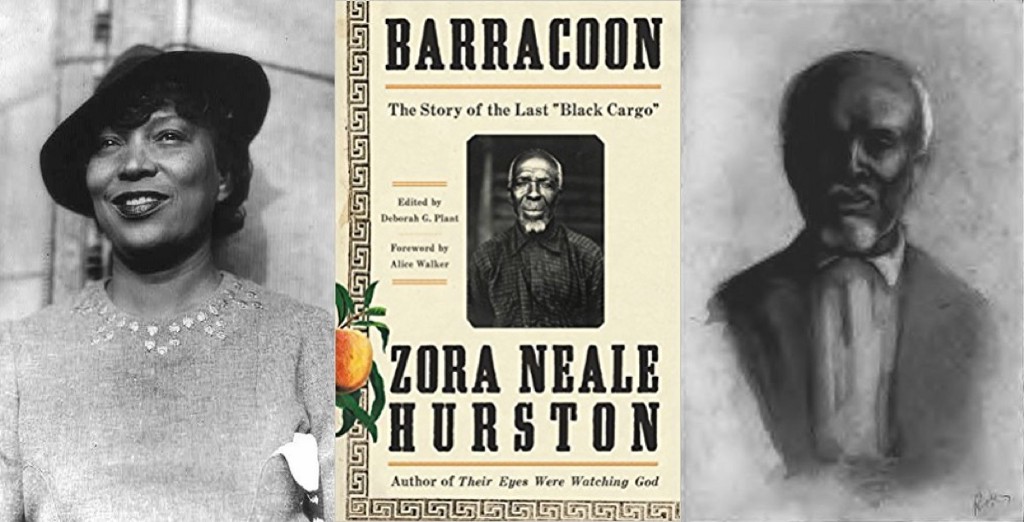
In Daytona Beach during the spring of 1943, Zora Neale Hurston penned a characteristically candid letter to the poet Countee Cullen. Both would later become known as quintessential voices of the Harlem Renaissance, but Hurston’s letter to Cullen did not center around their literary success. Instead, it was about their mutual defiance of literary trends and their shared resistance to doing what was expected, approved, or popular.

“You have written from within rather than to catch the eye of those who were making the loudest noise for the moment,” Hurston wrote. “I know that hitch-hiking on bandwagons has become the rage among Negro artists for the last ten years at least, but I have never thumbed a ride and can feel no admiration for those who travel that way.” As the letter continues, Hurston addresses the danger of palatability and the power of its opposite. “Some of the stuff that has passed for courage among Negro “leaders” is nauseating. They are right there with the stock phrases, which the white people are used to and expect, and pay no attention to anymore. They are rather disappointed if you do not use them. But if you suggest something real, just watch them back off from it.”

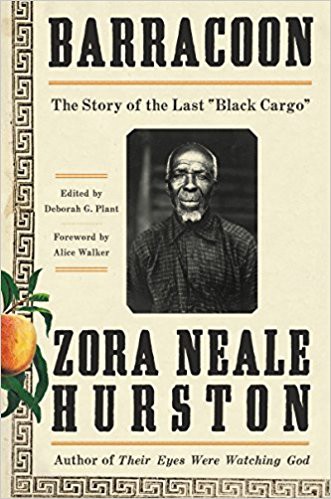
By this time, Hurston knew that her nonfiction work Barracoon, consisting of hours of interviews with Cudjo Lewis, one of the last survivors of the slave trade, would not be published as written. The publishing world insisted that she tone down her subject’s dialect, making the work an easier read for white audiences — and less authentic. But as much as she wanted Lewis’s story, and her book, brought to life, Hurston’s ethos as a writer wasn’t rooted in pleasing the masses, but in offering a true depiction of what it meant to a Black, to be American, and to be human. She would rather see her work rejected than watered down.

The friendship between Hurston and Cullen — as depicted through Hurston’s letter — stems from their shared inability to give way to the status quo. Often interpreted as brazen rebellion, their dedication to storytelling and to the stories of their people is what ultimately made their work legendary. Their words became transcendent and timeless because of their conscious resistance to conformity. Even then, Hurston knew the stakes were high. She, like Cullen, was aware of the risk of taming ones tongue for the sake of audience. And so, despite the consequences, she ignored the expectations of her time. She dug deeper for something truer, and by doing so captured the marrow of who we are as a nation and a people.

Principled and perhaps a little defiant, Hurston was zealous when it came to telling it like it is. The work she left behind proves that Hurston’s confession to Cullen is true: “I have the nerve to walk my own way, however hard, in my search for reality, rather than climb upon the rattling wagon of wishful illusions.” Her rejection of convention and refusal to embrace illusion resulted in touchstone texts like Their Eyes Were Watching God, Go Tell My Horse, Dust Tracks on a Road, and at last Barracoon. Nearly a century after the publication of her first book, the world seems ready to hear the story that Hurston refused to sanitize.

She dug deeper for something truer, and by doing so captured the marrow of who we are as a nation and a people.

Completed in 1931, Barracoon recounts the life of Lewis, also known as Oluale Kossola: the last living African slave to be shipped into the United States as cargo. The book’s manuscript, like its author and the story of its subject, was nearly lost to time due to Hurston’s refusal to tailor Barracoon’s prose to the liking of her white editors, who requested for her to use “language rather than dialect.” Yet, if she had complied with their wishes, the story that she had intended to tell, the story of Lewis, would have been erased. His experiences, as he recounted them to Hurston, would have been muffled by the demands of her publishers. The authenticity of the narrative would have perished. Hurston knew that, and so she chose to preserve her reality rather than the illusion. Consequently, Hurston’s manuscript remained unpublished for 87 years.

Countless writers — then and now — have grappled with what they’re willing to sacrifice in order to become a published author. Whatever the genre, we ask consciously or subconsciously ask ourselves these questions: Do I want to be known? Do I want to be famous? Am I willing to become a commodity? Can authenticity be synonymous with success?

How much of the truth are we willing to sacrifice before it’s no longer the truth? For Hurston, the answer was clear. Compromising her vision wasn’t an option, even if it meant that her manuscript and Cudjo Lewis’s story would never see the light of day. Although fellow luminaries like Richard Wright criticized Hurston’s work as having “no theme, no message, no thought,” her decision to keep the dialect of Barracoon unadulterated suggests that Wright’s admonishments were merely the byproduct of misogyny and the shortsightedness of respectability rather than a valid critique. Amidst the chaos of financial instability, racism, sexism, and the pressure to produce as much work as possible, Hurston was constantly aware of the industry’s interior. “Publishing houses and theatrical promoters are in a business to make money,” she wrote in her essay “What White Publishers Won’t Print” for the 1950 April edition of Negro Digest. “They will sponsor anything that they believe will sell… publishers and producers take the stand that they are not in business to educate, but to make money. Sympathetic as they might be, they cannot afford to be crusaders.” Hurston knew that her editors’ request was as much about her race as it was about profit. Their demands were strategic, but also systemic, revealing that although the work was valid and the story was necessary, that alone was not enough. The book that would become a highly anticipated title in 2018 was not viewed as marketable enough to publish without whitewashing it during the 1930s.

Compromising her vision wasn’t an option, even if it meant that her manuscript and Cudjo Lewis’s story would never see the light of day.

Like the man whose life is depicted throughout the pages of Barracoon, Hurston yearned to be heard on her own terms. In the first chapter of Barracoon, Hurston tells Lewis, “I want to ask you many things. I want to know who you are and how you came to be a slave; and to what part of Africa do you belong, and how you fared as a slave, and how you have managed as a free man.” In response, Lewis replies, “Thankee Jesus! Somebody come ast about Cudjo! I want telle somebody who I is, so maybe dey go in de Afficky soil some day and callee my name… I want you everywhere you go to tell everybody whut Cudjo say and how come I in Americky soil since de 1859 and never see my people no mo’.” Hurston’s adherence to Lewis’ wishes and her dedication to her vision for the book never wavered. Just as Lewis requested, Hurston documented his story as he told it. The world just wasn’t ready to hear it, but now his life is known. Hurston’s book exists, uncompromised.

As a folklorist, anthropologist, novelist, essayist, and playwright, Hurston’s ethos was rooted in the preservation and accurate depiction of her culture. Her refusal to do anything less undoubtedly impacted her career — and yet her legacy persists. Hurston’s steadfast dedication to her truth proves that she was in many ways right, even if she suffered for being so. The lens she applied to the world and the written page never wavered, even when the world asked for something that was easier to consume. Hurston was aware of the power of authenticity, the power of her refusal to compromise. “I not only want to present the material with all the life and color of my people, I want to leave no loopholes for the scientific crowd to rend and tear us,” Hurston wrote in a 1929 letter to Langston Hughes. “I know it is going to read different, but that is the glory of the thing, don’t you think?” Whether it be Barracoon, fieldnotes, a short story, a letter to a friend, or a play, Hurston’s work is permeated with the unfiltered “life and color” of her people. That was her concern, not palatability or fame.

Barracoon’s publication is pivotal for many reasons. It comes at a time of political upset, racial tension, and our nation’s reckoning with the ghosts of its past. Lewis’ life, much like Hurston’s, is a testament to the necessity of telling your story unapologetically. The pages that Hurston wrote prove that even if the world is reluctant to listen, eventually your voice will be heard and your words will urge others to open their mouths and speak. Barracoon urges us to examine what we yearn to gain from a story and ask whether we are willing to really hear what it has to say. Anyone who reads this book will walk away from its pages wondering how many stories as necessary as Barracoon will remain unpublished until we as readers are ready to reckon with unfiltered narratives. It will make you question whose voices you are willing to hear.

Turning a Passion for Classical Music into Fiction

The arts of writing fiction and playing classical music have tantalized the greatest minds over centuries. Beethoven’s compositions have been taught to every student who has picked up a violin or sat down at a piano. Shakespeare’s plays have been dissected and adapted more often than any other writer. Both creative mediums are centuries old, but we are still fascinated with both.

Purchase the novel

Aja Gabel spent her life playing cello, but when she realized she wasn’t going to be the next Yo-Yo Ma, she turned to literature instead.

Her debut novel The Ensemble forges her childhood passion for classical music with her current desire to write. The book portrays a group of friends who bond in the cutthroat world of classical music. Over the years, the quartet becomes more like a family dealing with the ever-shifting politics of what their relationships mean to one another. Gabel balances earnest dialogue and warm prose to depict the lives of the group through shifting prespectives.

I spoke with her regarding the relationship between music and writing in her life, how her debut novel unfolded, and what it was like to play Yo-Yo Ma’s cello.

Adam Vitcavage: How much of a role did music play in your childhood?

Aja Gabel: When I was younger, I played cello a lot. All the time. I played music since I was five and I played the cello for twenty-five years. I studied pretty seriously in my childhood. I didn’t go to a conservatory or anything, but I did study at a college. It was a huge part of my childhood.

AV: When did you realize that maybe you could make writing a part of your life?

AG: In my senior year of high school, I wrote a short story. It was about a girl who played violin and I sent it to my high school English teacher that I really liked, Mr. Devlin. He wrote me back the summer before college and he said something similar to “this is the best story I have ever seen from a high school student. I hope you continue writing.” I never had a compliment like that before.

I pursued [writing] pretty hard in college. At Wesleyan, you have to apply to every workshop you take, so I did that. I wrote a lot but I didn’t really show it to anyone.

The Doomed and Beautiful Reach: On Prose and Music

AV: It seems like writing and classical music have gone hand in hand. You’ve written about it a few times and now the relationship resulted in your first novel. How are the two disciplines similar and how do they differ?

AG: They are very different in practice, which is what I like. I like that when I write, [I am] sitting down to access this semiconscious place of creativity. It isn’t structured at all. When I practiced music, it was very structured. When I sat down, I knew exactly what I had to do.

It’s similar when you go up to perform. Both have this thing which I can’t articulate.

AV: Was it hard writing your first novel?

AG: It was really hard. I went to Houston for my PhD and Antonya Nelson was my teacher there and she told us to do the easiest thing for our first novel. I was already knee deep in this which has four points of view and is told across twenty five years. I thought: “Oh shit, I did the wrong thing.”

She was right. It was hard to write that long of a project and I made it harder on myself. I wrote the beginning a lot because I needed to figure out what the structure was.

I was already knee deep in [the draft] which has four points of view and is told across twenty five years. I thought: “Oh shit, I did the wrong thing.”

AV: She said to write easy, but the structure made it difficult for you. I assume writing about college friends who play classical music was somewhat easy though?

AG: The subject matter was easy and didn’t require a lot of research. I played classical music my entire life and studied it in college. It was the only thing I thought I knew enough about to write 300 pages. Now I feel more confident in being able to research or imagine for that many pages.

AV: And going back to the structure. Was it difficult having four POV characters and a quarter century long plot?

AG: I didn’t feel right writing about the quartet and giving them all a voice. The problem was when I tried to be too formal about it. I thought about writing it in a sonata with an introduction, a development, and a recapitulation. I tried to do that and it was insane.

Then I tried to write it about one weekend and one performance. That was impossible. I really like novels that focus on a short amount of time, but it’s really hard for me to do.

It really came down to the point of the story for me was that they develop a family. They choose this family. To illustrate that takes time. Their relationships evolve and I needed to show that across time.

I did a mixture of both concepts I had initially. Each section is a short period of time, but I wrote many sections across a large period of time.

AV: The sections have different characters telling the story. For instance, section one has Jana and Brit while the next section alternates between Daniel and Henry. Why not have all four characters tell a section?

AG: It was honestly a decision about tidiness. It would have been impossible for me to do all four voices in a section. I didn’t want to skim the surface levels of the characters. I wanted to really get to know them. I realized readers wouldn’t get to know them that way. I did try to write that version but it was hard for even me to keep track of what was going on.

I didn’t want to skim the surface levels of the characters. I wanted to really get to know them.

AV: How far did you get in that draft where all four characters told a section?

AG: I wrote the first section with all four. It was just too loud. Then it was hard because you had to wait five years [when section two begins] to hear from the men. It was a structural problem: do we get enough of Daniel and Henry through Jana and Brit’s narration in the beginning? I ultimately decided that I could make that happen.

AV: All four of the characters are very distinct, but the book is called The Ensemble and they are their own family. How did you manage to keep individuals but also make them a cohesive unit?

AG: That took a lot. I was in a workshop near the middle of the process. The feedback was that people couldn’t tell them apart or tell the difference between the two male characters. At a certain point I had to chart out details for each character. Their characteristics, how people judged them, what they wanted. For instance, I had little notes jotted down that for every scene I wrote about Henry, I had to indicate about his hair, how he has this ease about him, or his curiosity. I was always turning to these notes to help make them individual.

I hope the cohesiveness comes from the longer storyline. Like how people talk to Jana about her personal life becomes more intimate over the course of the book. Or the way Daniel is able to be intimate with people is intensified over the course of the book. The longer game in the narrative is how I tried to make them cohesive.

AV: Each section starts with a selection of classical compositions. I don’t know anything about classical music and I’m sure there will be others like me who only really know Beethoven existed and Mozart was around. So can you enlighten me on why those songs were selected?

AG: I tried to choose pieces that were realistic for that time in their career, but also would illustrate something that was happening. They start with Antonín Dvořák’s “America” and they end with that. It’s a piece that you learn as a student, but also one that when professionals play becomes very transcendent. Then there are pieces that are known to be about turmoil in sections where people are down.

AV: What are some aspects of writing you’re not naturally good at?

AG: Plot. For sure. I thought for so long on a small scale from writing short stories. Writing a long piece was very tricky for me to think about what a story is about and what happens. That was something I had to write out. I wrote out the big arcs that I was working toward so I was always thinking about it even when I was writing the small moments. Those are the moments I like the most.

I know that people continue to read [my book] because a gun went off on the first page and they want to find out who did it, how, and why. But I think people enjoy reading because they see moments that reflect themselves.

AV: Well, you figured out plot because you finished a book. What do you tell people the book is about?

AG: It’s about how difficult it is to make art and a family with people you love. It’s how these people do both over the course of their lifetime.

AV: Finally, I saw listed on the resume section of your website three random trivia facts about you: you saw Sublime’s last concert, you played Yo-Yo Ma’s cello, and you accidentally met Marylin Manson. Which was the most exhilarating of the three?

AG: For sure playing Yo-Yo Ma’s cello. He has many, but the one I played is one of the nicest cellos in the world. I was very young, around fourteen. It was like being a whole different musician. My orchestra was just watching a rehearsal and he was just walking by on a break and he said we could play it. He was just doing sit-ups. Yo-Yo Ma was doing sit-ups. My conductor said I should do it because I was first chair at that point. It was intense. I wish I could do it now.
AV: Was he watching you?

AG: He was not listening. He was in the auditorium but was on the other side. If he was listening, I probably would have blacked out.

How Eleven Creators in Nine Different Cities Came Together to Make One Book

“H i! My name’s Chad Sell, and I want to make a comic with you.” That’s the call for writers I saw on Instagram back in spring of 2015. I had been a fan of Chad’s for a while, but mostly for his gorgeous illustrations of the queens from RuPaul’s Drag Race. This project sounded different — the call for pitches was accompanied by a small graphic of a kid in a Hulk-like cardboard costume. Along with Jay Fuller, Chad explained, he had created a short comic titled The Sorceress Next Door about a young boy who’d rather be an evil sorceress. The story had struck a nerve and he was looking to build an entire neighborhood of kids who used fantasy and homemade costumes to create an imaginary world that would give the graphic collection its title: The Cardboard Kingdom.

I was about to be done with graduate school and while I’d never written a comic, I thought, why not? Next thing I knew I was on the phone with Chad. He liked my pitch about a young boy who wasobsessed with Disney-like animated films and gets his crush to role-play with him as his dashing prince, and he invited me to write for his book. But I wasn’t alone. There were to be ten writers in all, working together to create an collaborative world.

Chad had originally imagined The Cardboard Kingdom as a collection of short stories about kids dealing with divorced parents (“The Gargoyle”), friendship (“Professor Everything”) and cookie-loving siblings (“The Huntress”). But it soon became a more interwoven summer narrative where all ten writers worked with the Chicago-based illustrator to integrate characters and storylines alike. We didn’t know each other before we started, we lived in nine different cities in eight different states, and most of us never met, but using social media and other tools we managed to create a diverse collection that feels like one big story.

We didn’t know each other before we started, we lived in seven different cities, and most of us never met, but we managed to create a diverse collection that feels like one big story.

Our group of collaborators are as eclectic as our neighborhood kids. Some, like Fuller (The Boy in the Pink Earmuffs), Kris Moore (Science Girl), Molly Muldoon (Dead Weight), Barbara Perez Marquez (The Order of Belfry), Vid Alliger (Funny How It Goes) and Katie Schenkel (Moonlighters) are comics creators at heart; some even by trade. Others, like me, found this to be an exciting foray far afield from our usual creative work: David DeMeo first pitched Sell while working at Whole Foods (he’s now a jewelry designer and account manager for Chavez for Charity) while Michael Cole pitched while in grad school (he now teaches English Lit at Wichita State), and Cloud Jacobs while working at an elementary school library (he’s now a fifth-grade teacher).

As we near our publication date I wanted to convene a roundtable discussion between all 10 of us (sadly we lost Kris just last year; the final book is dedicated to him). I was curious to talk about how we created a graphic novel while never once being in the same room. You can take a look at our condensed chat below where you’ll learn how we preemptively avoided royalties in-fighting, how we turned to social media to create our very own online writer’s room, and how we’re proof positive that it truly takes a village to build a kingdom.

We’re proof positive that it truly takes a village to build a kingdom.

Manuel Betancourt: I wanted to open our conversation with a question I wrestled with at the start of this process: is this going to be a disaster? That is, I’m curious if anyone (else) had any reservations about embarking on a project that involved so many people.

Vid Alliger: I wouldn’t say I was worried, except maybe on Chad’s behalf, because I knew that he would bear the brunt of any interpersonal conflicts that might have arisen.

Chad Sell: I was worried, absolutely. I worry about everything. Prior to opening up the submissions process, I vividly imagined all the many things that could go wrong with this weird, wonderful project. I tried to think through the various sources of tension that could arise between myself and my collaborators and to plan ahead: In an effort to be totally transparent from the very start, I laid out all my proposed terms for the project, including breakdown of revenue, decision-making, and everything, so that anyone submitting their story knew exactly what they might be getting into. One example: each contributing author gets an even split of the book’s royalties, regardless of how many pages they specifically wrote for the book. I didn’t want my collaborators to have a financial stake in arguing for a longer story, or to feel threatened if I decided to cut a page or two.

Jay Fuller: In the beginning, it was difficult to imagine how so many writers responding to an open call for submissions — from the internet no less! — could possibly be cobbled together to form a cohesive and consistent narrative. It’s a minor miracle and a testament to Chad’s skill as an artist and editor that The Cardboard Kingdom reads so well as a unified, interconnected collection.

Katie Schenkel: I’ve described The Cardboard Kingdom’s entire process success as “a miracle.” I definitely was nervous at first about having so many collaborators on the project. I had started passion projects with one or two collaborators that completely crashed and burned due to my co-creators losing interest or the timing just not working out. And even if we all stuck to our deadlines, what if we disagreed about the direction of the book? I knew how easily this project could fall apart, especially with so many cooks in the kitchen. But we all respected each other’s time and each other’s points of view on the characters, and I think it shows in the finished product.

It’s a minor miracle and a testament to Chad’s skill as an artist and editor that The Cardboard Kingdom reads so well as a unified, interconnected collection.

Manuel: As Jay notes, after working on our individual stories we set about combining them and really weaving them together into one cohesive narrative. This involved giving each other feedback and starting to step on each other’s toes when it came to different characters and storylines. Was this easy for everyone?

Barbara Perez Marquez: Our initial work in The Cardboard Kingdom happened largely while I was still going through graduate school, so in that regard I was very familiar with the workshop environment we created as we worked to refine things. In addition, I feel like we all took care to provide suggestions and edits without “killing each other’s darlings” which is so often part of that process. I felt like whatever guidance we provided each other was coming from a good place, to make the best book we could.

Chad: Yeah, as you said, Manuel, a lot of our efforts were focused on uniting our characters into a community that felt dynamic and alive, and so that was largely very positive and exciting, like, “How about your character shows up here? What would your character’s take be if this happened?” I think each creator made the final determination about their own characters’ motivations and responses, but the rest of the team was able to offer interesting connections and new scenarios that would bring out new aspects of those characters.

A lot of our efforts were focused on uniting our characters into a community that felt dynamic and alive: “How about your character shows up here? What would your character’s take be if this happened?”

David DeMeo: Feedback was always handled delicately, in my opinion. When I first read “Big Banshee” and I saw that Katie had used [my characters] Shikha and Vijay in her story, I was thrilled.

Katie: Aw, David! That means a lot to me. To answer Manuel’s question, more or less writing our chapters in order made it easier to ensure we were writing the other creators’ main character accurately. David’s script was mostly done when I was working on mine, so I felt pretty confident in how I used them in my story. And the constant communication in this project meant I could get David’s feedback quickly and make sure any concerns he had about Vijay and Shikha were handled. And then later in the book we see Shikha and Sophie doing best friend stuff. It was cool to have collaborators take what I had set up and expand on that in a satisfying way.

Jay: Everyone was very aware that these characters are our babies, so we took special care to make suggestions in constructive, open-ended ways. Early on, I think everyone was a little nervous about stepping on toes, but as the process matured, it became more collaborative and led to some fantastic cross-pollination.

Early on, I think everyone was a little nervous about stepping on toes, but as the process matured, it became more collaborative and led to some fantastic cross-pollination.

Katie: Yeah, I was really happy with how Sophie was used in the other chapters. There was only one line of dialogue I suggested an alternative to, plus Chad had a specific idea about how Sophie would be used in the finale that he developed with me. And some of my favorite parts of the book are Sophie’s moments in other chapters, like the “not having it” look on her face when it’s revealed she’s been pushed into the princess role in your chapter, Manuel!

Michael Cole: Going back to something Barbara said, in the time since I pitched my story idea for The Cardboard Kingdom until now, I’ve finished out a graduate program, begun — and nearly completed — another one, bought a house, started a full-time university position, developed and executed several courses as a lecturer on the side. We’re all incredibly busy, but it’s just to say that there were certainly times I really worried that I wasn’t pitching in as much as everyone else was. I think there was always this great attitude of just getting our start and understanding that everyone had lots of other responsibilities in addition to the graphic novel. But it still was difficult on occasion to feel like you wanted to be more involved but could barely keep your eyes open some days.

14 Diverse Graphic Novels About Coming of Age

Manuel: In a way the fact that we’re a big group meant we needn’t carry the burden of the project on our shoulders — though, of course, Chad was doing much of the heavy lifting at times. There were clearly strategic choices you made as you began plotting the next move after we all submitted and workshopped our stories, were there not?

Chad: In developing each individual story, I tried to work pretty much one-on-one with each creator until they submitted a script that I was able to turn into a readable rough “doodle” draft of the full story. At that point, I would generally share it with the full team so that all of us got to know each other’s characters and stories. Which was so exciting! However, I tried to be really mindful of when to solicit the feedback of the full team on a particular story, for fear of there being “too many cooks in the kitchen.” But throughout the whole multi-year span of working on the project, it’s been invaluable to have such a big team of collaborators to cheer each other on and share insight!

Manuel: In that sense I think our collaborative endeavor is both a boon and a challenge, especially as we begin promoting the project. Have you guys found it hard to explain the quirky nature of The Cardboard Kingdom to other people?

Molly Muldoon: When I explain it, I usually say something along the lines of “It’s a neighborhood and each one of us wrote a kid” which is… kind of true? It gets more at the heart of what it is, I think; it’s not so much what we wrote but the character we created which is why I think it worked so well.

Michael: This has been a bit frustrating for me, for sure. I think the collaborative nature of it is hard to explain also. Over the last few months, I’ve had friends introducing me by saying, “This is Michael, he wrote a book.” I went in to get a haircut the other day and the woman who does it yelled, “Did you guys know Michael wrote a book?” It’s Kansas, so there’s not a lot of publishing here. So then I always have to stop and say, “I contributed to a graphic novel with several other co-authors and one artist.” And then to explain that The Cardboard Kingdom is rooted in children’s issues makes it seem like it’s really only for children, but I think so much of what we’ve heard from people who have gotten ahold of ARCs is that they’ve loved it for themselves, that it really appealed to them. It’s got serious themes, but it’s also bright and beautiful and very joyful. But at the same time, I kind of think that the best creative works are the ones that are sort of hard to describe.

I kind of think that the best creative works are the ones that are sort of hard to describe.

Jay: Ha, yes! When describing the book, I think I’ve settled on: “a Children’s Graphic Novel of which I am a contributing author” — that’s not clunky at all, right? Barbara makes a good point, though. The Cardboard Kingdom isn’t quite an anthology and it isn’t quite a single-narrative comic. It’s something special.

David: I’ve had similar experiences to Michael: “David wrote a book!” And I have to raise my hand and politely clarify. When I explain our book to people, I always start with Jay and Chad writing The Sorceress Next Door and how that was the inspiration for our book. Then I explain that once each of our stories is over, our characters continue into the rest of the book written by the subsequent authors. We were all in on the same story, essentially; we just wrote different parts of it. People seem to catch on quickly.

Cloud Jacobs: I’ve nailed a line down for describing the book. Whenever I meet someone or they ask about it I say “I wrote a story for a graphic novel, along with other writers, called The Cardboard Kingdom, it’s about a bunch of kids who deal with their real-world problems through fun, friendships and their superhero alter egos.”

Nidhi Chanani’s Graphic Novel ‘Pashmina’ Is Part of an Important New Genre

Manuel: To think we did it all remotely! Social media acted as necessary tool for all of us — it was part of the recruitment process with your call for pitches as well as the writing process with Google Docs and Facebook functioning as our hubs for our book-wide discussions. What about these ways of communicating helped being able to work with collaborators that were scattered all over the country?

Cloud: I think we can all agree that this project would have crumbled without the internet and social media. From the call for pitches (which I found on Reddit) to the final draft being uploaded to Google Drive and being able to see everyone’s hard work, the internet has been essential for the Kingdom to come to life.

Barbara: It was certainly better than trying to get everyone on a video or voice chat (!). The early part of the process with the pitch call really showed the power of social media and how far and wide voices can reach (I myself found the pitch call through Twitter).

I think we can all agree that this project would have crumbled without the internet and social media.

Vid: I just don’t know if this book would have been possible without the Internet and social media! I say that not just because these things were our main tools for communicating and sharing ideas, drafts, and critiques throughout this process, but also because I can’t imagine how we all would have found each other and connected in the first place, were it not for the Internet. It definitely still feels a little surreal to me.

Molly: The hardest part for me was juggling this with everything else on my plate, to be honest. I started and graduated graduate school while we were working on this, as well as working on another book. But it was more than worth it! Everyone’s been a joy to work with and the Facebook page really kept me in touch with everything that was going on and let me chat with everyone when I wanted to procrastinate work.

Michael: I will say, what’s been most challenging, for me, is being so separated from everyone else. I want to meet everyone! Like, for real. This has been such a journey and so important to me — it feels weird to have done it without meeting a single other person who has had a hand in the process. I’ve really struggled with it for the past two years, honestly, the last two years. I don’t really think it’s sunk in yet, and I’ve wondered if that’s been because I’m so far away from the other creators. I haven’t really been able to see this reflected in anyone else or maybe even vocalize what it feels like? And the fact that we’ve lost one member of the group (Kris) means that there’s always going to be a part of that particular circle that can’t be closed, which is tragic.

This has been such a journey and so important to me — it feels weird to have done it without meeting a single other person who has had a hand in the process.

Manuel: Yes, there’s this sense that we’re a collective but it’s a fragmented one since we’re all over the place. Some of us are in New York, others in Chicago, Baltimore, Portland… Also, losing Kris means that the collective will forever be missing a key member. Thinking of what we were able to accomplish while being so scattered, I wanted to hear from everyone about whether it feels like the collaborative spirit that’s embedded in the graphic novel genre is a good fit for the stories being told in The Cardboard Kingdom.

Jay: I’ve read a lot of fantastic graphic anthologies, like Beyond: The Queer Sci-Fi & Fantasy Comic Anthology and Little Heart; A Comic Anthology For Marriage Equality, which began life similarly to The Cardboard Kingdom as open-submission projects built around a common theme. It’s a formula that works! However, to my knowledge, The Cardboard Kingdom is one of few, if any, that actually connects all its stories into a single world that culminates in a finale tying all the characters together.

Barbara: For myself as a fiction writer, words can be overzealous. We look to finish whatever we are writing before any others see it. With art, once someone else sees it, it keeps on growing. So, having graphic novels created collaboratively, same as you do with comics, you have a level of uniqueness to whatever is created that is hard to replicate otherwise.

We look to finish whatever we are writing before any others see it. With art, once someone else sees it, it keeps on growing.

Chad: I agree with Barbara, and I think there’s something inherently visual about the essential parts of The Cardboard Kingdom. Throughout the book, kids create homemade costumes out of cardboard, and it was important to me in their character designs that each costume felt tactile and true to that. There’s tape, there are flaws, there are goofy design decisions only a kid would make. And it’s those flaws and the fragility of their armor that contrasts so powerfully with some of the very real emotional and familial struggles they encounter in the book. Periodically, we glimpse the characters as the kids see themselves — often more powerful, graceful, and fully grown. Which is beautiful and powerful, sometimes funny, sometimes sad.

Vid: I think we all worked hard to make sure the writing and overall tone of The Cardboard Kingdom felt consistent throughout, but I think Chad’s artwork really unified all of our ideas and helped make the book the cohesive whole it is. The book has a specific look and feel, and I think that uniformity would have been harder to achieve if the book had been our writings alone.

Michael: I also want to say that, at the end of the day, what The Cardboard Kingdom is about is community. And that was something that we achieved through collaboration — at least I think so. Even for a character like Seth in “The Gargoyle,” who sort of has to be rooted in isolation, there’s this great expansion that happens later where he gets to be part of something bigger. It might be corny to say that it felt like my experience working on this project mirrored that, where I had this nugget of an idea that got pulled into and made a part of something more rich and expansive.

Why Don’t Straight Men List Books by Women in Their Online Dating Profiles?

Growing up with a hip older brother, and as a hoarder of crushes, I was struck with the “cool girl” curse at an early age: I felt an obligation to cling to and highlight my dude-friendly interests. My earliest, and perhaps most acute, memory of this was aggressively proclaiming my status as “the fart queen” at age 10 in an effort to impress my 13-year-old brother’s adorable and particularly flatulence-humor-driven friends.

The fart queen evolved into a pop punk princess, then into a sk8r gurl, then into a woefully undiagnosed celiac who would chug forties of malt liquor just to show she could hang. To this day, I still don’t know if Dr. Pepper was always my favorite soda, or if it became my favorite soda because I read in Tiger Beat that Lance Bass had Dr. Pepper on his rider.

As a particularly book-inclined kid, this tendency crept into my reading habits. I devoured much of Palahniuk’s oeuvre in an effort to appeal to all of the members of Panic! At The Disco, a group of humans I would never meet. I worked my way through dude canon, reading Bukowski, Easton Ellis, Vonnegut, Foster Wallace, Roth, Kerouac. Instead of sifting through this mix to identify the gems and the turds, I lauded all of it as absolute genius.

I feel more confident now in my likes and dislikes, but there remains an arena in which we all still try to put our most attractive and interesting selves forward: online dating profiles. My profile on OKCupid admittedly features not just my favorite things and most cherished quirks, but the ones that I thought would make me the most swipe-worthy. This pressure causes a blur of easily mocked stereotypes for a lot of online daters — men boasting their height, women swigging whiskey in bikinis celebrating their love of swigging whiskey in bikinis. The foot we put forward when trying to date isn’t just our best foot; it’s specifically the one we think will be most appealing to our gender(s) of choice. And yet, straight men, even the most well-read men, often fail to list a single woman writer or book by a woman in their online dating profiles.

Straight men, even the most well-read men, often fail to list a single woman writer or book by a woman in their online dating profiles.

I’m definitely not the first person to notice this, but it made me curious.. Did these men not read books by women, not like books by women, or just not care to list books by women on a profile they used to impress…women? I decided to launch a low-key investigation into the dearth of women writers on straight guys’ OKCupid profiles. If an otherwise promising man didn’t list any women writers or books by women writers among his favorites, I wouldn’t go out with him — but I would ask him to explain.

I approached the process as organically as possible, filtering men down initially to those I would be interested in anyway. At the outset I stressed about the parameters. What about men who only list books by men except for Harry Potter? What about men who list books by women, but clearly one or two they had to read in high school? What about men who don’t list any books at all?

What Anaïs Nin Can Teach Us About Online Dating

Ultimately, my own tastes helped hone the field to a group of men that OKCupid’s behind-the-scenes robots already tag as “bookish”: men with robust, and sometimes even diverse, lists of books and authors in their profile, liberal guys, creatives and creative adjacents, men with glasses and beards.

In order to delve deeper into why some otherwise attractive, interesting, and intellectual men don’t list any women writers or books by women in their profile, I asked. If a man I would otherwise be interested in messaged me first, I would find a way to work in the fact that I wasn’t going on dates with men who didn’t list women writers and ask why they didn’t. When I was feeling particularly bold, I would ask the same of men I would otherwise be interested in, even if we had only matched and they hadn’t messaged me first.

If a man I would otherwise be interested in messaged me first, I would find a way to work in the fact that I wasn’t going on dates with men who didn’t list women writers and ask why they didn’t.

My first swing was an aggressive miss. I matched with a handsome guy who quoted bell hooks in his profile but had a lady-less list in his books section. When prodded about why, he immediately unmatched. Luckily, most of the other men were surprisingly forthcoming. Responses were a mixed bag of thoughtful, defensive, funny, and long-winded. Out of the nine men I spoke with, they fell into three categories — the defensive ally, the reflective “well, actually” historian, and the favorites purist — or some combination of those three.

The defensive allies were rich in performative feminism, but dirt poor in empathy and uninterested in holding themselves accountable as even slightly less than perfect. While none of them called me names, they were quick to assume that I had made a truly despicable value judgement of them based on my one criterion. They would guffaw and list the women whose words they loved, and the work they had done to support women in the past, but they never even tried to answer the question of why none of those women merited a mention in their dating profile. I gratefully did walk out of the experiment without being called a B-, C-, or S- word which is more than I can say about some online dating experiences where I don’t even try to prod a sleeping bear.

The reflective “well, actually” historians were more open to the question. Several said they hadn’t thought of it before, even thanked me for pointing this gap out to them. They did, however, have a different kind of defense, quickly citing the historical reasons why. I was told with surprising frequency that there are just much fewer books by women historically. (This is factually questionable, although there are certainly fewer in the canon — but there are still plenty to read if only one deigns to.) One guy, apropos of nothing, felt the need to share that he had tried and tried to enjoy Jane Eyre, as if Charlotte Brontë were to blame for the fact that no woman could really make it into his list of all-time favorites.

One guy, felt the need to share that he had tried and tried to enjoy “Jane Eyre,” as if Charlotte Brontë were to blame for the fact that no woman could really make it into his list of all-time favorites.

Most often, though, I dealt with the favorites purists — the men who certainly enjoyed books by women, but not enough to have them rank in their top faves. They would explain that they only listed books they had read more than once, authors whose work they had truly pored over, the brilliant minds behind the worn paperbacks they shoved into their messenger bags. One self-proclaimed avid reader listed just shy of 40 books and authors but failed to see that maybe he had some self-reflecting to do if no women made the cut. The favorites purists often seemed horrified at my suggestion that they sneak a woman into the top 40; they saw meddling with their immutable list of faves as disingenuous at best, deceitful at worst.

Beyond a deeper psychological unpacking of why no woman had spoken to these men the same way that Raymond Carver or Philip K. Dick or Don Delillo, this obsession with the genuine felt misguided and maybe even reductive. Dating is an exercise in self-presentation, as much as self-expression. These guys probably chose flattering photos, highlighted cool hobbies, failed to mention disgusting habits, and wore their least holey underwear on early dates. So if they really did love a bunch of books by women, as they claimed defensively when I asked, why were they so shy to include them in a forum where they are explicitly trying to impress and attract women? Why didn’t they think that would make them look cool?

While girls are often shown from an early age that the way to impress a boy is to like boy things, boys are just as often shown from an early age that the way to impress a girl is to…also like boy things. This is not to say that “cool girls,” like the one I was, are manufacturing an interest in culture usually seen as the province of boys; most of us actually do like the “boy things” we advertise as our favorites to the world, but we also highlight those preferences and play down any ones that seem too “girly.” But even if we were genuinely attempting to cultivate new preferences for the sake of connecting with someone, what is the harm in that? One defensive guy asked me if I would rather be with someone who lists their genuine favorites, or with someone who uses some pick-up artist signalling tactic to list books by women just to get laid. I choose neither. I choose a man who truly loves a book — just one book! — by a woman, but failing that, I choose a man who likes a book by a woman and cares enough about what women think of him to say so.

While girls are often shown from an early age that the way to impress a boy is to like boy things, boys are just as often shown from an early age that the way to impress a girl is to…also like boy things.

Only one of the men I messaged with on OKCupid asked for recommendations of more books by women, and the last time I checked, none of the men had updated their profile to list any of the women authors they rattled off to me in direct messages. Their top secret love of Mary Shelley and Margaret Atwood somehow never made it to their public self-declarations, even once I’d pointed out that it’s something women want to see. For these men, the best version of themselves is still all about what they think of themselves first and foremost. Even when presented with the fact in explicit terms, these guys struggle to comprehend that attracting a woman like me — smart, creative, educated, legendarily gassy — might include announcing that they admire women like me.

Part of me imagined witty and flirtatious sparring leading to a mutual understanding and a steamy intellectual first date. Alas, I didn’t fall in love with a handsome rogue after a heated virtual tete-a-tete over the canon of women in literature. I did not find my Mr. Darcy (a reference from a book by a woman!!!!) on OKCupid. I did, however, have a few promising conversations with men who did list women writers in their profile. Some even listed women that I list in mine, like Ottessa Moshfegh, Carmen Maria Machado, Anne Carson, Roxane Gay. In setting a pretty low bar, I was able to create a smaller, and much more compatible pool of potential dates.

Even when presented with the fact in explicit terms, these guys struggle to comprehend that attracting a woman like me might include announcing that they admire women like me.

At the end of the day, I truly was a fart queen, I really do enjoy Vonnegut, and I still drink Dr. Pepper. But I also internalized an idea of how I had to put myself forward in a way that most men don’t. Where were the boys trying to impress me with their love of Judy Blume, tea parties, and Fiona Apple?

At the end of all of this, I’m still single, so if you have a bookshelf jam-packed with books by women that you actually enjoy, hit me up. And if you don’t, I won’t hold it against you, as long as you are open to reading more women until you do.