This Romance Novelist Trademarked the Word ‘Cocky’

Arrogant, brash, confident, bumptious, swollen-headed, swaggering, cocksure—indie authors with a fondness for steamy scenes better crack open that old thesaurus, because “Cocker Brothers” author Faleen Hopkins thinks she owns the word “cocky” now.

You may (or may not) have heard of Hopkins’ series featuring six bad-but-not-really-boy brothers and their glistening abs. Starting with the first back in May 2016, Hopkins has been on fire publishing book after book of Cocky [Insert Fantasy Male Archetype here]: roommates, bikers, cowboys, marines. You name it, she’s cocked it.

Hopkins’ journey from photographer/actress to indie writer is an inspirational success story (up to a point) for anyone who hopes to make a living off self-publishing. Hopping between tales of supernatural vampire lovers and erotic bodice rippers, her writing has gained her a steady following, and her Cocker Brothers Series is prominent enough to deserve its own brand.

Too bad Hopkins took that fame a touch too far when she decided to file a trademark not only for the title of the series, but for the use of the word COCKY in any and all romance titles.

Back in September 2017, Hopkins filed an application with the U.S. Patent and Trademark Office, which as of April 17, 2018 registered the word as trademarked “without claim to any particular font style, size, or color.” In essence, Hopkins is laying claim to COCKY. Any other romance authors who want to use it in their title will have to fight her for it.

This Book That Scammed Its Way Onto the Times Bestseller List Is Real, Real Bad

Sound extreme? Well, Hopkins took things a step further when she began going around to various independent authors via social media and email requesting that they retroactively rename their novels on Amazon else they risk legal repercussions.

Hopkins defends herself in a series of tweets on May 4 claiming that she wants to enforce the trademark not for herself but for her readers.

She also emphasizes for any authors who may be upset with her actions: “It’s a brand. And everyone who wants to can keep their books, rankings, reviews and their money by retitling which takes one day.”

Hopkins is not unfounded in this belief. Titles are one of the eBook details that can be changed relatively easily on Kindle Direct Publishing.

However, what she does not remark on are the difficulties and costs included in changing titles, redesigning covers, and remarketing books that were already published and bought by readers. Pushback against Hopkins’ trademark has already begun under tags like #CockyGate and #SaveCocky on Twitter, and as of May 8, 2018, a petition to cancel the COCKY trademark achieved over 18,000 signatures from writers and readers who reject ownership of words.

While Hopkins has every right to defend her original content, it is a shame that it comes at the expense of her fellow independent authors who can’t afford a lawsuit battle. Even if it is legally permissible, it is in effect an assault on the romance publishing community, at least among independent authors — and it’s not one that’s likely to endear Hopkins to people who might otherwise want to publish or work with her.

But maybe she doesn’t care. After all, judging from her recent behavior, she’s brash, swaggering, confident, swollen-headed… oh. Maybe this is just research for her next book, Cocky Author.

We Need More Non-Binary Characters Who Aren’t Aliens, Robots, or Monsters

There’s a running joke in NBC’s The Good Place about Janet, the neighborhood’s anthropomorphized operational mainframe. Every time one of the other characters calls her a “girl” or a “woman,” she cheerfully corrects them, “I’m not a girl.”

The point is that Janet is a manufactured database and not a person. But bound up in this idea is a more complicated one: that Janet, not being a human at all, is also specifically not a girl. She is a sophisticated form of artificial intelligence, and while she presents in a feminine manner she doesn’t identify as female — or even have a sense of binary gender identity. She’s a non-binary character on a major network sitcom whose gender identity, or lack thereof, does not define her — a feat which should be in and of itself a kind of revolution.

Where non-binary characters appear in literature and culture, they are more often than not robots, or aliens, or monsters.

The flip side, though, is also embodied in the joke: Janet isn’t a girl because she’s not a person. Where non-binary characters appear in literature and culture, they are more often than not robots, or aliens, or monsters. They are not so often, as I am, human beings.


I came out as non-binary in a series of stages, over the course of a number of years. It was a hard identity to put a name to, to come to understand. I’m still not completely out, and I tend to hide my gender in situations where I’ve been made to feel like it’s an inconvenience — with professors who make no space in their classrooms for considerations like pronouns, with family members for whom explaining the concept would fall on ultimately uncomprehending ears, with my housemates in the all-female campus housing in which I live.

No queer identity ever comes with a singular “coming out,” and every time I meet a new person I fall into a routine of social calculus to decide whether or not it’s worthwhile to explain my identity. Will I see this person again? Will they attack me, if I tell them? Will they respect my pronouns, if told? Will they invalidate my identity if I reveal it to them at a later date, or take offense that I didn’t tell them earlier? I have a body that is read as female, no matter what I do, and sometimes the process of explaining that I’m not a woman isn’t practical in the moment.

I don’t like that my social identity boils down to some kind of cost-benefit analysis, but society’s understanding — or lack thereof — of non-binary gender forces me to think of it that way. Social interactions are structured with this mental math at the forefront. When faced with someone new, people instinctually calculate the answer to a rote question which will influence almost everything about the way they will interact with this person: are they a boy or a girl?

There is no room, in this question, for the answer to be “no.”

The first time I realized I was non-binary, I was listening to a recording of Andrea Gibson’s poem “Swingset,” which opens with exactly this question: Are you a boy or a girl?

In the poem, Gibson never answers the question: they can’t, or perhaps they don’t need to. The normalization of their non-binary gender, the understanding that there is a third answer — a non-answer, in its own way — to this question, revolutionized me.


There is a recent trend in speculative fiction towards the inclusion of characters with non-binary genders, or characters who use non-binary pronouns (they/them/their, xe/xem/xyr, etc). Every time I see a singular they in one of the science fiction or fantasy novels I’ve picked up to read in my vanishingly small spare time, my heart skips a beat in joy and disbelief.

And yet, nearly every time a character in speculative fiction uses non-binary pronouns, it is also a signifier of something other than just gender; it is a signal to the reader that there is something other about the character in question, something which sets them apart from the other characters, and from the reader, too. It is a shortcut to remind the reader that, whoever this character is, they are emphatically not human.

It is a shortcut to remind the reader that, whoever this character is, they are emphatically not human.

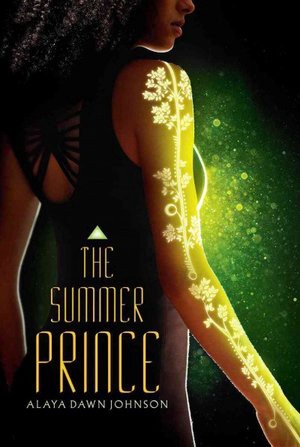
For example: in Victoria Schwab’s Our Dark Duet (2017), the second book in her Monsters of Verity series, Schwab introduces a character who uses they/them pronouns. The character, Soro, is a Sunai — a monster of vengeance that consumes the souls of criminals. Their non-binary gender does not go unremarked upon in the book, which might normalize it the way any other character’s gender is unremarkable. Instead, this happens:

[When] he’d worked up the courage to ask whether Soro considered themself male or female, [they] had stared at him for a long moment before answering.

“I’m a Sunai.”

There are no non-binary humans in Our Dark Duet.

This scene should be significant — here, in a novel that isn’t about gender, a character is calling attention to the aching lacuna left by the binary question, “are you a boy or a girl?” They are finding an alternative answer. When Soro answers, I’m a Sunai, they are finding a new way to answer the question.

I’ve answered the question this way, too. A young child at my place of work once asked me: are you a boy or a girl? I panicked and answered: I’m a librarian. Can I help you find something?

But Soro’s answer actually becomes significant for a different reason. Their answer, I’m a Sunai, emphasizes above all else that which makes them inhuman, their monstrous identity. Because the other characters in Our Dark Duet are decidedly and unremarkably delineated as either male or female, Soro’s gender identity — or, more accurately, their refusal of gender — becomes a feature of their monstrosity. The answer comes not from a lack of identification with “male” or “female,” but from a lack of identification with humanity as a whole. It becomes synonymous with being an Other, just another way they are unfathomably different from those around them.

The answer comes not from a lack of identification with ‘male’ or ‘female,’ but from a lack of identification with humanity as a whole.

Our Dark Duet isn’t the only work of speculative fiction which does this. In fact, unlike in the lived experience of the non-binary people they represent, in speculative fiction characters who are neither a boy nor a girl are almost always something else. They are almost always something inhuman.


In Becky Chambers’ novel The Long Way to a Small, Angry Planet (2014) there is a genderfluid alien species known as the Aandrisk, who cyclically fluctuate among three genders: a male-aligned gender, a female-aligned gender, and a neutral gender identified with neo-pronouns.

There are, also, no notable genderfluid, non-binary, or transgender human characters in the novel.

The sequel to Planet — A Closed and Common Orbit (2016) — tells the story of an artificial intelligence named Sidra, who struggles with fitting into a body that does not fit her, and searches for ways and means of making that body into a place in which she can feel at home. Because of Sidra’s struggle, themes of embodiment run throughout the novel, and each character struggles with it in one way or another. An Aandrisk character named Tak plays a major role, with his/xyr/her gender fluidity never underplayed but treated as absolutely normal, which seems to cement the themes of gender identity squarely at the forefront of the novel. His/xyr/her ability to change his/xyr/her body in accordance with the gender-of-the-day is something Sidra envies.

And yet: it is only an alien character who deals openly with gender identity.

Tak and Sidra are joined by two human characters: Pepper, who was cloned to work in a manufacturing plant and escaped at a young age; and Blue, who was disowned by his wealthy ruling-class family for his persistent lisp. Every character in Orbit struggles, in their own way, with turning their body into a habitable home. To parallel Sidra’s narrative, as she struggles with the discomfort of not fitting into the body she was given, it would have been more than fitting for either Pepper or Blue to be non-binary or transgender. Blue, in particular, has a veiled past that isn’t revealed until late in the novel; until I reached the point where I realized that it was for his speech impediment that his family disowned him, I was certain he was trans.

But when only an alien’s relationship with their body involves a deviation from concepts of binary gender, the exclusion says more than the inclusion does.

It feels lazy, in a way. As if an author is checking off a diversity box for “character uses alternate pronouns,” but can’t be bothered to stretch their mind enough to imagine an actual human who might identify that way.

It feels lazy, and it feels — quite literally — alienating.

Often, like in the case of Soro or Janet, non-binary identity becomes a specific indicator that a character is not human, a distinct marker that sets them apart from humanity where their appearance might not. Other times, as with Tak and the Aandrisk, non-binary identity is meant to signify just how different — how alien — another culture is to humans. Non-binary identity becomes a shorthand for whatever it is that sets a character or group of characters apart from humans.

The problem here is that the non-binary people like me who want to see themselves represented and validated in the fiction they read, who might benefit most from seeing a character with alternate pronouns in their escapist media — are human. And most of the time, we’re faced with a daily barrage of people questioning the legitimacy of our gender identity.

When the only non-binary characters in media are aliens, robots, and monsters, we tacitly assert that the non-binary people in our lives are unnatural.

It doesn’t help anyone to say that aliens, robots, and monsters may have non-binary identities, but to imply by exclusion that humans do not.

When the only non-binary characters in media are aliens, robots, and monsters, we tacitly assert that the non-binary people in our lives are unnatural, that there is something inherently inhuman about their existence.


Gibson’s poem “Swingset” is, among so many other things, about the experience of being human. Their kindergarten students, wide-eyed and curious, batter them with a litany of questions which always ends with the innocent inquiry: Can I have a push on the swing? — the only answer provided to the unanswerable question presented in the poem’s first line.

The poem, as I replayed the video obsessively for weeks when I was seventeen, showed me a reality in which I did not have to be a boy or a girl, in which I could be something else and still be myself.

“Swingset” meant something to me, in my teenage struggle with my gender identity, because I could see myself in it. The non-answer to the unanswerable question gave me permission to accept that my gender was allowed to be unanswerable, too.

When this question is answered, and the answer is, “I’m a monster,” or “I’m an alien,” that permission gets lost in the shuffle.

There is speculative fiction that gets it right sometimes. But I can count on one hand the stories I have found lately that include gender non-conforming characters who are humans.

The ones that do, for me, are revolutionary.

Take, for instance, the podcast Friends at the Table. Their science fiction series COUNTER/weight includes, yes, robot characters who use they/them pronouns, and yes, an entire nearly-human alien race whose concept of gender is completely dissimilar from our own. But it also includes several non-binary human characters, such as the genius roboticist Cene Sixheart, and the Divine Candidate Kobus.

The message this sends is different: it shows us a future where humanity has eclipsed its obsession with binary concepts of gender, where non-binary gender is as much of a norm for humanity as it might be for an alien species that never developed the concepts of “male” and “female” to begin with. It shows that there is nothing inherently alien, monstrous, or unnatural — “inhuman” — about an identity that doesn’t fall in line with the gender binary.

There is nothing inherently inhuman about an identity that doesn’t fall in line with the gender binary.

It shows, in the same way that “Swingset” does, that non-binary people are just as human as anyone else. It erases the equation between non-binary and alien, blurs the strict separation that aligns binary gender with humanity and non-binary gender with everything else. It gives us space to see ourselves, whoever we may be, exactly as we are.

It is vital to be conscious of the dangerous patterns that can emerge from a kind of representation that isn’t aware of its own history, or the implications it makes when it is not written with care. Otherwise, we end up reaffirming a system which continues to alienate non-binary gender and those who identify with it.

I love non-binary monsters. I love non-binary aliens, and non-binary robots. I love space operas and paranormal romances and anything “inhuman” that I come across. But sometimes there are days when — exhausted by the social calculus of navigating a world that does not make space for me, that does not take me for what I am — I need my fiction to remind me that I am human, too.

How ‘Moby-Dick’ Illuminates American Tragedies

In March, like millions of others, I was overcome by the news of a devastating car accident involving a family whose SUV had plunged off a cliff in northern California, tumbling into the brink of the Pacific a hundred feet below. Authorities recovered the bodies of five people from the overturned and partially submerged vehicle and its vicinity — Jennifer and Sarah Hart and their adopted children Markis, Abigail, and Jeremiah. Still missing were three more adopted children, Hannah, Ciera, and Devonte. The parents were white, all their adopted children black. One of them I recognized. In 2014, photographer Johnny Nguyen captured the iconic image of a tearful Devonte, then twelve years old, hugging a Portland police officer at a protest supporting justice for Michael Brown. The photograph went viral, and for those like me who remembered our reactions to it years later, the possibility of Devonte’s death added an especially cruel twist to the story.

Alarmingly, investigators judged the crash not to be an accident at all but intentional. According to the SUV’s onboard computer, the vehicle had been at rest in a flat pullout along the highway before accelerating steadily to the point it left the cliff. This grim recounting was difficult to reconcile with Nguyen’s photograph, which had evoked parents fearing for their black son’s future in America. But official documents told a different story. Child abuse accusations against the Harts began a decade ago, and in 2011, Sarah pleaded guilty to a domestic assault charge after striking Abigail, then six years old, with a closed fist and holding her head under water. More recently, a neighbor recalled Devonte asking for large quantities of food for his siblings, whom he said were being starved. A frantic Hannah escaped to the same house in the dead of night and begged not to be returned to her abusive home. The Department of Social and Health Services in Washington state launched an investigation, attempting to contact the Harts at their home. Three days later, a passerby spotted the family’s wrecked SUV along the rocky shoreline below California’s Highway 1.

Friends of the Harts defended Jennifer and Sarah, eulogizing them as model parents who sacrificed to give their adopted children a second chance in life in a loving family. Magazine-quality photographs of the smiling, active children curated that very impression of a hip, modern, interracial family. They are like promo stills for a network sitcom pilot: a group hug in matching Bernie t-shirts, a dapper Devonte stumping for charity, the bunch basking in the majesty of a Western mountain range. This family is from the future, they declare. “We can change the world with kindness” reads a colorful, crayoned sign held up by a grinning Devonte. In fact, Devonte owns so many of these shots that it’s easy to believe what a family friend had said about him, that he was the leader of his brothers and sisters despite his age. Whatever Jennifer and Sarah thought they needed to be, the key to achieving it was Devonte, the magical kid whose embrace promised dispensation for an original sin.

But the story of the Hart family didn’t strike me as futuristic so much as familiar, like a very old tale, recast. The more I read about the Harts, the more I thought about another old story, one that inevitably reappears in my life every few years. I’d first read Moby-Dick as a graduate student over twenty years ago, and I used to teach it to my own students before doing so began to seem like too big of a commitment for everyone involved. After spending some time away from the book, however, I realized that I loved discussing it with others not for its sake but for my own. For me, talking about the fate of the Pequod has always been to say something about the calamities of our present and our place among them. To read Moby-Dick after a crushing tragedy is to try to gain a measure of control over the seemingly incomprehensible — to name monsters, so to speak, and to not let that charge consume you.

To read Moby-Dick after a crushing tragedy is to try to gain a measure of control over the seemingly incomprehensible — to name monsters, so to speak.

The indebtedness of Moby-Dick to the language of Milton and Shakespeare can distract from its American origins. Moby-Dick is fashioned from its own era, one in which white men like Daniel Webster and John C. Calhoun — and now, Herman Melville — brawled on paper over the prospect of slavery extending indefinitely. Melville began the book only months before the Compromise of 1850, which briefly defused threats of secession in part by enacting a stricter version of the Fugitive Slave Act. His own father-in-law, Lemuel Shaw, became the first northern judge to enforce the law when he ordered Thomas Sims, who had escaped from slavery to Boston, returned to his Georgia owner. Bargain in hand, the Union gamely tried to outrun a reckoning with the issue of slavery — and did, for about ten years. When Nathaniel Philbrick said that Moby-Dick contained “nothing less than the genetic code of America,” he meant that it had been consecrated in the unresolved, foundational crisis of the nation. Since Moby-Dick, America has never stopped trying to outrun this history.

Like the book’s narrator Ishmael, Jennifer and Sarah Hart appeared to be souls unsure of their purpose but shored by the prospect of an odyssey manned by the right crew. They adopt three black children and then three more, including Devonte. They tell reporters that they are saving Devonte’s life from a mother who pumped drugs through his veins in the womb. They correct those who say that Devonte is one lucky kid: no, they are the lucky ones. “Yes indeed he is living proof that our past does not dictate our future,” they add. They are two white mothers and six black children and call themselves the “Hart tribe” because they are one people now. They elude racist teachers and neighbors in Minnesota. They turn up at New Age music festivals, Bernie rallies, and, memorably, a Ferguson protest. Their pictures say it all. They are outrunning history, they are doing it, and they will send us postcards along the way.

But how do you outrun a history that has always been a part of you? How do you outrun slavery and all that it has wrought in you, despite generations gone? That history is there once you bid for three children against a family still fighting to keep them. Or when you ink your family name over theirs. That history is yours, unbounded by century or border, each time you flog your children, ritualize their hunger, ban their lessons, and coach their smiles before strangers. It is present the second you think to bind them to you for good because you believe that none will ever work, marry, have kids of their own, or “grow up to have normal lives.” That history includes all of those who let you get away with it — until, too late, a few didn’t anymore, and men with guns arrived on your land to tell you to stop. Your quest to know black experience, to make it your own even if you must coerce it out of those in your care, is not a new story at all.

To read Moby-Dick after tragedy may be, above all, to promote Ahab in our imagination. Allegories abound of tyrants and their enablers. The late Alan Heimert, tracing the origins of Moby-Dick back to the political divisions of 1850, proffered a likeness between the captain and John C. Calhoun, the South Carolina slaveholder whose body failed him famously before the Senate and kept him from delivering a final screed against compromise with the North. In the chapter appropriately entitled “Moby-Dick,” Ishmael begins the long tradition of pondering Ahab, loosing his imagination upon the old man and the significance of his injury. From the time Moby-Dick took his leg, “Ahab had cherished a wild vindictiveness against the whale,” Ishmael relates, “all the more fell for that in his frantic morbidness he at last came to identify with him, not only all his bodily woes, but all his intellectual and spiritual exasperations.” I suspect that Jennifer Hart likewise saw her body through the eyes of others, its whiteness signaling a history she wouldn’t abide for herself. Returning to the book now, I wondered about the brutal compensations we make for our bodies, for their fitness for this world, doubts that push us onward to prove something, across oceans if necessary, farther than we’d ever thought we’d go.

Returning to the book now, I wondered about the brutal compensations we make for our bodies, for their fitness for this world.

Jennifer Hart wouldn’t be the first parent who needed black children to see herself as a good white person in this world. She too vented exasperations, decrying how racist classmates and strangers on the street had harassed the family, Devonte especially. Hate had chased them out of Minnesota, she said, then Oregon after the viral photo. The children rarely played outside, neighbors now recalled. Hart felt isolated, even from those close to her. “I’ve been struggling with the colorblindness I’m surrounded by in my circle(s) of friends. My children are black,” she wrote on Facebook. “There are so few people in my life that I feel really GET it. Love and light seem to be the only things in the tool box. That’s not being an ally for black lives.” The outburst is like an Ahab soliloquy, simultaneously impotent and entitled, a fist shaken at the sky and all below it except one. On paper, Jennifer Hart played the white savior, outwardly nothing at all like the terrible Calhoun. What the two shared, however, was an unwavering certainty of the nature of their place among black people and then the audacious confidence it gave them before their peers.

“Oh, ye frozen heavens!” Ahab rages, “look down here. Ye did beget this luckless child, and have abandoned him, ye creative libertines.” Pip, a young black sailor deserted by his mates, tossed amid the immensity of the sea, “saw God’s foot upon the treadle of the loom, and spoke it; and therefore his shipmates called him mad.” Ahab succors the boy, convinced that Pip alone can penetrate worldly artifice. In the chapter entitled “The Cabin,” Ahab leaves Pip to fight Moby-Dick without him. “No, no, no! ye have not a whole body, sir,” cries Pip, “do ye but use poor me for your one lost leg; only tread upon me, sir; I ask no more, so I remain a part of ye.” Ahab is moved by the loving entreaties yet will not be swerved. It is one thing for Ahab to dispense pity, or to command it, but he will not suffer it himself. “Weep so, and I will murder thee!” he warns. Ahab errs in believing that the integrity of his cabin is an extension of his own, protecting his ward from white whales and men alike. “But here I’ll stay,” Pip concedes, “though this stern strikes rocks; and they bulge through; and oysters come to join me.”

Reading Moby-Dick isn’t necessary to understand the story of the Hart family. The facts are clear. Two white women adopted three black children because they felt they needed to and could do so. Despite accusations of abuse against them, the women were allowed to adopt three more, this time away from an aunt petitioning to stop them. They beat and starved their children, taking them off the grid once authorities asked too many questions. Their family, friends, and neighbors, for their part, asked too few questions until it was too late. Across state lines, systems and their agents enabled them, failing the innocents entrusted to them. Caseworkers closed investigations into the women because they “look normal.” At the end, intoxicated, Jennifer Hart shot her family off the edge of the continent, killing most and probably all of them, because they would be taken away from her, and she needed them to be herself. You don’t have to read Moby-Dick to know this.

I can say only that I did to help me to remember this catastrophe, especially as weeks of investigation passed, reporters moved on, and tweets dwindled. Perhaps reading Moby-Dick after tragedy enacts a desire to stay with a story, to not have it leave you just yet, to believe that there’s something else to say despite the other news of the world crowding into the frame. It is to insist that the book’s mighty theme belongs to the story at hand too, that there are bonds, even if you must grasp at them yourself. It is to say that its pages record every angle of this story too and to take your time dwelling upon them. Ishmael himself, after all, muses that his story pales in comparison to other historical events in the “programme of Providence” — the “whaling voyage by one Ishmael” sandwiched between “Grand Contested Election for the Presidency of the United States” and “Bloody Battle in Affghanistan” — but he tells it anyway, sensing a connection. Like so many others who sat down to read Moby-Dick for the first time, I believed I would never finish it, and here I am reading it again because other stories finish too soon.

To read ‘Moby-Dick’ after a tragedy is to insist that the book’s mighty theme belongs to the story at hand too.

Moby-Dick is all about keeping a story going. There’s always something else. This truth visits Ishmael’s boon companion, the harpooner king Queequeg, who, moments after deciding to die in his coffin, “recalled a little duty ashore, which he was leaving undone; and therefore had changed his mind about dying.” There is nothing else for the monomaniacal Ahab, who streaks toward the conclusion of his tormenting single story, the path “laid with iron rails” upon which his “soul is grooved to run.” Jennifer and Sarah Hart imagined they were chasing down a malignant evil too — the racism polluting every space around them except their own. I pray that in their last moments, looking out across the Pacific, and then at each other, they spied at last that ghastly monster they had sought, as Ahab did, embodied before their very eyes. Ishmael is the sole survivor of the doomed Pequod, saved by Queequeg’s coffin turned life-buoy, now tasked with telling the story of an illegal and immoral voyage, in all its minutiae. That story is ours now.

Two weeks after the crash of the Hart’s SUV, searchers recovered the body of a child brought back closer to shore by a storm, later positively identifying her as Ciera Hart, born Ciera Davis. As I write this, Hannah and Devonte Hart are still considered missing by the FBI, which has released posters with their photographs, essential details, and last known whereabouts. Their baby faces are sobering juxtaposed with their true ages, Hannah aged sixteen, Devonte fifteen. We’re asked to keep looking for them. For their sakes and our own, let us ransack all the known places we inhabit, in the world and on the page, in search of them forever. I hope we see them everywhere, forces impossible to outrun. To those like me who found their tragedy unfathomable at first, take care in what you make of them and what they need from you. As so many familiar with their story have said, they appear much younger than they really are.

7 Books That Prove Small Talk is a Big Deal

Here on the East Coast, we’ve had a very long winter that suddenly turned into summer and then went back to winter, summer, and then into allergy season. And through it all, we’ve been talking about it nonstop. Some would say this fixation on discussing the weather is deadly boring. Conventional wisdom would say that, for instance, and so would Oscar Wilde: “Pray don’t talk to me about the weather, Mr. Worthing,” he has Gwendolen say in The Importance of Being Earnest. “Whenever people talk to me about the weather, I always feel quite certain that they mean something else. And that makes me quite nervous.” But other authors think weather is a surprisingly rich topic: “When all is said and done,” Alice Hoffman wrote, “the weather and love are the two elements about which one can never be sure.” Is discussing the weather boring? Or is it actually the most interesting thing you can talk about?

Way back before she hosted Serial, radio producer Sarah Koening had her mother give This American Life her seven rules for the seven things you are not supposed to talk about because nobody cares. These were diet, health, dreams, route talk (i.e. your driving or subway choices), money, your period, and how you slept. Inspired by those rules and that episode (which permanently haunts me), we decided to put together our own list of seven small talk topics—some of Koenig’s, and a few of our own—that make for stories we really care about.

Weather

Blankets by Craig Thompson

Talking about the weather is downright compulsive. In his book Nabokov’s Favorite Word is Mauve, Ben Blatt analyzed the data on 20th century classics and bestsellers and found that a lot of authors not only write about the weather, but use it as their first sentence. Twenty-six percent of John Steinbeck’s novels open with weathery things, 21% of Willa Cather’s, and 14% of Edith Wharton’s books do too. (And then there’s Danielle Steel, who takes the cake at 46%.)

Weather colors this entire graphic novel — literally. Growing up in Wisconsin in a devoutly Christian household, Craig is coming to terms with change: change in his relationship with his brother, Phil, with his relationship to his Christian faith and his parents, and his relationship with Rainia, another outcast he meets at a Baptist summer camp. All of these relationships are haunted by abuse that traumatized Craig as a child. All of the artwork is done in a subdued, bleak and beautiful white and blue, mirroring the wintry ice and snow that blankets (excuse the pun) the landscape.

Dreams

Bad Dreams and Other Stories by Tessa Hadley

Okay, so Creative Writing 101 rule #1 condemns the use of the “it was all a dream” trope, but dreams find plenty of other ways to make it into fiction. From Charles Dickens to Gabriel García Márquez, dreams still possess a lot of narrative power.

In the title story to the collection, a nine-year-old bookworm has a bad dream about a book she loves. The book, she finds in the dream, suddenly has an extra bundle of pages at the end, an unfamiliar epilogue. The boundaries between her own agency as a dreamer and the creative impulse of a writer are rigid: “It didn’t occur to her then that she was the author of her own dreams and must have invented this epilogue herself. It seemed so completely a found thing, alien and unanticipated, coming from outside herself, against her will.” She decides not to tell her mother about it, because she fears the immortality of words said out loud. She decides to distract herself from the nightmare with a prank that her mother witnesses and believes to be an extension of her husband’s spite. But she decides to tell no one, either. The silences start to away at each other, and have devastating consequences. The collection of nine stories is filled with the strange, confessional ways mortality creeps into our brainspace, and how we deal with each other when we can’t seem to speak those thoughts out loud.

Route Talk

Tropic of Orange by Karen Tei Yamashita

Give us a quest narrative, and we’ll show you how much time we spend talking about how to get from point A to point B. And if you live in an urban area with a public transit system that’s been declared An Official State of Emergency, I dare you not to talk about your miraculous arrival to work a mere ten minutes too late.

In Tropic of Orange by Karen Tei Yamashita, a giant mutant orange is stretching out the border between Mexico and the United States. Disasters and sensations abound: including the man who carries the orange across his back and over the border, a wrestling match between “SuperNAFTA” and “El Gran Mojado” and a symphony conducted from an overpass on the freeway. Told from seven points of view across seven days, Yamashita originally wrote the book in the spreadsheet program Lotus, while she was working a temp job. It’s early-ish internet and commentary on 1990s multiculturalism in the cradle of LA, a city constantly being destroyed in re-imagined apocalypse films. Because doesn’t every commute, no matter where you are and where you’re going, feel a little like a mini-apocalypse?

Sleep

Sleep Donation by Karen Russell

Karen Russell can make the most mundane struggles sparkle and snap into vivid dramas. In her novella Sleep Donation, America is facing a deadly insomnia epidemic. The Slumber Corps, the benevolent capitalist enterprise with donation centers all over the country, is encouraging people to donate their sleep to the sleepless. Trish Edgewater’s sister Dori was one of the first victims of the epidemic, and she has dedicated her life to the cause, now serving as a recruiter for the Corps. She convinces a family to donate their infant, named Baby A, to the cause, as a universal sleep donor with dreams so pure that the Corps’ dependency bleeds into exploitation. Meanwhile, an unidentifiable Donor Y’s nightmares are poisoning the whole supply, leading some to choose death by insomnia over the unknown horrors on the other side of falling asleep.

Diet

The Young Bride by Alessandro Baricco

I am not here to defend dinner party conversations about why so-and-so doesn’t eat meat or when your BFF stopped eating gluten or who is eating bugs for fun. As a former vegan/vegetarian, I believe diet is one of the biggest conversation killers. Let’s skip the talk about the newest dairy-free milk trend (we get it, you love oat milk), and move on to the weirder diets that live in fiction. And before you ask — we didn’t go with The Santa Clarita Diet because it would have been too easy.

There’s no way to write a synopsis of The Young Bride that does justice to what it feels like to read it. The book is a fairy tale with all the dark, smudge-y parts of life rubbed in. A young woman is promised to the son of a noble family, somewhere in Europe in the early 1900s. She’s never met him, and when she arrives at the estate, she is introduced to the insular family shrouded in traditions made to keep death away. The family never sleeps in order to make days fold into each other, and in a way, stop the passage of time. Desire, pleasure, and passion are big juicy characters, almost independent of the members of the family. The young bride experiences pleasure, desire, and fantasy, not through longing for the unknown lover boy, but through his very physical and sensual mother. I’ve chosen this one for diet because one of the main activities for the day is a four-hour breakfast, one that keeps the family feasting at the table until lunch, in another attempt to defy mortal endings. In other words, if you want to slow down time, all you have to do is eat breakfast all day long. I am choosing to ignore that fact that my affinity for all-day breakfast menus might map onto my fear of mortality.

Health

Hot Milk by Deborah Levy

We are in a moment ripe with witty, bone-dry intellectual women protagonists, wandering and wading in the best messes of their own creation. (Add Conversations with Friends by Sally Rooney and The Idiot by Elif Batuman to your starter-pack if you haven’t already.) This is a very good thing. And Deborah Levy’s Hot Milk is a celebration of the wandering, wary relationship between a mother and daughter. The first thing to break in Hot Milk is Sofia’s laptop when it falls on the floor and cracks on the first page of the novel. She cannot help but see correlations everywhere: “My laptop has all my life in it and knows more about me than anyone else. So what I am saying is that if it is broken, so am I.” Sofia, the Anthropology Ph.D. dropout, is in a small Spanish town with her mother because her mother cannot walk (most of the time). Her mother’s legs are her Sofia’s legs; her mother’s pain, Sofia’s own pain. Her mother’s care has become Sofia’s full-time job, and the two have invested most of what they have to come to this small Spanish town for a cure.

Babies

Gold Fame Citrus by Claire Vaye Watkins

In her New York Times review of Mothers by Jacqueline Rose, Parul Sehgal declared that the girls are gone from fiction but the mothers are flooding in, with “radiantly specific dispatches from almost every corner of motherhood.” While stories about motherhood and babies should not be conflated, it is often assumed that stories about other people’s babies are told by mothers of said babies. Gold Fame Citrus illustrates how to tell stories about other people’s babies. The damning draw of California — gold, fame, citrus — has dried up in the not-so-far-off future landscape of Amargosa Dune Sea, a dust bowl that’s eating away the West Coast. While others are being evacuated to havens on the East Coast, former-model/propaganda tool for the failed water infrastructure system, Luz Dunn and her boyfriend/former-soldier Ray decide to stay, shacking up in some starlet’s abandoned mansion, where Ray builds a half-pipe and Luz wraps herself up in Hermes. LA is now a refuge for the reckless and wrecked. One night at a party, Luz and Ray see a neglected infant, all of two years old in a saggy diaper at the periphery of a band of teenagers, and decide to take the baby named Ig. In short order they realize their rations aren’t enough, and set out on an adventure to find a more hospitable place to raise the baby. What’s so frightening about the landscape Watkins brings to life is how close it is to the one creeping up just over our shoulder right now.

How to Write a Second Person Story

You’re an author looking to make a splash in the literary world. You want to write something so different, so far out of the box, that readers everywhere will sit up and pay attention to your unique voice.

Then it comes to you: write a story from a second-person point of view! You’ve heard countless times before that this is something to avoid. “But rules are made to be broken,” you declare, as you boot up your word processor and begin drafting a story where ‘you’ is the primary pronoun. You soon discover, though, that the second person can be harder than it looks.

Most writers have tried, or at least considered, writing a story in the second person; it seems like an appealing challenge, and a cool way of making a story stand out. But as anyone who’s tried it can tell you, it’s tough, and the results are rarely amazing. In this post, we’ll look at the effect of writing in this peculiar POV, offer up a few tips, and examine a few of the authors who have done it successfully.

Why everyone hates “you”

A quick poll of literary editors will reveal that they’re pretty unanimous about writing a novel in the second person — most of them strongly advise against it.

“I rarely tell an author not to do something, but an entire novel told through the second person can become wearying,” says editor Kristen Stieffel, “especially when the protagonist of the story is unpleasant, as is the case in Bright Lights, Big City. I’ve never been able to finish that book.”

I rarely tell an author not to do something, but an entire novel told through the second person can become wearying.

Stieffel is referring to Jay McInerney’s debut novel set in the cocaine-fuelled party scene of 1980s New York. The second-person point of view is designed to put the reader on edge, evoking the feeling of being stuck in an elevator with a coke fiend.

Bright Lights, however, is often seen as the exception that proves the rule: someone already did it, so don’t bother. Readers find second person strange and alienating — which can be counterproductive if the author’s intention is to bring the reader closer to the story. It’s also notoriously hard to write: wrangling pronouns and ensuring that the copy doesn’t overflow with endless incidences of “you say,” “you are,” and “you go” can distract the writer from the basics of storytelling.

But if you do insist on going the second person route, there are a few pieces of advice to consider.

Tips for writing in the second person

1. Make sure it’s appropriate for the story you’re telling

Doing something for no other reason than to impress is the literal definition of pretension. You must have a reason for writing in the second person — and it must involve the reader’s experience.

Lorrie Moore’s debut collection of short stories, Self-Help, features pieces written in the second person. On the surface, they take the style of how-to books, which naturally use the “you” pronoun as its default. But beneath that “gimmick,” there are stories of vulnerable, sensitive characters. We get the sense that the narrator is hiding behind a mask, perhaps to soften the shame of recalling an awkward experience.

You must have a reason for writing in the second person — and it must involve the reader’s experience.

2. Avoid too much repetition where possible

Writing in the second person runs the risk of getting repetitive if you constantly remind your reader (and yourself) that you’re writing in the second person. To avoid this, literary editor David Keefe suggests writing stories without the pronouns ‘you,’ ‘your,’ and ‘yours.’

“I’ve heard this referred to as “implied” second person. Sentences that take the imperative form rather than declarative: Look at the water. Chew slowly. Face the wall.

This leads perfectly into our next tip…

3. Set it in the present tense

In reading a few second-person stories (Italo Calvino’s On a Winter’s Night a Traveler, for example), you will notice a trend of writing in the present tense. This is perhaps common for two reasons.

If the aim of using the second person is to create an intimacy and immediacy, then using the past tense can soften that effect by adding a layer of detachment. It’s also more familiar: epistolary novels or blog posts, for example, will speak to the reader in the present tense. It’s a form that readers are used to and is, therefore, less likely to jar them.

How To Fall in Love With How-To Essays

4. Consider using it sparingly

Regardless of how well-written it is, a novel in second person can be challenging for readers. As a result, it can start to tire them if goes on for too long.

It’s not uncommon for novels to switch point of view characters between chapters. Some novelists have taken it one step further by experimenting with occasional second-person chapters. Iain Banks’ Complicity alternates chapters told from the perspective of a journalist with sections written in the second person, from the viewpoint of a killer.

Second person is an intense POV, and by allowing your audience a “breather,” you can go some way towards making it a more palatable read.

Second person is an intense POV, and by allowing your audience a “breather,” you can go some way towards making it a more palatable read.

5. Choose a form that makes sense

Sure, the second-person isn’t exactly the most obvious choice of perspective for 99% of novels — but what about the other 1%?

Some formats are a perfect fit for the second person point of view. We mentioned how-to stories earlier, for instance. How-to blog posts already address the reader directly, so it’s not a wild move to take it that one step further for a novel. There’s also the epistolary novel and “choose your own adventure” books, which make copious use of this point of view. Gimmicky? To an extent. But the second person is popular within these forms simply because it’s natural — and it works.

6. Test the waters with a short story

Because of its tendency to be unrelenting, second person is less popular in novel-length works than it is in short stories. Lorrie Moore and Margaret Atwood are just a few of the writers who have experimented with the form. And it’s a lead that authors should certainly take before putting their stock (and time) into crafting a 70,000-word narrative.

Remember that the same rule applies to short stories: unless you have a compelling reason for choosing the second-person, you might be doing yourself a favor by reverting to a less esoteric point of view.

What is the Distance Between Two People?

I f TRAIN A leaves the station going 60 miles per hour and TRAIN B leaves one hour later going 85 miles per hour, how long will it take TRAIN B to catch up with TRAIN A?

This example is just one of several word problems you will encounter in your life. Most word problems do not immediately identify themselves as such — rather you stumble into them on accident, perhaps over drinks with your significant other or in the backseat of a taxicab.

Let’s begin. Distance equals the rate times the time. In knowing that our distances are the same, we must first learn to set them equal to one another.

D = RT
D = 60T for TRAIN A
D = 85(T — 1) for TRAIN B

But you say wait no, not quite, our distances were never exactly the same. You were always slightly further away at all times, regardless of the reference point. During parties or dinner or sex, you made a series of small calculations to appear far off, not here, somewhere else. Whether or not you were actually deep in thought, you consistently had the look of someone attempting to hold a lot of numbers together, like doing long division in your head. This absence must be factored, you say. This nothing must be accounted for.

Yeah, okay, but that’s hypothetical distance, an imaginary number that while being complex and valid in its own way, is completely useless here, I say. For instance, let’s say we are walking through what some might call a shitty part of town. The kind of place where rock bottom rises to the surface, and nervous commuters quickly pass by the lowest point of someone else’s life. Isn’t it awful, you say. Let’s cross the street. I say no. That’s worse. It would be rude not to walk right through them. How is that helping? you say. By marching past a dying body, you don’t suddenly get to lay claim to their experience.

Because I believe other people’s tragedy is a thing you must learn to intake, like those trace elements in the air no one mentions — you know it’s there, you breathe it in, but it’s still just air. There’s no lingering feeling. You’re never thinking, this argon tastes strange.

That’s stupid, unproductive, doesn’t change anything. In putting yourself through a bad experience, you’re creating just enough tension to feel as though you’ve sacrificed something without actually doing anything. Their pain is your table stakes.

I swallow my tongue and check the time. I’ve never been good with words so I’ve learned to hide behind numbers. Oh look, we’re late.

60T = 85(T-1)
60T = 85T — 85
60T — 85T = -85

Some word problems present themselves clearly. For instance, in an argument over a weekend camping trip, someone might say something like, it’s not about the tent, it’s about what the tent represents. This is tricky, because at first it appears as though you are solving for tent, but you are in fact solving for x — tent. That is, everything else besides the collapsed tent in your hands — limp, formless, and looking nothing like a home. You decide to do what idiots do: ignore the instructions and work towards what you know to be true. Namely, tent. As you slip the silver poles through their tiny folds, maneuver the deflated casing around, and attempt to stake your claim, your partner continues to pursue the real heart of the problem: infinite universes that contain neither tents nor you.

It doesn’t stop there. Real word problems are more dynamic than textbook ones. Often, they mutate and compound even as they are being written. From tent and tent representation, we can easily phase to semantics and value deconstruction. It’s not what you said, but how, why, and when you said it.

Now, of all times.
Here, of all places.
You, of all people.

And even after it becomes clear we are no longer solving for tent, there is still the dull fact of needing to sleep somewhere. One way or another, a solution is found. You knew all along, they say. You only wanted to watch me struggle. You wanted to be proven right. How can you say that, you say. Where’s your proof?

-25T = -85
T = -85 / -25
T = 3.4

Three-point-four hours (204 min.) after TRAIN A leaves, TRAIN B will catch up to it. We know this because:

60*3.4 = 85(3.4–1)
204 = 85*2.4
204 = 204

Meanwhile, the real world contains hardly any proof whatsoever. It only takes a small amount of pressure on any known fact before it unspools into a mess of numbers. Just yesterday, you tried to receive a refund for a train ticket when, after waiting for 22 minutes, it had still not arrived. Exiting the turnstile, you got in line, waited your turn, and when signaled, spoke into a circular grid of holes drilled into a panel of plastic.

Hello I would like my money back, you say. I can’t do that, they explain. Why? Buying a train ticket has nothing to do with riding on a train, they say. We make no guarantees for trains, arrivals, departures, coming or going of any kind. So what am I buying? you say. You’re buying time — and the ability to stand over there versus over here. Solving for time, you exit the station understanding that whatever the operator gained was just lost by you.

No one ever explains what happens after TRAIN B catches up to TRAIN A, what that would look like, or why they are pursuing each other in the first place. This is what’s sometimes called a given — which is basically when someone doesn’t give you anything and hopes that’s okay. If these trains are on the same track, this is a word problem about other people’s tragedy. If they’re parallel, it could be about what the trains represent. If the trains are not even aware they are racing, it’s a case of over there versus over here.

Setting your distance, you call your partner from the platform. Both inbound and outbound trains arrive at the same time, making it difficult to hear one another. If you get home first, do you mind cleaning up? they ask. Make sure you wipe the residual spit off the toothbrushes, I have people coming over. If you get home first, can you start dinner? you say. I haven’t eaten all day and my mouth tastes like stomach acid.

Math is elastic, which is why even though there are an infinite number of word problems, there is really only one. It’s the reason — In order to make dinner the kitchen must be cleaned, but making dinner dirties the kitchen.
— can also be expressed as: I can’t relax until the house is clean, but I just want to relax before cleaning the house.

— or even: I don’t hate you, I just hate who I am when I’m with you.

Two-hundred-and-four minutes later, you take turns approaching zero to see who can get closest without actually touching. It’s entirely possible you’ve won but you have no proof.

8 Funny Books About Grieving

Grief isn’t funny. Or is it? Big, difficult life events like the death of someone we love make us realize how much we can’t control. But finding the darkly funny moments in the midst of tragedy seems to help us weather tough times.

Purchase the novel

In my experience, the state of heightened sensitivity that comes with loss can actually make us more aware of what’s funny and absurd about life. And that’s a good thing: by not losing our ability to laugh, we’re retaining a defining element of our humanity.

I thought a lot about the interplay between grief and humor while writing my debut novel, Alternative Remedies for Loss. Alternative Remedies is the story of a family coping (and sometimes not coping) after the matriarch dies. In literature, as in life, many of us crave the catharsis of laughter when the going gets heavy, and it felt true to me that the story of a mourning family could contain many comic moments. If you agree that grieving and humor go together like salty and sweet, check out these eight gems.

All Grown Up by Jami Attenberg

It might be more accurate to say that Jami Attenberg’s most recent novel, constructed as a series of vignettes, is about avoiding grief. While Andrea Bern’s young niece is dying of a heart condition in New Hampshire, Andrea stays in New York City, postponing visits to her family. I bit my nails wondering if Andrea was going to pull it together for her family before it was too late, but her painfully honest observations about life as a single woman approaching 40 had me laughing from the opening pages.

Fun Home: A Family Tragicomic by Alison Bechdel

This graphic memoir, which was adapted into a Tony Award-winning musical, explores light dinner-table topics like death, sexual identity, and family secrets. But Bechdel and her siblings have a matter-of-fact relationship with death because they grew up helping out at the family-owned mortuary, and the freshness of the form beautifully complements the emotional complexity of the story.

A Man Called Ove by Fredrik Backman

Secret lovers of curmudgeons (like me!) will fall for the grumpy Ove, who has given up on life after his wife dies. When an unexpected friendship forms between him and his new neighbors, this darkly comedic Swedish novel, a runaway international bestseller, takes a turn for the heartwarming. The Swedish film adaptation is being remade in English, starring Tom Hanks, so if you want to say you read the book first, now’s your chance.

The Antiques by Kris D’Agostino

As a massive hurricane hits their family hometown of Hudson, New York, the Westfalls gather to plan their father’s memorial service. I love nothing more than a good, tangled family drama, and D’Agostino’s unsparing take on estranged siblings Charlie, Josef, and Armie makes this one both sharp and very funny.

Rabbit Cake by Annie Hartnett

I tend to be wary of child narrators, but ten-year-old Elvis Babbitt was the perfect blend of fresh and astute in Hartnett’s charming debut. After her mother drowns while sleepwalking, Elvis must contend with not only with her own grief and the mystery surrounding her mother’s death but also the dangerous sleepwalking habits of her older sister Lizzie, and her father, who is wearing her mother’s bathrobe and lipstick around the house to console himself.

Standard Deviation by Katherine Heiny

Okay, so it’s more a book about marriage than about grieving, but Heiny’s first novel is laugh-out-loud funny, and does contain an unexpected death, which Graham and his wife Audra, must process. This is a tale of two marriages, of the challenges of parenthood, and of knowing when to let go.

Goodbye, Vitamin by Rachel Khong

This slim delight of a novel is told in diary form over the course of a year when 30-year-old Ruth moves home after a breakup to help care for her father, who has been diagnosed with Alzheimer’s. Ruth’s observations are astute and quietly hilarious, and Khong treads over heartbreak, betrayal, and loss with the lightest touch.

The Friend by Sigrid Nunez

A writer grieving the suicide of her close friend and literary mentor inherits his 180-pound Great Dane, who is also in mourning. I found this brief, rich tale incredibly moving, but it’s also sprinkled with darkly comic observations about writing workshops and pet ownership.

What Does It Mean to Be a Disabled Writer?

Disability is a complex and multifaceted experience, so it should be no surprise that it exerts profound influence on the way we write. It provides a well to draw inspiration, experience, and community from, but also comes with its own considerations: handling accessibility barriers and physical limitations in the writing process, balancing advocacy with writing, or being pigeonholed or stereotyped.

To discuss these experiences, I spoke with three disabled writers across genres: Keah Brown, known for her personal essays on disability and its intersections with being a Black woman in America; Esmé Weijun Wang, recent winner of a Whiting Award and author of the novel The Border of Paradise, now working on a collection of essays about schizophrenia for Graywolf Press; and Jillian Weise, a poet who has authored collections such as The Amputee’s Guide to Sex, and performance artist known for her satirical ableist character Tipsy Tullivan.

Alex Lu: How does the able-bodied gaze influence how you write? Even if you’re not targeting an able-bodied audience or writing directly about disability, it seems like most editors are able-bodied, and readers might still be evaluating your work in the context of your identity. Does this affect the way you write, or the topics you write about?

Keah Brown: For me, so much of writing and talking about disability, especially in larger publications, is about teaching able-bodied people about the vocabulary and experiences of my specific disabilities. I’m always thinking about the ways in which I can explain something without losing my style and personality in the process.

I make it a point to write about whatever I want, and to not focus on whether it’s being perceived in the context of my disability. As I grow in my writing, I am getting better at making my disability the lens through which I see the world, and not the subject. So, it informs how I approach my work, but not what I write about.

As I grow in my writing, I am getting better at making my disability the lens through which I see the world, and not the subject.

Esmé Weijun Wang: It’s pretty easy to learn from my social media and writing that I live with psychiatric and physical disability. But I don’t mention that I’m disabled in every piece that I write, and if someone is meeting me in-person and I don’t happen to have my cane at that moment, I don’t immediately come across as disabled, which causes a certain amount of decision-making about whether I should bring it up.

One reason I like to mention it myself is because it gives me a marginally greater amount of space to frame my own circumstances. I’ve been stereotyped a number of times when I’ve been profiled in publications, as an object of pity or as an inspirational figure who has “transcended” disability. I try to push back against that by being clear that yes, I am disabled, and no, I do not consider myself to have transcended disability because I still live and deal with it; it is a part of me.

Jillian Weise: I do not believe in an able-bodied audience. If the audience is larger than five people, then the audience certainly includes disabled and nondisabled people; whether Deaf or Hearing; neurodivergent or neurotypical; in chronic pain or, for the present, pain-free. Likewise, I doubt that most editors are nondisabled. They may be disabled but not willing to claim the identity; their own internalized ableism may prevent them from claiming; or they may have concerns about safety and/or stigma.

I do not believe in an able-bodied audience. If the audience is larger than five people, then the audience certainly includes disabled and nondisabled people.

Often someone will whisper to me, “I have ____. Does that count as a disability? Don’t tell anyone.” This shows me two things: some people don’t even realize they have a disability, and disability shares space with the secret.

Over a decade ago, when I published The Amputee’s Guide to Sex, I certainly bought into the idea of a nondisabled audience. I was writing for them. My attention to them elicited amputee devotees, fetishists, and stalkers. So I had to reconsider poetry. I went to fiction for protection. At least in fiction, nothing is presumed factual. No truth-debt is owed to the reader.

AL: What does your creative process looks like, whether you’re tackling material in relation to disability or not? I’m curious what helps you get through writing, and how you structure your day around creating, especially if you’re writing pieces that speak openly about your lives and experiences.

EWW: My creative process looks different depending on what I’m focusing on at the moment. Because my energy and strength are so limited by illness, I make a conscious effort to use the amount I have on priority projects. For example, in addition to my literary career, I also run a business called The Unexpected Shape, and sometimes that’s in the foreground. Right now, I’m working on the the final stages of wrapping up my next book, so that’s a priority over generating new written material.

My illness is such that I tend to be cognitively and physically stronger in the mornings, which creates a real incentive to write as much as possible in those early hours. I wake up at around 3 or 4, most of the time. And I go to bed very early.

JW: I like this notion of “getting through” writing. Mostly I think about “getting away” with it. I am terribly bored whenever someone asks me to write something that has, indeed, existed before, such as a Disability 101 thinkpiece that explains x, y, or z to the presumed nondisabled readers. I prefer to make something “that did not exist before.” I’m in the third year of performing the fictional character Tipsy Tullivan across social media. She lives in Asswallascallacauga, Alabama; she is White and nondisabled; she has vlogged from a conference room at The New York Times, from a drive-thru at McDonalds in Iowa City, and from inside an elevator.

KB: Scheduling is my best friend. When I was writing for Cliche Magazine, I would do the interviews of celebrities and TV shows in the morning, and then write essays about my life and disability in the afternoon and night. Now that I’ve left, I write in order of deadline. So I’ll prioritize writing the essays that are due first. As I write my forthcoming book, The Pretty One, I’m changing up my whole style, and writing out of order, to keep myself fully immersed in it and to avoid burn-out. I hate the idea that you must write every day because I really can’t do that. Sometimes the aching bones in my body will not allow it.

I hate the idea that you must write every day because I really can’t do that. Sometimes the aching bones in my body will not allow it.

EWW: I did just spend approximately three weeks at a residency in Wyoming, and while I was there, I focused on creating new stuff. I put an autoresponder on my email and drafted a new essay and the beginning of my third book, which is going to be a novel; I tried very hard to structure my time there so that I was creating as much as possible and dealing less with, say, administrative tasks. And, now that I’m back, I’m really feeling the pressure of all of the admin I didn’t do at the time.

AL: As vocal writers who speak out (and/or use your work) to discuss issues pertinent to you, do you find you’re able to split your time as artist and as advocate, or do those aspects of your self merge more often than not?

EWW: They merge. I don’t see how they can’t merge, for me. Even the fact that I’m known for writing fiction and nonfiction about mental illness — that’s related to advocacy in a couple of ways, whether I’m talking about a specific law regarding involuntary hospitalization in an essay or trying to create a visceral experience of psychosis in my fiction. I am a complex and multifaceted human being, so I write about other things, too, but I’m always me, always in this body and mind, while writing them.

I am a complex and multifaceted human being, so I write about other things, too, but I’m always me, always in this body and mind, while writing them.

KB: Writing and advocacy can often influence each other. I can tweet through injustices, and turn those tweets into a fully realized and thought-out essay for a publication days later. It helps for me to write across genre, so that I can write about disability in one piece, and TV in the next. Having that diversity allows me not to become jaded by the advocacy work and labor.

JW: I’ll tell a story to answer this. Last summer, I was living in Colorado and making Tipsy videos with Bill Peace, aka The Bad Cripple, and Karrie Higgins, the intermedia artist. So we made “EZ Breezy Assisted Suicide” and “Calling Mr. Man.” In the middle of the summer, several ADAPT protesters were arrested for occupying Senator Gardner’s office in Denver. They wanted to talk to the sSenator. He refused to meet with them. So I packed up my camera and gear and went to the jail on Colfax Avenue where our people were being held. In that moment, art wouldn’t work for me. I couldn’t play the fictional ableist character and interview the protestors. So I broke the fourth wall and made a video as myself. I realized that there’s an enormous need for disabled journalists, for those writing or making in the earnest mode, and also there’s a need for disabled art that warps the earnest mode and offers no immediate utility.

AL: How accessible is publishing to you? I’m wondering how norms in publishing interact with disability. Are there any barriers in publicizing your writing?

EWW: I wrote a blog post about touring with my first book while dealing with chronic illness. But that’s just one tiny consideration out of millions. For example, writers are encouraged to go to AWP, athe big yearly writers’ conference, but I’ve had to argue with them over the past few years regarding hindrances I’ve experienced, such as the difficulties of trying to get a hotel room at the conference hotel, which is crucial when mobility is an issue, or a lack of elevators at certain places. There are many disabled writers who don’t go to AWP at all.

JW: I’m learning from the anonymous collective on Twitter, @DisDeafUprising, that The New Yorker does not provide transcripts for its poetry podcasts, so the podcast is effectively for hearing poets only. Many books and magazines are not available in accessible formats. This year the nation’s largest creative writing conference invited 0 disabled and/or Deaf writers to feature alongside the 42 nondisabled keynotes. Readings are often held in inaccessible spaces: no parking, just go up the two flights of stairs, navigate your way around the bar, one step up to the stage where the podium is too tall and adjusts not at all.

Readings are often held in inaccessible spaces: no parking, just go up the two flights of stairs, navigate your way around the bar, one step up to the stage where the podium is too tall and adjusts not at all.

KB: I have to travel more lately, and I will as my book comes to fruition. It’s exciting right now and easier because of accessibility accommodations at airports. There are still moments when it is hard because something goes wrong, but traveling isn’t as much of an issue for me right now.

EWW: I recently had a positive experience with the Whiting Foundation when I traveled to New York. They had thought ahead about some of the issues I’d be dealing with and reached out to me with suggestions, which practically made me cry with relief. It truly makes a difference when organizations take that extra step and work to make publishing, whether we’re talking about image descriptions on a publisher’s Twitter feed, or whether or not a reading location is wheelchair-accessible, a more inclusive space.

Disability interacts with other factors, too, such as class, because disability sometimes means living off of SSI, high medical bills, and/or not being able to hold down a steady job. Who can afford to submit to as many places as they can? Who can afford to travel to AWP and pay the registration fee?

Are Writing Communities “A Game for the Healthy”?

KB: I do wish that it was more financially possible for me to attend writing workshops and retreats. I want to be in spaces where a lot of writers come together. I don’t have that experience yet, but I hope to.

JW: I’m in a privileged position. My fourth book is finished and under contract with BOA Editions. I have job security and health insurance. So I feel free to make art without much regard for the gatekeepers and the academy. I reject the notion that writers must build online platforms. Given that disabled women are three times more at risk for assault than non-disabled women, and given my experience with generally white, married men who mistake me for a fetish object, I refuse to be myself online.

KB: The biggest barrier in publishing that I’ve faced is people assuming that all I know how to write about is disability. But that’s slightly changing for me now, so I’m optimistic.

Why Every Celebrity You Know Has Been Seen Reading Samantha Irby’s ‘Meaty’

Samantha Irby’s new book Meaty is a re-release of an essay collection published in 2013—not usually publicity gold, even for an author whose second collection We Are Never Meeting in Real Life was a New York Times bestseller. Sam Irby herself, though, is a publicist’s dream: wildly funny, wholly unabashed, relentlessly charming (even when being extremely gross; there are whole essays in Meaty about bathroom stuff), and, it turns out, a book marketing innovator. To promote the new release of Meaty and her multi-state book tour, Irby has masterminded a series of Photoshopped images showing her book in the hands of such luminaries as Hillary Clinton, Bob Ross, and Michael Jordan. If you follow her on social media, you’ve seen that hedgehog on her cover more than you’ve seen Grumpy Cat or the bad pun husky lately, which is a hell of a coup.

I talked to Irby over email (set up through her publicist, who, yes, has stars in her eyes about all of this) about self-promotion, the awkwardness of having to tell your friends that Oprah isn’t really a fan, and hoping to hear those 11 little words from Idris Elba (“hey dummy stop using my likeness to sell your ridiculous book”).


Jess Zimmerman: What’s the thought process behind your campaign to photoshop Meaty into the hands of every important celebrity/fictional character in American culture? (It strikes me as a kind of “fake it till you make it” approach but I suppose it could just as easily be “I have a graphics program and a beer.”)

Samantha Irby: When Meaty first came out a few years ago my friend Walt sent me a picture of Drake that he’d Photoshopped reading it, so when the new version was about to drop I hit him up like “Hey…wanna do that again?” So he did and I posted it and got this amazing response and I then I started thinking we could make a regular series out of it. My friends Geno and Christopher are both graphic artists and wanted to join in the fun, so I just scoured the internet for pictures of celebrities holding papers or books and sent them to my dudes. I couldn’t make a realistic-looking fake photo if I tried. So basically I’m the art director and they do all the grunt work. I do the googles and come up with the caption, they make it look like Michelle Obama is actually reading my stupid book.

JZ: How many people sent you excited DMs when they saw the Oprah one? In general, how long did it take into this project before people stopped getting excited about each one and realized what was going on here?

SI: The first Oprah one was wild because so many people who are my actual friends texted me like WOW DUDE OPRAH!!!1!11!!! filled with excitement that she had chosen a book about defecating in the street for her fancy book club and it was pretty jarring and upsetting for me to realize how many people I know are actually dumb? It was so embarrassing! After I posted the next couple after Oprah people started to wise up and figured out what I was doing, but nothing will ever erase the death pit in my stomach as I had to text back people with advanced degrees who run business and practice medicine “wow sorry dude that’s fake.” The worst.

Nothing will ever erase the death pit in my stomach as I had to text back people with advanced degrees ‘wow sorry dude that’s fake.’

JZ: On the flip side, has anyone started doubting your real photos? You posted a picture of Meaty on a bestseller list, for instance — anyone assume that was fake?

SI: Hahahaha no! I guess if Madonna was holding the bestseller list people might get at me but so far everyone has believed all of my ~realistic~ photos!

JZ: Have you gotten any pushback, either from the people in the photos or from the general public? Are there any celebs you’ve included specifically in the hopes that you would get pushback, perhaps in the form of a perfumed and personalized DMCA notice?

SI: No pushback! I mean I would kind of love it if Idris Elba’s intern’s intern reached out on some “hey dummy stop using his likeness in an attempt to sell your ridiculous book” but so far: NADA. And I know people love to get mad about things but if someone’s pissed about this I haven’t heard about it. Besides, who could be angry with pure joy? If you’re salty about these then the problem is definitely you. And I’m only a lawyer on television but even I know that if someone sent me a cease and desist or whatever I would just write FAIR USE PARODY BLAH BLAH BLAH on the subpoena and send it right on back.

JZ: Of the people who have so far been shown reading virtual copies of Meaty, who do you think would like it the most IRL, and why? I think it’s either Oprah, Daria, or Jon Hamm.

SI: Lydia Deetz from Beetlejuice. I feel like she and I ride the same wave.

JZ: Do you think coming from a blog background makes you more inclined to take book publicity into your own hands, rather than waiting for publicists to do it for you? Did you do anything similar for We Are Never Meeting in Real Life, or do you have any future self-marketing plans?

SI: Selling myself is embarrassing to me, it always has been. I’m not a natural self-promoter. The Photoshop thing is easy because it’s hilarious and literally requires Google image-searching people I admire or movie/TV stills that a book could fit into, then reposting them on Instagram and Twitter, then letting the internet work its magic from there. I knew that because the book was a reissue it just wasn’t going to get the same type of buzz or make the same kind of splash, so the photos seemed like a funny, lowkey way to both lure new people into the fold and convince people who already read that shit five years ago to buy a new copy. My sincere hope is that I will never have to do this again, because contrary to what you might believe there aren’t dozens and dozens of paparazzi shots of famous people reading books. And sometimes you gotta let a sleeping dog lie, you know? Maybe for the next one I’ll do a series of still lifes next to exotic garbage cans or something. We’ll see.

Who could be angry with pure joy? If you’re salty about these then the problem is definitely you.

JZ: Should publicists be launching this kind of campaign on behalf of their authors, or does it lose its charm if it’s coming from a marketing professional? More importantly do you think professional publicists will be copying your work, and if so do you plan to sue?

SI: I am sure other people have already started copying me, because we live inside a giant computer where things can be replicated in an instant and no idea is original or new. And who cares? It’s fine! Also, imagine me flop sweating to death in front of a judge trying to explain that a person owes me money because I photoshopped my book cover into a movie that I don’t own. I would die of shame. And I’m gonna sound like a real asshole here but I would hope that if you went to marketing school and wasted upwards of $100,000 of your mom’s retirement money to get a publicity degree that you would have better strategic ideas than those of a person who got a C- in a high school communications class.

Rachel Kushner Thinks Prisons Should Only Exist in Fiction

Rachel Kushner’s latest novel, The Mars Room, begins as Romy Hall enters the Stanville Women’s Correctional Facility for two consecutive life sentences after killing her stalker. As the novel unfolds, Kushner lays out Romy’s life in Stanville, and the lives of her peers—with no veneer over the brutalities, both banal and crushing, that women prisoners face in the California prison system. Kushner does not paint Romy as a paragon of innocence; rather she subtly asks the reader to reconsider where our definitions of innocence and guilt are born.

Kushner is more than a writer and an academic: she is an advocate, who before, during, and after the writing of the novel works on the ground with prisoners and former prisoners to create networks for women who have little access to resources.

The Mars Room
Buy the book

As I read The Mars Room, I thought about how much of what seems to be true of our society is a façade achieved by the privilege of being born into a safety net. I thought about how much we take for granted — the ability to plan for the future, a belief in justice, the idea that our choices determine our destiny. Kushner’s novel makes the reader ponder: who is forgiven for their mistakes, and who does society deem worthy of redemption? The answers that appear as The Mars Room unfolds are not uplifting or joyful, but they are necessary to understanding the large scale injustices of mass incarceration in the United States today. In The Mars Room, life in America is not one uniform story, but rather a series of connected universes that show how much of one’s life depends on the circumstances under which one is born and the care that one receives.

Kushner and I spoke on the phone about prison abolition, the relationships she’s developed with prisoners, and the ties between capitalism and the carceral system.


Rebecca Schuh: You have a line in the book, “People say your time hits you in waves. Mine was hitting me. I could see no way to accept this as life, to live it to the end.” What did you learn about developing strategies for living within that altered sense of time throughout your research with people in prisons?

Rachel Kushner: I don’t think that there’s an answer for people who are serving life sentences. People go through phases where sometimes they’re very focused on the day to day, and other times they feel desperate and boxed in. Some people decide to become heroin addicts because heroin is really easy to get in prison, I mean pretty easy to get — you have to make it a full time job if you want to be a drug addict. But it’s an option as a way to cope. I know that’s not a very uplifting answer.

When people talk about the thing that they were ultimately convicted of that resulted in their life sentence, it’s never that shocking. It’s logical.

Other people decide to pour everything into basically becoming jailhouse lawyers, representing their own case, doing petitions. Other people turn to religion, different kinds of religion, which actually can be quite helpful. And other people are angry and raw and hurt and they hurt themselves.

There aren’t happy answers to this. There is one woman I know in prison who’s an incredible gardener, and that’s been a really amazing thing to learn about. I met her on a prison yard in 2014, four, almost five years ago. They’re not supposed to grow anything. No plants are allowed, they chop everything down that’s over six inches high because they think people are going to hide drugs. But the guard on the yard let her garden after she had found a seedling and she germinated it and planted this tree. She has life without possibility of parole and she made this garden and it just seems so amazing to me, her name is Michele Scott and she later wrote an essay about it that I edited and included in this anthology Best American Nonrequired Reading. She’s a beautiful writer.

But I don’t know if there really are that many possibilities. Most of the ones I enumerated to you aren’t real escapes. If you become a drug addict in prison, eventually you will go to the secure housing unit or Ad Seg, you get in trouble all the time, then you get into fights, then your disciplinary record is all fucked up, then you get clean, then you feel guilty about everything, it’s these cycles of remorse and denial. I’m not sure if any of them really produce relief.

RS: There’s a passage where Romy is seemingly speaking directly to the reader and says, “Everything for you would have been different, but if you were me you would have done what I did.” I feel like most people assume that they would never end up in prison. I found myself, when I was reading about what led up to her sentence, I really understood exactly why she took the actions she did. How did you go about making the reader identify with the timeline that led up to Romy’s two life sentences?

RK: Are you sort of saying that she didn’t seem necessarily that “guilty” to you?

RS: You developed a really strong sense of empathy for her within the reader, to the point that whether or not she was guilty seemed like more of a function of the system she was in rather than the actions that she took.

RK: Yes. Yes. Thank you for saying that, I agree with you completely. When you watch a movie about mafia dons in Little Italy from the 1970s or something, the viewer starts to really strongly identify with the principal characters, whether or not what they’re doing is legal or harmful to other people. You’re rooting for them.

Prison seems to be broadly about sacrifice, rather than about rehabilitation.

So there are certain paradigms where criminality is something that, not only does it excite a viewer, but the so-called criminal is somehow immune from our moral judgment. Because the way that they proceed seems logical.

That has been my experience getting to know people who are serving life sentences. I’ve developed pretty in-depth relationships and dialogues with people inside prison who are separate from my book, and those relationships continue, and when people talk about the thing that they were ultimately convicted of that resulted in their life sentence, it’s never that shocking. It’s logical. Like one person was in a gang and she transacted a hit on a rival gang member. If you’re watching a movie about mafia dons and one person has to kill someone who’s been disloyal or whatever, you understand that that’s what’s happening next. And so in talking to people, I felt like their lives were as logical as anyone else’s lives, except that they all seemed to come from—I say this somewhat facetiously, it is not a coincidence—from a layer of the population that has no resources.

The person I know who transacted a gang hit was serially sexually abused by her father and stepfather, and was gay. So the trauma that leads to a sense of broken identity — one thing follows another for people. With the character Romy, I didn’t want to make the murder that she commits seem like self defense.

RS: Throughout your years of research, did you come to a personal philosophy of prison reform or prison abolition, and can you describe what your personal philosophy towards that is?

RK: To be honest, I had a personal philosophy prior to these last several years when I embarked on a personal project of involving myself in as a witness to the criminal justice system. I don’t really call what I was doing research, because it was where I wanted to be in my life at that moment. That life continues for me even though the book has been finished for 18 months. I’m on an advisory board of a group called Justice Now that advocates against human rights violations in women’s prisons, and I talk to people all the time in prison. I’m a believer in a really old-fashioned sort of activism that’s what I call a buddy system. There are people who can call me when they need to, and I try to help people in a one-on-one direct manner, and that’s why I can’t call it research. Those relationships continue.

It’s overwhelmingly very poor people who commit acts of bodily violence against society, and it’s not because those people are inherently prone to violence.

But my personal philosophy going into this was, I already was a prison abolitionist. And I continue to be that, although I think that the term warrants far more explanation than us abolitioners, as I call them, have been able to produce, and I hope to be one of the people who can work on that concept and movement with other abolitionists in the future. I’m going to be writing something very in-depth about it this fall.

Prison seems to be broadly about sacrifice, rather than about rehabilitation, and I haven’t really seen a paradigm for reform that convinces me. This is a little separate from my book it’s more political, but a lot of the conversation around mass incarceration has centered on people who are so-called non-violent low-level drug offenders, and only a small percentage of people in prison in California fit under that subcategory. Ninety percent have been convicted of what the state considers to be serious, violent felonies. So if we really want to reduce the prison population, we have to stand up for people who committed tough crimes, and I see abolition as the only real horizon for doing that, because it’s a way of asking for a world where we have state resources to focus on communities and help those communities to thrive so that people are aided long before they commit an act of harm.

RS: There’s a passage when Romy is working at The Mars Room about how strippers are expendable while the men who spend the money aren’t, and of course that got me thinking about capitalism. How much of the legal system do you think is rooted the fact that we are a capitalist society?

RK: Well, it is rooted in that. I just was interviewing the prison abolitionist Ruth Wilson Gilmore, and after five days of conversation I asked her, “Can we abolish prisons without abolishing private property?” And she was quiet for a long time, and then she said “no.”

But I don’t think I have all the answers and I think that people who do claim that are charlatans. Capitalism is so complicated at this point. I’ve yet to see someone even convincingly define it. Clearly we have this incredible work that Foucault did to show us that the system of putting people into cages happens at a certain point, historically, it happens when people start roaming the countryside, because, after primitive accumulation then they’re alienated from their own labor because they have to use it to get money to buy stuff. All I know is that there are really almost no middle class people in prison. It’s overwhelmingly very poor people who commit acts of bodily violence against society, and it’s not because people are inherently prone to violence. It’s simply because the system has this way of shunting the problematic layer into these cages. And that system works for most people, and remains invisible to them.

RS: When the “legal,” “moral” ways of gaining capital are not available to you of course you resort to other methods.

RK: Right, but it is more complicated than that. People aren’t just stealing food because they’re hungry. The question really seems to be about harm and why people commit acts of harm. But if you grow up in an environment where you are exposed to a lot of trauma, then I don’t think you can adopt an image of yourself as being of delicate value. And if a person doesn’t consider themselves to be worth very much, then other people aren’t worth very much either. People are worth such different amounts in our society. Even our bodies, when you think about a middle-class body, and how nurtured it is.

RS: In the chapter focused on Kurt Kennedy, Romy’s stalker, you have this phrase: “He needed certain things to feel okay.” That got me thinking about what men take from women, and on a larger scale, what any people take from each other, in the service of making themselves feel better, and how that ends up being exploitation. How do you think people can train themselves out of the habit of justifying exploiting others in the service of making themselves feel personal comfort?

Most people actually did the shit they got convicted of, and I still think that they need to have the chance to be rehabilitated and live in society.

RK: I think that love is actually quite selfish. I don’t know if asking people to temper their infatuation with empathy is a realistic call to action. I’m a child of the 20th century, I’ve read a lot of Freud, and Lacan, and then Melanie Klein, and I don’t really think love is about empathy. And when Kurt says that, I felt like I was actually exhibiting my own empathy for him. Which is that he is not… I wish I could avoid the silence, but he’s not stalking Romy in order to terrorize or harm her. He’s doing it because he thinks that that’s what he needs to do in order to get what he needs.

When I was thinking about the character before I wrote his chapter, just really when I decided to put him in the book, it was because I saw from the stalker’s point of view for the first time. I can speak to that experience from the other side of it and it is not fun at all. But when I saw from his side of it, I wanted to have his story told from his perspective.

RS: I find in the leftist circles that I run in that there’s often this focus on large scale data while neglecting the specifics in terms of marginalized lives. How were you able to circumvent that, to really focus on the specifics, instead of the large theories and data throughout the course of the novel?

RK: That is a great question. I think I know what you mean, where it’s just that the emphasis is on structural issues. And it’s sensitive territory in a way, because focusing on the individual story is such a part of the liberal fantasy of our “broken system.” Which is not really that broken, it’s functioning how it’s supposed to. And the danger in focusing on the individual story is because the number of people in prison suggests that we’re not going to get people out by appealing to the population on a case by case basis. That’s partly why I didn’t want my character to be innocent for the reader. Everybody wants to do that. The Innocence Project, looking to find people who were falsely accused, that’s serious, and there are good people who were falsely accused, of course, but most people actually did the shit they got convicted of, and I still think that they need to have the chance to be rehabilitated and come back and contribute to and live in society.

I think that one thing, in the way that I live my life, as I said, I’m a one-man experiment of a certain type of activism which is really like a buddy system. Where I have middle-class resources and I have friends who have none of that who are out of prison and they can call me and I’ll help them with stuff, or give them money, or just be part of a safety net to try to help them stay out of prison.

What if more people did that? And it’s not a solution, but it is an individual case-by-case orientation that I can defend the logic of. Sometimes people have said to me, “Wouldn’t it be better to use your standing and ability to speak to a much larger public, to write theoretical or opinion pieces, rather than spending your time bringing groceries to people on Skid Row?” But I try to do both. And in terms of the book, you know, novels really are organized around the trajectories of a few characters. I’m a student of Dostoyevsky and a believer in the idea that one character can become a conduit through which a history can flow.