10 Books to Inform the Healthcare Revolution

In 2020, SARS-CoV-2 burst onto the scene in the United States, representing what seemed sure to be a break with normal operations and thrusting a spotlight onto American healthcare. Five years later, rather than receiving a glaringly necessary overhaul (or even the continuation of benefits offered in 2020 to alleviate the burdens of the pandemic), the state of American healthcare remains abysmal and threatens to devolve even further. Proposed cuts and changes to Medicaid—the largest source of health insurance in the U.S. as the primary insurer for ~80 million people—have the potential to disrupt care for already underserved populations. Healthcare for trans people, particularly trans kids, faces unceasing attacks. Public health institutions and research are being gutted, and pandemic preparedness is repeatedly undercut.
Americans’ anger with their healthcare system reached a fever pitch in December 2024, when the CEO of United Health Group was executed in the middle of a New York City street. Then a rare thing happened: the general American public came together to express effusive joy, informed by collective dissatisfaction, rage, and disillusionment. With an estimated 41% of Americans shouldering some form of medical debt, people are recognizing the connection between arbitrary healthcare costs, insurance denials, and the steeply rising salaries of healthcare executives. Something has to break.

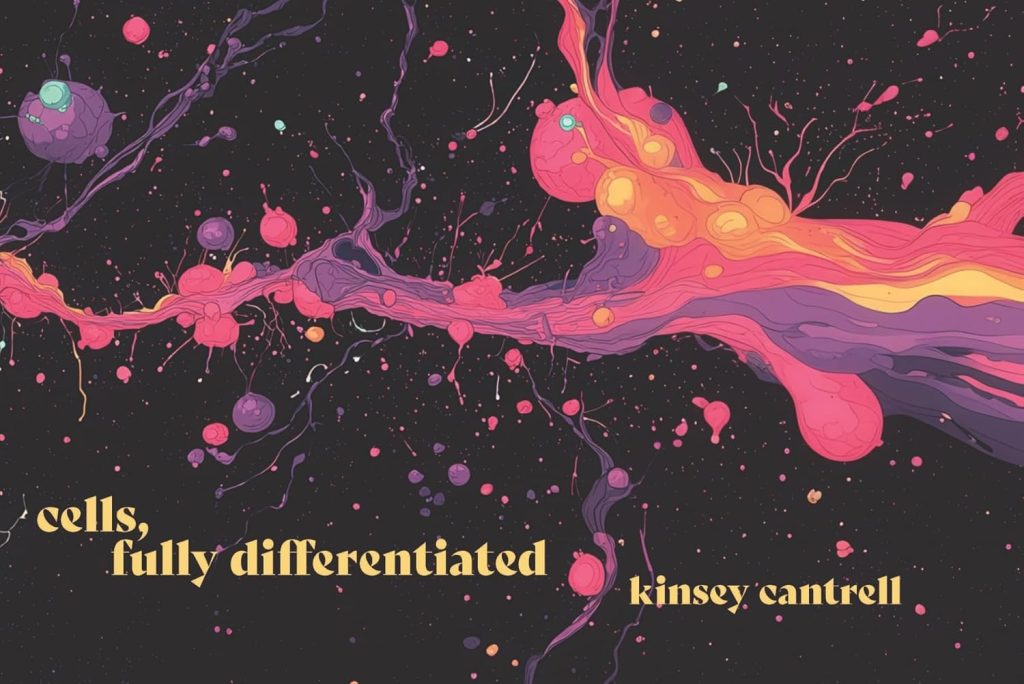
My debut poetry book, cells, fully differentiated, out now from Noemi Press, is an account of an existence subjected to, shaped by, and never fully certified by the American healthcare system. Drawing on my experiences as a disabled person living in the liminality of non-diagnosis, cells explores the role of neoliberal capitalism in the formation of, the care for, and the quotidian experience of chronic illness. The book depicts phone arguments with insurance companies, illustrates the endless tug-of-war for credibility and legibility, struggles with the way pathologization is deployed as metaphor, and grapples with what it means to deal with failing health in a failing state.

In this reading list, I highlight books that depict the impacts of neoliberal capitalism and fascism on our collective health, reflect on encounters with Western healthcare systems, and call for a popular movement towards healthcare for all. The ten books that follow range from theory to poetry to memoir, yet find commonality in their emphasis on possibility and action. More than simply calling out the bureaucracies and processes designed to provide us with the minimum while extracting the maximum, these books illuminate paths forward and offer strategies for organizing against capitalist exploitation, harnessing the power of the people, and finding strength in solidarity.

Health Communism: A Surplus Manifesto by Beatrice Adler-Bolton and Artie Vierkant

Written by the hosts of the podcast Death Panel (itself an excellent collection of “texts” that serve as a balm in the current moment and provide instruction for action), Health Communism declares both that capitalism is inherently incompatible with health, and that health is fundamental to capitalism. As the book begins, “Health is capitalism’s vulnerability.” Adler-Bolton and Vierkant define the “surplus class” as those who are labeled as a burden, or a drain, on the economy, including but not limited to the chronically ill, the disabled, the unemployed, and the elderly. Building upon Ruth Wilson Gilmore’s concept of organized abandonment, Adler-Bolton and Vierkant describe the “extractive abandonment” that operates to systematically render the surplus class disposable (that is, exposed to conditions that enable premature death) and, simultaneously, extract capital from us.

But Adler-Bolton and Vierkant have robust proposals for fighting back. Their history of the Socialist Patients’ Collective (SPK) provides a model for organizing and ideology. They call for the centering of the surplus class in our movements. In explicitly naming the alternative to health capitalism, Health Communism offers a clear path forward for the left and confers on us the power to demand health liberation.

Capitalism and Disability by Marta Russell, ed. by Keith Rosenthal

This collection of essays unpacks the political economy of disability, arguing that disability is a social category primarily constructed through its relation to labor. By dividing potential workers into “the able-bodied” and “the disabled,” capitalism coerces disabled people out of waged work and instead extracts value by treating the disabled body as a commodity, and its need for care as a source of profit. Russell points out that not only do meager benefits and the continued neoliberal destruction of the social safety net coerce workers into productivity for fear of becoming disabled, austerity and bureaucracy also operate to withhold welfare and keep disabled people in a state of precarity. Ranging from U.S. imperialism to eugenics to institutionalization, Russell employs Marxist analysis to explore what so many Americans know firsthand—the intimate connections between health, disability, and one’s ability to work. 

The Next Shift: The Fall of Industry and the Rise of Health Care in Rust Belt America by Gabriel Winant

In The Next Shift, Winant describes the striking transformation of Pittsburgh’s economy from steel to healthcare, arguing that this transformation is no accident and is a direct result of the increased care needs of blue-collar workers. In contrast to the strong unions of the steel industry and their labor wins, Winant emphasizes the “mass low-wage private-sector employment” imposed upon the majority of healthcare workers, workers who are as important as they are underpaid and exploited.

While Pittsburgh is a stark case study, the processes that Winant describes have been enacted all over the States, and thus The Next Shift offers a crucial assessment of what the rise of the healthcare industry means for healthcare workers, patients, and caregivers alike.

The Undying by Anne Boyer

In conversation with an array of thinkers and patients, Anne Boyer’s memoir, The Undying, depicts her experience with triple negative breast cancer and seethes against the vast societal and gendered connotations of the condition. With a studied cynicism towards the institutions she interfaces with, Boyer writes of “drive-by mastectomies,” chemotherapy medications that cost more than yearly salaries, and the unremitting requirement of work during sickness. She reflects, “When reading historical accounts of breast cancer, I am often struck by a world on which profit hadn’t taken such a full and festering hold.”

For Boyer, the origins of her cancer are haunting. Boyer leverages this into revolutionary anger: “Immobilized in bed, I decide to devote my life to making the socially acceptable response to news of a diagnosis of breast cancer not the corrective ‘stay positive,’ but these lines from Diane Di Prima’s poem ‘Revolutionary Letter #9’: ‘1. kill head of Dow Chemical / 2. destroy plant / 3. MAKE IT UNPROFITABLE FOR THEM to build again.’” More plainly, Boyer writes, “I would rather write nothing at all than propagandize for the world as it is.”

Disabled Ecologies: Lessons from a Wounded Desert by Sunaura Taylor

In Disabled Ecologies, Sunaura Taylor revisits a land that has had embodied impacts on her —its toxicity the likely cause of her genetic condition—despite the fact that she has not lived on it for decades: a Superfund site on the south side of Tucson, Arizona. Considering her birthplace as exemplifying a “disabled ecology—[a network] of disability [created] when ecosystems are corrupted and profoundly altered,” Taylor investigates the history of the contaminated aquifer. A key component of that history was the formation by local residents, many of them Mexican American, of the group Tucsonans for a Clean Environment (TCE, named after a key toxin in the aquifer), which aimed to unearth the truth of the violence enacted upon them and to fight for justice, reparations, and the decontamination of their land.

Forming an instructive theoretical basis for an “environmentalism of the injured,” Disabled Ecologies is a beautifully written, captivating feat of archival work. Utilizing the networks of disability created by the U.S. military industrial complex, the book proposes ways we might leverage our interconnectedness on local and global levels to resist.

The Right to Maim: Debility, Capacity, Disability by Jasbir Puar

In this crucial intervention into disability studies, Jasbir Puar emphasizes that the source of much global disability and illness can be tied to the concept of “the right to maim,” or the asserted right of the state to enact mass debility on populations as a form of enforced precaritization. Defining “debility” as a “slow wearing down,” Puar highlights how neoliberal capitalism and U.S. imperialism, work and war, use debilitation tactically to incapacitate and capacitate racialized populations and thereby control them. Through discussions of the impacts of the U.S. war machine and Israel’s exercising of both “the right to maim” and “the right to kill” on Palestinians, Puar argues for a framework of disability that transcends pride and identity discourses. Instead, Puar names debility as a mechanism of state violence and takes that, rather than the push for acceptance of difference within neoliberal systems, as a launching point for disability scholarship, organizing, and activism. 

Mad World: The Politics of Mental Health by Micha Frazer-Carroll

In Mad World, Micha Frazer-Carroll locates the Madness/Mental Illness “epidemic” squarely within capitalism, highlighting “how the world drives us Mad, how the world comes to categorize us as Mad, and then, how the world responds to our Madness.” Drawing from principles of the disability justice movement, Frazer-Carroll deconstructs the asylum, diagnosis, carcerality, and the sickening impacts of labor exploitation, with thoughtful attention to the way linguistic formations operate within these systems of oppression. She foregrounds the lived experience of Mad people, calling for us to “uproot our assumptions and centre knowledge ‘from below’—which often contradicts that of charities, medical institutions, and other professional experts.” Frazer-Carroll argues against disavowal, attesting to the necessity of solidarity in delivering us into a liberated future.

Decarcerating Disability: Deinstitutionalization and Prison Abolition by Liat Ben-Moshe

In Decarcerating Disability, Liat Ben-Moshe thoroughly disproves the popular notion that the deinstitutionalization of asylums, beginning in the 50s, paved the way for increased incarceration of disabled and Mad people. Instead, Ben-Moshe identifies deinstitutionalization as the largest decarceration movement in US history and suggests that it can offer essential lessons for prison abolition movements. Decarcerating Disability provides a much-needed assessment of the intricate relationships between disability and carceral abolition, illuminating histories and knowledges in service of abolition movements.

The Viral Underclass: The Human Toll When Inequality and Disease Collide by Steven Thrasher

As the COVID-19 pandemic continues and the threat of H5N1 escalates, Thrasher’s analysis of the “viral underclass”—the class for whom instability and structural inequity combine to heighten vulnerability to pathogens—is obviously urgent; but then, as Thrasher illustrates, it has been for decades. A scholar of the HIV/AIDS pandemic, Thrasher depicts the disproportionate impacts of viruses on already precarious populations, making the point that this vulnerability is not inherent but manufactured. The book is structured around what Thrasher terms “social vectors,” or forms of oppression that magnify the harms caused by viruses, such as racism, capitalism, borders, and the liberal carceral state. Through empathetic reporting, Thrasher argues against the popular narrative of “patient zero” and the pathologization of people who contract viruses, while emphasizing that viruses are not nefarious, malevolent agents—viruses are an inevitable feature of our environment. Given the boundary-defying nature of viruses, Thrasher envisions them as evidence of human and interspecies connection and interdependence, and suggests our learnings from viruses can aid us in creating “a new ethic of care.”

If God is a Virus by Seema Yasmin

Drawing from her time reporting on the largest Ebola epidemic in history, Seema Yasmin’s poetry collection explores the permeability of the relationship between humans and viruses while challenging the authority of medical and public health institutions to dictate these relationships. Repeated “WHO said” poems deftly call into question the communications of a global health authority and contrast these with the lived experience of patients and healthcare workers.

Invoking an epigraph from Marwa Helal, “poems do work journalism cant,” Yasmin uses a plurality of forms to navigate these systems and questions; her poems take the shape of surveys, bingo cards, phylogenetic trees, and forms that purport to translate the language that patients use to describe their suffering. Yasmin takes her vast array of experiences—as poet, as journalist, as medical doctor—and transforms them into a groundbreaking poetics.

The Best Part of Researching Trans History Is When I’m Wrong

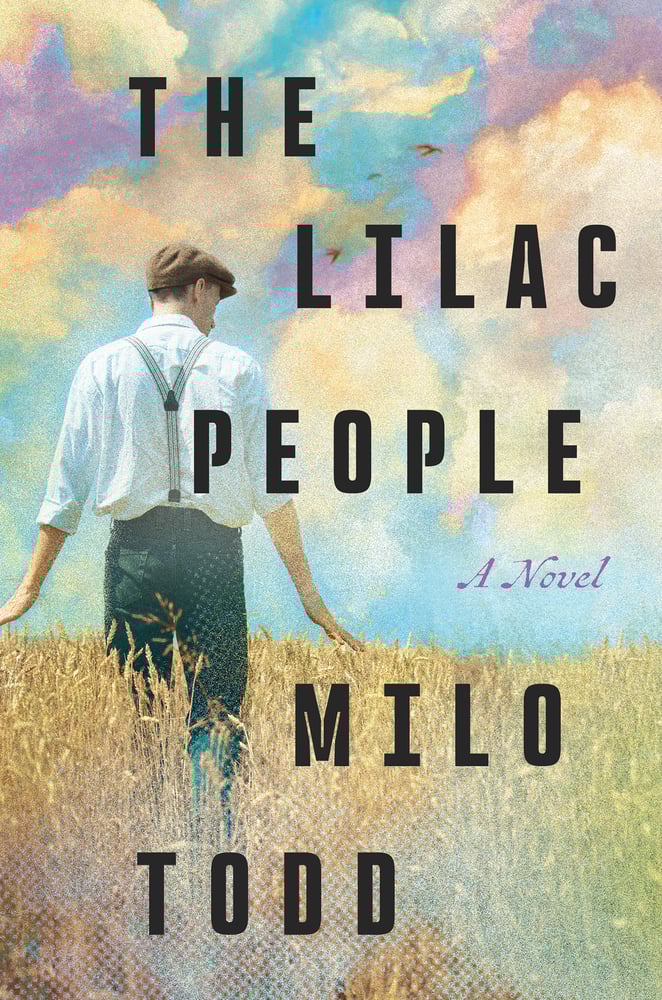
In The Lilac People, my debut novel about trans people in Weimar Berlin and Nazi Germany, I have a side character so small, they’re downright tertiary. Dora Richter has no speaking role, nor does she have any impact on the plot. And yet she’s included because she’s important, and she was real.

As is often the case when researching marginalized or erased histories, things were incomplete. There were pieces missing in Dora’s life story, and eventually it cut off completely. After a certain point, she was never seen or heard from again.

At least, this was the narrative for decades. I take pride in being as accurate and thorough as possible with my research, so I followed the trail of the dedicated historians before me, equally determined to provide as complete a picture of Dora as I could. With trans history so dear to me, there’s no worse fate to me than appearing to be, in a word, wrong. Especially if it’s too late to correct that wrongness.

But the tricky nature of recovering marginalized history is it’s never done. It shifts, it surprises. There are inevitably parts that remain empty or obscured, and yet sometimes something new pops up despite the tireless efforts of previous historians. Sometimes that new discovery is also quite big.

Dora’s seemingly concluded history did recently shift, and me and many others were indeed surprised. It was also too late for me to do anything about it.

At the time of writing The Lilac People, this is what I knew about Dora Richter.

Dora Richter was a trans woman (“transvestite” at the time) known as the first documented person to have undergone a complete, gender-affirming vaginoplasty. She was born in 1892 in Seifen (now Ryžovna) in the Kingdom of Bohemia (now the Czech Republic), and is believed to have been the second of seven children. She exhibited so-called feminine behaviors by at least six years old and became a baker’s apprentice around the age of seventeen. She dressed as a woman in her free time and eventually headed to the Institut für Sexualwissenschaft (the Institute for Sexual Science) in Berlin when encouraged by a friend. The Institute had many resources available for trans people.

She was arrested multiple times in Berlin for her so-called crossdressing, and otherwise worked as a male-presenting waiter and cook until she got her first of at least three surgeries in 1922 around the age of thirty. After completing the first surgical step of her vaginoplasty journey, she worked at the Institute for Sexual Science as a maid and domestic servant alongside other trans women who had elected to do the same. (One of the many resources the Institute offered to trans people was employment, when available. The Institute’s co-founder, Dr. Magnus Hirschfeld, recognized how difficult it was for trans people to find employment.)

Dora was well loved and respected at the Institute and was affectionately nicknamed “Dorchen” (“Little Dora”) by Dr. Hirschfeld. The other maids were also loved and respected, as exampled from this observation by Dr. Ludwig Levy-Lenz, a surgeon at the Institute and who performed one of Dora’s surgeries:

It was, moreover, very difficult for transvestites to find a job.(…) As we knew this and as only few places of work were willing to employ transvestites, we did everything we could to give such people a job at our Institute. For instance, we had five maids – all of them [MTF] transvestites, and I shall never forget the sight one day when I happened to go into the Institute’s kitchen after work: there they sat close together, the five “girls,” peacefully knitting and sewing and singing old folk-songs. These were, in any case, the best, most hardworking and conscientious domestic workers we ever had.

But then, on January 30th, 1933, Hitler became chancellor. Just three months and some change later, on May 6th, the German Student Union, who were by this point young Nazis, ransacked the Institute. This soon led to the first documented queer/trans book ban, a book burning.

For a while, this was where Dora Richter’s story ended.

For a while, this was where Dora Richter’s story ended. It was originally believed that she had been murdered that night, and so this is what my characters believe in the book. However, in March of 1955—22 years later—more information about her finally surfaced. In an article by Charlotte Charlaque—another pioneer of trans woman history in Berlin, who also fled—in the American magazine ONE, it turned out Dora had escaped from Germany after that day at the Institute and went to Karlsbad, Czechoslovakia (now the Czech Republic). She became the owner of a small restaurant in her hometown of Seifen/Ryžovna.

In 1934, she was finally granted a legal name change to Dora Rudolfine Richter (Czech version: Dora Rudolfa Richterová) by the president of Czechoslovakia. (According to historian Clara Hartmann in 2023, her baptismal record was finally updated with both her correct name and gender marker in 1946. It was updated by a priest and stamped by the Catholic parish office of Seifen, which are details I just find interesting.) She owned her own home in Seifen/Ryžovna, remained unmarried, and eventually worked as a lace maker.

But in 1939, she again fell off historical radar. On the surface, this wouldn’t cause much alarm. People disappear into history all the time due to a lack of consistent records. But with the fact that the Nazis invaded Czechoslovakia in 1939, suddenly her disappearance doesn’t seem so benign. After surviving the Nazis once in Germany, historians speculated she wasn’t as lucky the second time around in Czechoslovakia.

Since I take pride in the accuracy of my work and strive to honor the legacies of the transcestry, I wanted to make sure readers knew these extra pieces of Dora’s life. I included a shorter version of them in the book’s back matter. I also included a definitive final sentence: “The rest of her life is unknown.”

This was how it was for the years of research for my book, straight through to early December 2024, when it was time to send back the final pass pages to my publisher. After sending the final pass, I could never alter the book again. Ever. This is how it would be published in April 2025.

So I attempted to be meticulous for the umpteenth time, combing through everything for inaccuracies, updates, and typos on all levels of craft, content, historical accuracy, and grammar. Then, with both relief and anxiety, I sent the pages over. That was it. I never had to (or could) look at the manuscript ever again. This moment comes for every author. Surely it’d be okay.

Just days after sending off my final proof pages—now 69 years since the last known update about Dora in 1955—I heard the news: historian Clara Hartmann had uncovered new information about Dora Richter. It turned out this news had gained attention almost exactly two months before I sent in my final pass pages, with some of it originally published more quietly six months earlier in June 2024. I’d completely missed it.

By the time I heard, I knew it was too late to update my back matter. One simply does not mess with printer deadlines. Immediately, that sentence haunted me: “The rest of her life is unknown.”

Immediately, that sentence haunted me: ‘The rest of her life is unknown.’

Dora, it turned out, lived to the age of 74—an exceptionally good lifespan for her time. She continued to live in Seifen/Ryžovna until 1946, when the end of WWII led to the expulsion of Germans from places such as Czechoslovakia. She then went to Allersberg, Bavaria, where she remained until her death in 1966. According to Clara Hartmann, neighbors fondly remembered Dora as a cheerful old woman who kept a pigeon in her handbag. She was rarely seen without that handbag, which supposedly was used as a makeshift nest for the pigeon, and into which she was sometimes seen dropping food. She lived with a man who some neighbors assumed was her brother, but others believed was her lover. (Couples living together outside of wedlock was frowned upon.)

When I heard the update on her life, I had a mix of feelings. One of them was joy at the simple fact that Dora had survived. Another was awe, that somebody had managed to find out more about Dora Richter and the lengths to which that historian went. But I also felt frustration. I’d just spent how many years researching all this stuff, only to miss such a big update by at least two months, rendering my book technically outdated before it even had a chance to debut? It was admittedly from a place of stubborn pride for me, the pride I take in being as accurate as possible in histories that are often quickly dismissed as speculative or false. Had I gone to the same lengths that Hartmann had when trying to find new information about Dora? Not even close. Was I still worried people would see me as a hack who didn’t know what he was talking about? Well, yeah.

But after feeling my medley of feelings, I began to reflect. In my book’s back matter, I’d also included the following: “We’ve entered a time when people are finally discussing and researching trans people during the Nazi era, and I welcome the updates, changes, and discoveries that occur beyond my armchair-historian novel.”

Trans history is far from over.

Three things jumped out at me, rereading that statement: 1) I meant it, 2) I didn’t realize how quickly this sentiment would be put into motion, and 3) my phrasing of “the updates” as opposed to “any updates” indicates that it wasn’t just hopeful thinking on my part that more trans history would be on the horizon. It was a recognition of how trans history works.

I realized I’ve never been happier to be wrong. And this, it turns out, is the best part about researching trans history.

As more trans historians enter the profession and more ally historians check their assumptions and (over)simplifications about the history of gender, some of the holes of gender non-conforming history are filling. Lost pieces are being found, and whole or nearly-whole pictures are coming together after generations of obscurity.

When we think of historical erasure, we often think of the more physical side of things: the destruction of artifacts, books, and other primary sources that confirm the past existences of a marginalized identity. However, as I’ve written elsewhere, this is only the first in a four-step process of erasure. The others are the destruction of the people, the destruction of meaning, and the glossing over/sometimes-willful misinterpretation of modern recoveries of said histories.

I used to think that Dora Richter’s story ended with that second step: the destruction of the people. However, thanks to the tireless dedication of Clara Hartmann (and, earlier, Charlotte Charlaque), we now know that isn’t the case. We now know that she survived the Nazis not once, but twice. We now know that against the odds, she went on to live a long, happy life. We know that trans history is far from over, that it has always been and continues to be a collaborative effort within and beyond the community, people contributing new pieces of information as they find them. We’ll continue to recover, discover, and awaken histories that either were erased in any of the four above steps or have been slumbering this whole time, undisturbed, because none of us yet know they’re there.

But perhaps most importantly, we now know that such stories sometimes come with a happy ending. The reality is there. All we have to do is look.

Lori Ostlund on the Specter of Violence that Hangs Over Women and Queer People

In 2016, I moved from Philadelphia to the Upper Midwest, to Michigan’s Upper Peninsula, to attend a creative writing program. My family struggled to adjust, and no one struggled more than I did. It wasn’t the remoteness or the weather that challenged me most, but the way people communicated. I hadn’t realized the way the east coast had conditioned me to be blunt and open, and I balked at the strange combination of warmth and reservedness I found in the Midwest. And, more than anything, I felt like a queer weirdo. I set most of my stories at home in Philadelphia, a place that was becoming squishier in my mind, but I failed to see how to square my queerness with the new setting in which I was living and writing. I told my fiction professor I was thinking of leaving the program and Michigan. She gave lots of good advice. One of the best pieces: read Lori Ostlund. I started with “All Boy,” and then one by one read and re-read all of the stories in Lori’s debut collection, The Bigness of the World. No book had meant as much to me since I found Harriet the Spy and Matilda in childhood and felt myself wrapped up in the queerness of these little girls’ worlds. 

In her stories as well as her novel After the Parade, Lori captured something about queer people who grow up in small Midwest towns and strike out to the coasts, or to New Mexico, or abroad, that moved me intensely as someone who had traveled in the other direction. Even though I was new to the Upper Midwest, I saw my new friends and acquaintances and their families and contexts captured. So when I saw that Lori was publishing a new collection in 2025, I did something I had been meaning to do for years: I reached out and told her how her writing had changed my life. I didn’t drop out of school and retreat to the coast like I had told my professor I would. I stayed, finished my degree, and now, years later, find myself writing and teaching in Lori’s home state, Minnesota. 

I couldn’t wait to talk about her new collection, Are You Happy?, whose stories strike out in bold directions but at whose heart is the same measured, hyper-realistic prose that allows astounding access to the interior lives of characters who often keep their innermost thoughts secreted away from their family and friends. I wanted to know how she does it, and how her interest in “the bigness of the world” continues to morph and attach to her new stories.

Krys Malcolm Belc: There’s this interesting movement I noticed through the collection where, especially in the first couple stories, there are huge events that are really shaking up people’s lives, like the loss of a child, or the plane accident described in one of the stories.

And then there are a couple stories later where it’s more about accretion of smaller events [that] sometimes don’t ever coalesce into a big event. Two women who believe one of their neighbors may be watching them, a teacher who feels menaced by one of her students.

I’m wondering how you’re thinking about big events and small events in your characters’ lives. 

Lori Ostlund: Every time I’m asked to describe the book, one of the things I talk about is that specter of violence. Events that actually happen are one thing, but in some ways, I’m almost more intrigued by the big thing that never comes to fruition, but your whole life, at least for a moment, is defined by feeling that it might. 

“The Stalker” is the last piece that I wrote for this collection. I wrote it last year, and it’s about a stalker that I had. I think every teacher has something like that, a moment in their classroom that leaves them feeling slightly uncomfortable. What I remember most is my own reaction, which was to feel that I was over responding to it, giving it too much credence. 

It was this big guy who would always stay after class and wait for everyone to leave and always wanted my time in this very specific way. One night I told him I needed to get going, and I was gathering my things, and I turned around and he was like two inches behind me. I just remember looking up at him and [seeing] this look like he wanted to kill me. I left, it was at night on this remote campus, and by the time I got home and started to tell [my partner], Anne, and she was like, You gotta talk to your boss. 

I think loneliness remains one of my preoccupations as a writer.

If you just say, what’s the end of the story, the end of the story is nothing happened. But I’m interested in that whole in-between, when all you’re doing is reacting to it and thinking about it, and how it transforms everything. 

KMB: This isn’t the first time I’ve seen New Mexico in your work, but I did feel like Albuquerque, especially, but also Santa Fe [in “Two Serious Ladies”] were very big and built out in this collection. How were you thinking about presenting these cities to your readers? 

LO: The novel that I’m working on is set in Albuquerque. My wife and I started an Asian furniture store, which we ran for seven years, called Two Serious Ladies. The novel is also about this undercurrent of violence that runs through things. And it’s also about loneliness. I think loneliness remains one of my preoccupations as a writer. 

The book is definitely an Albuquerque book in some ways. I think that people don’t really know much about Albuquerque. If you say New Mexico, people just default to Santa Fe.

I like Santa Fe, but it’s not my New Mexico. I lived in Albuquerque for many, many years. I think you’re making me aware of the fact that maybe I write about it more comfortably when I don’t live there. 20 years ago we moved [to San Francisco]. I always say that I can’t write a thing about Minnesota when I’m there. I think that that remains true, yet it’s factored so much.

I always feel like my job as a writer is to sit between the world that I know, that very specific world of towns of 400 people, and interpret that for the rest of the world. Albuquerque is a very specific place also. It has a very high per capita crime rate, and that’s what people tend to know about it or fixate on, but that’s not necessarily the world of Albuquerque that I’m presenting.

KMB: Many of your characters seem to be people who withhold things that they’re thinking, either because of their constitutions, or because they’re coming from a cultural context [like the Upper Midwest] where we don’t say the things that we’re really thinking. Reading through the collection and getting to the last story, “Just Another Family,” Sybil is a character who says “the thing” to be provocative in an almost aggressive way. 

In one moment, Sybil’s Mom, who talks around things and is a very elliptical speaker, says, “You know how your sister gets about the kids” when Sybil asks why she moved her deceased father’s guns into the room where she’s staying. 

And Sybil says, “You mean how she gets about not wanting them to blow their heads off?” She just says it. I want to hear a little bit more about writing this character who goes against the rules that so many of the other characters are following. 

LO: This is a character who is really struggling against something and so she’s saying all of these things because she hasn’t made her peace, hasn’t done that work yet of figuring [herself] out.

A reader said that they really like that story because the narrator reveals herself to be such an asshole. And I don’t know why, but it gave me such pleasure because I thought, That’s it exactly. That’s what I was going for. That pushing back. 

I grew up where nothing was talked about. My understanding of how [to] write dialogue in particular, but I think everything else too, came out of that. The most interesting things were unsaid. Humor is created by understanding how to put the words on the page in a certain way, and knowing when to stop, when to create that restraint. And all of that went away a little bit when I wrote “Just Another Family.” It went in the opposite direction.

That’s kind of the way I define Midwestern humor: We’re happiest when we make a joke that no one else gets.

A friend read it, and he said, “I’m so interested. Your characters often seem to take great pleasure in making a joke that people don’t think is funny.”  That’s kind of the way I define Midwestern humor: We’re happiest when we make a joke that no one else gets. We don’t laugh outwardly but [are] laughing inside.

Sybil is all of that, all these pieces of me that are maybe pieces of me if I’d gone a slightly different path. It gave me a certain pleasure. As a writer, I’m really intrigued by that gap you have to be able to open up on the page, and it’s the gap between what a character knows about themselves, our narrator, and what the reader knows.

KMB: A lot of the protagonists have a partner character who serves as a bouncing off point. In “Just Another Family,” [Sybil’s partner] Rachel says things that are right about how Sybil acts like the worst version of herself when she’s dealing with family stuff, but on the other hand, whenever Rachel would say these things to Sybil, I would tell myself, Don’t hate her too much! And I wanted to tell Rachel, Just remember that when you go back home, it’s not gonna be like this. 

You developed my affinity for the character who, if you just went by actions on the page and the way that she’s interacting with her sister and her mom, you’d be like, God, she just stinks. But you know there’s this other self that [Sibyl] can get back to when she leaves. 

LO: Maybe this is just a shift in me, but I’m not very interested in cynicism right now. As I get older, I feel it’s really easy to become more cynical. I can see how, and I can easily reflect each other’s cynicism back to each other.

When I was writing this final version of that story, I could feel early criticism that nothing really happens with this character, and the way that I addressed that or wrote into it had to do with the fact that I didn’t want the story to just be cynical.

Petra [Sybil’s neice] saying [“Were Sybil and Rachel born together in a big bubble?”] at the dinner table was an opportunity to show how miserable everyone is. [It was] just this awkward moment and that was it. But later I started to think about it. Suddenly that became bigger, and it became one of the moments I was writing toward at the end, a more hopeful moment. 

KMB: I was thinking a lot about domesticity and queer domesticity in particular throughout this story, [how] sometimes these stories are about the safety that you can create inside of a home. 

We create the bubble. When you have the bubble, then you’re the self you need to be to go out in the world and do stuff, right? We can go be teachers and work in our community and connect with other people, in a way that we can’t do when we’re in the dysfunction of the place that caused us to make the bubble. 

LO: I completely agree. That bubble was one of those things that got handed to me. Years ago, when we were living in Albuquerque, we had good friends who lived around the corner. They were over at dinner one night, and their daughter, who was like three at the time, she just sensed something, and she asked whether we were born in a bubble together. I think she was noticing something, and she understood that we had this connection that felt big, but she also understood that we were kind of separate from the world in some ways, and that was how she expressed it.

And I loved it. I thought, I’m going to figure that out someday. That’s going to go in a story and I’m going to figure out what it means. 

KMB: In “A Little Customer Service,” there’s a moment where the protagonist, Tara, is charged with freeing the caught mice that her older, possibly manipulative girlfriend-figure catches inside of her home. Tara gets in the car with the girlfriend’s kids, they drive out of town, and they’re going to be releasing these mice. One of the children is upset, and he says, “Tara, do you feel sad about how the world, how big the world must seem to him right now?”

I want to talk about your enduring interest in the situation that this mouse is in. There are the people who stay, the people who leave, and then this mouse, the people who are on the threshold of something. 

LO: When I was writing The Bigness of the World, I had all these stories, and I didn’t know how they connected beyond the fact that they all came out of my brain. I was stuck on the title story, and I knew that I needed something.

So Anne said, “Let’s go. Let’s go to Point Lobos and let’s go see the ocean.” So we drove down there, and we’re walking along, and Anne said something to me like, “Your mother should come and visit us,” which just terrified me because my mother has never really left Minnesota. She’s never been on a plane.

Being gay saved me.

Much of my adult life has involved estrangement. So this idea just seemed awful to me. I said to Anne, “Why would you say my mother should come and visit us? She’s fine where she is.” And Anne said, “Well, because she’s never seen the ocean.”

And I said, “Well, why does she need to see the ocean? She’s lived this many years without it.” And she said, “Well, you can never really understand the bigness of the world if you haven’t seen the ocean. “

I think I always, because I was so curious, wanted to just go out in the world. Being gay saved me. It pushed me out. And the very first time I saw the ocean, I was in my early twenties, and I remember so clearly that feeling of thinking the world is huge. And I understood equally people who would look at the ocean and feel that sense of awe, and people who would see it and retreat. I understood both of those, and maybe that’s because I have both of those inside me. That is one of the things I come back to all the time in my writing: That feeling of fear of the world, and a need to retreat from it, to close it off for whatever reason—because of fear, because of that specter of violence, because of whatever it is inside oneself—and that need to engage.

And so I think the mouse has that thrust on him, doesn’t he? But Tara is really speaking more about herself. Tara was an interesting character for me to write because I don’t really identify with her. It was a story in many ways about class, and I am interested in class issues. My parents didn’t go to college. I grew up in this hardware store. When I left, I went to a state school an hour and a half down the interstate. 

I live in a world now where the people around me grew up in a much different place. They went to different sorts of schools. I always call it “the credentialing”: the conversations about where did you go to school and where did you vacation when you were a kid with your family, and all these sorts of things that had no bearing on my life whatsoever. 

My partner, Anne, she’s first generation born in this country; her parents were Holocaust refugees. Her father was a professor of Russian history and her mother a psychiatrist. When she hooked up with me, they were like, Who is this woman from Minnesota? You know, her father referred to it as “the provinces” one time. So Tara interested me, but still, even though there were so many things about her that I could relate to, she was again who I would be if maybe I had not gone out into the bigness of the world, if I had stayed at a certain place. She’s curious, but stuck in the mud a little.

Tara is in and out of school, and then in this relationship that’s clearly not going anywhere. And you see that she would like the ocean, but [that] she might not get there. She might not fit into that dichotomy of characters. That’s completely who she is. It’s the parallel life that I never pursued, but I still feel it.

I Can Never Own My Perfect Home

That Old House by Lydia C. Buchanan

The first time I saw it, I was awake. 

I was trekking through the neighborhood next to mine, on my way to work. It was a long walk, but one of those perfect summer days that just a few months earlier, in the thick gloom of Boston winter, would have felt impossible. And so, when it finally comes, the city soaks it in. My strolling location: a wealthy neighborhood with one of the highest PhD per capita ratios in the country. You get the idea: brownstones and irregular, shingled mansions. It was summer. I walked. Other people walked. Some people ran; some people biked. Past the Greek bakery, and the nail salon, and the Russian School of Mathematics. I have no idea what the Russian School of Mathematics is, only where

On my way past a daycare—one of three on my route—I scooted over on the sidewalk to make room for a 4-seat stroller. It was a red plastic square of babies in two rows, each strapped into a swiveling seat and lazing in its own orbit, caregivers at either end to push and clear the way. It was distracting—so many babies. So many babies staring at their own hands. They rolled by, all of us in a daze. And there, around the corner I skirted to make room for the tiny, was the mirage. One minute, I was watching babies not watch the sky. The next, instead of breath, there was a great silence blooming in my chest. 

The mirage had a three-column porch, and a big, purple, wooden front door. Behind the glass in the door hung a panel of lace. Maid of the mist. It had taupe-painted shingles and white trim and wide windows and bright plants in the yard. A yard. In the city. Green, glory. The windows held the same kind of glass as the door: the thick, old kind that warps vision. Above the porch, a widow’s walk. To the right of the porch, a tower. It started on the ground and ended at the sky, topped with its own cone. Tower. 

I could tell you it’s a Victorian, but that summons frills and buttresses and stripes, and I hate multicolored trim more than almost anything.

I could tell you it’s a Queen Anne, but I think she did frills also. Edwardian? I give up.

I tell you: It was perfect, the kind of perfect I didn’t know had power over me. 


Years ago, when friends of mine from college started buying houses, I considered it a lack of imagination. They married within twelve months of graduation. They got something like the job they had studied for. (They had studied things with jobs: engineering, elementary education, business.) They looked around for what to do next. Too soon for babies. What were strangers their age doing? Buying houses. Purchasing long-term hobbies. What does homeowner Jim do for fun? He mows the lawn and squares the hedges. What does homeowner Sally do? She wallpapers the hallway and organizes linens. 

Okay. In this gender-normative example, I’ve given Sally the tasks that don’t seem too bad, Jim the ones that make me want to go back to bed. Now you know who I am. 

But my point remains: Isn’t boredom why some people—confident people whose lives are working out for them—buy houses? Boredom is the root of all my mistakes. That, and the adult disappointment of being bookish.  

When these friends were buying houses, I was in grad school to become a writer. I was moving, again. I wanted no plot of land to commit and return to. I wanted no possessions that couldn’t fit in my car. Their confidence shocked, horrified, me. How dare they feel so certain, make such permanent decisions. Fools.  

But I am beginning to know humility. What if, instead of boredom, or a lack of imagination, some people buy houses out of love? 

The mirage owned me. 

What a traitor, my heart. 


That evening, after work, I walked home on the other side of the road, stopped and stared across two lanes and two sidewalks so I could take it all in. I sighed. I wanted it. My house.  

I started taking people around to see it. My husband, when we were out walking. My sister, when she was in town. Do you want to see my house? Let’s go! 

Now, I see it in dreams.  Not necessarily my house, embodied as is it a mile from my current apartment. But my house. In the dreams, there is an open back door and hours of sunlight. There is a kitchen counter covered in fresh tomatoes. Sometimes, out the window, it is snowing. Sometimes, I’m holding a book inside my bathrobe. Always, I’m not wearing socks, and I am not afraid. 

I can’t believe I’d want something as frivolous as a house with windows so old they warp vision.

But I am afraid. Bamboozled. I’ve never longed for property ownership. It sounds like that: onerous. Lawns to mow and driveways to shovel and insurance to buy, property taxes to pay. What am I forgetting? It doesn’t matter. The worries would have my name on them, searching me out like heat-seeking missiles. With an unstable job—unpaid writer, part-time college writing instructor twice over—and an ancient car and a partner deep in the throes of a terminal degree in a field with no prospects (it’s not engineering), my life can’t support anything else maintained by worry and sinkholes of time. I can’t believe I’d want something as frivolous as a house with windows so old they warp vision.  


As with most problems of my heart, the cause is, in part, books: Barton Cottage, Orchard House, Manderley, Pemberly, Villa Villekulla, Bag End—I am happy to be swept away by the literary fantasia of a house with a name, a house with a character.  

But also, it’s New England. Currently, I live in Boston. That’s where I saw my house. Or rather, I saw it in a small city that exists within the limits of the city of Boston but for predictable demographic reasons, refuses to incorporate into the city proper. And I grew up here. Not in Boston, but two hours southeast, on Cape Cod. For the years I was in college and graduate school, years that I maintained I had no interest in homeownership, I lived elsewhere. Places where blocks were squares, places where road names were grid numbers, lawns and roofs were flat. Places where the windows were never drafty, the radiators never clicked out of time, the floors were more likely to be carpet than hardwood, the front doors insulated metal. Who am I kidding: there were no radiators. There was central air. The houses were, perhaps, affordable, but they inspired nothing in me. It was not as bold as I imagined it was to claim that I didn’t want to own one. I didn’t like them.

It took three years of life in Boston for New England—the land of old houses, the land of my childhood, mythologized in steep roofs and irregular floor plans; thick, wooden doors and painted shutters—to break me.

There is, especially here in New England but not only here in New England, an industry built around the care and feeding of old houses. The bureaucracy: Historic Preservation Committees regulating flora and fauna and paint colors. The money: replacement wallpaper companies. Irregular, historic window companies. Furniture preservation shops. Antique shops. Historic plaque shops, so strangers can know the age of your house, the last name of its first inhabitants. There are those businesses that painstakingly scrape back every layer of paint until they find the Original Shade. They will mix and sell you the Original Shade, for another small fee. And then, there are all the plumbers and electricians and painters and carpenters and stone masons called to fix what breaks often: old houses. 

But before and after all this, there is the legend-maker, the mythology-builder, the jewel of WGBH, now in its 42nd season: This Old House. Perhaps you’ve seen it. I can’t imagine anyone not having seen it but then, I was raised on inherited, Puritan air: public television and frugality.

In This Old House, men in faded button-down shirts restore an old house. In every episode, there are scenes of boards being sliced and perfect holes being drilled. Men point to crumbling moldings and remove old wires, replace them with bright, new wires and fresh moldings. These men are methodical. They never make mistakes or imperfect cuts. The sound effects, too, are flawless: not so much construction that you get a headache, just enough screwdriver buzz that you believe work is happening. Everything fits as it should. By the end of the show, everything works as it should too. Everything is or will be a beautiful old house, impeccably maintained. No one tries to modernize the décor, only the functionality. 

There is a spin-off show called Ask This Old House where viewers—people who own old houses—write in with home-repair questions. If their question is good enough, one of the Ask This Old House men shows up with a crew to film the solution. The homeowner helps and learns. Now we all know how to solve a humidity mystery, how to ground a wire, how to pick out a water-efficient toilet. We believe we could do it, and do it well. 

We love old houses. We dream of old houses.

If we’re talking about brainwashing and mythologizing historic homeownership, I would name This Old House as one of the main perpetrators. It gives us faith in the knowability, the fixability, of old houses, of our own ability to possess and improve the things we love. 

We love old houses. We dream of old houses. We never used to, but our fate was fixed long before all that. What I mean is, I never had a chance. 


But I should know better, better than the TV show, better than the twee of Gilmore Girls, the rose-colored glasses of tourism: I grew up in an old house that tried its hardest to be inhospitable. Its repairs weighed on my mother’s shoulders almost as much as her children. In many ways, the concerns were one and the same: the hot water heater broke; the exterior walls weren’t insulated; the windows pre-dated adults and had sash cords in varying states of disrepair; the electrician came once and told us it was the wiring was “as old as it gets.” I thought this was exciting and told my friends. My house was historic! Combustible! One of those friends lived in the certified second-oldest house in town. Her house had a milk snake living in the walls. She won.   


If we’re talking about betrayals, there is my heart: how it added desires without warning. 

And there is Boston: when I was a child, Boston was the city. My family came here to go to museums and Christmas shows and the airport. I was excited, after years of early adulthood in the Midwest and then the South, to move to Boston, back home, almost. But in the five years since, Boston has chewed me up and spit me out scarred: there are no rooms in its inn, not for people like me, people who missed the entrance exam into the new upper class. I thought it would be a city of readers, and it is, but the city belongs to biotech and hospital and university administrators. They are re-making it in their image: filling in the ocean to assemble new neighborhoods of glass and metal, refurbishing historic buildings into lab space, constructing luxury housing with centralized air conditioning and color-splotched, squared exteriors, applying for zoning exemptions to stretch architecture further and further into the sky. They have exploded the housing market. They don’t care; they can afford any rent. They fund STEM programs in every university. They read self-published business e-books and Malcom Gladwell. They don’t remember taking an English class, having their heart broken by a sentence. 

So, Boston has betrayed me twice over: it rejected me and all the literary dreams I had for myself. It is not a place to be a struggling writer, not financially, not socially. And, this rejection exposed the person I did not know I was, a conventional sort of person who wants a house and garden to control and neighbors to monitor out the window. 

Okay, I’ll give the city this: it’s great for neighbor-monitoring. 


By the time my parents were in their early thirties, as I am now, they had bought and sold one house and purchased another, the one my mother still lives in, the one I grew up in. My parents, when they bought this house, had three children, a fourth on the way. My father was a social worker. My mother was a teacher by trade, hands full of children.   

When I turned thirty, none of my siblings had  houses or children. You could call it choice, and it’s true that I choose not to live in Indiana, or Illinois, or Iowa where the housing market might look more realistic. That’s where my college friends, the ones who settled years ago, live. But I am not of such places. I tried to be, but like I said, my fate was fixed long ago.  

Here, in Boston and its historic suburbs, we cannot afford houses, let alone children. We have things our parents had—Puritan work ethics and loves of beauty— and things our parents didn’t have—graduate degrees and student loans and two-career households—but property ownership isn’t for us. Deeded land is for people with other kinds of degrees: medical research, technology, old money, university deans. 


So perhaps it’s only logical that I’m in for a pound, not a penny—if I’m going to dream of a vestige of a lost world, it might as well be as ethereal and unlikely as possible. ’70s ranches do not cut it. Neither do ’60s split-levels. Neither does anything built in the past 50 years. Overall, I hate new houses. I shrivel inside of them. The floors are too quiet, the walls too flat. The vacuum can fit in every corner. I can’t breathe. They’re not dead; they were never alive.

All I ask is Green Gables. Wood and windows and porches and no talk of career tracks.
Perhaps, instead, a vicarage in southern England? 

A tower. Is it too much? 

My house, too, the embodied one with a tower, is in one of the most expensive corners in an already expensive city. Think of trying to buy Versailles. Think of thinking Versailles seemed like a nice place to live. Different insanities.


Myths, of course, are designed to teach us things. Why there is fire, and winter, and death. Why we should temper ambition and curiosity.  

But myths are simple stories, and in this, they are lies. They tell only one truth, and they tell it briefly and without shadows. 

We want to believe that we can forge the things we love into our own image.

The myth of This Old House is that old houses are maintainable, affordable, practical. The lie is that love and measuring twice will be enough to make your old house a beautiful old house with level floors and safe wiring and just the right amount of project, whatever that amount might be for you. We want to believe that we can forge the things we love into our own image. That if we are patient and kind and generous, the object of our affection will mold itself to our desires. 

It works for the faded-shirt men.

But it doesn’t work for cities. They are inflexible, mechanical, maniacal. 

It doesn’t work for careers. 

It doesn’t work for people either. Even if we think we know who we are, what we want, we can’t guarantee our hearts, can’t barricade them against internal winds of change. 


Last summer, when I looked up from the rolling sidewalk babies, saw the mirage, and realized I wanted it, I was appalled. Here was something else I wanted and would never have. I would have to live with more longing, specific longing. I’ll never own that house, maybe a house at all.  

If I can critique my desires, see all the flaws and pitfalls and cultural mirages they are built upon, can I release myself from them?

If I can admit my dreams are unoriginal—an old house, a plot of land with my name and clothesline on it, neighbors I can wave to—can I absolve myself from the shame of conventionality?   


If, narratively speaking, a crisis is a moment of breakage in which the character receives a wound from which they cannot recover, that old, three-million-dollar house was mine. It was the moment I knew I was cursed in the way I had once thought myself exempt from: to desire ordinary things. What a fool I had been to think myself special. Old houses are the original sin of growing up in New England: we are born with them in our blood. 

Faced with the purple door with the lace in the window, the porch, the tower, the whole shimmering mirage, I was as powerless. I transformed into what I was: a person whose dreams were not working out for them. A disappointed, disintegrating, adult, considering who she had once been, all the other things she might have wanted, too, instead, had things been different. I had told myself I didn’t want what my old friends wanted—no suburban neighborhoods, no wide, flat lawns, definitely no dogs—and it was true. I hate dogs. What I hadn’t known about myself was that I carried my own version of their dreams: A cat. An oak banister. A bed next to a drafty window so I could drift under a down comforter on a February evening and read, the wind on the other side of the wall howling me to sleep. It was in no way original. But I was on no track to have it, any of it, and I knew it and I knew, like an arrow to the heart, that I wanted it. My house. 

I didn’t know if I could surrender my other dreams—the ones that were slowing sucking the marrow from my bones, the ones that gave me barely enough money to live, never enough to save or pay off student loans or move into a two-bedroom apartment—for it, but I knew, for the first time, that there was a cost to my choices. I had decided to try to be not an engineer or a doctor or a lawyer or a nurse, but a writer, and the bill had come due. The first, not the last, of its kind. My house, never mine, not even in the distance, not for me, not if I kept expecting writing and Boston and academia to love me back. I sighed. It was too late to weep. 

Once you leave home, you can never go back. 

9 Books About Women Without Children

Motherhood as the epicenter of women’s lives was all I’d ever witnessed, so when, at 28, I realized my center was not there, I prodded the emptiness in my womb. Was I hollow, or was my center elsewhere? Are there others like me? Where are they? I had to find them. 

My search started in books. But the books I found about childlessness were dense with numbers and technical terms, relied on melodramatic testimonies that made motherhood sound like the only thing worth living for, or supported antinatalist rhetoric on the verge of referring to children like the plague. The books I found were academic, dogmatic and radical. I had no use for any of them. Deep down, I knew that the fact that I couldn’t find anything helpful in those books meant something. Maybe I was looking for a book about a feeling. Maybe the question was not what childlessness was but who didn’t have children and how they felt. So, I looked for works by authors who are not mothers by choice, circumstance or ambivalence. 

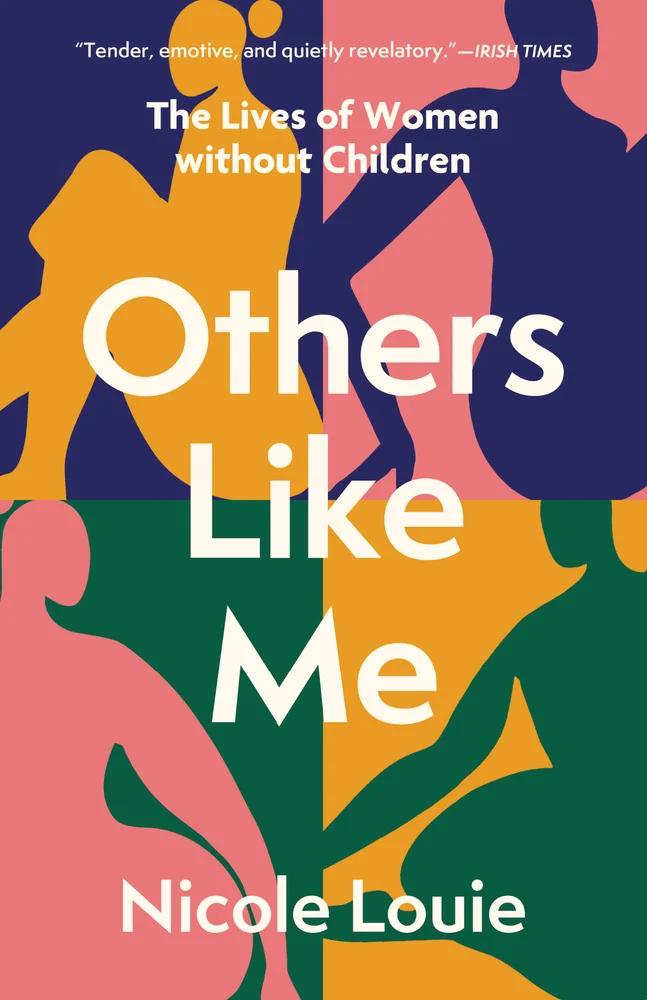
Ten years later, I wrote my own book on the topic. Part memoir, part exploration of childlessness through candid conversations, Others Like Me: The Lives of Women Without Children is the story of fourteen women around the world, from different walks of life, who don’t have children. It’s also my story and the story of why I had to find them.

Tracing the spines of the books that line my shelves, I’ve plucked nine favorites by women who placed writing, not babies, at the center of their lives and flourished outside of motherhood. Here they are.

Motherhood by Sheila Heti

Motherhood by Sheila Heti is so foundational that discussions in women’s communities about the motherhood dilemma are split into before and after this book’s existence. There had been conversations, chapters, self-help guides and dissertations on this topic, but not an entire book, free of academic jargon, written in first person with such candor, originality, and depth. Heti dedicated almost three hundred pages to a lyrical meditation on whether or not to become a mother, inquiring tirelessly about the many aspects of the most consequential decision of adulthood. In doing so, she found a new language to express the modern woman’s possibilities outside the norms of femininity. 

My copy of Motherhood has quotes highlighted on almost every page. One to remember: “I resent the spectacle of all this breeding, which I see as a turning away from the living – an insufficient love for the rest of us, we billions of orphans already living.” 

These Precious Days by Ann Patchett

These Precious Days is a collection of essays on home, family, friendship, and writing. About halfway through, in “There Are No Children Here,” Ann Patchett sets the record straight about her choice regarding parenthood: “The thing in my life that is most extraordinary is that I have always known what I have wanted to do… I have never wavered. I never wanted to get married, I never wanted children, I never wanted to be rich, I never wanted a big house… everything was designed for this one thing: I wanted to write.” And so she did. Nine novels, five nonfiction books, three children’s books and counting. Lucky us.

Instructions for Traveling West by Joy Sullivan

Mid-pandemic, Joy Sullivan left a relationship, a house, and a job. Then, she drove west, crossing the United States from Ohio to Oregon. Two years later, she published Instructions for Traveling West—over a hundred poems bound together in a beautiful debut that puts the reader in the passenger’s seat. 

Sullivan’s poetry is translucent, sensual and sensorial, trapping us in the illusion that we are watching her life unfold from inches away. Yet, somehow, while intimate, reading her never feels intrusive. The verses in “Comments Section,” “Almonds,” “Burn,” “Queen,” and “Culpable” hint at her thoughts on Instagram followers, Uber drivers, and waitresses prying on her reproductive status and plans to procreate.

Convenience Store Woman by Sayaka Murata 

A quirky, witty, and unpredictable novel that mirrors some aspects of the author’s life while telling the story of Keiko Furukura, a 36-year-old Japanese woman who has been working in the same convenience store for eighteen years. Sayaka Murata is Japanese and worked part-time at the cash register for many years before quitting to devote herself to writing. Published in 2016, Convenience Store Woman is Murata’s 10th novel and has been translated into more than 30 languages.

Wishing to depict how odd the people who believe they are normal are, and the social pressures of being a single woman in your 30s in her country, Murata gives voice to a workaholic female protagonist who chose to never have sex, get married, or have kids. She is aware that her ways are perceived as socially awkward and a source of constant worry to her family, but she doesn’t seem bothered by any of it. Keiko doesn’t want to fit in. She knows what makes her happy, and she’s not going to let anyone take her away from her convenience store. 

Where the Past Begins: A Writer’s Memoir by Amy Tan

By uncovering seven plastic boxes of family memorabilia in the corner of her office, Amy Tan goes deep into her traumatic childhood, reflects on her Chinese heritage, and offers insights into the nature of creativity and her writing methods. Where the Past Begins is a poignant and humorous memoir that recounts Tan’s complex relationship with her mentally ill mother, the loss of both her 16-year-old brother and her father within months of each other, and examines her love for art, music, and linguistics.

Old letters to and from her mother, some dating from 1969, when Tan went to college and they separated for the first time, give further insight into a relationship marked by frequent emotional fights and declarations of love. Sunk deep into the material evidence of their mother-daughter bond, Tan shares her feelings about becoming a mother herself, expressing no desire to pass along her genetic structure by stating, “What’s in me that I’d have wanted to pass on is already in the books.”

Notes to Self by Emilie Pine

These are six bold essays from Irish author Emilie Pine about growing up with an alcoholic father, the heartbreak of dealing with infertility issues, feminism, sexual violence, and depression. All six are worth reading, but the fourth one stands out. In “Notes on Bleeding & Other Crimes,” Pine spills all across the page: “this period blood, this pregnancy blood, this miscarriage blood, this not-pregnant-again blood, this perimenopausal blood […] a shocking red to fill the white.” Notes to Self is vivid and visceral, reflecting vital aspects of life as a woman today. 

Arrangements in Blue by Amy Key

Is it possible that life without romantic love is not so bad? In her first nonfiction work, British poet Amy Key pays tribute to Joni Mitchell’s iconic album, Blue, which she considers the basis for her view on romantic love. Chapter by chapter, Key dissects her life and the album while creating parallels between the two and asking big questions about an unplanned singlehood. 

Her nuanced narrative makes space for confessions of shame, jealousy, and regret as she wonders about the parts of adulthood she would miss, such as motherhood, if she were to continue to be the sole curator of her life. From redefining “a family home” to building a house shaped by her needs and appreciating time alone or with friends, she gives us full access to what her days look and feel like as she finds fulfilment in other iterations of love. 

Manifesto: On Never Giving Up by Bernardine Evaristo 

Manifesto: On Never Giving Up walks us through how Bernardine Evaristo came to be the first Black woman and Black British person to win the Booker Prize, receive over 80 awards, nominations, fellowships, and honours, and have her books named the Book of the Year over sixty times. 

Delving into her English, Nigerian, Irish, German and Brazilian heritage, romantic relationships, personal development and activism, Evaristo outlines her trajectory over six decades. Her ninth book also offers glimpses of her decision not to have children. “Instead of becoming a mother, I became an aunt and godmother, roles I’ve loved. I also describe myself as child-free, as opposed to childless, which implies a failure to fulfil my role as a woman rather than an active choice not to have them.”

Paradise, Piece by Piece by Molly Peacock 

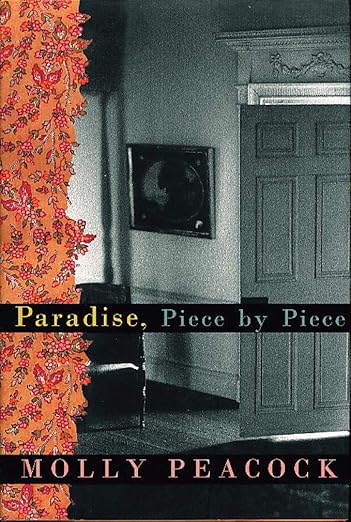
Published in 1998, this is the book in which the former president emerita of the Poetry Society of America, Molly Peacock, tells the story of her dysfunctional childhood, her decision not to have children and her search for purpose and joy through creativity. This is also the book I found in 2013 at the Malmö library and returned only after shipping a copy from the United States to Sweden. This is the book I carried on trains and planes as if it were my emotional support animal. And the reason why, eight years later, I contacted Molly and told her that I too was writing a book about my choice not to have kids and that I needed a mentor. She said yes and guided me through the dark patches. When I finished writing Others Like Me, I dedicated it to her: the author of the first book that helped me visualize the life of an older woman without children. 

The Day the Universe Looked Up My Dress

BAM

Happiness and misery strike anyone anytime. Bam. One example, the fits of hostility from my neighbor, a cake decorator, after I take my foot off the brake and run over his cat. Later I hear him weeping. I leave buttered scones with an urn containing the cat’s ashes on his doorstep. He cries: 

Leave me alone. 

My world turns like a soap opera binge. I know gravity holds us to the surface of Earth. A sure thing. Like old wet photographs. A bathrobe held tightly. Peanut butter on the roof of my mouth. What if the world slams on the brakes and ceases to spin? Bam. Panic. And to keep both feet on the ground, all the angel-heads, unshaven, ambitious, the downright stupid misplaced men and women grab onto pine trees, alleyways, headstones, waking nightmares, vigilance, anything. Humanity hangs on, refusing to let go.

Unable to defy zero gravity, the sky chases after itself, snowflakes revisit the clouds, the rain reverses. The pursuit of knowledge ceases. Cars, trucks, hearses rise up as if boosted by a tornado. Mugs follow cappuccinos following froth and cinnamon into the sky. The sea, the turtles, dolphins, whales, schools of fish float into outer space, which as it turns out, is not what it’s cracked up to be. 

Earth drains of brilliance, coming apart at the seams, the air too thick to breathe, all that ironing piled up in the laundry, a couple of dead bees on the window ledge and the dog retching in sympathy. I dangle vertically from the balcony. My cotton frock whooshes up revealing the safety pin attached to cottontails, a size too large, the flab and my breasts, which a man once described as edible balloons. My toes curl, stilettos slipping, and my long black hair stands on end. Soap bubbles rise beside the loss of decorum. I feel enormous embarrassment as the entire universe looks up my dress. Welcome to my struggle. 

Some advice. Have faith in the power of glue. At Sip & Guzzle, I superglue my bottom to a bar stool and order an overpriced Stoli straight up, laughing about the irony of a straight-up drink, and the barman clinging to an elaborate light fitting on the ceiling. No point in paying, oh right, I do have to pay. As always. A man walks into the bar. 

Here, let me get that. 

And he picks up the check. This man, a retired radio executive with a fake tan, bleached teeth, dimples, and a dead wife. The world begins to spin. Again. He gives me the key to his ha ha heart, to his burning violin, to his belly, to his apartment. Bland, I think. And out loud: 

Nice.

He shows me where he keeps his mop and bucket. After a stroll around his meadow, under his crumpled linen duvet, listening to the blues, the man leers at my extremities and slices a slab of meat, yes, rare, opens a Cabernet. He says:

Sweetheart. 

As in a wanton bit on the side. Spinning sugar around myself to appear enticing. Sweetheart, the good time tiger doesn’t give a toss about his neon socks or if chopped nuts fall into my cleavage or if I wear a blouse as a pair of shorts, my legs pushing through the sleeves.

I whisper, Hey your hair is slipping to the right. 

Bam. Right at the end of spring, right this disappearing warmth, right he wants the pink of me. And we peel figs. Together. Scoffing toffee apples making our tongues red and sticky. Sweetheart, the monster cook, slathers butter on fritters, burns bacon, swilling cream with heavy hands, mixing borsht, deep frying potatoes, bread, whacks of stodge make him fatter, hurling into the toilet. I light a candle for his roly poly and ask:

Have you ever killed anyone? 

Fatso smashes my lollypop, pushes a Polly Waffle up my . . . these melting moments. Fatso shouts: 

I can’t stand all this sweetness. You are ruining my sheets.

But it was your idea to . . .

He packs a suitcase with polo shirts, pointy boots, various toupees, a jar of hair serum, his seductive eau de toilette, and a bottle of Malibu rum. Hey ho a bottle of white man. In the prime of his life, sniffing:

I’m going to stay at Mother’s. 

Lust has such a short lifespan. His misery as a big shot and I think about a gun firing bullets at zero gravity. How they keep going in the wrong direction, into ouch reality tastes horrible, but the man and his exertions proves easily forgotten. A puff of whatever. 

Of course this is not about him. It’s all about me, billowing sometimes in the park, in love with trees, blushing at everything, wincing at what, the rhapsodic episode of setting fire to my hair, flaunting the animal vitality of a swamp, jubilant at the sound of bells. I am the surrounding contradiction, as predictable as lamb’s wool, anxious about mysterious mists, the crust appearing on a fork in the road, leaning on my own horn, undecided about screaming and honking nonstop. I need to plant honeysuckle, I do not enjoy bloodshed, I am incapable of chuckling, I suffer from the heights of dignity, I need a break. So, I take my foot off the brake. Bam.

7 Southern Gothic Books Set in Small Towns

The familiar can be as comforting as it is stifling. Much of the charm of small towns in literature and broader culture is the familiarity between people and place—the ability to walk down the street and know store owners and passersby. The small towns in Southern Gothic literature ask us: When do we get so comfortable with the familiar that we stop seeing a place’s problems? What, if anything, can we do to address a problem once we’ve accepted it as a fact of life? It is not uncommon in a Southern Gothic small town to spot a ghost, a relative, or to encounter a family that has been steeped in the land for generations. Often, the Southern Gothic is where magical realism and structural innovation find exciting life as these tools are used by writers to think about facade, lineage, and legacy.

When I began writing my debut novel, Girls with Long Shadows, I wanted to locate the story somewhere familiar yet distant from my own experiences. I settled on a fictional South Texas town: Longshadow. In the novel, a set of identical triplet girls live with their brother and grandmother on a decrepit golf course as their need to escape the small town grows to become  insurmountable and, eventually, dangerous. Neighbors gossip, families fight, and the sisters swim up and down a brackish bayou to bridge the gap between the golf course and their community. The townspeople of Longshadow speak in a united, pessimistic chorus of vignettes as the sisters wonder who amongst them they can trust, and if they can even trust each other? And yes, there’s a ghost (or two). While Longshadow may not be real on a map, my hope is that it honors the small towns of the Southern Gothic genre before it, many of which are mentioned here.

So here are 7 books about the small-town Southern Gothic and the creature comforts and ghosts that inhabit it.

a little bump in the earth by Tyree Daye

In Daye’s third poetry collection, he re-casts photos, documents, and oral histories of his family’s centuries-long presence in Youngsville, North Carolina with meticulous reverence. The collection revels in family lore and intimacy, maximizing the resonance of each punctuation mark. It is deliciously impossible to pick a favorite, but in vain, I point to poems like “Jimmy Always Was” and the middle section, a little museum in the herein-&-after as stand outs. The collection ends with “instructions for taking the hill with you” which tells us to “Come back soon.” With a little bump in the earth, Daye gives an unreturnable gift, allowing readers into the nourishing familiarity of his family and giving them permission to take it with.

 Ferris Beach by Jill McCorkle

NC Literary Hall of Fame-er Jill McCorkle’s Ferris Beach catalogues the teenage years of only-child Katie Burns, who lives with her family in Ferris Beach. Katie grows close to a new girl in the neighborhood, and warily nurses a curiosity for a local misfit boy. In orbiting coming-of-independence and youthful curiosity, Ferris Beach considers the sanctity of the family unit, the family home, and the hometown. Nobody captures the small-town south like McCorkle.

I read this book for the first time last July in the middle of a hundred-degree summer and a five-day power outage after a hurricane. It buoyed me.

Appropriate by Branden Jacobs-Jenkins

What might seem a docile premise for this Tony award winning play—cleaning out a problematic southern patriarch’s home after his passing—spirals in the hands of the Lafayette family. A troubling artifact is found in the decrepit Arkansas plantation mansion, forcing the family to confront a problematic history and long-buried tensions. The play format creates a beautifully effective contrast between poetic stage directions and tight, overlapping dialogue as family members shout over one another to be heard. The confinement to home, its walls reeking with atrocities of the past, both honors the play-format’s need to keep action centralized whilst exacerbating friction between siblings, cousins, and community. Italicized cicada trills captured in jar-like parentheticals inflect an undeniable, compounding eeriness that builds to a shocking ending. 

Song by Brigit Pegeen Kelly

The collection’s titular first poem “Song” is iconic, spinning the tale of a goat head that begins to sing after being cut off by young boys. Though Pegeen Kelly’s poetic voice is supple and precise, an illusive sense of doom gathers throughout the collection. Many poems border on parables, like “Song” and “Garden of Flesh, Garden of Stone.” All consider how the eerie peace of the pastoral can be disrupted and defaced by people: “My mother / gathers gladiolas. The gladness / is fractured.” Every poem is a magnified stop along a foreboding yet beautiful country backroad where animals become artifacts, humans commit crimes against the land, and a calm, melodic voice captures it all.

Salvage the Bones by Jesmyn Ward

Impending Hurricane Katrina barrels toward coastal Bois Sauvage, Mississippi and coops fourteen-year-old Esch in her childhood home with an emotionally distant father, an older brother and his prized pit bull China, and the phantom of their beloved late mother. The family boards up their home and Esch turns to Greek literature as she reckons with a secret that threatens to combust while the storm rages. Esch’s friends, lovers, and memories cling to trees as high-wind waters aim to sweep them away. Salvage the Bones not only renders the terrifying volatility of a category 5 hurricane, but paints a raw, honest portrait of burgeoning womanhood, motherhood, and survival.

Tunneling to the Center of the Earth by Kevin Wilson

Wilson’s debut short story collection glistens with realistic quirk as its giant eye roams across odd pockets of the South. There are sorters at the Scrabble factory, old friends, new friends, and many odd couples–a Worst Case Scenario, Inc. actuary and young mother, a cheerleader pyromaniac. The stories are set on the fascinating fringes of southern society. In the title story, the narrator recounts his group’s efforts to dig to the center of the earth, saying, “So we went sideways,” which is the favored direction of each story. With deftly precise and surreal premises, and an unforgettable amount of spontaneous combustion–literally–the collection asks: how deep do things go? Devotion, devastation, and yes, even the Earth.

A Visitation of Spirits by Randall Kenan

The Southern Gothic genre loves its ghosts, but I’ve scarce encountered apparitions stranger than those that lurk Kenan’s fictional town of Tims Creek. The novel centers a young Horace Cross reckoning with his sexuality and race as a gay, black teenager in the fictional Tims Creek, a rural North Carolina town where the Cross family has lived for generations. Ghosts taking the shapes of animals and Horace himself haunt the young man as he spends a distressing evening wandering parts of his hometown stamped with his family name, praying, yearning, and battling. Kenan’s Tims Creek is a vibrant, difficult character, a landscape the late author returned to in other fictional works. The town itself becomes a way of looking closely at the South, its historical complicities, and its contemporary ones too.

The Met Gala Finally Meets the Moment

Grammy-winning artist Doechii twerks to the beat in her tailor-made Louis Vuitton SS24 RTW suit. A bejeweled Yankees snapback adorns the head of household name rapper A$AP Rocky, silver glinting between his teeth. And, amongst a sea of giddy Black creatives, is the highly acclaimed Law Roach, the “Image Architect,”, wearing his signature buss down middle part. This is the scene at Vogue’s  “First Friday in May” celebration (essentially a star-studded Met Gala pregame), hosted at Ginny’s Supper Club, under the busy streets of Harlem. With bravado and aplomb fit for a monarch of modern fashion, Law exclaimed: “They done fucked up and made the Met Ball Black!” The crowd rejoiced, then broke it down on the dance floor under a wash of blue lights and camera flashes. Check any photo or video taken from that night and you’ll be hard-pressed to find even a single face that isn’t beaming with a sense of pride, regality, celebration, triumph. Everyone in the room knew they belonged there.

As an avid pop culture aficionado, I’ve long kept up with what’s often regarded as fashion’s biggest night out. The Met Gala, the annual fundraising event for the Metropolitan Museum of Art’s Costume Institute, is one of the rare occasions for which prominent figures from every facet of pop culture—be it film, literature, sports, music, television, theater, art, and even politics—come together for a common goal: supporting the prosperity of the precarious, yet precious art of fashion. It’s always thrilling, watching the zeitgeist’s most influential creatives walk up the Met Gala’s famous stairs, seeing them in conversation with the year’s exhibit as they flaunt well-researched, custom-made haut couture. 

Back in October, the Metropolitan Museum of Art announced the theme of the Costume Institute’s spring 2025 exhibition as “Superfine: Tailoring Black Style,” which draws inspiration from Professor of Africana Studies Monica L. Miller’s book Slaves to Fashion: Black Dandyism and the Styling of Black Diasporic Identity, and like the book, the exhibition examines the innovation of Black fashion over three hundred years —particularly through the lens of Black dandyism. While the original dandies of England had primarily aesthetic concerns, the Black dandy, by contrast, applied their aesthetic to more rebellious philosophies. 

Black dandies tracing back to the eighteenth century intentionally curated their appearances as a form of resistance.

As a response to the discrimination Black people faced in America, England, and around the globe, Black dandies tracing back to the eighteenth century intentionally curated their appearances as a form of resistance. They were scholars of fashion, placing utmost importance on their way of dress in order to reclaim agency over how they were perceived. With bow ties, tailored suits, polished shoes, and flashy accessories, the Black dandy’s use of extravagance asserted that Black men were just as deserving of respect as their white counterparts. Through the careful presentation of a more “elevated” appearance and lifestyle, Black dandies challenged limiting perceptions that were rampant post-Emancipation and beyond. 

Black dandyism has seen many iterations since its inception. Peaking in the 1920s, when Harlem became a gold mine for Black intellectualism and art, and carrying through into the logomania and peacocking of the 80s and 90s that still influence my own father’s fashion sense, the practice has a long history that is deeply entangled with Black culture. And now—however unexpectedly—it seems that Black dandyism’s approach to refashioning the perception of Black people is more necessary than ever, given our current political moment.

Thanks to the Trump Administration’s dismantling of Diversity, Equity, and Inclusion (DEI) initiatives across the nation—and the rhetoric that has accompanied it—it’s clear that an increasingly large number of Americans see people of diverse and racialized backgrounds (but, in particular, Black people) as less qualified and less meritorious. In his second term, Donald Trump has issued numerous executive orders that have not only terminated DEI programs, but also equity-related grants and contracts. The latest termination resulted in the rescinding and cancellation of National Endowment for the Arts grants to nonprofit organizations and arts agencies, implying that diversity is a societal ill. Following these legislative events, Trump’s followers have flocked to social media and entertainment platforms like X, Reddit, and Fox News to echo their shared grievances over DEI initiatives, using “diversity” as an all-purpose scapegoat for any issue of their choosing. Suddenly the Potomac River mid-air collision was because of DEI, as were the devastating Los Angeles wildfires, as was the recent tragedy in New Orleans on New Year’s Day. Suddenly it’s the case that if you aren’t cisgender, straight, white, and male, then you were a “diversity hire,” and are therefore unqualified—ironic, considering the lack of qualifications held by many members of the current presidential cabinet.

Given an administration that appears hellbent on undermining legacies that do not align with white Christian nationalism, the Met Gala’s decision to spotlight the rich and complex history of Black dandyism’s influence on menswear is laudable. Yes—Doechii, A$AP Rocky, Law Roach, and historical Black dandies like James Baldwin and André Leon Talley—all look fantastic. But Black dandyism was never just about appearances. Rather, the method of a Black dandy was to covertly fashion a revolution in the minds of those who witnessed them. By bringing mainstream attention to the sensibilities and high dignity of Black dandyism, the Met Gala and its associated exhibition prove to audiences the value of celebrating Black cultural identity.

Even before the event itself, the 2025 Met Gala was packaged noticeably different as compared to previous years. In addition to Vogue’s Editor-in-Chief Anna Wintour—the lead chairwoman of the Gala since 1995—this Met Gala’s co-chairs were Black men, all of whom have been celebrated for their style, influence, and intentionality: Pharrell Williams, Colman Domingo, A$AP Rocky, and Lewis Hamilton. The host committee, too, featured an all-Black lineup of actors, artists, writers, entertainers, and athletes. Scroll through the Met’s and Vogue’s various social media accounts, and you’ll see grids inundated with the work of Black designers, photographers, archivists, and academics, as well as interviews featuring influential Black public figures responding to prompts related to the theme of this year’s exhibit. To put it bluntly, the Met Costume Institute is communicating a message, emphasizing the importance and relevance of Black intellectuals and creatives. 

The Met Costume Institute is communicating a message, emphasizing the importance and relevance of Black intellectuals and creatives.

When the Met announced the 2025 “Superfine” theme, I found myself cautiously suspicious. I assumed that even if the Costume Institute featured Black creatives, the camera would likely show only the tailored suits and pearl-studded necklines of a few famous artists, a pacifying show for liberal optics. Instead, we got a plenitude of deliberate, informed displays flaunting the historical magnitude of Black dandyism, from many of the biggest names in entertainment. Colman Domingo, draped in royal blue, took inspiration from his research with Monica L. Miller, who noted in her work that “a freed slave wanted to wear his finest blue, superfine wool suit.” Lewis Hamilton, working with stylist Eric McNeal, came dressed in custom Wales Bonner, detailed with cowrie shells, baobab flower motifs, and mother-of-pearl buttons inspired by the Harlem Renaissance and Black jazz singer Cab Calloway. The Met Gala’s platforming of Black culture motivated an unprecedented number of its attendees to work with Black designers, wear looks from Black fashion houses, and study up on—and share with the thousands tuning in—their knowledge of Black history. Gigi Hadid arrived on the Gala’s blue carpet excited to share her research on Zelda Wynn Valdes, a Black American designer in the 1940s. Quinta Brunson wore a look that honored the celebrated Black dancer-singer-actress Josephine Baker. And throughout the night, guests like Anne Hathaway and Tyla cited the definitive Black dandy—late stylist and fashion journalist André Leon Talley—as the inspiration behind their look. 

Beyond what the guests brought to the event, Vogue and the Met also provided an array of educational videos documenting this landmark celebration of an often-overlooked facet of Black culture, uplifting Black visual artists and referencing seminal and too often forgotten texts of Black literature. Considering the event’s authentic presentation of neglected Black history, especially under an administration that publicly doubts the value of diversity in this country, it’s clear that the Costume Institute is finally recognizing the intrinsically political nature of fashion. Such an explicit homage to Black history and culture is nothing less than a bold act of defiance that embodies the rebellious spirit of the Black dandy. With this year’s themes and exhibition, the Met Costume Institute not only immortalized the work of Black scholars and creatives, but also gave it a global platform, ensuring the exposure of thousands to the merit and depth of Black culture. Like the Black dandy, the event demanded respect, visibility, and redefinition—all while making it cool. Sure, the Met Institute isn’t perfect—an organization that regularly invites the Kardashians could never be—but the 2025 Met Gala demonstrates a step in the right direction.

“A/S/L” Is an Ode to the Transfemme Gaming Community, Full of ’90s Nostalgia

“A game is an experience that happens to you,” writes Jean Thornton in A/S/L, a novel that queers 1990s internet nostalgia and celebrates the transfemme gaming community.  

A/S/L opens at a time after AOL Instant Messenger but before AI and the political oligarchy stronghold of Silicon Valley tech bros. Three teenagers dream of building a video game that will remake the world, Saga of the Sorceress, but they never finish it. The friends grow up and lose touch—until one of them begins the game anew. A/S/L follows these three characters, all transfemme—Lilith, Abraxa, and Sash—who, despite living in close proximity, have never met in person.  Each, in her own way, takes up the sorceress’s unfinished quest.  

Like Thorton’s previous novel Summer Fun, A/S/L is philosophically robust. Thornton asks, What does it mean for a trans woman to be good? Who benefits? What do we owe our friends?  She calls out norms and protocols that arise in lucrative, patriarchal, and historically transphobic arenas, such as the music industry and banking, while likewise interrogating the insidious, pervasive, and often unnamed cultural demands on trans women intended to make things easier on cis and straight people. The book is inventive and playful, especially with form—from emails to technical gaming notes to chat room (channel) transcriptions—and because Thorton’s imagination is delightful, there is lots of joyful discovery. And recovery. Almost anything can be a video game, Thornton reveals—real estate, running on a treadmill, sitting in silence, asking for forgiveness, setting someone free, being free.  

Jeanne and I have shared work, AWP panels, and dance floors. I am overjoyed to share our conversation about A/S/L.  

Annie Liontas: What was your relationship to gaming as a young trans person who grew up in the 90s? What worlds were available to you and other trans/queer folks in games that weren’t open to you in real life?

Jeanne Thornton: My friend Stephen Ira says that trans women get video games like trans men get fanfiction. Gaming is the socially acceptable way to live these other lives. Your physicality doesn’t matter. You get to play a girl, and it’s okay because you’re [a] warrior girl, you’re not going into the Barbie aisle or something. It’s defensible or socially viable.  

Gaming is the socially acceptable way to live these other lives. Your physicality doesn’t matter.

Like Lilith, I grew up in Texas. I didn’t have a lot of access—I didn’t know that trans people were a thing until I was in grad school in LA in 2005. I was a scout. I went to the scout camp and had this experience of being in these very, very southern, dude spaces.  Gaming is this shadow space that’s dissociative in a way that’s strongly gendered, where you go to be disembodied with other people. A lot of the characters are based on people I knew in my particular gaming community, which was the community around a game called ZZT (CraftQ in the book), and it was really nice to summon them all. The IRC [Internet Relay Chat] scene right at the beginning, that was actually quite a joy to write in part because that was a pretty faithful attempt to reconstruct without transcribing what those 1990s chats were like in all their toxicity, all their messiness.  

AL: The book is so dynamic because it’s taking on so many forms. It’s not trying to be a two-dimensional artifact, in the way that gaming also refuses to be two-dimensional.  

JT: One of the key realizations in the book was that anytime I’m writing about a video game, it’s actually a travel narrative. I was trying to think of what it [feels] like to be in a video game, and I think it isn’t a fixed point. It’s a place you go to, and your body kind of goes away, and you have choices within that space. I guess it’s true that gender is a little like that.  

AL: You’re writing into that historical period of early 1990s gaming and internet, (which you describe as “the adolescence…of the dominant art form of the 21st-century”). What was it like to capture this interstitial time for trans people and a trans youth culture, defining, and determining the internet?

I very consciously wanted there to be three distinct trans women, rather than filtering all transness into one perspective.

JT: If we had just been in a cult, explaining why this was so important would make more sense (laughs). But a lot of the impetus for writing this book is to capture this really specific gaming world that I was part of, where everyone’s a teenager and both making games and playing games. I didn’t know what [my online] friends looked like during this period; we didn’t hear one another’s voices. Everyone is sort of making up who they are, but there’s a richness of going online and meeting other people. You are [being] your most essential self with other people who are being their most essential selves, and also you have so little information about the people you’re around that everybody is having this common fantasy together. 

At some point there was a switch, around the late 2000s, where being online went from being a place you went to be someone who wasn’t yourself to being your real life, almost your professional self, a brand that you portray. I don’t think I’ve ever made that adjustment well. I’ve talked about this with other people from the [ZZT] gaming scene. A lot of us from that world are really close, lifelong friends.  

AL: Abraxa, Lilith, and Sash move through the world so differently— Lilith shopping from the Macy’s sale rack, Abraxa breaking into church basements, Sash seeking creative autonomy and independence at the expense of financial stability. How do they conceptualize freedom as trans women, and what is the cost of that for each of them?

JT: I wanted this to be [a] multi-narrative, multi-plot book that has no canonical truth, where each of the three characters could plausibly be a main character, and any of the three storylines could be the primary one. I was also very under the influence of Georg Lukács’ Essays on Realism, where he says that the goal of fiction is to present the classes with a true account of one another. I very consciously wanted there to be three distinct trans women, rather than filtering all transness into one perspective—almost as a corrective to Summer Fun, which is about a famous and beloved musician. They’re each trying to approach freedom through a different means and a different attitude towards what financial freedom means. I had not thought of that in terms of freedom, but I really like that framing of it. 

Lilith works white-collar jobs—not to assimilate, because assimilation is not open to trans women—but with the idea that “I can move in a cis world; I’ll be one of the good ones. If I can do that, I will have freedom and stability.” Abraxa says, “I will be okay as long as I have a lot of skills.” Hers is almost like a blue-collar path. She can work on a boat or in construction—as long as she has independence, as long as she can leave whenever she wants and has the tools to be completely self-reliant. Sash is almost an academic, trying to arrive at a very pure knowledge that is not expressed externally. She makes no compromises [and] lives a life of keeping everything radically inside.

AL: Abraxa is your witchiest character. How does she, even in her most vulnerable moments, decide her terms?  

JT: I approached Abraxa with a great deal of compassion. I also went through some pains to make sure that Abraxa’s parts of the narrative are very magical, steeped in occultiness.  If you’re a reader who really wants to believe that all the magic in the book is real, nothing will contradict that. If you want to believe that this is a woman going crazy underground, nothing’s going to contradict that either. I wish I could be more like her in a lot of ways. There’s something about having a character who has that kind of radical freedom to just go off and reinvent herself, to go off and connect. I tried to show some of the price of that. She’s very isolated as a result in quite intense ways.  

The way society treats women generally, it doubles down for trans women.

Hands down some of [the] most brilliant people I’ve ever met in my life were from ZZT, where everything they did seemed so effortlessly magical. Some of these people burn extremely bright. I knew someone from that community [who] died of an overdose in their 20s [and] somebody who committed suicide, also in her 20s. [The book is] thinking about your brilliant friends from your adolescence and the sadness of seeing them continue to be brilliant, but in a form that the world can’t make that much use of.

AL: And Lilith, in a way, is a kind of counterweight to that narrative because, at least on the surface, she’s very successful. Yet, beneath, we feel there is a loneliness to her experience. You write, “You’d think you’d remember being trans all the time, but you don’t for a while. Just a vague sadness.” How is that true for you?

JT: I think this is a fairly familiar trans experience. I have a family member in the hospital, and when I tried to call him last night—at the moment I said who I was, what my relationship was to this person, using a gendered noun for this but also using my gendered voice—it immediately became like, “We’re not gonna let you talk to him.” I realize in retrospect, okay, that’s really trans, but it’s not [how it] felt in the moment. I’ve been out long enough that it’s weird to have flashes of what it was like before, to move through the world with a relatively greater amount of—grace is the word I’ve sometimes used for this. The assumption is everything is fine until a moment of friction. That’s a really common transfemme trap, where you don’t map it back to, this is because I’m trans, because you actually don’t know at all. The maddening thing is that you don’t know ever, and you will never know. You will go to your grave not knowing, because often the people involved don’t know either.

I do think that religious conversion is sometimes a good metaphor for transness. It changes how you stand in relation to the world and how people are going to meet you in relation to the world, particularly if that conversion is something that has friction with how people deal with you. 

AL: Sash asks, “Cis people don’t have to have [a] level of clarity about their history; why do trans people?” Her journey is especially moving for me, a trans person who came of age at a time in the 90s when gender was communicated as a fixed point. What does Sash’s trajectory reveal about the layered, complex trans experience in America?

JT: The dungeon of Sash is quite deep, and it’s very intense. I do think this is important, how Sash is trying to insist on that transition on her terms. My feeling of coming out at that time was, I better have my shit together before I cross this line, because it’s gonna be really intense, and you can’t go slowly. It’s jumping into the deep end of the pool, I think. That’s a lot less true today, in ways that are more palpable. My sense in 2025, and this is something that is terrifying to the right wing, is the idea that you can view transness as something you can experiment with, you can play with. You can dip your toe in the water, you can manifest it in different ways at different times. With Sash, both Lilith and Abraxas think of her as a cis woman. And actually, early readers of the book didn’t realize Sash was trans also. It’s one of those ways that online-ness [worked] in the past. 

AL: What would it mean to listen to trans women’s stories? What is the power inherent in that act, both for storyteller and listener?

The way society treats women generally, it doubles down for trans women. We’re women, so it’s okay to hurt us. There’s actually a specific gaming-related story, an arcade game called Final Fight. It’s about three burly dudes, one of whom is the mayor of a fictional city, punching their way through a wave of bad guys. Some of the enemies are women. When they tried to bring the game to America, execs said, “We can’t have these dudes beating up women, so let’s just say they’re trans women.” Everyone accepted this. One of these women, Poison, is a beloved, almost-saint of transness, canonically trans, because we needed to have a woman we could beat up.

Trans inclusivity is this crisis point for understanding how our society constructs gender in general, how we construct womanhood in general, and I think that’s urgent. Given the eternal war on women, an understanding of the way that transness manifests in this is absolutely critical.

Trump’s Latest Attack on the NEA

Dear Reader,

Late Friday night, Electric Literature—along with at least 40 other literary arts organizations— received a notice from the National Endowment for the Arts that our 2025 grant has been terminated. The reason given was that our work does not “reflect the nation’s rich artistic heritage and creativity as prioritized by the President.” This morning, the NEA’s literary arts staff announced their last day would be May 30. 

This is a transparently autocratic effort to dismantle the nation’s most important arts granting organization and to broadly undermine artistic progress. After threatening so many, it is no coincidence that Trump has turned his attacks to the arts.

Creative expression is the lifeblood that vivifies a free and democratic culture. Trump is obsessed with a heritage and legacy of his own imagination. For him, literature is forward facing and therefore dangerous. Every story, even about the past, is a new story. Every story a writer tells is one Trump cannot control.

The NEA has supported hundreds of publishers, 600 translators, and 3,800 writers. The stories told as a result of that support will live on. Electric Literature will continue to publish culturally enriching stories about the past, present, and future with honesty and heart. Please support our work.

Sincerely, 

Halimah Marcus

Executive Director, Electric Literature