Salman Rushdie Helped Me Recognize Myself—and the Love of My Life

Novel Gazing is Electric Literature’s personal essay series about the way reading shapes our lives. This time, we asked: What’s a book that made you fall in love?

My phone buzzed at 5 a.m. I squinted at my screen, struggling to keep my heavy eyelids open. It was my fiancé, who was living in New York at the time. I was in Hong Kong. Our relationship was stretched taut around the globe and texts at odd hours were keeping it from unraveling. I sat up immediately.

“If you could have dinner with anyone, who would it be?” it read.

“President Obama,” I shot back.

“Not Salman Rushdie?”

“Oh duh — of course Rushdie, hands down,” I said.

“And if you could ask him anything, what would you ask him?”

The question left me confused because there is so much I want to say to him, so much I want to ask.

Where would I start? The moment I first picked up Midnight’s Children in high school? That was a part of my life that I now label as BR (Before Rushdie). Back then, I was a lanky nerd in Hong Kong trying very hard to run as far away from my Indian roots as possible. I would leave my mum’s hand-cooked lunch of potato-stuffed rotis uneaten and buried at the bottom of my backpack because of its embarrassing aromas of turmeric, coriander, and garam masala. I would strip, pluck, wax my arm hair and eyebrows, the thickness of which are so intrinsically tangled up with being Indian. I would lock away my love for Bollywood to make space for the Goo Goo Dolls, Oasis, and the Red Hot Chili Peppers. And until then, I had never read anything by an Indian author; I just assumed they were inferior to the Chaucer, Charles Dickens, and Oscar Wilde classics we were studying at school.

I had never read anything by an Indian author; I just assumed they were inferior to the classics we were studying at school.

One day, I stumbled across a display at a bookstore that was dedicated to award-winning Asian writers. A friend of mine who had already read three of Rushdie’s books picked up Midnight’s Children and pushed it into my hands. “You need to read this,” he urged. I stroked its unbent spine, read the blurb, and decided to give it a shot.

A few chapters in, I was under Rushdie’s magical realism spell. I highlighted and annotated almost everything — every pun, every quip, every sharp observation of life, every riddle twisted into the plot. I bent its spine out of shape to a point where individual pages threatened to break out and flutter away.

Mrs. Braganza’s “gigantic pickle-vats and simmering chutneys” smelled like my mother’s kitchen at home. The twisty-turvy plot felt just as melodramatic as the Bollywood movies that I secretly, reluctantly loved. The ridiculous Sinai family were mirror reflections of my own family.
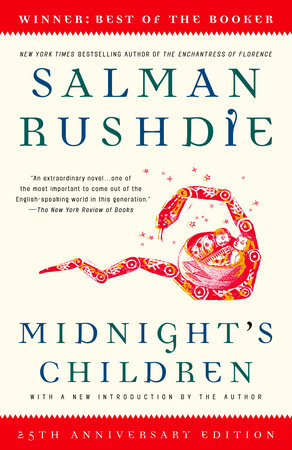
Midnight's Children by Salman Rushdie

In the book, a pregnant Amina sits in the back seat of a taxi and descends into Old Delhi to meet Ramram, a fortune-teller who may be “a huckster, a two-chip palmist, a giver of cute forecasts to silly women” or “the genuine article, the holder of the keys.” My mother, perched on the back of a Vespa, headed to her trusted palm-reading friend as soon as I was born to see what the stars had in store for me. He told her two things of note: I will live far away and I will meet a man who will take me there.

When my parents moved to Hong Kong — barely a year after my prophecy — my father worked hard to give us a life he never had. An apartment in the bustling neon city, an international education, the luxury to follow my dreams. I, in return, wanted to live up to his expectations. He poured his soul into my future. I wanted to make it worth every penny.

When I picked up Midnight’s Children, I was nearing the end of high school, contemplating my future, tossing and turning just thinking about repaying my father’s sacrifices. Rushdie reached out through the book and into my heart to give words to the thoughts spinning around my conscience: “I must work fast, faster than Scheherazade, if I am to end up meaning — yes, meaning — something. I admit it: above all things, I fear absurdity.”

How did Rushdie know exactly what I was going through? How did he understand me so well? I wasn’t the only person who connected so intimately with Midnight’s Children. Reviews of the book when it first came out famously described it as “a continent finding its voice” because it was so richly Indian, so truly relatable for the country. How did he understand us so well? Is that the question I wanted to ask him?


Perhaps I should tell Rushdie about my journey after Midnight’s Children (also known as AR, After Rushdie). The book cracked open a door ever so slightly and I pushed through with gusto, finding more pieces of myself in his other books as though Rushdie was now my fortune teller giving me, the bewildered hopeful, answers.

I leaped from Midnight’s Children to Shalimar the Clown. There I saw elements of myself in India Ophuls because I had reached an age where I yearned — like she does — to learn about my roots. Instead of shoving questions about my family’s history and my country’s past aside, I now wanted to confront them. That book painted the picture of the raw hatred that to this day tears India apart in a way that even my family who grew up there couldn’t put into words.

The book cracked open a door ever so slightly and I pushed through with gusto, finding more pieces of myself in his other books.

Then, at the start of university in London, I started to sink my teeth into The Satanic Verses. As I struggled to turn this rainy, moody city into my home, the protagonist Salahuddin Chamchawala was trying to do the same. My education there turned into a financial burden for my father. So my three years were glorious and unforgettable but also weighed down by “a nightmare of cash-tills and calculations.” Salahuddin’s realization that “England was a peculiar-tasting smoked fish full of spikes and bones, and nobody would ever tell him how to eat it,” was one that resonated with me too. At some point, like Salahuddin, I figured out how to eat the fish.

Again and again, at every juncture of my life, Rushdie was reading me while I was reading him.


By the time I landed on Joseph Anton, Rushdie’s memoir of his time in hiding, I was two years into my journalism career. My family wasn’t convinced this would be a long-term and fruitful path. The professional moves I wanted to make next were met with doors slammed in my face. Almost every route I took led to a dead end. I felt boxed in and worried that I would end up being just another absurdity, a blip, a speck, a disappointment. And right when I thought I had hit rock bottom, my previous boyfriend broke my heart. That one-two punch snuffed out the lights.

My cracked being turned to Rushdie for consolation. In Joseph Anton, I learned that India — his country, my country, our country — was the first to leave him twisting in the wind for writing The Satanic Verses, a fact that is so frequently overshadowed. India’s narrow-minded knee-jerk ban on the book placed the country on a slippery censorship slope that it is still riding today. I got a detailed look at his personal life under the Iranian Fatwa, which was so quickly destroyed as though he was a meaningless paper figurine that can be scrunched up and tossed aside. The entire world told him to put down his pen for the greater good. Yet he persisted. The path of self-doubt and dejection I was on was nothing compared to his. His strength through it all, which roared loud and clear in Joseph Anton, encouraged me to keep going. But I never figured out how and why he managed to find that determination and push through, despite such high stakes, while I in my own small world was willing to give up so easily. That — that’s what I would ask him.

“Why he kept going when the whole world told him to stop,” I texted my fiancé.

My fiancé. I was still getting used to saying that. I first met him exactly a month after I got through Joseph Anton. It was Halloween. He was dressed as a mad scientist, with fake blood splattered all over his lab coat. I was dressed as a sheriff, star badge and all. I was floored in five minutes. He was nonchalant and uninterested in me. He didn’t even ask for my number. So I gave him my sheriff badge, hoping that in the sobering morning light it would make him think of me.

At every juncture of my life, Rushdie was reading me while I was reading him.

It didn’t.

I found him on Facebook and realised the origins of his resistance were tied to an exam he was studying for.

Three weeks later, after back and forth messages, after his exam, we went on our first date. He charmed me with his humour, his puns, his quips, his sharp observations of life. We went for an Escape The Room game with nothing but riddles to find a way out. It all sounded like a Rushdie novel. And I was falling in love.

Three years later, his company flung him across the world. But he didn’t leave me behind. He rented out a room at the glitzy Ritz Carlton and turned it into our very own Escape The Room. A box with a clue led to another then another then I found that same sheriff badge and, taped to the back, a diamond ring. I couldn’t contain myself.

So here we are now. Me in Hong Kong, my life packed up in boxes ready to move far away. Him in New York, texting me about hypothetical dinner dates.

Three months later, it’s our wedding day at a small Hindu temple. We’re walking around the ceremonial fire. We’re exchanging garlands. We’re bowing our heads in prayer. Now, we’re united and sitting in chairs to take pictures.

My husband hands me a neatly wrapped present. “Remember what you told me you’d ask Salman Rushdie?” he said. I ripped through the wrapping and found Rushdie’s latest book, Two Years Eight Months and Twenty-Eight Nights. Inside, on the first page, a response:

“Alisha,

Free speech matters more.

Salman Rushdie”

Tears blur my vision and my jaw drops. “But how…?” I ask my husband. That moment confirms what I already know — I am going to love this man forever.

“I know people,” he says, shrugging and smiling.

I wonder, now, what would have happened if Rushdie didn’t care enough about free speech. I might not have read him at every one of my crossroads. And then what?

I may have never made space for an understanding of who I am and my country. I could’ve ended up hating London rather than embracing it. I may have locked my broken heart up in my chest, closing it off from the man who would bubble wrap it and take me far away.

In Midnight’s Children, Rushdie poses the question “where, then, is optimism? In fate or in chaos?” For me, it seems like fate.

A New Documentary About Gabriel Garcia Marquez Highlights the Joy He Brings to Readers

I know how much of a cliché it makes me to say that Gabriel García Márquez is my favorite writer and Hundred Years of Solitude my all-time favorite book. As a Colombian, I worry that this preference reads as mere knee-jerk regionalism or worse, an example of a stunted literary taste. But what else am I supposed to think of an epic work that is at once so astonishing and so familiar? When I first encountered this sprawling novel in 9th grade, we were scheduled to spend an entire semester reading it, but I went ahead and finished all 400-plus pages in one weekend. It was the very first book I devoured, as unlikely a page-turner (will the dirt-eating bastard girl ever find happiness again? will the doomed butterfly-surrounded lovers make it, after all? will anyone really be born with a pig’s tail?) as I’ve yet to encounter. In the intervening seventeen years I have come to think of Gabo as a familiar presence in my life, someone whose prose can transport me back not just to that blissful weekend I spent reading the story of the Buendías for the first time, but to my own family experiences and conversations, which he was somehow able to conjure up in his novel.

As I watched Justin Webster’s reverent documentary Gabo: The Creation of Gabriel García Márquez, my relationship with the Nobel Prize winner came flooding back. Even though (or, perhaps, because) I’d already heard the many anecdotes and stories being shared in the film by his siblings, his colleagues, and fans around the world (including President Bill Clinton), Webster’s documentary reminded me how much of my teenage obsession with Gabo has grown into an appreciation for the way he captured the Colombia I grew up with and which I now long for from abroad.

Serving as a kind of abridged biography-cum-critical-overview, Gabo: The Creation of Gabriel García Márquez tries to analyze what it is that made the novelist so unique. This is, as it turns out, an insurmountable task, not least because the answer lies more within his pages than in his life — though the impetus to think of the two as intricately intertwined is precisely why his novels resonate so far beyond the borders of my native country. Like many studies of Gabo’s novels over the past several decades, Webster’s documentary focuses on wanting to offer viewers many of the “real life” stories of his life that went on to be immortalized in his words. Readers of Chronicle of a Death Foretold, for example, get a chance to see the actual town square where a young man was, indeed, knifed down by two drunken brothers, while fans of Love in the Time of Cholera get to hear (perhaps yet again) the story of how Gabo’s parents got together, which went on to inspire that 1985 novel. Except, since he was such an expert chronicler as well as such a keen raconteur of his own life (his two memoirs, Living to Tell the Tale and Memories of My Melancholy Whores, are nothing short of required reading), any attempt to illuminate his life and work cannot help but leave one wanting. The anecdote is never quite as beguiling as the chronicle; the former remains unpolished and credible, the latter — especially in Gabo’s hands — emerges as perfectly whittled and almost preposterous but also, and this is crucial, believable. (Unsurprisingly, Webster’s doc is infinitely more engaging when delving into the writer’s often under-discussed journalistic career.)

But there is one thing the documentary captures better than anything I’ve read on the Colombian writer: the utter joy readers find in his work. The most heartwarming and engaging moments of the film come courtesy of the passages of his writing that are read out loud by Webster’s many talking heads.

I’ve lived with Gabo’s words for much of my life. He was an ubiquitous presence throughout my high school years—the kind I imagine Pablo Neruda is in Chile and Shakespeare is, well, everywhere in the English-speaking world. Despite having moved no less than eleven times (twice to different countries), I still have my textbook paperback copy of Hundred Years, a torn corner of its cover serving as a makeshift bookmark. In its pages I can trace my own 2000-era musings on the Buendías: the very first blank page of the novel, in fact, has a key to the many symbols I used to flag important moments and recurring motifs that, even as a 9th grader, suggested I had a critical inclination that made the rest of my classmates snicker in contempt. Some are pretty self-evident; a heart symbol can be found next to highlighted passages where love was concerned, an “S” marks places when García Márquez talks explicitly about solitude, an exclamation mark stands next to “important moments” (which, apparently, I doled out with abandon, all but making this indexing an almost futile exercise). Others were more needlessly complicated: a tiny book with a B emblazoned in its cover signalled moments when the Buendía story echoed, mirrored, or read like a Biblical tale (I don’t know where I was going with that), two butterflies appear next to scenes where “yellow” (yes, just the color) appeared as a visual motif, and a comically small tombstone charted the many (oh so many!) instances when death was mentioned. To rifle through these pages is to witness firsthand just how bewitched I was by this novel and how eager I was to unlock its many secrets.

He was an ubiquitous presence throughout my high school years — the kind I imagine Pablo Neruda is in Chile and Shakespeare is everywhere in the English-speaking world.

The many underlined passages (I could never bring myself to use highlighter and opted for the clean lines of a mechanical pencil, and hated marginal comments which is why I doodled symbols instead) trace my very first instincts as a critical reader, wanting to connect disparate moments, bringing together images that recurred, and hoping to piece together the puzzle that was Hundred Years. Now, though, they serve as a time machine of sorts. Sure, these highlighted passages served a scholarly purpose. They were a way for me to call up needed quotes in the essays and exams I wrote on the novel during that semester (the only other novel that the Spanish department allotted more time in their curriculum was, unsurprisingly, Miguel de Cervantes’ Don Quixote which took up one’s entire senior year). But they also function as a window into my high school self. I can glimpse, for example, why I was drawn to several underlined passages — “Only he knew at that time that his confused heart was condemned to uncertainty forever” is the kind of sentence a sensitive lovesick teenage boy would be drawn to — while others surprise me: what did I make of a line like “Little by little, however, and as the war became more intense and widespread, his image was fading away into a universe of unreality”? Reading it now, out of context and in translation, I’m struck by how perfect a description of Gabo’s work it is.

‘Phantom Thread’ Is the Love Story for Assholes We’ve All Been Waiting For

Like many of our Spanish textbooks, my edition of Hundred Years was published by an imprint called “Cara y Cruz” (Heads and Tails). The book included the full length of the novel on one side (“Cara”) and a series of helpful texts, including the author’s biography, standout quotes about the novel, a suggested bibliography as well as a short essay on the novel at hand (“Cruz”) on the other. For García Márquez’s 1967 text, the editors chose a feature by Carlos Fuentes titled “La Segunda Lectura” (On Second Reading). Nearly two decades after I first read it, the piece continues to color my own appreciation of the novel. With One Hundred Years of Solitude, Fuentes argues, García Márquez had given Latin America the chance to be mythic, making the many pasts and presents of the region come alive at the same time. “In each of these acts of fiction,” he writes, “the positivist time of the epic (this really happened) and the nostalgic time of an utopia (this could’ve happened) die and give birth to the absolute present time of the myth: this is happening.” It’s the only line in his essay I underlined and one I’ve gone back to revisit over the years — I used it for an essay on magical realism in Louise Erdrich’s Tracks in my freshman English course and recycled it again to talk about Faulkner’s As I Lay Dying the following year. Even as Webster never quite puts it in those words, the central thesis of his documentary merely echoes Fuentes: we may get the sense that the creation of Gabriel García Márquez requires us to revisit his hometown and talk with his family (and even with his Parisian girlfriend whom he left eventually to marry his sweetheart Mercedes), but only so that we will be better able to admire the way his prose borrowed but by some literary alchemy the likes of Melquiades in Hundred Years, he bore a new way of looking at his life, his country, and the world.

The promise and premise of a book like One Hundred Years of Solitude is the way it represented Colombian reality in the guise of novelistic myth. And so, in order to offer an origin story for a writer like García Márquez, one must work backwards, tracking the inspirations that led to the beguiling stories that have made him a worldwide sensation. The world of Macondo, the fabled small town that’s at the center of Hundred Years, functions as a microcosm of Colombia (and, by extension, Latin America). Framed by actual historical events — the civil war that beckons Aureliano, the banana massacre that only José Arcadio Segundo witnesses — Macondo exists at the intersection of reality and allegory. The magical realism that it helped globalize depends on reevaluating how we tell stories about what “really happened.” It’s no surprise that, to many who did not grow up in households where talk of spirits wasn’t uncommon (my grandmother spoke plainly about how her sister could divine who’d be dying next in the family as they’d appear to her in dreams) and in a country where one’s own national history seemed plausibly implausible, where a massacre could be both urban legend and historical fact, the impetus to understand Gabo’s work would focus on universalizing his words while at the same trying to anchor it in the mundane.

The promise and premise of a book like One Hundred Years of Solitude is the way it represented Colombian reality in the guise of novelistic myth.

“He chronicled, in a thousand different ways,” Clinton muses at one point in Webster’s film, “the futility of denying the promise of the human spirit.” Except, of course, Gabo’s books, no matter how universal they may feel, are, in essence, snapshots of a region. They’re so specific, so grounded in the particular, that their universality feels almost accidental. He said as much while accepting his Nobel Prize in 1982. Speaking in Stockholm, Gabo positioned his work as but an attempt to capture the implausible history of Latin America, with its mythical fauna, its delirious mundanity, and its virulent violence. “I dare to think,” he said, “that it is this outsized reality, and not just its literary expression, that has deserved the attention of the Swedish Academy of Letters. A reality not of paper, but one that lives within us and determines each instant of our countless daily deaths, and that nourishes a source of insatiable creativity, full of sorrow and beauty, of which this roving and nostalgic Colombian is but one cipher more, singled out by fortune.” Having moved abroad shortly after reading Hundred Years, I’ve continued to find in its pages a sense of a lost home, one nurtured both by my own childhood imagination as by my nostalgic reminiscences as an adult. An “unreal” Colombia that nevertheless feels like home.

8 Literary Perfumes for Book-Lovers Who Want to Smell Good

Perfume and literature have long been entwined, each one referencing or seeking to summon the other. Many famous books center on or are based around perfume, from Patrick Suskind’s 1985 novel Perfume to the numerous books in which scents become plot points or character development. And perfume, for its part, is frequently obsessed with literature. Scent is a storytelling genre, one seeking to transport the wearer to a different time or place, a memory or an imagined history. Perfume makers are often directly inspired by literature, too; many perfumes are based on specific authors or characters, more general ideas of literary eras and history, or on the imagined scent of books and libraries themselves.

Here are eight suggestions of perfumes for the book lover. Whether you’re already fragrance-obsessed, or have never worn perfume before reading this, these scents will pair perfectly with a love of reading, and cater to a range of literary interests.

Photo via Lucky Scent

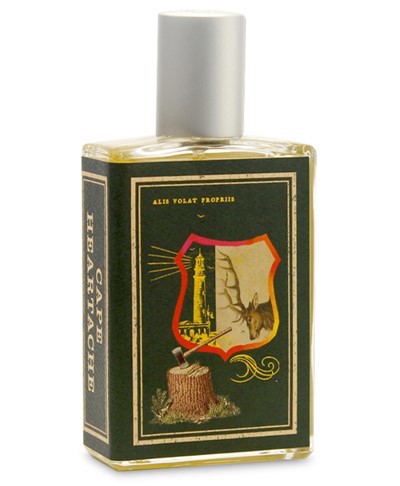
Cape Heartache by Imaginary Authors

Portland-based perfume company Imaginary Authors makes arguably the ultimate perfumes for book-readers. Each of their scents is based the story of a made-up author — name, date, works and all — and matches the fragrance to the imaginary author’s imaginary world. “The Soft Lawn” invents Fitzgeraldesque Claude LeCocq writing about the silver spoon and tennis whites set, while “Bull’s Blood” imagines a hyper-masculine Hemingway stand-in famous for a book about bullfighting and his father. But my favorite of their collection is Cape Heartache, a perfume based on an invented 19th century American novelist named Phillip Sava who wrote about his teenage expeditions to the Pacific Northwest. It evokes the old growth forests and foggy mornings in that part of the country perfectly, shot through with unexpected sweetness, like the smell of nostalgia.

Photo via CB I Hate Perfume

In the Library by CB I Hate Perfume

Book lovers often begin their interest in perfume by seeking out a scent that smells like old books. For many of us, our love of reading started by cracking open old paperbacks, whether from the library, or school, or borrowed from a parent’s bookshelves. In the Library evokes that dusty scent, the smell of yellowing pages and ink, but also the warm-body, indoor smell of a library, with notes of leather, paper, and wood polish. The scent is part of Christopher Brosius’ I Hate Perfume line, in which each scent is meant to evoke a particular memory, and he based this one on the smell of a 1927 signed first edition of his favorite novel.

Photo via Memo

Quartier Latin by Memo

Paris is a famously literary city, and Memo, a perfume line based on evoking ideas of place, focuses its depiction of Paris specifically on the city’s literary history. The Quartier Latin, from which the perfume takes its name, is the student district, known for all-night cafes where artists and intellectuals fought and flirted and debated philosophy. This perfume is meant to smell like paper and ink, like scribbling furiously in a leatherbound notebook. Notes of tonka bean, sandalwood, amber, and cedar come to together to evoke this vision of a romantic intellectual city.

Photo via Osswald NYC

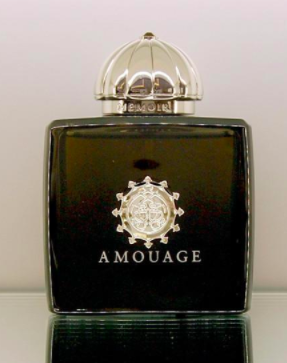
Memoir Woman by Amouage

Memoir is a controversial genre, and one that has perhaps gotten a bad reputation in recent years, with the rise and fall of the confessional online essay. But this perfume — a rich, weird, androgynous scent with notes of absinthe, white flowers, cardamom, pink pepper, labdanum and leather — is memoir in a more old-fashioned sense, the recollections of someone fascinating who lived a long and weird life, with instructive and sometimes frightening stories to tell. The contrasts in the scent imitate the contrasts in a life story, with its twists, turns, hard lessons, sharp ups and downs, and moments of unexpected sweetness.

Photo via Lucky Scent

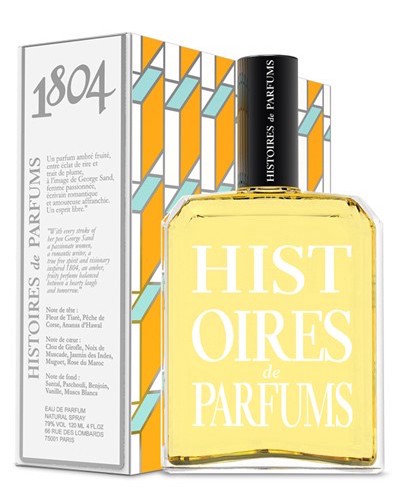
1804 George Sand by Histoires des Parfums

Histoires des Parfums’ fragrances are based on single years in history, often with a literary flavor. Other fragrances in include 1828 Jules Verne (a citrus marine fragrance) and 1740 Marquis de Sade, but 1804 is named for the year George Sand was born. A gorgeous white floral bouquet, the scent is clean, welcoming, and gracious, evoking the novelist’s famous generosity and love of nature.

Photo via Lucky Scent

De Profundis by Serge Lutens

Oscar Wilde wrote “De Profundis” (which translates “from the depths”) from prison, a letter to the young loutish lover who had put him there. It is a heartbreaking confession — and a confession in a literal, religious sense, as it draws closely on biblical ideas of sin and creation and depicts Wilde’s identification with Christ — mourning both his and his beloved’s vanity and weaknesses. It stands in contrast to Wilde’s popular plays and quips, as though his buoyant wit had turned inside out to reveal the wounded heart beneath it. From storied French perfume house Serge Lutens, created by famous perfumer Christopher Sheldrake, this perfume is inspired equally by Wilde’s famous letter and Psalm 130 from which it takes its name (“from the depths I have cried out to you, Oh Lord”), and is meant to be the smell of confession and resurrection, moving from the scent of ash and musk to the smell of Wilde’s signature chrysanthemum, and into greens, earth, and new growth.

Photo via Lucky Scent

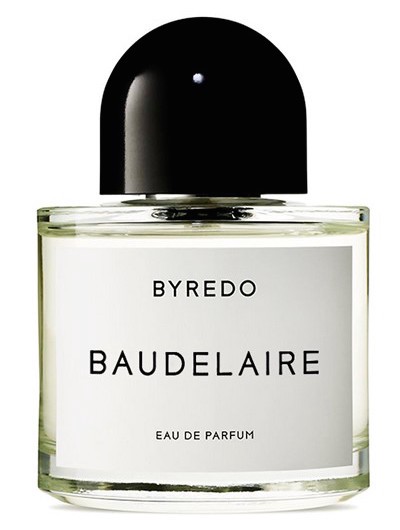
Baudelaire by Byredo

Charles Baudelaire was perhaps the quintessential French dandy-poet, today famous as much for his persona as for his poetry, and Byredo’s perfume is a tribute to that persona, at once lushly floral and dark with sticky incense, like the interior of an intellectual salon being hosted in a wealthy home, full of smoke and booze and flowers.

Photo via Roja Perfumes

A Midsummer Dream by Roja Parfums

A Midsummer’s Night’s Dream is the Shakespeare plays most likely to be performed at an outdoor festival where the audience brings picnic blankets and sits on the lawn and gently swats at mosquitoes all night, and the particular joy of this specific experience is maybe the best thing about this play. Roja’s perfume in tribute to Shakespeare’s famous comedy evokes exactly that experience, combining moss, floral notes, vanilla, vetiver, and deeper cedarwood, benzoin, and musk, like the experience of dusk settling blue over a lawn full of community theater actors playing fairies and lovers.

Ramona Ausubel Writes About What Bodies Do in Secret

Stop. Think. There must be a harder way.” So reads a letterpress sign that hangs in the kitchen of Ramona Ausubel’s mother, which the author recalled at the launch evening for her previous book, The Sons and Daughters of Ease and Plenty. The message resonates with much of Ausubel’s writing: it’s funny, but it captures something absolutely true about how most of us navigate life—specifically, about the ways women reckon with being lovers, mothers, and artists.

Such reckonings have proven to be Ausubel’s fiction sweet spot. Her 2013 story collection A Guide to Being Born (featuring the story “Tributaries” published in Recommended Reading), is organized by the stages of life but in reverse—in the end, the reader arrives at birth. And now, partnership and memory, pregnancy and motherhood drive the stories in Ausubel’s tapestried new collection, Awayland.

Purchase the collection.

The author’s fascination with motherhood and all its phases and emotions could be understood as part of a larger exploration: to understand feelings by transforming them into things physical and bodily. The emotion that lends itself best to such transformation is the one with the most complexities: Love.

In Awayland, the 11 stories are grouped into four sections that cover several territories of love and anguish: yearning for a partner, perhaps for a child; allowing for distance in the pursuit of intimacy; waiting as an inevitable phase in every kind of relationship; and lastly, the dream of something that lasts forever. It takes a powerful imagination to realize these sensations as physicalities, but that is something Ausubel has in abundance. Loneliness is cast into a Cyclops creating a dating profile in “You Can Find Love Now”; separation is death at an all-inclusive resort in “Club Zeus,” or the lovers trading hands in “Remedy”; and in the penultimate story, mummified animals in an Egyptian museum manifest Till Death Do Us Part.

Awayland is a collection of many voyages and many lives. The stories take us around the world, and to whatever is beyond. Only a woman endlessly compassionate and curious could produce such fiction. That was exactly who I met when I talked to Ramona Ausubel. Somebody who took her feelings, and stopped, thought, and followed them a different way.

Lucie Shelly: A lot of your writing explores motherhood, but this collection has a particular focus on the precipice: pregnancy. To me, there’s a connection to be drawn between the gestation of a baby and the gestation of a story; I think it suggests something special about the woman as artist, she is a creator in both senses. Can you talk a little about your work’s focus on motherhood and pregnancy?

Ramona Ausubel: My writing does often come back to pregnancy, and I always think to myself, am I done with this topic? It is this fantastical thing that our bodies know how to do. I have two kids and I do not know how to grow a child. It’s not something that I understand, and yet my body knows this thing and can do it. Similarly, being a woman in the world, we’re asked to keep a lot of our lives under the surface. You have to be nice, you have to take care of everybody and do all this surface work, and everything else happens in the dark corners. With many of these stories, I was thinking about the way that art grows out of those dark corners. I have to write about that, I have to sink a bucket down into that dark well and figure out what’s been happening below the surface. There’s so much concealed and tangled and complicated. It’s just not what the world, in my everyday life, wants to hear from me. To me, art is the way that stuff can come up.

Tributaries

LS: Your first collection considers motherhood, too, but I believe you’d written it before your son was born. Writing this collection, having gone through two births and being a mother of two, did that change how you wrote about the experiences of being pregnant, raising a child?

RA: I feel like because I’m looking from the other side, I have a lot more information. These stories cast out beyond the surprise of “What?! You can grow a thing inside you?” With these stories, I knew what it was to then care for that creature, do all of the work to make that human survive and hopefully live happily. They also consider the many transformations that a woman will make in relation to her child, because the child will change, and she is required to change with it. It’s this tumbling wheel of constant change, and deformation and formation again.

LS: To me, there are cycles of deformation for both women and men, in bodies and character, in this collection. There’s a line in “Do Not Save the Ferocious, Save the Tender” that describes, “A body severed from itself.” We see bodies pulled into pieces in several stories, we’ve got the hands removed from the couple in “Remedy,” the fallen uterus of the aging woman in “High Desert,” ankles pop up throughout. I’m wondering what you were trying to explore by looking at the body in pieces rather than an inevitable whole.

RA: I’m fascinated by bodies and what we ask them to do, particularly what we ask them to do in secret — it goes back to that question of what we aren’t saying out loud and what we aren’t able to talk about. Those unsaid experiences, that all wind up in our bodies somewhere. So in my work, I try to turn the volume up on that a little so we can hear it more clearly.

With the couple in that story “Remedy,” the woman thinks she’s dying and it’s just not okay with her that she’s going to leave her beloved. It’s the beginning of their relationship and she knows they’re meant to be together, so she decides that she wants to try, surgically, switching hands so that they can be together forever. I didn’t intend it, but that story is the most autobiographical story in this collection. I remember so clearly when I was first with my husband and feeling that one lifetime was not enough. It was really upsetting to know we had this limited amount of time and one of us was going to die first. As a solution, I was thinking we’ll inhabit each other’s ghosts and that’s how we’ll handle that problem! The point is, that idea of limited time felt absolutely unacceptable to me, so I tried thinking through it in a bigger way: what if I took that real feeling and brought it to its maximum size — how could it physically express itself? And that’s always something that I’m coming back to. What happens if we put this feeling in the body and allow it to be as big physically as it is as a feeling?

It goes back to that question of what we aren’t saying out loud and what we aren’t able to talk about. Those unsaid experiences all wind up in our bodies somewhere.

LS: The couple in “Remedy” also seem totally happy in their own world, and I felt a lot of the couples in this collection exist in a separate realm or a liminal space. In “Mother Land,” the couple leaves California for the man’s far-flung family home in Africa; in “Heaven” we have a man and a spectral woman in some magical or spiritual place. When you write through and explore relationships, do you consider them as bubbles, at a remove from the world, or experiences that bring people closer to humanity?

RA: Totally both. We all have some kinds of relationships, whether that’s family or friendships or romantic relationships. We have these things that are one way on the surface, and a different way in private. There’s the official story, you chat to someone at a cocktail party and say, “Here’s who I’m married to and this is what he does.” But you never talk about the full strata going down the canyon wall of that relationship, and all of the things that relationship is about, has ever been about, and all of the things you hope or worry it will become about. It’s my instinct to move these couples around through space and time and say, “What does it feel like to be very, very far away and with only each other?” It’s another feeling that exists on the inside that I want to try and translate into some kind of physical realm.
The Rich are Different from You and Me

LS: Writers often talk about the limitations of language and words. I hear this nugget people drag out, that the Eskimo language has 32 words for love and English only has one. And that is an interesting difference, but I don’t think that if we had more words for love, and even if we didn’t use modifiers like “a mother’s love,” I don’t think we’d stop writing stories to expand that word and explore the feeling. Your interest in realizing feelings as physical experiences, for instance, is a very different method of understanding. But do you feel confined by language, or do you feel freed by it?

RA: I feel much more freed by it. I am a fiction writer, so I get as much invention as I want. And because my work has a lot of weirdness in it, I’ve created a pretty big territory for myself. That means I don’t require language only. I get to use language, but language is also the vehicle that enables a kind of magic trick: to take a small thing and make it big and see what it looks like. The language is my favorite part, it’s the most satisfying thing, and getting a precise image is the most gratifying part of the work. But language is also the outlet into a lot of other tools that I get to use. For the same reason, I don’t write nonfiction, though I’ve tried. There are some short essays that I enjoyed writing. But for me, writing longform nonfiction, language would not feel like enough; I wouldn’t be able to say, “We’re gonna cut our hands off and trade them,” because that’s not something you would do in nonfiction. So I see how language might not be quite enough, but for me it’s the clay that makes everything possible.

LS: I would say one of those other tools you use so well is humor. “Club Zeus” is a funny and poignant story about death, and the mother in it is comical but she’s key to the sense of loss. After sending her son to Turkey for the summer, the son tells us, “What she means is that I am on my own. What she means is that tragedy is also currency. That enlightenment depends on grief. That love grows in soil that has been tilled.” “Template” is also a comical story, but could be read as dark, maybe dystopian, with the idea of baby-making becoming a government directive. I’ve heard you say before that you don’t necessarily try to write funny, but it’s something that comes forth. Can you talk about using humor to access the layers of emotions and relationships?

RA: I love using humor when it’s right. It’s like adding salt to a food, it makes everything else that’s there feel stronger — especially something that’s in opposition to humor, so the darkness and the sadness. If you have something funny, it breaks a reader open and makes all of the sadness and darkness sort of flood into that space. You can get those moments of opening in different ways, but humor is one of them.

The tension between sadness and humor is really beautiful to me. “Template” started because I read an article about a real situation in which a mayor of a small town in Russia created a day off for couples to have sex. That really did happen, but I couldn’t find much follow up about it, so I had to imagine. At first I started writing it set in Russia, but I was like, I don’t know enough about Russia. So the question was, is there a place that’s so bleak that no one is even bothering to have children anymore? That people are really afraid to? So much that a mayor might decide, we’ve got to give them some kind of incentive — and that incentive might be giving them a day off to have sex. That felt like it could happen in any country.

The funny part to me was thinking, what if this mayor was a copycat mayor — taking another mayor’s idea from another bleak place. But it had to be real. It had to be about actual hopelessness and the true feeling that people might have that they’re not sure there’s enough to sustain another life in this place. In the writing of it, the pleasure was in going back and forth between the funniness of the situation and the real hurt underneath, the real fear.

If you have something funny, it breaks a reader open and makes all of the sadness and darkness sort of flood into that space.

LS: From bleak towns to Turkey to Africa, the stories move around a lot, to places real and imagined. I felt, particularly for the real places, that the collection was Eastward facing. Beirut comes up several times — two mothers, in “Freshwater” and in “Mother Land” go to Beirut to die, essentially. What’s the background on your interest in the East?

RA: Well, I started the story, “Club Zeus,” after I got married and we went to Turkey and Greece on our honeymoon. We had a day at this all-inclusive resort and I was like “What?! This is a real place? This is not something from a George Saunders story?” I knew that I wanted to set something there but it took me a long time how to figure out how to make this story something more than just like, “This is weird place.” So, that was the first story that was sort of cast out into the world.

A few years later, my husband and I took a trip that lasted almost a year and a lot of the places we went are in the book. When we were travelling, I thought I was writing a book of nonfiction, I thought that it was a book about the idea of starting a family at this moment on the planet what with all of the terrible things that are happening. And I was thinking about that for myself — is having children even a good idea, is that okay to do? I did a lot of interviews with people all over the world, but about halfway through I realized that I didn’t want to write a nonfiction book. That it wasn’t my book to write at all. If somebody else wrote it, I would absolutely read it but it just didn’t feel like my work to do. Writing a book is such an investment, you have to be willing to hold it in your heart for years and years. I realized I was not willing to do that with that book.

Every Inheritance Has a Shadow

At first I was very despairing and I thought that I’d squandered this opportunity and the little fellowship I’d gotten, that it was all a waste. But when we came home, I started playing around with some stories, and the first one that I wrote after that was “The Animal Mummies Wish to Thank the Following.” And I really liked those animals. I thought, these guys are going to hang out with me and they are going to be pals and they are going to help the next thing happen. Slowly the stories started to emerge, and I realized they were set in all these different places and in fact all of that work I had done, the interviews, were part of a book. It was just a very different book than the one I imagined — instead of thinking about it from the outside as something I thought the world might want, it came from very much inside. I needed to write for my own reasons, and that’s exactly why it’s such a weird collection.
We were only in Beirut for a few days, but there’s just a quality to the city. Buildings are basically bombed out but it’s right on the ocean and everyone’s hanging out, jumping into the water. It felt like there was a very strong feeling of love for the place, and an ever-present fear of what has happened and what could happen. As a total outsider, I imagined loving somewhere like that, how that might be such a strong magnet in a person’s life.

LS: Were many of the destinations seaside countries? I ask because water features really prominently in this collection, and in a way that’s specific to women. A number of women emerge from the sea, and are drawn to the sea. Do you feel very drawn to the ocean, to water? Or do you think there’s a special connection between women and the sea?

RA: I do feel very drawn. Partly because I grew up in the desert. I lived the first half of my life in New Mexico and the second half, up until last year, in California, so all of a sudden, the sea was part of my existence. It’s just so, so vast, such a huge presence and so unknown to us; beautiful but dangerous. We’ve explored something like 10 percent of the world’s oceans, and we really don’t know a lot about what’s down there, which feels like a beguiling mystery but also like a threat. If there’s a storm or if you go out beyond where you are safe, you will be subsumed and completely disappear. I’m interested in what happens in this realm that exists on the edges of our world, and all of the things alive down there.

I needed to write for my own reasons, and that’s exactly why it’s such a weird collection.

LS: There was a real sense in the last section of this book that the stories took place in a realm or a bardo of some sort, or maybe purgatory. Can you tell me the decision to end the collection in a place that is the least defined, in a way?

RA: I played around with the arrangement a lot. I wanted it to be in some recognizable places, like the first story, “You Can Find Love Now,” is about a cyclops but he is very much in Washington State. The funniness of the piece is that he’s this strange otherworldly creature who’s supposed to be in Greece, but he isn’t, here he is in Washington. I wanted it to start with sort of the weirdness, but the rootedness at the same time, and then come back around to these places, to leave this earth, basically.

The last story, “Do Not Save the Ferocious,” sort of takes place in the North Sea and is maybe somewhere in Scandinavia a long time ago, but it isn’t at all defined. It feels like it could be any time and it maybe could be a place on this planet at all after all. The characters have, in their minds, certainly left the planet. It’s clear that they have made some kind of departure, and I wanted to make that story about departure. I also wanted it to be about the way our imaginations and the places we live in in our minds are separate from the world. Our feet are on the ground, but we’re also existing in other places, and maybe some of those places are real, but some are imaginings that don’t exist. There’s another world happening at the same time the regular world is happening. I wanted to go take us all the way outside.

14 Diverse Graphic Novels About Coming of Age

Everyone has a coming-of-age story. We have all been on the cusp of adulthood struggling to find our identity, balancing the societal pressure to conform and fit in with the mainstream with the innate desire to rebel and stand out. Yet the publishing world tends to collapse these multifarious, complex transformations into the same cookie-cutter narratives, leaving out a whole lot of variations on what it means to become an adult.

One place where diverse coming-of-age stories are thriving, though, is graphic novels. (Although we didn’t find any by black authors—so there’s a hole in the market!) These visually beautiful tomes also offer a richer view of life in adolescence. From an Iranian girl rebelling against the oppression of post-revolution Iran to a “tomboy” refusing to conform to gender norms, these 14 graphic bildungsromans blend gorgeous artwork with the written word to create a diverse multiplicity of narratives telling of the confusion, joy, and hardship of growing up.

Nylon Road: A Graphic Memoir of Coming of Age in Iran by Parsua Bashi

Bashi left war-torn Iran 2004 for a safe haven in Switzerland, but adapting to a new life in Zurich comes with challenges. She struggles to find a good job, to learn German and English and to make friends. Unable to engage in “real life” in her “new society”, she feels “like a useless asshole.” Her ennui materializes in the form of a 6-year-old girl in her kitchen, her younger self. She is haunted by various incarnations of her past—the teenage political rebel who rants about class oppression, the religious young wife in an abusive marriage, the defeated, grief-stricken mother, the hopeful migrant, and more — who disapprove of her current lifestyle. Her arguments with her adversarial past selves reveals painful episodes from her past, explains the choices that lead to her present, and shows Bashi’s gradual transformation into the person she is in the present day. Bashi’s thought-provoking graphic memoir criticizes not only the abuses and oppressive aftermath of the Revolution, but also denounces the West’s claim to moral superiority, highlighting the racial prejudices and rampant consumerism of the West.

Fun Home: A Family Tragicomic by Alison Bechdel

Bruce Bechdel is a third-generation funeral home director and a high school English teacher. He spends his time feverishly restoring the family’s Victorian home and engaging in covert affairs with his male students and the family babysitter. Oh, did I forget to mention he’s also a closeted gay man? Alison craves the affection of her emotionally withholding father who pours all his love into their mausoleum of a home. As Alison comes of age and embraces her sexuality, she struggles to come out as a lesbian as tragedy in the family strikes. Fun Home is a heartbreakingly funny and honest graphic memoir of a daughter longing for closure and piecing together memories of her father through the lens of their shared, but unexpressed homosexuality.

Pashmina by Nidhi Chanani

Priyanka “Pri” Das harbors many questions: Why did her mother move to America? Why has she has vowed never to return to India? Where is her father? Why won’t her mother speak of him? Pri’s mother refuses to answer, telling her: “That subject is permanently closed.” Soon, Pri finds a silk shawl hidden in a forgotten suitcase. When wrapped around her shoulders, the pashima transports her from the black-and-white tones of her mundane California life to the India of her dreams, bursting with a kaleidoscope of color. But Pri knows this romanticized India is not real. She journeys to her ancestral homeland to uncover the hidden truths of her past with a little help from Shakti, the Divine Mother Goddess. Pooja Makhijani interviewed the author for Electric Literature about “magical realism, South Asian families, and how Pashmina came to be”.

Persepolis: The Story of a Childhood & Persepolis 2: The Story of a Return by Marjane Satrapi

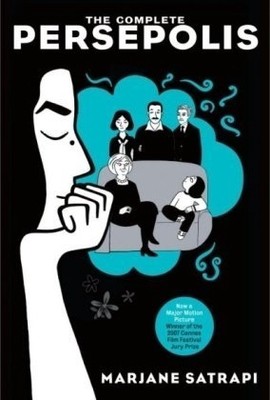
Divided into two parts, Persepolis recounts the story Satrapi’s childhood in Tehran at the dawn of the Islamic Revolution and her coming of age as an unwanted foreigner in Vienna. The outspoken daughter of loving, liberal parents, Marji turned 9 during the deposing of the Shah and witnesses Iran’s rapid fundamentalist transformation. The oppressive regime makes the veil mandatory for women, abolishes secular co-ed education, imprisons and executes political prisoners (including Marji’s beloved friends and relatives). In an act of rebellion, Marji takes to wearing black-market Nikes as a symbol of freedom. As the Iran-Iraq war worsens, her family reluctantly sends her away to complete her education in safety. Alone in Austria, Marji struggles to fit in and find belonging in a xenophobic country that conflates her with the extremists she escaped from. Persepolis is a raw, heartbreaking, and enthralling graphic memoir of a headstrong, tenacious girl fighting oppression and pursuing independence in post-revolution Iran.

Town Boy by Lat

Town Boy is a sequel to the charming and wistful Kampung Boy, a graphic memoir of a Muslim boy growing up in an idyllic village in rural Malaysia in the 1960s. Lat moves to the city to attend boarding school, leaving behind the familiar rubber plantations and tin mines of his hometown for a new life amidst the colorful shophouses and grand colonial buildings of bustling, multicultural Ipoh. He quickly forges a strong friendship with Frankie, a Malaysian Chinese boy, bonding over their shared love of rock-and-roll. Over the next seven years, the teenage duo experience the universal challenges of growing up — falling in love, hiding in the back row of classrooms, discovering new passions, rebelling against parental wishes — depicted through beautifully drawn artwork.

American Born Chinese by Gene Luen Yang

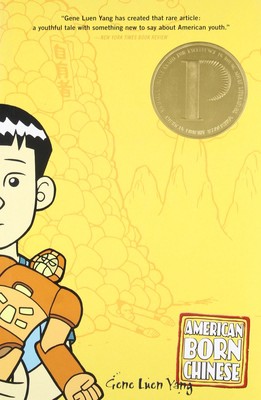
American Born Chinese weaves together three disparate coming-of-age stories that converge with a clever twist. The first chapter reimagines the legendary Chinese fable of the Monkey King attempting to transcend his monkey nature to earn a place in heaven after being kicked out of a dinner party for gods. An action-packed fight scene with creator god Tze-Yo-Tzuh ends with a humbling defeat with the Monkey King realizing that “to find your true identity…that is the highest of all freedoms.” The second narrative features Jin Wang, who moves from San Francisco’s Chinatown to a vanilla white suburb. Jin just wants to be an “all-American Boy” and fit in instead of having to answer dumb questions like “Do you eat cats?” and enduring the racist taunts of schoolyard bullies. In the last story, blue-eyed, blonde-haired Danny turns into the school pariah during an embarrassing visit from his fresh-off-the-boat cousin, Chin-Kee. Chin-Kee, a “chinky”-eyed kung-fu warrior clad in traditional attire with a waist-length braided ponytail and a pidgin accent (“HARRO AMELLICA!”), is a cringe-inducing caricature of prejudiced stereotypes perpetuated by American pop culture (I’m looking at you, Sixteen Candles). American Born Chinese reveals the prejudices of a society that simultaneously pressures Asians into assimilating into whiteness and rejecting their heritage, but refuses to accept us as anything but perpetual foreigners; a necessary read to understand the struggles of being Asian in America.

Tomboy by Liz Prince

As a child, Liz wore jeans and a T-shirt and played baseball with the boys while other girls played princess in pink tutus. She hated anything “girly” to the point of chauvinism before realizing she did not want to become a boy, but desired the independence associated with masculinity. As she hits puberty, Liz struggles to fit in and find acceptance in her high school, becoming the target of ridicule and bullying, and crushing on boys who reject her over for “feminine” girls. Spanning early childhood into adulthood, Tomboy is a humorous and heartbreaking account of staying true to yourself in a black and white world that demands conformity to stereotypical gender roles.

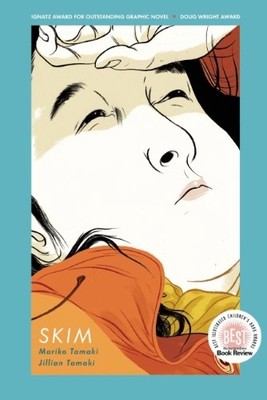
Skim by Mariko Tamaki & Jillian Tamaki

Kimberly Keiko Cameron, known as “Skim” because “she’s not slim,” and her best friend Lisa are both chubby and biracial, making them outcasts in their all-girls private Catholic high school. The two teenagers experiment with Wicca and dress in goth attire, reveling in their outsider status until Lisa get a chance to join the popular clique of blonde, peppy white girls. A panicked uproar over the suicide of the (possibly gay) boyfriend of a popular classmate leads to the school treating Skim as a suicide risk (just for being different). Amidst the forced therapy sessions and fake hugs from “concerned” classmates, Skim develops a crush on neo-hippie English teacher, Ms. Archer, who unwisely allows their friendship to bloom into an illicit romance.

Blue Is the Warmest Color by Julie Maroh

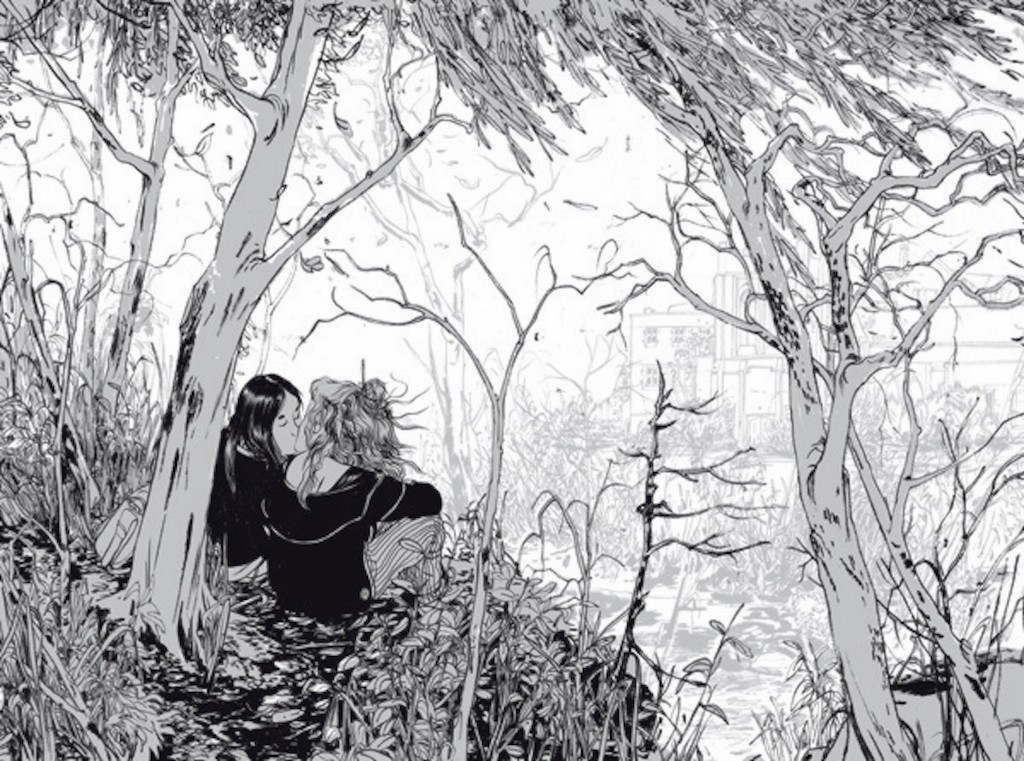
The film Blue Is the Warmest Color, winner of the Palme d’Or at the 2013 Cannes Film Festival, began as an eponymous graphic novel of tragic love. High school junior Clementine catches the eye of Emma, a confident blue-haired art student on the streets. After a chance encounter at a local gay bar, Clementine and Emma fall in love. Emma is an outspoken activist, seeing her sexual identity as an integral part of her social and political life while Clem hides her homosexuality from the outside world. Their divergent views of coming out leads to cracks in their relationship, culminating in tragedy.

The Arab of the Future Series by Riad Sattouf

Cartoonist Riad Sattouf spent his childhood in the Middle East under the shadow of three dictators. At the tender age of two, Sattouf and his parents emigrated to Libya where Colonel Muammar Gaddafi was known as the eccentric “Brotherly Leader and Guide of the Revolution.” The second was Hafez Assad of Syria (predecessor to the current Syrian megalomaniac), president of 4-year-old Sattouf’s new home. The last tyrant was his father, a Syrian professor who met his French wife in the cafeteria as students at the Sorbonne in Paris and swept his family up in his grandiose dream of ruling as president over a pan-Arab utopia. In Tripoli, the family lived in an unlockable house (courtesy of Gaddafi’s abolishment of private property) and returned from a walk to find squatters residing in their home. The scarcity of food meant the family survived solely on bananas or eggs for weeks. The relocation to his father’s home village in rural Syria proved even harsher. The local kids denounced little blonde Sattouf as a Jew and started beating him up. In the third installment explores the tension between his mother who, fed up with austere village life, wants to return to France and his father who still firmly believes in the promise of a prosperous and modern Arab nation. Sattouf uses cartoonish characters with exaggerated features and pops of color (light blue for France, yellow for Libya, pink for Syria) to show the perspective of a child growing up in the Middle East.

Fetch: How a Bad Dog Brought Me Home by Nicole J. Georges

Nicole J. Georges was a sixteen-year-old high school drop out when she adopted Beija, a shar-pei/corgi puppy, from a shelter as a holiday gift for her boyfriend. That boyfriend didn’t last, but Beija, a neurotic “bad dog” who hated men and attacked small children, stayed by Georges’s side for the next fifteen years. As Georges navigated a tumultuous young adulthood, heartbreaking relationships, a changing sexual identity, and a move from the Midwest to Portland, Beija and her “Don’t Pet Me” bandana remained a steadfast companion, who as she describes it, “loved me even when I lapsed in loving myself.”

Snapshots of a Girl By Beldan Sezen

Snapshots of a Girl is a humorous, heartrending graphic memoir about the author’s coming of age and coming out in both Western and Islamic culture. The daughter of Turkish immigrants in Germany, Sezen explores the conflicts of growing up as a queer person of color in modern Europe. The first part of the book, “The Denial Years,” navigates Sezen’s sexual awakening as she tries to date with men, only to find disappointment. After much self doubt and denial, Sezen gradually embraces her attraction to women and attempts to come out to her conservative parents. Charming and quirky, Snapshots of a Girl is a moving story of a young woman’s pursuit of happiness as she learns to embrace her body and her sexuality.

a + e 4ever by Ilike Merey

Asher, a shy newcomer to his high school, becomes the target of his classmates’ ridicule and physical violence because of his androgynous appearance. Drawn to his fragility, Eulalie develops a friendship with Ash after rescuing him from lunchroom bullies. A tough-talking, heavy-metal listening butch girl, Eu understands the intense loneliness that comes with being different. Bonded by a love of drawing, raves, alternatives music, the genderqueer outcasts navigate love, friendship, and sexuality to discover who they really are.

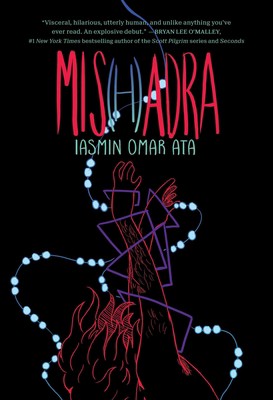
Mis(h)adra by Iasmin Omar Ata

Isaac is an Arab American college student in New York City, battling epilepsy. He pushes himself to play the role of a normal college student, partying hard and studying for midterms until a violent seizures hospitalizes him. Drawn in a Manga-inspired style, Ata depicts the onset of Isaac’s seizures as a pack of floating one-eyed daggers, surrounding him menacingly and then stabbing him into oblivion. Isaac feels increasingly isolated and defeated as his friends and teachers downplay the severity of his diagnosis and medical professionals question the legitimacy of his illness, but he finds a sympathetic new ally in Jo, a friend-of-a-friend. Mis(h)adra provides readers with a vivid and intimate look into the day-to-day life of a young man with epilepsy doing his best to survive in an apathetic world.

In Honor of the School Walkout, Here Are 8 Books About Young People Making Political Change

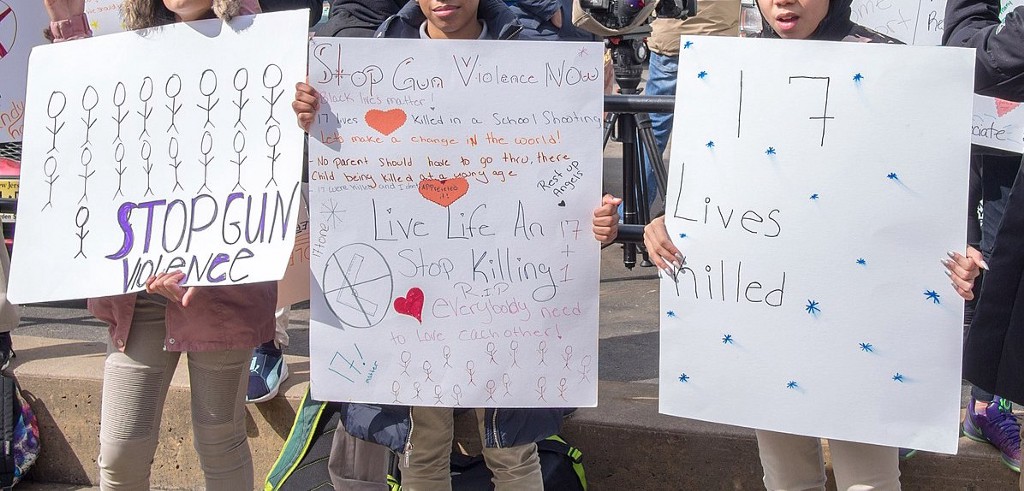
O n Wednesday, March 14, at 10 a.m., nearly one million students across the nation walked out of school to protest gun violence. Some hundreds received detention, others walked out alone, and still others broke through locked gates in defiance.

The walkout was inspired by the shooting at Marjory Stoneman Douglas High School in Florida, where seventeen students and staff were gunned down one month ago. Since then, Parkland students have been getting attention as anti-gun organizers, following in the footsteps of less-lauded young activists of color. In an inspiring moment at a rally shortly after the shooting, Marjory Stoneman Douglas senior Emma González called BS on all the “adults” in the room, who continued to frustrate or ignore efforts to prevent more school shootings. Instead of waiting on adults to act, she urged young people to get involved. Maintaining his role as Commander in Hope, Barack Obama tweeted: “Young people have helped lead all our great movements. How inspiring to see it again in so many smart, fearless students standing up for their right to be safe; marching and organizing to remake the world as it should be. We’ve been waiting for you. And we’ve got your backs.”

This week, we wanted to honor the young people who are continuing to fight for the doomed world we’ve handed them: the children walking out of class, the Parkland students, and Black Lives Matter and other young activists before them who blazed a trail. We’ve rounded up 8 books — both YA and adult fiction — about and for young people who will save the world.

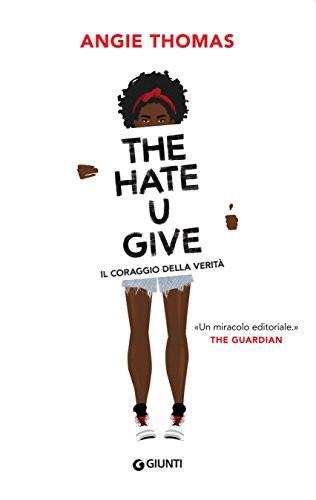
The Hate U Give by Angie Thomas

Starr Carter is sixteen years old and trying to figure out how to balance her life in the suburban, mostly-white, private school where she spends the day, and her neighborhood back home, afflicted with poverty, where her father “Big Mav” works to make the neighborhood a safer place, and her mother wants to move because it isn’t. When Starr is the witness to her best friend Khalil’s shooting by a police officer, everything falls out of balance as Starr recalibrates to a reality where her unarmed friend is transformed by newspaper headlines into a “thug” and “drug dealer.” The walls between her two worlds disintegrate as she is forced into the public spotlight, and becomes a witness for the Grand Jury in Khalil’s murder. Meanwhile, people are protesting in the streets in Khalil’s name. Protesters, local gang members, and police alike want to know what happened on the day Khalil was killed, and the only person who can answer that question is Starr. The characters and richly and intimately drawn, as Starr deals with her first long-term relationship and mean girls at school, all while trying to figure out the implications for standing up for what she believes in — for herself and her communities — and telling the story of what happened the day Khalil was killed.

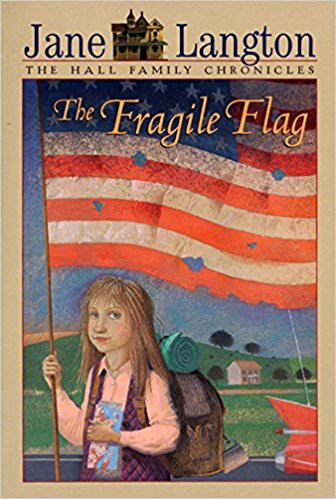
The Fragile Flag by Jane Langton

The president of nine-year-old Georgie Hall’s America is thoughtless, hawkish, obsessed with glitz, and in love with praise, like absolutely nobody we can think of. He’s redesigned the American flag to be covered with sequins, and has announced a contest for children to write him letters in praise of how great it is. Oh, and he’s also building a missile capable of destroying the earth. Georgie and her family and friends — including, as it happens, the president’s grandson — decide to march from Massachusetts to D.C. in protest of the missile, carrying a tattered old non-sequined U.S. flag. Along the way they pick up new adherents, and their march enters the city as a Children’s Crusade. This is a middle-grade book, but charming and refreshing in its optimism about young people’s political power.

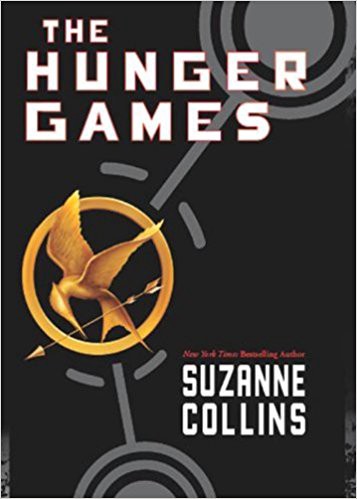
The Hunger Games by Suzanne Collins

In the dystopian future America of Panem, the children of poor communities are forced to fight to the death in a gruesome reality competition, for the entertainment of the rich and the anesthetization of the oppressed. (It’s a fun book for teens!) Protagonist Katniss enters the Games to spare her sister, but when the rules of the game require her to kill her friend instead, she goes off-script — and unwittingly becomes the hero of a political resistance.

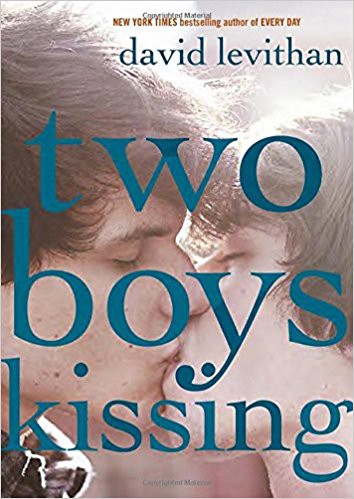
Two Boys Kissing by David Levithan

It was a challenge to narrow down to just one David Levithan title on this list, because he has written so many vital books that address the power of love and identity in making political change. Based on a true story and written by the beloved author of Nick and Norah’s Infinite Playlist, The Lover’s Dictionary. After seventeen-year-olds Harry and Craig call it quits on their relationship, they partner up on a new project to beat a Guinness World Record by kissing for 32 hours straight. They’re spurred on by a Greek chorus of the generation of gay men lost to AIDS, who narrate the novel. While Harry and Craig near the record-breaking hour, they become a personal and political channel for other boys dealing with their own desire on the internet, the consequences of coming-out in public, and what it means to have feelings for another person at all. For more David Levithan on politics, power, and young people make serious change, check out Wide Awake, too. (See, I couldn’t help myself.)

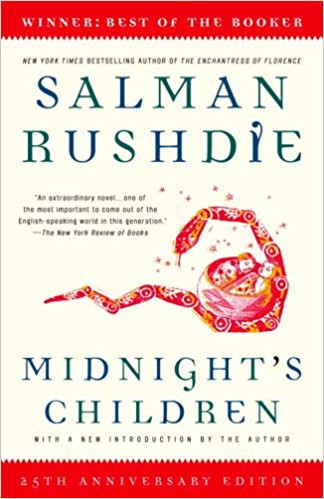
Midnight’s Children by Salman Rushdie

Saleem Sinai, the protagonist of Rushdie’s novel, is exactly as old as India’s independence from Britain and partition from Pakistan: he was born at midnight on August 14, 1947. As he grows, he discovers that he and all the other Indian and Pakistani children born between midnight and 1 a.m. on that day have special powers, including the ability to communicate telepathically with each other. Saleem brings these 1,001 gifted children together in a psychic parliament, and their loves and friendships and conflicts both reflect and heal the traumas of Partition. But even with their enormous magical and political potential, are the Midnight’s Children strong enough to save the country from a monstrous prime minister?

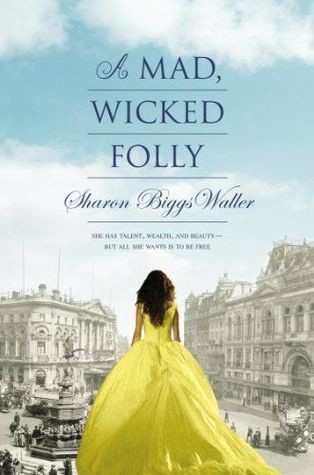
A Mad Wicked Folly by Sharon Biggs Waller

In this historical fiction, we meet another seventeen-year-old woman grappling with larger political forces limiting her personal and professional mission to go to art school and become an artist. It’s 1909 and Victoria Darling is willing to do anything to make it happen. But when posing nude for an art class gets her kicked out of boarding school, she finds herself back in London. There, she gets involved in the suffragette movement and falls in love with a working-class boy (her muse), secretly applies to art school, and tries to figure out what she is willing to sacrifice for her dreams before her parents seal her fate as a well-married woman. It’s geared towards young adults, but a compelling read for any woman who’s pissed off and has ever felt compelled to live how she wants to rather than how she is supposed to.

The Power by Naomi Alderman

What happens when womanhood suddenly becomes a weapon? Alderman’s novel is a nuanced and gripping exploration of that question. Its premise: teen girls across the world develop the ability to create an electrical charge with their bodies, strong enough to harm or kill a man. They teach this skill to older women, and women as a whole start to fight back in a way they never could before. One troubled teen becomes the kingpin (queenpin?) of a crime family; another becomes the head of a new religious movement made up of powerful girls. Alderman investigates the political, social, and interpersonal ramifications of this new power, both immediately and millennia into the future; it’s both thought-provoking and impossible to put down.

‘The Power’ Is the Perfect Book for the #MeToo Movement

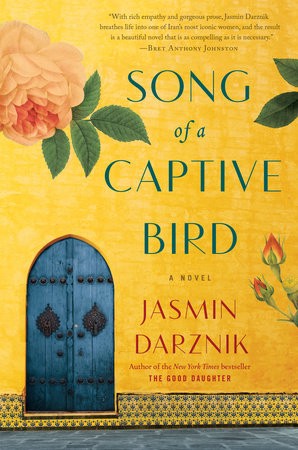
Song of a Captive Bird by Jasmin Darznik

Another critical story about a young woman choosing the life she wants to live, which is its own political act. This one is based on the life of the 1960s Iranian feminist poet Forugh Farrokhzad. In Song of a Captive Bird, young Forugh balks at the command to be a good young Persian woman — modest, quiet, meek — and instead engages in illicit conversations with young boys at cafes, swaps gossip with her sister in the garden, and writes poetry. After running away from a horrible marriage, Forugh falls deeper in love with poetry (and other men), and seeks out an independent artist’s life that creates political inspiration and outrage. It’s an homage to the indelible Iranian feminist poet and filmmaker, whose poetry and life continue to inspire women around the world.

We Need to Talk About Derek Walcott’s Sexual Harassment Scandal

I n my final year as an undergraduate student I chose to study the poetry of Derek Walcott for my dissertation. Mauritians of my generation often consider Walcott to be the greatest of all island poets; we’ve adopted him as our own. No-one was ever so articulate in expressing the vicissitudes of our postcolonial selves. When I read him for the first time I remember feeling this intense joy, this peace that no matter what I would write or fail to write, at least I had these poems, these essays that paved the way, that taught me to be proud of being from a ‘remote’ island, and of writing from, for and about that island. I loved how I understood his St. Lucian Créole without a dictionary — it was so similar to ours. I got all the jokes. I felt like he was writing for me, for my hybrid people. I wrote the three famous verses from “The Schooner Flight” on paper and blue-tacked it to my wall:

I had a sound colonial education/ I have Dutch, n****r, and English in me,/ and either I’m nobody, or I’m a nation.

That was me (with some variations in ancestry — African, English, French, Indian).

The same year that I was writing my dissertation, I was sexually harassed by two members of the English department. The first had tried to openly flirt with me before an extra-curricular creative writing class (where he was also a student). I had apologized for any misunderstanding I could have caused and entered the empty classroom; he rushed for me, sat next to me and tried to touch my feet with his without speaking. He was trembling. I thought it was all quite pathetic. I laughed “the event” off the same evening, after having spent an hour locked in a bathroom, making sure he had left the building before I did.

Then there was the professor, who implied one evening that his special interest in me was the reason why I had obtained an incredibly high grade on a paper. He had been my mentor in many ways, an eminence in his field, a confidant, a father-figure far away from home — and roughly the same age as my father, too. It had made me uncomfortable, his way of greeting me by kissing my cheek, but I had dismissed it as an old man’s eccentricity. That evening he told me he would “make sure” I would always be “taken care of.” He offered to drop me home, repeatedly, hoping, presuming sex. I had had the audacity to believe my mind was a gift, one I nurtured by working harder than anyone I knew. He was telling me it meant nothing. He broke me, a little bit.

I went home and cried, and the next day I picked up Omeros — because I still had that dissertation to write, because reading it would bring me back home, because Walcott’s long poem had become the dissertation’s focus. I believed that it encapsulated his best poetry, that it stood as a complete manifesto of his ideas, as it were: the sea and forgetting, the postcolonial nation and its search for identity, the cauterising of History’s wounds. Each verse was song; I’d go read them again and again and each time new meanings, references would emerge, I’d discover the precise music he’d created in the composition of his diction, I’d tap my fingers as he must have done to the rhythm that he seemed to have conjured straight from a Platonic form.

The poem now unravelled and I clung onto the beauty as firmly as I could, since it was the only thing that kept me reading. It was clear now, clear as anything, the lacunae in Walcott’s work. I remembered how the professor was friends with the poet; numerous literary conversations, a trip to St. Lucia. I understood. They were both brilliant. They both looked at women the same way.

Walcott’s women in Omeros are described almost purely in terms of their bodies. The journey to understand one’s identity, to grow, to heal — the Homeric epic of the self belongs to his men alone.

Walcott’s women in Omeros are described almost purely in terms of their bodies. The journey to understand one’s identity, to grow, to heal — the Homeric epic of the self belongs to his men alone. Helen — a panther, St. Lucia, Helen of Troy, Circe — belongs to the text in the same way models are sometimes employed to decorate a room, to be contemplated as an aesthetic object. She is depthless, a fetish. She may be given characteristics— she has a temper, she is a thief, she is a businesswoman — but any attempt at introspection fails. She is always seen from the male gaze, which is why her face is always described as a “mask.” She is mysterious not because men fail to understand her, but because Walcott couldn’t see her beyond her body, beyond symbol.

These Helens are different creatures, / one marble, one ebony […] but each draws an elbow slowly over her face/ and offers the gift of her sculptured nakedness,/ parting her mouth.

I fumbled around, attempted to contextualize the poem in front of me, make it less uncomfortable, more academic, rational. Misogyny may be a recurring pattern in his work, I argued to myself, but that didn’t mean the man was a predator, or even consciously aware of his prejudice. I didn’t know to what extent the man’s writing was a reflection of his person — if anything, in fact, could be deduced from such a comparison.

But there was something there — in my gut, since his work was now intestinal. There was a layer thrumming beneath and through the art, a layer of enormous, toxic, masculine power. One that declares: this is my island, these are my women.

I recalled a particular section of a piece written by Hilton Als, who had visited Walcott in St Lucia.

“Hello, Mr. Walcott,” the waitress said, approaching. She was young and pretty and thin, and was dressed in a skimpy piece of madras cloth. She reminded me of Walcott’s Helen. Walcott turned away from her, mock dismissive.

“I’m not speaking to you, you know,” he said.

“Oh! Mr. Walcott! Why?” She seemed legitimately concerned.

“Dodo!” Sigrid said, chuckling, toying with her camera.

“You’re rude to me, you know,” Walcott said to the young girl, who did not laugh. “You deserve lash! You want lash!”

Walcott pulled the girl over his knee and began to spank her. The girl squealed. Now she was laughing. Her fear had turned to relief.

Walcott let the girl up. “Now you’re rude no more, huh?”

In February this year Als would say, in passing, that Walcott “was a terrible person; awful man.”

Walcott’s toxic misogyny is his great failure as a person, as an artist, in his art, for all three are resolutely bound. His work is lacking. It is flawed. This is a moral and artistic analysis. Both are possible.

That day I Googled “Derek Walcott Sexual Harassment Assault Misconduct.”

Walcott’s toxic misogyny is his great failure as a person, as an artist, in his art, for all three are resolutely bound.

I hadn’t heard of the “Oxford Controversy” before starting my dissertation. There is no mention of Walcott’s behavior in any study of his work, though I think I remember one female critic mentioning how “his” women are almost always caricatures of sex, desire and beauty. It was and probably still is a strict part of English literary criticism, this stark separation of the artist from his art.

Writing this piece feels scandalous, improper, shameful, even: I am fighting four intense years of prestigious English academia, where I was instructed that it would be tasteless to analyze art through the artist’s life. Such a practice would be a return to an obsolete, pre-New-Critical epoch. As a student I was the fiercest proponent of this instruction: reading art through biography requires a certain art, and not everyone is John Berger. Many such readings fail, in spectacular fashion: I had read too many poor essays that analyzed Sylvia Plath and David Foster Wallace solely in terms of their mental health.

If I were to draw anything from the artist’s life it had to be in their own terms: their interviews, their own analysis of how the loss of a lover spawned such-and-such a poem. I was taught to take the artist at their word or not at all. Crossing that line, I assume, would have led to raised eyebrows: “Are you Lacan?” Psychoanalytic criticism, in fact, was taught as part of the Critical Theory module: if you chose to analyze a novel using psychoanalysis, you’d have to make that very clear from the start, and then you’d only use the material in the text to craft your essay. In the end, you’d only be analyzing characters, symbols. Perhaps, as a conclusion, you would allude to the author’s possible understanding of psychoanalysis that would have perhaps informed their work. You wouldn’t connect the dots, as obvious as they were, to the author’s personal life.

Dismissing the biographical seems a little absurd to me, now.

Can you separate the artist from his art? Art, when it is recognized, when it is bequeathed awards and shortlistings — and this recognition alone more often than not involves racial and sexual prejudice — elevates the artist, deifies them even, in this celebrity culture. The artist obtains privileged positions, events, deals, money, tenure. They exert even greater influence and power, as long as they continue to produce, as long as their talent remains intact or grows. This status enables the artist to continue producing art. The work and the person are indissoluble in this respect. The trampling and abuse of others along the way to artistic stardom (or once such stardom is obtained) is also indissoluble from the work of art.

The trampling and abuse of others along the way to artistic stardom (or once such stardom is obtained) is indissoluble from the work of art.

The artist and his art. The academic and his papers. The producer and his films. The writer and his fiction, poems, non-fiction.

When Walcott died on March 17, 2017, the obituaries sometimes contained a little paragraph mentioning his “Oxford scandal.” The “scandal” is a lesson in silencing.

Walcott withdrew from the race to be elected Professor of Poetry at Oxford in 2009; he had done so on account of a so-called “anonymous letter-writing campaign.” The “campaign” was in fact a dossier, received by approximately 200 academics from a group of concerned students, which sought to bring forward the cases of sexual misconduct he had reaped over the years. Excerpts of The Lecherous Professor: Sexual Harassment on Campus by Billie Wright Dziech and Linda Weiner (a book published in 1984) were included in the dossier; these detailed the experience of a Harvard student with Walcott, where she recounted that Walcott sexually harassed her. When she declined his advances, he gave her a C grade and ignored her in class. Walcott accepted the facts of the case, but claimed that his teaching style was “deliberately personal and intense.” He also, of course, slut-shamed her: he apparently had “sensed no reluctance [in the student] to pursue the topic of sexual relationships,” since she had confided in him on a few personal matters. This opinion was shared by Harvard’s dean of faculty, Henry Rosovsky. This case did nothing to stymie Walcott’s winning the Nobel Prize in 1992. The dossier also contained the allegation made in 1996 by Nicole Niemi, who was a student at Boston University and a member of his creative writing class. Niemi stated that the poet threatened to stop the production of her play unless she slept with him.

Walcott stifled these emerging artists’ art, blackmailing their art for their bodies, their artist bodies. Meanwhile, he expects to be judged in terms of his art alone. Few are the ones to say that it is lacking. He may have elevated an island — many islands — and he may have given us islanders a voice, but he did it with a hand pressed to women’s mouths.

He may have given us islanders a voice, but he did it with a hand pressed to women’s mouths.

Walcott described the “campaign” as a “low and degrading attempt at character assassination.” Many respected professors — female professors, such as Elleke Boehmer — expressed their dismay at the decision. “How many male professors of poetry of a certain age and generation can safely hold their hands up and say that they are entirely clear of any history of sexual harassment?” Boehmer told a journalist, whose article ran the headline “Smear campaign dogs Derek Walcott’s bid for Oxford professor of poetry.” That he would have had place to roam and continue his predatory behavior was not, it seems, cause for concern: he would “only” be giving grand public lectures, not teaching a course, and hence, it was to be concluded, students (and faculty members) would be generally safe from harm.

Teach the art as separate from the artist, demands the culture, but revere the artist for his art. Say his art has nothing to do with the man, yet invite him in.

Ruth Padel, who was chosen for the post, resigned after nine days. She was the one who had apparently alerted journalists to Walcott’s misconduct and the letter campaign he was “victim” to during the election process. She was criticized for using his misconduct as a means to get her way. Again, Walcott’s sexual harassment wasn’t the focus of many of the think pieces that emerged that year — that honor belonged to Padel’s seemingly ruthless ambition. The journalist behind one of the pieces even felt bad that Walcott withdrew his candidature: “I wasn’t saying Walcott was a bad poet, just that he was a tiny bit creepy,” he said.

When I told a few other members of staff about what happened with the men who harassed me, I was repeatedly told that I had no grounds for complaint, since I hadn’t actually been touched or “clearly violated” in any way.

“I’m also aware that Byron’s life was not stainless, or T.S. Eliot’s for that matter — would we turn them down? There are other aspects to the character than the sexual. These kinds of concerns are raised when you prioritize character over poetry, and if it came down to absolutely blameless characters, then surely no one could stand. This is political correctness on overdrive about something which happened so long ago.” This is Boehmer again, in another article. Hermione Lee, another professor at Oxford who supported Walcott’s nomination, said that Walcott’s “unorthodox life” should have nothing to do with his job. “Should great poets who behave badly be locked away from social interaction? We are acting as purveyors of poetry, not of chastity.”

Professor Boehmer and Dame Lee. There was a time when I would have given almost anything to be taught by them.

Teach the art as separate from the artist, demands the culture, but revere the artist for his art.

Boehmer and Lee’s arguments are ridiculously flawed. Reading Walcott safely away from Walcott is one thing; having a man openly accused of sexual assault around campus is another. It is shocking that sexual assault is willingly conflated with other aspects of “blame” — that a man’s abuse of power, his harassment, his assaults are somehow the same as, say, one man’s moral failure to support his best friend in a crisis. Repeatedly, I see this same kind of resigned historical fatalism, that what these men have done they will continue to do in perpetuum. To evoke history as an argument is a perfect example of bad faith, of being so wilfully blind that one cannot accept progress. Progress will come, in the form of legislation, accountability. It’s already started.

Walcott’s “Oxford controversy” occurred a decade or so ago. Stars of academia lauded across the world, accused of rape, harassment, abuse, are still safe in their magisterial tenure: Harold Bloom, Franco Moretti. I wonder about some of the writers employed in universities, in creative writing programs. I wonder what they’ve done, what they’re doing.

There is no glory in taking care of your university, its students, and other members of faculty by dismissing a predator-professor. There should be. There is the belief that once a member of staff “behaves badly” and is made to leave, the institution will suffer as a result — whether the institution is a university, a magazine or review, a newspaper. The irremediable loss of a prestigious name, perhaps an institution in themselves. Underlying and concomitant to this is the belief that once a so-called genius is castigated, his genius will somehow be inhibited, and that this in turn would be terribly detrimental to arts and letters around the world.

There is no glory in taking care of your university, its students, and other members of faculty by dismissing a predator-professor. There should be.

Support predators, for they are the bastions of culture.

My own experience let me to believe that nothing that I could say mattered, that the men in question couldn’t be touched, and that if I were to aspire to academia, one day, then I would have to have the department on my side the day I applied for a job, which I clearly wouldn’t get if I had angered them in my refusal to be quiet. I’d like to point out that there were supportive voices, immensely helpful professors who I talked to about this: they looked at anonymous complaint procedures for me, thought about ways I could take action, but I was so terrified back then that I did nothing.

What should I make of Walcott’s work, now? I no longer author-worship. I no longer view his poems and essays as quasi-sacred tracts.

In order to write this piece I had to delve back into Omeros, Another Life, his Collected Poems, his essays, some of his plays. If I read him again, after this essay is done, I’ll probably read him as a poet in his time, though I won’t let time excuse him; read what he did with language, with voice, without forgetting all those he silenced, find out if these voices published any creative work, read them, read them alongside him, read them alone. Read him alongside other poets and writers of the Caribbean: he was so predominant in my life partly because he was one of the only Caribbean writers taught in the three or four lectures on postcolonialism at university. Yet the region is abundant with talent: Edwige Danticat, Kamau Brathwaite, Jamaica Kincaid, Linton Kwesi Johnson, Gabrielle Bellot. Maybe just read them alone.

Read him alongside other poets and writers of the Caribbean. Maybe just read them alone.

When I’m able to read Walcott at such a remove, then maybe then I’ll take what I find to be true and useful in his words and in his technique and separate the artist from his art at last, even though that act may seem deeply disingenuous. But not yet.

Perhaps, of course, I won’t touch his books again at all. This may be the last time I ever read Omeros: there it sits as I type, lilac cover with Walcott’s name in lurid yellow, the title in red. Some designer’s nod to the Caribbean sunset, perhaps. I am about to shelve it. This time, for this last reading of mine, my lips were no longer slightly open in wonder, I took no pleasure in his verse. There is no marvel left; disgust has seared every page, disgust like one of Francis Bacon’s grotesque men, screaming.

I write my island into literature, away and separate from him.

Finding a New Language for the History of Queer Culture

Today, drag culture has its rightful place in the mainstream, but no so long ago, it existed largely on the fringes. Joseph Cassara’s debut novel is set in the era right before the shift, in the late 1980s and early 1990s At that time, drag queens in New York City formed houses that competed in “walks” at various ballrooms. The events were super-amped up, fabulously elaborate fashion shows But beyond those nights, the members of the participating houses became families for young men and women who had been shunned by the one they were born into. Cassara uses real icons from the city’s ball scenes — namely the House of Xtravaganza members — to create a look into the domestic lives of these characters.

Purchase the novel.

In The House of Impossible Beauties, we follow four main characters as they go from strangers, to cohorts, to family. Angel is based on the real life Angie Xtravaganza; she realizes early on that she doesn’t identify as male, she goes on to form her storied eponymous house. She meets a trans girl looking for a better life named Venus, a fashion obsessed boy named Jaunito, and a butch queen named Daniel.

Cassara’s book explores how these real-life figures — and their struggles — lay the foundations for much of the queer culture we know today. I spoke with the author about blurring the lines of homage, history, and fiction.

Adam Vitcavage: About a year ago, I was on a subreddit called “Suggest Me a Book” and I was looking for books about the history of drag queens. I posed the question as a search for nonfiction and got some biographies of queer activists, but really I didn’t get a lot of feedback. A year later, and The House of Impossible Beauties landed on my doorstep.

So, my first question: what are the books you used to do research, in addition to watching the documentary Paris is Burning?

Joseph Cassara: I read Myra Breckenridge by Gore Vidal but that’s kind of dated now. I read an essay by Michael Cunningham called “A Slap of Love” which is about looking for Angie Xtravaganza in the early 90s. Other than that there weren’t a lot of books. I had the same problem you had, I couldn’t really find anything.

Instead, I scoured the internet to try to find as much information about the clubs people went to or how people described their memories of the era. I wasn’t so much as interested in historical facts or details as much as how much people remembered that era and what it felt like. I wanted to distill that information to create scenes that had emotion.

9 Books About Being Southern and Queer as Hell

AV: What drew you to this specific time period of the late ’80s /early ’90s of New York City?

JC: I grew up in New Jersey in that time period. My family is from the Bronx and Brooklyn, so I spent a lot of time with my extended family in the outer boroughs of the city. Like a lot of writers and artists, feel that all of the things that happen to you before you’re around 12 are formative, they really stay with you, and my art draws from that time.

Obviously, I wasn’t really exposed to queer culture or drag culture when I was that young. But I was exposed to the vitality of the language of Spanglish in New York or Latin music on the radio. What people wore. Especially how dirty the city was. The city is not really the same as it was when I was young. I mean there were peep shows in Times Square but now Times Square feels like Disney World. Back when I was young it was just strippers and prostitutes outside of Port Authority.

I was just young, quiet, and absorbing all of this. When I was in grad school and trying to figure out what I was going to write about, I was very interested in the documentary Paris is Burning and questions of queer identity and racial identity. I feel like with this novel I was able to fuse my interests and my childhood.

AV: You mentioned weren’t really exposed to drag or queer culture. What was your first exposed to drag or trans?

JC: I watched Paris is Burning when I was 17 or 18. That was my first exposure to the film. I don’t definitively recall meeting any drag queens when I was younger, until I was in high school and becoming aware of my identity as a gay man.

I wanted the book to feel like an homage. I wanted it to be viewed through a lens.

AV: Why did you decide to use the real life people that Paris is Burning explores as the basis for your characters?

JC: The decision came slowly. I didn’t set out to do that. When I started writing, I didn’t think I was writing a novel. I was in grad school and just writing scenes to practice craft. I wrote scenes where fictionalized people met people from the documentary. I wanted to see what that would look like. As I continued, it began taking shape into something larger and I realized it might be a novel. Then I wondered if the characters based on real people should also have the real names or if those should be changed. I really wanted the book to feel like an homage. I wanted it to be viewed through a lens.

I wanted this book to be inspired by these people’s lives, but I wanted it refracted through my own style as a writer. I wanted to write what I felt was the emotional truth. Although it’s inspired by real lives, it’s fictionalized in a way that allows me to fill in what happened to them, their hopes and desires, into a larger tradition of queer writing.

That was the goal of the book. When I was trying to sell the book an editor said what if I just changed the names because it would be easier than having to go through the legal department. I thought about it, but then I realized if I changed the names the homage would no longer be there. The book would no longer be about their lives. I wasn’t interested in writing biographies about them, but I wanted it to be inspired by them so readers could be very aware of the direct link between them.

AV: One of my favorite moments is the opening of the chapter “Thomas — 1976.” It reads: “He feared that with that name, he would become the type of man who wore plaid button-downs and tucked them into chinos. With a belt. She would never.” Can you talk about how approached the identities of your characters and being sensitive about your choice of pronouns?

JC: First, there is an interesting kind of problem when you set out to write a book about gay and trans people in a decade that is not the current decade. Discourse has changed. I could not use the language we use today to describe these characters and how they describe themselves. I had to keep that language of the time period or else it would have felt anachronistic.

The second point is that I find the pronoun shifts to be really fascinating on the line level. In the first chapter when Angel gets into a fight with her mother, as soon as she takes off her dress the pronoun shifts back to “he.” It’s almost as if it’s been forced upon Angel to use that pronoun. As soon as she’s alone with her brother, the pronoun shifts back to “she ”because that is what she is more comfortable with.

On the linguistic level, the pronoun shift allows readers to understand what is happening in Angel’s psyche. The narrator doesn’t have to describe that to the reader; it’s described in a pronoun.

Discourse has changed. I couldn’t use the language we use today to describe these characters and how they describe themselves.

AV: Reading how Thomas transforms into Venus was one of my favorite plot threads, which is why her ending was so heartbreaking. But Angel’s death was based off the real death. Did you consider fictionalizing her ending, having her live on?

JC: The last scene, when Angel dies, for me felt like the only way to end. You get a sense of finality. I knew that Angel died in 1993 or 1994 and that Dorian Corey [another drag queen in the book based off of a real queen] had a mummified body and I had to address those things. I had to figure out, do I have a scene where people find a mummified body or do I just tell the reader? Do I show Angel’s death or is it just an implied death?

Queering Gender, Queering Genre

AV: HIV and AIDS play an important role in the book, but they’re never the central plot. The virus is looming over these characters but it’s never forced on the page. Why did you decide to portray it this way?

JC: I view this book as an American family novel and using those tropes, which feels very different to the tropes of an AIDS novel. This could have been an AIDS novel and it would have dealt with HIV/AIDS in a very different way. I specifically wanted this to feel like a domestic drama of these characters, with the topics of the late 1980s as simply the backdrop.

I knew I had to deal with HIV in a way, but I didn’t want it to feel clinical. I was interested in their day to day lives. How they lived together and interacted together. Their aspirations and their let downs. I wanted the book to go beyond the era’s anxiety about the virus. I was more focused on writing a book about domestic lives and how people would react when their hopes and dreams could not come to fruition because of the impact of AIDS.

Historians have to write with accuracy, but as a fiction writer I can fill in the blanks.

AV: When I first started reading, I assumed the book was going to be heavily into the ball culture, and I was going to see a lot of scenes covering that. Really, there was only one bigger ball scene. Why did you decide not to dedicate more time to that part of their lives?

JC: It goes back to the fact that I wanted this to be a domestic novel. The book is very deceptive that way. You pick of the book and you expect it to be loud and colorful with a lot of balls. What you get is this quiet literary family novel. I thought about adding more ball scenes, but there is a risk where once you have more than two — that they’re all the same. How do you make a ball scene different? With the one scene where Jaunito is making his debut, I felt I wrote about everything I could about the outfits and characters. If I kept doing that the reader would become numb to it and it would lose its dazzle. I wanted that scene to feel alive when it happened. The book was never meant to explore the ball culture, it was always more about the inner lives of these characters.

AV: From the time period when your book takes place to the mid ’90s when RuPaul was on VH1 to now, gay culture has shifted so much. Where do you think it goes from here?

JC: I don’t know. Especially because of current political situation. What’s interesting for me as a writer looking at gay fiction is that even in the past few years there has been a shift. Gay novels before 2005 were really hard to get published. Books we think of as being foundations of queer lit were not well received in their time. Giovanni’s Room by James Baldwin received terrible reviews. The City and the Pillar by Gore Vidal almost destroyed his career.

Really the past few years with the success of A Little Life by Hanya Yanagihara, which is interesting because she is a straight woman, and What Belongs to You by Garth Greenwell kind of proved to the publishing community that you can publish books about LGBT characters and it can still do well. People are interested in engaging with those stories.

I think there is going to be a further shift where there is more gay fiction being printed by big publishers.

AV: How do you view your literature? Will you always write toward the gay community?

JC: I’ve been thinking about that a lot lately. When you write your first book you write it for yourself because there is no guarantee it will be published. Now that it has been published and it has gotten wide attention, I am aware there is an audience out there.

I’m working on two different projects, I’m not sure which will come first. One is a collection of short stories about contemporary gay life. Just about friendships and relationships told by different characters. I guess that is for a gay audience.

The next novel is also kind of historical. I’m interested in this character from early 20th century American painting. Not many people know this character was gay. I’ve been reading biographies and different archives and I see the coded language. I see the painting of his “friend.” I am interested in what a novel would look like about his life. That’s another gay novel, but it’s also tapping into American history. While I aim that toward a gay audience, I think straight people would also be interested.

I feel like my goal as a writer is to resurrect stories from the past and revisit them in the present. I’m interested in stories that are at risk of being lost because they haven’t been preserved or they have been erased. I want to put in the work to imagine what fills in the gaps. Historians have to write with accuracy, but as a fiction writer I can fill in the blanks.

Why We Still Need Aunt Beast

From the moment the Wrinkle in Time movie was announced, my eye was on one thing: Aunt Beast. How would this character — who looks like a furry, grey, tentacled monster, but who is the essence of warmth and love and care — come across on screen? I dissected the trailers for clues, zeroed in on a flash of lumbering grey behemoths, faceless and soft. That’s not the Aunt Beast I know, but it must be her. I begged film critic friends to bring me word of her. When the film’s social media embargo lifted, I tweeted: “SOMEONE TELL ME IS AUNT BEAST OKAY.”

It wasn’t that I needed the adaptation to be faithful. From the first images released, we knew it was not, and frankly, I was relieved. If I ever imprinted on a book, it was this one, but I was intrigued by how different Ava DuVernay’s vision was from my own: the Mrs. Ws not spooky old women but futuristic glamor-witches, with polychrome hair and every color of glittering lipstick; the Happy Medium not a sleepy woman but a man-bunned Zach Galifiniakis; the entire bright, Disney air. The distance meant I could enjoy the movie in isolation. If the movie was different, it wouldn’t ruin the book. It would just be a sister-story to the story I’ve always loved.

She’s an angry, stubborn, frustrated girl, and she doesn’t transcend those failings in order to triumph. In fact, she can’t triumph without them.

But I needed Aunt Beast. It didn’t occur to me that she might be cut — not because she’s crucial to the book’s plot, but because she’s crucial to its heart. The whole book tells us that messy, angry, stubborn girls can save the day. But Aunt Beast tells us that those problem girls can also be loved.

The tagline of the movie is “be a warrior,” but the Meg Murry I remembered from the book isn’t a hero because she’s brave or noble, the warrior that she will presumably rise to be. She’s a hero because of her flaws. She’s an angry, stubborn, frustrated girl, and she doesn’t transcend those failings in order to triumph. In fact, she can’t triumph without them. That’s the whole point.


At the beginning of the book of A Wrinkle in Time, Meg hates herself. She’s got frizzy hair, glasses, braces, and a perpetual sense that she’s wrong — she does poorly in her classes and can’t manage to fit in, unable to squelch her temper with classmates or bullies or the school principal (who calls her “the most belligerent, uncooperative child in school.”) Her mother and her baby brother, Charles Wallace, love her, but Meg says, “I wish I were a different person. I hate myself.”

Then three mysterious, supernatural women — Mrs. Whatsit, Mrs. Which, and Mrs. Who — show up to take Meg, Charles Wallace, and Meg’s schoolmate Calvin on a quest to rescue the Murrys’ missing father. He disappeared while experimenting with traveling by tesseract, folding (or wrinkling) space to traverse great distances instantaneously. The Mrs. Ws tell the children that there is a darkness in the universe, and that this is what their father is fighting, but he is trapped within it now. Earth is, so far, merely shadowed, but there are entire planets that have lost their battle against the Dark Thing.

When the children come to Camazotz, the dark planet where Meg’s father is imprisoned, the Mrs. Ws cannot go with them, but they send the children on their way with gifts. The gifts are mostly enigmatic: a pair of glasses, a hint in a rhyme. As in the movie, Mrs. Whatsit says to Meg, “I give you your faults.”

“My faults!” Meg cried.

“Your faults.”

“But I’m always trying to get rid of my faults!”

“Yes,” Mrs. Whatsit said. “However I think you’ll find they’ll come in very handy on Camazotz.”

Meg’s faults are the reason she’s been a beacon for so many generations of girls. She is angry, frustrated, impatient, self-loathing, and most of all stubborn. A decade ago, Lizzie Skurnick wrote an ode to the stubbornness of Meg Murry at Jezebel:

[Meg] discovers that her stubbornness about what she knows is right is her greatest strength. It’s not really her love for her brother that saves him and her father and herself from being taken over by the Dark Thing. It’s her faults (anger, impatience, stubbornness) that keep her from being sucked in by the great throbbing brain telling her to fall in line. … And, as unattractive as those traits are to others, Meg’s faults amount to no less than a belief in herself. And, as Mrs. Who says: Justitae soror vides — faith is the sister of justice.

Those traits, given back to Meg like a benediction by Mrs. Whatsit, allow Meg to save herself and Charles Wallace. But recognizing that your flaws can be leveraged into strength isn’t enough to make you stop hating yourself, enough to let you stop listening to everything that tells you that you’re wrong. Meg has to learn that she is strong because of her faults, but she also has to learn that they make her no less worthy of love.

Meg learns from Aunt Beast not only that she can keep fighting, but that she should.

This is where Aunt Beast comes in. In the book, Meg’s father tessers himself, her, and Calvin out of Camazotz to the first non-dark planet he can find, after a failed attempt to save Charles Wallace. (He’s left Charles Wallace behind not out of callousness but because tearing him away from IT, the malign consciousness that controls the planet, might have killed him.) Tessering through the Dark Thing, which envelops Camazotz, is painful and dangerous; Meg, ever the worst at tessering, lands there weakened by her battle with the darkness, on the verge of being lost to it.

She is furious. She is heartbroken. She’s in the grip of the Dark Thing, yes, but these feelings are Meg’s own, too, because she is a furious and heartbroken girl. And Aunt Beast heals her — with food and rest and care, and also with love. Aunt Beast loves Meg even when Meg is raging, and in doing so gives her the strength to go back to Camazotz, to return to the fight. Meg already had stubbornness, but that alone isn’t always enough to keep fighting. Meg learns from Aunt Beast not only that she can keep fighting, but that she should. When she realizes she is the only one who can save Charles Wallace, first she has a tantrum, crying at the unfairness of it all. But then a surprising peace comes over her, and she understands: “It can’t be anyone else. I don’t understand Charles, but he understands me.” She doesn’t understand herself, either. But she understands, thanks to Aunt Beast, that she can be loved at her worst.

I don’t remember what I thought of Aunt Beast the first time I read A Wrinkle in Time, but I know what she’s come to mean to me in the decades and rereads since. When Meg first sees her, she’s repulsed by the monstrous alien as it reaches out to touch her face. “But with the tentacle came the same delicate fragrance that moved across her with the breeze, and she felt a soft, tingling warmth go all through her that momentarily assuaged her pain.” I’m not Christian, so my understanding here is limited, but I think Aunt Beast is the embodiment of grace.

No matter how monstrous and wrong we are, there’s another monster out there who may love us, despite and because.

When I was eight and read this book for the first time, when I was twelve and raised my hand too often in class, when I was fifteen and fighting with my mother, when I was every age I’ve ever been and felt in whatever way that I was wrong in the world, when I was stubborn like Meg Murry and all I wanted was for how I was to be okay, Aunt Beast has always been a beacon. No matter how monstrous and wrong we are, there’s another monster out there who may love us, despite and because.


One of the film’s two screenwriters, Jennifer Lee, told The Mary Sue:

She was there until the very end. Maybe she’ll show up in the DVD. It was the right thing for the film version. Meg needed to walk into the It’s lair without support. Aunt Beast was a part of the book that provided support, but she also provided the answer. This was a journey we reworked, where no one is gonna give Meg the answer. She has to find it herself.

But Aunt Beast doesn’t provide answers, really. She provides healing. The movie’s tagline is “be a warrior,” but only the book’s Meg is ever really wounded — not physically, but psychically intruded upon by the Dark Thing.

IT, the dark sovereign of Camazotz, is not the origin of the darkness in the book’s world, as he seems to be in the movie; he is only one node of its power. That power pervades Camazotz as a throbbing rhythm, one that seduces your breath and thoughts and hearts to fall in line. And that’s the nature of the darkness on Camazotz: conformity. Submission to sameness. “Nobody suffers here,” Charles Wallace tells Meg under the grip of IT. “Nobody is every unhappy.” The Dark Thing is not vaguely “darkness,” it is a specific evil on Camazotz — one that Meg Murry, full of rage for the ways she has never fit in, is uniquely suited to fight.

It’s Mrs. Which, in the book, who gives Meg the answer, in her spooky whisper: “Yyou hhave ssomethinngg thatt ITT hhass nnott. Thiss ssomethingg iss yyourr onlly wweapponn. Bbutt yyou mmusstt ffinndd itt fforr yyourrssellff.” That something, Meg realizes, is love: Mrs. Whatsit’s and her father’s and and her mother’s and her brothers’ — and Aunt Beast’s.

She realizes, “If she could give love to IT perhaps it would shrivel up and die, for she was sure that IT could not withstand love.” But Meg isn’t able to do it:

But she, in all her weakness and foolishness and baseness and nothingness, was incapable of loving IT. Perhaps it was not too much to ask of her, but she could not do it.

But she could love Charles Wallace.

She does, and she saves him, even as she is weak and foolish and base. These faults don’t have to stand in the way of loving, or of being loved; perhaps Aunt Beast doesn’t teach Meg this, but she reminds her. Anyway, she reminded me. Watching the film, I wasn’t thinking about whether or not anyone gave Meg the answers. I was watching how she was loved. How her mother ached for her suffering, how the Happy Medium gave her patience, how Mrs. Who waited for her when she fell behind. But through it all, Meg had to be strong — good, brave, unfailing. I missed seeing her fall apart. I missed her flailing in a tantrum at Aunt Beast’s implacable body, I missed Aunt Beast standing there “quietly against the assault.” And I missed Aunt Beast standing beside Meg, when she decided she would risk her life, alone for her brother. “This time,” L’Engle writes, “Aunt Beast’s arm went around her.”

Kevin Brockmeier On the Essential Fiction of Dino Buzzati

“The Egg”

by Dino Buzzati

The International Violet Cross organized a grand egg hunt in the gardens of the Villa Reale for children under twelve years old — ­tickets were twenty thousand lira each.

The eggs were hidden under bundles of hay, waiting for the starting signal and the children could keep all the eggs they found. There were eggs of every kind and size — ­chocolate eggs, metal eggs, cardboard eggs, all containing the most wonderful presents.

Gilda Soso, a cleaner who was paid by the hour, heard of the hunt at the Casa Zernatta where she worked. Signora Zernatta was taking all her four children at a total cost of eighty thousand lira.

Gilda Soso, twenty-­five years old, not pretty, yet not plain, short, petite, with a lively face full of kindness, but also of repressed desires, had a four-­year-­old daughter — ­a pretty little girl — ­whom she decided to take to the hunt.

When the day arrived she dressed her Antonella in a new coat and a felt hat that made her look like a child of well-­to-­do parents. Gilda, however, couldn’t make herself look well-­off, her clothes were too threadbare. But she did something better: with the aid of some sort of cap she got herself up to look rather like an En­glish nanny, and if you didn’t look too closely you might easily have taken her for one of those expensive nursemaids who hold diplomas from Geneva or Neuchatel.

They set off in good time for the gates of the Villa Reale, and here Gilda paused, looking about her as if she were a nursemaid awaiting her mistress. Presently cars arrived disgorging children who were going on the egg hunt. Signora Zernatta arrived with her four and Gilda turned aside to avoid being seen.

Was all this going to be a waste of time for Gilda? It wasn’t easy to choose the right moment of disorder and confusion to slip in without paying.

The egg hunt was to begin at three. At five minutes to three a presidential type of car drew up: it contained the wife of an important Minister with her children who had just arrived in Rome. At once the President, the Directors and Officials of the International Violet Cross pushed toward the Minister’s wife to welcome her, and this gave, in full measure, the desired confusion.

And so Gilda, the daily cleaner disguised as a nursemaid, entered the garden with her little one, to whom she gave last-­minute instructions that she should not let herself be put upon by children bigger and more cunning than she.

You could see spaced irregularly on the lawn hundreds of bundles of hay, some large, some small — ­one was at least three yards high — ­who knows what was hidden underneath? Perhaps nothing.

The starting signal was given by a blast on a trumpet, the tape marking the starting point was dropped and the children hurled themselves on the hunt with piercing yells.

But the children of the wealthy were too much for little Antonella. She ran here and there unable to make up her mind, while the others rummaged in the hay, some already running back to their mothers carrying huge chocolate eggs or gaily painted cardboard ones containing goodness-­knows-­what surprises.

At last even Antonella, thrusting her little hand in the hay, encountered something smooth and compact, judging from the contour it must be a monster egg. Beside herself with joy, she cried out, “I’ve found one! I’ve found one!” and tried to grasp the egg, but a boy dived headlong, as they do in rugby scrums, and then Antonella saw him running off clasping something enormous in his arms: he even pulled a face at her to add to her discomfiture.

Children are very smart. At three o’clock they were given the start, at a quarter past it was all over. And Gilda’s little girl, empty-­handed, looked around for her nursemaid mother. She was indeed wretchedly unhappy, but at all costs she wouldn’t cry — ­that would put her to shame in front of all those children who would see her. But each one had his booty, some a lot, some only a little, only Antonella had nothing at all.

There was a fair-­haired little girl of about seven who was having difficulty in carrying off all the good things she had collected. Antonella looked at her in astonishment.

“Didn’t you find anything?” asked the fair-­haired little girl kindly.

“No, nothing.”

“If you like you may have one of mine.”

“May I? Which one?”

“One of the small ones.”

“This one?”

“Yes. Take it.”

“Thank you,” said Antonella, already quite consoled. “What is your name?”

“Ignazia,” replied the little girl.

Just then an important-­looking lady, who must have been Ignazia’s mother, interrupted with: “Why are you giving that little girl one of your eggs?”

“I didn’t give it to her — ­she took it away from me,” replied Ignazia instantly, with that inexplicable perfidiousness of children.

“It isn’t true!” cried Antonella, “She gave it to me!”

It was a beautiful egg of shiny cardboard that you could open like a box, perhaps there was a toy inside, or a set of dolls’ dishes, or a needlework case.

Attracted by the dispute, one of the white-­clad Violet Cross ladies appeared on the scene. She was about fifty years old.

“What is the matter, my dears?” she asked with a smile, but it wasn’t a pleasant one. “Don’t you like what you’ve got?”

“It’s nothing, nothing,” said Ignazia’s mother. “This brat — ­I don’t know who she belongs to — ­has taken one of my child’s eggs. But it doesn’t matter to me, let her have it! Come along, Ignazia,” and off she went with her little girl.

But the Violet Cross lady didn’t consider the matter closed.

“Did you take the egg?” she asked Antonella.

“No, she gave it to me.”

“Indeed! What is your name?”

“Antonella.”

“Antonella who?”

“Antonella Soso.”

“And your mother — ­where is your mother?”

Just then Antonella realized that her mother was standing motionless a short distance away, watching all that was going on.

“She’s there,” said the child, pointing. “But isn’t she your nursemaid?” Then Gilda came forward. “I am her mother.”

The lady looked at her puzzled. “Excuse me, madam, you have your ticket? Would you mind showing it to me?”

“I haven’t got a ticket,” said Gilda, placing herself beside Antonella.

“You’ve lost it?”

“No, I haven’t got one.”

“You entered by fraud, then? Well, that alters the situation. Now, little girl, that egg doesn’t belong to you.”

Firmly she took the egg away.

“It’s disgraceful,” she said, “now, will you please go.”

The child stood as if turned to stone, her little face petrified with such grief that the heavens themselves began to darken.

Then as the Violet Cross lady was going off with the egg, Gilda exploded. All the humiliations, the sufferings, the anger, the suppressed desires of years and years were too much for her and she began to howl.

There were many people there, smart people in the best society and their children, laden with stupendous eggs. Some hurried away horrified. Others stopped and protested. “It’s shameful!” “It’s a scandal!” “And in front of children too!” “Arrest her!”

“Get out of here if you don’t want to be arrested,” said the Violet Cross lady.

But Antonella burst into violent sobs that would have moved a heart of stone. Gilda was now beside herself — ­rage, shame, hatred, all gave her a great and irresistible power.

“You should be ashamed, taking away my little girl’s egg when she has nothing. Do you know what you are? Scum!”

Two policemen came up and seized Gilda by the hands.

“Get out at once! Get out!” She freed herself.

“Let me go! Let me go!”

They fell on her, caught hold of her everywhere and dragged her toward the exit. “Now you are coming with us to the police station. Once there you will cool down and learn what happens to people who insult the forces of law and order.”

They had difficulty in holding her, small though she was.

“No! No!” she yelled. “My little girl! My little girl! Let me go, you cowards!” The child, clinging to her skirts and flung to and fro in the tumult, was shouting frantically through her sobs.

There were ten of them, men and women, against her.

“She’s mad!”

“Fetch a straitjacket!”

“Take her to the first-­aid post!”

The police van had just drawn up, they opened the door and she was lifted off the ground by the impetus of the crowd. The Violet Cross lady seized the child firmly by the hand. “Now, you come with me. They are going to teach your mummy a lesson.”

No one remembered that sometimes an injustice suffered can unleash terrifying power.

“For the last time, let me go!” shouted Gilda while they were trying to lift her into the van. “Let me go before I kill you!”

“That’s enough! Take her away,” ordered the Violet Cross lady, determined to subdue Antonella.

“Well, then, you shall die first, damn you!” cried Gilda, struggling more than ever.

“Oh, God,” groaned the white-­clad one, and fell lifeless to the ground.

“And now you who are holding my hands, you too,” said the cleaner.

There was a confused mass of bodies, then one of the policemen fell down dead, a second one fell down immediately after, as soon as Gilda had spoken.

They all retreated in nameless terror. The mother found herself alone, surrounded by a crowd who dared not do anything.

She took Antonella by the hand and stepped out confidently.

“Make way, make way — ­let me pass.”

They made way, not daring to touch her. They followed her, though at a distance of twenty yards as she walked away.

Meanwhile, through the milling crowd, armored cars arrived amid the wailing of ambulance and fire-­engine sirens. A vice commissioner of police took command of the operations.

A voice was heard: “Hoses! Tear gas!”

Gilda turned around angrily.

“Use them if you dare.”

Here was a mother offended and humiliated, an unleashed force of nature.

A circle of police surrounded her. “Hands up, you wretch!” A warning shot was heard.

“My little girl — ­you want to kill her too?” cried Gilda. “Let me pass.”

She walked on fearlessly. They hadn’t even touched her and six policemen collapsed in a heap on the ground.

So she reached home. It was a large block of flats standing in the fields on the outskirts of the town. The police surrounded the building.

The Chief of Police advanced with a loud megaphone, and all the tenants were given five minutes to get out, and the mother was ordered to hand over her child lest she should come to harm.

Gilda leaned out of the window on the top floor and shouted words they couldn’t understand. The group of police at once fell back as if some invisible force were pushing them.

“What are you doing? Close ranks!” thundered the officials. But even they stumbled back.

There only remained Gilda and her child in the building. Probably she was cooking supper, for a thin wisp of smoke issued from the chimney.

As evening fell, detachments of the Seventh Armored Regiment formed a wide circle around the house. Gilda leaned out of the window and shouted something or other. A heavy armored car began to wobble, then tipped over sideways — ­then a second, a third, a fourth. Some mysterious force tossed them about here and there like tin toys until they remained immobile in the most grotesque positions, completely smashed.

A state of siege was declared and U.N.O. forces intervened. A wide zone around the city was evacuated. At dawn the bombardment began.

Standing on a balcony, Gilda and the child quietly watched the spectacle. No one knew why none of the grenades succeeded in hitting the house. They all exploded in midair three hundred yards short. Then Gilda went in because Antonella, frightened by the noise of the explosions, had begun to cry.

They meant to get her through hunger and thirst. The water supply was cut. But every morning and every evening the chimney gave out its plume of smoke — ­a sign that Gilda was cooking.

The generals decided to attack at “X” hours. At the “Xth” hour the ground for miles around trembled, the war machines advanced concentrically with the boom of the apocalypse.

Once more Gilda showed herself.

“Stop it!” she cried, “Leave me alone!”

The ranks of armored cars heaved as though moved by an invisible wave, the steel pachyderms loaded with death twisted up with horrible grating noises, changing into little heaps of scrap iron.

The Secretary General of the U.N.O. advanced holding a white flag. Gilda invited him to enter.

The Secretary General of the U.N.O. asked the cleaner for her peace terms: the country was exhausted, the nerves of the people and of the armed forces could stand no more.

Gilda offered him a cup of coffee and then said, “I want an egg for my little girl.”

Ten trucks stopped before the house. They were loaded with eggs of all sizes and of fantastic beauty for the little girl to choose. There was even one of solid gold studded with precious stones, fourteen inches in diameter.

Antonella chose a small one of colored cardboard, just like the one that the Violet Cross lady had taken from her.