7 Fictional Books About Political Corruption To Help You Cope With the News

When truth is stranger than fiction, sometimes we turn to fiction to help us understand it. In January 2017, the month Donald Trump was inaugurated, we were clamoring for novels to help with the new facts: George Orwell’s 1984 had a 9,500 percent increase in sales, and Margaret Atwood’s The Handmaid’s Tale became shorthand for the very real political injustices acted out on women. A year later, we’re wishing the news were fiction instead. Nepotism, double-crosses, investigations, money laundering, white-collar crime, made-for-TV meltdowns: it’d make one helluva read.

Whether you’re looking for an escape from reality, or a little more context on a reality that already feels apocryphal, here are seven books that put political corruption back where it belongs: between the covers of a book.
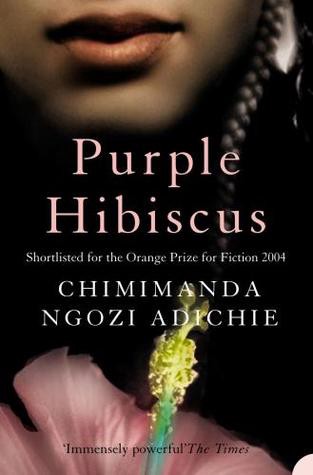
Purple Hibiscus by Chimimanda Ngozi Adichie

Growing up is a political act. We learn to distinguish between the beliefs of our parents, and the beliefs we want to nurture for ourselves. Set in postcolonial Nigeria, Purple Hibiscus explores the religious and political corruption festering at the feet of fifteen-year-old Kambili Achike, the daughter of a devout Catholic and “benevolent” business man, Eugene. Kambili’s family is a microcosm of the political landscape: her grandfather identifies with non-Christian traditional Nigerian culture, her father is a saintly public persona who putrefies into toxic psychological and physical torture at home, and her aunt is a progressive, pro-Democracy professor at the University who speaks out against the Nigerian government and encourages Kambili to speak her mind, too. When Kambili’s father’s abuse becomes too much to bear, Kambili learns what’s at stake in standing up for yourself and defending the ones you love.
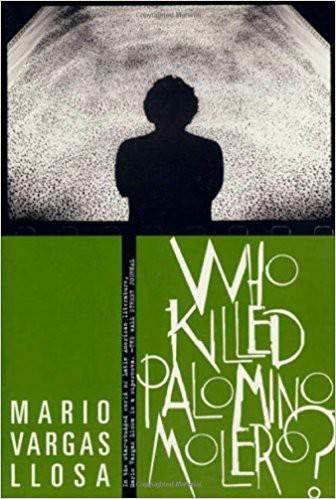
Who Killed Palomino Molero? by Mario Vargas Llosa

Love, political corruption, and murder mysteries are closer friends than Trump and late-night McDonald’s. In Who Killed Palomino Molero?, a murder mystery is the backdrop for an exploration into the corruption and class prejudice of 1950s Peru. Palomino Molero is a poor young man who isn’t drafted into the Air Force but signs up anyway. When his mangled body is found in a field outside of a small town in Peru, Lieutenant Silva and his young assistant, Lituma are sent to find out whodunnit. Winding, intimately-detailed interviews with people in town bring both the town and Palomino Molero to life. Palomino Molero was in love with a woman far above his station, who happened to be the daughter of the flagrantly racist and corrupt Colonel Mindreau, Alicia Mindreau. Though the detectives’ efforts to solve the crime are perpetually frustrated by the colonel, the suspects are narrowed down and the crime is solved. Or is it? Mario Vargas Llosa makes corruption come to life so vividly, and leaves so many questions unanswered, that everything feels only more unsettled than before, and the case doesn’t really feel closed at all.

V for Vendetta by Alan Moore

World war, police government, a fascist state. Dystopian graphic novel or your New York Times morning briefing? Set in a post-apocalyptic 1990s London, V for Vendetta takes place after a nuclear war in the 1980s has devastated most of the rest of the world. The nordic supremacist and neo-fascist Norsefire political party has put all of its enemies in concentration camps and rules the contemporary police state. Meanwhile, the Guy Fawkes–masked anarchist knowns as V stages dramatic revolutionary attacks to encourage people to abandon the current version of “democracy” in favor of anarchy. In the process, V saves a young woman named Evey from the secret police and the two become allies in the fight against oppression and corruption.
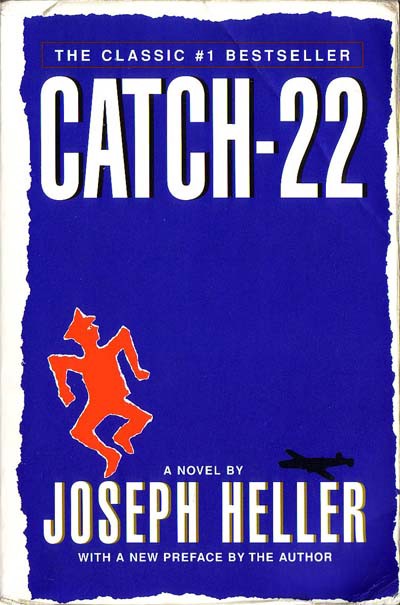
Catch-22 by Joseph Heller

Horace Walpole wrote “Life is a comedy to those who think and a tragedy for those who feel.” Whether or not you agree with the statement, we thought it might be time for a laugh amidst all the tragedy on this list. Published in 1961, the novel’s title is a reference to the paradoxical air force policy that has protagonist Captain John Yossarian trapped: if a man continues to accept dangerous air missions he is considered insane and unfit for duty, but if a man willingly requests to resign from said dangerous missions, he is considered sane and fit for duty. The book takes place during World War II and mostly follows the life of Captain John Yossarian as he tries to navigate the hilariously insane bureaucracy of the war effort.

9 Political Books To Read After ‘Fire and Fury‘

Macbeth by William Shakespeare

Three witches tell general Macbeth that one day he’ll be King of Scotland. With Lady Macbeth’s help, Macbeth devises a plan to kill the king and take the throne. But his own guilty conscious might be the biggest enemy to battle. Shakespeare had a lot to say about political power and corruption, and just picking one play for this list was a challenge. Whether you go with Julius Caesar (and if so, take a minute to look back at the noise generated by the Shakespeare in the Park production with the orange-haired Caesar in a business suit), Richard III, Henry VIII, or Hamlet, you’ll be sure to find men and women wrestling with the intoxicating forces of influence and power. But we picked Macbeth because there are three witches and badass Lady Macbeth.

Krik? Krak! by Edwidge Danticat

The nine stories and epilogue in this story collection travel from Haiti to New York City, and explore the trauma of forced migration, what it means to identify as a refugee, and how much some have to sacrifice for momentary, even if fragmentary, freedom. In “Nineteen Thirty Seven” the narrator Josephine visits her mother, who is in prison for witchcraft, after traveling across a blood-filled river from the Dominican Republic, where Haitians (including Josephine’s grandmother) were murdered. In “A Wall of Fire Rising,” a young boy gets to play the part of a revolutionary in his school play, while his father dreams of escaping in a hot air balloon from his custodial work cleaning bathrooms at the plantation. Krik? Krak! collects piles of impasses: between life and death, mothers and daughters, families and lovers, personal and political, in Haiti, the Dominican Republic, and the U.S., and makes us look at what comes to life there.

Fahrenheit 451 by Ray Bradbury

Written in 1953, Fahrenheit 451 (so named for the temperature at which books burn) is Bradbury’s speculative dystopian novel about a future when mass media has gotten the better of us and books are banned and burned. Distraction reigns: bright, rapid series of images, and mini radio buds with 24–7 content consume daily life. As Bradbury writes: “Whirl man’s mind around about so fast under the pumping hands of publishers, exploiters, broadcasters that the centrifuge flings off all unnecessary, time-wasting thought!” But Montag, one of the firefighters in charge of burning books starts to question the campaign and gets closer to a revolutionary group memorizing the great works so they can live on in the mind. Can’t get enough of the too-close-to-home horror? Look out for HBO’s film adaptation, starring Black Panther’s Michael B. Jordan as Montag, which should be out this year.
Sylvia Plath, Nella Larsen, and Charlotte Brontë Finally Get New York Times Obits

The New York Times is taking a pretty literal look at how much it’s talked about dead white men. It may come as no surprise that most of the obituaries published by the Times have celebrated the lives of white men. Today, on International Women’s Day, The New York Times is asking for a do-over: “Overlooked” is an ongoing series that kicks off today with a collection of fifteen obituaries for women “who left indelible marks but were nonetheless overlooked” since 1851, the year the Times started publishing obituaries. The list includes some writers who are so well-known it’s difficult to understand how they weren’t memorialized in the paper of record—and some who never got their due.

The idea for the series came to Amisha Padnani, an editor for the obituary section, who partnered up with Jessica Bennett, the gender editor at the Times, after discovering only 20 percent of obituaries covered by the Times were for women. In an article on why most of their obituaries have been about white men, William McDonald, the Times obituaries editor, writes that lots of people die every day (news flash!) so deciding whose death is important enough to cover boils down to whose death is considered “newsworthy” at the time of their death.

It’s wild to see who wasn’t considered newsworthy at the time of their death. There are some surprising misses: the deaths of writers like Sylvia Plath, Nella Larsen, and Charlotte Brontë weren’t considered newsworthy, and neither were those of the journalist and activist Ida B. Wells or the photographer Diane Arbus. Reading through the first fifteen obituaries, we learn that Charlotte Brontë was an “impatient, dreamy, long-suffering, unpublished” schoolteacher when she plotted out the beginnings of her literary career, and died from complications during pregnancy. When Nella Larsen, a literary celebrity of the Harlem Renaissance, died alone in her apartment, her half-sister claimed to not even know she existed. And Sylvia Plath, whose career soared after her death, had her original obituary in The Boston Globe buried under the letter “H” for her married name, Hughes.

What’s even more striking are the obits for women writers I had never learned about, like the poet and revolutionary Qiu Jin who loved “wine, swords, and bomb making,” and was beheaded in 1907 when she was 31 years old for conspiring to overthrow the Qing government.

The Second Death of Clarice Lispector

At a time when we are abundantly aware of the unequal representation of (living) women writers in media, it’s also cool to note that of the fifteen obituaries published today, twelve were written by women.

Recovering the work of women writers who died in obscurity has given us back writers like Zora Neale Hurston, Clarice Lispector, and Lucia Berlin, to name a few. It’s important that we keep doing it, and it will be interesting to see if Overlooked helps the cause.

Overlooked will become a regular feature of the Obituaries section every week, eventually expanding its coverage beyond women. If you have a suggestion for an overlooked obituary, you can submit that here.

Forget “Handmaid’s Tale” — ”Red Clocks” is the Reproductive Dystopia We Need to Read Right Now

In the unsettlingly near future, Roe v. Wade has been overturned and a federal Personhood Amendment ratified, giving “the constitutional right to life, liberty, and property to a fertilized egg at the moment of conception.” At first, things go like they always do in countries where abortion is criminalized: pregnant people with money travel to have the procedure performed where it’s legal. But here, young women attempting to travel outside the country are scrutinized for any hint of an unwanted early pregnancy, and middle-aged women for signs of a desperation to conceive. The Canadian border patrol sends suspected abortion- and IVF-seekers back home, a practice known as “The Pink Wall.” (In vitro fertilization is criminalized under this law because, fully vested with the rights and privileges pertaining to human persons, “the embryos can’t consent to be moved.”) As the reality of fetal personhood sinks in, legal rulings in a similar vein follow, such as the “Every Child Needs Two” act that prohibits single people from adopting.

This is the world of Leni Zumas’ Red Clocks, the most recent book in the genre I think of as “reproductive dystopia” — and the one we most need to heed. In older reproductive dystopias — Margaret Atwood’s The Handmaid’s Tale from 1985, P.D. James’ Children of Men from 1992, and even Hillary Jordan’s When She Woke from 2011 — apocalyptically low birth rate is the anxiety driving the narrative; shit first hits the fan because the number of new babies being born has dropped substantially. In Louise Erdrich’s 2017 reproductive dystopia, Future Home of the Living God, it’s because the number of new fully human babies plummets, as life on planet earth has begun a process of de-evolution. In any case, there is a high-stakes, cataclysmic reason to explain why authoritarian, theocratic governments take charge of human reproduction, and why by and large, the people let them. But in Red Clocks, the reason is simply that the antichoice movement has finally achieved what it set out to do, what it is working to accomplish as I write this and will be working to accomplish when you read it. Everyone with a uterus loses the right to decide alone what happens inside it, not because the world is dying, but because Americans put a few more Mike Pence types in charge than we already have.

Zumas’s four primary characters are living in an Oregon only two years out from the ratification of the Personhood Amendment. “The Biographer” is a single woman over forty who fervently wants a baby. “The Daughter” is a pregnant teenager who desperately wants an abortion, but is already surrounded by cautionary tales: a peer who threw herself down a flight of stairs; a lost best friend, Yasmine, “the self-scraper”; another classmate’s “sister’s friend, who got an abortion from the witch last year.” Said witch, “The Mender,” provides midwifery, herbal abortifacients, and routine gynecological check-ups to women too poor, frightened, ashamed, or frustrated to see western doctors. And finally, “The Wife” left law school to become a mother and now daydreams of driving her minivan off a cliff.

Everyone with a uterus loses the right to decide alone what happens inside it, not because the world is dying, but because Americans put a few more Mike Pence types in charge.

It being a small town, these four women occasionally interact in a round robin of envy and longing. The Biographer is gutted when The Wife makes it clear she thinks parenthood is a necessary condition of true adulthood. The Wife fears the seemingly carefree Biographer is having an affair with her husband. The Mender pines for a baby she gave up as a teenager, while The Daughter is frantic to rid herself of the dividing cells that threaten to become a baby.

Alongside their stories, we hear from the (fictional) polar explorer Eivør Minervudottir, subject of The Biographer’s biography, married against her will at 19, widowed 18 months later, and cast out by her mother for failing to produce a child in that time.

Zumas covers the terror, the honor, the pain, the possibility, and the oppression that come with having a uterus more thoroughly than most of these books attempt to — which is not to say she’s scratched the surface of all the reasons why a person would want to have a child or not at any given time. All of her main characters are white, all are cisgender, and all except The Mender are solidly middle-class at least. There are nods at the way that reproductive injustice disproportionately affects people of color; secondary characters, like Yasmine the self-scraper, are treated in ways that highlight racial disparities. But the fact is, it’s a flaw in an otherwise thoughtfully constructed narrative. It’s one thing to follow a single white character so closely that the racialized impact of such laws can only be observed second-hand — as Hillary Jordan does more successfully in When She Woke — but it’s quite another to follow multiple characters with the implicit goal of representing how personal experience complicates attitudes toward motherhood, and make every voice a white one.

Having said that, Zumas’s multi-narrator approach still evinces a broader, more inclusive vision of reproductive justice than the other titles in this narrow genre. Rather than focusing tightly on a woman who wants the right to have a baby (Children of Men, Future Home of the Living God), an abortion (When She Woke), or the choice whether to become pregnant and by whom (The Handmaid’s Tale), Red Clocks keeps driving home a single point from multiple angles: if control of a uterus’s activity belongs to anyone other than the person who contains that uterus, that person is denied true liberty. A pregnant teenager, a reluctant mother, a fortysomething who wants to try in vitro, a single woman who wants to raise a baby, a polar explorer who has no interest in children — all are in precisely the same position, if a theocratic government and/or repressive society declare that women can’t be trusted to govern their own bodies. And that position, to paraphrase Stokely Carmichael, is prone.

If control of a uterus’s activity belongs to anyone other than the person who contains that uterus, that person is denied true liberty.

Those of us who are inclined to read reproductive dystopias like to imagine we know what we would do in a Handmaid’s Tale-type scenario. In a future of sexual slavery and ritualized rape under a fundamentalist Christian government, we would fight back. We would go underground and organize. We would be the resistance. But when does the resistance start? What form does it take when most of us still believe that we’re essentially free, even if we know intellectually that a shady government is chipping away at our rights every day? What if we’re already living in a reproductive dystopia, but still — as the women in Red Clocks do, as Atwood’s Offred does before she is captured — reading the newspaper, tending our gardens, going to marches, raising our families?

Spoiler: We are.

Reproductive justice nonprofit Rewire’s Legislative Tracker is a handy tool for grasping the scope of the issue. A simple glance at the “topics” tab, and the number of current laws related to each, underscores the dizzying number of fronts on which a highly organized anti-choice movement is chipping away at women’s freedom. 20-week bans: 136. Conscience and refusal clauses: 245. Fetal homicide: 99. Forced ultrasound: 108. Funding restrictions for family planning: 182. Heartbeat bans: 52. Human embryo and fetal research restrictions: 138. Abstinence-only sex ed: 54. Targeted Regulation of Abortion Providers (TRAP laws): 263. Waiting periods and forced counseling: 84.

Personhood: 151.

Granted, some of the 151 proposed personhood laws, such as the federal Sanctity of Human Life Act (H.R. 586 in 2017), are introduced every year to expected failure. But just as Donald Trump couldn’t possibly have become president until he did, these bills will only fail until they don’t. This year, Alabama voters will decide whether to amend their state’s constitution “to declare and otherwise affirm that it is the public policy of this state to recognize and support the sanctity of unborn life and the rights of unborn children.” Last week, the Department of Health and Human Services announced that future federal family planning grants will prioritize groups that push abstinence. The Associated Press notes that “The new HHS document makes repeated favorable mention of ‘natural family planning,’” i.e., the rhythm method.

When does the resistance start? What form does it take when most of us still believe that we’re essentially free, even if we know intellectually that a shady government is chipping away at our rights every day?

“This was always where Republicans were going to go: away from BIRTH CONTROL,” author Rebecca Traister wrote on Twitter in response to that news. “Not abortion. It’s not about ‘life.’ It’s about returning women to socially & economically subjugated positions, stripping them of the repro autonomy that permits full participation in public spheres.”

“This has always been the goal, the point,” she added a moment later. “The whole fucking point.”

“She was just quietly teaching history when it happened,” Zumas writes of The Biographer. “Woke up one morning to a president-elect she hadn’t voted for. This man thought women who miscarried should pay for funerals for the fetal tissue and thought a lab technician who accidentally dropped an embryo during in vitro transfer was guilty of manslaughter.”

In interviews, Zumas says she began writing Red Clocks in 2010, as President Obama was just coming into his own, but the “personhood movement” was already well underway. If you were paying attention, it wasn’t hard to imagine waking up to something like a President Pence.

That’s exactly what made it — what still makes it — so tempting not to pay attention.

The Biographer in Red Clocks says she did what she could — marching and signing petitions — to stop the Personhood Amendment, to no avail. But The Wife, busy as she’s been with her children and husband’s everyday needs, realizes her apathy is one more manifestation of a self lost to an external ideal of family life. “[T]he person she planned to be would care about this mess, would bother to be furious,” Zumas tells us. The person The Wife has become, however, is “too tired to be furious.”

Aren’t we all, at this point? And yet, in the days after the 2016 presidential election, not so very long ago, my social media feeds lit up with links to an article by Masha Gessen in the New York Review of Books, “Autocracy: Rules for Survival.”

Rule #4: Be outraged. If you follow Rule #1 and believe what the autocrat-elect is saying, you will not be surprised. But in the face of the impulse to normalize, it is essential to maintain one’s capacity for shock. This will lead people to call you unreasonable and hysterical, and to accuse you of overreacting. It is no fun to be the only hysterical person in the room. Prepare yourself.

As I write this, the big news of the day is that, while praising Chinese President Xi Jinping, Donald Trump said, “He’s now president for life. President for life. And he’s great. I think it’s great. Maybe we’ll give that a shot someday.”

Maybe we’ll give that a shot someday.

Survival rule #1: “Believe the autocrat.” You want to believe he can’t really mean that, because how could he? And then, time and again, he shows you that he means exactly what he says. And by that point, it’s too late to stop him.

The challenge of Red Clocks is to anticipate the coming horrors, instead of fantasizing about how to fight back once they’ve happened.

The challenge of Red Clocks — as opposed to The Handmaid’s Tale or Future Home of the Living God or really most dystopian novels — is to anticipate the coming horrors, instead of fantasizing about how to fight back once they’ve happened. It’s one thing to imagine yourself as a hero of the resistance, bundling pregnant women into unmarked vans under cover of night, lying to border guards, using code names, steeling yourself to kill or be killed if necessary. It’s quite another to imagine what you would do if things got just a little bit worse than they are now, with the promise of more to come. Red Clocks asks not “What would you do?” but “What are you doing?

We’ll all have different answers to that question, according to our abilities and priorities, but the very least we can do is be furious. Be outraged. Stay that way.

It’s Okay If Writing Doesn’t Make You Happy

A friend recently told me they got no joy from writing. “So I stopped,” they said with no regret. My friend’s posture remained erect and their eyes laser-focused. But I’d found what they’d said upsetting. This person is a writer I greatly admire. Someone whose work I will tell anyone as indisputable fact is some of the best stuff I’ve read.

Their words hit me at my core, I think because I worried I’d see myself saying something similar down the line. My first instinct was to jump into hero mode: How could I fix this? How could I help my friend understand their talent enough to get back to producing? I realized that pushing back would be more for my benefit, an attempt to convince myself that it couldn’t happen to me. So I sat and listened. I didn’t insert my rebuttals. I wanted to understand where they were coming from.

I sat with my friend’s statement for weeks. Hell, I’m still sitting with it. When we’d met I had been avoiding my own writing due to personal circumstances. I found ways to procrastinate, be it under the guise of research or simply being stuck and not pushing myself any further. I considered whether the pull that compelled me to return to the page translated to me finding joy in writing via the dictionary definition? Was it really that simple for others to find pure satisfaction, gaiety, bliss from the act of writing?

Yes, my friend had told me: The children and teens they lead in writing workshops find writing joyful. There’s a carefree nature of the process for them where nothing outside of the work is of concern. My friend decreed that for them the writing life had become pretentious in a way — focused on the deals that were (or were not) made and for what amounts. The internet provides endless material we can measure ourselves against where we’d easily find ourselves wanting what we don’t have; and this professional jealousy appeared to dominate discussion over craft. My friend needed to regain that true joy the young people they taught had when writing about donuts or flatulent animals without concern for agents, publishing deals, sales, etc.

Was it really that simple for others to find pure satisfaction, gaiety, bliss from the act of writing?

Having worked with elementary school students months earlier, I remembered that kind of excitement. I remembered how overzealous they got as we began a group story, each student adding a new scenario until it became a dreamscape within a dreamscape where no one would ever die. Their smiles were genuine, their giggles infectious, their energy off-the-charts. You couldn’t tell these kids that they needed better structure. That they needed to make a more coherent plot to attract audiences. That their work simply wasn’t plausible. As we created an improvised story together, I pointed at one child, then another, all of them shouting over each other as the dragon ate the prince then took over the castle that ultimately was demolished by lava.

There’s something to behold in the beauty of storytelling in itself: An appreciation for the unfiltered ability to come to the page ready and willing to allow your characters, or your narrator, the space to take you where they need to go rather than attempt to construct it into something digestible, marketable, and/or accessible for a particular audience. Would my friend regain that joy? Did I have that kind of joy ? Or was “joy” a misnomer? I may be trying to mash the act and the word together into something incoherent—into what it’s not, at least for me. But I knew that to not write left me joyless. In fact, not writing tends to be debilitating for me.

So what does make me write? Stubbornness? Or, and this is also plausible, a deep-seated need to get these ideas out of my brain? Does joy work its way into any of those scenarios? There may be some key tenets to sticking with it—not simply the pleasure of imagination and creation, not only the pats on the back when it works out, if it does, or simply an appreciation for getting over another hurdle. Maybe joy, in a sense for those of us who live and breathe writing, who cannot imagine a life without words, ties to other factors that keep us coming back. The authors I admire rarely cite joy as the reason they write; instead, they talk about engagement, stubbornness, obsession, obligation. Could one, or all, of these factors be a replacement for the kind of uncomplicated joy in writing my elementary school students feel?

Maybe joy, in a sense for those of us who live and breathe writing, who cannot imagine a life without words, ties to other factors that keep us coming back.

Engagement

At a talk for her latest book, An American Marriage, Tayari Jones said that the right word for her when it came to writing was “engaged.” It’s not always a fun process, it is one she’s adamant about. Jones was specific in saying that it was enjoyable and, of course, difficult to figure it out. The “it” in this scenario being her process, characters, story arcs, what-have-you. Her current book that’s received much deserved praise was a struggle being one of the longest and hardest books for her to write.

Hearing her admit her own frustrations, I considered if a lack of “joy” translated to an inability to be engaged in the writing. An inability to stick with it without paranoia, concerns, the dreaded “imposter syndrome” kicking in or rather kicking the chair from under you.

Stubbornness

Junot Díaz wrote about how he became a writer through five years of failure for Oprah magazine online. He spoke to his stubbornness, a relentlessness to keep going, the accumulation of bad writing be damned. “Want to talk about stubborn? I kept at it for five straight years. Five damn years. Every day failing for five years? I’m a pretty stubborn, pretty hard-hearted character, but those five years of fail did a number on my psyche. On me.”

He attempted to find alternatives to writing becoming a “square,” as he called it, before going right back and salvaging some small bit from the debris he’d sought to forget. Chalk this up as persistence or insistence, but it circles back to stubbornness to that inherent need because to not create takes something away from who we are.

Am I Still a Real Writer If I Don’t Feel Compelled to Write?

Obsession

“Obsession can be a useful tool if it’s a positive obsession,” insisted Octavia Butler. She explained how the storytelling was instilled in her at such a young age she became obsessed. I don’t know that she found “joy” in the process. Like Díaz, Butler never said that blissful word nor spoke of a surge of happiness in the process itself. As it was for him it was for her: a need. Over time, Butler attained and quit jobs she hated while always writing, pushing through to learn as much as she could before publishing steadily. She and her mother were scammed by fake agents, rejection letters piled up and were tossed out by Butler, her writing was dismissed before it was heralded.

Butler didn’t deny the hardship of publishing or publishing science fiction as a woman of color. For her the pursuit was part of a fixation she refused to let go of. This “positive obsession,” as she dubs it in the essay of the same name, kept her focused, ready to push back against the sexism and racism of the genre, to create new expectations because what she was doing wasn’t able to be categorized. She kept at it because to obsess over what she felt she could do made her that much more determined to succeed.

Obligation

In one of her essays in Sister Outsider, Audre Lorde dissected the problems of silence politically, creatively, and inherently. “Tell them,” her daughter said to her, “about how you’re never really a whole person if you remain silent, because there’s always that one little piece of you that wants to be spoken out.” To ignore that piece of you, Lorde’s child went on to explain, meant it gets angrier forcing itself out of your mouth sooner or later. While Lorde’s “The Transformation of Silence into Language and Action” didn’t specifically speak to the writing process it tied into it due to what Lorde never denied about herself as a Black lesbian poet. Again, words like “joy” or “happiness” or “content” didn’t appear in this piece or any of the ones referenced. And perhaps they don’t have to. Maybe the insistence of the need for language, for connection, is enough.

As I sit with the idea of “joy,” I figure that for us creatives, it’s more layered than its dictionary definition implies. It could be that those elements of engagement, stubbornness, obsession, and obligation are part of the “joy.” If there’s no need, no burning from within to sit butts to chairs and function as creator, and speak out and obsess damn the consequences or the outcome, then that’s where all is lost. Writing will always be a struggle, it always has been. Jones, Díaz, Butler, and Lorde all struggled before becoming lauded and continued to struggle in their own ways thereafter.

Perhaps those elements of engagement, stubbornness, obsession, and obligation are part of the “joy.”

To tap into joy, whatever that means for you, makes it necessary to stop worrying about what others have and “focus on yourself,” as my grandmother said to me a lot as a child. Jones, Díaz, Butler, and Lorde do not speak of the business of writing. They home in on the craft of it, the action (or inaction) of it, the necessity of it to the core of who they are. That’s the place where joy lies, where some form of it has to be. These authors focused on their passion when internal and external forces — be it frustration at progress or a printed rejection or fear to speak — could’ve taken that joy and in some instances did.

The engaged, stubborn, obsessive, obligated nature of being a creator forces us to look at who we are and the world around us. Maybe that’s satisfactory enough to live with those words, produce them, and share them. I doubt I’ll achieve that ecstatic free-for-all high that my friend’s or my own young students get, that unadulterated appreciation for the silliness and limitless craft. But I may be finding that joy in a quieter, fiercer way that brings me back to the struggle of creation again and again and again. I don’t know if my friend will loop back to that passion and necessity they used to feel or if that’ll be enough to keep them going. But there was relief in knowing that my positive obsession wasn’t going to go away.

On the Memories that Rewrite a Past

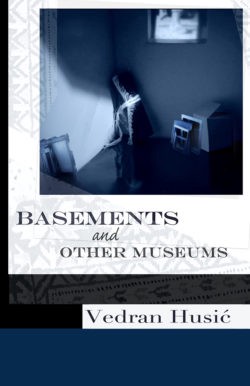
Vedran Husić’s debut story collection Basements and Other Museums, to be published in March 2018 by Black Lawrence Press, has two glorious, violent, complex, multiethnic, and fractious nations as its twin poles: the former Yugoslavia, and the United States of America.

Purchase the novel.

Its vision ranges widely. A story like “Hand in Glove,” with a gay Bosnian refugee working for the Census Bureau in 1990s suburban St. Louis, sits next to “The Exile of Muhamed Mehmedbašić,” in which one of the assassins of Archduke Franz Ferdinand — and the only Muslim in on the plot, as he points out — contemplates his act. One is invited to lift and turn the prism of this world, finding arresting images along the way: children making a game out of dodging snipers’ bullets; a brawl over a Serbian soccer jersey worn into the wrong bar; bored refugee teenagers listening to The Queen is Dead on a laptop; a man slipping over the border to Trieste to procure superior blue jeans for the black market of Communist Yugoslavia.

After reading the collection, I talked to Husić about war and private memory, piercing one’s illusions about the past, and Nabokov. Lots of Nabokov.


Matthew Neill Null: While you’ve lived in America for years, your hometown of Mostar seems to me the spiritual locus of your work. Could you talk about that place and what it means for Basements and Other Museums? When Americans think of the Bosnian War, the siege of Sarajevo may come to mind, but they probably don’t know what happened in Mostar.

Vedran Husić: Mostar is definitely the capital city of this collection, but the Mostar evoked and represented in these stories is mostly an imagined, mythical Mostar. It’s a hybrid blur of reality and dream, both immediate and distant, like a vivid memory. I think that’s fitting for a wartime setting, a place in the constant act of transformation, either through destruction or recreation, where all of its inhabitants are in exile, even those who never strayed across its shifting borders. The details of description are precise but elusive, both dynamic and passive, specific and yet, ultimately, tantalizingly, out of context; they ground readers as much as they keep them afloat. And that’s how Mostar has always felt to me.

Mostar is also a very fertile setting, put under siege by the surrounding Bosnian Serb forces and then divided between Bosnian Muslims and Bosnian Croats, a division that still stands today; there’s the minaret on one side of the city and the steeple on the other. But Mostar is fertile ground that I felt I had the expertise to plow, whereas I didn’t feel I possessed that same proficiency regarding Sarajevo. “Deathwinked,” for example, is set in Mostar’s sniper alley, another simultaneously delineated and amorphous setting, though the infamous “Sniper Alley” was actually two streets in Sarajevo. But my imagination had no claim on Sarajevo, because my curiosity was invested elsewhere.

Deathwinked

MNN: Could you talk about how “Witness to a Prayer” came to be? With its footnotes and Borgesian imagined texts, it’s likely the most complex story in the book.

VH: I’m glad you think that as that story is my favorite in the sense of it being a perfect marriage between what I had to do and what I wanted to do. Like most of my stories, though, it came to be through a stringing together of stubborn images in my head and an accumulation of “observations” in my notebook. There was an overabundance of these “observations,” in fact, the notes spilling over into footnotes. The form, as mentioned above, is that of a case history, an oblique biography, and Ivan Borić, the subject of that history/biography is abstractly based on Nabokov, his beliefs and prejudices regarding literature, as well as, most significantly, his style of expression of those beliefs and prejudices. But the real human center of the story is based on a couple from Sarajevo, good friends of my parents, who lost their own daughter during the closing stages of the war.

I’m the son in all my stories; even when every other part of the character is not me

Here things become complicated. I never spoke, formally or even informally, with that couple about their daughter’s death; I took their loss and imagined a story around it that wasn’t their story. I would wonder what “truth” could my imagination provide me about the loss of a child. When I wrote about the death of a parent, I was taking to its natural extreme a very real possibility, and so despite the admittedly stylized rendering of grief, I felt I was being honest in its depiction (I might as well “confess” that I’m the son in all my stories; even when every other part of the character is not me, the way the character is a son is the way I’m a son, or at least one of the ways.)

In “Witness to a Prayer,” I solved the problem of “truthful” representation through metafictional trickery, revealing that Ivan Borić’s internal monologue, which comprises the story’s second half, was imagined by the narrator, an admirer of Borić who has come to interview the writer’s widow. (If this spoils the story for certain readers, then those readers wouldn’t have enjoyed it anyway.) I wanted to say that access to such pain and grief is impossible, always an illusion, but that the attempt counts and the attempt is what generates literature. I wanted to emphasize that empathy is not understanding, but an honest attempt to understand, a kind of loving. I wanted to inspire belief in readers without deceiving myself or them that I had bestowed any actual knowledge. I wanted to say that truth is our faith in the possibility of truth in this world, a kind of imagining.

Gauley Season

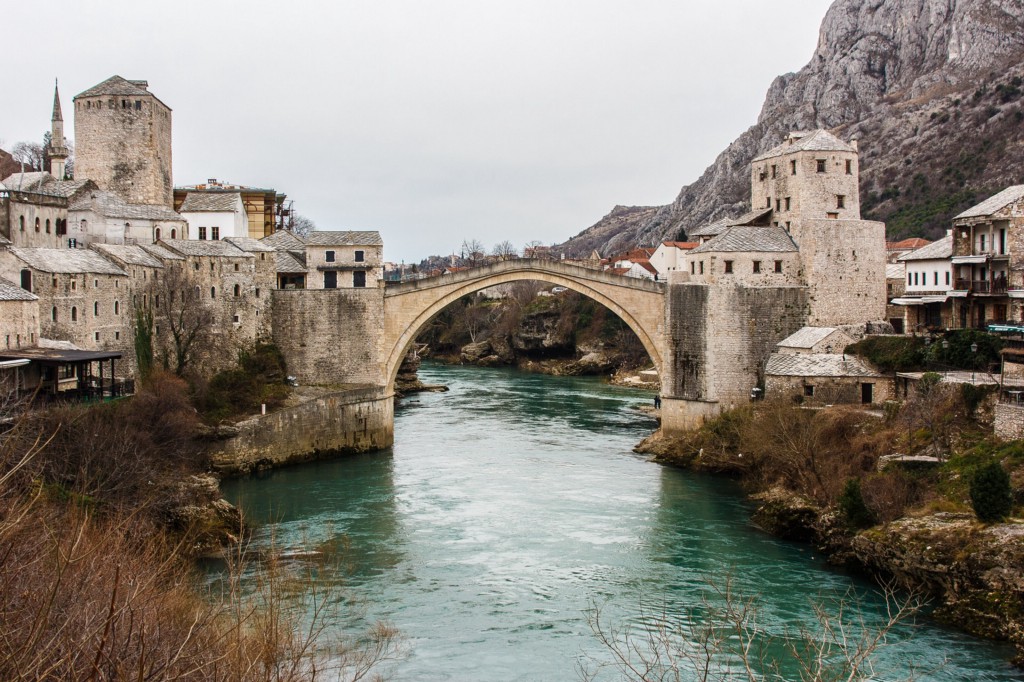
MNN: In “Documentary,” the narrator begins, “Only a delusional man will seek solace and affirmation from his memories, but I’m telling you the past is all I have, all I know, when talking about him, and there is a kind of solace, if not affirmation, in thinking back on our shared childhood in America.” Maybe this yearning is a natural point-of-view for this refugee character. But as I read the stories, I began to feel that this statement was the organizing principle for the book itself — perhaps for all of Bosnia, where the 16th-century Ottoman Bridge of Mostar was destroyed by Croat troops in 1993 and has since been rebuilt in period detail, a central image in your book. From a vague present, the characters are mining a past where everything seemed more fixed and concrete. The great dramas of their lives are behind them, and they are recursive, picking apart that past bone-by-bone. Did you have this in mind when you were writing?

VH: Memory is a central theme of the book, the way it recovers and rewrites the past, and my characters depend on memory’s power to certify and comfort while simultaneously being suspicious of that power. The characters that lived through or died in the war are usually the ones who recall a prewar past that is, as you put it, “more fixed and concrete,” and hang on to this vision with everything they’ve got. The immigrant characters, by contrast, are freed from day to day survival and allowed to philosophize on the nature of memory, question the purity of any past. In the former stories, memory is never really evaluated, only strenuously exercised, while in the latter stories, memory is constantly interrogated, its power invested with doubt, not hope, unable to truly confirm or console. Memory is one of the metaphorical bridges in this collection, perhaps the main one, connecting past and present, Bosnia and America, the real and imagined, but bridges get destroyed and what’s rebuilt offers a kind of solace, perhaps, but little affirmation, or only its illusion.

Let me conclude my answer the way your question began, with a quote from one of my stories: Daniel, who has come to Mostar to visit his father’s grave in the collection’s penultimate story, “Like Coming Home,” upon seeing the Old Bridge (Stari Most, from where Mostar gets its name) thinks how, “Despite the recent reconstruction it was still called the Old Bridge, and, perhaps, for all intents and purposes, it really was. But I knew it was not, nor would it ever be, the bridge over which my father had walked.”

MNN: Correct me if I have your biography wrong, but after you left Bosnia, I believe you lived in Germany for a few years before your family was settled in St. Louis as refugees. So I’m wondering about your journey to writing fiction and poetry in English. Did you “choose” to write in English for particular reasons, or did it come naturally when you first sat down to the desk? You mentioned Nabokov, and I can imagine an alternate universe in which he happily continued to write novels in Russian, American residence be damned. The Balkans are so linguistically rich that, similarly, I imagine various paths forked in front of you.

VH: Well, technically, I was a refugee in Germany, and by coming to America I became, merely, an immigrant, since the war at that point was over and we had an actual choice between going back to Bosnia or coming to America. But I don’t really agree with this terminology, since that choice was really no choice at all. Similarly, there was a choice between writing in Bosnian or English, but that choice was also only an illusion. I think, and I dream, only in English, and though I consider myself, ideally, a citizen of the world, it is the fact that I write, and am solely able to write, in a distinctly American brand of English that is the most authentically American trait about me, whatever “authentic” or “American” means. I came to writing and reading rather late, and when I started writing I’d already lived in St. Louis for eight years and my mother tongue, unexercised and forlorn, was a fading memory. I am able to speak it, somewhat correctly, in the same odd though slightly less thick pseudo-German accent with which I speak English, I can barely write or read in it. So Nabokov’s “private tragedy,” as he called it, was not one I mirrored with my own mother tongue as for me all roads led to the English language.

Memory is a central theme of the book, the way it recovers and rewrites the past

MNN: Do you think your heritage gives you a special vantage point to write about this place? I know you come from a rigorously secular background that’s typical of the former communist Yugoslavia — it reminds me of my own atheist great-grandmother, a Slovene peasant from Strmca. But your father has a Muslim background and your mother a Catholic one, and the Bosnian war played out in bloody fashion on religious fault-lines between Catholic, Muslim, and Orthodox. It had to be devastating for your family to watch. My grand theory is that important Yugoslav figures tended to come from mixed unions, because they didn’t suffer from ethnic myopia. Danilo Kiš was the child of a Hungarian Jew and a Montenegrin Christian, and Marshall Tito, with a Slovene and a Croatian parent, was married to an Orthodox Serb.

VH: I will gladly buy into that theory! I do think there’s truth to the idea of a diverse heritage leading to a more elevated vantage point from which to view and understand a complicated event. For that reason all but one of my narrators are products of a mixed marriage. Afforded an added perspective from which to look at the breakup of Yugoslavia, they can tell the story of that breakup with a special insight, a telling that’s made more urgent by our voice being in the clear minority. Even Muhamed Mehmedbašić is doubtful about the role his religion plays in his self-definition and fearful of what part it plays of how others define him. A full Muslim, he’s the sole exception to my narrator rule; this exception was not really prompted by Muhamed being a historical figure, but by my desire to write from a purely Muslim point of view, since they did suffer by some margin the worst loss of life and land. And by writing from a historical perspective, I wanted to show that the prejudice toward Muslim Slavs was not merely a recent development but existed at the formation of Yugoslavia, which was a kingdom before it became a communist republic. Communism, despite its obvious liabilities, is what held the country of my birth together this long.

They felt deeply betrayed by the breakup of the only place where they felt they truly belonged, the only real home they knew.

My father does come from a Muslim background — and though non-practicing, he was interned in a concentration camp merely due to his last name — and my mother from a Catholic one; moreover, I have family in Serbia proper who affiliate with the Orthodox faith. My parents are not religious, as you stated, nor were they members of the Communist Party, but they did sincerely believe in Yugoslavia and loved their life there. A lot of my fiction explores this belief in a failing country: was it nativity or true faith? Is there a difference? What is certain is that they felt deeply betrayed by the breakup of the only place where they felt they truly belonged, the only real home they knew.

MNN: The first story of yours I read was “Deathwinked,” [which appeared in Recommended Reading] and the voice really struck me, how unapologetically romantic, lyrical, and word-drunk it was. It stood out as being so different from the restrained voices that I associate with MFA programs in America — and yet you got an MFA from Arizona State. So who are your influences as a writer? When I describe your work to people, I talk about Witold Gombrowicz (for the way you stretch moments of time like taffy) and Danilo Kiš (for the subject matter and the “case histories” of the characters), but now I realize I might be projecting my own interest in Slavic writers onto your work.

VH: I don’t mind flattering projections, and it’s always a thrill being compared to writer I never read (Gombrowizc in this case), the thrill of discovering a ghostly lineage. As for Kiš, I did read him deeply during the writing of these stories, the only Yugoslav writer I have read extensively. He is mentioned in “Witness to a Prayer” — a “case history” of sorts and a story about artistic influence as much as anything else — along with other writers who have made an impact on me, chief among them Vladimir Nabokov. But you’re not too far off when you mention Slavic writers, as my earliest reading (which began, as I said, rather late, in my twenties) were Russian writers, from Gogol to Dostoevsky to Isaac Babel and Ivan Bunin (and of course the Nabokov of the first, European half of his career).

Paul Celan also looms large over this collection; I read him my first semester of the MFA, in John Felstiner’s amazing translation, and “Deathwinked,” the initial draft of which I wrote that semester, was largely inspired by his poetry and my homesickness. Poetry for me has always been equal to fiction in its simulative powers, and I seem to be especially attracted to writers who write both, like Stuart Dybek and Denis Johnson (and Nabokov as well, again!). To them I owe much of my stylistic debt. But no list of influences would be complete without my fiancée, the wonderful writer Naira Kuzmich, who recently passed away from lung cancer at the age of 29. I met her during our MFA and she is by far the best thing to happen to my writing and in my life.

For Women’s History Month, #ReadMoreWomen

Dear Electric Literature Members,

Today we launched a #ReadMoreWomen social campaign to celebrate Women’s History Month, and to kick off our membership program on Drip, Kickstarter’s new patronage platform. We encourage you to tweet with the hashtag #ReadMoreWomen to recommend books by women and nonbinary authors, and visit electricliterature.com/readmorewomen for essays by and about women.

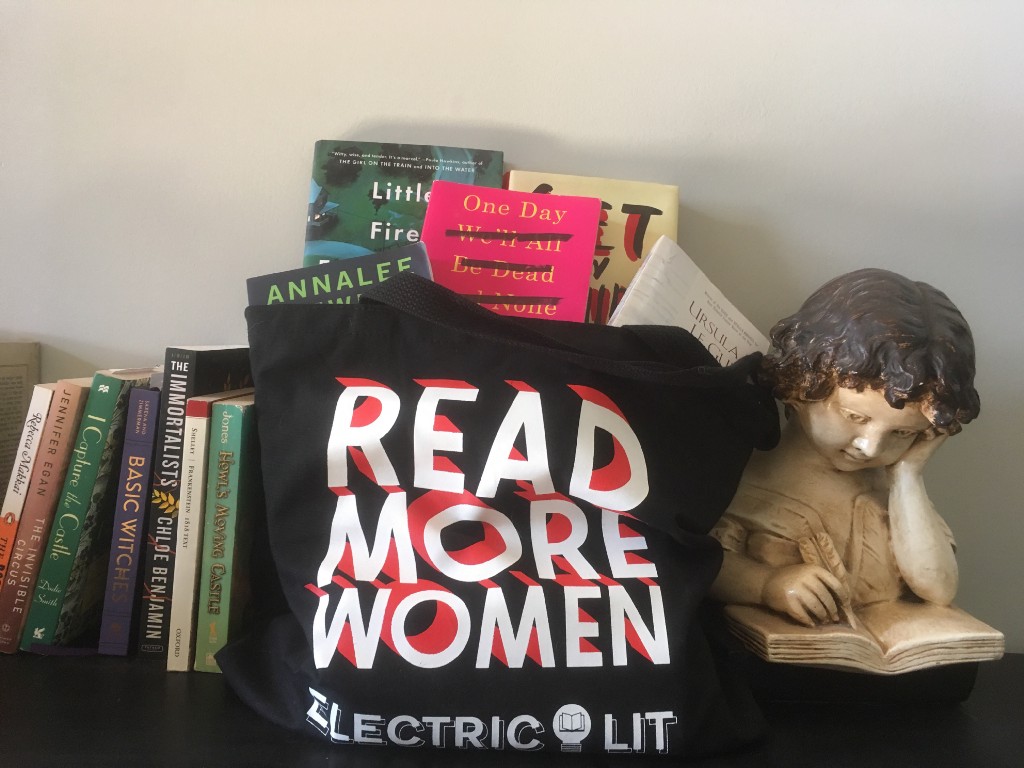
As an incentive to founding members on Drip, we’re offering our new READ MORE WOMEN tote bags, pictured below. These tote bags aren’t available anywhere else. But, since you’re already a member, you can purchase one at 20% off with the code UrsulaLeGuin here. (The code is case sensitive.) This offer is exclusive to members and expires on April 7, 2018.

Though it’s not ideal to have multiple membership platforms, we want to be prepared in the event that Medium stops supporting publication memberships. You are also welcome to switch your membership account to Drip to a receive a complimentary tote in addition to year-round submissions, bonus editions of The Blunt Instrument, and a monthly Recommended Reading themed eBook. For now, Drip members do not yet have access to the full Recommended Reading archives.

Speaking of members-only submissions, we have been getting some great work lately! We recently accepted submissions by Electric Lit members Sequoia Nagamatsu and Benjamin Schaefer. To further incentivize you to submit, we’re guaranteeing a response time of less than 3 months, which is half the time it takes us to read regular submissions.

One more exciting update for all of you nonfiction writers: We’ve also added a members-only portal for essays! Links for both are below.

FICTION: http://bit.ly/ELmembersonlyfiction

ESSAYS: http://bit.ly/ELmembersonlyessays

As always, if you have any questions please feel free to email me at editors@electricliterature.com. Your support means so much to us; we really couldn’t exist without it.

Gratefully yours,

Halimah Marcus
Executive Director, Electric Literature

‘Three Billboards’ and the Way We Forgive Racist White Men

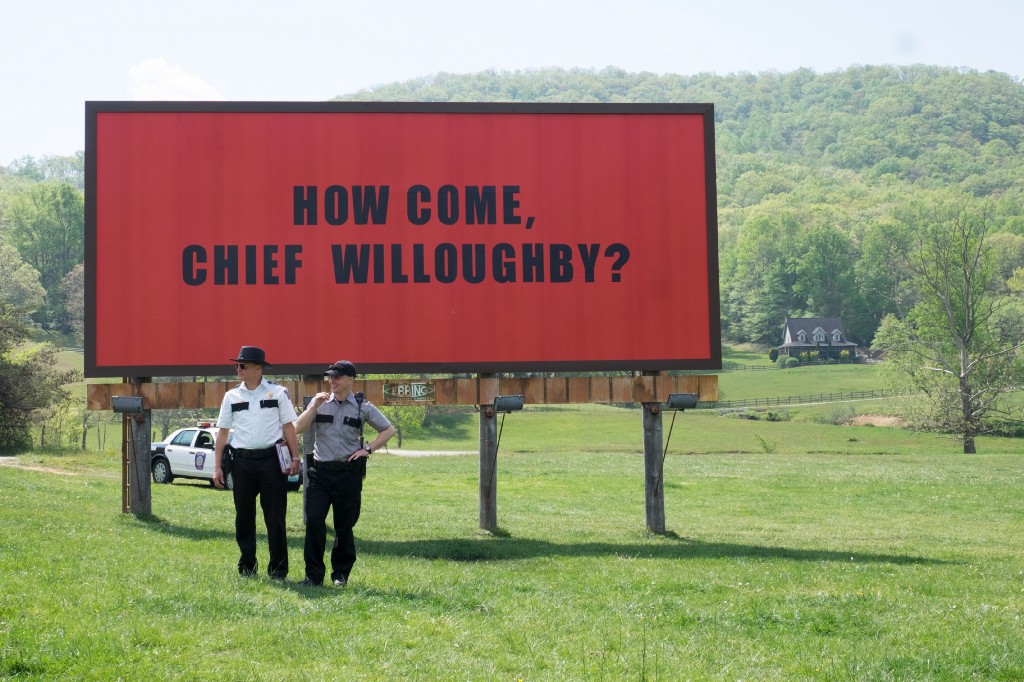
O f nine Best Picture Oscar nominees for 2018, none have been so polarizing as Martin McDonagh’s Three Billboards Outside Ebbing, Missouri (2017). Taking place in the rural south under the backdrop of its racial tension, Three Billboards has become the awards season’s poster child for its narrative mishandling, or downright abuse, of anti-Black racism, the spirit of the 2006 Best Picture-winner Crash reborn — another film that stoked ire for taking on race while failing to appropriately address it, and which gained subsequent success despite. As the light shone brighter on Three Billboards, it went from a film festival darling to a multiple Golden Globe and Screen Actors Guild Awards winner, and now a winner of two Academy Awards after being nominated for seven.

Criticism of Three Billboards is warranted: few Black people are included in a film which explicitly talks about racism in the rural south; Blacks end up portrayed as little more than props in a story that centers (white) victims of violence; a Black woman is thrown in jail, apparently in retaliation against the film’s white star, and is nearly forgotten there. In short, Black pain is the backdrop of a film largely unconcerned with it. But of the many justified gripes that Three Billboards has given rise to, the most insistent defense on the part of the film’s fans (and numerous award committees) revolves around a character named Dixon (Sam Rockwell, winning the Oscar for Best Supporting Actor for his portrayal) as the grievance that is least deserved. What this backlash reveals is not only who we are expected to sympathize with, but also how readily we offer forgiveness when it comes to racist white men.

Black pain is the backdrop of a film largely unconcerned with it.

Both criticisms and defenses of Dixon usually refer in some way to his “redemption arc.” A redemption arc is a specific type of storyline in which a morally repugnant character reveals the good inside them over the course of the narrative and ends up acting on their better selves, essentially paying an emotional restitution to the viewer and regaining their favor. You hated Jaime Lannister for pushing Bran Stark out of a tower, but you hate him less — or even come to like him — as he grows close to Brienne of Tarth, saves some characters’ lives, and protects King’s Landing. You hated Severus Snape at the beginning, only for his journey to lead you to care about him, despite what came before. The same, as applied in Three Billboards, looks like this: initially depicted as racist and violent, Dixon draws empathy from the viewer through a reveal of his sad home life with his verbally abusive mother, from his personal growth as he tries to become a better person, and as he helps Mildred find justice for her daughter.

The problem is that none of those things should change how we feel about a violent and racist character.

Sam Rockwell and Sandy Martin in ‘Three Billboards’ | Merrick Morton/Image courtesy of Fox Searchlight

Viewers sympathetic of Dixon believe that he, by virtue of his attempt to change, pays an emotional price that is restitutive to the other characters, as well as to the viewers themselves. But none of Dixon’s acts are in relation to the violently racist portrayal that makes viewers hate him in the first place. While Dixon is shown to have a pathetic home life, that doesn’t begin to pay the moral or emotional cost of his racist violence. And while he tries to help Mildred find her daughter’s rapist and murderer, he ultimately fails. In the end Dixon accomplishes nothing, and helps no one. When it comes to restitution, he doesn’t actually pay.

A redemption arc requires a redemptive act or accomplishment, which begs recollection to 2006’s Best Picture winner, Crash. Widely lauded by many white critics to the chagrin of many Black ones, Crash features a racist cop (Matt Dillon) who sexually assaults a Black woman (Thandie Newton), but who, in the end, rescues her from a burning car. The movie’s theatrical poster famously includes the woman clutched to his chest, putting this narrative at the forefront out of all others in the ensemble film. Its message was cringingly clear as a racist-cop redemption arc — the character’s saving of a Black woman intended to reflect his deep-seated valuation of her life, which was only buried under the trauma of his own life experience (to say nothing of his failure to value her life when he molested her before).

Why We Love Women’s Revenge Narratives

It makes for a ripe comparison, Three Billboard’s Dixon standing alongside the racist, assaultive cop from Crash, except that from a narrative point of view the latter crosses the finish line to include what every redemption arc ultimately needs: a redemptive accomplishment. The result is Crash’s cringeworthy message and imagery, while Dixon in Three Billboards actually fails to accomplish anything at all.

Three Billboards ends in an uncomfortable place, treating with sympathy a character who remains undeserving, while expecting that the viewer will be endeared to a racist cop with no redemptive accomplishments and who achieves literally nothing positive. Those who do find Dixon sympathetic raise the question of whether his character arc is the problem, or whether such sympathy reveals an uncomfortable latitude in their feelings towards racists. The alternative is not to find Dixon sympathetic at all — to actually hold his character to the standard of redemptive accomplishment.

Those who do find Dixon sympathetic raise the question of whether his character arc is the problem, or whether such sympathy reveals an uncomfortable latitude in their feelings towards racists

To deploy the redemption arc loosely, as McDonagh has in Three Billboards, is to afford more credit than racists deserve. It presupposes that someone’s attempt to change is enough: that their positive intent is enough to outweigh their negative impact. Frankly, the price of Dixon’s redemption is so high that even if he had been successful in bringing down the film’s unseen murderer and rapist, its indirect relation to his racist past (and presumably racist present) would still be inadequate. The film sets the bar for redemption dishearteningly low, if we’re meant to see this racist white cop’s attempt to help a white woman as the sole requirement for him to be able to redeem himself. Worse, his character only succeeds in making Mildred more like him, as they both spiral deeper into unchecked violence and white vigilantism, failing to change the status quo. Familiar territory for a racist white police officer.

Sam Rockwell (left) as Dixon in ‘Three Billboards’ | Merrick Morton/Image courtesy of Fox Searchlight

Three Billboards invites a lot of deserved criticism for its handling of racism, which will hopefully lead to more careful consideration among moviemakers who tread the same landscape in the future. But the questions it raises of who we sympathize with, and expect sympathy for, ask for self-reflection from us audience members, too.

Jhumpa Lahiri Translates the Fine Print of Aging

“Trick”

by Domenico Starnone

Mario was moving a chair as close as possible to mine.

— Can I use your computer? he asked.

— Don’t even think about it.

I hesitated before sitting down. I was tempted to pick up the cell phone and yell at the publisher: I don’t give a fuck about oxygen, about brightness, tell me in plain words what’s wrong with it, because otherwise I’ll quit the job and forsake the pittance you’ll give me for it, I don’t want to waste time.

But I didn’t do it, and the anguish of old age poked its head up once more. I needed that work, and not for money — my house in Milan and my savings kept me comfortably — but because I was scared to think of myself free from the obligations of work. For at least fifty years I’d moved from one deadline to the next, always under the gun, and the anxiety of failing to suitably tackle one then another, followed by the pleasure of successfully doing just that, was a seesaw without which — I finally confessed to myself outright — I couldn’t bear to picture myself. No, no, better to still keep saying for a while, to acquaintances, to my family, to my son-in-law, above all to myself: I need to work on James, I’m extremely behind, I have to come up with something as soon as possible. Thus, under Mario’s attentive gaze, I resumed examining my sketches, especially the chaotic ones from two nights back.

At first I only did it to calm down. I looked at the pages, I appreciated the good smell of cooking that was entering the room in spite of the closed door, and now and then out of the corner of my eye I kept watch on the boy, who was keeping his word, never scraping his chair, scarcely breathing. The whole time Mario stared at the pages with me, as if we were having a contest to see who would get tired first. But then at a certain point I stopped being aware of him. I got an idea: to use the drawings of the apartment the way it had been many years ago as a backdrop for the New York house in James’s story. The hypothesis stirred me, here was a good way to begin: I’d make rooms on the other side of the ocean, from the 1800s, collide with rooms in a house in Naples, from the mid twentieth century. Great. With my pencil I immediately began to isolate, among the disorder of those crammed, marked-up pages, certain details that seemed useful to me. And my mind fired up so quickly that when Mario called me, feebly — it was a moment in which everything was coming together, I could picture it all vividly — I told him sharply: Be quiet, you promised. But he repeated, softy:

— Grandpa.

— What was our deal?

— I have to be quiet and not move.

— Exactly.

— But I just have to tell you one thing.

— Just one. What is it?

He pointed to a few strokes of the black marker, in a corner on the right side of the page that I was looking over. He said:

— That’s you.

I looked at the drawing, it was an absentminded scribble. Perhaps it represented a young man gripping a knife, maybe a boy with a candle, but in such a vague way, as if my hand had strayed without meaning to into that corner. When had I done it? The other night? A little while ago? The lines writhed swiftly, a flicker that barely presented itself before disappearing. I didn’t dislike it, it reminded me of the stuff I knew how to do when I was a boy, and it moved me that, contrary to my beliefs, I’d captured something from those years — something of what I was able to draw when I lived in that apartment with my parents and my brothers. I’ll use it, I told myself, it’s good. And I asked the boy:

— Do you like it?

— I guess. It sort of scares me.

— It’s not me, it’s a doodle.

— It’s you, Grandpa, I’ll show you.

He slipped down from the chair with a resolute look.

— Where are you going?

— To get the photo album, come, bring the drawing.

He waited for me to get up, taking me by the hand as if we might lose one another. When I opened the living room door, we were assaulted by a cold blast. Evidently Sally, to air things out, to dry the wet floors, had opened every window, and now the apartment was freezing. On top of that, the noise of the traffic, without the protection of the double-paned glass, rose up harshly. We went into my daughter’s study; there, too, the window was wide open, and the racket from outside was suffocating shouts from afar, like someone pounding a rug with a carpet beater. Mario dragged a chair up to a cabinet full of doors. I tried to stop him.

— Tell me where the album is and I’ll get it for you, I told him, but in vain. He relished climbing. He opened one of the doors, turning the key. He pried out an old-fashioned album, dark green, and handed it to me.

— You have to close it up, I reminded him.

He closed it.

— And lock.

Ably he turned the key.

— You’re a dwarf, I told him.

— No, I’m not.

— Yes, that’s exactly what you are, a dwarf.

— It’s not true, I’m a little boy, he said, getting upset.

— All right, sorry, you’re a little boy, Grandpa’s stupid and says stupid things, stupidly. Never mind.

I helped him jump off the chair — but this time he tried to free his hand, he wanted to jump on his own, something I tried to prevent — and when he landed with a little yelp of joy, he asked me:

— Did you mean I’m one of the seven dwarves?

— Yes, I replied. And I explained that he’d been wrong to get offended, it was a compliment, it meant: You’re sensible and wise. Then I set the album on the desk and asked him where the picture he wanted to show me was. I knew the album well: It contained family photographs that had been passed down from my mother to my wife and, when my wife died, to Betta. The child leafed through it with expertise and showed me an image in which I was with my mother and my brothers. I had no memory of it, I must have always looked at it unwillingly. I’d considered every moment of my adolescence a hateful constriction. Surely my father had taken the picture, he looked at us through the camera and we looked at him. Everyone but me was smiling. How old was I? Twelve, thirteen? My face was repugnant: long, thin, unrefined. Time had left every millimeter of the picture intact, apart from my own contours. Or maybe the image had always been like this, and some fault in the developing had damaged only my outline. Nothing about the face and stringy body appeared complete. I had no mouth, no nose, my eyes were hidden by the thick arcing shadow of my brows, my hair dissolved in the albumen of the sky. Of that instant frozen by the camera, I only recognized the flash of hatred for my father. I looked at him without eyes, with aversion, because of his gambling habit, how he’d raised us in poverty, the fury he’d embodied and unleashed onto my mother, onto us, when he didn’t have a hand to play. The aversion had been rendered precisely, and now it repulsed me.

— See how it’s you? Mario said.

— Not really.

He brought my drawing alongside the photograph.

— Don’t lie, Grandpa. It’s you.

— I wasn’t like that, it’s the picture that makes me look that way.

— But that’s exactly how you drew yourself, look. You’re really ugly.

I shuddered:

— Yes, indeed, but it’s a bit mean of you to say so.

— Dad says you’re always supposed to tell the truth.

I guessed it was Saverio who had called me ugly, in that picture and perhaps in general. Bodies — these tattered shreds of nature — need affinity to get along, and my son-in-law and I had never managed to feel affinity for one another. I still heard the screams, the carpet pounding was getting louder. I examined the facade of the building across the street, where no one was screaming or beating a carpet. I asked:

— Grandpa, in addition to being ugly, is also a bit deaf. Do you hear that shouting?

Closing the album, he replied:

— Yes, it’s Sally.

— Sally? Why didn’t you say so?

— I didn’t want to bother you.

I pulled on my earlobe, the lobe of my right ear, hoping to improve my hearing. The shouts were coming from the room where we slept. I went to see what was happening, and Mario trailed me as if he already knew. Sally was on the balcony, the glass door was closed. She was banging her hands against the double-paned glass but the blows and her shouts — Grandpa, little Mario! — resounded weakly in the room and throughout the apartment, precisely because of the double-paned glass. I remembered Betta’s warnings: The balcony door didn’t work well. I thought to myself, annoyed: The publisher, Mario, Sally, it’s impossible to concentrate. The woman should have been dealing with me and the child, instead here I was wasting my time because she was scatterbrained. She’d opened every window in the house and then gone onto the balcony without thinking that the wind would have slammed the door shut. And now there she was, shouting for help.

— Stop banging on the glass, I said. We’re here.

— I’ve been calling out for half an hour.

— Oh, come on.

— Can’t you hear?

— I’m a bit deaf.

— You know how to open up?

— No.

— Mister Saverio didn’t teach you?

— No.

Sally looked dejected and pounded the glass yet again. I felt we had, in that moment, twinned feelings: Both of us exasperated by the time we were wasting, each blaming the other, and this made me feel unexpectedly close to her. Mario on the other hand was getting on my nerves, he wanted to play at every occasion.

— Grandpa, I know how to open it.

I didn’t answer him. I asked Sally:

— Can’t you open it from outside?

— If I could I wouldn’t be calling you. There’s no handle outside.

— What do you mean there’s no handle?

— What do I know, Mister Saverio bought it this way. But to release it from inside all you have to do is pull up, hard, then pull down.

Mario stepped in:

— Get it, Grandpa? You pull this way, then turn that way.

He motioned precisely with his hands, and I repeated after him without even realizing.

— Like that, he said approvingly. Should I get a chair and help you?

— I’ll do it myself.

I set to it but without success. The door wouldn’t open.

— You have to do it hard, as hard as Dad.

— Dad’s young, I’m old.

I tried again. I pushed the handle up and then down, with tremendous resolution. Still nothing.

— I can’t stand here all day, Sally said, starting to fret. I have other houses to get to. Call the fire department.

— What the hell are you talking about?

The child tugged on me, but I ignored him. Then, to attract my attention, he started repeatedly striking my leg with a closed fist.

— I have an idea.

— Keep it to yourself and let me think.

He kept punching my leg. I grunted:

— Speak.

— Sally lowers the bucket and pulls up the empty space. When it’s all gone she climbs over and leaves.

Sally, exasperated, screamed:

— If I don’t get to work they’ll fire me. Please do something. When the door doesn’t open you need a screwdriver.

— Yes, Mario confirmed. Dad opens it with a screwdriver, sometimes. I can help you, should I go get the screwdriver?

— You’ll be of more help if you stop talking.

I was frazzled, I couldn’t concentrate. How long had it been since I’d used a screwdriver, pliers, a wrench? I kept thinking about the scant strokes I’d made at the edge of the page and, at the same time, Mario’s voice, insistent, that drew attention to — rather, that pointed out to me — similarities between those strokes and the teenager in the photo. I was at risk at that age, I did poorly at school, I struggled with Latin. My father had sent me to a small foundry close to our house, a place that no longer existed. For a few months my hand and my mind found new direction, and perhaps the scrawls I’d made had something to do with that period. I need to make sketches like that, I told myself, and I felt that I was ready, my mind wouldn’t let up, it pinned me to my surroundings, rapidly suggesting ideas, not for freeing Sally but for drawing after drawing; I saw them emerge, disappear. I pictured a doodled version of myself as a boy, one who knew how to turn the door handle the right way, and could capably use a screwdriver. I felt I could access that efficient figure without lifting pencil from paper, moving instead directly from the tips of my already gnarled, grease-stained hands, then rising up again through my strong arms and tense neck, until it reached the ugly grin on my face. I had so many versions of those teenagers in mind. That throng was mutations of me between the ages of twelve and twenty, when I stopped growing and found the strength to escape that house. Now I wanted to try a backflip, over more than fifty years of adult work, down down down to the first time I took a stab at creating images. It was almost as if it were really possible to put today’s passionate, red-hot working and reworking behind me and sink into an absolute zero, into a hole in the ice where everything was preserved. I seized the handle, and with rage — rage, not ire — I pushed it, first up, then down. I felt a click, pulled the door, and the door opened.

— About time, Sally sputtered, and returned indoors nearly shouting: I’m out of here, I’m late.

She explained what to do for lunch and for dinner that day and the next, but all the while she spoke only to Mario; I no longer inspired any trust in her. She shut herself in the storeroom, came out looking like an elegant elderly woman, and then off she went.

I sat down on the edge of my bed. Mario quickly removed his shoes, climbed up, and started to jump off of it with squeals of joy, undoing Sally’s work. He asked: Are you going to jump too, Grandpa? The glass door was still wide open, the balcony surged out against a deep-blue sky. I saw a yellowish weed sprouting up from the black, uneven traces of soil between the tiles. I said to the boy:

— You can’t pull up empty space with a bucket, Mario. Don’t you dare play that game you were talking about. The empty space is always there, and if you go over the railing and jump, you die. Didn’t Dad tell you that? All he told you was that I was incredibly ugly?

Then I, too, took off my shoes, I got up on the bed, and we jumped for a while, holding hands. I felt my heart in my chest like a huge ball of live flesh that went up and down from my stomach to my throat and back again.

Announcing Electric Lit’s #ReadMoreWomen Campaign

Unless you’re working hard at it, your reading list is probably too male, too Western, and too white. For mysterious reasons (?!?), those are the books our white-male-dominated culture values. They’re the books you’re assigned in school, the ones the men around you insist you listen to them talk about, the ones that show up on lists of “80 books every man should read” in which 79 are by men, the ones that influence our very idea of “literary value.”

Needless to say, you should be working hard to diversify your reading list. In fact, if we don’t elevate a wider range of books, we won’t be able to grow as a culture. The white male perspective we’re spoon-fed from birth is stultifying; if you don’t fit the profile, you’re led to feel like your voice isn’t important, and if you do, it’s easy to get the message that all you have to do is show up. It’s boring, it’s exclusionary, it’s self-perpetuating, and it’s bad for everyone. And the easiest no-brainer place to start, the place that barely even requires any extra effort and yet seems to be beyond many people, is by reading the 50-plus percent of the population that isn’t men.

So in honor of Women’s History Month (March) and International Women’s Day (March 8), and in service of literature in general, we’re launching a #ReadMoreWomen campaign. (The name is based on a tweet about Andy Weir, author of The Martian, whose “By the Book” interview in The New York Times revealed him to be one of those people for whom the minimal effort of reading non-men is too hard.) We challenge you to increase your consumption of women and nonbinary authors, and tweet at @ElectricLit with the hashtag #readmorewomen to tell us what you’re reading or recommend a book. And you can fashionably admonish others to do the same by becoming a founding member of our crowdfunding efforts on Drip, Kickstarter’s patronage site, which entitles you to one of our beautiful new Read More Women tote bags, designed by Stephanie Kubo. For the time being, the totes are not for sale anywhere else online! But fortunately for society, books by women are available wherever books are sold.

Becoming a patron doesn’t just get you the tote (although, again, it’s a really good tote and should probably be incentive enough. It’s holding like 20 books by women in the photo above!). It’s also a way for you to support Electric Literature’s efforts to make literature more exciting, accessible, and inclusive. We’ve collected some of our best recent essays by women about books by women, as relevant examples of the type of work you’ll help support by contributing to our Drip.

If you wait to be handed your books, well, you know what you’ll get. If you want something else, you’ll have to go and find it. We think you should.

Read more women — they’re half of all people, y’all. Read more nonbinary and trans authors. Read more queer authors. Read WAY more authors of color. (We could only make one tote bag at a time!) Read more women, but more importantly, read more widely. We all stand to benefit.

I Fell in Love Because She Hated Shakespeare

Novel Gazing is Electric Literature’s personal essay series about the way reading shapes our lives. This time, we asked: What’s a book that made you fall in love?

I was a freshman in college, at the time — fresh in every sense of the term, fresh-faced and fresh out of an intensive senior year of high school. In love with world, in love with myself after a long post-breakup year of learning who I was again, in love with the possibilities of a new start at college. I was also an intended theatre major, and, obviously, in love with William Shakespeare.

She was also a freshman, next door neighbors with my best friend. A leather jacket-wearing art student with an astounding collection of hats and a tough-chick attitude.

The second day of school, we walked to dinner together, along with two or three other people from her hall. My best friend and I lapsed into a fairly standard conversation, in which I — being a bit of a pretentious intellectual trying to make my best impression on the cute girl from down the hall — brought up my favored topic, the astounding genius of the Bard himself: Shakespeare.

And she said, “You know, I don’t really like Shakespeare.”

I don’t need to describe the way my heart sunk in my chest, found its way into my stomach, and then toppled out of me, unceremoniously, onto the ground at my feet as she said it. Everyone who has ever tried to impress a crush only to be shot down mercilessly knows how it feels, like your internal organs are suddenly made of quicksand. I felt small, for just a second, silly for my infatuation with the Bard. If this girl, cool and collected as she was, didn’t like Shakespeare, what did it say about me that I did? What argument could I ever make to persuade her that Shakespeare — or, more importantly, that I — was cool?

“What do you mean, you don’t like Shakespeare? He’s a master, he’s a genius, he’s the greatest poet of — ”

“He’s overrated,” she said, finally, and my little heart sank and floundered, heavy with some unpleasant fusion of disappointment and embarrassment, and the conversation moved on to something unrelated, although for the rest of dinner it was all I could think about.

I wrote it all off, later that night. After I admitted to my crush, my best friend told me, “oh, her? I think she likes guys,” and we left it at that. I stilled my heart, did whatever I could to swallow the nervous feeling in my throat when she talked to me, and despite the disappointment, I resolved myself to be okay with it. If there was no way for me to woo her, well, such was life. I had just gotten out of a relationship where my hobbies and interests had taken a backseat to everything else; I couldn’t date someone who didn’t share — or at least appreciate — my near-obsessive love of Shakespeare any more than I could date someone who wasn’t queer.

I couldn’t date someone who didn’t share — or at least appreciate — my near-obsessive love of Shakespeare any more than I could date someone who wasn’t queer.

Instead, a steady friendship developed, without the messiness of attraction in the way, and she came to mean a lot to me, my crush all but smothered beneath my determination to make new friends.

For her, our disagreement over Shakespeare was probably forgotten too. We spent our conversations — dozens of conversations, over lunches and dinners with friends for the first semester of our freshman year — discussing the things we had in common instead. There were authors and poets we both liked — John Keats and Neil Gaiman and Mary Doria Russell — and movies, and comics, and music.

Occasionally, these conversations, warm and passionate, made something ache within me, a reminder of what I’d wanted at the start, but I did my best not to let that distract me from the friendship we had.

As time went on, though, our difference of opinion nagged at me — and contributed to my growing fascination with her. The closer we grew as friends, the more we had in common, the more similar our tastes were revealed to be, the more I became convinced that she must have been wrong: if I liked her, and I liked Shakespeare, she had to like Shakespeare. There must have been some mistake.

One night, on my way home from a party, still too buzzed from what was only the second time I’d ever had alcohol to feel comfortable settling into bed and getting some well deserved rest, I stopped by her room to say hey.

If I liked her, and I liked Shakespeare, she had to like Shakespeare. There must have been some mistake.

She was tired; her roommate was out partying — as was, it seemed, the entire rest of our small college campus — and she’d been watching Bright Star on her laptop, curled up in bed. But she invited me in and I joined her and at some point, during this strangely intimate evening, we got back onto the topic. “I might have just had really bad teachers,” she admitted, almost ashamed, when I told her I still couldn’t believe that there wasn’t even a single Shakespeare play she found appealing in the least.

It was as if she had looked me in the eye and said, “I want you to know, I’m also gay.” Something about the way she admitted to it made me realize, for just a moment, that all had not been lost that day. That there was still a chance. The crush I’d been crushing sprang back in full force as I fumbled for something to say.

“You have to read him out loud,” I answered, and I must have been blushing.

“Is that so?”

I dragged her back to my own dorm room — also empty, both of my roommates out at a sorority party or something — and pulled down from my overstocked bookshelf a blue leatherbound copy of the Complete Works of William Shakespeare, one of two copies of the text on my shelf, not to mention the several individually bound plays lined up on either side.

It’s almost painful to recall, the performativity of this action, my fingers lightly tracing over the paper-thin pages of this ancient, useless Complete Works that I had purchased in a used bookstore just before leaving for college for this exact reason: to look impressive, someday, to a cute girl I had a crush on. The gilded edges of its pages had faded almost to brown, the ink so light some parts of the text were illegible, and I scanned through it, play by play, and looked for something to read.

What I love now, as an adult, about Shakespeare is that it’s impossible to read Shakespeare aloud without some sense of irony, and even more impossible to read Shakespeare aloud romantically without leaning into that. To read Shakespeare aloud as a serious romantic gesture cannot help but be embarrassing; it misunderstands Shakespeare at its core. The doubling of its context always lingers between the words. As I flipped through the pages, trying to maintain my mask of calm intellectualism, I wracked my brain for a passage that was romantic in even the least.

Hamlet to Ophelia? No way, he’s an asshole. Bassanio to Portia? He only wants her for her money. Romeo to Juliet? Kill me now, a worse cliché there never could be.

I settled for something remarkably unromantic — Mercutio’s Queen Mab speech from Romeo and Juliet, a role I’d understudied just a year before, a monologue I knew well enough I barely needed the page in front of me to make it through.

I read it, and she listened.

Coincidences, you know, are an incredible thing. Just a few nights later — a week or two before Valentine’s Day — two of our mutual friends, a couple at the time, sat with me at dinner and mentioned that she and I would make a cute couple.

“I know, too bad she’s straight,” I lamented.

“Who told you that?” they replied.

It was like the moment of a Shakespearean comedy in which one character removes a mask or a costume and reveals themselves to be someone else entirely, a perfectly timed conflagration of events which solves the unsolvable complication of the plot in one fell swoop. A case of mistaken identity, or mis-conveyed message, had fallen between us for months, the audience watching along in frustration as we danced around each other, neither understanding the entire situation. A perfect example of dramatic irony, in which I had misjudged her, and had suffered for it.

A case of mistaken identity had fallen between us for months, the audience watching along in frustration as we danced around each other, neither understanding the entire situation.

I don’t know how much of this was orchestrated — by her, or by fate, or by Cupid himself, gearing up for the big holiday — but what I do know is that I was emboldened. Valentine’s Day came around and I spent forty-five minutes agonizing in my best friends’ room just down the hall from her, trying to decide whether or not to say something, whether to knock on her door and leave a note or to knock on her door and kiss her or to not do anything at all, and not risk the gentle curve towards whatever was happening between us.

I left a note, eventually — six lines of John Keats’ “Bright star, would I were steadfast as thou art — ” and a box of chocolate covered pretzels on the floor outside her room. It was the kind of sickeningly sweet gesture I’d always dreamed of having the courage to make, romantic and Romantic in equal parts. I knocked and ran, taking cover in my friend’s room until I knew she’d picked it up and closed the door again.

But it didn’t feel like enough.

I’d had a few drinks. I probably don’t have to say that; it’s fairly apparent from what comes next. I went outside, I counted out the windows on the first floor of the dorm until I came across the one I knew was hers, and I threw a pinecone at the window. It was cracked open, just a bit, an unseasonably warm night, and so I didn’t wait for an answer.

I probably also don’t have to tell you what lines I quoted next. But soft, what light through yonder window breaks. It was a different time, when my memory was better: I knew the whole bit by heart, all twenty four lines before Juliet cuts in. I recited it. I bowed. I went back to my room.

By the time I got back, she’d texted me.

She left campus to go home a few weeks after that. We hadn’t kissed, we hadn’t even seen much of each other since we confessed our feelings. But we talked on the phone a lot, for the remainder of the semester. I remember sitting on my bed on the phone with her, reading pieces of Hamlet aloud, teasing out the intricacies of the language, letting my voice lilt into the language of passages I knew the meaning of back to front.

“I’m going to read you every word of every Shakespeare play aloud until you find the one you love,” I told her, phone tucked between my shoulder and my cheek as I flipped through the familiar pages of that terrible old book.

I didn’t have to go very far. Pretty soon, she loved them all.

As in any Shakespeare play, the miscommunication or misunderstanding has to be overcome or it will become the downfall of the hero.

I don’t know what would have happened, if I had let the assumptions I made about her stand unchallenged. Likely, she would never have loved Shakespeare, and I would never have loved her. But as in any Shakespeare play, the miscommunication or misunderstanding has to be overcome or it will become the downfall of the hero.

I count myself lucky, still, that our story was written a comedy and not a tragedy.

We’ve been together for six years now; neither of us is much of the same person we were then, though remnants of those eighteen-year-olds still remain: my vaulting excitement and insecurity when someone disagrees with an opinion I value dearly, her leather jacket and ability to outpace me in really any argument. We’ve bonded over a hundred books since then, argued over maybe even more, but when people ask me how we met, I always return to the same story: she told me she hated Shakespeare, and so I couldn’t let her go.