Finding a New Language for the History of Queer Culture

Today, drag culture has its rightful place in the mainstream, but no so long ago, it existed largely on the fringes. Joseph Cassara’s debut novel is set in the era right before the shift, in the late 1980s and early 1990s At that time, drag queens in New York City formed houses that competed in “walks” at various ballrooms. The events were super-amped up, fabulously elaborate fashion shows But beyond those nights, the members of the participating houses became families for young men and women who had been shunned by the one they were born into. Cassara uses real icons from the city’s ball scenes — namely the House of Xtravaganza members — to create a look into the domestic lives of these characters.

Purchase the novel.

In The House of Impossible Beauties, we follow four main characters as they go from strangers, to cohorts, to family. Angel is based on the real life Angie Xtravaganza; she realizes early on that she doesn’t identify as male, she goes on to form her storied eponymous house. She meets a trans girl looking for a better life named Venus, a fashion obsessed boy named Jaunito, and a butch queen named Daniel.

Cassara’s book explores how these real-life figures — and their struggles — lay the foundations for much of the queer culture we know today. I spoke with the author about blurring the lines of homage, history, and fiction.

Adam Vitcavage: About a year ago, I was on a subreddit called “Suggest Me a Book” and I was looking for books about the history of drag queens. I posed the question as a search for nonfiction and got some biographies of queer activists, but really I didn’t get a lot of feedback. A year later, and The House of Impossible Beauties landed on my doorstep.

So, my first question: what are the books you used to do research, in addition to watching the documentary Paris is Burning?

Joseph Cassara: I read Myra Breckenridge by Gore Vidal but that’s kind of dated now. I read an essay by Michael Cunningham called “A Slap of Love” which is about looking for Angie Xtravaganza in the early 90s. Other than that there weren’t a lot of books. I had the same problem you had, I couldn’t really find anything.

Instead, I scoured the internet to try to find as much information about the clubs people went to or how people described their memories of the era. I wasn’t so much as interested in historical facts or details as much as how much people remembered that era and what it felt like. I wanted to distill that information to create scenes that had emotion.

9 Books About Being Southern and Queer as Hell

AV: What drew you to this specific time period of the late ’80s /early ’90s of New York City?

JC: I grew up in New Jersey in that time period. My family is from the Bronx and Brooklyn, so I spent a lot of time with my extended family in the outer boroughs of the city. Like a lot of writers and artists, feel that all of the things that happen to you before you’re around 12 are formative, they really stay with you, and my art draws from that time.

Obviously, I wasn’t really exposed to queer culture or drag culture when I was that young. But I was exposed to the vitality of the language of Spanglish in New York or Latin music on the radio. What people wore. Especially how dirty the city was. The city is not really the same as it was when I was young. I mean there were peep shows in Times Square but now Times Square feels like Disney World. Back when I was young it was just strippers and prostitutes outside of Port Authority.

I was just young, quiet, and absorbing all of this. When I was in grad school and trying to figure out what I was going to write about, I was very interested in the documentary Paris is Burning and questions of queer identity and racial identity. I feel like with this novel I was able to fuse my interests and my childhood.

AV: You mentioned weren’t really exposed to drag or queer culture. What was your first exposed to drag or trans?

JC: I watched Paris is Burning when I was 17 or 18. That was my first exposure to the film. I don’t definitively recall meeting any drag queens when I was younger, until I was in high school and becoming aware of my identity as a gay man.

I wanted the book to feel like an homage. I wanted it to be viewed through a lens.

AV: Why did you decide to use the real life people that Paris is Burning explores as the basis for your characters?

JC: The decision came slowly. I didn’t set out to do that. When I started writing, I didn’t think I was writing a novel. I was in grad school and just writing scenes to practice craft. I wrote scenes where fictionalized people met people from the documentary. I wanted to see what that would look like. As I continued, it began taking shape into something larger and I realized it might be a novel. Then I wondered if the characters based on real people should also have the real names or if those should be changed. I really wanted the book to feel like an homage. I wanted it to be viewed through a lens.

I wanted this book to be inspired by these people’s lives, but I wanted it refracted through my own style as a writer. I wanted to write what I felt was the emotional truth. Although it’s inspired by real lives, it’s fictionalized in a way that allows me to fill in what happened to them, their hopes and desires, into a larger tradition of queer writing.

That was the goal of the book. When I was trying to sell the book an editor said what if I just changed the names because it would be easier than having to go through the legal department. I thought about it, but then I realized if I changed the names the homage would no longer be there. The book would no longer be about their lives. I wasn’t interested in writing biographies about them, but I wanted it to be inspired by them so readers could be very aware of the direct link between them.

AV: One of my favorite moments is the opening of the chapter “Thomas — 1976.” It reads: “He feared that with that name, he would become the type of man who wore plaid button-downs and tucked them into chinos. With a belt. She would never.” Can you talk about how approached the identities of your characters and being sensitive about your choice of pronouns?

JC: First, there is an interesting kind of problem when you set out to write a book about gay and trans people in a decade that is not the current decade. Discourse has changed. I could not use the language we use today to describe these characters and how they describe themselves. I had to keep that language of the time period or else it would have felt anachronistic.

The second point is that I find the pronoun shifts to be really fascinating on the line level. In the first chapter when Angel gets into a fight with her mother, as soon as she takes off her dress the pronoun shifts back to “he.” It’s almost as if it’s been forced upon Angel to use that pronoun. As soon as she’s alone with her brother, the pronoun shifts back to “she ”because that is what she is more comfortable with.

On the linguistic level, the pronoun shift allows readers to understand what is happening in Angel’s psyche. The narrator doesn’t have to describe that to the reader; it’s described in a pronoun.

Discourse has changed. I couldn’t use the language we use today to describe these characters and how they describe themselves.

AV: Reading how Thomas transforms into Venus was one of my favorite plot threads, which is why her ending was so heartbreaking. But Angel’s death was based off the real death. Did you consider fictionalizing her ending, having her live on?

JC: The last scene, when Angel dies, for me felt like the only way to end. You get a sense of finality. I knew that Angel died in 1993 or 1994 and that Dorian Corey [another drag queen in the book based off of a real queen] had a mummified body and I had to address those things. I had to figure out, do I have a scene where people find a mummified body or do I just tell the reader? Do I show Angel’s death or is it just an implied death?

Queering Gender, Queering Genre

AV: HIV and AIDS play an important role in the book, but they’re never the central plot. The virus is looming over these characters but it’s never forced on the page. Why did you decide to portray it this way?

JC: I view this book as an American family novel and using those tropes, which feels very different to the tropes of an AIDS novel. This could have been an AIDS novel and it would have dealt with HIV/AIDS in a very different way. I specifically wanted this to feel like a domestic drama of these characters, with the topics of the late 1980s as simply the backdrop.

I knew I had to deal with HIV in a way, but I didn’t want it to feel clinical. I was interested in their day to day lives. How they lived together and interacted together. Their aspirations and their let downs. I wanted the book to go beyond the era’s anxiety about the virus. I was more focused on writing a book about domestic lives and how people would react when their hopes and dreams could not come to fruition because of the impact of AIDS.

Historians have to write with accuracy, but as a fiction writer I can fill in the blanks.

AV: When I first started reading, I assumed the book was going to be heavily into the ball culture, and I was going to see a lot of scenes covering that. Really, there was only one bigger ball scene. Why did you decide not to dedicate more time to that part of their lives?

JC: It goes back to the fact that I wanted this to be a domestic novel. The book is very deceptive that way. You pick of the book and you expect it to be loud and colorful with a lot of balls. What you get is this quiet literary family novel. I thought about adding more ball scenes, but there is a risk where once you have more than two — that they’re all the same. How do you make a ball scene different? With the one scene where Jaunito is making his debut, I felt I wrote about everything I could about the outfits and characters. If I kept doing that the reader would become numb to it and it would lose its dazzle. I wanted that scene to feel alive when it happened. The book was never meant to explore the ball culture, it was always more about the inner lives of these characters.

AV: From the time period when your book takes place to the mid ’90s when RuPaul was on VH1 to now, gay culture has shifted so much. Where do you think it goes from here?

JC: I don’t know. Especially because of current political situation. What’s interesting for me as a writer looking at gay fiction is that even in the past few years there has been a shift. Gay novels before 2005 were really hard to get published. Books we think of as being foundations of queer lit were not well received in their time. Giovanni’s Room by James Baldwin received terrible reviews. The City and the Pillar by Gore Vidal almost destroyed his career.

Really the past few years with the success of A Little Life by Hanya Yanagihara, which is interesting because she is a straight woman, and What Belongs to You by Garth Greenwell kind of proved to the publishing community that you can publish books about LGBT characters and it can still do well. People are interested in engaging with those stories.

I think there is going to be a further shift where there is more gay fiction being printed by big publishers.

AV: How do you view your literature? Will you always write toward the gay community?

JC: I’ve been thinking about that a lot lately. When you write your first book you write it for yourself because there is no guarantee it will be published. Now that it has been published and it has gotten wide attention, I am aware there is an audience out there.

I’m working on two different projects, I’m not sure which will come first. One is a collection of short stories about contemporary gay life. Just about friendships and relationships told by different characters. I guess that is for a gay audience.

The next novel is also kind of historical. I’m interested in this character from early 20th century American painting. Not many people know this character was gay. I’ve been reading biographies and different archives and I see the coded language. I see the painting of his “friend.” I am interested in what a novel would look like about his life. That’s another gay novel, but it’s also tapping into American history. While I aim that toward a gay audience, I think straight people would also be interested.

I feel like my goal as a writer is to resurrect stories from the past and revisit them in the present. I’m interested in stories that are at risk of being lost because they haven’t been preserved or they have been erased. I want to put in the work to imagine what fills in the gaps. Historians have to write with accuracy, but as a fiction writer I can fill in the blanks.
Why We Still Need Aunt Beast

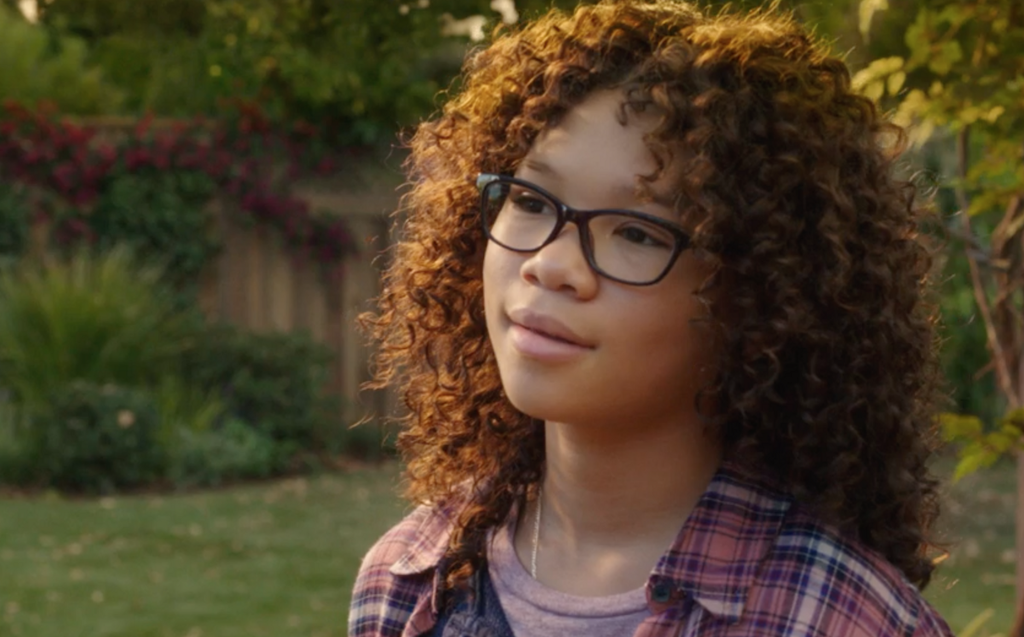
From the moment the Wrinkle in Time movie was announced, my eye was on one thing: Aunt Beast. How would this character — who looks like a furry, grey, tentacled monster, but who is the essence of warmth and love and care — come across on screen? I dissected the trailers for clues, zeroed in on a flash of lumbering grey behemoths, faceless and soft. That’s not the Aunt Beast I know, but it must be her. I begged film critic friends to bring me word of her. When the film’s social media embargo lifted, I tweeted: “SOMEONE TELL ME IS AUNT BEAST OKAY.”

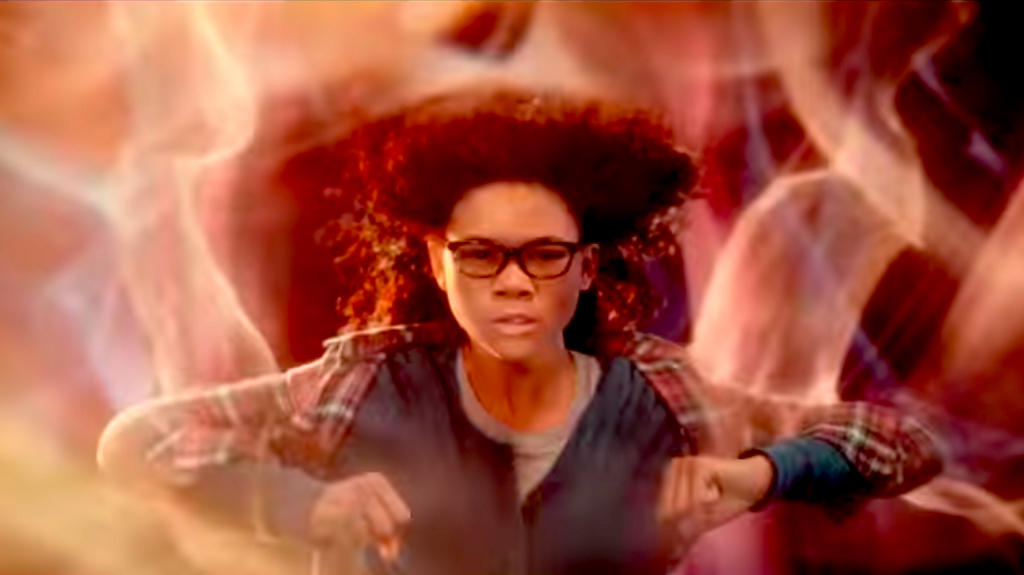
It wasn’t that I needed the adaptation to be faithful. From the first images released, we knew it was not, and frankly, I was relieved. If I ever imprinted on a book, it was this one, but I was intrigued by how different Ava DuVernay’s vision was from my own: the Mrs. Ws not spooky old women but futuristic glamor-witches, with polychrome hair and every color of glittering lipstick; the Happy Medium not a sleepy woman but a man-bunned Zach Galifiniakis; the entire bright, Disney air. The distance meant I could enjoy the movie in isolation. If the movie was different, it wouldn’t ruin the book. It would just be a sister-story to the story I’ve always loved.

She’s an angry, stubborn, frustrated girl, and she doesn’t transcend those failings in order to triumph. In fact, she can’t triumph without them.

But I needed Aunt Beast. It didn’t occur to me that she might be cut — not because she’s crucial to the book’s plot, but because she’s crucial to its heart. The whole book tells us that messy, angry, stubborn girls can save the day. But Aunt Beast tells us that those problem girls can also be loved.

The tagline of the movie is “be a warrior,” but the Meg Murry I remembered from the book isn’t a hero because she’s brave or noble, the warrior that she will presumably rise to be. She’s a hero because of her flaws. She’s an angry, stubborn, frustrated girl, and she doesn’t transcend those failings in order to triumph. In fact, she can’t triumph without them. That’s the whole point.


At the beginning of the book of A Wrinkle in Time, Meg hates herself. She’s got frizzy hair, glasses, braces, and a perpetual sense that she’s wrong — she does poorly in her classes and can’t manage to fit in, unable to squelch her temper with classmates or bullies or the school principal (who calls her “the most belligerent, uncooperative child in school.”) Her mother and her baby brother, Charles Wallace, love her, but Meg says, “I wish I were a different person. I hate myself.”

Then three mysterious, supernatural women — Mrs. Whatsit, Mrs. Which, and Mrs. Who — show up to take Meg, Charles Wallace, and Meg’s schoolmate Calvin on a quest to rescue the Murrys’ missing father. He disappeared while experimenting with traveling by tesseract, folding (or wrinkling) space to traverse great distances instantaneously. The Mrs. Ws tell the children that there is a darkness in the universe, and that this is what their father is fighting, but he is trapped within it now. Earth is, so far, merely shadowed, but there are entire planets that have lost their battle against the Dark Thing.

When the children come to Camazotz, the dark planet where Meg’s father is imprisoned, the Mrs. Ws cannot go with them, but they send the children on their way with gifts. The gifts are mostly enigmatic: a pair of glasses, a hint in a rhyme. As in the movie, Mrs. Whatsit says to Meg, “I give you your faults.”

“My faults!” Meg cried.

“Your faults.”

“But I’m always trying to get rid of my faults!”

“Yes,” Mrs. Whatsit said. “However I think you’ll find they’ll come in very handy on Camazotz.”

Meg’s faults are the reason she’s been a beacon for so many generations of girls. She is angry, frustrated, impatient, self-loathing, and most of all stubborn. A decade ago, Lizzie Skurnick wrote an ode to the stubbornness of Meg Murry at Jezebel:

[Meg] discovers that her stubbornness about what she knows is right is her greatest strength. It’s not really her love for her brother that saves him and her father and herself from being taken over by the Dark Thing. It’s her faults (anger, impatience, stubbornness) that keep her from being sucked in by the great throbbing brain telling her to fall in line. … And, as unattractive as those traits are to others, Meg’s faults amount to no less than a belief in herself. And, as Mrs. Who says: Justitae soror vides — faith is the sister of justice.

Those traits, given back to Meg like a benediction by Mrs. Whatsit, allow Meg to save herself and Charles Wallace. But recognizing that your flaws can be leveraged into strength isn’t enough to make you stop hating yourself, enough to let you stop listening to everything that tells you that you’re wrong. Meg has to learn that she is strong because of her faults, but she also has to learn that they make her no less worthy of love.

Meg learns from Aunt Beast not only that she can keep fighting, but that she should.

This is where Aunt Beast comes in. In the book, Meg’s father tessers himself, her, and Calvin out of Camazotz to the first non-dark planet he can find, after a failed attempt to save Charles Wallace. (He’s left Charles Wallace behind not out of callousness but because tearing him away from IT, the malign consciousness that controls the planet, might have killed him.) Tessering through the Dark Thing, which envelops Camazotz, is painful and dangerous; Meg, ever the worst at tessering, lands there weakened by her battle with the darkness, on the verge of being lost to it.

She is furious. She is heartbroken. She’s in the grip of the Dark Thing, yes, but these feelings are Meg’s own, too, because she is a furious and heartbroken girl. And Aunt Beast heals her — with food and rest and care, and also with love. Aunt Beast loves Meg even when Meg is raging, and in doing so gives her the strength to go back to Camazotz, to return to the fight. Meg already had stubbornness, but that alone isn’t always enough to keep fighting. Meg learns from Aunt Beast not only that she can keep fighting, but that she should. When she realizes she is the only one who can save Charles Wallace, first she has a tantrum, crying at the unfairness of it all. But then a surprising peace comes over her, and she understands: “It can’t be anyone else. I don’t understand Charles, but he understands me.” She doesn’t understand herself, either. But she understands, thanks to Aunt Beast, that she can be loved at her worst.

I don’t remember what I thought of Aunt Beast the first time I read A Wrinkle in Time, but I know what she’s come to mean to me in the decades and rereads since. When Meg first sees her, she’s repulsed by the monstrous alien as it reaches out to touch her face. “But with the tentacle came the same delicate fragrance that moved across her with the breeze, and she felt a soft, tingling warmth go all through her that momentarily assuaged her pain.” I’m not Christian, so my understanding here is limited, but I think Aunt Beast is the embodiment of grace.

No matter how monstrous and wrong we are, there’s another monster out there who may love us, despite and because.

When I was eight and read this book for the first time, when I was twelve and raised my hand too often in class, when I was fifteen and fighting with my mother, when I was every age I’ve ever been and felt in whatever way that I was wrong in the world, when I was stubborn like Meg Murry and all I wanted was for how I was to be okay, Aunt Beast has always been a beacon. No matter how monstrous and wrong we are, there’s another monster out there who may love us, despite and because.


One of the film’s two screenwriters, Jennifer Lee, told The Mary Sue:

She was there until the very end. Maybe she’ll show up in the DVD. It was the right thing for the film version. Meg needed to walk into the It’s lair without support. Aunt Beast was a part of the book that provided support, but she also provided the answer. This was a journey we reworked, where no one is gonna give Meg the answer. She has to find it herself.

But Aunt Beast doesn’t provide answers, really. She provides healing. The movie’s tagline is “be a warrior,” but only the book’s Meg is ever really wounded — not physically, but psychically intruded upon by the Dark Thing.

IT, the dark sovereign of Camazotz, is not the origin of the darkness in the book’s world, as he seems to be in the movie; he is only one node of its power. That power pervades Camazotz as a throbbing rhythm, one that seduces your breath and thoughts and hearts to fall in line. And that’s the nature of the darkness on Camazotz: conformity. Submission to sameness. “Nobody suffers here,” Charles Wallace tells Meg under the grip of IT. “Nobody is every unhappy.” The Dark Thing is not vaguely “darkness,” it is a specific evil on Camazotz — one that Meg Murry, full of rage for the ways she has never fit in, is uniquely suited to fight.

It’s Mrs. Which, in the book, who gives Meg the answer, in her spooky whisper: “Yyou hhave ssomethinngg thatt ITT hhass nnott. Thiss ssomethingg iss yyourr onlly wweapponn. Bbutt yyou mmusstt ffinndd itt fforr yyourrssellff.” That something, Meg realizes, is love: Mrs. Whatsit’s and her father’s and and her mother’s and her brothers’ — and Aunt Beast’s.

She realizes, “If she could give love to IT perhaps it would shrivel up and die, for she was sure that IT could not withstand love.” But Meg isn’t able to do it:

But she, in all her weakness and foolishness and baseness and nothingness, was incapable of loving IT. Perhaps it was not too much to ask of her, but she could not do it.

But she could love Charles Wallace.

She does, and she saves him, even as she is weak and foolish and base. These faults don’t have to stand in the way of loving, or of being loved; perhaps Aunt Beast doesn’t teach Meg this, but she reminds her. Anyway, she reminded me. Watching the film, I wasn’t thinking about whether or not anyone gave Meg the answers. I was watching how she was loved. How her mother ached for her suffering, how the Happy Medium gave her patience, how Mrs. Who waited for her when she fell behind. But through it all, Meg had to be strong — good, brave, unfailing. I missed seeing her fall apart. I missed her flailing in a tantrum at Aunt Beast’s implacable body, I missed Aunt Beast standing there “quietly against the assault.” And I missed Aunt Beast standing beside Meg, when she decided she would risk her life, alone for her brother. “This time,” L’Engle writes, “Aunt Beast’s arm went around her.”

Kevin Brockmeier On the Essential Fiction of Dino Buzzati

“The Egg”

by Dino Buzzati

The International Violet Cross organized a grand egg hunt in the gardens of the Villa Reale for children under twelve years old — ­tickets were twenty thousand lira each.

The eggs were hidden under bundles of hay, waiting for the starting signal and the children could keep all the eggs they found. There were eggs of every kind and size — ­chocolate eggs, metal eggs, cardboard eggs, all containing the most wonderful presents.

Gilda Soso, a cleaner who was paid by the hour, heard of the hunt at the Casa Zernatta where she worked. Signora Zernatta was taking all her four children at a total cost of eighty thousand lira.

Gilda Soso, twenty-­five years old, not pretty, yet not plain, short, petite, with a lively face full of kindness, but also of repressed desires, had a four-­year-­old daughter — ­a pretty little girl — ­whom she decided to take to the hunt.

When the day arrived she dressed her Antonella in a new coat and a felt hat that made her look like a child of well-­to-­do parents. Gilda, however, couldn’t make herself look well-­off, her clothes were too threadbare. But she did something better: with the aid of some sort of cap she got herself up to look rather like an En­glish nanny, and if you didn’t look too closely you might easily have taken her for one of those expensive nursemaids who hold diplomas from Geneva or Neuchatel.

They set off in good time for the gates of the Villa Reale, and here Gilda paused, looking about her as if she were a nursemaid awaiting her mistress. Presently cars arrived disgorging children who were going on the egg hunt. Signora Zernatta arrived with her four and Gilda turned aside to avoid being seen.

Was all this going to be a waste of time for Gilda? It wasn’t easy to choose the right moment of disorder and confusion to slip in without paying.

The egg hunt was to begin at three. At five minutes to three a presidential type of car drew up: it contained the wife of an important Minister with her children who had just arrived in Rome. At once the President, the Directors and Officials of the International Violet Cross pushed toward the Minister’s wife to welcome her, and this gave, in full measure, the desired confusion.

And so Gilda, the daily cleaner disguised as a nursemaid, entered the garden with her little one, to whom she gave last-­minute instructions that she should not let herself be put upon by children bigger and more cunning than she.

You could see spaced irregularly on the lawn hundreds of bundles of hay, some large, some small — ­one was at least three yards high — ­who knows what was hidden underneath? Perhaps nothing.

The starting signal was given by a blast on a trumpet, the tape marking the starting point was dropped and the children hurled themselves on the hunt with piercing yells.

But the children of the wealthy were too much for little Antonella. She ran here and there unable to make up her mind, while the others rummaged in the hay, some already running back to their mothers carrying huge chocolate eggs or gaily painted cardboard ones containing goodness-­knows-­what surprises.

At last even Antonella, thrusting her little hand in the hay, encountered something smooth and compact, judging from the contour it must be a monster egg. Beside herself with joy, she cried out, “I’ve found one! I’ve found one!” and tried to grasp the egg, but a boy dived headlong, as they do in rugby scrums, and then Antonella saw him running off clasping something enormous in his arms: he even pulled a face at her to add to her discomfiture.

Children are very smart. At three o’clock they were given the start, at a quarter past it was all over. And Gilda’s little girl, empty-­handed, looked around for her nursemaid mother. She was indeed wretchedly unhappy, but at all costs she wouldn’t cry — ­that would put her to shame in front of all those children who would see her. But each one had his booty, some a lot, some only a little, only Antonella had nothing at all.

There was a fair-­haired little girl of about seven who was having difficulty in carrying off all the good things she had collected. Antonella looked at her in astonishment.

“Didn’t you find anything?” asked the fair-­haired little girl kindly.

“No, nothing.”

“If you like you may have one of mine.”

“May I? Which one?”

“One of the small ones.”

“This one?”

“Yes. Take it.”

“Thank you,” said Antonella, already quite consoled. “What is your name?”

“Ignazia,” replied the little girl.

Just then an important-­looking lady, who must have been Ignazia’s mother, interrupted with: “Why are you giving that little girl one of your eggs?”

“I didn’t give it to her — ­she took it away from me,” replied Ignazia instantly, with that inexplicable perfidiousness of children.

“It isn’t true!” cried Antonella, “She gave it to me!”

It was a beautiful egg of shiny cardboard that you could open like a box, perhaps there was a toy inside, or a set of dolls’ dishes, or a needlework case.

Attracted by the dispute, one of the white-­clad Violet Cross ladies appeared on the scene. She was about fifty years old.

“What is the matter, my dears?” she asked with a smile, but it wasn’t a pleasant one. “Don’t you like what you’ve got?”

“It’s nothing, nothing,” said Ignazia’s mother. “This brat — ­I don’t know who she belongs to — ­has taken one of my child’s eggs. But it doesn’t matter to me, let her have it! Come along, Ignazia,” and off she went with her little girl.

But the Violet Cross lady didn’t consider the matter closed.

“Did you take the egg?” she asked Antonella.

“No, she gave it to me.”

“Indeed! What is your name?”

“Antonella.”

“Antonella who?”

“Antonella Soso.”

“And your mother — ­where is your mother?”

Just then Antonella realized that her mother was standing motionless a short distance away, watching all that was going on.

“She’s there,” said the child, pointing. “But isn’t she your nursemaid?” Then Gilda came forward. “I am her mother.”

The lady looked at her puzzled. “Excuse me, madam, you have your ticket? Would you mind showing it to me?”

“I haven’t got a ticket,” said Gilda, placing herself beside Antonella.

“You’ve lost it?”

“No, I haven’t got one.”

“You entered by fraud, then? Well, that alters the situation. Now, little girl, that egg doesn’t belong to you.”

Firmly she took the egg away.

“It’s disgraceful,” she said, “now, will you please go.”

The child stood as if turned to stone, her little face petrified with such grief that the heavens themselves began to darken.

Then as the Violet Cross lady was going off with the egg, Gilda exploded. All the humiliations, the sufferings, the anger, the suppressed desires of years and years were too much for her and she began to howl.

There were many people there, smart people in the best society and their children, laden with stupendous eggs. Some hurried away horrified. Others stopped and protested. “It’s shameful!” “It’s a scandal!” “And in front of children too!” “Arrest her!”

“Get out of here if you don’t want to be arrested,” said the Violet Cross lady.

But Antonella burst into violent sobs that would have moved a heart of stone. Gilda was now beside herself — ­rage, shame, hatred, all gave her a great and irresistible power.

“You should be ashamed, taking away my little girl’s egg when she has nothing. Do you know what you are? Scum!”

Two policemen came up and seized Gilda by the hands.

“Get out at once! Get out!” She freed herself.

“Let me go! Let me go!”

They fell on her, caught hold of her everywhere and dragged her toward the exit. “Now you are coming with us to the police station. Once there you will cool down and learn what happens to people who insult the forces of law and order.”

They had difficulty in holding her, small though she was.

“No! No!” she yelled. “My little girl! My little girl! Let me go, you cowards!” The child, clinging to her skirts and flung to and fro in the tumult, was shouting frantically through her sobs.

There were ten of them, men and women, against her.

“She’s mad!”

“Fetch a straitjacket!”

“Take her to the first-­aid post!”

The police van had just drawn up, they opened the door and she was lifted off the ground by the impetus of the crowd. The Violet Cross lady seized the child firmly by the hand. “Now, you come with me. They are going to teach your mummy a lesson.”

No one remembered that sometimes an injustice suffered can unleash terrifying power.

“For the last time, let me go!” shouted Gilda while they were trying to lift her into the van. “Let me go before I kill you!”

“That’s enough! Take her away,” ordered the Violet Cross lady, determined to subdue Antonella.

“Well, then, you shall die first, damn you!” cried Gilda, struggling more than ever.

“Oh, God,” groaned the white-­clad one, and fell lifeless to the ground.

“And now you who are holding my hands, you too,” said the cleaner.

There was a confused mass of bodies, then one of the policemen fell down dead, a second one fell down immediately after, as soon as Gilda had spoken.

They all retreated in nameless terror. The mother found herself alone, surrounded by a crowd who dared not do anything.

She took Antonella by the hand and stepped out confidently.

“Make way, make way — ­let me pass.”

They made way, not daring to touch her. They followed her, though at a distance of twenty yards as she walked away.

Meanwhile, through the milling crowd, armored cars arrived amid the wailing of ambulance and fire-­engine sirens. A vice commissioner of police took command of the operations.

A voice was heard: “Hoses! Tear gas!”

Gilda turned around angrily.

“Use them if you dare.”

Here was a mother offended and humiliated, an unleashed force of nature.

A circle of police surrounded her. “Hands up, you wretch!” A warning shot was heard.

“My little girl — ­you want to kill her too?” cried Gilda. “Let me pass.”

She walked on fearlessly. They hadn’t even touched her and six policemen collapsed in a heap on the ground.

So she reached home. It was a large block of flats standing in the fields on the outskirts of the town. The police surrounded the building.

The Chief of Police advanced with a loud megaphone, and all the tenants were given five minutes to get out, and the mother was ordered to hand over her child lest she should come to harm.

Gilda leaned out of the window on the top floor and shouted words they couldn’t understand. The group of police at once fell back as if some invisible force were pushing them.

“What are you doing? Close ranks!” thundered the officials. But even they stumbled back.

There only remained Gilda and her child in the building. Probably she was cooking supper, for a thin wisp of smoke issued from the chimney.

As evening fell, detachments of the Seventh Armored Regiment formed a wide circle around the house. Gilda leaned out of the window and shouted something or other. A heavy armored car began to wobble, then tipped over sideways — ­then a second, a third, a fourth. Some mysterious force tossed them about here and there like tin toys until they remained immobile in the most grotesque positions, completely smashed.

A state of siege was declared and U.N.O. forces intervened. A wide zone around the city was evacuated. At dawn the bombardment began.

Standing on a balcony, Gilda and the child quietly watched the spectacle. No one knew why none of the grenades succeeded in hitting the house. They all exploded in midair three hundred yards short. Then Gilda went in because Antonella, frightened by the noise of the explosions, had begun to cry.

They meant to get her through hunger and thirst. The water supply was cut. But every morning and every evening the chimney gave out its plume of smoke — ­a sign that Gilda was cooking.

The generals decided to attack at “X” hours. At the “Xth” hour the ground for miles around trembled, the war machines advanced concentrically with the boom of the apocalypse.

Once more Gilda showed herself.

“Stop it!” she cried, “Leave me alone!”

The ranks of armored cars heaved as though moved by an invisible wave, the steel pachyderms loaded with death twisted up with horrible grating noises, changing into little heaps of scrap iron.

The Secretary General of the U.N.O. advanced holding a white flag. Gilda invited him to enter.

The Secretary General of the U.N.O. asked the cleaner for her peace terms: the country was exhausted, the nerves of the people and of the armed forces could stand no more.

Gilda offered him a cup of coffee and then said, “I want an egg for my little girl.”

Ten trucks stopped before the house. They were loaded with eggs of all sizes and of fantastic beauty for the little girl to choose. There was even one of solid gold studded with precious stones, fourteen inches in diameter.

Antonella chose a small one of colored cardboard, just like the one that the Violet Cross lady had taken from her.

8 Books About Our New Robot Overlords

Remember the 1999 Disney Channel Original Movie Smart House? Shortly after his mother dies, Tech wiz kid Ben wins a brand new home with an in-house digital assistant system named PAT. Ben programs PAT to become a surrogate mother to keep his dad from needing to date anyone, until (spoiler alert) PAT takes on a tyrannical parenting philosophy that no one cares for.

Nearly twenty years later, we don’t have PAT, but we do have Alexa, and Siri, and Cortana. Just last week, The New York Times reported that Amazon’s Alexa has been laughing out-of-turn and without permission in conversations she’s not even a part of. Creepy. Is Alexa laughing at us or with us? While we aren’t asking these digital assistants to be our mothers (yet), we do ask them to wake us up, take care of our calendars, sing us lullabies, tell us the meaning of life. So is technology creepy or are we — the creators of technology — the real creeps?

Is Alexa laughing at us or with us? Is technology creepy or are we — the creators of technology — the real creeps?

There’s a lot to unpack here. Like, what’s the deal with naming all these “assistants” after women? And what exactly do we hope these anthropomorphized bots can do for us? While we can’t answer every one of these questions, here are 8 stories about robots — and we’re using the term “robot” pretty broadly here to include robots, artificial intelligence devices, and even one sex doll — that conjure up a history of our hopes and dreams, failures and successes with technology personified.

“Nirvana” by Adam Johnson from Fortune Smiles

In the near future, beds are voice-activated and drones inconspicuously hop from place to place. The president has been assassinated, and our protagonist is a programmer who has developed an algorithm that takes the archived recordings of the president to make him come to life again as a video-projection/hologram. His wife, Charlotte, has Guillain-Barré syndrome, an autoimmune disease that has left her paralyzed and potentially suicidal. The protagonist copes by talking to the virtual president every night, while Charlotte listens to Nirvana. It’s a heartbreaking, pretty perfectly executed story. What are the parts of life we get to do over?

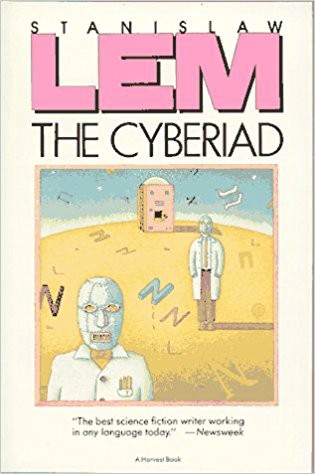
The Cyberiad by Stanislaw Lem

Originally published in Poland in 1965, The Cyberiad was translated into English in 1974. It’s a collection of hilarious short stories that follow Trurl and Klapaucius, the brilliant “constructors” so named because they can seemingly construct whatever they want—and who are themselves from a race of robots who, the reader eventually learns, evolved to replace humans. The constructors can move around the stars to build advertisements, but also help those in need (for a fee, of course). In this medieval-space universe there are princesses and knights, sword fights and spaceships. Death is a problem that can be fixed, and loads of robots fall in love. The short story collection is a commentary on our endless desire for technology to fix the human condition, even if that means replacing it, and the comical failures on the other side of that desire.

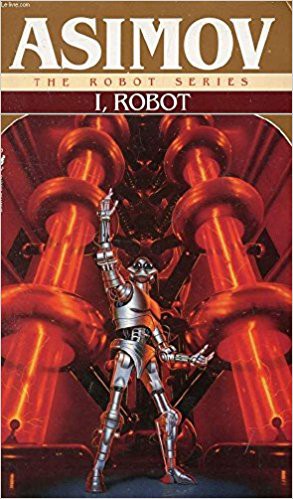
I, Robot by Isaac Asimov

This a seminal collection of stories is framed by Dr. Susan Calvin who tells each story in the collection to a reporter in the 21st century. (Futuristic!) The collection includes Asimov’s “Three Laws of Robotics,” which would influence his later science fiction and even the “real-world” thinking about the ethics of artificial intelligence. Asimov was interested in troubling the “technophobia” around robots by writing stories about robots that help out humanity rather than war against it. In “Robbie,” he turns the old “the puppy went off to live on a farm” story on its head when a little girl can’t shake the loss of her best friend/robot named Robbie. In “Liar,” a robot named Herbie learns that lying to avoid hurting someone is never the right answer. And in “Evidence,” Stephen Byerley is gravely injured in an accident, but survives and becomes district attorney. His opponent creates a smear campaign claiming he’s actually a humanoid robot because no one ever sees him eat, and he has never prosecuted an innocent man. Is he simply “a really good man” or an unconvincing robot? In order to prove he’s of the flesh, he has to violate one of the three laws of robots by harming a human.

Do Androids Dream of Electric Sheep? by Philip K. Dick

We had to have some morally complicated robots on the list. Do Androids Dream of Electric Sheep? (1968) is the novel that loosely set the stage for the 1982 film Blade Runner. It’s set in the year 2021, when most of the world has been destroyed by nuclear war, including most animal species. Humans are being carted off the planet with the promise of personal human-like androids waiting for them on Mars, and the humans that stay behind purchase incredibly lifelike android animals. Convinced that the all-too-lifelike androids on Mars will revolt and take over, the government bans them, employing bounty hunters like our protagonist Rick Deckard to find and “retire” the rogue androids who have escaped and gone into hiding. As with a lot of books on this list, Dick asks us to think about what it means to be human, who (and what) deserves empathy, and who gets to have an identity.

My Year in Re-Reading After 40: Do Androids Dream of Electric Sheep

Ancillary Justice by Ann Leckie

When I started compiling this list of robot stories, I ran into a problem: most of the obvious choices were written by men. Even more disturbing, a lot of the stories were about agency-devoid women femme bots, or real live women being manipulated by technology mastered by men. Praise be for Ancillary Justice, the revenge-quest space opera, which beat out Nail Gaiman for the prestigious Nebula Award for best novel in 2013. Breq, our protagonist, was once a starship that used artificial intelligence to link thousands of corpse bodies living through one central consciousness used by the Radchaai empire to conquer the galaxy. But after an act of treachery leaves Breq separated from the central consciousness, she’s on a quest to revenge herself and kill the Lord of the Radch before anyone realizes what’s happened. It’s a complex story , moving across millennia and back and forth between different perspectives. For all you language lovers out there: Breq’s home language, which doesn’t distinguish between genders, and defaults to “she” until she learns otherwise, creates the effect, as Gretchen McCulloch wrote for Slate, “that the gender of the male characters is paradoxically less important and more visible,” and that the universe by default is understood to be dominated by women. And did I mention it’s part of a trilogy?

The Alchemy of Stone by Ekaterina Sedia

Mattie is an automaton stuck in the middle of the ongoing war between the Alchemists and the Mechanics in the city of Ayona. The alchemists, those who can manipulate stone but eventually turn into stone themselves, are the older order. The mechanics are the “innovators,” whose inventions are drastically demolishing the old to build up the new. After being seemingly emancipated by her mechanic master to study the alchemists, Mattie discovers more than she’s meant to. And the mechanic leader who built her still holds the key that literally winds up her heart up to keep her “alive.” The stakes are raised when a series of attacks exposes Mattie to the corruption keeping the city fueled and fed. It’s a melancholic and fantastical rendering of real-world gender, race, and class inequalities.

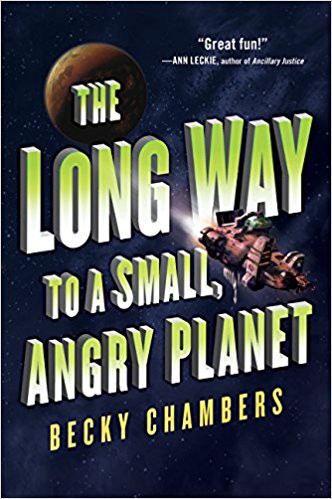
The Long Way to a Small, Angry Planet by Becky Chambers

Rosemary Harper has given up the last of her nest egg on the Mars black market to become someone else — new name, new job, new destination— onboard the “Wayfarer,” with a fitting cast of characters onboard. There’s creepy and commanding Corbin; Sissix a scaly, feather-haired Aandrisk; the navigator Ohan; Kizzy and Jenks the techs; Dr. Chef the cook; Ashby the captain; and Lovelace (or “Lovey”) the AI. Their day-to-day jobs involve punching wormholes in between systems for other ships to travel through until they’re given the opportunity to take on a new job that promises loads of money and of course, loads of crazy risks. Lovey (named after Ada Lovelace the mathematician and first computer programmer), a sentient AI with no physical body, and the tech Jenks are in love. What I love about this story is the way it warps the “femmebot” trope of a female AI constructed for mindless sexual gratification. Instead of being a gleaming hunk of metal with some semblance of sentience, Lovey at one point considers getting a body kit so she can be with Jenks in physical form, but is worried about how this physical body will dull her sensibilities.

Made for Love by Alissa Nutting

Though it’s not exclusively about robots or artificial intelligence, Made for Love is on this list because it is a book that deals with the very real (and often grotesquely hilarious) reality of looking for physical pleasure and genuine connection when technology promises to provide these things more consistently than humans can. After deciding to leave her controlling tech husband, Byron Gogol, our protagonist Hazel shows up at her father’s trailer looking for a little escape, only to find out her dad’s shacked up with a sex doll named Diane. Hazel’s looking for a life change after Byron asks (read: demands) that she have a chip put in her head so they can “share” memories, like a file-sharing incarnate situation. In alternating chapters, we meet Jasper, the con man literally screwing women out of their wealth who, after a strange accident, has been left only attracted to dolphins. Everyone’s interested in sharing more, but touching each other less. When what we crave (i.e. human connection) is unpredictable, gross, and at times scary, we’ll try any substitute to avoid the pain, and create a whole different mess in the process. Hazel’s life is a different kind of wreck, one that we want in on rather than one we can judge with a sick kind of pleasure from afar. As Jia Tolentino writes in her review for The New Yorker: “She is the rare literary heroine in whose company it would be a pleasure to absolutely wreck my life.” Amen to that.

In Praise of Tender Masculinity, the New Non-Toxic Way to Be a Man

Media representations of masculinity tend to play in two notes: On the left we have Nice Guys and on the right we have Macho Men. Both play into ideas of toxic masculinity in their own ways. Macho Men are emotionally distant, but it’s okay because they’re buff and men don’t have feelings anyway. Whether it’s an action hero like Die Hard’s John McClane, or a tortured bad boy like The Breakfast Club’s Bender or Wuthering Heights’ Heathcliff, we are conditioned to see their anger issues as passion and their repressed emotions as something romantic for women to “fix.” Nice Guys are seen as an antidote, but more often than not, their niceness is performative and in direct relation to their feelings towards a crush. Think of Laurie in Little Women, who grows as a character through the help of Jo, but once she turns him down weaponizes all that character growth as leverage to get in her pants. Or Tom from 500 Days of Summer: He’s a charming underdog, but it’s not exactly “nice” of him to resent Summer for not meeting his romantic expectations despite her clear communication of her boundaries. In an era where toxic masculinity is utterly overwhelming, we are all desperate for a healthier and more nuanced role.

Enter Tender Masculinity.

In an era where toxic masculinity is utterly overwhelming, we are all desperate for a healthier and more nuanced role.

While we have mental imagery of Macho Men (buff, distant) and Nice Guys (nerdy, brooding), the characters that embody Tender Masculinity are multi-layered and come from all backgrounds.

Here is a checklist on how to spot a Tender Man:

  • Is he invested in all of his relationships, not just romantic ones?
  • Does he express his emotions in a healthy way?
  • Is self-awareness a concept he’s comfortable with?
  • Does he commit to personal growth?
  • Are boundaries something he is aware of and respects?
  • Is he unafraid of male intimacy — for instance, can he express affection for male friends without making a gay joke?

The best thing about Tender Masculinity is that it’s not only a necessary antidote to our media portrayals of men — it’s also already here. There aren’t a lot of Tender Man characters yet, and we’d love to see more, but a few books and movies are promoting this low-swagger, high-emotion ideal. These are the fully-realized male characters we need to celebrate and see more of.

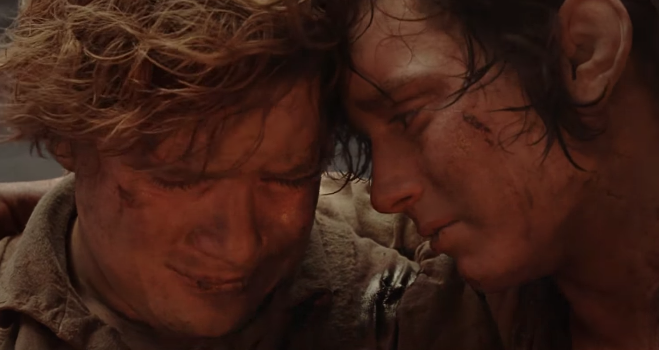
A dramatic moment between bosom pals Sam (Sean Astin) and Frodo (Elijah Wood) in the movie “Lord of the Rings: The Return of the King”

Samwise Gamgee — Lord of the Rings

There are many heroes in the Lord of the Rings trilogy, and many are driven by masculine ideals like duty, honor, glory, or a sense of destiny. But Sam is the indisputable — though somewhat reluctant — hero who tops them all, driven by his love for his friend Frodo. Sam is a devoted friend, who does most of the emotional labor throughout the books. He brings us many moments of Tender Masculinity; following Frodo (even when he’s pressured not to) because he won’t let his friend suffer alone, recognizing and validating the burden of the One Ring, and being able to give a good dose of tough love when necessary. His emotional vulnerability is what makes him relatable, and it’s what makes him powerful. That ring would have never seen its fiery end without Sam in the picture.

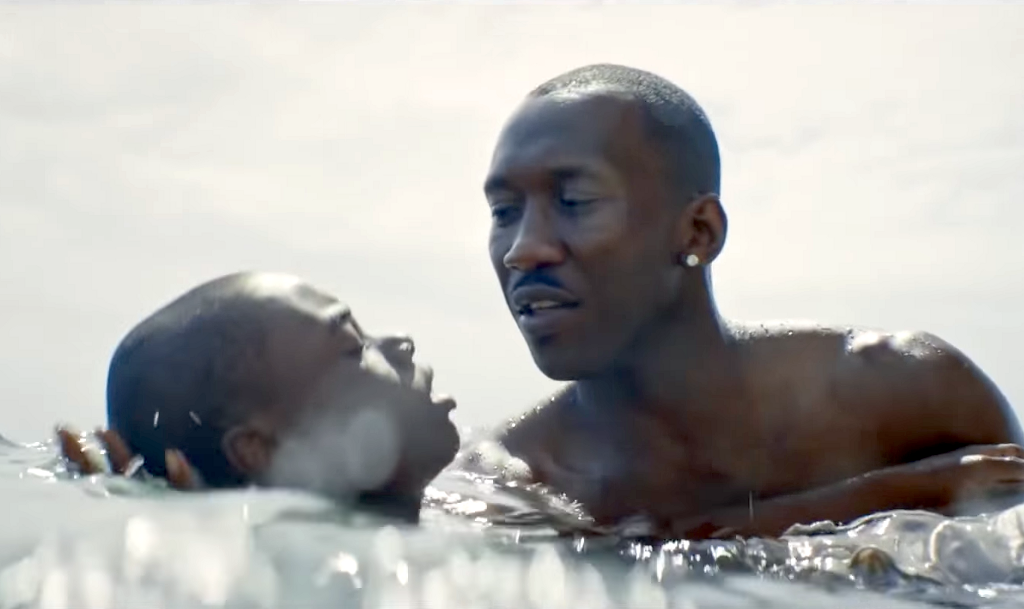
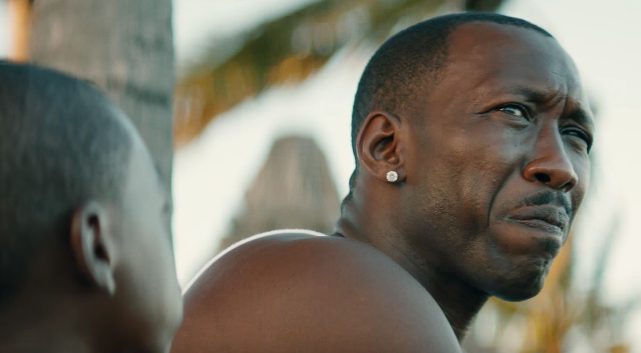
Mahershala Ali, as Juan, emotes in this screenshot from “Moonlight”

Juan, Little/Black/Chiron, and Kevin—Moonlight

Moonlight is a breathtaking story for many reasons, one of those being its examination of toxic masculinity and the importance of tenderness. Tender Masculinity is not an identity of perfection; it is true to the human condition in that it is always a work in progress, a journey. The men of Moonlight all have difficult backgrounds, and at times succumb to the pressure of society’s poisonous expectations of men, but the moments of beauty in the film are when they embrace tenderness. Moonlight takes us through the life of our hero in three major periods: childhood, adolescence, and adulthood. During these periods, we explore his relationship with Juan, his father figure, and his complex feelings for his friend — and eventual lover — Kevin. When we see Juan teach Little how to swim, we’re shown the power in tenderness between men. We’re shown an important alternative to how the media often portrays masculinity, especially black masculinity. We’re shown the value of male friendships that we too often ignore.

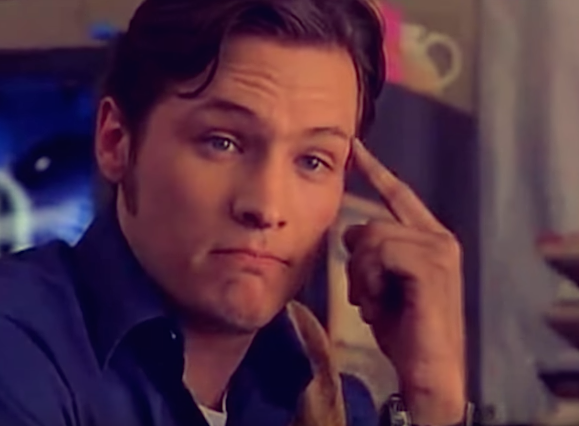
Kyle Valenti knows something you don’t (it’s how to be a Tender Man) in “Roswell”

Kyle Valenti — Roswell

Kyle Valenti is a high school jock, a type of character usually portrayed as either a cool Macho Man or a bullying meathead who keeps our misfit Nice Guy hero away from the girl of his dreams. In the pilot of Roswell, we naturally expect that Kyle, our heroine Liz’s sporty main squeeze, will step in with all the fury of the spurned jock when she leaves him behind for the mysterious world surrounding social outcast Max. When we see Max get beat up by Kyle’s fellow football players, we assume Kyle told them to. But in fact, Kyle is livid when he finds out what his bros did. He apologizes to Max, and then approaches Liz and expresses his need for more open communication in their relationship.

Usually, the high school jock exits after the first act, but Kyle’s tenderness and surprising emotional maturity made him a character fascinating enough to keep around all the way through to the series finale. On this journey we get to see Kyle become a trustworthy ally, a good friend, a hard worker, a devoted son, and an occasional Buddhist? Kyle Valenti was a surprising character to see on mainstream TV in the early aughts, which is what made him so compelling.

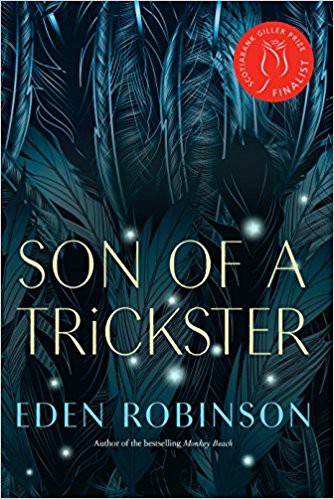
Jared — Son of a Trickster

Son of a Trickster, the first book in an in-progress trilogy from Eden Robinson, introduces us to Jared, a 16-year-old Indigenous boy on the cusp of discovering who he really is. We get a full picture of Jared’s life; his relationship with his family, a girl next door, friends at school, his neighbors, his dog, and his enemies. Each relationship has its ups and downs throughout Jared’s journey, during which he is forced to reexamine his identity, his culture, and his connection to the past. Robinson’s novel examines teen angst, while also dispelling stereotypes and misconceptions of Indigenous communities (and Indigenous men in particular) through Jared’s story. While Jared sometimes emotionally shuts off, or finds himself in hypermasculine situations, Robinson makes clear that he is still just a child who has a tender side as well. There are many examples of this, but to me the most heartbreaking is how Jared reacts to the death of his dog, which comes at a particularly hectic time in his life. To me, this was the turning point in the novel where Jared allows himself to fully feel, to wallow in his sadness, and this newfound tenderness impacts his actions through the remainder of the story. The end of the book makes clear that diving into his emotions and reevaluating his identity are key to tapping into his magic.

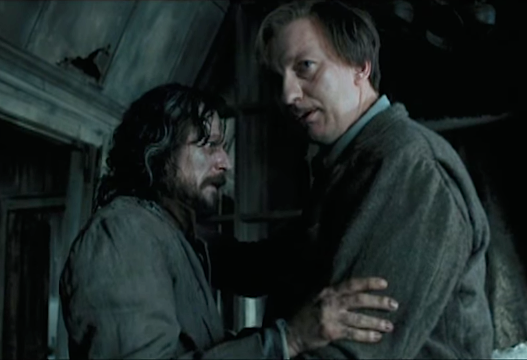
Remus Lupin reunites with Sirius Black in the movie version of “Prisoner of Azkaban”

Remus Lupin — Harry Potter

Hogwarts professor and secret werewolf Remus Lupin was the most emotionally mature male in the Harry Potter series, and I will hear no arguments. Though Lupin’s lycanthropy initially makes Harry and his friends suspicious, he is shown to be a father figure, a sincere educator, a good friend, and a public-minded citizen committed to protecting his wider community. His most compelling relationship is with Nymphadora Tonks, his wife and the mother of his son. What makes their relationship refreshing is that it does not fit into a cookie cutter soul-mate narrative; their history together is fraught with trauma and grief, but rather than becoming codependent or distant, Lupin takes time to articulate and work through his complex feelings before marrying Tonks. (We won’t talk about what happens next.) There are a lot of characters in the Harry Potter series who are heroic through a sense of duty, honor, or sometimes even reluctance, but Lupin is heroic through his tender heart.

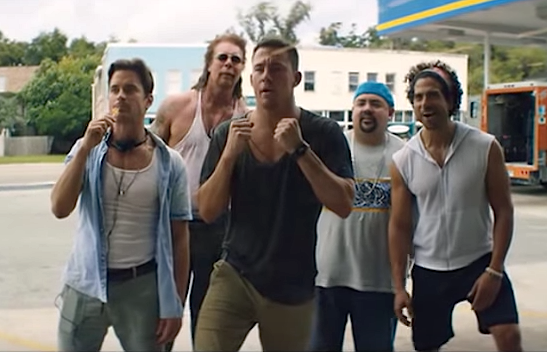
The guys cheer Richie on in “Magic Mike XXL”

Everybody — Magic Mike XXL

Let me tell you, the real magic of this movie isn’t the well-choreographed thrusting, it’s the celebration of male friendship. In a movie that could be completely cliché, this bro squad does not succumb to the macho stereotypes you may expect. These men are here for each other through thick and thin: relationship problems, supporting healthy sexuality, resisting toxic masculinity, encouraging career goals, and fostering overall personal development. In one of the most GIFable scenes in cinematic history, the friends are reexamining their acts for StripCon (and, yes, rolling on ecstasy). Mike is encouraging the gang to leave behind their cliche personas (fireman, etc.) and develop routines that are representative of themselves. His buddy Big Dick Richie is feeling insecure about coming up with something completely new; he’d rather just stick to his comfort zone instead of putting himself out there. The guys stop at a gas station, and as a way to convince Richie that he is talented at what he does, they challenge him to do a spontaneous number for the incredibly bored gas station employee and give her a reason to smile. While Richie does his improvised routine to a fortuitous Backstreet Boys soundtrack, the rest of his friends are outside cheering him on, genuinely excited to see him gain his confidence back. And Richie succeeds: the woman breaks out in laughter and the boys are re-committed to their vision.

While there are more examples we could list here (all of the men and boys of Stranger Things, for example), there is no ignoring that Tender Masculinity is underrepresented in the stories we tell. It is important that we embrace these stories, because while examining toxic male archetypes in media is necessary, condemning them without offering a healthy alternative just leads to more toxic men in media… and in real life. While the idea of tender masculinity is not new, these stories are becoming more mainstream and embraced. But they’re rare in the grand scheme of things. If we don’t celebrate the ones we have, we risk losing these stories to the same old clichés. Celebrating tender men trickles over into our day-to-day, giving the next generation the male role models they deserve. I look forward to the day when the tender men of fiction are just as common as the Macho Men and Nice Guys we know too well.

A Brief History of the End of the World

To say that the apocalypse is a modern obsession is like doing a shock exposé about the Pope’s religion. Just in terms of sheer volume, there has never been a time when apocalyptic and post-apocalyptic stories have been produced in greater profusion and variety than we’re seeing now. I’m not complaining, being right in line with the zeitgeist here. I’m just stating a point.

Partly, of course, this is a case of taste being informed by fashion. You read a book, enjoy it, and go looking for something in a similar vein. And partly it’s publishers responding to and accommodating that taste. But I’d argue that these are both reactive processes. They kick in after something has already begun to happen. And in this case, the something was writers turning to the end of the world as a theme that needed to be explored.

We’ve been here before, of course. The end of the world holds a perennial fascination for us, and we just can’t keep ourselves from going there, time after time. But the modern era is different in a lot of ways. Until recently those end-of-the-world narratives were mostly the province of religious texts, which having told us how things got going in the first place seemed to feel obliged to wrap up all the plotlines at the end. But after we invented the novel (early eighteenth century) and universal literacy (work in progress, TBC) an inexorable shift began. It was slow at first, but gradually those themes and ideas became the province of popular fictions consumed by large numbers of people.

At that point they were free to evolve. Bibles don’t, very much, except through the vagaries of translation. There are always fundamentalists ready to hand to get outraged if you shift a comma. Novels, on the other hand, because of the way in which they’re produced and consumed, proliferate like rabbits, swap DNA like viruses and change more rapidly and unpredictably than Darwin’s finches.

That’s also true of genres, none more so that the apocalyptic novel. Each wave of doomsday plot devices is different from the one before, and I think those changes tell us something about ourselves. Or at least, something about our nightmares and neuroses, which the apocalyptic novel both plays on and partially assuages.

Each wave of doomsday plot devices is different from the one before, and those changes tell us something about ourselves.

Every generation sees the end of the world through the prism of its own day-to-day reality. And the popularity of apocalyptic fiction seems to rise and fall in line with real-world fears and tensions and insecurities. Taxonomy only takes us so far, though. What’s remarkable about the best post-apocalyptic narratives is what they do with their initial premise — what kind of stories they launch from the springboard of global catastrophe.

1960s: Eco-Apocalypse

Barring a few nineteenth-century outliers (Mary Shelly gets there first, as usual, with The Last Man in 1826) science fiction doesn’t begin to address itself en masse to the end of the world until the 1960s. The pulps flirted with it, but the few doomsday scenarios were far outweighed by the bright, millennarian visions. Most future Earths from the ‘30s to the ‘50s had tidy little galactic empires with well-manicured lawns. The aliens would get a little frisky from time to time, but there was almost always a Buck Rogers or a Kimball Kinnison to put them firmly in their places.

The writers who were coming to the fore in the ‘60s had experienced World War Two firsthand; they had seen how a seemingly stable world order could tear itself apart in a sudden paroxysm. But if their uncertainty about the future was rooted in the past, their main reference point was still a contemporary one. Their biggest nightmare, time after time, was environmental disaster.

It’s easy to see why. Rachel Carson’s Silent Spring, released in 1962, blew the lid off the pesticides industry and brought the term food chain into everyday use. Revealing how chemicals like DDT built in concentration as they worked their way up from plants to herbivores to predators, Carson changed the way most people looked at the natural world. It would be another decade or so before James Lovelock proposed the Gaia Hypothesis, but the idea of the environment as a system of complex interdependencies whose ability to self-repair might have limits arguably starts with Carson’s passionate wake-up call.

The science fiction writers of the day answered and amplified that call. J.G. Ballard’s The Drowned World was the first of many novels of the time to take the theme of eco-catastrophe and run with it. In Ballard’s book, global warming has caused the ice caps to melt, shrinking the habitable land mass of the world and overwhelming entire countries. In the same year, John Christopher’s The World In Winter pushed in the opposite direction to imagine a new ice age, while Ballard went on to make eco-apocalypse a recurring theme with stories like The Wind From Nowhere (super-hurricane), The Crystal World (a mysterious phenomenon that crystallizes living tissue) and The Drought (guess).

Obviously Carson’s work identified the human impact on the natural world as the real problem that needed to be addressed. Sixties sci-fi took that idea on board too, imagining worlds in which overpopulation, pollution, and resource depletion were the catalysts for global meltdown. John Brunner’s work stands out here, particularly Stand On Zanzibar, The Jagged Orbit, and The Sheep Look Up.

1970s and 1980s: When Two Tribes Go to War

Man-made disasters continued to be a dominant theme in the science fiction of the ‘70s and ‘80s. In fact, the cinema of the day, playing catch-up with the previous decade’s prose fiction, was making up for lost time with movies such as Silent Running, Soylent Green, and Zardoz.

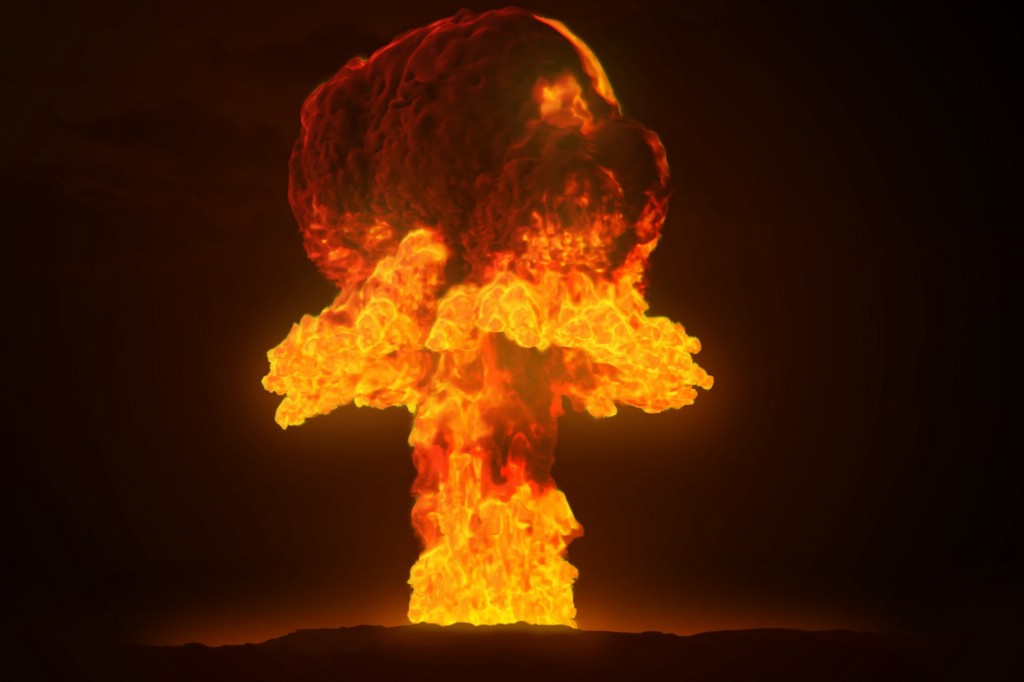
But themes like deforestation and global famine were gradually eclipsed by a new sort of end-of-the-world McGuffin, one that depended on the ever-more-plausible scenario of global nuclear war. Nevil Shute had led the way with On the Beach, much earlier, and the nuclear apocalypse had never really gone out of style, but the late ‘70s and ‘80s saw an unprecedented spike in such stories. Roger Zelazny’s Damnation Alley dates from this time, as do David Graham’s Down To a Sunless Sea, David Brin’s The Postman, and Russell Hoban’s Riddley Walker.

Themes like deforestation and global famine were gradually eclipsed by a new sort of end-of-the-world McGuffin.

I remember very vividly how ubiquitous that fear was. It became such a dominant cultural meme that it was no longer the province of science fiction. Pop music paid homage to it in songs like “Dancing With Tears In My Eyes,” “99 Red Balloons,” and “Let’s All Make a Bomb.” Sober, realistic TV dramas like Threads and The Day After brought the idea into the post-watershed mainstream, and Raymond Briggs reduced it to its heartbreaking basics with When the Wind Blows. Whatever medium you worked in, whether it was film, TV, prose, or comics, if you wanted to imagine a future that was dislocated from the present then a nuclear war was the only entry ticket you needed.

This is where the generational model starts to break down a little, for an interesting reason. The sheer volume of texts produced in prose and other media had been climbing exponentially ever since the start of the twentieth century. As a side effect, influences get faster and faster and cycles get shorter. Ideas that were fresh and new become familiar cultural shorthand, then cliché, in the space of a few years.

With no Soviet Union to hang our anxieties on, we invented new ones. It’s around about this time that the zombies come lurching into view.

Human mutation is one of many ideas that suddenly becomes ubiquitous — a universally available trope that needs no explanation. Earlier novels such as John Wyndham’s The Chrysalids had for the most part stayed closer to the known scientific facts, portraying mutation as something that was random and for the most part unwelcome. But the super-powered mutant now becomes a staple in popular fiction. The link to atomic radiation as a mutagenic agent is often forgotten, but it persists for example in the perennial tagline for Marvel’s mutant X-Men, “the children of the atom,” and in 2000 AD’s Strontium Dog.

With the end of the Cold War in 1991, the fear that it would suddenly turn hot dissipated too. With no Soviet Union to hang our anxieties on, we invented new ones. It’s around about this time that the zombies come lurching into view.

1980s–2000s: Evil Dead

The zombie apocalypse presents a special case. For one thing, it exists at the contested border between horror and science fiction. And for another, it has proved to be uniquely versatile, splitting into sub-genres of its own and (arguably) becoming more intensely self-referential than any other type of genre text.

The shading from classic horror zombies to the more nuanced zombies of today took place gradually and subtly, and with a minimum of fuss. Where 1978’s Dawn Of the Dead assured us that “when there’s no more room left in Hell, the dead will walk the Earth,” the zombies in 1985’s Re-Animator were created by a serum devised and administered by a scientist, and Joe R. Lansdale’s Cadillac Desert (1989) had zombies spawned by a bacterium — an innovation that changed the whole fictional landscape. 28 Days Later, in 2002, locked in this idea of the zombie plague with its vivid imagery and Wyndham-inspired plot, and most zombie texts that have followed (including my own The Girl With All the Gifts, 2014) have been strongly influenced by this template.

Surely the zombie apocalypse   isn’t a rational thing to be afraid of? Well, you’d think that.

But what do zombie movies tell us about our fears? Surely the zombie apocalypse — unlike eco-collapse or nuclear war — isn’t a rational thing to be afraid of? Well, you’d think that, but a lot of people do seem to be afraid of it just the same. Here in the U.K., the Daily Mail ran a story last January with the headline A ZOMBIE OUTBREAK COULD COME CLOSE TO WIPING OUT HUMANITY IN 100 DAYS. A similar article in the Huffington Post offered tips for survival under the sub-deck quote “It’s not a matter of if, it’s a matter of when.”

So zombies work surprisingly well on the literal level, but they’re also a great vehicle for other fears. In the horror milieu, they were often a vehicle for barely-veiled jeremiads against the ills of modern society, confronting us with a distorted mirror of our own instincts and drives. The shopping mall in Day Of the Dead, to go for everyone’s favorite example, continues to dominate the ruined suburban landscape as the world falls apart. It’s a refuge for the living and a weird lure for the undead, who dimly remember that everything they ever wanted was once contained within those walls. Director George Romero followed that dark vision in 2005’s Land Of the Dead with an allegorical fable about the class struggle in modern America and the growing wealth gap.

Zombies remind us that our own personhood can be rescinded.

In science fiction, I think the zombie apocalypse presents differently and carries a different freight of meaning. To make an obvious point, the rationale for the existence of zombies in the first place usually relates not to the lack of available storage space in Hell but to a plague — the work of a bacillus, a virus, a fungus or an alien mind-worm. Modern fears of a pandemic, stoked by near-misses with SARS and H1N1 are obviously very relevant here.

But there’s also an existential aspect to the threat zombies pose. Zombies are people in shape only; they look like us but they don’t have any spark of consciousness. They remind us that our own personhood can be rescinded. To become a zombie is to lose what makes you human — so these apocalypses tear us down from the inside, replacing the heroic property damage of (say) a Roland Emmerich movie with something subtler but much more devastating, the inexorable crumbling of your own selfhood, your soul. Hence the counterpoise in a novel like Isaac Marion’s Warm Bodies between the familiar genre furniture of ruined urban landscapes and survivalist enclaves, and the precarious affection that forms between R and Julie. The abyss, here, is wholly internal.

2000s and 2010s: Slouching Towards Bethlehem

That seems to have taken us past the dawn of the new millennium, where apocalypses come in every flavor to suit your pocket and your taste.

The plague-based apocalypse isn’t limited to zombies. Novels such as The Space Between the Stars and Louise Welsh’s Plague Times trilogy both dramatize very vividly the widespread societal collapse that a pandemic might bring.

Eco-catastrophe has returned — but with more teeth, informed by the overwhelming scientific consensus on global warming and a shedload of incontrovertible evidence. The Water Knife by Paolo Bacigalupi offers us a near future where water scarcity has made the U.S.A. a union in name only, pitting the Western states against each other in vicious legal and paramilitary skirmishes. In The Stone Gods, Jeanette Winterson hauntingly invents a migratory past for the human race, suggesting that this isn’t the first time we’ve devoured an entire planet’s resources out from under ourselves. And let’s not forget Wall-E, whose garbage-choked cityscapes were one of the most haunting visions Pixar’s brilliant animators have ever produced.

Eco-catastrophe has returned — but with more teeth.

Global war (nuclear or otherwise) is still contending strongly, although these days it seems mostly to express itself through massive franchises like The Hunger Games, Mad Max, and Planet Of the Apes. Actually, in saying that, I’m ignoring Cormac McCarthy’s The Road (2006), one of the most powerful and affecting post-apocalyptic novels ever written. And I guess there was The Book Of Eli, too, however much we might wish there wasn’t. In that movie, in case you don’t remember, the power of God’s guiding hand allows a blind man to fight his way (with ninja warrior skill levels) across a blighted America to bring a copy of the bible to a miraculously intact printing press on the West Coast. The Almighty may have allowed the human race to descend back into barbarism, with incalculable loss of life, but at least He still gets to tell His side of the story. Yay.

We’ve also got a growing trend for stories where humanity is destroyed or superseded by its own technology, with the emergence of artificial intelligence research proving very fertile soil for paranoia. The Terminator movies had already given full vent to these concepts back in the ‘80s, but Robert Cargill’s Sea Of Rust (2017) goes one better by setting its narrative after the human extinction event has already happened. In shifting the never-ending struggle for survival from us to the beings who exterminated and replaced us, Cargill offers some startling insights into the way ecosystems work and our place in Earth’s so fragile yet so resilient biosphere.

What’s the Point of It All?

Looking at this cornucopia of cataclysms, you could be forgiven for thinking that in the modern era we’re afraid of pretty much everything — or at least that our end-of-the-world presentiments are reaching an unprecedented high. I wouldn’t argue against either of those things. In the wake of the financial collapse a decade ago, the prospect of having your life suddenly and spectacularly become non-viable has become a day-to-day reality for many — and the world’s political systems have largely been put into the hands of rogues and fools (I don’t mean either rogues or fools, I mean people who are both), so it’s no surprise if we keep probing the sore place to see how badly it hurts.

But apocalyptic fiction is far more than a sort of psychic immunization program, giving us little disasters so the big one won’t hurt so much when it comes. For one thing, apocalypses are a good place for conducting thought-experiments. By clearing away the inessentials they make room for searching questions about who we are and what we’re for. So much of our behavior and our thinking is dictated by the social roles we play. We move through our days like actors crossing a stage, all our moves blocked and all our words cued up for us in advance. If society breaks down, there’s nobody left to prompt us. We suddenly have to improvise, and in the process we discover ourselves, as the American poet Wallace Stevens put it, “more truly and more strange.”

Apocalypses are a good place for conducting thought experiments.

That’s certainly true of Cormac McCarthy’s masterful The Road, in which a father and son journey through a landscape so depleted by catastrophe that food is almost entirely exhausted. Their humanity and their love for each other is tested beyond every conceivable limit, but it holds. “If he is not the word of God,” the father thinks as he looks down on his sleeping child, “then God never spoke.” In N.K. Jemisin’s Broken Earth books, by contrast, the focus is on racial tensions and divisions seen through the lens of a society hardened and coarsened by regular apocalypse events. Jemisin brilliantly dissects the way mistrust between groups can be fomented to serve political agendas that have nothing to do with survival and everything to do with power and advantage.

In some stories, the end of the world functions as metaphor. Kurt Vonnegut’s early masterpiece Cat’s Cradle is a darkly hilarious fable about the arms race and its logical end point, but it’s many other things besides and one of them is a meditation on human mortality. The book is full of deaths that are tragic, absurd or both, and though in due course it builds to an end-of-the-world moment (“the great ah-whoom”) it also reminds us poignantly that every death is the end of a world. That’s literally one of the tenets of the novel’s invented religion, Bokononism, which also gives us the novel’s closing lines and humanity’s defiant response to the arbitrariness of the universe.

Post-apocalyptic narratives differ, too, in where they position themselves relative to the end of the world. Many show it happening in the narrative present (which means they’re not post-apocalyptic at all). Most jump forward a generation to show the new world order that’s forming, and make that the central focus. That’s become a staple of YA fiction in recent years, with many writers following the trail that Suzanne Collins blazed in the Hunger Games trilogy.

But some writers go off-piste. Jasper Fforde’s brilliant Shades Of Grey (a title he must regret every day of his life) takes place many centuries after its sundering apocalypse, which is referred to only as “the something that happened.” The new society that has risen up is profoundly ignorant of its own past, and so is the reader. We see the end product, but we don’t see the process, so we’re false-footed again and again by the novel’s brilliant reveals.

And some novels don’t announce themselves as apocalyptic at all, but are still suffused with the elegiac sense of an era, a way of life, a civilization winding to its close. Foremost among these implicit apocalypses is Claire North’s wonderful The End Of the Day, whose point-of-view character, Charlie, acts as the harbinger of death. When death is coming, Charlie is sent before, sometimes as a courtesy and sometimes as a warning. But the deaths he is sent to mark aren’t always the deaths of individuals, and as the book progresses we start to see patterns and correspondences that foreshadow a bigger, more profound death. The personal, the global and the cosmic overlap and interpenetrate, as they do in Cat’s Cradle.

Perhaps, if there’s a common thread running through apocalyptic fiction (and I admit that’s a big if) then it’s novels like Cat’s Cradle and The End Of the Day that give it its clearest expression. There’s a scene in the latter book where Charlie attends a funeral for someone he has got to know in the course of his work.

The Harbinger of Death sits quietly and nods at the words that come… and cries with the rest of the room, not in raging grief that shouts and screams, but at the size of the hollow left behind, which no one now can fill.

And outside the church…

Death waits, but does not enter. Her work is done, for today, and funerals she feels are a ceremony for the living, not the dead. She has no interest in corpses.

That exquisite tension defines apocalyptic fiction for me. It always gives us a split focus, on “the hollow left behind” and on the living who now have to reach a new accommodation with a new reality. That’s a crucial and complicated part of being human, and we need all the help we can get. Perhaps that’s why we turn so often to stories that take us to the edge of the abyss and hold our hands as we look down.

A New Anthology of Asian American Writing Asks What Home Even Means

It’s 2018, and, just a few weeks ago, Olympian Mirai Nagasu landed her history-making triple axel. During the joyful outpouring that followed, New York Times writer and editor Bari Weiss sent out a would-be supportive tweet: “Immigrants: They get the job done.” The thing is, though, Nagasu isn’t an immigrant; she was born in Montebello, in California. Told of her mistake, Weiss tweeted that she’d believed she was taking poetic license. It was “another sign of civilization’s end,” she said, that people reacted so strongly, and negatively, to her mistake.

Purchase the anthology.

But it’s not any kind of mistake: that tweet reflected a much larger issue. To live in an Asian-looking body in a Western country so often involves being perceived as foreign, alien, from and of elsewhere. Go home, racist people tell us, while this is our home; go back to your country, while this is where we belong. Go Home! is also the title of a new anthology of Asian diasporic writing, edited by Rowan Hisayo Buchanan, and issued by the Asian American Writers’ Workshop and the Feminist Press. The book includes prose and poetry from writers as varied — and as wonderful — as Viet Thanh Nguyen, Alexander Chee, Kimiko Hahn, Alice Sola Kim, Mohja Kahf, Wendy Xu, Sharlene Teo, Wo Chan, Muna Gurung, Muhammad Amirul bin Muhamad, Jennifer Tseng, Rajiv Mohabir, Gina Apostol, Fariha Róisín, Esmé Weijun Wang, Chaya Babu, Mia Alvar, Amitava Kumar, Karissa Chen, Gaiutra Bahadur, Jason Koo, T. Kira Madden, Marilyn Chin, and Chang-rae Lee.

I talked to Buchanan about totemic writers, how the anthology opens up the complexities of Home, and the gross simplicity of racism.

R.O. Kwon: What inspired the idea of assembling this anthology? Was there any one catalyzing event, or was it more an ongoing sense of need?

Rowan Hisayo Buchanan: The coming together of the Feminist Press and the Asian American Writers’ Workshop was the practical catalyst. But my need for a book about home long predates that.

I have a Japanese-Chinese-American mother and a British father and I’ve spent a lot of time thinking about home and where it might be. I’ve had a lifetime of people asking “What are you?” And sometimes I felt like I didn’t have the answer. I’d end up in conversations about the virtues of “Oriental women” that made me want to scream for myself, for my mother, and my grandmother. But I’d smile just like they imagine good Oriental women do, and try to escape.

My grandmother was born in Shanghai but has spent 67 years in America. She learned to program early computers. She learned to drive a car for a job in Texas. I’ve caught her having telephone chats with telemarketers about the Green Bay Packers. But she also leaves food on the ancestral altar. She’ll tell me I can live with her as long as I like because that’s the Chinese way. But none of that complexity fits into their idea of an Oriental Woman. Racism simplifies.

I suppose I wanted to find a better way to answer when asked, “Where are you from?”

So perhaps it’s no coincidence that complicated and fraught homes figure heavily in my own work. In my novel, Harmless Like You, a Japanese artist abandons her family and runs away to Berlin. I was curious and excited to find out what other Asian diasporic writers made of Home as a topic. I suppose I wanted to find a better way to answer when asked, “Where are you from?”

Kwon: Wait, conversations about the virtues of “Oriental women” — conversations, plural, what the hell?

Buchanan: Usually the conversations are with older men who I am trapped next to for one reason or another. For example, an older man, who was a donor to an institution I cared about a lot. He has now passed on and his legacy does good work, so I will allow him to remain nameless. But for an hour or so over drinks he congratulated me on the fact that, for an Oriental woman, I made good eye contact.

Another time, I ended up talking to a European man who had once been married to a Japanese woman who was “very cold.” But he planned to go to rural China to find a new girlfriend, where they were “still grateful.”

I don’t know if it’s because I’m mixed race that they feel able to tell me these things? Or is my face too sympathetic? They usually come up with so many clichés that I feel almost ashamed to be reporting them. It seems like racism should be more complex, but sometimes it’s not.

How Writing Filled the Void Left by Losing God

Kwon: I’m really sorry that happened. As for racism not being complex — I agree, evil can be so simple. How did you think about what kinds of writing, and from whom, you wanted to include in the book?

Buchanan: While I am aware that no single book can capture the complexity of Home, I wanted to try to allow the book to speak to many different experiences of what home might be. Some of the pieces have been published elsewhere and some are brand new. I envisioned this book as a conversation. It is a mix of fiction, non-fiction and poetry. Truth and beauty come in many costumes. It was exciting to put a story about demon-summoning Korean adoptees in the same book as a personal essay about border control and a poem about a makeup counter.

We tried to reach out to a range of writers from different ages and backgrounds. One of the joys of an anthology is the ability to share space. Home can be about language, about citizenship, about religion, about food, about family. Different writers found struggles and joys in different places.

I wanted the book to speak to many different experiences of what home might be.

Kwon: We’ve talked, in the past, about some of the joys and challenges of bringing an anthology into the world. While compiling Go Home!, did you experience any especially high points? What about any low points?

Buchanan: High points included working on the cover, I felt like everyone was on board with the mission. We were all familiar with the tired tropes of embroidery, cheongsam, and the objectified Asian woman as cover art. Although we went through several cover designs, the process always felt collaborative. We ended up with a shadowy black landscape and neon pink lettering. It’s like nothing I’ve seen before and I’m delighted with it.

Also, engaging with the writing. I love the work in this anthology. Several of the works were my first experiences with those writers. Others, I had been aware of for a long time, some of whom like Chang Rae Lee are well known. But the writer whom I have been personally following the longest is Esmé Weijun Wang. Her novel, The Border of Paradise, only came out in 2016. But as a teenager who was struggling for various reasons, I used to find great solace in her blog. I think I wrote her fan mail once! Obviously, I jumped at the chance to read her novel, which is beautiful. As we corresponded about her essay for the anthology, I was aware of the long journey that had led to that conversation.

And finding out that I was going to be able to do a tour and meet so many of my contributors!

A low point was not being able to include a story I really loved by an emerging writer. When we considered the balance of the anthology as a whole, it wasn’t a good fit. Editors talk about fit a lot and it can sound like fluff. But it was true. I wanted to be able to include everybody.

Kwon: Who were some formative Asian diasporic writers for you?

Buchanan: Can I be lame and say I loved Ishiguro before the Nobel? He can slip such strong emotion into a text without it ever feeling overwrought. For me as a part-East Asian kid, growing up in a very white and very English environment, his work was totemic for me. He could write about Japan and England. He wrote about the past and the future. He made me feel unlimited.

Ruth Ozeki is a personal hero of mine. She’s a novelist, a filmmaker, and a Buddhist monk. In all her writing, she embraces ideas of multiplicity. Every part of her work seems to shout that you can be as many things as you want. But she doesn’t shy away from big political issues like agribusiness, war, meat marketing.

Jhumpa Lahiri continues to inspire me. As you probably know, she’s living in Italy and writing in Italian these days, for reasons she describes in an article for the New Yorker. She is just so good at what she does. Her stories are beautifully balanced. But she never got complacent. Instead, she’s pushing herself in new ways.

The Asian American Women Writers Who Are Going to Change the World

Kwon: Ishiguro’s writing is totemic for me, too. Strong emotion being slipped in — yes. Did you grow up reading many Asian diasporic writers? I’ve been thinking a lot, these days, about the fact that it wasn’t until late in college that I really began reading Asian writers, and what effect that’s had on my writing.

Buchanan: I was lucky that I encountered a few as a teenager. This partially had to do with having a mother who loved books and partially had to do with the fact that I lived near an excellent bookshop. I have written a little about it here. But I remember that I thought of them as rare treasures. For a long time, I had the ambition to own all the published work by Asian writers. I don’t think it was until I was standing in AAWW’s library that I realized how impossible that ambition was. It was a strange feeling of giving up on a dream and of being given a huge gift.

It’s wonderfully freeing to be able to celebrate the work of others.

Kwon: I love that you had such an ambition. I know putting this book together must have been a lot of work, and I’m so glad and thankful it’s going to be in the world. I’m greedy, though. I find I want more! You’re a writer too, of course, and a splendid one — how do you think of balancing the two, writing and editing? Do you see more anthology-compiling in your near future?

Buchanan: I’d love to do more anthology-compiling. Seeing the pieces come together and start to spark off each other was thrilling. It was a lot of work, but I’m also aware of how much harder it would have been without the support of AAWW and the Feminist Press. Jyothi and Jisu both worked so hard. I’m not sure how I’d feel going it alone!

As a writer these days, you are often asked to do a lot of banner-waving for your own work. And I’ve been grateful that I’ve been given the opportunity to do that. When you work on something for years, it makes sense to give it the best push into the world that you can. But it can also start to feel a bit egocentric. It’s wonderfully freeing to be able to celebrate the work of others.

Kwon: Can you talk about Asian diasporic writers you love who aren’t in the anthology?

Buchanan: I’m glad you asked. One of my great hopes for this anthology is that it opens doors. I hope people read it and become excited about the possibilities of Asian diasporic writing.

An incomplete list of contemporary writers from the Asian diaspora whose work I have fallen for — Sangeeta Bandyopadhyay, Sarah Shun-lien Bynum, Cathy Linh Che, Nicole Chung, Patti Yumi Cottrell, Guy Gunaratne, Mohsin Hamid, Will Harris, Peter Ho Davies, Vanessa Hua, Christine Hyung-Oak Lee, Violet Kupersmith, Jennifer Sookfong Lee, Celeste Ng, Bich Minh Nguyen, Yumi Sakugawa, Kamila Shamsie, Nikesh Shukla, Cheryl Tan, Roma Tearne, Madeleine Thien, Ocean Vuong, Jenny Zhang.

Can I say you? I’m just beginning to dig into the The Incendiaries.

This list is incomplete for two reasons. First, I have so much yet to read. Second, because as soon as this is published, I’ll remember someone’s brilliant sentences and kick myself for not including them. For anyone reading this — if you see someone’s work I’ve left off that you love, please celebrate them!

I Saw Myself in Meg Murry Even Before She Looked Like Me

Almost two decades before Ava DuVernay’s adaptation of A Wrinkle in Time, I wrote my own story based on the characters in Madeleine L’Engle’s novel. The driving impulse was not “to be an author” or, that classic seed of fanfiction,“to insert a thinly-veiled version of myself as someone’s love interest” (I was eight). It wasn’t even “to pick up where the book left off.” The only reason I took any interest in the family computer, picking out words from a senseless arrangement of letters, was to gain admittance into L’Engle’s world through a direct portal: the medium in which she worked. Kind of like tessering. But walking around inside the story wasn’t just an opportunity to luxuriate in the details of a world that I loved, or to speculate on the ones I didn’t understand — it was also a chance to correct the things that didn’t agree with me. Despite my childhood love for A Wrinkle in Time, alongside that love I felt a competing conviction: that L’Engle was utterly wrong about certain details of the world she’d created.

This feeling had nothing to do with experimental physics or tesseracts or time-space travel — my gripes were with the quotidian, things like the the shape of the Murrys’ dog’s head. My problem wasn’t exactly that these details didn’t ring true; it was more a frustration at their failure to conform to my mental image of them. With the family dog, Fortinbras (a name that, lacking the Shakespearean referent at the time, I subjected to the same levels of mangling I later brought to pronunciations of “Hermione”), I disliked the way L’Engle dwelled on the “slender darkness” of his head. Surely, my logic went, faced with a name as unwieldy as Fortinbras, no one in their right mind would envision such a creature as anything other than massive and shaggy. My imagined version swelled against the shell of the textual description until the latter cracked and lost purchase, with my story becoming a gallery for these revised details. This was how completely I inhabited L’Engle’s world — I felt I had the authority to claim when she had gotten it wrong.

Which means that when I learned of DuVernay’s film adaptation and the miracle of a black Meg, I wondered for the first time: why wasn’t that one of the book’s realities I refused to accept? If I didn’t think twice about swapping out dog breeds or house layouts for my preferred versions (even when such decisions ran counter to the cover art, which I usually took to be authoritative), why didn’t it occur to me to mentally rewrite Meg Murry — the character in the book with whom I most ardently identified — as biracial, like me? Why, in other words, were Meg and her world places in which I seamlessly saw myself, despite the fact that, for instance, Meg can easily “[run] her fingers through her mouse-brown hair,” but if I (or Storm Reid, who plays Meg) tried that at home, I’d pull clumps out at the root?

Why didn’t it occur to me to mentally rewrite Meg Murry — the character in the book with whom I most ardently identified — as biracial, like me?

Part of the reason, I imagine, is that non-white children intuit early in their reading lives that looking like their favorite character is a luxury not on offer. Unless we struggle mightily against the specifics of a text that at best, like J.K. Rowling’s claims about not-not-black-Hermione, don’t explicitly rule out the possibility of a racialized character altogether, we learn to find alternative grounds for identification. In A Wrinkle in Time, I would have been faced with the herculean task of imaginatively fighting my way past a squad of several blondes (Meg’s three younger brothers), an intimidatingly beautiful redhead with “creamy skin” (her mother), and Meg’s own mousy brown mop. Honestly, it’s easier just to change the dog.

But there’s also something in L’Engle’s work that, for me, made it about different questions than simply “Where am I in this book?” A Wrinkle in Time invited identification across difference, capturing a quality of childhood that hinges more on the emotional than the visual. This is a novel that begins at midnight in a drafty attic, but immediately ushers you downstairs into a warm kitchen with cocoa and sandwiches. It hyperbolizes empathy in the form of a child, Meg’s little brother Charles Wallace, who uses his telepathic abilities to anticipate the emotional needs of his mother and sister. It takes an almost comedic glee in childhood precocity, attributing to a fourteen-year-old dialogue like, “I must remember I’m preconditioned in my concept of your mentality.” It’s theatrical almost to the point of parody, and yet it’s such a thrill for a nerdy kid to encounter a line like this; its implicit promise that there are others like you who take the same joy in language and that, even if you’re a self-described “oddball” like Meg, somewhere beyond these pages you might eventually find your people.

‘A Wrinkle in Time’ invited identification across difference, capturing a quality of childhood that hinges more on the emotional than the visual.

All of which is to suggest that it is a book that throws down the welcome mat, grabs you by the hand, and pulls you in. It champions as the center of attention a girl who both acts out and questions her own deservingness of any attention at all. Weirdos are especially welcome here. L’Engle’s participatory, inclusive aesthetic is much of why I was so willing to both project myself into the book and impose upon it my own tiny acts of creation. If something felt wrong about the layout of its world, I knew she wouldn’t begrudge me a few minor renovations.

Nor would she begrudge DuVernay her directorial vision. DuVernay too has knocked on the door, been welcomed in, and moved a thing or two around. Rather than an entirely white family, the Murrys of 2018 are a mixed couple — a black mother (played by Gugu Mbatha-Raw) and white father (Chris Pine) — with a biracial daughter (played by the fierce, and fiercely loving, Storm Reid) and an adopted Filipino-American son (nine-year-old Deric McCabe, whose exuberance shifts with impressive ease from adorable to terrifying when the story calls for it). All of a sudden, I was offered more than just a hero with whom I shared intellectual precocity and emotional intensity — I had one who shared my hair.

All of a sudden, I was offered more than just a hero with whom I shared intellectual precocity and emotional intensity — I had one who shared my hair.

DuVernay’s innovations go deeper than merely diversifying the cast. Imagine if black Hermione had also gone to Black Hogwarts. The characters in A Wrinkle in Time attend the fictional James Baldwin Middle School, where posters of Maya Angelou hang high on hallway cork boards. Mrs. Which, the head of a trio of astral-plane warriors and the film’s closest thing to a deity, is played by Oprah Winfrey. The novel’s fixation with Meg’s frizzy hair assumes an edge onscreen: when Calvin O’Keefe, Meg’s nascent love interest, first tells her, “You know, you have great hair,” her brush-off is a given for the black female viewer. Of course she wants him to shut up — no doubt she’s had white boys trying to touch her hair for the past thirteen years. The viewer’s recognition of this shared history makes Meg’s eventual acceptance of the compliment, and corresponding acceptance of herself as deserving it, even more moving.

It was a doubled satisfaction that I got to experience in the theater: the comfort of re-entering a remembered world, and the pleasant shock of recognition at having the familiar speak to me in a more intimate way. DuVernay’s casting was an unexpected gift, one that I wish I’d known how to ask for as a child reader and filmgoer. The lesson of her casting is a crucial one: To adapt a story and replace the majority of its white characters with characters of color is a weight that any worthwhile source material can handily bear, whether in a big-budget Disney film or the cinema of your own private reading experience. At the same time, I’m grateful that I didn’t let my need to see myself obstruct my enjoyment of texts like this one. If I’d felt shut out of the original story because of a white Meg, I might only have loved the book after I’d seen the film — but without a preexisting love for the book, I might never have seen the film at all. Or at least, I might not have been moved by it; at times it’s cartoonishly mystical and the first half was a real Fortinbras. Still, I cried upward of half a dozen times.

How Young Adult Literature Taught Me to Love Like a White Girl

For white viewers, who have historically had less work to do in order to use stories as reflective surfaces, the film will be something different. It shares the inclusiveness of its source material, offering precisely what I discovered when I read A Wrinkle in Time as a child: the invitation to identify across, and in spite of, difference. It’s the same skill I spent years learning with the legions of little white girls I met in books and film and classes. When I was younger, my reading practices were absorptive and uncritical enough that I could barge into any story and lose myself in anyone’s skin. The impulse was never “Is this what I’m like?” but “Is this what I could be like?” or, even better, “Is this what other people are like?” — concerns that I don’t regard as consolation prizes for lack of representation, but ones that I found just as thrilling and generative. I didn’t, and still don’t, only approach stories looking for versions of myself. But I am certainly more particular about the people with whom I am willing to claim literary kinship.

It’s so important that younger readers — and a broader range of young readers — now have the chance to develop that critical muscle at an earlier age, experiencing realities like the West African-inspired world of Tomi Adeyemi’s Children of Blood and Bone or Black Lives Matter in Angie Thomas’s The Hate U Give. But it’s also crucial not to lose sight of the power in encountering difference on the page, which gives rise to the need for representation, but also the limits of grounding identification in visuality: writing off a text because you don’t see yourself in it can be a dangerous foreclosure of dialogue and empathy. I find it less useful to demand “Why didn’t you include x identity category” of dead write writers and prefer to dedicate more time and attention to finding, engaging with, and championing the work of those living authors — those who embody precisely the kind of identity that has been written out of the “mainstream” version — that do.

Writing off a text because you don’t see yourself in it can be a dangerous foreclosure of dialogue and empathy.

My edition of A Wrinkle in Time has an author’s introduction where L’Engle comments on the “beautiful new covers for the Time Quartet,” which she interprets as an “indication that stories have a life of their own, and that they say different things to different people at different times.” It’s interesting that so many of the mixed-to-negative reviews of the film have questioned this book’s adaptability. To me, this has always been a welcoming text, one that is willing to extend a hand and invite you in, along with your wild ideas. I certainly intuited that impulse. I think DuVernay did, too.

Inventing Myself in an AOL Chatroom

I connected with “Njdude” on AOL when I was eighteen, in college, failing calculus, lonely, cold, and miserable. This was central Minnesota during winter’s peak, sitting in a musty green-carpeted dorm room which overlooked a sagging volleyball net and a parking lot flanked by jagged heaps of snow. I’d only been away from home for a few months, and instead of the intense freedom I’d expected to feel, I’d succumbed to near-crippling depression — the cold, for some reason, had been more tolerable when I’d known other people were suffering from it, too.

“WHAT ARE YOU DOING HERE?” This was my first instant message to “Njdude.” We were in a local room — Minnesota m4m — and I was slightly irritated that someone from New Jersey was occupying a coveted space. (The maximum occupancy was 23 chatters.)

“Just checking things out,” he messaged.

“There isn’t much to check out, so why come here?”

Back then, you had to mine information from actually chatting.

Back then, double-clicking a screen name opened a private message window, not a profile containing height, weight, ethnicity, aspirations, hobbies, preferred sexual positions, fetishes, disease statuses, marital statuses, relationship statuses, race preferences, body preferences, etc. etc. etc. Low(er) tech required people to mine this information from actually chatting, and though many people were upfront about their intentions — “HEY MAN I’M LOOKING FOR A BJ, YOU?” — many, even with the anonymity of the internet, preferred not to start off conversations in so blunt a manner. Back then, the internet was still relatively new, and people behaved with a certain amount of decorum, adhering to the outrageous idea that it was better to know someone before having sex.

“I’ve always wanted to visit,” Njdude typed.

“It’s just a lot of snow,” I replied.

His real name was Tim, and he was 47. He’d been married, had had two children, and on a gray Friday afternoon had been caught by his wife with a man in their bed. He’d divorced, moved to New York, made a circle of gay male friends, and promptly lost every one of them to AIDS. Feeling alone, desperate, destitute, he moved back to New Jersey to be close to his kids, worked as a production manager at a printing company, and tried as best he could to make sense of what had happened. In the evenings, he chatted online with men from all over the country, mostly men his age, but every once in a while with some young squirt like myself — an isolated, curious, frightened young man who hadn’t yet come out to anyone, who was scared to death of the world’s reception, who found solace in typing his feelings to strangers behind computer screens.

Over the months, our conversations grew personal and intense, and I began to rely on him for emotional and mental well-being. If he wasn’t online, I’d panic, and quickly send him an email saying, “You there? Where are you?” I’d sit and wait for my computer to announce, YOU HAVE MAIL, and when it didn’t happen, after I’d sat in heart-stretching silence for hours, I’d email him again. He found my agitation amusing, and when he finally replied, he’d remind me that he was an adult with an adult life, that unless we made specific plans to meet online, there was a good chance we wouldn’t be on at the same time. I told him that we should make specific plans, that we should meet in the New Jersey room every Tuesday, but he balked at that idea, telling me that his life would not revolve around his chat room sessions. It couldn’t, he said. There were other things.

I didn’t accept this right away, kept sending him email after email after email, but eventually an actual social life crystallized outside my computer, and this made him recede to a comfortable but important place in my head. As my frenzy diminished, I began seeing him as a friend, someone who put up with my naïve rants about the world, tolerated my propensity for melodrama, and knew things about me that my college friends never would. I continued chatting with him until the end of my freshman year. Then I stopped.

Years passed. Technology advanced. By the time I left college, wi-fi had become more than a conversation. The tech boom in Silicon Valley made delivery of nearly anything possible. People discussed discarding their landlines. Pictures cleared. Webpages accelerated. Everyone had Netscape; then Hotmail; then Yahoo. People texted. Friendster happened; then Myspace; then Facebook. “Friend” became a verb and “like” a noun. A language of truncation developed: LOLs followed by OMGs followed by srslys followed by ROFLs. Pornography became normal and available — not just pictures on glossy pages anymore, but actual video streams, people doing it in their bedrooms, living rooms, bathrooms. The movement from language to image imprinted itself onto the next generation, and soon dating became simply a matter of swiping pictures left or right, and I was left both amazed and appalled, impressed and utterly alarmed.

In elementary school, I remember wanting badly to “graduate” to pictureless books, to be a real adult who could comprehend words without accompanying images, and when I finally did — graduate, that is — I felt this keen sense of reward: fictional worlds developed more richly, emotional resonance lasted much longer. Technology’s swift change from words to images, then, to me, as an adult, seemed like an alarming regression, a flattening of imagination, a dimming of curiosity. Additionally, text that survived seemed trapped in a set of insipidly prescribed boxes, quantifying compatibility, relegating longings and ambitions and desires and loves to a series of character-limited profile squares. I hated it, so I often tuned out, used the internet only as an informational means, not as a device for personal connectivity.

Technology’s swift change from words to images seemed like an alarming regression, a flattening of imagination, a dimming of curiosity.

I quickly discovered, however, that without social media connections I wasn’t fully participating the current world, and the current world had become an intensely interesting place. The 2016 election had happened, and people were hurt, elated, scared, joyful, and while some blamed social media for the results, claiming it balkanized thought and normalized division, others used it to act, amassing support from all parts of the country, organizing some of the biggest marches this country has ever seen. Amidst horror and disbelief, I became excited; the internet had given me hope for a future of heightened awareness and socially conscious citizenship; it had once again become a place of solace, a way to feel connection, this time on a larger scale.

And yet.

Much of me still hated it. I hated that it so blatantly revealed longings and insecurities. I hated that it encouraged megalomania, and, as a result, encouraged individual despair. So I checked out. Then checked in. Then checked out. Then checked in. Then decided, after all that flipping and flopping, that it — the internet — was, like most things, okay. Harmful sometimes. Wonderful sometimes. But mostly okay. And what was so bad about okay? What was there to hate about okay? Thing was: it was voluntary. I could use it or not. I could have it at my disposal and ignore. So what was the harm? The problem? Why couldn’t I just keep myself in check, use it to establish meaningful connections, appreciate its potential, understand its limitations?

The other night, feeling weepy and sentimental and slightly drunk, I googled “Tim njdude.” Nothing relevant appeared, so I googled, “Tim njdude production manager.” Again: nothing. “Tim production manager New York” resulted in millions, and so did, “Tim production manager New York gay sad” and “Tim unfaithful two kids.” I checked Facebook. “Tim New Jersey.” Thousands. “Njdude.” “Tim Njdude.” “Njdude Tim gay.” Empty empty empty. Twitter? Nope. Instagram? Nope. Grindr? Err. I sat in front of my computer, closed my eyes, tried my hardest to remember something — anything — about him, something that’d fit nicely into a search engine, but the more I tried, the more I realized that I knew nothing, not what he looked like, not the city he lived in, not even his last name. This made me, for a moment, horribly sad. I had Facebook friends I hadn’t seen in thirty years and Twitter followers I’d never seen pictures of, yet this person whom I considered to be formatively sculpting could not be contacted online. Distressing, I thought. How utterly distressing.

And yet.

The more I thought about it, the more I found it for the best. I’d locked an image of Tim in my head — an older, wise-but-downtrodden man, using the internet to help me, a younger, impressionable man — and if I found him now, that image would waver, vacillate, and ultimately transform. Perhaps he would disappoint. Perhaps I would disappoint. Perhaps his responses to things wouldn’t be strong enough, or articulate enough, or clever enough, and perhaps I would slowly lose respect for him, downgrading him to an online friend who sometimes said inane, or thoughtless, or fumbling things. Perhaps I would block him. Perhaps I would unfriend. Perhaps. In any case, whatever happened, negative or positive, the electronic reunion would effectively replace and alter that beautiful, vital purpose he’d served, and so it was best that I kept my original image of him. It was best I simply remember him as “Njdude,” a hopeful and encouraging and commiserating voice calling out to me a thousand miles away.

Daniel Mallory Ortberg’s Short Short Story About Who Owns Beauty

From ‘The Merry Spinster’

In an old time, in an old country, there lived a man whose daughters were all beautiful and unlucky. To be beautiful in this place was to be noticed; it was for this reason his daughters were so remarkably unlucky. Here people prayed to be forgotten, and they prayed with their faces to the floor.

It was the man’s youngest daughter who was the unluckiest of all. He was so beautiful that the sun herself noticed and had in fact fallen quite in love with him, and never let her rays stray from his face for even a moment while she hung above the rim of the world. So the youngest daughter slept with his face jammed into a pillow, and with coverlets piled over his head, but the sun would not let him sleep unnoticed. Every day she found him, and every day she woke him while everyone else was still asleep. Beauty is never private.

“Beauty does not belong exclusively to you,” the man told his daughters. “Beauty is a public good, and you are responsible for it.”

“What does that mean, exactly?” the youngest daughter asked. The sun burned hot on his forehead.

“It means — in a sense — that according to a certain understanding you belong to everyone,” the man said.

“By that reasoning,” his daughter said, “I belong at least partly to myself. Certainly at least as much as I belong to anybody else.”

“Don’t be clever,” his father said. “Go and play outside, where people can see you.”

The land near the man’s house was very old and thickly wooded. In this forest, beneath a linden tree, there was a well full of standing water. In the heat of the day, when the sun’s attentions became unbearable, the man’s youngest daughter would run across the highway and into the woods, where the trees stood so close together that almost no light reached the ground.

He would take with him a golden ball, as round and as yellow as the sun. He would throw it straight up in the air, then catch it when it came down; he never threw it in any other direction. It was his favorite pastime, and he never tired of it.

On this day, it happened that he threw the golden ball so high into the branches overhead that it disappeared into the spreading darkness, only to drop suddenly far to the left of him and vanish with a smothering sound into the well. He leaned over the edge and looked down, but the water was so dark, and the well so deep, that he could not see the slightest sign that anything had ever been there but scum and mosquitoes. If anyone had tried to console him in that moment, he would have sunk down onto the stone and refused them, but no one did, so he continued to lean over the well, looking down.

Also, he was not stupid, and knew better than to dive into water he didn’t know how deep, when there was only one way in or out. Eventually, however, someone came along and noticed his crying (as someone generally did), and called out to him. He looked around to find the voice and saw that a frog had thrust its flat, wet head out of the well. The frog looked like a calf’s heart with a mouth slit across it.

“I was crying because I lost something that I love.”

“I can help you, but what will you give me if I bring you back your plaything?”

“But I did not ask you to help me,” he said, “so why should I promise you anything?”

“You are sitting on my well,” said the frog. “You are beautiful, and you are crying, and I saw you before anyone else did; that is almost the same thing as asking, or being asked, anyhow.” The frog brushed its hand over his, and the man’s youngest daughter had no answer for that.

“I don’t know what I should promise you,” he said. “You can have anything else that I own. I could bring you something, if there was something that you wanted, and that you could not get for yourself, I suppose. My chain of office that my father gave me.”

The frog said, “Keep your boyish treasures — I don’t want them, nor is there anything you can fetch for me I could not get myself. I do not need an errand boy. But if you will accept me as a companion, and let me sit next to you at your father’s table, and eat from the plate you eat from, and drink from your cup, and sleep in your bed; if you would promise this to me, then I’ll dive back into the well and bring your golden ball back to you.”

“Yi­i­i­i­ikes,” the boy said slowly. He thought of his father’s words: You are responsible for your beauty. “Well,” he said. “I could promise all this to you, if you brought it back to me.” He hoped that maybe the frog was joking, although he had no reason to believe it was; people rarely joked with him. He thought, as he often did before making a promise, that perhaps he would not have to keep it, or that maybe the promise would not be so bad in the keeping as it had been in the making.

At any rate, as soon as the frog heard him say yes, it stopped listening to him and dove back into the water, a dark clot darting swiftly under the surface, until it disappeared from sight entirely.

A few minutes later the frog paddled up to the edge of the well with the golden ball bulging between its thin lips and spat it out onto the grass. Its tongue was a livid purple and bulged out of its mouth. But the youngest daughter was too happy to pay much attention to how the frog looked. He was so relieved, in fact, that he picked up the ball immediately and ran for home.

“Wait,” said the frog, wheezing and dripping. “Take me along. I cannot run as fast as you can; that is not my fault but yours.” But he could no longer hear the frog, and quickly forgot about it and what it had done for him in the forest.

The next day the youngest daughter was sitting at the table with his father and all his sisters, when something with a lipless mouth and thumbless hands hauled itself up the front steps of the house. It knocked on the door and called out, “Daughter, youngest, open the door for me!” So he ran to see who it was, and opened the door wide to see the frog sitting there, panting from the strain of crawling up the stairs. He slammed the door shut and sat back down at the table. His father saw his face and asked, “Why are you so distressed, and who was at the door?”

“It was a frog,” he said. Then: “We are going to have to wash the front steps.”

“Did someone knock on our front door and leave a frog there,” his father asked, “or did the frog knock and expect to be let in?”

“Well,” his youngest daughter said. “I think it wanted to be let in.”

“I did not ask what the frog wanted,” his father said. “I asked if the frog expected to be let in.” All the other daughters had stopped pretending to eat at this point and stared in open excitement at the prospect of watching one of their number get into trouble.

“Well,” his daughter said. “Only — yesterday, when I was sitting near the well in the forest, my golden ball fell into the water.”

“Sitting near the well, or on it?”

“On it, Father. Sitting on it, and my golden ball fell into the water, and I was crying over it, and I was crying so much that the frog brought it back to me, and because it insisted on repayment, I promised him that he could be my companion, but I did not think it would be possible for the frog to leave the well, because — don’t frogs have to live in the water? And now it is sitting outside the door and wants to come in.”

“If you were sitting on the well and not just near it,” his father said, “then you must keep your promise.” Just then there came another knock at the door.

“But I did not really promise it,” the youngest daughter said. “It made the promise for me, and to itself, and I did not really ask it to get the ball. It volunteered.” He scrunched down low in his seat, too late to escape notice. He really was a very unlucky daughter.

His father said only: “You should not have sat on a well that was not yours. Go and open the door, and let the frog in.”

He went back to the door and opened it, and the frog hopped inside, then followed him back to his chair. It sat at his feet a moment and then said, “Lift me up next to you.” He did not move until his father insisted. Then he did it.

The frog sat next to his hand on the table, and said, “Now push your plate closer to me, so we can eat together.” Its breath smelled like old coins, and the youngest daughter shuddered but brought the plate closer.

Finally the frog said: “I have eaten everything I wanted to eat. Now I am tired. Carry me to your room and put me in your bed, so that we can go to sleep.”

The man’s youngest daughter began to cry. “Maybe you would prefer a little bed of your own,” he said.

“Put me in between your knees,” the frog said. “I will be warm there, and the only thing that will get dirty is you, and you can wash.”

At this the youngest daughter shook his head and shrank back in his seat. His father grew angry and said, “You took help when it was offered, and you inch now at repayment; do not make use of someone else’s property, and do not offer someone your beauty, if you do not intend to repay them in kind.”

The youngest daughter carried the frog upstairs and set it in a corner of his room, where it sat and stared at him. Next he got into bed without looking at it, but as he was lying under the blankets, it came creeping up to the foot of the bed. The frog said, “I am tired, and I want to sleep, too. Pick me up, and put me in bed with you, or I’ll tell your father.”

This was one request too many, and the youngest daughter became violently angry and shook all over. He threw back the blankets, picked up the frog, and flung it against the wall as hard as he could. “Here is your payment, and here is your thanks — now keep your peace!” The frog slid down to the oor and began to croak. It croaked louder and louder until his father filled the doorway, and picked the frog up himself, and placed it in bed with his daughter. Then he left, closing the door behind him without saying a word.

The frog was all the softer for having been thrown against the wall. It crawled underneath his legs, cold and close, and pressed a lipless kiss against the back of his knees. The daughter wished that all his skin was dead and gone. By and by the frog fell asleep, and the boy lay awake and staring all night, and for many nights afterward. He was very unlucky.

About the Author

Mallory Ortberg is Slate’s “Dear Prudence.” She has written for The New Yorker, New York magazine, O, The Oprah Magazine, and The Atlantic. She is the cocreator of The Toast, a general-interest website geared toward women. Mallory is the author of Texts from Jane Eyre and The Merry Spinster.

Excerpted from THE MERRY SPINSTER: Tales of Everyday Horror by Mallory Ortberg, published by HENRY HOLT AND COMPANY. Copyright © 2018 by Mallory Ortberg. All rights reserved.