Why We Love Women’s Revenge Narratives

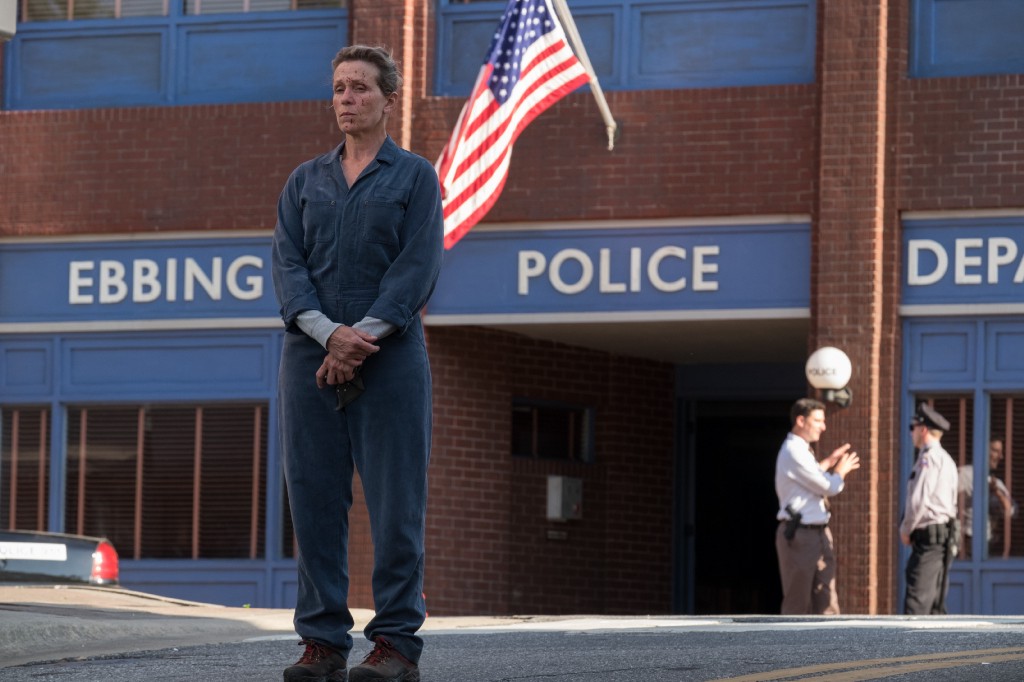
As Mildred Hayes approaches her abusive ex-husband in a crowded restaurant, the camera closes in on her fingers wrapped around the neck of the wine bottle she’s carrying. The viewer waits with apprehension and glee for Mildred to smash it over his head.

This is, after all, the woman who drilled a hole in the thumb of her dentist; the woman whose daughter was raped and murdered, a crime which seemed to generate only slight consternation on the part of the local police department; the woman who’s just learned of a fresh act of betrayal by her physically abusive ex, dating a woman half his age.

By this point in Martin McDonagh’s film Three Billboards Outside Ebbing, Missouri (2017), Mildred has already tormented a dying police chief and Molotov cocktailed the police station, inadvertently setting fire to one of its most objectionable officers. Frances McDormand’s Mildred — a role for which she recently took home a Golden Globe — is by turns fierce and broken, a woman past her sexual prime, hell-bent on stirring up unnecessary trouble for some hard-working police officers who’d much prefer to be left to their racist devices.

But instead of whacking her ex (John Hawkes) with the bottle of wine, Mildred sets it onto the table. “Be nice to her, Charlie,” she tells her former husband, his stunned expression giving form to how the audience feels. “You got that?”

Writer/director McDonagh relies heavily on Mildred’s status as a (white) woman and grieving mother to guarantee that she’ll be established as a deserving target of our empathy.

The moment is a turning point for Mildred’s character, as well as a subversion of the viewer’s expectations. Throughout most of Three Billboards, Mildred’s fury over her daughter’s unsolved murder — and her conviction that the police department has neglected its duty in advancing the case — is the point on which the narrative turns. From the first moments of the film, which also won the Golden Globe for Best Picture, Mildred’s swearing, priest-confronting, dentist-drilling character flies in the face of traditional expectations regarding femininity and motherhood. Rendered feral by her grief, Mildred directs her quest for revenge not against the unknown perpetrator but against the police department, shaming the police chief (Woody Harrelson) via a set of billboards.

Mildred may rub many of the small town’s inhabitants the wrong way, but for the film to have the emotional heft it intends, the viewer’s sympathies must remain aligned with her, no matter how irrational or violent her actions might be. Writer/director McDonagh (netting a third Golden Globe, for Best Screenplay) relies heavily on Mildred’s status as a (white) woman and grieving mother to guarantee that she’ll be established as a deserving target of our empathy. The film operates off the assumption that within Mildred’s character, and thus within her quest for retribution, is an inherent righteousness. It’s only from setting up an unquestionable sense of her integrity that McDonagh is able to use displays of stoicism, anger, and violence as opportunities for catharsis and humor, without worrying that the audience will turn against his protagonist.

The setting of Three Billboards plays an indispensable part in establishing this narrative, that of an uncouth woman who operates like a Wild West vigilante. And why shouldn’t it work? It’s a trope that’s been successfully deployed before. In its various iterations, starting with the 1968 novel by Charles Portis, True Grit tells a similar story of a grieving female protagonist bucking traditional notions of femininity in pursuit of revenge. In 1873, a century and a half before Mildred rented space on a stretch of billboards, fourteen-year-old Mattie Ross hires a hard-drinking, eye-patched U.S. Marshall to track down her father’s killer. Insisting on accompanying him in his journey through “Indian Territory,” she subverts the expectations of Marshall Rooster Cogburn and of LaBoeuf, the cowlicked Texas Ranger looking for the same guy — not to mention those of the audience. The reader expects grief and fragility from Mattie, but instead gets a girl who dismembers a man’s corpse in order to escape a pit that’s filled with rattlesnakes (a fitting and presumably unintended metaphor for the dismantling of the patriarchy).

The reader expects grief and fragility from Mattie, but instead gets a girl who dismembers a man’s corpse in order to escape a pit that’s filled with rattlesnakes.

Rather than a female role model or positive supporting character from which Mattie and Mildred might draw inspiration and strength, True Grit and Three Billboards each present two deeply flawed men, ultimately redeemed despite their questionable behavior. In both narratives the protagonist and their two male foils are allowed narrative arcs of their own, and an opportunity for redemption, while the rest of the characters, particularly those of color, remain flat and one-dimensional (see Gene Demby’s incisive Twitter thread on Three Billboards’ failures in the framing of race). True Grit, which relies on a number of cameos by such caricatures, features three leading men — Cogburn, LaBoeuf, and Mattie’s father — who fought as Confederate soldiers in the Civil War, a fact that gets treated as an irrelevant footnote in their moral track records, if not meant to serve as actual evidence of their valor.

In Three Billboards, Officer Dixon (Sam Rockwell), who admits to torturing a black man and later throws another man out a second-story window, is portrayed as being redeemed through his participation in Mildred’s revenge quest. Though the storyline has been pointed out as problematic by a number of critics, the performance nevertheless won Rockwell a Golden Globe. Police Chief Willoughby — who excuses, if not outright condones, the racist behavior of his officers — is presented in a sympathetic light, thanks in large part to the reveal of his terminal cancer, his efforts to mentor Dixon, and his photogenic family.
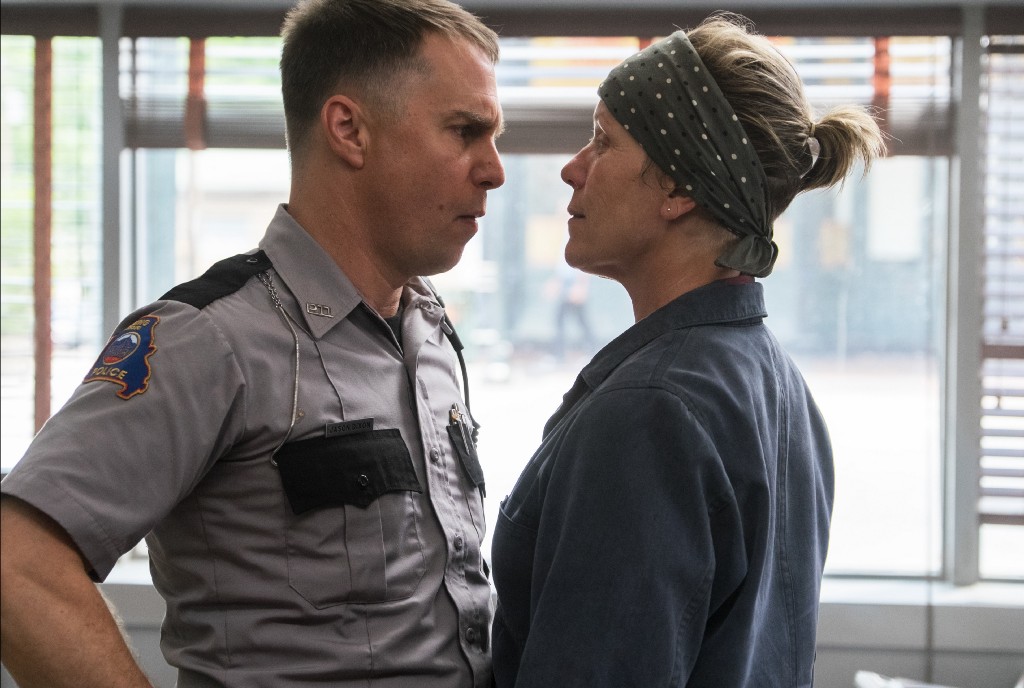
Sam Rockwell and Frances McDormand in ‘Three Billboards’ | Image courtesy of Fox Searchlight

Mildred’s violent acts are also largely devoid of consequence (at least for her; at one point a black coworker of Mildred’s is arrested, something we’re meant to believe is intended merely to rattle Mildred herself), a fact inseparable from her whiteness. In the film’s final scene, in which Mildred confesses to Dixon that she was the one who set fire to the police station (and, by extension, to him), he expresses neither surprise nor anger. Mildred reacts by laughing for the first time in the film, caught off guard by a forgiveness that echoes the forgiveness Dixon himself received earlier, from the man he previously threw out of a window.

The Good Lord Bird (TV Tie-in) by James McBride

In his National Book Award-winning novel The Good Lord Bird, James McBride utilizes some aspects of the grieving-woman-as-Wild-West-vigilante trope, though he deploys it in a more nuanced and complicated way. Set in 1856, the book follows ten-year-old Henry Shackleford, who witnesses his father’s somewhat accidental killing and afterwards is kidnapped by the infamous John Brown, the abolitionist declaring Henry free and mistaking him for a girl, as well as a good luck charm. Henry — whose name Brown thinks is Henrietta — is henceforth nicknamed Onion, after the good luck onion he eats as he struggles to adjust to his new life as the free-ish companion of the holy roller abolitionist. Primarily concerned with survival, Onion doesn’t have the luxury of wallowing in grief over his father’s death, or seeking revenge for it, but is rather swept along by the current of Brown’s quest to dismantle the “infernal institution.” Being a boy masquerading as a girl offers Onion a unique vantage from which to compare and contrast his expectations with his actual experiences, constantly questioning and unsure of his footing, with gender roles never far from his mind.

Being a boy masquerading as a girl offers Onion a unique vantage to compare his expectations with his actual experiences, with gender roles never far from his mind.

The residents of the fictional town of Ebbing, Missouri, meanwhile, never fail to center Mildred’s gender and her sexuality, or lack thereof, in their approximation of her character. While Mattie and Onion are often told that they’re too young — to join a fight, to ride with outlaws, to know what they’re talking about — Mildred is viewed by her community as failing in her dual roles as sex object and mother. She struggles to connect with her teenage son (Lucas Hedges); Chief Willoughby teases her about her ex-husband’s younger girlfriend; the physical abuse she’s experienced at the hands of her ex is called into question by multiple characters, one using the words that every woman innately knows: “it’s your word against his.” A heavy-handed flashback, the only one in which Mildred’s daughter (Kathryn Newton) appears, suggests why Mildred might feel guilt about her daughter’s murder — a guilt further compounded when she learns that her daughter had asked to live with dad shortly before her death. In stark contrast to Mildred’s deficient parenting and lack of sex appeal, the viewer is presented with Exhibit A, Chief Willoughby, who has great sex with his young attractive wife (Abbie Cornish), after spending an afternoon fishing for stuffed animals with his two adoring daughters.

In True Grit Rooster Cogburn initially dismisses Mattie on the basis of her age and her gender. He repeatedly calls Mattie “baby sister” in the 1969 film, and both “a baby” and “sister” (as well as the more imaginative “harpy in trousers”) in the Coen brothers’ 2010 remake. Yet despite his hardscrabble ways and contempt for social norms, Cogburn is never cast as a potential predator. Texas Ranger LaBoeuf, on the other hand, initially sees Mattie as both a meddling child and a sex object. “Earlier tonight I gave some thought to stealing a kiss from you,” he tells her, “though you are very young, and sick and unattractive to boot, but now I am of a mind to give you five or six good licks with my belt.” As a pickup line it belongs in a class of its own, managing to simultaneously claim, threaten, and diminish her. Mattie grudgingly wins the respect of Cogburn and LaBoeuf (“she has won her spurs, so to speak”), but only after they repeatedly try to exclude her from their expedition, and after LaBoeuf lashes Mattie with a switch for her disobedience (when she cries out to Cogburn, asking him to save her, he obliges).

Onion also comes under threat from a man seeking to take advantage of his age and perceived gender, a slave named Darg, who is forced to live in a pen outside the brothel where Onion resides, in between time spent with Brown. After Onion faints out of genuine fear (“fainted dead out right in the mud, just like I seen the white ladies do,”), he notes Darg’s solicitous reaction to his fragility, exploiting it to distract and flatter his pursuer. “It it possible for a gallant gentleman like you to get a girl a glass of water?” asks Onion. “I’m ever so shook now with gratefulness, have been jooped and jaloped by your kind protection.” At times Onion fulfills the expectations other characters already have of a young girl — that despite her tough exterior, she will at some point require the protection or assistance of men — in order to survive.
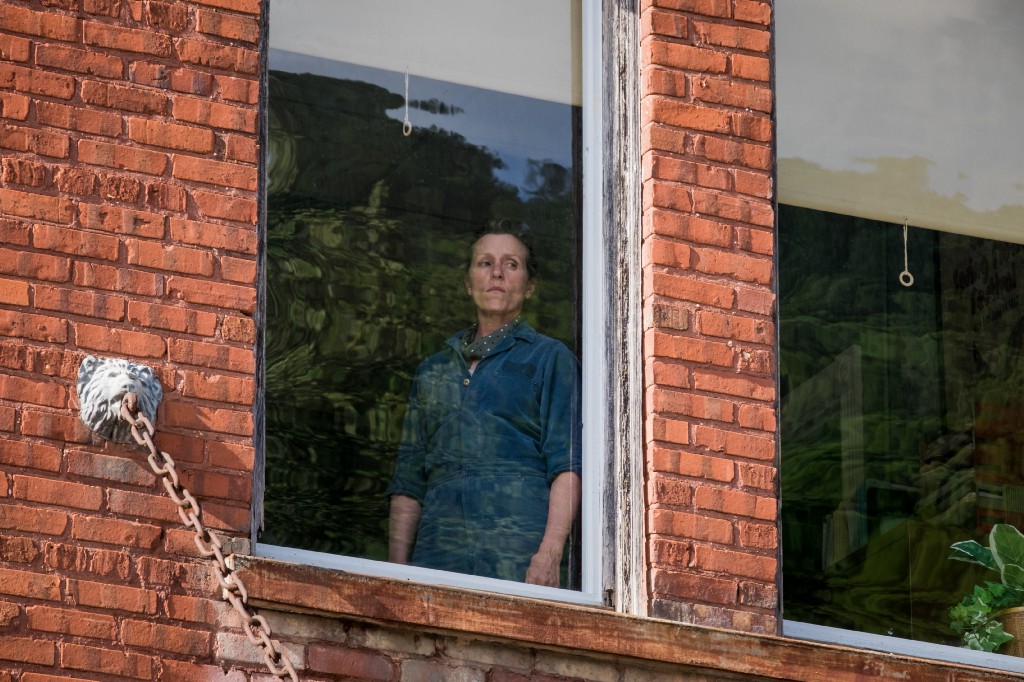
Frances McDormand in ‘Three Billboards’ | Image courtesy of Fox Searchlight

Before any of these three protagonists receive assistance from men, the author first establishes that they merit help, repeatedly reminding us of the good heart that exists under their veneer of toughness. Gender and grief and, in Mildred and Mattie’s cases, whiteness, are essential to this construction, though the authors seek to communicate their virtuousness in other ways as well. In an early scene in Three Billboards, Mildred flips over a beetle struggling on its back. Elsewhere she tells off a self-righteous priest for his hypocrisy, and calls out the police department for its racism, thus establishing in the minds of the audience that she’s a principled hard-ass — never mind that the audience hasn’t actually seen any behavior to meaningfully demonstrate those principles, only an assurance that they exist.

Mattie’s virtue is inextricably intertwined with the ways in which she rejects many — though significantly not all — of the conventions of 19th-century girlhood. She remains prim and proper at all times, Mildred’s opposite in almost every way. She disapproves of Rooster Cogburn’s drinking habits and frequently quotes the Bible: “The wicked flee when none pursueth,” Mattie reminds the reader. Her grief on the page is muted — partly because of the dialogue-heavy and interiority-light nature of Portis’s novel, and partly due to the matter-of-fact nature of her character. “What a waste!” she says of her father’s murder, almost as though she’d witnessed someone throw away a perfectly good apple. Her desire for revenge is rooted in a biblical eye-for-an-eye sensibility: “You must pay for everything in the world one way or another,” Mattie says. Never shying away from a conflict or a firefight, Mattie is single-minded in her pursuit of retribution — seeking it as the righting of a wrong — and also unflinching in the face of danger.

Before these protagonists receive assistance from men, the author first establishes that they merit help, repeatedly reminding us of the good heart that exists under their veneer of toughness.

John Brown relies upon the perception of Onion’s innocence and weakness to shame his men for their lack of bravery, calling attention to Onion’s sacrifices when they worry about being able to recruit enough troops for the raid on Harpers Ferry, noting that “this little girl [who] has risked life and limb to join us and lived out on the plains and braved battle like a man…If a little girl will do it, a man certainly will.” Onion mostly uses his disguise as a girl to avoid violence and fighting, rather than seeking it out. But because he is a recently freed slave, and (is thought to be) a young girl, even that limited involvement is read as heroic. “There were certain advantages,” Onion says of the bonnets and dresses, “like not having to lift nothing heavy, and not having to carry a pistol or rifle, and fellers admiring you for being tough as a boy, and figuring you is tired when you is not, and just general niceness in the way folks render you.” But even when Onion leans into his new identity as a girl, he retains habits that are accepted in some settings (“a damsel out west on the trail could spit, chaw tobacco, holler, grunt, and fart, and gather no more attention to herself than a bird would snatching crumbs off the ground,”) though not in polite company.

These rebellions against convention are meant to shock not only the other characters in these worlds, but also the audience. Mattie’s persistence and matter-of-fact stoicism, and Mildred’s unflinching anger, are sensationalized and occasionally played for laughs. Despite every obstacle thrown at her Mattie refuses to yield, and she follows her pair of questionable role models without complaint, sleeping on the unforgiving dirt and subsisting on the 19th-century version of hush puppies. She doesn’t hesitate to shoot her father’s murderer, Chaney, when she encounters him along a ravine. ”I didn’t think you’d do it!” he exclaims, despite the fact that he just walked her through the steps of firing the gun. Nor does Mattie despair when trapped in a pit alongside a coil of rattlesnakes nestled inside a corpse — instead, she yanks the skeleton’s arm out of its socket with the most blasé of justifications to the reader: “A terrible thing to do, you say, but you will see that I now had something to work with.”
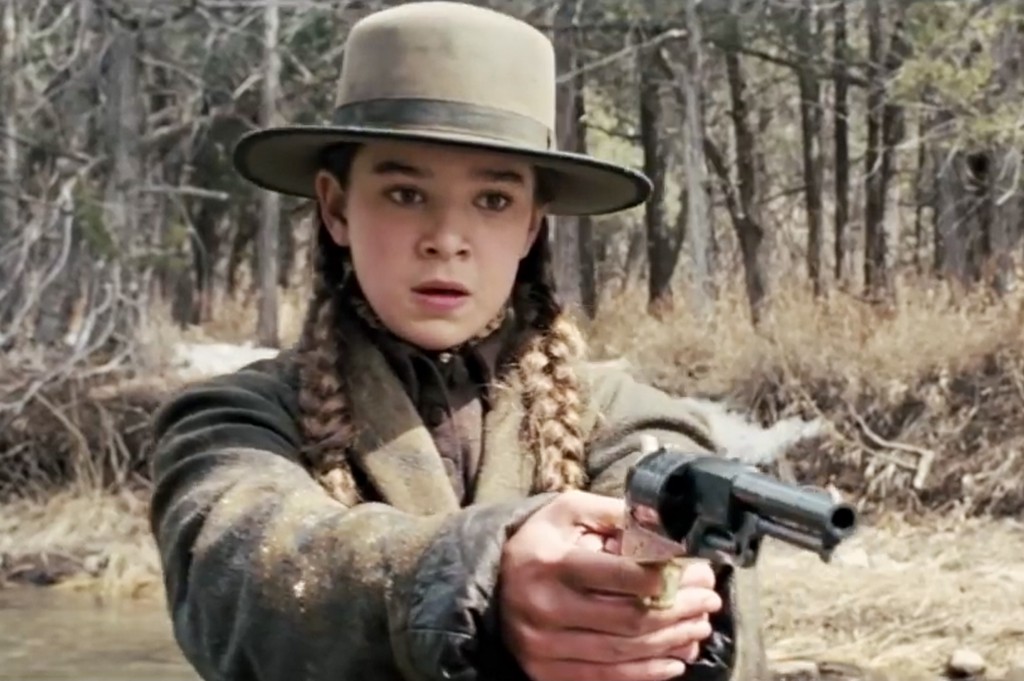
Hailee Steinfeld as Mattie Ross in ‘True Grit’ (2010)

Even more so than Mattie’s scrappiness, Mildred’s violent subversion of convention often creates opportunities for humor. In one such scene, Mildred kicks a teenage boy and girl in their crotches after they throw a soda at her car. It’s hard to imagine the scene would have elicited similar shocked laughter from the audience had an adult man done this. A moment in which Mildred’s ex-husband starts to choke her in front of their teenage son is quickly deflated and even played for laughs once ditzy girlfriend Penelope enters the house, making an inane comment. The impossibly quick pivot functions to minimize Mildred’s experience of domestic violence, and to suggest that she wasn’t in any real danger (a bizarre insinuation for the film to make, not least for how Mildred’s daughter died).

Earlier in the film Mildred’s admission, that she knew Chief Willoughby was dying of cancer and decided to rent billboards critical of him anyway, are meant to catch the audience off guard. The billboards “wouldn’t be as effective after you croak,” she tells a stunned Willoughby. Surely, he thinks, and so the audience is meant to think, Mildred couldn’t be this devoid of empathy. And she isn’t — viewers see her cry multiple times, apologize to Chief Willoughby’s widow, pour her soul out to both a terribly rendered CGI deer and to her pair of bunny slippers, and look remorseful when she realizes the racist policeman she burned to a crisp had saved her daughter’s case file from being consumed in the flames. But these moments of vulnerability are presented as notable exceptions, strategically deployed to prevent the audience’s sympathy to Mildred from wavering.

These moments of vulnerability are presented as notable exceptions, strategically deployed to prevent the audience’s sympathy to Mildred from wavering.

It’s difficult to determine what Mildred is thinking at any given moment, as the viewer isn’t granted the extensive access to her consciousness that a reader has in a first-person novel like The Good Lord Bird. True Grit is also written in first person, but Portis eschews lengthy passages of interiority and relies instead on rapid-fire dialogue, much of which makes it verbatim into the films. One could argue that what the reader is left with of Mattie’s character constitutes a façade: that her lack of deeply felt emotion is merely a mask, put on not only for the tough men around her, but for the reader as well. Portis may have felt that the emotions driving Mattie were less important than the actions she took to avenge her father’s death, and that her inherent grit — the quality she seeks out in Rooster Cogburn — needed to be unquestionable.

Mattie doesn’t kiss her father’s corpse, even when the undertaker encourages her to do so. In both films she tears up when given her father’s possessions; she doesn’t in the original novel, though she does admit to being in tears at the triple hanging at the outset of the novel, an event she insisted on witnessing (“I would see it all”). Her moments of vulnerability are few and far between; she cries out “more from anger and embarrassment than pain” when LaBoeuf beats her with a switch, and fears for her life “for the first time” towards the end of the novel, when she believes Cogburn and LaBoeuf have abandoned her with her father’s murderer.

Mildred, Mattie, and Onion are all, to some extent, strategic about when they cry and who they allow to witness it. The association of crying with feminine weakness is not only ancient and persistent, but creates a double bind. To cry is to let emotion overcome you; to not cry enough, if you’re a woman, is to be an unfeeling automaton (though any female presidential candidate could have told you that). Onion, working within the triple limitations placed on him by his race, adopted gender, and age, learns to exploit this as a survival tactic: “I was in a quandary, and my tears busted forth again, which worked out perfect, for it moved them all to my favor, and I seen right off that crying and squalling was part of the game of being a girl.”

Whether crying or not crying, prim and proper or violent and antagonistic, these three protagonists ultimately end up turning to men for their protection or assistance. Onion and Mattie do so most overtly, additionally hampered by their youth, but even Mildred falls into this pattern. Frustrated by the lack of progress in her daughter’s case, her instinct is not to try to solve it herself — however irrational or improbable that may be — but to spur the men of the police department to take action. There are no prominent female police officers in Ebbing, and the other female characters in the film largely act as plot devices (Mildred’s daughter; her coworker Denise), or foils to Mildred’s sexlessness and fierceness (Charlie’s new girlfriend, Penelope; the equally ditzy Pamela, at the office where Mildred rents out the billboards). The other two remotely significant female characters are Chief Willoughby’s wife-turned-widow, whose sex appeal and husband-worship are treated with a kind of reverence in the film, and Officer Dixon’s mother, whose gruff exterior belies an unwavering support for her highly objectionable son. In both cases these women are defined by, and exist solely in relation to, their affiliation and devotion to a husband or a son.
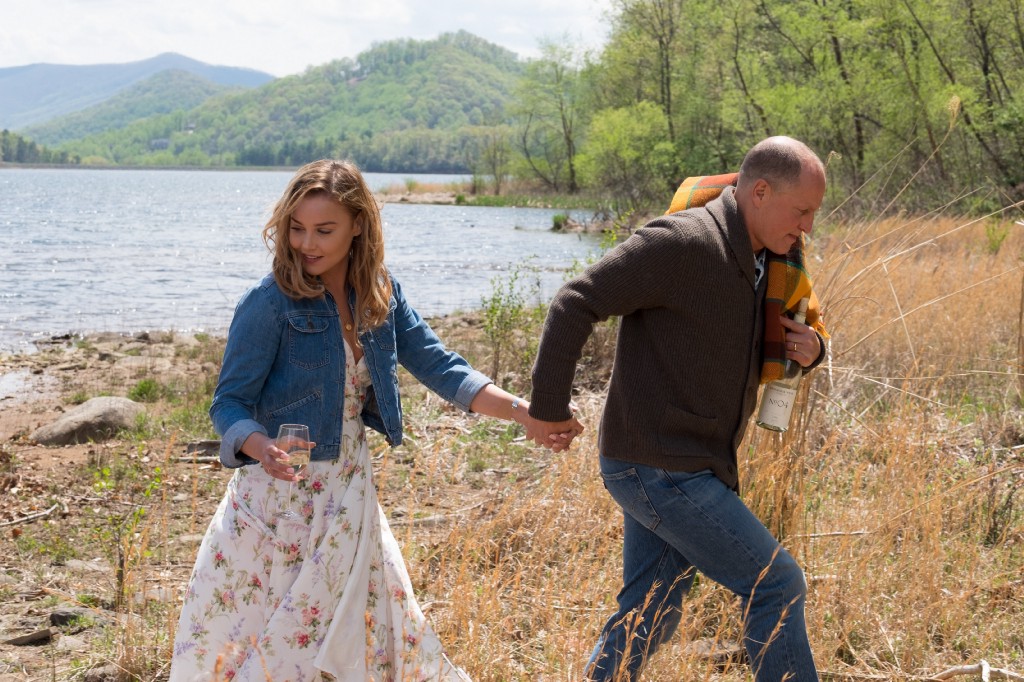
Left: Abbie Cornish and Wood Harrelson; Right: Sam Rockwell and Sandy Martin, in ‘Three Billboards’ | Images courtesy of Fox Searchlight

Other women are almost entirely absent from True Grit; only passing reference is made to Mattie’s mother, for instance. Mattie herself hardly seems interested in female role models or companionship, nor is she interested in romantic relationships. “She must have been silly,” Mattie remarks about Ophelia’s death from a broken heart in Hamlet. As an older woman her ultimate allegiances are to her church and her bank, and she rejects the societal assumption that true happiness can be derived only from belonging to another person: “They think everybody is dying to get married…I never had the time to get married but it is nobody’s business if I am married or not married. I care nothing for what they say. I could marry an ugly baboon if I wanted to and make him cashier.”

The association of crying with feminine weakness creates a double bind. To cry is to let emotion overcome you; to not cry enough, if you’re a woman, is to be an unfeeling automaton.

Of these three narratives, The Good Lord Bird is most interested in looking at other female “profiles in courage.” Through much of the novel, as Onion is swept along in the turbulent wake of John Brown, he observes and compares himself to other models of womanhood. There’s Pie, who like him places more importance on survival than revolution; there’s Sibonia and Libby, who do precisely the opposite; and then there’s Harriet Tubman, who like John Brown possesses a conviction and fortitude that leads people to follow her (Brown refers to her as “General Tubman”), at great personal cost. When Tubman exhorts the members of a crowd to “be a man” Onion thinks, “well, it hurt my heart to hear her talk that way, for I was wanting to be a man myself, but afraid of it, truth be told, ’cause I didn’t want to die.” Moments later, reflecting on the courage of Tubman and Sibonia, Onion yells out that he’s ready to join the cause, leading others to follow suit.

Early on in The Good Lord Bird, Brown refers to his quest as “exacting the Lord’s revenge,” but later disavows the idea of riding for revenge. Revenge implies an almost petty vindictiveness, a narrowing of scope rendered meaningless by the vast and systemic evil of slavery. The death of Onion’s father becomes almost irrelevant to him and to the narrative, save that it catalyzes the meeting of Onion and Brown. Despite the efforts undertaken by Portis and McDonagh to invest us in the revenge quests of their female protagonists, attempting to imbue them with sympathetic and unquestionable intentions, neither narrative presents an airtight case for revenge — not when those quests simultaneously include men whom the authors absolve for their abhorrent beliefs and actions.

Working 9 to 5 in a Building Beset by a Mystery Disease

“Paper Masks” by Jim Ruland

For Brian

The trouble started when I went to see the doctor. I wasn’t sick but I had changed jobs, relocating from one city to another, and I was told I had to see the doctor for a screening.

“A screening for what?” I asked during the question and answer session that followed the medical module of the orientation video.

We, the new hires, were assembled in a large windowless classroom in a prefabricated building. We watched the videos on monitors at our desks. After each video one of the women from Human Resources asked us if we had any questions. We had lots of questions, but the women only answered those that pertained to the video we had just seen. Some of my new colleagues asked questions just to ask them, to make their voices heard, or so it seemed to me, but I wanted to know the purpose of the screening and if it had anything to do with the paper masks that all the women from Human Resources wore. The new hires had not been given masks.

“We need to assemble a baseline,” the woman replied.

That was no kind of answer, but I didn’t want to antagonize her. The contract I’d signed was very lucrative and there was no need to jeopardize that on account of my surliness, which had gotten me in trouble in the past. The truth of the matter was I had made a mess of things at my last job. Things had started out well enough but then everyone turned against me and I was eager to start fresh.

But the idea of a doctor visit troubled me. I was raised to believe that seeing a doctor when you weren’t sick was inviting illness into the body.

Eventually, I forgot about the screening and turned my attention to the other videos, which weren’t half-bad, but I must have looked concerned because when it was time to sign out for the day one of the women — I couldn’t see her face because of the paper mask she wore, but her nametag read “Diane” — said to me, “It’s nothing to worry about. Everybody gets sick during the first month. You’ll see.”

On the second day of orientation, my concern turned to annoyance when I learned I would have to see the doctor immediately. The women from Human Resources were adamant about this: “Employment is contingent upon completion of the screening.”

Fine. During the lunch break I got in line to sign up for an appointment with one of the company doctors. The woman’s nametag read “Gayle” and like the others she wore a paper mask with the company’s logo on it.

Gayle seemed pleasant enough as she keyed in my particulars and scheduled an appointment later that afternoon with a Dr. Lee.

“He’s one of the good ones!” Gayle exclaimed before hastily adding, “They’re all good, of course. You’ll like Dr. Lee. Everyone does. Can I confirm your appointment this afternoon?”

After a moment’s hesitation, I told her she could.

“Good luck!” she said.

It didn’t occur to me until much later that this was an odd thing to say to a healthy person before a doctor visit.

After we finished orientation for the morning I took a walk and had a look at the building where I’d be working. I’d learned that it had been used as a mental health facility and then as an institution of rehabilitation — meaning it had been an insane asylum and a penitentiary. The massive structure had stood empty for over a decade before my new employer purchased the facility (that’s what everyone called it, the facility) and was having it renovated for an unknown purpose. The building was barnacled with scaffolding.

I’d been hired on to the HVAC crew. I’d intended to walk around the facility, but the work sites were walled off with plywood so I gave up and studied the entrance instead. The front of the building looked as if it hadn’t changed in a hundred years. It was made of dark stone and was anything but cheerful. The air was cold and damp and before I knew it I was walking away from the facility without having made up my mind to do so, like something was pushing me away. I wanted to turn and have one last look if only to assert my will over the place, but I didn’t look back. I hunkered down into my coat and went straight to the clinic and my appointment with Dr. Lee.

The doctor was exactly as I had imagined him. Youthful but not young. Thin but not frail. His hands were slender but you wouldn’t call them dainty. He wore a paper mask, as did everyone else in the clinic, but what little I could see of his features did not suggest a man who was lovable or warm. In fact, he struck me as quite cold.

He asked me in a perfunctory tone if I had been ill or if I was on any medication. He checked my eyes, examined my ears, and peered down my throat. Other than a few keystrokes he made on his computer at the beginning of the appointment, he didn’t take any notes.

He was a serious man, and I got the sense that this screening was as annoying to him as it was to me, an attitude that contributed to a sense of pointlessness. In fact, I’d only been in the room with him for about five minutes when he thanked me and told me we were done.

As I stood up and put my jacket on, Dr. Lee did a curious thing: he opened the bottom drawer of his desk and lifted out an enormous white cat that he cradled in his arms. I couldn’t have been more surprised if he’d pulled out a bottle of whiskey and a pack of cigarettes.

“So you will be working in the facility?” he asked.

I nodded but Dr. Lee did not return the gesture. He just stood there, stroking the cat with his slender hands. Both he and the cat wore the same watchful expression, the same look of penetrating intelligence. I got the sense that I was intruding and left the examination room.

A shuttle approached as I exited the clinic and after displaying my new employee badge I boarded the bus. Everyone but me was wearing a paper mask.

Orientation continued. There were fewer new hires in the room. The empty seats were as obvious as missing teeth.

During the lunch hour the women from Human Resources escorted a few more new hires away from their workstations. The guy next to me, a young man who pounced on every opportunity to take a smoke break and returned to the classroom smelling of tobacco and, strangely, apples, leaned over and whispered, “They refused to go see the doc.”

I nodded that I understood though in fact I did not.

“Not that it matters. Just a rubber stamp to cover their asses. If you get it, you get it,” he said with a chuckle.

Get what? I wanted to ask, but Diane announced the start of the next module and I turned my gaze toward the video screen.

At the conclusion of orientation, certificates of completion were passed around as if we’d achieved something of our own doing rather than sitting quietly while that something was done to us. The certificate that was handed to me had someone else’s name on it, but I didn’t correct the error.

The women from Human Resources were huddled at the exit, two on each side, passing out plastic-wrapped bundles to each of the new hires as they passed through the doors and on to the facility. When it was my turn I knew what was inside the package as soon as it was placed in my hands: paper masks, nested inside each other like cups. The package was surprisingly stiff and light, like a bouquet of dried flowers.

I didn’t sleep well that night. The housing block was noisier than usual. There seemed to be an unusual amount of activity in the rooms on my floor, and although the units were quiet the people passing back and forth between them were not. Eventually, I fell asleep but woke early, anxious about what the day might bring.

On the shuttle to the facility, I sat across the aisle from the man I’d gotten to know during orientation. He was eating an apple and I was relieved to have solved this minor mystery. His name was Dustin and he wasn’t wearing a paper mask, which brought both confusion and relief because I had spent several anxious moments that morning trying to decide if I should wear a mask to the facility or not, and if not should I bring them with me and if so how many? Everyone else on the shuttle wore a mask. None were as clean or as new as the three I had in my pocket.

“Those things won’t help,” Dustin shook his head and laughed. He was a man who didn’t appear to take much of anything seriously.

“They’re not required?” I asked.

Dustin snorted with the derision of the workingman who viewed all employers through the same cynical lens. There were men like Dustin at every site I’d ever worked.

“Probably gonna sell mine,” he said.

The job site was a job site. The work was work. There was plenty to do and not enough resources to do it, which was reassuring and discomfiting in equal measure. Time was a resource. I was another. This arrangement was familiar to me and the familiarity brought comfort.

My supervisor, Julio, did not wear a mask. Neither did Dustin nor Manuel, but Hector did. He was the oldest member of the four-man crew to which I’d been assigned and his mask was shockingly discolored. At first I thought it was a black bandana. I couldn’t fathom how a mask made of paper could get so dirty and still hold its shape or what would make a man want to strap something so filthy to his face. Hector’s eyes were red and watery and I avoided looking at him.

I was assigned to the HVAC harmonization unit. Our job was to bring three different heating and ventilation systems installed in three different centuries into accord. We worked in three three-hour shifts: three hours inside the facility, three hours outside, and then another three hours back in. When we were outside we were encouraged to eat or smoke or do whatever we liked as long as we were close by and available for muster. Many played cards. Some slept inside the shuttle bus and others went to the clinic. We all came to resent this long break because we got double pay inside the facility and half-pay outside of it. When I asked Julio about it he said something about limiting our exposure to the facility, but if he knew more, and I don’t think he did, he didn’t tell me.

On the second day, Dustin told me he’d sold his masks for some pills. Apparently, if someone in your crew gets sick, the whole crew has to go see the doctor. He’d gotten the pills from someone in another crew.

“Sick how?” I asked.

“Coughing. Congestion. Dizziness. They call it the crud.”

Dustin stuck out his hand: three bright red capsules rested in his palm like pomegranate seeds. Before I could ask him what they were supposed to do he popped all three into his mouth and swallowed them down. I was so stunned I didn’t know what to say. Dustin laughed the laugh of the doomed and walked away.

That afternoon I looked at the other members of my crew in a new light. I focused on Hector and his filthy mask and wondered if he was okay. At the end of the shift I took him aside and offered him one of my new masks. He took the mask with a look of wonder I’d not seen a grown man’s face since my father died in the weeds beside the house, a heart attack so fierce and strong it knocked him down and he never got back up.

A few days later Dustin showed up for work coughing up wads up flesh-colored phlegm.

“You’ve got the crud,” Julio said to Dustin. “You’re all outside today.”

“The whole day?” I asked.

“That depends on the doctor,” Julio said, not without sympathy.

We each had to return to the doctor who’d performed our initial screening. Hector went to his doctor, Manuel went to another, and Dustin and I went to see Dr. Lee. Since Dustin was the one who was sick, he went first. The nurse gave us paper masks to wear, which Dustin wasn’t too happy about.

I leaned back in the cool plastic seat and closed my eyes. I must have drifted off because I was jolted awake by a nurse whose masked face was frighteningly close. I composed myself and followed her down the hall to the examination room where I sat down in a chair not unlike the one in the lobby and felt myself succumb to a lethargy so powerful I feared I’d fall asleep again. The door opened and in walked Dr. Lee.

The name on the tag was the same, the man’s hair was black, and his features were identical to Dr. Lee’s, but he seemed much more relaxed and at ease. He greeted me warmly and shook my hand with great feeling. When he asked me “How are you adjusting to things here?” I felt he really wanted to know, that he truly cared about me. I was filled with a sudden desire to tell him that I wasn’t adjusting well, that the work was fine but the nights were lonely. I’d kept to myself so as not to repeat the mistake I’d made at my last job of quarrelling with the crew.

“So how are we feeling today?”

“I’m feeling fine,” I admitted. “I’m not the one who’s sick.”

“Probably nothing serious,” Dr. Lee said. “The new hires all get sick.”

I found myself nodding my head in agreement, as if I knew what he was saying to be true. “Is Dustin going to be okay?” I felt moved to ask.

“Don’t you worry about that,” Dr. Lee put his hand on my arm and in that moment I felt that everything would be okay. Whatever measures were being taken to protect the workers were succeeding. We were all fine.

I left the clinic feeling better than I’d felt since arriving at the facility, but as I crossed the wind-swept lot that feeling began to dissipate. Each step I took toward the facility brought me closer to the way I’d felt on my first day, and now that it was back I recognized it for what it was. That feeling was dread.

That night, there was a knock at the door to my room in the housing unit. I’d opted for the extra deduction so that I wouldn’t have to share sleeping quarters. I’m not an old man or a young man but I know things about myself and I’ve learned not to put myself in a position where those things are on view for others to criticize and judge. So when someone knocked, it caught me off guard. My first visitor.

I got up out of bed and opened the door. There was no one there. I peered out into the hall and looked up and down the corridor but it was empty. Then I looked down.

On the doormat sat a small paper bag. I opened it up and saw a meat pie, fragrant and warm. It didn’t come from the canteen or one of the machines in the lobby. It smelled delicious. Tucked in the foil was a card that read, “Thank you! H.”

At my last job, I caused one of my co-workers to be injured. Kyle was an undependable man who was liked by the others but made no effort to get along with me. Like Dustin he was preoccupied with getting high as soon as his shift was over, but that isn’t a fair comparison. While Dustin is a rebel in spirit I have never heard a complaint about his performance at the facility. Kyle seemed all right at first, but over time he revealed his true self to me. His heart was filled with contempt, which he took out on me every chance he got. We shared a room and I knew his secrets.

One morning he showed up at the site looking ragged and mean. He had spent the previous night making a spectacle of himself at the company bar trying to acquire more of the substance he could not do without, and he was surlier than usual the next day. A problem arose in the boiler room: a high-pressure leak had been detected and Kyle and I were tasked with finding it. These leaks can be dangerous things. You can’t see them or hear them and they have a way of finding you if you’re not careful. Kyle was unfamiliar with such perils. I had located the leak but when Kyle swaggered in and waved his hands in front of the pipes as if he were warming them before a fire, I left the compartment, and I didn’t come back until he started screaming.

When I returned he had his injured hand wedged into his armpit to stop the bleeding. His face was as white as new milk. He’d found the leak, and the job of collecting his fingers fell to me. No one blamed me for what happened, but I knew, and every time I heard a siren or a teakettle’s whistle, I thought of Kyle, and probably always would.

I felt if I could share this story with Dr. Lee, he’d help me move on and start over.

I dreamt I was the ocean. A wilderness of raging waves and bottomless depths. But I wasn’t the ocean: the ocean was inside me and its awful, urgent wildness wanted to get out. I lurched out of bed and made it to the bathroom just in time to spew into the toilet, a surge of savage intensity that left me breathless but not empty. I got the seat down and positioned myself as the ocean roared through my lower hemisphere.

The meat pie. Hector’s gift had spoiled. He’d poisoned me.

When the rotten stew was through with me, I slumped to the bathroom floor and passed out. When I came to Julio was lifting me to my feet, leading me back to my bed. Hector and Manuel were there, too, but not Dustin. They helped me into my jacket and shoes and then down the stairs to the shuttle that ferried us to the clinic. The sun was out and the shuttle was warm, a tube of radiant heat. I felt much better. After a little water, maybe some food, I’d be back to my old self, but Julio shook his head. He was wearing a paper mask now. They all were. My crew, the driver, the nurses. Everyone but me.

They took me to the examining room, a place that had become as familiar to me as my own room. I closed my eyes and thought of the things I would say to Dr. Lee. After examining dozens, even hundreds of people who weren’t sick, I was looking forward to giving him an actual illness, albeit a simple case of food poisoning, to which he could apply his skill, training and talent.

But when Dr. Lee entered the examining room, there was no spark of recognition in his eyes, no warmth in his greeting as he sat down at his computer.

“What seems to be the problem?” he asked without bothering to look away from the screen.

I suddenly felt very foolish as I told him what had happened. He glared at me as he asked me to explain why I thought I was suffering from food poisoning. I recounted my discovery of the meat pie on my doorstep but in my nervousness and, yes, shame, I forgot to mention that it was a gift from a friend.

Dr. Lee nodded as if to say that he understood but he obviously thought I was a fool who ate food left in the hallway of my apartment complex like some kind of scavenging animal. Speaking about my past with this man was out of the question.

I told Dr. Lee I was ready to go back to work, that my crew was counting on me, and I didn’t want to let them down. The doctor scribbled something down on a scrap of paper and handed it to me.

“Give that to the nurse,” he said as he got up from his chair and left the examining room.

I looked at the paper but couldn’t make out the words. No matter how much I studied the letters I was unable to deduce their meaning. I don’t know how long I sat there staring at the note, but a noise brought me out of my reverie. The sound, I realized, had come from the desk.

I woke up in my quarters, drenched in sweat. I gathered some time had passed. Hector and Manuel stood at my bedside, looking down at me. Although they looked sad, I was happy to see them and said as much, but they didn’t seem to hear me. Something was muffling my words, interfering with my intentions.

“He looks pretty bad,” I thought I heard Hector say, but it was hard to tell who was speaking because of the masks.

“We better tell Julio,” Manuel said.

They thought I was still sick! I assured them that Hector’s meat pie had done a number on me — no hard feelings Hector — but while it was true I felt a little dizzy my illness was over and I was well on my way to recovery.

“Screw Julio,” Manuel said. “He needs the doctor.”

“I think you’re right,” Hector agreed.

I made an effort to sit up in bed a little so that my friends could hear me. It was so good to see them. I insisted I had it in me to be a better person, that things would be different now. Hello Hector! Hello Manuel! I see you behind your masks. But where was Dustin?

“Calm down,” Hector shouted through the mask I’d given him. “Stop kicking.”

“Shit, I think he knows,” Manuel said.

“How would he know?” Hector asked.

“He definitely said ‘Dustin.’”

I asked them why they were wearing the paper masks. Didn’t they know the masks were a scam? They were nothing more than props to advertise one’s gullibility. I spent a long time trying to convince Hector and Manuel that the masks gave us something to fixate on while our bodies were inundated with mysterious toxins inside the facility, hour after hour, day after day, and there was nothing a flimsy little paper mask could do to stop them from invading our bodies. But they wouldn’t listen to me. It was exhausting explaining this to them over and over again, and I became very tired.

When I came to Dr. Lee was sitting on the edge of my bed, stroking his big white cat. He smiled down at me with his eyes and told me that everything was going to be okay. I thanked him, but I was so overwhelmed I could barely get the words out. He shushed me and said I was in the final stage of my awakening, which confused me, as I had just awoken, but the curtains were pulled tight around my bed and I had no idea where they had come from or where I was or even if it was night or day. The cat meowed and the sound reached my ears as if from a great distance. There was something wrong with its face. I realized the cat was wearing a feline-sized paper mask. Dr. Lee told me my contract had been terminated and I no longer had to worry about going back to work inside that terrible place. I told him I wanted to stay but my voice was muffled as if there was something between us that words could not penetrate. Dr. Lee bent over me, slid an elastic band around my skull, and lowered the mask onto my face.

Reading Horror Novels Helped Me Deal with OCD

When I was growing up, my mother’s worrying was a bit of a shared joke between the rest of the family. If, in the car on the way to the store, my mother turned and asked my father if he had turned the stove off, he would sigh and say, “Of course, dear,” before turning and smiling conspiratorially at me in the backseat. If my brother used a chair as a stepstool, I would joke that I was going to tell mom.

As I got older, her worrying got worse, and it stopped being funny. If she thought the stove was left on, we might turn around; if she caught us using a chair as a stepstool, she would shriek as though she had found us juggling knives. Her worrying was turning into fear, and her fear into panic. It made dealing with her more and more difficult. Still, she remained undiagnosed until I was nearly 18.

I clung to established routines and rituals out of fear that to do otherwise was to invite terrible consequences.

My own anxiety didn’t take form until my mid-twenties. As I got older, I started to see more and more of my mom in my thoughts and behavior. It became normal to triple-check the stove, stave off panic attacks at hibachi restaurants, and avoid crowds. I clung to established routines and rituals out of fear that to do otherwise was to invite terrible consequences.

In January 2015, I fought past my fear of change and started my first semester in graduate school as an MLS candidate. It was a big step. It up-ended my life in many ways, and — as happened throughout my four years of undergrad almost a decade earlier — I couldn’t help but feel overwhelmed by both the upheaval of my routine, and the pressure to succeed.

By May 2015, my anxiety had spiraled out of control, manifesting as an uncontrollable fixation on bugs. Bed bugs, carpet beetles, termites, lice — in my mind, I was surrounded by insects. I spent my nights crawling on all fours with a lighted magnifying glass, examining carpet fibers and every nook and cranny of my bedroom. I poured over Internet forums and websites for information about the identification and eradication of my imagined enemies. I couldn’t sleep because I imagined my skin crawling with bugs. During the day, I was a zombie — exhausted, consumed with my fears, and sure that everybody who looked at me could sense that I was contaminated, and that I was a failure.

By July, I had been diagnosed and begun treatment for a combination of General Anxiety Disorder, Major Depressive Disorder, and Obsessive Compulsive Disorder. My prescribed medications quickly tempered my condition, and with the combined help of these medications and cognitive behavioral therapy, I’ve been steadily recovering since.

But this essay isn’t really about the diagnosis of my illness, nor its treatment.

It’s about books.

In the interminable weeks between my initial spiral and the medications kicking in, reading saved me. Though I’ve always used books to help me deal with negative emotions, I had used them to escape into worlds that felt better and brighter than my own. They were fantasies of a life full of agency and joy, both of which seemed to elude me.

But at the peak of my anxiety and obsession, I didn’t reach for those fantasies. They would only make my life seem worse by comparison. I needed a different escape. And I found it in a genre I’d had little interest in through most of my life — horror.

As someone who was terrified of the dark till my mid-twenties, and who still sleeps with the TV on most nights, horror was something I’d avoided. But as my anxiety grew, it became a safe haven. It gave me something else — something besides my own obsessions — to channel my fear into. The generalized fear of an anxiety disorder creates a fight-or-flight response to an intangible threat, a threat that can’t be fought nor fled from. Reading horror allowed me to take all that adrenaline and pour it into something outside of myself, something that I could see resolved at the end of the story. It gave me the gift of catharsis.

It also gave me the gift of perspective. The characters in horror stories suffered from circumstances far worse than my own. I could tell myself that no matter how anxious I felt — or even if my anxieties proved to be true — it still wasn’t as bad as contracting a deadly virus, getting lost in a hostile wilderness, or having to choose between my own life and that of someone I love.

It allowed me to take all that adrenaline and pour it into something that I could see resolved at the end of the story.

That particular story, “Snow,” by Dale Bailey, was published in the June 2015 issue of the horror e-zine Nightmare. Nightmare became my core reading material during that period of crisis. I devoured stories of ghosts, monsters, and existential dread. The terror they inspired was more manageable than my own anxieties. The more nihilistic a story was, the more comforting I found it — after all, what were my own meaningless problems against the meaninglessness of human existence? If nothing really mattered, then what use was it to cling to my fears of failure and worthlessness?

With medication and therapy, my obsessive-compulsive behavior faded, and my anxiety became more controllable. But I still turn to horror. As I approached graduation, the stress once again triggered my anxiety. In addition to the pressure of completing large final projects in each of my classes, I felt unable to rise to the challenge of taking my next steps into adulthood, of beginning a career and all the new responsibilities that entailed — especially since I hoped to relocate, adding an extra layer of uncertainty to a future I was already apprehensive about. I combated these fears with book after book. I shivered through the familial terror of A Head Full of Ghosts and Disappearance at Devil’s Rock by Paul Tremblay, comforted that as a child-free couple, my husband and I would never have to endure the pain of a child lost, to threats supernatural or otherwise. I reveled in the cosmic horror of M.R. Carey’s The Girl With All the Gifts, consoled by how small and unimportant it made life feel in the grand scheme of things. And I confronted true evil in Hex by Thomas Olde Heuvelt, assuaged that, if nothing else, I had escaped the existential horror of never being able to leave your home town.

Using books to cope with mental illness is nothing new. Officially, bibliotherapy has been around since the first half of the 20th century, but the healing power of books has been recognized for millennia; according to historians, Ramses II had the phrase “healing-place of the soul” inscribed over the entrance to the library in his tomb complex at Thebes. In modern times, reading has been used (often in conjunction with other treatments) to help sufferers of depression, addiction, PTSD, and dementia. Although much of the modern practice of bibliotherapy revolves around the use of non-fiction books read in a cognitive behavioral therapy setting, the therapeutic usefulness of fiction (also known as creative or affective bibliotherapy) has also been demonstrated. A recent study published in School Psychology International found that children in foster care who had experienced significant parental absence showed less signs of anxiety, aggression, and violent tendencies when exposed to superhero stories in a group bibliotherapy setting than those who weren’t; the bibliotherapy group also showed an increase in hopes and goals for the future. Another study, published in 2016 by the journal Sexual & Relationship Therapy, compared the effects of self-help books versus erotic fiction to treat low sexual desire in women; it found that both types of reading increased sexual desire and pleasure.

Although affective bibliotherapy has been shown to be useful, the research on what works, how it works, and why it works is still limited. Many believe that identification is key, and that the story must have clear parallels to the reader’s own life; certainly, those who feel confused or isolated due to their circumstances may find clarity in reading about a character facing the same circumstances. For example, a teen grappling with their sexuality might find insight in reading how the gay teenage protagonist of Simon vs. the Homo Sapiens Agenda deals with coming out. Similarly, a reader adapting to a disability may feel empowered by reading a book where a character saves the day despite or even because of their disability, such as Millie, a double-amputee with borderline personality disorder who is tasked with stopping an inter-realm war in Borderline, the first book in the contemporary fantasy series The Arcadia Project. Others attribute the healing power of books to the nature of the story itself, rather than its characters. Readers can distract themselves from their problems by engaging their minds in an exciting or intellectually stimulating book that redirects their mental energy, or find tranquility in the calming beauty of poetry and lyrical prose.

Although people may differ wildly in their approaches to bibliotherapy, it’s undoubtedly true that reading is good for your mental health. Not only has the act of reading itself been proven to relieve stress in as little as six minutes, but it has also been shown that reading fiction improves brain function by strengthening neural connectivity, and increases empathy by engaging the parts of the brain responsible for language, sensations, and movement, enhancing embodied cognition, or the ability to feel an experience without actually living it. It has even been suggested to improve your sleep. So while horror might stave off everyone’s fears, you’re likely to improve your mental health in some way if you read . Regardless of which method works best for you, Ramses II had it right: books are definitely good for the soul.

There’s a Harlem Renaissance Resurgence Happening Today

The Harlem Renaissance is not the only period when we’ve heard from prolific Black writers (there was also the Black Arts Movement of the mid-sixties to seventies, as well as the ongoing contributions to the Diaspora internationally), but it’s certainly one of the most pivotal. From the 1920s to the mid-1930s (give or take), Black artists centered in Harlem, New York produced an enduring library of Black experiences and critiques of society. And it seems that this year, the publishing world aims to remind readers about the work and the energy of this prolific period, through republication as well as rejuvenation of spaces.

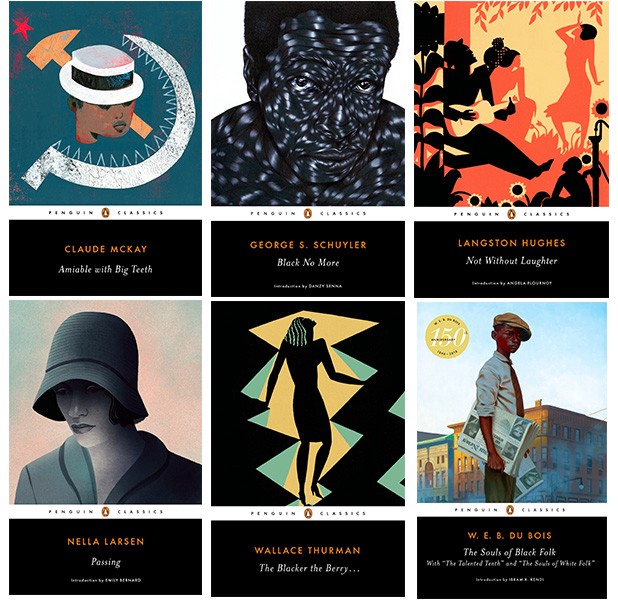
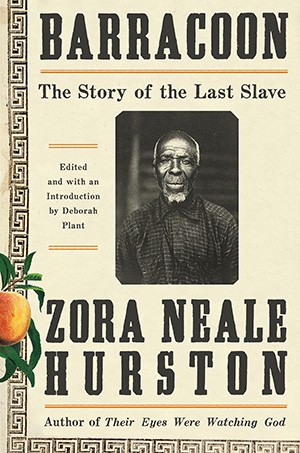
In honor of Black History Month, Penguin Classics has reissued several Harlem Renaissance titles with new covers and introductions, including The Souls of Black Folk by W.E.B. Du Bois on the 150th anniversary of his birth (Restless Books Classics series also published Du Bois’ seminary tome with illustrations last year); Langston Hughes’ debut novel Not Without Laughter; Nella Larsen’s Passing; Wallace Thurman’s The Blacker the Berry…; and George S. Schuyler’s Black No More. This year we’ll also be treated to the unveiling of books that hadn’t gotten their chance in Claude McKay’s Amiable with Big Teeth (also from Penguin Classics) and Zora Neale Hurston’s Barracoon: The Story of the Last “Black Cargo” from Amistad.

The new introductions to these titles mention the circumstances under which these works were created, and highlight the authors’ audacity in capturing a truth not yet seen in the literary world. Novels by Hughes, Larsen, Schuyler, McKay, and Thurman were open about issues of intraracial strife, communism, colorism, socioeconomic status, and the stakes of upward mobility. (Many of these writers were already known for exploring these topics in their commentary and poetry.) The pervasive issues of skin color, or really the reaction and perceptions of our hues, is never lost in these pages. Black No More is noted as one of the first Black speculative novels, its own Metamorphosis, in the main character of Max Disher jumping at the chance to shed his Black skin for white. Passing remains one of the most referenced novels depicting the lengths someone would go to gain wealth and perceived comfort by passing in the white world. Thurman’s The Blacker the Berry… also dissects issues of colorism, but reflects on them from inside the Black community, where dark skin can be seen as a liability. Each author’s mode of storytelling speaks to the problematic constructs of dominant powers and the psychology as well as politics this inflicts on everyone, those at war with the methodology as well as with themselves. These stories have never lost relevance or potency. Even today, when these stories are almost 100 years old, we need them; they allow us to reflect on how these societal pressures influenced those who now influence us.

The reissued nonfiction speaks to the personal losses felt by the subjects and authors of not only lost lives but lost dignities. Even though Souls of Black Folk was published in 1903, Du Bois remains a key figure of the Harlem Renaissance (he was also a co-founder of the NAACP). Souls of Black Folk, with a new introduction by National Book Award winner Dr. Ibram X. Kendi, declares the double consciousness of Black folks — wanting to be seen but also wanting to be accepted. Du Bois interrogates the projected bestiality of Black folks via the white consciousness at a time when slavery was not exactly a far off memory.

“The African slave trade is the most dramatic chapter in the story of human existence,” writes Zora Neale Hurston. In Barracoon readers will be introduced to the oral history of Cudjoe Lewis (neé Kossula), who at the time Hurston met with him in 1927 was the last living African to remember being part of the African slave trade. At the time publishers didn’t want to take this book on unless Hurston removed the dialect in Cudjoe’s natural voice. She refused. Barracoon would not see the light of day for almost 90 years until Amistad Books’ editorial director Tracy Sherrod — HarperCollins has been a long-time publisher of Hurston’s — with Dr. Deborah G. Plant felt a responsibility to bring Hurston’s long shelved work into the world as she intended.

In the “Affica soil,” Cudjoe speaks of pretty girls in the marketplace with gold bracelets from wrist to elbow. He talks about growing with the rainy season, the sayings of his kin, and an established justice system in his community. The life he lead was not so different from any we could imagine to this day, yet the violent nature of being wrenched from it hits him, and us, hard. A raid in the middle of the night, orchestrated by his captors and other Africans in Dahomey who made money off of the slave trade partnership with white men, would take Cudjoe and others from the only place they ever knew. To bring this story to light is a necessity to further document our history, America’s history.

Claude McKay’s novel Amiable with Big Teeth isn’t so much an opus as an open commentary. Deemed “melodramatic” by his publisher and vehemently rejected, McKay’s manuscript would be put to a literary death only to be found in 2009 in the Samuel Roth archives by the researchers who would write the introduction. Big Teeth paints Black intelligentsia as radical saviors during the barely referenced Italo-Ethiopian war. In a book that is political and speaks out against dictatorship, McKay creates a cast of characters based on true figures, as well as a method of seeing an end to a dominant force that affected Black people at the time. The toppling of a dictatorship can mirror much of what we see today. In this case the heroes don’t wield swords but intelligence, words, and strategy to destroy dangerous forces.

I’m a big believer in needing to know where we’ve been to see where we’re going. To be an artist at all means familiarity with the classics and the contributions of those who came before us. In the introduction to Not Without Laughter, National Book Award finalist Angela Flournoy spoke about how we still need the work of Hughes and other Harlem Renaissance writers to showcase a range of Black communities, rather than shoehorning them into a one-size-fits-all designation. “I don’t think that the only time we should write about poor Black people is when we’re kind of moralizing them in some kind way or we’re trying to make a case for them to someone else of a different class or different race rather than exploring their lives with all the complexity they possess,” she says. Hughes, especially in Not Without Laughter, is clearly working under these same beliefs of exploration. Yet Langston Hughes’ and others’ work never ignored the issues Black people faced and continue to face, particularly racism during segregation, Flournoy notes: “[It] doesn’t mean that racism doesn’t rear its head or that he doesn’t have an ax to grind. But it means that the clear task of all that is to make [his characters] fully human than to make a case for them to somebody else.”

The work of Hurston, Hughes, McKay, and other Harlem Renaissance luminaries like Dorothy West, Countee Cullen, Alice Dunbar Nelson, Alain Locke, and Angelina Weld Grimké encapsulate a time when Black thought ran rampant not only in books but in plays, poetry, visual/performance arts, speeches, and much reporting through Black-run periodicals like the Amsterdam News, The Chicago Defender, and The Crisis. They represent not so much the elite but the proactive, those who sought to bust through closed doors and open the floodgates of how Blackness isn’t solitary, nor is it about comforting or kowtowing to whiteness.

The timing of publishing McKay and Hurston’s previously unseen books may not have been planned to align with our current political turmoil; these works had been discovered years prior. Yet it’s evident a need was seen to provide a home to work that hadn’t been allowed to exist for the masses along with the insistence to recirculate material that showcases Black identity in all its iterations. Perhaps the reissue of these books can be considered a new mini-Renaissance, in the sense of a rebirth — not only of the well-known titles like Passing or The Souls of Black Folk, but also of stories like Barracoon that never saw the light of day, or the work of those we lost too soon like Wallace Thurman who died at the age of 32 of tuberculosis. For many of us these titles may already be staples on our personal syllabi. But the reinvestment of these pages to bring these stories to a contemporary audience (two introductions mention parallels of these books with Kendrick Lamar and Beyoncé) shows an understanding that our classics, our American classics, hold relevance in all times not just in our history but in our exploration of the future.

Now You Can Snoop in Virginia Woolf’s Personal Photo Albums

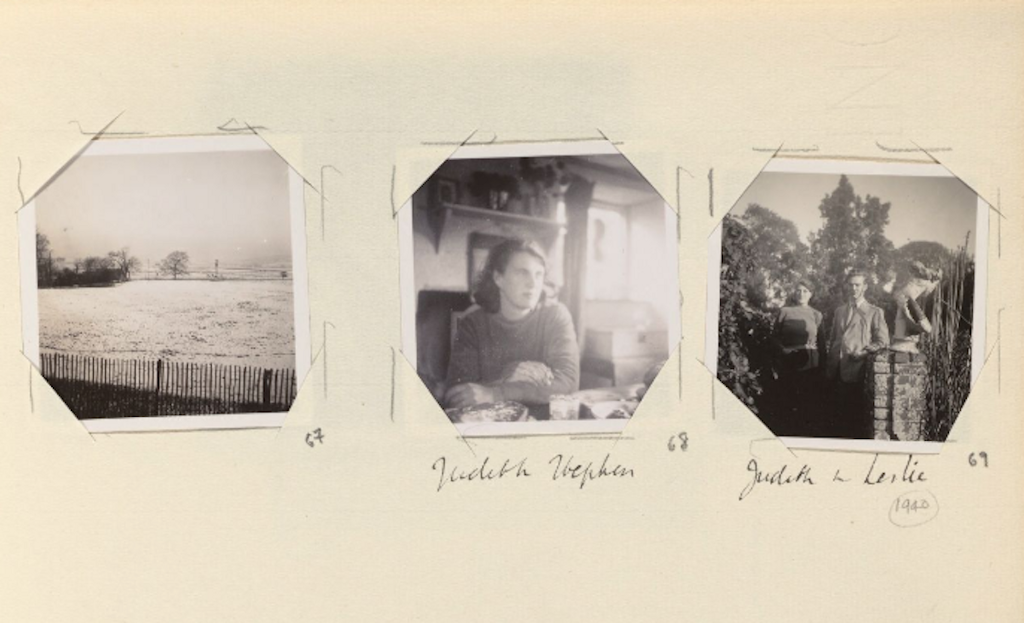
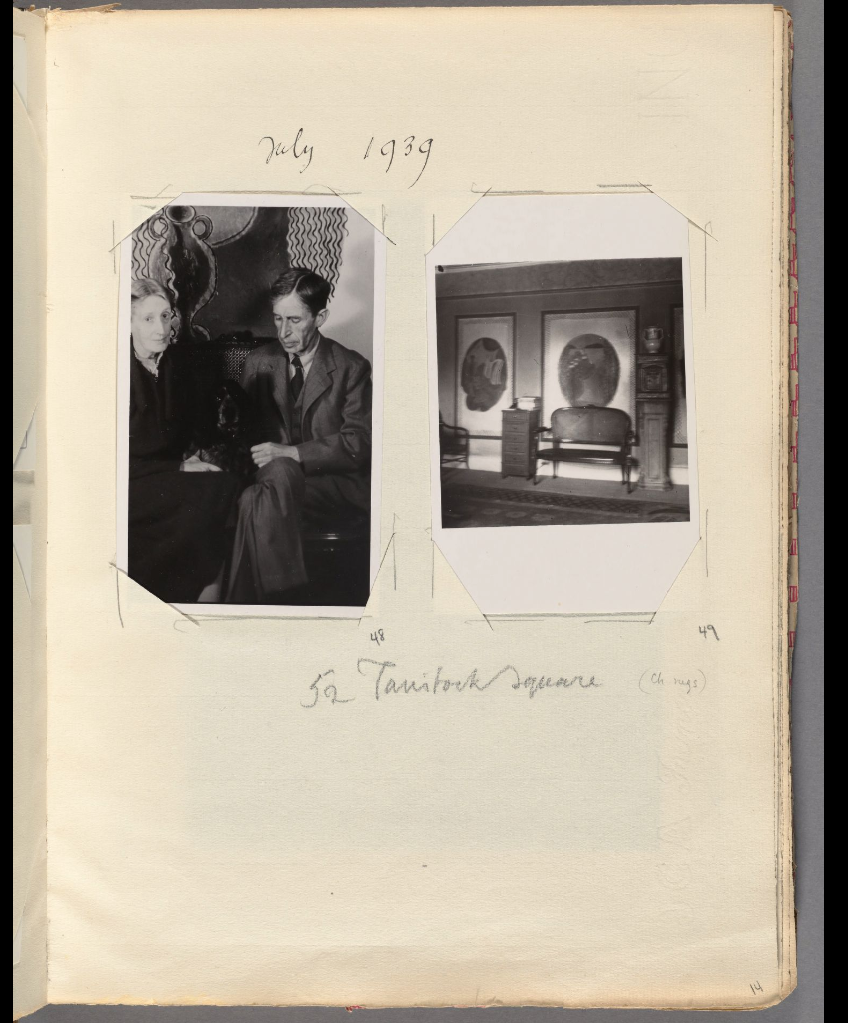
Virginia Woolf was a scrapbooker. At the age of fifteen, Woolf developed a penchant for photography and started arranging her work in photo albums. The albums are housed at the Harvard Library and now, as reported by Artnet, the library has graciously scanned one photo album from 1939 and made it available for our free consumption on their website.

The photo album is the fourth in the “Monk’s House” series. The six albums in the series give us glimpses into Virginia Woolf’s life with Leonard Woolf at their home in East Sussex, England, where Woolf lived intermittently from 1919 until her death in 1941. The album series ends in 1947, suggesting that Leonard Woolf continued to collect and arrange the photos after Virginia Woolf’s death.

Photo courtesy of Harvard Library

In To the Lighthouse, Virginia Woolf wrote that the meaning of life might not come in one “great revelation” but instead, “there were little daily miracles, illuminations, matches struck unexpectedly in the dark; here was one.” Here, we could say, is another one. The album is a collection of little things like pets and treetops and newspaper clippings that spark and illuminate a little more of Virginia Woolf’s life for us.

Looking at my favorite page in the 1939 album feels a little like reading a Woolf novel. At the top of the page, there’s a dog curled up in a well-worn chair, then a picture of two men grinning — one on solid ground and the other looking up from the bowels of a hole that looks a lot like a grave, and then finally a picture of a bleak, snow-covered landscape. No captions. There’s a novel waiting to be born in those three images, alone. The rest of the album appears to be loosely chronological, filled with shots of famous friends like W.B. Yeats, E.M. Forster, and more Bloomsbury group celebs, pictures from visits to friends’ homes and snaps from the Woolfs’ vacation to France.

Photo courtesy of Harvard Library

You can do your own literary celebrity gawking through some of the photos we’ve collected here, and head to the Harvard Library website for more gems.

Photo courtesy of Harvard Library

Can Novels Change Our Attitudes About Death?

Not long after they die, even the best novelists start to stink.

Maybe that explains why we have so few great stories about what happens after we die. The novelistic tradition is rich with deathbed scenes and moving explorations of grief, but serious fiction about mortality inevitably stops at death’s door. Remarking this pattern in 1927, E. M. Forster blamed novelists’ hesitation to write about the dead on the dead themselves. “[D]eath is coming,” he admits in his influential treatise Aspects of the Novel, but we cannot write about it in any convincing way because — as the saying goes — dead men tell no tales. “Our final experience, like our first, is conjectural,” he concludes. “We move between two darknesses.”

Forster’s reasoning seems sound enough. If we want to move from a pathologically death-phobic culture to a more well-adjusted one, however, we need to rethink our cultural tradition of giving death the silent treatment. That is the sentiment underlying the death-positive movement, a loose collective of artists, writers, academics, and funeral industry professionals agitating for more open conversations about dying. As the mortician and author Caitlin Doughty explains in her bestselling memoir Smoke Gets in Your Eyes, “A culture that denies death is a barrier to achieving a good death.”

At the very minimum, our culture of death denial creates a population unprepared for the inevitability of death, one in which every dying individual burdens family and friends with painful healthcare decisions, legal battles, and property disputes that could have been avoided with a little forethought. At its worst, death denial promotes a youth- and health-obsessed society whose inability to address death fuels overwhelming feelings of anxiety, depression, and powerlessness in the face of illness and age.

As Doughty — perhaps the most prominent figure of the death-positive movement — admits at the end of her memoir, “Overcoming our fears and wild misconceptions about death will be no small task.” She looks to the medieval spiritual guidebooks known as Ars Moriendi (Latin for “The Art of Dying”) for inspiration. We need to re-teach ourselves how to die, she argues — a process that begins with an open admission of our thoughts, fears, and beliefs about death. Treating death as a hushed affair will only make matters worse. “Let us instead reclaim our mortality,” she concludes, “writing our own Ars Moriendi for the modern world with bold, fearless strokes.”

We need to re-teach ourselves how to die—a process that begins with an open admission of our thoughts, fears, and beliefs about death.

The spate of books on death and dying published in the past two years suggests that many writers have taken Doughty’s words to heart. These works run the gamut from a grisly history of Victorian surgery to a study of American hauntings, and they include the lavishly illustrated essay collection Death: A Graveside Companion and Doughty’s own From Here to Eternity, a comparative analysis of death practices from around the world. For a group interested in the art of dying, however, the death-positive movement is strikingly uninterested in art of the literary variety: in its concentration on turning a spotlight on the facts of death, the death-positive movement has not yet explored the relationship between death and fiction.

If we want to reclaim the good death as part of the good life, we need to consider how we incorporate death in the stories we tell about ourselves. When we tacitly treat death as The End of every individual’s story, we only increase a collective sense of death’s unspeakability. What lies beyond the grave seems unthinkable in part because it remains unimaginable. Yet if Forster is right, it seems we are at an impasse: given the silence of the tomb, how can storytellers represent death as something other than a final stop?

If we want to reclaim the good death as part of the good life, we need to consider how we incorporate death in the stories we tell about ourselves.

Two award-winning attempts at writing the afterlife — one from 1999 and one from 2017 — offer two different approaches to answering the question. Taken together, Being Dead and Lincoln in the Bardo show that it is possible to tell smart, powerful stories that represent death as something other than a stunningly final silence. They also show that the precise forms such stories take have profound implications for the ways we value life, and the ways we understand the place of death within it.

The very title of Jim Crace’s Being Dead promises tantalizing access to that posthumous experience that Forster believed to be off limits. Yet there is a bit of a bait-and-switch here: Crace’s novel leaves little room for speculative adventures into otherworldly existence. Being Dead is a postmortem story in an almost clinical sense. It tells the love story of Joseph and Celice, two young scientists who get married, raise a daughter, and settle into late life together. But if this is love, it is love under the knife: Crace’s scalpel-sharp realism cuts to the heart of desire with a kind of ruthless detachment unmatched since Flaubert.

The result is less the touching portrait of a couple than an autopsy of their relationship — and that is only appropriate, because the novel opens with their murder. Joseph and Celice die of a kind of misplaced nostalgia. They have unnecessarily returned, in late middle age, to the sand dunes where they first conducted research together and gave in to youthful passion. The explicit purpose of their trip is to visit the dunes one last time before the place is destroyed by encroaching development. But the couple’s desire, here and elsewhere, is divided: Celice wants to make peace with the death of a friend that occurred exactly as she and Joseph first fell for each other, while Joseph only wants to reenact their tryst on the dunes.

Joseph’s “plan” is utterly transparent to Celice, who indulges him out of pity rather than affection. Their actual encounter ends in embarrassment; Joseph finishes before it starts. They resolve to try again after lunch but never get that chance. A furious stranger stumbles across the defenseless, naked pair as they sit together, and he bashes their skulls in with a rock.

Because the couple has already died as the story begins, the novel proceeds by alternating backward glances with real-time narration, interspersing Joseph and Cecile’s love story with the lurid details of their bodily decomposition. The result is touching and gruesome by turns, but not necessarily in the ways you would expect: the descriptions of decay offer welcome relief from the cringeworthy details of the awkward, lopsided desires that brought the couple together. The novel seems, in fact, to struggle with its own inevitable slide toward the romanticization of decay. “Do not be fooled,” Crace admonishes his reader early on:

There was no beauty for them in the dunes, no painterly tranquility in death framed by the sky, the ocean and the land, that pious trinity in which their two bodies, supine, prone, were posed as lifeless waxworks of themselves, sweetly unperturbed and ruffled only by the wind. This was an ugly scene. They had been shamed. They were undignified.

Yet Crace lingers almost lovingly over Joseph and Celice’s bodily transformations as they lie exposed among the seagrass. While their love life is painfully prosaic, the passages that describe their undiscovered bodies flirt with a far more idealistic vision of human attachment:

But the rain, the wind, the shooting stars, the maggots and the shame had not succeeded yet in blowing them away or bringing to an end their days of grace. There’d been no thunderclap so far. His hand was touching her. The flesh on flesh. The fingertip across the tendon strings. He still held on. She still was held.

Being Dead manages to recast our bodily afterlives as something not only speakable, but significant. It does so, however, by valorizing the unconscious peace of our material remains, casting that as preferable to the despicable fumblings of actual life. The intimacy of Joseph and Celice is only unproblematic when they have become unfeeling matter, generously supplying the landscape with the nutrients sloughing off their unprotected flesh. If Being Dead achieves an unusually death-positive outlook, it achieves it by becoming decidedly life-negative.

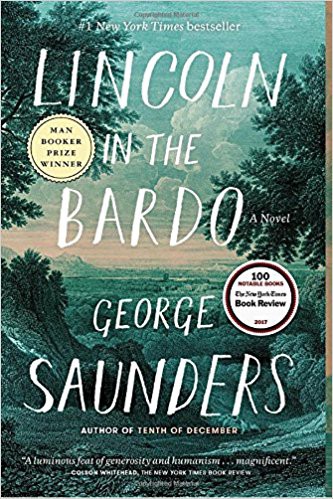
George Saunders’s more recent exploration of experience after death takes a radically different approach. Whereas Being Dead aligns itself with a kind of scientific detachment, Saunders’s Lincoln in the Bardo proves exuberantly grotesque from the outset. The story opens with the middle-aged Hans Vollman describing his gradual, tender seduction of his young wife. Alas, on the very day she promises to give herself to him, a loose beam falls and crushes his skull. Unable to accept the fact of his permanently unconsummated marriage, Vollman haunts the cemetery where he is buried, joining a number of other lingering spirits who convince themselves they are merely sick and will soon recover.

Saunders does not deal with decomposition in the straightforward way favored by Crace. His dead characters experience a progressive material instability instead, as they undergo bodily embarrassments that range from the familiar to the fantastic. Hans’s earthly fixations, for example, make him appear to other spirits with an oversized and irrepressible erection. He repeatedly bumbles into discussion of his physical shortcomings, from the baldness and lameness that plagued him in life to the mortifying fact that he pooped his pants after death. His fellow revenants suffer similar corporeal distortions: Roger Bevins III, a Whitmanian poet who killed himself in a fit of passion, fights to suppress the shapeshifting, hungry bundles of hands and eyes that sprout from his body in futile attempts to grasp after the experiences he denied himself by taking his own life.

If death positivity means staring unpleasant facts in the face, Being Dead would seem to be a more death-positive novel than Lincoln in the Bardo. Crace treats both the issue of decomposition and the unconsciousness of the dead in frank terms, whereas Saunders passes over putrefaction to depict a world where the dead might yet live — at least temporarily. But reading the texts together suggests that death positivity cannot emerge from objective attention to facts alone. In fact, Lincoln in the Bardo reveals that the fascination with prurient facts that underpins Being Dead emerges from a kind of puritanical fear of our fleshly existence, a fear inseparable from the novel’s reliance on an omniscient narrator.

We have become comfortable with the idea that a story can be told by the all-seeing eye of a disembodied voice. Strictly speaking, however, this supposedly objective “view from nowhere” is an absurd fiction — at least as impractical and unrealistic as any postmortem point of view. The impracticality of objective narration is especially apparent in Being Dead because the novel is so preoccupied with death, the very moment supposed to divide subjective from objective existence.

10 Death-Obsessed Books to Satisfy Your Inner Goth

By viewing the bodily histories of Joseph and Celice from the outside, the narrator of Being Dead does them — and us — a disservice. The novel only pretends to a fearlessly honest account of human bodies, when its perspective is essentially fearful. Rather than acknowledging the embodied experience the author shares with his subject matter, it retreats into the sham detachment of an etherealized narrator, an imaginary voice pretending to possess unearthly objectivity.

The result is an impossibly disembodied account of what bodies are, one that ends up portraying all embodied consciousness as disappointing, limited, and pitiful. Rather than treating death as an inevitable part of a continuous material experience we all share, Being Dead idealizes it in the way it idealizes all objectivity: in Being Dead, death offers a welcome break from the painful awkwardness of embodied consciousness. Saunders, by contrast, dives with rollicking good humor into the oddness of bodies, acknowledging such awkwardness — and embracing bodies all the more for it.

Lincoln in the Bardo has no imaginary narrator watching earthly existence from the outside. The story is told through a series of (mostly dead) characters whose interwoven monologues clumsily strive to explain their current state while avoiding any admission of their own deaths. The result is a world — the Bardo — that seems, at first, sui generis, a marvelous oddity sprung from the mind of one of our foremost storytellers. Soon, however, it acquires an uncanny familiarity.

For all its unworldliness, the community Saunders depicts is very like our own. His novel is a gently satirical portrait of a society founded on an elaborate charade of death denial; the plot turns on the shades’ need to realize the absurdity of the fiction that they can avoid their own deaths. It begins with the introduction of a newcomer — a freshly dead soul who is promptly welcomed with Vollman’s raunchy monologue. But Vollman is suddenly (and hilariously) taken aback to discover that he has just told his tale of penises and poop to a young, innocent, sad-faced boy who turns out to be the president’s son, Willie Lincoln, who has died of typhoid fever in the early days of the Civil War.

The timing of this weirdest of historical fictions cannot be coincidental. As Doughty and others have observed, the American Civil War marks the starting point of the modern death industry. Embalming, once considered a ghastly and unnatural process, became mainstream in the United States when families faced with the logistical problem of transporting bodies intact over long distances — the bodies of soldiers who were dying in unprecedented numbers far from their birthplaces. Embalming solved the problem, but it required a new kind of expertise. Suddenly the preparation of bodies — once an intimate affair, largely the work of women who cleaned and dressed their dead at home — became an invasive professional process. The Civil War thus launched the profession of the funeral director into the mainstream, driving a wedge between Americans and their dead.

Saunders’s novel offers us a glimpse of a more intimate antebellum relation with the dead to remind us of what we lost. It offers a profoundly moving account of an entire community of people awakening to an awareness of their own mortality. The story is simple enough: the denizens of the cemetery welcome young Willie, then watch in confusion as Abraham Lincoln repeatedly returns to his son’s tomb after dark to open it and embrace the body. As they look on, the roving spirits begin to recognize the loathing of their own bodies that lies at the heart of their death denial. The spirits speak in a series of rapid epiphanies about their own self-hatred, triggered by the loving touch Lincoln bestows on his son:

To be touched so lovingly, so fondly, as if one were still —

—roger bevins iii

Healthy.

—hans vollman

As if one were still worthy of affection and respect?

It was cheering. It gave us hope.

—the reverend everly thomas

We were perhaps not so unlovable as we had come to believe.

—roger bevins iii

The intimate attachment of the dead with the living fills them — and us — with something other than horror. It provokes surprise that gives way to admiration and awe as the dead realize that their shared fate does not deserve the hatred they have wasted on it.

It is an impressive portrait of a world to come. Of course Lincoln in the Bardo is, finally, a fiction — and a deeply unrealistic one at that. Nevertheless, the novel’s fantastical qualities do not make it less useful to the death-positive movement. If anything, its very lack of realism clarifies the important role fiction must play in our collective struggle to reimagine our relationship with death.

Lincoln in the Bardo shows accepting death to be inextricable from accepting the oddness of bodies. In Lincoln’s repeated visits to the cemetery, the spirits discover an individual not only unafraid of bodies but positively in love with one. Lincoln’s conflictedness shows him loving his son as a physical being — even in his diminished, postmortem form — and indulging that love precisely because he knows the body cannot last, that he must finally let it go.

What Vollman, Bevins, and the others come to understand through Lincoln’s example is how to reattach their senses of identity to their bodies. They learn to be generous to themselves as messy material beings, to include both their bodily joys and their bodily fallibility into their essential understanding of what it means to be. When they accept this epiphany they vanish, receding into something beyond our reach. But that disappearance no longer feels like an abrupt rupture of subjective experience, or something at odds with life. Death becomes, instead, a kind of higher accomplishment — a letting-go that most of us are not yet ready to aspire to.

That kind of awed acceptance is finally unavailable to Being Dead. Crace’s novel revels in a species of passionless scientific accuracy whose view is finally less able to understand death, and less able to represent it, precisely because death is such a deeply subjective experience. Death, in other words, only happens to subjects, to embodied beings immersed in material experience. That is precisely the experience that Being Dead, like works of strict nonfiction, refuses to include.

Lincoln in the Bardo reminds us that it makes no sense to aspire to unflinching objective accuracy when we are all flinching, subjective, and messy bodily beings. The attempt to adopt a dispassionate perspective on death is itself an example of our absurd aspiration to inhabit an undying, unearthly worldview. It is at once unhealthy and impossible. Clinical detachment from our shared embodiedness is the most pernicious of fictions.

The attempt to adopt a dispassionate perspective on death is itself an example of our absurd aspiration to inhabit an undying, unearthly worldview. It is at once unhealthy and impossible.

The death-positive movement has already made enormous strides toward making death a subject of public discussion. What we need now, however, is an examination of death as more than just a matter of fact. We need new fictions that understand death as an imaginative challenge — a challenge that cannot be overcome by stricter adherence to objective detachment, the interminable piling of fact on fact. We need innovative modes of storytelling that can disabuse us of this unhelpful obsession with objectivity, stories that help us see physical matter not as an assuredly lifeless, senseless object we all eventually become, but as the very thing that defines and enables our existence — the thing from which life and mind continuously, mysteriously emerges. Only then will we be able to forge a way forward that leaves us unafraid of our shared inhabitation of our fragile, corruptible, beautiful bodies.

What I Was Doing While You Were Reading ‘Eat, Pray, Love’

I was a bookseller when I first encountered Kristin Newman’s travel memoir nestled among the morning delivery. Squinting for a moment, I recognized the red blob beneath the title — What I Was Doing While You Were Breeding — as a lipstick kiss on an airplane window. The jacket copy not only summed up the countries she visited, but also the men she met: “Israeli bartenders, Finnish poker players, sexy Bedouins, and Argentinean priests.” My throat constricted, heartbeat erratic, as I slipped a copy in my bag. I chalked up this difficulty swallowing and sweaty palms to disagreeing with Newman’s central argument: that by traveling alone instead of settling down, she found herself, and only then could she walk off into the sunset she’d been destined for. I couldn’t read past the first chapter, instead wanting to take to the streets like an Evangelical grasping a paint paddle and duct tape sign: this book is a lie; that’s not how the story goes; repent! What I meant was: this is not how my story goes.

What I Was Doing While You Were Breeding by Kristin Newman

Five years ago, I studied abroad in Florence, Italy, as do thousands of students every year. While there, I had a relationship with a man, M., who worked in my building. When the semester ended, he disappeared and I flew back to America. A year later, I returned alone to find him.

It’s not uncommon for narratives of women traveling solo, like mine and Newman’s, to run parallel to love stories. Just as often, those stories end with the woman gaining new insight into her truest self. Perhaps because I lived the former but was denied the latter, I resent women who claim to have both. The only salve: proving these neat, circular narratives false.

Essentially, the point of entry into the country she is visiting — providing that illuminating white space between life in the States and life abroad — is the man, the love story. I don’t mind love, nor do I mind casual sex. I do mind the implied assertion that foreignness of man and place are conditions necessary for a woman’s sexual liberation that is then equated to self-actualization. These contingencies weaken any feminist slant narratives like Newman’s might have, since self-discovery is seemingly accomplished only by fetishizing foreign men, an act both dependent upon the presence of a man and reducing him to his home country. Newman never acknowledged those Israeli bartenders, Finnish poker players, sexy Bedouins, and Argentinean priests for what they were: keys to cultural doors normally closed to Americans, doors that were pivotal in leading her to that inner self. How real are insights only won through men?

I’ve encountered iterations of this problematic trope in the obvious places: Elizabeth Gilbert’s Eat, Pray, Love, Frances Mayes’ Under the Tuscan Sun, and Gayle Forman’s fictional young adult duology Just One Day, in which a shy college-aged girl falls in love with a European man who disappears. I’ve even picked up and put down Jessie Chaffee’s Florence in Ecstasy countless times. Once, I was able to work past my sympathetic nervous system’s immediate reaction to just the title, and saw there was a character who shared M.’s name. It’s a common Italian name, and Chaffee’s novel grapples primarily with other themes I’m interested in, but my stomach still rolled with nausea and I dropped the book like a heavy stone.

How real are insights only won through men?

Though I never admitted it, I hoped to find myself in these stories as much as I wanted rip the pages from their bindings. My whole life, I’ve believed the old adage that books have the power to reflect humanity back to their readers — making them feel less alone, seen — with ferocity. But when I needed those books most, just the weight of one in my hands seemed to take away something I felt to be mine.

Jessa Crispin’s The Dead Ladies Project was the only woman-traveling-solo memoir I refrained from hurling across the room. She exists by herself through most of her time abroad, rather than just boarding the plane alone and finding someone the day she lands. Even so, she still asks herself: “Have I always done this, treated men like doors rather than partners? Seeing them for what kind of world they can take me out into, rather than their own particular qualities?”

I wrote this on a piece of paper and hung it above my bed.


If my story was jacket copy, it would go like this:

A series of fated accidents leads small-town Washington girl to study abroad in Italy’s most romantic city, where she dances on tables, kisses strange men — Brazilian bartenders, Swiss architects, Italian doctors! — and falls in love. When her foreign lover jilts her without explanation, she wanders lonely and lost, before ultimately flying back to Italy to find her love — and perhaps, even herself.

In reality, I did dance on tables and kiss Brazilian bartenders, Swiss architects, and Italian doctors during my semester abroad. This carefree flirt was a version of myself that didn’t exist in America, where I was known as bookish and quiet.

Then there was M.

The few things I knew about him starkly contrasted what I knew about myself: he wore black on black; I always wore pink. He was in his late twenties; I was twenty-one. He was Italian; I was American. He hated the students I lived with; he did not hate me. In fact, as days passed, he seemed to take an interest in me. My friends were trying to sleep with guys in the program, while I turned those same guys down, said I’d see them next year in America. I was different; I’d been selected.

I don’t remember telling anyone that I hoped M. would ask me to stay, unlike when I would come home from other dates gushing hyperbolic accounts of midnight cityscapes and Vespa rides. Our relationship unfolded without witnesses, early in the morning while my fellow students slept into the afternoon. I’d emerge from my bedroom with mussed hair and bare face, he made coffee, and we simply talked. Even when I woke up later than usual, he stopped cleaning the dining room to set out breakfast just for me, vinyl tablecloth sticky from the wet rag in his hand; he compiled lists of museums, restaurants, and bars he wanted me to visit and I carried them for days in my back pocket as harbingers of morning conversations to come.

Though my memory is blurred by what happens next, my few recollections of the time right before his disappearance reflect an emotion nothing short of awe-struck. M. saw a version of me that was at once true to but still larger than the original, quietly bookish girl. I was sure that if he didn’t ask me to stay, he would at least write. Our relationship was genuine; it would exist anywhere in the world. It couldn’t end, as the others inevitably would, with the program.

I was sure that if he didn’t ask me to stay, he would at least write. Our relationship was genuine; it would exist anywhere in the world.

But when the semester ended, he didn’t ask me to stay, nor did he write. He didn’t even say goodbye. I sent him frantic emails before my plane took off, and again when it landed. He didn’t answer. As months passed and added up into a year, M. — and the person I believed he saw me as — calcified into myth. I disappeared with him.

When I bought a plane ticket back, my motivation was not to reclaim our relationship, but to reclaim myself. Cue sunset.

M. learned of my return through a mutual friend before I could show up unannounced, as the heroine of my novel quite obviously would have done. Still, he gave me drama, left me waiting for hours at Ponte Alla Carraia — one bridge away from the famous Ponte Vecchio, the perfect place for a cinematic reunion. Even as he stood me up, I believed the multiple messages he sent pleading forgiveness. I gave in to the emotions vying for precedence over my anger and went to his apartment. I didn’t leave for seven days.

Eventually, I needed to pick up groceries for the room I was technically renting across the Arno. M. recommended the store with the best prices. I said that’s where I always went. I remember him saying something along the lines of: Right, sometimes I forget you’ve lived here, too. He kissed me goodbye, and disappeared again.


There’s an email address listed in the bottom right-hand corner of Jessa Crispin’s homepage, but the domain name belongs to a website she ran that closed in 2016. I write her only because I expect my message to sit in an inactive inbox.

She responds.

Despite my nerves, I try to make myself clear. Does she also see unaddressed problems in narratives of women discovering themselves while travelling alone — false autonomy, dehumanization of one’s partners, equating sex to self? I don’t know how to interrogate these stories without being misunderstood for attacking the part I agree with — a woman’s sexual freedom.

Crispin tells me, “Male travel writers have done this sex traveling thing for years . . . I don’t think women doing the same things men have been doing is any sort of progress.”

What would constitute progress? I don’t know. I’d reclaimed neither the relationship nor myself. M.’s second disappearance only planted more questions, this time not of the motivation behind his repetitive abandonment, but rather the shelf life of memory: when he will forget me, when I will forget him, who will accomplish this Sisyphean task first. My bet is on him.

I buy What I Was Doing While You Were Breeding again.


When I finally finish, I email Newman, this time because I actually want a response. I want to burrow my pain into her pithy insights; I want to denounce her narrative with my own. But more than anything, I want my arguments against her to be flawless.

And Newman answers.

“It wasn’t the sex that made the difference for me; it was getting to be brought into the local culture by a local,” she tells me. I bristle, hoping she’ll address what I feel to be the subtext of this statement: trading sex for cultural acceptance. I ask Newman if she thinks women traveling alone can access this local culture without sleeping with a local. She mentions signing up for day trips, volunteering, asking people you don’t want to sleep with to have a drink — but ends by saying, “People are much less motivated to make a foreign friend than they are to have sex with a foreigner.”

Despite myself, I tell her that I agree.

Eventually I ask about her trip to Israel, the only chapter that ends with the men as “just an endnote.” She says, “I was going out of my way to meet [people] because I was doing research. But only as I’m saying it to you right now am I thinking to myself, ‘That’s how I should be going on every single trip’ . . . I wasn’t avoiding sex, but I was going for a different reason.”

My heart begins its familiarly erratic dance as I realize that I’m not angry at Kristin Newman; I’m angry at myself. I didn’t find a mirror in Gilbert, Mayes, Forman, or even Crispin. I found a mirror in Newman, and immediately looked away when I saw what was reflected.

I saw myself as worldly because men from other countries wanted to sleep with me, not because I actually spoke a different language or understood a culture.

Newman refers to her abroad self as “Kristin-Adjacent”; my adjacent self was also won through sexual liberation. I saw male attention as proof that I wasn’t a small-town Washington girl, freshly twenty-one and always dressed in pink. Instead, I was the woman who danced on tables and kissed strangers. Reducing the partners I had in addition to M. served this developing self-conception. I saw myself as worldly because men from other countries wanted to sleep with me, not because I actually spoke a different language or understood a culture.

Then there’s the question of M.: was my belief that our relationship would exist anywhere in the world accurate? Both times that we ended occurred simultaneously with my departure from Florence, and so the two losses not only compounded, but also became synonymous in my mind. After his first disappearance, I confused wanting answers from him with missing the identity I formed while abroad. He was woven into its foundations, its stability contingent upon his presence. The immediate relief provided by my return — to the city, to him, and therefore to myself — only tightened the braid further.
So then, how does this story end?

I could have stayed alone in Florence; I could have taught English while becoming fluent in Italian by myself. Those choices might have resulted in self-discovery, free from the qualifier of men providing entry.

Instead, I left.

Now it’s four years later and I live in New York; my life — professional and personal — is about proving books to be both mirrors and doors; I’ve loved the same aspiring lawyer for two years. I mentally list off these facts while standing in a bookstore where I don’t work, the weight of Florence in Ecstasy in my hands. I’m a version of myself that’s at once true to but still larger than who I was before, and it’s a version that doesn’t belong to any memoirist, novelist, or even M. It belongs only to me.

My copy of What I Was Doing While You Were Breeding is tucked next to The Dead Ladies Project in my bookshelf. I open the latter, dog-eared beyond recognition, and run across a line I marked before, “I must take this city back from him.”

I buy another plane ticket.

9 Books and Stories Baby Boomers Can Read to Understand Millennial Anxieties

There are plenty of articles that purport to tell people under 35 what they should read: “33 Books Millennials Need to Read Before They Are 30,” or “16 Books Every Millennial Should Read,” or “7 Best Money Books for Millennials.” But how come millennials have to do all the work? If older generations want to use the millennial generation as a scapegoat, they should first understand the complexities millennials are surrounded by: changing technology, economic recessions, personal overexposure, terrorism, debt. Here are nine titles that can help baby boomers understand the anxieties millennials live with, so maybe we can get some slack cut out for us—or some proper legislation in order. (Though some of these were written by millennials, we deliberately chose a bunch by people over 40, in the name of bridging the generation gap.)

“The Fourth State of Matter,” Jo Ann Beard

Lately, with the significant rise in school shootings in the United States, the question on many students’ and teachers’ minds is will my school next? “The Fourth State of Matter” was published in the New Yorker in 1996 and it reports on the shooting that occurred in a Physics Department at the University of Iowa, leaving five people dead. At the time, Beard was dealing with an ailing dog and a messy divorce, but none of these events could prepare her for the powerlessness of tragedy. The shooting happened in 1991, and in 2018 there have been more shootings than weeks and the victim population is growing. Doesn’t that make you anxious?

Extremely Loud and Incredibly Close, Jonathan Safran Foer

Consider how many children sat at their television screens, watching and re-watching September 11th. How many children lost a parent, friend, or relative on that fateful day. These were all millennial children who had to grope with death and grief and fear at a very young age. The attack affected the entire U.S. national psyche, especially for young people, shaking the confidence in safety that most (though not nearly all) American children used to have. In Extremely Loud and Incredibly Close, nine-year-old Oskar’s fear of certain objects and tall buildings stem from his inability to move past that day. Having to move on, rebuild, and sort through loss are notions that those who were children on September 11th hold close.

Leaving the Atocha Station, Ben Lerner

Ben Lerner had this to say about the main character in Leaving the Atocha Station: “The protagonist doesn’t unequivocally undergo a dramatic transformation, for instance, but rather the question of ‘transformation’ is left open, and people seem to have strong and distinct senses about whether the narrator has grown or remained the same, whether this is a sort of coming of age story or whether it charts a year in the life of a sociopath.” Nothing happens in the novel, really. We are in Adam Gordon’s head, filled with anxieties and loneliness that he doesn’t know how to overcome. He takes on a fellowship in Madrid and starts spending his days overthinking everything, smoking weed, and emotionally abusing women. Millennials not-so-fondly refer to this kind of man as a “fuckboy,” and understanding millennial anxieties starts with understanding what we are dealing with when we deal with the Adam Gordons of the world.

Mean, Myriam Gurba

“What are you?” is and always will be my least favorite question. On the West Coast I am always seen as Mexican. But here in New York, people always ask “what are you,” which in turn makes me wonder, “Who am I?” (“Mexican” doesn’t seem to satisfy people here, so I have to tell them I’m also Colombian, even though I would never identify as Colombian anywhere else.) This question—who am I?—has plagued young people not only in the millennial generation but in every generation, but as identities have become rallying points and bones of contention, we’ve been forced to ask “what am I” more than ever before.

Mean, Gurba’s memoir, takes on the “what are you” question and applies it to every aspect of life. Queer? Chicana? Chicanx? What are you? And how are you going to be accepted by every one else? Do you even need acceptance?

Self-Help, Lorrie Moore

Much of millennial anxiety can be attributed to the anxieties that were rubbed off from our parents—including their messy marriages. With half of America’s children witnessing their parents divorce, it’s difficult to overlook the consequences bearing witness will have on their daily lives. Issues with trust and the inability to understand healthy relationships are some factors that contribute to the anxieties of millennial life. “The Kid’s Guide to Divorce” is a short story in Self-Help that delicately shows the way children are the center of the separation of parents and how children have to deal with emotional labor when it should be between the adults.

A Selfie as Big as the Ritz, Lara Williams

Lara Williams’ new collection highlights the romantic, emotional, and financial tenuousness of millennial culture. The main character in one story argues that marriage should be a temporary trial period which you evaluate before you fall too deep (I feel like that’s called dating, but heck what do I know). On page two, we are already hearing about the unpaid positions the narrator is forced to take, after she lists all of her qualifications. A Selfie As Big As the Ritz examines the temporality of life and all of its uncertainties, something millennials know all too well.
Americanah, Chimamanda Ngozi Adichie

This book is about race and racism, identity, immigration, cultural criticism. It turns the world on itself and asks questions about its intentionality. It makes you question what you do and why you do it. People my age often hope we engage with baby boomers that are well versed in books like Americanah, in the hopes that we won’t have to deal with back handed or heavy handed racism. Millennials know that we do not live and have never lived in a post-racial world; get on our level.

The Circle, Dave Eggers

We are in an age of high visibility. Internet privacy is questionable and the online community frequently jokes about the FBI agent on the other side of your webcam. The Circle takes us into a dystopian kind of universe, echoing much of Orwell, and shows how being constantly completely connected can cause major dysfunctions. We have seen the importance of communities like Twitter, for example, that help grassroots organizations come together and keeps news fresh. But The Circle keeps us wondering how far we can go down the rabbit hole of technology—even though we no longer have the ability to opt out.
The Brief Wondrous Life of Oscar Wao, Junot Diaz

Oscar is a young Dominican man struggling with his identity as well as his sex life. The issue with his identity is he has too many different hats. And the issue with his sex life is that it’s nonexistent—and for a Dominican man, that’s not supposed to be happening. But that’s the anxiety-provoking dilemma of the status quo, particularly for hyphenated peoples (Dominican-American, Mexican-American, etc.). Which side do we live by? And why does any of this matter? Cue: nihilistic millennial.

A Girl’s Guide to Personal Hygiene

Something I really love about my shower routine is getting really nice and dry, laying my towel on the floor, sitting on it with my legs bent, crouching over to have a good search for any ingrown hairs around my lady bits, and fishing them out with a needle. It also means I can find any spots that need squeezing, which are more rare but more exciting. I found an enormous spot once on my inner thigh right near the crease where leg turns into vagina. It was so perfect: big, hard, massive white head. I squeezed it and heard an actual pop, and some of it went on my face because I was leaned in so close. It was frustrating not being able to share such a moment with anyone who really understood.

I maintain my flexibility with the specific intention of being able to keep on biting my own toenails into old age.

When I was a teenager and sitting at the family computer in the kitchen, I had a thought: “What would happen if I just shit my pants right here? Like, how would it feel?” And as I sat, probably on instant messenger, I just let it all out. Turns out it feels exactly how one would imagine.

About the Illustrator

Purchase the collection.

Tallulah Pomeroy is an English illustrator and writer. She graduated from Falmouth School of Art in 2014. Hallelujah I’m a Bum, a book of Callie Garnett’s poems and Tallulah’s illustrations, was published by Ugly Duckling Presse in 2015. Her poetry has been published in Daniel Owens’s magazine Poems by Sunday, and Coldfront magazine. She now lives in Somerset and is the in-house illustrator at Catapult magazine.

To Be Young, Gifted, Black, Depressed, and Anxious

Last June, I sold my memoir. Somehow the story that I never thought anyone wanted to hear found a home. For a while, I was ecstatic; I’d been waiting for this moment my whole life, and now everything felt a bit brighter and more bearable. But the jubilant high of my accomplishment dissolved as the seasons changed. By the time winter rolled around, my seasonal depression and anxiety was in full swing. As the days grew shorter and sunlight became scarce, my confidence and motivation to write, or do anything really, crumbled. When I did write, it was just a paragraph or two, quickly scrutinized and altered again and again by the inner critic I could never seem to quiet. Most of the time I did everything but write. I binge-watched hours of Star Trek, hunted for vintage paperbacks at my favorite bookstore in Bushwick or on Etsy, and compulsively searched for quotes by my favorite authors late at night in hopes that I could use their words as a way to correct whatever personal flaw was keeping me from reaching my fullest potential.

Weeks turned into months and friends started to ask about my book. They wanted to know how it was going. Their eyes glistened with excitement when they told me that they couldn’t wait to read it. Every time, I smiled back before telling them that things were going great and that I’d written a few chapters. Each time this happened, I pushed the image of the barely five-page long Google Doc I had preemptively titled “Chapter 1” out of my mind. I ignored the weight of guilt that sat heavy like a stone on my chest. I tried to forget how little I’d written since the day my dream came true and the reasons why.

Maybe it was because of the “political climate” and the monstrosity of a man who occupies the White House. Maybe it was because of how many hours I spent between my three jobs and freelance assignments or how much money wasn’t in my bank account and how little I slept each night. Or perhaps it was all just a side effect of my words being overlooked or dismissed for so many years at the glaringly white schools my parents felt would give me a brighter future than what their schools had given them. There was also the possibility, at least in my own mind, that my depression and anxiety were a sign of weakness or laziness. Perhaps I wasn’t sad or anxious at all, but merely not working hard enough. I felt paralyzed and lonely. “I am a writer. I am going to write,” Hansberry wrote in To Be Young, Gifted and Black, the autobiography collected from her unpublished work. If I, too, was a writer, I wondered, then why couldn’t I write?

“I am a writer. I am going to write,” Hansberry wrote in her autobiography. If I, too, was a writer, I wondered, then why couldn’t I write?

In January, things got worse. In addition to not writing, I stopped replying to emails, stopped doing laundry, and had to set calendar reminders for things like “use SAD lamp,” “take out the trash,” and “buy cat food.” Outwardly, I seemed normal, but within the four walls of my bedroom, I was a mess. I needed an escape, so on a bright cold day I decided to ignore my inbox, to abandon the dirty dishes in the kitchen sink and all the words I hadn’t written but needed to write. Instead, I slipped on my boots, grabbed my coat, and headed to Harlem to spend the day with Lorraine Hansberry.

Earlier that week, I’d apprehensively RSVP’d to American Master’s screening of Sighted Eyes/Feeling Heart and the Schomburg Center’s Open Archive of Lorraine Hansberry’s papers. Even then, I was behind on everything, tired, and as always, anxious. That morning, I had decided not to attend, to be pragmatic and spend the day toiling away at my laptop. But as soon as I resigned myself to staying home, something in my heart whispered, “You should go.” So I listened, and as I walked out the door, I considered my decision not an act of defiance, but one of self-preservation. I couldn’t quite articulate why, but I needed something that sitting at my desk couldn’t give me and I was determined to put the world on hold until I felt sane again.

How Audre Lorde Helped Me Reclaim My Voice

Even when I was a child, I knew Lorraine Hansberry’s name and the shape of her face. In my mind, she was sepia-toned, like the photo of her that my mom had shown me on the back of a weathered copy of A Raisin in the Sun. She was beautiful, but static, with a glint of mystery in her eyes. She seemed bigger than life itself. I remember the way I’d always sit with my face too close to the TV screen each time the trailer for A Raisin the Sun played on TCM. I knew exactly how the film adaptation of her play unfolded, but every time, I still felt breathless, amazed by seeing an all-Black cast. It didn’t matter that it was from the ’60s or that her play debuted before my parents were even born and years before segregation was illegal. It was still spectacular to see Black life humanized with such heart and depth. The Younger family’s love for one another was stronger than the racist world that surrounded them. Even at the peak of their struggles, there was warmth at the center of their lives.

Over the years, I’ve returned to A Raisin in the Sun habitually. Whether I surveyed its pages in order to complete a school assignment or to fill the hours of a free afternoon, I always found comfort there. Yet as the plot became more and more familiar, the wonder I once felt became muted. I grew up, and like Hansberry, I wanted to be a writer. Like her, I eventually moved to New York City to pursue my dream and when I left, I brought my dog eared copy of her legendary play along with me. In a way, the familiarity of its pages reminded me of home.

In the introduction of To Be Young, Gifted and Black, James Baldwin writes, “[This] is the portrait of an individual, the workbook of an artist, and the chronicle of a rebel who celebrated the human spirit.” Baldwin, who was close friends with Hansberry, calls her curated autobiography “prophetic,” crystallizing what drew me to its pages with pristine clarity: “because of her intrinsic sense of vulnerability as a woman in a violent universe; perhaps because of her multifold experience as a Black woman; perhaps because of her intuitive view of human frailty…”

Through the eyes of Baldwin, I realized that my fascination with Hansberry was rooted in my hunger to witness the intersection of an artist’s greatness and their realness. Although A Raisin in the Sun introduced me to her as a literary icon, it was To Be Young, Gifted and Black that made me see her as a fully-formed person.

Since I learned about women like Hansberry, Zora Neale Hurston, Alice Walker, Toni Morrison, and even Bessie Head, their lives have seemed colossal to me. Their legacies are all encompassing. Without their words the literary canon would still be so painfully narrow, male, and white. Their books line my shelves and have to an extent propelled me towards a path I might not have otherwise taken in life, but sometimes I wonder: do I have what it takes to sit on the shelf beside them? My fascination with the truths they told and the way that they told them made me switch my major from Psychology to English during undergrad. Their words inspired me to pursue my Masters in English and my MFA in Fiction, two decisions that helped me find the courage to consider myself capable of telling stories of my own but also two decisions that left me with massive amounts of student loan debt and subsequent anxiety. I wanted to be like my literary foremothers, but every time I sat down to write, I was paralyzed by the fear of what would happen if the stories within me couldn’t keep a roof over my head. With each blink of the cursor, I worried what would happen if no one was willing to hear or pay for what I have to say. Faced with the emotional and monetary cost of following in the footsteps of my heroes, I felt small and overwhelmed. They’d paved the way for me, but I was too terrified to follow.

Faced with the emotional and monetary cost of following in the footsteps of my heroes, I felt small and overwhelmed. They’d paved the way for me, but I was too terrified to follow.

When I decided to press pause on all of my responsibilities and go to Harlem, it felt like a pilgrimage. I was desperately in search of salvation. Rather than being faced with my own fears and shortcomings as a writer and the reality of what it means to exist in the world as a woman who is also Black, I sat at the Schomburg watching as archivists gently placed Hansberry’s handwritten letters, photographs, and books on a table towards the front of the room. I was starstruck at the tactile proximity of her life to mine. Glancing down at the curvature of her cursive and the telegrams sent the night that her historic play debuted, I felt like the little girl I once was, so desperate to get closer to find pieces of myself reflected by her words. I went to Harlem with a hungry heart and in that moment, I was fulfilled.

Crowded alongside others who cherished Lorraine just as much as me, I stared down in awe at the almost-final manuscript for A Raisin in the Sun before spotting my favorite passage from To Be Young, Gifted and Black. In 1962, on the night before Easter, Hansberry confessed, “Yesterday I was alone. And so I did some work. I don’t really remember what. And then in a fit of self-sufficiency went shopping in the supermarket… I rather knew the kind of weekend that was coming. But was not depressed…” She goes on, examining why she felt alone, the benefits of being alone, and why loneliness so often goes hand in hand with shame. Though I’d read these words so many times before, seeing them on a page that I imagined she once held in one hand while taking a deep drag from a cigarette or drinking coffee from a ceramic cup, made me feel as if her words could be my own, that the same loneliness and frustrations she felt were also what fueled her greatness, and that to be weary of the world can also help you heal what ails it. Later in the passage, her melancholy turns into determined triumph. “I shall be beautiful this time next year… And I shall still be lonely…. At the typewriter.” If Lorraine Hansberry was able to find sanity and solace through writing, perhaps I could do the same.

Later that night, I watched Sighted Eyes/Feeling Heart with a marrow-deep sense of hope. My deadlines, already late, were still looming on the horizon, and my self-doubt, although muted by the thrill of the day, seethed beneath the surface of my bliss. The world was still white and racist and the threat of the blank page still filled me with apprehension, but as minutes slipped away and the documentary progressed, I found an unwavering peace. There in the dark of the Langston Hughes Auditorium, Hansberry helped me remember that no matter what, “I am a writer. I am going to write” — and that yes, that’s radical. Centering my day around her legacy and the impassioned urgency of the words she left behind, forced me to embrace my own future with eagerness. Despite my fears, my heart was open and filled with joy.