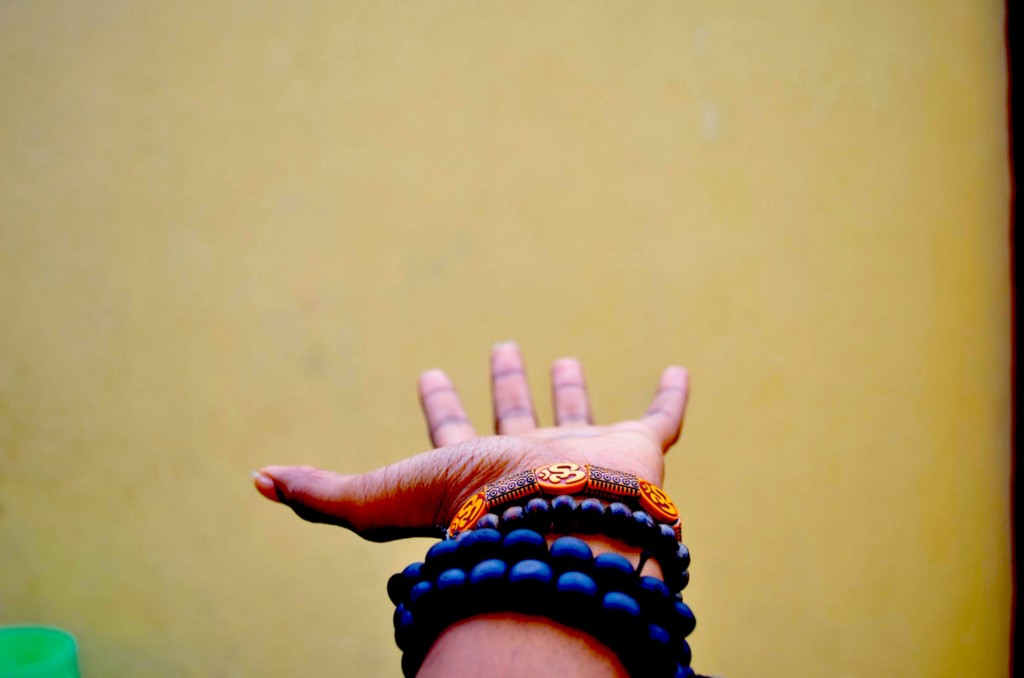
It was sixth grade, and Mandy Winder texted in a way that made Thomas feel things. He didn’t know who she was texting during class, but he could sense by the way her thumbs jutted and poked that her words were kind.
At lunch, Mandy always sat with the Peterson sisters. The Petersons liked to talk, and Mandy would listen. The sisters were taken out of class one morning to get their teeth cleaned, leaving Mandy to sit alone. She rotated an oatmeal cookie in her hands, eating it carefully from the outside in.
“That’s cool,” Thomas said. “How you eat.”
Mandy set the cookie on her tray, and Thomas knew he’d spoiled things.
“Want to thumb war?” he said.
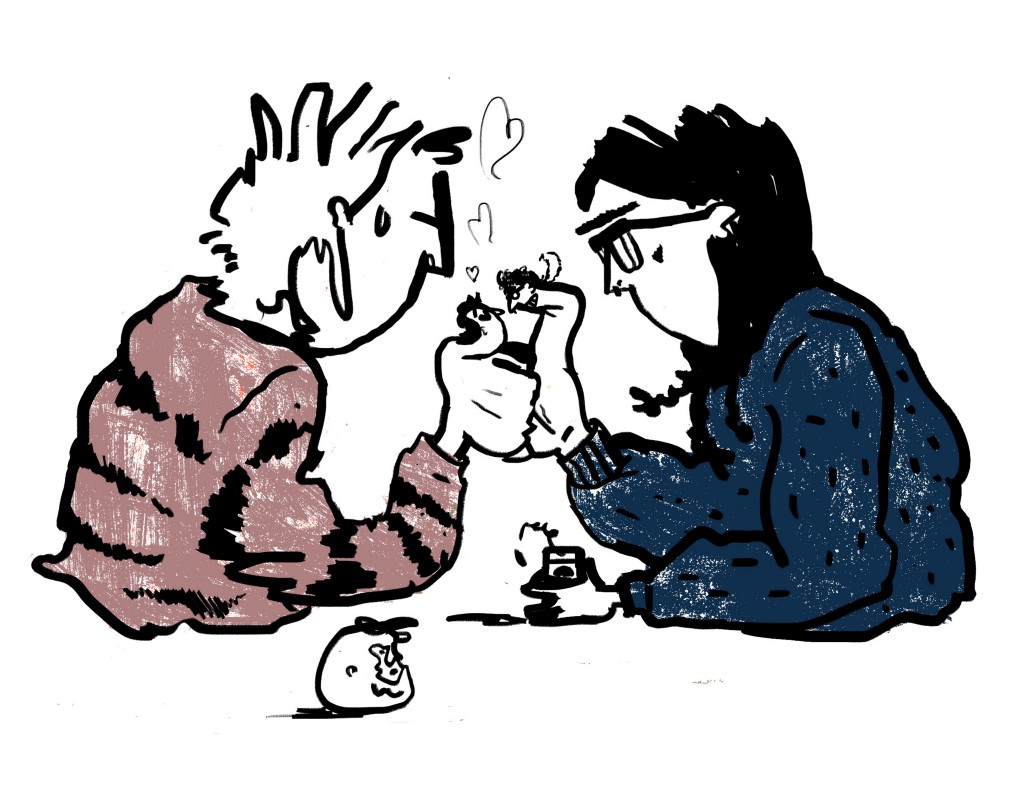
“Okay,” Mandy said. Thomas sat down, and Mandy stuck out her hand. They hooked their fingers together and tightened their hands into a big fist.
“One, two, three, four,” Mandy said, and Thomas joined her: “I declare a thumb war.”
Mandy didn’t waste time. She bobbed her thumb from side to side. It was long and smooth and seemed sophisticated somehow. Thomas tested forward and Mandy batted him away. They flicked their thumbs, sizing up each other’s moves.
It was developing into a kind of conversation. In fact, it was the best conversation they’d ever had. They lunged forward and smacked the soft pads of their thumbs. They swiped low blows that brought the bone of their knuckles together.
“Wow,” Thomas said. “Yeah,” said Mandy.
Mandy found leverage and clinched Thomas’ thumb near the base. She began to count out her victory.
“One,” she said, but Thomas could already tell it was over. Her grip was true.
“Two,” she said, and Thomas saw Mandy smiling right at him.
By the time Mandy Winder said “Three,” Thomas had stopped resisting altogether.
Every afternoon, the schoolbus would pass a bungalow whose porch sagged under a refrigerator that once had been white. I’d seen the people going in and out, the kind adults around me called white trash because they hadn’t managed to translate their one advantage into any kind of success.
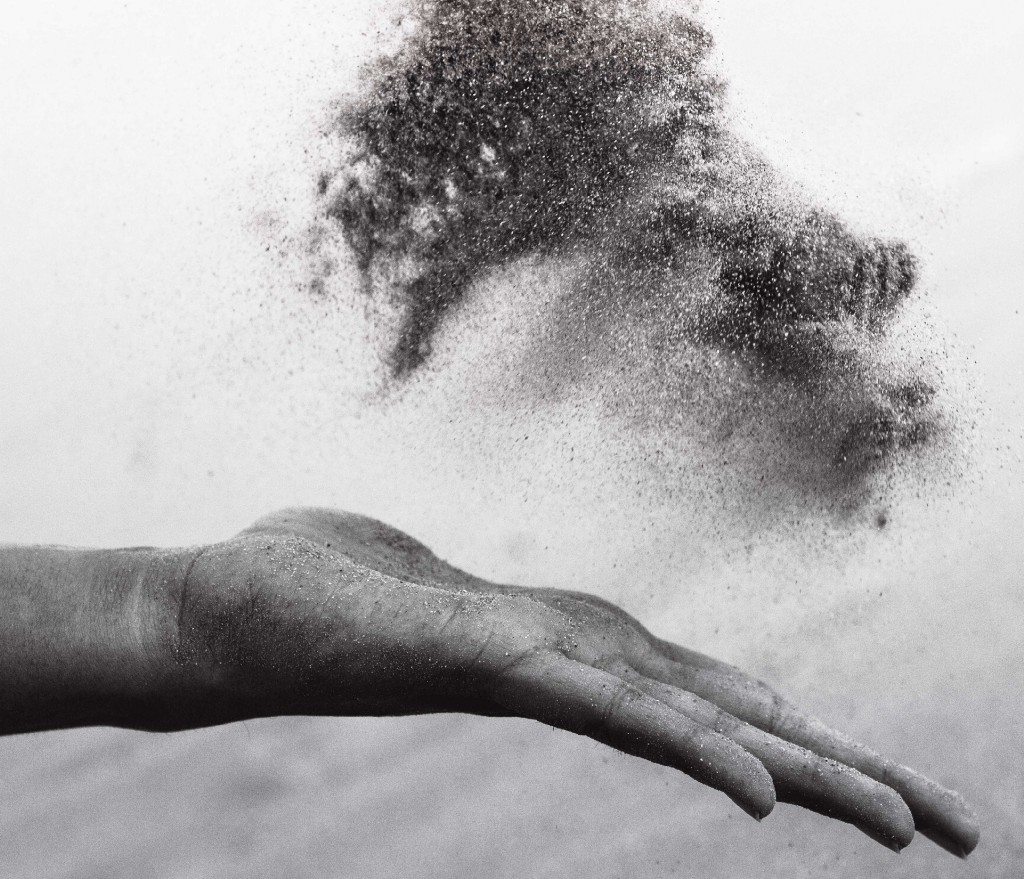
One morning my mother read about a boy found dead inside another defunct refrigerator, and warned me never to get into anything I might not be able to escape. I scoffed: getting stuck inside an abandoned appliance struck me as a thing only a boy would be fool enough to do. A girl would be too smart to do that to herself; surely, it would have to be done to her, as in a romance I loved that told of a sexy, disobedient medieval lady, walled up and forgotten. I’d figured that kind of thing only happened in the old days, mostly to Catholics; now I knew that it had never stopped being possible that you could be buried alive.
That afternoon, as the bus rumbled past, I saw that things were doubtless bad in the bungalow. Any place to hide must have looked like a good idea. I put myself inside the once-white refrigerator, gulping and scratching in the airless dark. I imagined pulling my boy out into safety, his grateful smile as good as breath to me.
Riding day after day, I came to believe that he was there on the bus with me, a few seats up, where I might see if he was picked on, where I might kiss him if I found the nerve. I figured I never would. Each afternoon he sat at the smudged window, waving shyly to me as he rode on and I walked backwards up my driveway, still looking after him.
Power and powerlessness are key elements of conflict — elements that, in some cases, render the word “conflict,” in its two-sidedness, something of a misnomer. On the political level, one cannot talk about “conflicts” like the Israeli occupation of the Palestinian Territories or the US occupation of Vietnam without grappling with radically imbalanced realities of power and powerlessness. The word “complexity,” if mis-wielded, can deflect attention away from such power imbalances.
That said, “power” and “powerlessness” are not synonymous with “evil” and “good,” as certain simplistic strains of political discourse come close to claiming. The brilliance — the relief — of reading novels and short stories is that worthwhile fiction is not that interested in fairytale categories of good and evil, at least when it comes to characters: fiction is interested in that which is human. And that which is human is always complex.
Buy the book
The lives of the characters in my new book, Sadness is a White Bird, are framed by the Israeli-Palestinian conflict. Jonathan, a young Jewish Israeli, is excitedly preparing to enlist in the Israeli army, but when he meets and befriends Palestinian siblings Nimreen and Laith, the clarity he once felt about his future choices begins to crumble. Political context and history weigh heavily on all three characters as they seek to form relationships across “opposite” sides of the same conflict.
What follows here is a list of pairings, some books and short stories, that deal with the complexities of various conflicts. I chose the pairs not in order to draw a false parallel of power, but rather with an eye past the realities of power and powerlessness that form the palpable background of each novel or story. Through each of these ten works of fiction pulses devastation, beauty, humanity, and suffering.
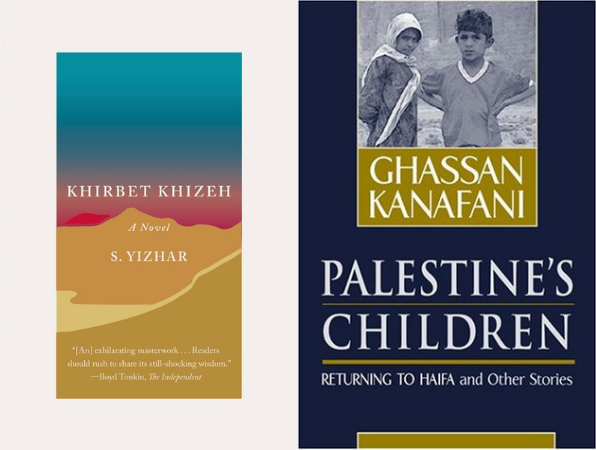
These two novellas were written respectively by an Israeli combat soldier who later became a Member of Knesset, and a Palestinian spokesman for the Popular Front for the Liberation of Palestine who was eventually assassinated by Israeli forces. Each was published directly after a major violent milestone in Israeli-Palestinian history. Khirbet Khizeh was published shortly after the events of 1948, known by most Israeli Jews as Milhemet HaAtzmaut (the War of Independence), and by most Palestinians as the Nakba (the Catastrophe). Returning to Haifa was published shortly after 1967, known by most Palestinians as the Naksa (the Setback), and by most Israeli Jews as Milhemet Sheshet HaYamim (the Six Day War).
Both books deal directly with the political realities of their times. Khirbet Khizeh is told from the perspective of a nameless, tormented narrator, and is the story of an Israeli combat unit’s mission to expel Palestinian civilians from the fictionalized village of Khirbet Khizeh during the 1948 War of Independence. Returning to Haifa follows Said and Safeyya, Palestinian refugees who fled Haifa during the 1948 Nakba (losing their infant son in the process), and return to the same city after Israel wins the 1967 war, occupies the West Bank and permits those Palestinians newly placed under Israeli rule to “visit.” Each novella is gripping, disturbing, enraging, torturous — and deeply humane. Though both deal directly with politics, and both writers were deeply political in their lives and careers, neither book is a simplistic polemic: there are no caricatures in either work, no goblins — just people, and violence, and pain.
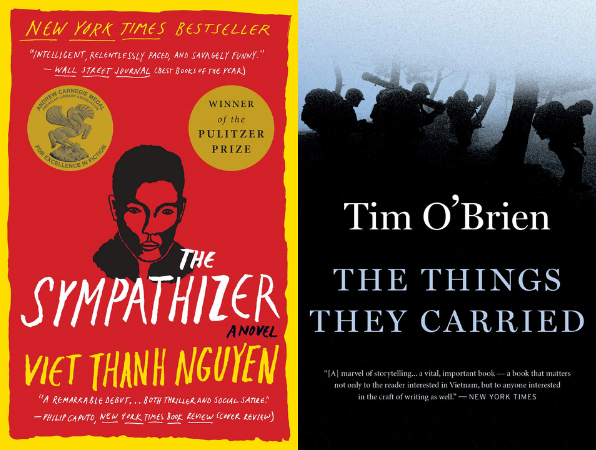
In the Pulitzer Prize-winning novel, The Sympathizer, Viet Thanh Nguyen’s acerbic narrator muses, in reference to a thinly-fictionalized version of Apocalypse Now: “Movies were America’s way of softening up the rest of the world, Hollywood relentlessly assaulting the mental defenses of audiences with the hit, the smash, the spectacle, the blockbuster, and, yes, even the box office bomb. It mattered not what story these audiences watched. The point was that it was the American story they watched and loved …’’ The narrator goes on to explain how it doesn’t make much of a difference if it the American soldiers portrayed are gentle or cruel, if they feel bad for the Vietnamese they are killing or remain wholly indifferent to their deaths: because either way, the Vietnamese are merely supporting characters — or, more often, extras — in America’s story of “the Vietnam War.” The Sympathizer is a brilliant book for many of reasons: it is funny, gripping, distressing, sharp, delightfully strange (the narrator manages to turn even an episode of onanism via dead squid into an opportunity for biting commentary on the hypocrisies of a culture that normalizes and glorifies war while proclaiming puritanism in regard to masturbation). And it is a different sort of American story — a Vietnamese-American story — about “The American War” than the stories most Americans are told by Hollywood. And by novels.
Reading The Sympathizer, I found myself thinking back on one of my favorite books in high school, which I’ve since reread twice: The Things They Carried, by Tim O’Brien. It is a gorgeously written book, and the chapter titled “How To Tell A True War Story” remains one of my favorite meditations on the meanings of truth and fiction (or: truth in fiction). But in thinking back on this richly detailed, deeply empathic novel, I have trouble remembering if there were any Vietnamese characters in the book at all. In fact, the American soldiers’ act of killing that I remember most vividly is the episode in which the narrator’s comrades torture and kill a baby water buffalo (and ultimately throw it down a well, poisoning the water for nameless, faceless Vietnamese villagers). I do not note this absence, necessarily, as a critique of The Things They Carried. Perhaps even the opposite: There is a disturbing honesty, I think, in the way in which the Vietnamese are rendered to the American soldier-narrator’s eye: largely invisible — sometimes threatening, sometimes pitiable, never the center or the main point of this story. And this story, of young American soldiers in Vietnam, of their friendship, of their loss, of their fear, of their savageness, of their decency, is a story that needs to be told and read, and The Things They Carried is a book that tells that story movingly, circuitously, powerfully. The story of almost-children being made to kill and maybe die for the sake of some psychopathological ideology or fatuous policy-goal is a major story of our world. It’s just not the only story.
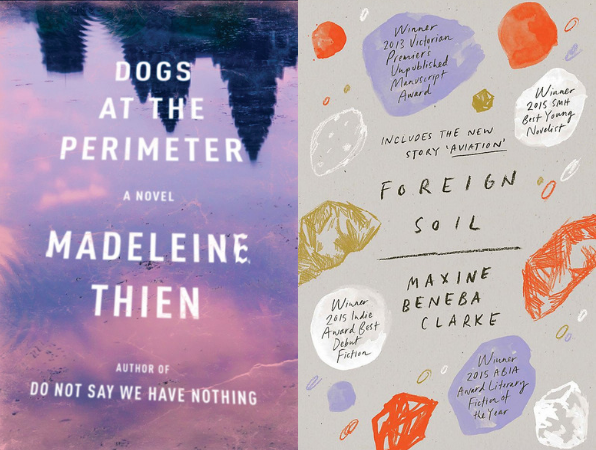
Almost-children being made to kill is one story of conflict in our world. Actual children being made to kill is another one. In The Stilt Fisherman of Kathaluwa, from the hard-hitting, stunning collection entitled Foreign Soil, Maxine Beneba Clarke tells the story of one child refugee who was forced to do horrific things to other children in the context of the conflict in his home country of Sri Lanka. “The ocean hums like a snoring monster,” the story begins: a strange, wonderful description that immediately conjures that world of imagination and terror that children everywhere have to navigate; soon, though, it becomes clear that the real-life terrors little Asanka has been through are far more horrific than nightmares about monsters. As the story progresses, we slowly discover more details of Asanka’s past a child-soldier for the Tamil Tigers, both the violence inflicted upon him and the violence he was forced to inflict upon others. His story is told in parallel with that of Loretta, an Australian lawyer who volunteers at the Asylum Seekers Centre, where Asanka is being held after arriving by boat. This telling of all three stories, interwoven — Asanka’s past, Asanka’s present, Loretta’s encounter with Asanka — forces the reader to keep looking, rather than turn away or fall back on self-protecting, distancing mechanisms (“That sort of thing happens way over there, far away from me, from my life”). There is little in the way of zoomed-out judgement in this story, and an immense amount of suffering palpitating in its pages.
This centering of a child’s narrative of incomprehensible violence is also part of Madeleine Thien’s breathtaking novel about the Cambodian genocide, Dogs at the Perimeter. In this story, the continuum of children being horrifically victimized and children being made to perpetrate horrors is fluid. Clarke’s short story focuses on the recent past of the main character, and on the effects it has on him shortly after; in Dogs at the Perimeter, we meet the narrator, Janie, decades after she survived the genocide in her native Cambodia. This novel’s explorations of memory, and of one adult’s efforts to explore the harrowing, terror-drenched corridors of her own past, are perhaps unparalleled in any other book I’ve read. Thien’s writing about one of the most atrocious genocides in modern history is stunning, and the book is both relentless and melodic, dealing with a story that is crushing almost to the point of unbearability, but with notes of beauty, of relief, even, threaded through the fabric of the life of its narrator.
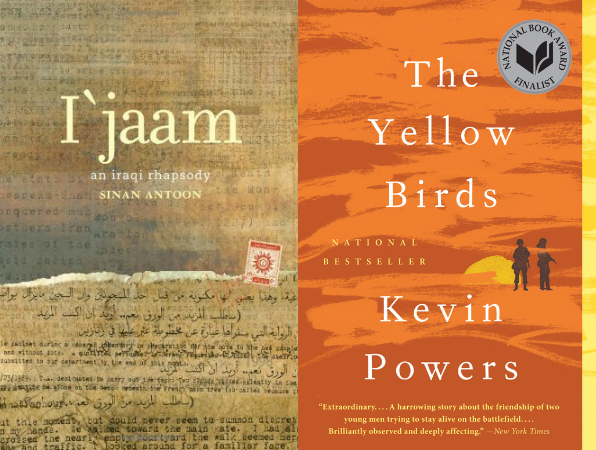
Two other novels, I’jaam, by Sinan Antoon and The Yellow Birds, by Kevin Powers, deal startlingly and powerfully with questions of memory and state violence, each from very different positions in Iraq’s modern history. Antoon’s novel is set in mid-to-late 1980s Iraq, before the two “Iraq Wars,” as they are known here in American contexts, during the Iran-Iraq War, back when Saddam Hussein was a US ally, and its main character is a jailed Iraqi dissident. The language — and the focus on the nuances of the Arabic language — is beautiful and nauseating and claustrophobic, and the short novel is dizzying, poetic, and powerful. Powers’ novel is set during the early days of the “Second Iraq War,” and is told from the perspective of a traumatized American soldier, back at home in Virginia, attempting to grapple with some of the most horrific elements of his recent past.
Both novels contain vertiginous amounts and descriptions of violence, and both center around characters who dissent, in one way or another, from the political currents with which they are expected to flow. These two novels shed light on very different parts of modern Iraqi history, and the conflicts that have torn apart the country and devastated its residents (as well as those sent to carry out the violence there). Yet both are beautifully written books.
Both of these novels feel like they are about everything, in their respective conflict-contexts (India and Lebanon): History, gender, class, micro-interactions and macro-machinations, violence, friendship, loss. Both are kaleidoscopic stories centered around an array of masterfully crafted, flawed, human characters, seeking to live decently as staggering levels violence and misery ebb and swell around them, threatening to engulf everything.
The Ministry of Utmost Happiness delves into a number of conflicts, past and ongoing, in modern India, including a stunning, sprawling story of three interwoven characters and their interactions with each other and with the conflict in the Kashmir. Beirut ’75, written with dizzying prescience in 1974, delves into the lives of various people and peoples in Beirut, and the tensions boiling beneath the surfaces of the Lebanese capital; it’s set just before the start of the Lebanese Civil War that erupted in 1975, and lasted for (at least) a decade and a half.
Both of these books, through the depth of their characters and the apathy-shattering quality of their prose, were, to me, crucial reminders that there is no actual “There” and that there is no absolute “Other.” Conflict in Kashmir is only unrelated to my life to the extent I pretend it is; a person seeking meaning and safety in Beirut in the early 1970s is only foreign to me to the extent I delude myself that they are.
A t a party a few weeks ago I was talking to a friend about The Boy Next Door (2015), a thriller starring Jennifer Lopez he’d never heard of, and which is easily the worst movie I have paid to see in the past five years (someone else paid for my ticket to mother!). “It’s awful,” I gushed. “I love it so much.”
The Boy Next Door is awful, and I do love it, but it’s at best in the minor arcana of bad movies. “So bad that it’s good” can be a slippery descriptor; a lot of terrible movies are so bad they are simply bad, or so bad they’re not worth seeing. The rough canon of the qualifying genre spans the history of filmmaking, from Reefer Madness (1930) to Showgirls (1995), and although the criteria for inclusion are difficult to pin down, the basic tenet is that you know it when you watch it.
Detractors of the so-bad-it’s-good genre may see the celebration of cinematic failure as mean-spirited, an ironic pose that makes filmmakers the butt of a snobby cultural joke. That bad-movie fandom is typically a cinephile’s game only adds to the gloss of its perceived snobbish nastiness. While it may be true that the badness of a bad movie is heightened when one has a grasp on the goodness of a good movie — how an establishing shot works, for instance, or the basic concept of narrative — it seems like a lot of energy to spend, flocking to a sold-out midnight screening just to be mean about a film.
History is littered with failures of cinema, some of them failing in ways that make them appreciably bad — a kind of pop-cultural upcycling.
My earliest exposure to bad movies was through my parents’ love for Mystery Science Theater 3000 — or MST3K, as it’s known — a late-night TV show consisting of an actual B-movie screened while a visible first-row peanut gallery gives wisecracking commentary throughout. VHS recordings of MST3K stood next to tapes of Apocalypse Now and the original Star Wars trilogy in a micro-democracy of taste. Watching MST3K as a young person I knew the movies weren’t intentionally made to be bad, and that their real, accidental badness was what made them funny to watch, but I was still mystified by their existence outside the context of MST3K. Where did bad movies come from?
Economics of the early film industry aside, history is littered with failures of cinema, some of them failing in ways that make them appreciably bad — a kind of pop-cultural upcycling. But when so much has been achieved in the medium of film, what’s the enduring appeal of seeing the form poorly applied? Why do people who love good movies so often also love bad movies? And what makes a bad movie like Manos: The Hands of Fate (1966) different from other bad movies, like Paul Blart: Mall Cop 2 (2015)?
Tommy Wiseau’s infamous shitshow The Room (2003) is among the greatest of the so-bad-it’s-good movies, and for all the hype surrounding it, it truly is as bad as everyone says — and exactly as enjoyable. It was shot in both 35mm and high-definition, non-standard to say the least, and although things happen, the film has little in the way of a discernible plot. Atrociously written and woodenly acted, it is also a goddamn laugh riot.
In the film, Johnny (played by Wiseau, who also wrote, produced, and directed) asks his girlfriend Lisa (Juliette Danielle) to marry him, but she’s having an affair with Johnny’s best friend Mark (Greg Sestero). A critical reading might take Wiseau’s characterizations at face value, with him playing the kind and faultless hero, and Lisa and Mark representing the forces of romantic love and success who conspire against him, despite his evident goodness. It’s not clear that Wiseau consciously commands even this level of symbolism, but it ultimately isn’t important. The Room is a cinematic failure that its creator believed would be a cinematic triumph, and this total conviction — combined with the ham-fistedness of its filmmaking — makes it a modern camp masterpiece.
‘The Room’ is a cinematic failure that its creator believed would be a cinematic triumph, and this total conviction makes it a modern camp masterpiece.
Not all failure is equal, and the nature of artistic failure depends on the nature of the attempt. This is the framework Susan Sontag outlines in her 1964 essay “Notes on Camp,” to describe objects that can be enjoyed for their awfulness:
In naive, or pure, Camp, the essential element is a seriousness, a seriousness that fails. … When something is just bad (rather than Camp), it’s often because it is too mediocre in its ambition. The artist hasn’t attempted to do anything really outlandish.
The Room is an awful movie, but it’s trying to be a great film, and this generates its basic charm. By extension, Wiseau is an awful filmmaker trying to be a great one, and his blindness to his own deficiencies is what allows him to be canonized in the so-bad-it’s-good tradition. Whether due to narcissism or a lack of taste, or both, pure Camp cannot fathom its own shortcomings.
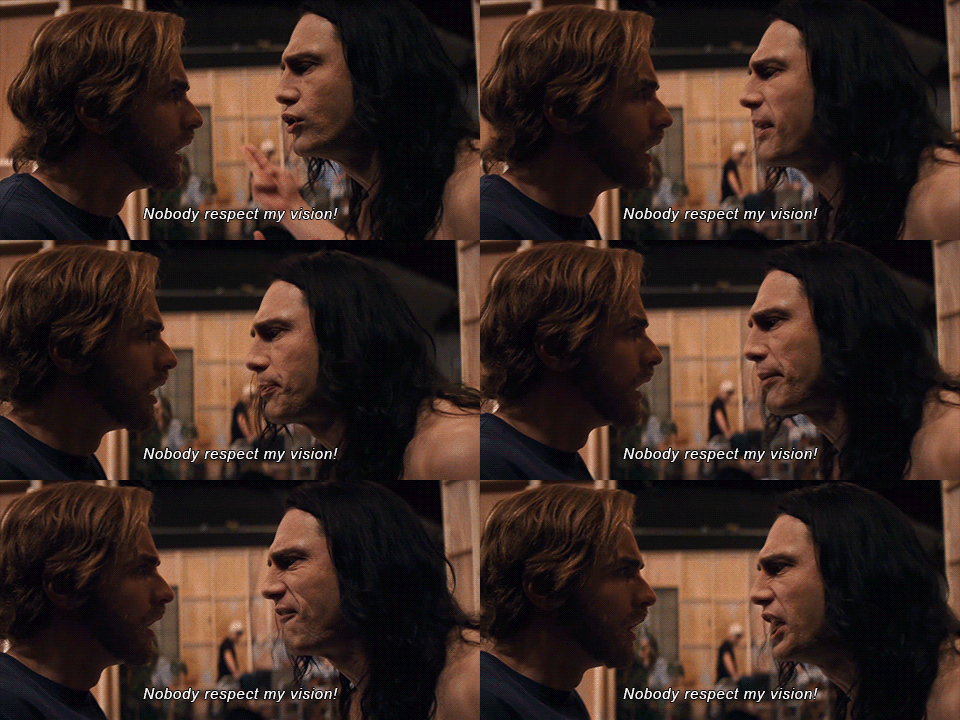
James Franco’s The Disaster Artist (2017) dramatizes the development of The Room, based on the book of the same title by Wiseau’s friend and costar Sestero. The film plays like a dramatized making-of, going so far as to reshoot many of the original’s most infamous scenes. Franco’s portrayal of the director evolves from convincing to uncanny over the course of the film. (A tag after the credits features Wiseau himself in a frame beside Franco-as-Wiseau, and for a moment the two are legitimately difficult to distinguish.) For the most part it’s a love letter to its antecedent, a generous portrait of a man possessed by the same thing that drives most people to create: the urge to make emotion visible, and to be beloved for the power of one’s art. This quality of burning desire is seen more easily in figures like Wiseau, whose passion far outpaces their abilities, and indeed is intensified by the width of that gap. The Room is a feat of blind self-assurance, made possible by a mysterious and seemingly endless cash flow. Laughing at Wiseau and his opus is certainly easy, but finding The Room hilarious doesn’t preclude lauding the earnestness of his effort. He is pure artistic id, unchecked by any self-regarding ego.
In terms of its driving intent, The Disaster Artist shares much with Ed Wood (1994), Tim Burton’s pseudo-biopic of the director Edward D. Wood (Johnny Depp). Ed Wood follows Wood’s efforts to make his two most famous films, Glen or Glenda (1953), about a transvestite, and Plan 9 from Outer Space (1959), about an alien invasion that leads to the creation of zombie vampires (or something). The latter gained cult status when it was described as the “worst film ever made” by brothers Harry and Michael Medved in their 1980 book of bad-film criticism, The Golden Turkey Awards. Ed Wood portrays its subject as a misunderstood visionary, if not quite a genius, rejected by his peers. Like Wiseau, Wood yearns to be a box-office success, to prove his worth in the court of public adoration.
Plan 9 is, of course, a terrible movie, but Ed Wood forgives its questionable quality for the passion at work behind it. Wood’s total devotion to making film — in spite of awful reviews, laughter, and massive losses of cash — shows an iron artistic passion that’s rarely so visible in more successful (and talented) artists, buoyed in their careers by consistent acclaim. Wood and Wiseau, toiling at the base of the mountain, commit to the same hard artistic work that success demands, but they never get there.
There is a baffling literalism to Wiseau’s search for fame. Wood and Wiseau are, ultimately, celebrities, if not in the way they’d like. But theirs is not a cynical or self-serving quest for their fifteen minutes, and everything it would provide. Rather, both of them seek fame as a means to prove to others that what they do has artistic value.
The Disaster Artist portrays Wiseau’s approach to art-making as a color-by-numbers endeavor, evident in his belief that to become as famous as James Dean, one simply has to imitate James Dean, as if Hollywood stardom were a recipe for apple crisp. Wiseau wrote and financed his own James Dean movie, and cast himself as a James Dean hero. The Room‘s most famous line — “You’re tearing me apart, Lisa!” — is a clear pull from James Dean in Rebel Without a Cause(1955). Fine acting, Q.E.D.
Wood’s total devotion to making film — in spite of awful reviews, laughter, and massive losses of cash — shows an iron artistic passion that’s rarely so visible in more successful (and talented) artists.
From an artist’s perspective, the ultimate fear is that of making bad art which you have no idea is bad. It’s what causes so many truly talented people to downplay their own work, because it’s safer to assume that it must be terrible than to believe it’s good without really knowing. It’s also what keeps most critics in business, designating the great successes and the withering flops, on a scale of achievement that claims objectivity and leaves little room for joy, or for blind self-belief.
Cherishing failure qua failure is an antidote to cynicism in a grave and dispiriting age. A lover of bad art seeks joy; rather than dismissing out of hand something like Teenagers from Outer Space (1959) as unserious and poorly assembled, they, alongside the cast of MST3K, applaud the sheer scale of its badness as a feat in itself, as though it were simply a different flavor of filmmaking. In effect, the fandom of so-bad-it’s-good movies rejects the critical assumption that there are only certain valid responses to art.
The Museum of Bad Art takes the appreciation of bad movies to the logical art-world conclusion of physical collection and display. Founded in a basement in 1993, MoBA now occupies two gallery spaces: one “just outside the men’s room” in the basement of the Somerville Theater in Somerville, MA, and another in the offices of the Brookline Interactive Group in Brookline, MA. The MoBA’s permanent collection ranges from landscapes and still lifes to “noods” and “poor traits,” with a lot of earth-tone Fauvism and alarming perspective work across the board. But in its isolation from “great” art, the “bad” art of the MoBA has value on its own terms. Visual art is for looking at; what does form matter if the effect still evokes joy, pleasure, introspection? The enjoyment of art that fails to achieve what it means to — quality, broadly defined — transcends the good-bad critical framework as a measure of artistic merit. This leads to a kind of anarchy of taste, a rejection of the notion of quality as something that can be critically delineated.
This line of art nihilism is an ontological danger to the MoBA, dedicated stewards of “quality bad art,” but the curators admit that the common thread running through the collection is “a special quality that sets [the works] apart in one way or another from the merely incompetent.” Just as a special quality sets apart a Monet from any other French poppy field, not all bad art is created equal.
Just as a special quality sets apart a Monet from any other French poppy field, not all bad art is created equal.
Even among beloved bad movies there is variation. They can be grandly inept, baroquely ill-suited to their aims; either way, the pleasure of them is generated by the distance between their creators’ outsized hopes and their actual quality. The bad drawings of children might be oddly prescient or naively misshapen, but without a knowledge of the Mona Lisa — without grand ambition, and the stakes that come with it — their work can never achieve failure. It’s the aching wish for grandness, and the falling short of it, that makes for great terrible art.
Bad art cannot be made in bad faith; it is wholly, purely honest. In the burning heart of every wretched film is the wish to be a cinematic masterpiece, and often a degree of misplaced self-assuredness. The Emoji Movie (2017) made $217 million last summer, with Patrick Stewart as the voice of Poop. But The Emoji Movie cynically aspired to nothing more than massive box office returns, and it achieves nothing beyond that — not even failure.
The cat says, “I’m only here on sufferance.” The dog doesn’t understand, so the cat defines the word “sufferance.” It has to do with a kind of tolerance. It has to do with permission that is indirect, permission through failure to prohibit. She uses the word “tacit.” The dog doesn’t understand “tacit.” The cat gives up. She thinks he probably got the idea anyway.
The cat knows they love the dog and merely tolerate her. There is enthusiasm when they greet the dog at the front door. She sits off in the background, watching. They see her and say, “Hello, kitty!” but without much warmth. The dog is more demonstrative than she is. He wouldn’t understand the word “demonstrative,” though he enacts it. He wouldn’t understand the word “enact.”
Later, the cat says to the dog, who stands below her, in the kitchen, sniffing the air, “Now she has left the room. I’m sitting within an inch of her sandwich. That puts a strain on me.” She reaches a forepaw toward the sandwich, but she is not comfortable.
The dog likes her and is interested in her. He would not find it a strain to be near the sandwich.
Later the cat is chewing on the broom again.
The dog does not understand why she would do that.
The cat says, “She scolds me because I’ve been chewing on the broom. She leaves it out and I see it. Then she sees me and puts it away between the refrigerator and the wall where I can’t get at it, though I try. I try when it seems to be where I can reach it.”
The dog listens to her explain all this. At least it is a change from going back to sleep, yet again, in that pool of sunlight.
“Dogs in Love”
by Ali Shapiro
I.
The dog who reminds us of you is easily wounded: every loud noise lands like a blow. She never barks but occasionally moans. The dog who reminds us of me has only two modes: all-out and asleep. She eats dinner out of a maze, has to be saved, every night, from her own appetite. She loves, in this order: food, tennis balls, you. Both dogs love squirrels, but once we saw the dog who reminds us of you leave an almost-dead one at the feet of the dog who reminds us of me, then slink carefully away. The dog who reminds us of me ate it.
II.
We break up, but our dogs don’t. We pass them back and forth through various impromptu airlocks. I let them into your yard and they disappear through the back door, admitted by your invisible hand. You transfer them from your car to mine, then drive away before I get behind the wheel. Because the dogs have always been each of ours (your dog; my dog), and because they are each a part of us (daemons; animal familiars), the pass-through becomes a space where we are somehow still together, a world of what-ifs embodied and lovingly, grudgingly maintained.
III.
Our reunion comes with animal inevitability: a few drinks, flush of skin, clash of teeth. Then we’re back where we started: cooking, vacuuming. Walking the dogs. The one who reminds us of me now insists on sleeping not just next to but on top of the dog who reminds us of you, who accepts the warm weight with a heavy sigh. Maybe it’s true: opposites attract. Or maybe love is just knowing, no particular alignment of selves or stars but a groove one animal wears into another, slowly, surely, until the warmth becomes particular, the weight light.
I am the uncle who gives books to my nephews and one niece. I do this out of love for them and the books, but also out of the need to recover things I may have lost. Most often, the books I give are those iconic lodestones masquerading under simple turns-of-phrase: The Giving Tree, The Little Engine That Could, etc. Each one I love in the way we love the books we are supposed to love; and I love to pass them on to the next generation, like bestowing a stash of especially effective pathfinding breadcrumbs upon worthy heirs. I liked to believe that these books will help them find their way, but a few Decembers ago while shopping for my niece’s birthday gift, among others, I struggled to keep this faith. I’d been trying to give my niece and nephews books that would be maps to show them the way—but I hadn’t yet found my own way, and it suddenly seemed disingenuous to give yet another map that had thus far proven itself unreliable.
So, that December evening in the bookstore, I decided it would be better to give my niece a compass rather than a map. The one book that came to mind was “Mrs. Rumphius” — a book that I had told myself was “my favorite,” the one that “really influenced” me. Both of those things were true, and I did truly cherish the book’s influence on me. But seeing the title on the cover of the new copy I held in my hands, I realized that I had for years been woefully calling it by something that was not its name.
Miss Rumphius — not Mrs. — is perhaps Barbara Cooney’s most beloved work, and certainly her most well known. The 1982 book tells the life story of Alice Rumphius, an equestrian-elegant, red-haired girl born sometime before the ascendancy of the steamship, somewhere in northeastern America. Something of the young nation’s aloof confidence, charged with untested potential, energizes Alice’s tale of self-reliance — a quality she exhibits from the very beginning. As a child, she adores her immigrant grandfather’s wide-ranging stories of “faraway places,” shared with her in the firelight of his home “in a city by the sea.” She promises that she will travel the world too, one day, and that when she’s finished, she will come home to a house beside the sea. Her grandfather blesses her intentions, but on the condition that she fulfill one request: “You must do something to make the world more beautiful.”
She accomplishes all three in the course of long, enviable life of global adventure that comes to its end on the rocky Maine coast. Here, she fulfills her final promise to make the world more beautiful by scattering lupine seeds “along highways and down the country lanes….around the schoolhouse and the back of the church.” Year after year, the lupines multiply thanks to wind and birds and curious children, imperially redecorating the rugged Maine landscape. All said, Alice succeeded in making the world more beautiful, but what is important to remember, and what seemed unimportant to me until recently, is that she planted the flowers herself. There was never any great love for Alice, nor was she ever a “Mrs.”
I had forgotten that part, perhaps because for a very long time I considered it the fulfillment of every person’s destiny to find true love in this life, and to fuse with that person until the very end. In doing so, I had also forgotten the unspoken message of Miss Rumphius: true love is not the only wonder in the world, and not necessarily the greatest.
To a certain extent, Alice’s entire life is a kind of anti-Odyssey — a journey not toward closure, not toward home and birthright, but to ever-wider openings. Three years ago when I found the copy of this book that I would purchase for my niece, I was doing the exact opposite. I was headed toward closure, to an end to the precarity that had dominated my life since I graduated high school. Strange, then, that this book spoke to me. If there was anything I wanted not to be, it was the free, solitary, singularly time-agnostic Alice Rumphius.
The message was vaguely optimistic, yet clearly actionable; open to interpretation, yet specific.
Our differences aside, I found Alice’s charge “to make the world more beautiful” a useful directive for myself and others, even so many years after reading it for the first time. The message was vaguely optimistic, yet clearly actionable; open to interpretation, yet specific. And Alice’s declaration that she did not know what she could do to make the world more beautiful seemed to me important to share with children. After my own adolescence of calculated careerism, a clear reminder to the next generation that life’s mysteries need not be solved by age 18 was a necessary and vital one.
But beyond my appreciation for its developmental nuance, I felt deeply connected to Miss Rumphius, and it wasn’t clear to me why this should be the case. The book wasn’t emblematic of my childhood. I was a kid who loved magic and wanted my own, and while there is a witchy haze about red-haired and strong-willed Alice, there is no sorcery in this book. There was, however, some power at work in those pages that I had not realized until that night in the bookshop, thumbing through the copy I would give my niece. Perhaps I had forgotten it, or perhaps I had just to wait until that moment to remember, but I saw as if for the first time something wonderful on the book’s dedication page.
“This book is dedicated to Saint Nicholas, patron saint of children, sailors, and maidens,” reads the text beneath a very specific and very familiar rendering of my namesake saint. This was an eikona, a sacred image; and this Saint Nicholas was properly OAgios Nikolaos: his hand contorted into the blessing cipher IC XC, his body adorned in the full regalia of a Roman bishop, and his face haloed with to aktiston phos, the “uncreated light.” Here, on the first page of the book that I called my childhood favorite, was a message to me that I never knew was there: my name, my faith, my own moment of “wonder” — a concept with which St. Nicholas is richly interconnected.
In Greek Orthodox tradition, one of the beloved saint’s many honorifics is O Thaumatourgos, literally, “wonderworker.” Although imprecisely appropriated into English as “thaumaturge,” the Greek word’s etymology stretches from remote Hellenic antiquity up into the occult origins of modernity, science, and empirical knowledge. Touched thus by almost all of Western written history, the whole lineage of wonder is archived in the root word, thauma (pronounced in Modern Greek as “THAV-ma.”)
“In Archaic [Greek] and early Classical [Greek] literature, the characteristic reaction to a well-crafted image is thauma,” writes Richard T. Neer, an art historian and classicist at the University of Chicago, in his monograph theorizing the cultural genesis of Classical sculpture. Applied variously to crafts, feats, and, famously, to the dangerously deceptive allure of the first woman, Pandora, thauma describes any “figure of dazzling alterity” or “a moment of limitless present” in the finite world. Across all these instances, “wonder derives from the fact that a single thing can somehow be two things all at once.”
Originally an aesthetic term, thauma acquired new figurative meanings through its frequent use in Plato and Aristotle, the latter of whom contended, “[P]hilosophy begins in wonder.” For Aristotle, thauma inhered in the “apparent conjoining of chance and necessity” in otherwise unrelated events that “occur contrary to expectation yet on account of one another” so perfectly as to seem divinely designed. In the interstices, then, thauma sparks and illuminates, situating wonder itself between any “this” and any “that” fortuitously and randomly in communion.
Which is to say, for wonder to truly dazzle, the needful thing is always some kind of disparity, incompleteness, or capacity — a truth intuitively acknowledged in F. Scott Fitzgerald’s phrase “capacity for wonder.” It’s the filling of that capacity that one could say eventually eliminates the last bit of enchantment from the world. For Alice Rumphius, the great work is to rage against the enervation of that enchantment, to re-excavate the capacity for wonder, to beat back against the currents that enclose the imagination. In this sense, above all else, hers is a story about wonder, about thauma. In Miss Rumphius, the portent of thauma for life today glimmers for any who have eyes to see — and whose hearts put their faith in the promise of another half.
Alice’s heart plays a strangely minor role in this story of a life well lived, offering comfort to anyone unrepresented in the glut of stories that culminate in happily ever afters. She does not follow her “heart’s desire,” and her journey around the world seems less of a passion project and much more of a baseline function. To be Alice is to be in motion, to approach every almost and then instantaneously tangent out to uncharted places with unknown people. For that reason, although she finds early on in the book a home that fulfills her requirements — far away from where she grew up, near the sea — Alice leaves. What’s more, she leaves behind the only man in whom she’d felt romantic interest, according to Barbara Cooney in a 1999 interview with The Los Angeles Times:
When I asked her why Miss Rumphius…never married, Cooney said, “She didn’t feel the need to. It was simpler just to go knocking around by herself.”
Didn’t she ever meet anyone who interested her? I prodded. There was a long pause.
“Well,” the author finally said with a little lilt in her voice, “she met Bapa Raja, but he was married.”
Here was a home, a point of closure; yet her journey had never pointed toward the polestar of a yearned-for homeland. Instead, it webbed out into sparkling dizziness, unceasingly in pursuit of the next vacuum. She knew wonder must of necessity be incomplete, and hearts are too easily convinced that they are sufficiently filled.
I learned that the hard way, almost two years after I rediscovered Miss Rumphius on that evening in the bookstore. I had either forgotten or never remembered Alice’s lesson that a full life is not necessarily predicated on occupying one’s heart with love for another person. If wonder emerges “between any ‘this’ and any ‘that’ fortuitously and randomly in communion,” then I thought wonder’s true form must be the rarely successful alchemy between two people in love.
And if not, it was still the case that every book and film and song I ever absorbed affirmed that love outranked any other wonder in the world. Without love, what should be wonderful would be one-dimensional, bereft of the combustible internal tension that generated thauma. I knew better than this, once, but had forgotten by the time it was too late. Perhaps this was why, for years, I referred to this book as “Mrs. Rumphius,” rather than by its proper name, appending a phantom husband to a woman who never needed one.
For many of us, love is the last real sacrament in a secular world that is nevertheless glutted with approximations of transcendence. We are encouraged — demanded, even — to find the sacred at yoga, in the “spiritual but not religious,” in various wellness practices, in cloudy crystals charged at midnight on roofs far away from the ground the made them; I’ve done similar things. Where the divine has been scaled into a compulsory (and, often, capitalistic) component of wellness, love is the last untamed and utterly incandescent wonder; it’s the cherub with its flaming sword.
For many of us, love is the last real sacrament in a secular world that is nevertheless glutted with approximations of transcendence.
And in such a world, the route of Alice Rumphius, which seeks out wonder instead of love, seems pointless. Why work so hard to find wonder outside of love, when wonder is so readily available within it? To be in love is to return to paradise, to enter into the last temple, to do in earnest the things you could previously only do ironically. In this sense, love in its form as the ultimate wonder is perhaps the one baptism we still universally acknowledge for the remission of sins. “Well, I met a boy…” does certainly have something of the sparkle of a preemptive exoneration.
But in exalting love as the epitome of all wonder, we transform it into its antithesis. This kind of romantic love tends toward closure, to completion; it tries to compact the poles that produce thauma into one solid whole. It tells us love can only be true if it lasts through successive rounds of hookups, through trauma, through fights — through a battery of tests, like a laboratory subject. It produces hookup culture as an erotic manifestation of empiricism — a series of adaptive assessments to optimize us, and others for us. This kind of love proceeds, unconsciously, with the intent to decommission the imagination, to fence it in, to atrophy it. Its aim is to avert that other kind of love, the kind that is not wonderful, but full of wondering. I’m sick of wondering. I’m sick of wondering if you really love me, I’m sick of wondering if you will be here.
We want a love so wonderful we need never wonder again.
The problem with such a love is that it is dead on arrival if it is to be the final and ultimate wonder in one’s life. The lesson of Miss Rumphius that I’ve encountered all these years later is that our capacity for wonder is not a cavity that can only be filled, or even best be filled, with love. Love need not be the sum of all wonders, and it is to our own disadvantage to consider a life lived without a great love, a soul mate, or a partner to be a regrettably unactualized one.
Similarly, it dishonors one’s own potential by pinning the hope of happiness on the life-long requited love of another person. Such hope is ultimately invested in certainty, in closure, in the quick algorithmic accomplishment of promises such as those Alice made to her grandfather and whose slow fulfillment spanned her whole life. It caulks the interstices of life — the uncertainties, the voids, the discontinuities across which only imagination can carry us, ultimately impoverishing the world now and in the future.
If love had been Alice’s only objective, her only form of wonder (and for many of us, I think that is the case; it was for me), it’s unlikely she would have ever left Bapa Raja, or that she would have ever climbed mountains or trekked through jungles. In the forfeiture of these experiences, it’s unlikely she would have ever imagined a way to make the world more beautiful.
If love had been Alice’s only objective, it’s unlikely she would have ever climbed mountains or trekked through jungles.
By leaning into the ever opening horizon, she saw more than most will ever see, such that by the time she settled into her new home by the shore, at the margins of the world, she could look into the sunset and say, in earnest, that the world was “already pretty nice.” To fulfill her final promise to make the world more beautiful, she had to imagine a world that did not yet exist. Even after she had presumably seen the whole world and acquired the certainty of experience, she entered the chasm between what is known and not known, and imagined a more beautiful future. Her eyes were quite useless to help her see what had not yet been seen.
Accustomed to the nexus of “chance and necessity,” Alice answers the charge to make the world more beautiful by planting flowers in the stony ground around her home — far from optimal conditions for new growth. To her wonder, at least some of the seeds bloomed in the spring — only the lupines, the flower she “always loved best,” and that are also, incidentally, considered a symbol of imagination. When she finds a patch of lupines far away from her garden, she makes it clear: “I don’t believe my eyes!” To make the world more beautiful is to bring something into it that did not exist before, a task which demands a indefatigable return to the dark interstices where wonder wakes up.
In such places, the lupines grow year in and year out, “in between the rocks around her house,” as her great-niece tells us. The same little girl concludes the book, not with closure, but with new uncertainty, in an embrace of wonder that it’s this book’s prime directive to encourage. It’s in this wonder, of which love is only one of many optional, moving parts, that one approaches the thauma at the heart of life and becomes, in time, thauma idesthai: “a wonder to behold for itself and oneself.”
To make the world a more beautiful place, then — to make anyone else’s world a more beautiful place through love and partnership — Miss Rumphius teaches by example to first become a wonder to behold for yourself. The flowers will then find their own way to bloom.
The reputation of the Bronx, New York’s northernmost borough, is often eclipsed by a narrative that includes violence, drugs, and a wave of arson and riots that occurred in the 1970s. But the Bronx is unique. It’s artistic. It’s a place that lifted up some of the best musical artists of our time as well as literary artists: Don DeLillo was a Bronxite. Newly published writers like Lilliam Rivera and Jamel Brinkley have also called the Bronx home. The Bronx is also one of the most diverse areas in the nation.
The Bronx is no longer engulfed in flames—it’s thriving, especially in the literary world thanks to the artist communities showcasing the richness of the area’s heritage and evolution. We cannot and should not ignore the contributions being made to the larger literary canon from this borough. That’s why I wanted to spotlight several people who have been working to increase Bronx representation and offer the communities, most notably communities of color, the opportunity to access work about their hometown but also contribute to the arts.
How Charlie engages the Bronx literary community: Charlie is the Deputy Director at Bronx Council on the Arts (BCA), which has supported the development of artists and art organizations in the borough since 1962. He directs the Bronx Writers Center program there, which has served local writers since being formed in 1996. Events are free and open to the public!
When you think of the Bronx what’s the first thing that comes to mind?
How rich our culture is! The Bronx is the birthplace of hip-hop as well as home to many arts and culture institutions such as our Longwood Art Gallery @ Hostos Community College, the Bronx Museum of the Arts, BronxArtSpace, the Andrew Freedman Home, Bronx Music Heritage Center, Poe Park Visitor Center (adjacent to the legendary writer’s final residence), BAAD! (Bronx Academy of Arts and Dance), and Pregones Theater — are just a few. The Bronx’s creative legacy has been informed and deepened by the diverse groups of immigrants who’ve settled here as well as through the efforts of cultural leaders serving some of the nation’s poorest districts. The Bronx is a people-of-color/immigrant-majority county.
The Bronx’s creative legacy has been informed and deepened by the diverse groups of immigrants who’ve settled here as well as through the efforts of cultural leaders serving some of the nation’s poorest districts.
What’s the most surprising thing you’ve noticed people don’t realize about the Bronx?
How green it is. I was born and raised here in the 1970s and 1980s, during the burning buildings era people still think of. And although I didn’t grow up in the South Bronx, where the majority of the devastation occurred, I witnessed the heroin, AIDS, and crack epidemics firsthand. Bronxites are survivors who’ve contended with negative stigmas for most of our lives. The Bronx is also the greenest of New York City’s boroughs despite this. Van Cortlandt Park, Mosholu Parkway, the NY Botanical Garden, the Bronx Zoo combined with the Pelham Parkway Greenway that runs all the way to Pelham Bay Park, has sustained urban wildlife in the borough since its very beginnings.
What can the literary community do to support you and the Bronx?
The best way for anyone to support arts and culture activities in the Bronx is to make a donation to Bronx Council on the Arts. No gift is too small and will go directly toward the various artist services and public programs we provide year-round to under-resourced communities being targeted for development. This puts countless artists at risk! Our programs include art exhibits at our Longwood Art Gallery @ Hostos, Bronx Writers Center events, and various project funding grants we award yearly to an average of 75 community-based arts initiatives, bringing the arts to the people. You can help out here or sign up for our newsletter to learn more about our amazing exhibits, workshops, and offerings here.
What’s next for you and Bronx Council on the Arts?
BCA has an amazing new executive director, Viviana Bianchi, as well as a headquarters under renovation in Westchester Square, which we hope to move into later in 2018 — so lots of change to come. As an author I’m wrapping up a new supernatural mystery novel and short story collection set in Puerto Rico.
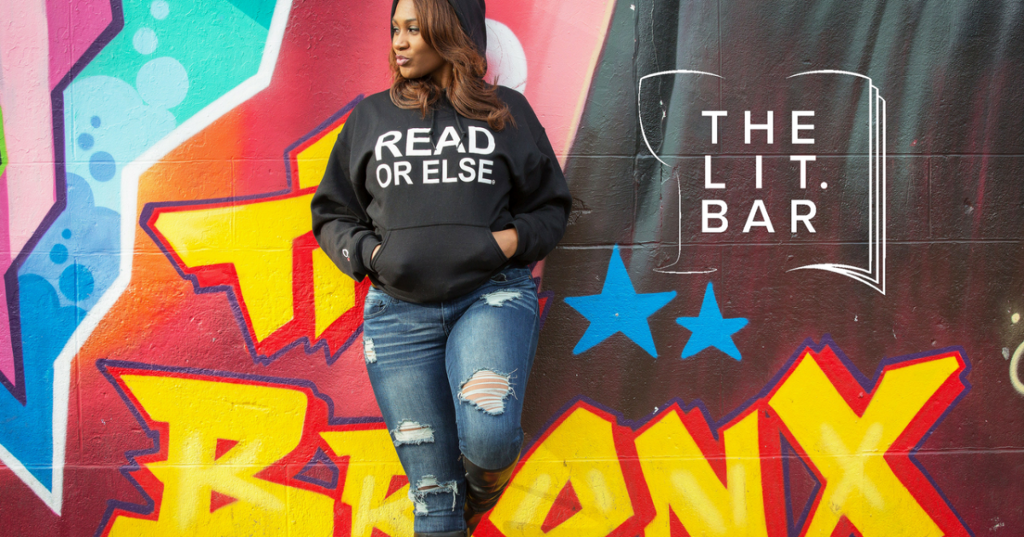
How Saraciea engages the Bronx literary community: Saraciea is bringing a book festival to the Bronx on Saturday, May 19. Her dream is for Bronxites to discover a love for reading and to engage with authors, illustrators, and creatives. The Bronx isn’t burning anymore, the Bronx is reading! It’s never too late to cultivate a culture of reading. The festival will also host school visits on Friday, May 18 via The Bronx is Reading literacy program. Select authors from the festival will visit Title I schools and the festival will provide free copies of their books to students.
When you think of the Bronx what’s the first thing that comes to mind?
When I think of the Bronx, Fordham Road comes to mind. It might seem odd, but walking up and down that area is where I purchased a ton of urban fiction books from street vendors. It’s where I went to pick up books from The Bronx Library Center because my local library had been shutdown.
Poe Center & Poe Cottage — Named after Edgar Allan Poe, the cottage is a literary landmark. You can’t possibly be a writer living in NYC and not have visited the center and the cottage at least once.
What’s the most surprising thing you’ve noticed people don’t realize about the Bronx?
According to the New York Times, “The Bronx remains the poorest county in the state, and one of the poorest in the United States.” And it really is poor. It’s also no coincidence that the borough’s demographic is largely Latinx and Black. There are over 600,000 children and teens living in the Bronx and many don’t read, can’t read, and/or can’t afford books. I’m hoping to change that with the festival and with The Bronx is Reading program.
What can the literary community do to support you and the Bronx?
The literary community can support the Bronx Book Festival by donating to our Kickstarter campaign (launching in mid-February), donating books, following us on social media and spreading the word about the festival.
What’s next for the Bronx Book Festival?
We’re gearing up to launch the Kickstarter campaign. Shortly after that we will release the exciting author line-up!
How Ron is engaging the Bronx literary community: From its Bronx lair, the Literary Freedom Project (founded in 2004) publishes Mosaic Literary Magazine, one of a handful of Black literary print magazines; creates social engagement lesson plans for high school educators; and presents the Mosaic Literary Conference, an annual event that places literature as the nexus for discussing social and cultural issues that inform and influence its South Bronx community. He is also on the planning committee of the annual Bronx Book Fair (lead by Lorraine Currelley).
Recently, Ron launched a new initiative, One Book One Bronx, as a way to create book clubs throughout the borough. Each would select a book that reflects the culture of its specific community. The goal is to get more families and friends focused on reading together.
He also is the social media manager at the Bronx Museum of the Arts.
When you think of the Bronx what’s the first thing that comes to mind?
Of course Yankee Stadium is the iconic landmark that everyone thinks of but I see new art spaces as being the next big draw. There’s Hell Gate Arts gallery, BronxArtSpace, Andrew Freedman Home, 6Base, Bronx Documentary Center, Wallworks, Longwood Art Gallery—the list continues to grow. And within walking distance of most of these new spaces are restaurants with eclectic menus: sushi, Italian, Latin, Nigerian, American, and plenty of breweries. The challenge is that there isn’t a critical mass of institutions in close proximity to each other so visits require pre-planning or finding a Bronxite that can help navigate the borough.
What’s the most surprising thing you’ve noticed people don’t realize about the Bronx?
Its diversity. We have vibrant Pakistani, Ghanaian, Albanian, Mexican, Dominican, Garifuna, Nigerian, and Puerto Rican. And each community has wonderful international restaurants. There’s an “I like to eat” theme here.
What can the literary community do to support you and the Bronx?
Everyone professes to love paper—subscribe to Mosaic (subscribe to any print literary magazine). Mosaic is full of curated literary content. New York artists such as Nicole Dennis-Benn, Javaka Steptoe, William Melvin Kelley, Jamel Shabazz, Lucille Clifton, and Saeed Jones have all been featured in the magazine. Each issue is also supplemented with a lesson plan focused on cultural and social engagement.
Mosaic, which was founded in 1998, and turns 20 this year. It’s amazing that when you consider all the lit mags that have come and gone Mosaic is still publishing. As readers gravitate to digital and apps, each year becomes more of a challenge. We’re online and have vibrant social platforms but I still believe in print and still see some upside potential—yes, I’m in denial and may need therapy. That said, I think this is the year that I will have to decide to stop printing or find new markets for the print mag. Otherwise it has to be full-on digital, and something will be lost.
Also, folks should get on the train and attend an event in the Bronx. Stop claiming you’re a New Yorker if you never go above 14th St.
Folks should get on the train and attend an event in the Bronx. Stop claiming you’re a New Yorker if you never go above 14th St.
What’s next for you?
Continue to grind. Go to readings, listen for new voices to document. Read more—would love to read more books. Too busy being an admin to just slow down and read consistently. Twenty years in, I’m finally getting close to shaping this organization in a way that’s sustainable. There’s a core of four programs: Mosaic magazine, Mosaic Literary Conference, lesson plans, and One Book One Bronx, that I feel have a comfortable synergy to build on.
How Noëlle is engaging the Bronx Literary Community: After the sole bookstore remaining in the Bronx closed in 2016, Bronxite Noëlle started a Indiegogo campaign to open what will be the only independent bookstore in the Bronx. She not only met her goal but surpassed it by 25% last March. The bookstore will officially open in Mott Haven this spring. She’s been honored by the New York Yankees Hispanic Heritage Month Community Achievement Award and been a keynote speaker at various business events on crowdfunding. She also hosts a monthly Movers & Shakers book club in the Bronx bringing together readers of books by underrepresented authors.
What’s the most surprising thing you’ve noticed people don’t realize about the Bronx?
That we’re home to 10 colleges and thousands of intellectuals. The Bronx is still stigmatized by the fires and urban blight of the 70s, and while we’re still affected by that history, the Bronx is not to be slept on. We have beautiful communities, disproportionately produce talent, and yes, we read.
What can the literary community do to support you and the Bronx?
Pull up for events and support with your dollars to help me show the world what many fail to see/that the Bronx is no longer burning… except with a desire to read.
The Bronx is no longer burning… except with a desire to read.
Project X, a Bronx based arts organization dedicated to elevating and re-centering the Bronx as an artistic hub.
How is Project X engaging the Bronx literary community?
Project X connects Bronx communities to each other through art and collaborative programming. During our October to May Season, we work with and feature artists of all disciplines in a community effort to highlight and safeguard Bronx and Latinx artists. Our monthly slams bring out some of the borough’s best poets and features a Latinx poet in the writing/performance community. Through monthly artistic partnerships as well as our Poetry Slam Series, held every last Thursday, we are producing the first ever certified Bronx reppin’ Slam Team headed to Nationals, 2018.
In addition, Project X partners with Bronx community organizations, venues, and artist collectives to produce community engagement events throughout the year. So far we have hosted a healing workshop/open mic for our communities affected by DACA with Bronx Native, a local clothing company, a health and wellness workshop led by Chef Gabriela Álvarez of Liberation Cuisine, a DJ Party featuring four Bronx-based DJs at Port Morris Distillery, and #PoetsforPuertoRico: The Bronx, a fundraiser for Puerto Rico Hurricane Relief at the Bronx Museum of the Arts. Each collaboration not only connects creative and passionate Bronx natives to each other but also invites those outside of the Bronx to witness our community as crucial and sustainable.
When you think of the Bronx what’s the first thing that comes to mind?
How the Bronx uses its spaces to the fullest potential. Across the borough we have all these amazing parks with nonstop art events happening! From Lucy Aponte at Poe Park Visitor Center curating art and writing events throughout the year to Friends of Soundview Park coordinating their annual music festival, Bronx parks are unforgettably unique and artistic and always a community to explore.
What’s the most surprising thing you’ve noticed people don’t realize about the Bronx?
People who still believe the Bronx is as devastated as it was in the 1970s, that we are a failed borough and always will be. Even more, people equate the disenfranchisement of the borough to everyone in it, surprised to find out many of us are successful, creative, and educated. The Bronx is nowhere near where it needs to be in 2018, but we are also nowhere near where we were. The essence of the borough is and always will be grit, passion, hustle, and survival. So we won’t ever stop building a better future for ourselves.
The essence of the borough is and always will be grit, passion, hustle, and survival. So we won’t ever stop building a better future for ourselves.
What can the literary community do to support you and the Bronx?
Project X is fiscally sponsored by Fractured Atlas, a nonprofit arts service organization. Donations for the purposes of Project X are tax deductible by law and can be made online here. Specifically we hope to find monthly donors to support our regular programming efforts. As gentrification begins infecting our community, we need the financial backing of our people to keep the Bronx in the hands of Bronx natives.
We want to continue to branch out. We have some strong partnerships already, from ID Studio Theater to the Bronx Museum of the Arts to the Bronx Music Heritage Center but we know there are so many other organizations we haven’t connected to, both in the Bronx and beyond. We need to bring the art to the people, that means partnering and collaborating with similar groups doing important work across the entire city. This also means exploring a diversity of art forms, from film festivals to art galleries we are trying to do it all. We want to support our gente who haven’t been able to access these artistic platforms before and prove that the Bronx has and always will be a hub of artistic creation.
“I’m a minimalist, so I only have two forks,” you said as you tended to an egg with one of them. It sizzled in olive oil. For our date, you told me it would be easier if we met at your place so you could do the cooking. Your diet condemned most foods. Our future seemed finite, but I had spent years with a man who in the middle of May loved to roast whole turkeys and mash piles of potatoes. You made me feel light.
Over the next few months, I watched as you pruned your life. First your table’s chairs disappeared, and then your pillow. Soon there was a single lonely towel in your bathroom. Your bed went next. You slept on the floor with your arms stiff at your sides, like a vampire that had forsaken its coffin.
But you kept your houseplants. You kissed me among the ferns and I felt like we were camping in a tiny, wild piece of Brooklyn. I could smell the fresh earth.
On the day you got rid of your table, I dropped my tote bag onto your lacquered wood floor. It was heavy with the shampoo I carried back and forth so I wouldn’t burden your bathroom. I got it from a $25 donation to WNYC. I shared that out loud to crack the silence. “You shouldn’t get a thing for giving,” you said without looking at me. “That ruins it.”
When you minimized to one fork soon after, I knew what came next. “Minimalism is about freedom,” you began.
“Save your words,” I said. Well, I’m sure you threw them away.
There was nothing to gather. I picked up my tote and opened the door. You sat on the floor surrounded by greenery and said goodbye just once.
Two nondescript people of the traditional number of toes and fingers, noses, ears, hearts, and lungs, sat in a parked car in front of the apartment they shared.
A group of boys, young enough still to feel like the world bent itself to them, walked by the car. Death, addiction, illness, failure, war, murder, car crashes, sexually transmitted diseases, heartbreak — those were all things that happened to other people. They felt too big in this world for any of that to happen to them. One of them pointed at the car, another made a pussy joke, and the four of them walked by the car laughing. None of them lowered their voices as they passed a mother and her young son. The mother, with eyes that weren’t really paying attention, watched her son bend down to pick up a rock. The boy was learning about dinosaurs in school and was hoping to find a fossil. The mailman in his truck, passed the mother and her son and moved around the parked car. Seeing the mother, the mailman couldn’t help but think of his youngest daughter and how she was getting married next month. Of all the things in the world to be and feel — the mailman continued down the street feeling like the most inconsequential man in the world.
The sun shone. The planets moved. The moon orbited the Earth. The tree exhaled oxygen. A man in power called another country a dirty word. And these two people inside the parked car said goodbye to the other. Said goodbye to the life they had hoped to have together, to the love they had fostered between them, to the midnight back scratches, the soft hand that draped itself over her waist as she slept, and her snores that kept him awake.
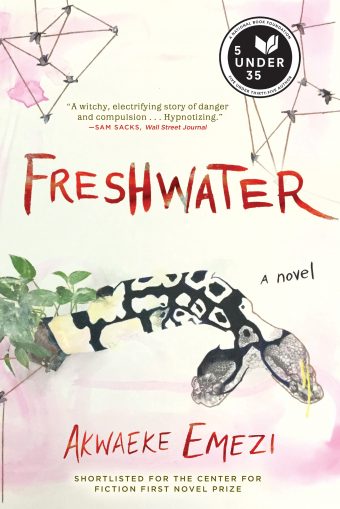
Akwaeke Emezi’s debut novel Freshwater is an arresting psychological portrait that re-centers African realities overwritten by colonization. To read the novel is to enter, and become immersed in, its vivid metaphysics. Grounded in Igbo ontology and drawing on Emezi’s own life, Freshwater tells the story of Ada, a young Nigerian woman who is born “with one foot on the other side.”
Ada is an ogbanje, an embodied Igbo spirit, and she begins to develop separate selves as a child, replete with their own desires and urges.When Ada moves to the U.S. for college and experiences an act of sexual violence, these selves assume greater power and agency in her consciousness.
Told from multiple perspectives, the novel braids together the voices of Ada, the self she calls Asughara, and a collective voice of her plural spirit, referred to as “We.” In our conversation, Emezi and I discussed the politics of naming, and the reclamation of marginalized realities.
Tajja Isen: I wanted to start with something you say in the acknowledgments. You write that your sister advised you to treat the writing process “like [you were] a method actor, to surrender.” What does it mean for you to approach your work as a method actor?
Akwaeke Emezi: So,Freshwater is based in a very specific reality, Igbo, and it wasn’t one that I had much experience in before writing it. I was raised Catholic, and we’re not really taught much about our traditional religions growing up in Nigeria. The book is set firmly within Igbo ontology, though, so it was impossible to write it without completely surrendering to it, which meant immersing myself in these beliefs. My concern when I started was that I would enter this other reality and not be able to get out of it. I took my sister’s advice and it worked out, but interestingly, I was also right: stepping into Igbo wasn’t really a reversible process, but it turned out for the better. Once the book was done, I had a lot more clarity about myself than I did in the beginning, and using that specific reality as a lens was the only thing that made that possible.
My concern when I started was that I would enter this other reality and not be able to get out of it.
I also realized I wasn’t the only person who was trying to figure these things out — specifically, trying to figure them out when it comes to these indigenous realities that we lost access to through colonialism, replaced by very Western norms of Christianity and science. What you end up with is a bunch of people who are living in ways that they can’t talk about, because if they do, they’re either going to be labeled as “crazy” or “possessed by a demon.” Freshwater, in a sense, is a story that’s also a reconstruction of my life through a completely different lens. It’s like trying on a pair of glasses and realizing, “Oh, these should have been your eyes all along.”
TI: I see that in the novel as well; there’s such a strong sense that the act of naming gives something its power.
AE: Yes, very much.
TI: Do you describe these Igbo narratives using the word “mythology”? I hesitated to use that word.
AE: The word “mythology” implies that it’s not real, that it’s make believe. I had to do a lot of re-centering where I was raised with it being, “this is mythology, this is folklore, this is superstition.” Then you ask a couple of questions and you realize the only reason it’s considered make-believe is because a bunch of white people showed up and told everyone there that the reality they’d been living in was fake, and they’d been believing things that weren’t real. And then that really jolts your understanding of what is real. Which is why a lot of the work I do with Freshwater, and with other work, is about allowing for multiple realities to exist at the same time, versus the concept that there has to be a singular, dominant one and everything else gets defined according to that. So I hope that Freshwater shifts away from that a little bit and allows for multiple ways of being.
The only reason [Igbo folklore] is considered make-believe is because a bunch of white people showed up and told everyone there that the reality they’d been living in was fake.
I use the word “ontology” and at first I thought it was a bit pretentious, but then I realized it was actually very useful. When we were trying to figure out the copy around the book, I said that, because I’m Nigerian, if we used the word “identity” people would assume that it’s about national identity, or racial identity—but no, it’s about metaphysical identity. It’s not about all these human categories that we place bodies in, it’s about the step before that, of being placed into a body in the first place. There are a lot of things that happen to the flesh [in the novel] that are considered brutal, but for me the main brutality in the book is the existence as flesh in the first place. All the other stuff, as bad as it is, isn’t as bad as that.
TI: For me, the moment when I recognized the violence of embodiment was the accident early on with Ada’s sister Añuli, when she’s crossing the road.
AE: I really like that insight, because it’s not actually centered on the Ada. In a way I think seeing the pain or the fragility of a body has more impact when you’re watching it happen to someone you care about versus it actually happening to yourself.
TI: And that’s also what instigates the desire for blood in the selves.
AE: The thing I like about realities, specifically those that are indigenous to Africa— and sometimes move to the diaspora — is that there are certain things that are always true. One of them is about the role of blood. There’s a quote from Zora Neale Hurston which says, “All gods who receive homage are cruel. All gods dispense suffering without reason […] Half gods are worshipped in wine and flowers. Real gods require blood.” And that last sentence is a fact that is acknowledged across all kinds of realities. Even in Christianity.
That’s one of the things that was interesting about writing Freshwater: these realizations of how much of personal experience can tie into a larger lived experience that involves a lot more people. I think that’s the experience some readers have had — they’ve been having an experience within their heads and they read the book and they get that validation that I got when I was doing my research — “I’m not crazy, this is true in someone else’s reality, which means that I have a community in a sense.”
TI: Do you think there’s something in these ontologies that also helps make sense of desire — both sexual desire and human urges?
AE: I thought about that and it’s hard for me to think about desire in the context of the book because so much of the desire there is different from, as you put it, “human urges.” So even for Asughara, for instance, her quote-unquote “sexual desires” are not really about sex at all.
TI: Right, it’s about protection of the Ada.
AE: It’s about protection. It’s about attack. It’s a weapon, it’s about trying to feel alive or not feel dead, it’s about trying to feel more embodied. So it’s all these things that are, again, not really centered on being human, but inhabiting that paradox of not being human and still having human form. And Asughara is the self who has a lot of desires. They’re not necessarily human urges — for her specifically it’s like the pain of embodiment, or how to stop that dissonance. A desire for death; a desire to go home. If you’re inhabiting human form, then it makes sense that your urges would overlap with human urges—and that on the surface, they would look the same. The urge to go home is such a human thing, but in the case of the book, to go home means to die. So there are layers to it, where the top layer is shared across humans and non-humans alike.
It’s about trying to feel alive or not feel dead, it’s about trying to feel more embodied.
I tried to have the reader feel what that dissonance is like, where you have the layer of flesh but you also have this other layer. And you can’t really separate one from the other. And Ada tries to split them apart and get rid of the selves and she’s making all these little boxes, which is a very human thing to do, to make boxes and try and make everything fit neatly, and it’s still all just a jumbled, overlapping mess.
TI: I definitely felt in myself the impulse to spatialize and separate and figure out where the borders between the selves were, but as I was reading, the novel taught me to resist that logic.
AE: I mean, it’s a very natural impulse to try and start that way. I was having a conversation with someone about the book being kind of autobiographical. We were talking about the selves, and they were asking how they work with me now, outside the book. It wasn’t until after writing the book that I realized that even the demarcations that [Ada] creates are kind of arbitrary and false, and as easily as she can create those selves, they can collapse. So when I was answering my friend’s question — “how do your selves work, which one am I talking to” — I said, “I have no idea!”
The image I use for it is like a boiling cloud, and it’s just a lot of [selves] boiling in there, and sometimes one or two will precipitate out, the way they did in the book, and be around for a while, and then they’ll disappear and it’ll all be mixed up. But part of what I learned from writing the book is to accept that even though I made these different, bordered selves to write the book, they’re constructs. They’re things that Ada created to make what was happening in her head make more sense, because at the time, she/I didn’t have the understanding that all of it could exist at once. It was too complicated a concept. It’s simpler when you divide it and when you make the little boxes. Now I’m better at not dividing it and just accepting the mishmash and layers.
TI: How do you think that will inform your work going forward?
Once you let go of a singular reality, you also have to let go of a couple of other things, like time functioning the way that it would normally.
AE: I think it helps because one of the things about shifting through selves and realities frequently is that it makes it very easy to write fiction — it’s easy to embody other people. I’ve tried writing with one central character, and it’s very challenging for me, because to restrict it to one person is hard. And so my second novel manuscript is also written from multiple points of view and that’s more natural for me, to slip between people. I need a lot of people — I think that’s how it shows up in my work. At least when it’s a book-length work, I need a lot of people because I can’t really stay in one reality for that long.
TI: How does that process of moving between perspectives inform the work of writing?
AE: It’s usually not very linear. There’s a thing about linearity, and binaries, and these very structured things are supposed to move in one direction, and I think there’s something linked about all of that. Once you let go of a singular reality, you also have to let go of a couple of other things, like time functioning the way that it would normally.
I think it’s about a learned flexibility. Once you learn to be flexible with realities, you become flexible about borders, you become flexible about time, you become flexible about a lot of other things, which I think is a really good quality to have just because it makes you a lot more tolerant of other people. If you’re too rigid, you won’t have room for other people’s realities, which is the root of a lot of problems in society. People are so against accepting alternate existences, that they will kill to make sure that a different reality doesn’t threaten theirs.
The subject of almost all of my fiction so far has been the love lives of young women. For a long time, I found this to be both extraordinarily embarrassing and also something I couldn’t help. Throughout my twenties, sex and relationships were what I thought about most, what seemed most mysterious and urgent. If I could have chosen my subject — if I could have written about any subject equally well — I would have chosen something “serious,” the sort of fiction that would inspire people to ask not “Did this really happen?” but “So what are your thoughts on [X]?” Although I have always written about young women’s relationships, I have also always secretly believed that this subject was less important than other, stereotypically male, subjects.
If I could have chosen my subject, I would have chosen something “serious,” the sort of fiction that would inspire people to ask not “Did this really happen?” but “So, what are your thoughts?”
It is not difficult to understand where this idea came from. I began writing in the early 2000s. In many of my early fiction workshops, professors and fellow students derided stories involving girls’ periods/bodies/love lives, books with shoes and lipstick on the cover, and YA literature. At the same time, they praised fiction about the erections and affairs of John Updike and Philip Roth’s protagonists and considered books about adolescent boys — Extremely Loud and Incredibly Close, The Curious Incident of the Dog in the Night-Time — to be adult literature. (With a handful of exceptions, fiction by men and women of color was simply not mentioned). When fiction by women was taken seriously it was typically 1) about a middle-aged man (Bel Canto, The Shipping News) 2) an exception to be apologized for (“I certainly didn’t expect to like a book called Housekeeping”) or 3) fiction that asserted the author’s credibility through intertextuality, extensive research, or historical commentary (The Great Fire, Beloved, A Thousand Acres). In the rare instances in which authors who wrote about women’s love lives were recommended by male classmates and teachers (Lorrie Moore, Mary Gaitskill), their stories were almost always told in a distanced third person that indicated that the author was not simply more intelligent than the characters, but also making fun of them. Zoe Hendricks, for instance, the protagonist of Moore’s famous “You’re Ugly, Too,” is introduced like this: “She was almost pretty, but her face showed the strain and ambition of always having been close but not quite.” You could take a story about a woman’s love life seriously as long as the story itself appeared not to.
You could take a story about a woman’s love life seriously as long as the story itself appeared not to.
Some of this attitude was the simple narcissism of patriarchy — “stories about young women aren’t interesting to me and therefore they aren’t interesting” — but some of this was a more complicated blindness. If you have never been a young woman or tried to understand the experience of being a young woman, the drama of young women’s loves lives is illegible to you in the same way that walking through the United States as a person of color can seem uncomplicated to a white person. But falling in love as a young woman, especially perhaps, as a young woman seeking out men, often requires complex negotiations with power and a long period of learning and unlearning lessons about how to find intimacy without erasing yourself. How can you allow yourself to enjoy sex on your own terms without being punished for it? How can you find power and autonomy in a relationship without taking other people for granted? And how can you date/fall in love/exist as a young woman in America without encountering violence?
When I was first learning to write, I also had trouble accurately telling stories about young women’s love lives while also following the “rules of fiction.” Good stories showed instead of telling; interesting characters acted instead of reacting. But how did you show something that not everyone could see? And why was passivity such an unworthy subject for literature when, in my own life and in the lives of my friends, it so often undergirded nearly every dramatic encounter — not an avoidance of story, but the thing at the center of every story that had to be negotiated. Sure, a story about a person sitting alone in a room thinking was unlikely to be particularly engaging, but what about the story of a person in danger who feels too immobilized by fear to do anything?
Why was passivity such an unworthy subject for literature when, in my own life and in the lives of my friends, it so often undergirded nearly every dramatic encounter ?
Take, for instance, this story from my life in Tempe, Arizona, circa 2005. Late spring. A Sunday. I am walking through my neighborhood when a car slows beside me and the men inside begin catcalling me. I ignore them and keep walking. They follow me. At the next red light, I cross the street so that I am going in a different direction. They keep following me but now their flirting has been replaced by anger. I have ignored them. They call me names and continue to follow me. I eventually make my way to a gas station where I approach a parked taxi and ask the driver to get out of his car. The men idle beside me until the taxi driver, a heavy sweaty man who appears to be in a bad mood reluctantly steps out of his car and then they leave. The men are active characters and, therefore, by the workshop rules I have learned, interesting, but what about me? When I chose not to speak to them was this passive or active? How about when I asked a male stranger to intercede? As a general rule, passivity is boring because it avoids conflict, and yet, in this particular instance, true passivity — i.e. getting in the car with these male strangers, going wherever it was that they wanted to go, doing whatever they wanted to do — is the precise thing that would have introduced more tension into the story.
In a New York Times editorial published this past spring, Viet Than Nguyen argued that the “rules of fiction” that writing workshops teach are rules that favor the stories of white men. “As an institution,” he wrote, “the workshop reproduces its ideology, which pretends that ‘Show, don’t tell’ is universal when it is, in fact, the expression of a particular population, the white majority, typically at least middle-class and often, but not exclusively, male.” The edict against passive protagonists, I would argue, is also a rule that discriminates. To see action as the beginning of tension and to see passivity as the end of the story is a privilege. This view imagines the protagonist always as the actor, never the one being acted upon, and this, as the #metoo movement has shown, is still simply often not the reality for many women — especially young women seeking sex and intimacy with men.
The edict against passive protagonists is also a rule that discriminates. To see action as the beginning of tension and to see passivity as the end of the story is a privilege.
This dynamic is most noticeable in the wide collection of movies, books, television shows, and short stories about young women whose plots hinge upon the possibility of violence. In Joyce Carol Oates’ “Where are you going? Where have you been?” for instance, the real threat is introduced not because Connie is active but because she is paralyzed by fear and transformed from a self-confident, if somewhat narcissistic, teenager into someone no longer capable of protecting herself. But female passivity is also the engine of the drama in many stories by and about women that do not involve male violence. There are, for example, the stories of Alice Munro such as “Post and Beam” that are engaging because of a rich inner life and process of discovery that ultimately goes unspoken, and there are the countless female villains throughout life and literature whose crimes are ones not of action but of maternal neglect. The stories of female protagonists operate differently than male protagonists because the rules by which we live our lives are different.
Are things changing? The celebration of books like Emma Cline’s The Girls or Britt Bennett’s The Mothers and this year’s all-female 5-under-35 National Book Award list make me feel optimistic that they are, that people are not only more willing to read books by and about woman but are increasingly aware that a person’s story and the way she can tell that story largely depends upon her place in society. Even so, it’s hard for me to quiet that voice that tells me that while stories about the love lives of men have always been at the center of “serious literature,” the stories about the love lives of women are something else.
The feeling was embarrassment — not so much at being a woman but in writing and reading in a way that made my womanliness conspicuous to other people.
Recently, I visited a class of college students who had just read my story collection and a young woman tentatively raised her hand. The book had resonated with her and her female friends, she said, but she wondered if I had written a book only for young women and if this bothered me. “I mean, just look at the cover,” she said and pointed to the photograph of a young woman and the curling script’s pink letters. “I probably wouldn’t give this to one of my guy friends.”
I stumbled through an answer to the student. I think I said something about valuing female readers, particularly those readers who saw themselves in the stories, and then something about how it is a problem when men only read books by and about men and white people only read books by and about white people. I don’t remember exactly what I said — just that I wasn’t brave enough to admit that, yes, it bothered me if young men didn’t want to read my book about young women with pink letters on its cover, that I hoped she was wrong, that I hoped she was underestimating her guy friends, and that surely, some of the guys she knew who dated and slept with and befriended young women also believed that their inner lives were complicated and worth imagining.
I thought about this moment again and again. The student had seemed certain that, simply based on its subject matter, young men wouldn’t be interested in the book, and this made her feel sorry for me, as if something that was appreciated only by other young women like her couldn’t possibly be important. This sentiment was deeply familiar. It was the same feeling that had once driven me value the praise of male writers over female writers or to pretend to appreciate famous books by famous male writers more than I did. It was the feeling that still sometimes made me secretly long to write a wordy novel about war or to question my own experiences when they were unrecognizable or uninteresting to men. The feeling was embarrassment — not so much at being a woman but in writing and reading in a way that made my womanliness conspicuous to other people. Tackling sexism in the writing and publishing world is a big job with multiple and varied solutions, but one piece of the puzzle is as simple as confronting this impulse to embrace books we perceive as masculine and to distance ourselves from those we perceive as feminine.
this jealousy of yours is a problem you need to love yourself more you need to have more self-confidence I’m super attracted to confident women I have a lot of women friends she wrote to me really upset and I helped her out don’t you want me to be the kind of man who helps women out okay so I’m the bad guy here and you’re perfect right I love you but you’re not being reasonable you’re being a little crazy are you on your period what did your friends say about me do you believe your friends over me I’m being 100% honest with you here you went online to find bad things about me I just like to join websites under assumed names and follow women around I’m kind and interested in their lives does that make me a predator now I admit I used to ask women for pictures oh that email with my photo that I accidentally forwarded to you was an old email address I don’t know what happened technology am I right well it was just the kind of dumb thing drunk people do wait now you’re bringing up that woman again the one who claimed she and I were involved she’s crazy it was one long email exchange late at night talking about boring stuff life kids dogs we talked for three hours and she sent me pictures but I certainly didn’t ask for them and suddenly she thinks we’re involved jesus christ she’s crazy she took it wrong you shouldn’t believe her that’s always happening to me I guess I need to be more careful I wish you weren’t so insecure I wish you could be more forgiving I’ve forgiven you many times for your jealousy which is still a problem
“Thank You For Your Order”
By Dorothy Bendel
Thank you for placing your order with us. You will receive a confirmation once your order has been sent.
Order details:
Items: (1) Human Heart
Shipping speed: Expedited
Please note: We make every effort to deliver your item(s) fresh and still beating. If, however, you are unhappy with your purchase, please get in touch with customer service.
*Secure Shopping Advice
Follow these rules when ordering products from vendors:
*When replacing a broken heart, never accept messages containing the words: “I’ve really changed this time.” We cannot guarantee the credibility of these claims.
*Beware of texts and instant messages sent after midnight. The veracity of these messages may be questionable.
Your order of “(1) Human Heart” has shipped! Items frequently purchased with: “(1) Human Heart”:
*cauterizing tools
*super-sized bandages
*hard liquor
*“How to Replace a Broken Heart in 67 Easy Steps” (e-book)
Delivery attempted — chest cavity closed A problem occurred when we attempted to deliver your item. “(1) Human Heart” requires a signature and an open chest cavity for delivery.
We understand you might not be ready to accept your new heart, but it’s for the best. We have re-scheduled your delivery.
Your item was delivered Thank you for your business. Please keep us in mind the next time your heart is shattered.
Dear Valued Customer,
We are sorry to hear you are unhappy with your purchase:
Reason for return: “Replacement heart almost as painful as broken heart. Please help.”
We regret to inform you that we cannot provide a replacement. Pain is not covered by our warranty. We advise you to continue with your current item even though it hurts. This is normal and expected. If the pain from your “(1) Human Heart” increases, please contact customer service about alternatives. However, we cannot guarantee you will ever be the same.
DON’T MISS OUT
Sign up for our newsletter to get submission announcements and stay on top of our best work.
YOUR INBOX IS LIT
Enjoy strange, diverting work from The Commuter on Mondays, absorbing fiction from Recommended Reading on Wednesdays, and a roundup of our best work of the week on Fridays. Personalize your subscription preferences here.