Through Books, I Learned to Love the Natural World I Never Saw

Novel Gazing is Electric Literature’s personal essay series about the way reading shapes our lives. This time, we asked: What’s a book that made you fall in love?

I once painted a half-shell of coriander seed into a ladybug beetle and pretended it was my pet. I placed it on the leaf of a potted plant, left it alone for a while, then came back, moved it onto another leaf and left it alone again. I did this for a few days, and I remember adults cooing over how sweet the beetle was, or how clever it was for me to have looked at a seed and seen an animal. I remember feeling small, sorry for myself, and quite silly. Despite my best efforts, I couldn’t trick myself with the fiction I had created: the beetle was on a bottom leaf in the morning, and now it’s up on top, it must be alive, it must be the kind of magic that only works when you’re not looking.

I grew up in Dubai, which is hard on a child with an imagination. I often describe my world as one of concrete boxes — the climate was nearly always too hot to explore outdoors, so I never played more than a few meters away from air conditioning, sealed windows, and paved floors. Not much grew that was not planted and obsessively watered. Wet soil would desiccate within a matter of hours of sun. Animals were city-hardy, the sort that stole from trash cans and lipped from condensation dripping off air conditioning boxes, or the sort that lived in under sinks and within the walls.

I read, wildly, overcompensating for my uninspired surroundings. I took everything I encountered in books for literal truth. If I were a city person — and a desert city person at that — I was also a woodsman, a flower fairy, a dragon tamer, a dolphin. If I read, I was alive.

Along came a boy.

He was untameably curious and, when I first met him, he just happened to have discovered a mother scorpion in the back of his garden, carrying dozens of babies on her back — each one a perfect, miniature reproduction of its parent, from pincers to venom-tipped tail. I’d never seen such a remarkable thing before, and neither had the boy. Enthralled with what he’d found, he decided to catch the mother and her babies and bring them home in a matchbox to learn more about them. Lunch was served, the boy’s family gathered, and the matchbox temporarily forgotten. Eventually, the boy’s older brother rummaged about for a cigarette and matches. Of course, he picked up the wrong matchbox. Of course, the scorpion and her babies got out. In the pandemonium that ensued, of course, the family dog bit the cook on the ankle.
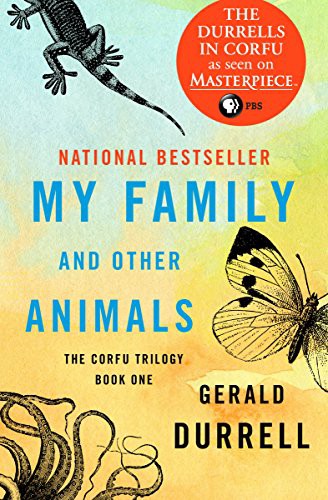
The first time I read this story, I laughed out loud — in the middle of an English comprehension test at school. It was excerpted from the loosely autobiographical novel, My Family and Other Animals, by Gerald Durrell, an account of young Gerry Durrell’s life on the Greek island of Corfu, some years before World War II. I was a preteen when I read the story, around the same age as Gerry in the novel. I remember making a note of the book’s title, one of the only times I’ve learned something of value from a school test. I hunted down a copy of the book, and it remains one of my most treasured companions.

My Family is equal parts a comic retelling of a family of eccentrics and a love letter to the Mediterranean wilds of Corfu. Gerry’s widowed mother moves her family from England to escape the dreary weather, and tries her best to keep calm with gardening and experimental feasts while her children convert the rest of their new home in service to their divergent passions. Gerry’s older siblings include an aspiring actress, a huntsman in training, and a long-suffering novelist — the later-famous Lawrence Durrell. The family’s histrionics over the course of the book include inadvisable Gothic romances, guns going off at odd hours of the night, and hosting guests of delicate, excitable dispositions. Once, a night of drunkenness nearly leads to a bed nearly catching fire, occupant included.

Gerry, for his part, brings animals, alive and dead, into the family fold. Apart from scorpions, the Durrell family plays reluctant host to a pair of magpies, a tortoise, a gull, several dogs, terrapins, an owl, and water snakes, to name a few. His room contains birds’ nests, interesting shells, specimen jars teeming with ditch-water invertebrates, pinned insect collections, and a badly taxidermied bat. Despite their misgivings about turning the homestead into a menagerie, the family encourage their precocious youngest in his inquiries, arranging the odd tutor here and there to guide the boy, but otherwise allowing him to roam the island unfettered.

Thus, we experience Corfu through the unfiltered lens of a child scientist. Gerald Durrell would go on to become a naturalist and zookeeper, but his early academic training is enviously free of such mundanities as classrooms and examinations. Gerry rambles from tidepools to hilltops, climbs trees, pokes in ditches and hollows, and rows a rotund, homemade boat around the island’s shore. He learns Greek by befriending neighbors and tradesfolk. He learns about animal diets and relationships, hunting and hiding behaviors, anatomy and locomotion through obsessive observation. He collects, dissects, preserves, and raises animals purely out of curiosity and wonderment.

Oh, to be so bold as to love a creature down to its cellular workings and up and out to the very limits of its habitat! I didn’t know it was possible. Or rather, I didn’t know it was possible in real life. Durrell’s book, a novelized nonfiction, suggested to me that it was hardly eccentric to be the sort of child who would make friends with a housefly in a classroom, just to watch it sponge sweat off your skin, just so you could study how its tongue worked. Or that if you find a baby bat fallen from a light fixture in a stairwell, it’s perfectly normal not to squeal in horror, but to pick it up and wonder how to nurse it back to health.

By Gerry’s example, I gave myself sanction to be a sort of naturalist even in my land of limited resources. Dubai’s naturally arid climate does not support a great diversity of species, but humans cannot settle in places that don’t support some kind of life. I studied the cracks in walls and pavements, and poked around in hedgerows and potted plants. I practiced love for ants and feral cats, the corpses of geckos and fallen feathers. I kept guppies to watch them birth live young. I kept a snail rescued from an orchid imported from Thailand. I tried to raise a hawk moth caterpillar on the leaves of the bush I found it crawling upon. I killed it, because I was still learning.

By Gerry’s example, I gave myself sanction to be a sort of naturalist even in my land of limited resources.

Midsummers in Dubai, surface temperatures hot enough to fry eggs, I’d return to My Family and Other Animals as a vacationer does, fleeing bad weather for better climes, ready to dip my toes in sea water and comb field grasses for beetles. I considered Gerry a dear friend, a compatriot who understood that entertainment and enchantment isn’t manufactured but found, uncontrolled and unheeding of an audience, wherever an animal makes a burrow or disembowels its prey, wherever there is water, and light, and a little space to breathe. I’ve had many fantasies growing up, but none so poignant as that of living in the real world, a world made vivid in Durrell’s writing, a world in which I coexisted with the stuff our collective mythologies — beasts that flew, that leapt, beasts that slithered and dissolved into the sea.

In a continuing trend, more of us will grow up in urban environments in the decades to come, and more of what we consider wild and alive and non-construct will exist on the periphery of our daily lives, so alien as to be unintelligible. Yet nature persists in the green spaces of our gardens and our city parks. It builds its nests above our air conditioning units and encrusts the plumbing leading out of our homes. It thrives under our fingernails and upon our skin. Every so often, a hawk moth will alight above the door jamb and we must pause and take in its mottled wings, its inscrutable eyes, the aerodynamic weight of its body. Every blue moon, a nightjar will take rest on the balcony, trying to look like a tree stump protruding from the metal railing, and we must linger behind the curtains and watch it sleep.

Nature persists in books. There’s a particular hypnosis that occurs when reading that I think is very similar to that which occurs while watching an animal go about its business. It’s a state of empathy — you’re imagining yourself through the eyes of a character in the book. In the woods, in a city, you spy an animal, and you’re imagining yourself with six legs, with fins, with a beak.

There’s a particular hypnosis that occurs when reading that I think is very similar to that which occurs while watching an animal go about its business.

Durrell’s book taught me that the written word and the natural world coexisted and kept each other alive. Since his lifetime, and especially so in mine, I fear the loss that we are creating through ecosystem destruction. I fear our loss of empathy. How can we feel what we do not experience? How can we love what we do not know? Nature is a map we’ve torn up, and we’ve lost so many pieces. When we put it back together again, what should we scrawl in the empty spaces? Here were komodo dragons. Dodos. A thousand species of rainforest frogs. A million species of solitary bees.

Those who know me as an adult would not be surprised that I collect animal bones and unusually shaped seeds out of compulsion. Or that I keep tadpoles in a small tank on my bookshelf. That there are dozens of iridescent insects and one sadly dead hummingbird in my freezer, that a tree appears in every third poem I’ve written, or that I wear a magnifying loupe around my neck when I’m out about town, in case of lichens. I do it to pay homage to childhood, to a universal spirit of inquiry so often quashed in children before it can take root. I do it to affirm that it is possible, necessary even, to bear witness to this world we’re given, where none of us is alive alone.

Harnessing the Anger of a Generation

An excerpt from ‘Passage’

After a heated conversation about how either of them could shoot better than most of the players on the Knicks, Warrior and his father returned to the living room with warmed plates of food. Warrior’s mouth watered as he ate. His father always cooked with spices upon spices — pepper, garlic, butter, brown sugar, and hot sauce were everywhere. The chicken, cooked till browned, of course, fell off the bone, and the yellow saffron rice and bright orange yams were so good they even looked pretty. “Damn, Daddy. . . This . . . is . . . good,” Warrior said, licking his fingers.

His father smiled with pride. “You know it is.”

Then Warrior and his father sat in absolute silence. Warrior sank deeper into the burgundy couch, his father in the cherry wood rocking chair. In the absence of voices, the hum of the refrigerator, the tick of the clock, and the creak of the chair kept the beat, and his father rocked.

Warrior finished eating and leaned back into the couch. The living room was filled with instruments of every kind. A piano was in the far corner; one of his father’s basses sat at his feet, a guitar lay on top of the piano, a banjo with one broken string leaned against the wall, and drums were everywhere. Near the shelves piled high with books, was an entire silver and light honey brown drum set. There were congas of all sizes sitting around the room, waiting.

Warrior looked at a photograph of a smoky Blues joint. In the picture people were grindin’, legs wrapped around each other, as the saxophone player on the makeshift stage blew filthy notes. A few feet away on the same wall hung a dark, black-and-white photograph of Nelson Mandela looking out from behind bars in his jail cell. The shadows of the bars cast lines across his face as his eyes looked out in the distance.

“I saw Mandela on TV the other day, talking about how when he was a child he never thought he’d be where he is today. He thought he would be a shepherd out in the countryside,” Warrior said as his father finished the last of his dinner.

“A man can’t run from destiny. And his wasn’t bein’ no shepherd. That brutha is a baad cat, one for history,” his father said, wiping his mouth with the back of his hand.

Warrior stared at the photograph, slowly shaking his head. “Spent twenty years in prison, and then they came to him and told him, ‘Mandela, if you swear you won’t start no trouble, if you swear to make peace, we’ll let you out.’”

His father continued Warrior’s thought, “And Mandela just looked at ’em and said, ‘No thank you. I come out on my own terms, or I don’t come out at all. Prisoners cannot negotiate.’”

Warrior finished where his father left off. “And then he turned around and walked back into his cell for seven more years.” Warrior’s father nodded solemnly.

Warrior brought his eyes down from the picture. “People always say, ‘That brother was hard.’ But he wasn’t hard, he was strong. There’s a difference. He knew that he was the symbol of a movement. A living martyr for liberation, and his position was non-negotiable. Period. If they broke him, they’d be breaking a whole lot more than a man, they’d be breaking a people. He knew that,” Warrior said.

“He spent twenty-seven years in jail to be free,” said Warrior’s father. “Twenty-seven years,” he said through his tightened jaw.

“That’s the only hope for this country,” Warrior said. “Only a leader with his moral righteousness, a leader who knows the pain of war but also is not afraid of it, can grab the ear a the youth. If someone doesn’t come along who can reach those filled with rage, the invisible walls are gonna crumble, and America’s gonna see the face of what it’s created. The pain’s gonna be brought to their front door, and ain’t no soldiers gonna have the power to stop it. I’m not sayin’ what I think should happen, I’m sayin’ what I think shouldn’t happen, I’m sayin’ what’s gonna happen.”

Warrior’s father responded to his son’s words. “You’ve come up with a angry generation, son. Angry at broken promises, and angry at the situation you found yourselves in. It’s a righteous anger, but it’s gotta be harnessed, directed, or else it’ll take hold a you, and get inside a you like death. And I seen some that ain’t never freed themselves from its grips.” Warrior sat quietly for a few moments, his eyes studying the wooden floors, and then he looked up into his father’s face. “They asked a senator the other day how quickly the violence and bloodshed would end if the children dying were the sons and daughters of senators and congressmen, and he said, ‘It would have ended yesterday.’ So when they say that they want to deal with our anger peacefully, without any bloodshed, what they mean is that they don’t want any of their bloodshed. ’Cause while we been talking, our blood’s been flowing in the streets for years, like a river.” Warrior’s words cut through his father, and he met his son’s eyes with force.

“There must be another path to follow besides making them feel the pain we’ve felt. They can’t never know that kinda pain. We’ve been losing our children for years now. I wouldn’t wish the death of one’s children on my worst enemy. The loss of a child is a bitter pill to swallow. You hear me? A bitter pill.” Warrior’s father spit out the last words.

Warrior slowly dropped his eyes from his father’s. He looked down at his hands and said, “That’s true, Daddy. But when a child ceases to dream ’cause he spends all his time thinkin’ about whether or not he’s gonna die, a fourteen-year old being hopeless, that’s a bitter pill to swallow too.”

After a few moments of silence, Warrior’s father picked up the bass that lay at his feet, and his fingers freed the music. He stared off into space as Warrior now lay down on the couch — the only piece of furniture in the house long enough to hold his frame. Warrior closed his eyes, released the tension in his body, and listened to the soft moan of the bass.

They sat there for hours, listening to the horn of Bird, and the smooth trumpet of Miles. They talked and laughed, telling and retelling history, cloaked as family stories. They told tales they both knew, and argued about the lies. Warrior fell asleep with warmed liquor in his stomach, voices in his head, and the flow of the bass in his ears, his father’s hands still freeing the song.

About the Author

Khary Lazarre-White is a writer, social justice advocate, attorney, and activist who has dedicated his life to the educational outcome and opportunities for young people of color at key life stages. His support base is far-reaching and diverse, built over the past twenty-two years as co-founder and executive director of The Brotherhood/Sister Sol. He has received awards for his work, including the Oprah Winfrey Angel Network Use Your Life Award, the Ford Foundation Leadership for a Changing World Award, awards from Black Girls Rock! and the Andrew Goodman Foundation, and a Resident Fellowship Award to the Rockefeller Foundation’s Bellagio Center. Khary Lazarre-White is a highly influential presence among national policymakers and broadcast, print, and social media outlets. He has written for the Huffington Post, NYU Press, Nation Books, and MSNBC.com, and has edited three books, The Brotherhood Speaks, Voices of the Brotherhood/Sister Sol, and Off the Subject. He lives in Harlem, New York City. Passage is his first novel.

This excerpt comes from the novel PASSAGE, published by Seven Stories Press and appears here by permission of the publisher. Copyright © Lazarre-White 2017. All rights reserved.

17 Literary Podcasts to Ease Your Commute

Stuck in bumper to bumper traffic with that same Ed Sheeran song playing on the radio for the hundredth time and giving you earworms for days? Rush hour subway too packed for you to immerse yourself in Dostoevsky’s Crime and Punishment without a stranger’s elbow obscuring half the page (rude much, fellow commuter)? We have just the solution: literary podcasts! From candid interview with your favorite authors to humorous reviews of romance novels, these audio recordings will ensure that you will have a pleasant and semi-intellectual commute (disclaimer: increased intelligence not guaranteed). So plug in your headphones or blast your speakers, tune out the world and get lost with these 17 audiotastic literary podcasts!

AAWW Radio By Asian American Writers’ Workshop

From the website: “AAWW Radio features curated audio from current and past literary events with authors like Maxine Hong Kingston, Roxane Gay, Amitav Ghosh, and Hanya Yanagihara at the Asian American Writers’ Workshop, a national nonprofit dedicated to the idea that Asian American stories deserve to be told. AAWW has got it all: from avant-garde poetry to post-colonial politics, feminist comics to lyric verse, literary fiction to dispatches from the racial justice left.”

Banging Book Club By Hannah Witton, Lucy Moon, and Leena Norms

Banging Book Club describes its hosts as “the baddest bitches in the sex book genre who want to take you along for the ride.” Every month, they get together to discuss a book on gender and sex from light-hearted book reviews (spoiler-free!) to tackling intersectional feminism and how white women can do better while highlighting the best bits and revealing a bit about their own experiences with all things banging.

Between The Covers by David Naimon

David Naimon hosts Portland-based podcast Between the Covers, engaging in thought-provoking interviews with a wide range of contemporary authors from Pulitzer Prize–winners like Colson Whitehead to emerging novelists like Eunsong Kim. Burning House Press praised David as a host who “engages deeply with each writer’s work and always gives his listeners a new way of thinking about complex issues related to literature, life, and society.”

Book Fight by Tom McAllister, and Mike Ingram

The Book Fight podcast is, in a nutshell, writers talking about books. Books we love. Books we hate. Books that inspire us, baffle us, infuriate us. These are the conversations writers have at the bar, which is to say they’re both unflinchingly honest and open to tangents, misdirection, general silliness. Each episode starts with a particular book, story or essay, chosen either by Tom or Mike or by guests which generally serve as a jumping-off points for larger discussions about writing and reading: craft issues, the ins and outs of publishing, the contemporary lit scene, such as it is.”

Freedom, Books, Flowers & the Moon by the Times Literary Supplement

Hosted by the editors of the Times Literary Supplement and “inspired by Oscar Wilde’s question, “With freedom, books, flowers, and the moon, who could not be happy?” the TLS brings a wide-ranging “esoteric yet solid” weekly podcast on books and ideas.” In the latest episode, the hosts and their guests expounded on everything from “the unrequited love, and painful experiments on frogs, of Prussian polymath Alexander von Humboldt” to “the seething malevolence beneath American ‘niceness’.”

The Guardian Books by Claire Armitstead, Richard Lea, and Sian Cain

Featuring authors like Penelope Lively, Stephen Fry, and Neil Gaiman with topics from “poetry for the mind and gastronomy for the belly” to “the future of literary fiction,” The Guardian Books is a weekly podcast presented by the Guardian book editors who delve into “the world of books, poetry and great writing”. Featuring incisive interviews with prominent writers and thoughtful examinations into contemporary writing themes and movements, this is the book lover’s ideal companion.

KCRW’s Bookworm by Michael Silverblatt

“A must for the serious reader, Bookworm showcases writers of fiction and poetry — the established, new or emerging — all interviewed with insight and precision by the show’s host and guiding spirit, Michael Silverblatt” who provides “intellectual, accessible, and provocative literary conversations.”

Literary Disco by Rider Strong, Julia Pistell, and Tod Goldberg

Hosted by “three good friends who also happen to be huge book nerds,” Rider, Julia, and Tod read books, stories, and essays and engage in heated arguments about them. From nonfiction books about food culture to classic children’s books, no genre is off limits. Hello Giggles called Literary Disco “smart, thoughtful, hilarious, and sometimes ridiculous in the best possible way.”

fiction/non/fiction by Lit Hub

Hosted by writers V.V. Ganeshananthan and Whitney Terrell, fiction/non/fiction “interprets current events through the lens of literature and features conversations with writers of all stripes, from novelists and poets to journalists and essayists.” Episodes feature nuanced and in-depth discussions on wide-ranging contemporary affairs from censorship and the language of immigration to Colin Kaepernick and what it means to take the knee.

Lit Up by Angela Ledgerwood

“Lit Up is a podcast about books, writers and all things literary where no topic is off the table and no conversation is too weird, too personal or too controversial. Angela Ledgerwood goes beyond the book and ask the authors who are sparking the world’s cultural conversations what they’re reading and what they are thinking, and sometimes, the truth about who they really are. Lit Up always provide a candid takes on what’s new and exciting on and off the page.” Recent guests include Jennifer Egan, Salman Rushdie, and Ann Kendrick.

Literary Friction by Carrie Plitt and Octavia Bright

“Literary Friction is a conversation about books and ideas based in London. Each month Carrie Plitt & Octavia Bright interview an author about their book and build the show around a related theme — anything from resistance to corpses to race in British literature. Listen in for lively discussion, book recommendations and a little music too.” Recent authors featured include Karl Ove Knausgård, Sally Rooney & Dana Spiotta.

Minorities in Publishing by Jennifer Baker

Hosted by Electric Lit’s own contributing editor Jennifer Baker, Minorities in Publishing “discusses the lack of diversity in the book publishing industry with publishing professionals, authors and others in the literary scene. In addition to talking about the greater systemic issues of marginalized representation in media, MiP also discuss guests’ personal experiences in their respective field as well as provide information of what to expect as an emerging writer/professional in this business.”

Otherppl by Brad Listi

Otherppl presents “in-depth interviews with today’s leading authors, poets, and screenwriters.” Writer Julia Jackson raved: “Brad Listi’s podcast has made me hit the pause button on my iTunes, blow off social obligations, and sit my ass down in a chair and write. The show is funny, insightful, entertaining, affirming, and, more than anything — inspiring. It easily one of the best podcasts on the web.”

Overdue by Andrew Cunningham and Craig Getting

Is there a large stack of to-be-reads piling up precariously on your bedside table? Do I hear a yes? Then Overdue, a podcast about the books you’ve been meaning to read, is tailored just for you! Every Monday, hosts Andrew and Craig “tackle a new title from their backlog. Classic literature, obscure plays, goofy murder mysteries: they’ll read it all, one overdue book at a time.”

The Paris Review

Journey though an audio odyssey through the life and times of The Paris Review, featuring a phantasmagoric blend of classic stories and poems; interviews with the likes of James Baldwin, Jack Kerouac, and Dorothy Parker; and new work and original readings by the cutting-edge writers of our time.” Episode 10 featured “David Sedaris reading Frank O’Hara, Mary-Louis Parker reading Joy Williams, Dakota Johnson reading Roberto Bolaño, John Ashbery scored by musician Steve Gunn and and The Paris Review’s Southern Editor John Jeremiah Sullivan singing Robert Johnson.”

Reading Women by Kendra Winchester and Autumn Privett

“The phrase ‘women’s literature’ is often associated with fluffy novels about women looking for mates or covers with lipstick and glitter on them. It’s high time that women reclaim the phrase. The goal of the Reading Women podcast is to bring previously anonymous women to the forefront of your TBR stack. Each month Kendra Winchester and Autumn Privett pick a theme and then discuss several books in a book club-style podcast. Listen to Reading Women to discover amazing female authors who are giving voice to a part of the world’s population that has been largely overlooked.”

So Many Damn Books by Christopher Hermelin and Drew Broussard

“Christopher Hermelin and Drew Broussard recognized kindred literary spirits in those snarky-yet-insightful comments they were both posting about books and reading. And then it happened. An idea was born, over cheap beer in a SoHo dive bar. It would be a podcast unlike any other. So Many Damn Books blends the high and the low, the wicked and the divine, the sober and the not-so-sober, the famous and the infamous. Author guests, special drinks, and more book recs than you can shake a stick at — what more could you need?”

Why the “Good Place” Personality Test Is Better than the Myers-Briggs

First: The Good Place is a sitcom about a woman who ends up in the “good place” in the afterlife by mistake. You should go watch it! First season’s on Netflix. Second season’s not, but use whatever means you like — I won’t judge.

I lied. I’m totally judging — judgment is, after all, what The Good Place is about. You went and watched the show just because you wanted my approval, without even knowing why, and you — what? Pirated it? You’re such a Jason/Tahani.

Recently, artist Noelle Stevenson put forth a theory on Twitter: everyone is a “mixture of two characters on the Good Place.” The theory took off, with fans of the show eagerly adding to the evidence.

It’s pretty par for the course for people to identify with characters on a TV show — BuzzFeed in particular is famous for its identifying quizzes. And people are always trying to figure out how to break down their personalities to their most essential, atomic bits. It’s how fanciful, unscientific, and fun personality descriptions like the astrology, zodiac, and the MBTI continue to exist. But this particular formula — that everyone is specifically a mix of two characters, no more or less — was unusual and surprisingly effective. Why did it work so well?

I hope you actually did watch the show, because spoilers abound.

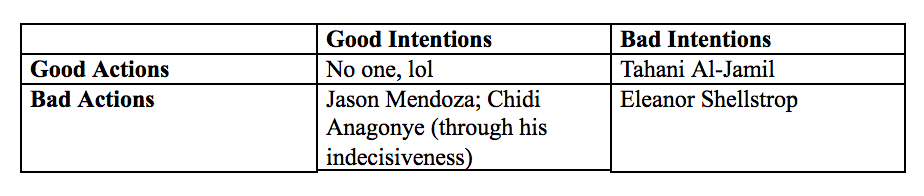
The Good Place is a metaphysical sitcom about morality, and what it means to be a good person. By what rubric should you be judged? What flaws are allowable? What intentions are important? What philosophers are well worth listening to? (None of them, thanks.) All four human characters find out they didn’t get into the eponymous Good Place because of a bad mixture of intent and action. In fact, their rulings were so succinct, I can chart them:

A few of the other characters in play for the “mix of two characters” theory are metaphysical beings: a demon named Michael, and an AI named Janet, which the Good Place wiki calls “a sentient database/personal assistant,” an “operational mainframe” for the Good and Bad Places. So: one made for evil, and the other made for good — although both of them, by the second season, are struggling with their identification with these very concepts.

The “good and bad” dynamic doesn’t pop up that often on personality charts. I have heard people whine that the MBTI is “inaccurate” because “there are no bad types,” and have swiftly avoided these people, those who are so eager to try to definitively figure out who the “bad” among us are through a test with no scientific basis.

Every character is defined by this interplay of action and intention, unconscious instinct and self-aware self-improvement, good and bad.

The alignment chart from Dungeons & Dragons does include evil, but it’s an outlier, and is mainly based on organizing characters for the sake of a game, rather than for self-identification. I’m not saying people don’t identify with it — but the “personality types” aren’t based on personal wrestling with morality. Good characters are motivated to do good, evil characters to do evil. It’s not nuanced — there’s no room for struggle, failure, or trying.

But in The Good Place, all six of the characters are struggling, failing, but trying to be good people. Michael and Janet are especially interesting cases in this. Michael is eager and learning to be good; Janet is contending with feelings, those strange whatsits that often hijack and defy concepts of morality (or, more specifically in Janet’s case, helpfulness).

The Good Place’s main goal, for all its intelligence, is to be funny, so its characters’ flaws are taken to extremes — all the easier to see echoes of them in your own secret foibles and shames.

Eleanor’s like a combination of all those annoying jerks you’ve met who got away with everything and never cared about how any of their actions might’ve hurt anyone. While each one of Eleanor’s actions are annoying and rude on their own — skipping out on designated driver for every work happy hour, ripping a roommate’s super expensive dress, giving someone else’s dog an eating disorder — all of them combined is a particularly potent brand of amoral, selfish jerkishness. In fact, writing that all out, it’s no wonder Michael never believed she’d “get any better.”

Tahani’s rich and famous, so her need for attention is an even bigger maw to fill than anyone else’s. But her entitlement is balanced out by how everyone — including her parents, the people who are supposed to give her attention — everyone, both strangers and family, pass her over for her sister. It’s one thing to be envious of your rich and famous friends; it’s quite another to do so when so devoid of love and so hungry to both give and receive it.

Jason’s heart might be in the right place, but I’m not sure how much that matters when you say, with all seriousness, that you solve your problems with Molotov cocktails. Regular humans just try to solve their problems with regular cocktails, not Molotov ones.

And then there’s Chidi, whose indecisiveness is so paralyzing that, in a test for his soul, he takes almost an hour and a half to choose between two fedoras.

Each character’s flaw is so big and loud that it obfuscates all other parts of their personality. This is part of their problem — part of the reason they ended up not just in the Bad Place, but in the Bad Place to torture one another for (Michael expected) thousands of years. And, to be clear, it was only in the afterlife that the human characters really even became aware of how big their shortcomings were. Their lack of self-awareness and understanding was one of the biggest reasons they ended up in the Bad Place.

The exaggerated nature of their flaws is the reason that you’re unlikely to relate to any one of them wholeheartedly, or to all of them at once — but almost guaranteed to relate to two of them a little. This is why Stevenson’s particular innovation — that everyone is a mixture of characters — is so effective. Nobody takes their real faults to such parodic extremes, but we all contain degrees of at least two major personality flaws.

The presence — indeed, predominance — of “bad” qualities sets this personality test apart — you’ll see no flattering Leo or INTJ profiles here — but even more unusual is the way it highlights the ability to change. Because The Good Place is a show about bad people getting better, relating to a character means not only relating to her flaws but relating to her struggle. That’s not something that’s usually reflected in personality tests, which purport to tell you who you are, not who you’re trying to be. But lots of people struggle to be good, and it’s the struggle that defines them. They don’t necessarily identify with good or evil, but with trying and failing. They understand morality is important, but to actually aim to be moral all the time is daunting at best, paralyzing at worst.

Because The Good Place is a show about bad people getting better, relating to a character means not only relating to her flaws but relating to her struggle.

It’s that struggle — the relatable ways they fail, yes, but also the ways in which they attempt to get better — that makes us identify with the Good Place characters, much more than any other part of their personality. Eleanor’s scheming ways can be traced to a hardscrabble life where the only person she could rely on was herself; Jason’s puppyish dopiness precludes him from thinking too deeply about the foolish things he does; Chidi’s maddening inability to act stems from his staunchly ethical compass; and Tahani’s need for attention and praise comes from a life of never being really looked at with any kind of focus. Meanwhile, Michael’s never had an impetus to be good and think of others, while Janet’s never had feelings that were all her own, and thus want to be — need to be — selfish.

Choosing two characters creates a dialectic between two kinds of flaws, two ways to be a moral failure — but also produces a more nuanced illustration of the way you might struggle and change. For example, if you were actually a Jason/Tahani, you might be driven by a sweetness and kindness that you constantly undercut with badly thought out or straight up frivolous decisions as you choose to cater to those who couldn’t care less, all in the name of a dream that isn’t really well thought out, or may even just be based on how much admiration you’d receive. If that fits you, well, rejoice in it. Because part of playing this game is in recognizing your moral failings, you are also enjoying a kind of self-awareness that escaped the main characters for so long.

In the show, the characters are motivated mainly by the idea that there should be a “Medium Place,” for people who were maybe not great but are trying, in their own way, without the self-awareness to understand the way they’re failing. We all probably belong in the Medium Place, which is why we find the Good Place characters so sympathetic.

Maybe the joy of choosing two characters from such a show is in the vein of the show’s theme: everyone’s a little bad, but what matters is that you try.


Which The Good Place Characters Are You?

You probably already know, because this test is just that good, but if you’re having trouble deciding… well, you’re a Chidi. But just to humor you, here are some signs you might look for to indicate which characters you are.

You may be a bit like Eleanor if you…have a superiority and inferiority complex, where you believe you’re capital-R Right about capital E-everything, and are judgmental, dismissive, and more than a little harsh when it comes to what other people care about — mainly because you’re so dismissive of caring in general.

You may be a bit like Tahani if you…check on Instagram or Facebook or Twitter and obsess over your Like-Retweet-Comment ratio — but are also already popular enough to regularly enjoy huge gatherings with a lot of people you call your friends. These online and offline socializing sessions somehow always end with you crying over someone dismissing you in a very hurtful way…which you then pretend didn’t matter anyway. You solve your problems by appealing to a higher authority (someone’s manager), because no one has really ever listened to you for you.

You may be a bit like Chidi if you…don’t like making big decisions because you see each decision as taking you a whole other parallel life and what if you make the wrong one and mess everything up and you’ll never be happy again? Then again, when the universe presents you with a ready-made decision, you will assume it’s absolutely correct, ignoring any part of it that might seem off to you.

You may be a bit like Jason if you…only skimmed this article. Somehow you end up in situations where everything is in fire (figuratively, hopefully), and you can trace exactly what actions led you to that place. You tend to act before thinking, and then solve your problems by…acting again without thinking. You once solved an argument with a hug, and you use that tactic regularly, despite diminishing returns.

You may be a bit like Michael if you…are the type of person who says they hate drama, but actually love love loves drama. You just know exactly what to say to people to get them to let you invade their friend circles to wreak sweet, sweet havoc. You also find other people fascinating in a sweeter way than you can admit.

You may be a bit like Janet if you…are reading this article maybe because a friend sent it to you and wants to discuss it with you. You are so nice and everyone loves you, but you are always creating higher and higher bars for yourself, so you feel like you’re failing when everything is actually fine. If you have and acknowledge your own feelings, the world will not be destroyed, I promise.

A Sci-Fi Dragon Dystopia à la Jane Austen

I met Chandler Klang Smith in my first workshop in Columbia University’s MFA Program in fiction. The class, taught by Nicholas Christopher, was not Chandler’s first (she was a full year ahead of me in the program) yet I distinctly remember her welcoming me and my oddball fiction into her orbit with a wry, bright-eyed exuberance. That was before I knew we shared an aesthetic of darkly inflected fiction of the fantastic; the intention isn’t so much to write literary genre fiction but, as Chandler calls it, to consciously “do genre.” We commenced being friends, have continued to be; old kinships die hard, it seems.

Purchase the novel.

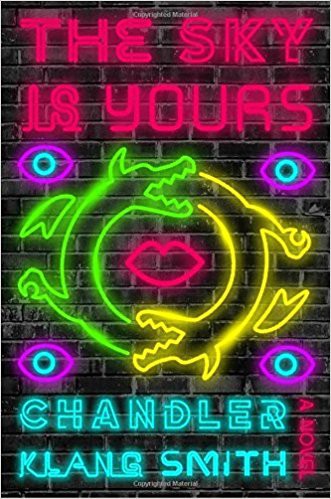
Chandler and I published our first novels (Goldenland Past Dark and Shadows in Summerland, respectively) with Canadian indie genre press ChiZine Publications. Over the years we’ve continued to reconnect in various, telling ways: I solicited Chandler for her dino-horror story “Peaceable Kingdom” in Gigantic Magazine’s “Mini-Monster Issue”; in our literary social lives, we’re two of only a few people I know who attend both mainstream writing conventions like AWP and smaller, quirkier ones like Readercon. So, imagine my delight when I found out that Chandler would be publishing her dystopian dragon-opus, The Sky Is Yours, with Hogarth/Crown early this year. The novel is a marvel: a smart, ribald and relentlessly imaginative tale about three troubled teens making their way through a fallen world of psychotropic chewing tobacco-dealers, monster cults and, yup, you guessed it, big-ass dragons. Recently, Chandler and I connected over email to discuss Jane Austen’s dystopia, maximalist world-building, and “adult sexuality, neurosis and intoxicants” in high fantasy.

VAN YOUNG: Although The Sky is Yours could be easily categorized as dystopian or post-apocalyptic, in many ways it also has the feel of a 19th-century novel. It’s leisurely — even digressive, at times — and seems to take a deep delight in the elasticity of the sentence, recalling Edith Wharton or the Brontës, perhaps. At the same time, however, it’s intensely cinematic, both in terms of theme and vision. (I privately like to think of it as a soupcon of the movies Reign of Fire and Brazil, and the novels Station Eleven by Emily St. John Mandel and We Have Always Lived in the Castle by Shirley Jackson.) In this way, it’s like 19th-century novel with 21st-century privilege of hindsight. Was this a conscious move on your part? How did you conceive of the novel when you were writing it?

KLANG SMITH: Brazil is probably my favorite movie and was absolutely a conscious influence. And House of Mirth and Jane Eyre were both books I returned to when working on my character Swanny’s arc. So you’re totally on my wavelength here.

One of my goals in writing this novel was to actually do genre — not just to reference different kinds of stories in a surface-level way, but to deliver on some of their pleasures by employing mechanisms and strategies that make them work. You could imagine this as a sort of “combining mecha” image. Each genre piece needs to function independently, but all those different pieces come together and (ideally, anyway) merge into a single kickass robot that is the novel as a whole.

The Sub-Leaser

Still, I think this does mean the book feels digressive, because the different parts of the story have wildly different stakes, paces, and tones. For instance, the first third of the novel prominently features a marriage plot. I love Jane Austen, and my goal here was to actually do a marriage plot, using some elements that fascinate me about the “Austenian” genre, so speak: witty banter (and cutting remarks), meddling relatives, the uncomfortable intrusion of real estate and financial concerns, not to mention sexuality, and a weird focus on ancestry, family reputation, and heirs. I think that Austen’s novels are among the most dystopian I’ve ever read, in terms of showing characters (especially women) chewed up by a human-made system that slots them into narrow roles. So I wanted to make that part of the dystopia I was creating, too.

I think that Austen’s novels are among the most dystopian I’ve ever read.

VY: I love the idea of Austen as dystopian, and the idea of consciously writing into genre rather than only riffing on it with the sly meta-awareness to which we’ve become accustomed in so-called “genre-bending” literary fiction. I think there’s something incredibly romantic and lively in that notion, and your novel embodies it. Because you’re right, of course — after the marriage plot concludes, The Sky shifts into something much more akin to a grotesque, picaresque adventure of sorts. A taut one! Yet even as the novel barrels forward, it never privileges plot over continuing to build its meticulously constructed fictional universe. Where do you stand on “world-building technique” in fiction — specifically genre fiction? You seem to me somewhat of a maximalist.

KS: For me, world-building ultimately serves to answer one question: what options do the characters have? Because even in the most boundlessly imaginative universe, limitations and obstacles are necessary to force characters into conflict or compromise, thus creating tension and propelling the action forward.

When we read contemporary realistic fiction, we approach it with certain assumptions from our own experience about what’s possible. For instance, we understand that a character can’t travel from New York to Paris in an hour, or throw a lavish party for free. We can often figure out subtler stuff, too, like what’s likely considered socially acceptable in the person’s subculture versus what presents a serious risk to their status quo. In other words, we go in with a strong grasp on what the character’s options are, and thus the choices they make tell us something meaningful, either about who they are or what they’re up against.

More Thoughts about Worldbuilding and Food

But when we read speculative fiction, especially speculative fiction that’s set in an entirely imagined world, the author has to explicitly establish what’s possible for the characters, usually by focusing on two sub-questions: where can people go and what can they do? This is why fantasy novels often have maps in the front — because we haven’t gone from the Shire to Mordor ourselves, the map shows us what it means to commit to that journey.

This is all way of saying — yes, with this book, I was totally a maximalist! Because I really wanted to give readers enough context to draw conclusions about what the characters’ decisions meant. Pretty early on in the writing, when I was working on the sections about Swanny’s upbringing, I realized I had my work cut out for me in this department. I wanted to establish that the Dahlbergs were aristocratic but living beyond their means, financially tied to the sinking ship of their manor estate and desperately looking for a way out…which lead to a lot of embroidering in of detail about the setting of that house in particular and Wonland County in general. Here’s hoping readers find it interesting!

VY: That’s a nice, practical breakdown of world-building, which can sometimes seem superfluous even in the best speculative fiction — though not in this book, where everything seems carefully selected and essential. The early Swanny scenes you mention were so evocative to me. Indeed, Swanny endlessly teething away in her decrepit ancestral manor put me strongly in mind of the vampire queen from Angela Carter’s “The Lady of the House of Love” (which is itself allusive to Sleeping Beauty). While Duncan’s Uncle Osmond seemed a sure match for Uncle Julian in Shirley Jackson’s We Have Always Lived in the Castle; Sharkey, at times, reminded me of any one of the gangsters from Graham Greene’s Brighton Rock. You may well be playing with archetypes here, but I found many aspects of this novel to be heavily allusive to others in this very playful, animated way. Can you talk about your book in that capacity? As a kind of allusive treasure hunt for the observant literary reader?

KS: No question, I wanted readers to discover unexpected resonances with books they already knew and loved here. It’s funny, though, because the works I used as reference points aren’t necessarily the first or only ones that get evoked. I’ve never read the Graham Greene novel you mentioned, for example; with Sharkey, I thought more about characters like Bill Sykes from Oliver Twist and Bill the Butcher from Scorsese’s Gangs of New York. But I don’t think that makes the comparison invalid — texts are constantly in conversation with one another, and lines of influence aren’t always direct.

Throughout Sky, libraries keep popping up as important settings — there are private libraries in the Dahlberg and Ripple mansions, the first place the teenagers visit when they enter the city is the public library, and Sharkey has hoarded most of the books in Torchtown for his personal collection. It wasn’t something I thought about consciously while writing, but as I edited, I realized how appropriate it was, since the book itself is a kind of library, a space formed out of other stories’ spines.

The book itself is a kind of library, a space formed out of other stories’ spines.

VY: And this applies to film, as well. The Sky is Yours is deeply cinematic, part of what makes it so accessible. What are some films (besides Brazil) that influenced how you conceived of the novel? How has the ubiquity of film — and the language of film — in our daily lives influenced the way we tell stories on the page, in your personal experience and more generally?

KS: As you know, parts of this novel literally appear in screenplay format, and the character Duncan Ripple’s imagination is heavily shaped by ads, porn, reality programming, video games, and other types of on-screen entertainment. I wanted to show how powerful, how seductive, those types of visual storytelling are. Ripple’s fantasies exist in a cinematic vocabulary; to show them any other way would be a distancing translation. When you write from the POV of a character, you have to perform their interiority on its own terms.

Ripple is drawn to a lot of shallow stuff, so in that sense I meant it as a critique. But personally, I also love movies, and they massively influence how I engage with the world. My most vivid memories unreel like films, and when I’m working on fiction, I make movies of the action in my head. I could endlessly list filmmakers who are important to me, but in addition to Terry Gilliam, the essential one is Stanley Kubrick. His obsession with detail, and his ability to go hard in the direction of whatever genre/aesthetic he was pursuing, has been inspiring me since I first saw Dr. Strangelove as a kid. I know I’ll be watching those movies for the rest of my life.

What Jane Austen Looked Like According to Forensic Science

That said, my experimentation with form is less motivated by seeking to emulate movies and more driven by a desire to do something movies can never do: to draw attention to the appearance of different types of text on the printed page. There’s sometimes an idea that, for writing to be cinematic, the prose has to melt away, make itself invisible. But I’m trying to make it hyper-visible — to tell the reader, “OK, I’m asking you to imagine this part as a movie,” and invite questions about what that means.

I love taking advantage of something that’s unique to the medium of writing, and one way to do that is to use typography and formatting deliberately, to evoke associations and response. I think that as writers, we’re competing with a million other forms of entertainment and we need to make an argument for why our narratives need to exist in a medium that requires so much active engagement and investment from readers.

VY: The Sky is Yours, like a lot of the best dystopian fiction, puts a character (Ripple) on a path of desensitization vis-à-vis porn, reality shows, and the rest. Ripple — not to mention Abby, marooned on her trash-island, or Sharkey, exploiting the disenfranchised — becomes a kind of living cautionary tale for what can happen when someone comes into full, unregulated contact with a morally decrepit culture. A debauched, overgrown test-tube baby of sorts. As you were generating the novel’s satirical DNA, were you drawing from anything in particular in our own day and age?

KS: Well, as Margaret Atwood herself has famously said, dystopian fiction is really about what’s happening now, and that’s absolutely true for The Sky Is Yours. Some of the parallels with our world are pretty obvious: income inequality, gentrification, mass incarceration, pollution, genetic engineering, and more all get referenced in highly visible ways throughout the book. I was basically performing thought experiments, asking myself, what would this tendency in our culture look like taken to an even farther extreme?

The one almost eerie, ripped-from-the-headlines connection between the book’s universe and ours is the similarity between the Ripples and the Trumps. They’re both would-be aristocratic families that have leveraged their wealth into personal branding and reality show fame; they’re both characterized by tacky decadence and despicable sexual politics. What’s weird is that I started writing this novel long before the 2016 election. I only knew Trump from The Apprentice, and as a business mogul/media impresario. But the idea he (and others like him) represented for me — that money can buy a license to manufacture your own reality, which can then be packaged and sold to others — grossed me out so much, it seemed to merit excavation in my fiction.

As Margaret Atwood herself has famously said, dystopian fiction is really about what’s happening now, and that’s absolutely true for THE SKY IS YOURS.

VY: I can certainly see the crossover between the Trumps and Ripples; I’d wondered that myself. The Ripple family — Duncan specifically — not only forms part of the novel’s satirical backbone, but also feeds into its extremely bawdy sense of humor, which I loved. It’s worth noting, however, that this isn’t always something you see in “hard” fantasy. It can either be overly chaste, on the one hand, or laughably self-serious on the other. Can you speak to the raunchy, offbeat sensibility of The Sky is Yours? Were you consciously pushing against the norms of “hard” fantasy in going that route?

KS: I do parody some fantasy tropes in this book. I’ve watched a ton of animated shows like Futurama, Rick and Morty, Apollo Gauntlet, and other Adult Swim programming that lovingly send up classic speculative premises. So that anarchic vibe has seeped deep into my brain. And I love Lev Grossman’s The Magicians series, which critiques children’s fantasy literature like Narnia and Harry Potter by injecting similar worlds with a large doses of adult sexuality, neurosis, and intoxicants.

I wonder, though: is humor really less common in fantasy than in other genres? I’m not sure if they count as “hard” fantasy, but writers like Michael Swanwick, Jeffrey Ford, and Jonathan Carroll are all irreverently hilarious. And Jonathan Strange and Mr. Norrell by Susanna Clarke — which is one of my desert-island reads, and absolutely a book that’s concerned with exploring the consequences of magic in a realistically depicted world — is peopled with grotesque, Dickensian characters that frequently crack me up. So I don’t necessarily consider humor and the fantasy genre at odds. Honestly, I think humor is just a marked choice in contemporary fiction generally. There are certainly funny “literary” authors, but across the board, going comedic comes with a risk of not being taken seriously.

I don’t consider humor and the fantasy genre at odds.

VY: Point taken! I probably just haven’t read enough quality fantasy. I’d like to break with discussing your wonderful novel a moment to touch on your trajectory as a writer. You’ve been steeped in the NYC publishing industry, and published with an indie genre imprint. Has having one foot in the world of mainstream literary fiction and one in the world of indie genre fiction affected your writing and/or identification as a writer in any recognizable way?

KLANG SMITH: I’ve actually thought about writing an essay on this very topic, but I’ll try my best not do that here.

For readers not super familiar with my trajectory: before The Sky Is Yours, I published a shorter novel with an independent Canadian press, ChiZine Publications. (The reason Sky is billed as a debut is because it’s my first book from an American publisher.) My connection with CZP brought me into more contact with the speculative fiction community here in NYC: I became close with a couple of excellent NYC-based writers they’d published — Karen Heuler and Nicholas Kaufmann — and I started regularly going to the Fantastic Fiction and NYRSF reading series. Since then, I’ve been a guest on Jim Freund’s Hour of the Wolf radio show, a panelist at Readercon, and a juror for the Shirley Jackson Awards…so I consider myself 100% a member of the SF community at this point. And I think that feeling’s mutual. I feel really supported and valued by people I’ve met through that scene.

But — you know that expression, “Wherever you go, there you are.” Wherever I go… I’m a weirdo. When I was in college, I took a course called “The Personal Canon” with the author Lucy Grealy. For the class, you could read basically whatever interested you, and then report back your findings to the group. We read eclectically, ahistorically, omnivorously, trying to dowse out the weird sources of our own pleasure. Maybe I learned her lesson too well, because that’s still the way I read. I’m never interested in a book just because it has time travel, or robots, or faeries; I’m also never interested in a book just because it’s set in suburbia or against the backdrop of the Civil War. I’m always dowsing for that underground energy, for that special vibration signaling that the book offers a really unique take on whatever it’s tackling. And I think that can make me an outlier, because a lot of readers — on both sides of the “literary/SF” divide — have much clearer preferences for certain kinds of literal content.

7 Literary Mashups We Need Somebody to Write Right Now

Every writer (and reader!) eventually encounters the worry that there are no new ideas, and that everything created or consumed for the rest of time is doomed to be a retread. (It’s especially easy to feel this way at a time when Twin Peaks and The X-Files are on the air and Ghostbusters and Trainspotting are recently in theaters.) There are a couple of ways you can go with this fear. You can dedicate yourself to chasing the dragon of innovation, making sure you’re breaking ground in a way nobody’s ever seen before — or you can really lean into it.

The upcoming book Pride and Prometheus is a stellar example of the latter approach. The premise: Elizabeth Bennet’s sister Mary falls in love with Victor Frankenstein. “Sure,” this book seems to be saying, “maybe there are no new ideas. But there are definitely two old ones.

This got me wondering: What other classic books deserve a mashup to make them feel fresh? If you’re suffering from the anxiety of influence, here are seven derivative—and yet brand new!—ideas to get you started.

Mrs. Gatsby

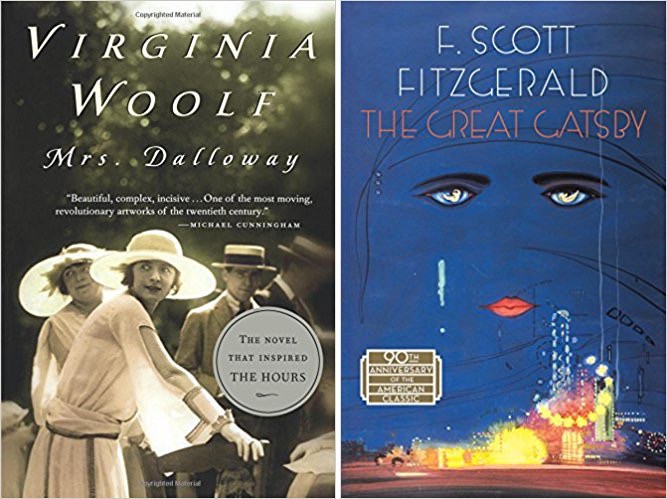
Mrs. Dalloway by Virginia Woolf and The Great Gatsby by F. Scott Fitzgerald

On holiday from Oxford, a young Jay Gatsby — post-war, pre-West Egg — runs into Clarissa Dalloway as she bustles through the streets of London getting ready for a party. Already something of an entertainment savant, he gives her advice on party planning and helps her pick out flowers. They bond over feeling ill at ease in their upper-crust lifestyles and still being in love with girls from their respective pasts. Clarissa leaves her husband and Jay never goes back to the U.S.

The Master of the Baskervilles

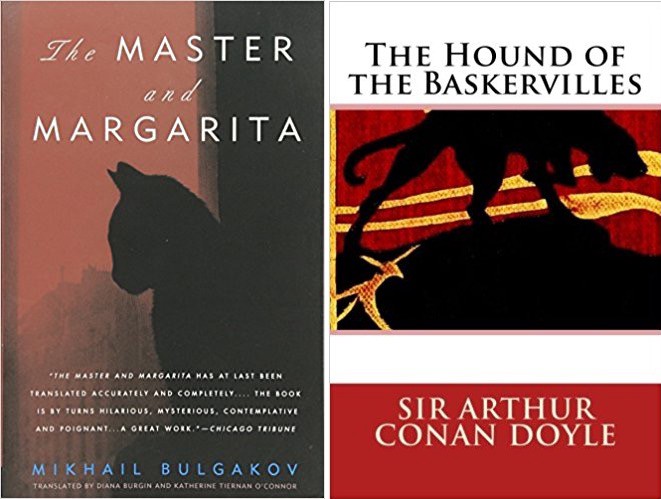
The Master and Margarita by Mikhail Bulgakov and The Hound of the Baskervilles by Sir Arthur Conan Doyle

The giant demon-cat Behemoth gets wind of a giant demon-dog haunting the English moors. Intrigued by the prospect of a canine partner in crime, he flies to Baskerville Hall just in time to see the dog unmasked as a perfectly normal animal coated in phosphorescent paint. The dog is ashamed at the revelation, which touches Behemoth’s usually haughty heart. He grants the Hound infernal powers, including speech, flight, and glowing by itself, and the two of them go on to terrorize a swath of Europe and Asia running from Siberia to the British Isles.

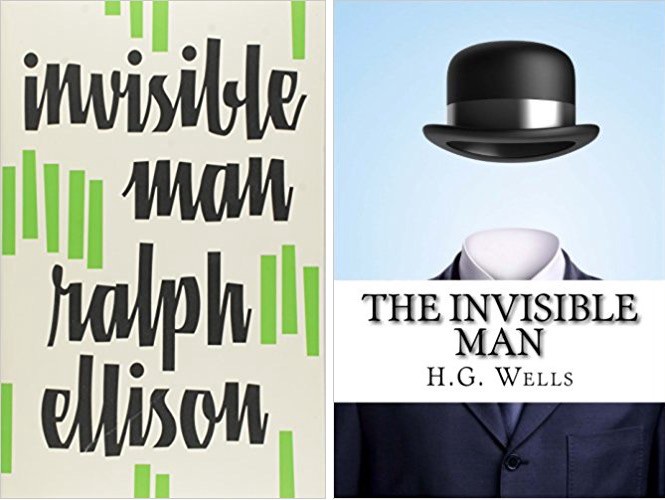
Invisible Men

Invisible Man by Ralph Ellison and The Invisible Man by H.G. Wells

Expelled from school, the nameless narrator of Ralph Ellison’s novel travels to New York in the hopes that someone will credit his letter of recommendation enough to offer him a job. While there, he is directed to a mysterious English gentleman named Griffin. Though Griffin sees that the young man’s document is actually a poison pen letter, he takes a liking to the former student, and employs him as an assistant. The youth gradually opens up to Griffin about the experience of black men in America, and Griffin, forced for the first time to reckon with what was white privilege when he had skin, offers to use his invisibility for the betterment of society. The two of them become partners in violent anti-racist revenge, with the young man as the brains and Griffin as the muscle. They are never caught.

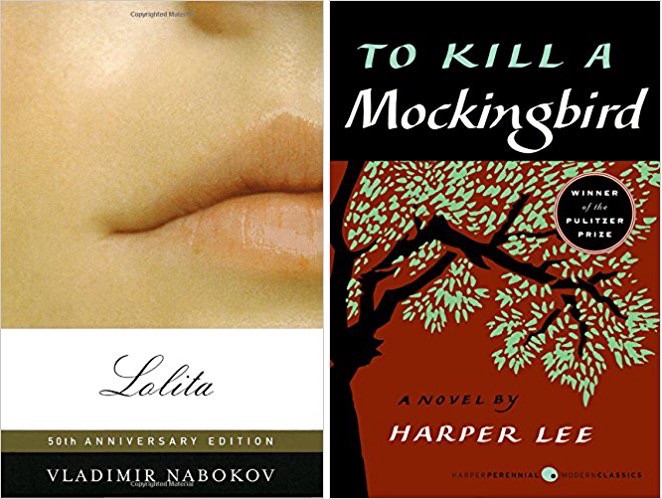
To Kill a Predator

Lolita by Vladimir Nabokov and To Kill a Mockingbird by Harper Lee

As they road trip across America, Humbert Humbert tries to avoid drawing attention to his teenage captive—but he can’t escape the gimlet eye of Atticus Finch. Finch sees the pair in a diner, recognizes that something is off, and alerts the authorities. Usually a defense lawyer, Finch chooses to represent the prosecution in Humbert’s trial. After winning the case, he adopts Dolores Haze and raises her alongside his own children, dealing kindly and frankly with her trauma and offering her unconditional support. Also, Go Set a Watchman never happens.

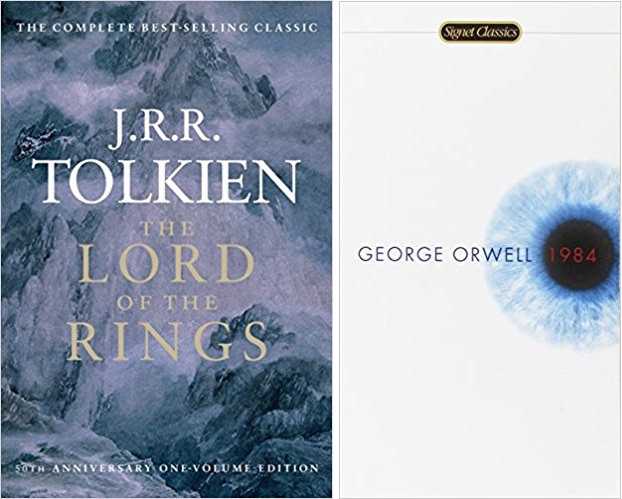
One Brother to Rule Them All

1984 by George Orwell and The Lord of the Rings by J.R.R. Tolkein

Big Brother and the Eye of Sauron meet on an alt-right message board. At first, all they’re doing is trading tips and tricks for complete domination—but is there something more blossoming between them?

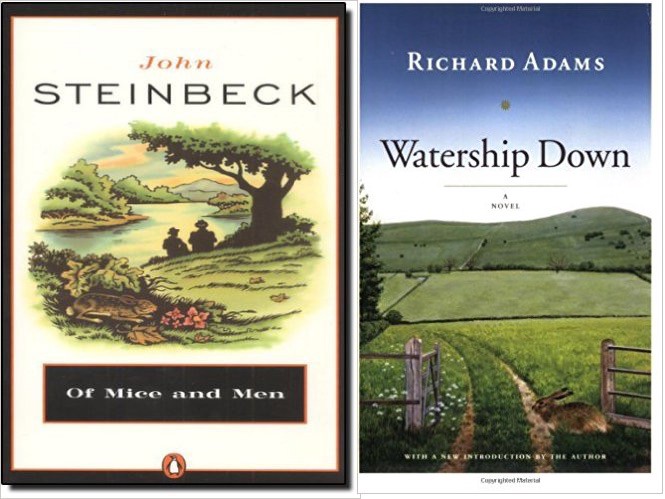
Of Rabbits and Men

Of Mice and Men by John Steinbeck and Watership Down by Richard Adams

Lennie’s reputation precedes him when he stumbles into the California field that is the latest home of the rabbits of Watership Down. (Blackberry figured out how to work a much bigger boat this time.) None of the rabbits want to let him get anywhere near them—until Bigwig volunteers. “If General Woundwort couldn’t kill me, I’m not afraid of this embleer piece of vair,” he says. Bigwig turns out to be the strongest, most robust rabbit Lennie has ever handled—and, as it happens, he really likes being petted. The two become stalwart companions until they both die of starvation because it’s still the Great Depression.

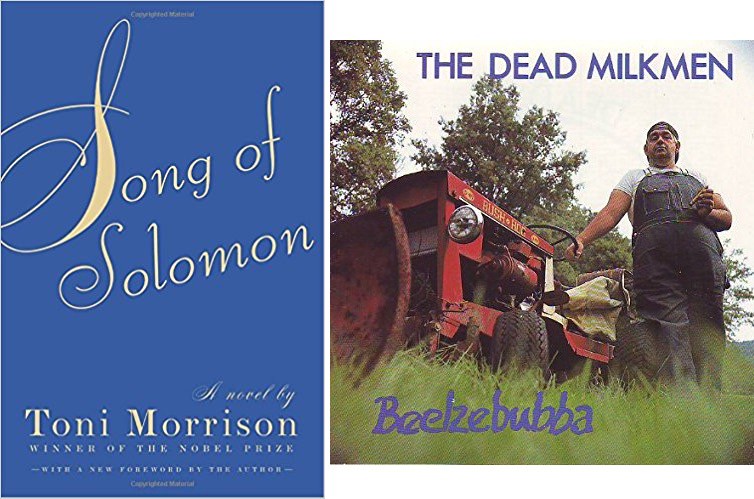
Instant Club Hit of Solomon

Song of Solomon by Toni Morrison and Beelzebubba by the Dead Milkmen

“Milkman” Dead and the Dead Milkmen leave troubled family histories behind and instead go to the Philly Pizza Company and order some hot tea.

It’s Okay to Talk to Me When I’m Trying to Read

In July of 1964, at a restaurant on lower Fifth Avenue, a woman in a black dress and pearl necklace rose from her table, where she was seated alone. She approached a man who was also seated alone, reading the paper, and ordered him to join her. He did, flustered, and she gazed at him in a way that was, according to an observer, “possessive, but good-humored.” They began to talk, and he began to relax. They hadn’t been together for more than a few minutes when the head waiter came to them and ordered the man to go back to his own table. The woman looked up at him, annoyed, and said, “Who do you think you are?” and the head waiter told her firmly but politely to go home.

Maeve Brennan recorded this entire encounter from a table not far away, describing the man as the woman’s “flattered captive.” Her account of the incident was part of her New Yorker series written under the pen name “Long-Winded Lady,” which recorded dozens of small, insightful non-events around the city. She left the restaurant thinking about the incident and the head waiter, his firm insistence on proper behavior, on public encounters in public spaces. The head waiter’s behavior seems like an overreaction, borderline rude. If the man and woman’s roles were reversed, would it have played out differently?


Recently, I saw a Twitter thread that began with someone’s suggestion for “performance art where person sits down in a public location, picks up a book, reads, and never looks at their cellphone.” One of the replies to the tweet (it’s now been deleted) was that the person doing it would have to be a man, because if it was a woman sitting alone and reading, a man would come up to her and try to talk to her, and then she would have to pretend to be on her phone anyway, to make him go away.

It’s sad how immediately relatable this is—how often I’ve known people, including myself, to have to do this to maintain some sense of privacy in public spaces, to avoid the event of men approaching us to start senseless conversation when we’re alone in public, just trying to be alone. At one level, I know this is frustrating, and I feel a knee-jerk irritation every time it happens to me. But at some other, more anxious level, I don’t want people to behave “just so” in public. I don’t want people to sense disapproval when they assert the kinds of conversations or interactions they want to have in public places.

I don’t want people to sense disapproval when they assert the kinds of interactions they want to have in public places.

Two days after the woman in the black dress left the restaurant on Fifth Avenue that summer of 1964, on a warm, rainy evening, Brennan sat at another restaurant on West 49th. She had just finished reading Time and was about to start on Newsweek when a man appeared at her side and said, “I want to know if you will have a drink with me.”

“No, thank you,” Brennan replied, “I’m waiting for someone.” She was sitting at a table for one.

“You are waiting for someone,” he mumbled, and went back to the bar. A few minutes later, two women speaking French came into the restaurant, and the man approached them, speaking in French, and began to ask if they would have a drink with him. At which point the head waiter came to him and said, “Please, Monsieur, you don’t know these people.” The man returned to his seat at the bar again gloomily.

“If everybody in the city were sorted out and set going in the right direction,” Brennan wrote later, “New York would soon be a very quiet place.”

The first thing I noticed when I read this was that she recounted both these incidents, first with a woman taking liberties and second with a man, in the same story and as examples of the same risk of New York becoming a “quiet place.” In her telling, both men and women can take liberties, and both can allow others to take privileges with them, or politely refuse.

The bigger thing of note was Brennan’s generosity towards other people. I find it moving, and I try to remember it when I find myself becoming frustrated by strange men at bars and restaurants who think that I am sitting alone because I’m “asking for” company or conversation. It’s offensive and disrespectful to assume that a woman sitting alone at a bar is only there because she couldn’t find company, and that she would be grateful for any at all. Reading Brennan’s New York vignettes, she doesn’t personally want to join this stranger for a drink; she also doesn’t want him to have to follow a certain code of public behavior or not be allowed to ask her. This difference feels crucial, especially because the stakes, for her, are about her city, about the risk of New York becoming a “quiet place”—a serious danger indeed, certainly more serious than the danger of being harassed by some man who insists on talking to me.

She doesn’t want to join this stranger for a drink; she also doesn’t want him to not be allowed to ask her.

Her love for people (including, sometimes, obnoxious strangers), is intertwined, then, with her love for the city. In our culture, we have expectations of people, maybe especially men, to allow other people their privacy in public places. It’s easy to fit those who interrupt this privacy into familiar archetypes. But we don’t usually see the sleazy interrupting men, the distracting or random or irritating conversations at a restaurant where we went to read Newsweek alone and in peace, as simply part of a larger fragmented New York rhythm—a rhythm that, mercifully, is not very quiet at all.

Brennan observed a lot of people who dined and drank alone. She watched the way they folded their newspapers, the way their raincoats billowed awkwardly, the way they moved their cutlery — and, more importantly, how they seemed to entertain themselves. I find it hard to describe how much I like to eat and drink alone, too: to sit with my bargain books at the windows of cafes and bars where bartenders often know my order already. New York’s bars and coffee shops delight me because there is so much “private” activity that happens in these fluid, homely public places. I often like to think of Brennan as my companion on these solitary nights out, when I people-watch through the window, or eavesdrop conversations on the other side of the bar, or doodle in my notebook or write letters to friends over my whiskey.

Brennan wrote that she was not a very curious person, that she did not go out of her way to explore or seek out new experiences, but I think her sharp observation was a kind of curiosity — a curiosity about people that made her not only a good observer but also a kind person, patient with people’s odd tendencies, generous in her descriptions of people that she really has immense power over, gracious about their vulnerabilities or awkwardness.

I’m new to this city. I think I will always be “new” to this city, which never really seems fully welcoming or legible. I don’t wish for these things in the cities I live in, for the chance to settle into complacency; nevertheless, it feels important to find the familiar, the human, the beautifully perfunctory, in order to feel a sense of belonging. I think this is what Brennan’s graciousness towards chance encounters, her quiet eagerness to observe, her willingness to be interrupted by strangers and by happenstance, was really about.

Brennan liked going into restaurants between 3:30 and 5 p.m., between the late lunches and the early dinners when the tables were all empty, and just sit.

“You can walk in and arrange yourself at the table of your choice, in the lavish solitude provided by the little sea of calm white tablecloths,” she wrote, “and look about you, even stare, be as curious or as indifferent or as watchful or as lazy as you are inclined to be — in other words, be yourself in a public place and still consider yourself polite. There is a great deal of virtue in feeling unseen.”

Brennan lived a transitory kind of lifestyle; she spent many, many nights in hotel rooms or in the apartments of friends who were away. When she walked into her friend’s apartment to stay for some days, the rooms, she said, seemed to know that she didn’t really “belong.” “The place has remained aloof since I walked in here with my suitcase,” she wrote. “‘We have no secrets,’ the two little rooms seem to say, ‘But we are his.’ And I think that when I leave the day after tomorrow, the same toy voice, whispering out of the walls, will cry, ‘What has been going on here? Who has been sitting in my chair? Who has been sitting in my bed?’”

This sense of alienation had to be combated, or negotiated with, somehow; in this way, the project of building a sense of home for herself, a comfortable condition around her in public where she could be herself, was her life’s work.

Brennan knew how to be alone. She transformed solitude into an art form.

Recently, on a trip back to my parents’ place in Bangalore, India, I was sitting in my favorite bar, a dingy hole-in-the-wall where liquor is sold in tetra packs and where everyone smokes indoors, at a table in a far corner and writing a letter with a pen I had borrowed from the waiter. A Maeve Brennan book was open in front of me. The waiter brought me a juice box of whiskey, and after some time the man sitting at the next table, drinking his third rum and coke, asked me, “Are you a journalist?”

“Something like that,” I replied, reluctantly looking up.

“I guessed,” he replied. He was middle aged and dressed pretty formally for someone who was drinking on a week-day morning. “Where are you from?”

I was getting really into what I was writing and it definitely wasn’t the first way I would have chosen to spend those few moments, but I responded, and after some vapid exchanges, we talked about our years living in Mumbai, about our favorite bar that had recently been renovated, where people would once huddle together with strangers on long rickety tables to make as much room as possible, watching cricket from the ancient television set while ash fell to the floor under dim yellow light. When you live alone in big cities like Mumbai or New York, fleeting relationships with strangers feel like a constancy; space is inevitably shared with other solitary people in some kind of transit through these public places. With no one permanently sharing my life, my days seem filled with the unplanned, the accidental, the serendipitous.

At one point, I looked down at my notebook, and the man said, “Carry on. I am sorry to disturb you.”

I was grateful to be let go, but as I looked down at Brennan’s book open on the table, I realized I was also grateful for the interruption. “It’s okay,” I said. “I suppose if I didn’t want to be disturbed, I would have been drinking and writing at home.”

I was grateful to be let go, but I realized I was also grateful for the interruption.

Jane Jacobs wrote in The Death and Life of Great American Cities, in her chapter about contact on city sidewalks: “Reformers have long observed city people loitering on busy corners, hanging around in candy stores and bars and drinking soda pop on stoops, and have passed a judgment, the gist of which is: ‘This is deplorable! If these people had decent homes and a more private outdoor place, they wouldn’t be on the street!’ This judgment represents a profound misunderstanding of cities. It makes no more sense than to drop in at a banquet in a hotel and conclude that if these people had wives who could cook, they would give their parties at home.”

She continued, “The point of both the banquet and the social life of city sidewalks is precisely that they are public. They bring together people who do not know each other in an intimate, private social fashion and in most cases do not care to know each other in that fashion.”

I like to think of all public spaces as some kind of extension of the physical sidewalk — spaces where the chaotic “ballet” of unplanned interaction that Jacobs described of the streets take place. People sit out in public because sometimes it makes solitude more interesting, even if many of the actual interactions we may have in public are irritating or boring or pointless. The point is that they’re unplanned.

I have in a folder of essay drafts a copy of one of my essays that my friend edited while sitting at a bar in the East Village. In one of the margins, amongst his comments, is an odd transcription of a totally uninteresting conversation about Chinese takeout that was going on next to him while he was reading my paper. I keep this because eavesdropping delights me; his attentiveness to, and interest in, a mundane conversation down the bar — not for what is being said, but simply for the sake of allowing other people and their voices to enter his concentration — delights me.

Brennan loved to eavesdrop, to make the presence of people on Sixth Avenue, in Washington Square Park, in Bloomingdale’s, at the florist’s, in the deli, at the Grosvenor Bar, a part of her own experience being in these places. She took a strange comfort in people and voices, whether she liked them or not. Watching people whose faces she couldn’t see, she said, was “both soothing and interesting. It is like counting sheep.” Similarly, listening into conversations in languages she cannot understand is also a pleasure.

“It is so nice to listen to voices without being delayed by what is being said,” she wrote.

People sit out in public because it makes solitude more interesting.

Through Brennan’s eyes, the experience of being bothered by a man at a bar where I’ve gone by myself to read and drink feels entirely different: it’s just a very real depiction of what she called “the accidental nature of our lives.” I realized that the unwanted conversations and the people who initiate them are not the point at all; I’ve started imagining they might even just be in a language I can’t understand. They’re all just accidental moments in a day or a week or a solitary New York life of unpredictability and quietly improper behavior, the kind that the head waiter at the restaurant on lower Fifth was so disapproving of. Improper behavior, of a quiet kind, seems a little necessary sometimes, if only just to make sure that we don’t all sink into a life of complacency one of the most interesting cities in the world.

I’d like to be allowed to behave like that woman in the black dress and pearl necklace sometimes, if I feel it, and I’d be very annoyed if someone told me to behave properly if I did what she did. But when I think about Brennan’s second anecdote and the waiter who pulled the man away from the Frenchwomen, I don’t think it would be less offensive if someone had to tell someone else to behave properly with me, either; codes of public conduct about behaving decently with women often have a patronizing tinge to them.


Brennan wasn’t entirely understanding of people being allowed to disturb each other in public. Once, she saw a woman walk into the Longchamps Restaurant and as she passed a group of noisy men, one of them called out to her, “Hey lady!” and burst out laughing. The woman was startled, and when she sat down she looked at her menu completely distracted and kept glancing over at the rude men until finally she quietly collected her things and walked out again, leaving Brennan at the restaurant seething. But a few minutes later Brennan found herself watching a fat woman with a satin scarf around her hair eating a creamy chicken dish with such intention and quiet focus that she was filled with admiration.

“Nothing could make her vulnerable or cause her shame or discomposure,” she wrote, “No one would ever drive her out of the restaurant she had made up her mind to dine in.” Even when there is a risk of being harassed while trying to eat out alone, both the woman who had to avoid a restaurant where men were taunting her, and the woman who was completely unfazed, are a part of Brennan’s world, and of the public life that she wants to capture. While she feels anger on behalf of the first woman, she also observes another way to be, some way to resist the shame that men would have women feel.

When I returned to Mumbai after a year away in New York, the man who runs the little tea and cigarette stall on the sidewalk outside my regular coffee shop saw me approach and opened a new pack of my brand of cigarettes without my having to ask, and said, “Been away?” in exactly the way I imagined Bill Kravit asked Brennan. There is a slow, almost haphazard way of creating a sense of belonging in cities like these. There’s something beautiful about the aimlessness of Brennan’s anecdotes, the way that so many of the characters clearly have very little to do. (“I had taken the afternoon off,” she writes in a Village restaurant, “But why, what excuse I had offered, I couldn’t remember.”) In the spirit of this languor, and this very slow enjoyment of a solitary life and all the accidental events it comes with, to be disturbed — whether by pleasantness or by rudeness — feels somewhat welcome.

Brennan helped me realize that there is a middle ground between “asking for it” and expecting to entirely be left undisturbed while sitting alone at a bar — that it’s okay, and not unfeminist, to be perfectly happy either being left alone, or having someone try and strike up conversation, whether I choose to engage them or not. There’s something special about feeling simultaneously exposed and completely in one’s own world. Sitting alone as a woman at a bar is not “asking for it,” but maybe it’s not an expectation to be entirely left alone either: it’s a tense, symbiotic relationship with my environment. My right to loiter, to take up space in public, is matched by others’ right to disturb me. One shouldn’t be allowed to negate the other.

I Spent 24 Hours Reading Last Weekend and I Didn’t Lose My Mind

When I told my husband I’d be reading all weekend, he said, “You do that anyway.” True, yes, because I hadn’t specified reading books. What I usually spend my weekends doing is reading on my phone — sometimes books, but more often Twitter. This weekend, I was planning something quite different: two twelve-hour blocks of straight-up reading — book reading — that I hoped might help me break the compulsive social media habit.

I thought it would be a manic slog, that I’d go a little crazy, that I’d have to push through to flop past the finish line exhausted. I thought writing about it would feel like some kind of gonzo journalism, like writing about trying to eat TGI Friday’s mozzarella sticks for 14 hours. I thought reading for 24 total hours over the course of two days would do something interesting and weird and a little scary to my brain.

I thought reading for 24 total hours over the course of two days would do something interesting and weird and a little scary to my brain.

I didn’t come up with this stunt on my own. It’s called 24 in 48, which is really straightforward — you read for 24 hours within 48 hours, from 12:01am Saturday to 11:59pm Sunday. I’d seen the hashtag flitting around Twitter, intermittently, for years. (It took me an oddly long time to figure out what it meant.) This year was the first time that I heard about the scheduled weekend far enough in advance. I blocked it out on my calendar, a two-day event: READATHON.

Within the first hours, I felt myself slipping into ease. Well, of course, I thought, I can read for a few hours any time. Any minute, I thought, the restlessness would set in. The first few mozzarella sticks are tasty; what happens when you hit hour six?

But that ease never went away. It deepened, settling into my bones. At first it felt like a normal Saturday, just a really good one and with a timer running on my phone. In the afternoon, my husband left to spend the rest of the day with friends. I read for a while slowly pacing my apartment with my e-reader in hand, letting my back stretch out a bit, the screen hovering in front of my eyes.

That evening brought something like the calm that comes with staying in a good hotel room — there is nothing to worry about, everything is taken care of. In a hotel room, there are no dishes to wash, no dog to walk, nothing else you should or could be doing, because anything you should or could be doing is at home, where you are not. While I was reading, I was still at home, among all the piles — metaphorical and real — calling for my attention, but I had built a firm boundary wall: Not today. Not this weekend. I’m reading. The dishes languished. I kept reading.

I had built a firm boundary wall: Not today. Not this weekend. I’m reading.

I read until after 10 p.m. I’d started in bed at 7:30. Breaks for walking the dog, for making lunch, for ordering dinner. Twelve of my sixteen waking hours, though, I was reading. That first day I finished The Amber Spyglass, read all of Alisha Rai’s forthcoming book, Hurts to Love You, and started Blair Braverman’s Welcome to the Goddamn Ice Cube. I follow Blair on Twitter — she’d be starting a 400-mile dogsled race while I was acting like reading in my cozy apartment, in my soft pants, with my mugs of tea, was some sort of endurance event itself.
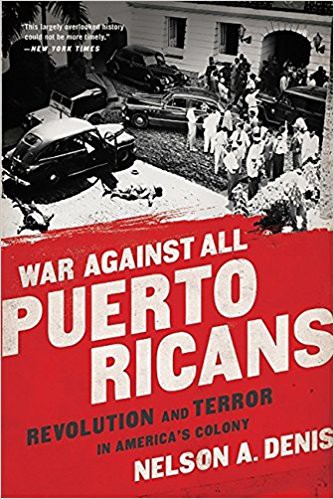
A little while ago, I spent fifteen months in a job that required me to keep up with new books — not just up with, but ahead of, reading in advance of publication so that I might be one of those people who somehow know what good new books are coming out and when. I had a few months of living on the literary cutting edge, but it always felt precarious. Reading fast enough, reading far enough ahead, reading the right books because — why, because a publicist said something convincing? I was only ever allowed to read books that were new.

When that job ended, I didn’t read a single book for six weeks, except for A Swiftly Tilting Planet. The trailer for the Wrinkle in Time movie had just come out, but I’d reread that within the last few years. (Such is the way for the books that made you — or showed you — who you are.) So I picked up the book from the series that had always eluded me in my childhood rereadings — I’d read it plenty of times, but something about it always felt murky, a world I couldn’t see. That was the only book I read in the six weeks after my job ended.

As that job was ending, too, I got an impulsive tattoo. Impulsive in that I went as a walk-in — decided on Saturday, went in on Sunday — but it wasn’t a new idea. It was an idea that had always been there, the illustration of an ant walking on the hem of Mrs. Whatsit’s skirt in A Wrinkle in Time, as she explains how a tesseract works. I got it on the inside of my forearm. I wasn’t sure why I did it at the time — my job was ending, I felt reckless, to get an impulsive tattoo and spend money I should’ve been saving — but I realized soon after that I’d gotten it to remind myself of who I am. Not just a woman who had been a girl much like Meg, smart and stubborn and out of place, but a reader who’d loved those books with her whole heart, and let them shape her.

The second day of reading was much like the first, but with a bit more back pain. From the couch to the hallway to the bed, flipped over this way and that, on an orthopedic platform of pillows. I finished Welcome to the Goddamn Ice Cube and cried. I read a whole Meg Wolitzer novel. I started reading a memoir.

I never had to push. It was never work. The strained giddiness I was expecting never came.

I slipped into a way of being I’d forgotten I had. Reading forever, reading without a horizon in sight.

Instead, I slipped into a way of being I’d forgotten I had. Not reading for twenty minutes on the subway, or an hour or two on the couch between weekend errands and chores. Reading forever, reading without a horizon in sight. Reading as a base state, a way of being. Certain books had brought me back to that place in adulthood, temporarily. But this time it wasn’t the books, good as they were — it was me.

I talked to my mom on Monday evening. She’d spent the weekend helping my sister move to a new city for a new job, and my sister had seen me documenting my exploits — using the #24in48 hashtag is part of the deal and, after all, that’s how I’d heard about this in the first place. (It wasn’t a social media detox after all.) “Marissa told me about your readathon,” she said. I told her how it went. I said, “I don’t remember reading when I was little, like, the actual doing of it. But I must’ve done this all the time, just reading forever.” She said I had, of course. This is the person I used to be. It was good to find her again.

‘Dark’ is a German ‘Stranger Things’ About Capitalism’s False Promise to Women in Power

Two months after its release, Netflix’s German-language series Dark is still something of a mysterious black box. Online communities and tinfoil-hat thinkpieces have tried to account for its obscure cultural references and to theorize its future episodes, but no one is quite sure what it all means. That’s the danger of a show like Dark, as Matt Brennan pointed out in Paste magazine, one so encrusted with codes that it ends up essentially seeming meaningless. But there’s another way to think of the show, I would argue, where its dizzying absurdity is evidence of its political, if not artistic, success. For one thing, Dark’s inscrutability demonstrates how easily cultural conversations can favor meaning-making over material action. As a case in point, in all the talk about Dark, no one has bothered to mention the show’s compelling approach to women.

I don’t think anyone, myself included, was looking for a subversive feminist angle when Dark debuted in early December. Pitched as a “German Stranger Things,” the series follows a similar formula: there is a suspicious death, an outcast youth, a missing child, and an atmosphere of conspiratorial paranoia over the town of Winden, Germany, where the show takes place. Like the Hawkins, Indiana setting of Stranger Things, Winden is beholden to an imperially standoffish government operation — here a nuclear plant, rather than a covert military research lab. But unlike Hawkins — with its desperate mother, hardboiled male sheriff, and Reaganite patriarchy — Winden’s civic and commercial figures are nearly all women, and its unraveling hysterics are all men.

Winden’s civic and commercial figures are nearly all women, and its unraveling hysterics are all men.

There’s Katharina Nielsen (Jördis Triebel), the principal of the town’s high school; Charlotte Doppler (Karoline Eichhorn), the just-the-facts chief of police; Regina Tiedemann (Deborah Kaufmann) who owns and operates the elegant Waldhotel, and is also the “heir,” through her missing mother, Claudia Tiedemann (Lisa Kreuzer), to the highest management position at Winden’s nuclear plant. Opposite them is the motherless Hannah Kahnwald (Maja Schöne): the youngest, poorest, and shrewdest of the group, as well as a ruthless homewrecker supposedly mourning her dead husband. Though not the protagonists of the series, these and other women carry much of the show’s emotional weight, while also performing much of its symbolic work.

At no point in the show does it seem like this is a story about these women. But perhaps that’s the advantage of Dark’s baroque symbolism, and of the theories it’s inspired. It manages to mime the way that women’s disproportionate suffering under capitalism is muffled, crowded out, and taken for granted, as a side effect of a system which ultimately only works for those in power. Through the stories of Winden’s women, Dark slowly builds its bitter argument like a German sentence, with its verb falling at the end. For anyone who isn’t a straight white man, upward mobility isn’t enough to dismantle inequality, when the actual social infrastructures we live with — our economies, our discourses, the very concept of a nuclear family — are compromised, aimed to protect and enshrine the already powerful.

Dark begins in 2019, and time is almost up for Winden, which is at the end of a 66-year era of state-subsidized prosperity: its nuclear plant, the holdout of a nationwide phase-out, is set to close in 2020. Getting to a nuclear-free future, however, may not be possible for this small West German town. A highly classified accident at the nuclear plant thirty-three years before — in 1986, around the time of the Chernobyl disaster — has trapped Winden in a time loop, with 2019 as the latest possible date. The result of a twist in space-time, the loop has produced a portal inside Winden’s ancient cave system, where one can slip backward or forward — but only thirty-three years in the past, or thirty-three years into the future, with 1986 standing in the middle. Apparently in sync with the 33-year “solar-lunar cycle,” Winden’s loop is more a cycle of carnage than it is of cosmic renewal.

The mutilated bodies of children appear in the woods every 33 years: their eyes burned away, eardrums destroyed, bodies dressed in clothing from decades long past — and each of them decorated with a red-string necklace. In the first few episodes of the series it happens again, with some of the town’s women among the few to recognize the eerie symmetry between 2019 and 1986. Soon, Katharina’s own son, Mikkel (Daan Lennard Liebrenz), disappears into Winden’s wormhole, to 1986, sending her unfaithful husband Ulrich (Oliver Masucci) into a slow and excruciating downward spiral. As the three time periods intersect, chaos descends on the Windens past and present, as erstwhile protagonist (and poorly realized character) Jonas Kahnwald (Louis Hofmann), Hannah’s son, tries to set the flow of time straight again. Enigmatic figures pop up, dressed as Catholic priests, or bag ladies, or black-hooded vagabonds, raising so many questions that the peculiar situation of Winden’s women may not be the audience’s priority. Though perhaps it should be.

The intriguing thing about Dark’s time-jumping anomaly is not the many philosophical paradoxes it evokes. What’s intriguing rather is the opportunity it offers to see the changing economic power of women over the decades, across the lifespan of late capitalism. From past through to present, each generation of women works harder — emotionally, as well as economically — for the sake of men who seem to do less, and absent themselves more. For all their hard-won equality after sixty years, in the near future of Dark women’s economic parity with men has apparently not brought any reduction in their share of emotional labor.

In the near future of Dark women’s economic parity with men has apparently not brought any reduction in their share of emotional labor.

In the 2019 storyline, after a high school student disappears, Katharina must raise her family, manage a crisis of confidence among the parents as the school’s principal, and protect her children from possible abduction. Her husband, Ulrich, does nothing to make these multiple burdens any lighter. On the first day of school, in a representative scene of a chaotic family breakfast, Katharina deftly manages her unruly children while making breakfast, forced to set aside the other stresses of her day. Ulrich — a detective assigned to the missing persons case — arrives late. He’s spent the morning sleeping with Hannah, blaming an abnormally busy line at the bakery for his lateness, and presenting Katharina with fresh bread.

Charlotte, Ulrich’s boss, has her own unhappiness at home, though it’s unclear whether this stems more from the emotional instability of her unfaithful husband, or from her intense commitment to a police force thrown into indefinite overdrive. Either way, she overcorrects at home, adopting a ruthlessly procedural approach in raising her two daughters, one of whom is deaf. Her unyielding industriousness and imperious attention to detail may also point to an unresolved imposter complex at work — not caused by her exceptional competency, but simply by the fact that she’s a woman. Even in 2019, when she outranks all the male officers, she never presents an opinion without hard data, and entertains no vacuous “hunches” or “feelings” from her hardboiled (mostly male) detectives.

Indeed, Charlotte and all the other women in the series display a surgically precise attention to detail, even in non-professional situations that don’t necessarily call for it. While their mastery is admirable it is also a defense mechanism, in a world which demands that women couch their opinions in the wisdom of other people before they can dispense it — a standard that’s rarely applied to men. Yet even when a woman has made the numbers work — when she has won every conceivable contest of wit and skill — on reaching the finish line she may find that the rules have changed beneath her feet. The lesson of Dark is clear. In the workplace, in the bedroom, in the systems of economy and social discourse, it has never been about knowing and playing by the rules. It has only ever been about those who hold the authority to make and to break them.

One of Dark’s women discovers this the hard way, in perhaps the most emblematic storyline of the entire series. During a sequence set in 1986 we see Claudia Tiedemann traveling to work while preparing a speech — a little too made-up even by the loose standards of the eighties, as if she were newly indulging a femininity that’s been repressed during her corporate climb. But now she has reached the top, and will soon begin her tenure as Winden nuclear plant’s first female executive. In the backseat sits her daughter, Regina, having Walkman-ed herself into silence as Claudia berates her through the rearview mirror. Understandably, she resents her daughter’s indifference to the occasion, and all that it means.

Arriving at the plant she hastily reviews a dossier of previous years’ data, arming herself with the clearest numbers before she assumes her new role. But all of it is off, diverging wildly from the published numbers that have allowed for the survival of the state-funded power plant. Outraged, she confronts Bernd Doppler (Michael Mendl), founder and retiring operator of the plant, about the falsified data, and is blithely dismissed by him as naïve. There are echoes here as elsewhere of the European debt crisis, and of the frequent accusations concerning state fraud that have been hurled at, among others, the Greek government. The message is that falsification and deceit are not failures unique to any one state or organization, but activities of capitalism’s innate self-preservation.

The message is that falsification and deceit are not failures unique to any one state or organization, but activities of capitalism’s innate self-preservation.

“Fear is the worst enemy of progress,” he tells her, making it clear that the cold, hard facts Claudia has learned to master and strategically deploy have never been about demonstrating a command of the relevant knowledge. They have only been cudgels, used to validate the intuitions of whichever man was in power.

Like Charlotte, who singlehandedly manages the police department as Winden descends into paranoia, and Katharina, who holds together both her family and the distraught high school while her husband’s infidelity destroys their marriage, Claudia bears both the economic and emotional weight of her new and incredibly precarious situation. She will be responsible for guiding the town into the future through the dark, motivated only by a belief that what is good for the gander will also be good for the goose — and once it’s done, that there will be resolution, and peace, at home.

Claudia’s belief is misguided, but having been based on Bernd’s transparently capitalistic advice, it would be unfair to accuse her of poor judgment. To do so would be like accusing the mythical Greek princess Ariadne — whose presence looms, consistently and explicitly, throughout the series — of bad judgment, when in fact she was the victim of an agreement likely made in bad faith. After arming the Athenian hero Theseus with a spool of red thread, so that he can remember his way out from the Minotaur’s labyrinth, she engages him to marry her upon his victorious escape. Theseus obliges, but not too far into their happily ever after he neglects Ariadne, leaving her to die alone on the island of Naxos, while he consolidates his power back in Athens. In this perverse irony, it’s Ariadne’s own efforts to help Theseus remember — to help him preserve himself — that actually enable him to forget and abandon her, the epitome of women who are compromised by their emotional labor.

Fittingly, the princess’s story and iconography abound in Dark, conveying the moral entrapment of women in a capitalist society. Artistic depictions of Ariadne and of her father’s sadistic labyrinth appear often, many of them found inside the room of a mysterious hooded man who is a guest at the Wald Hotel (revealing his identity here would be a spoiler). Katharina’s daughter, Martha, also plays Ariadne in a school production of the myth, dramatizing the goddess’ tragic, complex story. And as if inside the Minoan labyrinth, Jonas Kahnwald finds the way between Winden’s timelines by means of a red string — the color of string Martha/Ariadne hands to Theseus in her play, and also the string that has been looped around the necks of the mutilated children found in the Winden Forest.

What are we to make of a thread that marks the way, and simultaneously distinguishes the bodies of those who’ve been lost? As with Ariadne’s thread, it represents both life and death, both memory and forgetting, and through this sets up the notion of an absurd and unresolvable conflict.

After her initial appearance Claudia disappears from the series, only to return in the final episodes, aged and presumably more radicalized. We come to find out that she has traveled through time to set in motion an event that will free Winden from its time loop — or at least that’s what she thinks. As we learn in voiceover from the series’ most sinister character, Noah (Mark Waschke), Claudia’s plan to liberate Winden is what actually creates the time loop in the first place. Like Ariadne, she has spooled the thread that will be the means of her own unraveling. And, like her namesake St. Claudia as well, who hears the voice of God in a dream and cautions her husband the Roman judge to spare Christ from crucifixion — unless, as some legends suggest, it was actually the voice of the Devil she heard, trying to prevent Christ’s sacrifice and man’s salvation. When Dark comes to a close at the end of its first season, this line of thought persists: Is there any way out? Will even our well-meaning intentions ultimately doom us?

There may be a way out, but the lesson of Dark is that by merely changing the bodies of those who manage our institutions — shifting ownership of the tools of capitalism, while still preserving capitalism — we will not preempt its cyclical terrors from visiting us again. As the women of Winden come to learn, equality with men under capitalism will not be equality at all. Like Theseus it’s a deal for parity and reciprocity made in bad faith, where men can still refuse to share the emotional labor or to play by the rules.

What Dark unquestionably succeeds at is in conjuring the terror and frustration when we realize too late that we’ve been misled — when the goalposts we aim at are constantly moved. Underneath the Stranger Things surface it offers a timely look at the deceit inherent in a capitalist patriarchy — a system where the ultimate power still lies in the hands of straight white men.

7 Books to Keep Your Focus on Puerto Rico

Four months after Hurricane Maria, 31 percent of Puerto Rico is still without power; in some places, electricity may not be restored until spring. But you know the expression “good enough for government work”? Well, here it is in operation: FEMA has decided that 69% (D+) recovery is perfectly adequate. The humanitarian crisis has passed, the agency says, and the Americans of Puerto Rico need to get back to buying their own groceries instead of <extremely Republicans voice> relying on handouts.

But if the U.S. government is turning its back on its citizens, that just means that the rest of us have a greater duty to pay attention. For Americans outside Puerto Rico, call your representatives, donate to local aid efforts, and pick up a memoir, story, poem, or nonfiction book by an author of Puerto Rican descent writing about the island. For Americans inside Puerto Rico: We’re still listening to your voices, on and off the page.

When I Was Puerto Rican by Esmeralda Santiago

Santiago’s memoir is in many ways a love letter to Puerto Rico—even though much of the life it describes takes place elsewhere. When I Was Puerto Rican, the first book of a three-part autobiography, explores Santiago’s connection to her island childhood, while also taking an unsparing look at her experience making the transition to New York as a young girl.

Mundo Cruel: Stories by Luis Negrón

The nine stories in Negrón’s funny, wrenching debut collection focus on a queer community in Puerto Rico. It won an award for gay fiction from Lambda Literary, which called the book “a study in verve, sass, and voice, peppered with a dash of spirituality.”

War Against All Puerto Ricans: Revolution and Terror in America’s Colony by Nelson A. Denis

As unconscionable as it is to deny aid to families who are suffering after a natural disaster, this isn’t the U.S. government’s worst offense against Puerto Rico. Denis dives into a tumultuous time in the island’s history, including a failed insurrection against the mainland, an attempted presidential assassination, covert CIA operations, and the first ever U.S. bomb strike against U.S. citizens.

The Ladies’ Gallery: A Memoir of Family Secrets by Irene Vilar

Vilar’s memoir is a personal reflection and an illumination of family secrets, but it’s also a fascinating work of political history. From a psychiatric hospital, Vilar delves into the legacy of her grandmother, Lolita Lebrón, a Puerto Rican political activist who served 27 years in prison for opening fire on the U.S. House of Representatives in 1954.

Song of the Simple Truth: The Complete Poems of Julia de Burgos by Julia de Burgos

Julia de Burgos is one of Puerto Rico’s most important poets, and this collection, printed in both English and Spanish, is the only complete anthology of her poems in either language. The 200 poems cover the usual personal and emotional topics, but also reflect de Burgos’ feminist and revolutionary sensibilities.

Queer Ricans: Cultures and Sexualities in the Diaspora by Lawrence La Fountain-Stokes

Anyone who’s watched RuPaul’s Drag Race knows that there’s a major Puerto Rican contingent in drag—but what else do you know about LGBTQ culture among people of Puerto Rican heritage? If the answer is “not much,” this scholarly work may be for you (and if the answer is “I’m part of that culture,” it almost certainly is!). Queer Ricans focuses on Puerto Ricans who have left the island and resettled in large U.S. metropolises, creating communities based on shared background and sexuality.

Silent Dancing: A Partial Remembrance of a Puerto Rican Childhood by Judith Ortiz Cofer

Partially essays, partially poetry, Cofer’s memoir of her childhood moves between forms the way her military family moves between Puerto Rico and New Jersey. It’s a meditation on straddling cultural lines that also straddles genres.