


My dad was cremated in Birkenstocks. He wanted his toes to breathe. The sandals were brown, size nine, shaped after his stride. Many years later, I picked out a pair—to find my steps without him.
I can still smell him on me. Manuel, Mané, dad. I remember him well, or at least I think I do. My memories and home videos look the same; I don’t know if the footage is from my head or from the tape. Records of our life were important to my parents because their own undocumented childhood lacked evidence of their existence. Writing our heights on the walls, keeping letters, hanging our little drawings around the house. We were modern cavemen leaving our marks in a twenty-story flat apartment in São Paulo. It felt important at the time.
As a family, we adored having our picture taken; it was fun. It wasn’t just special dates, birthdays, and parties—my parents liked filming our day to day and, later on, so did I. When I was six, dad hesitantly handed me a camera the size of my face. I filmed my parents dancing; dad asked if he could kiss my mum and, with a giggle, I allowed it. “I want to film everything,” I said.
He looked well then. I remember combing his full, oily hair, admiring the shades of white and grey. I enjoyed giving him a massage after a long day’s work; I am not sure I ever did a very good job at that, with my tiny hands, but he seemed to see the benefits of it. Everything I did seemed to please him.
It was a big flat for a small family. We were upper-middle class then, later demoted to middle-class after we were left in debt. However, in the early nineties, my dad finally had the money to buy a big flat; he didn’t have the time to decorate it though, working forty-hour weeks and weekends. And since my mum would rather read The Iliad than Home Digest, our flat was mostly bare.
We lived on the fifth floor, a strategic choice. “We can still walk up the stairs if there is a power cut, it’s not that high up,” my dad said. Practicality wasn’t very much like him, but when it came to us, he had come to think differently.
It was our own private gallery, our playground, our stage. My brother and I would put on shows; I distinctly recall our own version of Hansel and Gretel in reversed roles. My dad had done his fair share of street theatre and painted his face with sticky makeup. He’d gone out to celebrate Carnival, wearing feathers above his head. He was a moving party, taking people with him wherever he went. When I find myself on the dance floor, I think of him and the moves that found their way through my veins.
He was curious about the world, the people living in it, about art and food. Once, he brought home microwave popcorn so we could try this new culinary invention, fresh from the supermarket shelves. We didn’t have a microwave at the time. The package just sat there, unpopped, as evidence of his enthusiasm for novelty.
When I came around, the father-daughter relationship was completely new to him, and he was determined to excel at it.“He was crazy about you,” my mum said, “You were his princess, his world.” My mum tells me it was a different story with my brother Gui; he had a mental breakdown when she was pregnant with him. My dad never had the best relationship with his father, and he was terrified of failing his own son.
My dad was a storyteller and he made sure he’d narrate a better life for his children.
He never got to meet the man Gui grew up to be. My dad was everything his own dad wasn’t to him, and if there is anything as too much love, he was guilty of it. Because, like the paltry food on his plate growing up, affection had been scarce. My dad was a storyteller and he made sure he’d narrate a better life for his children.
“Papai,” dad, was my first word—possibly as a result of my mum repeating it all the time: “dad will be home soon” and “here is daddy.” I don’t know what my brother’s first word was, but I hope it was “mum”—you know, to make things fair. But life is not fair, I learned at ten. João Manuel was many things: a son, a brother, a dad, a partner, a friend. He was sick. He had no idea then.
It must have been 1998, not even fifty at the time, and one day, he fell flat on his face. He was jumping over a rope in the garage and his foot didn’t move; it stayed there, against his will. Rebel leg, his body was organizing a coup against him. He thought “cancer” because dad always thought things were cancer. He got a cold, it could be cancer, sore throat, it must be cancer. His older brother had died of cancer, his father figure, his best friend. The man who registered him at school in Brazil when he was twelve years old, he owed his education, his life to him. He passed before I was born; I never met my uncle, the man who helped my dad become the man he always wanted to be.
My dad’s leg started shaking and he couldn’t hold on, he was losing his grip on things—and on reality amongst them. It was cancer—it had to be—because he knew cancer and you can’t predict what you don’t have a word for, what you haven’t heard of before. Once you have a name you have a meaning, the world around you makes sense. Even if the news is bad, you want to know what to expect. The unknown is too scary to bear.
Amyotrophic Lateral Sclerosis. My parents hadn’t heard of it; most people hadn’t.
Amyotrophic Lateral Sclerosis. My parents hadn’t heard of it; most people hadn’t. What did it have to do with his leg? In a pre-internet world, it was a lonely fight. There were no forums or chat rooms then; we didn’t know anyone else who suffered from ALS, nobody was raising awareness for it, there was no ice bucket challenge.
“He had what Stephen Hawking had,” I would later tell my friends. And now that Stephen Hawking is dead, I wonder if I’ll stop having a shortcut to describe what my dad had. Because I could see in people’s faces as soon as I mentioned the scientist’s name, that they knew what it meant to have ALS. At least they knew what it might look like; I could place a visual in their head just like that. I never meant to cause distress to anyone, but that mental picture helped them understand my state growing up.
They were told he didn’t have much time, that it moves fast; he wanted to find a stop sign—he wasn’t ready for our life together to end. He started making plans. The lessons he wanted to teach us, the things we should do, the places he wanted us to see with him before it was too late, before he couldn’t follow us where we needed to be. The hourglass had been turned and I could see time trickling down; the grains were falling too fast.
A year into the disease, he decided we were going on a holiday; he knew it would be the last. Growing up in Brazil, we were used to going to the beach on summer breaks. We’d make sandcastles, eat ice cream. I remember sitting on wet sand, picking up the heavy liquid with my hands and pilling the blobs like blocks. We’d make them close to the water, to get the perfect consistency for our project. As the day went on, the sea would get closer to us and the waves would take our work away, returning it to the ocean, its original place.
The island my dad came from was made of rocks, the ones that you struggle to walk on. In Brazil, he liked feeling the sand touch his feet, “natural physiotherapy,” he used to joke, instructing us to take off our flip flops and feel the ground beneath our feet.
Me and my brother would go in the sea with my dad, as my mum watched us, waving back. She didn’t know how to swim, never has. She signed us up for swimming classes from an early age, “I won’t be able to rescue you, we’ll all drown if I jump in. You need to learn how to fend for yourselves.”
I remember when my dad taught me how to float, he put his hands under my back, and I looked up at the clouds, mesmerized, like something magical was happening inside. And before I realized, he had taken his hands away and I was floating on my own, looking at a changed sky.
We went to Florianópolis in 1998 when I was 10—my brother and I had never been on a plane. I looked down as São Paulo became a blur and the people turned into ants; everything seemed so small; I wanted to be small like that.
I had never been to the south. I inhaled the breeze; I didn’t know you could be cold at the beach. We moved, leaving our footprints in the sand; he held his arm without looking behind, not wanting to glance at the past.
Having been born on an island, the beach felt like his natural habitat, the taste of salt that permeates everything. The beach felt like home to him, and he wanted to experience that with us, even if we were too young to understand the complexity of the experience.
All that water in between was what united his two homes, us and him. Now he was preparing for a crossing—the final one. He always carried change in his pockets, maybe it was to pay Charon his fee.
On that trip, we went to an “all you can eat shrimp” restaurant. My brother was addicted to those things—we had grown up on seafood. By that stage, my dad had already started struggling with the cutlery. He got his money’s worth and spent the night with a stomachache.
Was he thinking of his last meal, when he’d stop being able to eat solid food, being fed via a tube? He had grown up poor and ate mostly potatoes. Now he was memorizing textures and tastes, saying goodbye to them like old friends.
There is a picture of us with my dad on that trip, fighting the wind on the bottom of the dunes. You can see my dad’s hand at a weird angle, because he had already lost most of its movement by then. We seem to be having fun, trying to move forwards as the wind blows us in the other direction. We fought so hard, for so long.
My dad is posing in a way—almost upright, but not quite. His left arm hangs limp, like an anchor at his side. He wears sunglasses, protecting him from the sand being blown into his face. His mouth is agape, shouting something at the camera—words flying like grains of sand in the air. He is aware of the frame, aware that this will be amongst the last pictures of him standing on his feet. He wanted it to be light and fun, like he was. He wanted that image to tell a story, and it does. It tells the story of a man who loved his family so much he crossed an ocean to be with them; not the family who raised him, the family he raised himself.
We walked up the dunes afterwards, my mum, my brother and me; dad stayed behind, it was too steep. It was just the three of us and that’s how it would be for many years to come; we might as well get used to it. From the dunes, I could see him waving at us from down below and I wondered if, when this was all over, he’d be looking down on us.
That day, my mum lost the car keys in the sand, and we had to wait around for a spare one. It was funny, no one was mad, we were just happy to be there—we didn’t want it to end. We’d get used to waiting in the long run, waiting for a cure, waiting for a treatment, waiting for an answer, waiting for death. We didn’t want the keys to arrive; we wanted to stay there; we wanted to keep him longer with us. I left part of me on that patch of sand.
We ran around; we ate ice cream; we touched the water with the tip of our toes. It was too cold for a swim. But we would jump the waves whenever they approached us, making a wish every time they came near, like we did on New Year’s Eve. I knew what I was wishing for every time my feet left the ground.
I believed in everything at the time, in all the Gods and rituals one could think of. Not believing meant giving up. And that’s how I was brought up—we don’t give up on those we love.
It was bittersweet when the keys arrived; we all wanted to go home, but home was slowing leaving us, like the ocean retreating. We saw the sky turn a shade of orange, then pink, fading into a light blue and then dark. Pitch black. We could see the stars like that, shining so bright.
As a family, we had a habit of saying goodbye when leaving a place: goodbye, sea; goodbye, tree; goodbye, sand. My parents wanted us to acknowledge the experience, to cherish it. My mum was always very good at letting us know when to say goodbye, so we wouldn’t regret not taking the time. Goodbye, Florianópolis, I said, waving goodbye; waving at him from inside.
Not long after we came back, his appetite started to fade, and the ability to eat and the shape that comes with it. The slurring of the words, the slow pace. His routine started to move in slow motion as the disease progressed. I looked at him on his chair, a skeleton of a man—how did we get there? He refused to spend the day in bed. He preferred the commute, from bed to chair. I think he thought it was too early for that, to spend the day lying down; he wasn’t dead yet.
His olive skin started to gain a new shade of white, with sickly splashes of yellow. He’d look at the sun—he loved it so much. The sun had been a constant in his life; in Madeira, it was always there, warm on his face while he stepped on grapes to make wine. He hadn’t lost it when he moved to Brazil, where it is twenty-five degrees for most of the year. And now he looked at it outside and he couldn’t walk up to it. Most of his days had turned into that, just staring at the things around him, out of reach.
When I touched his arm, a shiver went down my spine, the elasticity of the muscle gone; all that was left was flesh, fighting to hold on to his bones. I could see the ribs under his chest, sometimes even sticking out from under his shirt. Were they trying to flee? His body was not a hospitable environment anymore; his limbs must have felt foreign to him, an unrecognizable shape. Never had I witnessed body and mind detached like that; both parts were my dad, but I found them hard to reconcile. The man on the chair was not the man I had grown up with, but I knew he was there—perhaps locked inside his own mind. I was only 11 as he got sicker and sicker, but kids learn fast how to adapt. Eventually, I got used to his new shape and the sounds he would make; I would mimic them, trying to communicate. I’d open my mouth and say, “aaaaaa,” and we would laugh.
Who was supposed to guide me now?
I remember kissing his head and not recognising the man I had met, the man who raised me. I remember dancing on his feet, moving from left to right. It had been long since I had last stepped on them. Who was supposed to guide me now?
He’d shrunk in those two years; the disease was overtaking him. And it was our job to remember how we used to be. His essence never left, and only now can I acknowledge that, because back then, it was easier to split him in two—before and after his illness. Perhaps it was more palatable to feel like I was losing him in installments; that I could say goodbye to each part as they left. Bye, legs; bye, feet; bye voice. Stalling for as much as I could, dragging my feet, like him.
His white t-shirt was constantly covered in food while he could still eat it. I can’t even remember how often my mum had to change him; I know it was an arduous process. To be fair, everything had become some sort of enterprise, actions that we take for granted due to our functioning bodies had been outsourced to my mum, my grandma, and a nurse. They were in charge of his bladder and his stomach. When my parents got married, he’d promised to give my mum his heart; she took all his organs onboard. She would never have said “no,” to him.
“Elvira,” I’d hear him say under his breath, calling for my mum. I don’t know when he stopped calling her by “Virinha,” her nickname. I don’t remember when he stopped calling her altogether; the movement in his eyes replacing those words. Can you imagine never again hearing your name being called in your soulmate’s voice? Silence echoing love. Because I think that’s what my parents were, each other’s soulmates. It has always been a choice; love had not been bestowed upon them. They woke up to next to each other every day and decided to stay.
“Yes,” “No,” “water,” “move”—he blinked with his eyes. The doctors showed us a system, a cardboard paper with all the letters and key sentences; mum would patiently write it down, to make sense of his needs. He had studied journalism at university, but now his life was reduced to key words. That board full of letters with hidden sentences that he could hardly put together. His eyes did all the work, his body immobile, his mind at full speed.
My mum told me once he was alive because of us, because he loved us so much. I cried because I wanted him dead, because I wanted the pain to stop, because I loved him back. Eleven years before, she had said, “Till death us do part,” and it did.
One day, he stayed in bed; he didn’t want to go to his chair, whatever force of will he still had in him had left. We went to see him in hospital for the first time, even though he’d been there before, many times. My mum wanted to shelter us from that experience, from seeing our dad in a hospital bed, plugged to tubes, the smell of morphine everywhere. She had spared us the sight of that, but we were there now, for the first time, and the last.
We sat near his bed and told him about our days; he wanted to know how it went. We talked about plain things because everything else was too big, because plainness is the fabric of life. “How was school?” he asked using his eyes.
I can’t remember saying “I love you” when I left, but my mum told me later that I had. I hope that’s the case; if not, I also know he knew I loved him anyway. There is a type of love that doesn’t need to be said; I didn’t need a piece of cardboard for that.
I remember my mum and my aunt taking us into the living room, knowing that the minute we sat down, it would be the end. “He is gone,” my mum said, and my aunt started crying beside her. My mum told us how much he loved us but that he couldn’t go on, and the stone that was bringing me down was lifted somehow. They gave us some space and we went into our separate rooms. I didn’t want to talk—I wanted to move. I found my swimsuit buried inside my wardrobe; the smell of chlorine ingrained in it. How do children grieve? They swim, I suppose—upstream.
The pool had been our happy place, and I don’t remember visiting it much while he was ill. Perhaps I thought it’d be disrespectful towards him, to inhabit a past he could no longer access. Every day, as I walked past that swimming pool, I was reminded of what we once had.
There is a video of us, from when I was seven or eight; we are in the pool with my dad doing flips, swimming to him and back. He’d instruct us on how to float; he would offer his hand. He’d push us like that, convincing us to do what we were afraid of; making sure that we knew that we could do it on our own—that we wouldn’t drown without him there.
My dad died on a Thursday. It was the 12th of October—Children’s Day in Brazil—and kids all over the country would be receiving presents from their parents. Even at that age, we couldn’t ignore the irony of the event—what had been our “gift.” Childhood slowly drifting away.
Holding a towel, I knocked on my brother’s door. He didn’t need much convincing; he too was lost. We had waited in that in-between place for so long that pain had become our identity; by the time we left it, we’d forgotten who we were.
The pool was empty, most kids were still in school, and we wouldn’t have to share that square. We moved around in calm and warm waters, unlike the ones we actually lived in. We had to keep swimming; that’s how we’d survive, the ones left behind, otherwise we’d drown.
I dipped my toes—the water was warm—and I slowed myself down. I felt like a tea bag, my flavor dissolving, thoughts leaving my head so that the water could hold them. I did underwater handstands; I swam from one side to the next. I wanted to be physically tired—I wanted my body to match my head. I observed the wrinkles on my fingers: the passage of time.
I let my body sink, holding my breath for as long as I could. I opened my eyes under water and saw the world underneath—blurry, green. With empty lungs, I came up for air. My eyes stung; it wasn’t the chlorine that made them red.
Exhausted, I let go, allowing my back to reach the surface of the water. Floating felt like being on the cusp of something—like life and death. Not quite water, not quite air. The densities being almost a match.
That day, swimming in the pool, I felt my dad’s hand leaving my back; I had to float by myself now. And I managed, somehow, because he taught me how. My mum looked down at us from the fifth floor, the one my dad had long lost the legs to climb to. She waved and we waved back—at her, at the sky above our heads.
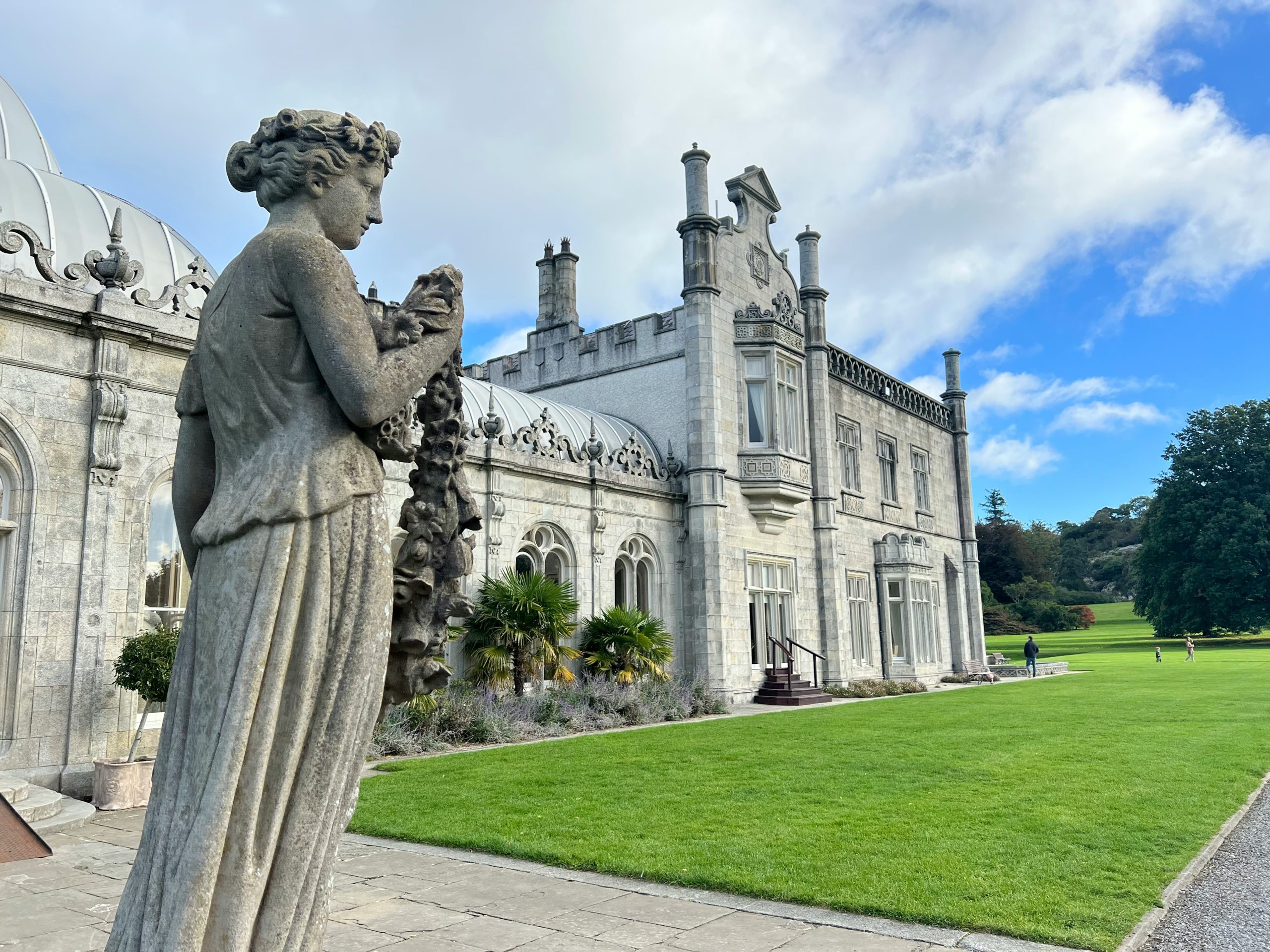
Big houses are a feature of Ireland: our countryside is dotted with these mansions—or at the least their ruined remains. The role of the Big House—a specifically Irish term meaning a rural country mansion—charts a history beginning in the 16th century when the Protestant ascendancy began building these grand houses and through to their decline around the time of Irish independence. They were literally ‘big’ but also as Elizabeth Bowen writes, “have they been called ‘big’ with a slight inflection—that of hostility, irony? One may call a man ‘big’ with just that inflection because he seems to think the hell of himself.” These houses demonstrated the clear separation between the Anglo-Irish who lived in them and the Irish Catholics who worked the land.

In my novel, Fair Play, a group of friends are celebrating their friend Benjamin’s birthday. They are staying in a grand house in the Irish countryside—one that has been allowed to go to wrack and ruin because of the financial status of the original owners but which has now been renovated and turned into that most modern of properties: an Airbnb. They spend the night eating, drinking and playing a murder mystery game devised by Benjamin’s sister Abigail. In the night, something happens: the house shape-shifts around them so that it now resembles something straight out of a Golden Age detective novel.
The Big House also became a feature of Irish writing: in the early days of the genre, these novels were written by people who were living on grand estates. Their authors were predominantly women and included Maria Edgeworth and the writing duo Somerville and Ross. In the twentieth century, writers began to write more about the precarious position of the Big House as significant political and social changes were being made in Ireland. Society was moving on and the occupants of these houses found themselves suddenly out of step with contemporary feeling. More recently, Big House novels or subversions of them are being written by people who have no personal connection to that culture. Here is a selection.
Widely regarded as the first Big House novel, Castle Rackrent was published anonymously in 1800. It is presented as the memoir of Thady Quirk, the loyal steward to the Rackrent family, and charts the decline of four generations of heirs. It is a sharp satire of the absentee landlord system and the mismanagement of grand estates. Maria Edgeworth spent most of her life in Edgeworthstown, County Longford and this book was influenced both by her own family history and her experience of assisting her father in the management of their estate.
Elizabeth Bowen was also raised in a historic country house and her novel The Last September is set in a similar mansion to her own in County Cork and set during the Irish War of Independence. During this time, many manor houses were being burnt down by the IRA—a great fear of Bowen’s at the time. The story centres on Lois Farquar, whose romantic entanglements and personal growth are intertwined with the larger political turmoil surrounding her. The novel explores themes of loss, identity, and the inevitable decline of the Anglo-Irish aristocracy.
Inspired by his own Catholic landed gentry background, Langrishe Goes Down is Aidan Higgins’ modernist take on the Big House novel. The story follows the fates of the remaining members of the Langrishe family—three sisters who continue to live together in the decaying family home. The majority of the novel focuses on Imogen and her past affair with a German student named Otto Beck.
The story is narrated by Aroon St. Charles, who reflects on her childhood and the deteriorating social world of her aristocratic family. The book’s exploration of societal expectations, complex family relationship and the decline of the Anglo-Irish gentry reflect Molly Keane’s own upbringing on a decaying grand estate with a domineering mother. Keane was away at school when her family’s Big House was burnt down in 1921. Good Behaviour is a darkly comedic novel and Keane’s publisher of decades initially refused to publish it on the basis that it was too nasty.
Detective Inspector St John Strafford is called out to investigate a murder at Ballyglass House, County Wexford, where the local Catholic priest has been found brutally murdered. The crime causes, or exacerbates, a divide between the Protestant occupants of the Big House and the wider Catholic community. As St John Strafford, himself a Protestant, digs deeper into the case, he uncovers layers of family secrets, political intrigue, and religious tensions, all set against the backdrop of the divided local community.
Paul Murray’s debut is a modern and darkly comic take on the classic Big House novel. 24-year-old Charles Hythloday enjoys lazing about his family’s mansion squandering his inheritance. But the bills start to pile up, his sister Bel’s new boyfriend is clearly casing the joint, and his alcoholic mother returns from a stint rehab determined that he should get a job. A story of a man living in denial.
The Likeness is a psychological mystery that follows Detective Cassie Maddox as she investigates a murder. Detective Maddox is called to a crime scene where a woman has been found dead, and shockingly, the victim looks almost exactly like her. The deceased had been living amongst a group of students in a dilapidated mansion called Whitethorn House which they were in the process of restoring. Cassie joins the group to try and uncover the truth behind Lexie’s death, but as she immerses herself in the lives of the students, Cassie finds herself drawn to them, blurring the lines between her investigation and her own emotions.
This novel opens in India in 1920 where we meet star-crossed lovers, Irish solider Michael Flaherty and the Anglo-Indian Rose Twomey. We then fast forward to the 1980s where we are introduced to Rose’s grandchild and her husband, a scion of a Big House in Co. Kildare. The novel deals with the complexities of post-colonial identity: the Anglo-Irish who will never be Irish enough, the Anglo-Indians who pine for a home which will never accept them and the Irish members of the British Army who found themselves ostracised on their return to Ireland after the war.
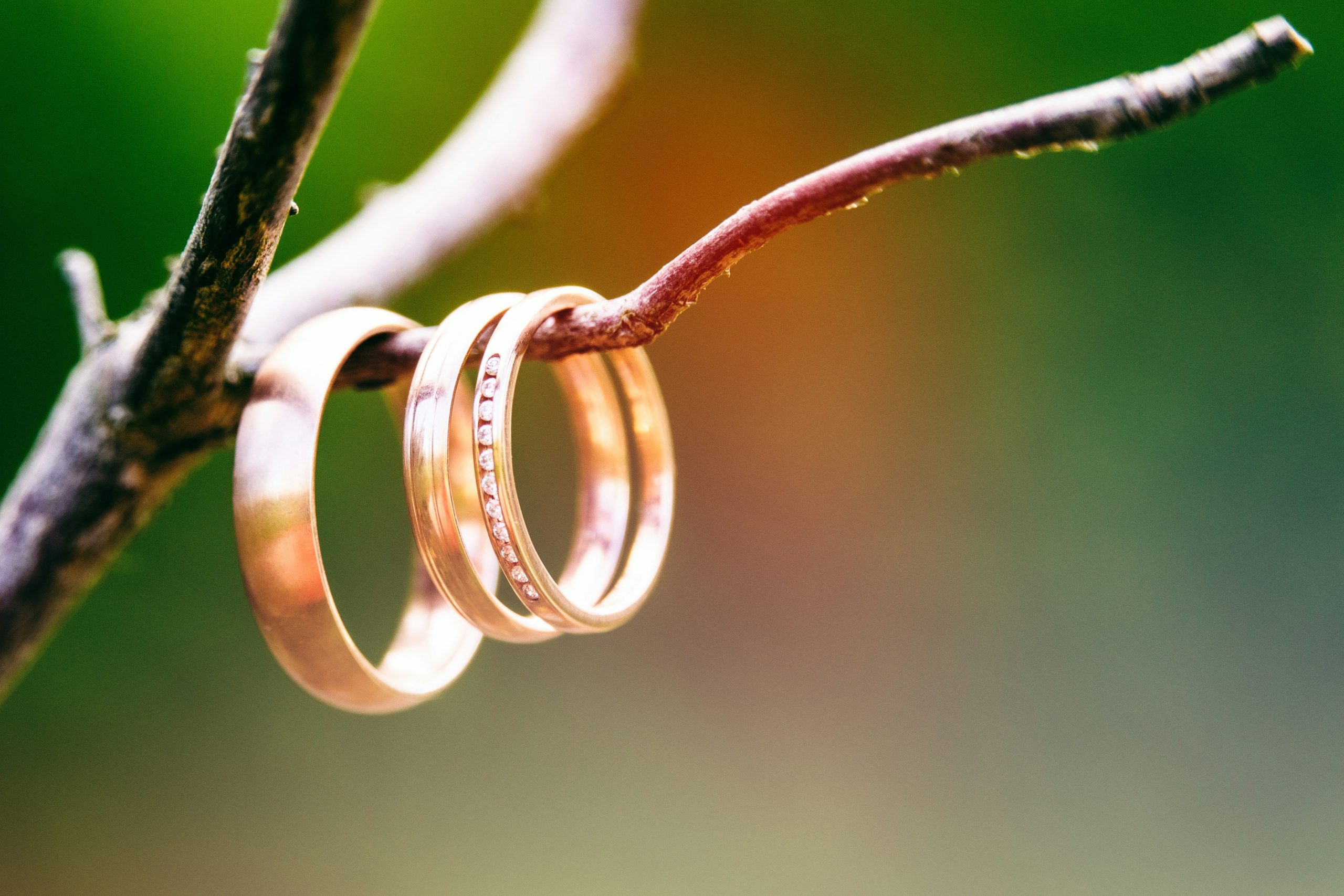
When our thirteen-year-old son finds my husband’s wedding band from his first marriage, I am unprepared. This piece of my husband’s history had yet to find its rightful place in our lives together; a piece that, after fifteen years, I was still reckoning with.
We hadn’t told our children about their father’s past, that before we met, he had been married, living in a small ranch house in the suburbs of New Jersey, when his wife at age twenty-nine died from a heart attack. It was my husband’s story, one belonging to the before. We existed in the after.
My son sits on the rug holding a shoebox he discovered on the top shelf of the den closet, among old photo albums and DVDs nobody watches. It startles me, seeing the ring. I didn’t know it was there. His eyes spark with excitement, thinking he’s discovered an heirloom. This, for him, is treasure.
“Whoa!” he says, hunched over the ring. “What is this?” He examines the band, the thick brushed silver with its shiny rolled edges. All the nerve endings in my body feel exposed. I resist the urge to grab it from him, hide it.
“Uh . . . it’s Dad’s,” I falter.
He slips the ring on his finger. The band wobbles loosely.
My hands turn to bricks in my lap.
I can hear my husband’s muffled voice through the ceiling on a work call.
“Put it away,” I say. “You can ask Dad about it later.”
He drops the ring into his palm, mesmerized.
Then he finds the inscription.
“Who’s Judy?” he asks, looking up at me.
When I first met my husband, he was a thirty-three-year-old widower, and I needed instructions. It was the beginning of the 21st century, and I waited through the buzz and hum of my phone jack working its magic until I was connected to the world’s largest card catalogue. I typed my trouble into the search engine: what to do if you’re jealous of a dead person; how to date someone who lost a spouse; my boyfriend’s wife died . . . I waited for an answer, but all the advice that eventually loaded was about divorce, getting over betrayal, anger at an ex; everything dealt with Choice. But how could you fall in love with someone who had never chosen to end their previous relationship? How could a person fall in love when they never fell out of love?
Despite my best efforts to protect myself from a “complicated relationship,” I found myself stumbling into love, meanwhile constructing a faulty set of instructions on how to love a widower:
Finally, submit yourself to second place. Second choice. Get comfortable there. There is no sine qua non. That would make you a monster.
When my husband and I started dating in New York, we liked to walk the city streets without a plan. He’d ride the bus into Port Authority, and I’d meet him off the subway from my studio apartment in Hell’s Kitchen. It was my last year of graduate school, the last year of my twenties. My friends convinced me to try Match.com, and I thought of it as Research, the perfect combination of low-risk, non-committal, and adventurous; I was putting myself out there, into the lives of strangers. If anything, it was something to do to feel less lonely in a city with over eight-million people living wall-to-wall between them. I’d stay up late listening to my modem loading potential boyfriends onto my laptop while millions of people fell in and out of love.
His relationship status read: tell you later. A freelance web designer and drummer, he had an East Coast sarcasm that was foreign to my midwestern sensibility. Despite our differences, we had surprising facts in common: our birthdays a few days apart; left-handed; older sisters with the same name; raised by Jewish mothers and Mediterranean fathers; my father and his mother died a month apart. We took it as a sign and decided to meet for coffee at The Grey Dog in the West Village. We talked about our families, music, travels. He made me laugh. I liked his hiking boots. He offered me his brownie, which I declined, and then his umbrella when we stepped out into the rain, which we shared.
On our second date, at a Mexican restaurant on the Lower East Side, he revealed over his bowl of chicken tortilla soup the meaning of his relationship status. I told him I was sorry. He said he wanted to love again.
I had an idea about love—that it was singular, finite, that in each of our romantic luscious hearts, there is a space reserved for that mysterious one and only. A perfect missing piece to a puzzle. Maybe I can blame the love songs. I blame all the love songs. I wanted a first wedding. A first first dance. And yet, something kept drawing us closer together. He held my hand with his left. I tried to ignore the ring he still wore on his right.
After my husband and I had our son, we talked about whether we’d tell him about our pasts, about his first marriage. Maybe when our son got older, my husband decided. An ancient fear stirred in me. Would our son question the legitimacy of our marriage? Put into his mind the same insecurities that I had wrestled with when we first met? Would it make him wonder whether his father truly loved his mother? My husband looked at me like a man who sees his wife struggling to concoct reason from lunacy. I flailed about in a battle in which the only opponent was myself.
An unspoken addendum revealed itself:
Now, my son is looking between the inscription on the ring and me, asking again, “Who’s Judy?”
He’s waiting for an answer. I don’t know what to do. The moment tips toward me. I steal what does not belong to me.
“There’s something you don’t know.” I want to shut it down, start over. But he is perched, waiting, holding the ring, and I am holding a bomb.
“Before I knew Dad, he was married,” I say in one breath, as though trying to protect him from the impact.
My son’s eyes grow large. “Really? What happened?”
“She died suddenly. A year before I met Dad.”
“Whoa.” He sets the ring carefully back into its box. “Her name was Judy?” he asks and the tenderness in his voice moves me.
I nod. “Ask Dad about it. He’ll tell you more.”
I wait for the aftershock, but he asks no more questions. I am struck by the fact that we are still here, sitting together in the den, the roof intact, the house still standing.
“Are you OK?” I ask.
“Yeah, why?” He puts the shoebox away. “Can I go play basketball?” he says, already out the door, running off to find his friend.
I sit alone in the aftermath.
I text my husband from downstairs. T. found your wedding band. I told him briefly. He will ask you more later.
I hear my husband’s voice upstairs pause in the middle of his work call, then keep going.
Later, we talk about it. My husband and I sit on the den couch, knee to knee, like we’re kids at a sleepover, divulging secrets. “I’m so sorry,” I tell him. “I didn’t know what to do.” But he seems happy, relaxed. Says our son didn’t seem fazed by it or have many questions when they finally talked, that he was glad our son knew.
Then he talks about the night Judy died. How he drove to the hospital, but never got to say goodbye. We tread carefully, though it’s not our first time, but it is different now. As I listen, I feel something physical shifting inside of me, making space. I move over, make room for her. He touches my knee. I lean toward him.
A few months later, when my lifelong friend dies, I call my other friends every time I miss her voice. But nothing makes the loss more bearable. The contours and edges of her absence are in the specific shape of her. Nobody can take her place.
It seems so simple, so obvious now. Everyone inhabits their own space. I wonder why it took me so many years to understand.
My husband keeps the ring in its box in the closet. We talk about the past more freely now, his first marriage, and I like the way it weaves into and out of our present. It is part of the fabric that makes him whole. There is no first choice, second choice. Neither negates the other. In a sense, we’re all sine qua non. The ghosts of our pasts guide us as we wrap our arms around each other.
Finally, I realize the love songs are right. They were right all along. They are singing about me.
Just as they were also singing about her.
Becoming a mother is a deeply transformational experience that shifts every aspect of identity. This metamorphosis is often overlooked as much of the focus in society is placed on the baby and the baby’s development. The oversimplified narratives that demand mothers to hide the complexities of their own journey leave little room for women to embrace the full spectrum of what it means to become a mother in all wonder and torment.

In recent years, there has been an explosion of graphic memoirs about motherhood. The mix of illustrations and words can help to show the fluidity of maternal identity and all the dualities that come along with it in a way that words alone cannot fully capture. Mothers can find joy in a new life, while at the same time grieve parts of themselves they’ve lost. Mothers can love intensely, but that intensity comes with the cost of exhaustion. Newfound power and strength coexist with vulnerability and fear. Motherhood transforms how we exist in the world, but it also changes both the world around us.
For me, early motherhood inspired a creative transformation. I drew whenever I got the chance about the oddness, tragedy, and ecstasy of becoming a mother. My book The Mother is about constant push and pull. I desperately wanted a baby, yet I was terrified of actually being pregnant and having one. I lurched into a new identity and grieved my old self. When she was born, I loved my baby fiercely, but yearned for my previous relationship with my partner. The Mother is also about struggling with some of my early childhood experiences in order to be able to love and care for my own child.
These graphic memoirs below explore the emotional, psychological, and physical transformation of motherhood. These writers offer diverse perspectives on how this role shapes not just mothers, but also the relationships we have with our children and the people around us.
Lucy Knisley has dreamt of being a mother her whole life. But when it was finally the perfect time, conceiving turned out to be far more challenging than anything she’s ever faced. In Kid Gloves, Knisley opens up about her struggle with fertility, including multiple miscarriages. When finally she has a pregnancy that lasts, she encounters unexpected health complications, including misdiagnoses and a near-death experience while in labor. Alongside her personal journal, Knisely delves into the weird and shocking history of reproductive health. Her illustrations illuminate the often-spoken struggles surrounding fertility, the intricate workings of the body, and the painful, messy, and sometimes traumatic experiences that can come with trying to become pregnant.
Dear Scarlet is written as a letter from the author to her daughter as she reveals the difficult and painful experience of postpartum depression following her daughter’s birth. In black and white drawings, Wong describes how she wrestles with constant negative thoughts about her inadequacy as a mother, her overwhelming sadness, and her desire to disappear. She feels constantly tired and alone, burdened by a darkness that clouds her every thought. It is only when she receives a diagnosis that she starts to feel some relief, recognizing that the darkness she feels isn’t just a personal failing, but something that can be treated. The honest and funny graphic memoir is a poignant reflection of mental health and the journey toward healing.
Shadowlife follows Kumiko, a headstrong and wilful elderly woman who refuses to follow the end-of-life care plans her daughters have laid out for her. Determined to be independent, she finds an apartment on her own where she battles the spirits of death and reconnects with a past love. As she approaches the end, Kumiko wrestles with letting go of her identity as a mother and the maternal responsibilities to her daughters that she’s carried for so long, turning to a newfound sense of childlike joy and curiosity of life, despite her failing body.
Bechdel, who found success as a writer with Fun Home—her acclaimed graphic memoir about her relationship with her deceased father, a closeted gay man—turns her gaze to her mother in this follow-up. Are You My Mother? uses psychoanalysis as a lens to examine Bechdel’s complicated feelings about her mother, an emotionally withholding woman who expressed disapproval about the way Bechdel has written about their family. The book jumps back and forth through time, in and out of dreams, as she deciphers her thoughts and fears using insights from child psychoanalyst, Donald Winnicott. Bechdel clearly feels catharsis in her writing as she explores parenting, identity, sexuality and queerness, and recognizing her patterns of looking for maternal surrogates in her therapists, girlfriends, and in the works of famous women writers.
The Best We Could Do tells the story of Thi Bui’s family as they escape the Vietnam war by boat to a refugee camp in Malaysia, before eventually resettling in the United States. The story starts in New York City with Thi Bui as a new mother to a baby boy, before traveling to the past as she recounts her parents’ pain, dreams, and loss through the eyes of her childhood self. A beautiful poignant exploration of family history, sacrifice, and starting anew.
In Good Talk, Mira Jacob takes readers through her intimate conversations with her son, partner, friends and family about race in America. Her six-year-old asks her difficult questions about race in America. She answers with as much honesty as she can, using these moments to explore what it means to be a mother of color raising a half-Jewish, half-Indian child in America. The conversations in this book are vulnerable, moving, uncomfortable, and deeply funny.
Dedicated to her former step mother, It Won’t Always Be Like This is a touching and beautifully illustrated story about Malaka Gharib’s relationships with her family in Egypt. When she’s nine, Malaka goes to her father’s homeland for her annual summer vacation and learns that her father has remarried. The story unfolds over the following summers as she grows closer to her stepmother, navigates the ebbs and flows of her relationship with her father and her step-siblings. A beautiful ode to stepmothers.
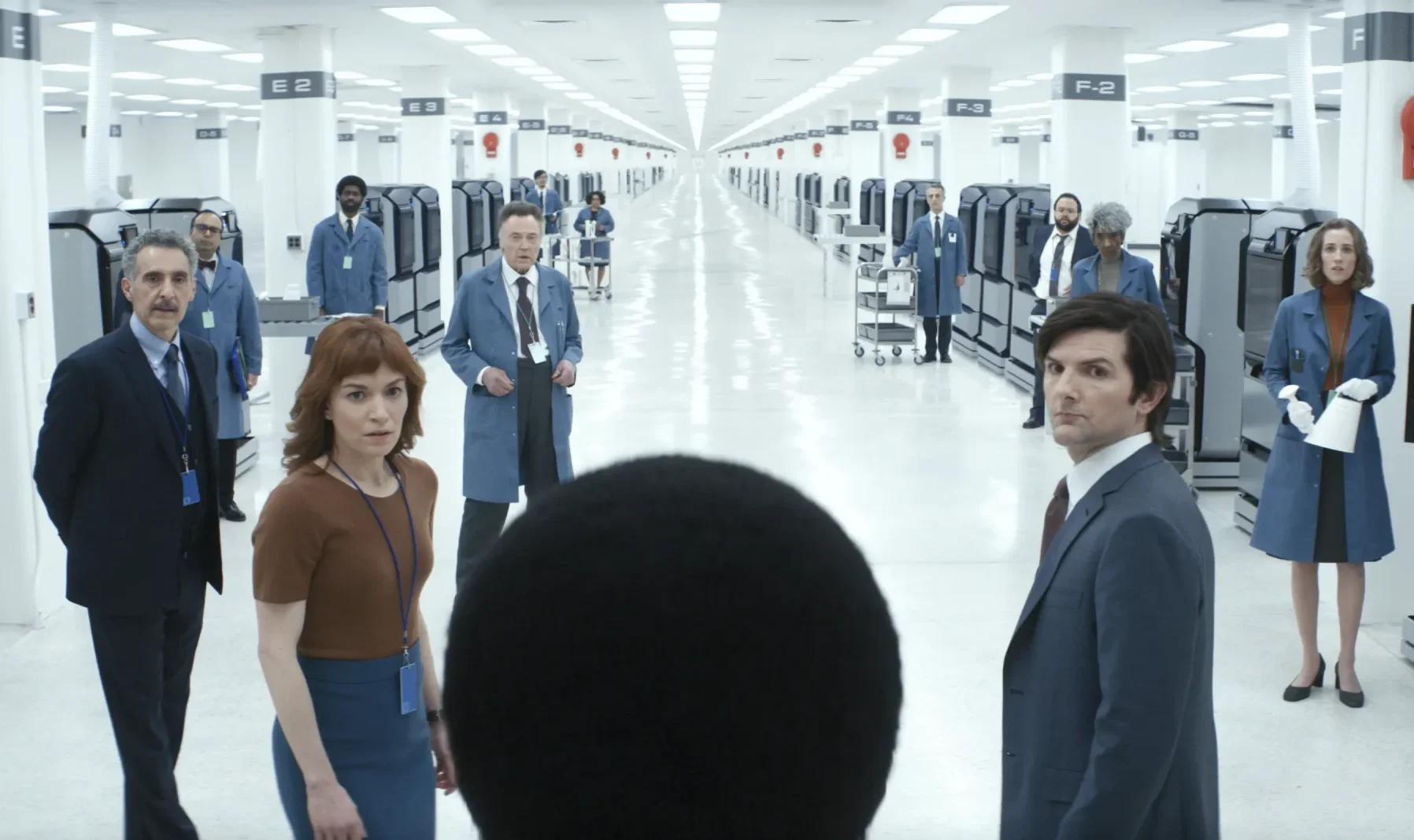
I’ve worked in a wide range of jobs in a wide range of buildings: pubs, malls, posh houses, offices, small individual stores. My CV is frankly, bizarre. It is only really looking back on my time clocking in shifts in the vast, open plan offices or the seemingly endless, run down malls that I can realistically call those moments of my professional life gothic. At the time, I wasn’t looking for ghosts or monsters, nor becoming either of those things. I was getting on with it, taking home the terrible pay, dreaming of some other life, inching my way towards it. Placing a new face over mine, and asking customers if I can get them anything else with that.

In the great tradition of gothic literature, the place in which the drama unfolds becomes a metaphor in itself—this we know, the haunted house chief amongst them. When I was writing Eat The Ones You Love, I gave a lot of time to looking back at my time working in suburban shopping centers. How much growing up I did in them, even if it felt like they were keeping me frozen in time. The novel is set in an amalgam of the long, weird halls I once worked in: the books loves these places like I love them, but treats them as what I now truly believe they are: terrifying.
These shopping centers weren’t exactly thriving back then, but now, in the long and strange shadow of the internet, they are not only dying, but they are heaving their final breaths. They are not haunted by a heart thumping under the floorboards, or the oppressive secrets of a complicated family, or the beloved, deceased, and utterly irreplaceable wife of the man of the house, but the mall as it is today is more Manderlay than may at first meet the eye. It is instead haunted by the day-to-day of the waning collective. By an ordinary past that is no longer necessary. By dust-filled deadstock shops. By weird vape emporiums. By shuttered concessions, empty fountains. I noticed recently, in a shopping centre where my mother would drop me off at the in-house crèche while she ran errands, that the space that had once been a vibrant children’s play centre was now, inexplicably, an oratory. If that isn’t gothic, I do not know what is.
My time in offices was short lived: I made a good receptionist, but a very, very bad and easily distracted copywriter. I had no idea how to behave in these spaces—offices are governed by invisible, strict social rules that I lacked the maturity and frankly, basic people skills to understand. Stephen King notes in On Writing that the origin of the word ‘haunting’ comes from ‘haunt’—a place where animals go to feed. There is no feeding like that which we see in offices—most specifically in the tech space. The feed is on scraps of power, of status. There is aggressive performance at every turn. There is such pure want in the air. Here is where we find ghosts. Here is where we find monsters.
I never knew how to manage it. I remember so clearly a Sunday before going in to one contract job I acquired during my time living in San Francisco—a content writing job at a start-up—I sat at a party looking at the clock, realizing there were only twelve hours before I had to be back at my desk, and it felt as though my blood was turning to concrete. Here, again, a kind of horror. At what, I still don’t know. The feel of the place, more than anything. But still. I showed up until my contract ran out. I went to work every day, even as it ate me, as we all do. And it is this forced commitment, this sense of being trapped, that I think makes the workplace the perfect site for exploring and unfolding the gothic. If we tilt the way we read books about work ever so slightly, they can become horror in our hands.
In the way that Dark Academia romanticizes and escalates and enriches the relative mundanity of the world of education, I posit that there is a whole hidden genre of books about work that already lean firmly to the side of the gothic.
There is no denying the almost prophetic nature of element of some of Ling Ma’s 2018 dystopian parable, but where the gothic employment energy hits is truly the fact of our protagonist finding sustainable employment (in the Bible department of a publishing company) while the world succumbs to a devastating virus. Worse, how good remaining open in a crisis looks for the company’s image—and worse again, how one can show up to work even when there is nobody left to work for.
This, to me, is a tender and elegant novel about being at odds with the world, but also, with a tilt, the convenience store could read as a strange prison. These identical spaces, these machines for life, this realm where Keiko, our utterly singular protagonist, can function well—though the rest of the world is difficult. Without the convenience store, Keiko cannot cope. She returns, as though drawn by something unspeakable. Is this not a kind of a ghost story? A story of possession? There is no specter or ghoul at its heart, just the inescapable halogen glow of the conbini.
Published in 1995, there is something of the dark oracle about Microserfs. A group of tech employees work for a software giant, and live in a house together before absconding to work on a new project in Silicon Valley. One character eats only two dimensional foods and is addicted to cough syrup. Another has an eating disorder, another is plagued by problems with his skin, others are addicted to exercise. The treatment of the body is so confronting here, in contrast with the early look at what would become the most powerful sector in the world, and the damning, all-consuming expectations of the staff that make the machines work. At the time, Microserfs was satire. Now, it reads like a warning.

What begins as a sharp, funny story about a sometime anonymous online agony aunt who throws herself into an affair with her boss, at some point, takes the reader by total surprise and turns from office drama into something much darker. Jane, who is almost without reservation shagging her older boss, begins to quite literally decay. She slowly loses touch with reality as his manipulation escalates, and her lies become harder to maintain. Once the trapdoor of this novel opens, we are no longer just in a flashy London office or in clandestine hotel rooms, and instead somewhere much stranger, and somewhere much worse.
Love can be the salve of all terrible jobs, surely. Love is what buoys is through the worst seasons of our employment. In Hard Copy, though, the love is taboo—our protagonist’s paramour is a photocopier. The tight, earnest prose brings the reader right onto her side, even if her tastes are a little unconventional. Is it not gothic to have one’s heart trapped by something that can never really offer you a future, instead, only a life of shame and secrecy? Is it not a horror to love a machine?
I do feel there should be a sub-category within the Gothic Employment that handles tech, specifically, because there is a growing darkness to every novel written about tech as each year passes. Egan’s novel is a set of beautifully interlinking short stories—and a sequel to A Visit From The Goon Squad—many of which orbit a company called Mandela, which externalizes memories. Lives. Characters upload themselves, or wrestle with the nature of what it is to do so. They willingly make ghosts of themselves, permanent digital monuments. This is a vast digital graveyard in the making—and the consequences of that are complicated, and heavy, as are all dealings with life after death.
The workplace here is no office, no shopfront, no sprawling tech campus. Instead it is an unknowable and labyrinthine House, to which our protagonist, Piranesi, is in endless service to. His employment is the study of the tides, the gradual cataloguing and exploration of the House. His boss? Well, his captor, The Other, visits him from time to time. I think about this book every day, in my own work, my own obsession with my job. Piranesi is peak Gothic Employment: but unlike the other titles in this list, it is first gothic, employment second. This is a novel about a kind if psychic indentured servitude, about dedication to the place in which one ‘works’ at all cost. About how easy it is to become lost.
In the final days of her first pregnancy, Samina Ali felt that something was not right in her body. She and her then-husband suspected she had preeclampsia, an alarmingly common, life-threatening pregnancy complication, as well as cholestasis, a liver condition that can be caused by pregnancy. Her OB-GYN was skeptical, but when Ali went into labor, she began experiencing intense pain in her head and her chest. “I’d never experienced such debilitating pain before,” Ali writes in her memoir Pieces You’ll Never Get Back. “I couldn’t keep my eyes open.” Yet the doctor delivering her baby wouldn’t meet her eyes and recommended she take an Alka-Seltzer.
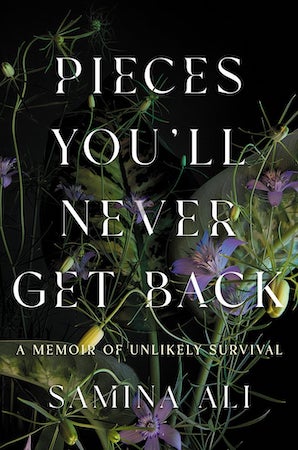
After giving birth, Ali’s blood pressure skyrocketed, and she had a grand mal seizure. She and her husband had correctly diagnosed both of her conditions. Later, she learned that the pain she had felt in her chest had been a heart attack, and “the head pain the doctor had insisted was me being dramatic … was the result of ischemia, [a] cascade of minor strokes.” After her seizure, she fell into a coma for days, which doctors predicted would result in her death. When she instead woke up, still alive, she was pronounced the hospital’s Miracle Girl. (Simultaneously, she and her family weren’t allowed to speak to the doctor who had overseen her delivery, for fear that they would sue.) But the extensive damage to her brain meant she suffered severe memory loss, aphasia (loss of language), and struggled to bond with her son. Initially, she could not grasp that anything was wrong with her at all.
In Pieces You’ll Never Get Back, Ali vividly recreates her state of mind through the slow process of recovery. This fragmented, elliptical memoir jumps back and forth between her childhood, her alienated experience of brain damage, and her later reflections on her experience. Despite her neurologist’s skepticism when she urgently asked him when she would be able to write again, she persisted in writing her novel Madras on Rainy Days (2004) while still suffering from serious aphasia. Although her initial attempts were unreadable, her grasp on language still incomplete, she attributes her recovery in large part to writing. “For months and then for years,” she writes, “each day I sat down at the computer, I pushed my brain to create new connections.”
In our conversation, conducted over Zoom, Ali and I discussed how writing affected her recovery, her decision to write this memoir so many years after her experience, how medical misogyny and racism affects maternal care, and more.
Morgan Leigh Davies: You’ve spoken about wanting to mirror the structure of brain trauma in the structure of the book. How did you write about an experience that is beyond language in so many ways?
Samina Ali: It was so difficult to do. I joke that the book was as difficult for me to write as it was for me to give birth to my son. It was just such a long process with so many different iterations.
I’m trained as a fiction writer, and so the first time around, I kept finding myself trying to bring in dialogue, trying to do all of these things that you do with fictional craft. I kept falling into that trap. I wasn’t really talking about what had actually happened with the brain damage. I was more trying to create scenes; and I think, looking back, that it was a way for me to move into this story slowly, because emotionally it might have shattered me to just begin talking about it.
So I think of it as kind of like a shark, circling and circling until you get the prey. That was the first iteration. After that, I absolutely had to deal with exactly what you’re talking about, which is: How do you get this across? How do you explain to people what it’s really like to view the world from a broken brain?
Once again, I struggled with the language, but then I realized, we take ideas from Buddhism and different spiritual traditions, and we make them commonplace—you know, We should have a beginner’s mind. We should all see the world as though we’re seeing it for the first time. We should be able to quiet the chatter in our brain. I started to realize that one of the things I could do is take on these common misconceptions simply because I’ve been there now with my brain. I started to realize that I could talk about what that actually means outside of these commercialized spiritual values.
MLD: One of the things that really struck me about your book was your ability to both write about religion and spirituality in a very sincere and meaningful way, but also to confront some of these tropes. You lay bare a lot of the myths or misconceptions we have about so much that is innate to human life. If the brain isn’t working, that stuff isn’t there, right?
SA: That is one of the most important messages of the book. Our concept of the afterlife, our concept of God, our concept that we have a soul that will somehow move on after we die: These are all stories that we’ve passed down. I trace how we came upon those stories, all the way back to the ancient Egyptians. Over the centuries, the stories of some sort of soul moving on to a higher place, a better place than what we have on this earth, start to become more and more complicated. Suddenly it’s not just a different version of earth, like the ancient Egyptians thought; suddenly, we create an all-powerful being, we create souls, we create heaven with pearly gates, we create the concept of angels, we create the concept of there being multiple levels of heaven.
Our brain is unable to perceive the end of life. It is unable to see that at some point the brain will simply turn off and we will no longer be here, thinking and imagining and doing all of the things that we’re doing right now. So our brain dreams, and it dreams that it will live on in some sort of afterlife. It’s part of the process of having a brain. I trace it through different world religions and show how each monotheistic faith borrows from other faiths and continues these ideas. All of these faiths, we think of them as being so different, but they’re so interconnected and linked; if all of the different faiths are different branches of the tree, they all go back to the same trunk and the same roots.
MLD: I’m curious about living with this enormous narrative, whether there’s a temptation to push that away so that it isn’t defining. But also how to acknowledge that your story isn’t about how everything miraculously got better.
SA: You never recover. I still deal with aphasia; I still find words, whether it’s in my email or even when I was writing this book, that I don’t notice the first time around, that only during revision, I’m like, Oh, where did that come from? I still have memory issues. I still haven’t fully recovered all my memories from the past. There’s a lot of little things that people don’t actually pick up on, unless they’re living with me.
I’m hoping that people understand that the book is really a hopeful message where I’m saying: Yes, I did recover, and we, as humans, have the ability to confront struggles and things that might hold us back. That we can dig into ourselves, whether it’s by finding faith or finding some sort of resilience; that we have the ability, as humans, to overcome our adversities, our struggles, and to become better for it. At the same time, I will say that for many, many people in my life, they didn’t know that I went through this, and so they’re finding out now. The book has come out, and I have been getting messages from friends left and right, going, Well, I didn’t know this about you, I didn’t know what this about you, and I can sense that there is a level of betrayal that they feel because they’re like, Was I just not close enough? Why didn’t you tell me?
Our society just doesn’t know how to handle illness.
But in fact, our society just doesn’t know how to handle illness. We don’t know how to talk to people when they’re dealing with illness. When we hear that someone has passed away, our first thought is not to give condolences. Our first thought is, Oh my God, what? How do I say the right thing? It’s about us. Even when people heard initially, when I did tell a couple of people about what I went through, you could tell how uncomfortable people get. They look away or they grow silent or they change the subject right away, or in extreme cases they just say, I don’t want to talk about this.
I think, as a culture, we have to get to a place where we can talk about our grief and our losses and our illnesses and what we’re coping with. I think we have to get to a place where we aren’t just expected to be super healthy 30-year-olds. As humans, we’re going to face different challenges in life. How do we talk about those things and how do we give comfort to one another and how do we create a circle where we can provide solace? So one of the main reasons I stayed silent was not because of me. It was because I was trying to protect other people from my story.
MLD: You’ve said that you started working on this in some form when you were pregnant with your daughter. What was the decision like to have this document, both as a thing for yourself but also as part of a part of your public life?
SA: When I went in three-and-a-half years after I delivered my son for what became my final follow-up exam with my neurologist, he was the one who, at that point, encouraged me to write a book. He said that as doctors, they can look at a patient from the outside and tell a patient, this is what you’re going through based on medical textbooks, but that as someone who had recovered, I could really give some insight on what happens inside the brain. And I remember walking away from that and thinking, hell no, I’m not going to go back and revisit this story.
When I became pregnant with my daughter, my son was about eight, and I had remarried. I went back to the same hospital where I delivered my son, because they had all my charts. This time, I went to the chair of OB-GYN, who was a woman, and I said, You have all my medical information, can you safely take me to the end of this? And she did a careful review and she said, Yes, I am willing to do that. But the first time around I’d been 29. I’d never had any sort of medical emergency. All of that helped in my recovery, but this time around I didn’t have those [advantages], and it really could mean that I didn’t make it.
So the idea that this growing fetus was a ticking time bomb was very painful and scary. I was frightened throughout my pregnancy, and the only way I could deal with the fears was by journaling, and I wanted to leave a record for my son. So that was the first iteration of it, and then it still took me a while to go back to it after that. When I did eventually go back to it and realize it had to be written as a memoir, I knew right away that it couldn’t just be a story of recovery. I mean, who cares? It’s just my personal story. It had to have meaning for other people, meaning that they could take from it that was larger than me.
MLD: So obviously you had a competent professional team for your second pregnancy, thank God, compared to the tremendous amount of medical neglect you experienced in your first pregnancy. But all these years later, preeclampsia remains a very common condition.
Women have been giving birth since the dawn of time, and women have been dying giving birth since the dawn of time.
SA: I think that’s another myth in our culture, that [since] women have been giving birth since the dawn of time, there should be no issues, you know? Women have been giving birth since the dawn of time, and women have been dying giving birth since the dawn of time. I remember when I was interviewing several OB-GYNs at UCSF when I was writing the book, one of them—this didn’t end up in the book—said that whenever a patient comes in early after they’ve just discovered they’re pregnant, they come in and they’re all giddy, and she said she has to watch herself because her immediate instinct is to say, Pregnancy is a sickness! Because the fact is that the U.S. is the only developed nation in the world where maternal mortality and maternal morbidity are on the rise. It’s crazy. There are places in the U.S., cities and little towns, where our maternal mortality rates are equivalent to those in sub-Saharan Africa.
It is that bad, and a lot of it has to do with doctors not being well-educated enough to understand and see the signs, and also, I think, unfortunately, women are just dismissed. We’re dismissed all the time. There is a sense that we’re being overly dramatic, that we don’t really know our bodies as well as the doctor somehow knows our bodies. These things contribute to women having to go home and suffer, just as I suffered.
I think the common rage that we are feeling as Americans right now against the health industry is legitimate. It’s very legitimate. We do need to overhaul the medical insurance industry. Why is it a profit industry? It makes no sense. We have to make sure that doctors are aware that even preeclampsia, which is the most common complication of pregnancy, comes in different forms, that it doesn’t always manifest as high blood pressure and protein in the urine. Mine certainly didn’t. We’ve just got to start changing things, but until then, I think that we, as women, have to educate ourselves. We have to feel comfortable pushing, and we have to be comfortable with words like, Oh, she’s nagging; Oh, she’s a bitch; Oh, she’s loud; Oh, she’s coming back again; Oh, she’s persistent. Let them call it that.
MLD: I was really struck reading the book that you and your then husband had correctly diagnosed multiple conditions and were completely dismissed. I think that’s really common, frankly.
SA: Unfortunately. Obviously it doesn’t always lead to such a horrible outcome, but sometimes it does. Women who go into the ER because they’re having indigestion, and it’s a sign for women that they’re having a heart attack, but because she’s not having numbness in her left arm like men, she’ll get turned away and go home and die.
MLD: It’s really hard to stand up against authority figures, including medical professionals, especially if you’re in labor, which you know.
SA: It’s a place where two different things start meeting. So it’s the place where the racism and misogyny in the medical system intersect with how women are taught to behave in society. We’re supposed to be polite, we’re supposed to be quiet, we’re not supposed to speak up, and so it’s this intersection where, wait a minute, I have to actually speak up, I have to do the very things I’ve been taught all my life I can’t do, and it’s really unfortunate.
MLD: I want to go back to the role of language in this book. You partially retrain your brain by writing, and writing and language are threaded throughout the book. I’m curious about that experience and the role of language throughout these experiences.
SA: It goes back to that same idea of gaining as you’re losing, and the sense of everything being so bittersweet. Because when I wrote Madras on Rainy Days during the brain damage, when I was experiencing such severe aphasia and experiencing so much loss, what happened is that I would hear everything in Urdu. So I was hearing the narrator speaking in Urdu, I was hearing my characters, obviously, in Urdu; it was in India. What I would do is, I would have to then translate the Urdu into English and then transcribe it onto the page.
One of the ways that I had to force myself to relearn English was to begin to use it in my everyday life, not just when I was writing or not just when I was speaking to people around me in the U.S. I had to start really learning to think in English. And then I had to make the conscious decision to speak to my son in English, which for me, for many, many years, was one of the biggest losses imaginable, that he could not speak to me in my own native tongue.
We are different people in different languages.
Interestingly, when he was in college he got this Boren Fellowship through the Department of Defense, and they trained him in Urdu. And when we could speak in Urdu to one another, he suddenly said to me, Mom, it feels like a whole new side of you has opened up. I never knew this part of you. We are different people in different languages.
So I think for me, the biggest loss has been that Urdu now has become in some ways my second language, only because it’s not the language I think in anymore. It’s not the language I use with my children. I use it only when I’m speaking to my parents or my relatives in India. Sometimes I will miss it so much that I will actually put on Bollywood movies just to hear the language. It’s so interesting, isn’t it, how language is so much a part of our identity.
Lottie Woodside was learning it takes two fools to start a marriage and a team to end one. Lawyers, a notary clerk, Derek even brought the girlfriend: an overmatched but dear-looking thing who avoided Lottie’s eyes and sat on the bench in the notary’s hallway, reinforcing her bangs with a purse comb.
“I hope you promised her ice cream after,” Lottie said, and regretted it.
Since they had agreed to divorce, Derek preferred to keep their interactions brisk and professional, but the finality of paperwork and a state building seemed to stir old compassion. “Well, you know,” he said. Lottie knew this phrase, unfinished and delivered with chagrin, was meant to be conciliatory, a hand up into her new life.
The marriage was defunct. Thirty years folded into a drawer like holiday linens.
Lottie thought this earned her a cab ride.
She found one but upon opening the door saw that it was already occupied by a woman who, talking on her phone, blinked into the surprise of a new person. Lottie scanned the street for another cab but the woman waved come in, as if her departure would be more of a delay.
“I might not be on the way,” Lottie said.
“Everything is on the way,” the woman said. Then, into her phone: “Not you, Steve. The woman getting into this cab.” The cabdriver protested but the woman seemed to be in control of his cab and everyone in it.
The light turned green.
Lottie gave the cabdriver her Brooklyn address.
The woman caught her looking at the large, flat package wrapped in brown paper and propped against her knees. Her hand flew instinctively to protect it. Whoever was on the end of the line expressed dissatisfaction. “Relax,” the woman whispered. Lottie pretended not to notice the woman scanning her. “She’s no dealer. Sandals with socks.”
Lottie pressed her forehead against the cold window. She had taken a personal day from her nannying job and was looking forward to getting home. She planned to scrub Derek from their apartment with cleaning supplies that smelled like trees and by moving the couch from one side of the room to the other.
At a red light, the cabbie consulted the women in his rearview mirror. “We’re going nowhere fast.”
The woman leaned in to the partition separating them. “Can you try Tenth?” Elegant cuff links blinked on one sleeve.
The cab driver pulled out of traffic and performed a quick turn. The street was clear. He reached Tenth Avenue and made a sharp left, jostling the women against each other.
“Pardon me,” said Lottie.
Yards ahead, a streetlight turned yellow. The cabdriver accelerated.
Lottie pointed to a spot on the floor near the package. “You lost one of your cuff links.”
“Did I?” The woman clutched at her sleeve. “Hang on, Steve.” She bent over the package to feel around on the floor. “These things never stay where they’re supposed—”
Lottie didn’t hear the rest of the sentence. She was outside the cab, sitting on the curb, legs arranged uncomfortably beneath her. An expression of glass fell over her in waves. A gem shone on the pavement. It turned and signaled to someone. To her? Lottie leaned in; her eyes adjusted and the object resolved into focus. The woman’s cuff link. Lottie’s handbag slumped against a nearby hydrant. She stood, shook her arms and legs. Her backside ached. Where the curb stopped me, she reasoned.
A Subaru had collided into the cab on its left side, where the woman had been searching the floor. Its driver was out of his car holding his head, wondering at the wreck. The cab was pummeled into a crescent shape; the cabbie settled on one side of it, the woman on the other. Lottie saw where her door had flown open and ejected her. The cabdriver’s cheek rested against the steering wheel, smiling dimly in a good dream. Lottie had been in the presence of death only once and it was unmistakable.
In the back seat the woman clutched at her chest, as if trying to locate the pendant to a necklace. The cab steamed and bitched around her. “I’m okay,” she said.
People clambered out of the surrounding shops, wanting jobs. They asked who needed assistance and made phone calls. Lottie picked up her handbag and shook it. How lucky, she thought, everything that belongs to me is intact. In the distance, a siren yearned toward them. The woman in the back seat cried for help. Her door was stuck. Strangers took turns pulling. The ambulance arrived. Paramedics spilled out and tended to the drivers, the woman. A policeman established a divide with yellow tape, creating a temporary order that Lottie appreciated. No one not directly involved in the accident should be able to participate.
Someone identified Lottie as involved in the crash, and a paramedic slipped an oxygen mask over her mouth and nose. She sat on the curb breathing into it while the others worked on the cabbie. She was certain he was dead so when his eyelids rebooted, when he exited the cab unassisted, Lottie felt some cousin of duped. It felt stranger than anything else that had happened: man returned from the dead. The crowd watched him attempt tentative, directionless steps. He made it to the corner and threw up into a city trash can. The paramedics turned to the woman in the back seat who’d gone quiet.
It was the kind of overfamiliarity that Harolyn had hated, but Lottie liked that the doctor used we and us, as if they’d both been in a wreck.
“Are we married?” he said, placing against her breastbone a stethoscope he’d breathed onto twice to warm. There are two kinds of doctors: those who warm the stethoscope and those who don’t.
For the first time in thirty years, Lottie answered the question in the negative. We are not married.
“Is there anyone we should call?”
She pictured Harolyn the last time she saw her, laughing at a family of picnickers battling the wind on Higbee Beach. She felt the familiar, happy pain of missing her friend.
He shone a light into her eyes. “What is today’s date?”
“I never know the date,” Lottie said.
In a framed picture on the shelf behind him, the doctor was smiling the same way he was smiling now, his arm around a blond man holding a SOLD! sign.
“It’s Memorial Day,” he said. “The start of the summer. What’s the last thing we remember?”
Lottie told him she’d hailed a cab that had been hit by another car. The police had driven her there, to the Midtown hospital, over her insistence. Now she was talking to him. She wasn’t nauseated, had no neck or back pain, had no trouble breathing.
“You’ll be sore tomorrow,” he assured her, penciling a prescription for painkillers. “If you’re feeling signs of a concussion, come back. Sometimes these things hit us later. Confusion. Forlornness. Scattered thoughts. Mania. Euphoria. It signals swelling of the brain. You think you’re fine, then boom!”
“I’m seventy,” Lottie said. “What you’re describing is Wednesday.”
Something about nearness, fondness, something about significance acting out of proportion with time.
She asked how the driver made out and he told her fine.
“And the woman?”
The doctor blinked several times. “I’m sorry.”
So the one she thought would make it didn’t, and the one she thought wouldn’t did. “I didn’t know her.” Though appropriate, the sentiment fell short. Something about nearness, fondness, something about significance acting out of proportion with time. A nurse’s arrival seemed to signal to the doctor that their visit had concluded. “That’s a lot to process,” he said. “Stay if you need a minute.” When he was a child, he must have been every teacher’s favorite. His pinched, sincere expression reminded her of Pumpkin, the little boy she nannied. “Don’t forget your things.” He pointed to her purse and a package propped against the wall. Lottie recognized it as the one from the cab.
“That’s not mine,” Lottie said. But the doctor and nurse were gone.
It was hard to believe she and the package had emerged from the same car. Its wrapping was intact. Its pristine label indicated an office on the Upper East Side. Lottie carried it out of the hospital.
Lottie found a nearby coffee shop and ordered a sandwich and a cup of tea. At a free table she propped the package up on its own chair. She tugged at the tape and gently pulled down the wrapping to reveal a brightly colored portrait of Cher.
“Tuna salad!” the barista called.
Lottie left the painting to retrieve her order. At the condiment stand she shook pepper onto the bread, a habit Derek hated. She used more than she normally would, chewed, and studied the painting. Cher wore a sheer crocheted halter and sat elegantly slumped. She smiled with her mouth closed, lips outlined twice in black, eyes bright. Lottie returned the woman’s heavy-lidded smile, enjoying the feel of the sun through the window flattening against her collarbones. Someone had said it was the beginning of summer. It sure was. Ambulances seared past the coffee shop, no doubt heading for the scene of her accident. No, that would have been cleared already.
Lottie finished her sandwich and reclothed Cher. The address on the label was up twenty streets and over three avenues. She walked to the bus stop, pausing to wait out a surge of pain in her lower back.
An almost-empty bus arrived. Lottie and Cher had their own seat. Schools were letting out; at every stop, children charged onto the bus, yelling and draping themselves over her seat with no apology, until Lottie had to balance Cher on her lap. Lottie never minded children as Derek had. She liked that they made split-second judgments and that they looked her in the eye. Most of the time Lottie enjoyed the invisibility that came with being older, the fact that no one thought she was capable of anything criminal or notable, but she occasionally wanted to be seen.
At each stop children hurled themselves down the stairs, into the arms of parents and nannies and by the time they reached the Upper East Side, a neighborhood of art dealers and museums, the bus was empty again. Lottie and Cher disembarked and walked to the address, where Lottie repeated her name into the intercom.
“Who are you here to see?” The receptionist sounded doubtful. “We’re booked.”
“Steve?” Lottie tried.
The door buzzed and Lottie opened it. She climbed four flights to a gallery space where a young woman sitting at a small, gleaming desk greeted her.
“Is this about the Basquiat?”
“I was in a car accident,” Lottie began, but then a man yelling from an office on the other side of the space startled the receptionist. The girl gestured to a folding chair next to a stack of magazines, crossed the room, and disappeared behind the door.
“Is it her?” the man said. “It’s been hours.”
“It’s an old lady,” Lottie heard her say.
Lottie gave Cher the chair and looked at the art. On an overlarge canvas the word RAPE stood against a field of crudely sketched penises.
“Isn’t it amazing?” The girl stood behind her. “The artist is a public defender of rapists.” She gestured across the space. “Over there will be our Warhol exhibit. All the diamond dusts arrive today. That’s why it’s a zoo.”
Lottie let out a low whistle. “Diamond dust,” she said.
From the office Lottie heard the sound of something large being thrown against metal. The man yelled for the girl, who jogged to rejoin him. They did not keep their voices low. “It’s only been a few hours. You know her, she’s probably talking. There’s a woman here to see you.”
“What does she want?”
“I haven’t asked yet.”
“If it’s not your job to ask her, whose is it?”
Lottie remembered what it was like to work in an office like this. She remembered refreshing her makeup after crying in the bathroom. Bonding with people her age. She’d met Harolyn when they worked on the same floor of a Midtown building. They ate their sandwiches out of wax paper, sitting on the same park bench every day. Lottie thought she’d spend the rest of her life meeting Harolyn at twelve forty-five. But Derek disrupted her schedule, slightly, then more. She couldn’t remember when or why she’d left that job. She couldn’t even remember the building’s address. And she spent so many years there.
A phone rang in the back office. The man said, “It’s me.”
The receptionist emerged. “It’s not a good day,” she said. “He won’t be seeing clients.”
“I’m not a client,” Lottie reminded her.
“Oh my god,” the man yelled. “Anna!”
“That’s me,” the girl said.
Lottie nodded. She had made a decision. “Good luck with the diamond dusts.”
“Diamonds aren’t even rare. Everyone thinks they are but they’re not.” Her voice was sorrowful. “Did you want to leave a message? I can take down your name.” But the girl was already turning to the back office where he was calling her again. “No need.” Lottie picked up the painting and started toward the door. She stepped into the vestibule and pressed the button for the elevator, which came at once. As the door closed, she heard the man’s hot voice and the receptionist’s salving replies.
“She wasn’t a client. In a car accident. Sandals and socks.”
“Well, bring her in!”
“Well, she’s gone!”
In the lobby, men argued over a pallet of boxes. Lottie maneuvered past, through the door to the street. She was relieved to hear an enormous lock activate behind her.
Lottie wasn’t certain what she was doing was stealing, but she wasn’t certain it wasn’t. She’d bring the painting back after she had time to think. The bus was nearing Midtown when her cell phone rang.
It was her employer, Alice Blakeman, who about the birth of her son, Pumpkin, once said: “I would have been just as happy had we adopted a cocker spaniel.”
“I know it’s your day off,” Alice said. “But just for an hour?”
Lottie wanted to go home, take off her shoes, and scrub the walls. But she needed hours. Though guilt had made Derek financially considerate, the divorce had been expensive. She and Cher disembarked at the next stop.
Lottie and Cher crossing Fifty-Sixth Street.
She thought of Cher’s certain gaze and straightened herself.
Lottie pulling Cher away from a delivery cart’s path.
Lottie and Cher waiting for a walk sign next to a pharmacy window that seemed to reflect all the light in the world. Amidst the blurred, bright people crossing and waiting, Lottie was a hunched figure in a light jacket. She thought of Cher’s certain gaze and straightened herself.
Lottie and Cher weaving through commuters belching up through the Fifty-Ninth Street subway exit.
In the Blakeman office, Pumpkin jumped on the couch while Alice stood on a chair in the center of the room, spraying him with water.
“Thank god,” Alice said when Lottie entered. She motioned to Pumpkin with her shoe. “Ice cream, or whatever?”
Lottie and Pumpkin walked to the ice creamery on Fifth. Pumpkin ordered three scoops of mint julep. Lottie ordered one scoop of vanilla.
“Why would you order one scoop when you could have three?” Pumpkin said.
They sat on a low stone wall that bordered a park. Families dotted the lawn. Pumpkin stabbed at his ice cream with his small, pink tongue. Lottie had once attended Derek’s company picnic in this park. They had crossed this lawn holding eggs balanced on spoons. Teams. On the subway home, Derek had said he was proud of his “jock wife.” He balanced a platter of macaroni salad sheathed in plastic wrap on his thighs.
The sun retreated behind a cloud and threw shadows onto the field. The boy sitting next to her dragged his tongue across his ice cream while turning the cone for advantageous angles. He was attached to her, this was clear by how close he sat, how relaxed he was in her presence. Who was he?
“Do you like your ice cream?” she said.
He nodded. “It’s delightful.”
It was Pumpkin, she realized. The wealthy boy she cared for, who every so often opened into a moment of startling tenderness. Lottie worried these moments would become rarer as he aged. What did Harolyn always say about life? It’s like a piece of pottery. A kite? A bike. “Was I here yesterday?” Lottie said. “Did I watch you?”
Pumpkin nodded. “We made turkey casserole for Alice.”
“You’re a good boy,” Lottie said.
“What is that?” He pointed to the package.
Lottie unwrapped the top half of the painting, revealing Cher from the chin up.
“Ugly,” Pumpkin said.
Lottie felt a stab of loyalty. “It’s modern art.”
Pumpkin produced a marker from his pocket and, before Lottie could stop him, drew a pert mustache on the canvas. She slapped his hand, sending the marker through the air to clack against the concrete.
“Ouch,” he said, more loudly than the slap warranted. Receiving no response, he said it again.
“I want to know,” Lottie said, “what made you think you could do that.”
He retreated, flashed, hardened into a plan. “I’m telling Mother.”
She licked her fingers and tried to erase the smudge. It blurred and spread. She pulled Pumpkin off the bench, to the curb, across the street, toward his mother’s office.
Lottie and Cher sitting on the bus.
“No, thank you,” Lottie said, when a man offered his hand.
Lottie and Cher leaping to the sidewalk.
Shop owners hosed off hot concrete. It was the beginning of summer. Or summer was almost over. In any case, the sun was to be enjoyed, because it had been absent for so long or because it would soon be going away. It was dusk when Lottie and Cher walked home through the park. The lamps were lit. Baseball games were concluding in the fields. Winners and weepers. Reluctant families trudged toward the subway.
Her apartment had three rooms: bedroom, kitchen, and family. Pale yellow walls and a partial view of the park, if you hung out the window upside down like a bat, clenching the railing with your toes. This was her joke with Pumpkin, and it never failed to elicit his throaty, adult laugh.
Lottie sat on the couch, removed her shoes, and spent a long time rubbing each foot. Her ancient answering machine flashed with a message. The gallery, she assumed, but it was Alice Blakeman.
“I don’t know what to say. Pumpkin tells me—it’s hard to even believe—he says, well, Lottie, did you slap him?”
This would be the most thought Alice would ever give her and it would come in the form of bewilderment that someone on her payroll would do anything to confuse her. Lottie knew that over the course of the night the confusion would calcify into self-righteousness, then insult. Lottie would have to apologize.
“Or else what?” she said aloud, rubbing and making a difference to a firm knot in her heel.
The apartment was neat but not clean. A painting of an Italian café hung over the dusty television. “A conversation starter,” Derek had called it. He bought it during his traveling phase when he read about other countries and went nowhere.
It was meant to be their starter apartment, but they had lived in it for thirty years until a few weeks before, when Derek came home from his job at a medical supply firm and told her he would be moving into his girlfriend’s apartment that very night. She was a coworker and had attended the park party, watching the couple cross the lawn holding eggs on spoons. She’d even expressed regret that no one had eaten Lottie’s macaroni salad. “A waste of good noodles.”
Though it had been Derek’s decision to divorce, they’d both participated in the relationship’s dimming. His dalliances, her aloofness. There were no children or money to divvy. There had been a baby who hadn’t lived long. When Lottie pictured her, which she’d been doing more often, she lay in the hospital’s bassinet on one of her only days, too delicate for the world to hold. The only time she’d been in the presence of death before that morning’s accident. Weeks of damaging silence followed. Derek couldn’t meet Lottie’s gaze. He never blamed her but did not contradict her when she blamed herself.
Lottie poured a glass of wine and waited for remorse to split her in two. Garden-variety doubt, at least. No feeling arrived. Even after a second glass. She liked that the dishes in the sink were hers. Her work dresses, pressed and zipped, hung in the front closet. A headache bloomed at the base of her neck. She thought of Derek in this space as she throated two aspirin. He’d always looked too big in it, clumsy fingers pulling a pot from a high shelf.
Lottie removed Cher from her wrapping and leaned her against the wall. Except for Pumpkin’s smudge, Cher was flawless, making everything in the room seem dull. Her patient, beaming face. The bold lavender and fuchsia. They smiled at one another.
Lottie propped Cher on one of the kitchen chairs, turned on the radio, and pulled a pork cutlet from the refrigerator. She liked noise while she made dinner. On the news, a man was being interviewed about something that had nothing to do with Lottie or anyone she knew. She chopped chives as the water boiled, tossed a pad of butter into a warming pan.
Lottie and Cher eating dinner at the kitchen table.
Lottie had never felt young, not even in youth. She disliked only one thing about time: the accrual of loss. At fifty, Harolyn said, people start to leave the room. Sometimes Lottie would shop to take her mind off all the good people gone. Harolyn, her baby, several dear friends, Derek too, in a way. She’d miss parts of him. The evil you know, Harolyn would say. Harolyn had been the most person with a capital P Lottie had ever known. No one made her do anything. How had death managed it? One moment you’re a person and the next you’re not.
After dinner, Lottie surveyed the family room. A knobby couch, an easy chair, two bookcases. She removed the café picture and replaced it with Cher. She stepped back and studied the woman.
“This must seem so shabby to you.”
Lottie ran the vacuum over the living room and hallway carpets. The couch was lighter than she had anticipated. Or she was stronger. She dragged it to the opposite wall. The easy chair to where the couch had been. The television to the other wall. This rearrangement would create an enclave for Cher, she thought as she yanked the plug from the socket, a sacred space. She walked to the kitchen and retrieved a pint of ice cream from the freezer.
It occurred to her that the enclave should be on the smaller wall. The far wall did not offer the type of intimacy an enclave required. Lottie dragged the chair back across the room to the smaller wall, but there it was too close to the couch. The room creaked to one side, Cher in the middle, a steady rudder. Lottie pushed the couch to the far wall. Now the television was next to the couch instead of across from it. Then the bookshelves: two five-tiered towers of unfinished wood that Derek had put together with nails and a high heel. He wasn’t all bad. It’s impossible to hate a person you truly know.
Lottie decided to move the couch to the bookshelf wall and the bookshelves to the green wall, creating the enclave she desired. She had to progress inch by inch. First one bookshelf, then the next, then she ran to the couch and moved it a few inches. The system worked but Lottie realized too late that the couch wouldn’t fit past the bookshelves. She should have done one bookshelf then the other. She tried to move the chair to make way for the bookshelves. It lodged between the couch and the wall and refused to budge.
Lottie’s strength was gone, her hands chapped and red. She attempted to lift the television over the couch to free up some space, but it was too stubborn to move. Lottie had positioned each piece of furniture so it could move neither forward nor back. A miracle of geometry.
Her headache was not responding to the aspirin, and an hour had passed. Or, three. Why the headache? It had been a regular day. She’d looked after Pumpkin and picked up a sleeve of veal on the way home for dinner. No, that was the year before. It had been Derek who knew what to do with veal. He’d surprised her with dinner and a fistful of wildflowers. They’d eaten at the kitchen table as the room filled with afternoon sunlight. If that was the previous year, what was today? Lottie remembered the accident, the painting. The lamp on the table next to her was off. She must have done it in her sleep. Her heart thumped. Had it been a dream, the cab, the Cher? There she was on the wall, every part of her glimmering in errant light. Two women in a room. Both recently survived a wreck.
“We’ve experienced quite a shock,” Lottie told her. It was the right sentiment: honest, simple. A kiln, Lottie remembered. Is what Harolyn said life is like. It turns up the heat until your true colors show.
Writers—even if working in fiction—are often concerned about what is happening in the larger world. Though it takes time to see a book through from manuscript to hitting the shelves, the ones featured here have a finger on the pulse of our contemporary moment and take time to explore the deeper nuances of human connections.
From the tragedies of American history and the terrors of dictatorship, to reality television’s roots in home video to connections with spirits, ancestors, and families, these works embody the human condition. People are weird, people are mean, people are complicated, and people are beautiful.
Every time I compile a list, there are so many books left out. This is only a small sample of what small presses are publishing. Still, these titles are an invitation to consider the world we live in, our historical contexts, and how reading can offer insights into our own lives.
In short, episodic essays and images largely of the author’s own visual artwork, Freda Epum has crafted a memoir that not only interrogates her identity as both a Nigerian American and as someone who has spent significant time in treatment for a life-threatening illness, while shaking up the idea of what memoir can be. Gloomy Girl is set against a backdrop of makeover and house-flipping shows—and the idea of houses appears thematically in the book, including opening with the unfortunately common Millennial experience of home-buying being out of reach. There is an effective contrast between televisions blaring popular broadcasts of a particular era—Maury, MTV’s The Real World, the Kardashian heyday—and Epum’s self-portraits and self-examination, making meaning out of fragmentation. A culturally relevant and emotionally impactful book.
After the First World War, Nina and Otto Aust emigrate from Germany and settle in a small Indiana town. They raise their two sons, run a restaurant, and live in community with their neighbors. Yet, as World War II breaks out, Germans by birth like the Austs come under suspicion. In 1941, the restaurant is seized and Nina is arrested, and most of their friends and neighbors turn their backs. Haunted by the threat of deportation to Hitler’s Europe and with their lives thrown into disarray, the family fights to stay connected, even as the sons and Otto are placed in separate internment camps. The Austs are tight, bound by their love of music and their genuine affection for one another, but as their situation becomes desperate, Nina must make a terrifying choice to reunite the family. Beautiful and chilling.
Probing cultural touchpoints from Paris Hilton to B.F. Skinner, from Kellyanne Conway to Thomas Pynchon, and from The Tonight Show to Mevlüt Altıntaş, Greenberg fictionalizes the inner lives of figures who have contributed to the American cultural zeitgeist for better or, more frequently, for worse. In these seven stories, Greenberg utilizes press releases, mathematical equations, and diner menus to create a texture in the pages that mirrors the noise, disconnect, and the sense of just continuing on even when the world feels terrible that encapsulates much of our modern experience. Despite some of the absurd situations and clear satire, there is a disarming seriousness in Greenberg’s stories. Thoughtful and compelling.
In Ibandan, Nigeria, instead of marrying the man she loves, Esther is coerced into a union with another man; and while the marriage does not last, the bond with her daughter, Amina, does. Esther has spent much of her life searching, and when she visits a traditional Yoruba iyanifa, the woman cautions Esther that Amina must never go to America, where danger awaits. Yet, Esther, who was constrained by convention in her own life, is loath to restrict Amina—Esther believes the iyanifa’s prophecy, but she also believes in her daughter Amina, who moves to New Orleans to make her own way. As a hurricane bears down on the city, Amina is evacuated to the Superdome and disconnected from her local family with no way to reach her mother. This multi-generational novel is an insightful testament to the power of bonds between mothers and daughters.
Before Rebe Huntman takes a month-long trip to Cuba to learn about and research deities and saints representing mother figures, she has already had a career as a dancer and as a teacher, and has raised her son on her own after the dissolution of a marriage entered into young. While Huntman has ideas about what she is searching for in Cuba, which includes reaching for connection between herself and the mother she lost at only nineteen, she approaches her journey with an openness, rather than an agenda, and the result is an exploration of memory, spirituality, loss, the relationship to the body, and to people who have passed to the other side. The idea of the veil that lifts between life and death is thematic to this memoir, and one of Huntman’s true talents as a writer is the grounding she brings to the spiritual. Emotionally compelling.
Atou is barely a teenager when she murders her father, a police officer who raped her, and then flees. In the slums around Conkary, the capital of Guinea, she is taken in by a group of women and their oft-drunk matriarch; they do not judge Atou. As she grows up with the women, learning how to hustle tourists and diasporic Guiana’s who see the country as only a place to flout their wealth, Atou finds a home of sorts. When she is in trouble and leaves Guinea for France, she adopts the identity of Véronique Bangoura, and begins a friendship with an older woman, Madame Corre, who claims to know her—and has her own connection to Guinea. Set during the terrifying twenty-six year dictatorship of Sekou Toure, the novel addresses generational trauma, abuse, and what it means to live in exile. Gripping.
A dramatic troupe crosses the Midwest by train, hitting stops like Lisbon, Kansas and Milan, Nebraska to perform for sparse audiences in once-opulent theaters now in disrepair. The lead, Ava, is married to another actor, but he has left her for bigger stages. Her budding relationship with set-designer Edgar makes her wonder about her estranged husband and what their status really is. The leader of the troupe, Fallon, writes the company’s original plays. As the train rattles from stop to stop, elements from Fallon’s scripts start appearing in the actors’ off-stage lives. Fact and fiction muddle: the characters in the novel blur with the characters they play on stage. Play, With Knives is an inventive book which breaks the third wall via readers seeing everything behind the curtain. Horn incisively captures the comedy, the tragedy, and humanity of backstage and beyond.
A young teen impregnates herself with the sperm captured in a condom from her older sister’s boyfriend; a man prints and hangs three hundred flyers to locate a woman he believes is a love at first sight missed connection; and in the title story, a woman trained as a lawyer but working as a server returns to her Scottish village for a family friend she wants to help but cannot. In this wide-ranging collection, the stories move from the American South to Europe and are knitted together with an indelible sense of longing. The characters have wants and needs, yet they are often as dissatisfied as the tourists who visit the Dalí Museum in Florida, and leave in a state of bewilderment. In The Summer We Ate Off The China, Jacobsen captures the human impulse to hope, and our inevitable disappointments.
An auto-fiction pastiche of video recordings, VHS splices the experience of being the child of political exiles from two different countries into an impressionistic book that reads like a YouTube algorithm that truly knows what you want to see next. Not exactly a novel and not exactly a collection, Campanioni crafts everything from getting a new pair of glasses to swiping a metro card into a seminal experience. Indeed, these are the moments that make up life; he captures the sense we’ve all had when doing something ordinary—like riding the train, or wondering if it’s better to be a back or a belly sleeper—and it suddenly, because of the right light or the perfect background music, feels like a movie. Deft, poetic, and surprising.
Dr. Maya Zhu is an ambitious young pathologist who—much to the dismay of her Chinese immigrant parents—has chosen autopsy as her specialization. When August Sweeney, a man for whom the only thing larger than his body is his reputation as a celebrity chef, comes across her table, Dr. Zhu is immediately interested professionally. Yet, just as he was a complicated person in life, August creates complications even after his death, and Dr. Zhu’s autopsy becomes personal, as she realizes she and August are connected in surprising ways. This novel is written with the lushness of a decadent meal and the sharp precision of a surgeon’s scalpel, making it both sensory and exacting. In telling the story of August Sweeney’s life and death, Ashworth creates a world that is as outlandishly raucous as it is deeply personal. Utterly unique.
In this guide for anyone who has questions about or actively practices allyship, NV Gay provides a reference that answers questions some people might be afraid—or not know how to—ask. The book is contextualized around both Gay’s own experience with gender identity, and in the lived experiences of the LGBTQIA+ community. Topics include negotiating religion, managing assumptions, creating inclusive spaces, and handling discriminatory remarks. Taken alongside the outrageous developments in the current political landscape of the US—for example, the misgendering or non-renewal of passports for trans people—Gay’s measured tone and fact-based writing is welcome, useful, and compelling.
Obsession is the pulse and connective tissue that joins the three very different novels in this edition of our debut craft series. I interviewed the authors to discuss how each found their way into the nature of obsession—whether through an idea, a character, or a voice that haunted their writing—and went about circumnavigating and poking holes into the way we fixate and dwell, the way we obsess over things that are at times mundane and others, profound. One novel follows a pair of tumultuous lovers obsessing over rare songs on beloved records. In another, a culture critic obsesses over the truth behind a friend’s death and the absence of “genuine” friendship in the digital age. The third explores a Muslim adjunct professor’s obsessive urge to find love, or a substitute for it, in the messy modern dating scene of Los Angeles.
These three novels also share a tendency to move across cities and landscapes, chasing protagonists who are pursuing wild desires and, in the process, exploring the way people change—or don’t change— alongside their address. From Clinton Hill brownstones to Chicago karaoke bars, from Berkeley record stores and L.A. farm-to-table restaurants to a hospital in Tehran, the characters in these novels travel and relocate, all the while attempting to grasp their idée fixe. The cities they live in become stars in the uncertain constellations of their lives: each desperate to connect point A to point B. A few characters return home as adults, trying to rediscover who they were in order to find out who they will be. Others avoid home as much as possible and instead become hooked on searching for someone to sit beside them in the passenger seat. In the end, their questions revolve around the same central idea: Does someone’s newest obsession define them more than their past? And at what point, does an object of fixation bleed into identity?
This spring, Mariam Rahmani, author of Liquid: A Love Story; Jeremy Gordon, author of See Friendship; and Holly Brickley, author of Deep Cuts are our craft interview debut novelists. They spoke with me about the initial inspirations behind their projects, the collapse of time, distance, and reality within a story, and how the voices of their protagonists came into being.
Kyla D. Walker: Did you write Liquid with an outline in mind? Or was the voice of the narrator the main guide?
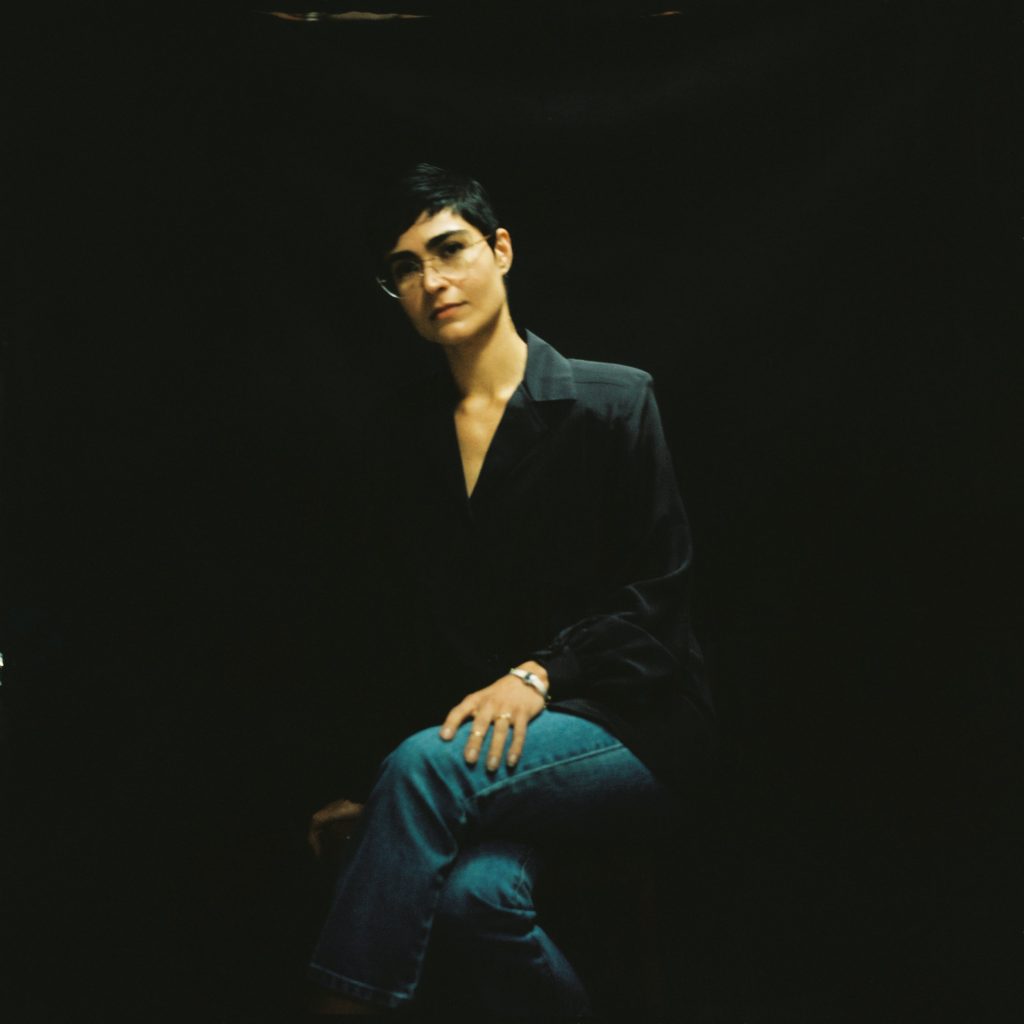
Mariam Rahmani: Absolutely the former. For me, this book was a study in genre. I watch a lot of rom-coms and I’m always fascinated by how little surprise matters. You know the ending from minute zero—and often, frankly, can surmise the entire plot from minute ten. But it’s still so enjoyable, and even satisfying. I was really interested in staging that relationship between the text and the reader. I also had a few other questions for myself that operated as challenges. How smart can a rom-com get? Can a “serious” novel have a happy ending? Can an “ideas” novel be aggressively femme? The queer and racial politics in the book are also a little twisted, or at least not strictly celebratory—you don’t always know whom you’re rooting for—and confronting that discomfort was important to me. Can the politically sad choice merit celebration? I.e., can another brown woman ending up with a white guy (yes, that’s me, but also so many other women I respect from identities that, like the narrator, are not my own) still feel, in the heat of the text, like something to root for? What of the bi or queer woman who chooses heterosexual love? Is the personal always political? When it comes to biography, is everything always meaningful? Granted, I’d say that’s one big difference between life and fiction—in the latter, it is meaningful. Admitting that, I suppose I was asking about realism. How real can this shit get? Fiction, I mean.
KW: How did you nail the specifically witty, kinetic, and enthralling voice of this protagonist? Did it take a while to find and hone within the prose, or did it come naturally?
MR: I felt like a TV writer. I’d spend days “workshopping” a joke or line with the people around me, months thinking about it. There was also a draft where I ruthlessly cut out everything that fell flat.
KW: What was your thought process behind leaving the protagonist/narrator unnamed?
MR: I used to find unnamed narrators extremely annoying, a pointless kind of withholding. Then, years ago—I was reading a novel by a woman of color—I read the move as a political act. There can be a strength in that lack of access, a level of control that reminds the reader they only have access to what the narrator is willing to give. They only have access to those parts, or versions, of her body; those corners of her mind; those shades of her emotions.
So there was that. But really the decision wasn’t mine; it had been made for me by the history of the novel. My novel is a response—indeed, rejoinder—to the gendered and racialized violence that inaugurated Iranian fiction via Sadegh Hedayat’s The Blind Owl (1937), the first novel in Farsi. Hedayat’s unnamed male narrator has an Iranian father and Indian mother whom he exoticizes and fetishizes, the type of orientalization of India that has a long history in Iran. In order to enter that conversation, my protagonist had to have the same identity—but we get a woman’s perspective.
All that said, I liked how the lack of a name creates a sense of intimacy with the reader. It mimics love poetry—I’m thinking of a particular ghazal by Rumi, for example, where the refrain “me and you” chimes at the end of each couplet. Here the “I” of the speaker addresses the “you” of the reader. There’s even a moment or two in the book with “yous” that break the fourth wall, or act to generalize, rather than “one,” and pull the reader in. The reader becomes a kind of beloved.
KW: How did the cityscapes of Los Angeles and Tehran help sculpt the story? And why was it important to you to set the novel in both places?
MR: The book is a couplet: two halves that each make sense on their own but become altogether something else when paired together. It’s also a love letter to LA. That city was home to me for almost a decade, the longest I’ve lived somewhere on purpose (by which I mean, outside of the accident of where I grew up).
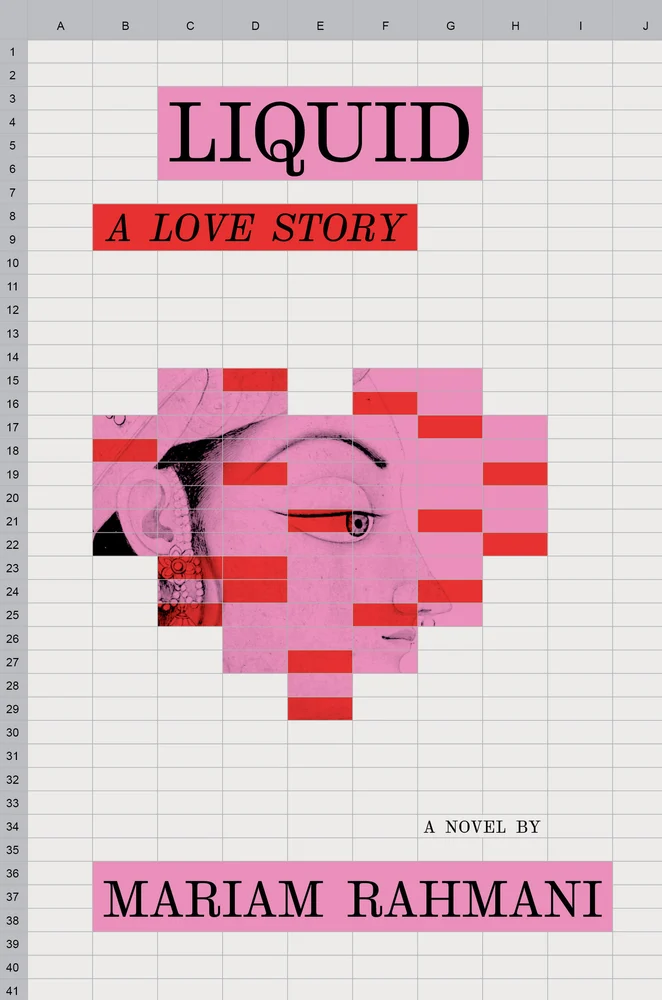
Tehran is similarly a city I formed a relationship with as an adult. My mother’s from there, and we started traveling back as a family when I was four, going not every summer but every two or three, whenever my academic parents could afford it. But when I was eighteen I chose to go alone for the first time, the summer before college. For years, I went once or twice a year, sometimes for work in a sense—I did my master’s research there for my degree in Islamic art and later, working in contemporary art in Dubai and New York, would go check out galleries, etc. Unfortunately, now I haven’t been since the pandemic. I wrote this book in 2022. Maybe I was homesick. (There is a part of me that will always feel that it’s home, as complicated as that is, and though I was born in the US. It’s a place that’s at once so far from me and so close.)
Politically, I’m interested in how similar the cities are. They’re almost at the same latitude, the climates are not so very different, they both have a lot of Iranians. But living in the US, existing in broader American culture, Iran feels very far away. Most Americans have no reason to think about it, and the ones who do often can’t access it given US-American relations since the Revolution. Liquid was a way to collapse that distance.
Kyla D. Walker: Did you write the novel with an outline or the ending in mind? Or was the voice of Jacob, the narrator, the main guide?

Jeremy Gordon: See Friendship initially began as a short story of about 9,000 words made up of essentially three scenes: a narrator reunites with a high school classmate at a bar in Los Angeles, where he discovers the true circumstances behind the death of a mutual friend; the narrator explains what he’s learned about these true circumstances, and the involvement of another former classmate, to his ex-girlfriend; the narrator comes face-to-face with the involved classmate in an interview for an untitled podcast project. Woven throughout these scenes were the narrator’s thoughts about his dead friend (their relationship, his death, and so forth), conveyed in a slightly world-weary, too-cool-for-school attitude about things that had taken place and could no longer be changed.
The project expanded and evolved in many ways: Jacob (my renamed narrator) became more fallible and less self-assured; the podcast went from being a tossed-in dynamic to a central pursuit; new characters were added that allowed me to sketch out different ideas and emotions. But I knew the novel’s instigating event was a revelation, and that the concluding event was a confrontation—and that, to take us from A to B, I wanted a charming, sincere, knowing, but not altogether correct voice. As I revisit the story today, it’s clear how I’d established the core structure of See Friendship—and, in fact, if I were to quickly summarize the book now, the elements of the initial short story would work in a pinch.
KW: See Friendship vibrates between light humor and stark tragedy remarkably well throughout each scene. How did you manage to sustain this emotional balance, and was it intentional to layer the prose with both of these elements?
JG: I do not always attempt to “write what I know,” but I always try to “write what I like”—and while I’d like to think I have a relatively diverse taste in literature, there is a certain sensibility that I always enjoy. It’s a tone that says “we’re dying, but let’s have fun”; it faces near-certain tragedy with the mirth required to not be overwhelmed by near-certain tragedy; it has the courage to tell a dark joke on what might be the worst day of someone’s life. A book that was on my mind during the revision process was Percival Everett’s Erasure, which pairs scenes of unbelievable sadness with some truly hysterical lines. This “laugh to keep from crying” approach has always resonated with me both personally and on the page, and it served as a helpful compass as I was revising and editing. When the book felt like it was getting a bit too self-serious, I tried to lighten it up; when I worried I was making a mockery of serious things, I remembered that Jacob is not meant to be a buffoon. A reader who finished the book told me: “My initial reaction was very sad, which is maybe not what I was expecting by the end because it was also very funny.” That twinned experience is, actually, what I was shooting for.
KW: What was your favorite part of the writing process for See Friendship? How long did it take from start to finish?
JG: I began writing the novel in the summer of 2019. I completed a first draft toward the end of 2020, then spent about a year-and-a-half revising it into the book that eventually went on submission. When all is said and done, nearly six years passed between breaking ground and publication, which seems sort of unbelievable even as I factor in the distorting effects of pandemic time. But, and I hope this doesn’t sound vague, this chunk of time did not seem so colossal because I continued to really enjoy the writing and revising process. There were a few points when I wondered how it was going, but never a moment when I doubted my commitment to seeing this specific project through to the end—and that self-knowledge, following some failed attempts at writing other novels, was invaluable. Sometimes, I’d look up after a long stretch of revising and rereading, and say out loud to my wife: “You know, I think this is still pretty good.” Or she’d ask me what I was laughing at, and the answer was: “My own joke.” To have that reaction several years into the process was really special, and informative—it confirmed to me that something in the writing was working, even when it felt like everything else was taking forever. That’s something for me to chase in the future.
KW: How has your background of being a culture critic affected your approach to writing fiction and this novel specifically? Did the transition to writing fiction feel natural?

JG: My earliest attempts at writing fiction, as an adult, seem ridiculous to me when I revisit them now: I was convinced that they had to “sound differently” than my regular writing as a culture critic, and so I labored to find a tone and voice that ended up being completely affected. It’s not that these passages didn’t sound like me, because I have no essential self that I need to sound like; it’s that they weren’t coming from a natural source. But when I started writing See Friendship, I realized that I had found a way to cut the shit. I was still laboring, but I wasn’t pretending to be another writer. And I think all the work I’d done as a culture critic had helped hone my sensitivity to what was and wasn’t working—because I knew what I liked, I could pursue that sensibility as my North Star in moments of doubt or crisis.
I’m working on a new novel that is, in many regards, very different from See Friendship; a couple of early readers have said as much. Yet it doesn’t feel like a “reinvention” or whatever; it’s coming from the same source of curiosity and inspiration that powered my first book. I think that hyper-awareness of what’s turning me on and what isn’t—for lack of a better phrase—is something that was shaped by my hours and hours of exposure to so many different types of media, whether in literature or music or movies or whatever else. Books are books, not movies or songs, but feelings and moods are cross-medium.
Kyla D. Walker: What was the genesis/inspiration for writing Deep Cuts?

Holly Brickley: The initial idea was to explore my lifelong envy of musicians in the context of a love story, where I thought it would make a good complicating factor. I knew I wanted to do it with a feminist lens, because that’s how I saw my envy, as a longing to be in the best of all the boys clubs; to have had, as a young girl, the carefree confidence that a young boy is so much more likely to have when he first picks up a guitar. Also, I’ve always wanted to write a rock novel, and I had this idea that by actually writing about songs—by weaving elements of music journalism into the fabric of a novel—I might have something new to offer the tradition.
KW: Did you write the novel with an outline or the ending in mind?
HB: No, I’m a pantser. Outlining never works for me because I get to know my characters as I write, and plot is driven by character. So I just felt my way forward, knowing the next one to two chapters and not much beyond that. I had a sense of where it would ultimately end up, but it was vague, and I had no idea how I would get there.
KW: How did you decide on the structure of a playlist for Deep Cuts? And did you decide on which songs you would use before writing the chapters?
HB: The idea to use songs as chapter titles came right at the beginning; that was part of my initial conception of a novel that actually analyzes songs. It was a little different at first, though. Some chapters read more like a traditional novel, while others were shorter impressionistic pieces focused solely on a song (no plot). Around the halfway mark, I jettisoned those shorter chapters, which I could see by then were unnecessary and probably pretentious.
As for whether I knew the songs before starting the chapter, that varied. Sometimes I knew with certainty from the beginning; sometimes I thought I knew, but changed my mind. And other times it took some effort to find a song capable of doing the emotional heavy lifting I needed. For example, there’s one chapter that was fully written, minus the song, for several days while I flipped through my records and yelled “Alexa, next! Alexa, next!” Finally, I found “The Weakness in Me” by Joan Armatrading, and not only did the song facilitate the emotional pivot I needed, but it took that pivot to a deeper place.
KW: What was your favorite part of the writing process for Deep Cuts? How long did it take from start to finish?

HB: I know this sounds crazy, but it was just a little over a year, from January 2022 to March 2023. I honestly loved every damn minute of writing this book, which is why I was able to write it so quickly—I was obsessed, writing every spare moment I could find, barely sleeping for nights on end.
If I had to pick a favorite moment, it was probably writing the penultimate chapter, “Heartbeats.” That was a fun scene for a lot of reasons, but part of it was that I could finally see how to land the plane I’d been flying, frankly, blind. That was an exhilarating moment.
 Thank You!