Every Upbringing Is an Indoctrination

“The Cult” by Mel Kassel

Cass’s mother is on TV, crouching and rocking with the other cultists. Her closeness to the camera makes her a set of flesh-pieces, never a whole person: thighs, stomach, breasts (blurred, but anyone can see where the blur changes color around her nipples), chin, cheeks, slipping in and out of view. 

Some of the cultists are crying. Their queen has died, the way all their queens have died and will die. Soon, they’ll choose a new one, and they won’t be on TV again until the next bit of drama. 

Cass is alone on the couch, but she says aloud, “I’m not calling her.” She imagines sending a small ship into the recesses of her body to scout for sympathy. The crewmembers, their mission, doomed. 

Imagine it, Cass tells herself. She steers the ship, scanning for crevices. The queen was your mother’s friend. Perhaps all that should matter is that your mother has lost a friend. 

The inner voice, the ship’s drive, morphs. Now it sounds like her ex, Vera. If nothing else—if you can’t muster organic compassion—maybe you can respect that she’s in mourning.

Cass tries. It feels like a cosmic squinting, an effort to see the world in a whole new way. She can catch just a glimpse of it, a reality in which her mother is more pitiable than offensive, where everything is softened. That was how Vera saw things. Vera could access the most generous view on any issue, report it as though she was summarizing a book she’d read. She’d tilt her head, stare upwards at nothing, and say, “Well, if you look at it like they do . . .”  

Cass turns off the TV. Her dad will call soon. He calls every time the cult gets coverage. She considers getting into the shower so that she’ll miss the call, but doesn’t, because it’s better to power through, talk him down. She wants to text Vera, but can’t. They agreed on no contact for at least a month. 


The cult started when Cass was in high school. They called themselves the Colony. It was a tone-deaf name, given that its members were almost all white and wealthy and Californian. They were trying to emulate the hierarchies, diet, and behavior of naked mole-rats; and naked mole-rats, the cultists would explain to anyone who asked, live in groups called colonies, governed by queens. Just like ants, just like bees!

Cass and her friends laughed at these interviews. The nude middle-aged cultists, all paunch and desperation, smiling as they assured reporters that they knew it sounded crazy, but they’d seen the results. 

“It’s actually really sad, though,” someone in Cass’s friend group would say, when the laughter stopped. “They’re just going to die sooner.”

Everyone in the Colony had some kind of cancer. Most of them had run out of treatment options. They became versed in mole-rat lore and shared it as a slurry of science and religion: naked mole-rats are inexplicably resistant to cancer. They perceive pain much less acutely than we do. They don’t wither with age—their cells defy senescence. They eat clean, mostly roots and tubers. They have designated chambers for sleeping, dining, shitting. They are humble, nearly blind, hardworking, denizens of the earth. The only eusocial and ectothermic mammal. 

The interviews irritated Cass. She flinched at the nudity, how these people made their bodies everyone’s business. To her, they already looked vaguely tumorous, bulging where her eye wanted flatness. Even the really skinny ones had patches of skin that were loose or pitted. Was that how she would look when she was older? Her parents looked like that already, although her mother tried not to. Sometimes at dinner she would use her spoon to measure out a single dollop of casserole, potatoes, or meat, then fill the rest of the plate with romaine lettuce. “I love the crunch,” she told Cass. When it wasn’t lettuce, it was fat-free chocolate bars that crumbled into dust when pinched, or tiny microwaveable troughs of vegetables and soggy rice. 

Despite her efforts, despite daily runs and twice-weekly spin classes, her mother’s shape was cemented. She was big and soft and thought herself hideous. Cass marveled at the size of her bra cups on the drying rack, first enviously, then fearfully. 

Her father seemed like a different species. Skinny chest, slight potbelly, skinny legs. He ate whatever he liked. 

Cass had seen pictures of them from when they were younger and couldn’t reconcile the images with the people she knew. Footage from the cult confirmed her suspicions: as you aged, you became a lump-ridden, pathetic thing. 

“It’s like, you’re already in a cult—do you really need more attention?” She and her friends huddled around her phone, watching another interview. 

“Right,” someone said. “No one wants to look at your old ass anyway.” 

“Especially when you get all sick and wasted and stuff.”

“What do you think it smells like in there?”

“Fucking gross,” Cass said. 


Her dad doesn’t call until the next day. Cass’s phone lights up next to her computer and she ignores it to finish a sampler of logo proposals for a boutique tea company. She calls him back during her lunch break. 

“What’s up?” she asks, mouth full of salad. 

“Sorry, I know you’re at work.”

“Yeah. What’s up?”

“Well, I’m worried about your mother.” 

He only refers to his ex-wife as “your mother,” or, if they’re around others, “Cass’s mother,” as if the crucial connection is between her and Cass. But it’s his own sad obsession that keeps the woman in their lives. He reminds Cass of one of those dogs that won’t get up from its dead owner’s grave. 

“In a new sense, I mean,” he says. “I think she’s going to put herself up for . . . the leadership role.” He also refuses to use the cult’s lexicon. He won’t say “queen.” 

“Okay?” Cass says, stretching out the word. 

“I really think that if we both talked with her, she might be less likely to . . . endanger herself further.” 

“How do you know she wants to be queen?” 

“Well.”

“Have you been talking to her?”

“We speak on the phone sometimes. She reached out about a month ago.”

“You’re such an addict!” She laughs. This flavor of disappointment is comfortable, almost satisfying. “Does Trish know? I’m sure she loves that you’re still talking to your cult-wife.” 

“Trish knows. She actually agrees with me.”

“I’m not doing this. I can’t believe you called me with this.”

“Your mom is sick. She doesn’t realize . . . Look, you know what they do to the leaders. I don’t want that to happen to her. Please, Cass—”

Cass hangs up. She taps her front teeth with the tines of her plastic fork, pushes at her gumline.


Her father told her about her mother’s cancer diagnosis during her senior year of college. He called her and read facts from a handout. 

Lightheaded from confusion and embarrassment, Cass told her roommates that her mother had breast cancer, not colorectal cancer. Breast cancer was easier to talk about, its milestones somehow familiar to the three of them. They closed their eyes and shook their heads at words like mammogram and mastectomy, words with a grim, feminine poetry, located an immeasurable distance from bowel and stoma and polyp

She moved back home after graduation to “help out,” a phrase that terrified her in its expansiveness. She couldn’t say no when her father asked, but there were so many things she did not want to see. The blood and shit of it all. Mostly the shit. 

A resectioning surgery had been scheduled, and Cass began having nightmares about the aftercare. In one, she had stacked her mother’s used bedpans in her closet at college and forgotten about them. The university was calling and calling her, demanding that she retrieve them immediately. But years had passed since she’d left them there, and she could not imagine what had festered in that closet since, what had happened to the human waste after all that time.  

Back home, her father told her that he only needed help driving her mother to and from appointments at the hospital. Her relief was overwhelming. She couldn’t stop smiling and laughing during her run that day, feeling the residue of terror leave her body. Afterward, she brimmed with generosity. She resolved to be patient and leash her pettier thoughts. She would allow her mother to probe about her life, and she would share choice morsels that would amount, in her mother’s mind, to a new level of intimacy. 

This strategy worked better than expected. For a few months, it seemed as though the cancer might actually bring them closer. They talked about Cass’s ambitions in graphic design, her social life, television, and neighborhood gossip with a newfound playfulness. Her mother was so subdued that they rarely had cause to argue. She couldn’t go out to eat, so she couldn’t ask servers and cashiers if they thought her daughter was gorgeous. She couldn’t exercise, so she didn’t register both of them for 10Ks or buy them matching athletic wear that was a size too small, a challenge to “work into the shorts.”


Cass meets Richie after work at the Cuban place between their train stops. He looks good, and their hug lasts a beat longer than it has to. She decides she deserves a spontaneous, we-love-each-other-as-friends fuck after everything that’s happened in the past two days. She orders them both drinks and takes his hand.

“I’m exhausted,” she tells him.

“Work?” he asks.

“And everything else.”

They argue over which empanadas to order and have the server settle it for them. Cass flirts and over-strategizes. He knows about the breakup, but might think it too recent for them to safely sink back into their pattern of affectionate hookups. She doesn’t think he’s seeing anyone. She gets the perfect amount of buzzed and keeps tearing small pieces off her paper placemat instead of eating more plantain chips. Midway through the meal, she becomes direct. 

“Would you be interested in fooling around tonight? No pressure.”  

“Oh, uh, yes! Yeah.” He studies her. “That’s okay?”

“I need it,” she says, and he’s so flattered he almost starts glowing. 

They walk through a light rain to his apartment. They delight in the awkwardness, knowing that they’ve dismissed it before, teasing each other with the imaginary threat of it. They’re half an hour into a movie they’ve both seen when Cass slides her lips up his neck, and that’s enough to turn him urgent, his hand at her collarbone, pressing her into the couch even as he says they should move to the bed. 

It’s quick, and as soothing as sex can be for her. He doesn’t investigate her like Vera did, with a frenzied delight that could be equally arousing and unnerving in its force. He doesn’t burrow into her armpit and tell her he just wants to breathe there. He doesn’t smack his mouth loudly around her clit, which made her come even as the crudeness of the sound made her wince. She redirects him when he focuses on a specific part of her, moves against him with all of her body so that he can’t narrow in. She wants to be cloudy, something wholly pleasant and indivisible, unexamined. She goads him into selfishness, into a practical rhythm. He thanks her as he wipes his semen off the small of her back. 

He doesn’t investigate her like Vera did, with a frenzied delight that could be equally arousing and unnerving in its force.

They lie in bed facing each other, her with the sheet up to her shoulders, him uncovered. She can feel the smear of sweat under her leg where her stomach had been. She imagines their sex as though she had been observing it from the side, watching the fat on her belly and arms shudder. She tries to sweep the scene out of her brain. 

It was nice, she tells herself. It was nice

“You okay?” Richie asks. “What’s up?”

He doesn’t do social media, he probably hasn’t seen the news. He knows about her mother, though—she told him the story, back when they worked in the same office. 

“Mostly family stuff,” she says. It’s a test to see if he really wants to talk about it. 

“Your mom? How’s she doing?”

“She might be the new cult leader. The old one just died. Of cancer, shockingly. And my dad—classic codependent, apparently he’s talking to her still, which I just learned today—is trying to recruit me for an intervention. Because—” 

“She’s getting worse?” 

“No—well, maybe—but it’s because they do something to the queens.” She closes her eyes and talks with them shut. “In a regular mole-rat colony, when a new mole-rat becomes queen, she gets longer. She becomes the biggest mole-rat. By a lot.”

“Seriously?”

“Yeah.” She doesn’t add what she knows about reproductive hormones, about the increase in space between queen mole-rat vertebrae. She doesn’t want to allude to all the research she used to do. “It’s crazy.”

“Holy shit.”

“And the cult tries to recreate it. All the queens at the Colony somehow get taller. It’s a surgery they do. My dad’s worried they’re going to kill her.” 

“What?” His face is concerned, clenching. “That’s awful.”

“Yeah, but I can’t get involved. She made her batshit choice and I need to just live my life.”

“Yeah. Of course. This definitely isn’t yours to take on.” 

“Right. I know.” 

She’s punctured the mood. If they fuck again, he’s going to try at tenderness, and she can’t handle that. She watches him, searching for the moment when he puts the new information about the cult aside. But it’s too weird, of course it’s too weird, he can’t table it. 

She asks if they can sleep, because she really is exhausted, and, still wearing the same troubled expression, he reaches over her to turn off the light. 

She runs her fingernails down her sides, over her hips, giving herself goosebumps. She sucks in her stomach, tries not to let it round out again. She doesn’t feel exorcized. If anything, she feels more bloated than before she told him. It’s always like this, when she talks about her mother. It’s like she’s coughed up a mass—hair and clotted spit and something buzzing in the center—held it up above her head, then pushed it back down her throat. And now, Richie’s been reminded of it. He knows it’s still in there. Nothing gets untangled in talking about it, but she forgets that, every time.


The resectioning surgery seemed successful. But months later, the cancer recurred, and her mother started chemotherapy. It made her so nauseated that she couldn’t eat much at all. She shed weight, visibly, for the first time in Cass’s life. 

“At least something good’s come of all this,” she would say, squeezing her thigh.  

“Don’t say that, Mom,” Cass would respond. “There’s nothing good about this.” 

The relative peace between them leaked away as her mother’s silhouette sharpened and Cass’s stayed the same (not very fat, but, as her mother put it, “made of circles, not lines”). The treatments made her mother tired and snippy. She was bitter that she couldn’t take her new body out into the world. She picked at the clothes Cass wore and wanted to hear every detail of her day. She’d get frustrated if Cass couldn’t remember what she’d done in a certain window of time. 

“Surely you did something this afternoon?” she’d say. “Even if it was just texting? Did you read? Did you go out? Close your eyes and think back!” 

Cass never went inside the hospital; her father kept her mother company during the treatments. The chemotherapy slowed but didn’t stop the cancer. They recommended another surgery, and though her father and the doctors reassured her otherwise, her mother became convinced that she would wake up with a colostomy bag. An unthinkable outcome. She told anyone who would listen that she’d rather die.  

She left for the cult while Cass was away at a bachelorette party. She wrote a short note with no apology: I’d like to try something new, and I have that right. I love you both and will be in touch.


Cass meets her father and Trish for lunch. It’s a two-hour train ride each way, essentially her whole Saturday, and she’s sure it’s a trap. But it’s Trish’s birthday—she has to go. 

They act convincingly innocent. They ask what she’s designing at work, which clients request the most difficult logos. They gently steer the conversation toward the breakup. 

“Are you speaking to each other?” her father asks. 

“Not yet,” says Cass.

“Good riddance,” says Trish. 

The check gets paid and they haven’t mentioned her mother once. Cass isn’t fooled. When her father suggests that they walk off the meal, she sucks on the inside of one cheek and waits for the opening move. 

“Cass, is it alright if I bring up something rather sensitive?” 

Trish, a dental hygienist who always matches her skirts with her tops, is much skinnier than Cass’s mother. But the two of them share the same oppressive warmth. To reject them outright is to be proven a monster. 

“Sure,” Cass says.

“Your father and I would like to talk about your mother. We’re concerned that she’s not in the right . . . headspace . . . to consent to this procedure. The police can’t get medical records, but we know it’s most likely the equivalent of a back-alley surgery.” 

It’s so sad, Trish talking about this, of all things, on her birthday. She had taken a single bite of the chocolate mousse that the server brought her, blown out the candle in the most prudish way imaginable, lips sphinctering tight. Her love for Cass’s father is steely, no-nonsense. Cass doesn’t know how he recruited her for this fight. 

“I know,” she says. “Just, let me think for a second.” 

They walk in the vague direction of the house, and she imagines them approaching the alcove with the dark red door, Trish’s cocker spaniel barking from behind it. She can picture the kitchen, stacks of those little instant coffee cups and the huge plastic wheels of pre-cut fruit. It’s much smaller than their old house, which sits just six blocks away. Her father sold it after her mother left. 

She doesn’t want to go inside. She stops on the sidewalk, defeated. “What do you want me to do?” 

“At least talk to her,” her father says. He might cry. She doesn’t want to see it, or see Trish comforting him. “Before they do it.” 

“I don’t know how to contact her.” 

There’s a new number. Cass taps it into her phone, labels the contact Mom 2, and walks back to the train.


The Colony wanted to dispel any rumors of coercion, so much so that they allowed journalists to tour the repurposed field house where they lived. A few months after Cass’s mother joined, a semi-famous cultist died. The media dialed up its coverage, re-discovering the cult with fresh agitation. Cass and her father watched the reports and looked for her mother in the footage.

“There she is, pause it,” her father would say. Cass was awed that he could pick her out so easily, especially when she was hunched over in the background, only her back and buttocks visible. It was disturbing, how hungry he was for the sight of her mother, how attuned he was to the specifics of her naked body. It felt equally important and wrong to watch for her together. 

Back then, she spoke to her mother once a week. The Colony had a room with a single laptop where members could video chat for half an hour at a time. At Cass’s request, her mother positioned the camera so that only her face, none of the rest of her, was in the frame. 

“But you won’t see how good I look! We used to shower together, you know,” her mother said.

“Yeah, when I was three,” Cass said.  

She would tell her mother about the TV spots, trying to hint at how the outside world perceived the cult, but her mother seemed happy that they were being featured at all. She mostly spoke about her new social life. She acted as if the people were the same types she could have met anywhere. The gossip intersected with a jittery reverence for the queen, a woman named Miranda.

“God, she really is . . . I mean, the only word for it is regal,” she said.

“She’s just a person, Mom. Like you.”

“There’s something different about her. She’s six-foot-five, for one thing.” 

Cass read everything she could about the Colony. They claimed that the life spans of their members surpassed doctors’ estimates by enough time to be statistically significant. They released what they said were comparative scans of tumors, fuzzy white voids that shrank or disappeared across images. Members shared a sleeping chamber, a latrine, a strictly vegan diet. Shoes were the only clothing allowed.   

“But shoes mean you’re new,” her mother told her, whispering. 

The Colony maintained that their queens grew taller in a “biological mirroring process,” their bodies changing to fit the authority of the role. But there were doctors and even ex-members who gave accounts of a grueling surgical procedure. There had been eight queens since the Colony began, and each of them had the telltale scars on their legs and backs. Undoubtedly, reporters said, the surgery hastened their deaths. 

Cass visited websites where debunkers shot holes through each of the cult’s beliefs. She researched real naked mole-rats, even looked to see if any nearby zoos had them on exhibit. She shared her findings with her mother, carefully at first, then with a feverishness that made her yell and sputter.

“How can you believe this?” she asked. “How can you be this stupid? You’re not fucking rats. You just can’t accept that you’re dying.”

“Cass, honey, that’s enough.” 

“You can’t address anything I’m saying. You won’t, because you can’t.”

“It’s not what I want to talk about with you.”

“Why talk to me at all? You’ve found a place where everyone has to like you.” 

Her mother had taken a deep breath, her face serene. “I’m here because I like myself.”


She’s supposed to call her mother, but all she wants to do is call Vera. Cass goes for a run so she won’t have to think about either of them. 

Her new neighborhood is more residential than the one she and Vera lived in. There are houses with porches and yards sprinkled among the apartment buildings, and a park with willow trees and a winding concrete path. Cass turns into the park just as a new song begins to play through her earbuds. She leans into the sense of serendipity. 

There are other people in the park—families with strollers, dog walkers, kids using the softball field. She keys in on her fellow runners. Which of them are also avoiding their mothers and exes? There’s a woman in green shorts, a man with ankle weights, a jogging cluster of teens. Cass pictures lines of kinship stretching between them, the wires charged and rippling. They’re all out here because they want something to be different. If not their bodies, then the tides of their thoughts. She wonders how many of them started running because a parent pushed them into it. The teens in particular—did they really want to be out here? Had they done the work of delineating their own desires? Did they know that work was possible? Maybe, she thought, if you ran with friends, motivation didn’t matter as much. The running became something to share, a social event. 

Running with her mother had sometimes felt like that, if they weren’t training for something specific and comparing their times. Vera, on the other hand, didn’t run and had never gone with Cass. She was naturally slim, a talented dancer, but a homebody, and not fond of regimented exercise. She could be graceful without working at it. 

There had been a queasy sense of triumph in the running, when they were together. It burned calories, of course, and it impressed Vera, who would try and lick the sweat from Cass’s shoulders when she took off her sports bra to shower, Cass batting her away. It also made Cass feel quietly honorable, knowing she was doing something healthy that Vera refused to do. 

Cass slows down, puts a hand against a tree, spits on the ground. She needs to reset. 

No contact, she thinks. She imagines a large red X drawn over Vera’s face, then her mother’s. She should be running for herself, not anyone else. 

No contact. She repeats it like a mantra, speeds up again, pairs each word with a step. 


When they fought, Vera didn’t hear how smug she sounded. She spoke like she was levitating, like Cass couldn’t possibly reach her. 

“You can’t just accept everything, or you’ll have no standards,” Cass told her near the end. They were arguing because Vera had defended a new-agey friend whose “full-body meditation practice” prohibited any physical labor after 6 PM. 

“Imagine if I started living like that,” said Cass. “I couldn’t clean, so the house would be a disaster. I couldn’t work out. Your metabolism is blessed, but I’d get huge.” 

“So get huge and live with me in a dirty house.” Vera had shrugged and continued to work on a crossword puzzle. “I wouldn’t care.”

“Fuck off,” Cass said. 

“Anytime you want. I’d still love you.”

Cass felt as though she was speaking to her mother, trying to cut through a cocoon of blank-faced holiness. She spoke low and fast. “You can’t just say that like it’s nothing. Don’t act like you wouldn’t notice if I got fatter. Like it wouldn’t be a problem for you.”  

Cass felt as though she was speaking to her mother, trying to cut through a cocoon of blank-faced holiness.

Vera put her pencil on the coffee table and looked up at Cass from the couch. “Woah, okay. Cass, I’m not with you just because of your body. It wouldn’t be a problem at all.”

“Oh my God, can you please just admit to some human feelings? Ones that don’t make you the most progressive thinker in the world for a second?” Standing over Vera, arms crossed, she felt anchored to the floor with conviction. 

“You think you know better than me how my sense of attraction works?”

“I think you just don’t want to acknowledge that your attraction would change, because you’re more interested in being virtuous than being honest.” 

“That’s so fucked up I don’t even know where to start.” Vera leaned back and Cass saw that she wasn’t mad at all; her face was anguished. 

“Then don’t,” Cass said. “Don’t change anything, don’t clean, eat whatever you want, and hang out with your brainwashed friends. I’m going to bed.”

It wasn’t their last fight, but it’s the one Cass remembers most vividly. When she thinks of the breakup, she sees Vera’s face in that moment: That’s so fucked up I don’t even know where to start. She looked sad and surprised at once, her mouth slightly open, her forehead bunched into lines. It was insulting at the time, this sudden performance of concern, another judgment from the more enlightened party. 

But perhaps it had been genuine. Maybe it had been as much of a jolt as Cass’s rage. And if that was true, what else had Cass misinterpreted? 

The question follows her, a humming membrane she knows she could push against, and possibly pass through, if she wanted. 


When she was six, her mother took her to get her tonsils out. 

“You’ll go to sleep, and when you wake up, you’ll get all the ice cream you want. Sweet deal, Cassie-lassie.” 

She counted backwards from ten, breathing cherry-flavored gas. 

When it was over, she felt scraped raw. She was scared that her neck must be thinner, that they had taken too much. Her trust in doctors cracked down the middle. The ice cream hurt to swallow. 

But the real betrayal came a year later, in the back of the car, on a road trip to see her grandparents in Florida. She was looking out the car window, asking why people weren’t climbing the palm trees to get the coconuts. She demonstrated how she would have shaken the trunks to knock them down, grabbing the side of the door and throttling her whole body. Something shifted, came loose in her right ear. She squirmed a finger in there. A small, white piece of tubing came out. 

“Dad,” she said, trying for nonchalance, “what are ear tubes?” 

“What?”

“You know, tubes that come out of your ear?” 

“What?” Her mother twisted her torso almost all the way around in the passenger seat. But when she saw the tiny tube in Cass’s hand, she laughed. “Oh, sweetie, those were to help your ear infections. The doctors put them in when you got your tonsils out. I didn’t mention it back then because I didn’t want to scare you.” 

“Did one fall out, honey?” Her father smiled at her in the rearview mirror. “They’re supposed to come out, it’s okay. It means they did their job.” 

“Yes,” she said, and started crying in big, gulping coughs. 

“Oh my god,” her mother said, and her father pulled onto the shoulder. Both her parents asked her why she was crying, but they were so worried that they shouted the question, which made her cry harder.  

“It’s okay, honey, really, nothing’s wrong,” they said, over and over.  

When she thinks about it now, she feels a fossilized place in her chest where the panic had burst. She remembers it from a distance, tries to dissect it. Of course, she’d been stunned by the revelation that objects had been put inside her without her knowledge, and that those objects were falling out unexpectedly. But the worst feeling, the rushing that made her cry in the car, had been a fear veined with shame. Was she so damaged that they were scared to tell her she needed fixing? Would they put tubes in other places? What else had to be done? She didn’t know what was inside her, only that it merited work, and some of that work had already started.  


The news runs more features about the queen’s death, the cult’s upheaval. They’ve almost completed the clandestine process of choosing the new queen. Cass’s father texts her photos he’s taken of the television, and they look like pictures of cryptids. They show a stooping figure, a pale arm. 

“Pretty sure I got her in this next batch,” he texts. “Do you see her?” The pictures are so grainy, it’s impossible to tell who’s even on the screen. Cass doesn’t want to see them. She doesn’t watch the news or listen for the cult’s name. 

At night, she stands in front of the bathroom mirror, naked, hearing Vera in her head. I want to french your belly button. I want to put your whole ear in my mouth. I want to kiss you all over, every part of you. Here, here, here.


When the month is up, she and Vera get coffee. 

Cass keeps stretching in her chair as they talk, touching her toes or lifting her arms to the sky, unsure how to be at rest. 

“Do we talk about how we’re doing?” she asks. 

“I just assume we’re not great,” Vera says, and Cass relaxes, slightly.  

They’re methodical as they run through their updates. They laugh at the appropriate points, and it’s both scripted and genuine, an exercise to which they’ve both committed. 

Cass doesn’t tell Vera about her mother. They’d never met. When Vera asks, Cass waves a hand to the side and says, “Oh, she’s still in there,” which is true. 

They agree that it’s been hard, not talking, but they don’t make solid plans to meet again. It still feels early. 

Vera hugs her before she leaves. Cass knows it’s coming and tries to memorize it: the placement of Vera’s arms, the pressure, how unthinkingly she enfolds her body. There are still so many parts of herself she cannot imagine knowing. 


Later that night, she calls the number her father gave her. A man picks up, and she has to tell him, then another man, who she is and who she’s trying to reach. 

Then her mother is on the line. “Cass?”

“Hi, Mom.”

“Why are you calling? Is something wrong?” Her voice is different. It’s slow and airy. She sounds sick or drugged, blatantly fragile. Cass’s stomach flips as though she’s crested a hill too fast. 

“No,” she says. “Dad wanted me to call you.” 

“He’s worried, I know. It’s okay.”

Cass can hear fumbling, her mother’s body shifting on sheets. She feels herself blushing. The call is already too intimate. 

“Cass?”

She tries to rank her questions in order of priority. She’ll have to eliminate some of them. Something has progressed. The cancer, maybe, or her mother’s indoctrination, or both. 

 “Yeah, sorry. He just wanted me to talk to you before you . . . become queen.” 

“I’m already close to six feet,” her mother says.

“What?”

“I’m already close to six feet. You start growing, even before the last one dies. That’s how they know who will be next. I told your father this, he doesn’t listen.”

“I thought they made you queen, somehow. With an operation.”

“Yes, but you start growing on your own first. It was my turn.” A creaking noise. Other people in the room? “They’re measuring me every day now.”

“Congratulations.” The word leaves Cass gently. It feels like it’s using a different kind of air, drawn from a new chamber inside her that has been pressurized open. It’s out before she knows she’s going to say it. 

“Thank you. They say I’m growing faster than most of them. They make lines on the wall, and every day the line goes up a little. I can see them right now. You know, I was born for this.”

“Sounds like it.” 

“I thought you might try to talk me out of it.”

“As long as they’re treating you well.”

“Of course they are. Let me show you. How do you turn on the video?”

Cass knows, but doesn’t tell her. “I just called to say hello.” 

“I can show you how tall and skinny I am. I feel like a new person.”

“That’s okay.”

“No,” her mother says. “I want you to see. For you, I mean. You were always so shy about this sort of thing. I embarrassed you.” More fumbling. 

“Mom?” Cass says. “I’m going to go now.”

“No, I want you to see. Hold on. Cass?”

“I’m happy for you. Good luck. Seriously.”

She cries as soon as she hangs up. The warmth in her face and chest crowds out everything else. She can barely feel the bed beneath her. 

She walks to the bathroom, dizzy, and stares at her face in the mirror as it reddens and shines. Her eyes are small, her lower lashes clumped together into points. Her mouth is pulled back like she’s about to rub her lips together and even out some lipstick. Her cheeks are swollen. She can feel the muscles beneath them tightening in the way they only do when she cries. 

She tries to feel disgusted by her reflection. She exaggerates the pinched expression on her face, puffs out her cheeks. She presses her hands against her stomach and feels her flesh pool out around them. 

It doesn’t work, not all the way. She can’t distract herself. Whatever’s happening to her is too strong.   
10 Novels Exploring Complicated Feelings About Ambition

In a novel (and in life), ambition is a potent force. To want, to want, to want. It is the gasoline fueling a character to do and say all sorts of craziness. But like any explosive force, ambition – especially unfulfilled ambition –  is toxic. Eats away at you. 

And yet, what is ambition really? Is it an individual’s honorable quest, as some say, to simply live out the totality of their potential? Or, is ambition merely a byproduct of a society that cannot separate being from having? Is ambition innate to a person’s identity, or does ambition only exist in a communal context? To have power, to have importance, to have affluence? If we were the last person on earth, would there be a point to being ambitious? 

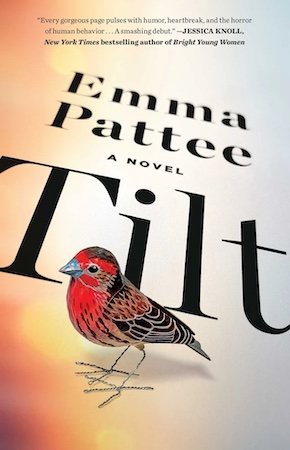
My debut novel, Tilt, is a novel about an earthquake but it is also a novel about ambition. Specifically, the kind that is unfulfilled. The kind that eats you alive. The narrator, Annie, was a gifted child and a playwright prodigy who became a very regular and unremarkable adult. Now, having survived a massive earthquake, walking in desperate search of her husband, Annie must take one last hard look at her dreams, and ask herself if she can ever truly put them down, and what they’ve cost her. 

Here are 8 contemporary novels that explore ambition in complicated, nuanced, and exciting ways: 

Colored Television by Danzy Senna 

My favorite book of 2024. Colored Television casts an unflinching eye on the often unspoken desire behind many people’s ambitions: to get rich. A whip-sharp look at the marriage of two artists living in LA, this book is full of the stink of failure and the sweaty desperateness of class aspiration. 

Writers & Lovers by Lily King 

This was probably the first “ambition book” I ever read and it so closely aligned with my own artistic ambitions that it took me a minute to truly understand its depth. Casey is 31, her mother has just died, she works at a waitress and lives in someone’s garage. And she cannot let go of her dream of being a writer. This book will stay with you for long, long, after you finish it. 

Convenience Store Woman by Sayaka Murata

In Convenience Store Woman, the main character isn’t suffering from ambition, but a lack of it. And she’s not suffering. That’s the whole problem. Keiko has worked at a convenience store for 18 years, is unmarried and childless, and lives in a modest home. Everybody around her sees her as deserving of pity because she hasn’t accomplished anything. But she is content. This book will pull you in with a seemingly simple premise but actually accomplishes something quite profound: making you question why we need ambition at all.

Great Expectations by Vinson Cunningham

Written by a staffer on Obama’s first presidential campaign, Great Expectations is as much about aspiration as it is about ambition. A coming-of-age story, a record of a distinct moment in American history, and an examination of politics, race, religion, and family. A book written with so much heart and style you won’t even notice yourself turning the pages. 

So Big by Edna Ferber

Inspired by a true story, So Big is about a woman who is determined to make something of her life no matter what it takes. When she has a son, she names him So Big, and puts her own dreams to the side in order to help foster his. As every child gymnast tells us, that never goes great! This book is an examination of the American Dream, and asks us that eternal question: is it better to chase money or to be true to yourself? 

The Interestings by Meg Wolitzer

The Interestings follows a group of teenagers who meet at a summer camp for the arts and remain friends through middle age. They’re talented, hopeful, and ambitious. But they soon realize that’s not enough. Some of them give up on their dreams for money. Some find fame and fortune. A really interesting (lol) look at art and envy, and the pain of comparison. 

The White Tiger by Aravind Adina

Written in the form of a letter, The White Tiger tells the story of a Indian man who was born into incredible poverty and is now a self-made entrepreneur, and murderer. Aravind Adina is one of my favorite writers, and this book is no exception. At turns a social critique of modern-day India, a meticulous satire of greed and striving, and an examination of ambition that comes from desperation but truly eats you alive. I read a review that called it an “anguishing howl of rage” about poverty and class inequity. I’d say that pretty much nails it. 

Yellowface by R. F. Kuang

A tragic death, a stolen manuscript, a faux racial identity, a scathing insider look at the publishing industry – what more do you want in a book? What Yellowface lacks in nuance, it makes up for in funny page-turning delight. You will read this book fast.

In “Audition,” Motherhood Is a Performance

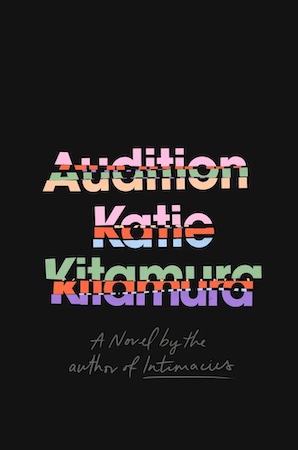
What to do in the aftermath of a shocking revelation? In Katie Kitamura’s Audition, we are plunged into an aging actress’s head as she prepares for an upcoming theatrical production and is faced with an unexpected surprise: a stranger tells her that he is her long-lost son. 

As the show progresses and family tensions escalate, it becomes clear that the narrator is navigating an increasingly unstable reality. Readers are left to puzzle together what kind of story they are reading—and which version to believe. With the simmering, understated tension that marks Kitamura’s prose, Audition mines the ripple effects of an intimate disruption. It makes us question what we define as family and what narrative bonds tie one family member to another. Simultaneously, Kitamura also has us question what narrative bonds tie the narrator to the reader, calling attention to how we are continually constructing, revising, and interpreting our own internal monologues. 

As a longtime fan of Kitamura’s work, it felt surreal to interview her over the phone. We talked about the performance of motherhood, what seduction might mean for her characters, and writing in a fractured voice. 


Jaeyeon Yoo: What was the origin point of this novel? I was immediately struck by the narrative voice, which seemed to resonate strongly with your previous two novels, A Separation and Intimacies—do you see it being in conversation with them?

Katie Kitamura: I’m a very slow metabolizer of ideas. I will have a little seed of a thought, then sit with it for five or six years before I even think about trying to turn it into a book. In some ways, it’s a kind of test case: if the idea is still with me half a decade later, then it feels like something that I do need to write about. In the case of this novel, I think I had the idea after I finished a book I published in 2017, A Separation. I saw a headline of a newspaper article that said something along the lines of, “A stranger told me he was my son,” and I chose not to read that article because I had the very strong feeling that there would be a clear explanation for why this had happened. I was much more interested in keeping the idea, with all its openness and unresolved nature. 

Eventually, after I wrote Intimacies, I decided that this was the book I was going to try to write. In a funny way, it would have been hard for me to write this book before I wrote Intimacies, because the three books—A Separation, Intimacies, and Audition—have a lot of thematic similarities, The voice is very similar, an unnamed first-person and female narrator, and all three of them are very preoccupied with performance. In A Separation, the central character is performing the part of a grieving widow, when, in fact, her actual relationship with her ex-husband is more complicated than that. In Intimacies, I was very interested in thinking about the courtroom as a theatrical space and how narratives of persuasion are built through theater. And then in Audition, I finally thought I’d just tackle the idea straight on, and I made the central character an actor. 

JY: That’s really interesting how you hinged on the word performance. For me, I viewed this idea of “performance” as a triangulation between the other two themes of interpretation and translation from before. 

KK: That’s absolutely the case. To me, all three characters are the channels for other people’s language, other people’s words. And it’s very deliberately quite gendered. In Intimacies, the central character is surrounded by speaking men. In Audition and Separation, the male figures in their lives are writers. There’s something interesting about women who are in a position of speaking but who aren’t speaking their own words, and how much agency there is in the act of interpretation. In fact, I think there is quite a lot [of agency, although] I’m very interested in the idea of passivity in general; I like the idea of writing passive characters in fiction, because I think so many of us actually exist in quite a passive way. We live with the illusion of agency, but we don’t have that much agency. 

We live with the illusion of agency, but we don’t have that much agency.

But in Audition, I wanted to write a character who would be more active than some of my previous protagonists, who would act upon the world in some way. I’ve been very interested in what you can do with first-person narration, and the degree to which, with the inherent unreliability of first person, you can create a sealed world. Everything is through the point of view of the narrator—there’s no stable ground, no external touch points. I wanted the very structure of the book to be jostled and shaped by the perspective and the consciousness of the central character. It was a question of how the will of that character imposes herself, not simply on other characters but on the mode of storytelling itself.

JY: On that note about the book’s structure, I’d love to hear you talk more about this split in the middle of the book, where the narrative itself cracks apart. 

KK: The ambition for me was to write a book that would be as open as possible. As a reader, one of the things that I don’t always enjoy is the sense of a book that has a closed, single solution: that all the pieces are falling into place and everything has been resolved. It was very important to me that Audition felt like a book that could contain multiple interpretations, and that would vary quite a bit depending on who was reading it. 

The books that I admire the most change radically with every reading. They’re not necessarily books that seem formally experimental in any way, but just books that have a depth or resonance, where you can find different things on each reading. The example that I always think of is Portrait of a Lady [by Henry James]. The first time I read that novel, I was in my very early 20s, and I thought it was about a young woman making her way in the world. I read it again when I was in my early 30s, and I thought that it was a novel about disappointment. With some books, they offer space for the reader to bring quite a lot to the text. 

I wanted to write something where a lot of the book would be dependent upon the input of the reader. I don’t want Audition to be read as a book with a solution but, obviously, I had a pretty clear idea of what I wanted to do with the book. To some extent, I suppose the two parts are part of a fracturing of the narrator’s selfhood. It’s this fragmented psyche that is coming together on the page in a way that is full of contradictions. The single narrative that a character might normally have to understand themselves, in this case, is constantly coming apart and then coming back together again. That was the basic structure of the book as I conceived of it. And this cracking, this fragmentation is fundamentally part of this character. [Similarly], there are versions of your own personal history that you rewrite retroactively. Almost pathologically, you continue to rewrite the version of the story of who you are. I was trying to call attention to that in this novel, to really look at how we write stories about ourselves and how they’re never fixed. They change over the course of our lives—but we don’t always see the ways in which we’re revising them.

JY: In this trio of books, there is this throughline, alongside seduction, of betrayal and fidelity. In Audition, it played out as a preoccupation with faithfulness to the text (of the play) and to the concept of a family.

I’m less interested in characters betraying other characters, than I am in characters betraying themselves.

KK: Betrayal is at the heart of my books. The narrator of Audition has this realization that the problem of the family is her. That was a moment that was really fun and interesting to write. This goes to what we were saying about seduction—I’m less interested in characters betraying other characters, than I am in characters betraying themselves. Whether it’s through something they do or their understanding of who they are.  

JY: I want to bring up translation again, which played a prominent role in the other two books, because translation is so often discussed in terms of betrayal and fidelity. Of being “faithful” to the original or “betraying” it, and so on. 

KK: There’s this line about translation in French being the word for betrayal. When I think about translation, I think it’s interesting how much is active betrayal—the very active choices you make—and then there are the questions of what language you are translating into, and what does that mean. What does it mean to be translated into English? I’m personally interested in accidental betrayal: the things that are absolute mistakes, that happen without intention. 

JY: What drew you to this mother-son relationship as this central tension in the story?

KK: I’m very interested in the volatility of relationships, and particularly of relationships that we’re conditioned to think of as stable in some way, whether it’s a family dynamic, the relationship between a mother and a child, or the relationship in a marriage. In fact, those relationships are incredibly dynamic and subject to change—as they should be. In my previous novels, I focused on that moment of looking at somebody who you believe you know quite well, and then experiencing them suddenly as a stranger. I primarily looked at that through the lens of domestic or romantic relationships, but it occurred to me that the place where that is truly turbocharged is in a parent’s relationship with their child. [Children] are changing so constantly; that experience of looking at your child, somebody you’ve known truly for the entirety of their life, and finding them change almost beyond recognition, is something that happens from a very early stage. I think this only accelerates all the way through to adulthood and beyond. Focusing on a parent-child relationship allowed me to kind of look at a dynamic I was already interested in, but in a heightened way. I also think the relationships between parents and children are very fraught. There are issues about control and freedom that fascinate me, which are brought to the fore when you’re looking at a relationship between a parent and child.

There is a culturally conditioned image of motherhood, and it’s very hard to not try to emulate that role.

We were talking earlier about performance. The thing that I certainly experienced, and that I know a lot of my friends experienced when we became parents, was this extraordinary amount of roleplay that takes place when you become a mother. There is a culturally conditioned image of motherhood, and it’s very hard to not try to emulate that role, because you don’t know what you’re doing for the most part, especially with the first child. So you reach for the role, as you have seen it codified in culture. I think there is a lot of performance that happens in the material reality of being a parent, which happens almost unconsciously. And there’s a lot of alienation from yourself as well, which can take place because you’re quite wrapped up in performing this ideal of motherhood. You create a wedge between who you are and who you’re performing. I was not as interested in writing about early motherhood, and there’s been so much wonderful writing about that particular phase. It really struck me how those dynamics might change, but they don’t totally go away, even when a child is older.

JY: The alienation you talked about ties in so directly with the fracturing that we talked about earlier—the self cracking apart—and the different ideas that performing motherhood might lead to. One of the other themes that we’ve been circling, with discussing open readings and agency, but haven’t directly talked about is ambivalence. Could you talk more about the role of ambivalence in your work?

KK: I think all of the characters are ambivalent about family structures, relationship structures. They have a skepticism towards institutional frameworks. At the same time, they are all aware of the risks of stepping outside of those pre-ordained frames that people are told to occupy. It’s not as simple as “the whole world is terrible, family structures are terrible,” and so on. It’s about understanding the allure of those structures as well. It’s very much in Audition, this lure of playing a part that is clearly defined. It’s a seduction. It’s not only social status that’s conferred on the mother or the wife. It’s also the security of being so clearly defined. On the one hand, they’re pushing against that [security]. On the other, they have a longing for that. So they’re operating in the in-between. In Audition, playing the part of a mother and a family is something that is overwhelming. It’s clearly fraught with danger: of letting a stranger into your house, your life. But it’s something the narrator can’t resist.

JY: That’s so interesting, especially how seduction in the book is not between one character and another, but rather between oneself: one’s personal fantasy, not an external person. 

KK: Yes, now that you mention it. It is characters who are being seduced by ultimate versions of themselves. 

JY: Which, maybe, is how it works in real life. What kind of person will I become with this person? It’s not even about the other person.

KK: A relationship is something where I can become something other than what I am.

8 Books About Girls Growing Up on the Internet

I’ve watched so many hours of video, maybe you have too, and I’ve seen people on the internet rise and fall, disappear. I’ve wondered about them after, millions of us have. I’ve even uploaded a few videos myself, but when two comments came through about my glasses, I took it as a turning point. Either I was going to tell them my prescription and shoot a video where I took my glasses on and off, like they’d requested, or I was going to private my videos and go back to the known world, a world where I felt like I could see the people who could see me. 

In my debut novel, Plum, J heads to the internet to escape. She wants out of her parents’ house, a violent and dangerous place, but at her age, she can’t just leave through the front door. So, she sets up a cam, turns it on. Unlike me, she doesn’t leave. She stays. She clacks her long, pink nails against her cup in her childhood bedroom and receives hearts. She does this for a long time. She cams as a way to know she exists, is a person with a future: “They call you J. You are J. And you are also your full name of three full words. You are your family’s daughter and you are this girl on the internet and you are tired of figuring out who to be when.” The internet offers J a place where she can be someone new, someone safe, someone someone listens to. 

Here are eight books about girls growing up on the internet — and the fallout of all that screen time. 

Liveblog by Megan Boyle

For six months, Megan Boyle attempted to capture her entire consciousness on her blog, “liveblogging everything I do, feel, think, and say, to the best of my ability.” Arranged chronologically, sometimes with capitalization, other times without because she was writing on her phone, Liveblog is more than 700 pages of Boyle’s singular brain. By documenting, Boyle hoped she could feel a little less of the “uncontrollable sensation of my life not belonging to me or something. like it’s just this event i don’t seem to be participating in much, and so could be attending by mistake. maybe i wasn’t invited. clerical error.” — a feeling I’ve had before, have also attempted to remedy by self-imposed constraints and external oversight. This book feels like holding the printed internet and realizing it’s so heavy, every human feeling, thinking, doing this much all the time. The opening disclaims “**THIS IS NOT GOING TO BE INTERESTING**” but that’s just not true at all. It’s a feat and a thrill all its own.

Good Women by Halle Hill

Halle Hill’s collection of twelve Black women across the Appalachian South is perfectly observed, detailed, and sharp, the internet intruding into life and molding it, the way it does — an Apple Watch buzzing bills due mid-funeral, a girl knowing her dad’s health is in decline because her parents aren’t telling her to get off the computer, characters take it as a sign when “cache cookies tracking their 1 a.m. Googles: ‘how to start over’ or ‘how to go back to school with a 1.9 gpa’” turn them into leads for the admissions officer at a not accredited, for-profit, completely a scam college who they gratefully thank, “You’re a good woman.” 

I think I’ll forever be able to transport myself to the bus in “Seeking Arrangements.” Krystall is on a 22-hour Greyhound bus trip with an older man (and his baggie of prescription medications she’s minding) who she met on an app, as she avoids texts from her sister (and voice of reason). The old dude’s made big claims that he “created MySpace before MySpace” even though a Google search comes up blank about that, and he likes to chat on Yahoo! email. At the rest stop, I want Krystall to run, but she eats with him in the restaurant, orders and drinks Long Island Ice Teas, and gets back on the bus. Reading, I can smell the bus, almost feel car sick, fantasizing along with Krystall about any and all escape routes. 

The New Me by Halle Butler

A temp job, disaffection, Chicago. After a day temping, tights sagging, Millie goes home and opens her laptop to comfort herself, watches serialized murder documentaries — “Someone is in the house! I wish.” Watching TV on the laptop, even though she doesn’t like TV, even though she wants to be the kind of person who listens to music as she cooks after work. 

As Millie’s self destruction compounds, her life frays more and more, and she pulls on the fraying strings: “As an exercise, to show myself what it will be like to have more money, I go to the Whole Foods and spend $60 on things that will not last long.” It’s a dizzying, addictive, pleasingly tiring announcement of the false promise of self reinvention. 

Aesthetica by Allie Rowbottom

“I am on my phone, of course I am.” In Aesthetica, Rowbottom alternates viewpoints between a mid-thirties former Instagram celebrity and her teenage self, the nineteen-year-old with a dream to use her youth to garner power, a power that lasts. Mid-thirties Anna wants to reverse her plastic surgeries, is living in the fallout of the fame, but her nineteen-year-old self so badly wants to get that power, to go through with her plan to be different from her mom, single and love-addicted, to prove her dad who left that he left something meaningful. The 2017 setting is so specific to that exact moment in the internet after we’d transformed from sepia-toned landscapes and food plates to a texture-removed, texture re-added glow of faces, bodies, and influence. How much of it can be undone? Rowbottom explores this question so expertly and so juicily. 

No One Is Talking About This by Patricia Lockwood

In the first part of Patricia Lockwood’s novel, No One Is Talking About This, the famous-on-the-internet and very online protagonist travels the world, invited as a panelist to speak, types into the portal, posts: “Are we in hell?” “Are we all just going to keep doing this until we die?” It buzzes. Then she gets two texts: “Something has gone wrong, and How soon can you get here?” and the protagonist is pulled back into the real world (“Oh, she thought hazily, falling rain-wise like Alice, finding tucked under her arm the bag of peas she once photoshopped into pictures of historical atrocities, oh, have I been wasting my time?”) and the immediacy of a hospital’s NICU. What does the internet give her there? A tool for transcending physicality, connecting, coping, a reminder that the world has both an endless scroll and beating organs, is both glowing from behind and here skin to skin, full of devastation and connection. 

Internet Crusader by George Wylesol

George Wylesol’s Internet Crusader so faithfully illustrates the late 90s, early 2000s internet, it almost emanates modem sounds. The graphic novel’s protagonist is a 12-year-old boy using AOL Instant Messenger to talk to his friends Nate and Katie before the parental controls shut down his internet session for the day — they share links, get into trouble, get grounded, save the day. Wylesol designed the pages and type in Illustrator, then inkjet printed them, then scanned them again to adjust the contrast, the digital-analog-digital process so convincingly mimicking those deep CPU screens and the very specific buzz of seeing a friend’s screen names ungrey as they came online, typing and being typed to.

Luster by Raven Leilani

Edie’s got an ill-fitting job at a publishing company but she’s really a painter, though she won’t call herself that. She’s dating (online, of course). When she hits it off with Eric, they meet up at an amusement park. The younger Brooklynite is swayed to come to Eric’s cushy house in New Jersey, where the desperations (financial and otherwise) are of a different flavor. When he ghosts her, Edie breaks the rules of his open marriage and it all unspools from there. His wife’s an autopsist, there’s a visit to the morgue, a costumed trip to a comic con, a supremely uncomfortable anniversary party and so, so many bad decisions. It had me hooked. 

The Infinite Wait by Julia Wertz

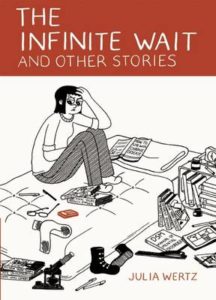
In The Infinite Wait, Julia Wertz’s autobiographical collection of comic short stories, chronicles her non-comics jobs, her first uploads, her official employment as a comics artist, her early 2000s ride through “comics are the next big thing at the big publishers.” The most evocative sections are the panels of Wertz at the desk with the computer, hunch-shouldered, her inner thoughts on full display. So much of growing up on the internet was getting information from the computer when I was alone — and the flattening of the lines between the inner and outer worlds. The Infinite Wait so perfectly captures what it feels like when there’s a portal to the outside world right there on the desk, offering its glow.

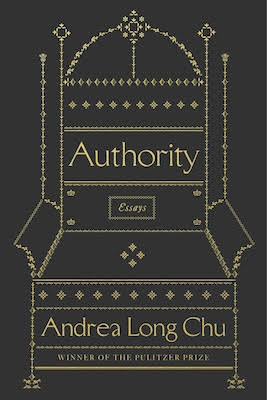
Andrea Long Chu on the Art of Loving and Hating Books

In her new essay collection, Authority, Andrea Long Chu calls one writer a “sundowning reactionary,” accuses another of having “an unstoppable, pathological urge to tell on themself,” and asserts that a certain novelist “is one of those writers who think they have discovered, always freshly and for the first time, that women are people.”

Chu, who won the Pulitzer Prize for Criticism in 2023, acknowledges that she’s been “vicious” to the subjects of her critique. But Authority is far more than just a burn book. It is an invitation – rather, an exhortation – to challenge the assumptions we make “not out of rigor or intellectual bravery but for our own analytic convenience.”

In addition to the withering media criticism for which Chu is best known, Authority includes essays on feminism, desire, depression, and the history and purpose of criticism itself. Across this wide range of topics, Chu cuts through fallacies with the precision of a surgeon and the glee of a serial killer. 

Over Zoom, we talked about changing your mind, meaning what you say, and the difference between critics and artists.


Angela Hui: Your essay “On Liking Women” reframes gender – specifically gender transition – as something that “expresses not the truth of an identity but the force of a desire… a matter not of who one is, but of what one wants.” Similarly, you argue in “The Mixed Metaphor” that “people want race,” that Asian Americanness can exist because people want to be Asian American, not just because they’ve been racialized as such. What originally got you thinking about how the things we think of as identities are really desires?

Andrea Long Chu: You’re right to put those pieces next to each other – I knew that that argument was getting repeated when I was writing “The Mixed Metaphor,” so it’s a very appropriate question.

Part of the answer is that I was an asshole in a comparative literature graduate program, where that’s the kind of thing one says all the time, usually without great substance to the claim. But I’d been interested in psychoanalysis, and I’d been doing lots of feminist theory, queer theory, all of that, and so it did seem like a natural claim to make, because it just made more sense.

Identity doesn’t work the way that we often say that it does. And obviously, when we’re talking about it just as a market category or whatever, then it is fully abstracted. But I don’t think that means that you have to do away with it, either. Talking about identity in terms of desire, outside of just rhetorical backflips, is saying that it’s actually an object. It’s a thing I interact with in a way that’s ultimately material. You just have to think about it as something that you’re in an active relation to, and therefore have some amount of agency and choice, and chances to exercise freedom or not. It opens up the question instead of just trying to crush it because you think it’s meaningless.

This doesn’t sort out the actual business of negotiating belonging. It’s just saying that belonging is an activity and not a state. We still do have to argue about it, but the arguing about it – that actually is the thing, the work of constituting it. It’s not like writing that piece allays my own personal anxieties, either. These are all still things that I think about, but I do think that the piece is, if not politically optimistic, at least maybe intellectually optimistic.

AH: In “On Liking Women,” you also write that “nothing good comes of forcing desire to conform to political principle,” and you’ve argued against Amia Srinivasan’s idea that people can and should change their desires. Do you feel that the same is true of critical judgments?

ALC: I actually think about that line a lot because it is so strident, if I can use that in a neutral way. I’m stating the case as strongly as I feel that I can, as I often did in those days of writing. Do I really believe that nothing good comes of trying to change your desires? Well, no, because I do like to believe that people should change how they think and change how they behave.

I can still endorse that line in a couple of ways. There is not a lot of value in disguising what’s actually going on when we desire things. It’s not a process that lends itself well to being synchronized with one’s political beliefs; it sort of happens to you, and then you have to deal with it, and dealing with it probably can involve trying to change it in different ways.

Some days I think maybe we should try the whole political lesbianism thing again. Before, I was like, well, you can’t make someone want to eat pussy, and I still probably believe that. But I now think that the greater obstacle to mass exodus of women from heterosexuality is not actually sexual preference. It’s that most women don’t respect women enough to actually be in a relationship with women. I don’t even really mean that in a snarky way. I just mean the loss of status, and then the reflection of that loss of status in the partner – there’s a certain mortification of the spirit that has to happen in order to stop attaching your social value to that of a man. The issue isn’t that all these women aren’t having sex with women, it’s that the reason they’re not having sex with them is that we all still experience ourselves as having so little social value. That part of it seems like the thing that actually needs to be fixed – the respect part, not the cunnilingus part. Maybe people should change their desires in that sense.

In terms of what’s happening in the bedroom, obviously I think there needs to be some sort of sexual ethic there. But politically, I tend to think it doesn’t really matter very much. It’s what’s happening on a larger social or political level that’s more important. And I think those things are more than a matter of desire; they are a matter of principle and belief and judgment.

To answer your question, then, if I’m reading a novel or looking at a painting, I could have a particular reaction, and then read a bunch, and then change my beliefs about it, and sometimes change the sensation. But the sensation is also just there. It’s not like it doesn’t have a context; it has sort of nothing but context. But I don’t think there’s any point in beating myself up because I have that experience of aversion or attraction or whatever. That’s not worth anything, and it’s not going to be productive in terms of changing how I feel about it anyway, if I think that I ought to change how I feel about it.

AH: Your NYU PhD dissertation, Bad Politics, was going to be “about what happens when subjects living under oppression don’t feel like resisting and do something else instead.” You’ve stated that this was a response to the academic “fantasy of critique as a political act.” Have any of the ideas from your dissertation made it into Authority?

ALC: Yes, sort of necessarily, in that they continued with me for a long time in various forms. The idea of being oppressed and choosing to do something other than resisting it came very much out of this experience of being in fields like gender studies and queer studies, where you’d get so used to people saying, “Okay, here is the beginning of my talk. And here are some theorists I need you to believe I have read. And here is this film that is important and interesting, or is really popular and so it’s interesting that I am subjecting it to academic attention. And I’ll show you a couple things about it, and then I’ll say, here’s how it’s advancing the politics of this.”

And I thought, well, that’s not true! Maybe, but it often ended up being the least interesting thing you could say about those works. Obviously, it’s not that I want to depoliticize art. But it all seemed like a misunderstanding about the relation of people living in unjust conditions to those unjust conditions. People living under oppression are doing all kinds of things all the time, and they’re not all connected to some sort of resistance.

Ultimately, the stupid thing about that kind of paper – well, the stupid thing about that kind of paper is that the academic milieu required that you write that kind of paper, right? But the stupid thing about that paper is that it had such a myopic view of the lives that people are actually living. It tended to reduce the oppressed to their oppression.

The way this idea has survived in the book and in a lot of things that I write is that I am trying to be interested in what people are actually doing. You could say that reviewing a couple of books a year for a magazine is not the best way to do that – fine. But I want to know if there is a way, as a critic, to think about what people are actually doing, or what a book or film is actually doing. And that’s coming out of an aesthetic belief that it’s more interesting to do that, and a political belief that it’s more just to do that.

AH: You said earlier that you used to state your arguments perhaps more strongly than you felt them, and your review of Maggie Nelson’s On Freedom concerns the freedom not to mean what you say. So I’m curious – how often do you mean what you say?

ALC: In some of my earlier work, I’m not sure that I could have told you how serious I was being. That is, I think, a general affliction. But I was self-consciously being like, I am going to state this sort of indefensibly. Females has a lot of that going on, and when I read it now I see the vulnerability or the insecurity behind that. Also it still is kind of thrilling, which is to say I don’t necessarily think it was a mistake.

These days I absolutely mean what I write. I’m actually trying to tell you something rather than perform a particular idea, which is a legitimate form of writing, just part of a different literary tradition than what I’m doing now. I’m trying to tell you something quite earnestly about the thing that I’m writing about, and in that sense I really do mean it.

In the case of that Maggie Nelson piece, I think the point is not that I have the freedom to say whatever I want without accountability. That’s not interesting to me. It’s more that it is built into language that no one could be literal if they wanted to. When you refer to something, it’s always going to be pitched at an uncertain register. So the idea of policing who is allowed to have access to what seems to be a fundamental part of language – it feels incorrect to me.

AH: In that same Maggie Nelson piece, you write that “The higher critical act… is not to position the subtlety of one’s own views against the crudeness of those who do not share them but to draw out like water from rock the nuances that exist within the ideas one finds the most noxious, the most strident, the most difficult to dignify.” Since you’ve written op-eds as well as criticism, I’m wondering if you also apply that philosophy to other kinds of argumentative writing.

ALC: Yeah, even just from the point of view of what’s interesting. There’s only so much utility in going on about how something that’s bad is bad. I know I say that as someone who has gone on at length about things that I thought are bad, and there are versions of that that I think are more or less successful, but what I mean is that my personal distaste is only so interesting to other people. It can be entertaining, but to make it worthwhile, it has to move onto something other than just distaste or revulsion.

So, yes, I do try to abide by what I wrote in that piece. I want to hack past what a less clever version of myself would content herself with and try and find something serious. Is there a serious idea in here somewhere, or is there a real conviction? Or is there a real kind of underlying assumption? Can I find someone on the other line? I want to find the other person, and the best work, I think, is the work where I feel like I really have found them.

AH: In “Criticism in a Crisis,” you write that “if it is a choice between left-wing art and left-wing criticism, I will choose the latter every time… The problem of much (though not all) ‘political’ art is that the artist is trying too hard to be her own critic, premasticating the work so that all we have to do is swallow.” I think a lot about the question of how to make good art that is also political. Do you have an example of political art that you feel is not premasticated?

ALC: An example of work that is very explicitly, intentionally trying to do something – it can be very hard to do that effectively. For instance, I remember seeing Prima Facie with Jodie Comer. It’s a one-woman show about a barrister who has been defending accused rapists, and then she is one day raped, and she goes through the process that she has forced other women to go through. I loathed it because it was trying so hard to tell me something not just that I already know, but that I would have to already know in order to care about the show. There’s just a very simple loop there, and it’s not accomplishing anything.

AH: Devil’s advocate, though, how is that different from “writing for the person who already agrees with me,” as you’ve said you do?

ALC: Well, I don’t actually think that people think what I already think – I have a high opinion of my ability to produce thoughts that other people generally would not produce. But I want to give the reader the chance to feel that I am just telling them what they already know. What I mean is that I want to impart those ideas with so much force and gentleness that they feel like things that you already believe, or already think, or already wonder. 

And I don’t think that an artist should have the same relationship to their audience as a critic does, because many artists are very poor critics – and, you know, probably the other way around, too. It’s just not what I’m looking for from an aesthetic experience, whether it’s a heady or intellectually stimulating one or just a piece of entertainment. So when an artist does decide to do that, I feel condescended to in a way that I don’t feel if I’m reading a good essay. Time and a place, as with all things.

ALC: You often read works biographically because, as you’ve said, “persons are where books come from.” How do you feel about your own work being read biographically? You mentioned that you don’t write about yourself that much anymore – does that have anything to do with how you want your work to be read?

ALC:  I am much less interesting to myself than I used to be, thankfully. If I become interesting to myself again, I am sure that I will write about it. And it’s not lost on me that, in this political environment, it’s going to be necessary to respond to current events more – it’s not like I haven’t done that already.

I have been quite public about a number of things, partly out of my own desire to do so, and partly because it is the price of admission for writers with marginalized identities of some kind. There is a pressure on a trans person in public, of which we have very few, to end up in memoir, basically. So there’s work in the book that is very directly autobiographical, and it would not be hard to try to read the rest of the book through those parts of the book. If I were reviewing it, that’s one way I might do it. But I have no control over how the book will be read, and that’s fine.

The reason I’m interested in biographical readings is – I mean, I can’t deny that there’s an aspect of gossip, right? It’s fun to notice a little biographical detail from someone’s life end up in a story ten years later. But to me the point of it is not just because I’m interested in biography. Again, it’s more that I am trying to figure out what’s actually happening. Books do come from somewhere, and I’m looking for someone to talk to. I am trying to get them to come out and play. That may feel a little disingenuous because of how cruel I may have been to some of the people I’ve written about, but it is coming from a place of really wanting to know them. And really knowing someone is a difficult and painful thing for all of us, most of the time.

My Father Tries to Teach Me His Map of Chicago

The Bus Chasers by Maggie Andersen

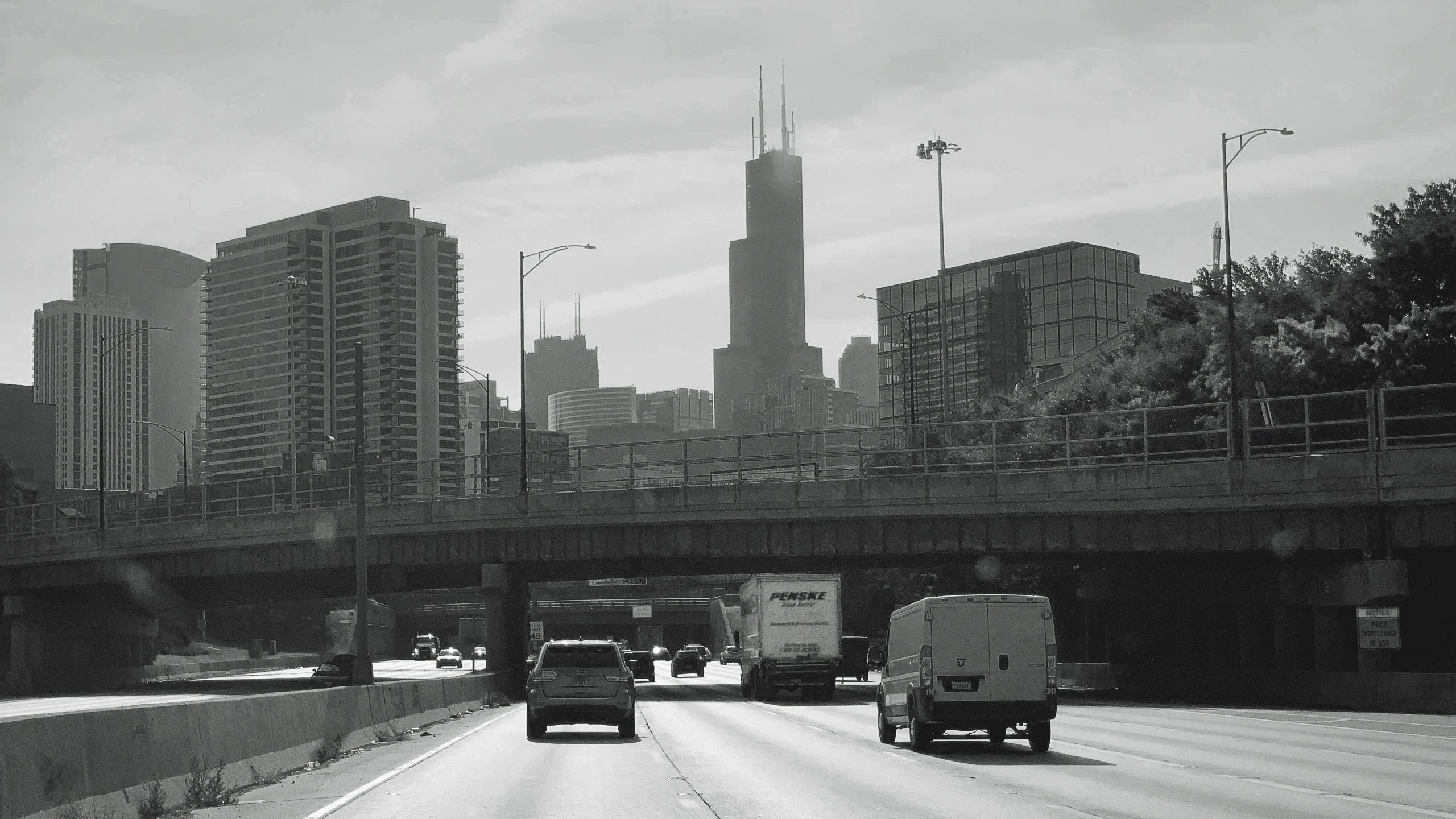
My father is a man of shortcuts and a mental map of Chicago. He has never needed a paper map or a GPS, has never relied on a cell phone for navigation. He knows how to get anywhere in the city in under twenty minutes, and when you give him an address, he has the easiest route calculated within seconds, and a story to go with it. Sometimes his information is outdated: he thinks a neighborhood is still a Polish enclave when it’s been Mexican for years, or he refers to a recently gentrified area as a Puerto Rican port of entry. But he always knows how to get there, and can usually find a bakery or coffee shop in the area where someone still knows his name. He gets energy from fanning out into the neighborhoods and striking up conversations with strangers. His is the art of conversation, of asking questions and caring about the responses, of knowing when and where to leave the best tips. Maybe this particular brand of education inspired him to push me out of our neighborhood when it was time for me to go to high school. 

“Time to grow up now,” he said one day, as he handed me a CTA bus token. 

Two buses to get to my all-girls high school, an hour and fifteen minutes. He had to take the expressway downtown for work, so decided my freshman year that we should carpool. He would deliver me at the Belmont and Kimball bus depot, which cut my commute in half, a brilliant shortcut. He dropped me while the car was still moving, then hopped on the expressway to make it to roll call on time. We were saving precious minutes. 

On my first day, in late August, 1991, the plan worked remarkably well. My father walked into the bedroom I shared with both my sisters, and made his way lightly past their bunkbeds. He sat down on the edge of my single bed, touched my shoulder, and whispered, “It’s almost 6:00. Whaddya say?” My first time waking up in the dark, but he’d been doing it his whole life. We padded around the apartment in our bare feet, waking up, and then I dressed in a white polo, itchy plaid skirt, and navy-blue knee socks. On the kitchen table, I found a small glass of orange juice next to my mother’s ashtray from the night before and a typewritten poem from her. It’s time to get your bus fare. Thirty-five cents and a dime. You’re getting to be such a big girl, little girl of mine. 

“I know,” my father said, sensing my teenage sadness. “But it’s time to move on.”

He sat down and watched as I drank my juice, offered to make me breakfast, but I declined. He handed me the backpack we bought at the Lane Tech bookstore just last week while my elementary school friends milled about, buying folders with the public school mascot on the front. They compared class schedules and planned to walk to their first day together, while I would be taking two buses to a college prep school in the suburbs where nobody knew my name. I tried to conjure my friend Amber Torres, who had said, “Damn girl, you’re so lucky though. I wish I was going with you to that preppy-ass school.”

It was still dark when we got into my father’s Caprice, an undercover narcotics car. We drove up California Boulevard, past the gas company, and when we turned at Belmont, my dad told me the plan. He was a police officer and knew it wasn’t safe for young girls to wait for the bus on unlit corners, so he’d drive up to Kimball where there was a lot of traffic; I’d be safe there. Years later, when I am an adult, he tells me that one of his worst cases was a high-school girl who was brutally raped on her way to ROTC at five o’clock in the morning. The heartbreak of his career was delivering her to her father, a pretzel of a body in a raggedy blanket. 

American songs from the 1950s blared through the car’s speakers, via my father’s favorite oldies station.  

“Okay,” he said. “I see the bus. Get out and wait right there. You’ll go past Pulaski, past Central, past Harlem. You remember what the school looks like?”

I just wanted him to drive me all the way, to listen to Elvis Presley a little longer, but I didn’t say any of this. I got out of the car, closed the door while he was still talking, then boarded the city bus, dropped my token into the slot, and showed the humiliating picture on my student ID. The bus driver said good morning, then we crawled down Belmont in rush hour, through neighborhoods I’d never seen, picking up all kinds of characters along the way. There’s the Marshall Field’s factory; XRT’s radio station; Club Jedynka, the storied Polish disco; and the Italian cafes where old men played chess and smoked cigars. I was fascinated by these neighborhoods because we didn’t have any Polish or Italian kids at my elementary school, and that felt significant, only because we had every other ethnicity you could point to.

When I arrived at my new school early and didn’t know what to do with myself, I sat in the cafeteria with a few other early-birds, who all seemed to know each other from their schools before this. I sat alone and wrote about the bus ride: the hungover morning deejays wearing sunglasses, the carousel of Catholic school-girl skirts, public school kids wearing starter jackets and Air Jordans, the woman who threatened to spit on us every day, and the driver who hummed to himself so that he wouldn’t lose his mind. 


By the middle of freshman year, the morning scene at my house went more like this:

“Mag! I’ll leave you! Let’s go already! Goddammit, you’re gonna make me late.” 

I was in the habit of staying on the phone with my boyfriend until 2 a.m. I hid in my closet on the phone and bribed my sisters not to tell. My uniform hadn’t been washed in weeks, and I was scribbling algebra problems in the car as we sped down Belmont Avenue. Al Andersen checked his rearview mirror every few seconds for signs of the bus.

“Here it comes!” he cried. “Get your bag on your lap!” 

This was when my stomach knotted up. I was stuffing the algebra back into my bag with five other textbooks, while the zipper ripped at the seams, and my pen exploded black ink all over my uniform skirt. Just then, the bus sailed past us, and now it was time for the chase; my father turned into Mario Andretti, and I held onto the passenger’s side door as he ran the red light, blew the stop sign, almost ran over an old woman crossing the street. 

“See what you did?” he said. “You almost made me hit her.” 

He swerved into a gas station parking lot and spun out on the other side so he could squeeze in front of the bus, then he pulled up alongside the green machine and hollered frantically at the driver, who seemed to be ignoring him. The other kids on the bus looked down on the scene and laughed. The bus driver rocketed forward without us. 

“You’re gonna be late,” my father said matter-of-factly as the bus chase began again. 

“Oh well,” I responded.

“This is your fault, not mine, sister.”

He loosened his tie and this was the moment when my mother would say, “Go ahead, Al, have a heart attack.” I wanted to say this too, but instead I jostled around in the front seat as we rode the bus’s ass and came close to hitting it several times. Two miles into the chase, we looped around the bus, the light turned red, we screeched to a stop, and the driver idled behind us. 

“Get out!” my father screamed. “Hurry up, goddammit!”

I rushed up to the accordion doors, gave a polite tap, and they opened to me with reluctance. I stepped up and slipped my token into the slot. Just as I was settling into my seat, ready to relax, I heard my father’s voice.

“Mag! You forgot your goddamn lunch!” Now, the man was banging on the bus doors with a brown paper bag, onto which he had printed my name in his chicken scratch penmanship. Maggie “A.” (I’ve never been sure why he put the A in quotation marks.) The bus driver rolled his eyes and the public-school kids on the bus were now dead of laughter and big city rush hour honked incessantly at my father. He sprinted back to his car in full suit and dress shoes, holding up his middle finger to everyone behind him.

“My daughter forgot her lunch, you asshole!” 


My sophomore year, there was a weekend field trip to the university downstate for a high school theatre festival. I packed my things in my grandmother’s suitcase, a cumbersome paisley monster. Everyone else’s parents were driving them to school (see: luggage), and I didn’t want to ride the Belmont bus with my falling-apart backpack and the suitcase, so I told my father I’d be taking a cab.

He chuckled, looked at my mother and said, “Get a load of this one. Last of the bigtime spenders.” 

Then he looked at me. “Do you even know how much a cab costs?” 

A cab to my high-school would’ve cost about fifty dollars, which was significantly more than my 45-cent student bus fare, but it was absolutely worth it to me to spend my entire piggy bank. 

He laughed again and said, “I’ll drive you, just this once. Such a spoiled child.”

My father was the greatest driver I’d ever known, and he knew all the shortcuts.

The next morning, when we started down Belmont Avenue, I felt like a champion. A lot of girls at my school had cars, but this was somehow better. My father was the greatest driver I’d ever known, and he knew all the shortcuts. His Caprice was always clean and warm, no puddles of melted snow on the bus floor to get my backpack all nasty. No kids from other schools making fun of my uniform, or creepy men looking up my skirt. No distressed passengers yelling in my face. Just a peaceful ride, me and my old man and the oldies station. I knew he would get me there on time and I felt sorry for the other kids waiting for the bus, but today I was not them. 

When my father stopped at Belmont and Kimball, my heart dropped, as if from a rooftop.  

“Come on,” he said gently. “Let’s go. I’ll carry your suitcase.” 

He effortlessly handled my luggage, set it down next to the driver, and paid my bus fare.  

“You always tell me you’re tough, right? Have a good trip. Don’t forget to call your mother.” 

Off he went in the narc car, and off I went, tripping and falling down the aisle of the bus with my hideous luggage. The kids from Madonna Academy and Steinmetz High School were having an absolute field day with this one. When I finally found a seat, I looked at my father out the carved-up window and pressed my middle finger against the glass while he laughed with big white teeth. I knew this would be the family joke at dinner tonight while I took improv workshops with my friends downstate. Several miles later, I arrived at the Catholic school and dragged my suitcase bumping along behind me down the street. My friends saw me from their parents’ cars.

“I thought Al was driving you,” one of them said.

“He made you take the bus with your grandma’s suitcase?”

Cue the laugh track.


My junior year, after a dramatic argument, likely about the boyfriend he didn’t approve of, I told my father I would take both buses. I told him I would go my own way and I didn’t need him anymore. I woke when I wanted, left when I wanted, ate whatever I wanted for breakfast. Several days in a row, he followed me in his car, in the dark, to Western Avenue, the longest city street in Chicago. He pulled up beside me, and said, “Come on now, get in the car.” But I planted my feet at the bus stop while commuters filled up at the gas station across the street, and the waitresses at Jeri’s Grill served ham and eggs to their regular customers. My hair was all icicles. My father sat there in the gray light beneath the streetlamps and looked at me from the driver’s seat with a defeated expression that didn’t match his suit and tie. Eventually, he peeled off in a way that let me know he was angry and that once again, I had won, though it didn’t feel that way. After he drove away, I imagined him sitting in bumper-to-bumper traffic on his way to a job he hated while his teenage daughter, with her braces off and perm grown out and skirt rolled up too high, stood on a busy street corner, pretending she didn’t know him. He drove to work with the memory of a 15-year-old girl shivering in a blanket, her father falling to his knees.


For a few years, I took public transportation alone and kept secrets from him, sometimes found myself transferring at the wrong place or overcome with fear on an empty train car late at night. Maybe we made up when I decided to go to college in the city, on his recommendation, when he would sometimes drive me to the Blue Line subway to help shorten my long commute. Once, I saw a lady from the campus food court waiting for the bus in the rain, so he pulled over and offered her a ride.

“Can I give you a lift to the train? I’m Maggie’s father.” 

She didn’t know me by name, but probably did recognize me, and it was really coming down. 

“It’s raining and you don’t have an umbrella. I’ll just get you to the subway where there’s cover.”

When she accepted, I worried that the car smelled like my mom’s cigarettes, but she didn’t seem to mind, and if she did, she was too polite to say so.


My father drove me to the airport for all the trips I took without him. When I started dating my husband in my early thirties, he said, “I’m not going to be a chauffeur like your father, you know.”


My father prefers the time machine restaurants that remind him of a different Chicago, or what he might consider the soul of it.

At 35, I have my first child. My father, now retired, sometimes gives us rides to the pediatrician on the South side, the other side of the city, where I have to go as a grad student because we can only be seen at the university hospital. He drives with the baby seat in the back and takes us for lunch after our appointments. In the neighborhoods I want to explore, I request the chic new Mediterranean place or the cozy Scottish pub, and he occasionally indulges me and inevitably ends up close-talking with the owner, no matter their age or background. One guy says, “I like your father. Around here, we call him Mr. Whispers.” More than one person calls him The Mayor. Usually though, my father prefers the time machine restaurants that remind him of a different Chicago, or what he might consider the soul of it. The Breakfast Club in West Town, the White Palace Grill on Canal Street—breakfast and lunch, nothing fancy. He likes running into his friends from back in the day and knows exactly where to find them. Retired police officers, precinct captains, and community organizers from all 50 wards. 

At Moon’s Sandwich Shop on South Western Avenue, we see Mr. Hunter, an older Black gentleman about my father’s age. Best precinct captain on the West side, my father tells me. Mr. Hunter is a sharp dresser and speaks softly.

“Is this your grandson, Al?” Mr. Hunter says. “God is good.”

 By the time my son was born, the diner had been here for 80 years. Jimmy Radek, the owner, comes over to say hello and take our order. Big Austrian hands, sweet blue eyes Jimmy Radek. My father says he was a police officer for a stint, but turns out, he liked feeding people better. I order the meatloaf and my father the pork chop sandwich; Jimmy says he’ll bring the cook’s famous grits for the baby.

When Jimmy goes back to the register, Mr. Hunter slides into our booth. He and my father tell me stories of Moon’s during the race riots of the 60s, how it was a community space and a safe haven. It’s like Do the Right Thing, but the owners have historically paid their employees well and understood the underlying reasons for the riots, never tried to hook up with their sisters.

“It’s no accident,” Mr. Hunter says, “that no one ever threw a brick at Moon’s.”

“Mag,” my father says. “Do you understand how close the riots were to where we are right now? We’re at Madison and Western.”

I must look like a dunce because he and Mr. Hunter start complaining about how us young folks couldn’t find our way around Chicago without a phone if you paid us a million dollars. They double over laughing. When I ask them what’s so good about this place anyway, my father and Mr. Hunter say it’s the fair prices, but a random customer shouts across that it’s the pickles. Another says it’s the mustard on the meat, mayo on the bread. I realize that my colicky baby isn’t crying, and that’s unusual, so I remind myself to tell him about Moon’s someday, will myself to remember the wood-paneled walls and the simple white sign out front with Moon’s in black cursive writing and cinderblock windows. The men eating lunch here are Black or white, but they seem to take collective pride in Moon’s as a place that didn’t shut down or board up during the race riots of the 60s, and that detail is enough for today. They read newspapers instead of their phones, and understand that butting into a conversation is not rude, but neighborly. Jimmy Radek brings the check, and I grab for it, but my father swats me away.

“Don’t you disrespect your daddy like that,” Mr. Hunter says.

“We’ll see ya next time, Al,” Jimmy says.

“Don’t be a stranger now,” Mr. Hunter says.

“Have a good one,” the other customers say.

My father picks up the infant seat and carries my son outside, but tells me to buckle the seatbelt.

“I don’t know how to do it,” my father says. “People get so crazy about safety these days.”

My son starts to fuss once he’s buckled, but my father knows that the oldies station will calm him. 

“Okay, Champ,” he says to him. “We’ll be home soon. Take a rest.”

He drives me all the way home today, all the way down Western Avenue, the longest street in Chicago, with my precious cargo in the back. He turns up Gene Chandler on the radio and drives slowly today, no buses to chase. When he senses that a driver behind him is impatient, he pulls over and yells out the window, “Go around me then, if you’re in such a fuckin’ hurry!”

He looks at me apologetically. “I don’t wanna speed with the packzki in the car.”

And I know that this, the way I love my son, and the way my father loves him, is the only way we know how to say unsayable things. As we drive down Western Avenue, we grow older. I’m trying to make a map of the city with my father in it, but the truth is: he’s been the cartographer all along, steadfastly believing I’d learn to read his directions. 

Pay attention, my father’s map says. Pay attention.

Turn right to see an explosion of beauty and left to see what is almost beautiful. Stay on this street for a while and imagine all the lives lived here. Imagine a future for those children playing, and turn the corner for a good, secret place. Take down the addresses of taverns and candy shops on residential corners and make sure to return to them someday—walking traffic means safety. Spend money in your neighborhood, but also where you do not live. Get on the bus and thank the driver, every single time. Read the poems scratched into the seats and look out the window, not at your cell phone. Pay attention, my father’s map says. Pay attention. But I still don’t know the shortcuts.

My father weaves in and out of residential streets, waves on pedestrians, turns up the music when the song is good enough, and slows down when he’s told. This is how you take a child halfway without doing everything for them, his map says. This is how you teach them the responsibility of living in a city, and this is how you tell them I don’t want to leave but I will, and you are who I will miss the most. He drops me at the front door of the three-flat he bought when I was a baby, where I now live with my own. This is our favorite part of the map, the end of the hunt, X marks the spot, I guess. 

“We’re here,” my father says softly.

All he wanted was for his children and grandchildren to have easier lives than he did—I’m not sure that dream has come true, but I try to keep that from him most days. 

“You’re home,” he says to my sleeping baby.

If I’m not from here, I’m homeless.

“Will Archie have to take the Belmont bus?” I ask. 

“My packzki? Never. Papa will drive him to school every day.”

Watching my father reverse down the street at full speed like a lunatic, I know that in his eyes, I will always be a child, and in mine, his hair will stay shiny and brown. I also know that he didn’t get out of the car because his legs are too weak now to take the stairs. I don’t know if he will ever drive my son to high school. I worry about my son’s generation without the benefit of their grandfathers. 

My baby boy sleeps in his car seat, and sunlight leaks through the trees as we walk the crumbling concrete path to our family building. We arrive at the front entrance, the original door from the 1920s, weathered wood and windowpanes. Inside the vestibule, the air is cool and the mosaic tiles are stained from decades of neglect. The mailbox slots are full with debts to pay. This is where my parents brought me home from the hospital. I jiggle the key in the sticky lock, smell the memory of my mother’s cigarette smoke in the walls, my son smiles in his sleep. I still don’t know the shortcuts. I still have to read the maps. 

“A Hole in the Story” Takes Us Back to Me Too’s Heyday

I remember vividly where I was when I read Ronan Farrow’s investigation into Harvey Weinstein’s abuse of more than a dozen women, many of whom worked for him, or hoped to. I read it sitting on the edge of a fireplace, tucked in a meeting room off to the side of my college campus’ dining hall. 

In the days that followed, thousands of women turned to social media to share their experiences of sexual abuse and harassment both inside and outside of the workplace. Social media gave women a means of sharing their experiences and seeing that they weren’t alone. Record numbers of women ran for political office the next year in 2018. 

The Me Too movement felt like a turning point in some ways, but even as it was beginning, it felt fated to fall short of its lofty goals. Donald Trump, who famously boasted about sexual assault, was the president. Brett Kavanaugh was elevated to the Supreme Court despite chilling testimony from Christine Blasey Ford. 

Today, that era feels like a distant past. Donald Trump is in his second term in office and a number of his cabinet picks and close advisors have been accused of sexual misconduct. In his latest novel, A Hole in the Story, Ken Kalfus takes readers back to the frenzy and optimism of the early days of the Me Too movement—albeit from a slightly cynical lens. 

His novel follows Adam Zweig, a journalist, as he mulls over what to do when a former colleague, Valerie Iovine, accuses their old boss, Max Lieberthol, of sexual harassment. Zweig worries about what he should or should not say as reporters hound him for answers about the office culture at the prestigious political magazine where he worked. All the while, people are tweeting—condemnations of his former boss, support for Valerie, questions of Adam’s own character. 

Fans of Kalfus will likely recognize Adam, from the short story “Mr. Iraq.” Here, Kalfus revisits the character at both an earlier point in his life—well before the Iraq War—and a later one, during Donald Trump’s first term. He’s more optimistic as a younger, albeit still middle-aged man, more jaded when he’s older, and struggling throughout both timelines to make sense of a moral landscape that seems to be shifting like tectonic plates beneath him. 

Kalfus and I met at a Philly coffee shop to discuss revisiting old characters, writing about the Me Too era, and how social media and other technologies affect fiction. 


Courtney DuChene: It’s interesting having this  Me Too-like book that follows the perspective of Adam, this man who’s reconsidering his past after a boss is accused of sexual harassment. Why did you want to inhabit that perspective? 

Ken Kalfus: I think in the time of Me Too—and I hate using the word “Me Too” because it’s become a diminishing term—there were a lot of people making assessments. A lot of my women friends were looking back on their past and what had happened to them. People were talking to me and there were a lot of stories that were created by that particular moment. People were coming forward with stories. 

And novelists like stories. I could feel the possible stories emerge, and the character that emerged had already appeared in one of my previous books, in a short story, “Mr. Iraq.” He was a Washington journalist.

I’m drawn to characters with appealing politics who do bad things, and I’m drawn to characters with terrible politics who do good things.

He’s called Mr. Iraq because he works for the magazine and he supports the Iraq War. I’m drawn to characters with appealing politics who do bad things, and I’m drawn to characters with terrible politics who do good things. As a novelist, I look for those kinds of contradictions in people’s lives. 

So I thought that was a fertile ground and I played with it and it seemed like there was a story there. I was mostly interested in him. I was mostly interested in how, as the story progresses, he would think about things, looking back at the past. The foreground part of the story all takes place within a single day and what his thoughts might be on that particular day. 

CD: What made you come back to this particular character who’s been in one of your short stories? 

KK: I liked him when I first made him. He inhabited contradictions and characters with contradictions, like people with contradictions, are interesting. And I like journalism. My wife’s a journalist, many of my friends are journalists, and I care a lot about journalism. Most journalism books are very skeptical of and critical of journalism. I don’t think this book is. Maybe it’s critical of the individual people involved, but it takes journalism seriously. These days I think that’s important. So I wanted to write about that particular world. 

It was easy for me to fit that character into [this new] situation. The original story took place around 2005, 2006. I wanted to see him maybe 13 years in the future, and also a number of years in the past. I had to figure out exactly his age, and the other character’s ages, and where they fit in chronology with their lives in the story.

CD: Something that’s perhaps a uniting characteristic in your work is these characters that are more complex than they are sympathetic. I think a lot of writers, especially young writers, think about trying to write characters that people will like more than they think about writing characters that are interesting. How have you approached writing characters that are complex and interesting through your career?

KK: I never thought of it quite like that. I always think writers think their characters are interesting, whether you like them or not. I mean, obviously [there are] some great characters in fiction, [like] axe murders, who, nevertheless, we’re drawn to. You can be sympathetic to the [trials] of a character, even though you’re not sympathetic to him as a person. The character can be a monster, and yet the author tries to get the reader into his head and make you feel something for the judgment he’s making. Even if you don’t agree with him, you might care. 

CD: Within A Hole In The Story there are two main time periods: the sections in the past and those in the present day as he tries to think about what his role in this story is, if he should be talking to the media, and what he should be saying. The past sections are set around the time of the Clinton/Lewinsky scandal. A lot of the modern day reckoning around sexual harassment in the workplace hearkens back to the Clinton/Lewinsky and Clarence Thomas scandals. What parallels do you see between those worlds, and what made them fruitful to explore in fiction?  

KK: One of the amazing things to me about the Me Too sexual harassment crisis was that I thought a lot of this stuff had been settled with the Lewinsky case. I remember reading that this was obvious harassment because of the power differential, and I was surprised that so many men did not get that memo. I got the memo. 

I think that’s one of the issues: 20 years on, we’re still talking about this. As Me Too found, people are still making these bad judgments. So I wanted to go back there, because [Adam] was a Washington journalist. He was very involved with that. And it gave us the opportunity for the magazine to act counter to the liberal narrative at the time by urging Clinton to resign. That was part of [the character] Max’s iconoclasm, because liberals didn’t believe he should resign, myself included. 

It was fruitful to come up with that conflict. It worked also with my timeframe because I had this guy’s history. It was liberating in a way to have [his] history already thought out, or part of history thought out already. I’d never done that before, and it gave more heft to my mind, to my imagination. 

Looking back now, there’s a really great article, I forget where it’s published, about the changing perspectives on Monica Lewinsky, on how many different ways the view of her has changed over the years. 

People were really mad at her at the time of the impeachment—scoundrel, victim, heroine—all those different things came up. I’m not saying that’s all in this novel; it isn’t. But some recent articles have been quite interesting. We’ll never be done thinking about this stuff. So hopefully my novel and its characters might take it further.

CD: The novel is in Adam’s perspective from the close third. Early on, we get this musing about his time working with Max and their editor/writer relationship. He says Max was always able to find a hole in the story. That’s where the title comes from. It primes the reader from the beginning to look for holes in Adam’s thought process. How did you work with that as you were writing? 

Human error is so much part of who we are and how we tell stories.

KK: In all my books, characters make mistakes. Human error is so much part of who we are and how we tell stories to ourselves, about ourselves, about things that happened. Often, those narratives are not correct. They’ve been biased. They’re delusional. There’s a hole in the story that they’re not going to put into their narratives, because they don’t want to think about it, which is, I think, what happens here. 

CD: I want to talk a little bit about the character of Valerie, who in the present day sections is in some ways kind of absent. We see her through the news about her, The Cut essay she publishes, and then the DMs she sends to Adams and the tweets Adam sees that are maybe hers. How did that kind of haunting—though that’s not quite the right word—presence work with Adam’s psyche?

KK: I think the idea is that this whole situation is a reckoning for him to figure out what happened to her after the incident. He hasn’t really done that. He goes back and he looks at what she’s been doing. He tracks her down and creates an image of her. So I didn’t want her actually on stage. I wanted her to be something he is inventing. 

And then she does materialize, but only on his Twitter feed. I wanted to emphasize the process of invention that he’s doing. It’s not necessarily correct, but he’s trying to recreate what happened to her after the incident outside the restaurant Chi-Chi’s. So much of our relationships with each other are projections. I wanted to have him create that projection and then have her jump in on his feed. 

At one point early on in the writing process, I actually had them meet for lunch to sort some stuff out. And then I realized, after I wrote it, that it’s better to see it as a manifestation. So first I had him imagine her, but then I had her appear as a manifestation through social media which, I found, reflected that intense environment we were in. I don’t know if we’re still in it now. As far as Twitter’s concerned, I think a lot of people have pulled back. I thought about that intense environment we were in and how it moved society, and I thought it would be interesting to write about that moment where social media is just intense. 

I was never a big poster, but my wife is. It’s part of her experience of life. Social media in general affects society in a very deep way. The novel makes some references to it without attempting to be the definitive social media book. I’m very interested in how media in general, going back through most of my novels, has affected our mindset.

CD: It’s not, as you said, a definitive social media novel, but that interest in media and how technology has affected their lives, I think is really resonant. 

I think it’s resonant in my mind, or at least in my previous books. My first novel Commissariat of Enlightenment was about the rise of propaganda via filmic image. It’s set in the early 20th century and it’s about a filmmaker who ended up working for Bolsheviks. It’s set in Russia. And it is about the way that the image of something can be changed—manipulated—to make you  think one thing and not the other. The Bolsheviks in my novel learn to use that for their purposes.  

My second novel, A Disorder Peculiar to the Country, is set in this country, and it’s a black comedy about this couple who are in the middle of a terrible divorce. They live in New York. He works at the World Trade Center. She was supposed to be on Flight 93. She missed a flight. He’s late for work. So they each think the other one is dead that morning. The whole world is full of shock and horror comedy, and they’re thrilled. It’s a comedy. And that novel, again, takes us to the first years of the century, and it’s meant to tell how public history has become so involved in our personal history. What happens to us in public life—the war in Afghanistan, the anthrax thing—happens to them in their marriage. I wanted to know how the public occupies our imagination. 

And my fourth novel, 2 A.M. in Little America is about the polarization in our media and the different lives, different narratives we see created for us in a, I think, cataclysmic way. So there’s definitely a throughline of interest I have in how we think about ourselves and how parts of ourselves are mediated through various electronic media.

Waiting to Blossom In a Family of Golden Children

Late Bloomer

On a Sunday morning in May, we wait to bloom gold. The five of us form a circle in the living room, a coffee table with lemon meringue pie in the center. Liana and Daniel take up the green couch. Peas in a pod. Our parents take to the loveseat, the cushions already marked with their grooves. I’m in a chair of my own. 

As the sunlight travels through the room, the blooming begins. Liana’s green frayed stems lead to petals unwrapping in mid-air. Her hair shimmers in layers of gold over her shoulders and the sun shines on her petals. It’s a domino effect: Daniel has a head full of gold poppies in minutes. Pruning his stems in the winter was a good idea, because the petals stay close to his head and tickle his ears. 

Our father has a few gold blossoms speckling his hair, but on his head it’s mostly green stems. Each year, as he ages, there are fewer blooms. No one says anything about the loss. My mother praises the straining color and we smile and nod in agreement. 

My mother’s hair is yellow daisies. The petals should be white, but she’s painted her roots a young yellow. They stand upright until she pins them down with a headband so the blossoms curl upward. They bounce as she shakes her head from side to side. 

“Those flowers look old. Everything is too yellow,” Daniel says. Liana laughs. My mother’s eyes meet mine and a lump forms in my throat.

Our father barks at them to stop it. 

“Daniel is obviously joking,” my mother says, meeting my eyes again.

By now, everyone is licked by sunshine. As the youngest, it should be time for my blooms. Everyone turns to me. Four pairs of eyes peeking through a yellow field at high noon. It’s so bright I fear the light will swallow me.

“Are they there?” I ask their blank faces.

“No, just those long stems,” Liana sighs. 

“We can wait,” our father says, reaching for his newspaper to work on the crossword. It’s a Sunday morning tradition. Liana and Daniel always get their guesses out before I have a chance to think.

“How about some dessert?” my mother suggests. 

I busy myself with cutting the pie and placing a slice on each white plate to distract myself from the pressure building in my chest. The room is filled with the family’s sweet and floral scent and too much light. 

By the time every plate is covered in crumbs and the crossword is complete, nothing has changed. I try to fit my fingers through my thick stems, but they don’t go through. The sword-like leaves scratch my back. 

Liana and Daniel pick at the lint on their sweaters, take selfies with their golden halos, scroll on their phones. Once it’s clear I will not bloom, we move on to the photo. 

We line up outside in the sunshine like we do every year. I search for the camera washed in light as I smile wide. My eyes water. 

After another year is documented, Liana plucks one of Daniel’s stems (Hey! Oh, grow another!) and offers me a golden poppy. 

“Maybe next year,” she says. 

We don’t mention it’s my sixteenth spring. That no one in our family has ever been three years late. Especially not on our father’s side. I twirl the stem in my fingers like the poppy is a tiny twirling ballerina.

My father pats me on the back. “Another year of enjoying childhood.”

Daniel coughs a word at me I don’t hear and Liana pushes him as they walk away. 

My mother takes me by the arm. “I was a late bloomer, too. It’ll happen. I know it,” she says as she picks the poppy out of my hands and places it behind my ear. 

“I hope so.” I think of how I’ll be golden. How everything will change. 

“Will you be upset if you get daisies?” my mother asks me. 

“Never, mom! No,” I tell her as I force myself to smile. We don’t speak about how we are excluded from their golden world. We don’t talk about how badly we want to be in it.

She smiles back and squeezes my arm. As soon as I’m alone, the poppy falls out from behind my ear and I’m back to stems. 


The next morning, I think of the juniors and seniors, even some sophomores, who will have a head full of soft petals to show off. I step into a dress and avoid the mirror. 

Gold blooms shine bright at the table where a plate of waffles steams in the middle. As I sit down, ready to take a bite, the table chatter stops. Everyone is staring at my head and for the first time, I don’t feel the stems poke my back. 

“Blooms?” I ask the room.

My mother turns around and gasps, dropping a plate. Ceramic flies. Liana and Daniel’s mouths are O’s. My father is devoid of color but for speckles of gold. 

Blooms. 

I rush to the mirror, imagining the crown around my head. The color hiding all along. 

But there is no gold. The straight stems lead to what looks like clouds, deep blue-purple clouds, that fan around my head. I watch as they unfurl and open. 

Thunderstorms. Lobster tails. Van Gogh. Irises. 

Why Vauhini Vara Used ChatGPT to Write a Book About Big Tech and Herself

Vauhini Vara is a writer of everything—short stories, novels, journalism, texts and emails, Amazon reviews, and now, Searches, a book-length work of inventive nonfiction exploring the offerings and exploitations of large technology companies, and the undeniable hold they have on our lives. 

Vara is not new to the world of technology. Having grown up in Seattle in the 1990s and then attended Stanford University, Vara has always found herself surrounded by the industry. She started her career as a technology reporter, first at the Wall Street Journal and then at the New Yorker. In 2022 her debut novel The Immortal King Rao was named a finalist for the Pulitzer Prize. It tells the story of a man born to a Dalit coconut farming family who goes on to become the CEO of the world’s largest technology company, one which eventually takes on the job of global governance. 

Though the story of King Rao unfolds in a dystopian future, Searches concerns itself just as much with the past and present. In 2021, Vara was given access to an early version of ChatGPT, which she used to help her write a story about the death of her sister Deepa. Published first in The Believer, “Ghosts” became the first ever viral AI essay. Now, Vara has taken the experimentalism of that essay and applied it to a whole book. Like “Ghosts”, Searches includes moments of collaboration with AI, but it certainly doesn’t leave out the critical analysis. 

I met with Vara over Zoom to discuss AI and its impact on our culture. 


Anu Khosla: The first thing one notices about this work is that it’s actually not strictly your own words that make up the book. I was curious about how this project, if at all, shifted your ideas around authorship as you were writing it?

Vauhini Vara: The book started out as being basically the even-numbered chapters, just those more experimental chapters that are looking at the language that we use when using technology products. I’ve had two editors on this project. The first one was Lisa Lucas, and then she left Pantheon, so my new editor is Denise Oswald. My editor Lisa said something just offhandedly: “I wonder what would happen if you shared chapters of your book with ChatGPT.” My immediate reaction was one of horror and disgust, I was like, “Absolutely not,” but then I thought about the whole project of the book. In a way, it is pushing the boundaries of my own complicity in the power of these technology platforms. I ultimately started to think that maybe sharing my work with ChatGPT and allowing it to engage with it would be almost the most extreme possible manifestation of that, which is what got me interested in doing it in the first place.

I have been thinking a lot about authorship, to answer your question more directly. You’re probably referring largely to the use of ChatGPT and other AI products to generate text in the book. But then there’s also that last chapter where the text is not made up of my words, but it’s also not ChatGPT, it’s other human beings, which was very intentional on my part. I think that maybe the most facile way of describing authorship is to say that it represents one individual human perspective. But then, I’ve published oral histories, for example. When I publish those, it’s my name that’s on the oral history as its author, and yet all the words that I’m publishing are the words of other people. I wanted to complicate that binary understanding of authorship that comes up often in discussions of AI, like either something was written by one human being and sprung out of their brain with no other influence or it was text-produced by AI, which is this disembodied technology that’s owned by big technology companies and represents their interests. I think in some ways it’s more interesting to acknowledge the ways in which authorship is always communal. The distinction that can be made, I think, between human authorship and AI authorship is less about these questions of influence on an individual author and the primacy of one individual author, than on the difference between humans and corporate-owned machines, essentially.

AK: You are someone who knows a lot more about these tools than others. Knowing what you know about them, why do you think you’re drawn to them when so many writers are repelled by them?


I wanted to complicate that binary understanding of authorship that comes up often in discussions of AI.

VV: I would like to be able to claim some interesting moral authority that propels my need to use these tools and be attracted to them. I think in any nonfiction, in my opinion, the I-character is a construct in some ways. In the context of this book, I’m using a version of myself that in some ways is meant to be a character, even though it does represent a version of myself. It also feels to me that what makes any literature interesting, including nonfiction, is an interest in the main character’s own agency. Often when we talk about big technology companies and their products, again, we talk about it in this binary way where we, the users, will often say: “These companies are trying to exploit us. That’s their goal. That’s all they do. That’s what they’re in the business of.” And then these companies, defending themselves, will say: “We make these products and offer them to you to use, and we would not be at all successful if nobody wanted to use our products. The reason we are successful is that we’re clearly offering something that people want.”

In the context of this book, my goal was to place myself as a character right at that intersection of those two arguments and to explore the tension between them, because the truth is both of those positions are accurate. There’s something true in both of them. I wanted to, in some ways, use myself to show the ways in which that’s true, because I think so often in writing about technology, it’s either the one or the other. As a reporter covering technology, I often find it hard to find people to talk to who represent that tension and nuance. You either find the hardcore critiques or the hardcore boosters of these companies and their products, and I was interested in the middle ground. So I was putting myself there to be a middle ground. 

That’s an intellectualized version of the answer to the question, though. As I write in the book, I was in middle school in the mid ’90s when the Internet started to proliferate, and so it has always been a part of my life. I do count myself as somebody who finds value in these companies’ products. I have had the choice to turn off Google’s tracking of all my search history starting in the year 2005, and I never have done that because on some level, I find it really interesting to be able to have that record for myself of what I’ve searched for since 2005. I opt to have Amazon track all my order history and search history because that makes it easier for me to find what I’m looking for the next time I want to order something. The personal answer to that question is that it’s not just that I’m representing myself for literary purposes as somebody who sits at that nexus between what big tech gets out of these products and what we get out of these products. It’s also that I am someone who believes that I do get some value out of these products, and that’s why I use them.

AK: As I was reading, I was struck by something that I don’t believe I’ve ever realized before. For those of us who have been exposed to tech for a long time, we’re very used to hearing the terminology of “my product is democratizing this industry.” One of the ideas that you present really powerfully in the book is that actually the main impact of many of these companies has been that they’ve been able to really consolidate power. Can you talk to me about this relationship between the idea of democratization paired with the actual outcome of consolidated power? 

VV: On the face of it, access to technology like ChatGPT or Google or Instagram would suggest a democratization function, because they’re readily available to us, and they do offer us something that makes our life marginally better or more connected or easier by certain definitions of those terms. The problem is that while these products are doing that, they’re built in such a way that much greater amounts of power and wealth are accruing to the people who control the technologies. 

I think oftentimes when people who run or invest in these companies use terms like “democratization” to refer to what the companies are doing, my sense is that they’re doing that in good faith. They really believe that these products are democratizing society. It also happens that there is a rhetorical value of that term that serves their interests. And so I think that’s why the term has become so prolific. I don’t think that there’s a cabal sitting in a back room saying, “let’s use the term ‘democratization.’ That’s how we can get everybody hooked on our product so that we can exploit them further.” I think there’s a genuine belief in the power of these technologies for democratization. I think there’s something useful and interesting about that idea of democratization as being embedded in technology, because it is possible for there to be technologies that do truly democratize access without accruing power and wealth to the people who are already powerful and wealthy. I talk about it in the book, but Wikipedia is an interesting example. Obviously, the people who contribute to Wikipedia are disproportionately anglophone and male and white, but at the same time, Wikipedia isn’t a for-profit company. Anybody can edit it, anybody can access it. There’s no exploitation of users’ personal information when we use it. And so those kinds of models are really interesting to think about, because oftentimes when we think about technology, we’re thinking about those corporate-owned technologies in which the value that they give us is bound up in the value that accrues to the people who own those technologies. There are all these other counter models that are interesting to think about.

AK: Reading the ChatGPT sections in this book, it’s really clear to me that the AI is an optimist. You talk a lot in the book about how you are an optimist yourself. How did it feel to observe this attribute that’s true in yourself in this technology as well?

VV: It’s true that I consider myself an optimistic person, and I characterized myself that way in the book, and yet the ChatGPT’s version of optimism really grated against me. I think the way I would define my optimism is, I would hope, as a clear-eye optimism that recognizes the real problems that exist now, but is hopeful that there is a different future that we can imagine and get to. Whereas the optimism reflected by ChatGPT is less about that. It’s more about characterizing the way things are now as perfectly fine. There are problems, but it’s not that big of a deal. Or, there are problems, but look on the bright side! That’s the optimism that doesn’t resonate with me. I’m not a technologist, but my understanding from reporting on AI is that this optimism is not inherent to large language models or AI in general. Rather, it was designed into these tools as they became productized because the companies behind them realized that they wanted these products to be good little chat boxes. In the same way, when I have had customer service jobs, I was told by my bosses to keep a positive attitude and spin things in an optimistic way. ChatGPT is essentially getting the same instructions. 

AK: I’ve been seeing examples online of people asking AI products questions and then receiving truly horrible advice, to, say, put batteries on their sandwich or whatever. The AI doesn’t seem to know, at least yet, when we’re asking it to tell us facts or when we’re asking it to help us write a story. It makes me think a lot about the concept of genre. For you, especially as someone who writes in both genres, do you have a strong emotional reaction to the distinction between fiction versus nonfiction?

ChatGPT, for all the things that it does really well, is functionally not capable of representing an individual perspective.

VV: I’m thinking of the investor presentation section of the book, which is the one where I’m using AI generated images to make an imagined pitch deck. It’s part of a nonfiction book, and yet I’m obviously not actually making a presentation to investors. And so I think what’s important is the social contract between the writer and the reader. That’s what’s important for me about the distinction between nonfiction and fiction, which is why, for me, it matters to define fiction as almost being a promise that the author is making to the reader that this is a representation of reality. The connection for me between that and AI made by large language models in particular, is that there’s an assumption that that social contract is between human beings. There’s a human author of a book and there’s a specific audience, whether it’s an actual explicit audience (the way I’m talking to you) or an implicit audience (the people who are going to pick up my book but I don’t know who they are). There’s a relationship between actual human beings there, and that’s how communication and language have functioned since the beginning of communication and language. So what’s disruptive—and I don’t mean that in a positive sense—about large language models is that the large language models neither have an individual perspective nor a model for understanding who they are talking to, right? So there’s no understanding of themselves as having a perspective. This gets talked about less, but there’s also no understanding of who is being addressed. I will, to give credit where it’s due, mention the well-known paper called “On the Dangers of Stochastic Parrots.” I quote it in the book. The authors of that paper, they’re technologists, they’re not writers, but they almost get into literary theory in that paper because they talk about the way in which the essential breakdown that takes place when we use ChatGPT and feel like we’re communicating is that we assume our interlocutor has an understanding of human communication like ours, but that’s not true of ChatGPT, and that’s the problem.

AK: Do you think that ChatGPT would make a good literary critic?

VV: My answer to that question in reference to ChatGPT as a product, specifically, is absolutely not. And the reason I say that is because what I love about criticism, when it’s good, is the precision of the point of view of the person who’s offering the criticism. And ChatGPT, for all the things that it does really well, is functionally not capable of representing an individual perspective. The other reason is that when I love criticism, when most people really like criticism, it’s because of its originality. It’s because we’re reading something that we’ve never heard framed quite that way. ChatGPT, again, functionally by virtue of the way it’s designed, is always an anti-originality technology, in that it’s always interested in the statistically probable perspective rather than the surprising or original perspective.

AK: There’s a tweet from a couple of years ago that went viral that I think about a lot that said, “can we get some a.i. to pick plastic out of the ocean or do all the robots need to be screenwriters?” I still haven’t seen a real answer to the question, so I’ll ask you. Why is it so important to these companies that the AI be able to create art as opposed to just solve those more technical problems?

VV: With my journalistic hat on, I have to say I don’t know how the companies would answer the question, but I find it a super interesting question. I write in the book about a conversation with somebody who works at OpenAI. I wanted to ask him about how companies like OpenAI are talking to people like university professors and filmmakers and photographers and writers. The fact that they’re doing that outreach so aggressively makes me wonder if it’s less about an interest on their part in having these products used for creative purposes than about an understanding on their part of the cultural capital that creative people have. Because creative people have been some of the most vocal critics of these technologies, and a lot of creative people also happen to have a lot of cultural capital. They have followers on social media, they make movies, they write books. My sense is that creative uses, like using AI to write a novel, just isn’t that big of a market opportunity for these AI companies. I really can’t imagine why it would matter to them to make the case for it. I think the reason it’s useful for them to make that case is because of the role that plays in the cultural conversation about AI in our lives.

The 7 Greatest Cooks in Literature

Aside from the standard TV procedural jobs—doctor, lawyer, cop—no other profession has been as mined for cultural gold as the chef’s. The Bear, a show about a restaurant where the secret spice is trauma, has won every Emmy in sight. As I write this, Top Chef is filming season 21. (Oh, Canada!) We are inundated with chef content: reality shows, profiles, Youtube channels, memoirs, feature films, on and on. I’m part of this: my novel is about the life and death of a legendary chef (why yes, you can buy it wherever books are sold). 

When I pitched this piece to this website, I figured it would be pretty easy to find great literary chefs. Instead, I found that actual working chefs are about as rare in fiction as realistic depictions of autopsies are on TV. (Another thing my book is about!) While there are a handful of recent novels about the restaurant industry, almost none of them are set in the kitchen. So to make this piece work I wound up expanding the frame to include the greatest cooks in literature—but don’t worry. They include, as with any decent restaurant, a bunch of absolute freaks.

Babette from “Babette’s Feast” in Anecdotes of Destiny and Ehrengard by Isak Dinesen

Babette Hersant is the greatest chef—not cook, chef—in English literature, and it’s not close. But we won’t know it until the end of the short story (or flawless 1987 movie by Gabriel Axel). In 1871, two pious spinster sisters in the Norwegian town of Berlevaag open their door to find a “massive, dark, deadly pale woman with a bundle on her arm,” who faints the moment they lay eyes on her. She is bearing a letter from one of the sisters’ former suitor, and it identifies the woman as Babette, a refugee from the political violence then raging in Paris. The sisters take her in, and steadfastly, for 12 years, she dutifully cooks for them the bland, abstemious Danish food to which they are accustomed. 

And then, one day, Babette comes into 10,000 francs. She insists on making the sisters and their community a feast. The sisters have deep misgivings about such a meal, as do the townsfolk, especially once they discover that there is a turtle involved. They all vow that whatever they are served, they will not let it seduce or delude them: “we will cleanse our tongues of all taste and purify them of all delight or disgust of the senses, keeping and preserving them for the higher things of praise and thanksgiving.” They sit down to dinner mute and full of holiness.

It takes one glass of wine for it all to unravel. Brilliantly, Dinesen doesn’t begin to describe the food, because to do so would be like trying to describe a Beethoven symphony. “Of what happened later in the evening nothing definite can here be stated. None of the 17 guests later on had any clear remembrance of it. They only knew that the rooms had been filled with a heavenly light, as if a number of small halos had blended into one glorious radiance.”

No one who eats this meal leaves untransformed; all are, for a few hours, enraptured. Then we discover the meal has cost Babette—who we discover was the chef at an illustrious Paris restaurant—all 10,000 francs. “So you will be poor now all your life, Babette?” asks a sister. Vehemently she replies, “Poor? I shall never be poor. A great artist, mesdames, is never poor.”

If we can let ourselves believe one great meal can change a person’s life, then maybe we can believe that, too.

Mickey from In the Night Kitchen by Maurice Sendak

It’s hard to imagine this children’s book about a little nudist—to my mind, the finest work of Maurice Sendak’s career—getting published today. It’s not just that Mickey is frontally naked half the book, it’s that it’s trippy as fuck, with absolutely no socially-relevant messages. Instead, Sendak produces a gorgeous color-soaked dream sequence in which Mickey falls out of his bed and clothes, landing in cake batter mixed by three gargantuan bakers who look like Oliver Hardy (of Laurel & Hardy). The cooks put him in the oven, and he bursts out, yelling, “I’m not the milk and the milk’s not me! I’m Mickey!” Then he jumps out and fashions an airplane out of bread dough, and flies up into the night, before diving—again, buck naked—into a milk bottle. It’s my kids’ favorite book, and still, after six years, my favorite to read them, and the mere fact that Mickey builds a fully-functioning propeller airplane out of bread dough more than justifies his inclusion on this list.

Hannibal Lecter from Red Dragon by Thomas Harris (followed by multiple sequels and TV/film adaptations)

Let’s pretend we can get Donald Trump’s sneering pronunciation of the name out of our head for a while, and focus instead on the actual character, for whom good manners are as important as they are to Paddington Bear. Of course, while Paddington handles people who forget their manners by giving them a Hard Stare, Lecter kills and eats them. But if that were all he did, he wouldn’t have spawned four decades of multimedia franchising. We keep coming back to Hannibal not because he turns people into food, but into cuisine. He gave us the most famous wine pairing in American culture, liver and Chianti. The most recent portrayal of Harris’s character, by Mads Mikkelsen, is food porn at its most exquisite. The show’s food stylist, Janice Poon, released a full cookbook of Hannibal’s recipes. Small wonder that our response to Hannibal’s killing sprees is usually: “let him cook.” 

Tarquin Winot from The Debt to Pleasure by John Lanchester

If you like Hannibal, wait until you meet Tarquin. A supreme sybarite, he floats through life on a river of crème anglaise. The book is presented as Winot’s culinary manifesto, replete with seasonal menus and sophisticated glosses on Brillat-Savarin and Rabelais, all framed by his leisurely drive to his villa in sun-soaked Provence. I say “presented,” because it slowly becomes apparent that something much darker is going on, for Winot will not tolerate limits on his hedonism—any limits. To say much more would diminish the pleasure of this perfect novel, and invite the fury of Tarquin himself, which, trust me, you do not want.

Aida from Land of Milk and Honey by C Pam Zhang

Aida is one of the few working chefs in contemporary fiction (credit also to Bryan Washington’s Lot and Lillian Li’s Number One Chinese Restaurant), but Zhang quickly removes her from the hustle of the restaurant industry. Agricultural experiments by a Monsanto-style company in middle America have choked Earth’s atmosphere with smog, annihilating crops worldwide and forcing humans to rely on mung bean flour. The book kicks off when she is invited to cook in an “elite research community” of plutocrats in the Italian Alps, in a tech billionaire’s secret redoubt untouched by the smog. Zhang’s food writing is exquisite, soaked in sex and pleasure (“larks’ bones crunching in the molars like the detonation of a small star”), and made all the more so by the sinisterness of Aida’s environment. The book asks a question: How far will we go to fulfill our desires? 

Stanley Tucci
By Martin Kraft, CC BY-SA 3.0, https://commons.wikimedia.org/w/index.php?curid=59451265

Stanley Tucci from “Stanley Tucci” by the Internet

“Hold on, buddy,” I hear you say, “Stanley Tucci is real. I have beheld him in culinary-themed films such as Julie and Julia and Big Night. Now you are just padding your word count.” You would be wrong. Sure, there is a Stanley Tucci who has a social security number and an IMDb profile. I am not talking about him. I am talking about the grand literary project that we of the internet have collectively undertaken, a project called “Stanley Tucci.”

This Stanley Tucci, who tells us he is proud of us while kneading our backs with his erotically-bare forearms, is our invention. We have adapted him, coopted him, as Hilary Mantel did for Thomas Cromwell; indeed, Stanley Tucci is the Cromwell of social-media-generated erotic fiction. Our work with him has already been adapted to the screen, in a CNN series where he swans about Italy, eating and gazing. He is a safe harbor for our horniest fantasies (mine involves him blurbing my novel), and yet, we share him freely with one another. Those fantasies, notably, involve him cooking for us and making us a negroni; he has that quality that all great fictional cooks, from Babette onward, possess: that somehow eating their food can heal us.

Jiro from Get Jiro! by Anthony Bourdain

Jiro, the titular character of Anthony Bourdain’s first graphic novel, Get Jiro!, sort of exists as a tandem bike for Bourdain’s id and superego: he is an ultradisciplined sushi chef, a man of few words and utter self-control, who also responds to people badgering him for California rolls by swacking off their heads right there at the counter. (Which seems like a clear cross-contamination hazard.)

Jiro can do this because he lives in a Los Angeles that is riven by a power struggle between two chef gangs (just go with it), one of which is run by a manifest clone of Alice Waters. I am not going to explain the story any more than that. It’s fun, go read it. But what’s fascinating is how dated this vision of a badass chef seems now—and by extension, how the world popularized by Tony Bourdain (whom I revered, and still deeply mourn) has transformed in the last decade. 

Bourdain’s initial fame rested on his image of the chef as a chainsmoking feral being, a man (almost always a man) with no feeling in his fingers or his heart, a man who, were he not inside a kitchen slicing leeks, would be outside slitting throats. A mad god-king, the madder the better. It was seductive, it was exciting! We wanted to taste the crazy. A sushi chef so psychotically committed to his art that he would decapitate an unworthy customer? Obviously, we’d be lining up to try it. 

My theory is that chefs are vehicles for our collective cultural ambition. Get Jiro! was released in 2012. The most famous chef alive was Gordon Ramsay, and the most lauded restaurants were those that chased perfection at any cost, preferably a high one. Even after the global financial crisis washed away the places that were coasting on Lehman Brothers first-years playing credit card roulette, it was still the era of the $1000 omakase and meals with the runtime of Götterdammerung. 

A decade later, gastronomy in this country has evolved to a point where going to restaurants and traveling for food and watching cooking shows has become a substitute for culture, replacing things like going to the theater. So where the hell are the novels about it? In all of these works, cooks embody the culture that calved them. Babette is revealed to be a true Romantic, a communard who even in exile still finds a way to be an artist of pleasure amid the ascetic Norwegian Calvinists. In the Night Kitchen is published in 1970, when you could get away with putting a buck-naked kid in a book. The grasping hedonism of the 80s and 90s gave us Hannibal and Tarquin. Today, what do we get? The Bear—an encyclopedia of modern trauma. Name your personal damage, and you can find a member of the Berzatto family that represents it. I love the Bear, but what if you could create a chef who wasn’t a human panic attack? It’s long past time that the novel stepped up to the pass.