My Snuggle

for Karl Ove Knausgaard

SCENE ONE

Karl Ove Knausgaard and I are stuck together like two halves of an oyster shell, or maybe something a little more solid like a lynchpin. The atmosphere is on fire. It’s like we’re in one of those Hollywood movies where two lovers are running towards each other in a meadow filled with flowers, except Karl Ove and I aren’t moving. Karl Ove’s head is resting on my chest. My hand is resting on his head, my fingers buried deep in the waves of his beautiful, gray hair. I close my eyes and try to keep quiet. I don’t want to disturb the neighbors or let on to Karl Ove’s wife.

SCENE TWO

Karl Ove and I are in his studio. I straighten my dress (I don’t usually wear a dress) and sit down on the couch. The couch is nondescript. Karl Ove straightens his t-shirt and faded blue jeans and sits down at his desk. He lights a cigarette, a Chesterfield, the same kind of cigarette my father used to smoke. The smoke creeps across Karl Ove’s desk, covering coffee cups, ashtrays, random seashells, feathers, and photographs, maybe, of his wife and children.

I find my laptop and open it. Karl Ove opens his laptop. I notice we have matching laptops. It’s another sign. Karl Ove begins typing. Tap, tap, tap, click, tap, tap, tap, click. His face glows in the soft light radiating from the computer screen, the same way it must glow by firelight, or lamplight, or by the Aurora Borealis so marked in these Nordic countries. But I don’t care about the Aurora Borealis, the lamplight, or the firelight though, all I care about is Karl Ove’s face glowing, and how he looks like an angel, I think.

Tap, tap, tap, click, tap, tap, tap, click.

I wonder what Karl Ove is writing. I wonder if he’s working on a poem, a haiku maybe, or maybe just a word. I begin to type, too. Tap, tap, tap, click, tap, tap, tap, click. The keyboard is on fire. I love the idea of me and Karl Ove working side by side. I wonder if Karl Ove notices my fingers gliding across the keyboard. I wonder if he’ll like the memoir I’m writing. I hope it won’t bother him that I’ve been with other men. Karl Ove takes a drag off his cigarette and goes back to typing.

Karl Ove’s wife enters the room through a doorway to my left and stops. Karl Ove doesn’t look up. The couch I’m sitting on is directly between Karl Ove and Karl Ove’s wife. Karl Ove’s wife is wearing black lingerie. The lingerie doesn’t look like normal lingerie, though. It looks like an old corset Great Grandmama Iðunn used to wear. There’s a red lace thread running across the bust line. The thread reminds me of a vein running through stone.

Karl Ove’s wife looks at Karl Ove. “It’s late. I’m going to bed. I expect you immediately,” she says, her voice strained, her face contorted.

“Yes, mother,” Karl Ove says, without looking up.

I notice Karl Ove’s face has lost its angelic glow. He looks serious and gloomy now.

Karl Ove’s wife looks at me. She knows everything. She knows Karl Ove and I made love. She knows I had my fingers buried deep in his hair. A woman knows these things. I sit up straight and try to look innocent. I was much better at lying when I was younger.

“You are not allowed to appropriate my husband,” says Karl Ove’s wife. “I don’t give a damn if this is a dream or not.”

“I’m not trying to hurt anyone. Besides, this is my dream and a person can’t really control this type of thing,” I say.

“You better be careful or you’re going to end up in trouble for defamation of character, invasion of privacy or worse,” says Karl Ove’s wife.

“At least there weren’t these kinds of situations when Socrates was around or Plato would have had his ass in a sling,” I say. I think of the nuns and the auburn-haired priest in the memoir I’m writing and hope, by God, they’ll understand.

“Ass in a sling?” Karl Ove’s wife looks confused.

I look over at Karl Ove and wonder if he’s appropriating this conversation I’m having with his wife.

Tap, tap, tap, click, tap, tap, tap, click.

“And the truth is — ,” I say, looking back at Karl Ove’s wife, “I’ve never read a single one of Karl Ove’s books, not yet anyway.”

Karl Ove’s wife turns abruptly, her expression like a General Major, and leaves the room.

“God, your wife — ” I start to say to Karl Ove, but then stop just short of saying — tyrannical, oppressive, buzzkill. I don’t want to criticize Karl Ove’s wife. I just made love with her husband for Christ’s sake. I had my fingers buried deep in the waves of his beautiful, gray hair, I —

Karl Ove takes another drag off his Chesterfield and continues typing.

SCENE THREE

There’s a brown tabby cat purring next to me on the couch. The purr fills the room like semi-automatic gunfire or a bomb blast. The cat is young and sweet. I run my fingers through her fur, making slow, deliberate passes from her forehead to the tip of her tail. I wonder if Karl Ove hears the purring. I wonder if he sees how good I am with cats, with his cat, I mean.

I notice the couch. It’s no longer nondescript. It’s made of a dark, rich, mahogany leather, a Chesterfield couch made in England, maybe. The arms of the couch look like fists minus the thumbs. The back is lovingly cross-stitched. My father would have liked this couch, but not my mother. I wonder if Karl Ove’s wife likes the couch.

I suddenly remember Karl Ove is married and I’m married, too. Everything feels complicated. The cat is purring louder. I hope my husband and Karl Ove’s wife will forgive me. I hope Karl Ove will forgive me. I look over at Karl Ove and notice his face is no longer gloomy, but wholly radiant as if maybe the word he was struggling to possess has finally offered itself up. Karl Ove snuffs out his cigarette in an overflowing ashtray, smooths back his hair, and smiles. The cat stretches and yawns and jumps off the couch.

The Nostalgia of the Neighborhood Hardware Store

The Best of This Year’s Small-Press Comics

I f you’re an independent cartoonist, you’re probably not going to get a Pulitzer or a Man Booker Prize (although let’s not rule it out). What you want is an Ignatz Award. This year, I was nominated as a juror for the Ignatzes by a 2016 juror (being a juror for the Ignatz Awards is passed on like vampirism). This meant I got to help winnow hundreds of nominees — anyone who makes a comic, in any form, can self-nominated or be nominated by an advocate — down to a smaller group of oustanding finalists. All told, there were 600 submissions: graphic novels, short story collections, a couple of coloring books, gag collections, book art, sketchbooks, and a ransom in zines.

Each juror (me, Glynnis Fawkes, Neil Brideau, Trungles, and David Willis) was allowed to nominate fifty books for the award, five books per category. It was incredibly difficult to pick just fifty out of those boxes. And it was hard to reconcile the breadth and originality of some of my favorite books with the limitations of the categories. There were so many books I fell in love with along the way. There were also things I wanted to nominate for awards that weren’t books — intelligent, challenging small presses, surprising design ideas, individual drawings, drawing styles, pen choices, line widths, paper thicknesses. Finding institutionally approved ways to sneak all my favorite things into the award nominations was hard. It couldn’t be done.

But even if I couldn’t give everything an award, I can still recommend them. Here are a few exciting things — books, series, presses, paper weights — that didn’t make it onto the official rap sheet. (And a couple that did, explained.)

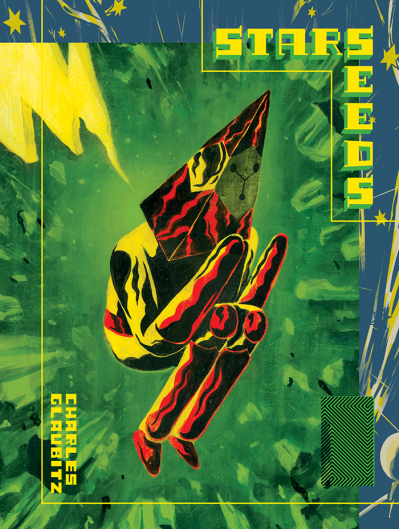
1. Starseeds by Charles Glaubitz

There really ought to be a category for book design. The first thing I saw when I opened the box dominated by Fantagraphics titles was Starseeds by the Mexican multimedia artist Charles Glaubitz (Fantagraphics). The cover illustration is a KO, sumptuous with color, and enhanced with tightly localized textural effects.

2. Fante Bukowski 2 by Noah Van Sciver

The Fante Bukowski books, also from Fantagraphics, are a portrait of Fante Bukowski (not his real name), a down-on-his-luck Ignatius J. Reilly type whose propensity for self-sabotage is beaten out only by his power to deflect sympathy. “Oh, Fante,” thinks love interest, affectionately, “You’re such a bad writer.” Van Sciver’s genre is unusual in indie comics: he’s a realistic fiction writer, and he’s very good at it. Meanwhile, the drawing, compositions and color are truly great art in the tradition of ‘60s/‘90s American underground cartooning.

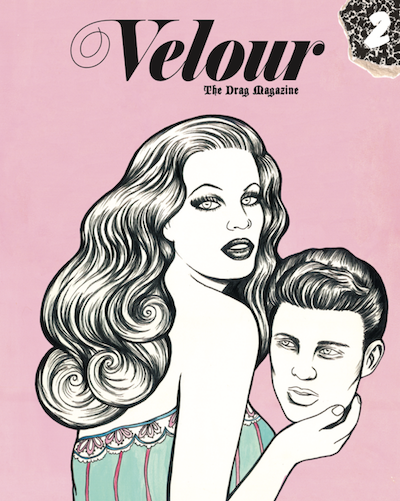
3. Velour, The Drag Magazine, edited by Sascha Velour and Johnny Velour

Besides inclusive and prescient curation, besides embodying (and helping define!) the conceptual areas where design, illustration, and drag combine, besides establishing a unifying print venue for queer and artist communities, the drag magazine is a beautiful object. House of Velour for life.

4. Extended Play by Jake Terrell

Extended Play is a collection of Terrell’s line drawings and comics stories. His combined influences pull from manga, twenties newspaper strips, Nickelodeon, modernist line drawings. I particularly liked the way this book was put together — a perfect bound softcover with a dust jacket. Minneapolis press 2D Cloud, which published this one, has been hitting it out of the park for years now, consistently producing original, genre-inconvenient art comics against economic odds.

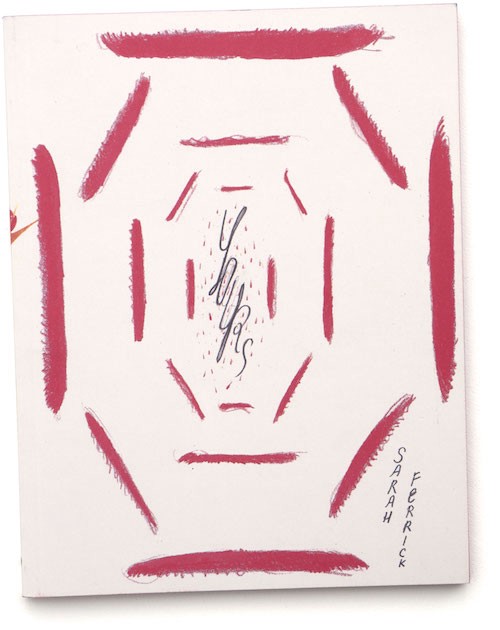
5. Yours by Sarah Ferrick

Ferrick takes exciting advantage of book art as a medium. Yours, also from 2D Cloud, is a series of multimedia drawings, some figurative, some not, and intensely emotive, vulnerable handwritten messages. The effect is very disarming immediately. The book favors spreads over recto/verso sequencing, which makes the experience of reading more like looking at paintings than reading traditional comics or prose. It’s a wonderfully natural — and powerful — formatting choice that builds the edges of the work up and around you, as an environment rather than a narrative. Language, stress signals, and questions assert and reconstitute themselves, occasionally falling into rough-hewn grids and other loose systems, allowed to deviate like thoughts caught in the middle of forming.

6. Canopy by Karine Bernadou

I always look to see what Box Brown’s press Retrofit is publishing first. This year the good stuff includes Canopy by Karine Bernadou. Canopy is a mostly silent, four-color comic about a woman who lives in a dark (not exaggeratedly dark, but on par with our world in terms of utopian/dystopian balance) Eden filled with with relationship parables. The metaphors are sharp. Calling Bernadou’s work “charming” is too slight to do justice to the real depth of her ideas about relationships, but reader beware: charm lies among the thistles. This is a book about pain, need, and self-reliance.

Karine Bernadou

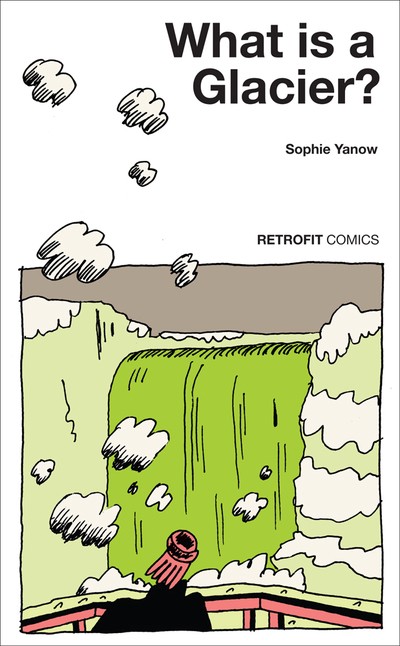
7. What is a Glacier? by Sophie Yanow

Also from Retrofit, What is a Glacier? is Sophie Yanow’s autobio/nature essay/op-ed comic. Yanow’s writing is always intelligent — introspective while looking outward, and always seeking clarity (makes sense, since Yanow also works as a translator). She’s great at starving the page, using space and silence to underline her points. Props back to Retrofit for further satisfying design choices on Glacier: the thick paper, the long, lean dimensions.

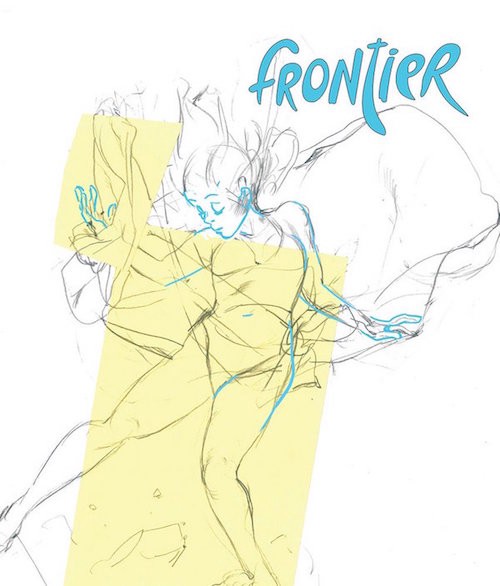
8. Youth in Decline’s quarterly monograph series Frontier, issues 13 (Richie Pope) and 14 (Rebecca Sugar)

This series has been a going concern since 2013, and is thoroughly great. The books showcase U.S. and international artists across disciplines. Pope’s issue is a vividly illustrated picture book about “the experience and gaze of black fatherhood” (Pope’s synopsis from his back page interview). It’s personal work, intelligently handled, and Pope’s play-anthropological field report on creatures called “Fathersons” is handed over with confidence.

Rebecca Sugar’s (the force behind Steven Universe, among many other animated, print, and musical projects) issue is a sketchbook full of thrilling ideas and intimate observations about animation and, well, love and stuff.

9. Zonzo by Joan Cornellà

Joan Cornellà’s new collection from Fantagraphics is fucked up, but that’s not why it’s good. Anything can be fucked up. Cornellà’s six-panel dumbshows are sly achievements in lateral thinking. Another example of inventive book design.

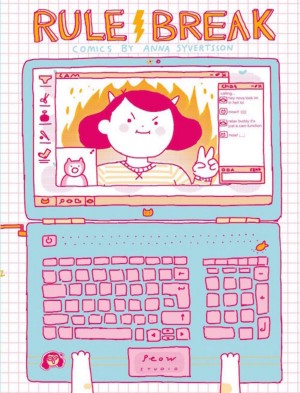
10. Rule Break by Anna Syvertsson

Anna Syvertsson is VERY FUNNY and she keeps having good ideas. Truly, just one great notion after another. I was on a road trip while reading some of these and Syvertsson’s cartoons were the ones I force-fed everyone in the car until I wasn’t allowed to.

The Ignatz winners will be announced during Small Press Expo, the weekend of September 16–17, at the Bethesda North Marriott Hotel and Convention Center. The winners will be listed on the SPX website the evening of September 16. If you can’t make it to SPX, the books mentioned in this article can be purchased from their publishers, sometimes directly from the creators, and from your local comics shop.

Actually, an All-Girls ‘Lord of the Flies’ Could Be a Good Idea

Social media did not take kindly to the announcement that two men will write and direct a film adaptation of “Lord of the Flies” with a contemporary setting and an all-female cast. Twitter users pointed out that the purpose of William Golding’s novel was to show how prepubescent boys, left to their own devices on an adult-free desert island, would begin to replicate the patriarchal society they knew — one infected by paranoia and ruled by scheming, warmongering brutes. To swap the boys for girls was to miss the point, many argued, about systemic toxic masculinity.

David Siegel, one half of the team behind the movie, didn’t reassure people that he got the point when he told Deadline that the filmmakers intend to create a “faithful but contemporized adaptation of the book, but our idea was to do it with all girls rather than boys.” A simple swapping of one gender for the other might sound more like a novelty than a dive into the realm of preadolescent girls, as deep as the one Golding plumbed with boys — an analogue to the Ghostbusters remake, only this time with classic literature. That the adaptation might traffic in tokenism, might be crass and dishonest, seem reasonable concerns.

But some detractors didn’t stop there: They went on to argue that a female version of Lord of the Flies wouldn’t work because women are not brutal. Writer Jessica Valenti tweeted, for instance, that “The all-female Lord of the Flies will just be a group of young women apologizing to each other over and over till everyone is dead.”

Although Valenti’s comment is tongue-in-cheek, it seems to stem from the same perception of women as nurturers, as passive, that has served as a foundation for their subjugation. In Why I Am Not a Feminist, Jessa Crispin writes that the idea of this set of supposedly innately female attributes in fact originates with men, but that women “have adopted this belief because it suits us to believe this about ourselves. It makes us special.”

Crispin goes on to surmise that many women identify with these allegedly “feminine” characteristics — compassion, emotional intelligence, receptivity — and not “masculine” ones — foolishness, predation, brutality — in order to locate a sense of collective value in their womanhood after centuries of oppression, to bolster their community’s power by insisting they stand on a solid moral high ground.

There’s a sinister side to this, a building of political clout by identifying a noble us and a savage them — though I don’t think that’s the intention of most feminists who advance the notion that women, by dint of being women, are somehow morally superior. Any woman, after all, who has been to junior high knows very well that girls are more than capable of viciousness; anyone who has followed even vaguely the careers of female leaders like Margaret Thatcher knows how absurd it is to say that if women were in charge, the world would cease to be riven by conflict.

Maybe it’s more about the human tendency to turn one’s face away from the darkness within, from the shadow described by Carl Jung: the one we construct over our lifetimes out of all the components of ourselves that condemn us, that reveal we are less “good” than we’d prefer to believe. (The boys, upon their rescue at the conclusion of Lord of the Flies, revert to vulnerable, weeping naifs in the presence of adults; they’ve shoved their shadows out of sight of authority.)

Any woman who has been to junior high knows very well that girls are more than capable of viciousness.

But we do want narratives that present women in all their complexity, even if that mirror is a shadowed one — or at least we say we do. So why is it impossible that a gender-swapped Lord of the Flies could offer this? The adaptation’s critics seem to object mainly on two grounds: that the filmmakers misunderstand Golding’s intentions with the novel, and that the filmmakers are men.

As to the first concern, authorial intention typically seems to matter very little when a book is adapted — and maybe it shouldn’t. (Find me someone who prefers the Stephen King-approved miniseries version of The Shining to Kubrick’s, other than Stephen King.) A good adaptation can reinvigorate a work and draw new attention to it. Hulu’s recent take on The Handmaid’s Tale, published in 1985 when the evangelical Christian movement’s influence in U.S. politics was still relatively novel (and alarming), hit uncomfortably close to home even for its author — and put it back on the bestseller list, in the wake of Trump’s election.

Besides, Golding’s intentions for his own book seem a bit muddy. In a recording, Golding explains that the idea for the book came to him while he was sitting by the fire; he remarked to his wife that he’d like to write about boys on an island and show “how they’d really behave, being boys and not saints like they usually are in children’s books.” To the question of why he chose to write about boys rather than girls, Golding says, “I was once a little boy…” and then adds, “If you, as it were, scaled down human beings, scaled down society, if you land with a group of little boys they are more like scaled-down society than a group of little girls would be. Don’t ask me why.”

He hastens to explain that this is not intended as a knock against equality; in fact, he says, he believes women are “foolish to pretend they’re equal to men. They’re far superior.” This seems to me as good an indication as any that he did not understand women to be complex and flawed, but rather more like those saintly children’s books characters he wanted to expose for the lies they are. And perhaps he sensed this, and perhaps his first answer — that he wrote about little boys because he experienced being a little boy, and he sensed he could not in good faith represent girls on the page — is the best reason why Lord of the Flies is what it is.

But even if we take as written in stone his second answer — that he chose boys because he wanted to present a scaled-down society, and society being patriarchal, its microcosm must, too, be male — this doesn’t seem to me a persuasive reason not to gender-swap an adaptation of his book. Of course, there could not be a female mirror image of Lord of the Flies. You can’t have a microcosm when there is no macrocosm, no matriarchal culture to pillory.

There is no example of conduct for girls to emulate that isn’t responsive to and shaped by men’s.

But you could have something else — say, an exploration of the way that girls, once removed from the world of men, might continue to uphold its rules, having never encountered any alternative to draw upon for their own desert island culture. One Twitter user joked that there already is a female Lord of the Flies, called Mean Girls, and there’s something to that: I’ve always found the strongest moment of that movie to be when Tina Fey’s teacher Ms. Norbury tells her female students that they “all have got to stop calling each other sluts and whores. It just makes it OK for guys to call you sluts and whores,” a sly reference to the infinite regress of men establishing a social order and women, absent any other model for living, maintain it, thus reinforcing men’s continuation of it. Maggie Nelson describes in The Argonauts how a girl’s sexual education forms around the fact of the ever-present potential for violation; she writes, “There is no control group. I don’t even want to talk about ‘female sexuality’ until there is a control group. And there never will be.” There is no example of conduct for girls to emulate that isn’t responsive to and shaped by men’s.

But no control group doesn’t mean nothing to uncover, and the reason Golding gives for why he didn’t have his stranded children be boys and girls suggests a pretty astounding outlook on gender relations: With a co-ed cast of characters, the matter of sex would inevitably arise, and “sex is too trivial a thing,” he says, to put in a story like this, which is about the problem of evil. If Golding understood the impulse toward violence and control over others, and the drive for sexual satisfaction, to be totally distinct matters, he may have missed something important about the potential toxicity of any human being. In that case, we no longer have to hold up Lord of the Flies as an authority on brutality; we’re free to reinterpret it for today.

The second objection, that the adaptation’s writers and directors are men and therefore unable to capture the world of young girls, seems to be in line with Golding’s assertion that you’re only allowed to write about little girls if you were once a little girl. Never mind that David Siegel and Scott McGehee also directed What Maisie Knew (another adaptation!), and extracted (or simply recorded) from their six-year-old female star a performance that felt poignant and true — or that one of the most wrenching and funny depictions of girl-on-girl savagery, at least in my view, can be found in the male-written and directed Welcome to the Dollhouse.

And what does it mean to capture girlhood or boyhood with accuracy? To Golding it means to show how quickly, once removed from “polite society,” the barbarism supposedly undergirding it comes bubbling forth. Golding is hardly alone in believing that human nature is inherently base in this way. In her essay “A Common Faith,” Marilynne Robinson investigates this belief, and the purpose it serves. She writes of the ungenerous assumptions we make about our own human nature, our apparent commitment to reducing ourselves to creatures driven solely by self-interest. “I’m sure all of us can think of a thousand examples that argue against” the hypothesis that concern for others is unnatural, Robinson writes, and then points to one fascinating one: evidence that our hominid ancestors, as much as 700,000 years ago, possessed technology and culture, formed communities and passed down knowledge through the generations. In other words, there’s reason to believe our “natural tendencies” run just as much toward collaboration and cooperation as they do toward destruction, if not more so:

Modern theories of human nature, which are essentially Darwinist and neo-Darwinist, pare us down to our instincts for asserting relative advantage in order to survive and propagate. This dictum hangs on our essential primitivity as they understand it — assuming that our remote ancestors would have been describable in these terms, and that we, therefore, are described in them also. But it seems worthwhile to remember that this is a modern theory projected onto the deep past. Then the past, seen through the lens of this theory, becomes the basis for interpreting the present. And the observed persistence of these archaic traits in modern humanity affirms the correctness of this characterization of our remote ancestors, which goes to prove that these archaic traits do in fact persist in us. The endless mutual reinforcement distracts attention from the fact that it is all hypothetical. We know precious little about those dwellers on the savannas of the Pleistocene, and, as Brooks points out, we clearly know precious little about ourselves.

We don’t really know what we are, Robinson is saying; being human also means being mysteries to ourselves, containing questions that are unanswerable but nonetheless worthy of posing and probing in art. In The Art of Cruelty, Maggie Nelson writes that “attempts to nail down ‘who we really are’ most often serve as rhetorical pawns in unwinnable arguments fueled by competing agendas.”

If so, then Golding’s agenda appears to be to persuade us that men — and not women — are killers, not nurturers. Many of us, clearly, are persuaded. A female Lord of the Flies might only make it explicit that this refers to women too — which at the very least gives us something to continue thinking and writing and arguing about. But at best, it — and female-centered works like it — could rise to the level of art. As Robinson suggests at the beginning of her essay, it can “test the limits imposed” by our long-held cultural patterns around gender, rather than continuing to operate within their very narrow and ungenerous boundaries.

The Art of Drawing with Text

Earlier this summer, I stumbled into the Kate Werble Gallery in Manhattan for a publishing event and became interested in the gallery’s current exhibition of work by artist Beth Campbell. I remembered Campbell’s word drawings from my graduate art school days, and it was a pleasure to see this work in person, as well as a newer abstract mobile sculpture series she had begun based on the structures of her drawings.

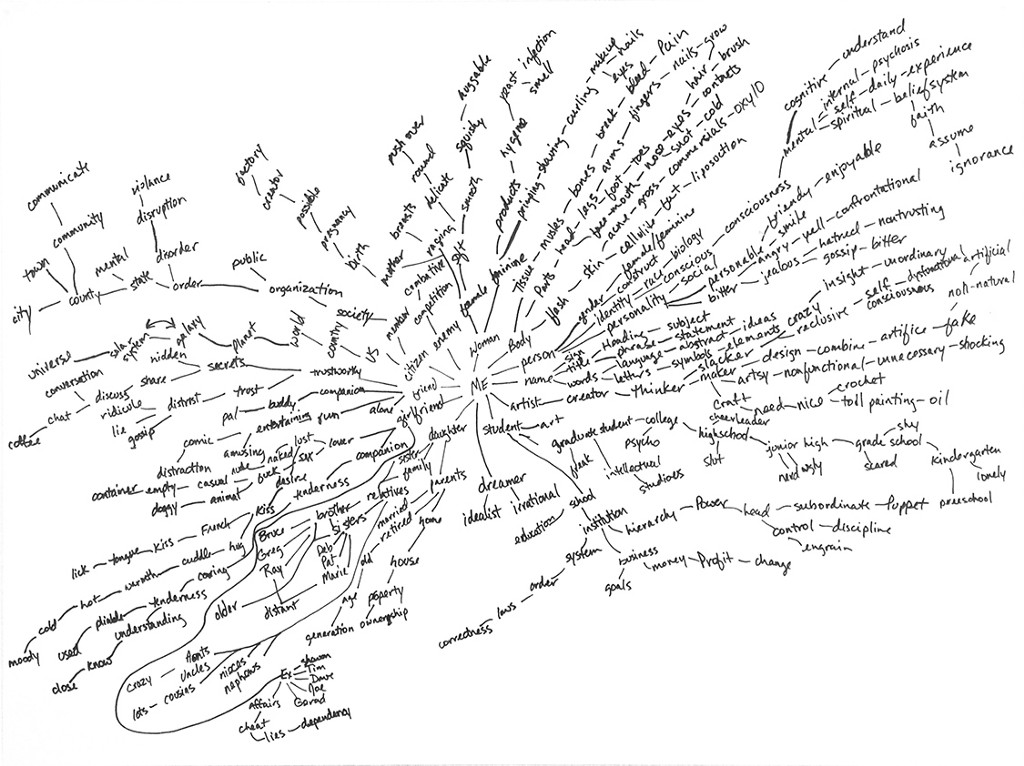
Campbell works in many mediums, including video and installation, in addition to sculpture, but two of her drawing series might be especially interesting to writers: a series she began in 1999, entitled My Potential Future Based on Present Circumstances (referred to as Potential Future for short, and sometimes referred to as flow charts by Campbell), and her subsequent series Future Past, begun in 2014. As described on Campbell’s website, the former is a “text-based drawing series” that “makes use of a flowchart to explore the far-reaching map of possible futures arising out of everyday encounters.” The drawings, an early precursor of which Campbell titled “Web Drawing of Me,” are composed of handwritten text and start at a single point (i.e., “Me”), then branch off into many possible outcomes from that starting point, which could be seen as a possible parallel to the seemingly endless directions a story could go when a writer first sits down to begin new work. In one drawing from 2004, possible futures are as different as “Still waiting tables in a Diner when I am 42” and “Hired to write for FOX.”

I had the pleasure of sitting down to chat with Campbell about her projects at a café in the Brooklyn Navy Yard, where she has her studio. At the time, her work was in exhibition at the Aldrich Contemporary Art Museum in Ridgefield, Connecticut.

Catherine LaSota: Let’s start with your My Potential Future Based on Present Circumstances series. What was the genesis for this series and your use of words in your art making?

BC: When I entered grad school, I was a painting major, but with a really large interest in installation, and about a month in I just threw myself into installation without any training in sculpture. I had seen this show in Chicago that was full of installation, and it really blew me away. I didn’t really know anything like that was possible. A month into grad school I stopped painting to pursue installation, and just threw myself into materials. What was very important to me in installation was the phenomena, the actual, quite theatrical experience of the thing.

CL: Are you referring to the experience of making it, or the experience of the viewer?

BC: The experience of the viewer in the space. For me, that was and continues to be an important part of when I do installation work. So instead of the work being about stuff — it’s not like, “this is about” and pick a theme — it’s about the phenomenon of the experience. This gets into psychology and perception. I’m interested in more than just a topic. As a human you are many things, and you’re interested in many things, and you’re influenced by many things. As an artist I was making my position: I made a mind map with the word “everything” in the middle to try to outline my position. My first web drawing was the word “everything” and things around it, and concepts, and it evolved into a basic drawing of me, with me in the middle and the different roles I performed.

CL: Did that web drawing start off as just words, or were there drawings within the web?

BC: They’re text-based drawings. The one that had “everything” had some blobs and stuff, but when it became the word “me” in the middle (of a web drawing), it was just words. It was really exploring all the different roles I perform. You’re not singular, you know — you’re a mom, you’re a writer, you’re a private person.

Interview with “Used Books” Artist Ben Sisto

CL: Right.

BC: So I finished grad school, and I moved to New York. For a year I was just adapting to New York and trying to figure out how to be creative here, and life stuff happened. I met my now-husband, and I’d moved here with another guy, and I thought, oh I should do a drawing about my future. I had already made a map of “me,” so then…

CL: The map of you that you had done before was the present you, in the now?

BC: Yeah, it was the 25 year old me (laughs). But it wasn’t about a future or anything. What I liked about it was that in the middle it was “me,” some personal thing — just you and the roles that you play — but the end became things like coffee and things that I liked. They were like a cockaburr to someone else’s edges. When I finished grad school I did an installation of two identical bedrooms at Roebling Hall, my first show in New York. My idea was that if someone develops themselves through stuff in their room, and this is all stuff in the world that there are multiples of, then there is a possibility that you would reoccur. Like you are creating a person out of this stuff. Then I have this drawing that goes from something seemingly singular (“me”) to this edge that is various bits of all of us.

“Web Drawing of Me” by Beth Campbell. Photo courtesy the artist.

CL: It’s interesting how you talk about these drawings, where when you get to the edge of them, it could also be the edge of somebody else — it’s a bit like choosing a POV when writing a story: the main character’s life touches on all the other characters’ lives, but the reader only sees the edges of those other characters’ lives. Your description of these early drawings also sounds to me like the way atoms come together in molecules. Have you thought about that?

BC: Not so directly, but that’s a good comparison.

CL: Sometimes we get together with people and it’s like a solid, sometimes it’s liquid. Sometimes relationships are a gas!

BC: (laughs) Well, totally. It’s like there are some people you can be around where you feel…

CL: …grounded?

BC: Yeah, or strengthened. And there are others, they make you feel horrible.

CL: We learn to shed people who make us feel horrible from our lives, hopefully?

BC: Yeah, I’m still learning that.

CL: You’re always meeting new people, too.

BC: Yeah. It’s funny, when I was getting the work together for the Aldrich show, this idea appeared multiple times in my sketchbook. It’s funny how something comes in and out and then finally you act on it. I felt like when I acted on, I thought the idea was new at that stage.

CL: Wait, what was repeatedly coming to your sketchbook at that stage?

BC: Doing a drawing about my future. It was this life thing of one guy to the next, choosing one over the other, that made me finally do the drawing of My Potential Future Based on Present Circumstances. I held off on it for three weeks just thinking about it, because I didn’t want to make a text-based piece that nobody would read, you know? There are a lot of text-based works that you never get through.

I didn’t want to make a text-based piece that nobody would read, you know? There are a lot of text-based works that you never get through.

CL: Why do you think that is? Do you think it’s the sheer amount of text?

BC: Probably, because the format of a huge wall text means maybe you are supposed to stand there with your head cricked back. Maybe it’s just me, but if I’m reading something like that, I just like to sit. (laughs)

CL: So when you make a text based work, are you thinking somebody is going to read the entire thing?

BC: For many of them, that’s the expectation. But when I was thinking about the Potential Future drawings in those three weeks I wanted to make sure you didn’t have to read all of it to understand what the point was. I was surprised at how much people actually read, because you didn’t have to read all of the text to understand that this was about the future.

CL: I think that people are drawn to text, you know? You see people going straight to the explanatory plaques in museums, for instance, — I mean, it’s a different thing, but…

BC: Oh, yeah.

CL: …perhaps words are a way in to art for some people, because they know what a word means, for example.

BC: Yeah, because it’s the familiar mode. Can I add one more thing about the Future Present drawings?

CL: Of course!

BC: I felt like they were like installations, in that people’s paths through them are very different, unlike when you’re reading through a book. It’s more like the Choose Your Own Adventure type of book. People go through it at different points and move around in very different paths.

CL: So it’s more Choose Your Own Adventure than novel, is that what you mean?

BC: Yeah, definitely. There’s a lot of movement in it. Or, each person’s movement through it is different.

CL: This brings up the question for me of time spent with an artwork. With a novel, or even a short story, there is a certain number of hours that a reader is spending in a space, based on the number of words on a page, and the time period that is being covered. A lot of your work is time-based in a way, too, because it is experience-based. So is the idea of time something that you think about? There’s a finite set of time, also, when you read a story, and then it’s over.

BC: Right, You start it and then you stop. One thing I’ve come to learn with the Potential Future drawings is that the people who live with them, love them continually, because they’re the kind of thing that you can pass by and glimpse another portion of it. It keeps having a newness. They access different points, so over time, it’s always refreshing. You don’t have to take all of it in — you get more time with it, you keep getting bits and pieces.

CL: That sounds a bit like re-reading a story at different points in your life and getting something new out of the story each time. For example, if you read Catcher in the Rye as a teenager and then again as a forty year old, you’re going to see it differently, you know?

BC: Right.

Support Electric Lit: Become a Member!

CL: What are you reading now?

BC: My reading these days is all nonfiction and philosophy and things like that. In college, I was really trying to understand Stephen Hawking’s A Brief History of Time. I was so committed to trying to understand it, and it is really curious looking back, because I don’t even know how I got the book — there was nothing in my area that was saying, oh you should read this. I don’t even know how I came to it. I mean, it was prominent back then.

CL: Yeah, I remember it being around, I remember it being in the house.

BC: Now I’ve been reading a lot of books on the new neurology and decision making and psychology and philosophy stuff.

CL: Are there particular philosophers that you are looking to, or is it more general theories that interest you?

BC: I feel like I’m always trying to learn, so I’m always a student of it. The last few years, I’ve been consuming a lot of object-oriented ontology stuff like Graham Harman, or things on materiality and thingness theory. What I want to do right now is understand Latour.

CL: Latour?

BC: Yeah, Bruno Latour. Don’t ask me to explain, though! One book is We Have Never Been Modern. I do like to read a lot. And when I am working on the mobiles, I’ll listen to people talking. I had to stop listening to music in the studio.

CL: You listen to words in the studio?

BC: All the time. I’ve gotten really into Krista Tippett. She’s a contributor to NPR, she has her own program based out of Minneapolis. Last year I got into going to estate sales on Long Island. I get up really early and drive at 7am on Sundays for shows (and listen to Tippett’s On Being). I guess because it’s like church time, the show is intellectual-spiritual, but she interviews physicists and psychologists and brain surgeons and Buddhists and artists and writers, too. Like I learned about Mary Oliver on her program. Supposedly she doesn’t get interviewed much. That was amazing.

CL: I should check that out.

BC: It’s like church for people who don’t believe in god. So I’ll listen to her, and when I was working on the mobiles I’d listen to a lot of panel discussions on parallel universes and quantum physics. I’m deep into words.

CL: Do you absorb the words when you’re working in the studio? Does it ever become background noise, or do you really hear it?

BC: Well, I’m sure it goes in and out. I’ll re-watch or re-listen to the same thing.

CL: It sounds like words are always present as you are working.

BC: In my sketchbook, it’s mostly words. I mean, there are the text-based drawings, and I do a lot of other work, but it’s like there are these ideas that are in word form first that I kind of get enamoured with. I’ll even make my husband write stuff down — I was going to bed a few weeks ago, and I was too lazy to get back up, and I said, can you write down “everything is an accident?” He’s like, ok.

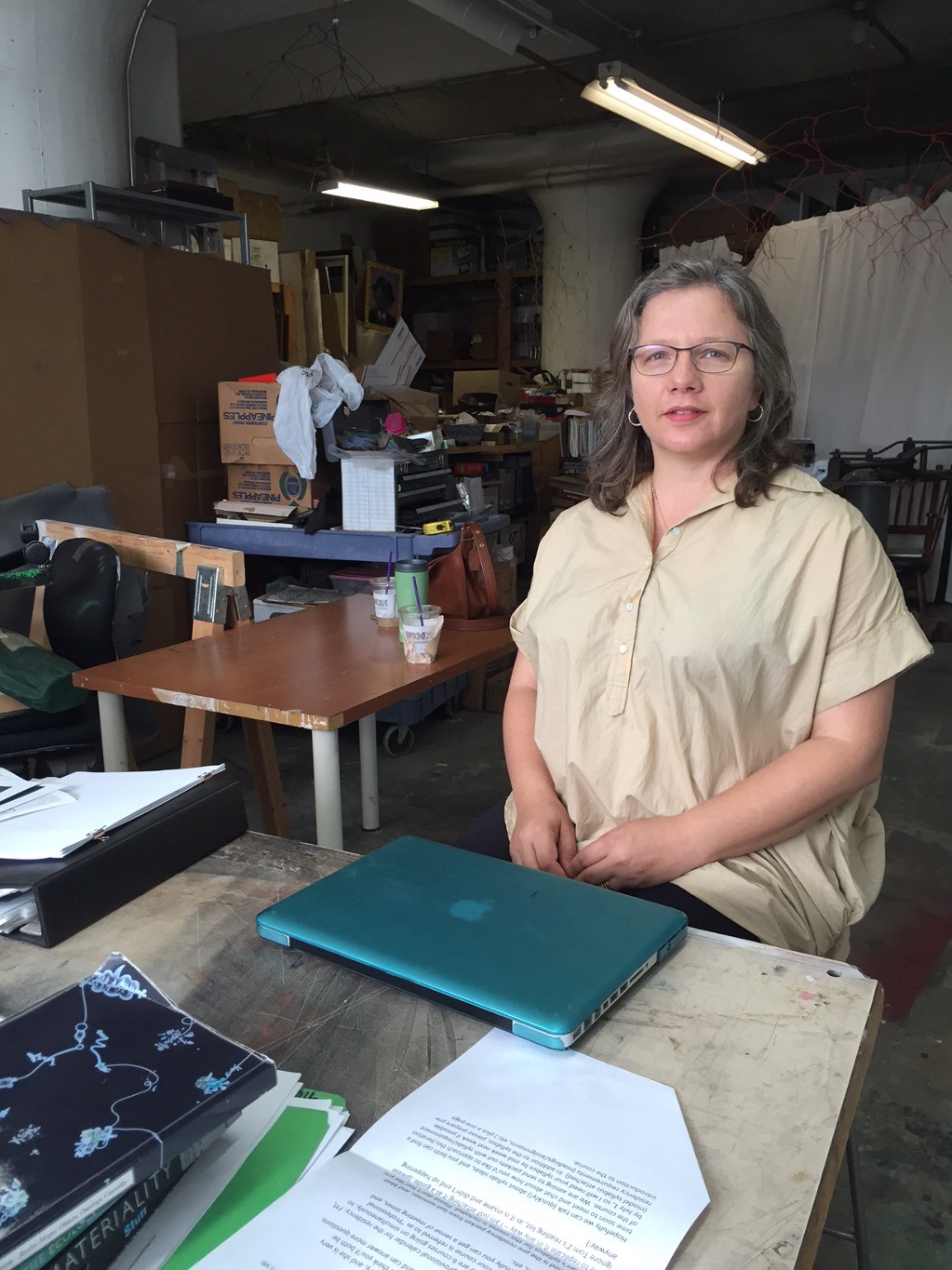
Beth Campbell in her studio. Photo by Catherine LaSota.

CL: You were talking about how you started with text-based drawings as a 25 year old with “Me” in the middle and then you wanted to draw one that was the future, and then eventually there was the transition to your Future Past series.

BC: I did My Potential Future Based on Present Circumstances drawings fairly steadily from my mid 20s for ten years plus, but the plus was really painful and not appropriate. I had made so many, and when I first made them, they were really necessary and liberating and kind of crazy, and I embodied crazy. Those drawings get associated with decision making and they get associated with the future, and there is a lot of association with choice — that’s why I started calling most of the mobiles, There’s No Such Thing as a Good Decision. (laughs)

For me, those drawings were sort of a self portrait of what it’s like to be at that age, which is full of anxiety and not knowing — if I do this, this will happen. What I say now is, really everything is an accident. You know, some decisions we make — it seems like we make, I should say.

CL: So is the idea that you think you can control things when you are younger?

BC: I wouldn’t say that you can’t control things but just that — this is now in hindsight, too — it’s more anxiety in general, and letting it just completely flood out of you. And it helped, because sometimes I would worry about something, and I’d say, oh, I’ll just save that for the drawing, I’ll put that worry in the drawing. It was like recategorizing it — instead of on your own turning it into a present.

Now I like to read about rational thinking, authors like Daniel Kahneman on thinking fast and thinking slow, and Dan Ariely about the irrational mind, and just how much everything around us is constantly nudging us and the concept of this self that we think is stable and is always in flux and influenced greatly by various simple things.

So those drawings weren’t just about “if I do this, this will happen.” They’re more in a spirit of anxiety. I did them for a good solid 10 years, and as with anything that someone does in life, it was really essential. Then it got to be imitating myself, and it just wasn’t that same voice anymore, because I got older and…

CL: …you didn’t have the same anxiety?

BC: Or not to the same degree. I am afraid of saying just anxiety, it’s so many things. I did them for a long time, but then I started feeling like, this isn’t my voice anymore. Although I loved them! And maybe in time I may do them in that same way.

CL: That happens to writers, too, where they get to a point of being really good at a certain thing and can get stuck.

BC: Yeah, I just couldn’t. I would chew all my fingernails off. It became really stressful, because I wasn’t in the process anymore. I was outside making it. Then I had a kid, and I was thinking, it’s not the same anymore, it’s not just me, I have a child, so I’m not just going to… I know that someone could and would be the person who would keep writing those, and their child would be endlessly hit by a cab or ending up in drug rehab.

CL: You are saying there would be more anxiety in the pieces with a child in the picture?

BC: No — that it would be about him, PTA meetings, and taking off for family trips…

CL: So it’s no longer just you as the nucleus.

BC: And I’d kill me and my boyfriend/husband all the time, but I don’t want to do that to my son, I just don’t want to entertain it. Anyway, I couldn’t do these drawings in the same way. I didn’t feel like I was that voice anymore, because I couldn’t do something that came from that time period, that kind of person, younger.

I have to be careful, because it’s not like as you get older there is no future for you (laughs), but I was also looking back on my life. In your 40s, there is regret — why didn’t I do this? I also didn’t want to just have me be the center anymore. In those drawings, even though I was the center, or — what would you use in writing? the protagonist? — everyone related to it. People would say to me all the time, it’s just like me, it’s just like me.

CL: People do that with books, too.

BC: Yeah, well, it very quickly was not me; it was a universal. I just didn’t want to be thinking about the world through me in the same way, so I started trying to figure out how to do it through other ways. It started as events, like a moment that had a future and a past, and it was a painful evolution into finding what’s the future past in the space.

I like to say it’s about mirror-ness. There is one drawing at the Aldrich on mirror-ness that is focused on psychology and narcissism, and another one is focused on superstition and technology and they’re kind of related in a way in terms of these crazy fantastic ideas. In early times people claimed to see the past, present, and future in mirrors, and now we’re using mirrors and telescopes to actually look at the past. There’s a coincidence of superstition and technology.

In early times people claimed to see the past, present, and future in mirrors, and now we’re using mirrors and telescopes to actually look at the past. There’s a coincidence of superstition and technology.

CL: One piece in your show at the Kate Werble Gallery actually has bits of mirror installed here and there between scraps of paper with text on them. I found it very interesting, because as I moved along it, I could literally see glimpses of myself within the piece.

BC: If that happens, that’s awesome. I did imagine that from a distance they kind of blend into the drawing, so you might be surprised by the mirror. But I know where they are, so it’s very obvious to me.

CL: Do you ever feel like you install a piece and then hear people’s reaction to it, and it causes you to think differently about you work?

BC: That’s the awesome part about it.

CL: That’s something that is said a lot about literature, that it’s not done until somebody reads it.

BC: Right. I think a lot about the viewer, even in the mobiles. For some of them, there’s a real fizzy visual thing that happens in them, the viewing that’s beginning to perform on your brain, and there’s a tension between perception and all that.

The Supermarket at the End of the World

This summer the television network Spike launched a series loosely based on Stephen King’s novella The Mist. I was a huge King fan as a kid; I devoured The Mist. I’ve seen the 2007 film version — taut, rollicking, B-movie perfection — multiple times. But I won’t be watching the TV version. From what I’ve read, a core aspect that I found so compelling in the original is missing from this adaptation: no longer is the local supermarket the setting where nearly all the action plays out.

King has said that he was inspired to write The Mist after dropping in on his own local grocery store with his son the day after a heavy thunderstorm. If you had to barricade yourself against a mysterious fog hiding flesh-eating, tentacled monsters, where better than a place that is literally stocked with food?

Whenever I find myself in the aisles of a Key Food or Stop & Shop, I have a similar, fleeting thought: in the event of a cataclysmic disaster, is this where I’d want to bunker down? A number of zombie apocalypse bloggers advise against this strategy: too many people will have the same bright idea. And those glass façades that supermarkets seem so fond of? They’re vulnerable to attack — a truism which plays out to gruesome effect in the movie version of The Mist. I rarely ever get that far in my doomsday daydreams. I become too preoccupied with figuring out whether I should eat my way through the produce aisle first — or perhaps those frozen Sara Lee cheesecakes, or the Klondike bars — before focusing my attentions exclusively on the nonperishables.

The crisis of food shortage is a common trope, not to mention a primary plot engine, in a number of post-apocalyptic narratives. In some cases, all it takes is a single can to illustrate how dire things have gotten. In The Road Warrior (still the best of the Mad Max films, including George Miller’s 2015 reboot, Furiosa notwithstanding), Mel Gibson reaches for a can of Dinki-Di dog food. Instead of giving it to his canine companion he chows down on it himself, tipping his head back and chewing with the relish of a lapsed vegetarian eating a steak on his birthday. Dinki-Di even made a small cameo in the recent Mad Max video game.

In Cormac McCarthy’s novel The Road, the entire life of the protagonists — an unnamed man and his son — consists of scavenging for food, plowing forward with a shopping cart that holds their dwindling provisions. Their world is unrelenting shit: dust, ash, ruin, and scabland. But early in the book there is one small bubble of joy. On the outskirts of a city the heroes come across a picked-over supermarket — nothing left but a few shriveled apricots. But what’s this? From the guts of an overturned soda machine, the man’s hand connects with a cold metal cylinder: a solitary can of Coke.

What is it, Papa?

It’s a treat. For you.

Treat is right, kid. Never has a carbonated beverage been described with such anticipatory brio. Every soul-restoring gulp of Coca Cola we have taken in our lives is summoned in this moment. The man puts his thumbnail under the aluminum clip. He leans his nose to the “slight fizz” rising from the can before he hands it to the boy. McCarthy doesn’t need to describe the taste — we all know how it tastes. But the boy — encountering Coke for the first, and possibly last, time — thinks on it before proclaiming, in all seriousness: It’s really good. In the 2009 movie the boy burps after his first sip. He insists that dad (Viggo Mortensen) also take a swig. This is satisfying. In the novel the man refuses, selfishly, like a martyr. The movie knows the best treats are shared.

Having a Coke with you. Still from “The Road” (2009)

But drink up, because what follows is more misery piled on misery, including a harrowing set piece in a house basement occupied by a band of cannibals. (The novelist Benjamin Percy has described this sequence as the scariest in all of literature.) By the time the man discovers a bomb shelter midway through the book, the boy calling out nervously from the trap door entrance, “What did you find?”, you are inclined to take Papa’s answer literally: “I found everything. Everything.”

Stored inside the bunker is the glorious mother of all mother lodes: “crate upon crate of canned goods. Tomatoes, peaches, beans, apricots. Canned hams. Corned beef. Hundreds of gallons of water in ten gallon jerry jugs.”

As with the Coke, McCarthy activates the frontal lobe of desire by describing the ritual of extraction:

He opened the carton of pears and took out a can and set it on the table and clamped the lid with the can opener and began to turn the wheel … they sat side by side and ate the can of pears. Then they ate a can of peaches. They licked the spoons and tipped the bowls and drank the rich sweet syrup.

One more, the boy says, like a recovering drunk hungrily reacquainting himself with the taste of alcohol.

Unfortunately they can’t stay. The man surveys the underground stash and calculates how long before they’re discovered by marauders. There is a last supper of coffee, browned ham, scrambled eggs, baked beans, biscuits with condensed milk. Then they pack up what they can and set out across the gullied, eroded land, and pretty much nothing else good happens for the rest of the book.

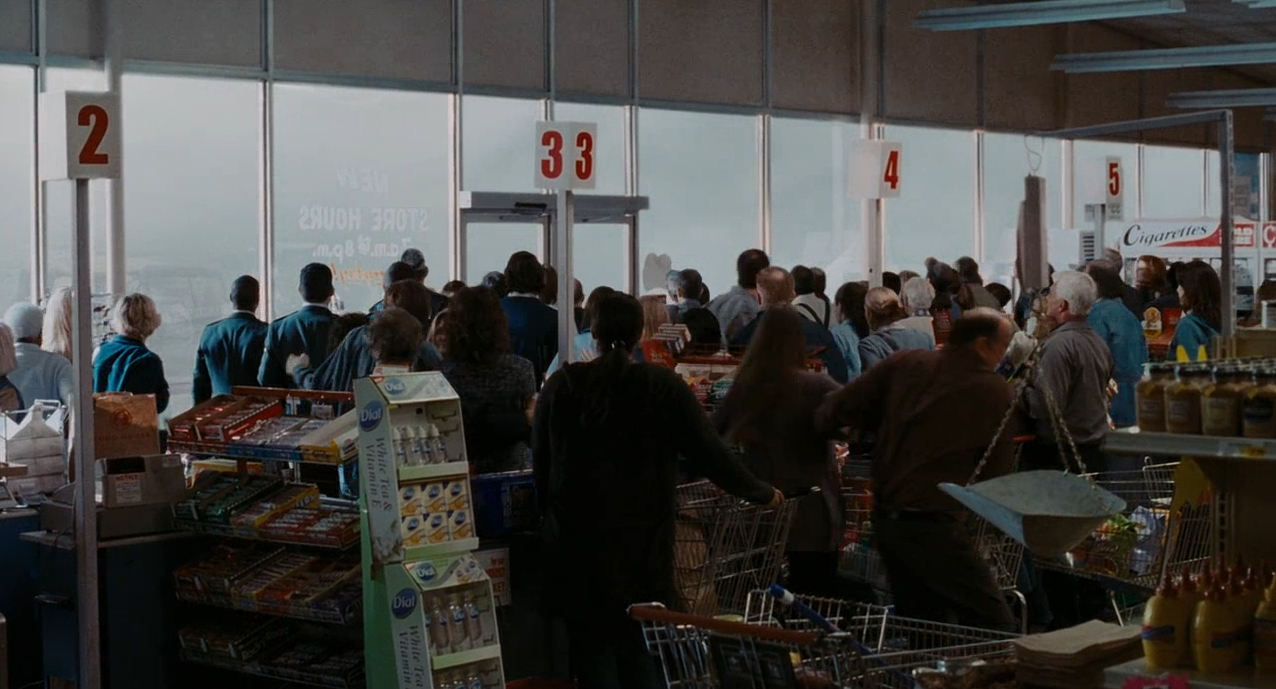
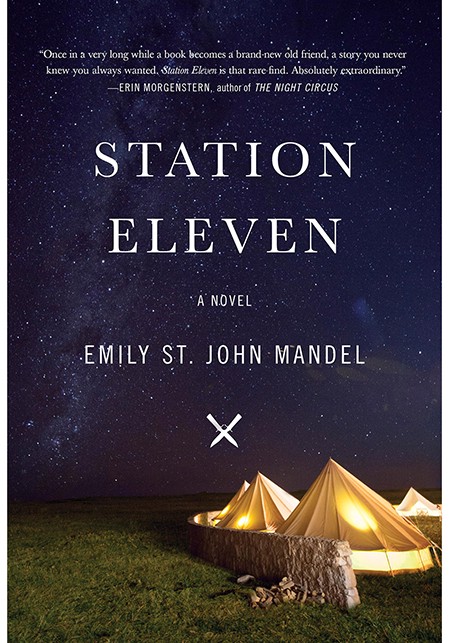
In the post-apocalyptic imaginary there is not only the foraging of food but also the stockpiling of reserves. Early in her sci-fi novel Station Eleven, Emily St. John Mandel delivers a tour de force of the latter. A central character, Jeevan, is tipped off by a doctor friend about a deadly flu pandemic that appears to be spreading fast. What follows is a fraught, exquisitely paced episode of panic buying, as Jeevan races to fill seven shopping carts in the forty minutes before his local supermarket closes.

First cart: all water. He is on the phone with his doctor friend again. No, he can’t leave town, he explains; he can’t abandon his paraplegic brother. The second cart is soon loaded with “cans and cans of food, all the tuna and beans and soup on the shelf, pasta, anything that looked like it might last a while.” The doctor starts coughing and hangs up. Jeevan continues. His next cart is one hundred percent toilet paper; the one after that brims with more canned goods. Also frozen meat, aspirin, garbage bags, bleach, duct tape. Finally he gets through to his girlfriend’s phone, just as he enters the checkout line for the last time, laden with a hodgepodge of “grace items” (vegetables, fruit, bags of oranges and lemons, tea, coffee, crackers, salt, preserved cakes. Preserved cakes? Must be a Canadian thing). Laura isn’t listening; she keeps asking if he’s having some kind of panic attack. He pleads with her to get out of the city, now, at the same time as he tosses a bouquet of daffodils onto his hill of purchases.

The daffodils signal that Jeevan hasn’t quite accepted the new normal. Despite the doomsday events unraveling around him, he can’t resist this last nodding gesture to beauty in all its ephemerality. Fuck the flowers, Jeevan! I want to shout. Throw in more cans of garbanzo beans and cling peaches!

Fuck the flowers! I want to shout. Throw in more cans of garbanzo beans and cling peaches!

In Northern California where I grew up, and where earthquakes are a feature of the landscape, local TV news gauges the damage by surveying the supermarket aisles. Shelves with cans and bottles strewn about or knocked to the ground means that the jolt was serious. More ominous are empty shelves: those signal a loss of services. Earlier this summer my internet feed flooded with images of people emptying supermarket shelves in Doha, after Saudi Arabia, Egypt, and other Arab-nation powerhouses announced that they were breaking diplomatic ties with Qatar, where the majority of food in the country is imported. Prior to that it was the empty shelves during Venezuela’s economic implosion. Before that, post-tsunami Japan.

Andreas Gursky, ’99 Cent’ (1999)

The purpose of supermarkets is to be stocked to the gills, like a dizzying Andreas Gursky-ian fantasia, with a half-dozen brand choices for every product. That makes supermarkets quintessentially American. Indeed, the first such market, which combined a butcher, produce stall, bakery, and pharmacy under one roof, opened in 1930 in a 6,000 square foot former garage in Jamaica, Queens, with the promise to “Pile it high. Sell it low.” Supermarkets represent a way of life, of the security that only a massive amount of food can give you. So when they instead become a locus for anxiety and depletion, that way of life comes tumbling down.

And yet, my mental obsession with the stockpiling of canned goods has not translated to actual disaster preparedness in any way. As I write this I don’t even own a flashlight — my last two broke. For research I recently watched a few episodes of National Geographic Channel’s Doomsday Preppers, a reality series about the obsessive ends that survivalists pursue to prepare for the end of the world. One man’s bunker, stocked with gleaming rows of vegetable and fruit preserves, gave me a shiver of pleasure. But I quickly lost interest in the other survival tactics that are a focus for the bulk of the show — weaponry, booby traps, defense training. I was only in it for the food.

Supermarkets represent a way of life, of the security that only a massive amount of food can give you. So when they instead become a locus for anxiety and depletion, that way of life comes tumbling down.

According to a National Geographic survey (no doubt commissioned as a marketing gambit for Preppers), forty percent of Americans believe that stocking up on supplies or building a bomb shelter makes for a wiser investment than a 401(k). You could tsk-tsk the folly of this mindset. But who doesn’t, on some level, get satisfaction from envisioning a future where paper currency and plastic cards have become worthless, but not freezers of vacuum-packed venison and crates of Goya kidney beans and split-pea soup?

When my sister and I were kids growing up in Berkeley and money was tight, we ate a lot of Campbell’s soup. We favored cream of chicken, with its yellow, salty polyps, and New England-style clam chowder, because they could be thickened on the stove with milk instead of water. I haven’t eaten a can of Campbell’s soup in at least a decade; I can’t say I miss it. But I respect the can. In the long game of the post-apocalypse, canned goods are the daffodils.

401(k)s may be practical, but they would have meant nothing to our hirsute hunting/gathering ancestors, let alone those struggling to survive in modern-day disaster zones. Nor will they help us in the not-so-distant future, when the icebergs have melted, the pandemic has decimated millions, and midday temperatures are enough to boil our kidneys. If we’re headed for apocalypse, it is the hardy aluminum-clad cylinders — time capsules from a vanishing present, units of mushy brown produce or quivering ridged tubes of sweet dessert — that will sustain us. “Turn the wheel” and out comes a fruit cocktail, tasting just like it did before the world became ash. All those canned goods stacked in cupboards and on supermarket shelves are reminders of the kind of life we might one day lose, even as they assure us how good we have it now. They are, as Viggo would say, everything.

John Ashbery Changed My Life

Almost exactly a month before poet John Ashbery died, the New Yorker’s Louis Menand published an essay called “Can Poetry Change Your Life?” I didn’t get past the title before I answered yes, out loud, in the silence of my studio. Can poetry change your life? Maybe. I don’t know you. But John Ashbery changed mine.

I was in the third year of my Ph.D. when I encountered John Ashbery. I’d tried to avoid him; two years earlier he had given a reading in the town where I went to school, but although the MFA program buzzed with news of his coming visit, I’d never heard of him and I didn’t go. In fact, I was busy trying to avoid 20th century poetry entirely; when I was compiling the list of significant works I would master for my oral exams, I’d bristled at the idea that poetry had to be included. I liked narrative, the art of telling, the skill of designing the slow slide into what happened. Poetry was full of mirror-games; it multiplied the stakes and possibilities of language dizzyingly, discarding the chains of cause and effect that narrative secured and untethering words from their posts of dutiful explanation. In poetry I found no anchor, no explanation, nothing firm to onto which I could grasp and no anchor tying it down to anything stable. I didn’t have the patience or the interest in developing sea-legs to stand on a ship with such a pitching keel.

But poetry was determined to change my life. My faculty advisor disapproved of my poem-free list and unceremoniously dumped heaps of poetry back on, notably “Self Portrait in a Convex Mirror,” an epic eleven-page poem by John Ashbery.

Why All Poems Are Political

Pursuing a graduate degree is an odd combination of delusional self-confidence — you have to be delusional to believe that the contents of your thought are worth seven years of single-minded pursuit at the expense of both a personal life and a research university’s funding — and cowering self-doubt. Ashbery’s work has a way of exposing the laughable qualities of both. In “Self-Portrait in a Convex Mirror,” there is the sense that the artist, whose round mirror organizes everything, is desperate to bring everything into arrangement, order, full comprehension — and loses control in the attempt.

Parmigianino’s self-portrait

Ashbery’s “Self-Portrait” takes as its object a painting, composed by the late Renaissance Francesco Mazolla. As the poem describes, Parmigianino, as Francesco Mazolla is familiarly known, contrives to paint himself, capturing his own reflection in a convex mirror (the type, Ashbery observes, commonly used by barbers). Parmigianino’s technique was new. The idea of a self-reflection as the subject of art was itself a novelty of the time. Parmigianino doubles the convexity of the reflection he finds in the barber’s mirror by painting the resulting self-image on a sphere of wood, divided in half so that the portrait itself juts out. As a result, the figure rendered in the portrait Parmigianino left of himself bulges out of the frame, only to be pulled back into the portrait by its shape, its convexity, its dimensions. Ashbery doubles the convexity once more. Parmigianino’s portrait is a reflection of his reflection: the poem is a reflection once more removed. In this series of infinite regressions, Ashbery shares the restraint of Parmigianino’s frame. You feel him, like Parmigianino, wondering at the constraint and whether there is a way out of it. The combination of the portrait’s convexity, the painter’s circumscription, and the reproducing levels of self-reflection, captivates Ashbery. In the portrait, Ashbery sees the painter’s attempt to capture the entirety of the subject and all that surrounds him. He also sees the immanent distortions of that self-reflexivity: the artist, and the hand of the artist in the act of creation, loom too large for the frame.

Nothing is ever complete, nothing ever fully ordered, in an Ashbery poem. The poet heaps image upon image, layers voice upon voice, seeking to contain, it seems, everything in the form. It includes the utterances of others; their sounds sneak in from outside the poem’s frame to inhabit the space within it so that the poem is humming with them, creating a dense chatter that swells into a cacophony of reflections until nothing remains that is surely the poem’s own substance. These background voices utter light and dark speech that becomes indistinguishable from that of the speaker, so that this sense of otherness is only barely constrained by the artist’s smooth self-image floating on the surface. The poem strains under the weight of the attempt to contain everything beneath the surface, the content straining the outer limits of the poem’s form. More keeps getting included, Ashbery wrote — perhaps about what he was writing — without adding to the sum. Ashbery’s poems are driven by a certain degree of amusement at expectation that one does, finally, arrive at the sum. He was interested in the more, in how much of the weight of otherness the form of the poem could bear, and what it couldn’t. For Ashbery, it was what is outside the portrait that mattered.

My eyes would start to glaze over whenever I picked up the slim volume that bore the image of Parmigianino reflected on its cover (or rather, the convex reflection of that image, as Ashbery persistently pointed out). So, determined to master Ashbery, I went off of the page, and found a recording of him reading “Self Portrait.” Ashbery’s self-recording seemed to recapitulate the content of the work: a self-portrait of the poem itself in the convex mirror of sound.

The recording is in his flat, decidedly un-musical, disinterested voice. The pitch of his tone never lowers or rises, and the poem, read in entirety, spans three recorded segments and about fifty minutes of listening time. I listened to it the first five or ten times out of a sense of duty, as a means to the ends of mastery, which at that point in my mind meant the ability to say one or two witty and new things about the poem if asked about it during the exam.

And then I listened to it a hundred more times. And then a hundred times again. Sometimes, I would get to the end of the poem, and as Ashbery’s voice intoned the final few lines, whispers, out of time, I would immediately start the poem from the beginning, listening to it endlessly so that the repetition would almost seem to ignore the poem’s own caution that its whispers were out of time, existing only in cold pockets of remembrance. They existed in streams of endless words, flowing through my ears endlessly, a reflection with no terminus.

I listened to it the first five or ten times out of a sense of duty. And then I listened to it a hundred more times. And then a hundred times again.

I live in Los Angeles, and the gift that the city has given me is a love — maybe a compulsion — for traversing the terrain of its mountain ranges. I take pleasure and delight at the sun cresting over the hills and lighting up the sky into pastels in the summer, neons right out of a Lisa Frank illustration of magentas and tennis-ball yellow in the winter. The quality of the sky could be nothing more than the city’s legacy of smog and pollution, but there is a certain density of the light that transforms the horizon, and delivers a radiant quality to the sunsets that compel me to venture daily through the various trails that are cut into various Los Angeles mountain ranges, chasing that endlessly receding horizon into dusk, dimness, and eventually night.

Once I discovered John Ashbery, he became my companion and guide in navigating those trails. I would listen to his voice reading over your “Self Portrait” as I walked, his words transforming the landscape I traveled in. I started to view my surroundings through the images and the pressure of his phrases and the beat of his sounds. The poem was, and still is, the background to the chatter of my consciousness, as essential to my existence as my breath. I found myself thinking, writing, speaking in the language he created, understanding my experiences in his terms. Often, when I would watch the city fall under the cast of moonlight, as the traffic bloomed below, I would, watching from my remove, discover a feeling that I had

seen the city; it is the gibbous
Mirrored eye of an insect.
All things happen
On its balcony and are resumed within.

When I heard him speak that line, it was the first time I felt that I had truly seen the city. I can think of nothing else that has quite described the panorama of Los Angeles achieved from the top of the canyon with such perfection. Now I cannot see it any other way.

If you listen to “Self-Portrait” enough times — I have listened to it more than a thousand times now, almost daily for five years — the strain of sounds in Ashbery’s words start to present their own stereotypes. The glistening smoothness of his superfluous sibilance butts up against an excess of plosive Ps. You feel the poet sputter and spurt out language, trying to get everything out before, as it were, closing time. The sounds offer a mixture of amusement, regret, and surprise (surprise: the word is a gratuitous enjambment of S and P bursting at the seams to get out):

We have surprised him
At work, but no, he has surprised us
As he works.
The picture is almost finished,
The surprise almost over, as when one looks out,
Startled by a snowfall which even now is
Ending in specks and sparkles of snow

The exam came and went, and I returned, maybe even compulsively, to “Self Portrait in a Convex Mirror.” I could not rid myself of its influence. I could not turn away from it; the poem became a reflection that surrounded me on all sides. I had gotten to the point where I would speak the poem alongside the poet’s own recording, and I could feel, with each S, the slow slide into what happened; with each P, lips moistened, about to part, releasing speech. I could feel the language tensely coiled in on itself, it seemed eager to spring out beyond the poem.

I could not turn away from it; the poem became a reflection that surrounded me on all sides.

When I heard that Ashbery had died this week at the age of ninety, I thought immediately of Menand’s essay, “Can Poetry Change Your Life?” Menand visits a multitude of theoretical and philosophical positions and discourses before arriving at the rather uncomplicated and almost banal observation that the answer to his titular question is entirely a matter of which poem and which life. “The funny thing about the resistance all these writers put up to the idea that poems can change people’s lives is that every one of them had his life changed by a poem. I did, too,” Menand writes. The best response Menand comes up with is a personal statement, a claim about what poetry does to him.

Ashbery, whose ear was finely tuned to the particular, would have probably loved that. Menand’s conclusion, even at the foot of a great mountain of theory, is that whether poetry changes lives is deeply personal and impossible to qualify in the abstract terms that theory requires of its objects. In the great debate about how and why poetry matters, and what, if anything, it does, I only have anecdotes and my own experience: John Ashbery changed my life. The words of the poem created my world, his worlds of words changed my life. Poetry can do this. Perhaps not in a clear-cut, quantifiable, predictable way, but surely it has and it can. Perhaps what compels a great many of us who encounter poetry and take it into our lives, our minds, and our hearts, is the unpredictability of that encounter with these strangers, the surprise in a connection with a poem when the impact could not have been foreseen, the not knowing if and when we will discover attachments through words and on pages and in rhythms, the discovery of a response we could not have willed nor anticipated.

In the great debate about how and why poetry matters, and what, if anything, it does, I only have anecdotes and my own experience: John Ashbery changed my life.

A month before Ashbery’s death, the essay had given me a chance to meditate on what John Ashbery specifically, and what poetry, broadly speaking, has meant to me. When I heard we had lost him, I knew the size of his loss to me because I had spent the week before thinking about what I had gained through his words. With Ashbery’s poem, the explosion that the poem created in me was precise and fine. His words created my world; his worlds of words changed my world.

I can’t tell you that reading “Self Portrait in a Convex Mirror” will change your life too. Maybe it will. Maybe it won’t. My world is not your world. Poetry does not change worlds like a billiard ball changes a formation of billiard balls. It does not head in a direction and with a force proportional to its aim; it does not break open the heart the way a cue ball breaks that neat triangle. You can’t aim poetry in that way. But surely it can change the formations that lie on the table, and surely it has.

Perhaps what compels those of us who encounter it is the unpredictability of that encounter, the surprise of the break, the wonder in the direction that poetry travels in spite of its aim and target, the surprise in a connection with a poem when the impact could not have been foreseen. The astonishment that something on the table, bewilderingly, ended up in the pockets.
What is beautiful seems so only in relation to a specific
Life, experienced or not, channeled into some form
Steeped in the nostalgia of a collective past.
The light sinks today with an enthusiasm
I have known elsewhere, and known why
It seemed meaningful, that others felt this way
Years ago.

Five years after I found Ashbery’s poem (or after his poem found me), a decade after I opted out of the reading he gave in that seminar room in Massachusetts, I worry whether my mind will now ever really be mine. I doubt that it will. I find that my consciousness itself does not belong to me; it is, rather, patterned with light and dark speech that has become part of me, that is not mine but that has so thoroughly patterned my mind that I don’t know where his words end and mine begin. (I’ve italicized, here, the phrases that seem to come to me directly from Ashbery’s mouth.) Sometimes, I worry that I’ll never be able to speak freely again, that I will never see any city but as a gibbous mirrored eye of an insect. That memory will forever be understood to me in the conceptual form of it he provided for it, as irregular clumps of crystal.

Support Electric Lit: Become a Member!

That fear is itself a part of the poem’s engine: once the poet has seen Francesco’s self-portrait, Ashbery too wonders whether he can create something new for himself without reproducing the portrait that reflects endlessly in his mind, the old forms that have embedded themselves in his consciousness. Francesco’s fear was the same: the discovery that the whole of the self seems to have been supplanted with the strict otherness of another painter, in another room. Like Francesco, Ashbery, and now I, am possessed by the fear not getting out of that enclosure, a self-enclosure that cannot help but contain the other in its reflection. Does Ashbery get out? If he does, it is only by letting go of the need to command the form, the desire to master it, by accepting that the history of creation proceeds according to stringent laws, and that things do get done in this way, but never the things we set out to accomplish and wanted so desperately to see come into being. You can feel his release — or at least the attempt to be released from the constraints of all know-how — in the poem. Nowhere is this clearer than in the poet’s final last gasp:

The hand holds no chalk

And each part of the whole falls off

And cannot know it knew, except

Here and there, in cold pockets

Of remembrance, whispers out of time.

The stanza is alive with homonyms and alliterations, filiations and shuttlings, John Ashbery might say; the chalk crumbles, the whole falls into the vortex of its homograph. Newness — or rather, what cannot be known as new — enters into the poem, but under the cloak of what one “cannot know it knew.” The whispers, that clutter of plosives and sibilants, which end up in “cold pockets of remembrance,” are somehow out of time — but the poem is also out of time, there is room for only one final utterance. There is more to say, but the poem is out of time, and anyway, there is nothing that one could say that would complete it — more would only be included without adding to the sum. But something has landed in the pockets.

Poetry does not change worlds like a billiard ball changes a formation of billiard balls.

One final anecdote: on the night I learned of Ashbery’s death, I went back to the printed version of “Self-Portrait in a Convex Mirror,” for the first time in years, certainly the first time since I had started listening to Ashbery’s recording. To my astonishment, I discovered an entire section of the poem that was unfamiliar to me. There on the page was a whole chunk of the self-portrait, a segment of the poetic sphere, that Ashbery had left out of his self-recording. The poem had kept a secret, withheld something from the whole. It was delightful, so perfect; Ashbery could not have designed a better postscript. He had, in his own words, found a way to stick his hand outside the globe and wave back at the sphere he had left behind, a gesture. Something indeed lived outside of his “Self-Portrait,” in his own reading of it. The master had mastered me once again.

And so, as I have felt about any poem worth talking about, any meaningful life I’ve tried to understand, I found that in writing I too have omitted the thing I started out to say. Out of time, I will only say this:

John Ashbery: thank you for giving me the extraordinary kaleidoscope of your poetry, a convex mirror through which I have found a self-portrait, and with which I will always find a reflection of the world.

Party Like You’ll Never Die!

The Masquerade of the Red Death
Thursday, October 26, 2017, 8:00 PM

Littlefield
635 Sackett St.
Brooklyn, NY 11217

Dear Friends of Electric Lit,

Our third annual fundraiser is coming to Brooklyn on Thursday, October 26! Please join us to celebrate the immortality of the written word at “The Masquerade of the Red Death.”

Advance tickets are on sale for $35, so get yours before October 1, when the price increases to $50.

Masks are included with each ticket purchase, and guests are encouraged to wear red or black. In light of the Edgar Allan Poe theme, we are pleased to report that masks look great with Poe-staches. (See below.)

Edgar is ready for the Masquerade

We’ll have a DJ, free drinks, dancing, and maybe a few surprises. But most importantly, funds raised will increase payments to our hardworking, talented writers, who deserve all the money.

So if you’re in the New York area, please join us! I can’t wait to see your seductively obscured faces there.

Yours evermore,

Halimah Marcus
Executive Director, Electric Literature

Electric Literature is grateful for the support of our generous Masquerade sponsors.

Electric Lit, Inc. is 501(c)3 non-profit, and your ticket purchase is tax-deductible minus the cost of goods and services.

The 11 Least Reliable Narrators in Literature

In the old days of less than a year ago, we generally lived by the rule that unreliable narrators could be found on library shelves while reliable sources wrote for newspapers. But now we’re living in the era of FAKE NEWS! (emphasis Trump’s), and everyone is suspect of concocting false tales. (Especially journalists. Maybe this whole list is a lie.)

With so much suspicion floating around the truth, now seems like a good time to revisit some of the most delusional, manipulative, or even unintentionally inaccurate narrators in fiction. Because while it’s easy enough to tell a lie, it’s more difficult to spot a liar, and even trickier to seamlessly portray one on the page. The term was officially coined by the American critic Wayne C. Booth in his 1961 work The Rhetoric of Fiction to describe a first person narrator who is not simply telling an untrue story — because fiction, after all, is inherently “fake” — but telling the story in a way that is at odds with the reality inside the book. In my mind, a well written unreliable narrator is a slow-burning reveal; they subtly shade the truth and drop breadcrumbs of their bias until we reader realize we’ve been had.

Here, then, are 11 of my favorite unreliable narrators, from (potentially) murderous psychos to spinners of ghost stories. Fair warning: spoilers ahead; duplicitous double-talkers will be unmasked and plot twists lauded.

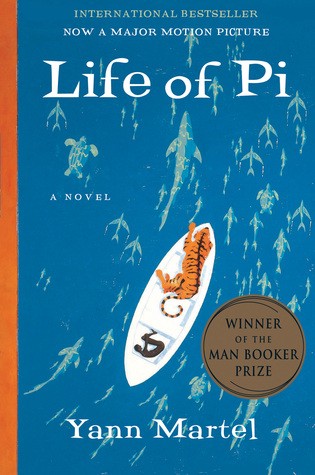
1. Pi Patel from The Life of Pi

I finished Yann Martel’s stunning, Booker Prize-winning novel at the same time as a couple of my friends. While we all agreed we loved the book, we got into a heated debate about some fundamentals of the plot. Is Pi, the young Indian boy who survives a shipwreck off the coast of Manila, adrift on a lifeboat with a mini-zoo of animals, including a large Bengal tiger named Richard Parker, or is he stranded with other humans for which the animals are a kind of allegory? We didn’t come to any firm conclusions; the narrator offers both options as a possibility, and it only increases the magic of the book.

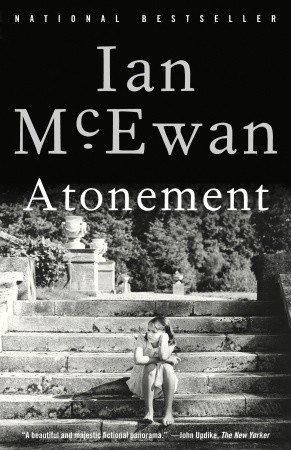
2. Briony Tallis from Atonement

Also nominated for the Booker Prize, McEwan’s novel explores how societal biases can empower unreliable narrators — and have disastrous consequences. The novel opens at a British manor house on the eve of World War II. Briony Tallis is only 13 years old and she doesn’t understand the romantic and sexual relationship that’s evolving between her older sister Cecilia and one of the groundsmen, Robbie Tallis. When Briony sees her cousin Lola being raped, she assumes the perpetrator is Robbie. Even though Briony is only a preteen, the police take her word over Robbie’s because she’s far above him in England’s entrenched social hierarchy. By the time she realizes that she’s misconstrued Robbie and Cecilia’s story, it’s too late.

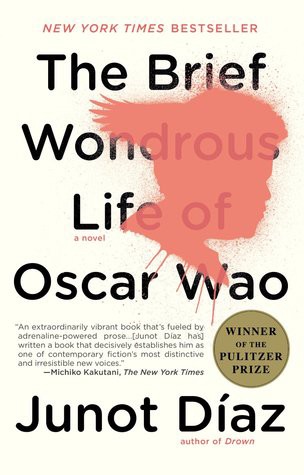
3. Yunior de Las Casas from The Brief Wondrous Life of Oscar Wao

Diaz’s Pulitzer Prize-winning novel is the story of Oscar De León, an overweight, sci-fi loving Dominican kid growing up in Paterson, New Jersey. Oscar’s story is narrated by Yunior de las Casas, Oscar’s best friend and the sometime boyfriend to Oscar’s sister Lola. Yunior acts as an omniscient narrator, populating the story with details that he couldn’t have known and admitting that he changed some names between “drafts.” His fabrications may not be strictly real, but they allow Yunior to weave Oscar’s story into the larger narrative of the Dominican Republic.

4. John Dowell from The Good Soldier

Ford’s 1915 novel opens with the narrator telling us we are about to be told “the saddest story he has ever heard.” That narrator, John Dowell, is the kind of person who wants to see himself, and the world, in a very particular way — traditional, trustworthy, and loyal — and seems crushed when things turn out to be otherwise. But as the intentionally jumpy narrative comes together, Ford makes us wonder whether Dowell is the victim of this sad story or one of its creators.

5. The Unnamed Narrator from Fight Club

Palahniuk’s novel, and the film adaptation, have a cult following that can be attributed in no small part to the story’s I-Can-See-Dead-People level plot twist. When the story begins, the unnamed narrator is suffering from insomnia. While trying unconventional therapies to cure himself, he meets a man named Tyler Durden and the duo start an underground fight club in the basement of a bar. Things get progressively weirder until we realize that Durden isn’t our narrator’s new best friend, he’s his cooler, crazier alter-ego.

6. Barbara Covett from What Was She Thinking (Notes on a Scandal)

Zoë Heller’s novel highlights how unsettling it is to realize that you can’t trust your narrator, the person you’re counting on for information. Barbara Covett is a lonely history teacher who jumps at the chance to be friends with Sheba, the new art teacher at her school. When Sheba starts a highly inappropriate relationship with a young male student, Barbara is shocked and disapproving, and it’s plain that the reader should be, too. But as the affair fizzles out, we realize that Barbara may be even more manipulative than her friend, especially when she takes Sheba’s story into her own hands.

Tyrants & Demagogues in Fiction: A Reading List

7. Stevens from The Remains of the Day

The head butler of Darlington Hall is one of my all-time favorite unreliable narrators. Stevens is loyal, precise, and hard-working — and his blindness to the reality of the world around him is a master class on how to create dramatic irony. Because of his strict commitment to his duties, he’s unable to see the slow demise of the great house in which he works and, even more sadly, unable to acknowledge his feelings for a fellow employee.

8. Patrick Bateman from American Psycho

Is Patrick Batemen a murderer or schizophrenic or both? The protagonist of Ellis’ 1991 novel is a Wall Street broker and playboy who appears to murder, torture, and rape his way through the nightclubs and fancy restaurants of 1980’s Manhattan. A mounting list of discrepancies between Bateman’s point of view and what we learn from other characters culminates in the head-spinning ending, when Batemen tries to confess to his crimes — only to be told that he didn’t commit any.

9. The Governess from The Turn Of The Screw

James’ eery novella is a ghost story — or is it? The story is the self-reported manuscript of a governess who comes to take care of two orphans, Miles and Flora, at a country house in Essex. After she arrives at the estate, the governess encounters the ghosts of two former employees who have died. She’s the only person who can see the ghosts, but she’s convinced that they’re real. Is this a ghost story or a portrait of a woman’s mental breakdown? James keeps the reader guessing and the critics picking sides.

10. Amy and Nick Dunne from Gone Girl

Gillian Flynn pulls off not one but two unreliable narrators in her mysterious tale of a marriage gone bad. Is Amy as cold, type-A, and antisocial as Nick portrays her to be, or is Nick the aggressive and threatening husband that Amy describes? Flynn skillfully keeps the reader guessing while upping the stakes to the next level; the liar isn’t just responsible for a failed marriage, but possibly a murder as well.

11. Humbert Humbert from Lolita

“But in my arms,” asserts Humbert, “she was always Lolita.” Humbert Humbert uses a cocktail of delusion and manipulation to try and convince himself, Lolita, and the reader that he isn’t a monster for sexually abusing a preteen girl and killing her mother. But no amount of persuasion can change the fact that his “Lolita” is actually a young, vulnerable girl named Dolores and her mother a flesh and blood woman who loses her life.

Why Are Friendships Between Teen Girls So Radioactive?

Give in: Pick a pair of them, lost in each other, a matched set like a vision out of the past. Nobody special, two nobodies. Except that together, they’re radioactive: together, they glow.

Robin Wasserman, Girls on Fire

I spent high school, college, and most of my early adulthood single and fiercely attached to a series of best friends. This term — “best friend” — feels juvenile. The superlative “best” seems a little too insistent, ignorant of the way friendships ebb and flow. But these friendships really were marked by an overt, exclusive devotion. After my daughter was born two and a half years ago, I felt my then-best friend pull away, and along with sadness, loneliness, embarrassment, I also felt a sharp pang of wistfulness: a sense that I’d likely never fall hard into an intense friendship like that again.

When I was younger it was exhilarating to fully reveal myself, unflinching, to a new friend. I wonder if it still would be, if not for the fact that in a nearly identical way I already feel vulnerable and exposed. I have a two-year old daughter and an infant son. There are emotional and physical parallels between early motherhood and intimate friendship. I’ve been thrown up on by my college roommate, and, more recently, my children. I am sometimes awake all night comforting someone I love. I can never be out of contact.

After my daughter was born, I felt my best friend pull away, and along with with sadness, loneliness, embarrassment, I also felt a sharp pang of wistfulness: a sense that I’d never fall into an intense friendship like that again.

Image result for girls on fire book

The past few years seem to have brought an increase in fiction about intense adolescent friendships between girls. Last summer, I gorged on Robin Wasserman’s Girls on Fire, reading it so quickly that I felt dizzy by the time I finished. The novel’s ending is violent, gruesome, grotesque, but it was the friendship at the novel’s core rather than the plot that enthralled me. The specifics of the story are surreal: Lacey and Nikki are keeping the secret of their accidental murder of a popular jock in the middle of a drunken threesome. It is a different friendship, Lacey and Hannah’s, that Wasserman is describing when she entreats us to imagine a radioactive pair of girls. The novel is as much about the intense loyalty a friendship like that inspires as it is about the murder.

Image result for marlena julie buntin

Like Girls on Fire, Julie Buntin’s debut novel Marlena centers on another intense, isolating, all-consuming, radioactive teenage friendship. After Cat’s parents divorce, she moves with her mom and brother to rural northern Michigan. At first she’s infatuated with Marlena, the beautiful, hurt, slightly frightening girl who lives next door; by the time school starts, they are a glowing pair. The novel’s structure alternates between chapters in New York, where Cat is a married adult woman, and chapters in Michigan where Cat and Marlena are high schoolers.

I had only just begun Marlena, already feeling a little giddy with self-absorbed recognition, when I read in an interview that Buntin cited Lorrie Moore’s Who Will Run the Frog Hospital as one of the books that made her want to be a writer. Of course! I finished Moore’s novel about Berie and Sils, two best friends who work at a fairy tale-themed amusement park in Horsehearts, New York on a cold March night. I remember feeling so overwhelmed with inarticulable emotion that I ran, dressed in jeans and a sweater, from my college apartment to campus. I felt the melodrama of my behavior even as I was living it, but I also felt compelled to respond somehow to the novel. I climbed a fire escape and sat there looking over campus wondering what the word was for the thing I was feeling. For years, I remembered my visceral reaction more than the novel itself.

I climbed a fire escape and sat there looking over campus wondering what the word was for the thing I was feeling. For years, I remembered my visceral reaction more than the novel itself.

When I taught Hawthorne to 11th graders, we spent a lot of time talking about Carl Jung’s theory of archetypes. It was a satisfying counter to the way in which more literal-minded students, skeptical of all the analysis that accompanied our reading, often claimed the figurative layers of the story were something invented by English teachers. I used Jung as a means of saying: look, there really is something universal, whether Hawthorne did it on purpose or not (though in the case of Hawthorne — of course he did!) in the places, colors, characters in the stories we read.

Jung’s shadow archetype was hardest to explain. It made perfect sense, yet articulating its meaning was always just outside my grasp. The darkness inside each of us, I remember trying to explain. The part of us all that would go into the forest with Young Goodman Brown. And part of growing up is meeting and ultimately acknowledging that shadow.

The late scenes of Girls on Fire and Marlena both occur in a damp, shadowy, late-autumn woods haunted by literal death that signals the end of girlhood. Following this death, in a lyrical summary that evokes Berie and Sils’s fairy tales of Storyland, Wasserman writes:

Once upon a time there was a girl who loved the woods, the cool sweep of browning greens, the canopy of leafy sky. Hidden in the trees, she picked flowers and dug for worms, she recited poems, timing the words to the bounce of her feet in the dirt. In the woods she met a monster, and mistook her for a friend. Into the woods, they went deeper and darker, and carved a sacred ring around a secret place, where the monster dug out pieces of the girl and buried them in the ground so that the girl could never truly leave, and never bear to return…it was her fate, to live under the rotting bark and the molding stones that she could escape, but always, somehow, the woods would claim her.

In the woods of sexuality, secrecy, fear, childhood ends. These two forests — the site of Marlena’s death and the site of the murder in Girls on Fire — might as well be the same place. A place familiar as the scene of evil in childhood fairytales, a place inhabited by a Jungian shadow. Though Sils is not dead, her remaining in Horsehearts long after Storyland has closed makes the once-enchanted landscape feel bleak with gothic decay. Although she’s unhappily married and has never known a friendship like that again, Berie has left, traveled and now reminisces from a distance like Cat, thinking constantly of Marlena from her new life in Manhattan.

In the woods of sexuality, secrecy, fear, childhood ends. These two forests — the site of Marlena’s death and the site of the murder in Girls on Fire — might as well be the same place.

It wasn’t until I read Marlena that I remembered a short story I wrote about ten years ago. It was a first-person story about a pair of high school best friends. Like Marlena, the best friend in my story drowned. I had her ambiguously-but-not-really drive herself into a reservoir based on the real-life one my best friend and I used to drive around on humid summer nights. Even at the time, I knew it was almost inevitably maudlin to end a short story with a character’s suicide, and — of course — everyone in the class said as much. My professor told an anecdote about a writer who said you get three suicides or murders in your writing career and must use them wisely. I remember thinking, “well, sure, I’m twenty-four and this story is not that great, but these characters are one hundred percent worthy of one of those three.”

In my real life, leaving a radioactive friendship, and with it our confessions, secrets, and the feeling of those swampy, autumn forest days always came as a relief. Is there a way, in literature at least, to depict the end of an intense friendship that doesn’t involve brackish water and a stagnant small town life for one friend, while the other comes of age in a brightly-lit elsewhere, still never quite apart from the forest, never able to forget what it showed inside of her? Intimate friendships, particularly between young women, don’t seem to require murder or opioid addiction or menacing fathers to take on a dark, haunted quality, after they end.

Is there a way to depict the end of an intense friendship that doesn’t involve brackish water and a stagnant small town life for one friend, while the other comes of age in a brightly-lit elsewhere?

The term half-life refers to how long it takes for half of a radioactive isotope’s unstable atoms to decay. How long after a friendship does a body retain the glow? I’ve been wondering what the half-life of a radioactive friendship might be.

I realize now that the night I finished Who Will Run the Frog Hospital I was feeling the inevitability of such loss with an anticipatory nostalgia, and at the same time feeling comforted by the suggestion of those radioactive traces always, even if faintly, lighting up some part of me. The friendships that had been fiercely formative — not sexual, but hardly casual or simple — in my own life, were nowhere to be seen in common representations of adulthood (and I think now I see that they really are not part of adulthood in the same way they are in adolescence). But their influence might remain.

This was as much terrifying as it was a comfort. Berie and Sils, though such different adults, unable to even fully address how intimately they know one another, are still marked by the summer in which they were inseparable. And, even as adults, are tied together by numbing loneliness they cannot articulate.

Who Will Run the Frog Hospital? by Lorrie Moore

When I re-read Frog Hospital last year, I was taken aback to find that it wasn’t the novel I’d remembered at all. In my mind it was a story of an intense teenage friendship, but there’s much more from the adult-Berie’s point of view than I remembered. She’s in a miserable marriage. The friendship certainly is the novel’s central relationship, but there is a fully realized plot; adult Berie’s husband and teenage Sils’s boyfriend are developed characters. Berie is fired from her job at Storyland for stealing money to pay for Sils’s abortion, a fact that had totally receded behind the memory of that sharp Chicago air and anticipation of isolation that seemed inevitable in my coming life as an adult. I’d remembered the adult sections as a frame for a coming-of-age narrative, but, as with Marlena, they are half the story itself!

As an adult, I’m struck by how much being half of a glowing pair of girls was was about feeling partnered and as a result, validated. Having someone who’d be in it with you. In the hating of phonies, in the obsessing over cross country race times, in the obsessive crush on a history teacher, in the toxic fear of weighing more than a hundred pounds, in the desperation to escape suburban Connecticut, in the realization that the greatest danger on your college campus was in the basements of fraternity row, in the lonely, fumbling years of figuring out what to wear to job interviews and how much to drink at work parties. That kind of friendship was about really being known. My parents knew and loved me, but these friendships were thrilling in the way intimacy offered the validation of being known and loved by someone who didn’t share my genetic material.

As an adult, I’m struck by how much being half of a glowing pair of girls was was about feeling partnered and as a result, validated.

My family moved to Switzerland when I was six, and it was there that I met my first best friend. We were best friends by default: two of only a handful of American kids, her parents knew mine, we had siblings the same age. We spent afternoons exploring the attic of my family’s rental house with a gothic curiosity. We put on plays for our families and spoke English at lunch-time and celebrated American Thanksgiving and told ghost stories and ate her mom’s tiramisu.

Remembering this friendship carefully for the first time in years, I’m tempted to cast it in an entirely wholesome light. The last best friendship that was not charged with the burgeoning sexuality, the intimacy of secrets adolescent and teenage girls share. But then I remembered the dark winter afternoon when we used a fork to pluck a piece of poop from the upstairs toilet and examine it closely. I can still see the cutlery pattern. I was disgusted, thrilled, nervous about what we’d done and threw the fork away to be sure no one might eat with it. An eight year old’s darkness, sure, but the fecal metaphor seems too important to ignore. Perhaps as a principle of balance, with the notion of a “best” friend, some darkness is inevitable.

Perhaps as some principle of balance, with the notion of a “best” friend, some darkness is inevitable.

As a senior in high school, I worked hard to craft the seemingly-effortless write-up that would go under my yearbook photo (favorite quote: Franny Glass saying “I’m sick to God of just liking people. I wish I could meet somebody I could respect”). To my best friend of that autumn, I’d written: “the fire was lit on the night you were born.” Crafting these yearbook messages to friends, boyfriends, parents, even favorite teachers was an important ritual at my high school. The fire line I used was from a car ad my friend and I had seen while we flipped through running magazines wondering if any of the professional runners got their periods.

Even at the time, I knew the message sounded romantic and suggested a sexual intimacy, but I didn’t care. My friend had said she loved the line, and I understood being her best friend meant remembering this. Not just that night, but for the months until I wrote the words that would go under my senior picture and proclaiming it publicly in the same way I was required to decorate her locker on her birthday or accompany her to a party we knew would be broken up before midnight.

I didn’t have a boyfriend until the summer after I graduated from college. I filled my middle, high school, and college years with female friendships so intense it was easy to mistake us for a couple. In an essay she wrote for The Atlantic, Buntin describes a Marlena-like friend of her own: “At 16, I was in love with her in a not-entirely platonic way, which every woman who has been the sidekick in a teenage girl-duo will completely understand.”

I filled my middle, high school, and college years with female friendships so intense it was easy to mistake us for a couple.

In my teenage girl-duos, we shared twin beds and talked all night and confessed fears and desires so intimate that speaking them aloud sometimes made me dizzy. Some of these revelations feel callow now, but they were existential then. Would we ever fall in love with someone who loved us back? Would we always feel suffocated by the girls we were expected to be? Would we ever stop hating our bodies? Would sex hurt? Would we have jobs that we loved, or were even good at? It was such a relief to feel revealed, vulnerable and still understood. Loved even.

We learned to drive together and drained gallons of $.89 gasoline on Connecticut’s back roads. We watched Lifetime eating disorder specials, dubbed from TV on VHS, together in silent awe. We went kayaking in the Long Island Sound and capsized when the water was forty degrees. We poured glue in the mailbox of our menacing, misogynistic history teacher. We ran miles and miles in the freezing rain and only then let ourselves binge on Chinese takeout, warm, cozy, clean in our team sweats, curled up together wondering what everything yet to come would be like. We called each other in the middle of the night and risked waking up the whole house — in the days before cell phones — when our boss was creepy at the work party or when we wanted to be sure the other wasn’t mad or we were afraid that the girl who drank too much at the party really might die, just like we learned in health class.

We met at the diner before school, arming ourselves for the day ahead, gathering intel from the night before. We walked each other home from parties, as we’d been instructed to do during college orientation and concocted elaborate plans to get chemistry TAs to ask us on dates. We walked down the street holding hands, laughing in the language we’d made up just to speak to one another. We told each other we could be writers, lawyers, doctors, evolutionary biologists and that we deserved better than the TA, and anyway, he once dismissively called biology a “soft science.”

Until, abruptly, it was too much. Until the twin beds felt too small, the smell of spoiled milk (it’s easier to purge if the last thing you’ve eaten is dairy), or stale beer, or dirty sheets, or clammy hands too much to bear. I felt suddenly suffocated to be known so intimately. It was never with any grace that I pulled away. I sat at a different lunch table, revealed secrets I knew I shouldn’t, pulled my hand free, stayed home with my parents the night everyone got home for Thanksgiving break, stopped answering the phone.

I felt suddenly suffocated to be known so intimately. It was never with any grace that I pulled away.

I write about these friends all together not because they were interchangeable, but because the way it felt to be known, accepted, and loved by someone outside my family was what made me glow. That liminal time between adolescence and young adulthood was itself so unstable that it seems in retrospect that of course friendships that intense would have been radioactive. I think even then I knew that it would be impossible to have more than one such friend at a time. More than one person who would call you in the middle of the night when you’d had your first kiss, or your boss drank too much and passed out in a bathroom, or could reasonably expect to hold your hand in public. There are other friends I’ve been close with and shared adventures with, but the specific kind of intense friendship that feels like a not-quite-decent secret is the kind that seems to have a half-life.

Friendships formed more temperately, in the daylight hours, over years of shared interests or proximity, have more often been capable of evolving gracefully. Without the intensity of commitment to one another’s darkest elements, these other friendships have been more resilient and longer-lasting. I think now of my closest friends and realize that the inconvenient geography of adulthood in the suburbs, exhaustion of work commitments, demands of parenting, have forced a slowed pace — maybe we can meet for dinner once every other month, or maybe we can squeeze in a few adult sentences between pushes on the swing — that seem to have also lent a stability.

Friendships formed more temperately, in the daylight hours, over years of shared interests or proximity, have more often been capable of evolving gracefully.

I wonder if Claire will end up being the last radioactive best friend I made and lost. I imagine the way she shaped the adult I became, the half-life of that influence long, her mark on me fading slowly as I age.

We met as young high school English teachers nine years ago. It’s not exactly that the dissolution of our friendship has been too emotionally fraught to imagine being open to true, vulnerable friendship again, but that I realize how much of the vulnerability and intensity feels incompatible with the emotional demands of my adult life: marriage, motherhood, the geography of suburban living combine to make the kind of intense bonding I once took for granted feel as much a relic of a different life as math tests and school lunches.

I realize how much of the vulnerability and intensity feels incompatible with the emotional demands of my adult life: marriage, motherhood, the geography of suburban living.

The day Claire and I became friends was one of those first bright, sunny warm days at the tail end of a long Connecticut winter. We were running around the track after coaching high school distance runners when I confessed a crush on one of our teaching colleagues. By the time we’d circled the track, we’d hatched a plan to turn our next English department happy hour into a date, and by the lap after that we were laughing too hard to breathe, careening in and out of lanes, as the kids who were still waiting for rides after practice watched us with a mix of amusement and discomfort.

As soon as I walked in the door of my apartment, I called Claire to tell her something I’d thought of on the drive home. That weekend she taught me how to put on eyeshadow and two weeks later we drove to the Outer Banks for a weeklong vacation with my college friends. Unbothered by gridlock on the Cross Bronx Expressway, a closed lane on the New Jersey Turnpike, a wrong turn in Maryland, we talked nonstop through the entire ten hour drive.

When I became friends with Claire, I’d just moved back to Connecticut, a place I’d hated as a teenager. I’d broken up with a boyfriend I once thought I would marry, and I was, for the first time in several years, really afraid I’d spend the rest of my life eating Trader Joe’s frozen pizzas alone in my apartment. At one point, I thought my radioactive best friendships were the shameful mark of not having had a boyfriend at an age when most girls had, as though the friendships themselves were evidence of a certain kind of unlovability. I see it a little bit differently now.

It’s true that I would likely would not have found myself giggling hysterically over putting battered University of Chicago tote bags on the purse stool at a five-star Chicago restaurant with my college roommate if I’d had a boyfriend. Those late night conversations around that reservoir, barrelling east on I-80, running down the rocky Connecticut beach, early mornings curled toward a friend, talking ourselves toward sleepy oblivion might never have been. Those were the nights, conversations, moments that made me. I spent these drives and runs and nights talking about what I feared, loved, longed for, desired most. Allowing myself to be known, shadow and all. This kind of connection was really what I desired, often in an animal, primal way. This kind of longing felt more pure than the longing I had for a romantic relationship. That second desire always felt tinged with validation, with being explainable to my students, my parents’ friends, marking myself as worthy in some societally agreed-upon sense.

This kind of connection was really what I desired, often in an animal, primal way. This kind of longing felt more pure than the longing I had for a romantic relationship.

I have some friends who, though they were happy to be settling into marriage, mourned the end of their single lives. That there would be no more first dates, one night stands, initial flirtations. I hated dating, and though and for me those early dating days were always more anxiety and uncertainty than euphoria. I do understand some of the wistful nostalgia for the rush of early infatuation, though. On days when I haven’t laughed or slept enough, when I feel isolated and muted by adulthood, I long for the adrenaline rush that comes with falling in love. I’ve always fallen in love with friends differently than with men. More confidently, more wholly, more intimately.
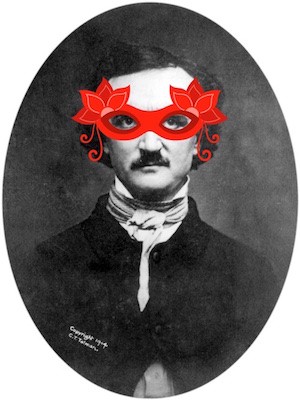
By the time I recognized that my friendship with Claire had ended, she was already too far away to fight with or resent. I wonder sometimes if her pulling away from me is karma for the friendships I’ve felt a sudden urge to escape. I have a lot of questions about how and why I might have been too much. Did I become like someone we’d have once rolled our eyes at? Did I talk too much about my kids? Too clingy? Not funny enough? Did I say something rude? Fall short when she needed support I didn’t understand? Had I simply become too much?

For years, I’ve been thinking about how different the end of a friendship is than the end of a relationship. The most obvious difference is that there’s not typically a concrete “break up” in a friendship. But, it’s not just that. Both the beginning and end of my best-friendships were different than dating. It never mattered to me as much that my boyfriend know me as that he love me, respect me, want some bigger, more abstract similar things out of life. Maybe for that reason, the end of a romantic relationship never felt sudden, but was instead a slow realization of incompatibility that became arguments and frustrations and then eventually required a conversation and returning of belongings. And, maybe most differently of all, the end of a romance comes with a socially-condoned mourning period.

Both the beginning and end of my best-friendships were different than dating. It never mattered to me as much that my boyfriend know me as that he love me, respect me, want some bigger, more abstract similar things out of life.

In Who Will Run the Frog Hospital, when Berie’s marriage is on the brink of dissolution over her husband’s affair, it is Sils and that summer of intense connection that Berie thinks of. Sitting in Paris with her cruel, aloof husband, adult Berie remembers:

I was invaded by Sils, who lives now in my vanished girlhood, a place to return to at night, in a fat sleep, during which she is there, standing long-armed and balanced on stones in the swamp stream, stones in the cemetery, stones in the gravelly road out back…”

Marlena and Frog Hospital are both novels split between the past — the narrator’s adolescence and period of intense friendship — and the present. Cat’s adult life in New York is haunted by Marlena, by unresolved questions about her death, of course, but also by the ways in which the woman Cat became was shaped by the friendship they shared, briefly, years ago.

I think about apologizing to my own ghosts. For no longer being entirely the person that I was when we became friends. For sending them into reservoirs. For writing the story about them to begin with. For pulling my hand away that bright June afternoon in Chicago. For moving lunch tables in tenth grade, and at the time, not feeling even a little bit sorry about it.

Although I know ego — being the half of the duo left behind rather than the half who does the leaving — is part of what’s made it hard to find closure in the end of my friendship with Claire, I also suspect it’s the feeling I won’t ever fall in friendship love again that has made it hard to move on. I’ve read so much about the ways mothering small children can make women feel “touched out” by the end of the day, and as a result the ways that physical intimacy must be renegotiated after parenthood. Certainly the intimacy of breastfeeding and diaper changing make can other kinds of physical intimacy unappealing. Our cat rubbed against me while I was writing this essay and I nearly screamed.

Certainly the intimacy of breastfeeding and diaper changing make can other kinds of physical intimacy unappealing. Our cat rubbed against me while I was writing this essay and I nearly screamed.

In the same vein, the emotional intensity of parenting does not leave a lot of room for intimate friendships. Parenting the way I hope to, or even adequately, is already so much that there’s no room for too much. I am already confronted with my shadow all the time. The specter of death that rises fully realized during labor, the craving for sleep even as I wake with a worried start at the baby’s cries, the inability to ever be fully present when I’m not in the same physical space as my children, the constant awareness of how long it’s been since I nursed or pumped, of how much breast milk is in the fridge, how much each child has been held, nuzzled, shown the fierce, unconditional nature of my love. A constant balance of how I can do better for them and by them. To step away from this kind of physical and emotional intensity for the kind of all-consuming friendship I once knew is unfathomable. But, still, motherhood and friendship do not occupy the same emotional space, and I sometimes miss the rush of becoming known, loved, validated by a new friend.

After my second baby was born, women brought dinner. Not Claire — other mothers. Many of these women I’d never spent time with one-on-one. I hadn’t met their husbands, I didn’t know where they’d grown up, who they’d been in the lifetime before they became mothers. Although we didn’t push the topic beyond the societal norms that go along with asking a woman how her labor went, I knew they knew about the darkest, most intimate moments of my life. They knew how scared I was during labor, how much pain I was in, how near I felt to death — either my own or my baby’s — they knew how deliriously tired I was, how filled with irrational outrage over small injustices, how panic-stricken over sudden infant death syndrome, hemorrhage, drunk drivers, nuclear apocalypse I was. Though, if we did talk about any of this, it was slowly, in spurts when toddlers weren’t listening. Friendships unfolding over months, years, not manic-all-night conversations.

If we did talk about any of this, it was slowly, in spurts when toddlers weren’t listening. Friendships unfolding over months, years, not manic-all-night conversations.

I sometimes wept with gratitude for the chicken pot pie on my doorstep on a dark January Thursday evening. For acknowledgement of the out-of-body exhaustion, euphoria, and fear that mark the first weeks home with a new baby. Last week at the indoor playground, my infant strapped in a carrier, my daughter climbing up and down the jungle gym, my new friend Stefanie and I exchanged sentences between hugs and toddler reassurance. We were together at the playground for maybe forty minutes, quickly skimming the surface of things we’d built up to tell each other. Beneath each snippet of conversation we managed, was an unspoken hour of raw honesty. The forty minutes were restorative. Although — or maybe because — this unarticulated understanding is not radioactive.

The term “radioactive” is not used to describe a stable person or a sustainable friendship. As I was googling “radioactive tracers,” my browser suggested “how long does it take for radioactive tracers to leave the body.” They light us up as they course through our veins, maybe revealing illness. And we want that glow to fade out. A brief half-life.

Sometimes, especially just around the time I was realizing Claire didn’t want to be my friend anymore, I would tell my husband that I was lonely. Once he said, dismayed, “but I’m right here.” And, truly, he is. But, he’s not a woman, not a mother, and we are a team in an inextricable, permanent, consequential way that none of my friends and I ever have been. The stakes can feel terrifyingly high — no room for instability in this home that houses our children. Our work together is largely about turning inward. Power-washing the house and scheduling dentist appointments and eating dinner on the back patio and waiting until after our children are in bed to worry about Trump or ISIS or catastrophic floods.

That I feel we’re in it together is consistent with those radioactive friendships, but what we’re in is so different, so much more about us and less about me. Although I once might have, I don’t think it’s superficial or old-fashioned to want to limit the role the shadow is allowed to occupy in that space. I don’t think a marriage should be radioactive.

Although I once might have, I don’t think it’s superficial or old-fashioned to want to limit the role the shadow is allowed to occupy in that space. I don’t think a marriage should be radioactive.

It is hard to explain how much I miss the all-consuming and validating rush of being part of a pair on fire while also understanding how utterly impossible it would be now. The things I thought would make me feel old — hair greying, skin wrinkling, clothes fitting differently — have been inconsequential compared to that kind of friendship, or even more, the belief that that kind of friendship would always be possible. Of these female friends, those we do see as adults show just this. I think it’s why I cried, without understanding that it was why I cried, when I finished Who Will Run the Frog Hospital. Berie’s loveless marriage, Sils’s townie life, Marlena’s death, Cat’s alcoholism feel like literary dramatizations of my own half life.

A Brother’s Story About Being a Stranger to his Sibling

“My Sister, Nozomi”

by Sacha Idell

I grate a piece of wasabi, open the window, and pretend to ignore the phone when Nozomi calls. I don’t want to talk to her — not yet, anyway — and once I start cooking I hate to stop. There’s something sad, I think, about walking away from a meal when it’s half-finished. Even if you come back to it later, the focus is different: the precision and the timing are all lost. Finishing a meal like that isn’t worth the disappointment.

Nozomi knows that the phone isn’t the best way to reach me. She’s seen me ignore it enough. If Nozomi really wanted to hear from me, she’d show up at my apartment doorstep unannounced again. If it’s important she’ll leave a message. That’s the way it’s always worked. It’s just that Nozomi can get stubborn. It’s easier for her to call than it is to take the train out here from Chiba. Plus, she can’t always lie to our father about where she is. Everyone gets caught eventually.

The phone buzzes again — Nozomi must have left a voicemail — and I scrape green paste from a container, watch it fall into a ceramic dish. The paste reshapes against my fingers. Wisps and indentations mar the edges. I set the dish aside, wash my hands and the grater, spray and wipe the counters, and check on the rice in the cooker. The timer has about fifteen minutes left. A filet of pike is crisping in the broiler while tofu simmers in a broth of dashi and mirin, topped by ginger and scallion slices. By the time I stop moving, I’ve made a nice little meal for one: tofu, pickles, grilled fish, rice, and a small bowl of miso soup.

I open the fridge, reach over bottles of soy sauce and salad dressing. It’s still early in the day, but I grab a can of Sapporo and pour it into a glass. Foam rises and settles. I polish off everything quickly — I always make sure to eat everything — and wash all the dishes by hand. Then the phone rings again and I continue to ignore it. Some calls don’t need to be answered.

I call Nozomi my sister, but it’s not like we’ve ever lived in the same house. She’s my father’s daughter, but we have different mothers. It’s an ordinary story. My mother was a hostess at a small bar by the station. My father hadn’t married Nozomi’s mother yet, but I guess he might have already been dating her. I don’t know the specifics; all I know is the ending: my mother pregnant and living on her own, my father married to the daughter of a wealthy family and taking over their business.

The rest isn’t very important. Nozomi’s mother died when she was young, and the two of us met some time after her funeral. My father invited me to dinner one night, as a way of reaching out to a family he had never known. His secretary must have drafted the letter, but at nineteen, I was intrigued. Wasn’t it an ordinary thing to want to meet your father? Why shouldn’t I feel the same way?

On a Thursday evening, I slipped on my only jacket and tie and took the train all the way to Tokyo. There were three transfers just to get to Shinjuku, and one more to get to the restaurant in swanky Aoyama after that. The menu in the window failed to list any prices.

A waiter with dark shoes that probably cost twice my salary lead me to a private room in the back of the restaurant. My father, his secretary, and Nozomi were all seated on cushions at the far end of a low table. The room smelled faintly of tatami. A moth-patterned tapestry hung at the back of the room. It seemed slightly out of place, and I found myself distracted, unable to focus on my father’s expression and greeting. He waved me over, as he might a frequent guest in this sort of establishment, and motioned for me to sit near the door, next to Nozomi. I sat, somewhat stiffly, and was handed a menu.

“Anything you might like is fine,” the secretary said. “We’ve already taken care of it.”

I glanced over at Nozomi and caught her staring at me. Her face turned red at the edges, and her head shot straight down to her empty plate. I smiled. Kids have to be nervous in these sorts of situations.

A chain of waiters appeared and handed us drinks. A garish blue cocktail was set on a napkin before my father. He sipped it slowly, and I wondered how long it would take for his tongue to stain that color.

Worried that I might order the wrong thing, or that I would request something too expensive, I asked my father to order for me, and he nodded and lit a cigarette. He didn’t seem to have much interest in talking. At one point, a call came, and my father and his secretary excused themselves to deal with a work situation. Nozomi and I were left alone.

“How old are you?” I asked, unable to think of other questions to ask a kid her age.

“Ten.”

I nodded. “That’s a good age, ten. I remember liking it.”

She stared at her plate. Clearly I was making a muddle of things.

“Is there anything you’d like to ask me?” I couldn’t think of anything else. “Why I’m here or anything?”

She shook her head.

“Really? Nothing at all?”

“Do you have a car?”

I was taken aback for a second.

“A car? Why?”

“So you don’t have a car?”

I shook my head. “The train gets me where I need to go.”

Nozomi bit her lower lip. A confused expression flickered across her face.

“But I thought everyone in the countryside had a car.”

My father and his secretary re-emerged from the hallway and sat down. Nozomi stared at me expectantly.

“Not everyone has a car in the countryside. It isn’t always important.”

“But you live in a house, right?”

I laughed. “More people do out there, I guess. But I don’t need much space, so it’s just an apartment.”

“We live in an apartment too. It’s big, but it’s an apartment. There isn’t a yard. Do you have a yard?”

I looked over at my father, but he just took another sip of his cocktail. The moth tapestry fluttered as a nearby door opened. The fabric’s trembling made them look as though they might fly right out of the fabric.

“Not really. There’s a lot with some grass and gravel that the apartments share. And a shed with a coin-powered washing machine. But that’s about all. It’s near the beach though.”

“The beach? With surfers? In Ibaraki?”

My father was silent for the rest of the evening, chewing his way through the conversation while Nozomi besieged me with question after question, all of which I answered dutifully, even after I had lost the ability to pay attention.

Nozomi had been obsessed with the idea of having an older brother for years. She was ecstatic to find out she had one all along. But she also must have been disappointed. A 10-year-old girl probably wouldn’t want a 19-year-old part-timer as her older brother — much less an older brother who only cared about cooking and listening to old Happy End albums — but she seemed happy about it anyway. Unrealistic dreams always make you happy when they come true, regardless of whether or not they’re what you actually wanted. It was probably something like that.

Around a week later, there was a knock on my door. I wasn’t expecting anyone, but figuring it was a neighborhood circular or something similar, I opened it, and Nozomi was standing on the other side. She was still in her school uniform, clutching the straps of her backpack. Her nose was red from the winter cold.

“Nozomi?” I asked.

“I’m running away from home,” she answered.

“What?”

“I’m going to live here.”

Nozomi ducked under my arm and into the entryway. She took off her shoes and lined them up neatly on a small rack by the door. The main flap of her backpack was undone, and a Snoopy pencil case was peeking out the top.

“No you’re not,” I said.

She laughed, ignored me. I shut the door and rushed inside after her. My mother was still at work and would be until the early morning. The television was on in the corner, and a variety show was playing softly in the background. Nozomi took off her blazer and scarf and hung them on an empty coat hanger in the closet. She kneeled down on a cushion and unwrapped a rice cracked from the bowl on the table. Unsure what else to do, I thought about calling our father, but he was usually busy during the day, and it was a long a train ride from Chiba. Nozomi must have spent a long time on the train coming to my apartment, I reasoned. It probably wouldn’t hurt to let her stay for an hour or two.

“Do you want some tea?” I asked. Nozomi looked up at me, smiled, and nodded.

I filled our stained kettle with water and set it on an electric coil. Nozomi started flipping between channels behind me.

“Does he know you’re here?”

“He doesn’t care.”

I reached into the cabinet and pulled out a small bag of loose tea leaves.

“When you run away from home, you need to leave a note or something. Haven’t you ever seen anyone run away on TV? If you don’t, they’ll think something terrible happened. They might even call the police.”

“I’ve never met a policeman.”

“They’re usually nice.”

I shook the leaves into a pot and drizzled warm water over them. The scent filled the kitchen.

“Hmm,” Nozomi affirmed.

I brought the teapot and two cups on a small tray into the living room, set down the cups and filled them.

“You have to call him, okay? You can’t run away and not tell anyone about it.”

“Okay,” she said.

Nozomi stayed the night, and I gave her money to return by train in the morning. For no particular reason, it became a routine, Nozomi running away from home on the weekends and staying with me. I was never quite sure what to make of it, but I enjoyed the company.

As she grew older, Nozomi would call or text me in the gaps between her visits. Twice, when she was studying for exams, she had to cancel the trip. She acted very upset about it at the time, but she would never admit that now.

I have no idea what our father thought of all this. He didn’t seem to mind — in fact, he starting paying for her trips. It always bothered me a little. From how Nozomi described him, he sounded like a very removed parent, but the negligence seemed extreme — brother or not, I was basically a stranger. Not someone to send your young, impressionable daughter to. Even now, I can’t fathom it, but he must have figured that as long as Nozomi was happy, everything would be fine.

A few hours pass and I go into town to buy groceries. My first unemployment check went into my account yesterday, so I can afford to be a little less frugal. Besides, shopping keeps me busy. It’s an old habit; my mother tried to buy a day’s food at a time, to make certain we never let anything sit in the house and go to waste. I might as well have inherited it genetically.

The sun is low in the sky, and the breeze gives everything a slight chill. The closest grocery store is in the center of town, but it’s across from the restaurant so there might be a chance of having an awkward run-in with someone from my old job. I decide to go to one a little further away, at the edge of the shopping arcade next to the stationary shop.

The stationary shop has been deserted for a while now. Mrs. Kawashima ran it for years after her husband ran away. She and my mother were two of the only single-parents in the area, and this town being as tight-knit as it is, they often relied on each other for support. I spent a few afternoons in the Kawashima’s apartment above the shop, but stopped going around the time I turned seven. Her daughter and I never got along.

I grab a red-plastic shopping basket and fill it with simple things. Tofu, ginger, another six-pack of Sapporo. I add a bottle of Cutty Sark from the liquor aisle, some razor blades and shaving cream, and a tube of mint toothpaste. On my way to the register I notice a woman bump into a display of canola oil. Her shoulder brushes against a stack of the plastic bottles. They scatter everywhere. None break.

I think about going over and helping, but one of the stockboys sees the spill and rushes over first. My phone starts buzzing in my pocket again. The cashier closest to me clears her throat — there’s no one left in line — so I ignore the call and go to check out. The cashier rings up my items one by one. The register beeps as it processes.

I take a long sigh and listen to the messages. As usual there’s not anything all that substantial. “Sorry,” I tell the cashier as I hand over the bills. “I was worried it might be important.”

The cashier smiles and shakes her head. She’s not the type for small talk, but she seems willing to indulge me.

“She’d been calling all morning.”

“Your girlfriend?”

“Sister.”

She nods and hands over a few hundred yen. Outside, moths crowd around a vending machine and a magazine rack. The wings are simple white, faint and shimmering. It’s not really the season for moths, and even though they’re not particularly interesting, for a while I can’t look away.

By the time I get home again, Nozomi’s already sitting on my doorstep. She’s wearing a green sweatshirt over her uniform. Her ears are covered with oversized headphones.

“Hi,” I decide subtlety might be the right approach. Nozomi scowls back.

“Dumbass. I’ve been calling all morning.”

I scratch behind my ear a few times. “Sorry. I haven’t looked at my phone.”

Nozomi rolls her eyes and pulls her headphones back onto her head. I start to say something else, but before I can get the words out she presses the play button.

“Are you going to let me in, or are we just going to stand out here?”

“I don’t know,” I shrug. “It’s a pretty nice day.”

Nozomi makes an expression that must mean something like you aren’t nearly as funny as you think you are.

“Whatever.”

I fish the keys out of my pocket and open the front door. My apartment smells like dashi. The hardwood is flaking in the entryway.

“Have you eaten yet?”

Nozomi walks over to the low table by the TV and plops down on a cushion. She sets her phone on the table and listens to a few songs. I set aside my shopping bags and start unpacking, throw a couple blocks of tofu into the fridge and store the whisky beneath the sink.

“Are you hungry?” I try again.

“Are you cooking?” She asks without a flicker of interest.

“I could be.”

“Make up your mind.”

“Did you have a fight with Dad?”

She turns up the volume. It’s loud enough to hear fragments of the music from across the room. Without another word, I start washing rice in the sink. Water runs through, milky at first, but it gradually clears. I stick the rice in the central container of my antique rice cooker. I chop some mushrooms, chestnuts, and bamboo shoots and throw those in too. I add some sake and soy sauce to the water for seasoning.

“What are you making?” Nozomi asks. Her headphones are down around her neck again. “A bit of this and that. Nothing special.”

I reach in the fridge and pull out two cans of Sapporo.

“Want one?”

She gives a noncommittal grunt, so I pour her half a glass. She takes a sip and grimaces. I pretend not to notice.

“How are things at work?” She asks.

I hesitate — given the choice, I’d rather Nozomi didn’t hear about anything until I have a new a new job. She’s a worrier; she’ll probably imagine something that’s worse than reality.

“I don’t work at the restaurant anymore,” I say at last. Half a lie is going to be better than a whole one. “I quit two weeks ago.”

“Oh.” She says. For a moment I’m a little disappointed.

I turn on the television. We watch a commercial for Pocari Sweat in silence before a variety show comes back on. They’re doing a segment about pet owners in Tokyo. The hostess struts about in heels, dragging a perfectly white toy poodle on a leash while she interviews pet owners on the street. I wonder for a bit if the poodle is even hers to begin with — it doesn’t seem very attached, but then it seems unethical, somehow, to treat an animal like a prop.

“Do you need me to ask Dad for help?”

“No,” I shake my head. “I’ll be fine for a while still. Nothing’s dried up quite yet. I’ll find something new before too long.”

Nozomi takes another sip of beer and I lean my head back and imagine tracings in the white on the ceiling. The volume on the TV is so high that I don’t notice when the rice cooker dings, and all the food at the bottom of the container chars together. But we end up eating it anyway.

When Nozomi was eleven, she once visited my mother’s apartment after school. She had gotten to the apartment before me, and had used the spare key to let herself in to wait. She was fascinated with the seed my mother had fed her canary, and had dragged the whole sack of it to the living room table. I was quiet when I entered, and I remember her scattering the seeds across our low table in the living room, the gold of them bright against the dark coloring of the wood. I don’t know why I was watching her. I was probably just curious — why would a girl like her be interested in something so mundane? Or maybe it was the way her hair fell and shook, ever so slightly, as her she counted the seeds. Her mouth framed the edges of numbers, but she never spoke the words aloud.

“What are you doing?” I had asked, and even then I could sense that it was a mistake, that nothing should have been said.

“Nothing.” She said, and scooped the seeds, mostly uncounted, back into the small cotton sack where they were stored.

That sack had vanished from our apartment by the time Nozomi left. I assumed Nozomi had taken it with her, but out of some small fear for her I never told my mother anything.

Months later, I opened a small box in the closet, looking to bring out my mother’s winter clothing, her heavy socks and jackets and scarves. When I opened the box, moths erupted out by the dozen, white and fluttering and somehow torrential. When the moths cleared, it was as though they had never been there. All that was left in the box was a molding bag of bird seed on top of a thick pile of fabric. The clothing had all been eaten away.

I toy with a hole in my shirt and mutter an incoherent response to a question, but Nozomi isn’t paying attention. I turn out the light in the kitchen and the television is the only illumination left. Irregular flickers of blue light rush across the ceiling. I open and close my right hand. In the half-light the motion is distorted, as though I’m moving in a dream, and my hand isn’t really mine.

“Have you called Dad?”

She shakes her head.

“Are you staying here tonight?” I ask.

“Yeah.”

“I’ll lay out your futon in a bit.”

“Thanks,” Nozomi says, and she sounds like she means it.

I wake up earlier than Nozomi and decide to take a walk. It’s cool out. The breeze is rough by the water. My route cuts across a small parking lot, over the sea barrier and down onto the beach. It’s low tide, and something is reeking. Driftwood and seaweed are piled unceremoniously by the waves.

I pull on the cuffs of my sweatshirt a bit and stuff my hands into my pocket. The motion forces me to hunch a bit. My eyes stay locked on the ground.

Around eight I get a text message from Nozomi. She says she’ll call home and then make breakfast, so I should ‘definitely’ be back home in an hour. I text her back saying it’ll be two, and that she can eat on her own if she wants. I don’t really have a reason to say that, and I feel like a jerk, but for some reason I can’t put my finger on it also feels necessary.

At the edge of the shoreline I climb a staircase and turn right onto a grassy cliff that overlooks the ocean. Someone installed a stone bench there, ages ago. The sort of thing that’s only built to seat one, but looks like it could handle another person or two. A small pile of rocks is neatly lined to its side, making the shape of a wing. I sit down and scratch my head and remember the pile of tattered clothing again. It was really more my fault than Nozomi’s. I’m glad I didn’t let her get the rap for it. I don’t think she deserved it. Maybe I didn’t either.

I start to remember all the times I’d let something get ruined. Once I unplugged the refrigerator before we left town for two days. By the time we got back, all of the food in the freezer had thawed and spoiled. I can’t remember why I did it, but I must have had a good reason. My mother was livid all the same.

There was also the time I broke my calculator. I had to buy a special one for some class or other, and it was terribly expensive. I remember the strain on my mother’s face when we went into the shop and saw the prices. I kicked my bag down a flight of stairs later, out of frustration with something unimportant. When I took out the calculator to work, the screen was cracked.

My phone rings. I expect it’s Nozomi complaining, but I see my father’s name on the caller ID.

“Hello?”

“Naoki? It’s me.”

“What do you want?”

I cross my legs, prop an elbow up on the back of the bench, and lean my head into my palm. “Nozomi said you might need some help.” My father says at last.

“I’m fine without it.” I pull the phone away from my ear, let my thumb hover above the button to cancel the call, but for some reason I can’t seem to let myself do it.

“Are you sure?”

The volume is high enough to hear the voice over the waves and the nearby road. I bring the phone back to my face but stay quiet.

“Listen, Naoki, I might have a deal for you. Just hear me out for a moment.” Waves crash in the distance. The sound is almost like static.

“Naoki? Are you listening?”

“I’m listening.”

“Good. Now, I don’t know how you feel about this, but it seems to me that lately, you take more care of Nozomi than I do.”

“I don’t do anything.”

“Don’t be modest, Naoki. You do plenty.”

I clutch my forehead, even though he can’t see me over the phone.

“You’ve got to be joking.”

“You can tell where I’m going with this, then. I’d pay you. Enough to make it worth your while. More than enough. Nozomi needs a role model, especially at such a delicate age. For whatever reason, she seems to like you. Why not let her live with you for a few months? I’ll pay for everything you two might need. You won’t need to look for a new job. If you really want one, of course I could find you something at the company too. It sounds like a promising proposal, doesn’t it?”

I can feel something violent surging in my gut. But Nozomi wouldn’t want me to say anything. Not now, and certainly not like this.

“I’ll think about it,” is all I can manage. And I suppose I won’t be able to help myself. Now that he’s said it, I can’t not think about it. The carelessness of it all.

After breakfast, I offer to walk Nozomi to the station. It’s a bright sunny day, perfect for walking, and even if I’ve already been outside for a while, Nozomi could probably use the company.

“You’re nuts,” she says. “What’s so great about wandering around this town on your own?”

I smile back and ruffle the hair on the top of her head. She glares at me and straightens it out in her phone’s camera.

“Jerk.”

We gather her things back into her backpack and walk down the main thoroughfare. The most direct route cuts through town, right by the old restaurant, but I pretend not to notice even when we walk by.

“Are you okay?”

“What?”

“You seem stiff.”

I shrug. “Sometimes it’s natural to be stiff. Your body can’t be loose if you have nothing to compare it to.”

“You are so weird. I hope I’m not like you when I’m older.”

I shake my head. A light wind crawls across the road, scatters a fluttering of moths.

“You know that I’m going to be all right, don’t you?”

Nozomi nods, but doesn’t saying anything else.

“Just make sure that you can take care of yourself, Nozomi. I’m here if you need me, but I don’t think that you do. You’re old enough to know who you need to rely on. I can’t be the one to help you with everything. But I can be your dumb, deadbeat older brother all you want.”

“Is that all?” She sounds a bit disappointed.

“Yeah. That’s all for now.”

“You can rely on people too,” Nozomi says quietly. “I’m here too, you know.”

Despite her protests, I buy Nozomi a ticket when we get to the station. It’s not that expensive, and she’ll be happy with the extra spending money. She takes it from my hand reluctantly, as if she’s worried I might bite if she gets too close, and then darts away quickly. She stares at the ticket in her palm until we reach the turnstiles. The color of it almost matches her skin. It seems strange to print a ticket like that — why choose a color that can get lost inside your hand?

“Are you sure you don’t need anything? Anything at all?” Nozomi seems hesitant, but I can’t ask her for anything. She’s at an age where she needs a real parent to take care of her.

“I’ll be fine. Really. I promise.”

The train departs on time, a 10-second segment of some unidentifiable orchestral number playing from the station’s loudspeakers as the doors close. I leave as the train’s sliding out of the station. Faces blur in the windows as it picks up speed. My hands are thrust in my pockets, my phone turned off. For a few seconds I teeter in a dim place, white wings fluttering and surging and fading around me. I wonder if I’ve made the right decision, but there are always, I figure, more opportunities to make the same decision over again. Most things that are ruined can be replaced.

The breeze picks up and drags a drop of sweat across my forehead. The sensation feels oddly real, somehow heightened by my uncertainty. I shake my head and walk out of the station, passengers rushing towards the turnstiles behind me. As I walk home, I look carefully for moths everywhere I can think to, but no matter how much I look, I can’t seem to find any. The moths are nowhere to be seen.