A Story About a Deceptive Neighbor and Alien Life

“Rhymes With Feral”

By Alex Higley

It is two in the morning on my Friday, which is Tuesday, and in the house across the street, lights are getting flipped off and on in a disoriented march towards darkness. I’m watching the scene from my window with a ginger ale, wide-awake. I’ve already had my allotment of three domestic light beers for the night and have switched to the other carbonated without regret. The home across the street belongs to but is not occupied by Terrell Presley. Standing in the middle of the street that separates our houses, in the rocky desert hills where we live, I asked him a while back one burning, ticking day if the light switches in his house were placed oddly, if there had been miswiring, because this stunted fluttering with the lights always happens with his renters, and he, not unkindly, ignored the question. The creasing around his eyes deepened and he half smiled beyond me, as if a person we both liked was arriving. I want to be able to elegantly ignore questions without malice or consequence. But I really was curious about the switches, all the lights blinking. I’ve never been in the house and can only guess at causation.

Purchase the Kindle edition

Terrell takes extravagant quarterly golf trips with men he’s known since boyhood. Men he grew up with just outside of Pittsburgh. Right now he’s in Scotland. Last year was Brazil, at a resort where mostly undressed women offered kebabs mid-course. He told me cryptically: “I did not partake.” Terrell has never been married, and in general, despite what his golf trips and the details he allows me to know might lead you to believe, is discreet.

I like Terrell because he is self-made and direct, even at his most opaque. He invented a surgical adhesive technology, sold it, and retired. He drives the same car he did pre-retirement, a pristine old Saab. He has always, until now, made a point to tell me a little about the person or people who will be renting, and reminds me to not hesitate to call the resort or him directly if there are any problems. I work from home, remotely doing IT consulting, and in all cases deal with his renters in a more concrete way than he ever does. Past renters have included an ancient couple from Ames, Iowa; a retired military chaplain; Terrell’s dim and gawking sister. I’ve helped kill a snake, jump-started a car, and, by telephone, recommended restaurants, doctors, the most affordable liquor stores. My phone number is the only other contact Terrell lists on the fridge, I’ve been told. He knows I like to talk and don’t mind questions from strangers.

Terrell doesn’t seem interested to know my impressions of his renters. I usually open on his terms, asking, “Did the check clear?” But I wasn’t able to do this with his sister, feeling it would be an overstep, so I had conspicuously little to say regarding his only kin. I couldn’t reconcile her plain yokel qualities with Terrell’s daily crispness. Of his sister, I only asked why she drove such an enormous truck, a Ford F-350. He told me he didn’t know, but said, “Without the truck, would you have asked anything about her?” before heading back inside with his hands in his pockets. It occurred to me Terrell had bought his sister the truck. Maybe to give her some mystery. I have no proof.

Invariably, we have our talks in the middle of the cambered desert-worn street sloping between our two houses. The asphalt has been baked gray and is flecked by shimmering divots. We live north of Phoenix in Cave Creek, a place people travel to for their own golf vacations, which is the reason Terrell usually has no trouble filling the house in his absence. I’ve been told he could charge double his price. Our part of the desert is craggy and undulating. We have flat red peaks. Tan and pink bluffs, guajillo, Mexican Blue Palm, adobe houses tucked behind dog-leg driveways. I’ve found houses in Cave Creek to often be secretly opulent or secretly run-down. It’s not exactly that all the houses look the same from the street, but instead that their flatness and positioning give away nothing. Landscaping is camouflage here. Locals take pride in the brutality of the summers, but I say any weather great masses of people over age ninety choose to be alive in, is weaker than advertised. Or over age fifty, for that matter. Nothing like the Midwestern crush and tumult of winter, the sickening cold. And, here, if things do get too bad, San Diego is a five-hour drive, Flagstaff only two. As far as the renters that stay in his house, Terrell doesn’t need the money, but something about his general practicality must prevent him from letting his house sit empty when it could be generating profit.

I’m at the window watching his house, now steadily dark, considering what has changed between Terrell and me. He’d said Scotland, offered the information freely, and when I asked about renters, was told there would be none. So, who the fuck is over there?

I slept late. It’s nearly ten. I call Terrell’s house, to see if the unregistered stranger will pick up — but the phone rings and rings. I walk into the kitchen and begin making something to eat. I put coffee on. I take out a non-stick skillet, spray it with olive oil, mix five eggs in a metal bowl, dump them in the skillet, now hot, and add a handful of shredded sharp cheddar cheese. I take out a can of black beans and microwave the beans in a Pyrex bowl. I take out tortillas from the fridge. I continue cooking the eggs as the coffeemaker sputters its completion. I have no idea how anyone makes scrambled eggs. I’ve been doing it this way for ten years now because I can’t remember how my wife did it. My phone rings. The caller ID reads: TERRELL PRESLEY-HOME.

I say, “Yes, hello, this is Russ.”

“You just called?” A woman’s voice.

“Yes, I did. Terrell usually lets me know when he has a renter, and so I was just calling to make sure everything is OK.”

“If I’m not supposed to be here how would calling the house help?”

“I don’t know how to — are you supposed to be there?”

“Yeah. Terrell is supposed to be here too, I’m not renting. I’m a friend.”

“It’s pronounced ‘tehr-ull.’ Like feral.” What kind of friend would mispronounce his name? He’s a Terrell like Terrell Owens, not Terrell Davis.

“I’ve never said it out loud,” the stranger says.

I don’t know what to make of this. “Well when does he get back from Scotland?”

The woman laughs, “I have no idea why he would have told you he was in Scotland. He’s in Taos. He was supposed to be back yesterday before I arrived, but there was trouble with the plane.”

I hang up with the woman and call Terrell. He answers on the first ring, and I ask if he knows there is a woman at his house. He says he knows, that everything is fine, and thank you, and that he should be back tomorrow. I can tell he’s ready to hang up, but before he does, I ask, “Why doesn’t she know how to pronounce your name?”

“I believe in the past she’s always said ‘Mr. Presley.’ Been in rooms with me where that was the norm.” And then he does hang up.

He didn’t sound surprised or annoyed. He sounded like he always does, calm and already mentally occupied with other concerns. I put the phone down, spend a few minutes finishing the eggs, and my doorbell rings.

Standing at my front door is a thick-eyebrowed woman in workout clothes. Behind her, on the street she crossed to reach my home, heat is rising off the asphalt in blurring waves. She’s wearing earbuds attached to a phone she has in an inside pocket of her open zip-up. Under the zip-up she is wearing a white sports bra. She’s young. Maybe thirty, and seems unaffected by the heat. Her dark hair is in a ponytail.

“I figured if I introduced myself, you’d see everything is OK. I’m Terrell’s friend, Jordan.”

I step aside so she can come into the house, say “Sure, sure,” in sincere welcome, and we shake hands. Shaking hands with a beautiful woman usually makes me think of one of two scenarios: 1. If the handshake is strong, her father. 2. If the handshake is weak, her single working mother, and the apartment she’d had to herself, the thousands of hours of TV. I know this is fantasy, but, still, it remains. Jordan’s was strong. Her loving father might have had no hands for all I know. No arms. The thought passes. To aid my unvoiced apology for the suspicions I earlier perpetrated on the phone, I ask Jordan if she wants any eggs, she says, “Sure, please,” and I am more surprised by this than anything she has so far told me today. She is still wearing the headphones. The presence of another person in my kitchen makes me aware of its particulars: the size of the island suggesting a level of cooking I can’t fulfill, the decorative copper roosters my wife loved still hanging, its dated brightness and comfortable femininity. Jordan sits at the island as if she was a regular customer. Her attention is not diverted by any interest in scrutinizing my home; she seems already familiar, or, possibly closer to the truth, unimpressed.

“Do you always keep those in?” I ask, pointing at my own ears. I’m standing against the cabinets in the corner of the kitchen, intent on appearing as non-threatening as I am.

“You’re the second person to say that to me today. Well, not quite. The guy at the grocery store asked me what I was listening to, and I lied to him. I told him, ‘Richard and Linda Thompson,’ thinking that would stop the conversation. I was wrong. The kid lit up. He went on about how he felt they ‘got in their own way a lot,’ but when they didn’t they were ‘really magic.’ He cited ‘I Want to See the Bright Lights Tonight’ and a particular live version of ‘A Heart Needs a Home’ as evidence.”

I make a face at Jordan. I haven’t listened to or talked about Richard and Linda Thompson with anyone in twenty years, or longer. I shift on my feet because leaning against the counter is killing my back. By the way she was talking, even if she wasn’t listening to Richard and Linda Thompson, she is making it clear she is familiar with their work. She seems dressed the wrong way to be saying the things she’s saying, and too young, but this is a simple dumbass thought I try to get rid of. And I don’t really know what the grocer meant. “What were you listening to?” I ask, getting her eggs situated on a tortilla I’d microwaved, scooping black beans over top.

“Nothing. I walk around with headphones in so people won’t bother me, but it hasn’t been working since I got here.” She tells me she is from Toronto. She watches me construct her breakfast without comment, sarcastic or otherwise, which is touching, and thanks me as I set the plate in front of her. She takes out her headphones, picks up the taco, and eats.

Her mouth full, I ask, “Why is Terrell in Taos?”

“A convention,” Jordan says, covering her mouth with her hand, “But I was unaware that you were unaware. Earlier, I mean.”

“Of what?” I ask, wanting her to say more.

“Of who Terrell is,” she says, “Of what he does.” She types something into her phone and holds it out to me. Before I look, I say, “Does he know that you are going to tell me whatever you’re going to tell me?”

“He knows you know he’s in Taos,” Jordan says, shrugging. “I called him before I came over. And he said he was in Scotland for a few days, before Taos. He told me that.” Terrell’s been gone five days. To and from Scotland is a full day of flying. It’s possible he was in Scotland before returning to the States, to Taos. But, why?

I put on my cheaters and take the phone from Jordan. On the phone is a Wikipedia entry for “Phoenix Lights.” I look at Jordan. She is again mid-bite. The entry reads:

The Phoenix Lights (also identified asLights over Phoenix) was a UFO sighting which occurred in Phoenix, Arizona, and Sonora, Mexico on Thursday, March 13, 1997. Lights of varying descriptions were reported by thousands of people between 19:30 and 22:30 MST, in a space of about 300 miles (480 km), from the Nevada line, through Phoenix, to the edge of Tucson. There were allegedly two distinct events involved in the incident: a triangular formation of lights seen to pass over the state, and a series of stationary lights seen in the Phoenix area. The United States Air Force later identified the second group of lights as flares dropped by A-10 Warthog aircraft that were on training exercises at the Barry Goldwater Range in southwest Arizona.

I’m not following. I hold out the phone for Jordan who is up and looking for a mug. She’s opening cupboards until I point to the right one, and she pours herself coffee. I ask her what the deal is, say, here take the phone. She says, “Keep reading.” I audibly huff, and she smiles, drinks her coffee. I’ve succeeded in being non-threatening, dad-like. I scroll past sections detailing the timeline of the events, the arrival of the first and second set of lights in Prescott, Dewey, and Phoenix. Scroll past a heading of “First Sighting in Phoenix,” and “Reappearance in 2007,” and “Reappearance in 2008.” I scroll until I reach a section of the entry titled “Photographic Evidence.” Details of the photographic evidence of the first event yield nothing of interest; I go to the second event, and jackpot:

During the Phoenix event, numerous still photographs and videotapes were made, distinctly showing a series of lights appearing at a regular interval, remaining illuminated for several moments and then going out. Terrell Presley, of Cave Creek, captured the most often reproduced of these images. Presley’s photographs were all taken from the upper level of a Phoenix parking garage near Phoenix Sky Harbor International Airport. These images have been repeatedly aired by documentary television channels such as the Discovery Channel and the History Channel as part of their UFO documentary programming. […] The most frequently reproduced sequence shows what appears to be an arc of lights appearing one by one, then going out in the same fashion. UFO advocates claim that these images show that the lights were some form of “running light” or other aircraft illumination along the leading edge of a large craft — estimated to be as large as a mile (1.6 km) in diameter — hovering over the city of Phoenix. Thousands of witnesses throughout Arizona also reported a silent, mile wide V or boomerang shaped craft with varying numbers of huge orbs. A significant number of witnesses reported that the craft was silently gliding directly overhead at low altitude.

“He’s not golfing,” I say.

“He golfs. He just also gives talks. He was giving a talk in Taos. That’s probably what he was doing in Scotland. There are UFO conventions all over the world. That’s where I met Mr. Presley. At a talk he gave in Toronto a year ago.”

A year ago. I’m trying to remember where Terrell told me he’d gone, but I can’t remember. He could’ve said Canada.

The Phoenix Lights would have happened three months after my wife and I moved to Arizona from Chicago. 1997. Eighteen years ago. I was thirty-seven and she was thirty-nine, no kids, no dog. I was still looking for a new job. I didn’t know it at the time, but it would be another two anxious months of unemployment. She was working all sorts of shifts at the hospital, crazy hours, hours she didn’t need to work, to prove to her staff she was one of them, and had arrived to stay. They learned quickly the kind of woman she was. I still get cards from these women on her birthday, on my birthday, on days less readily marked. Undoubtedly she was working the night these alien lights hung in the sky. The night Terrell was on the top level of a parking garage taking pictures. Why was he up there? Is the answer because he had the time? I don’t know if he’d sold his adhesive patent by then or not. I don’t know what his nights were filled with. But, certain types of people don’t see UFOs would be my guess, people who are paycheck to paycheck, people with three kids, sick people, people with tangible worries and jobs; this is probably wrong. Maybe witnesses to these events span demographics, maybe because they actually happen.

We had an apartment on the fourth floor and on her days off we’d sit in shorts on our little deck and watch the sunset, ask each other, “Would you move back to Chicago if you could?” And we’d both say, “No, I wouldn’t. I like it here.” Neither of us believed the other completely. We’d left all our friends, moved to a new state where the people were different, more private, and found we were more unwilling to make new friends than we’d realized. We liked people, both of us, we liked people we didn’t know, we liked waiters and pharmacists and kids on airplanes, I mean, we hated all these people too, at times, but I’m just saying we were not wary of everyone unknown to us, we were open, just less open than we’d realized before we’d moved, but we became happier clinging to each other, married in a way we never knew we could be.

I vaguely remember reading about the Phoenix Lights in the paper. Front page news. But, I didn’t care about the event. Not in the slightest. I felt this way, feel this way, because of course there are aliens. Even if the lights aren’t extraterrestrial, if the reality is that the lights were some military happening, of course there is still something out there. The specifics aren’t important to me until the manifestation of alien life appearing on our planet moves past this speculative era. The difference for me is that life is enough. Normal routine nothing is enough. I’m interested in maps and cell phones and recycling. And the rainforest. And ocean fish that pulse glowing at pitch black depths. And baseball. Ford automobiles. Tintypes of my forebears. Helmets from the Han dynasty or pre-merger football. The house across the street. My thinking is, aren’t we enough? Huddling together in hotel ballrooms and convention centers to affirm the actuality of an event past seems a waste. There’s actuality happening right now. In abundance. But, I could be missing the point.

Terrell and I didn’t speak until after my wife died. We’d wave to him as we were building this house in Cave Creek, and he’d wave back, but we didn’t engage in any conversations in the middle of the street or elsewhere. My wife said at the time that Terrell looked like William Faulkner, then she said Howard Hughes, or a short actor playing Howard Hughes in a community theater production.

“A production of what?” I remember asking.

Melvin and Howard,” she said, to please me. She knew that the idea of the Demme movie done onstage would make me grin. We’d seen All the President’s Men, a ten-year anniversary release in ’86, on our first date in Rogers Park near the Loyola campus at a theater long since gone, and Robards had remained something like our patron saint ever since. I’d said this to Terrell early on, told him my wife had thought he looked like Faulkner, and he’d squinted his small eyes, and said he’d never been told that. I think he started telling me about his renters because during that first talk after we were caught checking the mail at the same time, he needed something to say to the widower. To me.

Jordan is washing her own plate and mug, and I’m letting her do so without protest. She finishes, makes eye contact with me, and then looks away, meaning she is going to be heading out. I walk her to the door and she steps outside, turning to me and saying, “When Terrell gets back you should come over for drinks, the three of us.” Whatever she knows about Terrell is very different than what I know of him, so, maybe, although I say in my head, “That will never happen,” maybe it will. It occurs to me to say, “Today is my Friday, so tomorrow could still work,” but then I’d have to explain that for the past several years, since beginning remote consulting, I’ve reinstated the work schedule of my youth in retail. Friday to Tuesday. It made sense to return to the schedule I knew before married life, to shopping in empty grocery stores midweek. For my life to lack any family rhythm. I say, “Sure, you bet,” about potentially drinking together and give her an earnest thumbs-up before she begins back across the street. She’s taken four steps, I know because I’m watching her walk away too closely, I’m human, and I say, “Jordan.”

She stops and faces me.

“What’s the big fucking secret? Why wouldn’t Terrell just tell me where he was going? What he was doing?”

“Maybe he was afraid things would change,” she says, “Or maybe he thought you already knew.” And I have to remind myself she doesn’t know the state of our understanding of one another, how brief and situational our connections are. We speak in the middle of the street about people who will be staying at Terrell’s house a handful of times a year. I relay information about past renters. We wave. I do not ask Terrell personal questions; I respect the boundaries he maintains through his silence on topics he wishes to avoid. I try to make him laugh, and occasionally get a wry smile, which is just as satisfying. It’s possible that Jordan is right about Terrell being against a change in our situation. I can see how if Terrell likes being perceived as a person who keeps up with boyhood pals and takes them golfing around the world (in my previous understanding it was Terrell who paid for dinners and drinks and possibly even hotel rooms for these men) he would not want my perception dashed. Maybe he was able to see himself in the way I saw him because of our talks. Maybe he believes I know of his UFO talks and the golf and can hold those two facts in my head at once without ever speaking of the former. Maybe his understanding was that other people in town had told me of his Phoenix Lights fame and the reason our arrangement worked was because I chose to not ask him of it. Because what was there to say? What is there to say? You believe or you don’t, regardless of content. Maybe he knew me to be a believer, in general, and so any talk of inner self-definition and purpose was beside the point. The point was he’d found, in part, an equal. Maybe he wants me to be able to live inside my own created worlds, as I have done for him. I won’t be able to ask these questions of Terrell, not in a way that would give me the answers I want to know. And should I ask, I imagine he would raise his eyes to the horizon. I’ve heard it said colloquially that the ability to communicate is unlimited if a certain openness is allowed by both parties; I believe this to be far from the truth. The amount of self-knowledge pre-supposed in a word like “openness” is vast. Our neighborly pattern feels irreparably altered.

Terrell’s back. After hearing his garage door motor, I get to the window in time to see him and Jordan pull away in the Saab a few times, and I get no invite for drinks.

She leaves sometime after I’ve lost track of their comings and goings because an accounting program I helped design for an after-market golf cart accessory manufacturer in the Valley has gone awry. I have to videoconference with the same in-house tech guy for three days straight, giving him the language to calm his three bosses and an understanding of how to fix the books. I tell him at one point when he is losing all patience with the tasks he sees stacked waiting in the days ahead that we are talking about golf cart canopies and GPS systems to determine shot lengths for a leisure sport. This is not life-or-death. He is not calmed. He tells me this is his job, “It is my job to be worried.” I try and let his words stand for him by not responding, in order for him to be able to hear what he’s said and re-examine its content. But I don’t think this happens. I’m certain it doesn’t.
Self-Serving Writing is the Only Writing You Can Trust

Chelsea Martin is funny. That point isn’t debatable. She’s been reliably funny for four books now, dating back to 2009 when she was a measly twenty-three years old. Like her four previously published books, Caca Dolce (her first book classified under “nonfiction”) is, unsurprisingly, hilarious — the kind of book that literally makes you LOL.

Her previous works have all been ultra-concise, with lots of things left unexplained and plenty of white space on the page. I always enjoyed this about her writing: its subtlety and pared-down aesthetic. Caca Dolce, however, is different — and in a good way. In these essays, Martin is bold and unflinching, poking and prodding at herself and her memories and motivations. She’s got a lot of material to mine: the time her mother started dating her father’s brother; the time she blocked her father’s emails, which came from addresses like stopbeingcrazychelsea@hotmail.com; the time she dug through her own vomit for a superglued-on fake tooth; her diagnosis, as an awkward high schooler, of Tourette’s. A lesser writer would tell these stories as cute anecdotes, and the result would have been a funny, perfectly enjoyable book. But these essays go further than that, probing deeply into not just Martin’s own experiences but what these experiences say about more complex themes such as place, class, and identity. Because of this, Caca Dolce doesn’t fall into that often-cited pitfall of the genre as being mere “navel gazing,” and is instead incredibly nuanced, relatable, and wholly distinctive.

We conducted this “conversation” via a Google doc, spanning the leisurely course of six weeks.

Juliet Escoria: Your book covers a pretty good chunk of time, from your childhood to your early 20s. How did you select which memories to include? Also, what is your first memory?

Chelsea Martin: Yeah, it’s a pretty long time span to cover. The collection as a whole covers a few thematic elements in life (money, sexuality, art, family) and my changing views about them as I grew up. And I don’t mean “themes” as in, like, a literary device or some way to frame my experiences to make them consumable. These are just the things I most commonly think about and have dealt with. The themes of my life. I thought it was important to tell the stories that show how those views changed over time.

My first memory is climbing into a kitchen cabinet to hide from my Nana and eat a PB&J. What’s yours?

I know the novel you’re working on now has your name in the title — Juliet the Maniac. I’m wondering if it is autobiographical at all? I’m curious because I think we’ve both drawn inspiration from our own lives in our work, but have taken liberties wherever the fuck we want with zero explanation. Writing about myself in a truthful way was deeply horrifying on many levels, and I’m wondering if you can relate?

JE: Mine was sitting in the basement with my mom during a tornado when we lived in Ohio.

Yes, it’s autobiographical, as is most everything I write, to some degree. I’ve written a small handful of “personal essays” and I learned that I don’t really understand the difference between writing fiction and writing nonfiction. In the essays, I felt more compelled to not make up entire scenes or embellish things, but it was really hard to not make shit up. I guess I’m just a natural liar.

There’s a stage during every book I’ve written where I feel like, WHAT AM I DOING, WHY AM I PUBLISHING THIS, THESE ARE ALL MY WORST THOUGHTS AND EXPERIENCES YET I AM SHARING THEM WITH STRANGERS??? I’m having it right now, going through edits from [our shared agent] Monika — this realization in the form of MS Word comment bubbles that, yes, somebody I don’t know that well has read this thing I made. I’ve been wondering if there is something wrong with me. Do you think there’s a certain masochism in your writing? A lot of the essays seem to cover really uncomfortable territory, such as your relationship with your dad and your stepfather. What was the most uncomfortable part?

Chelsea Martin. Photo by Ian Amberson

CM: Oh god, yeah. So masochistic. I read from Caca for the first time at this event yesterday and literally had to tune myself out because I was so ashamed of myself for getting into a situation where I’m talking about this private awful experience in front of 30 strangers.

But I guess I didn’t see the point in attempting memoir if I wasn’t going to be painfully honest. And to me that meant telling stories that made me hate myself or that I thought made me look bad or weak. It does feel unhealthy. It’s not a nice experience to put yourself through.

One thing I didn’t consider when I started Caca Dolce was that writing about an experience extends the story line of whatever you’re writing about into the present.

So, like, the hardest thing about writing about my stepdad, for example, is that I have always presented myself as someone who didn’t care about him or want love from him. He’s been nothing but an antagonist in my life, and I’ve always had a “Fuck you, loser” attitude towards him. But in writing about it, I proved that I did care, and that I was very hurt that he did not love me, and that I’m still dealing with that pain, even after not speaking with him for a decade.

It’s humiliating. You expect this kind of project to be cathartic, but it actually causes more problems and discomfort.

One thing that helps me feel better is remembering that no one gives a shit.

I’m curious what kind of things you tend to want to make up in your writing?

I didn’t see the point in attempting memoir if I wasn’t going to be painfully honest. And to me that meant telling stories that made me hate myself or that I thought made me look bad or weak.

JE: In Black Cloud, the two most fictional stories were based on very real fears of mine, things I had imagined for myself and fixated on. In the novel, it’s been more like a choice between providing the reader with a bunch of not very interesting factual anecdotes that point to what I’m trying to say, in favor of making something up that gets the idea across very quickly in what is hopefully a memorable way. Fiction is nice like that. What Tim O’Brien said in The Things They Carried about emotional vs. literal truth.

I’ve always been curious if writing about this stuff is cathartic or not. I go back and forth with it making me feel more damaged than before, and then feeling sort of disassociated with the events I’m writing about in a way that feels productive — in 12-step speak, coming to a place where I don’t “regret the past, nor wish to shut the door on it.” Kind of what you said, that it extends the storyline into my present. This thing was a part of my past, and now I’ve been able to turn it into a book. (This ‘healthiness’ is often temporary.)

I feel like if you had come to that realization about your stepfather in therapy, your therapist would be real proud of you, like, “Good job, Chelsea. You identified that cause of that pain.” But does knowing where it come from really help us? One of my therapists fixated on the fact that my mother was depressed when I was young, and that was nice to think about — that maybe my feelings of being a freak as a child, which I previously viewed as having no explanation, actually didn’t come out of nowhere after all. But I don’t know if that knowledge has helped me any. Sometimes I wonder if maybe I reject the “writing as catharsis” idea simply because it sounds corny to me and seems to cheapen a person’s work, as though it has a self-serving purpose. What do you think? Did you ever go to therapy for this shit?

CM: One of my professors in college told me that if you want to be a writer, the first thing you need to do is go to therapy and work out your dumb shit. I guess so that your work isn’t bogged down with figuring out your dumb shit. It seemed like good advice. But no, I haven’t really done therapy. I went a few times as a kid, and then I did it for a year in college when I had insurance that covered it. I can imagine that therapy could be good, and I would try it again, but I’ve had only annoying experiences with it so far.

I don’t really buy into the idea that you can identify causes of your behavior or whatever. I don’t mean that to belittle anyone’s progress in therapy. If you can find a way to frame an experience to make yourself change or feel better, then hell yeah. But everything is so complicated and the mind is so fallible and I think it’s weird to pretend you can figure anything out. My stepdad was a stupid little bitch — that much I know. I’m absolutely sure he affected my life and my personality profoundly, in both negative and positive ways. I could venture a guess, and say that living with someone who I felt smarter than at a very young age probably gave me confidence in my own intelligence. But I don’t know. Maybe it had the opposite effect, or a completely different, unexpected effect. It feels literally impossible to know.

I agree with you that ‘writing as catharsis’ sounds bad, like you’re having a breakthrough with your dumb shit in public and no one cares. But I am also not really interested in writing that isn’t self-serving. Like if a writer isn’t writing for themselves, to work something out or ask a difficult question or discuss something they’re obsessed with, then who/what are they doing it for? For strangers? For money/success/attention? Seems like the definition of selling out, man.

If a writer isn’t writing for themselves, to work something out or ask a difficult question or discuss something they’re obsessed with, then what are they doing it for?

I guess, to me, the point of writing memoir (or fiction about real experiences) is to find something valuable in something you thought had no value. Sounds corny af but maybe not as corny as this: I think memoir can also really help other people feel okay about their own experiences. Finding something to relate to can be a very big deal. When I was going through shit with my dad, and considering cutting him out of my life permanently, I looked everywhere for stories about people who had gone through this. I was looking for permission, because I truly didn’t know if it was acceptable to do that. But I didn’t find many stories about it at all. So what if my story could be the permission someone needed to cut someone shitty out of their life?

And even if it’s not a big life-changing thing like that, it can be really cool to relate about something you weren’t expecting to relate to. There is a part in Jessi Klein’s memoir, You’ll Grow Out of It, about preparing to get married, and she thinks she’s really down to earth and is just gonna get a simple, cheap wedding dress. But then her friend doesn’t like the dress she picks and she second guesses herself and tries to find something else. The longer she looks, the more seriously she takes it, until she’s about to buy this very expensive fancy dress that is the opposite of what she originally wanted/intended. I’ve never been in that situation, but it struck me as the type of situation I would definitely get myself into, but I hadn’t realized that about myself before in that particular way. So that’s another thing I like about memoir.

The Upside of Losing Everything

JE: I agree with all of that 100%. My mom being depressed surely affected me, but it didn’t cause anything to happen or not happen. And I agree about the necessity of writing being self-serving to a degree. I try to make books I would want to read. One reason why I wanted to write this novel is because most books about the same subject matter (a teenager’s experiences with mental illness, self-destruction, and being institutionalized) ring false to me, to some degree, or are very different than what I experienced. The only example I can think of that really compared was The Bell Jar, and Esther is older than fictional Juliet, much less interested in making trouble, and, of course, there’s 40 years separating them (my novel takes place in the late ‘90s).

You told me in an email that some people wanted you to change your book from essays to a memoir. Why was the essay form important to you? What essays and memoirs do you think of as being similar to Caca Dolce, or had elements that you admired?

CM: When my agent and I were shopping the collection to publishers, a few editors suggested that I reorganize Caca Dolce into a memoir. I guess a memoir is more sellable, kind of like how novels sell better than story collections. I don’t really get it, but people say that. So basically they wanted me to break apart the stories to make a single, more cohesive story line.

What I felt I would lose if I restructured it was the way I was able to let each story have its own set of rules, its own headspace, and its own specific age, without interfering with any other story’s needs. For example, I have an essay about my teeth which briefly encapsulates the lifetime of my tooth problem. The teeth stuff wasn’t super interesting as it happened in real time: having braces as a teen, having congenitally missing lateral incisors, the fact that my hometown was infamous for people not having all their teeth, wearing a retainer with two plastic teeth attached to it to make it look like I had a full set of teeth.

I mean, I guess some of that was interesting. But it didn’t make a story, in my opinion, until the moment in the essay when I lost one of my plastic retainer teeth, and faced my entire history of teeth issues — all the stigma and fear and desperation — while in the warehouse of a chocolate shop. I felt that story could only work as an essay, with its own way of dealing with time and experience, and outside of the rules of the other stories. So I’m very happy that I ended up with Soft Skull and that my editor, Yuka Igarashi, didn’t make me do that!

I was initially inspired to start the project after reading Michael Ian Black’s You’re Not Doing it Right and watching Mike Birbiglia’s My Girlfriend’s Boyfriend. I really admired the way they could tell all these different stories with varying perspectives, while moving through a single larger story line. And they’re both really funny and that’s important to me, too.

I was also thinking a lot about female essay collections by people like Emily Gould, Sloane Crosley, Lena Dunham, and Chloe Caldwell, which I love for being so honest and vulnerable but simultaneously feel alienated by, because my experience seems so far outside of theirs. So I thought it would be an interesting challenge to use a similar form and aesthetic to tell a different kind of story. Which seems really similar to your reasoning for telling a different kind of mental illness story. It’s kind of funny to think of feeling alienated as a reason to expose your deepest vulnerabilities lol.

Do you read a lot when you’re in the middle of a big project?

Support Electric Lit: Become a Member!

JE: Honestly, no. When I’m really wrapped up in writing, I don’t read much at all, because I’m so occupied, both in terms of headspace and just actual time, with my own work. When I have downtime, I want to do something dumb like play Bubble Witch 3 or look at Sephora or read about the burning shithouse that is our country.

Lately I’ve been reading contemporary books that are similar to mine in subject matter — The Girls, Girls on Fire, How to Start a Fire and Why, Panopticon — and they’re making me feel both better and worse than my own book. It is likely hubris/self-centeredness, but I’m 83% sure that my book is better than those books, which makes me feel good. (Panopticon is the best of these books btw.) But it also makes me feel bad, because my book is so not like these books. I think that might actually be a good thing but I’m not sure. Also, the majority of those books were written by nice people imagining what it’s like to be a demented teenage girl and that offends me on a spiritual level.

I’ve always been curious but never asked about the formation of your company Universal Error. I know you run it with your boyfriend Ian and your BFF William, who are both “characters” in Caca Dolce and people you met in art school. I have no idea who the other people on Universal Error’s “Contact” page are. Who are they? How did you guys decide to make this company? How does this work fit in with your writing? Also, how do Ian and William feel about becoming characters in a book?

CM: Universal Error is a shape-shifting entity that changes at my convenience. I started it with my long-time BFF William but he lost interest, so Ian and I run it now. We sell cards and zines and buttons and things like that. Sometimes we work with other artists and writers to make things. Those are the other people listed on the contact page. Most recently, Universal Error was given a grant to hold a zine fest in Spokane.

I’ve always self-published zines and little books of my work, so UE is a natural outlet for that. I think it’s really cool to put something together from start to finish, and to be able to present your work how you want. And it’s cool to be able to make a little money from it.

Ian said he likes being a character in my book. He said I wrote nice things about him, which I guess is true. William hasn’t read it yet. One interesting thing about William is that the only books he’s read in the last eight years have been ones I wrote.

How ‘Ingrid Goes West’ Deflates Joan Didion, the Original Millennial White Girl

There’s no better adjective to describe Joan Didion than “cool.” The famed American essayist has long epitomized a particular brand of coolness — call it a California coolness, if you want. But even when not writing about her beloved West Coast, there is a sun-kissed breeziness to her prose. Whether writing about water dams, Doris Lessing, or the Charles Manson murders — as she does in her 1979 book The White Album— Didion’s disaffected posture has always been central to her work. Even when she’s plumbing her own personal experience, of grief, of privilege, of longing, her voice on the page remains stubbornly in control, doling out one carefully whittled description after another. The effect of her writing is to draw you in, while also keeping you at arm’s length.

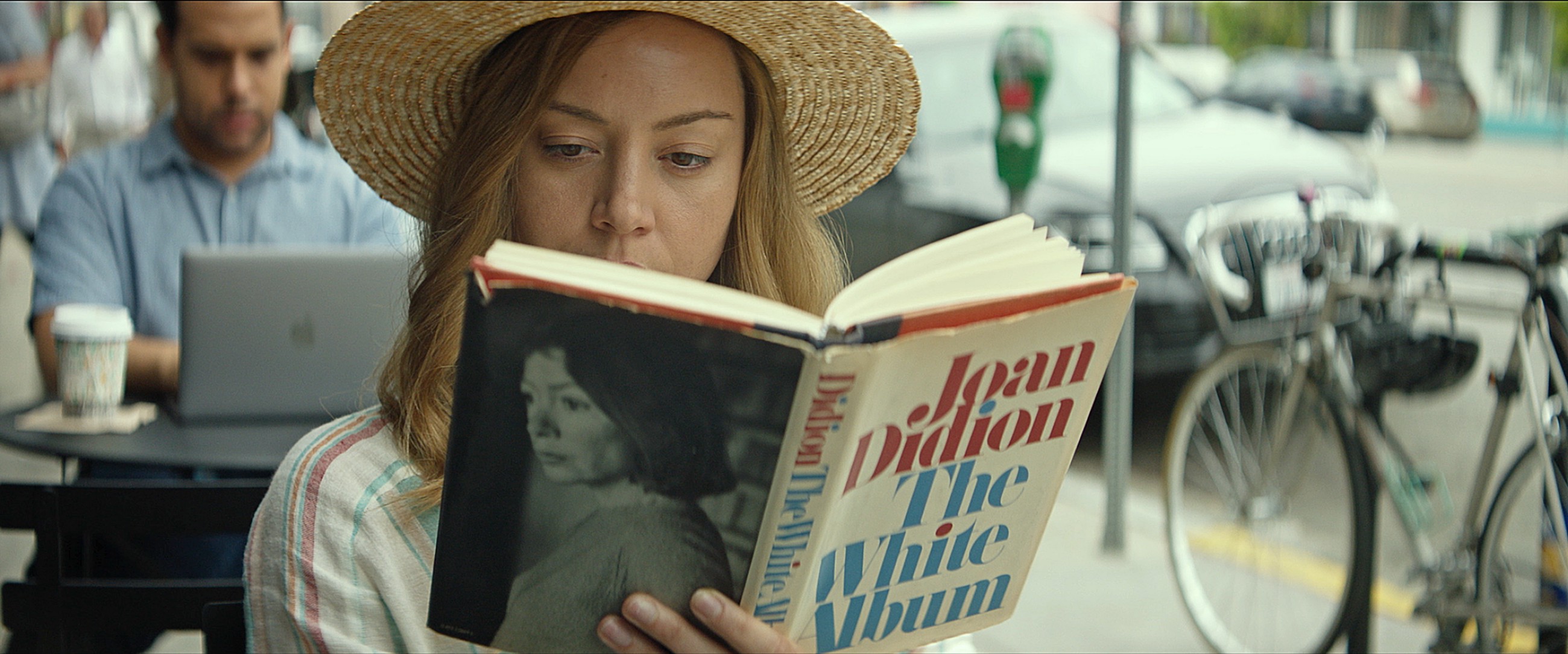
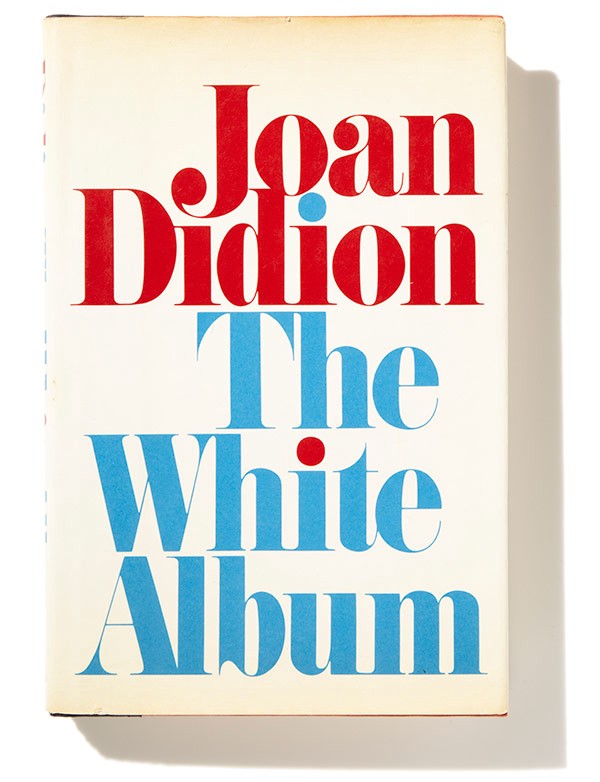
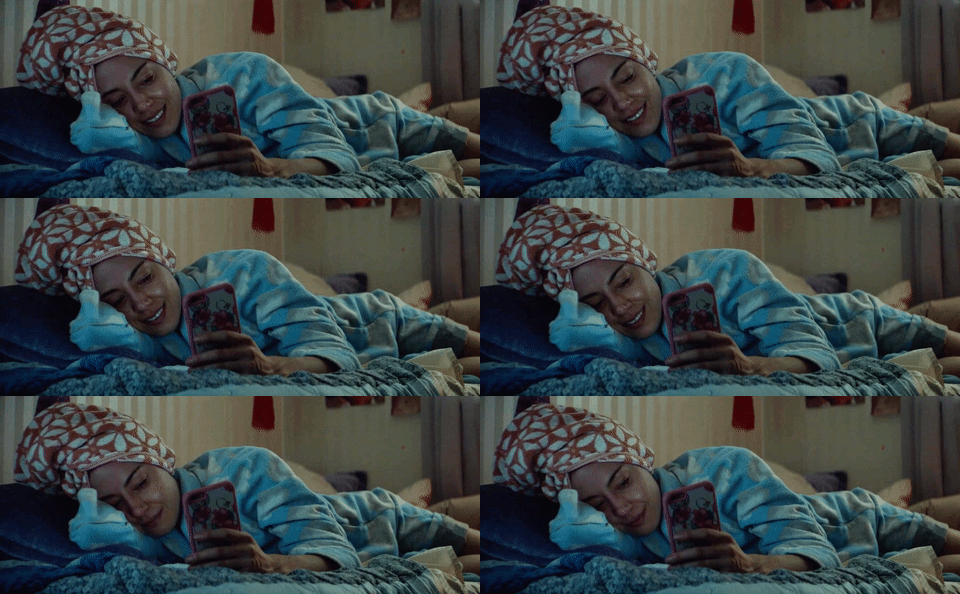
Didion’s The White Album plays a small but pivotal role in Matt Spicer’s dark comedic film, Ingrid Goes West. The eponymous protagonist (Aubrey Plaza) becomes gradually obsessed with an ultra cool, Los Angeles-based social media influencer by the name of Taylor Sloane (Elizabeth Olsen)—so much so that she moves across country to Venice Beach, stalking Taylor’s Instagram feed to learn everything and anything she can about her. That’s how Ingrid ends up eating in the same rustic restaurant where Taylor snapped a pic of her avocado toast, getting her hair lightened at the same salon, and adding the same books to her reading list. Curatorially photographed beside a matcha latte, the hardcover first edition of Didion’s essay collection catches Ingrid’s eye online, as does the accompanying quotation: “We tell ourselves stories in order to live.”

The connection being drawn between Didion’s coolness and Taylor’s commodified version of it is difficult to miss. The California writer serves as a shorthand for the kind of creator Taylor has modeled herself after, and an emblem of the L.A. life that Ingrid soon commits herself to living. After staging a happenstance encounter with her Insta-idol and maneuvering herself into a mutual friendship, Ingrid begins to gather information that she knows will help her stay close. Upon inviting her neighbor-slash-landlord to a party, she instructs him to not talk about anything so inconsequential as his beloved Batman. Instead, her suggested topics of conversation with the too-cool Angelenos are “food or clothes or Joan Didion.”

Given the scarcity of pop culture references through most of Spicer’s film, it’s evident that Didion symbolizes a still-contemporary California vibe for his characters. But the author is treated as a mythic figure. It’s unclear, for instance, whether carefree Taylor has even actually read the entirety of The White Album (her caption is the first sentence of the essay that gives the collection its title, and is perhaps its most widely quoted line). Indeed, for the moneyed Millennial creative class which the film depicts Joan Didion is representative, a specter floating out in the cultural imagination. When he reviewed The White Album for the London Review of Books in 1980, Martin Amis wrote that “Miss Didion’s writing does not ‘reflect’ her moods so much as dramatise them. ‘How she feels,’” he posits, “has become, for the time being, how it is.” In 2017, such a sentence almost begs to be read as a prophetic distillation of the Millennial sensibility — where one’s feelings can supersede objective reality.

“A Ghost Story” is Haunted by Virginia Woolf

A similar complaint was flung at Didion by another contemporary, Barbara Grizzuti Harrison, upon the release of her essay collection. “When I am asked why I do not find Joan Didion appealing,” she wrote in 1979, “I am tempted to answer — not entirely facetiously — that my charity does not naturally extend itself to someone whose lavender love seats match exactly the potted orchids on her mantel.” Not only did Didion’s prose self-reflexively point to her own privilege — it couldn’t help but embody it, and, as Harrison further suggests, she could never seem to write anything without circling back to herself. The alluring sense that Didion probes reality with an inquisitive if always-ambivalent eye belies, to Harrison, the fact that she centers her prose on her own point of view — on what she saw, the images and surfaces that kept her rapt and through which she transports us to places she’d been, people she’d met, emotions she felt.

Elizabeth Olsen and Aubrey Plaza in ‘Ingrid Goes West’

Through that lens, Didion emerges not only as a clear inspiration for young women like Taylor, but also as an embodiment of their artistic ambitions that came fifty years early. It would perhaps be too glib — not to mention near-sacrilegious — to argue that a young Joan Didion would have been a social media influencer who would happily have shilled for brands. But there is a degree of the carefully curated personal disclosure which she perfected that rings familiar to a generation brought up on social media. Reading her latest book, South and West: From a Notebook — a collection of notes from a trip she took South and to San Francisco in the 1970s, for pieces she ultimately never finished — gives an insight into the younger author’s writing process. Mostly that means seeing firsthand the attention to detail that’s always characterized her prose. Her jotted recollections of the places she visited and the memories they evoked practically read like captions to photos she might’ve taken — and shared — had she been so inclined:

“Oriental leanings. The little ebony chests, the dishes. Maybeck houses. Mists.”

“Climbing Mount Tamalpais in Marin County, a mystical idea. I never did it, but I did walk across the Golden Gate Bridge, wearing my first pair of high heeled-shoes, bronze kid De Liso Debs pumps with three-inch heels.”

“Corte Madera. Head cheese. Eating apricots and plums on the rocks at Stinson Beach.”

These fragments of images are not a far cry from the professional photos that litter Taylor’s Instagram feed. In fact, her social media bio could easily have been pulled from Didion’s own notes: “Treasure hunter. Castle builder. Proud Angeleno.”

What in the film seems like a distortion of the nuanced persona Didion constructed over five decades could be read as a reappraisal, in which a longstanding author is finally looked at anew. In her review of Tracy Daugherty’s biography of Didion (2015’s The Last Love Song), Meghan Daum wrote on — as her title put it — the elitist allure of the beloved essayist. The backhanded nature of the writerly investigation points to the way that Didion’s reputation may be turning. Given the tenor of many of our current conversations about American culture, Daum suggests that it’s “easy to imagine a writer of Didion’s tastes and sensibility being called out in the blogosphere and in social media as fundamentally gifted yet fundamentally ‘problematic’… in her politics and tone. For all her brilliance,” she concludes, “[Didion] might be deemed too haughty to tolerate, the ultimate white girl.”

It’s that figural image which Spicer hones in on, even as he arches an eyebrow, knowingly simplifying Didion to show the vapid nature of his own characters. Late in the film, when Ingrid’s pathological desire to live in the mediated world that Taylor projects turns dangerous, we’re given another shot of Didion’s book. Where before it had been the treasured object that brought Ingrid closer to her clueless young friend, her copy of The White Album (which she actually read!) comes to be another signifier of a life she can never have, a life that will always evade and exclude her. It seems she will forever be the girl who sits alone at home, out of money, unable to pay the bills or buy toilet paper, scrolling feverishly through her social feeds to find a semblance of a connection with those whose lives she covets.

That is, until she reaches for her copy of Didion’s book and uses it as toilet paper, metaphorically shitting on the idea of the “ultimate white girl” that Taylor-via-Didion represents, and the privileged lives they both embody. Where Taylor’s photographs and Didion’s prose project a life of carefully curated perfection, Ingrid perpetually returns us to the “real” unfiltered world.

Coolness, as Ingrid learns, requires astute compartmentalizing. It is not, as she had first gathered, an intrinsic quality but an affectation — one she constantly fails at performing. At the end, it is precisely her lack of coolness that makes her a role model in the eyes of the many young women who respond to her unruly behavior (and the frenzied videos she ends up posting on social media), and for which she appears all the more authentic. Didion may have felt that we need to tell ourselves stories in order to survive, but Ingrid’s is a different case. For her, survival depends on rejecting the need to narrativize and glamorize one’s own story, and living it instead.

What’s a Book You Read in Secret?

Submissions for Novel Gazing are open through September 15.

Nobody policed what I read when I was a kid. It was pointless to try. I picked up any book that was left on a low shelf, and I spent a lot of time on my own in the library, and by the time I was 11 there was a used bookstore in walking distance. I read Clan of the Cave Bear, with its semi-graphic Neanderthal rape, in the living room on a family vacation when I was 12. I picked up the brilliant but polymorphously perverse Geek Love around age 10, when it first came out in paperback, because someone left it within reach; I remember trying to puzzle out what it meant to “sell one’s cherry.” In seventh grade, I turned in a book report on Toni Morrison’s gorgeous epic Song of Solomon, and the teacher asked if my mother knew I was reading it, presumably because it was supposed to be (and, to a great degree, was) above my head. I said it was her copy.

But even though I felt no self-consciousness about taking on wildly age-inappropriate texts, there’s one book I remember reading in secret: A Portrait of the Artist as a Young Man. Not because it was considered unsuitable, not because it was controversial — just because I happened to be in the middle of it when I was supposed to be in a high school class. It wasn’t an easy book to read, or for me to relate to, and I needed a stretch of time to concentrate on it uninterrupted, and I also needed to not go to precal or American history or wherever I was meant to be that period. So I hid in one of the first-floor bathrooms, the one with a window, and contemplated Stephen Dedalus contemplating the eternity of hell.

People have all sorts of reasons for hiding what they read. Maybe they’re ducking the watchful eye of an oppressive family, or an oppressive political regime. Maybe they’re embarrassed by their fascination with teen wizards, sparkly vampires, or conspiracies. Maybe they’re reading a book that’s celebrated in one context, but looked at askance in another: Darwin at a church retreat, Ayn Rand at a DSA meeting.

Support Electric Lit: Become a Member!

For the inaugural Novel Gazing, Electric Lit’s new essay series about the way reading shapes our lives, we want your stories of covert literary indulgence, from comic books under plain covers to Anais Nin under the sheets. Tell us about the time you tried to hide your Bible from your colleagues at the science conference, or told summer camp friends that the poetry you were reading under the covers was porn. (I did this one too. Twenty-five years later, I can finally admit: It was Reflections on a Gift of Watermelon Pickle. Sorry to deceive you, cool camp jerks.) Reflect on your first surreptitious forays into feminist essays or queer comics or Afrofuturism, and why you felt you had to hide. Share your experience reading Marx under McCarthyism or Rushdie in Iran. Remember that these books don’t have to be novels, and they don’t even have to be books: we’ll consider essays on television, film, art, and theater, as long as the focus is on stories you consumed in secret.

Essays should not be longer than 4,000 words or shorter than 800, and payment is $60 per piece. Submissions will open on September 5 and remain open through September 15. That gives you two weeks to think and write about all the books (and other narrative objects) you’ve loved so much you read them in spite of embarrassment, anxiety, repression, or shame.

I can’t wait to hear your stories.

11 of the Worst Marriages in Literature

Ever since Oedipus and Jocasta, antiquity’s reigning train wreck of a union, “the bad marriage” has been one of literature’s most popular story lines. Novelists have covered the spectrum, from overtly abusive relationships to those that hum with a subtle tension until the marriage suffocates and ultimately expires. To borrow a sentiment from Tolstoy, a man who was well acquainted with marital misery both in his private life and in his fiction, unhappy marriages are all unhappy in their own way.

It’s a powerful tool. Experiencing writer’s block? Join two people at the alter and then watch them break down. I’ve used this tactic before and I’ll admit there is a gruesome delight in finding unique ways to implode a marriage. This fascination must be the flip side of our obsession with happy endings and love stories, a cousin to watching horror films where you know everyone’s about to get killed but you’re still eager to find out how.

Given the popularity of the genre, trimming down this list to just eleven bad marriages was difficult. Some pairs (including Tolstoy’s own Anna and Count Karenin) are no less damaged for not having made the cut.

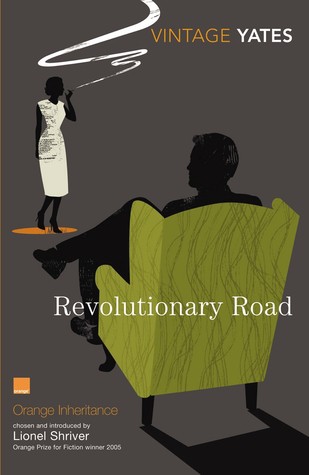
1. Frank and April Wheeler in Revolutionary Road

Mad Men explored the disconnect between the utopia promised to midcentury suburbanites and the reality of their despair, but the show owes its template to Yate’s 1962 novel. This National Book Award finalist follows the dissolution of Frank and April Wheeler’s marriage, which gradually erodes from glossy Connecticut placidity to pure devastation. Over the course of the book, the couple’s dreams — of fulfilling jobs, moving to Paris, or simply having a life filled with passion — remain ever out of reach. In short, this novel isn’t just about a failing marriage, it’s the OG portrait of the failure of the midcentury American Dream.

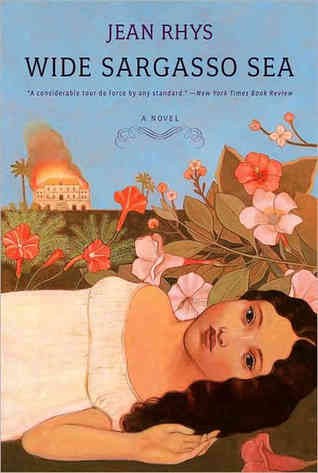
2. Mr. Rochester and Antoinette in Wide Sargasso Sea

In her now-classic 1966 novel, Rhys imagines the backstory of the “mad woman in the attic” from another great novel, Jane Eyre, and in doing so crafted an important portrait of colonialism, race, and the cruel ways in which marriage has often been a form of female oppression. Antoinette Cosway is a poor white woman living in Jamaica when she is married off to a wealthy Englishman. Mr. Rochester is hardly the dreamboat that Jane sees him as — he renames his new wife Bertha, which is humiliating enough, but after he brings her back to England, he realizes that he doesn’t love her or her strange, colonial ways, and locks her in a room in his attic. Far from home and hopelessly isolated, Antoinette is driven mad and eventually kills herself.

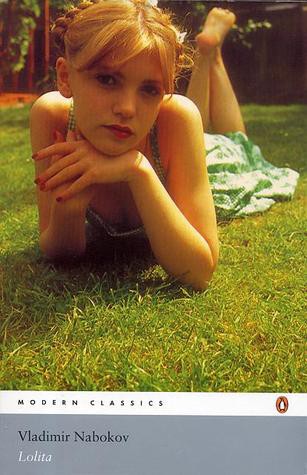
3. Humbert Humbert and Charlotte Haze in Lolita

The focus of Nabokov’s novel is the pedophiliac relationship between Humbert Humbert and the young Lolita, but lest we forget, there is another truly terrible relationship in the novel: the one between Humbert and Lolita’s mother, Charlotte Haze. Humbert tricks the poor woman into marriage in order to get closer to her daughter, so when Charlotte considers sending Lolita to boarding school, Humbert gets so upset he considers murdering his new wife. Mrs. Haze’s unreciprocated feelings are put to an end when she reads Humbert’s journal. As she runs out of the house, she’s hit by a car and killed. Humbert doesn’t even have the decency to tell Lolita the truth, and for a while Charlotte’s death is unknown to her daughter.

4. Tom and Daisy Buchanan in The Great Gatsby

The Buchanans are the kind of couple that you hope never invites you to dinner because watching them interact oscillates between awkward and upsetting. Tom is a philandering good old boy with little to offer in personality or values, but a lot to offer in money and status. Daisy’s mistake in marrying him might be overlooked once (she didn’t find out about his cheating until the deal was done and he was getting into car accidents with hotel maids) but when Gatsby reappears, loving her to bits and offering a way out of her situation, her decision to stay with Tom becomes inconceivable. The best you can say is that they deserve each other.

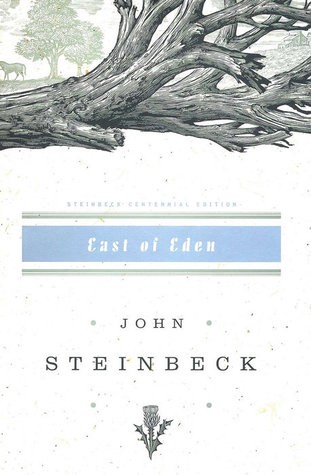
5. Cathy and Adam Trask in East of Eden

Steinbeck’s epic follows the two Trask brothers, one of whom makes the grievous mistake of marrying Cathy Ames, and both of whom make the mistake of sleeping with her. Cathy is a “malformed soul” who burnt down her parents house and worked in a whorehouse before landing on the Trask’s doorstep. Cheating on her husband with his brother is small potatoes for this gal, who hates being a wife and mother so much that she shoots her husband and flees the scene.

6. Emma and Charles Bovary in Madame Bovary

The Bovarys weren’t just unhappy, they were unhappy marriage pioneers. After the book was published in La Revue de Paris in 1856, Flaubert was put on trial for obscenity — a move which made the novel into an immediate bestseller. Emma endures a more subtle torture than many of these wives; she’s stuck in a loveless marriage and bored out of her mind. “Each smile hid a yawn of boredom, each joy a curse, each pleasure its own disgust; and the sweetest kisses only left on one’s lips a hopeless longing for a higher ecstasy.” To relieve the pain, she has affairs, racks up debts, and finally takes the only means of escape: suicide.

11 of the Most Disastrous Vacations in Literature

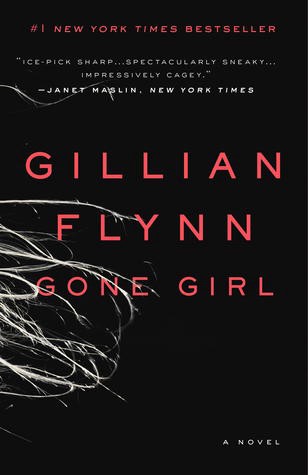
7. Amy and Nick Dunne in Gone Girl

Some marriages are dysfunctional and some are downright pathological, as in the case of Nick and Amy Dunne. The blame game is particularly convoluted here because each portrays the other as the crazy one — Nick describes Amy as an anti-social, cold hyper-perfectionist, while Amy casts Nick as a volatile, aggressive husband. Flynn’s trick makes us question who is behind Amy’s disappearance, though the real mystery is why they got married in the first place.

8. Anne Boleyn and Henry VIII in Bring Up The Bodies

The Wolf Hall series is based on the true history of King Henry VIII and his six wives, but Mantel uses her incredible language to bring alive the passion, emotional manipulations, and marital discord that led to the infamous beheading of Henry’s second wife, Anne Boleyn. Anne was educated in France — in arts that would prove more useful than dancing — and she elaborately seduces the narcissistic, lustful king. But the hottest relationships often burn out the hardest, and the King’s mind quickly changes from history-changing desire to epic jealousy, a fact made more unbearable by Anne’s inability to give him a son.

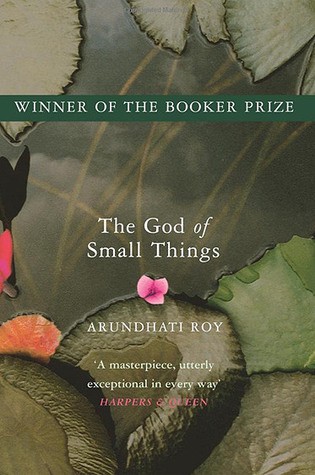
9. Ammu and Baba in The God of Small Things

Arundhati Roy’s Booker Prize-winning novel is filled with broken marriages, but the worst is between Ammu and Baba, whose marriage of convenience takes a dark turn. After they marry, Ammu is surprised to learn that Baba is a chronic liar and severe alcoholic. When Baba loses his job, his boss offers to keep him on if he can sleep with Ammu, a trade that Baba accepts immediately. When Ammu doesn’t agree to be traded for sex, Babu beats her up. She manages to leave him — though as Roy shows, in her situation, it’s not good to be a divorced woman, even an innocent one.

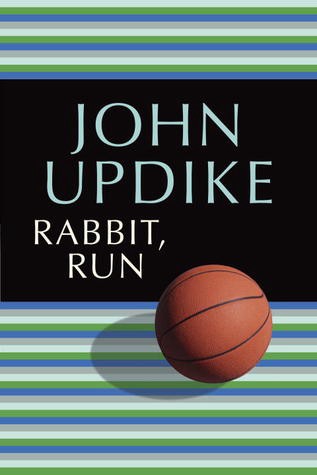
10. Harry “Rabbit” and Janice Angstrom in Rabbit, Run

The Angstroms are both terrible people, spouses, and parents. Rabbit peaked as a basketball star in high school and is still hung up on his subsequent decline. This streak of self-pity leads him to leave his pregnant wife, Janice, and move in with a prostitute. Janice doesn’t exactly handle this with aplomb, and she drinks herself into a stupor that leads to the accidental drowning of their newborn daughter in the bath. The Angstroms are off-and-on-again throughout the book, though when they finally end up together, it feels like punishment rather than relief.

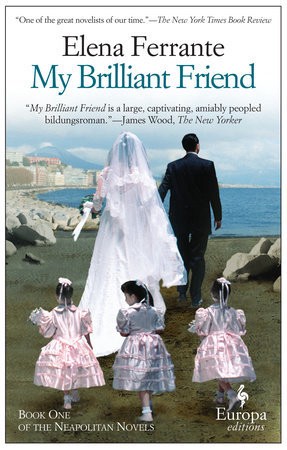
11. Lila and Stefano in My Brilliant Friend

The first book of Ferrante’s Neapolitan series concludes with Lila’s wedding to Stefano Carracci, heir to the local grocery store and son of Don Achille, the man who terrified Lila and Elena as children. Though Lila isn’t exactly the model wife (who would be, at sixteen?), she’s caught off guard by how terrible Stefano is as a husband. The young man who wooed her changes almost overnight into a husband who beats and belittles her. Those sad but somewhat common social norms are eclipsed by something Lila can truly never forgive — Stefano does deals with the gangster brothers who have make it their M.O. to ruin her life.

Picking through the Ruins of your Dying Neighborhood

I had for my winter evening walk —
No one at all with whom to talk
— Robert Frost

It’s nine p.m. and the night stretches before me like a glacier. Despite the fact that it’s started to snow again, I pull on my fleece for an evening walk. These days, I walk until the cold slows my heart and I can sleep without nightmares. Sometimes I have to walk two or three times before dawn to stay in front of the dread.

There is a plague upon our house. It’s making the thin wallpaper curl, the tongue-and-groove floors moan. We have lost our grasp on tomorrow. We pretend to still have jobs as we come and go, waving at the neighbors. But we all know that this infection will spread. At least once a week during my walks, I see a new sign: “Bank Owned,” or “Auction.” Overnight, a white document appears on a neighbor’s front door. The opposite of lamb’s blood — a sign that God will not protect them.

I’ve learned to detect the early signs. The yard service is the first to go. Grass invades the cracks in the driveway. Leaves mound like fresh graves. After a night of snow, sidewalks go unshoveled. Windows shutter. Porch lights shine all day long.

Tonight, I say vespers for the Babcocks and Lindsays. In six months, a year, there will be no survivors left on our block. I wonder if this is how it feels during epidemics. Each house under quarantine, neighbors peering from behind curtains, hiding signs of financial ruin. People vanishing without a good-bye.

In October, Theresa Madding had an estate sale. I went for the same reason we go to wakes: to check out the condition of the body. The Madding house was in surprisingly good repair. Their downfall must have been swift; there would be no trouble finding a buyer for a short sale. As I scoured Theresa’s possessions, I was grateful that most of the people streaming in on that dreary autumn morning were not from the neighborhood. It’s against the unspoken code for us to circle the pyre of our neighbors’ belongings.

On Theresa’s dining room table among three different sets of dishes (how much china does one family really need?) sat the most exquisite tureen. Williamsburg blue, delicate white flowers laced with gold. Even then, I knew we probably were going to lose our home and the tureen would not survive our journey into the unknown. But in the moment, it felt like an inoculation of hope — a talisman to keep the infection from spreading to us.

I snatched it up quickly and darted to the checkout. And that’s when I ran into Theresa. It’s a horrible slap, to be caught paying pennies for your neighbors’ belongings.

“Hello,” I mumbled, angry at her for attending her own funeral.

“My tureen!” she gushed. “We used that so many times during the holidays. You’re going to love it.” She emitted the strange glee of someone who has lost everything.

“Thank you,” I said. I should have said more.

Once I got the tureen in the car, I started crying and couldn’t stop. We never used it. When our real estate agent came to size up our house, she noticed the tureen in the china cabinet. I made her take it home.

Tonight, the air stings. The snow creaks beneath my feet, profane. No dogs bark curiously. Hardly any doors bear holiday wreaths. This year, there have been no parties to spill their light onto the stark drifts. Where is the sound of the children next door practicing carols on their violins?

The cold gnaws at my toes. My lips feel useless. I want to cry but the frigid air has dried my eyes. This is somehow my fault. I should have saved more money. I should have left town a long time ago. I should have majored in something else. I should have married better, or had one fewer child.

Beneath a dim streetlight, I turn and repent. All the windows are blackened this winter’s eve. The good hours have gone.

The Entire President’s Committee on the Arts and Humanities Just Resigned

Citing the president’s unwillingness to unequivocally condemn white supremacists and Nazis, all 17 members of the President’s Committee on the Arts and Humanities have resigned en masse. The advisory committee, appointed by President Obama, hasn’t met under Trump, perhaps because he is actively hostile to their work. (Honorary chair Melania Trump, who did not sign the letter of resignation, also doesn’t seem very motivated by art; we’ll refrain from speculating on what she is motivated by.) But it’s continued work on preexisting projects—until today.

“Art is about inclusion,” wrote the committee, which includes artist Chuck Close and author Jhumpa Lahiri. “The Humanities include a vibrant free press. You have attacked both.” This is the first official White House committee to resign.

Here’s the letter:

The Obama-appointed chairman of the National Endowment for the Humanities already resigned months ago—the gutting of the NEH budget was sufficient for him to assess the environment as hostile, even without the administration explicitly condoning violent white nationalism. Go figure that a humanities expert would be able to read the writing on the wall.

So much for the “at least art will flourish under oppression” crowd, I guess. But hey: The first letter of each paragraph spells out RESIST. Poetry, specifically the acrostic, isn’t dead—yet.

Wealth and Family in the New India

The economic transformations of India and China over the last three decades eclipse even the global financial crisis as the defining economic story of our generation. That story is usually told with GDP figures and stock market levels. But it has also transformed lives, relationships, and families.

Vivek Shanbhag’s Ghachar Ghochar (excerpted on Recommended Reading in February) is a taut, exquisite tale that employs the material progress of a family to create a haunting story of greed. This work, and its translation from Kannada by Srinath Perur, has already earned comparisons with Chekhov and has been dubbed the newest “great Indian novel” by the New York Times. As a professor of finance at Harvard Business School, a new author, and a teacher with a keen interest in literature and the humanities, Ghachar Ghochar resonated with me on many levels.

Shanbhag was born in a small coastal town in Karnataka. He trained as an engineer and became a manager at Hindustan Lever — one of the most prestigious jobs possible in late-1980s India, comparable to getting an engineering job at Google today. That trajectory from limited means in a small town to traversing the country for a multinational firm allowed Shanbhag deep insight into modern India and the various complications of rapid economic growth.

Vivek and I communicated with each other via email for this interview.


Mihir Desai: One of my favorite lines in your novel is “wealth shouldn’t strike suddenly like a visitation, but instead grow gradually like a tree.” Given the rapid economic ascent of the family at the centre of Ghachar Ghochar, is it right to read the book as a broader study of changes in India over the last two decades? Why is the rapid accumulation of wealth so complicated?

Vivek Shanbhag: There is no doubt that the changes in India over the last two decades have had a significant impact on the lives of the characters in the book. However, as a writer I would hesitate to say my book represents this or that. In other words, I can’t write a book to represent something. I write stories. Here, in Ghachar Ghochar, I have told the story of this specific family. The moment I decide my characters must represent something I rob them of their sensitivity and freedom to act. I believe only fiction can effectively capture the complexity of change this country has gone through in recent decades.

Rapid accumulation of anything — even when it happens inside our body — is complicated. Since money is one of the biggest influences on family relationships, sudden change in wealth has the power to mess up everything. This jolt is strong enough to break many delicate strands that connect individuals to communities. Unfortunately this disconnects them from their language, from their value system. The image I have used in the past to describe this situation in India is that of a trapeze artist in mid-air who has released the bar not knowing which one of the swinging bars to latch on to for a safe landing.

I believe only fiction can effectively capture the complexity of change this country has gone through in recent decades.

MD: Your portrait of the effects of greed seems completely distinctive. Usually, greed is depicted as an animating force for wealthy people who can’t get enough; in your portrait, greed seems to happen at a much smaller scale and is disempowering as it spreads. You write, “it’s not we who control money, it’s the money that controls us. When there’s only a little, it behaves meekly; when it grows, it becomes brash and has its way with us. Money had swept us up and flung us in the midst of a whirlwind.” How and why do you think greed is so insidious?

VS: I am glad you noticed this. Wealth has a different meaning in the Indian tradition. There is a certain limit beyond which every individual or family considers their lives “luxurious.” This is a complex perception and is different for every individual, family, caste, and generation. Millions have crossed this line in India in the last two decades, because the money required to cross it was not huge in absolute terms. This gives people a kind of confidence to challenge intricate community structures and hierarchies. The dependencies within a community that were formed to make up for the lack of money become redundant in the new world. As the existing binding force disappears, a new one is created. However, it takes a while for the new order to come into place. It is during this transition that wealth can become disempowering. The newer generation has a different line to cross before they move into their zone of luxury, but it may not be within reach as it was to their previous generation. This is a tough challenge considering the aspirations of the newer generation.

Wealth has a different meaning in the Indian tradition. There is a certain limit beyond which every individual or family considers their lives “luxurious.”

MD: I know a little bit about your background and I’m curious if the narrative drew on your own personal experience. Having ridden the economic wave that transformed India over the last two and a half decades, do your own experiences show up in the book?

VS: The process of writing is so intense, and I would have seen the situations and characters so closely, that at the end of writing a book everything that I write becomes my own personal experience. As it happens with every creative writer, I have used some of my own experiences. But in the end I feel there is no difference between real and imagined — everything becomes my own experience. The joy of writing is when something unexpected emerges — even a small detail — which then shows everything else in a different light. This is to know what we already know in an entirely different way. I long for such moments.

MD: I was struck by how refreshing it was to read a novel steeped in the economics of households. It seemed like the characters were shaped by these material circumstances and their changing nature — why do you think writers ignore these conditions and why do you think they’re so formative?

VS: One can broadly say that unlike in the West, the smallest unit of society in India is a family, not an individual. Family is also the most influential unit. What I mean is, important decisions that affect individuals are taken factoring in the family. Hence, it is impossible to ignore the economics of households if one is looking to capture the current reality of India. As I said earlier, the idea of the family is undergoing a transformation. As a result, there is tension between the traditional structure and new aspirations. Writers in Indian languages have captured this effectively.

Author Vivek Shanbhag

MD: Given your fluency in English, can you talk about your choice of the language you write in and how the choice of language changes what you write about or how you write?

VS: Creative writing requires a very deep engagement with the language. It is not just about how fluent one is with the language, but the strong emotional connect one has with the language. Through the language, a fiction writer seeks to touch and grasp unknown dimensions of life. It must flow effortlessly at the time of writing — a word must generate the next word and so on. “Paroksha,” a Sanskrit word which can roughly be translated as indirect cognition, represents an important and powerful aspect of literature in Indian languages. To put it simply, nothing in literature is direct: when you say something you point at something else. This can be realized only when you have strong bonds with a society and its language, which is usually the language of the street. Music, dance, folk-songs/tales, and proverbs are born from the language of the street, which has very deep connections with the everyday life of people. As a writer, it is very important for me to immerse myself in this language if I want to capture the nuances of this world. So I had no choice but to write in Kannada. English is not the language of the street in any part of India.

I had no choice but to write in Kannada. English is not the language of the street in any part of India.

MD: The novel has garnered favorable comparison to Anton Chekhov, Edith Wharton, and Edgar Allan Poe. Can you tell us more about your favorite authors, living and dead?

VS: Kannada has a strong and unbroken literary tradition of over thousand years. By “unbroken tradition” I mean we still have access to literature written a thousand years ago. People recite some of these verses at home or on special occasions or at family events. These works are studied and discussed by students of literature. I grew up reading and rereading many Kannada writers. We have a rich literary tradition where Kannada texts and western literature are discussed with the same enthusiasm. Apart from many ancient and modern Kannada writers, my favorites include Isaac Bashevis Singer, Tolstoy, Melville, Katherine Anne Porter, Jose Saramago, Hemingway, Joyce….

MD: You’re organizing a literary dinner party and can invite any three people, living or dead — who would you choose?

VS: Tolstoy. Allama (12th century Kannada poet). Katherine Anne Porter.

MD: Ghachar Ghochar has emerged as a literary sensation and must have far surpassed your expectations — what have you learned from the incredible reception this book has received?

VS: I grew up reading literature not just in my own language Kannada but also from different languages of the world. So my inner world is made of all these wonderful writers from different languages who came to me in translation. I felt I became part of this group when my book went into so many countries and languages. It is a wonderful and humbling experience for any writer.

N.J. Campbell Wants to Make You a Mix Tape

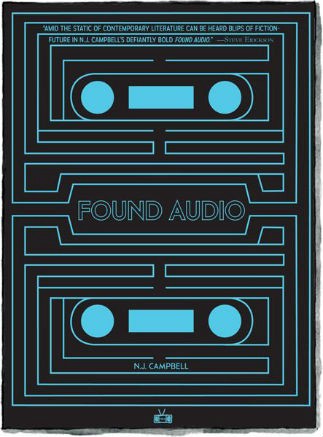
I, am one of the main characters in N.J. Campbell’s weird debut novel, Found Audio — and so are you. On the first page, Campbell addresses you directly, explaining how he came into possession of the documents that follow: a letter from Amrapali Anna Singh, an audio specialist in Alaska, and her transcriptions of three audio files that may have been stolen from a mysterious library in Buenos Aires.

It’s brilliant. In an age of instant information access, Found Audio is a clever reminder that some places, experiences, and mysteries must be earned through sweat, blood, and fear. To maintain the suspense, I won’t tell you what the audio files contain, except that they involve an adventure journalist searching for a mythical (or is it?) “City of Dreams” in the swamps of Louisiana, the streets of Hong Kong, and the dunes of Mongolia. The stories alone brim with awe and mystery, but Campbell’s metafictional cocoon lifts the novel into Borgesian territory. It is as wild and unpredictable as President Trump’s Twitter timeline, and its loose ends will stay with you for weeks.

I recently spoke with Campbell via email about dreams, mystery, and the creepy magic of old analog objects.

Adam Morgan: Do you have a fetish for analog things? Is the digital world more or less mysterious and magical than the pre-digital?

N.J. Campbell: I do really love analog technologies. I wouldn’t say I have a fetish for them, per se, but I grew up in the ’90s and they were everywhere. All my movies were VHS tapes, and cassettes and vinyl records were ubiquitous at garage sales, Goodwill, and the Salvation Army. I can remember hours and days spent rummaging through bins of scratched vinyl before that was a pretty common thing to do. I got some good stuff, like a near mint condition Johnny Rivers 45 RPM and Edwin Starr’s 25 Miles in pretty good condition. I listened to records after school almost every day in high school, and I did love the static, the scratches, and the warmth of the tones. I don’t hear the same warmth in digital, but that’s probably not due to a good ear, but just some form of nostalgia for the joy associated with my early acquaintance with analog technologies.

As for mystery, I think it’s a part of the human condition, and I think we all learn this very early on as children when we learn the word ‘why’. With that one three-letter word, the world opens up to our insatiable curiosity and we quickly discover the limits of all available human knowledge, beyond which lies a limitless expanse of pure magic and mystery. And it usually only takes three or four questions to get there:

Q: ‘Why is the sun bright?’
A: ‘Because it’s a ball of fire in the sun.’

Q: ‘Why is the sun a ball of fire in the sun?’
A: ‘Because the fabric of time and space forced gravity to coalesce its mass into a spherical shape.’

Q: ‘Why did the fabric of time and space force gravity to do that?’
A: ‘Because that’s what the fundamental laws of our universe dictate.’

Q: ‘Why do the fundamental laws of our universe dictate that?’
A: ‘That’s tricky business, little one. I don’t know.’

Obviously that’s a bit of an exaggeration, but I think it’s clear enough what I mean.

AM: Why tell this story via audio file transcriptions instead of a more traditional novel structure?

N.J. Campbell. Photo by Hannah Foster.

NJC: I started the project wanting to focus on voice, so I just focused on voice, literally. The frame of the tapes was created deliberately for a layering effect. The journalist’s story is unfolded in layers, and I wanted the most peripheral layer to touch at the boundaries of the real world.

In the beginning, the metafictional element was less explicit. In the editing phase, it became more encompassing. I think that what’s gained is a more complete feeling of discovery. The reader is not just discovering what’s happening in the tapes, but what’s happening with them, as well as what’s happening around them.

AM: What is your dream life like? Did you learn anything interesting doing research for this book?

NJC: My dreams are my own to pick through for material as I like, and that’s as much as I want to say about them.

As for the research, I learned quite a bit. It was wonderful, in fact. My father was a bus driver by day and a local historian by night. I watched him pore over interviews he had recorded, articles, statistics, and piles upon piles of books. He loves research, and that rubbed off. The most interesting part of that particular process for me was looking into The Walled City of Kowloon. For all my hours of research, I found what felt like very little to me. There was a Wikipedia page, a small website dedicated to its culture, a clip from the 1988 film Bloodsport with Jean-Claude Van Damme, a museum in Japan that had recreated a small piece of it from photographs, a book of photos and interviews with people who had lived there, and two documentaries filmed about it in the 1980s. For the most part, that’s the majority of the materials that felt substantial to me. Yet, throughout the process I couldn’t help feeling like something was missing. I still feel that way. That’s interesting to me.

AM: Traveling is really important to this narrator, accumulating diverse experiences across the world. Do you feel that way, too? What does travel do to the self? Is it similar to what dreaming does?

NJC: I do think accumulating diverse experiences is important, but I’m not sure physical travel is particularly important. Some of that is probably necessary, but the majority of the traveling I’ve done is in books. I grew up in a family that wasn’t wealthy, and I’ve chosen to pursue mostly manual labor jobs in order to save my mental stamina for reading and writing. I guess when I really think about it, I’m not sure I’m qualified to answer that question, as I’ve done so little physical traveling.

With respect to what travel does, I’m not sure physically, but mentally it’s liberating. I wouldn’t have nearly the same experience of life that I do without having traveled in books of poetry, history, philosophy, or religion, let alone novels. I’ve been able to live through experiences that I physically couldn’t in the real world, if only because they were recorded by a person who lived in a world that existed three hundred, five-hundred, or a thousand years ago. To travel in books is to expand as a person, to develop a sense of the manifold and diverse nature of human experience, and to encounter and engage with new and interesting issues and ideas about what it means to be alive, but I don’t think I’m saying anything new to anyone who might be reading this interview, so I think I’ll leave it at that.

Dreams definitely do the same thing for many of the same reasons, I suspect.

“I wouldn’t have nearly the same experience of life that I do without having traveled in books of poetry, history, philosophy, or religion, let alone novels.”

AM: Have you ever had “odd” experiences, external or internal, the way the journalist does in the swamp, city, desert, etc.?

NJC: Yes — to one degree or another, but since they have material in them for other stories, I don’t really want to go into them here as I run the risk of repeating myself later.

I will say that there’s a part in the book where someone describes their mother announcing who was going to call before the phone rang. My mother used to do this when I was young, and she was usually right.

AM: Virtually all of the novel’s threads are loose at the end. Do you have your own answers for the book’s mysteries (the library, the tapes, where the recording is taking place, who’s interviewing him and why, the noises and whispers we hear), or are they ambiguous for you as well?

NJC: That’s an interesting question. It’s been a bit of a hide-and-seek game with myself, actually. There are moments when I think I might know, and then there are moments when I know I don’t. I really enjoy that, as we’re so often left to wonder about life without any way of knowing what might or might not happen.