A Hidden World

Continue reading Episode 7: A Conclusion in the Caves
Previous Episode: Episode 5: The Monster of the Green Lake

1. Shelley looked up and saw a ghostly shape sitting a few feet away on a limestone slab, the form of some hulking man who was upset or lost. It appeared that the person was crying, as several short, muffled exhalations were coming from its direction. Before she backed away, she took in the figure of the specter, its outline — the enormous, sloping shoulders, the outsized, frayed coat, the dime store Halloween mask in the shape of Casper the ghost, and got her breath back. She held the empty shoe in her hand and put the other out toward the gate to steady herself.

The man was Norris Ambley, who often wandered town dressed in different Halloween masks. On some days it was Donald Duck, other days He-man from the eighties cartoon, and during the holidays, a worn and dented version of Santa himself. Each of the masks he wore were thin, molded plastic that barely obscured his wide face. He was well over six-and-a-half feet and had to be several hundred pounds. Shelley had never heard the man speak, only knew him to communicate by claps and whistles.

On the way to work, or even out wandering by the lake, she had seen him appear, startling her for a moment, before vanishing into the woods, cigar box in hand again.

She had watched him at the diner every Saturday, arriving with his elderly uncle who was his caretaker. Though it was hard to tell his age — somewhere in his mid-fifties — whenever he raised one of his masks to eat a double order of chocolate chip pancakes, there was something oddly youthful about his face. She had seen men like him once when her grandmother had gotten her hip replaced. Wandering around on the wrong floor of a rehabilitation hospital in Springfield, she had come across a television room full of the lobotomized and developmentally delayed. This man, Norris, usually had the same peaceful, vacant kind of expression. But tonight it seemed he had been crying.

The man looked up, noticing her.

She raised an unsure hand and when she thought she was safe, took a seat beside the mournful giant.

“Norris, is that you? What are you doing out here alone this late?”

The ghost looked away regretfully.

“Everyone has got some story about you, and your mother and father, and how come you stopped talking. One of them said you found out your mother and father had been killed in a train wreck and you didn’t say another word after that. I guess you were so sad, you didn’t have any use for words.”

The man shuddered and looked down at the cigar box that was sitting in his lap. Shelley had seen him carrying it everywhere with him for as long as she had known him.

“What do you got there?” Shelley asked. “Your treasure?”

The ghost tipped his head forward.

“Everybody’s got all kinds of stories about what’s inside that box. But you never open it in front of anybody, do you?”

The man shook his head. Shelley could feel his eyes moving behind the mask, studying her face.

“I understand. There’s nothing in this world more important than having a secret. Having something small that belongs to you.”

The man seemed to consider this. Several seconds later he held out the box, and gently lifted the paper- and wood-covered lid.

Inside were several black and white photographs, and an odd number of Polaroids — faces and frowns, an entire family history, a town unto itself in faded film and colors.

“Is that Mrs. Cooper, Norris? And this one, is that your father? And Mr. Dart? You got most of the town here. Mrs. Divan and Mrs. Plimpton. You got almost everybody in town in here.”

The man took a picture of his father out of the box and pointed up to the sky. Overhead the clouds had become sparse. Shelley felt her face go flat, tight. “They’re all dead. They’re all dead, aren’t they, Norris? You got a collection of everybody in town who’s dead?”

The ghost dipped its head forward.

“Who else do you have? Mrs. Pauley. And Dwight Sprue. And who’s that?” There was a photograph of a girl, cut from an old newspaper. Shelley read the caption. Abigail Farnum. “Is that Deputy Will’s sister? Look at how pretty she was. Back before I was even born.”

The ghost did not move.

“How come? What’s it all for?” the girl asked.

The man placed his fingers over his heart and then the eyes of the mask.

“To look at?”

The mask shook gently.

“To remember?”

The mask shook its head again.

“To watch over them?”

The mask nodded.

“You’re watching over them, huh? An entire town of your own. I’m glad to know you’re watching over them. It’s beautiful. It really is.”

The mask did not move.

“So how come you’re out here crying?”

The man pointed at the pair of train tracks that ran parallel to the cemetery gates. Behind the mask, Norris offered up an off-key whistle.

“What? The train? The train came by?”

The ghost turned his large palms upwards, signifying his fright.

“And then you got scared?”

The mask nodded solemnly once again.

“How long have you been sitting out here?”

One gesture of the mask tilting forward was enough for her to realize it could have been several hours. “Better get you home,” Shelley said, checking her watch. “It’s past eleven already. Strange things are happening tonight.”

Norris gave a low whistle and stood. The girl saw how enormous, how physically intimidating he was, but the youngster-sized mask and the small cigar box gave her the feeling of being in the presence of a child.

It was then that the man seemed to notice the small white shoe Shelley had been holding. He put his hand out and Shelley, without thinking, gave it to him. “It’s Jamie Fay’s. She was the queen at the Founder’s Day parade last year. You know Jamie, don’t you? She’s missing.”

Norris lifted up the mask and stared down at the shoe seriously, his far-off eyes a shade of blue the girl had never noticed before.

“Did you see her out here tonight, Norris? Do you have any idea where she might be?”

The giant took hold of the shoe and quickly began moving off toward the woods.

“Norris? Norris, where are you going?”

But he was already stalking off and Shelley had no choice but to follow.


2. Before Shelley could take in the height of the failing wire fence, she knew they had come to the Doves’ property. There was the faint smell of sulfur and gasoline, and something much more caustic which she could not place. Though the rumor was the eldest Dove, Raymond, had been known to cook and distribute methamphetamines, she thought it was something closer to burnt hair or clothing.

The giant stood, pointing to a large hole in the rusty wire fence.

“In there? You saw Jamie Fay go through there? When?”

He held up a finger and pointed at his large, open palm.

“Tonight?”

The giant signaled to a part of the fence where the shoe’s mate had been caught. Shelley reached out and touched the second shoe, seeing the initials scrawled along the instep.

“You saw her?”

Norris did not move, but suggested by his absolute stillness that he’d seen the girl.

“Was she alone?”

The man slowly shook his head.

“Was someone after her?”

He did a series of signs with his large hands, which Shelley did not understand. “Did you see her go in there?”

The man pointed seriously.

“Okay, I’ll go. But will you wait for me?”

The giant slowly shook his head. It seemed to Shelley that he was afraid to step any closer to the fence. The girl looked beyond the opening, between the trees and saw three or four trailers, each of which was moldering with rust, sitting uneven on concrete blocks, with power-lines running in knots from one to the other. When she turned back, the giant had gone.

“Okay,” she said to herself. “You can do this. You can do this for Jamie.”

Once she had seen the eldest brother, Raymond Dove, at the diner, having been recently released from jail up in Pontiac, cleaning his teeth with the edge of a serrated pocket knife. Something about the gesture felt vulgar and overwhelming, more prognostication than threat.

“All you have to do is walk through the hole in the fence. You can do that. Just think of Jamie Fay, and wherever she is.”

She put a hand out and began to walk through.

Once upon a time, there was a fox. There was a fox who could play the fiddle, she muttered.

Before she made it ten paces, she heard the dogs. It was what she had smelled, the wet, patchy fur, the tang of their metal collars.

One moment later they were upon her. Shelley could not count them at first, and then did, three, tangled in their chains together like some mythological beast from a book she had once read to Jamie, the two of them hidden beneath a blanket fort they had made. A light went on in one of the trailers, the door jerking open as the girl tried to back away, and fell to her knees.

Mrs. Dove appeared in the weak light in a dirty housedress faded to rags, and a moldy-looking bandage over one eye. There was nothing she reminded Shelley of other than a witch.

“Maggie! Tizzy! Allie! Stop that fucking noise!”

The dogs continued to howl. Mrs. Dove reached over and picked up a hammer and began banging it against a misshapen frying pan.

“I said cut all that fucking noise and get inside the fucking house!” Quickly the dogs obeyed, dragging their chains with them. The old woman unchained each and peered into the dark with her one good eye and said, “Who’s out there?”

Shelley stepped forward, knees dirtied with mud again. “Mrs. Dove?”

“Who’s out there?”

“Shelley. Shelley George. From the diner. We used to see you at church. I was in school with your youngest.”

“I don’t care who you are. Don’t you know whose property you’re on? What are you doing in my woods in the middle of the night?”

“I came because…I’m looking…I heard Jamie Fay might be out here. She’s missing. Her parents, the Sheriff, everyone’s looking for her.”

“That ain’t got nothing to do with me. I ain’t seen that girl. You got no business on this property.”

“Yes, ma’am, I know. But are you sure she’s not out here?”

“I told you. That’s none of my business. Now you clear out before I call out those dogs again.”

Pleading, Shelley said, “Please, Mrs. Dove, I’ve…I’ve looked everywhere. Someone told me thought she was out here. Are you sure you haven’t seen her?”

“Are you going to go, or do I have to call Raymond to carry you off?”

Shelley began to cry a little, shaking her head, but still she did not move. The shadow in the door disappeared, and ten seconds later another shadow appeared, angular, wiry, mean.

In a second, she could see Raymond Dove, the eldest, in a sleeveless white t-shirt spotted with oil and blood. There was his wide face and misshapen left arm, smaller than the other, cradled across his chest as if in a sling.

Before she knew it, he had gotten his one hand under her armpit, had his greasy hand over her mouth and was shoving her back toward the fence. The door to the trailer closed with a bang and all light went with it.

Because she could not scream, because she knew she would not be heard, she began to bite and fuss, but the man kept shoving her further into the woods.

She fell once but got dragged her to her feet, once more, the man covering her mouth.

“Be quiet now. Go on. Hush up. I’m going to show you something.”

“No. Please,” she was able to mutter.

“Just be quiet and I’ll show you.”

She pushed his hand away and the man spoke, his t-shirt appearing translucent in the dark, revealing the jailhouse tattoos beneath: “Do you want to find that girl or not?”

He pointed, and once again Shelley saw a loop of pink and white string hanging from a tree, a God’s eye momentarily divisible from the branches.


3. Beneath the underpass that crossed the highway one half mile from the Doves’ property, there was a small moth-eaten mattress full of beige and black holes, surrounded by stuffed animals, children’s drawings, and other pieces of broken furniture, all of it pink and white and red.

Shelley stood, disbelieving.

“That girl. The one that’s gone missing,” Raymond Dove began. “She dragged all this stuff down from those old piles at the back of our place. I watched her do it. She dragged that mattress all the way from the dump across the highway by herself. Almost got herself killed but she did it. Worked on it all summer.”

Shelley began to look around, inspecting the wet stuffed animals, the dolls missing limbs, the almost invisible, secret world Jamie Fay built for herself. Shelley leaned over and found a drawing of a forest of intersecting pink and white lines hung up on a strand of pink yarn.

It was like stepping right into a twelve-year-old girl’s feelings and mind, the colors, fragments, the collision of fairytale pictures, aged paperback novels, and cut-out photos of teen idols from worn celebrity magazines.

“She made all this? It’s perfect. A perfect world. A perfect, secret world of her own.”

The man cleared his throat and said, “I come down here sometimes. When she’s not around. It’s pretty. I like to pretend that I’m a kid again. I pretend to be someone different, like I can start over, like I’m that girl, with a whole future ahead of me.”

She nodded, kneeling down, paging through a sketchbook of drawings, most of which were pink maps of castles and magic forests. Beneath the sketchbook was a small pink music box, which had been locked. Shelley tried to force it open, but was unable. Then she remembered the key. Digging into her pocket, she found the small silver key and slipped it inside the opening. The music box quickly sprung to life, playing a toy piano version of “Claire de Lune.” The girl smiled, finding a gold necklace on top of a pile of small, folded notes.

“What did you find?” the man asked.

“It’s a necklace. It’s got a locket on it of some kind. It’s pretty.”

“It looks old.”

The girl tried a few times to unclasp it but the locket had rusted closed.

Without a word, the man handed her his pocket knife. Carefully, Shelley opened the serrated blade and slipped the edge into the clasp. The locket sprung open. She turned and handed the knife back to Raymond Dove.

“Look here. It says Abigail. Why would Jamie have that?”

She lifted one of the notes out of the music box and began to page through them.

“What are those?” Raymond Dove asked.

“Look like love notes. From some boy. I don’t know who. It’s just an initial. Somebody named W.”

Shelley unfolded one of the notes and began to read:

You are as bright as a rainbow. I see everything through your eyes and everything seems good. You’re also a true friend and good listener.

She opened another and read:

Don’t let anyone ever tell you what you can and can’t do.

Everything good is eternal and unchanging, your name and age, everything about you.

She folded up the note and searched through the box again, and found, at the bottom, a golden pin. “What’s that?” Raymond Dove asked.

Shelley turned the pin over in the half-light from the highway and saw it for what it was. A pin, in the shape of a star, with a circle in the middle. Jus. Fidus. Libertatum.

“Oh my God. I know who it’s from,” she said.


Continue reading Episode 7, the finale: A Conclusion in the Caves

Family History, Preserved in a Hole in the Ground

Things go missing all the time in our house. It is evening when we sit on the bench behind the house facing the field of tall grass that extends for a number of miles ahead of us. It is just me and my little brother Kaito and the smell of dinner is heavy in the air around us. Our mother would be calling us in for supper soon but we have to finish our game, this game we play every other evening.

The rules of the game are simple; grab something and throw it as far as possible into the bush in front of us. We observe the trajectory of the projectile and in turn determine the winner. This has been the only rule until this evening. The things we throw are usually the things we do not like seeing in the house anymore, like the cane my father used on us, or the cigarette packets my mother hid in her panties drawer. This is the reason things go missing all the time in our house. As we stand there, throwing all we can lay our hands on, I think Kaito gets carried away. I do not see it before he throws it but as soon as I look up to note the trajectory of his missile and declare myself winner — because I always win, he has weak arms and doesn’t throw so well — I notice that his missile is my Russian nesting doll. A gift from my father, from a time when he used to travel, a time before he lost his job and started drinking and beating me and our mother, a time before Kaito could speak.

“Why did you throw it?” The rage in my voice is not the shy type, it feels hot in my throat.

“But you said I could throw anything…” The confusion on his face tells me that he too does not understand why I am angry, because I had not mentioned it in the rules.

“Go and pick it right now, go into the bush,” I say to him as I point my index finger in the direction of the tall grass.

I watch him walk toward the grass slowly and soon I do not see him again, his bright red cap and orange jacket are swallowed in the green and brown of the swaying tall grass.

“Rumi, there is a hole,” he starts. “The things we’ve thrown are all here. Come see.” His words are laced with glee.

I hesitate but soon I start to move in the direction of his voice, he is giggling now as I draw closer. I get to the place where I am certain his voice had been and there is a clearing where no grass grows. I look around for him because I start to hear my mother call for us. I call his name and hear a faint response. It is coming from the clearing, from a small hole in the ground.

How to Write About Love and Atonement in the Midst of a Humanitarian Crisis

Jenny D. Williams discusses aid work in Uganda and South Sudan and the long road to a novel set within a misunderstood crisis

Kitgum, Uganda (2009) Photo by Jason Nolte, via Flickr.

I first met Jenny D. Williams in 2009. We were in the same class at the MFA program at Brooklyn College. Shortly after arriving, I found out that we’d been at the same high school at the same time — which felt like a pretty big coincidence, considering the small (15 people) size of our program. As the two years progressed, I always looked forward to reading Williams’ work. Her writing had a lyrical precision to it, and a sense of pacing that felt unusual for an MFA student, where most writers are still finding their footing. She had traveled widely, and it was always refreshing to read about her fictionalized experiences in places that mostly only existed on maps for me, and she’d spent enough time in them that the work felt truly rooted in the locations, rather than the experiences of a thrill-seeking tourist.

Her first novel, The Atlas of Forgotten Places, is an extension of that writer from eight years ago — lyrical sentences, an empathy for both the places and people in her novel, and a pacing that makes the book hard to put down. She’s managed to make one of those rare gems — the smart, well-written page-turner, an escapist read that is far too nuanced to be a guilty pleasure.

Juliet Escoria: I know that this book was not a straight shot from writing to publication, and that there was a point where you thought it might be shelved altogether. What were some of the obstacles and blocks you had to go through before the book found a publisher?

Jenny D. Williams: I’ve heard writers talk about how difficult it was for them to find an agent, but once they did, their book sold really fast. I had the opposite experience. I queried three agents with an unfinished manuscript in early 2012 and signed with one almost right away. I finished writing that draft the same year, and it went on sub and got some very encouraging rejections, including a revise-and-resubmit. But I had a kind of revelation, where I felt like — I don’t want to just revise. I wanted to widen the scope of the story in a radical way. So I set that manuscript aside and started from scratch. Strangely, I felt energized by this decision rather than discouraged. I had this feeling that I couldn’t “break” the novel; the only way to fail was to not try at all.

When I finished the second version and my agent sent it on submission in early 2014, we both felt that the wait was worth it. Three days later, my agent called me and said, “Have you seen today’s New York Times book review?” There was a terrific, lengthy review of Susan Minot’s new novel, Thirty Girls, which was eerily similar to mine: both set in northern Uganda centering on the LRA, both with dual narratives following a Ugandan protagonist and a Western one. I had no idea her book was coming out. It was a tough blow for my novel. Editors were unlikely to take a chance on a debut writer covering territory already explored by a seasoned novelist. My agent and I decided to put Atlas on hold for a while.

“A while” turned into a year and a half. And then more rounds of submissions, and more rejections. At a certain point I accepted that the novel might never find its way into the world. I began to make peace with that. Then I came across Quressa Robinson’s profile on Manuscript Wishlist; she said she was interested in untold stories from Africa featuring strong women protagonists. (At that time she was an editor with Thomas Dunne/St. Martin’s Press; she’s now an agent at D4EO.) I thought, “If she doesn’t want this novel, no one will.” Happily, she loved the book. The offer came five months later.

Altogether it took four and a half years from the time I got my agent to the time we got the offer, and another year-plus for the book to be published. And that doesn’t include the five years I’d spent researching and writing “around” the novel before that, or the year and a half between offer and publication. When we’re starting out as writers, we hear these “horror” stories of books being a decade or more in the making — we hear about writers throwing out hundreds of pages, years of work — and we think, “That’ll never be me.” And then it is, and it’s OK. It’s maybe even better this way.

JE: I love that story. It seems helpful to other writers — to know that good things come in their own time — and it also has a happy ending. I’m curious what the earlier version of the book, and the writing you did “around” the novel looked like.

JW: My experience could have just as easily ended up without a happy ending — that’s also important to remember. Really, there’s nothing separating me from any other writer with a manuscript that hasn’t found an agent or an editor, except that my pages managed to make their way to the right person at the right time. There’s so much in this process that’s subjective, and so much more that’s just plain luck. Of course, Atlas would never have been read by Quressa if we’d stopped submitting one round earlier. Maybe the lesson is to be stubbornly persistent until fortune falls your way. It’s not a very romantic way of looking at it! But I think the magic has to be in the writing itself. Publishing is a business. Writing can be whatever you make it.

“Publishing is a business. Writing can be whatever you make it.”

As for writing “around” the novel, I spent five years or so after leaving Uganda trying to find a way into the material. I wrote a handful of short stories set in northern Uganda and East Africa more generally. I wrote a few bad poems, had a micro-essay published in The Sun, and created a “graphic novel”-style illustrated memoir about volunteering in South Sudan. Instead of feeling satisfied with these smaller pieces, I felt like the stories I was interested in kept getting bigger and bigger. I needed more space to explore them.

Finally, when I moved to Germany, I gave myself a year to draft a full novel. That was the first version, which I was calling “Birds of Africa.” Most significantly, that version is structured as a diptych, with the two perspectives (Western and Ugandan) “facing” each other instead of braided. The aid worker protagonist leaves Uganda because of a failed love affair; the Ugandan protagonist is a young, male Internet cafe owner. There’s no disappearance, not a single mention of the word ivory. So many divergences! The only thing that survived in the second version was the swan scene from the opening chapter.

JE: That swan scene was one that has really stuck with me, and also seemed to be a metaphor for so many things in the book, but not in an overt or forced way. Was that something you saw in Germany?

JW: Pure invention, I’m afraid. My husband told me stories about how firemen in his hometown of Aachen would go around the city in the winter rescuing birds stuck in the ice. I found the image so compelling that I knew I wanted to find a way to put it into the novel. The beginning seemed like the right place for it — I think if it had come later, it would have felt too obvious.

10 Great Novels of Exile and Dislocation

JE: One thing I really admire about the book is the care you took to tackle the potentially “problematic” aspects that might come from a book written by a white American woman about African issues. You don’t paint aid work as some sort of perfect crusading force. Rose, a Ugandan woman, is a central character, and rather than having her be some sort of stereo- or archetype, she’s dealing with the complex social and physical repercussions of a civil war. I assume these decisions were intentional, right? What sort of research did you do to ensure that you weren’t going the way of exclusion or stereotypes?

JW: I first began thinking about this novel in 2006 while I was a long-term volunteer for an aid organization in Uganda and South Sudan. I came into aid work already disillusioned — I’d read The Road to Hell and Lords of Poverty and The White Man’s Burden — but I was also moved by the stories I heard and the people I met, especially in northern Uganda. The experience surfaced a lot of difficult questions about my role there — broadly, as a representative of the West’s development agenda, and specifically, as a person cognizant of my intrinsic complicity, yet also hopeful that there were ways to respond to humanitarian crises with understanding and compassion.

Fiction has always been a way for me explore things I don’t understand — I love what Jacqueline Woodson has said: “I write because I have questions, not because I have answers” — and so I began to envision a novel that would purposefully expose those questions. A dual narrative presented the most interesting possibilities to do that.

For research, I read a lot of nonfiction — academic publications, NGO and governmental reports, journalism, local newspapers, accounts of formerly abducted children — and fiction, poetry, and memoirs by Ugandan authors and writers from across the African continent. I had my personal experience to draw from as well; during my time in Uganda I’d interviewed and worked closely alongside Ugandans who had been directly affected by the LRA. I returned to northern Uganda twice after 2006: once in 2010, when I ended up in Kampala during the World Cup bombings, and again in 2013, when I got a grant that enabled me to cross the border into the Democratic Republic of the Congo and visit Garamba National Park, an LRA stronghold. I also had friends and acquaintances — both Western and Ugandan — read the novel at different stages to keep me honest.

All of these things helped provide a structure for creating characters who would feel authentic. But it still required a leap of invention to write Rose, specifically, and not just any Ugandan woman with a particular set of experiences. That’s where I had to step away from the facts of research and slip into the fiction of an imagined life. I’ve tried to do so with curiosity and empathy, as I do for any character I’m getting to know. In the end, I hope that readers don’t just see this as a Ugandan story or a story about aid work — but instead as a story of family and atonement and love. And perhaps it will encourage them to sit with the same questions, and engage in more self-examination around activism and humanitarianism. The questions are messy and deeply personal, and I think that’s a good thing.

JE: All the work you did behind the scenes really shows. That’s amazing that you were able to travel to DRC. I’m jealous. I was Google Earth searching the various locations in the book as I read it, and from my barely-ever-left-the-US perspective, it seems crazy that it would be possible for an American to go to those places. What was that trip like? What was the ratio of “scared” to “excited”?

JW: I kind of feel like “scared” and “excited” are different interpretations of the same fundamental state — “anticipating the unknown.” When we expect the unknown to go badly, we’re scared; when we expect it to go well, we’re excited.

When I was planning my trip to the DRC, I’d just spent months immersed in research about the horrifying atrocities committed by the LRA in exactly the places I was traveling to, so my expectations were definitely infused with a strong dose of fear. At the same time, I’d traveled to “dangerous” places before — South Sudan in 2006, Haiti in 2010 — and I knew that while risk is real, it’s also rare. For every story of violence and terror that gets broadcast to the world, there are many more stories of people going about their lives: bickering with siblings and falling in love and haggling over the price of a tomato and laughing in the streets. The opportunity to experience the latter in a place so central to my novel outweighed any misgivings.

“For every story of violence and terror that gets broadcast to the world, there are many more stories of people going about their lives: bickering with siblings and falling in love and haggling over the price of a tomato and laughing in the streets.”

JE: What are some Ugandan writers or works you’d recommend?

JW: Abyssinian Chronicles and Snakepit by Moses Isegawa, Tropical Fish by Doreen Baingana, Song of Lawino by Okot p’Bitek, Waiting by Goretti Kyomuhendo, and Kintu by Jennifer Nansubunga Makumbi (which has been getting lots of press lately!) are all fantastic. Monica Arac de Nyeko, an Acholi writer, has published several excellent stories in AGNI and elsewhere; I’d love to read a novel by her if that’s the direction her writing takes her. The Caine Prize for African Writing publishes a collection every year, which is a great introduction to lots of upcoming writers.

For nonfiction about the LRA, I Am Evelyn Amony is the memoir of one of Joseph Kony’s wives; When the Walking Defeats You is the story of one of his bodyguards. Both are gripping, powerful accounts. Atlas was already written by the time they were published — I wish I’d been able to use them much earlier in my research. But that’s the nature of the process, too. At a certain point you have to let the work be done.

Literature’s Great Swimming Pools

The sea is an image endlessly described in literature — an ineffable, uncontrollable mass looming just beyond our hometowns and our imaginations. Pools, on the other hand, offer us something different. Yes, they may be giant contaminated vats of bodies, germs, and definitely urine, but they’re also staples of summer and a reminder of the season’s possibilities. The presence of a pool is never a simple matter. If Jung’s theories have any merit, bodies of water, especially the artificial constructions that are part of our homes, offer great insight into the psyches and unconsciouses of people in and around them. For some, they are embodiments of order, structure, even control. For others, class symbols. Without a doubt they’re the backdrop for a fair share of literature’s steamiest, most memorable scenes. And always, pools conjure up the glories of a season full of sweat, splashing, sleeping in, a season of perpetual youth.

So, if you’re slowly cooking in the relentless summer heat, here’s a list of books and short stories featuring swimming pools in all their evocative glory, in hopes that even the descriptions offer a little bit of a cool-down.

Burt Lancaster in ‘The Swimmer’ (1968)

1. “The Swimmer” by John Cheever

John Cheever’s short story begins on a summer Sunday afternoon as everyone laments the poor drinking choices they made the night before. The main figure of the story, Ned, decides he will swim home via his neighbors’ swimming pools. In the beginning of his “journey,” his mood is vibrant and happy. However, with each passing pool darkness looms and Ned’s sense of self wavers. The story takes readers on an emotional roller-coaster that is as temperamental as the summer weather.

2. The Great Gatsby by F. Scott Fitzgerald

Picture this: a limp body floating in in the pool, surrounded by a growing red cloud, slowly threatening to sink to the bottom. Sound familiar? It’s a classic murder scene in books and movies alike. Ditto for The Great Gatsby. But, Gatsby’s pool is more than just the bearer of his body after he is brutally shot; it’s also a class symbol and the embodiment of all that has happened in the novel (especially between him and Daisy) — it is the summer.

3. High Dive by Jonathan Lee

As can be garnered from the title, a swimming pool plays a pivotal role in High Dive. But how is swimming in any way related to a book focused around a plot to kill Margaret Thatcher? Well, it refers to the once vibrant diving career of one of the book’s characters, a man who is now out of shape and on the cusp of crisis. He decides to attempt a dive while at his local swimming pool, and well, it doesn’t end great. In the book, diving through the air into a swimming pool — a moment of vulnerability and possibility — is both a physical sensation and a mental, metaphorical image of possible despair.

4. The White Album by Joan Didion

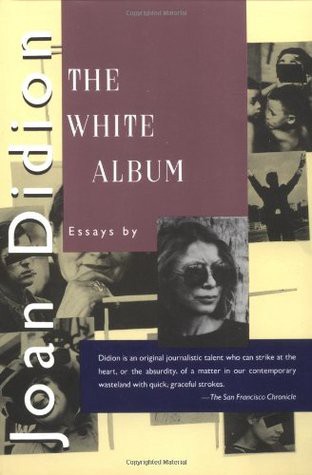
In her book of essays, Didion discusses swimming pools a number of times. She expresses her consistent desire to own a swimming pool, especially as a Californian suffering through the drought. She posits that pools are wrongly thought to be symbols of wealth and hedonism. “A pool is water, made available and useful, and is, as such, infinitely soothing to the western eye,” she writes. Towards the end of the novel, there is a powerful image of Didion sitting at the shallow end of her sister-in-law’s pool when they get a call from a friend telling them about the murders of actress Sharon Tate Polanski.

5. The Pregnant Widow by Martin Amis

The cautionary Greek myth of Narcissus runs between the lines of this novel. The Pregnant Widow’s pivotal image is a group of young university students sitting around a pool in Italy, looking at themselves and each other, observing changes in the world around them. It takes place in 1970, and there sure was a lot shifting back then, especially in gender dynamics.

6. The Secret of Evil by Roberto Bolaño

“I Can’t Read,” a short story in Bolaño’s collection of stories, features a classic case of peeing in the pool: “urinating, not in the pool, underwater, as almost all kids do, but from the edge, for everyone to see.” The act, although an embarrassing one, means so much more than that; it’s a representation of the characters’ friendship and one’s existence within the world. Deep, I know.

7. The Diving Pool by Yōko Ogawa

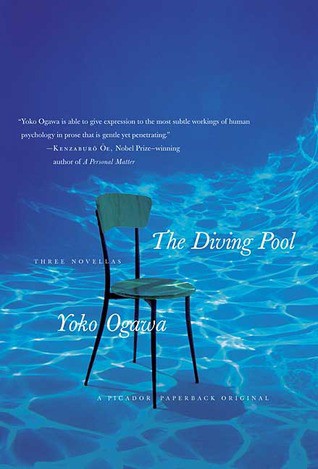
In Ogawa’s novel, romance blossoms at the local pool, where teenage Aya is enamored of Jun — and his diving. Their situation is complicated by the fact that he is her foster brother, and she just can’t stop looking at his muscles: “warm and soften like silk floss.” Sounds steamy.

8. “Forever Overhead” by David Foster Wallace

David Foster Wallace uses imagery about a pool to talk about a boy’s growing up and all of the unglamorous bodily changes that accompany it. A boy standing at the edge of a diving board contemplates the question some of us ask ourselves every day: what am I going to do with my life? Realizing that the pool is a “system of movement,” the 13-year old boy has the courage to “step into the skin and disappear.”

10. “Hello Everybody” by AM Holmes

This story talks about a type of people that we all know, or at least have heard of: “pool people.” They live in LA, avoid getting wet to preserve their constantly new hairdos (yet wear bathing suits all year-long), love AC, and are terrified of old things. Generally, a pretty chilling image.

11. “Man Boob Summer” by David Gordon

In “Man Boob Summer,” David Gordon describes the assortment of characters that can be found at pretty much any pool. Screaming kid, old man exposing WAY too much in a speedo, an attractive lifeguard…This story has got it all.

Ted Wilson Reviews the World: The Fresh Prince of Bel-Air

★★☆☆☆

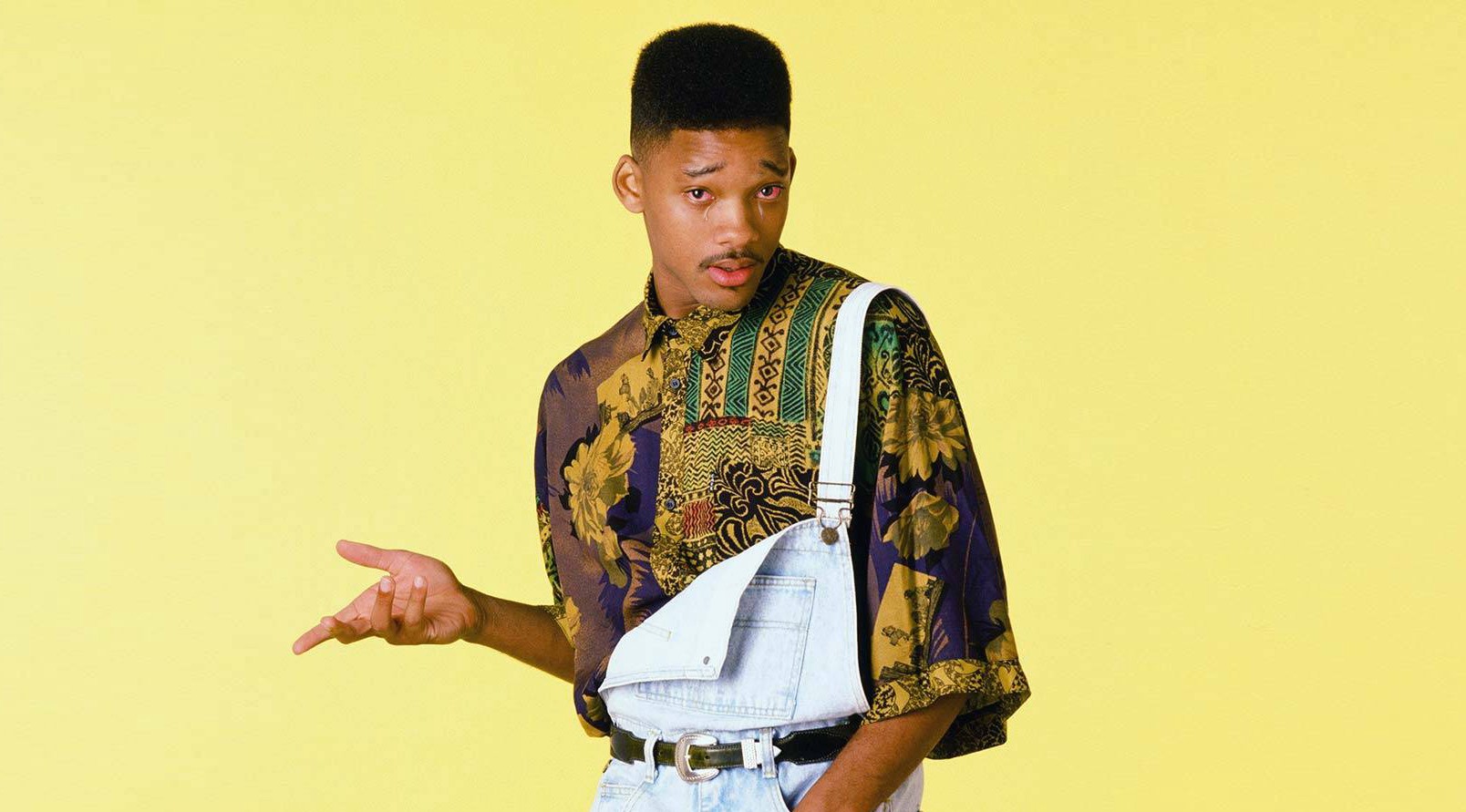
Hello, and welcome to my week-by-week review of the world. Today I am reviewing The Fresh Prince of Bel-Air.

When a young man named Fresh Prince is sent away by a mother who no longer wants to care for him, she offers only the flimsiest of excuses — that it’s for his own safety. (She works for the post office, an agency with offices in literally almost every town. She could have moved with him anywhere if she truly loved him.)

Fresh is handed off like a hot potato to live with his extended family, a family so rich they live in a mansion with a butler, yet can’t be bothered to greet Fresh when he lands at the airport, and he’s forced to take a 45-minute taxi ride. This is the premise of a television show called The Fresh Prince of Bel-Air.

Fresh uses humor to mask the grief he feels over his mother’s rejection. On the outside he is happy and irreverent, but knowing his backstory makes his jokes reek of desperation and a desire to be loved, just like Carrot Top or the late Johnny Carson.

It seems that Fresh’s zany personality is the reason he doesn’t fit in with this family, but at its heart this is a tale of classism. These one-percenters want nothing to do with a poor, young man from a dangerous neighborhood, but are forced to take him in for unexplained reasons. Fresh’s mother must have some real dirt on his aunt.

Fresh manages to make only one close friend on the show, another young man named Jazz. Jazz is as unlikable as Fresh believes himself to be, but smaller and for some reason always wearing sunglasses. I assumed he was blind but he doesn’t seem to be. He may just have ugly eyes.

Fresh’s mother could easily have abandoned him at a fire station — there’s no age limit on that — but she clearly wanted him as far away as possible. Eventually guilt must take over because she begrudgingly manages to visit him a couple of times over the six-year run of the show.

To be honest, The Fresh Prince of Bel-Air rarely held my interest but not because I’m racist. I don’t relate to the super rich characters portrayed in this show. I mean they had a butler! The closest I’ve ever had to that is when I order a pizza and a man drives it to my house.

I wrote several letters to the producers of The Fresh Prince of Bel-Air suggesting they have a crossover starring ALF in order to attract more viewers. They never responded to my letters or implemented my idea. Not surprisingly, The Fresh Prince of Bel-Air was cancelled.

BEST FEATURE: The catchy theme song.
WORST FEATURE: Fresh Prince never returns home to live with his mom.

Please join me next week for a special edition of Ted Wilson Reviews the World.

A Good Short Story Is “A Pill That Lets Us See the Real”

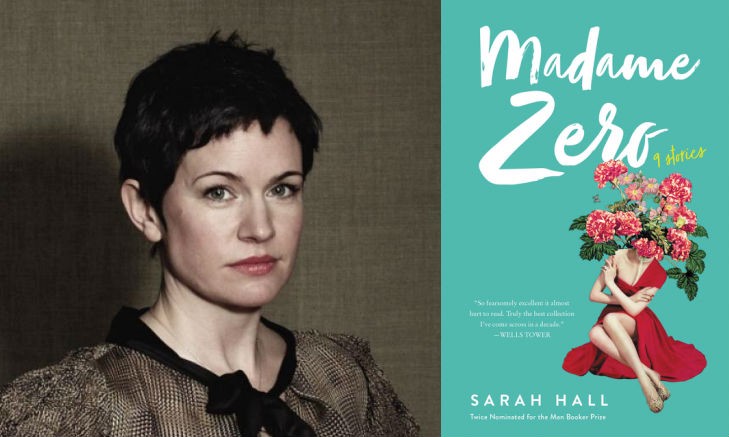
Sarah Hall’s career has been rich in recognition, going back to her debut novel, Haweswater, which won the 2003 Commonwealth Writers’ Prize. The British author went onto be named to Granta’s coveted “20 Under 40” list, and in 2013, she won the BBC National Short Story Award for “Mrs. Fox” — which also happens to be the first story in her latest collection, Madame Zero, arriving on US book stands this week. In Madame Zero, Hall uses rich observations to explore the female experience in wholly original, thoughtful, and enticing stories. Throughout the collection, she weaves themes of resilience, finding your true self, and discovering how truth shifts over time.

We corresponded via email about what short stories offer that novels cannot, how ideas stand out and stick, as well as what we can learn from reading short fiction.

Sarah Hall

Adam Vitcavage: As a writer, what do you get from short stories that you can’t get in a novel?

Sarah Hall: Short stories are such a different exercise, and testing in their own unique way. It’s not that stamina isn’t required — drafting and editing a story may take years — but they seem to have a different barometric pressure internally. The challenges are more about condensing a world and creating potency, creating consistency and purity across a narrative, and the drama is perhaps like a flash storm rather than the seasonal moods of long form. Sorry for the weather analogy — how English of me! Let me try sport instead…! The satisfaction of feeling you’ve written a successful short piece is a different kind of performance pride to the exhausted post-marathon elation (or sickness) of completing a novel. It feels a more schematic gymnastic enterprise. Short stories are an exacting, less forgiving art form, where, ideally, huge metaphysical references and questions are posed within a restrictive zone. It’s harder to feel you’ve perfected a short story, but in the end they can feel more perfect, meaningful and resonant than a novel.

Vitcavage: What about as a reader?

Hall: This is where I feel short stories have huge appeal and value. Novels can make inquiries into subject matters and can illuminate subjects; they can feel like human journeys or journeys to other worlds, and they can offer extended reading intrigue and pleasure. Stories do that too, to an extent, but their peculiar quality of disquiet, of discombobulation, requires a reader to puzzle about the given-ness of what they believe to be true or right. We try so hard to order and create stability, but life is mutable, and the world is chaotic and vexing. I know no other form that so naturally seeks to challenge given-ness. How? Why? Maybe it’s something to do with void, inference and microcosm-ing — the gap created, of what isn’t there, what isn’t explained, so even small, strange events can knock a reader for six. We have to interpret and bring to the experience all those unsaid but imaginable things, all those uncomfortable suspicions that we aren’t in control. We must test our preconceptions and expectations and sense of security. I suppose I feel that short stories, even though they might seem to create an uncanny matrix, are like a pill that lets us see the real.

“I feel that short stories, even though they might seem to create an uncanny matrix, are like a pill that lets us see the real.”

Vitcavage: I found the variety and scope of this collection to be intoxicating. Every story feels tethered together but completely fresh. Was this a conscious effort, or how did these stories come together?

Hall: Thank you. I think ultimately that’s just how I work. Whatever I’m writing, I have to feel something is a new and separate and entire idea, even if the themes are similar to previous works. Without wanting to sound overblown, I also really try to create an artistic piece each time I write, that contains within it as much as possible (either actually or allusively). It’s not to everyone’s taste, such distinctively different pieces, and I admire writers like Díaz, Saunders, and Tessa Hadley, who create collections with more of a running DNA through the stories, because something greater than the component parts can be constructed overall. Madame Zero is the work of 5 years or so and over that time there have been preoccupations which I think moor the pieces together, albeit slackly.

Vitcavage: Numerous stories stood out to me, but I want to focus on the genesis and creative process of one (or two if you’re willing). “Case Study 2” was stylistically refreshing and “Goodnight Nobody” felt like a story I needed in my life for years. Where did these ideas originally come from?

Hall: Thank you again. “Case Study 2” stemmed from my interest in psychology, particularly an interest in enmeshment within families and communities and how this might effect individuals, and might go on to define how successfully or unsuccessfully people form relationships in the wider world, outside the system that was formative. I think sometimes short story writing (any writing) can place an author through the looking glass. I had a happy rural upbringing — that wild kid on the moors with the snails and the geological knowledge is/was me, but Christopher isn’t me, he’s in another un-boundaried Cumbrian world, of neglect and chaos. With this story I also wanted to challenge myself stylistically. Case studies in psychology or medicine can often read like stories, and I was very interested in attempting the ‘found poem/found document’ model. The real challenge is making something ‘told’ feel activated on the page. And the genogram was hard as I’m completely technologically useless!

“Goodnight Nobody.” This seems like one of the softer stories in the collection to me, which is odd because it comes directly out of a very turbulent patch of my life. My mum was diagnosed with a terminal illness when my daughter was 4 months old, and she died a year later. A few months after that, I became a single parent. The emotional storm of human incoming and outgoing and of personal redefinitions was pretty intense. So this piece is probably about me very gently (gingerly might be a better word) trying to find a way through all that trauma, loss and gain, which isn’t to say I think writing is therapy — I really don’t. There’s a lot of negative space and unknowns and voids in the story, and really the catalyst for its writing can be found in the title. I was reading Goodnight Moon by Margaret Wise Brown to my daughter for the first time, and I hit that empty page with ‘Goodnight Nobody’ on it. Cue a total What-The-Fuck moment for me. Something coalesced, some kind of existential non-understanding, that I don’t think I’ll ever resolve, just like that page will never really make sense. And of course short stories trade so well in irresolution.

“I was reading Goodnight Moon by Margaret Wise Brown to my daughter for the first time, and I hit that empty page with ‘Goodnight Nobody’ on it. Cue a total What-The-Fuck moment for me.”

Vitcavage: The short story writing and editing process is obviously different than a novel. How do you go about the lifecycle of a story?

Hall: Apologies, I’m very bad at describing my process. But I think I know when an idea has the potential shape to be a short story, so I usually set off with more of an idea of what it will ultimately be or become than I do with a novel. Generally a first draft has to be fairly ‘clean-feeling’ and ‘true-feeling’ for a story to go on and be a success, with a lot of up-front editing in the brain, as well as on the page. I tend not to leave anything lingering in unfinished states too long or it dies a death.

Vitcavage :In an interview with the Telegraph in 2015, you spoke about how you want your work to speak to more than just women. I, for one, love learning a different perspective. What do you hope readers — both female and male, young and old — can learn from your writing?

Hall: Oh, I don’t know. It’s not for me to say really what others might take from the work, and I’m certainly not trying to educate. I just hope readers will be transported, be moved, and maybe will be left thinking over a subject. I feel like I’m on a journey of exploration when I write, and I can only hope that whoever — anyone, someone — feels companionability with that journey, because they’re also interested in that subject, and are asking similar questions. I’ve never felt limited by age or gender, even as age and gender have helped form me, so I’ve never felt the work is directed towards a particular group. The one caveat there is I hope women readers especially find my women characters exhilarating and interesting, and I hope they recognise the wide spectrum of female capability and ambition. I know I would like to encounter more of that feeling as a reader!

Vitcavage: Many of your previous works have been held in such high regard. Can you give any insight into your next project?

Hall: A new novel is next. It’s something a bit bonkers, if I can pull it off, but I’m in the early stages so trying to describe anything is probably unwise. And I’m writing more short stories. The form makes a lot of sense to me just now.

We Need Stories of Dystopia Without Apocalypse

Let’s start with a thought experiment.

Think about the numbers 2 and 3. Now think about 72 and 73.

Did the difference between 2 and 3 feel more significant than 72 and 73? To most of us it does, even though we were taught in first grade that every unit of the number line is the same.

This sense that the distance between values decreases as they get larger is rooted in our biology. Cognitive neuroscientists have identified two systems in the brain for understanding quantity. The first allows us to instantly recognize small quantities: 1, 2, 3, sometimes 4 or 5. The other system detects relative proportions and is about as good at seeing the relative amounts of 10 and 15 or 50 and 75.

This makes a certain amount of intuitive sense if we think in terms of evolution. It’s important for survival to be able to measure small quantities — how many young are you looking after? how many predators just ran past? — and to be able to tell whether one source of food is significantly more plentiful than another. But when we’re asked to choose between a bush with 72 berries or a bush with 73, our brains fail us. To tell the difference, we have to count, and slowly. Quickly processing exact quantities at large scale has never been necessary for our survival as a species.

Quickly processing exact quantities at large scale has never been necessary for our survival as a species.

That was the case before climate change. Now our inability to imagine large quantities — or distant futures — in concrete terms may doom us all.

In 2006, a group of political science researchers from the Universities of Tennessee and Michigan conducted a survey in twenty-four countries exploring the human ability to imagine the distant future. Survey questions included, “‘When you hear someone use the word future, approximately how many years into the future does this mean to you?’’ Researchers found that respondents interpreted “future” to mean only about fifteen years from now — and that the imagination “goes dark” fifteen to twenty years into the future. Most relevant for climate change, “individuals’ ability to imagine the future decreases as the time frame increases.” Human difficulty in imagining the future may help explain our inattention to the long-term consequences of climate change. Individual storms and “natural disasters” receive our immediate attention given their spectacular — and newsworthy — nature. But threats that ocean levels will rise in thirty or fifty or a hundred years or that temperatures will be dramatically higher by the next century just aren’t within our temporal grasp.

Human difficulty in imagining the future may help explain our inattention to the long-term consequences of climate change.

A whole body of psychology research affirms that humans have different relationships to the present and to the future. Would you rather have five dollars today or eight dollars a month from now? Experiments asking these kinds of questions, with variations in amounts of money and lengths of time, have contributed to the theory of temporal discounting. Essentially, effort, money, and time are perceived as having more value to us today than they have in the future. Five dollars is worth more to us now than in a month — and maybe worth more than six dollars in a month. Similarly, saving millions of dollars by not building a sea wall feels more valuable today than having to spend even more in the future to rebuild towns damaged by rising water.

If the future becomes less valuable as it grows more distant, the demands of future tasks are perceived as less banal than today’s efforts. The vague chore of rebuilding a town seems easier than the rigamarole of paperwork and contractors and details of building that sea wall. Studies of temporal construal show that near-future events are imagined in “low level” concrete details, while distant-future events are conceived of in “high level” abstract features. Goals that seem abstractly valuable in the long-term like dramatically reducing carbon outputs are perceived radically differently than the immediate and challenging realities of living without air travel, cattle ranching, and other sources of emissions. Even those who believe in the urgency of climate change are likely to put off the hardest lifestyle changes for later.

Even those who believe in the urgency of climate change are likely to put off the hardest lifestyle changes for later.

Elke Weber, Co-Director of Columbia University’s Center for Research on Environmental Decisions and the Center for Decision Sciences, explores human responses to climate change. In a 2006 paper, she describes two systems for human risk processing that rely on different neural mechanisms: an associative system that responds intuitively and emotionally and an analytical system that responds consciously and explicitly. These two systems can act in isolation or in unison, but the strongest reactions are triggered by recent, personal, or unfamiliar threats. Weber makes the case that because scientific presentations of climate change tend to be impersonal and distant, environmental threats are likely processed by only the analytical system. How many people reacted with fear to the recent graphs showing the decrease in sea ice over time? How much urgency do predictions about fractions of a degree generate on a daily basis? Humans are biased toward information that is simple and emotionally relevant, terms that rarely describe climate change. Weber writes, “without intervention, the risks of global warming will fail to evoke visceral reactions, thus predicting that we will fail to allocate attention and material resources.”

Some journalists and activists attempt to play directly to our emotional responses; in his recent article provocatively titled The Uninhabitable Earth, David Wallace-Wells begins by promising his readers that with regard to climate change, “it is worse than you think.” Reactions to his comprehensive forecast of the nightmarish potential of climate change have certainly been emotional. The question remains whether, as alarm passes, readers slip back into paralysis because the challenges ahead seem either implausible or insurmountable.

It may be that raw information can’t overcome our struggle to conceive of 2035 or 2075 in concrete realities of climate change that are expensive and challenging and emotional enough to inspire us to take action now, today. Should we just give up?

Research says: maybe not.

Researchers in the United Kingdom and Germany have explored whether it’s possible to reduce our temporal discounting so that we’re more motivated to act now to mitigate climate change. In one study, Sabine Pahl and Judith Bauer created future scenarios with stories and images about a young woman living in 2105 and experiencing the negative effects of environmental change. Participants in the study were asked either to imagine themselves in the woman’s place or to analyze her experiences. Afterward, those who imagined the woman’s perspective and the concrete details of her life spent more time looking at educational materials about climate change and took more materials with them than those who remained analytical. If this effort to imagine other people’s perspectives inspires emotional rather than analytical processing, perhaps we have hope to overcome the difficult abstraction of considering distant futures. The authors conclude that this approach might be even more effective if participants could choose stories of climate change about people similar to themselves from a range of narratives.

Another group of researchers, including Elke Weber, tested whether they could diminish psychological distance by inspiring a desire to leave a positive legacy for future generations. In an online experiment, some of the three hundred twelve participants were asked to write a short essay “describing what they want to be remembered by for future generations” and were then asked a series of questions about their beliefs and willingness to take action on climate change; participants could also donate some or all of their compensation from the study to environmental causes. Those who had been asked to think about their legacy identified stronger beliefs, were more willing to act, and donated at higher rates toward climate causes. The authors suggest that this provocation to think about legacy may be a key strategy to motivating climate action.

Taken together, these strategies for considering future perspectives and our own legacy could spark greater climate consciousness and action. But after any study of an intervention finds an effect on behavior or health, we’re left with a similar set of questions: How long did the effect last — a week? a month? How much did the effect depend on where and when the intervention was carried out or on the people running the experiment? How specific is the effect to the gender or age or education level of the participants? What minimum dose of the intervention is necessary to have an effect? And most critically: if the intervention works and has long-term effects for many people, could we ever afford to bring it to scale and reach everyone?

Fortunately our species has spent thousands of years developing the intervention we need: literature.

Emanuele Castano and David Kidd at The New School conducted a remarkable study in 2013 on reading and Theory of Mind. In the study, participants were asked to read excerpts of literary fiction, genre fiction, nonfiction, or nothing. Then they were assessed for their ability to imagine another person’s emotional and psychological reality. The participants who read literary fiction showed a markedly greater Theory of Mind — what’s more commonly thought of as empathy. While there’s surely grounds for debate in the literary community about the exact reading assignments given in the experiment and for further research about whether some genre fiction or nonfiction can also cultivate empathy, this research confirms that literary fiction could be the tool we need.

Empathy is at the heart of imagining the daily suffering of some future human and how our own legacy might affect them.

Empathy is at the heart of imagining the daily suffering of some future human and how our own legacy might affect them. It even holds the power to affect our choices and behavior. The Theory of Mind study leaves us with the same kinds of questions about how long the participants showed increased empathy and how much reading is necessary for lasting effects, but intensity and dosage and time are the great experiment of literature.

Reading could save us from climate change — if we read (and write) the right things.

The Self at the Bottom of the Toilet Bowl

The term “Climate Fiction” is only about a decade old, but it has already been used for a wide range of novels. Among them are Nathaniel Rich’s Odds Against Tomorrow, Lydia Millet’s Mermaids in Paradise, Claire Vaye Watkins’s Gold Fame Citrus, and many others that are set in a near-future or slightly parallel version of our own world. Such novels are often described as being “dystopian” or “post-apocalyptic” — two terms that are necessary to untangle as we think about what kinds of stories might actually change human attitudes and behaviors toward our environment.

In simple terms, an apocalypse is an end of days event — in climate fiction often a storm or a meteor or a similar ‘act of God.’ In those kinds of climate narratives, the dystopia is what follows. Depictions of apocalypse and the dark days afterward abound in modern culture, filling up every corner of our media from movies like Armageddon to the Dr. Seuss classic The Lorax. At their best these narratives are compelling and emotional, creating a moment of empathy for the characters and their trials. But for the purpose of inspiring action against environmental degradation and climate change, research suggests they may undermine their own intentions.

For the purpose of inspiring action against environmental degradation and climate change, research suggests these narratives may undermine their own intentions.

Mike Hulme, a Professor of Climate and Culture at King’s College London, offers a definition of climate as “an idea which mediates between the human experience of ephemeral weather and the cultural ways of living which are animated by this experience,” and explains that we find stability in our conception of the overarching climate and how our culture deals with it. In New England, we have snow boots for December and rain boots for April, and if we pull them out of the closet a few days early or late, we shrug off any disruption in our expectations. Hulme argues that gradual changes in weather occur in patterns too large to be easily grasped; when they are understood, those changes can be destabilizing.

Further complicating this idea, Nico Stehr, a sociologist and the Founding Director of the European Center for Sustainability Research, argues that our conceptions of climate not only set our expectations but weather events that deviate from these conceptions actually affirm our trust in climate. For one thing, “images that express fear, risk, vulnerability and danger can lead to ‘denial and paralysis.’” Even worse, when violent crises seem to have “natural” origins we stop thinking about the human contributions to climate change and the politics and policies that have contributed to the disaster — which undermines our ability to prevent such disasters for the future.

If extreme weather events only affirm our trust in our expectations of climate, what does that mean for the role of the apocalypse in climate fiction? Some authors may guide our attention to the cultural and political implications of fictional natural disasters, but even these might restore our faith in our real-world concepts of climate. Critically, while there will be natural disasters, the threat of climate change won’t arrive as a singularity, a sudden cataclysm that destroys our way of life. Instead things will change slowly — flooding here, intense storms there, drought and wildfires becoming the norm — too slowly for some of us to process, or even believe in.

Some authors may guide our attention to the cultural and political implications of fictional natural disasters, but even these might restore our faith in our real-world concepts of climate.

There’s a narrow path between the pitfalls suggested by the psychological and sociological research about climate change. As humans, we need stories to help us make sense of our world and empathize with the future. At this moment, we need stories that make the realities of climate change concrete and pervasive and of human origin, as well as viscerally emotional when it comes to the struggles of our descendants. We need stories of dystopia, but not apocalypse.

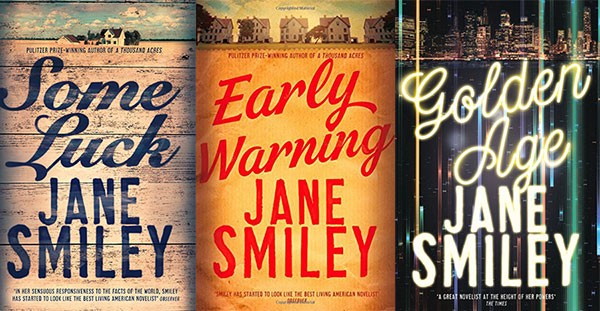
Some novels that employ these strategies to help us reckon with climate change are already being written under the climate fiction banner, but literary fiction is also beginning to take on the challenge. In Golden Age, the final volume of her Last Hundred Years trilogy, Jane Smiley writes of her character Jesse Langdon:

“[Jesse’s] attitudes toward global warming had been shaped by a movie he’d seen with [his children] Perky and Felicity early in the summer, The Day After Tomorrow. They had been eating popcorn and gaping, just like everyone else in the audience, and thinking what if what if, and then, apparently, New York City froze solid in the space of about five minutes, and Jesse wasn’t the only person in the audience who laughed out loud.”

When Jesse’s daughter tells him about the 2011 tsunami in Japan, Jesse finds “he wasn’t devastated. He had gotten so small-minded, he thought, that he was mostly grateful that this one disaster, at least, was far away.”

Smiley’s explorations of Jesse and his reactions to natural disasters wink at Stehr’s research. Her trilogy as a whole chronicles the history of an Iowa farm family, the Langdons, as they sprawl across the American landscape and entangle themselves with history over the years from 1920 to 2019. The structure of her work alone does something important: every chapter is another year of the century, plodding along, taking us back to first grade and reminding us that every unit on the number line is equally long and equally real to those living it. The books are about the dramas any family contains, but in the background the gradual reality of climate change is revealed from many points of view. We witness the transformation of the agricultural industry from small family farms to giant agribusinesses. We empathize with Felicity’s final trip to the family farm, when she finds that the soil is nearly gone and that the company that owns the land now has covered the ground with plastic sheeting so the earth doesn’t blow away. We consider patriarch Walter Langdon’s legacy — and our own.

Annie Proulx’s Barkskins takes a similar and even more explicit approach. Barkskins tells the story of two men who leave France in 1693 to travel to what will eventually be Canada, to work as indentured laborers until they’ve paid off their bonds. They’re set to chopping down trees, clearing land for farming in the middle of what seems an endless forest. Both men’s family trees mingle First Nations and European roots as the novel follows six generations of their descendants as they take up logging, ax-grinding, corporate leadership, and environmental conservation at different turns. Much like Smiley, Proulx is conscious to give readers a wide range of perspectives to empathize with and a sense that the opportunities and constraints of a life felt as real to inhabitants of the seventeenth or nineteenth centuries as they do to us today. And in the background we see the self-serving and brutal decisions made by people like us to further human domination of the North American landscape. In the last pages, one character becomes Proulx’s final mouthpiece: “It will take thousands of years for great ancient forests to return. None of us here will see the mature results of our work, but we must try.”

Both Smiley and Proulx are known for their writing of place and environment, but these novels are a quintessential model for the new climate fiction we need. As we set them down our attention is directed from the many generations behind us to those ahead, to the legacies we’re forced to imagine because the effects of human activity and climate change are already concrete and clear, as real as the personal drama that occurs alongside them that usually fills our range of vision on its own.

The Yale Program on Climate Change Communication found that as of 2016, 70% of American adults believe global warming is happening and will harm future generations — but only 33% discuss global warming “at least occasionally.” A mere 18% of American adults are classified by researchers as “alarmed,” meaning they’ve moved from worrying about to actively responding to climate change.

Perhaps our best first step is to acknowledge the realities of our brains: we are capable of clear-cutting rainforests for a sliver of profit, we can inspire empathy with symbols on paper, but we can’t fully imagine the future. Worrying about 2060 or 2061 or 2062 feels like a distant blur compared to worrying about 2018 or 2019 or 2020. Yet we’ll get there, or our children will. What we need in the meantime are stories that remind us viscerally, emotionally, of the truth: our legacies will be real whether we can imagine them or not. What we need from fiction is empathy, not apocalypse.

Unfinished Business: F. Scott Fitzgerald and The Love of the Last Tycoon

Each month “Unfinished Business” will examine an unfinished work left behind by one of our greatest authors. What might have been genius, and what might have been better left locked in the drawer? How and why do we read these final words from our favorite writers — and what would they have to say about it? We’ll piece together the rumors and fragments and notes, to find the real story.

In 1940 F. Scott Fitzgerald died at the age of 44 from a heart attack just off Sunset Boulevard. He was survived by his wife, Zelda, their daughter Frances (a.k.a. “Scotty”) and around a hundred pages of a novel-in-progress titled The Last Tycoon.

At least that’s the title Edmund Wilson gave it when he edited the drafts into book form the following year. Its only surviving title page declares it to be Stahr: A Romance. But in a letter to Maxwell Perkins at Scribner, Fitzgerald’s companion Sheilah Graham explained that just three weeks before his passing, he’d decided to change the name to The Love of the Last Tycoon.

This is the title it goes by today after biographer Matthew Bruccoli reissued the book in the 90s along with a slew of Fitzgerald’s working notes. Bruccoli points a page of these notes that says “Title” at the top. Beneath it are some cringeworthy options, all crossed out, including “The State of Metro” and “The Lumiere Man.”

“The Last Tycoon” is there, but scribbled out. Over “The Love of the Last Tycoon” there’s a checkmark — or a slash? Nearby a small note says, “This is the familiar Fitzgerald formula but the boy grows tired.”

That’s crossed out too.

It’s disconcerting there’d be this much ambiguity surrounding just the title of an unfinished novel, let alone what’s on the pages themselves. Yet almost inevitably after the passing of a great author, their last incomplete project is dolled up and presented to the grieving readers this way.

An unfinished manuscript becomes a kind of parting gift and a glimpse at what might have been. Sometimes it is presented like a real, completed work, instead of some mixture of masterpiece and mess. Often, it has been reorganized or revised by editors or executors. There’s little certainty if the author would have wanted the final product to look as it does, or if they would even want it to be read. In fact, sometimes we know for a fact that they wanted it killed with fire.

It’s disconcerting there’d be this much ambiguity surrounding just the title of an unfinished novel, let alone what’s on the pages themselves.

An unfinished work ends up being both a shame and a treasure. The wrongness of exposing someone’s rough draft weighs against the rare glimpse at how the sausage was made. These works both spoil our illusions of genius and remind us how human our literary heroes are, and how arduous and arbitrary the writing process is for even the very best.

As in the case of Fitzgerald, we’re often left with many open questions of what might have been if only that last work had been finished.

What exists of The Love of the Last Tycoon was not even a final draft, but a “latest working draft.” The story revolves around charismatic Monroe Stahr, a fictional 30s Hollywood producer, modeled on real-life Irving Thalberg, the “boy genius” who headed MGM from 1924 to 1936. Fitzgerald had worked for him, and notes show how impressed he was. Stahr is an idealistic melding of art and commerce, an anti-Gatsby whose success resulted from hard work, bottomless confidence, and a deep creative sensibility.

“An unfinished manuscript becomes a kind of parting gift and a glimpse at what might have been.”

Stahr runs his movie studio like a dream factory, bringing stories to life. As with The Great Gatsby and Dick Diver in Tender is the Night, Stahr is first glimpsed through the eyes of an awed outsider — a young woman named Cecilia Bradogue, who Fitzgerald describes as “a pretty, modern girl neither good nor bad, tremendously human.” The daughter of a rival producer, she starts out, in his words, as “a princess… a snob” but then crucially “evolves away from this,” as evident as she looks back on her interactions with Stahr from years later.

According to Fitzgerald’s notes and letters, the novel was meant to span a few months in 1935 and revolve around a love affair between Stahr and a woman named Thalia Taylor, tinged with Cecilia’s unrequited love for Stahr, and set against an inter-studio rivalry between Stahr and her father involving mobsters and murder-for-hire. It would end with Stahr’s death in a plane crash — representing the impending end of Hollywood’s golden age.

Matt Bomer as Monroe Stahr in Amazon’s ‘The Last Tycoon’

In concept, the novel had the potential to be equal to, if not greater than, his earlier ones. There’s a sense of his desire to write a novel with a less-flawed hero, who Bruccoli describes as “Fitzgerald’s only true professional” that might have embodied the hard-working writer Fitzgerald always was under the surface of his Jazz Age partygoing.

Love interest Thalia was not to be another beautiful, cold Daisy, or generous, wounded Nicole Diver, but “the most glamorous and sympathetic” of his heroines — a 26 year old widow who he wanted to “dower… with a little misfortune.”

An unfinished work ends up being both a shame and a treasure.

The move to the West Coast, the focus on filmmaking, and the backdrop of the Great Depression all would have been fresh territory for Fitzgerald, still widely regarded as a writer of the 20s, of elite Manhattanites and Ivy League ex-patriates in Europe.

Bruccoli calls Tycoon “the most promising — and the most disappointing — fragment in American fiction.”

Because of course, it could just as easily have been a disaster. A total train wreck. No offense to Fitz — it’s the nature of any book half-written. Part of the thrill and the misery of writing is that we’re never sure if we’ll ultimately reach the high benchmarks we set out for ourselves. Writers of even a dozen great novels might just as likely miss with the thirteenth.

As it stands, Tycoon consists of seventeen “episodes” out of an outlined thirty. These would have added up to a little more than five of nine chapters. Fitzgerald projected that he’d need to write about 60,000 words to trim to 50,000 — around the length of Gatsby. At the time of his death he’d written about 44,000 words. Two-thirds, maybe, of what he hoped the final first draft might be.

As in The Great Gatsby, the story opens in the first person, but from Cecilia’s female perspective, which he hadn’t tried in his earlier novels. It works, I think — at least what little we get of it. After a few episodes he switches the focus to Stahr, and goes into a close third person, showing us Stahr’s world, even though it is ostensibly still Cecilia recounting the events, as it “comes through” to her.

Fitzgerald wrote —

“I shall grant myself the privilege, as Conrad did, of letting her imagine the actions of the characters. Thus, I hope to get the verisimilitude of a first-person narrative, combined with a Godlike knowledge of all events that happen to my characters.”

This might have worked in time, but it remains a tangle in the hundred pages he’d drafted before his death. With Gatsby, the story coming through Nick, keeps us at an arm’s length from Gatsby, so we see the glittering façade with just occasional glimpses of the fraud beneath. In Tycoon, Fitzgerald puts right there with Stahr for dozens of pages, and his episodes have a distinctly different voice from Cecilia’s own.

There are also several large plot holes still in the notes, minor characters whose names aren’t consistent, and loads of spelling errors.

Also, I’m sorry, but the hero, working in the movie business, was really going to be named Stahr? Oh Fitz.

Would he — could he, have solved these problems?

This is what vexes and intrigues us when reading an unfinished work. If all we have is a “working draft” we can only speculate. Was Fitzgerald, at 44, a writer at the height of his abilities, ready to tackle these problems and all the other new frontiers he hoped to? Or had the boy grown tired, as he had written in his own title notes?

By then, Tender is the Night had failed to live up to the sky-high expectations of many critics, cranky after a nine-year wait. His wife Zelda had been institutionalized, again. Scotty was off at Vassar. Fitzgerald struggled with alcoholism as well as his finances, even though he’d signed a lucrative deal with MGM (and Thalberg). He’d already had two other heart attacks.

Much of what we know about Fitzgerald’s vision for The Love of the Last Tycoon comes from a long letter he sent to Collier’s a year before his death, outlining the plot and asking for a $15,000 advance so that he could get out of his screenwriting obligations and focus entirely on the novel. He starts out very confidently, assuring the editor there that he has everything about the novel completely worked out and there is “nothing that worries me in the novel, nothing that seems uncertain.”

But by the end of his long pitch he turns desperate.

“As I said, I’d rather do this for a minimum price than continue this in-and-out business with the moving pictures where the rewards are great, but the satisafction (sic) unsatisfactory and the income tax always mopping one up after the battle […] Four months of sickness has completely stripped me and until your telegram came I had counted on a build up of many months here before I could even consider beginning the novel. Once again a telegram would help tremendously, as I am naturally on my toes and” —

The rest of the letter is missing.

Collier’s asked to see a long sample. Fitzgerald sent them around half of what they asked for. They declined to give him the advance.

And yet, he did write it — or two-thirds of it, anyway, in barely fourteen months. And while it surely wasn’t The Great Gatsby at the time he died, who knows what he might have done with another year, or two?

All we can really do is hold the fragments and notes that we have together and, like Cecilia, imagine the rest to be. Maybe it would have been the comeback he wanted it to be.

Perhaps one of the most famous Fitzgerald quotes is that “there are no second acts in American lives.” It is often brought up in connection to Gatsby, or to Dick Diver, but in fact it belongs to The Love of the Last Tycoon. Or — maybe it does. Edmund Wilson found the line among the numerous pages of notes Fitzgerald left behind after his death, and included it with a series of other loose bits in the back of The Last Tycoon.

Because Fitzgerald never got to deliver the line in context, it has been interpreted to mean many things: that in America we cannot ever truly escape our pasts, or reinvent ourselves. Or did he mean that our lives leap over the steady, developing middle of a traditional film structure? We go straight from set-up to ending, always booming and busting. As a part of Tycoon, the line resonates with the plane crash that would end Stahr’s determined life. Perhaps Stahr was going to think something like it, as he went down. Or perhaps it was just a thought of Fitzgerald’s own understanding of the suddenness of death after surviving two earlier heart attacks.

One hint might be in the actual final title of the book. According to Bruccoli and Graham, it wasn’t just supposed to be The Love of the Last Tycoon, but The Love of the Last Tycoon: A Western.

I tend to think that he meant to say something about those with great ambitions, as writers often have. Those who go West, seeking fortune, making something from nothing, will always leave behind their incomplete attempts, their missing pages and cross-outs. This unfinished business is at the very heart of the dream.

A Story About What A Thrice-Divorced Man Took for Granted

“Dr. Hamidi’s Difficult Divorce”

by Dina Nayeri

June 2009

Isfahan, Iran

In order to finalize his own ugly business, as if the universe were demanding one last slice of flesh, Bahman was compelled to watch thirteen consecutive divorces, a full docket. By the sixth one, he stared baffled at his young lawyer — who was also slowly succumbing to the malaise of it, uneasy shoulders sinking, loose lips draped over half his cigarette — and mouthed, “This is absurd.”

“Forgive me, Agha Doctor, what do you mean?” The attorney raised both eyebrows as if Bahman should have expected this farce, as if an ordinary man should be accustomed to watching pale husbands slump and flinch, pretty wives crumble thirteen times just to complete his own errand. There is always an instant, isn’t there, when youth fails? And who wants to see it?

They sat in plastic chairs just outside the cleric’s office, watching through the crack in the door, which had been left ajar, it seemed, expressly for that purpose. His young lawyer kept wiping his hands on his cheap gray trousers and sipping hot tea. Sometimes the boy would get up to refill the two fingers of liquid in his tulip glass from the rusted samovar atop a long table in the corner where two secretaries in black chadors were engaged in some joyless business. Why had he hired the fidgety lawyer? After all, despite Bahman’s secular education and volumes of subversive poetry, his children’s indulgent American degrees and his fugitive first wife, he was still the male in an Iranian divorce: a secure position. Things would go easily for him here. Though, yes, he was planning to tell some lies, and, more important, when is a third divorce ever easy?

Yesterday, drinking at home from his own samovar, Bahman had reflected on today’s errand with anticipation. It had been coming for a long time. He considered how the next chapter of his life might read. Perhaps he would buy a new couch and lose weight. Maybe get a new crown on his molar and take a plane trip somewhere warm, somewhere without visa hassles: Cyprus, or Dubai, or Istanbul. He might even arrange to see his children.

On that last morning before his court date, Sanaz didn’t yell or throw anything. Instead, he heard her weeping in the guest bedroom and knocked on the half-open door. He stood there, shuffling in the doorway in his royal blue pajamas. And when she looked at him with wrecked eyes, covered in all that garish makeup, her chipped toenails three shades of red and filed far too straight, he worked up the courage to say, “Why are you sad, azizam?” Then, gathering himself, he whispered, “Don’t you know how young you are? Same age and already Niloo — ”

Aaakh, dirt on my head . . . always Niloo, Niloo!” She spat mucus and tears. “You are a weak man without reputation or rank or anything and your bastard daughter is nothing to me.” He wanted to point out that Niloo was the furthest thing from a bastard. Of his three wives, the first had been the most educated and charming. Pari was the love of his youth, and her talents had passed on to their children. He had a photo of him and Pari at a picnic in Ardestoon, her head on his shoulder, his hand on her cheek as if it was any ordinary privilege. Do young men realize what they take for granted? In the photo he seems oblivious to the cheek he is touching. Was Pari loved enough before she ran away to America?

He was ashamed of having blurted Niloo’s name so gracelessly, in such a discussion. It was an ungainly moment and he fled the scene. He had not spoken of their embarrassing age difference in three years — three years of lost friendships, of angry relatives, of humiliation, isolation, and money hemorrhaging as if from a wet paper bag. Releasing the words like that, alone in a doorway in blue pajamas, felt like the skin of his heart peeling away. For half a day, he loitered in a tea shop near the Thirty-Three Arches waiting for that overexposed, raw flesh feeling to subside.

Between two routine cavity fillings, he walked by the courthouse to prepare himself for the next day. Rows of men with typewriters sat outside, hawking their services for a few hundred tomans a page — petitions and eloquent appeals and supplications in impressive legalese. Rows and rows of peddler-poets, would-be scholars, novelists, historians, and songwriters selling fluency to those whose words had run out. Farther out in the fringes, lingering greasily near both the male and female entrances to the courthouse, idling away the hours smoking cigarettes and casting furtive glances at petitioners, were the witnesses for hire, extra pairs of eyes to reclaim those moments lost to inopportune privacy. Bahman watched a woman rush out of the courthouse, speak to one for ten minutes as she clutched her black coverings to her mouth, and guide him to the men’s entrance. How long have the courts been so willfully blind? He wandered back to his office.

Today, on entering the courthouse through that same door, he had been inspected for weapons by three pasdars. His mobile phone was taken away and his late father’s green handkerchief was eyed with great suspicion, since it resembled the wristbands of Green Movement protesters. Luckily, his modest suit and the counting beads worrying away in his fingers (signs of a resigned, aged sort of life . . . pickled, fallen into place, as they say in the village) saved him and the guards waved him through, returning to their bags of pistachios and sunflowers, cracking and chewing and spitting as they talked. They were young men, none over thirty. Probably they were sick of frisking the old men who passed through these doors to divorce their sisters or mothers or former lovers. The thought saddened Bahman, and before he went in, he said to the youngest pasdar, “Ghotbi will be good, I think.” He glanced around as he considered what more he could say about the new Iranian national soccer coach. “World Cup for sure.”

The young pasdar eyed him strangely for a second. Then he grinned. “For sure, Agha Doctor.” He held out his bag of pistachios and patted Bahman on the back, a rude gesture considering Bahman’s age, and yet this is what he had wanted, to be young like the boy. Bahman took one and nodded thanks. The boy said, “If life was simple, I’d go to South Africa and watch all the games from the front.”

Now, squirming under the harsh light of the courthouse waiting room, he heard a couple explaining their situation to the judge. Though inclined to resist this circus, which felt much like watching twenty strangers on the toilet, he strained to listen. He might as well let go of his private distaste now that he was stuck. From the moment he stepped into this muggy clerical office and breathed its overused air, he’d been caught in a wonderland crafted by Rumi or Hafez or some other cruel wit.

“I grant her divorce,” the young man said, “let her have it.” This caught Bahman’s attention because what Iranian man would agree to a divorce he didn’t initiate? It’s a matter of pride. If the wife requests it, only madness and impotence are legal reasons. If this is a case of mutual abandonment, the man should request it for both of them, since he needs to show no cause and it’s a smaller headache for everyone. Is this boy admitting to insanity? Impotence? Maybe he wants to rub yogurt on the marriage gift, to negotiate away the sum to which every divorced woman is entitled. Maybe his family made a lazy deal for him — sometimes young men in love agree to hefty marriage gifts at the time of the aghd, thinking they will never divorce, or that if they do, they will be too heartbroken to care.

“Why are you seeking divorce so soon?” the judge asked the young woman. “So little time living together,” he said, and flipped some pages. Bahman sat forward in his chair, staring openly into the room, because at least the universe was offering him the pleasure of a decent story — in divorce court, everyone lies.

The young wife looked more weathered than her husband, her grief-pale skin shiny in spots while he seemed to have spent time outdoors. A voice behind the door, a mother or sister perhaps, was weeping. Maybe the girl couldn’t have children. Maybe he was a philanderer. Maybe she was a philanderer — women did that too, of course, and why not? A life of pleasure is at least lived. Maybe he had lost all their money gambling, or couldn’t perform in the bedroom. Or she had promised to care for an ailing parent who had sucked the life out of her. The judge continued his inspection of the pair — how could so young a couple have bungled it so quickly?

The wife, hardly more than a teenager, tucked in the edges of her headscarf, her expression full of guilt and failure. She was younger than his daughter Niloo, and Bahman wished he could speak to this girl, to say, I don’t know you, but listen: you couldn’t have done anything to fix things. She rubbed the side of her neck again and again, the same gesture that comforted Pari, his first wife, when she was nervous or angry or confused. Bahman watched the girl, and soon everything faded but the rhythm of her fingers. In their worst moments, Pari had clutched her own throat with both hands, rubbing and clawing as if to remove an iron collar.

“A strange punishment, having to watch this,” Bahman muttered, meaning to compare the situation to the forced mass witness, in certain backward countries, of executions and beatings. And yet, wasn’t he living in one of those same countries, the ones involved in every human ugliness and ruin? Didn’t rural mullahs reign free far from the eyes of scholars and doctors? But who could say such things aloud? Much less so in a court of law, in these troubled times. Even here in Isfahan, a big city, scholars and doctors kept their eyes closed. On and on, the world slumbered.

He considered it and thought this notion poetic and true enough to say aloud. “The world slumbers, my friend.” He glanced at his lawyer.

The boy stared. “You will get the best service,” he said. “The best. All will be well, Doctor.” He scratched at a strange bald patch on his chin. Bahman wiped the tea out of his own thick but tidy mustache. Each morning he trimmed it straight with a ruler held above his lips.

That morning, in the sterile gray brick hotel that had housed him for a single night, uninviting down to its last metal beam, he woke with a distended stomach. He had long given up meat, grains, sugar, and dairy. He ate stingily, slept militantly, and consumed enough water to run a small mill. And yet, somehow, every third morning, he woke with a stomach that looked three months’ pregnant. No pain, no nausea. Just a tight drum that said, Hello, old friend. Let’s take a holiday. Remember all the work we did, back when we played soccer all afternoon and ate sultan-kabobs and made love for two hours without the smallest complaint? No more of that; it’s twilight.

Now he was afraid of falling asleep before his young wife for fear of his unruly stomach. It seemed strange for fifty-five. Despite a lifetime of study, poetry, food, and invigorating old-world living, Bahman was losing. His father’s muddled village genes began to prevail, afflicting him with wild, unpredictable physical changes. The hair follicles in the back of his head were the latest to succumb, abandoning their places to a swirl of unseemly baldness.

Bahman shifted in the hard curve of the plastic chair (like sitting in a salad bowl, he thought) and leaned in to peer past the judge’s door. His beads dangled on his knee as he counted to thirty-three, then started at one again. The air carried the smell of cheap cleaning solutions and of unwashed men. The naked bulbs overhead shone too brightly, making the squeaky linoleum floor seem institutional and depressing. Everywhere ran the hurried black streaks of people’s shoes. The young wife facing the judge rushed to speak. “Too soon or not, we’ve agreed. By mutual consent.” How many people were crammed in the cleric’s office?

“No, not mutual,” said her husband. “That is not what I said. I never left. I stayed and worked my fingers raw and I suffered every degradation to please her. Now that she requests it, I grant the divorce. It’s a different thing, agha.”

It is indeed different to have your hand forced. Bahman didn’t want to end things, of course, but what do you do when the woman is no longer the same? Sanaz, the girl who had brought him back to life, had turned thirty, dyed her hair a garish medley of blonde and black, and, for all practical purposes, lost her mind. He would have been fine if she had grown demanding and firm, running the household with unkind hands as some women do, or if she had shown signs of aging so that, when they both smiled, their worn cheeks and lined eyes might begin to match. He would have welcomed odd hobbies or a desire to go to underground parties. He would have loved it if she grew fat and happy. And to be perfectly honest, he would have looked the other way if suddenly, as happens often in marriages like his, a male “cousin” her own age started coming around sometimes, taking her to family functions. But instead of lovers, she had taken to rants and rages, her silences sometimes lasting days, then broken by screaming fits in which she threw his toothbrushes into the aftabeh, the washbasin beside the toilet, or ripped the pages out of all his poetry books or called him vile names, accusing him of impotence and stinginess and cruelty.

A few weeks ago, she hurled threats of divorce, and though he had never considered it himself, it seemed a very sensible thing. That night in bed, he turned it over in his mind and it calmed his stomach so that it unclenched for an hour or two.

The Sanaz he knew was gone, and there was nothing to be done about it. He wouldn’t try to change her. She had promised to vacate the house without trouble if he stayed one night in a hotel so that her sister and brother-in-law, an Agha Soleimani, could collect her personal things. She was showing kindness, and he imagined that she preferred not to wreck their memories, all his aging photos of Nain, Tehran, and Ardestoon with his son and daughter, children from another lifetime, when they were young and relied on him for every small joy. And the photos of the four visits with them since; of course, she wouldn’t touch those, or the sketches or the poems. And, when this was over, he would still have the throws and ghilim rugs that his mother had woven. Life would remain intact. Blessings abounded.

Sometimes he examined his old furniture, pieces he had bought in the eighties or nineties, chipped armoires, fading rugs, and couches that smelled of decades of cigarettes, and he thought: Everything in life feels like this couch. The past was like a crisp, airy sitting room awash in warm hues, and the present is that same room shut up for twenty years in its own dust and decay then thrust into harsh daylight. Niloo and Kian, his first set of children, the children of his youth, flung at a tender age to America and Europe, were forever encased in soft candlelight.

“But do you want to divorce?” asked the judge, and through the crack in the door, Bahman saw him draw two blue file folders close to his face, never looking up.

“I don’t want a divorce; I want that in the record. I am amenable, that’s all.”

Ei vai, mister, it comes to the same thing,” the judge sighed, and mumbled something to his secretary, a severe woman of about sixty who was leaning over the judge’s desk and may or may not have been shaking her head. Bahman couldn’t see her figure; her heavy chador obscured every subtle movement. Her neck was gone, its turns and tensions lost. The cleric turned back to the husband. “Do you want to keep the marriage gift? Is that your issue? You still owe what was promised.”

How young they were, this troubled couple . . . but, yes, the boy ought to pay. Bahman was prepared to pay, as any man should. He had made mistakes, been selfish and hedonistic and afraid, and now, slowly waking up to these things, dreaming of newness and rigor, of study and frugality and discipline (a small taste of Niloo’s ways), he felt that paying Sanaz was a necessary and just step.

“No, Your Honor,” said the boy. “I only want the official court record to show the truth that I’m only going along. To hell with the money. I’ll pay it when it comes to me, Allah willing.”

Oh, but Bahman too had said “when it comes to me” to poor Pari . . . and he had never come through in any meaningful way. How is Pari? he wondered.

The court secretary muttered at the young husband’s cursing. “Khanom,” the judge said, turning to the young wife. “Your husband seems to be suffering here . . . look, he’s barely making sense. Why don’t you go with him? See if you can’t live with him for a few months. Maybe he can make you happy if you try.”

At that, Bahman chuckled into his fist. He wished he could call his daughter to share the joke. Since she had left Iran as a child, he had seen Niloo four times, in four short visits throughout her adolescence and adulthood. Somewhere in there, in the years between Niloo the eight-year-old Isfahani girl and Niloo the thirty-year-old American or European or whatever she now was, they had come close to sharing two or three jokes about love and sex. Though it was uncomfortable to interact with her as a foreign adult, she had his sense of humor. She would laugh at this, he was certain. Niloo had studied at Yale, a name he didn’t know until she said it one day when she was eighteen, swearing that it was as good as that other one, the one Iranians recognize for mass-producing famous doctors and senators and things. Bahman believed her, even before he looked up “Yale” on the Internet in the grimy offices of his friend the agricultural supply salesman. After that he made sure to say around town, “I sent one daughter to Yale. I’ll send the other.”

During the American election, he had called Niloo in the middle of the night. “Niloo joon,” he said, “I’ve had a prophetic dream about the man you should choose for your president. It’s a riddle: Obama is better pronounced oo-ba-ma. And in Farsi this means he is with us. John McCain is pronounced joon-mikkane, which, as you know, means he works hard. But who cares if someone works hard if he is not with you? This is what I’m thinking.” He knew he sounded stoned. She probably smelled the hashish and opium through the telephone, or sensed it by whatever magic instinct was granted to families of hedonists. She gave a small laugh and said that, yes, she would vote for the one who is with us. “We’re having an election soon too,” he said weakly. “Mousavi. That’s our man here.” She said, yes, she knew that too.

On hanging up, he had been embarrassed. His daughter thought him a clown, not a wordsmith or a poet, but an aging addict.

Niloo had married a weighty European man — not weighty in physique, as the man was very tall and thin; but weighty, as they say, in all other matters. From what Bahman could tell, Niloo had grown into a serious woman. Ever since her mother took her out of Iran, she worked or studied constantly, never taking time to feast or to delight or to lose herself, though she had been a happy child with a wild, musical laugh, a dangerous sweet tooth, dancing feet, and lots of clever schemes. Now she toiled and toiled, trying to prove something. Maybe his weighty son-in-law with the unpronounceable name needed an unsmiling wife for his friends, a wife who could quote Shakespeare and Molière alongside the great Rumi.

He had met the boy once in Istanbul, years after the wedding, which had been a secret affair with no photos. He hoped the boy made Niloo happy. The idea calmed his heart since he had spent decades shrinking under the darkest worries: What if I sent my children to America only to see them suffer? But the boy loved Niloo from the depths of his belly, a love that bent and broke him as Bahman too was bent and broken. A love he had thought Sanaz felt for him. But you can’t make someone love you, as they say, and shouldn’t try, unless you’re twenty and have a muscular heart, a heart itching to be broken in. Sometimes, in calmer years, failing isn’t such a curse.

The young wife was shouting now, her voice shaking, fists balled like six-year-old Niloo caught up in the first pangs of conviction, ready to battle away the hours and the days. “No, that is not possible,” she said to the cleric. She grabbed her husband’s arm, whispering, urging him to remember their private talks. “We agreed. He can call it what he wants. It’s all decided. We’ve sat up all night with uncles and both fathers and everyone. We’re here and we’ve agreed.”

“Yes, khanom,” said the judge. “But nothing is agreed until the court too has agreed. The man here doesn’t seem to want it. What’s the trouble in the marriage?”

The girl hesitated, battling with herself. Clearly, there was something shameful she didn’t want to make public. “He’s never there,” she shouted, her hands flailing over the judge’s papers as she pushed against his desk to steady herself. “He’s an addict. We don’t get along. We can’t have children. What does the reason matter? We’ve agreed. And he has agreed to pay.”

“I’m not an addict,” shot the husband. “What are you talking about? No, Your Honor, I don’t drink anything. I don’t smoke anything. I eat nothing but bread and cheese and dry herbs. She has taken everything from me, so she can have this too. But I want the court to have the correct story because I will not leave this world with lies on my lips. I swear to Hassan and Hossein and every imam — ”

The wretched husband was raising his voice, losing control of himself. “Yes, yes, calm down,” said the judge. “Who’s talking about leaving this world, agha?”

“I’m done with this life, and I swear, I just want to leave my house in order.”

At this, a fury of voices broke out inside the chambers. It seemed at least three relatives were standing behind the door, obscured till now. The girl moaned and flung herself into an older woman’s arms. “He will kill me with this drama.”

Bahman turned to his attorney and said, “Could you not have gotten the time correct at least?” This spectacle was making him nervous for his own turn, the tales he too was preparing to weave. “Can we pay someone?”

Agha, it’s not an exact thing,” said the attorney, massaging his knees. “Do you do your root canals at the very hour you say? And, anyhow, there’s tea just there.”

“That boy is an addict,” said Bahman. “Ranting about killing himself. Making foolish requests about who petitioned whom for what.” Statistically almost every other working-class twentysomething man in Iran was an addict — and just listening to his accent, it was clear he had never stepped into university.

“What boy?” said the attorney, downing the cold remnants in his cup.

“My friend, wake up,” said Bahman, tapping the lawyer’s chin with his counting beads as you would a child. “Listen to what is going on there!”

“I’ll get us some chai,” said the attorney, and got up to refill his own cup and to fetch one for Bahman. He let out exhausted grumbles as he hauled himself up.

By the time the relatives in the chambers calmed the man and his wife, the judge seemed to have lost his patience. He ordered that they live together for a month and not come back a day before the end of the sentence. “I can’t! Please, agha,” the woman begged the judge, her hands trembling on his desk so he could see. “You don’t know how it is. Please, for the love of the prophet.”

The judge shook his head. “You don’t have to share his bedroom. Go on now.”

But the woman wouldn’t leave. Before the words had traveled past the judge’s gray lips, she had thrown herself onto his desk, causing such commotion that the judge sprang up and the court secretary rushed to remove her. Her mother (or aunt or whoever) took her by the waist and was trying to calm her when the girl looked tearfully up and began to whisper prayers.

Bahman too was on his feet. Without his permission his weary shoes had taken him to the threshold of the chambers and his hand was on the edge of the door. His lawyer called him back as he peered in. This wretched girl was Niloo’s age. Look at the desperation in her eyes — a trapped bird. Had Niloo ever, in her young life, felt caged by circumstance? Had he, with his fatherly hopes for her and her brother, sent them off to a foreign land to struggle and pray to deaf gods? Did she belong to a place, to a people? Was she satisfied down to the soft of her bones?

The judge decided that the young wife would spend two days in jail, so that she might learn to behave herself in a courtroom. Bahman wanted to burst in, for once in his life to thunder at the senselessness of the world. This judge was his age, his peer. Have some patience, brother, he wanted to say; she’s a weak thing and she’s at your mercy. But something about those words seemed presumptuous and offensive to the girl, and who wants to draw such attention to themselves? He would send the family some money, if he could find their name. Maybe this unhappy wife could run away in the night. Maybe she had a lover she hoped to marry, the reason for her desperation. Of course. Bahman hoped the girl had a lover who would protect her — why else would one fling one’s body onto the desk of some old mullah?

He returned to his seat, smiling at the thought. He patted his lawyer’s hand, accepted the cup of tea and sugar cube that were offered, and said, “Please get me that young woman’s name and address,” and when the boy opened his mouth, Bahman clutched his beads and said, “No, friend. Enough objections from you.”

Support Electric Lit — Become a Member!

Member benefits include:

  • Access 270 stories in the Recommended Reading archive
  • Submit your fiction year-round
  • Get exclusive discounts tickets to special events
  • Support great writing

All for only $5 a month!

Already a member? Learn about your benefits here.

Electric Literature’s mission is to keep literature a vibrant part of popular culture through digital innovation. We aim to broaden the audience for literature by supporting writers and building a community of readers, and as a 501(c)3 nonprofit, we rely on reader support to achieve these important goals.

The best way to support our mission is to become a member of Electric Literature. Members enjoy exclusive content from our publication, including the entire Recommended Reading archives of over 200 issues by the best fiction writers of yesterday, today, and tomorrow. Each issue is accompanied by a personal recommendation by a top writer or editor written exclusively for Recommended Reading. You’ll have access to the new issues as well; every story we publish will be free for one month before moving behind the paywall.

And because avid readers make the best writers, members also have exclusive access to year-round open submissions. Members can submit an additional 4 stories per year, at any time. Non-members can only submit 2 times per year, during designated open submission periods.

Memberships start at just $5 a month, though you are invited to give more if you are able. We encourage you to be as generous as possible; our staff is small, dedicated, and hardworking, and your tax-deductible contribution helps us pay our writers and contributing editors fairly, while offering all our new content for free.

Electric Lit, Inc. is 501(c)3 nonprofit, and membership fees are tax-deductible to the extent permitted by law.