A Story About Two Men Unraveling in Isolation

“No Alcohol, No Women, No Drugs, No Visitors”

by Gabe Habash

Nephew Shane, a person I’ve never met before, drives very fast. While he diddles with the stick, I mentally fill out the North Regional 133 bracket, which I copied down before leaving and stuck in my shoe. He lights a cigarette and tosses the pack onto the dash, next to a green glove and two socks. For most of the three-hour drive, we’ve been under a silence he insisted on. He turned the radio to the country station and the whole time, his hand has either been down his pants or holding a cigarette. Somewhere west of Stanley on Route 2, I stopped recognizing what I saw out the window.

“The foremost thing I want to stress to you has real importance. You can make a lot of money.”

“How much?” The fields here are not like regular Oregsburg fields, they don’t appear to have a function. Some are full of gravel. But then I see: a sign for residential development in one plot, and then another, and then in the next one what looks like a house for phantoms. A grand building uterus, rectangle holes for future windows, blowing Tyvek.

“You work twelve-hour shifts. Two weeks on, one week off. Plus you get a daily living allowance if you’re living in a Junette camp, which I am. I could buy anything I wanted. I’ll put it this way: I could buy antiques. I could buy a Japanese sword. The work’s not going to slow down for a long time, either. You know that much about oil?”

“I saw the James Dean movie as a kid.”

“You have a lot of testosterone running around here, a lot of competition. You find your friends, you know, but there’s not so much compassion. Lots of weapons. If it’s late and you’re in a bar, you can expect a fight, cops are already waiting outside for it to get going.” Shane turns down the radio, which is playing Dolly Parton. We pass through a town with restaurants and bars, lights, general stores, and three different car dealerships. “Lots of strippers. Guys show up to work with red eyes from when they got pepper-sprayed the night before. They deserved it. You have people sleeping in their cars, people not careful with exhaust fumes and closed spaces, it was twenty-four below the other night, if you’re, you know, doing the trick where you turn the heat on and off to save it up, you can fall asleep and forget to turn it off again. A lot of greedy people, bad things are going to happen. People are bad at giving up. A lot of the time they don’t do it early enough. But a lot of the guys come up here for three, four, five months, trying to save some money up, get back on their feet. Then there are guys who are up here for good. People end up in a new situation, they don’t act like themselves. People are animals. Men, really, is who I mean.”

Then the derricks appear. Dozens of them. Across the white fields the heads of the pump jacks nod slowly, the cranes rotate. Stacks of steel pipe. Perpetual gas flares.

I can’t wait to get to Kenosha. I’ve never met a real genius before, that’s where I’ll get a chance to wrestle at least a few of them. That’s a gift and I’m lucky.

I have wondered dozens of times whether I have a special skill at turning the people I come across in my life into ghosts, into glass, temporary figures. I wonder sometimes if that’s my backup talent. Maybe someday one of them will look me up.

“We’re close,” he assures me, and we stop at a gas station. While he fills the tank, I stretch my legs. I walk to the edge of the pavement and stare off at the neighboring field, four rigs in scattered positions, termite mud tunnels below. Two white trucks pass each other on the road. Snow keeps coming down on my head. Behind the rigs and their holes, I see the willful, inarticulate loneliness. It leans its head around the edge to see if you’ve spotted it. Every time you turn to face an oil field, you feel something was just there a moment ago but has evaporated.

Where the pavement becomes snow, there’s a Honda parked with a dog, a German shepherd, leashed around the door handle. The dog picks his head off the ground, snow and dirt on his chin, and sits up but doesn’t bark as I approach the fender. The backseat is cluttered all the way to the roof with junk, bits of a life or two, things you’d find at a garage sale, boxes. Both of the front seats are reclined all the way back. On the driver’s side is a man and next to him is a pregnant woman, and both of them are asleep.

“You ready?” I turn around. Shane’s carrying two huge bags, walking from the station store. “Toilet paper’s on sale, ninety-six rolls.” He jams them between us inside the truck. “This much, even if it’s on sale you can’t help looking like a cretin. Hey, can I ask you a question? How do you feel about your ears? Like is that something you’re self-conscious about or is it dust in the wind?”

I look over the top of the toilet paper at Shane. “Dust in the wind,” I say. He nods, turns, and stares straight ahead, and when he blinks, his eyes stay shut for long periods of time.

“Your aunt was a big help to me. At the college.”

“Oh yeah? What’s your major?”

“Liberal arts.”

“That’s the one with all the choices?”

“Yeah. She helped me narrow it down.”

I want to get the whole story out of him, about how often my college’s career counselor sends lost seniors to spend time with her nephew, the one who’s straightened his life out, who’s saving up thousands of dollars for no clear reason in exchange for being alone.

“Have you spoken with her about other students?”

“I don’t talk to Aunt Gina too much anymore.”

And then he turns off the road. We drive on a dirt track toward a towering gray derrick. Every single rig looks exactly the same. Like the head of Vladimir Lenin put up at the Pole of Inaccessibility.

He parks next to a few other trucks. I look at the various-height platforms, yellow railings, a windsock, a crane, floodlights facing every direction. He emits a theatrical sigh and takes the green glove from the dash, slipping it onto his right hand. “You are supposed to have two of these,” he says. “Don’t tell nobody. O.K., turn around while I get into character.”

While facing away from him, looking at a shipping container with the Junette logo on it, a red elephant’s head, a question arrives: Is this a lonelier person than me? Or is he simply someone who has taken loneliness to heart in a more painstaking manner? I spit into the snow.

Shane emerges in red coveralls and a red hardhat. We walk over to stores where he rustles up the same outfit for me, handing it to me in a folded military-style stack, with a little baggie of earplugs on top. He gets a new package of gloves. “Everyone’s already here. Hurry up, we’re late.”

The rig has more men in red suits. “There are three main rules: don’t drop anything in the hole, don’t put anyone else in danger, don’t put yourself in danger.”

“Hurry the fuck up, Shane, you prickhole!” someone yells from somewhere above, and then I realize I’m walking under a ten-thousand-pound machine and it’s emitting an enormous, spaceless insect drone. I get a glimpse of one of them on what appears to be the central platform, where the good stuff happens, twenty or thirty feet up, but Shane leads us the other way, farther under.

“What’s he doing up there? Those people?”

He looks at me as though I’ve asked what a dog looks like. “They’re drilling.”

“What are we doing down here?”

“My job is leasehand. There’s six people per rig, all of them have different jobs. My job is to keep the rig clean and clear. We don’t just all crowd around the hole. The work is hard.”

In an effort to connect with him, I say, “My therapist tells me I make obstacles where there aren’t any.”

He coughs and says, “Put your earplugs in.”

For the next three hours, we move heavy chemical bags from one side of the site to the other side, closer to the center hole. Potassium chloride, fly ash, bentonite, calcium carbonate, guar gum powder. Shane never explains why we’re moving them to the new place.

“What’s this do?” I say while we’re carrying sacks of barite.

“It increases density, adds weight to the drilling fluid.” It’s obvious things will only be explained when I directly ask, but his answers are so pissy that I shut my dirty mouth.

Our meal break lasts thirty minutes. Shane eats an orange and leaves one earplug in. By the time it’s over, it’s already getting dark.

We clean walkways and stairways, then we clean tools to a military shine in the tool den. We move more chemical bags. While Shane poops in the portable bathroom, I eat an orange. I let the peels fall in tatters on the snow and when it’s all gone I smell my fingers, which are full of perfume. I enter a place of boredom and serenity, I have a hard time believing any of this. All of it seems like the vast dream of a colossus. I have a hard time believing that Nephew Shane makes his living on a rig and lives alone and just works, perpetuating a savings account for an unclear reason. The rigs look like huge props in a huge stage play with no theme and a plot where faceless people just enter an empty field and pull levers over a deep hole, and then send what they find to other faceless people who really, really want it.

They don’t pay any attention to the loneliness because they feel lucky, they’ve been caught up in feeling lucky since they got here and they are loyal to the feeling.

We drag hoses out from under tall red tanks on the perimeter for two hours. I try to figure out what I’ve learned.

During the night meal break, one of them comes over and says something quietly to Shane. Shane nods, looks at me, and asks, “Are you doing all right?” When everyone’s done eating, we walk back out into the night and Shane says, “This is a light day relative because we’re drilling. They’ve been drilling all day, up on the floor. We’re going to go up there now with them. There’s a problem down-hole, probably the drill bit is worn out. We have to trip pipe. That means we have to pull out all the pipe from the well and replace the bit. This could take a while. Do you understand?”

“Yes.”

“This will be a lesson for you.”

I lose track of time watching them under the floodlights, hearing the drone in my ears closer than ever before, the floor moving through my shoes, they do the same thing over and over, pulling segments of the pipe and disconnecting them as they emerge from the center hole and attaching them to a descending arm that pulls the pipe away. At first I’m reminded of hospitals putting those worm cameras in people’s butts to check things out, but after a while (I’m not allowed to participate or even get close), I’m not reminded of anything, watching the routine repeat itself countless times turns it into something different, the purpose dissolves, the act becomes the representation of itself, the same way reading a whole book in Sanskrit if you’re not Sanskrit has nothing behind it, the way you stare at a shut curtain and imagine the actors getting into place on the other side. When they finally reach the end of the line, they inspect the drill bit, which looks like a deep-sea-life cluster, three huge oysters stuck together. A few of them shake their heads. I look at Shane for a reaction, but I can tell from his still face that he’s in a glazed state of mind.

Someone touches my shoulder. I turn around, and there’s three or four other men in red Junette suits. The new shift crew.

He tells me to go wait in the truck while he changes out of the dirty coveralls. A few minutes later he comes jogging up without a coat on, only a white T-shirt with black splotches on his neck and wrists. In the truck, he immediately lights a cigarette, then he says, “Before we go, there’s porno in one of the lockers in the stores if you want.”

“No, I’m O.K.”

“Don’t be embarrassed. All of those guys in there? They want you to think they’re really great fathers but they’re all just furiously jacking off all the time.”

“I’m not embarrassed.”

The drive is very short. He only says one thing the whole way: “Do you consider yourself a spiritual person?”

Though I don’t want to answer, I feel like I don’t have a choice. “I’m not opposed to the idea, but in my life I’ve had zero mystical awakenings.”

It’s dark and there are few lights, but soon there’s a pattern of repeating trailers alongside the unplowed road, which we bump over slowly. The same square cell of a house, a number in red next to the front door. There are so many houses, they’re divided into blocks and the numbers reset after twenty. Shane turns the truck onto one of the dirt roads. In one out of every seven or eight houses, lights are on. Shane’s window is part of the way down for his cigarette but there’s no noise, no overloud TVs or other motors. It had never crossed my mind that most of the units could be unoccupied. Shane says, “This is it,” and points the nose of the truck at the wood steps to his door. His house is the same as the ones on either side, except those are empty.

He pulls out a rifle from under his seat. “If you want to wait inside the key’s under the mat.”

“What’s that for?”

“I’ve had some coyotes coming around. I just want to check around back.”

I don’t move, because I don’t want to go into his weird house by myself, so I sit in the passenger seat with the toilet paper leaning on me and watch out the windshield as he creeps around the side of the house. I look down the empty road, listening for the gunshot I’m fifty percent sure is coming. I tell myself that I’m not being led through the steps of this experience, but that I’m a living person who chose this and who’s been around for two decades and that this is just something new and that it will, like everything else, have little effect on what comes after for the rest of my life, until I’m dead. I try not to be edgy about why I can’t picture what’s inside the house or how he’s moving around in the dark with a rifle. Then he reappears and opens the door and puts the rifle back in its place. “Come on, it’s cold as shit. Leave your shoes on the mat.”

Shane’s place is mostly one large main room. I eyeball the dimensions, and my first thought, though it’s unintended and sudden, is, could this place support my family? Would I even have a family if I ended up in a place like this?

I hesitate at the doorway. He laughs. “Your Excellency is troubled?”

There are stacks of newspapers all over the floor. The one nearest me has a paper from last October on top. A mainly empty bookshelf, except for a row of books by R. Austin Freeman, wedged into one corner. A television that looks like it could never possibly work. Two pieces of furniture: a couch and a recliner. There’s an unmarked, rumpled paper bag on the ground between the couch and the wall. Something smells like moist cook stink. The stains all over the thin beige carpet look like clouds or footprints. He turns a light on next to the couch, which is dark purple leather, and carries the toilet paper into the kitchen.

“Couch is where you’ll be. Over there’s the bathroom. I got extra covers in the closet, that’s the door next to the bathroom. Here. And on this side is the kitchen and my room. Self-explanatory.” On the largest wall is the kind of art you see in a nameless hotel where crime drifts through on a regular basis. It’s a panoramic watercolor of a woodsy lake at dawn, but it’s enormous, maybe twenty feet long. It’s very cold in the house.

“Do you feel tired?”

“Yes.”

“Good. That means you did it right. Mostly, I come home and take the edge off, then sleep. Take a seat, make yourself at home.” He walks into the kitchen.

I do what people do in the movies, which is study the spines of the books. Aside from the Freeman batch, there’s nothing, except three shelves lower, by itself, an extremely thick book with a white spine called The Original of Man. I slide it out. On the cover is a photograph of an ape looking out from behind a thick tree branch. I can’t find an author name anywhere. The back of the book says: “The diary of the prophet Mels through the greatest events of the premodern world. Now with expanded events surrounding the prehuman existence of Jesus Christ.”

I turn to the back: it’s 1,344 pages. Then I flip to somewhere in the middle, to a random page.

Under the warm yellow glow of the lamp, two butch queers were taking turns sodomizing each other on the far side of the room. Another hairless man masturbated while watching them. This was alongside the eunuch he had stabbed, over and over. The candlelight licked their luminous skins. Everything smelled of turmeric. He took his eyes away from all of them and gazed down at the slave mistress. In his ears he thought he could still hear the dripping from the cut pig, the fat one the kohanim wouldn’t touch. Over the sounds of the pained moaning in the room he could also hear the Hivite crowd outside. The city was full of pregnant whores. “Perhaps I shall destroy the Pharisees with my semen,” he said to the girl, inspired by how enthusiastically she lapped up every drop of his semen while passionately sucking his penis with her mouth. “It would be a curse on them, would it not? I am a pagan.” And then the slave bitch tried to say something but he ejaculated hard into her mouth. He laughed at her while she continued to play with herself rabidly between her legs. He looked around to make sure the other slave whores were watching for what he was about to do next, and then he took from under

I slam the book shut and jam it back on the shelf. He comes out of the kitchen with two cups. He walks up to me and hands me one. There’s something brown and brown-smelling in it.

“In a man camp, mainly the rules are no alcohol, no women, no drugs, no visitors. At least that’s in principle.” He puts his mouth on his cup and swallows.

“I was just looking at that book you have over there.”

“I’ve never read anything like it,” he says. “I’ll have to let you borrow it sometime.”

“I don’t mean to be uncourteous. Don’t take this the wrong way. I don’t drink any of that stuff.”

“All right,” he says, grabbing the cup from me, then he walks back into the kitchen with both of them. I hear something bang, he slams something. When he comes back out, his hands are empty.

“Do you want to shower first or should I?”

He sits on the couch with his cup. “You go first, there’s towels and soap and shit in there.”

I take clean clothes from my bag and go into the bathroom. It’s exactly the size of two coffins. It’s cleaner than expected. I sit on the toilet but only pee. Then I stare at myself in the mirror for two or three minutes. I don’t open the medicine cabinet. Then I pull open the shower curtain and on a hook in the tiles, there’s a gorilla mask, the hook curving through the left eye hole.

I walk out of the bathroom. “What is that? Why do you have that in there?”

“What?”

“That mask in there.”

“What’s wrong? It was my roommate’s kid’s. His kid was a little gorilla for Halloween and he kept it around here. Don’t ask me why, he was weird and I didn’t know him.”

I shower. All the grit and stick from the rig comes off. The hot water runs out quickly, but even after it’s done, I stand under the water in order to shorten the amount of time I have to spend with him. I do not let my thoughts address why I’m uncomfortable. I swallow cold water from the shower head until I’m not thirsty anymore.

When I exit the bathroom, the first thing I notice is my bag’s moved closer to him on the couch. “I just left the towel on the floor in there, is that O.K.?”

“Yeah, no problem, I’m just getting the edge off.”

I’m standing behind him and can only see the back of his head.

“Can I have a thing of water?”

He goes into the kitchen and comes back with one cup, clearly the same one he handed me before.

“Thank you.”

There are black specks suspended in the water. He goes to his bedroom and turns the light on, gets something, and closes the bathroom door behind him.

I go over to the recliner. I can hear the shower water. I become nervous about what’s in the paper bag between the couch and the wall. Standing up, I nudge it with my foot. It slumps over. Then I open it up. Inside, there’s a pile of old hamburgers.

While he’s in the bathroom, I do sit-ups and push-ups alternating until I’m spent. Then, breathing hard, I sit in the recliner and take out the regional bracket. I’m in the top half of the bracket with a mid-seed, the lowest-ranked seed to get a bye in the first round. On the other side of the bracket is Joseph Carver and Jan Gehring. I’m going to have to wrestle Marty Marion in my second match, the one-seed, a pasty, volatile junior from Standberg who’s finished fifth and fourth the last two years at 133.

When I hear a car approaching, I sit up straight and listen, I wait for it to pass by.

He comes out of the bathroom in only underwear. Down the middle of his torso, there’s a vertical line of black letters. He turns off the brightest lamp in the room, so the only light is a reading lamp between the couch and the recliner.

“What’s it say?”

He sits down on the couch, on the end close to me. “Latin. ‘Let not your heart be troubled.’”

But it doesn’t say that. I look up into the stucco ceiling, try to take comfort in the bumps and dots, but find none. He’s made it darker in the room. I can hear his breathing. It’s very cold in the house, I have the feeling he messed with the thermostat when I wasn’t paying attention. I try to put out of mind that I don’t know him very well and that I’ve never taken Latin before but I know “cor” is the word for “heart” and that’s not anywhere in the letters on his chest.

“Do you have a girlfriend?” I ask.

“There’s not a lot of girls out here. Some drivers, some work on the rigs. I don’t know how they do it, it’s hard enough if you’re not white, imagine being a woman. They don’t go out after dark. There was a teacher here, the other week she went jogging, they found her sneaker in a ditch. It’s a real problem.”

My attempt to keep focused on the ceiling ends, I bring my head down and my eye catches something in the corner: a huge waterless fish tank. The car outside goes by again, and I’m sure it’s the same one.

“What’s that for?”

“I’m saving up for an octopus. I read a thing in a magazine. It said they’re cannibals. I read about a female that after mating wrapped her arms around the male and closed off his mantle, where he takes in his oxygen, and then carried him back to her den.”

“I didn’t know you could have one here.”

“It’s allowed. You need a one-hundred-eighty-gallon. I’m going to get two for the tank there.”

I realize Shane might be a more disturbed person than I thought. And gradually, a thought comes over me that turns my stomach: there hasn’t been a long line of lost students invited up here, that I’m the first, that I’m the only student he’s brought back to his house.

Just then, over his shoulder in his bedroom, the lights shut off.

“The lights just went off in your room.”

“I have them on a timer.”

I think how many thoughts I’ve had in the past month that’ve turned out to be incorrect. I discard the image that’s forming of Shane in his house reading The Original of Man while an octopus silently floats around the fish tank in his living room.

“You’re by yourself?”

“Yeah, most everyone comes out here by themself. I had a roommate, he was here until about a week ago, his name was Hector, he would travel during his week off, go see his kid. I guess he couldn’t do it anymore, I don’t know.” That’s when I hear the thump, coming from his bedroom, but I pretend I don’t, pretend I’m relaxing and not paying attention. I can feel him looking at me, and I try to forget that he’s not wearing a shirt and it keeps getting colder.

“Are you sure we’re alone?”

“I already said it to you. It’s odd. I don’t know, sometimes you get to wondering.”

“Wondering about what?”

“About what happens to you when you get left alone for so long. As a person, you begin to change. Sometimes I’ve been so angry I thought I couldn’t go to work. I don’t feel like myself sometimes.”

“You mean like thoughts?” There’s something behind the back of my chair with its jaw hanging open.

“Yeah, I’ve had some thoughts, bad ones. I’ve had . . . once or twice . . .”

There should be at least the sound of traffic or the wind, but there’s nothing, and suddenly it’s very dark and I sit still and don’t move, hoping what’s at the end of the sentence is not what I think it is.

He is looking right at me.

“Once or twice what?” I say quietly.

His chest fills with air and he sighs. “Just a few times,” he says, breathing faster. “It gets . . . bad.”

I don’t move my eyes or make any noise, but what seems to have bobbed up near the surface has gone back down again. I dance around it and take delicate steps.

“I understand this is very hard.”

“It is, very hard.”

“I can see it.”

He stands up and rubs his face. “I think we should go to bed, O.K.?”

“O.K.,” I say. We both stand up. “In one of my classes we talked about how octopuses will do self-cannibalism.”

He goes over into his room and slams the door.

I walk outside, down to the end of the unfinished block. Either something’s moving around the settlement or it’s completely empty. I can’t tell. I can’t make anyone feel better. I can’t make myself better or any of them. I forget the name of the town I’m in. I forget where I am geographically in relation to anything I’ve encountered before. Then I remember.

In the dark, straight past the gravel road and the huge plot of grass under snow, is a potato field, and standing in the middle of it is a giant.

Then when it gets too cold, I walk back and lie down on the couch, and probably would’ve been too frightened to sleep if I wasn’t so tired or if I was afraid that kind of thing could ever really happen to me.

The Well-Read Black Girl Festival Is On

The online community is riding a wave of support straight to Brooklyn in time for book festival season

Mark your calendars: After exceeding its $15,000 fundraising goal this weekend, the Well-Read Black Girl Writers’ Conference and Festival is on for September 9th in Brooklyn. The Kickstarter campaign launched on June 3rd and after only three days has close to $18,000 from over 400 backers and counting.

In a statement on the Kickstarter page, WRBG founder Glory Edim shared her excitement for the overwhelming support the event has received and announced a stretch goal of $25,000 for a Festival closing concert.

“The combination of sisterhood, collaboration, and creative output is leading us to this exact moment. I feel empowered. I feel proud. And most importantly, I feel immensely grateful for your generosity,” Edim wrote.

The force behind the festival and the campaign is, of course, a favorite of the literary web: Well-Read Black Girl, the digital community and Brooklyn-based book club that celebrates the work and accomplishments of black authors. Inspired by the work of writers like Maya Angelou and Toni Morrison to create spaces for black women in literature, WRBG decided to put on an event to inspire and hone the creative ideas of black writers. After a morning of workshopping and networking with authors and agents, the festival portion will celebrate black writers and, according to the campaign page, will include an “array of outstanding authors and writers, including Tayari Jones, Naomi Jackson, LaShonda Barnett, Tiphanie Yanique, Tia Williams, Jenna Wortham, Doreen St. Félix, and more.”

The conference is sure to be a day of literary inclusivity, addressing the need to empower black women to explore their identities through writing. It will take place just a week before the Brooklyn Book Festival, encouraging a crossover of attendees while also asserting its importance in a predominantly white literary community.

The event will showcase the mission of WRBG to open up spaces for women of color to talk about women of color. Formed by Edim in August 2015, the organization has come a long way since its creation. Having now reached over 20K members in their digital book club, WRBG can only continue to foster much-needed equality in the literary community.

A Cultural Oasis Inside a Bronx Bodega

The Brazilian Novelist Who Inspired Borges, Márquez, and Amado

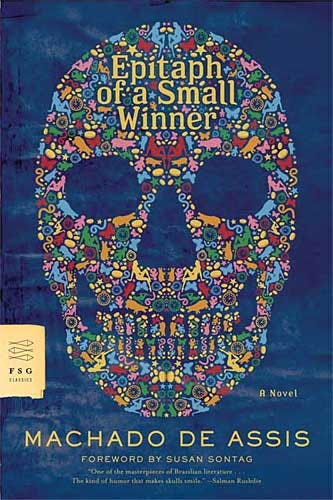
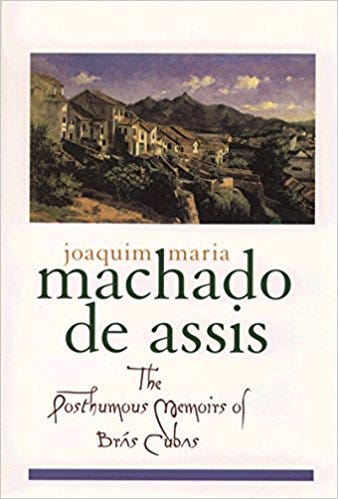
A few months ago, I was talking books with a Brazilian colleague when she told me that the most important book written in the Portuguese language was a story from 1881 called Memórias Póstumas de Bras Cubas, or The Posthumous Memoirs of Bras Cubas, by Machado de Assis.

“How do you write a posthumous memoir?” I had asked her.

“Exactamente,” she told me.

As a reader, I sometimes have to remind myself that the written word existed in South America before the Latin American Boom of the 1960s and 1970s, the renaissance that brought about many of the masterful works of Jorge Amado, Jorges Luis Borges, Gabriel García Márquez, and Mario Vargas Llosa, among others. It’s an influence and an era that looms so large and monolithic that contemporary writers from the region can feel squeezed out by its largess, and the same can be said for the now-voiceless writers who came before: Who were the authors that inspired such an incredible outpouring of writing from an entire continent? One of them, undoubtedly, was Machado de Assis and his strange masterpiece, often translated in English as Epitaph of a Small Winner.

As a reader, I sometimes have to remind myself that the written word existed in South America before the Latin American Boom of the 1960s and 1970s.

Machado’s novel is told by its hero, Bras Cubas, from beyond the grave, starting with his descent into his feverish delirium and his eventual death from pneumonia at sixty-four years old. Only after his death does Cubas backtrack to detail the rest of his life, telling of his upbringing, his work as a bureaucrat, his few loves, and the many appearances of death to the people that Bras meets on his journey through life: a passenger on a ship, his mother, a black butterfly, his lover’s maid, and many others. This strange and humorous preoccupation with death is evident before even the first page, starting with the dedication, “To the first worm that gnawed my flesh.”

If Machado’s endeavor to write an amusing, absurd, inventive life story sounds familiar, it certainly should — in the opening lines, Cubas admits to “have adopted the free form of a Sterne or of a Xavier de Maistre,” referencing Tristram Shandy by Laurence Sterne and Voyage Around My Room by de Maistre. Cubas, much like Shandy, breaks through the page to engage with the reader, from taking hold of the dedication to promising to delete chapters left in the book to asking the reader to forgive him for sloppy writing. Whole pages are filled in with line drawings, entire chapters left blank in authorial distress, all amid the constant reminders that the words one is reading are not just those of a dead man, but those written by a man after he has died.

Putting Borges’ Infinite Library On the Internet

Machado’s willingness to break open the novel as a form could itself be reason enough to read a previously obscure Brazilian author, and it’s tempting to draw a line from Bras Cubas to later, beloved heroes of the Latin American Boom. For instance, there is the first-line announcement of the premeditated death of Santiago Nasar in García Márquez’s Chronicle of a Death Foretold, or Quincas Berro D’Água’s sudden posthumous conversations and reanimation in Jorge Amado’s The Double Death of Quincas Water-Bray. Amado, also from Brazil, certainly had Machado in mind while writing Double Death, a novel that begins with its hero dying a smiling death, and is demonstrative of the sort of gallows humor endemic to Brazilian culture.

Amado, also from Brazil, certainly had Machado in mind while writing Double Death, a novel that begins with its hero dying a smiling death, and is demonstrative of the sort of gallows humor endemic to Brazilian culture.

Machado, however, has Cubas do more than laugh at death. While Cubas is away at college in Portugal, he receives word that his mother is dying back home in Brazil, and when he arrives he is just in time to see her pass:

“The next morning, the imminence of death was inescapable. Long was her agony, long and cruel, with a minute, cold, repetitious cruelty that filled me with pain and stupefaction. It was the first time that I had seen anyone die.”

For all the humor and strangeness, Machado is able to couple it with the heartfelt woe and tragedy that comes with life in hindsight, and in that, Cubas’ lifetime feels fluid and circuitous and terribly fleeting. Near the end of his life, and the start of the memoir, Cubas has a fever dream where he meets a Mother Earth-like god named Pandora, who tells him, “‘I know; for I am not only life, I am also death, and you are soon to give me back what I loaned you.’” It’s a comfort, breaking death into an ebb and flow with life, and it’s something you can see frequently in García Márquez’s work as well. In addition to Chronicle, the opening of One Hundred Years of Solitude is a soldier remembering his childhood while facing a firing squad, and Love in the Time of Cholera’s first scene is a doctor discovering a suicide.

By having Cubas narrate from beyond the grave, Machado gives him a definite authority and irreproachable nature that mortal narrators lack:

“I do not deny that [public opinion] sometimes glances this way and examines and judges us, but we dead folk are not concerned about its judgment. You who still live, believe me, there is nothing in the world so monstrously vast as our indifference.”

While nominally a silly and jocularly styled story, the playfulness is couched in pathos and vision of a life and family in Brazil, what Cubas at one point describes as the “voluptuousness of misery.” By the simple nature of its framing, sorrow and regret are baked into the beautiful moments of a posthumous story, such as Cubas’ affair with his love, Virgilia:

Some plants bud and sprout quickly, other are slow and never reach full development. Our love was of the former type; it sprouted with such impetus and so much sap that in a short time it was the largest, the leafiest, and the most exuberant creature of the woods.

Any sort of love or triumph or beauty that occurs in Cubas’ life is terribly tinted by the foreboding truth of those first couple pages, Cubas’ coming demise.

Reading Epitaph of a Small Winner, there’s a tantalizing temptation to raise it up as some sort of anthropological “Lucy” for the explosion of beautiful and unique writing that came about in Latin America in the twentieth century, but it’s likely a false temptation. Machado wrote in Portuguese, and, in a frustrating revelation, his great work wasn’t translated into Spanish until the 1950s, eighty years after it was written, likely too late to have the sort of monumental impact and influence it largely deserves on the Spanish-dominated continent where Machado lived. While the delay of Machado’s arrival in Spanish is anomalous, it is, more importantly, isolating for a brilliant novel that is still lost in the borders of its own culture. Can a book still be beautiful and inventive if it stands alone?

While the delay of Machado’s arrival in Spanish is anomalous, it is, more importantly, isolating for a brilliant novel that is still lost in the borders of its own culture. Can a book still be beautiful and inventive if it stands alone?

By design, Cubas’ narrative is circular — at the close you are tempted to return to the beginning to see how it ends for Cubas, only to be drawn in again, an endless odyssey on the different ways to meet death. The spiraling nature of the story is itself Machado’s attempt to conquer our very mortality, a human interest and story so old it goes all the way back to Gilgamesh. While Gilgamesh sought a secret flower to bring back Enkidu, Machado’s manner of disarming death is much simpler: a quick laugh, a smile.

12 Fictional Bookstores We Wish Were Real

When I step into a bookstore, whether it’s the smallest, most crammed second-hand shop or a glossy retail chain, I’m always overwhelmed with excitement. Every spine along the shelf is a possibility. I know there is something great hidden among the stacks, if only I can find it. As a kid, my passion for bookstores had a fantastical bent, and I’ll admit that it took me a long time to give up hope that one day, while browsing a seemingly normal bookstore, I’d discover a book of spells, or a long-forgotten mystery, or a portal to another world. When I got a little older, I realized two things: (1) the only place where this actually happens — the portal, the magic— is in the books themselves (okay, let’s be honest—also movies) and (2) I’m not alone in imagining that bookstores hold the key to some sort of fantasy or adventure. Writers of all kinds (novelists, screenplay-wrights, just about anyone who picks up a pen) love to create imaginary bookstores and to fill them with all kinds of intrigue — magic, puzzles, crime, romance, and yes, books! So for all you bookstore-connoisseurs out there, here’s a list of twelve shops where I’d happily spend an afternoon, even if it’s only via my imagination.

1. Monsieur Labisse’s bookshop from The Invention of Hugo Cabret

This children’s book by Brian Selznick takes place in a French train station that’s home to all kinds of interesting spaces, from lookouts hidden behind clock faces to a toy shop jumbled with dolls, puzzles, and parts. Monsieur Labisse’s bookshop is a bibliophile’s dream; its floor-to-ceiling shelves are crammed with beautiful books that just beg to be opened and thumbed through. In short, Labisse’s is what I long for every time I’m stuck browsing the new diet/celebrity memoir table at the Hudson News in Penn Station.

2. Sempere and Sons from The Cemetery of Forgotten Books trilogy

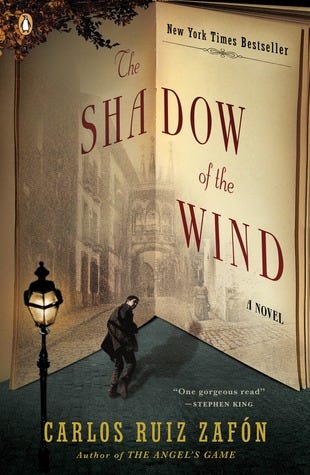
Set in Barcelona during and after the Spanish Civil War, this trilogy by Carlos Ruiz Zaffron portrays a city that’s muted and tense, and a place where art is dangerous. Within this atmosphere, the bookstore Sempere and Sons becomes a small beacon of warmth, passion, and resistance. It’s a thrilling (and powerful) idea, that selling books can be such an important, political act — one that can even get you killed.

3. Flourish and Blotts from Harry Potter

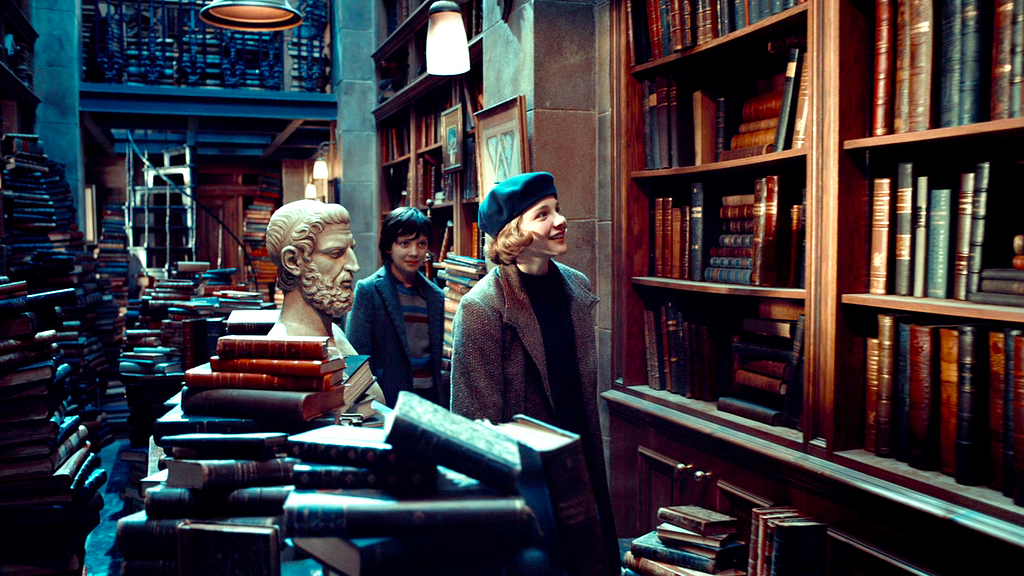
If it’s easy to spend hours in a regular bookshop, its hard to imagine ever leaving Flourish and Blotts, the magical bookshop in Diagon Alley where every Hogwarts student goes to buy their reading for school. There are thick compendiums of spells and cursed journals and text books that will bite off your finger. It really brings a new meaning to the magic of reading.

4. The Shop Around the Corner from You’ve Got Mail

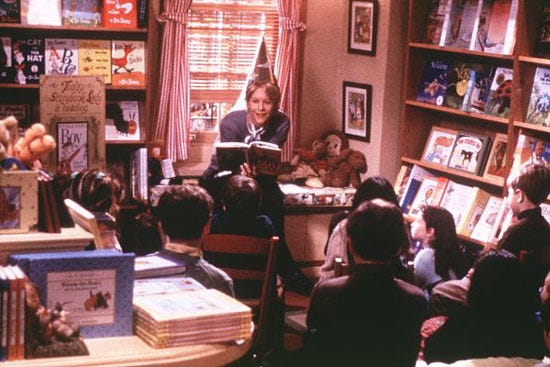
This unlikely love story is also Nora Ephron’s plea to support your local retailers. Meg Ryan is trying to keep her independent Upper West Side bookshop, The Shop Around the Corner, from going under after Tom Hanks opens a big box bookstore in the neighborhood. The set producers made Ryan’s shop the platonic ideal of a charming family-owned bookstore. There is a cozy children’s nook laden with toys, quirky book displays, framed book covers on the walls, and fluttering pink striped curtains on the windows. If this shop actually existed, I’d definitely drop my children off here for story hour while I went across the street for some wine and a locally sourced cheese plate.

5. Women & Women First from Portlandia

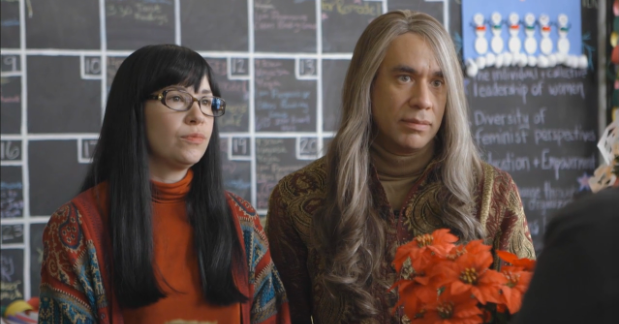
Speaking of quintessential independent bookstores, Women & Women First is your classic West Coast progressive bookstore, where the booksellers are less concerned with selling the merchandise than with making sure you’ve joined the movement. In a meta-twist, the real Portland bookstore where the show filmed, In Other Words, ended their relationship with the show, claiming that Portlandia is “diametrically opposed to our politics and the vision of society we’re organizing to realize.”

6. (The eponymous) Mr. Penumbra’s 24-Hour Bookstore

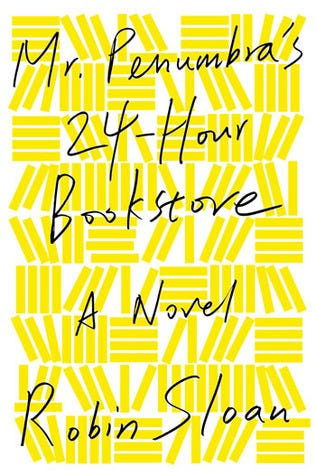
There are certain pokey old bookshops that look like they’re more of the owner’s passion project, or overflow closet space, than a functioning retail venue. When Clay Jannon gets fired from his tech-bot job in San Francisco, he takes a job at just such a bookstore — one that’s open 24-hours despite its serious lack of clientele. Browsing a real life bookstore at 3 a.m., especially one that has ties to a secret society, would be much more exciting than my late-night sessions on Amazon.

The Day Jobs of 9 Women Writers

7. Le Cahier Rouge from the Red Notebook

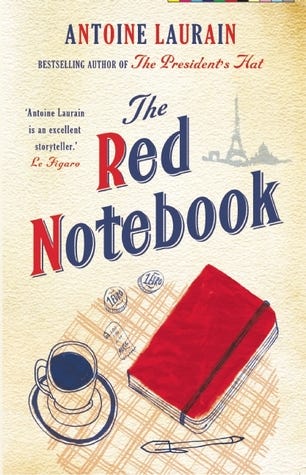
Antoine Laurain is known for capturing “la vie Parisienne,” and if his fictional bookstore Le Cahier Rouge is anything like actual Paris bookstores, then he’s succeeded in making me want to move to France. This is partially motivated by my stomach: in addition to selling books, Le Cahier Rogue is an active literary center that hosts readings with all you can drink vin chaud and savory biscuits.

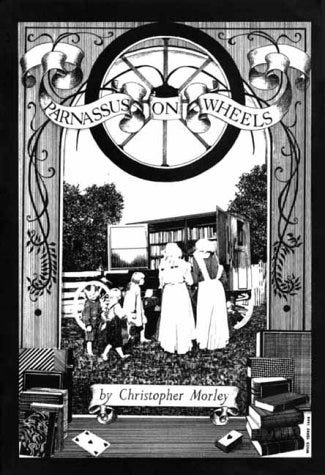
8. Parnassus on Wheels by Christopher Morley

Written in 1917, Morley’s novel centers around a traveling bookshop called Parnassus. I love this idea and think that we should revive it, along with all other forms of entertainment on wheels, including circuses, fairs, and traveling theater groups.

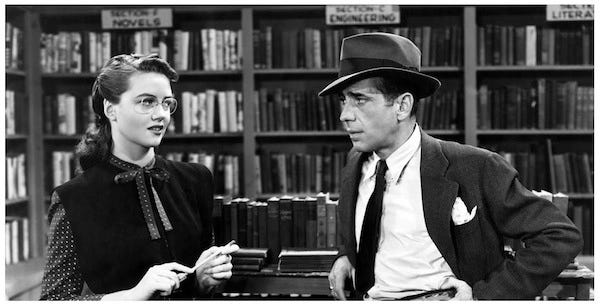
9. Geiger’s Bookstore from The Big Sleep

The Hollywood of Raymond Chandler’s noir detective novels is hardboiled and seedy, and in The Big Sleep, even the bookstore is criminal. Private investigator Philip Marlowe discovers that Geiger’s books is a front for an illegal pornography business, making it one of the few places where gangsters and bookworms cross paths. (Okay, so there may be a few reasons why this store probably shouldn’t exist after all…)

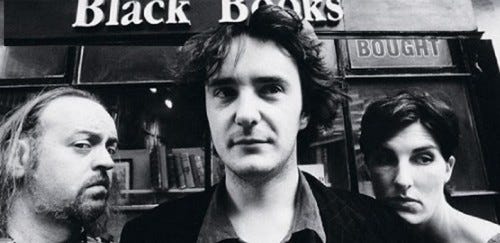
10. Black Books from Black Books

Here’s more proof that not all great bookshops are warm, kid-friendly places. Black Books, the setting of the absurdist, hilarious British sitcom of the same name, is run by a hard-drinking, smoking, antisocial curmudgeon. And I wouldn’t have it any other way.

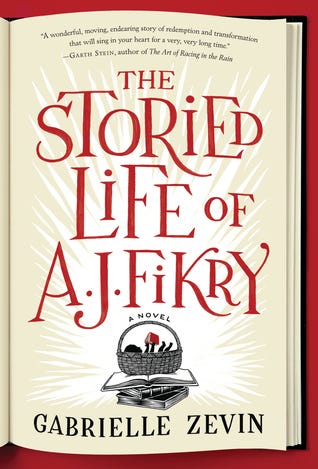
11. Island Books from The Storied Life of A. J. Fikry by Gabrielle Zevin

A. J. Fikry, the owner of Island Books on the Nantucket-like Alice Island, is also a bit of a curmudgeon, but he has excuses: he’s a widower, his book sales are plummeting, and his prized collection of Poe poems was just stolen. In addition to its main plot (there is the sudden arrival of an orphaned child, I’ll leave it at that), this novel is an ode to books, bookshops, and book-lovers.

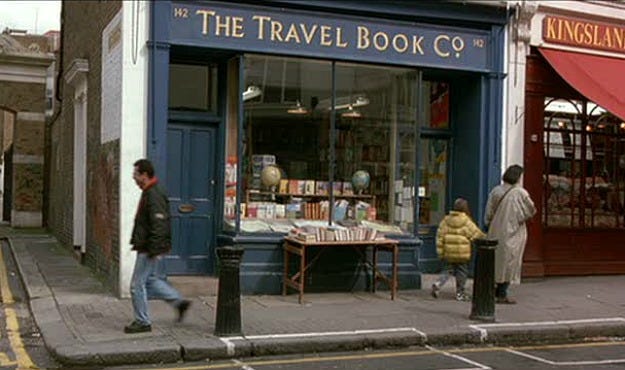
12. The Travel Book Co. in Notting Hill

This reminds me of one of favorite real life speciality bookstores, Idlewild Books in New York City — there is no better place to go and get excited about the vacation you’re taking (or all the vacations you want to take.) The fictional Travel Book Co. does have a few things that Idlewild doesn’t: it’s in the dreamy London neighborhood of Notting Hill, just steps from a picturesque outdoor market, and its charmingly scruffy interior comes with a charmingly scruffy owner, played by — who else — Hugh Grant.

7 of the Great Platonic Loves in Literature

Late to the Party: Sylvia Plath’s The Bell Jar

Note: Late to the Party is a new Electric Literature series where we ask writers to read an author that, for some reason, they’ve never read. You can read previous entries here.

Pre-Reading Impressions

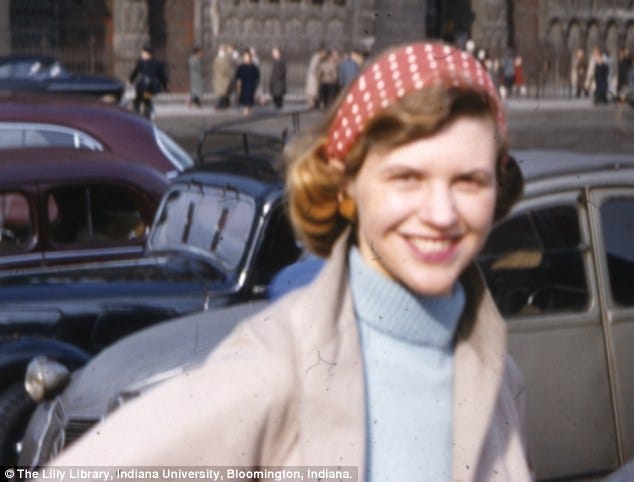
Sylvia Plath is often evoked as a symbol of tragedy, depression, and a life cut short. People wonder what Plath could have accomplished had she lived past the age of thirty, for she was an ambitious and, so I’ve been told, an extremely talented writer. I blame my inability to weigh in on her writing myself as a symptom of a greater problem of mine: poetry is severely underrepresented in my reading history, and Plath is foremost a poet.

But I’ve always felt particularly embarrassed about never having read Plath— a glaring hole in my education, I presume, since her only published novel, The Bell Jar, has been cited by various publications as a seminal feminist text. It’s also been referred to as a version of The Catcher in the Rye “for girls,” which seems a bit dismissive to me, in part because The Bell Jar is a novel that even my husband, who ingests books at a much slower clip than I, has read and loved. Besides, describing anything as like a famous book by a man but “for girls” implies that women can’t fully appreciate a coming-of-age novel unless the protagonist and the author are female (and also perhaps suggests that a man would not appreciate a coming-of-age book unless he can identify completely with the lead).

It’s also been referred to as a version of The Catcher in the Rye “for girls,” which seems a bit dismissive to me.
I thought The Bell Jar might be a good place for me to start with Plath’s body of work — I’ve read a ton more novels than I’ve read poetry, and I’ve even read my fair share of J.D. Salinger, so I feel more confident forming an opinion on this work than on her poetry.

I certainly come to The Bell Jar with a lot of associations. Most of all, I can’t shake Hollywood’s infatuation with the book as not just a symbol of depression but perhaps especially the female high school teenager variety of depression. The presence of The Bell Jar in certain films seems to be shorthand for lending credibility and depth to a young woman’s inner turmoil (but of course an intelligent teenage woman would be associated with deep depression — any woman who is aware of her surroundings in the typical American high school can find plenty of things to get her down).

“I hate it when you make me laugh
Even worse when you make me cry”

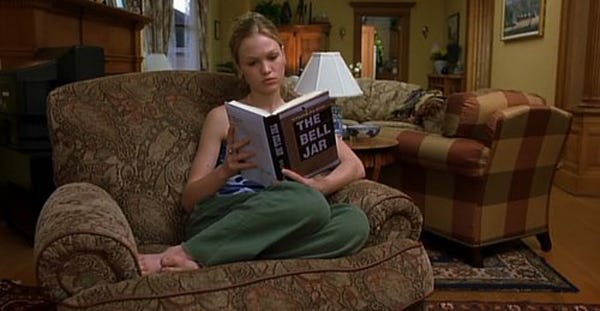
I think of Julia Stiles’ serious and sarcastic character Kat reading The Bell Jar in the movie 10 Things I Hate About You, as she contemplates college and infuriating but charming Heath Ledger. In the previous decade, the movie Heathers placed the Cliffs Notes for The Bell Jar at the site of Heather Chandler’s death, which was then deemed a suicide, giving Heather a gravitas she had not earned in life. And now Kirsten Dunst is set to make her directorial debut with an adaptation of The Bell Jar starring Dakota Fanning (who, by the way, apparently grew up and turned twenty-three while I was busy blinking or something).

Sylvia Plath did kill herself, after several more pedestrian attempts with pills and whatnot, by placing her head in an oven and turning on the gas, leaving literary nerds possessing a dark sense of humor with a simple Halloween costume idea: fashion a cardboard box into an oven, and place it over your head (I know I’m not the only one who has witnessed this). If Plath’s method of successful suicide hadn’t been so unusual, perhaps her mental state wouldn’t overshadow the discussion of her writing so much?

If Plath’s method of successful suicide hadn’t been so unusual, perhaps her mental state wouldn’t overshadow the discussion of her writing so much?

Who knows, and anyway it doesn’t matter — I want to read Plath’s writing to have an opinion of her that isn’t strictly about her biography, because, it seems, the world will always be rehashing the details of her life (new letters by Plath are scheduled to be published this Fall, and there is mention of some of these letters referencing abuse she endured at the hands of her famous poet husband Ted Hughes).

All this being said, I do admit part of my interest in Plath’s writing is due to my knowledge of certain aspects of her life story. As someone who has been suffering recently with some postpartum depression myself, I’m fascinated by the fact that Plath made sure to protectively block the cracks around the bedroom doors of her sleeping infant and toddler before turning on the gas in the oven. I mean, is this not indicative of a thorough mind? Seriously, though, even when a woman is choosing to leave this world, if she is a mother, is she always compelled to think of the needs of her children first? In addition to her depression, I sympathize with the pulls both of family and of creative ambition that Plath must have struggled through.

Perhaps being in a difficult stage of my life is the worst time to read a novel by a depressed writer who drew on the details of her own experiences for the book’s plot, or perhaps it is the best time. Perhaps reading The Bell Jar would do to me what other books I love have done: make me feel less alone.
Post-Reading Impressions

I’ve been known to find humor in books concerning suicide before, so maybe it says more about me than about Plath that I found this book to be funny. But I don’t think I’m the only one who has laughed at parts of The Bell Jar. In fact, in her introduction to my Harper Perennial Modern Classics edition, Frances McCullough calls The Bell Jar “a very funny book” because of Plath’s “amazing humor.” She also cites an informal focus group of twenty-something women, all of whom loved the book, and many of whom found it “surprisingly undepressing.”

I think the reason The Bell Jar reads as funny and undepressing, despite the fact that it follows protagonist Esther Greenwood through assorted attempts to end her life and shock treatments in an asylum, is that the writing is so sharp and smart. Esther is besieged by societal expectations and pressures, from conventions of marriage and motherhood to attempted date rape, but she never truly succumbs to these pressures or thinks of herself as “less than” because she is a woman — she remains questioning of everything. Esther is not a woman who simply falls into line, which is seemingly part of the reason she is dubbed crazy and in need of treatment.

I can see why The Bell Jar is a favorite of disaffected teen girls struggling with entry into adulthood, though I still enjoyed the book as a thirty-nine-year-old. Esther is ambitious, and these ambitions are in contrast to the college girls who surround her, almost all of whom seem to be working on their MRS degrees above all. Esther considers, “I began to think maybe it was true that when you were married and had children it was like being brainwashed, and afterward you went about numb as a slave in some private, totalitarian state.” Now, I don’t think that marriage and parenthood hold as many restrictions for women now as they did in Sylvia Plath’s time, but it is disturbing that this statement of Esther’s can still resonate as much as it does in 2017, as The Bell Jar was first published over fifty years ago, in 1963.

There are moments when the fact that the book was written over fifty years ago become apparent in unfortunate ways, such as Plath’s use of phrases like “yellow as a Chinaman” and “dusky as a bleached-blonde Negress.” These moments did more to take me out of the narrative than dated plot details like weekend visits from Yale boys or New York society luncheons where girls are treated like debutantes (or maybe such things still happen in New York and I’m just not aware of them).

To me, she comes across as a person who is full of strength, and society’s assessment of her as a crazy person reads as the gaslighting that drives her mad.

Mostly, I was drawn to Esther’s unique responses to traumatic events. To me, she comes across as a person who is full of strength, and society’s assessment of her as a crazy person reads as the gaslighting that drives her mad. One example: she recognizes her would-be rapist as a “woman-hater” soon after meeting him for a date, and she wears his bloody fingerprints from their fight on her cheek into the next day, on her train ride from a month-long fellowship in New York City to her mother in the suburbs. “I didn’t really see why people should look at me,” reasoned Esther. “Plenty of people looked queerer than I did.” It’s a complicated action, in that it can be interpreted as both defiant and as the sign of someone who is too exhausted to care (“It was becoming more and more difficult for me to decide to do anything in those last days”).

My takeaway is that the circumstances of Esther Greenwood’s life drove her to madness, but her underlying depression would have been present regardless. As someone who is familiar with depression, I found the portrayal of Esther to be spot on. Her own silence depresses her. A hot bath, one that is hot enough to scald her, one she has to dip her body into very slowly, is often the only thing that can make her feel better. “I never feel so much myself as when I’m in a hot bath,” writes Plath. And I think, same here. In a hot bath, you are alone, and the demands of the world aren’t upon you. You can, in effect, melt away.

Late to the Party: Lorrie Moore’s Self-Help

I suppose the realities of Sylvia Plath’s own life do bear weight on her legacy in legitimate ways, in that they inform her writing and help to give us an honest portrayal of depression. I find it interesting that Plath chose to write a somewhat autobiographical novel instead of a memoir (though it’s possible this choice was largely about an ambition to write novels). Writing a story that is loosely her own, using a fictional character as a stand in for herself, is of a part with the disassociation that a depressed person can feel. But perhaps it is time we stop romanticizing depression and suicide, both Plath’s and others’, and instead accept depression as something that many people, and certainly not just writers, suffer through. Depression, like any part of a writer’s personality, can affect the output of her work, leading to a body of literature that is as diverse as the people who are writing it.

There is no doubt to me that The Bell Jar is a feminist text. Perhaps unsurprisingly, as a new mother myself I responded most strongly to the feminist takes on motherhood. In one notable scene, Esther witnesses childbirth with her boyfriend, Buddy Willard, who is studying to become a doctor. As Esther watches the baby being born and taken away from its exhausted mother by a team of nurses, Buddy explains that the woman giving birth is given a drug so that she won’t remember the process. “I thought it sounded just like the sort of drug a man would invent,” says Esther. “Here was a woman in terrible pain, obviously feeling every bit of it or she wouldn’t groan like that, and she would go straight home and start another baby, because the drug would make her forget how bad the pain had been, when all the time, in some secret part of her, that long, blind, doorless and windowless corridor of pain was waiting to open up and shut her in again.”

The disassembly of the patriarchy is a painfully slow process.

Why must books like The Bell Jar (and Margaret Atwood’s The Handmaid’s Tale, published in 1985) still feel so timely decades after they are written? The disassembly of the patriarchy is a painfully slow process. I believe that the time in your life in which you read a book will affect your take on the book, and I can certainly say that I read The Bell Jar very aware of the current Trumpian political climate. Parts of the book read like a rallying cry for women to take charge, and in this way I found The Bell Jar to be quite empowering (and I suppose, yes, this is evidence of my response to this novel being informed by the fact that I am a female reader).

In response to an older woman’s explanation of marriage as an institution that allows men to have a place from which to launch their lives, Esther responds, “The last thing I wanted was infinite security and to be the place an arrow shoots off from. I wanted change and excitement and to shoot off in all directions myself, like the colored arrows from a Fourth of July rocket.”

I’m sure that a woman in her twenties, or a man, or anyone who doesn’t match my exact demographic, would find different things that speak to them in The Bell Jar. Some might react to Plath’s descriptions of sex, others might respond to Esther’s difficult relationship with her mother, still others might key in on Esther’s interactions with women her own age. But this is the sign of a great novel, I think — one that truly bears the stamp of its author, yet means something different to every reader.

In Defense of Imaginary Friends

Midway through discussing the Billy Collins poem “On Turning Ten,” my daughter’s sixth grade teacher paused at the line It is time to say good-bye to my imaginary friends. Turning to the class with a laugh, she ad-libbed, “If you’re over ten and you still have imaginary friends, come see me.”

Pity the children of fiction writers. My daughter, stricken, recounted the comment to me hesitantly that evening — and even as I reassured her, I knew how odd my words must sound: Honey, so long as I know my imaginary people aren’t real, there’s nothing wrong with them being…real.

I’m long past ten, and I live among imaginary friends. As a novelist I spend years unearthing their secrets, their fears, their senses of humor. My characters are musicians, childcare workers, historians — anything other than fiction writers. They’re taller than I am, or smaller; less educated or — intimidatingly — more. Every scene I write through their eyes is a ticket to a different way of being in the world. What’s it like to walk down a nighttime street as a six-foot-three man, women quickening their pace with a nervous glance back at you? What does it feel like to be old; to be an immigrant; to be powerful, powerless?

The habit of inventing people prompts its share of unease. I’ve been cornered by a psychiatry student and quizzed, only half-jokingly, about my chosen profession. (You do know they’re not real, right?) More frequently I encounter skepticism about the entire enterprise of imagination. (Aren’t novelists’ characters just copied from actual people? Is there a recording device under this table?) Some writers do pilfer a great deal from life, others don’t — the sole constant is that every writer’s work is emotionally autobiographical. A short story writer looking out a bus window might glimpse an argument in progress. The bus moves on; the sidewalk scene is wrested away. But now the writer’s curiosity takes over: what might it be like to be one of those two well-dressed elderly men shouting at one another in broad daylight? Something about one of the men — perhaps his stooped form — reminds the writer of his own too-meek grandfather. Yet those men on the sidewalk were both furious. Why? Will they come to blows? If one were to back down, as the writer’s grandfather would have, what would be the consequences? And how will neighbors react to someone who allows himself to be bullied — and while we’re at it, what sort of people are those neighbors? Perhaps one, a single mother newly arrived with her infant son, has a startling response…

By the time the story is finished, that catalyzing sidewalk scene is just one element in a vibrant larger picture of whatever most urgently preoccupies the writer — be it a question roiling the great big political world, or one touching only the intimate world of a single heart. This is why pressing a novelist for the facts behind a work of fiction yields little. The nutritional content of a book can’t be determined through a list of its ingredients; a story isn’t a map of the writer’s actual, factual life. As my beloved great-aunt said to friends who asked where in my novels they might catch a glimpse of her: if you want to find me, come to my house.

Persuading skeptics of the value of imagined people, though, can be an uphill battle. I don’t fault my daughter’s teacher for echoing one of our society’s baseline assumptions: the vivid world of make-believe people is for children only. (If you’re not convinced of the ubiquity of this assumption, just imagine the water-cooler conversation that would ensue if a co-worker casually let slip, “I spent my lunch break imagining how a young girl I dreamt up might respond to being lost in a foreign country.”) It may be considered acceptable for an adult to play video games or fantasy baseball…but evidently in order to become functional adults each of us must renounce our personal Puff the Magic Dragon.

It may be considered acceptable for an adult to play video games or fantasy baseball…but evidently in order to become functional adults each of us must renounce our personal Puff the Magic Dragon.

But what if all of us — not just fiction writers — need imagined people more than we realize?

We live in an information-saturated age. Social media images of friends’ dinner plates vie for our attention with breaking news; data pours in more quickly and on more channels than in any other time in human history. The supposedly-factual dominates even the world of entertainment, where — to quote John Jeremiah Sullivan — reality shows have long since “gone kudzu” on the cultural landscape. (And of course if fact and counter-fact were flying fast before 2017, we’re now deafened continuously by the sonic booms of ‘alternative facts.’ Small wonder if discussions of fiction seem irrelevant, when confabulations-dressed-as-fact demand a response at every turn.)

The notion that the imagined is passé has in fact been gaining momentum for years, even in pockets of the literary world. David Shields’ much-touted Reality Hunger: a Manifesto dismisses fiction, calling nonfiction “incomparably more compelling” and citing Alain Robbe-Grillet’s declaration that “the novel of characters…belongs entirely to the past.”

Weariness with older art forms is natural and spurs innovation — indeed there’s some fascinating experimentation in the world of narrative these days. But as #FerranteFever and the passionate response to works like Hanya Yanigahara’s A Little Life demonstrate, any claim that fiction is obsolete is easily disproven. What audiences crave, regardless of form or genre, is simply the realest kind of reality — the kind that honestly reflects what it’s like to be human. And in an age of rampant dehumanization, the story of our humanity isn’t just interesting — it’s anti-venom.

Telling the truth about any human experience isn’t easy. That’s so in every form of communication ever invented — memoir, fiction, phone call, blog post, and I can only assume hieroglyphics. Ego gets in the speaker’s way, and so does love. We writers may spout a macho line about authorial ruthlessness, but somewhere or another most of us succumb to the urge to protect someone — if only ourselves — from a too-searing gaze.

Amid that welter of impulses, fiction is the best way I know to be honest. With imaginary people there’s no one to protect, and ‘permission to speak freely’ is always granted. My characters can stumble, fumble, act badly without triggering embarrassment or litigation. What’s more, the further I venture from my own life, the less bound I feel by my own ego or fears, and the freer to enter ever-riskier layers of human experience: there’s what people say…but beneath that, there’s what we feel — that lightning-flash of suppressed anger or unexpected joy…and then the blunt, forbidden thought rolling under that…and then in the sub-basement of consciousness, a pinioning question. If access to that terrain is a benefit of what Daniel Mendelsohn calls “the protective masks afforded by fiction,” then it seems worth relinquishing the comforting authority of fact (this story matters because it actually happened).

Fiction is the best way I know to be honest. With imaginary people there’s no one to protect, and ‘permission to speak freely’ is always granted.

Each genre, of course, offers its own powerful literary maps of human experience. But fiction is what I return to, as a reader and as a writer, when I’m overwhelmed by the news; by the scripted cheer of Facebook posts; by recorded voices helping me navigate highways and telephone menus and gift purchases and health care choices, all so stripped of humanity that I can’t help mentally recasting the end of “Prufrock”: till automated voices wake us and we drown.

Writing, at its best, startles us simultaneously with both sides of this coin: Other people experience the world very differently than I do, and, I’m not alone — other people feel exactly what I’ve felt. For me, there’s delight in devoting years to learning what an endless string of fictitious not-me’s might know and experience. Pretend play makes me empathize with others. It’s the most mature thing I know how to do.

Or at least that’s what I tell myself, long after the kids are in bed, as the basket of leftover Halloween candy and I square off together against a massive volume of Enlightenment philosophy — because the protagonist of my new novel is a philosopher, and I can’t write well about her until I get my head around Spinoza.

“I’ve lived long among those I’ve invented,” wrote Bernard Malamud, himself the shepherd of a luminous flock of invented souls. Call me crazy — I’ll keep my imaginary friends.

Dungeons & Dragons & Communal Storytelling

About the Author

Author Rachel Kadish

Rachel Kadish is the author of the new novel, The Weight of Ink (Houghton Mifflin Harcourt), as well as From a Sealed Room, Tolstoy Lied: a Love Story, and I Was Here.

The Future of Technology Is Freedom from Technology

In Courtney Maum’s novel, Touch, Sloane Jacobsen returns to the United States from Paris, where she’s been hiding from grief about her father’s death for years. But when she accepts a job forecasting trends for the tech firm Mammoth (think: Google), she’s forced to confront her anxiety about closeness and her family, her strange relationship with a French performance artist, and her ideas about the teleology of replacing human interaction with machines. Sloane’s work allows her to peek inside the minds of the people who create and design tech, and she finds that while technology has made their lives easier, it has made even the tech creators at Mammoth long for old-fashioned physical contact — hand-holding, sex, the embrace of a friend. The author, an experienced trend forecaster herself, imbues Touch with this sense of longing for more tangible human interaction.

From the beginning of the novel, Sloane believes herself to be family-averse. “[S]he wasn’t a fan of being scared,” the author writes, “and it had to be petrifying to love someone more than yourself.” Sloane, like so many people, chooses isolation from her sister and mom rather than the uncomfortable reality of seeing them all the time, of having to confront the complication of her feelings about family and her father’s death. Maum uses Sloane’s discomfort as a synecdoche for so many consumers — she values privacy and distance; technology has allowed her to stay just far enough away from those she thinks she loves that she doesn’t have to suffer any messy feelings.

But Sloane is increasingly unhappy, which drives the plot and her personal discoveries. Her longtime beau, Roman, is beginning a personal crusade to change intimacy, having just “deliver[ed] lectures across Europe about the shifting paradigms of touch.” Roman dons a Lycra bodysuit in public that covers his face as a way of showing that the human body and human physicality are obsolete. He doesn’t believe in sexual contact, but instead celebrates an online world where there are no boundaries to fantasy. Just as Sloane begins to sense that the future of technology is freedom from technology, she finds herself in the middle of his one-man quest to shock and educate, to remove himself from the constraints of traditional physical union — and she’s not sure she wants to be there.

Boys Will (Not) be Boys

Maum excels at depicting the subtleties of human interaction in all its various forms, particularly the different types of tension in the workplace. Whether describing the interactions of Sloane and her boss or Sloane and her boss’ secretary — or the delicate power balance of pitch meetings — Maum uses subtext to delineate subtle distinctions. When Sloane — whose trend forecasting feels almost synesthetic, as Maum describes it — meets a like-minded coworker, his vitality forces her to confront the assumption she has that she and Roman will continue forward as a couple. Maum writes of Sloane’s idea-generating in much the same way as she writes of these relationships: The energy of each thing is at the center of her scenes, yet she manages to do this without making the whole thing ridiculous and woo-woo. One of the best qualities of Touch is how accessible Maum renders esoteric ideas.

“How long until quiet trended?” Sloane wonders, when confronted with Mammoth’s latest inventions and products, tapping into the yearning of both her peers and Maum’s readership. Her premonitions are nearly disastrous for her job in the tech sector. “People [are] going to pay to get close to other people.” It’s hard to talk about Touch without also referencing the ideas it champions — a celebration of intimacy and physical human interaction that are antithetical to the current technological boom.

When everything can be researched, debated, sorted, and organized for us online, when do we actually live? At one point Maum’s characters even lament the predictability of sites like Yelp that allow you to choose your own experiences. Maum — through Sloane — advocates for surprise. “[E]ven a disappointment is still a surprise…,” she writes. “I wonder if we couldn’t invent something that could restore the element of surprise to the way we navigate new environments.” Maum writes with longing for how things used to be, but also hope for the future. “There would be calm, again,” Sloane says, and the moment seems right for her ideas.

Maum’s Touch is the right novel at the right time, but this is not to discount the author’s skill in rendering well-paced scenes attenuated to the human condition. The author takes on technology and the current moment, but only as a backdrop to good writing. The setting facilitates Maum’s work, rather than becoming its center. What emerges from this book about tech is a deep sense that our salvation isn’t going to be found on a tiny, glowing screen. Touch is sure to leave you, like its protagonist, feeling “the reluctant budding of humanity’s best side.”

New York City, Seen Through Its Bodegas

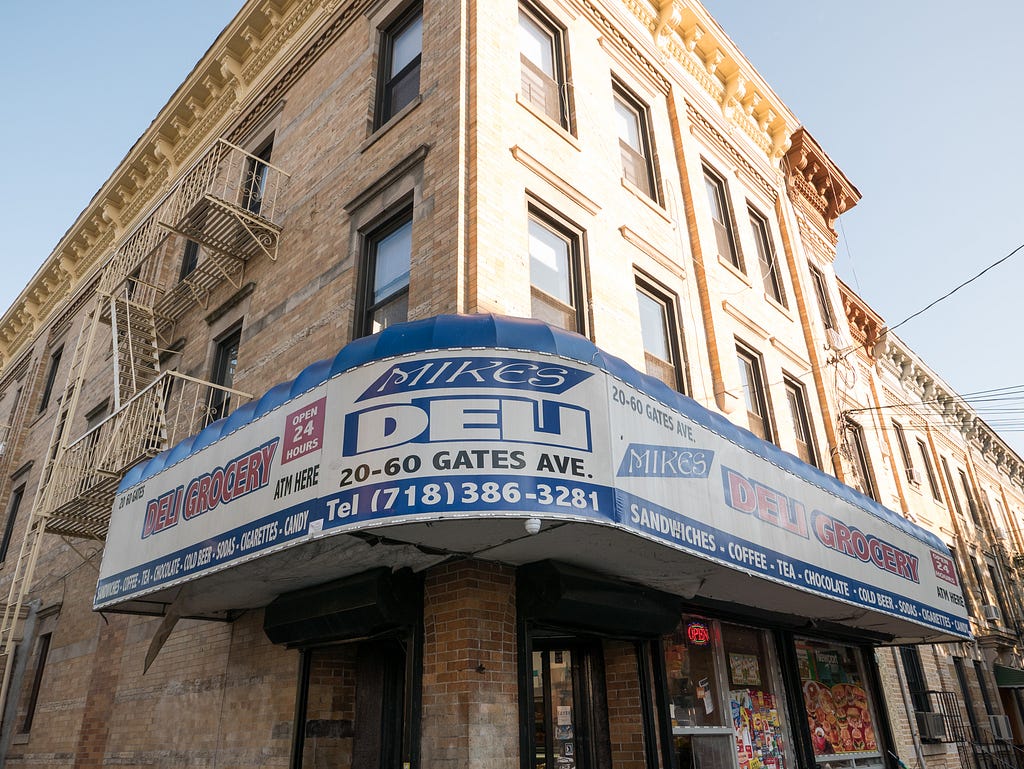
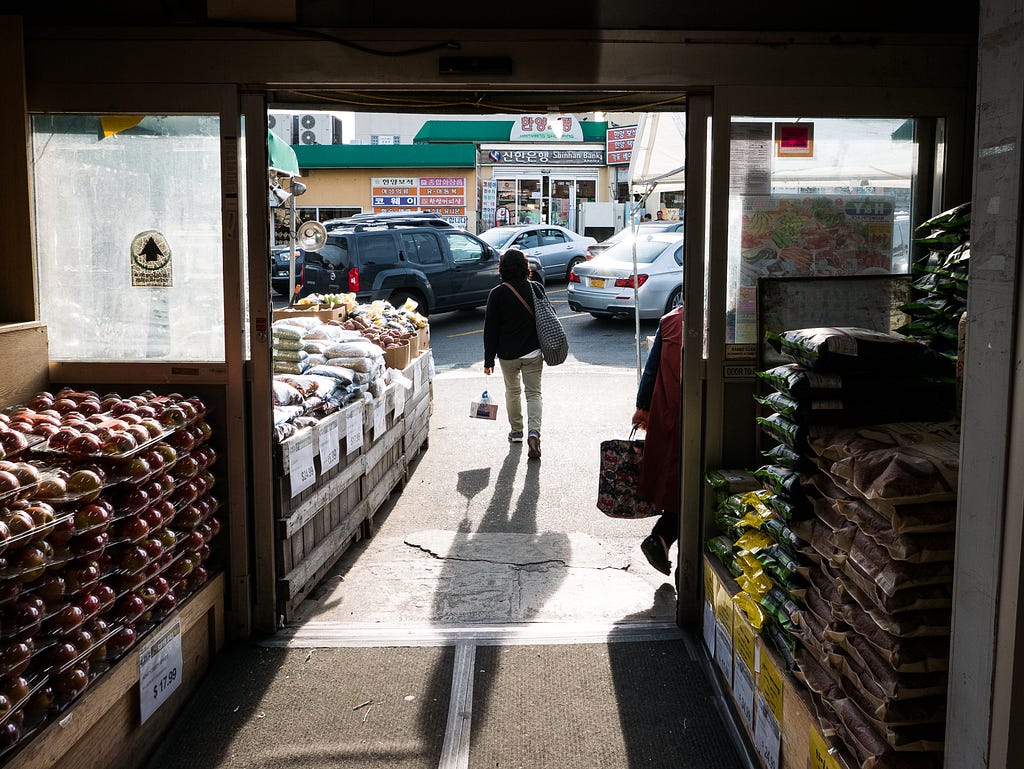
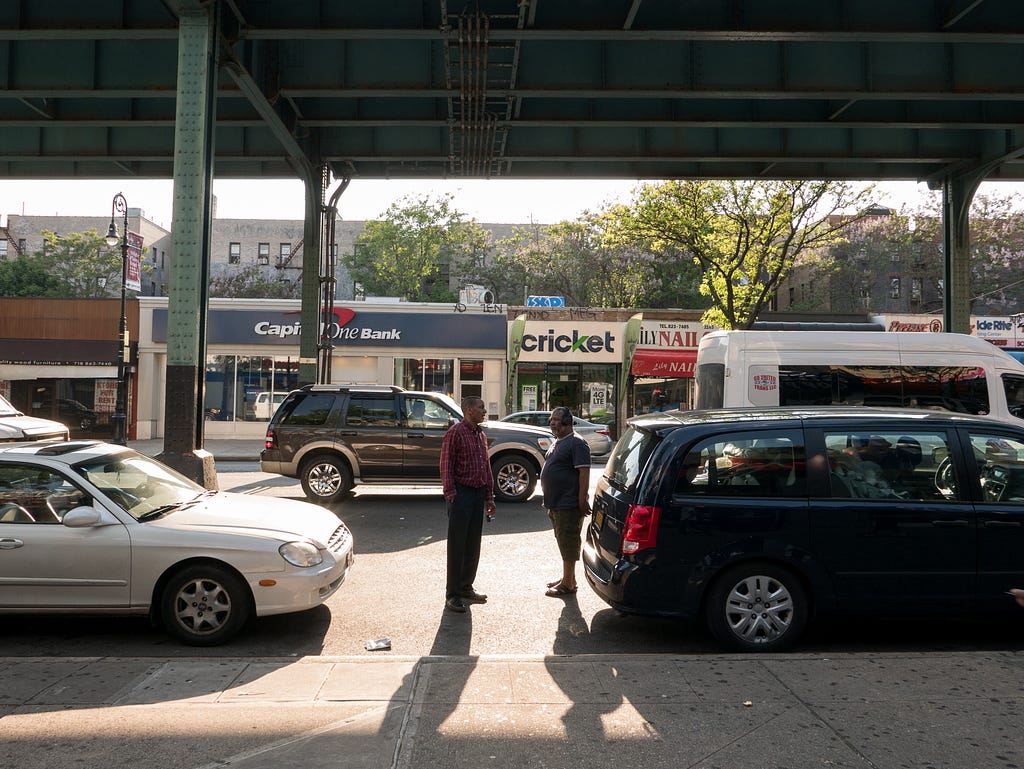
Introducing The Bodega Project, a new summer-long series from Electric Literature, in partnership with the New York City Department of Cultural Affairs. Each week, one of ten authors from across the five boroughs will reflect on their community through that most relied-on and overlooked of New York institutions, the bodega.

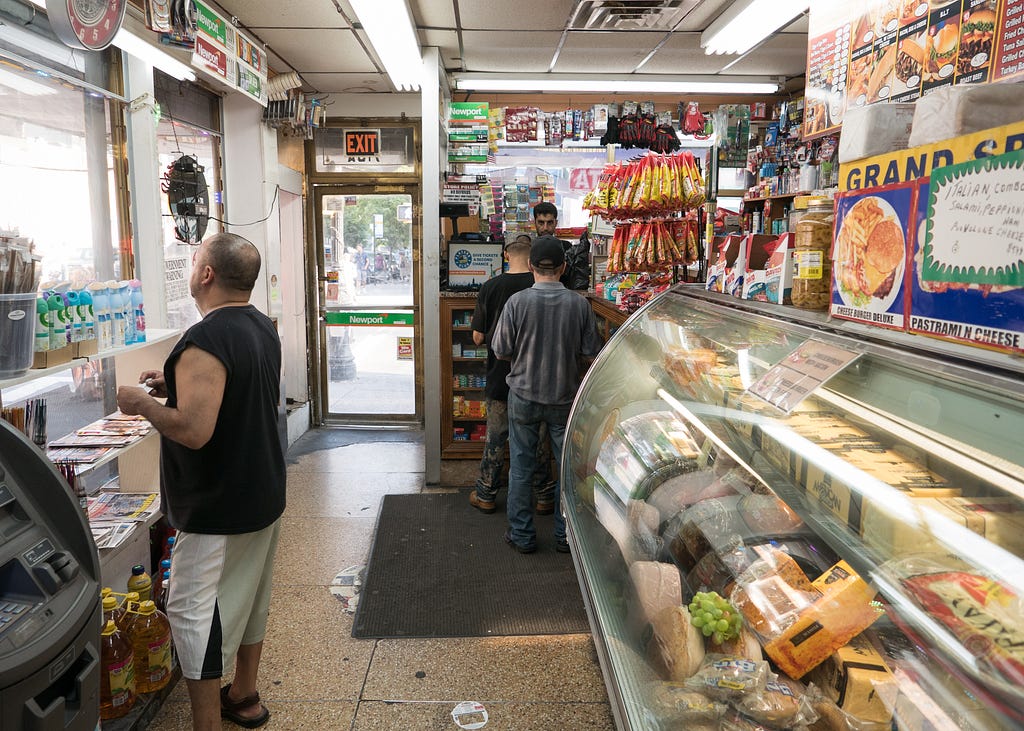
For a city that prides itself on never sleeping and never shutting down, it was an unfamiliar and disorienting sight, on a Thursday in February, to find so many metal shutters closed on street corners all over New York. A week prior, President Trump had signed an executive order effectively denying anyone from Iran, Iraq, Libya, Somalia, Sudan, Syria, or Yemen entry into the United States. Now, helicopters wavered above Cadman Plaza in downtown Brooklyn, while on the steps of Borough Hall a boisterous crowd chanted “USA! Yemen!” and blew into vuvuzelas. For the first time in history New York City’s bodegas were collectively on strike. Across the five boroughs, it was suddenly impossible not to be aware of their absence, and impossible to accept the idea of a city without them.

These ubiquitous corner stores have been open and operating, in one form or another, for almost as long as there’s been a city to host them. In the past there were Lower Manhattan’s numerous Jewish delis, the Italian alimentari on Mott Street, and the greengrocers that established themselves north of Union Square. After World War II — following an influx of immigrants from the Caribbean, particularly from Puerto Rico — the shop’s modern iteration came into being. It was then given the nickname that most New Yorkers know it by today, regardless of the neighborhood, the ethnicity of its owners, or the signage that looks out to the street.

At its most essential, the bodega is the shop on the corner that stays open late and sells whatever you need — the place where you go in a pinch to pick up milk, a can of Bustelo, an egg and cheese on a roll, or a scratch card when you’re feeling lucky. For the average New Yorker it’s something that goes beyond mere capitalism: it is the beating heart of the neighborhood, a place of ethnic and economic diversity, the center of cultural rather than just monetary exchange.

Wrapped up as they are, no contemporary history of the city would be complete without an examination of the bodega. In Justo A. Martí’s photographs from the 1950s, of Latin American bodegas in New York’s Puerto Rican barrios, it’s possible to see a larger reflection of the new metropolis that was then taking shape. In the bad old days of the seventies and eighties — when heatwaves and blackouts marred the summers, crime rates spiked, and panicked suburban “white flight” kicked off in earnest — the city’s bodegas were a lifeline, struggling to keep produce coming in and bread stocked on the shelves. The earliest hip-hop could be heard busting from speakers outside corner delis in the Bronx, at the same time as The Ramones were fueling up on Slim Jim’s, plantains, and Miller beer from a shop on Bowery and East 4th. It’s not just New York’s history either. To look at any of the contemporary forces shaping the city — whether it’s gentrification, immigration, or economic inequality — one often doesn’t have to go further than to the shop on the corner.

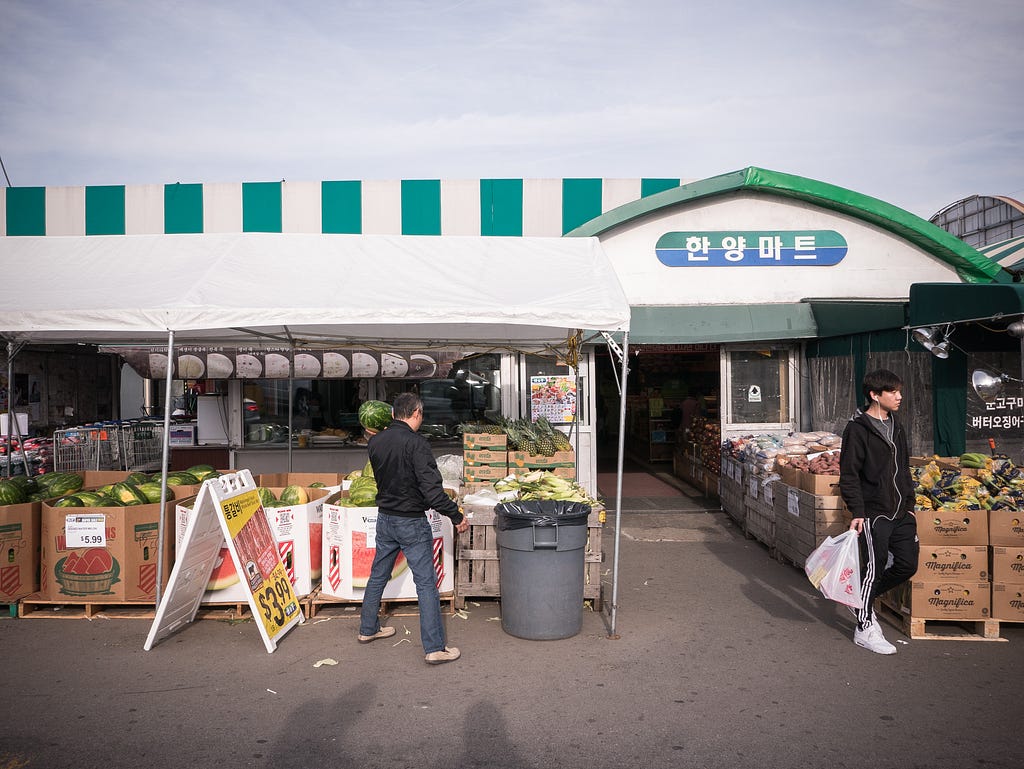
In New York, neighborhoods can practically be defined by their bodegas. Whether the windows are decorated with international calling cards, saints cards, Knicks gear, or cured meats will tell you something about who the locals are and how they live. Bodegas are where almost all paths in a neighborhood cross, where you can hear almost any language, a place that is romantically unromantic. Open all the time and always reliable, they tend to go unnoticed, until — as on that Thursday in February — you experience the city in their absence.

Over the course of the summer Electric Literature will be bringing you ten essays over ten weeks on bodegas and communities from across the city — brand new writing by New York lifers, transplants, immigrants, and exiles — published each Friday starting today. For some of these authors the bodega will serve as a backdrop; for others it will be the key to finding their place in this city. They’ll talk to store workers and regulars, plumb memories, chart changes in the neighborhood, and be privy to stories. Some names and sites will be familiar to you, others will be new. In the end we hope to give you a snapshot of a city that is always evolving and always open.

Welcome to The Bodega Project.

Anu Jindal and Dwyer Murphy, Electric Literature

Read the first installment of The Bodega Project here, an essay by Charlie Vázquez on his childhood community of Pelham Parkway in the Bronx.

A Cultural Oasis Inside a Bronx Bodega

Photographs by Anu Jindal

Ted Wilson Reviews the World: Peter Piper

★★★☆☆ (3 out of 5)

Hello, and welcome to my week-by-week review of the world. Today I am reviewing Peter Piper.

Everyone has heard of Peter Piper, the guy who picked a peck of pickled peppers. But what else do we know about him? A lot, actually.

Based on his name, we know Peter was a professional piper. In the olden days, vocations used to be the basis for surnames such as Blacksmith or Farmer. If occupational surnames still existed today, we would have people named things like Stephanie Grocerybagger or Larry Betweenjobsrightnow.

So why would a professional piper be spending his time picking pickled peppers instead of piping? Because he loved pickled peppers. But pickling takes a lot of time — the kind of time only a divorced man has.

Despite being a musician, Peter had no woman in his life. I know this because women love musicians no matter what they look like. Take Mick Jagger for instance, and imagine that he’s an insurance salesman wearing a pair of loose khakis and a polo shirt. Would you still want to kiss him? Maybe only out of pity. If Peter had time to pickle, he was a divorcee.

It’s hard to know what came between Peter and his wife. Perhaps it was his piping attire, or perhaps he accidentally killed someone and only Peter’s wife knew about it and the stress was too much for their marriage to bear. Secret accidental deaths have been the cause of many divorces. Whatever it was, the secret of his divorce is something Peter took to his grave.

I would love to have heard some of Peter’s piping. He must have been quite talented if he was able to make a living as a musician. Or if he wasn’t talented, then he had a good brand built around him.

BEST FEATURE: Peter’s middle name was Pterodactyl.
WORST FEATURE: I was inspired to try piping myself but I was so bad at it that I fell into a deep depression.

Please join me next week when I’ll be reviewing Cheetos.

TED WILSON REVIEWS THE WORLD: CLIFF HUXTABLE