If You Can’t Enjoy the Sleepover, Ruin It

“Blood Makes a Bad Dye” by Samantha Xiao Cody

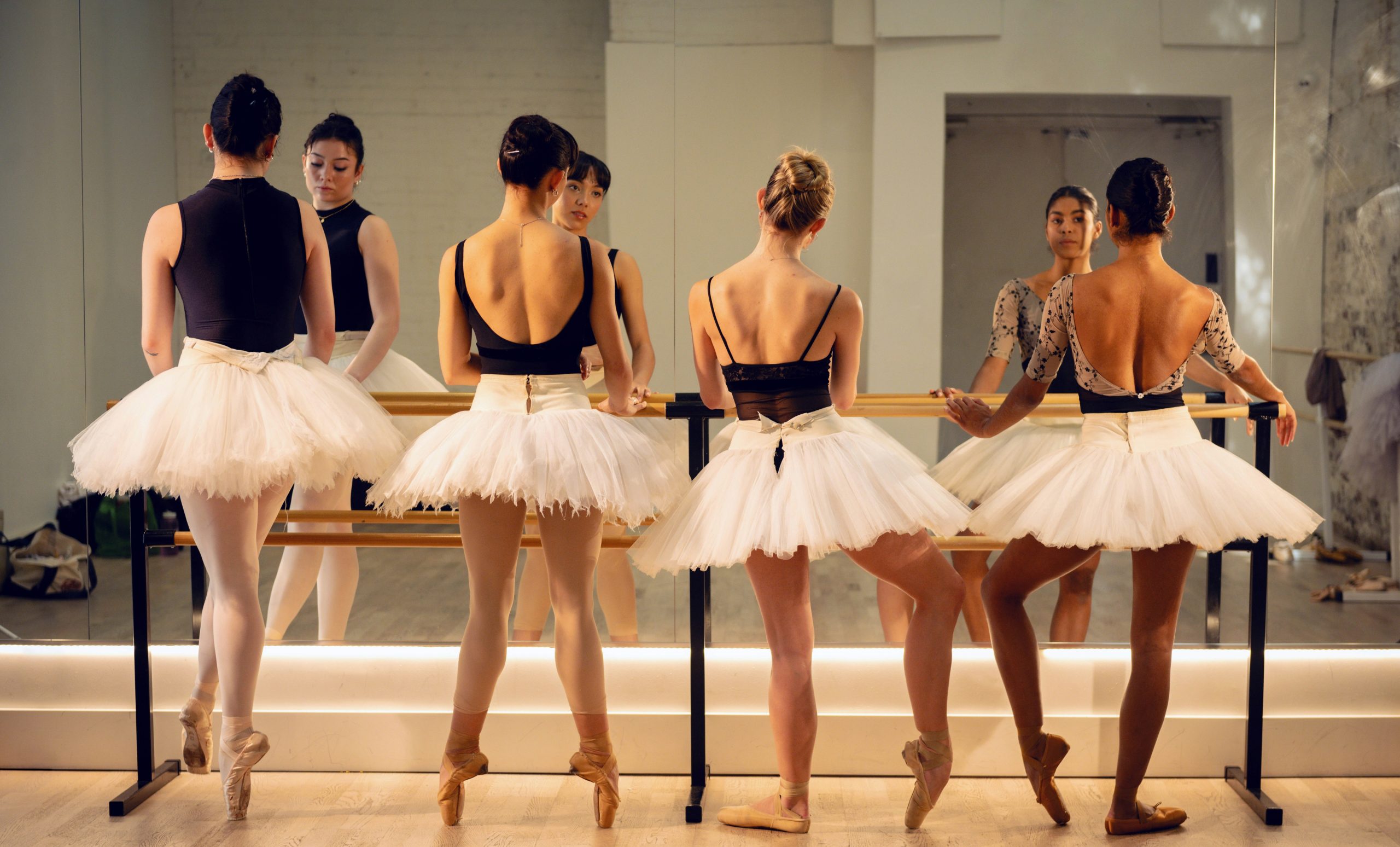
In the sweltering summer of my fourteenth year, my ma drove Quinnie and me to ballet camp every morning while Quinnie’s parents got divorced. Quinnie was a redheaded sixteen-year-old, a girl I’d known since we were children but had never really known. I hardly spoke in ballet class, or anywhere else. Each morning, I rose at six to dress before Quinnie came. The sun was already above the trees, and I awoke sweating. Ma didn’t like to use the air conditioning at night. We didn’t grow up with air conditioning in China, she said. We slept outside sometimes on rocks to stay cool, she said, which sounded like something she’d made up just to see if I’d believe it. Ma hadn’t bought me new underwear in years—she never mentioned bodies, breasts, hair, periods—so each morning I ripped off one of the fraying pairs I’d worn since the sixth grade, and pulled on my tights and leotard, before the sun had fully risen, before Quinnie could come and be cruel. 

By the time Quinnie came to our door with her pink ballet bag, Ma had breakfast ready. She tried to make what she thought a real American teenager would want, frozen waffles and bagels and glasses of milk, but always got something wrong, forgetting the cream cheese or syrup, and I could see Quinnie noting every mistake. Quinnie would enter with her sweetest smile and say hi, Mrs. Chen, and sit at the little dining table waiting to be served. Ma would say in Chinese things that I should convey to Quinnie, even though Ma spoke English just fine—there’s more milk in the fridge, there’s peaches in the fruit bowl—things I never relayed, because I could not think of anything less cool. Once we were eating, Ma would retreat, smiling proudly at us. She was so trusting, so unsuspectingly excited to see me talking at the table with another girl. 

A boy in my class wants to do me, Quinnie said, tearing off shreds of dry waffle. Ma was just a few feet away, but Quinnie talked loudly, her full mouth making sticky bready sounds. Quinnie was pretty. Her red hair was thick and wavy and she had green eyes, and very light eyebrows that made her look perpetually surprised. In ballet class, she looked at herself very intently in the wall mirrors. It was almost embarrassing to witness. I wasn’t surprised boys wanted to do her. 


Ma was a fourth grade math teacher and had the summer off, which was why she had time to shuttle us around. Quinnie stayed at our house until her mom came to get her, straight from the lawyer’s office where she worked. Quinnie’s mom and my ma occasionally ran into each other at the store, and Quinnie’s mom must have seen Ma as responsible, with her neat little grocery list written in Chinese and her cart full of vegetables. Besides, we lived closer than the other girls at camp, who had nice mansions over by the National Park. 

Did Ma’s students like her? Did they think her accent was too strong, her clothes too outdated, that she was boring? I never asked her anything about work. When we talked it was about things that didn’t concern her. News stories or celebrity gossip or myths about ghosts or demons. Occasionally, Ma told stories from Hunan. These felt so distant and strange, I wondered if she had invented them. Ma was good at telling stories, and so was I. It was a talent we shared. I told her stories about school and ballet, about accidentally walking into the boys’ bathroom, falling during a pirouette, cowering under a table during a food fight, embellishing and exaggerating until her face folded into a delighted smile. 

The first afternoon Quinnie came over after ballet camp, I didn’t know what to do with her. Our house was lacking in entertainment, and my room was too intimate and childish, full of pictures I’d drawn in kindergarten. Instead, I brought her to the basement. It was cooler there, but our dusty television didn’t have cable and the fabric pattern of the old wicker couch had faded away. Bug carcasses littered the windowsills. Quinnie pulled a Nerf gun out of the crate of old toys, pointed it at me, and pulled the trigger. I brought my hands to my chest, staggered backwards, and said, you got me. 

Fuck yeah, I did, Quinnie said, dropping the gun back into the crate with a loud plastic clatter. Fuck yeah, I did. Later that summer, I would whisper this again and again to myself in the mirror. We both sat on the floor right where we were standing—I felt unable to remember any social niceties, unable to move my body easily through space. Quinnie pointed to my legs. I’d changed out of ballet tights into shorts. You don’t shave? she said, her voice innocent. I looked down at my legs. They were prickling with thin lines of black hair. 

I usually do, I lied. Just forgot. 

You should start doing it, she said. It’ll make you way hotter. 

Shaving was one of the many things Ma hadn’t told me about. Totally, I said to Quinnie, folding my legs beneath me. I’ve just been lazy. No one to impress, I tried to joke.
I’d learned about deodorant in a similarly embarrassing way, when a ballet classmate told me, in a kind whisper, that there was a way to stop the sweating and the smell, actually. When I’d first gotten my period, a month ago, leaking brown stains on my ballet tights, I’d left them piled on the bedroom floor conspicuously so Ma would see. Like an animal leaving marks to communicate with other animals. Ma had come into the room and stared at the stained tights, her eyes wide, and said, oh, as if she’d never seen blood before. The next day there were pads under the bathroom sink. 

Quinnie shrugged. Up to you, I guess. You know what’s sick? she said. Since my parents are getting divorced, they can’t keep track of their alcohol stash. I can get drunk whenever I want. 

That’s cool, I said. 

You drink? Quinnie asked. 

Not really, I said. 

Why am I not surprised? Quinnie laughed. God, I can’t wait to be an adult, she said. Suddenly, she rolled over and stretched out on the carpet. Her red hair spread beneath her head. The hem of her purple t-shirt pulled away from her denim shorts, revealing a gleaming white strip of skin. It felt like something I wasn’t meant to see. She looked perfect—vivid and disheveled—like a character from a movie. 

After Quinnie left, Ma said: Quinnie has the hair of a fox. 

Then she told me again our favorite fox demon stories, about the foxes who wore painted skins to look like women and captivated foolish men. Sometimes the foxes won, eating the men’s hearts and escaping with their freedom, but most of the time the people won, despite being foolish. They found some Taoist monk who had some trick, and the foxes would fall for the trick and die. Whenever Ma told these stories, she said that the foxes and the men “laid in bed together.” There was a secret in this sentence, the secret of sex, that Ma was unwilling or unable to discuss. 

I can see the fox in Quinnie, Ma said. 

Ma and I were both more docile, muted creatures. My father had left before I was born, and there had never been other men. Ma didn’t tell any stories about my father. She didn’t talk about him at all. I couldn’t imagine Ma having sex, not just because she was my mother, but because of the ordinariness of all her actions, the way even tying her shoelaces or turning the stove on politely encouraged people to look away. 


In the news, there was talk of a young female celebrity whose nude photos had been leaked online. It had sparked a lot of talk about digital security, but also whether it was the female celebrity’s fault. 

What do you think about it? I asked Ma, as she tended to her garden. She pulled a weed with her gloved hand and pushed her black hair, limp with sweat, out of her face. The cicadas droned. Would Ma reference the foxes again? 

Oh, it’s bad, Ma said, shaking her head. It will be bad for that woman. 

That’s all she said. She reached for another weed. 


At ballet camp, Quinnie mostly ignored me. We went through a schedule from eight in the morning until three—stretching to barre, to jazz, to modern, to pointe. Every now and then there were fun classes, like pantomiming. Out the large studio windows were the crowds outside the movie theater, the skateboarders, the children running through the fountain. The windows fogged at the edges with our sweat. Quinnie stretched with the rich girls in the back corner of the studio, Stephanie and Lis and the others. They were pretty and slender and white and wore nice clothes. Why was it that rich girls were always so pretty? Maybe Quinnie wanted them to think she was rich, too. But I knew her house looked like ours: squat, old but not in a beautiful way; perfectly ordinary. 

I was having a hard time with ballet. When I was younger, the teachers had smiled and said that I was “promising.” I was cast in good roles. But recently, the teachers were smiling less. I was too tense. You’re holding back, they said. You need to let go. I couldn’t move like Quinnie—with the sure knowledge that people wanted to watch. 


I felt guilty. I knew that ballet was expensive, but Ma always said that she’d rather spend money on something that made me happy than things like houses and cars. We drove the same old Toyota Corolla that we’d had since I was a child; Ma never bought new clothes for herself. Our house was full of aging furniture, scratched cabinets, coupons. But was ballet making me happy? How to talk to Ma about things like money, or happiness? 

After the last class of the day, we all went into the dressing room to change. The dressing room was the most frightening part of ballet camp—a square room with a mirror and a scratchy, carpeted floor that smelled perpetually of feet, too small, such that we bumped into each other as we peeled off our leotards. Our uniforms already left us so exposed, the thin fabric stretched over our bare skin, showing every mole and crease. We weren’t supposed to wear underwear, because the teachers said the bands interrupted the vertical lines of our bodies. 

The other girls asked each other their most private questions in the dressing room: how were they meant to feel when a boy stuck his fingers up inside them? Were their boobs big or small? If they masturbated. If this or that had ever happened on their periods. If they knew how to give a blowjob. Of course, they also talked about the celebrity with the leaked photos. 

Quinnie seemed to hold all the answers. She quickly became the center of the dressing room, the other girls curling towards her, squirming and giggling. 

When you breathe the smoke in, she said, hold it in your lungs until it hurts, then breathe it out. If you drink before you have sex, it feels better. You hold it in your hand, like this, not too soft, and you start slow, up and down… 

What about you? asked the nice girl who’d told me about deodorant, looking at me. Have you done it? 

Don’t bother asking her, Quinnie said, smiling sweetly at me. She hasn’t done anything. She’s completely naive. 

When Ma picked us up, I would sit in the back with Quinnie and worry about making Ma feel like a chauffeur, but she would just smile and ask us how ballet went. Quinnie would look at me with her invisible eyebrows raised, as if daring me to tell Ma the things uttered in the dressing room. 

It was good, I always said, nothing more. I looked away from Quinnie out the window, at the familiar route. The churches along the parkway half-hidden by trees, the warehouses behind the military hospital, the fire station, the little grocery store with the old-timey sign. Masturbation, hand jobs, weed. These were stories I would not tell Ma. Her eyes would go wide and she’d just go, oh. 


On Friday afternoon of the second week, Quinnie’s mom didn’t come. Thirty minutes passed, an hour. Ma had already started preparing dinner. Quinnie, who could usually talk forever about boys or music or movies, became oddly quiet and went to sit by the window. 

Tell her she can stay for dinner, Ma said to me. I told Quinnie. 

No, she’s just a mess, she’ll be here any minute, Quinnie said. 

I couldn’t imagine talking about my mother like that—not out loud. Ma sliced garlic and glanced at me; I pretended to read my book; Quinnie stared out the window. I couldn’t see her face, only the wild tumble of her red hair, outlined with golden light. Finally Ma put down her knife. 

Let me drive you home, she said to Quinnie. It was the first time Ma had spoken to Quinnie directly, beyond a hello or goodbye. Quinnie looked at her for a moment, and then said, okay. 

As she gathered her things, she looked out the window, as if expecting to see her mother pull up in front of the house at the last second. 

When I’m an adult, she said, I’m never having kids. Why would you have kids if you don’t even want them? She slid her right foot in and out of her flip flop. Well, at least I’ll have the house all to myself, she said. I can get drunk. 

Ma smiled in response. Ready? she said. 


In the third week of ballet camp, we started flamenco class. Thrillingly, we had to obtain new things for it—a flamenco skirt, flamenco shoes, and a pair of castanets. We were taught by a beautiful Spanish woman who wore her hair slicked into a low, severe bun. Ma said she would make me a skirt. She took me to the fabric store and we selected a blood-red cotton embroidered with large, orange flowers. The house filled with the mechanical chugging of her machine. 

As she sewed, she told me a new story, about a young woman who had lived in her childhood apartment building. The woman had a sweetheart in the same building, a boy she’d grown up with. One day, the sweetheart became engaged to another young woman from a wealthier family. They would be moving to America together. 

A week later, all of his family’s chickens went missing, Ma said. Usually the chickens were so loud, waking everyone up, but that morning, we woke to silence. We all wondered what felt so different. 

Some people said perhaps foxes had eaten the chickens, but there were none of the usual signs of violence—blood, feathers. It was as if the chickens had simply vanished. Then, on the first day of summer, the young woman emerged wearing a deep red dress. No one could look away from her beauty, from the rare and incredible color. 

But as the week went on, Ma said, we noticed that the red was fading. The dress became ugly and blotchy. 

They never proved it, but everyone was sure that the young woman had killed all of the chickens in revenge, and had dyed the fabric with their blood. 

They never proved it, but everyone was sure that the young woman had killed all of the chickens in revenge, and had dyed the fabric with their blood.

Blood makes a bad dye, Ma said to me, sewing away. It may be beautiful at first, but it breaks down. 

When I changed into my blood-red flamenco skirt before class, I realized that everyone else had purchased the exact same black spandex skirt from the dance supply store. Where did you get that skirt? Quinnie said, staring. 

My mom made it for me, I said. Quinnie’s face folded shut. 

She couldn’t just buy one for you? She sounded almost angry. You should’ve gotten one that’s like, professional

We learned to stamp our heels in rhythms on the floor, and swirled our hands in the mirror until our forearms ached. Quinnie swished the skirt around her calves, measuring her small waist approvingly in the mirror with her eyes. I loved the way I looked in my skirt, too: the way I became a burning red sun when I spun. I was good at flamenco. I could see Quinnie thought so as well, the way her eyes narrowed at me in the mirror. 

Our teacher told us to get into pairs. I turned to Quinnie, my only friend, but she slipped her arm into that of the girl next to her. One of the rich girls, Lis. Sorry, she said, still smiling, shrugging. Black skirts only. 

I had to pair up with our teacher, whose smell was animal and comforting. She beamed at me approvingly. I hated Lis, and I hated my red skirt. 

Why didn’t you just buy me a skirt? I asked Ma at home. 

Is there something wrong with yours? she said. 

It’s too short, I lied. 

I can extend it, Ma said. Just give it to me, I’ll do it now. 

Why can’t we just do things like everyone else? I said. Why does it always have to be different? 

Ma was still smiling at me, her brow furrowed in confusion. Different how? Something in me ached. Never mind, I said. Forget it. Please forget it. 


One afternoon later that week, Quinnie said she was bored of sitting around. Let’s take the bus downtown and look at boys, she said. I left that part out when I asked Ma if we could go. Men played a limited role in the stories Ma told me. Even if they were critical to the story, like in the one about the blood-dyed dress, they were never allowed into the foreground. When I’d first started kindergarten, meeting other children with two parents, I’d asked her about my father. 

He isn’t important, Ma had said. We had been in the car, waiting at an intersection. Me in the backseat, looking at her dark hair. We don’t need him. It will always just be us. 

Ma gave me a bag of change for the bus fare. We walked down the street to the stop. It was humid and the air seemed to waver. The coins jangled. The bus stop was beside a large street, an exposed swath of concrete at the intersection. I felt painfully visible. A truck pulled up next to us with two men inside. Reddened skin and sunglasses. Their windows were down and rock was playing on the radio. They were looking at us through the dark blankness of their sunglasses. Quinnie shifted under their gaze, a plant turning to the sun. Does the carpet match the drapes? one guy called out. 

Quinnie shifted again. She didn’t answer. 

Hey, konichiwa, the guy said, pointing his dark lenses towards me. 

Fuck off, shithead, Quinnie said suddenly, her voice loud and surprising. Cunt, the guy yelled as the truck pulled away. Quinnie grabbed my hand and began walking back up the hill to my house, pulling me. She held my hand too tightly, crunching the bones together in a way that was both painful and comforting. After a while she seemed to realize she was still holding my hand, and she dropped it. 


In the fourth week of ballet camp, I sat on the couch downstairs and Quinnie sat next to me. This was unusual. We usually maintained a careful distance. I had a bowl of slick, yellow mango slices balanced on my knees. I could see all of her freckles. She kept sighing. 

Boys are so complicated, she said. She wanted me to engage, press her for details, but I wanted her to pay attention to me for once. 

You know, I said, in my mom’s hometown, there was a woman who slaughtered all of her ex-boyfriend’s chickens because he got married to another woman. 

I wanted to tell Quinnie a story that would impress her. Something she hadn’t heard of before. None of my own stories would suffice, so I borrowed Ma’s. Quinnie may have known sex and drugs and boys, but she didn’t know Hunan. 

Whoa, Quinnie said. 

Yeah, I said. She stole them away, slashed all of their throats. Blood and feathers everywhere. And then, she took a dress, and soaked the dress in the blood of the dead chickens. She wore that red dress for everyone to see. 

Ma hadn’t said anything about blood or feathers or slashed throats or whether it was ever proven what the woman did, but who was to say that didn’t really happen? And how would Quinnie know the difference? 

That’s crazy, Quinnie said. Where’s your mom from again? China? China sounds crazy. Yeah, it’s wild, I said, even though I didn’t know. I’d never been to Hunan. Tell me about the boys you like, she said. 

Jessie in eighth grade, with beautiful sketches of fish in his notebook; Kane from history class, who laughed too generously at the teacher’s bad jokes. I had admired them with a lukewarm tenderness, an occasional daydream about holding hands, but nothing wild, nothing that had consumed me. I don’t like any, I said. 

Any? she said. That’s crazy. I feel like I always have a crush on someone. I want all of them. Any man walking by, and I just want him to want me, you know? I want him to look at me and think I’m sexy. Even the assholes and the ugly ones and the old ones. Like those guys in that truck. Before they started talking, I wanted them to keep looking at me. Is that fucked up? 

I shrugged. I just don’t feel that, I said. 

Some of my dad’s friends used to look at me when they came over for dinner, Quinnie said. They liked hugging me, picking me up, kissing me on the cheek, you know. Afterwards, my mom and dad used to fight about it. Dad always said Mom was making it up, being crazy. But it’s true, they looked at me and because of them, she said, her voice becoming quiet and defiant, I knew I was beautiful. 

I said nothing, looking down at the mango. 

Have you had your sexual awakening yet? Quinnie said. Maybe that’s the issue. 

My what? I said. 

Have you ever even kissed someone? 

I slid my finger around the rim of the bowl of mangoes. I didn’t have it in me to lie.

Oh my god, you haven’t, Quinnie said. Asians are always such goody two-shoes. Well, there’s the problem. You can’t know what you want if you’ve never had it. 

For some reason, my heart was pounding. My fingers were sticky and I wanted to lick them clean. 

I’ll tell you what, Quinnie said. I could feel the heat of her body now. I’ll give you some practice. As a friend. 

And then she was leaning forward, her hair tickling my knee, and she was kissing me. I was thinking about the stickiness of my fingers and what would happen if I lifted them to her sweet, shampoo-smelling hair, and how her mouth felt like the mango, but I couldn’t tell if it was my mouth that tasted of mango or hers, and was it supposed to feel this way if she was a girl? Then she pulled away, and she was taking a piece of mango and complaining about pointe class as if nothing had happened, nothing at all. 

We went upstairs when Quinnie’s mom rang the doorbell. 


In the final week of ballet camp, one of the rich girls, Stephanie, invited us to a sleepover. A week and three days had passed since the Kiss, and Quinnie still acted like nothing had happened. I could tell that she enjoyed playing this game, sometimes reaching across me to grab something, her hair swinging across my face so that I smelled her shampoo and sweat, or pressing her leg against mine in the car. She was watching to see how I would react. I made sure to remain perfectly calm. In the dressing room, Stephanie told us that we should bring our cutest bra and underwear to the sleepover, and when Quinnie left my house, I frantically considered my options. 

My best pair of underwear, which was from the sixth grade, had a pattern of Valentine candy hearts that said things like “be mine” and unraveling elastic that sliced into my flesh. Ma still hadn’t gotten me a real bra. I dug through her drawers and stole one. It was dusty pink and so old that the lace was curling and pilling, the underwire lancing through the worn fabric. I stuffed it into my bag. 

Ma drove us to the sleepover. I never got invited to sleepovers, and I could tell she was proud. She was wearing her best dress and nice clogs she wore only a few times a year. So trusting. She had no idea who this Stephanie was, who any of these girls were. They could be satanists, or cult followers. 

Stephanie’s house was an imposing white rectangle, with many windows and a long, circular driveway. My ten classmates sat at a massive wooden table in the kitchen, talking and drinking sodas. Quinnie slid immediately into the conversation, and I sat beside her. Stephanie brought out a pile of pink t-shirts. We were going to decorate them and print nicknames across our chests. Apparently this was what one did at a sleepover. Immediately, everyone was consulting each other on what their nickname should be. It was clear that each of my classmates was defined by a set of stories from our many years of ballet: boobs popping out of leotards, flirting with boys, accidentally spitting water onto our teachers, being hungover during class. Some of the stories were things I’d witnessed; some I’d never heard before. Everyone agreed that Quinnie’s nickname should be “queen of the sluts.” 

What should mine be? I said. My classmates turned to look at me. There was silence; a few girls glanced at one another. They smiled at me, in the way someone smiles at a lost child. Quinnie was bent over her own shirt. She would not help me. 

I’ll figure it out, I said. I wanted it to pass—this painful moment, my understanding that no one knew me, that I played no role in any of their stories. My classmates looked relieved; the conversation resumed. Goody Two-Shoes, I stamped onto the fabric. What Quinnie had called me, right before the Kiss. Maybe someone would find it funny. Maybe Quinnie. 

I wanted it to pass—this painful moment, my understanding that no one knew me, that I played no role in any of their stories.

When our shirts were done, we moved into Stephanie’s game room for the night. The room was cavernous, paneled with dark wood, with a huge, heavy pool table in the center. 

Quinnie yelled that it was time to strip, and everyone obediently removed their clothes, revealing an array of colorful bras and underwear I’d seen in displays at the mall. I thought about the stolen bra in my bag, ratty and outdated, and suddenly I couldn’t bear to put it on. I was annoyed again at Ma, for being so out of touch. I kept my tank top on. There were a few minutes of exhibition and admiration. Quinnie was showing off a set she’d just gotten from PINK. I knew she often stole things from the mall, but she said it was a gift from her mom. Everyone told her she was sexy. God, she was so annoying. She’d probably kissed every girl here. Someone said my candy heart underwear was cute. 

We played games like Never Have I Ever and Truth or Dare. Never Have I Ever was a pain, because I’d never done anything. Truth or Dare had everyone doing wild things and talking about boys. There was a lot of talk about fucking, though when we were asked if we’d had sex during Never Have I Ever, only Quinnie had lowered her finger, to much gasping and squealing. Like, several times, she said. It’s not a big deal at all. 

My classmates dared one another to hump pillows, to make out with a pool ball, to give a lap dance to Stephanie. When each girl completed a dare, the others shrieked and whooped and cheered. I decided to risk a dare. I wanted to hear someone whooping and cheering for me. Someone told me to run a lap around the room topless. As I pulled off my tank top, I was thrilled and mortified. I tried to throw the top aside with casual confidence as I stood, as if I did this all the time. I was being invited to be one of them, to prove myself equally daring; but there was also the chance of my failure, of doing the most damning of things—trying too hard. Being too transparent in my desire to belong. As I ran, I was painfully aware of my exposed body; I felt almost guilty, even though I had been asked to do it, even though they’d all been doing the same kinds of things all night, as if I were forcing the image of my body upon the other girls. Especially Quinnie. Had Quinnie felt something in my kiss—the Kiss—something greedy, something wanting? Did she think I wanted her to look at me? Would she look at me, admire my new boldness? Or would she see right through me—see my pathetic effort, my pathetic desires? Would she be disgusted by what she saw? 

When I turned the corner of the pool table, I realized no one was even paying attention; they had already moved on to the next girl. My dare had been a throwaway. They’d just wanted to get it over with. They were just including me to be nice, but I didn’t want people to be nice. I wanted them to cackle at my stories, to look at me the way they looked at Quinnie. 

I couldn’t find my tank top. I resisted the urge to wrap my arms around my chest—somehow I knew Quinnie would notice if I did. It would be obvious how hard I was trying to be cool and uncaring and bold. A real goody two-shoes. 

Did someone take her shirt? Quinnie crowed. That’s messed up! You know she’s shy! You really are so shy, Lis said to me. Like, you never talk. 

Don’t be hard on her, she’s just a little different, Quinnie said, placing her hand on my shoulder with exaggerated affection. Her touch seemed to burn through my entire body. Tell them that story about your mom’s neighbor from her village or whatever, the village with all the chickens running around, that woman who murdered her ex-boyfriend or something? She comes from a different world, Quinnie said matter-of-factly to the other girls. 

What? That sounds bizarre, Stephanie said, looking at me. 

Here’s your shirt, one of the girls said, quietly. It was the girl who’d told me about deodorant. 

She didn’t kill her boyfriend, I said. It was his chickens. And she didn’t live in a village. The story, the story that wasn’t mine, was out of my hands; I had carelessly thrown it out into the world, tried to trade it for the opportunity to be interesting, and now I couldn’t take it back. I’d cheapened it, I’d betrayed Ma, the woman with the dress, an entire country I hardly knew anything about. Quinnie didn’t hear me, or she pretended she didn’t. 

It was midnight when people got bored of Truth or Dare and Quinnie suggested we play “America’s Next Top Model.” Stephanie and another girl were the judges and came up with challenges, like making outfits out of toilet paper and doing catwalks around the pool table and posing. Stephanie took photos of us with a small blue camera, and she and the other girl looked intently over the photos and eliminated someone each round. I was quickly eliminated. By two in the morning, we sat in piles of discarded toilet paper against the pool table and cheered for the remaining candidates. Then it was down to four girls. Quinnie was one of them. Stephanie and her co-judge were running out of challenge ideas, and people were getting tired. I know, Quinnie said, her eyes wicked. Let’s model sex poses in pairs. 

Oh my god, Stephanie said. 

And, Quinnie said, we have to do it completely naked. 

The other girls screamed. I wondered if anyone else was afraid, if anyone else thought Quinnie was going too far. My only ally, deodorant girl, was fast asleep already. But I knew better than anyone how easy it was to follow Quinnie. 

Quinnie and the other three remaining girls stepped out of their underwear, unhooked their bras. I’d seen all these girls naked before, but there was something different about how they were holding themselves, something intentional, as if they were playing a part. They didn’t feel as if their nakedness was an affront, a burden, an embarrassment to glance away from. They kicked their underwear aside indifferently, adopted languid postures—they acted like it was easy for them to put themselves on display. 

Quinnie and Lis were a pair. Lis laid down on the floor and Quinnie straddled her, and Stephanie raised her camera. Quinnie and Lis stared into the lens, exaggeratedly serious. They moved into another pose. They were narrowing their eyes, parting their lips, curving their backs and necks, clutching one another close, adopting expressions and positions they’d seen somewhere else—on some adult woman, these poses that sent a signal shining forth into the world, that said come here, come to me, look at me, consume me. They were clumsily obscene, eager to get it right, to create the correct shapes, to look grown up, sexy. Quinnie’s red fox hair fell across Lis’s face. All the girls beside me were screaming. I put my shorts back on and left the room. 

I sat at the long table in the dining room. I wanted to go home. It was all stupid, childish. I imagined Ma coming, opening the door to the game room, looking at the scene with her eyes wide, saying, oh. I fell asleep with my head on my arms and woke in the gray of early morning, my eyes and neck aching, my mouth sticky. I walked back to the game room. My classmates were strewn about, asleep around the pool table. Quinnie had put her underwear back on. The camera lay beside Stephanie. 

I walked over and picked it up. I felt oddly calm, far calmer than when I’d been running around topless in front of everyone, calmer than I had ever been around Quinnie. I looked at their bodies in the photographs, pressed together into various shapes, their exaggerated expressions. Everything looked even flatter, even more artificial in these photographs, stamped into place. How stupid it was to take photographs! How terrible it would be if someone saw them, someone outside of this room. How much damage could be done. I looked closely at one photograph—Quinnie and Lis kneeling, facing one another in profile, nose to nose, looking one another in the eye. Their eyes were cold, almost mocking, as if even they couldn’t take themselves seriously. But they were beautiful, one couldn’t deny that. I powered the camera off and, creeping over the bodies of my classmates, slipped it into my bag. 


Back at ballet camp, Stephanie told us she had bad news. The camera is gone, she said. The camera with all the pictures. 

Everyone looked around at one another. No one laughed, or said anything. The air in the dressing room was hot and still and smelled like sweat. I widened my eyes in surprise, mirroring my classmates. 

I kind of forgot about it at first. Then I was like, wait a minute, where is it? Then I was wondering if maybe my mom took it, Stephanie said, but no. She was looking down at her knees. 

Then Quinnie jumped up. Who the fuck took it, she said, pointing her finger around the room. There were protests. No, someone here fucking took it, Quinnie said. Some creep. Which one of you did it? Spit it out. 

No one said anything. Girls glanced at one another. Quinnie turned and looked at me. You, she said. Fucking freak. You’re obsessed with me. You did it. 

What? someone said. Her? 

Quinnie, you’re fucking crazy, someone else said. I said nothing. I breathed very slow. I looked straight at Quinnie, shrugged and shook my head. 

Someone started to laugh, thinking it was some kind of joke. No one could imagine I would ever do such a thing. Goody two-shoes. The air loosened. Other girls started to smile. But Quinnie’s face didn’t change. 

I bet it was Lis, someone said. 

Lis’s face turned red. Shut up, she said. Quinnie was the one who was way too into it. Are you a lesbian, Quinnie? 

More girls laughed. Quinnie looked around. 

Fuck off, she said. It was a fucking game. She was silent again, staring at me. The laughter wilted. Quinnie stormed out of the room, slamming the door. 


That day, when Ma drove us home, Quinnie didn’t look at me once. We stared out of our respective windows. The churches. The car shops. Fire station. Grocery store. I wondered if Ma could sense it, the anger in the car. When we got home, Ma pulled a bowl of papaya out of the fridge. She held the bowl forward, smiling, everything about her open, as it always was. 

I hate that fruit, actually, Quinnie said, still smiling. Her eyes were a cruel, hard green. It smells. I don’t like any of those weird snacks. 

She turned and walked to my room. This would be the first time she’d ever been inside. This was how Quinnie saw us. The freak with her freak mother. I was all wrong as an American teenager, I knew nothing, and I wanted the wrong things. I wanted to kiss Quinnie. All I was to Quinnie was another loser who wanted her. And maybe Quinnie thought it was all Ma’s fault I was like this, Ma’s strangeness, Ma’s ignorance, growing into me. I couldn’t even look at Ma. I took the bowl from her and followed Quinnie. 

She was opening and closing all my drawers, banging them. I shut my door and stood against it, holding the bowl of papaya and watching. Quinnie threw things out of my dresser, ripped my covers off of my bed. 

Where the fuck is it, she was saying again and again, through clenched teeth. I know you have it. 

I don’t know what you’re talking about, I said. 

In the humidity, her hair stuck to her neck. Her face was red and shining. 

Fucking loser, she hissed at me. Just give it up, she said. I stayed very still. Finally she dropped to the floor and, to my surprise, she started to cry. 

This can’t be happening, she said. No one can see those. My parents would fucking kill me. They found out about the drinking. My mom slapped me. They can’t know about this. And yeah, I’ve only had sex once and it sucked. So fucking what. God, where is the fucking camera? 

I looked at her, trying to make my eyes soft, pitying. I let Quinnie cry on the floor and pushed cubes of papaya into my mouth. Juice slid down my face and I licked it away. I wondered if Ma could hear us. I imagined her serenely washing vegetables as Quinnie cried and yelled just down the hall. 

When I thought of Quinnie being cruel to Ma, when I thought of all her small cruelties, I remembered the woman with the chicken blood dress. I imagined the thrill that woman must have felt, stepping out of her door in the red dress for the first time. I held a lot of power, having those photos. It was the first time I had any sort of power over Quinnie. 

I finished the bowl of papaya while Quinnie stormed off to the bathroom and shut herself inside, not emerging until her mom came to get her. When I approached the door, I heard her crying quietly.

After Quinnie left, I went to stand with Ma in the kitchen as she chopped vegetables for dinner. Ma, I said, you know the celebrity who got her photos leaked? 

Mm, Ma said, her knife rhythmic against the cutting board. 

What would happen if that happened to me? I said. I expected Ma to keep cutting, to say something vague, like oh, that would be bad, the way she deflected everything. But Ma put down her knife and turned to me, her eyes urgent and serious. 

What happened, she said. Tell me. We will figure it out. 

I was startled by how different she seemed. I saw suddenly that she did know, what it meant to take such a photo and have it emerge into the world, what would have to be done about it; she knew everything behind such a scandal, the wants and motivations of adults and almost-adults, the machinations of sex and desire. 

Oh no, I said quickly, shaking my head. I couldn’t look at her, at the intensity of knowledge in her eyes. I was thinking hypothetically, I said. 

Ma picked up the knife and shrunk back into her usual presence. Don’t scare me, she said, especially when I have a knife. She turned back to the cutting board. 

It would be later, in my young adult years, that I would learn that Ma was known as the great heartbreaker of her college class, that she had entranced and then rejected an important government official who had visited her town, that she had been the one to tell my father, a charming but unreliable gambler she’d only been with for a year, to get lost, that she was the one who bewitched men, then danced lightly from their snares. How lucky I am, she would say to me—he gave me you, then he let me go free. 

I feel so sorry for Quinnie, she said, brushing the chopped scallions into the pan, where they sizzled in the oil. The sharp smell of the scallions filled the air. She said Quinnie’s name as she always did, long and stretched: queeeenie. 

I went downstairs and pulled the camera out from under the couch cushion. I looked at the pictures of Quinnie and Lis, their playacting, so innocent in its obscenity. There was a clear effortfulness to their performance that made me feel something I’d never before associated with Quinnie: I pitied her, she was like me—a child, nervous and uncertain. I tried to imagine myself into their bodies, tried to imagine want and desire, but instead, as I stared at their glare-reddened eyes, things peeled away, every myth I’d made about Quinnie, every man and woman I’d imagined her with, peeling away until only she remained, crying on the floor of my room. I slid the camera back under the cushion. 

Every now and then, I would take it out and look through the photos again, wondering what I was looking for; sex, innocence. I did this until the camera ran out of battery. I thought again about the woman whose sweetheart had abandoned her. I imagined her wearing the chicken blood dress out into the courtyard for the first time, a red jewel, feeling the stares of her many neighbors, as focused and burning as the Hunan summer sun. I imagined her leaning over the balcony railing, knowing everyone would notice; I imagined her pride and the thrill of danger and revenge, the swish of the fabric against her skin, the secret knowledge of its origins. I wondered if she’d known then, on that first day in her bloody dress, that in time the red would fade, that soon it would all become ugly and unremarkable. 

8 Graphic Novels Set in New York City

I grew up in a terribly small town on the other side of the world but ours was a home filled with books to the brim. After reading the Great Gatsby, I started seeking out New York in both books and the popular culture I consumed.

First with novels—from Nella Larsen to Jack Kerouac to Sylvia Plath to Colson Whitehead. Then, once I encountered Alison Bechdel’s inimitable Fun Home, in the form of comics. When I finally made it to New York in person, I was already consumed by a love affair with the city that I had made up in my head before I ever stepped into it. 

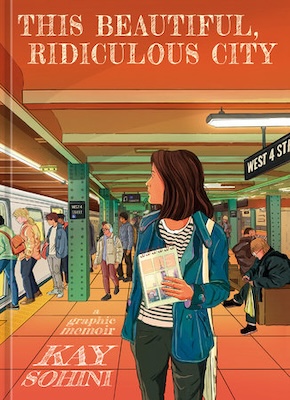
Over the years, as I pursued a doctorate in English, I found myself increasingly drawn to the medium of comics. That’s how my debut book This Beautiful, Ridiculous City—a graphic memoir that explores the promises and pitfalls of New York from an immigrant perspective—came to be. It is also a book about how literature led me to the New World. 

Here are 8 comics set in New York City that I have read, reread, and loved:  

Impossible People: A Completely Average Recovery Story by Julia Wertz

As a graphic memoir about alcoholism and sobriety while slowly being priced out of New York, Impossible People is both effervescently humorous and profoundly sad. There’s something stirring yet wistful about Wertz’s observations about the indignities of life as a human and a cartoonist. One of the brightest spots in this book is her painstakingly detailed cityscapes—spanning bodegas, storefronts, windows units, and street signs in deep inks, a style that also appears prominently in her 2017 book Tenements, Towers and Trash: An Unconventional Illustrated History of New York City.

Seek You: A Journey through American Loneliness by Kristen Radtke

Seek You isn’t a New York story so much as a story that occurs in New York some of the time, as Radtke moves from her midwestern town to the city in her twenties. One of the finest examples of how research and storytelling can be combined in the comics medium, it deep dives into loneliness and its causes and manifestations, through elegantly explained scientific experiments, personal narratives, and stories of loneliness as it pertains to those around her. We learn about the part of the brain that responds to isolation, how social rejection feels akin to physical pain inside our brain, how the society we live in is not designed to foster community, and how technology figures into all of this, among other fascinating topics, all revolving around the concept of loneliness and human need for connection. An essential read.

A Contract with God by Will Eisner

Published in 1978 and one of the first book length comics to experiment with serious subject matters in this medium, it is often cited as the first graphic novel, although there were a few others before it. Yet its influence on the comics scene from the 20th century to the present day is incomparable. Eisner is also the artist who popularized the term “graphic novel,” although it was coined elsewhere a few years before this book was published. Drawn in sharp black ink, A Contract with God comprises impeccably expressive imagery spanning four short, interwoven stories. It is based in a tenement at 55 Dropsie Avenue in the Bronx “that was built around 1920 when the decaying apartment houses in lower Manhattan could no longer accommodate the flood of immigrants that poured into New York after World War I.” It looks at a cast of characters—laborers, clerks, low paid city employees—from his own memories. These, he writes at the beginning, are true stories that he converted into fiction. The first story looks at Frimme Hersh, who lost his daughter to sudden illness, the second is about a has-been opera singer who tries to revive her glory days by coaching a hapless street singer during the Depression era, the third is about the super, Mr Scuggs, and the fourth and the final one is about the tenants of Dropsie Avenue vacationing in the Catskills.

Asterios Polyp by David Mazzucchelli

One of the most ingenious graphic novels I have ever read, in which Mazzucchelli takes a story of a middle aged “paper architect” and Cornell professor and turns it into an existential quest. It is not so much a story about New York as it is about leaving it behind. In fact, the story starts when Polyp’s apartment building is set ablaze by a lightning strike, leaving him scrambling to escape in the middle of the night. Once outside, he stands in the pouring rain, watching his life go up in smoke. We follow him as he walks away, and takes the subway to Port Authority where he gets on a bus to the middle of nowhere. A formalist masterpiece, it eludes easy description, but if you like Greek tragedies and very literary comics, you will love Asterios Polyp.

Good Talk: A Memoir in Conversations by Mira Jacob

The book revolves around raising a mixed-race kid in a half East Indian, half Jewish family in Brooklyn, who asks hard questions about race such as “Are White people afraid of Brown people?” and more worryingly, “Is Daddy afraid of us?” Jacob’s visual style involves heavy use of colorful photographs as the backdrop of black and white graphic cut-outs of her characters and many, many speech balloons, to illustrate a story about race and diaspora in America, the ways it has changed for the better, and the ways it hasn’t. On the other side of the world, back in her parents’ hometown in India, the book looks at colorism through the eyes of a younger version of Jacob. Heartfelt, funny and incisively perceptive, it earnestly explores what it means to be Brown in America in the wake of 9/11 and in the aftermath of the 2016 election.

Going into Town: A Love Letter to New York by Roz Chast

The book originally began as a leaflet for her daughter who left her suburban home for school in Manhattan. Chast, who was born in Brooklyn, spent her early adulthood in Manhattan before moving away as one does in the pursuit of more space in the suburbs ahead of starting a family. Full of her signature wry but laugh-out-loud humor (as seen in The New Yorker), this pocket-sized book is, as the subtitle says, part love letter to New York and part guide book. If you are completely new to the city, it will teach you how to navigate the subway, the grid system, what cross-streets are, and how Sixth Avenue and Avenue of the Americas are the same thing but, of course, no one (really, not a single person) calls it the latter. If you have been living here for a while and already know everything Chast has to offer, the book’s easy charm will still (probably) urge you to take a long, aimless walk and make you appreciate this beautiful, ridiculous city all over again. 

Queenie: Godmother of Harlem by Aurelie Levy and Elizabeth Colomba

Queenie: Godmother of Harlem is based on the life of Stephanie Saint-Clair, aka “Queenie.” Born on a plantation in Martinique, a French colony in the Caribbean, Queenie leaves for New York around 1912. She survives an abusive ex-boyfriend, followed by a brutal attack by the Ku Klux Klan, and then finds the courage to begin to foster a name for herself as the Queen of Harlem’s mafia. She became the runner of the numbers game in the 1930s when the Prohibition era was coming to an end. She built her own image, dressing in fine clothes and jewelry and purchasing ads in The New York Amsterdam News. She was a resilient woman and a compassionate leader who helped out and empowered many in the Black community with the money she made from racketeering. At the end of her life, we see her enjoying an idyllic afternoon in Long Island, retired. This heavily researched, part fictionalized graphic novel offers us deep insight into a piece of forgotten history. 

Victory Parade by Leela Corman

Based primarily in 1940s Brooklyn and focusing on a cast of characters who are women, Jewish, and refugees, Victory Parade reflects on intergenerational trauma as experienced and passed down by Holocaust survivors. Grittier than most other books in this list, there are abusive marriages, illicit relationships, sexual harassment, and metaphorical disembodiment signaling the war-torn society, but there’s also love, longing, female friendships, and survival in the middle of it all. With frequent references to Greek tragedies and 20th-century painters, Victory Parade is a testament to the comic medium’s ability to portray complex and difficult subjects with nuance, create meaning with a coalescence of words and images.

March Gradness Day 5: Round 3

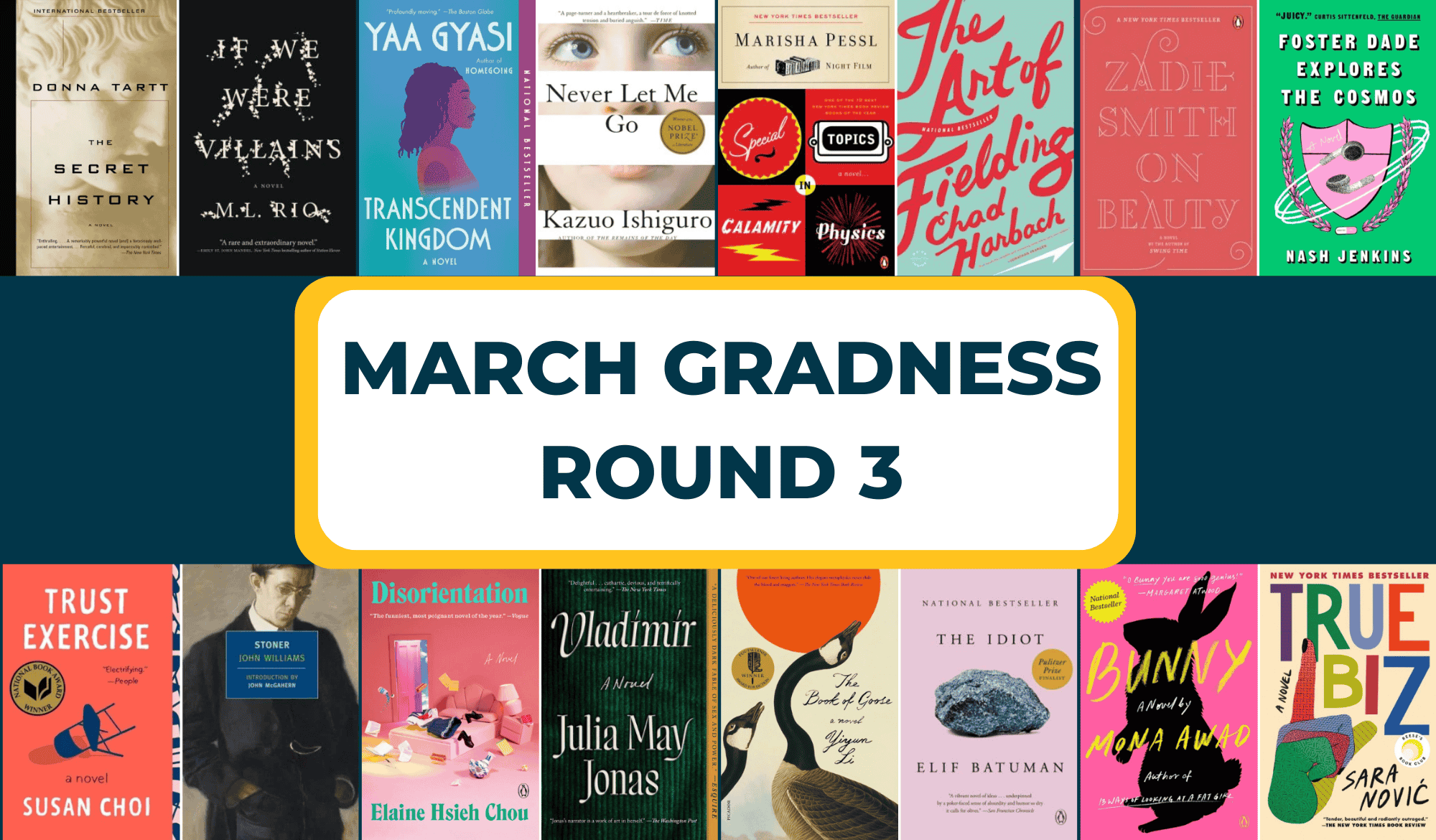
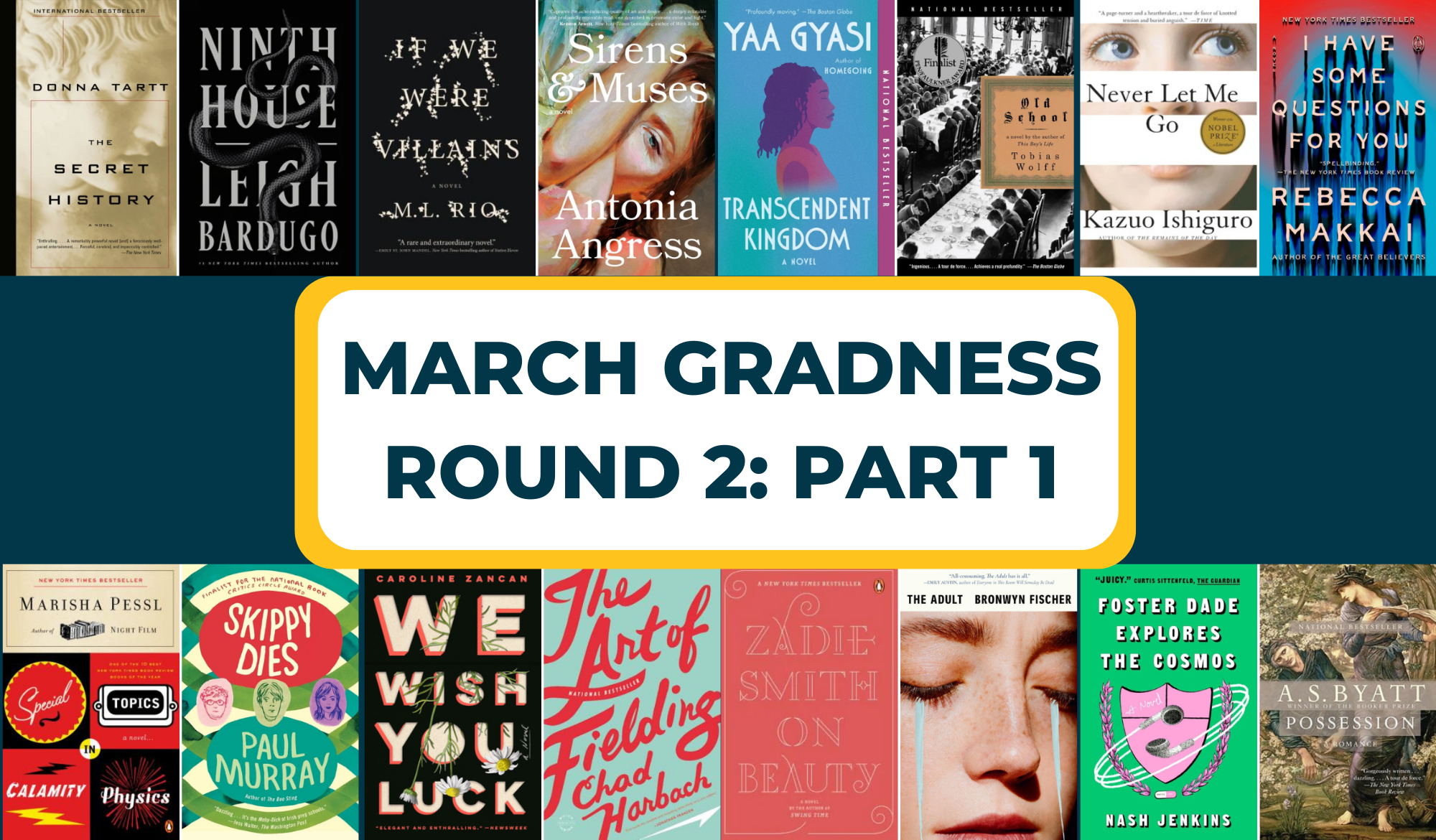
Welcome to Day 5 of March Gradness! We’ve whittled it down to the Sweet Sixteen of campus novels. In the last round, Bunny and Disorientation swept the competition, while all of the others were nail-bitingly close races. The Book of Goose beat Real Life by a margin of 6 votes, and Trust Exercise was neck-and-neck with A Separate Peace on Instagram but took the lead by a wide margin with our web voters.

Check out the bracket below to see how the matches have shaken out so far.

Round 3 voting is now closed. Stop back Monday, 3/31 at 12 pm Eastern to vote in the quarter finals!


The Secret History vs. If We Were Villains

Choose the best campus novel

Voting for this Round has closed.

Look out for the next round to begin shortly.

Transcendent Kingdom vs. Never Let Me Go

Choose the best campus novel

Voting for this Round has closed.

Look out for the next round to begin shortly.

Special Topics in Calamity Physics vs. The Art of Fielding

Choose the best campus novel

Voting for this Round has closed.

Look out for the next round to begin shortly.

Foster Dad Explores the Cosmos vs. On Beauty

Choose the best campus novel

Voting for this Round has closed.

Look out for the next round to begin shortly.

Stoner vs. Trust Exercise

Choose the best campus novel

Voting for this Round has closed.

Look out for the next round to begin shortly.

Disorientation vs. Vladimir

Choose the best campus novel

Voting for this Round has closed.

Look out for the next round to begin shortly.

The Idiot vs. The Book of Goose

Choose the best campus novel

Voting for this Round has closed.

Look out for the next round to begin shortly.

True Biz vs. Bunny

Choose the best campus novel

Voting for this Round has closed.

Look out for the next round to begin shortly.

7 Books About Women and Food

What we eat in literature tells its own story. A pie? That’s the story of hard work, perseverance, dedication to craft. A ripe peach is the story of sunlight and sweetness and deep roots. A roast chicken, skin burnished a deep brown, might tell a story of home. 

As I wrote about food–and my own complicated relationship with it and with restaurants–in my book, Cellar Rat: My Life in the Restaurant Underbelly, I spent a lot of time thinking not only about how food was cast in literature, but also about other women. About how women landed on the page, about how they fed and nurtured, about how they found themselves in proximity to food, cooking food, working in the food industry, serving food, falling in love with food, eating for survival and for pleasure, finding themselves through food and completing others through its preparation. 

Some of the seven books compiled here include women who work in restaurants. Some include women who write about food, or who cook professionally. Others are simply books about women who exist in the domestic sphere, bound by food and its endless possibilities. Women who are guardians of the palate, women who understand this basic and innate instinct to feed. Women who love all of it. 

My own book explores what it means to be a woman in the food space. I look, specifically, at the ways in which the food industry, in all its toxicity, shapes women like me, even as it provides a compelling backdrop for these stories. I hope to offer a place for readers–like these seven books do–to see food and the lives of those intertwined with it, in a new way. 

Piglet by Lottie Hazell 

Lottie Hazell’s Piglet is an observational masterpiece, leaning into the nuances of romance, body image, and womanhood all through the lens of food. The titular main character, Piglet, nicknamed, in youth, for her voracious appetite, works as a cookbook editor, precariously attempting to climb the ranks at work while simultaneously living out her dream at home: wealthy fiancé, lovely home, kitchen well-equipped with the trappings necessary to host a nice dinner party. It is only when her life goes haywire–a secret unveiled, a life unraveling–that Piglet comes into her own, cooking less for performance and more for the curative and meditative value. It’s an astute look at what it means for women to eat, to feed, and, finally, to feel full. 

This Time Tomorrow by Emma Straub

Alice Stern, the admissions officer protagonist of Emma Straub’s This Time Tomorrow, doesn’t work in the food industry, but food and memory permeates this book, which is about choices, and love, and how women root themselves in both home and work. Untethered from the traditional confines of time, Stern is free to repeat familiar meals with her father–Gray’s Papaya, for instance, for an iconic hot dog–before flitting back to her current life, where she is 40. In a world where Stern’s churning confusion unlocks the mystery of both present and past, food is a grounding present. Hot dogs, lentil and veggie pie, a pear and radish salad: these are concrete reminders of the very real and very tangible moments shared with the people we love. 

Homeseeking by Karissa Chen

GMA Book Club Pick Homeseeking, by Karissa Chen, spans generations and countries, uniting–then separating–then reuniting young lovers in twists of fate and circumstance. The book, which splits time between mainland China, Taiwan, California, and Hong Kong, is not ostensibly about food, but some of Chen’s most interesting characters find identity through the service and preparation of delicious things. In noodle shops, cloaked in steam, the protagonist lovers, Suchi and Haiwen, try to piece their lives back together. In war-torn China, Haiwen’s mother makes an indisputably crisp turnip cake. Women and mothers are the engines of this book, the characters who feed and nurture and propel the carefully crafted and smart narrative forward. 

Heartburn by Nora Ephron 

A barely concealed Roman à clef, Heartburn chronicles the doomed union of food writer Rachel Samstat and political journalist Mark Feldman. Most of Samstat’s major life events, as told through Nora Ephron’s witty and perceptive voice, are punctuated by important foods (and, accordingly, recipes), perhaps the most famous of which is the key lime pie, a Chekovian element that does, in fact, detonate, right in the face of a lothario. Samstat, a stand-in for Ephron herself, is comforted, perplexed, and invigorated by food, and the narrative takes shape in the context of the network of ways that she, a food professional, feeds both herself and others. 

Margo’s Got Money Troubles by Rufi Thorpe

Rufi Thorpe’s latest novel–juicy, relatable, and simultaneously over-the-top–follows financially strapped Margo, a young woman with (you guessed it) no cash but plenty of other problems. One such problem: she’s pregnant, unexpectedly, with a child from an ill-advised romance with her professor. Like many young women with diminished options and an overdrawn bank account, Margo ends up in restaurant work. The rest is a story of wit and whimsy and a bit of exaggeration. Restaurant work fails Margo, but there is more out there for her, an arc of redemption for both her and for the people who have caused her harm. 

All the Colors of the Dark by Chris Whitaker

Chris Whitaker’s winding, multi-generational saga, All the Colors of the Dark, follows the lives of Patch, a captive-turned-artist-turned-fugitive, and Saint, a young girl-turned-home cook-turned police officer. Saint’s unlikely legacy becomes her domestic calling: the biscuits she makes, the painstaking attention she pays to the craft of cooking. She is a woman thrown into the man’s world of law enforcement, but, back at home, she is more than a sufficient cook. She feeds. She nurtures, passing down legacy–and the legacy of friendship and love and home and searching and even hope–through food. 

Same As It Ever Was by Clare Lombardo

New York Times-bestselling author Clare Lombardo opens her fresh novel, Same As It Ever Was, in a grocery store; there, protagonist Julia Ames runs into an old friend, Helen Russo, while shopping for the ingredients to make crab cakes for her husband’s birthday. Russo, an older woman who had been, for a time, a motherly figure to Ames, comes alive in later chapters, and through acts of cooking. Food, in fact, punctuates the book’s main events. Crab cakes: celebratory for a 60th birthday. Later, an apricot galette will set an affair in motion. Both Ames and Russo have entrenched domestic roles, and their work in the kitchen is at once ancillary and important. They are making something, feeding someone, memorializing something. For these characters, who exist in a world where limits are drawn and bound by the more powerful people around them, there is a certain freedom here, in a place where the rules are theirs and theirs alone.

March Gradness Day 4: Round of 32 (Part 2)

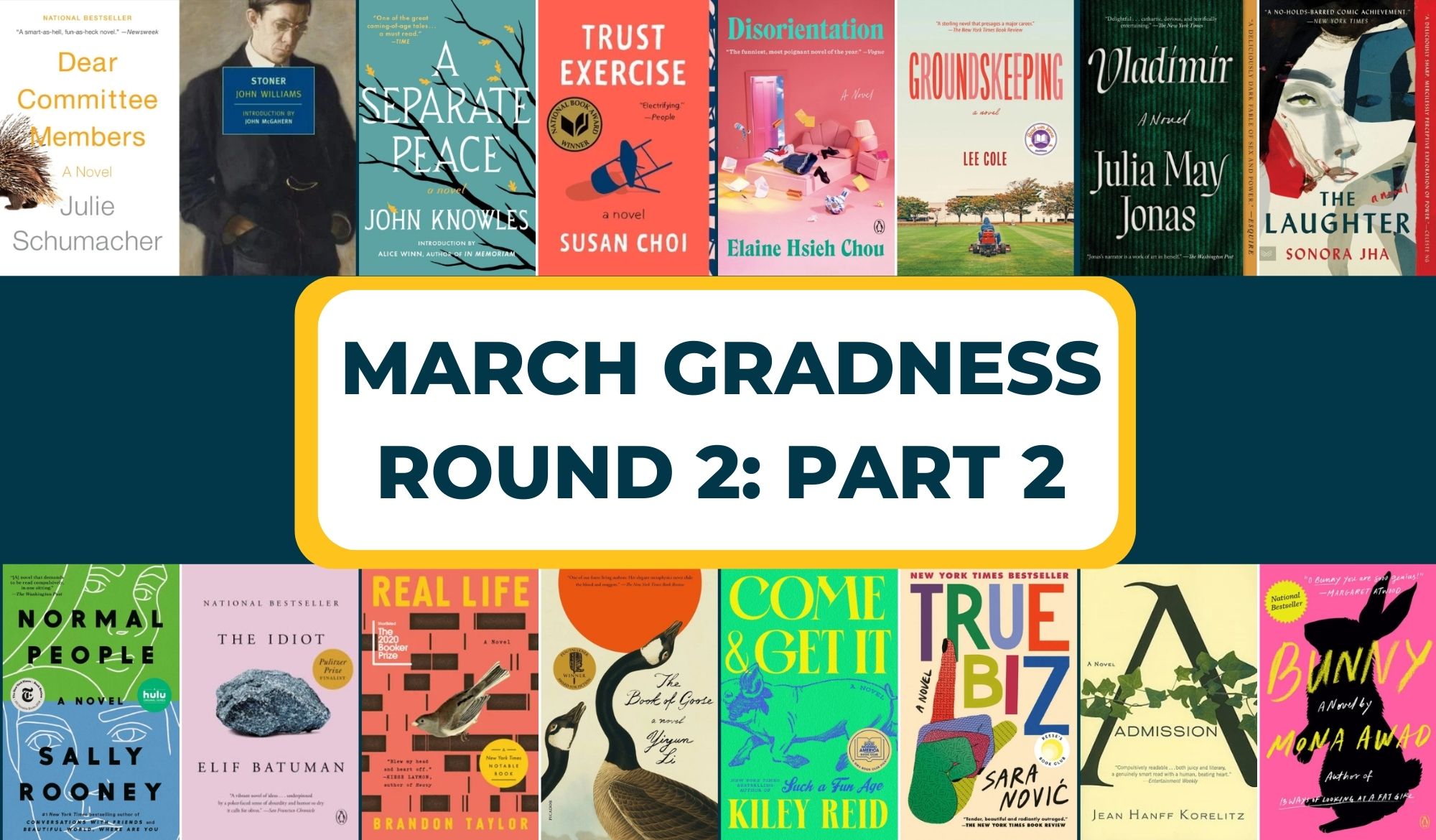
The Gradness continues with Round Two (part two)! Voting is heating up and there were some close calls from yesterday’s matches with Calamity Physics narrowly beating out Skippy Dies and The Art of Fielding edging out We Wish You Luck. Foster Dade Explores the Cosmos toppled Possession by a margin of just nine votes.  On Beauty, Transcendent Kingdom, Never Let Me Go, If We Were Villains, and The Secret History decked the competition.

Take a look at the updated bracket below to see where the match-ups stand.

Round Two, part two voting has now ended. Head over to Round Three to vote in the latest match-ups!


Stoner vs. Dear Committee Members

Choose the best campus novel

Voting for this Round has closed.

Look out for the next round to begin shortly.

Trust Exercise vs. A Separate Peace

Choose the best campus novel

Voting for this Round has closed.

Look out for the next round to begin shortly.

Groundskeeping vs. Disorientation

Choose the best campus novel

Voting for this Round has closed.

Look out for the next round to begin shortly.

Vladimir vs. The Laughter

Choose the best campus novel

Voting for this Round has closed.

Look out for the next round to begin shortly.

Normal People vs. The Idiot

Choose the best campus novel

Voting for this Round has closed.

Look out for the next round to begin shortly.

The Book of Goose vs. Real Life

Choose the best campus novel

Voting for this Round has closed.

Look out for the next round to begin shortly.

Come & Get It vs. True Biz

Choose the best campus novel

Voting for this Round has closed.

Look out for the next round to begin shortly.

Admission vs. Bunny

Choose the best campus novel

Voting for this Round has closed.

Look out for the next round to begin shortly.

7 Intense Books About Messy Relationships

I love fiction that immerses us in a character’s mind. It’s plot enough for me—the gyrations of logic or illogic. Characters reasoning, abandoning reason, obsessing. Even when the thoughts lead nowhere, as in Kafka’s The Burrow, there’s something thrilling and cathartic about going along for the ride. And when the narrator is precise and self-aware, we get to understand the characters’ motivations and contradictions truly. The books on this list, two autobiographical, share this quality. At their center are relationships—ones that aren’t going well or didn’t go well. Perfect fodder for analysis. Most of these books revolve around romantic or sexual relationships, while one (Burnt Sugar) proves that mother-daughter bonds can be just as intense. The books’ narrators try to reason methodically through their situations, sometimes sinking deeper into obsession or downward spirals. It’s no coincidence that these books are relatively slim: they are unflinching and raw. The characters brood, swear, cry, study themselves in the mirror crying, invite more sorrow—and keep us turning the pages.

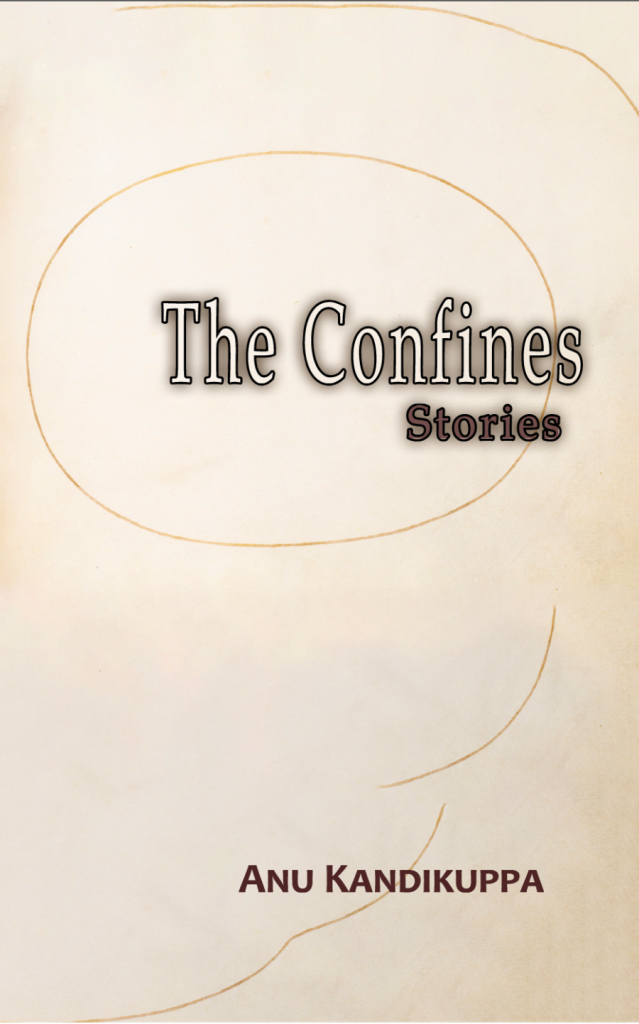
Long-running relationships impress me greatly. People are complicated, and getting along isn’t as easy as it should be, especially with external friction. So it’s no surprise that relationships are at the heart of the twelve stories in my collection, The Confines. Set in the U.S. and India, the collection follows characters navigating the unspoken rules of conservative Indian society—a tension that runs through the stories. Many explore romantic relationships or marriage—an endlessly complex institution made more so by the stigma around divorce, which often clashes with the partners’ desires. Said rules also thwart relationships that could have been epic—though who’s to say? Say you’re growing up in 1990s Bangalore, like a character in one story, and fall deeply in love with a colleague but can’t tell him because girls aren’t supposed to behave like that. What do you do? The stories in The Confines take pains to understand the characters as they converse with each other or try to counsel themselves through fraught situations, like the books on this list.

Here are 7 books about intense, messy relationships:

Burnt Sugar by Avni Doshi

In Avni Doshi’s Burnt Sugar, Antara, a young artist living in Pune, begins to care for her mother, Tara, who is losing her memory. Always a rebel, Tara left her husband when Antara was a little girl for a vagabond life in an ashram and even on the streets briefly. Deeply scarred by her mother’s neglect, Antara tries to stitch a life together and not turn into her mother, while harboring a secret that preserves her pain and resentment. “Is she trying to erase me?” wonders Antara of her mother. Doshi does not hold back in depicting less-than-attractive aspects of the mother-daughter relationship: the ugliness, love, dependence, and the difficulty of healing when trust and boundaries are breached. 

Getting Lost by Annie Ernaux, translated by Alison L. Strayer

Getting Lost is autobiographical, comprising diary entries from the late 1980s, written during the author’s affair with a Soviet diplomat—the journal becomes her “way of enduring the wait” until they see each other again. The affair is doomed from the start: the author is single, while her lover is married, and she has no control over the direction of their relationship. The diary entries obsessively chronicle their nights together, her frantic calculations about their next meeting, and her fear of losing him—their repetitiousness a clue to the author’s emotional decline.

The Days of Abandonment by Elena Ferrante, translated by Ann Goldstein

Elena Ferrante’s The Days of Abandonment begins with the sentence, “One April afternoon, right after lunch, my husband announced that he wanted to leave me,” spoken to the protagonist, Olga, by her husband, Mario. At first unbelieving, Olga discovers that her husband is having an affair with a younger woman. What follows is an account of how she almost breaks down, trying to handle her responsibilities toward the house and home while consumed by fury and grief. She begins to behave erratically but pulls herself back from the brink through painful introspection. In the end, she accepts that Mario is gone and that she must rebuild her life. Ferrante’s direct, unflinching writing gets to the heart of what it means to feel betrayed and at the breaking point of reason.

The Sorrows of Young Werther by Johann Wolfgang von Goethe, translated by Burton Pike

I cannot resist including this classic, a favorite. In The Sorrows of Young Werther, Goethe’s first novel—he was twenty-five when he wrote it—Werther, an artist, relocates to the countryside, seeking a simple life close to nature. There, he meets and falls in love with a young woman named Charlotte. “… I’m not able to tell you how she is perfect, why she is perfect; enough, she has taken my whole mind captive,” he writes to his friend Wilhelm, in one letter in the series the novel largely consists of. Lotte is happy to befriend Werther, but she is engaged and does not return his romantic feelings. Unable to accept this, Werther rapidly descends into torment that leads to a fateful and tragic end. Told in language full of feeling, the novel unforgettably portrays the consequences of passion colliding with pragmatism.

Bluets by Maggie Nelson

Like Getting Lost, Maggie Nelson’s Bluets is autobiographical. Told through 240 meditations on the color blue—which the author loves—it’s often classified as poetry. Written between 2003 and 2006, it follows the author as she recovers from an affair with a man referred to as the “prince of blue,” who tells her, one of the last times they meet, that he is in love with another woman, too. Nelson’s grief is devastating, yet coolly dissected through literary and philosophical reflections, written with raw honesty. “Last night I wept in a way I haven’t wept for some time. I wept until I aged myself. I watched it happen in the mirror,” she writes, ending the book with, “Perhaps, in time, I will also stop missing you.”

Topics of Conversation by Miranda Popkey

In Topics of Conversation, Miranda Popkey follows an unnamed narrator over two decades as she tries to make sense of her life and her often-destructive choices through conversations with strangers, employers, friends, and her mother. Through the confessional, first-person narrative, the reader has a ringside seat to the narrator’s searching thoughts as she alternates between clarity and self-sabotage. The relationship at the center of this book is that of the narrator with herself. Precisely and intelligently, she wrestles with questions of power, desire, and self-deception, realizing at one point, “I have always liked men who are a little cruel.” 

First Love by Gwendoline Riley

In Gwendoline Riley’s First Love, Neve is in a volatile, dysfunctional marriage with an older man, Edwyn. She has never lived with anyone before him and comes from an unstable family, particularly her mother. Edwyn, meanwhile, is needy, manipulative, and recovering from a serious illness. They stumble through their marriage, with Neve making excuses for him and wondering, whenever they find a pocket of calm, whether they are “coming to an accommodation, two people who’d always expected, planned, to live their lives alone.” Riley’s sparse, laser-sharp writing makes almost every line of this sad yet improbably funny novel feel underlineable.

The Grotesque Cruelty of Human Nature

Reconsider the Lobster: On the Persistent, Joyful Cruelty of Bipedal Hominids by Ron Currie

Let’s just state it plainly right at the top: the principal feature of the Maine Lobster Festival is not the crowds, or the admittedly impressive engineering feat known as the World’s Largest Lobster Cooker, or the food or sketchy carnival rides or even the postcard Maine coast in summer. The principal feature of the Maine Lobster Festival is the ambient, omnipresent weirdness of the whole enterprise, which David Foster Wallace recognized and articulated to near perfection twenty years ago in “Consider the Lobster,” an essay originally published in Gourmet that turned out, quite infamously, to be anything but an epicurean puff piece. 

There’s almost no amount or quality of weirdness that we can’t get used to, of course (the term du jour for this neurological elasticity is normalize, which, like most buzzwords, is almost unbearably inane, but there you go), and most of the thousands and thousands who attend the Lobster Festival each year appear not to be bothered by its particular brand of weirdness, appear, honestly, to not even really notice how weird it is. This fact ends up creating a tremendous sense of isolation for someone like me, a native Mainer from the state’s interior who, for better or worse, can’t stop noticing how weird life is, how fuzzy and spooky it gets at the edges of our ability to perceive. Standing on the side of Main Street in downtown Rockland, I feel myself buffeted, adrift as in rough seas, while the thing considered by most Festival enthusiasts to be the highlight of the three-day event —the Lobster Festival Parade—rolls by. 

At the head of the procession is a cruiser from the Rockland police, the passenger seat occupied by an alarmingly manic McGruff the Crime Dog in his signature detective’s trench coat, repeatedly giving a thumbs-up to indicate his approval of something—the weather? Lobster Thermidor?—and tossing candy to the kids.

After a couple of standard-issue marching bands and the Daughters of the American Revolution float, we’re approached by a loose grouping of cartoon characters that are both immediately recognizable and completely off-brand. Sure, that’s Woody from Toy Story, but also it’s totally not Woody from Toy Story. This clear copyright infringement doesn’t bother the children, of course, who sit rapt at the edge of the street as knock-off Ninja Turtles and someone who’s probably supposed to be the snowman from Frozen saunter by. 

It goes on. There’s a random pirate wandering around slapping five with paradegoers. A group of kids dressed as lobsters in a giant pot, with soap bubbles meant to simulate steam. A dump truck with a few of those diamond-shaped road work signs on its side, except these ones read “BE PREPARED TO STOP FOR LOBSTER” and “LOBSTER—500 FEET AHEAD.”

There’s roughly another hour of this to go.  


Suicide comes in different forms. Or at least it can be argued that it does. My grandfather, for example, packed several lifetimes’ worth of drinking and smoking into just 49 years; his death was, in all the ways that count, a suicide. Ditto for my father, who smoked like a barbecue joint for the better part of four decades, quit too late, and died of lung cancer at 57. I don’t think either of them meant to kill themselves—not consciously, at least—but that’s what they did, in effect. 

I’ve lost a lot of people to deaths that wouldn’t rate as suicides on a coroner’s report but that, in terms of the quality of grief they inspire, sure feel like the friends and family in question chose to call it quits, often right in front of me, day by day, drink by drink, Big Mac by Big Mac. 

Then there’s the more straightforward version of suicide, the kind we usually refer to when we invoke the word: a moment; a single, irretrievable act. This is the kind of suicide David Foster Wallace committed, famously, in 2008. After a lifetime that resembled a Greco-Roman wrestling match with depression, after a crushingly bad year during which nothing he or the doctors or his wife or his family did seemed to help, he organized the novel manuscript he’d been working on for a decade, moved his beloved dogs into another room so they wouldn’t see what came next, and hanged himself.


Wallace’s essay for Gourmet magazine purported, at the outset, to be a straightforward if verbose travelogue, like if Rick Steves had swallowed an OED and cultivated a moderate case of social anxiety. But about a third of the way through, Wallace drops a question he’s been slyly building toward, one that changes both the tone and the direction of the piece entirely: “Is it all right to boil a sentient creature alive just for our gustatory pleasure?”

It is not, in fact, all right to boil something alive, and that’s probably just common sense.

This question, and the contemplation of casual cruelty and crustacean neuroanatomy that follows, caused no small amount of consternation among the readers of Gourmet at the time; the sacks of angry mail that showed up at the magazine’s offices remain legend among those who staff what’s left of the periodicals industry.   

Although Wallace takes pains, in the essay, to make clear he himself is undecided on the morality of boiling lobsters—”I am…concerned not to come off as shrill or preachy,” he writes, “when what I really am is confused”—it seems evident to me that to be worried enough about suffering to wonder in the first place whether lobsters are capable of it, you must first be well-acquainted with suffering yourself, and moreover must realize that, through laziness, malice, willful blindness, or all three, you regularly contribute to the sum total of suffering in the world.

Thus Wallace, the unrepentant carnivore, dismisses as hyperbole his own comparison of the Lobster Festival to a Roman circus, condemning his indifference to suffering while  he also condemns the average Gourmet reader’s own indifference.         

It’s precisely this hypocrisy that I find most appealing about the essay. The person before us is not Saint Dave, the self-help guru of This is Water fame, which is how most Americans know him (and more’s the pity). It’s Dave Wallace, a flawed, brilliant, deeply sensitive, callous man, whose inability to reconcile how he was with how he wanted to be brought him, eventually, to that grim night in September 2008, with the dogs and the manuscript and a length of rope.

Wallace’s insistence that he’s simply asking the question of whether we should boil animals alive, rather than pushing an answer, is if not disingenuous, at least part of the essay’s overall tactical aesthetic. He’s making room for the reader to join him in the realization that, when you set aside all the moral inquiry and “hard-core philosophy” in the piece, you’re left with a very simple conclusion that you really only can deny if you choose to: that it is not, in fact, all right to boil something alive, and that’s probably just common sense.


The principal feature of the unexamined life may be an inability to conceive of a way of thinking or feeling that a) differs from your own and b) is legitimate. I see hints of this phenomenon all the time, and mostly among men. Sports radio and pickup basketball games are good places to get acquainted with it—a kind of mildly grumpy, default-conservative worldview that takes its own legitimacy for granted and demonstrates little curiosity about, well, really much of anything—least of all testing its own assumptions.

This same worldview is what one sees on display at big dumb fun like the Maine Lobster Festival. People love it, and that they love it is conclusive proof it must be great. It celebrates all the wonderful things about Maine in the summer, plus the proceeds go to charity, so only a crank or a crazy person would call into question the morality of the whole thing, or wonder out loud if a party centered around boiling thousands of animals alive might actually be fucking barbaric.

The guys I play basketball with twice a week are, by and large, unexamined-life types, and I say that with all affection—I would cut off one of my own digits without anesthetic, Yakuza-style, if it meant I could breeze through my days the way most of them seem to. They have families and honest jobs and definitely don’t spend a whole lot of time thinking about how the meat they cook at backyard barbecues is so cheap because its real cost is borne by the animals themselves, in the form of inconceivable suffering.

Sometimes I imagine how befuddled these guys would be if I told them I think that life, far from being a gift, is actually an irredeemable evil. That consciousness—and its attendant, unavoidable suffering—is to me a morally indefensible thing to inflict on someone else. Some of them know I’m a writer, and so probably consider me suspect in a general way, but mostly I present as a typical guy among guys—I talk shit and get into good-natured squabbles and am not above sharpening my elbows if someone pisses me off. So if I piped up one day about how I love my children the best way I know how—by not having them in the first place—I might find myself quietly removed from the game’s ongoing email thread. And rightly so. As Wallace wrote, “there are limits to what interested parties can ask of each other.” I don’t even want to think about these things—I just don’t seem to have much of a choice.


The usual knock against Wallace’s writing is that it is cerebral and chilly, self-aggrandizing, all head and no heart. I wonder if, as is sometimes the case with the criticism we level at others, those who make this contention about Wallace are themselves emotionally deficient, or otherwise have agendas to serve. Because everything he wrote was shot through with a pain so obvious it’s like a lit cigarette placed lengthwise against your forearm and left to burn slowly down to its filter. Infinite Jest is about the pain of addiction, so acute and unbearable that it makes you willing to tolerate “some old lady with cat-hair on her nylons com(ing) at you to hug you and tell you to make a list of all the things you’re grateful for today” just so you can learn how to make that pain stop. Brief Interviews With Hideous Men is about the pain caused by toxic masculinity, decades before there even was such a term. The Broom of the System is about the pain of the inescapable isolation we all live in, “lords of our own tiny skull-sized kingdoms, alone at the center of all creation.” A Supposedly Fun Thing I’ll Never Do Again and “Big Red Son” are about the pain of discovering that certain things advertised as unequivocally good times are anything but. And “Consider the Lobster” is about the wholesale pain we as a species inflict on ourselves and creation, and how we turn a blind eye to that pain so we can keep eating, and doing, whatever we want.

Wallace’s focus on suffering remained until the end. “Maybe dullness is associated with psychic pain,” he wrote in the unfinished novel, The Pale King, “because something that’s dull or opaque fails to provide enough stimulation to distract people from some other, deeper type of pain that is always there, if only in an ambient low-level way, and which most of us spend nearly all our time and energy trying to distract ourselves from.”


I’m not going to attempt to influence what you think and/or feel about the gap between what Wallace wrote and how he behaved, according to some who knew him.

I will invite you to consider, though, several questions:

Are our ideals rendered null and void by our failure to live up to them? 

If I am never as smart or compassionate or articulate or even-handed in life as I am on the page, does that make the whole of my work a lie? 

Can suicide be thought of as the ultimate expression of disappointment in oneself—in Wallace’s case, a much more permanent and irrefutable condemnation than anyone has managed since?


The principal feature of the unexamined life may be an inability to conceive of a way of thinking or feeling that a) differs from your own and b) is legitimate.

In the western frontier states there’s a practice with the whimsical name “wolf whacking” that some people consider a fun pastime of sorts. It involves using a snowmobile to run a wolf to exhaustion, and then, when it’s too tired to flee anymore, running it over repeatedly until it’s dead. If on a given day you feel the urge to do some wolf whacking but the wolves aren’t showing themselves, coyotes—more numerous and less elusive—will do in their stead.

This practice came to my attention through the case of a man named Cody Roberts, a resident of Wyoming who not long ago ran a wolf over with his snowmobile and, when the wolf failed to die right away, decided to tape its mouth shut and bring it to town and show it off at a bar before finally taking the animal out back and shooting it dead. If you’re interested and can stomach it, photographic evidence of Mr. Roberts’ night out is available online, because pics or it didn’t happen, of course. In the photos, he seems to be enjoying himself quite a lot.

When I was in junior high, one of the boys’ favorite pastimes involved going to the golf course across the street to abuse, torture, and kill the frogs that made their home in the water hazard. There were baseball bats. There were firecrackers inserted into amphibian orifices and set alight. There were, of course, more workaday methods of dispatching frogs, as well: literally stomping their guts out, for example, or hurling their soft bodies against the brick foundation of the pro shop.

It’s commonly assumed that such displays of cruelty in childhood presage violent or anti-social behavior in later years. But as far as I know, none of the guys who killed frogs at the golf course grew up to be Jeffrey Dahmer. They all live average, unremarkable lives now. They’re cops and lumber yard workers, call center operators and middle-management flunkies. They’re husbands and fathers. They play beer-league softball and drive minivans. They’re normal. 

Here’s my thesis: the frog pogroms I witnessed and did nothing about as a child indicate there is something fundamentally wrong with us as a species, something that can only be mitigated, but not solved, by law or reason. This isn’t about ideology, but biology. Some evil that lurks in us all. Some intractable, sadistic chromosome, insufficiently counterbalanced by whatever grace or kindness we’re capable of.

And that’s why, when I read about Cody Roberts of Wyoming dragging the wolf around to show off to his buddies before finally killing it, I have two concurrent reactions. First, I feel a surge of hatred for my own species, like vomit rising in my throat. I hate what we are by both divine and natural law, an inscrutable house ape that takes grotesque, gleeful pleasure in the suffering of creatures we consider inferior to ourselves. 

Second, and more narrowly, I experience a howling desire for five minutes alone in a locked room with Cody Roberts. I want to break my hands against his face, tape his mouth shut and drag him around to show off to my buddies, snap pictures of him suffering and terrified while I grin widely with my arm around his shoulders.  

But as those fission-hot first reactions burn away, I realize this is not, in fact, what I want. Hurting Cody Roberts would be both too easy and too obvious. What I really want is to know how to make him understand, completely and for all time, how terrible what he did is. I want him to be haunted by that poor animal for as long as he lives, and to have no peace even when he sleeps. I am tormented by the need to see him tormented.

This means, of course, that I am no better than Cody Roberts. I can’t change my nature, any more than he can.

Which brings us back around, I think, to the topic of suicide.


I’ve contemplated suicide here and there over the years, never attempted it. 

Sometimes when I’m in a bad stretch, which means among other things that I’m being watched pretty carefully by professionals, I have to fill out these crude little surveys meant to quantify how pathological my thinking has become. They feature questions like, “In the past two weeks, have you felt like life isn’t worth living?” The surveys are multiple-choice and don’t provide space to ad lib, probably to keep smartasses like me from answering: “Haven’t you?!?” But as my buddy Gary wrote, when he found himself being asked similar questions in a locked ward, one must realize good boys get to go home and bad boys should have their mail forwarded, so answer accordingly. As with the TSA and the Secret Service, psychiatrists don’t get paid to appreciate levity.

It seems odd, doesn’t it, that we’re given no choice about life on either end? Certainly, no one inquired whether we wanted to be here in the first place, and now that we are, the full power of the state will be brought to bear to ensure we stick around. Someone alert the Federalist Society and Planned Parenthood! From what I understand, both those organizations are foundationally concerned with bodily autonomy, but neither seems to have anything to say about the fact that the most meaningful form of bodily autonomy is denied us, with near-unanimous support from our fellow citizens. The only thing we seem to agree on more than that life is precious is that meat is mighty tasty.

It’s not surprising, in retrospect, that I had to leave America to learn life is in fact dirt cheap. This was more than two decades ago. I was in Cairo, hurtling through that loud, heaving megalopolis in a black-and-white cab, alternately groaning and holding my breath, terrified not for myself but for the pedestrians scampering across six lanes of warp-speed traffic. The system, if it can be called that, was to sprint as far as you could across the road and, when you had to pause for cars, which was often, to stand up as straight as possible between lanes and hold very still as vehicles whizzed past only inches away. This probably goes without saying, but not everyone made it. That day alone, I saw two or three bodies on the side of the road, covered in sheets. No one seemed in a hurry to identify or otherwise deal with them.   

The only thing we seem to agree on more than that life is precious is that meat is mighty tasty.

Where did we get the idea, in America, that life is so precious anyway? We worship at the altar of the market economy, the simple overarching rule of which is supply and demand. Diamonds and gold are valuable not because they’re pretty, but because they’re rare. Life—human life—on the other hand, we’ve got plenty of. Way more than enough, in fact, if the general state of things, with eight billion of us and counting, is any indication.

But here in America, star-spangled Land of the Free, you are hardly free to end your life should you wish to. You’re going to live, whether you like it or not. And neither bemeasled patriots nor champions of women’s self-determination will come to your aid on that count.


On the marquee of a restaurant, a cartoon pig in a bib napkin grins as it gets ready to eat…a rack of pork ribs.

On a cardboard display in the dairy section of the grocery store, a smiling cartoon cow encourages you—practically begs you, in fact—to drink its breast milk.

The cognitive and moral dissonance such images should provoke—pork is so unspeakably delicious, even pigs want to eat it!—is nowhere in evidence in the culture as a whole. And the ubiquity of these images, once you start to notice them, inevitably raises the question of how they’re supposed to function. Is this some strip-mall version of the pagan impulse to honor the animals we eat through artistic rendition? Or is it just our old friend advertising doing what it does best—salving our conscience, laundering difficult truths until they come out sparkling clean and ready for retail?

Nobody but me seems preoccupied with such questions at the Maine Lobster Festival, and that’s hardly a surprise—everyone’s too busy rushing around in lobster shirts and lobster shorts and lobster hats (meaning hats with images of lobsters on them, as well as strange red hats with eyes and antennae designed to make the wearer look him- or herself like a lobster, sort of, and which are made available for sale by a gentleman with a small cart full of summertime kitsch no doubt manufactured by befuddled Chinese workers) and lobster socks and lobster pants and so on. More than one person is dressed in a full-body lobster suit, complete with claws and lobster-head hoodie. The summer residents in attendance, urbane types from Boston and New York who always stand out from the locals as though lit in neon, have lobster gear on, too, though in their case it looks expensive and probably designer and tends to be more tasteful (e.g. a light beach-cover type of dress in understated and symmetrical lobster print).

In “Consider the Lobster,” Wallace never mentions all the people who come to the festival dressed as the thing they intend to eat. Which seems odd to me—it’s precisely the kind of low-key, vexing detail that launched a thousand other footnotes in his work. Did it somehow escape his attention? Did he consider it not germane to the rest of the piece? Did it get axed in the (considerable, by Wallace’s account) back-and-forth between him and his editor at Gourmet?

My own attention is drawn mostly to the kids in their lobster clothes. Like everyone else, they’re just here to eat and have fun playing dress-up, but what if they clued into the fact that the thing they’re eating is also the thing they’re dressed up as? What if, as kids sometimes can, they saw clearly what the adults choose to turn away from? What if we were upending crates of live puppies into the World’s Largest Puppy Cooker? What story would we tell them about why that’s okay?

A few years ago, I worked on a television show set in the near future about climate change. Early in the process, we spent time tossing around ideas for episodes, and one concept some of us thought had potential was that of thousands of children, led by a Greta Thunberg-type personality, threatening to commit suicide en masse if the adults don’t get it together and actually meet the obligations of a climate agreement on time. We envisioned a kind of march, the kids moving from town to town and growing in numbers, until tens of thousands of them arrive at the latest installment of the fictional climate conference, ready to kill themselves.

And then what?

We never found out. One of the writers spoke up and said she couldn’t abide the thought that a real child, watching the show, might decide to kill herself. The rest of us instantly realized she was right, and the idea went in the trash can. But all this time later, I still think about it.


The lesson, for me, of middle age—that is to say, the cumulative lesson of the time that has passed since I first read “Consider the Lobster” and now—is that I know nothing and I am nothing. This likely makes me a lousy American, giving up my claim to a preeminent self like that. But it has also, counterintuitively, made life a little easier to take. Because if the unalterable fact of existence is confusion and cosmic irrelevance, it kind of takes the pressure off, doesn’t it? 

I have a tattoo on my right forearm that reads, “I’d tell you all you want and more, if the sounds I made could be what you hear.” David Foster Wallace wrote that line, and it helps too, a little. As alternately a devotee and a critic of Wittgenstein, Wallace grappled with the difficulty of using language to bridge the chasm between two minds. Which is another way of saying Wallace wrote about loneliness, and more specifically the loneliness that can afflict us even when we’re surrounded by other people. Like, say, at a big, dumb, orgiastic slaughter disguised as a culinary festival. 

I’m not glad that Wallace died, but I think I understand why he did. I miss the work he’ll never write. I wish I could ask him what he thinks of all these people in lobster swag.  

I’ve done my best, over the years, to smother hope with a pillow while it sleeps, but despite all the ways in which it seems to have no place in how I think or feel, hope has proven harder to kill than bedbugs. You can find it, tenacious as weeds, in my novels. In one of them, the world comes to a definitive end, but life, and its worth, are somehow affirmed in the process. I didn’t put hope there, or even give it permission to show up. It just keeps crashing my nihilist party, over and over. 

And maybe that’s my real confession, and the simple, essential difference between me and Wallace: he died because he killed his hope, and I’m still alive because I’ve failed, thus far, to kill mine. 

So: I hope you will try not to cause more suffering than you have to, either directly or indirectly. I hope you will be merciful, in ways large and small. I hope you find your own suffering bearable, when it inevitably comes to perch. I hope there is a tenth circle of hell, a sub-basement too awful for Dante to mention, and I hope Cody Roberts of Wyoming spends eternity there. I hope the animals, and God, will forgive us. I hope. I hope. I hope.

March Gradness Day 3: Round of 32 (Part 1)

Welcome back to March Gradness! The first round had some close calls and big upsets, and our Instagram voters overruled web voters by wide margins in several key matches: True Biz toppling The Marriage Plot, The Laughter overtaking The Human Stain, and The Book of Goose beating out Wonder Boys, to name a few.

Take a look at the updated bracket below to see where the match-ups stand.

Click for a downloadable (and zoomable!) pdf

Round Two, part one, polls are now closed. Thanks for voting! Head over to Round Two, part two to vote in the next round!


The Secret History vs. Ninth House

Choose the best campus novel

Voting for this Round has closed.

Look out for the next round to begin shortly.

If We Were Villains vs. Sirens & Muses

Choose the best campus novel

Voting for this Round has closed.

Look out for the next round to begin shortly.

Transcendent Kingdom vs. Old School

Choose the best campus novel

Voting for this Round has closed.

Look out for the next round to begin shortly.

I Have Some Questions for You vs. Never Let Me Go

Choose the best campus novel

Voting for this Round has closed.

Look out for the next round to begin shortly.

Skippy Dies vs. Special Topics in Calamity Physics

Choose the best campus novel

Voting for this Round has closed.

Look out for the next round to begin shortly.

The Art of Fielding vs. We Wish You Luck

Choose the best campus novel

Voting for this Round has closed.

Look out for the next round to begin shortly.

On Beauty vs. The Adult

Choose the best campus novel

Voting for this Round has closed.

Look out for the next round to begin shortly.

Possession vs. Foster Dade Explores the Cosmos

Choose the best campus novel

Voting for this Round has closed.

Look out for the next round to begin shortly.

Mom Can’t Bribe Me Out of My Queerness

Out | comes


I

Are you the guy or the girl? Mom asks.
Both. Neither. Her hands
malignant swans on the table.


II

She harpoons a rainbow. Skittle-hail smacks the roof.


III

She dabs her eyes with her Love Wins apron.
Oh Sonny, I love it when you Cher.


IV

Are you sure? She looks me up and down.
You dress like a Walmart dumpster.


V

Yes god my precious twinkie slays the house!


VI

She squeezes a cubed steak.
Blood hits a sizzling frying pan.
My little miscarriage, she says, touching my cheek.


VII

How much? she asks,
opening her checkbook.
How much to make you
change your mind?

Smithfield Valley

Pasta Pete’s, weak jazz 
spilling from tinny speakers.
In the shadows out front,
two cigarettes glow orange.

Second-class citizens, Mom says.
She’s not smoking these days,
though I still find butts in aluminum foil
tucked in a potted plant on her patio.

After dinner, we drive to a hill.
She leans on me as we walk to an overlook,
sun setting, a rash of red and pink
like the clay in the ditch behind her shed.

From here, our town looks just as small
as it feels: the houses are blocks
a kid could hold, or throw.
This view, she says, deserves a cigarette,

rustling through her purse.
I know, I know—they’re killing her.
For the first time in a long while,
I almost wish they weren’t.