What we eat in literature tells its own story. A pie? That’s the story of hard work, perseverance, dedication to craft. A ripe peach is the story of sunlight and sweetness and deep roots. A roast chicken, skin burnished a deep brown, might tell a story of home.
As I wrote about food–and my own complicated relationship with it and with restaurants–in my book, Cellar Rat: My Life in the Restaurant Underbelly, I spent a lot of time thinking not only about how food was cast in literature, but also about other women. About how women landed on the page, about how they fed and nurtured, about how they found themselves in proximity to food, cooking food, working in the food industry, serving food, falling in love with food, eating for survival and for pleasure, finding themselves through food and completing others through its preparation.
Some of the seven books compiled here include women who work in restaurants. Some include women who write about food, or who cook professionally. Others are simply books about women who exist in the domestic sphere, bound by food and its endless possibilities. Women who are guardians of the palate, women who understand this basic and innate instinct to feed. Women who love all of it.
My own book explores what it means to be a woman in the food space. I look, specifically, at the ways in which the food industry, in all its toxicity, shapes women like me, even as it provides a compelling backdrop for these stories. I hope to offer a place for readers–like these seven books do–to see food and the lives of those intertwined with it, in a new way.
Lottie Hazell’s Piglet is an observational masterpiece, leaning into the nuances of romance, body image, and womanhood all through the lens of food. The titular main character, Piglet, nicknamed, in youth, for her voracious appetite, works as a cookbook editor, precariously attempting to climb the ranks at work while simultaneously living out her dream at home: wealthy fiancé, lovely home, kitchen well-equipped with the trappings necessary to host a nice dinner party. It is only when her life goes haywire–a secret unveiled, a life unraveling–that Piglet comes into her own, cooking less for performance and more for the curative and meditative value. It’s an astute look at what it means for women to eat, to feed, and, finally, to feel full.
Alice Stern, the admissions officer protagonist of Emma Straub’s This Time Tomorrow, doesn’t work in the food industry, but food and memory permeates this book, which is about choices, and love, and how women root themselves in both home and work. Untethered from the traditional confines of time, Stern is free to repeat familiar meals with her father–Gray’s Papaya, for instance, for an iconic hot dog–before flitting back to her current life, where she is 40. In a world where Stern’s churning confusion unlocks the mystery of both present and past, food is a grounding present. Hot dogs, lentil and veggie pie, a pear and radish salad: these are concrete reminders of the very real and very tangible moments shared with the people we love.
GMA Book Club Pick Homeseeking, by Karissa Chen, spans generations and countries, uniting–then separating–then reuniting young lovers in twists of fate and circumstance. The book, which splits time between mainland China, Taiwan, California, and Hong Kong, is not ostensibly about food, but some of Chen’s most interesting characters find identity through the service and preparation of delicious things. In noodle shops, cloaked in steam, the protagonist lovers, Suchi and Haiwen, try to piece their lives back together. In war-torn China, Haiwen’s mother makes an indisputably crisp turnip cake. Women and mothers are the engines of this book, the characters who feed and nurture and propel the carefully crafted and smart narrative forward.
A barely concealed Roman à clef, Heartburn chronicles the doomed union of food writer Rachel Samstat and political journalist Mark Feldman. Most of Samstat’s major life events, as told through Nora Ephron’s witty and perceptive voice, are punctuated by important foods (and, accordingly, recipes), perhaps the most famous of which is the key lime pie, a Chekovian element that does, in fact, detonate, right in the face of a lothario. Samstat, a stand-in for Ephron herself, is comforted, perplexed, and invigorated by food, and the narrative takes shape in the context of the network of ways that she, a food professional, feeds both herself and others.
Rufi Thorpe’s latest novel–juicy, relatable, and simultaneously over-the-top–follows financially strapped Margo, a young woman with (you guessed it) no cash but plenty of other problems. One such problem: she’s pregnant, unexpectedly, with a child from an ill-advised romance with her professor. Like many young women with diminished options and an overdrawn bank account, Margo ends up in restaurant work. The rest is a story of wit and whimsy and a bit of exaggeration. Restaurant work fails Margo, but there is more out there for her, an arc of redemption for both her and for the people who have caused her harm.
Chris Whitaker’s winding, multi-generational saga, All the Colors of the Dark, follows the lives of Patch, a captive-turned-artist-turned-fugitive, and Saint, a young girl-turned-home cook-turned police officer. Saint’s unlikely legacy becomes her domestic calling: the biscuits she makes, the painstaking attention she pays to the craft of cooking. She is a woman thrown into the man’s world of law enforcement, but, back at home, she is more than a sufficient cook. She feeds. She nurtures, passing down legacy–and the legacy of friendship and love and home and searching and even hope–through food.
New York Times-bestselling author Clare Lombardo opens her fresh novel, Same As It Ever Was, in a grocery store; there, protagonist Julia Ames runs into an old friend, Helen Russo, while shopping for the ingredients to make crab cakes for her husband’s birthday. Russo, an older woman who had been, for a time, a motherly figure to Ames, comes alive in later chapters, and through acts of cooking. Food, in fact, punctuates the book’s main events. Crab cakes: celebratory for a 60th birthday. Later, an apricot galette will set an affair in motion. Both Ames and Russo have entrenched domestic roles, and their work in the kitchen is at once ancillary and important. They are making something, feeding someone, memorializing something. For these characters, who exist in a world where limits are drawn and bound by the more powerful people around them, there is a certain freedom here, in a place where the rules are theirs and theirs alone.
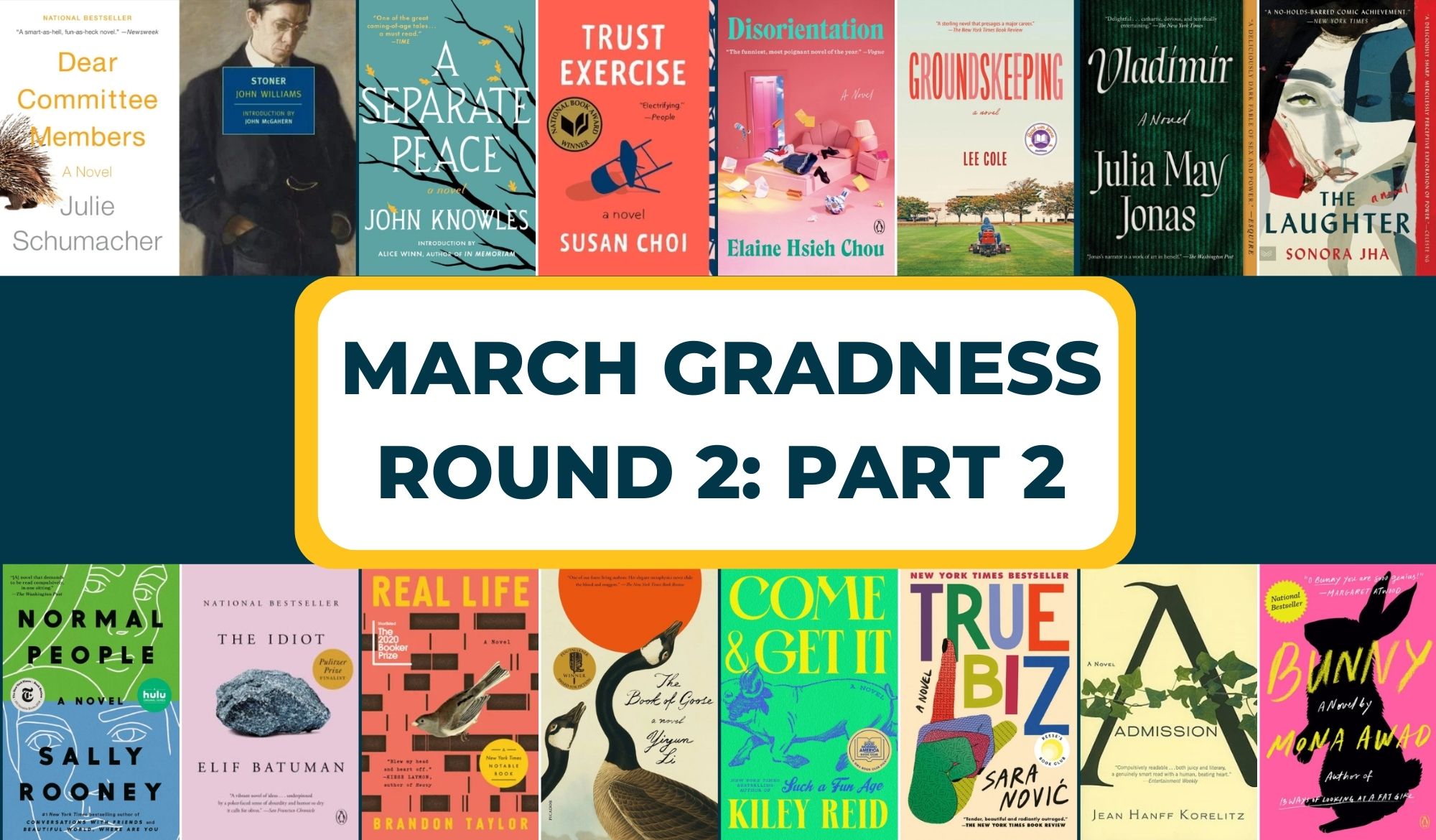
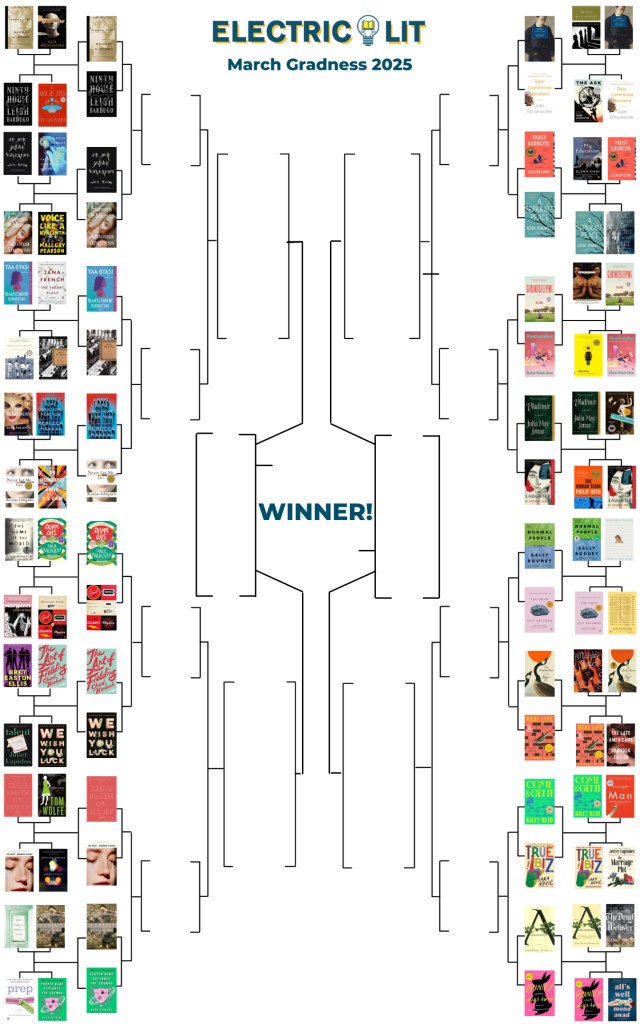
The Gradness continues with Round Two (part two)! Voting is heating up and there were some close calls from yesterday’s matches with Calamity Physics narrowly beating out Skippy Dies and The Art of Fielding edging out We Wish You Luck. Foster Dade Explores the Cosmos toppled Possession by a margin of just nine votes. On Beauty, Transcendent Kingdom, Never Let Me Go, If We Were Villains, and The Secret History decked the competition.
Take a look at the updated bracket below to see where the match-ups stand.
Round Two, part two voting has now ended. Head over to Round Three to vote in the latest match-ups!
I love fiction that immerses us in a character’s mind. It’s plot enough for me—the gyrations of logic or illogic. Characters reasoning, abandoning reason, obsessing. Even when the thoughts lead nowhere, as in Kafka’s The Burrow, there’s something thrilling and cathartic about going along for the ride. And when the narrator is precise and self-aware, we get to understand the characters’ motivations and contradictions truly. The books on this list, two autobiographical, share this quality. At their center are relationships—ones that aren’t going well or didn’t go well. Perfect fodder for analysis. Most of these books revolve around romantic or sexual relationships, while one (Burnt Sugar) proves that mother-daughter bonds can be just as intense. The books’ narrators try to reason methodically through their situations, sometimes sinking deeper into obsession or downward spirals. It’s no coincidence that these books are relatively slim: they are unflinching and raw. The characters brood, swear, cry, study themselves in the mirror crying, invite more sorrow—and keep us turning the pages.
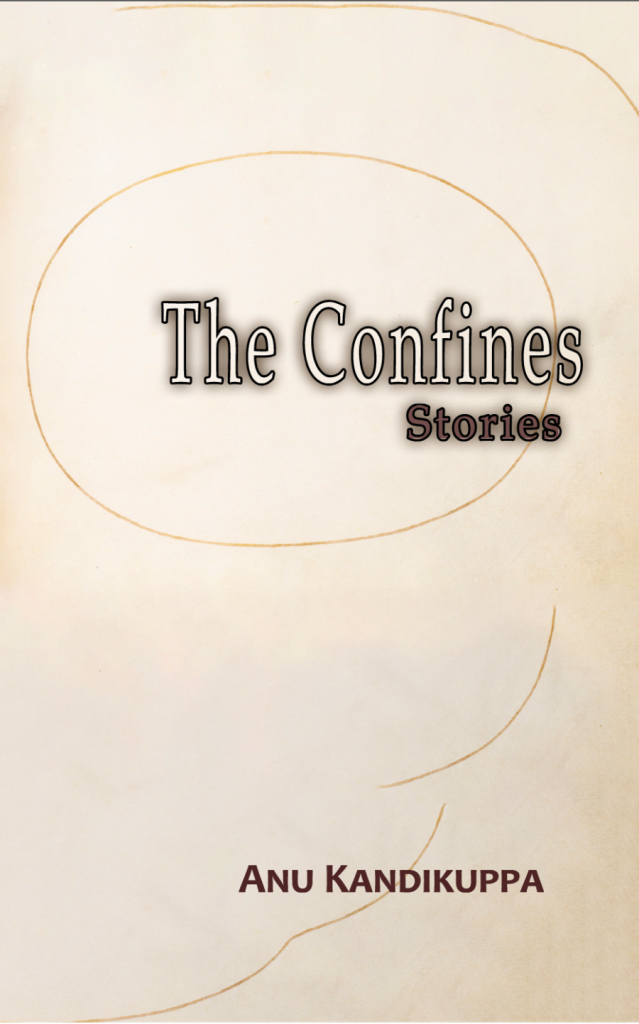
Long-running relationships impress me greatly. People are complicated, and getting along isn’t as easy as it should be, especially with external friction. So it’s no surprise that relationships are at the heart of the twelve stories in my collection,The Confines. Set in the U.S. and India, the collection follows characters navigating the unspoken rules of conservative Indian society—a tension that runs through the stories. Many explore romantic relationships or marriage—an endlessly complex institution made more so by the stigma around divorce, which often clashes with the partners’ desires. Said rules also thwart relationships that could have been epic—though who’s to say? Say you’re growing up in 1990s Bangalore, like a character in one story, and fall deeply in love with a colleague but can’t tell him because girls aren’t supposed to behave like that. What do you do? The stories in The Confines take pains to understand the characters as they converse with each other or try to counsel themselves through fraught situations, like the books on this list.
Here are 7 books about intense, messy relationships:
In Avni Doshi’s Burnt Sugar, Antara, a young artist living in Pune, begins to care for her mother, Tara, who is losing her memory. Always a rebel, Tara left her husband when Antara was a little girl for a vagabond life in an ashram and even on the streets briefly. Deeply scarred by her mother’s neglect, Antara tries to stitch a life together and not turn into her mother, while harboring a secret that preserves her pain and resentment. “Is she trying to erase me?” wonders Antara of her mother. Doshi does not hold back in depicting less-than-attractive aspects of the mother-daughter relationship: the ugliness, love, dependence, and the difficulty of healing when trust and boundaries are breached.
Getting Lost by Annie Ernaux, translated by Alison L. Strayer
Getting Lost is autobiographical, comprising diary entries from the late 1980s, written during the author’s affair with a Soviet diplomat—the journal becomes her “way of enduring the wait” until they see each other again. The affair is doomed from the start: the author is single, while her lover is married, and she has no control over the direction of their relationship. The diary entries obsessively chronicle their nights together, her frantic calculations about their next meeting, and her fear of losing him—their repetitiousness a clue to the author’s emotional decline.
Elena Ferrante’s The Days of Abandonment begins with the sentence, “One April afternoon, right after lunch, my husband announced that he wanted to leave me,” spoken to the protagonist, Olga, by her husband, Mario. At first unbelieving, Olga discovers that her husband is having an affair with a younger woman. What follows is an account of how she almost breaks down, trying to handle her responsibilities toward the house and home while consumed by fury and grief. She begins to behave erratically but pulls herself back from the brink through painful introspection. In the end, she accepts that Mario is gone and that she must rebuild her life. Ferrante’s direct, unflinching writing gets to the heart of what it means to feel betrayed and at the breaking point of reason.
I cannot resist including this classic, a favorite. In The Sorrows of Young Werther, Goethe’s first novel—he was twenty-five when he wrote it—Werther, an artist, relocates to the countryside, seeking a simple life close to nature. There, he meets and falls in love with a young woman named Charlotte. “… I’m not able to tell you how she is perfect, why she is perfect; enough, she has taken my whole mind captive,” he writes to his friend Wilhelm, in one letter in the series the novel largely consists of. Lotte is happy to befriend Werther, but she is engaged and does not return his romantic feelings. Unable to accept this, Werther rapidly descends into torment that leads to a fateful and tragic end. Told in language full of feeling, the novel unforgettably portrays the consequences of passion colliding with pragmatism.
Like Getting Lost, Maggie Nelson’s Bluets is autobiographical. Told through 240 meditations on the color blue—which the author loves—it’s often classified as poetry. Written between 2003 and 2006, it follows the author as she recovers from an affair with a man referred to as the “prince of blue,” who tells her, one of the last times they meet, that he is in love with another woman, too. Nelson’s grief is devastating, yet coolly dissected through literary and philosophical reflections, written with raw honesty. “Last night I wept in a way I haven’t wept for some time. I wept until I aged myself. I watched it happen in the mirror,” she writes, ending the book with, “Perhaps, in time, I will also stop missing you.”
In Topics of Conversation, Miranda Popkey follows an unnamed narrator over two decades as she tries to make sense of her life and her often-destructive choices through conversations with strangers, employers, friends, and her mother. Through the confessional, first-person narrative, the reader has a ringside seat to the narrator’s searching thoughts as she alternates between clarity and self-sabotage. The relationship at the center of this book is that of the narrator with herself. Precisely and intelligently, she wrestles with questions of power, desire, and self-deception, realizing at one point, “I have always liked men who are a little cruel.”
In Gwendoline Riley’s First Love, Neve is in a volatile, dysfunctional marriage with an older man, Edwyn. She has never lived with anyone before him and comes from an unstable family, particularly her mother. Edwyn, meanwhile, is needy, manipulative, and recovering from a serious illness. They stumble through their marriage, with Neve making excuses for him and wondering, whenever they find a pocket of calm, whether they are “coming to an accommodation, two people who’d always expected, planned, to live their lives alone.” Riley’s sparse, laser-sharp writing makes almost every line of this sad yet improbably funny novel feel underlineable.
Reconsider the Lobster: On the Persistent, Joyful Cruelty of Bipedal Hominids by Ron Currie
Let’s just state it plainly right at the top: the principal feature of the Maine Lobster Festival is not the crowds, or the admittedly impressive engineering feat known as the World’s Largest Lobster Cooker, or the food or sketchy carnival rides or even the postcard Maine coast in summer. The principal feature of the Maine Lobster Festival is the ambient, omnipresent weirdness of the whole enterprise, which David Foster Wallace recognized and articulated to near perfection twenty years ago in “Consider the Lobster,” an essay originally published in Gourmet that turned out, quite infamously, to be anything but an epicurean puff piece.
There’s almost no amount or quality of weirdness that we can’t get used to, of course (the term du jour for this neurological elasticity is normalize, which, like most buzzwords, is almost unbearably inane, but there you go), and most of the thousands and thousands who attend the Lobster Festival each year appear not to be bothered by its particular brand of weirdness, appear, honestly, to not even really notice how weird it is. This fact ends up creating a tremendous sense of isolation for someone like me, a native Mainer from the state’s interior who, for better or worse, can’t stop noticing how weird life is, how fuzzy and spooky it gets at the edges of our ability to perceive. Standing on the side of Main Street in downtown Rockland, I feel myself buffeted, adrift as in rough seas, while the thing considered by most Festival enthusiasts to be the highlight of the three-day event —the Lobster Festival Parade—rolls by.
At the head of the procession is a cruiser from the Rockland police, the passenger seat occupied by an alarmingly manic McGruff the Crime Dog in his signature detective’s trench coat, repeatedly giving a thumbs-up to indicate his approval of something—the weather? Lobster Thermidor?—and tossing candy to the kids.
After a couple of standard-issue marching bands and the Daughters of the American Revolution float, we’re approached by a loose grouping of cartoon characters that are both immediately recognizable and completely off-brand. Sure, that’s Woody from Toy Story, but also it’s totally not Woody from Toy Story. This clear copyright infringement doesn’t bother the children, of course, who sit rapt at the edge of the street as knock-off Ninja Turtles and someone who’s probably supposed to be the snowman from Frozen saunter by.
It goes on. There’s a random pirate wandering around slapping five with paradegoers. A group of kids dressed as lobsters in a giant pot, with soap bubbles meant to simulate steam. A dump truck with a few of those diamond-shaped road work signs on its side, except these ones read “BE PREPARED TO STOP FOR LOBSTER” and “LOBSTER—500 FEET AHEAD.”
There’s roughly another hour of this to go.
Suicide comes in different forms. Or at least it can be argued that it does. My grandfather, for example, packed several lifetimes’ worth of drinking and smoking into just 49 years; his death was, in all the ways that count, a suicide. Ditto for my father, who smoked like a barbecue joint for the better part of four decades, quit too late, and died of lung cancer at 57. I don’t think either of them meant to kill themselves—not consciously, at least—but that’s what they did, in effect.
I’ve lost a lot of people to deaths that wouldn’t rate as suicides on a coroner’s report but that, in terms of the quality of grief they inspire, sure feel like the friends and family in question chose to call it quits, often right in front of me, day by day, drink by drink, Big Mac by Big Mac.
Then there’s the more straightforward version of suicide, the kind we usually refer to when we invoke the word: a moment; a single, irretrievable act. This is the kind of suicide David Foster Wallace committed, famously, in 2008. After a lifetime that resembled a Greco-Roman wrestling match with depression, after a crushingly bad year during which nothing he or the doctors or his wife or his family did seemed to help, he organized the novel manuscript he’d been working on for a decade, moved his beloved dogs into another room so they wouldn’t see what came next, and hanged himself.
Wallace’s essay for Gourmet magazine purported, at the outset, to be a straightforward if verbose travelogue, like if Rick Steves had swallowed an OED and cultivated a moderate case of social anxiety. But about a third of the way through, Wallace drops a question he’s been slyly building toward, one that changes both the tone and the direction of the piece entirely: “Is it all right to boil a sentient creature alive just for our gustatory pleasure?”
It is not, in fact, all right to boil something alive, and that’s probably just common sense.
This question, and the contemplation of casual cruelty and crustacean neuroanatomy that follows, caused no small amount of consternation among the readers of Gourmet at the time; the sacks of angry mail that showed up at the magazine’s offices remain legend among those who staff what’s left of the periodicals industry.
Although Wallace takes pains, in the essay, to make clear he himself is undecided on the morality of boiling lobsters—”I am…concerned not to come off as shrill or preachy,” he writes, “when what I really am is confused”—it seems evident to me that to be worried enough about suffering to wonder in the first place whether lobsters are capable of it, you must first be well-acquainted with suffering yourself, and moreover must realize that, through laziness, malice, willful blindness, or all three, you regularly contribute to the sum total of suffering in the world.
Thus Wallace, the unrepentant carnivore, dismisses as hyperbole his own comparison of the Lobster Festival to a Roman circus, condemning his indifference to suffering while he also condemns the average Gourmet reader’s own indifference.
It’s precisely this hypocrisy that I find most appealing about the essay. The person before us is not Saint Dave, the self-help guru of This is Waterfame, which is how most Americans know him (and more’s the pity). It’s Dave Wallace, a flawed, brilliant, deeply sensitive, callous man, whose inability to reconcile how he was with how he wanted to be brought him, eventually, to that grim night in September 2008, with the dogs and the manuscript and a length of rope.
Wallace’s insistence that he’s simply asking the question of whether we should boil animals alive, rather than pushing an answer, is if not disingenuous, at least part of the essay’s overall tactical aesthetic. He’s making room for the reader to join him in the realization that, when you set aside all the moral inquiry and “hard-core philosophy” in the piece, you’re left with a very simple conclusion that you really only can deny if you choose to: that it is not, in fact, all right to boil something alive, and that’s probably just common sense.
The principal feature of the unexamined life may be an inability to conceive of a way of thinking or feeling that a) differs from your own and b) is legitimate. I see hints of this phenomenon all the time, and mostly among men. Sports radio and pickup basketball games are good places to get acquainted with it—a kind of mildly grumpy, default-conservative worldview that takes its own legitimacy for granted and demonstrates little curiosity about, well, really much of anything—least of all testing its own assumptions.
This same worldview is what one sees on display at big dumb fun like the Maine Lobster Festival. People love it, and that they love it is conclusive proof it must be great. It celebrates all the wonderful things about Maine in the summer, plus the proceeds go to charity, so only a crank or a crazy person would call into question the morality of the whole thing, or wonder out loud if a party centered around boiling thousands of animals alive might actually be fucking barbaric.
The guys I play basketball with twice a week are, by and large, unexamined-life types, and I say that with all affection—I would cut off one of my own digits without anesthetic, Yakuza-style, if it meant I could breeze through my days the way most of them seem to. They have families and honest jobs and definitely don’t spend a whole lot of time thinking about how the meat they cook at backyard barbecues is so cheap because its real cost is borne by the animals themselves, in the form of inconceivable suffering.
Sometimes I imagine how befuddled these guys would be if I told them I think that life, far from being a gift, is actually an irredeemable evil. That consciousness—and its attendant, unavoidable suffering—is to me a morally indefensible thing to inflict on someone else. Some of them know I’m a writer, and so probably consider me suspect in a general way, but mostly I present as a typical guy among guys—I talk shit and get into good-natured squabbles and am not above sharpening my elbows if someone pisses me off. So if I piped up one day about how I love my children the best way I know how—by not having them in the first place—I might find myself quietly removed from the game’s ongoing email thread. And rightly so. As Wallace wrote, “there are limits to what interested parties can ask of each other.” I don’t even want to think about these things—I just don’t seem to have much of a choice.
The usual knock against Wallace’s writing is that it is cerebral and chilly, self-aggrandizing, all head and no heart. I wonder if, as is sometimes the case with the criticism we level at others, those who make this contention about Wallace are themselves emotionally deficient, or otherwise have agendas to serve. Because everything he wrote was shot through with a pain so obvious it’s like a lit cigarette placed lengthwise against your forearm and left to burn slowly down to its filter. Infinite Jestis about the pain of addiction, so acute and unbearable that it makes you willing to tolerate “some old lady with cat-hair on her nylons com(ing) at you to hug you and tell you to make a list of all the things you’re grateful for today” just so you can learn how to make that pain stop. Brief Interviews With Hideous Men is about the pain caused by toxic masculinity, decades before there even was such a term. The Broom of the Systemis about the pain of the inescapable isolation we all live in, “lords of our own tiny skull-sized kingdoms, alone at the center of all creation.” A Supposedly Fun Thing I’ll Never Do Again and “Big Red Son” are about the pain of discovering that certain things advertised as unequivocally good times are anything but. And “Consider the Lobster” is about the wholesale pain we as a species inflict on ourselves and creation, and how we turn a blind eye to that pain so we can keep eating, and doing, whatever we want.
Wallace’s focus on suffering remained until the end. “Maybe dullness is associated with psychic pain,” he wrote in the unfinished novel, The Pale King, “because something that’s dull or opaque fails to provide enough stimulation to distract people from some other, deeper type of pain that is always there, if only in an ambient low-level way, and which most of us spend nearly all our time and energy trying to distract ourselves from.”
I’m not going to attempt to influence what you think and/or feel about the gap between what Wallace wrote and how he behaved, according to some who knew him.
I will invite you to consider, though, several questions:
Are our ideals rendered null and void by our failure to live up to them?
If I am never as smart or compassionate or articulate or even-handed in life as I am on the page, does that make the whole of my work a lie?
Can suicide be thought of as the ultimate expression of disappointment in oneself—in Wallace’s case, a much more permanent and irrefutable condemnation than anyone has managed since?
The principal feature of the unexamined life may be an inability to conceive of a way of thinking or feeling that a) differs from your own and b) is legitimate.
In the western frontier states there’s a practice with the whimsical name “wolf whacking” that some people consider a fun pastime of sorts. It involves using a snowmobile to run a wolf to exhaustion, and then, when it’s too tired to flee anymore, running it over repeatedly until it’s dead. If on a given day you feel the urge to do some wolf whacking but the wolves aren’t showing themselves, coyotes—more numerous and less elusive—will do in their stead.
This practice came to my attention through the case of a man named Cody Roberts, a resident of Wyoming who not long ago ran a wolf over with his snowmobile and, when the wolf failed to die right away, decided to tape its mouth shut and bring it to town and show it off at a bar before finally taking the animal out back and shooting it dead. If you’re interested and can stomach it, photographic evidence of Mr. Roberts’ night out is available online, because pics or it didn’t happen, of course. In the photos, he seems to be enjoying himself quite a lot.
When I was in junior high, one of the boys’ favorite pastimes involved going to the golf course across the street to abuse, torture, and kill the frogs that made their home in the water hazard. There were baseball bats. There were firecrackers inserted into amphibian orifices and set alight. There were, of course, more workaday methods of dispatching frogs, as well: literally stomping their guts out, for example, or hurling their soft bodies against the brick foundation of the pro shop.
It’s commonly assumed that such displays of cruelty in childhood presage violent or anti-social behavior in later years. But as far as I know, none of the guys who killed frogs at the golf course grew up to be Jeffrey Dahmer. They all live average, unremarkable lives now. They’re cops and lumber yard workers, call center operators and middle-management flunkies. They’re husbands and fathers. They play beer-league softball and drive minivans. They’re normal.
Here’s my thesis: the frog pogroms I witnessed and did nothing about as a child indicate there is something fundamentally wrong with us as a species, something that can only be mitigated, but not solved, by law or reason. This isn’t about ideology, but biology. Some evil that lurks in us all. Some intractable, sadistic chromosome, insufficiently counterbalanced by whatever grace or kindness we’re capable of.
And that’s why, when I read about Cody Roberts of Wyoming dragging the wolf around to show off to his buddies before finally killing it, I have two concurrent reactions. First, I feel a surge of hatred for my own species, like vomit rising in my throat. I hate what we are by both divine and natural law, an inscrutable house ape that takes grotesque, gleeful pleasure in the suffering of creatures we consider inferior to ourselves.
Second, and more narrowly, I experience a howling desire for five minutes alone in a locked room with Cody Roberts. I want to break my hands against his face, tape his mouth shut and drag him around to show off to my buddies, snap pictures of him suffering and terrified while I grin widely with my arm around his shoulders.
But as those fission-hot first reactions burn away, I realize this is not, in fact, what I want. Hurting Cody Roberts would be both too easy and too obvious. What I really want is to know how to make him understand, completely and for all time, how terrible what he did is. I want him to be haunted by that poor animal for as long as he lives, and to have no peace even when he sleeps. I am tormented by the need to see him tormented.
This means, of course, that I am no better than Cody Roberts. I can’t change my nature, any more than he can.
Which brings us back around, I think, to the topic of suicide.
I’ve contemplated suicide here and there over the years, never attempted it.
Sometimes when I’m in a bad stretch, which means among other things that I’m being watched pretty carefully by professionals, I have to fill out these crude little surveys meant to quantify how pathological my thinking has become. They feature questions like, “In the past two weeks, have you felt like life isn’t worth living?” The surveys are multiple-choice and don’t provide space to ad lib, probably to keep smartasses like me from answering: “Haven’t you?!?” But as my buddy Gary wrote, when he found himself being asked similar questions in a locked ward, one must realize good boys get to go home and bad boys should have their mail forwarded, so answer accordingly. As with the TSA and the Secret Service, psychiatrists don’t get paid to appreciate levity.
It seems odd, doesn’t it, that we’re given no choice about life on either end? Certainly, no one inquired whether we wanted to be here in the first place, and now that we are, the full power of the state will be brought to bear to ensure we stick around. Someone alert the Federalist Society and Planned Parenthood! From what I understand, both those organizations are foundationally concerned with bodily autonomy, but neither seems to have anything to say about the fact that the most meaningful form of bodily autonomy is denied us, with near-unanimous support from our fellow citizens. The only thing we seem to agree on more than that life is precious is that meat is mighty tasty.
It’s not surprising, in retrospect, that I had to leave America to learn life is in fact dirt cheap. This was more than two decades ago. I was in Cairo, hurtling through that loud, heaving megalopolis in a black-and-white cab, alternately groaning and holding my breath, terrified not for myself but for the pedestrians scampering across six lanes of warp-speed traffic. The system, if it can be called that, was to sprint as far as you could across the road and, when you had to pause for cars, which was often, to stand up as straight as possible between lanes and hold very still as vehicles whizzed past only inches away. This probably goes without saying, but not everyone made it. That day alone, I saw two or three bodies on the side of the road, covered in sheets. No one seemed in a hurry to identify or otherwise deal with them.
The only thing we seem to agree on more than that life is precious is that meat is mighty tasty.
Where did we get the idea, in America, that life is so precious anyway? We worship at the altar of the market economy, the simple overarching rule of which is supply and demand. Diamonds and gold are valuable not because they’re pretty, but because they’re rare. Life—human life—on the other hand, we’ve got plenty of. Way more than enough, in fact, if the general state of things, with eight billion of us and counting, is any indication.
But here in America, star-spangled Land of the Free, you are hardly free to end your life should you wish to. You’re going to live, whether you like it or not. And neither bemeasled patriots nor champions of women’s self-determination will come to your aid on that count.
On the marquee of a restaurant, a cartoon pig in a bib napkin grins as it gets ready to eat…a rack of pork ribs.
On a cardboard display in the dairy section of the grocery store, a smiling cartoon cow encourages you—practically begs you, in fact—to drink its breast milk.
The cognitive and moral dissonance such images should provoke—pork is so unspeakably delicious, even pigs want to eat it!—is nowhere in evidence in the culture as a whole. And the ubiquity of these images, once you start to notice them, inevitably raises the question of how they’re supposed to function. Is this some strip-mall version of the pagan impulse to honor the animals we eat through artistic rendition? Or is it just our old friend advertising doing what it does best—salving our conscience, laundering difficult truths until they come out sparkling clean and ready for retail?
Nobody but me seems preoccupied with such questions at the Maine Lobster Festival, and that’s hardly a surprise—everyone’s too busy rushing around in lobster shirts and lobster shorts and lobster hats (meaning hats with images of lobsters on them, as well as strange red hats with eyes and antennae designed to make the wearer look him- or herself like a lobster, sort of, and which are made available for sale by a gentleman with a small cart full of summertime kitsch no doubt manufactured by befuddled Chinese workers) and lobster socks and lobster pants and so on. More than one person is dressed in a full-body lobster suit, complete with claws and lobster-head hoodie. The summer residents in attendance, urbane types from Boston and New York who always stand out from the locals as though lit in neon, have lobster gear on, too, though in their case it looks expensive and probably designer and tends to be more tasteful (e.g. a light beach-cover type of dress in understated and symmetrical lobster print).
In “Consider the Lobster,” Wallace never mentions all the people who come to the festival dressed as the thing they intend to eat. Which seems odd to me—it’s precisely the kind of low-key, vexing detail that launched a thousand other footnotes in his work. Did it somehow escape his attention? Did he consider it not germane to the rest of the piece? Did it get axed in the (considerable, by Wallace’s account) back-and-forth between him and his editor at Gourmet?
My own attention is drawn mostly to the kids in their lobster clothes. Like everyone else, they’re just here to eat and have fun playing dress-up, but what if they clued into the fact that the thing they’re eating is also the thing they’re dressed up as? What if, as kids sometimes can, they saw clearly what the adults choose to turn away from? What if we were upending crates of live puppies into the World’s Largest Puppy Cooker? What story would we tell them about why that’s okay?
A few years ago, I worked on a television show set in the near future about climate change. Early in the process, we spent time tossing around ideas for episodes, and one concept some of us thought had potential was that of thousands of children, led by a Greta Thunberg-type personality, threatening to commit suicide en masse if the adults don’t get it together and actually meet the obligations of a climate agreement on time. We envisioned a kind of march, the kids moving from town to town and growing in numbers, until tens of thousands of them arrive at the latest installment of the fictional climate conference, ready to kill themselves.
And then what?
We never found out. One of the writers spoke up and said she couldn’t abide the thought that a real child, watching the show, might decide to kill herself. The rest of us instantly realized she was right, and the idea went in the trash can. But all this time later, I still think about it.
The lesson, for me, of middle age—that is to say, the cumulative lesson of the time that has passed since I first read “Consider the Lobster” and now—is that I know nothing and I am nothing. This likely makes me a lousy American, giving up my claim to a preeminent self like that. But it has also, counterintuitively, made life a little easier to take. Because if the unalterable fact of existence is confusion and cosmic irrelevance, it kind of takes the pressure off, doesn’t it?
I have a tattoo on my right forearm that reads, “I’d tell you all you want and more, if the sounds I made could be what you hear.” David Foster Wallace wrote that line, and it helps too, a little. As alternately a devotee and a critic of Wittgenstein, Wallace grappled with the difficulty of using language to bridge the chasm between two minds. Which is another way of saying Wallace wrote about loneliness, and more specifically the loneliness that can afflict us even when we’re surrounded by other people. Like, say, at a big, dumb, orgiastic slaughter disguised as a culinary festival.
I’m not glad that Wallace died, but I think I understand why he did. I miss the work he’ll never write. I wish I could ask him what he thinks of all these people in lobster swag.
I’ve done my best, over the years, to smother hope with a pillow while it sleeps, but despite all the ways in which it seems to have no place in how I think or feel, hope has proven harder to kill than bedbugs. You can find it, tenacious as weeds, in my novels. In one of them, the world comes to a definitive end, but life, and its worth, are somehow affirmed in the process. I didn’t put hope there, or even give it permission to show up. It just keeps crashing my nihilist party, over and over.
And maybe that’s my real confession, and the simple, essential difference between me and Wallace: he died because he killed his hope, and I’m still alive because I’ve failed, thus far, to kill mine.
So: I hope you will try not to cause more suffering than you have to, either directly or indirectly. I hope you will be merciful, in ways large and small. I hope you find your own suffering bearable, when it inevitably comes to perch. I hope there is a tenth circle of hell, a sub-basement too awful for Dante to mention, and I hope Cody Roberts of Wyoming spends eternity there. I hope the animals, and God, will forgive us. I hope. I hope. I hope.
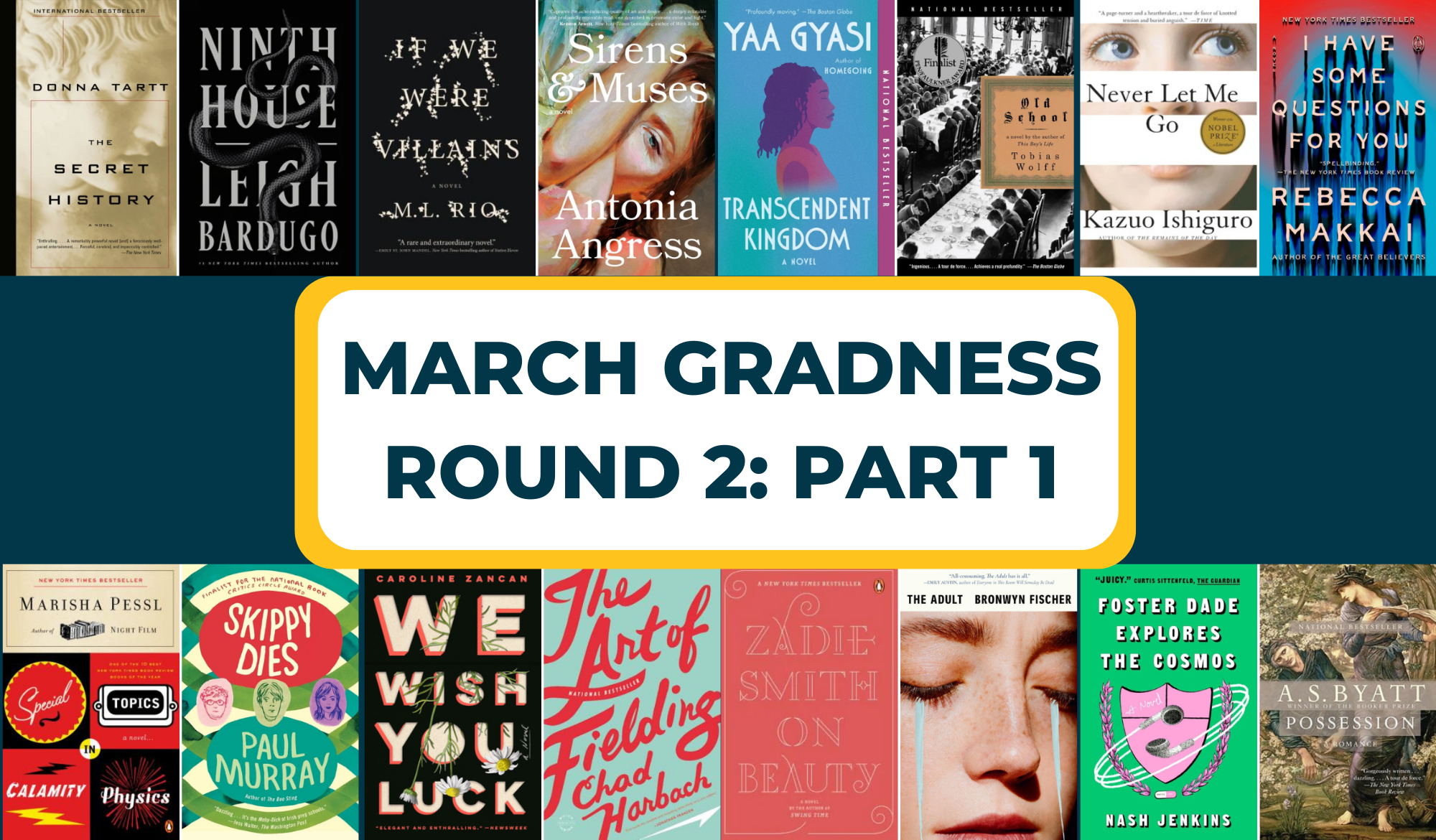
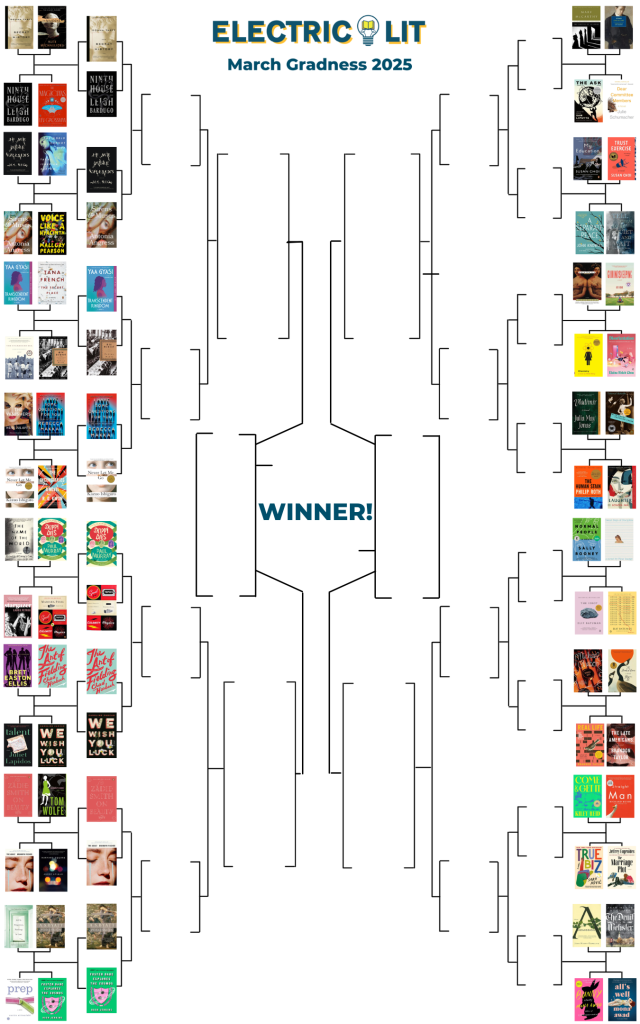
Welcome back to March Gradness! The first round had some close calls and big upsets, and our Instagram voters overruled web voters by wide margins in several key matches: True Biz toppling The Marriage Plot, The Laughter overtaking The Human Stain, and The Book of Goose beating out Wonder Boys, to name a few.
Take a look at the updated bracket below to see where the match-ups stand.
Click for a downloadable (and zoomable!) pdf
Round Two, part one, polls are now closed. Thanks for voting! Head over to Round Two, part two to vote in the next round!
Are you the guy or the girl? Mom asks. Both. Neither. Her hands malignant swans on the table.
II
She harpoons a rainbow. Skittle-hail smacks the roof.
III
She dabs her eyes with her Love Wins apron. Oh Sonny, I love it when you Cher.
IV
Are you sure? She looks me up and down. You dress like a Walmart dumpster.
V
Yes god my precious twinkie slays the house!
VI
She squeezes a cubed steak. Blood hits a sizzling frying pan. My little miscarriage, she says, touching my cheek.
VII
How much? she asks, opening her checkbook. How much to make you change your mind?
Smithfield Valley
Pasta Pete’s, weak jazz
spilling from tinny speakers.
In the shadows out front,
two cigarettes glow orange.

Second-class citizens, Mom says.
She’s not smoking these days,
though I still find butts in aluminum foil
tucked in a potted plant on her patio.

After dinner, we drive to a hill.
She leans on me as we walk to an overlook,
sun setting, a rash of red and pink
like the clay in the ditch behind her shed.

From here, our town looks just as small
as it feels: the houses are blocks
a kid could hold, or throw.
This view, she says, deserves a cigarette,

rustling through her purse.
I know, I know—they’re killing her.
For the first time in a long while,
I almost wish they weren’t.
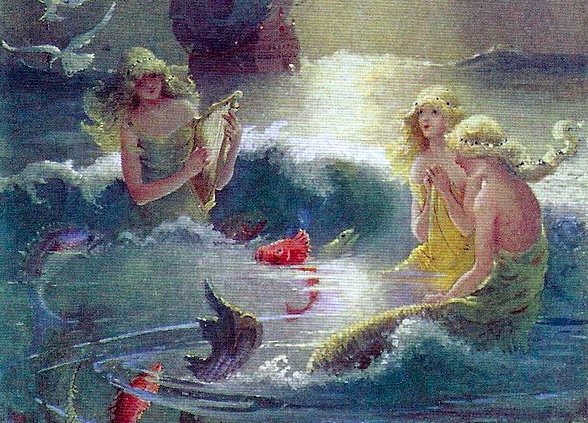
In the old tales, humans come together with animals and plants, mountains and rivers, rain and sky. The wood nymph, Daphne, turns into a laurel tree to escape the pursuit of a god. Seal women slough off their selkie skins to live on land for a time. Some traditions even tell of the first humans being made from trees. Folklore has a way of muddling binaries. In the traditional stories of selkies, mermaids, helpful animals, talking trees, and shapeshifters, our supposed divisions between humans and nature blur and we find we are far from alone in our sentience.
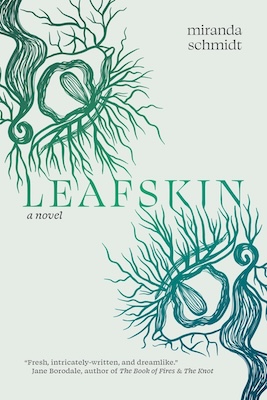
In my book,Leafskin, I used folklore and folkloric ways of thinking to bridge divisions between human and nature. My poet protagonist experiences a unique kinship with trees. Her embodied sense of this merging waxes and wanes as she experiences fertility treatments, childbirth, nursing, and different forms of love and art-making, all while living through our era of ecological destruction. Alongside the trees, a selkie story runs beneath the book, carried by the main character’s ex-girlfriend, an artist. I wondered what would happen if I brought the motifs of trees and waves, land and water, together. How could a selkie story change if it were unapologetically queer and feminist? What if a woman didn’t have to give up herself, her autonomy, her art, for motherhood? What is made in the liminal spaces where land and water, folklore and contemporary realism, art and parenting, come together? In Leafskin, I wrote toward these uncanny mergings, finding a strange multifaceted story full of the lore that I love.
Folklore has long preoccupied my reading and deeply influenced my writing. There are so many works that would fit into this category and this list makes just a tiny fraction of the work: contemporary novels that draw on folklore and folkloric thinking to explore our ecological interconnectedness.
Returning home from an exploratory submarine mission gone awry, a woman begins to turn into a sea creature. This tale of a self melting away is partly told through the eyes of the woman’s wife, mourning her spouse while attempting to care for her, haunted by the relationship that was and is no more. It’s an intensely grieving novel, occurring mostly in small enclosed spaces (an apartment, a submarine). We are presented with both the present narrative of transformation and a journal kept on the submarine mission. Both narratives bring us through fantastical moments, spaces where realism slides away, revealing something far wilder and far more mysterious beneath. An uncanny and gently brutal book, this novel moves between perspectives and times, spiraling out a tale of loss and transformation.
A woman stops eating meat and becomes the focus of her extended family’s concern, lust, and violence. As she seems to recede further away from humanity, increasingly drawn to plants and plant behavior, she elicits more and more intense fascination and horror from those around her. Told in three parts from three points of view, the novel circles Yeong-hye, but only allows us small glimpses of her perspective in the tiny moments when she shares it with others. In the end, we are left with the trees and Yeong-hye’s desire to join them through life or death or some space between. A gorgeously terrifying novel, written by 2024’s recipient of the Nobel Prize in Literature, The Vegetarian circles the madness of consumption, domination, and the impossible contradictions of our human condition.
What if a mother started turning into a dog? The question at the center of this novel expands to wonder about our animal natures and the wilds we unleash in ourselves and the world through motherhood. Set in the suburbs, Nightbitch follows its title character, a mother who has set aside her art for parenting, through this hilarious and terrifying premise as she explores the lore of magical, shapeshifting women. It plays with the notions of the artist, the mother, the wife, and all the many selves the woman at its center must be and become in our world. Now a movie starring Amy Adams, the book holds an unsettling sense of the uncanny at its heart.
A re-envisioning of Erdrich’s lauded novel The Antelope Wife, this book tells the multigenerational story of families, Ojibwe and white, contending with the ramifications of violence through time. Rooted in indigenous stories, Antelope Women frequently brings its human characters together with other species in uncanny ways. Dogs suckle at human breasts and narrate human stories. Antelope tend to lone human children. Just as the humans of the story connect and entwine, so do the nonhuman, creating a rich tapestry of interconnected lives. In the foreword to Antelope Woman, Erdrich writes about how she wrote this book with the sky itself: “The Great Plains sky is a source of ideas for me, a touchstone of greatness and familiarity. The sky is a geographical family relative.”
Two women move through an apocalyptic landscape ravaged by climate change in a vehicle that shifts its shape. Through memories and the present moment, they are drawn into the landscape, transforming, moving across it, becoming a part of it. This novel exists in a space of hybridity. Moss grows from foreheads. People become multiple, become mountain. The story is interspersed with short focused sections meditating on plants and animals. Fragmented and poetic, Sift brings us into the mystery of a journey where the internal and external, and the human and more-than-human, merge.
A human woman, after an affair with an owl, gives birth to a baby who is both human and very much something else. Tensions arise over differing interpretations of reality, as the woman believes her baby to be half owl and the rest of the world treats the child as monstrous. The woman attempts to foster the wildness in her child while her husband and his family pursue increasingly inhumane attempts to “fix” the owl-baby. As the mother makes space for her child’s owl-ness, she finds her own art and perspective growing to harmonize with the nonhuman world. She hears the complex harmonies of birds, allows wood shrews to nest in her cello and cultivates rodents in her house to feed her baby. This is a book that does not flinch from the violence of the animal world or the violence of the human world’s attempts to repress the animal around and within ourselves.
Told from the perspective of an aging professor who just married his young student, this novel follows the student’s slow disappearance over the course of the honeymoon in the haunting Orkney Islands. These islands are full of selkie tales and the student is drawn, again and again, to the water. The unreliability of the narrator, a man enamored with the tragic heroines and love objects of 19th-century literature, adds to the strangeness of a book that plays with the natures of art and realities. By leaning into this perspective, Orkney becomes a critique of the kind of selkie/magical woman story that holds the woman as a receptacle for male fantasy. As we watch the professor’s young wife’s uncanny connection to the landscape, we are consistently reminded that we are watching her through his skewed perspective.
A young mother pursues witchcraft, feminism, her queer identity, a college degree, and her own narrative. This autobiographical novel rewrites fairy tales and finds its protagonist in conversation with women who turn into animals. These shapeshifting moments hold fascinating interactions, conversations that move fluidly, like the book itself, between the theoretical and the practical, the realistic and fantastical realms. Set in the 90s, this book captures a particular moment in time and feminism that feels as urgent today as it was three decades back.
Welcome to March Gradness day two! There were some notable upsets in Round One, part one (Prep, The Rules of Attraction, and The Secret Place all knocked out!), and we’re sure there will be more to come. Our Instagram voters turned out in droves and overruled some of the results on the website (sorry to The Magicians and The Secret Place), so make sure to get those votes in. Check out the updated bracket below.
Click for a downloadable (and zoomable!) pdf
Round One (part two) polls are now closed. Thanks for voting! Head over to Round One (part two) to vote in the next round!
The NEA’s new compliance requirements are anti-trans. Donate now to help us raise $15,000 to replace our annual grant.
Dear Reader,
The National Endowment for the Arts has supported Electric Literature since 2016. Beginning in January, nonprofit arts administrators have closely followed Trump’s rash of executive orders, trying to anticipate how they might affect the NEA, a venerated and valuable organization that has been integral to Electric Literature’s work for nearly a decade.
Earlier this year, the NEA released new compliance guidelines that, pursuant to an executive order that seeks to “restore biological truth to the federal government,” require applicants to certify that their programs do not promote “gender ideology.” Federal funding is contingent on this certification. The ACLU is challenging this requirement, but as of this writing, the case is unresolved.
Frustrated and uncertain, I found myself, along with other editors, asking insidious questions like, “Does publishing trans writers constitute promoting gender ideology?” But to pursue this line of questioning is in itself a moral compromise. The term “gender ideology” is not only condescending, but like so much fascistic vocabulary, it is also unintelligible. I may not know what “gender ideology” means, but I do know that Electric Literature stands with trans writers and readers, and will continue to fiercely advocate for their rights, protection, and the full expression of their humanity.
This August, HarperCollins will publish Both/And, an anthology of trans and gender nonconforming writers, edited by EL’s Editor-in-Chief, Denne Michele Norris, who is the first black and openly trans person to helm a major literary publication. This should be obvious but I’ll say it anyway: to agree to the NEA’s compliance guidelines, even while crossing our fingers and holding our noses, would not merely be hypocritical—it would be a betrayal of our staff, contributors, and community.
For the last 9 years, Electric Literature has received between $10,000 and $15,000 from the NEA annually. The March 24 deadline passed yesterday, and Electric Literature did not submit an application. Today, I am asking our readers—who support trans rights, and who believe in Electric Literature’s mission to make literature more exciting, relevant, and inclusive—to stand with us. Please help us raise that same amount by April 15 and make a donation today.
Thank you for your time and support.
In solidarity,
Halimah Marcus Executive Director, Electric Literature
DON’T MISS OUT
Sign up for our newsletter to get submission announcements and stay on top of our best work.
YOUR INBOX IS LIT
Enjoy strange, diverting work from The Commuter on Mondays, absorbing fiction from Recommended Reading on Wednesdays, and a roundup of our best work of the week on Fridays. Personalize your subscription preferences here.