Motherhood as the epicenter of women’s lives was all I’d ever witnessed, so when, at 28, I realized my center was not there, I prodded the emptiness in my womb. Was I hollow, or was my center elsewhere? Are there others like me? Where are they? I had to find them.
My search started in books. But the books I found about childlessness were dense with numbers and technical terms, relied on melodramatic testimonies that made motherhood sound like the only thing worth living for, or supported antinatalist rhetoric on the verge of referring to children like the plague. The books I found were academic, dogmatic and radical. I had no use for any of them. Deep down, I knew that the fact that I couldn’t find anything helpful in those books meant something. Maybe I was looking for a book about a feeling. Maybe the question was not what childlessness was but who didn’t have children and how they felt. So, I looked for works by authors who are not mothers by choice, circumstance or ambivalence.
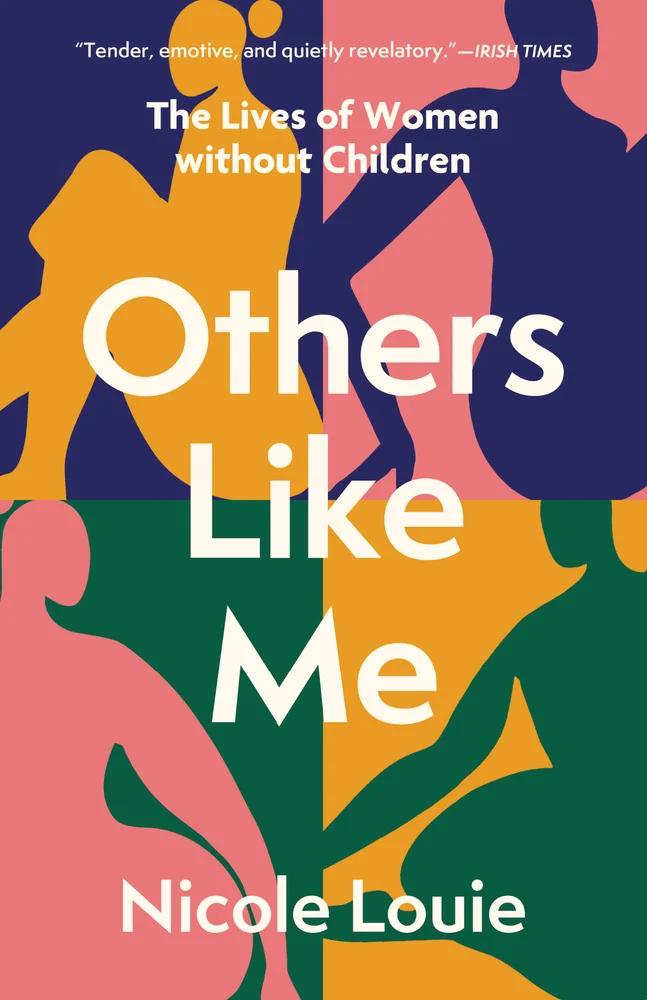
Ten years later, I wrote my own book on the topic. Part memoir, part exploration of childlessness through candid conversations, Others Like Me: The Lives of Women Without Children is the story of fourteen women around the world, from different walks of life, who don’t have children. It’s also my story and the story of why I had to find them.
Tracing the spines of the books that line my shelves, I’ve plucked nine favorites by women who placed writing, not babies, at the center of their lives and flourished outside of motherhood. Here they are.
Motherhood by Sheila Heti is so foundational that discussions in women’s communities about the motherhood dilemma are split into before and after this book’s existence. There had been conversations, chapters, self-help guides and dissertations on this topic, but not an entire book, free of academic jargon, written in first person with such candor, originality, and depth. Heti dedicated almost three hundred pages to a lyrical meditation on whether or not to become a mother, inquiring tirelessly about the many aspects of the most consequential decision of adulthood. In doing so, she found a new language to express the modern woman’s possibilities outside the norms of femininity.
My copy of Motherhood has quotes highlighted on almost every page. One to remember: “I resent the spectacle of all this breeding, which I see as a turning away from the living – an insufficient love for the rest of us, we billions of orphans already living.”
These Precious Days is a collection of essays on home, family, friendship, and writing.About halfway through, in “There Are No Children Here,” Ann Patchett sets the record straight about her choice regarding parenthood: “The thing in my life that is most extraordinary is that I have always known what I have wanted to do… I have never wavered. I never wanted to get married, I never wanted children, I never wanted to be rich, I never wanted a big house… everything was designed for this one thing: I wanted to write.” And so she did. Nine novels, five nonfiction books, three children’s books and counting. Lucky us.
Mid-pandemic, Joy Sullivan left a relationship, a house, and a job. Then, she drove west, crossing the United States from Ohio to Oregon. Two years later, she published Instructions for Traveling West—over a hundred poems bound together in a beautiful debut that puts the reader in the passenger’s seat.
Sullivan’s poetry is translucent, sensual and sensorial, trapping us in the illusion that we are watching her life unfold from inches away. Yet, somehow, while intimate, reading her never feels intrusive. The verses in “Comments Section,” “Almonds,” “Burn,” “Queen,” and “Culpable” hint at her thoughts on Instagram followers, Uber drivers, and waitresses prying on her reproductive status and plans to procreate.
A quirky, witty, and unpredictable novel that mirrors some aspects of the author’s life while telling the story of Keiko Furukura, a 36-year-old Japanese woman who has been working in the same convenience store for eighteen years. Sayaka Murata is Japanese and worked part-time at the cash register for many years before quitting to devote herself to writing. Published in 2016, Convenience Store Woman is Murata’s 10th novel and has been translated into more than 30 languages.
Wishing to depict how odd the people who believe they are normal are, and the social pressures of being a single woman in your 30s in her country, Murata gives voice to a workaholic female protagonist who chose to never have sex, get married, or have kids. She is aware that her ways are perceived as socially awkward and a source of constant worry to her family, but she doesn’t seem bothered by any of it. Keiko doesn’t want to fit in. She knows what makes her happy, and she’s not going to let anyone take her away from her convenience store.
By uncovering seven plastic boxes of family memorabilia in the corner of her office, Amy Tan goes deep into her traumatic childhood, reflects on her Chinese heritage, and offers insights into the nature of creativity and her writing methods. Where the Past Begins is a poignant and humorous memoir that recounts Tan’s complex relationship with her mentally ill mother, the loss of both her 16-year-old brother and her father within months of each other, and examines her love for art, music, and linguistics.
Old letters to and from her mother, some dating from 1969, when Tan went to college and they separated for the first time, give further insight into a relationship marked by frequent emotional fights and declarations of love. Sunk deep into the material evidence of their mother-daughter bond, Tan shares her feelings about becoming a mother herself, expressing no desire to pass along her genetic structure by stating, “What’s in me that I’d have wanted to pass on is already in the books.”
These are six bold essays from Irish author Emilie Pine about growing up with an alcoholic father, the heartbreak of dealing with infertility issues, feminism, sexual violence, and depression. All six are worth reading, but the fourth one stands out. In “Notes on Bleeding & Other Crimes,” Pine spills all across the page: “this period blood, this pregnancy blood, this miscarriage blood, this not-pregnant-again blood, this perimenopausal blood […] a shocking red to fill the white.” Notes to Self is vivid and visceral, reflecting vital aspects of life as a woman today.
Is it possible that life without romantic love is not so bad? In her first nonfiction work, British poet Amy Key pays tribute to Joni Mitchell’s iconic album, Blue, which she considers the basis for her view on romantic love. Chapter by chapter, Key dissects her life and the album while creating parallels between the two and asking big questions about an unplanned singlehood.
Her nuanced narrative makes space for confessions of shame, jealousy, and regret as she wonders about the parts of adulthood she would miss, such as motherhood, if she were to continue to be the sole curator of her life. From redefining “a family home” to building a house shaped by her needs and appreciating time alone or with friends, she gives us full access to what her days look and feel like as she finds fulfilment in other iterations of love.
Manifesto: On Never Giving Up walks us through how Bernardine Evaristo came to be the first Black woman and Black British person to win the Booker Prize, receive over 80 awards, nominations, fellowships, and honours, and have her books named the Book of the Year over sixty times.
Delving into her English, Nigerian, Irish, German and Brazilian heritage, romantic relationships, personal development and activism, Evaristo outlines her trajectory over six decades. Her ninth book also offers glimpses of her decision not to have children. “Instead of becoming a mother, I became an aunt and godmother, roles I’ve loved. I also describe myself as child-free, as opposed to childless, which implies a failure to fulfil my role as a woman rather than an active choice not to have them.”
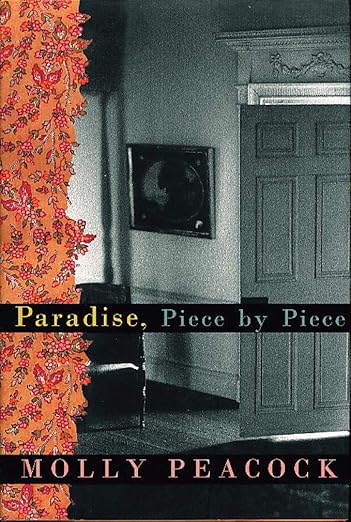
Published in 1998, this is the book in which the former president emerita of the Poetry Society of America, Molly Peacock, tells the story of her dysfunctional childhood, her decision not to have children and her search for purpose and joy through creativity. This is also the book I found in 2013 at the Malmö library and returned only after shipping a copy from the United States to Sweden. This is the book I carried on trains and planes as if it were my emotional support animal. And the reason why, eight years later, I contacted Molly and told her that I too was writing a book about my choice not to have kids and that I needed a mentor. She said yes and guided me through the dark patches. When I finished writing Others Like Me, I dedicated it to her: the author of the first book that helped me visualize the life of an older woman without children.
Happiness and misery strike anyone anytime. Bam. One example, the fits of hostility from my neighbor, a cake decorator, after I take my foot off the brake and run over his cat. Later I hear him weeping. I leave buttered scones with an urn containing the cat’s ashes on his doorstep. He cries:
Leave me alone.
My world turns like a soap opera binge. I know gravity holds us to the surface of Earth. A sure thing. Like old wet photographs. A bathrobe held tightly. Peanut butter on the roof of my mouth. What if the world slams on the brakes and ceases to spin? Bam. Panic. And to keep both feet on the ground, all the angel-heads, unshaven, ambitious, the downright stupid misplaced men and women grab onto pine trees, alleyways, headstones, waking nightmares, vigilance, anything. Humanity hangs on, refusing to let go.
Unable to defy zero gravity, the sky chases after itself, snowflakes revisit the clouds, the rain reverses. The pursuit of knowledge ceases. Cars, trucks, hearses rise up as if boosted by a tornado. Mugs follow cappuccinos following froth and cinnamon into the sky. The sea, the turtles, dolphins, whales, schools of fish float into outer space, which as it turns out, is not what it’s cracked up to be.
Earth drains of brilliance, coming apart at the seams, the air too thick to breathe, all that ironing piled up in the laundry, a couple of dead bees on the window ledge and the dog retching in sympathy. I dangle vertically from the balcony. My cotton frock whooshes up revealing the safety pin attached to cottontails, a size too large, the flab and my breasts, which a man once described as edible balloons. My toes curl, stilettos slipping, and my long black hair stands on end. Soap bubbles rise beside the loss of decorum. I feel enormous embarrassment as the entire universe looks up my dress. Welcome to my struggle.
Some advice. Have faith in the power of glue. At Sip & Guzzle, I superglue my bottom to a bar stool and order an overpriced Stoli straight up, laughing about the irony of a straight-up drink, and the barman clinging to an elaborate light fitting on the ceiling. No point in paying, oh right, I do have to pay. As always. A man walks into the bar.
Here, let me get that.
And he picks up the check. This man, a retired radio executive with a fake tan, bleached teeth, dimples, and a dead wife. The world begins to spin. Again. He gives me the key to his ha ha heart, to his burning violin, to his belly, to his apartment. Bland, I think. And out loud:
Nice.
He shows me where he keeps his mop and bucket. After a stroll around his meadow, under his crumpled linen duvet, listening to the blues, the man leers at my extremities and slices a slab of meat, yes, rare, opens a Cabernet. He says:
Sweetheart.
As in a wanton bit on the side. Spinning sugar around myself to appear enticing. Sweetheart, the good time tiger doesn’t give a toss about his neon socks or if chopped nuts fall into my cleavage or if I wear a blouse as a pair of shorts, my legs pushing through the sleeves.
I whisper, Hey your hair is slipping to the right.
Bam. Right at the end of spring, right this disappearing warmth, right he wants the pink of me. And we peel figs. Together. Scoffing toffee apples making our tongues red and sticky. Sweetheart, the monster cook, slathers butter on fritters, burns bacon, swilling cream with heavy hands, mixing borsht, deep frying potatoes, bread, whacks of stodge make him fatter, hurling into the toilet. I light a candle for his roly poly and ask:
Have you ever killed anyone?
Fatso smashes my lollypop, pushes a Polly Waffle up my . . . these melting moments. Fatso shouts:
I can’t stand all this sweetness. You are ruining my sheets.
But it was your idea to . . .
He packs a suitcase with polo shirts, pointy boots, various toupees, a jar of hair serum, his seductive eau de toilette, and a bottle of Malibu rum. Hey ho a bottle of white man. In the prime of his life, sniffing:
I’m going to stay at Mother’s.
Lust has such a short lifespan. His misery as a big shot and I think about a gun firing bullets at zero gravity. How they keep going in the wrong direction, into ouch reality tastes horrible, but the man and his exertions proves easily forgotten. A puff of whatever.
Of course this is not about him. It’s all about me, billowing sometimes in the park, in love with trees, blushing at everything, wincing at what, the rhapsodic episode of setting fire to my hair, flaunting the animal vitality of a swamp, jubilant at the sound of bells. I am the surrounding contradiction, as predictable as lamb’s wool, anxious about mysterious mists, the crust appearing on a fork in the road, leaning on my own horn, undecided about screaming and honking nonstop. I need to plant honeysuckle, I do not enjoy bloodshed, I am incapable of chuckling, I suffer from the heights of dignity, I need a break. So, I take my foot off the brake. Bam.
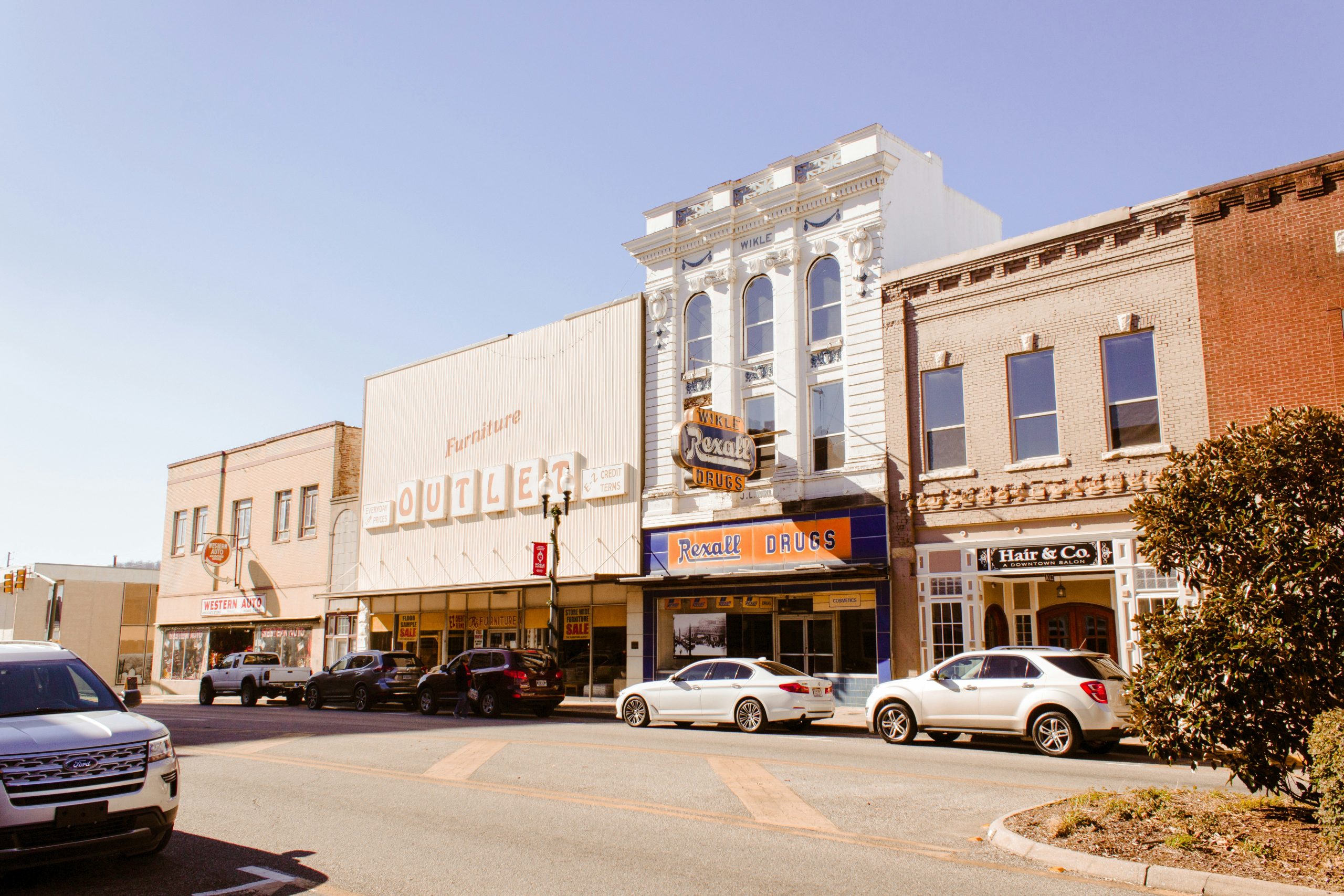
The familiar can be as comforting as it is stifling. Much of the charm of small towns in literature and broader culture is the familiarity between people and place—the ability to walk down the street and know store owners and passersby. The small towns in Southern Gothic literature ask us: When do we get so comfortable with the familiar that we stop seeing a place’s problems? What, if anything, can we do to address a problem once we’ve accepted it as a fact of life? It is not uncommon in a Southern Gothic small town to spot a ghost, a relative, or to encounter a family that has been steeped in the land for generations. Often, the Southern Gothic is where magical realism and structural innovation find exciting life as these tools are used by writers to think about facade, lineage, and legacy.
When I began writing my debut novel, Girls with Long Shadows, I wanted to locate the story somewhere familiar yet distant from my own experiences. I settled on a fictional South Texas town: Longshadow. In the novel, a set of identical triplet girls live with their brother and grandmother on a decrepit golf course as their need to escape the small town grows to become insurmountable and, eventually, dangerous. Neighbors gossip, families fight, and the sisters swim up and down a brackish bayou to bridge the gap between the golf course and their community. The townspeople of Longshadow speak in a united, pessimistic chorus of vignettes as the sisters wonder who amongst them they can trust, and if they can even trust each other? And yes, there’s a ghost (or two). While Longshadow may not be real on a map, my hope is that it honors the small towns of the Southern Gothic genre before it, many of which are mentioned here.
So here are 7 books about the small-town Southern Gothic and the creature comforts and ghosts that inhabit it.
In Daye’s third poetry collection, he re-casts photos, documents, and oral histories of his family’s centuries-long presence in Youngsville, North Carolina with meticulous reverence. The collection revels in family lore and intimacy, maximizing the resonance of each punctuation mark. It is deliciously impossible to pick a favorite, but in vain, I point to poems like “Jimmy Always Was” and the middle section, a little museum in the herein-&-after as stand outs. The collection ends with “instructions for taking the hill with you” which tells us to “Come back soon.” With a little bump in the earth, Daye gives an unreturnable gift, allowing readers into the nourishing familiarity of his family and giving them permission to take it with.
NC Literary Hall of Fame-er Jill McCorkle’s Ferris Beach catalogues the teenage years of only-child Katie Burns, who lives with her family in Ferris Beach. Katie grows close to a new girl in the neighborhood, and warily nurses a curiosity for a local misfit boy. In orbiting coming-of-independence and youthful curiosity, Ferris Beach considers the sanctity of the family unit, the family home, and the hometown. Nobody captures the small-town south like McCorkle.
I read this book for the first time last July in the middle of a hundred-degree summer and a five-day power outage after a hurricane. It buoyed me.
What might seem a docile premise for this Tony award winning play—cleaning out a problematic southern patriarch’s home after his passing—spirals in the hands of the Lafayette family. A troubling artifact is found in the decrepit Arkansas plantation mansion, forcing the family to confront a problematic history and long-buried tensions. The play format creates a beautifully effective contrast between poetic stage directions and tight, overlapping dialogue as family members shout over one another to be heard. The confinement to home, its walls reeking with atrocities of the past, both honors the play-format’s need to keep action centralized whilst exacerbating friction between siblings, cousins, and community. Italicized cicada trills captured in jar-like parentheticals inflect an undeniable, compounding eeriness that builds to a shocking ending.
The collection’s titular first poem “Song” is iconic, spinning the tale of a goat head that begins to sing after being cut off by young boys. Though Pegeen Kelly’s poetic voice is supple and precise, an illusive sense of doom gathers throughout the collection. Many poems border on parables, like “Song” and “Garden of Flesh, Garden of Stone.” All consider how the eerie peace of the pastoral can be disrupted and defaced by people: “My mother / gathers gladiolas. The gladness / is fractured.” Every poem is a magnified stop along a foreboding yet beautiful country backroad where animals become artifacts, humans commit crimes against the land, and a calm, melodic voice captures it all.
Impending Hurricane Katrina barrels toward coastal Bois Sauvage, Mississippi and coops fourteen-year-old Esch in her childhood home with an emotionally distant father, an older brother and his prized pit bull China, and the phantom of their beloved late mother. The family boards up their home and Esch turns to Greek literature as she reckons with a secret that threatens to combust while the storm rages. Esch’s friends, lovers, and memories cling to trees as high-wind waters aim to sweep them away. Salvage the Bones not only renders the terrifying volatility of a category 5 hurricane, but paints a raw, honest portrait of burgeoning womanhood, motherhood, and survival.
Wilson’s debut short story collection glistens with realistic quirk as its giant eye roams across odd pockets of the South. There are sorters at the Scrabble factory, old friends, new friends, and many odd couples–a Worst Case Scenario, Inc. actuary and young mother, a cheerleader pyromaniac. The stories are set on the fascinating fringes of southern society. In the title story, the narrator recounts his group’s efforts to dig to the center of the earth, saying, “So we went sideways,” which is the favored direction of each story. With deftly precise and surreal premises, and an unforgettable amount of spontaneous combustion–literally–the collection asks: how deep do things go? Devotion, devastation, and yes, even the Earth.
The Southern Gothic genre loves its ghosts, but I’ve scarce encountered apparitions stranger than those that lurk Kenan’s fictional town of Tims Creek. The novel centers a young Horace Cross reckoning with his sexuality and race as a gay, black teenager in the fictional Tims Creek, a rural North Carolina town where the Cross family has lived for generations. Ghosts taking the shapes of animals and Horace himself haunt the young man as he spends a distressing evening wandering parts of his hometown stamped with his family name, praying, yearning, and battling. Kenan’s Tims Creek is a vibrant, difficult character, a landscape the late author returned to in other fictional works. The town itself becomes a way of looking closely at the South, its historical complicities, and its contemporary ones too.
Grammy-winning artist Doechii twerks to the beat in her tailor-made Louis Vuitton SS24 RTW suit. A bejeweled Yankees snapback adorns the head of household name rapper A$AP Rocky, silver glinting between his teeth. And, amongst a sea of giddy Black creatives, is the highly acclaimed Law Roach, the “Image Architect,”, wearing his signature buss down middle part. This is the scene at Vogue’s “First Friday in May” celebration (essentially a star-studded Met Gala pregame), hosted at Ginny’s Supper Club, under the busy streets of Harlem. With bravado and aplomb fit for a monarch of modern fashion, Law exclaimed: “They done fucked up and made the Met Ball Black!” The crowd rejoiced, then broke it down on the dance floor under a wash of blue lights and camera flashes. Check any photo or video taken from that night and you’ll be hard-pressed to find even a single face that isn’t beaming with a sense of pride, regality, celebration, triumph. Everyone in the room knew they belonged there.
As an avid pop culture aficionado, I’ve long kept up with what’s often regarded as fashion’s biggest night out. The Met Gala, the annual fundraising event for the Metropolitan Museum of Art’s Costume Institute, is one of the rare occasions for which prominent figures from every facet of pop culture—be it film, literature, sports, music, television, theater, art, and even politics—come together for a common goal: supporting the prosperity of the precarious, yet precious art of fashion. It’s always thrilling, watching the zeitgeist’s most influential creatives walk up the Met Gala’s famous stairs, seeing them in conversation with the year’s exhibit as they flaunt well-researched, custom-made haut couture.
Back in October, the Metropolitan Museum of Art announced the theme of the Costume Institute’s spring 2025 exhibition as “Superfine: Tailoring Black Style,” which draws inspiration from Professor of Africana Studies Monica L. Miller’s book Slaves to Fashion: Black Dandyism and the Styling of Black Diasporic Identity, and like the book, the exhibition examines the innovation of Black fashion over three hundred years —particularly through the lens of Black dandyism. While the original dandies of England had primarily aesthetic concerns, the Black dandy, by contrast, applied their aesthetic to more rebellious philosophies.
Black dandies tracing back to the eighteenth century intentionally curated their appearances as a form of resistance.
As a response to the discrimination Black people faced in America, England, and around the globe, Black dandies tracing back to the eighteenth century intentionally curated their appearances as a form of resistance. They were scholars of fashion, placing utmost importance on their way of dress in order to reclaim agency over how they were perceived. With bow ties, tailored suits, polished shoes, and flashy accessories, the Black dandy’s use of extravagance asserted that Black men were just as deserving of respect as their white counterparts. Through the careful presentation of a more “elevated” appearance and lifestyle, Black dandies challenged limiting perceptions that were rampant post-Emancipation and beyond.
Black dandyism has seen many iterations since its inception. Peaking in the 1920s, when Harlem became a gold mine for Black intellectualism and art, and carrying through into the logomania and peacocking of the 80s and 90s that still influence my own father’s fashion sense, the practice has a long history that is deeply entangled with Black culture. And now—however unexpectedly—it seems that Black dandyism’s approach to refashioning the perception of Black people is more necessary than ever, given our current political moment.
Thanks to the Trump Administration’s dismantling of Diversity, Equity, and Inclusion (DEI) initiatives across the nation—and the rhetoric that has accompanied it—it’s clear that an increasingly large number of Americans see people of diverse and racialized backgrounds (but, in particular, Black people) as less qualified and less meritorious. In his second term, Donald Trump has issued numerous executive orders that have not only terminated DEI programs, but also equity-related grants and contracts. The latest termination resulted in the rescinding and cancellation of National Endowment for the Arts grants to nonprofit organizations and arts agencies, implying that diversity is a societal ill. Following these legislative events, Trump’s followers have flocked to social media and entertainment platforms like X, Reddit, and Fox News to echo their shared grievances over DEI initiatives, using “diversity” as an all-purpose scapegoat for any issue of their choosing. Suddenly the Potomac River mid-air collision was because of DEI, as were the devastating Los Angeles wildfires, as was the recent tragedy in New Orleans on New Year’s Day. Suddenly it’s the case that if you aren’t cisgender, straight, white, and male, then you were a “diversity hire,” and are therefore unqualified—ironic, considering the lack of qualifications held by many members of the current presidential cabinet.
Given an administration that appears hellbent on undermining legacies that do not align with white Christian nationalism, the Met Gala’s decision to spotlight the rich and complex history of Black dandyism’s influence on menswear is laudable. Yes—Doechii, A$AP Rocky, Law Roach, and historical Black dandies like James Baldwin and André Leon Talley—all look fantastic. But Black dandyism was never just about appearances. Rather, the method of a Black dandy was to covertly fashion a revolution in the minds of those who witnessed them. By bringing mainstream attention to the sensibilities and high dignity of Black dandyism, the Met Gala and its associated exhibition prove to audiences the value of celebrating Black cultural identity.
Even before the event itself, the 2025 Met Gala was packaged noticeably different as compared to previous years. In addition to Vogue’s Editor-in-Chief Anna Wintour—the lead chairwoman of the Gala since 1995—this Met Gala’s co-chairs were Black men, all of whom have been celebrated for their style, influence, and intentionality: Pharrell Williams, Colman Domingo, A$AP Rocky, and Lewis Hamilton. The host committee, too, featured an all-Black lineup of actors, artists, writers, entertainers, and athletes. Scroll through the Met’s and Vogue’s various social media accounts, and you’ll see grids inundated with the work of Black designers, photographers, archivists, and academics, as well as interviews featuring influential Black public figures responding to prompts related to the theme of this year’s exhibit. To put it bluntly, the Met Costume Institute is communicating a message, emphasizing the importance and relevance of Black intellectuals and creatives.
The Met Costume Institute is communicating a message, emphasizing the importance and relevance of Black intellectuals and creatives.
When the Met announced the 2025 “Superfine” theme, I found myself cautiously suspicious. I assumed that even if the Costume Institute featured Black creatives, the camera would likely show only the tailored suits and pearl-studded necklines of a few famous artists, a pacifying show for liberal optics. Instead, we got a plenitude of deliberate, informed displays flaunting the historical magnitude of Black dandyism, from many of the biggest names in entertainment. Colman Domingo, draped in royal blue, took inspiration from his research with Monica L. Miller, who noted in her work that “a freed slave wanted to wear his finest blue, superfine wool suit.” Lewis Hamilton, working with stylist Eric McNeal, came dressed in custom Wales Bonner, detailed with cowrie shells, baobab flower motifs, and mother-of-pearl buttons inspired by the Harlem Renaissance and Black jazz singer Cab Calloway. The Met Gala’s platforming of Black culture motivated an unprecedented number of its attendees to work with Black designers, wear looks from Black fashion houses, and study up on—and share with the thousands tuning in—their knowledge of Black history. Gigi Hadid arrived on the Gala’s blue carpet excited to share her research on Zelda Wynn Valdes, a Black American designer in the 1940s. Quinta Brunson wore a look that honored the celebrated Black dancer-singer-actress Josephine Baker. And throughout the night, guests like Anne Hathaway and Tyla cited the definitive Black dandy—late stylist and fashion journalist André Leon Talley—as the inspiration behind their look.
Beyond what the guests brought to the event, Vogue and the Met also provided an array of educational videos documenting this landmark celebration of an often-overlooked facet of Black culture, uplifting Black visual artists and referencing seminal and too often forgotten texts of Black literature. Considering the event’s authentic presentation of neglected Black history, especially under an administration that publicly doubts the value of diversity in this country, it’s clear that the Costume Institute is finally recognizing the intrinsically political nature of fashion. Such an explicit homage to Black history and culture is nothing less than a bold act of defiance that embodies the rebellious spirit of the Black dandy. With this year’s themes and exhibition, the Met Costume Institute not only immortalized the work of Black scholars and creatives, but also gave it a global platform, ensuring the exposure of thousands to the merit and depth of Black culture. Like the Black dandy, the event demanded respect, visibility, and redefinition—all while making it cool. Sure, the Met Institute isn’t perfect—an organization that regularly invites the Kardashians could never be—but the 2025 Met Gala demonstrates a step in the right direction.
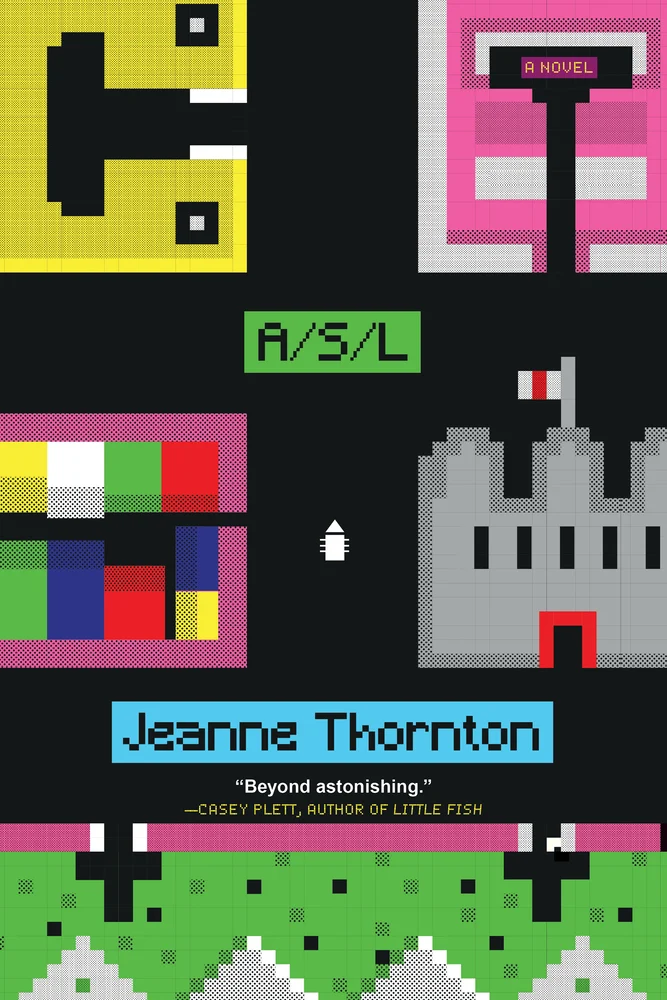
“A game is an experience that happens to you,” writes Jean Thornton in A/S/L, a novel that queers 1990s internet nostalgia and celebrates the transfemme gaming community.
A/S/L opens at a time after AOL Instant Messenger but before AI and the political oligarchy stronghold of Silicon Valley tech bros. Three teenagers dream of building a video game that will remake the world, Saga of the Sorceress, but they never finish it. The friends grow up and lose touch—until one of them begins the game anew. A/S/L follows these three characters, all transfemme—Lilith, Abraxa, and Sash—who, despite living in close proximity, have never met in person. Each, in her own way, takes up the sorceress’s unfinished quest.
Like Thorton’s previous novel Summer Fun, A/S/L is philosophically robust. Thornton asks, What does it mean for a trans woman to be good? Who benefits? What do we owe our friends? She calls out norms and protocols that arise in lucrative, patriarchal, and historically transphobic arenas, such as the music industry and banking, while likewise interrogating the insidious, pervasive, and often unnamed cultural demands on trans women intended to make things easier on cis and straight people. The book is inventive and playful, especially with form—from emails to technical gaming notes to chat room (channel) transcriptions—and because Thorton’s imagination is delightful, there is lots of joyful discovery. And recovery. Almost anything can be a video game, Thornton reveals—real estate, running on a treadmill, sitting in silence, asking for forgiveness, setting someone free, being free.
Jeanne and I have shared work, AWP panels, and dance floors. I am overjoyed to share our conversation about A/S/L.
Annie Liontas: What was your relationship to gaming as a young trans person who grew up in the 90s? What worlds were available to you and other trans/queer folks in games that weren’t open to you in real life?
Jeanne Thornton: My friend Stephen Ira says that trans women get video games like trans men get fanfiction. Gaming is the socially acceptable way to live these other lives. Your physicality doesn’t matter. You get to play a girl, and it’s okay because you’re [a] warrior girl, you’re not going into the Barbie aisle or something. It’s defensible or socially viable.
Gaming is the socially acceptable way to live these other lives. Your physicality doesn’t matter.
Like Lilith, I grew up in Texas. I didn’t have a lot of access—I didn’t know that trans people were a thing until I was in grad school in LA in 2005. I was a scout. I went to the scout camp and had this experience of being in these very, very southern, dude spaces. Gaming is this shadow space that’s dissociative in a way that’s strongly gendered, where you go to be disembodied with other people. A lot of the characters are based on people I knew in my particular gaming community, which was the community around a game called ZZT (CraftQ in the book), and it was really nice to summon them all. The IRC [Internet Relay Chat] scene right at the beginning, that was actually quite a joy to write in part because that was a pretty faithful attempt to reconstruct without transcribing what those 1990s chats were like in all their toxicity, all their messiness.
AL: The book is so dynamic because it’s taking on so many forms. It’s not trying to be a two-dimensional artifact, in the way that gaming also refuses to be two-dimensional.
JT: One of the key realizations in the book was that anytime I’m writing about a video game, it’s actually a travel narrative. I was trying to think of what it [feels] like to be in a video game, and I think it isn’t a fixed point. It’s a place you go to, and your body kind of goes away, and you have choices within that space. I guess it’s true that gender is a little like that.
AL: You’re writing into that historical period of early 1990s gaming and internet, (which you describe as “the adolescence…of the dominant art form of the 21st-century”). What was it like to capture this interstitial time for trans people and a trans youth culture, defining, and determining the internet?
I very consciously wanted there to be three distinct trans women, rather than filtering all transness into one perspective.
JT: If we had just been in a cult, explaining why this was so important would make more sense (laughs). But a lot of the impetus for writing this book is to capture this really specific gaming world that I was part of, where everyone’s a teenager and both making games and playing games. I didn’t know what [my online] friends looked like during this period; we didn’t hear one another’s voices. Everyone is sort of making up who they are, but there’s a richness of going online and meeting other people. You are [being] your most essential self with other people who are being their most essential selves, and also you have so little information about the people you’re around that everybody is having this common fantasy together.
At some point there was a switch, around the late 2000s, where being online went from being a place you went to be someone who wasn’t yourself to being your real life, almost your professional self, a brand that you portray. I don’t think I’ve ever made that adjustment well. I’ve talked about this with other people from the [ZZT] gaming scene. A lot of us from that world are really close, lifelong friends.
AL: Abraxa, Lilith, and Sash move through the world so differently— Lilith shopping from the Macy’s sale rack, Abraxa breaking into church basements, Sash seeking creative autonomy and independence at the expense of financial stability. How do they conceptualize freedom as trans women, and what is the cost of that for each of them?
JT: I wanted this to be [a] multi-narrative, multi-plot book that has no canonical truth, where each of the three characters could plausibly be a main character, and any of the three storylines could be the primary one. I was also very under the influence of Georg Lukács’ Essays on Realism,where he says that the goal of fiction is to present the classes with a true account of one another. I very consciously wanted there to be three distinct trans women, rather than filtering all transness into one perspective—almost as a corrective to Summer Fun, which is about a famous and beloved musician. They’re each trying to approach freedom through a different means and a different attitude towards what financial freedom means. I had not thought of that in terms of freedom, but I really like that framing of it.
Lilith works white-collar jobs—not to assimilate, because assimilation is not open to trans women—but with the idea that “I can move in a cis world; I’ll be one of the good ones. If I can do that, I will have freedom and stability.” Abraxa says, “I will be okay as long as I have a lot of skills.” Hers is almost like a blue-collar path. She can work on a boat or in construction—as long as she has independence, as long as she can leave whenever she wants and has the tools to be completely self-reliant. Sash is almost an academic, trying to arrive at a very pure knowledge that is not expressed externally. She makes no compromises [and] lives a life of keeping everything radically inside.
AL: Abraxa is your witchiest character. How does she, even in her most vulnerable moments, decide her terms?
JT: I approached Abraxa with a great deal of compassion. I also went through some pains to make sure that Abraxa’s parts of the narrative are very magical, steeped in occultiness. If you’re a reader who really wants to believe that all the magic in the book is real, nothing will contradict that. If you want to believe that this is a woman going crazy underground, nothing’s going to contradict that either. I wish I could be more like her in a lot of ways. There’s something about having a character who has that kind of radical freedom to just go off and reinvent herself, to go off and connect. I tried to show some of the price of that. She’s very isolated as a result in quite intense ways.
The way society treats women generally, it doubles down for trans women.
Hands down some of [the] most brilliant people I’ve ever met in my life were from ZZT, where everything they did seemed so effortlessly magical. Some of these people burn extremely bright. I knew someone from that community [who] died of an overdose in their 20s [and] somebody who committed suicide, also in her 20s. [The book is] thinking about your brilliant friends from your adolescence and the sadness of seeing them continue to be brilliant, but in a form that the world can’t make that much use of.
AL: And Lilith, in a way, is a kind of counterweight to that narrative because, at least on the surface, she’s very successful. Yet, beneath, we feel there is a loneliness to her experience. You write, “You’d think you’d remember being trans all the time, but you don’t for a while. Just a vague sadness.” How is that true for you?
JT: I think this is a fairly familiar trans experience. I have a family member in the hospital, and when I tried to call him last night—at the moment I said who I was, what my relationship was to this person, using a gendered noun for this but also using my gendered voice—it immediately became like, “We’re not gonna let you talk to him.” I realize in retrospect, okay, that’s really trans, but it’s not [how it] felt in the moment. I’ve been out long enough that it’s weird to have flashes of what it was like before, to move through the world with a relatively greater amount of—grace is the word I’ve sometimes used for this. The assumption is everything is fine until a moment of friction. That’s a really common transfemme trap, where you don’t map it back to, this is because I’m trans, because you actually don’t know at all. The maddening thing is that you don’t know ever, and you will never know. You will go to your grave not knowing, because often the people involved don’t know either.
I do think that religious conversion is sometimes a good metaphor for transness. It changes how you stand in relation to the world and how people are going to meet you in relation to the world, particularly if that conversion is something that has friction with how people deal with you.
AL: Sash asks, “Cis people don’t have to have [a] level of clarity about their history; why do trans people?” Her journey is especially moving for me, a trans person who came of age at a time in the 90s when gender was communicated as a fixed point. What does Sash’s trajectory reveal about the layered, complex trans experience in America?
JT: The dungeon of Sash is quite deep, and it’s very intense. I do think this is important, how Sash is trying to insist on that transition on her terms. My feeling of coming out at that time was, I better have my shit together before I cross this line, because it’s gonna be really intense, and you can’t go slowly. It’s jumping into the deep end of the pool, I think. That’s a lot less true today, in ways that are more palpable. My sense in 2025, and this is something that is terrifying to the right wing, is the idea that you can view transness as something you can experiment with, you can play with. You can dip your toe in the water, you can manifest it in different ways at different times. With Sash, both Lilith and Abraxas think of her as a cis woman. And actually, early readers of the book didn’t realize Sash was trans also. It’s one of those ways that online-ness [worked] in the past.
AL: What would it mean to listen to trans women’s stories? What is the power inherent in that act, both for storyteller and listener?
The way society treats women generally, it doubles down for trans women. We’re women, so it’s okay to hurt us. There’s actually a specific gaming-related story, an arcade game called Final Fight. It’s about three burly dudes, one of whom is the mayor of a fictional city, punching their way through a wave of bad guys. Some of the enemies are women. When they tried to bring the game to America, execs said, “We can’t have these dudes beating up women, so let’s just say they’re trans women.” Everyone accepted this. One of these women, Poison, is a beloved, almost-saint of transness, canonically trans, because we needed to have a woman we could beat up.
Trans inclusivity is this crisis point for understanding how our society constructs gender in general, how we construct womanhood in general, and I think that’s urgent. Given the eternal war on women, an understanding of the way that transness manifests in this is absolutely critical.
Late Friday night, Electric Literature—along with at least 40 other literary arts organizations— received a notice from the National Endowment for the Arts that our 2025 grant has been terminated. The reason given was that our work does not “reflect the nation’s rich artistic heritage and creativity as prioritized by the President.” This morning, the NEA’s literary arts staff announced their last day would be May 30.
This is a transparently autocratic effort to dismantle the nation’s most important arts granting organization and to broadly undermine artistic progress. After threatening so many, it is no coincidence that Trump has turned his attacks to the arts.
Creative expression is the lifeblood that vivifies a free and democratic culture. Trump is obsessed with a heritage and legacy of his own imagination. For him, literature is forward facing and therefore dangerous. Every story, even about the past, is a new story. Every story a writer tells is one Trump cannot control.
The NEA has supported hundreds of publishers, 600 translators, and 3,800 writers. The stories told as a result of that support will live on. Electric Literature will continue to publish culturally enriching stories about the past, present, and future with honesty and heart. Please support our work.
The photo booth in the museum lobby was in a lonely little corner away from everything else—the exhibit entrances, the front desk, the restrooms. It was a little gauche, after all. Photos for two bucks fifty. It seemed to the baby’s mother that the booth had the aura of the carnival about it, but maybe it was just the velvet red curtain. She had noticed the curtain first, one winter morning, midway through her maternity leave. The museum was the only place she could go to get out of her Kleenex-smelling apartment. That morning, she unwrapped herself from jackets and scarves, deposited her garments with the coat check (she was the first patron, it being exactly 11 am. Of course she had been awake since 5). The baby stirred in the pouch, disturbed by the change in temperature. This baby liked the cold, and wide open spaces, and colors (even if the books all suggested the baby was colorblind). The baby also liked to breastfeed. Like now. And here was this photo booth and its red curtain. Beckoning.
The baby’s mother found that no one much used the photo booth in the museum’s early hours. The dedicated weekday patrons or school groups had the Egyptian collection to see. They walked past the photo booth without noticing it, their eyes on the long cardboard maps that were handed out and soon discarded. If the baby’s mother placed her feet in the right direction—forward—she did not get interrupted. Or if she did, there was a polite knock next to the curtain first, asking if she was almost done with her picture. And she’d have time to detach her daughter, cover up. Yes, yes, so sorry. But mostly, she could sit there in the dark for fifteen minutes, or thirty—some mornings, forty, fifty—and let the baby nestle and burrow and drink. The baby’s mother would close her eyes, or look down at the round, mostly hairless head, or watch mindlessly as the screen offered different photo packages for purchase.
One morning, a guard peeked in. Everything alright? A young man. The regulation suit, loose tie. The baby’s mother didn’t have time to pull her nipple away.
Sorry, sorry, the guard said. He closed the curtain. But from below where it hovered, the baby’s mother could see the guard’s heavy black boots lingering there.
I’m just taking a picture, she said to the curtain. And then she did, for the first time. The click of the machinery. The startling flash. The first one pulled the baby’s smooth head up. The next made the baby start to scream. The baby’s mother hurried to empouchify, and emerged next to the guard to claim her portrait, one she would keep forever. It was the usual format, three pictures atop one another. The first was very Madonna and Child. The second looked like some villain was coming for the kid. The third featured only the baby’s mother’s exhausted face as she leaned forward, she guessed, to begin the departure. Did she really look that tired? Glancing down at the strip it occurred to her that each image was the size of a wallet photo, like the one her mother had kept in her wallet of baby-her, before she died.
The guard still stood there, looking at his boots. Sometimes you gotta wait to get the right picture, he said. He said this without a smile. He looked like he was new on the job.
I’m Ada, she said. This is Bridgie.
I do the lobby for the morning block, he said. She assumed this meant she had cover to use the photo booth. His nametag said “Bill.”
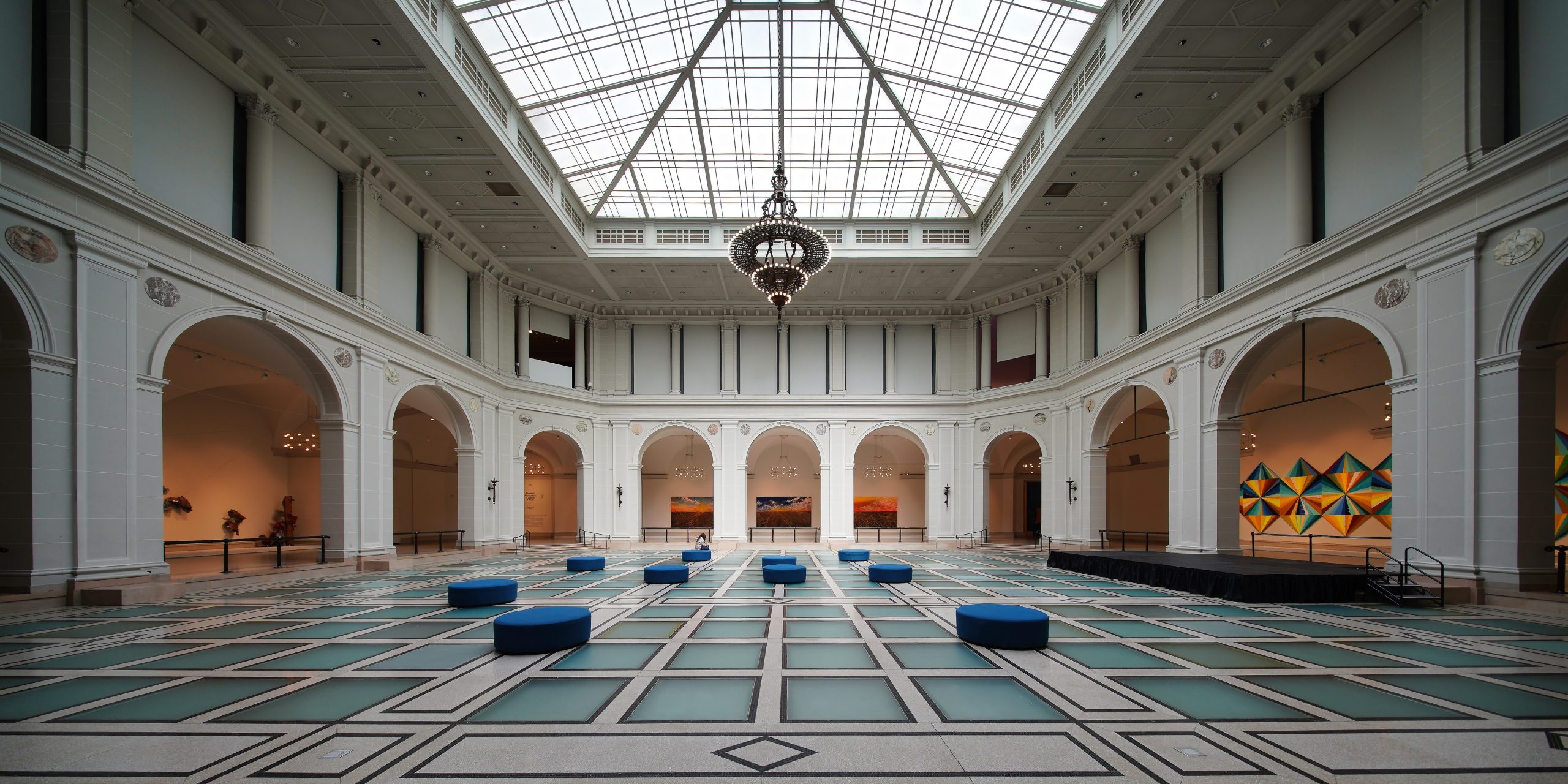
There were some policies at the Brooklyn Museum that made amazing sense to Ada in the dawn of her matrescence, beyond Bill’s lenience about the photo booth. For example, caretakers could take strollers into the museum and among the collections, even big bulky strollers like Ada’s, which her husband loved, or the two-seaters that the nannies wielded expertly like giant boats, like the cargo ships her mother liked to look at coming into New York Harbor, under the Verrazano, her mother sitting on a particular promontory (Ada was told) above the highway, Ada at her breast. Ada had been thinking a lot about her mother since Bridgie was born. She was told this was natural, her mother having died when she was sixteen. But Ada declined the museum’s munificence and left the stroller at home. A pouch worked just fine. Another good policy was the pay-what-you-will entry, of which Ada did indulge.
The bad policies, however, included a rule that you could not eat in the lobby. This Ada learned when Bill came up to her with those black boots clopping and his hands jammed into his loose pockets. It was not the way the other museum guards walked: fists enclosed behind their backs, slowly.
Hey, you can’t have food over here, he said.
Ada looked up from her miserable yogurt. It seemed like a rude way to say it. No “ma’am.” Though of course ma’am would have made her even more indignant. Still, she felt crabby.
She pointed over at the nannies and their brawling kids, jumping chaotically on the round cushion-couches, clutching juice packs. How come they can do it? she asked.
Bill started getting hot too.
Seriously? he said. They’re kids. You want me to bug little kids?
I have a little kid, she said.
He looked down at her pouch and seemed to soften.
I know, he said. Bridgie. When she can eat, then you’re all good.
Technically she’s eating what I’m eating, and if I can’t eat, then she can’t.
Bill did not seem to know what to say to that. His hands were still in his pockets. Ada noticed that he was using cologne. Maybe it was his first job.
He looked away towards the glass entry, Eastern Parkway, the silent stream of cars. The nanny-kids squirting their slime packets.
Fine, he said, just don’t drop it and get me in trouble.
I don’t want to get you in trouble Bill, she said.
As he walked off, she felt happier, if only because it was her first adult, non-husband conversation in days.
She watched the nannies, one of whom nodded at her. She watched the toddlers, their impossibly large hands. Bridgie stirred and started shrieking, so Ada got up, and the photo booth was right there. The darkness calmed the baby, and Ada resisted feeding her again—she’d been warned to stop snack feeding unless it was a desperate situation—and the baby kept her eyes open and looked up at Ada. Ada looked down and did not move for a long time. Only when she needed to go to the bathroom did she disturb the red curtain.
After the bathroom she wandered the museum. There was no clock, something thrilling and surprising about maternity leave. As long as she fed and changed the baby, she had no whims to follow but her own. Her husband would be back home at 5:30, but before that . . . . She circled Arts of Asia, the American Wing. She was, of course, too exhausted to think much about what she saw, but the baby was so light, now that Ada was mostly healed. So snug. Ada shifted the pouch slightly at the Judy Chicago Dinner Party exhibit so that Bridgie could take in some of the symbols of femininity, the triangles, the heroes, the silverware. The baby seemed to track more around the Joan of Arc plate. Ada went down to the café and had a turkey wrap, something she’d missed brutally during pregnancy, and then she was tired, so she went back into the photo booth and closed her eyes. The baby was warm against her, and they both fell asleep, and then they both woke up, and the baby wanted to eat again, and so she did. The sounds of people walking through the lobby were there but muffled, and Ada had the sense that when she emerged it would be almost dark. She was right. She pulled the red curtain back and headed for the coat check, but the cologne hit her first. The guard’s heavy boots. He was leaning against a wall. She wondered if he’d been on his feet this entire time.
Hi Bill, she said.
The mar of their morning disagreement about food seemed as far in the past as it was.
Jesus, she said, long shift!
He nodded, looking down at her shoes. Just sneakers, comfortable. Now they were mom shoes.
Guess so, he said, although apparently it’ll feel shorter later.
She smiled, glad to crack through. So you are new then, she said.
He straightened up. What made you think that?
Don’t worry, she said. I’m new too.
He stared at her, as if calculating. You’re in the museum a lot, he said.
It’s a free country, she said. Somehow she was annoyed again. Her back and forth had been wild these first months.
Ok, Bill said.
He pushed off and walked a little stiffly towards some patrons waiting near the bathrooms, turning awkwardly at an angle away from them before the encounter.
Ada bundled herself up for the cold walk home, and Bridgie started squalling.
She stayed away from the museum for the rest of the week, chastened by being noticed. She tried the lobby of the central library a few blocks away on Flatbush, but its echoes made the baby tense. On a sunnier day she trekked to the main entrance of the botanic gardens, remembering vaguely a school field trip as a child and a series of greenhouses. Her mother had chaperoned. But when she got to the gardens the price tag was steep for a single entry, and the greenhouses were all the way on the other side. When she found them, Bridgie had finally acclimated to the cold and seemed overstimulated by the sounds of the heating generators behind the glass. She wouldn’t latch to eat, an uncommon occurrence. Ada fed her with difficulty and shivered outside, staring blankly at the barren lawn.
She nodded coldly back and haughtily claimed the space, deciding to go even further this time, potential teenagers be damned.
So, she returned to the museum. Time really did pass in strange ways. The grand total of her preceding days had been the planning and execution of forays with Bridgie. No: her husband had cooked dinner one night. The next night, takeout. Another, thawed chicken breasts her past self had frozen before the baby was born. But these were minor events, curators’ notes the size of index cards next to the big paintings, sometimes inscrutable and terrifying and full of emotion and force. That was the weight of a moment with Bridgie. Which felt even bigger and more majestic in the photo booth, its soft carpeted walls, the dull sounds inside and out. The baby felt more human-sized there in the booth. That morning before lunch some teenager pulled the curtain aside without even asking and the shock of it made Ada indignant. Shouldn’t the kid be in school? She just said, It’s occupied. Like a bathroom. But after a minute she fled to the round lobby couches and tried to ignore the sound of the nanny-toddlers screaming.
When she wandered back to the photo booth, Bill stood next to it, nodded at her. She nodded coldly back and haughtily claimed the space, deciding to go even further this time, potential teenagers be damned. She took Bridgie out of the sling and put the sling under the baby on the seat and let her lie there, first looking up, and then looking down when Ada flipped her over. Ada’s legs guarded the edge. For some reason the baby did not mind this position today, did not scream.
A clank against the side of the photo booth disturbed her. Under and around the curtain she could see what it was: twin metal poles connected by a thick red rope on top, denoting entrance closed, but in an elegant way. She saw the base of the poles and the give of the rope and then the poles separated and the rope disappeared above the curtain, going taut. A pair of heavy black boots went by.
Closed, sorry, she heard Bill’s voice say as another pair of feet approached—sandaled, socked, ridiculously.
Machine’s messed up. It’ll be back up later maybe.
Ada smiled and put a finger to her lips, looking down at Bridgie, as if the baby knew what it meant.
She could have looked at her phone in the photo booth of course, but something about the space discouraged it. The darkness, the quiet, the way Bridgie was an equal presence. Once that afternoon she took the phone out after a text buzzed—her husband, elegantly phrased logistical questions, well-meaning—but the light of the device was harsh and alien. Bridgie screamed. Ada put the phone on airplane mode. She fell asleep. She woke up stiff, itching to get out and stretch. The poles and rope remained. She maneuvered herself and the baby around.
Bill cut a meandering path from over by the coat check to the booth, and she took slow steps, as if she were still tentative about the baby being in the pouch. She wasn’t tentative.
Come as much as you want, he said. Free country.
She grinned. The fact that he listened to her moderately thrilled her. Not a lot—she had to admit she did not find him attractive. He was too young and awkward. But it was nice to have a friend in a place like this.
Those boots, aren’t they bad for standing?
He looked down, as if he hadn’t thought of it.
They’re cop boots, he said. Like department issue.
Oh.
My brother thought that would help. Cops stand around a lot too, ya know.
I guess so. Do you want to be a police officer?
No, fire. I’m waiting to take the test.
She put her hand on the back of Bridgie’s head. She was vaguely aware that there was a waitlist. He seemed tragically thin to be a firefighter, but now she considered anew the military buzz of his hair.
What about you, you got a job?
It struck her—she hadn’t thought about it in weeks.
I do, she said. Before. After too. I work for the Board of Elections.
Just saying the words lifted the fog a little, the row of dim cubicles, the C train, the ballot machine contracts she’d done her legal read on before leaving. A different fog. But she didn’t want that. She vowed not to say the words again. She was in a snow globe here, the cushioning of the photo booth. The quiet galleries, clean, empty restrooms.
Bill glared down at his shoes and put his hands on his hips.
Maybe I’m doing it wrong, he said. I’ve definitely been getting blisters.
The maternal instinct in her flourished. It was unbelievable that she had a maternal instinct now. She reached over and put one hand on his suited arm, which tilted Bridgie. The baby’s eyes opened wide.
You’ll wear them in, she said. Soon you’ll be running around here chasing art thieves.
Or little kids, he said. More like that.
It occurred to Ada all at once, in a kind of a weather change, like a bank of clouds storming in, that someday Bridgie would be a little kid. Running, talking.
They developed a routine. He worked the lobby. She showed up precisely at opening time. In the hours preceding, she would be dying to get out of the house, get off the floor, where she lay with Bridgie and shook rattles, just a way to not be in the bed, now that she could at least bend down and not accidentally pee, or open her wound. Her husband, to be fair, had the baby for the hour after Bridgie woke up until he had to (got to?) get on the train to go to work (skyscrapers, engineering, he was an expert in windows and natural lighting), and though her husband did push it until the very last minute, he also did leave every day. The wind whistled cold air through the door as it opened and then closed. She always walked as quickly as she could to the museum because she couldn’t remember what the pediatrician had said about lowest allowable outdoor temperature for the baby.
In the warmth of the museum, she felt her shoulders unhunch. Bridgie seemed to smile too. Ada could never tell exactly what was a smile, versus gas, but it was something about the unclenching of the eyes. She waved to Bill, who came over and made a funny face at Bridgie, who did not respond, and then she paid her dollar and went to the café to get coffee and then came back to the photo booth. Bill would be sliding the rope across.
She would feed Bridgie, or just sit there, let Bridgie look at the flittering images. Screens were a worry but not much of a worry yet. That would come later, she was sure. Only very rarely would she take a picture. It cost $2.50, first of all. But also, it felt almost like evidence. Marking the time. She liked the time unmarked, the pictures fleeting, the baby feeding and not feeding and then sleeping again.
Once, she felt the baby’s bowels loosen sitting there in the photo booth and it all came to her at once. She did not want to move, she could not move. She realized how much of her energy she spent just getting to this space, to the museum. She needed a den. If this space had not worked for her, she would have found another. The shining clean bathrooms and their changing table were only a 10-second walk. Yet she couldn’t bring herself to do it. She was paralyzed, even with the sweet stink. She did nothing until Bridgie started squirming and then wailing, the diaper turning sticky. She shush-shushed the baby to no avail and unpacked her changing pad, a diaper, wipes.
The wailing wouldn’t stop. She was one wipe through when a foot came in. Big, black, and booted. Bill’s, of course. Waggling beneath the curtain sort of frantically. Suddenly the velvet rope clanked and detached, was hidden. She closed the diaper back up shit-full and threw the wipes, open, into her bag. The baby seemed surprised by the return of the diaper and closed her mouth: she was uncomfortably looking at the screen by the time a white-haired supervisor peeked in.
Are you, the supervisor said. Oh.
Oh sorry.
Is everything alright in here? There’s been a noise complaint.
Wow, really?
I guess she’s quiet now. Maybe a bowel movement?
Ada sniffed Bridgie’s backside, widened her eyes as if in realization. Look at that, I’ll go take care of this.
The bathroom’s that way.
I know.
Coming out of the photo booth she saw Bill, leaning against one of the mighty pillars in the lobby, his worried glance.
She stopped by him after the bathroom. Her energy had returned for the task but now was ebbing.
Thanks, she said.
You get caught changing her?
I don’t think so.
Then a thought occurred to her.
How’d you know I was changing her, though? Are you spying on me?
She hadn’t meant it as an accusation, just playful. But his cheeks turned red, like they’d been iced.
I’m sorry, he said. I don’t mean anything by it. I’ll stop.
She cocked her head.
Why are you staring at me all morning? she asked. But she already knew.
His eyes flared and he said he shouldn’t be talking and he went over to the photo booth to quietly push the poles and red rope even further out of view. His boots clopping. She headed for a less comfortable section of the museum but felt very happily conscious of the way she must look to him, an amalgam of bed and rest and femininity. It wasn’t so bad, then. Her daughter in her arm’s crook.
She did not want a flirtation. It should be repeated, she was not actually attracted to Bill. But it didn’t hurt to talk, to stand, to listen. They were in public. She reminded herself: she was doing nothing wrong.
She headed for a less comfortable section of the museum but felt very happily conscious of the way she must look to him, an amalgam of bed and rest and femininity.
Or mostly wasn’t. Was it wrong to start thinking more carefully about what she wore to the museum in the morning? Was it wrong to put on makeup before she left, Bridgie down on the little portable pillow while she applied? Wrong to spend less time in the photo booth? She should get her steps in, this is what one of the doctors told her in the hospital before leaving—remember, steps are the best exercise, other than Pilates. She walked around that whole museum every day, over and over, and the way she knew it was wrong was that she walked like she was getting a sweat in when she was alone in a gallery, or with just other patrons, but if she saw a guard, she slowed, she paused, she became a normal museumgoer again.
He disappeared at the end of January. It was only two days in a row, plus perhaps the weekend, though she did not know for sure about that. The weekend was her time to be somewhere other than the museum, with or without Bridgie. The Thursday and Friday, it was a hulking female guard in the lobby, glowering and no-nonsense. Ada recognized her from her usual posting on the American Paintings floor, a particular room with a few massive landscapes. The guard’s voice called out to patrons that they were too close to the mountains and streams. Ada wondered if the female guard and Bill ever had conversations.
On Monday Bill was back, and even as she went through the security posting, the bag check (a different guard, whose name she didn’t know, reaching into Ada’s bag to push diapers and lotion around with a drumstick), the lobby, he walked boldly across to her. Ada saw that he was clutching a brown paper bag in front of him. Two hands.
I went to Myrtle Beach, he said, with my brothers. She hadn’t asked, but she nodded anyway. You ever been there? he went on.
No, she said. She pushed down the ungenerous feeling that she didn’t actually want him approaching her like that, like she owed him something. She was still just visiting, a guest, at this place where he worked.
He seemed surprised by her shortness, and perhaps it made him cut to the chase.
Here, it’s for Bridgie, he said.
She took the paper bag. Inside was a child-sized t-shirt that said, “I’m a Surf’s Up Kid!”
I figured she’d grow into it, he said
Wow, she said.
Kids love the water. Both of my nephews do.
She wondered what Bill’s nephews were like. She wondered what any child over the age of one was like. She found writing on clothing incredibly tacky. Her heart dropped at the idea that this was what Bill’s nephews would want. Not that it was any of her business. It certainly wasn’t any of her business.
It’s so big for her, Ada said.
You’re right.
A plume of Bill’s cologne slapped the air, as if he were sweating.
She plumbed the raised lettering on the surface of the t-shirt with her thumbs.
Well, maybe she’ll grow into it, Bill said again. He clomped over to a wall by the bathrooms.
I hope she does, Ada said. Only later did she realize she hadn’t really said thank you.
She only stayed the morning in the museum that day. It was unseasonably warm for February. Spring was coming. Soon she would be able to just walk in the park or the streets of New York, watch them blooming. She would not need the four walls of the museum. She put the t-shirt in her little diaper bag, where it got in the way of the things she needed, her water bottle, wipes, a throw-up cloth, so many diapers. The red curtain rope of the photo booth was waiting for her there after her turkey wrap, but this time she opted not to use it, took the sunny walk home.
Opening the door, key in the lock, Bridgie wide-eyed at the jostling change in motion, Ada was surprised to see the lights on and music playing. Their one street-facing window open, a breeze coming in, and the sway of tree branches. Her husband on the couch stood up with a start.
You’re home early, he said.
No, you are, she said.
Yes, well. He smoothed his t-shirt.
During the week she rarely saw him out of pressed button-downs or pajamas.
I hopped off early and thought I’d relax for a second.
Relax? she asked.
I know, I know.
She found that her heart was pounding.
To make up for it, he went to help her untangle herself from the sling, kissing Bridgie. Then he started to empty the diaper bag.
What’s this? he asked. He held it up. Magnificent, perfectly ugly.
Ada didn’t look at the gifted shirt. Bridgie spit up a little, she said. I had to grab something.
The museum sells these? her husband asked.
It must have been a pop art show.
Ah, her husband said.
Later, he said she had a right to be a little cross with him, he knew he should have come to relieve her, it was just so nice by the window, the wind coming in, the start and stop of it, there even seemed to be a hint of sea.
The next morning, she woke up and the bed was empty. The clock said 8 am. The baby monitor was off. She threw herself out of the sheets.
Good, excellent timing, her husband said. Eggs are ready.
Bridgie was cooing in the kitchen in her expensive bouncer.
You didn’t need to take her.
I’m off today. I took off. Those buildings can design themselves for the afternoon.
The eggs were fluffed and full of cheddar cheese.
Go get a manicure, or just relax. We have a bottle.
I’d still need to pump.
Her husband stopped where he’d been cleaning the dishes. Right, right, he said.
Which is why they headed to the museum together, him pushing an empty stroller she knew they would not use, the baby perched alert and restless in the cocoon on her chest, looking over at her dad. The unusual presence.
She had nothing to feel guilty about, of course, but still she felt it, as they swanned across the lobby and Bill started walking towards them but then noticed and stopped. It was too late because her husband flagged him.
Hi there, permissible to bring this in, I hope?
The stroller.
For sure, yeah, Bill said. Hi there.
Bill was waving at Bridgie.
Say hellooo, Ada said, fingering her daughter’s fingers. Come on, the check-in’s over there.
Her husband turned his head sideways as he bought their tickets.
Bridgie’s a celebrity here.
She knows everyone, Ada said. She fussed with the baby’s head.
That’s wonderful, her husband said, putting down the full admission price for the two of them.
Was it possible that Bridgie angled her body towards the photo booth? No, certainly babies couldn’t see so far at that age. Ada maneuvered them to the elevator, the smooth ride up. The other elevator riders beamed at them, their happy family.
Ada remembered something her mother had told her. It disturbed her that she’d just remembered it then. How many aspects of her childhood, of her life with her mother, were sitting unprobed in the depths of her memory, waiting to be regurgitated? It had been a few days before Ada’s parents’ tenth wedding anniversary; she must have been eight or nine. There is nothing wrong, her mother said, and that’s a blessing. Ada remembered her mother fingering a card her father had left before he went to work.
I have to go to the bathroom, she said now. Can you take the baby?
The long unwrapping. Bridgie yipped when they tried to put her in the stroller. Ada strapped the baby to her husband instead.
There’s one in the lobby, Ada said.
She took the stairs down, out of habit. Felt the energy in her leg muscles, their capability. The sun pierced the stairwell windows. Soon it would be nearly summer and she’d avoid the museum, except on rainy days.
Bill looked up as she came into the lobby. Maybe she had a head of steam on her. His boots, she noticed, were gone today, replaced by boxy white sneakers. She pulled the curtain back on the photo booth and closed her eyes in the dark.
He joined her. It was his feet first, then his bony hand. The polyester blue of the standard-issue uniform sleeve. His nose. So many things remained a mystery—his address. His interests. His mother’s name.
Your husband’s pretty fancy, huh? he said.
She shook her head and the lights of the photo booth screen blurred. She leaned in.
She wondered if somewhere in the museum there was a composition like this, two faces clutched uncertainly, then two silhouettes, then one. The woman’s face with her eyes closed, the man’s open out of shock. She wondered how a frame would change things, or who the artist was, or would be, if they took a picture here, in the photo booth.
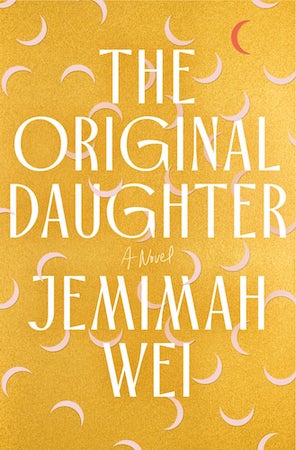
Jemimah Wei’s debut novel, The Original Daughter(Doubleday, May 2025), aches. It aches with the weight of the unsaid, the scourge of perceived betrayal, and the bitter nut of jealousy. But underlying all of it, it aches with love. When Gen is eight, a seven-year-old girl named Arin comes to live with her family and goes on to become her co-conspirator, rival, friend, but most of all—her sister. As the years pass in fast-changing Singapore, Gen and Arin grow up surrounded by friends who are wealthier and more privileged than they are, parents who are struggling to make ends meet, and an environment that pressures them to achieve success and academic glory at every corner. But even as they struggle, they always have each other. Until they don’t. One day, every tiny cut of envy, doubt, and insecurity that the girls have set aside bursts forth, in a single act of betrayal that sends them reeling apart. A sisterhood split asunder.
Jemimah and I come from the same humid part of the world (Jemimah, Singapore, and me, Malaysia), but we met, as one does, at an author event in New York City. It was a joy to read and feel words from our hot, sticky region. But beyond that, there’s real wonder in Jemimah’s story about sisterhood and Singapore. It captures a world that is imperfect yet undeniably true. Over email, we had an expansive conversation about The Original Daughter, falling asleep as a stress response, and why romantic love does not always have to be the center of a good story.
Vanessa Chan: One of the fascinating things that threads its way through The Original Daughter is the idea of surpassing one’s parents and not having a generational roadmap for how to live. Ma is a librarian and later works at a photocopy shop, a childcare center, and a grocery shop. Pa is a taxicab driver. It is clear from the outset that Gen and Arin will overtake their parents very quickly, but both must find their way in rapidly advancing Singapore without the roadmap their more privileged classmates have. Is this something you have experience with or have observed?
Jemimah Wei: We’re a young country, sixty this year, but the country has already been renovated several times over by progress. You could get whiplash from watching the way the country has changed. It’s fascinating to me, because the change is both reactive and strategic – the country has always kept one eye on how economic transformation relies on national narrative and global perception, and another on how the emotional temperature of its citizens fluctuate in response to these demands.
But on a local level, there is an immense cognitive dissonance to living precariously in one of the richest countries in the world. The skills which were crucial to a country in its developmental stages are often cast adrift in an accelerated world that runs on automation, and for many of these people, adaptability must become the key to moving forward. Learning to cope is a soft psychological skill that we don’t talk about much, but it’s also a skill that’s inherited. You model perspective on approaches you’ve seen, and while Gen is watching her parents, Arin is watching her.
VC: Singapore has been represented in recent media as a place of wealth and excess (see: Crazy Rich Asians). The Original Daughter is set in a Singapore with void deck aunties, hawker stalls, taxicab drivers – the working class that doesn’t ordinarily find itself drawn in literature. Was this the Singapore of your life? And was there a conscious effort to “deglamorize” Singapore?
JW: Singapore is home to immense wealth — the world of Crazy Rich Asians isn’t untrue. It’s just not the only story. The lived reality of many Singaporeans, myself included, isn’t like that, and I was very conscious of how literary narratives that have emerged in the global publishing landscape are often penned by those who could afford to leave. Due to generational wealth, due to riding the wave of opportunities, etc. For me, who lived one way most of my life then had a sudden, abrupt switch of circumstances due to work and scholarships, it can sometimes feel like I’m holding two realities in my brain—one of tradition, one of reinvention—and I’m not willing to let one supersede the other. It’s a fertile junction for me, artistically, and not an uncommon one amongst my peers.
As to your point on the working class, I suppose that’s what the characters are. But it wasn’t as if I deliberately set out to write a social novel, though if you’re true to representing the world of your characters then these things become evident in the telling. Of course, the characters are worried about money, who isn’t, but they’re also thinking of french fries, of charisma, of pettiness. It was important to me to decouple wealth from joy, to show the full dignity of lives that aren’t and shouldn’t be categorized only by their proximity to privilege.
There is an earnest glamor to love, to the delights of being deeply and physically attuned to the life you have, to being able to derive a sense of well-being from intimately sharing silence with a loved one or sucking nectar from a wildflower. I think that can be a point of ambition too, aspiring towards companionability with others and the self, while suffering under the discipline of realism.
VC: The Original Daughter is a novel about love and the ways love fractures. The love between sisters, the love between parents and children, the love of chosen family. Yet one kind of love that’s conspicuously absent is romantic love. Was this a deliberate choice?
JW: Oh, absolutely. Something I was very clear about from the beginning was that my debut would be a love story, but not a romance.
Growing up, books and shows were saturated with romance as the gravitational storytelling force, and although I love a good Taiwanese drama as much as the next person, I was weary of the overall prioritization of the hierarchy of romance in so much of media. For much of your formative years, your key emotional relationships are with other women, with family, with non-romantic partners. I wanted to show that these relationships are not so easily unseated by the appearance of romantic interests, who, in those early years, are often temporary. The immensely intimate love, enmeshment, and heartbreak of platonic relationships can be tsunamic.
VC: This novel aches. It is not light by any means – and deals with the rage and estrangement of sisters, parents, grandparents, and even death. Was it tough to write? How do you separate the ache on the page from the joy of your life?
JW: My body’s stress response tends to be to simply fall asleep, and it mortifies me to think of the amount of spontaneous napping that happened in the process of writing this book, sometimes in public…
But in response to separating ache and joy, the truth is nothing ails me more than not writing. Writing itself, even when immensely difficult, is the primary, most consistent source of joy and contentment in my life. If I must struggle, I’d rather it be on the page.
VC: Genevieve, the “original” daughter, fears abandonment which causes her to withdraw, essentially forcing her sister Arin away. What draws you to the theme of abandonment? And what do Gen and Arin have to learn about abandonment?
JW: Abandonment wasn’t a primary focus in my writing so much as it was the product of a long wrangle with self-regard. The struggles the girls have with abandonment, envy, and boundaries all spring from efforts to tolerate and develop relationships with their own less savory qualities. Arin, in particular, has a lot to learn about her relationship to self-abandonment in the face of conflict. That’s something I’m drawn to more: how we come to confront ourselves when all narrative is stripped away.
VC: This novel took you nine years to write, coinciding with the earliest parts of the pandemic. How did that influence your writing?
JW: When speaking in retrospect I think we often impose a casual narrative onto our journeys; it’s inevitable for writers to narrativize, but I wonder how helpful it is. As a young writer I was horribly discouraged whenever I heard of writers who seemed to have it all figured out, the map of their influences, the sequential steps of their process. For me it was all very messy and desperate. My head felt tangled up for much of the nine years. I was plagued by the sense that I wasn’t mature enough to handle the vision I had for the book. And I was totally felled by the pandemic, which was, for me, a long tunnel of hopelessness. Maybe I fed some of that hopelessness into the book and made their desperation more convincing, I don’t know. I would like to believe so, if only so I can believe that period was meaningful in any quantifiable way.
VC: Speaking of narrativization, this story grapples with the idea of theft—what parts of our life story do we own, and what parts of ourselves do we owe to and share with others? Do we own our lineage? What about our stories? Our traumas? What do you think about ownership?
JW: I think this is one of those yes, and questions. We’d like to believe the lines between our lives are clean cut, when part of every relationship consists of co-creating a life together. How can we love without giving ourselves totally over to the other? How can we inhabit narrative without letting it cannibalize our sense of self, and vice versa?
VC: Pressure permeates this book, especially the pressure to “succeed” and embrace what one of the characters calls the “season of success.” A lot of this has to do with the markers of success that both Gen and Arin have been told they have to achieve.
JW: Pressure is pretty endemic to Singaporean society. I feel suspicious of movements that purport to disengage from markers of success in hyper-competitive, cosmopolitan capitalist societies. I think that’s just stress undergoing a branding revamp, so now you’re not just expected to succeed, you’re expected to succeed while disguised as being mentally well. The truth is that when you fall off the bandwagon, it can be incredibly hard to climb back up, especially when you witness life accelerating onwards without you.
But the girls aren’t just pressured, they’re also addicted to the pressure in some ways. They love the feeling of achieving, of winning. The myth of meritocracy can isolate your perception of progress in the singular, instead of locating your life as part of larger machinations, in a way that makes the thrill and despair of success so intensely personal.
VC: Gen’s (and Arin’s) relationship with their mother is enduring and illustrates some of the most emotionally resonant parts of the novel. Can you talk about how the relationship between children and parents matter to this book?
JW: Your parents give you the tools to separate yourself from them, it’s a process born of love but one that can be very painful. Specific to this novel I was thinking a lot about the boundaries between independence and intimacy, especially in the formation of a self, and how difficult and worthy a venture it is to develop a love that withstands life’s seas of change. There is a melancholy that accompanies every transition, part of the challenge is to accept it with an expanding view of what love and relationships can be rather than instinctively reject it as a marker of failure.
VC: Gen is a flawed and sometimes frustrating protagonist because she often cannot see what’s in front of her. What is your relationship to “unlikeable” narrators?
JW: I feel terrible affection for unlikeable narrators. It makes it very hard for me to dislike difficult people in real life, especially since I’ve spent a long time in the psychological living room of a frustrating character who’s ultimately trying her best to forge a life she can live with.
VC: This is a novel about withholding. Much is left festering and unsaid. And yet, the reader is never lost because the motivations and psychology of the characters are clear, even when they rarely say what they want or mean. What is the secret to successful interiority?
JW: There’s a revision practice I do, called the “Emotional Synopsis,” where in between drafts I create an emotional map of the entire book, documenting the book’s events with emotional motivations and interior conflicts alongside the facts. It’s adapted from a revision exercise in Matt Bell’s Refuse to Be Done – his version is to keep the novel’s outline to pure facts, but because of this novel’s nature, it works better for me to have psychological conflict woven in. I go over this emotional synopsis again and again, getting a macro view of the characters’ changing inner lives, revising it and working out the bloats and kinks, before going back to the book with targeted solutions.
I think murkiness on the page can often result from a lack of clarity in the writer’s own vision. It’s crucial to me to fully understand why characters are doing what they’re doing so that I can track the way they process their own actions on the page. That way, the reader can experience their minds working in real story time to understand themselves, even when the characters might find their own intentions opaque.
VC: The Original Daughter passes through a significant expanse of years very seamlessly. How did you orient time?Was it challenging?
JW: Awful. In writing, in life, it often feels like time exists purely to frustrate me. At some point I was creating actual Google Calendars for the characters, to fill in the activities of their daily living in order to get a minute sense of the lives they lived. This responsibility to document time passing in their lives weighed heavily on me, but it was Keri Bertino, actually, who suspected that I was cornered by time and said, and I have to quote verbatim because it was so incredible: I encourage you to release yourself from the obligation to narratively account for all that time. Hearing that was like she’d cut something loose for me. It’s true, why did I have to show the girls laboring over algebra or learning the administrative ropes at a new job? I marked all the places that felt uninteresting to me and axed them, then found a way to incorporate missing story information elsewhere.
VC: We all acknowledge that writing is a lonesome endeavor, but I know that community is important to you, something you strive to build everywhere you go. Why is that?
JW: Writing is a lonesome endeavor, but in the long, undefined yet crucial period before you’ve finished your first book, it can often also feel like Schrodinger’s endeavor—if you stop writing right now, no one knows, no one cares. The book which isn’t, can feel like it never was. That period of time is vital for experimentation, for taking real risks in your work outside of external expectation, but it’s often very difficult to endure. What sustained me through this long season was passionate conversations about books, thinking aloud, together, about craft and writing, being excited and disappointed and hopeful alongside friends who were all serious about their art. Community, which for me is analogous to friendship, reflects back the reality of our artistic endeavors in a way that solidifies its existence.
Growing up in Singapore, which doesn’t have the same access to resources, publishing, and infrastructure, this wasn’t always a given, and writers here have had to work hard to build these relationships with each other and ourselves, to take our dreams seriously in a culture of extreme pragmatism. But part of having no fixed roadmap is a terrifying and challenging freedom to build the life we actually want to live. Once you commit to writing you’re already living outside the societally prescribed models of how a life looks. We don’t have to jump from one narrative to another, to live in the box of struggling artist, isolated writer, social butterfly, to think of writing in the same terms of production as other material goods. We can take and leave what works for us. For me, what that looks like is channeling my Singaporean pragmatism into figuring out what makes my writing life psychologically, economically, and artistically sustainable, and a large part of that is balancing my writing with the relationships that surround it.
VC: Who did you write this book for?
JW: Initially, just for me. But now that I’ve finished it, I hope it finds the people who most need to hear that love can be a life raft for them, too.
Given quarterly to a Southern-born limericist who lives in (note: not “on”—see our FAQ) the Arkansas River. Residents must live underwater in Colorado, Kansas, Oklahoma, or Arkansas. Must be named Dave (note: not “David”—see our FAQ).
The George R. Herman Award
The George R. Herman Society of Altoona, Pa., invites fiction writers, nonfiction writers, and poets to send thirty pages of work that directly honor the life of George R. Herman, a Blair County resident. Please submit your George R. Herman–based work by May 25, 2015. Prize: $50,000. Entry fee: $90. Judge: George R. Herman.
Award for Excellence in Writing and Parenting
Seeking parents of one or more children under the age of five who demonstrate excellence in both writing and parenting. Given annually to no one because nobody with children that age is any good at either.
Aging Teen Grant
Aging teenagers with five or more years’ experience in the art of reverse graffiti are welcome to apply for 1st- ($1,500), 2nd- ($500), or 3rd-place ($300) prizes. Applicants should submit a resume, ten images of current work, and definitions of what they think “aging teen” and “reverse graffiti” mean. (We’re a little fuzzy ourselves.) Nobody has won—or applied for—this grant, and it’s a good thing because we ran out of funding in 2006.
Baltimore–Pittsburgh “Interesting” Grant
The City of Pittsburgh awards $300 annually to one fiction writer who lives in the Baltimore-metro area but roots for teams from Pittsburgh—preferably because “it’s a long story, but my dad grew up in Pittsburgh, and . . .” Please provide a description of your allegiance to Pittsburgh teams in the “bio” section along with an author photo (must be wearing a #87 Sidney Crosby Penguins jersey and a mustard-yellow Willie Stargell–era Pirates hat).
JoAnn Fabric Residency
Awarded to anyone of any artistic discipline (need not be fabrics) who can squat at the mostly empty desk with a single piece of cobalt yarn and scary pair of orange scissors in the back of any going-out-of-business JoAnn location and pursue their art for as long as they can before Brigitte passes by a third time and asks if they need any help. Not available at this time because somebody’s already sitting there, but maybe try the dressing room in T.J. Maxx?
The One Where You Don’t Have to Reside in a Certain State
This $1,500 / month grant will be awarded to a poet, memoirist, or fiction writer from any state in the U.S. who shows your-level of competence in writing and doesn’t even necessarily have any qualifications except liking to write and talking about other residencies they’ve been to. Applicants can just sort of send us a loose email about wanting the award. Deadline: yesterday.
The Don DeLillo Prize
Tired of restrictions on writers’ grants? The Antioch Foundation of Washington, D.C., awards $150,000 annually to a fiction writer, nonfiction writer, memoirist, playwright, or poet living in the United States, Mexico, or Canada whose work—even loosely—reflects the values and style of award-winning author Don DeLillo. Send us five pages of any genre written within the last twenty years. No entry fee. Must be Don DeLillo.
The “Jack Kerouac Experience” Residency
Scraping the bottom of the barrel? Remember, your aunt Winnie still has that guest room you can write in, like Sal Paradise in On the Road. But unlike Paradise’s aunt (who was based on Kerouac’s mom), Aunt Winnie is intensely interested in your writing—and, like, always home. Think about it, though. Could be good, actually. Update: She just leased it to a grad student.
The Hoboken “Your Apartment” Residency
You still have your apartment, right? And isn’t your apartment a sort of residency in itself? All it entails is you sitting in a chair or at a desk and trying to write something. How is that different from “unemployment”? It isn’t! But hey, any residency’s better than no residency, right?
MacDowell
I mean, you can apply . . . Anybody can apply . . .
What drives someone to die by suicide is an enigma that will forever exist on the edge of our understanding. Although we can never truly know a person’s thoughts in their final moments of life, Arianna Rebolini gives us an intimate look inside the mind of someone who’s been there in her debut memoir, Better: A Memoir About Wanting to Die. She details her struggle in a narrative that’s at once vulnerable, lyrical, and investigative. Despite the obvious successes of Rebolini’s life—having a career in editing and a published novel, a close-knit family, and a loving marriage with a healthy child—she deals with overwhelming despair.
One day, instead of trying to kill herself, Rebolini checks into a psychiatric unit. The memoir follows her hospitalization, weaving in reflections from throughout her life: there are her initial thoughts of suicide in childhood, her attempt as a teenager, and conversations with her therapist, husband, and son, Theo. Rebolini grapples with a fear of “infecting” her son with her mental health, a fear that grows as her brother—who’s deeply similar to Theo—sinks further into his own depression. She scrutinizes Theo’s behavior, hypervigilant for signs of distress, and wonders if he should see a psychologist.
Delving into broader historical and cultural themes, Rebolini explores famous suicides—analyzing the writing of Sylvia Plath, Virginia Woolf, and David Foster Wallace—as she searches for an explanation as to why a person might succumb to their darkest urges. She also researches the insidious reality of systemic factors, such as barriers to mental health care and dehumanization in modern-day workplaces, and shows how they amplify suicidal thoughts.
As someone coping with chronic suicidality who shared high school classes with Rebolini, my whole heart goes out to her. Like cars in side by side lanes, we drove the same direction for years but were too trapped in our own stories to notice the other’s struggle. I wonder how we could have supported one another. Recently, we spoke on Zoom about what “better” means, the inaccessibility of behavioral healthcare, mental health’s impact on motherhood, the stigma of honesty, and why society is so afraid of suicide.
Marisa Russello: People have long been fascinated and horrified by the topic of suicide, but your book centers on the idea of moving toward something “better.” What does “better” mean to you and where did your motivation for writing this memoir come from?
Arianna Rebolini: I knew this book was going to be called Better before I knew what the book was going to be, and it’s one of the few things that stayed consistent over eight years of writing. My whole life I’ve said I want to be “better,” but I don’t think I can know how to be better if I don’t know what that word actually means. And so the motivation was to figure out, what does “better” mean? What would a better life look like? What would be better enough to feel like I’m living an okay life? And how can I get there?
That’s something that shifted throughout the writing—I don’t think it is a static concept. I wanted to settle into an idea and be like, Okay, so this is what I’ve decided is better enough. Now I know. Even still, I don’t think I have a firm grasp on what it means. But I think the “enough” is important. When it comes to health, we think of better as done with: I had this cold, and now I’m better, and think of it as a final stage rather than a relative one. So as far as suicide goes, for me,better means being alive and not having a life that is primarily focused on figuring out if I’m okay, just allowing myself to be.
MR: I like that concept of “allowing yourself to be,” not worrying about every little dip into sadness, because it’s normal to get sad. For me, I feel like I’m in more of an in-between state now—I’m not cured, but I’m not sick. Sometimes I really want to live, but sometimes I do want to die.
As far as suicide goes…better means being alive and not having a life that is primarily focused on figuring out if I’m okay.
AR: I feel like I’ve spent so long being like, Well, I’m not really better until that section is gone—until I’m done with going through points in my life where I want to die, so it was important to acknowledge that those periods don’t have to mean I’m not okay. Otherwise, I’ll be waiting forever.
MR:I really appreciate how candid you are about such difficult subjects. Have you encountered any challenges when discussing these stigmatized topics so openly?
AR: I’m lucky that in writing online I have found my audience, so when it comes to mental illness and suicide, I haven’t gotten a lot of trolls. Yet something I have dealt with is navigating people who are close to me reading it and their reactions. Whether being like, I didn’t know it was this bad, I’m sorry that happened, or This made me really feel bad, that’s something I have a hard time figuring out how to manage because if you want to write about this stuff, you have to go in knowing it probably will hurt people who are close to you.
What I’ve gotten the most trolls about is speaking candidly about motherhood and not really coming to it naturally. That’s where I’ve had people on social media be like, I’m going to call CPS. I go through periods where the way I handle it is engaging earnestly and being like, Why do you think that? Other times, I’m like, Whatever, block. But it’s something that scared me a lot and still worries me.
MR: People are so hard on moms. How do you think your narrative might be able to change the broader conversation about mental health and suicide?
AR: Not everyone has the time to do research and spend so many hours thinking about this. So I really like thinking about this book as: I’m not the only person who lives with this. I’m not the only person who has these thoughts. So I’m going to create one cohesive presentation of something that I have felt, something that I’ve seen other people feel and write about, and put it all together in a way that hopefully resonates.
Mental illness as a whole is a really complicated conversation, but when it comes to suicide, the stakes are so high, so I understand why people are like, We have to be strict about how we talk about it, because, God forbid, we set off someone else’s suicide. I get that fear. But if there’s anything we know about the history of how we understand psychology, there are so many times we thought we had it right, and we had it wrong. So we think we have this right, and we’re like, This is how to talk. This is what we know is the safe way. Don’t say “commit suicide” because that has negative connotations, and don’t do this. And we think that now, but what are we going to think in ten years? We do have to risk a little if we want to talk about it in a meaningful way.
MR:Something you wrote about that makes me really angry, and I think makes you feel that way too, is the inaccessibility of behavioral health care.
AR: I feel like anyone who’s tried to navigate the system understands how impossible it is. It’s so expensive [to live] here, and the majority of psychiatric providers don’t take insurance. That’s something I’ve had a really hard time grappling with ethically and morally. You’re going to them like, you’re supposed to help me, but you charge $400 an hour and don’t take insurance, like how do you square that? And how do I, as the patient, trust you?
Understanding how the insurance companies kind of bully the providers into this setup, I think it’s the fault of the system, but the person who bears the brunt of it is the one who’s in crisis, especially because we don’t really think of mental health care as preventative. When you need help the most, it’s the hardest to get quickly. You’re not in any state to navigate all these steps and figure out how much you’re going to spend, so it’s a system that does not encourage people to use it, which is maddening whether you’ve needed it for yourself or you’ve tried to help loved ones get the help they need.
MR: Yeah, just yesterday I was on hold for two hours with my insurance about a $2,000 reimbursement for my psychiatrist. For some reason it wasn’t processed. They said there was a glitch in the system, and they never notified me. I can’t imagine if I didn’t keep track of these things.
AR: Oh my God! I’ve had versions of that conversation so many times, and you suspect it’s on purpose. Then seeing that ProPublica investigation and interviews with people who worked for United Healthcare and Cigna and [realizing] no, it is on purpose. They want to keep you on hold for hours. They want you to lose track. They want to make it so that you’re like, This is not worth the money, and then they don’t have to pay.
MR: It’s infuriating. When you were reviewing the research, did you learn anything especially compelling or surprising that you would want to share?
AR: I am a feminist, and I think something that was important for me was seeing how the patriarchy and the same systems that oppress women, those systems are hurting men too—to the point that it’s a large part of why men kill themselves more than women.
Edwin Schneider—I don’t think I quoted him—but in his work he’s talking to men who kill themselves because their wives make more money. And you’re like, Oh my God! These fucking men. But it was important to take a step back and [reconsider] that that should make me more sympathetic because it’s the exact same system. The man—who believes that women need to make less and kills himself because his wife is more successful—is suffering from the same system that hurts the woman who is hated because she makes more. The man’s suffering is harder to grapple with because largely he benefits from that expectation, but the end result is him killing himself. I sympathize with that, and that was really interesting to read and think about. I still believe that so much of suicide comes from people’s inability to meet these arbitrary requirements of society.
MR: Authors whose writing you engaged with, like Sylvia Plath and Virginia Woolf, were celebrated for their artistic genius, yet their works present a romanticized view of suffering. How did reading them deepen or challenge your understanding of suicidal ideation?
AR: I think what it really did was make me question the worthwhileness of interrogating suicidal thought, which is a funny thing to come to terms with while I’m literally researching and writing a book about suicide. If there’s one thing I really came out feeling strongly about, it’s I got this out of my system and I never want to think about [suicide] this much ever again.
I think record keeping is great, obviously—I’m a writer. You want to observe and learn. But you read Sylvia Plath and Virginia Woolf, and you’re like, Oh my God! It is exhausting. There’s only so much you can say about being depressed. And it’s not a matter of like, Oh, get over it because I know it’s not that easy. But there’s a threshold where examination is no longer useful, when it just becomes like a quicksand. One of them talks about this. I think that you do get stuck deeper and deeper, and it’s hard to pull yourself out when it’s all you’re thinking about, whether you’re writing about wanting to die or figuring out like, Okay, I’m feeling good today. What made me feel good today? How can I do that again? It’s just so much thought, and that interiority makes it really hard to live your life outside of it.
MR: A theme your book touches on is motherhood—your vulnerability in this part of the memoir is so refreshing. How has your journey with mental health influenced your approach to parenting, particularly when it comes to balancing open conversation about your experiences with protecting your son from the heaviness of those challenges?
AR: That’s something I think about probably every day. I’m always trying not to project onto him my own history and my family history of mental illness, and I’m glad I have my husband, Brendan, to balance me out when I’m like, Oh my God, he’s so anxious. He’s so depressed. Well, he’s also just a five-year-old who doesn’t really know how the world works.
There’s a threshold where examination is no longer useful, when it just becomes like a quicksand.
It’s a balance of wanting to protect him but also understanding that kids are really smart, and they figure things out on their own. When I was looking at studies about suicide with kids as young as five, I was like, Oh my God! In my mind, when I have been afraid of Theo becoming suicidal, he’s—I don’t know—in middle school, but of course it can start younger than that. You just kind of forget as you get older how real life is, even when you’re six or seven. I try more than anything to start with honesty and respect and err on the side of not giving him enough information.
I’m hoping, talking to my psychologist and a child psychologist about what he can handle and when, whether it’s about his mental health or mine, that they’ll guide me because it’s something I’m very scared of getting wrong.
MR: I mean, who wouldn’t be scared of getting it wrong? I’m a foster parent, and the teenager who lived with us last year had depression. We ended up bonding over that, so sharing my feelings was something helpful [to my child]. But I was recently in a support group for people with suicidal thoughts, and someone was like, Oh, I’d never tell my kids because they would feel like they’d have to take care of me. And I thought, Oh my God! Should I have done that?
AR: It’s so imperfect, right? You can argue from either side. I literally wrote a book about wanting to die, so there’s no way Theo’s not going to know. But I think there’s a way to make it clear, like, This is something I have, too. And if you want to talk, I understand, but it is not your job to worry about me. I am taking care of myself. I think you can manage both.
MR: I appreciate that. So, given your own experiences with despair, what lessons do you hope to pass on to Theo regarding emotional well-being and resilience?
AR: I hope he can bypass the stage of figuring out how to accept this as part of himself. I think, for me—and this is not my parents’ fault, it’s the generation we were in—I spent those first years of living with OCD and depression, and then suicidal ideation, not really understanding and then having to do the work of figuring out what it was, figuring out that it wasn’t a bad thing to have, and coming to terms with it. I’d like Theo to be able to skip that work and just know.
And I hope he will have an easier time accepting help and drawing on strength from others when he doesn’t feel strong or resilient himself. Resilience doesn’t have to mean doing it alone.
MR: What are your thoughts about why our society is so afraid of suicide?
AR: It’s scary to be like, What would make a person want to stop living? And what about our lives and the systems we live in makes that person decide that dying would be better than existing?
As tough as [those systems are], being like, Well actually, maybe there should be a different system is scarier because that’s an unknown, and people don’t want to grapple with the idea that suicide has external factors. It’s easier to believe there’s something wrong with that person. That person was sick. They weren’t in their right mind. I think it’s very scary to look earnestly at the possibility that, no, they had valid reasons for wanting to die. And those reasons—their circumstances—didn’t need to be the case. Those are big, big questions that involve everyone. And it’s scary to think about how the world can and should be different and what that would mean.
MR: Absolutely. I think when a loved one dies by suicide, it shows that their suffering was so uncontrollable that they felt they had no choice but to die. What does that say about us? And I feel like that realization is terrifying.
AR: That’s a good point, too, because deciding to kill yourself requires so much isolation, and a lot of times it’s not apparent. I think it reveals a lot of distance between you and people that you love.
MR: Very true. Your book should be an excellent resource for clinicians and for families of people struggling. What do you hope your story will offer these readers?
AR: My biggest hope would be that it opens up room for uncomfortable conversations because I think the best thing you can do to engage with and possibly help someone is just to acknowledge, Yeah, that makes sense that you want to die from the way you’ve described it. I understand. It sounds simple, but it’s such a hard thing to say because you don’t want them to be like, I told you so. I’m going to go kill myself now. But you really need to get uncomfortable to actually help someone.
MR: In my experience, [someone suicidal] would be relieved, maybe even hopeful, that you’re listening and validating them, and they would open up more.
AR: And there is research [that supports] that’s the best thing you can do to help…it means you can actually talk about what’s going on.
DON’T MISS OUT
Sign up for our newsletter to get submission announcements and stay on top of our best work.
YOUR INBOX IS LIT
Enjoy absorbing fiction from Recommended Reading on Mondays, strange, diverting work from The Commuter on Wednesdays, and a roundup of our best work of the week on Fridays. Personalize your subscription preferences here.