New Amazon Bookstore Coming to Manhattan in Spring

The online retailing giant is now moving offline

Amazon long ago conquered the online bookselling world, but now it is tackling the offline world too. This year, Amazon will be opening a bookstore in the Time Warner Center in Columbus Circle in Manhattan. The shop will be the fourth of its kind as the online retailer is already running successful locations in Seattle, Portland, and San Diego. Amazon also has also started bookstore projects in Chicago and Dedham, Massachusetts, to be completed in the coming months.

The New York Times commented that the already existing Amazon bookstores are pretty standard, but “the company stocks far fewer titles than typical bookstores, using online data to determine which ones to carry.” So, it’s highly unlikely that this emerging chain will be able to compete with the charm and personality of New York favorites like McNally Jackson or The Strand. What they do have on their side is cutting edge technology, which is permeating their other ventures, too. Last month, Business Insider reported on Amazon’s futuristic grocery stores, named Amazon Go because an app automatically tracks and charges your purchases, letting you leave without having to wait in line or interact with a cashier.

The irony of Amazon building physical stores is not lost on publications like The Verge, which notes how “Amazon will expand its book-selling empire with the very thing that it once helped to destroy: bookstores.” I guess we’ll see come spring whether or not their reinvention of the wheel gets traction in NYC.

Language, History, and the Memory of Violence

Is there one word to describe Ramon Saizarbitoria’s massive novel Martutene? “Slow-burning” might do the trick. On paper, this book’s plot seems easy to describe, albeit fairly static: it follows the lives of two middle-aged couples — Martin and Julia, Abaitua and Pilar — as they go about their daily lives and begin to question the bonds between them. This is somewhat accelerated by the arrival of Lynn, an American, whose life intersects with both couples in interesting ways. So far, that seems familiar: the stresses of time on a marriage, the presence of a younger outsider; readers may well think that they know how this will play out.

Thankfully, there’s more going on here than the relatively tired dissection of relatively affluent lives in a prosperous city. Start with the title: Martutene is a neighborhood in the city of Donostia in the Basque Autonomous Region, not far from the border with France. A reference early on to a writer declaring “that he wasn’t going to use the murderers’ language any more” helps establish the mood. For all that the overall shape of this novel might look familiar, the fact that the struggle for Basque independence looms in many of these characters’ histories contorts the narrative in unexpected ways.

Structurally, events unfold at a moderate pace. Saizarbitoria alternates between the two couples from chapter to chapter, and doesn’t provide a lot of exposition up front, instead revealing information gradually–to the extent that, for instance, the reader doesn’t learn how Abaitua and Pilar met until over two hundred pages into the novel. The chapters focusing on them take on a more visceral quality, as befits their work–both are doctors. Martin and Julia, meanwhile, have more literary occupations: he writes and she translates. This, then, opens the door for plenty of literary references to be made, including one that recurs throughout the novel.

That frequently-referenced work would be Max Frisch’s novel Montauk. (Which, serendipitously, was released in a new edition by Tin House in late 2016.) Nods to it abound throughout Martutene: Frisch’s book is a recurring topic of conversation, the novel’s structure seems to be an homage to what Frisch used in Montauk, and young women named Lynn play a significant role in each. It’s an interesting choice, especially given that Saizarbitoria’s novel is nearly four times the length of Frisch’s–this is a book that could devour its predecessor several times over.

More broadly, it adds to the air of Martutene as a work in which books exist as tactile objects. One early reference to Montauk delves into the specifics of that particular edition’s design.

On the beach there are only two empty deckchairs and their shadows. It looks like a Hopper. The title’s printed at the top, MontauK, with the first M and the final K set bigger than the other letters and stretching down below the line the others are on, and in that lower space between them is the writer’s name, Max Frisch.

And this is a novel that’s littered with books. For all that a sense of history is never too far out of reach for these characters, neither is a sense of culture. Action and contemplation frequently take center stage, but actions read about, imagined, or remembered also play a significant part in moving the novel’s plot forward. Add in the fact that Martin’s fiction is periodically referenced, and the end result is a dense web of allusions, a heady yet stately approach to storytelling.

At one point halfway through the novel, Martin describes a recurring nightmare about a room that he doesn’t want to enter, but is forced to. There, he encounters a sinister couple. The passage describing the detail perfectly encapsulates the blend of realism and ambiguity that can occur in dreams–and the way that memories of them seem to bear even more information than might have transpired in the actual dream.

He says that he’s aware of some things even though they aren’t made clear in the nightmare. For instance, the woman is young and beautiful. He said he doesn’t see her face, or the man’s. But he does see some other things in great detail. For example, the woman’s negligée is made of satin, it’s salmon pink, and it has bows on its edges; she has long nails that are painted bright red.

It’s also indicative of the sometimes languorous, always deliberate pacing of this book–which can, at times, be frustrating. There are 800-page novels propelled by extensive plotting and 800-page novels propelled by mood and nuance; this is very much in the latter category. That isn’t to say that the book succumbs to inertia; quite the opposite, in fact. Eventually, the novel’s plotlines begin to converge; eventually, one of its primary characters will turn out to be harboring a horrifying secret.

Martutene is an intellectual novel, a meticulous work, and an object lesson in how different aesthetic and historical strands can memorably converge. It’s very much on its own wavelength, and it takes its own time in establishing its own rhythms; this is not a novel for the impatient. But its headiness and its depth make for a satisfying reading experience. It’s a deep immersion in the lives of its characters, with all of the discomfort and revelation that that can bring.

Jedi

Jedi had a decision to make. In the next thirty minutes or less she had to decide how she wanted to die. She did not want to do it in the house. She had the habit of sleeping til late. She woke up in the afternoon and took a long bath. Her mother always told her to eat less before long journeys because she often couldn’t hold on to the wriggling food inside her stomach and would throw up. This was to be the longest journey of her life, so she ate only a watermelon, the sole reason she loved summers.

Jedi, born of a Sindhi father and a Bengali mother, grew up to be like neither. She was born with a different name that was used in her academic certificates and passport. Jedi was a name given by her grandfather. In Bengali, it simply means ‘stubborn’; in George Lucas’ universe, Jedi were the guardians of peace and justice in their galaxy. He took Jedi to see the 1999 movie The Phantom Menace, to introduce her to the franchise; she was only eight then.

She would have liked to watch it again today, before slitting her wrist open or plunging herself from a high-rise. She remembered Nemo had put it on her computer a few days ago. Nemo — the boy she had known for the past sixteen years and the man she had been in love with for the past three. They had gone around town as a couple, attending parties and meeting friends for those three years, but a week ago they broke up.

It was his child Jedi was carrying in her womb.

Jedi had always been fascinated with the world of the supernatural. As long as she could remember she had always wanted to acknowledge the presence of spirits, mythical and magical creatures, even demons. Collecting newspaper articles about people’s death was her hobby; she had a small scrapbook in which there were numerous such pieces on suicide, murder, homicide, police encounters, serial killings, and many more.

In one such article that came out a few years ago, she had read about a haunted compartment on the last metro of the day. Passengers disappeared mysteriously during this particular hour of the night. Every few months there would be an incident, but soon it became a common thing and people were not interested in reading about it anymore. But the urban legend remained and grew, that traveling in Coach Number 6 in the 23:05 PM metro was an invitation to death.

She decided to take the last metro that night. Alone.

Jedi had also thought of cycling to the harbor and jumping into the bay. She did not know how to swim and the current there was strong. But it was a place where cargo was more valued than human beings. And she didn’t want to breathe her last in such a place. So she decided against it. Besides, she had another person growing inside her; and if there was anything after death, then she didn’t want her only child’s soul to be trapped in a trading ground forever.

It was a journey of nine stations from her home to the last one. The station was comparatively empty at that time, the trains mostly carrying a convoy of scattered, lonely souls stuck between going and returning. Coach 6 usually was the emptiest, thanks to the legend. Jedi was sitting at one end of the compartment, with only a middle-aged man, wearing a long black coat that had aged beyond repair, as her companion. He had a violin case kept carefully by his side. To her left was a line of empty coaches; only at a distance she could see the silhouette of an old woman holding the hand of a little girl, waiting for their station.

The train passed through the bright lights of the glazing metropolis, brimming with accomplishments and affluence, to the more middle-class residential societies housing families and government employees, and finally descending underground into the abyss of filth, gutters, and into the stench of urbanization in yards where the homeless slept every night in oblivion.

By the fourth station, the old woman with the kid had gotten off. The man with the violin case was buttoning his coat, probably getting ready for his station; December was dry and cold outside, Jedi felt glad the coat would protect him from the howling winds. She was herself dressed in a hooded navy-blue sweatshirt that had a photograph of The Doors imprinted on it, and a pair of denims.

Once he left, Jedi was the only one left inside the train; or at least as far as her eyes could see, she was. Then it was just the rumbling of the coaches, the sound of metal meeting metal, and the chugging of the hand-holds running horizontally along the ceiling.

It was then that she finally felt alone.

Will her Mom miss her more, or her Dad, she thought. She pictured a scale in her head, with her parents’ affections laden on each side, the scale balanced perfectly. But between her and her parents it had always been an imbalanced relationship; they never agreed with her ways and she never abided by their terms. They did not approve of Nemo either. When Jedi started seeing Nemo, their neighbor’s son, her parents thought she had chosen him over them.

She turned her head, trying to ward off thoughts about her life that might make her task more difficult. And there he was, standing not more than fifty feet from her. He was dressed in black from head to toe, almost like the man with the violin case. For an instant she thought it could be him, but it wasn’t. Jedi couldn’t see his face, but this being was definitely much taller, and he walked with a limp. And he was coming towards her. His eyes had a glint, like gold dust sprinkled over a seashell, glistening with power, fury, and perhaps a strange sense of sadness.

The first thing she did when she saw him was bring one of her hands closer to her stomach, like she was cocooning something. This took her by surprise; every time she had thought about this moment, she had tried to imagine the various possibilities. In some she was panting, gasping for breath but running, as fast as she could, away from the shadows that engulfed her; in others she sat silently inside the compartment and no one appeared. But this feeling was new, this unknown sensation of acting as a shield to something that doesn’t even exist.

Or perhaps it had already started existing, breathing in air from her body, feeding on fluids she drank and the food she ate. It had been just three months, but who can tell about these things. She wasn’t a mother, wasn’t ready to be one. But she felt pain at the thought of losing it forever, the kind of pain one feels while amputating a limb.

And suddenly she had another decision to make, preferably in the next thirty seconds or less. Except it was too late, because the tall figure was already standing right in front of her. She had never seen a legend become real in her own life; it was like watching a shooting star crash into the night sky, forever caught between illusion and truth. And then he bent down and placed his face close to her ear, like he was about to share a secret.

The last thing she remembered seeing was like a flash from a lightsaber.

When she woke up, she felt dizzy, nauseous, and sickly. She couldn’t figure out if she was at her home or at a hospital. The curtains her mother chose were often as dull and lifeless as the ones they put up in the hospitals, as if to keep the sick patients sick. It was then she remembered the tall man again.

She remembered looking into his face and seeing her own in it. When she asked him if he was there to kill her, he said: “That is up to you; I am only a reflection. I am only here to push you. Whether you land on the platform or on the tracks will depend on which side you are facing.”

And that is all she could remember from that night.

On Being and Becoming

Fanny Howe’s books do not come easily categorized. Often noted for her several books of poetry and — that encompassing term — “prose,” Howe’s new book, The Needle’s Eye, is classified as “essays/poetry.” Typical to Howe, the latest book upends these loose categories, featuring short nonfiction, lyric essay, prose poem, and narrative.

The Needle’s Eye is simultaneously cerebral and lyrical, and, often, individual pieces display both sides, combining a lyric rhythm and well-drawn images with factual analysis. “Kristeva and Me,” a seemingly traditional nonfiction essay that weaves more and more lyricism in as it goes on, becomes a study on philosopher-psychoanalyst Julia Kristeva and on the adolescent psyche — something Howe pieces together throughout the book. “Kristeva and Me” takes this to the next level, with the inclusion of Boston marathon bomber Dzhokhar Tsarnaev, whom Howe seems to be trying to understand in some way — not his actions, but his youth.

Throughout this book, adolescence is almost scientifically studied (made initially clear by its subtitle, “Passing through Youth”). Howe explores young people in prisons, and even St. Francis of Assisi in his rebellious youth in the piece “In Prism.” In it, Howe writes, “Francis was an idealistic teenager, an iconic candidate for today’s teenage gangs and jihadis.”

Howe’s well-considered work looks at the world’s handling of teenagers — boys, especially — but not only their incarceration. “The Nymphs without Names” begins, “In ancient Greece young boys…were gods of the wild mountainside… The Greeks understood that some boys were like hurricanes frenziedly dancing and destroying.” Rather than explaining away encouraged violence, Howe probes it, glancing through various cultures. She refuses to look away. The piece ends, “For now, they are ordinary boys.”

In “Absence” she explores the Children’s Crusade, questioning whether it was much different than other crusades — in goals, in action. “The righteousness of childhood was theirs to act upon,” Howe writes. “They knew they could do way better than the grown-ups in creating a safe and verdant land.” Perhaps she’s right. Most of us say this about children. But — “They fell into the sea or society and disappeared,” Howe writes, some equation of the sea and society that may be less metaphor than it appears.

The collection’s title, The Needle’s Eye, is suggested in the piece “Like Grown-Ups” as a “view of the world as seen by a single individual.” Howe writes, perfectly, “Remember how you lift the silver needle to the light to see all the way through the eye and out the other side. The eye is shaped like an eye.” It’s almost as though this book is shaped like an eye, some vessel out of which a partial understanding comes, while acknowledging its own failures to really understand, to really see.

But that title also comes from the book’s epigraph, from W.B. Yeats:

“All the stream that’s roaring by / Came out of a needle’s eye; / Things unborn, things that are gone, / From needle’s eye still goad it on.”

This initially seems the opposite of Howe’s claim that the needle’s eye is simply an individual view of the world, part of a whole. But she asks here: What can we see of that? What does that tell us about the whole?

The Needle’s Eye is perfectly contained — everything as viewed through the tiniest opening. But it calls itself a small opening. It keeps asking. It replies with more questions. It goes back to its own beginnings.

Electric Literature Is Alive and Well and (Still) Living on Medium

On Wednesday, Medium’s CEO Ev Williams announced that, in addition to laying off 50 employees and closing its East Coast offices, the company has abandoned its ad revenue model which recruited publishers like us, The Awl, and The Ringer to move to Medium last year.

Many have been asking what that means for Electric Literature, and basically, things will stay the same. We’ll be publishing the same writing you enjoy here on Medium for the foreseeable future.

There have been many benefits from Electric Literature’s relaunch last summer. The website looks damn good, for one thing, it’s easier to use, and the community of readers we’ve found has been supportive and engaged. We were also fortunate to work with talented, inspired individuals at Medium, most of whom have been sadly let go.

Admittedly, the potential for higher ad revenue played a significant role in our decision to migrate, and we are disappointed by Medium’s swift retreat from the publisher-centric model.

But unlike larger publishers that will surely be more affected by this change, Electric Literature is a non-profit that relies on reader support and grants as well as earned income. In fact, proceeds from our newly launched Membership program will soon equal what we once made in monthly ad revenue. Electric Literature receives 100% of your Membership dues after credit card processing fees, and contributions are tax-deductible. So, if you’re worried about the state of publishing, please consider supporting the writing you believe in by joining today.

In his post, Williams said that Medium plans to shift “resources and attention to defining a new model for writers and creators to be rewarded, based on the value they’re creating for people.” We’re not sure what that will look like yet, but in the meantime, we are going to keep our heads down and continue to do the work of promoting vibrant literature, supporting writers, and broadening the audience for literary fiction in the digital age.

Ted Wilson Reviews the World: My Potato Sack

★★★★☆ (4 out of 5)

Hello, and welcome to my week-by-week review of the world. Today I am reviewing my potato sack.

With the exception of potato farmers, these days almost no one wants a potato sack. And it’s exactly that lack of demand which has driven the price of potato sacks so far down that it’s economically irresponsible to not purchase one to wear as a shirt.

Admittedly, when I ordered my potato sack from the back of a magazine I thought I was ordering a potato snack. When it arrived I was pretty disappointed that I couldn’t eat it, but when I discovered that it was the perfect shape for disguising my lumpy torso, I was thrilled. To look at me in it, you wouldn’t know that I have small male breasts.

All my polo shirts literally went out the window. Then I had to go pick them up because they’d blown across into my neighbor’s yard and she was pretty angry about it. I suggested she might feel better if she wore my potato sack for a little while but she wasn’t interested. Now my polo shirts are in a bag in the front hall closet.

I don’t know a better sack than the potato sack. Not only has my potato sack been an awesome shirt, it’s also been an awesome pillow case. You’d think the rough, scratchy texture wouldn’t be very nice to lay your face against, and you’d be right. The potato sack as pillow case keeps me up all night, but it also prevents me from oversleeping. I haven’t missed a single episode of Good Morning America.

There’s one thing I could have done without regarding my potato sack, and that was all the bugs living in its fibers. I don’t know what kind of bugs they were. Are scabies a bug? They were everywhere, all over me. I’d be talking to Frank at the corner store and then he’d say, “There are bugs all over your face.” Then I’d start swiping at them in a panic and Frank would ask me to please leave. It was embarrassing.

Despite the bugs, my potato sack has brought me a lot of unexpected joy, and I think that’s what life is really about. In a way, my potato sack is why we all exist. Except we each have our own personal potato sack.

BEST FEATURE: It smells of potatoes no matter how many times I wash it.
WORST FEATURE: Everyone kept asking me questions about it and all the interest worried me someone might steal it in the middle of the night.

Please join me next week when I’ll be reviewing a wallaby burger.

Mein Kampf Makes an Insidious Return to Germany’s Best Sellers List

Could the new annotated edition prove to have historical value in our troubled times?

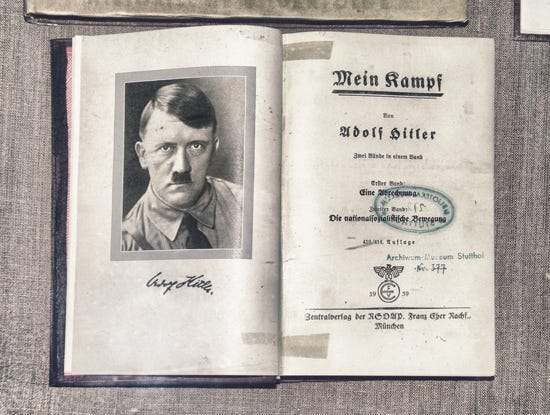
Spanish philosopher George Santayana is credited with the powerful proverb: “Those who do not learn history are doomed to repeat it.” That’s the optimistic way to look at the successful run of “Hitler, Mein Kampf, A Critical Edition,” spending 35 weeks on German publisher, Der Spiegel’s, best-seller list in 2016. According to the New York Times, the publication of the annotated text follows a 70-year ban in Germany. Its release has been met with plenty of controversy. Andreas Wirsching, the Director of the Institute of Contemporary History in Munich, believes that the project’s historical value has proved worthwhile. He argues that “the discussions about Hitler’s worldview and dealing with his propaganda [has] presented an opportunity — at a time when authoritarian political beliefs and far-right slogans are again gaining in popularity — to re-examine the ominous roots and results of such totalitarian ideologies.”

Since the sales are processed by the booksellers, the Institute is able to keep tabs on who exactly is buying the book and they claim “by and large it appears to be customers who are generally interested in politics and history, as well as people who are active in political education, such as teachers.” Apparently, the fear that the primary readers of the 2,000 page text would be alt-right, xenophobic bigots has yet to come to fruition.

Nevertheless, there’s something profoundly sad about having Hitler’s abhorrent worldview proliferated once again through his dangerous manifesto. One can only hope that his hateful words serve as a lesson of what can happen when we allow demagogues into power and ignore how words are often the precursor to catastrophic action.

The Writing Life as Its Cracked Up to Be

Joyce Carol Oates begins her latest book — a four hundred-page nonfiction collection — with a trio of combative, idiosyncratic essays about inspiration, both as an abstract writerly concept and the process by which Oates completed a string of history-inspired stories. Combative, here, because Oates is not above picking fights with writers of stature: Socrates “dares to say” (says Oates) that writerly inspiration is divinely gifted, not humanly crafted; and Plato’s concurring opinion (says Oates) is “churlish.”

If Oates insists that writerly inspiration does not come from above, there might yet be hope for the rest of us not-nearly-as-productive souls. The collection, which borrows its title from an Emily Dickinson poem, is (so says its cover) a set of essays ostensibly about “Inspiration” and “the Writing Life,” though the essays and reviews between these covers seem collected less out of thematic connection and more out of a time for harvest. It’s time to check in on what Oates has been reading, and why, this collection implicitly announces to the reader, and we follow.

The first essay in the book, “Is the Uninspired Life Worth Living?,” discusses the struggles her predecessors have faced while searching for inspiration and, later, creative survival, focusing on daunting characters like Mary Shelley and Herman Melville. (In discussing the latter’s early detractors, Oates characterized critical reviewers of Moby Dick as “human-sized harpooners surrounding a mighty Leviathan.”) In a subsequent essay, Oates discusses her own inspiration for the stories in Wild Nights!: Stories About the Last Days of Poe, Dickinson, Twain, James, and Hemingway, all of which, as she describes in Soul at the White Heat, are rooted in a love for the authors-in-question and an impulse to jiggle their language and mission, lovingly. “I take for granted the fact of Hemingway’s genius,” Oates writes here, “[and] this is true for all of the subjects in Wild Nights!

“[Joyce Carol Oates challenges the idea that] writerly inspiration is divinely gifted, not humanly crafted.”

The rest of Soul at the White Heat collects a number of Oates’ recent book reviews and critical essays, best read as a wealth of new recommendations from a bright person with very great taste — new recommendations, that is, for readers like me who do not religiously read or adequately remember who reviews what in The New York Review of Books, where most of these pieces originally appeared.

This puts me, Oates’s reviewer, in the unenviable position of reviewing a review — or, a series of reviews — which is only so fair to Oates and her subjects and to my own readers here.

But it is fair to say that, even in her book reviews, Oates reveals dizzying mastery. Her review of Claire Tomalin’s biography of Charles Dickens begins with analytical summary of the strengths and weaknesses across Dickens’s entire body of work — written as though the language breezed effortlessly from Oates’s fingers, as does much of Oates’s best writing (“One might say that [Dickens’s] subject is his unique rendering of his subject, in the echo of Mark Rothko’s statement, ‘The subject of the painting is the painting’”). Her authoritative prose suggests that, rather than restating information from the book she is reviewing, Oates is the expert here.

“Even in her book reviews, Oates reveals dizzying mastery.”

Add these reviews to Oates’s Wild Night!-esque historical canon. Oates’s essays on Dickens, Lovecraft, and Georgia O’Keefe (whose lives Oates views through the lenses of their published biographies) are fitting companions to her famous fictions about Robert Frost, Marilyn Monroe, Jeffrey Dahmer, and Ted Kennedy, to name but a fraction of the contemporary historical figures Oates has memorialized, intelligently, in print. The strongest of her essays here concerns Mike Tyson, and though it’s most technically a review of Tyson’s memoir, Oates draws heavily on her longstanding admiration and knowledge of boxing, and drifts — as in a story — into lyric analytical modes, stating, for example, “A classic long fight divides into acts, or scenes, as in a play.”

The more conventionally structured book reviews in the collection (labeled “Contemporaries” in the Table of Contents), are, truth be told, less exciting than Oates’s bio-essays discussed above, but this is to a noble and respectful end: here, Oates allows her wizardry to take a backseat to description and discussion of her fellow writers’ work, never overloading her analysis with scene-stealing prose that would deflect attention from still-living writers (J. M. Coetzee, Lorrie Moore, Louise Erdrich, and Paul Auster, et cetera, et cetera). Oates’ contemporary reviews are less interesting when read in succession than they would have been in their original, newspaper form, but they contain all the pleasures of a loving, thoughtful recommendation and summary.

Soul at the White Heat will be no one’s favorite book. Due to the specificity of its subjects, it will not join the canon of great craft books from twentieth-century masters. Think of the book more as a worthy bonus volume of literary contribution from one of our best and most prolific geniuses. At times flashily essayistic, at times conventionally literary reportage, Soul at the White Heat is if nothing else a window into a strange and blessed writerly mind — a mind to which we’re granted lucky access. Think of the book as (as Oates writes of Doris Lessing) “a gift that cannot be analyzed; it must only be honored.”

Study Writing with Contemporary Masters!

Announcing Catapult’s Winter 2017 Writing Courses co-presented by Electric Literature

Is your New Year’s resolution to get writing again? Or to finally finish that project you’ve been working on for years? Enroll in a writing course at Catapult co-presented by Electric Literature and put these cold winter months to good use. Transform your ideas into a novel, short story, TV script, or nonfiction essay, while getting feedback from our dedicated instructors and a talented group of peers.

The Village Voice named us the “best place to meet your literary heroes and get better at writing, too” in their 2016 Best of NYC issue — and our students tend to agree. In less than two years, Catapult’s writing program now has over 500 accomplished alumni. They have been accepted into prestigious MFA programs, publish regularly in variety of literary magazines, and a few have even signed book deals with publishers like Little, Brown and Merit Press.

We host classes online and live in our New York City offices with some of today’s top working writers and publishing industry professionals. Writing courses are open to writers of all levels who are eager to join a dedicated community. Winter and spring classes are already filling fast, so we recommend applying ASAP.

This winter, we’re offering a mix of fiction and nonfiction workshops and single-day intensives, in addition to an online class on TV writing, a twelve-week novel generator, and a book proposal workshop. This season’s instructors include Elissa Bassist, Ryan Britt, Chloe Caldwell, Scott Cheshire, Garrard Conley, Nicole Dennis-Benn, Michele Filgate, Grant Ginder, Elizabeth Isadora Gold, Tanwi Nandini Islam, Mira Jacob, Mitchell S. Jackson, Jolie Kerr, Porochista Khakpour, Rachel Khong, Alex Mar, Manjula Martin, Scott O’Connor, Shelly Oria, Kristen Radtke, Christine Reilly, A.O. Scott, Heather Sellers, Jade Sharma, Nadja Spiegelman, Leigh Stein, Lynn Steger Strong, Rachel Syme, Rufi Thorpe, and more.

Come write with us!

Librarians Try to Save Computer-Endangered Books with Fake Patrons

Is datification ruining the American library?

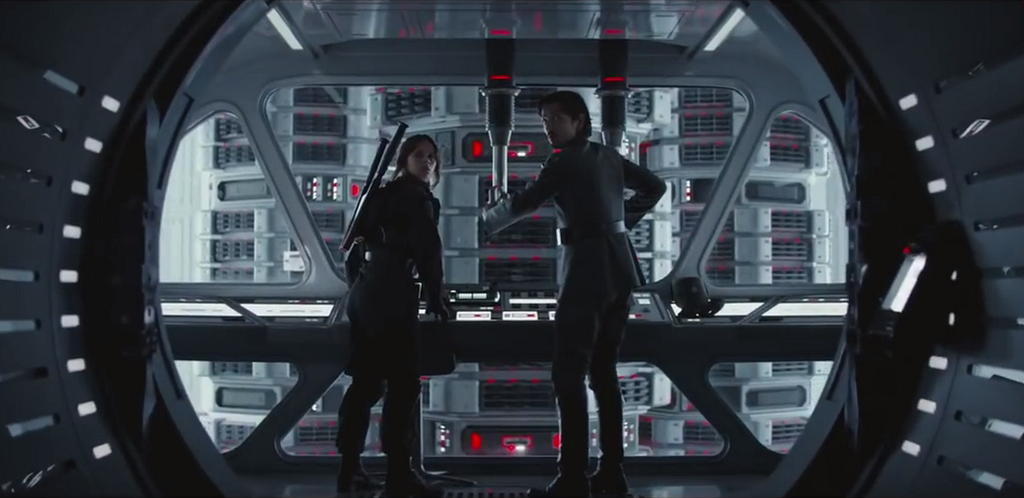
Saving data in Rogue One

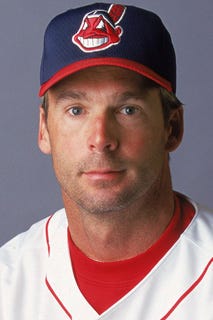
According to the Orlando Sentinel, two Florida library employees are the latest martyrs of the “money wars” erupting throughout U.S. automated bureaucratic systems. George Dore, the library branch supervisor of East Lake County Library, and assistant Scott Amey, were caught red handed after devising a bogus patron, “Chuck Finley,” to check out 2,361 struggling books in 2016 in order to keep the titles on the shelves. Dore explains that he was left with few other options except to fabricate Finley — with a fake drivers license and address to boot, due to the hierarchical nature of the technology which sorts and keeps the library’s books in circulation. Typically, if a book has not been checked out in the last year or two, it is removed. This decision will unequivocally be made, oftentimes in spite of the library staff who are armed with years of experience, and understand the cyclical nature of books fading in and out of popularity.

In an article discussing this situation in Boing Boing, Cory Doctorow invokes Cennydd Bowles, and claims that this is an example of “datification at its worst.” Doctorow raises a serious question about what happens when we start relying on computers to “optimize” or put value on books based on scales of popularity that are ever-shifting or subjective, and thus cause us to undervalue the human experience of a librarian’s book recommendation:

“The problem here isn’t the collection of data: it’s the blind adherence to data over human judgment, the use of data as a shackle rather than a tool.”

For now, George Dore is on suspension, and it seems that his experiment with library card fraud may ultimately cost him his job. Oh, and in case you’re wondering, Chuck Finley is based on a real person… Dore and Amey used the retired left-handed pitcher for the California Angels as the namesake for their escapade for reasons still unknown, but they were probably hoping for a strike out just one last time.