The Best Literary Adaptations of 2016

In an era of superhero mashups, Angry Birds, Hemsworths and boardgames-on-the-silver-screen, that delicate old relic — literature — might not seem like the hottest IP in Hollywood. But then each year, somehow, somewhere a producer or a hot young director with green-light cachet goes home to a hillside neo-Mediterranean villa, pours a glass of something stiff, and cracks open the latest Max Allan Collins novel or a collection of Ted Chiang stories, and through some dark alchemy of inspiration, screenwriting, double-entry bookkeeping, star power, union rates, overseas funding, and merchandise synergy, literature makes its way off the page and onto our beloved screens.

Now, with pedigreed clunkers like American Pastoral and The Girl on the Train, it might not be fair to call 2016 a banner year for literary adaptations, but there were some memorable successes. (Dammit, every year can’t bring us The Imitation Game! Yes, that won an Oscar for Best Adapted Screenplay. In 2014. Really. Go ahead and check. It beat out Inherent Vice.) This year saw more than its share of quality productions — stories of first contacts, last rites and whatever it is that’s going on in Park Chan-wook’s latest rom-com.

In the spirit of the season, and because it’s going to be a couple years before Barry Jenkins can turn Colson Whitehead’s The Underground Railroad into a limited series, we wanted to celebrate the year’s best literary adaptations.

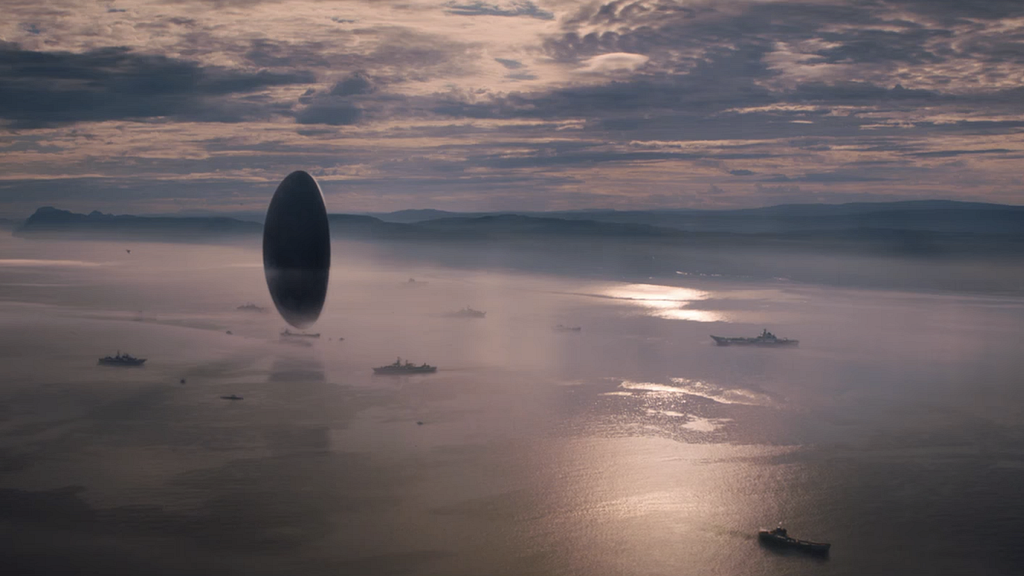
Arrival

Adapted from “Story of Your Life,” by Ted Chiang

It looks like 2016 might be remembered as the year Ted Chiang broke through from cult-favorite to Hollywood darling, with Arrival pulling in big numbers at the box office and looking poised to grab up end-of-year honors. Denis Villeneuve has to be near the top of any list of the most ambitious directors working today, and Chiang’s first contact story gives him all the room he needs to ponder and probe and brood on man’s fundamental nature. Amy Adams stars and there’s a hell of a good twist that your friends and colleagues want desperately to spoil. But best of all, Arrival, whatever its flaws, is that increasingly rare thing — motivation to go out to the theater.

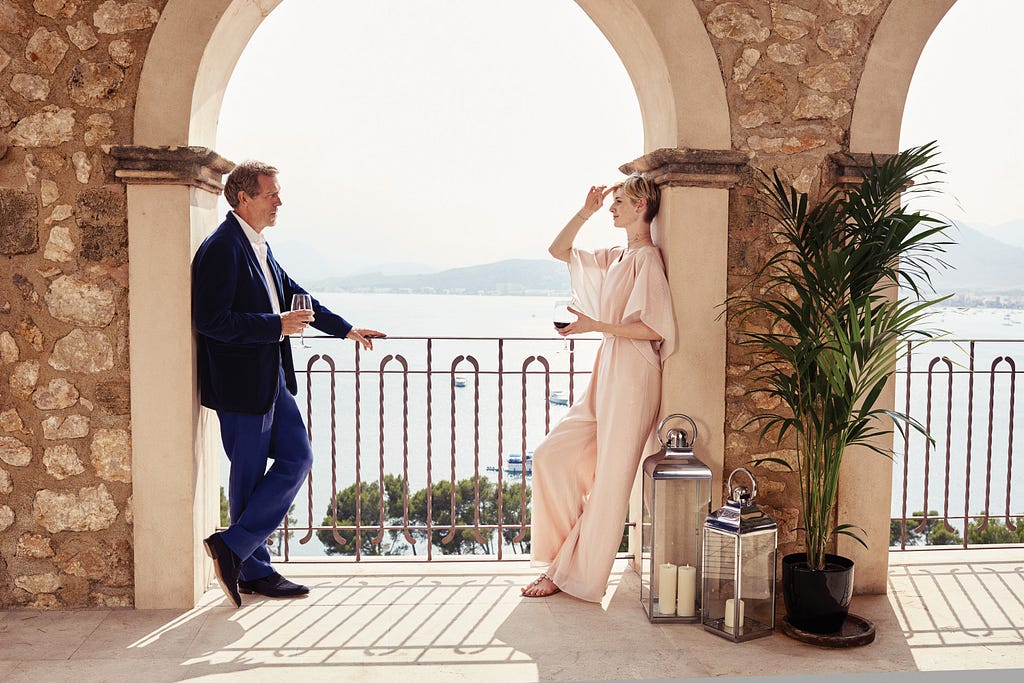
The Night Manager

Adapted from The Night Manager, by John Le Carré

The six-part miniseries might just be the perfect form for John Le Carre flicks — enough time to think and to dwell on the banality of deception, but not so much time that Le Carré’s carefully crafted plots need be unspooled for the sake of a multi-season arc. Tom Hiddleston, well-known boyfriend of the Internet, was in his element as Jonathan Pine, poised and quick to smile and hell-bent on avenging a woman’s honor. Hugh Laurie got to show off his charm, too, of the slightly more evil variety, with the always superb Angela Burr hot on his trail. All that gun-running intrigue was served up with a healthy portion of travel porn — Cairo, Switzerland, and of course a stunning seaside villa in Mallorca. Of the recent Le Carré adaptations, only Gary Oldman’s Tinker, Tailor, Soldier, Spy and The Constant Gardener top The Night Manager. With any luck, AMC & BBC One will just option the entire oeuvre and put it into production. Who doesn’t enjoy a well-made spy thriller?

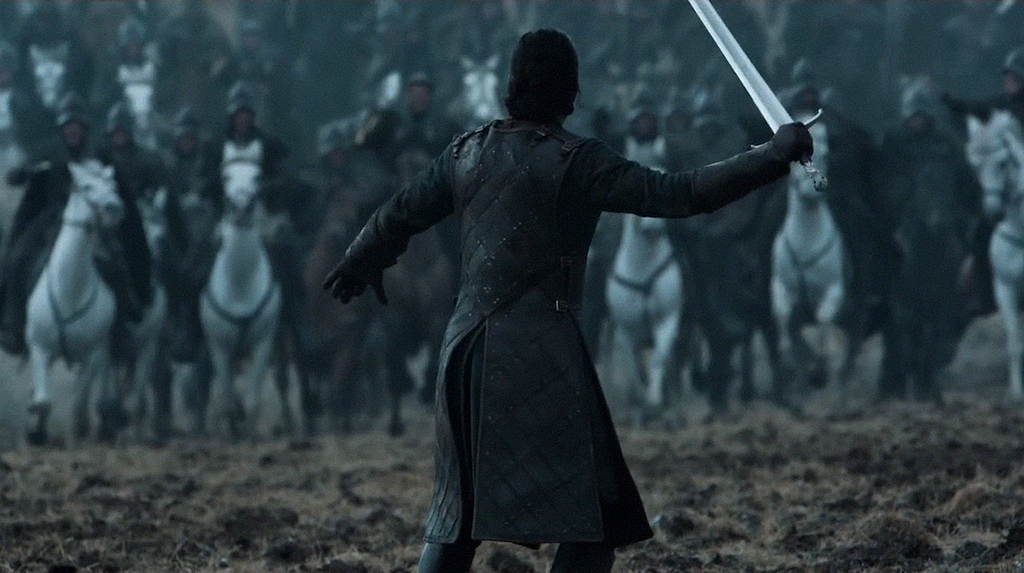
Game of Thrones

Adapted from…some obscure indie title, you probably haven’t heard of it…

The sixth season of Game of Thrones brought us to a pivotal moment in the annals of literary adaptation, when the biggest show in the world finally outpaced its source material. Sure, that guy at your office who’s read and re-read A Feast for Crows and A Dance with Dragons still had a few insights and theories that left your head spinning, but at a certain point we were all just speculating as [minor spoiler alert…] Jon Snow and Sansa were reunited, the Faith Militant cracked down on King’s Landing, and Daenerys, her dragons and the Dothraki were finally reunited. Benioff & Weiss were in fine form this season. Episode 9, “The Battle of the Bastards,” stands up against any piece of filmmaking in recent memory. And in terms of literary penetration into pop culture, Game of Thrones remains the undisputed king.

Luke Cage

Adapted from the Marvel comic series, created by Goodwin/Romita/Tuska

Cheo Hodari Coker stepped into the Marvel universe this year with one of the more ambitious tasks in Hollywood — bringing together the sensibilities of superhero comics, Blaxploitation film, socially conscious noir, and hip-hop to tell a story about black lives in contemporary society. No easy feat, but Luke Cage turns out to be an irresistible watch, thanks to a top-notch cast — especially Mike Colter and Mahershala Ali — vibrant cinematography, and the kind of cultural references — from Gang Starr to Kristaps Porzingis to Walter Mosley — that ground the sometimes operatic storytelling and manage to build a world far more effectively than the clunky backstories Marvel stories so often succumb to. No word yet on when season 2 will air, but most likely production will take a backseat to a unified Defenders series.

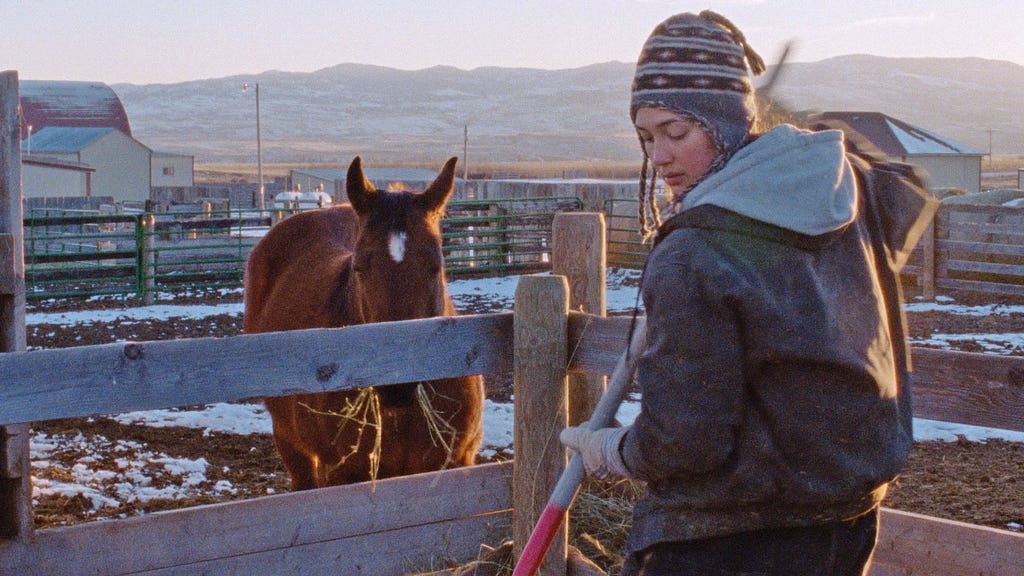
Certain Women

Adapted from Both Ways Is the Only Way I Want It, by Maile Meloy

Writer/Director Kelly Reichardt gets extra credit for the level of difficulty on this adaptation, which was based on Maile Meloy’s 2009 collection of short stories. Certain Women has a few unifying strands, but largely it’s a matter of tone and insight that bonds the stories of three different women in Montana. Laura Dern, Michelle Williams, and Kristen Stewart star, and all turn in strong, subtle performances (not to mention the excellent Lily Gladstone, in a supporting role). But it’s Reichardt’s (and Meloy’s) lived-in, deeply felt connection to the landscape that leaves the strongest impression of all.

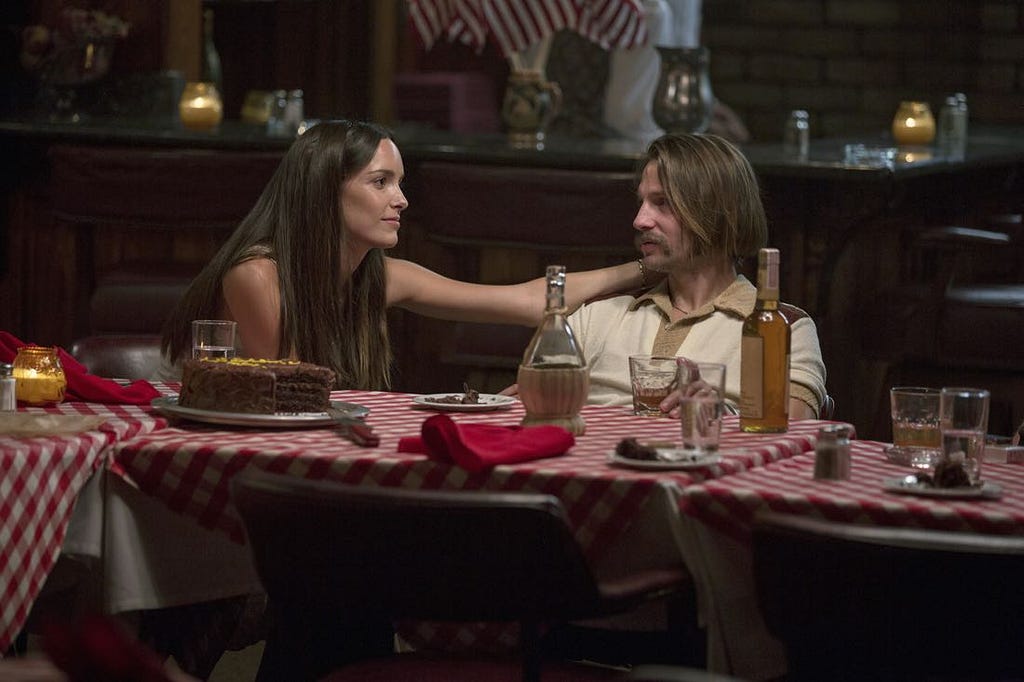
Quarry

Adapted from the Quarry series, by Max Allan Collins

Mac Conway leaves Vietnam and goes home to Memphis in 1972. He’s hardened by war, disconnected from his family, and known to enjoy the occasional drink. Naturally, he’s preyed upon by the Delta/Mississippi River criminal element and eventually pressured into taking on a new trade — as a hit man. Quarry was adapted from the novels of Max Allan Cullins and stays brutally true to the hard living, hardboiled world that earned the author a cult following. The show’s impeccable eye for era detail isn’t quite on Matt Weiner’s level, but it’s not too far off, and the dialogue is sharp enough to provide a bit of light amidst the bleak world-view, especially when delivered by quality actors like Damon Herriman. (Somehow it makes sense that between Justified and Quarry, it’s an Australian actor giving us these unforgettable characters from the underbelly of the US South.)

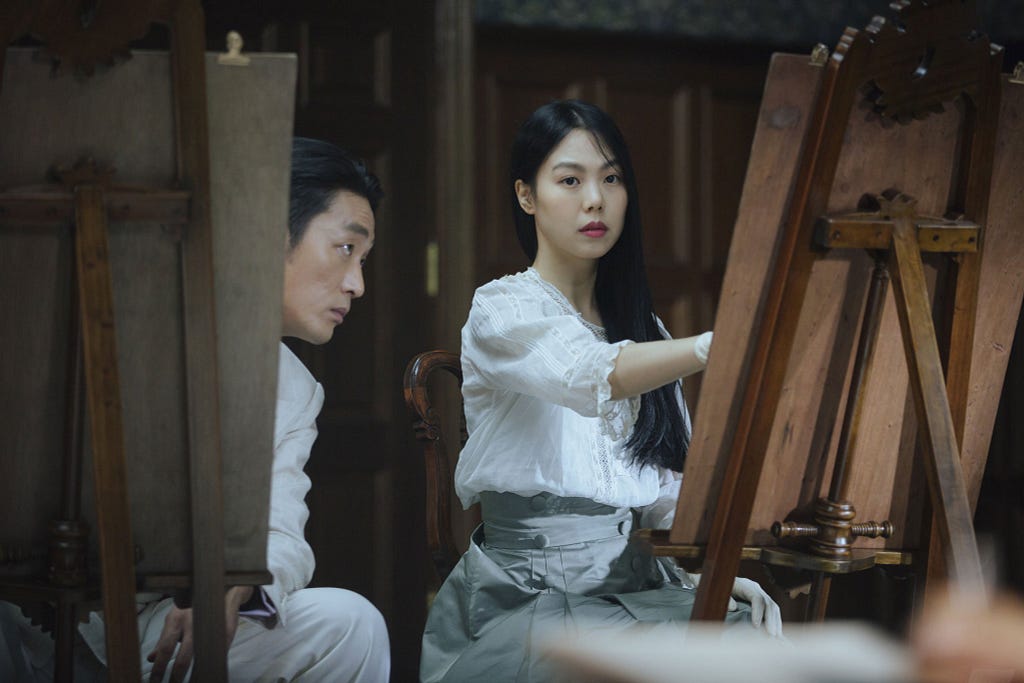
The Handmaiden

Adapted from Fingersmith, by Sarah Waters

Sarah Waters’ Fingersmith is a Dickensian tale of orphans, inheritances, and corruption in Victorian Era England. Park Chan-wook’s The Handmaiden is an erotic thriller set in an asylum in Korea during the Japanese occupation. Aren’t adaptations great? Both film and book will leave you unsettled, and maybe that’s more than enough of a connection, so long as two big storytelling talents are communicating in their own strange way. Like Oldboy, The Handmaiden will have you clawing at the armrests from time to time. It will also burn some truly astounding images into your memory bank.

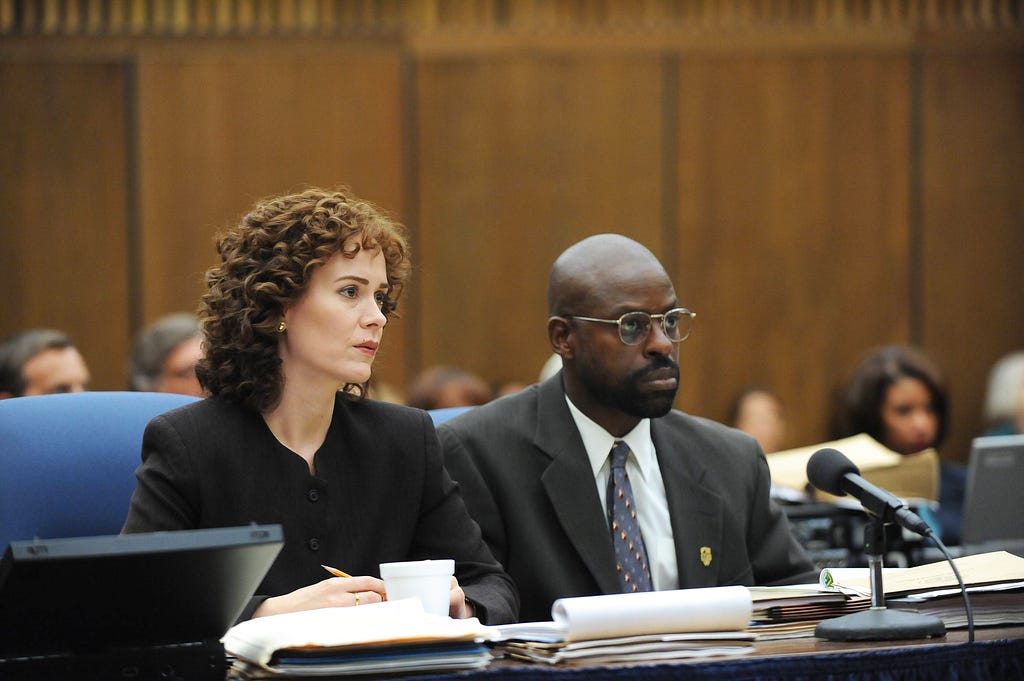
The People v. O.J. Simpson: American Crime Story

Adapted from Ride of His Life: The People v. O.J. Simpson, by Jeffrey Toobin

In 2016, FX’s OJ mini-series dominated the pop culture conversation like no other series, except maybe that one about “tits and dragons.” Ryan Murphy and his insanely productive team managed a pretty remarkable trick — luring us in with what we knew (the trial was, after all, one of the most covered events in modern American history), then teasing out everything we didn’t. Historical legacies were entirely reshaped, most notably those of Johnnie Cochrane (played by Courtney B. Vance) and the rising feminist icon, Marcia Clarke (Sarah Paulson). For a couple months, we were all re-living the insanity that was the OJ Trial, only this time we had another twenty years of celebrity worship, racial tension, and police misconduct to reckon with.

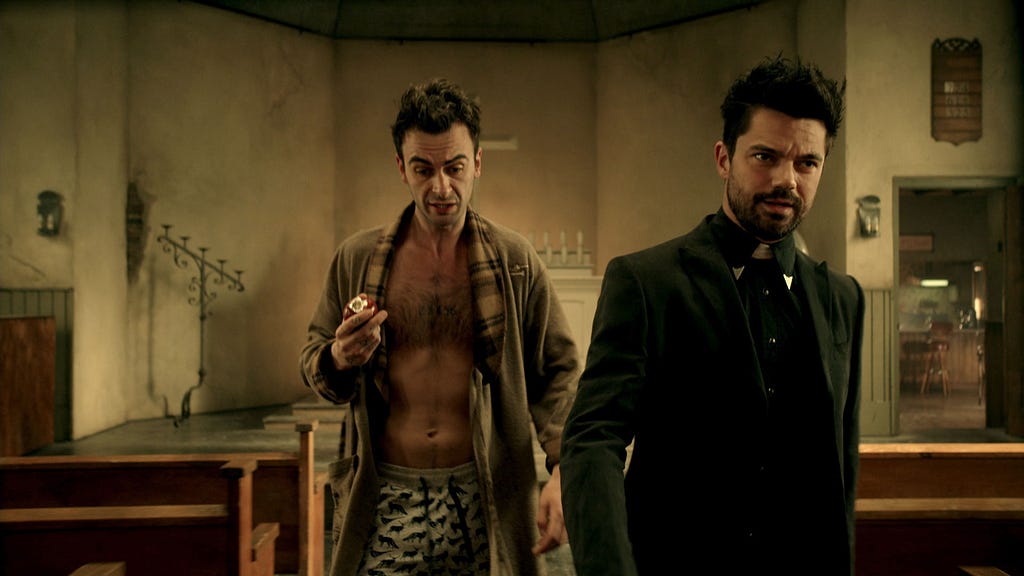
Preacher

Adapted from DC Vertigo comic, created by Garth Ennis and Steve Dillon

Preacher, the comic series created by Garth Ennis and Steve Dillon, was long thought to be immune to adaptation — too violent, too obscene, too all-around batshit crazy. But the unlikely team of Evan Goldberg, Seth Rogen and Sam Catlin actually pulled it off, bringing to AMC a show that doesn’t skimp on the gore, but pulls it off with wit, visual style and — yes — real emotional connections between multi-faceted characters. A Texas preacher, an Irish vampire, a single mom organist, a gunslinging man-chewing ex — in its own way, Preacher has as rich a tapestry as any show on television, and at least with Leftovers on hiatus and Young Pope still to come, it offers up one of the more complex (and troubling) visions of religion’s place in our culture.

Nocturnal Animals

Adapted from Tony and Susan, by Austin Wright

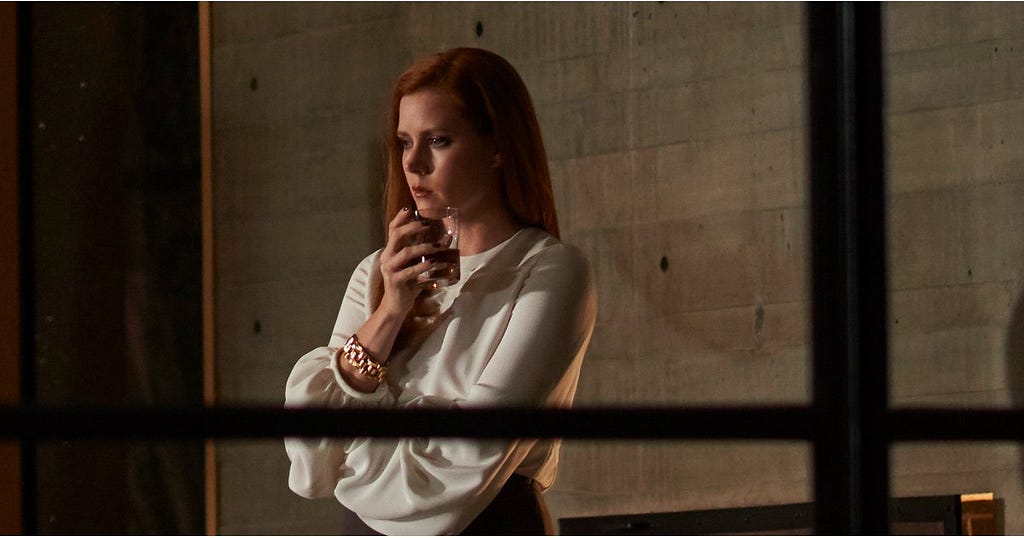
Tom Ford’s newest film, based on Austin Wright’s 1993 novel, isn’t the quiet meditation fans of A Single Man might be expecting. Yes, the framing is poignant and beautiful, and okay, the movie allows for meaningful silence, but there’s enough story packed into Nocturnal Animals to fill up a multiplex. Three layers of fiction to be precise: Amy Adams’ present-day gallery owner, whose ex-husband sends a manuscript dedicated to her; her recollections of their relationship, played out in another strand; and the plot of the ex’s manuscript, a high-octane thriller. The perspective shifts are dizzying in the best possible sense, and the result is a surprisingly intimate and powerful portrait of a relationship gone bad.

Fences

Adapted from Fences (play), by August Wilson

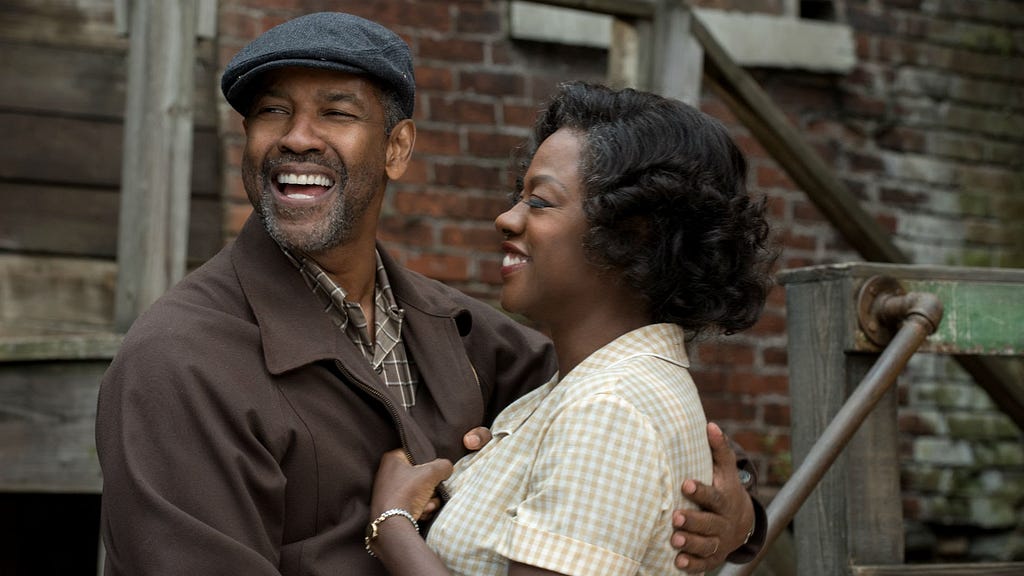
Okay, this one hasn’t come out yet, so really we’re just guessing, but come on — it’s August Wilson and Denzel Washington. And Viola Davis. At the moment, it’s the odds-on favorite for the Best Adapted Screenplay Oscar.

Honorable Mention

Moonlight

Look, this would have been on the list. It would have topped the list, if we were doing things in order. But apparently the screenplay is being treated as an original, rather than an adaptation, possibly because Barry Jenkins wrote the script (with story by Tarell Alvin McCraney) based on an unpublished, unperformed play that McCraney was working on at the Borscht arts collective in Miami. It’s all too complicated to piece together here, but for the record, Moonlight is phenomenal. Everyone should see this movie.

The Man in the High Castle

It’s not the greatest show on TV, but it’s pretty good, and based on the Philip K. Dick novel about a fascist America that’s suddenly looking fairly prescient.

Love & Friendship

Do you like Whit Stillman? Do you also like Jane Austen. Then here you go.

Lion

A helluva story. Really, just a helluva story. The movie will shatter you.

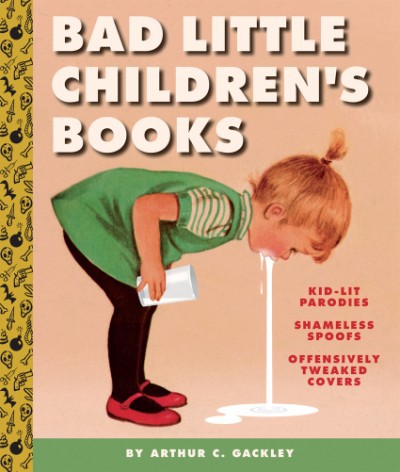
Bad Little Children’s Books Cancelled After Backlash

Abrams halts publication for its “offensively tweaked” kid lit parody book

After an extensive social media backlash, pseudonymous author Arthur C. Gackley has requested Abrams (his publisher) to discontinue his crass kid-lit spoof Bad Little Children’s Books.

The illustrated humor title, which was released in September, features parodies of classic children’s book cover illustrations that incorporate both obscene and racially insensitive subject matter (to put it mildly). The book is intended for adults.

The backlash began in early December when Kelly Jensen wrote a piece titled “It’s Not Funny. It’s Racist.” for BookRiot. While she wasn’t a fan of the book in general (“They’re not especially funny or novel or creative, but they’re also not horrible (sic) offensive”), her critique centered on three particular covers that depict islamaphobic and racist scenes. The images can be found in her initial post.

After the article went viral, the predictable series of events transpired: a Twitter firestorm, a statement by Abrams in defense of Bad Little Children’s Book, and a public assertion (via press release) by Gackley that the current political climate (read: PC culture) prevented the “kind of dialogue [he] had hoped to promote through the publication of Bad Little Chinen’s Book” and that “this act of censorship is dangerous on so many levels…satire and parody are tools to help make us a stronger society.” Ultimately, however, the author concluded the book was not “being read by some in the way [he] had intended,” so he requested an end to its publication.

The controversy plays into recent debates about satire’s role and efficacy in contemporary culture, particularly in relation to identity politics. Often, this gets wrapped into a discussion of punch directionality, i.e. a question of whether a satirical work should mock people in subjugated positions within the cultural power structure. However, leaving aside issues of “who has the right to say what,” and even “how that what is said,” Gackley runs into trouble because of his failure to actually craft coherent satirical content. The images, while stylistically referential to the virulent racism of early 20th century children’s books, don’t actually provide much commentary beyond “ah yes, culturally conditioning prejudice within children is still a thing.” What’s more, the politically satirist bent of the book isn’t a consistent presence, as Gackley more often than not reaches for cheap laughs over thought provoking insite. It’s much harder for a reader to perceive social commentary, rather than blunt offense, when racial illustrations are preceded by a bevy of dildo jokes and pastiches familial molestation.

In short, the fact this book drew offense is totally reasonable and it appears Gackley and Abrahams have possibly recognized its flaws. That doesn’t mean the issue is totally over. The National Coalition Against Censorship has been trying to organize a meta-backlash (backlash to a backlash), although they hopefully will be informed soon that a non-govermental institution using private guidelines to determine the scope and amount of publicly available literary content is called publishing. Not censorship.

“Better Homes” by Emily Temple

My plot is about halfway down the beach, counting from where it turns into that sort of sandy marsh at the north end, and close to the access road that leads into town. The beach is more than a mile long, maybe even two miles, and it’s covered with plots like mine. I’m lucky: I’ve got a good spot; there’s even a little shade. Not everyone gets shade, and it can really be a lifesaver, especially in these early stages, when you’ve got nothing to lean against and no place to hide and the California sun just keeps on galloping down your neck. The man in the plot to my right has even more shade than I do, but the woman in the plot to my left (this is left and right when facing the water, of course) has zero. So I’m feeling pretty good.

I’ve seen the man before, at last year’s competition. I don’t know his name, but I remember the castle he built, huge and smooth like a skull, with a narrow hole in the crown, just big enough for him and his necessities. I heard he lasted a long time. I wave to him as I measure out my plot in paces. He waves back. He’s not handsome, but there’s something about his wide, clear face, sand-colored itself, that I find appealing. He’s pacing too, and we must look strange, taking wide parallel steps and waving to one another. Like queens. But these early decisions are crucial: set your foundation too close to the water, and it’ll be washed away like that. Set it too close to the rocks, and you’re dealing with the stiff slope of the beach, the coarser sand, and the high winds, not to mention longer toting distances. You have to find the perfect balance. Which I do. I draw a line in the sand with my toe. Then I unpack my backpack and line up my tools along the toe mark: shovel, bucket, spade, and the biggest palette knife I could find at the art-supply store down the street from my new apartment. The rest of my supplies I leave in my backpack in the pool of shade.

The woman on my left does not respond to my wave. She is pacing quickly, measuring tape flipping around, all her other supplies strapped tight to her body with fancy Velcro straps and harnesses. Her brown hair is sleek and shiny, and she keeps reaching up as if to tuck it behind her ears, finding it untuckable (that is, already tucked), and then going back to work with extra ferocity. This woman means business. I’ll have to keep an eye on her. I grab my bucket and head down to the water.

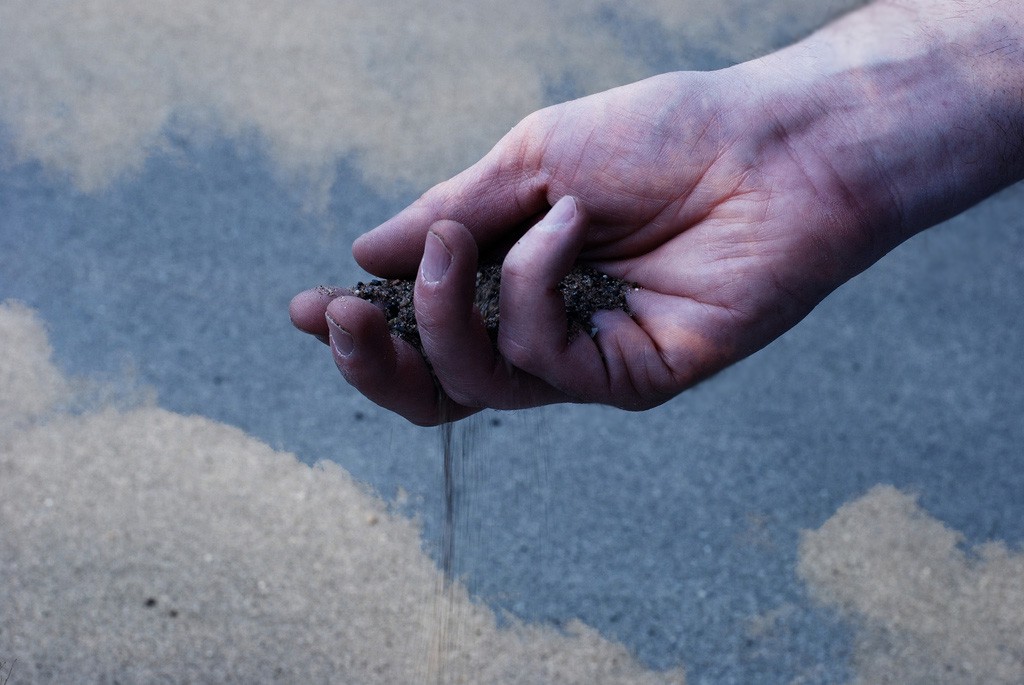
Everyone builds sandcastles as a child. Even I did, though I didn’t see a real beach until I was an adult. I always loved sand, though. I used to sit in the community sandbox down the street from our crooked little duplex for hours, turning a cracked plastic cup over and over to make towers, digging out windows and outlining bricks with a dead pen my mother had given me to play with. Or maybe we had found it there, buried. I can’t remember. I do remember my mother watching me while I worked, sitting on a peeling park bench, smoking a cigarette. Once, I picked a lipsticked butt out of the sandbox, waddled over, and climbed up next to her on the bench, copying her movements. It took her several minutes to notice me and knock the sandy cigarette out of my mouth. She didn’t say anything, or gasp in disgust, or even sigh. She recrossed her ankles and tapped out some ash.

When you grow up, you stop building sandcastles, of course. Unless you don’t. Unless you discover a talent for it, or at least a passion. If you don’t want to give up your sandcastles, you become a Builder.

Most of the time, that doesn’t mean much. You have a particular affinity for beaches, maybe. You spend hours playing in the sand with your kids, or your sister’s kids, or your neighbor’s kids, or whatever kids you can find lying around. You take a pottery class, and all of your pots end up with spires and draw-bridges. You get into sand art. You move to Florida. It depends on your temperament, really. But once a year, there’s a competition for all the Builders in the country, or at least all the Builders who can get to this particular stretch of beach in California. It’s called the Sandcastle Experience.

Honestly, I felt grateful to get the invitation this year. I hardly get any mail anymore, and I didn’t know if the organizers had my new address. But somehow that intrepid little card made it to my mailbox, and I knew that it meant that this was the year I was going to win.

Here are the rules: Everyone is randomly assigned a plot. No switching. You are allowed one medium-sized backpack — they have a sizer at registration, like the ones for carry-on luggage at the airport — which must contain all of your tools, food, water, and whatever other niceties you think you need to survive. You have twenty-four hours to build your sandcastle, during which no one else may enter your plot for any reason. After that, it’s simple: the last castle standing wins. If you are inside your sandcastle, no one (except the sea, or the wind, or other external forces such as God or coyotes) can knock it down. If you are not inside your sandcastle, your sandcastle is open to attack. You may, of course, defend your castle if you are not inside it (and to be clear: “inside” means “enclosed within” — Dadaists take note: even if you have an army of disconnected walls scattered around your plot, it doesn’t count). When your castle is knocked down, you are out. You are not allowed to use any mixers (cement, tar, egg whites) in your sand to increase the strength of your castle walls. Also, no guns. I heard that one year some guy built himself a thick brick of sand and just camped out inside of it with a sniper rifle. Most people were happy to walk away once they saw that, but there were six dead, in the end. After that they added the “no guns” part.

There are different strategies. Some Builders swear by simplicity: four ultrathick walls and nothing else. Their packs are filled only with food and fresh water. Some people spend all their time building moats threaded with wooden spikes to keep out would-be attackers. Some are in it for the design aspect, the challenge of building something extravagant and beautiful in just twenty-four hours, and they go big with the drawbridges and barbicans. Some try to use that beauty to their advantage. This one guy, two years ago, built his sandcastle in the shape of an enormous pair of praying hands, big enough that he could fit between the palms. The hands were amazingly detailed: they had fingernails, and knuckles, and even little errant hairs. One hand had a long scar down its side. The other had a constellation of freckles. I like to think that when the man was inside, he was reading the creases of the giant hands’ palms. I like to think that he gave whoever it was a good, long lifeline. He counted a bit too much on other people’s respect for his castle’s religious overtones, though. When he went to refill his water bottle at the gas station across the street from the beach, his neighbors dusted it.

Me, I’m not too big on the religious overtones or extravagant curlicues (or not anymore, anyway). My plan is to go simple, but with some frill so it’s clear I’m not just one of those survivalists who don’t even care about making their castle look like a castle, who just want to wait everyone else out without really participating. One way or another, those people tend to get eliminated pretty quickly.

This is my third Experience. The first year, it was just for fun. My husband and daughter came to California with me, watched me build and took pictures inside the castle I built. There’s one — of my daughter holding up a spade, grinning, her ponytail dipped in sand, while my husband tries to wipe his hands clean in the background — that I just love. I’m not in any of the pictures, of course. I was always the one taking them. That year, after I’d stuck it out for a couple nights, a respectable length of time, I collected my gear, abandoned my post, and treated my family to a huge pasta dinner at a little Italian restaurant across town from the beach. I’m sure my castle was knocked down within the hour, but I didn’t mind. I didn’t even go back to check.

Last year, they didn’t come. Last year, the Experience was held the same week my daughter left for college, which she did with more of her things than I thought possible and with a promise to not ever come home for the holidays. This was, incidentally, also around the time my husband left me for — get this — a much older woman. She’s a paleontologist. He finds her distinguished. So perhaps you won’t judge me when I say that I can barely remember last year’s Experience. I admit it: I was a wreck. I think after I’d blown my nose on everything that wasn’t covered in sand, I just wandered off looking for tissues and/or whiskey and got eliminated that way. But this year will be different. I’ve had enough of losing.

There’s no official information about what you get if you win the Experience. I’ve heard they give you an actual castle of your own, somewhere in New Zealand or rural France, and your property taxes are paid every year by everyone else’s exorbitant entry fees. But that’s just a rumor. After the closing ceremony, which very few people are usually around to see, no one ever really hears from the winner again. Probably on account of his or her life being completely changed by all that money and happiness.

One year, the winner was a woman who built a tiny castle, the size of a tennis ball, and actually kind of the shape of a tennis ball, too: just a mound of sand hastily pulled together, with a toothpick flag stuck in the top. She hid the castle under her bucket and left her tools scattered everywhere, so that when other Builders came marauding, looking for castles to tear down, it looked like she was out and they ignored her plot completely. The woman wandered around for a week, waiting for other people to sneak out of their castles so she could knock them down. Finally, after she razed a fortress (it could have fit a family of four) whose owner was out desperately looking for the other holdout on the empty beach, she was declared the winner. She’s not back this year. I heard her parents’ home, somewhere in Pasadena, burned down under suspicious circumstances.

I begin by tracing the shape of my castle in the sand. It’ll be a sort of squat square, with rounded edges and, if I have time, some nice battlements. Nothing fancy. It’s boring, but I’m trying to maximize my chances. I build the sea-facing wall first, tiring out my legs going up and down the beach to get the good, wet sand. It takes a long time. My legs burn. Note for next year: incorporate hills into my daily run. (Unless next year I find myself living in a castle in New Zealand, in which case there will be no running of any kind.) For a while, I keep pace with the guy on my right. We chat as we carry our buckets of sand. His name is Leonard. It’s his sixth year in the contest. Last year, he confirms, he got pretty far.

“What’s your secret?” I ask him.

He tries to wink, but he’s panting a little from hauling sand, so he ends up looking sort of like he got caught in the middle of a sneeze. It’s cute.

The woman on my other side does not respond to my polite greetings or questions. She is methodical, almost robotic. All her tools are brand new and have matching sky blue handles; she is also wearing new boots. Most people, including me, go barefoot in the sand, both for the comfort and for the nostalgia factor, but I can see how the boots give her extra traction walking up and down the beach to the water. I picture her home, which must be spotless, her children, who must sit all in a line on her couch in identical sweaters, raising their hands when they have something to contribute to the conversation. Her children would never leave her. They’re far too polite.

Electric Literature’s eNewsletter

To be clear: it’s not that my daughter isn’t polite. She’s plenty polite to other people; she must be, or she wouldn’t have gotten anywhere in life (and she’s a neuroscience major at a fancy school, so). But she was never polite to me, even as a little girl. It was always about her daddy. She forgave him everything: when he missed her soccer games, when he forgot about her choral concerts. When he drank so much he passed out at the dinner table, one ear sunk into his coconut cream pie. Even when he slept with one of her teachers — her math teacher, a prim woman who was, now that I think about it, also older than me — she cried and cried but called him at the hotel every night so he wouldn’t feel alone. (He wasn’t, of course, alone.) I’m sure he told her it was all my fault. That I hadn’t loved him right, that I had driven him into the arms of another — that old story. She forgave him. She got an A in math, which was not her best subject, and after that she forgave her teacher too. But me? Nothing I do is forgiven. When they finally left, my daughter told me I was a monster. My husband told me I was disgusting. People in glass houses shouldn’t throw stones, I told them, but they didn’t seem to know what I was talking about. I guess my daughter’s precious father never taught her about proverbs.

By the ten-hour mark, I’ve built two walls: the seaward wall and one sidewall. I’ve left the wall toward Leonard open. I feel more comfortable about the idea of him watching me sleep than the woman. She’s someone my husband would probably want to fuck. When we still lived together, he constantly admonished me for my messiness, my laziness, my lack of matching tools. He likes order, refinement. Maybe he’s even slept with her already. But I think that about everyone now.

When I’m spent, I lie down on the little bed I’ve made from the driest sand I could find (you think sand is soft until you try to sleep on it) and sink my face into the inflatable pillow I brought in my backpack. I have to force myself to eat a granola bar before I fall asleep. I’m nervous, and I never want to eat when I’m nervous. I set my watch to wake me up in six hours exactly. I have a lot of work left to do, but I’ve seen what happens to people who don’t sleep in the first twenty-four hours. I won’t take any chances.

At hour twenty, my shovel breaks. The handle snaps clean off. I still have half a wall to build, and now all I have to work with is a sharp-edged metal pan and a wooden stake. I could slay a vampire or, I don’t know, enter a discus-throwing contest, but I can’t finish my sandcastle. I can’t help it: I start crying. The woman to my left looks over and frowns. I wave again, even through my tears, because screw her. She turns her back to me. She’s putting the finishing touches on what looks like a smaller version of a tower that might hold some kind of crooning, follically blessed princess. She’s even outlined bricks the way I used to when I was a child.

“Hey,” Leonard says from my other side. “Yikes.”

“Don’t mind me,” I say, waving the pieces of my shovel at him. “Just another loser, here.”

Leonard disappears into his egg-shaped castle for a moment (this time, he’s put the entrance at the bottom so it looks a bit like a tall yurt) and then pops back out again. He waves a shovel like a flag. It’s not the one he’s been using; this one’s red. “You want?” he says.

“Are you serious?” I say.

Leonard shrugs. I hear the woman on my left clear her throat dramatically, but I don’t turn to look at her.

“It’s not the best,” he says. He walks up to the edge of his plot and sticks the shovel in the sand on my side. I come forward and pick it up. There’s a crack in the handle, and it wobbles a bit, but it’s a whole shovel.

“This is really nice,” I say.

“It’s extra,” he says.

“But you didn’t have to,” I say.

“It’s no big deal,” he says. He looks less tired today. His egg-yurt is mostly done, so it looks like he’ll have time before the next stage to cross the road and get extra supplies from the gas station, if it hasn’t been completely cleaned out by the survivalists.

I thank him again and then we stand around smiling at each other for a few seconds, neither of us sure what to say, until he shrugs, turns, and goes back to work. I do the same, filling in the final piece that will make my sandcastle a viable building and not just a series of packed lumps waiting to be kicked apart, but I keep looking up to see where Leonard is. I want to wave my new shovel in the unnamed woman’s face, but I don’t have the time to spare. It’s hour twenty-three when I finish. I’ve left a small hole in the back wall for a door, but otherwise I am completely enclosed in my castle. I get to work on the battlements. They’re just for show, but they make my castle look more like a castle, and I’m feeling pleased with my new shovel and also with myself for having finished in time. I look over at my neighbors: Leonard, back from the gas station with a few bruised bags of Flamin’ Hot Funyuns, is drizzling water over his perfect egg to cement the outside. The woman is already sitting in the top of her tower. She has little windows built in, and through them I can see the curve of her brown head, but nothing of her face.

The second day is quiet. No one in my line of sight down the beach leaves his sandcastle. Most people have brought enough supplies that they’re still comfortable, or as comfortable as they can be, and the weather is holding, so there’s no real reason to even try to sneak out, other than boredom. To that end, Leonard and I have discovered that we can talk to each other quite easily while remaining safe in our castles, me resting my chin on one of the little indents I carved out, him just sort of yelling from inside his egg. He tells me he’s a widower with two sons in the army and that he lives on a little plot of land in Atascadero with an old basset hound named Bongo and six chickens.

“Ah,” I say. “Hence the egg.”

“It’s one of the strongest shapes around,” he says. “That and the female body.”

“I don’t know about that,” I say.

“That’s normal,” he says. “But I’ve got a feeling about you.”

A thin laugh spools from the tower on my left, and I realize with a jolt that of course the woman can hear us. The piled sand had given me a sense of privacy, like a cell phone held to your ear in public. I feel my face get hot.

Leonard doesn’t notice the laughter. He asks me about my daughter. What he actually says is “That strong body of yours has given birth, I’ll bet.”

“She’s a smart girl,” I say. “She’s majoring in neuroscience.” I don’t tell him that I haven’t spoken to her in almost a year, or that I actually have no idea what she’s majoring in now, because no matter who picks up when I call her school, they won’t release any information about a student without that student’s consent. I don’t tell him that the last time I saw my daughter, she was sitting in my husband’s car, refusing to look out the window at me, while he told me about the papers I could expect to receive and what I ought to do with them. Even when I pressed myself against the glass and said her name over and over again, smearing up the window with my lipstick, she wouldn’t look.

“You must be a wonderful mother,” he says.

I start to cry again. At least this time no one can see me through all the sand.

That night, Leonard slips through the makeshift doorway in my castle wall. I hear him coming and sit up.

“Hi,” he says.

“Hi.” I’m wearing a purple flannel nightgown that’s seen better days. It gets cold at night on the beach, but any sleepwear gets, as you might imagine, more or less completely ruined in the sand. He’s wearing a ratty sweatshirt that says YUKON on the front and a pair of baggy sweatpants that say SYRACUSE down the leg, so I don’t feel so bad.

Leonard comes over to where I’m sitting. He has to sort of scootch/crawl because the walls of my castle aren’t very high and he doesn’t want to be seen.

“I couldn’t sleep,” he says.

“Why not?” I ask.

“I was thinking about you.”

“Thinking what?” I ask, although I think I know.

“I want to know all your secrets,” Leonard says.

“I don’t have any,” I say. “I am secretless.”

Leonard smiles, as if I am a naughty child caught in an obvious lie. “You remind me of something,” he says. He puts his hand on my breast.

“Something like what?” I whisper. He kneads my breast thoughtfully. It’s the left one, the smaller one. I wish he had chosen the right. My nipple stands up inside my nightgown.

He is quiet for a long time, kneading. I have to work hard to keep from breaking the silence.

At last, he says: “Home.”

I sit back a little bit. Then I reach down, pull off my underwear, and spread my legs wide.

I wake in the morning to the sound of Leonard’s screaming. I’m curled up, the way I always used to sleep with my husband, only of course my husband is not there and I’m covered in sand. Leonard stamps a foot and more of it flies into my face.

“You bitch,” he says. “You stupid whore.”

I sit up. “What?” I’m hurt, and a little sore from the sex, and I’m starting to think there’s some sand up inside me, and now there’s sand in my eye.

Leonard kicks more sand at me, then leaps away. I look around and see, through my battlements, that his beautiful egg is nowhere to be seen.

“I can’t believe I fell for this,” Leonard says. He picks up his cracked shovel and shakes it at me. I don’t point out that it was he who offered me the shovel, not to mention came into my sandcastle all on his own in the middle of the night and started in on the sweet talk and fondling. Instead, I just stare at him.

Leonard crouches to leave my castle, but then suddenly rights himself. He turns and looks at me. Then he spits in my direction. The spit doesn’t get far because he’s a little dehydrated, like all of us, and as I’d recently discovered, he has only average tongue strength, but I still understand the message and feel wounded.

“I take it back,” Leonard says. “All of it.” Then he whips around and crashes straight through the doorway without ducking, in fact swinging his reclaimed shovel, taking half of the back wall down with him.

I jump up, all insult and soreness forgotten. “Cheater!” I yell. “Cheater!”

Leonard begins to kick at the crumbling wall. “Oh yeah?” he shrieks. There’s more yelling and swearing and name-calling, but his voice soon thickens to a clod in my ears, and I can’t differentiate one word from another. He sounds like my husband, only less so, because he doesn’t know which words will hurt me most. It’s during this torrent of abuse that the Castle Guards appear, wearing their bright blue T-shirts and plastic helmets. The shorter of the two has one of those decorative broom things sticking out of the top of his helmet, like a Roman soldier, and it’s bright red. Everybody knows the Guards have Tasers in their scabbards.

“Plot 83?” says the broom-headed Guard. “You’re out.”

“Also, illegal destruction, two counts,” says the other. “Destruction while occupied and destruction after elimination.” He’s writing this, or something, anyway, down on a little pink pad.

“You’re going to have to come talk to the eligibility council,” Broom-head says. “And you better come along right now. You’re definitely going to be facing a fine. And this could bar you from participating next year.”

The other guard is now taking photos of my destroyed wall. “Big, big fine,” he says, as though he finds the idea sexy.

“This is horseshit,” Leonard says. “It was her fault!”

The Castle Guards shrug. “You know the rules, Leonard. Now come with us.”

After Leonard and the Guards disappear behind a dune, I notice the woman in the tower staring at me. I wave. She raises her eyebrows at me and gives me a weird sort of smile. I almost give her the finger because, again, screw her, but I don’t. I might not want to make any more enemies just yet.

I spend the rest of the day repairing my wall. You’d think the Guards would grant me some special dispensation or something, but they don’t return, so I make certain to stay inside of the structure as I’m working. I want to ask the woman to keep watch while I get the wet sand from the water line, but I don’t trust her. Instead, I dig a hole. It’s hard work without a shovel, and by the time I hit moisture my hands are red and raw and I’m bleeding from somewhere underneath my fingernails. But I don’t care. I repair my wall from this new well of wet sand, slathering it on and packing it together, making it even better than it was before. I’ve already had to move once this year. I won’t let another home get destroyed.

After the third night, people begin getting bolder. Most of the Builders who came only to show off their construction skills or build their art portfolios or meet other Builders and have weird sand-fetishist mermaid sex have been eliminated — they’ve carefully photographed their castles for posterity and walked down the beach to stretch their legs and admire everyone else’s work and maybe find some good shawarma and then come back to empty plots. As they knew they would. They don’t care. They’re just like I was my first year. They all have real homes to return to. But the rest of us are getting antsy. Most of those people won’t be back, anyway. You could say that they’re in the Experience for the experience. The Builders who come back year after year, who need it, who feel more accepted, more normal on this stretch of beach than they do anywhere else, or who just want their escape from the world to last forever — those are the people who really belong here. And if you belong, it’s more likely that you’ll last.

Now I can see people sneaking up and down the beach, looking for unoccupied castles to ransack. I wonder where their own castles are. It should be obvious by now that if you go out to destroy someone else’s castle, you’re leaving your own undefended. Unless you’ve worked out some kind of system, of course. I’ve heard some people put knives in their moats. I’ve heard some castles are booby-trapped. I don’t have a system. I still have some food left, so I’m staying put. I figure, why not wait for everyone else to fight it out for a little while?

“Hello,” someone says. It’s the woman. She’s standing on the edge of her plot, looking at me through the battlements.

“Hi.”

“Getting interesting out there,” she says.

“I guess.”

“I call it stage three,” she says.

“Have you gotten this far before?” I ask.

“We should team up now,” she says. “We’re more likely to survive stage three if we team up. One of us can run interference while the other goes destroying.”

“How can one person guard two castles?” I ask.

She smiles. “Mostly by trickery,” she says.

I look over my shoulder at Leonard’s empty plot.

“You might prefer that kind of teaming up,” she says, following my gaze. “But I’m afraid that’s not really on offer. Mostly because it never works.” She has a smug little smile on her face. I notice suddenly that she still looks completely clean. There’s no sand in her hair or mashed into her knees, and her manicure is still in place. She might as well be sitting in her living room at home, waiting patiently for a set of illustrious guests to arrive. She has that vibe.

“I prefer to go it alone,” I say. “But thanks.”

“Don’t be stupid,” the woman says. “They go for the castles that look easy to knock down first.”

“Yours looks easier than mine,” I say, without knowing if this is true.

The woman snorts but quickly collects herself. “Fine,” she says. She climbs back into her tower.

That night, I decide I’m tired of waiting. The woman to my left is still in her tower, apparently asleep — I can just barely see her ponytailed head through the little window — so I sneak out. Leonard took his cracked shovel with him when he left, and so I bring the pieces of my old one, which are better than nothing. I clutch the broken handle in my hand as if it were capable of emitting light. On the other side of Leonard’s plot, an old man sits in a little square castle, barely wider than a telephone booth but with a pretty peaked roof, holding a camp flashlight under his chin. Move along, his face tells me. I force myself not to look back at my now-unguarded home, so as not to give anything away. Not home. Castle. I keep moving.

Farther down the beach, I find what I’ve been looking for: a castle that seems unoccupied. I approach it warily. It is small and bowl-shaped, with a circular opening at the back. Inside I find the typical backpack full of clothes and supplies, plus a pink blanket, a pillow, and a little battery-operated clock radio. Someone has painted little hearts and stars on the clock radio in glow-in-the-dark paint. I can imagine it: mother and daughter painting the little hearts and stars together, then turning out the lights and going ooooooo. It’s love, this little clock radio. I throw my body against the back wall of the castle. It doesn’t budge. I back up a few steps, treading sand all over the pink blanket. Then I run again, and this time I break through the wall, landing hard on my shoulder on the other side. After that, it’s an easy task to dismantle the castle. I am like a whirlwind, with the slice of metal in one hand and the stake in the other. I am like death.

When the curved walls are completely decimated, reduced to little piles of loose sand, I take one final look. Somewhere in the process, I’ve stepped on the clock radio, and I can see its weird metal guts poking out into the sand. It’s bad form to destroy a fellow Builder’s personal belongings in the process of attacking their castle, but it’s recognized that it happens. I feel a little sorry. Then I stomp on the clock radio again and again and again, grinding it into the sand.

I run back to my own castle, lungs raw. It might be over for me now. I’ve been gone for a while. But when I get there, I see that it’s still standing, and the relief I feel is like dropping into a bath. Or like coming home. This could be my new home, I think. My husband took my home away, and not only my home, but my house too, claiming that having bought it meant it belonged to him. But he didn’t even live in it. He just cleaned it top to bottom, threw out everything that had been mine, and then sold it to the first person to make an offer. I wrote an anonymous letter telling the buyer all about the asbestos, the leaky roof. I got a letter back, from my husband’s lawyer, but I didn’t open it.

On the afternoon of the sixth day, I’m lying on my back inside my sandcastle, watching clouds. Once or twice, sand-covered people poke their heads over the walls to see if anyone is inside. I wave at them, and they go away. The clouds are moving quickly, and they seem to be changing color, gaining weight and darkness, though it can’t be later than two. No, it’s not just the clouds. It’s the whole sky that’s getting murky. At first I think I’m just falling asleep, or maybe passing out — I’ve been rationing the hell out of my water — but then I hear what is unmistakably the screech of a megaphone. Castle Guards begin walking up and down the beach, informing us of the THUNDERSTORM WARNING. COMPETITION IS SUSPENDED UNTIL FURTHER NOTICE. PLEASE MEET AT THE SAFETY POINT.

Panic pinches me. I have no idea how my castle will fare in a downpour. Better than those intricate confections some people make, probably, but what if it’s completely washed away? What if all the castles are completely washed away? What will happen then? I gather my things as well as I can while keeping one eye on the clouds, which at this point might as well have glowing red eyes and outstretched claws and be calling out my name. Before I leave, I nestle my bucket upright in the sand, to catch myself some extra drinking water. Do I congratulate myself for this foresight? I do indeed.

The safety point is a high school gym located a few streets inland from the beach’s midpoint, as fair a location as possible, we were all assured, but still a significant distance from my plot. As I walk away, I can see for the first time the spread of remaining castles, and the many blank spaces where castles used to be, like a long row of brown teeth — once strong and now rotting, knocked out and broken. There must have been more than two hundred castles at the beginning, and from what I can see now, it looks like less than a third are left. Other Builders are walking toward the safety point too, but no one speaks, or even gets within range of speech, except one group I see far ahead of me, who seem to be walking together and talking, even laughing and touching one another. I realize I might have waited for the woman on my left, looked for her, walked with her. She wanted to be my teammate, after all. But still, it seems better this way, just moving silently forward through the sand to the place where they’ll tell us what to do next.

The gym is small and dingy; I can only imagine what the high school it belongs to must be like. Then again, everyone’s high school experiences are small and dingy, once you get a little distance. There’s a big red M painted on the floor of the gym, along with thick curving lines that undoubtedly have meaning to those who watch basketball. One of the hoops has no net. Blank pennants hang on the walls: the students here have not won very many state championships, except for Girls’ Lacrosse ’04, which is something, at least. My heart fills for Girls’ Lacrosse ’04. The bleachers have been pulled out from the wall, and there are rickety tables set up in the middle of the room with what looks like bug juice and little packets of snacks in little plastic bags: one per person. Castle Guards tick your name off on a little sheet when you collect your food, so it’s fair to everyone. I get my juice and snack pack and, feeling like a fourth grader, find a spot on the bleachers to wait out the storm.

The last time I was in a room like this, my daughter was in eighth grade, putting on a Christmas pageant. I remember they had all the kids walk in with penlights clutched below their chins, singing a song: It is better to light just one little candle than to stumble in the dark. I thought it was ludicrous at the time, all those kids walking toe to heel like brides, singing a repetitive and obviously metaphorical song, but now I’m tearing up just thinking about it.

The gym begins to fill with people. By the first crack of thunder, there are some seventy Builders milling around, talking, eating, or napping, and I’m surprised to see that we’re actually a pretty diverse group. There are, perhaps, slightly more men than women, but the ages and races and sizes vary wildly, from the short, fat black teenager flirting for extra juice to the old, translucent woman hovering under the netless basketball hoop, looking up at it, or maybe through it, as though it’s going to hand something down to her. One man has curled himself into a ball in a corner. Two women are sitting back-to-back on the bleachers, spades out, alert to attack, even here. A middle-aged man with a rapidly deflating paunch is crying in the middle of the room, even though two women, equally middle-aged, are vigorously rubbing their breasts against him, petting his wispy hair, and making cooing sounds. Lots of people are sitting alone, but lots of people are also talking to one another, just socializing, perhaps, or maybe making deals, plans, pacts. I should, I think, join them.

But I don’t move. It’s not that I’m afraid to talk to people. I’m not. People like me. Or, I should say, they like me at first. It’s around month six that something sours. That’s when people seem to decide they’ve made a mistake. It’s not something I understand; I feel like I’m the same person at month six as I am at month zero, but the pattern is unmistakable. I tend to get fired after half a year at any job. Other women decide they’re allergic to my perfume, nothing to be done, it’s really too bad, sorry! Even the Korean pen pal I had in the third grade gave up on me after a few months. (That or she died. I never found out.) I saw it happen to my husband, saw the love drain out of him, almost immediately after we were married, even as I loved him harder and harder. But I was pregnant, and he was stuck, and he stayed for a long time. I guess that makes him a good man.

I used to torture myself, trying to figure out what it is that people dislike about me. But I suppose most of what we feel about other people, good or bad, can’t be explained. It’s chemical, or subconscious. Maybe it really is my perfume. Now, I feel lucky. Some people don’t even get those six months of like-ability. A lot of those people are, from the look of things, here in this gym.

“You know Aaron Spencer?” I overhear a muscular woman say to a small group. “Well, Mark and Frank and Michaela snuck up on him last night and began to tease him about his divorce. Apparently after only ten minutes Aaron came storming out of his castle to punch Frank in the face, and that’s how they got his castle down.”

“Isn’t Michaela out?” someone asks.

“Oh yeah,” the woman says. “She’s been out for days. But there are no rules saying you can’t hang around with your friends while they compete, as long as you don’t actually help in the destruction. You can say whatever you want. And you know how mean Michaela gets, especially after she loses. Remember last year, when she lured Camilla out of that monstrous castle by just mentioning her son who overdosed?” There is general laughter and head nodding. Part of me longs to join this group, to smile and snicker with them, to be part of them. Isn’t that why we’re all invited to the Experience? Because we share something, because we’re the same? But just looking at the talking woman, with her sharp smile and calloused hands, makes me tired. If, as I am starting to believe, the Experience is the final vestige of the rejected, the stunted, the cruel, the absurd, then joining her hyena pack would mark me irrevocably as one of them. But I am not one of them. I am a winner.

I see the woman who has the plot to my left over by the basketball hoop. She’s conferring with a group of four men with their backs to me, all in tight black shirts. I wave. She ignores me.

Thunder booms overhead. A fight has broken out on the other side of the gym. Two men are silently pushing each other up against the red mats that line the far wall. I can only hear their outbreaths and see their bodies mashing together; from a distance, they might be fucking, or hugging each other through abject despair, or both. Their faces are as red as the mats, but their expressions are somehow serene. A pair of Castle Guards power walk past me to break it up.

“None of these lunatics should ever be allowed out in public,” I hear one mutter to the other.

“At least they have each other,” says his friend. I wonder: Is that what we have?

Around ten o’clock, the Castle Guards declare the thunderstorm threat passed, and we’re given half an hour to resituate ourselves in our castles before play resumes. I look for my neighbor and see her ahead of me, walking briskly back to her tower. The black-shirted men are nowhere to be seen, so I hustle to catch up.

“Hey,” I say.

“Oh,” she says. “You.”

We power walk in silence for a while.

“So who were those guys you were talking to in the gym?” I ask finally. “Your friends?”

She scoffs. “Entirely not,” she says. “Just colleagues.”

“Where are you from?” I ask.

“Why?”

“Do you have kids?”

“Look,” she says, without slowing her pace. “You had your chance to team up.”

“I’m just talking.”

“I’m just walking,” she says, and then she stops walking. “Yes!” she hisses. I follow her gaze and see her tower, still standing. My castle is standing too. “It looks like the storm missed us,” she says. This, I think, is the nicest thing she has yet said to me.

“Thank God,” I say.

“Don’t be stupid.” She rolls her eyes and disappears into her tower. She’s right, though, about the storm. The bucket I left to catch rainwater is empty, and so, nearly, is my water bottle. I probably should have saved some of that bug juice.

At the ten-day mark, I am severely dehydrated. I haven’t had the strength to go out and attack any more castles, or to do much of anything. I can only sit between my four sand walls to thwart those who now roam in packs up and down the beach. The woman in the tower seems to have the same strategy as I do. I try to talk to her, calling up to her in her tower, but she ignores me.

I can’t see any castles except for my own and the woman’s, but I think there must be more still standing around the bend of the beach. I eat the last bit of food I have, an apple that’s so red it looks like it must be evil. I wipe it off, of course, but the sand still squeaks in my teeth.

Maybe it’s a day later or maybe it’s a week. Whenever it is, it seems as though I’ve been in my castle for an uncountable number of days, an uncountable number of hours, when my neighbor approaches, seemingly from the water, as if she’s been birthed there. She even looks wet. Like a Bond girl, you know? I’m having a hard time standing up, but I call out to her.

“Woman on my left,” I say. My voice is all sandy. “Ahoy.”

“Come out,” she says.

I don’t know what she means. “Have I won?” I manage. “Have I won yet?”

She says nothing. I wonder what she’s doing out of her tower. I look up at it blearily and can still see the shape of her head through her little sand window, leaning against the wall as if in sleep.

The woman has followed my gaze and is now smiling toothily.

“How are you here?” I demand. “I can see your head up there.”

“I told you, the only way to win is by trickery,” she says. So she hasn’t been ignoring me. At least not every time.

“You’re smart,” I say. “But I’m going to win.”

“You’ve already won,” she says. “So come out.”

I’ve won! But where are the Castle Guards, coming to give me my prize? It doesn’t matter, I think. They must be on their way.

I look around my castle. I don’t want to leave. I could just stay here, prize or no.

“I won’t come out,” I say. “I live here now. This is my home.” The woman scowls at me and then disappears. Aha, I think.

But then I see Leonard, my Leonard, bent down and smiling at me through the door of my castle. He reaches one large hand toward me.

“I’m sorry about before,” Leonard says. “I was a fool.”

“Yes,” I say.

“Come watch the sunset with me,” he says. “We can live here forever. You and me.”

“Did I win?” I ask.

Leonard smiles. “Almost,” he says. “Come on.”

So I take his hand. As we walk toward the water, I notice his black T-shirt, and the black T-shirts of the other men who have appeared silently around me.

“Wait,” I say. I turn, but the woman on my left has already begun. I try to go back, to stop her, but suddenly I feel myself held down, pressed into the sand by eight strong hands, all applied carefully to chaste body parts — knee, shoulder, head — so I can’t complain about harassment, and then the woman proceeds to take my castle down, piece by piece. Leonard pets my hair, makes soothing sounds. The woman slices through my battlements with her knife. She punches through my walls. She looks wild, and finally dirty, and thick with passion and anger. She looks, suddenly, just like me. I lie on the sand, under so much polite weight, captured, held, cradled safely between man and sand, waiting for it to be over, so I can start again.

Thank you and happy holidays!

Dear Electric Literature members,

2016 has been an exciting year for Electric Lit, and we couldn’t have done it without you!

We’re holding a membership drive during the month of December, and we want to take the opportunity to thank you, our devoted members who need no recruiting. As a small token of our gratitude, we’re offering a special members only discount to everything in our Etsy store — including our new card game, Papercuts — for all your holiday shopping needs! Just enter the code ELECTRICIAN for 20% off at checkout from now until the end of 2017.

We’d also like to remind you of your regular membership benefits, which include full access to over 230 stories in the Recommended Reading archives and year-round submissions. Some exciting additions to the archive this year include: stories by Ted Chiang, J. Robert Lennon, and Jennifer Haigh; poetry by Morgan Parker; and novel excerpts from Karan Mahajan, Brit Bennett, and Jonathan Lee.

If you misplace any of the information above, you can always check the membership benefits page, and, to be sure you’re satisfied with your membership, we invite you to email editors@electricliterature with questions, suggestions, and concerns throughout the year.

The best experiences of reading literature are incredibly intimate, and yet, as an online publisher, our audiences can sometimes feel distant. Your membership crosses that distance; we know we can count on you to appreciate great literature, and that makes the work we do worthwhile. So, thank you!

With best wishes for the holidays,

Halimah Marcus
Executive Director, Electric Literature

As a 501©3 nonprofit, your membership is tax-deductible. We’ll send you a gift acknowledgement for your taxes in early 2017.

Watch the Trailer for Dave Eggers’s The Circle Adaptation

Emma Watson, Tom Hanks, and John Boyega will star in the tech-dystopia film

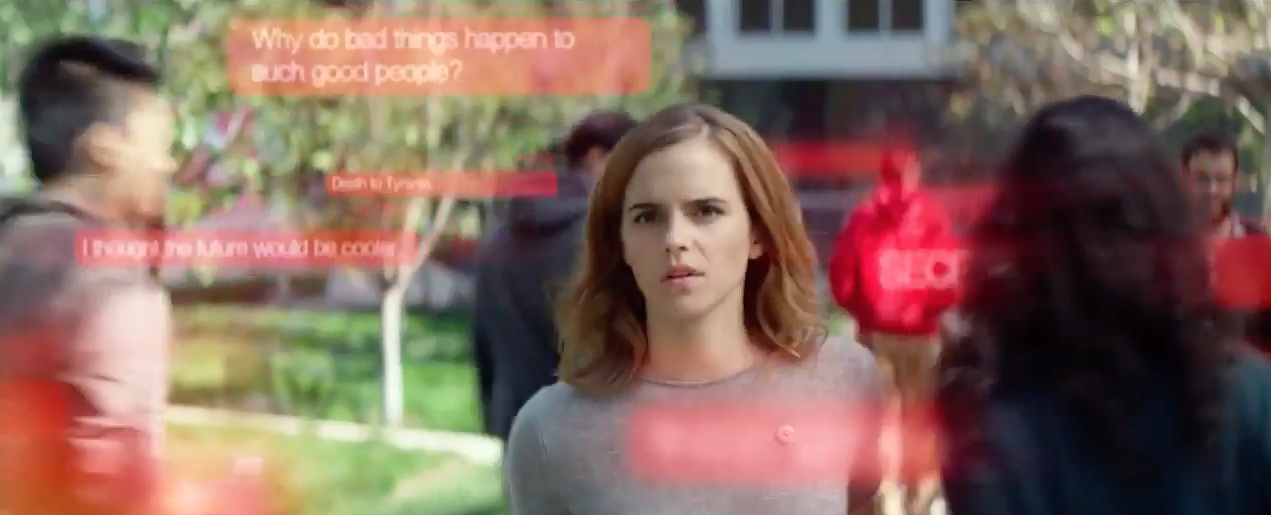
“Knowing is good. Knowing everything is better.” At least, that’s what Eamon Bailey (Tom Hanks playing a Steve Jobs tech baron type) thinks in the first trailer to The Circle. The dystopian film about a world where social media has run amuck and people share every single thing thanks to tiny cameras is based on a 2013 Dave Eggers novel of the same title. If you are a fan of the TV show Black Mirror, then this trailer might get you excited for the film’s release next April.

Black Panther and the Promised Land

My best friend growing up was Bart. Bart had an aunt who owned a convenience store, and at this store, among other things, you could buy comic books. The thing with comic books and magazines generally is that people thumb through them more often than they buy them; as fresh stock cycles in, the old unsold titles must relinquish their places on the spinning racks. In the world of publishing, retailers can return unsold comic books to their distributors for credit; but instead of shipping the whole comic back, which can become weighty and costly, they simply tear off the covers and send those for the distributor to tally and tick in their ledgers. The rest of the then-stripped comics are supposed to be destroyed, trashed, or incinerated in four-color flame.

Bart’s aunt didn’t destroy them. Instead she gave them to her nephew. Not in dribs and drabs, either: she threw them in a box and when she happened to visit, presented him with this box. It contained upwards of a hundred issues. I remember that first meeting with the box, descending from the South Jersey summer into the coolness of his paneled basement, finding Bart sitting like an Indian chief before a mound of pulp. It took us a good couple of days to comb through it all, and more days after that when the heat stifled and we sank with relief into the shag carpet of his cellar boy-cave.

It took us a good couple of days to comb through it all, and more days after that when the heat stifled and we sank with relief into the shag carpet of his cellar boy-cave.

The box eventually migrated under the basement stairs. Then finally when I was over — which was every day Bart wasn’t at my house — he announced his mom had had enough, that the comics would meet their inescapable fate: she was throwing them out. I was told I could take whatever I wanted. In a kind of mild panic I grabbed a bunch, an amount equal to the number I could carry one-handed while riding a BMX bike. I think I had to stop more than once to pick up issues I dropped on the asphalt.

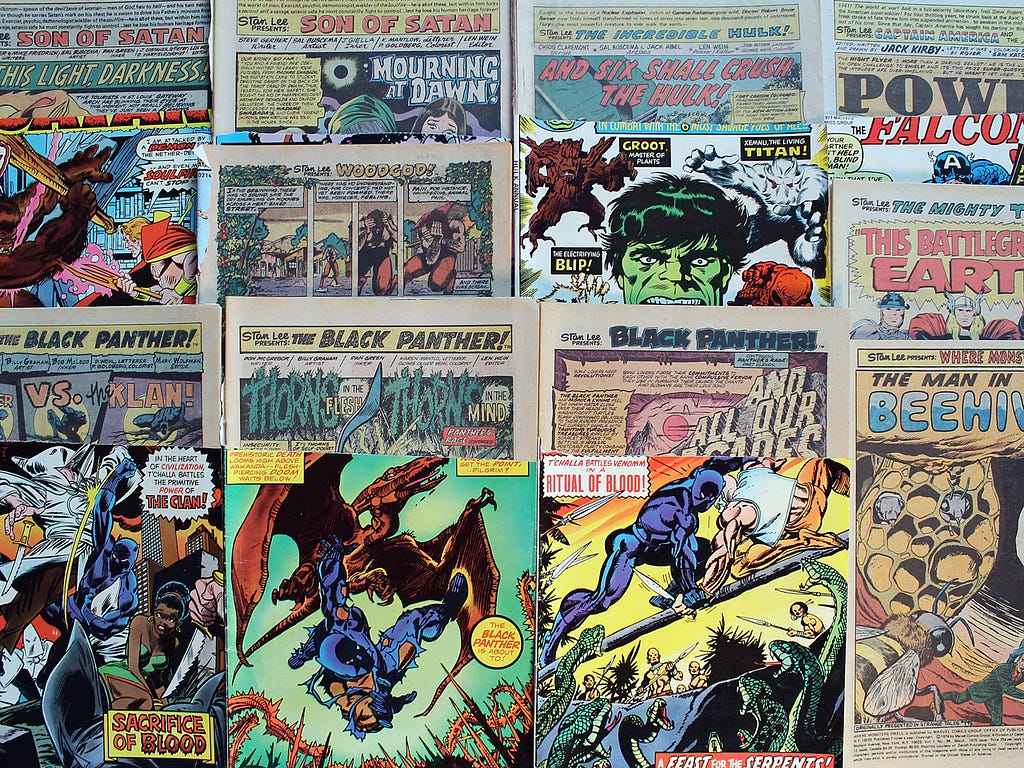
I still have them. None are top-shelf; keep in mind they were the titles that had gone unsold at the store: there was no Batman, no Avengers. Bart’s serendipitous library consisted uniformly of B-listers. An issue where Hulk fights Groot. The origin of a genetically created satyr called Woodgod. And three issues of Jungle Action, featuring the superhero Black Panther. All of them worthless to collectors because they’re missing the top halves of their covers, dating from 1975 and ’76, a couple of years old by the time we tore through them. Bart’s aunt had been working on that box for a while.

Two of those issues — Jungle Action 15 and 16 — particularly fascinated me. They’re part of a greater story arc called “Panther’s Rage.” The writer, Don McGregor, is credited with inventing the form; prior to this, cliffhangers in comics were common but stories rarely lasted more than two or three issues. “Panther’s Rage” spanned an entire thirteen issues — but because Jungle Action was bimonthly, the storyline took two years beginning to end. I pored over those issues like a Benedictine over scripture. Black Panther is ambushed and tied to thorn bushes to die. He escapes and rides a pterodactyl to his high-tech palace. There’s a bizarre goblin creature and various deformed villains working for a master villain named Killmonger, seen only briefly. None of it made a lick of sense. I spent hours trying to unravel the story, piecing together clues from individual panels, from the characters and their dialogue, trying to reassemble an Australopithecus from a jawbone and a tooth.

I pored over those issues like a Benedictine over scripture.

I had to wait close to thirty-five years to figure out what the hell was going on when, this past October, Marvel reprinted “Panther’s Rage” in a 400-page omnibus. The book also includes McGregor’s subsequent storyline “Black Panther vs. the Klan” and the hero’s 1966 origin in Fantastic Four. Black Panther is a hero in the Bruce Wayne or Tony Stark mold, a super-wealthy bachelor who uses science and athleticism to pound on bad guys. There are no secret identities — everyone knows who BP is: he’s T’Challa, the king of the African nation Wakanda, which is a mix of grass huts, deep jungle, and 1970s futurism.

Attention to Black Panther often focuses on the black. At a fiftieth-anniversary panel featuring McGregor, current BP writer Ta-Nehisi Coates, and others at this year’s New York Comic-Con, a recurring point made by both panelists and audience members was the impression a black superhero of Panther’s caliber — a main character, not a sidekick; a king and a scientist — had on them as young black kids. “It was just fun to see someone, I know this gonna sound a little cliché, that looked like me,” said the actor James Iglehart. Strange then that a white kid from the suburbs would become so enamored by that world, and specifically the land of Wakanda where the cast of “Panther’s Rage” is, with very few exceptions, monolithically complexioned.

Stabs have been made at black utopias over the centuries; like regular old utopias, most didn’t last. In 1826 Frances Wright founded Nashoba, Tennessee as a manifestation that a peaceful transition for blacks from slavery to freedom in the south was possible; four years later she threw in the towel and transported the town’s population en masse to Haiti, where slavery was outlawed. More than one attempt was made to forge towns for freed slaves after the Civil War, including in the Pine Barrens. Soul City was contemporaneous with McGregor’s Panther run, a planned community in rural North Carolina that couldn’t escape the racism just beyond the town line. Liberia, utopian in the sense that it was a planned settlement, is not without problems.

Stabs have been made at black utopias over the centuries; like regular old utopias, most didn’t last.

Wakanda resonated with me more than the geography of most comics, set as they were in New York and Gotham and Metropolis. Black Panther leaped through trees and dove off waterfalls and wrestled megafauna. Cities were largely foreign to my experience; our town perched on the periphery between Philadelphia in one direction, orchards and blueberry fields and the Pine Barrens in the other. My mom hated Philly so we never visited, twenty minutes away. Bart once described our childhood afternoons as either climbing trees or not climbing trees. We soaked our sneakers in bogs and streams chasing turtles and frogs.

My dad is an industrial engineer, now retired, and a lifelong member of the World Future Society. They’re a group of practical science-fictionists, visionaries who extrapolate present technology into Nostradamic tomorrows. Dad would often leave copies of their magazine The Futurist laying around the house, chock full of conceptual art depicting artificial islands and elevated forests deep among the next century’s concrete and glass landscapes. The WFS conceived seasteading before a single libertarian foundered on the reefs of Minerva, they imagined the High Line while locomotives still rumbled over New Yorkers’ heads. And sod-roofed houses, half-buried under earth and grass to keep their interior temperatures stable — I distinctly remember the sod-roofed houses.

Dad would often leave copies of their magazine The Futurist laying around the house, chock full of conceptual art depicting artificial islands and elevated forests deep among the next century’s concrete and glass landscapes.

I grew up in a house with solar panels. My dad still lives there and the panels still work. During the 70s he taught a course at the community college on solar power. Sometimes my mom was working or something and he would take me to the class where I would sit in the back and read or putter at some home-made board game of mine. Years later, with fresh interest in renewables everywhere, I asked him why he stopped teaching it. He told me enrollment dropped to the point where there were barely any students. “Once the oil crisis ended, interest died away,” he said.

Among the jungle and lost valleys full of dinosaurs of Wakanda, Black Panther lived in an ultra-modern palace of sliding Star Trek portals and African folk art. Located outside the palace was the source of this technology, an enormous meteorite composed of an alien metal called vibranium, exclusive to Wakanda. By selling off small amounts of the metal, Panther funded his flying cars and laser weapons with the goal of protecting his citizenry from invaders. In Black Panther’s origin story, we learn the palace cannot be seen by the Fantastic Four from the air because it is disguised beneath the jungle canopy; when the Four land and inevitably battle Panther (only later to work together, natch) among the Jack Kirby gizmos and inexplicable tech, it’s impossible to tell if they’re inside or out. Are they under a dome? There are no smokestacks or emissions, and lights and generators hum away without explanation, making Wakanda more than a black utopia: it’s an eco-topia that just so happens to be run by black people.

This month Marvel will debut a new comic, World of Wakanda, a spin-off of Coates’s run on Black Panther. Both titles, just like McGregor’s “Panther’s Rage” forty years ago, deal with political instability and the difficulties of maintaining a monarchy, no matter how high-tech, in the modern world. Throughout “Panther’s Rage,” T’Challa endures criticism from his lieutenants bordering on the seditious while putting down a coup orchestrated by Killmonger — he can’t catch a break. Wakanda, steely and green, is no Eden. Perhaps the Blade Runner future of Lagos imagined by artist Lekan Jeyifo is a more relevant vision than 1970s Wakanda, omitting any attempt at perfection with its dapper gents among satellite dishes and traffic congested by concept cars. Enthralling, engrossing. And imperfect.

Brit Bennett on Family, Religion, and Upending Expectations of Black Narratives

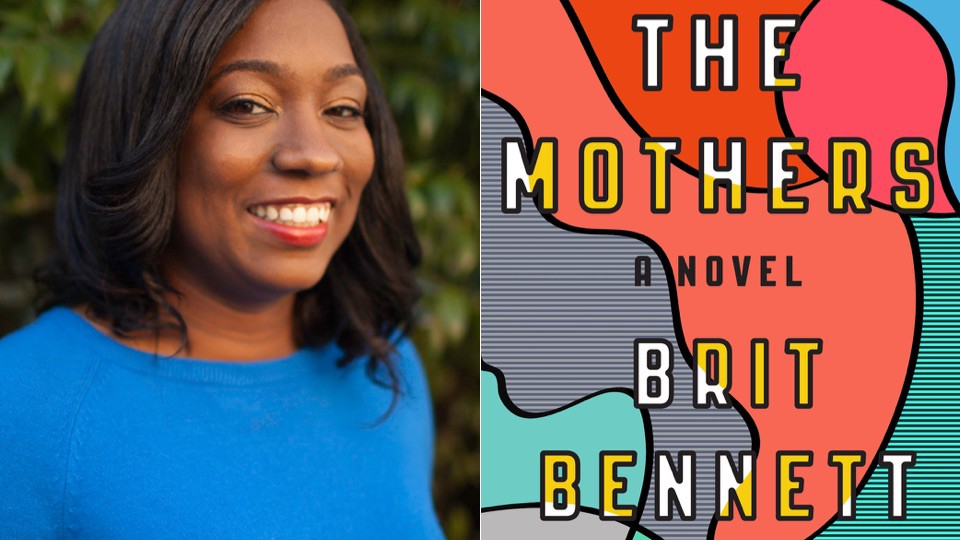
Brit Bennett is the author of The Mothers, a debut novel about the coming-of-age of Nadia, a young African American woman growing up in a Southern California beach town. Bennett, who until recently had gained prominence for her essays, has just been named one of the National Book Foundation’s 5 under 35, a recognition of the best rising stars in American literature. Jacqueline Woodson, who selected Bennett for the honor, said to the LA Times: “I was truly struck by Brit’s ability to tell such a compelling and thoughtful story about community, the complexities of friendship, marriage, choices. The Mothers gives the world a glimpse into lives that are both everyday ordinary and, through Brit’s mastery, startlingly extraordinary.” Bennett lives in Los Angeles and is currently touring the US. I spoke to her on the phone on the eve of the book’s release.

Marta Bausells: How did you find out you had been selected as one of the 5 under 35? Were you surprised?

Brit Bennett: Yes, very. I was aware that the award existed, and writers I admired had been honoured, but I never expected this to happen. I have a few coffee shops I like to go to during week, and as I was working there I just saw an unknown number calling me from New York, and the first time I actually missed the call, but fortunately they called right back!

Bausells: The two main characters in The Mothers are teenagers who are growing up with absent mothers. What was the inspiration for that?

Bennett: I was drawn to the idea of this unlikely friendship between these two girls who, on the surface, you wouldn’t think would really get along, but they’re bonded by this lack of their mothers. I’m fortunate that both my parents are still alive, but losing my parents has always been a fear and it’s still something that stresses me out, particularly the idea of losing my mother and the idea of trying to grow up as a young girl without your mother there to help you. So I think those characters and their relationship originated from some of the anxiety I felt as a young girl.

Bausells: The novel starts with an abortion, which is present throughout the narrative. This experience is missing in many stories about young women in our culture, even though it’s a daily experience for many of them. Why did you decide to put it front and centre?

Bennett: Originally, Nadia and her abortion were a secret that was hovering in the background of the story. She was a minor character and, over time, as I worked on the book, I realised she was actually the engine that was driving the story forward; everything was hinging on this decision that she had made. So I decided to move her to the forefront. It’s not any type of a spoiler, it’s a plot point that is stated in the first couple of pages. Ultimately, I decided that if I was going to write about this, I didn’t want to hedge or make it this thing that was going to be swept under the rug.

Bausells: Have you been surprised by all the attention the abortion has received?

Bennett: Yes, I’ve been surprised that people are reacting so strongly to it and interested by that aspect of the book. It wasn’t an emotional decision for me to include it. I knew from the beginning that she wasn’t going to keep this baby, so it wasn’t something I really debated. But most people have responded with a degree of complexity and nuance that’s often missing from our political debates about abortion. They’re responding to the fact that these characters — who are human, and who are reacting in complicated, emotional ways — did it, and people have been very empathetic towards that, however they feel politically about abortion.

Bausells: The novel starts with Nadia coming to grips with her mother’s suicide, and she later decides to have the abortion. Her friend, Aubrey, also has an absent mother and will make a decision regarding a pregnancy. How did you conceive of a parallel between these two generations of women, between the girls’ motherlessness and their decisions over their bodies and potential children?

Bennett: For Nadia, I always knew that she wouldn’t have a mother. Originally her mother died when she was a lot younger, but as I worked on the book I realised that those decisions needed to be pushed closer together in time, her losing her mother and her getting pregnant, deciding not to be a mother. Because I thought the way that that reverberates off each other was interesting, the idea that you’ve just lost your mother in this very sad, confusing and tragic way, and you’re thinking “I’m not ready to be somebody’s mother.” I think at that point she really is looking for someone to take care of her, she’s not in any position to take care of somebody else.

Similarly, with Aubrey, having this really rough childhood and this very complicated relationship with her mother, and her mother not protecting her in a way that she should have, definitely affects the way that she thinks about the possibility of having a child and what her relationship to that child could be. This was something that came about a little later, but I realised that, generationally, we inherit these things from our parents, whether we realise it or not.

Bausells: The Mothers centers on these two girls’ relationship, and it’s a beautiful and precise portrayal of female friendship — with all its glory and drama, love and treason. Where did you draw that from?

Bennett: A lot of it is drawing from idea of being a young woman and thinking how important my friendships with my female friends are at this point in my life, and particularly when I was younger and in high school. Friendships, particularly friendships among women, are often trivialised and considered less important than the romantic relationship, which is supposed to be the real center of your life. But that’s never been true in my life. And it was something that I wanted to explore: the intimacy of friendship, and the way it can be source of love but also source of betrayal. The idea of having a falling out with my best friend is, in a lot of ways, more devastating than the idea of going through some type of romantic breakup.

Bausells: The story is narrated by this gossipy voice of wisdom, one of “the mothers” of the church who watch the story unfold. How did that come about?

Bennett: It happened by accident and pretty organically. I had written the whole book in the third person, with a gossipy tone — actually, the first sentence of the novel has been the same for years: “We didn’t believe when we first heard because you know how church folk can gossip.” Towards the end of writing it, I decided to play around with it and see what would happen if I actually located that voice, the Greek chorus of church mothers, as the ones who are observing what’s going on in the community, and narrating and commenting. I had a lot of fun writing that, and channeling the voice of these older women whose comments, judgements and indictments of younger people I’m used to receiving.

I’m the youngest person in my family, so I’m used to being the eavesdropper when older people are talking around me. I realize I have a lot closer connections to older people than I do to younger people. I don’t have children in my life, but I feel very comfortable sitting with a group of 60- or 70-year old women talking. Those voices came from thinking about these things I’ve grown up hearing, about life, and about men, religion, and what type of woman I should be.

Bausells: Where would you like to see the book placed in the culture? There seems to be a lot of attention to the fact that it’s about black characters, even though that’s not the focus of the story.

Bennett: Ultimately, my biggest dream for the book was for people to read it and connect with it. I love being able to go and talk to people, and to have people telling me they were moved by the book, particularly a lot of young women who have been reaching out to me about it. Young women who’ve had abortions who are just glad to see that experience represented in a non-judgemental way. So I’m grateful for that.

The two questions I get asked the most about the book are about abortion and about race, which is interesting. I don’t mind having those conversations, because I wrote about black characters who are engaging with ideas of race. It’s on the page, so it doesn’t bother me that people are reading that. But it’s a little surprising to me. I’m reading The Wangs vs. the World right now, about an Asian American family — and this is just the background of these characters, these are the terms of the work, in the same way that The Mothers is a book about family, and religion. It’s a book about black characters, but I think there’s a way in which people are reacting to the characters — and their not conforming to what is expected — which has been very telling of what people think or expect about black narratives.

I’ve lived my life in a lot of very white spaces. I know black lawyers; black doctors, black people who live in inner cities; who live in rural areas; but also black people who live in suburbs…and I went to Stanford, I remember meeting black kids who were friends with the Obamas! The gamut of all types of people from different classes and backgrounds, all types of people — black people are as diverse as any group of people, which should go without saying! But it’s becoming increasingly clear to me that that’s shocking or surprising to people in a way that I just didn’t think it was.

Black people are as diverse as any group of people, which should go without saying!

Bausells: I guess it’s the classic thing of taking whiteness as universal, and whenever a story features non-white characters, assuming it is about race, when no one would ever talk about The Mothers being about race if your characters were white.

Bennett: Exactly. It’s a book whose characters have racialized experiences and perceptions, but their major conflicts are not racism. There could have been any race of girl who finds herself in that situation, but I think it matters that Nadia’s black because she’s aware of stereotypes, she’s aware of expectation, so that affects her thought process and affects her emotions, but it doesn’t affect the plot in and of itself. Which I think is often how life is. I just wanted to write a novel that would show the lives of ordinary black people and their problems, and show these characters and these communities in ways that would be complicated and interesting.

Bausells: In your nonfiction, you have written essays on police violence and systemic injustice (like that Jezebel piece that led you to your agent). You’ve talked about feeling ambivalent about your professional success happening among profound suffering.

Bennett: After I wrote that piece, I just felt like I didn’t know what else I had to really say about this. I respect the people who are out there exerting the emotional energy and the creative energy to write in this moment, and I don’t want to feel like I’m sort throwing in the towel, but I also reached a point where I was like: I don’t know what else I have to say besides saying that black lives matter and that this is wrong and there should be accountability. Who am I writing for, who am I trying to convince of this? If you’re someone who’s not convinced by watching a video of someone being shot, why would my essay convince you?

If you’re someone who’s not convinced by watching a video of someone being shot, why would my essay convince you?

I don’t know, it could just be where I am right now. It’s something that I’ve been really thinking about, wanting to spend my emotional energy and my creative energy towards something that feels fruitful … And not screaming until I’m blue in the face that black lives matter to people who are unwilling to accept that black people should deserve full humanity and full freedom.

My ambivalence came from the fact that this Jezebel piece that was this great professional moment for me happened among this deep personal sadness about what was going on in the news. Also, there’s a way in which I think we feel like we have to constantly make black pain visible so that it’s real. It’s like no one will believe that police violence is a problem unless they see a video. And we’re going watch this video of a black person being gunned down over and over and over again, and that’s the only way, maybe, you might believe that this is a systemic issue. I just realised I didn’t want to necessarily participate in that, in this idea that I have to make black pain visible so that white people feel it or they realise that it’s real. I don’t know, I’m not saying never. I only want to write things that I feel are important or necessary, if I feel like I have something new and interesting to say, so that moment might pop up, but I sure hope it’s not because another black person is killed.

Bausells: What moves you, besides writing?

Bennett: My life is very boring! This is as exciting as it gets. I try to find things that are not word-related to do, because I spend so much time with words. I’m not writing or reading, I do really like TV — I’m almost overwhelmed by how much good TV is on right now and I’m really excited about a lot of fall TV — and I’ve been thinking about this idea of black narratives again. I recently watched Atlanta and then I followed it with Insecure — and again, they’re just contemporary stories, regular black people, regular problems, different parts of the country, different communities, different stuff happening with class — and it was just such a cool thing to watch shows with black-to-black conversations and all of these just characters who are complicated and flawed. But the fact that that was a moment I noticed is sad! It’s a sad state of media, because I’d never think that if I was watching a show with white characters. There’s something very exciting about what a lot of black artists are doing right now.
Bausells: What’s next?

Bennett: I’m currently halfway through the first draft of my next novel. It’s about a pair of sisters who get separated and one is trying to find the other. It begins in Louisiana. I still have to figure out what it is … I have no idea where it’s going to go.

The Loneliness of the Page

It’s hard to think of a book about books without calling to mind Walter Benjamin’s famous essay Unpacking My Library, in which the author states that “(t)o renew the old world — that is the collector’s deepest desire.” It’s as if Benjamin was thinking of Peter Orner’s newest.

In Am I Alone Here?, a somber, joyous contradiction of a second book, Peter Orner spends a lot of time in his garage, alone, surrounded by books. He reads, he thinks, he writes what he describes as ekphrasis — “art that attempts to describe other art.” Orner lavishes praise on his favorite short stories (and the occasional novel), the equivalent of a mixtape from a friend complete with exhaustive liner notes. But beyond loving criticism at the fore — sometimes hidden, often right on the surface — is a narrative of loss, regret, solitude. Observations tied to literature transcend to life in general; life shrinks from grandiose to garage-sized. The easy trap is trying to categorize the book to better understand it. A better strategy is to read, sift through the clues, and sit with them. In doing so, Orner’s work becomes all the more meaningful: things are not simple or easily tied up, but with thought and care, we can come together and help one another even if, as Benjamin suggests, the new world isn’t as palpable as the old.

Peter Orner is often quick to define Am I Alone Here by stating what it’s not. He meditates on his past and hunts for this or that volume in his garage library to reinforce some point, a needed ballast following the loss of his remote father and the dissolution of his marriage:

“Often, I’m less prone to having an actual experience than I am to relating what I’m experiencing to something, anything I’ve read. It’s as if I don’t quite exist in real time.”

He doesn’t have experiences, but approximations of them, informed by what he’s read. The lack of connection he feels with the outside world results in retreat, a need to find solace in books. Yet despite his many references, this is no simple memoir, or even a book of literary criticism — it’s an “anti-manifesto,” lacking the rigid structure that can be found especially in works of fiction, the novels and short stories he so adores.

But in reading Am I Alone Here, we quickly find that Orner contradicts himself — and cleverly. In addition to discussing his deep love of the volumes that surround him, the introduction ruminates on the death of Orner’s father and the unraveling of his marriage, prepping readers for these topics to recur, woven into the fabric of his essays on books and authors. But as part one begins — titled “Sometimes I Believe We Are Being Tested” — the second essay contains no mention of authors or books at all, instead focusing on a distant uncle who once frequented family gatherings but didn’t disappear so much as fade from view. After this brief digression, Orner resumes his discussion of books and authors, each containing a few koan-like lines, unlearned meditations.

The placement of the uncle essay’s importance becomes apparent during a discussion Eudora Welty. Orner posits that “The Burning,” the second story in Welty’s collection The Bride Of the Innisfallen, is her favorite, and an example of a theory of Orner’s invention he claims extends to all collections, all authors: the most well-known stories are placed first in anthologies; favorites are placed second. A second story “comes closest to failure, and so the writer loves it all the more.” Each of the three main portions of Am I Alone Here? is so structured — talk of books falls to the side in favor of discussing his family. Positioning such essays in a collection that primarily revolves around books may seem an odd choice — especially when he draws overt attention to them by their placement, and discussion thereof — but he’s trying, at least. Too often, Orner says, “we can’t show what love feels like without embarrassment, so we avoid the attempt altogether.” Despite the fact that he feels like his bookless reminiscences teeter on the brink of failure, he’s working, processing, which makes him feel alive even as the work he produces is vulnerable.

It would be easy to see Orner’s contradiction as cleverness for its own sake. This isn’t the reason, though, that he denies a structure then goers out of his way to reveal one. As he mentions in one of his essays, “reading well, in my lonesome garage view, requires reading with generosity.” Throughout, the level of thought and care he heaps on his favorites demonstrates this generosity. To balance the equation, Orner expects a similar level of care from us, the readers — everything in his book is intentional, as the placement of his family-centric chapters demonstrate. By reading generously, by taking the time to consider the reasoning behind his statements and placements, Orner is attempting to duplicate the connection he feels to the books in his library, and the solace they provide. In reading generously, we pass the test in section one’s title.

The book’s title provides an additional clue to Orner’s method and purpose. In an essay about writers who disappear into exile, Orner says “the impulse to spread any and all news about oneself far and wide…has become soul-crushing. It makes me want to retreat to the garage with my… books and unfinished physical manuscripts. But maybe the fact is, I’m not all that good at being myself. Am I alone here?” With tweets and social media posts about writing threatening to supplant the writing itself, photos and hashtags become the aforementioned approximation of experience. Giving up and giving in to the din reduces the work down to soundbites, with clicks and hits supplanting the experience of reading. Orner knows this, burrowed deep in his garage.

But like the contradiction inherent in Orner’s ‘lack’ of structure, time and again the author cries out for connection. After the death of Colombian author Alvaro Mutis, Orner is despondent in his isolation: “Aren’t we perpetually, one way or another, trying to solve loneliness? The loneliness we feel? The loneliness we know is coming?” Books are a balm, another contradiction: we spend time buried in them, which is both time with someone — the author — and time alone, away from everyone. Orner reads in his garage, feeling deep connections with authors who themselves felt terribly isolated and detached.

The sorts of losses Orner has felt leave him pining for some sort of connection, some solution to the loneliness that he feels. Yet the quick fixes and easy solutions provided by the internet leave him feeling cold. So it’s reading and writing, with all of their snares and pitfalls, which sustain him, even as he takes risks. Not everything he writes he writes will be successful, but “the failure of certain stories to say what they are trying to say is the source of their inexplicable force.” It’s the clawing, the attempt to articulate what can’t easily be said that’s worth something. It’s tempting to give up, to curl into a ball, but this isn’t what our departed loved ones would want. They’d want us to go on rather than withdraw (thus drawing attention to ourselves):

“At some point, much as we talk a big game about needing to go it alone, we can’t help but be pulled to the window, to the noise and to the voices.”

This, then, is the crux. We can’t do it alone, even though we sometimes wish that we can, say that we can. Orner states that author Mavis Gallant “understood that mostly what we humans do is daydream, that while we’re going about the business of our lives in one direction, we’re daydreaming it away in another.” Life is inconsistent, a big contradiction. Why should a book about life — and death — be any different?

The kind of careful reading prized by Orner reinforces all this. As he says early on, “If we can’t overcome (losses) ourselves, the very least we can do is recognize that we aren’t the only ones out here trying to get by.” By thinking, analyzing –by caring — we can keep trying to get by. Together. As Orner states, “sometimes we need, in whatever way we can muster, to share out burdens. And a reader, a stranger — you reading this — somehow you make the weight a little easier to carry.” It might not sound like much, but it’s something different than a retreat, or Benjamin’s renewal of the old. It’s an insistence that we forge on.

What Exactly Does She Think Happens?

Karl is cold. His blanket slid off onto the floor and he’s not wearing pants or a shirt, only underwear. Sammy the cat is curled up on the far arm of the davenport, within striking distance of Karl’s feet. Sammy sometimes attacks feet. Karl is pleased to see he’s wearing boots, Red Wing Irish Setters from the looks of them, laces tied in big loopy bows, though he’s less sure why he has no pants or shirt. These boots had been his father’s. As a child, he and his sister Dee would pull them out from under the workbench in the garage. They were so large and heavy, it was all Karl could do to shuffle around the concrete in them, but Dee, two years older and much bigger, wrapped the laces around her ankles so she could walk without stepping out of them. Sometimes she’d get in the boots and he’d stand on the tops of her feet — they both fit easily — and she’d walk him through the house, around the back yard, down the road to the bluff’s edge overlooking the lake. If it was chilly out, she’d open her coat and zip the both of them inside.

His wife Marci looms above him. “Karl, you know I don’t allow boots on the couch.”

“Tell that to him,” Karl says, meaning the cat.

“Where are your pants?” Marci says. “It’s embarrassing.”

You’re embarrassing, Karl thinks.

“Shut up,” he says, meaning something else.

“Karl?”

“You don’t know shit.”

“Don’t say that, Karl.” Her tone is calm, practiced, that of a technician to a troubled customer. It sets him flush, prickly.

“Less than nothing.”

“Don’t say that, Karl.”

He finds a bottle half full of Buffalo Trace Kentucky bourbon on the top shelf of his work bench, he was certain he’d drank it and wonders if maybe he was using it to store something else. He takes a sip, then another, then another, still unsure if it’s whiskey or some other liquid. He’s gotten used to how complicated everything seems now, how even when he’s sure he’s making sense, people treat him the way Marci does — gingerly, like a child. He’s heard her use the word dementia, always whispered, like it’s a secret. He doesn’t care what Marci thinks she knows, he knows things too. He finds a basketball in a thick white cotton bag, the ball clean and smooth and still properly inflated though it’s been 10 years since he stopped playing. His wife likes to tell this story, she seems to take special delight in it. How he’d been playing in his regular 65-and-over three-on-three game, how little Jimmy Rodriguez had the gall to post him up, Jimmy all of 5’7″ and Karl a full nine inches taller, and how Karl used his strength to push Jimmy away from the basket and how Jimmy snapped his head back (to clear space, Karl believes. Out of pure meanness, Marci says), smashing Karl’s nose, causing bleeding into his brain, a single simple action that changed their lives forever.

Or so she claims.

They’ve stopped at a rest area in Kansas, just a flat spot in the grass with a picnic table and a small grove of trees. Otherwise, corn in every direction, fully grown but still green. Karl finds it suffocating, stuck in the back seat with his two remaining sisters, driving through an endless green tunnel. It’s 1936 and they have everything they own in their 1933 Oldsmobile. They’re moving from Indiana to California to start anew because Karl’s mother and father can’t bear living in the same house, the same town, the same state without her. On the edge of a corn field in Kansas, Karl sees what isn’t possible. He sees her, his sister Dee, his best friend in the world, dead three months, standing on the edge of the corn, wearing the same white shorts with a black stripe she’d worn for three summers. The shorts are tight on her, the edges press into her skin. She smiles at him, then she runs and he follows, corn stalks slapping at his face.
Branches against the windshield, slap slap, Karl’s Jeep Grand Cherokee rolls to the bottom of a shallow depression, coming to rest against a juniper bush. He understands something is wrong, his Jeep shouldn’t be here, but he’s not sure how it happened or how to fix it. This happens to him now, he’ll find all the doors to the house open for no reason or the bath running until it overflows or the cat squatting right in the middle of the kitchen and letting loose like Karl isn’t standing two feet away. He opens the door, engine running. Why would they plant trees so close to the supermarket parking lot? And why did Marci take off and leave him with a strange man who keeps leaning over him. His long beard tickles Karl’s bare knee. Karl has his left foot on the ground.

“Now your right.” The man’s voice. He’s clean-shaven, it’s not a beard tickling him but the man’s shirt tail. This makes Karl feel better, like he’s figuring things out. “Your right, sir,” the man says.

Karl puts his right foot on the ground.

“Wait, no, leave your left foot out.”

He puts his left foot on the ground.

“Sir, no…sir…”

Yesterday, he got up at dawn and found coyote tracks in the snow outside his bedroom window, worn through to the red New Mexico dirt, and he imagined coyotes coming together to watch him sleep. Last week, men in brightly colored wool coats appeared in his back yard, waking him from a nap. They drank coffee from an aluminum thermos and pointed here and there and laughed like he wasn’t in plain sight in his own bed with bright sunlight stretching across his bare legs. “Left foot to the ground first,” one said. “Right foot next.”

“Left foot first,” the other agreed.

He is standing in his bedroom at his chest of drawers, there’s a smell in the air. Are the piñon forests around Santa Fe burning again? His wife Marci is quiet in the living room, a good sign, except he’s also holding a pistol — the Colt .45 semi-automatic — my pistol, he thinks, and then laughs because he’s standing in his bedroom holding his pistol. HIS PISTOL.

He raises the barrel to his nose. Recently fired. His father used to pick up spent shotgun shells in the field and sniff them, passing them to Karl. “Fired earlier this morning,” he might say. Or, “Last winter.” Marci chooses this moment to enter, sees the gun at his nose, and screams. Silly woman. She thinks he means himself harm and he wants to tell her about his father and the smell of a freshly fired shotgun shell and how he taught his son, their son Pete, the same thing, but now is not the time and she’s not screaming at him exactly but at the spot in the floor where the round went in, a small black circle in the white carpet. Of course she’s over-reacting, what exactly does she think happens when you fire a .45 caliber round into the floor anyway? You get a hole, you get a powder mark.

He wakes to breathing; the shallow panting of a dog? He’s on the couch in the dark. Marci snores in the bedroom. A coyote sits outside the patio doors, looking in. Just a thin sheet of glass between Karl and the animal. He sits up, left foot first, then right, and turns on the table lamp. Sammy the cat is on the back of the couch, eyes blinking in the light, purring. Karl’s .45 is in the bedroom and no good can come from waking his wife. He lumbers down the hall to the spare room where he keeps his .357 single action revolver in a gunfighter-type leather holster and belt hanging from a hook inside the closet. He straps it on and ties down the leather lace just above his knee to keep the holster from flopping about. The leather is cool on his skin. Only then does he realize he’s in his underwear. He knows he should put on pants but they’re in the bedroom. Instead, he pulls on the heaviest coat in the closet, a medium weight Carhartt, and slips out the side door.

The air is crisp, the snow squeaks underfoot. The boots are excellent luck. It turns out he had a plan from the start, wearing these boots all day, there was a reason. He wishes Marci was awake to see he isn’t quite as doddering as she imagines, then laughs and laughs because of how ridiculous he would look to her. A grown man outside in the bitter cold in his underwear, wearing a holster with a fully loaded pistol.

A pack of coyotes in full bloodlust kicks up, howling and barking and yapping, but far away. It still has the power to chill the blood, being outside with nothing between him and animals on the hunt. Karl slowly pulls the revolver, thumb on the hammer. He shines the flashlight out across the valley. His father had taught him this, how to catch an animal’s eyes with a light in the dark. They hunted frogs at night on country roads after a rain with a flashlight and a net, looking for shining eyes in the weeds along the roadside. He walks straight until he hits what appears to be a set of fresh coyote tracks. He follows them with the flashlight, stopping every few feet to listen.

Karl pulls to the side of Cerrillos Road because a square of sky has ignited into a fiery red, a rain squall less than a mile wide hanging above the swath of aspens on the side of the mountain, the lowering sun catching it just right. He gets out, leans over the hood, pinches the storm between his thumb and his forefinger, an entire section of the world in his hands, and as he watches, the color slowly leaks away.

8 Books About First Contacts and Alien Encounters

It’s December — are you in the mood for some mind-expanding sci-fi?

Let’s say you’ve seen the film Arrival–or you’re a fan of Ted Chiang’s short story “Story of Your Life,” from which it’s adapted. (Or maybe both.) And you might be clamoring for more stories that push similar buttons, narratively and thematically speaking. In other words, the headiness of high concepts blended with the inherent tension that comes when humans encounter a civilization that is, in some fundamental way, alien to them.

The works on this list offer a diverse array of takes on these fascinating interactions. Most fall into the category of first contact stories, while a few offer interesting variations on the concept. All of them grapple with grand ideas: what makes us human? What makes us intelligent? And to what extent must we change in order to interact with a different form of life?

1. Lilith’s Brood, by Octavia E. Butler,

In Octavia E. Butler’s Lilith’s Brood (first published as the Xenogenesis trilogy), humanity encounters an alien race known as the Oankali, who offer the prospect of peace and improvements to the Earth–but also hope to reproduce with humans in order to create a new species. Butler examines grand questions in this work and explores both the societal and the personal effects of this encounter and the changes that it promises.

2. Ammonite, by Nicola Griffith,

In Nicola Griffith’s Ammonite, humanity has begun to colonize distant planets. Protagonist Marghe Taishan journeys to Grenchstom’s Planet, where a virus apparently wiped out the last attempt at a colony, only to find that a civilization has developed there. The implications of this discovery, and the planet’s effects on the humans who call it home, make for a book that both deals with humanity’s evolution and the conflicts that evolution can cause.

3. His Master’s Voice, by Stanisław Lem,

In this heady volume from Solaris author Stanisław Lem, narrator Peter Hogarth is one of a group of scientists living in a remote complex and attempting to determine the origin and nature of a message beamed across the universe. Is it information from a distant civilization, a communication that’s metaphysical in nature, or something utterly beyond human comprehension? Intense theory meets bold philosophical speculation in this narrative, leaving the reader with a series of haunting ambiguities.

4. The Book of Strange New Things, by Michel Faber

The philosophical aspects of alien contact take on a heightened dimension in The Book of Strange New Things, as its protagonist is a missionary sent to a distant planet to talk with a group of aliens who have expressed abundant curiosity about Christianity. Faber doesn’t shy away from the larger implications of this inquiry and keeps his aliens fundamentally alien, paving the way for a thought-provoking novel of ideas.

5. Binti, by Nnedi Okorafor

The future depicted in Nnedi Okorafor’s award-winning novella Binti is one in which humanity has made contact with a host of alien civilizations. As the book opens, the title character is about to leave Earth to study at a university far from her (and our) planet. But soon, she finds herself in contact with a group of dangerous aliens, a precarious situation with a solution that hearkens back to Binti’s time on earth and some long-buried history.

6. The Listeners, by James Gunn

Set in the near future and proceeding forward in time, The Listeners grapples with questions of science, faith, and technology. In it, humans receive a transmission from a distant star, and must grapple with the implications of it–both the existence of an extraterrestrial civilization and the civilization’s motivations for contact. The book’s historical scope also allows Gunn to show how this knowledge might alter humanity over a span of several decades.

7. Roadside Picnic, by Arkady and Boris Strugatsky

What if contact with extraterrestrials took place and altered parts of our world so drastically we were no longer able to comprehend them, boggling minds and pointing out our own cosmic insignificance? Roadside Picnic (loosely adapted on film as Stalker) explores the more unsettling side of this archetypal science fiction scenario: rather than a landmark moment for two civilizations, humanity’s first encounter with aliens might be a non-event for one of the parties.

8. The State of the Art, by Iain M. Banks

Though the galaxy-spanning narratives in the late Iain M. Banks’s Culture novels are largely far removed from more familiar earthly settings, Banks still engaged with ethical and societal questions that are deeply resonant with contemporary audiences. The setting of the Culture novels is vast, and encompasses a host of different species. In the title story of this collection, representatives of this highly advanced civilization debate the merits and drawbacks of making contact with one planet: Earth.