Shubha Sunder on Writing an Immigrant Story Through the Lens of a Visa Year

In this land of opportunities, being an immigrant can often feel like playing a round of Twister. A certain contortion of mind, language, and will power seems written into the script; a lot of territory remains untouchable. 

Shubha Sunder’s debut novel Optional Practical Training is named after the year-long uncertain space of temporary employment in the U.S., which international students can apply for upon completing their American degree. Sunder is a writer and teacher based in Massachusetts, author of the debut short story collection, Boomtown Girl. Like her, the protagonist and narrator of her novel moved to the U.S. for college from Bangalore, India, and she has just moved to Boston to teach maths and science at a private high school as part of her OPT. She is also an aspiring writer.

As Pavitra navigates her OPT year in Boston, a year shaped by cultural dissonances, we enter spaces of immigrant life that carry a quiet resonance for those in the know. The conversations in and out of classrooms, of workspaces. The precarious stability offered by a visa status. I spoke to Shubha Sunder about writing a novel that takes place within a year and the liminal space of being on a temporary visa.


Sarah Anjum Bari: Let’s talk about the title. How does Pavitra’s OPT status frame the story? 

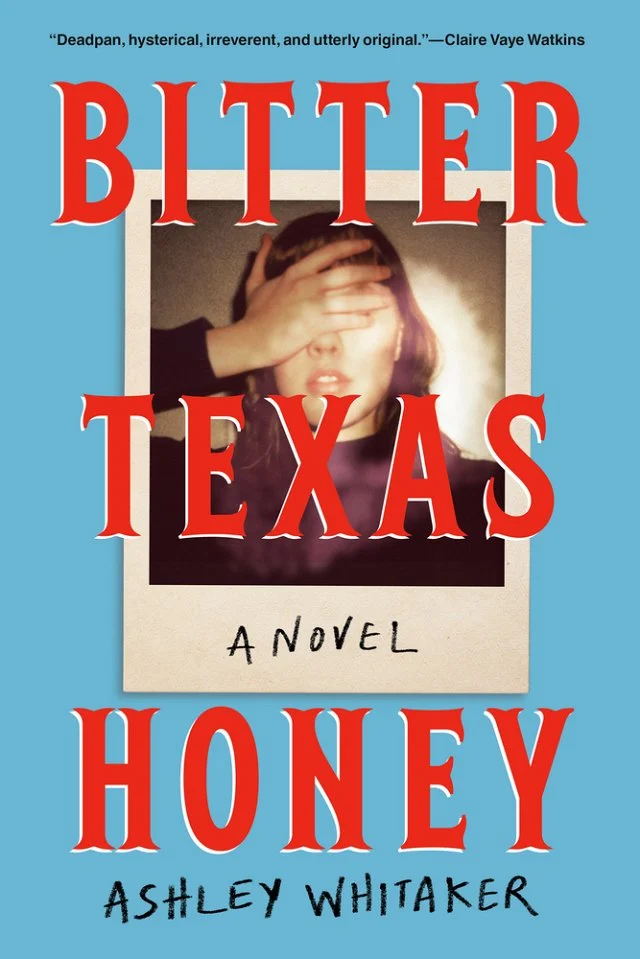
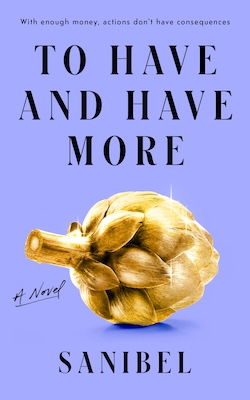
Shubha Sunder: The thing about OPT is that it’s such a liminal status. It lasts one year but I think it can be renewed in some cases to two, but then that’s it. After that you either go home or you have to have a different visa and be categorized as a different kind of “alien”. That made me realize that the whole novel has to take place within a year. She really can’t count on anything. She doesn’t have furniture, that’s why she needs a furnished apartment, but she’s not going to buy furniture because she doesn’t know for sure if she’s going to be able to stay for more than a year. The title, it’s so bureaucratic. The acronym is very important. It’s kind of like a dog whistle—everyone who’s been a foreign student in the U.S. will know immediately what this title refers to, but if you weren’t a foreign student in the US there’s no reason for you to know what Optional Practical Training is. That’s why the letters O-P-T are highlighted [on the book cover]. So it’s just weird and interesting I hope. Optional Practical Training [represents] the shock of arrival, it’s the cold plunge when the immigrant is dropped into the host culture and has to fend for themselves. 

SAB: How did Pavitra—or this story—come to you? 

SS: For a long time I had this idea of writing my first immigrant novel, because Boomtown Girl, my book of short stories, was set in Bangalore. And then during the thick of Covid lockdown, this is spring of 2020, I was in a place in my personal life where I had been dragged low. My marriage had fallen apart, my soon–to-be ex husband and I were figuring out how to co-parent our one-year-old. I was moving from our two bedroom condo into this tiny apartment. It was a state of mind that [felt like] rock bottom. I felt that if I’m going to make a contribution with my writing, it has to be right now. And so being in that one room apartment took me back to my first year in Boston, which was my first year out of college. 

OPT is such a liminal status… That made me realize that the whole novel has to take place within a year

I started writing this scene which became the first chapter of the book, where this young woman is trying to find a place to live. That has to be the first thing she does when she gets to this city that’s foreseeably going to be her home for the next year. I just wrote down whatever came. I put it away, didn’t look at it for a while and then I did again, and I was like, Oh, it’s written in first person, but she’s not the one who is doing most of the talking. The landlord and other people are talking to her, about her. This is interesting because this is an immigrant story but it’s not so much an immigrant telling their story, as it is a story of America being reflected in the things Americans tell this young woman. She’s very young—old enough to be independent but she’s impressionable, at 22—and the things that people say to and about her are really going to form her sense of identity in this new context. And they also reflect back on who America is. 

Once I figured that out, everything followed from there. I was able to draw from basic facts about what would happen during this year in this person’s life—it’s the nature of the diaspora, right? She’s not going to be the first Indian person in Boston by any means. So there’s going to be someone there before her, who’s going to make contact, so that prompted the chapter with the reunion with the childhood friend. And then of course someone else is going to follow and look to Pavitra for advice. That’s the scene [with her younger cousin visiting Boston from India]. So I had these two reunions which made for an interesting tension [between] someone who had a very thorough set of reasons for why he was going to stay in America, and someone else, the cousin, who has an equally thoroughly constructed argument for why she’s going to go back to India. There’s a moral aspect in each of their arguments—it’s the right thing to stay, it’s the right thing to go back. That’s one layer. 

The other layer is that we have Pavitra, who’s taking all this in. So how are these conversations going to inform who she’s going to become and what she’s going to do?

SAB: That’s what struck me about this book. This form of a novel-in-voices. But we very rarely hear from the narrator, and we get brief outward demonstrations of her character. Is Pavitra really this quiet, demure person, or is the silence a device through which we understand her experience as an immigrant in America? What role is silence playing in this story? 

SS: I don’t think she’s a chatterbox. I think the book demonstrates ways in which she’s outgoing. She takes the initiative to meet people, like the guy downstairs who becomes a love interest. You can’t be a quiet person and be a teacher. But I see this very much as a narrative that’s retrospective—it’s written in past tense. It’s a story told by someone who has been in the United States for a while. She’s rooted when she’s telling the story, she’s tracing back the origins of her life in the U.S. Her personality comes through in the details that she remembers. How she describes the things that people tell her. It’s how my memory works as well. I don’t so much remember things I’ve said, but I do remember things said to me. That’s how the novel operates. 

SAB: How did you invent and characterize these other voices propelling the novel? 

SS: I was conscious of how characters operate in relation to one another even when they haven’t met each other. I wanted to have conflicting, diverse perspectives. So in early drafts there were characters and conversations that I later eliminated because they were doing things that had already been done. Each conversation maps onto one character, and I wanted each one to be distinct. To be painting a different face of this prism, ultimately, that we see the novel and Pavitra through. 

Some rules I set for myself were that nobody gets a free pass, including Pavitra. When something happens again and again in the book, people’s prejudices and biases get revealed. And so do her own. She says cringeworthy things too, and she makes her own assumptions and judgments about America that are not necessarily true or well thought out. I had some conversations with my editor about how far in the direction of caricature I wanted to take the characters. For example, the HR woman, Lila, who appears now and then to handle the OPT paperwork for Pavitra. She is almost borderline ridiculous. But the landlord, who we see is as “American” as Lila, is way more nuanced and complicated. He reveals himself to have all these layers.  

SAB: In response to a friend arguing that writers should cater to the familiar territories of their reader, Pavitra reflects that, “People in India grow up reading books by English, European, and American writers, writers who’d never considered it their job to help little brown children in the tropics understand cold, white, Western worlds, yet we read them without complaining, with joy even.” Microaggressions, cultural stereotyping and misunderstandings are things she faces frequently throughout the book. Another scene that stayed with me is when Pedro, the guy from downstairs, and Pavitra go to the Zakir Hussain concert. The audience is late, they continue to talk during the performance, and Pedro is offended on behalf of the Indian classical musician. But Pavitra’s point of view reveals how this way of attending an event is rooted in its own historical and social culture. How would you say this novel is engaging with such conversations on navigating unfamiliar cultural spaces? 

SS: Something I’ve always been attuned to is the earnestness with which people feel the need to state their values. People really want to be seen as unprejudiced, as having the right views on race, gender, class. You know, when a character states their opinions and then says something that’s directly in contradiction? The vegan poet towards the end of the book? That was one that I let myself have fun with more so than the other characters. I just love how he says, I’m not one of those vegans who goes around telling everyone why it is important to be vegan, and then he goes on to do exactly that. It’s just human nature, it’s who we are. But I find it specific to certain so-called liberal, progressive, East Coast and New England spaces that I’ve been in. I’ve witnessed these kinds of contradictions. This earnestness to believe and see the world a certain way, but not being able to quite do it. You see how it’s gotten us into this political mess, because I think at some level these declarations have a falseness about them. 

As for Pavitra—she can speak English, she’s been in the US for 4 years on a college campus, so she’s not completely a fish out of water. But she’s about to truly discover the depths of the differences between the world that she’s been raised in and the world that she’s in now. When we go to a new place, we make judgments on the place based on what we’re told by locals and by people who’ve been there before. The things we’re told as the foreigner then inform how we proceed to be in that culture. There’s lots of opportunity for misunderstandings, for gaffes, unintentional insults, and making assumptions that are inaccurate. That’s the territory I find really interesting as a foreigner and a writer. 

SAB: Could you talk about one of the major themes outlined in Pavitra’s experiences—the idea of teaching as a performance, and the different teaching styles your characters project based on the learning environments they themselves experienced?

SS: I’ve been a teacher now for close to 25 years. I did my MFA and switched to teaching creative writing. It’s been interesting to look back at the ways I’ve had to mould my teaching self to do the job well. Growing up in India, the classroom is not a place of enjoyment necessarily. You don’t go there to be entertained. But I think to some degree that is an expectation here. People think they’re going to college for an experience. Boredom is not something that’s considered okay. I’ve had to be conscious of that as a teacher myself. This whole notion of whether education is something that you pay for, an entitlement, is a big question and one that I think about a lot. If the student is a paying customer, it puts you in an awkward position because you can pay for services—for beautiful lectures, for a stimulating classroom environment, one on one time—but you can’t pay for an ‘A’. That’s where the waters get muddied. Education is an entitlement that society provides with the view of turning out an educated citizenry, someone says that in the book too. I think a lot about how these two things are at odds. And I think this makes teachers quite stressed out. You can see that in the U.S. on college campuses, public and private schools. Responsibilities and expectations get heaped on teachers as a result of things in society that are way beyond their control. 

So these conversations around teachers, with colleagues and students, certainly those are inspired by conversations that I’ve been a part of. 

SAB: This book is coming out at an especially precarious time in American politics. Trump’s inauguration may bring a particular set of difficulties for current and aspiring immigrants. What kind of response or effect are you anticipating this novel to have in this climate? 

SS: What I find interesting is that when I was an international student—this was post-9/11—certainly there was this closing off that was happening because of fear. Fear of the outsider, then it was fear of terrorism, and now it seems a broad fear and loathing of foreigners and immigrants in general. What I find striking is how privileged Pavitra’s situation is from our present-day perspective. As an international student, she wasn’t being advised to get back to campus before Inauguration Day because there’s no way to trust that this new administration, one that openly flaunts its xenophobic credentials, is going to let her back in. Immigration has always been a fraught and integral part of  America’s identity, so I don’t think there would ever be a bad time to write an immigrant novel. In general, I hope the book takes the reader to a place outside of the tired language of political rhetoric, one that’s more “real” and, for lack of a better word, more nuanced.

7 Writing Retreats Around the World For Emerging and Established Writers

Writing retreats offer the opportunity for writers to fully immerse themselves in their craft, free from the distractions of daily life. These getaways combine inspiring locations, structured time, and a like-minded community to reignite creativity and boost productivity. Whether you’re seeking solitude to finish a manuscript or a collaborative environment to workshop ideas, a retreat can serve as the perfect catalyst. 

I run a writer’s retreat called Studio Luce, steps away from the black sand beach of El Paredón, on the Pacific coast of Guatemala. The retreat is hosted in a 3-bed villa, featuring a newly built writing studio, alongside a tropical garden and pool. We offer week-long author-led retreats throughout the year, bringing together small groups of writers to focus on their craft. 

While some retreats are well-known—particularly in the U.S.—there are many hidden gems scattered around the world that offer equally transformative experiences. Here are 7 unique international writing retreats for when you need to get away and focus on your writing:

Studio Faire in Nérac, France

This artistic retreat housed in a 19th-century Maison de Maître is located in the heart of the French town of Nérac. Studio Faire caters to all types of creative practitioners (including visual artists, designer/ makers, writers, screenwriters, musicians, and performing artists) and from all countries and age groups. Residencies are available for two or four weeks, hosting up to six participants at a time.

Cost ranges from €1300 to €4600. 

Casa na Ilha in Ilhabela Island, Brazil 

For those seeking a tropical  environment, Casa na Ilha offers a retreat nestled on Ilhabela Island off the northern coast of São Paulo, Brazil. Surrounded by lush rainforests, and mountainous landscapes, the island boasts over 70 beaches and 27 crystal-clear waterfalls. 

This year, dedicated three-week writing residencies are offered in March and May. It includes workshops alongside uninterrupted time to write.

Cost ranges from $1400 to $2985.

Café Tissardmine in Tissardmine, Morocco

For writers looking to disconnect from the digital world and immerse themselves fully in their work, this Moroccan retreat is for you. Located in the remote Berber village of Tissardmine, Café Tissardmine is unique in that it has no internet connectivity and runs on solar power. The artist-in-residence program accepts practicing artists from all disciplines and is self-directed with occasional writing workshops led by authors. 

Cost: €950

Panchgani Writers Retreat in Panchgani, India 

Located in the hill station of Panchgani, the Panchgani Writers Retreat is expanding its offerings this year to include a screenwriting workshop and a self-publishing workshop led by experts in their fields, in addition to its fiction, nonfiction, and poetry workshops.

Healthy living is at the heart of the retreat, featuring yoga, meditation, hiking trails, sightseeing, and vegetarian home-cooked meals.

Cost: $1100

The Avron Writing Retreat Shropshire in England

The Arvon Foundation offers a range of residential writing courses and retreats across its three rural centers in England. Their dedicated writers’ retreat, held at The Clockhouse in Shropshire, runs for four to six days and welcomes writers of all experience levels.

Cost: £660 to £1040

Library of Africa and the African Diaspora Retreat in Accra, Ghana

The Library Of Africa and The African Diaspora’s self-directed one month residency offers participants the flexibility to shape their own experience. Residents are encouraged to immerse themselves in the library’s extensive resources and engage with LOATAD’s vibrant community.

Cost: $1,250 USD per month

Casa Ana in Sierra Nevada, Spain

Tucked away in a remote house in Andalucía’s stunning Sierra Nevada, Casa Ana offers four to five Writing Retreats each year, lasting ten nights each. These self-led retreats provide writers with uninterrupted time to focus on their craft. When you need a break, explore the hills, or unwind on the terrace with a glass of wine in the company of fellow writers. Meals feature fresh, regional produce from the Alpujarra.

Cost: €1550 to €1950

Magical Thinking Can’t Change My Wife’s Breast Cancer Diagnosis

An excerpt from Rehearsals for Dying: Digressions on Love and Cancer by Ariel Gore

Does My Breast Look Weird?

Deena stepped out of the shower and opened her towel in the steam. “Does my breast look weird?”

We are taught to delineate between health and sickness in these moments.

As such, this is where our story begins.

When I used to ask my old friend Mary TallMountain how she was doing, she’d say, “Ah, you know, honey. I’m always dying and always keeping on.”

Deena’s breast did not look weird to me.

Maybe we’re always dying and always keeping on.


Fear

“Are you sleeping?”

“No,” Deena said.

Our bedroom was dark except for a sparkling shaft of moonlight through the window.

“I’m kind of high, but I’m scared.”

“Scared of what, love?”

It had been a few days since Deena asked me if her breast looked weird, but it was more than that. “Something bad happens every seven years.” I took a deep breath and held it. I was about to turn forty-nine. Seven times seven. I already knew it would be bad.

Deena whispered, “No, love. Nothing bad’s gonna happen.”

She’s Jewish and agnostic and good at reassuring me.

But I’m a magical thinker and good at watching out for signs.

I exhaled. Everything was okay. Maybe everything would stay okay. Maybe I was just a little bit high and had the shitty kind of obsessive-compulsive tendencies that do this superstitious math but never keep the house clean.

I’m a magical thinker and good at watching out for signs.

Deena had my back. Deena curled into it.

But then I looked up at our dark bedroom window, at the moonlit reflection of our life, and I looked over Deena’s shoulder, tattooed with a half sleeve of violets, and I settled my gaze into the layers of the reflection, and that’s when I saw Deena’s dead mother doing dishes in our kitchen.

I’d never seen Deena’s dead mother doing dishes in our kitchen before. Not ever. I took a quick breath.

This

was

going

to

be

bad.


Legacy

When Deena’s mother, Jessie, learned she had breast cancer in the 1970s, she and Deena’s dad decided to filter information from their children. When they did share news with the kids, Deena’s father indicated it was secret “family business.”

In a world before Audre Lorde’s The Cancer Journals, and before the pink campaigns of the 1990s and beyond, this was culturally normative.

Your silence will not protect you.

—Audre Lorde1

That’s a famous quote used in a lot of contexts, but Audre wrote it about breast cancer. It was in this same era that Susan Sontag’s breast cancer spread to her lymph nodes, and she had a complicated unilateral mastectomy—facts she chose not to mention in her 1977 classic, Illness as Metaphor.2

Silence didn’t seem to hurt Susan Sontag.

But silence didn’t protect Deena’s mother. Her cancer eventually metastasized to her brain, and she died in 2009. In her obituary, it said she’d had “a 15-year fight with cancer,” but Deena remembers it as more than twice that long.


The Chorus

I started interviewing friends and strangers who’d experienced cancer, asking them for their stories. Did their breasts look weird? Did everything turn out okay? In the dark reflection of our bedroom window in Santa Fe, I could see the chorus assemble.

Lee: As I dried from the shower, I noticed my left nipple seemed to pull into the breast itself. I did a self-exam, but I didn’t feel a lump, just the foreshortened nipple. I thought, Does my nipple look weird? I thought, What the hell—maybe it’s just one more weirdness of aging.

Nancy: I’d just gotten out of the shower. I have curly hair, so I hang my head upside down, bending over at the hips, to spray the gel in. That’s when I noticed the dent in my boob. I’d been noticing it for a while, honestly. Weird-looking, but I’d never felt any lumps. I thought maybe it was just some scar tissue left from an infection I’d had years before from mastitis when I breastfed my kids. Or maybe I’d gained some weight? Maybe it wasn’t that weird. But that day, when I stood up, the dent I’d only noticed before when I was bent over stayed dented. I thought, What the hell? There still wasn’t any palpable lump, but I called a friend who worked at the mammogram clinic for uninsured folks on the Pacific Northwest island where I live. Online, I found the Know Your Lemons campaign. I did think my lemon looked weird.

Paula: My mammogram revealed a spot, and they did a needle biopsy.

Cleotha: I was teaching my regular Thursday morning yoga class in the Old Fourth Ward in Atlanta. I wore this thin white sports bra. I always got down on the floor with my students. I shifted into downward dog. I was thinking everyday random thoughts you’re not really supposed to think about when you’re doing yoga, like Was it dumb to put money into my savings account when I still had credit card debt? That’s when I noticed a red-brown discharge on the outside of my white bra. My bra looked super weird for sure. I thought, Huh.

Stormy: I always did regular breast self-exams. I knew my breasts pretty well, so the lump freaked me out. I called a friend who’d had her own breast cancer scare a year before. She said, “Does it feel like a rock or a water balloon?” I said, “I guess it feels like a little water balloon.” She said that was good. Cancer feels more like a rock, but I should definitely get it checked out. I thought so, too.

We all step out of the shower each morning.

We all take stock, to some degree.

We wonder, Am I still living in a standard-enough body?

We ask, Has my nonstandard body deviated even more?

We turn it over, Maybe deviation is the standard.

We think, What the hell?

Maybe we consider our insurance status.

We say, Huh.

We decide, Maybe I should get that checked out.


The River Trail

I want to quicken up the pace of the beginning of this narrative, but the beginning meandered like a river.

Deena thought her breast looked weird.

Deena had lived through her mother’s breast cancer.

Deena called her doctor to schedule a mammogram.

Deena thought her breast looked weird.

Some days, we pretended not to think about it. We fell easily into bed, and I pressed my fingers into the soft edges of her breasts. “I don’t think there’s anything wrong—no lumps—just this slightly spongy redness at the bottom—maybe it’s just a perimenopause thing—maybe it’s that cute, new, red polka-dot bra just rubbing the wrong way?” And Deena said, “You’re just looking for an excuse to feel me up.” And maybe that was true, and we laughed at all the ways our bodies would always look weirder and weirder, the delights of middle age, and Deena used her strength to roll both of us over, so she was above me now.


In the morning, Deena would get that mammogram.

In the morning, I’d take our son, Max, to middle school, and I’d come home to work on an editing deadline or ghost-writing project.

In the morning, I said, “First, let’s go for a walk.”

Said the river: imagine everything you can imagine, then keep on going.

—Mary Oliver, “At the River Clarion”3

Outside our mid-century house in Santa Fe, a flagstone path leads from our front door to the sidewalk.

Turn right. Amble past our free little library.

(It’s a busy walking street, so every day, new book titles glow in the window. You can stop if you like.)

Keep walking past the cedar coyote fences and the bent chain links, past the cinder block and stucco walls.

At the corner, look both ways before you cross—even when the light holds green. It’s a notorious intersection.

Once you’re safely across, you can cut through the parking lot, blow kisses to the crows on the fenceposts, loop around the pull-up bars and the edge of the little playground, and follow the path downhill between the running track and the round labyrinth dug into the dirt.

The color scheme here is the color scheme everywhere in this high desert town: juniper greens and chamisa yellows, clay reds and tumbleweed browns.

Cross the bridge made of rusting metal and wood planks that look like rail ties.

Most seasons, the Santa Fe riverbed below runs dry, but it’s early summer now, so a streamlet flows along this endangered tributary of the Rio Grande.

From here, you can turn right or left. A paved trail wends above the waterway in both directions. I like to turn right.


Deena reached for my hand and held on.

At our feet, a gray bunny darted out from behind a stand of aspen trees and hesitated. Above, a Cooper’s hawk circled. The blue sky stretched cloudless ahead of us to the Sangre de Cristo Mountains in the distance.

I squeezed Deena’s hand. I saw she had tears in her eyes as she watched the bird. I said, “What do you think’s gonna happen?”

She said, “I think I probably have breast cancer, so it’s a good thing we’re catching it early.”


Things I Do When I Feel Like There’s Too Much I Can’t Control
  • Make and cancel hotel reservations in places I do or don’t have tickets for—New York, Paris, the northern coast of Sardinia.
  • Scroll through social media and fall for the ads for $84 houndstooth travel skirts at once kind of sporty and grandma.
  • Remodel the kitchen in apartments I don’t live in.
  • Disorder my eating, making grand plans for starvation as I stand under the scalding hot shower in the morning and ending up on the couch in the evening binging on burnt caramel chocolate squares and handfuls of salty tortilla chips.
  • Drink wine by the can because cans seem less totally alcoholic than bottles.
  • Check the credit card balances in an all-muscle panic, the hotel reservations and the houndstooth travel skirts and the cans of wine and the out-of-network medical appointments adding up and up and up.
  • Deena says it’s okay. She has life insurance. I can pay the bills when she dies, no problem. I nod in her direction and make another hotel reservation.

New York

An online flight tracker alerted me to the $99 tickets into JFK, and I yelled to twelve-year-old Max and texted my almost-thirty-year-old daughter, Maia: Pack your weekenders, kids.

I could finish my ghostwriting project from a New York hotel and still meet the deadline.

I like New York because New York doesn’t mind if you’re wrecked, tired, broke, and waiting to bleed, gray roots showing while you’re shoving greasy dim sum into your mouth just as you realize you recognize Martha Stewart at the next table, and you want to celebrity-post on social media so bad, but you actually kind of like Martha Stewart ever since that time she went to jail in the ’90s, and you made posters that read, Martha Stewart, Sister, You Are Welcome In This Home, and you want her to be able to eat dim sum in peace, so you try and take a stealth selfie so as not to bother her.

It was that kind of a day.

We had grand plans for Coney Island.

Deena wanted to come to New York, too, of course, but Deena had to work. Deena always had to work at the restaurant of the country club in our town. She’s a chef. She often worked late into the nights. Someday Deena wouldn’t have to work so much anymore.

“Then we’re gonna retire to New York!” I always said, and I showed Deena pictures of studios in Brooklyn and Harlem and one-bedrooms in the Bronx next to the place where seniors can get lunch for a dollar.

Deena acted like I was thinking eccentrically far into the future. I wasn’t even forty-nine, and she was only five years older than me. I just wanted for us to be seniors in the Bronx who could get lunch for a dollar!

But now I was in Manhattan with Max and Maia. And Deena wasn’t with us because she had to work. Deena texted though: Have fun on Coney Island! Don’t forget to get the pelmeni in Brighton Beach even if you already gorged on dumplings and egg rolls in Manhattan.

The other reason Deena couldn’t come to New York was because she had a diagnostic mammogram scheduled.

The first mammogram images had looked “fine,” the doctors said, but because she’d told them she thought her breast looked weird, and maybe because her mom had died of breast cancer, she qualified for the additional imaging. “Diagnostic” meant she’d get an ultrasound, too.

The kids and I ate dumplings at Nom Wah Tea Parlor.

We took stealth pictures of Martha Stewart.

My friend Katherine Arnoldi texted, Meet me at the Whitney?

I didn’t have to tell my kids that Katherine Arnoldi is the famous author of The Amazing True Story of a Teenage Single Mom.

I like New York because everyone’s famous in New York.

Deena texted, I’m kind of worried about the diagnostic mammogram, but I keep telling myself it’s going to be okay. It’s got to count for something that the regular mammogram looked fine.

As we headed to the Whitney, I texted back, It does have to count!


But that night in a hotel in Manhattan, I dreamed Deena’s arms were made of tightly clustered leaves—thick Brussels sprout branches—and I dug my fingers into an opening between the leaves in those branches, and that’s when I saw the little Brussels sprout with black spots, and I started looking for more, and there they were, three or four, now five and six, on each of Deena’s arms, these little Brussels sprouts with black spots on them, and I started digging through leaves and trying to take them out, one by one, like a vegetable game of Operation. Why did all the Brussels sprouts have these black spots on them?

Sometimes I can see a story before it happens. But it’s never the story I want to see.

Sometimes I can see a story before it happens. But it’s never the story I want to see.

Back in Santa Fe, Deena’s radiologist wore glasses like mine. She had dark curly hair like me. She nodded at a screen. “There’s a breast mass,” she said. “It doesn’t look like a malignancy, but we’ve got some lymph nodes over here that I’m going to call suspicious.” She made quick eye contact. This radiologist still looked nice and nurturing, like me, but the mood shifted. “Let’s schedule a biopsy.”


When my old friend Sia got her first breast biopsy, we both still lived in Portland. The results came back benign, and she called me, left a voicemail. I met her at Mary’s, a strip club downtown. Our friend Viva Las Vegas was dancing that night.

As we stepped in from the rain, Viva muttered to the bartender, “Oh, great, my writing teacher’s here.”

A neon sign buzzed in the window.

In my defense, I was everyone’s writing teacher in those days.

Sia and I knocked back whiskey shots in celebration of her good health. She smiled wide and said, “Cancer-free! Young motherhood gonna save me yet.”

Back then, we thought that since we’d had our first kids young, we’d protected ourselves from breast cancer. The statistics said a full-term pregnancy before age twenty cut our chances of getting the disease in half. We laughed at our good fortune.

Viva worked the pole to Loretta Lynn and Jack White. Petite and blonde and not that much younger than Sia and me, Viva left the stage with a flourish: “Thank you for supporting the arts!”

Wouldn’t we all live forever?


Eighty percent of people who have a breast biopsy learn they do not have cancer.

The odds were still on Deena’s side.

The odds were still on Sia’s side in those days, too.

The odds were still on Viva’s side.


Max woke up in our hotel room in Manhattan talking fast. He reached out and shook my shoulder. “Mama, we were flying!”

“What, baby?”

“I dreamed me and you and Deena were jet skiing!” Max sat up in his soft single bed. “We were going higher and higher into the sky, and the rope broke, and then we were flying. But then we came crashing down into the snow. It must have been wintertime, which would explain all the little elves—and Santa! And there was a dog with antlers.”

“A dog with antlers? Was the dream fun? Or scary?”

“Both,” Maxito laughed. “But crashing was fun.”

I could see the broken rope and the three of us floating down, more like we were parachuting than crashing. More like we were riding the dog with antlers, some strange new ride at Coney Island. The slow motion of it made it feel more like magic than terror.

I picked up my phone and texted Sia: I think Deena has breast cancer.


Copyright © 2025 by Ariel Gore. Reprinted with permission from The Feminist Press.

  1. Audre Lorde, The Cancer Journals (San Francisco: Aunt Lute Books, 1997), 18. ↩︎
  2. Susan Sontag, Illness as Metaphor (New York: Farrar, Straus, and Giroux, 1977). ↩︎
  3. Mary Oliver, “At the River Clarion,” in Evidence: Poems (Boston: Beacon Press, 2009), 51. ↩︎

8 Novels Set in Strange Unsettling Towns That Will Haunt You 

There’s this little mountain town close to where I live in Colorado called Ward. When you approach the outskirts, you’re greeted with dozens of broken-down vehicles, decades old, scattered along the road, an implicit warning that those who arrive in Ward never leave. Once in the town—a ramshackle array of mountain shacks and churches and bars—you notice that most of the streets are marked with “Do Not Enter” signs no matter which side you want to enter from. Dozens of stray dogs and cats wander the streets, but people are hard to find (except for those eyes staring at you from behind cracked windows). Needless to say, Ward is my type of town, and I search for places like it in the real world—and in the books I read. I don’t think I’m alone. These uncanny settings provide a mood, a vibe, and take us out of our comfort zone. We’re pulled away from the mundanity of our local Target, and placed into a world of mystery and menace. We come face to face with our nightmares—and hopefully we escape in good standing.  

These strange towns also pop up in my own novels. In Corrosion, the unsettling mountain town was modeled after Ward—with an extra dollop of madness added on for posterity’s sake. In Factory Town, I was inspired by the dying industrial towns in states like Ohio and Pennsylvania, filled with abandoned buildings and broken dreams. In Captain Clive’s Dreamworld, I imagined a company town with mysterious connections to a bizarre amusement park. In The Drive-Thru Crematorium, I focused on the buried secrets within a homogeneous suburb (yes, suburbs can be menacing, too).

Meanwhile, my latest novel, The Memory Ward, is set in an isolated desert town, a town that was once home to the scientists (and their families) who tested atomic bombs. You can almost taste the atomic residue of the 1950s, and even though the story takes place in the modern day, anachronistic elements provide a timeless and eerie quality. Here, our hapless protagonist, a thirty-something year old postal carrier, wanders through Bethlam, faintly curious as to some of the oddities he notices. Why, for example, do so many people seem to watch him from their kitchen windows? Why do so many people, in this safe and idyllic town, have concealed weapons? And so, when a strange woman knocks on his window one night and warns him not to trust anybody, including his wife, he feels compelled to begin an investigation into the dark secrets of the town… 

So, yeah, I’m a sucker for these strange and disquieting towns and locations. Here are 8 novels set in strange unsettling towns that will haunt you. 

Satantango by László Krasznahorkai

Satantango is set in an unnamed, rain-soaked Hungarian village where the despair becomes more and more overwhelming with each page turned. In the novel, a group of impoverished peasants have been waiting for a savior to rescue them from the misery of their existence, and when two men—believed to be dead—return to the town promising salvation, the villagers are filled with blind hope. The novel’s structure is like that of a tango—six steps forward and six steps back—and Krasznahorkai’s prose is long and winding and contributes to an almost comically bleak and apocalyptic atmosphere. But most interesting is the town itself, which seems to be disconnected from the laws of time and our own understanding of the world. No matter how desperately these poor villagers want to escape, the forces of this mysterious town draw them back. 

The City and the City by China Miéville

This trippy and surreal novel explores two cities, Besźel and Ul Qoma, which somehow occupy the same geographical space. The citizens of each city are trained from birth to “unsee” the other city, which is difficult considering the space and architecture are identical. This conscious separation is enforced by an unseen but terrifying authority called Breach, who punishes those who violate the boundaries between the two cities. Although it was published fifteen years ago, the novel is particularly timely considering the dual narratives that spread across our politics.  

High-Rise by J. G. Ballard

High-Rise doesn’t exactly take place in a city or town. But the high-rise houses a society inside a particularly stark and brutal environment. The unsettling and violent nature of this building is hinted at by the opening line: “Later, as he sat on his balcony eating the dog, Dr. Robert Laing reflected on the unusual events that had taken place within this huge apartment building during the previous three months.” This novel takes the concept of the gated community to a dystopian extreme. Instead of lovely flower beds and green lawns, these characters wander aimlessly through abandoned hallways, drained swimming pools, and trash-strewn vestibules. By keeping an imagined enemy out, they soon find the real enemy within. 

The Unconsoled by Kazuo Ishiguro

In The Unconsoled, the reader is led through a disorienting labyrinth of an unnamed European city. The protagonist, Ryder, a famous pianist, is set to perform a major concert but Ryder keeps getting distracted by bizarre events and ridiculous demands. As Ryder’s own perception becomes more and more disjointed, so does the setting of the novel. Time and space seem to bend, mirroring Ryder’s internal confusion, and as he wanders through the city, the streets and buildings become more and more warped and mystifying. A haunting and surreal dive into our protagonist’s neurosis.

Pines by Blake Crouch

The town of Wayward Pines initially is presented as a picturesque small town nestled in the mountains of Idaho. However, it soon becomes evident that something ominous is happening. The people are friendly but refuse to talk about their pasts. Cameras and microphones are hidden everywhere. And, most importantly, the town is surrounded by a literal electrified fence. There is no doubt that something terrifying is happening behind the shiny veneers, but none of the townspeople seem to know what those dark secrets are. The novel has the menacing feel of 1984 meets The Stepford Wives. 

The Stepford Wives by Ira Levin

Speaking of which, we couldn’t get through a list of weird towns without mentioning Stepford, Connecticut. Stepford is at first presented as an idyllic suburban town with domestic tranquility, but there is some serious sinisterness hidden beneath this idealized image of 1950s suburbia. All of the housewives are perfectly dressed, perfectly coiffed, perfectly mannered, and wholly committed to keeping their homes spotless and their husbands’ content. This behavior perplexes the protagonist and feminist, Joanna Eberhart, whose ambitions go beyond homemaking. Her investigation leads to one of the great reveals in fiction. Written in 1972, The Stepford Wives it holds up as biting satire and terrifying psychological horror and makes us question whether our societal ideals and pressures have changed at all over the last fifty years.

The Tenant by Roland Topor, translated by Francis K. Price

Like High-Rise, The Tenant doesn’t focus so much on a weird town (it takes place in Paris), but on an unsettling society within a single building. The protagonist, Trelkovsky, tries desperately to get in the good graces of this insider society, but the more he tries, the more he is rejected. Stung by this rejection, his behavior becomes more and more unacceptable and inexplicable as he copes with the idea that he is being persecuted for some undefined crime. He descends into paranoia and despair. The images of the apartment building and its tenants are bizarre and surreal, but the emotions of rejection are all-too realistic. Also, check out the great film based on the novel.  

Honorable Mention: Twin Peaks

I know, I know. Twin Peaks isn’t a novel (although there were a few spin-off novels based on the TV show). But we can’t discuss weird, unsettling towns without mentioning David Lynch’s creation. A scenic town filled with quirky characters, Twin Peaks can turn on a dime and become foreboding, mysterious, and terrifying. With otherworldly locations (the Black Lodge, the White Lodge, the Red Room), cryptic visions, and a wholly unsettling soundtrack, Twin Peaks is the weird town that all weird towns must be measured by.

In “Woodworking,” A Trans Teen and a Closeted Teacher Forge A Bond in Rural America

Emily St. James’s debut novel Woodworking chronicles the developing friendship between a 16-year-old trans girl and her recently-out-to-herself English teacher in Mitchell, South Dakota in the months leading up to the 2016 election. In a town like Mitchell, secrets are few and far between, making Abigail’s transness and Erica’s recent divorce fodder for gossip and inquiry. When Erica comes out to Abigail, it sets into motion a ripple effect that will travel through their community, bringing to the forefront a network of women that support and challenge one another, ultimately forcing each of them to look within themselves and make room in the world for what they find. With undeniable wit and a wealth of empathy, St. James tells a story about not only finding oneself, but what comes next. 

The going-ons in a rural American town leading up to Donald Trump’s first election serve as a welcome reminder that not only is the personal, in fact, political, but also that the trans experience is universal despite the American political machine’s growing insistence that it’s an error of psychiatry. These two women of vastly different experiences who have exactly one thing in common forge an alliance both necessary and inconvenient. Inadvertently, they ask a town to reckon with what is expected and accepted, catching some unlikely figures in a clandestine web of connections. Woodworking—a term used describe the practice of post-transition re-closeting to live a life of assumed cisgenderism—becomes a looking glass through which anyone’s true self can be concealed or revealed, simultaneously highlighting life’s greatest possibilities and unearthing our deepest fears about ourselves and the society in which we live. 


Christ: There is a parallel between the circumstances in Woodworking and the experience of publishing your first book with the background of Trump taking office.

Emily St. James: A lot of novels are now set in 2016 because it’s weirdly a fertile ground for dramatic irony, but I wanted to capture the way that support of trans people has backslid. I picked a bathroom bill because those were popular in 2016 and South Dakota’s governor at the time, Dennis Dugard, had vetoed a bathroom bill. Reality dovetailed with the book’s world. Now there’s all this legislation, especially aimed at trans kids and it’s horrifying. I anticipate every interview I do about this book is going to be like, Well, what do you think of the current legal landscape for trans people? It stinks. It’s bad. It’s not good. As a trans woman, I am aware that everything I write is going to be read through that lens and be perceived as a political statement from people who interpret my existence as political, but I was not interested in writing either the Aaron Sorkin version of the trans lady standing up and making herself known or the leftist small group of trans women band together and survive against all odds through mutual aid and fighting the state. I would gladly read those books, but I was interested in these specific characters and their relationships. It’s weird to have started writing this book about Trump coming to power when it seemed like he was out of power and then publishing it at a time when he’s coming into power again. It’s a very history-repeating moment. 

C: The political touchstone of bathroom bills was perfect because they rely on passing, which is inherent to the concept of woodworking. 

A lot of novels are now set in 2016 because it’s weirdly a fertile ground for dramatic irony, but I wanted to capture the way that support of trans people has backslid.

ESJ: Bathroom bills, as you said, are effectively a question of passing. Abigail points this out and she doesn’t have to worry about this because she started hormones when she was 16. How she presents herself is recognizable in a way we define acceptable as society. She’s an outsider, punk, whatever you want to call that style. If she gets a look askance it’s because she’s constantly dyeing her hair wild colors and it’s not to do with her transness. The circumstance of why she is constantly read as trans and wants to disappear is entirely because of where she lives. 

I know a number of trans kids growing up as themselves. It’s not clear to me why when they reach adulthood, they should have to say, “by the way, I’m trans.”  There is this idea in our brains that trans solidarity necessarily requires no anonymity. At the farmer’s market, I’m not Emily St James. I’m just some lady. That anonymity is precious. You cannot be yourself 24/7. You have to have time to just be another person. The weight of constantly being out is so wearing. Erica is going to have to go through that. I don’t like passing discourse because it’s placing a value judgment on your genetics and you can’t control that. It’s a space in which the various trans characters in the book have different relationships.

C: Given the contextual nature of anonymity, do you view woodworking as a spectrum? 

ESJ: I realized later in writing the book that every character is woodworking to some extent. Erica, by not being out, is woodworking as a cis man. Constance is constantly trying to turn herself into the person she thinks her boyfriend wants. Woodworking, to some extent, is just about blending in with society in a way that doesn’t scare or offend people around you. Trans people make this overt in a way that threatens and scares some people, but we’re all going through it. Woodworking is setting aside questions about yourself, your environment, and society to be able to more effectively hide within it. I don’t want to totally talk down the idea that sometimes we have to go along to get along as a social bonding mechanism, but I do think it’s worth constantly asking ourselves, “What am I doing here that doesn’t actually bring me meaning and joy in my life? And is there a good reason to be doing that?” All of these characters are navigating a society within which they feel oppressed in different ways and grappling with what that means for them. 

C: A lot of woodworking happens without that self-interrogation, so many people will just go along to get along without even making a conscious decision. 

ESJ: I grew up in the world of this book, where it was like “This is who you are and this is who you need to be.” The second you start placing rigid boundaries around people, they’re going to find ways to break out of them. Queerness says if we accept that the boundaries aren’t real, then we can let people define themselves and then figure out new boundaries. 

C: How does the book’s varied use of perspective among the three central women speak to their individual experiences of embodiment? 

ESJ: One character talks about transition as not just going from a person perceived as male to a person perceived as a woman, but to herself and having that moment of suddenly seeing through her own eyes. That’s just going from third to first person. Erica has been vastly dissociated from herself for her entire life, and the process of the book necessarily had to be about her ceasing to do that. You’re seeing someone rise to the surface from the bottom of the ocean, but very deliberately so they don’t get the bends. There is a level of the third person voice that’s dissociative that lends itself to Erica.

First person is very blinkered. Lots of things are left out. Famously, most unreliable narrators are first person. I knew Abigail had to be an unreliable narrator in some way. Abigail has to have something about herself she’s not looking at. She didn’t live with her parents and they ignored her and she had a lot of pain around that. Then, of course, I immediately started thinking, “Well, what’s second person?” And then I got to some fun places.  

C: The book is about the informal networks of support women build. What factors were considered as you mapped out the various networks in these characters’ lives? 

ESJ: A support group felt necessary. I needed a space for Abigail to talk and for Erica to feel like “I can do this”. The support group was important to me in early transition. A seed for this book was a woman in my support group who transitioned in the ’80s and went deep stealth and never told anyone she was trans. It was the third or fourth meeting I’d been to and I was scared to present femme. She had a breakdown. She said, “I need community.” Some part of me realized we were in the same boat, even though we had drastically different experiences. 

There is this idea in our brains that trans solidarity necessarily requires no anonymity. Anonymity is precious. The weight of constantly being out is so wearing.

Friendship with other women was so important to me when I came out, with other trans women, but also with cis women. It’s very powerful to have a friend who just sees you as who you are. It’s easier to find that in a trans face, but you will find cis people who are that way. I certainly have. I wanted to write about friendship and what it means to build a political movement in a space that is actively pushing against you doing that.

Erica’s noticing other people. She doesn’t realize it because she’s thinking about them looking at her, but I tried to capture a solidarity among people that’s not necessarily political. There’s the solidarity of just being in a restroom with someone and them giving you a little nod. We have established a human contract here. These connections feel so fragile and easily disrupted by the world, by politics, by people who want to destroy them, but they’re the strongest thing alive. 

C: Throughout the novel, there’s a sense of inherent, sometimes even subconscious recognition between trans women that sometimes extends to their network of cis friends. Where does this come from and how does it function in a rural town like Mitchell? 

ESJ: When you live in a rural area, you have to have the world’s best queer-dar. There is the experience that trans women often talk of, of seeing someone who is an egg and knowing them for who they are. There’s a disconnect behind the eyes that we recognize. The book is about recognition and that spreads in different directions. Again, this is something transness makes overt that we all go through. There’s power in seeing someone for who they really are, accepting them, and then trying to reincorporate that vision of them into your life. We are all very bad at it and need to get better at it. Trans people are loved every day. Trans people are held tightly by people in their lives every day. And I wanted to show that something like that could happen in South Dakota as easily as it could happen here in Los Angeles. 

C: The narrative possibilities in Woodworking expand because you’re not at any point slowing down to make explanations or try to change anyone’s mind.

ESJ: That made it possible for me to do a story where transition is the setting in a weird way. It permeates everything, it’s everywhere and also nowhere. I wanted to write about the parts of transition that you don’t see.

There’s the space between when you self-accept and when you begin medical transition or begin presenting in a way different. You have plausible deniability, where you can kind of re-closet yourself. You can live in that space for the rest of your life where you know you’re trans and aren’t going to do anything about it. That’s fine and you can do that, but I had never seen a book that explored that period. The drama here was not the beats of the transition story. The drama here was, “Before I can do this, I have to work on myself.”

About a year into hormones, every trans person realizes that there’s other stuff in their brain. It’s like you’re in a house and there’s carpet everywhere. The process of taking HRT often means pulling up the carpet and now you can see the floor, but you see all the saggy spots. Those are not because of your gender. Maybe you struggle with depression, maybe you have trauma. And now you can see those because you don’t have this muffling layer over them. Abigail’s story is so much about that. 

C: How is Erica and Abigail’s friendship complicated by ideas of motherhood?

Woodworking is setting aside questions about yourself, your environment, and society to be able to more effectively hide within it.

ESJ: Every major female character in the book is really trying to be Abigail’s mom. Erica gets the closest to being that mother figure largely because she’s not trying and because she sees Abigail as her mom in a very specific, limited set of circumstances. Motherhood is having someone that you want the best for, that you are protecting constantly. Especially once they’re 16, 17 and know their way around the world, you’re just there to be a home base for them. If you think of motherhood as being a home base then, in many ways, Erica, and Abigail serve as mothers to each other. We think about motherhood within this very concrete set of circumstances, but sometimes it’s about having somebody who tells you how to put on finger nail polish. 

C: Abigail and Brooke both connect to being an “American Girl” through music. How do their respective songs speak to their unique experiences of girlhood? 

ESJ: I’ve always seen “American Girl” by Tom Petty and “Your Best American Girl” by Mitski in conversation with each other. The Tom Petty song is about this woman being seen from the outside in an admiring way, but fundamentally, this guy doesn’t know her. Mitski has said very explicitly the song is about the experience of growing up a woman of color in the United States where the ideal white blonde teenager is Taylor Swift. That song also has value to a lot of trans women I know because it’s about throwing yourself against the wall of a country that doesn’t want you. It’s a much more internalized, self-aware experience. So, Brooke is only able to think of herself from the outside and Abigail primarily thinks of herself from the inside. In certain ways they need to vary those perspectives. It would help Abigail to have an idea of how she’s perceived by the rest of the world, and it certainly would help Brooke to think about her interior self. 

C: Do you see Brooke as a cautionary tale? 

ESJ: Yes and also no. There is value to becoming part of a collective, so she’s not wrong to blend into the background. She probably needs to examine what she wants and not just adopt what other people have placed upon her. There’s a level of dissociation to her that we don’t see with anybody else. She’s a cautionary tale in that you have to, at some point, find a community defined by what you need. Brooke will not let herself think about the world in that way. She’s so obsessed with running away from the circumstances that defined her that she never figures out a way to stop doing that. She’s a cautionary tale about what it means to run away from yourself. And we’re all doing that to some extent. And we all need to, to some extent. But you also need to open yourself up to the idea that who you are is worth embracing on some level. 

C: In the chapters leading up to the election And towards the end of the book, two visual metaphors kind of come to the forefront: chalk outlines and floods. How do you see those as related to one another? 

ESJ: Both images are based on the idea that nothing lasts. A flood washes everything away. A chalk outline is eventually erased. Both are about the ways in which gender and our negotiation of gender define how we relate to things. The second you decide to do something differently, things get washed away. Things get erased. People don’t think about how much our sense of self is defined by exterior factors. The flood is to some extent just society coming in on top of you. The outline is something the characters are thinking about as a metaphor: here’s a sense of self that is going to be obliterated. It’s about obliteration and that’s wonderful. 

C: Helen introduces the idea that  some fights are worth losing. Can you say more about that? 

ESJ: I think that goodness, kindness and doing the right thing have value in and of themselves, even if the world wipes them away. Let’s say at this moment, we are entering a totalitarian fascism period that lasts for the rest of our lives, for the rest of my kid’s life. A lot of people in those situations who try to do good are obliterated. Either they have their lives destroyed or they are literally killed. That doesn’t mean the good that they did is without value. The symbol of a fight is often what’s important to keeping that light going even if you lose. The example of fighting is often all people need to keep that beacon going within themselves. That’s the point of the fight: if you choose your moments and have those fights, other people will have the other ones. You will start to build a movement. You will start to build something that lasts.

C: On that note, there are various images of interior light throughout the book. How do those speak to the dynamics occurring within and between the characters? 

ESJ: I always have the image of the house on the hill in my head. Everything I write has a version of that. It’s a powerful thing to be driving through the middle of nowhere in the pitch black and see a house lit up and you’re like, “People are here, and I hope that they are all very kind and nice to each other.” What a beautiful thing it is to be in the darkness and then just suddenly there’s this light. To me, growing up was always such a profound experience to know that suddenly you weren’t alone suddenly. 

Soon We’ll All Be Doomscrolling on Mars

Swan Fucker

Did she put on his knowledge with his power
Before the indifferent beak could let her drop?

— W B Yeats, "Leda and the Swan"


Going deaf from the clamor of too many dooms,
balancing life like an egg on a spoon,
dreaming of a gorgeous, baleful wave:
liquid obsidian. Who knew that planets can lose their atmospheres?
It happened to Mars. But—Chill! This ain’t all about us,
some sage rebukes the general wail: We’re fucked.

Kathy Acker dubbed Leda the girl who "fucked
a swan," quaintly figuring god-bird as ingenue’s object. Doom
like that she mothered, thing of grandeur from afar, strikes us
in closeup as a congeries of pratfalls: plastic spoons
not pitchforks. Meanwhile, the sublime (e.g. music of the spheres)
disappears as we scout the skies for radio waves

replying to our zealous SETI crew, those experts at waving
while drowning. Hey, come on down and share our unfucking-
believable buzz, our surf’s-up thrill in sparkling spheres
of gain efficiently juiced by grief so vast it dooms
detail, all that’s small and neighborly
. Spoon-
cuddled lovers trill, "This world belongs to us,"

cocoon in their angsty kitsch plurality—but what of "us"
writ large? Who dares say "we" and mean that abstract wave
of species-being; speak for all specific drops? We’re spoon-
fed schemes for terraforming Mars, framing epic fuck-
ups here below as reculer pour mieux sauter. But our doom
wasn’t built in a day. What nerve, expecting the greater heliosphere

to welcome the pirates who ravaged Earth’s excellent atmosphere!
Just breathe, be here now someone chirps as I mourn that total us,
multi-billion-headed, foundering, self-doomed.
Or say the fail-civ gets a clue; looks like annihilation’s waived—
but wait! Don’t suns flame out? And then their planets are fucked,
perforce. O what to do when the dish runs off with the spoon?

"You could kill a man," my boyfriend quips, "with a spoon."
It’s 1966, I’m rather new to the girl-o-sphere,
so indulge these stoned, mock-macho bon mots. Fucking,
what am I thinking? Guys’ strutting maybe isn’t even aimed at us
chicks. They star in grisly drama (there’s a draft); we chattel wave
from the burning tower. Same as Troy, really: decorate their doomsday.

Spoon up the grief-soup, lick your plate. Then turn, salute the never-us:
atmosphere, Earth system, dark-carved whelm of my magical dream-wave.
Fuck glory, feathered or bare. Pull up your drawers. Now die undooming.

A Drinking Game

When it came to the treatment of diseases, the ancient Romans had no shortage of magical remedies . . . . Nails from tombs and crucifixions were sometimes even worn around the neck as talismans against fevers, malaria and evil spirits . . . [Bent] nails that had been strewn around burials . . . . [were thought] . . . to bind the spirits of the dead to the grave to keep them from wandering around.
— "'Death Nails' in Tomb Reveal an Occult Practice" by Franz Lidz, The New York Times, 3/28/2023


It’s zero hour. One Cause—never mind the causes.
A soldier says what he sees: "corpses, corpses, corpses."
Those sleek with the mother’s milk of spells and curses
(but science is real—we’re still waiting on fabulous cures)
pop mood pills in the ruins. Slava Chaos!
If only it would pass, this reeking chalice.

If only it could pass, this preposterous chalice.
Suppose the occulted causes
of putative chaos
were unveiled? Trench burial for the corpses
of the indigent. Stillborn. The despised incurables.
Nails filched from crucifixions counter curses,

authentic detail for the accursed
mise en scène. And here it comes again, the idiot chalice.
Good people jog in T-shirts, "Run for the Cure!"
But how can cures be one, or causes
straight? Stochastically strewn, these uncollected corpses
are a metonym for chaos—

but what if in the chaos
someone’s monetized the curses
that rend our enemies? (We shall harrow the dust with corpses,
slurp the dregs from this risible chalice!)
Ignoring such conundrums, the cause-
kings hold sway: technicians, when we wanted curanderas—

for isn’t it true that the most ingenious cures
predictably foster variant strains of chaos?
The quest to nail a definitive cause
of death never slowed the conglomerate curse
that dogs our days. If only it could pass, this overdetermined chalice!
If only we didn’t share our beds with corpses.

No magic nail has power anymore to keep the corpses
lying flat. They warned you years ago: there is no cure.
If only it could pass, this illustrious chalice,
last mouthfuls laced with Gehenna’s signature chaos.
And yet. When riding a curse
down the chute of contemptible causes,

treat courteously with corpses. Solve for chaos.
As if who can’t be cured might yet be healed, trim your curses
like sails. Lift the ferocious chalice, sum and tomb of omnipotent causes.

9 Books About the Chinese Immigrant Experience

When I emigrated from China in my 20s, I was foolishly optimistic, eager to forge my own path in North America. I had no idea what I was stepping into. I didn’t know I’d get tongue-tied in my new language. I didn’t realize how often I’d have to move, chasing opportunities to sustain myself. I didn’t expect that without a long, shared history, people I thought were close friends could easily drift away. I didn’t expect the toll it would take on my self-esteem, the bone-chilling isolation and loneliness, or the social failures that slowly rewired my brain, leading to crippling anxiety and depression. I had no idea that immigration would be a process of breaking myself down to reconstruct something new from the debris.

In my debut novel, The Immortal Woman, I wrote about a young Chinese immigrant who works tirelessly to erase her birth identity and become a “true Westerner.”  It wasn’t autofiction, but my years of wild flailing offered much inspiration. I also needed to understand the origin of immigration. The young immigrant’s mother in my novel was a reluctant leader of the student Red Guards during the Cultural Revolution, and later a reporter at the state newspaper. Her years steeped in political trauma shaped her conviction about the superiority of the West, a belief that precipitated her daughter’s tumultuous upbringing and eventual emigration. With the generational story of this mother-daughter pair, I hope to shed light on the under-examined source of internalized racism, and the perennial tension Chinese immigrants face – the suspicion of “dual loyalties,” the push and pull between the pressure of assimilation and the allure of Chinese nationalism.

These 9 books offer a diverse range of Chinese immigrant experiences in North America, weaving together tales of aspiration, adaptation, and identity across generations. Each story highlights the tensions that arise between staying true to one’s cultural heritage and the demands of assimilating into an unfamiliar society. From dealing with culture shock to navigating language barriers, and confronting systemic racism, to the deep emotional and psychological toll of intergenerational trauma, these writers offer intimate glimpses into the journey of building a new life abroad, while capturing the complexities and sacrifices that come with the search for a better future.

Denison Avenue by Christina Wong

This one-of-a-kind novel intertwines visual art and prose to portray the life of an elderly Chinese Canadian widow navigating gentrification in Toronto’s Chinatown. After her husband’s death, she takes up collecting bottles and cans, forging new friendships and confronting racism along the way. As she navigates a rapidly changing neighborhood that often neglects its elders, she learns to rebuild her life with resilience and hope.

Who’s Irish? by Gish Jen

This now classic collection features eight stories that delve into the Chinese American experience, capturing the generational tensions and cultural conflicts between immigrant parents and their American-born children. From a grandmother grappling with her mixed-heritage granddaughter’s upbringing, to an American venturing to China to reconnect with his roots, only to face the stark realities of his romanticized expectations, Jen delves into the complexities of identity, family dynamics, and the elusive idea of belonging. With a sharp satirical eye and a perfect blend of humor and wit, Jen exposes the contradictions and challenges of navigating dual cultures, questioning what it truly means to be American. 

The Light of Eternal Spring by Angel Di Zhang

Zhang’s debut novel traces the journey of Amy Hilton, a New York City-based photographer from a small Chinese village, as she returns to China to process her mother’s death. Blending magical realism with vivid memories of her childhood, Amy’s quest to heal by confronting her past and rediscovering her roots offers a poignant exploration of family, identity, and the transformative power of art. 

Everything I Never Told You by Celeste Ng

In a small Ohio town during the 1970s, a mixed-race family grapples with unfulfilled ambitions, burdened by the weight of racial discrimination and cultural expectations, setting them on a tragic path in their quest for belonging. The Lee family falls apart after daughter Lydia’s body is discovered in a lake. Navigating chaos and heartbreak, it is the youngest Lee daughter who discovers the true circumstances of her sisters demise. This psychological thriller is contemplative, heartfelt, and haunting.

Do Not Say We Have Nothing by Madeleine Thien

In present-day Vancouver, a young woman embarks on a journey to untangle the history of her broken family, guided by her connection with a girl from China. Their fathers, both musicians,  shared lives that were deeply entwined during the Cultural Revolution, leaving generational reverberations that shape the present. . This sweeping, politically charged novel, grounded in years of meticulous research, offers a kaleidoscope of insights into the Chinese psyche. Deeply personal yet universally resonant, it vividly captures the minutiae of life within China while transcending cultural and geographic boundaries.

We Two Alone by Jack Wang

Wang’s stunning debut collection captures the diverse trajectories of the Chinese diaspora over many decades and across five continents. The stories span a daring young laundry boy in 1920s Canada who disguises himself as a girl to play organized hockey, a Chinese family in South Africa navigating life in apartheid South Africa, a Canadian couple engulfed by the turmoil of the Second Sino-Japanese War in Shanghai, a Chinese diplomat working to save Austrian Jews from the Nazis, and an actor in New York struggling to revive his flailing career while mending his fractured marriage. With a dazzling ability to bring history to life, Wang weaves narratives of anguish, sacrifice, longing, faltering relationships, and the search for belonging. Written in fluid, precise prose and imbued with deep empathy, these stories illuminate the depths of the immigrant experience. 

Swimming Back to Trout River by Linda Rui Feng

In a small Chinese village in 1986, ten-year-old Junie wrestles with the idea of leaving her serene life with her grandparents to join her estranged parents in America. As her father, Momo, attempts to  reunite the family by Junie’s twelfth birthday, long buried family secrets from China’s decade of political turmoil threaten to surface, jeopardizing their hopes for a fresh start. The novel skillfully weaves elements of Chinese culture and history, including the hardships of the Cultural Revolution, the enduring importance of filial piety, and the interplay of fate, destiny, and chance. Feng narrates this heart-wrenching story with lyrical, melancholic prose and a poet’s sensibility. 

That Time I Loved You by Carrianne Leung

Set in a 1970s Scarborough suburb just outside Toronto, this collection reveals the hidden struggles and shattered dreams of a diverse immigrant community living behind the polished facades of a seemingly idyllic new subdivision.  From a spate of neighborhood suicides, to a student dealing with a racist teacher, and an elderly Chinese grandma forming an unexpected bond with a queer girl, Leung mines the promises of suburban living to show the cracks in the Canadian immigrant dream and the unspoken divides between neighbors, torn by socioeconomic and racial lines.

Silver Repetition by Lily Wang

This tender and poetic coming-of-age novel follows Yue Yue, a Chinese immigrant girl navigating difficult relationships – with her Canadian-born sister, her moody and unreliable new boyfriend, her sick mother, and her own fractured memories. Halfway through the book, Yue Yue’s inner child comes into focus, offering a source of comfort through revisiting her childhood in her homeland. The narrative is experimental and nonlinear, with repeated loops of loss and recovery; unfolding like a dream and doubling as a potential guide for healing.

9 Books That Will Make You Want To Go Outside And Touch Grass

Do you know that moment when you can’t stand to look at your phone another minute? The messages keep coming in, red news alert bubbles are pinging, an email pops up from your boss reminding you of that thing you’re trying to compartmentalize. You fling your phone down onto the couch (that was targeted to you on social media) where it bounces a few times, before settling into a crevice you’ll be frantically scrabbling for when it’s ringing incessantly 20 minutes later, an automated voice reminding you of your upcoming root canal.

When the bad news just keeps flooding in, there’s only one thing to do: leave your device behind, go outside, and touch grass. It’s naturally green! It smells fresh and funky! Worms live down there—can you even believe it?!

During the early days of the pandemic, I was doing “Yoga with Adriene” and working on the poems for my image-text collection, Yes I Am Human I Know You Were Wondering, from a small square of grass behind my city apartment. There were only two options: online or outside. All summer, I watched morning glories take over the yard and thought about the ways the world could change. 

Getting offline and into the real world for a little fresh air and perspective shift can change your mood and help you reconnect with yourself and your community. Here are 10 books that will make you want to go outside and touch grass. 

The Nature Book by Tom Comitta

Using only found text, Comitta has compiled a “literary supercut” of writing about nature from three hundred works of fiction. Without any human characters to follow, readers are forced to reconsider the arc of the story itself, grappling with the romanticism of a world that could fully exist without us (and would probably be better off).

Nature Poem by Tommy Pico

In this book-length poem, readers follow young, queer, American Indian (or NDN) poet, Teebs, who can’t write a nature poem. The stereotypes about nature and Native Americans weigh too heavily: “Who is the ‘I’ but its inheritances,” writes Pico. Deconstructing the colonizers’ conflations about nature and his people takes time, pop culture, sex, and music, but eventually, Teebs gets there. By the end of this epic, both speaker and reader come to a new understanding of what “the natural world” could mean. 

A Girl of the Limberlost by Gene Stratton-Porter

Published in 1909, naturalist Gene Stratton-Porter tells the story of Elnora Comstock, a poor young woman living on the edge of the Limberlost Swamp. The novel includes: 
✅ A dramatic quicksand death
✅ Themes of logging and environmental exploitation
✅ Moth collecting by lamplight
✅ A teenage coming-of-age journey

Queer Nature: A Poetry Anthology edited by Michael Walsh

Queer Nature features 375 pages of expansive, contemporary nature poems centering LGBTQIA+ voices. Featuring work from over 200 writers, including Kaveh Akbar, Jericho Brown, Natalie Diaz, Eileen Myles, Danez Smith, and Ocean Vuong. Michael Walsh curated the anthology with the intention that he “didn’t want to restrict the nature poem to the outdoors or to the ‘wilderness,’ a colonial term, in recognition of how built places are communities, habitats, and contested sites…”

Stay and Fight by Madeline Ffitch

In her debut novel (a finalist for the PEN/Hemingway Award and the Lambda Literary Award for Lesbian Fiction, among others), Ffitch presents a feminist reimagining of collective living. When protagonist Helen arrives in Appalachia to live off the land, everything starts happening all at once. But, with the help of neighbors who turn into family, she meets (sometimes messily) each challenge that shows up at the door. 

Hoarders by Kate Durbin

An NPR Best Book of 2021, Hoarders will make you look around your apartment and think, maybe now is a good time to bring all of this garbage to the thrift shop. Better yet, get rid of everything and go live in a minimalist yurt. In vignettes organized around individual episodes of the popular reality tv show, Durbin combines found language and observations to explore the stuff we can’t get rid of and its connection to our psyche. 

The Healing Woods by Martha Reben

A memoir published in 1952, the book follows New York City-born Reben as she leaves her bed at the tuberculosis sanatorium in Saranac Lake in upstateNew York (against medical advice) and treks 11 miles into the woods with a fishing guide named Fred Rice. In a true retreat to nature, Reben spends the next six years living in a tent from spring through fall, before finally moving back into town. 

Earth Science by Sarah Green

“…naked human on a hot summer night, / one of us taking a turn / being the river, one of us taking / a turn being the bird.”  The poems in Green’s collection explore all of the hot stuff of our world—from cracker crumbs in the sheets to the urgent need to pee in bumper to bumper bridge traffic. On second thought, forget grass—this collection will make you want to walk outside and stare up at the infinite stars.

The Summer Book by Tove Jansson

An artist and her granddaughter share the summer months on a fairytale island in Finland. Best known as writer and illustrator of the popular Moomin books, Jansson pulled from her own life for this work of literary fiction, described as her favorite novel she wrote for adults. Written the year after her own mother’s death, The Summer Book explores love and death amongst the moss, flowers, driftwood, and seal skulls. 

Exclusive Cover Reveal of “These Memories Do Not Belong to Us” by Yiming Ma

Electric Literature is pleased to reveal the cover of These Memories Do Not Belong to Us, the highly-anticipated debut novel by Yiming Ma, which will be published by Mariner Books in the US and McClelland & Stewart in Canada on August 12, 2025. You can pre-order here in US or here in Canada.

When I was a boy, my mother used to tell me stories of a world before memories could be shared between strangers…

In a far-off future ruled by the Qin Empire, every citizen is fitted with a Mindbank, an intracranial device capable of recording and transmitting memories between minds. This technology gives birth to Memory Capitalism, where anyone with means can relive the life experiences of others. It also unleashes opportunities for manipulation: memories can be edited, marketed, and even corrupted for personal gain.

After the sudden passing of his mother, an unnamed narrator inherits a collection of banned memories from her Mindbank so dangerous that even possessing them places his freedom in jeopardy. Traversing genres, empires, and millennia, they are tales of sumo wrestlers and social activists and armless swimmers and watchmakers, struggling amid the backdrop of Qin’s ascent toward global dominance. Determined to release his mother’s memories to the world before they are destroyed forever, the narrator will risk everything—even if the cost is his own life.

Powerful and provocative, These Memories Do Not Belong to Us masterfully explores how governments and media manipulate history to control the collective imagination. It forces us to see beyond the sheen of convenient truths and to unearth real stories of sacrifice and love that refuse to be eradicated.


Here is the cover, designed by Ploy Siripant.

Yiming Ma: “At the beginning of the cover process, I must admit that I was nervous. Within the literary community, legends of well-known and debut authors alike digging their heels in and ending up in a quarrel with their publishers about their book cover are plentiful, and I dreaded that nightmare. Worse, I did not anticipate that my book would be a simple cover to design. Since These Memories Do Not Belong to Us is a constellation novel consisting of twelve radically discrete narratives written in twelve different styles, I had no idea how my brave cover designer might achieve such a feat. In my imagination, I saw a zodiac of motifs from each Memory Epic (i.e. a sumo wrestler, a vintage Patek perpetual, an AI Angel) – then lamented how inevitably crowded that cover might appear.

With her first swing, Ploy knocked it out of the park. Although there were multiple covers that the Mariner team presented, I immediately knew which one my brilliant US and Canadian editors were going to sell me on, remembering from the margins of my manuscript how they had both marked the Chrysanthemum motif as indelible, stemming from a critical scene in which the yellow flower blooms from the deceased body of a beloved character.

I love how the central Chrysanthemum, a vibrant flower often associated with death and grief in Asian cultures, explodes into a phantasmagoria of yellow, green, brown and white pixels, often overlapping in mosaic patterns. Ploy’s extraordinary cover truly does justice to the multitude of styles and stories in the novel, equally evoking the bittersweet nature of beauty with the speculative, technological and dystopian elements of the book like a true master of her craft.

Along our journey, Ploy and I did play with adding the Chinese translation of the title (inspired by Ed Park’s astounding cover for Same Bed, Different Dreams), but we ultimately decided to prioritize clarity and frankly, leave some space for advance praise. Instead, we honed in on smaller details: a deeper arch of the stem to symbolize the weight of the book’s themes, but not so much that a reader might worry that there was little hope to be found in this novel centered on love, survival and humanity; a browning of the leaves; the impossible task of finding harmony in the chaotic beauty of the pixel dispersion.

The final note I’ll add, which I’m not even sure Ploy knows, is that I struggled deeply with whether to use my real name for the publication of These Memories Do Not Belong to Us. That’s a story for another time, but despite my affection for my birth country, and the fact that my book is fiction, there is always the risk of misinterpretation by Western media. But in the end, I decided to have faith in my readers, believing that they would recognize my novel’s themes to be universal, no matter how devastating.”

Ploy Siripant: “I was instantly drawn to this novel because of its title, and frankly I asked to work on it! I loved how long and lyrical it was, and knew that typography needed to be a prominent design element on the cover.

Once I delved into the extraordinary stories, the Chrysanthemum stood out as the perfect motif. My goal was to convey the nostalgic memories and dystopian future within one image, so I started playing around with different treatments on vintage botanical drawings: the yellow flower immediately evoked a strong connection to Chinese and Asian cultures. And the pixel dispersion effect was the perfect solution to expressing the speculative technology in the book and tying all the elements eloquently back to the title. 

I was thrilled that Yiming resonated with the cover on the first pass! With his thoughtful feedback, I made some tweaks to push the design, like replacing what was originally a soft yellow sky with the more metallic background in the final version. 

I am so happy with where we landed, and to have played a part in such a timely and compelling novel.”

Can the Classic Road Trip Novel Survive the Climate Crisis?

Climate change is conspicuously absent from most realist, literary fiction set in the present day. Hurricanes, wildfires, floods, droughts and other natural disasters are part of our daily lives, yet they’re absent, save for brief mentions of a news clip for a college protest from much of our fiction. 

Madeleine Watts’ works have set out to change that. Her debut, The Inland Sea, is a coming-of-age tale about a college student and emergency dispatch operator in Sydney, Australia, whose life starts to descend into chaos as she grapples with both large scale disasters, like wildfires and more personal ones. 

Her new book, Elegy, Southwest, out last month, considers a married couple in crisis as they road trip across the American Southwest. Wildfires rage, the Colorado River is drying up, and Eloise and Lewis navigate the grief — him over the loss of his mother, her over the sense that she no longer recognizes their relationship.  

Watts and I talked via Zoom about road trip novels, why the American Southwest is such a resonant place for her, and what it means to write elegies in the backdrop of the climate crisis. 


Courtney DuChene: I’m struck by how Elegy, Southwest juxtaposes interpersonal crises against the apocalyptic scale of the climate crisis. How do you see the resonance between the personal and the struggle we’re all in against climate change? 

Madeleine Watts:  I think the first thing I was interested in making clear in the book is the way in which everything that happens to us — every calamity, every terrible thing — happens now within the shadow of the climate crisis, because it’s in the air around us even if it’s not ever present in our minds. 

Climate change is slow until it’s very fast, and it’s invisible until it’s not. It’s always there. I’m very interested in the fact that personal experience, at least in my adult life, has always been threaded through and shadowed by anxiety about the climate crisis, and grief and fear. I think they bleed into one another in interesting ways — sometimes productive, sometimes not productive. Sometimes I find it strange that it doesn’t show up that much in art. 

CD: It’s a theme that also carries over from your first novel, [The Inland Sea]. How have you changed your approach to this theme between one book in the next? 

MW: So this book, the first sparks of it were happening when I was doing the American launch for the first book. So when I wrote the first book, it was very much a first book. I started off thinking I was writing one thing, that it became something completely different. I didn’t start out thinking that I was writing about climate change in that first book, I thought I was writing something completely different. Then my interests in those sorts of things just kept bleeding through and I paid attention to what I was writing about rather than being really mindful about what I was writing from the get go. 

The first sentences of this book came out of some stuff I wrote in April 2020,  right in the early stages of the pandemic. But I actually started to figure out what I could do with those things when I was having interviews like this and people were asking me questions about the way that I had written climate change into the first book and I had answers for them, but I was then forced to really articulate those things and really think about it for myself. 

At the same time, I started doing a lot of teaching, and I was teaching a lot of courses on writing about climate change, and nature writing and things like that. It was in the process of answering those questions in public and thinking in an academic way, that I started to have much more developed ideas about how I specifically want to answer these questions. 

I love a plot-driven novel, but I don’t know that that standard novel that stems from the 19th century is very good at capturing some of these things. It’s a form that came from a different time. I was interested in finding a different structure that could be relatively digressive but still come back to a particular point and that could also tell the personal story of something that is happening to you right now, while making clear that the things that happen to us in our present are intricately connected to things in the past that might seem like they have nothing to do with us and a future that might seem like they have nothing to do with us. 

The impetus for this book came out of really, completely falling in love with the American Southwest in a way that you fall in love with a person.

Those were a lot of the things I was thinking about. I was reading a lot of people who are a lot smarter than me, who have thought a lot about climate change. I talked a lot when the first book came out about Amitav Ghosh and I continue to think that Amitav Ghosh is really amazing.  I was also thinking a lot about Daisy Hildyard and her ideas in The Second Body. And I kept thinking that was sort of like a big, big thing in the back of my mind while I was writing this book. 

So this book is a more considered response to some of those questions that were present in The Inland Sea, but I was too young and naive to have good answers about four or five years ago. 

CD: It’s interesting, too, that The Inland Sea is kind of this coming of age story set against this. And in this book, the narrator is more in her midlife as she is considering these questions. 

MW: Yeah, that’s probably following my own aging. 

CD: You talked about how the form of the novel that we’ve traditionally come to know, which started in the 19th century, doesn’t really work today. In this book, you’ve written a road trip novel, which I think of as being really an American and an American West more specifically form. How did the form of the road trip novel suit your needs and how did you want to diverge with it in this book to focus on these themes? 

MW: The impetus for this book came out of really, completely falling in love with the American Southwest in a way that you fall in love with a person. I’ve never loved a place or a landscape so much. I wasn’t living there. I was living in New York City. but my mind very much wanted to be there. 

And when you’re thinking about it and when you’re absorbing secondary media about it when you’re not there, there’s a lot of road trip stuff. It was a conscious choice to have that road trip element of it. I did two research trips in 2018 and 2019 knowing that I wanted to write about water in the Southwest and they formed a lot of the background detail about the physical landscape and that was in a car. So to some extent it was sort of born out of something relatively unimaginative. It was just how I had inhabited those landscapes. 

I also really wanted to play with the tropes of the road trip. 

The other thing that I was thinking about a lot when I was writing it was the ways in which I have most responded to road trip novels and depictions of America. It’s always been influenced by the fact that I’m not American and I was trying to find my own place and think about how the ways in which I, as an outsider, inhabit these landscapes, the ways I feel American and I don’t feel American, the ways I will never be American, but have sort of fundamentally become American. It’s a real in-between thing that I certainly didn’t realize when I blithely moved to America in 2013 and that I didn’t realize would impact me for the rest of my life. The things that I was thinking a lot about were the kinds of work that outsiders to America who have made things like that. So I reread Lolita a couple of times. 

CD: I was thinking about Lolita so much when I read the book. 

MW: It’s the best road trip novel and it’s so gorgeous. I would look at some of the descriptions — there’s a way that Nabokov notices America, which is just so fundamentally that of an outsider. I reread the very first sections and there would be these ways that he would describe these sublime forests and birds and the sugar that’s on the table at a diner. 

There’s a way that Nabokov notices America, which is just so fundamentally that of an outsider.

Lolita is definitely in this book in that respect. There were also a few films I was rewatching, American films like Paris, Texas and The American Friend. Early on, when I was writing the book, I went to see Alice in the Cities at Film Farm. And that starts in the U.S. and it’s a road trip around the U.S., but then it takes off and then it’s a road trip movie around Germany. And so it was transplanting, the American road trip movie, but it was no longer connected to America and the physical geography of the United States. It’s this international idea of America. 

There were other things that I was returning to,like travelogs written in the 20th century by like Simone de Beauvoir, where they would travel around America and they would have very French things to say about what they were seeing 

I kept reaching for those ways of talking about the landscape and thinking about the landscape, from a slightly outsider’s perspective. I didn’t make a decision about what nationality the first person narrator was going to be until I was halfway through the first draft and then it became very clear that she had to be Australian because I’m not really capable of seeing the world without my own Australianness. I am not a creative or good enough writer of the first person to be able to take my own experiences out of it. There are whole digressions about eucalyptus trees because I’m an Australian and that’s what I see. 

CD: There are ways in which Eloise, the narrator, is responding to both the man-made artificiality of West — neon signs and buildings in a desert — and also the natural artificiality, through the non-native plants she recognizes as being from Australia. It underscores that this is a place that Americans built out of a somewhat natural environment. I had a geology teacher who told me that people should not be living in the American West. The land is too young and too unstable. 

MW: I’ve been told that. Whenever I try to figure out what it is that draws me to the Southwest, I think about how the Southwest of the United States and the Australia that I grew up in looks really, really similar. They have the same sorts of weather, the same sorts of systems, like wildfires and like floods. It’s the same kind of weather. You have really mild winters. 

So some of the things that I would see in the Southwest, which I’ve worked into Eloise’s understanding, are just things that struck me as really different. Like the Southwest is in a megadrought. I grew up in a drought in Australia. I grew up under water restrictions. There would sometimes be stories on the news about people getting into a proper fight with somebody who needed to be hospitalized because one guy had been hosing down his driveway and that  was against water restrictions and someone else would come along and beat him up. I respond really viscerally when I see somebody hosing the cement or hosing the pavement. It makes me feel very uncomfortable and I think that you can’t do that with water. And I would see people hosing down cement in Phoenix, and I was like, you have so little water. What are you doing?

And because  it often felt like driving through somewhere that I was incredibly familiar with, it was a very uncanny feeling of being in those landscapes. That’s my own thing, but I felt it was useful to bring into Eloise’s personality and understanding because she can sort of see and narrate this place as an outsider and notice these things. When you’re used to being in a place, it’s harder to see what’s strange about where you live and where you’re really comfortable. Sometimes you need somebody to come in and say, l this is crazy. But by the same token, she’s [Eloise] always aware that this is not her home and there is that sort of distance. 

CD: You mentioned when you went to the Southwest, you fell in love with it as someone would a person and in some ways, that is what Eloise has done in the novel. She’s there with her husband, Lewis, who is from the Southwest. There’s a similar attempt to control the uncontrollable that happens with the landscape and Lewis as a character — he’s trying to control his own body and his own grief. … Whereas Eloise is in this particular state of indecisiveness which doesn’t quite resolve by the end of the book. I’m curious how you see the characters acting as foils for one another and how that speaks to Eloise’s broader relationship to the place? 

MW: I think that both of those characters are in this state of real transition. The title of the book came to me before anything else —or very, very early on. I knew that it was going to be called Elegy, Southwest. Then I went and — because I’m diligent — I read like four books on the history of the elegy to make sure that I knew what I was talking about. I was very interested in when you write an elegy, to some extent, it’s an attempt to control the grief, but you also can’t write an elegy without your own shadow falling across the thing that you elegize because you’re writing it. That kind of conundrum is there in anyone’s elegiac writing. 

When you write an elegy, to some extent, it’s an attempt to control the grief, but you also can’t write an elegy without your own shadow.

I wanted that to be there between those characters that there is this attempt to control particular things, particularly about their bodies, that can’t quite be controlled and that’s mirrored in the landscape. It’s not necessarily one to one. It’s not that deliberate, but it is how they are. It’s how they’re moving through things. 

I knew that it was a book about grief. It’s a book that deliberately presents itself at the beginning as being about one type of grief and then introduces three or four other different types of grief so by the end there’s a spectrum of grief. I was very interested in making sure that it was represented as ambiguous grief. So that it becomes clear that the things that Eloise is grieving don’t have a resolution. They don’t have an answer. They don’t have an ending. 

When a grief is ambiguous — like if somebody dies, but you don’t know where the body is, if somebody just disappears — it creates this sort of ripple. Grief generally becomes something that you live around, but there is no answer. I think, particularly given the themes of the book generally, I didn’t want to present anything in the end that tied everything together or foreclosed that sense of ambiguity. There’s a tension between an attempt to control and the reality that you cannot control things, and it’s built into that in a relationship. 

CD: It’s interesting that the title and in some ways the form of the elegy came to you first. Is that the way you typically work? 

MW: No, never. I mean, this is the second book that I’ve written, so I don’t always know. But I know that The Inland Sea always had a different title until the very end. I wrote a novella in 2015 that I just controlled-searched some words in the document and picked it out right before I sent it off to an editor. 

I found it really, really helpful to be able to have the title [of Elegy, Southwest from the beginning], but I don’t think I’ll be lucky enough to have that happen a lot or ever again. 

CD: I hate titles so much. You talk about knowing you wanted to write a book about water. And in some ways this book is about water, and the lack of water with the Colorado River. But there’s also really strong imagery of fire, both wildfires and controlled burns in the book. At one point Eloise muses on O’Keeffe’s landscape paintings and their relationship to both water and a more dry, arid landscape and how that reflects an internal struggle O’Keeffe went through. Is there a way you think the imagery of fire and water in the book is working in a similar way for Eloise? 

MW: I think so. The Georgia O’Keefe story was one that I read in a really, really good biography of Georgia O’Keefe by Roxana Robinson. I was completely obsessed with this fact. It’s not cut and dry. Roxana Robinson is surmising. But Georgia O’ Keefe had a breakdown when she was about 35 and she couldn’t look at water, couldn’t drink water, could not be around water. Before that, she’d always painted these New England landscapes filled with water. And after that, she spent most of her time in the desert, and she never painted water. 

I was obsessed with this elemental fear which should be so outside of you — water should just be water and fire should just be fire. It is so outside of you that it’s like being afraid of air or food. It’s kind of an insane thing to be afraid of because they’re elemental. I think that everybody really responds to them. I could only sort of feel it bodily, like what would it mean to be afraid of water? I’m somebody who really loves water. I love swimming. I swim all the time, and I find it really hard to be away from water.

To some extent, I am very interested in what water and fire do as twinned elements and what they represent in writing. There’s a lot about water and fire in The Inland Sea as well. These particular landscapes can flood and there can be a lack of water as well. There’s always an awareness of water and fire as well. It’s burning in Los Angeles right now. It’s burning in Australia right now. 

I think that elemental twinning is there for all sorts of reasons and I could try to tell you I had really precise reasons for why I put them in there. But I think that I feel both of those things strongly in my own body and in my own mind and they will probably be in everything that I write. For me, the world is structured by those two things, by water and fire. 

CD: At the top of our conversation, you talked about how there’s not really a lot of climate change in realist fiction. It doesn’t necessarily deal with it. I feel like there’s a lot of speculative fiction about it. I’ve also noticed that absence conspicuously in art and media and everything around the pandemic. It’s just not there. Everything is set in 2019 for no particular reason. Do you think we’ll start to move in a more realist direction with these topics in art as it becomes more present [in people’s daily lives]? 

MW: I hope so. This was one of the things that, when I was writing The Inland Sea, really started to annoy me. Climate change was something that was in speculative fiction, therefore it was always about something that happened in the future. Then in literary fiction, it wasn’t there. I love speculative fiction, and I love a lot of sci fi writers, and I love Octavia Butler, and they’re the progenitors of climate change writing, but that’s not the kind of writing that I’m interested in doing. 

So it started to really frustrate me and then I started to see that there are literary books that can be reread as climate change novels that were not initially read as climate change novels from the 90s. I think The Rings of Saturn by Sebald is a really great climate change book. And it was a book that I was rereading a lot while I was writing this book. 

I do think that there is more and more climate change threaded through [fiction]. I’m not telling every writer that they need to write about climate change. That would be boring. I just find it odd that people writing about what it’s like to be alive right now will not even mention it. It’s so deeply threaded through what it’s like to be alive and if you don’t even mention it, you’re not really being honest, you’re not doing a good representation of your times.