Soon We’ll All Be Doomscrolling on Mars

Swan Fucker

Did she put on his knowledge with his power
Before the indifferent beak could let her drop?

— W B Yeats, "Leda and the Swan"


Going deaf from the clamor of too many dooms,
balancing life like an egg on a spoon,
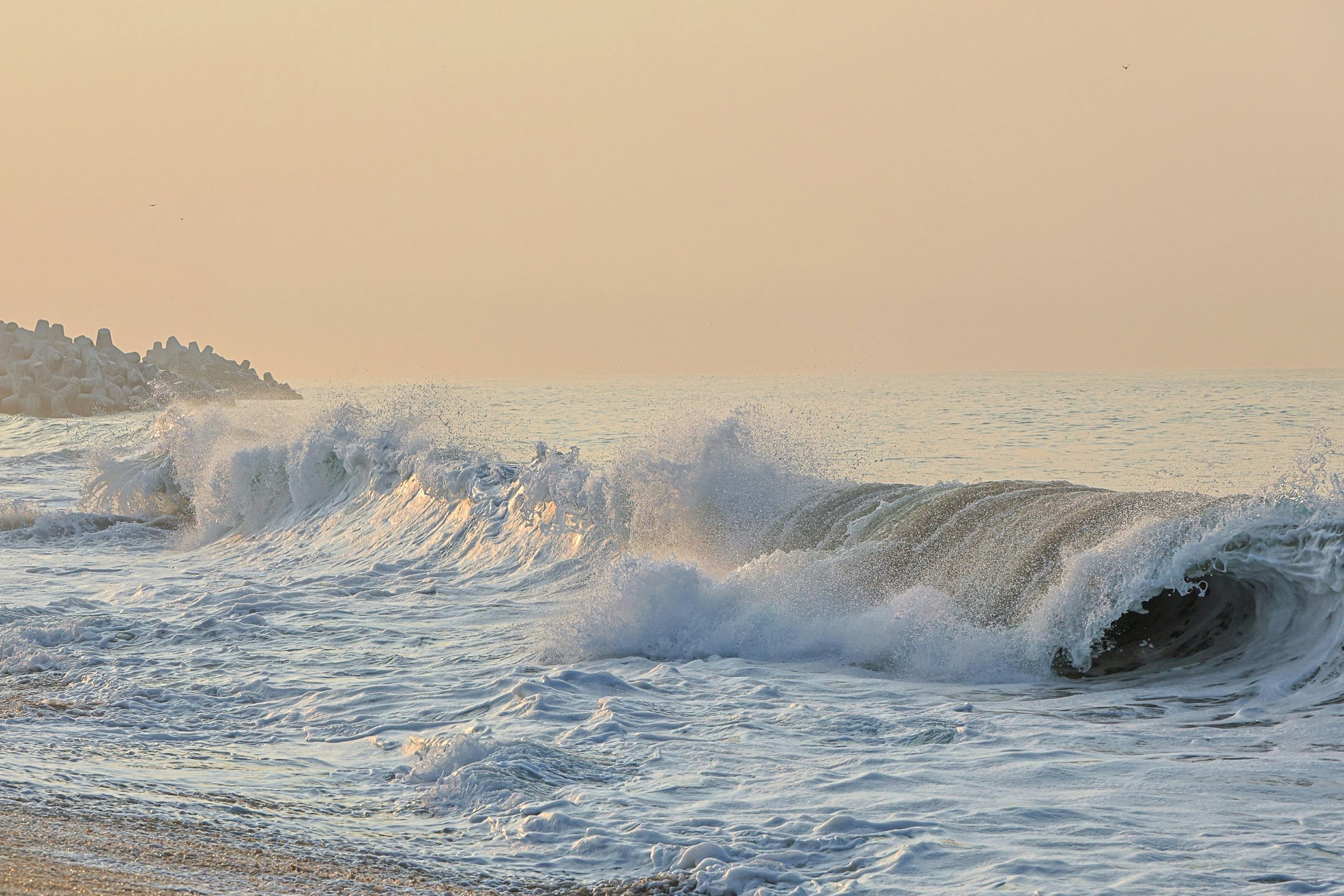
dreaming of a gorgeous, baleful wave:
liquid obsidian. Who knew that planets can lose their atmospheres?
It happened to Mars. But—Chill! This ain’t all about us,
some sage rebukes the general wail: We’re fucked.

Kathy Acker dubbed Leda the girl who "fucked
a swan," quaintly figuring god-bird as ingenue’s object. Doom
like that she mothered, thing of grandeur from afar, strikes us
in closeup as a congeries of pratfalls: plastic spoons
not pitchforks. Meanwhile, the sublime (e.g. music of the spheres)
disappears as we scout the skies for radio waves

replying to our zealous SETI crew, those experts at waving
while drowning. Hey, come on down and share our unfucking-
believable buzz, our surf’s-up thrill in sparkling spheres
of gain efficiently juiced by grief so vast it dooms
detail, all that’s small and neighborly
. Spoon-
cuddled lovers trill, "This world belongs to us,"

cocoon in their angsty kitsch plurality—but what of "us"
writ large? Who dares say "we" and mean that abstract wave
of species-being; speak for all specific drops? We’re spoon-
fed schemes for terraforming Mars, framing epic fuck-
ups here below as reculer pour mieux sauter. But our doom
wasn’t built in a day. What nerve, expecting the greater heliosphere

to welcome the pirates who ravaged Earth’s excellent atmosphere!
Just breathe, be here now someone chirps as I mourn that total us,
multi-billion-headed, foundering, self-doomed.
Or say the fail-civ gets a clue; looks like annihilation’s waived—
but wait! Don’t suns flame out? And then their planets are fucked,
perforce. O what to do when the dish runs off with the spoon?

"You could kill a man," my boyfriend quips, "with a spoon."
It’s 1966, I’m rather new to the girl-o-sphere,
so indulge these stoned, mock-macho bon mots. Fucking,
what am I thinking? Guys’ strutting maybe isn’t even aimed at us
chicks. They star in grisly drama (there’s a draft); we chattel wave
from the burning tower. Same as Troy, really: decorate their doomsday.

Spoon up the grief-soup, lick your plate. Then turn, salute the never-us:
atmosphere, Earth system, dark-carved whelm of my magical dream-wave.
Fuck glory, feathered or bare. Pull up your drawers. Now die undooming.

A Drinking Game

When it came to the treatment of diseases, the ancient Romans had no shortage of magical remedies . . . . Nails from tombs and crucifixions were sometimes even worn around the neck as talismans against fevers, malaria and evil spirits . . . [Bent] nails that had been strewn around burials . . . . [were thought] . . . to bind the spirits of the dead to the grave to keep them from wandering around.
— "'Death Nails' in Tomb Reveal an Occult Practice" by Franz Lidz, The New York Times, 3/28/2023


It’s zero hour. One Cause—never mind the causes.
A soldier says what he sees: "corpses, corpses, corpses."
Those sleek with the mother’s milk of spells and curses
(but science is real—we’re still waiting on fabulous cures)
pop mood pills in the ruins. Slava Chaos!
If only it would pass, this reeking chalice.

If only it could pass, this preposterous chalice.
Suppose the occulted causes
of putative chaos
were unveiled? Trench burial for the corpses
of the indigent. Stillborn. The despised incurables.
Nails filched from crucifixions counter curses,

authentic detail for the accursed
mise en scène. And here it comes again, the idiot chalice.
Good people jog in T-shirts, "Run for the Cure!"
But how can cures be one, or causes
straight? Stochastically strewn, these uncollected corpses
are a metonym for chaos—

but what if in the chaos
someone’s monetized the curses
that rend our enemies? (We shall harrow the dust with corpses,
slurp the dregs from this risible chalice!)
Ignoring such conundrums, the cause-
kings hold sway: technicians, when we wanted curanderas—

for isn’t it true that the most ingenious cures
predictably foster variant strains of chaos?
The quest to nail a definitive cause
of death never slowed the conglomerate curse
that dogs our days. If only it could pass, this overdetermined chalice!
If only we didn’t share our beds with corpses.

No magic nail has power anymore to keep the corpses
lying flat. They warned you years ago: there is no cure.
If only it could pass, this illustrious chalice,
last mouthfuls laced with Gehenna’s signature chaos.
And yet. When riding a curse
down the chute of contemptible causes,

treat courteously with corpses. Solve for chaos.
As if who can’t be cured might yet be healed, trim your curses
like sails. Lift the ferocious chalice, sum and tomb of omnipotent causes.

9 Books About the Chinese Immigrant Experience

When I emigrated from China in my 20s, I was foolishly optimistic, eager to forge my own path in North America. I had no idea what I was stepping into. I didn’t know I’d get tongue-tied in my new language. I didn’t realize how often I’d have to move, chasing opportunities to sustain myself. I didn’t expect that without a long, shared history, people I thought were close friends could easily drift away. I didn’t expect the toll it would take on my self-esteem, the bone-chilling isolation and loneliness, or the social failures that slowly rewired my brain, leading to crippling anxiety and depression. I had no idea that immigration would be a process of breaking myself down to reconstruct something new from the debris.

In my debut novel, The Immortal Woman, I wrote about a young Chinese immigrant who works tirelessly to erase her birth identity and become a “true Westerner.”  It wasn’t autofiction, but my years of wild flailing offered much inspiration. I also needed to understand the origin of immigration. The young immigrant’s mother in my novel was a reluctant leader of the student Red Guards during the Cultural Revolution, and later a reporter at the state newspaper. Her years steeped in political trauma shaped her conviction about the superiority of the West, a belief that precipitated her daughter’s tumultuous upbringing and eventual emigration. With the generational story of this mother-daughter pair, I hope to shed light on the under-examined source of internalized racism, and the perennial tension Chinese immigrants face – the suspicion of “dual loyalties,” the push and pull between the pressure of assimilation and the allure of Chinese nationalism.

These 9 books offer a diverse range of Chinese immigrant experiences in North America, weaving together tales of aspiration, adaptation, and identity across generations. Each story highlights the tensions that arise between staying true to one’s cultural heritage and the demands of assimilating into an unfamiliar society. From dealing with culture shock to navigating language barriers, and confronting systemic racism, to the deep emotional and psychological toll of intergenerational trauma, these writers offer intimate glimpses into the journey of building a new life abroad, while capturing the complexities and sacrifices that come with the search for a better future.

Denison Avenue by Christina Wong

This one-of-a-kind novel intertwines visual art and prose to portray the life of an elderly Chinese Canadian widow navigating gentrification in Toronto’s Chinatown. After her husband’s death, she takes up collecting bottles and cans, forging new friendships and confronting racism along the way. As she navigates a rapidly changing neighborhood that often neglects its elders, she learns to rebuild her life with resilience and hope.

Who’s Irish? by Gish Jen

This now classic collection features eight stories that delve into the Chinese American experience, capturing the generational tensions and cultural conflicts between immigrant parents and their American-born children. From a grandmother grappling with her mixed-heritage granddaughter’s upbringing, to an American venturing to China to reconnect with his roots, only to face the stark realities of his romanticized expectations, Jen delves into the complexities of identity, family dynamics, and the elusive idea of belonging. With a sharp satirical eye and a perfect blend of humor and wit, Jen exposes the contradictions and challenges of navigating dual cultures, questioning what it truly means to be American. 

The Light of Eternal Spring by Angel Di Zhang

Zhang’s debut novel traces the journey of Amy Hilton, a New York City-based photographer from a small Chinese village, as she returns to China to process her mother’s death. Blending magical realism with vivid memories of her childhood, Amy’s quest to heal by confronting her past and rediscovering her roots offers a poignant exploration of family, identity, and the transformative power of art. 

Everything I Never Told You by Celeste Ng

In a small Ohio town during the 1970s, a mixed-race family grapples with unfulfilled ambitions, burdened by the weight of racial discrimination and cultural expectations, setting them on a tragic path in their quest for belonging. The Lee family falls apart after daughter Lydia’s body is discovered in a lake. Navigating chaos and heartbreak, it is the youngest Lee daughter who discovers the true circumstances of her sisters demise. This psychological thriller is contemplative, heartfelt, and haunting.

Do Not Say We Have Nothing by Madeleine Thien

In present-day Vancouver, a young woman embarks on a journey to untangle the history of her broken family, guided by her connection with a girl from China. Their fathers, both musicians,  shared lives that were deeply entwined during the Cultural Revolution, leaving generational reverberations that shape the present. . This sweeping, politically charged novel, grounded in years of meticulous research, offers a kaleidoscope of insights into the Chinese psyche. Deeply personal yet universally resonant, it vividly captures the minutiae of life within China while transcending cultural and geographic boundaries.

We Two Alone by Jack Wang

Wang’s stunning debut collection captures the diverse trajectories of the Chinese diaspora over many decades and across five continents. The stories span a daring young laundry boy in 1920s Canada who disguises himself as a girl to play organized hockey, a Chinese family in South Africa navigating life in apartheid South Africa, a Canadian couple engulfed by the turmoil of the Second Sino-Japanese War in Shanghai, a Chinese diplomat working to save Austrian Jews from the Nazis, and an actor in New York struggling to revive his flailing career while mending his fractured marriage. With a dazzling ability to bring history to life, Wang weaves narratives of anguish, sacrifice, longing, faltering relationships, and the search for belonging. Written in fluid, precise prose and imbued with deep empathy, these stories illuminate the depths of the immigrant experience. 

Swimming Back to Trout River by Linda Rui Feng

In a small Chinese village in 1986, ten-year-old Junie wrestles with the idea of leaving her serene life with her grandparents to join her estranged parents in America. As her father, Momo, attempts to  reunite the family by Junie’s twelfth birthday, long buried family secrets from China’s decade of political turmoil threaten to surface, jeopardizing their hopes for a fresh start. The novel skillfully weaves elements of Chinese culture and history, including the hardships of the Cultural Revolution, the enduring importance of filial piety, and the interplay of fate, destiny, and chance. Feng narrates this heart-wrenching story with lyrical, melancholic prose and a poet’s sensibility. 

That Time I Loved You by Carrianne Leung

Set in a 1970s Scarborough suburb just outside Toronto, this collection reveals the hidden struggles and shattered dreams of a diverse immigrant community living behind the polished facades of a seemingly idyllic new subdivision.  From a spate of neighborhood suicides, to a student dealing with a racist teacher, and an elderly Chinese grandma forming an unexpected bond with a queer girl, Leung mines the promises of suburban living to show the cracks in the Canadian immigrant dream and the unspoken divides between neighbors, torn by socioeconomic and racial lines.

Silver Repetition by Lily Wang

This tender and poetic coming-of-age novel follows Yue Yue, a Chinese immigrant girl navigating difficult relationships – with her Canadian-born sister, her moody and unreliable new boyfriend, her sick mother, and her own fractured memories. Halfway through the book, Yue Yue’s inner child comes into focus, offering a source of comfort through revisiting her childhood in her homeland. The narrative is experimental and nonlinear, with repeated loops of loss and recovery; unfolding like a dream and doubling as a potential guide for healing.

9 Books That Will Make You Want To Go Outside And Touch Grass

Do you know that moment when you can’t stand to look at your phone another minute? The messages keep coming in, red news alert bubbles are pinging, an email pops up from your boss reminding you of that thing you’re trying to compartmentalize. You fling your phone down onto the couch (that was targeted to you on social media) where it bounces a few times, before settling into a crevice you’ll be frantically scrabbling for when it’s ringing incessantly 20 minutes later, an automated voice reminding you of your upcoming root canal.

When the bad news just keeps flooding in, there’s only one thing to do: leave your device behind, go outside, and touch grass. It’s naturally green! It smells fresh and funky! Worms live down there—can you even believe it?!

During the early days of the pandemic, I was doing “Yoga with Adriene” and working on the poems for my image-text collection, Yes I Am Human I Know You Were Wondering, from a small square of grass behind my city apartment. There were only two options: online or outside. All summer, I watched morning glories take over the yard and thought about the ways the world could change. 

Getting offline and into the real world for a little fresh air and perspective shift can change your mood and help you reconnect with yourself and your community. Here are 10 books that will make you want to go outside and touch grass. 

The Nature Book by Tom Comitta

Using only found text, Comitta has compiled a “literary supercut” of writing about nature from three hundred works of fiction. Without any human characters to follow, readers are forced to reconsider the arc of the story itself, grappling with the romanticism of a world that could fully exist without us (and would probably be better off).

Nature Poem by Tommy Pico

In this book-length poem, readers follow young, queer, American Indian (or NDN) poet, Teebs, who can’t write a nature poem. The stereotypes about nature and Native Americans weigh too heavily: “Who is the ‘I’ but its inheritances,” writes Pico. Deconstructing the colonizers’ conflations about nature and his people takes time, pop culture, sex, and music, but eventually, Teebs gets there. By the end of this epic, both speaker and reader come to a new understanding of what “the natural world” could mean. 

A Girl of the Limberlost by Gene Stratton-Porter

Published in 1909, naturalist Gene Stratton-Porter tells the story of Elnora Comstock, a poor young woman living on the edge of the Limberlost Swamp. The novel includes: 
✅ A dramatic quicksand death
✅ Themes of logging and environmental exploitation
✅ Moth collecting by lamplight
✅ A teenage coming-of-age journey

Queer Nature: A Poetry Anthology edited by Michael Walsh

Queer Nature features 375 pages of expansive, contemporary nature poems centering LGBTQIA+ voices. Featuring work from over 200 writers, including Kaveh Akbar, Jericho Brown, Natalie Diaz, Eileen Myles, Danez Smith, and Ocean Vuong. Michael Walsh curated the anthology with the intention that he “didn’t want to restrict the nature poem to the outdoors or to the ‘wilderness,’ a colonial term, in recognition of how built places are communities, habitats, and contested sites…”

Stay and Fight by Madeline Ffitch

In her debut novel (a finalist for the PEN/Hemingway Award and the Lambda Literary Award for Lesbian Fiction, among others), Ffitch presents a feminist reimagining of collective living. When protagonist Helen arrives in Appalachia to live off the land, everything starts happening all at once. But, with the help of neighbors who turn into family, she meets (sometimes messily) each challenge that shows up at the door. 

Hoarders by Kate Durbin

An NPR Best Book of 2021, Hoarders will make you look around your apartment and think, maybe now is a good time to bring all of this garbage to the thrift shop. Better yet, get rid of everything and go live in a minimalist yurt. In vignettes organized around individual episodes of the popular reality tv show, Durbin combines found language and observations to explore the stuff we can’t get rid of and its connection to our psyche. 

The Healing Woods by Martha Reben

A memoir published in 1952, the book follows New York City-born Reben as she leaves her bed at the tuberculosis sanatorium in Saranac Lake in upstateNew York (against medical advice) and treks 11 miles into the woods with a fishing guide named Fred Rice. In a true retreat to nature, Reben spends the next six years living in a tent from spring through fall, before finally moving back into town. 

Earth Science by Sarah Green

“…naked human on a hot summer night, / one of us taking a turn / being the river, one of us taking / a turn being the bird.”  The poems in Green’s collection explore all of the hot stuff of our world—from cracker crumbs in the sheets to the urgent need to pee in bumper to bumper bridge traffic. On second thought, forget grass—this collection will make you want to walk outside and stare up at the infinite stars.

The Summer Book by Tove Jansson

An artist and her granddaughter share the summer months on a fairytale island in Finland. Best known as writer and illustrator of the popular Moomin books, Jansson pulled from her own life for this work of literary fiction, described as her favorite novel she wrote for adults. Written the year after her own mother’s death, The Summer Book explores love and death amongst the moss, flowers, driftwood, and seal skulls. 

Exclusive Cover Reveal of “These Memories Do Not Belong to Us” by Yiming Ma

Electric Literature is pleased to reveal the cover of These Memories Do Not Belong to Us, the highly-anticipated debut novel by Yiming Ma, which will be published by Mariner Books in the US and McClelland & Stewart in Canada on August 12, 2025. You can pre-order here in US or here in Canada.

When I was a boy, my mother used to tell me stories of a world before memories could be shared between strangers…

In a far-off future ruled by the Qin Empire, every citizen is fitted with a Mindbank, an intracranial device capable of recording and transmitting memories between minds. This technology gives birth to Memory Capitalism, where anyone with means can relive the life experiences of others. It also unleashes opportunities for manipulation: memories can be edited, marketed, and even corrupted for personal gain.

After the sudden passing of his mother, an unnamed narrator inherits a collection of banned memories from her Mindbank so dangerous that even possessing them places his freedom in jeopardy. Traversing genres, empires, and millennia, they are tales of sumo wrestlers and social activists and armless swimmers and watchmakers, struggling amid the backdrop of Qin’s ascent toward global dominance. Determined to release his mother’s memories to the world before they are destroyed forever, the narrator will risk everything—even if the cost is his own life.

Powerful and provocative, These Memories Do Not Belong to Us masterfully explores how governments and media manipulate history to control the collective imagination. It forces us to see beyond the sheen of convenient truths and to unearth real stories of sacrifice and love that refuse to be eradicated.


Here is the cover, designed by Ploy Siripant.

Yiming Ma: “At the beginning of the cover process, I must admit that I was nervous. Within the literary community, legends of well-known and debut authors alike digging their heels in and ending up in a quarrel with their publishers about their book cover are plentiful, and I dreaded that nightmare. Worse, I did not anticipate that my book would be a simple cover to design. Since These Memories Do Not Belong to Us is a constellation novel consisting of twelve radically discrete narratives written in twelve different styles, I had no idea how my brave cover designer might achieve such a feat. In my imagination, I saw a zodiac of motifs from each Memory Epic (i.e. a sumo wrestler, a vintage Patek perpetual, an AI Angel) – then lamented how inevitably crowded that cover might appear.

With her first swing, Ploy knocked it out of the park. Although there were multiple covers that the Mariner team presented, I immediately knew which one my brilliant US and Canadian editors were going to sell me on, remembering from the margins of my manuscript how they had both marked the Chrysanthemum motif as indelible, stemming from a critical scene in which the yellow flower blooms from the deceased body of a beloved character.

I love how the central Chrysanthemum, a vibrant flower often associated with death and grief in Asian cultures, explodes into a phantasmagoria of yellow, green, brown and white pixels, often overlapping in mosaic patterns. Ploy’s extraordinary cover truly does justice to the multitude of styles and stories in the novel, equally evoking the bittersweet nature of beauty with the speculative, technological and dystopian elements of the book like a true master of her craft.

Along our journey, Ploy and I did play with adding the Chinese translation of the title (inspired by Ed Park’s astounding cover for Same Bed, Different Dreams), but we ultimately decided to prioritize clarity and frankly, leave some space for advance praise. Instead, we honed in on smaller details: a deeper arch of the stem to symbolize the weight of the book’s themes, but not so much that a reader might worry that there was little hope to be found in this novel centered on love, survival and humanity; a browning of the leaves; the impossible task of finding harmony in the chaotic beauty of the pixel dispersion.

The final note I’ll add, which I’m not even sure Ploy knows, is that I struggled deeply with whether to use my real name for the publication of These Memories Do Not Belong to Us. That’s a story for another time, but despite my affection for my birth country, and the fact that my book is fiction, there is always the risk of misinterpretation by Western media. But in the end, I decided to have faith in my readers, believing that they would recognize my novel’s themes to be universal, no matter how devastating.”

Ploy Siripant: “I was instantly drawn to this novel because of its title, and frankly I asked to work on it! I loved how long and lyrical it was, and knew that typography needed to be a prominent design element on the cover.

Once I delved into the extraordinary stories, the Chrysanthemum stood out as the perfect motif. My goal was to convey the nostalgic memories and dystopian future within one image, so I started playing around with different treatments on vintage botanical drawings: the yellow flower immediately evoked a strong connection to Chinese and Asian cultures. And the pixel dispersion effect was the perfect solution to expressing the speculative technology in the book and tying all the elements eloquently back to the title. 

I was thrilled that Yiming resonated with the cover on the first pass! With his thoughtful feedback, I made some tweaks to push the design, like replacing what was originally a soft yellow sky with the more metallic background in the final version. 

I am so happy with where we landed, and to have played a part in such a timely and compelling novel.”

Can the Classic Road Trip Novel Survive the Climate Crisis?

Climate change is conspicuously absent from most realist, literary fiction set in the present day. Hurricanes, wildfires, floods, droughts and other natural disasters are part of our daily lives, yet they’re absent, save for brief mentions of a news clip for a college protest from much of our fiction. 

Madeleine Watts’ works have set out to change that. Her debut, The Inland Sea, is a coming-of-age tale about a college student and emergency dispatch operator in Sydney, Australia, whose life starts to descend into chaos as she grapples with both large scale disasters, like wildfires and more personal ones. 

Her new book, Elegy, Southwest, out last month, considers a married couple in crisis as they road trip across the American Southwest. Wildfires rage, the Colorado River is drying up, and Eloise and Lewis navigate the grief — him over the loss of his mother, her over the sense that she no longer recognizes their relationship.  

Watts and I talked via Zoom about road trip novels, why the American Southwest is such a resonant place for her, and what it means to write elegies in the backdrop of the climate crisis. 


Courtney DuChene: I’m struck by how Elegy, Southwest juxtaposes interpersonal crises against the apocalyptic scale of the climate crisis. How do you see the resonance between the personal and the struggle we’re all in against climate change? 

Madeleine Watts:  I think the first thing I was interested in making clear in the book is the way in which everything that happens to us — every calamity, every terrible thing — happens now within the shadow of the climate crisis, because it’s in the air around us even if it’s not ever present in our minds. 

Climate change is slow until it’s very fast, and it’s invisible until it’s not. It’s always there. I’m very interested in the fact that personal experience, at least in my adult life, has always been threaded through and shadowed by anxiety about the climate crisis, and grief and fear. I think they bleed into one another in interesting ways — sometimes productive, sometimes not productive. Sometimes I find it strange that it doesn’t show up that much in art. 

CD: It’s a theme that also carries over from your first novel, [The Inland Sea]. How have you changed your approach to this theme between one book in the next? 

MW: So this book, the first sparks of it were happening when I was doing the American launch for the first book. So when I wrote the first book, it was very much a first book. I started off thinking I was writing one thing, that it became something completely different. I didn’t start out thinking that I was writing about climate change in that first book, I thought I was writing something completely different. Then my interests in those sorts of things just kept bleeding through and I paid attention to what I was writing about rather than being really mindful about what I was writing from the get go. 

The first sentences of this book came out of some stuff I wrote in April 2020,  right in the early stages of the pandemic. But I actually started to figure out what I could do with those things when I was having interviews like this and people were asking me questions about the way that I had written climate change into the first book and I had answers for them, but I was then forced to really articulate those things and really think about it for myself. 

At the same time, I started doing a lot of teaching, and I was teaching a lot of courses on writing about climate change, and nature writing and things like that. It was in the process of answering those questions in public and thinking in an academic way, that I started to have much more developed ideas about how I specifically want to answer these questions. 

I love a plot-driven novel, but I don’t know that that standard novel that stems from the 19th century is very good at capturing some of these things. It’s a form that came from a different time. I was interested in finding a different structure that could be relatively digressive but still come back to a particular point and that could also tell the personal story of something that is happening to you right now, while making clear that the things that happen to us in our present are intricately connected to things in the past that might seem like they have nothing to do with us and a future that might seem like they have nothing to do with us. 

The impetus for this book came out of really, completely falling in love with the American Southwest in a way that you fall in love with a person.

Those were a lot of the things I was thinking about. I was reading a lot of people who are a lot smarter than me, who have thought a lot about climate change. I talked a lot when the first book came out about Amitav Ghosh and I continue to think that Amitav Ghosh is really amazing.  I was also thinking a lot about Daisy Hildyard and her ideas in The Second Body. And I kept thinking that was sort of like a big, big thing in the back of my mind while I was writing this book. 

So this book is a more considered response to some of those questions that were present in The Inland Sea, but I was too young and naive to have good answers about four or five years ago. 

CD: It’s interesting, too, that The Inland Sea is kind of this coming of age story set against this. And in this book, the narrator is more in her midlife as she is considering these questions. 

MW: Yeah, that’s probably following my own aging. 

CD: You talked about how the form of the novel that we’ve traditionally come to know, which started in the 19th century, doesn’t really work today. In this book, you’ve written a road trip novel, which I think of as being really an American and an American West more specifically form. How did the form of the road trip novel suit your needs and how did you want to diverge with it in this book to focus on these themes? 

MW: The impetus for this book came out of really, completely falling in love with the American Southwest in a way that you fall in love with a person. I’ve never loved a place or a landscape so much. I wasn’t living there. I was living in New York City. but my mind very much wanted to be there. 

And when you’re thinking about it and when you’re absorbing secondary media about it when you’re not there, there’s a lot of road trip stuff. It was a conscious choice to have that road trip element of it. I did two research trips in 2018 and 2019 knowing that I wanted to write about water in the Southwest and they formed a lot of the background detail about the physical landscape and that was in a car. So to some extent it was sort of born out of something relatively unimaginative. It was just how I had inhabited those landscapes. 

I also really wanted to play with the tropes of the road trip. 

The other thing that I was thinking about a lot when I was writing it was the ways in which I have most responded to road trip novels and depictions of America. It’s always been influenced by the fact that I’m not American and I was trying to find my own place and think about how the ways in which I, as an outsider, inhabit these landscapes, the ways I feel American and I don’t feel American, the ways I will never be American, but have sort of fundamentally become American. It’s a real in-between thing that I certainly didn’t realize when I blithely moved to America in 2013 and that I didn’t realize would impact me for the rest of my life. The things that I was thinking a lot about were the kinds of work that outsiders to America who have made things like that. So I reread Lolita a couple of times. 

CD: I was thinking about Lolita so much when I read the book. 

MW: It’s the best road trip novel and it’s so gorgeous. I would look at some of the descriptions — there’s a way that Nabokov notices America, which is just so fundamentally that of an outsider. I reread the very first sections and there would be these ways that he would describe these sublime forests and birds and the sugar that’s on the table at a diner. 

There’s a way that Nabokov notices America, which is just so fundamentally that of an outsider.

Lolita is definitely in this book in that respect. There were also a few films I was rewatching, American films like Paris, Texas and The American Friend. Early on, when I was writing the book, I went to see Alice in the Cities at Film Farm. And that starts in the U.S. and it’s a road trip around the U.S., but then it takes off and then it’s a road trip movie around Germany. And so it was transplanting, the American road trip movie, but it was no longer connected to America and the physical geography of the United States. It’s this international idea of America. 

There were other things that I was returning to,like travelogs written in the 20th century by like Simone de Beauvoir, where they would travel around America and they would have very French things to say about what they were seeing 

I kept reaching for those ways of talking about the landscape and thinking about the landscape, from a slightly outsider’s perspective. I didn’t make a decision about what nationality the first person narrator was going to be until I was halfway through the first draft and then it became very clear that she had to be Australian because I’m not really capable of seeing the world without my own Australianness. I am not a creative or good enough writer of the first person to be able to take my own experiences out of it. There are whole digressions about eucalyptus trees because I’m an Australian and that’s what I see. 

CD: There are ways in which Eloise, the narrator, is responding to both the man-made artificiality of West — neon signs and buildings in a desert — and also the natural artificiality, through the non-native plants she recognizes as being from Australia. It underscores that this is a place that Americans built out of a somewhat natural environment. I had a geology teacher who told me that people should not be living in the American West. The land is too young and too unstable. 

MW: I’ve been told that. Whenever I try to figure out what it is that draws me to the Southwest, I think about how the Southwest of the United States and the Australia that I grew up in looks really, really similar. They have the same sorts of weather, the same sorts of systems, like wildfires and like floods. It’s the same kind of weather. You have really mild winters. 

So some of the things that I would see in the Southwest, which I’ve worked into Eloise’s understanding, are just things that struck me as really different. Like the Southwest is in a megadrought. I grew up in a drought in Australia. I grew up under water restrictions. There would sometimes be stories on the news about people getting into a proper fight with somebody who needed to be hospitalized because one guy had been hosing down his driveway and that  was against water restrictions and someone else would come along and beat him up. I respond really viscerally when I see somebody hosing the cement or hosing the pavement. It makes me feel very uncomfortable and I think that you can’t do that with water. And I would see people hosing down cement in Phoenix, and I was like, you have so little water. What are you doing?

And because  it often felt like driving through somewhere that I was incredibly familiar with, it was a very uncanny feeling of being in those landscapes. That’s my own thing, but I felt it was useful to bring into Eloise’s personality and understanding because she can sort of see and narrate this place as an outsider and notice these things. When you’re used to being in a place, it’s harder to see what’s strange about where you live and where you’re really comfortable. Sometimes you need somebody to come in and say, l this is crazy. But by the same token, she’s [Eloise] always aware that this is not her home and there is that sort of distance. 

CD: You mentioned when you went to the Southwest, you fell in love with it as someone would a person and in some ways, that is what Eloise has done in the novel. She’s there with her husband, Lewis, who is from the Southwest. There’s a similar attempt to control the uncontrollable that happens with the landscape and Lewis as a character — he’s trying to control his own body and his own grief. … Whereas Eloise is in this particular state of indecisiveness which doesn’t quite resolve by the end of the book. I’m curious how you see the characters acting as foils for one another and how that speaks to Eloise’s broader relationship to the place? 

MW: I think that both of those characters are in this state of real transition. The title of the book came to me before anything else —or very, very early on. I knew that it was going to be called Elegy, Southwest. Then I went and — because I’m diligent — I read like four books on the history of the elegy to make sure that I knew what I was talking about. I was very interested in when you write an elegy, to some extent, it’s an attempt to control the grief, but you also can’t write an elegy without your own shadow falling across the thing that you elegize because you’re writing it. That kind of conundrum is there in anyone’s elegiac writing. 

When you write an elegy, to some extent, it’s an attempt to control the grief, but you also can’t write an elegy without your own shadow.

I wanted that to be there between those characters that there is this attempt to control particular things, particularly about their bodies, that can’t quite be controlled and that’s mirrored in the landscape. It’s not necessarily one to one. It’s not that deliberate, but it is how they are. It’s how they’re moving through things. 

I knew that it was a book about grief. It’s a book that deliberately presents itself at the beginning as being about one type of grief and then introduces three or four other different types of grief so by the end there’s a spectrum of grief. I was very interested in making sure that it was represented as ambiguous grief. So that it becomes clear that the things that Eloise is grieving don’t have a resolution. They don’t have an answer. They don’t have an ending. 

When a grief is ambiguous — like if somebody dies, but you don’t know where the body is, if somebody just disappears — it creates this sort of ripple. Grief generally becomes something that you live around, but there is no answer. I think, particularly given the themes of the book generally, I didn’t want to present anything in the end that tied everything together or foreclosed that sense of ambiguity. There’s a tension between an attempt to control and the reality that you cannot control things, and it’s built into that in a relationship. 

CD: It’s interesting that the title and in some ways the form of the elegy came to you first. Is that the way you typically work? 

MW: No, never. I mean, this is the second book that I’ve written, so I don’t always know. But I know that The Inland Sea always had a different title until the very end. I wrote a novella in 2015 that I just controlled-searched some words in the document and picked it out right before I sent it off to an editor. 

I found it really, really helpful to be able to have the title [of Elegy, Southwest from the beginning], but I don’t think I’ll be lucky enough to have that happen a lot or ever again. 

CD: I hate titles so much. You talk about knowing you wanted to write a book about water. And in some ways this book is about water, and the lack of water with the Colorado River. But there’s also really strong imagery of fire, both wildfires and controlled burns in the book. At one point Eloise muses on O’Keeffe’s landscape paintings and their relationship to both water and a more dry, arid landscape and how that reflects an internal struggle O’Keeffe went through. Is there a way you think the imagery of fire and water in the book is working in a similar way for Eloise? 

MW: I think so. The Georgia O’Keefe story was one that I read in a really, really good biography of Georgia O’Keefe by Roxana Robinson. I was completely obsessed with this fact. It’s not cut and dry. Roxana Robinson is surmising. But Georgia O’ Keefe had a breakdown when she was about 35 and she couldn’t look at water, couldn’t drink water, could not be around water. Before that, she’d always painted these New England landscapes filled with water. And after that, she spent most of her time in the desert, and she never painted water. 

I was obsessed with this elemental fear which should be so outside of you — water should just be water and fire should just be fire. It is so outside of you that it’s like being afraid of air or food. It’s kind of an insane thing to be afraid of because they’re elemental. I think that everybody really responds to them. I could only sort of feel it bodily, like what would it mean to be afraid of water? I’m somebody who really loves water. I love swimming. I swim all the time, and I find it really hard to be away from water.

To some extent, I am very interested in what water and fire do as twinned elements and what they represent in writing. There’s a lot about water and fire in The Inland Sea as well. These particular landscapes can flood and there can be a lack of water as well. There’s always an awareness of water and fire as well. It’s burning in Los Angeles right now. It’s burning in Australia right now. 

I think that elemental twinning is there for all sorts of reasons and I could try to tell you I had really precise reasons for why I put them in there. But I think that I feel both of those things strongly in my own body and in my own mind and they will probably be in everything that I write. For me, the world is structured by those two things, by water and fire. 

CD: At the top of our conversation, you talked about how there’s not really a lot of climate change in realist fiction. It doesn’t necessarily deal with it. I feel like there’s a lot of speculative fiction about it. I’ve also noticed that absence conspicuously in art and media and everything around the pandemic. It’s just not there. Everything is set in 2019 for no particular reason. Do you think we’ll start to move in a more realist direction with these topics in art as it becomes more present [in people’s daily lives]? 

MW: I hope so. This was one of the things that, when I was writing The Inland Sea, really started to annoy me. Climate change was something that was in speculative fiction, therefore it was always about something that happened in the future. Then in literary fiction, it wasn’t there. I love speculative fiction, and I love a lot of sci fi writers, and I love Octavia Butler, and they’re the progenitors of climate change writing, but that’s not the kind of writing that I’m interested in doing. 

So it started to really frustrate me and then I started to see that there are literary books that can be reread as climate change novels that were not initially read as climate change novels from the 90s. I think The Rings of Saturn by Sebald is a really great climate change book. And it was a book that I was rereading a lot while I was writing this book. 

I do think that there is more and more climate change threaded through [fiction]. I’m not telling every writer that they need to write about climate change. That would be boring. I just find it odd that people writing about what it’s like to be alive right now will not even mention it. It’s so deeply threaded through what it’s like to be alive and if you don’t even mention it, you’re not really being honest, you’re not doing a good representation of your times. 

An Island Where Bodies Wash Ashore Like Driftwood

An excerpt from Wild Dark Shore by Charlotte McConaghy

Fen

She washes in with the storm, draped upon a tangle of driftwood. The girl sees her from among the seals. She picks her way through their fat sleeping bodies and moves to the surging waterline. Rough waves carry the lump closer, in with the tide. A shape of milky white lit by the moon. A shoulder, she thinks. And seaweed for hair. A hand draped delicately over wood.

The girl wades into the black roar. She dives under and swims out. Reaches for this bulbous thing to help steer it free. When her feet hit sand she rises, dragging the driftwood behind her. Swell slaps at her thighs and hips but she knows how to move with the water so as not to be tumbled. Preparing all the while for something terrible. Something altering. But a last wave sends the tangle onto the beach and the girl parts the curtain of snarled kelp to reveal a face, and it is not swollen or blue or nibbled; it is breathing.

The girl’s name is Fen and she lives here now, on this exposed patch of coastline with the petrels and the shearwaters and the penguins and the seals. She hasn’t been up the hill in a while, to where her family dwells in the lighthouse. She doesn’t like to leave the sea. But tonight the storm, the woman. Lightning on the horizon and rain she can hear approaching fast. She thinks quickly, and then, rather than trying to pull the body free, she drags the entire driftwood barge up the black sand as far as she can. She allows herself another look at this face, at this creature carried in from a sea too vast to make sense of. A gift for them or something rejected? And then Fen runs.


This is a place of storms, but this storm, this one will be the worst they’ve endured since coming here. She knows it as soon as she reaches the crest of the hill and collides with the wind. It takes her off her feet. In the distance she can see the lights of the building. A white shape flies end over end through the air: a bedsheet from the clothesline. They all know not to hang things overnight; someone will be in trouble for that lost sheet. Behind it one of the tool trolleys careens through the grass, is lifted up off its wheels and dumped again, spilling its guts, and this—these precious items being left out—is even worse than the sheet.

In the end she doesn’t have to struggle all the way to the house. Her dad’s been watching and the second he sees her cresting the rise he is running. They meet in the dark, on the trail to the shore. Even his considerable size is nothing against this wind, and he’s stooped almost double as he gathers her toward home.

“Stop!” she shouts. “Dad! We need Raff.”

This is a place of storms, but this storm, this one will be the worst they’ve endured since coming here.

“I’m here,” says her brother, materializing to take her other side in arms almost as big as their father’s, both of them hurrying her on.

“Wait!” Fen says, knowing that time now will be divided into before and after. “There’s a woman.”


Dominic

You are not meant to have favorites, but my youngest is that. If only by a hair, and with a gun to my head. If I really, really had to answer. And not because we are most alike: that is my oldest and me. Not because we are least alike: that is my daughter and me. Maybe it is because he is curious and kind and so smart it can make your eyes water. Maybe it’s because he whispers to the wind and hears its voice in return. Most likely I don’t know why. But it may also be because, for one brief moment long ago, I wished him dead.


I leave my youngest safe and warm in bed; he is too little to be taken out into a storm, though he’d rather not be left behind. The rain has come, as I follow my two eldest to the beach. The seals have retreated below the waves. The penguins are huddled in their nests. Raff and I lift the woman between us and inch our way back up the long winding trail. No trees to give cover; there are none on the island, only mounds of silvery tussock grass and a passage that grows slower with each step into the wind. It screams in our ears. In this kind of storm there is a danger we could be tumbled off our feet and back down the hill.

“Keep going, mate,” I say, and ahead of me Raff does, dogged.

My daughter is saying the woman was breathing. That somehow, she was breathing, and I know Fen is silently urging her to keep on, she is willing this body to cling to life. I have less hope, but I also suspect that to have made it so far, to have survived in an ocean so wild, she must be strong, this woman.


I’ve seen a body taken by the sea, and the state of it will rid a man of any hubris. We are soberingly weak under its hammer. This woman, delivered by such a sea—one more powerful than most—is clinging on with a bewildering defiance. She has been opened on one side, all down the left of her, and I can’t imagine how there’s not water on her lungs, but my first concern is the hypothermia; her breathing and her heart rate both seem very slow.

Back at the house, my three children and I carefully remove the woman’s clothes, what’s left of them. I set Orly to the shoes and socks and allow Raff and Fen to help me with the rest, leaving only the undies untouched. Fen takes her own clothes off too—“You don’t have to,” I say—but without a word she climbs into the bed to press her warmth around this stranger. The only way, truly, to warm her up. My boys and I pile blankets over them and monitor the woman’s temperature. It rises slowly. Hours pass as we hover, watching and waiting, and I wonder what it is my daughter thinks about as she uses her body like this, to save another.

Later, when the woman seems warm enough and I don’t think we can delay it any longer, Fen gets dressed. There is blood on the sheets, and on her skin. She pretends not to notice. We turn our minds to treating the wounds, using tweezers to painstakingly pluck out fragments of cloth. The woman’s limbs are lean and strong, her head shaved. The face, which I have barely looked at, is clenched and angular. Her strong jaw works against her teeth. Once she is free of material and debris, I stitch the worst of the wounds, my fingers too big to be anything other than clumsy. We slather the scrapes with disinfectant and then as much gauze as we have before bandaging her body. There is fever now: she is scalding to the touch. She makes sounds that frighten all of us and I come to my senses and send my nine-year-old from the room. He makes a fuss, he wants to help, and I know he is more frightened of the storm than he is of this woman’s noises. I relent, let him stay. This feels like a night to be together.

We sit with her and bear witness to the throws. Outside the storm is rabid. When the windows shake, Orly whimpers but the old stones hold together. Inside the sea is still fighting for her, it retains its hold. I think, deep in the darkest hours, that even if she survives this night that ocean will have her back one day.


I brought my children to Shearwater Island eight years ago. I was not expecting the island to feel so haunted, but for hundreds of years the lighthouse we live in was a beacon to men who built their lives upon the blood of the world’s creatures. The refuse of those sealers and whalers remains to this day, discarded along the lonely stretches of black coast and in the silver shimmering hills. The first time Orly admitted he could hear the voices, all the whispers of the animals killed on this ground—including, for good measure, an entire species of seal bashed on the head and wiped out entirely—I thought seriously about taking my children away from here. But it was my ghost who told me they might be a gift, these voices. A way to remember, that surely someone ought to remember. I don’t know if that burden should fall to a child, but here we are, we have stayed, and I think that actually my wife was right, I think the beasts bring my boy comfort.

Mostly it is quiet here. A life of simple tasks, of day-to-day routines, of grass and hills and sea and sky. A life of wind and rain and fog and of smiles huddled around a heater and of books read each evening. Of hands clasping a hot cup of chocolate or the bend of a head against the weather, of wet clothes flung off at the door and trying to pick out the difference between a giant petrel and an albatross at distance. Of frozen food and sometimes downloaded movies and schoolwork and training and music. Of the gurgling roar of an elephant seal or the banana pose of a fur, of the flamboyant orange eyebrows of the last royal penguin colony in the world. Of seeds. Of parenting. Of grappling constantly with what to tell them about the world we left behind.

Ships come every so often to bring supplies and scientists. Despite its wonders, Shearwater is not a tourist island: it’s too remote, too difficult to reach. Mostly no one comes here but a handful of researchers studying the wildlife, the weather, the tides. Certainly people don’t wash in from the sea. I am having trouble making sense of how she’s alive—the ocean around us is perilous and so cold, and there is no land for many thousands of kilometers. She must have come off a boat, but it doesn’t make sense that there should be a boat close enough to our shores. The supply ship isn’t due for weeks and the only ships that pass by are way out at sea, following the passage south to Antarctica, and to come off one of those would mean certain death. Unless of course this boat of hers was coming here, to Shearwater.

In the morning Raff and I assess the damage. Gutters are down and water has come under the doors, but our lighthouse has held strong even in the face of such a battering. The power sources can’t say the same. My son and I walk up the hill to see that both wind turbines have come clean off their shafts. One of them is face down hundreds of meters away—it has flown—while the other is protruding up out of the ground in a salute to its own demise. The solar cells are scratched, and the roof of the shed has been lifted up and off, leaving the batteries within to take an absolute beating. I’ll need to replace that roof but for now we set up a tarp to try to protect the remaining batteries—too complex to move and rewire all the cabling. Half of them are dead, anyway. The other half have some power stored in them, and this will have to stretch a long way.

Surviving in remote places is all about setting up contingencies. If one thing goes, there’s another option to take its place. It’s never occurred to me that all the solar cells, half the batteries, and both the wind turbines could go at the same time.

Surviving in remote places is all about setting up contingencies.

“We’ve still got the diesel,” Raff says as we walk home. I can’t hear any fear in him, just a focused kind of concern.

One thing we can’t do without is heating. I don’t know if we’d survive the kind of cold it will be without heating. Normally we’d be straight on the radio to the mainland, calling for help. Repairmen, new parts, more gas, more diesel. Alas.

Raff and I walk home along the headland. There is no real reason to do this, but I am letting him guide the way and his feet often lead him here. Shearwater is long and skinny and divided into two parts, its northern side mountainous and mostly unexplored, its southern side smaller, more inviting. This is where the various buildings have been placed, including our lighthouse, the field huts, the communications station, and the seed vault. There is a finger of land that joins the two sides, an isthmus, narrow in shape and low in altitude. We call it the pinch, and it’s where the research base sits. The base is several long white shipping containers made of aluminum so as not to rust in the salty air, as well as several wooden cabins. A hodgepodge of seventeen little buildings built over many decades. A dining hall and kitchen. The labs. A hospital. The storage unit. Sleeping quarters. Until recently a buzzing community of people, the pinch now holds a collection of empty buildings. And just as well because there is water lapping at walls and doors. The research base looks like it’s floating on a pond.

“Bloody hell,” Raff says.

High tide has never been this high before.

I am shaken but I’m not about to let him know that.

We still have some gas for cooking and manually heating water, and diesel for the generator to keep the freezer running so our remaining food stores don’t spoil, but everything else is getting turned off. No more lights, no computers or phone chargers or stereo, no washing machine or vacuum cleaner, no power tools. The kids don’t complain when I tell them; keeping this place running is a never-ending exercise in problem solving, and they understand that. What I am concerned about is the power to the seed vault down at South Beach, and whether it’s gone too. I get Raff started on repairing the damaged gutters and pack myself an overnight bag. It’s a ten-kilometer hike south to the vault so I’ll stay the night in one of the field research huts down there.

First I look in on the woman. Orly is perched on the end of her bed, reading to her from a book on botanicals that his astounding mind has no doubt memorized. He has barely left her side since she arrived.

“How’s she doing?” I sink into the chair by the window.

He shrugs. “Seems okay? She’s breathing.”

“You don’t have to stay in here.”

“I know.” He fiddles with a corner of a page, dog-earing it and then smoothing it out. “Just seems like someone should be here when she wakes up.”

I consider how much to tell him about my fears for the vault. In the end I just say, “I’m headed south for the night.”

“Can I come?”

“Not on this one, mate.”

The woman mutters something under her breath and even though she is not dead, there is something unnatural about it. A corpse reanimated. Her hand, the long fingers of it, clench once into a fist, then relax.

“Don’t get too tied up in it,” I tell Orly.

“In what?”

“In her surviving. She might not. Do you understand?”

“Yeah.” He studies her face, I study his. “It’s just . . . why isn’t she waking up?”

“I don’t know, mate. She swam a long way. She might still be swimming.”

The Shearwater Global Seed Vault was built to withstand anything the world could throw at it; it was meant to outlast humanity, to live on into the future in the event that people should one day need to regrow from scratch the food supply that sustains us. Specks, most of them. Tiny little black dots. That’s all they are. These treasures we keep buried in boxes below ground, down here in the arse-end of the world. The last hope of their kinds, but also of our kind.

The idea is a big one: to save humankind. But in all honesty that’s not why we came here. I needed a job, and I needed it to be far away. The purpose of it came later; in truth it came when my youngest recognized its magnitude.

While the seed vault is owned by the United Nations, the management of it has been allocated to the Tasmanian Parks and Wildlife Service, which also manages the nature reserve on the island as well as the research station—Shearwater Island belonging to Australia by virtue of its location. I was hired as caretaker of every building on this island, including the enormous frozen vault at its far south, and so in the beginning, when we first arrived, I was making the trip across island often. Because he was so little, I had no option but to take Orly with me, and I resented these regular hikes, when I could have been attending to the maintenance of the research base or the lighthouse. But as Orly got older, he would explore as we walked, touching and smelling and picking, and as he learned to talk he spoke the names of the plants we saw, and then the seeds we were there to visit, and I began to see, through his eyes, that in fact this job was important. I started imagining the use of these seeds, I imagined the world that would require them. I felt better about being here, on the island that was protecting this last floundering hope, rather than back on a mainland that would need rescuing. And with every danger that came upon Shearwater, every struggle, I would think, at least we’re not back there, dealing with fires and floods and food scarcity and all the rest of it.

At least we are here, in a place that seems hostile until you look more closely. Until you begin to see its beauty and its tenderness. Until you see the hidden abundance of it.

I never loved a place before we came here.

And now it’s over. The seed vault is closing. It was meant to last forever, and now we are sorting and packing the seeds for transport, and in just under two months we, too, will be leaving, with all the lucky little specks important enough to be chosen for relocation.

The tunnel is dry, always. It must be: it’s part of the design. Except that today, when I step into the mouth of the long descent, my boots splash. I stop and peer into the darkness. The wrongness of it stands the hairs on my arms. The impossibility of it.

I splash down into the earth, to the underground chamber, to its vacuum-sealed door. Like the door of a fridge. If the water has gone beneath it, we will be in real trouble, but it hasn’t, and I remember to breathe. Just the tunnel then, that’s alright. It will be alright. Within the vault it’s still dry. But as I check the temperature gauge my fears are confirmed. The lights are working but the cooling system has shorted out. It’s already a degree warmer than it should be in here.

It has been made very clear to us that keeping the seeds safe is more important than keeping ourselves safe. Quietly, down in the corners of me, I consider whether I could let thousands of species go extinct in order to save the lives of my three children. If I were to reroute the energy we use for heating the lighthouse I might buy the seeds a little extra time. But the answer is easy, and I don’t think they should have sent a man out here who has kids. That man would never make the choice they want him to.

I set up a pump in the tunnel, uncoiling the long dark tube until it snakes out the opening into daylight. If the water level reaches a certain height, the pump will turn on automatically. Next I walk each of the thirty aisles of the vault. They are dry, so I don’t hang around. Despite it all, despite the importance of this place and these specks, I don’t enjoy being down here. I’m not sure why, really, it’s a mystery even to myself. Something, maybe, about the pre-life-ness of it, which in a way is death, though Orly would tell me I’m mad, that this place is the opposite of death. Maybe it’s the stasis of it then, the way that life is being kept dormant. Maybe it has nothing to do with the seeds at all, and is simply the underground of it, or the deep, deep cold. Whatever the reason, the place unnerves me, so I let my boots splash their way back up to the surface.

I climb to the crest of the hill, where the shrubs give way to the long tussock grass, and I turn and look out at the horizon. It is like gazing off the edge of the world. Way down there sits Antarctica but mostly what lies before me is a boundless ocean and this edge is sharp. If I take one step in the wrong direction I will fall, and I am never, for a single moment, able to forget it.

The field huts sit among mossy hills on the shoreline, accessible only via a crooked set of metal steps built into the rocks. It takes me the rest of the day to reach them. I will sleep here tonight; we don’t travel after dark and usually we don’t travel at all unless in pairs. I am breaking a rule, but I can’t bring my children to see what’s waiting. The huts are pods, delivered here fully furnished on the back of a freight ship many years ago. The blue hut (so named because of its blue door) is closest, while the red hut is a little farther along and closer to the water. Once there were four scientists living within them. Now the huts sit empty. Once there was a third, its door green.

The blue hut is the last place I want to set foot inside. The unconscious woman isn’t going anywhere fast, but if she wakes she could eventually find her way down here, which means I can’t put this off any longer. I push inside. It takes my eyes a moment to adjust to the dark. The smell is a shuddering kind of bad.

There are two single bedrooms, and I move past them to the kitchen.

It’s not as grim as I remember it, but it is pretty grim.

In the backpack I’ve brought a scrubbing brush, cloths and towels, and bleach. I get to my hands and knees and start cleaning up the blood.

9 Twisted Novels About Theatrical Performers

The theater is a place of infinite possibility, where we can become anyone, go anywhere, summon any time period, replay situations, and rewrite outcomes. It’s a place where everything is progress, carrying us toward the plot’s prescribed ending. But the stage is also where people pretend to be others, where illusion reigns and you’re never quite certain whether you can walk through a doorway, whether a blade will stab or retract. It’s a place of unsurety, and a place of lies. But that’s also its magic, the magic of art: that only by lying can it reveal its truth. Talk about twisted.

My novel, Play, With Knives, is a little twisted. It’s about a struggling theater troupe touring the modern-day Midwest by train; only, the train is a kind of dreamspace, where random aspects of the playwright’s writings come to life and wreak havoc.

Whether involving magic, set in a dream or an alternate reality, or just featuring dark themes or a flailing main character, these novels set in the theatrical world are all a little twisted in some way too. As you’d expect, their themes center on performance, the shifting nature of identity, and the blurred boundaries between reality and fantasy. 

A Bright Ray of Darkness by Ethan Hawke

Yes, that Ethan Hawke, but drop your preconceptions, because this book is  fantastic.  It’s about an actor navigating the aftermath of his failed marriage and turning to all the wrong things—booze, sex, rage, self-hatred—all while performing in a Broadway production of Henry IV. Actors say Hawke’s descriptions of what it’s really like to be onstage are the best they’ve read. The book is messy and hilarious and a poetic tribute to the healing power of art. It’s based loosely on events in Hawke’s life, so there’s a gossipy element too. 

Station Eleven by Emily St. John Mandel

You’ve likely heard of this speculative hit, which was a finalist for the National Book Award in 2014 and was recently named a “Best Book of the 21st Century” by The New York Times. The novel is about a Shakespearean theater troupe traveling the Great Lakes region 15 years after a flu pandemic decimated the world’s population and, with it, civilization. Their tour takes them to a town controlled by a dangerous prophet who they must overcome to save their lives and the lives of others. Along the way, they risk everything for art.

Edith Holler by Edward Carey

 The book revolves around  Edith Holler, whose father tells her that their family’s theater will come crumbling down if she ever steps foot outside it. Confined to its walls, she writes a play based on a local fable about a woman who uses children’s blood to make a regional delicacy. When her father suddenly marries the heir to the company that makes the product, Holler discovers the truth behind the tale and must act fast to protect her family, their theater, her play, and the town’s children.

Madeleine Is Sleeping by Sarah Shun-lien Bynum

Another National Book Award finalist, this one from 2004, Madeleine Is Sleeping is told in tiny chapters, most a page or less in length, some just a sentence. It’s about a girl who falls into a deep and lasting sleep. Within her extensive dream, she leaves her small French village, joins a circus, and falls in love with one of its eccentric performers, which include a fartiste (exactly what it sounds like), a woman with wings, and another who is gradually becoming her husband’s viol. 

Glorious Exploits by Ferdia Lennon

This book I picked up purely due to its fun cover, and it didn’t disappoint. Set in Sicily during the Peloponnesian War, it tells the story of two unemployed potters who, on a whim, visit a quarry holding prisoners of war. The potters share a love of poetry and wine and, after asking the prisoners to recite a few well-known lines in exchange for food, come up with the idea to use them in a full-fledged production of Medea. As mishaps unfold, they soon realize that making art can be no less risky than making war.

The Night Circus by Erin Morgenstern

Here’s an author who did write about magicians. Morgenstern fully leans into fantasy with this novel about a circus that mysteriously arrives by train to present its audience with marvelous amazements. It’s about two young people, both orphans raised by powerful magicians, who are being trained to compete in a duel only one of them can survive. Of course, along the way they fall in love. My favorite part of this book was being dazzled by the magicians’ increasingly astounding displays.

Wise Children by Angela Carter

Carter’s Nights at the Circus also would have been perfect for this list, but instead, I’ve selected Wise Children, the author’s last novel and one about living. It’s a fictionalized memoir that tells the life story of twin actresses, detailing all the Shakespearean twists and turns of their theatrical family’s foibles. The prose is lyrical, even while the narration is as hilarious and entertaining as you’d expect from a professional vaudevillian. 

Between the Acts by Virginia Woolf

This is Woolf’s last novel and no less masterful than her others, full of gorgeous sentences and deeply interwoven themes. On the grounds of an English country house, a community is putting on a play celebrating English history. Over the course of a single day, we follow along as they prepare for and deliver the performance in three acts. The play tells the story of the nation but also of its individuals, muddling the past with the present, reality with the imagined, and asking where performance ends.

If We Were Villains by M.L. Rio

Again and again, this novel draws comparison to dark-academia darling The Secret History, and not without good reason. It takes place on a college campus, where a group of actors is putting on a Shakespearean production. They’ve previously been typecast—as hero, villain, temptress, etc.—but find that for this performance, they’ve been assigned different parts. The actors lean in, soon embodying their roles offstage as well as on, and the play’s violence precipitates a real-life death, testing their friendships, their acting skills, and their understanding of truth itself.

Omar El Akkad on How the Empire Weaponizes Language to Numb Itself to Genocide

Omar El Akkad’s nonfiction debut, One Day Everyone Will Have Always Been Against This, is a timely account of a severance from the West and its systems that have long betrayed espoused values.

“The dead dig wells in the living,” El Akkad writes at the end of the prologue, foreshadowing the narrative to come—of contending with the harrowing reality where the Palestinian death toll rises, their pogrom live streamed but impacting only those with a conscience. In the aftermath of a dissonance between reality and the Empire’s narrative—one where Western powers denounce the existence of a genocide, refusing to put an end to the Israeli occupation of Palestine—El Akkad writes about no longer being disillusioned by the facade of Western liberal values and instead, understanding, finally: “Rules, conventions, morals, reality itself: all exist so long as their existence is convenient to the preservation of power.” 

El Akkad, who worked as a journalist covering the War on Terror, details those early years when he began to notice the cracks in this “free world”, started to understand how power hinges on the subjugation of another, how language and fear are tools the West maneuvers to its advantage. He recounts his adolescent years in Qatar, when he believed in the West’s promise of freedom, and his teenage years assimilating in Canada. Through a narrative, personal and political, he speaks to the ways Western hypocrisy has revealed itself over the years, culminating at this point—where many, especially those in power, reject the very reality of Palestinians suffering mass slaughter. In the face of this, El Akkad turns to writing—which, he tells me, is his first avenue of retreat—and he speaks of what many of us have been feeling: a rupture in trust in Western institutions that can never again be sutured.

Egyptian-Canadian journalist, Omar El Akkad is the author of American War (named by the BBC as one of 100 novels that shaped our world) and What Strange Paradise (2021 Giller Prize winner). On a Monday afternoon, Omar and I spoke about language as a weapon of oppression, the power of negation, what it means to be a writer in these polarizing times, and more.


Bareerah Ghani: You write,“The empire…is cocooned inside its own fortress of language.” Later on, the book circles this idea of language being usurped from Palestinians. We’ve seen headlines like the Wall Street Journal’s,”Is It Time to Retire the Term ‘Genocide,'” and you bring up countless others, deconstructing them in this book. I’m interested in your thoughts on language as narrative, why it often lies at the center of oppression, and in this case, the erasure of an entire people.

Omar El Akkad: My suspicion is that it has to do with a reluctance on the part of someone with the privilege of looking away, to have to do the work of describing something bloody, grotesque. Throughout my career as a journalist I saw this in various forms, things like collateral damage instead of, we bombed a wedding party. Or prisoners in Guantanamo Bay who aren’t actually prisoners. They’re detainees, which you see mirrored in Israel. It’s not hostages. It’s administrative detention. Hostages are what the barbarians take. The civilized world puts people in indefinite detention.

Hostages are what the barbarians take. The civilized world puts people in indefinite detention.

My suspicion is that it’s an expression of power that you can do this, that you can get away with this but also I think it’s invariably tied with power over chronology, which is to say, that history is reset every time the less privileged party does something horrible. Such that the more privileged party is constantly reacting. Saeed Teebi said this in a panel we were on once—he was talking about the narrative framing of the occupation of Palestine: constantly the evil Palestinian does, and so the civilized Israeli is forced to respond. In that narrative framework, language is doing very, very heavy lifting. Otherwise the overt violence of physical warfare becomes too much for even the numbed sensibilities of somebody living in the heart of the Empire to fully bear. And you see this historically—the Vietnam war, for example, when Americans really started to turn on that, you start to see the visceral imagery of what warfare looks like, of what this campaign of mass destruction is doing. I think here the situation would be similar—if you presented plainly, both in imagery and in language, the reality of not just what is happening in Gaza, but what is happening in the West Bank, and what has been happening to Palestinians for the better part of three quarters of a century, even the most well versed in looking away would have trouble digesting it. But under the guise of language that describes an entire population as being a terrorist entity, for example, or uses passive language to describe a bullet colliding with a 4-year-old young lady—I could not for the life of me tell you what a 4-year-old young lady is—you can cocoon it, and you can soften it, and you can bubble wrap it. So I suspect that that’s what’s at play here, and that if you were to rip it away, the other layers of violence wouldn’t be able to stand on their own.

BG: But we’re also living in unprecedented times where there’s a genocide being live streamed. Yet, people are looking away. What do you make of that?

OEA: I think it’s a muscle that’s been well honed as part of the social contract when living in the most powerful society. There is no shortage of horror that the people in this country I live in and in many of the countries in the West, generally speaking, have been conditioned to look away from. We had twenty years of the so-called War on Terror, leaving millions dead, and by and large this society, through its media apparatus, through its centers of power, was able to look away. And it’s impossible to believe that, once that muscle is so well developed, it can’t be used for virtually anything. I think one of the reasons that you’ve seen it sort of stretched to a breaking point right now is because, like you said, it is being live streamed. The immediacy of it, the horrible intimacy of it is unlike anything I’ve witnessed in my lifetime. Unless you are a complete and total sociopath, seeing that every day has to change something in you. 

This is a vast overgeneralization, I apologize, but I think there’s an arc of proximity between a privileged people and the conflicts being waged on their behalf, that runs all the way from written depictions of wartime atrocity, pictures, photographs, and then you get into the Vietnam era and you start to see a film and color film, and you’re getting closer, and it’s becoming more difficult to look away. And then you get into the ’90s and it almost inverts. I remember growing up as a child, I was in Qatar, and we were watching footage of the bombing of Iraq during the First Gulf War, and it’s this grainy green night vision thing. Suddenly, that distance is starting to expand again. And then you get into the War on Terror, and you get this drone footage that looks like something out of a video game. It’s gray scale, very abstract. And now, suddenly, you’re sort of thrown back in. I think that makes it very difficult to look away with as much ease. 

BG: You call out the Democratic Party’s hypocrisy, talk about how it’s been their tactic, to play on everyone’s fear of how much worse the alternative would be. But now that Trump has been elected, it’s clear that endorsing mass murder has had repercussions which were maybe, previously, unimaginable for the Democratic Party. Do you think this is the beginning of some change, now that many have abandoned the us versus them mentality? 

OEA: The short answer is, Yes. I certainly hope so. This is the first time I’ve seen real domestic political consequences for one of the two central parties in this country, related to Palestine. Previously, you could say or do anything related to Palestinians, and suffer no domestic consequences. And now you watch a Democratic candidate lose to one of the worst human beings ever to run for President, and it’s very difficult not to imagine that voter fury over the carnage in Gaza didn’t play a part in that. So that for me, is a sign.

Under the guise of language that describes an entire population as being a terrorist entity, you can cocoon it, and you can soften it, and you can bubble wrap it.

Another sign is what I see at the ground level political discourse in this country. I’m not talking about the Presidency or Congress or the Senate. I’m talking about City Council elections down the road from where I live in Portland, Oregon, where you start to see council members elected from the working families party, for example. At a very grassroots level, you’re starting to see people just desperate for some other option. A lot of times when you pick up the ballot book here, it’s sort of Republican, Democrat, a bunch of people who are deranged and are going to get about three votes each. And that’s been just sort of what you’re expected to live with. You get two choices, essentially and I’m complicit in this. Up until a year and a half ago I would pick up that ballot, see whoever has the R next to their name, and I would vote for the person with the D. There’s a certain moral threshold that has been crossed where a lot of people, myself included, can no longer do that. So you have the very early makings of—at least at a local level—some kind of alternative. Those two factors are starting to give me some hope for change. The issue, of course, is how many people need to die, and how much carnage needs to be unleashed before we get to that place.

BG: I want to talk about the title, One Day Everyone Will Have Always Been Against This. You reference historical evidence of other atrocities committed such as against the indigenous population and then in hindsight, there was an apology. But like we said, this is the first time it’s being live streamed and yet people are looking away. And while you say that yes, you think this is the beginning of change, I wonder if witnessing this kind of blatant dissonance fractures your belief in this imagined future where everyone says, – even if for self-interest – yes, it was terrible what happened to Palestinians.

OEA: The title of the book comes from this tweet. The original title was The Glass Coffin, and it was only after completion that one of the editors at my publishing house suggested using the current title. I only say this because I’m trying to convince people that I didn’t just take a tweet and sort of stretch it out into 200 pages. I promise that’s not what happened. But one of the two things I found from talking to people in these early days of the book is that some folks seem to think that I mean next week, like the one day is coming imminently. But the timeframes I’m looking at are relative to things such as the genocide of the indigenous people in this hemisphere, where we have land acknowledgements today, and the US Government put out a little statement a few years ago, apologizing, hundreds of years after the fact. I hope that it happens in my lifetime but even that would be optimistic. The other thing that some people seem to think is that I consider that day, when it arrives, to be a good day, and in fact, quite the opposite is true. I have quite a bit of pent up preemptive fury about that day, because how many people had to die?

The kind of person I’m thinking of with that title is the kind of person for whom none of this matters. There’s no personal stakes. They can’t point out Israel or Palestine on a map. They simply want to know what the majority of polite society is thinking right now. There is this narrative that sort of appears well after the fact, where the horrible thing is considered this temporary aberration. They didn’t know better back then. Now we know better. It’s never true. It wasn’t true in the case of slavery or segregation or apartheid, and it won’t be true in this situation. It’ll just be an effective and useful narrative parachute. 

I have no doubt it’s coming. I just have real trouble wrapping my head around the sheer amount of carnage that happens between now and that moment.

BG: You state at the beginning of this book that this is an account of an ending, a severance from the West, and you speak of negation, this power to turn away, being dangerous and valuable. It got me thinking about well, what does it mean to not participate in the system? Sure we have boycotts. But what about those who are tied to the system, have been all their lives?

All of us as writers have an obligation to bear witness, even if we knew for a fact that it wouldn’t change a single thing.

OEA: I struggle with this. And the way I’ve started thinking about all this—and it’s not particularly novel—is as different arenas of engagement. One of the criticisms of this book that I think is perfectly valid, and against which I have no defense, is that I talk about all this resistance and its importance, and then get real squishy about the idea of armed resistance. But I have no right to tell anybody how to resist their occupation. And I can talk to you about how I’m a pacifist, I abhor all violence, and I do believe that about myself, but by virtue of how my tax money is spent, I’m one of the most violent human beings on earth. And so, as much as I want to make the moral argument for nonviolence, my argument for nonviolence now is purely pragmatic. There’s an asymmetry of power in that particular arena of engagement. The State has the bigger guns, and also narrative justification for any amount of violence. There are other arenas where the asymmetry is not nearly as glaring, or, in fact, inverted. The arena of non-involvement has an entirely different power structure. The State has a much harder time punishing you for what you don’t do or what you don’t buy. The arena of joy is very asymmetrical towards the individual. And you see this every time Israel releases a hostage, and they tell them not to display any expressions of joy when they see their family again. It is a deeply disturbing thing for me that I have to make a pragmatic rather than moral argument for shifting arenas away from violence, for example. But in terms of this non-involvement I wish that there was an algorithmic approach where I do this, this and this in every situation. But it’s been very different for me. There’s been situations where I’ll go give this talk. I’ll take the money. I’ll donate it somewhere good. Or I refuse to give this talk, because this institution has brutalized its own students. Everyone makes these decisions on a case by case basis and according to their own moral thresholds.

BG: You have an entire chapter on your shifting relationship with the publishing industry, and to writing itself. At one point you ask, “What is this work we do? What are we good for?” Now that you’ve written a book that will forever stand witness to the worst of humanity, what is your perception of this work we do– what does it mean to be a writer?

OEA: I’ve said this a couple of times, and it’s not me playing at false humility, I don’t think this is a book that’s going to be remembered. But if it is, I think it’s going to be remembered as one of the tamest examples of its kind. The amount of rage I’ve seen is orders of magnitude worse than what anyone who simply watches the nightly news in the U.S. or Canada would imagine. There’s this immense, almost incandescent rage at what has been allowed to happen, and how hollow so many of the covenants and agreements, and principles of equal justice and international law have proven themselves to be. In that context, I think that all of us as writers have an obligation, first and foremost, to bear witness, even if we knew for a fact that it wouldn’t change a single thing. Beyond that I’m not really sure anymore. And I used to be pretty sure both about the obligations of a writer, or the sort of job description of a writer, for lack of a better phrase, but also for the value—that we are creating this work that is going to outlive us and that this means something. But I don’t know anymore.

I don’t want to make the case that everyone has to drop everything they’re doing and write about this. Where I have really become disillusioned is in watching writers, who have previously traded on the currency of standing in the way of injustice, now suddenly taking a backseat and keeping their head down. And that’s in part because I’ve seen a kind of arc related to how situations like this, particularly grotesque, horrific situations, are treated. For example, the War on Terror, where there were these periods of immense silence, so many artists, so many writers kept their heads down and then you started to see, when it was safe enough, a trickle of stories after the fact, usually from the perspective of some former marine talking about how sad it made them to have to kill all these brown folks, and then their short story collection wins whatever prestigious prize. To know that this arc is likely still available to all of those writers where, 23 years from now, the same people who said nothing, are going to write incredibly moving stories about the mass graves they uncover in Northern Gaza, is infuriating.

BG: What do you make of all this misinformation on mainstream media, and does it diminish the impact of the work you’re doing with this book?

Where I have become disillusioned is in watching writers, who have traded on the currency of standing [up to] injustice, now suddenly keeping their head down.

OEA: I think it’s a numbing agent. I know when I talk to most people on this earth, a certain narrative is in place—one in which the wholesale slaughter of a people is wrong, and occupation and theft of their land is wrong. As much as that narrative may exist and is predicated on what’s actually happening, if you’re living in the heart of the Empire and you’re subscribed to that other narrative where there’s an overriding, inherent goodness to anything your nation state does, to even glance at that other narrative imposes a set of obligations on you that are crushing because now you suddenly have to contend with hundreds of thousands of dead people, dead kids, with 75 plus years of occupation, with the exact same things that are bemoaned and apologized for at every land acknowledgement at every literary festival I’ve ever gone to in this part of the world. It’s a crushing thing to even consider that that narrative might not only exist, but might have a far more direct relationship with reality than whatever the hell you’re watching on the nightly news.

Palestine is going to be free, and beyond that it is going to teach generations of human beings about what freedom actually looks like. And this work is going to be aided by activists around the world but is going to be done, and is being done by Palestinians themselves. I don’t think I’m doing a damn thing. This book for me is an accounting of a kind of leave taking from the person I was for the vast majority of my life into an uncertain space. The fundamental sense from the last year and a half at least personally, more than solidarity and activism, is a sense of complete failure, so it makes it difficult to answer that question about diminishing the impact of it, because it does come from a place of complete impotence. And yet, I have to set aside that feeling and go do whatever work I can. Because right now everything matters, every little piece of work, no matter how dejected I might be.

The Best New Books of Winter, According to Indie Booksellers

There’s no season better well-suited to curl up with a book than winter. Whether you’re seeking a Tuscan adventure or a book with a hot monster, these new titles—recommended by indie booksellers from across the country—span genres and styles, offering something for everyone. So grab a blanket, a hot drink, and escape the cold with the buzziest new books of the season:

Tartufo by Kira Jane Buxton

“A wonderful story full of humor, warmth, a small Tuscan village that has seen better days, and a cast of hilarious, quirky characters. If you have a passion for Italy and beautiful, descriptive writing, grab this book and find out what happens when local truffle hunter, Giovanni, finds the world’s biggest ever truffle. The word mayhem springs to mind, but in the best possible way. This book is a gem!”—Polly Stott, The Hickory Stick Bookshop in Washington Depot, Connecticut

Isola by Allegra Goodman

“If you enjoy reading historical fiction, pick up this book! The setting is 16th-century France, and Goodman does a masterful job of creating characters of different classes as well as a sense of life at a chateau and its village. Marguerite becomes the heir to this wealthy estate when she is orphaned at five and her guardian uses her inheritance to his advantage and as the years pass to eventually finance his expedition to New France. He takes her with him and during the voyage discovers she has befriended his secretary (remember this is the 16th century!). She and the secretary are then abandoned on a remote island. Is survival possible?”—Pat Moody, The Hickory Stick Bookshop in Washington Depot, Connecticut

But Not Too Bold by Hache Pueyo

“Have you ever watched a Studio Ghibli movie and gone ‘I wish there was a little more monster fucking in this?’ Alternatively, have you ever watched a horror movie with a hot monster and gone, ‘This needs more loving descriptions of food and decor?’

Great news for BOTH CAMPS: this book has it all. Despite being a confirmed arachnophobe, I really enjoyed the monstrous romance, the gothic fantasy vibes, and the gentle grotesqueries in this novella.”—Nino Cipri, Astoria Bookshop in Queens, New York

Stop Me If You’ve Heard This One by Kristen Arnett

“Florida clown meets Shakespearean fool in Arnett’s new novel for me, for you—for all of us failures and hopefuls. Cherry the clown tries to make sense of her craft—something no one else seems to understand—in the birthday parties, carnivals, and children’s hospitals of Florida. Arnett’s meta tragi-comedy or comi-tragedy is for anyone who has ever felt like a mess. This book won’t fix you, but it may mirror you back to yourself. You’ll end the book saying, ‘how did she do that?’ and ‘ow,’ and ‘please do it again.'”—Julia Paganelli Marin, Pearl’s Books in Fayetteville, Arkansas

Lion by Sonya Walger

Lion has quickly become one of my favorite autobiographical novels. Sonya Walger beautifully portrays the many feelings of frustration, yearning, and grief when reckoning with a parent’s inability to parent, to love, to listen, throughout both childhood and adulthood. This novel completely immersed me in Walger and her father’s broken world, and kept me tethered to every word. Lion will linger with me for a long, long time!”—Amali Gordon-Buxbaum, Books Are Magic in Brooklyn, New York

Coffeeshop in an Alternate Universe by CB Lee

“This Young Adult cozy fantasy follows a ‘geeky overachiever’ and a ‘troublemaking chosen one’ who meet in a magical coffeeshop where their two different worlds collide. What excites me about this novel is that it is queer, cozy, and the cover is STUNNING! I have a personal appreciation for CB Lee’s work after interviewing them for the Pride Book Fest and it was just such a pleasure. I think fun, quirky, queer novels are so important and should be celebrated!”—Kaliisha, Porter Square Books in Cambridge, Massachusetts

Stag Dance by Torrey Peters

“If you’re in any doubt of Peters’ abilities as a writer, just note how she’s able to queer old lumberjack lingo into poetry in this book’s excellent titular story, ‘Stag Dance.’ In all the stories, some futuristic, some timeless, she explores the allure (and dangers) of transitioning, as well as the meaning of sisterhood and community.”—Rachael Innerarity, Porter Square Books in Cambridge, Massachusetts

At the End of the World There Is a Pond by Steven Duong

“‘The Anthropocene,’ Steven Duong writes, ‘demands a new syntax;’ what might it be? His answer: poems like ghost story manifestos tweeted out into the void; verse in which the spectral presence of Vietnamese fathers and refugee mothers hangs heavy overhead, ever-present and ever-calling; a collection in which their young American offspring, self-dubbed the ‘king of not killing myself,’ reigns over his domain of Oxycodone and Molotov cocktails at the collapse of empire. His answer is this book, a trickster’s debut about loving and surviving (against all odds, against yourself, against your worst impulses made manifest) through the end of the world.

‘when the markets fall & the workers
pop their bubbly
I will die old
poet laureate
of wherever they find me’

And so I ask you, dear reader: let the guillotine spare our newfound poet laureate, syntax-monarch-turned-aquarium-revolutionary, so he may follow this first book with a second and third and fourth, and so we may read them all while the champagne flows and the workers of the world, having united and at long last arrived at the better world ahead, can sit back and relax, beloveds by their side and At the End of the World There Is a Pond in hand.”—Mira Braneck, A Room of One’s Own in Madison, Wisconsin

Underground Barbie by Maša Kolanović, translated by Ena Selimović

“Set during the Yugoslav wars, Underground Barbie by Maša Kolanović is translated from Croatian by Ena Selimović. Two friends play with their Barbies while air raid sirens sound and bombs fall. Despite everything, this book is playfully illustrated and charming. Highly recommended!”—Caitlin L. Baker, Island Books in Mercer Island, Washington

One Day, Everyone Will Have Always Been Against This by Omar El Akkad

“If the world could be saved by a journalist’s razor-sharp precision & a novelist’s sense of style & narrative alone, El Akkad would not have had to write this book. But he did. And we need to read it.”—Josh Cook, Porter Square Books in Cambridge, Massachusetts

Beartooth by Callan Wink

“After the death of their father, two brothers find themselves adrift and lost in the modern American West. Falling deeper and deeper into debt, they accept a job from a shadowy neighbor that, if successful, could allow them to climb out of the hole. However, failure means prison or worse. Let’s just say that things don’t go as planned, and the two brothers are forced to depend on each other as they never have before to find their way to safety. Callan Wink’s Beartooth is a gripping crime novel and a western story like you’ve never read before.”—Brad Lennon, Harvard Book Store in Cambridge, Massachusetts

Perfection by Vincenzo Latronico, translated by Sophie Hughes

“Somehow, a certain type of person (the young, progressive digital creative/freelancer/what have you) has the same houseplants and the same midcentury-style couch, despite living in different cities across different continents. They drink the same lattes in near-identical cafes; their dinner parties are all impeccably plated, locally-sourced, softly lit, and essentially indistinguishable. How could this be?

“Enter Perfection, a rare sharp social novel about millennials who find that the ever-elusive picture-perfect life omnipresent across their culture-flattening feeds seems to constantly be just out of reach IRL. The novel follows expat couple Anna and Tom as they socialize with their stylish artist friends across Berlin, attempt (and fail) to get involved in politics in a meaningful way, and go digital-nomad-mode in search of Meaning when Berlin ceases offering the newness they so desperately crave. And while I thought the premise of this novel seemed to land somewhere between vaguely grating and downright insufferable, Vincenzo Latronico’s Perfection, sharply translated from the Italian by Sophie Hughes, instead offered a vivid, piercing novel that so accurately depicts the young and disillusioned who go in search of some sort of contemporary specificity and authenticity, only to find themselves defeated and disappointed. Deceptively scathing and lowkey bleak, this novel made my ears ring.”—Mira Braneck, A Room of One’s Own in Madison, Wisconsin

Victorian Psycho by Virginia Feito

The Turn of the Screw meets American Psycho in this dark, comic tale about a governess as charming as she is murderous, and the long-buried secret that will rip her new family of employers apart (in more ways than one). Much like Miss Notty does to her victims, Feito turns the gothic novel inside out, bringing the disgusting, gory details of the Victorian age — everything from chamberpots to imperial exploitation — to the forefront, all presented through the eyes of a protagonist no less sociopathic than the society she holds in contempt. The only difference: she’s more than happy to admit it to herself.”—Nik Long, P&T Knitwear in New York, New York

“Much like its protagonist—a governess with a penchant for bloodshed—something evil writhes through the pages of Victorian Psycho. It’s my favorite horror novel of the year so far, and for good reason. Feito’s ability to breathe life into a soulless character is nothing short of masterful. With sharp, curt dialogue that doesn’t always match the characters’ seemingly sunny dispositions, this novel blends humor with horror in a way that keeps you on your toes. The ending? Utterly shocking. If you love Suspiria and American Psycho, you’ll devour this.”—Alexis Powell, The King’s English Bookshop in Salt Lake City, Utah

We Do Not Part by Han Kang

“Han Kang’s newest novel is very literally stunning, and several of its passages left me reeling. The narrator is a writer who ventures into a secluded stretch of woods in South Korea to help save her friend’s parrot, because her friend has been hospitalized following a brutal injury. The narrator’s journey forces her to face the history of two real massacres that bookended the Korean War, as well as her friend’s relationship to that history. Reality and fiction intertwine in the novel for both the reader and the narrator, making for an eerie book that left me hung up on the history it centers.”—Maritza Montanez, Greenlight Bookstore in Brooklyn, New York

Death Takes Me by Cristina Rivera Garza

“I’m still reading Death Takes Me, but I love Cristina Rivera Garza’s work for the way she and her characters analyze language, as well as for the careful attention she pays to gendered violence. Here, a professor goes for a run and finds a castrated corpse accompanied by a line of poetry at the crime scene. When she reports it to the police as part of a larger wave of serial murders, she gets roped into the investigation by a detective who’s intrigued by the professor’s knowledge of each poem, and newly obsessed with poetry herself. The writing is brilliant–disorienting, and more delightful than you may expect based on the story’s violence.”—Maritza Montanez, Greenlight Bookstore in Brooklyn, New York

No, Women Can’t Just Ignore Online Harassment

Alexandria Onuoha is on a bright spare stage dressed in white, bare feet, her black hair slicked tightly back. She is kneeling, but when the music begins, she quickly rises, arms eager and legs unbound. Her joints share a smooth vocabulary. She is soft wrists and loose limbs, blooming bones and fluid hips. She dances from the inside.

I ask her, What does it feel like to dance?

“Like everything makes sense,” she says.

She lingers there, speaks of history, family, Blackness, womanhood. I count one, two, three, four times she tells me:

“I feel free.”


Alex is a dancer, but there were times when people did not think she moved like one. She was a Black woman studying dance at a small, predominantly white liberal arts college in the Northeast. She moved her body according to the instruction she was given, but she often felt stiff and mechanical. “Robotic,” she said. The dance genres she grew up in, the languages her body spoke easily, were hip-hop, liturgical, West African, dancehall. She used movement to fuse culture and art, sexuality and spirituality, past and present.

Alex struggled in her dance program, and she recounted to me the aftermath of going public with her experience. She had been unsettled by a white male guest dancer’s comments on her body throughout rehearsals: the way it was failing, the way it did not fit.

She doesn’t remember precise words, but she remembers his tone registering as sarcasm.

Alex spoke to a professor about the guest dancer’s comments, but she did not feel she was taken seriously. When she got her grade, it was less than she believed she deserved, and she brought it up again to her professor, who she says dismissed her, telling her, in substance, “Sorry, this is just dance.” Alex didn’t think it was just dance.

Other professors made comments that suggested her body didn’t belong, and seemed baffled by the way it moved. She didn’t know what to call these critiques. Professors and guest dancers said they didn’t understand what her body was doing or what her art meant. She produced a choreographic piece combining dance from her Jamaican and Nigerian roots. When it was time to perform it, a guest artist said, “I don’t really understand what your piece is about, like, I am kind of confused, like, what’s the point of having Bob Marley speak?” She again told a professor she felt the comment was not right. The professor said the comment was fine. She told Alex to grow thicker skin.

Alex tried, but near the end of her program, she was exhausted. She was exhausted by the side-eye, the erasure of Black art, and what she saw as favoritism of white bodies. She decided she needed to speak. She wrote an opinion piece for her school newspaper on what she experienced in her program. She called it “Dancing Around White Supremacy.”

When the article ran online, friends saw it and texted to say they were proud. But at night, when she got back from an event and logged on to Instagram, she saw the other messages. She read them alone in her room.

She did not cry. She was still. She thought: “I can’t believe I go to school with people who think like this.”

She didn’t recognize names, and not everyone used avatars, but she assumed the DMs were from other students. Who else, she thought, would read her school newspaper? In a school with a student body of less than two thousand, she imagined the messages were sent by people she ate with in the dining hall, sat with in class, passed on the way to her dorm. Online, they called her a “black bitch.” They called her a “n*****.”

The day after the op-ed was published, Alex had dance class. She walked into class with dread in her step. She felt sweat coat her back. She didn’t want anyone to know what was happening inside her body, so she made it unreadable. She disciplined her face.

When class began, Alex said, the professor didn’t talk about Black art. She didn’t talk about Alex, how she felt, what she and the other students of color needed. Instead, she suggested that students should be careful, especially with what they say about guest artists. Someone could get sued, Alex remembers the professor saying.

After class and the professor’s not-so-subtle chiding, some of the white women dancers from her class came up to her in the cafeteria and said, “Oh Alex, we appreciate you being so courageous.” But Alex said none of them spoke in front of the professor.

Members of the school administration met with her after the op-ed was published. They said her choice could follow her, and they wanted to make sure she understood all the potential ramifications for her future academic career.
They did not say the words perhaps silence will keep you safe. But that was what she believed they meant.


Violence online is linked to a struggle over the structural power of white supremacy

The problem of women’s online abuse is almost always framed as a problem of misogyny, but Alex’s story, and the stories of countless other women, show that violence online is also linked to a struggle over the structural power of white supremacy, to the other systems with which it intertwines. Alex could not ignore what people were saying to her online, because language can be used to maintain power or to resist it. It can be used to keep certain people in their place or to fight a system that ranks human life. Language influences how we see ourselves, how other people see us, how they treat us. Language shapes public life. So do silences.

When Alex was abused online, she was punished through multiple attack vectors: her gender, her race, and the norms of behavior for Black people in predominantly white spaces.

Before the 2014 harassment campaign dubbed “Gamergate” became a cultural inflection point for the issue of women and online abuse, Black women were already navigating rampant misogynoir online. Gamergate was an explosion of masculine aggression toward women game developers, feminists critiquing video game culture, and anyone who dared defend them. Trolls organized on forums like 4chan and Reddit and the text-based chat system IRC to spread lies and disinformation about women they did not like, and they used those stories to justify attacks. 

Most mainstream coverage of Gamergate focused on misogyny as an animating force, neglecting a deeper interrogation of the way racism also shapes the experiences of women online. Savvy Black digital feminists had already documented the harmful behavior of 4chan users who coordinated to impersonate and harass Black women. Just months earlier, Shafiqah Hudson, Ra’il I’Nasah Kiam, and Sydette Harry had created the hashtag #YourSlipIsShowing, a nod to Hudson’s Southern roots, letting the trolls know “we see you.” Scholar Jessie Daniels, an expert on Internet manifestations of racism, told me the cultural conversation around Gamergate flattened the race element. White supremacy online, she said, does not get nearly enough attention as misogyny, despite the fact that misogyny and white supremacy are constitutive of each other. They are, she said, “of a piece.”

White supremacy is what Alex implicated in her op-ed—the same belief that animated the people who would call her slurs, the same belief she suspected influenced her professor’s reaction after the op-ed ran and which she believes also explains why some of the white women in her class did not defend her that day, a silence that tells its own story about white women’s complicity in Black women’s oppression.

In 2017, shortly after the first inauguration of President Donald Trump, I interviewed Kimberlé Crenshaw, a leading critical race scholar who coined the term intersectionality to describe the unique combination of racism and sexism Black women face. I asked if she would characterize the moment and explain what was at stake. I was so naïve that day.

She told me we have acclimated to the violence women face. She said a system of power is so normal that even those who are subject to it are internalizing and reproducing it. Remember that in 2016 nearly half of white women voted for Trump. Never forget that less than 1 percent of Black women did. In 2024, white women helped deliver Trump another win.

Black women’s experiences of abuse have been historically minimized and sometimes outright erased. Their prescience about the dangers of a nascent alt-right were largely ignored, and at least some of the online harms people experience today are a result of white people, including white women, refusing to heed Black women’s warnings. Black women’s pain is rarely deemed worthy of serious attention, which was precisely the point Alex made in her op-ed when she denounced the dance department’s lack of protection for Black women.

“They completely disregarded my feelings because in their minds, I was not capable of feeling,” she wrote. 


After Alex’s op-ed was published, she tried to ignore the abusive messages people sent her online. She told herself: “These people are just crazy. These people are wild. They’re insane. I don’t care.”
But she did care. There are so many ways that words matter.

There are so many ways that words matter.

In her book Seven and a Half Lessons About the Brain, neuroscientist Lisa Feldman Barrett explains that our brain’s most important job is to manage our body’s metabolic budget so that we can stay alive. We are not conscious of every thought, feeling, kindness, or insult functioning as a deposit or a withdrawal against that budget, but she says that is precisely what is happening inside us. Words that are generous and connective function as deposits, while words that are degrading and exclusionary function as withdrawals.

“The power of words is not a metaphor,” she writes. Words are “tools for regulating human bodies. Other people’s words have a direct effect on your brain activity and your bodily systems, and your words have that same effect on other people. Whether you intend that effect is irrelevant. It’s how we’re wired.”

Knowing the history of a word makes it that much harder to set aside. CNN race reporter Nicquel Terry Ellis and I were former colleagues at USA Today, and I interviewed her because I witnessed her abuse, which was differently textured than my own. She was called not just a “cunt” but a “house slave.” When we spoke, she told me about the time she was home on the couch, exhausted after a long day, and saw the message that had been posted on her Facebook fan page: “N*****.”

She thought about her former manager, another Black journalist, a person she respects and admires, who told her she should try to ignore this language, who stressed that Black people faced worse during the civil rights movement—bombings, lynchings, beatings. Ignore it and do the work, he encouraged.

She couldn’t. Terry Ellis told me: “To have someone send you a message, someone taking the time out of their day to send you a message and call you the N-word . . . a name that was given to your ancestors who were slaves, who were called that by slave masters when they were told to get out in the field and pick cotton. I mean, you think about all the historical implications of that.”

Jennifer M. Gómez, a Black feminist sexual violence researcher and assistant professor at Boston University’s School of Social Work, told me the slur was directed at her when she was Zoom bombed—a disruption from harassers during a video conference—during a virtual awards ceremony hosted by the American Psychological Association. The interlopers put up swastikas. They shouted “fuck the n*****” over and over. The audience left. The audience tried to return, but it happened again. Gómez left and did not go back. She sat at home, whispered to herself that it was fine, that she was safe in Detroit, that the interlopers were not in Detroit. But she did not feel fine. She wanted to take a walk. Is it safe? she wondered. She cried. She felt anxious. She scolded herself. She was a violence researcher who should know better. How dare she be shocked?

When she marinated on why the words felt so violating, she realized it wasn’t that the transgression occurred during a private event; it was, she said, that it “happened within my home.”


The words people use to speak to us and about us tell us a great deal about how other people see us, which impacts how they treat us. Misgendering or deadnaming a trans person doesn’t happen in a vacuum. It is connected to laws being passed in legislatures across the country that deny trans people human rights. Calling a woman a “cunt,” reducing her from a human to an anatomical part, is connected to a rape culture that makes sexual violence against her permissible. Calling a Black woman a racial slur reinforces her position in a white supremacist society that values white life above all other life, that demonizes Black bodies and brutalizes Black bodies, often without consequence. How other people see us, how they speak to us, shapes our lives—the privileges we are afforded, the dignity we are denied. 

One night I was swiping through TikTok at an unreasonable hour when the algorithm delivered Jools Rosa (who would later create the viral “demure” trend). Rosa is a trans plus-size Afro-Latina beauty influencer with more than two million followers on the app. In the video, Rosa painted the word fatty on her chin in color corrector and blended the insult into her face. Impressed with this symbolic approach, I scrolled through her feed. I saw a woman challenging stereotypical depictions, fiercely funny, serially self-deprecating, and at times painfully vulnerable. On a trip to Las Vegas, Rosa posted videos of herself in full glam to watch Beyoncé perform, posted another at the pool lauding herself for not sweating off her makeup, posted another divulging that she had met a man the night before. She felt good with that man, connected, but she is a trans woman in America, her safety is routinely threatened, and she started to question her reality, to grow paranoid. She convinced herself the man was going to round up people to assault her, so when he went to the bathroom, she slipped away.

I reached out to Rosa, and when we spoke, she told me she is subject to a daily torrent of racist, sexist, transphobic, fatphobic messages online. Men call Rosa disgusting. Children call her a gorilla. Thin, white, passing transgender women deride her for not being trans enough. One of the strangest parts of the abuse, she said, is how it morphs into a preoccupation with the way not only people on the Internet but everyone sees her. Someone once commented on one of her videos that if they ended up sitting next to her on a plane, it would ruin their entire flight. She carries that now, that specific wondering about what fellow passengers think of her.

“I start picking up on how I perceive people are perceiving me. I’m like, great. Everyone thinks I’m a nasty bitch. Everyone’s looking at how big I am. Everyone’s disgusted by me.”

Working out how other people perceive us is an important part of understanding communication. It’s why a lot of the online abuse you would not think would demand our attention does, especially some of the less obvious kinds. It’s easy to assume what a person sending a rape threat or death threat thinks of you. It takes more work to sit with the subtler messages. Linguist Emily Bender told me that understanding language includes imagining what the other person is trying to say.

“Even if we are able to set it aside afterward, we still have to have made sense of it, and it’s very, very difficult to do that sense-making without modeling the mind of the person who said the thing,” she said. “It’s intimate.”


I don’t want to suggest violence should be a woman’s problem to solve. I don’t want to suggest that there is a single solution, neatly wrapped, that she can take into her life, into her work, into her body to feel immediately better or stronger or more resolute. I won’t suggest that there is a way we can feel better about sexism or racism. I do not want us to feel better about sexism or racism.

I began my book, To Those Who Have Confused You to Be a Person, wondering how women were surviving violence online. I wanted to know how women coped. I thought there would be a clear number of beneficial strategies and I would be able to sensibly arrange them.
I have learned a great deal about how women cope, but I cannot be honest about those findings and package them as I’d hoped. Coping involves a number of strategies influenced by alternating priorities. Everywhere there are binds, and everywhere women are getting tied up.

Everywhere there are binds, and everywhere women are
getting tied up.

What Alex knows with certainty, what she told me again and again, was that she tried to ignore the abusive messages but could not. She told herself she was unbothered. Her instinct to ignore her feelings is part of the unseen labor that Black women and other people who experience oppression perform daily. 

Like Alex, many women online try to regulate their emotions, to control what they feel and express. Emotion regulation is defined by psychologist James Gross, a pioneer in emotion research, as “the processes by which individuals influence which emotions they have, when they have them, and how they experience and express these emotions.” Emotion regulation can be done unconsciously, and it can be taught. The strategies people use to regulate their mood and behavior can be based on what they believe about emotion, and their tactics are also influenced by what is culturally accepted about emotion.

When I researched emotion regulation, I noticed two common strategies in the literature: expressive suppression, when a person tries to hide an emotion, and cognitive reappraisal, when a person tries to think differently about a situation to change an emotional response. 

If you are engaged in expressive suppression, you try not to let anyone around you see how you really feel. I think of Alex in her dance class, the way she controlled the muscles in her face so no one could read her distress. 

Cognitive reappraisal is generally considered a healthier emotion regulation strategy. Sometimes it is used to dull a negative feeling or to feel something else altogether. It may involve going over a situation in your mind several times to come up with an alternate take. You might see the situation one way, then try a broader perspective. 

When I began this research, I thought emotion regulation sounded like a reasonable strategy for coping with negative feelings. Things feel awful, things are awful, so you do what you can to manage your emotions, to feel better. We cannot snap our fingers and rid the world of violence, so we might as well learn to regulate our emotions around the violence we face, minimizing their disruptions. We can’t ignore the abuse, but we can reframe a situation to dismiss individual instances of hate and maintain a sense of self-worth, to continue to participate in public life. 

But when I dug deeper, I began to find the trouble.

In 2018 Alfred Archer, a philosopher at Tilburg University in the Netherlands, read a paper by philosopher Amia Srinivasan in which she writes that victims of oppression are often asked to turn away from valid emotional responses to give themselves the best chance of ending that oppression, a choice, argued Srinivasan, that constitutes an affective injustice. Archer was contemplating the paper’s arguments when he heard renowned emotion researcher James Gross give a speech, prompting Archer and fellow Tilburg philosopher Georgina Mills to think about the relationship between affective injustice and emotion regulation, concluding that “the demand faced by victims of oppression . . . is a demand that they regulate their emotions.”

Archer and Mills argue that while cognitive reappraisal may make a woman feel emotionally better, it can also involve “turning away from the injustice.” They offered the example of a woman who is angry at being sexually harassed, cognitively reappraises the situation to decide it wasn’t harassment, and then essentially ignores the problem and “gives up on attempts to challenge the injustice.” (The goal of reappraisal is to change your emotion, so the story you settle on may be one that makes you feel better but not necessarily one that is true.)

To illustrate the problem with suppression, they give the example of a woman who does not express her anger. That choice may keep her safe from further discrimination and avoid making other people around her uncomfortable, but it can decrease her positive emotions, cause problems with cognition, and lead to poor health outcomes.

When Archer and I Zoomed to lean into these complexities, he admitted that while some form of emotion regulation is necessary to survive life, in the context of oppression, the act of trying to control your emotional state is fundamentally unjust. 

“The fact that you have to try and work out how to respond, how to keep yourself healthy in the face of this, shows how big a difficulty it is. Because not only are you faced with all of these options, each of which brings costs, but thinking through how you are going to respond to a situation is enormously cognitively taxing in itself.”

José Soto, a professor of psychology at Penn State who has conducted research on how culture can influence emotion regulation, said that when a person is trying to manage emotions around aggressions that are group based and identity based, the effectiveness of emotion regulation strategies is also likely going to be influenced by that person’s goals. The goal of self-preservation and the goal of fighting oppression may require different strategies. 

Alex’s goal was to survive her senior year. And she did. She is a doctoral student now, studying how the messages of fascist groups impact the psychological development of Black girls. She organizes in Boston, writes for the Global Network on Extremism and Technology, and conducts research on far-right misogynoir.

“It doesn’t stop,” she told me of the abuse. “Anytime I write something, it doesn’t really stop.”

Alex told me the difference now is that she doesn’t “pretend it’s not there.”

Learning how to regulate emotions is important for psychological well-being, but the strategies we use can force us into near-impossible choices about what is good for the moment and what is good for the future, what is good for the individual and what is good for the collective. I struggled with how to conclude this essay, because I wanted to end with an idea that felt unequivocal and concrete. That urge was impossible to satisfy, so I landed on a conversation with psychotherapist Seth Gillihan, who teaches people how to regulate emotions by changing unhealthy patterns of thinking. Gillihan, who had been a source during my reporting on the trauma of the January 6 insurrection, told me that if someone is upset about their abuse and is beating themself up for being upset, wishing they had thicker skin, thinking they can’t do this work or that they shouldn’t be sharing ideas publicly if they can’t handle them emotionally, he would encourage them to notice those thoughts, to loosen those attachments, and to question those assumptions.

“Maybe you could ask yourself something like ‘Do any of the people I know who have expressed who they truly are in spite of society’s criticism or hatred, who have really changed society, have they done it without some level of abuse? Is it worth what it’s going to cost?’ And the answer might be no. But someone might realize, ‘Oh, nothing says this should be easy.’ And there can be real relief in that. And realizing this is hard. Yeah, it’s hard. Exactly. That’s exactly how it is.”

Pain and reprieve are the nature of struggle. They formed the poles of Alex’s experiences. They made their way into her art. When I asked Alex for some examples of her choreography, she shared a piece she created during college that featured five Black alums. The piece began with the women moving into a circle, clasping and raising their hands before breaking into smaller groups. One performed a solo, then they came back together, eventually dancing in unison. You don’t have to understand every move to feel the weight of it. Alex told me the piece was about how Black women are rarely protected, so they depend on the love between them to invent safety, to sustain movement.

Alex told me she later watched a recording of the performance. When it ended, in that liminal silence before the audience claps, you can hear a single voice, low and proud: 

“Yes.”

It was her mother.


Excerpted from TO THOSE WHO HAVE CONFUSED YOU TO BE A PERSON by Alia Dastagir. Copyright © 2025 by Alia Dastagir. Published in the United States by Crown, an imprint of the Crown Publishing Group, a division of Penguin Random House LLC.