There aren’t many writers from my hometown of Corpus Christi, Texas—at least not when compared to larger cities and places more proximal to an elite college. So, when I came across a short story collection called Corpus Christi with a photo of a wind-whipped palm tree on its cover, I was eager to know everything about its author, Bret Anthony Johnston. Johnston grew up in Corpus Christi and briefly toured the country on a professional skateboarding team before enrolling in the Iowa Writers’ Workshop. Now serving as the director of the Michener Center for Writers at the University of Texas, he’s been publishing critically acclaimed fiction for two decades, including the novels Remember Me Like This and We Burn Daylight. This spring, Johnston makes a triumphant return to short stories with Encounters With Unexpected Animals (the opening story of which can be read in Recommended Reading!), his first collection since winning the prestigious Sunday Times Short Story Award in 2017 for “Half of What Atlee Rouse Knows About Horses.”
The stories in this collection are cinematic in a gritty but empathic way—think Sean Baker or Chloé Zhao. They drop the reader into the unglamorous lives of deeply flawed people who want to do the right thing, sometimes can, but more often, through some fault of their own, don’t or won’t. His characters lie and steal and hurt and conceal, and despite this, we know they’re doing the absolute best they can. We know this because his characters share aspects of ourselves, or people we love.
I had the pleasure of speaking to Johnston via Google Docs about our shared hometown, the overlap between writing and skateboarding, and drafting towards revelation.
Elizabeth Gonzalez James: This is your first short story collection in almost twenty years. I’ve been expecting a new collection since you won the Sunday Times Award in 2017. I don’t want to seem impertinent, why has it taken so long for you to return to short stories?
Bret Anthony Johnston: I’m a stupidly slow writer. I find writing so difficult—and unlike most everything else in life, it gets harder, not easier, the longer I do it—so any number of these stories took dozens of slow-ass drafts. For example, “Atlee” took almost ten years. I’m also a writer who’s always working on more than one project at time, knowing full well that each will run off a cliff at some point, so most of these stories were written while I was drafting We Burn Daylight. When I’d get fed up with the novel, I’d move to a story. When that story tangled into a knot I couldn’t untie, I’d go back to the novel. For better or worse, I’ve never asked—let alone expected—my writing process to be easy or fast. Efficiency is, I think, antithetical to imagination, experimentation, and empathy.
EGJ: I was happy to see that several of the stories in this collection are again set in our shared hometown of Corpus Christi, Texas. I don’t live there anymore, you don’t live there anymore, and yet, Corpus Christi seems to have this gravitational pull. Is every writer just obsessed with their own hometown?
BAJ: At the risk of sounding like a heady goofball, I’m fascinated by Corpus because it feels like a city that has everything it needs to thrive and yet never quite does. The city feels hopeful, but also maybe tragically flawed. It’s geographically liminal—a weirdly far drive from major cities in Texas and Mexico—which makes it a hassle to reach or leave. There’s a rare and undeniable pressure that radiates from such a place, a sense that the world doesn’t extend beyond the city limits. That isolation shapes everyone who lives there.
Efficiency is, I think, antithetical to imagination, experimentation, and empathy.
And, of course, the city is so multi-faceted—the naval base, the shoreline and beaches, the farms and ranches just outside of town, all the mineral rights money and all the poverty, its beauty and the large-heartedness of its citizens, the terrifying things that are happening to the bay. So many of the struggles that we’re facing as a country have long defined the Coastal Bend. In holding up a mirror to Corpus, you see the whole of America in its reflection.
EGJ: The characters in these stories feel like they want to reach across a great divide and touch the people they love. But for whatever reason—fear, or loneliness, or inexperience—they can’t. Was alienation top of mind to you as you were writing?
BAJ: Not at all, but I’m persuaded by your thoughtful reading; now that you’ve said it, the idea resonates with me and feels true. I’m just not a writer who thinks in those terms; I’m consumed by the matter in the stories, the external and internal landscapes of the characters’ lives, and because the characters aren’t prone to meditating on the aboutness of their situations, I’m not either. I cast my lot with William Carlos Williams’ “no ideas but in things.” So, I’m all the more grateful—and edified—when good readers like you devote such attention to the characters and thus complete the story.
EGJ: In the opening story, “Paradeability,” you take us inside a Houston clown convention. Other stories feature a car salesman, a horse stable manager, a Dairy Queen worker who’s ferrying a truck full of stolen toys up from the Rio Grande Valley. What kind of research do you do for your stories?
BAJ: Ultimately, it feels like an act of paying attention, of noticing, an abiding kind of openness. I do a lot of research—like, a lot—once something has arrested my curiosity. “Paradeability” started on a skate trip to Houston. When I walked into the hotel, there were roughly 400 clowns in the lobby. Anyone with a fear of clowns would have passed out. I was absolutely thrilled. It was an annual convention, so I snuck into a lot of the panel presentations when I wasn’t skating. Then I read everything I could find about clowns. It’s basically the same process for every piece of fiction I’ve ever written. For me, research liberates rather than silences the imagination, and I’d like to believe that it brings a sense of verisimilitude to the stories, that the details immerse the readers in the narrative. Edward P. Jones once told an audience that the key to writing was finding ways to “bamboozle” the reader. If I’ve ever succeeded in said bamboozling, it’s due in large part to how much research I do.
EGJ: One of your stories ends with the line, “He’s waiting, whiling away the hours until a storm gathers and his son can appreciate the painstaking labor of hope, the coded, sheltering lessons of sorrow.” That’s so beautiful. Can you speak a little bit about what you meant?
If the pages are only confirming my own ideas, I haven’t taken them through enough drafts.
BAJ: In my experience, Texans tend not to talk directly about things like loss and grief and fear and hope. Rather, they articulate those emotions through veils and gestures, the understated vocabulary of their proximity or with the currency of their presence, their labor. To a lot of people, such reticence might seem maddening or unhealthy, or it might be mistaken for a lack of emotion. I get that, but for better or worse, the characters that animate my imagination are the ones who are, as you so astutely recognized, alienated, and one stripe of that alienation is voicing their pain. They’re not fluent in the language of themselves.
EGJ: Do you have a favorite story in this collection?
BAJ: I’m a writer—and reader—who longs to be surprised on the page, and each story in the collection surprised me at some point, so I feel indebted to them in different ways. But they were all so damned difficult to write that when I think about the stories now, I mostly remember all the ways they tried to break me. My favorite story or book is always the next one.
EGJ: I recently rewatched The Shining and, when we got to the part of the movie where Shelley Duvall is running for her life and sees the two men—one in a tuxedo and one dressed as a bear—engaged in something behind a partially closed door, I thought that that scene is a perfect distillation of what a short story is. It’s a glimpse into an entire world. We don’t know who these men are, or why they’re dressed the way they are, but we’re shaken to our core.
What appeals to you about short stories? What advantages, if any, do you think they have over novels?
BAJ: The best stories focus our attention just as a photographer’s aperture does. They exclude what isn’t essential or enhancing. There’s an impossible precision in a great short story, even longer ones, and the combination of such imaginative attentiveness and precise language can result in a transformative reading experience. The writer and reader can come away feeling not simply like they’ve written or read the story, but rather like they’ve undergone it. Novels change our lives incrementally; we age with them, which is just so beautiful. Their impact is gradual, almost sedimentary. But there’s an urgency when you’re reading a short story. We read them and experience something akin to alchemy. The elements of our existence are transformed almost in a breath.
EGJ: I read in an early interview that you write something like 20 to 25 drafts of a short story. Is that still true? What is it that you’re drafting towards?
BAJ: Alas, yes. Ultimately, I suppose I’m drafting toward some kind of revelation. Whether emotional or intellectual or narrative or linguistic or even syntactical, I want the work to surprise me. If the pages are only confirming my own ideas, I haven’t taken them through enough drafts. I trust my stories most when they prove me wrong.
Skaters and writers are misfits who aren’t afraid to fall.
But it’s also so much more pedestrian than that. Each draft becomes a bit more readable and, simultaneously, more itself. The story emerges draft by draft, and I’m working to rinse myself out of the pages, to get out of the characters’ way. I have no idea where we’re going, so it’s not even like the character is driving the car while I’m riding shotgun. It’s more as though the character is driving and I’m locked in the trunk. It’s terrifying and dark and bumpy and disorienting and out of my control. Dozens of drafts later, the car stops and the trunk opens and as the light pours in, I realize we’ve arrived at the only place we were ever meant to go.
EGJ: What makes a story collection feel thematically tied together to you? Can you speak about how you chose the stories for this collection and how you decided to order them?
BAJ: In the purest and most satisfying sense, I suppose it’s an overt or intuitive association that binds the stories, some authentic connection that invites the reader into the collection and creates some subtle suspense around how each story will uphold or vary the theme. From Winesburg, Ohio [by Sherwood Anderson] to Lost in the City by Edward P. Jones to The News from Spain by Joan Wickersham to countless others, there are myriad collections where the effect is thrilling and astonishing and moving. In other cases, though, the so-called thematic links can feel market-y and forced, maybe because the industry doesn’t at all trust readers to embrace a collection of disparate fictions. I have more faith in readers than that. I really do. For those of us who love short stories, I don’t think we give a rip how they’re packaged. We just want stories that quicken or break or restore our hearts, stories that deepen rather than solve mysteries.
EGJ: You devote the last paragraph of your acknowledgements to your passion for skateboarding. “[These stories] wouldn’t have even been started if I’d never stepped on a board.” I have this theory that talented people are usually talented in more than one area, and that those talents tend to feed and reinforce one another. Clearly you have a talent for skateboarding. Can you say a little about how skateboarding influences and maybe improves your writing?
BAJ: I’ve had similar observations, which I’ve likened to certain folks having a capacity for learning, a kind of default humility that allows them to commit to the process rather than the product.
As for skating and writing, I see numberless similarities between them. On the comic (but also unassailably true) side, writing is a lot less painful than skating. If a reader or fancy-pants publication skewers your book in a review, it can really wound you. You can get awfully rattled, and it completely sucks. And yet, to my knowledge, a bad review has never knocked anyone’s pelvis out of alignment.
Ultimately, though, skaters and writers don’t fit into mainstream society. We’re always on the fringes, paying attention to what others don’t and prioritizing what most everyone else takes for granted or willfully, callously ignores. What’s worse—(read: infinitely better)—is that we’re choosing the fringes. We’re actively and consistently rejecting what everyone else calls normal, what they’re striving so hard to acquire and consume. We’re willing to try a trick—or a sentence, a paragraph, a story, a book—for years until we ride—or write—away clean. We navigate the world differently, and it can make civilians very uncomfortable. We’re misfits who aren’t afraid to fall. We’re delinquents who break the rules, and we’re dangerous because we’re ready to bleed for what matters, for what we love.
The following things happen in my body when I think about writing this story: my chest tightens, my breathing gets quicker, shallow; a tingling sensation covers my arms; the skin on my forehead seems to tighten itself around my brain. I mostly think of the story in the shower where nothing but a stream of water can distract me. Sometimes, I have to rush out so I can lie down and catch my breath. My therapist tells me my entire body seems to be protesting against putting these words to paper. She suggests I call it an emotional journal instead of a story, which I immediately think is corny, but just as instantaneously find myself comforted by. I have all the facts, I just need to arrange them, I keep telling her. Yet, through five months and three drafts, I have made no progress. Forget the story, she urges, Tell me: why is Nusrat Fateh Ali Khan so important to you?
It is a question I am asked frequently, and invariably respond to by narrating the same episode. It was 2023 and my Nanu was dying in the hospital: room 36, last one on the left. I remember the rain refusing to stop for days on end, a growing sense of suffocation as the greyness enveloped us. The silence in the car after Papa dropped Mamma to the hospital for the night. Nani and Chhoti Nani, who had spent the day with Nanu, sat in the car to be dropped back home. Slumped in the middle seat, I watched the rain forcefully hit the windshield. There was a vacantness in all our eyes, a veil between us and our immediate surroundings. None of us were really in that car at all. That morning, I’d finished Albert Camus’ The Stranger and was thinking abouthow it would likely be the last book I ever read with Nanu still alive. The book had made no sense to me;, when I googled its themes, meaninglessness of life had been the first one to come up.
In 1990, over a decade before I was even born, American singer Jeff Buckley discovered a qawwali by Nusrat Fateh Ali Khan: a sixteen minute-long composition of “Yeh Jo Halka Halka Suroor Hai,” the song that–he confessed to the Pakistani singer a year before both their untimely deaths–saved his life. “If you let yourself listen with the whole of yourself, you will have the pure feeling of flight while firmly rooted to the ground,” Buckley wrote about Khan’s music. “Your soul can fly outward stringed to your ribcage like a shimmering kite in the shape of an open hand. Be still and listen to the evidence of your own holiness.”
I was lifted up, above myself, above everything, as Nusrat Fateh Ali Khan sang.
In the years since Nanu’s passing, I have repeatedly failed to describe what exactly happened to me—to us—in that moment when the song on the car radio changed. Buckley’s words, written over three decades ago, best encapsulate the near-spiritual experience. I was lifted up, above myself, above everything, as Nusrat Fateh Ali Khan sang. Then, just as gently, I was returned to the world. I straightened up, looked around: had anyone else felt the shift? For one second, I thought I was alone—until I noticed the expression on my sister’s face slowly transform, my Chhoti Nani starting to hum softly. “What song is this?” Deeti asked, and Nani named the first qawwali Buckley had ever listened to, the one that had saved him, that was now proving to me that life was not in fact in fact meaningless despite what Camus said, that there was more to it all than just death, than hospital room 36, last one on the left. The veil had disappeared; through the greyness, a thin shaft of light had entered.
Two years after Nanu’s death, clearing up a spare room in his home, we found a tattered, yellowing piece of paper: a certificate of registration issued to him in July 1948 by the Government of Bombay. He must have been nine years old. “Name of refugee,” it demanded, followed by “address before evacuation,” “present address” and “name of head of family.” Under “identification marks,” someone had scrawled: “Left eye has.” I do not recall any marks by his left eye. I remember a small mole above his lip and the pale grey of his eyes, something I forever secretly hoped my own children would inherit. Even these details come to me now vaguely: I know as if by muscle memory that they were there but it feels almost like fiction. No image comes to mind when I think of them.
I’ve always believed I’ve done a good job of grieving Nanu, of leaving him behind like you’re meant to leave the dead. Of wringing the sadness out of me in the weeks following his passing, when I’d find myself lying drunk on the bedroom floor, desperately calling every number on my phone so I could talk to someone, anyone about the gaping hole in my chest. At parties, imitating Shalom Harlow’s catwalk would suddenly turn into sobbing on the bathroom floor after vomiting every sip of Old Monk I’d gulped down earlier. Friends would drop me to my doorstep. Once inside, I’d scream at my father about how Nanu had suffered, was suffering, would forever be suffering, and everyone who claimed he’d died peacefully was only lying to console themselves. I screamed over the red marks the oxygen mask had left on his forehead, over how the last thing he had ever said to me was that he couldn’t breathe. Alone in my bedroom, when all my incessant phone calls went unanswered because it was past two in the morning, I would dissolve into tears, then type “Yeh Jo Halka Halka Suroor Hai” onto Spotify.
The night Nanu passed away, his body was taken home, laid out in the hall in a steel freezer.
It was not rare for Khan to sing about alcoholism, lost love, a mohabbat so powerful it transforms into devotion. These themes were especially resonant in my life once Nanu was gone. It was, as Philippe Ariès wrote in his book Western Attitudes Towards Death: “A single person is missing for you, and the whole world is empty. But one no longer has the right to say so aloud.” Except Khan did. In “Yeh Jo Halka Halka Suroor Hai,” he sings to his beloved in Urdu: “I blame your gaze for this perpetual intoxication / For teaching me to drink wine.” In “Intoxicated”—from his collaborative album Night Song (1996) with Canadian musician Michael Brook—he croons: “Why does the cloud sway? / Maybe it is a drunkard, too / With a carefree gait / and rose-coloured eyes.”
What I found in Khan, thus, was not just the feeling of flight Buckley described but also compassion, an understanding of the agony it takes to drive one to addiction. Less than a month after Nanu’s death, I found myself in the hospital with two IV tubes jammed into the back of my hand to replenish my electrolytes. I had mild alcohol poisoning; I had a faint memory of kissing a stranger at a nightclub, then sobbing inconsolably as I told him I’d recently lost my grandfather. It was only two years later—by this point I’d grown used to sobriety—that I learnt that Khan’s references to alcoholism were metaphors, that qawwali lyrics are rife with these forbidden references as allegories for devotion.
Perhaps because I’ve let it all out but more likely because I cautiously avoid any thoughts of him, I can now discuss Nanu without displaying any emotion, so much so that I find myself surprised whenever my voice cracks or a previously unexplored regret formulates itself. I always tell people I found Nusrat Fateh Ali Khan at the perfect time, that he assuaged the pain of losing my grandfather. Never before have I allowed myself to think about how his music could have been something we shared: a bridge between two generations in a time when we otherwise scrambled to find things in common to talk about. In his final months, Nanu would beckon my sister and I to sit next to him, then ask if we could play him some songs on our phone. With him peering into our screens to watch the accompanying music video on YouTube—usually from Baiju Bawra (1952) or Mughal-E-Azam (1960), black-and-white films he hadn’t fully watched in years—my sister Deeti and I listened to these tunes so much that we learnt the lyrics by heart. The night Nanu passed away, his body was taken home, laid out in the hall in a steel freezer. Seated next to it—on the same navy blue sofa-cum-bed Deeti and I had slept on as children exhilarated at the prospect of sleeping over at our grandparents’ home—I breathlessly created a playlist of all the songs he loved. It was on YouTube because many of the songs weren’t available on Spotify.
There was another thing Nanu longed to see on our smartphones, through which, he now realised, he had access to the entire world: the city of Dera Ghazi Khan in Pakistan. Again and again, he would ask us to look up this place that seemed to have reappeared in his memory now that he was an old man. On my web browser, I would pull up image after image of the dusty city; on YouTube, we’d watch travel vlogs with no more than a hundred thousand views of men there simply going about their daily routines, driving around or eating street food. The city was ordinary and unremarkable in almost every way if it wasn’t for the fact that my grandfather had once been a boy here.
In 1948—three months before Nusrat Fateh Ali Khan was born in Faisalabad and a year after the British initiated the Partition which split India and Pakistan into two separate states—Nanu and his family migrated to present-day India. It was here, in Mumbai, that he lived the majority of his life: here that he got married, had a daughter, saw his parents die, his two granddaughters excitedly pull open the navy blue sofa-cum-bed for sleepovers, the same sofa-cum-bed they would sit on the night of his death. Yet it was Dera Ghazi Khan he remembered as he slipped away. His childhood, his hometown, the winters in a country that would no longer permit him entry.
We lost Nanu’s refugee certificate the same day that we found it. Who had it last, who kept it where, in which folder; none of us could understand where it was gone. Kneeling on the concrete in the afternoon sun, Deeti and I spent an hour rummaging through two bags of trash from the residential complex, tearing open envelopes, rifling through spam mail, papers and cardboard, trying to find the tattered, yellowing document. When we failed, I tried to comfort myself by repeating that it was only a piece of paper, that I still had a photograph of it I’d sent to my friends, that a mere document could not sum up Nanu’s life; we had not killed him again. But the truth of it was that we had lost tangible evidence not only of Nanu’s existence but of his suffering, his displacement, the very memories that haunted him in his final years. The feelings from his life—the yearning for home, the way he tightly grasped my hand every time we watched vlogs of Dera Ghazi Khan—remained, but the facts were gone.
Ultimately, what this story comes down to is facts and feelings. I have all the facts of Nusrat Fateh Ali Khan’s life, as I tell my therapist. I am aware that only this objective information is believed and taken seriously. Statistics, numbers, neutral, verified accounts are quoted in arguments, considered truer than the lived experiences of thousands. Yet it is my feelings that threaten to spill out: the many emotions surrounding Nusrat Fateh Ali Khan and by extension, the death of my grandfather, that I am unable to confront and articulate. In her 1998 book The Other Side of Silence, Urvashi Butalia documents oral testimonies and personal chronicles from the 1947 Partition, placing people rather than high politics at the centre. “The ‘history’ of Partition seemed to lie only in the political developments that had led up to it,” she writes in reference to the books she had read so far on the subject. “These other aspects–what had happened to the millions of people who had to live through this time, what we might call the ‘human dimensions’ of this history–somehow seemed to have a ‘lesser’ status in it. Perhaps this was because they had to do with difficult things: loss and sharing, friendship and enmity, grief and joy, with a painful regret and nostalgia for loss of home, country and friends, and with an equally strong determination to create them afresh. These were difficult things to capture ‘factually.’”
On the 7th of May, 2025, India launched missile strikes against Pakistan in a military campaign codenamed Operation Sindoor. To write this, I had to look up the date on Wikipedia. The facts of the conflict–dates, month, who attacked whom first, when a ceasefire was declared, then violated–escape me entirely, no matter how much I try to remember. What I do remember is how it felt.
Our fates lay in the hands of a few powerful men with their own ulterior motives.
I remember the cold panic that washed over me when my sister burst into our bedroom with the news. The realisation that every mundane ritual we had taken for granted—a trip to the mall, a Friday night at the club, a simple plan made days in advance—was now a thing of the past. A sense of dread permanently stalked me; I felt as though I was walking through a haze. It was raining again, giving everything the quality of a bad dream, a repetition of the past, a nightmare we just couldn’t shake off. I flinched at every small sound: air strikes? Bombs? Near my father’s office, the police conducted a mock drill. There were rumours of a city-wide blackout scheduled for that afternoon. I remember repeatedly asking my parents, every stranger, every shopkeeper I met what they thought was going to happen despite knowing that they didn’t have any more information than I did. I refreshed the news frantically every few minutes. My main question was: could my sister and I still throw the house party we’d been planning for days?
At the party, I got drunk for the first time since Nanu’s death. Kept melting into tears the same way I had three years ago. It was inconceivable to me that every minute detail of our lives which had before seemed so fixed, could be transformed entirely by something so outside our control; worse, that our fates lay in the hands of a few powerful men with their own ulterior motives. In my first therapy session, I fretted over how helpless I felt, how intent I was on throwing this party because it was the only thing currently in my power. I panicked about Khan’s music being banned, despaired over the hopelessness that I was beginning to feel at the thought of not being able to hear his voice. What I really wanted was not to throw a house party or listen to Nusrat Fateh Ali Khan. What I really wanted was to know that I still had the freedom to.
Irish political scientist Benedict Anderson describes the nation as “an imagined community”, positing that the idea of this community is appealing to so many because “regardless of the inequality and exploitation that may prevail in each, the nation is conceived as a deep, horizontal comradeship. Ultimately, it is this fraternity that makes it possible, over the past two centuries, for so many millions of people, not so much to kill, as willing to die for such limited imaginings.”
The 1947 Partition led to two such imagined communities: Hindu-majority India and Muslim-majority Pakistan, more manmade borders, the British’s parting gift. “Never before or since have so many people exchanged their homes and countries so quickly. In the space of a few months, about twelve million people moved between the new, truncated India and the two wings, East and West, of the newly created Pakistan,” notes Butalia. “Slaughter sometimes accompanied and sometimes prompted their movement; many others died from malnutrition and contagious disease. Estimates of the dead vary from 200,000 (the contemporary British figure) to two million (a later Indian estimate) but that somewhere around a million people died is now widely accepted. As always there was widespread sexual savagery: about 75,000 women are thought to have been abducted and raped by men of religions different from their own (and indeed sometimes by men of their own religion). Thousands of families were divided, homes were destroyed, crops left to rot, villages abandoned.”
This was the political landscape that Khan was born into, in the newly formed Pakistan. Watching his interviews, I am often surprised by his gentleness—so different from the emotional violence of his music—by the way he talks about India and Pakistan as if they never separated and continue to be singular. Because I was born over fifty years after the Partition, after the idea of these two dominion states had long seeped into public consciousness, India and Pakistan seemed, to me, two fixed entities, permanently divided, as if they had existed as separate nations since the dawn of time and would continue to eternally. But Khan—like my grandparents—seemed to speak of this division as a mere blip in many thousand years of history, a phenomenon he couldn’t quite understand, a fresh, temporary idea that at any time could be undone. In interviews, he frequently mentioned India alongside Pakistan, citing the shared cultural heritage of qawwali, which was created in 13th century Delhi by musician Amir Khusro. The purpose of qawwali is not just entertainment, he told The New York Times, but to spread “the universal message of love and understanding.”
In addition to other ritualistic practices like whirling and sama, qawwali is a part of Sufi tradition, which Khan followed. Sufism, which falls under the umbrella of Islam, is a mystic body of practice characterised by its values of spirituality, tolerance and peace. Khan epitomised these beliefs in his advocacy for a friendship between India and Pakistan. He spoke mournfully of his attempts and failures to persuade the government of his nation to launch diplomatic initiatives welcoming Indian musicians, of how there should never be restrictions on art (“An artist belongs to everyone”). Months before his death in August 1997, the 48 year-old singer gifted a song titled “Gurus of Peace” to Indian composer A.R. Rahman’s album Vande Mataram (1997) which celebrated fifty years of India’s independence. This was amongst his last recordings.
In the final days of the 2025 conflict between India and Pakistan, Nusrat Fateh Ali Khan’s official Instagram account became unavailable in India, as did the accounts of other Pakistani musicians such as Ali Sethi and Atif Aslam. “This is because we complied with a legal request to restrict this content,” the social media site states. Audio streaming platforms in India initiated the process of removing works by Pakistani artistes from their libraries. Television shows created in our neighbouring nation were pulled down across channels in India. The imagined community, I realised, is not just united for a cause but against one: a common enemy, the neighbour who becomes even more remote from us, more otherised and demonised, when we are unable to engage with their art, their stories, reckon with their humanity. “Sometimes,” Butalia writes. “State power can be called into the service of suppressing memory… The opening-up of the field of memory, the entry of artists, musicians and others into it, is not something that serves the interests of a right-wing government which would like to build a majoritarian nation and therefore memory work that references Partition is now often labelled anti-national, and attempts to cross our borders are seen as betrayals and as anti-patriotic.”
To censor is to kill—or at the least, to desensitise one group to the murder of another. On social media, I saw a cousin in his thirties celebrating missile strikes that had led to civilian casualties in Pakistan, writing on his Instagram story: “Take that, Porkies.” I received a video of another cousin, only five, euphorically chanting, “Death to Pakistanis.” Thousands of Indians called for war.
It is stories, feelings, memories, that make up a life, a generation, a history.
Three of my grandparents migrated across the border during the Partition, so I grew up on oral histories like the ones Butalia documents, on tales that seemed almost mythical, from a time and land far, far away. There was my Dadi’s cousin who was stabbed multiple times on her journey to India but survived, there was her family desperately hunting for food every time the train stopped at a railway station. Trains sped past piles of human bones. There was Chhote Dadu, whose voice still cracks when he remembers the years he was forced to spend away from his father and siblings because none of their relatives in India could afford to care for the entire family together, the years he pretended to dislike milk because he knew his family couldn’t afford it. There is Chhote Dadu, now in his eighties, perfectly drawing the layout of his Lahore home that he had to abandon at the age of five.
The truth is that no matter how many facts and statistics we hear–how many dead, raped, displaced, lynched–it is ultimately the stories, the art, the narratives that touch us, that let us understand another nation, another religion, another way of life. “What a ban does,” writes Anuradha Banerji, “is deny you the chance to weigh the record for yourself. It turns a citizen into an audience by severing your ability to compare accounts, test claims and decide where you stand… They train a public to prefer echo over argument.” If these narratives, this art, Nusrat Fateh Ali Khan’s attempts to reach for peace, are censored, then the Partition is not just a tragic event that took place in 1947. It is something that has continued to happen ever since, that happens now, that will forever be happening. Because it is stories, feelings, memories, that make up a life, a generation, a history.
Growing up, I knew my Nanu to be the quietest, gentlest of us all. While my other grandparents’ personal histories poured out as I lay in their laps and listened intently, Nanu remained tight-lipped, only answering questions about his childhood upon our insistence. Consequently, I was cautious when I asked him these questions, framing them tentatively because it seemed as though his pain was always too close to the surface, that it would brim over if we poked or prodded too much. The few stories he told us were laced with an ache I could never understand the depth of, that I perhaps only felt a fraction of when I lost him. Butalia stresses “the importance of remembering a violent history, for the sake of those who lived through it and died, and equally the sake of those who lived through it and survived.” Nanu came from a land I may never get a chance to see, spoke an Afghani dialect of Punjabi I never got to hear because only his parents and brother understood it, because his family suppressed, eliminated this language in an attempt to fit into what would be their new home for the rest of their lives. I never fully understood Nanu’s suffering, his isolation, which has perhaps made me even more sensitive to it, more apprehensive of writing this story, more fearful of what we lose when we lose art, music, stories from beyond borders. What we lose is not just a language, a culture, the potential of a more expansive brotherhood that goes beyond the limits of manmade boundaries. What we lose is something more intrinsic: our kindness, our empathy, our humanity. The memory that this was once a shared history and even today, continues to be. We lose the ability to look at someone, who may, at first glance, seem completely alien to us—a 48 year-old Muslim qawwali singer from a newly-created Pakistan, for instance—and realise: I see parts of myself in you.
Written at The Art Farm Residency in November 2025, Goa.
When I was twenty-two, I came across Larissa Pham’s Pop Song: Adventures in Art and Intimacy in a bookstore in Oregon and could not put it down. Perhaps it was because the narrator was approximately the age I was and drew her experiences out in artistic fragments, phone calls, and reflections that gave shape to the feeling of being lost. Pham’s voice was instantly familiar and granular. There was a level of control and precision in the writing that felt masterful. She could point out a speck of color then lift the reader out of the room and, further down the page, relate a brushstroke or a heart-shaped bruise from 1980 to female self-mortification in the digital age.
After finishing Pop Song, I craved more of her epiphanies. Fortunately, she had a monthly column at the Paris Review Daily called “Devil in the Details” which was chock-full of them. Her art criticism and commentary were brilliant—in the sense of being erudite, precise, and also illuminating, uplifting, vibrant. No surprise then that Pham’s recently published debut novel, Discipline, likewise revolves around aesthetics, love, nostalgia, and ways of looking at these things simultaneously until they blend into each other and you finish the last page wondering if, after all this time, they were all, always, the same word.
In Discipline, a young novelist named Christine goes on book tour across the country and soon encounters eccentric strangers, precocious students, a few people from her past, and an aging painting professor. Each stop brings back another version of herself. Each stop feels auspiciously haunted in Pham’s evocative and minimal, yet exacting, prose. The second half follows Christine to an island in Maine and becomes a reckoning and excavation of a particular month in her life that completely altered her personal and professional trajectory. The novel dives into metafictional questions asking not only: What is the purpose of art? But also: What is the purpose of the past—or, more accurately, of returning to it? Pham collects bar conversations, scenes in museums, and iconic moments from art history and, in a literary magic trick, weaves them into a tapestry held together by a single, fine thread. Her protagonist, however, might just threaten to tear the whole opus apart.
From Portland, Oregon, Pham spoke with me over Zoom about the uncanny doubling of life and art, her transition from memoir to fiction, complex relationships with painting and people, the melodrama of quotation marks, and more.
Kyla D. Walker: As a novelist on book tour for a book about a novelist on book tour, how has that experience been? Does it feel a bit uncanny?
Larissa Pham: There has been a funny kind of resonance because I didn’t get to tour for my first book, Pop Song. It came out in 2021—still pretty deep within the pandemic. I was really sad that I didn’t get to tour, and so a lot of the scenes in Discipline where Christine is on tour were completely imagined. It’s interesting to realize that I was kind of right. There are ways that I feel now where I’m like, I was just guessing that someone might feel this way, but actually it does feel this way. There have been a few moments of doubling.
A specific example is in the first chapter: Christine is talking into a mic and there’s a lot of lag on it. It kind of throws her off. In one of the first readings that I did for this book, I also was using a mic that had a ton of lag. It was distracting, and I was actually reading the line where Christine was talking about the lag. It was very meta. Life imitates art.
KW: I’ve often heard writers say their second book feels like a reaction to their first. Although Discipline is fiction and Pop Song is a memoir-in-essays, did you feel crossover in terms of approach, or a craving for an entirely new experience of writing?
LP: I think I would be lying if I didn’t say that at least part of Discipline was a response to having published a very intimate look at my own life through Pop Song. It is such a tender book—and one where I write about other people—whereas with Discipline, nothing that happens to Christine happened to me in the same way. It made me ask: “What is our responsibility when writing things about other people?” That question grew and grew. I became interested in expanding it into the scenario that Christine finds herself in—she’s written something that is true to herself but not to this other person. It’s really exaggerated… and it’s life… but it’s not life. I became interested in the consequences of publishing.
I became interested in the consequences of publishing.
Both of my books are in first person, and the other thing that I was interested in doing with Discipline was trying a different kind of voice. I wanted Christine to feel a little bit held back, restrained, cooler. She’s a very different person than me, so I was interested in writing a narrator who is withholding from the reader.
KW: Did this foray into fiction feel more liberating, or was it intimidating to not have the structure of reality to lean back on?
LP: Liberating. Yes. I love it. I love how free fiction is because it’s not like you can’t use life—you definitely can. But you have so much more freedom with it.
KW: Let’s talk about the title a little bit, there’s a clear double meaning with “discipline.” Did you know that that was going to be the title when you started, or did it come later? And what do you think about it now?
LP: It was not the first title of the book. Originally, the frame of the project and the title was “10 American Paintings” since it was going to be made up of meditations on 10 American paintings—which is why there are five American paintings. Pretty soon I realized that was not the structure for the book, so the second title became “Tracks.” I was thinking about the way a hunter follows the tracks of an animal. It was a little creepy and a bit too oblique for the book. I arrived at Discipline after writing the chapter where Christine and Francis are hanging out. There’s that line where Christine says: I’m not like you, I lack discipline. And something about that line opened up the possibility for the title of the book.
KW: Going back to that idea of tracks and this almost ominous presence of subjectless emails and mysterious phone calls, there seem to be some psychological thriller elements within the novel. Were there aspects of craft that you felt helped tap into this more, like figuring out the right pace of the plot and how much information to reveal?
LP: I don’t read a ton of capital T thrillers, but I do love a really well-plotted book. Two books that I had in mind while I was writing were The Book of Goose by Yiyun Li, which is marvelously plotted. I was thinking about her pacing and the turning points in that book. And then I was thinking about The Round House by Louise Erdrich, which is just incredible. The way that she builds tension is amazing because the point of telling is actually not present tense. The narrator is reflecting on something that happened when he was young, but the way that Erdrich is writing makes it like he doesn’t know what he’s thinking, he doesn’t know what he’s going to do next. I was interested in building suspense and tension through little details like those phone calls and emails and moments of instability, but also on a decision-making level, having Christine either do things without explaining why she’s doing them or do things because she doesn’t fully understand why she is doing them. Having her be a little bit mysterious to herself was interesting to me.
KW: So much of the novel is centered around Christine’s memory, this return to past selves, almost like there are ghost layers of herself, coats of a painting. Was that the aim from the beginning—to have this return and reckoning?
Art has unbelievable power and also, we can’t decide what that power is.
LP: I love the way you phrase it, this idea of a return or encounter with the past. I knew to some degree that the book would have simultaneous forward and backward movement through time because I think that’s the way a lot of contemporary novels are structured. You have the “what are they going to do?” and then you have “how did they end up this way?” Two threads.
I wrote the book chronologically, so I started at chapter one and ended at chapter eight. I wanted to structure it in increasing closeness, as in the first person she meets is a stranger, then an acquaintance, then an ex, then her former best friend, and then we get to Richard, who’s maybe the closest and most complex relationship. I’m interested in texts where you get to know someone better over the course of the book. I think that’s what happens with Christine, but it wasn’t 100% deliberate.
KW: That’s fascinating, I definitely see that progression.
In general, how do you think motion serves Christine throughout Discipline? She’s moving through the country physically, then there’s psychological motion, and on an even smaller scale, we see her moving through museums quite often, walking through exhibits or galleries with characters in flashbacks. Was there something you were focused on portraying through movement?
LP: Yes, I thought it was important that Christine can’t go home. I wanted to set up a scenario where she couldn’t turn back. She needed to be constantly moving forward. Part of this movement is self-determined, right? She’s scheduled her book tour, but then obviously she gets derailed and ends up in Maine. That’s where she doesn’t move at all. She’s spending weeks on this island with this guy. But it felt important to at least start her off running from something. Like, she can’t put the genie back in the bottle if it comes out. People have read her novel. She’s got a subletter in her apartment. She can’t go home.
KW: In the middle of the book, Christine and Francis have a really fascinating discussion about the pointlessness of art. Through the writing of this novel, have you come to any conclusions, or perhaps a different perspective on this than your characters?
LP: I feel differently about art than my characters do. For Frances, it’s very utilitarian. She’s like, I know if I make these paintings, they’ll sell, and if they sell, then I keep getting to make more paintings—so this is what I’m doing with my life. And then for Christine, I don’t think she necessarily realizes how important her text might be outside of herself. It’s such an individual story of catharsis for her. I don’t think she’s even thinking about her audience in a way that I, as her writer, have been forced to consider the role of art in the world. Now that I’m talking to readers, I think Christine is underselling art a little bit. For my part, I fall somewhere in the range between thinking art has unbelievable power and also thinking that we can’t decide what that power is. If you go into making a project and you’re like, this is going to change the world, you might be setting yourself up for failure because you don’t actually know how people are going to respond to what you make. But if you make something that is true and beautiful and interesting and exciting to you, then I think the chances are very high that other people will find it interesting and true and beautiful.
KW: Throughout the book, dialogue exists without quotation marks. I’m always curious about stylistic choices by the writer. Did that decision feel specific to this story, and were there implications that you were trying to make by not including quotation marks?
LP: I stopped using quotation marks for dialogue in graduate school because I was working on this historical novel project in third person, and I was having a lot of trouble with tone. Using quotation marks made dialogue feel stagy. I felt it was drawing attention to itself, and I needed it to not take so much precedence in the text. So I stopped using them.
About 20 pages in, I was like, I need to give this woman a name—she needs to be her own person.
But also, I read this novella, Ghost Wallby Sarah Moss. The narrator is a young woman who is not really able to express herself. Her father is abusive, and there are lots of moments in the book where she says something, and you think the whole line is dialogue. Then you get to the end of the sentence and realize she hasn’t said that last part out loud. So she’s expressing herself, and then you hear her thoughts that no one else does. I was really interested in that slipperiness. I was interested in not having a clear separation between speech and narration. I like the instability of it, and I like that Christine is our vessel for the whole story, so you have to assume she’s reporting the truth.
KW: Right, exactly. There’s a quote near the end that I really love where Christine says: “The moment where it changed, where the writing went from a process of trying to understand what had happened to me to a process or creating something new occurred not during the first draft or even the second, but the third. It was when I started to think of it as a book in earnest, to sculpt it, pull a form out from my life’s shapeless contours.” So gorgeous, that idea of going from experience to art. Did this feel true in the writing of Discipline?
LP: I have to say, that’s all Christine. I was really interested in having Christine and Richard talk to each other. That was the moment I was writing towards the whole time: getting them to the island and having them hash it out.
Christine started out as an unnamed narrator. There was a moment about 20 pages in, where I was like, I need to give this woman a name—she needs to be her own person. So I think maybe that was that moment of separation where I was like, this is going to be a project, it’s going to be something. I will say that I have felt what Christine experiences, usually when writing an essay or something where you’re like, first draft: get your thoughts out; second draft: you make it nice; third draft: you start refining and making it into an essay, rather than this pile of guts on the page.
KW: My last question is about the cover. As someone who writes a lot about art and has so many great essays on aesthetics, what is the cover of your novel portraying, and how does it perhaps add to the story?
LP: I love this cover. I think it’s really well done. I didn’t think I wanted a face when I sent over my vision board. In the book, Christine thinks her own cover has too many colors, and so I’m not surprised that my cover is black and white. There’s a moodiness to it. I like that the face draws you in—you see her and you wonder: Is she floating? Is she sinking? Is she swimming? Is she drowning? And then, of course, her face also looks like an island. If you look at photos of islands in Maine, they look like that. There are these little humped dark shapes on the horizon, and then there’s all this water in front. It’s an illusion cover.
“Wyoming,” an excerpt from Good Woman by Savala Nolan
We pulled off the freeway and into a parking lot because we were hungry and we had seen a sign for a franchise steakhouse glowing white against the sky. The parking lot was massive, outsize like so much of the middle of the country, and empty. We crossed the concrete, probably holding hands, and settled into our booth. A waitress gave us laminated menus. We ordered steaks and they came and we ate, the steak salty, ice-cream scoops of butter melting on the baked potatoes, the soda cold and sweet.
I noticed the men in the adjacent booth, maybe because they’d noticed me. They were behind my then fiancé. Three or four of them, two facing me. White, middle-aged, rough. Work boots and dusty brown Carhartts, hair matted from the baseball caps set upside down on the table. Men just getting off work, men without their wives. One of them kept looking at me. Flirtation? Not quite—the shine in his eyes was attraction, but it wasn’t friendly. Our eyes kept meeting, though. A ways into our dinner, we were looking at each other again, and before I could look away, the man said porch monkey. He said it to me, and not to me. He was telling a story to the other men, a story that included that phrase, and when he said it, he’d made sure to be staring at me, his expression cocksure and unhurried. I heard it, and it was also as if I didn’t; a brief wave of dissociation.
Mine was the only Black face I’d seen for 500 miles, which was okay, in a way—I’d spent the drive from Nevada to Wyoming focused on the lonesome, rough beauty of the place: spiny mountains, Porter’s sagebrush, and blazing star flowers thick in the prairie grass, river water the color of brandy under the blue firmament. There in the steakhouse, I looked at my fiancé. I could see he was tired, his eyelids low on his blue eyes, his brown five-o’clock shadow two days long. He stared into space. He hadn’t heard porch monkey. But I had, the speaker’s eyes on mine, his face bright and pink with satisfaction, nearly postcoital, his arm slung across the back of the booth. I leaned toward my fiancé, felt the table press into my stomach.
I said, “You didn’t hear that, did you?”
He shook his head. “Hear what?”
“The guy behind us said porch monkey. He was looking at me.”
“Huh?”
I was whispering. Barely audible. So I repeated myself, adding, maybe unnecessarily, “Like, the racial slur?”
We hadn’t paid the check. We hadn’t even finished eating. But, his face impassive and his body moving slowly, he gathered his baseball cap and hooded sweatshirt from beside him. He stood up, quietly told me to get my purse, and headed to the hostess station. He didn’t look at me. The hostess appeared, her smile wide, her hair clipped back from her face. My fiancé told her we needed to pay the check. “Oh, okay!” A bit of confoundment in her voice. I saw something palpitate through his body, maybe anxiety; when I see it now, I rub his shoulder and ask, You okay, hon? He kept clearing his throat and looking around, wrapping the knuckle of his pointer finger on the hostess station. I wondered if he was going to add something like, Those guys are harassing my fiancée with racist language. He didn’t. Nor did I; speaking for myself, in this moment of hazard with strange men, did not feel like my place while I was standing next to my fiancé. The waitress typed into a little machine or flipped her pad or took his credit card, and we settled the bill and walked through the double doors into the big, empty parking lot, the Wyoming sky cavernous, dark, and daunting. We stood beside the two-lane stretch of Interstate 80, which runs from the Pacific Ocean to New Jersey, and the roar of big rigs drowned out anything we might have wanted to say.
Some guy called me a porch monkey, and my fiancé got me out of there. Like a good father, like a guardian angel. He did the right thing by any reasonable measure, and I never forgave him for it.
What I wanted was for him to fight. Physically. For me. I wanted him to observe my peril and respond, like a soldier. I craved a physical demonstration of my worth, his body the vessel and medium for the proof. Even as I whispered to him across the Formica table, the fatty rinds of our steaks turning opaque as they cooled, a part of me was already imagining him standing up—six feet, two inches of masculine pride, of indignant protection—and confronting those racist hicks with his fists. Strong fists, a mechanic’s hands, hard and skillful. The idea thrilled me; it unnerved me, which is itself a kind of thrill, too. I imagined him swinging his arm into the meat of the other man, my then fiancé’s arm, which was skinny and freckled and pale and lay warm around me at night. I imagined his arm a rifle, oiled and loaded, deployed in my defense. I imagined a brawl, my fiancé’s hair askew, his mind blank, instinct taking over, a pure, manly, punishing desire to avenge me. The ferocity of a dog. The other guy would lose, obviously. And in the cheap hotel where we were staying, I’d tend to my fiancé’s wounds with the keen intuition of an auteur. Scene: She wets a scratchy white washcloth in the bathroom sink and dabs it on his lip. He winces. She holds a bag of ice to his knuckles. She bends forward and lightly kisses the bruise spreading on his cheek. She whispers, Thank you, baby. He pulls her close. They look into each other’s eyes. They clutch, they kiss, they fuck. She, in gratitude, a damsel saved. He, in search of relief, in search of calm after being plunged into the most choppy, sightless depths of his masculinity; he’s kicking for the surface; sex, release, her body—the only way to reestablish his equilibrium.
That’s not what happened, though. There was no vengeance, and no subsequent merging of pleasure and vengeance, our normative gender roles eroticized and tightly coiled. Because his instinct wasn’t to fight. He didn’t talk to those men or shoot them a warning glance, let alone go ham. He didn’t engage them at all. Without even looking at me, he said, Let’s go, and hovered his hand on the small of my back as we wound through the restaurant to the hostess, and he pulled out his credit card, and he held the glossy wooden door for me and lead me to the Days Inn or Holiday Inn or Super 8 where we were spending a night on our drive from San Francisco to Detroit. He got me out of there, but I still felt exposed and diminished. It seemed I was (was I?) not worth fighting for. Whose gaze was I in? Which is to say, who was seeing me more powerfully in that moment? My fiancé, as he stared into the middle distance of the restaurant, as he steered me from the room without comment? Or those strangers, homing in on my race, homing in on this reality of my existence, making contact?
I thought of fairy tales, where the girls worthy of avenging are always an over-the-top version of mainstream pretty (big, dopey eyes; impossibly pointed noses; impossibly long, generally straight hair). That is their common denominator. I didn’t really see myself as pretty then, and when I did, it was fleeting and footnoted; I was pretty because the light was good and my lip gloss was sparkling, or I’d managed to avoid carbohydrates for a few weeks and the curves around my tits and waist were especially pronounced. Perhaps his choice not to fight for me was a sign of my ugliness.
There was no vengeance, and no subsequent merging of pleasure and vengeance, our normative gender roles eroticized and tightly coiled.
Also in fairy tales: The men worth their salt always avenge. They ride into battle. They fire their weapons. This is what makes them heroes. They clock and pound and make quick work of sweaty, steak-filled yokels in a greasy spoon outside Cheyenne, Wyoming. But not my man. He chose to leave, to, in effect, run away. Like a kid hauling ass from bullies, scrambling. Sensible, yes; I know that. I know that. For one thing, Wyoming was and is a permissive open-carry state. A wrong move and we might have been shot, our blood left in that gusty, bereft wilderness forever. But still. He chose something quiet, passive, and unseen, and in a corner of my mind, he suddenly flickered, the image of him no longer solid but blinking in and out; he seemed, despite my progressive politics, like less of a man.
That moment, in which I experienced our shared diminishment, still pokes me a decade later. (Hero status precluded. Damsel status denied.) I still sometimes consider what his choice—not to risk his own body, not to damage someone else’s body on my behalf, not to fight—might mean about each of us. I know him better now than I did then; I know his tendency to avoid conflict and limit exposure. Perhaps that’s what drove him, plain and simple. And perhaps I should be unambiguously thankful for it—my own tendencies are different and not necessarily better. On a New York subway, years ago, a man made a V with his fingers and wiggled his tongue between them, staring at me, raising his eyebrows. The doors opened seconds later, and it was my stop, so I stepped onto the platform; then I turned around, flipped him the bird, and shouted, “Fuck off, loser.” He stood up and lunged across the car, toward the open doors, toward me and my mom on the platform, my mom’s mouth open as she stared at me, not believing I’d antagonized him like that, my body rigid and prickled with the adrenal rush of being in a man’s crosshairs. Then the doors slid closed, keeping us and that man apart. Hand on her hip, her expression still disbelieving, my mom said, “Jesus Christ! Now, what did you learn from that, Savala?” Scoffing, I said, “Next time I’ll wait till the doors are closing.” Indeed, if my fiancé hadn’t been with me at that steakhouse, I might have said some hothead thing to those hicks myself. Screw you. Go to hell. Dumb. Incredibly stupid. But it’s my nature, or it’s my learned response. It’s what comes out when I can’t take it anymore.
In the hotel room, the sheet pulled up to my chin, I continued to ruminate as he slept. Or maybe he didn’t fight because I’m Black. Black women, even pretty ones, have such a precarious foothold in femininity, in the pink, satin-lined box where they keep ladies. That box that dudes carry in the crook of their armored arms, held tight to their chain-mailed chests, as they ride to battle for honor. We don’t really get to be women—in the sense of tender, soft, and in need of protection. They sack no villages and storm no castles in our gentle name. They prefer to send us into battle before the men, thinking us a front line of strong, indestructible things-with-vaginas. Is it possible that, though he loved me, loved me enough to “make me his wife,” to slide a diamond on my ring finger, some wire did not trip? Some alarm did not sound? Maybe his own internalized sense of Black womanhood left him feeling lazy, or reluctant, or useless, like I didn’t really need shielding because I, ever strong and not-quite-a-lady, could shield myself. He probably couldn’t see that some part of me, stuck in a culture that keeps my grip on normative femininity tenuous while telling me I must be normatively feminine, needed him to play the Man. I needed him to be my foil, against which my femininity could show in doe-eyed, blushing relief; if he didn’t play the Man, if his behavior crept across the line into the “feminine” space, then there was even less room for me to be the Woman. I wanted him to fight because any infringement on the feminine space I tried so desperately to occupy was, on some level, personally threatening—even an “infringement” as wise as his choice not to fight a crew of roughneck strangers.
This is not a need I’m proud of. It’s not even a need I strongly relate to when I happen to be residing in the more mature, evolved parts of myself. But we all have parts of ourselves that are young, that are stuck in childhood and adolescence, from which we’ve never effectively extracted the doctrines that were pressed into us. Doctrines about what it means to “be a man,” and what it means to be a woman (a “lady”). Mythologies that make someone else’s so-called gender-appropriate or gender-inappropriate behavior a signal of our worth. If your girlfriend won’t shave her legs, or is taller than you, or doesn’t want babies, is she less of a woman and are you, therefore, less of a man? If your boyfriend doesn’t like sports, or wants to paint his nails, or has small feet, is he less of a man and are you, therefore, less of a woman?
I don’t think my fiancé and I ever talked about that night; not when we got into the hotel room, not on the next day’s drive, not ever. Not in the ten years I’ve repeatedly thought about it. I didn’t want to point out my needs, or his deficits. I once asked him if he remembered it, though. He was packing his bag for work the next day, and I was reading on the couch, the sound of our daughter’s music box tinkling through the wall. Remember that night in Wyoming when we were having dinner and those guys called me a porch monkey, or just kind of said it to me? That’s what I asked. I do, he said, and that was all.
I also consider what his choice—not to fight—might suggest about how clearly, and even whether, he sees me. Whether he perceives and comprehends my female, Black body as something exquisite yet undefended in any and every space, because all spaces are acculturated. Maybe the answer is no; I didn’t get the gift of my husband’s aggression where I wanted to, where it might have protected me, or made me feel treasured, because he couldn’t see that I needed it.
Where have I seen his aggression? When he’s watching football, of course. And when we have sex. There are overlaps. Like many men, his noises in both are similar. The grunts and ohs of two-point conversions and interceptions and fumbles so very like his sounds in response to my touch, or to touching me. The players with their pads and cleats and taped-up fingers, running familiar routes, leaping over and shoving through piles of other men, extending their arms to the spiraling pigskin and yanking it to their chests, stiff-arming as they dance down the field. This is mine, fuckers. When he watches those games, every autumn and winter Saturday, he comes alive. The animal in his soft-spoken, glasses-wearing, Atlantic-reading person becomes visible. Not everyone knows that animal, but I do. I see it in my bedroom. I often convert myself for its expression. I want him to be able to feel like a man. I’m often told how “strong” I am; I am a strong woman—who gets off on that? So I fold and subsume myself into the familiar tropes of a girl wanting it, a girl who feigns mild resistance but who, we all know, is deeply ready for a man’s old-school, primal strength in the only place he’s still allowed to show it, damn it. Arms above my head, his hands around my wrists; eyes looking up, the girlish gaze, the innocent-yet-slutty affect; hips bone to bone; mouths lip to lip; words in my ear; bending forward and over backward. This is sex. It’s a portal for both of us. We go somewhere; we’re not who we are—me with my strength, him with his tender insides. He gets to be rough—not in the sense of causing pain, but in the sense of governing and controlling. Like men back in the day. Or maybe like men today. I get to be—what? Wanted? An object of enormous, fervent desire. Does that work for me? Physically, sure, okay, I guess so. Come for me. I will, and sometimes twice. But does it feel good? Does my pleasure have to merge with my subjugation? Does his pleasure have to come through dominance, swung like a bat, at me? I have tender insides, too. You know, that’s what those players are doing—they’re dominating. They’re kicking ass. The win goes to whoever wants it most. Anticipation: He says oh!, his arms fly up into a Y, he stands up from the couch—will it happen? yes! touchdown—he whoops, he pumps his fist. I don’t care about this game. I don’t like this game. I think this game is bullshit. But even I cheer.
Desire, desire everywhere you look: my desire to be left alone, to have my personal space respected by those men, their desire to engage (harass) me, my fiancé’s desire to protect me (I think) without any risk to himself (I think), my desire to feel the armor of my fiancé’s public protection. Desire is good. It’s the primary force of life. But it is also an indication that something is off, that the present moment isn’t quite right, isn’t quite good enough, that whatever it is you have, you want something different. Whether you are asking someone to pass the salt or asking someone to marry you, desire acknowledges some inadequacy in the status quo, some need or wish for things to be slightly, or significantly, different. Desire points to what we lack, or think we lack. It is a signal to scratch an itch, to solve a problem, to make yourself feel better.
He seemed, despite my progressive politics, like less of a man.
Of course, male desire is primus inter pares. We go out of our way to anticipate it, respond to it, and learn from it, perhaps because male desire can be not just consequential, but dangerous. Dangerous to women in a million practical ways (need I list them?), and dangerous to men in existential ways. Scholar Katherine Angel analyzes male desire in the realm of mainstream pornography, arguing that the recursive hostility toward women in these videos (“Take this, bitch. You fucking love it, bitch,” Angel offers) has nothing to do with female sexuality and is, instead, a way for heterosexual men to work out the aggression they feel toward their own weakness. In Angel’s vision, this weakness is part of desire; desiring a woman (or any partner) opens the doors to all kinds of experiences that frustrate the archetypal ideal of men as masterful and stoic and strong. To desire is to be vulnerable, and vulnerability is incompatible with normative masculinity, with what we think of as “manly.” Yes, “real men” are supposed to want women, but embedded in that wanting, deep below the surface, is, by definition, vulnerability and exposure. In pornography, we avoid this problem—that men have no choice but to experience vulnerability when they seek intimacy, and we don’t like vulnerable men—by making women wear the costume of vulnerability, and then having men react to it with despotic force and authority. Women wear the vulnerability because men cannot; to do so would be a profound threat to their normative social dominance, to their very identities as men. When the male actor gags and punishes the naughty virgin, or fingers the sleeping babysitter, or creampies the tight-assed MILF, what he’s really doing is gagging and punishing his own vulnerability—it’s just wearing the costume of a chick. My husband and I don’t have the kind of pornified sex Angel describes. And thank God. But her point landed for me. There is some of this dynamic at play; I recognize the idea of a man exorcizing the demons of his vulnerability through light, garden-variety domination of a woman’s body.
It seems obvious that he’s learned some of this, over the years, from porn, and some of it, also over the years, simply from observing what “real men” do in life. As have I. My willingness to contort for him—meaning, to bend into a shape that can be dominated—to invite it or at least make space for it with my own murmurings and expressions and body language, comes from what I’ve seen, too. It’s a way for me to be, or appear, feminine in the “right” way, where “right” is dictated by a lifetime of Disney movies and sexist media coverage and, here and there, forays into free porn driven by my own curiosity. What is it that men like? How do people act and what do people say when they have sex? What does sexuality look like? Porn is one way to answer those questions;1 it is also one way to ensure, before we understand the negative consequences of that assurance, that the sex we have is inspired by our relationships to dominant culture,2 by what Audre Lorde calls “external directives.”3
It also seems obvious that whatever those hicks in Wyoming were trying to do to me, it was, at its essence, some version of Take this, bitch. Some version of sticking their cocks into me against my will. Metaphorical cocks—there is a difference between a racist remark and rape. But cocks, nonetheless. Meaning, their strength, their impunity, their license to invade, their privilege, their sense of centrality and entitlement, their desire to belittle and dominate. In 1964, Supreme Court Justice Potter Stewart famously said that pornography is nearly impossible to define, but you know it when you see it. Those sad, racist, little men in the adjacent booth, their offhand, blunt utterings of porch monkey, the way in which their voices remade the space around me, so that I was no longer in a restaurant booth with my fiancé but in the center of a bull’s-eye, alone, as they watched. They were aroused by their power to do that, to transport me from one space to another without my permission. They were aroused by their right to make me take it. I know it when I see it.
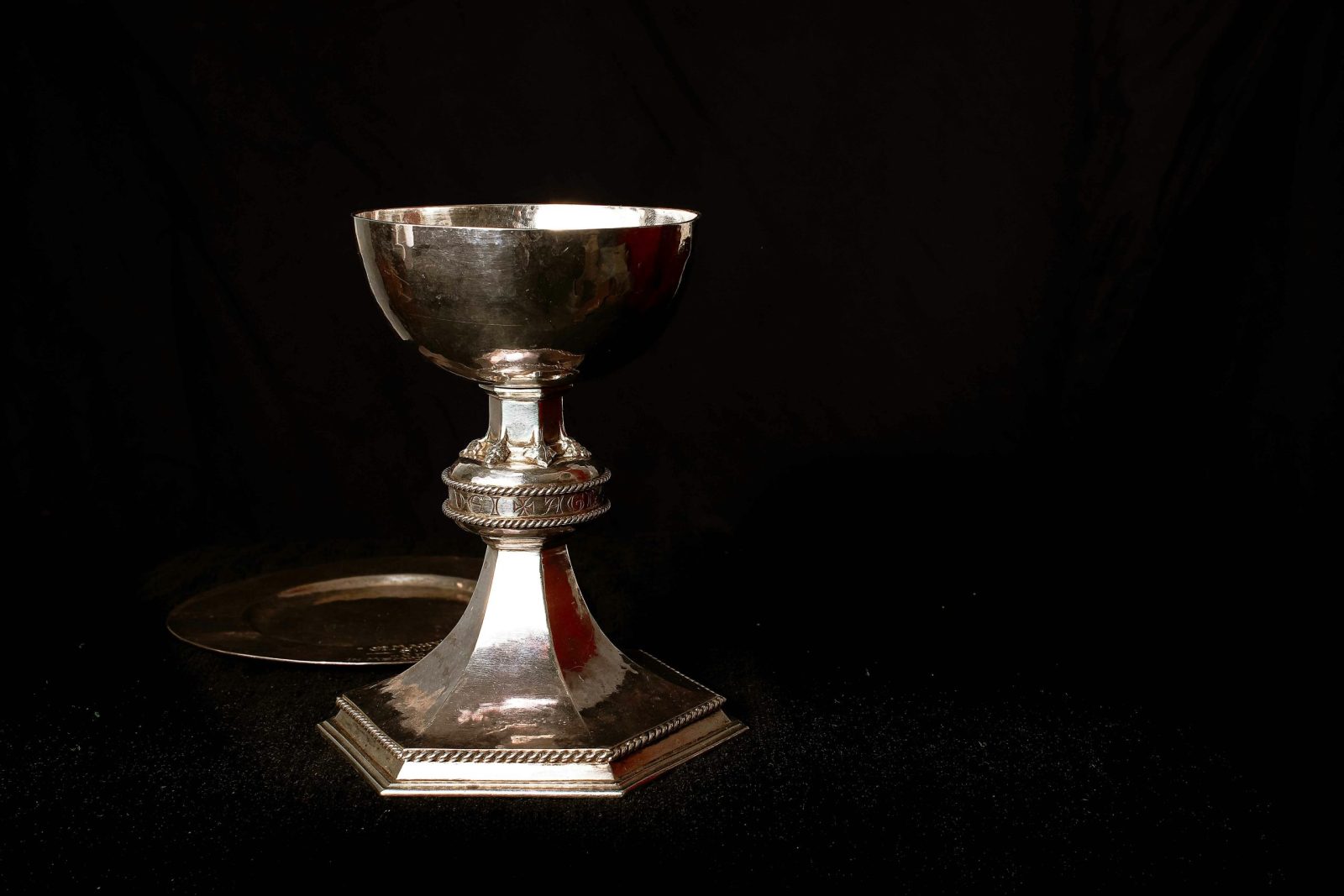
It may be a lamentable truth that I wanted my fiancé to fight those Wyoming morons because I’m steeped in normative bullshit about what “real men” do, and because I wanted him to publicly confirm my femininity and his masculinity. But it is also true that I wanted him to fight because, in that restaurant, his aggression would have been more than just the “real man” impact of fist on flesh—it would have been speech. An offering. It would have been him lifting the chalice above his head and saying, to me and in front of everyone, I got you.
Aggression—or lack thereof—is a form of language. It communicates. It communicates to someone (a child, a stranger, a crowd), and it communicates something specific (I can over-power you, I will—or won’t—protect you). In our bedroom, when we’re alone and, despite our lefty sensibilities, both ultimately oriented toward the crescendo final act of his orgasm, my partner’s aggression speaks to me. It tells me that, to a larger or lesser degree, in at least this one realm, he needs to dominate me. I know what he is thinking; the loop of our communication is complete, and I therefore feel, if nothing else, existent. But I’ll never know what he was thinking in that restaurant. He might have been upset but hoping to avoid a public freak-out (meaning, me freaking out); he might have been scared for his own body—he’d be the one throwing and taking punches, after all; maybe to fight would have been, paradoxically, to reveal vulnerability, the vulnerability of loving me—and he did not want to experience that. I’ll never know what he was thinking, and so I don’t know what he observed; I don’t know what he saw and how it fit or did not fit into his worldview. Nor do the porch monkey guys with their dirty baseball caps and mugs of cheap beer. Nor does the hostess who cheerfully wrote up our check. Nor does anyone. He gave no testimony. So, there’s no story being told, its concentric circles rippling out from dining room tables in rural Wyoming houses, moving along like tumbleweed, creating, eventually, an indelible ripple through town. There’s no mark. There is no record. There’s only the fact that I still think about it, and nobody else does.
Aggression—or lack thereof—is a form of language. It communicates.
Well, why don’t I just ask him? What he saw that night and what he made of it. I don’t ask because my ex-husband is not a talker. He is, in that way, very much a “real man.” We joke that I say more in ten minutes than he says all day. He is also a “real man” in the sense that he doesn’t deeply plumb his emotions. Most of the time, his feelings are a mystery to me. Door locked, curtains drawn. I do see him delighted—our daughter is a delight, with her corkscrew curls and slender feet and hammy, head-thrown-back laugh. And I see him angry; I know he’s really pissed when his voice starts to shake. Psychologists consider anger a secondary emotion—meaning, one that rests on top of, and therefore conceals, an emotion that is more disturbing or taboo to feel, an emotion that one is not allowed to express. Sorrow, despair, grief, terror, for instance. Any of those might be under that shaking voice, that tight jaw. Sometimes he is so angry his eyes well up; what is under those tears? They don’t fall. They are, I guess, reabsorbed into his body. If I ask him what he’s feeling, what’s going on, he will usually say, I don’t know. And if I were to ask him what he felt that night, what he made of what he saw, what was driving him, he would almost certainly say, I don’t know, too. This would be its own fresh pain. My muteness keeps our peace.
It occurred to me only recently that my then fiancé, perhaps, did not know what porch monkey even means. Do all white people know the vocabulary of white racism, even the ones who aren’t overtly racist? Even the ones who would never, could never? I picture little white children gathered for story time, graham crackers and cups of milk and knee socks and sweet upturned faces, Mom or Dad reading from the Book of Whiteness, explaining the slurs and insults they should know even if they never use them. I texted my cousin, Do you think most white people know what “porch monkey” means? She’s white. She replied, Maybe? Ellipses. Then, I think it would ring a bell as racially problematic even if they weren’t sure of the particulars . . . I wonder if all men know the vocabulary of misogyny, even the ones who call themselves feminists. They must. They, too, see the films and TV shows, they see the magazine covers and read the books, they listen to the music and sing along, they, too, know history. They are sentient beings. They can observe who has been president and who the CEOs are and who gets raped and butchered and who gets paid more and who takes it.
There’s a certain type of man I call a voting-booth feminist. He’s down with Kamala Harris. AOC rocks. He’s even kind of intrigued by Sarah Thomas, the first woman the NFL hired to be a full-time official. But he doesn’t, like, pick up his socks. He doesn’t cook much. He doesn’t clean much. He doesn’t watch chick movies or read women authors. He doesn’t decide to watch only ethical, feminist porn, preferring the free shit that works as fast and reliably as thick lines of good coke. If there is a way to integrate his so-called feminism into his private life, he doesn’t see it. Which is to say, he doesn’t want to see it. I know a lot of these men. They’re a lot like a certain type of white person who says they don’t have a racist bone in their body.
He would object to this assessment, but it’s possible my husband sees my womanhood more through the lens of his own sexual desire and domestic needs than through the lens of my precarity and his responsibility, both political and personal, to respond to it. It’s possible he sees my Blackness only peripherally, too; if Blackness is a kind of profound otherness to most white people, maybe I’ve grown “less Black” to him as I’ve grown more familiar. Familiarity can be good; I long for it—I want him to see my hair as just hair, hair like anyone else’s, not “Black hair.” And it can be bad; I bristle at it: I want him to understand that I don’t just have hair, I have Black hair—with all the politics and drama and history and promise that designation bestows. He can’t win. Nor can I. But it isn’t about winning; it’s about being seen. I am the most compelling evidence of my existence. I want to be witnessed. Like my existence, or don’t—here I am, either way. I wanted my then fiancé to be present so that he—not as some power-holding white man but simply as my partner, or, even more simply, as someone who knows me—can verify that I, that these moments in my life, took place. I want my testimony corroborated. And I want him to have personal knowledge of my life, of this part of it. Not because these wounds and vexed realities form the core of my personality—they don’t; marginalized people are always overidentified with their social and political struggles, are too often defined by how they are impacted by and resist their oppressions, and that’s not what I’m talking about. I am simply stating that, because these wounds and vexed realities are part of my life, loving me, knowing me, and seeing me require that you see them, too.
Would that I could control how I’m seen. Would that I could solve this being hyper-visible or invisible in a given moment, in a given interaction, and simultaneously. Would that being seen as a woman, and a Black woman, was as simple as seeing a sign glowing against the night sky, or seeing—reading—the face of a pissed-off white man. Wishing does not make it so. Still, I pick up dandelions, little ubiquitous weeds, this plant that grows anywhere, even in spent, empty soil, even where no one wants it to grow, and blow their ethereal seeds into the air. My breath rushes over the bloom. It spreads private aches, the kind you can’t speak aloud to the people you wish could hear you, setting them loose on the wind.
Actress and activist Jameela Jamil has observed that learning how to have sex by watching porn is like learning how to drive by watching The Fast and the Furious. ↩︎
My phrasing is a riff on language from scholar Kevin Quashie, who, in The Sovereignty of Quiet, describes “pleasures that are inspired by familiar or social relationships or identity” as opposed to those that come from our authentic, unsullied interiority. ↩︎
Language from Uses of the Erotic: The Erotic as Power by Audre Lorde. ↩︎
Electric Literature is pleased to reveal the cover ofAsmodeusby Rita Indiana, translated from the Spanish by Achy Obejas,which will be published September 1, 2026 by Graywolf Press. You can pre-order your copyhere!
Asmodeus is a hallucinatory thriller about a failing demon’s search for a new host in post-dictatorship Santo Domingo.
Asmodeus, a millennia-old demon, has inhabited Rudy, a once-legendary Dominican rock star, for decades. But in 1992, the demon’s powers begin to fade. What follows is a desperate weeklong odyssey as Asmodeus ricochets through the bodies of the inhabitants of Santo Domingo’s underworld: from Guinea, a young metalhead plotting a warehouse heist, to Mireya, the daughter of a former torturer, to other souls caught in his chaotic orbit. Each possession reveals another layer of a city still reeling from the Balaguer dictatorship. And each new host engenders a surprising tenderness in the demon.
From acclaimed musical artist and author Rita Indiana, Asmodeus is written in urgent prose punctuated by original décimas, ten-line rhyming poems drawing from Latin American musical and oral tradition. Indiana weaves together Dominican heavy metal, black magic, and political trauma. Asmodeus is a supernatural noir, riotous thriller, and searing portrait of a nation grappling with its complicated past.
Here is the cover, designed by Luísa Dias:
Rita Indiana: For the cover of the English translation of Asmodeo, I wanted something that resonated with the headbanger I once was—the 13-year-old kid who read Dante and The Possession of Joel Delaney by Ramona Stewart a hundred times. I knew I didn’t want a demon with a human face; Asmodeus has no body of his own, no fixed form. I love the old-print feel and the typography. It’s the perfect cover for the metal mixtape living inside the novel.
Luísa Dias: Designing the cover for Asmodeus was a project of pure visual intensity. I have long admired the books Graywolf Press publishes, so it was a joy to be introduced to Rita Indiana’s work through such a powerful vision. It turned out to be one of the most intensely creative projects I have worked on, as it asked for a mix of heavy metal, Dominican history, and psychedelic dread, paired with colors that “can cause seizures.” As a designer, that is a terrifying but incredibly exciting challenge, as I rarely get the chance to be that aggressive and honest with a cover design.
To meet that challenge, I looked at the author’s inspiration in the artist Skinner, whose abstract figures pushed me away from classic imagery. Since my process involves taking existing forms apart, I searched for a figure that could serve as a skeletal host. I found that presence in a 1915 woodcut by Huib Luns titled “Bellona.” Its raw, jagged energy felt like the perfect vessel to be possessed by a new kind of horror.
In my initial proposals, I experimented with vibrant colors against dark backgrounds, but the bright orange and yellow tones eventually hit the right sense of visual shock. For the final cover, this demon became a faceless flame with a single eye peeking through its mouth. I wanted the image to feel both ancient and explosive. All in all, I hope this cover refuses to leave the reader indifferent, and I am so grateful to Rita Indiana for letting me be a small part of her fierce universe!
A couple weeks after I first met the poet Asa Drake, a package from Florida showed up in my mailbox. Inside were jars of sweet jam and pickled peppadews, which I immediately understood Asa had grown and preserved herself. To receive a package in the mail is to feel cherished in a particularly quaint and immediate way, even more so if the package contains food grown and prepared by the hands of the sender. It is the experience of being cared for at a distance, which is not unlike the experience of moving through the poems of Maybe the Body, Asa’s debut poetry collection out from Tin House.
In a stunning assemblage of flora and fauna, music and memory, Asa weaves together the landscapes of the Philippines and the American South, rejecting easy conclusions about place, politics, and personhood. These thirty-eight poems, threaded together with a six-part braided sequence, are full of compassion and curiosity, often documenting offhand comments from friends, family, and strangers who demonstrate varying degrees of awareness about how they might be (mis)understood. But the speaker here is always aware, with the microscopic attention of a gardener watching her plants for new growth or signs of disease, never letting the reader, or themselves, off the hook when it comes to the way these encounters reflect ever-present conflicts between art, politics, and place. More than anything, masterful poems like “Toyo” invite us to encounter the body—corporal, geographic, literary—in its full complexity, asking us to notice the ways it is shaped by many voices and many pasts, full of economic, ecological, and aesthetic contradictions.
In our interview, I got to ask Asa about the relationship between desire and anxiety, “mother” as a conceptual placeholder, poetry as a means of creating safety, and pets who don’t like hearing poetry read aloud.
Cameron Quan: Can you begin by telling me how you got started with this collection? I know you published your chapbook, One Way to Listen, in 2023. Are there threads from that project that remain or were transformed in Maybe the Body?
Asa Drake: I remember going through an older version of Maybe the Body to pick the “strongest” poems as a chapbook. It was a very Darwinian approach—one that meant I’d always see the chapbook as neither complete nor incomplete. It was an attempt to understand how I could be heard. Only a few of the poems I considered the “strongest” in 2021 remain in either of my forthcoming full-length collections.
There’s something important to me about self-recognition, and when I start to feel like the speaker is an abstraction, I try to rework the poem. I think this version of the book has only become possible in the past few years because of the conversations I’ve had with friends. So much so that I started to keep an index of friends and poets who appear in particular poems. There’s a “(Fr)i(e)ndex” in the back of the book (Jimin Seo, Annie Wenstrup, Carolina Hotchandani, Rhoni Blankenhorn, and E. Hughes are just a few of the poets who appear and influence the text). And because of the way these poems are populated, I’m able to imagine the possibility of safety. These are poems where I’m writing towards others, who are kind of in the same ecotone, or liminal space that I consider home.
When I start to feel like the speaker is an abstraction, I try to rework the poem.
Other threads from One Way to Listen worked their way into my second forthcoming book, Beauty Talk, which is more willing to engage in confrontation vs. deflection. I allow myself to relish my own hostility—and question the use of it, especially as someone who, when confronting the white gaze, must acknowledge my partial relation—how I benefit from and replicate it.
CQ: Speaking of home, for me, the idea of place is often an entry point into poetry. In these poems, Florida and the South are major figures, as is Quezon City in the Philippines. Can you talk about how you unravel place and how it shapes your sense of self?
AD: I grew up on land that I was told could never be sold and could never be taken from me. Then I left and my relationship to that place changed. I actually didn’t realize what a profound impact this shift had on me until this summer when I had some incredible conversations with author Christola Phoenix at Storyknife. Sometimes a story about a place has to carry the absence of the place itself. In Maybe the Body, you’ll see this in some of the “I Love You” poems and “In the Tradition of Women to Try to Transfer Their Virtues.”
When it comes to the South, there’s a shape of ongoing institutional violence that I think I’m more able to see now. But at the same time, different bodies experience these dangers differently. I think that I have a lot of privilege as a small woman who people frequently can interpret as white passing. There is a certain safety in how that allows me to stay in the South and feel very close to home, but what interests me most is what role, what influence, that safety might buy. How does acknowledging that safety shape how I act and speak in personal and professional capacities?
When I moved to Florida, I tried to make myself at home by gathering plants from every place I felt close to. I was very aware of how this was a climate where I could replicate the South I had known in South Carolina, and also the home that I had visiting family in Quezon City. Maybe theBody was written in this period of accumulation. So often a plant in a poem is meant to unravel something sour: “I’m Interested in How Animals Teach us Pleasure” started as a poem about plums that someone promised me when I was six and never delivered. The grievance isn’t interesting to me any longer, but the desire is.
CQ: You said you wrote many of these poems at the library where you worked. I love the way you write about work and labor, the language of the workplace, and negotiating relationships in that environment. Why do you think the library comes up so much in this book?
AD: I suspect that the library is one of the best work environments one can ask for under capitalism. It’s not inherently exploitative in that there’s no surplus profit being extracted “from” my labor. But, as with any service position, I frequently found my attempts to be approachable misconstrued as invitations for personal gratification. Much of this collection was written while I worked at the reference desk of my public library. This included when we were an early voting location in 2016, and when we helped facilitate the census in 2020. I realized that I felt a professional responsibility to make myself approachable, and that I wanted to excise from my poems the language acts that are a part of this kind of customer service. In order to finish writing Maybe the Body, I quit my job because there were poems I knew I couldn’t write so long as I had this customer service script at the front of my mind. For me, Maybe the Body is a collection where I try to deflect the white gaze.
I suspect that the library is one of the best work environments one can ask for under capitalism.
I think being a librarian is different from other service industries because you’re a key access point to vital resources. And so you have poems like “Heirloom,” where the city cuts down a group of hedges a man had used as shelter—I could say a lot of things to mitigate blame, but essentially, it was a rote administrative action that destroyed someone’s home. I keep coming back to this question, “For whom am I making a safe space?” And I think this is a question that informs the whole collection. What kind of safety do I provide for others?
CQ: I know you cultivate plants and make incredible food from the things you grow. I also love the way you write about food, which is intertwined with language and relationships, like in “Toyo.” What are you growing now, and how does food figure into your writing?
AD: I didn’t do as much prep as I’d have liked to last summer, so I just harvested some soybeans, which come up in the last poem of the book. I’ve been planting them since I moved to Florida.
I’m interested in how the garden offers another way to keep time, a way that’s less linear and more cyclical. Food is so tactile. It’s a way to share memory. It’s a method of recognition. And I think that’s why there’s such a sting when something is misunderstood, like in “Toyo.” The garden is filled with examples of who and what we value. Adrienne Su covers this so richly in Peach State when she talks about the history of ginger and garlic, and when each of them becomes available in the grocery store—that it’s not only a question of access, but also appropriation and cost. I’ve been thinking about her poem “Ginger” a lot recently because of how Filipino communities in the United States can’t get bagoong right now—it’s a kind of shrimp paste—although I did get to try a fermented mushroom alternative in Seattle. With recent tariffs, there’s a question of what will be shipped, what will be stocked. Why are some ingredients considered more suspicious than others? And when food becomes trendy, who retains access when prices go up? The garden offers at least the illusion of being able to maintain certain traditions for myself. I say illusion because I don’t really believe small scale home gardening is a solution for true food insecurity. But it does mean I have calamansi most of the year.
“Toyo” was actually the first poem I wrote after I quit my job. I quit and then, the next month, I went with my mom to Manila to see my grandmother for her belated 80th birthday after COVID lockdown measures. One of my uncles loves to describe our whole family as “toyo.” It means salty, sour. It’s a red flag. But “toyo” was his way of extending a recognition of “this is who we are as a group,” a term of inclusion. I found this moment particularly precious, because it’s negative, but I was so happy to accept any term that made me a part of the whole.
CQ: You have an unusual mascot (muse?) in this book: your pet rabbit, who also appears on the beautiful cover. Along with the rabbit, I’m interested in all the images related to loving something, caring for a body (both your own, that of the other, and figurative bodies).
AD: She’s under the table with me right now, which is true whenever I’m doing anything on Zoom. She sits at my feet on her little rug, and she listens, which is funny because she hates when I read poems aloud. I really appreciate that about her. In the final printing of Maybe the Body, my author photo for the book is uncropped, so you can see my rabbit in the right-hand corner.
It’s funny to think about how this book, in many ways, is an attempt toward facsimile. It’s an attempt to offer attention to the people and things that I love but that I also recognize I’ll ultimately lose. I grew up with a lot of stories about how loss is so frequently unavoidable. The outliers were always about a witty purchase, like buying a ring during martial law instead of a mattress, so that 40 years later, when you would no longer have the mattress, you can still have the ring. I think the labor of a poem is witty in that way. I can lose the subjects again and again and still return to them.
CQ: In one of my favorite poems, “I Accept All Measures of Intimacy in the Digital Age, Especially Text,” you write, “At some point, this poem was about desire. / I think it still is.” What kinds of desire are you most interested in?
AD: Desire often feels like uncertainty. It’s a wishful emotion that touches so many other feelings. I think I often confuse desire and anxiety. There’s anxiety shaped as care, and there’s anxiety shaped as fear. But for me, they’re both desirous. And maybe this complicated cross-wiring between care and fear and desire reflects a certain social dynamic about who is desirous and who is desired; always there’s the specter of objectification. The result is that I’m suspicious of others’ desires, especially the audience’s intention. Even in “Toyo,” when I’m telling this story, I’m very guarded, and there are things I don’t say because I don’t know how generous the audience will be.
I’m interested in how the garden offers another way to keep time, a way that’s less linear and more cyclical.
It makes certain kinds of poems very difficult to write. For example, it’s easy for me to bring a shopping list into a poem and very difficult to write a self-portrait. It’s something I actively avoid, and I think it’s very much based on that same sense of trust and whose desire gets to come to the forefront.
CQ: Parenthood and motherhood loom over many of these poems. The mother is such a complex figure, made even more so because we usually get an incidental, fragmented sense of her. Is it fair to say that these poems express some ambivalence about mothers and motherhood? Or is that too cynical?
AD: I don’t feel ambivalent about my mother. I am obsessed with mothers! Maybe it’s best to say I have a large family, so I have many. As a result, the complication becomes twofold. There’s the complication of acknowledging the many versions of mothering, and there’s the complication of language. I grew up calling my mother’s mother “Nanay,” which means “mother.”
I’m a little mean to my mother in that, frequently when I’m writing, “mother” is not my mother but someone else in these poems. Someone who I’ve chosen not to explain my relationship with. Sometimes her dialogue belongs to a great aunt, extended family, even a lover. I’ve always disliked the demand to explain relationships that feel so natural to me. Sometimes I genuinely lack the language to be specific about a relationship. And in English, I have to wonder, who am I giving this personal information to? At some point in grad school, when I was being disagreeable in workshop, I gave up trying to explain the importance of different relationships, and I used “mother.” Everyone recognizes the importance of “mother.” I don’t want to risk a relationship being undervalued or considered temporary. Mothers are forever.
CQ: Many lines seem to communicate the frustration of being looked at incorrectly, at only ever being seen and understood in increments. This is certainly an experience I can relate to as an Asian American, and I expect it’s the case for many mixed-race people, complicated by other intersecting identities. Can you talk about how this plays out in a particular poem, or how it plays out over the course of the book?
AD: I don’t know if it’s entirely possible to be witnessed in one’s entirety, but I’m relieved when I’m recognized based on the traits I possess. I admire this kind of assessment, partially because I think this kind of attention is so rare. So many of the interactions throughout the book . . . they’re frequently me trying to determine how good someone is at paying attention. I don’t mean to be mean about it, but I do this as my own way of gauging what degree of vulnerability I can offer someone based on how much they pay attention, how much I’m being judged based on myself versus a narrative or a story or an image that they would like me to embody. It’s that attention that allows me to live with other people.
CQ: You’re publishing another book soon with Noemi Press, Beauty Talk. Do you see through-lines between these collections?
AD: In the writing process for both Maybe the Body and Beauty Talk, there was a point where editors, right before the final version, asked if I could write one more poem. Both times it was frightening—how does any poem come into being? But these last poems are my favorites. They’re written aware of all the other poems in the collection, and they become secret epilogues where I can say one last thing to shield against misinterpretation, one last thing to say goodbye to the project as a whole. I’ve really enjoyed that.
A typical conversation about Sally Rooney often includes some version of the question: Are you a Normal Peopleperson or Conversations with Friendsperson? Rooney readers tend to have a strong, if not fraught, preference. Whenever people have asked me this question, however, I’ve had a different answer. “Actually,” I say, “I’m an ‘Even if you Beat Me’ person.” My answer, Rooney’s first published essay, has stumped some ardent Rooney fans, including those familiar with the broad contours of the story it chronicles.
“Even if you Beat Me,” appeared in 2015 in The Dublin Review, two years before Rooney’s debut novel. It traces the future author’s climb from an anonymous college debater to the number one competitive debater in Europe, followed by her disillusionment with the debate circuit altogether due to its “political frivolity” and disconnect from real-world issues. It’s considered the essay that launched Rooney’s fiction career, too, after catching the attention of the Wylie Agency. And while the specifics of the debate world and the essay’s significance in the arc of Rooney’s career are interesting, what I admire most about “Even if you Beat Me,” is Rooney’s unflinching portrayal of her own hard work, competitiveness, and ambition.
Since we live in a moment where the self-conscious cultural elite both valorizes success but treats visible striving with distaste and even suspicion, owning one’s own voracious ambition is startlingly refreshing. In many of the circles I move in, peers deride institutional meritocracy even as they define themselves and their work by its standards. They hide their ambition and self-interest behind nonchalance or appeals to ethical and moral concerns. But not Rooney, at least not the Rooney in “Even if you Beat Me.” She straightforwardly admits her desires. She was a “nearly friendless teenager living away from home for the first time” when she stumbled into the debate hall and, to her delight, quickly identified the debate community as one where she could become “successful and popular.”
No more free international trips. No more “thrills from counterfactuals.” No more sycophantic fans. In other words, Rooney puts her money where her mouth is.
That’s not to say the essay doesn’t grapple with what it means to desire acclaim and popularity within unfair systems. The opening scene depicts Rooney and her “privileged, English-speaking university students” riding past “dwellings made partly of cardboard advertisements” on the way to a debate competition in Chennai. She comments, “No one failed to notice this fact, but what was there to say about it?” echoing how many of us feel when confronted by an injustice so enormous we struggle to know what to say or how to make it a little bit better. And yet another strength of Rooney’s essay is that she does land on a way to make it a little bit better: by the end of the Chennai debate, Rooney quits debating. No more free international trips. No more “thrills from counterfactuals.” No more sycophantic fans. In other words, Rooney puts her money where her mouth is.
Again, this kind of action feels like a breath of fresh air during a time—or, perhaps, all times—when it’s easier to say the right things than do the right things. Reading Rooney’s first novels through the lens of “Even if you Beat Me” can also clarify the intentional tension between personal drive and ethical awareness that underpins the inert, shallow politics of many of Rooney’s characters.
In Conversations with Friends, for example, Frances identifies as a communist yet feels drawn to fame and affluence: “She was a big fan of seeing the insides of other people’s houses, especially people who were slightly famous like Melissa.” Bobbi, Frances’s ex-girlfriend, faces a similar predicament. She’s critical of capitalism while desiring the social and artistic opportunities that can come from proximity to capitalism’s victors. When Melissa suggests introducing Bobbi to Veronica, her “old money” friend who “was very helpful with getting her book published,” Bobbi responds, “Wealthy people sicken me…but yeah, I’m sure she’s great.” Knowing any of these characters, it’s not a stretch to imagine each might accept Veronica’s help while privately maintaining their critique of wealth and privilege.
But by quitting debate right when she’s at the top of her game, Rooney proves herself to be above her characters: a woman of convictions. She writes, “Maybe I stopped debating to see if I could still think of things to say when there weren’t any prizes.” On the one hand, this reflection, along with others like it, underscores the essay’s achievement as a rare piece of millennial writing that doesn’t downplay, ironize, or disguise raw ambition, but rather demonstrates it as a real meaning-making driver in many of our lives. On the other hand, it’s also a bit of a riddle when considered alongside Rooney’s later literary success and Marxism. Are we to believe so much success simply fell into her lap? Not necessarily. In her essay, Rooney acknowledges that she is “still working on that,” suggesting that her relationship with “prizes” is an ongoing process.
“I don’t think I will ever again want something so meaningless so much,” Rooney confesses about her obsession with college debate. Another, more cynical version could go: I don’t think I will ever again show that I want something so meaningless so much. Performative modesty and what the Italians call sprezzatura (a kind of studied carelessness) are, after all, learned skills in elite social spaces that reward effort only when it appears effortless. Effortless is cool, credible.
By quitting debate right when she’s at the top of her game, Rooney proves herself to be above her characters: a woman of convictions.
Effort is for the pitiful, for the lesser gods. With that in mind, Rooney’s own trajectory offers an example of—take your pick—genuine growth or learned restraint.
More than a decade after “Even if You Beat Me,” and its delightfully unflinching closing lines—“I was number one. Like Fast Eddie, I’m the best there is. And even if you beat me, I’m still the best”—a New York Times piece about Rooney bore the headline “Sally Rooney Thinks Career Growth Is Overrated.” In the interview, she is portrayed in what has become her signature posture: one of ambivalence toward her effort, fame, and success.
It is impossible to determine whether this framing and adaptation to elite norms is Rooney’s own doing or the industry’s presentation of her. In contrast, recall the example of actor Jeremy Strong, who was mocked for being openly ambitious — à la “Even if You Beat Me”-style —in a 2021 New Yorker interview, “On ‘Succession,’ Jeremy Strong Doesn’t Get the Joke.” Throughout the piece, the interviewer, a Yale graduate, implies that Strong’s hard work, seriousness, and ambition are uncool. Essentially, Strong is punished for violating the unspoken rule that true talent never tries too hard.
But why is this so frequently the case in elite or creative spaces? Why must achievement often appear accidental or uncontrollable? You see this same treatment of achievement in Rooney’s first three novels, where her characters’ ambition and hard work are often muted or pushed to the margins of her stories. Many of her characters suffer from what I think of as latter-seasons Rory Gilmore Syndrome: things just come too damn easily for them. This is also true of her socially mobile characters, such as Connell from Normal People, the son of a house cleaner, who ascends to Trinity College Dublin and later, a prestigious M.F.A. program in New York. Rooney’s characters attend the best schools, write celebrated essays and books, win major scholarships, and maintain flawless physiques without breaking a sweat or counting calories. With few exceptions, they possess the right shibboleth, exert the right amount of effort, and easily forge connections with the right people: journalists, literary editors, film stars, scholarship committees, and graduate school admissions officers. There’s little trial and error amongst her successful, ambitious characters. Neither is there much aggression, jealousy, rage, or other neurotic behaviors associated with highly competitive people, except when concerning les affaires de cœur.
This is not the case for Rooney in her essay. At its start, she “suffers from intense nerves” yet submits to “the continual low-level humiliation of failure.” She admits to knowing “nothing about the outside world…when the war in Afghanistan had started, or what the Patriot Act was, or where exactly the Arab Spring was happening.” In fact, Rooney makes “disastrous attempts to fake [her] way through” her early debates until she finally “just starts to read the news.” Although this is a story about debate, not art, this kind of growth smells of a traditional Künstlerroman, a story of an artist’s development. Tellingly, when no longer a novice debater, Rooney learns “to hide [her] ambition behind concern.” Concern for what? For whatever topic of debate was on the table for the day.
Rooney explains that “competitive debating takes argument’s essential features and reimagines them as a game.” I read this now like a prophecy of our broader public discourse, where winning and losing can feel like everything, and the performance of conviction and concern often acts as a substitute for real action. In high school, I remember being drawn to Jaques’s famous monologue in As You Like It—“All the world’s a stage / And all the men and women merely players…” I wondered how many of us understood ourselves as performers. Did I understand myself as one? How did this relate to free will?
It seems to me that one’s understanding of oneself as a performer is closely tied to one’s idea of oneself as part of a narrative or within a narrative arc, and the more we adhere to a narrative about ourselves, the more we cling to performance. In other words, the more we live narratively, the more our lives resemble performances. Or the more we live narratively, the more we assemble our lives like performances.
In other words, the more we live narratively, the more our lives resemble performances.
It’s commonly accepted today that the Internet, and particularly social media, has intensified this performance culture by giving every person the means to narrativize their lives constantly. There’s no more waiting for the holiday card or high school reunion to make narrative sense of your life. The public jury is always there waiting to see if you are sticking to script. Here, Rooney’s reflection resonates: “Success doesn’t come from within; it’s given to you by other people, and other people can take it away.”
For a long time, I considered “Even If You Beat Me” a singular text within Rooney’s oeuvre. Of all her characters, Rooney, as a character in the essay, was the most legible to me as a striver surrounded by other strivers. Then Rooney released Intermezzo last fall, and once again I found the striver voice with fraternal protagonists Ivan, a chess champion, and Peter, a former successful college debater. Both brothers, like Rooney herself in her essay, hustle, and they aren’t afraid to admit it. In one conversation, the brothers discuss achievement. Peter remarks, “Well, there just wasn’t anyone good enough to beat us,” and “Ivan considers this, then answers: I wanted my life to be like that. Me too, says Peter.”
“Even if you Beat Me” highlights how desire, ethics, and merit intersect, while—to use a common expression from where I’m from—showing us how the sausage gets made, a typically messy business, especially if someone is hailing from the working class or other marginalized backgrounds. It’s not until Ivan that we really see this sausage-making process again in her work. Ivan might be described as handsome, but he also wears braces, studies chess moves, and attempts a professional comeback, all while wearing his heart on his sleeve and battling the grief of losing his father. Ivan describes the “trapped knight” inside himself; it’s both an allusion to Ivan’s knights in the game of chess, making the right moves, and to the medieval knights of legend, those possessing the noble ideals that Ivan himself wants to possess: sacrifice, courage, and loyalty. Rooney in “Even If You Beat Me” also ultimately wants something more virtuous than what the debate circuit has to offer. However, it’s not so easy for strivers to kill the competitive beast inside us. Peter, who struggles with performance more than his younger brother, exemplifies this. At one point, he admits that he doesn’t need his rich friends to be poor, or even for himself to be rich, but rather, “To be right, to be once and for all proven right.”
“Even if you Beat Me,” with its messy, authentic examination of ambition, is still my favorite text by Rooney, only now Intermezzo is a close second. Success never appears effortless in Rooney’s latest novel, nor are the main characters detached observers of the world around them, like the debaters Rooney once envied—“I wanted to be aloof and cerebral like the speakers I most admired.” The setting where Ivan meets Margaret, his future love interest, is a local community arts center, is different than any other Rooney setting. It buzzes with potential. It’s there that we witness Ivan teaching a ten-year-old girl how to correct a flawed move and encouraging her to practice. It melts Margaret’s heart (and mine too), while calling to my mind a moment in “Even If You Beat Me” when Rooney admits that despite all her ambition and awards, “I haven’t contributed to anyone’s understanding of anything, except maybe my own, and that only partially.” But that’s not the case with Ivan, as this scene shows, and it doesn’t have to be the case for the rest of us either.
Nuclear realities have been a consistent thread throughout my life. Since childhood, I’ve paused at semis hauling cement canisters full of nuclear waste down the only road in and out of the area I call home. A photograph taken not far from the hills I inhabit depicts a chamisa bush gathering wind in a Los Alamos canyon; unremarkable in appearance, human-made radionuclides infuse its molecules. While the atomic era’s seep into our daily, political, social, and environmental existence began decades ago, it remains unceasing.
Any art dealing with nuclear pasts and futures necessitates an acknowledgement of the intense politics embedded in the subject. Many recognizable comics—graphic novels’ ancestors—full of sci-fi drama were preceded by propagandistic booklets pushed by the U.S. Atomic Energy Commission that helped establish the promethean metaphors routinely woven through tales of the nuclear age. As LM García y Griego wrote, “From the beginning, the nuclear enterprise was portrayed as a heroic undertaking.” After centuries of alchemy, nuclear physics appeared imbued with controllable magic that many believed would equal permanent peace, boundless prosperity, and near immortality. Yet villains and heroes cannot be easily delineated, and reality does not obey presumptions nor fantastical visions.
From the Manhattan Project to commercial nuclear power plant accidents, the volumes below complicate oft-repeated narratives that polish and simplify events with mythified characters and tales of scientific conquest. The books in this list tell all-too-human stories of uncertainty, trauma, responsibility, contamination, ethical conundrums, human experimentation, and so much more. They are part of a growing canon, largely headed by authors outside the U.S. whose works are often untranslated into English—or out of print like Kōno Fumiyo’s stunning manga Town of Evening Calm, Country of Cherry Blossoms. Rooted in archives and personal experiences strung with almost tactile visuals, they reach inside us as only graphic novels can, drawing our senses alive.
Radium Girls by Cy., translated by Ivanka Hahnenberger
Originally published in French, Radium Girls follows a group of young women who meet while working as dial-painters in the nineteen-tens. It is the era of radium; the isotope infuses daily objects and myriad tonics marketed as cures for every known malady with florescence. As the friends at this novel’s center find their future dreams overshadowed by sickness, they navigate the realization that instructions to wet their brushes with their lips led them to ingest dangerous radioactive particles. As they prepare for slow deaths, they open a landmark court case that continues to influence workers’ rights. Shaded in hues of purple and green, each page thrums with a disquieting undercurrent as the girls go about their days and attend evening parties, hands glowing when they turn out the lights before bed. This book is best read slowly, savored, illustration by illustration, and accompanied by a scholarly work or two.
When a nine magnitude earthquake spurred a tsunami that tossed waves over Fukushima Daiichi Nuclear Power Plant’s seawall in 2011, officials reacted in shock—haphazardly, and besought with a lack of clear communication. While workers struggled to manage a worsening nuclear disaster, families were told to leave their livelihoods and animals—many of whom responders were ordered to kill—behind, but Naoto Matsumura stayed home in Tomioka, six miles from the nuclear plant. He quickly became the determined caretaker of the exclusion zone’s surviving animals. Although his story has been repeated across mediums, Guardian of Fukushima relays his daring decision with art’s “imaginative empathy,” as the manga artist, Roland Kelks, writes. Colorful graphics weave Matsumura’s life with Japanese folktales to build a book that reaches into hearts and lingers. Kelk calls it a “story of duty,” and perhaps it is; Matsumura does as we wish to in the midst of disaster: He does what he believes is right.
With a slightly salty tone, a sigh, and the galled bemusement of an adult looking back on childhood unknowns sifted clear, Nuking Alaska weaves Anchorage’s nuclear history with personal remembrances of growing up in the Cold War’s penumbra. Each page hums with Dunlap-Shohl’s strong voice and equally unique graphics. This quick read highlights moments where the overarching nuclear establishment interrupts daily life with accidents, tests, and buried secrets—and, finally, asks how we can find courage to face the continued future of our nuclear reality. While centered on Dunlap-Shohl’s personal relationship with the nuclear history he finds at home, the graphic novel incorporates the voices of other citizens living with the absurd realities of the Nike Hercules missiles poised around Anchorage in the 1950s and ’60s, U.S. plans to detonate a nuclear bomb to hollow out a port, the Cannikin nuclear bomb test on Amchitka Island, and a secret burial of radioactive dirt.
In some respects a love letter to Marie Curie, to passion, and to the immersion of curiosity itself, Radioactive begins: “With apologies to Marie Curie, who said, ‘There is no connection between my scientific work and the facts of private life.'” Although focused on Curie, Redniss weaves in important moments from across nuclear history to form a mosaic of a book as passionate as the people she profiles. Marie Curie’s life breaking barriers as both a scientist and a woman shines. Included in an astonishingly long list: Curie discovered multiple isotopes, changed the field of radiochemistry, and was the first woman to receive a Nobel Prize. With a mixture of poetic prose and dialogue pulled from archives, Redniss bends the idea of a graphic novel to present a delicately orchestrated work that feels like an art book, filled with stunning, often abstracted yet illustrious and colorful cyanotype prints.
Originally published in French, The Bomb follows the construction of the first atomic bombs through conjoined stories that are rarely incorporated into a single volume. The narrative opens with a personified voice of uranium that weaves between dramatic retellings of events—with a plethora of exclamation points in the dialogue. From General Groves’ appointment to the Manhattan Project, through tensions between military secrecy and scientific openness, covert operations to sabotage the Nazi nuclear program, and secret plutonium experiments on unaware hospital patients, a tremendous amount of care and attention to detail went into this book’s writing and scenography. Nearly every character, scene, and much of the dialogue draw from archives with one narratively important exception: a family in Hiroshima whose experiences, while fictionalized, also reach into historical accounts. Detailed illustrations that expand outside of a comic book’s traditional rectangles fill every page and make it hard to look away.
Ichi-F depicts post-disaster nuclear decommissioning from the eyes of a man on the ground. After a tsunami struck the Fukushima Daiichi Nuclear Power Plant in 2011, after irradiated towns were evacuated, after the plant’s workers managed to mitigate partial meltdowns and overheating nuclear waste, after the shortest lived radionuclides decayed, attention turned towards clean-up. Decommissioning is an immense undertaking. In Fukushima, it requires decades and thousands of workers hired through a complex arrangement of contractors and sub-contractors that Tatsuka deftly learns to navigate. Beginning in 2012, he returned to work in Fukushima again and again, writing and drawing Ichi-F along the way, cautious to ensure that he would not be refused further employment on the site. This book is rooted in his personal account, full of interesting people and details—including daily processes for working in irradiated zones. Both a guide to his experiences and Fukushima’s landscape, it is a unique, dynamically drawn memoir bursting with personality.
Wrapped in cerulean blue, soft yellow, army green, black, and white, the effects of corrupt government mechanisms and a climate that values speed and appearances over safety rise from vibrant illustrations. The Chernobyl Nuclear Power Plant disaster may have occurred in 1986, but this jaw-dropping graphic novel reminds us it will continue to affect individuals and ecosystems for generations to come. Originally published in Czech, the novel is replete with detail—from the complicated organization of the Soviet nuclear complex to the general components of an RBMK reactor. Matyás Namai pulls from witness testimonies, oral histories, and archival records to build a winding collage of voices. Packed with history that begins with the nuclear power plant’s construction and ends in 2016, this slim book manages to move through decades by highlighting moments in the individual lives of plant workers, farmers, villagers, liquidators, soldiers, and more. Each textural illustration is imbued with captivating visual depth and movement.
An important addition to the realms of both nuclear history books and graphic novels, Doom Towns rises from a quest to recount everyday experiences in the early atomic age. It is constructed with an eye for anecdotes bound to haunt. Wrapped in intensive, deep research, and full of graphics drawn directly from primary source documents, Kirk and Purcell illustrate oral narratives of atmospheric nuclear testing in Nevada between 1945 and 1963, gathered in the years prior to this book’s publication. Each chapter looks through the eyes of ordinary people who—knowingly and unknowingly—are caught in the fervor of the early atomic years’ and the literal and figurative fallout that continues to affect the environ. Ranchers, soldiers, journalists, and more speak from the pages. This book is a graphic history to its core: a deliberately constructed site for expanded tellings of deeply researched moments, portrayed through a close relationship between artistry and scholarship.
This gorgeous volume opens with a chorus of voices as Emmanuel reads aloud in a train carriage on the way to a village near Chernobyl’s 30-kilometer Exclusion Zone in 2008. The journey was long in the making: Activist friends of his began arranging a small artist residency at the Exclusion Zone’s edge in Ukraine years prior. Emmanuel joins them despite deep unease. Laden with food, art supplies, and plans to meet as many people as they can, the group of artists spend a spring in Volodarka. Splashes of color explode black and white graphics as Emmanuel walks through a post-Chernobyl landscape of abandoned towns and shrinking villages, confronts his own expectations, and wrestles with the difficulties of finding a way to picturize the centuries’ long effects of radiation often invisible to the naked eye. At its heart, Springtime in Chernobyl is an ars poetica of navigating and depicting a disaster-struck environment.
A diligent tracing of Oppenheimer and Szilard’s engagement in the construction of the first atomic bomb and the moral quandaries faced by scientists at the beginning of the nuclear age, Fallout is a solid work with a certainty of focus and depth of characterization, timescales, and drawings. It is full of moments that jump off the page. The dialogue drives at a surprisingly smooth pace. The authors dig into the origins of the Szilard-Einstein letter that spurred the creation of the Manhattan Project, the divides between scientists who believed the bomb should not be dropped in war and those not averse to a deadly show of force, and the progression of Oppenheimer’s security hearing—where they deftly highlight both Oppenheimer and the ruling committee. As much a story of historical events as a window into the early atomic era’s politics, Fallout is a topically-hefty book that reads like a thriller and a drama mashed together. Oh, and Ottaviani has a nuclear physics degree.
Serious clowns have their faces painted onto blown-out goose eggs. My son tells me this on the drive from Corpus Christi to Houston. The custom began in the sixteenth century, a method of remembering makeup patterns, but now it serves as copyright. The eggs are done up with acrylic paint and accented with felt and glitter, with tiny flowers and ribbon and clay, and the records are preserved in the Department of Clown Registry in Buchanan, Virginia. He says a clown’s makeup is called his slap, and whiteface clowns rank highest in the hierarchy. Then the augustes, with their red cheeks and ivory mouths. Then character clowns, then hobos. The first known clown appeared in a pharaoh’s court during Egypt’s Fifth Dynasty—he was a pygmy. Clowns in Russia carry the same clout as pianists, as ballerinas.
It’s a tepid Friday in March, and we’re going to a clown convention at a Marriott by Hobby Airport. On Sunday he’ll compete in a contest hosted by Clowns of America International. Asher is thirteen. He’s a hobo.
“Fear of clowns is called coulrophobia,” he says. He’s paging through one of his clown books in the glow of my truck’s interior light. Outside, the dusk is particulate. We cross the Brazos River, rust tinted with sediment. A megachurch’s illuminated cross, as tall as the mast of a great ship, rolls over the horizon. My son says, “The fear stems from how the heavy makeup conceals and exaggerates the wearer’s face. Also, the bulbous nose.”
“Do ballerinas carry a lot of clout in Russia?” I ask.
“It’s like being a football player in Texas. Like being one of the Cowboys.”
“Hot damn,” I say because it sometimes gets a laugh. Not tonight. He’s too wound up; he’s been x-ing out days on his calendar for two months. “Are we talking Landry years or Johnson years?”
“Landry. No question.”
That Asher knows his Dallas Cowboys history always calms me. I’m suddenly more comfortable in the truck’s cab. My wedding band catches the light of the low moon, reminding me of thrown copper. I say, “A lot of wide receivers study ballet. It helps with spatial awareness.”
“Besides Santa Claus,” Asher says, “Ronald McDonald is the most recognized figure in the world.”
At the hotel, two giant plywood clown faces command the lobby. From chin to crown, they’re eight feet tall. Asher stands in front of them while I check in—he’s so enthralled that I half expect him to kneel—and only moves when a long-haired woman asks him to snap pictures of her posing between the clowns. The desk clerk hands me breakfast coupons and keycards, Asher’s welcome packet and lanyard. Our room’s on the sixth floor. As we ascend in a glass elevator, Asher tells me the long-haired woman has been here a week and she estimates there are over a hundred clowns at the hotel. “Tough luck for coulrophobics,” I say, and he smiles like I’ve passed an exam. It fills my every cell with breath. My mystifying son—the boy can send a tight, arcing spiral forty yards, but he’d rather hole up in his room with Red Skelton videos. After showering, he emerges from the bathroom wearing a shirt that reads Can’t Sleep, Clowns Will Eat Me and orders room service. Throughout the night, the hotel trembles when the nearby planes take off. I wake up often, confused as to how we got where we are.
I work in oil and gas. I’m a geological technician, which means I spend my days pulling well information. I study maps generated by geologists and run numbers to track which wells are still producing and which need to be plugged and abandoned. I like knowing what’s burning beneath our feet, the black oil and farther down, the clean effervescing gas. The knowledge makes me feel simultaneously large and small, and in that I find comfort. After I blew out my knee during a college scrimmage, I switched my major from communications to geology. I wanted, I think, to encase myself in rock, in hard things that last.
Geo techs don’t make a lot of money; we leave that to engineers and landmen. This trip to Houston is a stretch, and although I could’ve saved half a month’s pay by booking a room in the motor court across the freeway, I didn’t want to skimp on what Asher’s taken to calling the most important weekend of his “career.” I want him to feel fussed over. I want him to know I’m on his team. As the convention approached, I imagined moments we might share: father and son splitting their first can of Lone Star, talking about the birds and bees, or maybe passing the pigskin, analyzing the pitiful seasons the Cowboys have been suffering, the injuries and heartbreaks that now define a once-great team. (Before we left Corpus, I aired up our old football and dropped it into the truck bed, just in case.) I also thought it might be a chance for us to finally talk about his mother. Jill’s been gone two years. She was forty, and the first time she visited the doctor, the tumors lit her X-rays like a distant constellation. Three months later, the images were blurred with metastases. “Like a snowstorm,” Jill said, sounding oddly pleased. She didn’t make it to Thanksgiving. Asher and I avoided turkey that year and ordered pizza, then we went to a movie full of explosions and rooftop chases. “We’ll make new traditions,” I said. That Christmas he asked for his first makeup kit and a foam nose.
On Saturday morning, at the breakfast buffet, I realize my son will likely get thumped in his contest. He’s just outmatched. Even with their painted faces, these clowns look severe and cagey. Purposeful, I think. Ornery. There are probably thirty of them in the restaurant, and another fifty mingling in the atrium. Their costumes are elaborate and expensive—billowy and silken and intensely colored. Pigment assaults me. They wear patent leather shoes as big as rural mailboxes. Two of them walk on stilts and can rest their elbows atop the plywood clown heads in the lobby. Some are bald. Others are neon geysers of hair—red and orange and purple, Afroed and spiky and twisted into formidable braids. One clown wears goggles and flippers and a small inflated pool around her waist. They’re all adults, I’d guess mostly in their sixties, and they’ve come from as far away as Quebec and Maine. Seriousness radiates from them like heat from asphalt. They have swagger and business cards.
I’m embarrassingly relieved Asher didn’t come to breakfast. He’s awake but wanted to rehearse his routine alone in the room. His event is Paradeability. He’ll be judged on the originality of his act and how many times he can complete it while moving through a gauntlet of would-be parade spectators. We’ve practiced in our backyard with a stopwatch. We record the sessions with a video camera propped on our propane grill, then Asher studies the footage and makes adjustments. As I eat my omelet, I catch myself hoping they give out ribbons for participation, something he can at least hang on his wall.
A clown in the hotel atrium starts squeezing a bicycle horn while another skips in circles, tossing confetti. His limberness surprises me. In a high falsetto, they sing, “We’re having a hoot, an absolute hoot!” It’s easy to imagine Jill here, trailing Asher, snapping candid pictures of him with the clowns. At home, framed photos of him hang on almost every wall—Asher selling raffle tickets, Asher feeding a brown pelican on Padre Island, Asher sleeping. Photography wasn’t her hobby—watching Asher was. She was rarely in front of the camera, something I realized too late. Her absence blitzes me everywhere. The way the sheet and pillows on her side of the bed stay undisturbed, regardless of how I toss in my sleep, is menacing. The junk mail that still comes addressed to her leaves me as cored out as a cantaloupe. Lately, on Sunday mornings, I’ve been hitting open houses in different neighborhoods in Corpus, trying to wrap my head around moving. I tell Asher I’m going to church. Maybe he believes me.
“Here’s someone who knows eggs-actly what he likes for breakfast,” a woman says. She’s beside my booth, but a beat passes before I realize she’s talking to me. She’s in a pinstripe suit, wielding a clipboard and walkie-talkie.
“Do what?” I say.
“Professor Sparkles got me with that one earlier this morning, but when I say it, people just seem baffled,” she says. She extends her hand. “I’m Dayna. With a y.”
“I’m—”
“Asher’s daddy,” she says.
I shake her hand, puzzled, wondering what kind of information is on that clipboard. Then I remember her: the woman from last night, the one Asher visited with while I registered. Her hair is up this morning, and she looks like a pretty librarian, drab amongst all the color. I say, “Are you a clown parent, too?”
“I wish,” she says. “Mine’s a cheerleader. She’d walk five miles to avoid a clown.”
“I suspect that may be an epidemic among cheerleaders.”
“Asher’s a cutie. What kind of clown is he?”
“Hobo,” I say.
“I would’ve guessed auguste.”
“He likes thrift stores,” I say.
“An original, I love it. Come to enough of these and you see the same getups every year.”
“This is our first. I’m afraid we’re out of our league.”
“Horsefeathers,” Dayna says. “You’re eggs-actly where you’re supposed to be.”
I smile and take a sip of cold coffee. “Professor Sparkles would give you high marks for that one.”
“Let’s hope not. Last time a clown left marks on me, my husband almost put both of us through a window.”
Behind Dayna two clowns are covering a conference room door with pink balloons. Because I can’t think of how to respond, I say, “That’s not so good.”
“Fourth floor, the Hilton in Nashville. Three years ago.”
“I didn’t know clowns were so prone to scandal.”
“Neither did I,” she says. “Isn’t it fun?”
His name is Po’ Boy the Hoboy. He keeps a notebook with ideas for costumes and gags, and on the cover, in pillowy letters, he’s written, Pretty Much the Only Property of Po’ Boy the Hoboy. He subscribes to a quarterly called Clown Alley. He’s saving for a unicycle. Every couple of weeks we make thrift store rounds, hoping to scare up plaid trousers and polka-dot bow ties. Once, he found a dented bowler hat at the Salvation Army and cradled it like a wounded animal the whole drive home. He spends hours in the bathroom applying and reapplying his slap. I’m positive he’s never kissed a girl.
Not that he’d make a bad catch. He has his mother’s eyes and dark hair. A good jaw and nice posture, sturdy shoulders. Before he cottoned to clowning, I had him pegged as a quarterback, maybe scholarship material. He used to love watching the Cowboys and casting for redfish in Baffin Bay. His grades are good, but not so good that he eats lunch alone; any chance he gets, he incorporates clowns into school projects. He has friends, kids who call too late at night, who invite him to the beach. Last year he flirted with cigarettes for a month; his clothes smelled of sour smoke when I did the wash, but just when I gathered the nerve to confront him, the odor evaporated. Occasionally he’ll get detention for cutting up or skipping algebra, and I admit those infractions probably leave me feeling the way other parents do when their kids make honor roll. I’ll manufacture some annoyed concern and tell him to mow the yard as punishment, but really it’s in those moments when I feel most like a father, when my blood duty is clearly defined, when I halfway believe I can do right by my inscrutable son.
After breakfast, I find him in front of the mirror in our room, adjusting his red foam nose. He’s painted on a charcoal beard, and his cheeks and eyes are chalky. His eyebrows are thick rectangles. He wears his bowler and baggy pants, a necktie as wide as a flounder and two-tone bowling shoes. I suspect the shoes are stolen. They appeared two weeks ago, after he went to a bowling birthday party.
“Looking mighty fine,” I say. I’ve brought up pastries and chocolate milk that I show him in the mirror.
“I had my bow tie on, but I looked butler-ish.”
“Good call,” I say. “It’s a sea of bow ties down there. Originality matters.”
Asher studies his reflection. He’s remote again, the giddiness from last night buried under his slap. I wouldn’t mind starting to chip away at his hopes for tomorrow’s contest, but I can’t figure out how, so I just sit on my bed and watch him. He fiddles with his tie, loosening and tightening, then moves toward the pastries. He shakes the milk carton and debates between a muffin and Danish. His mother used to do this. She never knew what she’d order until the last moment, and then it was even odds whether she’d flag the waiter and reverse her decision. He opts for the Danish.
“I didn’t see any other hobos this morning,” I say, though I’m not sure that’s true.
He chews, takes a swig of milk. In the too-big clothes, he appears younger than he is. He says, “The hardcore clowns will come tomorrow for the contests. Today’s novice-y. There’s a talk on balloon sculpting. Workshops on improv and face-painting.”
“Hot damn,” I say. “Should I bring the video camera?”
“I think you’d need a conference badge.”
“I bet there’s an auguste who’d look the other way for a few jars of face cream.”
Asher puts his Danish on the dresser. He slips into his blazer. There are mismatched patches sewn randomly on the coat; I stitched them using a needle and thread from Jill’s nightstand. He says, “I just don’t want you to be bored.”
I’m about to say that whatever we do will be fine, I only want to spend the day by his side, but then I realize he’s brushing me off. My mouth goes thick. I’m awash in a blunted, disconnected feeling, like I’m nothing more than a family friend watching someone else’s kid for the weekend. I resist an urge to ask where he got his bowling shoes.
I’m about to say that whatever we do will be fine, I only want to spend the day by his side, but then I realize he’s brushing me off.
“Sure thing,” I say. “I need to review some maps anyway, run some petroleum numbers.”
He pulls a pair of fingerless gloves from his pocket and tugs them on. He says, “Are you going to church tomorrow?”
Maybe there’s an edge of suspicion in his tone, maybe not. Either way, my guard goes up. At last week’s open house, the realtor glanced at my wedding ring and suggested arranging a time to show my wife the property. I gave her a false name and the phone number for La Cocina, a Mexican place where Asher and I used to get takeout. Now I say, “I’d planned on skipping. I feel a bout of heresy coming on.”
He steps back from the mirror, assessing his costume. My heart goes panicky. I’m afraid he’s about to call me out on church or ban me from watching him compete tomorrow, but instead he says, “Then we should practice in the morning.”
“I was thinking,” I say, “if you’d rather just watch tomorrow, maybe get ideas for next year, I’d be game. We can make this an annual trip.”
“It’s in Chicago next year.”
“One of America’s finest cities,” I say, though I’ve never been. “We’ll make a vacation of it.”
“Sweet,” he says. “If I win tomorrow, next year’s fees are waived. They want you to defend your title.”
“The most important thing is to enjoy yourself,” I say.
He crosses back to the dresser, takes another drink of milk. I think he’s about to reach for his Danish again, but he goes for the muffin. He tears off a piece with his fingers and places it in his mouth like a dip of snuff. He chews slowly, careful not to disturb his makeup.
Before Asher goes downstairs, I take pictures of him on our balcony. He acts put upon, but he enjoys posing. We make plans to eat dinner together—it’s clear he agrees to this out of pity, but I’m elated nonetheless—and then he’s gone. In his wake, the room is littered with makeup sponges and a silence so complete I have to turn on the television. I surf the channels, flipping past adult pay-per-view, public access preachers, and movies with actors I don’t recognize. I exhaust the stations a second time, then a third. I try to review the maps for the new prospect my office is vying for, an oil play down near Laredo, but my thoughts keep veering. I worry that losing the contest will undo Asher. I worry that for all the ways I know I’m letting him down—my inability to buy the toothpaste and fabric softener he likes, the grief I occasionally allow him to glimpse, my lies about church, our eating too much takeout—there are still deeper, more insidious failures that will only rise to the surface after doing irreparable damage. It’s disorienting, such melancholy. I can’t remember a day when I haven’t thought that, with his mother gone, I’ve forgotten how to be a father. Not a day when I haven’t thought, I used to be good at this. I leave a note—addressed to Po’ Boy rather than Asher—saying I’ll be in the hotel bar.
The bar is closed, though, and the lobby is mostly deserted. A family is checking out while a housekeeper, a woman with multiple earrings, polishes the granite planters by the elevator. Behind closed conference room doors, I hear the murmur of people speaking into podium microphones. “Obviously,” a man says, “miming wouldn’t work there. You have to use your noodle.” The plywood clown faces have been commandeered as message centers. There are pamphlets for a San Antonio clown camp tacked to a cheek, a sign-up sheet for ride-share on a nose, and pieces of personal correspondence all over—folded notes addressed to Spangles the Clown, Purple Peggy, Sir Smile-A-Lot. A table next to the door covered in pink balloons serves as a lost and found. So far, the only thing that’s been lost is a yellow feather boa. The door is propped open with a box holding a disco ball. No lights are burning in the room, so the surfaces are dim, given to deep shadow. Most everything is draped in sheets.
Then a switch is flipped and fluorescent light opens the space. It’s the vendors’ area. A man in denim shorts and rainbow suspenders emerges from the back, whipping sheets from the tables. He says, “When you see something you can’t live without, just holler.”
The vendors’ area is an L-shaped corridor; it might normally be a hallway leading to the laundry room or kitchen. Inside, I feel the inexplicable need to move stealthily. There are displays of leather shoes—jester-toed and oblong, sequined and high-heeled—and a few tables boasting nothing but makeup. There’s a walk-in booth with frilly costumes on hangers and an elaborate wig arrangement—thirty Styrofoam heads, tiered according to style. Tables are devoted to magic tricks, juggling props, and party favors. The suspendered man leafs through a convention program in an airbrushing booth. He’s surrounded by wispy clown portraits and stacks of white T-shirts emblazoned with his handiwork. At the far end of the corridor is an open space with a rack of unicycles and large three-wheeled bikes. I pick up a chrome unicycle, as if gauging its weight, though I have no idea how to assess such a strange machine. I lift it to my shoulder like a rifle and sight down the frame, foolishly making sure it’s straight.
“Careful,” the man says, “she’s loaded.”
I lower the tire to the ground, bounce it a couple of times to check the pressure. “How much?”
“That’s Zany Laney’s booth. She’ll be back after the balloon talk.”
I wheel the unicycle back to the rack.
“What type of clown are you?” he asks, bored.
Without thinking, I say, “Hobo.”
“Hobos are destitute. Where’s he getting the scratch for a unicycle?”
“I’m mixing it up. Come to enough of these and you see the same things over and over.”
The man shrugs, puts his program under his chair, then goes to straighten the pallets of airbrushed shirts on his table. He says, “I like hobos. Emmett Kelly, Otto Griebling. It’s the only truly American clown.”
“You ever get folks asking you to airbrush their faces on goose eggs?”
“Son,” he says, “I’ve been asked to airbrush faces on things that haunt my dreams.”
“How long does it take?”
“To haunt my dreams?”
“To airbrush a face on something.”
“Depends on the face. Depends on the something.”
I like the suspendered man, his irascibility. I like how he’s unfolding the shirts and then gingerly refolding them so his artwork is more visible. He’s the size of a nose tackle. I say, “I’m not actually a clown.”
“And thus the mystery of the unicycling hobo is solved.”
“My son is, though. I’d like to get his face painted on something.”
“Regrettably, I believe the gift shop is fresh out of goose eggs.”
“How long will you be here?” I ask.
“Until the Lord our God rises again or happy hour, whichever comes first.”
In the lobby, there are huddles of clowns deciding which workshops to attend. Someone, somewhere, puffs at a kazoo. Dayna is sitting with an auguste, an unhinged-looking woman in her seventies, and speaking into her walkie-talkie. I don’t see Asher. Another hobo has materialized, though, a hunched man shuffling around with a sign that reads CAN YOU SPARE A LAUGH? I watch him, searching out anything that might prove useful for Asher, but the hobo just mopes by, wearing a hangdog expression and tuxedo pants cut off at the calves. One clown waves him away, but another grants him a belly laugh; it’s showy and territorial. The hobo bows. Then he catches sight of a clown with a tinselly wig pushing a whiteface in a wheelchair, and he’s all energy as he maneuvers in front of them. They stop, and he brandishes his sign with a cocked head, pleading. The man in the wheelchair nods. He hunts around for something in his lap. I think he’s misread the sign and is looking for change, but then he produces a device, one of those mechanical larynx numbers, and presses it to his throat. I don’t hear anything at first, but soon there are low peals of disembodied laughter vibrating toward me like a flock of harsh, metallic birds. I retreat into the parking lot, the sad noise still buzzing in my ears when I reach my truck.
Hobo clowns likely came out of the Great Depression, though it’s possible their roots stretch back to vaudeville. Asher wrote a report for his history class. They’re forlorn and downtrodden, ever the brunt of jokes. They’re always on the receiving end of pies to the face, kicks to the keister. That Asher reinvented himself as the only clown without hope or mirth bothers me. I assume it’s because of his mother, but maybe not. I’m afraid to ask.
And yet when he returns to the room on Saturday evening, he’s jazzed up and garrulous. I’m immediately optimistic about dinner. Maybe we’ll split that beer. Maybe I’ll find words to inoculate him against tomorrow’s disappointment. He hangs his blazer on the desk chair and tells me, breathlessly, about the compliments he’s gotten on his costume, about learning to twist balloons into airplanes and dinosaurs. Better still, a workshop instructor said he had such a knack for painting faces that he could get work at birthday parties. The instructor suggested setting up a website, running classified ads in the paper, acquiring a tax ID number.
He’s in front of the mirror again. I think he’s wiping off his makeup, but soon realize he’s touching it up. I say, “Will Po’ Boy be joining us for dinner?”
“Change of plans,” he says. “The Calliope Ball is tonight. It’s unmissable.”
“You have to eat, Ash.”
“There’s a buffet. Mexican, I think. We can eat down there.”
“We? What happened to that airtight clown security?”
“I scored you a badge from Mrs. Barrett,” he says. “She didn’t want you feeling left out.”
“Mrs. Barrett?”
In the mirror, I can see him clipping on a bow tie, sliding the stem of a plastic sunflower through a hole in his lapel. Outside, a jet is descending and the noise rattles the windows.
“Ash?” I say.
“You met her at breakfast.”
“Dayna?”
“She’s the director of the conference. She said you seemed lonesome.”
The lobby is transformed by darkness and oldies music. The disco ball I saw earlier now hangs from a tapestry of Christmas lights, spinning and refracting color. Asher hands me my badge and says he’ll meet me in the room later, then, before I can protest, he squeezes into the crowd and disappears. Clowns sidle past each other with plates of enchiladas raised above their heads. I smell chili powder and corn tortillas. The suspendered man is sipping a beer by the glass elevator, chatting with two clowns in tutus. When he sees me, he cocks his arm and pantomimes throwing a pass. Seconds later, I act like I’ve caught it, right in the numbers.
I climb the stairs to the second-floor balcony and peer down. Asher is already talking shop with the shuffling hobo and a female auguste. They’re interested in whatever he’s saying, nodding and letting him go on, and I hate that I didn’t bring the camera. Jill would have. She would have stood beside me, snapping pictures and watching the mass of clowns move below us like a cloud of phosphorescent marsh gas. I try to imagine which costumes she’d like. It’s a habit. When I take Asher to the mall, I guess which necklaces she’d want from jewelry store windows. Driving to my open houses, I keep an eye out for gardens she’d appreciate, and inside the rooms, I envision how she’d arrange our furniture, where she’d hang the photos of Asher. Now, I wonder if she’d like the cowboy with the checkerboard Stetson and matching boots. The woman in the yellow jumper and platinum wig? The scarecrow with a black balloon raven perched on his shoulder? I feel no affinity for any of them. They all look grave and infirm to me, an endangered species, a well that will soon be dry and abandoned.
She would have stood beside me, snapping pictures and watching the mass of clowns move below us like a cloud of phosphorescent marsh gas.
A female clown, a whiteface in a pink jester costume, walks onto the balcony. She wears a ruffled collar and a three-point hat. I assume she’s looking for someone in the group below, but she steps closer and says, “Sulking alone wasn’t quite what I intended when I gave Asher your badge.”
“Dayna?”
“Call me Ginger,” she says. “Ginger the Jester.”
“I didn’t know you were a clown,” I say.
“I’m good with secrets.”
The glass elevator, packed tight with whitefaces, passes the balcony and stops in the lobby. Asher is still with the hobo and auguste, and soon he’s being introduced to someone in a skunk costume. He doffs his bowler. The skunk curtsies. I feel conspicuous with Dayna beside me. Maybe Asher wouldn’t recognize her dressed as a jester, or maybe keeping tabs on his old man is the furthest thing from his mind, but I worry. Before Jill died, she’d joke about my romantic future. “One year’s too soon,” she’d say, “but if you’re not ringing some gal’s bell by year three, I will, from on high, assume you’ve switched teams.” I did an intentionally poor job of masking how much I despised such talk, but later, when she’d lost so much weight and asked me to promise that I’d eventually move on—“For me,” she’d said, weeping, “for Ash”—I had conceded only to spare us the rest of the conversation. I can’t remember the last time I stood this close to a woman. Dayna’s perfume smells of daylilies. Her gloves are satin. My blood is teeming with a miserable, traitorous vitality.
Dayna has been talking. She says, “That’s what my daughter calls it, the John Wayne Gacy Convention.”
“Asher wanted to do a school project on him, but I banned it. I got the silent treatment for a week,” I say. I’d forgotten about that uncomfortable phase last year, when Asher was preoccupied with Gacy and seemed to always be spouting dark trivia. Gacy was a whiteface named Pogo. He painted sharp corners on his mouth, whereas traditional, non-mass-murdering clowns use round borders to keep from scaring children.
In the lobby, Asher is waving to a group in the glass elevator. They wave back as they ascend, the glimmer of the disco ball reflecting on the windowed wall. “Chantilly Lace” starts up. My heart feels dizzy in my chest.
“Kids are the pits,” Dayna says, dancing a little with her bottom half. Behind her, the elevator opens and clowns slowly exit, like their joints hurt. Dayna says, “My daughter was spatting with another cheerleader, something about a boy, and she mixed Nair into the girl’s shampoo. Can you say, ‘suspension’? Can you say, ‘permanent record’? Can you say—”
“How good?” I interrupt.
“I’m sorry?”
“You said you were good with secrets. How good?”
“Oh,” she says, a lovely lilt in her tone, her hips still keeping time with the music. “ Really good. Unfathomably good. Better than—”
“Room 618,” I say.
“Wow,” she says. “Okay. Wow.”
“Take the stairs,” I say, making for the elevator.
When I go to my open houses on Sunday mornings, I worry Asher thinks I’m meeting a woman. I expect to return home and find him waiting, his eyes narrow with betrayal. Asher at the kitchen table, glowering. Asher pacing the house and brooding over the questions he’ll hurl at me like stones: Who is she? Do you love her? What would Mom think? But he’s always asleep when I get back, the door to his room unopened since the night before. The house is disappointingly quiet, indicting in its stillness, so I wash the week’s dishes to bide time until my son emerges. Sometimes I intentionally clang pots and pans together, then apologize for waking him. Had I not started telling him I was going to church, he wouldn’t even know I’d been gone.
At the showings, I ask about school districts and property taxes, mortgage liens and mineral rights. Such questions, I think, paint me as a serious buyer, but I’m also hoping for some combination of answers that will spur me to action. Early on, I expected to be easily swayed. The smell of fresh paint and carpet, the gleam of marble counters and the pulsing sound of sprinkler systems in lush lawns—I thought they would prove irresistible and I’d want to make an offer on every property. But the houses punish me with newness, and I feel negligent and untethered, guilty for having left Asher at home. I can’t actually imagine putting our house on the market or packing up our rooms. Once, the notion of surrendering my keys to another family brought me to tears. I was scrubbing bowls in the sink after visiting a three-bedroom ranch on Riley Drive, and Asher came out of his room and caught me.
“Dad, I think you’re crying,” he said, as if alerting me to a nosebleed. He wore his Clowns Will Eat Me shirt, his dark hair was mashed from the hard sleep of youth, and he seemed mortified to find me in such a state.
“The service this morning,” I said. “It was beautiful.”
On Sunday, the lobby has been transformed again for the Paradeability event. It’s roped off in a zigzag course. One of the giant plywood faces marks the start point, the other stands at the finish line, and the route is lined with clowns and bleary-eyed family members slurping coffee. There are twice as many clowns as yesterday; if I look in one direction too long, the clashing colors make me lightheaded. I position myself halfway through the course and actually feel like I’m at a parade. Asher waits in queue with the other competitors, pacing. I worry he’ll vomit or faint. He didn’t return to the room until after one this morning, and although Dayna was long gone, it’s possible he spied her leaving. When we practiced his routine before breakfast, he was off his game, sluggish and tentative, and his lassitude felt like an accusation.
Before each competitor enters the circuit, an announcer rallies the crowd. He calls us ladies and germs, fillies and foals, boys and girls. If the clown is new to the competition, he says, “Ladies and germs, our next contestant is a First of May.” But the event is sleepy, tedious. I have to keep turning the video camera back on because it times out between competitors. Some clowns juggle through the course—rings, bowling pins, rubber chickens. Others just mosey along cracking jokes. There’s a hobo who sneezes into a paper sack every few steps and sends a plume of powder into the air, then he offers the contents of the bag to the crowd and mocks offense when we decline. The woman wearing flippers and the inflatable pool acts like she’s swimming by, and every so often she spits a high arc of water into the audience. How she refills her mouth is a mystery. A whiteface in a silver astronaut costume stomps along, occasionally lifting her bubble helmet to shout, Moonwalk! There’s a clown on stilts who moves in slow motion, reciting poetry with an Irish accent. Passing me, he says, “I, through the terrible novelty of light, stalk on, stalk on.”
Then the announcer says, “Boys and girls, how’s about another First of May?”
There’s a smattering of applause, a long, bending whistle.
“Well then, ladies and germs, set my head on fire and put it out with a hammer, here’s Po’ Boy the Hoboy!”
For his routine, Asher wears a pair of boxing gloves and has a small cardboard box tied to his ankle with a yard-long cut of twine. Once the clock starts, he says, “You want a piece of me? I’m the best kickboxer you’ll ever see!” Then he kicks the cardboard box ahead of him and starts bobbing and weaving and punching his way forward until he catches up to it again. Repeat, repeat, repeat. When he’s throwing his jabs, he exhales through his red foam nose, sharp like a real pugilist. That was my idea. Granting the twine doesn’t get tangled around his shoe, he can usually run through the routine six times in a minute.
And despite his lousy practice earlier, in the contest he’s a crackerjack. I’m caught off guard by how his voice carries, the snap of his jab, the accuracy of his kick. The box lands directly in his path every time. When he passes, spectators whoop and cheer and sound horns. I feel like I’m in the bleachers at a bowl game and the audience wave is approaching. People maneuver for a better view; they lean and jostle and nod venerably. I record everything. I feel an almost unbearable pride, and my stomach roils with guilt for having ever doubted him. On his fourth stop, he’s close enough that I have to unzoom the camera lens. “You want a piece of me?” he says to an auguste. She raises her hands in surrender. Everyone laughs.
Then, when he kicks the box, the twine breaks. The box is borne aloft, cartwheeling through the air, until, after what seems like minutes, it lands in the crowd. There’s a collective gasping—“Holy smokes,” someone says—and confusion as to whether this is part of Po’ Boy’s routine, a premeditated flourish at the end. Had he noticed the audience’s credulity, Asher might’ve been able to call an audible. But he freezes. There’s a wretched silence, and I want to run to him, to gather my son in my arms and spirit him away. By the time the box is being passed back toward him, he’s composed enough to start throwing jabs again and proceed forward. I expect him to stop when he reaches the finish line, maybe to find me in the crowd so I can reassure or console him, but he bolts from the course. Everyone applauds, more confused than ever, while Asher heads for the exit. I stop recording just before he opens the door and disappears into the radiant sun. Then I go to our room.
Some mornings I wake up forgetting Jill is gone, and for a perfect crushing moment, a moment that is both too long and too brief, I think to reach for her in bed. Then I remember, and the old life recedes, like a tide being drawn back into the ocean. For the rest of the day, I feel halved. Other mornings, I’m positive I’ve lost Asher. Once, the fear was so consuming I snuck into his room and watched the blanket—a clown print—rise and fall with his breath; it was all I could do not to lie down beside him. Or I’ll come home after work, calling his name as I close the front door, and if he doesn’t answer right away, my heart will stutter. How often have I braced myself against finding a note, written in the same bubbly hand as Po’ Boy’s notebook, saying he’s decided to light out on his own? I worry my son will run off with the circus the way parents of promiscuous daughters worry about abortions. I can’t believe I’m enough to keep him here.
When I find Asher in the parking lot, he’s on the tailgate of our truck, smoking a cigarette. In his costume and slap, and with the smoke ribboning into his eyes, he looks old and grizzled, convincingly penniless.
“Heads-up,” I call from across the parking lot and wing our football toward him. I’ve had it in our room since yesterday and went to retrieve it after he fled the lobby. My pass is wobbly, shamefully so, but with his cigarette clamped between his lips, Asher scrambles and catches it.
“What’s this?” he says, turning the ball over in his hands.
“It’s you,” I say.
It took the suspendered man only half an hour to cover the football with Po’ Boy’s image—charcoal beard, thick eyebrows, alabaster complexion, and crimson nose. He worked from the screen of our camera, using a picture I’d snapped of Asher that morning. The ball looked so fine, so astoundingly lifelike, I’d thought to hold on to it for a birthday or Christmas present—I never know what to buy—but I knew I wouldn’t be able to wait. When I showed it to Dayna last night, she said, “You’re a good father.”
“My wife died,” I said.
“Oh, sugar,” she said, “I know that.”
Maybe Asher told her. Maybe, given the hours she’s spent surrounded by elaborate masks, my unpainted face seemed impossibly readable to her. I don’t know. I broke into a humiliated sweat, sacked by guilt and relief, and willed Dayna to leave. Soon she kissed my scalp and slipped from the room without a word.
In the parking lot, Asher toes out his cigarette with his bowling shoe and blows a stream of smoke over his shoulder. The air smells acrid, poisoned. He studies the ball like a man deciding on a bottle of wine. He says, “This is pretty sweet, Dad.”
“The gift shop was out of goose eggs,” I say. Maybe he smiles a furtive smile, I can’t tell. A silver jet rumbles into the sky behind him.
“The twine broke,” he says.
“There should’ve been a flag on the play.”
“It’s never happened before.”
“You handled it like a pro,” I say. “Next time we’ll use a nylon cord.”
He spins the ball in the air, catches it. He says, “I don’t smoke a lot. I just bummed that cigarette from a housekeeper coming off her break. I’m sorry.”
I avert my eyes, arrange a pensive expression on my face. He expects me to be angry, and I know I should be. I should ground him. I should ask if he’s taken a good gander at that crippled clown with the mechanical larynx. I’m aware of this just as I’m aware of the oil and gas coursing miles beneath our feet. This is prime fathering time here, the moment when I should impart solid, inviolable wisdom that will serve as his north star and guide him into a healthy future. But right now every truth seems porous, every judgment skewed. I feel something give inside my chest, as surely as when my knee buckled in the scrimmage and I knew my world was forever altered. When I look at Asher—the dour mask, the clothes that once belonged to someone else, the weary secrets buried beneath his obsession—I see only the smallest traces of the boy Jill and I raised together. Instead, I see myself. It gives me vertigo, this recognition, like I’m staring at a mirror that I’ve always taken for a window.
Asher is looking at his football again. I think he likes it, but I’m careful not to betray how much this pleases me. Cars and trucks are swooshing by on the freeway. A plane is about to touch down.
Asher says, “I really am sorry about smok—”
“Come to church with me,” I interrupt.
“Right now?”
“Next week,” I say. “I think a little fellowship might be in order.”
He nods, contrite. He thinks I mean to scold him, and I’ll let that ride to keep him honest, but punishment never enters my mind. The prospect of our finding a church together is invigorating, and I feel as though we’re on the verge of something essential forming between us. We’ll get dressed up. We’ll file into a holy building and take our places among men in bow ties and old women with powdered cheeks and bright lips, believers seeking shelter. We’ll sing and pray, confess our sins and mourn our dead. We’ll kneel before ancient altars, behold the glory of ritual and sacrifice. We’ll weep and be saved. We’ll go every Sunday. After services, Asher and I will hit a thrift store, or we’ll swing by an open house and try to divine the years ahead. We’ll talk about girls and college and his mother. We’ll talk until our voices grow hoarse. When we return home, I’ll slap a couple of steaks on the grill and we’ll scroll through TV channels, looking for a game. If the Cowboys are playing, the stands will be packed with fragile men wearing wild wigs and oversized jerseys and war paint on their faces. Asher and I will root for all of them, the heartsick fans and their doomed, beleaguered team. We’ll hold our breath when the quarterback lets fly with a Hail Mary. We’ll hope for a miracle as the receiver stumbles toward the end zone. His arms will be extended and his legs weak and his palms open to the sky, and from where we sit, from our house, he’ll look like a man trying to outrun everything behind him, like a man begging, at last, for mercy.
DON’T MISS OUT
Sign up for our newsletter to get submission announcements and stay on top of our best work.
YOUR INBOX IS LIT
Enjoy strange, diverting work from The Commuter on Mondays, absorbing fiction from Recommended Reading on Wednesdays, and a roundup of our best work of the week on Fridays. Personalize your subscription preferences here.