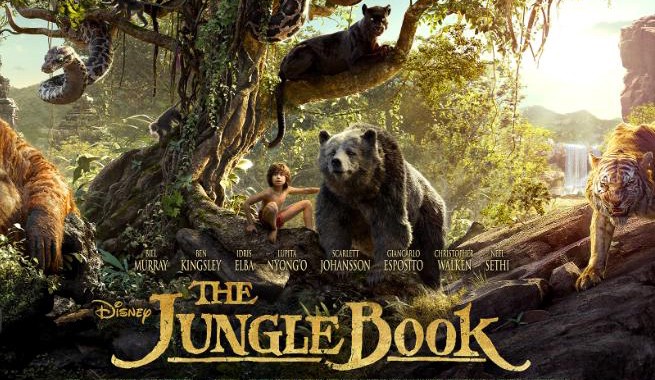
Justin Marks has been a making a living as a screenwriter in Hollywood for over ten years, but until recently, most people had never heard of him. Years ago, he was contracted by Disney to rewrite the script for the studio’s remake of 20,000 Leagues Under the Sea, a project that was eventually cancelled. When the call came to work with Jon Favreau on a new version of The Jungle Book for Disney, he was ready. The film has been a commercial and critical success, blending elements from Kipling’s original work with the 1967 Walt Disney adaptation.
Marks is, among other things, the creator of the upcoming Starz TV series Counterpart, to be directed by Morten Tyldum (Imitation Game and Passengers) and starring Academy Award winner J.K. Simmons. Here he talks about the pressure of (re)adapting a classic, the screenwriting process, and how the visual medium of film affects the way he approaches storytelling.
Kelly Luce: Before The Jungle Book was a Walt Disney film, of course, it was a book of stories by Rudyard Kipling. What was your approach to the Kipling? Had you read it before being hired to write this script?
Justin Marks: The influence behind the screenplay for this movie was twofold. First, we had the original stories by Kipling, which I’d grown up with — or at least, I’d grown up with the first Jungle Book collection, then became familiar with the second while researching the film. And second, we had a unique obligation to service people’s memory of the 1967 Walt Disney film. We made a decision, very early on in Jon Favreau’s involvement, that we would honor the 1967 film in terms of our story’s structure and treatment of characters, then use the Kipling to deepen and enhance theme. For example, the elephants played a very different role in our film than they did in the Walt Disney film, and that came entirely from the treatment given to them by Kipling. He was able to endow the jungle with a sense of myth and religion, and we wanted that to be swirling beneath the surface of a very simple story.
KL: What duty, if any, did you feel toward both the Kipling and the 1967 Walt Disney film? Both contain dated and offensive ideas about race and the effects of British colonialism. How did you approach carving out the heart of the story?
JM: Certainly Kipling’s work carries a lot of colonial baggage, and we felt we owed it to the audience to modernize our approach. But we did so mostly by digging in on the characters. It’s a coming of age story about a displaced young boy grasping for his identity, and meeting various mentors who pull him in different directions.
There was also a fair amount of attention paid to where Mowgli should end up at the resolution of our film. Did we want to send the message that identity is a matter of birthplace and lineage, or could it be a matter of choice? We liked this latter, more pluralistic answer, and felt it was truer to Mowgli’s journey as a character.
KL: Did the live action/CG style of the film affect your writing?
JM: It really did. For most of production, there was this big unknown when it came to how the effects were going to look as a finished product. We really had no idea how the effects were going to look when they came in. Early on, when we hadn’t yet seen anything, we constructed scenes so that they could rely emotionally on the human boy’s face. Then, as the shots came in, and Jon started to see what he had, I think he could then start to loosen up a bit and use the animals’ reaction shots to greater emotional effect.
KL: Novelists, story writers, and poets usually see some changes in their final manuscripts before a book is published, but for screenwriters, these sorts of changes can be massive. How different was the movie from your final draft of the script? IS there such a thing as a final draft in Hollywood?
JM: Our process on this movie was much more similar to animation than it was to live action. Typically what that means is the process is iterative, with endless meetings and reviews after we put the scenes “on their feet”, whether that be through animatic or motion captured pre-vis. The entire story team would evaluate these scenes together, and debate over them endlessly — and then more drafts would be written. I’m counting in my documents folder 198 unique drafts for the script, and that’s not even fully inclusive of smaller changes that happened later in the process. So I guess, when it comes to this project, the final draft is the movie.
KL: What’s your process like for a writing feature script? Do you write an entire draft before sharing it, or are you collaborating the entire time? What tools (physical and/or mental) are most useful for you as you create a story?
JM: The first draft is all about being isolated and getting to have your first true swing at the story. If you’re not able to take that shot, you’re really not able to develop the voice the project needs. It’s the the process of building the fortress that later you have to defend. Then, once you’re into revisions, it’s about hearing the notes and using them to shape a collective vision — and really Jon’s vision, since this is a very director driven-medium — in the most effective way possible. But yeah, that first draft is your one shot at getting the story right. I think it’s really hard to deliver a weak first draft that turns into a strong film. It’s about getting everyone excited about the potential of the movie, and the directions it could go.
KL: What are you reading for pleasure these days?
JM: It’s summer, and that means I’m always neck deep into John LeCarré, my favorite reading pleasure, and thank goodness he’s still alive and still churning out good books with strong regularity. I’m also doing a re-read of Nabokov this year — Lolita’s on the night stand for the first time since I was in high school. Just a pleasure to rediscover. He’s better in a second-language than most of us are in our first.
KL: If you could adapt any novel or short story into a feature film, what would it be, and who would direct it?
JM: My wife’s [Rachel Kondo, who’s essay on dialect, shame, and fiction writing can be read here] got a short story collection based on the people she grew up with on the island of Maui. The world rendered in such vivid, funny, and moving fashion… I’d love to direct those stories onscreen myself one day.
Iain Reid’s I’m Thinking of Ending Things (Scout Press, June 14) is about questions. Notably, the question “What are you waiting for?” which arrives late in the novel, the context of which I won’t discuss for fear of spoiling anything. This is a novel you want to read without it being spoiled. At all.
I’m Thinking of Ending Things is being marketed as “The Psychological Thriller of the Summer” — this is wonderful in terms of getting the book a wider readership than it may have gotten if it were marketed some other way, but the fact is that the book’s thriller aspects are almost a kind of gloss to the deeper, far more uncomfortable positions to which it places the reader. Of course, thrillers can also be serious and disturbing and literary: The best of them often deal with deep social issues of one kind or another through the lens of a fast-paced story. However, this is not an accurate description of this book. It has thriller elements for certain, but they don’t mask the questions the novel poses. On the contrary, they serve as enhancements.
On the surface, I’m Thinking of Ending Things is about a nameless narrator and a new boyfriend, Jake, driving to Jake’s parents’ farm house and then driving back, when they stop at a school in a snowstorm in order to throw away the cups of lemonade they’d gotten from Dairy Queen. That’s it. That’s all the novel is “about.” That’s the problem with trying to describe plot when discussing complex novels, and it’s also why plot is often sneakily the secondary nature of good books. Plot, in this novel, serves as the railroad track along which the reader walks while actually being mesmerized by the scenery around them, so much so that, even though they feel the heat rising from the metal rails and the rumbling making the stones jump between the wooden slats, they don’t hear the train chugging along behind them at a dangerous speed.
Before I read the book, its title resonated with me as a suicidal thought, while for others (I asked around) the phrase made them think of a breakup. Indeed, the novel’s first line is, “I’m thinking of ending things,” and it refers, at least in the most obvious sense, not to suicide but to the narrator’s possible decision, one they struggle with throughout the narrative, about whether or not to end things with Jake. I write “they” rather than “he” or “she” because the narrator is extremely carefully ungendered throughout the book — rather, more specifically, the narrator never refers to themselves in a certain gender, which, as the novel comes to a close, becomes increasingly significant though not in the ways you may expect. The closest the narrator’s gender comes to being apparent is when they discuss Jake’s “last girlfriend” or when they describe Jake referring to them as a compact and young Uma Thurman, “in a good way,” which again leaves room for ambiguity. Although later in the novel it’s (sort of) revealed that the narrator is, or would be, a she, it still feels disingenuous to the carefully worded narration to identify them as such. An example of this careful wording comes whenever sex is described — there are never identifying bodily features to make us assume the narrator’s gender based on their body parts. In one scene, when the narrator and Jake are making out in a car, for instance: “I lean my head back as he starts kissing my chest.” Chest — not breasts, but chest, which makes the narrator’s body far more ambiguous.
This ungendered narrator, then, carries most of the novel through their musings, their conversations with Jake, and descriptions of the disconcerting things they remember or see. The mind of the narrator is not a safe place. It is incredibly intelligent, and incredibly lonely. Read with capital-C-worthy Caution. For example, one scene that hit me particularly hard — I couldn’t sleep and was reading late into the night — was this:
Two nights ago, I couldn’t sleep. Yet again. I’ve been thinking too much for weeks…
I think what I want is for someone to know me. Really know me. Know me better than anyone else and maybe even me. Isn’t that why we commit to another? It’s not for sex. If it were for sex, we wouldn’t marry one person. We’d just keep finding new partners. We commit for many reasons, I know, but the more I think about it, the more I think long-term relationships are for getting to know someone. I want someone to know me, really know me, almost like that person could get into my head. What would that feel like? To have access, to know what it’s like in someone else’s head. To rely on someone else, have him rely on you. That’s not a biological connection like the one between parents and children. This kind of relationship would be chosen. It would be something cooler, harder to achieve than one built on biology and shared genetics.
I think that’s it. Maybe that’s how we know when a relationship is real. When someone else previously unconnected to us knows us in a way we never thought or believed possible.
I like that.
(NB: This long excerpt caused a bit of a crisis in the way I thought about relationships and, as a result, caused a bit of a crisis in mine for a couple days. So I repeat, Caution.)
This is what I mean when I say that Iain Reid’s book is somewhat of a philosophical tract as well as a novel. The narrator often muses over big life-and-death ideas such as the one above, but in a disarming way that renders these thoughts to feel like a seamless part of the narrative. It’s an incredibly hard thing to achieve, and Reid has done it to perfection: introducing ideas to the reader without taking them out of the narrative.
It also doesn’t cause detachment from the narrator as some books of this nature do — think existentialist novels like The Stranger. It is, in fact, the opposite. By blending together the narrator’s memories, thoughts, and present-tense scenes, we get so caught up in the narrator that we almost forget to breathe.
Except, of course, when the narrator is shunted off to the side in small italicized scenes between unmarked chapters. These scenes are dialogues between two or more people about something that’s happened, or will happen — it isn’t clear until you finish the book where in the timeline these conversations sit — and it’s these that start off what is the most powerful element of the book: its eeriness.
— Was he depressed or sick? Do we know if he was depressed?
— Apparently he wasn’t on any antidepressants. He was keeping secrets, though. I’m sure there were more.
— Yeah.
— If we’d only known how serious it was. If only there’d been some sighs. There are always signs. People don’t just do that.
— This wasn’t a rational person.
— That’s true, that’s a good point.
— He’s not like us.
The rational response to these scenes is: what on earth are they talking about? As you read, you may have theories — about who, what, when, why, etc. — but it’s doubtful that you’ll guess or understand the full extent, especially as these conversations are often misleading. But what they achieve is the beginning of a menacing feeling that starts to overlay the entire book as you continue reading.
The narrator has some spooky memories that help with this sense too, but it’s often what’s happening in the present that leads to an increasingly surreal feeling of fear: a description of pigs having maggots eating them alive from the inside out; a small room with a whirring fan and a mysterious painting; two parents who seem to be out of time; all these are contributing factors to the shivers that escalate as the novel progresses.
While the ending of the novel was somewhat disappointing, the journey was ultimately more than worth it, and the ending is almost an afterthought when I think of the book now, after finishing it. The ending barely matters in the grand scheme of the novel, which is worth every minute spent on it.
Occasionally bogged down by clichés and overzealous music cues, Genius, a new film based on A. Scott Berg’s Max Perkins: Editor of Genius and directed by Michael Grandage,manages to find authentic, original, even stirring moments in representing a profession so often done a disservice by Hollywood. The film focuses on the real-life relationship between Maxwell Perkins (Colin Firth) — editor of such classics as The Great Gatsby and The Sun Also Rises — and literary “‘genius” Thomas Wolfe (Jude Law), who, during the height of his career in the late 1920s and 30s, was considered a peer of Faulkner, Hemingway, and Fitzgerald. During a discussion following the screening, Berg shared that his book had been optioned even before its publication in 1978. Despite interest from Paul Newman the project was stuck in development for two years, until the script got in the hands of a studio head who killed it after reaching page three, once he learned that it was about a literary editor. Who could blame him for being worried? If depicting writing on film is hard then depicting reading is harder, and editing harder still.
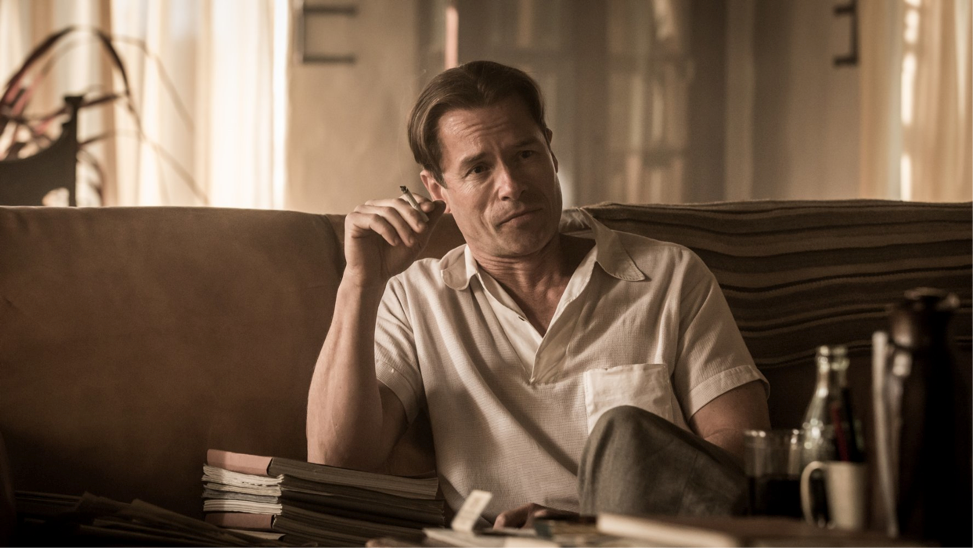
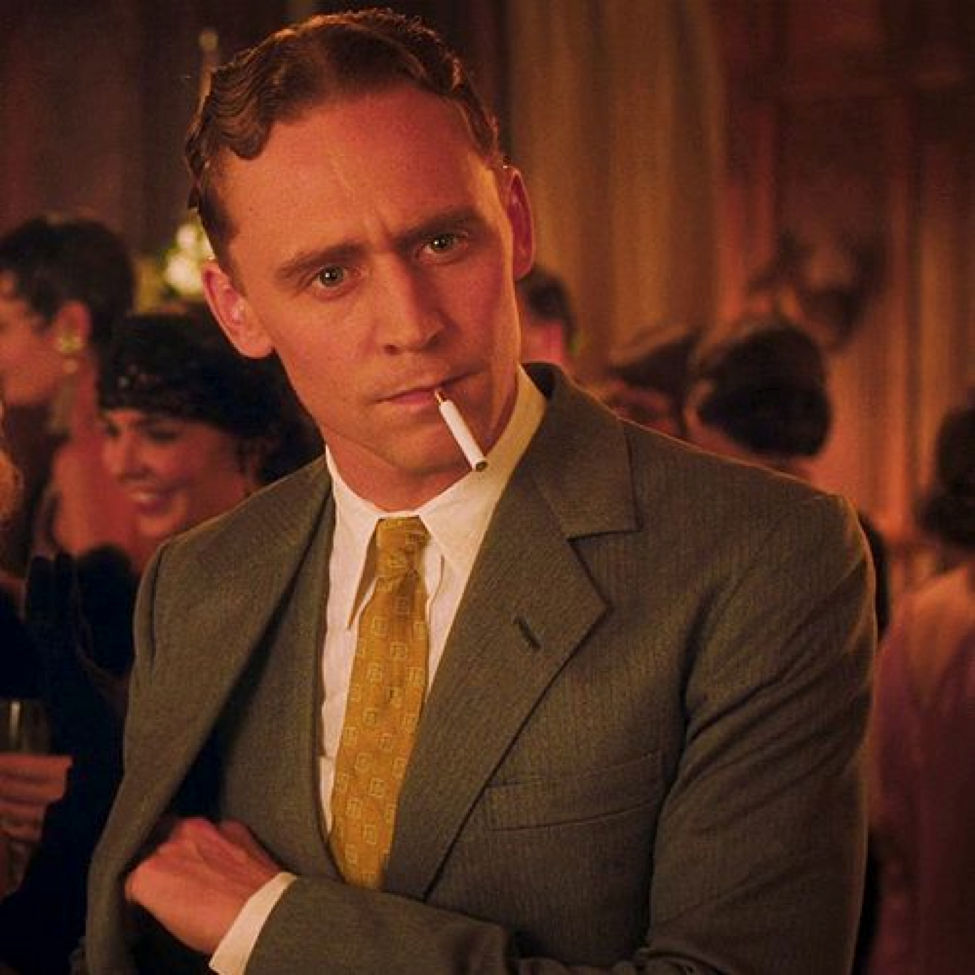
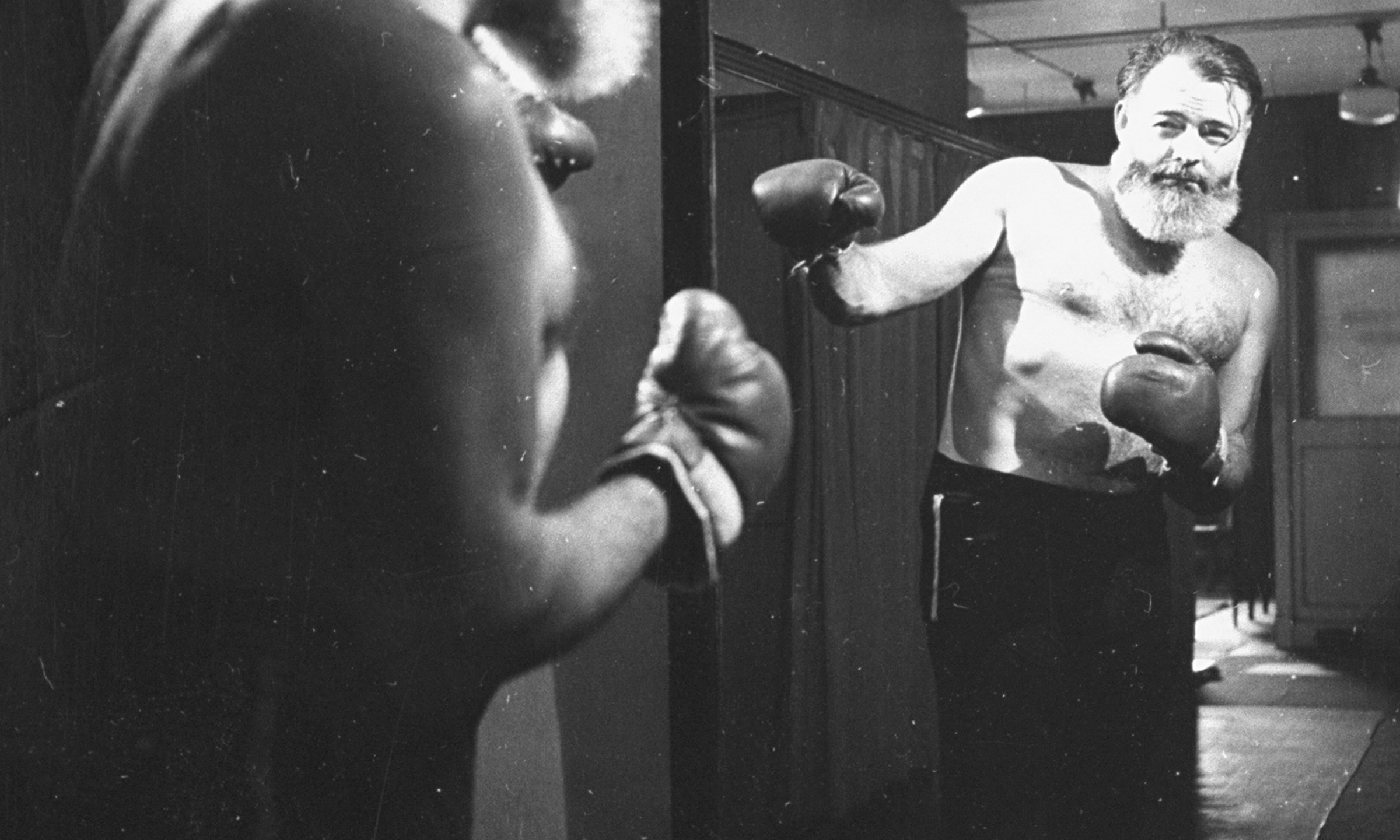
Genius opens with cinematic longing for an older New York: the hats and shoes of working men tromping through, the lighting gray and solemn. Meanwhile Wolfe, as-yet-unpublished, stands against a lamppost, smoking and staring up at the headquarters of Charles Scribner’s Sons. Upstairs Perkins is busy taking his pencil to Hemingway (later played in cameo form by Dominic West, a.k.a. McNulty — see Appendix A. Guy Pearce also appears as F. Scott Fitzgerald — see Appendix B. Both are welcome treats.). The sound of Perkins’ every red line echoes through the dusty hallway, until he is interrupted as a manuscript is slammed onto his desk. According to the courier it’s been rejected by every other publisher in town. (In non-Hollywood reality, it was the literary agent and woman Madeleine Boyd who brought Wolfe to Perkins’ attention). “Is it any good?” Perkins asks. “Good? No,” the courier answers. “But it’s unique.”
Appendix A — Hemingways in Hollywood
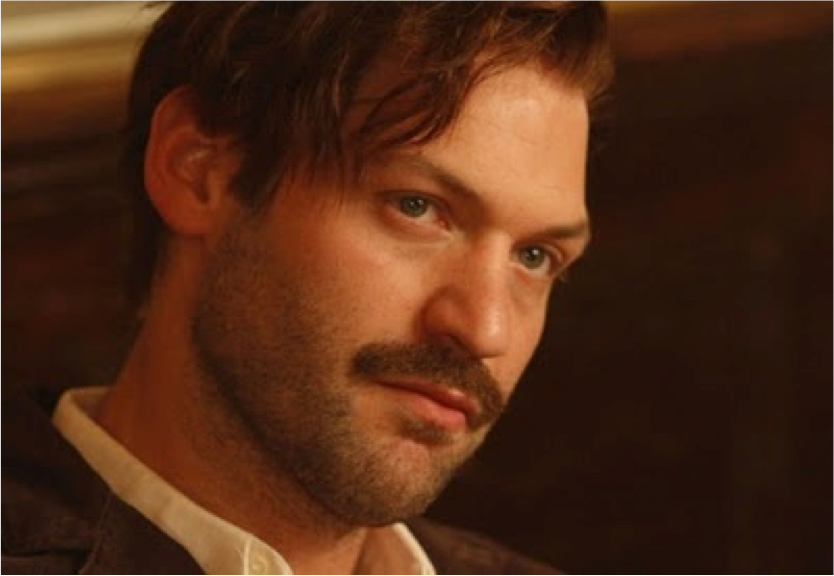
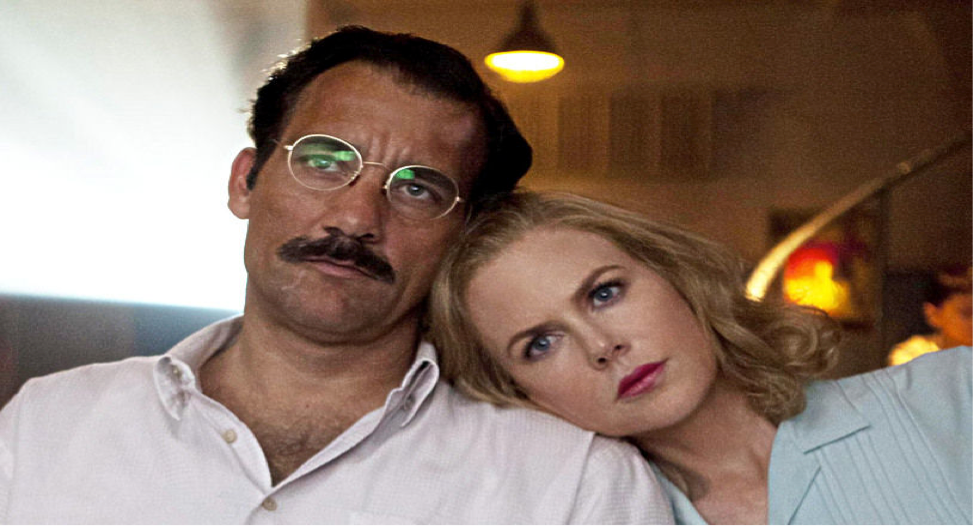
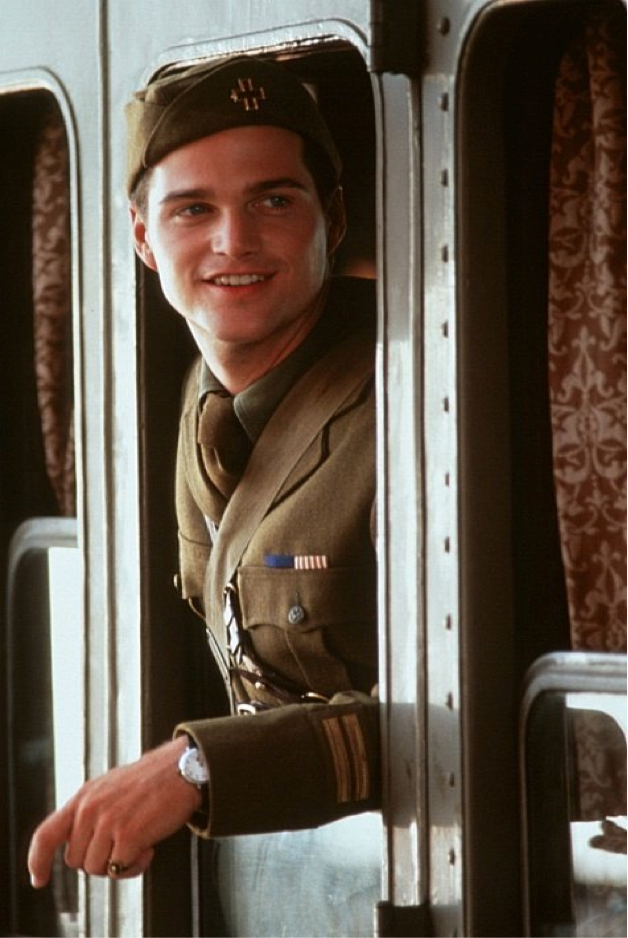
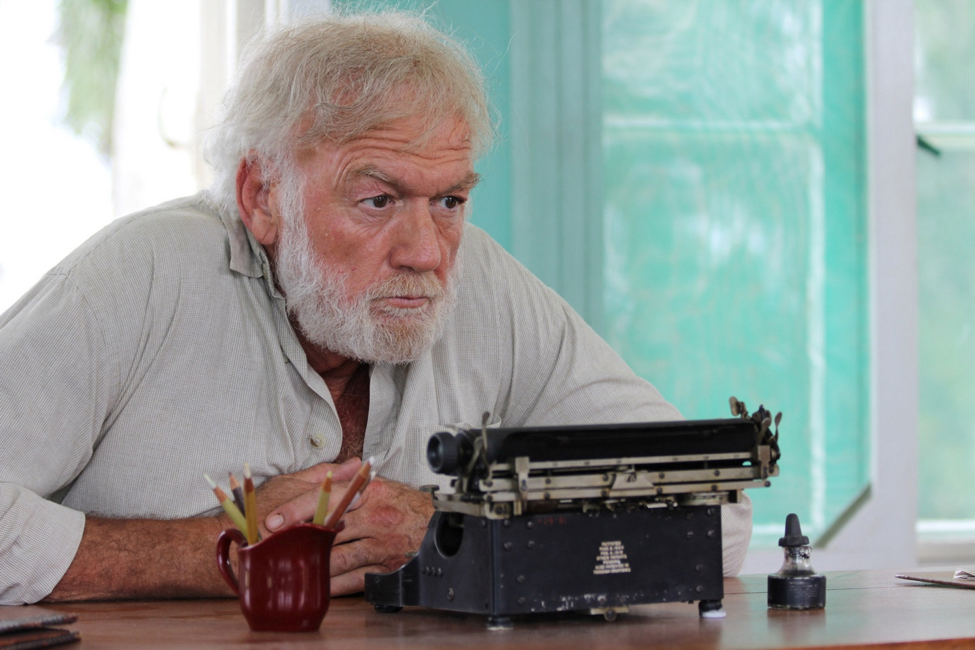
Dominic West in Genius (2016), Corey Stoll in Midnight in Paris (2011), Clive Owen in “Hemingway & Gellhorn” (2012)Chris O’Donnell in In Love and War (1996), Adrian Sparks in Papa Hemingway in Cuba (2015)
A reading montage follows. Perkins at his desk. Perkins on the train. The voiceover — that inelegant bridge between novels and films — begins. Jude Law drawls with his North Carolinian accent, as if it were always the author’s voice that a reader hears in her head: “A stone, a leaf, an unfound door; of a stone, a leaf door. And of all the forgotten faces… ”
But reading isn’t meant to be filmed. It’s the story inside the book that wants to be depicted, not the face absorbed by it. The rare films that do pull this off (The Princess Bride, The Neverending Story) use reading as transportation. To show someone reading is like showing a clouded mirror, rather than what it reflects.
And yet, if we have to look at a mirror it might as well be the face of an actor who is capable of subtlety. Colin Firth’s expression is implacable yet rapt as he takes in the words. Then, as if to confirm that the physical world still exists, he turns to the look out the window. As a reader who has been engrossed, I know this feeling. Coming up for air. He gazes briefly out, then Wolfe’s voice starts up again and Perkins turns back to the page as if caught, or pulled. That moment — the text of the novel chiming in a beat before the eye — is one of the better depictions of reading on film, the grown-up version of the sandwich that gets saved for later in The Neverending Story.
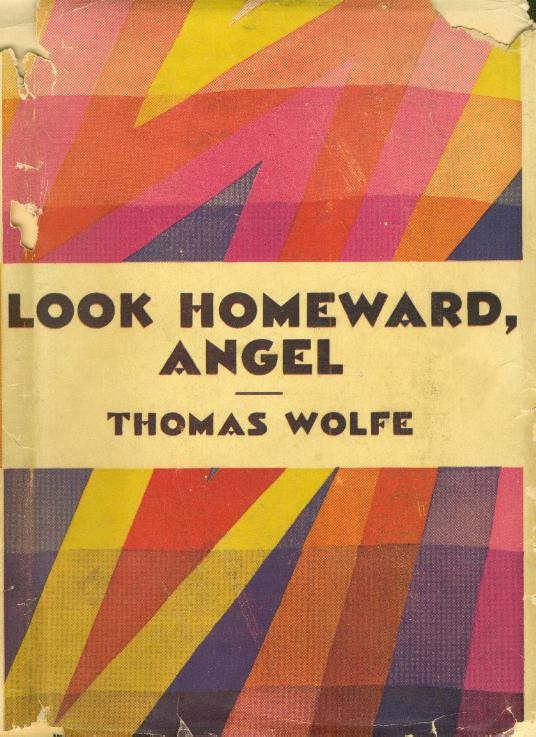
In Perkins’ introduction to the 1957 edition of Look Homeward, Angel — the novel submitted to Colin Firth at the beginning of the film — he characterized Wolfe as a prolific writer, one who “knew that cutting was necessary. His whole impulse was to utter what he felt and he had no time to revise and compress.” Grandage and screenwriter John Logan are savvy enough to take full advantage of the editorial relationship that forms between Perkins and Wolfe. For the audience this means another montage, as editor and writer tackle the opening passage to Wolfe’s second novel and only American bestseller, Of Time and the River. Perkins describes the process in his aforementioned introduction: “So then began a year of nights work, including Sundays, and every cut, and change, and interpretation, was argued about and about.” Grandage, a theater director making his cinematic debut, stages these arguments in locations across the city: in bars, on streets, even the platform at Grand Central Station. There are more shots of red pencil. But these marks matter, we know, because they are the hard earned results of a rigourous discussion about language and narrative, one operating at a much higher level than Finding Forrester’s“Punch the keys!”
First edition, 1929
As for depicting the writing process, Grandage and Logan were fortunate in their choice of author: the physicality of Wolfe’s habits offer them far more material than most. Unlike Proust, who famously wrote from bed (and whose In Search of Lost Time, incidentally,Wolfe sought to emulate with Of Time and the River), Wolfe, at six foot five, used his refrigerator as a standing desk, writing atop it in longhand. Shots of him scribbling away over the icebox are something to behold, as is the eventual deterioration of his friendship with Perkins. Like everything Wolfe does in Genius, their falling out is impassioned, exuberant, and drunken. Reflecting after Wolfe’s death, Perkins blames the riff on the dedication Wolfe wrote to Of Time and the River, which he made out to “a great editor and a brave and honest man.” According to Perkins, this had the effect of
“[giving] shallow people the impression that [he] could not function as a writer without collaboration, and one critic even used some such phrases as, ‘Wolfe and Perkins — Perkins and Wolfe, what way is that to write a novel’ … No writer could possibly tolerate the assumption … that he was dependent as a writer upon anyone else. He had to prove to himself and to the world that this was not so.”
Their brewing confrontation eventually comes to a head after Wolfe berates F. Scott and the ailing Zelda Fitzgerald at a dinner party, finally pushing Perkins, a decent and respectful man, over the edge. (As Nan Graham — former Editor-in-Chief at Scribner’s and its current Senior Vice President and Publisher — quipped in the post-screening discussion, “There are rules that editors live by: make friends of your authors but don’t make authors of your friends; don’t publish spouses. And, I would add, don’t invite competing authors to the same dinner party.”)
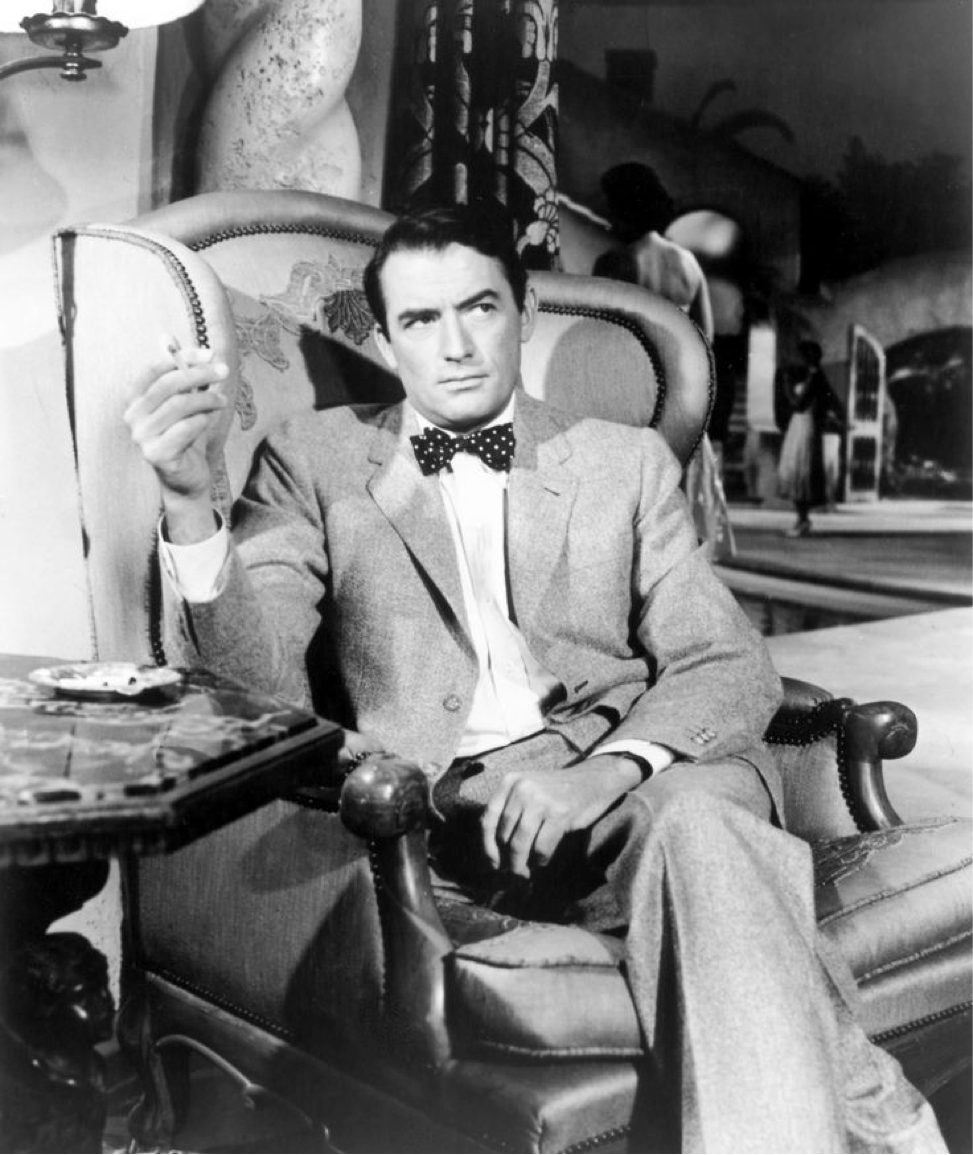
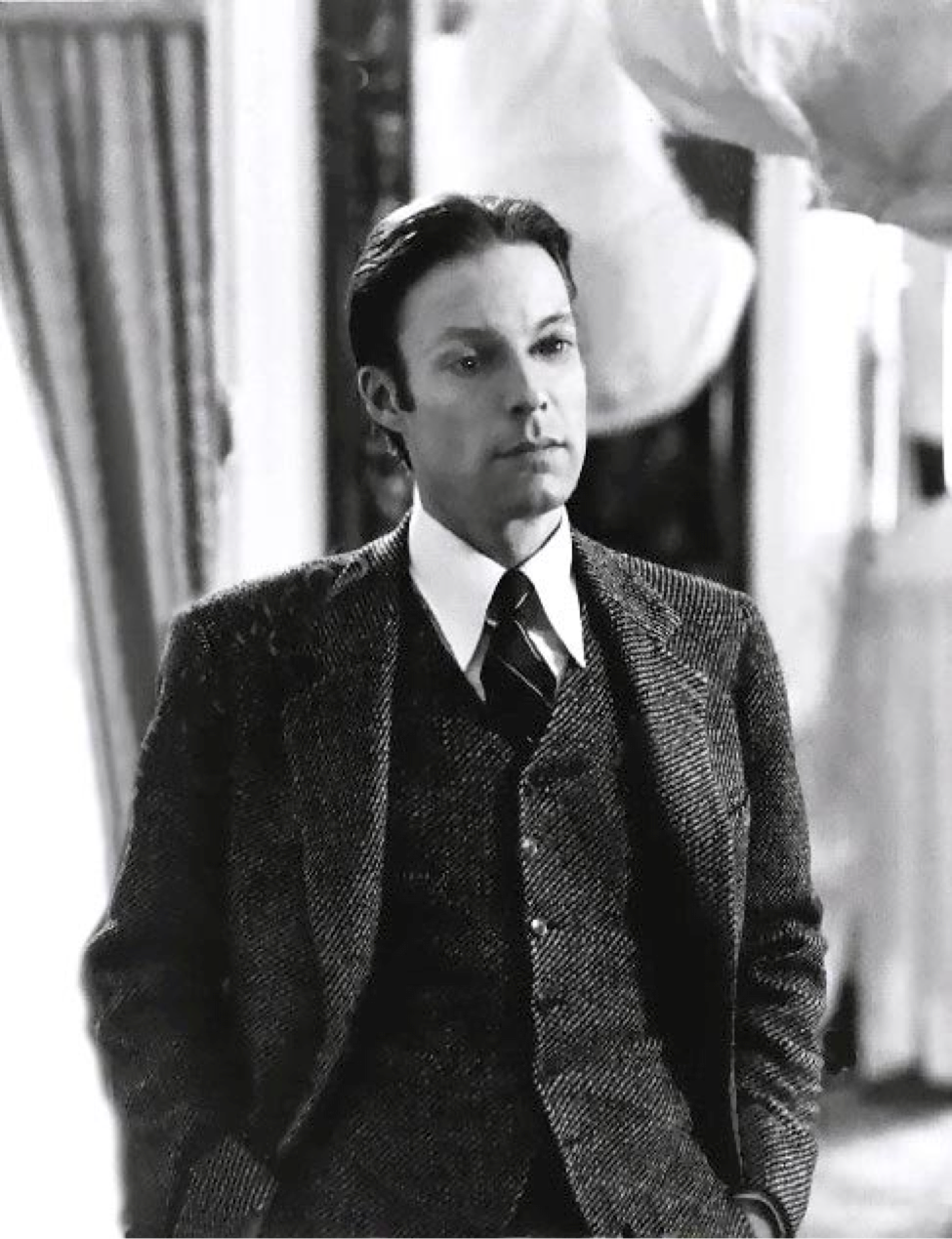
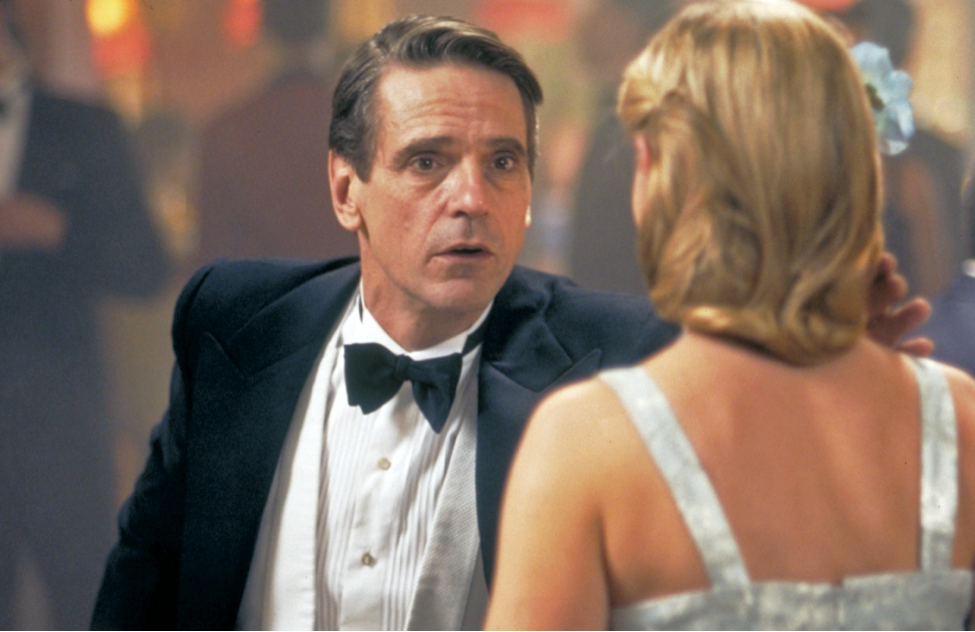
Appendix B — Fitzgerald in Hollywood
Gregory Peck in Beloved Infidel (1959), Richard Chamberlain in The Last of The Belles (1974), Jeremy Irons in Last Call (2002)Guy Pearce in Genius (2016), Tom Hiddleston in Midnight in Paris (2011)
Perhaps the most interesting question Genius raises comes from the comparison between Perkins and Mrs. Aline Bernstein (Nicole Kidman), a married woman who also supported Wolfe’s writing and with whom the author had a turbulent affair. (Although she was twenty years Wolfe’s senior, in the film they appear to be the same age.) In her final scene Kidman recovers a chilling performance from what has been, despite her character’s significance to his life and writing, a disappointingly one-dimensional role. During an unstable visit to the Scribner’s office she sums up the dedication she was given in Look Homeward, Angel as a “Thank you and good-bye,” warning Perkins that his will amount to the same. The question is whether Perkins, despite his personal relationship to Wolfe, can find stronger footing in his professional capacity as editor and literary gatekeeper, or if, like Bernstein, he will be locked into a role of servitude and end up abandoned.
Time turned out to prove Bernstein right. Wolfe ultimately left Scribner’s for Harper, though he died of tuberculosis of the brain before his third novel could be published. In a poetic and historical twist — omitted from the film — it was the spurned Perkins who wound up editing Wolfe’s posthumous manuscripts.
In the last half century Thomas Wolfe has faded from prominence, his work is rarely taught in college or even graduate classrooms, and many confuse him with his white-suite wearing homonym Tom Wolfe. After the film ended, my viewing companion leaned over said, “That ending was a real shock for me. I expected Wolfe to grow old and write The Bonfire of the Vanities.” Though Genius may inspire some, including me, to revisit Wolfe’s work, it’s Maxwell Perkins that emerges as the story’s true hero, the platonic ideal of an editor: firm yet compassionate, brilliant and devoted. Near the end of the film Wolfe shows up on Fitzgerald’s stoop to apologize, and Fitzgerald admonishes him for abandoning Perkins. “The man has a genius for friendship,” he says. A writer should be so lucky.
As readers, we like to think that literature has this higher calling, that it is transportive to the nth degree, that it — cue existential slow jamz — massages the brain into a deep empathy and thus makes us better people. Well, we can add another positive to the list! A new study has delineated the long-term financial payoff from childhood reading. The study — pulling from 5,280 men from Austria, Belgium, the Czech Republic, Denmark, France, Germany, Italy, the Netherlands and Sweden all of whom were born between the years 1920 and 1956 — indicates that those who read at least 10 non-compulsory-school-reading books ended up with 21% more income. The study also concluded, however, that after this number of books (10), there was no significant correlation between higher numbers of freely read books and higher additional incomes. 10 seemed to be the (relatively arbitrary) correlative cap.
On the bottom-line Capitalist value of books, Quartz has published an article running some quotes from one of the lead researchers on the study, Guglielmo Weber. Weber, like the study, boils literature down to lowest-common-financial denominators, not getting much further than the presence of books in a household as an indication of “families with stronger cultural and socioeconomic backgrounds.” He goes on, “Even nowadays, books capture something” (my emphasis). This is part of the problem: can “books” not be something(s) — at least for a reader — positively stripped of their economic jackets? That we don’t anticipate a paycheck at the end of a novel should be something intuitive; do we not get enough from the words alone?
Finally, too often in mass popular culture, we do exactly this: we throw around “books” as a huge unnamed thing. Books are wonderful; they are multivarious; they have genres and names and, if we are lucky, resist and challenge and blur those genres and names. I wonder what a long-term-earnings study of those who read Maggie Nelson, for instance, would illuminate for us.
We live in a world where an onslaught of information is a phone swipe away, where in order to run for government, residents have to start the campaign years before it officially begins. We live in a world where the majority of an entire continent uses the same currency, has lowered its borders and accepts many of the same laws. In this world, we can travel just about anywhere in under a day. Even fifty years ago, any depiction of our current living situation would be scoffed at and termed “science fiction.”
Infomocracy, the debut novel of both Malka Older and the first publication of Tor.com, is certainly science fiction, but it sets its sights on a slew of newly arrived realities, through a speculative lens. Their Information is with them at all times and accessible with an eye flick, but it’s not so different from our phone. Their world is both border-free and border-intensive, again, sharing similarities with us today. And while the modern world has no plans for a new transportation system through the Earth’s core (that I know of), fracking, Big Digs and waste concerns are no less a concern. It’s as if Older took the concerns of 2016 and turned the dial past 11, into science fiction.
At its heart, Infomocracy is politics meeting cyber-punk, when the movers and shakers behind the power investigate crimes and shady goings-on. With roots in noir and heels firmly planted in the present, it shows a world that really isn’t too different from today. Malka Older has created a thrilling, breakneck novel with fully human characters. And it asks tough questions.
Science fiction works best when it uses technological hypotheses as a fulcrum to explore humanity. As a genre, SF is uniquely suited to look at “today” and posit questions and then go about answering those questions. Infomocracy asks those questions directly: what would happen with news cycles when the world is voting for government? What will happen when the internet is so ubiquitous we’re never separated?
In Infomocracy, geopolitical borders are blurred. No longer is the world filled with disparate nations and coalitions. Instead, the world is split (to a large degree, anyway) into micro-governments with borders splitting down lawns and sidewalks. A “centenal” of Philip-Morris may lay between two “centenals” of Policy1st, on the way to Heritage or Liberty, discrete governing bodies that vie against one another in constant news streams and election maneuvers. Former countries are broken up into these micro-governments and one city could contain hundreds or thousands of these little districts. Some of the governments are corporate, some are for the people, some are frighteningly jingoistic.
He’s managed to find a centenal where alcohol and marijuana are legal but tobacco and pop-out advertisements are not. As Ken waited for the debate to start, he checked out this government’s broader policies. They’re called Free2B, which sounds like they might promulgate that kind of individualism that gets annoying quick once your neighbor starts playing gronkytonk at top volume at five a.m. or refuses to donate to the volunteer fire department until their house is burning down, but when he scans their policies, he sees they’re reasonably socially conscious. If they’ve got anything in a more temperate climate, he’s seriously considering moving there once the election is over.
Built on the bones of cyber-punk mainstays like Neuromancer and Snow Crash, the protagonists of Infomocracy are smart, driven, tech-savvy and resourceful. The world is dangerous and vaguely dystopian, but not outside the realm of possibility. While the characters — not all nice, not all good, but all intelligent, resourceful and amusing — obviously don’t dwell on the metaphors and parallels to today’s world, they’re all there. They recognize that resources are dwindling and that an era of plenty is ending, but they look beyond,
She takes a look at the menu and checks her body stats. The endive-prosciutto salad mostly closely matches her nutritional needs, but that’s hardly portable. Mishima decides to splurge on the peanut butter–banana–honey sandwich instead, a true luxury given the rarity of both bananas and honey. When it arrives, she waits until the waiter walks away, then wraps the sandwich in the linen napkin and heads back to her room. She doesn’t feel like making small talk with anyone right now, and they should understand. It’s election season.
It might seem like Infomocracy is too heavy on symbolism and words of warning. It’s not the case, far from it. Mostly it’s engrossing and thought-provoking, moving quickly and jaunting from one point of view to another, from the Middle East to Japan and back. The tidbits of heavy-handedness are sparsely laid out, easily to forgive in the moment. And they serve another function, as anchors. Infomocracy is fun and clever and it’s easy to get so distracted by the plot, the characters and the fascinating world that the larger picture is missing. While that’s forgiven in the point of view of the story, it’s not forgivable in the reader. We need a way to contextualize.
Science fiction is a way to think beyond the constraints of our time. It looks into the future and constructs a possible outcome and straps a story onto a construct. It’s about ideas and reactions to those ideas. What happens when our corporations start running for government, or constructing their own? How do pundits and campaign staffers react to new and powerful modes of media? These aren’t out-of-left-field questions and they require thought experiments to interpret.
That this particular thought experiment is delightfully well written and engrossing is quite beneficial. Nothing is worse than stodgy, high-minded sci-fi. Thankfully, that’s not a worry.
New publisher Tor(.com) and Ms. Older chose a good time to debut, when the election in our own country has started to reach a saturation point and the blurring of lines between fantasy and reality is in high-gear. I’m not sure if the world proposed in Infomocracy is better or worse than the endless stream of articles, essays, videos and talking heads we have now, but it’s certainly engrossing enough to distract us from our own disquieting present.
Electric Literature is committed to publishing work that is intelligent and unpretentious, paying all our writers, and offering our content for free. Members of Electric Literature are essential to supporting our mission of making literature relevant, exciting, and inclusive.
A monthly eBook sampling Recommended Reading’s rich archives, on topics such as magical cities, family conflict, gender and power, and more. These eBooks are compatible with most e-readers including Kindle and iBooks, and are not available anywhere else. Recommended Reading, our acclaimed weekly fiction magazine, has published over 300 issues to date, each with a personal recommendation from a top writer or editor.
Early access to The Blunt Instrument, Elisa Gabbert’s advice column to writers, and a special members-only bonus column every other month.
Access to year-round submissions for fiction and essays, with a guaranteed response time of 3 months or less. (Regular submissions have a 6-month response time.) Never wait to submit your work to Electric Lit again!
Members at the Novel level receive a “Read More Women” tote, and members at the Epic level get a copy of Papercuts, a party game for the rude and well read.
Electric Lit, Inc. is 501(c)3 nonprofit, and membership fees are tax-deductible to the extent permitted by law.
Have questions about the recent changes to our membership platform? Read more here, or email editors [at] electricliterature.com.
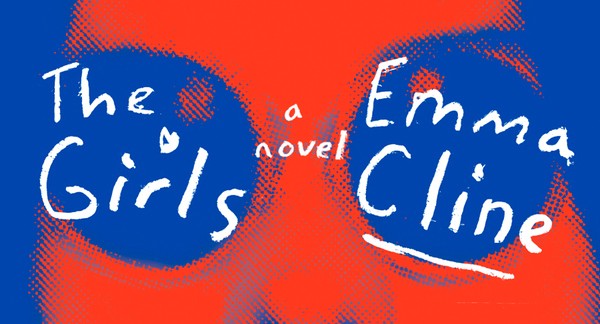
“Don’t read the comments” is the cardinal rule of the Internet, but if you make an exception for anything concerning Emma Cline, you’ll start to see a pattern. “Really, ANOTHER Manson book? Noooooo! Say it ain’t so!” one reader among many bemoans in the comments of Cline’s 2014 Paris Review essay about her correspondence with Rodney Bingenheimer, published long before her debut novel ever hit shelves.
But keen eyes would have caught in the section just before comments her short biographical note, which explains that Cline is working on a book inspired by the Manson murders — a book that eventually became 2016’s The Girls. And while it is true that The Girls is technically “another” Manson book, it is also liberally fictionalized — “Russell” replacing Charles, “Mitch” a stand-in for Dennis Wilson.
You might go as far as to consider that the protagonist Evie is, in some parallel universe, Cline herself, as the author confesses in her Paris Review piece that, “In the photographs I saw of the [Manson] girls… I recognized something of myself at thirteen, the same blip of longing in their eyes.”
But might all women find their teenage selves in that blip? It’s a question The Girls raises, as longing and desire are the twin forces ricocheting in Cline’s beast of a debut. Only clumsily might it be categorized as “Manson fiction,” though; more centrally, it is one of the darkest and most alluring coming-of-age novels to drop in a good while. A sharp-nosed publisher picked up on this too, as Cline stunned the literary world when The Girls sold for a $2 million advance almost two years ago.
Still, we must be patient with the grumpy internet commenter; in a cattish sort of way, one wants very, very badly to find something to tear down in The Girls. Her hefty advance aside, Cline is still somehow only 26 — a fact that has prompted corners of the internet to mutter, “She didn’t live through the 60s. So what does she really know? This all sounds like hype.” (This garnered a sharp reply: “Really? You really just sound envious.” “WHO WOULDN’T BE ENVIOUS; THIS IS COMPLETELY INSANE,” another commenter rightfully points out.)
So yes, there is a lot that makes one want to secretly see Cline fail — her age, her subject, her hype, her advance. Unfortunately for comment sections everywhere, The Girls will not give those seeking to eviscerate it much ammunition.
At the center of the story is Evie Boyd, who is doomed to be shipped off to boarding school at the end of the summer, has newly been scorned by her best friend, and is just beginning to understand the complicated power dynamics of sex. Being fourteen, Evie is at the height of that tender and treacherous age where one wants so badly to be wanted, and it doesn’t matter by whom.
We were like conspiracy theorists […] seeing portent and intention in every detail, wishing desperately that we mattered enough to be the object of planning and speculation. But they were just boys. Silly and young and straightforward; they weren’t hiding anything.
It is an observation made only after much reflection, as a present-day Evie recalls the final years of the 1960s and her brush with history. But later her words gain a double meaning as her fourteen-year-old self draws closer and closer to a new sort of family — a group of girls that live on a dirty farm in the hills of Northern California. On the ranch, “the girls” all but worship a mysterious, charismatic man named Russell, whose every word, gesture, and affection is cherished and hungered for. “Portent and intention in every detail,” indeed.
But even on the farm, far from the reaches of society, the girls cannot escape the suffocating yoke placed on women — the pressure to please. Even while Evie begins to navigate her budding independence, she is like putty in the hands of an older girl named Suzanne, whose affections are as brief and fleeting — and coveted — as Russell’s.
At times, The Girls can threaten to be oppressing in its single-minded vision of the world and of girlhood — Cline imbues a kind of helplessness in her characters that are caught in the web of an inescapable system. So too is it true that pop culture is saturated with stories about “dangerous” teen girls: Carrie, Jennifer’s Body, Heathers.
But what makes The Girls different is how muted the violence is: here, the monster is not women but expectation. The girls ultimately succumb to being who they are wanted to be.
For Cline, though, women are not to be blamed for weakness or for seeking to please. The red hands instead belong to society itself — a churning, unnamed force that pushes everyone toward their end even as the novel draws inevitably closer to the only finale it could have: murder.
The true evil in The Girls is greater than any one individual, and so much more powerful than a single time or place. It doesn’t take living through the 1960s to understand that as a girl, you have a role you are expected to play and it is so very hard to deny that part when it is, at long last, your turn to step into the light:
That was part of being a girl — you were resigned to whatever feedback you’d get. If you got mad, you were crazy, and if you didn’t react, you were a bitch. The only thing you could do was smile from the corner they’d backed you into. Implicate yourself in the joke even if the joke was always on you.
The Girls revels in how deliriously intoxicating — and dangerous — it is to find oneself desired, and Cline is an enviable talent right out of the starting gate. Even the crankiest among us will be forced to admit that being jealous has never been quite this much of a pleasure.
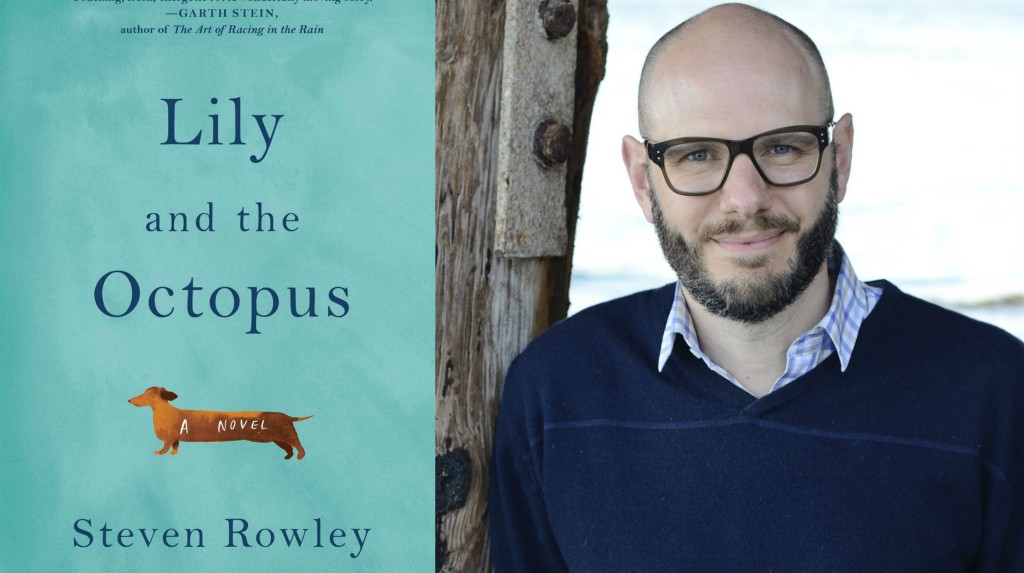
Steven Rowley’s charming debut novel, Lily and the Octopus (Simon & Schuster, 2016), has a rather incongruous central image. Lily, Ted’s aging dachshund, he’s recently discovered, has an octopus on her head. What might this interloping cephalopod be doing on Lily’s head? “‘I don’t want to talk about it,’ she says, tucking her head to gnaw at an itch on her stomach.” Ted can sense, though, that the octopus is hungry and that he’s about to take his most devoted companion away from him. It’s a setup, Rowley will readily admit, that’s hard to pitch (he never did understand why literary agents didn’t immediately want to read his manuscript, which he’d half-jokingly referred to as a cross between Joan Didion’s The Year of Magical Thinking and Melville’s Moby Dick). At its heart, Lily and the Octopus is an all too rare portrait of grief over the loss of man’s best friend. That it’s also a riotous take on growing older as a gay man in Los Angeles as well as a thrilling adventure tale at sea, is a testament to Rowley’s imagination. Lest you think the fanciful conceit is treated with cloying preciousness, know that the first page features an all too serious conversation about which Ryan Ted and Lily fancy the most (he’s a Gosling man, whereas she’s a Reynolds gal).
Wanting to talk to the mind behind this touching story, I contacted Rowley, a Los Angeles based screenwriter-turned-novelist, and ended up arranging a bicoastal Skype meeting where we touched on Lily’s autobiographical origins, discussed almost going the self-publishing route, and dished on the novel’s unmissable gay sensibility.
Manuel Betancourt: So maybe we can start with the obvious autobiographical aspects of the novel. You had a dog named Lily that passed away and that serves as the inspiration behind the book.
Steven Rowley: Well, the official party line is, “any resemblance to people living or dead is purely coincidental.” But I don’t think there’s denying that there’s a lot of me in the narrator because there is. In fact, the last thing I added to the book was something my editor sort of insisted on: giving the narrator a name. He didn’t have a name. And I sort of liked him being sort of mysteriously between me and not-me. But they were like, “It’s very hard to write marketing copy when you’re writing, ‘A forty-something uh… man’ — it’s a little less interesting for someone to pick up.”
I did have a dog named Lily. She passed away from a brain tumor in 2013. I was really shocked and not prepared for how I was sidelined by the grief that I was feeling. I grew up with dogs, maybe six different dogs growing up. But this was a different relationship entirely. Sometimes, people who have dogs — or other animals; we don’t have to be so divided in this world between cats and dogs! — sometimes there’s one dog that leaves a special imprint on your soul and that was Lily for me. So, not really knowing what to do, I did sit down one day after about six months of feeling in a funk. I was not writing at all, I had been mostly screenwriting before this, and I did pretty much sat down and just wrote a few thoughts and some memories I had about our relationship together. And they formed a short story. I showed it to someone that I had just started dating. And he said, “This is exactly what you should be working on!” And added, “Don’t talk to me again until you write chapter two!”
It was a lot of fun to take off my screenwriter’s hat and just run with the craziness.
And I was just thinking, “Chapter two? But, it’s kind of done! If I write a chapter two, there’ll be a chapter three and a chapter four, five, six… where does it end?” But, you know, I was still trying to impress him so I wrote chapter two and it snowballed from there. I don’t even know why I wrote a short story or a novel, as opposed to trying to write a screenplay or something. But I did. It was a lot of fun to take off my screenwriter’s hat and just run with the craziness. It was very freeing. I was sort of stuck in screenwriting and really uninspired after a while. And this was really… Not only did it help me heal but it actually inspired my writing.
MB: You say the first chapter began as this short story, and in a way it does feel like an iron-tight conceit that gets stretched and teased out until, of course, it basically snaps us back into reality. There’s this crescendo as the fantasy aspects sort of take over the narrative. I was curious about the kinds of conversations you had with yourself about how much you could push that before reeling us back in.
SR: The challenge for me was letting go of the autobiographical constraints and really letting it be a novel. Letting it be a whole story of itself. I think I knew right from the beginning, if I’m gonna write more, it’s an octopus so the book is written in eight parts. That helped give it a little structure. And I gave each part an octopus theme [“Camouflage,” “Suction”] and it’s when I got halfway through the book — the fourth section is called “Ink” that’s about the tattoo and the Rorschach test and all that, the blinding her — that I gave myself the freedom to just… you know, it’s ink. The idea of ink gave me the permission to just write where the story wanted to go. And to let go. It’s the part where it verges past the realism and where the magical realism becomes more magical. And that was really freeing. Where I got to the point where I could write whatever the story wanted to be. My goal was always was for it to be some core emotional truths. It had to stay parallel to how I actually felt, even if the actions were not quite the same.
MB: In talking about that blurring of the fantasy and the realism, how does one come up with a voice for a dog? Lily has a specific way of talking and I wondered how hard that was to arrive at and sustain throughout the book.
SR: Well, she speaks in two ways in the books. One is that sort of punctuated way [“LOOK! AT! THIS! IT! IS! THE! MOST! AMAZING! THING! I’VE! EVER! SEEN!”]. And that was me trying to assign an English translation to her actual barking. Those are her actual contributions. And all of those words in lowercase quotation marks [“Tell me again about my mother.”], that’s the imagined conversation. That could take sort of any tone and it more matches Ted’s way of speaking, because of course he’s carrying both sides of the conversation in his head. I did try to walk a line between, what would she actually be saying and what kind of personality do we assign to our pets?
MB: I particularly enjoyed their pop culture conversations, especially their running joke on mimicking that one line from Elizabeth: The Golden Age — “I, too, can command the wind, sir! I have a hurricane in me that will strip Spain bare is you dare to try me!” — that line is so ingrained in my head and I haven’t even seen the film!
SR: I’ve never seen the movie either! But it left an impression. And the truth of the matter is I used to make myself laugh when I saw that with Lily because I had — me personally, this nutty-dog person — I would have a very high-pitched character voice that I would do for Lily that I would use when I was having conversations out loud. A sort of party trick. But then I would actually do it by myself. It just sort of became a thing. But bellowing as Elizabeth I in this high-pitched, squeaky, made-up dachshund voice was just something that amused me to no end.
What’s interesting is that to make the relationship with the dog as powerful as I wanted it to be, I stripped off all of the people out of the story. So Ted has one friend, he has one sibling, he has one parent, he has one therapist. In real life I come from a very big family, and I have many many friends, and an army of therapists. [laughs] I actually don’t have any therapists. So in terms of adding conversations to Lily, the character in the book has really isolated himself a little bit. That’s why there’s a lot of imagined conversations. Because he’s lonely.
MB: In talking of this larger world that gets pushed to the background, I’m going to read you one of my favorite lines and use it as a way of talking about this funny if bleak look at the dating situation in the West Coast: “Los Angeles is a Neverland of Lost Boys who preen and crow far too often and demonstrate substance far too seldom.”
SR: [laughs] You know, I’ve made my peace with Los Angeles. And there’s really wonderful people here — largely because most everyone is a transplant of some sort. I’m an East Coaster and a lot of my friends are East Coasters here. So you can find substance, but there is something very odd about LA. And it comes from the weather, a little bit. That I was surprised when I moved here. I had probably lived here for five years before it occurred to me, “Oh, winter never came!” I didn’t realize I was five years older. I thought it was this really long summer and life had slowed down. It’s sort of tied into that, I think: people don’t realize that time passes in quite the same way. It lends to people not really understanding that time is passing, that they are aging. And there’s this desire to keep up sameness, always. It can get frustrating at times.
MB: In talking about this idea of aging: that struck me as being at the heart of the novel. We meet Ted when he’s sort of realized that this decade has passed him by. I wanted to ask if you learnt anything in terms of coming to terms with that or whether that was something that you were bringing into the novel yourself.
It is a particularly brave thing that dog owners (or pet owners in general) do. We sort of sign up for a lifetime.
SR: That’s a good question. I’m trying to think about how to answer that. You know, I got Lily on my 30th birthday, just as it was in the book. And it was really weird… I think this is sort of why the impact of having this dog was so strong. I’d never gotten a dog when it was a puppy before. So to be responsible for something from the beginning of its life through the very end, and watching a whole lifetime take place, is not something that I had ever done before. It did make me realize how much I had grown up over the same amount of time. It is a particularly brave thing that dog owners (or pet owners in general) do. We sort of sign up for a lifetime. And of course, animal lifespans are not as long as ours, and we know we’re going to lose them and we sign up for this anyway. And we do grieve and hopefully move on — I’m watching another dog over just off-camera licking herself! — and then we sign up for it again. We get to the back of the line and say, “Let’s do it all over again.” I think what I learned was that I wasn’t as fragile, maybe, as I thought I was. I learnt about a certain toughness. And some of it comes from knowing that it’s okay to be emotionally vulnerable, too.
MB: I also know that you said you almost self-published the book. Can we talk a bit about the road to getting Lily and the Octopus published?
SR: I don’t even know when I started writing. And I think that maybe that’s a lesson right there. I was writing because I was in a bad place and I was doing what writers do sometimes which is just sit down and try to write your way out of it. Or write some sense to it. Even when I was thinking, “Okay, this is going to be a novel,” I still wasn’t writing it for anybody. I had no vision of it being out there. I was just writing it because it felt like it needed to be written. And when I finished it, I was proud of it as a piece of writing but I had no vision that it would connect with people the way that it does seem to be connecting with early readers. And that’s deeply humbling. But since I’d written a book I was like, well I don’t want to put it on the shelf, so I reached out to a number of literary agents. But it’s a weird book to pitch. I will say that reaching out to all these agents I was met with resounding… crickets. In their defense I don’t think I was really good, at the time, of saying what the book was really about. Because if you say, “Hey, do you want to read a book about a dog with an octopus on its head?” Well…
I was joking with a friend at the time: here in Hollywood everything is all “This meets this,” or “This meets that,” and I was like, “Well it’s sort of like a cross between Joan Didion’s The Year of Magical Thinking… and Moby Dick” — don’t ever describe your book that way! [laughs] So when no one would write back to me I was like, “Are you sure you don’t want to read my book? It’s like a cross between Didion and Melville!” So pretty quickly after that I said, you know, I’m proud of this writing. I want it out there. If only for a sense of self-pride and satisfaction.
So I decided to self-publish it. My boyfriend was like, “I totally support you doing this but let me give you this piece of advice: I would say, pay to have a freelance editor take a look at it. Hire somebody.” So I did that. I found someone in New York and she did a great job. I paid her and I never expected to hear from her again. There’s no reason I would have — our business transaction was done. And so I hired a typesetter. I got an ISBN number. I was researching printers, and how to convert it into an e-file. I was all ready to put it up on Amazon when I got a call from that freelance editor and she said, “I haven’t been able to stop thinking about your book! Do you mind if I send it to an editor friend that I have at Simon & Schuster?” I thought that no harm can come of that. “But whatever she might have on her desk,” she told me, “it’s not out of bounds for it to take her a month or two to get to you.” And in the back of my head I kept thinking, “Well in a month or two this is gonna be for sale on Amazon… but okay, we’ll see what happens.” So that was on a Friday and because of the time difference, I woke up Monday morning to my phone ringing and it was Simon & Schuster and it pretty much happened that quickly. Within a week we closed the deal. I didn’t even have a publishing agent so I had to get an agent. (Pro tip for aspiring writers out there: it’s very easy to get an agent if you have an offer for publication!)
MB: It almost sounds like a Cinderella-type story. That sort of fairy tale version of getting published that we keep being told never happens.
…I’m so grateful that the most personal thing that I’ve ever written is the one that is breaking through and connecting.
SR: Well, you know, I think everyone knows that this is not how it happens. There is a sort of a Cinderella story, except, well… I blanche at that a little bit — everyone who sees an “overnight success” doesn’t really see the work that went behind getting you to that point where you’re an overnight success. But there’s no denying that there’s a charmed story behind this book. I’m excited and I’m so grateful that the most personal thing that I’ve ever written is the one that is breaking through and connecting. That’s very gratifying.
Simon & Schuster is doing right by me and this book. It’s their lead summer title and there’s a huge first-printing. I don’t think it’s even sunk in what’s coming down the pipeline. Hopefully it doesn’t land with a thud.
The people on Goodreads — I have to admit that I’ve been reading their little reviews and stuff like that — it’s hard not to obsess. But there was one woman who wrote that everyone needs to know that this book is about an “f-bomb dropping gay!”: One star. I was just like, “Okay, Shirley or whatever-her-name-was from Nevada.” But the man and his dog literary trope is a very heterosexual one, which is weird because of the extra importance that gay people have in their relationship with their pets, in terms of becoming surrogate children, sometimes. And well, you know, it’s gay on the first page! You gotta be along for the ride.
MB: It is sort of refreshingly and aggressively gay on the first page — you start off talking about male celebs you like, and then, of course, the Blanchett lines. But you have to wonder if Shirley from Nevada…
I wanted to be unapologetically me right from the beginning.
SR: She probably never saw Elizabeth: The Golden Age! Cate Blanchett never made it to Pahrump, Nevada, where I imagine Shirley living. You know that was the thing. I wanted to be unapologetically me right from the beginning. When I had a conversation with Simon & Schuster, they asked, “Do you have any dealbreakers?” And I said, “Well, it needs to be an octopus! If you say, make it a hippopotamus or a giraffe, that’s not gonna work. It can’t be that.” And I told them that I didn’t want to de-gay the book, which I was a little bit afraid of. Because when they were talking about doing this in a major way, I was thinking that I didn’t know whether there was a big beach read from a big corporate publisher that has a gay male lead. Usually that would be relegated to a smaller imprint or a University Press, or something like that. I told them, I can’t de-gay the book. And they were fantastic about that. In fact, my editor almost teared up, she told me that she couldn’t believe that that could even enter my mind that they would do that. So we’ll see what happens.
Sign up for our newsletter to get submission announcements and stay on top of our best work.
YOUR INBOX IS LIT
Enjoy strange, diverting work from The Commuter on Mondays, absorbing fiction from Recommended Reading on Wednesdays, and a roundup of our best work of the week on Fridays. Personalize your subscription preferences here.