Privileged Nostalgia: On Hollywood, Perception, and the Quest for Authenticity

ESSAY: PRIVILEGED NOSTALGIA, BY MEGHA MAJUMDAR

The idea of nostalgia comes to us not from poetry but from medicine. A seventeenth-century Swiss student called Johannes Hofer coined the word in his dissertation, naming what was then thought to be a disease: “the sad mood originating from the desire for return to one’s native land.” Nostalgia’s early victims included students from the Republic of Berne studying in Basel, and Swiss soldiers fighting abroad. To treat it, one could apply leeches, or journey to the soothing air of the Alps. The best cure of all was return to the homeland.

Modern comprehensions of nostalgia are less concerned with bodily illness, or with homelands, than with the movement of history. Now, we long not for places, but for places in a historical moment, fleeing as if we were viewing them in a train window.

It was in the nineteenth century that the past began to be institutionalized. Towns erected museums and memorials. In these structures, nostalgia expanded from personal longing to public tradition of salvage. Our past became intimately known at the same time as it was rendered inert: the beginning of heritage.

In an A Public Space essay on returning to his hometown, Kolkata, Jai Chakrabarti wanders about the developing city. “I notice,” he writes, “which of the older buildings have become new malls, which of the sweet shops known for their condensed milk squares have now been replaced by modern confectionaries or worse, a Baskin-Robbins.” In the sparse audience at a play, he mourns the empty theater, a venue and form of art banished to obscurity by a crowd committed, so he claims, to 3-D thrills.

Nostalgia, now, is rebellion against that fraught and beloved idea, progress.

In my childhood, Hollywood films played at three cinema halls in the city of Kolkata. Grand destinations of the British era — marble staircases, red curtains which parted before the screen — these theaters sought contact with a world of which, we already knew as children, we occupied a filthy periphery. We were still a colony, in thrall to the west. Even the names of the cinemas declared it: Lighthouse, New Empire, Globe.

With the obsessions of a colonized people taught that we were unclean, we noticed the cleanliness and comfort of the west. On screen, the streets of America were so pristine that people could come home and jump into bed with shoes on. Americans had silent, efficient machines for everything — curling hair, cleaning carpets, chopping onions, washing clothes. We had nasal-voiced maids who slapped and punched our worn garments on the bathroom floor as if on riverside rock, after which we clipped dripping dresses, in summer, winter, and monsoon, to ropes strung from the verandah.

Our lives were terribly unsophisticated, even coarse. The lanes flooded every July, drowning roaches whose brown shells floated in the water. In all seasons, beggar children touched our elbows and whined with upturned palms until we gave them a rupee, and uncles on the minibus pinched our breasts.

So when the accoutrements of America, as we understood it — malls, multiplexes, Baskin-Robbins, 3-D movies — began to migrate to our city, how could we not be delighted? Our city was joining the rest of the world, and it was an aspiration shared by all. (This continues to be true — the state’s current chief minister’s ambition is to turn Kolkata into London.)

With familiarity tipped over into disdain (“worse, a Baskin-Robbins”), Chakrabarti dismisses his own luxurious acquaintance with ice cream upon ice cream devoured, until one day the cone was no longer coveted. Even the memory of its having been coveted became an embarrassment. But in order to disregard the restorative wonder of coming in from a hot city to a cool, clean shop, and the peace of purchasing a scoop, one has to forget how corrosive life can be in the city.

Complaints about missing sweet shops or changing architecture are, in the end, complaints about inauthenticity. What these grievances betray is a wish to feel the city textured by a time now gone, a time in which one had moved through the city and, recalling it, felt it, or oneself, as one feels verse. It is a wish to have an authentic experience that is also poetic.

Here is an authentic experience.

A lean man pumps his legs to draw you, in a rickshaw, up the lanes of a neighbourhood. The vehicle, an overgrown tricycle, has no suspension to speak of, so every pothole and speedbump launches a jolt to your spine. No matter. This is the common mode of transport in the interior of residential districts, and it costs little. When you climb off, backbone freshly aligned, you hand the man twenty rupees. He glances at the note. He says the fare is twenty-two.

Twenty-two? Just last week it was twenty.

The man grows irritated. He demands that you ask anybody, you ungrateful passenger, or says nothing at all, looking squarely ahead until you give in. And you do give in, but not without a sour feeling of being cheated. Rickshaw fares are written nowhere. There are no meters. The system is rigged against the passenger. But you look at this man, his muscled calves, cloth pants hitched to his knees. You recall the sweat on his back as he leaned forward to pull you up a slope, and in haggling with him over two rupees, you come to feel not only that you are being cheated, but that you are cheating him, too.

Being middle class in Kolkata means this and a dozen moral struggles every day. The hardships of individual life are made flint by class friction. They ignite, over and over, in public encounter.

This is authentic life, though it is not the poetic authenticity in which one feels uplifted rather than beaten down. But many cities around the world, like Kolkata, are dense with the small indignities of daily life. In these places, the romance of such authenticity is a joke.

Juan Villoro’s short story “Amigos Mexicanos” takes this joke to an extreme. In this story, a foreign journalist visits Mexico, and his chosen guide wonders how to give him a satisfying experience: “He wanted a reality that was like Frida’s paintings, ghastly but unique.”

So he takes him to a restaurant:

I’d chosen the restaurant carefully; it was perfect for torturing Katzenberg. I knew he’d thank me for taking him to a genuine locale. They were blasting ranchera music, the chairs had that toyshop color-scheme we Mexicans encounter only in “traditional” joints, there were six spicy salsas on the table and the menu offered three kinds of insects. All calamities picturesque enough for my companion to suffer them as “experiences.”

None of this really works. Finally, the journalist is kidnapped, and this, we learn,

immersed Katzenberg in the reality he so yearned for. Katzenberg had lived it as something indisputably true: his days in captivity were devastatingly authentic.

The visitor, like Katzenberg, yields to the cruelties of a place as enlightening. But the nostalgic is wary of the city’s thorny edges. If the nostalgic returns, a condition of his return is that he will leave. In his brief moments there, like Chakrabarti, he desires the city in its historical image, its charms preserved. The nostalgic wants, most of all, to observe the city’s beauty as unquestioned champion over the daily exhaustions that plague its people.

The first mall in Kolkata was called Forum. It was located opposite a house where a twentieth century Indian nationalist once lived. We never summoned the will‚ — we should, we should — to visit Subhas Chandra Bose’s house, but we flocked to Forum often enough that the mall authorities began to refuse entry to children in school uniforms.

At the mall, we did nothing, really. We rested in the cool air and ate cookies, separated for an hour from the streets in which we tucked each other’s bra straps, if they showed, back under blouses.

How can you begrudge us that?

If authentic life, in the end, encompasses beautiful architecture or the quaintness of men who work as blade sharpeners, carrying their tools around the neighbourhood on afternoons when only housewives are home, then it also encompasses how the old houses are cracking, plants growing in their walls, while their owners grow feeble and the heirs prosper in Singapore. If authenticity is about a blade sharpener, then it is, also, arguing with the blade sharpener over why he has given you a torn banknote, which nobody will accept.

Now that it is yours, though, you have to slyly slip it into a bunch of notes to hand a shopkeeper. If he spots it, he will return it, and you will both know what you have tried to do. But this is how it works. This is how the note goes, once more, into circulation.

AWP Advice from a Young Curmudgeon

Sadly, Emily Post died thirteen years before the first AWP conference, and thus did not offer advice on how best to conduct oneself at the largest literary gathering in North America. Luckily, you have me, someone who has never been compared to Emily Post once in his life. All the same, Electric Literature asked if I might answer some FAQs on how best to navigate AWP and I was more than happy to, because I love telling people what to do and believe everything would be right as rain if people would just do as I say. So, here we go:

Any packing tips for AWP?

Don’t forget your meds. If you’re attending AWP, you’re probably a writer, and if you’re a writer, you’re probably on medication. Sweeping generalization? Not especially. So whether you’re on a low dosage of Zoloft or an industrial-sized dose of Lithium, make sure you’ve called in your refills and packed your pills (in your carry-on!) before heading to Los Angeles. There are many, many situations one may find oneself in during AWP wherein one may desire the accompaniment and aid of one’s benzodiazepenes. And if you have them to spare, remember: sharing is caring. If you have foregone traditional Western medicine in favor of yoga, kale, and mindfulness, it still may be a good idea to invest in some Tylenol PM, which you can absolutely take in the AM for fun.

There are many, many situations one may find oneself in during AWP wherein one may desire the accompaniment and aid of one’s benzodiazepenes.

Do I need to wear a different outfit every day of the conference?

Absolutely not, sunshine. You will see, like I have, that even a titan like Anne Carson is an unapologetic outfit-repeater in a conference setting.

Any travel tips?

Whether you’re driving, flying, or arriving by some other form of transportation that I can’t think of right now: arrive alive if you can. AWP is a good time, all the more so when you’re in one piece.

Will I find an agent or sell my manuscript at AWP?

No. Desperation is accompanied by a foul odor, one that’s easily detectable from a distance. I’m sure your novel-in-progress is wonderful, and I’m sure you have Pushcart Prize nominations coming out of your ears, but remember: you’re surrounded by thousands of people who are trying to do the very same thing you are. Be buoyed, not discouraged, by that.

Should I try to become best friends with Maggie Nelson and suggest we get matching tattoos and/or friendship bracelets and maybe go on a vacation to Reykjavik?

Nope, that’s my thing. Sorry. I got there first, get your own.

What do I do if and when I run into a hero of mine?

Start reciting your favorite lines. Ask for pictures. Show your tattoos. Cry. It’s extremely exciting to meet your heroes, and you shouldn’t necessarily feel pressured to keep your light under a bushel in such scenarios. Just, you know, don’t follow the writer around after your encounter.

Are the people I interact with on Twitter going to be anything like I imagine them to be in person?

Probably not! Do not be surprised nor take it personally when, after finally meeting someone with whom you’ve had many fun interactions on the Internet, you find you run out of things to say rather quickly. We’re all shy weirdos; Twitter and Facebook just make it easier to seem like we aren’t. Treat it like speed dating and move on to the next booth at the book fair.

For whatever reason, most panels and readings end with time for questions from the audience. Why this has not yet been outlawed is beyond me.

I’m at a panel and I’m thinking of asking a question. Any advice?

Oh, for the love of Jesus my pearl, don’t. For whatever reason, most panels and readings end with time for questions from the audience. Why this has not yet been outlawed is beyond me, but I do plan on getting a petition up over at change.org the second I learn how to do that. Until that point, however, at such events one will inevitably be forced to sit in a conference room while someone in the audience asks a question — or, more often than not, uses up-speak to make an unsolicited comment — that is either asinine, pointless, already-been-covered, or upsetting. Sometimes all of the above. I’m not saying that nothing meaningful can come from a Q&A session — it can’t, but that’s not my point. Rather, I ask you — you whose palms are itching, you who can barely wait to raise your hand — to go through a few simple steps in your mind before doing so. First off, ask yourself: Is what I have to say even a question? Now ask yourself: is it something you must ask publicly? If you force your question through these machines and find it still intact and necessary to ask — well, you’re probably incorrect, but if you insist, a few more tips. Before raising your hand, phrase the question in your head. Rehearse it. Delete the preface, because it doesn’t need to be there. Get it condensed and concise. Cut it in half. And then? Don’t say anything at all. It’s good to have a lot unanswered in one’s life.

What is the most important rule of AWP?

Use protection! That novelist you jerked off at Breadloaf, that poet you got to third with at Sewanee, all of your exes and ex-flings from various MFA programs and magazines across the country — they’re all going to be there, there’s going to be a surplus of drugs and alcohol, and you’re probably going to sleep with them. This may or may not be a mistake; that will reveal itself the week after the conference if and when you’re drafting or fielding multiple emotional emails about the improbability of romance from a distance while listening to Tori Amos’s “Hey Jupiter” on a loop. (Friend of mine.)

In the words of my seventh grade sex-ed video, don’t have a party without balloons. (Or, you know, do have a balloon-free party. We pretty much all have HPV as I understand it and there’s a forty-foot wall of water headed our way that’s going to wipe out the country by 2050. Live a little. Get an STD. Just remember: what happens at AWP ends up in essay collections that anywhere from fifteen to twenty people will read.)

Just remember: what happens at AWP ends up in essay collections that anywhere from fifteen to twenty people will read.

So, now that the conference is over, should I bombard everyone with whom I networked with emails so that they don’t forget me/might publish me?

The first few days after AWP are not unlike the first few days after having one’s family in town: you’re watching a lot of Netflix, you’re tired, you’re cranky, and if you’re checking your email at all, you surely aren’t responding to it with haste. Give it a week, at least. Do not mention the possibility of sending a poem/story/essay their way. If they want you to, they’ll ask. Remember what I said about desperation’s foul odor? It can be sensed through the cloud. (I have not the faintest concept of what the cloud is. Just don’t be pushy.)

The first few days after AWP are not unlike the first few days after having one’s family in town: you’re watching a lot of Netflix, you’re tired, you’re cranky, and if you’re checking your email at all, you surely aren’t responding to it with haste.

I’m back home and no one in my office seems to care about my conference experience! What do I do?

No one at your office has heard of half any of the people you were ecstatic to meet, and that isn’t their fault. Treat your return to work and life like your return to high school after summer camp, where you were forced to recognize that it’s of little interest to most people what you did while you were away, or what you do at all.

One week after the conference, should I write Maggie Nelson a long-winded email saying how lovely it was to run into her, and doesn’t she feel a kind of kismet bond with me, and when next will our paths cross, we should get coffee?

Well? Do you?

Have I spoken immoderately or indelicately? Have I said something that is in diametrical opposition with your own experience of attending AWP? Well, they asked me to write this essay. So, leave it in the comments if it makes you feel better. I’m not even going.

TED WILSON REVIEWS THE WORLD: EINSTEIN’S HEART

★★★★☆ (4 out of 5)

Hello, and welcome to my week-by-week review of the world. Today I am reviewing Einstein’s heart.

Everyone is always talking about Albert Einstein’s brain because of how smart he was, but that wasn’t his only organ. He had all the same organs as dumb people.

Einstein’s heart was the key to his amazing brain. Without it pumping any blood to his brain, his brain never would have been able to do all those math problems. He would have been dumber than a million people combined.

Now I’ve never seen his heart personally — partly because it’s illegal to go digging up corpses and partly because I don’t know where he’s buried. “Grave robbing” is an awful sounding phrase, but “grave borrowing” sounds much more gentle and accurate and that’s all I would like to do for the purposes of this review.

Anyway, everything I know about Einstein’s heart is stuff I guessed or surmised by looking at the heart of a possum I found dead on the side of a road. I named that little possum Einstein in honor of the late mathematician, and because he was wearing a collar that said “Einstein” on it. He may have been a dog now that I think about it.

Like most hearts, Einstein’s was a goopy mess. Not the kind of thing you want to touch without gloves on. When not attached to him, it would probably have been impossible to tell who it belonged to, unless he was nearby, turning blue, and simultaneously grasping at the open wound in his chest with one hand and reaching out for his heart with the other.

The point I’m making is hearts are weird and ugly looking and it’s no wonder they decided to make the classic heart icon look nothing like the real thing. Yuck.

To try and better understand the nature of Einstein’s heart, I wrote this poem.

Einstein’s heart
Plump and red
Pumping blood
Pump, pump, pump
Look at it go!
Never for infinity
Always ’til the end
His heart, your heart, my heart
All the same

That was a pretty good poem, wasn’t it? For a poem about an organ I mean. I’ve read better poems, but no better poems about human organs.

UPDATE: I spoke with a local grammar school student who did a book report on Einstein and claims Einstein was cremated, in which case his heart will forever remain a mystery. That is unless somewhere in his works Einstein invented time travel and someone reading this can go back in time and vivisect him and report back to me.

BEST FEATURE: It only stopped working once.
WORST FEATURE: It would have been swell if it had its own brain, the way some dinosaurs had extra brains for their tails.

Please join me next week when I’ll be reviewing pudding.

How to Promote Your Book (Without Being Annoying)

The Blunt Instrument is a monthly advice column for writers. If you need tough advice for a writing problem, send your question to blunt@electricliterature.com.

Dear Blunt Instrument,

My first book will come out in 2017 on a small press, and I’m wondering what advice you would offer on how to handle the experience. I’m particularly interested in what to do about self-promotion, i.e., how not to be annoying about it.

Sincerely,

Publishing Noob

Dear Noob,

I’m glad you’re asking this question now (in 2016), because it’s a very good idea to start thinking about promotion well in advance of your book’s publication date.

There can be huge variation in how much time, effort, and money presses are able to put behind promotion — and I find this to be especially true when it comes to small presses. The term “small press” can apply to something as big as Coffee House Press or a tiny labor-of-love micropress producing handmade chapbooks. You can make up for a lack of promotion on your publisher’s part with self-promotion, but of course there is a point of diminishing returns.

You can make up for a lack of promotion on your publisher’s part with self-promotion, but of course there is a point of diminishing returns.

With this in mind, here’s my advice on how to maximize (or at least increase) exposure for your book without making everybody hate you.

Ask your press now what they have planned for promotion, if anything.

If your press has minimal time and/or money for marketing and promotion, or they don’t believe in promoting books, or they just don’t really know what they’re doing, it’s better to know ahead of time. You might have to pick up a lot of slack.

Here are some of the promotional activities you might consider asking about: Will they help you contact authors and critics for blurbs or advanced praise? Will they be sending out a designated number of review copies? How many and where? Will they be sending copies to Library Journal and Publishers Weekly (which will help get it into libraries)? Will they be doing any (print or online) advertising? Do they actively promote their authors on their own social media accounts? Will they be making appearances and selling books at conferences (such as BEA, AWP, ABA)? How will they be distributing your book into stores? Can they help you set up readings and events? Can they help you set up interviews or other features (online or in print or on radio)?

You can also research their recent catalog to get a sense of how much effort they typically put into backing their authors and marketing their titles.

Not every review copy will turn into a review, and the cost of travel for events can quickly outweigh any proceeds from sales. Even relatively well-known authors might only sell a handful of books at a reading.

If they don’t plan to do much of the above, figure out how much of your own time and money you are willing to put into promoting your book. Understand that the ROI of promotion can be iffy; not every review copy will turn into a review, and the cost of travel for events can quickly outweigh any proceeds from sales. Even relatively well-known authors might only sell a handful of books at a reading.

Build your audience before the book comes out.

I’m a believer in social media as a kind of distribution channel for artists. But you can’t just create an account and start broadcasting about your book because there won’t be anybody listening. You also probably won’t have time to be awesome on every social media network there is, so consider focusing your efforts on the one or two networks you’re most interested in and that best align with your work and audience.

People who follow you on social media will buy your book if they are already fans of your work by the time it comes out. So start building a community as early as you can. Use your account to showcase the kind of writing you do. Twitter is the most obvious choice for most writers — handily, poetry and fiction and nonfiction are all made up of either lines or sentences, which usually fit nicely in a tweet. If you’re a critic or a philosopher or a political scientist you can tweet opinions and ideas. You can share comics as images. In other words, be interesting in the same way that your book is interesting, but on social media instead of on paper.

Social media generally works best if you interact on it. On Twitter, you need to actively seek out like-minded people, especially people who write (or write about) work that’s similar to yours. If you want to get even more calculated about it (entering Pick-Up Artist territory), aim for a mix of people who are around the same career stage as you along with more aspirational types (i.e. people with a lot more followers than you).

The trick here, as with making friends and influencing people, is that you kind of have to genuinely enjoy other people or they’re probably not going to enjoy you.

“Be everywhere” when the book comes out.

It’s a really good idea to line up a bunch of stuff just before, during, and after your book’s publication date. By “stuff,” I mean: articles, essays, interviews, craft talk, early reviews if you can get them, even reviews by you of other people’s books (ideally that are somewhat similar to your own).

Two authors I have seen make really good use of this tactic in the past year or so are Matthew Salesses (author of The Hundred Year Flood) and Alexander Chee (author of Queen of the Night). It has the effect of making your name (and your book’s name, since it will appear in your bio) omnipresent around the time of your publication date (or “pub day” in the modern parlance). But if you’re writing about stuff other than your own book (such as favorite or formative books in your genre, for example), then you’re promoting yourself without seeming strictly self-promotional.

But if you’re writing about stuff other than your own book (such as favorite or formative books in your genre, for example), then you’re promoting yourself without seeming strictly self-promotional.

It can take a lot to break through the fog of noise on social media and in life. You might hear or see someone’s name five or ten times and still feel like you have never heard or seen it before, then suddenly on the eleventh occasion you feel like you’re seeing this name everywhere and maybe you should check this person out.

Don’t exclusively boost your book.

Just don’t! Don’t start a blog solely to post book updates. Don’t start a Twitter account if you’re only going to talk about your book. No one will like you. You can talk about your book too much. I unfollowed Rob Delaney when his book came out a couple of years ago because he wouldn’t shut up about it for weeks (and concurrently he stopped being funny).

Some of the time, you should just be having normal conversations. Some of the time, you should be promoting other people. One really good way to do this is by becoming a critic — that way you can promote your own writing while also promoting other people’s work (even negative criticism is a kind of promotion).

If other people mention your book positively on social media or link to reviews, it’s OK to amplify it, but I wouldn’t retweet every compliment you get. People who repeat compliments too often are, frankly, annoying.

Other ideas…

Even if you’ve got next to no money for this promotional stuff, you can do local readings/appearances. Go to local bookstores and see if they’ll carry your book and/or host a reading and signing. When you do readings and events, double-check ahead of time to make sure they will have copies of your book.

If you have connections at local colleges, see about doing a reading or class visit. While you’re at it, let your college or grad program, if you had one, know about the book; you might be able to get the book featured in an alumni magazine.

Email everyone you know (including family!) and let them know you have a book out and how to buy it. (Just once. Don’t spam them.)

Finally, use your author copies wisely. If you have friends with new books, offer to swap copies. If you’re offered more books at a discount, buy more. Send your book to authors you admire. Be generous with it. Add a hand-written note.

I hope this helps you make the most of the launch. Best of luck.

Originally published at electricliterature.com on March 24, 2016.

Prodigals Deftly Exemplifies Adulthood In All Its Downer Glory

“You should not have grown wise before you grew old.” This piece of wisdom, from the last, and longest, of the eight stories in Jackson’s new collection, Prodigals, perfectly sums up the underlying current of the book. In short: Life doesn’t turn out the way you want it to, and it really sucks for those who learn that early on in adulthood.

These stories speak hard truths about being a grown up and the evolving definition of what it means to be one. The narrators are hyper-aware of the false security and knowledge that comes from having money, from schooling, from doing drugs, from having conversations, from religion, from the internet. The characters are remarkably perceptive, cynical, and defeated. But even though these stories lack hope, Jackson writes with a brutal frankness far more appealing than trying to sell the reader on happily-ever-afters.

In the first story, “Wagner in the Desert,” the narrator joins his friends for one last drug-fueled adventure before they try to have a baby. They want to take and do everything and anything, and refer to it as their ‘Baby Bucket List.’ Basically it’s free pass to treat reality with heavy doses of hallucinogens and espouse bullshit through a screen of pharmaceuticals. (When one character attempts to come up with something really deep and meaningful to say, all he manages it “I’m really stoned.”) But in actuality it’s a pathetic field trip for adults who secretly believe college was the best years of their lives but would never admit it out loud.

In “Serve-and-Volley, Near Vichy,” the narrator and his girlfriend visit with a former world-famous tennis pro who refuses to play the game any longer and instead ignores his wife and children by hiding away in his workroom. He has become convinced he may not actually exist, and infects those around him with the feeling of a shrinking reality.

In “Epithalamium,” a woman in the midst of a nasty divorce seeks to rectify her long list of regrets by surrounding herself with young people in the hopes of finding fun and joy. But having become inured to optimism and lost her capacity for happiness, she manages instead to make more of a mess of her life when she cannot hide her jealousy.

In all of the stories in “Prodigals,” the characters behave with the insight and indignation of people who have had revelations about their lives yet know they aren’t going to change. In “Dynamics in the Storm,” a couple pretends to meet for the first time while driving during a terrible storm, when in reality their relationship has already blown apart. Characters smoke in front of a woman whose husband is dying of lung cancer; they take truckloads of drugs to try and evoke happiness and a respite from reality. “The worst part of a trip, we can all agree, is the moment you have come down enough to realize you are not down all the way.”

Jackson is incredibly funny and amazingly sharp in his observations of regrets and disappointment, and the compelling stories are full of wisdom. This book has a lot of warmth in spite of the cold hard truths they tell. His characters struggle with morality in the face of a world where morals seem no longer worth having, and hopes and dreams are constantly being downgraded until they are simply stories they tell themselves to help them get through the day. “We were trying to find ways not to be villains,” one character says. These are people using the past as a salve on the present. Jackson deftly shows the nuances of adult consciousness with dark humor and compassion, and this pithy collection is a powerful debut sure to bring him recognition.

The Literary Spy Novel: Five Recommendations

Family tragedy drew me to Cold War literary fiction.

My uncle Frank Olson died sometime around 2:30 am on November 28, 1953 when he “jumped or fell” from his room on the thirteenth floor of the Statler Hotel in New York City. The New York Medical Examiner’s report contained that ambiguous description of how Frank came to land on the sidewalk early that morning. Frank Olson was a highly skilled Army scientist who worked at Fort Detrick in Frederick, Maryland, a top secret U.S. Army facility that researched biological warfare agents. He had gone to New York to see a psychiatrist in the company of a CIA escort, Robert Lashbrook. This was all the family knew about Frank’s death for twenty-two years.

My uncle Frank Olson died sometime around 2:30 am on November 28, 1953 when he “jumped or fell” from his room on the thirteenth floor of the Statler Hotel in New York City.

Then, in June 1975, one bit of new information came to light. Buried inside a report by The Rockefeller Commission, which had been established by President Ford to investigate allegations of illegal CIA activity within the U.S., was a two-paragraph account of an army scientist who had been unwittingly given LSD and died in a fall from a hotel window in New York. To the conflicting theories that Frank Olson “jumped or fell” another possibility was added: he was dropped. Frank Olson’s death came to embody our collective fascination with the Cold War’s dark secrets, and it shined light on the dubious privileges men in the CIA gave themselves in the name of national security.

Frank Olson left behind his wife, Alice, my aunt, and three young children, Eric, Lisa, and Nils. Their lives went on, but were never the same, and Frank’s death traumatized each of them in deeply personal ways. Eric, the eldest, dedicated his life to unpacking the mystery of his father’s death.

I observed this tragedy over the years from within the tenuous intimacy of our family connection. I witnessed how my cousin Eric’s search was frustrated by an agency clinging to it secrets. None of the volumes of books on the CIA and biochemical warfare dug deeply into the minds of the men who inhabited Frank’s world — and even today questions about his death remain unanswered.

I was curious about the men who were responsible, but they remained hidden, opaque, masked. I believe that is why, some years ago, I was drawn to the literary spy novel. It put a human face on the Cold War by focusing on the psychological burdens of its characters rather than on Byzantine plot, or high politics. Doubt and paranoia bred in a culture of secrecy characterize these novels, as does a sophisticated amorality of men at the top of intelligence bureaucracies, and above all there is the strain put on family, friends, and faith. Men who work in covert operations inevitably bring some of that darkness into themselves, suffering the moral hazards of a line of work that sanctions lying, deceit, and murder — as was the case with my uncle. The interplay of state secrets and individual lives is the trademark of the genre.

We were able to measure things in the Cold War — borders, hope, annihilation. Today the enemy is stateless and violence seemingly random, which I believe, makes us nostalgic for the measurable dangers of the Cold War.

We were able to measure things in the Cold War — borders, hope, annihilation. Today the enemy is stateless and violence seemingly random, which I believe, makes us nostalgic for the measurable dangers of the Cold War. The resurgence of Cold War fiction coincides with the enormous popularity of Cold War movies, notably Bridge of Spies, and television series like The Americans. Readers can look to the literary spy novel to glide beneath the noise of headlines and see a complex world through the knowing eyes of empathetic characters. The age of surveillance in which we live makes the genre, born in the middle of the last century, feel contemporary.

Here are five literary spy novels that stand out.

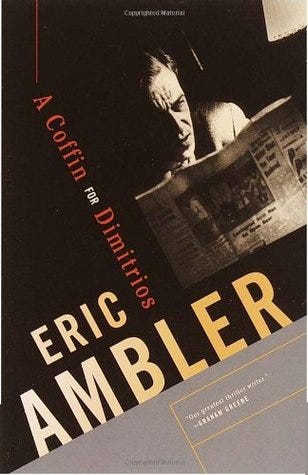
1. A Coffin for Dimitrios, Eric Ambler

Ambler

The Guardian, upon the occasion of the reissuing Ambler’s work, quoted Graham Greene, who called Eric Ambler “unquestionably our best thriller writer,” and John Le Carre, who once referred to Ambler as the “source on which we all draw.”

Ambler’s first five novels, which appeared in the tumultuous years between the World Wars, relied on durable tropes — the innocent man on whom suspicion wrongly falls who must solve a mystery to clear his name, and the precarious plight of stateless individuals. Both these themes appear in his classic, A Coffin for Dimitrios (1939). Greene admired the book so much he drew upon it when he wrote his film treatment for The Third Man. It is regarded as Ambler’s most sophisticated book. The reader quickly appreciates how the book’s narrator, Charles Latimer, an English professor who writes detective stories, turns his interest in Dimitrios into a writerly obsession that results in a stunning revelation, and in the process Latimer turns from a casual investigator into a man fearing for his life. When originally published, the book stood out within the nascent canon of spy novels, mostly nationalist in tone, rightwing in their politics, and dulled by flat prose. A Coffin for Dimitrios is among the handful of spy novels that can lay claim to launching the modern genre. Fittingly, Ian Fleming winked at the novel’s influence when he had James Bond in From Russia, with Love amuse himself with the novel (with its British title, A Mask for Dimitrios) on a plane journey to Istanbul.

A Coffin for Dimitrios is among the handful of spy novels that can lay claim to launching the modern genre.

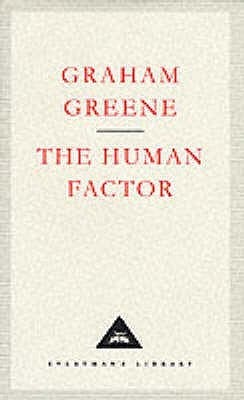
2. The Human Factor, Graham Greene

Greene

Spies figure prominently in several Graham Greene novels (usually in ways incidental to the business of spying, as in Our Man in Havana and The Quiet American), but in The Human Factor (1978) Greene takes the reader deep inside the intelligence apparatus of MI6. The England in Greene’s novel is still in the dark shadow of Kim Philby’s embarrassing defection, a country of traitorous instincts and charming manners. This wonderfully transgressive spy story has senior British intelligence officers plan to quietly dispose of one of their own rather than risk that the exposure of the man’s suspected betrayal bring public opprobrium upon the agency. Gentlemen spies talk casually of poisons as if they were talking of tea. Intelligence officer Maurice Castle, the book’s central character, slides to his fall — there is the betrayal of professional trust, his unintentional participation in the murder, and a break up of his loving family when he defects to the Soviet Union. Some of the plot points have been called unrealistic, but they are distorted to reveal the facets of Castle’s humanity. Castle’s struggle with loyalty, morality, and conscience makes The Human Factor one of the most Christian of Greene’s major novels. Greene explained himself in his memoir, Ways of Escape, this way: “I wanted to present the Service unromantically as a way of life, men going daily to their office to earn their pensions, the background much like that of any other profession — whether the bank clerk of the business director — an undangerous routine, and within each character the more important private life.”

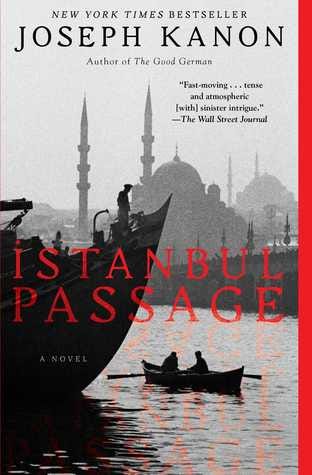
3. Istanbul Passage, Joseph Kanon

Kanon

Edgar-award winning author Joseph Kanon has been called “the heir apparent to Graham Greene” by The Boston Globe. Kanon’s novels are all set in the half-decade after World War II when people and nations were called to account for their roles in the Holocaust. Kanon explores the fraught mood of that time in Istanbul Passage (2012), which was a wartime stopover for refugees and spies. Leon Bauer, an American tobacco merchant and part-time spy, undertakes one last assignment that goes fatally wrong. An exchange of gunfire leaves a body in the street and Bauer is forced to hide a defector, which draws Bauer into a tangle of shifting scrutiny, personal risk, and moral uncertainty. The novel is convincingly anchored in Istanbul’s exotic milieu and the city becomes a character, in much the same way Greene used grim, gray Vienna to good purpose in The Third Man.

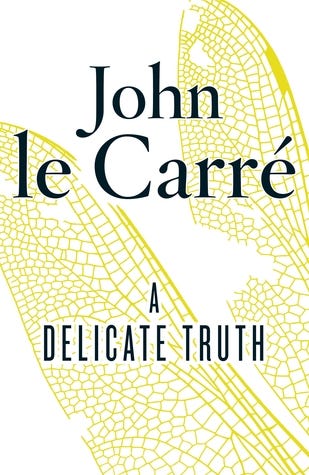
4. A Delicate Truth, John Le Carré

Le Carre

Through his 50 year career Le Carré has anatomized British society in soul searching novels that now, some argue, were cunningly disguised as escapist spy fiction. His preoccupation with the world of intelligence agencies might seem like a narrow focus, but in that lens he has explored modern life. His intelligence officers are outsiders inside corrupt bureaucracy and his books take on a world that sanctions lies and deceits as a way to shed light on those human impulses. In A Delicate Truth (2013), Toby Bell, private secretary to the Foreign Office minister, happens upon the cover-up of a disastrous anti-terrorist raid conducted unofficially by a contract operations team that mistakenly killed civilians. Exposing the cover-up threatens powerful forces. A Delicate Truth is about deception and skullduggery at the highest levels of democratic government. The book examines the ambiguous morality of using deceit in the defense of truth and violence in pursuit of peace. Le Carré has said A Delicate Truth is the personal favorite among his novels. The Daily Telegraph has called Le Carré “our greatest living novelist.”

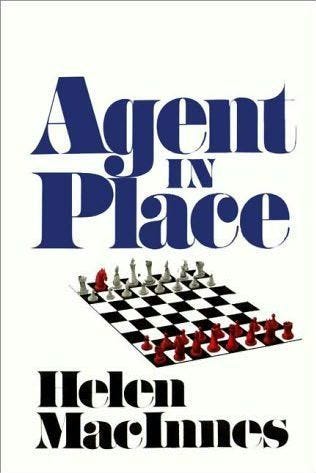
5. Agent in Place, Helen MacInnes

MacInnes

There are a few accomplished women writers of the espionage thriller, notably Stella Remington, who was the first ever female director of MI5, the British domestic spying arm, and of course, Helen MacInnes, whose 21 novels spanned the Cold War.

The spy genre, perhaps more than any other gene, has been the province of men, often men who once served in the intelligence community. There are a few accomplished women writers of the espionage thriller, notably Stella Remington, who was the first ever female director of MI5, the British domestic spying arm, and of course, Helen MacInnes, whose 21 novels spanned the Cold War. Her husband, Gilbert Highet, a classics professor at Columbia University, had been a MI6 intelligence officer World War II, and provided MacInnes with insight that enriched the detail of her novels. Agent in Place is set during the Cold War détente years of the mid-1970’s. At the start a Russian ‘sleeper’ agent has orchestrated the leak of the innocuous first part of a NATO memo to Tom Kelso, a Times journalist, in order to get the second and third parts which will give the Soviets information to unmask important Western agents. MacInnes’s heroes, like Ambler’s, are often wrongly accused innocent men who need to solve a crime to clear their name. In this case, Kelso, his integrity questioned in the leak of the NATO memo, begins a painful family affair of betrayal and loss, while a trusted friend, British agent, Tony Lawton, comes to his aid and hunts down the traitor. MacInnes is a witty writer who drapes the action of her novels with keenly observed social bunting.

Lynn Steger Strong on Writing Characters Too Nuanced To Be Reduced

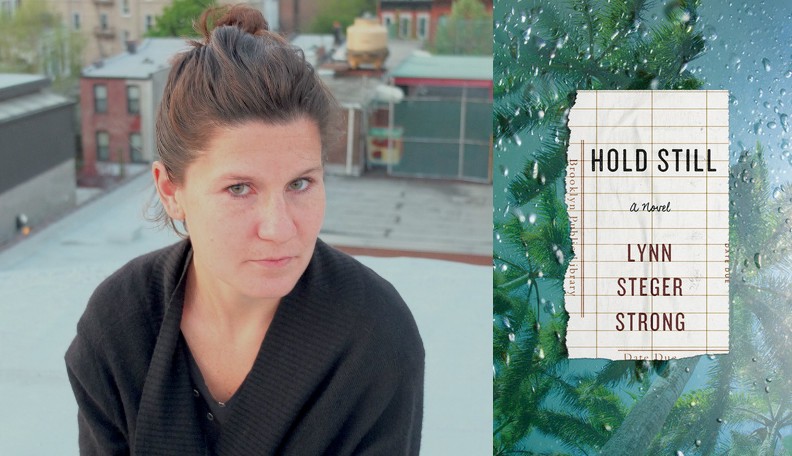
I’m holding two things when I walk into a dark cocktail bar in Fort Greene, Brooklyn to meet Lynn Steger Strong for drinks: a finished copy of her debut novel, Hold Still (Liveright, 2016), and my unbound manuscript, still many moons from finished, which I’ve been noodling on during the train ride. Strong has no interest in talking about her own book, which is seventeen days from publication. She has no interest in promoting herself; in fact, she shies a bit when she sees the hardcover, and instead reaches for my work on the table, pushing her book aside. She asks me to tell her everything.

I haven’t been friends with Strong for very long, only since meeting her while co-teaching a conference in December, but this interaction is entirely emblematic of the person I know her to be. She is humble and gracious, and seems to scarcely believe that the good things that happen to her are deserved.

Yet Strong has written a book that is very much worthy of the praise it has received, and will continue to garner. Hold Still is a tender novel with a resonant emotional core that follows one family after an accident that tears at the fibers of their life. It is gripping without ever reaching toward the spectacular; and its lyrical, undulating prose never calls attention to itself, nor screams out wishing for you to applaud after each hard stop. In these moments, Hold Still is at its most accomplished.

Forty-five minutes into our meeting, Strong agreed to allow me to turn on the recorder, placing it atop our pile of writing, and we dove in.

Meredith Turits: There’s quite a contrast here between your finished book and my pile of draft pages — what does seeing an unbound manuscript make you feel again? Does it freak you out that it’s a process you’ll have to begin again at some point?

Lynn Steger Strong: I want to take it from you and be like, “Let’s talk about it!” It makes me so much more excited. I’m a person who likes that control, and right now I have no control, and it’s terrifying, whereas with that … the teacher in me comes out. The worker, too. I can do work. The object? I don’t know how to do object. I only know how to do work.

MT: Do you feel nervous about the promotional end of this?

LSS: Yes. And also, at a certain point, I had to stop thinking that a bound object was what I was interested in, because I wasn’t sure a bound object would happen. I had to keep writing, so it had to be about work all the time. Now whenever writing is not about working, I’m afraid I’m not a writer anymore. Even though this is where I’m supposed to be validated as a writer, I feel like the only way I’m a writer is if I’m working, and because I’m working on my other jobs and being an object in some ways, I miss writing. I miss engaging aggressively with words.

MT: What makes someone a writer?

LSS: I think engaging aggressively with words.

MT: So, in your definition, then, you’ve lapsed as a writer?

LSS: Although last year I would have said I wasn’t a writer, because all I had was a Word document that I cared for. I would have just said, “I’m a teacher.” But now I don’t want to say, “I’m a writer” because I feel like I’m bragging.

MT: So, then it’s an identity you’re afraid to engage with?

LSS: Yes, because writers are everything, and books are everything — well, maybe not anymore — but they were for a really long time, so the idea that I have the hubris to try to make one still feels insane.

MT: At what point did you decide, “I will try to make one,” or was this something that you always just worked toward?

LSS: In college I had this spewing of feelings into a Word document where all I did all day was read, and I didn’t talk to anybody. It was like my talking — I just typed and typed and typed. I was pre-law or something, and I didn’t understand that reading could be something you did with your life. I didn’t know that was allowed. So I just typed and typed and typed and I had all of these pages, and I was not liking the pre-law track, and so I found my way to giving myself permission to write. I was okay with it partially because I was other things, too — you know, “I want to be a writer, but I’m a waitress!” or “I want to be a writer, but I’m [insert difficult thing here].”

MT: If engaging with or manipulating the prose is the thing that’s kind of the most exciting or validating, tell me what the process of editing for you is like. When you have to relinquish the main role of being in charge of the course of the book, or the final draft, what is that like?

LSS: I think by the time it got to edits with Katie [Adams at Liveright], I trusted that we wanted the same thing … I understood that I didn’t necessarily know what had to get cut, because I loved so many parts, and I loved the people. Like, when I finished the last Ferrante novel, I understood that — I loved the people so much and I didn’t want to go away from them. But that’s not the most productive decision you can make. I understood that I needed someone who could step outside of it and tell me. And I trusted the editor who was telling it to me, so when she said “Cut,” I did.

MT: I know a little bit about you, and I know there are definitely elements of you that are in this story. What does it feel like to detach yourself from those elements and work with them as parts of character?

LSS: I think I think of those parts — these things that are really close to me — as great gifts. When I gave Maya, my main character, anxiety, which I can deeply relate to, I also gave her the ability to go for long runs and relieve that anxiety. It felt like the least I could do. I feel connected to these characters the way I feel connected to a dear friend with whom I have similarities. I see things in the friend that I respect and admire, and I want to support them as a friend.

MT: Does it make it harder to edit or see with objective eyes or cut anything when you’re working with a character you deeply understand and respect?

I wanted to write complex characters who sometimes do bad things.

LSS: Yeah. When you write a character who is like yourself or someone you know, you don’t want it to be reduced down to something like, She’s crazy or She’s a bad mom, or She’s a good mom with a bad daughter. I wanted to write complex characters who sometimes do bad things. I wanted to put something on every page that was like, Just remember, they’re a human! There’s a paragraph that’s like, They’re doing the best they can, but sometimes the best you can do fall short. That’s the most terrifying part. But you fall in love with these people and you hope that you made them nuanced enough that people won’t reduce them down.

MT: Is it hard to leave them now in this permanent world and know that their story has ended?

LSS: No. I love them, and I love that this is the book that is introducing me as a writer, and that these are the characters that are saying that. But I’m ready to work. I’m ready to go somewhere new.

Will the Next J.K. Rowling Be a Robot?

As if it isn’t already difficult enough to win a literary contest, writers who submit fiction to The Nikkei Hoshi Shinichi Literary Award competition in Japan have to contend against robots.

As the LA Times reports, four out of more than 1,400 entries to the competition — which accepts submissions from robots as well as people and is named for Japanese Sci-Fi writer Hoshi Shinichi — were co-authored by computers. Although it didn’t win the award, one hybrid work was selected by blind judges to move on past the first round.

According to Hitoshi Matsubara, the professor who led the team of researchers and robots responsible for the successful cyborg entry, humans performed about 80% of the work for the hybrid novels. As The Japan News explains, researchers came up with the story’s major parameters, like its plot and the gender of its characters. They then harvested words and phrases from a (human-written) novel and compiled them into an extensive archive. Using this archive, the computer created sentences and assembled them into a story based on the humans’ outline.

Writers who are full of ideas but can’t get them down on paper shouldn’t rejoice just yet. Matsubara told The Asahi Shimbun that there are still “many problems to iron out.” Sci-Fi novelist Satoshi Hase, who read the cyborg stories, agrees. Although Hase was surprised at how “well-structured” the robot novels were, he noted that there are still “some problems…such as character descriptions.”

The Japan News reports that one of the AI entries was appropriately titled, “The Day a Computer Writes a Novel.” Decide for yourself if this excerpt from the story is cause for concern: “The day a computer wrote a novel. The computer, placing priority on the pursuit of its own joy, stopped working for humans.”

Where Pop Culture and Literature Intersect: An Interview with J. Robert Lennon and Rob McCleary

“And So, We Commence” by J. Robert Lennon and “Captain Stubing Has Collapsed” by Rob McCleary are featured in the 200th issue of Recommended Reading, along with pieces by Morgan Parker and Téa Obreht. To commemorate the 200th issue, dubbed “The 200 Episode Club,” the writers were asked to write about the 200th episode of a sitcom.

Chelsea Baumgarten: The idea for this project was to write about the 200th episode of a sitcom. Why did you choose to write about The Cosby Show? How do you think fiction writers can contribute to a political, and often very sensitive, conversation like the one that surrounds Bill Cosby?

J. Robert Lennon: I tend to steer away from politics in my fiction, so The Cosby Show seems like a weird choice in retrospect. It was an interesting technical challenge, and once I got the idea, I couldn’t turn away from it. The train wreck that is Cosby just seemed so fascinating to me: the cruelty, the delusion, the lies. The anger and resentment he must have felt to put so many women through such humiliation. And his having to act on so many levels — many of the rapes were, astoundingly, fake auditions. I mean, who knows what was going through the real guy’s head all those times he was pretending to be America’s greatest dad — maybe just some great, roaring cognitive-dissonance wind — but I wanted to take a stab at imagining it.

CB: In “And So, We Commence,” Cosby, or Cliff, views his public persona–wholesome, funny TV dad–as the “real” him and his private persona–a serial rapist–as a role he plays. Eventually the two become inseparable and he can’t identify what’s real. Can you talk about this approach to writing your piece, and about the fragmentation and self-denial of Cliff?

JRL: I guess a writer wants — needs — to think that even the most despicable person is worthy of understanding, compassion, even. And maybe that’s my answer to your earlier question, about writers contributing to a sensitive conversation. For me, understanding is the only real entry into a character — even one, like Cosby, whose crimes I despise, and one I feel, like a lot of people, personally betrayed by. He made me laugh so much! I ground the grooves to dust on his first few standup records. I feel shaped by his humor — it’s in my blood. And now I want it out. So I guess my move was to imagine that maybe, at some point, Cosby would have preferred to be Cliff, would want to remain Cliff, rather than to return, permanently, to the self that felt compelled to rape. I had to believe that to want to write about him. And believing that let me feel the drama of the curtain call — that final moment when the game was finally up.

CB: Rob, in “Captain Stubing Has Collapsed,” you riff off of Frank O’Hara’s, “Poem [Lana Turner has collapsed!].” O’Hara, who famously loved visual art and film, often addressed popular culture and celebrity life with his poetry. Some writers, however, are hesitant to do so. What do you think writers can gain from engaging with popular culture in their work?

Rob McCleary: I think the issue isn’t what the author stands to gain from engaging popular culture as what they stand to loose from making an arbitrary point of not engaging it. The idea that there is a hard stop between “popular culture” and art appeals to our need to believe that there is a hierarchy of creativity, beginning with weighty novels about “important” subjects, and descending in order through film to television, then to all forms of internet expression, bottoming out at the lowly, self-published Kindle. (Sorry lowly, self-published Kindle. I’m not picking on you, I’m just trying to make a point.)

Mainstream publishing is happy to play along with this consoling illusion because they haven’t figured out a way to monetize the mashup culture which has come to dominate our world like film, television, and the internet have. They are happy to reinforce our timid, childish belief in life as a meritocracy where only the best works of art get attention, and they can perish the idea that someone could’ve written a best seller, an important cultural statement, or a deep insight into our current condition that will never see the light of day.

Not engaging popular culture as a point of honor makes about as much sense as refusing to like a Taylor Swift song for the sole reason that it’s a Taylor Swift song. It also protects us from the frightening reality that creativity does not observe arbitrary rules, formats, human-imposed hierarchies of importance, cultural norms, or even the shared social construct we refer to adorably as “reality.” It protects us from the fact that we now live in a post-McLuhan world where the medium is no longer the message, the medium is irrelevant. And if you cannot accept that, you risk becoming irrelevant.

CB: Frank Sinatra, Andy Warhol, Lana Turner, and Captain Stubing all collapse in your piece, and the eventual collapse of The Love Boat series itself also looms. There is something so sad and powerful in the lines, “Frank Sinatra does not know why the Frank Sinatra records no longer sell,” and, “Andy Warhol has had enough of Andy Warhol.” What do you think we invest in celebrity personas, and why are we so affected by their downfalls?

RM: Celebrity is, at it’s atomic level, fame. And fame is one of the currencies of status, the secret, shameful obsession of human society. In his book Status Anxiety, Alain de Botton states:

“Every adult life could be said to be defined by two great love stories. The first — the story of our quest for sexual love — is well known…it is socially accepted and celebrated. The second — the story of our quest for love from the world — is a more secret and shameful tale. If mentioned, it tends to be in caustic, mocking terms, as something of interest chiefly to envious or deficient souls…. And yet this second love story is no less intense that the first, it is no less complicated, important or universal, and its setback are no less painful. There is heartbreak here too.”

It’s a cliché to say the trials and failures and destruction of modern day celebrities is our Greek tragedy, which does not automatically make it any less true. Scholar Bruce Meyer states that tragedy in the Greek sense is impossible in our western, Christian universe. God is Santa Claus. Always looking out for us. Omniscient. Helping professional athletes catch Super Bowl winning passes. Deciding that dum dums like George W. Bush should ascend irresistibly to the Presidency. In the light of our everyday struggles and pointless sufferings we are presented with some real head scratchers. Did God hate the loosing Super Bowl team? If God cured my kid’s leukemia, couldn’t we have all saved a lot of time and effort by Him simply not giving them leukemia in the first place? Enter celebrity tragedy with the answers.

God is supposed to provide us with the satisfying, ordered (therefore comic) resolution to all our problems. Celebrity train wrecks reflect the reality of the bullshit tragedy of our day-to-day lives, flawed to its core, like us. Self-sabotaging, imbecilic, and above all consumed with the sort of singular narcissism that makes us believe there’s a God concerned with the utterly dreary minutiae of our daily lives. We are obsessed with celebrity culture not because we are obsessed with celebrities. We our obsessed with celebrity culture because we are obsessed with ourselves.

Midweek Links: Literary Links from Around the Web (March 23rd)

Looking for some interesting reading to get you through the week? Here are some literary links from around the web to check out:

Should writers reconsider their relationship to publishing?

How climate fiction (cli-fi) is changing literary studies

Roxane Gay’s debut novel is being made into a movie

99 ways of looking at Franz Kafka

Knausgaard and the rejection of empathy

A look at the Weird in NYRB Classics books

The best books about the dangers of the internet

Dzanc has a new fiction prize with a huge $10,000 advance award

Paul Beatty on humor, race, and how few funny books get published

A humorous look at all the things you need to worry about when writing your novel