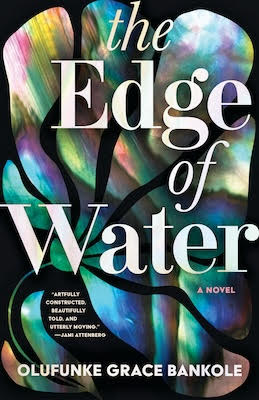
Literary fiction will have the title in Helvetica along with amorphous shapes in shades of that year’s Pantone color.
Genre fiction will have a little cutout showing the face of either a wizard or a rakish duke. It opens to reveal the whole picture, and they’re standing in the snow.
2. Contemplate the book’s central questions.
Literary fiction asks:
What more can be said about humanity and society, really?
Should this novel perhaps have been a short story instead?
Will my book club notice if I SparkNotes this one?
Genre fiction asks:
How do so many vampires get onto public school grounds?
Should they just replace all police detectives with plucky grandmothers?
Why didn’t Regency-era inns ever have more than one available bed?
3. Ask, “How does this engage with our reality?”
Genrefiction, with its over-the-top characters and scenarios, offers an escape from real life. Literaryfiction, with its unflinching honesty, confronts it.
However, certain variables may apply, as shown in the example below:
4. Analyze the main characters.
If the protagonist is a man with a job related to publishing, that’s literary fiction, and he will spend the novel lamenting the profound things he could write but doesn’t. If the main character is a woman with a job related to publishing, that’s genre fiction, and she will spend the novel buying shoes and never thinking about writing at all.
5. Interpret the symbolism.
With literaryfiction, the reader can ascribe any meaning to the text because the author is either too dead or too busy working multiple adjunct jobs to argue. With genrefiction, the reader can ascribe any meaning to the text because the author already wrote eight more books this year and no longer remembers what The Rakish Martian Vampire Duke is about.
6. Consider other determining factors:
7. Try the process of elimination.
There are defined types of genrefiction: romance, mystery, fantasy, western, horror, science fiction, historical fiction, AP Historical Fiction, Calculus fiction, P.E. fiction, chick lit, kid lit, lamb lit, baby armadillo lit, cozy mystery, itchy-scratchy mystery, Jane Austen retellings, smutty Jane Austen retellings, novelty books about cats, novelty books about Jane Austen, novelty books about smutty cats, dystopian fiction, dystopian Jane Austen retellings, books where adolescents get sorted into categories, books where strangers are secretly angels / spies / Santas, and books that reveal the one true secret to getting rich (the latter may be labeled “nonfiction,” but come on).
Now, if your book doesn’t fit into any of these categories, chances are you’re holding a novel in which a man eats a fancy little cake and ponders his existence for five thousand pages. That’s literary fiction.
8. Reflect on the ending.
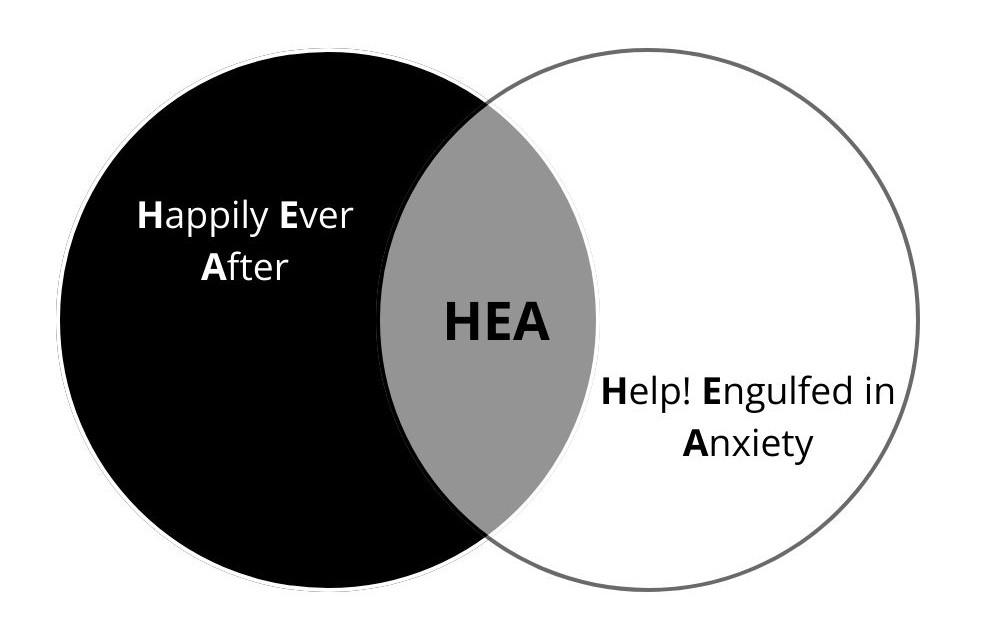
Genre fiction tends to neatly tie up every loose narrative thread; this is satisfying to audiences who read for entertainment. Contemporary romance in particular will end in an HEA, which stands for “Happily Ever After.” Literary fiction is more open-ended and ambiguous. Truly brilliant literary writers will shock the reader out of complacency by ending a work abruptly, even in the middle of a
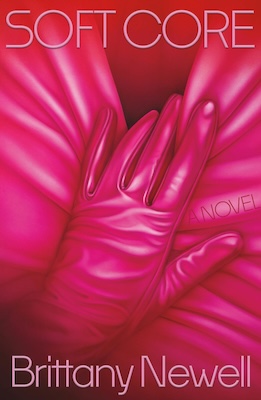
Professional dominatrix Brittany Newell’s second novel, Soft Core, follows 27-year-old stripper Ruth (or Baby) as she searches, increasingly madly, for her stylish, ketamine dealer boyfriend, Dino, who one day goes missing from their home in San Francisco. Ruth’s search for Dino parallels with her unraveling, as she tries to fill the void of her longing with work and unconventional relationships, including a correspondence with a man with a suicide fetish who signs his emails “Nobody” and an aloof new girl at the strip club who reminds her of someone from her past.
While Soft Core is indisputably sexy, it’s also a nearly tactile portrait of the senses. Newell proves herself to be a writer in tune with both the physical and emotional realm, as she describes feelings and smells with equal deftness. The result is an atmospheric dreamscape of a book that’s ultimately an exploration of yearning, unusual intimacies, love and revenge, fueled by the pacing of a noir. While compulsively readable, Soft Core lingers like the cloud of perfume that can follow a beautiful woman, a real California dream. Finishing Soft Core felt like walking out of a bar and having no idea what time it was, to find yourself alone on the sidewalk on a foggy night, looking up at the neon sign of the bar before deciding to walk home.
I called Newell, who squealed excitedly about karaoke and quoted Foucalt with the same level of enthusiasm, on an afternoon in January. We talked about honesty and desire, the freeing power of a disguise, her go to karaoke song and more.
Ariél M. Martinez: Tell me how this book came to be.
Brittany Newell: I wrote it when I was 27 after the first time in my life where I wasn’t working on anything which was very existentially troubling for me as someone who functions best when I have a writing project to funnel all of my neuroses and observations into. It appeared after a period of fermentation where I wasn’t writing and what really facilitated it was that I got a grant from the city of San Francisco, the San Francisco Individual Artist Grant, and that reignited my belief that I was actually a writer, not just a wayward loser. I was able to rent office space in North Beach in San Francisco for really cheap—because COVID all of the techies and people with regular jobs had emptied out. I made it my 9-5 job, going to the office and working. I had been fermenting all of these ideas about writing about a stripper and wanted to find the best receptacle for all of my dominatrix and dungeon stories. I had previously tried to channel them into a book of essays called My Body and Other Conspiracy Theories, which never saw the light of day. In the end, a fictional universe with a more fluid character who has elements of me but isn’t me ended up being the most generous receptacle for all of the sex work observations and funny stories and tragedies that I always wanted to share in a way that was funny but also earnest. I’d never had the experience before of writing where everything flowed out of me almost like independently. I’d never had such an ecstatic writing experience: sitting down and wondering what was going to happen that day. Every writer chases the high of a flow state but you can’t force it. Writing a rough draft of Soft Core was six months of the most addictive flow state.
AM: How long have you been in San Francisco?
BN: Eight years.
AM: I’m interested in how you thought about infusing San Francisco into the book – it’s so alive and textured and feels like a character in the book itself.
BN: I do think of San Francisco as a character that Ruth is engaging with. The book is a love story that’s about Ruth’s relationship to Dino but also her less obvious romances with other characters and in a way her romantic relationship with San Francisco, which is how I feel about it. Sometimes I’m like, why are you making it so hard for me? But then the hills at twilight are just so irresistible that I just get knocked-kneed for San Francisco all over again and defend it to everyone. It’s such a beautiful and enchanting and strange and fucked up city. Sometimes I worry that it’s a shortcoming of mine that everything I write has to be set in San Francisco but then again I’m kind of sick of every contemporary fiction novel being set in an ambient, coffee shop version of Brooklyn. When I was reworking it with my agent Annie (Dewitt) and her assistant Mary Alice (Stewart), it was Mary Alice who pointed out that the book had a bit of a noir vibe—sleazy, ’90s erotic thriller—and that really helped hone in on the climax of the book where Ruth is seeking revenge from someone from her past. I liked thinking of San Francisco as this very noir landscape that has this sleaziness and griminess that characterizes a lot of ’90s thrillers, like “Basic Instinct” is set in San Francisco.
AM: Hitchcock has films set in San Francisco and I feel like there’s a Hitchcock element to Soft Core with seeing doubles or lookalikes… What were you exploring with imitation and doubles?
BN: There’s the question of mirroring and doppelgangers with Ruth seeing Dino all over the city and later there’s a question of identity. Is this someone she knew or is that a new person that she’s projecting Dino on which, like it or not, is how we engage with new lovers—finding the things that remind you of the people that who hurt you and hoping that this person will do it differently and maybe being attracted to the wisp of past lovers about them. Nothing I write is meant to be a solid statement about “this is what sex work is like” or “this is what domming is like”… It’s always my own musings of what’s funny or resonant. Towards the end, Ruth reveals the name of the strip club, and I’m invoking this image of a fog filled room with interchangeable porno angels floating around in the mist. I think it’s that image of interchangeability of women’s bodies on display or being for sale that is baked into the fantasy rules of whatever type of sex work the girls are engaged with. There’s a level of projection with Ruth in love with a new person and projecting Dino on it, and there’s another yearning of a John hiring a girl and projecting whoever on her. So there’s a mirroring quality that happens in both romance and transactional sex experiences. There’s a flickering quality to identity that can make sex work fun but also can take a toll on your psyche, which we see with Ruth where she’s losing her grip with what is real and what is imagined both because of her broken heartedness and this shifty underworld that she’s immersed in where there’s a defined, baked in slippage between the flesh and the fantasy which is what makes it exciting but also confusing if you’re in that world for too long.
AM: Do you think about dungeons or strip clubs as liminal spaces?
BN: Absolutely, they’re completely liminal. Almost everything about the Dream House, the dungeon in the book, is not made up. The dungeon is a suburban house on a quiet cul-de-sac where you have to know what it is for it to transmogrify to this place of fantasy or ecstasy, so it exists in that liminal space of knowing and not knowing. A strip club is less so but it’s still the same thing of paying a toll to come in and there’s a liminality that you can choose who you want to be when you enter these spaces and the girls working there are also choosing who they want to be. I’ve used this word but the word slippage is really important to these spaces and as a writer I’m always attracted to stories and experiences of slippage and the shifty line between the flesh and the fantasy.
AM: As a sex worker you have such a unique window into desire. What do you think is the relationship between honesty and desire?
BN: It’s sort of like when you put on a disguise it makes you able to be more honest because there’s a screening function. Ruth reflects on this at some point in the book where she’s engaging with literal strangers but at the same time these strangers are telling her things they’ve never told their wife or therapist or best friend so there’s this strange, heady combination of naked honesty and obfuscation of who they are and how much money they make and if they’re married. It makes me think of this client that I saw the other day who walked in presenting as a conventional cis man who wanted humiliation and to be kicked in the balls and hinted at some sissy stuff. We started the session and he’s very shy and I was trying to humiliate him so I was like, dance for me, do a sexy strip tease, take off your North Face or whatever. He was so awkward and he had just mentioned the sissy thing but I had a sense there was so much more that he wanted in that. I went to the closet and found the first tattered-ass blonde wig I could find and blindfolded him and set him up in front of the mirror and got out some muumuu for him to wear. Then everything changed. I was like, open your eyes, and I took off the blindfold and wanted to force him to reckon with his reflection—and of course part of it was humiliation but the demeanor totally changed. Then I was like, do a strip tease for me and they were really getting into it and feeling really sexy and feeling themselves. Sissies have this interesting, complicated thing. There are some clients where I’m like, you’re a fucking man through and through and for you, you want to be dressed as a sissy because the most humiliating and most debased thing to be is a woman, so that’s where that’s coming from. But for people like my client, which it isn’t for me to speculate if they’re secretly an egg or trans, that’s not for me to have access to—but what I have access to is that in the two hour session, we had this moment of transformation that I could really see. Once he was in the wig and I was calling her she and a slut and a bad girl, I could see that there was this palpable shift. I don’t know exactly what it was but something more honest was coming through. It was one of those moments where I was just like, oh this is so raw and I felt really lucky to facilitate it and behold it and be a container for this thing, which whatever it is… whether it was a fetish or something deeper and more identity based… but whatever it was, it was powerful and very honest and was made possible by this shitty disguise of this blonde wig that made this person feel so sexy.
AM: That’s so moving and must have been so beautiful to see that transformation. I went to this strip club in Portland where there’s karaoke with dancers performing… it’s very fun but there was this one man who sang this really earnest love song and it was so honest, I started tearing up. It was just such an earnest expression of desire and admiration that was really beautiful and I think about it a lot.
BN: Dude, I know exactly what you mean. I’ve had similar karaoke experiences where it’s this unassuming person and then there’s something really raw. Karaoke is actually a really interesting example of what we’re talking about because that’s another form of identity slippage: to briefly embody the pop star whose lyrics you’re borrowing.
AM: What’s your karaoke song?
BN: I usually do “Hurt” by Johnny Cash or “Jolene” is always a crowd pleaser.
AM: Classic. I love karaoke, we need more karaoke in books. Speaking of strip clubs, I’m a perfume freak and loved how perfume is everywhere in the depiction of the strip club. Can you talk about your relationship to perfume? And what perfume would you pair with Soft Core?
There’s a flickering quality to identity that can make sex work fun but also can take a toll on your psyche.
BN: This is such a prescient question. Anna Dorn who wrote Perfume and Pain does this bespoke curation of perfumes. She said she wanted to pick out some perfumes based on the description of the perfumes in Soft Core which was so exciting to me. I love amber and sandalwood and smokiness and incense… I’m a big slut for incense. But to bring it back to the book, I didn’t realize that I was so hyper attuned to smells until I was shopping the novel around and I sent it to Bill Clegg who turned it down but he wrote a really sweet and thoughtful message praising the book and said that he’d never read so many different descriptions of the way that bodies smell. That was the first time I was like oh I guess I’m really obsessed with smell as a writer, I knew I was as a person. I feel that perfume and clothes are the closest thing we have to everyday magic in terms of transforming the atmosphere that you’re in and kind of being able to cast a spell and control how you’re treated that day or what might happen. Perfume and clothes really feel like creating portals for different possibilities or engagement with the people you’re around. I got a sample of this perfume Encens Suave that’s described as a carnal vanilla, and I think that’s what Soft Core as a perfume would smell like. Sweet but also fleshy.
AM: Do you use perfume to write? BN: I don’t, I use music. There’s a lot of music throughout the book: songs that the girls dance to, songs on the radio, love songs, songs that people remember. I have a playlist that’s the Soft Core playlist.
AM: There’s a tension between romance and absence in the book, can you talk about that?
BN: I think it’s Lacan who says there can be no desire without lack. There has to be something missing or not entirely present in order to long. When people ask what the book is about and I don’t feel up for describing the plot, I say it’s about longing. The longing you feel as a 27-year-old and the longing you feel on a foggy night walk through San Francisco’s Chinatown, the longing you feel within a relationship and the longing you feel when they’re gone and never having that satiation. Longing is where romance and love and lack and absence meet. It really underpins all of my work if I were to zoom out and examine it. Maybe people who come from stable and happy families don’t have that relationship to love and romance or maybe they do feel a sense of satiation and completeness, but I don’t relate to that. I relate a lot more to the instability and the holiness of relationality. But also the wholeness. Both perforated and worshipful.
AM: Can you talk about the intimacies amongst the women in the book that might not fit a conventional shape?
BN: There’s a Foucualt quote in the epigraph where he says I think now after studying the history of sex we should study the history of friendship which is very important. In a queer world where the family structure is a bit more fractal or shattered, you sometimes have very romantic relationships with your friends and non-heteronormative reliances on and entanglements with your friends. There’s different ways of people being in your life that doesn’t have to be sexual… or even me being married to my best friend in a nonsexual but very romantic and devoted way. I think it’s a reflection of my own life and my own obsession with friendship.
As a biracial Taiwanese American who grew up in Central Illinois, my relationship to the Midwest is contradictory—it’s a place of belonging and not-belonging, alienation and nostalgia. My feelings of otherness are grounded in statistics: according to 2020 US Census data, people of Asian descent make up just 3% of the American Midwest population. Yet as Thomas Xavier Sarmiento explores in his essay “Literary perspectives on Asian Americans in the Midwest,” the diverse literary tradition of Asian diaspora writers in the Midwest spans at least eight decades. Sarmiento notes how these texts often explicitly engage with the “strangeness of being of Asian descent in America’s heartland” and “explore affinity and place: what it means to dream of elsewhere or to rework the realities of ‘here’ from the lens of so-called nowheres.”
My debut novel Blobfeatures Denny’s, Blink-182, underground gay bars, and an unassuming white teenager asking my narrator, “What are you?” I felt myself dreaming of elsewhere quite a bit whenI began writing the book. It was spring 2020 duringthe COVID-19 lockdown and I was stuck in my basement apartment in Cincinnati, Ohio. It’s easy to romanticize the lone writer but my isolated writing experience was more akin to Jack Torrence in The Shining. What kept me from taking an axe to my door was books, particularly Asian American texts. Most canonized AAPI literature is set on either the East or West coast, so for this reading list I wanted to celebrate the brilliant Asian diaspora authors writing from or about the American Midwest. This is by no means an exhaustive list although I do find the novels, poetry, short story, and essay collections to be varied and wide-ranging, held together only loosely by place and identities which are too often conflated. The purpose of this list is to forefront and celebrate those erased differences. These books inspire me not because they reflect back my own experience (although they often do) but because their complex representations of Asians in the American Midwest reassert that we exist here and our stories deserve to be told.
“Everything is a rectangle in Biddle City,” Chan writes before drawing the reader’s attention to the fact that the prose poem they’re reading is also a rectangle. Leaving Biddle City is a collection filled with boundaries in both form and content as the speaker grapples with her relationship to her hometown, Biddle City or Lansing, Michigan. Weaving together the speaker’s family history with Biddle City Filipina stories and the town’s faux mythology, Chan creates a portrait of Biddle City both complex and contradictory, a web of memory and story. In “Autobiography of Revision,” the speaker provides a metacommentary on her own rendering of the city. “I was trying to repeat the same old lines / until I arrived somewhere else. Instead, / I pedaled so hard that I dug a hole / in the middle of Biddle City.” By delving into the process of poetry and place-making itself, Chan speaks to the power of revision and offers a method of making peace with the imaginary.
Like fish scales, this lyrical poetry collection glistens and shifts as it moves the reader through time and space: from the speaker’s childhood to young adulthood, Door County to Queens, outlet malls to church parking lots. Cho’s poems create a mosaic of memory, myth, and language. In “Abecedarian for ESL in West Lafayette, Indiana,” the poem’s singsong alphabetic form contrasts the harsher lesson beneath the surface—how to be a Korean American child in a Midwestern ESL class. “X was for xylophones, X-rays, and now xenophobia. / Yes, that’s too on the nose, but things on your nose are hardest to see.” In the collection, an ode to putting in a window AC unit in Milwaukee can be read alongside a poem about Cheonyeo Gwishin, the spirit of an unmarried virgin in Korean folklore. By juxtaposing seemingly disparate elements, Cho creates new stories and gives us new language for living in liminal spaces.
Set in small-town Ohio in 1977, Ng’s first novel centers on the Lee family: James, a Chinese American college professor who teaches a class on “The Cowboy in American Culture”; his white wife Marilyn who gave up her dream of being a doctor to raise their family; and their three kids—Nash, Lydia, and Hannah. The novel begins with the unforgettable first line: “Lydia is dead. But they don’t know this yet.” Ng uses an omniscient narrator voice to slip seamlessly between characters tracing the origin and aftermath of the family’s “perfect” daughter’s death. It provides a thoughtful examination of the external forces and misunderstandings that fracture a family as each character individually navigates isolation in the Midwest and the burden of familial expectation.
This big-hearted novel set in the suburbs of Cleveland follows the lives of two lonely middle-aged Indian immigrants. After his sister Swati’s death, Harit spends each night dressing up as her to comfort both his grief-stricken, ailing mother and himself. When her only child goes to college, Ranjana worries that her husband is cheating and escapes by writing paranormal romances. Their intersecting storylines result in a deeply compassionate and unique narrative of friendship, growth, and the first-generation immigrant experience. Satyal writes, “It wasn’t just pen to paper or fingers on a keyboard. It was through your own generosity of imagination you made yourself good.”
A census worker plans to drive an undocumented aspiring action star to LA, a father who dreams of returning to Lebanon hides illegal earnings in frozen chickens, and a struggling fantasy writer finds fame as a reader of Qur’an audiobooks. These wickedly sharp short stories set in Dearborn, Michigan, the first Arab-majority city in the United States, show a community existing in a precarious in-between space. Zeineddine writes, “[Dearborn] reminded them of home while having the conveniences of America. But an imitation of home was inferior. We wanted the real thing.” Through humor and deft characterization, Dearborn navigates the conflicts both quotidian and existential at the heart of the community.
While The Boat is not grounded in a singular place—the stories move from Tehran to New York City, Australia to the South China Sea—Le begins his collection in Iowa City. His brilliant opening story, “Love and Honor and Pity and Pride and Compassion and Sacrifice” follows an Iowa Writer’s Workshop MFA who, succumbing to the pressure of his classmates, uses his father’s experiences in Vietnam during the war to write an “ethnic” story. When his father reads it, his first reaction to his son’s retelling is “Why do you want to write this story?” Layered on top of the father’s painful history is a story about storytelling and the commodification of generational trauma. Le asks the question: who are Asian diasporic writers writing for and why?
Born to Thai immigrants in Chicago eleven days before the Bicentennial, Ira Sukrungruang’s coming-of-age memoir examines the conflicts that arise between his Thai and American identities. At home, his mother insists that he speaks Thai. At school, a well-meaning teacher helps him read in English and teaches him Midwestern customs. Sukrungruang writes, “I began to distinguish what was appropriate and when. With white people I do this. With Thais that.” The speaker’s contradictory feelings regarding the split in his life are shown in situations that range from comedic to traumatic. After watching a white character on the sitcom Silver Spoons, he writes, “I craved Ricky’s life, even while part of me wanted to punch him square in the face.” Using humor, Talk Thai delves into the absurdity as well as the potential for superpowers that might come from growing up between two worlds.
Junior year of high school, my mom took me to the dentist to have my teeth filed down into sharp, flat daggers, then covered with perfect, shinier teeth, like press-on nails. They were called veneers. All the Hollywood It Girls like Hilary Duff were getting them at the time, whereas my broke-ass classmates could barely afford fake vampire teeth for their Halloween costumes.
Technically, Mom couldn’t afford to buy me veneers either. Once as a kid, I asked her if she could take me to the library, and she told me we couldn’t go because gas was too expensive. It wasn’t the first time I realized we were poor, but it was the first time our poverty seemed cartoonishly inescapable: we couldn’t even afford to drive five blocks for free shit.
I’d been obsessed with my teeth since the fifth grade, when being gap-toothed stopped being cute, and the kids with naturally straight teeth started pairing off to preserve their superior evolutionary lines. My teeth weren’t endearingly bad. I’m not talking about a tiny gap I could rebrand as quirky. Some of them were missing, the rest looked like rotting toenails. There was one stubborn baby tooth at the very front of my mouth that refused to fall off no matter how hard I tugged at it. I watched in horror well into my teenage years as all my other teeth began to crowd around it, strangling each other, fighting for air. I brushed them as soon as I woke up, after every meal, plus two or three times in between, to be safe. I thought making them whiter would distract from how awful they were, but after almost a decade of fanatical brushing, all that happened was my gumline receded. Google said I might even need gum surgery. Surgery!
I’d been bugging my mom for years about braces. During a trip we took to Nicaragua to visit relatives, I practically dragged her to a dentist, who said he could put some on me for cheap, but there was no way to get around having to fly back every few months to get them adjusted. I promised I would figure out a way to pay for the plane tickets myself, that the second we were back in Orlando, I would get a job and save every penny.
Still: “I’m sorry,” she said. “Maybe next year.”
But a year might as well have been an eternity, and I understood perfectly what she meant by “maybe.” I told her not to worry about it and stayed quiet the rest of the afternoon, brooding out of the car window on the drive home.
By the time I made it to high school, I’d added my teeth to the growing list of things I hoped would simply resolve themselves in the future: being gay, my acne, whatever mental illness I had that compelled me to stay up all night watching rom-coms and biting my nails until they bled. It was easier to tell myself that adult me would find solutions to these problems than to fixate on what I couldn’t change in the moment. For a while, this strategy worked.
Then I was expelled on drug charges from the criminal justice program Boone, after a classmate lied to the campus police that I was a drug dealer, and suddenly the future became just as unreliable as the present. I spent the summer between getting kicked out of Boone and starting at my new school, Oak Ridge, pacing my bedroom, spiraling. What if the expulsion stopped me from getting into college? Would adult me still be able to get a good job, or at least one with dental insurance? What if my smile always made people cringe? Who could love someone like that? Broke, with fucked-up teeth. What now? I used to think I was smart. Used to think that was something. But I was wrong. What was I supposed to do now?
My mom was the first person to teach me the importance of being beautiful. Ever since I was a child, she kept our fridge stocked with homemade creams she’d concocted by blending aloe and avocados from our yard. She’d lock herself in the bathroom once a month and emerge with her hair tinted a slightly different shade of red: Radiant Ruby, Cinnamon Sensation, whatever was on sale at Sally Beauty Supply. She wouldn’t leave the house without applying lipstick, mascara, blush, and her signature smoky purple eye shadow, or without high heels on, which she swore she was more comfortable in than flats. She lived for press-on nails and leopard print, for people to smell her perfume before she entered a room. At home, she walked around with her breasts hanging out and peed with the door wide open. Mom was proud of her body.
Some of them were missing, the rest looked like rotting toenails.
But she also had a pair of flippers, those creepy, removable fake teeth they make little girls wear in beauty pageants to look like dolls. She’d bought them for a hundred or so dollars in Nica and only took them off at night, keeping them in a Starbucks mug by her bed, ready for her the second she woke up. I know a part of her remembered what it was like to have bad teeth, because it was still evident in all the small mannerisms we shared. The way we pressed our lips tight in pictures. How we instinctively covered our mouths with the back of our hands when we laughed. Mom knew how it felt being afraid to smile, and the impact that had on everything else.
That isn’t what changed her mind about fixing my teeth, though. What was different, the year she finally took me to a dentist in Orlando, was that she was declaring bankruptcy. In the early 2000s, it seemed everyone was. The country was scrambling to get back on its feet after the recession. For years, banks moved in the shadow of the crumbling economy, offering predatory loans like the one Mom received to buy our house, trapping her in an endless payment cycle during which she could hardly cover the interest. Desperate for help, she’d called the number of a lawyer she saw on a billboard who said a bankruptcy would give her a fresh start and wipe out the mountain of credit card debt that had been accumulating since she divorced Papi.
What he didn’t say, but she must have inferred, was that it was also her chance to make one last big purchase.
I was only vaguely aware of the bankruptcy the day Mom drove me to the dentist. Part of me was convinced she was taking me just so I’d get off her back, and once we arrived at the clinic, she’d tell me no again, like in Nicaragua. I was sixteen by then—skeptical of anything trying to pass itself off as good news. This clinic was too nice for people like us, I thought, taking a seat in the waiting room. Portraits of happy blond families hung on the walls, their cruel white smiles beaming down at me as elevator jazz piped in from hidden speakers.
When the dentist, Dr. Franklin, emerged through a door and called out my name, I slid lower in my seat. He was younger than I’d expected, dressed like a former jock in a button-up shirt rolled up to his muscular biceps, and we were about to waste an hour of his time discussing my biggest insecurity. Mom forced me up by the arm. We followed Dr. Franklin to a screened-off room, where he instructed me to lie down and open my mouth wide so he could inspect inside with little silver tools. Just in case I’d ever deluded myself into thinking my teeth weren’t that bad, he began to list their various flaws: crooked, not enough room, growing inward.
“No cavities, though,” he said, sounding surprised. “Good for you.”
I lay there, trying not to choke on my own saliva.
In the end, Dr. Franklin gave Mom the same monologue I’d already heard from the last dentist. Braces weren’t a one-and-done thing. In my case, they required a minimum two-year commitment. He rattled off prices I didn’t bother paying attention to. I would have preferred he slapped me on the face; it would’ve been less humiliating than pretending to take him seriously.
I was preparing for us to go when, out of nowhere, Mom asked about alternatives to braces. My ears perked up. What was this about? So did Dr. Franklin’s, because he reappraised us, as if trying to fit a newly discovered piece into an already complete puzzle. My dirty sneakers. Mom’s bamboo earrings. He shifted in his chair, then mentioned that a popular new option was veneers, but it was a more extreme route that most clients found too expensive for—
“That’s fine,” Mom cut him off sharply.
I looked at her sideways from the bed. That’s fine? Fine for who? Where was the lady who bought underwear by the Ziploc bag at the flea market?
Dr. Franklin nodded apologetically and went on to say that I was an excellent candidate. Because my baby tooth had never fallen off, after removing it there would be a large space in my smile that would take years for the braces to correct, but veneers could cover that problem area up instantly. In fact, he said, he could do some X-rays, order the veneers, and give me a brand-new smile all within a month. The veneers were $900 per tooth, plus installment fees. About $16,000 in total.
It was Mom who shifted in her chair now. She lowered her eyes and bit her lip, trying to calculate how much credit she had between her cards.
“What if we do just the top half of his teeth?” she asked after a while, lifting her eyes to Dr. Franklin again. “Those are the only ones people can see anyway, right?”
He cleared his throat. “Yes,” he said. “That’s . . . possible.”
The total would come out closer to $8,000, but I wouldn’t need to return for readjustments, as with braces.
“Okay,” Mom said. “What do we have to do?”
I pointed at the best tooth, at the end of the slab, imagining it in my mouth and the doors it would open.
When Dr. Franklin’s assistant marched over in a pair of Minnie Mouse Crocs to hand Mom the paperwork, I felt dizzy with disbelief, as if I’d stepped into the most incredible movie and none of the actors had realized I had locked the actual star, a spoiled little rich boy who casually did rich people shit like get veneers, into his trailer and taken his place. I didn’t dare speak or move, worried the wrong action on my part would alert the cast and bring the film to a screeching halt.
Mom, swiping several credit cards before signing on the dotted line.
Dr. Franklin, shaking my flabby hand, kindly ignoring the sweat gathered there.
His assistant, guiding me to a blank wall, an explosion of light as she took the Polaroid she explained would be used as my Before picture.
A few minutes later I found myself in a cozy, dimly lit office, where she placed in front of me a ruler-sized slab of wood with a dozen teeth glued to it, side by side, in shades ranging from Beige to Pastor at Megachurch. It looked like something she’d fished out of a radioactive swamp.
“Which color you want for your veneers, hun?” she asked.
I was so close to getting away with it. I hesitated, wondering whether this was one last test. It didn’t make sense—what idiot would pick a shade other than the whitest? Surely no one would be so tragic as to settle for mediocrity when they could be great? But even if it was a test, Mom had a receipt in her bag and a date set. There was nothing stopping us now. I pointed at the best tooth, at the end of the slab, imagining it in my mouth and the doors it would open. With a full set like that, I could get any job, date anyone I wanted. Images of myself as a doctor or a lawyer flashed behind my eyes, clinking wineglasses with my husband in our tasteful brownstone in Manhattan, the two of us cracking up about the time I got kicked out of school and thought I’d ruined my future. I felt an awkward pull in my cheeks, the muscles contracting in a way I wasn’t used to. I couldn’t help it. I was smiling.
“This one!” I practically cackled.
“No.” The assistant frowned. “You don’t want that one. It’s too white for you. Trust me. Choose one with a little yellow, or no one is going to believe they’re real.”
Since starting at Oak Ridge, I’d mostly minded my business, trying to focus on my grades and prove to Mom I wasn’t a complete mess. The memory of the afternoon I came home from Boone and told her I’d gotten expelled still haunted me. I’d anticipated tears, a fight. She was not one of those chill American parents who let stuff slide. Energy drinks were drugs to her. Walking around the house barefoot: a war crime. But she’d listened to me tell her about my failure in silence, didn’t even flinch when I mentioned marijuana charges. That crushed me more than the expulsion itself. It was like she expected me to disappoint her. I was Papi’s kid, right?
After the initial shock started wearing off, I felt relieved to be free of Boone and my majority white classmates who were probably glad I was gone. As the new kid at Oak Ridge, I was a novelty. In the early days, the predominantly Puerto Rican and Haitian students in my classes all climbed over each other to be my friend. Did I play sports? they asked. Have a girlfriend? Could I sit next to them? The kindness they welcomed me with confirmed that Oak Ridge was where I’d always belonged.
A few months in, riding on the wave of my popularity, I told a boy I was gay. We were at the bus stop waiting to be picked up. Something about the way Angel sat, with one leg tucked under his butt, made me feel like he wouldn’t be weirded out. And he was in drama club, so there was that.
The gold cross around his neck glinted in the sunlight. “I think I am too,” Angel said.
Everything happened quickly, like we’d both been starving before we showed up in each other’s lives. By the next day, we were boyfriends. Making out behind the theater at the far end of campus, me on my tiptoes to get on his level. Switching hoodies between periods while our teachers shook their heads. I was so smitten that I had a boo I could touch and kiss and text good morning and goodnight to that it didn’t bother me that my reputation around school was changing.
Being out wasn’t the automatic death sentence it’d been in the past, but it wasn’t anything to be celebrated either. These were the days of Mean Girls, of Christina Aguilera wailing You are beautifullll on the radio, and yet a common argument on every morning talk show was that if gays were given the right to marry, next people would start marrying their dogs. My straight classmates didn’t know what to do with me. Initially they followed the script their parents must have in the ’80s, their questions turning from curious to accusatory. How did I know I didn’t like pussy if I hadn’t tried it? What did I do about all the shit when I had sex? Did one of my uncles touch me? Nothing I hadn’t heard in some corny after-school special. But it was like they also understood how tired those jokes were, and gradually their disgust faded into ambivalence.
Caught up in the excitement of being in love, I shrugged at the warning signs: how Angel and I only kissed in hiding, the worn Bible he carried around in his backpack. When we broke up—he made a mistake, Angel said, a phase, he told people— I was suddenly aware of how compromised I’d become. I was okay with him by my side, but now I was out on my own, my loneliness multiplied by my classmates’ avoidance of me.
One boy who I’d been eating lunch with found out I’d tried to “turn” Angel gay and said we couldn’t be seen together. He said he’d made real friends he’d be having lunch with.
The Gay Kid was irrelevant in the grand scheme of things, after all, not real friend material, not worthy of sharing meals with and too pathetic to even enjoy bullying anymore. The same classmates who’d wanted to know me when I was new had long ago backed away. Their offer of community, just as I began to believe I deserved one, withdrawn. I took their rejection as another expulsion, except worse: I never expected anything from kids at Boone. But at Oak Ridge, I’d started to think I could be someone. At lunch, I went to the library, laid my head down at an empty table, and pretended to sleep as the cheerful din of students eating outside echoed in my ears. I did that for a year.
The day of the procedure, Mom picked me up from school right after she got off work. We arrived at the dentist’s office twenty minutes early and parked under a shady tree. While we waited, Mom pulled a thin cardigan out of her purse, buttoned it over the green Starbucks mermaid sewn onto her uniform, then lowered the driver’s seat mirror to dab concealer under her eyes and apply a fresh coat of mascara. She must have been exhausted.
“Ready?” she asked.
I leaped over the divider and wrapped my arms tight around her chest.
“Thank you,” I whispered.
She kissed the top of my head. “You’re welcome. Now you can’t say I don’t love you.”
Before he began, Dr. Franklin gave Mom and me a lecture on upkeep. There were hard foods I’d need to avoid for the rest of my life: no apples, no candy. And I shouldn’t try opening bottles with my veneers, he winked. I nodded politely, as if any of those things mattered to me. I would have given him my soul. He said the veneers were made to last about ten years, though with proper care they could last up to fifteen, and then I’d have to replace them.
That, actually, gave me pause. It meant there’d come a day when I’d need to come up with $8,000, an impossible sum of money, nearly half what Mom made in an entire year. Yet I also knew that once I had veneers, money would never be a problem again. They’d cover all my ugly parts. My drug record. My brokeness and broken-ness. I brushed my uneasiness away.
After asking Mom to wait in the lobby, Dr. Franklin had me lie back on the operating bed and open my mouth. I stared up at the strip of bright white lights on the ceiling as he wrenched out my baby tooth with a pair of pliers, turned on what sounded like a power drill, and proceeded to slowly sand down my teeth, bone particles filling the air. When he was finished, he brought out the tray of off-white veneers his assistant had recommended and cemented them one by one over my newly flattened teeth. The whole process took about two hours. It was heaven.
Finally, he had me sit back up and placed a mirror in my hand. My heart pounded as I brought it up and pried my lips open. It took a second for what I was looking at to sink in. The veneers didn’t merely close the gaps in my teeth, they also made my face fuller, my jaw rounder instead of tense and jammed tight, like I usually kept it. I scrutinized my reflection, turning from side to side. I looked like myself.
I looked like the real me, not that other, shame-filled version of me I’d been living as before. A startled giggle shot out of my mouth. Instinctively, I reached up to cover it with the back of my hand, but I stopped and lowered it halfway. I didn’t need to hide ever again.
Dr. Franklin summoned Mom from the waiting room, and within minutes, she and half of the office were hovering over me, oohing and aahing.
“Amazing work!” they patted his back. “It’s incredible!”
“You’re a genius, Doctor!”
“Precioso,” Mom said, kissing my cheek. “Mi niño lindo.”
A flash went off. I was back against the blank wall for my After picture with Dr. Franklin’s assistant. She snatched the Polaroid from the camera and waved it in the air, then fit it into a plastic sleeve inside a binder next to dozens of other clients’ Before and After photos. It reminded me of a yearbook, all our smiles vulnerable and self-conscious. As I stared at my Before photo, a strange pang of grief shot across my chest. I’d been that person my whole life. Whatever I’d felt about myself over the years, they’d kept me alive through everything.
Sitting in Mom’s truck as we drove home that day, the world beyond the passenger seat window seemed to glow with possibility. Wildflowers bloomed along the edges of retention ponds, flocks of egrets swam across the tangerine sky. That week I laughed the loudest at everyone’s jokes at school, savoring the new sensation of my jaw growing sore. I was the first to volunteer to work out problems on the board so my classmates could get a better view of my smile. Some offered compliments, most didn’t notice a difference. I’d thought their opinions would matter to me more, but they didn’t. At least, they didn’t like before, when I measured my self-worth by their approval. I had $8,000 teeth now. There was no denying my worth.
I had $8,000 teeth now. There was no denying my worth.
On a sunny afternoon not long after the procedure, while I was still floating on the high of my transformation, Mom and I went to Saks Fifth Avenue to use a coupon they’d sent her in the mail. Ordinarily, I didn’t even like walking through Saks to get to the other stores inside the mall. The prices intimidated me, the bored rich ladies sighing miserably as they rifled through racks of European designers. But those things also made Saks a safe space in a way. Nobody made a scene there. You had to be on your best behavior. As Mom and I stood at the Clinique counter waiting for someone to help us, a voice in the pit of my stomach told me it was time.
Do it, the voice said. You’re going to have to eventually. Come on. She’s not going to freak out around all these rich white bitches. Get it over with now.
“Mamá?” I heard myself say. “I have to tell you something.” “Yeah?” she answered while looking around for a salesclerk.
My legs started shaking, preparing to make a run for it. But the voice was right. I couldn’t keep postponing the conversation forever. I laid my head on my mother’s shoulder and held it there for a few more seconds, breathing in her sweet perfume, just in case she’d never let me do that again.
“I think I like boys,” I told her. “I think I’m gay.”
Right then a salesclerk appeared in front of us. Mom’s posture stiffened. I lifted my head to try to read her face. “Okay,” she said, then dug through her purse for her sunglasses and put them on, I understood, to cry. The salesclerk didn’t seem to notice. Behind her sunglasses, Mom acted totally fine, cheerful even. She accepted the samples the woman offered like nothing had happened, and in the end, we left the store with a three-month supply of face wash and several bags of free makeup that came as a gift with purchase. All paid for with credit.
Afterward we walked through the mall holding hands, not speaking. I assumed she was processing what I’d said, but the fact that she hadn’t pulled me to the car yet buoyed me. She didn’t disown me or kick me out. Just a few tears, but maybe those were normal. Wasn’t coming out supposed to be sad? The moment we entered the next store, I grabbed a random pair of jeans from a stack and fled to the dressing room. Inside, I sat with them folded on my lap, laughing. I did it, the thing I was most afraid of, and she’d said it was okay.
It wasn’t, though. That night I heard her sobbing on the phone with an aunt in Nicaragua. Over the next few months, she’d begin to avoid me at home, leaving food for me in the microwave after work and disappearing into her room, locking the door behind her. My mother was born in a country where it was illegal to be gay. When she immigrated to Miami in the ’80s, the queer community was in the throes of the AIDS crisis. Like my classmates, I could see her struggling to bridge the gap between then and now. In her mind, being gay would lead to a lifetime of discrimination, if I was lucky, and death by a disease or a hate crime if I was not.
Things would get worse between us before they’d get better. There’d be long, painful screaming matches, kicked-down doors. Nights when I’d fall asleep hugging my pillow tight, remembering how close we used to be. She was my best friend, my co-conspirator. When I was younger, the mere thought of her being upset with me would have destroyed me.
And yet I wasn’t destroyed. In the morning, I’d wake up, take a shower, make an effort to keep going. It’s a parent’s job to raise their child to the best of their abilities and prepare them for the real world. Looking back, that’s what she did. What Mom had been doing, since long before I’d come out, all those years she’d modeled for me how to be clever and resourceful, to never allow anyone to make you a victim. Every time she’d told me I was beautiful, even when I didn’t believe that myself. She’d given me what I needed to survive. I just hadn’t thought I’d have to do it without her.
From one month to the next, something shifted inside me. It was as if I’d used up my lifetime’s supply of sadness in one short, aggressive period of time and now I had to find another emotion to run on. A coldness spread around my heart, not unpleasantly so, like ice on a bruise.
All right then, I decided. If all I could ever be was the Gay Kid to my classmates, then fine, I would be exactly like the bitchy gay sidekicks on TV. So what if I couldn’t win over some miserable, no-taste-having-ass losers? Obviously they were just jealous I was perfect and they were what? Peaking! At seventeen! How tragic! They’d probably end up selling fridges at Sears or some shit—of course they were mad! It wasn’t my fault I was gorgeous, that they simply couldn’t take me. They’d made a mistake, showing me kindness when I was the new kid. I could have kept on hating myself. Ha! If it weren’t for them, I might have never known I was special.
Throughout the rest of high school, I tried to pass off my silence as haughtiness, a look I thought made me seem grown. Orlando bored me. Oak Ridge was embarrassing. When I was older, I’d move to New York where people had style and sense and were really living.
Until then, I made friends with the kids who, like me, were also desperate for an escape. The ones who lived in the trailer parks by the airport, who filled dollar composition books with angry poetry. Queer girls. They taught me how to skip class in the bathroom, squished into the handicap stall, that no one would stop us if we walked off campus at lunch and drove to the beach, blending in with tourists. Soon I only showed up at school enough to avoid the truancy cops and maintain my 4.0 GPA—less a reflection of my intelligence than of how little our jaded, under-resourced teachers expected of us. When I did go, I sat at a desk far in the back, feigning indifference and drinking coffee out of the travel mugs Mom stole from Starbucks to give to relatives, acting as if I were sipping on an expensive latte. In case anyone mistook my being quiet as weakness and dared say something slick to me, I maintained a running catalog of insults to shoot back with: Whose gold chain left a green ring around their neck and thought no one noticed. Which jock was rumored to have a tiny dick.
In the afternoon, I rode the bus to my new job at Auntie Anne’s Pretzels at the Florida Mall, treating myself to a few staples with the money I made: checkerboard Vans, Levi’s 511s, clothes that radiated a casual, generational wealth, the final touch I needed to complete my Over It costume. I kept secret how I got my veneers and pretended to love working at Auntie Anne’s, my smelly, baggy uniform, customers barking orders and throwing their cash onto the counter instead of placing it in my hand. I wouldn’t give anyone anything to hold against me.
Making my way through the hallways at Oak Ridge, I strutted to my locker in my tightest jeans, bouncing my freshly grown-out head of curls. I was sickening, honey! That bitch! Happy as a moth, crashing my body over and over against a lamp. You could not tell me I wasn’t going anywhere, that my future wasn’t bright. I put one foot in front of the other, stuck my chin up, and smiled with all my fake teeth.
A good book that’s set on a farm can immerse you in an historical epoch, make you laugh until your sides hurt, inspire you to fight for a just cause, or sob over an unjust death. And it can so engross you that by the time you turn the last page, you might be bubbling over with the thrill of knowing just what it takes to grow a crop of sugar cane, or find yourself cheering on the conversion of Great Plains ranches from cattle to bison.
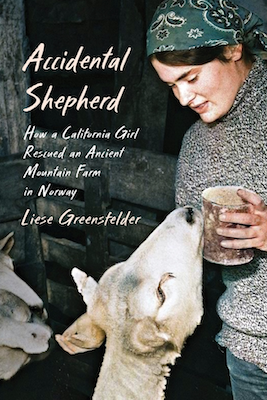
In my book, Accidental Shepherd: How a California Girl Rescued an Ancient Mountain Farm in Norway, I tell how I arrived in Norway in 1972 for a summer job only to learn that the farmer I’d come to work for had just suffered a stroke. I was a 20-year-old girl from California who knew nothing about agriculture, yet two days later I was dropped off on his remote farm at the very end of a three-mile dirt road leading from the magnificent Hardanger Fjord into the mountains. Accidental Shepherd weaves together the stories of my neighbors’ grass-based sustainable farming practices with my yearlong struggle to keep the farm afloat … along with plenty of my adventures and misadventures as I made my way into a centuries-old community of older farmers.
Our culture, history and ancestry are tied to agriculture. Yet in an increasingly urbanized society, most people now know almost nothing about farming. While we might happily disregard our cultural connections to growing food, we are at our peril in underestimating the vital role agriculture plays not just on our appetites, but on our health and well-being, as well. So my two prerequisites for works to include in this reading list were that the writing—whether fiction or memoir—was captivating, and that the real work that happens on farms had been skillfully and accurately woven into the narrative. No matter the crop, herd or flock, while producing the food that sustains everyone, farmers have always faced long days of hard labor, a dearth of free time, and the ever-present threat of catastrophic loss from disease, accident, or freakish weather.
The stories you’ll find in these seven books all ring true, whether illuminating the past or the present, or suggesting a sustainable path forward.
“The man comes, walking toward the north. He bears a sack, the first sack, carrying food and some few implements.”
Thus begins Knut Hamsun’s epic tale of Isak, his wife, Inger, and their children, as they mold a tract of forested Norwegian wilderness into a farm to satisfy the universal need for food and shelter. Set in the latter half of the 19th century, the book garnered Hamsun the 1920 Nobel Prize in Literature. This was an unusual move for the Nobel Committee, which generally awards the prize based on the body of an author’s writings rather than a single volume. In making the award, the Committee described this “monumental work” as “an epic paean to work and the relationship between humanity and nature.”
Far more than a narrative about subduing the wilderness, Growth of the Soil is populated with other would-be farmers who push into the land around Isak’s holdings. Some are good neighbors and land stewards, others are prying, lazy and deceptive. Two women commit infanticide, each for their own reason. Inger will spend six years in prison for the crime. While there, she learns how to read and is exposed to a more modern way of life, which changes her attitude about the farm after she returns home. The couple’s two sons struggle with their futures, and head down divergent paths. Yet even as “civilization” encroaches on the farm, Isak continues his work, improving his land as best he knows how.
Willa Cather’s most famous novel is set in the farming region of South Central Nebraska, sweeping through the last two decades of the 19th century and into the first years of the 20th. Her elegant narrative centers on a dispersed community of immigrant families (Swedish, Bohemian, French, Norwegian) struggling to establish homesteads on virgin prairie land, although many have no earlier farming experience.
In the opening chapters, John Bergson, a Swede, is on his deathbed. Although he has toiled for 11 years on his homestead, he has nothing to show for it, viewing his land as “still a wild thing, that had its ugly moods.” Understanding that his oldest child, Alexandra, is smarter and more sensible than his two older sons, Lou and Oscar, he appoints her as administrator of the farm, and directs the boys to heed her guidance.
Sixteen years later, the land has been transformed: “The shaggy coat of the prairie … has vanished forever. … one looks out over a vast checker-board, marked off in squares of wheat and corn … Telephone wires hum along the white roads, which always run at right angles.” On the Bergson farm, Alexandra has made such wise decisions that she now heads one of the largest and most prosperous holdings in the region. But instead of gratitude, Lou and Oscar harbor only resentment toward her. When they suspect she is considering marrying a childhood friend, their true feelings are revealed in an ugly conversation, after which Alexandra cuts off contact with them both.
Meanwhile, Emil, the youngest of Bergson’s four children and the first in the family to go off to college, returns home and falls in love with Alexandra’s closest neighbor, a young and spirited Bohemian woman married to a jealous husband. The book’s tranquil narrative speeds up in the final chapters, as these and other threads come to a head.
In 1979, Kentucky farmer Tanya Amyx Berry had the foresight to pull out her camera on the two long days in November when a group of her friends, family and neighbors came together to slaughter 20 hogs, butcher their carcasses, and process the meat. For the Hog Killing, 1979, contains some four-dozen of Berry’s photographs documenting each stage of these crucial operations.
In a long essay accompanying the photos, Berry’s husband, the renowned author, poet and essayist Wendell Berry, writes, “The traditional neighborly work of killing a hog and preparing it as food for humans is either a fine art or a shameful mess. It requires knowledge, experience, skill, good sense, and sympathy.”
Elegant and engaging, the book is quite possibly the only visually comprehensive chronicle of the decades-old—or more likely centuries-old—community endeavor that Wendell Berry calls “the neighborly art of hog killing.” The Berrys’ slender volume deserves a place on the reading list of anyone curious about mindful and compassionate animal husbandry.
This debut novel by Natalie Baszile beautifully weaves the art of growing sugar cane into a gripping narrative packed with a host of captivating characters.
When Charley, a 34-year-old black woman who teaches art to inner-school kids in Los Angeles, inherits an 800-acre sugar cane plantation, she drives with her 11-year-old daughter to her father’s hometown in south Louisiana, determined to learn how to manage the place. Four years a widow, she needs this life-changing challenge and the income it will provide.
Yet upon arrival in the small town of St. Josephine, she finds that the plantation manager is quitting, stunted sugar cane plants and weeds cover her fields, and the farm’s tractors and other necessary equipment are in bad shape or entirely missing. But heading home is not an option, for her father’s will stipulates that if the land is sold, any proceeds must go to charity.
Thus ensues Charley’s battle to salvage the farm. Lodged with her daughter in her grandmother’s ramshackle house, she reunites with a host of relatives and soon finds herself partnering with a black plantation manager considered to be the savviest man in the business, and a white grower who has lost his own plantation to the bank. Over the course of the growing season, she teeters on the edge of losing the plantation, encounters racism both veiled and overt, and must also contend with an estranged and resentful half-brother whose violent outbursts have alienated him from all of his relatives except their grandma. And oh yes, Baszile also blends a thread of romance into her finely-woven tapestry.
“Being in good health, and educated to make a living with books, I didn’t have to settle for a job in a gas station or a bar,” writes author Dan O’Brien in Buffalo for the Broken Heart. Instead, in the mid-1980s, he takes out a mortgage on a working ranch in South Dakota, only to find that making a profit running cattle on the Great Plains—or even breaking even—is virtually impossible. Yet he stumbles along until January 1998, when, in the depths of depression, he heads to a distant buffalo ranch to help with its annual roundup.
Despite sub-zero temperatures, every day O’Brien spends with these wild creatures, he appreciates them more and more. By the end of the week, when he overhears two ranch hands wondering what to do with a dozen motherless calves, he impulsively offers to buy them. And from that day forward, not only is he hooked on buffalo but he also champions the argument that the substitution of buffalo for cattle can revert the nearly universal environmental destruction that the latter have wreaked on the Great Plains.
Fortunately for readers, O’Brien writes about his own ranch’s painstaking conversion with his usual sharp wit, deep knowledge of the natural world, and excellent trove of lively and relevant anecdotes.
A paean to organic farming, and a primer on how and why it works, Atina Diffley’s lengthy memoir spans four decades, beginning with gardening as a young girl with her mother in the 1960s to her years working on two of Minnesota’s most diverse and successful organic vegetable farms alongside her husband, Martin.
Between these bookends, Diffley enters into and gets out of an abusive relationship with her first husband after they have a baby girl together. Months after the divorce she and Martin get together and she moves to his farm, which has been in his family for four generations.
Diffley is enamored of working with the soil to grow healthy food. Her detailed descriptions of producing the farm’s organic crops are like love letters to her readers and her cherished fields. But her family’s idyllic life ends when the local school district condemns 20 acres of the farm’s most productive land, triggering a years-long nightmare of encroaching development that they are powerless to resist.
The power, however, lies in Diffley’s telling of this story. No one can read these details without registering that organic farming is inherently better for farmers, consumers and the environment, and that paving over prime farmland is a travesty that will come to haunt us all. But wait. There’s more. After years of searching for and establishing their second farm, the family faces a new threat when a subsidiary of one of the largest privately held companies in the U.S. files an application to run an oil pipeline straight through the Diffley’s flourishing fields. In face of this threat, Anita Diffley marshals all of her resources in a years-long effort to protect her farm and those of every organic farmer in Minnesota.
In Pig Years, author Ellyn Gaydos chronicles her work as a farmhand on small vegetable farms in New York and Vermont from 2016 to 2020. The majority of her musings are from a 20-acre organic farm near New Lebanon, New York, where she shares a house with Sarah and Ethan, friends of hers who own the farm, but not the land beneath it.
Thanks to her sharp eye and passion for detailing daily events in her notebook, she has created a volume of … well … not quite stream-of-consciousness musings, but a stream of observations and extended vignettes. She has crafted these so carefully that I was virtually watching her in action as I was reading: there she was driving a decades-old tractor down a vegetable row, gently handling newly harvested cabbages “so full of moisture and nutrient they threaten to split open like melons bursting after being picked,” or just hanging out after work with fellow farmhands in a small-town pizza joint. Equally descriptive—excruciatingly so—are passages about the slaughter of a farm’s old hens and her own three pigs.
The work pays very little. Not just Gaydos and her fellow farmhands, but the farm owners, as well, often seem close to the edge financially. “At every meal, we eat mustard greens,” she writes. “Mustard greens and hot grits. It is early June now, and there is still a feeling of scarcity while we wait for the returns of summer to come in.”
Such observations lend a somber tone to much of the book. And therein lies its power, which perhaps can be summed up when the author ruminates that, “There are things like unintentionally uprooting rabbits’ nests, and orphaning the young of all types of animals, and then there is the task of understanding oneself as arbiter, raising an animal with designs for its death.” And this, indeed, underlies not just agriculture, but our lives as humans.
My heat goes out due to the cemetery of birds
in my chimney: feathers & bones & broken eggshells.

There was not one set of hollow bird bones but many
where they nestled in the warmth of one another’s bodies.

The wizened HVAC man shop vacs the exhaust pipe-
turned-crematorium in my house, a mass grave

& I think about my people burned in their tents,
buried at their hospitals, bombed in their buildings,

& all the GoFundMes where every dollar donated
asks, Why did you wait so long to leave?

The swifts could have flown away, gone back the way they came—
because every entrance is an exit wound by another name.

Even then, the home you know is better than the roof you don’t.
in arabic, the word for poppy is pieces
“It doesn’t seem to be going anywhere, no matter how badly we treat it. It looks like the poppy will always follow, mark, and glorify our best and worst works in vivid scarlet red.” —Lia Leendertz in the BBC podcast Natural Histories’s episode on poppies
Our national flower, in accordance with the rhythm
of the land, unfurls her petals at dawn & tucks themselves
in as the sun descends. The poppies’ slumber gives meaning
to the term flower beds—entire fields given over to red oblong
wings like black-eyed peas, delicate, oscillating on spindly stems
in the desert night’s breezy sleep; blanketing the evening chill.

Scarlet soporific, haunted leaf of crushed silk, benevolent magic,
hypnotic: Not meant to be separated from their sand soil home.
Any florist will tell you they’re not good cut flowers—withering
soon after plucking. Two days in the vase at most. Any farmer
will tell you they’re weeds—an annual nuisance that can
germinate from seeds planted half a century ago.

O, to be a half-century on our land unbothered:
the dream! Anything to nestle into our earth’s bounty.
Across the sea, a Greek poet said, “They tried to bury us,
but they didn’t know we were seeds.” We are seeds thrown
to the wind, blowing along the path our grandparents ran
when death came calling & escape meant days of walking.

Which came first, the bodies or the poppies? The war
or the weapon? Which must be lost for the other
to give way? Pieces of land hold pieces of lives.
Dunams of desert harbor seeds. This I know:
In Arabic, the word for poppy is pieces &
the refuge always comes before the refugee.
Meta-theatricality isn’t new—even Shakespeare’s characters spoke to the audience—but it is flourishing in our contemporary landscape. Arrested Development commenting on its premature cancellation. Community putting genre under the microscope. Every season of South Park. Hot priest noticing Phoebe Waller-Bridge’s penetration of the fourth wall in Fleabag season 2. The way that I May Destroy You played with multiple endings.
In the 1900s, Brecht believed that art should be confronting rather than comfortable. He never wanted the audience to forget that it was an audience. But where Brecht was didactic, modern examples experiment with style without undermining story, allowing for both immersion and provocation. To me, nothing does this better than literature because of the infinite layers of meaning that can exist within text, like a semantic mille-feuille. A book doesn’t have to hide satire within satire like Yellowface, or experiment with genre like Vonnegut in order to be meta. Because there are no lights and sounds and images to assist with the creation of reality, books already ask more from a reader than a visual art form does of an audience. Like a robot that develops self-awareness and questions its existence before justifying it, literature is inherently sentient.
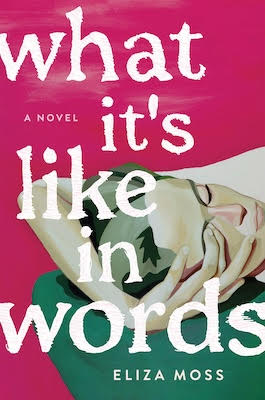
My novelWhat It’s Like in Words follows a toxic relationship, but one of the main themes is the storytelling. Enola is someone who tells herself stories. Daydreaming about the past, the future, and the other worlds that might exist in which she is happier. She is also influenced by the stories that society tells women about what their lives should look like. Therefore, before she can change her reality, she must re-write the narrative in her head.
Here are seven meta books which question the boundaries of storytelling.
Set across two time periods, after a plague hits North America, we follow those who survived and those who didn’t in a “Tralfamadorian” (or, for a more contemporary reference, think: “This Is Us”) structure. A celebrity actor, a comic book author who never intended her work to be seen, and a child actor, who, as an adult travels through the new North America performing Shakespeare to surviving communities. The two sole copies of the comic, (aptly titled for my argument: Station Eleven), are held by their owners as tightly as weapons, existing as The Guardian hailed as ‘a totem of the old world, and a distorted mirror of the new’. This isn’t a The Walking Dead style novel about surviving an apocalypse, it’s about how we rebuild after one. What connects the characters, be it a comic or King Lear, is art.
Memoir is a genre that straddles fiction and non-fiction through the very act of translating reality, like a self-portrait. Nafisi was a lecturer of literature at the University of Tehran before, during and after the revolution, and war with Iraq. Through the study of literature in her classes, and in the secret book club she is forced to hold, we see the role that art has in shaping a government regime and in surviving one. It’s seen throughout history (and present day), books banned and burned; people keener to destroy literature than weapons. This book doesn’t just put storytelling under a microscope, it puts it on trial as the students debate The Great Gatsby as they might the fate of a person, with Nafisi personifying the book. Regardless of genre, all books are political because they hold up a mirror to a time and a place, and studying them can help us to understand ourselves. Nothing shows this more keenly than the author’s comparison of Lolita to the treatment of women under the new regime in Iran.
The metafictional premise of The Princess Bride is that it’s Goldman’s re-writing of fictitious book The Princess Bride originally written by fictitious writer, S. Morgenstern. It is a book within a book that allows Goldman to interrogate storytelling in a way that never takes itself too seriously. He interrupts the story with criticisms of the grammar and explanations as to why he has cut superfluous historical exposition, dropping tongue-in- cheek industry lingo like: ‘Denise, the copyeditor’. The juxtaposition between the jaded humour, not dissimilar to Heller or Vonnegut, and the heart on its sleeve plot is a perfectly balanced cocktail. Characters say what they mean in a way that only a book pretending to be a fairy tale can get away with. As children, our first exposure to books is often fairy tales. That is why Angela Carter’s The Bloody Chamber is so brilliant. By subverting something formative, we are examining what it means to tell stories, and in Goldman’s case, what it means to be a storyteller. The Princess Bride provokes in a very different way to The Bloody Chamber, but it is still provocative. As Uncut states, it is: “One of the most laconic, tightly-plotted tales of mythical morality you’ll ever read, an anti-establishment satire disguised as a love story, more of a scary tale than a fairy tale.”
Taddeo claims to have spent eight years crossing America, spending months with the women that she made the characters in her nonfiction novel. These are three women’s real-life experiences with love and desire. This isn’t art imitating life, it’s art recreating it as precisely as it can in words. One of the three women even uses her real name because she wanted her story to be heard. As opposed to the other books on this reading list, which remind us of what they are, this is a book which hides in its form, camouflaged in prose. We forget that we are reading nonfiction because the stories are so engaging, the prose is so devastating, and the characters feel so real they must be fiction.
One of my favourite aspects of this novel is its form. Our main protagonist is written in third person, while our secondary characters are in first person. We flit from dreams to reality, from poems to politics, past to present, art to history. We are guided through a story that is as epic as it is one man’s battle with grief and addiction. Our main protagonist, Cyrus, is writing a poetry book about martyrs which is a telling focus for someone as lost as he is- people so confident in what they believe in that they are willing to die for it- when his research puts him in the path of a woman making art out of her death in the Brooklyn Museum. This is a book that looks at art as a way to make meaning out of what might be meaningless and the form never lets us forget this. We are always reminded of the storytelling, like watching a play where the wings are visible and we can see stage management calling the show. We want to know how the story ends, and we want to know how the writer ends the story.
Written in 1969, this story is dressed up as a Victorian love story; the characters are unaware that they were created years after the time in which they exist. Not dissimilar to Goldman in The Princess Bride, Fowles lifts the disguise whenever he sees fit. At one point he adds an Asterix to explain that although he had used the word ‘agnostic’, the term wasn’t actually coined until 1870. It’s no coincidence that the central character of Charles is interested in Darwin as we are always reminded of the evolution of time. Chapter one is from the perspective of someone looking through a telescope at two people on the coast of Lyme Bay as they might study a fossil. Fowles even gives the story alternative endings which caused the Guardian to call it “A Shaggy Dog story”. A Shaggy Dog joke is a joke which goes on and on without a punch line, and in the case of The French Lieutenant’s Woman, the joke is on us as we are reminded that the characters that Fowles made us care for (and we do care for them) are fiction, and he is the one holding up that telescope all the way from 1969.
How to Be Both challenges the binaries that dominate our understanding of the world. It has a dual narrative, following an Italian renaissance artist and a contemporary London teenager. Smith’s commentary on storytelling extends past the words on the page to the physical book itself as the novel either begins with George’s narrative or with Francesco’s depending on which you pick up. Therefore, as Francesco reaches through time and space to have visions of George, depending on whose narrative you read first, the moment of understanding for the reader, will happen at a different point in the book, brilliantly demonstrating the role of the reader in a novel’s meaning. Here, art is as crucial as science, and to borrow a Strasberg quote, is: longer than life.
I was raised Catholic. I became an atheist at eighteen and then had a period of devoutness that spanned my mid-twenties to my early thirties. I lost faith again in a much bigger and more substantial way when my son was born. I turned away from religion and didn’t look back. Except when I did. My work is imbued with Catholic imagery and symbolism. My characters are, for the most part, practicing Catholics or at least culturally Catholic. I have called myself many things over the years—a Catholic atheist, Catholic-haunted, a non-conforming Catholic, a cultural Catholic, wayward, lapsed, an agnostic who accepts mystery—but one thing’s always true: Catholicism, whether I like it or not, is at the root of everything I am and do. The shame and guilt and fear and paranoia come from there. A lot of the bullshit. But some good stuff, too. So many favorite writers, filmmakers, and musicians of mine are Catholic or shaped by Catholicism, and art’s where I’ve always felt the deepest sense of connection to faith.
My new novel, Saint of the Narrows Street, is set on a fictional block in the southern Brooklyn neighborhood of Gravesend, where I was born and raised. The action of the book spans the years 1986-2004. My subject isn’t Catholicism itself. There are no scenes set in a church, and there’s no Catholic message, but the atmosphere is imbued with the working-class Italian American Catholic aesthetic of the world I grew up in. The characters—some of whom have lost their faith, others who are losing it—have had their identities shaped by their Catholic upbringings. Years of parochial school. Mass every Saturday night. Crumbling statues of saints or Mary or Jesus in grottoes in front yards. Crucifixes on walls. Go-to rosary beads in pockets. Prayers, prayers, prayers. Codes of morality. Risa Franzone, the main character, is pushed to the limit by her bad seed husband, Sav, in the opening chapter, and she spends the rest of the book struggling with a decision she’s been forced to make. Risa’s reckoning is rooted in and challenged by her faith, which is ultimately disrupted by the action she’s taken against Sav and deteriorates across many years.
The list I’ve made here collects books that interact with Catholicism in much the same way, as a powerful force that hangs over everything in the worlds of these characters and authors. Books like these can feel simultaneously like acts of penance and reverence and blasphemy. It is, by no means, an exhaustive list. Not included are significant Catholic writers–Flannery O’Connor, Graham Greene, and Walker Percy jump to mind–that also had a major impact on me. Instead, I chose to focus on nine books that feel haunted–in varying degrees–by the trembling ghost of Catholicism. Even as the characters yearn for escape or different lives, they’re tethered to the sweltering Catholic atmospheres of their youth and young adulthood.
About Yvonne is a great book about being in your own head too much in a way that’s informed by being an Italian American recovering Catholic from Brooklyn. The setup is simple: Terry Spera, an adjunct and poet who is married to a Soho art dealer, Mark, begins to suspect that Mark is having an affair with a client of his, Yvonne. Terry begins stalking Yvonne, breaking into her apartment while she’s gone, befriending her at the gym. The plot revolves around Terry’s obsession with Yvonne, and everything she does is filtered through the Catholicism of her youth, which she abandoned many years before. Terry, like so many Catholics, is big on suffering and the sacramental and has “a special relationship to guilt.” She has a nostalgia for believing in things and is easily “seduced by the idea of the holy.” We also get this choice observation from her early on: “Asking a Catholic to ignore God is like telling a thief you left your door unlocked.”
The Boys of Bensonhurst by Salvatore La Puma
There aren’t a ton of writers or books out there that tackle my part of southern Brooklyn. I can’t quite remember how I first discovered Salvatore La Puma’s award-winning 1987 story collection, The Boys of Bensonhurst. Did I stumble across it at a library bag sale or somewhere online? I feel certain no one told me about it, that I chanced upon it myself. In any case, it’s become something of a lodestar for me, and it remains, sadly, very neglected. The stories are set in prewar Brooklyn and capture the Italian American experience of my grandparents’ generation with verve. The characters are torn apart by the church and the mob. They are haunted by ghosts and trapped by the neighborhood. It’s an essential book that deserves to be rediscovered. La Puma went on to write a very good novel, A Time for Wedding Cake, and one more story collection, Teaching Angels to Fly, which are also well worth tracking down and deal with similar themes.
While it’s his second novel, Ask the Dust, one of the great Los Angeles books, that he’s most remembered for these days, it’s Wait Until Spring, Bandini—set in Colorado (where Fante’s family immigrated) during the Great Depression—that really captures the essence of Italian American family life. The yearnings and desires of young Arturo Bandini. The struggles of his father. The solemn piety of his mother. And, above all, there’s that voice—a rocket of bitterness and sweetness, of rage and craving.
Rush by Kim Wozencraft
I first read the book after seeing Lili Fini Zanuck’s 1991 adaptation starring Jennifer Jason Leigh and Jason Patric. Based on Wozencraft’s own experiences, it’s the story of Kristen Cates, “a nice Catholic girl who becomes an undercover narcotics officer and a junkie.” At the beginning of the book, as Kristen gets ready to face the Parole Commission, she thinks about leveraging her goody-goody Catholic background for some goodwill. The book is subsumed with an atmosphere derived from Kristen’s Catholic-shaped perceptions of the world. That strain is all but nonexistent in the film adaptation, but you can still feel it somehow. The pressure. The guilt. In an interview with Jill Eisenstadt for BOMB in 1992, discussing her initial naïve belief that drugs themselves are evil, Wozencraft said, “I grew up in a very conservative, traditional household, and I was a good Catholic girl. They teach you never to question authority. I didn’t question authority, and I bought the hype.”
Dennis Lehane’s Small Mercies is the only book from this century I’ve included here, but it’s set in 1974 during the Boston busing crisis. Lehane is a master at building the sort of atmosphere I’m describing. A tight-knit world of secrets and lies where a certain morality is preached and betrayed. To see an examination of racism framed through the lens of the stifling Irish American Catholic world of Southie is wrenching. Mary Pat Fennessy is one of the great characters in recent fiction.
When we meet the titular character, Thérèse, she has been let off after being tried in court for the attempted murder of her husband. There was plenty of evidence that she did in fact poison him using arsenic, but her husband testified on her behalf to avoid scandal. Thérèse’s reflections on all that’s led her to where she is—the stifling existence of a Catholic landowner’s wife, the pressures of a loveless marriage and of motherhood—carry the weight of a life shaped by guilt and spiritual starvation. After her release, she’s essentially imprisoned by her husband at his family estate, shut off from the world, trying to avoid further scandal. She only desires freedom.
The Silence of History by James T. Farrell
Through the guise of working-class Chicago kid Eddie Ryan, we get a somewhat traditional coming-of-age book steeped in interiority. Ryan is working and going to college and thinking about All the Big Things. We slip into the POVs of other people in his life and learn their stories. Eddie struggles consistently with faith and finds himself drifting away from the people he was raised around, searching, yearning, feeling lost. He thinks a lot about history and its impact on him in his present moment. The novel is set over a hundred years ago in the 1920s and was written over sixty years ago, but it feels startlingly contemporary. Somewhere near the middle of the book, we get this from Eddie: “It was hard, damn hard, too damn hard to be a Catholic, and he found himself wishing, as he had often wished in boyhood days when he’d been tormented by the fear of having made a bad confession, that he weren’t a Catholic.”
The strict Catholic upbringing of main character Terry Dunn informs her downfall. A young schoolteacher from a large Catholic family that prizes obedience, Terry begins to drift into a secret life of illicit one-night stands with strangers, walking the razor-sharp edge of freedom, culminating in her murder on New Year’s Eve. While her self-destructive behavior is mystifying to some readers, it makes perfect sense when considering the psychological and emotional damage inflicted on her by the men in her life. Innocence gives way to emptiness. She lives in the shadows of the visions of sin she’s been sold. Richard Brooks’s 1977 adaptation, starring Diane Keaton as Terry, is excellent and has just received a stunning 4K UHD/Blu-ray release from Vinegar Syndrome.
The Doctor’s Wife by Brian Moore
The main character, Sheila Redden from Belfast, is in Paris when the book opens. She’s visiting with a friend for a few days before heading to the south of France, where her husband, a doctor back in Belfast, will join her on holiday. They’ll stay in the same hotel they honeymooned in years prior. But then Sheila meets a young American named Tom, and things go off course. She falls for Tom quickly, and he follows her south. When her husband’s trip is delayed by work, they have more time together. Sheila is a woman who has lost faith and yet maintains a sense of morality shaped by the church. As the possibility of a new life opens to her, other things crumble. While it was marketed as a steamy book about an affair, it’s much more about Sheila’s doubt and resilience. Late in the book, Sheila talks to a priest at Notre-Dame, and he asks, “Madame, are you a Catholic?” Sheila’s response: “I was. I don’t think I am anymore.” A knowing answer, trembling with both regret and pride.
Olufunke Grace Bankole’s debut novel The Edge of Water opens with a prophecy: “A storm is coming.” The order of things, the Iyanifa tells us, will be disrupted by a soul who defies her fate.
What follows is the story of three generations of Nigerian and Nigerian American women: Esther, who dreams of a different life but finds herself stuck in the traditions of Yoruba Christianity; Amina, who goes to America ignorant of the divination her mother received that foretells danger for her there; and Laila, who is left with questions about the mother she barely knew. Through many points of view, the novel reckons with the collision of tradition, free will, and the devastation of a historic storm.
Exploring the narrative powers of choice and betrayal, the complexity of identity and belonging, and the many revisions that take place across a family and a life, The Edge of Water asks the question of how much we owe our loved ones, how much we owe ourselves, how much we control our destiny, and when it’s okay to let ourselves off the hook.
I interviewed Olufunke Grace Bankole over Zoom to discuss her book. We talked about layered storytelling, the difficulty of crafting a multi-POV novel, and what it was like to resist traditional immigrant narratives through writing about middle-class people from modern Nigeria.
Mariah Rigg: The Edge of Water is so ambitious in how it moves through time, layers POV, and borrows from the epistolary. Can you talk about how you came to write this novel, the seed it grew from, and what the journey toward completion looked like?
Olufunke Grace Bankole: I tried to implement a structure that reflects the complexities of the Yoruba, Nigerian, American, Christian, traditional religion cultures I grew up within. And inside those various worlds, I hoped to explore the tensions through the intimacies of language and storytelling. The novel grew from the very first short story I wrote many years ago—about a young Nigerian woman, newly-arrived to the U.S., who was working in the New Orleans French Quarter, and found herself without a place to go during a life-threatening hurricane.
I’d moved to New Orleans for work after graduating from law school, and the city became the first true home of my adulthood. When Hurricane Katrina struck, though I no longer lived in New Orleans, I couldn’t help but wonder of those who were far from home—as I had been, during my time in the city—and caught in the storm. What might life have been like for such a young woman back in Nigeria, and how might the aftermath of the hurricane affect her hopes and dreams, and the future of her family? The novel’s core emerged from my attempt to answer these questions.
MR: Your novel opens with a prophecy, a promise that the rest of the story lives up to. This oracle is especially echoed through the use of divination at each chapter’s opening. How do you see this sense of predetermination—and conversely, the free will that Amina exerts through her journey to America—informing your novel? Did you struggle at all with this dichotomy?
When Hurricane Katrina struck, I couldn’t help but wonder of those who were far from home and caught in the storm.
OGB: I think this dichotomy between predetermination and free will is central to the identity of many of us who are shaped by religious and cultural systems that tell us aspects of our lives must be carried out in prescribed ways. And yet, there is something—maybe the tiniest of feelings—within us that compels us to believe we can have so much more than what we’ve been given. Amina certainly struggles with simply accepting that the world she was born into is all there is, and she is determined to break free of it, even if she is unsure of what true freedom might entail.
MR: The Iyanifa and her prophecy are often at odds with the Yoruba Christianity practiced by Esther and others in The Edge of Water. Can you talk more about this clash, and why it felt important for it to be present on the page?
OGB: I think one of the most comical and evergreen dynamics for many Nigerian Americans who grew up in the church is realizing how much of Yoruba Christianity is steeped in Ifa and other traditional religious practices. It would not be uncommon, for instance, for a person seeking spiritual guidance to receive counsel from their pastor and divination from a babalawo simultaneously.
More broadly, wherever we are from, I find many of us are seekers—continually striving to understand the mysteries of living; and when one path fails to answer our longing, we reach for another.
MR: What were some of the difficulties of writing a multigenerational, multi-POV novel? What advice would you give other writers trying to accomplish this?
OGB: It was important to me in the writing of the novel to explore how silence, within ourselves and with others, impacts the viability of our dreams, the possibilities for our lives, and the depth of the pain we carry. And perhaps nowhere is silence more insidious than inside nuclear families—in this case, between mothers and their daughters.
I chose a multi-perspective approach with this novel because we often tell different stories, out of the very same experiences; I tried to give each character’s voice adequate space.
For me, the most challenging part of telling a multigenerational tale is effectively conveying each character’s distinctness throughout. I’m still sorting through the ways in which I might better accomplish this going forward, but for now, the advice I would offer another writer is to find a unique aspect of each character’s personality that can serve as the vehicle for their storytelling. For instance: The Edge of Water’s main narrator, Iyanifa, a Yoruba priestess, tells her side of matters through cowrie-shell divination. Esther, who misses her daughter that is living abroad, writes intimate, one-sided letters that are often informed by one of her favorite pastimes: community gossip.
MR: One of the POVs I was surprised by while reading was Joseph. What was behind your decision to give him this space in a novel otherwise populated by the voices of women?
My decision to not name Hurricane Katrina was meant to underscore that the storm could be any storm that threatens marginalized people everywhere.
OGB: It was important for me as a long-time student and admirer of African literature—past and present—to hopefully present a multi-dimensional male character who, though having his own story to tell, does so in the service of the women in his life. I very much enjoyed being with the character of Joseph—through his longing, shame, triumphs, and tenderness.
MR: The storm at the center of The Edge of Water remains unnamed, though readers can tell by the novel’s details that it is Katrina. As unprecedented storms level communities around the world, from the Philippines to Puerto Rico to North Carolina, it feels almost prescient to withhold this information. Can you talk about what it felt like to write and revisit this novel during a time of accelerated climate change?
OGB: Natural disasters are ever on our horizon, it seems. My decision to not name Hurricane Katrina in the novel was indeed meant to underscore that the storm could be any storm that threatens the survival, the dreams, and the dearly-held future of marginalized people everywhere. There were several times during the course of writing and editing when I needed to take a break because events off the page, in conjunction with occurrences in the novel, were painfully close to home. And that made me think, too, of how pervasive the grief of the consequences of climate change will increasingly become.
MR: I won’t spoil the novel’s ending, but I will say that I couldn’t help but wonder what Amina’s life might have looked like if she’d stayed in Nigeria. Did you think about this at all while writing?
OGB: From time to time, I’ve wondered the same. This novel is not the story of a girl who has a horrible life in Nigeria, and America is the only way out. Amina’s longing for life in the U.S. is more an attempt to determine for herself what more might be possible—and America offers that chance.
MR: A bit of a pivot away from the book and towards your inspirations as a writer. Whose work do you return to when you’re stuck? Which authors would you say are your guiding lights?
OGB: Once I knew that I truly wanted to write, African women writers—and their incredible, enduring works—became foundational for me. They are the reason I imagined that I, too, could tell stories. Mariama Ba’s So Long A Letter, a spare and stunning classic, inspired the epistolary form between Esther and Amina. Tsitsi Dangarembga and Nervous Conditionskept me writing at a time when I experienced stinging rejection. And the incomparable Yvonne Vera’s body of work helps me to continually stretch the parameters of language on the page; word by word, sentence to sentence, she is a north star for me, absolutely.
They treated themselves at the end of each year with a trip to the desert. There was something unfailingly optimistic about the long, light sky, and by the time they arrived in Desert Hot Springs at a hotel with three naturally heated springs on its property, they were both in high spirits. Seth would drive on to Joshua Tree, where he’d rented a little house, but first he helped Laurel carry her bags into the lobby, introducing himself to the woman behind the desk as her driver. They kissed goodbye. “Nice driver,” the woman said.
“Oh, that was my husband,” Laurel said, laughing. She could afford to be frivolous with this woman, this pleasant helper in peacock feather earrings who was not the manager of the hotel. Laurel could just make out the manager standing at a worktable in the back, using a curved knife to cut a block of green glycerin soap into cakes for the rooms. This was her third visit, and the manager would not let on whether she remembered her or not.
The helper led her out of the lobby, across the patio, and to her room. All of the rooms opened onto the patio. White linen curtains hung from a line strung inside the double glass doors. There was a platform bed and a concrete floor. The room was cold. The cold was sharper in the desert than in the San Gabriel Valley. The mountains weren’t smog-shrouded but enormously visible, their sides scored with long crisp folds, runnels through which snowmelt flowed, and the cold, too, felt clearer, more significant. She plugged in the electric heater, rolled it as close to the bed as she could get it, and texted Seth to see how he was faring. He replied that the house was heated only by a pellet stove. I’m freezing my balls off, he wrote.
Ah, but this was good for them, wasn’t it? Getting away from their lives, getting away from each other. On a wooden shelf was a laminated menu of massages one might order (the manager was the masseuse; it was generally understood that she was not trained). Just-What-You-Need; Couples-Just-What-You-Need; Deep Deep (Really Get Into Those Troublesome Parts); A Sensory Trip For The Mind And Body And (Maybe Even) Spirit. The idea of engaging the manager to massage her was a horrifying breach of the manager’s mystery. No, she was here for the springs, three concrete pools heated by the geothermal wells the town was known for. She changed into her suit, and with a towel and novel tucked under her arm she went to submerge herself in the warm pool. A wind picked up, raking the palms and sending a wren spinning off into the sky and a shiver of delicious contentment though her.
She sank into water to her chin, flexed her calves and wiggled her feet. From her place in the pool she could see the building that enclosed the hottest of the springs mere steps across the patio. The building was twelve-sided, with wooden walls and a corrugated metal roof that angled upward toward a hole cut into the middle to let out steam. This was the prize, something to admire from afar, to anticipate its enclosing warmth, the steam that rose from the water’s surface and the hollow slap and gurgle of the water as it swayed into and out of the pipe that fed it. The wind gusted once again. She climbed out of the water, hurried to the twelve-sided building, and wrenched open the glass door only to discover that someone was in the pool already. A couple could be ignored, but another solo soaker had to be acknowledged. She dropped her towel gamely. “Just need a little warm-up,” she said.
“Of course.” The skin above the man’s upper lip was beaded with water, as if he wore a sparkling mustache. Laurel made a show of reading her book as they sat in silence in the haze and heat, but she couldn’t concentrate with him there—it felt unnatural to read in a stranger’s presence, and she had to hold the book at an awkwardly high angle to keep it out of the water. When she marked her place with the dust jacket and looked up, he was staring at her frankly. “How is it?” he asked.
Laurel liked it so far, but her tastes had changed. She used to read as a writer does. Now all she wanted was for the story to pick her up and carry her along and deposit her somewhere else, unaware of how she’d gotten there. The characters in the novels she read spoke to her like her friends did, regaled her with their suffering for which she truly did feel sympathy tinged with tawdriness, a voyeur’s pleasure in their misfortune. It wasn’t the misfortune she experienced as pleasure, it was the distance she stood from it. For the last eight years, as she’d followed Seth from teaching job to teaching job, she had been writing a novel. But it was a heavy, tethered form, and it dragged her down and held her under and she sensed with the thrumming attunement animals brought to their environment a shining place above her, and she stopped working on it and came up. The shining place wasn’t visible once you were in it, surrounded by it.
She knew her friends must feel sorry for her. They must say what they were supposed to say, Laurel got so busy with her job. What is her job? some must ask and others answer, She’s a copywriter, isn’t she? Yeah, I think she’s a copywriter.
They would not understand that only when you stopped wanting, stopped grasping, did the gift give itself to you.
Time, as sweet and dense as honeycomb.
Now she replied to the man’s question about whether she liked the novel she’d placed a careful arm’s length away. “I don’t know yet. I’ll tell you when I’m a little farther in.”
The pellet stove didn’t feel like it was putting out much heat. Seth had just finished unpacking groceries—coffee, half-and-half, pasta, tomato sauce, bagged salad, wine—when he heard Juliette’s car in the dirt driveway and went out front to greet her because this would be the last time, though she didn’t know it. She stepped out of her car and dropped her bag at her feet and opened her arms. She would expect him to rush to her and pick her up and carry her into the house. Which he did, knocking her head against the doorway when he pivoted to enter. He apologized. He knew she was starting to hum inside like a windup toy and indeed she leaned her body in his arms to steer him toward what she guessed, correctly, was the bedroom. Seth was thirty-eight. She wouldn’t let him forget that he was ten years younger than her. “Can you just be a fucking feminist for once and stop nattering about it,” he’d said during their sole fight, and to his surprise she laughed at him.
He dumped her onto the bed and she bounced neatly back up to a sitting position. Her hands found his belt buckle.
“Can I get you something to drink?” he said.
“You sound like a stewardess. You can—” and she described a sexual endeavoring with such specificity he felt the embers of arousal in his stomach snuff out. The lingua franca among women in their forties was that they would inhabit and delight in themselves as they wished they had when they were younger, so Juliette inhabited and delighted in herself, speaking brashly of her body and its pleasures and needs. She cast off her shirt and hoisted her breasts out of her bra. Her nipples were like the soft eyes of a drunk. He had to tell her they couldn’t see each other anymore. He would not say he hoped they’d remain friends because he knew they would not remain friends. And because they would not remain friends, he had to wait until the last day of the trip to do so.
They had started out as friends. She was the director of communications for the college where he taught history. She was always going on terrible internet dates, and they’d have lunch and she’d tell him about them. “You never talk about Laurel,” she said one day. She knew Laurel a little—they saw each other occasionally at events at the college.
“There aren’t as many adventures attached to that subject,” he said, which was harsher than he meant to be. He was trying to compare a marriage of eight years, the stories he could squeeze out of it, to Juliette’s tumultuous flings. But she seemed pleased with his answer, seemed to think he was flirting.
‘There aren’t as many adventures attached to that subject,’ he said, which was harsher than he meant to be.
“I’m an adventure to you, am I?”
Seth laughed. “Yeah, you’d be an adventure.” It was funny that he was flirting back with this person he wasn’t at all attracted to, he thought, before realizing that he was, just this moment he was, less attraction than a swift shifting force inside him that unfolded itself in his chest like a pair of massive wings. The span of it shocked him. Later that day he texted Laurel to say that he’d forgotten there was a talk he had to stick around for, and she texted back an emoji of a face wearing a knowing smile. It seemed to say I’ll withhold judgment, mister, but whatever you’re doing is probably unnecessary. What he was doing was having sex with Juliette on her couch. To be caught between an urgency that built until he was sure there was nothing but its detonation and bright fallout in which he lost himself, his contours and earthliness, and then the process of return as he took on weight and shape again—in other words, metamorphosis—yes, maybe that wasn’t strictly necessary. His confusion might’ve turned to fatal regret had Juliette—naked and wiry as a dancing skeleton—not fetched a bottle of scotch and two glasses. They drank. She sat back and spread her legs like a man on a subway, and he crouched in front of her, knowing this proved his respect, how equitable he was in terms of ministering pleasure. She began to laugh and pushed his head away.
Now he got up from the bed in the rented house and pulled on his jeans. “Let’s go on a hike,” he said. The park was nearby, the Joshua trees furry and listing.
Laurel was walking along the hotel road, a luminous, jellied quality to the air. Morning, not quite seven o’clock, the distant white wind turbines like wavy lines of crosses planted at the feet of the mountains. A medical glove star-fished in the scrub. Blossoms on cacti like crepe-paper thumbprints. She never walked far, just up and down the road a few times. Back in the lobby, she spotted the man from the pool in the kitchen where coffee and breakfast were laid out. He was wrapped in a robe, cutting a piece of Meyer lemon cake. She’d intended to pour herself a cup of coffee but at the sight of him she continued out the door that led to the patio. She had a habit of avoiding men who made her feel this way, this prick and skitter of awareness. Before Seth the avoidance had a textured, erotic quality. She ignored those whom she knew she would come to love. And then put off saying so, waiting for a moment of unimpeachable integrity until it became a mind game, for what did one mean when one said I love you, and how could one know for sure at their tender age, and who would be crass enough, brave enough, crazy enough to say it first, and how would that person broach it, and would that person cry, and would that person look beautiful crying, and so forth. Now that she was married the avoidance couldn’t give. There was no crumbling of will to look forward to, no slow descent into the softness of beginnings. She turned away.
Not that she felt, with this man at the hotel, that there was anything to avoid except speculation. It was all on her side, she was sure.
After she’d had her coffee and fruit and toast slathered with Nutella, she swam laps in the cool pool, soaked in the warm pool, and entered the twelve-sided building where he was installed again. Apparently it couldn’t be avoided—when one person spent so much time in one particular pool, it might seem as if he was always being interrupted when in fact he was the interrupter, ignoring the natural flow of the place, the gently shifting occupancies.
She gave herself permission not to apologize as she joined him, and he said in a conspiratorial voice as she sank into the water, “Feel nice?” and Laurel realized her face must be dumb with pleasure.
She blushed. She didn’t want to play along, didn’t want to admire his angled collarbones and lean shoulders and blithely revealed interest.
“That book I was reading?” she said. “I do recommend it.”
“What was the title?”
She named the name of the novel that was a novel in name only.
“Thanks.” He yawned. It turned out that he was an actor. He used to do theater exclusively, but you couldn’t make a living doing that, he said. Now he did television. Television was easy money, just very limited people with large heads reciting lines some twenty-six-year-old Iowa grad had written. “Not to be gratuitous about it but I could write that shit! I could but I wouldn’t.”
He told her about a few of the plays he’d done. “So this may interest you. I did Shoppers Carried by Escalators into the Flames a while back. Denis Johnson. It was in New York, at the Dimson. I got to talk to him a little and I’ll never forget what he said about himself. How he described himself. He said, and I quote, he was a ‘criminal hedonist turned citizen of life.’”
She didn’t reply for a moment. “I guess I find that strangely impersonal. Like it’s a process he’s describing, something outside himself.”
“Really?” he said. “I see it as turning from estrangement—I suppose that’s being outside yourself—to a radical intimacy.”
“How intimate is it to be a citizen of life, though?”
“Life’s a big thing. Most people don’t feel they have access to it. He was saying that he was staking a claim.”
Then he asked her what she did, and she said she was a freelancer, and he asked her what type, and she said the writer type, and he asked her what sorts of publications she wrote for, and she said alumni magazines, law firm blogs, the occasional professional association quarterly, making sure to maintain a hearty note of contentment in her voice. She was getting hot and rose to leave. He didn’t follow her.
Juliette shuffled around the kitchen as they made dinner, her socked feet thrust into Seth’s wool slippers. She said their relationship had become about more than the sex, of course.
“What do you mean of course?” he said.
“It was its basis and it’s not anymore. We didn’t get together to talk about Robespierre.”
“Why, is it bad?”
Her face cracked open with pity and triumph. “No! That’s not what I’m saying but your worry is touching.”
“I’m not worried. Funny you would interpret that as worry.”
“Funny? What else could it be?”
“Ever heard of pure curiosity?”
“The cologne for intellectuals?”
He didn’t laugh. He dumped the pasta into a colander, steam clouding his glasses.
“Speaking of curiosity, how often do you and Laurel have sex? I bet not as much as you used to. Same with us, but if anything I feel closer to you.”
It was unseemly of her to bring Laurel into it, though he knew it wasn’t really about Laurel. And he didn’t agree that they had sex less—it seemed nearly incessant, like a roller coaster that had no line so you rode it again and again, the front car this time, the back the next, the place where you knew your picture would be taken so you mimed pleasure with overly large gestures . . .
He felt weak, suddenly, and sat at the table under a sign that read Bless the Food Before Us and the Love Between Us and wondered if love, unbound, invisible, would really content itself ponging back and forth during some lame couple’s dinner. He doubted it.
Juliette poured the pasta back into the pot and mixed it with tomato sauce and veggie sausage sautéed with onions and peppers. Why had it come to his eating an early dinner in a freezing house with a woman who was not his wife? Yes, he was going to end things, but the affair would remain immutable. Maybe Laurel would never find out. Maybe she would. That wouldn’t change the fact of its happening, only whether it was received, rued, discussed, whether it hardened and grew into the blade that severed his marriage. He had not thought through this possible severing. Had he acted out of spite? No. Boredom? Not really. Think, he told himself. Examine your life. It was too disheartening to admit that there had been no good reason, that he had been acting on chemical impulse, his body no better than a circuit box, fuses connecting simply and mechanically and at the behest of nearly anyone who stopped before him. Actually, it had been his ego Juliette had appealed to. The ego tripped the body, it happened that way.
And yet there was an element in his marriage to Laurel of being held back, of an expanding circle of energy sucked back into incipience. Their routine was limiting. He knew Laurel must feel it, too, but some arrogance inside him ardently believed it was his uniqueness being snuffed out, not hers. His potential for being whoever he would’ve been without her. He thought of this person every so often with a tenderness he could not summon for himself.
He knew Laurel must feel it, too, but some arrogance inside him ardently believed it was his uniqueness being snuffed out, not hers.
Juliette was speaking. “. . . if we drove home, we could stay at your place for once.”
Seth shook his head. “The neighbors.”
“I have neighbors too.”
“And I’d basically have to turn around and drive right back out to get Laurel.”
“If we left now we’d be home in two hours. We’d have two nights with central heating.”
“I like it here.” He speared some pasta. “But Juliette, if you’re that cold, you should go. There’s no reason you should stay and suffer.”
“We could keep each other warm,” she said, pushing her bowl away.
“Juliette.”
“Stop saying my name.”
“I’m sorry.”
“Are we ending things, is that it?”
He felt a rush of relief, then annoyance that she’d beaten him to it. “I need to.”
She shrugged. “There’s really nothing to end.”
“This is nothing? I guess it’s true you risked nothing. I didn’t.”
She took his hand and turned it over and kissed the inside of his wrist. Humiliatingly, he blinked back tears.
She was in the lobby reading the newspaper when the manager emerged from the recesses beyond the front desk carrying a fresh lemon cake. She made them dense and bitter, with a sticky, tangy glaze. “Warm enough?” she asked, proceeding into the kitchen.
“I am now,” Laurel called. “Thanks.”
“I see you’ve been enjoying the springs.”
“I love swimming, I love heat, I love solitude.” What else do you love? she thought. Buttercups?
“But don’t you feel,” the manager said as she reemerged, “that one experiences solitude most precisely in the company of others?”
“I lose myself with others.”
Cinnamon toast, melancholic piano riffs?
“I’m the person in a group always listening, asking questions,” Laurel continued. “It’s with women, what I’m describing. I’m very submissive with women.”
The manager rested her hand on the back of Laurel’s chair. “What do you need to be submissive about?”
“The fact of being another woman, I guess.”
She wondered what would happen if she took her hand in her own and said tell me how to be, if the manager had been waiting with perfect patience to anoint her new acolyte and with that question Laurel would ascend. Instead she returned to her room and texted Seth to ask if he was getting much writing done.
Sadly no, he replied.
Why not? she wrote.
Ellipses danced on her screen.
Robot writing fingers failing. All is discord, he texted.
“What’d she want?” Juliette said.
“Nothing.”
“Did you tell her you’re hers again, only hers?”
He had a quick, threadbare impulse to jab Juliette with his elbow. “You know what? I’m leaving too.”
“I thought you liked it here,” she said.
“I do. But I’m married.”
“It’s funny, you men, you take everything too seriously. You take yourselves too seriously, that’s why.”
They packed in silence, and Seth closed up the house. He stripped the sheets and left them in a lump on the floor, shut the lid of the pellet stove, placed the key in a basket on the kitchen counter, and locked the door behind him. Though he did not mean to, he pulled out of the driveway right behind Juliette and followed her car all the way home. He couldn’t bring himself to pass her. They reached Claremont in an hour and a half. He felt a little pang when she turned off the street they were on to the street that led to her neighborhood. She did not honk like he hoped she might.
When he let himself in at home, he half-expected to see Laurel there, but of course she was in Desert Hot Springs, where he would have to return to fetch her the day after tomorrow. He walked to the bedroom, lay down on her side of the bed, and pressed his face to her pillow. A vision of her came to him, her head thrown back in laughter. Imagine this, she said, thrusting the Claremont Courier into his lap. It was open to an obituary. Meredith Hickey née Caruso, it read. Imagine making that decision, she said. Willingly becoming a Hickey. She looked lovely laughing, unaware of herself, and he thought if only she could’ve always been unaware of herself what a beautiful woman she’d be. Then the vision flipped up its tail like a cellophane fortune-telling fish and her face betrayed that crucial self-consciousness that was beauty’s enemy. Laurel with her deadlines and licorice bridge mix, Laurel with her novels and oversized sleep T-shirts, Laurel with old aspirations he could hardly name. To do a different kind of writing. To live a different kind of life. Maybe he’d put them out of his mind to save her feeling like he was tracking her failure, or maybe it was his feeling for her, in which case he couldn’t fess up to it, wasn’t supposed to have it. Who was she, to occupy disappointment so easily?
The actor had turned on the timer to activate the jets and the water roiled and swirled, white froth icing the surface, bubbles clinging to his arms. She went in and under, where she was buffeted by sound like a diced carrot in a pot of boiling soup, and came up gasping.
“You’ll explode,” he said.
“I know.” She was smiling. She would be friendly, she decided. It was okay. She and Seth had gotten married at city hall. A few months later they threw a party at which Laurel didn’t drink because she was newly pregnant. The thought that she was pregnant—that was where life began. But she had a miscarriage and six years later she got pregnant again and had an abortion. She did it right away. Seth agreed.
The actor drifted as if propelled by the turbulent water closer and closer until she could feel his leg against hers, the silky slip of his skin. “Are you okay with this?” he asked. The jets shut off and she straddled him and they looked at each other and laughed. With one hand he undid the drawstring of his trunks and with the other plucked aside her suit. The water was clear again, as if they sat in the belly of a magnifying glass, and he pulled her onto him and she remembered how last year she and Seth had ridden in an aerial tram to the top of Mount San Jacinto. The glass car stopped halfway up and swayed back and forth, the engine heaving against its bulk. They were so exposed! The climb was two and a half miles and only as it happened was it possible—the second it stopped the mechanical world stopped too and they hung among the elements, the raw parts of nature, sky, sun, mountain, cloud, which appeared through the rounded windows as figures of emotion rather than matter if only they could break through to them and live among them properly, without distance. But they were not natural beings, they dangled in midair, gawking at the obdurate blueness. She placed her hands on the actor’s shoulders and leaned in close. His breath was puffing into the hollow of her throat. She let elation drain through her.
He threw himself into his writing, first with coffee and then with a small glass of aquavit. It all came back to him, Robespierre and the Feast of the Supreme Being, descending a papier-mâché mountain in a toga, Trump’s ride down his golden escalator, Sam Nunberg saying We could have had women in bikinis, elephants and clowns there. . . . It would have been the most gloriously disgusting event you’ve ever seen. False deities come to earth to govern by persuasion, cruelty, farce, force. He needed to work this out. Why hadn’t he worked this out in Joshua Tree? Fucking really wasn’t that rarefied an activity. He wished Laurel would text again to ask how the writing was going so he could say it was going, at least, and he was sorry he’d been flippant with her earlier, and tomorrow they’d stop for a date shake on their way home.
She was returning her dirty breakfast dishes to the trolley outside the kitchen window when she saw, in a room whose doors were wide open, the manager giving the actor a massage. She had avoided knowing which room was his but now she came closer and there he was, dressed in cloth shorts, lying on a folding table on his stomach while the manager chopped at his back with the sides of her hands. She said something and he turned over and she kneaded his calves and feet. His head lolled.
“You can come in,” the manager said.
She entered the room and went to stand beside him. His eyes were closed, his eyelashes like black threads.
“You can touch him if you want.”
“I’m not going to touch him.”
The manager’s kneading slowed and then stopped. “You eat with your eyes only?” she said.
Again she remembered the view of the Coachella Valley from the tram. According to the brochure she was given when Seth bought their tickets, the palms that grew on the valley floor were surrounded by a system of sand dunes that lizards swam through to escape from predators. The lizards had shovel-shaped jaws, and scales on their feet to give them traction. Still they were being crushed by the tires of off-road vehicles. She fished the brochure from her pocket and opened it for Seth at the top of the mountain. She enlisted his sympathy.
DON’T MISS OUT
Sign up for our newsletter to get submission announcements and stay on top of our best work.
YOUR INBOX IS LIT
Enjoy strange, diverting work from The Commuter on Mondays, absorbing fiction from Recommended Reading on Wednesdays, and a roundup of our best work of the week on Fridays. Personalize your subscription preferences here.