On Monday, the National Book Critics Circle announced the 30 nominees for their 2015 awards. Nominees are divided into six categories, autobiography, biography, criticism, fiction, nonfiction, and poetry. The award ceremony is open to the public and will be held at The New School on March 17.
The National Book Critics Circle Award was founded in 1974. Some past winners include John Updike, Philip Roth, Chimamanda Ngozi Adichie, Marilynne Robinson and Claudia Rankine.
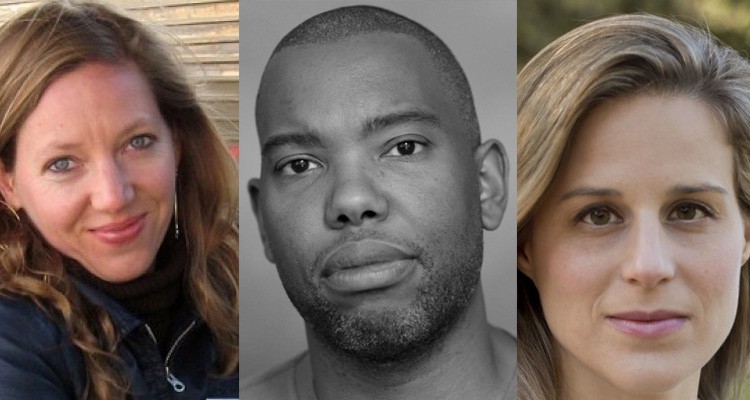
This years nominees include Ta-Nehisi Coates, who already won the National Book award and received a McArthur Genius Grant, for Between the World and Me (criticism); Maggie Nelson’s The Argonauts (criticism), Lauren Groff for Fates and Furies(fiction),Booker Price winner Helen MacDonald for H is for Hawk (autobiography), Mary Beard’s SPQR: A History of Rome (nonfiction) and Valeria Luiselli’s The Story of My Teeth (fiction).
Three awards have already been given: Wendell Berry won the Ivan Sandrof Lifetime Achievement Award, Kirstin Valdez Quade won John Leonard Prize for her short story collection Night at the Fiestas, and Carlos Lozada, associate editor and nonfiction book critic at The Washington Post won the Nona Balakian Citation for Excellence in Reviewing.
Below is this years nominees:
AUTOBIOGRAPHY
Elizabeth Alexander, The Light of the World Vivian Gornick, The Odd Woman and the City George Hodgman, Bettyville Margo Jefferson, Negroland. [Read our interview with Margo Jefferson.] Helen Macdonald, H Is for Hawk. [Read our interview with Helen Macdonald.]
BIOGRAPHY
Terry Alford, Fortune’s Fool: The Life of John Wilkes Booth Charlotte Gordon, Romantic Outlaws: The Extraordinary Lives of Mary Wollstonecraft and Her Daughter Mary Shelley T.J. Stiles, Custer’s Trials: A Life on the Frontier of a New America Rosemary Sullivan, Stalin’s Daughter: The Extraordinary and Tumultuous Life of Svetlana Alliluyeva Karin Wieland and Shelly Frisch, Dietrich and Riefenstahl: Hollywood, Berlin, and a Century in Two Lives
CRITICISM
Ta-Nehisi Coates, Between the World and Me Leo Damrosch, Eternity’s Sunrise: The Imaginative World of William Blake Maggie Nelson, The Argonauts. [Read our review of The Argonauts.] Colm Tóibín, On Elizabeth Bishop [Read our interview with Colm Tóibín.] James Wood, The Nearest Thing to Life. [Read our interview with James Wood.]
FICTION
Paul Beatty, The Sellout Lauren Groff, Fates and Furies [Read our interview with Lauren Groff and our review of Fates and Furies.] Valeria Luiselli, The Story of My Teeth. [Read our review of The Story of My Teeth.] Anthony Marra, The Tsar of Love and Techno. [Read our interview with Anthony Marra and our review of The Tsar of Love and Techno.] Ottessa Moshfegh, Eileen [Read our interview with Ottessa Moshfegh.]
NONFICTION
Mary Beard, SPQR: A History of Rome Ari Berman, Give Us the Ballot: The Modern Struggle for Voting Rights in America Jill Leovy, Ghettoside: A True Story of Murder in America Sam Quinones, Dreamland: The True Story of America’s Opiate Epidemic Brian Seibert, What the Eye Hears: A History of Tap Dancing
POETRY
Ross Gay, Catalogue of Unabashed Gratitude Terrance Hayes, How to Be Drawn Ada Limón, Bright Dead Things Sinéad Morrissey, Parallax and Selected Poems Frank Stanford, What About This: Collected Poems of Frank Stanford
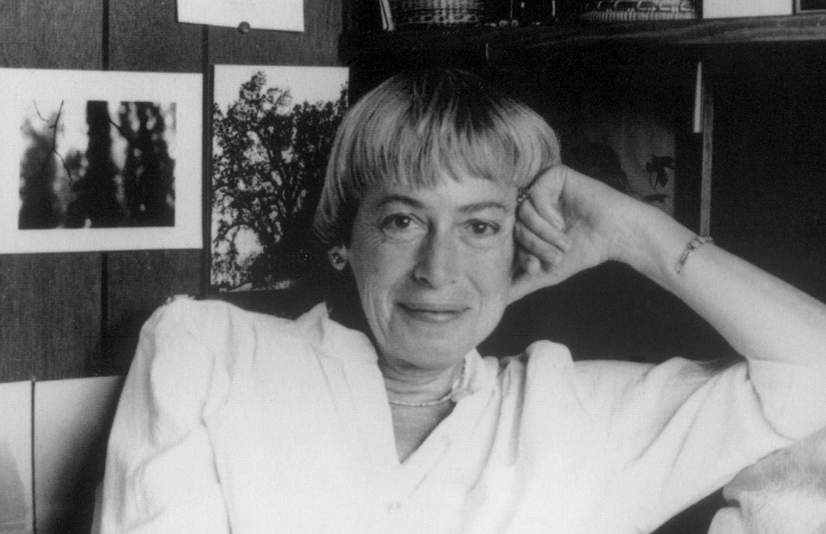
Earlier this month, an armed gang led by Ammon Bundy illegally seized control of federal buildings at the Malheur National Wildlife Refuge in Oregon. Federal agencies have been approaching the occupation with caution, mostly allowing the Bundy gang to do whatever they want without punishment and preventing the local residents from using the public refuge. And Ursula K. Le Guin is getting sick of it.
Writing to The Oregonian to complain about the paper “parroting the meaningless rants of a flock of Right-Winged Loonybirds infesting the refuge,” the famous Oregon resident and science fiction author concisely laid out why the Bundy gang are no freedom fighters:
Ammon Bundy and his bullyboys aren’t trying to free federal lands, but to hold them hostage. I can’t go to the Malheur refuge now, though as a citizen of the United States, I own it and have the freedom of it. That’s what public land is: land that belongs to the public — me, you, every law-abiding American. The people it doesn’t belong to and who don’t belong there are those who grabbed it by force of arms, flaunting their contempt for the local citizens.
Of course, whether local and federal law enforcement will actually do anything to open the public land back to public remains to be seen.
Should fiction be timeless? It was a debate that became especially heated in the 1980s, as a younger generation of writers, raised on corporate advertising and the burgeoning brand-ification of America, attempted to portray the daily consumption of pop culture and corporate sponsorship that was now inescapable. Older writers (who were often the teachers of the younger generation’s MFA workshops) found this tic annoying, and believed writers should excise any references that would “date” their fiction.
David Foster Wallace, in his now canonical essay “E Unibus Pluram: Television and U.S. Fiction,” summed up the back and forth that would take place between the older and younger writers, with their differing sensibilities:
In one of the graduate workshops I went through, a certain gray eminence kept trying to convince us that a literary story or novel should always eschew “any feature which serves to date it” because “serious fiction must be Timeless.” When we protested that, in his own well-known work, characters moved about electrically lit rooms, drove cars, spoke not Anglo-Saxon but postwar English, and inhabited a North America already separated from Africa by continental drift, he impatiently amended his proscription to those explicit references that would date a story in the “frivolous Now.”
Wallace himself didn’t shy away from calling out the way corporate culture was increasingly becoming part of daily life in his fiction (in Infinite Jest, every year has a corporate sponsor, such as “Year of the Whopper” and “Year of the Depend Undergarment”). But the apotheosis of pop-culture-referencing fiction was Bret Easton Ellis’s American Psycho (1991), a novel where brand names are part of the artistic DNA. Patrick Bateman, the infamous narrator of the novel, is a rich investment banker for whom status signifiers are harrowingly important. Both the clothes — “I’m wearing a four-button double-breasted wool and silk suit, a cotton shirt with a button-down collar by Valentino Couture, a patterned silk tie by Armani and cap-toed leather slip-ons by Allen Edmonds” — and the music — with soliloquies about Genesis, Whitney Houston, and Huey Lewis & the News as he chops people up — serve to date this novel as happening squarely in the late 80s/early 90s.
So, more than two decades later, where are we now? I think, ultimately, the use or non-use of pop-culture references has grown more sophisticated. To examine the relationship between high-profile fiction and pop culture, it helps to split the literary field into a couple categories that are, of course, reductive, and by no means exhaustive.
But the apotheosis of pop-culture-referencing fiction was Bret Easton Ellis’s American Psycho (1991), a novel where brand names are part of the artistic DNA.
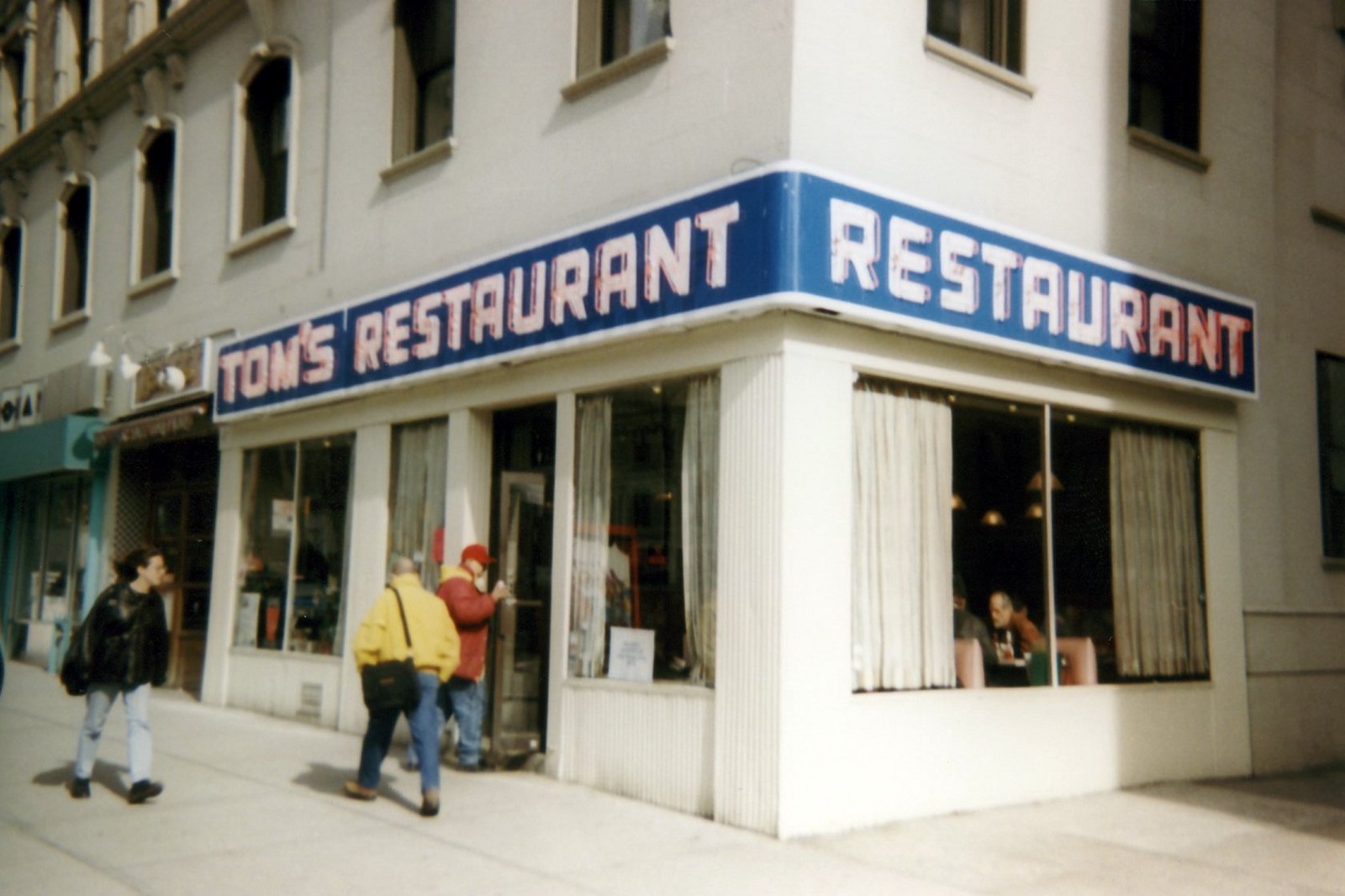
Let’s begin with fiction that attempts some sort of contemporary realism. Often set in New York City, the books that try to capture the contemporary moment have no problem using pop-culture references. Adelle Waldman, in her young-man in New York novel The Love Affairs of Nathaniel P. (2013), alludes to Mystery Science Theatre 3,000, Seinfeld, Starbucks, and Sex and the City. Julia Pierpont, in her dissembling family in New York novel Among the Tend Thousand Things (2015), also has copious references to Seinfeld (and Seinfeld fan fiction), along with mentions of the Harry Potter films, FedEx, Friends, Everybody Loves Raymond, The Little Mermaid, and JPEGs. Jonathan Franzen, though his last two novels haven’t been set primarily in New York, would also fall into this category, and Freedom (2010) contains mentions to bands like Bright Eyes and arguments about the “MP3 revolution” and the effect of iPod’s on music consumption, while Purity (2015) namedrops Breaking Bad and Facebook. Unlike in American Psycho, the references in these novels aren’t especially important to the story’s artistic project (though sometimes, like in Pierpont’s novel, plot developments hinge on a pop-culture allusion); they are just making the world that the characters inhabit more specific.
Another strand of acclaimed fiction in the last couple years has been novels set in the recent past (with the decade of choice seeming to be the 1970s). These novels often use the pop culture of the time to fill out the fictional details of their world. Rachel Kushner’s The Flamethrowers (2013) has corporate references (such as Schaefer’s and McDonald’s), film references (Model Shop, The Naked Dawn, and A Star is Born), and music references (Wanda Jackson; Paul McCartney). Jonathan Lethem, in Dissident Gardens (2014), and Garth Risk Hallberg, in City on Fire (2015), share references to Norman Mailer’s party-going habits, and the former throws in plenty of references to music (including Elvis and Peter, Paul and Mary), while the latter has its own musical taste (a lot of Patti Smith references); both include time-period appropriate television references (Archie Bunker in the former; Dick Clark in the latter). Marlon James’s A Brief History of Seven Killings (2015) has plenty of music and television references of its own, and similar to Lethem’s book, mentions the popular dirty magazines of the time (Penthouse in James’s book; Playboy in Lethem’s). The references in these novels are used for essentially the same purpose as the references in Waldman, Pierpont, or Franzen, but are in service of creating a realistic historical past rather than historical present.
But, on the other side of the debate, novels have started popping up and earning the “timeless” or “out of time” approbation. What is especially interesting about this is that, in at least two examples, the timelessness seems to go against the novel’s ultimate project. I first noticed this a couple years ago with Jesmyn Ward’s National Book Award winning Salvage the Bones (2011). Salvage the Bones is a story about a family’s attempt to survive Hurricane Katrina, which means that it is, naturally, marked to a very specific historical context. Yet Ward, for the most part, evades pop culture references, even as her characters are concerned with contemporary activities. For example, Randall is a good basketball player, hoping to one day earn a scholarship for college. And while it would’ve been easy for Ward to compare his style of play to some NBA superstar like Lebron James, Chris Paul, or Michael Jordan, none of these players are ever mentioned. Similarly, characters watch TV in the novel, yet we are never privy to the shows they watch. The allusions in the novel instead are literary, to William Faulkner’s As I Lay Dying, Edith Hamilton’s Mythology, and Nora Zeale Hurston’s Their Eyes Were Watching God. Parul Sehgal, in The New York Times Book Review, wrote, “It’s an old story — of family honor, revenge, disaster — and it’s a good one.” And though, like the novels set in the 1970s, Salvage the Bones has a specific historical story to tell, Ward creates the “old story” feeling of the novel in part by eradicating references to everything except “high culture” artifacts.
…Yanagihara goes to some length to withhold the obvious noun that would sum up the phenomenon she is describing.
Similarly, Hanya Yanagihara’s A Little Life partially purports to be a “four men in New York” novel, and, in the first few chapters, it does seem on the same branch of the family tree as Love Affairs of Nathaniel P. or even HBO’s Girls (which never met a pop-culture reference it didn’t like). However, A Little Life removes any reference to pop-culture ephemera. This becomes most evident in instances where Yanagihara goes to some length to withhold the obvious noun that would sum up the phenomenon she is describing. For example, detailing the art world that J.B., one of the novel’s central characters, runs in, she writes, “You painted or sculpted or made crappy installation pieces because it justified a wardrobe of washed-soft T-shirts and dirty jeans and a diet of ironic cheap American beers and ironic expensive hand-rolled American cigarettes.” It’s a picture-perfect description of hipsters, yet Yanagihara refuses to use the word “hipster.”
And similar to the way TV is handled in Salvage the Bones, Yanagihara has Jude, who is highly educated but has no knowledge of pop culture, contemplating his own ignorance without naming anything specific, writing, “He had never heard of the sitcoms whose episodes were constantly referenced.” Yanagihara alludes to the fact that Jude’s friends refer to specific sitcom episodes, but she never actually provides any references to these shows or episodes.
However, also like Salvage the Bones, the novel is not completely void of names of cultural artifacts. There are references to artists, poets, and filmmakers. But these references are all strictly of a “high art” variety. Characters namedrop Lorna Simpson; we observe them watching a Buñuel film; poetry by Stevens, Roethke, Lowell, and Hughes fills empty spaces on the subway; and, through indirect discourse, Willem characterizes J.B. as having a “Felliniesque command of his vast social circle.”
Any reference to “low art” either doesn’t specify a proper noun (as with the vague “sitcom episodes”) or refers to something fictional. The latter happens the most during sections of the book that feature Willem, given that he is an aspiring (and then successful) actor. Yanagihara is willing to place Willem in made-up pop films like Black Mercury 3081, where he plays “a brooding intergalactic scientist who was also a jujitsu warrior,” but does not mention the million Marvel movies that are essentially based on that same premise. Similarly, one of their friends is in a hardcore band called Smegma Cake 2 who plays songs with titles like “Phantom Snatch 3000,” but real-life hardcore bands like Pulling Teeth, with songs like “Brain Drain,” of course, receive no mention. This is noticeably different from Waldman and Franzen, who have no problem name-dropping Seinfeld or Bright Eyes.
So why would Yanagihara write a “young people in New York” story, but avoid pop-culture references? In his review for the New Yorker, Jon Michaud notes what he calls “curious absences” from the text:
Yanagihara scrubs her prose of references to significant historical events. The September 11th attacks are never mentioned, nor are the names of the Mayor, the President, or any recognizable cultural figures who might peg the narrative to a particular year. The effect of this is to place the novel in an eternal present day, in which the characters’ emotional lives are foregrounded and the political and cultural Zeitgeist is rendered into vague scenery.
Michaud, here, focuses more on politics than culture, but I think he is onto something. What he means by “an eternal present day” is that Yanagihara is trying to have it both ways. Unlike the people who try to make novels “timeless,” Yanagihara makes sure the reader knows that the novel is set no further in the past than 2005 (or whenever texting and email became widespread). But Yanagihara has explained that she wanted to give her novel a “fairytale quality,” where it seems out of time. By not referring to the companies or products that would date the novel specifically (no references to iMessage or Gmail), she tries to accomplish having it both ways: we don’t know exactly when the novel is set, and no matter how much time passes in the novel, it always seems like the present.
Here’s the takeaway: what both Wallace and his instructor don’t quite explain (though Wallace definitely understood this) is that allusions are intentional and malleable features of building a fictional world. The debate has typically been framed around whether it is ever appropriate for a writer to reference Seinfeld, Bright Eyes, or Facebook. What makes more sense is to talk about whether or not doing so is helpful for the specific project at hand. Calling out brand names, TV shows, and contemporary bands does give fiction a different feeling than simply referring to electric light bulbs or automobiles. Wallace’s instructor is right about the fact that references that place a novel squarely in 2016 are different from references that could place a novel anywhere from 1945 to 2016 (or, as with A Little Life, anywhere from about 2005 to 2030). But Wallace is right in asserting that sometimes the author wants to place a novel squarely in 2016 (just as an author sometimes wants to place the novel in 1976). The debate shouldn’t be about creating timeless fiction, because that endeavor is nonsense. The debate should be about the story’s setting. Sometimes it is necessary to place the novel in a specific, historical present. And sometimes, such as in A Little Life, it is necessary to obfuscate.
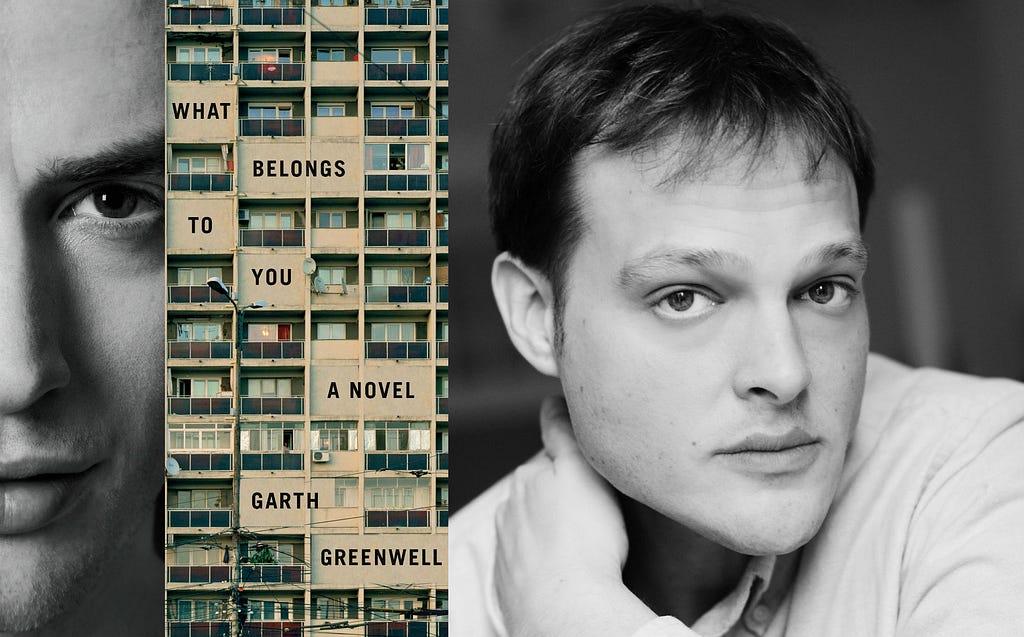
Garth Greenwell’s debut novel, What Belongs to You(FSG, 2016), opens underground, in the public toilets of Sofia’s National Palace of Culture. There, an American high school teacher encounters Mitko, a young prostitute with broken teeth and a curious, sphinxlike appeal. What follows is an exhaustive trip through the narrator’s consciousness as he recounts, in confessional, first-person mode, his infatuation with Mitko from its inception to its end. Mitko is at once a swindler, a lover, an object of lust, a tour guide through a certain kind of underworld, a riddle with no answer, and a grubby porthole through which the narrator can examine, dimly, his own childhood in the foothills of Kentucky.
Like a Tibetan throat singer, Greenwell performs the uncanny feat of sustaining two notes in one breath. Frank depictions of sex, of venereal disease, and of rotting infrastructure lend his prose a certain stench, and keep us grounded in a post-Soviet landscape with all of its earthiness and grit. But Greenwell’s tone retains a measure of delicacy: his sentences are formal and refined, often carrying the narrative into the celestial. From one angle the book looks like a long act of solipsism, yet from the other side the book is outward-looking, even journalistic. Greenwell documents the texture of contemporary life in Bulgaria with care, and the American reader will exit the novel familiar with the country’s language and its customs. And while the book is on the one hand a work of interiority, it’s also a detailed study, down to the movement, the manner, and the dirt under the fingernails, of Mitko, who seduces us as slickly as he does the narrator, and who still, somehow, remains an enigma.
“I used to be an opera singer,” Greenwell said on a recent Friday afternoon over coffee on the West Side. After leaving conservatory, he pursued an MFA in poetry at Washington University in St. Louis, then a PhD in English literature at Harvard. He left academia to teach high school in Bulgaria, and then returned for an MFA in fiction from the Iowa Writers’ Workshop. His look is pure flâneur — high cheekbones, wandering gaze — but he speaks with faintest of Kentucky lilts. We talked about St. Augustine, Apophatic theology, cruising as a poetic genre, and growing up gay in the nineteen-nineties. He apologized for being a little out of it, as the previous night, lost in a particularly good reverie, he had missed his stop on the subway and had to retrace his steps. “God,” he said, “I suddenly came to and was on the other side of the river.”
LP: For a long time your relationship with language was as a poet and an academic. What drew you to the novel as a medium?
GG: My time as a high school teacher in Bulgaria was really the beginning of the shift from poetry to fiction. My poems became more narrative, and then eventually I was writing poems that were scenes. I was in Bulgaria, and all of a sudden I started hearing sentences that were clearly not broken or blind, and I had no idea why that was or what I was doing. I had never taken a fiction workshop. I had never studied fiction, even as a scholar, but I just started hearing language in a different way. Somehow that was bound up with Bulgaria in a way that I don’t understand.
LP: How did you end up in Bulgaria in the first place?
GG: By accident. I was in a PhD program at Harvard but decided that I didn’t want the life of an academic, so I left to teach high school in Ann Arbor. At Harvard, the most important relationships in my life were with books, and the most urgent things in my life were my own thoughts. Then all of a sudden I was in Michigan, and I was intricately involved with the lives of seventy teenagers. I discovered capacities for feeling that I had not suspected before. As a teacher, your job is this kind of long looking; you watch your students in a way no one else does, and I got incredibly caught up in the narratives of my students’ lives. It was an extraordinary education in narrative.
While teaching in Ann Arbor, I was living in a horrible apartment complex right across the street from a retirement home. One day I woke up and thought “I’m going to blink and be moving across the street.” At the time, I had never really been abroad, so I went on the market to go abroad with the same agency that had placed me in Ann Arbor. I went on the market late, and there were two jobs left: one at a posh Swiss boarding school and one in Bulgaria. I knew one person in Sofia, a friend of mine from music school, and I just thought, “This is going to be the more interesting experience.”
The Bulgarian school serves really, really smart Bulgarian kids who come from all over the country. The school historically — and to some extent still — represents a way out of a place in which it is very hard to imagine a future for oneself.
Sofia ended up being a fascinating place. People say that about every country on the border of Europe and Asia, but I had never been anywhere where history as palimpsest was so evident. It’s an ancient city. If you stand on the street by the Serdika Metro Station, you can see an Ottoman-era mosque, an Orthodox church that dates to the Fourth Century AD, Soviet-era apartment complexes. Next to it you have a brand new metro station funded by the EU, and if you descend into the passageway, you can see Roman ruins.
LP: It’s a far cry your home state of Kentucky, yet in the novel, you still manage to render both places on the page, side by side. Did living in Sofia inflect your own understanding of Kentucky?
GG: I really did. Everything in Bulgaria was foreign to me, and I was living in a foreign language that I was really struggling to learn. But then I kept having these experiences where I would meet gay men cruising in parks, and the conversations I would have with them were the same conversations I had with the first gay men I met in Kentucky when I was sixteen years old. It was in the way these men imagined their lives — their horizon of possibility was drawn at the same place. I felt both surrounded by total foreignness, but I was also back in the world of my childhood where the kinds of interactions you can have as a gay man, with other gay men, were narrow.
The landscape of Bulgaria, too, is very similar to Kentucky. There are beautiful mountains and lots of farmland. It’s a society that in the last fifty years has quickly transformed from been largely agricultural to largely urban. Kentucky is like that too.
So in Bulgaria, I had this recurrent experience of being thrust back into the past I had fled. I think I had to go to Bulgaria in order to be able to think about Kentucky.
LP: I think this becomes most evident in the middle section of the book. One of the most interesting decisions in the novel, to me, is this section. At the novel’s open, we’re in Bulgaria in the present day. Then, about sixty pages in, you open up a wormhole in the narrative and step out into another universe in both time and space. What follows is a forty-page mammoth paragraph — no indentations, no line breaks — that carries us through recollections of a boyhood in Kentucky. We break from orthodox narrative rules and enter something closer to prose poetry. It’s a bold structural move. Could you talk a little bit about this rupture?
I really felt as though I was seized by a voice, and the voice was possessed of this rage that I found really frightening.
GG: Writing that middle section was absolutely terrifying. I really felt as though I was seized by a voice, and the voice was possessed of this rage that I found really frightening. So I just started writing and followed the voice as it moved between the very particular landscape of Bulgaria and fell back through these different levels of memory.
I wrote the first draft of the middle section very quickly, and I could only write it on trash. I wrote it on the backs of receipts and scraps of paper. I couldn’t write it in my notebook, and after I typed it up I couldn’t look at it. It made me feel physically nauseous. I put it away for a year and I didn’t look at it.
Then I started re-writing it. It went through far more revision than any other section, and as I distanced myself from the first part of the book I realized that there were things about the narrator I didn’t understand. He’s always confessing things, all of the time, but in another way he’s so guarded. He’s always keeping the reader out, and is, himself, distant from his own experiences. I soon realized that the middle section is meant to answer the question: “How did this guy get to be this way? What made him the kind of person who is so attached to language as a medium of expression and in another way, constantly hiding things from himself and from others?”
LP: I’m reminded of a line from Mitko that seems to contain the thesis of the novel. In a moment of anger, he turns to the narrator says something like, “The trouble with you is that you don’t know what you want. You say one thing and then another.” This brings me to a question of syntax. Your sentences build and swell — they are constantly self-revising, doubling back, and negating themselves. Each one is like a little a work of psychic origami. How did you develop this particular syntax, and in what way is it related to your poetry practice?
GG: I’m endlessly fascinated with the elastic capabilities of English. English — because it’s lost nearly all of its inflections — is a really limited language syntactically, compared to German, for example, and certainly compared to Latin. Yet despite those limitations, English syntax is so expressive and such an extraordinary vehicle for capturing the movement of consciousness. I do think that my sense of that comes from poetry, especially the 17th century metaphysical poets, who are the most important to me as a writer and a scholar. And it comes from the contemporary poets with whom I studied: Carl Phillips, who uses this syntax of doubt, this syntax of feeling your way forward, inch by inch; and Frank Bidart, who is a master of the sentence suspended over a long period. Then going further back, it also comes from Augustine’s Confessions, which I think is an extraordinary work of literature. What Augustine gives us in his Confessions is a portrait of a mind that says one thing and then says, “Oh no but what I really mean is. . .” and “Oh no, actually, that’s not right.” It’s Apophatic theology: a way of locating truth through triangulation.
Then the non-literary influence on my particular syntax is operatic singing, which is an athletic enterprise involving the entire body — you use your lungs to mold a phrase that moves through time incredibly slowly and that has a long arch in shape. I do feel language like this — as something physical. I have to feel the musculature of the sentence.
So I think all of those things conspired towards a certain of shape of sentence, a sentence whose music is the music of interrogation, and of doubt, and of self-questioning and self-revision. I’m only interested in assertion as something that can be worked against.
LP: It’s interesting that you bring up the 17th century, as so much of this novel, to me, read like a contemporary pastiche of 19th century novel. Many characters are names only by their first initial, and much of the narration comes in this high, rather formal register. I couldn’t help but think of Thomas Mann, of Henry James. Do you see this work as having some sort of inheritance from the 19th century — beyond all the usual inheritances, that is?
GG: It doesn’t feel exactly right to say that I align myself with the 19th century, but then it also feels not right to say I don’t. Because the syntax I use isn’t Dickens’s syntax. It’s not George Elliot’s syntax. It’s not Jane Austen’s syntax.
Thomas Mann, Henry James, Proust. . . all of these writers are queer writers, and it’s evident in the sense of transgression in their language.
Yet one thing that annoys me when people talk about the novel of consciousness — especially the 19th century novel of consciousness — is that it’s not acknowledged what a queer tradition that is. Thomas Mann, Henry James, Proust. . . all of these writers are queer writers, and it’s evident in the sense of transgression in their language. These authors maintain a kind of syntactical propriety that is at once excessive and extravagant, but also attached to a kind of grammatical decorum. In Proust, you have these sentences that just billow far beyond anything that should be possible and are totally transgressive in that way, but are also so attached to elegance and propriety. There’s something about that that to me is very queer.
And that’s the sort of character my narrator is. I mean, this is a guy who came to his understanding of his sexuality through anonymous sex in parks, which, you know, was part of the gay male experience for a long time. There’s a way in which the narrator longs for a kind of elegance and a kind of dignity. His experience of himself, not just because of his sexuality, but also because of his sexuality, is an experience of shame.
LP: He’s so ashamed. At some point he describes his sexuality as “That humiliating need that has always, in even in my moments of apparent pride, run alongside my life like a snapping dog.”
GG: Right. He feels is sexuality as a source of great humiliation and degradation, but also as a source of great exaltation. His sexuality is a door that opens him up to an experience of transcendence that he gets nowhere else. There’s a way in which I feel like those syntactical structures kind of improve that in the way that they’re both transgressive and break grammatical propriety. Some of my sentences are ungrammatical at times.
LP: I want to stay on the topic of language, but also shift gears a little bit. There’s a lot of active translation that happens between the Bulgarian characters and the English-speaking ones. Readers of the novel will encounter English approximations for Bulgarian words, English words with no Bulgarian equivalent, and moments where neither language is sufficient at all. There are also moments were you leave full sentences in Bulgarian intact on the page. Could you talk a little about the decision to place the Bulgarian language in the forefront of the novel?
GG: One of the things that I hope happens in this novel is that you see someone learning a language. If I’m going to represent the consciousness of someone going through that process, the other language had to be on the page. In some ways, it was just about verisimilitude: I wanted to get the sound of the place. But I also love that particular space of consciousness where everything is doubled because you’re thinking in two languages at once and engaging in a transaction between them.
LP: And so much of the book is transactional. There are exchanges of money, of sex, of affection — sometimes fair, and sometimes profoundly imbalanced.
GG: Right! And language is a big part of those transactions. We never experience anything in the world that is not mediated through language. That’s true, even, of something like sex, which seems to promise a kind of escape from the constant movement of consciousness, but it doesn’t.
In some way, the constant transactions between Bulgarian and English are a synecdoche for any kind of interaction between two people. You have these moments of contact, and in some ways those moments of contact are everything, and yet they’re also never certain, always imprecise, never fully accurate. So much of the other person is always lost. Translation is just a metaphor for any kind of interaction between people.
LP: Those moments of contact are rare, but when they happen they can shock you. I loved the moment, near the end of the novel, where the narrator is sitting in a crowded waiting room while an English-speaking nurse recites a list of STDs for which he will be tested. As other patients begin staring, the narrator realizes with some horror that the names of the STDs are exactly the same in Bulgarian as they are in English.
GG: Bless your heart for not asking if any of this is autobiographical.
LP: We’ve talked a bit about the interiority of the narrative, but there’s an aspect of this novel that’s also outward-looking. There is wonderful tension in this book between private and public spaces. As we plunge through private layers of consciousness, we’re also exposed to a rather journalistic account of Sofia, specifically the spaces inhabited by members of the gay community. What, to you, is private space? And what is public space?
GG: I was thinking about this recently: just as my early education in music was really an education in writing, so were, I think, the years that I spent cruising bathrooms and parks for sex. In every place I’ve lived I’ve found these spaces, often without any kind of indication that they were there. The book begins in one of those spaces, in the subterranean bathrooms beneath the National Palace of Culture in Sofia. It’s a real cruising space, and everyone in Sofia knows it. Straight people hardly go there because it’s so notorious.
What I’ve come to realize is that finding these spaces is an exercise in reading. The first time I went to those bathrooms in the National Palace of Culture, it was my second, maybe third week in country. I was exploring downtown with friends. We just needed to go to the bathroom, and we saw a sign for the toilet. There was no one around. There was nothing to see or sense. But as I started descending those stairs, I just knew. I turned to my friend, who was straight, and said, “Men are having sex in this bathroom.”
I was so new to Bulgaria. I barely spoke the language. I didn’t have any idea how to read social cues. I was constantly making mistakes. Then I entered into this space where I was absolutely fluent in the language. All of the codes of cruising were exactly the same. I knew exactly how to act. I could communicate complicated messages in this effortless way. It was a moment in which a random stimulus of experience snapped into a kind of focus and became legible. It felt like an exercise in finding significance in the same way that reading poetry is training in finding significance, finding symbols. I’m fascinated by poetry as public and private speech. Cruising also creates a private, lyric space of intimacy within a public space.
That transactional space between privacy and publicity is the space of poetry, the space of cruising, the space of sex.
I hope the book reproduces that experience of being in a public and private space at the same time, which is also, for me, what sex does. Sex is this experience where you are really focused on another person with a kind of intensity you seldom have. But it’s also, at least for me, an experience that thrusts you into the most intense kind of interiority. That transactional space between privacy and publicity is the space of poetry, the space of cruising, the space of sex.
LP: Which contemporary Bulgarian authors are you most excited about?
GG: There is not a lot of Bulgarian literature that’s been translated into English, but the landscape of Bulgarian literature has been radically transformed in the last ten years the Elizabeth Kostova Foundation, an organization that supports Bulgarian literature and fosters connections between Bulgarian writers and English language writers. They’ve developed a relationship with Open Letter Books, and most of the Bulgarian literature that’s available in English is available through that press.
There are some younger Bulgarian writers who are incredibly exciting. The one I would single out is Dimiter Kenarov, who is an extraordinary poet in Bulgarian, and an incredible journalist and essay writer in English. He’s written about the Bulgarian writer and dissident Georgi Markov, who’s famous because the Bulgarian KGB killed him with a poisoned umbrella. There’s also a writer named Theodora Dimova who has a book called Maikite which means The Mothers. The book is so fierce, and has these sentences that are so intense and possessed with emotion.
LP: And is there any tradition, at all, of queer literature in Bulgaria?
GG: There are only two openly gay writers I know who write in Bulgarian. One of them is a poet named Nikolai Atanassov who lives in the States and wrote the first sexually graphic gay literature in Bulgarian. He writes in Bulgarian and publishes in Bulgaria, but had to move to the United States before he could do that. The other one is a gorgeous writer named Nikolay Boykov.
I mentioned earlier that my experiences in Bulgaria constantly reminded me of my own coming of age as a gay person in Kentucky. But there was one major, important difference between those two experiences: for my Bulgarian students, I was the only openly gay teacher they had had, and for almost all of them I was the only openly gay person they had met in real life. That meant that a lot of students came to talk to me.
I could read these books, and even if it seemed in many of them the value of gay life was a tragic value, it was still valued.
What became clear to me was that the biggest difference between being a gay teen in Kentucky in the early 90s, and being a gay teen in Bulgaria now, is that even though everything around me in my daily life taught me the lesson that my life had no value, I could read James Baldwin and Edmund White. I could read these books, and even if it seemed in many of them the value of gay life was a tragic value, it was still valued. Those books showed me a representation of gay life that bestowed upon that life a full measure of human dignity. My Bulgarian students have none of that.
LP: Will your students be able to read your book someday? That is to say, will the book be translated into Bulgarian?
GG: It will be. And I’m almost certain that book will be one of the first books in Bulgarian to represent the lives of gay Bulgarians with dignity. And I know that if this book is noticed or discussed at all in Bulgaria, it will discussed as that, as a representation of gay life and as a sexually frank book. It’s going to be very hard to see this book as literature. That’s fine. In English, there’s nothing scandalous about this book. Nobody’s going to care that there’s gay sex in it. People are going to be able to think about it in other terms. In Bulgaria, I don’t think that will happen. I think people will just be like, “Oh, this is a book about gay sex!”
LP: And will you be going back to Bulgaria for a book tour?
GG: I hope to. The conversation, I think, is going to be about defending the place for this subject matter in literature. I’m happy to do that, because my life as a writer is largely in other places. I would like to do what I can to establish the most basic ground rules, which are that gay lives are human lives, dignified lives, and are just as deserving as a kind of reverent literary representation as any other lives and that, yes, graphic depictions of gay sex are absolutely literary and are absolutely consonant with a kind of language that I hope has an allegiance to poetic expression.
I am very happy to go in and make that argument as strongly as I can and take whatever heat there is because then I get to go home. As a writer, am very conscious of the extraordinary privilege and protection I have, as an American, to do that.
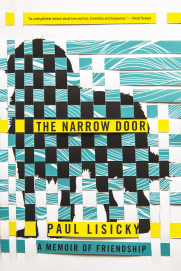
Paul Lisicky has long been one of my favorite essayists. His collection Famous Builder is one to which I return again and again, consistently in awe of his language, his insight, and the way he renders lived experience on the page. When reading Lisicky’s work, I feel as though gladly suspended in a spider’s web, the whole world put on pause. That is to say I feel held and fed by his work, and as much as I am and remain devoted to his previous books — the aforementioned Famous Builder, his terrific and tragically under-read novels Lawnboy and The Burning House, as well as his collection of short prose, Unbuilt Projects — Lisicky is at his very best in his latest book, The Narrow Door: A Memoir of Friendship (Graywolf, 2015), which traces, among many other things, his intimate friendship with the late writer Denise Gess and his separation from his long-time partner, M. The Narrow Door is a document of Lisicky’s attempt to understand. It isn’t written from a place of having already understood — supposing such a place is possible to arrive at when we’re talking about grief and loss, when we’re talking about ourselves at all — and this vulnerability makes all the difference. The book is smart, deeply moving, exquisitely written, and made of that open-eyed, open-hearted seeking that characterizes the very best of narrative nonfiction. “What is it like to know a single human in time?”the book asks, and moves us, as it moves its writer, toward something like an answer.
Lisicky and I spoke by email about the book, the complex dynamics of intimacy, natural disasters, the (in)adequacy of language, and more.
Vincent Scarpa: You have such a gift for juxtaposition. It’s staggering, the way you place three or four things alongside one another in an essay and never force the connections, allowing instead for their own quiet but definite ringing to take place on the page and within the reader. In the process of writing an essay like “Furious,”for example — wherein you write about Joni Mitchell, your friend Denise Gess (around whom much of the book orbits), what you call your “morning project”of gathering and reading stories about animals, and a rather creepy encounter in Hyannis with a man who follows you home — are you conscious of the ricocheting between these seemingly disparate parts, or does that reveal itself in the act of writing? Is this kind of placement organic, purposeful, or somewhere in between?
Paul Lisicky: Well, this just goes to show that I must think through images rather than through content! The truth is each of those sections in “Furious” is organized around some image, and I hope the book works as a conversation between images: one image is meant to talk to the next and so on. Something approximating a through-line starts to develop in the “Imitation Jane Bowles” chapter. But the book’s structure is more associative than narrative.
It needed flex — by which I mean the book needed to accommodate anything in order to feel like grief.
At an early point I realized that the material was not going to behave conventionally. Three pages into the manuscript, and it already felt disobedient and unruly, which interested me of course. It needed flex — by which I mean the book needed to accommodate anything in order to feel like grief. It was just going to be a big old mess if a reader couldn’t at least sense an emotional logic. Once I started developing patterns — patterns in images, in sound — it felt like the book could move anywhere it needed to. It started to feel a little like composing a longer work of music. It didn’t need to be trapped inside some causal straightjacket. So I’d like to think of its structure as organic, but I was certainly making choices to help that happen. Ideally, I always want to write into a place where I’m both in control of and being controlled by. It’s a little like surfing, riding a wave.
VS: There’s a lot of natural disaster in the book — earthquakes, superstorms, remembered volcanic eruptions, tsunamis. I suppose it is a question about juxtaposition, too, when I ask what was the hoped-for effect in having the reader metabolize your writing about these things alongside the more prominent threads — your relationship with Denise, your marriage with M, etc. — in the book? It seemed to suggest to me something about the lived experience and its micro and macro fragilities, but I suspected something deeper still beyond that.
PL: I like your word metabolize a lot. One of the things I wanted to do was to break down the false distinction between the world out there and the world of the domestic life. What if some of the relationship dramas in the book were also natural disasters of a sort? What if the natural disasters were relationship dramas? I wanted the non-human passages to be more than metaphoric, or serve as vehicles for feeling.
I think there’s also a progression in the book. Initially, the volcanoes are a spectacle, a source of fascination — they’re viewed from a safe distance, through YouTube videos. Then there’s the earthquake in Haiti, with the teenager who’s buried alive. It’s harder to feel distant from that. By the time we get to the Gulf oil spill, the damage hits even closer to home. There’s the possibility of the entire east coast shoreline being spoiled — birds, dolphins, turtles dying by the thousands. It was unbearable to me at the time; it’s still unbearable to think about how that damage is still playing out. So what does it mean to live in a world where our ongoingness is hardly a given? How does it trouble our relationships, muck up our loyalty and hope?
VS: One of the things I loved most about The Narrow Door was the way in which you sort of lay bare the nuanced, contradictory, and sometimes unflattering dynamics of friendship that we’d prefer to think of as organic, automatic — for to acknowledge that there is even a slightly performative, affective aspect to friendship may feel ugly, or may make the relationship seem somehow dishonest or uncherished. Yet it’s the opposite here. In your fearless, clear-eyed investigation of the complex relationship between you and Denise, I come to understand both of you individually and as a unit far more honestly and vividly. I think there’s something really brave about being unafraid to look under the hood of that relationship, so to speak, and I just wondered if you could talk a bit about the impetus to probe this friendship, and any hesitation or misfiring you may have experienced along the way. Were there sentences that, once written down, surprised you — with clarity, with disjunct?
…love isn’t ever a pure, untroubled, static state.
PL: As soon as I started writing, really just a month or two after Denise’s death, I was coming up against the built-in problem of idealization. How do you write about losing someone you adore without romanticizing them? I knew there was a received narrative out there — the story of the sick person ennobled by illness, the survivor made larger by grief — and I knew it was important to complicate that, which might have led me to put some of the darker stuff on the page. I can’t say some of that material — “The Fire in the Road” chapter, for instance — doesn’t make me feel queasy, but love — love isn’t ever a pure, untroubled, static state. Sometimes we love people because of their difficulty; it’s part of their charisma, their appeal. Who wants to be involved with a boring, unchallenging person anyway? I always say I can’t stand competition, but somehow I ended up in a long friendship in which that stuff was in the air, or under the hood, as you say.
Sentences that surprised me? Well, the one I keep coming back to is: “The closer we get to someone the more we must stand humbly before his [her] freedom.” But those aren’t even my words. I heard them spoken in a church, and they reached me at just the right time.
VS: I also love what you say about friendships of this variety:“See how we’ve been a little bit in love all this time, and not able to say it? But that’s the story of any friendship that lasts this long. All those hours on the phone, in restaurants, in classrooms, or at the dog park — you couldn’t do all that and not be in a little bit of love.”This is something that doesn’t get written about often; or, it does, but it always lands in the clichéd rom-com places you expect it to. What were you aiming to say about this kind of nonsexual yet fully romantic variety of intimacy, and why do you think it’s such unexplored territory?
Maybe we place undue pressure on sex, as if putting ourselves inside of each other is the only way one could possibly feel wired to another human
PL: Well, I think all sorts of intimate relationships happen between people who wouldn’t otherwise have sex because of their sexual identities. They happen between straight men, between gay men and straight women, they happen between old people and young — we could keep going. Those relationships might have all the intimacy of romance, but they’re untroubled by sex and the physical longing it generates. It’s not that there might not be eros in those relationships; it’s just that sexual expression isn’t front and center. Who knows why such relationships aren’t talked about in the culture? Maybe we place undue pressure on sex, as if putting ourselves inside of each other is the only way one could possibly feel wired to another human. I’m the last person to undervalue the pleasures of sex, but I have been close to many people in my life where sex wasn’t part of the equation. Not so long ago I read a really thoughtful essay by D. Gilson about what he calls “romantic friendships.” He writes about them through the lens of Frank O’Hara’s relationship with the painter Grace Hartigan, who was a straight woman and an artistic collaborator and/or muse. He believes that crossing that boundary, destabilizing the norm, is potentially “one of great queerness.”
VS: You write, “I see how a book becomes your house. But soon you are just a function of the house. The house tells you what you want, how you should live. At the same time, everything that comes into your life goes into the house. The house transforms the ordinary into the extraordinary, and without it, you’d never even know yourself, never even know that all those choices and consequences mattered.”I wonder if you aren’t saying something here about the information-gathering process, about the way the writer’s mind pivots toward meaning, or a bending toward resonance, when looking out at the world. Is that how it felt, writing The Narrow Door? That everything you took in could be made to fit into the repository of the text? I think many writers feel this way, and I think many writers, myself included, don’t really know when to stop looking at the world through the lens of our current project and see it as simply the world. Perhaps we never do?
PL: I think the distance involved in naming, sorting, in making structures — I can’t imagine that being anything but a good thing. This might sound extreme, but I know it’s saved my life more than once. I suppose it would be a mistake to be standing outside of your life all the time, never immersing yourself in it, or allowing yourself to be totally lost. But once you’ve developed the muscle I don’t think it’s exactly possible to stop. At this point I wouldn’t know how to live any other way.
VS: As one of my interests in my own nonfiction is the adequacy or inadequacy of language — specifically its ability to bear weight when writing about grief and loss — I was especially drawn to this passage: “Words fail in the face of strong emotion,”you write. “They hold too little; they don’t pour into one another the way I want them to. There are solid walls between each word, and even if I named every abstraction, the list would never tell the complete story. There would always be another word to follow the last word.”I found this beautiful, and true, and frustrating — and yet I was holding in my hands the finished book! This poet I like, Natalie Eilbert, has a line — “The agony of loss is its refusal/to be a vocabulary” — which also seems to speak to this. I guess what I’m asking, then, is how do you resign yourself to the inability to tell, as you say, “the complete story?”And, furthermore, what gets set free in the writer when he makes that resignation?
PL: Alongside that frustration of inadequacy, I have to think of each book as “a” truth instead of “the” truth. I wouldn’t know how to proceed otherwise if my assignment was to do the latter. By that I mean, each book is shaped by the time in which it was written, what was going on in my life when it was written, as well as by its own thematic currents. The Narrow Door is not the final word on Denise and it’s definitely not the final word about my long life with my ex. This material will probably find its way into other sources, and I’m sure I’ll find new things to say as I gather more into my experience. So I guess I’m saying it doesn’t quite feel like resignation if you hold on to the belief that there are always more books, more lives.
The Canoeist Encounters a Black Etched Prominent How did my eyes fall upon this tiny caterpillar while John B goes behind a tree? This same baby moth — dark, hooded face, almost human eyes, a forked tail that makes it look like a slug in reverse — caught my eye at a book sale for castoffs at a library a decade ago. Now
it sees me, and now it raises its tail: the forks whip, and the head rises so its arched body seems all muscle, like tension itself, all because it fears and wants to stay alive, to make it to the chrysalis: anchored, spun, a sac all filled with light. •
The Canoeist Drifts Among the Puffballs and Thinks of Home
The perfect summer day is filled by puffs from trees too light and too sublime to wait until the later months of the green season, yielding up some kind of light; here, I see the same signs of softness, of easing into the bright clarity of mid-June, but why does the sight of these tiny white spheres send me to some northside avenue? Here,
the water plants’ yellow heads poke out of the bracken to bloom, the evidence of the spring below troubles their quiet tendrils’ submarine lilt, their easy float. The water’s skin so clear the grasses, saugers, turtles the clockwork of this crystalline life I skim the mere top of, gliding. •
The Canoeist and the Lost Things
Why does every lost thing suggest the cosmic incompleteness of toads, the frogs’ amphibian lot, their half-in, half- out, as this one, riding along for three hours, about nine miles, taking him far from home? Where shall he go from here, what will he make of this lake or it of him? Soon,
the sun will set, and I will put in. The frog will then be lost to me, as all things are, as all things become. To himself, though, he becomes a darkness again, lost in this new lake, new home to him, the cratered crescent moon the only light. •
The Canoeist Portages
What of this life is not a portage, two and twenty rods over a ridge a half dozen times only to put out upon the water once more, the rocks slippery with moss and slime, pine needles aproning the shallow mouth of a slim lake?
A quiet you can almost hear behind the buzz of the cicadas, past the lapping of the lake in the wind. This is how much more it is than a portage: the weight of the boat held up by water, the crisp glide of oar giving way to the void the water hides.
•
The Canoeist Loses his Oar
With the air so still it seems asleep, what equation moves the boat upon the water, heavy as it is with me? The lake takes nothing it is not given, and so the boat scuds further from the grassy shore.
The eddies and curls of currents made by fish and the tilting, spinning earth are the true captains now, the canoe enslaved to their minute forces. I lean back and look up. Clouds like a raincoat. Sky like a message home.
•
The Canoeist Smokes his Pipe atop a Log
How does the turtle go about its life needing nothing? It snaps dumbly at hooks meant for fish, but mainly it delights in riddles told by springfed lakes, riddles like the ones its father told.
Oh, to lay eggs in June and walk away for summer, season unswept of moss, like a pegboard put up to give the travelers something to do! The turtle’s blossom life is a riven seam.
Reading Garth Greenwell’s debut novel, What Belongs to You, abroad — for me, that currently means outside of the United States — is a particularly vivid, and strangely enriching, experience. Partly, this is because the plot is set entirely in Bulgaria, where the narrator is a teacher at the prestigious American College in Sofia. Additionally, since the book deals so much with the foreignness of attitudes and emotions as well as language, reading it in transit and in guest bedrooms feels incredibly apt.
What Belongs to You is a beautiful first book, with a focus on communication, on understanding (or not), often literally, what other people are saying. So convincing is its narrator that it feels autobiographical, though I have avoided asking Greenwell whether he lived and taught in Bulgaria, as it could break the thrilling illusion that reading the book is a voyeuristic invasion of a very real narrator’s private thoughts, actions, memories, and emotions. Like many of the great novels written in the first-person, this one feels directed at someone, but that mysterious person isn’t necessarily us readers. This too contributes to the sense of sifting through an experience already translated through the narrator’s mind, where most of the interactions he has are in another language which he himself is not fluent in.
This narrator is left nameless throughout, because his name is “more or less unpronounceable” in Bulgarian, which is the language he uses when he meets the central figure, Mitko. Though the book is split into three parts, the middle one having ostensibly nothing to do with Mitko, the entire novel is permeated with his being, so clear in the narrator’s mind that it almost emerges from the book like a scent. The nameless narrator is saturated in Mitko’s essence from the moment he first meets the young prostitute. Although Mitko is never explicitly named as such, there is no doubt as to his profession. The first few pages of the book describe how the narrator finds him at a hookup spot for gay men in the restrooms at the National Palace of Culture in Sofia, where Mitko at first ridicules another man there who is there looking for sex. Wanting to be included, especially as he sees Mitko bearing “hypermasculine style and an air of criminality,” the narrator uses a head-waggling gesture that “signifies [in Bulgaria] both agreement and affirmation or a certain wonder at the vagaries of the world.”
From the very beginning, then, the reader and narrator alike are slightly lost in these vagaries of this world — the gesture doesn’t convey what the narrator wants it to — and so begins a spiral of abandoning precise understanding and embracing every moment with which Mitko graces us with his presence.
For Mitko is impossible to put together, to truly understand, and it is him, more than the narrator, who seems to be the focus of What Belongs to You. The narrator understands himself well enough, even when he’s perplexed by his own actions. He knows he cares for Mitko. He knows, during the middle section of the book, that memories of coming out to his father, his father’s disownment of him, will affect his decision to visit this distant personage on his deathbed. He knows, even when he is in a committed relationship, that it doesn’t and will never provide the satisfaction that Mitko does. Mitko is the drama of the narrator’s life, the moving piece that makes his routine exciting, the mystery that he can’t solve and therefore can’t let go. For much of the novel, he is out of the narrator’s and reader’s eyesight, but is in our minds as firmly as a tune stuck in our heads and refusing to leave.
At the very start, in the bathrooms where he’s introduced, Mitko seems menacing, a man both attractive and dangerous; maybe attractive because he is dangerous. But despite first impressions, Mitko often seems childlike to the narrator, especially during their first encounter, when Mitko takes his shirt off and reveals what seems like a much younger man’s chest: “He was thinner than I expected, less defined, and the hair that covered his torso had been shaved to bare stubble, so that for the first time I realized how young he was (I would learn he was twenty-three) as he stood boyish and exposed before me.” This apparent vulnerability in Mitko is confusing to the narrator, at odds with the prostitute’s earlier hypermasculine attitude.
This confusion extends to the narrator’s own life, his very existence in Bulgaria, his teaching career, his relationships with his family, and the dichotomy between his personal and professional lives. Though he doesn’t hide the fact that he’s gay — a fact revealed later in their acquaintanceship — Mitko believes that the narrator is keeping his sexuality a secret, masquerading as a straight man. In fact, it is Mitko who masquerades as straight by defending the narrator from people who call him a fag, even while Mitko’s profession, his livelihood, depends on men giving him money, food, and shelter. But Mitko calls these people priyatel, “friends,” rather than clients, and sees their payment as “help” freely given, as generous “gifts.” Perhaps this is truly how he thinks of them, but for all intents and purposes, Mitko — as the narrator knows well — is a man with a body and charm for hire, for barter, for sale. On a night Mitko spends at the narrator’s apartment, the latter sees this firsthand: Mitko spends hours on the narrator’s computer, talking with countless men of varying ages on Skype. He even introduces the narrator at times, shifting the computer’s camera, and the oddness of this situation is impossible to escape, as Mitko seems to really be introducing one friend to another rather than breaking any confidences or outing anyone, which is essentially what he’s doing.
When Mitko and the narrator have a falling out, the latter believes he is seeing Mitko’s real face for the first time — a violent face, one that is powerful and which belongs to a frightening underworld of crime. After all, he’s seen Mitko full of bruises and cuts before, known that Mitko is involved in various nefarious activities, and suspects he enjoys brawling. The fear that the narrator feels, however, is one of the only moments in the book where his emotion seems outsized, exaggerated; one of us, reader or narrator, is mistranslating Mitko’s threats. To me, they seemed empty, full of Mitko’s bluster, his need to assert control in a life of extreme poverty — he is basically homeless, staying with clients as often as possible during the night — where his only safety net is people like the narrator who treat him well. For all I know, Mitko’s bruises come not from brawling but from client encounters. To the narrator, however, the threats are all too real.
This is the end of the first bout of the narrator’s constant suffering over Mitko. In the novel’s second part, we learn more about the narrator’s childhood, family, and — again — the misunderstandings that came along with his discovery that he was attracted to other boys when he was just a boy himself. There is still a distance from the reader in the writing here, a feeling of the narrator’s exposure of memories being put through the sieve of a grown-up’s perspective on his past. There is something that is reminiscent of Karl Ove Knausgård’s translated My Struggle series in this middle section especially, which is fascinating considering that Knausgård’s books are translated into English whereas Greenwell’s novel isn’t. But Greenwell is able to employ a guardedness to his narrator that feels like the distance of translation. This is showcased when the narrator shows his mother around Bulgaria when she comes to visit: there is a gap between the two of them, due to the past, but also due to his constant need to literally translate everything around them for her. She, like Mitko, is dependent upon the narrator, dependent on his kindness, patience, and generosity.
In the final part of Greenwell’s book, Mitko returns, and while he manages to reassert control over the narrator with a brief bout of groping in a public bathroom, the connection between the two is not what it used to be, and the power dynamic has shifted. Mitko is ill, both with syphilis and with a longstanding liver disease, and for once the narrator cannot actually understand what he’s saying, or why he’s saying it: “men me nyama, men me nyama, I’m gone, it means, or I’m not here, literally there’s no me, an odd construction I can’t quite make work in English.” Again the narrator returns to the unpronouncability of his own name, as Mitko calls him “that syllable […] used to approximate it.” A syllable the reader is never privy to, and part of the privacy that the narrator manages to seal inside the translation of his thoughts and feelings to the page.
**
Mitko and the narrator’s first contact — and contract, for Mitko received money for it — ends in the narrator’s anger, for he wasn’t given what he wanted in their encounter. Nevertheless:
“[M]y pleasure wasn’t lessened by [Mitko’s] absence, […] what was surely a betrayal […] had only refined our encounter, allowing him to become more vividly present to me even as I was left alone on my stained knees, and allowing me, with all the freedom of fantasy, to make of him what I would.”
It is this, Mitko’s unavailability, his inability to be completely understood by the narrator who is never fluent in Bulgarian, that makes him most attractive, since he is then the subject of fantasy. But by the time he is faced with Mitko’s realities, the narrator has found companionship, maybe love, with a man called R.
And so finally Mitko is an open book for the narrator to read, and once he’s read it, discard:
“Love isn’t just a matter of looking at someone, I think now, but also of looking with them, of facing what they face, and sometimes I wonder whether there’s anyone I could stand with and watch what I wouldn’t watch with Mitko, whether with my mother, say, or with R.; it’s a terrible thing to doubt about oneself but I do doubt it.”
This is one of the most honest and open things the narrator states, as is his telling Mitko: “I am an open person, I don’t have these secrets, everyone knows what I am,” meaning gay. But the narrator might as well be speaking about himself in general, and in that sense he is clearly opaque to himself as well, for he is not an open person, he does have secrets, and “everyone” doesn’t include the ones reading his words on the page. Beautiful, vulnerable, the narrator is more thought than action in type, more philosophy than feeling, more objectively descriptive than intimately there, and so while it is impossible not to love him, as it is impossible for him not to love Mitko, the narrator is a mystery, lost in translation to the reader, but better, and more interesting, for it. If we could read him as he reads Mitko in the end, maybe we’d discard him too; Greenwell makes sure this doesn’t happen.
Hello, and welcome to my week-by-week review of the world. Today I am reviewing the plaid shirt I got for Christmas.
This past Christmas my cousin gave me a plaid shirt. He had asked me what I wanted and I told him a plaid shirt, so when I began unwrapping it I was understandably excited. But when I held it up in front of me for a better look, I had no emotional response. I felt absolutely nothing.
There was something about the shirt. The way it looked was almost as if it was neither ugly nor attractive. I could barely even tell what color it was. It was as if it occupied some in-between state of existence, not fully there, yet not anywhere else.
While the shirt itself made me feel nothing, it was that void of emotion that terrified me. I felt all at once afraid and alone, adrift in the vastness of the universe for all eternity, unable to ever die. Drowning in a nothingness.
I’ve never had a shirt elicit this type of response before. I said, “thank you.” Then I placed the shirt down and tried not to look at it again. A few days later I picked it up, curious to see if I would feel anything. I did not.
I inspected the shirt and found that it was manufactured in Thailand by the Doug Ferry company. The name didn’t sound Thai to me, but I don’t speak Thai. I wanted to understand how such a shirt could exist. Did the seamstress who made it also feel nothing for it? I went to a department store and asked a clerk about it but he had never heard of that brand.
The deeper I dug, the less I could find out about this Doug Ferry shirt. I began checking the tags of people in front of me on the bus. Nothing. So I wrote a letter to the trademark offices, asking if they could please put me in touch. They never wrote back.
I decided to just sell the shirt and be done with it. Not surprisingly, no one would buy it.
If no one had any feelings about the shirt, would they have any feeling about the person wearing it? I put it on and stepped outside. No one I passed seemed to notice me so I began waving my arms and screaming wildly. It was like people were refusing to look at me. Like I was invisible.
I wasn’t invisible though, as I was caught by a security guard while sneaking into a candy factory to test this theory. I considered the notion that it was my khakis that made me visible, so I cut off the lower half of the shirt and made it into a pair or shorts. There wasn’t a lot of fabric to go around so the shorts ended up being a bit smaller than I was comfortable with.
Apparently the authorities and several witnesses were also uncomfortable with how small my shorts were, because I was given a stern talking to. Burning the shirt seemed to be the only solution. I hope my cousin doesn’t read this. I’d feel awful if he knew what happened.
BEST FEATURE: n/a WORST FEATURE: n/a
Please join me next week when I’ll be reviewing a head of lettuce.
Pullman said that he has long advocated fair payment to authors participating in the festival, to no avail. He told the Guardian: “The principle is very simple: a festival pays the people who supply the marquees, it pays the printers who print the brochure, it pays the rent for the lecture halls and other places, it pays the people who run the administration and the publicity, it pays for the electricity it uses, it pays for the drinks and dinners it lays on: why is it that the authors, the very people at the centre of the whole thing, the only reason customers come along and buy their tickets in the first place, are the only ones who are expected to work for nothing?”
One of the largest literary festivals, The Oxford Literary Festival features over 500 speakers and 250 events each year. This year’s festival (set for April 2–10) will include authors Jacqueline Wilson, A.C. Grayling, and Joan Bakewell, among other prominent voices. The festival is funded by large sponsors as well as revenue from ticket sales, with tickets costing between £6 and £25.
Festival director Sally Dunmore responded that the organization were sad to see Pullman go, but stood by the Festival’s stance on author payment. She categorized the Festival as a charity: “If we were to change our policy, we could not put on a festival as large and diverse as Oxford’s which supports and promotes the work of both bestselling authors and of those at the outset of their writing careers or with a smaller following.”
This move comes just a week after Pullman and The Society of Authors (of which Pullman is president) released an open letter to The Publisher’s Association and the Independent Publishers’ Guild, demanding that authors receive more equitable pay for their work. The letter warned that authors were becoming an “endangered species,” citing that annual income for a writer had fallen to£11,000 ($15854.85), well below the £16,850 ($24,286.75) that the Joshua Browntree Foundation has deemed “necessary for a socially acceptable living standard.”
Among other solutions, the letter requests that authors be paid 50% of e-book sales, as opposed to the current 25%, and proposes best practices to ensure fair treatment of authors in contracts, including clear and transparent royalty statements and adherence to the C.R.E.A.T.O.R. guidelines.
Pullman told the Guardian that in advocating for writers, he’s only seeking a more equitable system: “We don’t want these great powers to disappear altogether: the things they do are often things that need doing. Books are physical objects that need to be manufactured and transported and sold, or digital entities that need to be formatted and made available online. Sometimes there are things we wish they would do a little more of: editorial standards are not what they were. All those things are necessary and should be rewarded — but rewarded fairly. So is our work, and so should we.”
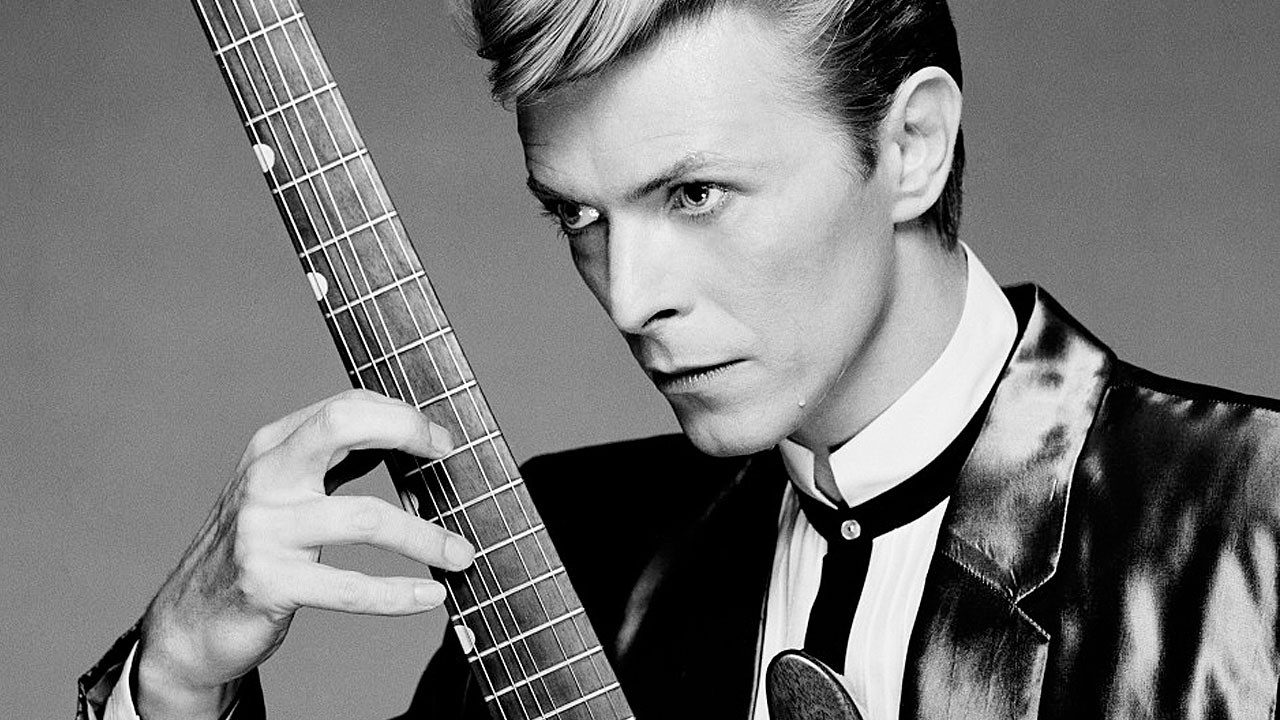
As word of David Bowie’s death spread on January 10, 2016, heartfelt messages of grief and remembrance poured out from around the globe (and from outer space). The impact of the incredible, multi-talented Thin White Duke on so many cannot be denied. Communities of those mourning his loss have been gathering to celebrate his life with dance parties, silent tributes, and grand concerts still in the making.
David Bowie paved countless creative paths, opening doors for generations to follow. Fellow musicians, visual artists, writers, and others have been inspired by his work, often finding the permission in his music to push a little further toward their own unique selves.
We asked several writers to share their thoughts on David Bowie — their memories of favorite songs and albums and moments that helped shape their lives and, in many cases, directly impacted their own writing.
Aleksander Hemon, author of The Making of Zombie Wars, Behind the Glass Wall, and The Lazarus Project, among others
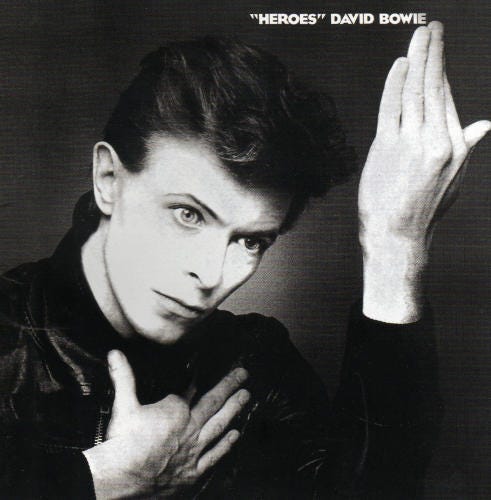
Heroes (1977)
In 1977, I was thirteen and already deeply invested in music and art and everything and anything that would help me understand and formulate my complicated, confusing adolescent feelings. I was about to make a leap in that pursuit from the portentous pretentiousness of bands like Pink Floyd, Yes and Led Zeppelin to the brutal, confrontational simplicity of The Sex Pistols and The Clash. I was about to start wearing a lot of torn denim, assert my right to listen to any music I found interesting (which my harmonious father collectively referred to as struganje — scraping). I was about to confuse rage and rebellion, nihilism and desire for change, complaining and thinking independently.
But, in 1977, someone gave me David Bowie’s Heroes for my birthday. It was — and is still — a brilliantly strange record. The black-and-white picture on the cover, Bowie frozen in a gesture that for all its mesmerizing drama could not be interpreted. The tunes based on riffs and patterns played by instruments that could not be fully identified; songs lacking choruses or the clarity needed for radio play time, a few of them nothing but synthetic soundscapes; the lyrics that made no statements, offered no guidance (“Joe the Lion, made of iron/went to the bar/a couple of drinks/and he was a fortune teller”) and were of no help to me in formulating anything about me. And then “Heroes,” the song, which had to do something with love and freedom and the Berlin Wall, devoid of a chorus and strung on Robert Fripp’s guitar wailing with longing for something I could not grasp and have longed for every day of my life.
More importantly, I learned that a great work of art can never be spent, it never stops meaning, retaining a core that outlives the circumstances of its creation, constantly changing while always staying the same.
The greatest thing about Heroes was that I didn’t understand it; I couldn’t enter it to appropriate it. It was never going to be about me. Which is why it never got boring and I’ve never stopped listening to it. It became a presence in my life, a radiant influence. Because of its strangeness, I’m now aware, I started formulating to myself what a great work of art is and could be. I began understanding that Heroes is one of the twentieth century’s masterpieces, and that “Heroes” is the greatest song of all time. More importantly, I learned that a great work of art can never be spent, it never stops meaning, retaining a core that outlives the circumstances of its creation, constantly changing while always staying the same. It took me years to arrive at all that, as I had to finish the urgent business of sorting out the sordid business of being myself. Nearly forty years later I must own up to the fact that what I strive for as an artist is creating something like Heroes — a thing of irreducible beauty and meaning. That might never happen, of course, but in 1977 David Bowie showed me the way and I followed. And I will always love him.
“I can remember/standing by the wall./ And the guards /shot above our heads./ And we kissed/ so nothing could fall.
And the shame was on the other side./Oh we can beat them/Forever and ever/Then we could be heroes/just for one day.”
Porochista Khakpour, author of The Last Illusion and Sons and Other Flammable Objects
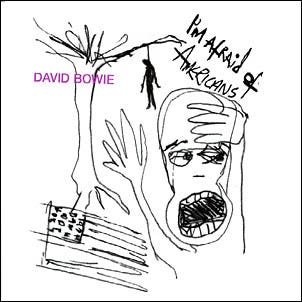
“I’m Afraid of Americans” — David Bowie remixed by Nine Inch Nails (1997)
It is impossible for me to pick a favorite David Bowie album but it was probably Diamond Dogs. And I love nearly all his songs (hits and misses, all), but the first music video I saw, in 1983, was his “Let’s Dance” so that remains very cherished. We somehow had illegal cable and much of my English-language skills came from watching MTV or The Twilight Zone. I still believe my often-bizarre fashion sense came from my introduction to American culture: Bowie, Boy George, Pat Benatar, Prince, and Cyndi Lauper.
But that’s not on my mind right now, those are not the songs I’m playing. When I was writing my second novel years ago, I kept going back to a song of his I encountered in college: “I’m Afraid of Americans.” It’s the anti-“Young Americans,” that sexy, glam-rock plastic-soul anthem I also love and ended up listening to far more in my lifetime. I don’t know how I first encountered “I’m Afraid of Americans” — it didn’t get as much radio play, as far as I can recall, and I’m just now reading that a rough cut was on the 1995 Showgirls soundtrack! (I remember it as the penultimate track on his 1997 album Earthling, which I loved and which many people I know loved less). Trent Reznor’s remix of the song, which was co-written by Bowie and Brian Eno, is the one I’m thinking of — and of course, the video.
I don’t know the first time, but I do know I heard it many times at certain NYC clubs, not one of those big ones but one of those sorta-lounges and kinda-bars you’d find in the East Village, their real last gasp in the neighborhood. In my head it plays on loop in one of those spots. The production, all industrial and electronic and so very NIN — dangerous and weird as everything felt in those final years of the last millennium, before the world became actually dangerous and weird.
The State of the Union is on livestream as I write this, and in my head I think to this video: the trigger-hands, my god, the trigger-hands.
I saw the video during some break from college, those final years of MTV actually being music television. In it Reznor — an old crush of mine and I think every misfit Nineties youth — is a cab driver named Jonny who is pursuing Bowie on the streets of New York, the streets of New York as I very much remember them in the late 90s — several degrees dirtier and grittier than now (but not as bad as they had been just before, everyone always reminded me). Bowie is running frantically and everywhere he turns there are New Yorkers amid some sort of altercation: couples, friends, strangers, and the one thing they have in common is their hands in finger-gun pose. It’s a chase movie and at the end there is a standoff, and watching this today its paranoia and intensity and anxiety feels so accurate. The State of the Union is on livestream as I write this, and in my head I think to this video: the trigger-hands, my god, the trigger-hands.
We think so often of Bowie as the man who loved everyone and embraced everyone. But we also sometimes mistakenly might think that means no fear, no suspicion, no desire for change. In the 1983 MTV interview with Mark Goodman, where Bowie holds MTV to task for ignoring black musicians, you see discomfort and even rage behind his mostly cool exterior. Nobody’s congeniality could be more intense. His positivity was never cheap, easy, for show. It was proactive and hopeful, it had the imagination to carve out a place if the place wasn’t there. The performative part came from someone who had had a hard life and knew others with hard lives; it came from someone who wanted so much more than this world, that the idea of boundaries, nations, states, seemed ludicrous.
I’m afraid of Americans I’m afraid of the world, belted Bowie, who one could say was always ahead of his time, though more precisely of no time in particular. But in this song, he is in this moment right now, at my side, this very moment of ours. In 1997, I was still four years from becoming an American — and the world still fours years from 9/11 — and back then I would never have dared say I was afraid of Americans. Today, I’m still afraid to say it; today, I’m still afraid of Americans sometimes. The one line I never quite understood, but I’m scared I do understand a bit now is maybe the saddest line in all of Bowie’s discography for me — God is an American, Bowie deadpans toward the end, and again, God is an American.
J. Robert Lennon, editor of Okey-Panky, author of See You in Paradise and Familiar, among others
“Cactus” — David Bowie cover of The Pixies (2002)
I love all the Bowies. I was born the year of The Man Who Sold the World, formed my first band the year of Let’s Dance, and in between, rarely a day passed when I didn’t hear his music. I knew all the lyrics to every hit and turned the radio up whenever they came on. And yet I didn’t own a David Bowie record until 2002. In retrospect this seems insane. He was unequivocally one of my favorite recording artists, but I think there was something about his career — its breadth and drama, its explorations in style, gender, and sexuality — that frightened and intimidated me. By the time I got serious about playing rock music, as a fully flannelled and Adidas’ed cisgender indie rocker, Bowie seemed like a quaint nostalgia act.
Bowie wasn’t the past, and the Pixies weren’t the present; we’re all alive together and everybody is listening to everything.
Then I read a review of the then-new one, Heathen, and bought it on impulse. It’s a good record, but the thing that struck me was Bowie’s cover of The Pixies’ “Cactus.” The second I heard him singing it, I thought, “Oh, yeah, the Pixies’ version must be a cover.” Then I looked at the liner notes. Bowie really had recorded and released a cover of a Black Francis song. And suddenly the whole history of rock and roll came into focus for me: Bowie wasn’t the past, and the Pixies weren’t the present; we’re all alive together and everybody is listening to everything. Bowie was covering the Pixies because he loved the Pixies, as I did. And the Pixies, of course, couldn’t have existed without Bowie. “Cactus” is a completely demented song, a weirdly puerile riff on sex and death, and Bowie sings it as though he wrote it: “I miss your soup and I miss your bread / And a letter in your writing doesn’t mean you’re not dead / So spill your breakfast and drip your wine / Just wear that dress when you’re dying.”
This is an embarrassing epiphany for a 32-year-old musician to make: that all good music is in dialogue with other good music, that genre and subgenre are meaningless, and a real professional acknowledges not only his influences, but the accomplishments of his descendents. It’s a revelation that has carried over into my literary life, too: only a fool rejects the pleasures of the world that has arrived to replace him, and only the most cynical old dog declines to learn new tricks.
Ru Freeman, activist and author of On Sal Mal Lane and A Disobedient Girl
Hero
You listen, and though you feel everything has already passed you by, and your head is all tangled up, the singer calls you “love,” and you are not alone.
You don’t care that the music you hear has taken years to reach your country. You are a teenager, lying on the cold cement floor of a room in Colombo, Sri Lanka, listening through borrowed headphones to one of the few bootlegged cassette tapes you own: Top Ten Hits from David Bowie. You come from a culture comfortable with androgyny so you stare up at a poster of the skinny blonde boy that covers the cracks in your walls, and feel your heart melt; you think he can do no wrong while wearing lipstick, bellbottoms, and blue eyeshadow. You listen, and though you feel everything has already passed you by, and your head is all tangled up, the singer calls you “love,” and you are not alone. When the one music-show, “Pops in Germany,” that runs on the TVs the Japanese gifted your country, the one that plays the anti-war anthem, “99 Luftballons,” from the German band, Nena, every single week, adds Bowie and Jagger “Dancing in the Street” on repeat during and after Live Aid, you believe you’ve melded the family gift of understanding the link between capitalism and global poverty before you could walk, with your private satanic heart that loves pop music and all things American. You don’t have enough fabric to stitch yourself a cheetah print jumpsuit but you make do with a mini dress that hugs your boy-girl body as you dance. You listen to “Five Years,” and you believe your poster-boy made room in his head for “all the somebody people,” which means he must have made room for you. You imagine that when he sings about how he “touched the very soul/ of holding each and every life,” at the kind of free festival you have no hope of ever attending, that he was holding you, even though you know that all the joy was imagined, was just a claim you wanted to make the same way he did. You can’t afford the albums, but the tracks find you somehow and when the Berlin Wall comes down, even though your family has made sure you know how to pronounce Gorbachev and Perestroika, you believe much more in the idea of East Berliners gathering on the hard side of a wall to listen to Bowie serenade them. Time passes and different songs claim you, set your history to music. You grow up enough to become familiar with other walls from Arizona to Palestine, to hear guns above your head. And yet. You still believe that walls can be torn down by the strength of sweet voices singing love songs and reciting poetry. You know now that he believed singing to people he could not see moved him deeply and that he did not expect to be able to repeat the experience. You shrug and think that doing one brave and beautiful thing should be enough for any artist. You are sitting in a country far from the place where you were born, wrapped in a blanket and looking out on waters from the Pacific, thinking about compassion and literature, when you hear the news. You close your eyes and turn on “Rock ’N Roll Suicide,” all quiet in the inside of your head. You imagine hands reaching all the way across the world. Gimme your hands, you say, gimme your hands ’cause you’re wonderful.
Tanwi Nandini Islam, author of Bright Lines
“Under Pressure” — David Bowie and Freddie Mercury (1982)
This past year, I heard the a cappella version — a haunting experience — like remembering your past without any illusions.
“Under Pressure” — It’s technically a Queen song, one in which Freddie Mercury and David Bowie blew my heart open as a teenager, when I was discovering their music. Sonically, it’s a bridge between the rock ballads of the 70s and the pop harmonies of the 80s, in one riotous duet. Bowie’s refrain, It’s the terror of knowing what this world is about, watching some good friends screaming “Let me out!” moved me in a way I hadn’t really felt in music outside of the R&B and hip-hop I listened to. His voice grounds Mercury’s operatic yearning and desperation. What was incredible about David Bowie is that he appealed to everyone; our allegiance to our favorite music was broken when it came to him. I’m drawn to tension in music, and “Under Pressure” embodies the discord between Bowie and Mercury. It’s evident throughout the tune — the artists argued over the final mix — but the moments of harmony reveal two sides of the same genius both artists possessed. There is harmony, despite their differences. They bent convention in beautiful contortions, spanning a variety of genre, style, gender presentations, and this song manifests that. This past year, I heard the a cappella version — a haunting experience — like remembering your past without any illusions.
Amber Sparks, author of forthcoming The Unfinished World and Other Stories
Outside (1995)
Even just the name of the album resonated: I was outside, we were all outside, you know?
Outside is not my favorite Bowie album, but it came into my life at exactly the right time — one of those instances of art finding you when you need it most. I was in high school when it came out, and I was just starting to make art the way I wanted to make it, and was getting a lot of pushback for that, for being weird, and dark. Then came Outside. It was menacing, it was extremely dark, it was unsettling, and it was lovely and bizarre and completely new. I knew who David Bowie was, of course, but just his Top 40 stuff, Labyrinth, etc. I went out and bought a bunch of his CDs and I rented The Man Who Fell to Earth and I listened to Outside over and over and over again. And it just all clicked — I felt that HERE was a refuge for me, for people like me. It saved me, that album; saved my impulse to make art. It saved me as an outsider kid. Even just the name of the album resonated: I was outside, we were all outside, you know? I dug my old journals out the other day, in fact, because I remembered writing about Bowie. And yes, during that intense young joyful period of discovering David Bowie, I wrote this: “I think there are two kinds of people: those who like David Bowie and those who don’t get David Bowie. For me, when I listen to his CDs, I feel like there are other people on this planet who also feel like aliens, who feel like we come from somewhere else. I think we see the world differently, and feel apart from it. But I think we also see things that are ugly/beautiful about it. We see how tiny we are and how insignificant and how big and unknowable, and yes, scary, this strange place we’ve landed in truly is. It’s weird because you would think that would make you feel so very much alone. But listening to David Bowie’s albums, and feeling like a beautiful alien, makes me less lonely. I would like to meet more people who feel like beautiful aliens.”
Rob Spillman, editor and co-founder of Tin House, author of forthcoming All Tomorrow’s Parties (Grove Press, April 2016)
Christiane F. — Wir Kinder vom Bahnhof Zoo Original Soundtrack (1981)
Moody, dark, yet hopeful, the record perfectly captures how I feel about Berlin, the city I spent my first ten years in.
The deeply bleak 1981 movie about a teenage junkie in Berlin, based on the nonfiction Wir Kinder vom Bahnhof Zoo (We Children of Bahnhof Zoo), featured a soundtrack by Bowie, and included many of his greatest Berlin recordings with Brian Eno — “Heroes”, “Look Back in Anger”, “Warszawa” — as well as raw, intimate concert footage of Bowie in his Berlin prime. In the movie, no matter how low Christiane goes, she won’t give up her Bowie records, until she finally is so strung out that she sells them, a scene which devastated me like few have since. Moody, dark, yet hopeful, the record perfectly captures how I feel about Berlin, the city I spent my first ten years in. That he would next adopt my home city — New York — further solidified my love and personal connection to Bowie, a love connection held by millions, but which to me felt singular and real.
Marie-Helene Bertino, author of 2 A.M. at the Cat’s Pajamas and Safe as Houses
“Heroes” (1977)
Unlike rock bands who can hide among their number, when David Bowie took the stage, he did so alone. All eyes on him. That he decided to place assumed personas between the audience and him makes sense to those of us who understand wanting to simultaneously shine and hide. Beautiful buffers. It’s no wonder that practitioners of the solitary art of writing palpably worship artists like him, Joni Mitchell, Bob Dylan… It’s no wonder that when one dies we feel like part of us dies. I’m writing this for Bowie because when we lose Bob Dylan you won’t be able to find me.
The farther into the true self you go, the less like everyone else you look.
My husband and I eschewed traditional elements for our wedding last year, but we liked the idea of a first dance. A song that would express important information about our shared vision of the future. We chose David Bowie’s “Heroes,” that mid-tempo, erratic anthem about dolphins, loyalty, and the royal feeling of love. The information: life is weird, fun, fleeting, and sometimes involves marine life. The farther into the true self you go, the less like everyone else you look. David Bowie didn’t look like anyone else. I add my voice to the chorus of eccentric softies who suffer the profound loss of his death. His work gave us permission, elegance, inspiration. We owe him.
John Wray, author of Lowboy, Canaan’s Tongue, and The Right Hand of Sleep
“Sound & Vision” (1977)
…a kind of Virgil through all the zones of hell and paradise that he himself had ventured through…
Bowie was so many things — practically anything and everything that anyone ever projected onto the gaudy and spectacular and at the same time curiously blank canvas that he presented to the public — but to me he was above all a man who made great art out of his own fascination with the strange and seemingly pointless human enterprise of art-making, and willingly served the rest of us as a kind of Virgil through all the zones of hell and paradise that he himself had ventured through. For this reason and many others he was an elder statesman to everyone who came after him, and even to his contemporaries to some degree, simply by virtue of his virtuosity; but he took great pains to disclose himself to us, time and again — even unto the very last video for the very last album — as a frustrated, tormented, fallible striver. He never lapsed into complacency and irrelevance precisely because he refused, as a fundamental artistic principle, to fully acknowledge his success. One of the reasons he was forever open to the latest developments in both pop and the avant-garde was that he managed to convince himself, over and over again, that failure waited just around the corner. But at the same time he could sing about the transporting joys of creativity with a sweetness and an effortless authority.
I challenge anyone, creatively inclined or not, to listen to the song Sound & Vision, for example, without pining for the artist’s life, with all its highs and lows. It can’t be done.
DON’T MISS OUT
Sign up for our newsletter to get submission announcements and stay on top of our best work.
YOUR INBOX IS LIT
Enjoy strange, diverting work from The Commuter on Mondays, absorbing fiction from Recommended Reading on Wednesdays, and a roundup of our best work of the week on Fridays. Personalize your subscription preferences here.