In 1926, anthropologist E. E. Evans-Pritchard lived with the Azande in what is now South Sudan. One day, he came upon a hut burnt to the ground. The owner of the hut was distraught. He had been preparing pots of beer for a feast. The previous night, he had gone to check on the beer, and in darkness, had lit a handful of straw for light. The thatched roof had caught on fire.
Later, the anthropologist met a boy who had cut his toe on a stump of wood in the bush. The boy blamed witchcraft for the festering wound. The anthropologist argued that the boy had simply been careless. It was natural for tree stumps to grow in the path.
How would the boy respond?
The boy accepted it. He knew that the wood caused the cut, and he knew that the wood grew naturally. But why, he pointed out, had he hurt himself this time? He had walked safely in the bush hundreds of times. And why did this particular wound refuse to heal?
For the boy, witchcraft explained the peculiarity of this injurious event.
Evans-Pritchard noted: The man and his companions were convinced disaster was caused by witchcraft. Witchcraft did not supplant, but it did complement, the logic of the physical world.
In The Witches, a rare moment of disappointment arrives when Schiff writes, “[T]he seventeenth-century mind … consisted of a crazy quilt of erudition and superstition.” Medicine, we are told, “blurred into astrology, science into nonsense.”
When Evans-Pritchard published his ethnographic account of Zande life in 1937 — a book called Witchcraft, Oracles and Magic Among the Azande — he offered a provocative argument. For the Azande, he wrote, witchcraft was a coherent, logical system. It was far from nonsense. It was an interpretive structure that heeded intentionality where you and I might acknowledge coincidence. He was responding, you can tell, to the argument that “primitive” people had a “pre-logical” mentality.
So in Schiff’s refusal to dig deep into the logic of seventeenth-century witchcraft as it appeared in Massachusetts Bay, The Witches loses what might have been an enthralling opportunity to stand us at the doorstep of a different rationality.
This is a mode of thought that persists in the world. Consider how, in parts of Sierra Leone, the Ebola outbreak was read as an outcome of powerful witches losing control of malevolent forces; consider the rise of occult economies — the sale of body parts, “ritual murder,” and so on — which grapple with the punctured promises of global capitalism in rural South Africa. The point, of course, is not that we ought to believe in witchcraft. Rather, it is to comprehend the existence of thought categorically different from our own.
From the spring of 1692 to the summer of the following year, an epidemic of bewitching swept through several Massachusetts Bay communities. The first to be accused of witchcraft was a slave woman from Barbados, Tituba, who appeared in court and defended herself (“I no hurt them at all”) before launching into a confession. The devil, she admitted, had appeared to her, a yellow bird perched on his shoulder.
The Witches captures and distills the lives and anxious days at the heart of the witch-hunt. Its attention to the political instability of the time nudges us to some comprehension — the witch-hunt occurred, we remember, in a new colony in which property, propriety and freedom remained ambiguous. The settlers watched for “marauding Indians” while establishing their own boundaries. Salem tussled over the demarcation of territory. In such a precarious environment, it is perhaps not strange that people looked with fear upon even the most ordinary of injuries.
Here too, as in Zandeland centuries later, witchcraft made sense of misfortune. Witchcraft allowed explanations for “the sick child and the rancid butter.” When Schiff writes that we will never know what truly happened to the girls, indicating that their symptoms — twitching and grimacing, curled tongues, delirium — match what would be called, in the nineteenth century, hysteria, the conceptual translation discourages our comprehending witchcraft on its own terms. It could be that the disease that gripped the people of Salem rose from an “overtaxed nervous system.” It is also possible that those who endured “a claustrophobic winter housebound, under ashen skies and drifted snow, between whitewashed walls, amid undecorated surroundings” may have succumbed to visual hallucination.
How dreary their world, and how a touch of magic might have supplied a charge of life. The social implications are clear: Isn’t it in misfortune that relations are activated? Isn’t it in suspicion and malice that the weave of community shows itself?
One wonders, though, what knowledge might await us if we resisted this exercise of translation — if we paused our reading of conviction as error, and tried to apprehend the logic, rather than forgive the illogic, of witchcraft.
Literature has undoubtedly fed into cinema in ways both mutually enriching and somewhat frustrating for fans of exclusively either one or the other. Luckily, rarely are storytellers and story-lovers willing to divide the two, despite their differences. In mainstream Hollywood or “First Cinema,” recent decades have seen producers lean heavily on adapting existing material, as original screenplays seem increasingly shelved in favor of films based on bestselling fiction, graphic novels and re-worked classics. Simultaneously, however, arthouse and independent film have slowly but surely moved out of festival circuits; from being seen, critiqued and distributed amongst a certain (rather white, male and privileged) slice of the art world, to the screens of a young, multicultural audience through digital on-demand film platforms such as Mubi, FilmDoo and Festival Scope.
It would not be a far stretch to say this kind of repositioning reflects a lot of the increasing diversity in themes, voices and human experiences in the subject matter of films adapted from literature, too. In fact, if the 20th and 21st centuries have seen film of all art mediums grow at a singularly popular, global rate, they have also been decades marked by unprecedented amounts of human migration, alienation, assimilation and re-orientation. After all, art reflects life — or so they say. The memoirs, novels, autobiographies, short stories and poetry borne of these collective experiences of home-making and belonging, leaving and arriving, are as central to literary production today as ever. As film continues to speak to us with the kind of visual power that transgresses borders, language barriers and increasingly (thanks to newcomers disrupting old distribution channels) challenges of access, our experiences of migration and movement are becoming a popular genre of their own on the big screen.
These 5 must-see films bring to visual life literatures that recount lives and histories marked by emigrations, exiles and new beginning, taking the text to new audiences and showcasing the communicative power of film and literature working in creative tandem.
The Reluctant Fundamentalist (Dir: Mira Nair, U.S.A, 2012) — based on The Reluctant Fundamentalist (2007) by Mohsin Hamid
Pakistani author Mohsin Hamid’s 2007 novel is a snappy, penetrating and multi-layered read, and Indian director Mira Nair handles it well in her 2012 adaptation of the same name, The Reluctant Fundamentalist. Hamid’s novel gets much of its zing from the second-person narration that builds a tension akin to Albert Camus’s The Fall (1956), the rich psychological undertones of which are lost in Nair’s more sweeping, action-oriented version. Riz Ahmed stars as Changez, the smart young Pakistani emigré, fresh out of Princeton and straight into an elite Wall Street valuation firm. With ambitions for the future and an American upper-class photographer girlfriend Erica (Kate Hudson), Changez relishes his culturally and socially mobile persona in cosmopolitan New York. However, after the World Trade Center attacks, his life and mind undergo a slow-burning transformation. Met with increasing suspicion, prejudice and worrying news of his family’s safety in Pakistan, Changez returns to Lahore and becomes embroiled in dense political intrigues.
Black Girl (Dir: Ousmane Sembene, 1966) — based on La Noire De… (1962) by Ousmane Sembene
Sometimes dubbed the “African Brecht,” Soviet-educated Senegalese writer and director Ousmane Sembene adapted one of his own short stories into his first feature-length film in 1966. La Noire De… meaning “The Black Girl Of…” follows the story of Diouanne (Therese N’Bissine Diop), a young woman employed as a governess in a white, bourgeois French household in Dakar. First excited at the prospect of going with the family to the French Riviera for the summer, Diouanne soon finds her employers’ attitudes much changed in France, her chores more numerous, domestic and slavish, and her identity overwritten by her race. A true classic of African auteur cinema, Black Girl remains as effective as ever in its psychological exploration of prejudice, belonging and gender.
The Namesake (Dir: Mira Nair, 2006) — based on The Namesake (2004) by Jhumpa Lahiri
Taking us from Kolkata to New York, The Namesake is a touching drama following Ashoke and Ashima Ganguly as they migrate to the States from India. The nuanced difference in the second-generation migrant’s experience is explored through their son Gogol (named in half-seriousness after the famed Russian writer). Growing up wanting to be a typical American teenager, Gogol acts hostile to his parents at times and fiercely feigns indifference to his Indian cultural roots. Changing his name to Nick and leaving for Ohio with his American wife, as time passes Gogol begins rediscovering his roots in small personal ways, eventually deciding to travel and narrating the story that in fact is the film itself. Witnessing the difficulties and joys of more than just physical departures and arrivals, we are won over by Nair’s quiet but moving directorial touch in an honest depiction of life going on, despite upheavals and the complex inner states engendered by our need to belong.
Brooklyn (Dir: John Crowley, 2015) based on Brooklyn (2009) by Colm Tóibín
Brooklyn follows Irish wallflower Eilis Lacey (Saoirse Ronan) as she leaves for 1950s New York in search of a better life. By a much-celebrated Irish writer often acclaimed as following in the footsteps of literary names such as John Banville, Brooklyn the novel has a greater depth and slight darkness than its new film adaptation: nevertheless, it delivers on providing an affecting and honest narrative of a different kind of migrant experience. Some emigrations can seem voluntary or for personal betterment, as it could be said for Eilis, who makes a career move — yet the nuance of her situation is one many today could relate to. Sometimes, voluntary migration can be much like forced migration: that is not to say the story compares Eilis’ troubles to someone fleeing war-torn countries, but she is still someone without much choice, in that her home lacks the prospects and life she seeks. Transitioning to American life alone not only brings out the confident woman in her, but also has Eilis redefining ‘home’ at a time when its stability meant that of women’s place, too. From homesickness after arrival to eventually finding joy, love but also a divided self, Brooklyn is a genuinely heartfelt story with a believable trajectory and heroine at its center.
Persepolis (Dir: Marjane Satrapi and Vincent Paronnaud, 2007), based on Persepolis (2000) by Marjane Satrapi
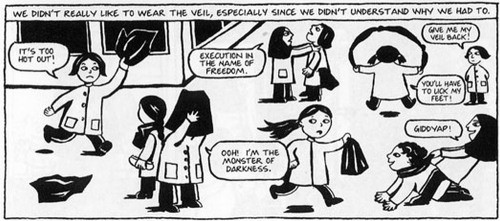
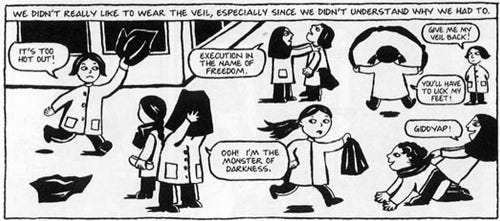
Based on an autobiographical graphic novel that tells the coming-of-age story of its author, touching upon life in pre- and post-revolutionary Iran, adolescent angst, moving abroad and growing into multicultural, defiant and independent young adulthood. Winning the Jury Prize at the 2007 Cannes Film Festival and narrowly missing out on the Oscar for Best Animation, the film garnered criticism from the Iranian government and acclaim from the international film circuit in equal measure. A playful and visually fantastic animation in the style of Satrapi’s original graphic novel, Persepolis’ precocious, young and imaginative protagonist Marjane has both an acerbic wit and a big heart — unsurprisingly, this makes her narrative of political events, life’s milestones and her not-so-ordinary family upbringing a delight to watch. Fearing her arrest for her outspokenness, Marjane’s parents send her to a French boarding school in Vienna for her safety. Feeling isolated amongst people whose cares seem superficial compared to those of friends’ at home, frustrated with the double standards of the Catholic nuns she lives with, and disappointed in her Austrian boyfriends, Marjane tries to survive in her new surroundings by recalling her grandmother’s advice on retaining her integrity. However, her experience of migrant life is one of anticipating the holidays so she can return home, and feeling helpless when she leaves. Eventually, when Marjane returns to a new and very different Iran, she realizes her experience has taught her to survive in difficult situations with her rebellious spirit intact. It is an adaptation that is inspired, simple and frictionless in its transformation of the source material, effortlessly juggling comedy and drama while reminding us goodbyes and returns are a part of all of our stories.
Hello, and welcome to my week-by-week review of the world. Today I am reviewing trains.
Specifically I am reviewing the trains of Japan. Not all of them, because I only rode on a few, but you don’t need to eat everyone’s food in a restaurant just to review the chef. You can try to eat everyone’s food, and explain you’re a food critic, and some people will be okay with that and others will stare uncomfortably and look to the wait staff for help, but the point is it’s unnecessary.
As a tourist, to ride the trains around Japan, you need a rail pass. These can be obtained from special offices, or from the feet of someone who has just dropped theirs. I chose to purchase my own because when I’m traveling I spare no expense. That’s also why I wore not one, but two tuxedos — so onlookers would know I’m living life to the fullest. And anyway, it’s better to carry your cash in the form of clothing in case you get mugged. (Travel tip: It’s too warm to wear two tuxedos at once for more than a couple of hours, and no one in Japan wants to trade food for a tuxedo.)
One of the most famous facts scientists have proven is that children love trains. I missed out on this because the town I grew up in didn’t have any trains. Or toy trains. Or photos of trains. The mayor hated trains, it turns out. As an adult, I’ve been trying to capture the enthusiasm children have for trains, and it finally happened in Japan.
The subway trains are fast, efficient, on time, and go almost anywhere you’d want to go! Sometimes they can be a little crowded, but I like meeting new people, so a few extra people only increases the number of friends I’m going to make.
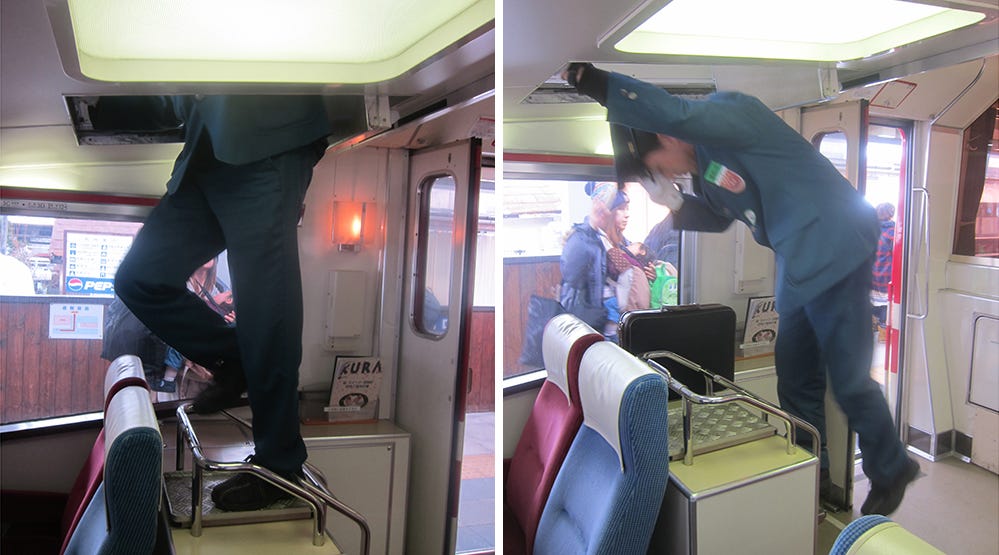
The most exciting train I rode was from Tokyo to Nagano. I had hoped to get a seat up front near the train operator, but when I got there, there was no one operating the train. There was no steering wheel or anything, just a windshield and some seats.
I assumed it must be a self-driving train, like the self-driving cars Yahoo invented, and this filled me with excitement. When the ride ended, however, I felt quite deceived. It turned out the train operator was hiding in the ceiling, where he operated the train from some sort of darkened crevice. I took these photos of him as he climbed down from his ceiling hole of lies. He refused to make eye contact, no doubt shamed for having mislead me.
It was still a lovely train ride in its own right. Just like every train ride in Japan. Maybe the trains there have more wheels, or maybe the wheels have tires to make the ride softer, unlike the cold, metal-on-metal train wheels of America. Whatever the reason, I can’t wait to ride another train in Japan.
BEST FEATURE: If you fall asleep on a train no one will bother you. It’s like a free hotel room. WORST FEATURE: If you fall asleep on a train, you will wake up at 2 A.M. on a train that has been shut down and locked.
Please join me next week when I’ll be reviewing a hockey game.
J.K. Rowling took to Twitter on December 8 to defend her character, Lord Voldemort, from comparisons to Donald Trump. Rowling was reacting to a tweet by BBC Newsbeat, which read: “This is why people are calling American businessman, Donald Trump, Lord Voldemort.” The tweet features a link to a story about Trump’s call for “total and complete shutdown of Muslims entering the United States,” after the recent terrorist attacks in San Bernardino and Paris. Rowling tweeted: “How Horrible. Voldemort was nowhere near as bad.” She also re-tweeted a map showing mass shootings in the US in 2015, highlighting how many of those were performed by Muslims, which was very few.
As Harry Potter fans know, Voldemort’s motis operandi was hinged on deep-set racism and his desire to purify wizard-kind. Voldemort casually murdered and tortured people, leading a Nazi-like movement against people not born into wizarding families. Though Trump’s record remains clean of murder and torture, Voldemort’s classist and racist agenda bears a remarkable similarity to Trump’s real-life policies.
One of the core messages of the Harry Potter series is to express yourself in the face of such forces, as is particularly embodied in the classic quote, “Fear in a name increases fear of the thing itself.” Indeed, Rowling is not the only author speaking out on her dislike for Trump lately, as Man Booker winner Marlon James recently called Trump a “shit stain on the butt crack of the universe.”
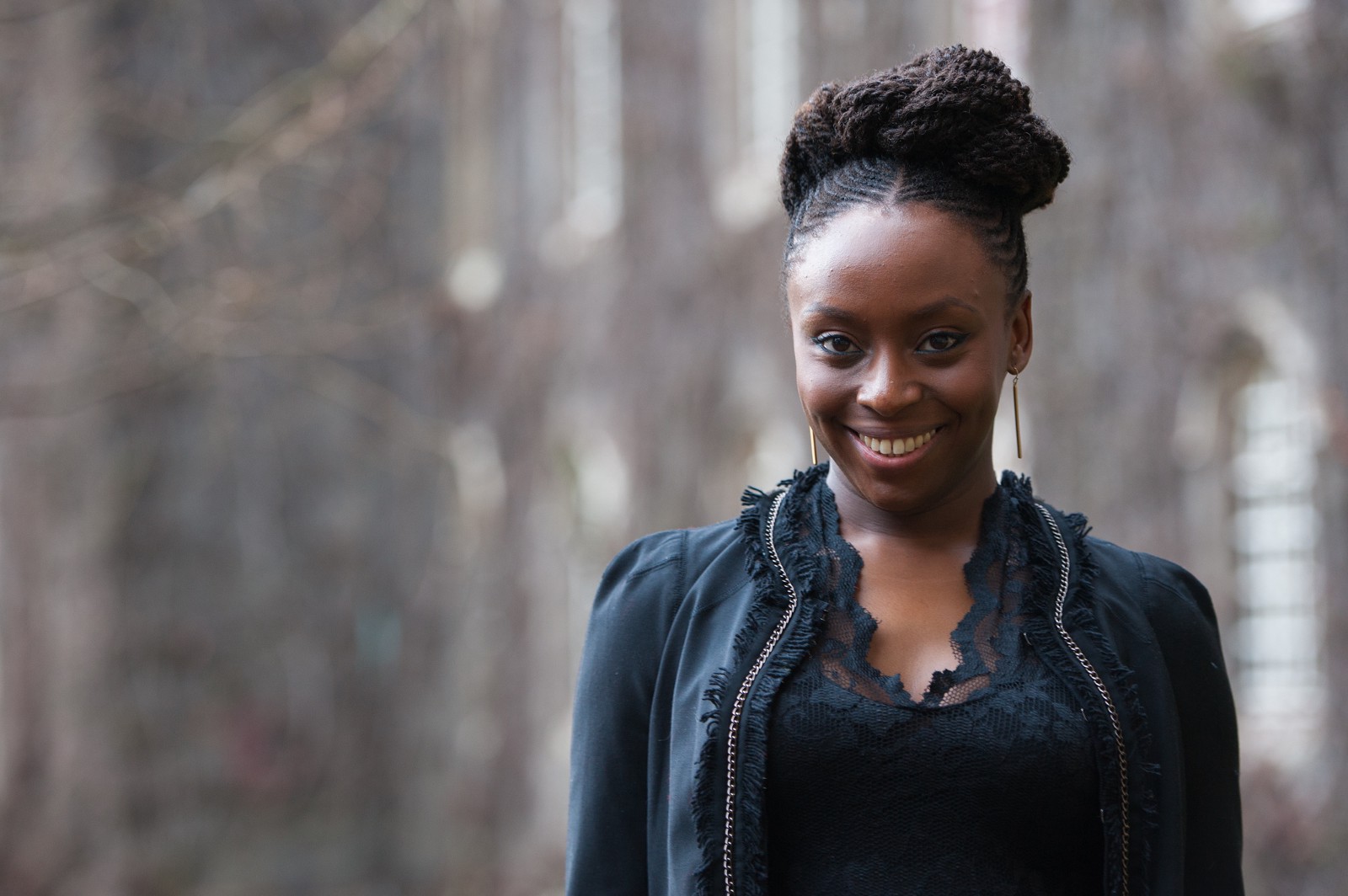
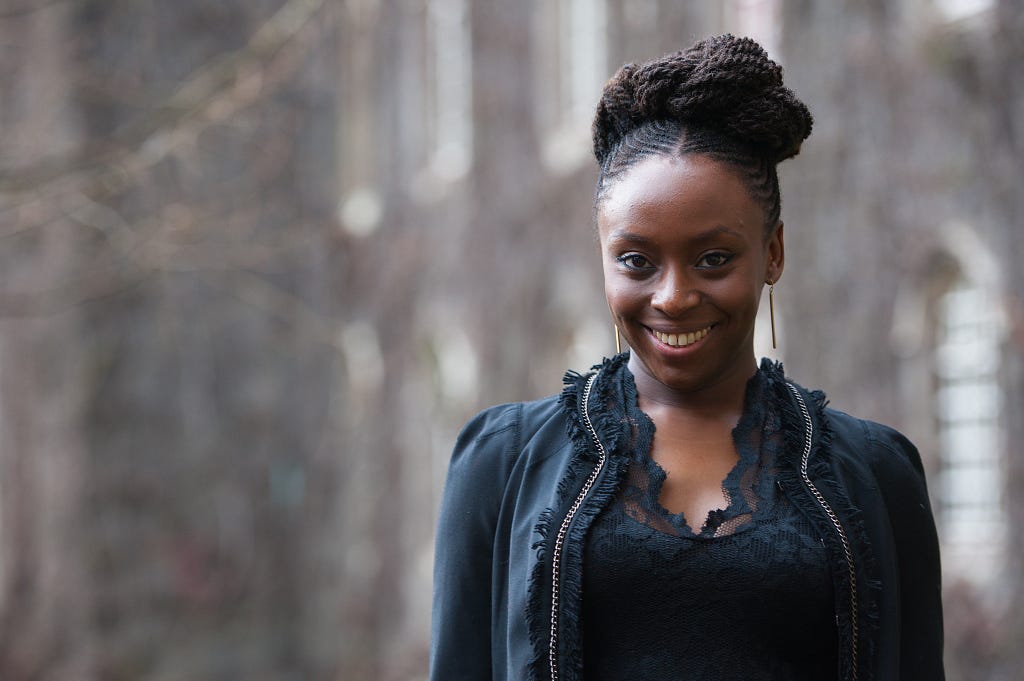
The Swedish Women’s Lobby has paired with publisher Albert Bonniers Förlag to give a copy of Nigerian author Chimamanda Ngozi Adichie’s essay “We Should All Be Feminists” to every 16-year-old in Sweden.
Author of the acclaimed novels Americanah and Half of a Yellow Sun, and one of Time’s 100 Most Influential People, Adichie is a powerful human rights activist. “We Should All Be Feminists” is based on a TED talk she gave in 2012, which has gained more than 2.3 million views and was sampled in Beyoncé’s “Flawless.”
In the 52-page essay, Adichie calls on people of all gender-identifications to view feminism as an issue of justice, saying “My own definition of a feminist is a man or a woman who says, ‘Yes, there’s a problem with gender as it is today and we must fix it, we must do better. All of us,women and men, must do better.”
The giveaway aims to give this generation of Swedish teens an informed understanding of gender inequality. “This is the book that I wish all of my male classmates would have read when I was 16,” said Clara Berglund, chair of the Swedish Women’s Lobby. “It feels so important to contribute to this project. It is a gift to all second-grade high-school students, but it is also a gift to ourselves and future generations.”
In her message to the teenagers receiving the essay, Adichie said, “When I was 16, I don’t think I knew what the world ‘feminist’ meant. I don’t think I knew the word at all. But I was a feminist. And I hope that the 16-year-olds who read this book in Sweden will also decide that they are feminists. Mostly, I hope very soon that one day we will not need to be feminists, because we will live in a world that is truly just and equal.”
Electric Literature is looking for an Associate Editor to join the Recommended Reading Team
Electric Literature mission is to amplify the power of storytelling and preserve literature’s place in popular culture through digital innovation. Recommended Reading, Electric Literature’s weekly fiction magazine, invites established authors, indie presses, and literary magazines to recommended great fiction. Once a month we feature our own recommendation of original, previously unpublished fiction. All issues of Recommending Reading are published for free on Tumblr and on electricliterature.com, as well as in ePub and Kindle formats.
The Associate Editor will support the Editor-in-Chief in all aspects of the magazine’s publication including acquiring, editing, and production. The regular duties around the production of the magazine are such that the position is 75% administrative/technical and 25% editorial/creative. However, there will be regular opportunities for creative input, as well as the chance to work in a fun, collaborative environment in the Flatiron District of Manhattan.
Recommended Reading began in 2012, and as we move into our fifth year of publication, the creation of an Associate Editor position marks the growth of the magazine. The ideal candidate has been a devoted reader of both Recommended Reading and electricliterature.com, and hopes to grow with the organization as we continue to expand.
RESPONSIBILITIES:
Maintain the Recommended Reading production schedule
Prepare each issue of Recommended Reading in all formats, including:
Copy editing & proofreading
Sending proofs to contributors and incorporating their changes
Coding online, ePub, and Kindle editions (will train; previous experience not necessary)
Design and create covers (select images and import into PSD template)
Solicit writers and guest editors
Review submissions from writers and potential guest editors
Participate in editorial decisions with Senior Readers, the Assistant Editor, and the Editor-in-Chief
Promote issues of Recommended Reading in the weekly eNewsletter, on social media, and by soliciting news coverage
ADDITIONAL OPPORTUNITIES:
Interview Recommended Reading contributors for electricliterature.com
Work with contributors to edit their work
Introduce issues of Recommended Reading
REQUIRED SKILLS
Basic knowledge of HTML
Photoshop and InDesign
Copyediting and proofreading
Tumblr
PREFERRED SKILLS
Kindle Direct Publishing
WordPress
Experience making ePubs
Kindle Direct Publishing (Amazon KDP)
QUALITIES:
Rigorous attention to detail
Patient with tedious tasks
Organized
Focused
Knowledgeable about and involved in contemporary literary scene
An avid reader, particularly of literary journals, new voices, and indie presses
Informed and well-articulated opinions about literature
Confident in his or her literary taste but interested in respectful debate
EXPERIENCE
At least one year of publishing experience. (Literary journal, online, or publishing house. Non-internship experience preferred.)
One year of editorial experience. (Volunteer and teaching positions qualify; non-workshop editing experience is preferred.)
An educational background in literature, journalism, or communications is preferred though not required.
This is a paid ($500/month), part-time position with a 13 hours per week commitment and opportunities for advancement. Candidates must be able to spend at least one day a week (or the hourly equivalent) in Electric Literature’s office in the Flatiron District of Manhattan during regular business hours. The Associate Editor reports directly to Recommended Reading Editor-in-Chief Halimah Marcus. To apply, send a cover letter, resume, and a paragraph about a story that was published within the last year to halimah [at] electricliterature.com by midnight on January 4, 2016.Candidates who have not read a significant portion of the Recommended Reading archives (they’re free!) need not apply. Electric Lit, Inc. is a 501c3 non-profit corporation.
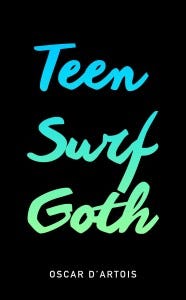
A cool thing about music, especially when listened to with headphones, is that you can listen to whatever you want, & it literally doesn’t matter & won’t affect anyone or anything, apart from your mood for a little while. This October, I published a book of poems called Teen Surf Goth, through Metatron Press. Part of me wishes that I could have just made a mixtape instead. This is a list of musicians and songs that I either referenced or listened to or thought about a lot while writing the book. I recommend reading it alongside them.
2. Carly Rae Jepsen, I Really Like You I really really really still like this song, even though I’ve definitely listened to it to death & then some. Actually, I like the sped up, chipmunk-vocalled, ‘nightcore’ version of it better, but that one is only available on YouTube.
3. Nicki Minaj Ft. Eminem, Roman’s Revenge Am putting this on because of how good it felt, & still feels tbh, to be a pissed off goth on the bus on the way to high school & staring ppl down while listening to this song, in spite of what kind of just seems like a misogynistic tirade (albeit thru a persona) in Eminem’s first verse
4. Clean Bandit, Rather Be The only thing I know about this song is that the band is British & that it was on the radio a lot in 2013. I listened to this song a lot while commuting on my bike in the winter/early spring of this year. It felt good but it made me feel self-conscious about my ass bouncing around in the air as I kind of shimmy-pedaled my way to work.
5. Oneothrix Point Never, I Bite Through It I used to work in this ‘artisan bakery’ in 2012 in Northampton, Massachusetts. One time, a coworker of mine put a song by this guy on. I think the coworker was in a Trendy Noise Band or something, so I probably thought he had better taste in music than I did, & jotted down the name. I’ve been a fanboy of OPN since, even tho some ppl seem to be writing articles about him ‘making experimental music accessible to the masses’ (How Dare He). Also, one of the poems from the book was initially a videopoem that I made using the song ‘zebra,’ from the album R Plus Seven as the soundtrack; it’s still on YouTube somewhere.
6. CocoRosie, Werewolf Looking back through the various playlists that other people made for this feature, I noticed from reading Chloe Caldwell’s that apparently CocoRosie has a lot of haters/maybe is unhip? I didn’t know. Anyway, I hesitated to include this song, which I have ‘a history’ with, which is to say that I listened to it at different times in the company of various boys who were different degrees of straight & with whom I was varying degrees of in love. At some point in my book, “the speaker” is surprised to find himself burst into tears upon hearing a song, & has to awkwardly put on sunglasses & stumble out of the café he is in & into broad daylight. This is the song in question. Am I oversharing?
7. Crystal Castles, Doe Deer Someone, probably from Vice or Pitchfork or something, described the sound of this band as resembling that of someone’s mind being torn apart, I think? Seems zeitgeist.
8. Perfume Genius, Grid This is another sadboy that I’ve liked for a while & whose popular image has kind of changed. When Perfume Genius’s 3rd album came out this year & was way more ‘unabashedly pop’ or wtv, I think I felt something akin to pride, for the first time, in relation to a celebrity.
9. John Maus, Hey Moon Feel like this song more accurately describes my relationship to the moon & reminds me of things I’ve done ‘under its influence’ than any poem, probably. O well.
10. Elliott Smith, Bottle Up and Explode Just putting this here to show that I, too, can be eloquently, rather than just straight-up emoishly, sad.
11. The Ataris, Boys of Summer When I was 12 or so, I would climb in to my Ikea Mezzanine Bed with headphones and a CD player & put 1 of about 3 CDs on. The CDs were really scratched because I didn’t know how to take care of things (I still don’t, I guess). They were by The Ataris, The Used, and I forget who else.
12. Owl City Ft. Carly Rae Jepsen, Good Time Seemed unthinkable not to include an Owl City song on this playlist, & Steve Roggenbuck already used ‘Fireflies’ in 2012 (needless to say I obsessively looked back thru other ppls’ playlists to make sure mine was cool enough). Also using this song means that Carly Rae is the only artist to be featured twice on this thing, which I don’t hate.
13. Ratatat, Tacobel Canon I want this song to be the soundtrack to my life, or like, I want my book to play it on repeat when you open it, like a singing greeting card, maybe. I love lyricless, vaguely happy/melancholic music, it’s like a sountrack to the void.
14. Cascada, Every Time We Touch If the criterion for ‘song of the century’ is the amount of dopamine or adrenaline or wtv that it is capable of releasing, then I think this might be it?
15. Vampire Weekend, Everlasting Arms Am putting this one near the end in the hopes that all the haters will have stopped reading/listening by this point, since it is about being #spiritual. I remember Vampire Weekend becoming the token overplayed coffee shop band at one point a few years ago. I’ve always liked them, although my liking for them increased a lot when I read Evelyn Waugh’s Brideshead Revisited this year, which I guess they were inspired by or something.
16. Kanye West, Bound 2 This song made me into a Kanye fan probably. It was one of those songs that I could not stop listening to and that, eventually, I couldn’t listen to anymore, because of the associations I had with it. Now I feel indifferent mostly but the words I associate w/ the song include non-dramatic things like ‘wracked,’ ‘thrown’ & ‘returned to the ground.’
17. Beirut, Scenic World In Bluets, Maggie Nelson describes her affection for her ‘blue objects.’ Every song on this playlist is probably one of my ‘blue objects,’ but that is truest for this song.
BONUS TRACK: Skrillex — With You, Friends [Long Drive] This is a bonus track on skrillex’s album & is meant to be so here, too. I listened to it a lot in 2011, i think, on the pothole-filled bike trails of Western Mass, on my way to lovers and/or school.
***
-Oscar d’Artois was born in 1989 in Paris, France. His first book, Teen Surf Goth, was published in the fall of 2015 by Metatron Press. You can buy it here.
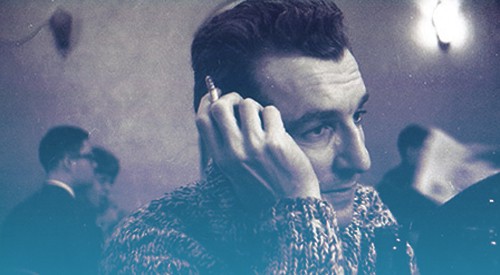
One of the best classes I took in grad school was a poetry seminar, a course on first books, taught by the poet Paul Violi. His erudition vast and casual, his old-school New York Cool matchless and without affectation, just being around Paul — who died in 2011 — was like a second grad seminar on top of the one he was giving. One of the books we read in that class was John Wieners’s The Hotel Wentley Poems, at that time out of print, and maybe trapped in some kind of copyright limbo — he may or may not have explained it to us, accurately or at all — but the upshot was that the book could not be ordered through the usual channels. That was not going to stop Paul from teaching the class he wanted to teach, so one week we each gave him ten bucks and he came to the next class meeting with a manila envelope stuffed full of copies of a staple-bound bootleg chapbook edition of Hotel Wentley, credited to Joy Street Press, named for the Boston street Wieners had lived on. Paul didn’t make this book; he just knew where to get it. There was a black-and-white photograph of a young Wieners (by the artist Wallace Berman) on its cardstock cover, and on the back a blurb from Frank O’Hara, pulled from his poem “Les Luths,” in which he’d written “Everybody here is running around after dull pleasantries and wondering if The Hotel Wentley Poems is as good as I say it is.”
It is.
In an impressively compact introduction (composition, publication history, reception, and after-life are crammed into five paragraphs) the Joy Street editor explains that “this edition is for all those poets and fans of Wieners who want these poems on their own but cannot afford the increasingly expensive first and second editions of this book.” That was 2006.
This year, happily, saw Wieners back in bookstores and affordable for the first time in a literary generation, with the publication of two major collections from two of the country’s best independent poetry houses. In September, City Lights published Stars Seen in Person: Selected Journals, edited by Michael Seth Stewart. A month later, Wave Books published Supplication: The Selected Poems of John Wieners, edited by Joshua Beckman, CAConrad, and Robert Dewhurst. The coordinated appearance of the volumes should bring fresh — and long overdue — attention to Wieners, a kind of blank spot on the map that charts the course from the late Beats to the New York School. From “A poem for cock suckers:”
It is all here between
the powdered legs & painted
eyes of the fairy
Friends who do not fail us
Mary in our hour of
despair. Take not
away from me the small fires
I burn in the memory of love.
Written in six days in June of 1958, in a borrowed room in the titular hotel in San Francisco’s Western Addition, Wieners was close on the heels of both Ginsberg’s Howl (1956) and O’Hara’s Meditations In An Emergency (1957), as well as Jack Spicer’s After Lorca (also ’57). I could say more about The Hotel Wentley Poems but I won’t, because suddenly — finally — there’s so much fresh ground to cover, so much to discover and explore, which is what I’ve been doing for months now, and invite you to do as well. “I had a fellowship, but lived poorly / On slices of pizza,” Wieners writes in a self-mocking late poem called “Charity Balls.” That fellowship, I’m inclined to believe, was a Guggenheim. The poem concludes: “I’m curt by nature and dolorous. / But I knew if I worked hard I’d eventually make it.”
In “The Lanterns Along the Wall,” a prose-poem, Wieners tells us, “Poetry is the most magical of all the arts. Creating a life-style for its practitioners, that safeguards and supports them.” The piece is an ars poetica in the vein of O’Hara’s “Personism: A Manifesto,” which it matches for passion if not exuberance. Well why should it? The aforementioned Guggenheim notwithstanding, Wieners lived most of his life without much safety or support, as he battled addiction, mental health issues, and poverty — none of which he ever fully overcame. In a way it’s astonishing that he lived as long as he did, and that so much of his work has survived to be collected here. That fact is owed to the diligence and care of a small circle of friends and intimates (the Joy Street pirate not least among them) and I don’t want to get lost in the weeds of autobiography, so suffice for now to say that when Wieners wrote that poetry creates a “lifestyle for its practitioners,” his thinking was either aspirational or ironic, or else referred to something far less corporeal (but surely no less essential) than the material conditions of existence, that is, one’s life as it’s actually lived.
In lieu of O’Hara’s militant good cheer we encounter an astringent mysticism — less hermetic than Spicer’s, though it owes something to him. They knew each other and battled many of the same demons. Spicer taught a class in San Francisco called “Poetry as Magic.” That was also in ’57. Wieners didn’t take it, but I can’t resist mentioning that both Robert Duncan and Jack Gilbert did. Wieners’s poem “Hotel Blues” is an elegy for Spicer — who died in 1965, alcoholic, 40 years old — though I don’t think the hotel in question there is the Wentley, and anyway you’ll find two versions of it in the Journals, not the Poems.
Supplication is, and Stars Seen in Person is, an abundantly rewarding book, a treasure-house of occult desperation and wonder; a rage against life that somehow hungers for more life. Each book is this individually and the both of them are together.
Supplication, in classic Wave style, is a work of understated panache. The table of contents is ordered chronologically by date of publication of the original collections. (Within each book it tends to jump around, which you can see happening because Wieners habitually dated his poems, and those dates are preserved here.) There are no section headings or divisions within the book itself, however, so it’s not necessarily clear which book you’re reading, or when you’ve gone from one to the next. There is a bibliography and an index of titles and first lines, but no biographical essay or introduction. There are no footnotes. The editors invite you to forget about eating your poetry-spinach, forget the portent of a “selected poems” by a “neglected master,” and just read the thing.
Burn a small fire. Fall in love.
Of course Wave’s approach might not be so easy to love if not for the existence of Stars Seen In Person, the more traditional yin to its puckish yang. Editor Michael Seth Stewart presents four journals Wieners kept throughout the 50s and 60s. His substantive introduction, and Ammiel Alcalay’s heartfelt preface, gives you ample literary, personal, and political context — everything you could ask for, short of a proper biography, which who knows if we’ll ever get.
It would be a mistake to view the journals as ancillary to the Selected. At least two were written with an eye toward eventual publication, and there’s a lot of poetry to be found in them, though for me the prose is really where it’s at. There are terse and spiky apothegms abounding:
“I shall try to burn away reality, I shall piece out the dross and try for the purity of something I do not know.”
“It is right to stamp aside the enemy, but friends must be endured, no matter what cost, as they are few, and others so many and powerful.”
Would that the former were written on the gates of every writing workshop, and the latter on the doorposts of every bar within a five mile radius thereof.
There are also great flowing unparagraphed blasts of emotion, infused with Wieners’s quintessential, paradoxical yearning for physicality and disappearance, carnality and self-erasure. For him the question was not “to be or not to be,” but rather, why does it have to be an “or” and not an “and.”
He lived his question for 68 years. But these lines below are from a journal he began when he was 20, bearing the pointedly brash and bashful title, The Untitled Journal of a Would-Be Poet. It’s one for the road:
“I knew nothing of what I wound find, the mystery of a world outside of the downtown Washington Street shopping center a world where I would know no one, where every shadow on a street corner was god, where bright, glistening women in white dresses went in and out of hotels all night long never let me rest in familiar patterns again. Neon lights made every face a face. Every eyebrow was remembered. I could tell how eyes would look at me. I would not let a face go by but I would tear into it until I made its eyes look into mine. Shadows were real, footsteps became men, laughter was white wine running down my throat. I did not want to laugh, I only wanted to hear laughing. I did not want to know what all the gaiety and the shouting was about, I only wanted genuine headless laughter running in my ears. I wanted bright faces not up against mine, I only wanted to watch bright faces go by. The widest streets I walked the most. Here I was freer.”
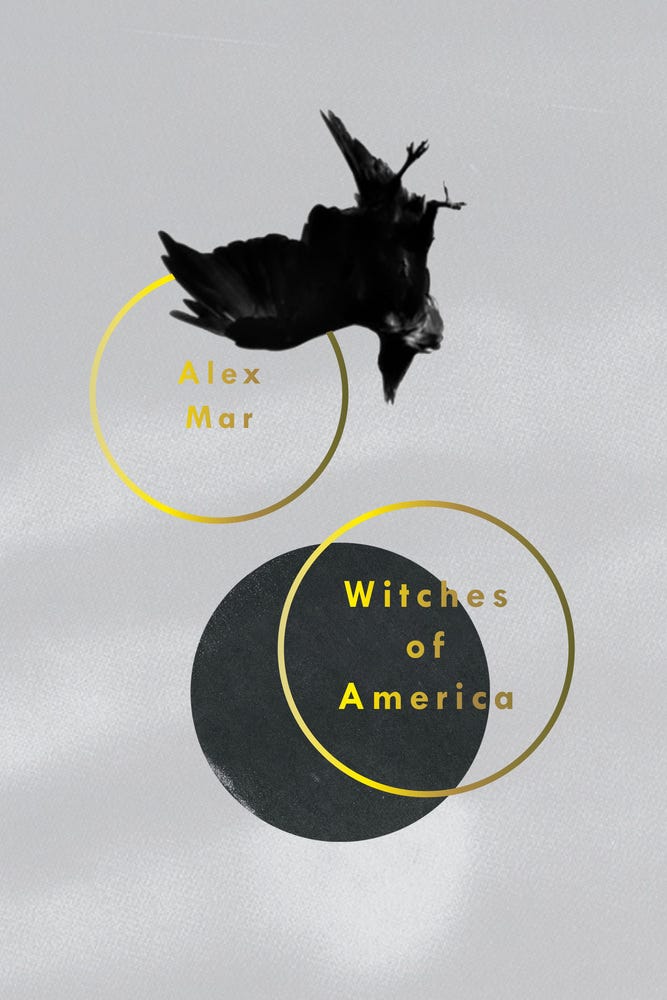
Leslie Jamison, the best-selling author of The Empathy Exams, recently joined Alex Mar at New York City’s Housing Works to discuss Mar’s first book, Witches of America (Sarah Crichton Books 2015) — an intimate, immersive account of present-day witchcraft all around this country. (The book was recently included in the New York Times’ list of Notable Books of 2015.) The two writers discussed Mar’s debut, their shared obsessions, and some of the stranger challenges of writing non-fiction. What follows is a slightly revised and edited version of their conversation.
Alex Mar will be reading — along with Alexandra Kleeman,Melissa Febos,Angel Nafis, and Lincoln Michel — as part of Electric Literature and The Rumpus’s holiday event at Housing Works next Tuesday, December 15th.
Leslie Jamison: At one point in your book, you talk about mixing the “me” up with the “them,” and I’m curious to hear you talk about how you got mixed up in this. In particular: how did you decide to make your journey part of this book? To not just be a receded observer, but to let yourself move through these worlds as a real character, to make that journey part of the story?
Alex Mar: Actually it’s funny — when I first pitched this idea to my publisher it was very much with the sense that I would use myself as a light framework. Like, okay I will guide you into this world, but otherwise I’m really going to have a minor presence. And not that long into writing it and having these experiences, I sent an email to my editor saying, more or less, “I think you should know, I’ve already gotten in too deep.”
I just felt like it was disingenuous to pretend that my interest in witchcraft was neutral.
I just felt like it was disingenuous to pretend that my interest in witchcraft was neutral. I think really for anyone the word “witchcraft” has this kind of primitive, gut-level impact that goes back to childhood — folktales, fairytales, movies that you’ve seen. And on my side, I was raised partly Catholic but also politically liberal and a feminist and in New York City — and that was messy, ideologically. As an adult, I ended up with the sense that there wasn’t any organized religion I could commit to, while feeling, at the same time, that there was some big mystery out there that I wanted to get a handle on. Is there some way to get closer to that? So I realized that was the reason I wanted to write this book in the first place. And then I just dove in.
LJ: And I think what you’re talking about — this sort of intuitive, strongly-felt sense of there being a larger mystery — that becomes this shared terrain between you and the people you’re writing about, which I think charges the book with a different kind of energy than you as an observer, standing back, looking at these fringe communities and offering them to us. I mean, you’re in them, and you’re taking their questions and their quests so seriously, which is part of why we, when we read it, take them seriously too. It speaks to something primal in all of us.
AM: I hope so! That was the idea. I wanted to use myself as a bridge. I don’t know who the mainstream “average” American reader is, but I’m assuming that that person doesn’t have experience in the Pagan community, hasn’t experimented with witchcraft, and all of this is going to seem kind of alien and exotic. So how can I use myself to communicate “My starting point, on the surface, seems really far away from the people in this community, but come with me as I show you the ways in which that distance is a lot shorter”? I just felt that was the best approach.
LJ: Well, the distance really gets collapsed. Not to give too much away, but there’s a point when you find yourself camping in a swamp with some gigantic banana spiders. I mean, your mind, body, and spirit really get implicated in this, and that makes the journey compelling in this very visceral way. I’m curious what those relationships are like. A woman named Morpheus is a really big part of the book — she’s a Feri priestess — and your relationship with her is part of the story. How did these relationships develop? How did you come to a place of trust with Morpheus?
AM: Yeah, this is obviously a big part of being able to write about people who are alive and walking around on the planet independently of the writer. You can’t relate to this at all, Leslie! [laughs] But, basically, I made a documentary about five, six years ago called American Mystic, and it was meant to be intertwining portraits of three different characters: people in their twenties in very far-flung parts of the country who were engaged in different fringe religious communities that were mystical in some way and that really set them apart from the mainstream. I really liked the idea of showing another piece of what faith in this country could look like, and also the higher cost to your mundane life if you’re part of a community that really sets you apart, that a lot of people can’t relate to.
…they’d cleared out this plateau and dragged these huge standing stones with the help of a bunch of fellow Pagans from all around the Bay Area to create their own henge. A stone henge in Santa Clara County…
So, over the course of about six months traveling around the country trying to find the right people for this film, I met this woman Morpheus out in Northern California. She was, at the time, living way off the grid on a hundred acres of extremely wild land in Santa Clara County. She and her then-husband lived in this double-wide trailer on one part of the property, and if you hiked up this hill, they’d cleared out this plateau and dragged these huge standing stones with the help of a bunch of fellow Pagans from all around the Bay Area to create their own henge. A stone henge in Santa Clara County — and none of their neighbors knew about this.
Anyway, I really admired this sense of dedication because, in her mind, she was creating a sanctuary. People from all around the Bay could come and practice witchcraft. They could just get in touch with her and they could have these rituals on the hill, under the moon. So we talked, and Morpheus had this wonderful sense of humor. She was really no-bullshit, and just a goofy, low-key person — and then she would dress up and prepare for ritual and be completely transformed. I was just so impressed by her magnetism, and her level of dedication. I like that phrase “walking the walk” because you know it when you see it, right? When someone is “walking the walk.” And Morpheus was.
The thing about a documentary, however, is there are always cameras in the way, and you can’t achieve a real intimacy, I think, when there are cameras in the room. So when filming wrapped and I was back in New York, I realized that I had left something behind — a missed opportunity. I really wanted to step into circle with Morpheus and her people and try to understand what it was that drew me in in the first place. Now that cameras aren’t rolling anymore, what is this to me? And as someone who is fundamentally a writer, I then thought, “Ok, well, it’s a writing project. That’s why I’m interested. It’s something intellectual.” I don’t know if you have this, where you feel like there are themes you’re drawn to, certain situations or individuals, and then you kind of have to double back and be honest with yourself about why you’re there?
LJ: Yeah, well, I certainly know the dynamic of doubling back on the same kinds of recurring questions or preoccupations. I would always joke with my editor that my next book was just going to be called Even More Empathy Exams. You find yourself exploring the same topics — you’re not done with them. It’s hard to be done with them. I think that feeling of asking yourself “Why am I interested in this thing?” is such a compelling layer of the process to me — as the reader — and it sort of feels like an inevitable layer of the process for me as a writer.
A piece I wrote about Morgellons disease came to mind for me at certain points when I was reading your book — in terms of writing about a community and balancing skepticism and respect. I’m at a conference in Austin with a bunch of people who understand strange, unidentifiable stuff to be coming out of their bodies. Why am I here? What’s my stake in this? What’s shared between me and them? What remains alien to me about their experience? All of those questions. Getting into those questions, not backing away from them — that’s how I get into the thick of what matters and come clean to readers about my own presence in the room and what that presence is about. And that’s certainly one of the plot-lines of this book, you constantly asking yourself “What am I seeking from being in this space?”
AM: Definitely.
I just think that’s the way humans work: you identify with someone for whatever reason — you like their voice or little details you find out about them — and that allows you to relate to them.
This also makes me think of the way in which you and I both blend genres in our approaches to nonfiction, and how people have different ideas or emotions around that. For instance, I’m a very strong believer in using the first-person as a way in, because it works for me as a reader. I just think that’s the way humans work: you identify with someone for whatever reason — you like their voice or little details you find out about them — and that allows you to relate to them. And they take you into this universe that for you seems a million miles away from your own experience, but now you’re relaxed and you’re willing to go along. And before you know it…
I have a dream scenario in which there’s some conservative Christian reading this book [laughs] who I’ve made feel comfortable in some way, and then they’re immersed in Aleister Crowley’s Gnostic Mass, and before they know it they have a different perspective on what they’re willing to explore.
LJ: To speak briefly to your fantasy about the conservative Christian reader, I feel like — I don’t know how many people saw that image going around that’s Claudia Rankin’s Citizen at the Donald Trump rally, but —
AM: Oh my God, yes.
LJ: Yeah, so I feel like maybe Witches of America is next —
AM: At a megachurch!
LJ: Yeah.
AM: Great, I love it.
LJ: At various points, I’ve felt a real range of reactions to what happens when the story of the self is brought into the same chamber as the stories of others — in relation to my own work, but in relation to other people’s work as well. And I think that for some people that combination feels like an honest portrayal of what happens when people have some kind of encounter — that two consciousnesses are present, and so there’s something to be said about both of those consciousnesses in the piece that results. That’s certainly how I feel and how I write, but I also think that that kind of blending of genres, of memoir and reporting, can also raise this feeling of the self as an intruding presence, you know?
AM: Like “I’m so fantastic, I’m in this scene.” Oh God.
LJ: Right. It calls to mind Mystery Science Theater 3000, with the two little robot silhouettes in front of the films.
AM: I never saw that coming! I never saw you dropping Mystery Science Theater. This is amazing.
LJ: I never thought that our conversation would have taken me to this point, but here we are. Sometimes I think there’s this obnoxious version of that, that’s the way in which people see the self of the reporter of the piece. Where you’re this little robot silhouette that’s threatening to block out what’s really of interest.
AM: Right. Like “What right do you have to be there also?”
LJ: Yeah. But I think, as opposed to quietly squirreling away the possibility of some kind of transgression, that approach makes visible the dynamic — something that’s not about either person in isolation but about what happens between them, or the magnetic energy between their stories. Allowing both voices into the frame reckons with it more openly. I like to be able to ask these questions more explicitly, about: what right I have to be here, and what’s my stake in this? What’s my relation to this?
AM: And your book obviously grapples with that in a major way. For my money, I really do think it’s an incredibly honest approach.
In the case of someone like Morpheus, who’s a central subject in the book, it almost felt like a collaboration. But it’s a really delicate thing — and I know you’ve encountered this too. When you write nonfiction, people will say, “Sure, you can write about me.” But this is the touchiest terrain. I think the human impulse — for any of us — is to immediately think “You’re telling me that my life is interesting, that my stories are important, that people want to know about my life.” You feel validated in a way. And very few human beings know writers really well, are also journalists, and understand that when someone says, “I’m going to write about you” they may include details that to you feel incidental or unexpected. They may see you differently than you see yourself. So the relationship is delicate; it’s a balance that way. And I think any journalist or nonfiction writer would tell you the same thing if they’re being honest.
LJ: That’s something that both of us have articulated in different ways in our work, a desire to believe fully in what our subjects believe, the desire to align ourselves with the beliefs of someone, the frustration of never quite achieving that total alignment. I know, for me, some of it comes back to quite primal aspects of my personality that have to do with being a people-pleaser in a job that could not be more antagonistic to people-pleasing. I think writing about the lives of other people is not the right line of work for a people-pleaser — but it is the work that I seem to have found myself in.
When you narrate the life of another person in whatever fragmentary way, there’s some violence, or some possibility of violence.
When I spend time with somebody, especially somebody who’s in some condition of vulnerability or some condition of pain, I want so deeply for my writing to be a positive experience for that person, for him or her to feel represented by me in a way that is wholly good. But, for all the reasons that you were speaking to, Alex, there’s something impossible about that dream. When you narrate the life of another person in whatever fragmentary way, there’s some violence, or some possibility of violence. Even if there are no ill intentions, there’s a real possibility of violence in the inevitable gap between self-perception and somebody else’s perception of you. So in those moments in my writing when I speak to that desire to believe fully what one of my subjects believes, I’m kind of mourning that gap, or I’m mourning that violence, or I’m trying to acknowledge what’s happening in that space where I’m presenting another life but I’m not fully standing at the same angle as my subject — I’m not seeing them in the same way as they’re seeing themselves. So it doesn’t solve the problem, but sometimes I reach a point where I feel like I have to speak to the problem or bring the problem onto the page. So that’s sort of why and how it comes up for me.
AM: Honestly, this is really the crux of the matter.
But one difference between something like your essays and my book is this: this is a book about faith, and a book in which I became an active participant at a certain point. So for me it was less about “Do my beliefs align with the beliefs of everyone in this situation?” and more about “Am I going to connect here?” Seeking out that connection. Like in the way that, if you were a practicing Catholic, you might not say, “Okay, am I going to relate to the priest?” but rather “Is there something in this specific religion that’s going to give me some answers or point to a door that might open slightly for me?”
If you write about a religion, and you take part in a ceremony, you’re not doing some sort of scientific, sociological documentation…Because spirituality is inherently totally subjective.
And here’s the thing: you can’t go and write in an objective way about witchcraft rituals. That would be absurd. If you write about a religion, and you take part in a ceremony, you’re not doing some sort of scientific, sociological documentation. I mean, obviously that’s been done — but I think it’s a little bit bullshit. Because spirituality is inherently totally subjective. I can’t tell someone, definitively, what it feels like to sit in synagogue; I can’t tell someone what it feels like to take part in a Catholic mass. So I wanted to embrace that all the way. There are these descriptions of rituals that I wasn’t there for, but most of them I was present for. And hopefully, in those scenes, I raise questions for the reader, like “What would my reaction be to this? Can I imagine myself in that room? Would I have had the same experience? What she’s describing is compelling to me, but I don’t have the same hang-ups.” I think there’s room for that in there, right? And the reader can feel what is was like to stand in that space, and at the same time they’re with the narrator so they feel a bit safer.
There’s been this extremely mixed reaction to my book from the witchcraft and occult community online — depending on where you explore on the Internet, in different chat rooms and whatnot, or my Amazon or Goodreads pages. Some of the people commenting are open about not having read the book. It’s generally a strong reaction — one that I perhaps naively didn’t anticipate — along the lines of: what right do you have to write about this community if you’re not someone who’s a lifelong devotee? If you’ve been trained in a particular witchcraft tradition, initiated at x number of levels, and been at it for decades, then that’s a situation in which you have permission to write about this material and these experiences. And I strongly disagree. It’s certainly complicated — but I think that’s like saying that if you have any doubts, or if you’re exploring as a spiritual person, you don’t have the right to write about faith. And I just — The thought of that makes me really lonely.
There’s this false idea out there that faith and belief is some black-and-white thing. You’re either an atheist or a complete convert. And in this culture in particular, people really love a conversion narrative in which you find God! And then you write a book about it! And that’s fine. But I really wanted to make this book, at least in part, about this gray area. So many people in my life, that’s their experience: they don’t know where they land, but they feel compelled to be searching in some way. And maybe by writing about that it becomes less of a lonely situation in terms of how we’re able to talk about religion and what the meaning of our lives is and all that lofty business. [laughs]
LJ: I love that. It feels so true to my experience of your book, as well as my experience of all the ways that people move through the complexities of spirituality, that so many of us live in a “gray area.” I want to talk more about that. Because, like you said, it’s complicated to write about faith, and I’m interested in what set of competing desires or competing impulses or fears or anxieties or hopes were running through your mind when you thought about how to both do justice to what felt inspiring and beautiful to you from what you saw in these communities while also operating with some degree of questioning and skepticism. How were those impulses towards respect, on the one hand, and skepticism, on the other, moving through you when you were writing?
AM: Like, the question of how to strike a balance? It’s so tricky. I definitely tortured myself over this a lot over the last three and a half years — that’s about how long this book took, between the writing and the research. There’s a number of books out there that are written for the Pagan community by the Pagan community — but they’re written in a sort of insider lingo, or they’re how-to books in some way. So there’s really no desire to reach out to the mainstream with that kind of book. Margot Adler’s Drawing Down the Moon, back in the seventies, was an important crossover book about this community — but that was very deliberately a survey, with no narrative arc. A very different project.
I looked at some of the stories of this very recent history, of the Pagan movement, which in this country only goes back to the 1950s — which is unbelievable! You can trace it back in a very specific way to the south of England. And there were these incredible individuals who were only recently deceased or are still alive, people who were pivotal in the spread of Paganism, and community authors wrote about them with so much reverence — it was almost like they missed a sense of amazement at how these people had had the balls to do the things that they had done, to go “Okay, I’m a poet who’s mostly blind, living in this small town in Oregon, and I’m going to secretly train with a coven of Dust Bowl refugees that I’ve encountered. And now I’m going to train students of my own at my house, and I’ll keep it secret that I’m teaching renegade witchcraft out here in the 1940s.” Are you kidding me? Completely amazing! But, from within the community, many are looking at these people as prophets, in some cases, or as sacred individuals. And I think that runs the risk of —
I think it’s wonderful to write about how complicated an individual is, even the head of a witchcraft tradition.
Sometimes I think about how, when you go to someone’s funeral service, and that person was a major character and kind of a pain in the ass in a wonderful way, no one saysthat out loud. I’ve always felt that there was something tragic about that. I think it’s wonderful to write about how complicated an individual is, even the head of a witchcraft tradition. So I felt that was a balance that I could bring while still being respectful. In telling someone’s story, I could simply acknowledge, “Holy crap, that was an incredible circumstance for someone to be in.”
In terms of my own involvement, I think I very deliberately put myself in a number of embarrassing and vulnerable situations. I wanted to be as open as I could about my whole range of feelings about eventually choosing to train in witchcraft, and my relationship with my witch-teacher in Massachusetts, and the idea of being affiliated with a coven, and going to meet the coven on a certain date at, like, a castle in New Hampshire. “What is going on? I feel conflicted — how am I supposed to feel here?” And, as a writer, you choose to reveal specific things about yourself to signal to the readers “Hey, I’m exposing myself. There are embarrassing things that you should know about me. Let’s just get them out on the table.” And perhaps not all readers understand how self-aware and deliberate that choice is. That the writer is actively, strategically extending her hand in those moments.
People don’t just exist in one dimension, in your book, whether that’s a mundane dimension or a spiritual dimension — you’re asking them to exist in both. And that makes it so much more stereoscopic.
LJ: Yeah. Well, that question about the revelation of the self is so never-ending, for both of us. I often bring myself into the frame in order to complicate what I’m saying about someone else; almost a way of stopping myself from making an overly simple determination. But part of what I love about the portraits of the people in your book really has to do with that urge toward complexity, that desire to come out and say, at a memorial service, “Here are the ways in which this person was a pain in the ass when they were alive.” Not that you’re making everybody into — I don’t even know how to make that plural — pains in the asses? But we get people in their fullness. Like, we get that this guy was trying to spend time with his six-year-old daughter after he’d split with their mom — we get that vision of him and we get the vision of him in an occult mass. We get your teacher as your witchcraft teacher, and we get a vision of her at home raising her kids. People don’t just exist in one dimension, in your book, whether that’s a mundane dimension or a spiritual dimension — you’re asking them to exist in both. And that makes it so much more stereoscopic.
AM: Oh, I like that: stereoscopic. For instance, there’s the moment in which I decide to start training, maybe halfway through the book. I write to Morpheus — because at that point we have this friendship and I feel like I can trust her — and I say, Okay, I guess I want to train in witchcraft. How do you do that in 2012, 2013, whenever it was? And she sends me someone’s email address. And I thought, “What? I email this woman and she becomes my personal Jedi master, my mentor in this secretive, ecstatic Feri witchcraft tradition? Um, okay. Is that disappointing or — ?” But I realized that was a childish reaction. I wanted some sort of fairytale version of things when actual priestesses are sitting at home thinking “I just don’t have time! If you want me to pass on the tradition, let’s be efficient about it. We’ll e-mail. You fill out this form. We’ll schedule a call. And if you make it past the phone call, well, then we can go somewhere with this.” And actually at some point my teacher said, “I want you to know that this is like grad school. So you should be prepared to do some serious reading.” [laughs] And I loved learning to accept the mundane aspects of it all. I mean, that’s life! That’s real. That’s what made it more than a lot of fairytale hocus pocus. This is a living, evolving, religious movement. And, you know, a witch usually still has a job. And she picks up her kids and shops for groceries and plans the ritual for her coven that weekend…
LJ: Yeah, the book ultimately offers both. I mean, we get everything that some part of me, when I started reading it, was hoping for. The naked priestess! The necromancer! All that. But we also get the email exchanges and this process that looks maybe more pragmatic than what we had in mind. The fact that there’s room for all of it is part of what kept surprising me.
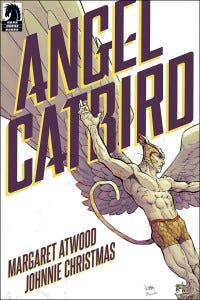
Margaret Atwood, a prolific writer of poetry, fiction, non-fiction and children’s literature, is tackling a new genre: comic books. Atwood will be penning a new comic series for Dark Horse Comics called Angel Catbird.
The hero of the tale is a genetically-spliced bird-cat hybrid creature in tight feather pants, judging by the cover. Atwood explained her hero’s anatomy: “I have concocted a superhero who is part cat, part bird. Due to some spilled genetic Super-Splicer, our hero got tangled up with both a cat and an owl; hence his fur and feathers, and his identity problems.” The choice of cat and bird imagery was important to Atwood, whose goal is helping animals by publishing Angel Catbirdin association with the Keep Cats Safe and Save Bird’s Life initiative, which is led by Nature Canada.
Angel Catbird will be released in the fall of 2016, each of the three volumes will cost $10.99 and be in full color. Illustrations will be done by Johnny Christmas, who said he is “tremendously excited to work with one of the great contemporary novelists,” and promised heart, humor, and action from the series. Hope Nicholson, owner of Bedside Press, will be the consulting editor of the series. Nicholson previously worked with Atwood on the Kickstarter funded anthology The Secret Love of Geek Girls.She announced the good news about their continued collaboration in this tweet:
I am a consulting editor on the upcoming GN series Angel Catbird by @MargaretAtwood & @j_xmas for @DarkHorseComicshttp://artsbeat.blogs.nytimes.com/2015/12/08/margaret-atwood-writing-a-series-of-graphic-novels/?smid=tw-nytimesarts&smtyp=cur&_r=0 …
With Angel Catbird, Atwood is becoming a part of a budding trend of literary writers writing comics. Novelist Benjamin Percy has been writing Green Arrow and Ta-Nehisi Coates was hired to write the new Black Panther Series as we wrote about earlier this fall.
DON’T MISS OUT
Sign up for our newsletter to get submission announcements and stay on top of our best work.
YOUR INBOX IS LIT
Enjoy strange, diverting work from The Commuter on Mondays, absorbing fiction from Recommended Reading on Wednesdays, and a roundup of our best work of the week on Fridays. Personalize your subscription preferences here.