A Wolf in Jutland: Dorthe Nors On The Writing Life In Denmark

We’ve asked some of our favorite international authors to write about literary communities and cultures around the globe. We’re bringing you their essays in a new series: The Writing Life Around the World. The new installment is from Danish author Dorthe Nors.

Vedersø, Denmark
translated from the Danish by Misha Hoekstra

A couple of years ago, I moved away from Copenhagen. I say that because I want to tell you something about what it’s like to be a writer in Denmark. Most Danish authors live in Copenhagen. It is there that you find the literary scene–called simply the scene if you actually manage to become part of it. I lived in Copenhagen for seven years. On the one hand, I wanted to become part of the scene but couldn’t. On the other, I didn’t want to. No, I did not want to be part of the scene.

* * *

Just about the time that I seriously began to consider moving from Copenhagen, the first wolf was sighted in Jutland. Big commotion! Wolves had been wiped out a couple of centuries previous, and suddenly: a wolf in Jutland! Interest groups sprouted up that felt the wolf should be shot. A wolf-free Denmark, they said. Out trickled tales that seemed to have come from the Brothers Grimm. Letters fired off to editors screamed, The wolf is coming, the wolf is coming! People said they were afraid that the wolf would approach their houses, would snatch their children. But Jutland is a big place, said others, who knew that the most dangerous wolf is the one that lurks in our minds. Let’s welcome the wolf back. The debate was heated.

A bit of geography is called for. Denmark consists partly of a large peninsula attached to northern Germany. The peninsula is called Jutland. In certain places, Jutland is abundant in natural life. And thinly populated. Toward the west there are vast tree plantations, moors, and fields–and then of course the North Sea. It was in western Jutland that the wolf was spotted. The rest of Denmark consists of islands, large and small. First there’s Funen, the island where Hans Christian Andersen grew up, until he was 16 and left for Copenhagen. For the scene was centered in Copenhagen during the 19th century too, and Copenhagen lay as far east as one could go–on the island of Zealand.

…in a small population where just about everyone is related, artistic milieus are decidedly claustrophobic.

There are about 5.6 million Danes in the country, and Copenhagen is our capital. Some 1.2 million people live there. We are a minuscule people with a peripheral language, and in Copenhagen, our nation’s writers gather in coteries. If you’re in one of these coteries, you’re a writer among others who write and think somewhat the way you do. My experience abroad tells me that intellectual movements and artistic milieus are tricky beasts, regardless of where you stumble upon them. But in a small population where just about everyone is related, artistic milieus are decidedly claustrophobic.

I wanted to be part of the scene, and yet I didn’t, after all. I couldn’t anyway, and for seven years I sat in Copenhagen, stuck fast like a burr on the back of a cat. And then came the news of a wolf in Jutland.

* * *

I was born in Jutland, so you could say I moved back home. I chose to settle so far west that it’s hardly Denmark anymore. On the central western coast, by the North Sea. Every day I walk down to the sea and position myself with my back to the land. If I could swim that far–though no one could–I’d be able to go ashore on a beach in Aberdeen. I feel closer to the great world here than I did in Copenhagen. There are no other writers here. There are ceramists, photographers, painters, and musicians–but no writers. Sometimes I drive sixty miles north and drink coffee with an old poet who lives up there. I invite authors from Copenhagen to spend the weekend. Then they stand with the wind in their hair and draw the sea into their lungs, before making the long journey east again. There will be more and more time between their visits, I know.

Denmark has produced great writers, yet there are countries that have produced more, and countries that have shown more love for the ones they’ve produced. Until a generation ago, most Danes were connected to agriculture, through either farming or processing. Then agriculture was effectivized, and the industrial jobs moved to countries where wages were lower. Since then, the population has been in flight from the countryside to the cities, especially Copenhagen. It’s a move that the writers here have always undertaken–they want to go to the city to encounter the writers they aspire to become. And there’s something to that, I think. If a writer isn’t familiar with the literature of her own country as it unfolds in her own time, she misses out on dialogue, on contact with the path. She must dare to measure herself against the best! That’s why I moved to Copenhagen. But when I saw what I had to do, I didn’t want to. And I couldn’t either.

* * *

I wish that Danish men would read more, and that Danish men would read women, but unfortunately that’s not the way it is.

I bought a small house in a village by the ocean. There are two reading groups in the village. The local women meet once a month to read books together. It’s a recent development in Danish reading culture and one that I put great stock in, aside from the fact that it lacks men. Among writers, you find men and women in equal numbers–but not among readers. I wish that Danish men would read more, and that Danish men would read women, but unfortunately that’s not the way it is. But you take what you can get, and in the reading groups, women gather to talk about books and drink coffee. I hadn’t lived in the village very long before I was asked if I wouldn’t come and talk about my work. It was an obvious thing for me to do, they thought.

I said yes but it made my stomach hurt. I feared what they would think of me.

It was the Danes’ farming blood. It made me nervous. It runs through our veins, for good and ill. A farmer’s life depends on stability and order; a farmer is rooted. He doesn’t care for changes and surprises. He doesn’t like anything that comes from outside and makes a disturbance; disturbances can mean disaster. Whatever can’t be controlled, whatever has a wild or ambiguous nature is considered dangerous. The farmer fears any creature that has an inscrutable essence. Such creatures can spoil a harvest, or they’ll seat themselves at your table and eat you out of house and home. Run off with the sheep. Set fire to the barn–and what does a poet actually live off of? Can it pay the bills?

If I had a dollar for every time I’ve been asked if I could make a living by writing, I’d be rich.

…it’s nearly impossible to get rich from writing fiction and poetry in Denmark. There’s bread in crime fiction, but we can’t all write crime fiction…

But I’m not rich. As in other countries, it’s nearly impossible to get rich from writing fiction and poetry in Denmark. There’s bread in crime fiction, but we can’t all write crime fiction, and so I turned up for the village reading group event with my slender literary productions under my arm, nervous and hesitant. I’m usually not afraid to speak before large gatherings. I’ve appeared on TV, on the radio, and at international literary festivals without my hands trembling. I’m at home on stage and feel comfortable with the public side of my writing. But as I sat there at the head of a table covered with coffee and pastry, I flushed with shame.

Can you pay your bills? That was the question I was waiting for, and I dreaded it in advance. It means, of course, in all its presumption, Are you a burden on society? a parasite? a threat to us?

Denmark is usually good about supporting its artists. In the Ministry of Culture, funds are earmarked for author work grants and translations. When a Danish author gets something published abroad, the government provides travel money so that we can go off and be ambassadors for our country. Our culture policy is social democratic. It strives for fairness, it promotes equality. It also recognizes that our language is small and threatened, and knows that writers help to preserve our curious tongue. The Danish state wants to provide writers with tolerable conditions. The Danish state wants culture and art. So Denmark provides support from the top down.

But by the coffee table in the reading group, I found myself in a place where art would be supported from the bottom up. And in Denmark, that’s another matter entirely. Unlike Icelanders or the French, for instance, the average Dane does not have a tradition of examining literature, much less discussing it at all hours of the day. It’s considered a tad affected to be an artist. And the fact that my work has no concrete utility makes it hard to explain to most people the benefits of what I do. Does it pay the bills? It’s the farmer in them asking, and there I was, seated by a table full of farmers’ wives. I needn’t have worried, though, for the women were pleasant. They’d baked rolls and layer cakes. There was coffee and tea. And to be honest, they weren’t particularly interested in my work. They were more interested in why I had decided to move to their area. There was someone who asked if I made a living from writing. That was expected, and I answered as I’m accustomed to doing: Just about. And then came the question that I hadn’t expected. And which I still have a hard time shaking off. A woman down on the far end of the long table gave me a worried look. She wondered: did I have a restless nature?

A restless nature?

Just like the wolf. A wanderer.

* * *

I’m not the first author to discover that anyone with a free and different nature is considered a threat to the existing culture. The Dano-Norwegian author Aksel Sandemose wrote about it more than 80 years ago, setting down the regulating mechanisms that operate on Scandinavians from below, in what he called the Law of Jante. According to Sandemose, the 10 commandments that regulate our social behavior are:

  1. You mustn’t think you’re special.
  2. You mustn’t think you’re as good as we are.
  3. You mustn’t think you’re smarter than us.
  4. You mustn’t imagine you’re any better than us.
  5. You mustn’t think you know more than we do.
  6. You mustn’t think you’re more important than us.
  7. You mustn’t think you’re good at anything.
  8. You mustn’t laugh at us.
  9. You mustn’t think anyone cares about you.
  10. You mustn’t think you can teach us anything.

The Law of Jante is legendary in our part of the world. It describes a way of thinking that no Scandinavian can avoid responding to. The law is embedded in us, and passed down through generations. It’s actually quite odd that we in Denmark have this leveling attitude–for on the other hand, Denmark has a strong belief in itself, its values, and its way of being in the world. And there we stand like farmers, grounded in an unshakeable belief in ourselves and our right to be where we are and not budge an inch. At the same time, you should remember that Denmark is surrounded by water, and that down through the ages, it has therefore had free access to the world and thus an interest in other places too. Danes possess a strong wanderlust, and we contain these contradictions: the fixed and existing vs. the wild and seeking.

Yes–the authors who have taught me to write, and who still reveal worlds to me, are the ones who’ve resided far from their culture’s self-conceived center.

I have settled by the water. I need the great sky, the horizon. I love my little country; my language is my roothold. Danish is a linguistic playground for me, and I am grateful for the support the Danish state has given me and my fellow writers. But I am grateful too that I know English. It enables me to work outside Denmark–in the US, England, Sweden, Germany. I have found a greater world to write in, and after coming home to Jutland, it suddenly struck me one day that the artists who have meant the most to me have lived in places other than the places where the other artists all lived. They’ve lived out in the woods, on the prairie, by the sea, in the boondocks. Yes–the authors who have taught me to write, and who still reveal worlds to me, are the ones who’ve resided far from their culture’s self-conceived center.

The lone wolves.

* * *

Around the summer solstice, we celebrated Midsummer’s Eve in my little village in the west. We gathered by the water, lit a bonfire, and sang songs about the light night. A forester from the local tree plantation gave the Midsummer speech and tried to calm the populace. They shouldn’t be afraid of the wolf. No case of a wolf causing a human death had been registered anywhere in the world since 1974. In short, there was something almost harmless about wolves, said the forester, who was clad in green trousers that blended into the natural surroundings. Just behind me stood two older men. Both of farming stock, of course. Since 1974? the one said. Yep, the other said. He paused before adding, If it’s been that long, it’s statistically likely it’s going to happen again soon. They agreed on that, the two men. That the wolf would no doubt strike again at any time.

I stood two feet in front of them. And they didn’t have a clue.

About the Author

Dorthe Nors is the author of five novels, including Karate Chop, and is the recipient of the Danish Arts Agency’s Three Year Grant for her “unusual and extraordinary talent.” Her stories have appeared in AGNI, Boston Review, Ecotone, Fence, A Public Space and the New Yorker. In 2016, a pair of Nors’ novellas, So Much for That Winter, will be released in the US by A Public Space Books in partnership with Graywolf Press.

You can find all the essays from The Writing Life Around the World at Electric Literature.

Writing Life Around the World

About the translator: Misha Hoekstra taught creative writing and literature for several years at Deep Springs College before moving to Denmark. He’s won several awards for his literary work, including the Sjöberg Translation Prize for You Disappear by Christian Jungersen. He now lives in Aarhus, where he writes and performs songs under the name Minka Hoist–including one about the Jutlandic wolf.

The Writing Life Around the World is supported by a grant from the Council of Literary Magazines and Presses and the New York State Council on the Arts.

CLMP-narrow
NYSCA

Catching Up With The Eagles Prize Finalists: Claire Prentice, Author Of The Lost Tribe of Coney…

This fall marks the inaugural award of the Brooklyn Public Library’s Eagles Prize, recognizing “the best books of the past year and the authors who most embody Brooklyn’s ideals.” Nominations were made by the borough’s bookstores, librarians, and library supporters. The Library announced a shortlist of six authors–three for fiction, three for non-fiction–over the summer. The winners, chosen by a panel of local authors, will be announced later this month. In the lead-up to the announcement, we decided to ask the finalists a few questions.

Next up: Claire Prentice, author of The Lost Tribe of Coney Island: Head-Hunters, Luna Park, and the Man Who Pulled Off the Spectacle of the Century (New Harvest 2015).

Dan Sheehan: The Lost Tribe of Coney Island is such a bizarre, incredible tale with such a larger-than life villain at its center, I was surprised I had never encountered the story before. Where did you first come across this odd nugget of turn-of-the-century American pop-culture history?

Claire Prentice: I love Coney and I visit every chance I get. On a day trip there with my husband and young son I came across an old black and white photo of a group of tribespeople. The minute I set eyes on them, I knew I had to unravel their story and find out who they were. I discovered that they were Bontoc Igorots, a tribe from the remote, mountainous north of the Philippines. In 1905 they had been brought to America by a doctor-turned-showman, Truman Hunt, who put them on display as a human exhibit at Luna Park in Coney Island. They later toured America, exhibiting in more than 50 towns and cities before becoming key witnesses in one of the most scandalous court cases in American history. The more research I did, the more incredible their story became. And no-one had told their story.

DS: Truman Hunt is portrayed as a particularly nefarious character, even for the ethically dubious profession he was in, but as Antoinette Frank, Hunt’s lawyer, said at one of his trials, “The government set the example of exhibiting the people. The government was the first to bring them to this country for show purposes.” Would you consider Hunt a sort of Frankenstein’s monster, the sinister by-product of an American system newly enamored with both colonialism and capitalism?

CP: As a writer, what fascinates me about Truman Hunt is that he is such an ambiguous character. One of the first times his name appears in the public record he is being hailed as a hero, a courageous medical doctor who put his own life on the line during a cholera epidemic in the Philippines and was revered by the Igorots for his leadership, his skills as a doctor, his wisdom and kindness. But by 1906 he is on trial in an American court of law accused of exploiting and abusing the Igorots and stealing their money.

I frequently felt sick to the stomach when…I discovered a shocking new detail about the many wrongs he committed against the Igorots in his group.

Did Truman start out as a good man and get corrupted, or was he always bad beneath his kind, respectable and caring exterior? I frequently felt sick to the stomach when, during my research, I discovered a shocking new detail about the many wrongs he committed against the Igorots in his group. There is also a striking irony to his name. Not only does Truman Hunt become the subject of a true manhunt across the United States, I also felt that my book was a kind of hunt for the true man who lay underneath all the extravagant claims and the sideshow banter.

DS: The late 19th and early 20th century seems to have been a sort of perverse Golden Age for unscrupulous showmen in America. I’m thinking of the less-than-reputable Wild West re-enactments; the enduring popularity of the “Freak Show” tents; and, of course, the degrading ethnological expositions or “human zoos” such as the Igorot Village that Hunt presides over in your book. Why do you think audiences were so hungry for these grotesquely exploitative simulacra during this period?

CP: I think it’s the same impulse that makes people watch reality programs on TV today. Human beings have always hungered for spectacle and excitement. The events in my book are set in a time before mass travel, before radio, TV and movies, and before newspapers routinely carried photographs of world events. But ordinary Americans could visit Coney, where the most extraordinary sights in the world were laid out for them to see, and its most “exotic” inhabitants were on offer if you paid a nickel. This was a place where you could encounter real life Eskimos and Irish Farmers, and where the Igorots became the stars of the show.

DS: In your career as a journalist, you’ve reported on three American presidential elections. While we’re on the subject of scoundrels, hucksters, and sideshow oddities, how are you enjoying the Republican Primary debates so far?

CP: Ha! I can think of at least one character in the debates who would feel very at home in the Coney Island of 1905!

DS: For many New Yorkers, and Brooklynites in particular, Coney Island holds a special, romantic place in the imagination. Why do you think this is?

It’s still a wonderful, romantic place. I especially enjoy visiting out of season when it has a delightfully melancholy air.

CP: I’m from Scotland and it holds a very special place in my imagination, too. There’s something magical about Coney Island, especially the Coney Island of the early 20th century. It was a place where people went to dream, to escape the daily grind, and where anything was possible. You could take a simulated Trip to the Moon, visit attractions which offered a glimpse of Heaven and Hell, you could see the ten ton lady and the ten inch man, you could ride a camel, take a trip on a gondola in a miniature recreation of Venice, see tribespeople from distant lands, and watch a huge scale reenactment of the Boer War featuring actual veterans. It’s still a wonderful, romantic place. I especially enjoy visiting out of season when it has a delightfully melancholy air.

Recommended Reading Is Open For Submissions Until November 6

Recommended Reading is the weekly fiction magazine of Electric Literature, and with over 83,000 subscribers in just three years, it’s the fast growing literary magazine around. Every week we publish a story, each chosen by today’s best authors and editors. We’re looking for short stories that are bold, affecting, and presented with a distinct style. But the best way know what we want is to dig into our extensive archives. Though the magazine features original fiction as well as reprints, we will only consider previously unpublished stories during our open submission periods.

Recommended Reading launched in May 2012 and has since published 178 issues, including original work by Sheila Heti, Stephen Millhauser, A.M. Homes, Helen DeWitt, Jim Shepard, Ben Marcus, and Mary Gaitskill. We also pride ourselves in championing new voices, and have been early supporters of writers such as Helen Phillips, Sharma Shields, Rebecca Schiff, Diane Cook, and Matt Sumell.

Recommended Reading is digital-only, available for free online and in ePub, and for $1.99 and issue on Kindle and through our Apple Newsstand App. Issues of Recommended Reading are also published on this site.

Before submitting, please take some time to read Recommended Reading, especially those recommended by Electric Literature, in which we showcase original fiction. Recommended Reading publishes fiction ranging in length from 2,000 to 10,000 words, and pays each contributor $300. We accept simultaneous submissions, but if your story is accepted elsewhere, please withdraw it immediately through the Submittable system. We can only consider one story by an author at any given time.

To submit, click here.

Here Are the 2015 National Book Award Finalists

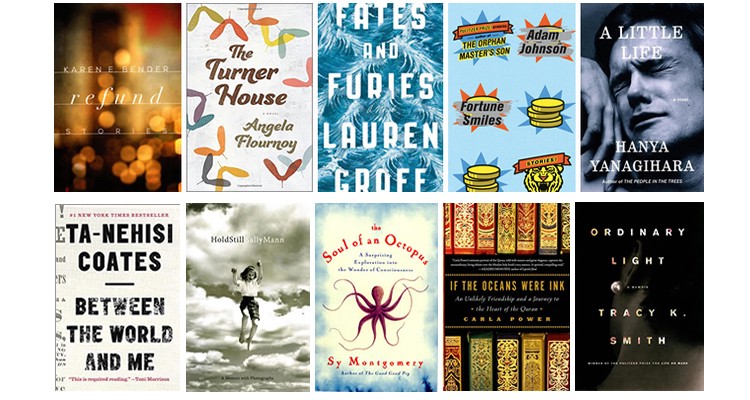
The 20 finalists for the National Book Award have just been announced, with finalists drawn from the Longlist Honorees for Young People’s Literature, Poetry, Fiction and Nonfiction.

You can read micro-interviews with the National Book Award Longlist honorees conducted by Morning Edition here.

Congratulations to all the finalists!

Fiction:

Nonfiction:

  • Ta-Nehisi Coates, Between the World and Me (Spiegel & Grau/Penguin Random House)
  • Sally Mann, Hold Still (Little, Brown/Hachette Book Group)
  • Sy Montgomery, The Soul of an Octopus (Atria/Simon & Schuster)
  • Carla Power, If the Oceans Were Ink: An Unlikely Friendship and a Journey to the Heart of the Quran (Henry Holt and Company)
  • Tracy K. Smith, Ordinary Light (Alfred A. Knopf)

Poetry:

Young People’s Literature:

  • Ali Benjamin, The Thing About Jellyfish (Little, Brown Books for Young Readers)
  • Laura Ruby, Bone Gap (Balzer + Bray/HarperCollins Children’s Books)
  • Steve Sheinkin, Most Dangerous: Daniel Ellsberg and the Secret History of the Vietnam War (Roaring Brook Press/Macmillan Children’s Publishing Group)
  • Neal Shusterman, Challenger Deep (HarperCollins Children’s Books)
  • Noelle Stevenson, Nimona (HarperTeen/HarperCollins Children’s Books)

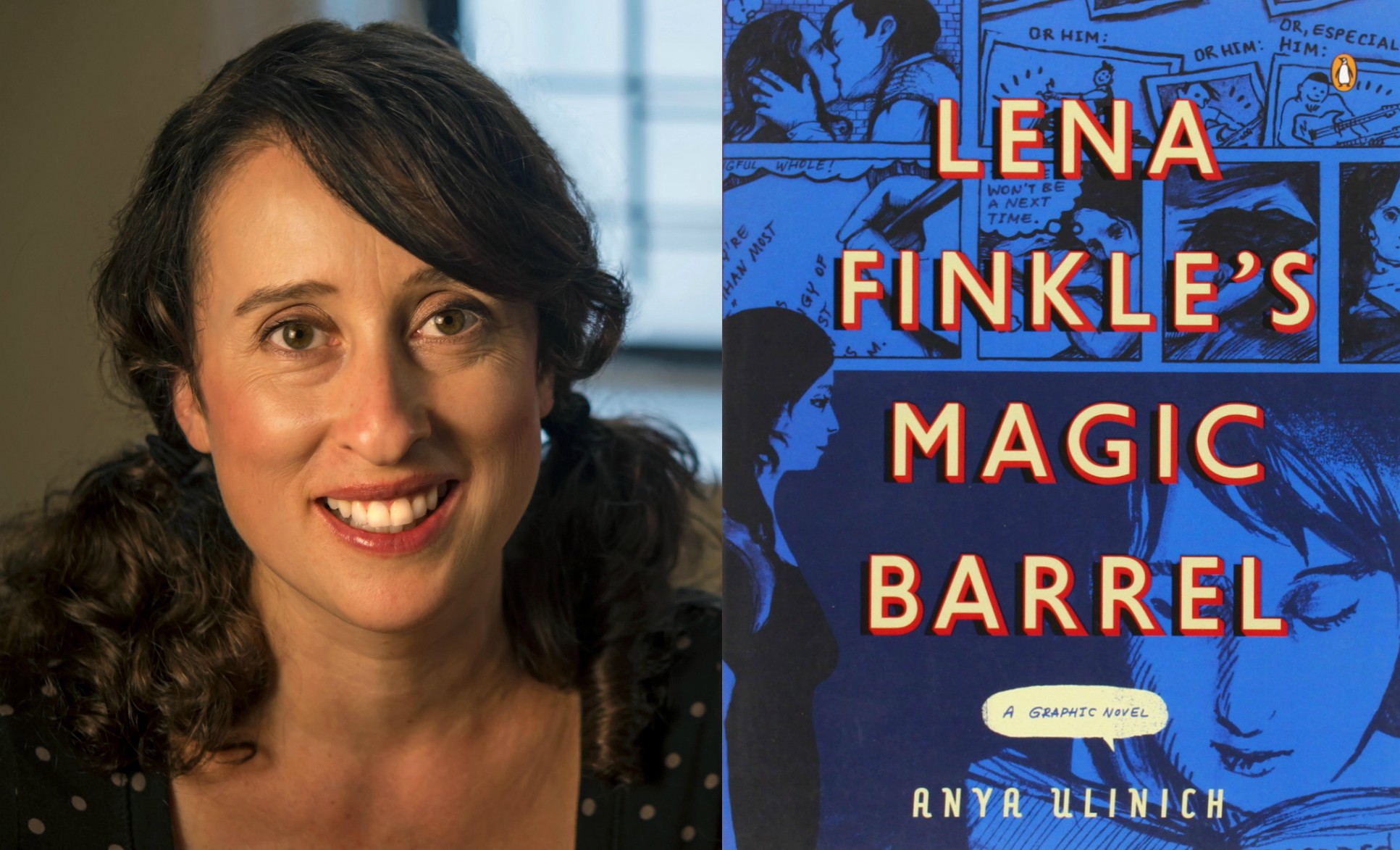
Catching Up With The Eagles Prize Finalists: Anya Ulinich, Author Of Lena Finkle’s Magic Barrel

This fall marks the inaugural award of the Brooklyn Public Library’s Eagles Prize, recognizing “the best books of the past year and the authors who most embody Brooklyn’s ideals.” Nominations were made by the borough’s bookstores, librarians, and library supporters. The Library announced a shortlist of six authors–three for fiction, three for non-fiction–over the summer. The winners, chosen by a panel of local authors, will be announced later this month. In the lead-up to the announcement, we decided to ask the finalists a few questions.

Next up: Anya Ulinich, Brooklyn resident and author of the graphic novel, Lena Finkle’s Magic Barrel (Penguin Books, 2014).

Kavanagh: As a writer, what’s your relationship to Brooklyn and its literary history?

Ulinich: I came to Brooklyn in 2000, straight out of art school, to be a painter. But rents were so high and my apartment was so small and there was no way I could afford both childcare and a studio space, or either of these, really. So I gave up making big messy oil paintings and switched to writing, as a more compact activity that could be done at a coffee shop in the evenings. I had never written fiction before then. While I was working on my first novel by night and taking care of my two small children by day, I met fellow writers among the parents at my daughters’ schools. They encouraged me and were incredibly generous to me. So, Brooklyn made me into a writer. It had more to do with the place itself and the friends I met here than with its literary history.

Kavanagh: What do you want to see more of in the literature of Brooklyn?

Ulinich: I can’t answer this. I don’t have a comprehensive enough picture of Brooklyn’s literature. I just wish it weren’t so expensive to live here. Because people who want to make art of any sort, none of which pays much, will eventually go elsewhere if they can’t afford to stay.

Kavanagh: Your graphic novel is set in Brooklyn, and your protagonist is an immigrant, an experience that has been well-documented in Brooklyn literature. What sets your story apart from that long history?

Ulinich: Every work of literature tells a different story. Stories about immigrants are often about straddling two (or more) worlds, and trying to reconcile them within a single identity. But that’s a universal narrative too, not just an immigrant narrative. Lena Finkle’s Magic Barrel, as well as my first novel (Petropolis, 2007) both have protagonists who are Russian immigrants. But Petropolis told an immigration story, a kind of a road story: that of the character’s journey from Siberia and across the U.S.Lena Finkle’s Magic Barrel is mostly a book about heartbreak, a story of a midlife crisis that is also a belated coming-of-age. The plot is about dating in the aftermath of a long marriage. Lena Finkle had come to the U.S. as a child, and her immigration story is told in flashback. This history helps explain grown-up Lena’s psychology, but the book itself is not a story of coming to America–it describes a different struggle, the struggle of opening up and growing up emotionally. The protagonist is an American writer, and her social and cultural milieu is the Brooklyn of artists and professionals (essentially, gentrifiers), not the immigrant Brooklyn.

Kavanagh: In the front matter of Lena Finkle’s Magic Barrel you write, “With apologies to Bernard Malamud.” Could you explain his influence on this book?

Ulinich: Lena Finkle’s Magic Barrel is an homage to Malamud’s famous short story “The Magic Barrel.” In Malamud’s story a young student, Leo Finkle (Lena Finkle is named after him) goes on a blind date that leads him to an existential crisis. In my book, Lena is reading “the Magic Barrel,” interpreting it, and relating to it, or at least relating to her own interpretation of it. She finds striking commonalities between herself and Leo–their stories have some circumstantial similarities, but also she relates to Leo’s emotional stuntedness and his search for the meaning of life. So I used Malamud’s story throughout. At one point in the book, I summarize it as a one-page cartoon. But the greatest thing about Malamud’s writing is of course that it can be interpreted in so many different ways. And the way Lena reads “The Magic Barrel” in LFMB is only one of the ways it can be read. And I’m not a literature scholar. And my primary loyalty as a writer was to my characters, to Lena and her story, her crisis and heartbreak. Therefore, apologies to Malamud. I wish I could have included “The Magic Barrel” in its entirety in my book, so my readers could read both at the same time. After LFMB came out, Malamud’s daughter, Janna Malamud Smith, wrote this to me: ‘My father’s been dead many years now, so I’m not certain what he would have felt about your references to his story. But my guess is that he would have enjoyed the attention, as well as appreciated your reflections on your protagonist’s search for sex, love and that elusive American concept, “identity.”’ I was very happy with this. When I was writing LFMB, by the way, I had no idea Malamud grew up in Brooklyn, very close to where I live.

Gogarty by Michael Deagler

“Gogarty took umbrage with Joyce’s portrayal of Mulligan, but Mulligan never fired a gun at Dedalus, whereas Gogarty did fire a gun at Joyce, so I think he got off pretty lightly,” I said. Ginty said, “What are you talking about?” and I fired my gun at him. Not directly at him, so to speak, but I fired it west, and he was standing west. “I don’t want to be roommates anymore,” I said. He was running away by that point, though, so I don’t know that he heard me.

We weren’t roommates, technically, in that we didn’t share a room. We weren’t housemates, either, though, in that we didn’t live in a house but in a Hamburg Süd shipping container. And we weren’t anything anymore, as he had just run away.

Ginty was overly cordial. That was the predominant flaw of his character. He was always inviting irregulars into our home. He happily exposed our possessions to half of Philadelphia. Ginty welcomed in Codo the thief with his bandaged thief hands. Worse, he let in one of the dreadlocked brothers of the New Monastic Way. Ginty donated some of his own blankets to be distributed to the beggars and the fiends down on the Avenue. He let the brother pick through my library, too, which was not a lending library. It proved too weighty a strain on our arrangement. So difficult, living with people.

With him gone, I set to work snipping down the strand of twine that hung lengthwise through the container, demarcating Ginty’s half from my own: his with his hubcaps and army blankets and empty bottles of bourbon, mine with my stacks of alternative weeklies and library books and empty bottles of Canadian rye. Our divergent taste in spirits was already filling me with nostalgia, so I chucked the bottles with the twine out into the weeds and pulled my wicker chair up to the container’s entrance and sat with my gun across my thigh in the posture of independent homeownership.

Yes, I knew houses. I was past sixty and had lived in houses for the first long while. I found them to be perishable things, susceptible to fire, rot, and foreclosure. Plus, the banks had a list of all the houses and knew precisely where they were. Anywhere that a cellar got dug or mortar met brick or a person painted some numbers on a door, the banks seemed to know about it. The banks had an inside man at the post office, likely as not.

Only I knew where all the shipping containers were, beginning with their concentration in South Philadelphia by the naval yard and fanning northward and west in scattered locations around the city. Once they were set down in the dirt they rarely moved. I knew of a Kien Hung box that had sat behind the Fox Chase VFW since at least the mid-1990s. I knew a woman who birthed a daughter in it in ’96. Mine was the only container in West Kensington, though, and as such it was highly desirable. Containers were airtight and rust-treated, built to contend with the weather of the world’s roiling seas. If painted white and properly ventilated, they were more than tolerable. When shut up they were nearly impregnable. Best of all, containers received no mail.

Houses. Heh.

I sat out in my wicker sucking in the evening air through my nostrils. It was May, and the calendar seemed to congratulate me for my solitude with a warm breeze and a quiet city. My lot was long and deep: three houses at least had stood on it before succumbing to their crumbly fate. There were only a few still standing up and down the street, poorly kept and overly occupied by extended Puerto Rican families. It was a small tertiary street that abutted an elevated and rarely used commercial rail line. The city hadn’t repaved its asphalt since the days of the Dilworth administration, and it had no name because I stole down both the street signs from either end of it and dropped them into a storm drain. If the Puerto Ricans noticed then they did not complain. My lot, unmowed in a decade, was in the throes of its vernal eruptions: yarrow, baneberry, shadbush, hornbeam. If left alone for a few hundred years more, it would become indistinguishable from an old-growth forest. Then it would really be something.

I closed my eyes and pictured the virgin woods of the unspoiled continent as they must have once existed. Silent and immediate, simultaneously intimate and vast. Not unlike a city, spatially. A city of trees. Soft light. The scent of moss and decomposition. Huge porous trunks like pylons supporting the dim deciduous firmament above. All the Northeast had been like that, once: a great unbroken belt of green. Before the arrival of the mapmaking Dutch. Before the timid Swedes. Before the apollonian English Quakers and the German Anabaptists. Before the feral, riotous, peasant-faced, famine-greedy, book-hating, corruptive, consumptive, end-of-the-world Irish —

“Excuse me! Sir!”

I opened my eyes. Down at the end of my trampled path, where it met the half-extant pavement of the sidewalk, a young man in an Oxford shirt and necktie stood holding a small black briefcase. “Beg your pardon, sir,” he called to me, “but I couldn’t help but overhear what sounded like a gunshot.”

I looked over my shoulder to find the spot where the bullet, which had ratified the dissolution of Ginty’s and my containermateship, had punctured a peephole in the door’s corrugated steel before sailing off into the western sky. I’d have to patch that. Though maybe not until the autumn arrived, when the draft would become unwelcome.

I turned back to the man, who by now was actually walking up my path with a cheerful confidence that must have been symptomatic of a deep, unchallenged stupidity. I waved my gun at him and he simply waved back. “I know around here the polite thing to do is pretend that we don’t hear gunshots,” he was saying. “I’m not even saying I heard a gunshot, definitively. But I pride myself on knowing the sharp report of a business opportunity.”

As he reached me he stuck out a pale, freckled hand. “My name is Seamus Costello. Can I ask you your name, sir?” He had a ruddy face and ears like jug handles and was markedly sweat-stained for the mild weather. He must have spent the day hoofing all around the neighborhood.

“Gogarty,” I said, which wasn’t my name, but my name was none of his business.

“Gogarty,” he said. “How melodious. I like it. Mr. Gogarty, as I’m sure you’ve surmised from my case here, I’m a man with wares. And deals. Wares and deals for you, sir. Mind if I sit down?” He looked around for another chair.

“Do what you like,” I said. “We believe in freedom here.”

He squirmed for a minute and then, having no alternative, sat down in the dirt, cross-legged like a fur trapper, and opened up his case. “I’ll skip my normal song and dance, since I can tell you’re a man who values his time. The product today is knives, Mr. Gogarty: the finest in never-sticking, never-dulling, never-rusting kitchen cutlery.” He spun the briefcase towards me to reveal an array of stainless steel blades of various dimensions, shimmering in the diminishing sunlight like the teeth of some long-extinct ocean terror.

“I don’t have much use for kitchen cutlery,” I said. “As I’m sure you’ve surmised from my container here, I don’t have a kitchen.” I didn’t eat much, to tell you the truth. Just the Canadian rye and the occasional spoon of peanut butter.

“Oh no? You don’t have a summer salad in your future?” He looked around at the shoulder-high shoots and brambles. “I’m sure you’ve got something growing out here that would chop up nicely. But that’s not really why I’m here. As I said, sir, I was walking down the street one block over and I heard a noise. Then I saw a man — an interesting looking man, the kind of man who looked like he might live in a shipping container in a vacant lot — and he was running down the street. He looked like he might be running away from the sound I heard, as if perhaps the sound I heard might have been directed toward him. Now, again, I don’t know that it was a gunshot. Maybe somebody threw a firecracker at him. Maybe a car backfired close to his head and gave him a terrible fright. But, if I had to guess, Mr. Gogarty, based on the fact that you are currently holding a firearm and that there is a bullet-sized hole in the wall of your shipping container right there, I would say that this man might have been on the losing side of a domestic dispute. Am I right?”

I hadn’t expected him to say any of that, and I didn’t know quite how to respond. “A containermates’ dispute,” I said.

“Containermates,” said the young man. “Right. No judgment. How’s it my business, really? Why should I care what anyone in this fair city of brotherly love does within the walls of their own homes? Why should I even know about it?” He reached into his case and removed a carving knife with a ten-inch blade. He spun it around his thumb like a drumstick and then offered it to me, handle first, as if he was surrendering a sword. “Check this killer out. Sleek. Agile. And, most importantly, silent. Had you threatened your buddy back there with this steely rebuttal, I wouldn’t have known anything about it.”

I took the knife and felt the weight of it in my hand. It was light, a bit disappointingly so, yet there was a professional balance to it that allowed it to rest snugly in my palm, the way stones of a certain size and shape feel immediately suitable to the human hand. It was, somehow, primeval.

I looked down at the grinning salesman, seated at my feet like an eager disciple. “Are you a student?” I asked.

There was a tautness at the edges of his eyes. “I like to think of myself as student-adjacent. I know a lot of students. One of my roommates is a nursing student.”

“Roommate.” I raised the blade in a gutting motion. “What’s his drink?”

“He doesn’t drink,” said Seamus. “And we don’t trust him. Ha ha ha. But seriously — ”

“Have you read James Joyce?” I said.

He paused, his face in cautious consideration, not wanting to ruin his sale by answering incorrectly. He said, “Mr. Gogarty, I’m not going to disrespect you by lying to you and saying that I’ve read James Joyce, because I haven’t, because reading — for my generation, I’m saying, not for yours — reading is for suckers and is a complete waste of time. But I know who Joyce is, I’m familiar with Joyce’s concepts, I think Joyce had a lot of great ideas, and I — and please excuse my profanity here — I respect the fuck out of James Joyce.”

I held the knife out straight, following the sight of my arm so the blade seemed to point at the slender gap between the young man’s eyes.

Seamus cleared his throat. “To get back on topic, though, Mr. Gogarty, statistics show that West Kensington has the highest murder rate in the city. Except for Strawberry Mansion, but I’m not trying to peddle steak knives to those teenage psychopaths. I’m just trying to offer a quieter, more intimate solution than ballistics to domestic friction. Don’t bother your neighbors. Don’t involve the police. Hell, you just stick the person a little and there doesn’t even need to be a fatality. Isn’t violence mostly just posturing anyway? Trying to get the upper hand in a relationship? Like mountain goats locking horns or wolverines pissing on each other or whatever the fuck they do? A lovers’ quarrel need not end up before a judge. Or a containermen’s quarrel, or whatever you said.”

“And how’s that going?” I asked. “Are the people around here buying?”

“Not exactly,” he said, his voice tight and frustrated. “I don’t know why, though. It’s a stabby world out there. I mean, doesn’t this make a lot of goddamn sense?” He rose to his feet, wiping the dirt from the seat of his pants. “But apparently not, in Kensington Occidental. The people around here are acting like they don’t speak English. These are third generation Puerto Ricans, for Christ’s sake, not off-the-truck Guatemaltecos. But you try to unload some knives on them and they get all, ¡No puñalada! No puñalada! and shoo me out like a Jehovah’s Witness. I’m a goddamn small businessman. This whole goddamn economy is built on my goddamn back.”

“Small businessman?” I asked. I looked at the logo on the butt of the knife. “Are you not an employee of Genroku Cutlery?”

“Genroku doesn’t have employees, only contractors,” said Seamus. “And, between you and me, I’m not even a contractor. I recently acquired a couple crates of these things because I thought I could unload them easy. Turns out there’s not a huge market.”

“Tell you what,” I said. “I’ll take this case off your hands, and I’ll give you my firecracker here. Since it’s so noisy.”

Seamus balked. “You’re seriously offering me an unregistered firearm? You got the paperwork for that thing in your aluminum box? We’re sitting in a vacant lot in North Philadelphia. Who knows how many unsolved murders are tied to that weapon? No thanks, Mr. Gogarty. If I wanted a gun I’d go buy a clean one at Walmart. I want cash. Or maybe a trash bag of cannabis, if you’re growing that out here in your safari park. But I’m not trying to add my fingerprints to a future piece of evidence. No offense.”

I ran my fingers through my beard. I wanted the knives: in part for practical reasons, in part for philosophical reasons, and in part, I’ll admit, for purely aesthetic reasons. I imagined myself clad in a bandolier of knives, facing down any interloper that attempted to reintegrate my lot into the city. Who wouldn’t be intimidated by a man wearing a bandolier of knives, holding the largest above his head like a machete, speaking the truth about the pleasures and liberties of container habitation?

I looked at Seamus, this shrewd philistine, and could not hate him. It was the culture’s fault that he had become the way he was. Stealing from him — marching him off my property at the barrel of my gun and keeping the knives for myself — would not likely teach him anything, except to become more self-pitying and reliant on others for his own notion of success, and would not likely cause him to see the error in his cynical thinking about the weapons trade. No, I thought I could help this young man, who was perhaps not unlike myself many years earlier.

“What about this,” I said. “If I can sell this case to my neighbors down the block, there, then you have to deliver to me a case for free.”

Seamus considered the offer a moment. “All right,” he said at length. “If you can get sixty bucks from them, I’ll give you a case for free. Deal?”

I didn’t want Seamus to come with me to the house, and I didn’t want him to leave either, so I decided to lock him up in my container. He didn’t want to get into it, but since he no longer had any knives, and since I now had all the knives and my gun on top of everything else, he had little choice but to do what I said. Once he was shut up in there and emboldened by the state of no longer having the gun pointed at him, he became decidedly less friendly and compliant and began to bang on the doors, shouting things to the effect of, “Gogarty! Gogarty! Yo, fuck you, Gogarty! You bearded fuck!” But perhaps he was claustrophobic and it was his own fear with whom he was truly angry.

I put the gun in the empty flowerpot where I sometimes liked to hide it, I packed up the knife case, and I made sure, as much as I was able, that there was nothing sticking in my chaotic hair. I did not have a mirror, so I did this mostly by touch, and also partially by looking at the silhouette of my own shadow, now stretched and inaccurate in the fading light. Then I walked down my path and out onto my anonymous street, up toward the nearest house, where I knew a young woman lived with her children and perhaps some of her siblings.

When I said before that the house was poorly kept, I meant that there were blue tarps tied over sections of its roof and facade, and that the mortar had chipped away from between many of the bricks, and the bricks themselves were in a poor condition because they were old and made of clay, the sort bricks that do not suffer frosts well and lack tensile strength and should never be used in construction in a non-arid climate. But the house had likely been built before the birth of my parents, perhaps before the birth of the grandparents of the young woman who lived there currently, so those responsible were likely long dead and beyond opprobrium. And really, it being almost summer, the house did not look all that uncomfortable, as the warmer months were kinder to old houses, particularly old houses that faced the northeast, as this one did.

I knocked on the door. I reached up to my throat and adjusted Seamus’s tie, which I had taken from him in order to look professional. I had also put on a long-sleeved t-shirt and the lightest jacket in my possession — it was camel hair — and the combination of all of them was making me feel a bit warm. The door opened, and the young woman was standing there in pajama pants and a tank top, with an apron tied over both. She was a short woman, with a ponytail and wide-set eyes and a face that looked as though she was about to clean out a rattrap. Or at least that’s how it looked when she saw me on the step.

As I opened my mouth to start talking, I realized that I had never spoken to this woman before in the several years we had lived across the street from each other; that, in fact, on a regular basis, I spoke only to Ginty and the clerk at the state store, and sometimes the mailman, who I liked to shout at; and these realizations made me suddenly nervous and I didn’t know what to say.

The woman seemed equally confused. “Can I help you?” she asked.

From behind her I heard the voice of another woman. “Angelys? Who’s at the door?”

“I don’t know, Ma,” called Angelys. She looked me up and down, at my case, at my tie. “It’s that guy, though. I don’t know his name.”

“Gogarty,” I said.

Behind Angelys the other woman appeared, just as short and a few decades older. She looked as though she might be nearly my age. “Angelys, don’t be rude,” said the woman. “Let the man come in.”

“No, Ma,” said Angelys, keeping her eyes on me. “It’s one of those guys that live in that box across the street.”

“Let him in, Angelys,” said the woman. “He’s probably a veteran.”

“Are you a veteran?” asked Angelys.

“Well, I — ” I began.

“Ma, he’s not a veteran.”

“Angelys,” said woman, “let him in. It’s Mother’s Day. You have to listen to me.”

“Hey, I’m a mother, too,” Angelys said to her. “I got three more kids than you.”

“Angelys!” the woman barked.

Angelys’s eyes narrowed as she stared into my own. “Yo, did you fire a gun earlier?”

Angelys!”

“Fine, come in,” Angelys said and turned, walking away from the open door.

I followed the women into the living room. It had been many years since I’d been in a proper living room, and the geometry of it felt immediately alien and familiar. There was a couch and a loveseat, a coffee table, and a ridiculously flat, thin television standing on a rack against one wall. The older woman pulled me to the loveseat and bade me sit, while she moved to the couch, cuffing the knee of a young man who had been lying all the way across it.

“Well,” said the older woman, settling herself. “So you’re one of our neighbors?”

“Yes,” I said. “I’m Gogarty.”

“Well, Mr. Gogarty,” said the woman. “You’ll have to excuse me for not knowing you. I’ve only just moved in here with my children. I’m newly retired and decided I wanted to spend more time with my grandkids. Though if I knew what a disaster state this house was in, I would have thought twice. My name is Grace.”

“Yeah, well, tell your son, if you hate it so much here,” Angelys called from the kitchen. “Derek was supposed to fix the roof.”

The man on the couch threw up his hands. “Yo, how do I know about roofs and shit?” he said. “You raised us in an apartment. When was I supposed to learn about roofs and shit?”

“Your roof is probably significantly past its life expectancy,” I said. “You’d probably be best off just replacing the whole thing.”

“Oh, do you know about houses?” asked Grace. “Angelys, maybe this man who knows about houses could fix up your house for you. Maybe if you offer to cook for him he’ll help you fix this house. You probably don’t get much good cooking in your box, do you, Mr. Gogarty?”

“Shipping container,” I said. “No, I don’t. But I haven’t worked on a house in a long time. Just my container. I do have a soldering gun I could lend you, though.”

“That’s very thoughtful,” said Grace. She cuffed Derek again. “See, you have no excuse now. Mr. Gogarty can show you how to do these things. My children are not as inept as they might seem, Mr. Gogarty. Right now, my daughter is making me a lovely Mother’s Day meal.”

I looked back to the kitchen, where Angelys was drinking a water glass of something amber-colored and glaring at me. “That’s wonderful,” I said.

“It is. Are you doing anything for your mother today? Or,” she asked, her voiced dropping, “has she passed on?”

“Yes, the latter,” I said, which was true, though I could not remember ever having done anything for Mother’s Day while my mother was alive, or ever actually being conscious of a day being Mother’s Day. My mother did not do a lot for me, to be fair. “I don’t actually have a family anymore.”

“I’m so sorry,” said Grace, a look of genuine concern on her face. “Well, you’ll have to stay and have dinner with us.”

Angelys slammed down her drink and called from the kitchen, “What? Ma, that’s one of the box guys. I told you about them. He lives in a box.”

“Angelys, don’t be rude!” shouted Grace. She patted my knee, and said, “Houses are just boxes, after all. Boxes with leaking roofs, for us.”

“What’s in the case, man?” asked Derek, nodding at my feet.

I had forgotten about the knives. No longer wanting to try to sell anything to the family, I quickly tried to think of some other object that might be in the case. “Knives,” I said.

“Knives?” said Derek.

“Kitchen knives. A full set. Kitchen cutlery. Never dulling. No-stick.”

“Why do you have knives?” asked Derek. “Are you selling knives?”

No, not selling, not anymore. But what was I doing with the knives? Holding? Transporting?

“These are a Mother’s Day gift,” I said. “I was trying to think of what I would get my own mother, and I decided that the thing she would like most is a new set of kitchen knives. But because she’s passed on, as you said, I decided to find a different mother to give them to. They’re brand new. Top of the line. Here. You have them.” I held out the case to Grace.

She held up her palms. “Oh, I can’t,” she said. “You’re too generous.”

“Why are you giving her the knives?” called Angelys from the kitchen. “Hey, I’m a mother, too.”

“Angelys, I’m a mother and a matriarch,” said Grace. “Thank you, Mr. Gogarty. That’s a very nice thing to do.”

“You’re a weird dude,” said Derek, pointing at me.

“Stop it,” shouted Grace, and she cuffed him a third time, on his ear. “My children are so rude! And on Mother’s Day! You stay with us, Mr. Gogarty. This will be the most wonderful day in a long time.”

With that she called down her grandchildren, who she introduced by age, ranging from three to eleven. She made them tell me about what they liked and where they went to school, and their ambitions for when they grew up, and how they would all definitely go to college, but also how the boys would know how to be handy as well, unlike their uncle Derek who only knew how to make excuses. It had been longer than I could remember since I had spent time around small children. Perhaps since I had been a small child myself. I was impressed with their candor and their free spirits. They asked me questions about living in my shipping container, and pulled on my beard, wanting to know if it was real and if I was terrorist or a mad scientist. I said I was a little of both, and they all laughed, and not uneasily the way that adults would laugh around me.

Soon the dinner was prepared and we all sat around the cramped kitchen table, and, according to the tradition of the household, the children all had to say something for which they were thankful but also something for which they wished. When it was time for Yadiel, who was eight, to speak, he said, “I wish I could live in the woods.”

Derek snorted. “You can’t live in the woods, Yadiel,” he said. “There’s wolves there. And wolverines pissing on each other and shit. You’d get eaten, man.”

But I said, “You know, Yadiel, a long time ago, this whole area was a forest. There was one great continuous primeval forest that stretched from Maine all the way down to Georgia, including Philadelphia, including right here. And the forest would still be here if people hadn’t cut down all the trees to make space for cities and farms. So it’s like we’re living in a clearing in the middle of a giant forest. That’s how I like to think of my lot across the street, as a clearing. And that maybe one day the forest will grow back up around me.”

“That’s fucking stupid, man,” said Yadiel.

“Yadiel!” said Angelys. “Be nice to Mr. Gogarty.”

“It might be stupid,” I said. “But sometimes you need a fiction to help you get through life. Sometimes you can find it in a book, and sometimes you need to find it in your imagination. This world can be tough if you let it make all your decisions for you. You have to meet the world on your own terms. But you kids are all lucky because you have this great family to help you. Having other people around you, even when they annoy you, can make this whole thing a lot more tolerable.”

At that Grace broke down into tears. “That’s so wise, Mr. Gogarty,” she sobbed. “Who could ever have imagined that my life would be so blessed!”

After dinner, Grace walked me to the door, saying, “Thank you for coming, Mr. Gogarty. And thank you for the set of cutlery. It was so lovely to have you visit. You’ll have to have us over to your box sometime.” I promised I would. She shut the door.

As I stood on their step, a strange feeling came over me. The best I can describe it, it felt as though a few dozen fingers had taken hold of me, and were washing my hair, and brushing my beard, and rubbing the skin of my scalp and neck and shoulders free of all the sweat and the dirt that must have been collecting there for years and years. Like these fingers had dipped themselves in clean, fresh water and fine-scented oils and were dancing over my skin, messaging all the years away.

I walked up the street to look for Ginty.

For more, read Electric Literature’s interview with Michael Deagler.

Midweek Links: Literary Links from Around the Web (October 14th)

Looking for some interesting reading to get you through the week? Here are some literary links from around the web to check out:

Garth Risk Hallberg’s much-hyped $2 million debut novel is out this week, and here is what the critics are saying

A look at weird fiction by women authors

Ed Park on the darkly funny fiction coming out of South Korea

Will the next George R. R. Martin TV adaptation be about werewolves?

Looking for some scary October reads? Here are some recommendations

Writers love to write about leaving NYC, but here is one who is happy she stayed

How professional readers read for pleasure

Salman Rushdie on how writers “challenge fears. Literature is unafraid.”

A look at this year’s hottest horror genre: cosmic horror

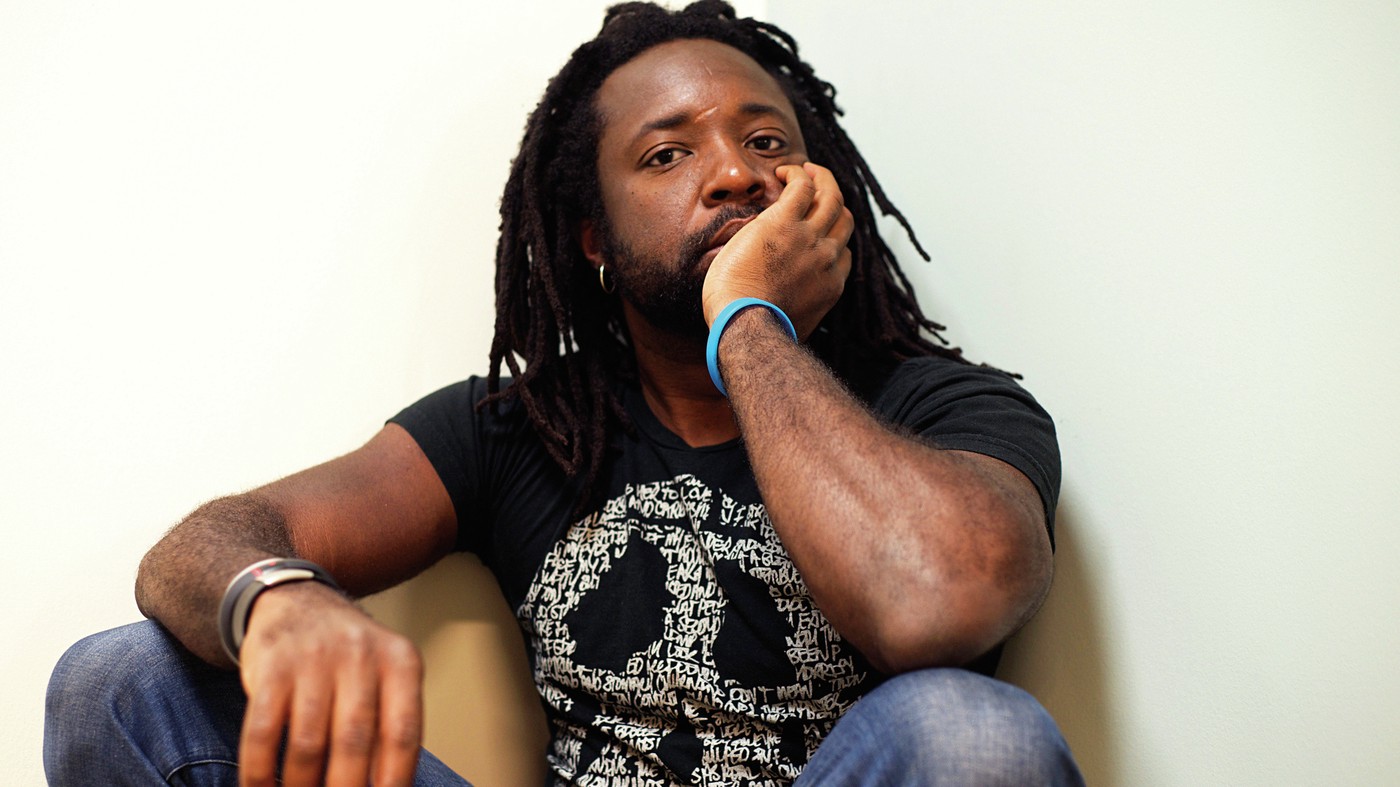
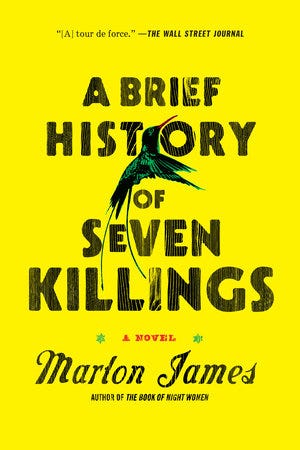
Marlon James Wins 2015 Man Booker Prize for A Brief History of Seven Killings

A brief history of seven killings

Jamaican novelist Marlon James has just won the prestigious Man Booker prize for his novel A Brief History of Seven Killings. He is the first Jamaican novelist to be shortlisted and to win. The chair of judges, Michael Wood, called it the “most exciting” short listed book and noted the plethora of voices that “went from Jamaican slang to Biblical heights.” Wood went on to say that “a lot of it is very, very funny, a lot of it very human” and that while “it is not an easy read, it is a big book with some tough stuff and a lot of swearing but it is not a difficult book to approach.”

This was the second year the award was open to all English-language novels. Previously, only writers from the British commonwealth, Ireland, or Zimbabwe were eligible. It took the judges only two hours to come to a unanimous decision. The award comes with a £50,000 purse, and normally a significant boost in sales. James is 44 years old and lives in Minneapolis.

After winning the award, Marlon James said, “Ten years ago I’d given up on writing. I had a novel that had been rejected 70 times.” Luckily for readers everywhere, he did not give up. Congrats to Marlon James!

The full shortlist was composed of:

  • Marlon James (Jamaica), A Brief History of Seven Killings
  • Tom McCarthy (UK), Satin Island
  • Chigozie Obioma (Nigeria), The Fishermen
  • Sunjeev Sahota (UK), The Year of the Runaways
  • Anne Tyler (US), A Spool of Blue Thread
  • Hanya Yanagihara (US), A Little Life

Listen to President Obama Interview Novelist Marilynne Robinson

President Obama tried on a new hat as a books journalist for The New York Review of Books. The President talked to Marilynne Robinson in Des Moines, Iowa on September 14, touching on topics ranging from her books to democracy, Christianity, and systems of oppression. Obama says in the interview that it was a welcome change from the various political events he usually attends when he’s visiting towns around the country, explaining it’s not often that he gets to: “have a conversation with somebody who I enjoy and I’m interested in, [about] the broader cultural forces that shape our democracy and shape our ideas, and shape how we feel about citizenship and the direction that the country should be going in.”

Obama goes on to tell Robinson that she was first on his list of people to talk to, and that he is a great fan of her books and especially her character Pastor John Ames from her book Gilead. They then discuss Robinson’s essay on fear, and the role of fear in politics, democracy and culture. Robinson explains that she believes that the fear of “the other” is the worst thing we could have become a part our political discourse, to which Obama replies:

Well, now there’s been that strain in our democracy and in American politics for a long time. And it pops up every so often. I think the argument right now would be that because people are feeling the stresses of globalization and rapid change, and we went through one of the worst financial crises since the Great Depression, and the political system seems gridlocked, that people may be particularly receptive to that brand of politics.

The conversation moves on to deal with how Christianity in the US is sometimes connected to an “us versus them” mentality, and how Robinson, who takes faith very seriously, grapples with the suspicion that some people of strong faith have towards those who are not like them. Robinson explains her view on the matter, saying:

Well, I don’t know how seriously they do take their Christianity, because if you take something seriously, you’re ready to encounter difficulty, run the risk […] But Christianity is profoundly counterintuitive — “Love thy neighbor as thyself” — which I think properly understood means your neighbor is as worthy of love as you are, not that you’re actually going to be capable of this sort of superhuman feat. But you’re supposed to run against the grain. It’s supposed to be difficult. It’s supposed to be a challenge.

Obama goes on to ask Robinson about her small town upbringing, how it has informed her writing and the subjects she is interested in, and her appreciation, which Obama says he shares, for Middle America. The conversation circles back to the idea of us versus them, and how this pertains to systems of oppression and local versus national government. The full first part of the interview can be read here, and the second part is upcoming in the next issue of The New York Review of Books.

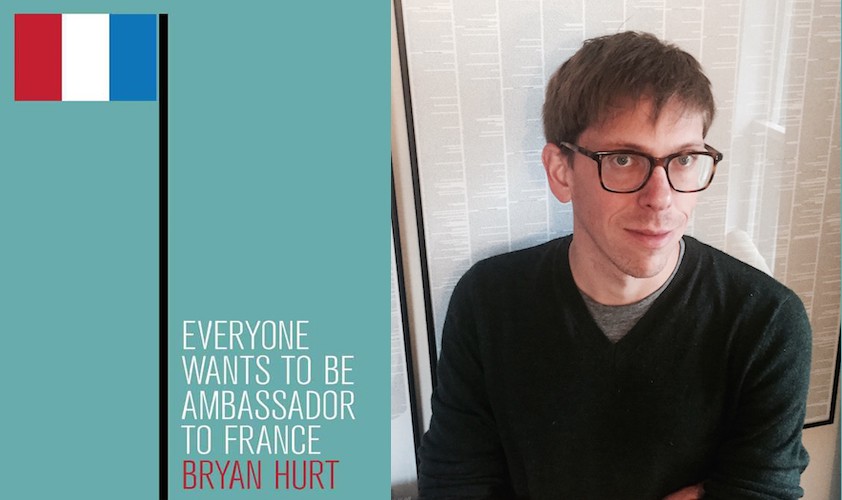
The Destination Is Just An Excuse To Get Your Mind Moving: An Interview With Bryan Hurt

“Spooky Action At A Distance” by Bryan Hurt is featured in Electric Literature’s Recommended Reading with an introduction from Cheryl Quimba of Starcherone Books. Hurts’s new collection, Everyone Wants To Be Ambassador To France is available from Starcherone Books.

Julia Johanne Tolo: In “Honeymoon,” one of the first stories in Everyone Wants to Be Ambassador to France, there is this idea that something lasts from the bad honeymoon, if not for the couple, then in the memories and minds of the people that they met. This feels like an elaboration on “Spooky Action at a Distance” to me: how the characters’ actions and experiences change not just their future, but the future of the people they meet. Is this a conscious theme in the collection?

Bryan Hurt: This is a good connection! To be perfectly honest I didn’t think all that much about theme when I was writing either of these stories, but I really like the idea that they’re both about the unintended effects that people have on other people.

One thing that I think is mostly true about writers is that we’re all — even the best and most social among us — sort of outcasts and exiles. We’re not good at fitting in, we hang at the edges of our groups, and we spend a lot of time observing other people. Something that I notice a lot as an introvert/exile/outcast myself is how clumsy people are with other people. We’re unaware that our actions have a kind of splash radius. It’s like when you spill a cup of coffee and all you’re concerned about is the stain on your pants or the fact that your crotch is burning. But you’re not noticing that you also soaked some guy’s brand new limited edition sneakers or the coffee puddle is slowing creeping towards someone else’s laptop. We do this all the time and not just with coffee; there are all sorts of things that splash, bad honeymoons, ambitions — emotions!

JJT: Your tone in “Spooky…” is so light and funny, yet you touch on big questions about guilt and consequence towards the end. Is switching gears between humor and anguish in the story something that came naturally to you?

BH: Thanks for noticing. Funny/sad is a tone that I go for a lot because I’m always pretty moved whenever I encounter it in other works of art. I think a lot of people who are smarter than me have spoken very eloquently about the connection between comedy and tragedy, and I’m not sure that I have a lot to add to it. One thing that comedy does is that it allows us to confront that which is tragic, cruel, or unjust; we can take on all of this morally heavy stuff without having to moralize about it. I think it works in this story because our narrator is confessing his own past crimes and transgressions. When we laugh at him for killing baby Hitlers, we’re forgiving him in an abstract sense and we’re also saying, “How strange it is that we can forgive you for (hypothetically) murdering a baby. What a morally confusing world this is that we live in!” But I think a lot of us have stopped laughing by the time he’s gotten to Margaret. His failure here seems more basic and devastating. This is a listy story and I’m not quite sure if we’ve stopped laughing because of the accumulated weight of the list or if this failure of kindness is actually something that’s beyond laughter and forgiveness.

JJT: I read that you majored in German and English at Ohio State, is speaking two languages something that influences your writing? And did your own experience with speaking German inspire your story from Everyone Wants to Be Ambassador to France, “The Bilingual School”?

BH: I guess I would say that in general I’ve been both incredibly lucky and a pretty bad steward of my own life. A lot of the things I’ve done I did because they offered the path of least resistance. In high school I only applied to one college — the only college that didn’t require me to write an admissions essay — and my freshman year I enrolled in a German class because I’d taken German in high school (which I’d switched into because Latin was too hard). In the college class I had the opportunity to spend a semester in Austria, which seemed like a good idea because the school I was at turned out to be this very fraternity- and party-heavy school and I wasn’t having a good time there. When I came back I transferred to Ohio State and I met with a counselor to discuss what I might major in. At the time I had no idea and I remember the counselor looking at my transcripts and saying, “I see you have all of these German credits… Why not major in German?” It turned out to be a pretty good education. I wasn’t very good at the vocabulary, my grammar was always pretty spotty, and I wrote most of my papers using an online translator, but I also had a chance to read all of these great writers — Zweig, Mann, Brecht — in their original language. It took tremendous effort just to read them. I was cracking my teeth on every single sentence, chasing meaning. But I also got to really understand the drama of well-constructed sentence, and some of the pleasures. And if you’re not fluent but reading in a foreign language every book takes on a kind of surreal aura, meaning flickering at the edge of your consciousness. I think this shaped my taste for surreal stories.

The story in question actually comes from when I was living in Venice Beach. There was a French-English school I used to walk past all the time. It was surrounded by this very tall, blue fence with all of these cheery paintings on it. The fence was actually so tall you couldn’t see the school inside of it, which added a sort of mystery. I’d walk by and try to glance in the knotholes to see what was going on in there. But I also didn’t want to be the weirdo who was trying to peek in on school children, so I’d sort of move my eyes in the direction of the fence and walk by very quickly. At the same time I was working as an SAT tutor to these very rich Los Angeles people. I think the tutoring agency I worked for charged something like $250 an hour (they paid me about $30). The kids were all really nice and I got along with most of them fine, but the parents were all obviously super-controlling. They had a lot of fear, because the tests were out of their control and they were finally bumping up against the limits of their privilege (but of course not really; they could afford to pay thousands of dollars for me to come and sit with their kids for two hours a week). When I wrote the story I was thinking about the mystery of the French-English school and also these super-controlling, fearful parents. I thought how scary it would be for them to give their kids the expensive privilege of a French education only to have their children return to them as these unrecognizable, uncontrollable, French-speaking doppelgangers.

I have to thank my friend Courtney Maum for helping with this story. When she read the manuscript she noticed that a lot of my French was wrong and fixed all of the errors.

JJT: May I ask how you came up with the title for the collection, Everyone Wants to Be Ambassador to France?

BH: The title is a throwaway line of dialogue from another one of the stories in this collection, “Vicissitudes, CA.” In it three characters are sitting around a dinner table discussing their favorite U.S. presidents and, by dint, their favorite presidential assassins. One of the characters says that his favorite assassin was Charles Guiteau. He says that Guiteau killed Garfield because Guiteau was sexually frustrated. “If there ever was a reason to kill someone — ” the character sort of insinuates. Guiteau probably was sexually frustrated. Before he killed the president he’d recently been kicked out of the famous sex and silverware manufacturing cult in Oneida, NY for being too creepy (“Charles Gitout” was his nickname there) and was living in Washington D.C. trying to figure out what to do with himself. He had been a supporter of Garfield and so figured that president owed him something and that ambassador to France was within his wheelhouse. He petitioned Garfield and his cabinet in person and was eventually banned completely from the White House. After that he bought a pistol and shot the president.

In my story, one of the characters points this out and says that technically Guiteau killed Garfield because he wanted to be ambassador to France. But the other two characters dismiss this out of hand as being too stupid and petty and pedestrian a reason to murder a president. “Please,” they say. “Everyone wants to be…” etc. etc. When I wrote that line I knew pretty much immediately that it would be the title of the collection. A lot of my characters cause pain and suffering because of their unchecked ambition, and at the same time, even though Guiteau was a complete sociopath, I’m also kind of moved by what I perceive to be his sadness and loneliness. He’s tragic and absurd, a complete outcast, and I think a pretty good mascot for the collection.

You might be saying, “Wow! That’s a lot of information for a throwaway line of dialogue.” It sure is. For a long time I thought I was going to write the Great American Oneida Colony novel and I did a lot of research. I’m sad to say that the novel never really took off (a danger, I think, of writing historical fiction is engaging in a project without understanding why you’re emotionally drawn to it; for me the “cool” or “wow” factor is never sufficient), but I did those get seven words and a few lines of dialogue. So not a complete wash. And who knows maybe the great flatware-manufacturing sex cult novel is still somewhere in me.

JJT: I really enjoyed your other story from Everyone Wants to Be Ambassador to France, “My Other Car Drives Itself,” and I realized that cars are important to your characters in the collection. What’s your relationship to cars, and why did you choose the Delorean for the time machine in “Spooky Action At A Distance”? Are you a big Back to the Future fan?

BH: I wrote ninety percent of these stories while I was living in L.A. and so I guess I’m not super surprised that so many cars worked themselves into the collection. In L.A. cars are a big part your identity. Not just as status symbols, but if you ever want to leave your neighborhood you spend a lot of time in them. They’re part of who you are in the same way that your house is an extension. It took me a long time to accept this part of L.A. reality because I always considered myself more of a walker. Now I live in a very small town and I can walk everywhere. I’ve only had to fill up my car twice in the past two months. But I have to admit that I find myself missing my car time, the zoning out and solitude.

Really I’m not a huge Back to the Future fan. I like it but probably no more than anyone else. I had the sentence, “We were surprised, of course, that when we built our time machine it turned out to be a Delorean,” and I don’t know exactly where it came from. I liked the idea of two scientists accidently building a Delorean, but more than that I thought the rhythm of the sentence could support a story. I liked hiccup of “of course” and the shrug of “it turned out to be.” Already the sentence had its own strange internal logic and was generating mysteries. At that point my job was to get out of the way, not overthink it, and follow it wherever it was going.

I think that writing short stories is more like walking than driving. When you’re driving you’re usually trying to get somewhere. You type an address into your GPS and follow the directions. It’s all very mechanical and productive. But when you go for a walk — or rather when I go for a walk — I feel free to explore, make wrong turns, double back, linger. I think that’s how stories work. You might have a destination in mind, but really the destination is just an excuse to get your mind moving.

***

Bryan Hurt is the author of Everyone Wants to Be Ambassador to France, winner of the Starcherone Prize for Innovative Fiction, and editor of Watchlist: Short Stories by Persons of Interest, a new edition of which will be published by Catapult in May 2016. His fiction and essays have appeared in The American Reader, Full Stop, Guernica, and the Los Angeles Review of Books, among others. He lives way, way upstate in Canton, New York and teaches creative writing at St. Lawrence University.