The Empty Spaces: The Story of My Teeth by Valeria Luiselli

There is something astonishing that the Mexican novelist Valeria Luiselli has achieved across the space of her three books — Faces in the Crowd, Sidewalks, and her latest The Story of My Teeth — by writing into and out of relingos, the forgotten, inexplicable open spaces of Mexico City.

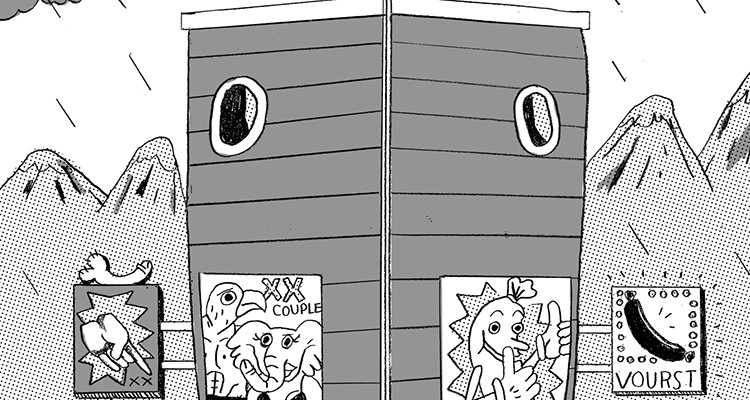
The Story of My Teeth, Luiselli’s latest offering, is told from the point-of-view of Gustavo “Highway” Sánchez Sánchez, the self-proclaimed greatest auctioneer in the world and owner of Marilyn Monroe’s teeth.

“This is the story of my teeth,” Highway tells us on the first page.

And my treatise on collectibles and the variable value of objects. As any other story, this one begins with the Beginning; and then comes the Middle, and then the End. The rest, as a friend of mine always says, is literature: hyperbolics, parabolics, circulars, allegorics, and elliptics.

The tale that follows is formed into seven books: The Story (Beginning, Middle, End), The Hyperbolics, The Parabolics, The Circulars, The Allegorics, The Elliptics, and The Chronologic — the last actually written by Luiselli’s English translator, Christina MacSweeney. Teeth is by no means a perfect novel, what it is however, is an ambitious look at the state of modern Mexico and a hilarious satire of the art world. It asks the eternal questions: Who is a storyteller, what is a story — and how do we tell them?

“I am going to recount for you the fascinating stories of all these teeth,” Highway says as he auctions off his old teeth to a group of senile retirees in the middle of a church.

… and I would urge you to buy them, take them to your homes, use them, or simply cherish them for persecula seculorum. That is, for forever. Otherwise, I continued, slightly overstating the case in a menacing tone, if these relics don’t find owners by the end of this session, they will be sold abroad. And the last thing we need is for the little we have to be carried off by others.”

The slim novel, as with the other books of Luiselli’s, meanders, loosely plotted. It is Highway’s story, but also that of the Ecatepec slum, one of the largest in Mexico City and the location of the Jumex Juice Factory and it’s attached art museum. The setting and the story, like so many things in modern Mexico, are almost too bizarre to believe. Teeth, Luiselli tells us in the afterword, actually derived from a collaborative storytelling project with the workers of the juice factory. And it is at the Jumex Juice Factory that “Highway” starts his journey from lowly security guard to master auctioneer when a worker collapses in seizure and Highway comforts him. Luiselli admits she wrote not about the factory workers but to them and it’s easy to see their influences on the story. What is the most absurd thing their corporate bosses would ever think to do?

“The Senior Executives had decided that, from then on, I would have a chair and a desk of my own, and my job would consist of comforting any member of staff who required this service.”

Highway takes his new job and starts attending courses to help him prepare for any unforeseen panics. He marries a woman, “Flaca”, becomes a dancer, leaves his cushy job at the juice factory and has a son Flaca names Siddhartha, born during the infamous Mexico City earthquake of 1985. Like the earthquake that shook the city to its core and killed thousands, Siddhartha will ultimately prove as disastrous for Highway. Highway one day learns that his successor as the factory security guard has become a successful auctioneer and sets off to track down the Auctioning course. He gets a grant and goes to America to study with a master auctioneer.

I wasn’t just a lowly seller of objects but, first and foremost, a lover and collector of good stories, which is the only honest way of modifying the value of an object.

Then Flaca leaves and takes Siddhartha. Highway travels the world buying and selling goods and once rich returns home to Ecatepec and builds a house and warehouse on Calle Disneylandia. Then one day he attends an auction in Miami, Florida and buys Marilyn Monroe’s teeth. He returns to Mexico and has them installed into his own mouth. Thus Luiselli and Highway end Book 1, The Story.

The following six books recount the ensuing decades of Highway’s life, merging into and out of parable and fable, falling into and emerging from the lives of the factory workers. They are stories within stories, some direct, some askance, all delightfully odd and unclassifiable. One quickly learns in Luiselli’s hands to accept the shaking earth beneath one’s feet and revel in the odd snippets and anecdotes that invade the story of Highway’s life. Other writers are a constant presence in Teeth, used as both high comedy and building blocks for a new kind of literature.

At one point in Book III, The Parabolics, Highway tells an anecdote about his cousin Juan Pablo Sánchez Sarte, “Who…would inevitably tell us — around the time dessert was being served — that we were hell.” Later he refers to an uncle, Fredo Sánchez Dostoyevsky and in book V, The Allegorics, hilariously tells self-contained allegorics about the contemporary stars of Latin American literature (Including one with a character Valeria Luiselli, “a mediocre high school student” who suffers a horrible stammer and overuses the suffix-ly.) Yuri Herrera, Alejandro Zambra, Francisco “Paco” Goldman and others make appearances.

Teeth seems to evoke the idea of prose as experience. We don’t always quite understand it until we release ourselves from the obligation to solve its riddle. Luiselli has a talent for satire. She puts us in the room with a pile of old teeth — as Siddhartha has put Highway’s old teeth in the Jumex Juice Factory Art Museum — and shows us how far people will go, how a story is the only thing that gives objects value. A book without a story is worthless paper, we know deep down. The pleasure of reading, and living, exists in traversing the passages of the labyrinth and not in discerning the route to its center.

Perhaps my favorite book in Teeth, Book VI, The Elliptics, tells the story of Highway from the perspective of a young writer, Voragine. It’s through him we begin to understand the great auctioneer and storyteller as the story of Highway comes to an end.

“…he described objects, none of which were actually there: collections of teeth, of course, but also antique maps, car parts, Russian dolls, newspapers in every imaginable language…He gave me a febrile tour of what he called his grand collection of collectibles. It’s hard to say if those were sad or luminous moments.”

Teeth is not an easy novel, it eschews most plot and overflows with literary references. It is in many ways a writers-writer novel. But if one looks past all the allusions, it is possible to enjoy the simple pleasure of Luiselli’s words. We place value in normal objects because of the stories they hold within. The spirit of the person who gave them, the words that flow back to us in memory. Auctioning is storytelling, Highway would tell us and storytelling is auctioning. We live in a world where things without value can be given value with the flick of a wrist, the simple turn of a beautiful imagination.

The Story of My Teeth

by Valeria Luiselli

Powells.com

Speak Up!: A Graphic Account of Roxane Gay and Erica Jong’s Uncomfortable Conversation

MariNaomi

September 4, 2015

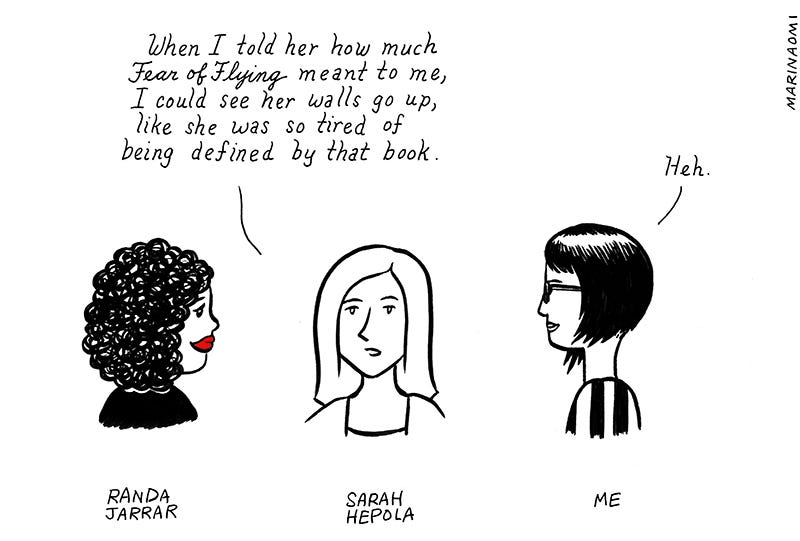
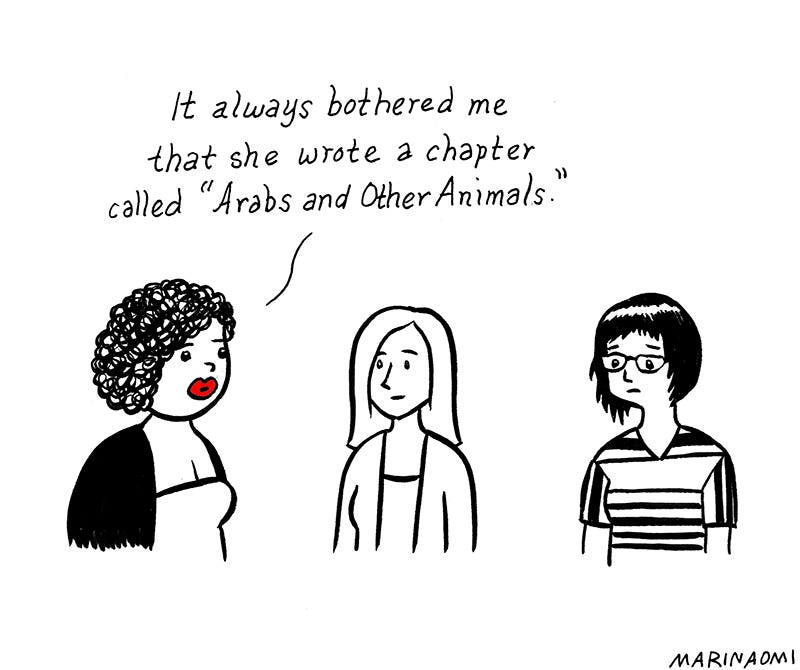
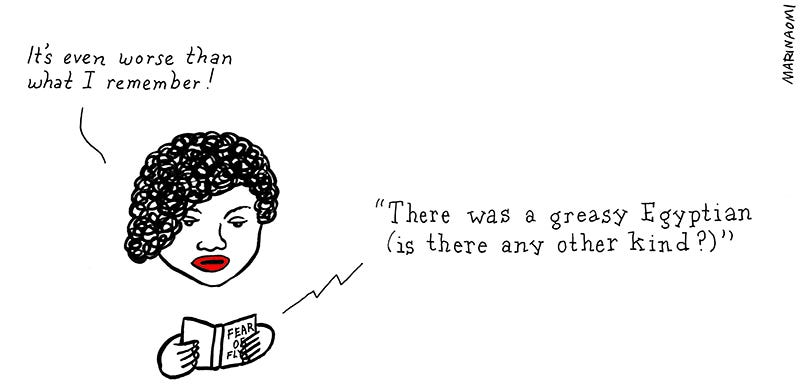
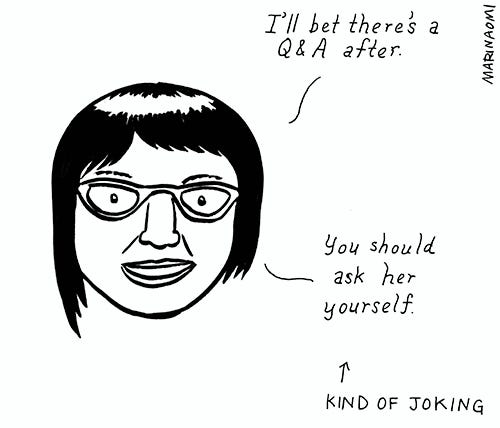
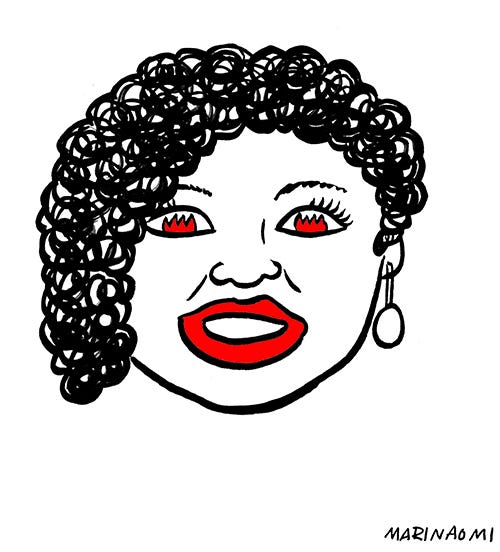
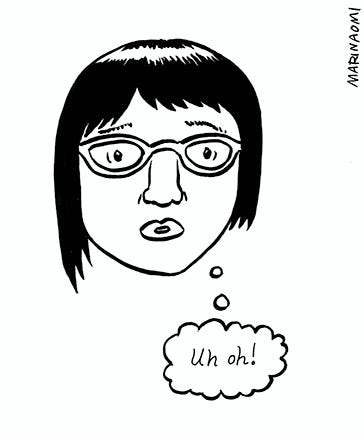
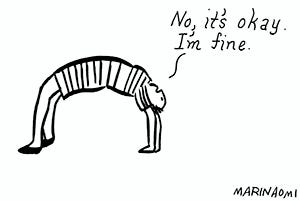
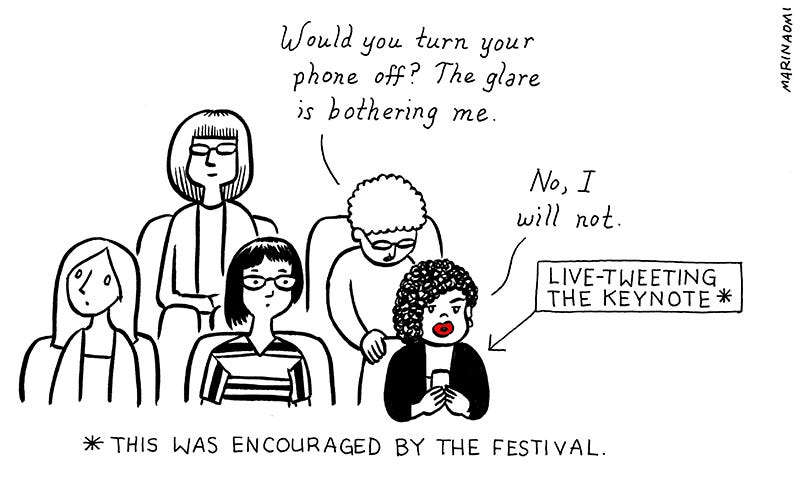
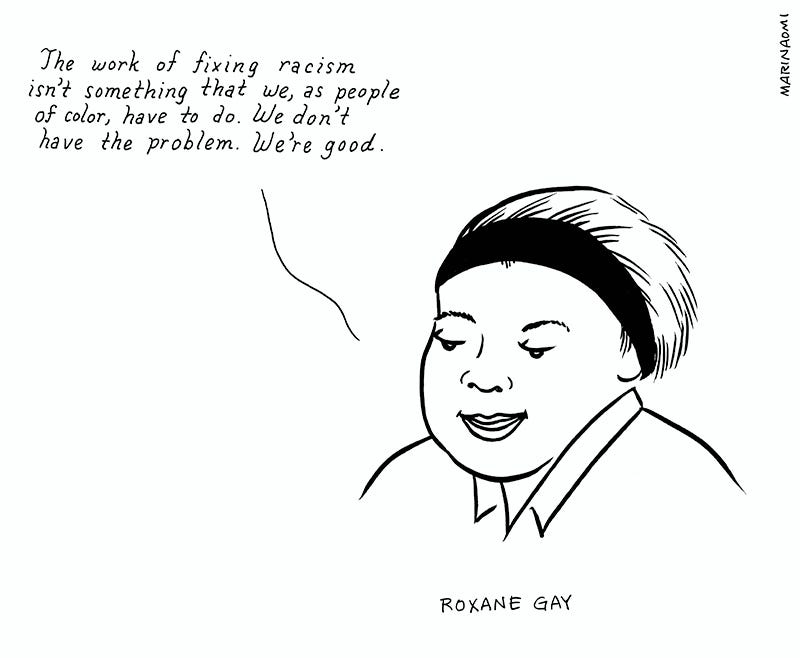
A trio of us were driven straight from the Atlanta airport to Emory University for the Decatur Book Festival keynote. On stage were rising star Roxane Gay, author of the hit sensation Bad Feminist, and second-wave feminist Erica Jong, famous for her 1973 bestseller Fear of Flying. Before the keynote started, I chatted a bit with my new writerly pals.

02
03

Randa looked it up.

04

We discussed what Erica Jong might have to say about the way women of color have been treated in the feminist movement.

05
06
06a

I’ve always believed in speaking up about uncomfortable subjects; I don’t think things will change unless more people do so. On the other hand, I’m emotionally averse to conflict. When I’ve spoken up, I’ve had to painfully break out of my comfort zone in order to do so. More often than not, I do my best to keep everyone happy, even if it’s not in my best interests.

07

Pretty quickly, I could see that Randa was cut from a different swath. For example:

08
09
10

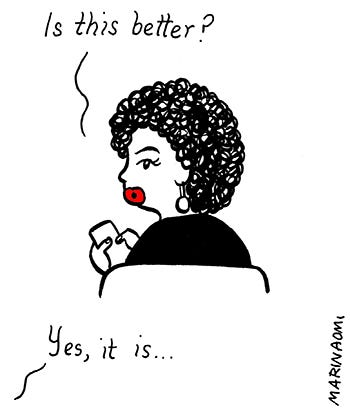
Randa had refused to trade her comfort for another’s, but she’d done so in a kind manner, and both of them had emerged as winners — the woman lost the glare, Randa got to go about her business, and her Twitter followers got to participate in the event from wherever they were. Had it been me, I would’ve turned my phone off immediately, and apologized profusely. My way would’ve only benefited the woman behind me.

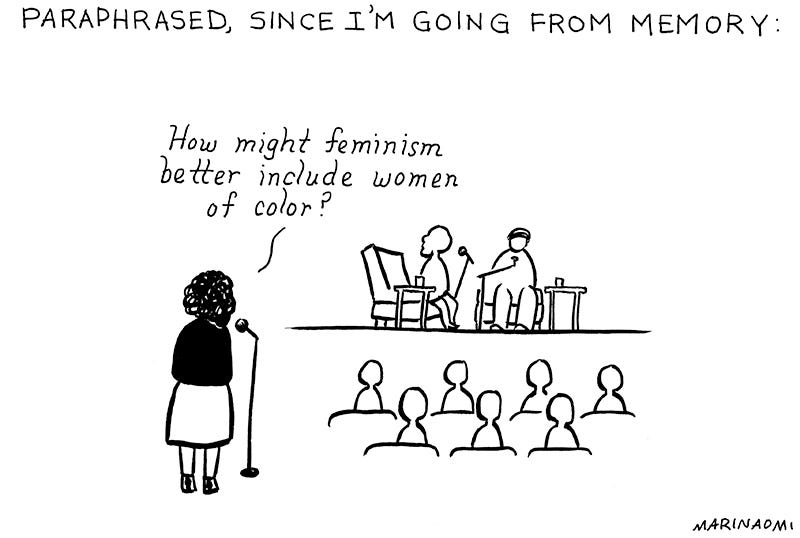
The keynote started off cordial enough. Roxane was intelligent and charming, Erica was earnest and filled with inspirational messages. At first. But then came the Q&A. Randa wasted no time getting to the point.

11
12
13
14

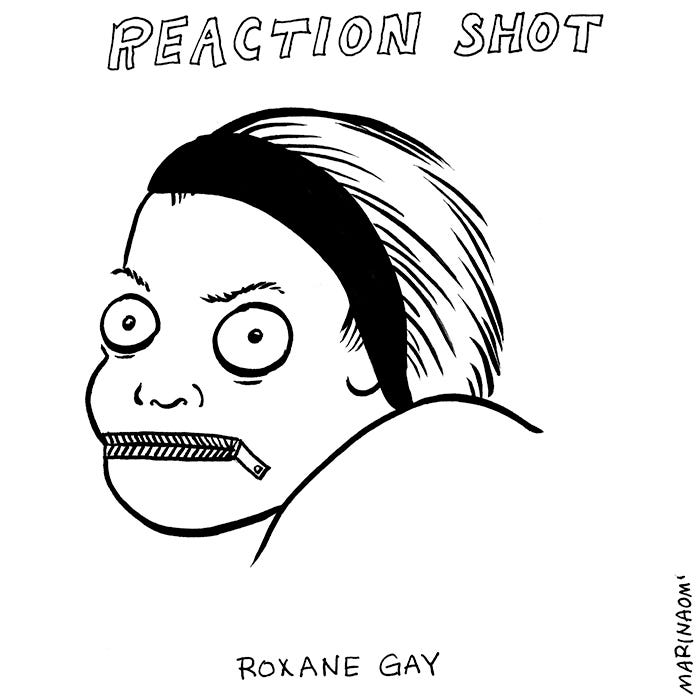
This is where it got sticky. The deeper they got into a discussion of racial tensions, the more the backgrounds of these two powerful writers became apparent, both their knowledge and lack thereof. Randa had opened a can of worms, which led to more difficult and challenging questions from audience members. She had given us permission to turn this discussion into more than just the ego stroking of a celebrated author.

For the next hour or so, we shifted in our seats, tense and transfixed. It felt like I was witnessing history, a dialogue I’d mostly been exposed to on the internet being brought forth into real life and vocalized by two important people.

15

Although nothing got resolved that night, many of us left with new questions to ponder. I left feeling inspired, nervous, frustrated, and alive. The seeds of change had been planted in my mind.

Throughout the festival weekend, that keynote conversation was the most talked-about subject, with a number of articles following, such as this and this.

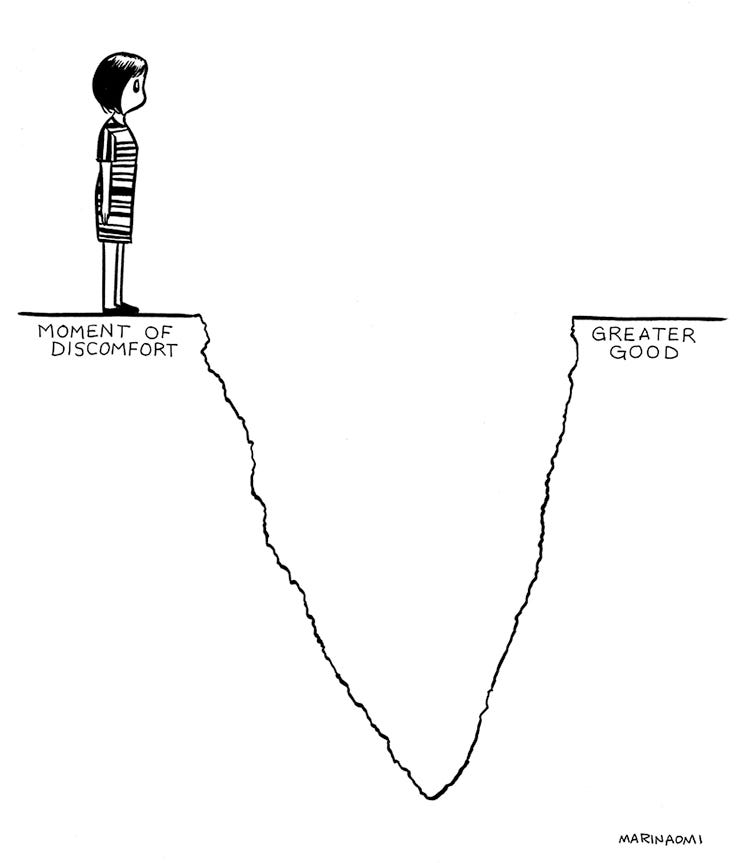
This would have never been news had the topic not been brought up by Randa. When I first sat down, I wouldn’t have had the nerve to ask that first difficult question, but now I see the chasm between a moment of discomfort versus the greater good.

16

The difference is astounding.

The Complexity Of Female Friendships: An Interview With Caroline Zancan, Author Of Local Girls

by Michelle King

In these hot and humid last days of summer it seems as if all anyone can think about is change. Summer was fun at first, but as we move into September, we’re all craving something — anything — new. It’s that feeling of listlessness that permeates Caroline Zancan’s debut novel, Local Girls. The novel centers around Maggie, Nina, and Lindsey, longtime best friends living in a dead-end town on the outskirts of Orlando, Florida. They’re in their last year of being teenagers and find themselves hanging onto the familiar, even when the familiar is made up of unfulfilling jobs, boring boyfriends, and a seedy dive bar where, night after night, they engage in a different version of the same stale conversation.

It’s at that seedy dive bar, The Shamrock, where the girls have a night that snaps them out of their routine. Passing through Orlando for a Mickey Mouse Club reunion special, mega movie star Sam Decker comes to The Shamrock looking for a quiet night where no one notices him. Instead, he finds three celebrity obsessed best friends. What ensues is the kind of all-night, meandering conversation that covers nothing and everything. By the end of the night, the friendship of Maggie, Nina, and Lindsey has been permanently changed.

We learn early on that Sam never makes it to the Mickey Mouse Club reunion — he overdoses within just a few hours of leaving The Shamrock. The premise of a movie star’s last night on earth is certainly an interesting one, but it’s the dissolving relationship between Maggie, Nina, and Lindsey that anchors Local Girls. Zancan has created a realistic portrayal of how growing up changes childhood friendships, mutating the once-sturdy bond into something untenable.

I grew up in Florida, drinking underage in bars just like The Shamrock with girls just like Maggie, Nina, and Lindsey. Since I couldn’t interview Zancan in an actual Florida bar, I went for the next best thing: the Royal Palms Shuffleboard Club, a Sunshine State themed bar in Gowanus (think flamingo wallpaper). Over drinks, we discussed sororal friendships, getting an MFA while working as an editor, and my notoriously crazy home state.

Michelle King: I want to start by talking about Florida. You’re from Ohio, but you set the novel in Florida. Why Florida?

Caroline Zancan: I am obsessed with Florida. It feels like a place that people weren’t actually meant to live. Even in the developed areas, the wildlife really is everywhere. It seems like we took this place — this wild, wild place — and we tried to turn it into, of all things, a vacation destination. That’s a very funny juxtaposition.

I wrote the book as a love letter to Florida and an ode to the state.

On a more personal level, I grew up going to Florida at least 2 or 3 times a year, and lived there the summer after my sophomore year of college. I noticed a strange thing happening. Every time you’d go, there would be new condo developments, new ice cream parlors, new shopping centers, and then, in 2008, that just stopped. The property values plummeted, and it just kind of became a ghost town in a really depressing way. I always thought it would be a great place for a novel. A setting that rich, paired with the economic stuff that happened in 2008. It just seemed like a great fit. I wrote the book as a love letter to Florida and an ode to the state.

MK: One thing [the narrator] Maggie says about the state is that it’s a 4-year-old’s dream, not a 19-year-old’s dream. I definitely felt that growing up in Florida. It’s a great place to be a kid and it’s a great place to be 85, but it’s not a great place to be a teenager.

CZ: I think it’s hard to be a teenager anywhere, but I think it’s particularly rubbed in your face that there’s nothing for you when it’s all tourists, old people, or children. The whole state seems to be welcoming those communities — and rightfully so because their livelihood depends on it — but it’s like, what do I do?

MK: Exactly. And I hung out in a bar much like the Shamrock and had friendships like the one in the book. I was like Maggie. Reading the book, I was so interested in Maggie and why she wants to leave Florida. I would love to hear about what your process of writing her was like.

CZ: My relationship with Ohio is way less tortured than Maggie’s is to Florida. I go back. I’m close to my family. But I was always sort of the odd duck in Ohio. I was this quiet kid who was off reading books while my siblings were playing sports. I always felt loved, but the rest of the world always beckoned me. I always say that my heart is in Ohio, but my soul is in Brooklyn. The world is a big place. There’s so much out there, and not everyone is born in the place that’s meant for them.

When I started the book, I knew that Maggie was going to be restless and that she was going to get out of Florida, but I was curious as to what exactly Maggie wanted other than to get out. In the traditional telling of these girls who want to get out of their small town it’s because they want to sing or act or dance or write, but I think you can want to explore and experience the world, even if there’s not a specific calling. You can just have a general curiosity of the world. So, for awhile I was searching for what was the thing that made Maggie want to leave, and I finally just decided that she just didn’t want to be in Florida anymore. Making her curiosity not tied to any one thing was a big decision for me.

MK: How did the process for this novel start?

CZ: I originally was going to write Local Girls about the movie star. I wanted to follow a movie star on the last night before he died of a drug overdose. I feel like people have these ideas of what a celebrity is like, and I don’t know many celebrities personally, but after 10 years of working in book publishing, I have come into contact with many of them and it’s just always been interesting to me the extent to which they really are just people. I wanted Sam Decker to just be a dude in a bar, and the people around him to be kind of surprised that he’s just a dude in a bar. I thought, who would be so surprised at that and who would care, and the answer was 19-year-old girls would care. The more I wrote, the more interested I was in the girls. I needed to know more about them.

You can have books that have the world “girls” in the title and you can ask that people take those books seriously.

When I sold the book it was actually under the title The Night Sam Decker Died. My book sold at auction, so I had some options of who I wanted it to go to and Riverhead told me right up front, “We would want to give it a title and market it in a way that shows the extent to this book being about women.” I thought that was so great, because it is a novel about women. At first, when we put the world “girls” into the title I was like, Shoot. Is this going to be marketed as something that’s silly? And then I chastised my own self. Why does a book that’s about women and girls need to be less serious? You can write a serious book about female friendship. It’s something that deserves serious consideration. I realized I had been falling into the trap of “the word girls is in the title, now it’s chick-lit.” But no. You can have books that have the world “girls” in the title and you can ask that people take those books seriously.

I will say that the most autobiographical part of the book for me is Sam Decker’s speech on moderation, where he says he doesn’t believe in it. He wants to drink for two days and then sleep for two days. I wrote this book in kind of a fury.

MK: This book does look at female friendship and girlhood in a serious and complex way. One thing that stood out to me was the way in which these girls obsessed with one another, especially when they were a bit younger. That rang so true to me about female friendships.

CZ: I really do feel like there’s no love like your best friend growing up. There’s this intensity to it. If I have a problem in my life now, I talk to my mom, or I talk to my husband, or I talk to my work friends, or my college friends, or my graduate school friends. But when you’re young, all your energy, all your secrets, everything you think, it goes to that one person. I don’t think there’s any other time in your life, no matter how close you are to someone, where all your emotional energy is going into just one source. Even now, I am so fascinated by teenage girls. They’re so elusive.

MK: Oh, I’m the same way. I listen to their conversations on the train, with my headphones on and pretend I’m listening to music. It’s almost creepy, but I can’t help myself. What do you think it is that makes you so obsessed with teen girls?

CZ: So many of my good friends are men, so I don’t want to put men down, but I do think that women are more emotionally interesting. I feel like there are more emotional complexities. I think men are equally intelligent and thoughtful, and I’m also weary of any blanket statements, but I also think there are emotional intricacies to a lot of females that I still haven’t figured out. When you’re a young person, there are layers upon layers upon layers of meaning. There’s a lot of drama. So much is happening at once — hormonally, physically, intellectually. So many big moments happen at one time.

MK: Early on in the novel, Maggie makes a comment about how maybe they seemed liked normal girls, but they weren’t. At least for me, that was a big part of being a teenager. I constantly felt as if no one on the planet had ever felt how me and my friends felt, which, of course, now I realize everyone felt that way.

CZ: Right. I think part of why you felt that way is because we don’t express feelings in the way teenagers feel them. So, you find yourself thinking, If everyone felt this way, we’d all be talking about it and we’d all be crying in public all the time. That age is really when you start to develop a private life.

MK: When you’re a teenager, you don’t haven’t yet acquired the social skills you need to have productive, healthy conversations. Instead of talking to a friend, you get in a public fight at a bar, which is what winds up happening in the novel.

CZ: I have so many healthy female friendships in my life right now, and even now, they require maintenance. They do. The closer you are, the more maintenance they require. No one can ignite something in me the way that one of my close female friends can.

That scene you’re talking about, the exit scene, I felt like it needed to be really big, because part of their friendship is that no matter how mad they are at each other, they are a united front to the world. It’s only when their front to the world starts to crumble and they’re fighting in front of people that it’s like, Oh, now we’re really in trouble.

MK: Something that’s so interesting to me about friendships — and I think the book does a great job of capturing it — is that friendship don’t usually have proper breakups in the way that romantic relationships do. Friendship dissolve over time and then suddenly you’re like, Oh, wow. It’s been three years since I’ve spoken to that person who I used to tell all my secrets to.

CZ: Right. The world doesn’t recognize a friend break-up as a tragedy in the same way that it does a romantic break-up. You outgrow people in life. I think a lot of romantic relationships end because you outgrow each other. That happens with friendships, too. But because, with friends, you can have more than one, there isn’t that same built-in opportunity to say, Okay, we’ve given each other everything we’re going to. Thank you. I will never forget you. You have changed my DNA, but I want a different life now.

MK: Can you articulate what it is that is making these three girls grow apart?

But as you grow up, you learn that you can love someone from afar.

CZ: They’re stuck in teenagehood and the only way they’re going to get out of it is to leave each other. Adulthood doesn’t mean the same thing for all of them and they need to leave each other to get on to adulthood, but as long as they are hanging out with each other, they’re giving each other permission to not move on to the next stage of their life. They allow each other to not do anything. Some friends motivate you and push you further and some hold you back, and I think they were holding each other back, no matter what their intentions are, no matter how much they loved each other. There was no maliciousness. Part of why they’ve let it go on as long as they have is because they love each other. But as you grow up, you learn that you can love someone from afar. You can say, I love you but I need to do something that doesn’t include you and it doesn’t mean I love you any less.

MK: Let’s shift gears a bit and discuss the path you took to get to this novel. You’re an editor at Henry Holt, so you’ve taken the NYC path, so to speak, but you also took the MFA path. What made you decide to do a low-res program, while you were working a full-time job in publishing?

CZ: I moved to New York when I was 22, but I had wanted to be a writer since I was a kid. There was never a time in my life where I didn’t want to be a writer, but I also knew it wasn’t a very realistic way to make a living. When I was working as an assistant, I was on the phone with Alice Munro and Julia Glass and that was so intoxicating to me. At that point, it fed the same part of my soul as writing, because I was so immersed in storytelling. But I totally stopped writing for the first 5 years I was in New York, which I hadn’t anticipated.

After awhile, I knew how to do the job, so I started writing again. It’s also not a coincidence that that’s when I met my now-husband. He was like, Oh, you work in book publishing, but like every other editor, you want to write. Why aren’t you writing? He’s wonderful. He’s never had any ambition that he hasn’t pursued. I think, unfortunately, women tend to be more shy about getting what they want. But him saying that really opened my eyes. I started taking Sackett Street Writer Workshops, and I got excited about writing again. I saw that, while I love publishing and working on other people’s stories, there was a different part of my brain that I did need to be exercising. It felt silly to leave New York publishing to become a writer. That just didn’t seem to make any sense. I didn’t want to graduate and have to find a new job. Also, I had been working in publishing at that point for 5 years, and Knopf in general is such a great place to work.

My opinion of the MFA actually changed after having gotten one. I went into the process thinking I was doing it for the deadlines. It was structure and accountability, but I do think it actually made me a better writer. I was more skeptical of the MFA before I went into it. Before I got my MFA, I wanted to write these long, floral sentences and through my first term I learned through this very tough professor that what you want to do is convey whatever you’re trying to convey is as few of words as powerful. It’s more powerful to tell us something that’s true than to focus on making it beautiful.

I don’t think you need an MFA if you want to write a book. I think you can get that accountability from friends or your own self-discipline and I think you can learn to write really well by reading books, all the time, every day, and taking books apart like a science project.

Moral Craft: Issues of Plot and Prejudice

No novelist thinks herself racist. Yet sometimes I find myself enjoying a novel one moment and then spending the rest of the book reading to see whether the novel’s depiction of some character is racist or trying to say something incisive about racism. I have finished entire novels to determine the answer, like Doris Lessing’s iconic and mostly very good The Golden Notebook, in one part of which a group of Europeans ruins the lives of an African couple and moves on from the incident unscathed. I read the rest of the novel waiting to see whether this ruination — a lesson for the progressive narrator — would be reconciled with the stereotypical way the narrator actually depicts the couple, the man as an ignorant and loyal servant and the woman as a sexual object used by a European.

This kind of reading leads me to three questions: First, when and why does the reader blame the author for racist fiction? Second, how do we end up with racist fiction without racist intentions? And third, how does the writer addressing race avoid racist writing? All three questions have to do with prejudice, the gap between what one thinks and what one wants to think. Writing bridges a gap between thought and language (sometimes misread as the gap between the author and her work).

How do we end up with racist fiction without racist intentions?

Prejudiced writing is a moral concern and a craft concern, so I’m going to treat it as both. I should also admit that my concern comes from noticing a (mostly good) trend of white authors wanting to reflect the diversity of the real world by writing more characters of color.

In 1978, literary scholar Seymour Chatman discussed the existence of a “real author” and an “implied author” in his book Story and Discourse. “It makes no sense to hold the real Conrad responsible for the reactionary attitudes of [his] implied author,” Chatman states as an example, because the real Conrad wasn’t racist. The racism belongs only to his work, or more commonly argued, to his characters.

The late Chinua Achebe argued otherwise in 1977 in his famous critique of Conrad, “An Image of Africa.” But before I go there, I should try to explain what Chatman means by “implied.” Try this: The author writes her book to a certain audience — that’s the implied reader. From the book, the reader imagines the writer — that’s the implied author. Where it gets tricky is in the gaps between.

To show that Heart of Darkness’s implied racism is Conrad’s real racism, Achebe cites the scarcity of page-time, characterization, and dialogue given to Africans in the novel. He also addresses the exceptions, which are “an African woman who has obviously been some kind of mistress to Mr. Kurtz” and two instances of English speech amid the Africans’ usual “violent babble of uncouth sounds.” The exceptions are plot points — used by Conrad to cause an attack, contribute to the famous “horror,” and affect Marlow’s character arc.

Achebe heads off the objection that the racism is only Marlow’s and that Conrad is being ironic and critical:

Conrad appears to go to considerable pains to set up layers of insulation between himself and the moral universe of his history. He has, for example, a narrator behind a narrator. The primary narrator is Marlow but his account is given to us through the filter of a second, shadowy person. But if Conrad’s intention is to draw a cordon sanitaire between himself and the moral and psychological malaise of his narrator his care seems to me totally wasted because he neglects to hint however subtly or tentatively at an alternative frame of reference by which we may judge the actions and opinions of his characters. It would not have been beyond Conrad’s power to make that provision if he had thought it necessary.

That is, nothing in the book suggests a gap in racial perspective between any of the various levels of narration. Those levels are meant more to complicate the veracity of what happens in Marlow’s story than to complicate any racial view, which goes unquestioned. Even the exceptions when African characters get to speak only reinforce and affirm the prejudices of the narration.

If the real Conrad did not intend to be racist — as many critics argue while framing the novel as anti-colonialist, as if anti-colonialism precludes racism — he has not realized the effect of his prose. The discerning reader identifies a gap between the author’s thoughts and words: prejudice.

The discerning reader identifies a gap between the author’s thoughts and words: prejudice.

Achebe offers criticism but not solutions. So let us ask what an author with good intentions is to do? Perhaps the key is in what Achebe calls “hints” and what I am calling “gaps.”

The unreliable narrator is a good starting point. Here is a summary of a short story I got in a beginner workshop: An Irish fiddler in an Irish bar narrates his thoughts about the good old days. The musician for the night is announced, and it’s an Asian violinist. The narrator makes racial complaints about the Asian, but — phew — the Asian character is undeserving of such vitriol. The reader understands a fallible narrator. But at the end of the story, the narrator gets onstage and shows up the Asian kid by playing the fiddle so well that the crowd is moved for the first time.

The author of this story didn’t intend to write racist fiction. In his workshop, we approached the piece on a craft level, addressing the lack of a gap between what happens and what the narrator says. The plot, rather than defying the narrator’s racism, supports it.

Real prejudice has seeped onto the page. The “implied” author hasn’t contradicted it because the real author hasn’t realized that the story’s view is the same as the narrator’s.

I actually read workshop stories like the one about the Irish fiddler fairly often. Sometimes I think I have Flannery O’Connor to blame. Early in the schedule, I like to teach her famous story “A Good Man Is Hard to Find,” in which a prejudiced white grandmother ends up indirectly causing her family’s deaths, but at the end experiences a pre-death “moment of grace,” her glimpse of real empathy and/or real Christianity. In that moment, the story both lifts the grandmother out of her ignorance and shows us that the story thinks she is ignorant, too. My students who try to write like O’Connor sometimes forget to defy the opinions of their grandmother-types.

Hilton Als, in his essay on O’Connor, “This Lonesome Place,” writes that “[O’Connor’s] black characters are not symbols defined in opposition to whiteness . . . She didn’t use them as vessels of sympathy or scorn; she simply — and complexly — drew from life.” How did she do so while allowing her white characters to be realistically racist and placing them in the center of her stories? “Vessels” is an important word. Conrad’s Africans are vessels for European plot and arc and theme. The (real) author, if she is to create without prejudice, has to exercise moral craft. The writing of fiction cannot treat marginalized characters as vessels, cannot let the plot play out the racism of under-enlightened protagonists. Perhaps the ultimate conclusion is that one cannot write without prejudice unless one understands that one has prejudice. O’Connor, whose prejudice does appear sometimes, nonetheless understood the prejudice of the South as well as any white Southern writer of her time. “A Good Man Is Hard to Find” is, in part at least, about that prejudice, and only by addressing it as prejudice is the author able to critique prejudice and avoid writing a prejudiced text.

The Problem Of Language: A Conversation With Christian TeBordo, Author Of Toughlahoma

Christian TeBordo is an enigma. He is a beloved figure in the world of indie literature, a station he has cultivated with a minimal web presence. In an age where even major writers are being asked by their publishers to create social media accounts, TeBordo is free of not only a Twitter account and a Facebook author page, but even a website. As a devotee of social media, I can’t help but sit in awe of his discipline, or perhaps sheer indifference.

toughlahoma

But all this also cultivates an air of mystery, with news on TeBordo’s writing difficult to come by. He is the kind of writer I google every couple of months to see if a new story has popped up somewhere, or if some publisher has announce they are publishing one of his books. His existing books have been equally mysterious, not just in their stories and forms, but in their meandering releases. His first novel, The Conviction and Subsequent Life of Savior Neck back in 2005, two years later he returned with two more novels, Better Ways of Being Dead and We Go Liquid. Three more years went by before his story collection — and breakout — The Awful Possibilities arrived. Now, after an even lengthier wait, we have been graced with Toughlahoma.

Even if I hadn’t already been a fan of TeBordo’s work (having read some of his stories around 2008, I tracked down a copy of We Go Liquid and fell in love with the oddball story of a boy who thinks his deceased mother is sending him messages via spam email), I would have been sold on Toughlahoma just because of the title. I preordered the book the first day it was available. When it arrived I devoured it nearly in a single sitting. It was one of the more baffling reading experiences of my life, sending my brain reeling between the inventive use of language, pop culture, and religion.

TeBordo and I have been in touch off and on for years now, and I’ve always felt honored by those opportunities to speak with him. After reading Toughlahoma I knew I had to ask him about the book, and while my questions became more akin to dissections, he dove into them with gusto.

RWB: This is one of the few books I’ve read that I find indescribable, at least in terms of plot. Yet I can come up with lots of strange descriptions of the style. One of them being a perverted re-appropriation of Bible stories and I think this is the best place to start. The book frantically rips apart biblical mythology, not particular stories per se, but the kind of stories, the following of a message from a reality-ambiguous source, the offering of icons and sacrifice, etc. In a way it almost seems like an indictment of how the Bible warned against so many of the things it spawned, idol worship, for example. So I have to ask what your relationship to Christianity has been during your life and what you were trying to explore in this acid trip-esque deconstruction of the Bible?

I experienced a lot of beautiful things growing up in the church, and also a lot of terrible things…

CT: Damn, Ryan — this is about as complex a first question as you could ask me, and I could probably fill this whole space and more with an answer, but let me try to keep it concise. My relationship to Christianity is as complicated as anyone’s, I guess. My parents were both Presbyterian ministers and they sent me to Baptist school when I was very young and I was ordained an elder before I was old enough to drive. I also studied religion and theology at both the undergrad and grad levels. I experienced a lot of beautiful things growing up in the church, and also a lot of terrible things, and it would be too easy to go into them here as a way of explaining my approach to the world, which is that there are beautiful things and terrible things and some of them are both, and I realized this early on. Studying religion academically helped me to reconcile that. The religion department at Bard, where I did my bachelor’s in something other than religion (we didn’t really have majors), had an interesting approach to comparative religion, which was that they focused on the differences between major religions and the sects within them rather than the commonalities. I think being aware of differences is more interesting and healthy than steamrolling everything to pretend we’re all the same. So there’s that.

But then, Toughlahoma has much less to do with religion than it may seem to. Yes, it was inspired by the Bible (as well as ancient epics and mythology and proto-novels of the renaissance and enlightenment eras) but these inspirations were more structural and psychological than ideological. The best brief explanation I can make comes from Erich Auerbach’s book Mimesis, the first chapter of which contrasts the mimetic styles of Homer and the writer(s) of the Old Testament:

“Abraham, Jacob, or even Moses produces a more concrete, direct, and historical impression than the figures of the Homeric world — not because they are better described in terms of sense (the contrary is the case) but because the confused, contradictory multiplicity of events. The psychological and factual cross-purposes, which true history reveals, have not disappeared in the representation but still remain clearly perceptible.”

Auerbach says this fairly objectively and without a real qualitative judgment, but what it suggests to me as a contemporary fiction writer is that what we think of as the psychological complexity of, for example, the modern novel (a strawperson, I know) with its focus on interiority, is potentially a drastic oversimplification. The example that always comes to mind — and I’ve used this in interviews before — is of DFW’s story “Girl With Curious Hair.” I love the story, which is about an amoral yuppie manchild doing bad things with his punk friends. But at the end of the story there’s a brief flashback to him being abused by his father, which, to me, is such a copout with regard to the complexity of the character that it’s not only unfair to him (which is fine; he doesn’t exist) but an insult to people, not categorically, but to the individual who would read the story looking for something about what it meant to be a person at that point in history.

Contrast this with the first two chapters of Genesis, which contain two distinct creation stories, one proto-Platonic and one about digging in the dirt and blowing on noses. And then in the next chapter the whole thing goes to shit when Adam and the woman eat the fruit and they hide because they realize they’re naked, and the Lord pretends he doesn’t know where they are, why they’re hiding, who told them they were naked. In my reading the Lord’s being ironic, but the situation is doubly ironic because there’s no story until they eat the fruit they’ve been forbidden to eat, just two people eating the boring fruit in peace for eternity. All happy families are alike. So the idea behind Toughlahoma was an old one — that contradiction and juxtaposition and irony might generate something like a plot, or at least real complexity — and attempted with full respect and admiration for the Bible. So if anyone reading this knows anyone at the Gideons, please convince them to place a copy in the top drawer of the bedside table in every hotel room on the planet after purchasing directly from the good people at Rescue Press.

RWB: For me, I saw the book as a sort or re-appropriation, or a remix, if we want to get more modern. There’s a running theme in the book, a phrase that is repeated, “the problem is language.” This, too, feels like a take on how people come to interpret stories. When you think about this phrase, you start to realize there are infinite problems with language, starting with the fact that we are often divided by communication gaps due to languages, literacy levels, etc. And that’s to say nothing of how differently two people can interpret the same sentence. When you’re writing a book so centered on the problem of language, so playful in its use of language, how do you reconcile with the reality of interpretation and understanding, or do you simply accept it and move on?

CT: I would say I “accept it and move on.” That’s my public answer at least. On the most basic level, the level where I say something like “it’s raining,” and the person standing next to me will know what I mean, assuming it’s raining when I say it, the prose in Toughlahoma and the events it describes is pretty clear. For all the syntactical weirdness, I think anyone reading in good faith should be able to understand what’s happening.

The question of why it’s happening gets you closer to what I mean by the problem of language, the first level of which is that, it seems to me, the existence of language alters, or maybe invents, the concept of “happening.” If you go back to the paragraph above where I say to someone else,”it’s raining,” that’s a different experience from two people just standing there getting rained on, especially when those people don’t have a tool with which to say “it’s raining.” I know it sounds like adolescent stoner logic, but for me the introduction of language does something problematic before we even get to issues of misinterpretation or willful deception or demagoguery (although it makes all of those things easier to utilize). I think language itself ironizes actuality, and written language ironizes spoken language, and so on. One way of dealing with this is to pretend the problem isn’t there, to pretend irony is a thing that can be rejected or set aside. Another way is to call attention to it in direct and indirect ways to see if you could maybe find a provisional answer for the problem in the spaces between where the words are, what one of the narrators calls “the secretic method,” where “you leak out enough snot, piss, and shit that people can’t be sure whether you’re serious or not.”

RWB: This relates to something I’ve always been fascinated by and that’s perception. I’m fascinated and horrified by how two people can see the same object differently, or the same color, or even how I can see my own reflection differently depending on external factors (mood, particular mirror, etc.). So, bringing this to language I become engrossed in how people manage to communicate and coexist. How do you see perception playing a role in how people relate to one another, and by extension how your characters interact on the page?

CT: As far as craft goes, I think that all stories are in the first person and that all narrators are unreliable. Even when a narrator is talking about he, she, or you, there’s still an I doing the talking, and everybody knows, when listening to an I talk, that what I says is skewed by I’s perspective.

My way of addressing this has always been to make the problem worse. I like to stay deep in my narrator’s perspective and tell it only how my narrator would, without winking at the reader, winking being, I think, disrespectful to the reader, but also maybe an act of bad faith, a denial of or (imaginary) escape from the way people actually think and feel.

I know that I already took a cheap shot at David Foster Wallace and now I’m going to look like I’m trying to get attention or like I have big brother issues, but this is what popped into my head — that Kenyon College commencement speech. He has this part where he imagines getting cut off by a Hummer and then later says it’s worth considering that maybe the guy driving that Hummer cut him off because he’s trying to get his kid to the hospital.

In fact, if you’re doing it right on earth, according to Jesus, people are going to hate you.

This sounds a little like the golden rule, but the golden rule is based in religion. Almost all the world religions, but I’m most comfortable talking about Christianity, given my background. Jesus said, essentially, treat others like you’d want them to treat you, but he doesn’t promise good results on earth. He doesn’t say, if you treat them right, they’ll treat you right, or, if you treat them right, you’ll feel consistently joyful. The joy in Christianity comes from the knowledge of grace or election or a rewarding afterlife, depending on your sect. In fact, if you’re doing it right on earth, according to Jesus, people are going to hate you. (Blessed are ye, when men shall revile you, and persecute you, and shall say all manner of evil against you falsely, for my sake. Rejoice, and be exceeding glad: for great is your reward in heaven: for so persecuted they the prophets which were before you.) If you take heaven out of it, there’s no reward.

But that doesn’t matter, because what Wallace describes is thinking, imagining, which makes it fiction, an act of pure language, rather than action. The thought process is life-denying; the thinker of those thoughts would rather nothing ever happen at all. Worse, it turns the golden rule into an insidious type of solipsism: attribute motives to others in a way that makes their behavior/existence palatable to you.

I guess what I’m saying is that the most honest thing I can do is let my narrator’s talk and contradict each other and themselves and hope people are willing to navigate that.

RWB: There’s a fine line between having perspective (e.g. knowing you have no idea what’s going on in the head of the guy driving the Hummer) and denying your human nature and emotions (e.g. the response of anger and frustration). We want to be, or think we ought to be, the person whose first reaction is, “oh my God, I hope everything is all right with that guy,” but for most people the authentic response is “what a jerk, I hope that guy gets pulled over.” I think they both have their place, but it’s silly to suppress one over the other. We can’t invalidate our own emotions, it’s not healthy.

Your work has always been challenging, I think the contradiction you allow for between characters is also a contradiction between the words on the page and the reader. Readers tend to naturally inhabit a book, often, depending on the POV of the story, incorporating themselves as characters. It’s a subconscious involvement. In that respect do you think of the writer-reader relationship as adversarial? Do you think there’s something to be gained from the challenging of a reader and in having faith that they can and will stick with a story?

CT: I don’t think the writer-reader relationship needs to be adversarial, but I don’t think an adversarial relationship is such a bad idea in the abstract. But I’ve never set out, in fiction, to provoke, and I think any notion that my fiction is challenging may come from different expectations of what fiction is for than level of difficulty (at least in my last few books). You mention readers imagining themselves as characters, and I guess I understand now that some, or even most, do that, but until I started getting responses to my own work, it literally never occurred to me that that might be something adults would do. As I understand it, the idea is that doing so helps you empathize with other people in the real world, but I’d make an argument that it’s probably just as likely to do the opposite — to turn you away from reading books whose characters you don’t want to empathize with. (And I think it also encourages a confusion between true empathy and relatability, which is a concept that should go away.)

In that sense, literary fiction is escapism for people who’d rather be quietly melancholy (and maybe also smugly superior) than a sorcerer.

Even if I’m wrong about that last part, writing characters for people to identify with leads to a lot of the things that I find shitty about contemporary literary writing. I would guess it’s the source of that nonsense about something or somebody having to “change,” usually through some kind of epiphany, in the course of a story or novel. That’s a trope, a convention as rigid and contrived as sword fights and car chases. In that sense, literary fiction is escapism for people who’d rather be quietly melancholy (and maybe also smugly superior) than a sorcerer.

What I try to do as a writer (and what I look for as a reader) is what a character or narrator reveals about him or herself, directly, and more importantly, indirectly. It doesn’t preclude the possibility of change, but it rejects the weird notion that everything progresses toward greater clarity, understanding, or coherence.

I mentioned earlier that my parents were ministers. They were awesome and loving people and really active in the community, but this also made them enemies. Like, somebody kidnapped our dog when I was really young. Dognapped, I guess. I was trying to tell someone about that recently, and my memory of it was hazy. All I could say was that “they” had kidnapped Maranatha, and then somebody found him in the woods, tied to a tree with barbed wire and poisoned, but still alive. The guy I was telling this too was like “who is they?” He wasn’t convinced. I actually started to doubt the memory. So the next time I saw my dad, I asked him, and the story got even weirder. I had all the details right, and that was all the details there were. We never found out who kidnapped him or why, but he survived, and after that he had dog trauma and turned nasty, when before he had been a playful, friendly guy.

I have zero interest in the novel where we track down the dognapper, and he redeems himself after breaking the inevitable cycle of violence that led him to dog abuse. There’s plenty to think about, tons of meaning, in the story we already have.

RWB: There’s a lot of focus on redemption, on finding redemption, characters needing to redeem themselves, etc. I think that’s kind of B.S. It goes hand in hand with the need for resolution in stories. I find it more interesting when the exploration is about the lack of those things, or characters who don’t give a thought to redemption. For me it feels like if those things are too apparent in a story it’s because a writer has forced them into it. With that in mind, what is the process like for you? Do you plot your work or go into a new project intending to write certain things?

CT: For me the process is different with every book. Toughlahoma started with me just messing around. I didn’t have cable when I lived in Philadelphia, so sometimes I’d go out to watch a basketball game at a bar, and one night the closed captioning looked like the transcriptionist was drunk. Somehow what I assume was a comment about the tough defense of the Oklahoma City Thunder ended up saying Toughlahoma and I thought, man, it would suck to live in Toughlahoma.

Not long after, Amelia Gray invited me to read in a series she was running then where you had to write something based on a weird prompt she gave, and the prompt she gave me was the Blue Whale of Catoosa, Oklahoma, so I wrote “Things to See in Toughlahoma.”

Then my son Wes was born and I spent a lot of time just staring at him and goofing off with him. I felt like writing, but I didn’t have the desire, much less the energy, to work on any sustained narrative, especially during the first few months, so when I got some writing time, I would just make up a new thing about Toughlahoma. I was already thinking about what old-timey philosophy called “the state of nature,” but then I had this brand new dude who was basically in the state of nature for the time being, so it seemed like the right thing to run with.

Eventually I had a bunch of vignettes, all of which made the final cut, but I didn’t want it to be just a bunch of riffs. I’m not a very intuitive writer and I wanted the book to add up to more than the sum of its parts, so I started doing math, gridding it out based on some ideas that had been in the back of my mind the whole time — from Hobbes and Locke, and also Giambattista Vico — and then figuring out what was missing and going and writing it.

Looking back over this answer, I’m not making it sound like much fun, but I think I had more fun writing it than any of my other books. The last couple of books I’d written had been, by design, a little more generous to the reader. With this one I just allowed myself to go nuts.

Midweek Links: Literary Links from Around the Web (September 9th)

Looking for some interesting reading to get you through the week? Here are some literary links from around the web to check out:

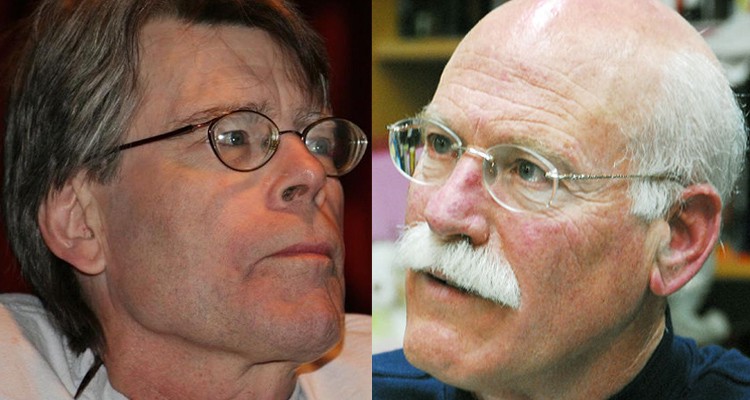
Stephen King and Tobias Wolff are being awarded the National Medal of Arts

The New Yorker looks at how Dennis Cooper turns .gifs into novels

Some novels that were written while the author was baked, stoned, drunk, or zonked

Adam Johnson says writers need to avoid sentimentality “like the plague”

The poetry world is hotly debating a white male poet who adopted a female Chinese pen name to get published

Sick of the NFL? Here are some books you can read instead of watching

Toni Morrison celebrates Primo Levi’s writings

Can books help us understand the Syrian refugee crisis?

Lastly, Agatha Christie actually knew how to make poisons

You’re Home Early

by Vincent Scarpa, recommended by Electric Literature

Barring an unlikely call from the governor, this Friday the state of Texas will execute Annie’s father, Elliott Dodge. In preparation, Annie has booked a flight from Chicago to Houston, a mid-size rental car, and a week at a very affordable motel. She will arrive three days before the execution in Huntsville, and fly back the morning after. On the questionnaire offered by the travel agency, under “Reason for Travel,” Annie had written, “Father dying,” which was most of the truth, and it had not given her much pause to think nor write it.

She has rescheduled all of her patients for the coming week, referring those with more urgent dental crises to a colleague whose practice is not far from hers. According to a recent edition of the city’s paper, Annie is not one of the top ten orthodontists in Chicago, but her waiting room is regularly half-full, her patients loyal. Just a few days ago she had taken the braces off of a pregnant teenager, two weeks from her due date, who promised Annie that if her son ended up needing braces someday, years from now, she wouldn’t think of bringing him anywhere else, causing Annie to briefly imagine the baby being delivered to reveal a mouth full of wire. “I’ll have Janet at the front desk schedule an appointment for him, twelve years from next Thursday,” she had joked to the girl, whose smile, now aligned and uncluttered, she had then photographed for the before-and-after binder she keeps in the waiting room. Annie has been compiling before-and-afters since first opening her practice in the late ’90s. She will on occasion bring the binder home with her to exchange older pictures for newer ones, to remove those photos she feels do not demonstrate her best work, and to see if she can remember not only the names of the patients, but their attitudes, what they were like.

What she loves most about the photos is all they leave out. Because being a dentist means you bring a fair amount of fear and pain into the room when you enter it. You are a thing to be dreaded. It means having your hands occasionally bitten, your fingers awkwardly and intimately sucked on like straws. It means muting someone so clearly in pain by way of your hand lodged in their mouth, only to see the pleading relocate to their eyes, sad and swollen like riverbanks in a storm. But none of this is reflected in the photos. In the afters, all one saw was a well-lit, wide-smiling patient to whom Annie had restored a sense of self-confidence, and the befores served to indicate what she had been given to work with, the jagged mess upon which she had greatly improved. The binder made no space for durings, so unlike life, which Annie believes is a sometimes unbearable test of ongoingness, of navigating blindly the distance between two points, indeterminate of purpose.

While she is in Texas, the staff at Annie’s practice believes she will be attending a dentistry conference, moderating a panel on underbites. This is the same lie she told the young couple next-door yesterday after asking if they wouldn’t mind, for forty dollars, watering her plants and retrieving her mail and feeding her cat, Melvin, for the week. Beyond that, there is hardly anyone to lie to. Annie is divorced and short on friends and acquaintances. She thinks she makes people nervous. She has noticed in those around her a conscious effort not to smile too widely or be open-mouthed in her presence, perhaps fearing that she might notice malocclusion or propose some reconstruction.

Annie also feels her social opportunities are limited because she is categorically unattractive, but this has made her only a little bitter. Her unsightliness has been confirmed for her by a range of boys and men from the playground onward. Put simply, she believes she has a before face. Or it is an after face: the face of someone who must have spent twenty years squinting at the sun, at the fine print of life, and is now left with a tightly-wound knot of shrunken features, all of them harsh and unwelcoming, asymmetrical, everything from forehead to chin to clumsy jawline appearing at every moment as if they are being sucked into the center of Annie’s face by some unfortunate genetic magnetism. She is a poster woman for chromosomal misfirings. She remains unattractive despite sporadic efforts in her thirty-eight years of life, each with varying degrees of resolve, to rectify this. She has belonged to many gyms, though the problem has never really been weight. She has done chemical peels, she has gotten lowlights, she has purchased outfits right off the mannequins. She has subscribed to women’s magazines and dog-eared articles about counteracting crow’s feet. She had once even ordered colored contacts that gave her eyes as blue as icepack gel, though she felt, when she first saw herself in the hand mirror at the Lenscrafters, a sense of unworthiness and fraudulent beauty.

And who could you tell about feeling ugly? You could tell no one, not without it seeming like the most desperate kind of bait. You said, Oh, I’m just terribly ugly, and everyone rushed in with their refusals, disallowing such — such what? Honesty? What a hollow and thoughtless gesture it was, to deny someone the acknowledgement of her own mediocrity. Her ex-husband, Boris, had found her attractive and had said so regularly, but this, Annie believed then and still maintains, was in spite of her appearance, or it was because of it, but only insofar as she was entirely nonthreatening, ordinary as a ceiling fan, and therefore all the more easy for Boris to be drawn to, being, as she was, something he would not be terribly devastated by the loss of. People drove used cars comfortably for the same reason — what did they matter, the fender-benders, the dings and scratches and Pollock-splatters of birdshit? It’s not as if it were a nice car.

And so, lacking an alternative, Annie has accustomed herself to her ugliness in the manner of an ascending deep-sea diver: slowly, deliberately, so as not to get the bends, pop her lungs, shock herself with air when she breaks the surface. There had eventually come one morning where she simply looked in the bathroom mirror and thought, Well, all right. Yes, I suppose that’s the face we’re going with, Annie, in perpetuity. And just like that her rotten looks had become yet another thing not worth commenting on or worrying about. They had become a fact, like state capitals, like gravity.

And yet, her father is being executed — executed! — and there is no one to tell how unenthusiastic she feels about it. The pomp and circumstance of an execution in the family and no one to share it with. It is like going to the movies alone, having no one with whom to discuss the incredible action, the unexpected twist, and also not like that at all.

Similes, lately, have been escaping Annie. She thinks maybe nothing is like anything else, or at least nothing is like this but this.

Annie takes her seat on the plane, an aisle seat toward the front, as the rest of the passengers board. She skims through some of the articles she’s printed from her computer on prison visitation and famous last meals and words. She is stirred by the account of a man executed in Oklahoma for the murder of his mother whose last words had been, “Please tell the media I did not get my SpaghettiOs — I got spaghetti. I want the press to know this.” She can’t decide which is more dreadful, wanting only SpaghettiOs as one’s last meal or being denied them.

She wonders what cuisine her father has requested. One of the few memories still accessible to her from her youth is that of being eight and attending a barbecue in Waco with her father, Elliott gnawing away at a pile of ribs and wings with the appetite of a returned prisoner of war. The barbecue had been a fundraiser to support a burn victim, a young Mexican girl who had mishandled fireworks months prior. The girl was in attendance, and her parents paraded her from table to table to express their gratitude. When the family reached the table where she and her father were seated, Annie, to her horror and everyone else’s, had let out a small yelp. The girl’s face had been so mangled, a half-parted stage curtain revealing a scarred mess of raw-pink flesh. Elliott had yanked roughly on Annie’s arm and apologized profusely to the family, said they would be in his prayers.

It had been an unpleasant outing, but Elliott had talked about the smoked ribs for days.
So perhaps he has requested barbecue as a last meal — ribs, drumsticks, brisket — though it’s just as likely that his tastes have changed. Everything else has.

The barbecue had been not very long after her mother left. Only rumors of her had been heard from then on, and this allowed Annie’s mother to be many things when Annie lied. The lies began in college; most things did. Away from her hometown on a softball scholarship, she had delighted in falsifying the facts of her life. She would be getting a haircut or a pedicure or a pap smear and find herself constructing elaborate fictions. So her mother had been a prostitute. A country singer with a drinking problem. A drinker with a singing problem. A member of a religious cult in which all anyone was permitted to wear were Reeboks. Dead, alive, in a coma, in a mental hospital, in Madagascar, in Cartagena. Probably her mother had simply left — just left, that’s all — and started over someplace new, worked in produce at the Walmart and smoked Pall Malls, adopted senior dogs with mange and lived in a trailer park with a scummy community pool and tweaky neighbors, and, knowing this was likely the case, Annie felt as if she was giving her mother a kind of gift when fashioning alternatives for her.

Once, the Christmas before their divorce, Boris had wrapped for Annie the business card of a private investigator. He explained that what he wanted to do for her that year was help locate her mother. Her absence was something he believed was keeping Annie from accessing the entry point of true happiness. And so he had put a deposit down with the investigator — who had an exceptional track record in this area, Boris highlighted — which would cover most of the research expenses. It had been the only time in her life that Annie had smacked anyone. She had simply gotten up from the recliner, walked over to Boris, and smacked him across the face. Even in the moment she was remembering it: her being brave and audacious and completely out of character, as if in a TV drama. But the spirited smack had upset the fixture of Boris’s bottom crowns — placed only days before by Dr. Rosen, a local periodontist whose work Annie always thought shoddy — and he had half-swallowed one and begun choking, his face within seconds a bright, bulging purple, and Annie had had to perform a low-rent Heimlich maneuver until he coughed up the crown, along with some bile, and then the whole moment had ended up being about him, being his.

Her father does not know that Annie is on this plane headed for Texas. He had written her last month when the date had been finalized and asked that she be there for him, but she had not given him an answer. The idea of RSVP’ing to an execution was simply too surreal, too incomprehensible. It was very close to being hilarious. She had stopped visiting him eight years ago, and for no other reason than every reason one could possibly imagine — the long distance, the impenetrable disgust that her old, moth-eaten love for him still tried to permeate against her will, the inability to reconcile Elliott Dodge as both the vicious man who had committed the brutally creative first-degree murder of a seventeen-year-old boy and the single father who had raised her, efficiently if not altogether warmly — to say nothing of the security attained by making a busy, faraway life that had no space in it for the preposterousness of a father on death row. Many therapists would classify this as textbook denial, but it is not denial, Annie would argue, so much as it is a kind of willful, hard-won amnesia; not free of its own damning implications, she knows, but it is how she is able to get on. It is in this way that Annie has proven able, year after year, to make for herself a livable life, one not calibrated by an imminent fear of capsize, and for this she does not feel obligated to seek anyone’s reprieve.

The last time she had gone to Texas, Elliott had refused to see her. He knew she was going to tell him she wouldn’t be coming anymore, and Annie figured he did not want to give her the satisfaction of relieving herself of this burden in front of him. They have exchanged half-a-dozen letters in the years since, inconsequential and vague and single-sided. And yet she’s going now, to Huntsville, toward him, for him, out of something like obligation. She feels beholden, but can’t quite say to whom or to what. She has racked her mind for a lucid, sayable motive all this time and still has not found one, despite now being on the fully-boarded aircraft and taxiing away from the terminal. It may be as simple as she is lonely and curious and wants to be there for the end of the story that has tailored the entirety of her life. It may be as complicated as because he asked her to.

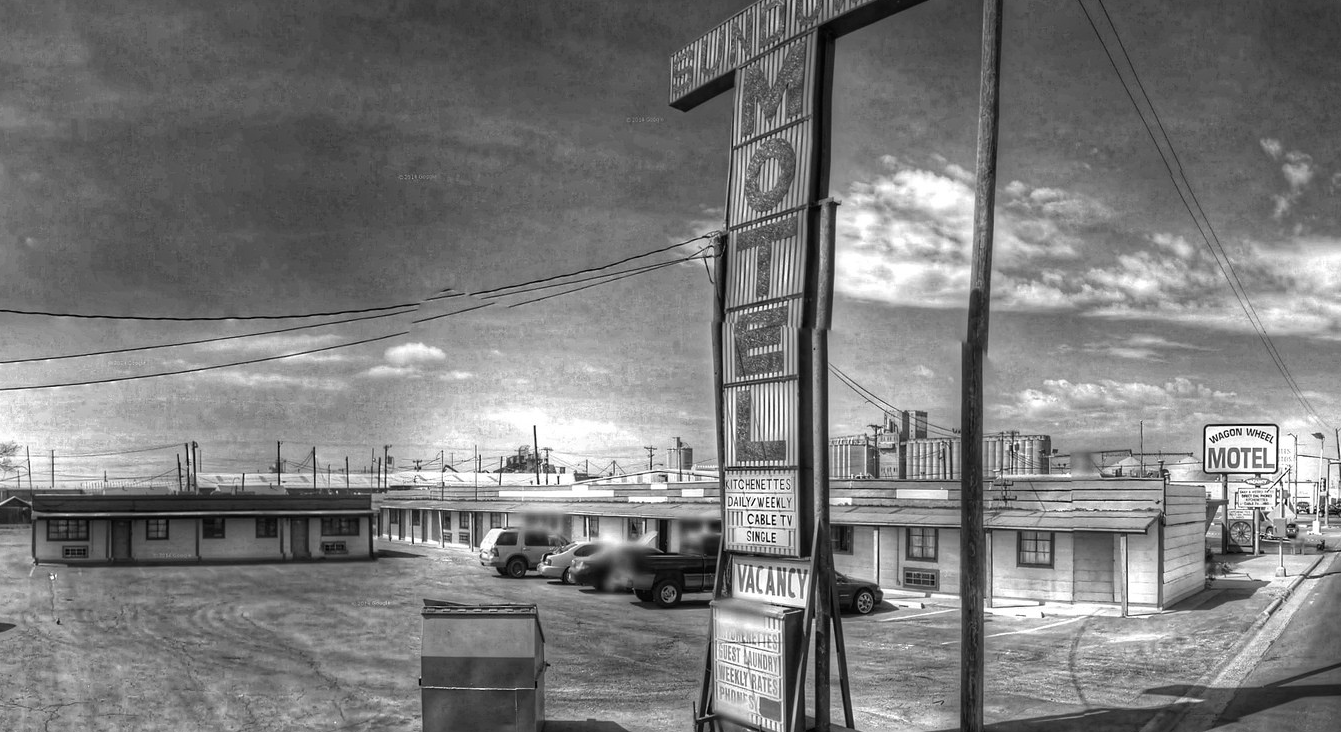
It is late by the time Annie arrives to her motel in Huntsville, and there is a sleeping elderly couple in her room when she opens the door. Startled by the door’s creak, the man pulls the lamp cord and turns his face to the door, baffled and drooling, and then hysterical, terrified.

“Please don’t do this,” he pleads with Annie. His voice cracks when he says it, and he begins to ramble manically. “We don’t have much money; we are on a fixed income. We have been married for forty-three years. My name is Ralph and my wife is Connie. We are happy and have had good lives but we are not done yet. We are on a road trip to see the Grand Canyon. We have known great troubles in this life. We lost a daughter to heroin. Kate, her name was Kate. I am a veteran. My wife volunteers at the food bank in our hometown of Fayetteville, Arkansas. We sponsor a child called Giancarlo in Peru. Please don’t do this to us. You don’t want to do this.”

Annie is stupefied. The man shakes his wife but she is deep in sleep. She swats his hand away and turns from him, continuing her graceful snoring.

“Jesus, I’m not robbing you,” Annie says. “I think they gave me the wrong room number at the front desk.” She points at her suitcase to indicate she is a fellow traveler, amicable and well-intentioned.

“Oh. Oh, all right,” the man says, relieved. “Oh, I’m so sorry. I overreacted.”

“It’s fine. Sleep well,” Annie says as she closes the door, a little stunned.

She thinks the man must have seen the same 20/20 special she did a few years ago — the one that instructed you on how best to talk down a criminal. The favored method was to give a brief synopsis of your life story; to self-humanize in the hopes of interfering with the criminal’s one-track mind. How odd, Annie thinks, to be mistaken for someone who could have such motives. How odd, and yet vaguely empowering.

“You gave me the wrong room number, genius,” Annie says, back at the front desk in the lobby. “The key still worked, but it was the wrong room.”

“What makes you think that?” the man says, offended. His name tag says DARRYL.

“I opened the door and there were people inside.”

“Were they fucking?” Darryl asks.

“No, they weren’t fucking, they were sleeping.”

“Did you wake them up?”

“Yes, I did. It was a whole ordeal. Very unpleasant. Now can you tell me what room I’m actually in? I’m exhausted.”

“Last name?”

“Dodge,” Annie says. “Last name is still Dodge.”

Darryl stares blankly at the screen, scrolling. “Oh,” he says. “So, that looked like a 6 earlier, but it’s an 8. You’re in room 108.”

“But this is still the correct key?” Annie asks, holding it up for him to see.

“Insider secret: most of the even-numbered keys here open most of the even-numbered doors,” Darryl says. “It’s cost-effective. But keep that between us.”

He gives a wink and a smile, his teeth white as geese. Annie can tell the tie he is wearing came pre-tied, probably it is hooked in the back. She finds this just barely endearing.

“You seem angry,” Darryl says. “You seem like maybe you want to speak with the manager.”

Annie shakes her head no, she just wants to go to sleep.

“Well, good,” Darryl says. “Because you’re seeing him. The manager, I mean. It’s me.” He appears very satisfied with the timing of this revelation. “Boy, that would’ve been embarrassing for you. If you’d been all, I want to speak to a manager right this instant, thinking I was some graveyard shift nobody. It would’ve been embarrassing for you and very fun for me and nothing around here is very much fun.”

“Yeah, well, I’m not very much fun either,” Annie says, and walks out of the lobby.

Annie wakes early, Texas sunlight cheap and bright through the accordion blinds. It is Wednesday, and she is scheduled to be at the prison by noon. She walks to the vending machine in the lobby and purchases a diet soda and tortilla chips. The chips get stuck on the way down and she has to give a shove and then another before they fall to the machine’s dropped jaw. Someone else is manning the front desk now, a pigtailed teenager. She is checking in a new guest and laughing, a laugh like two dogs barking in different keys.

Back in her room, Annie showers and dresses herself to meet the visitation protocol: an inoffensive pantsuit with taupe flats. It is exactly the sort of outfit she would wear to a dentistry conference to moderate a panel on underbites. She drinks her soda and eats her chips, which are stale and salty, as she flips through the lengthy informational packet sent to her a few weeks earlier, after she had called to place herself back on her father’s visitation list. That had been a ninety-minute ordeal with an irascible woman named Uma, in whose voice it was impossible not to detect equal parts impatience and judgment. She seemed to think Annie something of an imbecile for not being well versed in the ways of the bureaucratic bubble in which she, Uma, and Annie’s father were ensconced.

This is how it will work. Today she will see her father for an hour-long visit, a visit that the Texas Department of Criminal Justice deems a “special circumstance,” which makes it sound as if there may be Mylar balloons and a sheet cake involved. Tomorrow they will have another hour together in the early afternoon before Elliott’s last meal — before he is fingerprinted, allowed a shower, given a set of plain clothes, connected to an EKG monitor, and escorted by the warden into Huntsville’s execution chamber. On the other side of the glass in the chamber — glass which Annie’s internet searching has yet to confirm or deny as one-way, another element of the whole ordeal seemingly designed to be unknowable — there will be four chairs: two for the boy’s bereaved parents, one for the boy’s younger sister, and one for the family’s attorney. If she wishes, there is a special room where Annie can watch on a closed-circuit TV with the companionship of a chaplain as Elliott is belted to a gurney and injected with sodium thiopental, which will render him unconscious, pancuronium bromide, which will arrest his muscular system, and potassium chloride, which will forever stop the clatter of his heart.

She does not wish.

Annie checks her outfit once more. She considers ironing it again as it has developed a few wrinkles, but decides against it. She smiles into the mirror and flosses remnants of tortilla out from her gums. In a see-through change purse, she places enough quarters to buy herself and Elliott a drink and a snack, the humble offering they allow a visitor to make. And when there is nothing left to do, she loads the directions to the prison on her phone and makes her way out into the parking lot, where the blacktop sizzles and the sun is harsh and hovering like a bitter principal.

Two hours from here, in Waco, the building where Dodge Batting Cages was once in operation has since been demolished — the foundation repurposed as part of a strip mall or a housing tract, like everything in Waco — but because it is the space in which the murder was carried out, it is in some sense still a functioning, if figurative, environment: still mentally inhabitable by Elliott, Annie supposes, and surely by the young boy’s mother and father, who must to this day still dream of the discharging pitching machine, the awful stutter of it like a lawn sprinkler turning on. Even Annie, who prides herself on having admirable jurisdiction over her mind and its fraught impulses, has an infrequent but vivid dream wherein she floats herself just high enough to where she is above the batting cage on that night — like some novice superhero, some trainee angel — and peels back the slate roof with her hands, shingle by shingle.

Never in this dream is she able to prevent what slowly comes into view.

The newspapers had taken to characterizing the murder as an “unimaginable atrocity” back then, a severe underestimation of the human mind and its intransigence, its resistance to being governed. Devastation carved a long, wide river in you, a surface the size of your life, which allowed for the passage of all kinds of perverse conjecturing.

And how could it be true that the murder was unimaginable, for Annie’s father had imagined it, in detail, and performed it with alarming precision.

She had already been living in Austin for three years by then, in touch with Elliott insofar as many of the belongings that she did not bring with her to college still remained in his house, the house of her youth, where she would occasionally spend a long weekend. She had not seen nor spoken to him since the winter break several months before, when they took an unremarkable trip to South Padre Island, the memories of which Annie was asked to resurrect in a courtroom a year later. No, there had been no signs of her father’s imminent unwinding. Elliot had been the same as always: calcified in most places but occasionally humorous or attentive enough to surprise her. He absolutely was not, on that trip, a man who demonstrated a capacity for the kind of wretchedness he would display just a few months later. This was what the defense had wanted her to get across on the witness stand as they pleaded for insanity.

The only strange thing that had happened — and Annie wouldn’t truly realize its strangeness until it was already a memory, an implication — was that she had seen Elliott dancing on the last night of their vacation. They had rented a little condo by the beach and in the middle of the night Annie had peered out the blinds to see Elliott, shirtless and pirouetting in the sand, his hips swaying, his arms loose and stretched to an arrangement of stars, the only living soul on the Gulf Coast. He had appeared to be wearing some kind of a wig. Annie wrote it off in the moment as both highly strange and a little embarrassing; certainly nothing she planned to bring up on the five-hour drive home the next day. This recollection the defense asked Annie not include in her testimony, for they believed it suggested a sort of burgeoning madness, contradictory to the sudden rapture of lunacy they were going for.

But Annie never saw it as a sign, still doesn’t, of anything more than what must have been a lifetime of isolating loneliness; her father’s sadness at its saturation point. It had almost been beautiful, seeing him dance under a low-hung moon, allowing a desire.

The following May, Elliott had drugged, shaved, collared, and sodomized the boy before tying him with bungee cords to the cage’s fencing and starting the automatic pitcher, allowing it to unload round after round of fastballs into his face and chest, hours of this, the floor covered in bloodied seams, until hardly a bone was left unbroken and the boy was a nude, swollen, torn-open thing, at which point Elliott had called himself in to the police, who found him outside the property, a body in his arms, begging to be arrested.

Thirty-seven was the number of pieces the boy’s skull had been shattered into, an autopsist later reported.

“What was the only organ in Peter Price’s body still working when the police arrived?” went a popular joke at the time, “Elliott Dodge’s cock” being the punch line.

“Did you hear about the banana charged with murder?” went a kinder joke from Annie’s childhood. And when you had not heard about the banana who had been charged with murder you would be told that the case had been overturned on appeal.

From the highway, Annie sees the red brick of Walls Unit, the concertina wire decorating the perimeter like metal brackets fitted around teeth. She takes the exit and pulls into the visitor’s lot, where two sweaty, unfriendly officers search her car before giving her permission to park. You are allowed to run, she tells herself. You are the only one who knows. Then she dry-swallows two Ativan from her purse and walks toward the entrance.

Inside, Annie is taken to a white-walled room and told her father will be brought in soon. She has given what it might be like to see Elliott after all these years just enough thought so as to completely overdetermine her reaction, draining from it any possibility of authenticity. She felt she should be distant enough to make clear that no meaningful forgiveness had taken place, yet genial and compassionate enough so as not to belie the gravity of his situation. She would indulge him in a few summoned memories, but in absolutely no revision. She would redirect the conversation when she sensed it going in places she did not wish to go, and she would not ask questions whose answers might upset her. She would by no means allow Elliott to seek anything like closure. This was the plan. But when Elliott enters the room, Annie begins to cackle, and then she quickly begins to cry, and then she slides across the table a Kit-Kat and an RC Cola and places her face in her palms; the plan backfired, a swift wrecking ball through her parapeted resilience, all before her father has settled into his chair. She tries to regain her composure, but in her mind the moorings of a large ship are severed by a crook on dry land, and the vessel and its terrified crew begin to move recklessly into a dark, unsettled sea. A tempted fruit fly dives irretrievably into the uncorked bottle of wine.

“Hey, bug,” Elliott says, and reaches across the table to hold Annie’s hands in his, which are callused and cold. His face is thin and tugged-on and his hair mostly gone, the few tufts of silver that remain like wiped chalk on a blackboard. His ears are pointier than she remembers them being — or hadn’t she ever registered her father as even having ears? When he smiles, Annie sees that Elliott’s teeth show signs of terrible decay, all of them caked in plaque as if he has been brushing with melted butter. He has aged poorly, hardly anyone hadn’t here, but all the same it is him, her familiar and homely father, progenitor of her own unloveliness, and she recoils at how easy it is to recognize him, how effortlessly she can place him in history as hers. This is how she had always felt when she visited, and it is mostly why she stopped. She does not like what it suggests that he appears hardly any different after what he’d done. It ought to have left him disfigured somehow, visibly ruptured like the burned girl. Anything so that Annie could see him without seeing him, see him at a safe remove. Anything not to acknowledge as true the narrative which the defense had failed to combat in the trial: that Elliott was not a possessed man overtaken in a snap of dissociative fugue, but a very sick one who had systematically broken down until he was no longer able or willing to tame his dangerous, toxic hunger. The murder was just the place desperation had taken him to. It dropped most people off many stops before. Annie looks into the dim green of his eyes and wishes what she has always wished: that she could believe he had gone mad rather than know him, her father — who had taught her to swing and who had purchased her tampons in bulk and who had never so much as spanked her — as having had the capacity for such harrowing wildness all of his life; all of her life.

“So, how are you?” Elliott asks.

“Here,” Annie says, as if to confirm he has not hallucinated her. “I’m all right. A little nervous, I guess.”

“I can tell,” he says. “I’d be nervous if I remembered how to be.”

Annie nods, looks around the room as if anticipating a waiter. She waits for Elliott to say something, and then he does.

“Bug, it means so much to me that you came. I hope you know that. When I wrote you, I thought, if I were her? Not a chance in hell. Not if it was happening next-door. And I was pretty sure you weren’t gonna come either. Which I would not have blamed you for, Annie, believe me. But I prayed about it, I prayed about it a lot, and then just yesterday God told me that you were gonna show up here, right in the nick of time. That you were coming. And now here you are.”

“The man cannot keep a secret,” Annie says, for a joke. Her father found religion long before his incarceration, and because of this Annie has always granted his faith just a touch more legitimacy than anyone else’s here. It appeared that God talked to him regularly, which was one way God was better than Annie.

Time passes slowly as they volley back and forth, keeping the conversation light enough. He asks if she’s seen much of Boris; she hasn’t. She asks if they always keep it so godawful cold in here; they do. He asks about her practice and Annie admits she is not one of the top ten orthodontists in the city of Chicago, which Elliott kindly offers is a miscalculation. She tells him a little anecdote about Melvin the cat who has a tendency to nap in the dryer when it is left open; she is always having to double check before starting a cycle. Elliott relays a story about the wife of an inmate serving life without parole — a sentence he refers to as all day. The wife had the idea to grind up methadone, tint it with a few drops of food dye, and use the paste to fill in the illustrations of a child’s coloring book. After receiving them through the prison’s mail system, her husband would lick the drawings clean. Annie finds this scheme undeniably brilliant, but does not give her father — nor, by extension, the inmate and his wife — the satisfaction of saying so.

“Cleverness can get you pretty far in here,” Elliott says. “Sometimes too far. But it kills the time.”

“Do you still do your crosswords?” Annie asks. In another life, another Texas, Annie and her father had spent Sunday mornings doing the crossword on the back page of the Waco Tribune, making up words for the answers that eluded them.

“Absolutely,” Elliott says. “One of the better parts of my days. I was doing one this morning. I kid you not: 12 across, eight letters, a penitentiary, informal.”

Annie thinks on it a minute, counts letters on her fingers. “Hoosegow?”

“May God strike me dead if I’m lying,” Elliott says. It is the kind of remark Annie is glad she herself had not made.

Somewhere past the half-hour mark, the Ativan finally kick in, and Annie settles into their snug alchemy. The panic she felt at the beginning of the conversation is converted into a kind of acquiescent distress, one that does not demand immediate attention and which she can return to later. It becomes apparent that she and her father have run out of small talk, and Annie can tell he wants to be asked about the execution. She can tell he has a thing to say about it, probably rehearsed.

“How are you feeling about what’s happening tomorrow?” she asks, buttressed by the benzodiazepine.

“I really thought you’d never ask. I thought we were gonna have this entire conversation, the full hour, without once mentioning it.”

“I’m sorry,” Annie says, though not what for.

“To tell you the truth, I’ve made peace with it. I know to anyone not in my shoes that must seem impossible. Or it must seem delusional. But you can only fear a thing for so long, Annie, that’s what I’ve learned in here. I’m just a few weeks shy of having served seventeen years — you can’t keep up dread that long. Dread gets tired, gets old. Anticipation: give it enough time, it isn’t much different than acceptance, really. So, I’m okay.”

How nice it would be were it true, but Annie can tell he is downplaying, in the way only a daughter can see her father. As he speaks, he uses the same voice he used so many years ago on Padre Island, the first night of their vacation, when the Jeep they had rented had broken down after midnight while they were off-roading through the remote dunes and marshes. They were many miles from anyone who might help, and Elliott had said, feigning confidence, “There’s absolutely nothing to worry about.” He had said this over and over, in what he must have imagined was a reassuring tone, until Annie was certain that it was the place they were going to die. Eventually, not long before sunrise, a Samaritan in a land rover came to the rescue, and as he approached Elliott had given Annie a look as if to say, “I told you so.” But she had seen her father shivering.

“I still don’t think it’s right, what they’re going to do,” Elliott continues. “I still don’t think it’s natural. It’s not their place to make such decisions. I’ve made peace with it, believe me, but you know what God’s gonna say to me when I get there? He’s gonna say, ‘You’re home early.’”

This was also what Boris had said to Annie the day she walked into their home to find a brunette double-amputee in the living room with Boris’s dick in her mouth. The woman’s eyes were closed and she had been smoothing the skin of his scrotum with her fingers in such a way that Annie’s first thought had not been, My marriage is over, My husband has been unfaithful, but rather, Does this woman think there’s braille written on Boris’s balls? It was such a strange scene, almost impossible to take seriously at first. Boris would tell her later that he had a fetish for amputees. There were apparently websites one could visit to meet other all-limbed people who shared this fetish, as well as amputees looking to be desired and fulfill the fantasies of others. One simply set up a profile, paid the monthly registration fee, and chatted away. “There’s just something about them being missing,” Boris had said.

It was many weeks before Annie landed on what would’ve been a terrific response to this, which was, “It’s just like you to get off on detachment.”

“Are you there?” Elliott asks, and Annie realizes she has tuned out. It seems her mind is demagnetized from the present moment, meandering through time, attaching itself to stories that already have endings.

“I am,” she says, though she has never felt more — more what. More elsewhere.

The warden gives them a five-minute warning, and Elliott tells Annie not to show up tomorrow. He says this as if they are merely rescheduling.

“What are you talking about? Why wouldn’t I be here? Where else would I be?” Annie asks, incredulous.

“You don’t have to, really,” Elliott insists. “I think I’m gonna spend my day in prayer. That seems like the best thing for me to do at this point. Plus I’m afraid that, if they give me too much time with you, I’ll do something stupid like ask for your forgiveness.” Elliott polishes off what remains of the soda and the Kit-Kat, nods his head toward heaven. “I’d rather ask for His.”

Annie doubts he’ll get it from either of them, though this is nothing she vocalizes. “But I want to be here,” she says, unconvincingly. “You asked. I made the trip. I’m here.”

“I just needed to see you one more time. Everything would’ve felt incomplete otherwise. Or, even more incomplete, I guess,” Elliott says. “I needed to see to it that you were all right. And you are, aren’t you? You seem all right, truly. That puts me at ease. And I thank you so much for coming, for making the trip, for taking time off work. But tomorrow? Shit, Annie. No one should have to see that. No one should ask anyone to see it. It’s twisted, it’s embarrassing. Get an earlier flight home. Do something for yourself.”

Annie cannot deny the strong sense of relief inside of her. The idea of seeing him tomorrow, after just having seen him today, had unnerved her. What else would they say, or fail to say, that they hadn’t this time? His uninviting her, she knows, is an act of kindness. She looks at her father, wants to give him something back, feels she should, and does not. He squeezes her hands once more, tries to out-grin tears that come anyway. The warden tells them their time is up. Annie can’t remember whether or not she’s allowed to, but she wraps her arms around Elliott anyway. My bug, my bug, my bug, he keeps saying. He smells a little sweet and a little like disinfectant. And then he is escorted out, waving, gone.

Annie takes to the highway in her rental. She drives and drives. She feels released from something, both in the way that means freed and in the way that means dropped. The radio issues a series of classic country songs, the lyrics amusing in their frankness. I’m gonna hire a wino to decorate our home. Get your tongue outta my mouth, I’m kissin’ you goodbye. She’s looking better after every beer. I bought a car from the guy that stole my lady, but the car don’t run and the lady’s crazy: I figure that makes us even. The highway swells with commuters, and then empties itself of them. Annie kills half a tank this way until the sun is hauled down from the top of the sky. She picks up a case of light beer from a drive-thru liquor store and a pack of the Marlboro Lights she’d given up many years ago from the gas station before driving back to the hotel.

In the lobby, Darryl tells Annie that the air conditioning is down. It is nearly ninety degrees, even with the sun gone. A stream of sweat trickles down his forehead, like he is leaking. The other patrons have taken off to a nearby motel with a refund and a gift voucher for their next stay. He can do the same for her, Darryl says, all he needs is the credit card she used to book the room.

“I don’t mind the heat,” Annie says, having no energy to relocate on her last night.

“Plus, I don’t have any intentions on coming back.” She removes the pack of cigarettes from her purse. “Let’s pretend smoking is allowed in my room for the night and I won’t complain.”

“We’ve got a few fans in the basement,” Darryl says. “I can bring them up later.”

“All right,” Annie says. “You do that.”

By the time Darryl knocks on the door, it is nearly midnight and Annie is tanked. So much of the beer is gone. She took a few more Ativan earlier when it seemed things were catching up to her, but now she feels fine, if only a little floaty. The knocking persists, though Annie can’t remember, until she opens the door, inviting someone over. Darryl is there, holding two pedestal fans, one in each hand.

“Oh thank God,” Annie says. “It’s a fucking sweatshop in here.”

She opens the door wider to let him in. He looks at the collection of empties, some of which Annie has repurposed as ashtrays, and Annie shrugs when he looks to her as if to say, Yeah, and what of it. She is feeling strangely emboldened; she doesn’t drink often and now she wonders why that is. When Darryl gets the fans running, the artificial breeze is a kind of heaven. He positions them in such a way that every spot in the small room gets direct contact. Annie is grateful for this, and looks through her purse for a few dollar bills.

“Don’t worry about it,” Darryl says. “I’m just glad you decided to stay.”

“Why?”

“I don’t know. Just am.”

Annie stretches herself horizontally across the bed, her arms and legs dangling over either side. She closes her eyes, but can still sense Darryl there, watching her. It is a feeling she had forgotten until now, that of being looked at, looked at with a motive. She is still in the pantsuit; she had meant to take it off when she returned, but doing so had seemed too daunting, herculean almost. She rolls over and stares at Darryl, who is sweaty and shiny, a little portly, but not without his own appeal.

“So, can I stick around?” Darryl asks, having worked up whatever courage was necessary to solicit a drunk and homely thirty-eight year-old in a wrinkled pantsuit.

“No,” Annie says, because how often does she have the chance to turn a man down and because she knows he will persist.

“Why not?”

“I don’t know. I’m drunk and getting drunker. I’m a little dizzy.”

“I could join you in that.”

“There’s a chance I’ll vomit,” Annie says, ignoring him. “Plus, it’s late.”

“It’s getting earlier.”

He has an answer for everything, this Darryl character.

“Plus I’m ugly. Look,” she says, tracing her face and her shape with her hands, up and down, as if trying and failing to smooth out her undesirability.

“So?” Darryl says, and she falls in love with him for a minute right there, with the space where his denial wasn’t. He had let her have it! “I’m no prized pig myself,” he says.

Though, come to think of it, he doesn’t not look piggish. Annie imagines him at a county fair, being walked up to a stage to collect a blue ribbon, and begins to laugh.

“Is that a yes?” he asks.

“It’s a ‘I’m not going to remember this with much detail tomorrow anyway,’” Annie says. “It’s a ‘Why not, today has been a day.’”

Darryl closes the door, grabs one of the remaining beers from the case. He empties it within minutes. He lies on his stomach parallel to Annie on the bed, their bodies like overturned hammocks. It is getting cooler in the room, finally. Annie removes her blazer. Darryl places his hand tentatively on her back and then begins to scratch at her shoulders, drag his knuckles down her sides. He kisses each of the twenty-three discs in her spine. Darryl is taking his time. Darryl is in no rush. Though he is, it must be said, several beers behind her.

“Listen,” Annie says, turning over. She can see the impression of his modest cock through his khakis. “It’s been a while since I’ve done this but I don’t forget how. I slept with men like you. Because you were raised well, you think that you have to go through a sufficient amount of foreplay, but really: I am drunk and I am lonely and we are in Huntsville and seeing as we’ll never cross paths again, I say we skip right to the main event, shall we? This is me, giving you the green light.”

Annie hardly recognizes herself as the person saying these things, and she admires this sudden aggressiveness. She takes her clothes off and motions for Darryl to do the same. He slides himself into her, pumps admirably for a man with his body mass index and likely arterial blockage. He tries to grip her breasts while bending her over, but his arms aren’t long enough and he keeps slipping out of her. Outside, the sound of sirens, which serves as a cue to switch positions. He gets on top of her but can’t seem to find the entrance, he just pokes around. It is dark and men are always confused by where things are regardless. She guides him. He rocks inside of her some more, striking a surprising balance between tenderness and hostility. They fuck and fuck, a sweaty mess.

“I’m getting close,” Darryl warns. He pulls himself out and looks to her for instruction. Annie has no idea from where in her memory she excavates such a phrase, but she hears herself say, “Bust on my face.” Perhaps she had heard it in one of the amputee videos she downloaded after learning about Boris’s fetish. She had not been able to make it more than a minute through those videos without crying or laughing, hysterical either way.

“Bust on my face,” she says again, just to hear herself say it.

And so he does. His face contorts as though he’s bitten into a lemon, and thin ropes of pearl white land on Annie’s cheeks.

They laugh for a bit, both of them clammy and exhausted and short of breath. Eventually Annie goes to the bathroom and washes her face, wipes it dry with a towel. In the mirror, she is surprised to see herself smiling. Giddy, even. It appears that with enough beer and anti-anxiety medication — along with a stringent refusal of the day’s facticity — she is a rather delightful person, impulsive and raunchy and ravenous.

“You know, you look like a woman I slept with once,” Darryl says, when she returns to bed.

“Oh yeah?”

“Yeah, about fifteen, twenty minutes ago.”

“Funny,” Annie says, and he is. He opens up a space between his arm and chest and she moves in there.

“Why did you say you were in town again?” Darryl asks. “Because I think, whatever it is, you ought to do it more often.”

“I didn’t say.”

“Well, can I ask?”

“Sure,” Annie says. There is a pause. “Are you going to?”

“Know what? Bet I can guess,” Darryl says, and lights cigarettes for both of them.

“Bet you can’t.”

“Let me think, let me think,” Darryl says. He takes a few drags, exhales a plume of white.

“My father’s being executed tomorrow,” Annie says, so abruptly, and the bottom just like that falls out of the evening, sending them tumbling. “Tomorrow at five p.m. at the Huntsville prison.”

“Jesus Christ,” Darryl says, unsure whether to believe her.

“What? You weren’t going to guess.”

“I mean. I mean, Jesus Christ.”

“Hey, he goes to my church,” Annie remarks, and laughs a little at her own joke.

“Are you fucking with me?” Darryl asks. He appears genuinely hurt; wounded, even.

“No, I’m not. I wouldn’t.” Annie tries to take his hand but he pulls it away and gets up from the bed, his cock deflated. “My father committed a murder eighteen years ago, for which he received the death penalty. He is going to be executed tomorrow at five o’clock. That’s really the story.”

Darryl is stunned into silence, runs his fingers through his thinning hair. “What is wrong with you?” is what he finally asks.

“A great deal,” Annie says. “Almost everything.”

“Are you in some kind of shock or something? What in the world are you thinking? Why are you sleeping with a stranger the night before something like that? Jesus Christ, I came on your face! You asked me to come on your face and I did and your fucking father’s being executed tomorrow. I mean, Jesus. Do you not see how fucked up that is?”

“Oh, fuck you,” Annie says. “I get to decide what all of this means and doesn’t mean. I’m the one it’s happening to, after all. You don’t like it, well, you don’t have to. I had a terrible day, a completely awful, insufferable day. I spent hours trying to drive it off and that didn’t take. So I got very drunk. I got very drunk and you were there, at the door. None of this was planned. I sure as shit don’t have to defend myself to you.”

Darryl looks around the room as one who has been transported from another time, another dimension, shocked at this world’s complexities and banalities. The fans continue to spin noisily, making the smoke curl and dance. He tries to say something, but no words come. He paces a little, puts his clothes back on. He gives a few more false starts, but eventually he’s out the door, slamming it behind him.

It doesn’t faze Annie much; she’s asleep not ten minutes later.

She wakes in the late afternoon sticky and ill, a jackhammer at work in her cranium. She takes a cold shower and as she dresses, she notices that the fans are gone. She calls the airline and procures the last seat on a red-eye flight. It will cost her a $175 service fee to make the change, the customer representative says, and Annie says it could cost twice as much and she still wouldn’t blink an eye. She needs to get out of here. Out of this motel. Out of Texas. Out of this part of her life she has made the grievous mistake of dipping back into. She packs her things hastily and walks downstairs to the lobby where, mercifully, Darryl is not. It appeared she had done a number on him last night. Poor guy, she thinks, and loads up her rental car, stopping first to vomit on the curb.

Twenty minutes before her father is set to be executed, Annie parks in the lot of a grocery store down the road from the prison and begins to walk toward the grounds. She feels that, though she is not with Elliott in his last moments — and she is relieved about that, really — she should at least be nearby. Her clothes stick to her skin, the sun unforgiving as ever in the Lone Star State. She knows it’s silly, but she wouldn’t mind a slight thrum in her chest or a flock of birds describing themselves into the sky the second the clock hits five. She wants this should she ever have to tell this story to anyone; it would be a nice ending, she thinks, to an otherwise miserable and horrific tale. She had read a post once on a forum for mothers of inmates where a woman swore that, the day they executed her son — who was a storied serial killer — she saw two rainbows reaching from inside the gates of the prison to the world outside it. Of course Annie did not believe it, but as far as narrative resonance went, you couldn’t do much better than two rainbows. But nothing like this happens. No somber downpour, no flock of birds. No rainbows. The minute passes like the one before and after it. It’s just as well: she doubts she’ll ever tell the story to anyone, will not tell it even to herself.

For more, read Electric Literature’s interview with Vincent Scarpa.

A Twilight-Zone Airtightness: An Interview with Miles Klee

“Everybody’s Bluffing” by Miles Klee is featured this week in Electric Literature’s Recommended Reading, with an introduction by Matt Bell. Klee’s new collection, True False, is now available from OR Books.
Halimah Marcus: Reading “Everybody’s Bluffing,” which begins with a bank robbery, recalled for me a rich range of references in “bank robbery” genre, if we can call it that, from Tobias Wolff’s “Bullet in the Brain” to Butch Cassidy and the Sundance Kid. Did you intend to make an specific allusions or have particular influences within this genre?

Miles Klee: The influences were more cinematic than literary. My favorite bank robbery movie is Dog Day Afternoon — on paper, the ’70s New York setting and story are fairly distant from what’s happening here, in the Depression-era Midwest — though the offbeat tone and purgatorial suspense apply. What could have been a kinetic thrill ride instead boxes you into a single sweaty room and then just cranks up the heat from there. It’s also a excellent character model in terms of the uneasy collaboration between two criminals who find themselves completely overmatched by the (un)reality of their situation. OK, I ripped off this film entirely! Thank you, Sidney Lumet.

HM: Lionel tells a story of a dog “eating so intensely from a can of beans that it kept choking and puking a brown mouthful that it unfailingly bent to lick up once more.” Later, he says, “Life informs me, incessantly, of my needs. It’s repulsive. Being compelled to eat and see — to spend.” My interpretation is that he sees himself in the dog, caught in a futile struggle for control. It’s even a bit paradoxical because his body, the part of him that is alive, is the very thing he rages against. To be alive is to need. Is Lionel’s philosophical disposition connected to his being an outlaw? Do you sympathize with his point of view?

MK: I do sympathize, unfortunately. Friends and family have always noted that I’m not much for food; I can enjoy a good meal, but it never sends me into the raptures that others seem to enjoy. I eat because I have to, not because I want to. That sounds crazy to a lot of people, and it’s certainly disturbing for me. In the dog I think Lionel may have once seen Slip — an uncomplicated creature whose desires are basically automatic and beyond harnessing. But in the wake of their shootout, Lionel begins to realize that he, too, has motives he never bothered to question. His passivity was itself a choice, a surrender to Slip’s baser instincts. So suddenly the horror of life, in all its banal demands and obligations, comes flooding back into him. For years, being a stick-up man kept his thoughts grounded in the moment-to-moment, the immediacy of the score. As soon as he’s untethered from such concerns, he’s free to remember who he is — and revisit the nightmare of his mind.

HM: What about this notion that everybody’s bluffing, and everyone’s a criminal; is that an insight only other criminals can have, in a takes-one-to-know-one kind of way?

MK: I can’t confess to having led a life of many impressive crimes, so I’d venture to say it’s more universal than that. The sheer number of “fake it till you make it” and “don’t worry, no one really knows what they’re doing” platitudes floating around seems sufficient evidence. The criminal element gives substance to the dark side of those thoughts: You’re aware of laws, but what are they? Just a bluff. Just smoke. Sure, you’ll be punished for flouting them — but only if you’re caught. Keep your poker face on and you can win forever. You can con the world, outlaws have to believe, into giving you whatever you want, and at everyone else’s expense.

HM: In his introduction to the story, Matt Bell remarks on the range of styles in your writing. “Unlike most writers,” he writes, “who are so grateful to find something that succeeds that they end up mining that same patch of ground for most of their careers, Klee seems capable of writing any kind of story he wants, often starting by mimicking different genres and forms, then subverting those existing tropes to serve his own needs.” Is this range something you’ve intentionally cultivated? When write a story, to you set out to write something unlike anything you’ve written before?

MK: I’m lucky to have ideas at all. If one looks much different from another it’s surely because I’ve gone to the trouble of dressing them up in exotic new disguises — and the trappings of genre do go a long way there. When that stuff is working well, you get to be a virtuosic chameleon; the rest of the time, you’re blind in the wilderness. It’s a tricky sleight of hand, as Matt notes, that sets up an array of expectations to knock down. I’m not sure how conscious I am of this as it’s happening. Often I’ve just hit upon an inhabitable voice (e.g., the classic hardboiled narrator) that strikes me as lively and worth pursuit. I’ll let it spool out until a sharp left turn derails it — then I try to keep going. I guess that while I’m slavishly devoted to the styles and mannerisms of authors I admire, I remain a bit obsessional about narrative originality. A plotty resemblance to fiction another person has published can be unforgivable. A single repeated word can kill a whole page for me. It speaks to the fact that I’m trying to entertain and surprise myself as much as I seek to impress any theoretical reader.

HM: Lionel and Slip are both seriously injured at the opening scene. Lionel kind of dies and comes back to life, and later he discusses being unable to die. This question might be too pointed, but, are these guys immortal or are they zombies?

MK: I was irked the first time an editor read this story and called them zombies, perhaps because I’m a purist snob with no interest in zombies not directed by Romero or raised by a voodoo sorcery. I had seen these two as simply immortal, by way of some glitch in the universe. There’s a Twilight Zone airtightness to that — seeing as metaphoric immortality is a large part of what Slip hopes to attain through his behavior. And there’s a nerdy economic joke embedded there as well: inexhaustible capitalist drive in the face of total collapse, the ghostly invisible hand of the market. As the story took shape, though, I found it had the qualities of this elliptic limbo. In my head, it’s possible to read this to the end and then pick it right back up at the beginning and have it all make sense, with Slip and Lionel caught in an endless loop, and worse than that, having only the dimmest knowledge of what came before, doing it over again and again, never any release… something, again, like that poor dog.

Miles Klee was born in Brooklyn. He studied at Williams College under writers Jim Shepard, Andrea Barrett, and Paul Park, and now lives in Manhattan. His debut novel, Ivyland (OR Books 2012), drew glowing reviews and was likened to “J.G. Ballard zapped with a thousand volts of electricity” by The Wall Street Journal, later becoming a finalist in the 2013 Tournament of Books. Klee is an editor at the web culture site The Daily Dot; his essays, satire, and fiction have appeared in Lapham’s Quarterly, Vanity Fair, 3:AM, Salon, The Awl, The New York Observer, The Millions, The Village Voice, The Brooklyn Rail, Flavorwire, and elsewhere.

Barack Obama to Give National Medal of Arts to Stephen King and Tobias Wolff

This year, President Barack Obama will give the National Medal of Arts to two writers: genre-master Stephen King and literary fiction author and creative writing teacher Tobias Wolff.

The National Medal of Arts is the highest artistic prize that the US government gives out. The two writers will join such acclaimed past winners as Maya Angelou, Saul Bellow, John Updike, Ray Bradbury, and Philip Roth.

The official citations for the two writers are:

Stephen King for his contributions as an author. One of the most popular and prolific writers of our time, Mr. King combines his remarkable storytelling with his sharp analysis of human nature. For decades, his works of horror, suspense, science fiction, and fantasy have terrified and delighted audiences around the world. (Bangor, ME)

Tobias Wolff for his contributions as an author and educator. His raw works of fiction examine themes of American identity and individual morality. With wit and compassion, Mr. Wolff’s work reflects the truths of our human experience. (Stanford, CA)

King responded publicly to the news on Twitter: