9 Poetry Collections That Build Immersive Narrative Worlds

There’s something transformational that happens when you unwrap a story across a series of poems. Without the real estate of an entire novel, the plot clarifies into its purest and most necessary form, unspooling without a single wasted breath. Metaphors focus and expand. Pacing spirals in on itself. The poet takes new risks on every page, building a text that doesn’t so much tell a story as sing it. 

We humans have been using poetry as a vehicle for plot for thousands of years—it’s one of poetry’s original functions, after all. Think Gilgamesh. Think Beowulf and the Odyssey. Personally, I was thinking hard about the Iliad when working on my own debut poetry collection, Helen of Troy, 1993, which reimagines the Homeric Helen as a dissatisfied homemaker in small-town Tennessee in the early nineties. Helen comes of age, marries the wrong man, births a child she is not ready to parent, and begins an affair that throws her whole life into chaos—all this in poems with settings ranging from the produce section of a Piggy Wiggly to a Chuck E. Cheese birthday party to the opening night of Jurassic Park in theaters. 

When I made my great leap into reading and writing poetry many years ago, it seemed only natural that the books I gravitated toward were the ones that told a story. The ones with a narrative arc, I mean. The ones with developed characters and weighted conflict. The collections building entire worlds inside their pages—and doing so while refusing to sacrifice the exacting attention to word and line and stanza that marks the very best of all poetic possibility. 

Here are nine poetry collections that build their own narrative worlds.  

I Know Your Kind by William Brewer

In the town of Oceana/Oxyana, West Virginia, opioid and heroin abuse has smothered everything in its path: lives, dreams, futures. Brewer uses a cast of characters to walk the reader through a community in crisis, addicts and their loved ones crying out inside a kind of living coffin nailed shut around them: “—Still fools? We? / Of course,” his characters roar into the winter night. Brewer is a West Virginia native, and his poems construct the breathing and dying Oxyana with a kind of tender authority that sweeps through halfway houses and hospitals and the dark rooms of the overdosed. His language is painterly, precise, frequently transcendent. An addict leaving a pain clinic proclaims, “though the door’s the same, / somehow the exit, like the worst wounds, is greater / than the entrance was. I throw it open for all to see / how daylight, so tall, has imagination. It has heart. It loves.” This book cradles Oxyana like a mother and like a house fire. 

Trials and Tribulations of Dirty Shame, Oklahoma by Sy Hoahwah

When the little clay bowl Velroy Coathty uses to keep pocket change on his desk turns out to be the Holy Grail, Velroy is forced to make a run for it to get the Grail out of Indian Country ahead of the supernatural forces in pursuit. Other characters with their own paranormal problems join the journey along the way, and like modern-day Knights of the Round Table, Velroy and his friends band together to traverse the plains and fields of Oklahoma in a Comanche quest for the Holy Grail that may be just as doomed as those that came before it. Sy Hoahwah tumbles the reader down his cascading lines of action and imagery, building a narrative rooted in place and yet gently unmoored from any one specific moment. As Luther Tahpony, a boy both dead and undead, explains: “Inside that floating coffin is a fine line between me and time / It’s overwhelming … blinding, / like looking straight into eternity’s headlight eyes.”

Dear Outsiders by Jenny Sadre-Orafai

A pair of siblings living with their parents in a seaside tourist town must learn to fend for themselves when natural disaster strikes. Forced to leave the shore and all they’ve ever known, the siblings come to rest in the deep woods of a mountain, where danger still lurks all around them and the only sure thing is each other. Jenny Sadre-Orafai’s lovely, twisting book of prose poems treats the natural world as the ultimate hand of fate, both life-sustaining and life-erasing by unpredictable turns. “The ocean’s an animal head on a wall, and we can’t see the body. We think it must be inside the wall and that it walks out at night when we sleep. What’s a body really,” the siblings muse. Reading Sadre-Orafai’s prose poems is like peering into a room through a cracked door, discovering what’s inside only by what a single strip of light illuminates. We swim and hike and forage alongside our double-voiced narrator, living in their filtered memory as much as in the peril and beauty all around them. 

A Season in Hell with Rimbaud by Dustin Pearson

French writer Arthur Rimbaud’s classic book-length poem A Season in Hell follows its narrator along a tortured journey through an underworld of unhappy love affairs and ruined dreams. Dustin Pearson’s narrator also descends, but in this collection, the narrator is searching through hell for his brother. “I tell myself / there’s not a world / without my brother in it. / I tell myself / I’d follow him anywhere / to keep the world / from ending,” the narrator says. The narrator and his brother enter hell together, but are almost immediately separated; to reunite, the narrator must embark on an allegorical odyssey of nightmares, burned by fire and frozen by ice, trekking ever onward through the landscape of hell toward a reunion of spirits beaten down and yet forged together by a shared past. Pearson’s imagery is inventive and unrelenting, and his poems locate themselves powerfully in the physical: “In Hell, all bodies are reduced. Flesh drops / from where it’s been burned, and where it lands, / separates.”

The J Girls: A Reality Show by Rochelle Hurt

Jocelyn, Jodie, Jennifer, Jacqui, and Joelle—coming of age in 1990s working-class Ohio—are teenage girls in the truest sense: each an individual battering ram of dreams, lust, prayer, joy, ennui, compassion, and nastiness. “We’re foul with ambition and clunky in pumps. Joelle fronts cool, but we cook up hot with no warning, man crazy,” Jocelyn says. Rochelle Hurt keeps the camera pointed at her five subjects as they gossip and play-act adulthood, harming each other and, deeply vulnerable in every sense, being harmed by the boys and men around them. Hurt’s phrasing and pacing are explosive, dense, experimental. Being caught up in one of her poems feels like opening a shaken can of Coke and watching it fountain across the room. Comparing herself to her ’81 Chevy Celebrity, Jodie says, “Both sixteen, we twin dim heads and cloudy rear-views, / collect red wounds on our underbellies where the world eats through. / Why should a body be this badly made for carrying?” In The J Girls, the reader watches teenage girlhood come apart and tape itself back together.

Ceive by B.K. Fischer

A modern-day postapocalyptic Flood myth, Ceive repositions Noah’s Ark as a container ship stacked with refugees aiming for the newly temperate Greenland. The book follows Val, whose daughter vanished in the disaster, as she reluctantly takes a place aboard the CC Figaro to look after the child navigator Crispin. Under the control of a single family (Nolan, Nadia, and their three sons), the Figaro locks into a new social order as it chugs onward toward its destination. Fischer’s pacing slings the reader through stanzas and prose poems that twin a deep understanding of loss with the requirement of moving forward, of living in the fractured present, the uncertain future. “You speak a few dead / languages now, the one / of profit and loss, shock / and awe, vote and veto,” Val muses, thinking as she often does of the world destroyed by the disaster that landed her aboard the Figaro: “You miss bathrooms but you don’t miss / the Dyson Airblade. You miss ice.” What Val misses most of all is her daughter. But aboard this new Ark, there is no way to go back. 

South Flight by Jasmine Elizabeth Smith

After the Tulsa Race Massacre of 1921, lovers Jim Waters and Beatrice Vernadene Chapel must part: he to seek a future away from home, she to navigate the perils of a Jim Crow culture without him. Through letters they write back and forth to each other across their separation, Jim and Beatrice question and yearn and hope and dream, holding each other across the miles that keep them apart. “tell me what / happens when your hope for me / sprawls big as south, / yet this kind of living make me / smaller than a few chickweed seeds?” Jim asks Beatrice. Smith’s characters pulse with life, flush with the careful sensory detail work that threads throughout South Flight. “Honey. I ain’t saying break / don’t hurt, but it a simple fact this world will beat you / down, black eyes like jet, stricken you blue,” Beatrice imagines Ida Cox telling her at her dressing table. An Oklahoma native, Smith peers into a time in American history with painful parallels to our current cultural moment, building both blues and love story along the way.  

Troy, Unincorporated by Francesca Abbate

I stumbled upon this collection very recently, and I’m so glad I did—Troy, Unincorporated feels like it could be cousins with my own debut collection. Francesca Abbate brings Chaucer’s version of the tale of Troilus and Criseyde to modern rural Wisconsin in a series of dreamlike poems darting through language and consciousness. Troilus and Criseyde fall in love among the lakes and rains and birds of their small-town home, but any reader familiar with these classic characters knows that this young love can’t last. When Criseyde leaves town and falls in love with another, Troilus is utterly bereft, and there is nothing his friend Pandarus can do to save him from himself. “I am half-invincible, / half-destructible, half-mad: am, in fact, a divine half / and a half not,” the character Psyche sings in one poem; this book, too, exists in married halves. Abbate holds Greek myth in one hand and Chaucerian tradition in the other, weaving them together into something entirely fresh and original: “narrowing road, clearing, / the sun like the secret shining in the dark halves of all things.” 

Pretend the Ball Is Named Jim Crow: The Story of Josh Gibson by Dorian Hairston

“Joshua ‘Josh’ Gibson is the greatest catcher to ever play the game of baseball,” Dorian Hairston writes in his author’s note. In a collection of persona poems that dive between complex interiority and the base-stealing drama of the diamond, Hairston brings Negro League baseball to life through Gibson and his contemporaries, holding the long shadow of American segregation and racism in constant focus. “uncle sam knocked / on my door drafting / some black shields / for his white sons / and I answered in my draws / slung my bat up over / my shoulder and point him / in the opposite direction,” Gibson reflects in one poem. Hairston gives narrative space to Gibson, his children, outfielder Hooks Tinker, journalist Chester Washington, and others, all these voices shaping the landscape of our national pastime in the 1930s and 40s. Hairston is a baseball player himself, and his love for and deep knowledge of the game shine out in his work: “I never seen something so smooth. / how Josh didn’t rock or sway back / before the pitch, he just waited there / in the box like a snake to strike.”


Zoological Advice for Grieving Daughters

“Home Range” by Ramona Ausubel

“The Florida panther (Puma concolor coryi), which once ranged throughout the southeastern United States, is now restricted to a small breeding population in southwest Florida south of the Caloosahatchee River. First listed as endangered in 1967 under the original Endangered Species Preservation Act of 1966 and subsequently receiving Federal protection under the passage of the Endangered Species Act of 1973, the Florida panther was and still remains one of the most critically imperiled large mammals in the world. Although males have been observed at various locations throughout the state, until recent years females apparently did not cross the Caloosahatchee River and no panther reproduction had been documented north of the river since 1973. In the mid-1990s the subspecies was near extinction with around 30 individuals remaining and severe genetic defects due to small population size.”

FROM: “Location and Extent of Unoccupied Panther (Puma concolor coryi) Habitat in Florida: Opportunities for Recovery”

BY: Robert A. Frakes and Marilyn L. Knight

PUBLISHED IN: Global Ecology and Conservation 26 (April 2021)


We are moving into your house, which you do not occupy now because you are dead. Mothers should not die. You were the universe for me, and then you were a planet and now I am supposed to believe that you do not exist.

I can’t talk about this with my children because I would be reminding them, or telling them for the first time, that I will die someday. Instead, I give them each a little plastic Florida panther figurine and a book about the beasts and tell them that we are moving to panther country. I show them pictures of the blonde beasts and their enormous paws, their white muzzle, black rimmed eyes. “There are only a hundred or two in the whole world,” I say, and my daughter nods gravely. She had gotten binoculars for her last birthday. This, age seven, would be her best year yet. My son looks worried. “Panthers are not dangerous?” I tell him that they stay away from people, that they roam the jungle and freshwater swamps looking for rabbits and armadillo to eat. “Don’t think of them as predators, think of them as magicians.” He is nine, which is old enough to understand a lot about the rules of the world, and to feel discomfort with the vast unknown.


My daughter, upon the news, begins a study of the Florida panther. She says, “The species used to live all over the southwestern United States and now there is only one population in southwestern Florida. In the 1970s there were only twenty breeding pairs, but now there are around two-hundred and thirty.” She is seven years old and she seems forty. She taught herself to read at five with the fervor of someone who needed to know the survival manual.

“That’s good,” I say. “They’re doing better.”

She says, “They sometimes kill and eat small alligators and panthers are the leading cause of death for white-tailed deer in the region.” She smiles wide at this because it means the cats are eating.


We are moving into your house because I can’t get a job. The last academic interview I had was in a desert city and I flew in with my suit skirt and my pressed shirt. For two days I told person after person how prepared I was, how ready to teach their students to write essays. I didn’t eat at meals because I was afraid of getting lettuce in my teeth and in the bathroom between talks and meetings I devoured granola bars and willed myself not to throw up. I tried to picture us there. To picture taking the wet, warm storm cloud of our family to that dry place. My husband was excited about it—he imagined desert wildflowers while I’m always simultaneously pulling away from and missing melaleuca, cypress, swamps. When the chair of the search committee called to say that they had chosen the other candidate I told her I understood but that I was now going to have to move into my dead mother’s house. She was silent on the end of the line. That fury is still a flavor I can recall immediately. It’s in my body somewhere, a stalactite in the cave, water beading off drop by drop, leaving the thinnest coat of mineral behind. Mineral that gathers and gathers and gathers until it becomes a dagger.


When I had a mother I wanted no mothering, I wanted to drift in total randomness through space and time as if I arrived here on the back of a comet.

I’m telling you all these things because you are not alive to see them. When I had a mother I wanted no mothering, I wanted to drift in total randomness through space and time as if I arrived here on the back of a comet. I wanted to be a particle or an atom in vastness. Too bad I was landbound, feet attached to the dumb earth, body full of needs. I worked on a fishing boat in Santa Barbara, served biscuits and gravy in Corvallis, and in Santa Rosa I bent staves of oak into barrels in which wine might age. I stayed as far from Florida as I could, because you were there and I was the not-you. Even when I had a family, we kept our distance. Then you got sick and we moved closer. Now you’re dead and we are moving to the very spot you left.


I sit on the small balcony of our Tampa apartment and drink a glass of water. It is hot and I have so much more packing ahead of me. The children have left their plastic panthers on the ground. I google the species. “Young males wander freely but females are reluctant to cross roads or the Caloosahatchee River, which makes them poor colonizers of new territory.”


For six weeks—or, a space of time as long as the universe?—I have been surrounded by objects that feel like they are trying to devour me. I am engulfed by things you paid for, things you took in. Strays. Every pen, every sock, every piece of paper documenting a doctor’s visit, an electric bill. Then I go home and am engulfed by our own menagerie: every piece of art created by one of my children at a gorgeous, singular moment in their lives. This gauntlet of art is one of the most excruciating parts of moving. How many must be recycled. Every time I think of their fat little hands, clutching a marker with intense focus, and here I am, eliminating that work from the world. Sending it to the mulcher. Motherhood is a train of monstrosity. We should be knighted for the things we are asked to kill. I am not in a ring with gold armor, a spear, and a lion. This is much harder: I am in a ring with my mother and a thousand versions of two tiny humans it is my job to love, and I must reduce the miracle down to something I can pack in a finite, practical number of cardboard boxes. The treasures are more dangerous than any wild beast: they eat their prey from the inside.


The boy is a minimalist. He wants puzzles solved, spaces clear, room only for books and important mementos. He keeps a marine protozoa, a white ghost of an ancient creature, suspended in acrylic. He keeps a toy Ferrari purchased in Italy. He keeps the knitted fox I made for him when he was tiny, little red pants, fishermen’s sweater. Maybe this is saved because I am nostalgic, or maybe he cares about it too. Attachment is a habit we practice, our species. To love things makes little practical sense for survival. We are weighed down. We are bound to places that sink or burn or get twisted into the sky by swirls of wind. He will float freely, sail above us in an airship while the rest of us stand with arms full of metal and wood and plastic and jewels.


My daughter collects teeth. She has her own, each wrapped in a piece of tissue paper and gathered in a ceramic bowl. You’d never know what they were. Trash, or part of an art project, a candy bowl belonging to a witch. If ever she is in a rock shop she buys the tooth of a shark, and she scans the path for them, as if animals are always losing these pearls. It is only one of the things she collects. She throws away nothing she makes so her closet is an archive of cut construction paper, attempts to draw mice in the manner taught to her by a substitute art teacher, evidence of the phase where she drew pictures of her family as figures with only a head and legs. She has nubs of chalk too small to hold. She has been alive for only seven years, seven rotations of the earth, and the contents of that life is all here, the small apartment bedroom a museum of this tiny existence.

Last night, while I tucked her into bed in her nearly bare room, she said to me, “I learned that if you encounter a panther you should make eye contact but not run, which triggers their chase instinct. Panthers usually avoid a confrontation.” I asked if it was like bears, where you put your jacket above your head to make yourself seem bigger. “The book didn’t say. It just said not to ever turn your back.”

“That’s good to know, sweetheart. Thank you for the excellent research.”

“It also said that panther kittens stay with their mom until they are two years old when they go off to hunt on their own. If I were a panther I would already be an adult.”

“Let’s stick together a little longer, okay? For me?”


I am sitting on a box in a living room I will not occupy much longer and I am holding the blue sweater of yours and I am asking for you, the ghost of you, who has not yet visited me, not in the wailing anguish or the bottomed-out sad or the bright peak of memory, to come now and advise about a pile of junk.

I am a cave of collected oddities, things gathered for someone I always thought I was running away from. I meant to leave you but all along I made choices based on your loves, your desires, your urgencies. Everywhere I went, you were an opposing force. What I didn’t know is that you were not against me, that opposite my floating ship, you were my anchor; opposite my suspension bridge, you were the bearing. Now it is time to merge, my life in your home, the saw palmetto, wax myrtle, and Spanish bayonet you planted. Paths through sand, alligators that will outlast us both.


We have woken on this day, and the magnolia tree outside the apartment has flower buds that look ready to break with blossom. Or maybe I am the one who is ready. We are moving out of this apartment where our family has lived for two years. We say that word “lived” like it’s a passive event, but what I mean is that we were sick here, feverish on the couch under a blanket; my husband and I had sex dozens of times in the bed that sits on the floor in the upstairs room; my daughter tucked stuffed animals in under a silk scarf she took from my sock drawer; my son stacked books on astrophysics under books on baking under novels about girls who can turn into dragons; we made and ate the meals that kept our bodies alive for some seven hundred days; we washed the same dishes in the same sink again and again. Is it reasonable for moving to prompt a sense of death? Or maybe it’s this: you came here, to this Tampa apartment. You slept in it. You washed your face here, dried your skin on the towels we still have, now boxed for transport. I can picture you here. Your existence, in this way, is continuous. You will never have been in our new life, but we will inhabit yours. Will I become you? Will your ghost turn the taps on in the middle of the night to torment us? Will you fill our shoes with shredded paper? Or maybe you will be a benign ghost and leave gifts of flower petals, the coffee maker already filled.


On moving day, on the drive south, the children fight about the lyrics to a song on the radio. I turn the song off, which makes them angry at me instead, which was the point. I would rather be the direct recipient of fury than to live in a fog of bickering. “Tell me something you’re excited for in the new house,” I say.

“A bigger room,” the boy says.

“Panthers, obviously,” the girl adds. “There is plenty of suitable habitat in Florida for the panther. The challenge is getting the females to move into new territory.”

The challenge is getting the females to move into new territory.

“Moving is hard,” my husband says. “Even for dads.”

She counters, “Male panthers wander over large areas but females stay close to their mother’s home range.”

I squeeze my eyes tight and then open them wide. I do not want to cry right now. “Having a bigger house will be good for us,” I say. My children are like goldfish that have been kept small by their bowl and now they need to grow, grow, grow. I have a second of panic that they will shoot upward so fast I won’t be able to look them in the eye anymore.

My husband says, “I’m excited to never write a rent check ever again.”


We pull up to the pinkish brown bungalow and I remember being a kid and seeing you out in the yard standing, just standing. It scared me because I did not know why you were so still. You were doing nothing useful, as far I could tell. Not trimming dead branches from the avocado tree, not weeding, not gathering the loose toys. Now I believe that you were hanging onto yourself like a person trying not to get blown off the top of a train. Responsibility must have been moving a hundred miles an hour beneath you. Dad had left. It was always me, needing tape to put up a picture of a horse torn from a calendar; me, needing to know if we were out of cinnamon; me, needing my hair brushed; me and me and me again. The house, too, was always hungry. New lightbulbs, a dripping shower, sticky spot on the kitchen floor, a front door that blew open, sprinkler head broken by winter snow. Your body was useful to us, the house and me, for so many things. I never wondered what you’d do with it otherwise.


We step out of the car, walk the concrete path to the front door, the four of us. The first time we will come here in this way. Home, even though it isn’t yet. I take the keys from my husband who had them because he was driving. It has to be me that lets us in. It has to be me that crosses the threshold first. Are you watching us? I wonder. Are you hovering above, overjoyed, or jealous? If you were alive you would have a jar of lemonade sweating on the table and a gift in the children’s room. Instead, the place will be empty. All sustenance and comfort ours to invent.


The door opens to the pale wood floors, a view of green, green, green yard through the sliders, which are open. And there, in the center of the room, lying on its side, is a cat. A big cat.

“Panther?” my daughter says. “Panther. Panther.” Her voice is shaking.

“Okay,” my husband says. My son is behind me, pulling me back out. The panther has a bird in her mouth. She looks at us but does not seem threatened. We all back away slowly.

Our eyes meet. Hers are a shade of yellow-black. She sees me, through me. Her body moves with breath and there is a low, nearly inaudible rumble. My voice knows it before I do. “Hi, Mom,” I say out loud. The boy pulls me harder. The girl raises her binoculars to her eyes. My husband looks at me and then at the cat. He tugs my hand but I do not follow him back out the front door. The children do. I step forward and kneel down. I put my hands to my heart. “I like your bird.” You curl your front paws. They are huge, and I can almost feel the weight of them draped over me. “We’re here to live in the house now,” I say to the animal, to you. “You can stay around if you want. You are part of why we’re here.”

My husband beckons. “Honey, sweetie. Please come out.” My son is crying. I remember that I am supposed to make eye contact and not back away.

Your muzzle is faintly bloody, I notice. There are feathers on the floor. You stretch and stand, drop your prey. My heart is beating so fast I can’t hear anything else. This is the day I get eaten by an endangered predator.


This is the day I lose my mind. But the cat gives me a look, long and sure, and then turns, her long gorgeous tail sweeping across the floor, and she walks out through the back door.


I hear my daughter in my head, “Male panthers wander over large areas but females stay close to their mother’s home range.”


A big cat walks away through the grass, which is long from a week of late afternoon rain. A woman stands in her mother’s empty house. A woman stands in her own house. The cat is a Florida panther. Or the panther is the woman’s mother. The bird is a pile of blood and feathers. Or the bird is an offering. The woman is the mother. She is in her mother’s home range. She is in her own home range. She is home.

All of My Accepted Stories Started with Rejections

“I’m worried that I’m not worried,” I said.

The first time I uttered that sentence was in 2016. I was sitting underneath the blue awning of Wheatfields Restaurant & Bar in Saratoga Springs, New York, with the writer Claire Messud. I had just graduated with my MFA in fiction and was attending a summer writing conference at Skidmore College. It was my second time in workshop with Claire, and my birthday happened to fall during the first week of the conference. Claire had kindly suggested we celebrate over lunch.

At some point during our conversation, I said, “I’m not worried,” referring to my prospects as a writer. “But I’m worried that I’m not worried,” I told her.

Claire asked me to explain what I meant.

In response, I detailed my history of rejections.

The first time I applied to graduate school was in 2012. I applied to fourteen MFA programs that year and was rejected by all of them. The following year, I applied to sixteen programs and was accepted at three. Ultimately, I decided to attend the program at the University of Arizona, but I arrived in Tucson with a chip on my shoulder: one) because I had initially been waitlisted by the program, which in some ways felt rejection-adjacent, and two) because I had really wanted to go to Syracuse University to study with George Saunders or to the Iowa Writers’ Workshop to study with Marilynne Robinson.

I understood the evidence in support of my future success as a writer was not at all in my favor. And yet, I wasn’t worried

In the end, I could not have asked for a better graduate school experience. I adored my cohort; I was enchanted with the desert. I felt supported and encouraged by my professors. I read and wrote more than I ever had. And I got better. I became a stronger writer because of my time in the program. But I also could not help but note that I had been passed over for every department award, and that while many of my peers had published regularly and well during our MFA years, I could not publish a story to save my life. I was also rejected from every post-graduate fellowship I applied to the year I graduated. From a strictly intellectual perspective, I understood the evidence in support of my future success as a writer was not at all in my favor. And yet, I wasn’t worried.

“But I’m worried that I’m not worried,” I said again.

Claire regarded me from across the table. “Listen,” she said. “You’re brilliant. And you’re a great writer. So there’s no doubt it will come.”

It will come, Claire said.

What she meant was: Keep writing.


A few years ago, the writer Matt Bell posted a series of tweets about a phenomenon he had observed among emerging writers, which he referred to as the “despair of almost there.” “I often see people quit right on the precipice of some goal,” Bell wrote, “after being a finalist for a few dream jobs, or getting full requests from agents but no yes, or being waitlisted for residencies/MFAs, etc. Those are signs you’re on the path, not that you should step off. And yet.” By then I had been around the literary scene long enough to have witnessed this trend myself. I had watched writers in the early stages of their careers, writers with far more talent and promise than me, flame out and quit prematurely. I began to wonder why this happened. Why did some writers quit writing before their careers had even begun? At what juncture did writers yield to the despair of almost there? Over time I concluded that, more often than not, the answer is a relatively simple one: We quit when we lose our tolerance for rejection. How we arrive at that precipice, however, I believe is a bit more complicated.


Four days after my conversation with Claire, I received an acceptance from a reputable online literary magazine for a short story I had submitted to their slush pile. It was my first Big Yes, and it felt like a gift. It will come, Claire had said. And it came! I thought. I understood that the story’s publication had the potential to accelerate the trajectory of my career, and in anticipation of that, I returned with renewed focus to the manuscript the story was a part of. I spent the next nine months polishing that manuscript to a fine luster, and I applied to post-grad fellowships a second time. I worked those applications to the bone.

Eventually the story was published in the spring of the following year, and was featured by another popular online literary venue. Almost immediately, I began receiving emails from agents asking if I had a full-length manuscript they could read. By then, I was prepared. Yes, I told them, I had completed a short story collection. I made a list of other agents I thought might be interested in my work, and I queried those agents at the same time I sent the collection to the agents who had solicited me. Altogether, I received thirteen full manuscript requests. Over the course of that summer, their responses trickled in.

No one was interested in representing it.

I had watched writers in the early stages of their careers, writers with far more talent and promise than me, flame out and quit prematurely

By and large, I could sort the rejections I received from agents into two categories. Half of them had enjoyed some of the stories but felt the collection as a whole was uneven. This feedback would have been helpful, except for the fact that no two agents agreed on which were the stronger stories and which were the weaker. The lack of consensus was, quite frankly, maddening, but not as maddening as the second category of responses I received. Those agents had enjoyed the collection overall but said short story collections were a difficult sell. Every one of them asked me the same question: “Do you have a novel?”

No, I told them, I did not have a novel.

By the fall of 2017, I had received the last of the agent rejections, and the momentum I’d felt in the wake of the story’s publication had largely dissipated. I found myself in a curiously familiar situation, repeating the same sentence I had spoken more than a year before.

“I’m not worried,” I said, “but I’m worried that I’m not worried.”

This time, I was back in Tucson visiting friends. I had arranged to meet up with my graduate mentor, Aurelie Sheehan. We sat at a table at Time Market, a kind of hipster deli and café I had frequented during my MFA days. Like Claire, Aurelie asked me to explain what I meant. Again, I listed off my resume of rejections: the rejected graduate school applications, the failure to win any department awards, all the rejected short stories I had submitted, the rejections from post-graduate fellowships I had now received for the second year in a row, and the thirteen rejections from agents who were not interested in representing my work—at least not until I’d written a novel.

Aurelie listened, and when I had finished, she offered me a piece of advice that would forever change my understanding about the relationship between writing and rejection. She said, “When it comes to the career of a writer, there is the creative mindset and the business mindset, and it is nearly impossible to inhabit both mindsets at the same time. So my advice is to spend as much time as possible in the creative mindset and as little time as possible in the business mindset.”

For some people, this might have been an obvious observation. 

For me, it was a revelation.

Or it was and it was not.

Spend as much time as possible in the creative mindset, Aurelie said.

What she meant was: Keep writing.


In my experience, rejection is a well-trod topic among writers. We don’t need much encouragement to talk about it. And for the record, I believe this is a good thing. Rejection can be an isolating experience in the professional career of a writer—or, I should say, of life in general. To not talk about rejection is to risk internalizing narratives about ourselves and the value of our work that are steeped in shame, self-deficiency, and doubt. That insidious refrain that tells us we are not enough. But I hear it all too often, people say, Rejection defines the life of a writer. Or they say, If you want to write, get used to rejection. Or perhaps, For a writer, rejection is inevitable, and a lot of other bullshit like that. It is not the usefulness of talking about rejection that I question, but rather this particular framing of the subject. To suggest that rejection defines the writing life—and not, say, writing—is to yield to a lack of precision in our use of language or else a lack of discernment in our thinking. And though I cannot say for certain when or by whom I was first sold the idea that to write was to ensure rejection, at some point I had bought into that belief and had internalized it so thoroughly as to never question its accuracy. Not until Aurelie said what she said. Only then could I see that rejection had nothing to do with writing and everything to do with the business of writing.


A week after my conversation with Aurelie, I returned home to upstate New York and was sitting in a twelve-step meeting when I heard someone say, “You can never get enough of something you do not need.” At that point I had been sober for eight years, and yet the statement still struck me in a visceral way. I recalled one night in particular from the years when I was still drinking. I was standing at the kitchen counter of my home, pouring whiskey from a bottle into a sixteen-ounce water tumbler. I filled the glass to the brim. (Because if it fits in one glass, it only counts as one drink.) As I watched the whiskey rise over the ice, I thought to myself, “There will never be enough. There is not enough booze in the world to do what I need it to do.”

Then I put down the bottle and picked up the drink.

I had pursued the acquisition of material comforts as if I needed them.

It would be another two years before I finally quit drinking, but eight years later that insight was returned to me. You can never get enough of something you do not need. I had long ago concluded that during the years of my active alcoholism, I had used alcohol to take me out of what was, at the time, an intensely painful experience of life. And for a while it worked. But the relief drinking provided was always temporary. The next morning I would wake up and the pain would still be there, waiting for me. So I drank more. Always I needed more relief. Then I reached the point where I could no longer control my drinking, and that lack of control brought with it its own pain and its own consequences. What I actually needed was to get sober and work a program of recovery and seek professional treatment for the trauma I had endured in my early twenties. And eventually I did. I sobered up and received the help I needed, and that help proved to be enough. It afforded me a form of sustained relief that has allowed me to live sanely and serenely in reality.

But on the heels of my trip to Tucson, I understood the implications of what the person was saying beyond the scope of my alcoholism. This is why even now, more than seven years later, I still attend recovery meetings regularly: I go to meetings to hear the things I don’t know I need to hear. Because when that person said, “You can never get enough of something you do not need,” Aurelie’s advice was still fresh in my head. I could see then that this principle applied not only to my past relationship with alcohol but to a number of other things I had pursued in sobriety, mostly in the material and romantic areas of my life. I had pursued the acquisition of material comforts as if I needed them; I had pursued the attention and approval of other people as if my well-being depended on it. And not once was it enough. There was always more stuff to acquire; there was always another person to please. And then I had gone and done the same thing in my pursuit of success in the business of writing.


I want to be clear: I don’t believe there is anything wrong with pursuing commercial success or critical recognition as a writer. Just like I don’t believe there is anything wrong with enjoying a playful flirtation or buying a new car or a new leather jacket. I’m not an ascetic. I’ve simply learned that I am in trouble when I pursue something I do not need as if I need it. When that happens, my experience has shown me that I’m usually asking whatever I am pursuing to do one of two things: to make me feel good (which I might call gratification) or to make me feel good about me (which I might call validation). The problem with pursuing external gratification and validation as if they were needs is that, as a human having a human experience, my appetite for gratification and validation knows no boundaries. This is what distinguishes something I need from something I do not: a need has a discernible limit. A need can be satisfied, sated. A need recognizes enough.

Not once in my life have I ever been confused about whether or not I’m receiving enough oxygen. I need to breathe, so I take a breath, and my body tells me if the need is met. As long as I am operating at a state of emotional regulation and relative mental and physical health, most of my needs function this way, including my needs for hydration, nourishment, and rest, as well as my needs for physical and psychological safety, emotional fulfillment, and financial security. I am able to determine the parameters of these needs and whether or not they are being fulfilled. I am able to discern when enough is enough.

I’d experience the familiar rush of external gratification and validation. But eventually that rush always faded.

But my relationship to success as a writer has never functioned this way. I might place a story with a dream publication, or win a scholarship to a prestigious writing conference, and I’d experience the familiar rush of external gratification and validation. But eventually that rush always faded, and when it did, I’d update my resume and turn my attention, full-throttle, to the next opportunity on the horizon. The more I pursued success in this fashion, the less I was able to integrate any real sense of accomplishment. The time between achieving some milestone and the point at which I moved on from it became shorter and shorter. There was always more success to achieve.

And therein lies the rub when it comes to rejection. Because yes, rejection is inevitable in the business of writing, but only because the pursuit of success is inexhaustible, which makes pursuing success as a need—as a constant source of gratification and validation—an exercise in unsustainability.


I am aware that there are writers who have professionalized their writing who will argue that I’m splitting hairs with this distinction between writing and the business of writing and my insistence that rejection is squarely the territory of the latter. Rejection defines the writing life, they might say, because writing is their job. They need their writing to succeed because writing is how they make money. I am more than happy to leave these people to this belief if the belief is working for them. All I can say is that my experience has taught me there are far more efficient and less emotionally taxing ways to make money than making art, and every time I have placed the burden of financing my life on my writing, my relationship to writing has suffered—and, eventually, so has the writing itself.

Because here is the thing I did not tell Aurelie that day as we sat in Time Market eating greasy pizza: In the eighteen months since I had graduated from the program at Arizona—during all my fastidious tinkering with the short story collection and submitting fellowship applications and querying agents—I had not written anything new. I had allowed the business of advancing my career as a writer to distract me from the real work of writing. Which perhaps explains why I found myself repeating the same sentence I had said to Claire eighteen months later to Aurelie. The words were exactly the same, but the locus of my anxiety had changed.

When I told Claire I wasn’t worried about my future as a writer but was worried that I wasn’t worried, my loyalty still remained with writing. I wanted to write, so I was going to write. All I wanted from Claire was some confirmation that I shouldn’t be more concerned about my lack of concern regarding the lackluster reception of my work. But in the eighteen months between that conversation and the one I had with Aurelie, I had begun to internalize the belief that all the rejections I had received indicated something about the value of my writing. I had begun to seriously wonder: Should I be worried? I didn’t know it at the time I said it, but I was no longer looking for confirmation. I was looking for reassurance.

And in hindsight, the answer was yes. I should have been worried. But not because the rejections I had received said anything about the value of my writing. I should have been worried because my allegiance had shifted. I had conflated the two mindsets, and as a result, my investment in the success of my writing had begun to supersede my investment in writing.

This, I’ve come to believe, is how we lose our tolerance for rejection.


I cannot say for certain how close I was to the precipice of quitting, or whether or not I would have yielded to the despair of almost there had I reached that impasse. But looking back, I believe I was losing my tolerance for rejection and that operating in that state would have been tenable for only so long. What I can say for certain is that by the time I left that meeting where I heard someone say, “You can never get enough of something you don’t need,” I had made a decision: I would divest as much as I could from the business of writing. I would stop pursuing success as if I needed it. That decision, of course, presented its own quandary: How does a writer divest from the business of writing while simultaneously pursuing a writer’s career? For me, it involved developing certain strategies to ensure that my investment remained first and foremost with the writing, which required me to take stock of my most valuable resources and begin to deploy them more mindfully.


After I graduated from the University of Arizona, I stumbled my way into a job teaching mindfulness practice. I did that work for three years, and if there is one lesson I learned during that time that has served me most in my writing career, it is that the two most valuable resources I have at my disposal are my time and my attention, and that these resources are both finite and nonrenewable. Which perhaps is another reason Aurelie’s advice resonated with me so profoundly. Yes, she was encouraging me to keep writing, but when Aurelie pointed out the difficulty of inhabiting the creative mindset and the business mindset at the same time, she was prompting me to consider where and to what degree I was allocating my most valuable resources. With this in mind, I began utilizing a tool that’s so rudimentary it’s easy to underestimate its potency.

I began using templates.

My loyalty still remained with writing. I wanted to write, so I was going to write.

That winter I set aside a weekend and drafted templates of every component I could conceivably need to apply to professional opportunities: a cover letter for short story and essay submissions; a cover letter that included project descriptions for fellowship, grant, and residency applications; an artist statement; a teaching statement; a statement about the importance of diversity, equity, and inclusion; a letter to query agents; a letter requesting letters of reference; writing samples of varying lengths; and a streamlined writing resume. Then I made myself a promise: I would spend one weekend a year updating these templates. Otherwise, I would submit the materials as they had been written.

A lot of advice out there lauds the benefits of tailoring applications and submissions to specific opportunities and institutions, and while I don’t disagree that this practice has its advantages, I am not at all convinced it is worth its expenditures in terms of resource management. I never realized how much time I used to spend on the business of writing until I started using templates: time drafting and revising and reviewing documents, time researching programs and publications, time tracking deadlines and making spreadsheets, time arranging and confirming letters of reference. It’s true that it might only take me an hour or two to personalize an application or submission, but multiply that number by ten—or twenty, or thirty—and those hours add up. I also underestimated the degree to which the business mindset had siphoned my attention. Even when I wasn’t actively attempting to secure success, I was often actively thinking about it. I would sit down to write and my mind would be slightly elsewhere, occupied with to-dos and entertaining what-ifs. Which is to say nothing about the emotional investment. The more time and attention I invested in applications and submissions, the more attached I became to the outcomes and the harder I took the rejections.

Using templates helped me circumnavigate these tendencies.

I discovered that when I limited the amount of time I spent on the business of writing, I limited the degree to which the business mindset subsumed my attention. I had more time to write, and I was more present while writing. I wrote with clearer focus and purer intention because I wasn’t preoccupied with what would come of it. My emotional investment shifted to doing the work, and I began to fully inhabit the creative mindset. As I did, my tolerance for rejection increased. Now if I failed to procure some professional achievement, the resources I invested in trying to make it happen were so minimal I found I was less inclined to take rejections personally. That doesn’t mean I don’t still experience disappointment when I receive a rejection—I do—and I’ve had to learn to honor those disappointments. But using tools like templates has helped right-size my relationship to rejection by prioritizing the thing that really matters to me: writing.

I have been pursuing the career of a writer for more than a decade now, and though I am far from the most successful writer I know, I have managed a modest and consistent degree of success as an emerging writer. That said, it has only been in the last five or so years that I’ve experienced the majority of that success. During that time, I’ve published fiction and nonfiction with several well-regarded literary outlets; I’ve been awarded scholarships to two writing conferences and fellowships to four residency programs; and I received a major grant from a literary arts organization. I applied to every one of these opportunities using templates.

I’ve also sustained hundreds of rejections. 

I survived those, too, using templates.


Every editor who has ever published my work sent me an encouraging rejection for a previous submission first.

In addition to getting clear about the difference between writing and the business of writing, and learning to use tools like templates to allocate my time and attention according to my priorities, it has been necessary to reframe my understanding regarding the nature of rejection in order to maintain a tolerance for it. Like Brevity editor Allison K Williams, I’ve come to believe that rejection is not a valuable source of feedback. In fact, as Williams points out, rejection is not feedback at all. Rejection may be accompanied by feedback—which may or may not be useful (another important distinction)—but in and of itself, rejection is more akin to the absence of feedback. Understanding the difference between the two has helped me discern when a rejection is, as Matt Bell suggested, a sign that I am on the path, rather than a sign I should step off it. To that end, I often return to a piece of advice my undergraduate advisor, Susan Fox Rogers, imparted to me years ago during my first attempts to professionalize my writing.

When I received the three offers from MFA programs back in 2014, after having been rejected from every program I applied to the year before, I emailed Susan to ask for her advice. Susan herself had completed her MFA at the University of Arizona, and of the three offers I had received, the offer from Arizona was the only one I was seriously considering. But, I told Susan, I was also considering declining all three offers in favor of applying to programs a third time. I still wanted so badly to attend the programs at Syracuse or Iowa.

In her reply, Susan wrote, “One thing my advisor said to me in my MFA program was: Go where it’s warm. It was a funny thing to hear, because we were in Arizona, but I got it.” Then she added, “If you don’t go, I’ll disown you.”

I read her response and laughed because I also got it.

Go where it’s warm, Susan said.

What she meant was, Go where they want you.

And I did. I went where it was warm, and that decision served me well. In the years since then, Susan’s advice has proved a helpful strategy for maintaining a tolerance for rejection in a business in which rejection is the rule rather than the exception.

The application and submission economies are by nature unpredictable. Editors and readers come and go; mastheads change. Juries and selection committees rotate. But every editor who has ever published my work sent me an encouraging rejection for a previous submission first. “Not this one,” they said, “but please send us something else.” So I did. One submission at a time, I sent them everything I had. At some point I learned it was appropriate to ask if I could submit directly to these editors instead of submitting to the slush pile. I also learned to submit new work to editors with whom I had previously published because their past support was an indication of warmth. These strategies eventually led to a history of acceptances. Similarly, one residency program sent me a form rejection the first time I applied. The second time, I was waitlisted. That waitlist indicated warmth, so I applied a third time and received a fellowship to the program.I still regularly submit to places that have only sent me form rejections—because if I’m using templates, why the hell not? But now when I receive an encouraging rejection from an editor or program, I make a conscious decision to believe them. I separate the encouragement from the rejection because I understand the encouragement is feedback and the rejection is not. When I do, the way forward becomes clear. I stay on the path, like Matt Bell suggests. I continue to go where it’s warm.

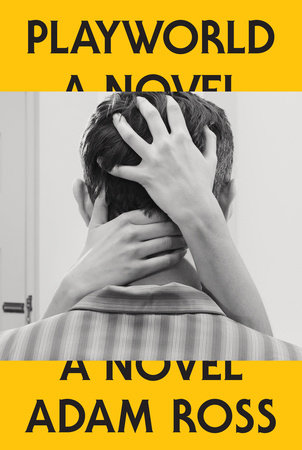
Adam Ross Discusses Child Actors, Ethics, and the Inspiration Behind “Playworld”

Adam Ross’s new novel Playworld, a 500-page epic, chronicles a year or so in the life of 14-year-old Griffin Hurt, a reluctant child actor whose life changes when his parents’ friend Naomi falls in love with him. Griffin’s account of his coming of age, from wrestling meets to contentious family dinners to clandestine meetings with Naomi, is irresistibly immersive, a fully-realized portrait of both an adolescent psyche and of Manhattan in the early 1980s.

Ross, who has previously published the novel Mr. Peanut (2010) and the short story collection Ladies and Gentleman (2011), drew on his own experience in crafting Playworld: as a child growing up in Manhattan in the 1970s and 1980s, he worked briefly as a child actor, starring in The Seduction of Joe Tynan (1979) and also wrestling competitively. But as Ross made sure to explain in our Zoom conversation, although he used elements of his own adolescence in Playworld, the book is hardly straight autobiography.

Instead, he blends his own historical context with rich, detailed realist prose, invoking writers like Anton Chekhov, Alice McDermott, and Edward St. Aubyn “who make a full commitment to immersion and world-building” as reference points. As in the work of these authors and the Victorian realists we discussed in our conversation, Playworld asks ethical questions of its reader without falling back on didactic moral lessons. The adults who surround Griffin, from Naomi to his wrestling coach to the actors and directors he works with to his parents, are more concerned with their own needs than those of the children around them, leaving Griffin adrift and at times vulnerable. As he says in one of the novel’s most memorable lines, “Adults … were the ocean in which I swam.”

I spoke to Ross about his stewardship of The Sewanee Review, where he has worked as an editor since 2017, and the artistic decisions grounding Playworld.


Morgan Leigh Davies: The realist prose in this novel feels like it’s coming from the 19th century, which is a shift from your first novel, Mr. Peanut. What do you think you get from that traditionalist style?

Adam Ross: I have wanted to write about my childhood for a long time—I remember having the title Playworld above my computer when I was a journalist back in the very early aughts. I just didn’t feel like I had enough purchase on the experiences. I think about, for instance, Saul Bellow in Augie March, just pouring all of his talent in his third book into his childhood experiences in a voice that he felt was more his voice. So as a prelude to answering the question, there was a real desire to be ready to take on the fullness of the experience, because you’re writing a bildungsroman on a certain level, you’re writing a kunstleroman on a certain level, but you also need all the weapons at your disposal to write about love, to write—I would like to think—convincingly about women and women’s experience at a certain time. 

There are some moments of formal flight and play in Playworld, but even those formal instances which shift the point of view are deeply committed to life in the world as we live it. There’s also that sub-theme of Dungeons and Dragons and world-building and how the city is such a magical place in crazy ways, how crazy coincidences happen to you. You run into people you haven’t seen in forever that you dream about—how is it possible that these things happen? So there’s this weird way that New York City, like Venice in Italo Calvino’s Invisible Cities, is this floating, magical, non-realist place, but we experience it as deeply realist. 

That’s really what I wanted to do. I wanted to basically bring all of my abilities as a realist to bear, and all of my language and storytelling powers to bear on a lived life experience.

MLD: From the acknowledgments, I could tell there was material in it that was connected to your life, but I don’t know that I would have sensed that otherwise. It’s very different from, for instance, the Rachel Cusk school of autofiction.

AR: Yeah, I don’t consider it autofictional at all.

MLD: No, it’s clearly not. So what was the process of drawing on that childhood experience, but transforming it so dramatically? The main character in this, Griffin, is so clearly and distinctly a fictional character. The most interesting thing about the book to me is his lack of insight into what is going on, which is also mitigated by the fact that he’s looking back at these events at certain moments in the novel.

AR: When I was working with my editors on it, we would talk about the two aspects of Griffin. We would talk about Griffin future, which is the Griffin who’s occasionally dropping in, and Griffin present. You know, there’s this great quote by Harold Brodkey; he talks about his disdain for recollection and tranquility. He says, I want to be on my knees before the event.

I was really interested in tonally and experientially rendering a very particular kind of childhood that I think doesn’t exist anymore. Sometimes it’s a little bit like in Charlie Brown, where the kids are together, and the adult comes over and they’re like, wah-wah-wah, wah-wah-wah, wah-wah. But of course, in Playworld, sometimes the adults are like, wah-wah, and then the adults are like, WAAAH. [Ross menacingly “zooms” his face into the camera.] The way I thought about it was, how do I create that experience for the reader of being in an aquarium, and you get close enough to the aquarium glass, and the beluga whale swims up to you, and you stop realizing there’s glass. 

I wanted to get to the way in which kids and adults interacted at that time, which didn’t seem strange. When you’re a child actor, and you’re often the only kid around, adults come up to you and will hit you with crazy adult content, and it was just a time where adults thought that was fine. Griffin is a character who, in the early goings of the book, because of his early experiences and also because of his conditioning with his parents, learns how to disappear. He disappears behind a kind of mask, and part of Playworld is him stepping into his own idea of what role he needs to play. 

In one of the first interviews I did for The Sewanee Review Podcast, I interviewed Garth Greenwell, and he talked about how in order to write his novels, he needs an absolutely complete command of setting, because he believes that by just rendering things with that degree of literalism, the symbology and metaphor rise up out of that. So the aspects of Playworld that resemble my life, that is me drawing on settings and experiences that I have total command of and authority over. But my brother never rode a horse on a golf course, you know what I mean?  And I wasn’t on a hit TV show, but I certainly know what that looks like.

MLD: There are moments in the book where Griffin is performing in different ways—in a gendered way with Naomi, and in a physical way, both with her, and while wrestling. I’m interested in the duality between the ways in which he can perform and find pleasure, versus when the performance is kind of a sense of obligation to the adults.

AR : Griffin is a creature of dissembling. He dissembles to protect himself. He is split off from himself, so his capacity to perform and hide behind the mask is, in those cases, self-protective. But I think on some deep level, the character senses that he disempowered by that act of hiding. But in the case of wrestling, there’s nowhere to hide, there’s no faking it or dissembling. You are exposed. Griffin’s gravitation towards wrestling becomes a more authentic form of self-protection and self-discovery. If you grapple with somebody your weight and comparatively your age, you’re gonna know who you are. So much work went into showing how part of the drama of a martial art is coming to terms with yourself and being exposed and dealing with your weaknesses in real time. Griffin knows he’s on solid ground, even if he’s getting his ass kicked.

MLD: Well, it’s one of the only places in the book where he’s failing.

AR: I think that that’s one of the things that I really wanted to drill down into, not as an object lesson, but as somebody who ended up becoming a regional and state champion—I got my ass handed to me for two years. I feel so grateful for the way in which I had room to have this odyssey and this sport that was all mine, that gave back to me so much, but required I deal with fucking failure, just massive failure. To still come back from that forged me. 

You should come out of Playworld seeing not that Griffin is triumphant, but with inklings of how he’s got some tools to be okay, and also how some enduring vulnerabilities and forms of damage that are going to leave a mark. That goes back to realism. I think novels do this so powerfully, the way they arc beyond the frame. I wanted to do that on a big scale.

MLD: As I mentioned, I was thinking about all the Victorian novelists when I was reading it, especially Dickens, who in a way created the idea of childhood in the nineteenth century. Those writers didn’t create the novel, but they created the novel as a space for elucidating what it was like to be an exploited child. How can the novel get into that experience, of grooming and exploitation, in a way that other mediums can’t?

AR: Part of the creation of that childhood had a lot to do with the way in which, in my lived experience and in that historical moment, every adult in the book who is egocentric or narcissistic or self-centered also reveals themselves, to a person, to have really important, edifying things to give to Griffin. All those things make up the geologic stratifications of his entire character. There’s no Rosetta Stone for character. It’s not like this one thing happens and then that becomes the black hole that sucks all experience into it. Griffin is just moving through these experiences, and they are impacting him. Some are bouncing off of him. He’s dodging some, he’s relishing some. I think that that dynamism is part of what I was trying to get at. Playworld is trying to show that you start to put all these things together later. 

With regard, for instance, to grooming, there are key revealing moments where Griffin, if we stick with the language of undersea experience, starts to come up to the closer to the surface. The climactic moments with Keppelmen, the wrestling coach, he gets a handle on what kind of relationship he’s in, but he doesn’t get resolution. I think one of the things that’s so interesting in the culture right now about these matters is, there’s this desire for the scales to be balanced, and I don’t think life works like that. 

MLD: Back to the question of insight: we know that Griffin lacks it because he’s a child, but the adults also completely lack insight, right? These people he’s interacting with, from someone like Naomi who clearly is doing something wrong, to his dad, who is forcing him to have this adult role as an actor, which he clearly shouldn’t have.

AR: There’s that great Philip Larkin poem, “This Be the Verse,” They fuck you up, your mom and dad, they don’t mean to, but they do. It goes back to a historical excavation of the way in which kids were parented back then. Adults neither gave thought to nor had any compunction about being messy adults in front of their kids. Full stop. When they were around. My brother and I were getting to school alone in first grade, on the bus, riding our bikes across town, no helmets, calling Mom, saying, We made it! Just be home at six. The latchkey generation gets looked back on nostalgically as, Oh, we were so tough. We were so independent. We were so street-smart. But we also had the shit kicked out of us. I would not trade that grit for anything, but in terms of ethics, I think that one of the things that I really wanted Playworld to accomplish was to have a really good look at that. 

The Gen X parents now have made this massive correction in terms of attention. So much freaking attention on your kids. What’s going on today? I’m your best friend. How can I help you? You know what I mean? Then everyone’s like, The kids today, they’re so anxious. They’re terrified. They can’t encounter the world. Uh, I know why. Because the Gen X correction was to interpolate themselves. I guarantee you that like my two daughters, who are fantastic and doing great, are gonna look back on how they were raised and are gonna say, Boy, Dad, that was so fucked up what you did. And you’re like, But I was trying to fix my childhood

Nobody thinks their childhood is unique. But I was trying to be historically accurate—not autobiographically accurate, but historically accurate—about the ways in which adults didn’t feel compelled to edit themselves. They could just as easily blast you as they could desert you to go and enjoy whatever they wanted to enjoy, and they didn’t think for one second about you dealing with it, and they assumed that if they were gonna leave you alone for a weekend, you would survive on cereal and television.

MLD: In terms of those adults, I found the most disturbing scenes with Naomi not the sex, or anything physical, but when she was almost acting like a therapist to Griffin. But then she then starts wanting things from him emotionally. 

AR: That’s the biggest failure of adulthood. And I would hope that it’s a very, very scary portrait of how grooming operates. Grooming operates partially by keen insight. Griffin almost explicitly describes Keppelmen as a giant squid. When he first encounters Keppelmen, Keppelmen is immediately like, Oh, you’re the mark. But the thing is, Griffin’s just one of a lot of marks. It’s very much like a truffle pig and in a field of truffles. That’s what’s so disturbing.

When I was young, literature was organized vertically and now literature is organized horizontally, and it’s polyphonic.

It was not on that continuum yet of people saying, Oh, this is asymmetrical. This is psychologically destructive. This has knock-on effects that are terrible. We were unlearning that way of being. We didn’t have language for that. Not at all. Part of Playworld’s artfulness was, How do I create a character who is living in a world where there isn’t that language? 

Naomi’s car is like a love nest and therapist couch, and Naomi is an analysand. So she’s using some of these tools to do bad things, but she’s not a completely bad person. 

MLD: Right at the beginning of the book, you flag this for the reader. They’re all seeing the same therapist and they go hang out at his house. 

AR: To me, that’s is another thing about that era, to talk about language. Here are some of the catchwords we see all the time, like narcissism, asymmetry, boundaries. My eldest daughter is 18, my younger daughter is 17, and for last four years, they would say, I had to throw up a boundary. And I was like, what? Like, what are you talking about? 

I didn’t even know what the fuck that was when I was young, which again goes to the whole idea of performance. In a novel about a child actor in the age of the first actor president, in the various roles you’re supposed to play to protect yourself in a boundless world, an oceanic world—that’s what the book’s about.

MLD: What’s the effect of reading so much for The Sewanee Review, and editing all the time? How does that affects the process of writing?

AR: Well, I mean, the crazy thing is that I mentioned interviewing Garth Greenwell. And then I could talk about interviewing Lisa Taddeo, or Stephanie Danler, or Melissa Febos, or Sidik Fofana, or Alice McDermott. This is to me a perfect answer to your question, talking with Alice McDermott while I was still in the throes of editing Playworld, about how Shakespeare for her is such a touchstone. And in Playworld, obviously Shakespeare is enormously important as part a literary education. So to have someone who I admire to the roof beams like Alice talk about the vitality for her of Shakespeare, but then also, you’re in a conversation with someone like Alice McDermott and she’ll say something like this—she’ll go, Nobody upon reading a great novel ever closed the book and said, This book would have been better if it were finished sooner.

So part of the Review is an embarrassment of riches, where you’re in conversation with these people and you’re in conversation with them on the page. Your nine to five job is participating in literature. And your nine to five job is helping writers in certain cases make better choices, because we edit the heck out of the writers we work with. That leads to a lot of aesthetic discussions about dramatic choices and about choices about sentences and lines. It’s kind of like training for the freaking Olympics because like you’re just in training a lot and so it keeps you like super sharp. Does it slow you down? Yeah, I mean, it slows you down.

I’ll say another thing. You may think this is the brightest time in America, you may think it’s the darkest time. But you know what, if you work at The Sewanee Review, you know literature’s in good shape. We may look back and see this as an incredible moment in literature. When I was young, literature was organized vertically—there were these great writers—and now literature is organized horizontally, and it’s polyphonic. There are great writers from every walk of life and from all over the globe and we get more of it. In fact, as my great teacher Stanley Elkin used to say, less is less, more is more, and enough is enough. And we’re definitely in a more is more moment.

My Days in Food Service Live in My Body

I Was a Waitress by Samantha Allan

Greta had a powerful stare. Approaching her with a platter of eggs, I imagined that her steady eyes were going to raze me until I was nothing more than a pile of wood shavings. The force of my transformation would send up a fine sawdust that shimmered in the light from the window behind her table. I wanted to be looked at but not like this, that is, not until I realized that I was supposed to stare back. She wanted to get to know me. And she succeeded in teaching me how little I liked eye-contact, how frightening it could be, until you decided to meet it head on. I came to like Greta, look for her. She softened the longer I met her gaze.


I say I miss food service and my friend May looks at me like I’ve lost it.

I say I miss food service and my friend May looks at me like I’ve lost it. “You don’t remember,” she says, shaking a sugar packet into her coffee at our favorite diner in Austin, a hole in the wall that is deliciously un-instagrammable and crammed with others who crave its faded upholstery and dated green glassware. She’s probably right. Miraculously, my body has forgotten the dispassionate questions—“and on the side would you like”—the tense waiting game between kitchen and hungry businessmen, the backache at the end of each day, even though my mind remembers. My body only remembers a constant state of flow.

In my apron, halved at the waist, packed with straws, it was as though a waterlog broke inside my ears, leaving a clarity through which I could appreciate that I was living in the world. I was in a place that thrummed, and I thrummed, too. Ten years later, in my first office, where I design HR training videos for companies in Central Texas, there is no flow and no world. I don’t know how else to explain it. I float in constant worldlessness. I try to remind myself what a luxury it is. Meanwhile, my mind encourages my hand to pantomime the lever of a phantom espresso machine.

May suggests that I am probably not getting enough exercise. She is a good friend and she is probably right. But something about running, which I love in the abstract way we love things that have gone fallow, does not capture the whole feeling I am yearning for. Inside the feeling is a ringing telephone with a distinctive bleat. Inside the feeling is a pair of elderly women who eat breakfast together every Saturday and order the same omelets. Inside the feeling is even the day that one of them comes alone, bravely, to see if she can say goodbye to a tradition spanning years, and we all know what happened.

Gwendolyn Brooks writes: “but World… / wants to be Told.” The slant rhyme is achingly beautiful: life will never translate perfectly into story. In my pristine void, shielded from “the public,” I think about how ardently Told wants World, too. Writing has gone the way of running. I want to love it again, but I am too hungry for the feral stories that live in the wild, the kind you have to witness with your own wrists resting on a bar top. 

If you have ever worked in food service, you most likely know how to hate a place and love it at the same time.

When I moved to Austin for graduate school, which felt like my forever-departure from the purgatory of food service, I reconnected with an old friend who was trying to make a living as an artist. “How do I make enough money to live but also make art?” she asked, and I didn’t know. I had given up on that question. She started gigging as a circus performer at parties, swallowing swords, juggling fire, swimming through hotel pools in a hot pink mermaid tail. Satisfied hosts left her Google reviews, and suddenly, it seemed as though she had an event to perform for every night. To my mind, she had cracked it. There was so much world inside her world. I did not know how to eat a machete but I wanted so badly to see if there was something I, too, could do to increase the time I spent talking with strangers. It was this capacity for interaction, more than the glamour, that drew me in. I wanted to escape the banality of office life for what some would consider an equally banal alternative: one that would include children and the elderly, that could engage my body, and that could quench my thirst for social novelty.

My first waitressing gig was at a place called Cici’s Café. Tucked into a strip mall in Los Angeles’s San Fernando Valley, Cici’s had a cult-following, summoning two-hour lines on weekends as seamlessly as a magician pulling a stream of handkerchiefs out of a hat. There were no reservations. People would wait in pouring rain or scorching heat, and inside, choose a reward for their patience from a twenty-page menu, laminated pages strung together with faux-leather string, mostly of novelty pancakes. 

If you have ever worked in food service, you most likely know how to hate a place and love it at the same time. At Cici’s Café, we hated the people who made our jobs harder and loved that complaining about them made us a “we.” Courting regulars made us a “we,” too; a porous “we” that could welcome the people who treated us like people into a common fold.   

Cici’s is where I met Greta. I also met Elena, a woman with a tremor in her hands who sat at the bar twice a week and tried a new plate of pancakes every time she visited. Once the green-tea tiramisu; once the strawberry cheesecake; the next our wildly underrated hotcakes drizzled with fresh corn and honey. Over the course of several months, she fed me and the rest of the bar-crew details about her life in exchange for decaf coffee refills. One day she asked me if I would be interested in ghost-writing her memoir. “I like the way you speak,” she said. “Maybe you could make sense of it all.” Elena had been adopted from an orphanage in Greece by American parents. She never knew her birth mother, but had grown up taut between the desire to find her and the desire to remain unknown. “Maybe,” she said, “I want her to find me so that I can decide whether to know her, so that it feels like the ball is finally in my court.” I never wrote Elena’s memoir. She decided one day, with fervor and without explanation, that it would be a terrible idea, and never brought it up again. 

Countless other regulars and one-time customers joined Elena, almost everyone transformed by the talismanic power of the barista counter into a person ready to share something personal, a phenomenon I had thought only existed on Cheers. A man of indeterminant age with rough skin and young eyes who made leather vests for a living; a woman and her daughter with the same chin, home from college; shy first dates and old friends reconnecting tentatively after growing apart; a woman who was always ready to travel somewhere new, always alone. Then there was that sprinkling of Twilight Zone the universe reserves for restaurants: someone sits down for coffee, weeps profusely, and leaves you fifty dollars. Someone leaves you their number and uses an uneaten hard-boiled egg from their salad as a paperweight. A group of three cuts their own hair at the table and leave you the trimmings.

Back of house, I befriended a line cook named Arturo who commuted two hours to work from Bakersfield. Depending on traffic, it could take two and a half hours for him to reach home. The cost of commuting was cheaper than the cost of finding a place to live for himself, his wife, and his children anywhere in Los Angeles. Arturo had a thoughtful way of speaking and a smile that would put most movie stars to shame. He was so kind to me and everyone else that I found myself wondering how he spent his daily eternities on the road. How could someone possibly be that composed every day without breaking down? I suspected the answer would reveal the naiveté of the question: we don’t always have a choice. 

A prep cook named Ryan, who we all knew was a Chippendale dancer on Friday nights—that was all we knew—once came into the smoking patio from the parking lot holding a live pigeon, bare palm against its chest. “It fell from a tree,” he said, with all the nonchalance of a man holding a football he had found outside a school yard. He wanted to know if someone had time to take it to the animal hospital. I grew up with a mother who could not bear the suffering of animals, and leapt to the task with Pavlovian speed. Ryan helped me swaddle the bird with dish towels and pack it into a fruit crate. “It’s like you do this all the time,” I joked, and he said, with utmost seriousness, “I do.” I hurdled down the freeway with the bird blinking slowly in its makeshift car seat, praying I would reach the rescue ward in time. A vet tech would tell me he was going to take the bird to a warming plate, and suggest I keep my expectations low. I would call the next day to leave a message. I would never hear back. 

I don’t know why I miss this special variety of heartbreak. All I can offer is that sometimes the point of a story isn’t how it ends. 


My office is on the twelfth floor of a mixed-purpose building with thirteen floors and has a spacious window, which I inherited as a fluke when my senior coworker resigned, and which I am ashamed I do not appreciate. On good days, I can pretend my videos are not so different from the teaching work I performed at the university where I was an English PhD student, a career I also loved, but that brought with it a daunting job market and eventually herded me to this desk in search of a regular schedule, a guaranteed paycheck, and a way to stay anchored to the city I called home. Beyond the window, there is a balcony that you can only access through a locked door, now permanently shut to all employees due to an incident that has escaped the rumor mill’s memory. Birds visit the metal railing sometimes: the vultures and hawks who dominate high altitudes, the sparrows who remind me that I am not so far above the ground. Mostly, they arc soundlessly across the thin sky and seem too majestic to fall, but I know that if one did, someone would witness it. And I know it is at least possible that someone would do their best to intervene.


In The Queer Art of Failure, Judith Halberstam argues that many of the acts we perceive as “failure” are actually a failure to meet capitalist, patriarchal standards for success: finding a partner of the opposite sex, producing children, accumulating wealth and property. There are few arguments more appealing to someone looking to make sense of how consistently they seemed to have dropped the ball. What if, Halberstam asks, we were to “imagine new versions of maturation, Bildung, and growth that do not depend upon the logic of succession and success”? What do we learn from “practicing failure,” which can lead us “to discover our inner dweeb, to be underachievers, to fall short, to get distracted, to take a detour”—and on that detour, find a true expression of what we really need? In this sense, the detour that some might perceive as failure is also a portal into a deeper, self-determined success.

Waitressing was the portal my heart traveled through to reach my sleeve. I went from a “quiet” girl to a girl who could not stop talking to strangers. I remember waking up, many days at six in the morning, and realizing that I was actually happy. It was important that the daily social interaction was also a vocation. It was not a pastime, but an act of service. 

I would go on to perform other acts of service, such as being a teacher, but only food service lives in my body. For some people this would be—and is—horrifying. Maybe it would have been for me. Maybe because I grew up thinking my body did not matter and longing for something I could not name, lying in fetal position on the carpeted floor of my bedroom during the dog days of summer, waitressing introduced me to the sanctity of movement. I hadn’t realized my body could process my feelings; that if I turned off my ceaseless mind, a run of twenty drink orders could take me somewhere better. It was also a lesson in accepting little beginnings and little ends, hundreds happening over the course of a day. A crash course in developing a tolerance for mistakes. A meditation: to be a good waitress, that is, one whose soul does not break despite constant indignity, you cannot forget (orders, allergies, broken glass) but you have to move on. Somehow the work galvanized me in spite of the too-old men who stared at my chest, in spite of the manager who ripped a sandwich out of my hands during a stolen lunch break, in spite of the teenagers who dined, dashed, and left me paying their tab out of my tips because I had too many tables to catch them, in spite of every time I was yelled at, once so badly, I ran blurry-eyed into the parking lot to sob. How to explain that something could be treacherous, haunted by broken systems, and also revelatory, as though it made use of a vestigial limb?

I miss being in circulation, like a library book with a card full of names. I miss this act in the literal sense, too: circling a wide room with an urn full of coffee, locating empty cups. Whisking away empty plates. In my memory, the movement is noiseless and swift, a trapeze act. I sail through the sky of the day. I learn from the older waitresses to walk in worn-out athletic shoes like I wear combat boots, to talk back to rude customers during a lunch rush like I’m kicking open a door, to smile big for tips if I feel like it and frown through a shift without apology if I don’t. I learn to ask questions that get cagey bar flies talking, to recognize the difference between loneliness and solitude, and to use an alias if someone sour asks me for my name. 

A coworker once shared with me that in her view, servers—especially women and femmes—witness a component of adult psychology that few other professions draw out. When people are hungry, she said, and they are sitting, and you are standing above them, and you are waiting on them but to the same extent, they are waiting for you, you enter a complicated power dynamic that smells parental. You become a channel—and a barrier—to being fed. Your customers can enter this dynamic restless, buying willfully into the promise of their control with an undercurrent of suspicion that they do not really have the upper-hand. I started to track this affect. Part of every irritated posture was a shoulder or an eye holding not only hunger or entitlement, but also fear. 

Is there any act of professionalized caretaking that doesn’t also require the recipient’s vulnerability?

I still wonder: is there any act of professionalized caretaking that doesn’t also require the recipient’s vulnerability? Paying for someone to serve us in a world constricted by commerce allows us to enter the sacred act of trusting a stranger. The act is compromised: a credit card can insulate you. Still, it is possible to feel something older than money when someone’s hands comb your hair out of your face, or delicately paint each of your naked fingernails, or place a platter of scrambled eggs in front of your hunger. Years after I unknotted my apron and let it fall into the UPS box under the tip jar in my last restaurant for the last time, I want only to enter this act and stay inside it—to stir latent body-memories of kinship that capitalism, turning all it can into transaction, has attempted to bury.  If this is failure, it is a failure I long to slip into, the way an actor can slip into a costume and become a truer version of themselves. Maybe, someone told me once, you miss food service because it represents a time of pure desire for all the things it wasn’t and that you had yet to become. A time of unrealized potential. I still think about this theory. It never rings true.


A waitress refills May’s coffee, and she hugs the cup with her hands. She loves this feeling, she says. The cup becomes warm from the inside like a rock in the sun, fits the pads of her fingers perfectly. 

I tell May that I’m going to see a career counselor. I worry they will not sanction how badly I want to fail. I worry I will not be able to explain that making a living as an artist is, for me, as much about connecting with as many lives as possible as it is about putting food on the table. We will have to talk about things like health insurance and retirement plans. There are so many things that keep us just outside of the world so that we can still be tethered to it. I don’t know what it will feel like to fall back to earth, or how many detours await me there. All I know is that I no longer dream of going somewhere full of voices just to close a door.

48 Books By Women of Color to Read in 2025

In 2016, nine years ago, I published a list of forthcoming books by women of color that had piqued my interest. As a novelist and occasional critic, I was interested in looking for such books to read and, perhaps, review. Given I’d had trouble finding as many as I’d hoped, I thought others might also be having trouble and could find the list I’d compiled useful. The piece spread widely, and I was told it helped inform other people’s books coverage and syllabi. I put a list together again the following year, and so on. 

But for a while, I’ve also wanted to stop. Most-anticipated books lists have wildly proliferated since 2016, as have best-of lists. And though I know how useful they can be, I’m also aware of some of the other effects they can have, especially on writers; a list like this necessarily leaves out more people than it will include. I published my second novel, Exhibit, last spring. To my surprise and alarm, though it was my second time publishing a novel, I often felt as I did the first time around: upended, exposed, as if I’d lost a layer of skin. Part of it might be that I published a book that felt, and still feels, especially vulnerable, a novel centering women hellbent on pursuing what they want, and this in a world continuing to prove that not a few people intend for women to exist as helpmeets, living for others, stripped of our rights. Regardless of the book, though, I know few writers who find publishing to be a calming experience.

But as the writer Michelle Hart did last year with queer books, I took a look around and saw that women of color’s books are still relatively passed over and sidelined. It’s still the case that a disproportionately large majority of books released by the biggest publishers are by white writers. Book bans are still sweeping the country, and by far the books most affected are those by people of color, and by queer and trans writers. The news remains terrifying. I am tired of my anger and sorrow. I want to move toward what I love.

With all I am, I love reading. I think of writing as an extension of the reading, a kind of call and response. So, here are some of the 2025 books I am excited about. I’m one person with an incomplete knowledge of forthcoming titles. If you’re looking forward to a title not mentioned here, please consider preordering it from your local bookstore, requesting it from the library, telling people about it, or all of the above. 

A few brief notes on categories: this piece is front-loaded toward the earlier part of the year, as there’s less information about later books. I love and crave poetry, but am less aware of what’s publishing in poetry, so I’ve kept this list to prose. The term “of color” is limited, dissatisfying, and shifting. In its earlier years, a couple of versions of this list included nonbinary writers. After Electric Literature and I heard from a number of nonbinary writers that it can be preferable to avoid grouping nonbinary people with women, I’ve since focused on women: cis women, trans women, and nonbinary women who assented to having their books included in this space. The majority of nonbinary writers and readers we’ve heard from have found this preferable. Electric Literature has recently published a piece about anticipated books by queer writers.

I’m elated about the novels, memoirs, essay collections, and other books coming our way; please join me in celebrating.

January

Black in Blues by Imani Perry

I’ll read anything the brilliant Imani Perry publishes, and her latest book, a meditation on the color blue and its roles in Black history and culture, is no exception. “This book is a great gift, in that it allowed me to see the world anew with Perry’s clear-eyed insight,” says Jesmyn Ward.

We Do Not Part by Han Kang, translated by e. yaewon and Paige Aniyah Morris

During a phone interview not long after learning she’d received the 2024 Nobel Prize in Literature, Han Kang was asked which of her books, if she had to pick one, she’d recommend to those new to her writing. Han suggested We Do Not Part, a novel haunted by the aftermath of the 1948–1949 Jeju Island uprising and massacre. Over 30,000 people on Jeju were killed by U.S.-backed Korean forces, and their ghosts fill the pages of We Do Not Part.

Good Girl by Aria Aber

One of my favorite things about having a phone is that, with some friends, I occasionally exchange photos and screenshots of poetry and excerpts we think the other will appreciate. And as I send and receive these gifts, scraps of words we’ve especially loved, Aria Aber’s poems routinely show up. Good Girl, her first novel, evokes a young Afghan German woman trying to destroy her life. Jamil Jan Kochai calls it “a heartbreaking song of youth and desire and violence and history and the unbearable solitude of displacement.”

Homeseeking by Karissa Chen

I’ve awaited Hyphen editor-in-chief Karissa Chen’s novel for a while, and it’s here at last: a 500-page epic traversing six decades in Hong Kong, Taiwan, New York, and Los Angeles. Celeste Ng says that Chen’s debut “weaves expertly between present and past, telling the story of childhood sweethearts who meet again late in life and are torn between looking back and moving on.”

The Life of Herod the Great by Zora Neale Hurston

This previously unpublished historical novel from Zora Neale Hurston examines and reimagines the infamous Biblical figure King Herod. “The Life of Herod the Great—like Hurston herself—is a masterpiece, a miracle, and a marvel,” according to Tayari Jones. 

February

Death Takes Me by Cristina Rivera Garza, translated by Sarah Booker and Robin Myers

A professor stumbles upon a castrated corpse positioned beside a poetic couplet jotted in pink nail polish. More mutilated bodies follow, as do more poems, in this new novel from Pulitzer Prize-winning Cristina Rivera Garza.

Code Noir by Canisia Lubrin

Canisia Lubrin, a recipient of the Windham-Campbell Prize for Poetry, has written a first book of fiction that “departs from the infamous real-life ‘Code Noir,’ a set of historical decrees originally passed in 1685 by King Louis XIV of France defining the conditions of slavery in the French colonial empire.” The 1686 Code had 59 articles, and Lubrin’s book includes 59 braided stories that Christina Sharpe praises for their “formal inventiveness and sheer audaciousness.” Published last year in Canada, Code Noir will soon also be available in the U.S.

Ugliness by Moshtari Hilal, translated by Elisabeth Lauffer

A book-length essay on power, attraction, and what is considered beautiful and ugly from visual artist, curator, and writer Moshtari Hilal. Melissa Febos calls Ugliness a “thoughtful, provocative, playful, and truly original exploration of bodily aesthetics and the factors that define them.”

Casualties of Truth by Lauren Francis-Sharma

An ex-McKinsey consultant named Prudence Wright and her husband go out to dinner in D.C. with a colleague who, to Prudence’s surprise, shares part of her past. “Once again, Francis-Sharma’s phenomenal prose delivers; here, with exquisite suspense in a revenge story chocked full of thorny characters,” says Xochitl Gonzalez. “This is an unforgiving tale of cat-and-mouse begging us to confront just how far we’d go to take control in a society hell-bent on minimizing our pain.” I’ve admired Lauren Francis-Sharma’s work for years.

March 

Sucker Punch by Scaachi Koul

Sucker Punch is a follow-up to Scaachi Koul’s One Day We’ll All Be Dead and None of This Will Matter, her hilarious, astute debut essay collection. This time, according to Jennette McCurdy, Koul has written “a beautiful, painful, funny, and ultimately inspiring account of a marriage crumbling.”

Liquid by Mariam Rahmani

One summer, a scholar with a Ph.D. from UCLA decides to “marry rich” and sets off on a hundred dates, aiming to have a marriage proposal by the time school starts again in the fall. Her plans change, though, after a tragedy in Tehran. Bryan Washington says that “Liquid is a dream of a book—written with heart and feeling and longing and clarity, bracingly astute, elastic, and precise—an absolute delight expanding the possibilities in American fiction.”

Luminous by Silvia Park

Three siblings—two human, and one a robot—get tangled in a murder investigation taking place in a unified Korea. Silvia Park’s rendition of a near future is their debut book, and Charles Yu calls it “a novel full of pleasures, big and small, gorgeous sentences from which Park weaves a rich, layered story of family and work, of history and speculation, of Korea, past, present and future.”

The Dream Hotel by Laila Lalami

Even our dreams are surveilled and punished in this alarmingly plausible novel by the virtuosic Laila Lalami. In The Dream Hotel, a woman is detained for months in a “retention center” because, based on an algorithmic probe of her dreams, authorities have decided she is at risk of harming her beloved husband. 

The Haunting of Room 904 by Erika T. Wurth

Olivia Becente, a woman who can see and hear ghosts, uses her abilities to investigate mysterious deaths. “The Haunting of Room 904 casts a magnificent spell with a deep grief at its heart,” says Lev Grossman. 

Goddess Complex by Sanjena Sathian

Sarah Thankam Mathews praises Goddess Complex as “the most interesting, illuminating, and bold contemporary novel of ideas” she’s read in years. Sanjena Sathian’s second novel follows a woman who walked out on her husband because they couldn’t agree on whether or not to have children. Now the husband has gone missing, and the woman sets off to try to find him.

O Sinners! by Nicole Cuffy

In this second novel from the author of Dances, a journalist grieving his father’s death investigates a cult called “The Nameless.” Megha Majumdar describes O Sinners! as “a world where mares and wolves live alongside grief and love and memory, each its own creature, each equally dreamlike and real.”

The Persians by Sanam Mahloudji

A multigenerational chronicle of a family divided into far-flung cities: Tehran, Houston, and Los Angeles. “Sanam Mahloudji takes us on a journey to reshape our understanding of power, heritage, and ancestry—and brings a rare wisdom to the chaos of family,” says Vanessa Chan. 

April

Audition by Katie Kitamura

I heard Katie Kitamura read from Audition last summer in Tennessee, and was both mesmerized and tantalized: I wanted to read the rest of it immediately. Two people meet for lunch in a New York restaurant, and as is usual with Kitamura’s remarkable oeuvre, so very much more is happening. 

Flirting Lessons by Jasmine Guillory

I recommend Jasmine Guillory’s utterly delightful novels right and left, and now there’s a new one to shout about. One woman gives her friend lessons in flirting, and what ensues between them is something more than friendship. Taylor Jenkins Reid says, “This is Jasmine Guillory at her best. She has outdone herself.”

When the Harvest Comes by Denne Michele Norris

At the reception for one man’s wedding to another, he learns that his estranged father, a reverend, has just been in a terrible car accident. When the Harvest Comes is a debut novel from Denne Michele Norris, editor-in-chief of this magazine, and Alejandro Varela says the novel is “for anyone who’s ever believed they didn’t deserve happiness, for anyone whose worldview has been shaped by marginalization, for anyone who’s accomplished more than was expected of them.”

Searches by Vauhini Vara

Vauhini’s Vara published a Believer essay in 2021, “Ghosts,” involving her sister’s death, AI, and some of the outer borders of language. I have read it so often; each time I reread it, I get full-body chills all over again. Searches is the formidable Vara’s first essay collection, and it includes “Ghosts” as well as a number of Vara’s other essays on technology and humanity.

The Hollow Half by Sarah Aziza

A debut memoir about disordered eating, ghostly dreams, and ancestral voices, written by a daughter and granddaughter of Palestinian refugees. According to Alexander Chee, “Sarah Aziza’s astonishing memoir is a record of a mystery of the self, a woman in the grip of a despair that has too many names or none at all, hiding as it seeks to erase her. To survive she must move towards being, as she says, ‘ambushed by hope.’”

Authority by Andrea Long Chu

Acclaimed critic Andrea Long Chu’s first book brings together her writing on novels, television, theater, and video games. Authority is described as “a bold, provocative collection of essays on one of the most urgent questions of our time: What is authority when everyone has an opinion on everything?”

Medicine River by Mary Annette Pember

“I have never read a book that has changed me so profoundly,” says Javier Zamora. Mary Annette Pember, a former president of the Native American Journalists’ Association, examines histories of Native boarding schools in the U.S.

Bad Influence by Claire Ahn

A young fashion influencer striving to financially support her family finds it difficult to both uphold her values and meet the demands of her professional life. I initially heard about Bad Influence from Claire Ahn last summer, and have anticipated it since.

Zeal by Morgan Jerkins

Morgan Jerkins’s new novel, extending across a hundred and fifty years, asks if there can be reconciliation in the future for what was broken in the past—not just for the people living in the future, but also for the dead. Kiese Laymon says, “If ever there was a time for textured art that takes the complicated, often comically ironic, intoxicating love lives of the enslaved serious, it is now. It is Zeal. Morgan Jerkins made it. We can rejoice.” 

May

The Book of Records by Madeleine Thien

Madeleine Thien’s novel takes place at an enclave, “a staging-post between migrations,” where people from the past and future overlap. Lina, who’s come to the enclave with her father, befriends great thinkers including Jupiter, a Tang Dynasty poet; Bento, a seventeenth-century Jewish scholar from Amsterdam; and Blucher, a 1930s philosopher fleeing Nazi persecution.

The Original Daughter by Jemimah Wei

Living with her parents and grandmother in a one-bedroom apartment in Singapore, roiling with ambition, Genevieve Yang believes herself to be an only child. But then, an unexpected sibling shows up. I’ve deeply loved Jemimah Wei’s writing and mind; Roxane Gay lauds the The Original Daughter as “an incredible debut.”

Awake in the Floating City by Susanna Kwan

A stalled artist lives with a hundred-and-thirty-year-old woman in a deserted San Francisco, the city flooded by years of rain. Neither wishes to leave; so they stay, and talk. “Awake in the Floating City is an astonishing work of art, rich with attention, patience, and love: the rare elegy that hums with hope, and makes the strongest case I’ve ever read for remembering the people and places that matter to us,” says Rachel Khong. 

So Many Stars by Caro de Robertis

Caro de Robertis conducted hundreds of hours of interviews with trans, nonbinary, genderqueer and two-spirit elders of color, gathering conversations they wove together into a “collective coming-of-age story.” Jaquira Díaz calls So Many Stars “an intimate and multilayered accounting of personal and collective grief, family, love, art, and the complexities, joys, and heartbreaks of the past and present.”

The Wanderer’s Curse by Jennifer Hope Choi

Jennifer Hope Choi’s mother tells her they both share the curse of yeokmasal, said to cause the afflicted person to wander far from home. Choi, an editor at Bon Appétit, relates a story of drifting apart from her mother and coming back to her again. 

The Lost Queen by Aimee Phan

I delight in Aimee Phan’s writing, and in The Lost Queen, her first book since 2012, a fortuneteller’s granddaughter begins having visions of her own. She and a friend take on other abilities—telepathic, premonitory, and linguistic—they’ll need for difficult times ahead.

June

I’ll Tell You When I’m Home by Hala Alyan

On days when Hala Alyan has published a new poem or essay, I’m inclined to drop what I’m doing to read her splendid writing. I’ll Tell You When I’m Home is Alyan’s debut memoir: after years of miscarriages, Hala Alyan seeks out motherhood via surrogacy. In this time of delayed hope, Alyan turns to “the archetype of the waiting woman,” Scheherazade, and gathers family stories and communal myths from Palestine, Kuwait, Syria, Lebanon, the Midwest, and elsewhere. 

Flashlight by Susan Choi

A new Susan Choi book! I’m a completist about Choi’s singular fiction, and Flashlight is described as a novel “tracing a father’s disappearance across time, nations, and memory,” his daughter trying to learn more about the man she lost.

The Girls Who Grew Big by Leila Mottley

From the author of the memorable Nightcrawling comes a novel centered on a group of teenage mothers in small-town Florida. According to Kaitlyn Greenidge, Leila Mottley “brings to life the beauty and brutality of the Florida panhandle, and turns narratives about motherhood, girlhood and the South on their heads.” 

Clam Down by Anelise Chen

In this intriguing memoir, Anelise Chen is mourning a divorce when she’s “transformed into a ‘clam’ via typo after her mother keeps texting her to ‘clam down.’” With that typo-driven metamorphosis alone, I was already beguiled—bugled—ahem. “From the moment I started reading it, I could hardly put it down—carrying it around like a talisman, crawling inside it like a wunderkammer, putting my ear to it like a shell, so I could hear its vast, surprising ocean,” says Leslie Jamison. 

July

The Other Wife by Jackie Thomas-Kennedy

I’ve followed Jackie Thomas-Kennedy’s work since I first read striking stories she published in literary magazines. The Other Wife, her first novel, chronicles the shifting desires of a woman in her late thirties who’s not sure she’s made the right life choices. 

Hot Girls with Balls by Benedict Nguyễn

A joyfully hailed satire about trans star athletes—indoor volleyball players—from dancer, producer, and novelist Benedict Nguyễn. Patrick Cottrell calls it “a rigorous and gutting satire, a courageous social fantasy, a realistic portrait of the hell that is humanity, a deeply felt book about love and competition.” 

Necessary Fiction by Eloghosa Osunde

The Plimpton Prize-winning author of Vagabonds! has written an exploration of cross-generational queer life in Lagos. Necessary Fiction is described as a novel posing questions such as: “What makes a family? How is it defined and by whom? Is freedom for everyone?”

August & later

The Grand Paloma Resort by Cleyvis Natera

A famous resort in the Dominican Republic is at the heart of this second novel from Cleyvis Natera. Central characters include Vida, a curandera called to the resort to help with a crisis; Laura, a resort manager; Laura’s sister Elena, who babysits at the resort; and Elena’s child’s father, who bribes Elena for help she shouldn’t give.

Dust Settles North by Deena ElGenaidi

I’ve kept an eye out for Deena ElGenaidi’s short-form writing for a while, and we’ll soon have her first novel, Dust Settles North. ElGenaidi, a former editor at Hyperallergic, begins her novel with two siblings flying from New York to Cairo for their mother’s burial.

The Wilderness by Angela Flournoy

The Wilderness is a wonderfully ambitious novel that follows five women throughout decades of friendship, as they struggle to find purpose and belonging in their rapidly gentrifying cities,” says Brit Bennett. The many fans of The Turner House will rejoice to have a second book from Angela Flournoy. 

Trigger Warning by Jacinda Townsend

Jacinda Townsend’s third novel is told in alternating sections by Ruth Hurley, who changes her identity and moves after her father is killed by police, and Myron Hurley, her husband, who’s trying to learn the truth about his wife. 

Mothers by Brenda Lozano, translated by Heather Cleary 

A kaleidoscopic examination of the kidnapping of a two-year-old girl in 1940s Mexico City. Like Townsend’s, Lozano’s novel also alternates perspectives, though Tree Dreaming switches between the perspectives of the family of the kidnapped child and of the kidnappers raising the girl.

What a Time to be Alive by Jade Chang

Jade Chang’s first, riotous novel was unforgettable, and What a Time to be Alive is her follow-up, featuring a grieving woman who becomes an influential self-help guru. 

Carnaval Fever by Yuliana Ortiz Ruano, translated by Madeleine Arnivar 

The winner of an English PEN Presents Award, Carnaval Fever is set in Ecuador and involves a young girl who’s also “simultaneously the body of all the women who’ve raised her.”

The White Hot by Quiara Alegría Hudes

A furious mother leaves her house in the middle of a family argument, goes to the bus station, and asks for a ticket to the furthest destination. She ends up leaving for ten years, and the novel takes the form of a letter from the mother to her daughter about this time. 

This is the Only Kingdom by Jaquira Díaz

Described as “an epic portrayal of a working-class Puerto Rican family that spans generations,” and taking place in the aftermath of a murder in Humacao, This is the Only Kingdom is Jaquira Díaz’s second book and debut novel. I first heard Díaz read from her writing last year, an experience that made me an admirer for life. 

The Revolution Will Not Be Sober

Textiles

We are supposed to lie about the mansion on the hill. We are supposed to say that the man who lives there is Lyle Charleston, that his family has lived there since the 1850s, and that they made their fortune in textiles. But the man who lives there is not named Lyle Charleston, and he has no family, and we all know how he made his money. You know, too. He was, until recently, the leader of a country, though we cannot say which one. This country started a war. It exhausted its supply of people before it exhausted its supply of weapons; in order to keep him from exhausting the weapons as well, he was given the new name and the new history and this mansion in our country.

We wonder how it will look engulfed in fire. That is the subject of tonight’s meeting and tomorrow morning’s action. We will act before dawn, and one of the more dramatic among us has even whispered very forcefully, “so that the sun does not shine again on that monstrous injustice.” There were many cheers at that, quiet cheers but cheers all the same, and all of us nodded our heads. Monstrous injustice—yes!—monstrous injustice. As if it were a dragon on the hill.

“Easy, quiet down,” the barman reminds us every time we get too loud. It is his bar, and he is nice enough to allow us to use it as our meeting point, but he is also wary of rebellion, and its consequences. The bar does nice business, and he is attached to it.

There are wireless lamps for light along the bar, and he points to one of them as he repeats, “quiet down.” This time, he mouths the words, and we all know why. We all know that they have put microphones in the bottom of each lamp, beneath each stool, perhaps in other places, too. That was one condition of Lyle Charleston’s resettlement here atop the hill, that he should be able to listen to the whispers and know when he had reason to fear some sort of violence.

“Are they listening right now?” we ask the barman, mouthing the words ourselves. “No,” he says, and nods his head yes. 

“We don’t care,” we tell him, though we are still whispering. “It has gone on long enough. You cannot reward such behavior as his.”

“As whose?” the barman asks.

“As Charleston’s.” 

“What behavior?” the barman says, this time aloud. “The behavior of manufacturing textiles?”

We look between ourselves and then we ask, “So why did the war end?”

The barman sighs.

“Let me ask you a question,” he begins. At the same time, he pulls the tap handle and begins to fill some glasses. “The war had begun. That was our world. So if the choices were—hypothetically, I mean—that either the war goes on, or somebody gets a house atop a hill, which is better?”

We don’t answer, but keep our eyes on the glasses being filled.

“Do you mind the house,” he says, “or do you mind that it is on a hill?”

“What does that mean?” we ask. The glasses, though filled, have remained on his side of the bar, and he stares into our eyes as if he has forgotten all about them.

“Do you mind that the house exists, or do you mind that you live in its shadow and have to see it every day and do you mind that it is a bigger house than yours.”

We do not answer and we do not look into his eyes. 

“We could go somewhere else,” we tell him. Our mouths and our voices are pointed down towards the wooden bar. 

“Yes, you could,” he says, “but that would be ignorant.”

“Ignorant of what?” 

“Of how many mansions in how many towns are built in such a way.”

“Who builds the houses,” we say, “who pays for them?”

“You do.”

“With what?”

“Silence,” he says.

He has filled up the glasses, who knows how many there are, and slides them forward along the bar. He can read the room well because he is a good bartender. His family has owned this very bar and tended it since the 1850s.

We, too, have been here for a long time, and we will return nightly as we always do. We will return to voice our righteous anger at the mansion on the hill, to promise violence, demand justice, scream dissatisfaction until our throats are dry and raw with rage, and then we will have our open mouths filled with something free, and the rawness and the dryness will go away until tomorrow. The drinks are on the house—they are always on the house—and that’s something of a victory. We think so, anyway, and glow with a certain satisfaction as we walk home from the old bar that isn’t so old, under the shadow of the mansion on the hill. It was built in the 1850s by the Charleston family. They made their fortune in textiles.

The Neuroqueers Take the Ton

I inherited my (sometimes closeted) fandom of period dramas from my mother who was always up for anything with overly formal square dance, a wig, and arranged marriages. From the original BBC adaptation of Pride and Prejudice to the day-time TV Poldark, I would openly roll my eyes as she swooned over young Colin Firth, but I secretly coveted those shapeless Regency dresses that were all bust and no waist. The rash of Austen adaptations and their imitations, throughout the 90s and early 2000s, became my go-to comfort viewing for low stakes drama of people who called themselves poor but still, somehow, managed to have teams of servants.

I later became a (very closeted) fan of romance when I tried to write a feminist parody novel of Fifty Shades of Grey and my dip into Mills and Boon soon became more than just “research.” These obsessions were beginning to wane just as Bridgerton came along and offered the perfect blend of period gowns and steamy romance to win me over despite the intervening years of feminist militancy. 

What none of us bargained on as Season 1 became a runaway pandemic success was just how queer and neurodivergent a show Bridgerton would become as it galloped into a third season, with a fourth promised for 2026.  


Season 3, launched in May 2024, sated fans with a visual feast of ever more elegant gowns, elaborate wigs and lavish balls alongside the fraught matches, hidden identities and financial intrigues of previous seasons. The show has generated much commentary—both positive and negative—about its fictitious reimagining of racial equality in Regency England while glossing over  colonial realities. Season 3 takes another leap towards inclusion with visibly disabled characters appearing among the ton: a wheelchair user and a deaf mother and daughter who are seen using sign language in a number of scenes. 

For so-called “invisible disabilities” like autism, ADHD and other neurodivergencies, Bridgerton drops many easter eggs for neurodivergent viewers. There has been rampant online speculation that the season’s newest debutante Francesca Bridgerton (Hannah Dodd), Queen Charlotte’s (Golda Rosheuvel) “sparkler,” is very possibly autistic. Francesca and her suitor Lord John Stirling (Victor Alli), have weird and uncomfortable  social interactions. They do not like noise or crowds, they prefer silence over the agony of small talk, they have very defined special interests to which they give their all, they find social expectations overwhelming and prefer the wilds of Scotland to the buzz of the t ton. 

They do not like noise or crowds, they prefer silence over the agony of small talk, they have very defined special interests to which they give their all

Whether deliberate or not, the show could not come out and name autism explicitly, because it would be another two centuries before autism would be identified and named as a discreet neurological “condition.” In the early 1800s people who presented with obvious autistic traits—including repetitive movements or non-verbality—could have been labelled anything from “eccentric,” “idiot,” to ‘simpleton.” Their eccentricity might be tolerated, such as Lord Debling’s (Sam Philips) vegetarianism and single-minded concern for animals, or their social privilege or the level of disruption or discomfort they created for those around them  they might be institutionalised. The latter, however, does not quite fit into Bridgerton’s pastel infused, fantastical retelling of history. 

The tensions at the heart of Season 3—the desire for a life that is true to one’s nature and the pressure to conform to gendered, class, racial and neurotypical expectations—are characteristic of the challenges neurodivergent people face when confronted with the expectation to adapt to, and conform with, neurotypical expectations rather than making space for our divergent needs and desires. In the ascension of the boxer, Will Mondrich (Martins Imhangbe) and his family to high society, we are permitted a rare insight into the rules of the Ton. The men and elders of the ton explain to the newly titled Mondrich family the intricate social norms that delineate acceptable and unacceptable behaviour, and to what extent those rules might be bent or even broken. 

Those with most freedom to push back against those norms are men, and sometimes married women. Meanwhile the debutants on the marriage mart, like Francesca, Penelope Featherington (Nicola Coughlan), Eloise Bridgerton (Claudia Jessie) and Cressida Cowper (Jessica Madsen), feel the full force of those rules. They are expected to not only understand, but accept, those rules unquestionably. 


Francesca struggles not only with society’s demands, but the demands of a family in which she stands out as an introvert among the easy confidence of a herd of extroverted siblings. Violet Bridgerton (Ruth Gemmell), ever the insightful mother, is frequently confounded by Francesca’s reticence, and often obvious discomfort in social situations. The season’s protagonists, Francesca and Penelope,  even manage to connect over their shared unease with their first families, when Penelope empathises: ‘I am different from my siblings as well, it can be difficult can it not?’ 

My undiagnosed neurodivergence was the source of tension and conflict in my family over many years. On top of the challenges of negotiating the demands of a neurotypical world without support, I struggled to deal with the fallout from a messy separation and an emotionally abusive parent who preyed on my susceptibilities. My family singled me out as a trouble maker. As the conflict escalated I became more and more isolated before eventually being expelled from the family home. It is a story often repeated in the neurodivergent community, where typical neurodivergent behaviours (anything from intense interests to distractibility, to food and other sensory aversions, the desire to spend time alone, sleep problems or failure to make eye-contact) are too often interpreted as “bad behaviour” or insolence. In response, we are often subjected to abusive therapies meant to “correct” our behaviour, institutionalisation or must reckon with the deep rifts that can open between families.

I became more and more isolated before eventually being expelled from the family home.

Bridgerton, however, offers an alternative resolution. Though Violet initially tries to mould Francesca into the image of her flawless oldest daughter Daphne, she learns to accept her daughter’s wishes and preferences even when she doesn’t fully understand them. It’s refreshing to see how Francesca is allowed to find a place for herself among her noisy, boisterous and extroverted siblings. Season 3 gives us a lesson in acceptance—not mere tolerance—of difference. 


Penelope’s clashes with her family wane as her confidence grows as a writer, and as she achieves financial independence from her craft. Nevertheless, she continues to struggle on the marriage mart and her quest for a husband becomes increasingly desperate. In Season 3 she laments her own social awkwardness: ‘I know I can be clever and amusing, but somehow my character gets lost between my heart and my mouth and I find myself saying the wrong thing or more likely nothing at all.’

As someone who (sometimes) makes a living as a writer, I identify wholeheartedly with Penelope’s ease of expression in writing and her tremendous awkwardness when confronted with human, in-person social interactions. On the page I play with words, rearranging, then deleting them, writing the same idea three, four or more times until I am satisfied with the words I have chosen.Social interactions rarely, if ever, accommodate prolonged processing of this kind. My mouth always seems to lag behind my brain, or sometimes my brain takes a few minutes to catch up with something that has just come out of my mouth. All of this means I can come across as both dim-witted and thoughtless in the same conversation. 

It is notable that Penelope feels comfortable enough to be herself around a select few people, many of whom are potential neurokin, but particularly Eloise.


While Penelope longs for social acceptance and the security of marriage and Francesca sees marriage as a practical inevitability, Eloise continues to scorn all the gendered social conventions and expectations forced upon her and remains determined to avoid marriage at all costs. Her rebellion against the intellectual as well as relational and sexual demands society places on her gender—she is neither interested in men nor in the few pursuits allowed to ladies—is the embodiment of neuroqueerness.

Neuroqueer, a term coined by Dr. Nick Walker and colleagues can be used an adjective or a verb, an identity label or a way of describing practices that question how ‘socially-imposed neuronormativity and socially-imposed heteronormativity were entwined with one another, and how the queering of either of those two forms of normativity entwined with and blended into the queering of the other one.’ 

Eloise’s youth in season one permitted a certain amount of leeway not granted to debutants who are already out. But her debut in Season 2 provoked a clash of desires with social expectation that manifests in an “inappropriate” friendship with a working class political activist. We are never sure if Eloise has a purely intellectual or also romantic interest in Theo Sharpe (Calam Lynch), but she is nearly ruined in Season 2 when this friendship is exposed. In Season 3 we meet a much more guarded Eloise who tries, but largely fails, to fit into society. She puts on the neurotypical and heteronormative mask: she wears the dresses and attends the balls without protest but barely tolerates the genteel conversation at the edges of the dance floor, shares none of her fellow debutants interests and makes absolutely no effort to find a suitor. 

she wears the dresses and attends the balls without protest but barely tolerates the genteel conversation

Her flourishing friendship with Cressida has become the source of much queer speculation, with fans surprised and delighted by their promenades, lingering looks and unguarded conversations. But beyond the potential sexual chemistry, the pair click in a way many neurodivergent people do when we find ourselves inexplicably drawn to each other. There is a shared understanding and empathy of their position as almost-ruined and almost-spinster young ladies flailing in society. 

Cressida: You are unlike many people, Eloise. How is it you have the courage to be so different?

Eloise:It is not courage. I simply cannot understand why others do not see things the way I do.

Despite previous ruthlessness in the marriage mart, Cressida’s proximity to Eloise seems to inspire her to make a real bid for freedom. Despite her ill-advised her plot to pass herself off as Lady Whistledown, her desire for an independent life free of patriarchal authority is clear. 

While Eloise and Cressida share little more than lingering glances, Benedict Bridgerton (Luke Thompson) spends his third season floundering around on the edges of society, lurching from one existential crisis to another with the same frequency he lurches between illicit relationships. His ennui, lack of purpose and failure to follow through with anything, feels characteristic of an ADHD temperament, though this aimlessness without any corresponding life or financial crises, is only possible because of his extreme privilege. With Benedict, at least, we are rewarded with the most interesting sex of the season as he finally allows himself to explore the queer and polyamorous desires that have been hinted at since Season 1. 

Benedict is already slated to regress to heterosexual respectability and fulfil his destiny as suitor to a blushing debutant in Season 4. We will therefore have to wait until 2026, gentle reader, to see if we are finally rewarded with a lasting queer storyline. Bridgerton is set more or less around the time Anne Lister, “infamous” lesbian from Yorkshire and star of the hit BBC show Gentleman Jack, was wooing noble ladies the length and breadth of England and beyond. There is, therefore, no excuse for Netflix to keep denying the queer  possibilities for Bridgerton’s debutants. I, for one, would love to see Cressida’s miraculous return to society to pursue a clandestine affair with Eloise and the neuroqueer affair between Francesca and her betrothed’s cousin, Micheala (Masali Baduza) that has already been hinted at! 


In a world where Raymond Babbit and Sheldon Cooper continue to dominate the popular imagination of what it means to be autistic (white, male, socially awkward, math genius) we often have to look beyond the characters dubbed “Autistic with a capital A” for representation that reflects the complexity of real neurodivergent experiences. Bridgerton celebrates, rather than pathologizes or makes a spectacle of, its potentially neurodivergent characters who are mostly women and people of colour, and at least some are possibly queer. Bridgerton does not give us a neuroqueer revolution. At the end of the day, conflict is usually resolved through the heterosexual imperative of holy matrimony after which the couples usually disappear into titled bliss. But, the season’s misfits, outcasts, abject failures and rebels nudge us towards the possibility that social norms, no matter how rigid, can be bent—even broken—without provoking catastrophe. Discomfort, perhaps, but not the end of the world. As Violet says: ‘living to please others? I imagine it can be wearying at times.’ 

Why It’s Community Above All Else for Me

When I was 23, my best friend from college invited me to a networking mixer at the headquarters of a top publishing house in New York City. I was in graduate school at The New School at the time, and already working on the manuscript of what would become my first book, Born to Be Public. Besides being an avid reader and keeping abreast of new and upcoming books, my knowledge of the publishing world was limited. Real limited. As in, I just learned what a query letter was. 

My friend, who worked at an academic press at the time, was my only connection to publishing. I learned how to write a book proposal because she sent me a few from her imprint that had already sold or were already published for me to reference while I wrote my own. When she asked me if I wanted to be her plus one to this networking mixer, I said yes. I wanted to connect with folks in the industry. Most of all, I wanted to make new friends. 

I was determined to enter that mixer and make everyone in the room—and every room thereafter—want to know who I was.

Something I know how to do quite well is stand out, so I put my twist on business casual, which was: a bright yellow blazer with no shirt underneath, black, skin-tight skinny jeans, and a pair of red, patent leather pointed-toe boots with a leopard-print bandana tied around one ankle. Something I learned from my days as an active participant in New York City nightlife is how to conjure curiosity. My friends from the world below Fourteenth Street sauntered the streets with the conviction of a superstar until, eventually, many of them would go on to achieve global stardom in some capacity—from Broadway to performing for 50,000 people at a stadium in London and everything in between and beyond. I was determined to enter that mixer and make everyone in the room—and every room thereafter—want to know who I was until I was someone to know.

Well, I did stand out at that mixer, but the only people who wanted to know who I was were two marketing assistants in their early twenties who wanted to know where the “weird, but fun” places to party in the Lower East Side were, and the server handing out cheeseburger sliders who slipped me his number on a cocktail napkin as I left. There were some modest attempts at making meaningful connections, but besides a few well-intentioned compliments—“I like your shoes”; “I love the color of your blazer”; “Wow, is that your real hair?”—I didn’t leave with plans to grab coffee with anyone. The server never even texted me back! These are things I laugh about now, but the memory that still haunts me to this day is meeting A Very Well-Known Writer who looked at me like I was a nuisance, like they needed a spray bottle to get me away from them.

“What is someone like you doing here?” they asked, giving me a glance up and down after I went up and introduced myself. “Uh, isn’t it obvious? There’s cheese,” I replied, joking.

They let out a suggestion of a chortle; I thought I was killing it.

“I’m here with my friend who works in publishing, but I’m a writer, too. I’m writing a book right now!” I told them. “I really loved your first one. I keep it close by when I work on my own.” 

After a mildly awkward pause, they looked at me and smiled. “That’s so nice,” they said. “Well, it was nice meeting you!” And with that, they stopped, dropped and rolled away. 

I left that night feeling disheartened. I did not feel welcomed like I did when I walked into my first dive bar on Rivington Street when I was 18. I wanted to meet people who loved books and could maybe offer me a little guidance, but all I got was acid reflux from the nine burger sliders I ate. That night, I made a promise to myself: If I ever published a book and attained any modicum of success, I would always hold space for other writers—established or not. I vowed to make sure anyone who crossed my path felt like they belonged, even if—and especially if—they were just starting on their path to publication. There’s room for everyone, even if you’re made to feel like there isn’t. 


This endless grind, this self-imposed urgency, is not what keeps me going anymore

I have since gone on to publish my first book, which has sold thousands of copies, which is thousands of copies more than I ever thought it would sell; I’ve been published in my dream publications; I’ve met (and befriended) so many of my heroes; I run my own reading series; I teach; I organize; and I’m working on, like, three books right now. All of the dreams I had when I was 23 came true and then some, and that is something I forget all too often after more than a decade of working my ass off and putting work before everything else and constantly trying to outdo myself. But this endless grind, this self-imposed urgency, is not what keeps me going anymore. 

The success of my memoir—and the success I’ve achieved since—has less to do with my promotional efforts, and more to do with the writers who lifted me up along the way. These are the folks who have been there, and understand that it’s hard to break out in this industry without name recognition or a massive platform. The folks who pledge to support newcomers as they navigate the literary landscape—which, in the beginning, can feel like being the new kid at school—because they wish they’d had someone to turn to for guidance when they debuted. These are the authors who blurbed my book, said yes or offered to be my conversation partner at events, or even just posted a photo of my book along with some kind words about it. Now, they are friends who I call when I get frustrated or feel like I want to give up, but remind me the feeling will pass; it always does. 

My literary ambitions remain grand, if not bigger than when I decided to pursue writing as a career. And I still contend with fear, doubt, and anxiety; I still struggle with insecurity. There’s also being mired by life in general: heartbreak, health issues, familial discord, job insecurity—you name it. The only difference is I’m not alone. I am constantly uplifted, both in times of achievement and duress, by those who also believe in the promise of the page. This has been especially true for the past year, when my agent started pitching my second book to editors. After getting my hopes up twice, my proposal died on submission months later. Feeling unmotivated and discouraged—and trying to swat away thoughts of failure and the fear that I would never publish another book again—I struggled to devote time and attention to my projects. Every time I felt pulled to the page, I felt like I kept striking matches that wouldn’t light. Instead of giving in to the urge to fling my computer into the sea and start over as a maple tree farm laborer, I let myself lean on my writer friends. Before long, I felt a renewed sense of purpose, which feeds my art and vice versa. 

When I flew to Los Angeles last summer, in 2023, to host a reading, I thought it would be a one-off event. I pitched a concept called “Spring Cleaning” to my friend, fellow author, and co-host, Jen Winston, earlier that year when we were in Seattle for the AWP conference. The idea was for writers to read work that was cut, killed, unpublished, or otherwise rotting in the bowels of their hard drives. “Spring Cleaning” turned into “Empty Trash,” and a few months later, we booked 12 LA literary luminaries to read at a local theater. Afterwards, milling about outside under the marquee, writer after writer came up to me. “Thank you for doing this. We don’t have a lot of readings like this out here,” one told me. “It’s one of the things I miss about living in New York.” “We’ve been waiting for something like this,” another said. I had already been flirting with the idea of moving to LA, but after hearing comments like this, I pretty much decided to move then and there. The opportunity to build community stood out to me.

Writing is a solitary job, and the industry in which we work is almost invariably brutal.

Writing is a solitary job, and the industry in which we work is almost invariably brutal. Not only is it an endless buffet of rejection, but, now more than ever, it is a business trying to tread water amidst constantly shifting tides. There are mergers, acquisitions, a starkly evident mismanagement of resources (don’t get me started, girl), and an overall disconnect between those whom I like to call the check-signers and the often overworked, underpaid folks who are employed by these corporate overlords, a lot of whom work just as hard as their authors to advocate for the voices and stories that have historically been, at best, relegated to the sidelines, and at worst, entirely invisible. 

Not only does this pose an obstacle for emerging writers to get their foot in the door—especially writers from marginalized backgrounds—but creates distinct challenges for established writers, too. Those who have already broken in can also find themselves bereft. I have two friends who’ve both recently been orphaned by their respective editors. This is the second time this has happened for one of them. Another friend recently had their contract for their third book killed. Writers at any stage of their career—sometimes even blockbuster names—still struggle to make a living writing full-time. Many of us have other jobs, sometimes more than one, and still live paycheck-to-paycheck. I don’t know where your Aunt Joyce got the impression that we get rich from publishing a book, but please tell her that I overdrafted at Walgreens just the other day.

We’re all just trying to successfully string our words together and stay afloat so we can pay our damn bills, but, oftentimes, it feels like an uphill battle. It’s easy to feel discouraged when all you want to do is share your work with readers, but the route to doing so is an obstacle course. Why navigate this treacherous terrain alone when you can do it together? (Preferably over a strong cocktail.)


I used to sometimes feel dejected after seeing a handful of screenshots from Publisher’s Marketplace announcing book deals scattered across my various social media feeds, feeling like a flop because my second book seems to have stalled in submission purgatory. Don’t get me wrong; I’m thrilled when I see my friends and peers sell their books, and celebrate every win that comes their way. But there used to be a part of me—the part that’s hypercritical and mean to me for no reason—that reframed everyone’s success as my personal failure to keep up. That part of me still exists, but its volume is drowned by the voices of those with whom I am in community. Even if it’s a ping from my group chat—which is comprised of authors in all different stages of our careers—I know I am not alone, which is critical when you’re confronted with the same difficulties in a business that treats us like literary factories. 

I want to work in a world where the people underneath the writing are honored and treated well.

More deals, more acquisitions, more options. Most of this industry focuses solely on the writing and trying to manipulate the sentences into a direction that will yield profit. I want to work in a world where the people underneath the writing are honored and treated well. We are not machines that can produce an endless supply of content without detriment to our health and wellbeing; we are real people with real experiences and real problems and real challenges and real emotions whose job is to metabolize all of these things and create something that we hope will impact at least one person out there. We are already tasked with the writing, but most of us are also tasked with publicizing that writing, and, more times than not, that includes dipping into our personal finances to fund things, like travel to conferences, festivals, and other events. Or the labor is emotional, like being asked to plunge into our wounds for the sake of generating buzz. There’s a scene in the second season of Special on Netflix where Ryan O’Connell’s character, also named Ryan, tells his editor during a meeting that he’s dealing with writer’s block, and she glibly responds with, “Why don’t you just write about your disability again?” Are you picking up what I’m putting down?

Who knows what the future of publishing looks like (or doesn’t), but one thing is for certain: We can count on each other. Whether starting a massive online movement like #PublishingPaidMe to expose the stark disparities in equity and promote transparency going forward or complaining about a publicist dropping a ball over coffee, we will find each other, again and again and again. Across cities, states, and countries. What a blessing it is to find one’s people, one’s cherished community beyond family and close friends. What a felicity it is to spend so much of your efforts in a solitary way, and then find your people and emerge and grow alongside them. 

My dream has always been to walk into a bookstore and see my book on a shelf. Now imagine walking into a bookstore and seeing your friends’ books alongside your own. It never gets old for me. It’s a constant reminder that magic exists—you just have to know where to look. And what a gift it is to look no further.

The Most Anticipated Queer Books For Spring 2025

The day after the election, November 6, having spent the previous evening cooking and consuming a healthy meal of grass-fed beef and roasted green beans and quinoa as a form of self-care, I sat at the kitchen table eating every single piece of our leftover Halloween treats. KitKats whose wrappers were red as the electoral map. Bags of popcorn labeled, preposterously, Lesser Evil. Coconut-chocolate bars called Unreal. 

Around lunchtime, deep into this who-cares sugar binge, I opened my email and saw a new Substack post from Patrick Nathan, an excellent writer and an especially astute critic of all the ways—both explicitly and implicitly—our country has embraced authoritarianism. America, he writes in his newsletter, not as a country but as a mythology and set of unifying ideals, is dead. It’s clearer than ever, he says, that “there is no ‘we’ on a national level, and there won’t be anytime soon.”

And yet, writes Nathan, “if America is dead, our communities survive.” If our national politics has become little more than farcical theater, our towns and city councils and neighborhoods are where real change can be enacted. There, he says, we have a voice. And while Nathan’s talking mostly about local politics, I’d like to include you all, the readers of Electric Literature, as a community that can and must survive. Our books and our bookstores, our libraries, our writing groups, our literary magazines, our review columns, our interviews. Our stories. 

“Part of what’s intrigued me, over the years,” Nathan writes, “in thinking about social media, entertainment, and corporate influence, is how agency sits at the heart of it all.” There are so many forces working to pacify us, including the entertainment we often turn to; call me romantic (or delusional), but I refuse to believe that reading literature is one such force. I’m not so naive as to think that books are the way out of this or even through it, but I do think there is true power in sharing stories—not just those we’ve written but those bravely put to paper by others. 

“Eight years ago I despaired,” Nathan writes at the end of his newsletter. “I panicked. I grieved. I binged the news and waited for something to happen, for someone to stop it. This morning, I woke up ready to act. This isn’t to condemn or belittle grieving, nor panic nor despair. But I do hope, after you take the time you need, that you find it in your heart to shut off the stream, to go out into your community, to find out what people need, and to do whatever you can.”

I’m writing this little intro on November 7 with no idea of what’s to come. But what I do know is that what I can do right now, what I need to do, is share some of the stories that other brave, brilliant people have shared. 

How to Sleep at Night by Elizabeth Harris (Jan 7)

At the table one evening Ethan declares to his very liberal husband, Gabe, that he is planning to run for Congress…as a Republican. Just as his campaign is set to begin, Ethan’s sister Kate, a reporter at a top-tier newspaper who’s grown tired of covering America’s madcap political arena, comes back into contact with the ex-girlfriend who broke her heart. For years Elizabeth Harris has been one of the most vital journalists covering the publishing industry for the New York Times, and now we get to enjoy her engaging storytelling from the other side. 

Mothers and Sons by Adam Haslett (Jan 7)

Haslett follows his Pulitzer Prize finalist Imagine Me Gone with another largehearted family saga, this one centered on Peter, a gay immigration lawyer, and his estranged mother Anne, the founder of a feminist “intentional community.” Peter’s latest case involves a young queer Albanian seeking asylum and brings to the fore the source of his and Anne’s estrangement. 

The Three Lives of Cate Kay by Kate Fagan (Jan 7)

Fagan, the bestselling author of What Made Maddy Run and the equally heartrending memoir All the Colors Came Out, turns her prodigious talents to fiction with this epic and intimate saga of a famous writer whose identity has been kept hidden…until now. Evelyn Hugo vibes abound. 

The Unbecoming of Margaret Wolf by Isa Arsén (Jan 7)

In this intriguing debut, two Shakespearean actors enter a lavender-ish marriage of convenience—one of them is a gay man evading the House Un-American Activities Committee, the other a woman in the midst of a crack-up—a roleplaying arrangement made all the more complicated when they’re invited to participate in a makeshift Globe Theater in the middle of the New Mexican desert. 

Hello Stranger by Manuel Betancourt (Jan 14)

Betancourt has for many years now been one of the best cultural writers around; I’ll echo author and editor Matt Ortile, who calls Betancourt  “a dream critic—as in, a fabulous scholar of dreams, of the desirous imagination.” In The Male Gazed, Betancourt wove biography and pop culture to explore modern masculinity, and here he examines the agony and ecstasy of intimacy in the digital age. 

This Love by Lotte Jeffs (Jan 14)

A critic in the UK called Jeffs’s debut a kind of queer One Day, following university students Mae and Ari over the course of a decade, ten years of triumphs and turmoil and intimacies gained and lost. A book about the wondrous possibilities of queer family-making. 

The Loves of My Life: A Sex Memoir by Edmund White (Jan. 28)

No blurb I write could be a better sell for this book than its subtitle. Edmund White has been a candid pioneer of erotic writing for a long time and this autobiography not only distills the raw sagacity of his work but becomes a breathing, throbbing document of gay love throughout the past century. 

We Could Be Rats By Emily Austin (Jan 28)

With her highly venerated debut Everyone in this Room Will Someday Be Dead, Emily Austin emerged right away as a vibrantly unique storyteller, one capable of laying bare the delirium and delight of being a queer woman. Her books are often cheekily funny but never shy away from heavier things, especially the mental health struggles of neurodivergent people. She continues that work here, in a moving tale of two sisters desperate to (re)connect to each other and to the good parts of their shared childhood. 

(Bonus: I’ll be in conversation with Austin for this book’s launch on January 27th at Watchung Books in Montclair, NJ.)

Mutual Interest by Olivia Wolfgang-Smith (Feb 4)

Hernan Diaz’s Trust but make it gay? Narrated in the sly-eyed style of Plain Bad Heroines? I am absolutely buying what this book is selling, an epic and intimate tale of three secretly queer aspiring business titans who band together—and in the case of two of them, marry—to build an empire. 

Reading the Waves By Lidia Yuknavitch (Feb 4) 

A memoir by Lidia Yuknavitch is never just a memoir. In The Chronology of Water, the Poet Laureate of Misfits embraced corporeal nonlinearity as a truer form of autobiography. Here, she retells some of the most significant moments of her life not purely as fact but as passages of fiction, “a way to read my own past differently, using what I have learned from literature: how stories repeat and reverberate and release us from the tyranny of our mistakes, our traumas, and our confusions.” 

Song So Wild and Blue by Paul Lisicky (Feb 4)

In all but a few of her songs, Joni Mitchell employed alternate and abnormal guitar tunings, reportedly to assuage discomfort in her left hand as a result of childhood polio. I didn’t actually know this until I cracked open Paul Lisicky’s new memoir, which weaves Mitchell’s music through his own autobiography and vice versa. It explains why her songs feel at once otherworldly and intimately familiar, a slightly left-of-center lilt that Lisicky himself often taps into in his incantatory books. 

Loca by Alejandro Heredia (Feb 11)

Pitched as Pose by way of Junot Diaz, Heredia’s debut follows two Dominican best friends navigating New York City’s queer underbelly at the dawn of the new millennium, a time and place full of promise and pitfalls. Adam Haslett calls it a “remarkable” book that captures “the pain and power of friendship that extends across seas, and borders, and the struggle of working people to survive in America.”

Girl Falling by Hayley Scrivenor (Mar 11) 

Dirt Creek, Hayley Scrivenor’s 2022 debut, was a national bestseller but still criminally underdiscussed, a small-town mystery that’s sort of Mare of Eastown meets Sharp Objects. Her follow-up centers on an intense friendship and love triangle that ends in tragedy when a girl falls to her death. But was it an accident?

Stag Dance by Torrey Peters (Mar 11)

How does an author follow a blockbuster, game-changing debut novel like Detransition, Baby, a book the New York Times hailed as one of the best of the twenty-first century? Peters continues to fearlessly push the envelope in this genre-bending, darkly comic collection of novellas, including one about a cadre of cold and lonely lumberjacks who hold a makeshift fete during which any of them can attend and be courted as a woman, and another set in a speculative world in which bodies stop producing hormones, forcing everyone everywhere to choose their gender. 

Rehearsals for Dying by Ariel Gore (Mar 11)

“Imagine everything you can imagine,” Mary Oliver wrote, “then keep on going.” It’s a line that shows up in this book by writer and teacher Ariel Gore about her wife’s cancer diagnosis and what it means to be a queer caretaker in America’s labyrinthine medical system, a book that lays bare everything you might imagine about breast cancer and then keeps going. Because what else is there? “Breast cancer is no joke,” comedian Tig Notaro says in her blurb for the book, “but sometimes finding the humor shifts the story into something you can tell. Rehearsals for Dying will help many.”

Stop Me If You’ve Heard This One by Kristen Arnett (Mar 18)

Most likely Kristen Arnett needs no introduction to readers here but what she probably does need is a beer—probably several, and probably at some airport bar somewhere—so let’s all raise a glass to one of the wittiest, most warmhearted writers around and her new novel. Stop Me, her third, follows Cherry Hendricks, a clown down on her luck but high on balloon-animal helium and birthday-party laughter. Cherry’s still figuring things out when she meets Margot the Magnificent, an older magician who dazzles Cherry and offers to show her the ropes of their chosen professions. But like silks up the sleeve, questions of how to build an authentic life through performance never end. 

Cover Story by Celia Laskey (Mar 25)

Laskey’s previous two booksUnder the Rainbow and So Happy for You–brimmed with hilarity and heart, featuring witty, willful characters. Her sensibilities then are perfectly tailored for a contemporary romance, and this, her first foray into the genre, comes with an attention-snatching hook: a publicist doing PR for a high-profile actress very much in the closet must make sure the starlet’s sexuality stays hush-hush…all the while trying to keep from falling in love with her. 

Ecstasy by Alex Dimitrov (Apr 1)

Dimitrov’s previous volume of verse, 2021’s Love and Other Poems, was a fiercely poignant look at the ways in which solitude can be a shared experience. Expect no less from Ecstasy, a collection in part about how the memories of pleasure can be as immediate as the experiences themselves. 

Authority by Andrea Long Chu (Apr 8)

Prizes as big and important as the Pulitzer are often cause to argue over the value of arts and letters in American culture, as well as the individuals and institutions who get to say what that value is, but the committee’s 2023 selection in the criticism category provoked perhaps more debate than usual. Past winners like Emily Nussbaum, Hilton Als, and Wesley Morris haven’t just critiqued art, but changed the conversations about how art is created and consumed; indubitably added to that list is Andrea Long Chu, whose book and television reviews astutely examine some of the most fraught topics of our current cultural moment in often breathtaking ways. Authority, her first book since winning the award, explores the role of serious criticism in a world of unadulterated bullshit opinions. 

Flirting Lessons by Jasmine Guillory (Apr 8)

One of the biggest names in contemporary romance returns with a sweet and fizzy f/f pairing set in Napa Valley. Avery is a newly single event planner with limited dating experience but an interest in exploring her sexuality. Taylor is a classic rake, her insecurities masked by bravado, who offers to help Avery learn how to flirt. Guillory’s books always go down smooth but they never lack complexity. 

Lonely Women Make Good Lovers by Keetje Kuipers (Apr 8)

The latest collection from Poetry Northwest editor Keetje Kuipers embodies the erotic desolation of its title and is also so much more: a book about trying and failing to love men, a book about trying and sometimes failing to love herself, about how the present makes sense of the past, about motherhood and wifedom and all the quiet, surprising desires that resound throughout a full house. 

Open, Heaven by Seán Hewitt (Apr 15)

Irish poet Seán Hewitt makes his prose debut with a novel about a young man looking back two decades in his past at the year his life changed, when as a sixteen year old in a remote English village he met a boy like him, torn between the stability of home and the promise of elsewhere. Martyr! author Kaveh Akbar calls Open, Heaven a “searching novel orbiting pleasure, loss, and the ecstatic release of both; which is to say it’s a novel about time. Which is to say it’s a novel about us.” 

When the Harvest Comes by Denne Michele Norris (Apr 15)

On my best days, I’m a bit of a cynical grinch. But when I had the chance to read an early version of Denne Michele Norris’s debut novel I honestly felt my cold, cold heart grow several sizes with each turn of the page. Norris is, of course, the editor in chief of this very website, and has led Electric Lit splendidly into a new golden era, but she is also an immensely talented writer in her own right. Harvest follows Davis, a musician, who learns during his wedding ceremony that his estranged father, a venerated pastor, has been in a car accident. The complexity of the loss threatens to upend not only his fledgling marriage—to a white man—but his own sense of self, his dreams and desires. 

Separate Rooms by Pier Vittorio Tondelli (Apr 22)

Look, I’ll be honest: the pitch for this book came with the information that Luca Guadagnino is planning to adapt it to film and that Challengers actor Josh O’Connor is on board to play its protagonist, a young German musician who tries to distance himself from the impending death of his lover by traveling across Europe. Yet it’s also worth recognizing that Tondelli’s novel, originally published in 1989, is considered a classic of contemporary Italian literature, having arrived just two years before the author’s death due to AIDS. 

Awakened by A.E Osworth (Apr 29)

I’m almost tempted to say that the world is not ready for this novel but hot damn this is the novel we need right the hell now. One day, a gig-working loner in Brooklyn, Wilder, is struck suddenly with the mystical ability to understand and speak any and every language. Before they know it, a ragtag group of magically-inclined beings has come to claim Wilder as one of their own. To call Awakened the queer and trans answer to a certain fantasy series that shall not be named would be both a gross oversimplification and a disservice to the anarchic wonderland Osworth has conjured. It’s thrilling and riotous and magical af. 

The Lilac People by Milo Todd (Apr 29)

Whenever I put together this list, there’s inevitably that one work of historical fiction that almost threatens to become more relevant by the time it publishes, and Milo Todd’s elegiac debut—about a vibrant queer community in prewar Berlin pushed into survival mode—might be it. As a fan of Cabaret I was sold immediately on this tale of a trans man who finds love and solace in an underground club only to be forced into fleeing as the Nazis ascend to power. Not only is The Lilac People a moving story, it might also be a roadmap of how we move forward.

The Dad Rock That Made Me a Woman by Niko Stratis (May 5)

No joke: Wilco’s Sky Blue Sky, often cited as the quintessential “dad rock” record, is one of my desert island albums, a pleasurably frictionless blend of blues and alt-country centered on the difficulties of contentment (how queer!) So I was thrilled upon learning that one of the internet’s foremost commentators on the relationship between gender and music uses this much-maligned music label to explore questions of desire and transition. 

Are You Happy? by Lori Ostlund (May 5)

Ostlund rightfully garnered a lot of acclaim for her 2015 novel After the Parade but I first fell in love with her fiction with her 2009 collection The Bigness of the World. Happily, Ostlund, an astute chronicler of the queerness of mundanity and the mundanity of queerness, returns for her first book in ten years with a book of short stories full of “guns, god, and gays.”

The Emperor of Gladness by Ocean Vuong (May 13)

I remember cracking open Night Sky with Exit Wounds and secretly hoping Ocean Vuong would write a novel—not that every poet must turn to prose at some point!—and I remember getting to the end of On Earth We’re Briefly Gorgeous and hoping he’d write another. So I, for one, am glad for the existence of this follow-up, a heartwarming tale of friendship between a teen boy and the older woman who intervenes during his suicide attempt. 

Love in Exile by Shon Faye (May 13)

Believe me when I tell you I was wrecked before the end of this book’s prologue. Queer and trans people are taught that our desires are private, and if that’s true, Faye laments, then “we are culpable for our own feelings of lovelessness.” We are locked out of–exiled from–the traditional realms of happiness and comfort, left alone with our unworthiness. But of course this memoir-in-essays, from the author of The Trans Issue, argues the fairly obvious but no less revelatory point that we are indeed worthy of loving and being loved. 

A Sharp Endless Need by Marisa Crane (May 13)

Sometimes the universe sends you a book written by someone else that feels like it’s been written just for you. As a former basketball player myself, Crane’s follow-up to I Keep My Exoskeletons to Myself is an alley-oop from the literary gods: perfectly pitched and right when it’s needed most—at a time when the profile of women’s basketball is higher than ever. Full of beauty and brawn, the book centers on Mac, a straight-shooting, Iverson-worshipping basketball star going into her senior season of high school—a year that begins with the death of her father and the arrival of an alluring and talented new teammate. Fans of films like Personal Best and The Novice shouldn’t hesitate to jump into this story about the complicated give-and-take between queerness and ambition and how, for better or worse, the body always seems to keep the score. 

The Dry Season by Melissa Febos (June 3)

Melissa Febos is straight-up one of the most essential memoirists today, each of her books a deeply profound exploration of the mind and the body and the complex relationship between them. Whip Smart, her first, more than lived up to its title and delivered a dextrous, piercing meditation on addiction and the things we sometimes do to and with our bodies, while Girlhood–genuinely one of those books that would vastly improve the world if everyone were to read it–chronicles the physical and psychological harm done to our bodies from youth to adulthood. It’s a testament to Febos’s incredible skill that a book centered on celibacy features some of the most erotic writing she’s ever put to paper–and if you’ve read any of her work you know that’s saying a lot. Of course, Dry Season is not just about celibacy; it’s a treatise on listening to and trusting our corporeal instincts, on finding authentic forms of pleasure independent from hegemonic scripts. It’s a book that is itself a pleasure.