There are millions of reasons why books are necessary in our world. Reading can ease loneliness, inspire action, teach us new things, make our hearts race, make us laugh and cry. And now, for the first time, books may also help people live healthier lives around the globe.
The chemist Teri Dankovich, a postdoctoral researcher at Carnegie Mellon in Pittsburgh, PA, has invented something called the “Drinkable Book.” According to the BBC News, the book’s pages can be ripped out and used to purify contaminated water. In trials at 25 water sources in South Africa, Ghana, and Bangladesh, the paper — which contains tiny particles of copper and silver — successfully eradicated more than 99% of bacteria. The pages also include instructions for correct use.
The book was presented Monday at the American Chemical Society’s 250th National Meeting in Boston. (No matter whether we choose to carry a book, a pencil, or a test tube, long live all the nerds of the world aiming to enact change).
Discover Magazinereports that Dankovich has hand-produced about 50 books, and is working to raise production funds for global distribution.
A disturbing 663 million people around the world lack access to clean drinking water, and the Drinkable Book is hoping to significantly lower that number. According to results from field tests — which Dankovich conducted with the help of charities such as Water Is Life and iDE — the pages are capable of cleaning up to 100 liters of water. According to Water Is Life’s website, they claim to be “working on a variety of languages” and “ways to share the message through training, storytelling and discussions in communities…where there is a desperate need.”
One can only hope that, through storytelling and science, the Drinkable Book will promote literacy as well as save lives.
I had started dating C a couple years ago, during the fall when fathers began vanishing from out of their comfortable, middle-class homes. For the first few weeks, local newscasters read out the list of the newly vanished each night along with the location in which they were last seen, and it sounded like they were reading from a master catalogue of legitimate, reasonable names, names like “Peter” and “Steve.” Ted Hartwell, Matt Skofield, Dennis Galp. None of them knew each other, and there was nothing to link them except that they were all equally average. Telephone poles and store windows went white with fliers depicting men in interchangeable hairstyles, clad in polo shirts, all traces of fun leeched from their faces long ago. They wore confused expressions in the pictures selected by their family members, as if none of their kin had cared to warn them that photographs were going to be taken. Their confusion made it seem as though they had been lost for a long time, much longer than they had been gone.
The newsanchors called it “Disappearing Dad Disorder.” For months nobody knew where the dads had gone, whether they had been stolen or had stolen themselves, victims of self-napping. Then last January dads started turning up, one by one. Good Samaritans found them wandering dazed in shopping malls five towns over, malls that were not their own but resembled their own to an uncanny degree. They would return to familiar stores like the Gap and try to buy khakis with little scraps of paper that they had collected from obscure places. They sat on the mall benches and closed their eyes, waiting for someone to claim them. Often they wore clothes identical to the ones they had disappeared in, identical but fresh-smelling, like they had been laundered or even bought new in the same sizes and colors. They were confused and quiet, preferring to stare off into the distance or fiddle with a keychain instead of engaging with those around them, those who asked them gently: Are you lost? Is your family looking for you? Do you have a number we can call? When questioned about their disappearance, whether they left or had been taken, who had taken them, did they remember his face, height, manner of dress, was it someone they knew from work, from home, from the bowling league, from the auto repair shop, was it many people, an organization, a religious group, a band of criminals, a league of sexual predators, the missing dads reproduced, with slight variations in phrasing, a single sentence: Sometimes you’ve just got to be content with things the way they are.
The emptiness of C’s apartment reminded me of those missing fathers. The place was nice the way car dealerships are nice: clean, spacious, cold and full of light. He owned two of the same self-assembled couches and three identical self-assembled endtables, the cheapest model they made. They were all arranged in his living room, the couches side by side gaplessly and facing forward to the television set, the endtables pushed together in front of them to form a single, long, low table from which you could eat food if you hunched over and lowered your jaw almost to your knees. From the door, you could see the living room, kitchen, and a chunk of bedroom splayed before you like a blueprint of someplace an engineer had once thought might be all right to live in. I took a few steps forward and the bedroom came into view, a full-sized mattress on the floor with navy blue sheets and a wad of comforter. Next to it, a laptop blinked drowsily.
“Did you just move in?” I asked, hoping that he had.
C laughed. “People always ask that. I’ve been living here two years. Two and a half, really,” he added.
“Where do you keep your things?” I asked, and he gestured all around us.
C did graphic design for a small advertising agency, but this had almost nothing to do with his life. He left for work around eight thirty or nine in the morning and returned unchanged, with few memories of where he had been. If I asked about his work, he seemed surprised to be reminded of it, then annoyed. “If you want to talk about dead end jobs,” he’d say sometimes, “why don’t you talk about your own?” and I would respond to this by saying nothing at all. I pictured him as a hot air balloon, saggy and bright, tethered to the earth by three or four flimsy ropes. The person who lived in this bare, depressing, anonymously furnished apartment was about one taut rope from flying off the face of the earth, I decided.
“Are you one of those people who acts normal, but is secretly about to chuck their lives and disappear?” I asked. If that were the case, I wasn’t going to waste my time getting to know him. I knew that we’d be dating for a while at least when he laughed several times, loudly, and kissed me for what was then the third or fourth time ever.
“Yeah right. No way. Neither are you,” he said. “I’ve seen that on TV, those dads, and it is nuts. No way. Everything’s worked out great for me since whenever, I don’t have any plans to make it complicated. Besides, I’m attached to my material goods.”
What material goods? I wondered. Then I followed the arc of his arm pointing to a location across the room. He had been referring to his collection of DVDs, heaps of horror and comedy and porn, stacked together in a pile the size of a small love seat.
“Can we do something?” I asked.
C looked at me mildly.
“Like what?” he said.
I looked around us.
I went to C’s kitchen and stood staring at the open cupboards that held his library of canned goods. He had cooked beans flavored with pig fat, different soups and stews, vegetables — corn off the cob, chopped green beans, carrots sliced into bright orange circles. There were peaches and pears in syrup and, toward the back of the cupboard, canned meats with labels obscured by shadow. Blocky squares of skin-colored food on their printed labels were visible through gaps between the small towers of cans. I was impressed by how well the cans stacked together: they fit to each other the way I wished I fit to the things around me. And there were cans of fruit cocktail with peeled grapes, canned peas, Porkpot Chili, and an off-brand noodle-and-meat-sauce product that had a picture of tomatoes on its label, but no tomatoes listed in the ingredients. There were cans of tuna and cans of olives and pineapple and also mandarin oranges suspended in sugary water, the little naked pieces jostling up together in the perfect dark of the can, curled fetally against one another.
“Do you have anything fresh?” I called out to C, who was already sitting in front of the TV in the other room.
“All that stuff is fresh,” C said. “And it lasts for one to five years,” he added.
I didn’t think I could stand to eat any of it. I imagined opening a can and putting a forkful into my mouth, and I knew, whatever it was, it would be soft and yielding and would disintegrate as I pushed it around with my tongue. I wanted to eat something real and living, something tough with life. I wanted to destroy it with my teeth. I wanted it to be veal. I wished that I had eaten one of the gross hot dogs earlier, but it was too late for that. I heard a smattering of crunching sounds from the TV over in the other room.
“You’re missing Shark Week,” C shouted.
I went over and got under the blanket with him. I tucked my feet in under his thighs and looked where he was looking.
On TV, the sharks ate through a goose and a school of sardines. They ate a belly-up humpback whale that had died partway through its migration, and when it died it had rolled over and slid up to the surface of the sea, a glistening red exposure rising toward the sun and quick spoilage. Under the rows of sharp teeth, the whale came apart as if it were made of wet paper, sloughing off wads of sodden crimson that slid into the water with a liquid sound. The sharks ate seals, and other things by accident — driftwood, garbage, people. The lesson was that sharks were made to eat things. Nothing else had the immense hunger of a shark, and nothing else could back that hunger up with such efficient action. It was so beautiful that I felt like I wanted to be a part of it, though I knew it would be impossible for me to ever become a shark.
At the commercial break, there was an ad for Kandy Kakes. In this commercial, Kandy Kat faces off against his longtime nemesis Kandy Klown, a bulbous, Santa-shaped figure who consumes Kandy Kakes like it’s the simplest thing in the world, like it’s all he can do. He makes it look easy. The Klown is walking around, left leg, then right leg, slowly articulating full circles in the air, the two round hemispheres of his belly bobbing up and down alternatingly, bobbing in rhythm with the smooth fall of his feet. As he walks, the little Kandy Kakes on their tiny legs trot over to him and form a patient little queue scurrying alongside. Now the first one runs forward with a sudden burst of speed and hops straight into the Klown’s mouth. Its body is a cheery little lump visible in the Klown’s profile. Then the next one runs up and hops in, then another. Slack-jawed and dark, the Klown’s mouth is the exact shape and dimension of the Kandy Kakes that slide through it so smoothly.
All of a sudden we see Kandy Kat some distance away, watching this scene unfold through binoculars. His jaw hangs open, and out comes some drooly fluid. He turns away from the scene and grabs his head in anguish, then his stomach in anguish, the stomach distended and throbbing through the thin cover of skin. Suddenly he has an idea and rushes off-screen. We hear the sound of metal, rubber, cloth in motion, and when he runs back on-screen, he’s dressed like a Klown. He’s got the white face painted on, the ridiculous red nose, the floppy polka-dotted hat pulled over his ragged ears. With the sharp nozzle of a bicycle pump through his belly, he inflates himself until he rolls, lolling like a moored boat. He runs to the Kandy Kakes gathering and strikes a Klownish pose, arms out and swaying, listing slightly from side to side. The Kandy Kakes turn and for a moment they seem to be considering it. Kandy Kat’s big eyes grow wet and you can see he is full of hope, you can see it like you see the heart pounding inside the little cage of his body. A dry red tongue slowly rolls out of his mouth.
Then they decide. As if they are a single body, a single mind, they fall upon him. They fall upon him with their small, sharp mouths, swarming his bony frame, covering it completely, bending it beneath their weight as the Klown watches a few feet over. They tear at his costume, little bits of it are flying everywhere, and we hear a dozen wacky sproingy noises while the voice-over announces:
KANDY KAKES. WE KNOW WHO YOU REALLY ARE.
I noticed that I had been sitting with my nails pressing into my knee, and as I pulled the hands away I saw ten little semicircular segments dug in, each one a purply blue. It was like discovering that I was filled with something totally different from everyone else, a dark and dislikable substance, and I had let a bit of it seep up for the first time.
That slogan was off somehow. We know who you really are. It failed to sell anything, it wasn’t friendly, it sounded more like a threat than a promise. But then again, maybe it was a promise made to the worthy, that they alone would have all the Kandy Kakes they desired. Or a promise to those eating Kandy Kakes, that they would become good people, worthy of eating the things they had eaten. Either way, I realized I felt hungry. Or to be precise, I wanted to take something into my mouth and destroy it there.
I thought about this dad that had disappeared from his Fairfield County home while watching a football game. His wife and two young sons came back to find pretzels, Cheez Forms, and mini microwavable cheeseburgers sitting pristine in their plastic serveware, the TV chattering to nobody. Police posted his photo as far as Tibico City in the south and Coxton to the north, but nobody matching his description exactly turned up, although there were many approximate matches. A few months later, they found him living in a town more than three hundred miles away, across state lines. A neighbor had called to report a stranger living in the house next door to them, someone who seemed friendly enough but who had “a weird bent towards underreportage.” When the local police investigated, they found their missing person living in an occupied single-family home with a blond woman who closely resembled his abandoned wife, down to the navy-blue pumps and feathery bangs. The blond woman, whose husband had vanished a year earlier, was the mother of two young children, both male. She preferred not to comment on how this stranger had come to take her husband’s place or where her husband might be now. The missing father was arrested by Pleasanton police and held on suspicion of having kidnapped the woman’s actual husband and assumed his identity. It turned out Pleasanton was also the name of the town from which he had originally disappeared, a town farther north but similar in all other ways, though authorities couldn’t comment on whether this was a coincidence, an accident, or a mistake.
“Look,” C said in a very soothing voice, putting his arms around me and pulling me back down to the couch. He slung himself around me so that I was like a wrapped package, unable to move my arms. He slid his hand up to my jaw and held it there as he kissed me on the cheek.
“You’re okay,” he said, “trust me.”
For C, it was possible to get along with me even if I, for my part, was not getting along with him. It was lonely being the only one who knew how I was feeling, to not be stored in the mind of someone else who could remind you who you were. The image of a skeleton key flashed in my mind, heavy and long, made of antique brass with a wide, flat end for the thumb to push against when turning the key in the lock. The key was normal except at the functional end, where it had no teeth, nothing with which to turn the small gears of an inner lock. This was a key that could fit into any lock, a key that could never unlock anything.
C slid his arm around my back. His body was warm. He pointed to the TV.
“Look, the sharks are back. Just look at the sharks,” he murmured, holding me close.
What was at the root of Disappearing Dad Disorder? Sociologists said it was social, psychologists said it was psychological, and some religious nut said they had heard a call from God to leave behind their wicked lives. Biologists compared it to migration and to songbirds that become confused in the presence of skyscrapers. They compared them to honeybees who abandon their hives: maybe the fathers had been misled by cell phone signals, by highways, by toxins in the water supply. An American Studies professor from Cornell argued that it had to do with the breakdown of the single-earner family model upon which our common baseline for masculine worth was founded, a comedian said that all husbands were on the verge of disappearing, only there was still such a thing as a football season, and then a basketball season, and then a baseball season. And a minority voice pointed out that this had been happening forever in minority communities, but it wasn’t called a disorder until it started happening to well-off white people.
Possible explanations for the self-napping impulse were offered up in interviews with abandoned wives. Their husband was a sneaky rat and had been since the earliest days, the days when they were courting and he often “forgot” his wallet, forcing her to pay for the entirety of their meal, which, though it was only diner food — fast food, really — nevertheless added up. Their husband was well-intentioned but also a doofus, he had trouble with navigation even in their own moderately sized gated community; his absence was surely an exaggerated case of the many instances in which his sense of direction failed completely even as he continued to insist upon its quote “pinpoint precision.” Their husband had loved them very much, particularly in the beginning, but in recent years she had noticed that he had noticed that the backs of her arms jiggled when she waved hello, that there were spots that were not freckles distributed among her freckles, that her joints made loud cracking sounds when they made love, which sometimes caused him to ask her if she was all right.
But maybe the fathers were just seeking a perfect life, which when you think about it is a completely reasonable thing to do. They wanted the good things: the popcorn, the corn dogs, the plush industrial mall carpeting with its friendly geometric patterns screaming themselves in green, pink, and brick red, stretching across the concourse like a little, comprehensible fragment of infinity. They didn’t want the bad things: the pressure, the stress, the weekly division of chores by chore wheel, the homework that they thought they had done away with when they graduated elementary school or middle school or high school or business school. They didn’t want the gift-curse of recognition by those they loved and who loved them back, one consequence of that love’s durability being that they would be recognized and loved aggressively even on days when they couldn’t stand to recognize themselves in the mirror, even on days when merely remembering themselves made them sad and want to sleep. Love which made every day a day that they had to live in a handcrafted, artisanal fashion, rather than being outsourced to someone who could do it happily and efficiently for a third of the price.
They might have thought, to use a stock phrase, that somewhere out there was a way to “have their cake and eat it too.” That many of them returned to their homes months later, malnourished, dehydrated, and amnesiac, could be interpreted as evidence that there is no cake anywhere in the world to be had or eaten.
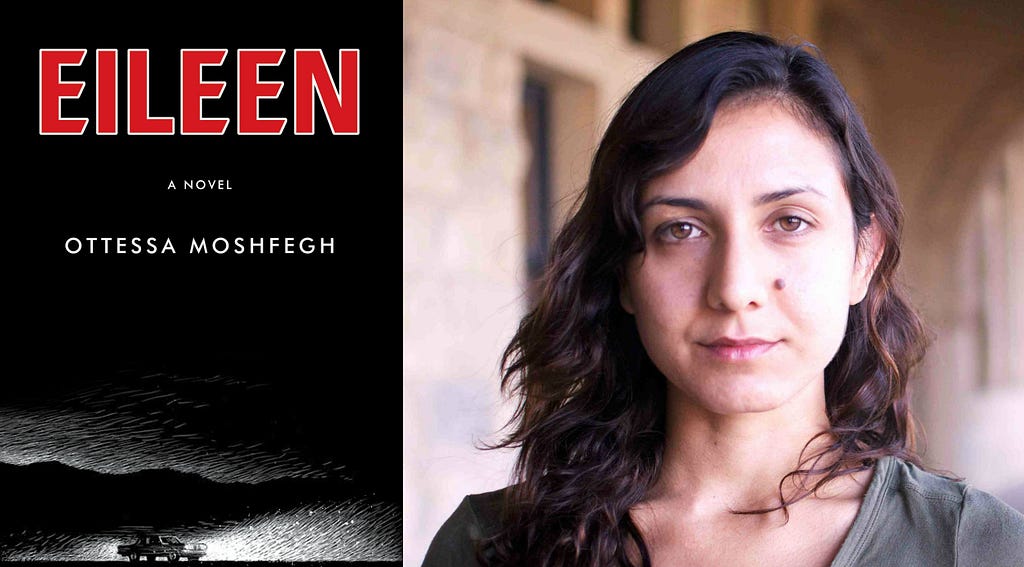
In Ottessa Moshfegh’s new novel, Eileen, the titular character works at a boys’ prison, lives with her alcoholic father in a town she cannot bear to name, and obsesses over her body’s inelegant systems and secretions.
This character study, however, is also the story of a bizarre murder.
Moshfegh writes, she says, to explore why people do weird things. This interest in the strange — a few striations from the humiliating — shows. In her short-story Disgust, a lonely Chinese man debases himself in his love for a faintly-known woman. In her novella McGlue (excerpted in Electric Literature’s Recommended Reading), a drunk sailor is unable to remember if he has murdered his friend.
The Paris Review has championed Moshfegh’s work, publishing several of her stories, and awarding her the Plimpton Prize in 2013. (Her story, “Bettering Myself,” was also featured in Recommended Reading, recommended by The Paris Review.) The following year, Moshfegh won a grant from the National Endowment for the Arts.
When Moshfegh and I chatted on a rainy day in a Williamsburg coffee shop, she was in the final months of a Stegner Fellowship. We discussed, among other things, feminist writing, embarrassment as a literary subject, and why the uproar over Claire Messud’s “The Woman Upstairs” makes her angry.
Moshfegh was unafraid of disagreement, and our conversation rounded into argument and back. But the most memorable moment came when she spoke, lit up, of the joy of writing: “I can’t tell you how much I love writing, revising, editing,” she said. “It’s a complete fantasy.”
Megha Majumdar:What is really interesting about Eileen is that the book complicates female desire. I was struck by a part in which Eileen thinks that her first time having sex will be, in fact, a forced encounter. She believes she will be raped. That, of course, questions what desire can look like. Did you set out to write a feminist book?
If we go by the mores and values that we see around us, any woman living in this world should hate herself.
Ottessa Moshfegh: You’re the first person to ask me that. Thank you. Everything I write is feminist, because I don’t hate women, I hope. I find it impossible to ignore the fact that we live in a really violent culture. Eileen’s character in particular is a victim of that violence. Not only is she in a completely shitty situation at home, but the whole world is rigged to keep her small and powerless. So I wondered, what would it be like if I exposed what happens in a person’s mind when she is being conspired against, held hostage to society? The mind gets perverted when you live in a state of constant defensiveness. You think there’s something wrong with you. Self-loathing is natural. If we go by the mores and values that we see around us, any woman living in this world should hate herself.
MM: Eileen’s self-obsession can make her an unpleasant person to be with —
OM: I don’t agree. Of all the characters in the book, Eileen is the one I relate to.
People talk about her, like, is this a girl you want to spend time with? But she’s pretty typical. She’s delivered to the reader in an intimate, first-person narrative, so you know what her thoughts are. From the outside, she’s not offensive, though she thinks she is.
She has an inflated sense of her physicality. What I was hoping to capture through the perspective of having Eileen narrate this book at 75, talking about herself at 24, is that her self-perception was inaccurate. It was an effect of living in this world. I don’t think she’s that bad.
MM: All right. Let’s see if the question I was going for could still stand — there are a bunch of characters in the book who are unpleasant. People you wouldn’t want to hang out with. Unlikeable characters, basically. I wonder if you remember the debate over unlikeable characters — if women are always expected to write likeable characters, and so on. Do you have some hope for how your book might engage with that debate?
OM: I hope that people might see how ridiculously sexist that is. And it’s so boring. As an artist, I say fuck that debate. Let’s be done with it.
It’s not my job to please people who can’t tolerate anything but lukewarm baths.
The notion of likeability is a concern that the book industry has because there are people who read to feel nothing — people who read in order to check out. They don’t want to be disturbed by the words that they’re reading. They’re scared. The moment they feel challenged, they put down the book and review it on Amazon, “I just couldn’t get into this; it was too dark.” So when you’re selling a book and you say, this might have an effect on you, it turns off cowardly readers. I’m not concerned with those readers. It’s not my job to please people who can’t tolerate anything but lukewarm baths.
I read because I want to change, because I want to learn something and have an experience. If I’m having an experience where nothing is happening to me, I’m going to look at that book as… nothing. And I don’t want to write nothing.
MM: Eileen is obsessed with her body. Where did that interest in the body come from, and how did it evolve as you wrote this book?
OM: Eileen’s body is, in a way, her lover. It is the thing she knows the most intimately, and her relationship with her body is a way to engage with the world. Where it’s not safe to, let’s say, act out against her superiors at work, what she can do is objectify herself, and act out against her own body, as a way of processing her feelings.
I think that’s one way that eating disorders manifest. Or any kind of self-destructive tendency, like cutting. As a writer, it seemed implausible to me that Eileen could have a healthy relationship with her body given her circumstances.
Women are objectified so much that it was impossible for me to conceive of a book where that wasn’t an issue. And especially in this book, which is set in the early 60s.
MM: Is that interest in uninhibited and self-destructive behavior part of why you are interested in writing about drinking and drinkers? This shows up in McGlue as well as Eileen.
OM: I am interested in the ways that people cope with life. Alcoholism itself is not very interesting to me. If your identity as a character is that you are an alcoholic, it’s not going to be a very round character for me, in my writing.
That’s why the father in Eileen — that is who he is, he’s drunk and delusional, he makes messes — but he isn’t a whole person. He’s more like a ghost.
Drinking and doing drugs feed delusion. I’m interested in the stories we tell ourselves, and how they may conflict with other people’s stories about the world, and how, if we’re operating under a delusion, we might make really weird decisions. I like to explore that in fiction — why we do weird things.
MM: You chose to leave Eileen’s father as not a totally full character. Can you talk about that decision?
OM: On the one hand, Eileen as a grown woman has spent a lot of time coming to terms with the way that she feels about her dad, so I didn’t want the book to be, “Here’s me, Eileen, processing my feelings about my abusive alcoholic father.” I wanted the book to be more about Eileen extricating herself from that situation, and leaving behind this identity in search of a new one.
MM: One of your short stories in The Paris Review, “Disgust,” is a favorite of mine, and I wonder if we can trace a line from “Disgust” to Eileen. In “Disgust,” one of the major concerns was embarrassment and humiliation. And in Eileen, those are major ways in which the main character experiences the world. What makes embarrassment and humiliation literary subjects for you?
OM: They take the interior to the exterior. Humiliation is when people see a weakness in us, and we’re caught, exposed in that small moment. We’re vulnerable, and we’re received with judgment. That, to me, is a huge part of being alive — this negotiation between, who is it safe to expose myself to, and how does my fear of judgment limit me from being myself?
I also enjoy thinking about how funny it is that we care so much about the exterior: she has this haircut; he has that haircut; what does that mean — when really we all use the toilet? We all fart in our sleep. We all get pimples. We’re all mortal.
Yet we try to present ourselves in a way that is free from those bodily associations.
There is very good reason for that — people are afraid of death.
And for some people the exterior can become a complete obsession, the way that they create their outward identity. Either the inward disappears — and we call these people shallow — or it becomes so stifled that they become self-loathing or self-obsessed. That stuff is really interesting to me.
Spending time in New York, I’m overwhelmed by the obsessive image-making, and I mostly find it really fun to watch.
MM: This is a book about a bizarre murder. I was surprised by that, because in your short stories, the transgressions are much smaller. What drew you to write about murder, especially in the larger scope of the novel?
So maybe that’s part of my association with a novel: that it is a life and death situation.
OM: Maybe it was the conceit that because the novel is bigger, the transgression needs to be bigger. That happened with my first book, McGlue, too. It starts off with a murder, and in that case, I didn’t know that I was writing a whole book. I just knew that I needed to write that story. And it turned out that there was so much about that murder that it needed to be a book. So maybe that’s part of my association with a novel: that it is a life and death situation.
My attitude toward novel-writing is also very different from my attitude toward short story writing, and my interests in each form are different. Weirdly, a lot more subtlety can be explored in a short story, even though there is less room. Novels for me need broader strokes, so it seems natural that there would be bigger issues to deal with, in terms of storyline, plot, character behavior.
MM: The structure of Eileen is remarkable. There’s attentive observation of the mundane for a lot of the book, and then there’s an explosion of horrifying events. What made you want to structure it in that way, where you are beginning, very consciously, so far from the end?
OM: I wanted to create the feeling of Eileen being stifled and suffocated. I wanted the reader to feel suffocated like Eileen is, living in X-ville. So when Rebecca appears, it really is a lifeline, and things happen quickly thereafter. Eileen is so ready for those things to happen that there isn’t much more room to self-obsess. There isn’t a need for any more world-building, that work is already done. So we can just push forward.
MM: I was struck by lines like, “Nothing special happened that night…,” lines which draw our attention to the artifice of storytelling. What made you want to have that conscious presence in the book as a storyteller?
OM: Eileen, as the older narrator, is telling a story of these days in her past. There is no question that this is a construction. This novel has been written. It’s not like the Ten Commandments or something. We know a human being has put effort into the writing, and it was actually me! Hahaha.
But, I didn’t want the reader to forget that this was a character talking to them, and not an expert storyteller either. Eileen as a narrator cares that she’s understood, and there’s a lot of contradiction, and a lot of self-acceptance in that.
But I wanted her to feel alive as the narrator, so those interjections and little corrections are a way of keeping the reader aware of her.
MM: Let’s talk about the name of the town in the book — X-ville. What is interesting or necessary about that name to you?
OM: A name should be evocative. It is both the label of a place, and a word denoting the shared associations between people who know that place. When I say, Broadway, we both know what we’re talking about, and yet we must have different experiences of it. Names are proper nouns, not subjective. In that, they sit in the imagination with a lot of weight.
X-ville had to be X-ville because naming the actual town would’ve been too painful, and maybe too risky for Eileen. It was a way of distancing the entire story from her heart: I’m telling you this is a real place but I’m not going to tell you what it’s really called. In that way there is a gap between reality and story.
MM: Where is your own name from?
OM: My name is Persian. My dad is from Iran.
MM: What are your thoughts on other, recent feminist novels — Elena Ferrante’s Days of Abandonment, Claire Messud’s The Woman Upstairs. In those, there is a minute examination of domestic life. And in Eileen, domesticity is kind of a farce, but it’s also something Eileen wants. How do you think Eileen might be in conversation with those other books?
OM: I get angry thinking about Claire Messud’s book, and the hoopla around having this character who was a woman who was a little angry.
I didn’t think the opening rant in the book came across as being very hostile at all. Just because it was a woman writing it and speaking it, people were like: Oh my god, how uncouth! How experimental! Wake up, people.
In terms of domesticity, the world that Eileen knew was her house, this small town, and the prison where she worked. That was kind of it for her.
What does domesticity mean? It means, life athome. I don’t think of Eileen as a domestic character at all. The fact that she lives in a house makes her domestic, but no more than a cockroach.
MM: What does the practice of writing look like for you? Do you write by hand?
OM: I write straight on the computer. When I’m editing a novel, I’ll print out the draft and edit on paper, cutting things and taping them back together, stuff like that.
The process is really different depending on whether it’s a short story, novella, or novel. This novel I drafted very quickly, in 6 weeks, and then spent 10 months revising and re-writing. I don’t usually take a year to write a short story, but in some cases I do.
MM: Do you anticipate being edited? Has being edited changed how you write?
OM: What I like most about being edited is the perspective shift. I like looking at a piece as an object, rather than carrying the baggage of the process of writing, to my reading of it. Seeing it through an editor’s lens is refreshing and clarifying.
MM: Is there something you dislike, or that stays difficult, about writing and editing?
OM: No. It’s a joy. Writing is so much fun for me. What’s painful about writing is the fear that I can’t realize what I’m envisioning. But even that fear is a delight. I can’t tell you how much I love writing, revising, editing. It’s a complete fantasy. (laughs)
MM: Are there things you do that are not writing that you find are good for your writing?
OM: Yeah. Sleeping is really good for my writing. Dreaming. Walking. Seeing art. Listening to music. Seeing people I haven’t seen in a long time — it stimulates my memory. High risk situations are good. Travel is the big one.
Recently I wrote a story that was inspired by a really strange couple of days that I spent in this small coastal town in Kenya. The actual story doesn’t take place there, but it inspired the world that the story does take place in.
MM: Have you read anything good recently?
OM: I go through phases where I read a lot, and then I don’t read at all. I brought Volume 1 of My Struggle with me, and I just don’t know why I’m supposed to care about this self-obsessed, white European man. Why is he supposed to be interesting to me? I don’t find him interesting. Even when he’s being charming and funny, I don’t care. I don’t think I’m going to finish it.
MM: I read half of that book.
OM: Why did you stop?
MM: I felt that I knew what his writing was like, and that satisfied me.
OM: Same experience.
MM: What are you working on? What can we expect to read next?
OM: I have two novels that I’m working on, and I’m writing personal, narrative essays. Or, I wrote one. Now I’m writing another.
OM: Yeah. Now I’m writing about birds that I’ve known, personally.
MM: What draws you to non-fiction?
OM: I’m at a place in my life where I’m old enough to have perspective on my childhood. All of a sudden, I’m not a child. I don’t know how that happened.
I come from a fascinating family of very special people with endless good stories. There’s so much to explore there, and funneling it through fiction is less interesting for me right now. Why not just say what really happened?
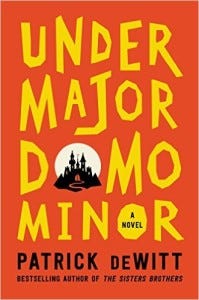
enough to make us spine-tingly with anticipation for his upcoming novel. If Joanna Neborsky’s stunning animation is any indication, Undermajordomo Minor will prove to be the “triumphant ink-black comedy of manners” we never knew we always wanted. Just don’t make us say that three times fast.
In a move surely designed to wrest attention from the publicity lamprey that is Donald Trump’s presidential campaign, the White House has released President Obama’s summer reading list.
The list is a literary analog for a well-balanced meal, comprising a wide range of forms and genres. Among the chosen few are Anthony Doerr’s Pulitzer Prize-winning novel, All the Light We Cannot See
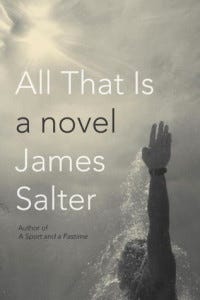
Together, the six titles — supposed to keep the president occupied for the duration of his sixteen-day vacation on Martha’s Vineyard — comprise a whopping 2,771 pages. Perhaps Barack is a closet speed-reader. Or maybe we should take this list with a grain of salt(er).
We’ve asked some of our favorite international authors to write about literary communities and cultures around the globe. We’re bringing you their essays in a new ten-part series: The Writing Life Around the World. The third installment is by Cuban author Yoss.
Havana, Cuba translated from Spanish by Daniel Gavidia
I walk on a lava desert, sweat runs down my forehead, my shoulders, my back, beneath my feet the blanket burns with boiling flames.
Eh… the blanket?
I suddenly come out of my dream in a bad mood and stretch. Did they cut the power again?! I look sideways at my alarm clock on the night desk. Holy shit, and it’s only eight in the morning? This is terrible. So much for my plans of sleeping late: without the fan at maximum speed, no one can stand more than ten minutes of this barbecue, even I, who live on the third floor of a building without any other buildings surrounding it, which means I get the breeze… when there is one.
The Cuban summer is no game… and they say that this is the hottest one since 1880. And then they say that global warming is a fallacy. The worst part is that when they cut the power so early, it usually lasts until five in the afternoon, at the very least. We are not even in August and it already looks like the feature-length blackouts will be coming back. Will it be like the summer of ’93, the worst in the Special Period, with eight hours of light for every eight hours without it… or will it be even worse?
We will cross that bridge when we come to it. In this country one can never know what will happen, so it is best not to make many plans. Or to worry too much, because you cannot fight the inevitable. The Cuban version of Saint Augustine’s famous prayer would go something like this: Give me strength, Oh Lord, to change what I cannot change, to endure what I cannot change… but, above all, give me wisdom to know how to make out the difference.
* * *
Anyway, sleep is over for the time being. Resigned, I spring up with an enthusiasm suited for a day that will get better than its start. I put on some shorts and stomp downstairs to wash my face, shave, and have breakfast. We Cubans have learned in the flesh: one must cooperate with the inevitable and make a virtue out of necessity. At least I will go to the gym early and have more time later to check my emails and write something. As usual, with three or four projects at a time, I am a bit behind on all of them. To begin with, I was supposed to have finished A Hundred Questions About Weapons about a month ago, and I still have two questions about airplanes and ten about rockets. As long as there is electricity in my mother’s house…
Murphy’s Law: When my face is all wet, I hear the bugle of a cavalry charge — my phone. It is Vladimir, the carpenter, letting me know that he is leaving his house in Alamar to come install the window we are missing. Almost with tears in my eyes I tell him that we don’t have any power, so it will have to be another day, sorry. And we both take a dump on the Electric Company.
But you have to realize that you must bust your ass in order to make a peso writing …
As I brush my teeth, I glance sideways at the cedar window on the entrance, with tinted glass, already placed and cemented. The other one is barely fastened by wedges. They are pretty, resistant… and above all hermetic. When they are finished, we will be able to finally stop worrying about downpours flooding the living room. It is true that six hundred convertible pesos for both is quite the price. But the workers have no mercy. Masons, carpenters, and plumbers all think that because one is a writer and sometimes shows up on TV or on the paper, then one carries gold around, or has an account in a Swiss bank. But you have to realize that you must bust your ass in order to make a peso writing …
I shave, careful not to cut off my nose or one of my lips, because I am still quite zombified. Yesterday, after writing about the F-86 and the MiG-15 and their fights over Korea in the early ’50s, I stayed up until two revising Zhen-Galac, Twenty-Three Squared Tiles, the novel I want to send to Lugar Común, the small Canadian Spanish-language publisher that has already published Bestia, a book by my colleague Elaine Madruga Vilar. Even though they don’t pay much, it’s still one more published book…
And it never fails. When I have my face almost entirely covered in shaving cream, my phone rings again. My prepaid cards last merely as long as a merengue does in the entrance of a school, especially because up here Dania and I don’t have a house phone. Even today, in the era of iPhones, satellite phones, and Wi-Fi, getting a simple landline in Cuba is harder than finding out God’s phone number. (If He has one, of course…)
Ever since we moved here a year ago, we have considered buying a landline at the street price — between six hundred and eight hundred convertible pesos — but there is so much to buy and do in a new house! Starting with the windows and ending with the windows…
So for the moment we are postponing it in place of more pressing needs. After all, my mother lives a mere 120 meters away, across San Lázaro Street, and having to go there to check my email in my old room is the perfect excuse (if there were any lacking) of paying my old lady a daily visit and having lunch there, even though she is not as good at cooking as she thinks…
The worst part is that every time someone wants to locate me urgently and calls my house, my holy progenitor gives away my cellphone number without a second thought, and calls from a landline are always paid for by the cellphone that answers them… despite how expensive minutes are right now! I hope that these prices normalize with the end of the Yankee embargo.
This is why, whenever I see on my Blackberry screen (it’s an authentic Nokia, from the Ecuadorian Movistar company, a gift from a friend living near Guayaquil, which is already obsolete, but I keep it because its keyboard has all the letters, even the ñ! I always end up writing something I don’t mean with the newer phones and their hypersensitive tactile screens) an unknown number beginning with a seven — that is, a landline from Havana — I fill myself up with Oriental patience so that I answer without growling at the inconsiderate person willing to waste my minutes so carelessly and so early in the morning.
How lucky I am to be so kind; it was Lourdes de Armas, a writer and friend from the office of the Writers Association, in the UNEAC, calling to confirm I was finally going to be part of the jury of the David Science Fiction Prize. Yes, of course I will. Ah, great, can I call you later then? No, why? I’m confirming it now. Do I come by to pick up the books or do they deliver them to me? No, they prefer to wait for Elaine, the third member of the jury (the second will be my lifelong friend and fantasy-writing colleague Raúl Aguiar), to be home, so that they only have to make a single trip and can save gas delivering the books. Native economizing, our daily bread.
By the way, they pay you for being part of the jury in the David. Not much, three hundred pesos. But little by little you move forward… and right now those scant twelve convertible pesos represent an entire fortune to me.
…lack, lack, lack… the word Cubans have heard the most for the past half a century.
So I hang up with a great smile. How little is needed to make a Cuban writer’s day, regardless of how twistedly it begins! The David, an award for the unpublished, is still one of the most prestigious competitions for young writers. Created in 1967 in honor of the anti-Batista fighter Frank País (David was his underground alias), it has had a science fiction division since 1979. Its first winner was Daína Chaviano, and the second was Agustín de Rojas. Two illustrious reference points for the sci-fi genre in Cuba, if there are any. From ’79 to ’84 the award was given annually, then it was downgraded to a biennial prize. I myself won it in ’88, sharing it with María Felicia Vera and her amazing book of short stories El mago del futuro, with my collection Timshel, which I consider the true start of my writing career. Unfortunately, since Gina Picart won the prize in 1990 with another story collection, La poza del ángel, “our” David had been inactive for twenty-five years, with the usual excuses: lack of money for awards and publishing, lack of public interest, lack, lack, lack… the word Cubans have heard the most for the past half a century.
Of course, everyone always lays all the blame for that “lack” on the Yankee imperialist embargo. And Amen.
One of the first measures that the new UNEAC directive undertook, with the magnificent black writer Alberto Guerra Naranjo as vice president and my brother Raúl as adjunct, was to establish the David for science fiction. They asked me to make the submission guidelines, and I used the opportunity to expand the competition to include heroic fantasy and horror also. In this manner, even though a last-minute mistake made only novels eligible for the prize, many friends have sent their manuscripts for review. There are eight texts in the competition, and this is only because many young luminaries of the fantasy genre — like Eric Flores, Erick Mota, and even Elaine Vilar — have already published books and therefore cannot enter.
I don’t see an opportunity to tell those interested in the competition that the matter still stands; many feared that something would go wrong at the last minute, as happened in 2013 with the planned and very much awaited Anticiparte, an annual fantasy publication of Cuban letters that died before it began, despite all my and Rinaldo Acosta’s efforts. Still, Fabricio has told me they are now assembling a sort of anthology of short stories and essays, with top-notch writers like China Miéville, Mike Resnick, Connie Willis, James Patrick Kelly… and yours truly. What an honor, to appear among such illustrious company!
* * *
I have for breakfast my regular pot of yogurt and a plate of mortadella with melted queso blanco. Most Cubans, like my girlfriend, don’t have breakfast and barely drink a strong coffee, but I do need a good load of proteins to start my day. After all, I’ll be in the gym in a few minutes. For now, I’m comfortably watching another episode of 12 Monkeys on Dania’s computer, which we — Dania’s son and I — use above all.
This series is really good; with more time than Terry Gilliam in the great ’95 movie starring Brad Pitt and Bruce Willis, the producers canrevel in the events of the post-apocalyptic future. While not very popular, I don’t think, among those who receive the weekly package (the cheap local Cuban alternative to downloading the series for free online), there is something that still remains a dream for most of the island’s citizens: in addition to phenomena like Game of Thrones and The Walking Dead and the semi-infantile superhero series like Smallville, The Flash, and Daredevil, most of the public still prefers to follow endless and lachrymose Brazilian or Colombian soap operas, shows like Belleza Latina or dancing to provocative and semi-pornographic reggaeton music videos.
Anything for the sake of not relying on the five channels of our national television, even though they also run the same series some time afterwards… and pirated as well. If the embargo comes to an end, our TV programming will get drastically mutilated. Does Obama know this and want to screw us anyway, as many suspect? Bah, it would be too Machiavellian on his part, I think.
Before leaving home, and just in case we get an unexpected summer downpour, I close all the windows and the two gates (the thieves are on the prowl these days), and I pick up the big five-liter bottle to fill up at my mother’s house. Alain, Dania’s ten-year-old son, has been having endless diarrhea for months, and even though we haven’t given him the troublesome biliary drainage to make sure, everything points to it being giardiasis. Giradia lambia, flagellated microorganisms, bothersome little animals that I reckon half the Cuban population has in their intestinal flora but has learned to live with. Seeing that Metronidazol, the super strong medicine that eradicates them, is scarce throughout the country and that in foreign exchange pharmacies the only substitute, Plantacel, costs pots of money, Dania has decided that Alain will not drink the water overflowing with calcareous sediments and other intrigues that come out of our plastic tanks in the heat, and before putting in the work of boiling the water she makes me bring, every other day, five liters of the much cleaner water from the cistern in my mother’s house.
If a woman asks you to do something for her son, you do it… or an argument with the woman is in sight. In all honesty, though, Alain and I get along very well. It makes me happy that he says that I am not his stepfather, but his friend. And carrying five liters of H2O is no great effort for me, even if I have to carry them up three flights of stairs… but I don’t have a lot of faith that this will solve much.
I arrive in the author-of-my-life’s house around nine; she is still asleep, as usual. A former actress and dentist, owner of a proverbial amount of energy and good humor despite her seventy-eight years, my mother is an unrepentant night-owl who usually falls asleep sitting in the living room in front of the most improbable TV shows only to go to her bed at dawn. I don’t worry about being quiet; it would take a cannon to break her out of her doze.
I throw the big empty bottle on her patio, next to my old dumbbells, discs, and barbells with their native weights, plus other gym items, which now serve mostly as metal supports for maternal flowerpots. I go to the fridge for a drink of cold water, because at Dania’s house, the only thing that works properly in the Chinese Haier fridge is the freezer. Held under a New York souvenir magnet I find a note written in the nearly cryptic maternal calligraphy: Dentists are also doctors, after all.
My mother is a pretty good secretary. Two messages for me: one from Carmita, at Gente Nueva, who called yesterday so that I could come today and sign some contracts… and another from Ediciones Cubanas de Artex, that I call them immediately.
I get a hold of the wireless phone in my room. I brought it last November from my first — and so far only — trip to the U.S. They have denied me the visa many times and even the ESTA to enter with my Spanish passport. This happened near the end of May for the annual LASA congress, which had approved a paper of mine on the post-Soviet fictional space in present-day Cuban fantasy writing. Clearly. Someone in the Department of State still considers me a possible immigrant and an alleged terrorist.
And what can you do? Put up with it and screw yourself. We’ll see if I get the visa this October, because I have an invitation for a panel at Brown University, in Providence… which is, apart from the capital of Rhode Island (one of the smallest Yankee states), also the cradle and setting of many stories by my beloved H.P. Lovecraft. According to my hyper-optimist mother, they deny me a visa once and give it to me the next time, so now my next one is due. Let’s hope that her words are sacred and that the U.S. Department of State finally understands.
* * *
As I dial Artex’s number, I hope with all my strength that it concerns picking up and cashing a check. I barely have five convertible pesos and fifty Cuban pesos… and the best part is that I don’t know until when.
At least Dania, secretary of the Belarusian embassy in Havana, has a good salary, a sure income at the end of each month. Carpenters are expensive, and I haven’t been doing anything but writing for the past twenty years. Or, as my mother has said half-seriously and half-jokingly, I live off fictions. Literally and literarily.
Most Cuban writers have another stable job, as editors, popularizers, teachers of writing techniques, or something of the sort. And they do well, even if that job steals away their writing time; this is because a few hundred pesos each month, even if they are not much, do help out.
But my life as a total freelancer, although without schedules or bosses — that is, with lots and lots of writing — looks like the trailer for the upcoming Tarzan film. While the Lord of the Apes swings from one liana to the next on top of lions, leopards, and crocodiles that jump trying to bite him, always without success, I go from one royalty check to a payment for being part of a jury, and from a check for an article in a foreign magazine to a national or international award. However, oftentimes the fangs of the beast of poverty scratch my heels… and even higher upwards.
Of course, if one wants to get rich as an artist, becoming a writer is not the best option. I don’t know about other countries, but in Cuba it could mean becoming a reggaeton singer or a painter. Like Micha or Kcho. The only Cuban author who comes to mind who is truly well off and relieved thanks to what he writes and publishes is Leonardo Padura, who even bought a car with his awards and royalties. He is a model for everyone, the author from the Mantilla neighborhood and creator of Mario Conde, the sentimental cop with literary pretensions; recently he was awarded the Princess of Asturias Prize in Spain and a couple of years ago the National Literature Award… He is already a sacred cow, and he hasn’t even turned sixty, so the rest of us still have hope…
According to my friend Raúl Aguiar, born in ’62, he will not be a candidate until 2035, when he is seventy-three. And I not until 2038, at sixty-nine years. If we don’t die first, that is.
…from time to time I get some euros or dollars. Or rubles, or yen, or pounds, or Mexican pesos… We accept anything…
True, there is another tiny group of Cuban writers who more or less live off their pen, or their keyboard. Like Pedro Juan Gutiérrez, author of El rey de La Habana y Trilogía sucia de La Habana. And me too… without going that far, I’m not doing that bad lately. Besides a percentage of the new windows and shelves in Dania’s place, the flat-screen TV and the superb dresser I bought my mother a couple of years ago are proof that, even though there might be some months in between, from time to time I get some euros or dollars. Or rubles, or yen, or pounds, or Mexican pesos… We accept anything, because we cannot afford to pick and choose.
* * *
Ah, I was right; the thing from Ediciones Cubanas, the section in Artex dedicated to printing books by national authors in order to sell them in convertible pesos, concerns a check… for twenty-nine convertible pesos. And the irony is that I must go sign it today so that, some time later in the summer (surely not very soon), they call me to pick it up… in Miramar, that is, at the other end of the city.
Well, in Cuba half the writer’s job…consists of this running from place to place. Hell with everything, because today will a check-hunting day.
Well, in Cuba half the writer’s job, above all if one doesn’t have an agent (and few have one), consists of this running from place to place. Hell with everything, because today will a check-hunting day. I organize myself mentally, considering all the details, almost like the Allies for the famous D-Day in World War II. And this is because in Cuba, for those who do not have their own car… that is, most of the population, myself included (and thank God, because the fuel, the mechanics, and the repair parts cost more than whatever benefit a car could bring), going anywhere beyond the distance of a non-suicidal pedestrian — because only a kamikaze would walk more than two kilometers under the summer sun — can become a logistical operation as complicated as that Allied landing in Normandy on June 6, 1944.
Therefore, I decide that after leaving the gym I will pick up an almendrón — one of the old American cars that charge ten pesos for a flat rate — to Miramar. Sign there, pick up another almendrón to Gente Nueva, sign again, and from there to my mother’s house, running just in time to shower, have lunch, check my email, and leave — hopefully walking now! — for the Dulce María Loynaz Center for Literary Promotion, in Vedado, where a sort of collective birthday party is being held for all the authors born in the year’s first semester. Abstemious and a non-smoker, I’m forty-six and still have a child’s soul. I love cake and black refreshments! From the ceremony, run to UNEAC, the Writer’s Union, which is fortunately only three blocks away, and where at five is the Peña de la Mazorca, the session of the Ariete Group. Today the theme is erotic literature, and I have been invited to read… I even wrote a short story especially for the occasion, which is not even in the fantasy genre: “Ana That Cares For Me,” about a twenty-something with mental retardation and the sensual teenager who bangs him when her mother leaves for work…
Well, the schedule is cramped, but if I don’t fall dead along the way, I think I will be able to do all of it. Or at least almost all of it. Which in Cuba is already enough.
Now, let’s inform the troops: phone call to Dania, in the Belarusian embassy on Fifth Avenue and 70th (just in front of the Russian one… to keep an eye on each other, I guess), so that, besides saying good morning to my Fluffyone from Fluffyland, as I lovingly like to call her, I can update her on all my ambitious plans for the day and remind her to catch me at the Loynaz Center, if she wants cake, little treats… and beer, wine, or rum. Because every abstemious man needs a woman who drinks and represents him, and I, fortunate guy, have one that does so without getting drunk… most of the time.
No one in Cuba knows what he or she will end up working as. I am a biologist myself…
Running low on time — story of my life! — I walk up Jovellar Street at almost an Olympic pace up to the Hotel Colina, and then I walk rapidly down L, saying hi to my uncle Roberto, a PhD graduated from Rostock — now in the extinct East Germany — who now doesn’t make a living off his hard-earned degree in maritime transport, but as a teacher and translator of the splendid German he learned during his studies. No one in Cuba knows what he or she will end up working as. I am a biologist myself…
My uncle usually sits in the terrace of the Colina, to watch girls passing by, and in case a German-speaking foreigner shows up… Now he’s calling me, always somewhat mysterious, imperative and dramatic. I say hi to him; he wants to talk to me about how worried he is for his son, Rainer, recently a graduate in tourism, and his Swiss girlfriend and the apartment they want to buy… but I don’t have time.
Why does everyone think that if you are a writer and aren’t on a payroll or have to work for a boss then you can happily waste your hours each day? We writers write. Once in a while, at least.
* * *
I have gone Monday through Friday to the Guille Gym since 2010, when they closed the much closer, more primitive, and cheaper one that belonged to my friend Irolán. It is on L between 17th and 19th, exactly seven blocks away from my house, but it’s far enough that I have to put on pants to go. You must pass in front of the hotel Habana Libre, the film theatre Yara, and the Coppelia Ice Cream, the heart of the Vedado and Havana.
The gym has equipment that is for the most part native — that is, made by hand by the owner. And it is a little expensive, for Cuban standards: normally, fifteen convertible pesos the first month, ten the next… and now they even want to raise it to fifteen. But there are a lot of machines, and Dania and I, both regulars, manage a significant discount if we make a single payment for the whole year — sixty convertible pesos for twelve months, when paying month by month it would be double. Will they now let us pay 90 convertible pesos, when the year is worth 180 instead of 120? Hopefully, because this place is not bad at all.
In fact, considering that the establishment, which is improvised in the basement garage of an apartment building, has mirrors in almost all the walls, air conditioning, and a TV on which they constantly run videos (which aren’t always reggaeton or salsa, a weird fact being that house music predominates, even though rock is almost totally absent), it is quite good. It even has treadmills, stationary bikes, and an elliptical trainer. The things missing are showers and a sauna… but that is for the hotels, which — logically! — cost thirty convertible pesos a month and upwards… when they have available rooms. Which never happens in the summer, of course.
Leaving aside the delicious mental rest of looking for a while at beautiful twenty-somethings with lots of makeup and keratin-straightened hair, their spandex clothes girding their youthful volumes sweating close to you, the truth is that I cannot conceive my daily routine without my session at the gym, regardless of how “un-intellectual” it may seem.
Eduardo Heras León…always says that a writer’s career is measured in hours per buttock. That is, the time one stays sitting in front of the keyboard…
I am an organized and methodical guy. Today is my legs day… and surrounding muscles. Eduardo Heras León — friend, mentor, creator of the Onelio Jorge Cardoso Center of Literary Formation, key in the literature of the past fifteen years, and, although very censored in the ’70s, an excellent storyteller himself, recently awarded the National Literature Prize, after years of being a candidate — always says that a writer’s career is measured in hours per buttock. That is, the time one stays sitting in front of the keyboard… so I, pretty lacking in buttocks, compensate my almost pathological deficiency in rear region fat by hardening it to the fullest with intensive squats and presses.
Squatting, abs-work, roller, sweat… time flies in the gym. Especially when I, between one set and the next, read a pair of pages on my Kindle, the best invention that has fallen into my hands in the past ten years. Now, whenever I travel to the provinces or another country, I don’t have to carry many heavy volumes in my backpack to avoid boredom on the bus or the plane, and I can read as fast as I want without the fear of running out of reading material… as long as the battery lasts, at least. This Paperwhite model, bought last year in the Barajas Airport in Madrid, is the fourth one I have. Yes, two have broken in the gym. The truth is that they are a little more delicate than paper books. But all the free literature — long live piracy! — that I can now have easy access to makes up for it; I can’t stand reading on the computer, not even on the laptop.
Between sets, a splendid idea for a story develops: a group of pawnshop owners and antiquarians get together periodically to tell each other anecdotes about their purchases and sales, and suddenly they all discover that they have bought a series of strange artifacts. Waste products from an alien exploration group? Remains of a team of time tourists? All speculations are fair game…
Make a mental note… Let’s see when can I write it. Nothing like exercising the body to stimulate the mind; some of my best stories have emerged between a chest press and a squat. Or in the afternoon while running on the boardwalk. Something that, by the way, I won’t be able to do today, with such a tight schedule.
Sweaty and feeling glorious, I weigh myself at the end: seventy-seven kilos, which is, subtracting the weight of clothes and shoes, seventy-six kilos… not bad for a forty-six-year-old Cuban intellectual with a height of 1.70 meters. I won’t be able to compete in UFC nor in Mr. Olympia, but at least I clash with the stereotype of the writer as tall and skinny or fat, little, and with glasses. Blessed be gas-permeable contact lenses, by the way. And that the farsightedness hasn’t hit me yet with all its strength.
* * *
I check my phone, because I can’t hear my cavalry bugle with the racket of the house music and the clanking of weights, which is the de facto soundtrack at Guille Gym. Two missed calls. One is from Aramis, the drummer and leader of Tenaz, the heavy metal band in which I’ve sung since 2007. Best not to call him; I guess it’s just to confirm that Sunday at noon we have a rehearsal in our locale in the Casa de Cultura de Centrohabana. And he does it reluctantly but also using the opportunity to complain for the eleventh time that the band is lifeless, threatening that if we don’t get serious he will dismantle it, because he, after all, is playing covers in El Submarino Amarillo with another band, Challenger.
By the way, they’re performing today and they don’t sound bad. If it weren’t a Tuesday and Dania did not have to work, it would be worthwhile to go, but with so much walking, surely after leaving the Peña de La Mazorca my Fluffyone will fall defeated when we get home, on the bed or on the sofa — she doesn’t care as long as I’m close.
The stage offers instant feedback, without having to wait for a publisher to get you out there. And it is addictive.
I have been a rocker by heart since I was eleven. And my looks and attire proclaim loud and clear my musical preferences. It would be a shame that Tenaz stopped existing, especially now that our first music video, for the song “El que a hierro mata,” has circulated a few times on national TV and is even on YouTube. Obviously, I’m not going to leave literature to dedicate myself exclusively to rock; I’m not that good. There was only one Freddy Mercury and he died already. But singing is something special. The stage offers instant feedback, without having to wait for a publisher to get you out there. And it is addictive.
* * *
The other missed call is from my friend Aymara, who works in the Czech embassy. During the past year I have collaborated a lot with the Czechs’ intensive cultural program: conferences on the novelist Bohumil Hrabal, on Jaroslav Hásek and his great novel The Good Soldier Svejhk (or something like that… these Czech words with five consonants and a single vowel… or none at all), opening expositions and the like. Soon I will talk about the great plastic artist Mucha. Also, Jan, the young Czech cultural consultant, is a fan of short-range firearms, like me… with the advantage that he can own some, while I, with the strict Cuban regulations on gun possession, limit myself to dreaming of Berettas, Lugers, and Colts, and accumulate digital and print books on the subject. Nevertheless, we still affectionately call each other “gunpowder brothers.”
Hopefully it is something good. After sticking out my hand and climbing into an ancient ’49 Chevrolet heading to Miramar, I call Aymara. She — charmed that I liked the little chronicle she last posted on her blog, about the semi-abandoned but still beautiful Jardines de La Tropical — tells me very enthusiastically that if they give me the American visa this time, hopefully for five years instead of for another wretched six months… we could make an old project a reality: going to the annual LASA congress, which will be in New York in 2016.
Well, I pay for the call, but friends are friends. So that, resigned but smiling, while the old Chevy goes through the Línea Tunnel towards Miramar, I let her expand on the idea of forming a panel on syncretic religion in contemporary Cuban plastic arts and both of us going to the Big Apple next May… Yes, very well, the deadline is on September 8, so we must hurry, I say almost mechanically, and soon she congratulates me on the award.
Eh? Award? What award? Ah, but didn’t I know anything! Didn’t I submit to the Franz Kafka Novel competition? Yes… and they haven’t told me yet? Niet, tovarich. Well, how nice to tell you the news! Mr. Jan told her that I had won the prize.
Coooooño! I scream and stick my hand out of the almendrón, despite the other passengers thinking I’m mad… Well, with my attire, I am something unusual already. Not only does the competition pay well (like five hundred convertible pesos, I think), but the Prague publisher Fra also publishes the winning novel in Czech and Spanish!
Additionally, the prize has a certain prestige already, and not only for its dissidence. Last year my friend Angel Santiesteban won it, a great storyteller now doing five years in prison, supposedly for a common felony — hitting his ex-wife! — even though the whole world knows that it is really for screwing the government too much with his blog “Los hijos que nadie quiso.” His award winning book, El verano en que Dios dormía, is an amazing novel about rafters. I was at his presentation in the Readers Club, right in the Czech embassy, a few months ago. So they will also invite me there when my book comes out! With the difference that I’m free (for the moment, at least) and the recalcitrant Santiesteban was not even let out of jail for his own book launch…
Well, very good: since that very far off Pinos Nuevos Prize in 1995, I hadn’t won another national award that wasn’t in science fiction, popular science, or fantasy. And in realism I have only published the short story collection W and one or two stories in magazines. Surely many had already forgotten that Yoss doesn’t only write fantasy…
I wrote the text and sent it to the competition, Puntos del no retorno, ten years ago already, in 2005. A more unpublished novel is hard to find.
Babbling, and with my heart ringing with joy, I hang up on Aymara tobetter revel in the amazing news. How ironic: I wrote the text and sent it to the competition, Puntos del no retorno, ten years ago already, in 2005. A more unpublished novel is hard to find. Although in my case, the fact that it remained unpublished up to now is not because it was a bit uncomfortable to the Cuban cultural authorities (all realist fiction these days ends up being so, more or less), but because it is one-hundred-percent autobiographical. I wrote and finished it a few weeks after ending a marvelous and tormented relationship with a gorgeous trigueña who, when she read it — because I sent it to her by email, of course — asked me not to publish it for at least another ten years, so that I didn’t “damage her and her girls’ personal reputations”; she worked and still works in a serious international body, and her daughters were fourteen- and sixteen-years-old at the time.
Well, a lot of water and things-that-are-not-water have run under the bridge of the Almendares River since that day… The girls are not so young anymore; one of them even became a mother a year ago. And my beautiful ex, so worried then for what others would say, later dated half of Havana, above all singers and guitarists in the closed world of rock cover bands, so I imagine that she won’t get too angry if I vent some of her past whims. And I won’t have a problem in sending her the book when I have it on my hands.
I think I learned the lesson of that scuffle with my non-fiction piece Aporías de Ayalí; when it was published in 2000, the text — that had nothing fictional to it, and did reveal some things about the protagonist that she evidently wanted to forget — made the girl’s grandfather, a retired colonel, accuse me of libel. And even though in Cuba, in practice, that juridical-criminal figure doesn’t exist, the former serviceman influenced his connections so that the UNEAC put me through an ethical commission and suspended me for two years. Yes, the little joke cost me dearly.
It’s a literature thing. Or a gossip thing, which sometimes, as in this case, is almost the same thing.
But the only animal that trips over the same rock twice is… Julio Iglesias. While I mentioned Ayalí and her boyfriends with names and last names in that story, the Chaconauta in Puntos del no retorno, and her daughters, and my other relationships and figures… no way. Not even one name. Although I don’t think that anyone who knows them will have the least trouble in identifying them… It’s a literature thing. Or a gossip thing, which sometimes, as in this case, is almost the same thing.
We are already at 3rd and 96th, a block away from the location of Artex, so I pay the ten pesos and step out of the car, stinking of gas like a worker at a drilling station, but jumping with happiness.
An award overseas, checks in sight, a collective birthday and a reading of erotic stories in public…
What more can a Cuban writer ask for?
* * *
In practice, following the rules of realism, now I should narrate the rest of my day right with the same amount of detail. If I managed to sign both checks, if the power came back to my mother’s house in time for me to go over my extremely slow emails at cubarte.cult.cu, if I arrived in time at the Loynaz Center, which has a buffet menu, if Dania left the embassy in time and caught up with me to eat and drink something, if the public applauded a lot or little for my story “Ana Who Takes Care of Me” in the Peña de La Mazorca with Ariete’s boys, if later I left with everyone to celebrate the peña and my award with a drinking spree (I, for my part, drinking Tukola) in the fountain on the park by H and 21st… in short, another ten more pages.
…I prefer to leave you supposing that, for once, the plans of a Cuban writer were carried through… more or less.
But this is already too long, so I prefer to leave you supposing that, for once, the plans of a Cuban writer were carried through… more or less. Finishing this chronicle tonight, sitting in front of the superb black keyboard that Dania bought herself last Sunday to match the rest of her computer. And describing myself, while she sleeps cuddled on the sofa, tired of the day’s hustle, but satisfied to be close to me, and I writing, quite inspired, the beginning of the story about the antiquarians, that for the moment is called “Circumstantial Evidence”…
Because walking around Havana to sign checks that God-knows-when you will be able to cash in, going to the gym, changing windows, and all the rest of daily preoccupations of the modern Cuban Tarzan are all very entertaining, varied, and picturesque… but, here as in Hong Kong, now and in a hundred years, the most important thing, what really makes a writer, is one thing only: writing.
Writing, writing always, all you can. Writing even though you do not know if you will be able to publish it, and less when it will be published, nor if you will be paid for it. Writing, from your sense of humor, from the gut, from what you live and what you dream, because if you do not write you can always reinvent. And because that is, after all, what we writers do.
And the rest — whether it turns outglamorous or cumbersome, or both — is nothing but mere collateral.
About the Author
Born José Miguel Sánchez Gómez, Yoss assumed his pen name in 1988, when he won the Premio David in the science fiction category for his novel Timshel. Together with his peculiar pseudonym, the author’s aesthetic of an impentinent rocker has allowed him to stand out amongst his fellow Cuban writers. Earning a degree in Biology in 1991, he went on to graduate from the first ever course on Narrative Techniques at the Onelio Jorge Cardoso Center of Literary Training in 1999. Today, Yoss writes both realistic and science fiction works. Alongside these novels, the author produces essays, reviews, and compilations, and actively promotes the Cuban science fiction literary workshops, Espiral and Espacio Abierto.
A special thanks to the team at Restless Books for their help in producing this essay. Yoss’ novel, A Planet for Rent, is out from Restless Books now. Yoss will be touring the US this fall. For more information, check in with Restless Books. You can also read Electric Literature’s conversation with Yoss here.
This series issupported by a grant from the Council of Literary Magazines and Presses and the New York State Council on the Arts.
Pop culture shapes our reality. But who gets to decide what pop culture is in the first place? It turns out, we do. New Suns is a column dedicated to artists who are building our common future.
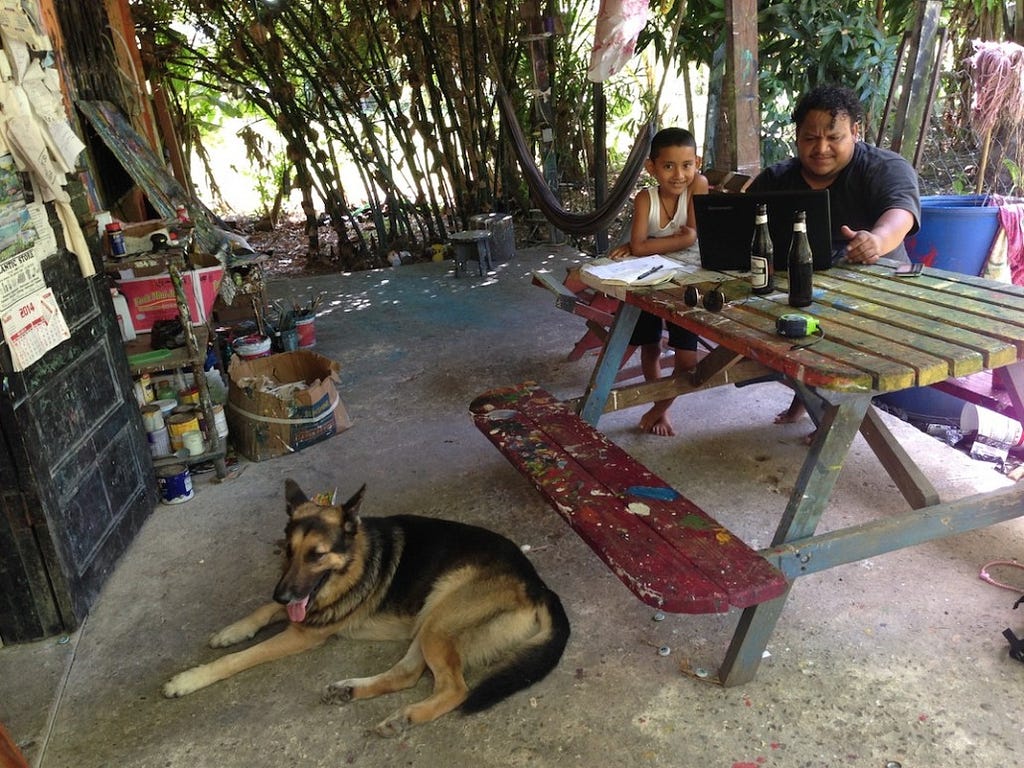
Jorge Landero is a painter. He likes to start working at three or four in the morning, after a cup of milk. His open-air studio is a concrete floor walled by a hedge of bamboo, and is frequented by his German shepherd, Max, who cannot be deterred from lapping water out of the paint cans.
Max, Kerry Johan Landero, and Jorge Landero. Bullet Tree, Belize. Printed with subjects’ permission. Photo by Monica Byrne.
Landero says he started painting after years of hating his masonry work. “It was so fucking hard. Nobody bought me a brush…[But] my life was going to be doomed if I was not going to be an artist.”
Now, he paints bright, beautiful canvases that hang in offices, banks, and resorts all over Belize. When Prince Harry visited the country in 2012, a resort owner touched down by helicopter to pick out a gift for him.
I ask Landero, “How would you like to see Belize change?”
“You cannot change Belize,” he says immediately. “The world is always going to be this way.”
While he and I talk, Landero’s nine-year-old son Johan puts down his own painting on the table. It’s a beautiful waterfall scene. After we praise it, he grins and disappears back into the house on a secret errand.
~
The national motto of Belize is sub umbra floreo: “I flourish under the shade,” which refers to the native mahogany tree, harvested to depletion in the 19th century by British colonial corporations. I learned this when I first traveled to Belize in 2012. My mother had taught there as a Jesuit volunteer when it was still called British Honduras. She’d always wanted to go back, but never got a chance to before she died, and so I went for her.
I thought I’d visit her old high school, see the ruins and beaches, and never return to Belize.
Instead, I found myself buying a plane ticket back as soon as I got home.
Every time I go, now, the country has shifted, like frames in a stop-motion film. Belize is seeing an unprecedented spike of development since they took back their land from the British in 1981. Add to this that Belize is tiny — only 340,000 residents, comparable to the population of my hometown of Durham — which makes it feel like a very large neighborhood. Everyone knows someone in every place. Everyone is within a few hours’ drive.
Because of this, the national conversation about identity is, by necessity, an intimate one. That includes the conversation on colonial incursion, which now wears a different mask: cruise ships parked like tanks offshore, tourists descending like locusts, and land disappearing to foreign buyers at prices that almost no natural-born Belizean can afford.
Artists in the country are navigating these pressures, which compound the choices all artists already have to make between expression and survival. Tourism is the biggest industry in Belize after agriculture. Some, like Landero, coexist happily with the tourist gaze, painting toucans, jaguars, and Mayan ruins, a visual language of pleasure common to Belizean and tourist alike.
But younger artists, many of them women, are answering those pressures in the exact opposite way: to deconstruct, destroy, and build something new in its place.
“There’s not a bone in my body that wants to paint [toucans],” says Briheda Haylock. “The new generation is slowly uprising in Belize. So the art needs to be different.”
At 24, Haylock is too young to have seen the days of British Honduras. That may be a good thing. She recalls a conversation with an older couple who felt the country was more structured in colonial times, and now, is chaotic. “That’s because we’re questioning ourselves,” she explains. “Before, we didn’t have the ability to.”
Haylock’s first solo exhibition, Society Killed the Teenager, highlighted the rates of suicide and depression among youth in Belize, especially LGBT youth. Her piece My Only Sin is Being a Woman tackled the basic insanity of violence toward women, simply for being women. All are taboo subjects. But as Haylock says, “If you plaster change everywhere, change is gonna come. I think that’s what art is. I think that’s what artists do.”
From My Only Sin is Being a Woman by Briheda Haylock. Reprinted with permission.
The gallery where both exhibitions took place — The Image Factory, a waterfront space in Belize City — has become the mother hive for young artists in the country. Along with classes, labs, workshops, exhibitions, and performances, they produce Baffu, an e-magazine read all over the world. The title comes from the Kriol saying “If yuh noh di baffu, yuh di gamma” — meaning, if you don’t know what you’re doing, you make it up.
Now on its fifth issue, Baffu is a treasure chest of visual and literary outpouring from Belizean up-and-comers, none of it made with tourists in mind. Some of the pages are shots from artists’ notebooks, spiral binding and all. Other pages are screenshots of Facebook blowups about the Belizean art scene. The front cover of Issue 4 is a close-up of a friend’s stomach, shaved and stitched, after he caught a bullet in gang crossfire. The back cover is the exit wound.
Several issues feature Rony Jobel, who, after seeing a show at The Image Factory last year, started painting with crayons, markers, coffee, ink, bleach — anything he could get his hands on. Now he’s made over three hundred abstracts, which are in demand by the few serious collectors in Belize. “When I’m in the mood,” he says quietly, “I’ll paint maybe ten. When I’m not in the mood, I’ll paint maybe four or five.”
Shernell Whittaker is also a prolific contributor. In Issue 3, she draws a woman who — from the chest up — strikes a sultry pose familiar from Belizean beer ads. But from the chest down, she sports a spider necklace, huge penis, and two middle fingers.
Drawing by Shernell Whittaker, text by Katie Usher. First published in Baffu, Issue 3. Reprinted with permission.
The accompanying text is by Katie Usher, who’s been working with The Image Factory since she was a teenager. She dislikes the national motto sub umbra floreo. To her, it evokes the tendency for painful things to be kept hidden in the dark, where they’re more difficult to see. “A lot of what we do at Image Factory is shed light on things. I try to flourish with the lights on.” As for tourist gaze, Usher says, “Most of the time, I don’t even consider it. I’m interested in deconstructing black female stereotypes.”
Any stereotype exists in a specific cultural context. What makes Belize unique, she says, is the ethnic diversity unparalleled almost anywhere else in the world — there are significant Mestizo, Creole, Mayan, Garifuna, Mennonite, Taiwanese, Indian, and Chinese populations, all existing in relative peace. But Usher also points out that naming and separating ethnic groups is itself a colonial strategy to control a large population.
Populations dealing with postcolonial trauma replicate that strategy in times of stress. For example, when a Creole man built atop the southern ruin of Uxbenka and was detained by Mayan villagers, Usher was dismayed by the anti-Mayan backlash she observed on social media. In protest, she put on a huipul — a traditional Mayan top — and stood outside the Supreme Court with her hand raised.
“As Belizeans say,” she says, “‘Wi dah one.’”
Katie Numi Usher on the steps of the Belizean Supreme Court, Belize City. Photo by Kareem Clarke. Reprinted with permission.
~
And then there are artists who fall somewhere on the spectrum. If an artist isn’t interested in protest per se, how does one articulate a visual language of pleasure that is truly their own, and not that of the colonizers? Must paintings of Belizean natural wonders serve the tourist gaze, or can they serve their own creators? As Usher explains, “Colonization doesn’t give you an identity. We were English subjects, but not English people. So you constantly have to find out who you are.”
Artist Rachelle Estephan — a childhood friend of Katie Usher’s, as it turns out — is wrestling with these very questions. I took the chicken bus to meet her at a bar in the bush off the Western Highway.
Amigos Bar. Western Highway, Mile 32, Belize. Photo by Monica Byrne.
Her work, like Jorge Landero’s, also features lush colors and wildlife motifs — understandable, given that she works at her parents’ nature preserve, Monkey Bay Wildlife Sanctuary. She painted a jaguar for one of her first exhibitions. But at the opening, she began to hate it. “It just irritated me…it was trying to conform to something that people want. Every time I saw it, it became something I didn’t want to look at anymore.”
But both nature and beauty remain precious to her. And she resists having to justify their value, especially when angst and protest are celebrated as being more “serious” kinds of art. [Listen to Rachelle talk about this more here.] “I’m seeking a visual sort of contentment,” she says, “a feeling of ease and comfort and peace…Art is super symbolic to me, of not clinging, not being controlling, letting other people be free to interpret things, and not having it corrode what it really means to me. Those things are a struggle for me. And that’s why I want to do them.”
Untitled, by Rachelle Estephan. Reprinted with permission.
There are still other ways to honor Belize’s natural beauty that don’t serve the tourist gaze. In the western mountain region, Jonathan Urbina works as a conservation biologist. Years ago, he began collecting feathers in his field notebook. Why feathers? “A feather’s just an evolutionary wonder. It’s simple as that,” he says. “They can decay and decompose into nothing, [but] I just can’t let it go to waste. I’d rather pick it up.” He’s made gorgeous individual framed works, as well as a clock finished entirely with ocellated turkey feathers.
His obsession makes an intuituve kind of sense. As a conservation biologist, Urbina has a front seat watching Belize’s land disappear. Huge tracts of land get bought and bulldozed in a matter of weeks. There’s only so much he can do.
Meanwhile, his art consists not only of the finished product, but the slow process of collection. His masterpiece — housed at the Belize Zoo — was fourteen years in the making. Nature sets his pace, not people: all of his feathers are sourced in the wild; he nevers kills birds, and never steals feathers from a birds at the zoo. He claims the reasons aren’t just ethical. He says, “Feathers from captive birds lose their aesthetic.”
~
I ask Jorge Landero the same question in a different way. How does he see Belize in a thousand years?
He again insists that he can’t change Belize. But then he seems to reconsider. “You can change your kid’s life to change Belize,” he says, indicating Johan, now folded up in the chair under the bamboo. “My baby is drawing. It’s so beautiful.” Johan then presents me with an excellent drawing of fish floating over coral reefs, indicating that I should keep it.
I insisted on paying him five dollars for it. And then wondered if I should have just accepted it, instead.
Untitled drawing by Kerry Johan Landero, age 9. Reprinted with permission.
This Is Your Life was one of T.V.’s earliest reality shows. Heavily choreographed and notoriously sentimental, it was a weekly salute to the life of one lucky person. Some subjects were famous, others not — the show’s unifying idea that life could be ordered, explained, and dramatized on T.V.. On This Is Your Life, the world made sense. There were always happy endings. The show was tailor-made for America in the 1950’s.
Still recovering from the violence and depravity of World War II — but emboldened and energized by its victory — America was feeling its oats as a superpower; the high, nuclear terror of the Cold War’s zenith still in the future. America’s victory in the war was proof that good would always win, that God would always be looking out for us. It was the beginning of a sort of national faerie tale some of us cling to today.
In many ways, Jonathan Evison’s This is Your Life, Harriet Chance! is a response to the mid-century American faerie tale. Stripped completely of the T.V. show’s hallmark sentimentality, Evison’s fourth novel is witty, not bland; knowing rather than saccharine sweet; wise instead of clichéd. From his intrusive narrator to his playful, Dickensian use of the metaphysical, Evison’s juxtaposition of literary color with a show cast in black and white presents a core irony that highlights the changes Harriet and America will undergo during her lifetime. Most significant among these is the advent of feminism, and with it the realization of other selves that might have been Harriet’s had she been the product of a time more like our own.
Born in 1936, a girl who came of age during World War II and grew to adulthood in the magically-placid fifties, Harriet is a widowed housewife who once dreamed of being an attorney, a seemingly proper woman with more than a few secrets. Her days a regimented haze of precise calorie counts and appointments planned months in advance, Harriet marches into late life uncertain of her place in the world.
Alternately troubled and comforted by memories of her husband, Bernard, and their life together, Harriet also has to contend with Bernard’s restless spirit who insists on communicating with her from the great beyond. As the book opens, Harriet is dealing with the way Bernard’s appearances impact her physical reality, producing effects she must explain to friends and acquaintances (a misplaced can of WD-40, moved slippers, etc.). More than that, she’s dealing with the obvious complication: no one, including the parish priest, buys a whit of it. Well, almost no one. The reader believes it. And with good reason. Within the confines of the novel, it’s indisputably true.
Told as the book is in third person omniscient, there’s never any doubt about whether Bernard’s spirit is actually communicating with Harriet. We see him doing it in-scene on multiple occasions. We even see Bernard in-scene without Harriet, bucking the instructions of Mr. Charmichael, his Chief transition officer in Purgatory, threatening his chances for heavenly ascension in the process. Bernard has his reasons, though. After their life together — or perhaps because of their life together — he has things to communicate to Harriet. Truths left untold, wisdom thus unlearned. He’s not the only one.
From Harriet’s children to her friends, the strangers she encounters on the Alaskan cruise that forms the story’s backbone, and even our narrator, everyone seems to be trying to tell Harriet something. The problem being they’re not entirely sure what it is they’re trying to say. And this becomes one of the book’s primary themes — the idea that real honesty is an acceptance of one’s lack of understanding, rather than a sudden rush of enlightenment.
Truth doesn’t bring the easy, sentimental answers that were so common to programs like This Is Your Life. Those shows and the version of America that went with them were lies. Self-congratulatory and devoid of purpose besides the perpetuation of clichés, they peddled the idea that life could be understood, that it represented a navigable path, a course ever-seeking some bright North Star.
But there are no North Stars for Harriet Chance. Every one she imagined — and there were many — wound up a counterfeit. Even her relationships with husband, friends, and children fall into this category, or at least show the effects of Harriet’s humanity, the trap from which none of us escape. Life’s not easy. Even when we’re lucky, it makes only the slightest and most fleeting of sense.
In spite of its honesty — an honesty that, at times, you might even call brutal — Evison’s is a bright book, not a dark one. Never weighed down by its topicality or lacking in humor, This Is Your Life, Harriet Chance! puts off a sort of freeing energy, a feeling of peace for its characters and readers. Wit and empathy, easy lyricality and elegant construction — these are Jonathan Evison’s strengths as a writer. They’re all here. But there’s truth here, too; lest we forget we live in the real world, not the kindly-lit soundstage of some American faerie tale.
The year George Washington was inaugurated as the first American president, he had only one natural tooth remaining. His false teeth were made out of human and animal teeth, lead and ivory, not wood. He purchased some teeth from the mouths of his slaves. He named one of his hound dogs “Sweet Lips.”
1973:
At a family campout, my mother’s father told all of us cousins gathered around the fire to pay attention and listen while he told us a story. I don’t remember how it went or even what it was about. What I remember is how it ended. He stopped talking and backed into the darkness, away from the firelight for a moment while we waited, after he said, “…and guess what happened next?” We wiggled on our log benches. “What, Grandpa, what?” He stayed in the shadows for what seemed like forever. Then he came close again, leaned into the orange glow, and shot his false teeth out of his mouth and into his hand, grinning at us, transformed into a toothless monster. We screamed toward the sky.
1974:
My babysitter, Linda Crookshank, got high and triple-dog-dared me to yank out my two front teeth. The trouble was, they weren’t even loose. “If they come out early, you get triple the cash from the tooth fairy,” she said. I can still see my blood spattering on the mirrored counter in my grandmother’s bathroom as I knocked those teeth out of my head. When my parents returned, I was lying on the couch with my mouth stuffed full of teabags to stop the bleeding. The tooth fairy didn’t even pay double. Linda Crookshank did jail time for shop lifting and drug possession. I suffered through two years of grade school photos with no front teeth.
1976:
My father’s father kept dentures in a glass at the edge of the sink next to a toupee on a molded foam wig stand in our bathroom when he and my grandmother came to visit. The hair and the teeth scared me at night when I got up to pee. They looked huge and sinister in the glow of the little nightlight. His toupee looked like a hairy mushroom on the counter. It blew off his head one time at the beach and was tossed around on the sand like a dying bird.
1980:
The phrase “Tooth and nail” comes from the Latin, toto corpore atque omnibus ungulis, “with all the body and every nail.” The French, of course, have a more romantic way of fighting: bec et ongles, “beak and talons.” I’ve never fought with tooth and nail, clawing and biting and scratching. I came close once, when I was about twelve. One day, our mother sent my sister and me outside to fight. We were Methodists back then. We circled one another in the yard. She lunged at me. I leapt away. She got within striking distance, drew back her fist, squinted her eyes, and aimed at my face. I said to her, “Jesus says to turn the other cheek.” I put down my hands and turned my head sideways. “Go ahead,” I shouted, hands on hips. I stuck out my jaw and opened my mouth. She threw that punch as hard as she could.
1981:
My great-grandmother’s teeth clicked and clacked when she talked. I thought it made her sound mechanical, like a talking wind-up toy. I imagined turning a key inside her jaw. But when she went to the nursing home, they took her teeth out, put them in a paper sack next to the sink. Her face shrank in on itself like one of those dried apple dolls.
1982:
I once performed mouth-to-mouth resuscitation on a dying lamb. It lived, but the mother rejected her. I had to tie the ewe to the barn stall while it jumped and kicked as I stripped milk from her tiny teats. I milked mama sheep several times a day, long enough to ensure the lamb got enough colostrum, the antibiotic, fat, and protein-rich first milk that the mother — all mothers — produce for the first days after birth. That mama fought tooth and hoof, but the lamb grew up just fine and won a blue ribbon at the fair. They say colostrum is important for health, that breastfeeding is important for dental and facial development. I was bottle-fed formula as an infant.
1985:
I know a poet who published an entire collection about his teeth. Each tooth has its own poem, and then some. I don’t have enough teeth for that. A bunch of mine were yanked to make room for braces, for my pretty smile. I was born with a mouth too small for my own teeth. Maybe my mother tried to breastfeed and my small mouth left marks. Maybe it closed too fast and too hard; maybe I hurt her first.
2003:
I once performed mouth-to-mouth resuscitation on my ex-husband’s great aunt, who fell and stopped breathing following an epileptic seizure. The root cause of her poor health was lack of dental care. She hadn’t been to a dentist since childhood. She had a fear of dentists that no amount of psychotherapy could cure. Her rotting teeth leaked poison into her blood. She eventually died from organ failure. Her breath smelled like death years before she passed. That day, on the kitchen floor, the sharp edge of one of her last remaining teeth split my lip as I pushed oxygen from my lungs into her frail body. When the paramedics arrived, I washed the stench of her saliva and my own blood from my face. I cried away my blood into the sink.
2010:
I thought I had cock-jaw once during a shameless foray into the world of BDSM. I went to the dentist with terrible jaw pain. I’d had a wisdom tooth removed months earlier, but it had long since healed. The dentist leaned over me with his little prodding tool and a mirror. “Have you had any jaw injuries lately?” Dirty deeds flashed into my mind. “Um…no,” I said, blushing. A week later, I felt something sharp with my tongue. I fished around with my fingers and pulled a thin piece of bone from my gum, apparently dislodged and left there following the surgery. With that sliver gone, the pain vanished, and with it, a part of myself.
2013:
My stepdaughter’s mother’s boyfriend, unlike George Washington, actually did carve himself a pair of dentures out of wood. For art, out of boredom, or to save money, we’ll never know. “He looks like a pirate,” my stepdaughter said. He named one of his guitars “Sweet Lips.”
DON’T MISS OUT
Sign up for our newsletter to get submission announcements and stay on top of our best work.
YOUR INBOX IS LIT
Enjoy strange, diverting work from The Commuter on Mondays, absorbing fiction from Recommended Reading on Wednesdays, and a roundup of our best work of the week on Fridays. Personalize your subscription preferences here.