The Great Natural Drama, an interview with Helen Macdonald, author of H is for Hawk

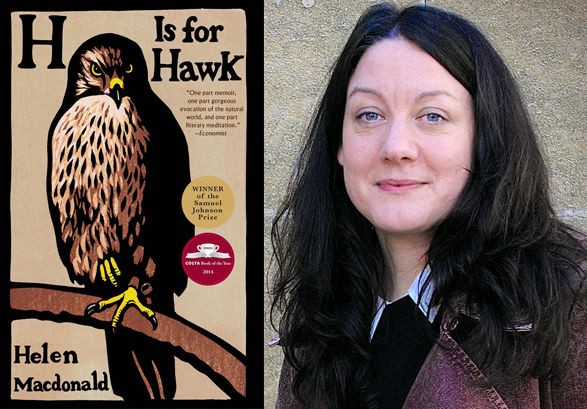
We can now add Helen Macdonald’s name to England’s celebrated tradition of nature writers — except that she would probably bristle at being labeled a “nature writer.” In her new book H is for Hawk, Macdonald tells the story of the goshawk she acquires and trains to help her cope with the grief from her father’s death. It’s a hybrid of a book — a blend of nature writing and memoir, as well as a mini-biography of another hawk enthusiast, the fantasy writer T.H. White.

H is for Hawk won Britain’s Samuel Johnson Prize for nonfiction, and it’s now landed on bestseller lists in America. A dazzling writer, Macdonald has an almost incantatory power to evoke wonder. “My head jumps sideways,” she writes of the first time she sees her hawk. “She is a conjuring trick. A reptile. A fallen angel. A griffon from the pages of an illuminated bestiary.” The goshawk is a feral creature who leads Macdonald into the depths of her own inner wildness. Part of the drama of this story is to see how she pulls herself back from the brink once she’s become “more hawk than human.”

I talked with Macdonald about falconry, wildness, and the dangers of cutting yourself off from the human world. Our conversation aired on Public Radio International’s To the Best of Our Knowledge. You can subscribe to the TTBOOK podcast here.

Steve Paulson: You were very close to your father, who died suddenly from a heart attack. You say it was devastating. Did you find yourself starting to slip into some sort of madness?

Helen Macdonald: Yes, I think after big losses the world really does fracture. I was a very, very good friend of my dad. He wasn’t just a great dad, we were really partners in crime. We both shared obsessions — he loved airplanes, I loved birds and we used to wander around with binoculars looking up at the sky. And he had a massive heart attack and was suddenly gone. We didn’t even know he had any heart problems. And I just struggled to accept it.

SP: You were living alone at the time and didn’t have a regular job. Did you feel isolated?

I came back from the funeral and started to dream about goshawks.

HM: I guess if I’d had a family around me and a regular job and a house I owned and stuff like that, the structure might have kept me in place. But instead, I did something very strange. I came back from the funeral and started to dream about goshawks. Every night I’d go to sleep and wake up with the image of a goshawk flying through my dreams and slipping through the air into nowhere.

SP: You’d actually been a falconer years earlier.

HM: I’d been really obsessed with hawks. I was a very strange child! But I hadn’t flown hawks for a while and I never wanted to fly a goshawk. They’re these legendary, difficult birds — incredibly high strung and nervous, so they’re very hard to tame. And they’re renowned for their murderousness. I had never wanted anything to do with them, but suddenly they were all I could think about.

SP: So you decided to get one.

HM: I did. To deal with the grief, I decided to train a goshawk, which I don’t recommend to anyone. It’s not a particularly good way to deal with loss. But they spoke to me. And this whole decision came on a level that was really beneath conscious examination. When you lose someone very dear to you, you stop thinking logically. What drives you are very deep emotions and needs, and I just needed this goshawk. So I bought one off the Internet.

SP: You drove up to Scotland to get your young goshawk and named her Mabel. But even though you’d had all this experience training falcons when you were young, I got the sense that you didn’t really know what to do with her.

HM: I knew the steps to train a hawk; I’d done it many times before. I knew it was all done with positive reinforcement — with gifts of raw steak. I knew you had to withdraw to a darkened room for the first few days to get the hawk used to you, and then slowly get her used to other people. She jumps to your fist, then flies to it, and eventually you fly her free. I knew all those steps, but I didn’t really know who I was anymore. Now, that sounds really overblown, but I was a mess. And the more I watched the hawk to try and understand what she was feeling so I wouldn’t scare her, the more I empathized with her. Slowly, I sort of forgot who I was. The whole world shrank to just the hawk.

SP: So you cut yourself off from your friends and the human world?

HM: I did — and I think the hawk was to some extent an excuse. You do have to withdraw from the human world when you start training a hawk. So I unplugged the phone, drew the curtains, and told my friends to leave me alone. That kind of radical isolation wasn’t just about training the hawk. I just didn’t want to know about the world anymore. I didn’t like it.

SP: What was the hardest part about training your hawk?

HM: There were some surprises. I didn’t expect my hawk to be quite so friendly and lovely. In many ways, she was much more well-adjusted than I was. The most difficult thing, I guess, was just that because I was so broken at that time, I would worry an awful lot about whether I was doing things right. One of the strange things about this book is that I’ve had a lot of letters from young mums, who’ve been sitting in their houses with their very young children — obviously nothing like hawks — but they’ve said the book reminds them of what it’s like to be in a room with a very young person who can’t speak and is incredibly precious, and you just worry that you’re doing things wrong. I had this desperate sense, am I messing up this hawk, am I upsetting it?

SP: But there’s one huge difference about dealing with a hawk. Everything about a hawk is tuned to hunt and kill, and yet you were living in the middle of Cambridge. Was it hard to go back and forth between city living and this kind of wildness?

HM: I had to take the bird outside to get it used to people. If this had been the 17th century, I would have been totally unremarkable. Everyone was walking around with hawks. But I was pretty unusual, and Cambridge is a pretty eccentric place. You can wander around and speak Latin and wear clothes with holes, and that’s fine. But you try walking around with a hawk on your fist and you do get some pretty weird stares. I was trying to get the hawk used to people, but at that point I myself was pretty much as scared of people as the hawk was. So it was a very weird experience to try to get her used to the human world at the same time as me wanting to refuse that world. I pretty much wanted to stay indoors!

SP: You write that there was a period when you were becoming more hawk than human.

I became this feral creature covered in mud and blood and thorn scratches. I didn’t wash my hair. I was a mess, but it was an incredibly good way of forgetting that I was miserable.

HM: By the time I left the house with the hawk, I started to see the city through her eyes. Obviously, this is all in my imagination. Hawks have a very different sensory world than us. They see more colors and they see polarized light, so I didn’t share her literal vision. But I would come out and stare at what was going on and it would baffle me. I’d wonder what a bus was. Why is that woman throwing a ball for her dog — why would you do that? The whole city became very odd. Later, when the hawk began to fly free and hunt her own food, I really felt that I wasn’t a person anymore. I ran around after her in the bright open hillsides around Cambridge and watched this great natural drama — the hunting behavior of a wild hawk — and really completely lost touch with who I was. I became this feral creature covered in mud and blood and thorn scratches. I didn’t wash my hair. I was a mess, but it was an incredibly good way of forgetting that I was miserable.

SP: You also participated in the kill. Your hawk, Mabel, would catch a rabbit and you’d pry it out of her talons and then snap its neck to quicken the death.

HM: Yeah, it’s ironic. I’m one of the most sentimental and soft people you can imagine. I get upset when people step on spiders! But goshawks in the wild are not particularly bothered….if they catch something, they just start eating and at some point the poor thing is going to die. So I had to get in there and put the poor things out of their misery. That was a really astonishingly strong and serious moment every time. As I ran around with the hawk, I felt like an animal, almost like I could fly. But every time I had to kneel down and administer the coup de grace to some poor rabbit, I felt intensely responsible and very human. It made me realize that we don’t really see death much anymore. It all takes place behind walls, with people often in hospitals, with animals in slaughterhouses. The great irony is that I was running away from death, and yet there it was every single day. It was a deeply educational experience.

SP: Did you ever feel bad about this — not just that you were killing rabbits, but you were putting the hawk out there to kill wild creatures?

One of the things I learned is that we often use nature as a mirror of ourselves, and we use nature to justify things that humans do.

HM: That never really bothered me. That’s what birds do, that’s how they live. I don’t think you can apply human morality to birds of prey. One of the things I learned is that we often use nature as a mirror of ourselves, and we use nature to justify things that humans do. And one of the most important things to remember about birds is they’re not us! I was privileged to be part of her world at that time, but she wasn’t a person. It was very fascinating, and it taught me a lot. But I was never bloodthirsty.

SP: You’re also talking about the nature of wildness. Have you figured out what it means to be wild?

HM: Well, the weird thing about hawks is that we see them as remote symbols of wildness. Of course, Mabel was very wild, but then I’d bring her home and she’d sit on my hand and we’d watch television in the evenings and we’d play. I’d throw her scrunched up bits of paper and she’d catch them in her beak and throw them back to me. So she was a much more complicated and bewitching and strange and interesting and contradictory creature than just something that was made of wildness. I think we’ve invented this category of what wild is. We know what it is when we encounter it, but it’s complicated.

SP: Is wildness what is not human?

HM: Ultimately, yes, but in that sense, a chicken is wild. I think pretty much everything that isn’t human is a wild thing. But now when we talk about wildness, we think of mountain tops and predators. There’s a dangerous element to wildness, a sense that humans are being tested against it. That’s the kind of wildness I turned away from at the end of the book.

SP: Most of us don’t have any encounters with wildness other than fleeting glimpses. I mean, you’re not talking about a loving relationship with a dog. A goshawk is wild in some primal way and will never be domesticated.

HM: One of the great things about living with a hawk that year, apart from the emotional effects it had on me as a grieving woman, was that it was a way of encountering a wild animal in a very intimate, domestic setting. Although we went out every day and flew, there were these hours when we just hung out together. There’s not much opportunity for people to have that kind of relationship with a wild animal anymore. I fervently believe that the environment’s in big trouble and we should fight to protect all the astonishing life that’s out there. But you don’t fight to protect things unless you know and love them. I loved falconry, and this bird in particular, for showing me that these things really are astonishing.

SP: You also seem to be talking about the experience of wonder.

HM: It’s what the poet Wordsworth would have called joy — joy and wonder. That’s at the heart of what I love about the natural world. If you’re receptive to it, it does something to human minds that nothing else can do. There’s a wonderful piece of writing in one of Iris Murdoch’s philosophical books about what it’s like when you’re sitting in a room feeling cast down by life and everything seems to be crowding in on you, and you look out the window and see a kestrel hovering, and you become so tied up with that sight. I think she says, “The world becomes all kestrel, and all your fears and cares fall away in that moment of concentration.” That wonderment and joy is always there if we look for it in the natural world. It’s incredibly important to give our life space for that.

SP: Another thread to this story is your fascination with The Goshawk by T.H. White, which was published in 1951. Of course, he’s best known for his Arthurian fantasy novel The Once and Future King. Why were you so interested in White’s experience with his own goshawk?

HM: Well, I read it when I was very young and obsessed with birds of prey, and I absolutely hated it. It was about a man who was trying to train a goshawk, and he didn’t seem to know what he was doing. The bird was clearly suffering as he tried to bend it to his will. I remember flinging the book down and shouting to my poor long-suffering mother that he was doing it all wrong. I didn’t understand why a grownup would write a book like that about something he didn’t know. Many years later I realized that it was a deeply tragic, melancholy book about an attempt to fix oneself through training a hawk, which is what I wound up doing myself.

SP: You describe White as a tortured man. His parents hated each other and they didn’t seem to care about him. He was beaten as a child. He was gay at a time when you had to hide your sexual orientation. He was pretty miserable for much of his life.

HM: And the very sad thing about White is that he was incredibly successful, and yet despite his fame was clearly never happy or contented. He really was broken by his childhood experiences. His story is tangled up with mine because I wanted to try to get inside his head in the same way I tried to get inside the goshawk’s head.

SP: Why was it important to White to have this encounter with a goshawk?

So when he was fighting the hawk, he was in a weird way trying to civilize himself.

HM: He saw the goshawk as a lot of the things that he wanted to be. Being gay, being broken in many ways, having had a horrendous education, he wanted to train this hawk in an enlightened way. You can’t punish hawks, you can’t even shout at them because they don’t respond to that, and he liked that idea. He thought he could educate the hawk in the way he himself should have been educated. But he also saw the hawk as something feral — slightly gay, slightly sadistic — all the things he felt himself inside to be. So when he was fighting the hawk, he was in a weird way trying to civilize himself. It became a battle with himself in the form of a bird. And of course the bird itself came out quite badly in that battle.

SP: You seemed to read everything written by and about T.H. White. Did he end up haunting you?

HM: In a strange way, he did. I went down to the literary archive at the Harry Ransom Center at the University of Texas, so I could go through all of White’s old journals and notebooks. Sometimes you look at a page and there are tear spots when he’s been crying — and you can see when he’s very drunk because his writing’s all over the place. And I’m holding and feeling these pages and outside it’s 90 degrees and there are vultures, and I’m reading about muddy winters in England, and I really did start to feel that he was somehow there.

SP: Coming back to this period when you felt you were becoming more hawk than human, how did you re-enter the human world?

HM: It got really bad. I started to do things that goshawks did. I’d either stuff my face with food and then not eat for days or I’d not eat at all. I’d literally hide behind the sofa if I saw people pass by the house. I got pretty nuts. It was at my dad’s memorial service in London when I realized I’d bought into that old chestnut that nature writing books tell you — that when you’re broken, running to the wild will heal you, it will be a place of solace and renewal. But I’d gone way too far and become seriously depressed. So I went to a local doctor and ended up going on anti-depressants, which were very helpful. I also made a big effort to see people again and negotiate that balance between wild and tame that I’d got very wrong. I managed to crawl back into the world slowly. I remember looking out the window one morning to check the weather and suddenly thinking the sky looked beautiful. At that moment, I knew that things were going to be okay.

SP: What eventually happened to your goshawk, Mabel?

HM: I flew her for many more years, in a much less feral, intense manner. We continued to watch television, and she continued to catch pheasants. But I had a life change. I couldn’t fly her every day for a while, so I lent her to someone in the north of England who was a very good falconer. Unfortunately, a couple of years ago she passed away very suddenly while she was in an aviary, from an airborne fungal infection called aspergillosis. It’s a horrible thing that attacks wild goshawks, and she just died overnight. We were all in pieces, anyone who’d known my goshawk. Mabel was a very unusual bird. I got this great email from this man saying she was the softest goshawk he’d ever known. And then he paused and put in brackets, “unless you were a rabbit.” So she’s much missed, but not by rabbits.

How Should You Order A Short Story Collection?

The first story in a short story collection should do two things:

1) Open strong to establish the writer’s authority

2) Prepare the reader for the rest of the collection

“The Sisters,” in James Joyce’s Dubliners, excels at both of these criteria. A young boy, watching from the dark street, tries to figure out whether an old priest is dead or not, based on the number of candles lit in a bedroom window. “Every night as I gazed up,” the narrator says, “I said softly to myself the word paralysis.”

As an opener, “The Sisters” does a couple of important things quickly. It establishes the narrative world as an ominous and oppressive place, and puts the narrator (and by extension the reader) in a state of overwhelmed inaction. In the spirit of T.S. Eliot’s Prufrock, we’re “like a patient etherized upon a table.” The story also introduces the stakes that will largely reign over the entire collection: the tension between the dullness of this existence and fear of any other, between staying and leaving, between sense and nonsense in life and death.

Sequencing a short story collection is pretty analogous to sequencing an album or a mix tape. The process largely depends on the balance between familiarity and change, of fulfilling the reader’s desires, while also challenging them. Flannery O’Connor’s A Good Man Is Hard To Find opens with a story about a serial killer, and transitions to a piece about a young boy’s river baptism. Miranda July’s No One Belongs Here More Than You begins with a love-fantasy on an apartment patio, followed by swim lessons in Belvedere, a middle-of-nowhere, pool-less town. Sequencing a story collection depends on mixing it up to keep things interesting, but not moving at a speed or in a manner that the reader can’t follow. This is how John Cusack’s character describes compilation-tape-making in the final scene of High Fidelity: “You gotta kick it off with a killer to grab attention. Then you gotta take it up a notch, but you don’t want to blow your wad. So, then you gotta cool it off a notch. There are a lot of rules…”

“The Lost Order,” the first story in Rivka Galchen’s 2014 collection American Innovations, shines as an opener in how effectively it establishes the collection’s narrative sensibility. The narrator in the story, after a stretch of unemployment, can’t start or finish anything, and has shifted her attention to not doing things. “I was at home, not making spaghetti,” she says. “I decided to not surf the internet. Then not to watch a television show.” A man calls with the wrong number and orders garlic chicken. He asks how long the wait will be; she gets flustered and says, “Thirty minutes?”

I had been reading most of the stories that eventually made up American Innovations as they were published, starting in 2008. Around that time, Galchen came to my college and read a frenzied, genre-bending story about time travel. I loved it. I read her first novel and I loved that, too. But when her stories appeared in The New Yorker and Harper’s, I tended to feel disappointed. I had a hard time finding their rhythm. I didn’t feel like I recognized her narrators, who behaved in ways that were at once ingratiating and infuriating.

Then the stories were released as a book and taken together, I understood them. “The Lost Order” effectively launches the sense of mental drifting that pervades over the entire collection. In one story, the narrator spends an hour and a half in a grocery store, not touching anything, pretending to be a ghost. In another, the narrator’s husband starts a blog about all the things he can’t stand about her. In the final story, the narrator’s furniture climbs out of her apartment window, away from her. The strange psychological trajectory that threads the collection together starts in that first story; the narrator hangs up the phone and obsesses over the chicken she accidentally promised to deliver. She notices it’s 11 AM and decides she better get dressed.

Scott McClanahan, a writer from West Virginia, is a contemporary master at story sequencing. McClanahan pays incredible attention to rhythm and musicality in his prose. He does the same thing in his performance: at his public readings, he whispers, shouts, and sings along to his audio tape recorder. The stories in his collections bleed and blend together. They start halfway through, and stop unexpectedly. Sometimes his stories have “second endings.” Sometimes they have the same titles, and continue where the last one left off. Especially in his most recent books — Crapalachia and Hill William — his stories crescendo, build toward twisted epiphanies, and then do it again. McClanahan’s books are fluid, brief, and conducive to a single feverish sitting.

Dorthe Nors’ Karate Chop, a recent translation from Denmark, is well-sequenced probably in large part because it emerged from the same burst of creative energy: Norse wrote the short collection in two weeks, while by herself in a cabin on the west coast of Denmark, and a hard-hitting yet tender sensibility anchors the fifteen tremendous stories. George Saunders’ books, meanwhile, are moored by his droll aw-shucksness, something that’s totally recognizable because there was a time when it was entirely unique. His books hang together, though. His whole catalog does.

Linked novels, or story cycles, seem to inherently have an easier time of story sequencing. The Things They Carried follows the same platoon of soldiers during and after Vietnam. Winesburg, Ohio, all takes place in its title town. In Olive Kittredge, Olive appears somewhere in every story. Sometimes she’s the narrator. Sometimes she’s just passing by. These books have continuity on the level of characters and place.

There are other short story collections that have an anchoring sensibility or perspective — any of Scott McClanahan’s books, for example — that might also be labeled linked novels. While a narrator is only sometimes named in Jesus’ Son, it’s presumable that all of the stories likely follow the same person, a drug addict nicknamed “Fuckhead”. In both of Junot Diaz’s collections, Drown and This Is How You Lose Her, Yunior narrates many of the stories. By strategically taking advantage of opportunities for continuity, these writers build rhythm on the level of the character, place and world-view, all of which adds up to a book that feels larger than the sum of its parts.

Collections suffer without a good strategy for organizing the content. The annual Best American Series — Best American Short Stories, Essays, Poems, etc. — for example, commits the story-sequencing sin of organizing its content by author last name. Neither the annual O. Henry Prize nor the Pushcart Prize series use this technique. Some Norton Anthologies do. When I read the annual Best American Short Stories, I always find it to be full of great stuff, but the collection struggles with rhythm. The 2014 story anthology, for example, opens with a piece by Charles Baxter that switches its narrative method and reveals a new narrator about halfway through. This might be a refreshing move once the reader has settled into the tempo of the collection, but it’s a jarring way to begin.

In the 2013 BASS, George Saunders and Jim Shepard appear immediately alongside each other, each with very long stories written in the form of diaries (“The Semplica-Girl Diaries” and “The World to Come,” respectively). If strategically distributed across the book, the stories might be able to engage in a dialogue, which could be an anthology highlight. With the stories right next to each other, the technique feels frustratingly redundant.

Book-size successes in story collections — a unified sensibility, an aesthetic wholeness, a desire in the reader to read more books by this writer — emerge from the innumerable interacting choices made in the process of writing. Story decisions are tangled together in ways that make it important for the writer to consider — when laying down a word, a scene, a story — how each piece interacts with everything that surrounds it. As Gary Lutz observes in his essay, “The Sentence Is A Lonely Place”: “words must be situated in relation to others to produce an enduring effect on a reader…there needs to be an intimacy between the words, a togetherness that has nothing to do with grammar or syntax but instead has to do with the very shapes and sounds, the forms and contours, of the gathered words.”

The same things can be said about sequencing a short story collection: each piece — linked or not — works in orchestration with the others to build a cumulative effect. Dubliners ends with Joyce’s most famous story, “The Dead.” In the final scene, Gabriel, unable to sleep, stares out his hotel window at the street. The collection begins out on the street, looking in; it ends inside, looking out. But we’re still paralyzed, still watching in fear and wonder. Joyce writes, “His soul swooned slowly as he heard the snow falling faintly through the universe and faintly falling, like the descent of their last end, upon all the living and the dead.”

Some stories are openers. Some provide ballast in the middle. Different stories help writers pursue all sorts of different internal rhythms as they arise. “The Dead,” though, in all its rich and climactic melancholy, is a definitive closer.

Saeed Jones and Rob Spillman Among Winners of the 2015 PEN Literary Awards

The PEN America Center has just announced several of the winners of this year’s PEN literary awards. Among the winners are Buzzfeed Literary Editor Saeed Jones for his poetry collection Prelude to Bruise, Tin House editor Rob Spillman for editing, and author Anna Whitelock for her biography The Queen’s Bed: An Intimate History of Elizabeth’s Court.

Not all of the award winners have been announced though. Several awards, such as PEN/Robert W. Bingham Prize for Debut Fiction and PEN/Fusion Emerging Writers Prize will only be publicly announced at the June 8th ceremony. The shortlists for those awards are listed below.

Congrats to all the winners!

2015 PEN LITERARY AWARD WINNERS

PEN/E.O. Wilson Literary Science Writing Award ($10,000): For a book of literary nonfiction on the subject of the physical or biological sciences published in 2014.

JUDGES: Sue Halpern, Marie Myung-Ok Lee, and Carl Zimmer

WINNER: War of the Whales: A True Story (Simon & Schuster), Joshua Horwitz

PEN/John Kenneth Galbraith Award for Nonfiction ($10,000): To an author of a distinguished book of general nonfiction possessing notable literary merit and critical perspective and illuminating important contemporary issues which has been published in 2013 or 2014.

JUDGES: Andrew Blechman, Paul Elie, Azadeh Moaveni, Rahna Reiko Rizzuto, and Paul Reyes

WINNER: Five Days at Memorial: Life and Death in a Storm-Ravaged Hospital (Crown), Sheri Fink

PEN/Jacqueline Bograd Weld Award for Biography ($5,000): For a distinguished biography published in 2014.

JUDGES: Emily Bernard, Nicholas Fox Weber, and Jon Meacham

WINNER: The Queen’s Bed: An Intimate History of Elizabeth’s Court (Sarah Crichton Books/ Farrar, Straus and Giroux), Anna Whitelock

PEN/Joyce Osterweil Award for Poetry ($5,000): For an emerging American poet showing promise of further literary achievement.

JUDGES: Marie Howe, Mary Szybist, and Craig Morgan Teicher

WINNER: Saeed Jones for Prelude to Bruise (Coffee House Press)

PEN/Phyllis Naylor Working Writer Fellowship ($5,000): For an author of children’s or young-adult fiction to complete a book-length work-in-progress.

JUDGES: Viola Canales, Selene Castrovilla, and Elizabeth Levy

WINNER: Stephanie Keuhn for The Pragmatist

PEN/ESPN Lifetime Achievement Award for Literary Sports Writing ($5,000): For a writer whose body of work represents an exceptional contribution to the field.

JUDGES: Mike Barnicle, Franklin Foer, and Selena Roberts

WINNER: Bob Ryan

PEN Award for Poetry in Translation ($3,000): For a book-length translation of poetry into English published in 2014.

JUDGE: Ana Božičević

WINNER: I Am the Beggar of the World (Farrar, Straus and Giroux), translated from the Pashto by Eliza Griswold

PEN Translation Prize ($3,000): For a book-length translation of prose into English published in 2014.

JUDGES: Heather Cleary, Lucas Klein, Tess Lewis, and Allison Markin Powell

WINNER: Baboon by Naja Marie Aidt (Two Lines Press), translated from the Danish by Denise Newman

PEN/Laura Pels International Foundation for Theater Awards ($7,500 and $2,500): Three awards which honor a Master American Dramatist, American Playwright in Mid-Career, and Emerging American Playwright.

JUDGES: Kathleen Chalfant, Ellen McLaughlin, and Adam Rapp

Master American Dramatist

WINNER: Tina Howe

American Playwright in Mid-Career ($7,500)

WINNER: Anne Washburn

Emerging American Playwright ($2,500)

WINNER: Jennifer Blackmer

PEN/Nora Magid Award for Editing ($2,500): For a magazine editor whose high literary taste has, throughout his or her career, contributed significantly to the excellence of the publication he or she edits.

JUDGES: Christopher Castellani, Carmela Ciuraru, and Bill Clegg

WINNER: Rob Spillman for Tin House

PEN/Ralph Manheim Medal for Translation: For a translator whose career has demonstrated a commitment to excellence through the body of his or her work.

JUDGES: Selected by the PEN Translation Committee

WINNER: Burton Watson

AWARDS TO BE ANNOUNCED

PEN/Robert W. Bingham Prize for Debut Fiction ($25,000): To an author whose debut work — a first novel or collection of short stories published in 2014 — represents distinguished literary achievement and suggests great promise.

JUDGES: Caroline Fraser, Katie Kitamura, Paul La Farge, and Victor LaValle

The winner will be announced at the 2015 PEN Literary Awards Ceremony on June 8

SHORTLIST:

The UnAmericans (W. W. Norton & Company), Molly Antopol

Ruby (Hogarth), Cynthia Bond

Redeployment (Penguin Press), Phil Klay

The Dog (Farrar, Straus and Giroux), Jack Livings

Love Me Back (Doubleday), Merritt Tierce

PEN/Diamonstein-Spielvogel Award for the Art of the Essay ($10,000): For a book of essays published in 2014 that exemplifies the dignity and esteem that the essay form imparts to literature.

JUDGES: Diane Johnson, Dahlia Lithwick, Vijay Seshadri, and Mark Slouka

The winner will be announced at the 2015 PEN Literary Awards Ceremony on June 8

SHORTLIST:

Moral Imagination (Princeton University Press), David Bromwich

Theater of Cruelty (New York Review Books), Ian Buruma

Loitering (Tin House Books), Charles D’Ambrosio

The Empathy Exams (Graywolf Press), Leslie Jamison

Limber (Sarabande Books), Angela Pelster

PEN/Fusion Emerging Writers Prize ($10,000): For a promising young writer under the age of 35 for an unpublished work of nonfiction that addresses a global and/or multicultural issue.

JUDGES: John Freeman, Roxane Gay, and Cristina Henríquez

WINNER: The winner will be announced later this month.­­­

PEN Open Book Award ($5,000): For an exceptional book-length work of literature by an author of color published in 2014.

JUDGES: R. Erica Doyle, W. Ralph Eubanks, and Chinelo Okparanta

The winner will be announced at the 2015 PEN Literary Awards Ceremony on June 8

SHORTLIST:

An Unnecessary Woman (Grove Press), Rabih Alameddine

Every Day Is for the Thief (Random House), Teju Cole

An Untamed State (Black Cat/ Grove Atlantic), Roxane Gay

Citizen (Graywolf Press), Claudia Rankine

The City Son (Soho Press), Samrat Upadhyay

PEN/Heim Translation Fund Grants ($2,000-$4,000): To support the translation of book-length works into English.

JUDGES: Esther Allen, Mitzi Angel, Peter Blackstock, Howard Goldblatt, Sara Khalili, Michael F. Moore*, Declan Spring, and Alex Zucker (*Voting Chair of the PEN/Heim Advisory Board)

WINNER: Grant recipients will be announced later this month.

Midweek Links: Literary Links from Around the Web (May 13th)

Looking for some interesting reading to get you through hump day? Here are some literary links from around the web to check out:

Speculative fiction author Alaya Dawn Johnson explains how all futures are political

A cool of gender fluid novels

Tips on inventing a language from George R. R. Martin and others

Atwood, Ballard, and other famous authors on the children’s books that got them hooked on reading

Benedict Cumberbatch reads Franz Kafka’s “The Metamorphosis”

New novel by Patricia Park with a Korean American spin on Jane Eyre

Chipotle has a student essay contest with $20k in college fund as prize

The real world vs. the MFA: on publishing a fist novel

Finally, the strange afterlife of Poe’s hair

All Dogs Go to Heaven with a Vengeance

by Mapes Thorson, recommended by Electric Literature

Normally Darren isn’t allowed in the house, but my parents are gone for the weekend. I make sure he takes off his shoes. Where’s the bathroom, he asks. I show him where it is and he hands me the battleaxe. Wipe it down, he says. I nod and take the weapon back to the kitchen. Using a dishrag I remove all the moisture from the metal, careful to get the melted snow pooling in the recessed Celtic etchings. Darren shows up as I’m finishing and inspects my work, nodding his approval. I give him my seat and he dabs at the wet places I missed while I grab two Mountain Dews from the fridge.

It would be hard to be a sniper during a snowstorm, I say.

Not really, Darren says, and then proceeds to give me this whole spiel about next-gen scopes and how, if anything, whiteout conditions give the sniper an advantage because it makes his position harder to pinpoint.

Yeah I know all that, I say. I was joking, I say.

Yeah I know you were joking, Darren says.

The phone rings and I answer it in the other room. It’s Zulkoski, my cool friend. It’s time, he says. I hope you know what I’m talking about, he says. I don’t, but it sounds big. He asks if I can bring an extra sled and I tell him of course. When the call ends I’m so excited I dance a little. I swing an imaginary broadsword at a nearby ficus plant. I go straight to the utility room and consider my loadout; scarf or facemask, mittens or gloves. Or none of it. Don’t bundle up. Cold doesn’t affect me.

The roads in Darren’s housing development are worse than anticipated. Most have not been plowed. Some have been plowed, but not well. A few have been half-plowed to unexpected dead ends. I check the clock on the dashboard and do silent math to adjust my schedule. Darren notices and asks about my plans for the rest of the afternoon. Nothing, I say. Homework all afternoon, I say. My parents are forcing me, I say. Darren makes a jerk-off motion. He brags that his grandmother never forces him to do his homework. He tells me he’d like to see her try, then he pantomimes violent sex.

At last we arrive at our destination, a lone split-level in a cul-de-sac of two-story homes that never fails to remind me how poor Darren is compared to everyone else. The garage door is still missing from when it was stolen last month. A tarp billows in its place. There is no car in the driveway, which means Darren’s grandmother isn’t home from work yet. Darren points this out and then asks if I want to come inside and watch porn. Nope, I say. I keep the engine running. I drum my hands on the steering wheel.

Darren double-checks the zippers on his duffle bag. He fumbles with his seatbelt. He buttons his jacket. He finds his keys. He reaches into the backseat to retrieve the battleaxe and almost decapitates me lifting it forward over my headrest. Sorry, he says. Thanks for the ride, he says. I’ll have grandma drop me off at your house after dinner, he says. Then he steps out of the car.

Whoa hold on, I say. Maybe not tonight, I say. Tonight is maybe not so good, I say.

Darren freezes. He sets his duffle bag on the curb and his axe on the duffle bag. He pivots to face me. A defiant scoff hangs on his mouth. Why not, he asks. Where are you going, he asks. What are those sleds for, he asks, pointing to the sleds, thrusting his head forward to emphasize his indignation.

None of your business, I say. I need to leave right now, I say. Going sledding, I say.

Darren’s face unclenches. Shotgun, he shouts, moving as if to come with me.

I yank the car into drive and peel out.

I don’t like ditching Darren, but I don’t want to hurt his feelings. Darren is ugly. He’s a pervert. He has little eyes and his lips are scarred from a repaired cleft and his body has a weird shape like a Tyrannosaurus rex.

I stop at the end of the cul-de-sac, lean over, and pull the passenger door all the way shut. The side mirror realigns and I see Darren sprinting down the street trying to catch up. He slips on a patch of ice and eats shit in a snowbank.

Zulkoski lives in the woods and it’s hard to see his house from the road and I almost miss the turn. This is my first time here. I idle just past the mailbox and unbuckle my seatbelt and jockey my posture to get a better view. Most of the architecture is obscured by trees, but the parts that aren’t hint at a mansion beyond huge. I coax my mother’s station wagon forward up the winding driveway and park along the shoulder. I hike the rest of the way to Zulkoski’s pulling my two sleds. I pass at least twenty cars. I’m late.

I reach what I think is the front door and as I’m searching for a doorbell it opens. It’s Zulkoski’s older brother, Adam Zulkoski. He’s facing the other way saying something to a girl I can’t see but can hear laughing. Adam Zulkoski is laughing too. So I start laughing, which I hope communicates a sort of general I’m fun attitude and also hey there is someone at the front door in case you opened it by mistake or something.

Around back, Adam Zulkoski says. I do a quick lean in to see who he’s talking to, but don’t lean far enough and when I lean back Adam Zulkoski is looking at me like I’m some kind of smiling dumbfuck. Backyard, he says. Backyard, he says again.

In the backyard no one is sledding. Zulkoski is driving his father’s snowmobile in fast circles. Erin Kirchner is sitting behind him, sharing the saddle, seatbelting his stomach with her arms. Everyone else is standing around drinking Natural Ice beneath a pair of heat lamps. Zulkoski’s parents are nowhere.

I score a few acknowledging glances as I approach the crowd and dislodge a beer from the snow. Scott Schaefer shoots me an upward nod of solidarity even though I am positive Scott Schaefer doesn’t know who I am. I nod back and take a sip. The beer tastes triumphant. This is the best party I’ve ever been to.

I start walking towards Scott Schaefer’s conversation, but Zulkoski’s best friend Trent yells my name and waves me to his group instead. Trent is making a bizarre production of my arrival, checking either side of me, back and forth, with an exaggerated look of confusion on his face like maybe he thinks I’m hiding someone or something behind me. So where’s the other one, he asks.

I point back in the direction of the beer, where I left the second sled I was told to bring. Don’t worry, I say. I brought an extra, I say. That one with the stickers is mine, I say. This makes Trent lose his shit laughing. The others too. I smile and give them a lovable shrug. That’s my sled, I say.

Trent catches his breath and holds up a hand like he’s about to speak, but before he’s able to verbalize anything someone else calls my name and I turn.

It’s Zulkoski. He’s spotted me from his snowmobile and is flipping me off. Bend over, he shouts. Fuck you, I shout back, reenacting our inside joke from Earth Science last semester. Zulkoski smiles and makes a gesture like he’s eating someone out and then says something I can’t hear that makes Erin laugh. He cranes his neck and twists his head and winks at her. I brought an extra sled, I shout. Zulkoski shifts his attention back toward me. Sure, he shouts. Then he drives into a dog that he doesn’t see.

The yelp gets everyone’s attention.

Zulkoski kills the snowmobile’s engine and swivels to survey the vehicle, frantic. He doesn’t know what he hit. The animal’s hind legs are smeared along the tread, but most of the dog is caught in the undercarriage. Erin notices a piece of tail on her shoulder and screams. You hit a dog, someone shouts.

Zulkoski’s face flushes. What dog, he asks. Whose dog, he asks. What did I hit, he asks. Erin starts sobbing. Zulkoski looks like he’s about to cry too. He is taking big breaths.

The sliding door on the deck opens and we all turn toward the noise. It’s Adam Zulkoski. He walks out to the railing nearest us hefting an acoustic guitar to his shoulder like a yakuza brandishing a samurai sword. His eyes move from the chunks of dog to the snowmobile to Zulkoski. His open mouth poses a silent What The Fuck. Your brother hit a dog, someone shouts.

Adam Zulkoski tenses his grip on the neck of the guitar. Okay, he says. I’ll go get a shovel, he says. Come on Oscar, he says. A yellow lab joins him on the deck and follows him off along the side of the house. The sight of a living dog inspires me to chug the rest of my beer and open another.

Across the yard, a shaken Zulkoski dismounts the snowmobile, followed immediately by Erin, who then dashes, raw-faced, to her now also sobbing girlfriends. The rest of us move closer and form a cautious ring around the vehicle, just outside the spray of blood.

The dog’s head is half-buried upside down in the snow. Its lower jaw extends at an angle like an open stapler. Part of an ear is missing. There are bald patches in its fur. It is ugly, dirty, malnourished, an outdoor dog that has been lost or abandoned. There is no collar, but who knows; a cheap one could be shredded somewhere in the machinery. The goriest places remind me of last year’s Black Friday: Darren and I buying turkeys for cheap, lining them up in my backyard and taking the battleaxe to them.

Phil from World History moves closer, squatting near the sections of dog that are most intact. He prods the largest with his beer can. This isn’t a dog, Phil says. it’s a coyote, he says. My aunts keep coyotes on their farm, he says. You only hit a coyote, he says.

Zulkoski’s yellow lab brushes past my left leg and pads over to where Phil is crouched. It sniffs the dead animal. Phil goes to pull the dog away, but before he can it dances out of his reach and sinks its teeth into the coyote’s shoulder. It whips the carcass back and forth a few times then clenches into a tug of war with the vehicle’s undercarriage. Hey Oscar save some for the rest of us, someone shouts.

A tendon snaps and Oscar tumbles backward with most of a foreleg still in his mouth. He shakes his head and delivers the mangled limb to Phil, then he rolls over and exposes his belly.

Zulkoski laughs.

Phil laughs.

Everyone laughs, even Erin and the girls. And I’m laughing with them, but I’m also staring at the dead coyote and I’m thinking how much it looks like a dog.

Over the course of the next hour the party vibe rekindles. A few of us even suggest sledding, but nobody else seems interested. It’s getting too dark is the excuse. Trent has a brilliant idea that involves the roadside flares he keeps in his trunk. The other guests aren’t into it. Neither is Zulkoski, who has just spent the last hour cleaning coyote gore off the snowmobile with his brother. His mittens are caked with scabs of fur. Jesus Christ I am ready to get drunk, he says.

We all move to the basement and switch to liquor and decide to play charades because Zulkoski’s family has a version called Movie Charades that uses an interactive DVD. Zulkoski goes first since he’s played before. The rest of us face the other way while the television gives him his word. When the DVD announces Lights Camera Action, we all turn back.

Zulkoski is shuffling in place, hugging himself, puffing out his cheeks. Behind him, the television shows a black Cadillac rolling to a stop in front of a wheat field. A supertitle tells us it’s a scene from The Godfather. A Mediterranean variant of the Jeopardy theme plays instead of the scene’s original audio. A flashing timer counts down in the lower-right corner.

A car, someone shouts. Marlon Brando, someone shouts. The Godfather, someone shouts. Marlon Brando, someone shouts again.

Zulkoski tightens his expression and flares his eyes and shakes his head No. The Jeopardy music speeds up. The timer turns red. Clemenza leaves the car. Rocco raises his gun to shoot Paulie. The screen shakes with earthquake sound effects as the final seconds strobe away.

Cannoli, I shout.

Zulkoski exhales a burst of air and points at me. Yes, he shouts. The DVD’s narrator yells Cut and the word cannoli appears in the livery of an Italian flag.

The game awards Zulkoski 10 points for successfully acting out cannoli and awards me 15 points for guessing it. It’s my turn now. Scott Schaefer takes my Tom Collins and then he and everyone else turn their backs. The DVD gives me three different charade options: Claymore, Freedom, and Primae Noctis. The movie is Braveheart. I choose Primae Noctis because it’s worth the most points. The DVD starts a black and white countdown like an old projector. At two, the narrator calls Lights Camera Action.

I purse my lips. I frown. I point to an invisible Scottish bride. I try to look as much like nobility as possible. I scowl.

Braveheart, someone shouts.

I scowl harder. I point again to the invisible bride, this time directing her to stand in front of me. I hold out my hand and tell her to kiss it. I draw my sword to keep the groom at bay and with my free hand I bend the bride over. I start making love to her from behind, doggy-style. Every man dies but not every man truly lives, says a Scottish voice from the DVD. I continue pumping in rhythm with the bagpiped Jeopardy music until my time runs out and Primae Noctis appears in bold white letters over a flaming Union Jack. Jus primae noctis, I say, bracing to catch my breath. The right of English nobility to sleep with brides on their wedding nights, I say.

The room is silent. I feel a rush like I’ve just dropped something fragile. Zulkoski stares past me while Trent whispers something in his ear and every part of Trent’s body communicates such an intense I Told You So that I can’t help but look away. So I guess I’ll go next, says Scott Schaefer.

Some of the girls stifle laughter into their hands — not the sort of restraint meant to spare someone’s feelings; it’s the mean kind, the kind that demonstrates a shared desire to keep whatever joke hidden from me for as long as possible.

I reclaim my drink and stumble across the room to the nearest place furthest from the television, which is a papasan chair facing the sliding glass doors along the basement’s back wall.

Looking outside at my own stupid reflection, imminent thoughts of Darren put a tremble in my lower lip; I think about the childhood speech impediment that made Darren say his R’s like W’s and how all through seventh grade Bradley Neukirch would invite Darren to sit with him at lunch and trick Darren into talking, get him to embarrass himself in front of the rest of the table, get him to go on and on about elves and mutant powers and that kind of thing. I think about the four square game when Darren refused to go to the back of the line after being unfairly called Out so Bradley Neukirch started chanting Dawwen’s out, and he got everyone waiting in line to chant it, and the chant spread to the basketball courts, and it spread to the soccer field, and everyone was chanting Dawwen’s out; the teachers didn’t know what was going on, and neither did most of the students, but we all knew Darren — he said R’s like W’s and he always cried when he got mad.

A motion lamp activates somewhere along the side of the house, jerking my attention. I lean forward under the glare of the interior lights and press my face against the patio glass, straining to get an angle on whoever made the lamp turn on. My breath fogs my line of sight. I’m not seeing anybody.
I settle back into the papasan and raise my Tom Collins for another sip, but then realize my drink is just ice and Movie Charades is too loud and also people have begun guessing my name in response to whatever is being acted out behind me.

Upstairs, Phil from World History is busy arranging open beers in concentric circles on the dining room table. He looks excited when he notices me standing there. He tells me he’s rescued the fallen soldiers from this afternoon, gesturing to the thing he’s been working on. It’s all for Liquid Courage, he explains, a drinking game that he invented. We’re gonna play it later, he says. It’s kinda like strip poker, he says. It involves stripping, he says.

Your aunts have pet coyotes, I say.

Phil laughs and has me follow him into the kitchen. He opens the freezer and takes out a gallon of milk. He puts the milk in the sink to thaw. Yeah, he says. They’re lesbians, he says. My aunts are lesbians, he says. He turns toward me and holds out his hands making fists like he’s gripping the handlebars of an invisible bike. He knocks his fists together, which makes a sort-of clapping noise. Lesbians, he says again. He laughs.

The motion lights turned on but I couldn’t see who was out there, I say.

Uh oh, Phil says. He passes me the handle of whiskey.

Outside feels less cold than expected. I edge along the house’s exterior wall, hunching over, careful not to destroy footprints. The moon is worthless for tracking. It’s impossible to see any gradation in the snow. I bring my eyes within a few inches of the ground and squint to calibrate some measure of dynamic contrast range, but everything is still too flat and lights from the house are distracting my night vision — one basement window in particular, going from dark to light to dark to light.

I stoop closer to investigate.

It’s Adam Zulkoski’s bedroom. He and a topless girl are fighting over a light switch. She turns the lights off. He turns them back on. She turns them off. He turns them back on and then tries to squeeze her chest.

The topless girl shrugs out of his reach. She abandons the switch and retreats further into the room, closer to the bed, closer to the window I’m watching from. She shimmies out of her jeans, bending to help her legs free, and her tits are just hanging there, quivering, like water balloons ready to be tied.

Adam Zulkoski sidles up to assist with the remaining underwear, but the topless girl meets his advance and guides him to the mattress instead. She works his pants to his ankles all slow and smiling as if prelude to a blowjob or handjob, but then instead of removing the pants she re-fastens the belt to bind his legs. She whispers something that scandalizes Adam Zulkoski, then she punches his inner thigh and ballet twirls back to the light switch. The room goes dark. Then almost immediately the lights come back on, except now the topless girl is squinting in my direction and covering herself.

My spider-sense kicks in and gets me away from the window before she screams.

She’s reacting to the sudden movement, I tell myself. If she could see it was me, she would have screamed sooner. She’s just reacting to movement; she hasn’t seen my face, it’s too dark recognize what I’m wearing. I could be anyone out here.

A motion detector clicks somewhere close by and floodlights ignite the back patio. I adjust course and sprint for the woods. I’m deep in the trees when I hear the rattling bounce back of a door being rage opened to the limit of its hinges. How much time has passed, I try to guesstimate — enough time for pants, but maybe not gloves and a coat. Best-case scenario he’s still barefoot. I move further into the woods.

The new plan is make a wide circle back to the car, but when I reach the driveway there is no driveway. Zulkoski’s house is on my right instead of my left. The crest of the sledding hill is on my left instead of a hundred or so yards the opposite direction of where I should be. I’m all turned around. It’s dark and I’m freezing. There’s a full moon and a dog is howling. I’m halfway up a hill overlooking Zulkoski’s house. And it’s not a dog howling; it is a person howling — a person pretending to be a wolf. Darren, I say. I keep my voice quiet in case I’m wrong. Darren, I say again. I clean the tears off my cheeks. I lick the snot mustache forming on my upper lip. A swirly wind stirs up some loose powder. And then I see him.

Darren is there, twenty feet ahead in the margin of the sled path, standing just in front of the tree line. He has his battleaxe. He’s holding it high above his head like a barbarian or something, trying to look cool. He adjusts his stance and howls.

I point at Darren. I see you, I say.

Darren howls again, but this time his voice cracks and he sounds worse than a fucking retard. I see you, retard, I say, still pointing.

Darren points back at me. He gives me a thumbs down. He lowers his axe and starts spinning in circles while loosening his grip along the length of its handle like an Olympic hammer thrower but with zero athletic ability. After a dozen or so turns he lets go. The weapon silhouettes as it sails through the moonlight away from him, away from me, and up the hill to where it lands a good fifteen feet from either of us. Balls, Darren shouts, racing after the axe, trying to beat me to it, but Darren is dizzy and I’m faster. I’m faster and now Darren is lying on his back beneath me and I’m standing over him with his axe in my hands. I’m faster, I say. My heart is pumping, pounding blood, pounding in my eardrums.

I’m faster, I say again.

Darren looks up at me, smiles at me with his ugly cleft lip. He’s having trouble breathing. Not really, he says. I let you win, he says. If anything we’re equal, he says. Or I’m more like the agility specialist and you’re maybe more strength focused, he says. Plus you saw me coming, he says. You’re lucky the house was locked, he says. Next time I’ll ambush you, he says. You’ll see, he says. Next time, he says. Then he winks at me, which, when Darren does it, is more like both eyes close but one closes tighter.

Darren repositions his hands palm-down in the snow to push himself upright, but I put a foot on his chest and press him back to the ground. I tighten my hold on the haft of the axe and guide its head downward toward Darren’s left shoulder — closer and closer until the edge of its blade almost touches where his arm joins his body. I let it hover there like I’m lining up my shot.

Darren un-crosses his eyes and shifts focus to the distance exposed by the gap in my stance, as if he sees something behind me, as if oh shit there’s someone sneaking up behind me. Adam Zulkoski. I try to turn. Darren shoves my foot out from under me and I face plant instead. By the time I realize I’m down, I’m already up again, scrambling, desperate to explain myself to whoever it is Darren saw. There’s nobody.

See, Darren says. Agility, he says. Let’s mosey, he says. I’m late as fuck to this thing, he says.

Blood is smeared on my hands and I can see more blood in the snow where I fell. But I don’t feel it, whatever part of me is bleeding. I’m numb, light-headed. I make eye contact with Darren and rake my bloody fingers across my face like I’m applying war paint.

Darren gives me a look that is equal parts satisfied tormentor and excited toddler. He shows me he has the battleaxe, holds it out to me like, you want it, come get it, then he takes off running as if this was some sort of game. I stop chasing when I reach the trees and lose sight of him. I’m not giving you a ride home, I shout. This is your fault, I shout. I’m not giving you a ride home, I shout again.

Darren responds with a distant, sustained howl.

I respond to Darren’s howl with my own louder, more sustained howl.

Darren howls back, less confident than before. When he finishes, I howl again, take howling to the next level with a much louder, way more sustained howl. Darren howls back a goading, gay-sounding caricature of me howling. I interrupt him with a deafening, nearly perpetual howl, and, as soon as it’s over, I inhale and howl again, and again, chaining together howls, one after another. When I hear Darren’s howls trying to compete with mine, I howl harder, burn all remaining fuel, consume my strength, siphon my soul, howl to the point of vomiting.

A sudden, third voice rises above both of us.

I stop howling. So does Darren. It’s Adam Zulkoski, shouting like he’s trying to get someone’s attention, but I can’t see him; he must be near Darren. More shouting, and now he’s saying something. The words are too distant to hear, a pattern of incomplete sounds that resemble a single, angry question being repeated. Darren howls, but is cut off. More shouting. Screaming. Frantic apologies. More screaming. And I’m gone, running down the hill in great leaping strides.

The air in Zulkoski’s basement has that coating of morning wetness. I unravel myself from the papasan chair and try to stand without losing my balance. I’m the only person down here, unless everyone is hiding. All the couches are empty. The lights are on.

Upstairs there is still no sign of other life and too many cabinets in the kitchen so I use a dirty cup for water. There’s the residue taste of licorice, but it fades with each refill until it’s gone. I trace a dick into some spilled macaroni-and-cheese cheese powder, but otherwise just stand there drinking water until the morning sun crests the hill and enters the room. The bottles for Liquid Courage are still set up in patterns on the dining room table. The sunlight moves across them like a song in Fantasia.

At some point clouds shift. The room goes cold. I acknowledge that I’m wearing someone else’s shirt, and I’ve been cleaned. Whatever lingering desire I have to see the others awake leaves me. It’s time to go home. I finish my water and gather my coat and exit through the basement, which turns out to be a good thing because my sleds are out back and I might have forgotten them otherwise.

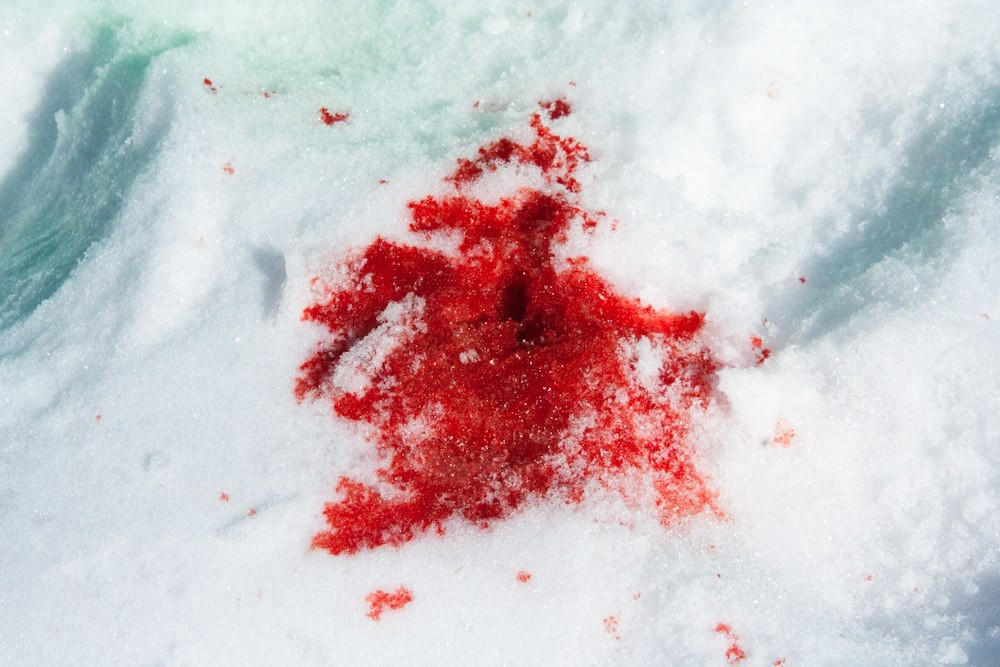
As I leave I pass the gore stain where the snowmobile accident occurred. I don’t have to remind myself it was just a coyote. I’m feeling zero emotional attachment to this stain right now. I squat next to it, study the grittiest splotches, locate the mixed-in animal remains and imagine undead versions of their owner.

A separate area of my brain skips back to the other day, back to before Zulkoski calls and invites me to the sledding party, back to when it’s just me and Darren taking turns chopping at saplings on my family’s acreage and I’m telling Darren how I wish the Earth was Middle-earth and how I would probably be an elf.

Darren chops a sapling and then looks at me like I’m seriously stupid. He rattles off a list of my traits. He explains how my traits are not elven traits. According to Darren, I’d be lucky to be Engwar — i.e. Man. An elf, he says. I don’t think so, he says. I’m cold let’s go inside, he says.

This is happening right as it’s my turn to chop of course, which is typical Darren autism. The gall of it, actually. I’m feeling a ton of hate in this moment, violent hate. I can’t tell if it’s real or if I’m revising the realness in hindsight or what, but the combined insult of being lectured by Darren and then losing my turn with the axe makes me so mad, so incredibly mad.

I hawk up some hangover bile and spit it on the coyote stain.

Darren is a forever-alone virgin. He doesn’t have elven traits, or life goals, or empathy. He’s a pathetic subhuman, a changeling who has sort-of learned how to mimic human form but won’t ever fully learn because of a learning disability. I gaze deep into the rust-colored snow, unblinking until the rust color distorts to a shiny purple at which point I let my eyes relax. I exhale. I tell myself pity is probably the most elven emotion, and pity is what I feel for Darren.

A gust of snow freckles the coyote stain and lifts my attention to the vast, unspoiled whiteness of the landscape beyond, where I’m about to ponder impermanence and my own mortality in the larger scheme of things, but then I see the true location of the coyote’s dismemberment is actually a dozen or so yards farther out. I’m not sure what I’ve been staring at for the past few minutes. It doesn’t matter. It’s snowing now and I don’t have the energy to walk out to the real stain of discolored snow where the snowmobile accident occurred, which from this distance looks smaller than I remember it being. I grab my leash of sleds and pull them the opposite direction, towards the front of Zulkoski’s house where all the cars from yesterday are still parked in the driveway.

BBC and Benedict Cumberbatch Bring Franz Kafka to Radio

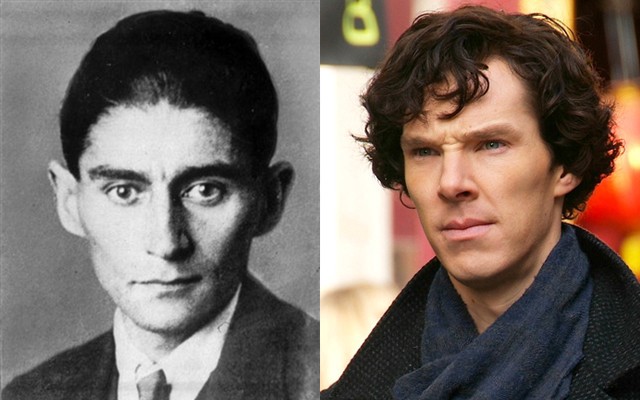
The BBC has teamed up with nerd hero Benedict Cumberbatch (Sherlock, Star Trek, The Hobbit, etc.) to put Franz Kafka on radio. Cumberbatch recently read Kafka’s iconic story “The Metamorphosis,” and the audio file is free online for 29 more days!

The Kafka Cumberbatch mash-up was only one part of BBC’s “In the Shadow of Kafka,” the radio presentation of “a series of documentaries and drama examining one of the most elusive and intriguing figures in 20th century literature.”

Also notable is this radio drama production of Kafka’s great novel The Castle adapted by Ed Harris and featuring Dominic Rowan, Sammy T Dobson, Mark Benton, and more: In Franz Kafka’s mind-warping novel, set in a bureaucratic wonderland, the hapless land-surveyor known only as K answers a summons to work at the mysterious Castle, only to find himself drawn into a labyrinth of terror and absurdity. Part 1 is an hour long and available online (for 27 more days). Part 2 will go online after airing on radio.

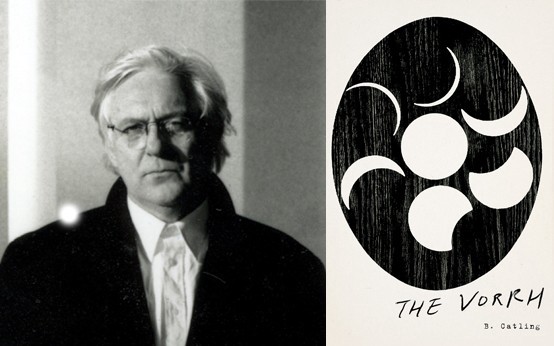
How an Artist Accidentally Created a New Kind of Fantasy Novel: an interview with B Catling, author…

What happens when a high fantasy novel is created by a visual artist? Does that novel continue to be a fantasy novel or is it something else entirely? With the recent release of The Vorrh (Vintage/Random House) author B. Catling has birthed a fantasy epic that reads almost more like the prose version of installation art. That is, if installation art contained “living” weapons, occasional magic, and at least one Cyclops. I spoke to the author/artist over the phone last week as he readied for his American book tour. What was revealed was how someone who does not see himself as a novelist or a fantasy writer still succeeds at both.

Britt: Okay. So in your art, the concept of the Cylops appears quite a bit. And of course, in the novel there’s a Cyclops. Can you speak to your affinity for that idea or why you like that monster specifically?

Catling: It came really from seeing one. In a glass jar. In the Hunterian Museum at the Royal College of Surgeons. It hadn’t survived birth or it hadn’t been allowed to survive birth. It had one eye and two pupils. It was devastating. Sad, tragic and disgusting;all those things you’re not supposed to feel at once but do. Which made me think of mythology, all the things we know about the Cyclops from mythology. But being confronted as a piece of flesh that grew into that [mythology] is a very different. Then, years later I was doing a performance with my head down on a piece of glass when someone took a photograph. And the photograph caught me looking bisected like that, and I thought: my God, I can make this. I can actually make this live. I can make the one-eyed thing. Which lead to me making those in my art and then to write about them. I had to write the way a Cyclops might think.

Britt: How is the Cyclops in the novel different than the ones in the glass jars, in your art or in mythology?

Catling: Well, like all monsters, it’s sympathetic. And this one is small, it’s growing. It starts off as kind of an adolescent child and then becomes a peevish human being. It plays with notions of what we think of as normal and what we think of as abnormal. I’ve recently been working with disabled people and they have this wonderful expression: “The world is only full of two kinds of people; those who are disabled and those who are not disabled yet.” Which is a little bit terrifying in its reality.

Britt: You said something about monsters being sympathetic Can you speak to that a bit more?

Catling: I guess because all of us try towards some notion of perfection or some idea of being normal or heroic or trying to fit in, that anything that is never going to be like that is a sort of relief to us. A monster is a relief for us. And then it gets blamed for things. Once we decide it’s not ever going to be something perfect, we can blame all sorts of things on it! (laughs)

Britt: Right. So, you think a monster in literature, film, or in art is inherently sympathetic because how we’ve defined a monster?

Catling: I think it’s true of villains as well. Because they’ve stepped that far outside human behavior and provides an anti-magnetism which gives “us” more permission to be “normal.”

Britt: I’m interested in how you may or may not have appropriated existing fantasy literature. Is The Vorrh intended to be a dialogue with existing fantasy literature?

Catling: No. Not really. I’ve not read a lot of fantasy literature. Though, my biggest inspiration was Edgar Allen Poe. I think there’s always a little bit attached to fairy kingdoms and things with “fantasy.” I thought I was writing a surrealist novel. But it wasn’t my intention. Of course when it came out and people were calling it fantasy, I thought, well, I guess it sort of is. But it wasn’t my intent. (laughs)

Britt: Regardless if we’re calling it “Fantasy” or “Surrealist” what is the advantage of using this kind writing to convey emotion, as opposed to, say, “realistic” or “naturalistic fiction?

Catling: Well, I suppose I don’t think I could write the other kind! (laughs) To be blunt. I’m not aware that when I’m doing it that I’m going into those realms. I mean I’ve entered the territory of robots and all those things. But I very quickly get engaged to who they are what that they’re doing, rather than where they’re from. I’m very much engaged with the imagination. And I think that’s probably because I was never much good at the real world. You don’t need to convert to use the imagination. It’s there to be embraced.

Britt: Can you talk to me about the “living bow” in the novel? It was a brutal construction scene.

Catling: Well, it was the first scene I had in mind and I couldn’t write anything else for years and years. But I have an interest in archery. The book Zen and the Art of Archery was an influence on me and this book. Anyway, bows are made of pretty strange materials. They’re often made of parts of animals and parts of trees. And then I thought, what if there were a speaking bow?

I suppose I wanted us [the readers] to believe we were witnessing a murder scene, of the worst kind. The destruction of a body to be thrown away or hidden. And then, to realize it was completely different.

Britt: That it wasn’t an act of violence at all.

Catling: Correct. I mean, do teach some anatomy. I’ve seen cadavers and I know that the body is a strange thing. But, it’s not seen as material.

Britt: The living bow seems to take on a sort of immortality. Can you speak to the idea of immorality? Does that have to do something with not dealing well with the real world?

Catling: Well, in the second book, the ghost and the hunter will return the bow to the place where it was made. And we’ll discover some things we assumed about the person from which the bow was made and those things may be different than we assumed. Someone we didn’t know existed will have a relationship with the bow and the person from which the bow was made.

Britt: This is a trilogy, correct?

Catling: Yes.

Britt: And the next book will start with these new revelations about the bow, about the secrets that the person from which the bow was made might have had?

Catling: No. (laughs) You’ll have to get into a bit to find that out. No the next scene begins with a scene of young man being struck by a car, which is based on something that happened to my British son.

Britt: You incorporated him into your book? Your own son? Your own biography is weaved into this fantasy world of The Vorrh?

Catling: Well, I’ve been asked this question a lot: how do I distinguish reality and fantasy. And I could tell you about my son or other people I know and you’d never think anyone could have the nerve to invent such a person! (Laughs!)

Britt: So there are two more of these books. And those are done?

Catling: Yes.

Britt: And I read somewhere that you’d been working on this first book for quiet awhile.

Catling: I was working on the first three pages for YEARS. I thought, I can’t write prose. I can’t write prose. And then, I did. And it’s not stopped.

Britt: What was that breakthrough like? What changed?

Catling: Someone once asked me, what was that cathartic moment? And the answer is: a laptop. I’m dyslexic…the words flow, but not always in a way that people would recognize. The laptop was the first mechanism that I could take with me and that helped. I am 67 years old. And I started writing at 61.

Britt: So after the Vorrh trilogy concludes, what next? Are there more books?

Catling: Yes! Hold onto your hat. I wrote a quartet of wild west books. It’s called the “Doc Quartet.” It has Doc Holiday as a central character, though he doesn’t always appear. These won’t be classical western themes. And they’re quite savage.

Britt: When can we look for those?

Catling: Well, I’ll have to take a look at them first! (laughs) I’m very aware I’m running out of time in my life to put these books out! (laughs)

Everything in its Rightful Place: Big Venerable by Matt Rowan

In an interview with Freerange Nonfiction, Seth Fried said he considered himself a fabulist. He went on to say, “I like the idea that stories are supposed to have meaning or raise important questions. Fables are great for that.” Matt Rowan is another author who fits into this category. His sophomore collection Big Venerable is a compact lexicon of moral imperatives. They shed light on the human condition and remind us that it’s okay to be a little strange. In seven stories, the collection spans the rise and fall of a unique fast food chain, a man’s struggle to make a dinner reservation, a father’s search for his missing son, a baker as he fights for love, the improbability of a man overcoming a bureaucratic wholesaler, a woman who is taken from her family by an organization that is dedicated to putting “everything into its rightful place” and a group of woodsmen on a filming expedition through an artificial forest. Each story stands on its own as uniquely funny and insightful, but the connective tissue that brings them together is their form and style, which is Rowan’s take on a new-age fable.

For instance, in the title story, we are thrown into a world that is divided by revolution. Central to this backdrop is a big-box store called Big Venerable that acts as neutral ground. The narrative starts broadly, layering the inner-workings of the store and how it fits into the surrounding conflict. Then, as it develops, the narrative focuses on a man who is fired for cutting in line at the register. The incident is a misunderstanding, but it’s the first injustice in a succession of injustices that lead to an explosive climax (literally), when the protagonist drives a truck filled with barrels of combustible liquid into the front of the store. It’s a veritable Grapes of Wrath but with less heartbreak and more humor, and instead of big banks, it’s Big Venerable that steps in as the bureaucratic antagonist. Rowan is commenting on the problems with consumerism and how it places more emphasis on money than humanity, but he also humanizes the machine. He places it in an environment that exposes its ethos as self-destructive and manipulative, which are two traits that are uniquely human.

These broader strokes are what make Rowan’s stories specific to the fable form, but unlike more traditional fables, his stories don’t skimp on character development. In the story “The Bureau Of Everything Fitting Into its Rightful Place”, we follow Myrna as she is abducted from her family and held in a camp designated for people and objects that don’t yet have a rightful place. The story starts with a rally that Myrna skips. She says, “I was confident that all we needed to do was ignore the process altogether. I could live and function in the world in one sense, but remain totally apart from this.” As she says this, we understand that it is impossible, but nevertheless, we want to hope that it is. The story that unfolds is teeth-gnashingly suspenseful and devastatingly real, but the momentum is driven by Myrna’s unrelenting perseverance and willingness to sacrifice her own wants and needs for those of her family and the people around her.

And while “The Bureau Of Everything…” may seem like a devastating romp through hell, it’s true charm and the charm of this whole collection is Rowan’s ability to balance sincerity with humor. In an interview that Joy Williams did with the Paris Review, she said: “We must reflect the sprawl and smallness of America, its greedy optimism and dangerous sentimentality… We might have something then, worthy, necessary; a real literature instead of the Botox escapist lit told in the shiny prolix comedic style that has come to define us.” I love this statement. I walk around thinking about it all the time and what it means. I want to believe that there is a threshold that rubs right up against the prolix prose that she’s talking about, but still reflects the optimism and sentimentality that she says is so important: being sincere but not sentimental, while still keeping a since of humor that doesn’t ignore the real problems, big and small, that everyone faces everyday. This is no easy task, and it’s hard to say whether any author has hit that high mark. What is so fun about reading Big Venerable is that you can see Rowan reaching for it, and he manages to come pretty close.

In his attempt, he creates wonder similar to Ben Loory or Amelia Gray. He manages elements of sci-fi and spec-lit similar to Mathew Derby or Ben Marcus. And at times, his comedic prose is like that of Sam Lipsyte or Gary Shteyngart. If you’re a fan of any of these authors, I suggest picking up a copy of Big Venerable. I know, I’ll be picking it up again and again.

Big Venerable

by Matt Rowan

Powells.com