The Very Act of Cruelty, an interview with Cynan Jones, author of The Dig

Welsh author Cynan Jones’s short novel The Dig is released in the U.S. by Coffee House Press on April 14th this year.

The novel is about a bruising encounter between a badger-baiter and a grieving farmer in rural Wales. In contrast to the long and expansive novels which fill so much bookshelf space, The Dig’s taut span of just 156 pages takes you into the emotional heartland of the place where Cynan Jones grew up and lives now. His work is imbued with the spirit of that land and speaks powerfully of lives trapped there.

The Dig was a winner of the Jerwood Fiction Uncovered Prize 2014 in the UK. In an end-of-year round-up of books published in 2014, Paul Baggaley, Publisher of Picador, wished that he (rather than Granta) had been the one to publish in the UK what he called “a shocking, brutal yet poetic novel.”

I talked to Cynan about the country he comes from, the difference between novellas and short novels, writing sheds and not being a natural festival-goer.

Cath Barton: The Dig is set in Ceredigion in West Wales, where you grew up and still live. The story — and indeed much of your previously published fiction — carries a strong sense of place, but is about the landscape of the heart as much as it is about a particular geographical area. Are the two bound together as part of your Welsh identity?

Cynan Jones: Wales, to me, is the physical place I am connected with. Ideas of nationhood, cultural history and so on are more conceptual and secondary. My ‘Welsh identity’ is referred to mainly to point out I’m not English. Overseas, and even within the UK, that’s a necessary requirement given that people don’t understand British doesn’t always equal English. The question of identity is often raised as if there’s something elusive behind it, but there isn’t. Being Welsh is a fact, as is being 40 years old.

It sounds like I’m digressing from your question but I’m being very specific. The land itself and my sense of connection to it is what holds me here, not any idea of Welshness or ideal of Celtic belonging. In as much as home is where the heart is, then yes, my identity is utterly bound to this geographical area.

CB: All of us as writers are influenced by those we have read, but we all also hope to be identified for who we are and our own voice, rather than “in the tradition of x, y and z.” Or is it more complicated than that?

CJ: People categorise, make links, connections. We’re pattern-making animals, and that’s not necessarily a bad thing on some levels. Personally I try to live under a rock when it comes to writing and just do my own thing. But I am driven to writing certain things over others. Generally I write about men getting through things, often physically. And that aligns me with other writers who write about similar dilemmas, most of those writers American. People tend to slot me alongside Hemingway, Steinbeck, McCarthy rather than Auster, Roth, McEwan — writers whose characters are more often academics, dentists, psychologists, lawyers. But I have a long way to go before I’m anywhere near worthy of being on lists like that.

One of the best things about being ‘compared’ or aligned with other writers is being compared or aligned with one you’ve never read. That way I came to McCarthy, Carver, Flannery O’Connor, and as I’m writing this — after Geoff Bendeck’s review here — William Gay.

CB: I’d like to pick up on your comment that you “write about men getting through things, often physically” and link back to my first question, how you write about the landscape of the heart. Yes, you do write about men doing physically demanding things, but you also reveal their emotions, emotions which they themselves may not easily reveal to others. I love this line from The Dig:

The cat came up and sat with him, and for a while they sat like that, in the comfortable sound of the rain, and the closeness of the cat was almost too much.

You show here something profound about your character Daniel’s feelings for his dead wife. But you also show men’s emotions in more physically brutal scenes. To me there’s a tenderness in there which some might say is at odds with the subject matter. Or is it?

CJ: I think there is a tendency to break emotions up into artificial objects so we can handle them more easily. But emotions are multi-faceted. I don’t know many people who experience emotion in a non-complicated manner. In a situation of pressure, or greater jeopardy or responsibility — anything heightened — emotions fracture into increasingly complex things. The very act of cruelty can bring a person not used to tenderness face to face with it. An act of necessary brutality can demand a person finds the cruelty to see it through. These feelings are not simple.

CB: Your work is often called poetic and it does seem to me that you choose and weigh each word, as a poet does. You’ve drawn a distinction between the novella, a short form of fiction which you describe as being carried by energy, and the short novel, such as The Dig which relies on weight and is, as it were, a longer work condensed. It’s a form you’ve used before, starting with your first novel The Long Dry (2006). Did you consciously choose it, or has it chosen you?

CJ: The story is god. Ultimately it chooses the form that best suits it. First comes the compunction to commit to a story; then the clarity to listen to it. For example, I’ve been working on a short novel for the last two years. It wasn’t right. In early February I recognised why. It’s a long short story, not a short novel.

The Dig similarly. I was under pressure to write a longer book. I addressed that pressure by writing a book comprised of two parts. The first set in the 1940s, telling the story of an Italian interned and sent to work on a west Wales farm. The second a contemporary tale picking up the consequences of a relationship that developed in the first story. When I read it through, my agent also, we recognised that the story of the two characters — The Dig — was the real story. I cut the book from 90,000 words to 28,000 or so. You have to be prepared to do that.

A strong story should be a stubborn, belligerent thing.

A strong story should be a stubborn, belligerent thing. And like stubborn, belligerent people, their demands aren’t always the easier ones to accept. A short novel works by implication. The eye has to stay on the action, and the rest of the world has to exist behind that action. It thrills me to work in that form. Rule setting is one of the most important aspects of writing, and limits free you up to make the correct creative decisions. So, I choose in general to write short novels, but am also drawn to stories that are best told through that form. Chicken and egg.

CB: You’ve described writing as “a spell cast.” Who casts the spell and as the writer can or should you attempt to break it?

CJ: First the story itself has to cast the spell on you as the writer. It’s better to write under that spell. Then you have a duty to shake off the enchantment and put the result to the test. Every single aspect should be tested, free of the spell. The only time you get to feel the way a reader might is that first moment when you write the thing down. You have to trust that first emotional reaction you had, but also scrutinise.

CB: Actually, I think your writing casts a spell over the reader. There is something very powerful about a book which almost forces you to read it in one sitting. To me this is because of the power of the emotion carried by your writing. In The Dig, Daniel, the farmer, says:

It is the ability of a person to bring a reaction in us that gives us a relationship with them…

He is talking about his wife, but it also says something to me about how you, as the writer, draw in your readers and form relationships with us. Some might say you want to shock in The Dig. You certainly don’t flinch from showing the reality of badger-baiting, though it is not crudely brutal and there is poignancy in large measure in your work too. Do you consciously want to provoke a reaction?

CJ: I am always clear about the reaction I want the story to provoke when the reader closes the book, but I try as closely as possible to carry that reaction out of the characters or action into the reader. Readers are generally compassionate, creative people in their own right so I don’t see a need to ‘tell them how to feel.’ I try to write a thing down as strongly and clearly as possible, trusting that the reader will have their own judgements and emotions.

The Long Dry, despite what happens, needed to leave the reader with hope, a sense of continuation. The Dig would have lied to have any of that. It’s not the story. It had to finish, and it had to finish suddenly, like a blow. That was my conclusion after trying thirteen or so different endings. Things in life either happen more suddenly or more slowly than we expect them to.

CB: Your compatriot Dylan Thomas famously had a writing shed, a place where he could hide away to write. What does your writing space look like? Are there particular things you have to have there by your side when you’re writing?

They are sacrosanct places. No one else goes in them.

CJ: I have a shed. I came home to write from Glasgow where I’d been working for five years as a copywriter. I promised myself I’d come home when I was twenty-eight and give myself two years to write a book. I lived in a shed in my Mum’s garden, which I still work in. I also built a writing room into our house. They are sacrosanct places. No one else goes in them. There’s nothing particular I have to have (other than pens, blank paper and a window) but I am incredibly protective of my writing space.

CB: As you garner writing success, people increasingly want to interview you, invite you to literary festivals and otherwise take up time when you might prefer to be writing. I’m wondering whether this distraction has any compensations, perhaps some you hadn’t expected?

CJ: I’m as protective of my writing time as I am of writing space, but yes, the requirements to be available grow. However, there’s a danger at a certain point of success — when you can exist more or less through writing — that you disappear up an ivory tower. Then you start to wonder why the things you’re writing aren’t communicating with people as well as they should. And that’s generally because you’re not communicating with anyone you don’t choose to. So the compensation is that it forces you out of the indulgent space you’ve waited years to arrive in, but which isn’t healthy for good writing. I also think that a strong story needs time to happen, so the excuses to not be writing it down are important, provided the time comes when you do.

CB: So I’m wondering, have you been asked any questions at say, a literary festival, that have made you sit up and review any fondly held views?

CJ: No. What does happen, though, is that talking about writing a book after you’ve written it makes you realise you did know what you were doing at the time. So much of writing, during the act itself, is instinctive. All the practice, the pre-thinking, everything that has gone in fades behind the attempt to tell the story.

CB: I’m curious to know what it’s like to combine writing and farming. Clearly your knowledge of the land and of animal practice means that your writing is very true, but on a day-to-day basis do you find the two activities complementary?

CJ: I don’t work on a farm on a day-to-day basis but I’ve grown up around them and supported friends, neighbours and family at certain times. Lambing, for example, haymaking. Times like that you need all hands on deck. I do try to balance time at the desk however with time on my feet, doing practical, tangible things. That’s very important to clear writing.

CB: And finally, what’s your fantasy career — astronaut, deep sea diver, arctic explorer? Or is it writer or nothing for you?

CJ: I don’t really think in terms of careers, of jobs. I see things as ambitions. The job is to fulfil the ambition. Writing is the main thing I want to do, and the thing that is the backdrop to everything else.

Kurt Vonnegut’s Graduation Speech: What the “Ghost Dance” of the Native Americans and the French…

Kurt Vonnegut

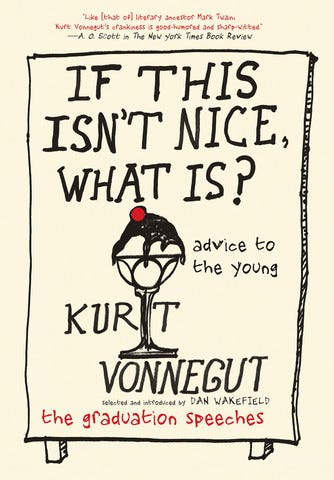
[Editor’s note: the following is excerpted from If This Isn’t Nice, What Is? Advice to the Young, a collection of Kurt Vonnegut speeches from Seven Stories Press. This particular speech was given at The University of Chicago in Chicago, Illinois on February 17, 1994]

What the “Ghost Dance” of the Native Americans and the French Painters Who Led the Cubist Movement Have in Common

In which Vonnegut tells how his own fiction writing was inspired by the professor who was “low man on the totem pole” in the University of Chicago Anthropology Department.

A young woman told me a couple of years ago that she had applied for admission here. The man who interviewed her asked her why she had found the place attractive. She said it was because Philip Roth and I had both gone here, along with many other considerations, of course. He replied that Philip and I were precisely the sorts of persons who never should have gone here. What could he have meant by that? If he is in this audience, I would appreciate meeting and talking to him afterward.

I came here in 1946, immediately following my participation in a war. It was the Second World War, a name and event worthy of H. G. Wells. That war ended with our dropping atomic bombs on the civilians, and their pets and house plants, of Hiroshima and Nagasaki, quite a surprise to one and all. That such bombs were possible was first demonstrated in the abandoned football stadium of this very university, where the importance of contact sports had been discounted. The university president at that time, Robert Maynard Hutchins, was famous for saying that, whenever he felt in need of exercise, he lay down until the feeling passed. He finally wound up in a California think tank.

So far as I know, the only Second World War weapon worth a nickel to come out of Harvard, which thinks it’s such hot stuff, was Napalm or jellied gasoline.

I came here from Indianapolis. In those days, that was like a provincial Frenchman’s coming to Paris, or an Austrian bumpkin’s coming to Vienna, or, as in the case of Adolf Hitler, to Munich, Germany.

In those days, thanks again to Robert Maynard Hutchins, the undergraduate course consisted of only two years devoted to a study of the so-called Great Books. Philip Roth is a product of that short course. We would not meet until many years afterward. The graduate school was everything past what would have been the sophomore year at other American institutions. Like many returning veterans with more than two years’ worth of credits from someplace else, I was admitted to this unconventional graduate school, with three or four years to go before qualifying for an MA.

The credits I brought with me were near-flunks in chemistry, physics, math, and biology. I had actually twice flunked a course whose purpose is to exclude people like me from careers as scientists, which is thermodynamics.

Despite my inability to o’er-leap the intellectual barrier of thermodynamics, or pile of shit, if you like, I still wanted to be respected as a person who thought scientifically, who loved the truth, the whole truth, and nothing but the truth. It was obvious that only a pseudoscience was a possibility for me. Ideally, I thought, it should be a pseudoscience socially superior to astrology, meteorology, hairdressing, economics, or embalming.

The two most prominent such, then as now, were psychoanalysis and cultural anthropology. Both were based, then as now, on what had regularly sent innocent persons to the electric chair or the hot squat, which is human testimony, which is blah-blah-blah. I chose cultural anthropology. The result now stands before you.

Much has been written about the effects on institutions of higher learning of the sudden influx of veterans after my war. One thing it did was bamboozle many teachers whose authority and glamour was based on their having seen a lot more of life and the world than their students had. In seminars I would occasionally try to talk about something I had observed about human beings while a soldier, as a prisoner of war, as a family man. I had a wife and kid then. This turned out to be very bad manners, like coming to a crap game with loaded dice. No fair.

Also: we were so innocent.

In retrospect, my trying to become a member of the anthropology department was like visiting a kibbutz, a kibbutz as described by Bruno Bettelheim in The Children of the Dream. We returning veterans were mildly interesting strangers to be treated politely, with our understanding and theirs that we would soon go away again. And we did.

At about that time there appeared in the New Yorker a series of stories by Ludwig Bemelmans about a busboy who assisted a waiter in a grand hotel in Paris. The waiter was named Mespoulets, “my little chickens.” Mespoulets’s specialty was serving persons the management didn’t want to come back again.

Every academic department has a sort of Mespoulets, I think. We certainly had one in the Writers Workshop at the University of Iowa when I taught there. The Mespoulets in the anthropology department in my time I will call Dr. Z, who is no longer among the living.

Dr. Z was lacking in the charm and stage presence fundamental to the reputation of a great cultural anthropologist. He was also having trouble getting published. So he was made thesis advisor for those of us the department’s stars did not care to work with. He also gave a course in the summertime, when the rest of the department was on vacation or on a dig or whatever. The course could be about anything, since its real purpose was to entitle returning veterans to continue to receive living allowances from a grateful government. In order to make ends meet, I was working as a police reporter for the Chicago City News Bureau, practicing what might nowadays be called “urban anthropology.”

Becoming one of Dr. Z’s little chickens was one of the most fortunate things that ever happened to me, second only, perhaps, to my having been in Dresden when it was firebombed. He died a long time ago now, but many of his ideas live on with me. He died several years after I left. He was a suicide. He had great big ideas about science, about art, about religion, about evolution, and on and on, which he expressed in his cockamamie summer course. Many of these, and surely the grandeur of his dealing with the biggest issues imaginable, are elements in my works of fiction.

I don’t know if he left a suicide note. My guess is that he found it impossible to put his great big ideas on paper.

He had so many great big ideas that he gave me one for my thesis. I was a candidate for a master’s degree, mind you, for the rank of Corporal in Academia. He said my dissertation should deal with the sort of leadership required if a radical change in a culture was to be effected. Why mess around?

So I did it. He told me to compare the leadership which inspired a peaceful Indian tribe to fight the United States Army, the so-called “Ghost Dance,” with the leadership of the Cubists, who found brand-new things to do with surfaces and paint. He didn’t say so, but he had already done this. And, thus directed, I reached a conclusion he must have reached.

But my thesis was rejected by the department, as both grandiose and non-anthropological. And I was out of time and money, and I accepted a job in what was then arguably the most prosperous and compassionate socialist state in history, the General Electric Company in Schenectady, New York.

For whatever it may be worth, and it may be worth no more than “a pitcher of warm spit,” as we used to say in the Army: The leadership of both the Ghost Dance and the Cubist movement had these elements in common:

1) A charismatic, gifted leader who described cultural changes which should be made;

2) Two or more respected citizens who testified that this leader was not a lunatic, but was well worth listening to;

3) A glib, personable explainer, who told the general public what the leader was up to, why he was so wonderful, and so on, day after day.

Turns out that such a table of organization worked pretty well for Adolf Hitler, too, and maybe for Robert Maynard Hutchins, when he turned this place inside out and upside down sixty years ago.

I was in Chicago a couple of years back on business, and visited my old department. Professor Sol Tax was the only teacher from my time still on the job. I asked after some of my old classmates, kibbutzniks whose theses had been acceptable. One, he said, was practicing urban anthropology in Boston, and I allowed as how I had worked for a couple of years in an ad agency there.

I told him what I’ve told you, how much I owed Dr. Z. I didn’t comment on Z’s having been low man on the department’s totem pole, the Mespoulets. I would be very happy, incidentally, if that word, “Mespoulets,” became a part of academic conversations, identifying that faculty member stuck with being mentor to all the nobodies going nowhere. In ad agencies it is common to start out in the mail room. On faculties it is common to start out as a Mespoulets.

Use a new word three times in conversation, I read in Reader’s Digest when I was a juvenile delinquent, and it becomes a permanent part of your vocabulary. Dr. Z was a Mespoulets, and died without having risen above that rank. Sol Tax may have been a Mespoulets at one time, but he certainly wasn’t one when I got here. I find it hard to believe that the head of the department, Dr. Robert Redfield, who made his reputation, and the department’s reputation, too, with an extended essay called “The Folk Society,” had ever been a Mespoulets. There: that’s three times, I think.

Dr. Tax, recalling the department’s dead and gone Mespoulets of long ago, said that Dr. Z had written well about the controversial Native American religion, the Peyote Cult.

So far as Dr. Tax was aware, Dr. Z hadn’t done much writing since then. Only those of us who took Z’s freestyle summer course were aware of the scale of the ambitions of our mentor. Each seminar, we came to realize, was an airing and testing of ideas in a chapter of a book about the human condition he was writing or planned to write. I didn’t share that information with Dr. Tax, but I did ask him if he had the address of my dead mentor’s longtime widow. He did.

She had long since remarried. I wrote to her, wanting to tell her how stimulating I had found her first husband, and how useful his wide-ranging speculations had been to me in my career in fiction. I must have reminded her of utterly ghastly unhappiness which she had hoped to put behind her. We had never met, and never will meet, for there was no reply.

If there had been one, I would have asked her if he got any of his big ideas on paper, and where, if anywhere, some pages were. Ah me.

Long term, I am as indebted to the head of the department in my day, Dr. Robert Redfield, as I am to its Mespoulets. Dostoyevsky suggested that one sacred memory from childhood was perhaps the best education. I say to you that one plausible, romantic theory about humanity is perhaps the best prize you can take away from a university. And Dr. Redfield’s theory of the Folk Society was that for me. It has been the starting point for my politics, such as they are.

My politics in a nutshell: let’s stop giving corporations and newfangled contraptions what they need, and get back to giving human beings what we need.

Long before I got here, all theories of cultural evolution had been proposed and discarded, for want of evidence to support them. Cultures were not describable, predictable rungs on a ladder societies were bound to climb, from polytheism to monotheism, for example, and so on.

But Dr. Redfield said, in effect, and I condense and paraphrase or worse: “Wait a minute. I think I can describe in some detail one stage many, many societies have reached or left behind, neither higher or lower than any other.” It might be worth thinking about because it was or had been so common. Dr. Redfield’s course in the Folk Society, which he gave every year, was enormously popular, drawing auditors from all over the university. Is his theory much discussed here or anywhere nowadays?

A Folk Society, he said, was a relatively small number of persons bonded by kinship and a common history of some duration, with a territory uncontested or easily defended, and sufficiently isolated so as to be little influenced by the cultures of other societies.

There can’t be many such societies nowadays. There were still quite a few when I first came here. I recall the testimony of some people who had lived in one to the effect that the isolation, the like-mindedness, the routines and so on were suffocating.

I can believe it. I myself never visited one, unless you want to count the anthropology department itself.

But I had certainly read about a lot of them in the library here. It seemed to me that they, because of their simplicity and isolation, might be regarded as petri dishes in which human beings might demonstrate certain apparently basic human needs other than food, shelter, clothing, and sex. For want of a better word, I will call such needs spiritual, by which I mean only that they are invisible, un-smellable, inaudible, intangible, and inedible.

Was it possible, I wondered, that certain features common to all of them not only revealed spiritual needs of all human beings, including those of us in this auditorium? Might not those features also show us methods for satisfying those needs, theatrical performances, if you will, which human beings, by their nature, can ill-afford to do without?

I think of the British Navy, whose sailors, although filling the world’s oceans, felt lousy all the time, until they started sucking limes. A vitamin deficiency, of course! And here we are in the post-industrial, post–Cold War whatchamacallit, feeling lousy all the time. We get all the minerals and vitamins we need. Is it conceivable that we are suffering from a cultural deficiency which we can remedy? Friends and neighbors, I say YES to that:

Let’s give everybody a totem at birth. What proof do I have that even highly educated people need nonsensical, arbitrary symbols which will relate them to other people and the Earth and the Universe? I am a Scorpio. Would those of you who are also Scorpios please hold up your hands? Lookee there! Dostoyevsky was one of us!

Yes, and let’s find a way to get ourselves and others extended families again. A husband and a wife and some kids aren’t a family, any more than a Diet Pepsi and three Oreos is a breakfast. Twenty, thirty, forty people — that’s a family. Marriages are all busting up. Why? Mates are saying to each other, because they’re human, “You’re not enough people for me.”

Yes, and let’s make sure every American gets a puberty ceremony, an impressive welcome to the rights and duties of grown-ups. As matters now stand, only practicing Jews get those. The only way the rest of us can feel like grown-ups is to get pregnant or get somebody else pregnant or commit a felony or go to war and then come back again.

I only want to say in closing that it’s nice to be home again.

***

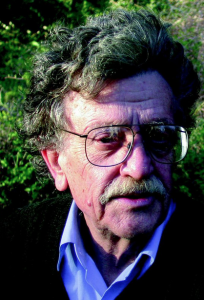
photo by Edith Vonnegut

photo by Edith Vonnegut

KURT VONNEGUT (1922–2007) was among the few grandmasters of twentieth-century American letters, one without whom the very term American literature would mean much less than it does now. Vonnegut’s other books from Seven Stories Press include God Bless You, Dr. Kevorkian, the national hardcover and paperback bestseller A Man Without a Country, and, with Lee Stringer, Like Shaking Hands with God.

Game of Totes: Canvas Is Coming (round one)

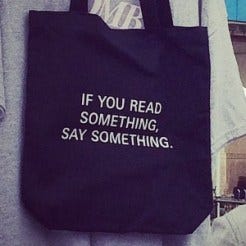
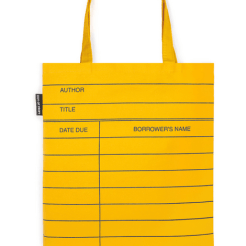
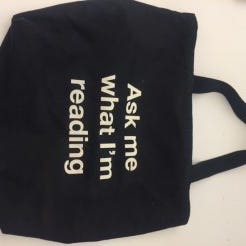
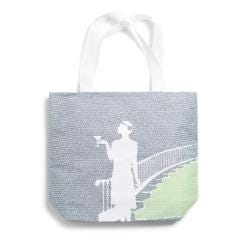
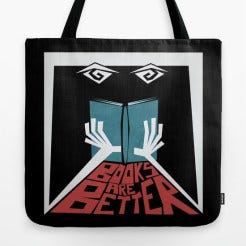
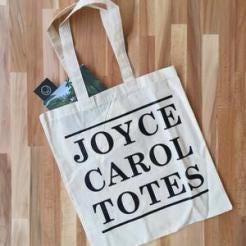
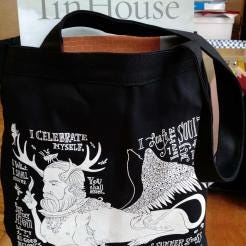
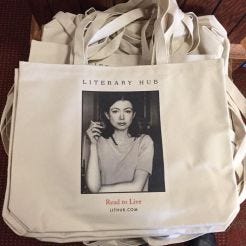
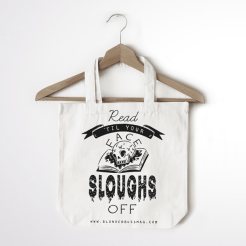
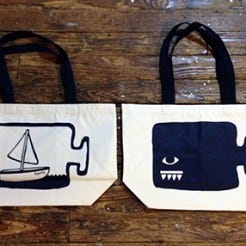
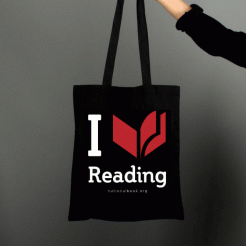
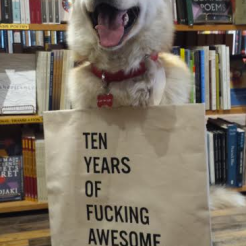
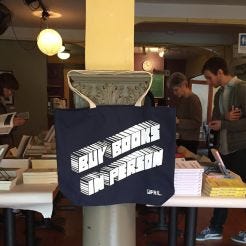
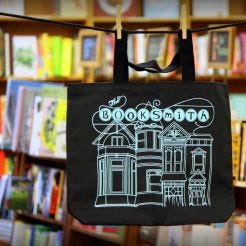
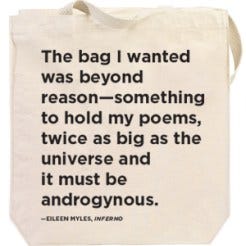
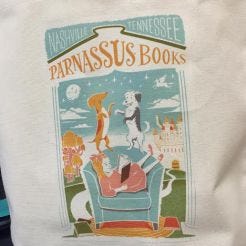
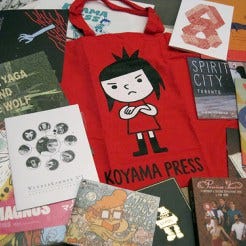
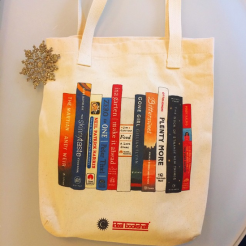
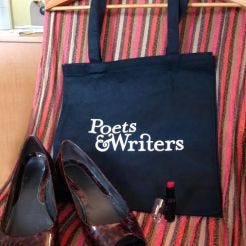
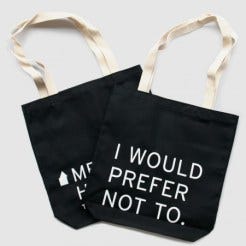
The wait is over and the most historic battle in literary tote history begins. 33 totes are fighting for the canvas throne, and you, the reader, get to draw first blood. List up to five of your favorites in the comments section, where all true battles take place. You can click on the images for a larger slideshow. Order is randomly generated to ensure tote equality. Voting will be counted until midnight, Friday.

The winners will make round two, judged by our panel of experts including Dana Schwartz (Guy in Your MFA & Dystopian YA), Kenny Coble (Bookseller, Elliott Bay Books), Max Neely-Cohen (Author, Echo of the Boom), Kevin Nguyen (Editorial Director at Oyster), Bethanne Patrick (Writer and blogger), Nadxieli Nieto (Writer and designer), Jillian Steinhauer (Senior editor at Hyperallergic), Alexander Chee (Author, The Queen of the Night), and Maris Kreizman (Slaughterhouse 90210). Finally, on 4/20, we will judge the last remaining totes to crown a champion at Housing Works. Cosmopolitan’s book-editor-at-large Camille Perri, Saeed Jones (poet, Prelude to Bruise, BuzzFeed Literary Editor), Bev Rivero (Publicist at The New Press), and Dan Wilbur (Writer and comedian).

But who gets to face the judges? That’s up for you to decide. Pick up to five favorites in the comments below.

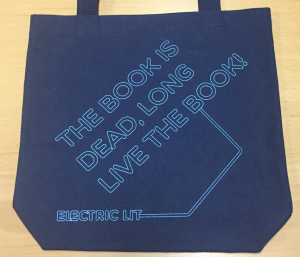
Electric literature tote

ETA: If you’d like to purchase our “Love Live the Book!” tote bag — which we are not entering into the contest out of fairness — click here.

Let the games begin!

BOMB Magazine

BOMB Magazine

Out of Print Clothing

Out of Print Clothing

Penguin Teen

Penguin Teen

Knopf

Knopf

Litograph

Litograph

Ryan Bradley

Ryan Bradley

Jai Lai

Jai Lai

Riverhead Books

Riverhead Books

Oyster Review

Oyster Review

Tin House

Tin House

The Lit Hub

The Lit Hub

The Paris Review

The Paris Review

Graywolf Press

Graywolf Press

Blunderbuss

Blunderbuss

Underwater New York

Underwater New York

Gigantic

Gigantic

National Book Foundation

National Book Foundation

Biblioasis

Biblioasis

The Strand

The Strand

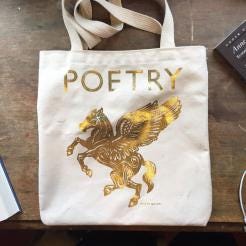
Poetry Magazine

Poetry Magazine

Pop Chart

Pop Chart

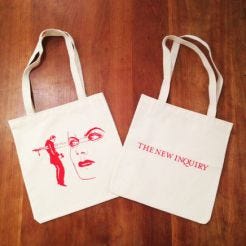
The New Inquiry

The New Inquiry

Nouvella

Nouvella

N+1

N+1

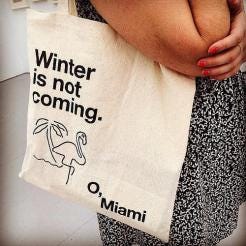
O, Miami

O, Miami

April

April

Booksmith

Booksmith

OR Books

OR Books

Parnassus Books

Parnassus Books

Koyama Press

Koyama Press

Crown

Crown

Poets & Writers

Poets & Writers

Melville House

Melville House

FICTION: “Our Christophers” by Sharma Shields

I had always hated my friend Rhonda (she was needlessly beautiful and generous and successful and kind), but I’d never hated her so much as when she told me that her bright, athletic, handsome, well-adjusted son would attend community college here in Spokane rather than matriculate at Harvard, where he had applied and — of course — had been accepted.

“He wants to save the money,” she said. “He wants to stay near us for a bit and then attend a state university. He’s not sure what he wants to focus on and believes he can figure it out in a more modest setting. ‘Harvard will still be there in a couple of years,’ he says. My Christopher. I know it sounds silly to say this, but I’ve never been prouder of him.”

“Pragmatic,” I muttered. “Good head on his shoulders.”

We were sharing a beer at my kitchen table. It was always a mistake to invite Rhonda over. I could hear my son in the basement, also named Christopher, moaning and banging around as he humped our dog.

My Christopher was the same age as Rhonda’s Christopher. My Christopher didn’t do much, grade-wise or sport-wise or anything else-wise, but what he did do, play video games and hump our dog, he did passionately, and for hours. I hated the video games, but the dog thing was beyond me. It really grossed me out.

I’d caught him in the act only the week before. I was depositing fresh laundry around the house. “Laundry deposits!” I called them. I thought I was pretty funny back then.

I opened the door to Christopher’s room. It didn’t have a lock. The dog was just standing on all fours, looking sort of bored, and Christopher — my Christopher — was kneeling behind the dog, humping away at her. I was dumbstruck. All I could think of to say was, “Use protection,” and then I just went about like normal, putting the folded laundry into his drawers, trying not to breath in the scent of his sex.

Wasn’t it right, to advise him? Because don’t dogs carry diseases, just like humans do? It seemed like sensible advice at the time, but Christopher — my Christopher — just blinked at me and continued humping the dog. He asked me to close the door when I left.

That’s how our conversations went those days.

Rhonda took up our beer and sipped it. She took too big of a sip. I would be left with nothing but backwash. Goddamn you, Rhonda.

She asked me then, generously, affectionately, “Is your Christopher still thinking of becoming a veterinarian?”

This was wildly funny to me. “A veterinarian!” I hooted. “Yes! Yes! What an idea!”

Beneath us, in the basement, my Christopher began to yodel his climax.

“What’s Christopher doing down there?” Rhonda asked, pushing the glass of backwash toward me.

I peered into the glass. There were the flakes of Rhonda’s last meal floating around in it: Tofutti or vegan hot dogs or something healthy like that. Rhonda ate like a champ.

“He’s fucking our dog,” I told her. “He fucks the dog all the time. I don’t know.” I shrugged, as if to say, parenting is such a shitstorm! Parenting is a trainwreck! “One of those things,” I said. “What can you do?”

Rhonda leaned toward me, dropping her warm palms over my hands. She gushed, sincerely, “Oh, sweetie. Just so long as he’s happy. That’s all we want, right? For our Christophers to be happy?”

“I guess,” I said, although what I really wanted was for my Christopher to stop fucking the dog, and for her Christopher to get hit by a bus.

From downstairs came a loud and satisfied YES!

“See?” Rhonda said. “Hallelujah.”

I nodded. I drank her backwash.

Rhonda was a fucking saint.

God, I hated her guts.

Sunday Sundries: Literary Links from Around the Web (April 5th)

Looking for some Sunday reading? Here are some literary links from around the web that you might have missed:

Why are crime books leftwing and thrillers rightwing?

Game of Thrones wasn’t the first gritty fantasy world: here are ten authors who wrote gritty, realistic fantasy before Martin

Speaking of George R.R. Martin, he’s now determined to finish book 6 before season 6 of the show

An important essay on racism in publishing from Saeed Jones

And speaking of Saeed Jones, we interviewed him about his new role as BuzzFeed Literary Editor

The Millions writes about the benefits of writing dialogue without quotes

Tor.com rounds up the best geeky April Fools pranks

On the difficulties of teaching Thomas Pynchon

What’s the secret of the Jane Austen industry?

Are we going to have an Amazon vs. Hachette redux? Harper Collins might battle the online giant

The Guardian helps you find time to read

The 2015 Hugo Nominees

The nominees for Science Fiction’s famous Hugo awards were just announced. Many of the most acclaimed and popular books are missing, thanks to the overwhelmingly successful “Sad Puppies” voting campaign. There will be lots of discussion on fixing the Hugo rules in the upcoming weeks, but for now here are the nominees:

Best Novel (1827 nominating ballots)

  • Ancillary Sword, Ann Leckie (Orbit US/Orbit UK)
  • The Dark Between the Stars, Kevin J. Anderson (Tor Books)
  • The Goblin Emperor, Katherine Addison (Sarah Monette) (Tor Books)
  • Lines of Departure, Marko Kloos (47North)
  • Skin Game, Jim Butcher (Roc Books)

Best Novella (1083 nominating ballots)

  • Big Boys Don’t Cry, Tom Kratman (Castalia House)
  • “Flow”, Arlan Andrews, Sr. (Tor.com, 11–2014)
  • One Bright Star to Guide Them, John C. Wright (Castalia House)
  • “Pale Realms of Shade”, John C. Wright (The Book of Feasts & Seasons, Castalia House)
  • “The Plural of Helen of Troy”, John C. Wright (City Beyond Time: Tales of the Fall of Metachronopolis, Castalia House)

Best Novelette (1031 nominating ballots)

  • “Ashes to Ashes, Dust to Dust, Earth to Alluvium”, Gray Rinehart (Orson Scott Card’s InterGalactic Medicine Show, 05–2014)
  • “Championship B’tok”, Edward M. Lerner (Analog, 09–2014)
  • “The Journeyman: In the Stone House”, Michael F. Flynn (Analog, 06–2014)
  • “The Triple Sun: A Golden Age Tale”, Rajnar Vajra (Analog, 07/08–2014)
  • “Yes, Virginia, There is a Santa Claus”, John C. Wright (The Book of Feasts & Seasons, Castalia House)

Best Short Story (1174 nominating ballots)

  • “Goodnight Stars”, Annie Bellet (The End is Now (Apocalypse Triptych Book 2), Broad Reach Publishing)
  • “On A Spiritual Plain”, Lou Antonelli (Sci Phi Journal #2, 11–2014)
  • “The Parliament of Beasts and Birds”, John C. Wright (The Book of Feasts & Seasons, Castalia House)
  • “Totaled”, Kary English (Galaxy’s Edge Magazine, 07–2014)
  • “Turncoat”, Steve Rzasa (Riding the Red Horse, Castalia House)

Best Related Work (1150 nominating ballots)

  • “The Hot Equations: Thermodynamics and Military SF”, Ken Burnside (Riding the Red Horse, Castalia House)
  • Letters from Gardner, Lou Antonelli (The Merry Blacksmith Press)
  • Transhuman and Subhuman: Essays on Science Fiction and Awful Truth, John C. Wright (Castalia House)
  • “Why Science is Never Settled”, Tedd Roberts (Baen.com)
  • Wisdom from My Internet, Michael Z. Williamson (Patriarchy Press)

Best Graphic Story (785 nominating ballots)

  • Ms. Marvel Volume 1: No Normal, written by G. Willow Wilson, illustrated by Adrian Alphona and Jake Wyatt, (Marvel Comics)
  • Rat Queens Volume 1: Sass and Sorcery, written by Kurtis J. Weibe, art by Roc Upchurch (Image Comics)
  • Saga Volume 3, written by Brian K. Vaughan, illustrated by Fiona Staples (Image Comics))
  • Sex Criminals Volume 1: One Weird Trick, written by Matt Fraction, art by Chip Zdarsky (Image Comics)
  • The Zombie Nation Book #2: Reduce Reuse Reanimate, Carter Reid (The Zombie Nation)

Best Dramatic Presentation, Long Form (1285 nominating ballots)

  • Captain America: The Winter Soldier, screenplay by Christopher Markus & Stephen McFeely, concept and story by Ed Brubaker, directed by Anthony Russo and Joe Russo (Marvel Entertainment, Perception, Sony Pictures Imageworks)
  • Edge of Tomorrow, screenplay by Christopher McQuarrie, Jez Butterworth, and John-Henry Butterworth, directed by Doug Liman (Village Roadshow, RatPac-Dune Entertainment, 3 Arts Entertainment; Viz Productions)
  • Guardians of the Galaxy, written by James Gunn and Nicole Perlman, directed by James Gunn (Marvel Studios, Moving Picture Company)
  • Interstellar, screenplay by Jonathan Nolan and Christopher Nolan, directed by Christopher Nolan (Paramount Pictures, Warner Bros. Pictures, Legendary Pictures, Lynda Obst Productions, Syncopy)
  • The Lego Movie, written by Phil Lord & Christopher Miller, story by Dan Hageman, Kevin Hageman, Phil Lord & Christopher Miller, directed by Phil Lord & Christopher Miller (Warner Bros. Pictures, Village Roadshow Pictures, RatPac-Dune Entertainment, LEGO System A/S, Vertigo Entertainment, Lin Pictures, Warner Bros. Animation (as Warner Animation Group))

Best Dramatic Presentation, Short Form (938 nominating ballots)

  • Doctor Who: “Listen”, written by Steven Moffat, directed by Douglas Mackinnon (BBC Television)
  • The Flash: “Pilot”, teleplay by Andrew Kreisberg & Geoff Johns, story by Greg Berlanti, Andrew Kreisberg & Geoff Johns, directed by David Nutter (The CW) (Berlanti Productions, DC Entertainment, Warner Bros. Television)
  • Game of Thrones: “The Mountain and the Viper”, written by David Benioff & D. B. Weiss, directed by Alex Graves ((HBO Entertainment in association with Bighead, Littlehead; Television 360; Startling Television and Generator Productions)
  • Grimm: “Once We Were Gods”, written by Alan DiFiore, directed by Steven DePaul (NBC) (GK Productions, Hazy Mills Productions, Universal TV)
  • Orphan Black: “By Means Which Have Never Yet Been Tried”, ” written by Graham Manson, directed by John Fawcett (Temple Street Productions, Space/BBC America)

Best Editor, Short Form (870 nominating ballots)

  • Jennifer Brozek
  • Vox Day
  • Mike Resnick
  • Edmund R. Schubert
  • Bryan Thomas Schmidt

Best Editor, Long Form (712 nominating ballots)

  • Vox Day
  • Sheila Gilbert
  • Jim Minz
  • Anne Sowards
  • Toni Weisskopf

Best Professional Artist (753 nominating ballots)

  • Julie Dillon
  • Jon Eno
  • Nick Greenwood
  • Alan Pollack
  • Carter Reid

Best Semiprozine (660 nominating ballots)

  • Abyss & Apex, Wendy Delmater editor and publisher
  • Andromeda Spaceways In-Flight Magazine, Andromeda Spaceways Publishing Association Incorporated, 2014 editors David Kernot and Sue Bursztynski
  • Beneath Ceaseless Skies, edited by Scott H. Andrews
  • Lightspeed Magazine, edited by John Joseph Adams, Stefan Rudnicki, Rich Horton, Wendy N. Wagner, and Christie Yant
  • Strange Horizons, Niall Harrison, editor-in-chief

Best Fanzine (576 nominating ballots)

  • Black Gate, edited by John O’Neill
  • Elitist Book Reviews, edited by Steven Diamond
  • Journey Planet, edited by James Bacon, Christopher J Garcia, Lynda E. Rucker, Pete Young, Colin Harris, and Helen J.Montgomery
  • The Revenge of Hump Day, edited by Tim Bolgeo
  • Tangent SF Online, edited by Dave Truesdale

Best Fancast (668 nominating ballots)

  • Adventures in SF Publishing, Brent Bower (Executive Producer), Kristi Charish, Timothy C. Ward & Moses Siregar III (Co-Hosts, Interviewers and Producers)
  • Dungeon Crawlers Radio, Daniel Swenson (Producer/Host), Travis Alexander & Scott Tomlin (Hosts), Dale Newton (Host/Tech), Damien Swenson (Audio/Video Tech)
  • Galactic Suburbia Podcast, Alisa Krasnostein, Alexandra Pierce, Tansy Rayner Roberts (Presenters) and Andrew Finch (Producer)
  • The Sci Phi Show, Jason Rennie
  • Tea and Jeopardy, Emma Newman and Peter Newman

Best Fan Writer (777 nominating ballots)

  • Dave Freer
  • Amanda S. Green
  • Jeffro Johnson
  • Laura J. Mixon
  • Cedar Sanderson

Best Fan Artist (296 nominating ballots)

  • Ninni Aalto
  • Brad W. Foster
  • Elizabeth Leggett
  • Spring Schoenhuth
  • Steve Stiles

The John W. Campbell Award for Best New Writer (851 nominating ballots)
Award for the best new professional science fiction or fantasy writer of 2013 or 2014, sponsored by Dell Magazines. (Not a Hugo Award, but administered along with the Hugo Awards.)

  • Wesley Chu*
  • Jason Cordova
  • Kary English*
  • Rolf Nelson
  • Eric S. Raymond

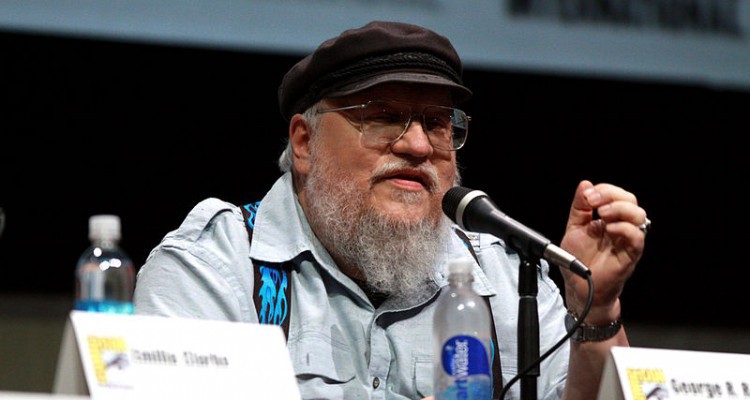
George R.R. Martin Plans to Finish The Winds of Winter by 2016, Teases Possible New Plot Twist

A couple weeks ago, the creators of Game of Thrones confirmed the show would spoil plots from the as-yet-unfinished final A Song of Ice and Fire novels. That news story seems to have further kick Martin into gear, who has long been worried about the “freight train” of the TV show overtaking his novels. He recently canceled several appearances and also decided not to write any episodes for the next season of Game of Thrones (typically he writes one a season). Yesterday, he released a new Sansa teaser chapter of book six, The Winds of Winter, on his website. Today, he told EW that he was determined to finish the book before season 6 airs:

I wish it was out now. Maybe I’m being overly optimistic about how quickly I can finish. But I canceled two convention appearances, I’m turning down a lot more interviews — anything I can do to clear my decks and get this done.

He mentions regretting the break in writing he took to promote A Dance with Dragons, noting “the iron does cool off” when he goes away from writing too long. Martin also said that he recently came up with a huge new plot twist:

“This is going to drive your readers crazy,” he teases, “but I love it. I’m still weighing whether to go that direction or not. It’s a great twist. It’s easy to do things that are shocking or unexpected, but they have to grow out of characters […] But this is something that seems very organic and natural, and I could see how it would happen. And with the various three, four characters involved… it all makes sense. But it’s nothing I’ve ever thought of before. And it’s nothing they can do in the show, because the show has already — on this particular character — made a couple decisions that will preclude it, where in my case I have not made those decisions.”

Read the full EW article here.

“Something at the Bottom of Every New Human Thought”: A Spoiler-Free Look at It Follows and…

Currently riding a 95% rating on Rotten Tomatoes, It Follows is the latest rare horror flick to break out among America’s casual filmgoers. It’s a thrilling movie, and should appeal both to people who watch one horror movie a year and those of us who’ve seen Jason X more than once. And as you’ve probably guessed from the link that got you here, there are a few things in It Follows for fans of great literature.

In It Follows, an American teenager and her friends are tormented by a deadly and unpredictable curse. I won’t reveal the curse, or give away any of the film’s nightmarish sequences. But a popular 20th century poem soundtracks an intense early scene, and a lesser-read and equally fascinating work pops up regularly throughout the movie. One of the film’s main characters (you can tell she’s the smart one, because she’s the only one wearing glasses) is constantly seen reading from a seashell-shaped e-reader, periodically interjecting her scenes with quotes from Fyodor Dostoyevsky’s 1869 novel The Idiot.

Why Dostoyevsky, and why not one of his more popular books, like Crime and Punishment or The Brothers Karmazov? Why The Idiot, a book that’s only read by scholars and people who want to find out why Iggy Pop named his first solo album after it? To hear Ilja Wachs, a literature professor at Sarah Lawrence College (and full disclosure, one of my favorite people) tell it, The Idiot could be considered at least as traumatizing as any horror film.

“My father said ‘Don’t read it, because you’re going through adolescence and it will upset you,’” recalls Wachs. “I broke into his book case and read it anyway.” Over three nights, reading with a flashlight under the covers, Wachs finished the book.

Wachs’s passion for the book is probably not one that Dostoyevsky would share. “Dostoyevsky thought it was a failure,” says Wachs, “and one of the reasons he felt that way is that his hero is a Christ-like figure, without any capacity for anger and judgment, and there’s something unreal about such a being.”

Failure or not, unrealistic or not, The Idiot’s fingerprints can be found in film, literature, theatre and music, from a Kurosawa adaptation to a Harlan Ellison short story to a joke in The Producers. There have been least a dozen English translations. The protagonist, Prince Myshkin, is an epileptic 26-year-old descended from a noble family. His kindness, empathy and trusting nature earns him the “idiot” title from his peers, including gorgeous femme fatale Natasya, her obsessive, hothead suitor Rogozhin, the aristocratic General Epanchin and his sheltered daughter Aglaya. Of course, the story is doused with Dostoyevsky’s bleak elucidations on humanity, and as one with even a passing sense of Dostoyevsky might guess, there are several unhappy plot twists.

The latter element puts The Idiot in line with It Follows, which has more horrific moments than most horror franchises. Yet even for a fan of both the novel and the film, it’s hard to discern why writer/director David Robert Mitchell chose Dostoyevsky’s novel to be quoted throughout his film. It Follows’s horrors are supernatural, whereas The Idiot’s are man-made. Critics often simplify The Idiot’s characters as inverses of each other (i.e. levelheaded Myshkin vs. unstable Rogozhin, conniving Natasya vs. naive Aglaya), but it seems a stretch to apply those characteristics to It Follows’s teens, who owe more to your standard horror movie teens (particularly the classic ’70s and ’80s slasher era) than anything in Russian lit. The protagonist is likable, but far from Christ-like. If anything, The Idiot enhances It Follows more than it represents it, augmenting the film’s foreboding atmosphere with quotes from a writer who could create anxiety and suspense as artfully as any of the Russian greats.

So is The Idiot a crucial plot point to It Follows? Probably not, and its use in the film might even be superfluous. But just as with watching Lisa Simpson cite Gravity’s Rainbow, it’s a treat for those of us who’ve read the book, and more incentive for the rest of us to check it out. And as for interpreting connections between The Idiot and It Follows, maybe we should take Dostoyevsky’s own advice from the former, via Prince Myshkin himself — “To achieve perfection, one must first begin by not understanding many things! And if we understand too quickly, we may not understand well.”*

*Translation: Pevear and Volokhonsky

The Irresolvable Situation, a conversation with Thomas Pierce, author of Hall of Small Mammals

The following conversation took place between Thomas Pierce, author of Hall of Small Mammals and Halimah Marcus, Editor-in-Chief of Electric Literature’s Recommended Reading, at Community Bookstore, in Brooklyn, on March 27, 2015, and has been edited for length and clarity.

Halimah Marcus: Yesterday there was a review in The L Magazine that said you were “a classicist in fabulist’s clothing.” I felt that was quite apt.

Thomas Pierce: That sounds good to me [laughs]. I don’t really pay much attention to those things. When I’m writing I don’t think, “Oh, this clearly fits into the fabulist tradition.” Maybe after the fact I’ll think about it, minimally, but generally it’s not something I consider — whether a story fits into a particular genre.

HM: What about in terms of your influences?

TP: I don’t know. That’s such a bad answer, I realize, but I read a lot, and for any different story it might be slightly different. There are so many writers I admire who have had an influence on me, but I never have anyone in mind when I’m writing a story.

HM: Sure, many writers want to read work that’s very different from what they write so as not to be too influenced. I like that description because this collection, to me, with all the different characters and their hobbies and interests, has a bit of a “cabinet of curiosities” feel. The title, Hall of Small Mammals, is taken from the Natural History Museum, which is known for its dioramas. The collection features a miniature wooly mammoth and an old carnival-style monster, so I’m wondering, what about the diorama peaks your interest?

TP: I will say that some of the stories are diorama-like, but I’m always in the diorama. I exist in the diorama all the time. We all do probably, to some extent. We’re in the diorama right now, maybe. So I never feel like I’m looking from the other side of glass, to answer your question. I feel very strongly that I might be one of the people I’m writing about. I do not think of myself as separate from or better than my characters.

HM: What’s really interesting about a diorama is that you want to be inside of it. I was also thinking while reading certain stories, specifically “Shirley Temple Three” and “Grasshopper Kings,” about the interplay between science and religion, which you touch on pretty subtly. Do you think about these big themes?

TP: I would say that the role they serve in the stories is rooted in my own attempts to figure out what it means to be alive. That is to say, I’m tapping into my own general sense of confusion — you know, confusion about the world and why we’re here. Religion and science, broadly speaking, those are two avenues available to us in making sense of the universe — of investigating the universe — and I’m interested in the overlap between the two. Sometimes science and religion can coexist and inform one another and other times they cannot, and they knock against each other. When they intersect in unexpected ways, I’m fascinated by that — by the strange allowances we sometimes make in order to hold onto a pre-existing belief or worldview. We have to make choices about how we explain the world to ourselves.

HM: In “Shirley Temple Three,” there’s a son who works for a television show where they bring back extinct animals. He rescues a miniature wooly mammoth from the show, brings it to his mother’s house, and abandons it there, where, of course, it becomes very unhealthy, because it’s a wooly mammoth living in…?

TP: Near Atlanta. Yeah, pretty hot in Atlanta.

HM: My interpretation is that this mother is starting to really see her son’s moral failings. She’s a religious person and he represents a morally ambiguous, scientific field, and the way she comes around to see how he has disappointed her was really profound.

TP: He’s a bit of a know-nothing in some ways. He doesn’t know the science, he doesn’t understand the science, but he shows up with this mammoth, and the way the mother contextualizes the mammoth is definitely inspired by her religious background. The mammoth presents a huge challenge to her beliefs — to the way she’s thought of the world and existence until now — and here it is in her very own backyard, in a dog pen. When it becomes sick and needs help — physically and maybe even spiritually — the mother does her best to help it. She prays for it. She calls over her pastor.

HM: It also makes me think about how quickly deep empathy for an animal can be evoked. Maybe it’s ugly or possibly never existed, but suddenly you just care about it so much.

TP: It’s a bit of cheat [laughs].

HM: In “Saint Possy,” a couple moves into a new house and they find a skull with candles under the stairs. I thought, this is going in a haunted house, tear-the-family-apart direction but that situation ends up revealing the couple’s really sweet love for each other.

TP: That one started like that, as an almost-ghost story, but it didn’t click for me until the couple began trying to explain the skull and their behavior to themselves, until it became an anecdote they tell at parties, this scary thing that happened to them once. That’s when I realized there was something else going on in the story — that there was another level to it. It was more fun for me to write at that point. I actually wanted to finish it. I doubt I would have ever shared it with the world if not for that development.

HM: It pleased me that they handled the situation in the same way.

TP: Right, it drives them both to craziness.

HM: Well, since we’re talking about individual stories, I’d love to hear about “Videos of People Falling Down,” because it’s structured very differently, with these vignettes that work together. For me it evoked a kind of surveillance state present in your New Yorker story, “This is an Alert.” These people have been caught on video, then it’s on the Internet; it’s there forever and everyone sees it.

TP: What those stories might have in common is they deal with a vague paranoia — that paranoia probably being my own — that is related to a feeling of powerlessness in the world. The stories both involve bodiless, system-less systems, very vast and nebulous entities that exert control over our lives. In the case of “This Is an Alert,” there is a war happening, up in the clouds, but we don’t know the particulars of it and we don’t see it. We have to trust that it’s actually happening. The characters read about it in the news but have no actual proof of it. They are disconnected from it, but at the same time it’s something that’s impacting their lives. The videos story is similar except the war is the Internet. The Internet consumes our lives, eats it up, digests it, and spits it back out. It’s all of us — but larger than us. It’s something beyond us that feels uncontrollable — not to mention diffuse and hard to locate — and that can feel kind of scary.

HM: Getting back into the philosophical territory, “The Real Alan Gass” is about a woman who confesses to her husband that she’s had a “dream husband” whom she’s been dreaming about for years. She knows a lot about him, and they have a very real and active marriage in her dreams. I’m going to read a line:

Alan Gass is a ghost, and Walker knows you cannot fight ghosts. They are insidious. You can’t punch a ghost or write it a drunken email. You can only pretend the ghost is not there, hope it loses interest, evaporates, moves on, does whatever it is that ghosts do when they disappear completely.

I noticed a reoccurrence of this notion of a second bottom to things: things that disappear, and then disappear further. Do you want to comment on this idea?

TP: That’s a tough question. You’re right in that there’s often something that happens in the stories that either escalates the plot to a new level of absurdity or pulls the rug out from under the characters, again and again. With “Alan Gass,” the main character goes looking for his girlfriend’s dream husband, but of course it’s kind of an irresolvable situation. There’s no obvious recourse. If you were to wake up tomorrow and your significant other said they were married to someone else in their dreams, how do you respond to that? You either make peace with it and say “I accept that about you,” or you don’t, and there’s not really a clean way of investigating that mystery. You can’t write a drunken email, you can’t knock on a door. So, yes, there is a bottomlessness to that.

HM: Yes, and the solution has to be in your own thought control, which can be very frustrating if that’s the only solution, because you can be so powerless in your own ways of thinking.

TP: I mean it’s a decision he has to make. To be okay with it or not. There’s no external action that can fix this.

HM: Do you feel that the wife was being intentionally aggressive by sharing this dream marriage?

TP: There are two versions of this story. Maybe I shouldn’t really confess this here [laughs]. One was first published in Subtropics, in which her aggression is even more emphasized. Walker, the main character, fears this is some kind of provocation, that it’s the girlfriend’s way of pushing him away or testing their relationship. I like that version of the story, too, but I also like this version that’s a little happier. It ends more with him making peace with this thing — whether it’s a provocation or not. I don’t know why I prefer this new ending more, but I suppose it just makes sense to me. One option is for him to throw out his own test to her and say, “Well, in fact, here’s x, y, and z that could potentially break apart our relationship,” or he can say, “I accept it.” The idea of him accepting this about her appeals to me. So maybe it’s me being a little starry eyed about relationships.

HM: I do think you’re excellent with endings.

TP: Well, not everyone says that, so I’m glad to hear you say that.

HM: Really? I just think you have rhythm about your last lines. Even if the story is meant to be unresolved, the last line has a feeling of resolve. If you don’t mind me reading another example, this is from “We of the Present Age:”

Smoke danced through the rafters of the barn, and there, up ahead, illuminated by a ring of red and blue glass lanterns, was the creature, lurching toward us with rows of sharp teeth and two long curving tusks, its chest puffed with breath, a single knowing blue eye at the center of its giant apish head. We were very, very quiet.

The reason I love this is because I think a lesser writer wouldn’t have added that line, “We were very, very quiet.” When I read it I thought, “that was great.” What do you look for in an ending?

TP: This is something I struggle with for sure. Finding the right ending is tricky and it’s the thing I probably spend the most time on. I’m generally a fast writer. I can often get the first three-quarters of a story out in about a week — and sometimes even a day, depending — but then I get to the ending and sometimes need to spend another few weeks trying to figure it out. Sometimes that means starting over. Sometimes it just entails finding the right chord. What do I look for in an ending? It doesn’t have to answer every question. This is a book of stories about people for whom it’s really about the questions. I think the stories are really clear plot-wise, and I think more often than not it’s clear what comes next, after the last sentence. But I like to end on a — sort of — opening up? There are stories that do this in the end [makes gesture] and then there are stories that do this [makes another gesture], and I prefer the first one. This is not helpful for your recorder. I’m making wild arm gestures. [To the recorder] I like an upward opening V, arms up in the air, like talking to God maybe. I prefer up-V endings.

HM: Do you think about the rhythm of sentences, particularly at the end?

TP: Yes, I think about rhythm. I wouldn’t say I’m a writer who is obsessed with sentences. I mean, there is such a thing as a beautiful sentence, and I’m very pleased when a sentence does its job or is surprising or when it could exist independently and still be interesting, but beautiful sentences are not what I’m chasing when I read or write. I’m more interested in a beautiful story. I do understand that the sentences add up to the story, of course they do, and a lot of magic can happen on the sentence-level, but that’s just not where my mind is when I’m writing. I think more about rhythm in terms of the overall structure and plot. I consider myself more of a what-happens-next type of writer. I think, “Is this a time for advancing the action, or is this a time for digression, for a thought, for a description?” I think about the larger rhythm. When you get to the ending, it does have to achieve a certain kind of momentum or energy, and that is tied up with the micro-rhythms of course, but it’s momentum that I want more than anything else. Because I want readers to feel like they’re still hurtling forward even after they’ve finished the last sentence.
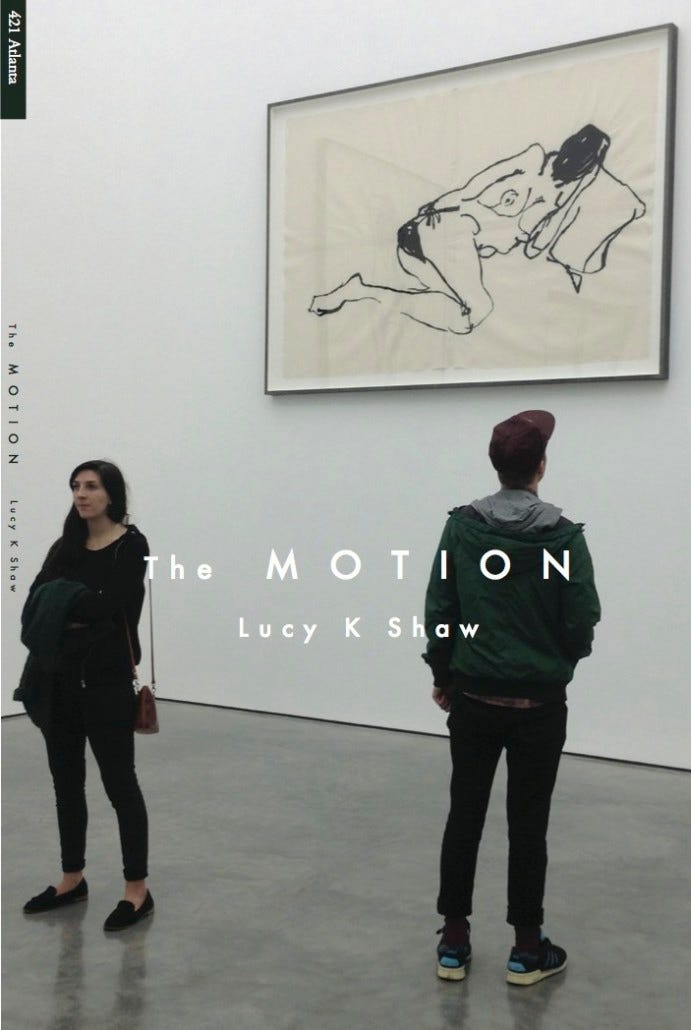
APRIL MIXTAPE by Lucy K. Shaw

Lucy K Shaw

If my first book, The Motion, was being made into a movie, it would be very expensive to make. It is set in five different countries. There are scenes at The British Museum, at Sylvia Plath’s house, in Central Park, in Brooklyn, in Queens, at an office building close to Toronto airport, in an apartment in the center of Paris, and outside of a courthouse in the suburbs of Berlin, to name just a few of the locations. If my book was being made into a movie, I would want for it to be directed by Meggie Green.

This playlist is basically how I envision the soundtrack to that movie. And I have based it off of a mix CD given to me by my uncle when I was about thirteen years old.

The mix CD had the words, ‘DIVERSE DIVAS’ written across it in permanent marker. And I don’t think it is unrealistic to say that it must have changed my life, because it featured really great songs by really, really great singers. I mean, I’m talking about Aretha Franklin and Billie Holiday and Dusty Springfield and Janis Joplin and so on… Just these incredibly powerful and distinct female voices.

So when I started putting this mixtape together to go with my book, I remembered that CD I used to listen to every day and I decided that it must be time to make a part two. Because I’m not 13 anymore. I’m 27. And nobody uses CD players.

This playlist follows the trajectory of the book, in a loose way. ‘The Motion’ is described as a ‘collection of short prose’ but there is, in my humble opinion, a narrative throughout. When I listen to these songs in this order, it feels like there is already a movie happening in my mind, because these are all recordings which have felt important to me while I was writing this book, which it seems I must have been doing over the course of the last twenty-seven years.

It’s all about love and time and distance. My life. This book. And I think so are these songs. That’s my intention.

I decided to let male artists feature on the tracks a couple of times (Kanye & Nas…) And there’s a Drake B-side right at the end which may or may not have had something to do with the concept for a lot of things. There’s really not much to say about that except that at some point, in my head, it all fell into place.

If my book was being made into a movie, I would want it to be directed by Meggie Green and I would want it to begin with the sweet yet robust yet completely luxurious voice of Dinah Washington. I would need it to feature an all-star cast of diverse divas.

TRACK LISTING

1. TEACH ME TONIGHT — Dinah Washington

2. LIKE SMOKE — Amy Winehouse feat. Nas

3. DARK END OF THE STREET — Aretha Franklin

4. MOON INDIGO — Nina Simone

5. BBD — Azealia Banks

6. PERIPHERY — Fiona Apple

7. DIAMONDS REMIX — Rihanna feat. Kanye West

8. HOW HIGH THE MOON — Ella Fitzgerald

9. MOMENT 4 LIFE — Nicki Minaj feat. Drake

10. NO PRESSURE OVER CAPPUCCINO — Alanis Morissette

11. CASSANDRA — Emmy The Great

12. ABSENCE OF GOD — Rilo Kiley

13. MOODY’S MOOD FOR LOVE — Amy Winehouse

Can a mixtape have an encore? Because this one does.

14. FLAWLESS REMIX — Beyonce Knowles & Nicki Minaj

15. THE MOTION — Drake

16. YOU BELONG TO ME — Patsy Cline

— Lucy K. Shaw is the author of The Motion (421 Atlanta, 2015) and the founding editor of Shabby Doll House. She lives in Berlin.