Spies Like Us: A Conversation With James Hannaham and Jennifer Egan

He’s a provocative novelist with a laser-sharp wit and she’s a near world-famous writer you’ve probably heard of once or twice. But what do Jennifer Egan and James Hannaham have in common? It turns out not only are they old friends, but also the literary equivalent of old war buddies; having been in the trenches of writerly struggles together since way back.
delicious foods

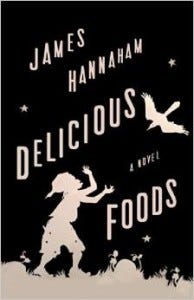
For the release of his new novel — Delicious Foods — Jennifer Egan interviewed James Hannaham at Greenlight Bookstore on March 23rd. And before that event, I sat down with James and Jennifer at his Brooklyn apartment for a more intimate conversation. In it, the two authors offered unique insight into the role history can play on literature, how they manage their expectations of the world of letters, and the humble beginnings of their unique and super-powered friendship.

Ryan Britt: You blurbed James’s first book. How did you guys meet? What’s the origin of the friendship?

Jennifer Egan: It’s a long time now. We met through my husband — then boyfriend — who directed plays. How did you meet David, James?

James Hannaham: I met David [Herskovits] because he did a directing seminar at Yale that John Collins was in.

Egan: Was that when he did Spring Awakening or was that separate?

Hannaham: It was separate, I feel like Spring Awakening was earlier. This was in 1990–1991. And John Collins was in that…John and I moved to New York around the same time and started Elevator Repair Service not long after that. Which started because we were both working on Titus Andronicus.

Britt: So it was theatre that brought you together?

Egan: Yes! Though I wasn’t part of theatre, it was my boyfriend.

Hannaham: And I wasn’t doing too much at that theatre. I was standing outside and guarding these microphones.

Egan: They performed a lot on the street! The neighborhood was pretty crazy then. They were performing in this window of this storefront on Ludlow — which is hard to believe now that that could have been dangerous —

Britt: Right, now every window on Ludlow has a performance.

Egan: Or expensive shoes. But…yeah…that is how I know James. Though it was quite awhile before I knew that you [James] even wrote fiction. I wonder how we had that conversation. Were you writing fiction at the time?

Hannaham: What happened was that I’d gotten job at the Voice in the design department and had started writing articles and there seemed to be a lot of social pressure for your next “thing” to be a book.

Egan: Those were the days.

Hannaham: In the environment at the Village Voice it seemed like next step, after writing reviews was to write a book about something, a non-fiction book if you were a critic. But I knew I didn’t want to write non-fiction. I had no idea what I would write. So I kind of took a stab at writing fiction. And I said to myself “who do I know…” (laughs)

Egan: And I hadn’t published a book either!

Hannaham: I showed you a story of mine. Which I was thinking about yesterday in the shower.

Egan: I still think about that story.

Britt: What was it about?

Hannaham: It was a story about a black gay man who accidentally kills a Republican senator during rough sex.

Egan: And the dialogue between them during the sex is just wild. I remember reading this and thinking “Oh My God!” this is just a guy I knew from the theatre world. And the story was just so shocking and funny and horrible. And it did a lot things. How many times of all the times when people say “would you read my stuff,” does anything happen in those stories?

Britt: Were you the kind of friends who made a lot of weird jokes with each other?

Egan: I think James is funny. I feel like I’m not funny. I’m funnier on the page than I am in real life.

Hannaham: I feel like you [Jennifer] have a mordant sense of humor. But you don’t make as many puns as I do.

Egan: But I feel like from the beginning, I was trying to strategize for you.

Hannaham: That’s true. I was doing a talk at City College a few years ago and I was being asked to retrace the steps of my career and at almost every turn I was like “and then Jennifer Egan said to me…”

(Both laugh)

Britt: So, if you guys had a family relationship, what kind of relationship would this be?

Hannaham: Well, we do have little nicknames for each other…

Egan: That’s truuuue!

Hannaham: There was a point at which Jenny was trying to help me find an agent and at a certain point — you know how they say you need an agent to get an agent — Jenny was that. And so, I don’t remember who started it, but I started calling her “Agent 99.”

Britt: From Get Smart.

Egan: Right, from Get Smart. And I always adored Agent 99 from Get Smart. And so…

Hannaham: ..she started to call me 007, because my first name is James.

Britt: So you guys were like spies together.

Egan: It kind of felt that way. Because it felt so ridiculously hard at the beginning. For most of my time I feel like I really struggled. With Goon Squad I had a lot of really good luck, but it was such a pleasure to use some of the knowledge that I’d gained from all of that to help someone I basically knew was going to get there. But it was kind of crazy how hard it was.

Britt: Was there something in those days, or before, that you wanted out of the writing life, something you don’t care about now, or something you’ve let go of?

Hannaham: Everyone generally thinks it’s going to happen faster than it can.

As if having the machinery in place will make it all happen when in fact it comes down to the work.

Egan: That’s true. There’s often a focus on getting an agent before one needs one. That was not James’s situation, because he had a book. But often, I find people are very focused on that. As if having the machinery in place will make it all happen when in fact it comes down to the work. With James, I was full of advice, but the most essential thing is that the work has to be really good and get better. And that’s a lot to ask. James has always done that. And I remember when you told me about Delicious Foods and I thought “this is a really good idea,” but we all know that doesn’t necessarily mean…

Hannaham: Yeah. It’s what they call in Hollywood “execution dependant.”

Britt: Talking about the book a little bit [Delicious Foods] was this something where you had the concept first? Perhaps before the characters?

Hannaham: There were two ideas. I had this idea in the back of mind that I wanted to write a book that in someway dealt with the legacy of slavery — sort of a rite of passage for a young black novelist — but I wanted to do something I hadn’t seen done before. And I came across this story in John Bowe’s book Nobodies about a black woman who was essentially enslaved in Florida in 1992. I was like “okay. I don’t have to set this in the past.” So, a lot of different things were snowballing at that moment. But I don’t like to think of it as “the concept,” like it’s this thing I put in the toaster while I work on the egg…it all sort of came together at once.

Britt: Now, I might have misinterpreted this, but you make a reference early in the novel to the idea that Eddie should keep his hands up. How do you feel about that reference? Is it a reference to Ferguson? What do think history will do with a book like this?

There are so many different ways to “read” something.

Hannaham: Well, you’re actually asking the wrong person this question! Because of [Jennifer Egan’s] Look at Me…but it’s hard to say. There are so many different ways to “read” something. And as an academic, I’m not sure I know how to answer that. I could read it as a feminist or a post-structuralist. There’s so many ways to answer that.

Egan: I have an answer! I think they [future people] will of course conflate it [Delicious Foods] with Ferguson. There’s no way not to. That’s why, in a way, Look at Me [which quasi-predicts 9/11] is the same. I mean, I do have an afterward that clarifies that I didn’t write Look at Me in response to 9/11 because I wouldn’t have written that book after 9/11. But I’m operating in the same moment that lead to 9/11. And that’s what I think is true of Delicious Foods, too.

Hannaham: And I think that particular detail is not about anything political. But I was editing the book during that time, so it’s possible that it’s in the back of mind. However, my copyeditor on this book told me they were an EMT, so they had a lot of input. And because Eddie has had his hands cut off, I did a lot of research as to what you need to do to survive. Part of that was keeping your arms “up.” One story I researched was about woman named Mary Vincent. She was raped and had her forearms cut off. And after surviving, she became an artist!

Britt: So, Jennifer Egan, imagine you’re James Hannaham: what do think is the question that James Hannaham is going to be sick of getting by the end of the Delicious Foods book tour?

Egan: Well, one of things we have in common as writers is that we don’t work too much from personal experience. So, I feel like there’s a constant desire for readers to find parallels between one’s life and one’s work. And they do exist but I think in the case of people like us if we wanted that to be the conversation, they would be much more in the foreground. I always have a hard time with those [autobiographical] questions. I don’t like to talk about myself, in any way. So, it’s hard to be asked that, when I’ve worked so hard to conceal — even from myself — how much of this stuff I actually used from my life. With James’s first book [God Says No] we had some pretty hilarious moments where people assumed the closeted, obese, evangelical Christian man in the book was James!

Hannaham: Well, that book was written in part to confuse that impulse.

Egan: Anyway, we had potential agents criticizing that book for being so clearly autobiographical.

Britt: How presumptuous!

Hannaham: I think it’s really weird when you’ve written a character who is based on someone and then the “real” person will be like “I’m in that book! That’s me in that book!” And I’m like, no, it’s not. It’s actually just a collection of words.

Egan: I probably talked for way too long about Goon Squad. But I stopped feeling at a certain point that I had been asked questions before. It felt like the first time, each time I did an event. And that was a great stage to reach. Which made me think of theatre. I’d be like “oh I can’t read this chapter again,” but then I’d think, “People perform in plays, every night for months!” And they make it fresh every time.

Britt: James, are you looking forward to that theatrical part of this business, now that you’re heading out on book tour?

Hannaham: Yeah! I mean it’s an ideal job! It fits a lot of my skill sets. I’m good at performing, but I’m terrible at memorizing.

Egan: It is like the easiest job in the world. I had a terrible public speaking fear, but James, comes from a performance background…

Hannaham: I’m also not afraid to die on stage!

Britt: What are you working on now, James?

Hannaham: You’re going to be totally freaked out by this answer. I’m doing a show. [An art show.] I’ve been offered a solo show at a gallery in Ridgewood — which is right in the middle of the book tour — but I couldn’t say no. (laughs) It’s the Kimberly Klark gallery.

Egan: Is it new stuff?

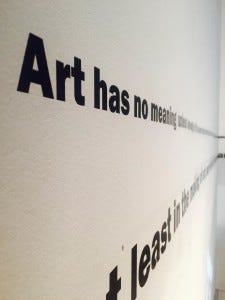
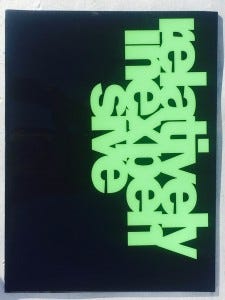
Hannaham: It turned out to be quite new. I bought a vinyl cutter. So I can make vinyl letters that you can stick on things. And it’s going to be a lot of vinyl letters, sentences stuck on the walls. And they said, “Well, you might want to make some stuff that we can sell,” and so I stewed over that conundrum for awhile. But I made these small, 12 by 16 which are poster-type things with these phrases on them that were mostly phrases you’d hear someone say about a work of art. Like, one of them says “Not My Best Work.”

IMG_4951
IMG_4948
IMG_4946

Egan: When is the show?

Hannaham: Beginning of April!

Britt: James, what’s your favorite thing about Jennifer Egan?

Hannaham: That she…lives…nearby. (laughs) There are just too many other things!

Egan: Embarrassing!

Hannaham: I just don’t know anyone who is sharper. And generous. And fierce.

Britt: How about you, Jennifer? What’s the great thing about James?

Egan: Just a totally splendid human being. And amazingly enough, also a superb writer. It’s very hard to find all of that in one person. But, I would take the person first. It’s fun to do all this writing stuff. But that’s not the real thing.

Britt: If you were to pack it all in and say we’re done with this writing thing, you’d still be great friends?

Egan: I’d hope so!

Hannaham: For sure. But, probably spies, too. (laughs)

Original artwork provided by James Hannaham

George R.R. Martin Will Stop Writing for Game of Thrones to finish The Winds of Winter

Last week, the creators of HBO’s Game of Thrones officially confirmed what every fan already knew: the TV show is going to spoil the plot of George R.R. Martin’s epic fantasy series A Song of Ice and Fire. For the past few years, Martin has talked openly about the pressure to finish the series before HBO, once describing the TV show as a “freight train” barreling down on him. While it seems impossible for him to finish the entire series before the show, he seems determined to at least finish book six, The Winds of Winter, before season 6 of Game of Thrones. He recently pulled out of attending several conferences, and today he took to his livejournal to say he wouldn’t be writing any episodes for the next season of the show. (Typically Martin scripts one episode a season.)

Writing a script takes me three weeks, minimum, and longer when it is not a straight adaptation from the novels. And really, it would cost me more time than that, since I have never been good at changing gears from one medium to another and back again. Writing a season six script would cost me a month’s work on WINDS, and maybe as much as six weeks, and I cannot afford that. With David Benioff, D.B. Weiss, and Bryan Cogman on board, the scriptwriting chores for season six should be well covered. My energies are best devoted to WINDS.

On the other hand, Martin also noted that The Winds of Winter was hardly the only project taking up his time:

When I say, “my plate is full,” I don’t just mean with WINDS. I am still editing the latest Wild Cards volume, HIGH STAKES. I have an overall deal with HBO, and three new television concepts in various stages of development, with a variety of collaborators and partners. I am consulting on a couple of videogames. There’s the Wild Cards movie at Universal, where I’m a producer. And I’ve recently formed a new production company to make low budget short films based on a trio of classic short stories by… well, no, not yet, that would be telling. Premature telling.

Meanwhile, the Game of Thrones train keeps chugging along.

Memory, Remembrance, and the Self: Ongoingness: The End of a Diary by Sarah Manguso

Sarah Manguso’s Ongoingness: The End of a Diary is, as its title suggests, a book about another book. “I started keeping a diary twenty-five years ago,” Manguso writes at the beginning. “It’s eight hundred thousand words long.”

Written in short, stanza-like paragraphs, using page breaks and symbols to denote sections, I’m tempted to describe the book as a kind of lyric essay, one a skilled typesetter gently nudged across the hundred-page boundary by way of some recto-verso creativity.

But I’m not really sure any of us know what a lyric essay really “is.” (Or maybe I’m just not sure we could agree on a definition). Regardless, there’s much, much more substance in this slim book than in many much longer tomes.

In truth, the subtitle of the book gives it as good a genre as any.

* * *

“I just wanted to retain the whole memory of my life,” Manguso writes of her diary, “to control the itinerary of my visitations, and to forget what I wanted to forget.”

Good luck with that, whispered the dead.”

The diary served as a kind of backup to memory, hence its length: “I didn’t want to lose anything,” she writes. “That was my main problem. I couldn’t face the end of a day without a record of everything that had ever happened.”

The dead were silent on that one.

* * *

I need to bare something of myself. Like many, I’m an enormous Sarah Manguso fan. One might say that makes this review completely biased. One might be tempted to stop reading here.

But! Consider the expectations I had going in.

If Ongoingness failed, my disappointment would be uncontainable. This review would be closer to eight hundred thousand words of disappointment than the thousand of delighting, gleeful reflection that it is.

Manguso’s most recent book, 2012’s The Guardians: An Elegy, was my introduction to her work. A little like discovering the Beatles circa The White Album, I had a great back catalog to delve into immediately after the discovery: The Two Kinds of Decay, Hard to Admit and Harder to Escape, Siste Viator… Manguso had already run the gamut from non-fiction to short fiction to poetry before I found her.

In The Guardians, Manguso wrote about the death of a dear friend, and she did it in a way that took death and friendship, not as subjects, but as catalysts for a deeper exploration of feeling. Particularly moving was how her loss didn’t end, how death colored the memory of her lost loved one: “He reflects my grief, and it’s so bright I can’t see much behind it, but behind the brightness is a human shape. I look at him, then look away.”

Grief is bright? I mean, just kill me.

* * *

I used to think it could be some wonderful adherence to Susan Sontag’s definition of a writer — someone “interested in everything” — that might explain how Manguso shifts so well between genres without losing some of her, well, Manguso-ness. But now, I think it must be that the diary, the eight hundred thousand words being written underneath all those other words, served as a kind of consistent foundation. Like different boats on the same sea.

From The Two Kinds of Decay, her 2008 memoir of a prolonged illness: “If you think something’s happened quickly, you’re looking at only a part of it.”

The diary is another part of it.

* * *

Now I’m thinking more about The Two Kinds of Decay. Towards the end Manguso wrote of her mother’s habit of saving desk calendars: “one month per page, one square per day, two inches by two inches. Once in the 1980s I saw her take down a few from the 1970s, from her closet shelf, and look through them.”

Later, she asked her mother if she could see the calendars from the mid-90s, from when the illness she was writing about was at its worst.

Her mother had stopped saving them. “Why should I save them?” she says. “I’m never going to be famous.”

* * *

From Christopher Hitchens: “Everybody does have a book in them, but in most cases that’s where it should stay.”

Daily life is full of conflict, climax, and resolution. Even the most mundane life can make for a wonderful novel — just ask Emma Bovary. It’s the tiny matter of transferring life to the page that separates a potential book from a finished one, the self’s book from the reader’s, memory from art.

Behind every written book are the unwritten memories that led to it, that much longer book no one ever reads. That diary.

* * *

So why is Manguso’s diary ending? Because “the future happens. It keeps happening,” she writes. It was impossible to keep up. To write down everything. And life kept happening. More everything kept happening.

The diary could never be finished; she could be finished with it, though.

“Like different boats on the same sea”? You could say that about any writer.

* * *

Here’s something I believe, something Manguso didn’t say in Ongoingness but something I took from reading it: we only exist because we remember we do. If the self can’t remember itself, then it cannot be. Everything the self is, is memory.

Eventually, though, we recognize we are more than a self.

* * *

Manguso had a baby boy. That’s the life that kept happening.

“I’m watching my little son change,” she writes. “Watching him learn things is like watching a machine become intelligent, or an animal become a different animal. It’s terrifying and beautiful and this has all been said before.”

Becoming a mother allowed Manguso to transcend the self, and with it the diary. “My body, my life, became the landscape of my son’s life. I am no longer merely a thing living in the world; I am a world.”

* * *

Regarding the Hitchens quote from earlier — I don’t remember whether he said those words out loud or not. Perhaps they were transcribed from a speech; perhaps they were written as marginalia into a transcription. Most likely they’re from one of his books and I’m remembering from one of those, I’ve just forgotten which.

I do know that I remember the words. I know I remember because I remember.

The Internet, though, the collective memory-diary for the living, hasn’t helped solve my sourcing problem. That Hitchens said or wrote what I quoted is verifiable in a bunch of places. How it happened, though, is neither there nor here.

I should have kept a diary. But then again, perhaps I did and have just forgotten.

Ongoingness: The End of a Diary

by Sarah Manguso

Powells.com

ESSAY: Behind the High by Josh Russell

Behind the High, I lifted the dead hummingbird from the sidewalk with a sheet of lined notebook paper you’d kissed to blot your lips and laid the little suicide to rest in a tangle of ivy at the base of a slender tree. Had it seen its reflection in the museum’s window and did the double draw the bird to its death? Fear of the doppelgänger is, after all, little more than narcissism. When later I found and unfolded the paper I’d tucked into my pocket, I remembered both the bird and another of your kisses: one morning you kissed me, and after riding trains and walking through January cold, I sipped bookstore coffee and transferred to the cup’s white edge the kiss you’d pressed upon my lips.

photo by longan drink

Spiritual Warriors (from Bible Adventures by Gabe Durham)

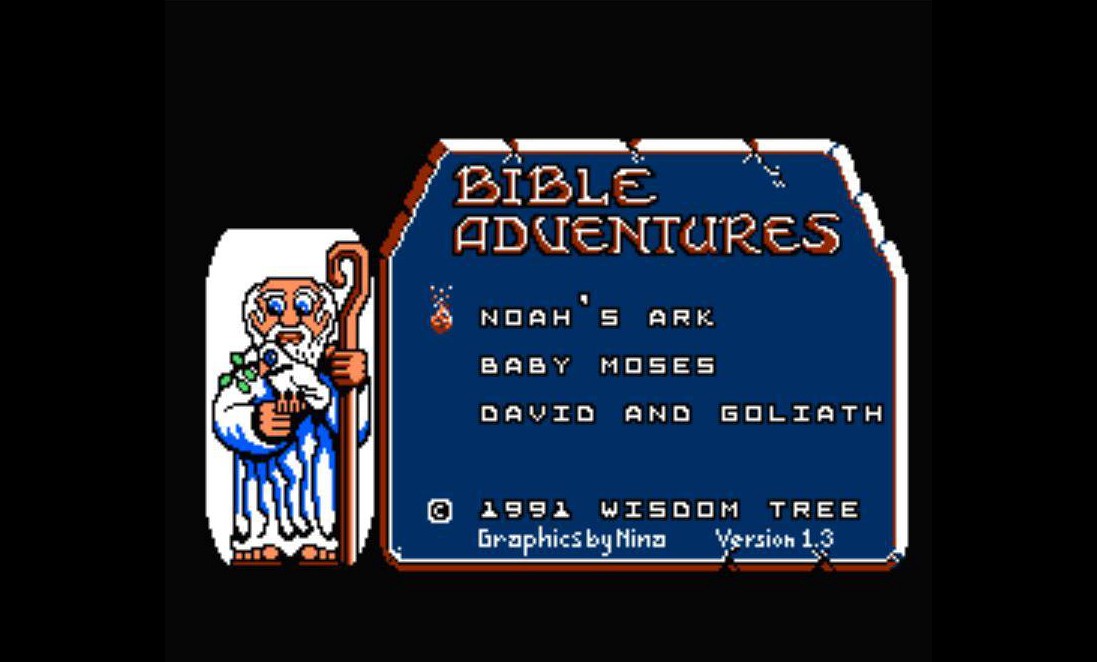
Gabe Durham is the founder and editor of Boss Fight Books, the “33 1/3 of video games” in which each of their books offers a critical take on a single video game. Their seventh book is his own entry on the 1990 unlicensed NES game, Bible Adventures, the first in a series of bizarre and fascinating games targeted at Christian kids. The book covers each of Wisdom Tree’s Bible games, including King of Kings, Sunday Funday, Super 3D Noah’s Ark, and the subject of the following essay, Spiritual Warfare.

bible adventures

The literalization of spiritual warfare is one of the stickiest, war-hawkiest, and most blockbuster concepts to ever come out of the New Testament.

As Christianity’s more excitable denominations would have it: Every day, actual angels and demons duke it out on a celestial CGI battlefield over your littlest temptations. Snuck a twenty-spot out of Mom’s wallet? Some sporty demon landed a sucker punch. Resisted the call of the PornHub for the entirety of Memorial Day weekend? Must’ve been a big win for the good guys. A fringe benefit to this way of viewing the universe is that it takes the moral imperative off a body’s own free will: It’s not your fault when you’re bad. The corpses stacked in your meat locker merely imply that Satan’s really been on his game lately.

“Therefore put on the full armor of God,” says Paul in his Letter to the Ephesians, “so that when the day of evil comes, you may be able to stand your ground. […] Stand firm then, with the belt of truth buckled around your waist, with the breastplate of righteousness in place, and with your feet fitted with the readiness that comes from the gospel of peace. In addition to all this, take up the shield of faith, with which you can extinguish all the flaming arrows of the evil one. Take the helmet of salvation and the sword of the Spirit, which is the word of God.”

A zealously violent Jew who used to slaughter Christians just because he thought they were wrong about who God is, Paul naturally trafficked in battle metaphors even when all he had to say was: Have faith, be righteous, and — ha — be peaceful.

Wisdom Tree’s 1992 game Spiritual Warfare elegantly combines the heavens and the earth by putting you in control of a little guy in a big world much like our own — dirty, dangerous, bound for ruin — but whose connection to the spiritual world is more concrete. Angels arrive early and often to command you, to chastise you, and to power you up with newer better weapons so that you can do the Lord’s work — kickin’ ass.

Well. Sort of kickin’ ass.

Though it’s easy to forget it for the game’s 8-bit ambiguities, your main weapons are thrown fruits, and not just any fruits but the Fruits of the Spirit, which Paul, this time in his Letter to the Galatians, tells us are “love, joy, peace, patience, kindness, goodness, faithfulness, gentleness, and self-control.” But since you can’t throw a gentleness at an unbeliever, these Fruits, like the Armor of God, are literalized into pears, apples, and grapes.

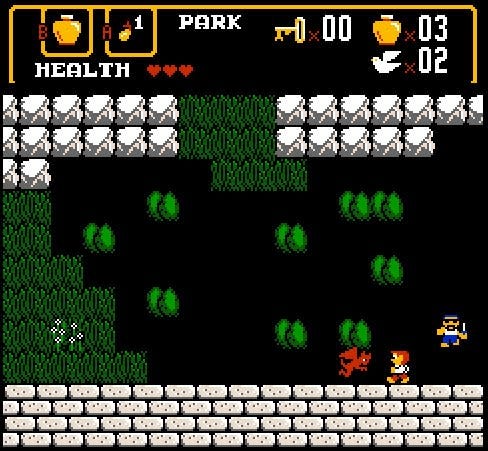
If Super Mario Bros. 2’s “pick things up and throw them” gameplay offered the basic template for Bible Adventures, the game that most clearly inspired Warfare is The Legend of Zelda. You’ve got the bright overworld, ripe for exploration but closed off in certain areas until you’ve powered up, and the mazelike interiors, some of which run deep and contain bosses. You move frame by frame, and the enemies repopulate if you get far enough away from them. You start small and weak, but are gifted your primary weapon in the very first room (up and to the left) and grow from there. Your mission is that of the collector/assembler, who must in this case obtain every piece of the Armor of God to fight Satan. Your keys, torches, rafts, and potions all do what you’d think. Your bombs (here called “Vials of the Wrath of God”) bust through walls and unbelievers alike. You’ve got stores peddling wares, some of which are essential. You’ve even got select little rooms that operate with a newfound platformer-like respect for gravity (a la Zelda’s dungeon ladder power-up rooms) before abandoning it once again.

Another thing Warfare shares with Zelda: It’s a lot of fun. Probably the most fun game in the Color Dreams/Wisdom Tree catalogue. A mystery of the NES age is that for how enjoyable and lucrative The Legend of Zelda was, imitators did not come out of the woodwork the way Mario clones did. It’s possible that a Zelda clone, with its vast sprawling maps, would take longer to code than your average run-n-jump platformer, but sprawling maps didn’t stop Enix from churning out a Dragon Quest annually for three years straight. When Zelda’s much-anticipated sequel arrived, The Adventure of Link failed to satisfy our craving as it was mostly a platformer. The greatest Zelda-inspired game for the NES console, SNK’s Crystalis, arrived too late for the world to take notice. Warfare, with its own big explorable world, scratched a powerful itch for kids who, like me, belonged to both the Christian bookstore and Nintendo Power set.

The map of Warfare is not a fantasy world of caves, dragons, and tunics, but a contemporary one of cars, trains, construction workers, and high-rise buildings — it’s just that there are demons and advice-offering angels behind every corner, and the Truth is known only by a privileged few. These few are tasked with venturing out into a fallen world, spreading the Truth, and (if necessary) killing those without ears to listen. It is, in other words, the real world as seen through the eyes of a fundamentalist.

bible adventures

Twice in high school, I went to a weeklong evangelism training conference in Costa Mesa, CA called Students Equipped to Minister to Peers (SEMP). If Lads to Leaders/Leaderettes was training in how to be a good Christian boy on Sunday mornings, SEMP was training in how to take those skills to the streets. And while its face was a lot more casual, SEMP’s roots were more deeply conservative than Lads to Leaders or any other institution I’d encountered before.

At many times of day, SEMP was just like the church camps and retreats I was attending at that time: We slept in college dorms, went to classes, listened to sermons, and sang for an hour each night.

It was the afternoons that made SEMP unique. Every day after lunch, we’d divide up into teams and then head out in vans to a nearby beach where we would evangelize to unsuspecting sunbathers. Equipped with evangelical tracts, carefully honed personal testimonies, and recently-learned stats proving the Bible’s veracity,[1] we went umbrella to umbrella, towel to towel, in search of prospective converts.

I tried to be a good sport, a good spiritual warrior, but those afternoon outings were my personal Hell. I’ve always hated bugging people, so when out on those beach missions, I secretly hoped most interactions would be speedy and innocuous. Often when my SEMP team ran into another SEMP team on the beach, we’d all linger and chat awhile, eager for a distraction from our Great Commission.

When I invited a beachgoer to chat, the only thing worse than her responding with a clipped “no thanks” was her saying sure: She’d be glad to hear the story of a personal experience with Jesus Christ from a gawky teen trying not to stare at her nearly bare tits. The ultimate goal was to guide the sunbather through a prayer in which she accepts Christ into her heart, to give her info on a local church she could plug into, and to send her back out into the world a changed woman. As in Spiritual Warfare, she would at this point no longer be my concern — after being converted, she’d drop to her knees, say her prayer, and disappear.

One day, I met a middle-aged Taoist guy who told me (with what even then felt like scary prescience) that I was young and that my views would someday evolve. Another day, I met a kind and chatty lesbian and talked to her awhile, only to find out the next day that if you encounter One of the Gays, you are to abort mission immediately.

Going home in the van each evening, I was sick with guilt. Day after day, my personal conversion count remained zero. Meanwhile my friend Aaron absolutely crushed it. Not only did he pray the prayer with a bunch of people, he took a couple of those converts out into the ocean and baptized them on the spot. I knew it wasn’t just luck — I’d never be an Aaron. Each morning in training our leader would say, “Hands up: How many of you saved someone yesterday?” We’d tally our conversion numbers for the week, lower per capita for deadweights like me.

Still, I sang hard at night and had serious, important faith talks with my best friend, Brent. A few days into the conference, Brent’s first-ever girlfriend broke up with him, and in his grief Brent immediately skimmed through a popular Christian abstinence tome called I Kissed Dating Goodbye. He had me sign a sheet as a witness to his new commitment to never kiss another girl until it was at the altar, a commitment he kept for nearly three weeks. The next year, Brent confessed to me in confidence that he’d begun to doubt God’s existence altogether, and instead of keeping that confidence I immediately gathered a group of our friends to emergency-pray for his soul.

Fervor was the style at the time. Those weeks at SEMP, we flirted with an intense fundamentalism that was impossible to maintain in our normal lives. We were taught to believe that faith was the highest stakes game there was. That it was literally, as SEMP’s promotional video twice states, “a matter of life and death.”

*

When in Spiritual Warfare you kill heathens (or “Unsaved Souls” as the manual calls them”), it’s understood that your well-placed apple to the head has not murdered the heathen, it has set him free: The heathen suddenly drops to his knees, mouths a brief prayer, and disappears forever.

bible adventures

Our hero’s fruit-barrage technique works wonders when it comes to bringing dangerous heathens to their knees. But about one out of five times, that’s not all it does: Even before the mortal has disappeared from the map, the demon inside is unleashed and attacks you. He must be felled in the same manner as his vessel: more fruit.

This convention was eventually skewered in an episode of The Simpsons. While in the home of mega-Christians Rod and Todd Flanders, Bart fires up their game, Billy Graham’s Bible Blaster, a first-person shooter where you use a handgun to shoot Bibles at heathens, which instantly converts them to Christianity. “Got him!” Bart says after hitting a unbeliever. “No,” Rod says, “you just winged him and made him a Unitarian!”

In this way, Warfare shares a bit of DNA with a better game, EarthBound, in which the New Age Retro Hippie and Annoying Old Party Man are not killed by your attacks, they’re un-brainwashed: set free.

After you, as our spiritual warrior, kill/save two bikers who appear to have been terrorizing an old woman, she cryptically quotes Paul’s Letter to the Romans, “But if we hope for what we do not have, we wait for it patiently.” In another EarthBound parallel, you are to wait around in the frame for a little while. Eventually one of the cars rolls forward, revealing the stairs to a room where you may purchase a banana. (Much of your map-wandering amounts to gathering new fruits, hearts, and items to give you strength for a final confrontation.) When you’re ready, you’ll sneak into prison, avoiding all the perpetually rioting prisoners as best you can, and take a staircase down into Hell.

While Hell is the most moody and goth-looking part of the game, the music does not change at all. You are treated to the same singsong rendition of “On Christ the Solid Rock I Stand” that you’ve been hearing on repeat the whole game.

bible adventures

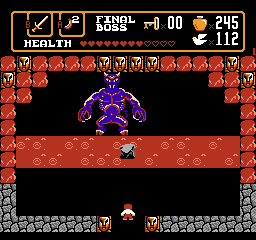
Hell is not called Hell in Spiritual Warfare, it’s called Demon’s Lair, though the pools of lava, hoards of demons, and spooky pointy hoofprints make it clear that you’ve come to kill Satan on his home turf. Only they don’t call him Satan, either, but simply Final Boss and then “the final foe.”

Why did the Wisdom Tree pull these punches? Why not call a Satan a Satan?

For one thing, it’s often pretty hard to tell whether a particular word going to piss a Christian off. Hell is both a septic tank for sinners and a naughty swear word — the only thing differentiating one use from the other is context.

But it’s also true that if our hero was defeating the actual Satan, that could ruffle some feathers too. The ultimate defeat of Satan is Jesus’s job. Is Wisdom Tree trying to create a hero more powerful than Christ himself? Calling Satan the Final Boss offers theological wiggle room — he’s not Satan, Wisdom Tree could say, just one of his helpers.

*

After Jesus comes back from the dead, he gets the eleven remaining disciples to meet him on a mountain, and there tells them to “go and make disciples of all nations, baptizing them in the name of the Father and of the Son and of the Holy Spirit, and teaching them to obey everything I have commanded you.” (Matthew 28:19–20)

This brief speech, known as the Great Commission, is so important to Christendom that it was grafted onto the Book of Mark long after Mark was written so that Mark, a prickly gospel that ends in fear and confusion, would have a happier ending more in line with Luke and Matthew. In the speech, Jesus sets Christianity apart from Judaism by telling Christians it’s their responsibility to convert nonbelievers. God’s chosen people used to be a tribe, a bloodline; now it’s whoever signs up.

Since then, Jesus’s message of inclusion has been twisted by governments to justify violent power grabs like the Crusades, the Spanish Inquisition, the slaughter of the Native Americans, and the American invasion of Iraq. But Jesus had no interests in telling governments what to do — he asked his followers to play nice, “give to Caesar what is Caesar’s,” and then hope Caesar goes away so you can do your thing in peace.

But the Great Commission has also been twisted by Christian tradition into a scare tactic: If you don’t follow Jesus, you spend an eternity writhing in Hell with no hope of vanquishing Final Boss. Never mind that Jesus himself never bothers to stress this terrifying reality, or that only a tenth of our notion of Hell itself actually comes from the Bible. Eight tenths comes from Dante’s Inferno, while the final tenth is split between Bill and Ted’s Bogus Journey and the “Spooky Mormon Hell Dream” scene in The Book of Mormon.

The Hell myth circulates so widely because fear works. It’s Christianity’s creepy trump card. If those lava pits are that hot, I’d better be a good boy. If those pitchforks are that sharp, I’d better show everyone how to avoid it.

The closest I ever came to saving someone from the fires of Hell was the time in high school I became fast friends with a girl named Megan. We kinda liked each other, and she opened up to me about the problems she had with her mom and an older ex-boyfriend. But since I only dated Christian girls, I parlayed our mutual attraction into inviting her to youth group with me. She became my project.

For a little while the project came along surprisingly well. Megan rode with me to youth group meetings, met my friends, and asked lots of heavy questions. But after awhile it became clear to her that she and I weren’t going to happen, and when her attention diverted elsewhere, she found better things to do on Wednesday nights. I felt like shit. In my head I’d been her one big chance at salvation, and I’d blown it: A better, bolder Christian would have known how to win her soul. When I saw Megan around school after that, I felt so much guilt that I had a hard time even saying hi.

I now believe that the reason to feel bad about Megan and all the beachgoers at SEMP was not that I hadn’t won them over for Christ, but that I’d seen them as potential converts instead of as people. Megan rightly ended her friendship with me for the same reason you might need to end a friendship with a woman who has begun selling Mary Kay — her group of friends has overnight been transformed into a network of potential customers. Her eyes are full of pink caddies.

*

Spiritual Warfare is the lone game that resists Ian Bogost’s otherwise fair critique that Wisdom Tree games “did not proceduralize religious faith.” Whereas Bible Adventures merely gamifies Bible stories, Spiritual Warfare suggests a more intimate understanding of Christian culture, integrating not just Biblical tropes but contemporary Christian ethics into gameplay.

In the city, you encounter something you’d never see in a licensed NES game — a building marked “BAR.” Not a café, not a soda shop, a real bar. Enemies flood out of the bar’s open doors as you approach, running past you as if for their lives.

Rule #1 of open-world adventure games: Go through every door. A creature might now and then charge you a few rupees to pay for the door you just bombed, but maybe something essential will happen — an item or clue that points the way forward.

Rule #1 of Christian culture and real world navigation: Don’t go through every door. Drinking’s bad, bars are lusty, and bar-gals are loose.

My high school Christian Club used to trot out these discussion cards featuring ethical riddles. One I remember was, “Are there circumstances under which you’d consider being a bartender?” and then some kids would say, “Well it could be a ministry opportunity, and I could cut people off before they got drunk-drunk, and I wouldn’t drink myself…” and others would say, “The correct answer is NO. To work there would be to endorse it, and I think if Jesus showed up and saw you selling alcohol to people in a bar, it’d make him pretty sad. Whether you were being ‘nice’ to the drunks or not.”

bible adventures

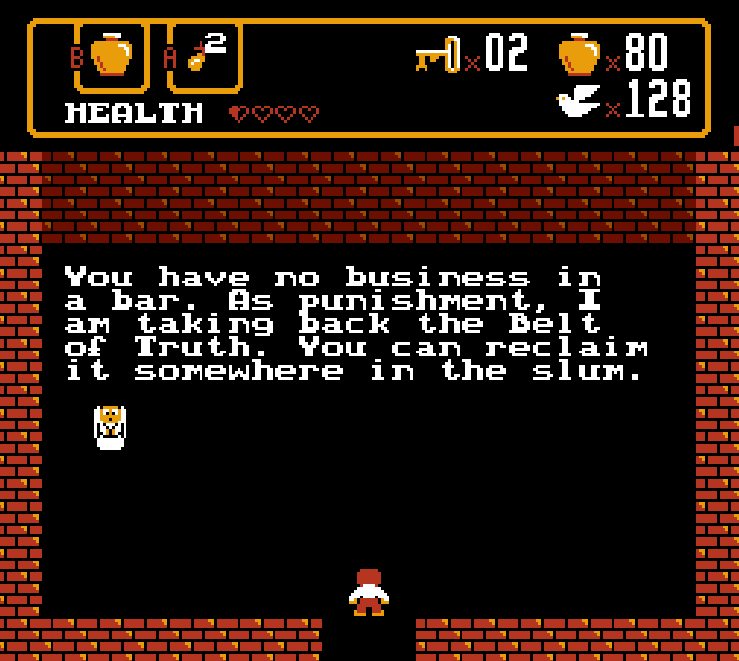
But Spiritual Warfare is a video game. So you go into this BAR to see what the chatty barkeeper might have to tell you, and are faced, instead, with an angel. Fuck. “You have no business in a bar,” he tells you. You notice that this bar contains nothing: No chairs, no tables, no patrons, no bar. Just the angel and the text of his admonition. “As punishment,” he continues, “I am taking back the Belt of Truth. You can reclaim it somewhere in the slum.”

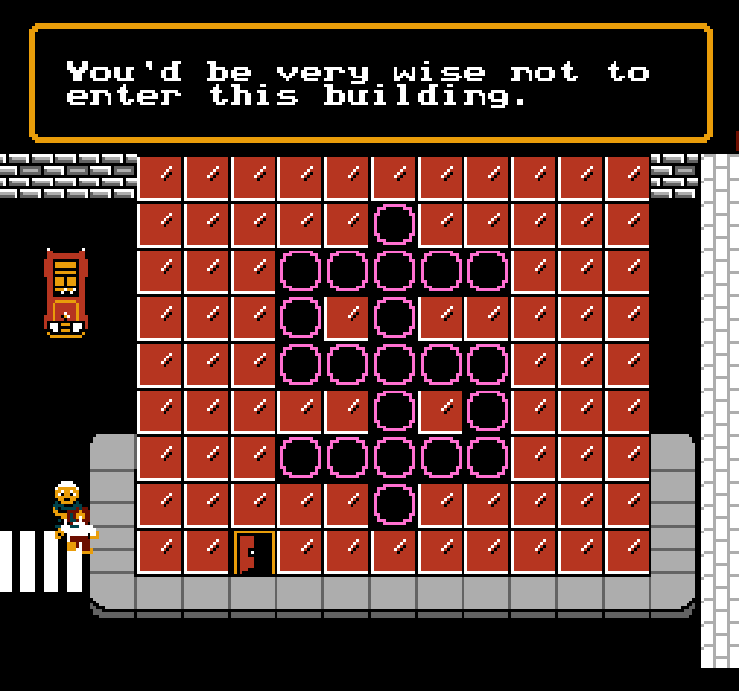
Later in the game, you happen upon a tall building with windows that form the shape of a dollar sign: a casino. The old woman standing outside it warns, “You’d be very wise not to enter this building,” and this time you understand it’s a trap: Here, there be angels. And so you wisely move on, allowing this one part of the map to go unexplored, not out of any particular virtue, but for a good Christian’s best reason to avoid vices — fear of punishment.

[1] For instance, we were told that there were 300+ prophecies of the coming of Jesus in the Old Testament. According to the SEMP manual, the odds of this occurring coincidentally “would be as likely as filling up the state of Texas two feet deep with silver dollars and marking one coin, stirring the whole mass of coins thoroughly and blindfolding a man and telling him he can travel as far as he wishes, but he must pick up one silver dollar and say that this is the one.”

bible adventures

Purchase Bible Adventures here.

Sunday Sundries: Literary Links from Around the Web (March 29th)

Looking for some Sunday reading? Here are some literary links from around the web that you might have missed:

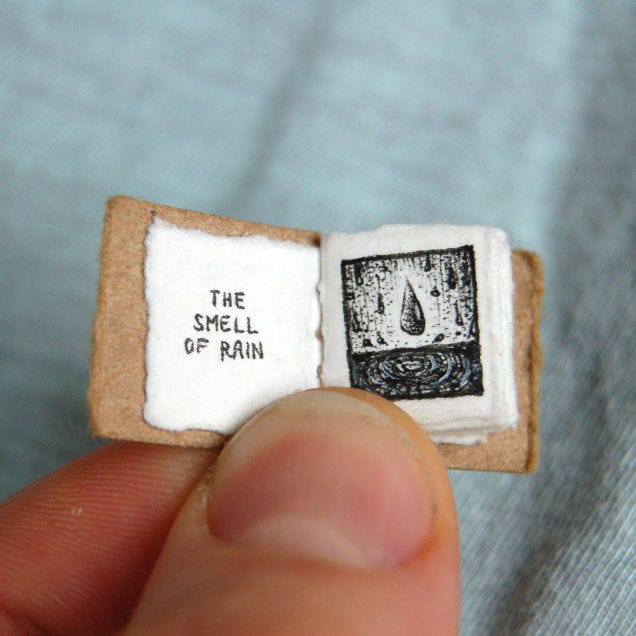
smell of rain

Gizmodo looks at the pleasures of a teeny tiny book

Authors unite against the CleanReader censorship app

New Yorker wonders if you are a Knausgaardian or a Ferrante fanatic?

A look at This Is Not That Dawn, “India’s forgotten feminist epic”

Laura Miller explains why she is avoiding the new season of Game of Thrones even though she doesn’t care about spoilers

Should newspapers become a luxury good?

The librarian who kept the Ferguson library open during the protests and clampdown just won an award

There are only two rounds left in the Tournament of Books

Slate explains why it took so long for The Great Gatsby to be considered a classic

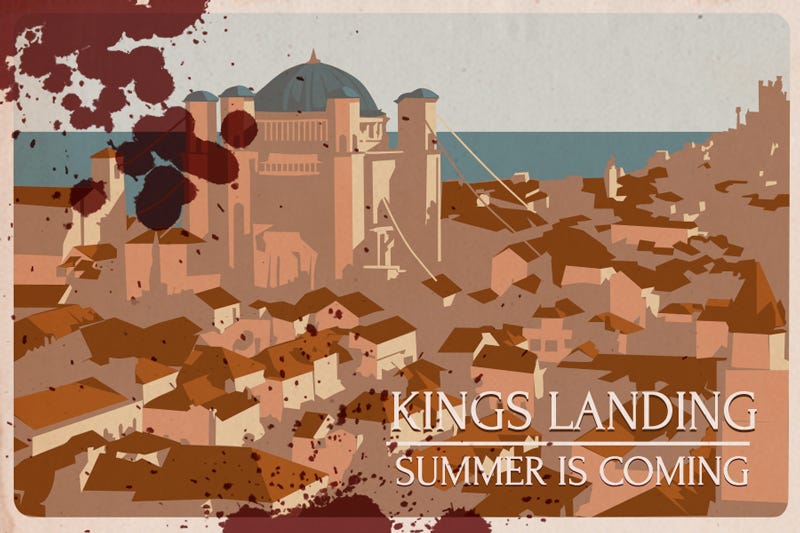
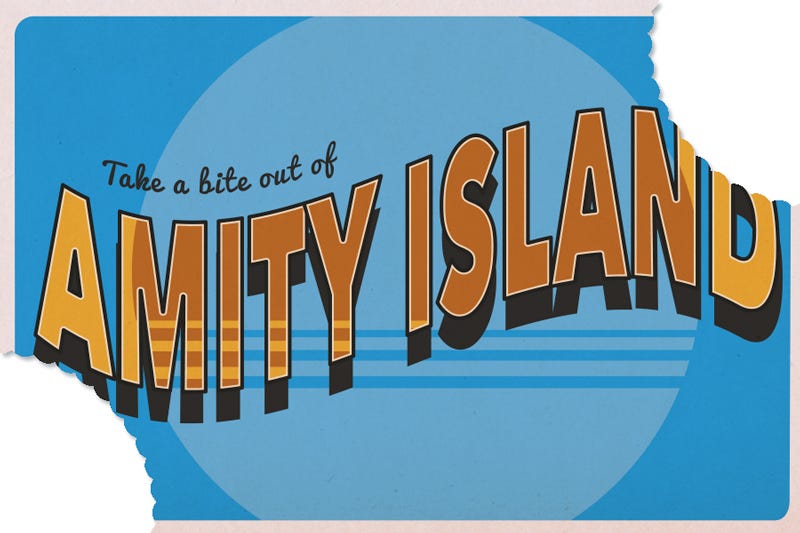
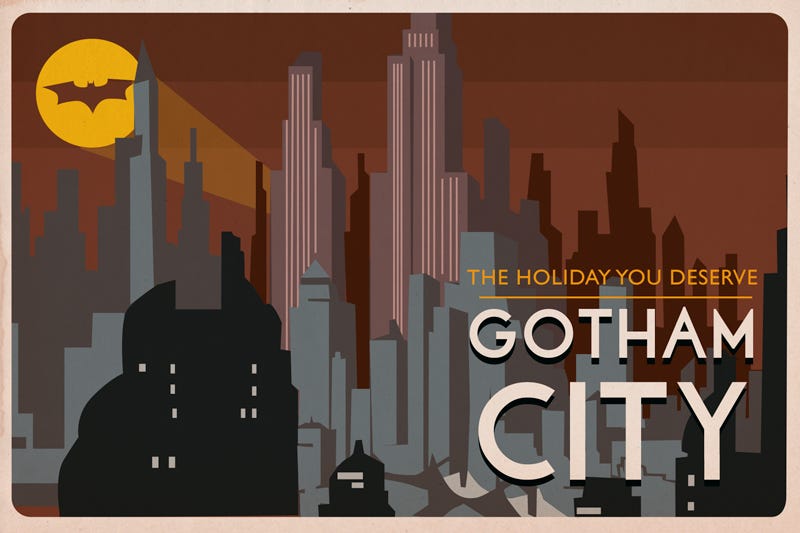
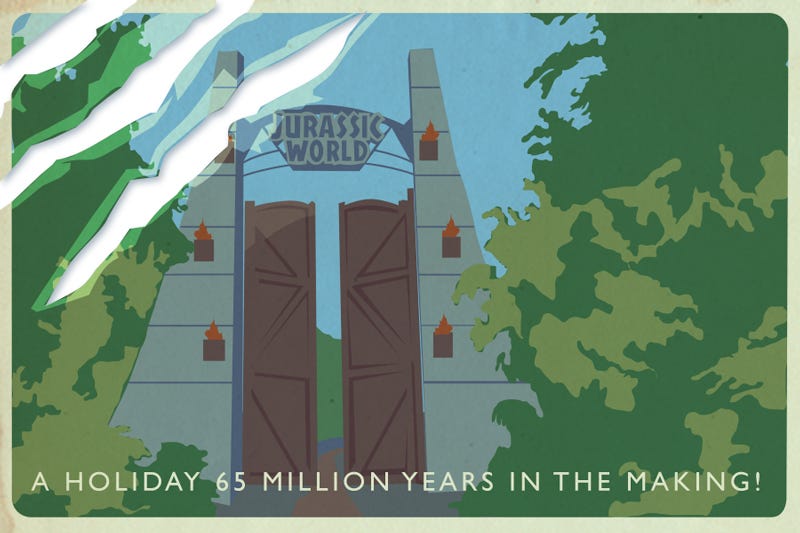
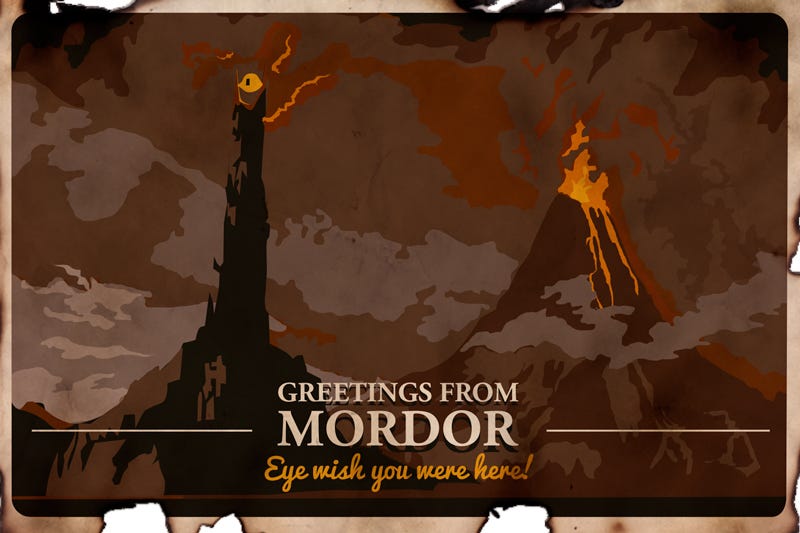
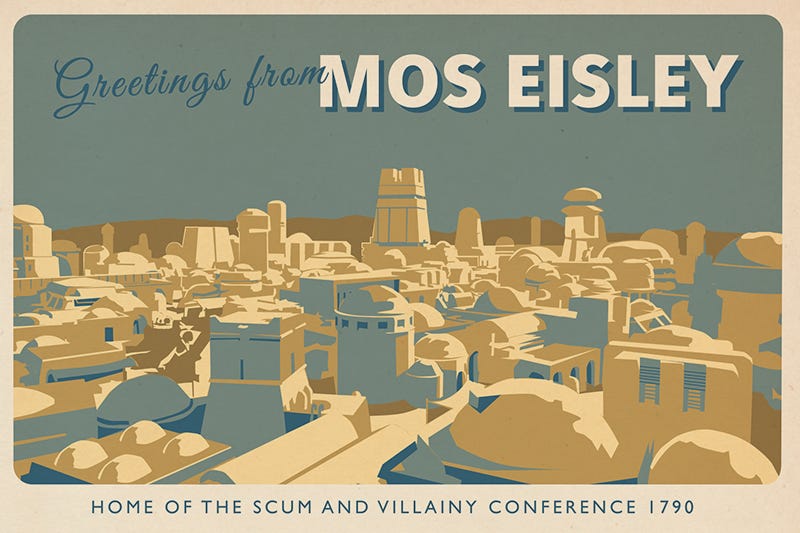
These Postcards from Fictional Destinations Are Spot-On

Can you imagine a souvenir shop at the base of Mount Doom? What about a kitschy general store in the middle of Kings Landing? British print company myprint247 certainly has, and they’ve created some pretty clever postcards as a result. Aside from Lord of the Rings and Game of Thrones, the company also drew inspiration from iconic fictional places like Gotham City and Jurassic Park, the vintage travel imagery and witty slogans hearkening back to a time long before Instagram and Snapchat came along.

Kings Landing
Amity Island
Arendelle
Gotham City
Jurassic Park
Mordor
Mos Eisley

For more information about myprint247, check out their online shop

Nobel Laureate Tomas Tranströmer Dies at Age 83

The acclaimed Swedish poet Tomas Tranströmer passed away yesterday at the age of 83. In 2011, Tranströmer won the Nobel Prize in Literature, with the academy noting that “through his condensed, translucent images, he gives us fresh access to reality.” He also won the Neustadt International Prize for Literature in 1990, among many other awards. He is widely considered one of the most important Scandinavian writers since the 1950s and his work has been translated into more than fifty languages.

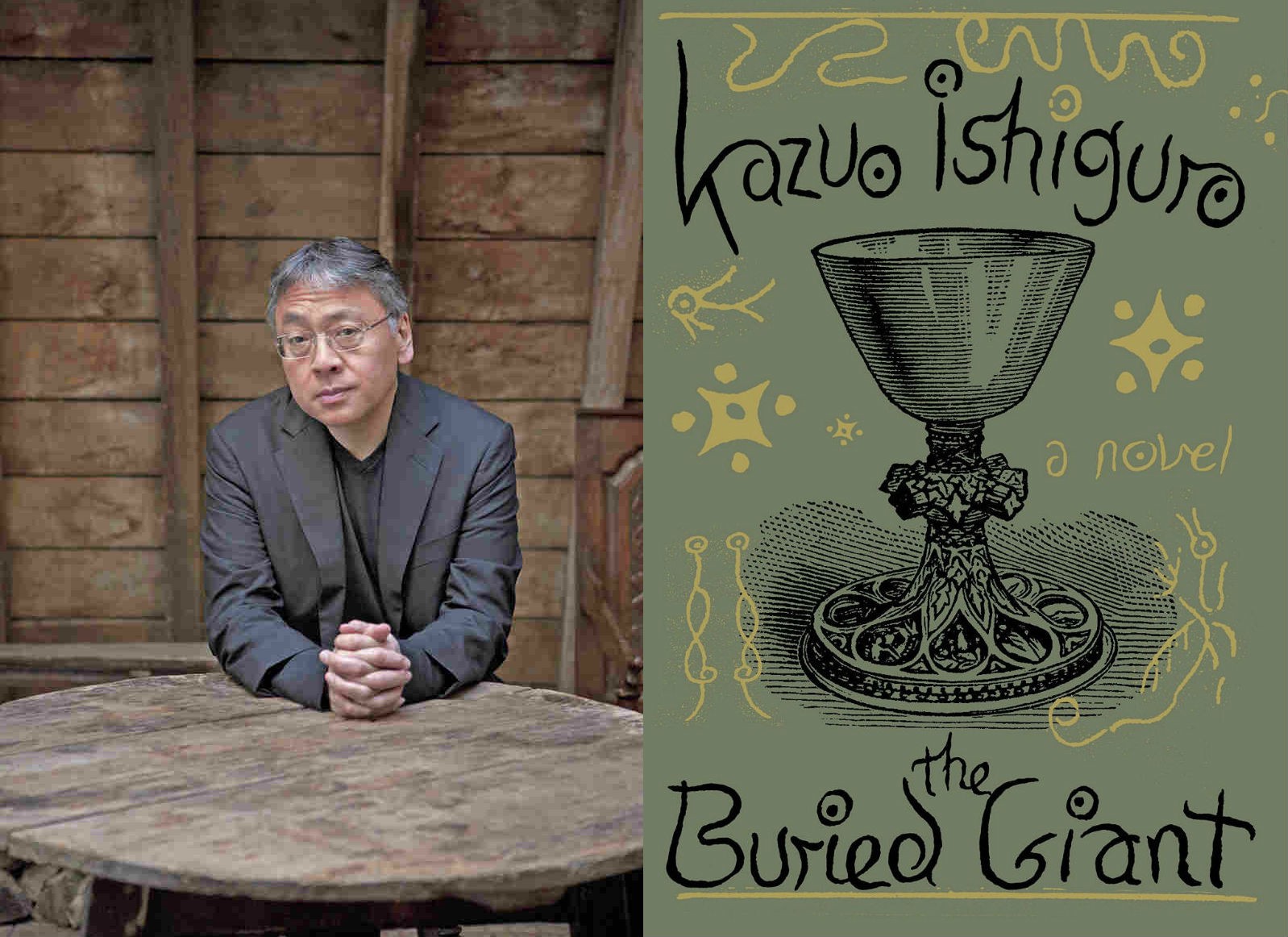
A Language that Conceals: an interview with Kazuo Ishiguro, author of The Buried Giant

Ten years after the publication of his last novel, Kazuo Ishiguro has come out with a new book, The Buried Giant. A former winner of the Man Booker Prize and considered one of the best British writers alive today, Ishiguro is a master of the understated. His works feature narrators that speak so simply and so plainly, they appear to have almost no affect at all. Still, their stories are dark and poignant, and it’s often not until the last few pages of an Ishiguro novel that we realize how deeply we’ve been moved.

In The Buried Giant, an elderly couple sets off on a journey through a mythical England populated by ogres, dragons, knights and giants. Axl and Beatrice are in search of their son, whom they can’t quite remember how they lost. This is because the inhabitants of The Buried Giant’s mythical world suffer a collective amnesia, a ‘mist’ that keeps them from holding onto certain memories, both personal and historical. As we travel with Axl and Beatrice, the novel asks us what memory (and forgetting) means to a person, to a couple, to a society. In many ways, the book is surprising (The New York Times calls it ‘a departure’), but it also showcases some of Ishiguro’s most essential qualities as a writer: subtle prose, a dreamlike atmosphere, and powerful questions about loss and memory.

I sat down with Ishiguro in Knopf’s office early on a Friday, just before it began to snow. We talked about his writing process, collective memory, Inglourious Basterds, and his new novel’s recent role in the conversation about genre.

Chang: Each of your novels is so unlike the one that came before it. The Buried Giant has surprised a lot of readers. Can we talk about what influenced you while you were working? What books were you reading, or drawing upon?

Ishiguro: Well, I did a great deal of research and read quite a lot before I wrote the book. But I don’t know that the books I read during the actual writing process necessarily have much to do with it.

I find that when you’re writing, it becomes quite a battle to keep your fictional world in tact. In fact, as I write, I almost deliberately avoid anything in the realm of what I’m working on. For instance, I hadn’t seen a single episode of Game of Thrones. That whole thing happened when I was quite deep into the writing, and I thought, ‘If I watch something like that, it might influence the way I visualize a scene or tamper with the world that I’ve set up.’

Chang: It sounds like the planning stage and the writing stage were two very separate parts of your process.

Ishiguro: Yes, it’s really when I’m planning the project that I actively look for ideas and read very widely. I spend a lot of time planning. I’m quite a deliberate writer in that way. A lot of writers I know just work with kind of a blank canvas. They feel it out and improvise on it and then they look to see what kind of material they’ve got.

I’ve never been able to do that. Even at the start of my career, when maybe I would have been a little more reckless. I’ve always needed to know quite a lot about the story before I start to write the actual prose. I’ve always needed a solid idea before getting started.

Chang: How do you know when you have a solid idea?

Ishiguro: It’s got to be something that I’m able to articulate to myself in about two to three sentences. And those sentences have to be compelling, much more than the sum of their parts. I should be able to feel the tension and emotion arising from that little summary I’ve created, and then I know I’ve got a project to work on. With The Buried Giant, for example, the starting point was something like: ‘There’s a whole society where people are suffering some sort of collective, and strangely selective, amnesia.’

Chang: And that was the summary you had in mind before you sat down to the page?

Ishiguro: Yes, but that’s not quite enough for an idea. That’s more of a concept. I guess if I had to write the next line of the summary, it would be, ‘There’s a couple who fears that without their shared memory, their love will vanish.’ And then the third line would be that the nation around them is in some kind of strange tense peace.

Alright, so I didn’t literally write those sentences down, but that’s how I start a project. I start with something quite abstract like that, and then I start to plan and do my research.

I tend to read quite a lot of non-fiction around the themes I want to explore.

Chang: Are you fairly careful about curating what you do read or think about while you plan a novel?

Ishiguro: Not necessarily. For this book in particular, I read a very good Canadian book called Long Shadows by Erna Paris, It was written in the early 2000s and documents her travels, looking at the various kinds of brewing or buried trouble. There was also Postwar by Tony Judt, and Peter Novich’s The Holocaust in American Life.

Now, those nonfiction books went into it the research part, but I find that almost anything around that point can be influential. Around that stage is when I’m most sensitive, or most open to influence. Almost every movie I see, every book I’m reading, I’m thinking: ‘Is there something here that might nudge me toward an image, or an idea, or even a technique?’

I remember I happened to be watching Tarantino’s Inglourious Basterds at a formative point. There’s a long scene where the American guys are in a German bar, pretending to be German soldiers, and they’re playing this game and speaking in bad German, and it goes on for this incredible amount of time. You know it’s going to end in some terrible violence, but it goes on and on.

That seems to have nothing to do with my book. No one would detect Tarantino as an influence while reading The Buried Giant, but I thought it was such a great way to deal with an explosion of violence. You actually don’t have to spend a lot of energy on the violence itself. It’s the lead up, the tension. So, yes, I’m quite open to reading or hearing or seeing anything at that point in the process.

Chang: What was behind the decision in setting The Buried Giant in a mythical, medieval England? Did you know this would surprise people the way it has?

Ishiguro: Often the setting comes quite late in the process. I usually have the whole story, the whole idea, and then I hunt for the location, for a place where I can set it down.

It’s sort of like I’ve wandered into people’s countries without knowing where I’ve landed.

So I’m a little bit naïve, maybe, about what the finished thing will look like in terms of genre. It’s sort of like I’ve wandered into people’s countries without knowing where I’ve landed. And after I’ve been there for quite some time, someone says ‘you realize you’re in Poland now.’ And I say, ‘Oh really? I just followed this trail of stuff I needed.’

I didn’t wonder how people would define or categorize The Buried Giant until it was done. And then as publication approached, I started to see it from the outside. I’d been so absorbed with trying to get the thing to work from the inside.

I did think about setting it in a very real contemporary, tense situation. I considered Bosnia in the 1990s as a setting, and well, I thought about Rwanda but didn’t consider it for too long, because I feel unqualified to write about Africa. I know so little about African politics, African culture. The disintegration of Yugoslavia I felt closer to, because I live in Europe. These massacres were occurring right on our doorstep. I wanted to look at a situation in which a generation (or two) has been living uneasily in peace, where different ethnic groups have been coexisting peaceably and then something happens that reawakens a tribal or societal memory.

Chang: What made you ultimately decide on this more distant reality?

Ishiguro: Well, if I had done that you’d be asking me why I was suddenly interested in Yugoslavia, and if I have relatives that used to go there, and what do I think about what Milosevic did or said on this or that day. It becomes a completely different kind of book. Some people write those kinds of books brilliantly. It’s almost like reportage. They’re very powerful and very urgent books.

Maybe in the future I’ll feel compelled to write that kind of specific and current book, but right now I feel that my strength as a fiction writer is my ability to take a step back. I prefer to create a more metaphorical story that people can apply to a variety of situations, personal and political.

Setting the book in an other, magical world allows me to do that. Every society, every person even, has some buried memories of violence or destruction. The Buried Giant asks whether awakening these buried things might lead to another terrible cycle of violence. And whether it’s better to do this at the risk of cataclysm, or whether it’s better to keep these memories buried and forgotten.

The same question applies at the personal level, say, in a marriage. When is it better to just leave certain things unsaid for the sake of getting on together? Is there something phony about a relationship if you don’t face everything that’s happened? Maybe it makes your love less real.

Chang: Do you feel that the conversation about genre boundaries, which has been a major focus of the book’s reviews and press, has taken away from these questions the book is asking?

It’s a much broader conversation, isn’t it? What do we call fantasy?

Ishiguro: I didn’t actually anticipate that there would be so much attention paid to the genre of the book. I read Neil Gaiman’s review in the NYTBR which opens with the words, “Fantasy is a tool of the storyteller.” It’s a very interesting piece that, in a way, is much bigger than my book. It’s a much broader conversation, isn’t it? What do we call fantasy? What do we call sci-fi? I guess the subtext is that mainstream fiction and literary fiction look down on fantasy tropes but, as Gaiman argues, those tropes can be very powerful, and they’re part of an ancient tradition. There were a couple of other pieces that appeared like that. And of course, there was a bit of a spat with Ursula K LeGuin. Although, she’s since retracted what she said on her blog, which was gracious of her. I think it’s a much larger dialogue she’s been involved with in the past with authors like Margaret Atwood, for example.

I think the positive side of all of this is that it is quite an exciting time at the moment in fiction. I do sense the boundaries are breaking down, for readers and for writers. Younger readers move very freely between genres and between what used to be fairly strict categories of ‘popular’ and ‘literary’ fiction. My daughter and her generation, for example. They were quite literally the same age as Harry and Hermione when the first Harry Potter book was published. In a way, they kind of followed that whole storyline in real time, year by year.

For that generation, one of the coolest, most exciting things to happen in their young lives was reading books. Of course, now they read widely just like any person interested in literature, but their foundation, their love of books is based on Harry Potter, Philip Pullman — that whole explosion of very intelligent children’s literature that they grew up with. It’s very exciting, I think — this shift in what constitutes ‘serious’ fiction.

Chang: Even though The Buried Giant has arguably nothing to do with Japan, I love the way there’s still something Japanese that comes across in its style and tone. Are you very conscious of language and tone when you are writing or does that come more naturally?

Ishiguro: At the beginning of my career it was quite deliberate. A Pale View of Hills was set in Japan. My characters were Japanese, so of course they had to speak in a Japanese kind of English. And in An Artist of the Floating World, the characters were not only Japanese but they were meant to be speaking in Japanese even though it was written in English, so I spent a great deal of energy there finding an English that suggested there was Japanese being spoken or translated through. Maybe some of that effort has stayed with me. I use a formal, careful kind of English, but to some extent that may just be my natural or preferred way of using the language.

For example, the butler in Remains of the Day is English, but he often sounds quite Japanese. And I thought that was fine, because he is a bit Japanese.

Chang: Right, that’s one of the brilliant parts of his character.

Ishiguro: In The Buried Giant, I wasn’t thinking consciously about Japan or Japanese, but the priorities of the language, I suppose, are still the same. I quite like language that suppresses meaning rather than language that goes groping after something that’s slightly beyond the words. I’m interested in speech that kind of conceals and covers up. I’m not necessarily saying that’s Japanese. But I suppose it goes with a certain kind Japanese aesthetic; a minimalism and simplicity of design that occurs over and over again in Japanese things, you know. I do like a flat, plain surface where the meaning is subtly pushed between the lines rather than overtly expressed. But I don’t know if that’s Japanese, or if that’s just me.

Author photo by Jeff Cottenden, courtesy of Knopf

Media Frankenstein #8: Florida

The Sisters of Mercy

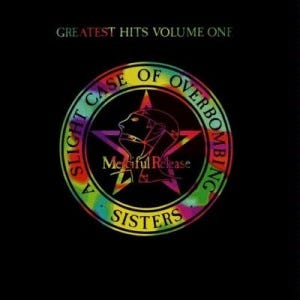
THE HEAD: The Sisters of Mercy’s A Slight Case of Overbombing: Greatest Hits, Volume 1 (1993)

I wasn’t raised in Florida. San Diego saw me through my childhood and adolescence until I moved to the East Coast for college. Currently, I live in New Orleans, which is nothing, of course, like San Diego. San Diego has boardwalks and neon and flautas; New Orleans has gators and crime and parades. Both have palm trees, lots of palm trees, some of them native, but most of them not. And so it stands to reason that Florida, or anyway the idea of Florida — in some ways an amalgam of Southern California and Southern Louisiana — is a place I’ve been circling all my life, though I have only sort of been there. As a boy, I went to West Palm Beach, say, a dozen-times-plus to kibitz with grandmother. Walking its streets is an experience I can only describe (cribbing roughly from my father) as “touring the site where a neutron bomb hit, wiping out everyone except for the old people.” Not that West Palm Beach is shabby. It has a cauterized pristineness; planter boxes, blasted granite. And yet I sensed beyond the palms and the ocean’s susurrus a tingle of something — something weird and unknowable, almost uncanny, beneath the veil of what was seen. I would come to recognize this feeling later in the bland, politicized way educated adults recognize most everything that evades them as children: Florida is a complex place. Its crossfade of cultures, its flora and fauna, its palatial golf courses and acres of swamp, and all too often in the news its seismic wealth gap and its prejudiced laws, its environmental ignorance and failed prison system. Even on a surface level, the state is bizarre in its very overtness — Miami’s beachfronts and the spires of Walt Disney, Lake Worth’s esplanades and the tracks of Daytona. No place can look like this, you think, and not have something else behind it. Ergo, as a child, that sensation I had that what I was seeing was not what I saw. What better band, then, to embody this feeling than what I was listening to at sixteen: the British Goth-rock outfit The Sisters of Mercy — specifically, 1993’s greatest hits volume A Slight Case of Overbombing, sprawling in running time, sinister-kitschy, with an almost Wagnerian over-production. Since I was a hot-weather Goth I can tell you: combat-boots appear black, even blacker, in sunshine. Emerging originally out of the mid-to-late 80s with Andrew Eldritch (born Andrew William Harvey Taylor) on vocals and (personified drum-machine) Doktor Avalanche on beats, Sisters of Mercy epitomize a subcultural moment so glittering and distinct that you need shades to see it: the 1980s’ death-rock scene. And even though A Slight Case of Overbombing contains only one direct reference to Florida in the locomotive of sleaze that is 1990’s “Doctor Jeep” (from the album Vision Thing) — “Everybody shouts on I Love Lucy/Pee Wee reads the evening news/A pre-owned song or a second-hand Uzi/Everybody got a job to lose/Here come the golden oldies/Here come the Hizbollah/Businessmen from South Miami/Humming AOR” — the record conjures up the state with every sax solo and dance-lick of bass. There is an artificiality to greatest hits albums that perfectly mirrors the Florida crux: packaged pleasure on the outside, incomprehension underneath. What’s more the band isn’t even American; they come from Leeds, England, an ocean away. And yet the album Vision Thing is a limey critique of Bush I’s presidency, whose family dynasty, years later, would come to have controlling stakes in Florida’s government via Jeb Jr. (Not to mention 2000’s election charade where Florida was the battleground, those “hanging chads” ushering W. to office.) Andrew Eldritch’s voice is a crooning lost soul among the drums and keyboard mists. The soaring female choruses on “This Corrosion” and “Dominion/Mother Russia” could score the revelation of a sunset over the Gulf of Mexico, arterial red and tangerine. If there is a better city-at-night driving song than “Lucretia, My Reflection” then I haven’t heard one, better still if it’s through Miami, Daytona Beach, Tampa, Orlando or any one of many of Florida’s cities, lit up garish and strange in the tarns of their bays. As Eldritch sings on “Detonation Boulevard,” another of the album’s standout tracks: “Through the angel rain/ Through the dust and the gasoline/ Through the cruelty of strangers/ To the neon dream… Long distance information/ Disconnect me if you can…” Under Florida’s wraparound shades there is gloom, but Sisters of Mercy don’t glare it away. They feed it to the drum-machine as the skirt of the hurricane blows into harbor.

The Isle of Youth

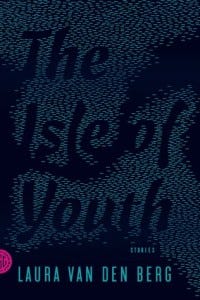
THE TORSO: The Isle of Youth by Laura Van Den Berg (2013)

Laura Van Den Berg’s second collection of short stories endeavors a similar chipping-away of Florida’s sparkling exterior, the main difference being that several of the stories actually feature Florida. Van Den Berg, an Orlando native, has always written with a very specific kind of disquieting beauty about her home-state; she is not unlike Flannery O’Connor was to Georgia, for example, or Shirley Jackson to Massachusetts. The stories in The Isle of Youth serve up their noir with a bitter aftertaste of existential terror and uncertainty. In conversation with Jeff VanderMeer (The Southern Reach Trilogy, 2014), another Floridian, Van Den Berg had this to say on her provenance as a writer: “The storms, rapid growth and decay, the rotting heat: Florida is an extreme climate in many ways and it has imbedded in me a love for extreme landscapes, in addition to places that are weird and ungraspable. The harder it is for me to ‘sum up’ a place, the more it interests me, and I know that’s the Floridian talking.” In “Opa-Locka” (an actual Florida enclave “ten miles north of Miami” whose name “came from the Indian name Opatishawokalocka, which meant ‘the high land north of the little river on which there is a camping place,’” in Van Den Berg’s words), a pair of sister private eyes hired to tail a shady husband shack up in an apartment on the strip, “a Glock 22” on the “bedside table.” “It was a rough neighborhood,” Van Den Berg writes. “…I had tried to talk my sister into moving, citing crime statistics and reasonable rents in other neighborhoods, but she loved the two-story stucco building with the concrete balcony and the drained swimming pool half-filled with bottles and empty cigarette packs.” While in the title story “The Isle of Youth,” a pair of identical twins — one of them a party-girl, the other a librarian — meet in Miami to triage an “emergency” in the party-girl’s life that grows ever more vague as her present unravels. The agreement: the librarian-sister will pose as her twin so the party-girl sister can get out of town. Librarian-sister takes twin-sister’s pills, dons twin-sister’s makeup, haunts twin-sister’s haunts. Van Den Berg writes of a club on Miami Beach that the narrator visits, posing as her sister: “A stainless steel bar stretched down one side of the room; on the other, a staircase spiraled into the darkness upstairs. In the back, DJs stood on a stage and people danced beneath streams of flashing light. The lights made the dancing bodies look fragmented and strange.” Estrangement is common in Van Den Berg’s fiction. The characters know not why they do, only that they must recklessly follow their actions. They are as disconnected from themselves and each other as the ebbing and placeless landscape that contains them: its refuse-filled pools and its bass-thumping beachfronts. The only thing darker than life’s shadow-side is finding that life has no meaning at all, that the self is flagrant and garish façade. As the “The Isle of Youth[’s]” narrator reflects at the end of the story: “It was startling to see how many people I mistook for my sister…; it was even more startling to realize that to mistake someone for Sylvia was to mistake them for myself, that there were so many women who, in the dark, could pass for me.”

Monster

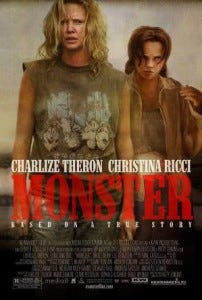
THE LEGS: Monster dir. Patty Jenkins (2003)

Where A Slight Case of Overbombing embodies Florida’s shadow-side and where The Isle of Youth pursues that shadow into Floridians’ hearts, Patty Jenkins’ film Monster, about serial killer Eileen Wuornos, chases it back to the place where it lives. Wuornos, who killed seven men while working as a prostitute between 1989 and 1990 in Florida, has a tragic life story of rape and abuse and homelessness and mental illness. Yet the film based on her life is disarmingly tender. The first scene has Wuornos (Charlize Theron) sitting in pouring rain beneath a freeway overpass, holding a loaded pistol. Later on, we learn that she was contemplating suicide. She goes to get a beer instead. In the bar she meets Selby (Christina Ricci), a woman hoping to pick her up, and even though Wuornos insists she is not gay, they become fast and ill-defined friends (Wuornos’ real partner was named Tyria Moore.) The rest of the film parallels Eileen’s descent into bloodthirsty madness alongside her relationship with Selby. Wuornos attempts to keep totally separate her love for her “girl” and her hate for mankind, and the way that the tension plays out in her psyche, which we can hear in voiceover, makes the film darkly funny but also heart-wrenching; we recognize Wuornos’ plight. To earn the money that supports them, Selby thinks Eileen is hooking, when in reality Wuornos is killing her johns and ransacking their cars and clothes. “I’ve done everything in the whole wide world hoping that you’d never have to know,” she says to Selby midway through the movie. “So you could go on thinking that people are good, and kind, and that shit makes sense, you know.” Charlize Theron is transcendently good in a performance that would later earn her the Best Actress Oscar in 2003. Much was made of her physical transformation for the role from red-carpet dame to itinerant hooker, and yet it is the little things that Charlize Theron really nails: Wuornos’ smile and her sharp, side-mouthed laugh, her swagger and her violent strength, the gleam in her eye for the woman she loves, her crackling demeanor before doing murder. As Wuornos is led out of the courthouse after her first conviction, having been sentenced to death (an execution that the State of Florida carried out in 2002), she clings to her love for Selby against eternity, which might seem tone deaf did it not work so well. Have you ever seen Bad Lieutenant: Port of Call New Orleans (2009)? Well, anyway, it’s a little like that. Wuornos narrates: “Love conquers all. Every cloud has its silver lining. Faith can move mountains. Love will always find a way. Everything happens for a reason. Where there’s life there’s hope. Hope — they got to tell you something.” The awkwardness of the emotional dynamics in this sequence is striking — oh beloved serial killer, true romantic to the end! — and while the viewer grapples with them, a grotesque poignancy starts to worm its way in. Wuornos could’ve done something else with her life but when life betrayed her she learned to do this. And in some ways, perhaps, Jenkins’ film could be viewed as the story of a woman who discovers her calling and with it true love, just with really bad timing. Florida is vital to the film for several reasons — not least of all its mis-en-scene of tract houses in grassy lots, of truck stops bathed in eerie blue, of the Florida sunset as red as a knife-wound. Van Den Berg’s protagonists are strangers to themselves, a quality reflected in the character of Florida, though never once in Jenkins’ film does Wuornos not know who she is. While Van Den Berg’s characters spiral away from themselves and the thing they are actively seeking, Wuornos grows comfortably into herself — her status as a person on the margins of life and her prodigious talent for murdering dirtbags. Misandry, it starts to seem, was waiting for her all her days. Monster returns Florida to itself: a fucked-up realm of biker bars and fleabag motels where you pay by the day and fast cars on the interstate with spoilers in the shape of sharks, some of them sub-woofing Sisters of Mercy as they speed toward the neon ramparts of the city. Wuornos’ weapon of choice is a gun: some of the men she shoots dead in their cars, while others she lures to their deaths through the forest. The scene in which she kills a man for no other reason than that he has seen her is anxious, nauseating stuff. When he mentions his family in hopes it will save him, she yells in agony and fires. In her off-hours, she and Selby visit somewhere called Fun World. Wuornos rides the bumper cars. She waves at Selby from the track with her stringy blonde hair and her soiled trucker cap and the night-palms of Florida harbor this gesture, recalling an innocence already lost.

Alternative Cuts:

Their Eyes Were Watching God by Zora Neale Hurston (1937); The Supremes’ Diana Ross and the Supremes: Greatest Hits (1967); The Paperboy dir. Lee Daniels (2012)

Mega-Python vs. Gatoroid dir. Mary Lambert (2011); The Southern Reach Trilogy by Jeff VanDermeer (2014); Deicide’s The Best of Deicide (2003)

Bully dir. Larry Clark (2001); Citrus Country by John Brandon (2010) and/or Swamplandia! by Karen Russell (2011); Lynyrd Skynyrd’s All Time Greatest Hits (2000)