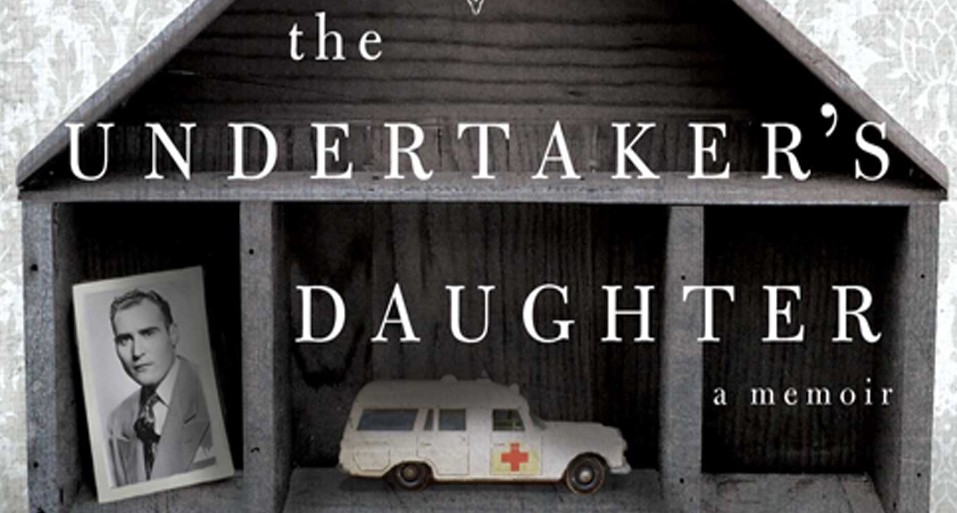
REVIEW: The Undertaker’s Daughter by Kate Mayfield

In Kate Mayfield’s memoir, The Undertaker’s Daughter, we get a peek into the house of a family living in close proximity to the dead. An undertaker in a rural Kentucky town in the 1960s, Mayfield’s father was at the constant beck-and-call of its citizens. Mayfield’s family lived above his small mortuary. A ring of the family’s phone meant death, and necessitated Mayfield’s father leaving the family to step into action — ushering local families through difficult decisions about final arrangements for their loved ones while almost simultaneously preparing the deceased’s body to be put in the ground. Mayfield is honest and reflective in The Undertaker’s Daughter, evoking rosy nostalgia. Here, though, the lessons in ethics are seen through a series of vignettes about death and dying, the science of Mayfield’s family’s business.

Mayfield’s mother hushed her children daily as visitations and funerals took place in the rooms below their living quarters. Out of respect for the deceased’s families, Mayfield develops a personality that is equal parts reactionary and controlled. “I learned that to live in an environment that cared for the needs of a constant flow of people — both living and dead,” Mayfield says, “it was necessary to steal an ounce of personal freedom wherever and whenever I found it.” Each of the Mayfield children absorbs the odd circumstances of their life differently, but they also each seem to have this same dichotomy within them. Their lives demand periods of silence and control, while being constantly exposed to heightened emotion and grief from the relatives of the dying. “I was funeral home trained from the beginning,” she tells us. Mayfield and her siblings had to live with death.

Mayfield’s father emerges at first as a saintly figure, generous almost to a fault. It’s clear that he takes pride in his job and sees his own behavior around the families of the dead as equally important to the work he does in the embalming room. Mayfield presents him initially through a filter of adoration: “Each funeral as an opportunity to imprint his stamp,” Mayfield tells us, “the details of which bore his personal touch. Not one strand of the corpse hair should go astray, not one of a family’s requests should go unheeded. A final perfected image, a memorable experience, was his unwavering goal.” But as the memoir continues, it becomes clear that Mayfield’s father — perfectionist though he is in his work — is no saint. His life as an undertaker pulls him away from his family more often than not and, as Mayfield ages, she comes to learn that in the time apart, he becomes someone else. She eventually identifies her father as more human, someone altogether different than the stolid image he presents to the town. The Undertaker’s Daughter asks us to consider how our role models may be both benevolent and flawed at the same time.

Mayfield’s view of herself changes as she ages, too, especially as she dates outside her race and comes up against the racial prejudices of people in her hometown. Through her father, she comes to know a reclusive woman who has been rejected by the town. Father and daughter take this recluse under their wing, and the relationship deeply affects Mayfield. She says, “I grew up feeling split down the middle with a partial stake in the robustness of life, and another that needed to retreat to silence and observation, to be alone and undisturbed.” Mayfield’s memoir feels a little too long by about one-fourth — the same conclusions regarding her father could have been realized in fewer pages, and she veers into a legal battle over property that feels like a separate B-plot — but she clearly renders her father as a complicated man, and in the process shows us how her family had to sacrifice to make his vocation possible.

Mayfield’s memoir doesn’t flinch when dishing out the details of death. In fact, she ventures into the specifics of her father’s work without ever becoming macabre. She seems to know there’s a certain amount of curiosity about the subject, while strategically tempering the scientific information with personal stories and portraits of small town Kentucky life. Mayfield does her strongest work when she shows her father as a real man with faults, and when she describes the many rituals surrounding death and dying that became a part of her daily life in the house of an undertaker. She never did want to take on the work herself, but she recognizes the significance of how her father let her into his world. “He could have chosen to declare the funeral home off-limits to my childhood. But he didn’t,” she says. “How fortunate I was that he allowed me to follow him downstairs each day to occupy his world.”

The Undertaker’s Daughter

by Kate Mayfield

Powells.com

INFOGRAPHIC: A Map of the Literary Genres

According to the fine folks at Pop Chart Labs, there’s a theory that genres exist for the benefit of bookstores and at the expense of readers. Similar to a Las Vegas casino, booksellers manipulate the environment to lure you toward the money makers — I imagine librarians will be the first to object to this theory. So Pop Chart decided to look beyond these commonly accepted distinctions to see how the genres relate and where books belong based on content rather than commerce. “We went in with the idea that we were looking not at commercial distinctions, but instead peering deep into the text of the book, at almost the cellular level,” said Rachel Mansfield of Pop Chart.

The approach created some difficult decisions and surprising results: The Lion, the Witch, and the Wardrobe found its home under the “Christian” genre, rather than the expected fantasy. Explore the chart and discover what kind of books you really like. The poster is available for $29.

literary genre map

Midweek Links: Literary Links from Around the Web (February 25th)

Looking for some interesting reading to get you through hump day? Here are some literary links from around the web to check out:

What’s in an ending? The Millions takes a look at the art of the final sentence

A reading vigilante is trying to protect Boston Public Library readers from awful books

Seven books in translation that will let you to travel the world through fiction

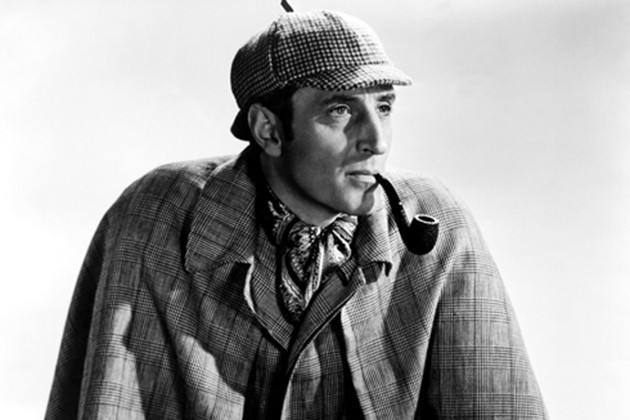
A lost Sherlock Holmes story has been found… but it is probably a fake

Washington Post on why digital native teens still prefer reading on paper

The Guardian on only reading non-white authors for a year

A survey of John Updike’s short stories

20 female Harlem Renaissance authors you should read

Lastly, new collection of rediscovered dark fairy tales puts the grim in Brothers Grimm

The Long Walk North

It didn’t surprise anybody much that David Tremaine had finally gone and done what he always said he wanted to do, the thing he talked about, even way back in high school when we were on the basketball team together and he hadn’t gotten really sick yet, and even after that, when mania got hold of him and threw him naked and sleepless up on freeway medians or got him drunk on gasoline or sat him down at internet poker tables to drain his dad’s credit cards; even when he was stable, full of lithium carbonate and living on a couch in the den of his parents’ house in Lake Havasu City, collecting their mail and feeding their Corgi and keeping the dahlia garden alive while Holt and Marian Tremaine were in Rockport for the summer (where David was not allowed — in Rockport people talked), and, surprise, he did it: he walked north, with only a change of clothes, a Gore-Tex parka, and five hundred bucks, until he could walk no further, until he took his last step a mile south of Gift Lake in Alberta, where he sat down in the ice and wind, wrote a note to Nadine, and froze to death. The walk had taken him six and a half months.

David used to come out to Vegas and stay with me so he didn’t have to pay for a hotel room — he wanted every penny for poker — and on most visits he was normal, but one time I remember he was way up high, manic as they come, talking so fast I didn’t see how he could breathe, ropy, skinny-guy muscles standing out under his shirt, drops of sweat running down his forehead and dripping off his eyelashes, and even now I can’t think of him any other way but cross-legged on my bed, poking my chest with a forefinger that felt like the handle of a wrench, commanding me to understand why pot-limit Omaha 8 was the best form of the game, why it was all right to stare at an eclipse, why his brother George had killed himself, why he never would. I loaned him my old shitbox Chevette while he was here that time so he could drive downtown and play at Binion’s, knowing that that was probably a bad idea, and it turned out I was right, because he didn’t come back. I never reported the car stolen — I didn’t want David to get in any trouble, he had enough to worry about. It wasn’t till four months later that I saw him again, in Havasu (I was there to see my mother), sitting by himself in a crowded coffee shop, secretly drawing ballpoint portraits of girls sitting at nearby tables, and I said Whassup or something, but he didn’t recognize me at first, maybe the sun was in his eyes, maybe because I’d lost a few pounds, maybe because Pete was with me at the time and I was physically transformed by anger — Pete and I were feuding about the reappearance in his life of an old lover I knew Pete still had feelings for — but David eventually figured me out and stood up and gave me a hug, a broad, real hug that felt good and whole, saying, I was missing you, Theo. There’s probably some big German compound word for how I felt — gleeful that Pete had seen the hug and David’s enthusiasm in giving it, sad that nothing would ever come of it, jealous that Pete got a hug, too, even though they’d never met. We sat for a while, David drew our portraits, chattered about some girl, talked about walking north like always; normal. The car never came up. I didn’t care. We left, me and Pete, silent on the drive home.

Pete never mentioned David after that, so I knew he’d been affected by him, his presence. It wasn’t long before Pete and I finally said so long motherfucker to each other, a transition from not-single to single whose climax was an ugly fight in the hallway of the apartment building, fists and everything, I got a kick in the balls, Pete got arrested, I moved out in less than three hours, to Nadine’s. Thank god for Nadine and all the little sisters of the world.

The following week I got a call from Holt Tremaine. He told me that a friend of a friend of his who worked at the DMV had looked up the license plate of a Chevrolet of uncertain provenance that David had come home with one day months ago, and that it just so happened that it belonged to me, that he was sorry, could I come get the car? Nadine gave me a ride out to Havasu to pick it up, but she wouldn’t come inside the Tremaines’ with me, saying she’d never liked them, ever since junior high school when they came to a bake sale and bought tons of shit from every kid but her, but I was pretty sure she didn’t come in mainly because she’d always been mortally shy around David and probably had a crush on him like everybody else, so I went in on my own, but David wasn’t there. Turns out they’d put him in Rawson-Neal in Vegas to get his meds stabilized, his 34th hospitalization according to Holt, a figure he cited while digging obscenely through his pockets for the ignition key to my car. I asked them if they thought David might like a visitor, and they said, matter-of-factly, as if warning me of sharks in shallow waters, Better wait, he’ll probably be restrained and isolated for a few days. They just stood there and smiled. I left. I tried to visit David at Rawson-Neal a week later, but he’d been discharged.

After the Peter breakup, Nadine tolerated me in her little house in Henderson for a couple months while I moped and half-assedly looked around for an apartment and a job I could stand. One evening she brought home a boy, some wannabe gangbanger, crude tattoos on his neck and a broken tooth, maybe he was the real deal, what did I know. Nadine made dinner for all three of us, Western omelets and chorizo and margaritas, while Ricky and I sat at the little kitchen table, nothing to say to each other, neither of us even trying, listening to Nadine chatter in the high, quaky way she does when she’s nervous and excited at the same time, and when it came time to eat, Nadine sat down with us, but Ricky picked up his plate and drink, said, Where’s your room, and walked off in the direction Nadine pointed. She and I sat there, Nadine staring at her omelet, grinning like a little kid on the first day of summer, saying nothing, and a venomous part of me kept her there for several minutes, not imparting approval for her to get up and go join him, until finally I stood and said I was going in the TV room to watch Arrested Development and finish eating, and, not to worry, that I had a date, too, and would be out of the house in less than an hour. She probably knew I was lying, but I don’t think either of us cared. She went in her room to be with her boy, and I sat down to watch TV, but realized that I did not ever want to hear my sister moan, so I picked up my shoes and walked out to the car, barefoot, not wanting to spend a second longer in that little house, filled as it was with youthful sexual presence.

I drove to the Mirage. I waited in line behind the tourists checking in, watching the tropical fish wiggle in the narrow, twenty-by-thirty-foot aquarium that served as a backdrop to the front desk. I got a nonsmoking room, but it still smelled like smoke. I went downstairs and sat at the lowest-limit poker table I could find, a $2-$4 Hold’em game. I lost half my stake pretty quick but managed to stay about even for a couple hours after that. The dealer was pushing me my first decent pot when I heard the sound of clapping: a single person’s slow, deliberate applause, sharp, loud pops that elbowed aside the incessant ding and whistle of the slots and drove right to the eardrums. It got everyone’s attention, though at first no one could tell where it was coming from. Then I saw, up in the raised, roped-off area in the corner of the poker room, where the $40-$80 and higher games were run, a wild-haired young man, wearing a sleeveless t-shirt, his arms tanned to the burnt reddish-brown of a transient, watching and clapping as the dealer pushed a pile of black chips his way. His opponent, a middle-aged Korean woman with a hot-flash fan, stood up and began to walk away just as two men came over, they looked comically like Secret Service guys, dark suits, RayBans, wires curling from their ears that disappeared into their shirt collars. They stood behind David and waited while he built towers out of his chips, childlike, concentrating on balance and distribution and aligning the stripes on the edges. A woman came over with a stack of banknotes and some paperwork in hand and cashed him out. David stuffed the wads of cash in all four pockets of his jeans. Then one security guy leaned down and said something in David’s ear. David closed his eyes. He made a hard fist of one hand. Then he stood and turned to strike the big man, but he grabbed David’s wrist before he could let the punch fly. David violently yanked his arm away, causing the goon to lurch. The second guard grabbed David’s hair and other wrist, wrenching his arm up behind his back. The men virtually carried him out of the poker room, his forearm jammed up against a shoulder blade, David smiling, laughing at the two musclefucks. I stuffed my chips into my pockets as fast as I could and jogged after them, saying I’m with him, let him go, he’s not well, I’ll take care of him, but the big bastards ignored me and threw David out of a rarely used exit that led to the parking garage, where he landed face first, cutting his forehead and cheekbone badly enough that I had to give him my shirt to stanch the blood. In the car David pulled out all his money, fifty-two grand, waved it around, hooting and shouting and bleeding, then reached over, stuck a finger inside the hip of my jeans, pulled on the material enough to make a gap between it and my skin, and tucked ten thousand dollars inside. The stack of hundreds was warm and moist from blood. He said, Let’s drive out to Mustang Ranch, man, let’s do it, I could fuck all night, but when I told him I was tired, and that I had a room at the Mirage, he asked me if I had brought my laptop and did I have a credit card he could use, could I sneak him back into the hotel, that he wanted to play poker online in my room. I desperately wanted to tell him yes, but the truth was I could not — I didn’t have my laptop, my cards were maxed, and I didn’t think I could sneak him in looking like he did. David threw my bloody shirt in my face, climbed out of the car and ran back into the casino. I didn’t stay. I drove around, out toward the low hills surrounding the city till dawn, then went back to Nadine’s and parked behind her little Corolla. I didn’t go in the house. I fell asleep in the back seat, waking around one when it got too hot to breathe. Nadine’s car was gone.

I found work as an accountant for a firm that manufactured air conditioner filters, and moved into a small house just a few blocks from Nadine. I kept the blood-smeared ten thousand in an empty chicory coffee can on the bottom shelf of the refrigerator. I called the Tremaines now and then, but no one ever answered or returned my calls. It had always been that way, though.

Nadine and Ricky were arrested for drugs after getting pulled over in her little Corolla driving from L.A. to Vegas, a serious arrest, too, they’d had enough coke on them to be classified as traffickers. Some unknown put up both their bonds, which was scarier to me than the arrest, it meant that there were some big people pushing the chips around out there. Nadine told me she hadn’t known the drugs were in the car — they were attached to the underside of the chassis like a limpet mine — and I believed her, I knew she wouldn’t do anything like that, she worked as a pit boss for chrissake, never in trouble in her life. Her lawyer urged her to plead guilty and hope for the best, but she was sentenced to a year in jail. She served every minute of it.

While she was inside I watched her house and fed her fish and watered and mowed, and with the ten grand I paid her bills and mortgage, it was enough to cover more than seven months’ worth. When she got out, I drove her home where she wandered around the house, looked in all the rooms, fed her fish, then sat me down at the little kitchen table while she cleaned out the refrigerator. As she sat on the floor, a bottle of Fantastic and a roll of paper towels at her knee, she told me she’d taken art classes in jail. She told me that whenever anyone finished a picture the teacher stuck it up on the cinderblock walls so everyone could see, and one day about two months ago she saw a big piece of white paper taped up next to hers, covered in little drawings, portraits of other prisoners, dozens of them covering the whole sheet. It was signed David Tremaine. Nadine told me that at the bottom of the paper she’d written Hi David Love Nadine Staples in black wax pastel, and sometime later she noticed he’d written on her drawing of a carousel horse Nadine I love you, but that was as far as the correspondence got because a guard saw it and changed the rules so the teacher couldn’t tape up pictures anymore, fearing gangs could communicate that way, even though every third person in the whole jail had a fucking cell phone.

Nadine finished cleaning the freezer, emptied out the old ice cubes, ran the kitchen tap, waiting for the stagnant, brownish water in the pipes to empty out, and fresh, clear water to replace it, refilled the trays, and stuck them back in the freezer. She closed it and gave me a big smile. It wasn’t the same smile as before. She wasn’t the same person.

I didn’t see much of her for several months after that. I had found someone new, Harry, we met in the earphones aisle of Target, him a divorced Beacon Hill heir with three kids and fifteen years of deep analysis behind him, and me, from the desert, working for a living, loath to head-shrinkers, not even a pet to tether me, and we would joke about how we were so different, that one day we’d have to break up because of it. Then, coming up on a year together, the joke dissipated, eroded to slivers from overuse, no longer necessary as a talisman against its own prophesy. That was when Nadine called.

David had been released from jail, and the first thing he did was turn up on Nadine’s doorstep, a box of melting chocolates in one hand and a colored-pencil drawing of a whole carousel of carousel horses, so dynamic and layered, she told me, that she imagined it in motion, the horses bobbing, the tinny music playing, the carnival barker shouting offstage, the evening and its jewels of light a curtain around it all. Nadine let him in. Following a few weeks of “exquisite normal,” as she put it, an entirely out-of-character use of language for her, David told her that he felt great, that the meds had done their job but now he didn’t need them anymore, and so he quit taking them. He unofficially moved in.

One morning early her cell phone rang. It was Ricky calling from prison, and she answered it, David right there in bed with her, so she got up and went into the TV room to talk, but he followed her and crouched down behind the couch to listen. The volume must have been turned up on the phone because David could hear both ends of the conversation, some of which was of a sexual nature, and when she hung up, David sprung out from behind the couch, startling her, screaming at her about her infidelities, how long had they been going on, and Nadine told him she had no plans to ever see Ricky again, especially since she and David had gotten together, but it still upset him so much he locked himself in the hallway bathroom with a utility knife, and wouldn’t come out for hours. It finally ended bloodlessly, but after that David was irrationally possessive of Nadine, and jealous of anyone she spent time with, going so far as to follow her to work at Harrah’s — she was a waitress now, no longer a pit boss, being an ex-con ruined that career — watching her at a distance, pretending to play the slots. She didn’t know this until he confronted her while she was on her way to the bathroom at lunchtime one day. He told her he’d seen the craps player she’d been flirting with, and Nadine told him she hadn’t been flirting, he was a good client with a lot of money, and it was her job to be extra nice to him, and David said, Exactly how nice do you have to be? then followed her into the bathroom and began to sob leaning up against her stall door. Incredibly, no one called security on him, and Nadine took him home, missing the last half of her shift, and getting into no little trouble for it, too. After that she talked to casino security to make sure they never let David in again.

One night he accused her of having the police and the FBI and Homeland Security watching his every move, he knew this because there were cameras everywhere, plus they wouldn’t let him into Harrah’s to see his own girlfriend. Nadine denied this, and he struck her in the chest with a hard, closed fist. The next time he tried to hit her, she put her arm up to defend herself, and the punch, delivered with hypermanic force, broke it clean in two, so that her forearm bent in the middle like a carpenter’s square. That’s when David ran out into the night and Nadine called me.

After the emergency room set her arm, she came to stay with Harry and me. David started sneaking into our yard in the middle of the night, either begging through the front door to talk to Nadine, or hissing my name, calling me a slanderer and a fag and a rat, saying that he knew what I was really doing and that it wasn’t going to work. Nadine didn’t want to call the cops, saying David was just sick, that he never would have hurt her if he’d been on his meds, and I actually felt the same way, plus an arrest would send him back to jail, so Harry sat alone in his desire to sic the LVPD on him, and it took both me and Nadine to convince him not to.

Nadine stayed with us while David rampaged, committing assaults with telephone calls and emails and sometimes a double-fisted hammering at the front door. Before long she had been with us for more than a month, never leaving, even once, somehow having wrangled a leave of absence from work. The night David threw a coil of garden hose through our bedroom window was the night Harry moved out. The incident convinced Nadine and me that our safety trumped David’s freedom, so we called the cops, but David had disappeared. He came back a few nights later, wearing nothing but cutoff jeans and a six-week beard, broke through the back door, and dragged Nadine out into the yard by her good arm. This time the neighbors called the police, and the short of it was that David went back to jail to finish out his sentence, with six months tacked on. Nadine never told me what his original crime had been.

In Nadine’s absence, David had covered every available surface of the inside of her house, including the ceilings, the lampshades, the inside walls of the refrigerator, every sheet and blanket, and the bowl of the toilet, with portraits of Nadine done in red and blue Sharpie, all the same pose, all from her high-school yearbook picture, a 4” x 6” color print she kept in a frame on top of her dresser, or used to. The floors were littered with spent pens, like shell casings. Her fish were dead.

I tried to convince Nadine to sell and move into a new place, that she could live with me while she house-hunted, but she wanted to stay. We repainted, but ghosts of the drawings worked their way up through the coats of eggshell white. Nadine said she wanted to paint everything black so nothing would show through, but I told her those ghosts would still be there, so we wound up sanding and scraping the whole interior, big flakes of white paint with red and blue streaks on them fluttering to the floor to be swept up and thrown away. We threw out everything, too, including the refrigerator, TV, and furniture. Nadine started over. It took two months. Harry called once, early on, advising me that movers would be coming to collect his stuff. I wasn’t heartbroken. At least not about Harry.

David, we found out later, was released from jail to the custody of his parents in Havasu, who started to reward him with cash every time he took his meds, something I’ll bet they wished they’d thought of years ago, because it worked — David stayed stable. He never called me or Nadine, but he sent one or two letters to her, with APOLOGY INSIDE written on the envelope in blue Sharpie. I never found out if Nadine read them.

It was Pete, of all people, who issued the last David report.

Pete sent me a terse email saying that he had something of mine, a jacket, my letterman’s jacket from high-school basketball, did I want him to mail it back to me. Plus he wanted to send me a check, he said he owed me $85 for some dinner I had no memory of, that he didn’t want to have any debt hanging over his head. My first inclination was to write back and tell him to take a deep breath and fuck himself, but instead I responded with my address and a cool thank you. I also asked how he was, and the response was a thousand-word cataract of personal history, interspersed with guilt, accusation, apology, provocation, and insatiable repine. And confession: he told me that even before our memorable breakup he had begun to pursue David, “accidentally” running into him at the coffee shop again, talking about the walk north, would he ever really do it, asking to be taught poker, staking David for higher-limit games, going over to David’s house, where he made friends with his mother Marian, and stayed on good terms with her, even after David put an end to his friendship with Pete following his clumsy pass at him in the back of a gypsy on the way back from a bad night at a $20-$40 game at the MGM Grand. David gently pushed him away, saying he had a feeling this was coming, and that he was sorry it had, because he really valued their friendship, but that it would have to end, because this sort of thing never works out, you can’t have lust in a friendship, especially one-sided lust. Pete and Marian continued to email and Facebook and meet for the occasional coffee, and it was at their last meeting that Marian told him that David had left them a note a couple days earlier saying he had started his walk north, that all would be well, he would take his meds the whole time. Holt had talked Marian out of filing a missing persons report, saying that David was an adult and could take care of himself, especially if he was medicated. Pete told me that this all happened more than six months before. He finished his email with an anemic Take care. I didn’t write him back. The next day an article in the Review-Journal reported that David had been found in Canada by a hunter.

On a cool, breezy Saturday Nadine had me over for lunch. I was sitting at her little kitchen table — she’d replaced the one David had ruined with the exact same model — reading business emails on my phone while she cooked grilled cheeses on white bread and served them with Ruffles and beer, when a knock came at the door. We both froze. She wasn’t expecting anybody, and nobody she knew simply dropped by. We looked at each other. I read in her eyes, and I know she read in mine, that it could only be Ricky. I was afraid of Ricky.

But it wasn’t him. It was Holt Tremaine.

“Sorry to bother you on a Saturday,” he said, his hands busy in both front pockets of his slacks, the cuffs of his sports jacket bunching up. “I found your address on the internet, you know, and I wanted to deliver something, from David, he had it on him… on his person… when they found him, and I think it’s for you.”

Holt reached into an inside jacket pocket and found a dirty, water-stained envelope that read NADINE in dull pencil. He handed it to her, then jammed his hand back in his front pocket. “It’s not in very good shape. Hello, Theo.”

I said Hello back. Holt Tremaine left.

Nadine folded the letter in half and put it in a kitchen drawer, the one next to the stove that held notepads and matchboxes and screwdrivers and the like. She sat down with me at the table. The grilled cheeses had cooled. The chips were all fragments, the end of the bag. I wondered if Nadine would open the letter, after I’d gone home, would she cry when she read it, would she refold it carefully and tuck it in a book she’d never read, would she burn it in the sink, was it a love letter, a defense, an apology, a memory, a manifesto, was it a mere travelogue, or a drawing, a landscape in pencil of his last view, was it unfinished, did it freeze when he licked the envelope shut, was there anything in there about me.

INTERVIEW: John Benditt, author of The Boatmaker

That a book whose central character spends much of his time crafting things should serve as a case study in deliberate pacing should come as no surprise. John Benditt’s novel The Boatmaker takes its time reaching its destination, but the effect is a deeply rewarding one. As the novel opens, the title character lives in relative isolation on a small island (known as Small Island)–though whether that life will last much longer is left somewhat in doubt. Consumed by a fever, he’s overtaken by visions; when he awakes, he feels compelled to assemble a boat and embark on a journey.

Out of those two impulses–the mystical and the physical–emerge many of the scenes that follow. The boatmaker’s craft leads him certain places; his own impulses towards violence and self-destruction lead him elsewhere. And he’s far from the only character for whom visions and a sense of something beyond this world compel to action: sometimes benevolently, and sometimes horrifically. Occasionally, the novel slips outside of the title character’s head, showing how he’s seen by others: a source of, at various points, mystery, fear, and admiration. It’s a long journey, but a rewarding one.

Over the course of several weeks, Benditt and I conducted this interview via email, touching on subjects as varied as geography, narrative specificity, and cults, fictional and otherwise.

Tobias Carroll: The way you tell The Boatmaker moves from the very stark and general to the specific, from the locations to the names of characters. How did you first arrive on this approach as the right way to tell this particular story?

John Benditt: Well, first of all, I should probably say that The Boatmaker really wasn’t the result of a lot of conscious planning. In fact, I didn’t even know that I was writing a novel. I thought I was writing a collection of short stories. Then I wrote one about a man who builds a boat and sails away from the little island where he was born. I thought I was done with him — or he was done with me. But apparently not. A second story appeared, about what happened to the same man once he reached Big Island. After that I thought I was surely done with him. But he wasn’t done with me. More bits and pieces kept coming in. I wrote them down. When I read them over, I realized we were talking about a novel here. I suppose I’m a slow learner. Once I’d gotten the message, I sat down to write a first draft.

All that said by way of preamble, I’m not sure I agree completely that the story moves from the stark and general to the specific. Small Island is a specific place. People there have names. The town has a name. And even at the very end, when he’s in the biggest city in the land, many things and people are identified mostly by their titles or descriptions rather than their names. But I do think that there is an evolution in the book, and perhaps that’s what’s coming through. I think the evolution is in the protagonist. He comes from a pretty brutal place, a very small place, and he winds up in the most cosmopolitan place in his country and he definitely changes along the way, as the result of his experiences and the new environments he encounters. And the tone of the book probably reflects that to some extent.

TC: In terms of the specificity and generality, I thought about it more in terms of how the characters are referred to; the main character has a name, but the reader doesn’t learn it until very late in the book. But there are also things that run throughout, like the fact that Europe isn’t really mentioned on the islands, but is often referred to when the book moves to the city. Was that more a result of the cosmopolitan experience you described?

JB: Yes. It’s a result of the difference between the world of Small Island and the world of the Mainland. Small Island is a tiny, remote community. For the people who live there, Big Island is pretty far away; only the “sophisticated” people on the island have been even that far. We don’t know of anybody who’s actually been to the Mainland, let alone the capital. Europe might as well be on the moon. In the capital city, of course, things are quite different. The Mainland is still a fairly insular, backward country, a fact that the king is highly cognizant of and is committed to changing. But there are plenty of people in the capital who know about Europe, who have traveled and even lived there. So I think the difference you mention is a difference between two worlds of experience.

TC: When, in your mind, did the the protagonist go from “the man” to “the boatmaker”?

JB: As I said, the genesis of The Boatmaker was in two short stories that I thought I was writing as part of a collection of short stories. I think it was in the second story, after he’s arrived on Big Island, that he was first referred to as the boatmaker. That makes a certain amount of sense, because the section set on Small Island is mostly about his aspiration to build the boat and sail away from where he was born. I think it’s only after he’s done that and actually reached his initial destination, the one he has in mind when he wakes from the dream, that he becomes the boatmaker. Of course, one could think of other points of transition, other ways in which he might become the boatmaker in a deeper sense. Even at the end of the book, there seems to be some ambiguity around this status. I should also point out that even after he begins to be called the boatmaker, he never ceases to be the man of Small Island.

TC: When the boatmaker first sets out on his journey, his image of a domestic life involves being drunk and abusive–just less so than he’d been before. For all that he becomes involved in larger events, how did you balance that with the fact that he had behavior of his own that needed changing?

JB: I think we should be careful not to impose our own conceptions of appropriate behavior onto the boatmaker, who after all lives in a very different time and place from our own. In the world the boatmaker comes from, on Small Island, drunkenness and violence aren’t anything special. Almost every man drinks and fights with other men. And most of them also hit their wives from time to time. This isn’t considered to be “abuse,” in the way we would think of it from our perspective. It’s just part of marriage. And, for that matter, violence in marriage isn’t limited to men. We find out that the boatmaker’s mother, in her rages, is quite capable of badly beating her husband. All that is part of where the boatmaker comes from. When the boatmaker gets to the capital, he begins to see that there are other ways to live — ways he hadn’t even imagined before. And it turns out that he is capable of changing. I think the balance you refer to came pretty naturally, because he changes in response to the dramatic larger events that he gets caught up in and manages to live through.

TC: A number of times, the book shifts from the boatmaker’s perspective to that of someone watching him, usually one of the women he encounters. Where did that particular aspect of the structure come from?

JB: I think that evolved from the boatmaker’s history. Or perhaps I should say his “pre-history,” — that is, the things that happened to him before the book opens. It seems pretty clear that the person who is largest in his feelings, explicit or not, and the person he wants most to connect to, is his mother. She matters much more than his father does, emotionally. As a result, it’s easier for women to “see” the boatmaker than it is for men. He’s pretty opaque to men, and he has difficulty making friends. So the women see him, at his best and at his worst. I think that’s where this aspect of the story comes from. It’s only as the boatmaker moves out into the wider world that he begins to make friends with men. And, as usual when you’re new at something, your initial choices aren’t necessarily the best.

TC: The fanatics that the boatmaker encounters have some fairly unorthodox ideas about the notion of the messiah. Was their behavior based on any historical cults that you’ve encountered?

JB: Not really. They are more like an extrapolation from things I’ve noticed about cults. There’s an interesting obsession with purity and purification, which generally seems to involve both a curious relationship to the body and also a goodly amount of blood flowing. I also notice that the people who are the leaders don’t usually seem to be the ones whose blood is flowing. It’s generally the followers. But Father Robert and his followers aren’t really based on any historical examples. I probably should add that I have a certain admiration for Father Robert. Obviously, I don’t agree with all of his views. But I do admire people who take big, abstract questions, which most of us just ignore or tolerate, very seriously. I admire the fact that for Father Robert, the question of Christ’s message, his incarnation, is a pressing question — right here and now — rather than a tame piece of history that’s encrusted in centuries of rules. For him, it’s a living issue. And there aren’t any rules to help him figure that urgency out. He has to make his own decisions. I admire that. But I might draw a different conclusion from that urgency.

TC: More generally: were there any geographical or political inspirations for some of the locations and situations that the boatmaker encounters?

JB: Well, I grew up in the Pacific Northwest, which is a place of green islands floating on a cold northern sea, and I’m sure that some of that has seeped into The Boatmaker, the way things seep into your dreams without your ever really knowing that they’re there until much later.

TC: Since finishing The Boatmaker, have you returned to the group of short stories from which the novel emerged?

JB: Actually, after I started writing The Boatmaker I never went back to that group of stories. But I’ve been working on new, post-Boatmaker stories. And I have an idea for another novel. But that will probably take time to assemble itself out of bits and pieces on scraps of paper, just the way The Boatmaker did.

Author photograph courtesy of Whitney Lawson

Birdman vs. Boyhood: The Oscar Debate’s Classic Aesthetic Divide

John Gardner: “The difference is that my 707 will fly and his is too encrusted with gold to get off the ground.”
William H. Gass: “There is always that danger. But what I really want is to have it sit there solid as a rock and have everybody think it is flying.”

– 1978 debate on the nature of fiction

Richard Linklater

In the lead up to last night’s Oscars, critics have been waging a fierce debate about whether Alejandro González Iñárritu’s Birdman or Richard Linklater’s Boyhood — the presumed front-runners — deserved the Best Picture award. Ultimately, Birdman walked away with the trophy, inspiring some bitter “hot takes.” At Slate, Dan Kois even called it an “epochal travesty” and the Academy’s “worst mistake in 20 years.”

I’m skeptical that Boyhood will be remembered — as Kois suggests — as an epochal masterpiece on par with Casablanca, Citizen Kane, or Pulp Fiction. Think-piece hyperbole aside, critics are divided and my twitter stream has been filled with critics and writers calling one film or the other overrated garbage. Most either loved Boyhood and thought Birdman was “pretentious,” “self-indulgent,” and “showy,” or else loved Birdman and thought Boyhood was “boring,” and “pointless.” Here’re some examples:

and my own snark:

Indeed, these two films might be quintessential representations of a classic debate: should art be dazzling and inventive or should it be stripped-down, simple, and honest? Should the artist be in-your-face with her talent, or should she recede into the background of the work? Should she be a magician or a workman?

Of course, this binary is reductive and plenty of artists move between modes or else try to be a workman and a magician, both dazzling and straight-forward. However, the two schools have their own champions and long histories. In fiction you can trace the debate from William Faulkner and Ernest Heminway (Faulker: “He has never been known to use a word that might send a reader to the dictionary.” Hemingway: “Poor Faulkner. Does he really think big emotions come from big words?”) through John Gardner and William H. Gass in the 70s, to the Jonathan Franzen / Ben Marcus feud in the early aughts. Frequently in fiction the disagreement is framed as the “realists” vs. some rival school (“surrealism” “experimentalists,” “postmodernists” etc.) The “magician” school changes in part because that school’s credo is “make it new”; the aim is to push boundaries and flex one’s artistic muscles with ambitious conceits and ferocious style. For the realist school, the ethos is staying “true to life,” and the goal is to move the reader with honesty and truth. Flashy voice, style, or structure merely “gets in the way” of the “simple, honest story.”

This, I think, is the root of the apparently bitter divide over two good-but-not-great feature films. Birdman and Boyhood actually have very similar strengths and weaknesses. Both were technically interesting: Birdman was filmed to look like one long tracking shot, and Boyhood was filmed over 12 years; and both had strong performances: Keaton, Norton, and Stone in Birdman, Arquette and Hawke in Boyhood. On the other hand, both were overly relient on their conceit — or, if you wish, gimmick — and tended towards lazy writing and hokey dialogue. (The two films also depict the life of a white, American male with artistic leanings in a year when no actors of color were nominated, and men were overwhelmingly nominated over women in the categories in which both were eligible, but that’s a topic for another essay.)

However, both films’ failures are particular to their respective school. The “magician” school of writing risks pointlessness, while the risk of the “workman” school of writing risks being boring. Plenty of “magician” writers do come up with technical conceits that seem to serve no purpose. Cool, your chapters expand in length according to the Fibonacci sequence and your characters each embody a different animal from the Zodiac… but why? On the other hand, plenty of “workman” realists present the reader with nothing other than the banalities of daily life, fiction as diary entry.

I’ve always appreciated that the magician school is open about the fact that they are creating fiction. As The New Republic’s Tom Carson put it, “If the ‘just life’ school of moviemaking — which has its equivalents in literature and theater, needless to say, though not ballet or opera — has a built-in vanity, it’s the belief that its devices aren’t just aesthetically but morally superior, and indeed aren’t devices at all. That usually makes me snort…” Carson’s attitude is reflected in the Gardner and Gass quotes above. Gardner likes to pretend that his fiction can soar like a plane, but Gass is open about the fact that his plane isn’t a plane… it is only designed, through words on the page, to look like one. One could argue that the pretense that the artifice of simple realism isn’t really artifice often leads the “workman” camp to fall head over heals for work that is as gimmicky as anything the magician camp conjures. Certainly Boyhood’s power rests largely on the trick of being filmed over 12 years.

Personally, I always come down on the side of the magicians. My favorite writers are the Italo Calvinos, Kobo Abes, Ursula K. Le Guins, and Vladimir Nabokovs; writers who will try something new each time and risk ridiculousness in the pursuit of staying alive and interesting. Even when these artists fail, they tend to fail in at least extraordinary, even inspiring ways. Donald Barthelme is one the most inspiring writers for me, yet I frequently find his stories fail, for me at least. But even when they fail, he’s attempting, at every sentence, to do something interesting and there are always some aspects of each piece that will send me to my writing desk. Even in failure, he gives me ideas.

However, I can recognize that as my own aesthetic biases. Other writers I know and admire will find nothing but showy nonsense in magician failures, yet find moments of beauty and emotional truth in even the most boring work of, say, Raymond Carver. And really, as an artist, that’s what matters: finding the art that makes you want to make more art.

Conan Doyle Didn’t Write that “Lost” Sherlock Holmes Story

Late last week, the internet was set abuzz with news that a new original short story featuring Sherlock Holmes and Dr. John Watson had been discovered in an attic in Scotland. More exciting than finding short stories in an attic was the fact that its discoverer (Walter Elliot) and the press at large (everyone) reported this was an original written by Sir Arthur Conan Doyle. Even yours truly retweeted the news exuberantly and also without actually reading the “new” story itself. However, the next day when I did read it, I felt something was off. Turns out, Neil Gaiman doesn’t think it was authored by Sir Arthur Conan Doyle and neither nor does MattriasBoström of the Baker Street Irregulars. Here’s what you need to know about the Sherlock Holmes and the Case of the Excited Internet.

The title of the short story alone is pretty unlikely to anyone familiar with Sir Arthur Conan Doyle’s Holmes canon. The mouthful of “Sherlock Holmes: DISCOVERING THE BORDER BURGHS, and, BY DEDUCTION, the BRIG BAZAAR,” has more of a supercalifragilisticexpialidocious-ring to it than say, real Sherlock Holmes stories like “The Adventure of the Devil’s Foot.” True, there is a real story Holmes called “The Adventure of the Cardboard Box,” (oh yes, you can have and adventure with a cardboard box) and another story called “The Adventure of The Engineer’s Thumb,” but there’s still something suspicious in the mundane specificity of “Border Burghs/Brig Bazaar.”

Ah ha! But the press (and Walter Elliot) had an explanation for this. The story seemed to have been written for charity, specifically as part of a booklet called The Book O’ The Brig, published in 1903 as a fundraising tool, specifically to help get a bridge rebuilt in the Scottish town of Sellkirk. This booklet was full of a bunch of other short stories and certainly was a decent and honest venture, specifically if the sales of it did help with the rebuilding of a much-needed bridge. Today, finding anything Sherlock Holmes-related from antiquity is fascinating and downright cool, but a cursory examination seems to reveal this story was nothing more than a pastiche of the Holmes character, concocted a lark for this booklet.

Here’s the evidence against this little ditty having been written by Sir Arthur Conan Doyle himself. For one thing — as pointed out by Mattrias Boström on his blog I Hear of Sherlock Everywhere — nowhere does the text actually list Conan Doyle as its author. Second, the contents of the Book O’ The Brig do not list Conan Doyle as contributing author. True (asBoström notes) he is listed on a page featuring guest speakers. However,Boström chalks this up to the fact that Conan Doyle was actually hanging around this part of Scotland specifically because he was running for a political office, and the proximity of his name to the Holmes pastiche here is just that: proximity. The Telegraph characterizes that Sir Arthur Conan Doyle wrote this story about a “his favorite bridge” to save it, but fromBoström’s account, there’s nothing in the Book O’ The Brig to indicate this at all. (We have no idea if Conan Doyle had a favorite bridge!) But really, if Conan Doyle did write this story, why is he not given direct credit? These guys were trying to sell some booklets, remember?

Plus, is it just doesn’t seem like this is legit based on what any fan knows of these stories. For one thing, only three stories in the SACD Holmes canon are narrated by someone other than the first-person accounts of Dr. Watson; “The Adventure of the Blanched Solider,” “The Adventure of the Lion’s Mane,” and “The Adventure of the Marazin Stone.” The first two are told in first-person by Holmes himself, and the latter in the third-person. The only other Holmes-related Doyle-penned thing in the third person is the short-short called “How Watson Learned the Trick.”

But this “new” story begins 100% in the 1st person from the perspective of an unnamed writer who clearly isn’t Dr. Watson. This guy is being assigned a writing job by an editor. The editor asks the writer if they can get something from Sherlock Holmes. The writer says he’ll have to go to London for that. The Editor character tells the writer to make up an interview with Sherlock Holmes. From the story: “…some [people] have been “interviewed” without either knowledge or consent. See that you have a topical article ready for the press for Saturday. Good day’.’…”

Then, we get the “writer” of this story saying this: “I was dismissed and had to find copy by hook or by crook. Well, the Faculty of Imagination might be worth a trial.” Next, this character describes going to a room and thinking about writing a story about Sherlock Holmes and Watson sitting around talking. Get it? This story outright acknowledges that it’s a pastiche right there on the page. Not only is there a lack evidence that Sir Arthur Conan Doyle did write the thing, there’s positive evidence inside the story that he didn’t.

Mattrias Boström says this is obviously a pastiche and “not a particularly good one.” This is not say that it isn’t a legitimate antique booklet with the name Sherlock Holmes in it; it’s just that it was an early example of how much people loved the character, rather than a lost manuscript from Conan Doyle himself. Still, it’s not that big of a tragedy. All that happened is a kind of dull, old-school Sherlock Holmes pastiche emerged and fooled people into thinking it was really written by Sir Arthur Conan Doyle for a hot second. It could have been worse. What if the story had been good? Imagine our disappointment then!

We all tweet things out all the time and major news organizations can report things as facts, and it may make a piece of fan fiction into the real thing, at least for a time. But, even when we apply a loose Sherlokian investigation, the assertion that this story is a lost Conan Doyle original, doesn’t hold up. Because when we eliminate the impossible, whatever remains — however totally obvious — must be the truth.

REVIEW: The Sea-God’s Herb by John Domini

by Kurt Baumeister

Name your topic, spin the wheel, and the Internet spits back its wicked mix of information and innuendo, wisdom and witlessness. From Kim’s ass to Kanye’s ego, there’s no shortage of expertise in the online world. Literary criticism is no exception. Whether we’re talking about the meat-and-potatoes book review, the ten thousand word think-piece on Proust’s Peruvian gargoyle fetish, or something in between, there are plenty of would-be tastemakers anxious to be heard.

Browse Goodreads or Amazon some time — go on, I dare you — and you’ll find every subspecies of reviewer from the fresh MFA to the self-taught literary gunslinger, from the five-star friend fluffer to the less-than-zero literary lunatic. You’ll find people who don’t even bother to review the book under discussion, proffering instead a link to their own two hundred thousand word, unedited opus. Then, of course, you may also find that most essential and least populous subspecies, the professional literary critic. Somebody, let’s say, like John Domini.

Domini’s latest, The Sea-God’s Herb, represents an attempt at the career-spanning retrospective, a task that seems thrilling and deeply satisfying, but also daunting in its way. The potential pitfalls are obvious. If, on one hand, the critic claims too much ground he may become scattershot or even grandiose in his attempt to tie the whole of literature up in a neat little package. One example, titanic a figure as Harold Bloom, there’s still no getting around the fact that his ego gets the better of him from book to book. But, then, he is Harold Bloom, so we go along with the hubris in order to partake of the genius.

Conversely, there’s the mistake of not trying to do enough with a collection of criticism, of being satisfied with little more than a one-way ticket to reprint city. This seems to me a far greater flaw than bravado or hubris. What do we look for from the critic, especially when considering a career-spanning collection of criticism? We want the goods — erudition and insight, style and grace. We expect to see the critic’s literary vision on the page, and for the critic to examine it with us, for him to provide scope as to what he’s spent several decades doing. This is precisely what we get with The Sea-God’s Herb.

Sea-God is a collection of forty pieces drawn from sources such as New York Times Book Review, The New Republic, Boston Globe, Ploughshares, American Book Review, Harvard Review, and Bookforum. Aside from the odd topical lark (the Sopranos, Che Guevara, and the 1995 Italian Metamorphosis Exhibit at The Guggenheim come to mind), the focus is primarily on postmodernism (and a fair amount of metafiction), which makes sense given that Domini studied in the Writing Seminars at Johns Hopkins (one of the academic homes of American literary experimentalism). Morrison and Calvino, Delillo and Pynchon, Barth, Coover, and Gass all get their space here, the whole organized around a seemingly unlikely source, Dante Alighieri’s Divine Comedy. As Domini puts it himself:

“Transformation would be another word for it, a word that gives me my title. The source is Dante, the first Canto of Paradiso, which begins a lot like Coover on Beckett. It begins in doubt, as the Poet frets that he can never get across the wonders he’s seen. He must trasumanar, ‘transhumanize,’ in the Divine Comedy’s distinguishing neologism. Yet his guide Beatrice helps him achieve this altered state with a single long look:

Gazing at her, I felt myself becoming

what Glaucus had become tasting the herb

that made him like the other sea-gods there.

The translation is Mark Musa’s, but the myth referred to remains the same in any idiom. A fisherman notices that a certain shore grass revives his dead catch and so he tries the stuff himself; he becomes a god. What’s more, Glaucus stays that way. He gets no comeuppance, making miracles and collecting lovers. Ovid, Dante’s source, no doubt took pleasure in how the story upset expectation.”

Domini is talking about himself here, explaining the impetus for the collection and more still for the decades he’s spent framing reviews and cobbling criticism while his own creative work (three novels, two books of short stories, and a poetry collection) beckoned. He finds himself mesmerized by the power of storytelling, so much that it animates his thoughts (and writing) even when the topic is the architecture of metafiction or the translation of 14th century Italian epic poetry.

And this is the ironic trick Domini gives us, the way he manages to keep to a middle path between excessive pride and lack of ambition: he sets the focus squarely on himself, his own work and tastes, copping to the idiosyncrasy of any career retrospective, any literary criticism for that matter. Much as someone like the eminent Harold Bloom may want to give us The Western Canon, he’s really only giving us one version, his own.

The strengths of this collection are its playful prose, intellectual depth, and the breadth of texts it covers, the fact that it finds space not only for Dante and postmodern giants like Calvino, but younger writers, the “Coming Tide” as the Sea-God motif labels them, people like Matt Bell and Blake Butler. In this, Domini pays tribute to his real aim, the reason he’s spent so much time on criticism, a desire not for self-aggrandizement but at advocacy for what he loves.

As for the individual pieces here, the strongest for me are his multiple (justified) defenses of John Barth, his amusing takedown of Pynchon’s Vineland, and his fine, very recent piece on Calvino, Chessboard & Cornucopia: 40 Years of Invisible Cities. Then, of course, there are the two essays that provide the collection’s thematic spine — Tower, Tree, Candle: Dante’s Divine Comedy & the Triumph of the Fragility and Against “the Impossible to Explain:” The Postmodern Novel and Society. All things considered, Sea-God is a treat for the literary geek in each of us (or, at least, those of us who have an inner literary geek), an ambitious grad lit seminar crammed into a single book, one only John Domini could teach.

The Sea-God’s Herb: Reviews and Essays

by John Domini

Powells.com