Sunday Sundries: Literary Links from Around the Web (Feb. 21st)

Looking for some Sunday reading? Here are some literary links from around the web that you might have missed:

After Amy Tan: an Asian American literature round table

Writing is everyone’s dream job… but is it actually a horror movie?

Carmen Maria Machado on Kelly Link and the differences between the genre world and literary world

Speaking of genre world, the Nebula nominees were announced

And Kazuo Ishiguro’s new novel is wandering into Fantasy territory

22 books that women think men need to read

Ben Lerner says, “I’m not interested in novels that make you forget that they’re novels”

The Millions on Elena Ferrante

*shudders* 50 Shades of Gandalf the Grey

Lastly, the last gift that Roberto Bolano gave his readers

The 2014 Nebula Awards Nominees

nebula

The nominees for Science Fiction’s prestigious Nebula awards were announced today. The awards, which are given out by the Science Fiction and Fantasy Writers of America (SFWA) are, along with the Hugos, the premiere awards for science fiction. Nominees this year include Jeff VanderMeer, Ken Liu, and Carmen Maria Machado.

Unlike mainstream literary awards such as the Pulitzer and National Book Award, the Nebulas include short stories and films. In the latter category, Birdman, Captain America: The Winter Soldier, Interstellar, Edge of Tomorrow, Guardians of the Galaxy, and The Lego Movie were nominated. The nominees will be voted on by SFWA members in March and the winners will be announced in June.

Novel

The Goblin Emperor, Katherine Addison (Tor)

Trial by Fire, Charles E. Gannon (Baen)

Ancillary Sword, Ann Leckie (Orbit US; Orbit UK)

The Three-Body Problem, Cixin Liu, translated by Ken Liu (Tor)

Coming Home, Jack McDevitt (Ace)

Annihilation, Jeff VanderMeer (FSG Originals; Fourth Estate; HarperCollins Canada)

Novella

We Are All Completely Fine, Daryl Gregory (Tachyon)

Yesterday’s Kin, Nancy Kress (Tachyon)

“The Regular,” Ken Liu (Upgraded)

“The Mothers of Voorhisville,” Mary Rickert (Tor.com 4/30/14)

Calendrical Regression, Lawrence Schoen (NobleFusion)

“Grand Jeté (The Great Leap),” Rachel Swirsky (Subterranean Summer ’14)

Novelette

“Sleep Walking Now and Then,” Richard Bowes (Tor.com 7/9/14)

“The Magician and Laplace’s Demon,” Tom Crosshill (Clarkesworld 12/14)

“A Guide to the Fruits of Hawai’i,” Alaya Dawn Johnson (F&SF 7–8/14)

“The Husband Stitch,” Carmen Maria Machado (Granta #129)

“We Are the Cloud,” Sam J. Miller (Lightspeed 9/14)

“The Devil in America,” Kai Ashante Wilson (Tor.com 4/2/14)

Short Story

“The Breath of War,” Aliette de Bodard (Beneath Ceaseless Skies 3/6/14)

“When It Ends, He Catches Her,” Eugie Foster (Daily Science Fiction 9/26/14)

“The Meeker and the All-Seeing Eye,” Matthew Kressel (Clarkesworld 5/14)

“The Vaporization Enthalpy of a Peculiar Pakistani Family,” Usman T. Malik (Qualia Nous)

“A Stretch of Highway Two Lanes Wide,” Sarah Pinsker (F&SF 3–4/14)

“Jackalope Wives,” Ursula Vernon (Apex 1/7/14)

“The Fisher Queen,” Alyssa Wong (F&SF 5/14)

Ray Bradbury Award for Outstanding Dramatic Presentation

Birdman or (The Unexpected Virtue of Ignorance), Written by Alejandro G. Iñárritu, Nicolás Giacobone, Alexander Dinelaris, Jr. & Armando Bo (Fox Searchlight Pictures)

Captain America: The Winter Soldier, Screenplay by Christopher Markus & Stephen McFeely (Walt Disney Studios Motion Pictures)

Edge of Tomorrow, Screenplay by Christopher McQuarrie and Jez Butterworth and John-Henry Butterworth (Warner Bros. Pictures)

Guardians of the Galaxy, Written by James Gunn and Nicole Perlman (Walt Disney Studios Motion Pictures)

Interstellar, Written by Jonathan Nolan and Christopher Nolan (Paramount Pictures)

The Lego Movie, Screenplay by Phil Lord & Christopher Miller (Warner Bros. Pictures)

Andre Norton Award for Young Adult Science Fiction and Fantasy

Unmade, Sarah Rees Brennan (Random House)

Salvage, Alexandra Duncan (Greenwillow)

Love Is the Drug, Alaya Dawn Johnson (Levine)

Glory O’Brien’s History of the Future, A.S. King (Little, Brown)

Dirty Wings, Sarah McCarry (St. Martin’s Griffin)

Greenglass House, Kate Milford (Clarion)

The Strange and Beautiful Sorrows of Ava Lavender, Leslye Walton (Candlewick)

Oh, Slippery Slipstream: Who Is the Weirdest Genre of Them All?

Recently, a Wall Street Journal article titled “Slipstream Fiction Goes Mainstream” trumpeted, once again, the triumph of genre-bending writing’s apparent coup at overthrowing the supposed realism gods of the literary mainstream. The proof seems to be Kelly Link’s (excellent!) new collection of stories Get in Trouble getting a higher print run than her old books. Certainly, hurrah for Kelly Link — who is one of the best and most inventive writers in any genre — and definitely, hurrah for her writing reaching more people! But is “slipstream” really the newest way that genre-ish lit is breaking boundaries? Or, perhaps more urgently, why is the traditional media always firmly planted at the beginning of the genre conversation?

While the WSJ article certainly reads as a positive reportage of what is presented to be a developing literary phenomenon, there’s still the sense that the article itself is preceding from a pessimistic or at least partially biased lens. The authors of the WSJ piece define “slipstream” fiction as being “the new weird” because it “borrows” from science fiction, fantasy or horror, to “surprise” readers who aren’t expecting such things in their allegedly normal fiction. The way this piece makes it sound is that “slipstream fiction” is like reading a kitchen-sink drama only to have robots, ghosts, or fairies bust down the door screaming “nobody expected us to come into this story!” like the Spanish Inquisition in that old Monty Python sketch.

I find this to be a tiny bit reductive and disingenuous for a few reasons. For one, the “definition” of slipstream seems to have been almost arbitrarily assigned sans its original context. Innocently or not, this term originates with author Bruce Sterling, who, writing in SF Eye #5 in 1989 wondered about a word which might define a genre (or “category”) that wasn’t quite for hardcore SF readers, but might be too odd for mainstream readers, too. Context of this essay is relevant, because Sterling arrived at his defining of “slipstream” out of what seemed to be his personal frustration with the SF establishment. From the essay in which “slipstream” was coined:

“Science Fiction — much like that other former Vanguard of Progressive Mankind, the Communist Party — has lost touch with its cultural reasons for being. Instead, SF has become a self-perpetuating commercial power-structure, which happens to be in possession of a traditional national territory: a portion of bookstore rackspace.”

Sterling went on to say that writers from the mainstream (in and around 1989) were doing SF better than SF. Generally, his argument seems to go something like this: Toni Morrison’s Beloved was a better ghost book than any other ghost book in 1987, but wasn’t nominated for genre awards and it should have been. Or, Kurt Vonnegut’s Galapagos had just as interesting far-future Earth in 1985 than say, William Gibson’s Neuromancer, though SF readers didn’t pay much attention to Vonnegut at that time. Now, whether you agree with this line of reasoning in 1989 or 2015 isn’t my point here (really), my point here is that Sterling was seemingly mad at the SF establishment and really excited about “mainstream” lit that was doing cool SF-esque things. All of this is super-interesting to keep in mind when you think about where the word “slipstream” supposedly originates. Sterling seems to suggest that he thinks a “genre” has power, while a “category” is simply a marketing term. Notably, in 1989, Sterling believed the “mainstream” would never refer to itself as mainstream. So, he coined “slipstream,” — a sort of in-between kind of fiction — which Sterling says was represented by a bunch of specific authors of which he provides a list. Ironically or not, a lot of them (like Kurt Vonnegut) are authors that people like me continue to wonder about in almost exactly the same way Sterling did back in 1989. Is Kurt Vonnegut sci-fi or not? The debate is endless and I could have it with you right now and we’d end up in a slumber party that lasted for about six months. So, various writers and critics (myself very guilty) seem to continuously have this sort of genre discussion about all sorts of writers from Karen Russell to Etgar Keret and where the supposed genre membranes do or do not exist. But the conversation is complex and ongoing. My feeling about it lately is that it all seems like a game of impossible ratios. Hmmm, let’s see, if a story has two parts monster but one part “regularness” then it’s probably “slipstream.” But if that ratio favors more “regularness” and the monster just waves in the background (and/or is maybe not “real”) then it’s just normal plain old literature.

But let’s get “real.” If Orbit Books or Del Rey published a novel featuring NO science fiction of fantasy elements, the readers might be confused, but there probably wouldn’t be many think pieces claiming “domestic realism is the hot new SF trend!” in conventional media outlets. However, the reverse is always true: when a mainstream publisher “slums it” with some fantasy elements, it’s made to seem like we’re experiencing a “trend.”

In reality, all of this simply connected to the reputation of a publisher/magazine has and not the quality of the fiction itself. We expect Orbit to publish science fiction and fantasy, because they are a science fiction and fantasy publisher. But if there’s a monster or ghost in a book put out by Knopf, suddenly it’s an eyebrow raising event. Don’t these expectations seem a little silly? This doesn’t happen in television, really, at all. Sci-fi TV shows aren’t limited to existing on the SyFy Channel. There aren’t movie theatres that only show science fiction and others that only show “regular” movies. But publishing is different. A wonderful author named Paul Park has been publishing fiction which could be defined as “slipstream” for decades and is certainly in the same meta-fictional literary neighborhood as Borgess (notably last year’s All Those Vanished Engines), but because his publisher has primarily been Tor Books (full disclosure I kinda worked there) he’s thought of as a “science fiction writer.”

The WSJ piece outright acknowledges this publishing reality in its quoting of FSG editor Sean Macdonald in which he admits to intentionally not marketing Jeff VanderMeer’s Southern Reach trilogy as “science fiction,” in an attempt to reach a larger audience. This to me, makes sense in terms of making smart publishing decisions. We all have to eat, and in order to sell more books, you might not want the baggage of being called a “science fiction writer.” I get it. In fact I’m for that kind of marketing. But is coming up with a newish media label (“slipstream”) that much better for the health of books and reading in general? I’m not blaming FSG or Bruce Sterling or the WSJ. I’m blaming everyone who has a bias about science fiction and fantasy, positive or negative, which is, actually, everyone. Myself included. Because the paradigm of how we think about this stuff needs to change too, not just the labels.

About a decade after Bruce Sterling’s “slipstream” essay, in 1998, Jonathan Lethem wrote an essay called “The Squandered Promise of Science Fiction.” In it, he asserted that in 1973 had Thomas Pynchon’s Gravity’s Rainbow beat Arthur C. Clarke’s Rendezvous with Rama for the Nebula Award, that science fiction and the mainstream would have more or less coalesced, at least in the critical sense. From Lethem’s piece:

“Pynchon’s nomination now stands as a hidden tombstone marking the death of the hope that science fiction was about to merge with the mainstream.”

I know Lethem has said a lot of different things since then (and I’m sure I’ll say different things about genre many times before the end of this calendar year) but it’s still an interesting sign-post, if not tombstone. The SF community (as represented by the Hugo Awards and the Nebula Awards) both has and hasn’t acknowledged the mainstream since that point. In 2001, Michael Chabon’s The Amazing Adventures of Kavalier and Clay won both the Pulitzer Prize AND The Hugo Award for best novel. Michael Chabon also won a Nebula in 2007 for his alternate universe novel The Yiddish Policeman’s Union. In the present decade however, the Hugos and Nebulas ignored Gary Shteyngart’s Super Sad True Love Story, Karen Russell’s Swamplandia!, Alean Graedon’s The Word Exchange, Karen Thompson Walker’s The Age of Miracles, and Victor LaValle’s Big Machine. (The the latter was The LA Times’s “Best Science Fiction Novel” of 2009.)

What about “the mainstream?” Have The National Book Awards or The Pulitzer Prize nominated any works of science fiction or fantasy? If we use the “slipstream” definition, then the answer is yes. Because George Saunders has been nominated for the National Book Award and so has Tea Obreht. But if we use the more conventional definitions of SF (as defined by publishing borders) then we discover that though the NBA awarded Ursula K. Le Guin with a lifetime achievement award last year, it’s not like the National Book Award has this giant track record in recognizing SF writers. Yes, LeGuin won a NBA in 1973 (for Young People’s Literature) but that’s not exactly the same. So, in terms of an open-mined view of literature as a whole — despite some omissions — the SF community seems a little less snobby than the lit community.

Still, you could interpret all of my brief awards analysis in the positive: things are changing. And maybe in these big generalizations, I’m paradoxically splitting hairs. Because anecdotally I’ve found everyone is more open-minded than all that. Personally, over the past six years or so, I’ve had a lot of discussions with all sorts of folks on this subject and the overall feeling seems to be that the “mainstream” is open to genre conventions and the “genre” gate keepers have always liked literary voice-driven stuff. Case in point: Jo Walton’s 2011 novel Among Others is a quasi-memoir/quasi-science fiction/fantasy novel published by an SF publisher (Tor.) Lit snobs who love “voice” and “beautiful sentences” can dig it and SF fans who love big ideas and talking about SF can (and do) love it, too. Meaning, what the WSJ article gets wrong about all this is oddly also what it gets right. The focus and search for new labels actually proves how meaningless they’re becoming. We live in a world where Kareem Abdul Jabbar is writing a book about Sherlock Holmes’s brother and we all hardly bat an eye. If you’ve written a bestselling YA novel that doesn’t take place in a futuristic dystopia, people are surprised. With the exception of Titanic, the top 20 highest grossing films OF ALL TIME are science fiction or fantasy to some degree. Surely, in this day and age, the mainstream press can come up with a slightly less gee-wiz affect when writing about writing that is supposedly “weird.” Is it all that “weird” to write about supernatural occurrences? I hear that the first super-popular book in the western world features dudes who can turn into burning bushes. Historically, “weirdness” has always been hip.

Obviously, terms like science fiction and slipstream are helpful short hands for discussing tastes and differences and so forth. Ditching one term for the other one is a smart commercial move and probably one I’d make, too. (Sorry sci-fi!) I’m not claiming slipstream doesn’t exist or the genre of science fiction is a mass hallucination perpetrated by the Hugo judging committee. But, I am saying, that it might be fun to imagine those two hyperboles as a progressive thought experiment for clearing or realigning some of your biases. Imagine there’s no genres; I wonder if you can?

Because the flipside of some of these labels is they seem born about of a desire to be disassociated with a sense of “otherness.” Oh, I don’t write fantasy, I write “slipstream.” In making the newer term hip the old term becomes dirty. This happened in 1951 with “science fiction,” too when Robert Heinlein suggested that he was more interested in writing “speculative fiction.” Samuel R. Delany responded to this in an essay called “Quarks” in 1969 in which he said:

“Speculative fiction? It is one of the numerous terms that numerous critics for numerous reasons have decided is inadequate for the numerous things that fall under it.”

My take away from this is that the “speculative fiction” label didn’t change anybody’s biases. Which is what I mean about the mainstream media being at the beginning of the conversation. Talking about slipstream is a good step to bringing out biases shared by readers and critics on all sides, but just slapping a label on something doesn’t actually confront those biases effectively. The only way to really combat those biases is to change reading expectations all together. Of course Kelly Link and Jeff VanderMeer can appeal to “the mainstream.” Being surprised is silly. But we also shouldn’t be surprised if someone who mostly reads Star Trek novels also digs The Corrections. Science fiction and fantasy readers aren’t “weirdoes” and literary readers don’t become “weird” by reading fiction with supposed weirdness. We know young adult novels are also read by old adults, so why is there an insistence or at least an implication that science fiction books are written and read by space aliens?(Or even if they were, what’s wrong with being a space alien?) I’m friends with folks who have written Star Trek novels and episodes of the various TV shows. They like the Beatles. They know a lot of Richard Brautigan. I might be having a totally unfair reaction to the word “weird,” but it seems pejorative. Is Weird Al “weird?” You get it.

Three years ago, I wrote about a novelist friend of mine asking me “Why does it matter? Why can’t science fiction and fantasy writers just do their thing and shut up about genre definitions? ” The answer to her question is: we (the SF community) really should shut up and just read outside of our genre more. Just because Jonathan Lethem “left” SF doesn’t mean SF readers who loved Gun With Occasional Music should stop reading his other books. Meanwhile we (the literary mainstream) should stop pretending like Lethem’s first novel was Motherless Brooklyn, and by extension, should also stop pretending like stuff that’s not that weird, is weird. To me, the discussion about why readers are or are not willing to accept “realism” versus “non-realism” has almost nothing to do with labels (genres, marketing terms, categories, whatever) but instead is about the actually newer trend of reader sharing; the idea that there don’t have to be niche reading demographics if the people putting out the books decide not to think of books in those terms. “These books” (whatever they are) can be for “everyone.” Which I think is what is great about what MacDonald at FSG did with The Southern Reach Trilogy.

I’m in the SF community (I write about science fiction all the damn time), but I’m also in the mainstream literary community.(The parties are good and I live in New York City.) And from where I sit, the right reason to support “slipstream” isn’t because the geeks or winning or anything like that or because sci-fi is now a dirty, dirty thing. But instead, because writing in general is gradually becoming less cliquish in all camps. Which is why the existence of the WSJ slipstream article is, in a sense, great.

The future of reading sharing is one I believe where genre labels and buzzwords exert less influence. Instead, this future can and should be lousy with something everyone involved definitely possesses: enthusiasm for books they love.

I’m Very Into You: an epistolary review

I’m Very Into You is the collected email correspondence between novelist Kathy Acker and cultural critic McKenzie Wark. The emails, written in 1995 over the course of seventeen days, followed a brief affair between the two while Acker was on tour in Wark’s native Australia. Authors Jeff Jackson and Cari Luna conducted an email conversation about the collection, which is coming out this Spring from Semiotext(e).

From: Cari Luna

To: Jeff Jackson

Date: Wed, Jan 28, 2015 at 1:24 PM

Subject: I’m Very Into You

Hey Jeff,

Kathy Acker…such weight in that name. With any artist who dies young, you have to wonder what they — or rather, our ideas of them — would have become had they lived. Acker died in 1997, at age 50. The public version of Kathy Acker was a polarizing figure, and a larger — and yet more simplified? — character than an actual person could comfortably inhabit. And so we come to these emails — a private correspondence, one that was never meant to be made public. (In fact, editor Matias Viegener acknowledges Acker would not have wanted them published.) In these emails we find a complex, human-sized Acker. One fairly far removed from the writer I encountered in 1991 as a freshman at Bard College, where I sat in the first row of a reading she gave for Bradford Morrow’s fiction class and was, frankly, terrified of her.

The Acker of these emails is funny and fiercely smart, as we would expect, but also shows a very human insecurity and a deep need to be loved and understood; to be recognized as the human behind “Kathy Acker.” For me, this was one of the most rewarding aspects of I’m Very Into You. It’s not that Acker was rendered more likeable — because fuck likeability — but that the reader is privileged with a view to the real person behind the work.

This correspondence between Acker and Wark takes place in the seventeen days following their meeting/sexual encounter in Sydney. I think they were together in Sydney for all of three days? So, what strikes me right off the bat — in Wark’s second email, coming close on the heels of their having just had what we can presume in the days before email would have been a fleeting and finite affair — in just his second email Wark quotes a passage from one of her own books to her. It’s a highly sexual passage, and comes with the understanding that Acker filtered much of her life through her texts. So then Wark is coming to this exchange already with an idea of who she is based on her work. If Acker wishes to be seen as more/other/apart from the persona of Kathy Acker, she is already struggling against it here.

The reader, of course, comes to this book with the same larger-than-life Acker shadow. Much of my experience of reading it boiled down to, “Damn. I would have liked to have had coffee with her,” along with a slight guilt at reading emails that hadn’t been meant for my eyes. (And that guilt grew as the emails progressed and Acker became increasingly more open and vulnerable.)

I’m eager for your thoughts.

yours,

Cari

From: Jeff Jackson

To: Cari Luna

Date: Mon, Feb 2, 2015 at 3:54 PM

Subject: re: I’m Very Into You

Hey Cari,

First of all, I’m jealous you got to see Kathy Acker read. A friend of mine saw her read around the same time and talked about her imposing presence. She casts a larger-than-life shadow, for sure.

In fact, I can’t think of another modern writer who worked to create such a vivid persona for themselves. Acker included self-portraits on the covers of her Grove Press paperbacks and presented novels with titles like Kathy Goes to Haiti and My Mother: A Demonology. Her narrators sometimes share her name and she plays with conventions of autobiography. Even when she’s reacting to famous texts like Great Expectations or inhabiting historical figures like Passolini, I can feel her presence reworking these material to her own ends.

But for all that, Acker wasn’t interested in undigested self-exposure and her self-portraits are the opposite of the “selfie” impulse. Her persona in her novels (and public readings, maybe) isn’t real or authentic — it’s a mask. For me, there’s something extremely theatrical about her prose; it feels like she’s performing on the page. That’s one of the things I love about her work. Throughout her fiction, identity is never stable and neither is style. She successfully employs so many different moods, tones, textures, and points-of-view partly because the larger-than-life Acker persona provides an anchor to orient the reader. Those self-portraits on the books aren’t vanity, they’re a strategy.

In the emails with Wark, I didn’t see her struggling against the persona in her novels so much as making a very clear distinction between her work and her life. Of course, her novels actively invite this confusion. And it’s a testament to the power of her work that even Wark — who comes across as extremely savvy throughout their exchanges — is tempted to confuse the two.

It’s interesting just how hard Acker works to define herself as a person apart from her fictions. It’s similar to how she tells Wark that she enjoys games and role-playing in the bedroom, but she can’t stand them outside that context. Where her work is complex and slippery, I was struck by how plainspoken she was about her needs and expectations in this blossoming relationship.

Like you said, in addition to being smart and funny, she’s also starkly vulnerable. Her personal voice is so electric throughout these emails (Wark’s voice jumps out as well) that her intimacy in their exchanges is sometimes close to heartbreaking: her asking for blowjob tips, confessing her awkwardness, the “solitude and mess” of her life.

One of the things that hit me hardest about I’m Very Into You was how thoroughly it punctures the literary persona Kathy Acker spent decades creating. I’m struggling with how I feel about that. Is it destroying something Acker cultivated? Or is it useful to have this more fully rounded portrait of her as a person? I wonder if these were published letters instead of emails if it would still feel as much like eavesdropping?

Look forward to hearing more of your reactions,
Jeff

From: Cari Luna

To: Jeff Jackson

Date: Thu, Feb 5, 2015 at 11:20 PM

Subject: re: I’m Very Into You

Ah, but it wasn’t until five days into their 17-day conversation that she was frank about her needs and expectations!

It was fascinating to watch their relationship unfold as it did, in an obsessive flurry of communication. In the opening emails, both Acker and Wark are more guarded and perhaps more flattering to each other. There’s a courtship dance to it. It feels intimate to the reader, because we’re aware that we’re reading the correspondence between two people who had recently become lovers, but there’s also an element of performance. Their friendship is new, and each wants to be seen as their best, most clever self. How universal and human, this desire to be seen and loved, but holding our best bits forward to the light first.

There is the intensity of the early emails, as they try to understand what kind of relationship they’re building, what each wants from the other. There’s an excitement passing between them, an overwhelming desire for frequent contact, the euphoria and neediness of the beginning of romantic correspondence. And then five days and many emails in, they’ve broken through that early stage — or rather, Acker smashes right through it in such an honest and wonderfully vulnerable manner. Wark’s initial response seems distanced and unsatisfying, and it’s only in a subsequent email that I feel he adequately addresses her concerns and gives her the emotional connection she was asking for.

It was interesting, too, to see that it wasn’t until after Acker made that first honest challenge that they began to directly address their time together in Sydney, what had happened and what it meant to each of them. In fact, it isn’t until page 112 that the reader gets a specific, detailed sense of what actually passed between them, what Acker and Wark both knew and referred to indirectly, but which the reader is kept in the dark about. And not kept in the dark as a literary device, but kept in the dark because the two people who were the only intended readers of these emails already knew!

And here, again, the voyeurism. Why am I being permitted to cheer on Acker’s vulnerability and boo Wark for appearing to be withholding? Why am I irritated to not have access to every last detail of their time together in Sydney, and then, on page 112, gratified to know how it was between them?

But the decision to publish this collection was made by the executor of Acker’s estate, someone who cared for her deeply. And Acker is long past caring, and Wark has given the project his blessing. So what then? Do I just give myself permission to sink in and devour the emails as if I had hacked into her computer or stolen her phone? Slipped a stack of letters out of a shoebox she kept under her bed? Reading something that I felt I shouldn’t have been privy to proved an unexpected pleasure of this book.

You and I are coming at Kathy Acker from very different positions, which I think for the purposes of our conversation is rather useful. For the most part, I appreciate her work much more than I actually enjoy it. And I have to admit that I found her literary persona to be, at times, off-putting. What I’m Very Into You has done for me is to tear down that oversized KATHY ACKER and give me instead this real, accessible person. She’s smart and she’s funny and generous and flawed. It’s made me more willing to engage with her work. So for this reader, I’d call it useful.

I don’t know that I would approach letters differently than emails as a reader, but I think the fact that this was an email correspondence absolutely affected the way Acker and Wark interacted. Letters between San Francisco and Sydney would have taken ages — weeks, maybe? (Who even remembers anymore the speed of airmail. Remember that super-thin blue airmail paper? The blue sheets that would fold over themselves and become their own envelope?) With email — and I think it’s important to recognize that email was new at the time, and so not a transparent, automatic experience for either of them — they were able to communicate almost instantaneously, several times a day. I expect that physical letters would have been more carefully constructed, revealing less. And without the immediacy of email, who knows if the correspondence would have amounted to much of anything at all.

How has I’m Very Into You affected you as a fan of Acker, though? Are you sorry you read it? You ask if it destroys her carefully cultivated persona. Did it do that for you?

From: Jeff Jackson

To: Cari Luna

Date: Tue, Feb 10, 2015 at 7:53 AM

Subject: re: I’m Very Into You

I’m not sorry I read I’m Very Into You, but I am conflicted. I certainly understand why people thought this correspondence should be published. I agree there’s a compelling dramatic arc to the way the conversation unfolds, withholds, and delivers information about Acker and Wark’s evolving relationship. I enjoyed their observations about pop culture, literature, theory, and their professional lives. It was fascinating to get Acker’s take on Maurice Blanchot and professional wrestling, and find out she was a fan of Elfriede Jelinek’s fiction. And it was sobering to read about her trouble getting steady teaching gigs. It’s amazing how many great writers struggled to pay the bills.

You’re right that it’s key this happened in the early days of email. There was some bleed-over from the practice of letter writing and these emails are probably more expansive and expressive than they’d be nowadays when the shorthand of texting has infected our communications. I thought the email format was a captivating read for the first two-thirds of the book, but as Acker and Wark started to carry on several conversations simultaneously it got a bit confusing. I had to keep flipping ahead and flipping back to follow the various threads. That was the one part of the book that felt like it could’ve used some editorial intervention.

This is one of the first books of email correspondence, but I bet we’re going to see many more in the coming decades. There’s a long tradition of publishing people’s letters that adds a patina of respectability to the enterprise — rightly or wrongly. Maybe it’s a technological bias, but it feels more illicit to read somebody’s private emails than their letters. Right now, the issues around email and privacy are particularly fraught and politicized. Probably I’m extra sensitive about this having just watched CITIZENFOUR, that documentary about Edward Snowden which makes plain how governments and corporations want us to embrace the idea that privacy for individuals has vanished and normalize the fact our emails are routinely intercepted. That was lurking somewhere in the background of my reading.

No doubt Acker’s executor thought publishing these emails was ultimately in her best interest and apparently Wark agreed to participate as a gesture of radical transparency. But it’s hard to get beyond the admission that Acker herself never would’ve allowed this to be published. You said she’s long past caring, but I think an author’s intentions about how they want their work presented should be respected after they’re gone. Especially given how carefully she cultivated her persona. She wanted readers to have to deal with the oversized Kathy Acker and not the vulnerable person. Why not respect her wishes? If this were a lost novel or something she’d sent to her archive, that might be different. But private emails that she probably never imagined would be kept?

I appreciated how Acker’s executor was upfront in his preface that a novelist had declined to write an introduction because reading these emails “felt too much like rooting around in someone’s underwear drawer.” That was close to my reaction at points. Overall this didn’t alter my feelings for Acker’s work. I’ve read enough of her books that I doubt it will tarnish her persona on the page for me, but I do worry newcomers may be more interested in these personal details than her novels.

Then again, I’m Very Into You has made you more willing and excited to engage with Acker’s work. And that’s great. Maybe that’s the crux — whether these emails send people back to the work. It’s clear reading their messages that one of the strongest bonds that united Acker and Wark was a dedication to their work, the sense that his critical writings and her novels were themselves the main event.

From: Cari Luna

To: Jeff Jackson

Date: Tue, Feb 10, 2015 at 2:18 PM

Subject: re: I’m Very Into You

We certainly don’t approach email anymore with the sense that it’s truly private, do we? When I first started emailing — hell, up until very recently, I would say — I didn’t feel it to be a permanent thing. It seemed so much more ephemeral than a written letter. Now? I’m aware of everything I put in writing. I feel constantly observed. That can’t be a good thing.

I, too, found the multiple concurrent email threads between Acker and Wark to be confusing. The realities of digital communication didn’t mesh very well with the form of a collected work, particularly toward the end, but that didn’t pose a major problem for me. It’s a fascinating book, one I’m glad to have read, though I still harbor some discomfort with the questions of Acker’s wishes. But I’m uncomfortable with most (all?) posthumous publication, and I acknowledge I’m in the minority on that. In general, I would rather have access to less work from an author and be certain that what I do have access to was published with their consent. I was just talking to Lincoln Michel about this the other day (on the public record! On Twitter!) with regard to the question of consent around the new Harper Lee novel, and Lincoln rightly pointed out that this is bound to get trickier in the coming decades, thanks to the Cloud.

Idea for a horror film: NOTHING IS EVER DELETED.

The pleasure in the epistolary form is the pleasure of gossip. I’m Very Into You is no different in that regard. But as you said, it has sent me back to Acker’s work, and added to my understanding of and appreciation for her work. And had she not died at the beginning of the email age, before social media, maybe she would have had a different position on the publication of the emails. Imagine if Kathy Acker had had a Twitter account.

From: Jeff Jackson

To: Cari Luna

Date: Thu, Feb 12, 2015 at 9:12 AM

Subject: re: I’m Very Into You

Wow, I’m trying to wrap my mind around what Kathy Acker’s Twitter account might’ve looked like. A shame we’ll never find out. McKenzie Wark is active on Twitter, though given his focus on media that seems like a more natural fit.

Consent for posthumous publication is tricky and you’re right that it’s only going to get trickier as technology keeps changing the way we share and store information. NOTHING IS EVER DELETED is a truly horrifying thought — but for me it’s oddly coupled with the dread that NOTHING IS EVER READ. That there are so many interesting books, movies, and performances which tumble into the void without finding an audience. Which makes me wonder how many people today still read Kathy Acker?

I was just flipping through Grove Press’s Essential Acker compilation, thinking about the proper way to navigate all these issues of publication and privacy and love, when I stumbled on this fragment from her novel Don Quixote. Thought maybe it was only right that we give her the last word:

It’s not necessary to write or be right ’cause writing or being right’s making more illusion: it’s necessary to destroy and be wrong.”

***

Mira-Corpora-Cover

Jeff Jackson is the author of the novel Mira Corpora, a finalist for the Los Angeles Times Book Prize. Five of his plays have been produced by the Obie-Award winning Collapsable Giraffe theater company in New York City, including Witch Mountain/Black Tarantula, partly inspired by the work of Kathy Acker.

Cari Luna

Cari Luna is the author of the novel The Revolution of Every Day, which is currently a finalist for the Oregon Book Award. Her writing has appeared in Salon, Jacobin, The Rumpus, PANK, Avery Anthology, failbetter, Novembre Magazine, and elsewhere. She lives in Portland, Oregon.

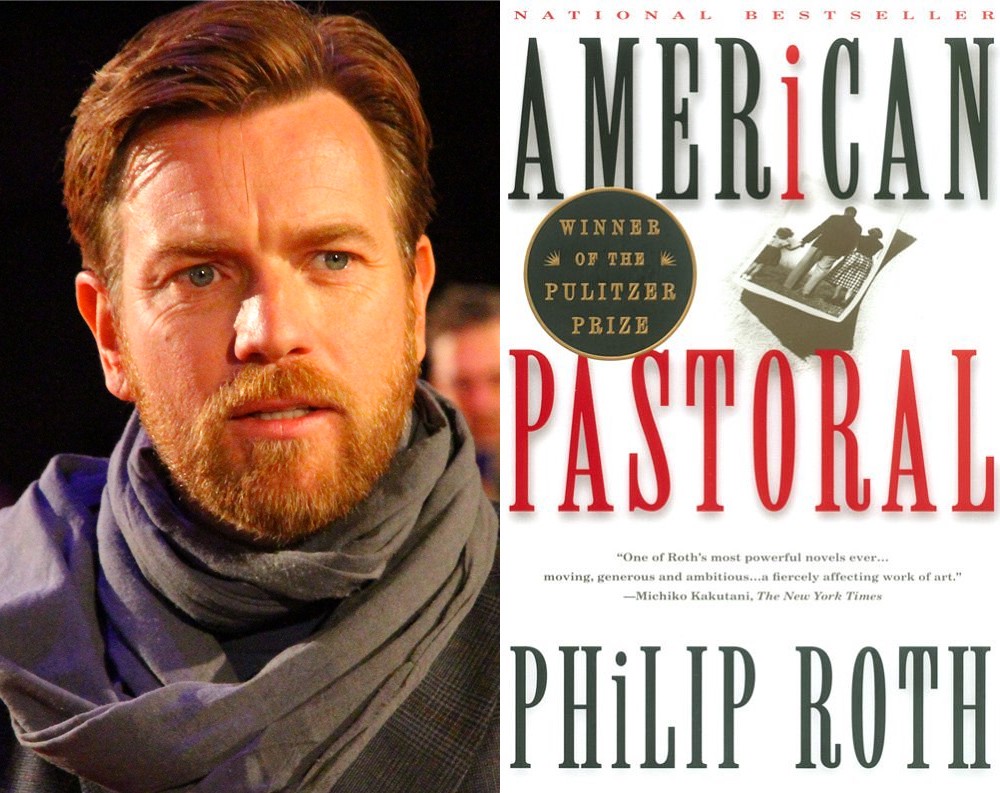
Ewan McGregor to Adapt Philip Roth’s American Pastoral

Ewan McGregor is slated to make his directorial debut with Philip Roth’s Pulitzer-winning American Pastoral. McGregor was attached to star in the film last year and previously Phillip Noyce was attached to direct. Now that Noyce has stepped aside, McGregor is taking over directing duties as well. The brown-haired Scotsman McGregor was already a bit of an odd choice for Pastoral’s blond Jewish-American Swede Levov, and his directorial takeover might mean we have another Philip Roth adaptation flop to look forward too. Despite Philip Roth’s vast body of acclaimed and award-winning novels, there has yet to be a great adaptation of his work. (Here’s Adam Chandler on the “sad history” of Philip Roth adaptations.)

On the other hand, McGregor has been itching to direct a film for years and maybe he will be up to the task. The screenplay was written by The Lincoln Lawyer writer John Romano, and Jennifer Connelly and Dakota Fanning will co-star.

REVIEW: History of Cold Seasons by Joshua Harmon

History of Cold Seasons reads like William Faulkner wrote it after he moved north, read a bunch of surreal prose poetry, and then wrote straight through a New England winter. Joshua Harmon’s fiction — he’s also a poet and essayist — might even be called New England Gothic: His landscapes are sinister and dark, and the macabre functions as powerfully in Harmon’s northeast as it does in Faulkner’s deep south. In the spirit of the great Southern Gothic writers — Flannery O’Connor also comes to mind — the stories in Harmon’s History of Cold Season almost always have something deranged at their very core.

Take, for example, “The Burning House”, a story in which a child quietly notes evidence of an elderly woman — likely his babysitter’s mother — trapped in the attic at his babysitter’s house. He doesn’t mention the woman in the attic to anyone, and he returns to his babysitter’s every day after school. He remembers sitting in his babysitter’s kitchen, avoiding the dog-haired cookies, and watching cigarette smoke float through the air. He says, “Afternoons, always, were waiting for the sound of tires in Phyllis’s driveway, for the glow of headlights through Phyllis’s windows, for the sound of my mother’s voice at Phyllis’s door.” One cold winter night, the babysitter’s house burns down, and the story of the elderly mother — padlocked and trapped inside that attic — becomes a blip on the regional news cycle. Phyllis speeds off without a trace that night. The boy, on the other hand, remains in the same town, haunted by his memory of his babysitter and her mother, and unsettled by the ease with which the rest of the town forgets them. He says, “Our town was a town of closed doors, a town of curtained windows.”

“Rope” — the opening story of the collection, published here at Electric Literature’s Recommended Reading — is another great example of the twisted and gothic nature of the collection. In the story, two young sisters imagine that their older brother keeps a girl tied to a tree in the woods. This idea mostly seems to be a childhood flight of the imagination, except it’s conjured with such vivid and haunting detail that it feels real. In a terrifying manner, the imagined story does become real as the sisters accidentally bring a pair of boys into the woods with them to search for the tied girl. “A few feet away, Mindy stands against another tree,” the narrator says, “her hands also snared by her sides, and I pretend I cannot hear the things she is saying, the sounds she is making.”

Harmon’s stories also often demonstrate an experimental edge. “The Lighthouse Keeper”, for example, is constructed of dozens of nearly self-contained poetic vignettes, with titles like “Beachcombing”, “Ghost Stories”, and “The House In The Dunes.” Over the course of the story, an in-danger relationship between the lighthouse keeper and his lighthouse emerges, but the real joy of the piece lies in its close attention to the haunted language and imagery, evocative of a lonely lighthouse, “rising from the end of a narrow, rocky peninsula.”

The longest story in the collection — “The Passion of Asa Fitch” — is the most realist of the bunch, and it features an irritable elderly man living in the remote and snowy foothills of Massachusetts. This story demonstrates another move in Harmon’s repertoire: dark comedy. It finds joy in the absurdity of the world. Asa Fitch might be ailing and unpleasant, he might survive on family-size bags of potato chips and half-gallons of ice cream, but he also has an unexpected charm. The story finds its drive in Asa’s sexual pursuit of Marnie, the nurse who comes to check on him twice a week. Harmon writes that Asa, “…often considers wandering off into the woods on a cold night, alone save for a bottle of brandy, but always concludes that he would rather enjoy congress with a woman one last time…” In this funny, poignant, and appropriately claustrophobic story, Harmon conveys a physically ailing but cognitively sharp old man who’s raging against the dying light in all of his particular ways.

Reading History of Cold Seasons feels a bit like driving past remote and decrepit homes, wondering who lives there?, and then actually getting an answer. In the spirit of Faulkner and O’Connor, Harmon’s stories drill down to the spot where something’s rotten. They trace the manner in which people behave in twisted ways in response to a twisted world.

History of Cold Seasons

by Joshua Harmon

Powells.com

Artist Turns Books into Crystallized Fossils

Some people say that print books are fossils in an age of e-readers, but artist Alexis Arnold decided to make that literal. In her Crystallized Book Series, Arnold turns the Bible, Billy Budd, the San Francisco phone book, and other books into crystallized art objects with Borax crystals. She explains:

The Crystallized Book Series addresses the materiality of the book versus the text or content of the book, in addition to commenting on the vulnerability of the printed book. The crystals remove the text and transform the books into aesthetic, non-functional objects. The books, frozen with crystal growth, have become artifacts or geologic specimens imbued with the history of time, use, and nostalgia. The series was prompted by repeatedly finding boxes of discarded books, by the onset of e-books, and by the shuttering of bookstores.

Click around the gallery above, or check out the entire series here.

(h/t Black Balloon)

Recently Discovered Dr. Seuss Book Coming This Summer

Harper Lee is no longer the only beloved American author to have a recently discovered manuscript be published this summer. Today, Random House announced that a lost Dr. Seuss book, What Pet Should I Get?, will be published this July as well. And like Harper Lee’s Go Set a Watchman, the new Dr. Seuss — the pen name of Ted Geisel — is also a sequel. The book features characters from One Fish Two Fish Red Fish Blue Fish trying to decide what pet to get. The book was found in nearly finished black and white illustrations. According to Random House, the book was likely written between 1958 and 1962.

Audrey Geisel, Dr. Seuss’s wife, said this in a statement:

While undeniably special, it is not surprising to me that we found this because Ted always worked on multiple projects and started new things all the time — he was constantly writing and drawing and coming up with ideas for new stories.

This isn’t the only forthcoming posthumous Seuss book. At least two more books were found, although their titles and release dates have not been announced yet.

Saint Andrews Hotel

by Sara Majka, recommended by A Public Space

In 1963, an eleven-year-old boy named Peter Harville was committed to a state mental hospital in the western part of Maine, far from the island where he grew up. He had tried to commit suicide by cutting his wrists with his father’s coping saw, but he hadn’t made much of a mess. A pile of sawdust below the bench absorbed much of the blood. He lay on the ground watching the sawdust turn red until he realized someone had opened the door. Peter? his father asked, not moving or coming in. Peter? Are you all right? Peter noticed that his father spoke more gently than usual, and the shed felt warm and calm; for the moment he was happy. The crack in the door let in light glittery with dust.

The father ran to call the doctor, then walked stiffly up the grassy slope in the backyard to get his wife. She was clipping laundry at the top of the hill. She — Helen — wondered what was wrong with her husband’s mouth, the way it moved as if with a life of its own, as if he was having spasms.

The next week she packed a bag for Peter and his father took him on the ferry, then into the Cutlass sedan that was kept in the lot on the mainland with a key under the seat for anyone on the island who had an errand to run. They were at the hospital by three. Afterward, the father checked into a hotel. He went to the bar across the street and had several pints of beer. It had been ten years since he’d spent a night off island and he spoke little, just studied the line of coasters taped to the wall behind the bar. His hands twitched on the counter. They were small-boned and fine, adept at gutting fish and killing the lambs during the summer slaughter, thinking of those lambs dangling in the walk-in no more than he thought of anything else.

In the hotel room, he took off all his clothes — the room lit in vertical lines by the blinds — and folded back the sheets, then slid inside and tried to sleep. When he got home, he didn’t say much to his wife. She listed object after object, asking if they’d let Peter keep it.

You’ll baby him, he said.

What is there left to baby? she wondered, looking around the empty house.

Sometimes I dream about him, she said to her friend Eleanor. They were hanging laundry; the wind came up the grassy slope and blew all the soft clothes on the line, the chambray shirts and white cotton sheets, her blue nightgown with lace along the neckline.

While her friend clipped, Helen stared across the sea. She felt as though she had lost something but she kept forgetting what it was, and when she remembered she couldn’t understand it. Do you suppose it’s a long trip? Helen asked, her voice sounding like it arose from a daydream. The idea had come to her over days, like a bubble expanding in the back of her mind, that it had been a mistake, that she would take the ferry, find the car, drive to the hospital, tell the doctors it had been an accident with the saw, that it wasn’t true what her husband said about Peter.

Her hand slipped, and a gust of wind took the sheet and blew it down the hill. Both women laughed and chased after it, barefoot in cotton skirts, two thirty-year-old women chasing after a sheet, then drinking instant coffee in the kitchen with a plate of crackers between them. They gossiped about the hotel where Eleanor worked as a housekeeper. She was seeing one of the men there, someone’s cousin who was going back to Boston in two weeks. She was a tall, thin, bent-backed woman with violet circles under her eyes. Helen watched her, watched the liquidness of new love — the way her talk spilled, her eyes shone, how her hands slid through the air — and thought, he’s going to leave and she’ll still be here.

One day the ferry went out to sea but the mainland never came. The captain turned back fearing he would run out of gas. He tried again the next day, but still couldn’t find the shore. In time, he took it as a matter of course, as they all did, as they forgot their desires with some relief, as the desires when they arose had been impractical, painful. One man painted in the loft of an old barn. All his canvasses were of blue trees. The islanders hung them in their living rooms, and there was something hopeful in it, as if they had kept a belief in the symbolic power of beauty.

Peter stayed in the hospital until he was twenty-one. He would have left earlier but nobody could find his parents, and the hospital had put him to use in the kitchen. When he left, he couldn’t find the island on any maps. In the place where it should have been was a sprinkle of land, most of it not much more than rocks. The most promising landmass turned out to be nothing but sandy slopes and beach grass. He was told someone had tried to start a leper colony on it years ago, but it had proved inhospitable. He traveled the coast for some time, taking on construction jobs or working the docks, looking for anything familiar.

He finally took the bus up north and got off in Portland, Maine. He stood there, a medium-sized boy with pale coloring and a slow, coltish walk. Across the street he saw an old brick building with “Saint Andrews Hotel” lettered in faded white paint. Inside, a threadbare green carpet spread across a large, mostly empty lobby. A cluster of sofas and upholstered chairs huddled at the center; several of the residents sat there. The hotel rented rooms by the night, but also long-term, and many of the people had been living there for years.

He took a room for a month. When the month was up he paid again. He liked it there; he liked to sit idly with the other residents. In the hospital, they had sat for hours on the long, narrow sun porch, everyone squished in with African Violets and end tables. All the old men leaning on canes, their eyes in the light as opaque as glass marbles. No sooner had Peter left the hospital than he found another one. How strange we are. How different we are from how we think we are. We fall out of love only to fall in love with a duplicate of what we’ve left, never understanding that we love what we love and that it doesn’t change… The way they sat on tattered velvet chairs — the old men with crooked legs and the couple arguing in sleep-starved voices and the boys, too skinny, wearing their hair in delicate shapes along their temples.

He took a job at a fish stall in the Portland Public Market and would come back with the belly of his white T-shirt — the place where he leaned against the counter — stained watery red and orange. What have you been up to, Petey? Betty would call out. She worked behind the desk, and always had shadows of mascara under her eyes, even during the morning shift.

He would shower, then return to the lobby, the low tide smell still clinging to him. The people talked lazily back and forth. A man drinking from a coffee-stained paper cup turned to him, and said, I used to have a wife from Chicago. Know what she did?

No, Peter said.

Fell in love with the butcher, the man said.

Another man said, Don’t pay him any mind.

Things went much as they had in the hospital, until one day a girl came in. She was beautiful — fourteen, fifteen, slender, knock-kneed. She used to live on the island, used to ride up and down the dirt road on her bicycle, her wispy hair flying after her. She wore a lavender skirt instead of cutoffs and her face had lost some of the boyishness, but otherwise she hadn’t changed.

No, man, someone said when Peter started to walk over. That one’ll put you in jail.

No, he said. I know her. He froze before he got to the desk. Something was wrong. He realized what it was and backed away: she should have been older than him. She should have been nearly thirty.

In the morning, he followed her from the hotel. She walked to the old port section of town, along cobblestone streets and down to the ferry terminal. She walked through the building and out into the fenced-in area where people waited. She put down her bag and stood there, a cardigan folded over her arm. She must be mistaken, he thought, standing like that in front of a boat that never left the harbor. It must have once been a nice boat, with a cream-colored canopy and dark wood accents, but the hull was leaking rust; a dozen wooden park benches had been dragged under the canopy. He thought there was no sense in it, but then an old, silver-haired man emerged from the cabin, and took the girl’s ticket. She boarded.

When Peter tried to board, the captain said, We don’t sell tickets on this end. This is the return boat.

Peter asked where it was returning to, but the captain shook his head, then tied the rope, pulled in the metal ramp, and disappeared the same way he came. Soon the engine sounded.

The next time someone from the island came, it was a friend of Peter’s father’s, an old fisherman, a drunk with a bulbous nose and gaping pores. Peter had always liked him, found something gentle in him that had been missing in his own father. As with the girl, the man hadn’t changed, hadn’t aged. Peter followed him down the hall to the bar in the corner of the old ballroom, and sat next to him. The bartender poured Peter the bottoms from old bottles of wine. The man was impressed — Helps to know people, the man said. They talked for a while. The man said he had never lived on an island, that he drove trucks for a shipping company. Always wanted a boat, though, he said. He opened his wallet and showed a slip of paper tucked inside the silky creases. He wasn’t a man for impulses, but there it was, a ticket to look at whales for the next day.

In the morning, Peter walked with him to the same ship the girl had left on. After the man boarded, Peter extended a wad of bills towards the captain, who looked at it kindly as if not understanding what Peter was showing him, but wanting to understand.

For months no one came, then a small, strong, dark-haired woman appeared. She wore a cheap-looking polyester skirt and a scallop-sleeved peach blouse. It was his mother. Like the others, she hadn’t aged. She edged around the lobby like she used to do when they went shopping on the mainland, dropping her shoulders so her body moved inward. She used to pick through shirts and speak as if annoyed with him, then hold the shirts up to his frame and purse her lips. In the hospital he would sit on the bed and look out the window, certain she would come, but she never came, that slight figure never appearing on the hill, never coming in, never explaining to the doctors and looking angry at him only to have the anger turn to relief when they got outside. Now she had come after all, but what was it? What did it mean?

She stopped at the desk, then went down the hallway, following the man who carried her bag.

He tried to get her name or room number from Betty. She’s too old for you, she said.

She reminds me of my mom, he said.

She shook her head. Sorry, she said, it’s regulations. She took a dollar from the drawer so he could buy coffees from across the street.

In the morning, his mother reappeared in clothes even more drab — a gray skirt and an ill-fitting blouse and sandals so tight that her feet squished out between the straps. She went over to the utility cart to pick out her breakfast. She hovered over the metal tray with pastries piled on doilies — the doilies reused until grease blots seeped through the paper — at last selecting a Danish with a circle of yellowed cream at the center. She ate her breakfast in a high-backed chair along the wall, eating slowly as if she were on a trip away from home for the first time, getting to pick what she wanted, and enjoying the secrecy of her choice.

Peter handed her a newspaper.

What’s this? she asked, holding it away from her.

I thought you’d like it, he said.

Thank you, but I don’t read the paper.

After his mother left the lobby, Betty bought the paper from him. She did the crossword puzzle, frowning at the paper as if it had done something to her. Do I remind you of your mom? she asked.

Not in the least, he said.

She invited him to her room after her shift for a cocktail. When he arrived, she had showered and washed off her makeup. She had spread nips on the table, and he lifted up the fanciest bottle. She gestured for him to take another. Go ahead, put them in your pockets, she said. He picked a Jack Daniels and some gin, and slid them in his pockets. She motioned for him to take more. She talked to him about something — applying to college, or a trade program. He opened a bottle and drank. She ran a hand over her face as if looking for something. You should listen, she said. You can’t stay here forever. I’d like it if you could, but you can’t.

He thought of opening another, but instead tapped his pockets, moved to the door, and said, You coming to clams?

Sure, she said. I’m coming, but —

When he walked out to the hall, his mother was walking past. Are you finding everything to your liking? he asked, falling into step with her.

Everything is fine, she said.

There are brochures in the lobby with some attractions, he said. If there is anything I can do for you.

I’m quite all right.

He said, I was wondering where you’re from. She kept moving; he reached and touched her arm but she shrank from him. You remind me of someone I know is all, he said, someone I once knew. And I don’t mean to bother you. I just wanted to make sure you were having a nice time.

She stopped — they were in the lobby — and studied him. I’m from Stamford, Connecticut, she said.

Do you have a son?

A daughter.

Does she look like you, or like your husband?

Like me, she said.

Do you have a picture?

That’s enough.

She meant it to come out more lightly than it did. When she saw his pain, she asked him to show her the brochures, and she took several, even ones she had no interest in. He gave her directions to cafés and shops. He invited her to clams. She told him she would stop by, hoping she wouldn’t be able to find it.

The people at the hotel ate clams at a rundown place by the docks that had five-cent littlenecks on Tuesdays. They sat inside on tables covered with plastic gingham cloths. The back door was open, but the wind didn’t come through. The door looked onto a parking lot filled with lobster traps and rope crusted with dried-out crustaceans. Beyond that lay the harbor. From there, Helen appeared, her head turned toward the ocean, as if she hadn’t realized yet that she was inside. Peter stood, and the others stopped talking. She looked up, saw the table of scraggly people and the young man, his hair a fine sandy gold and his body shimmering with sweat. She hadn’t noticed before how different he was from the others. It occurred to her that she could take him with her, as if he could fit into her purse. She thought of her house in the development, the driveway with squares of concrete that reflected the moon.

You came, he said.

Yes, the directions were good. She sat down, keeping her purse on her lap.

No one is going to take it, he said.

She laughed. It’s just habit.

We ordered already. We would have waited, but we didn’t —

No, it’s fine — I’m glad you didn’t. Sometimes I can never find the places I need to find. She glanced at the table for a menu, but didn’t see one. She lifted an arm to flag the waitress, but he pulled her arm down. Clams, he said.

Clams?

You order clams.

What else?

Clams, Portuguese roll, ear of corn, iced tea with sugar. Just say — never mind. He looked up. The waitress had come over. She’ll have the clams, he said, and the waitress nodded and walked away. I’ll have the clams, Helen repeated. Very good choice, someone said.

When the food came they stopped talking. Chipped stoneware bowls were filled with shells the colors of seagulls, with clams so small they must have been illegal. They picked out the graying bellies with little forks, and dredged them through butter, their lips shining with the oil. The thin, waxy napkins that came in the packs of plastic silverware only blotted the oil. On the walk home — No, not home, Helen caught herself — she said to Peter, I’m glad I came.

You thought you wouldn’t be? he said, holding his arm out to see the shadow.

Yes, she said. I thought it might be strange.

But you’re glad?

I’m glad.

At the hotel bar, they had several drinks, things she wanted that he wouldn’t normally have ordered. Things mixed with cranberry juice, grapefruit, grenadine. Oh! she said, aren’t you going to eat your cherry? The cherry was at the bottom, speared to an orange by a pirate’s knife. He had never gotten a pirate’s knife before. Two cherries! she said. She’s happy, he thought. I’m happy was the next thought, trailing the first like a tail that was just beginning to wind around. The unfamiliar recognition of joy, the discomfort in it, the panic. Will it leave me? How to make it not leave me? Thinking that if he pretended it wasn’t there, it wouldn’t leave.

At the end of the bar, he saw the captain of the ferry, hunched over, one arm circling a beer. No, Peter thought. No, no, no. He turned to his mother. She was lining up swords. She looked like a little girl. He asked her how long she was staying at the hotel. She said she wasn’t sure. He asked if she was taking a boat the next day. She didn’t understand. Are you taking a boat somewhere? he said. Anywhere? Just — are you getting on a boat tomorrow?

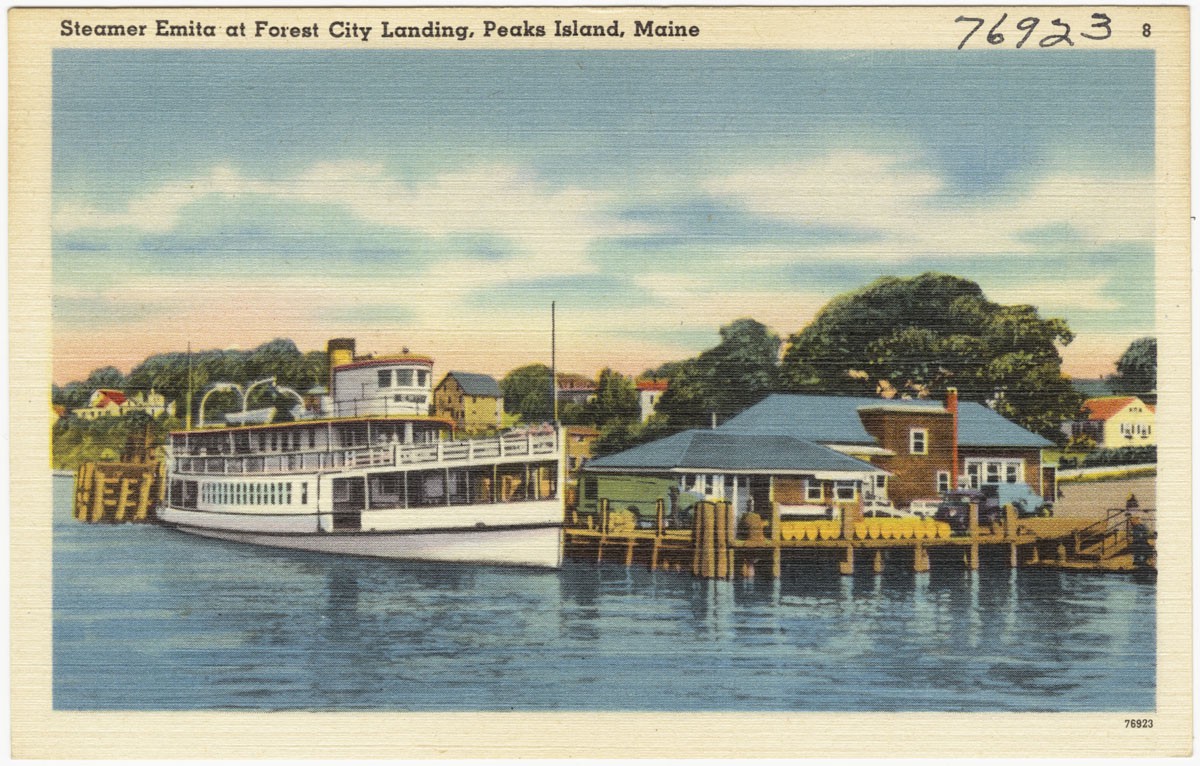
To Peaks Island, she said. It was a tourist island close to the mainland. The picture on the brochure had captivated her.

Can I come with you?

It might be better if I go alone, she said. I’ve had such little time to be alone. It sent pain through him. She saw it. She said, I don’t know you.

Do you feel like you know me? That you might have known me before?

I read paperbacks, she said. I go to restaurants and sit by the window and read.

That’s what I like to do, too.

In the morning, she stood in the lobby, holding a straw hat. He walked toward her. He could see Betty approaching him, so he walked faster. When Betty realized what he was doing, she stopped in the center of the room, under the place where a chandelier used to hang.

Outside, he lifted his mother’s bag.

I hope the person I remind you of was kind, she said.

She was always kind.

Well, there’s that at least.

When they got to the ferry building, the window where she had bought the ticket was boarded up, or she couldn’t remember where it was, or something else happened to confound them. I don’t understand, she told the captain when they got to the boat, it seems it’s just as easy to sell it here. She looked at Peter and said she would stay if he wanted that, but he handed over her bag and said to go on, that he would be there when she got back.

Midweek Links: Literary Links from Around the Web (February 18th)

Looking for some interesting reading to get you through hump day? Here are some literary links from around the web to check out:

Ayn Rand rewrites Harry Potter at The Toast

The screenwriter of The Imitation Game explains how to write characters smarter than you

Do kids these days think of reading as a social exercise?

On Jeff VanderMeer and why weird stories tell us the most about reality

What Jon Stewart’s The Daily Show meant for publishing

Jonathan Sturgeon on the war novel in the information age

Gawker on the greatness of Octavia Butler

Loorie Moore on Miranda July

Zadie Smith on the comedy of Key and Peele

Lastly, a new short story by Murakami up at the New Yorker